Guest Post: The Festive History of Gingerbread and “The Twelve Days of Christmas” by Grace Tierney

It’s December!

And to get us in the Christmas spirit, I have a wonderful guest post from Grace Tierney, looking into the history of two of our greatest Christmas traditions.

The Festive History of Gingerbread and “The Twelve Days of Christmas”

History...the Interesting Bits

I’ve spent the last three years researching the words and traditions Christmas gave to the English language for my book “Words Christmas Gave Us”. The old roots of festive traditions are truly fascinating and a doorway to history. You can use Crusader spices in your mince pies and honour the Vikings by kissing under mistletoe. Two such doorways are the histories of gingerbread and the stories behind the lyrics of “The Twelve Days of Christmas”.

I always make gingerbread at Christmas and if your family makes (or eats) a gingerbread house at Christmas you have a fairytale to thank for it, and you’re continuing a history which goes back 5,000 years.

Gingerbread entered the English language in the late 1200s, spelled as gingerbrar but at that time the word was for preserved ginger. It arrived from Old French ginginbrat (ginger preserve) and Medieval Latin gingimbratus (gingered). By the mid 1300s the end of the word had changed to brede (bread) as the idea of sweet cakes spiced with ginger gained popularity, probably thanks to Crusaders returning to Europe with spices.

Ginger root had been used in medicine and food long before the 1300s, however. The plant was grown in China around 5,000 years ago and used in their traditional medicines. Some food historians claim early recipes for gingerbread date to 2400 B.C. in Greece. Certainly by the 1400s there are references to a gingerbread bakers’ guild in Germany.

History...the Interesting Bits

Gingerbread figures are popular too, just as they are today. These date back to Tudor times. Shakespeare mentions them in “Love’s Labour’s Lost” in 1598. They were made to resemble important guests at the court of Queen Elizabeth I so they were much more elaborate and unique than the gingerbread man we cut out in our festive kitchens today. The giving of such figures on religious feast days at that time may explain gingerbread’s modern association with Christmas, although children’s stories about gingerbread men in the 1800s probably helped too.

The fairytale connection gives us the Christmas classic, the gingerbread house, thanks to the two folk-tale collectors, the famous Brothers Grimm. When they published the tale of Hansel and Gretel in 1812 the idea of a witch’s house made from bread sparked the readers’ imaginations. German bakers were quick to create the houses to sell to their customers and in the process started another tasty Christmas tradition. In fact in later editions of the tale, the word bread was changed to gingerbread in response to these new, and quickly beloved, gingerbread houses.

Thus the gingerbread house has a 5,000 year old history spanning Greece, Crusaders, German folk-tales, and the Tudor court before it reaches our homes at Christmas.

The chances of you hearing a choir or radio warbling “The Twelve Days of Christmas” in December this year are pretty high, but the rather strange lyrics provide another doorway into history and are well worth exploring as you listen to the tune.

First published in the late 1700s, “The Twelve Days of Christmas” is a popular English carol which lists the gifts given to the singer by their true love. The gift-giver is a very generous friend or romantic suitor who wants to celebrate on each day of the Christmas season with their loved one.

History...the Interesting Bits

The origin of the song is obscure. Some sources believe it was originally chanted by children as a memory game. Each child would add a line and you paid a forfeit if you forgot one.

The twelve days refer to the traditional English Christmas season from Christmas Day until Twelfth Night which falls on the 5th of January, although there was a version called “The Ten Days of Christmas” in the north of England.

One theory, dating to the 1990s and well debunked by now, arose that the lyrics were reminders to Catholic children of the articles of their faith when it was outlawed in England. The “two turtle doves” were the old and new testaments, the “ten lords “were the ten commandments, and the “true love: was from God at baptism.

Apparently it would cost your true love £28,000 to send these gifts in the 2020s which is  very generous by most people’s standards. It rises closer to £119,000 if the gifts are bought repeatedly each time they’re mentioned in the song’s cumulative verses.

Now let’s take a look at each of the gifts and what meanings they may contain.

A Partridge in a Pear Tree – It should be noted that partridges are ground birds and don’t perch in trees, although this particular line may come from an earlier song which had a line about a pie sitting in a pear tree. This doesn’t refer to the classic Tudor love of a festive pie, it’s a magpie which is perching in the tree this time which is feasible.

Two Turtle Doves – It’s mentioned in the Bible that two turtle doves were sacrificed at the circumcision of Jesus, so this one may be a reference to that ceremony or even to love with the birds representing a pair of lovers.

Three French Hens – French in this case simply means foreign, and is probably included to make them seem special or expensive relative to local hens.

Four Calling Birds – Earlier versions of the lyrics presented the receiver with four canary birds, four mockingbirds, or four colly (or collie) birds which is an archaic term for blackbirds. Blackbirds were called colly birds because of coal, which is black. Coal is associated with Christmas in two other ways – the coal you bring if you are First Footing in Scotland and the coal in your stocking if you’ve been naughty and have found yourself on the wrong list.
History...the Interesting Bits

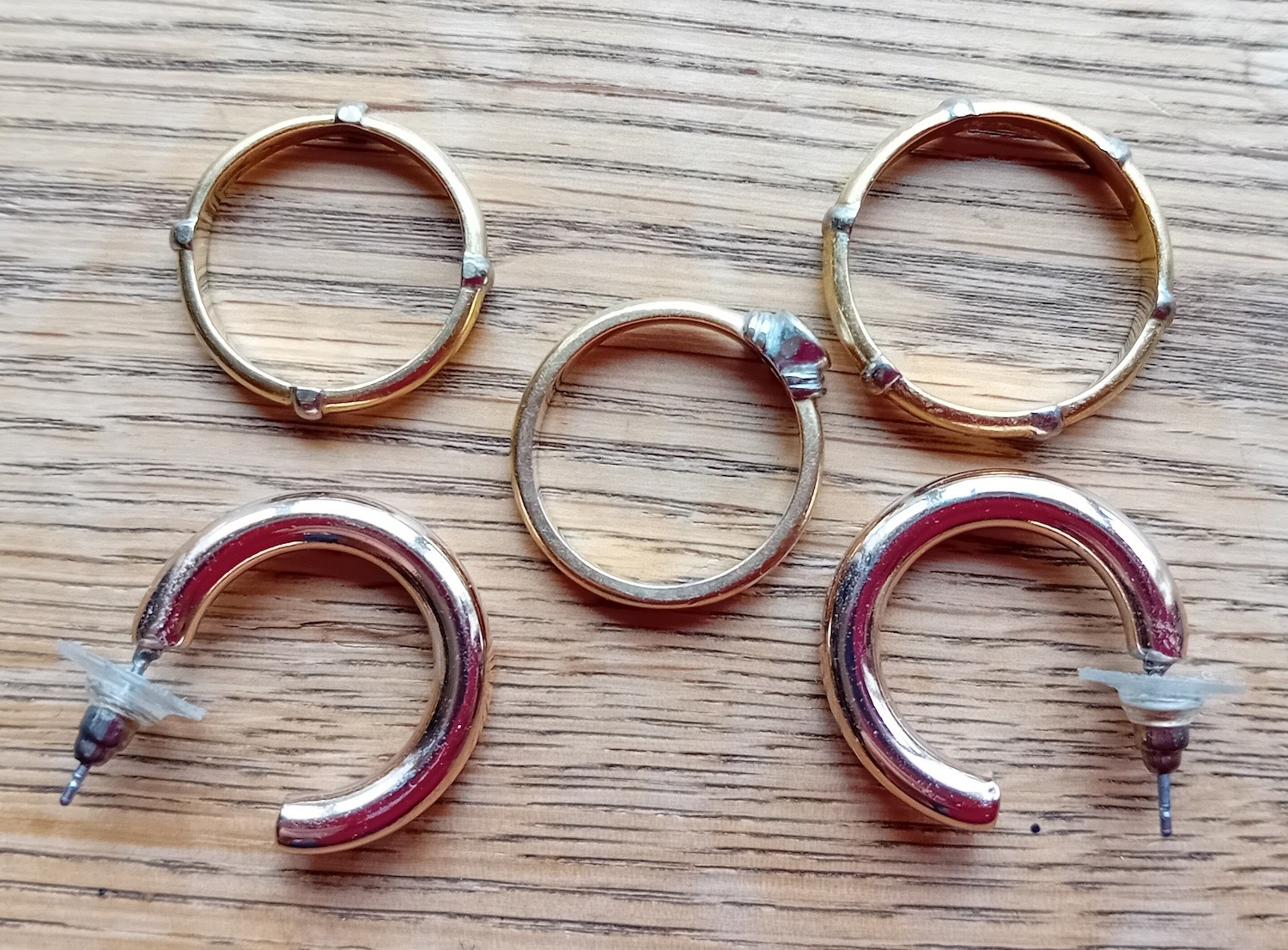
Five Golden Rings – The rings are perhaps the most obvious choice of gift from a lover (although five seems excessive) but this may be a mishearing of goldspinks, an alternative word for goldfinches, yet another bird. Certainly by 1780 song illustrations show the rings as being jewellery.

Six Geese a-Laying – the goose was the bird of choice for Christmas feasting until relatively recent times in the British Isles.

Seven Swans a-Swimming – Since the 1100s the British monarch owns the mute swans on the River Thames. The British Royal Family still maintains a Royal Swan Keeper and this is historically because swans were eaten at special feasts. This makes the seven swans here a very valuable gift indeed, although thankfully swans are now a protected species and nobody eats them.

Eight Maids a-Milking – These particular maidens appear to be dairy maids at work, perhaps creating cheese and butter for the feasting.

Nine Ladies Dancing – Having gathered all the items for decoration and feasting the giver now moves on to inviting guests and creating some music. The ladies get the party started.

Ten Lords a-Leaping – If you have pretty ladies dancing it won’t be long before gentlemen arrive to join them. Tudor era dances involved leaping, and lifting of the ladies, so the gents are in perfect form here.

Eleven Pipers Piping – Small pipes and flutes would provide the melody for the dance.
History...the Interesting Bits

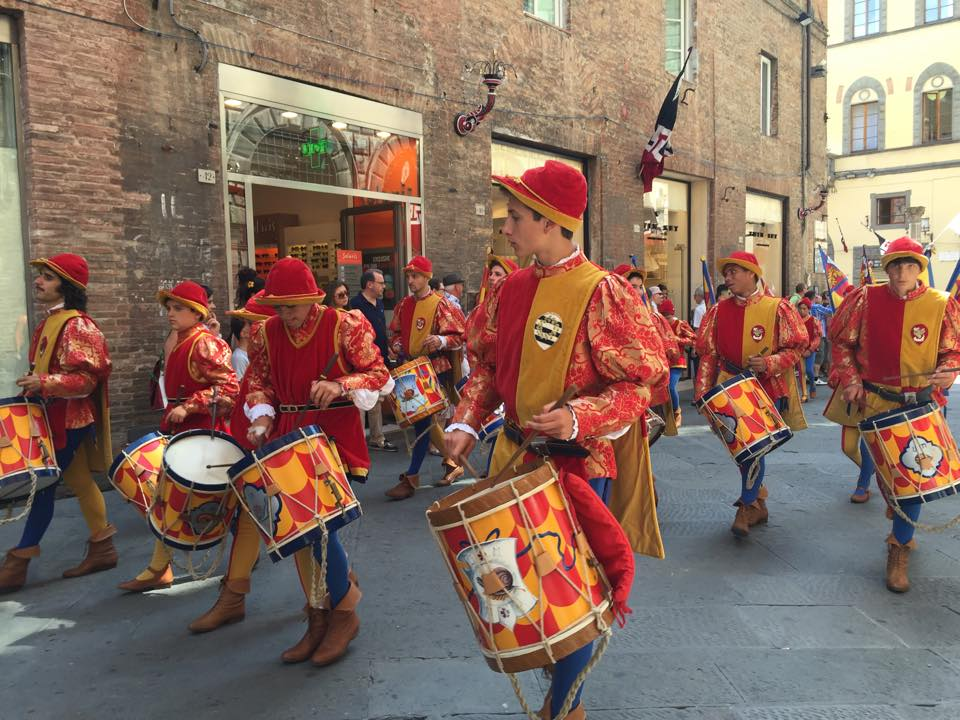
Twelve Drummers Drumming – Add some percussion and the scene is set for a perfect Twelfth Night revel. The true love had a passion for party planning as well as gift giving.

While we no longer party for the entire twelve days between the 25th of December and the 5th of January, if you need to plan a Tudor style revel this year, the song might well be your guide (although please leave the swans alone or sculpt them in chocolate or marzipan). The song gives us a glimpse back in time to some serious next level gift giving and yuletide feasting.

Finally, if you enjoy parodies, look up Frank Kelly’s “Christmas Countdown”, a classic comedy sketch which recounts how the generous gifts recounted in the song ruined Christmas for one Irish recipient. You might know Frank better as the alcoholic Father Jack in the sitcom “Father Ted”.

Wishing you all a very Merry Christmas and hoping it lasts for twelve days and includes plenty of gingerbread.

About Grace Tierney

Grace Tierney is an author, and blogger writing on Ireland’s coast. She blogs about the history of unusual words at http://wordfoolery.wordpress.com every Monday and broadcasts a monthly slot about etymology on LMFM radio since 2020.

Her books about words are “Words Christmas Gave Us”, “How To Get Your Name in the Dictionary” (the extraordinary lives of those who gave their names as eponyms to English), “Words The Sea Gave Us” (nautical nouns from fishermen, pirates, and explorers), “Words the Vikings Gave Us” (how Vikings gave us everyday English words), and “Modern Words with Old Roots” (the ancient histories of 50 modern words).

Her favourite Christmas word is twixtmas because it’s the quiet part of the season, spent with family, friends, and a heap of new books.

Grace’s Social Media Links

http://www.twitter.com/Wordfoolery
http://www.facebook.com/gracetierneywriter
http://www.bsky.app/profile/wordfoolery.bsky.social
http://www.instagram.com/wordfoolery/

Where to Buy “Words Christmas Gave Us”

“Words Christmas Gave Us” by Grace Tierney is out now in hardback, paperback, and ebook format.
Physical copies are available from Amazon worldwide, waterstones.com , and foyles.co.uk as well as select independent bookstores and libraries.
All the links are at https://wordfoolery.wordpress.com/my-books/
Signed copies are available directly from the author via https://wordfoolery.wordpress.com/would-you-like-a-signed-copy/

Words Christmas Gave Us” unwraps the stories behind the season, via festive words from advent to yule and grinch to scurryfunge. This book, the third in the series, explores the influence of Greeks, Romans, Vikings, Tudors, Dickens, and of course Santa Claus, on worldwide traditions, merry music, decorations, feasts, and more. Discover why Jean-Paul Sartre wrote a nativity play, when Jingle Bells was sung in space, what Christmas decoration used to contain false teeth, how a newspaper typo started Santa tracking, and plenty of festive folklore traditions.

Ideal for word geeks, Christmas enthusiasts, and anybody who’s ever said Bah Humbug or Ho Ho Ho.

*

My Books

Signed, dedicated copies of all my books are available through my online bookshop.

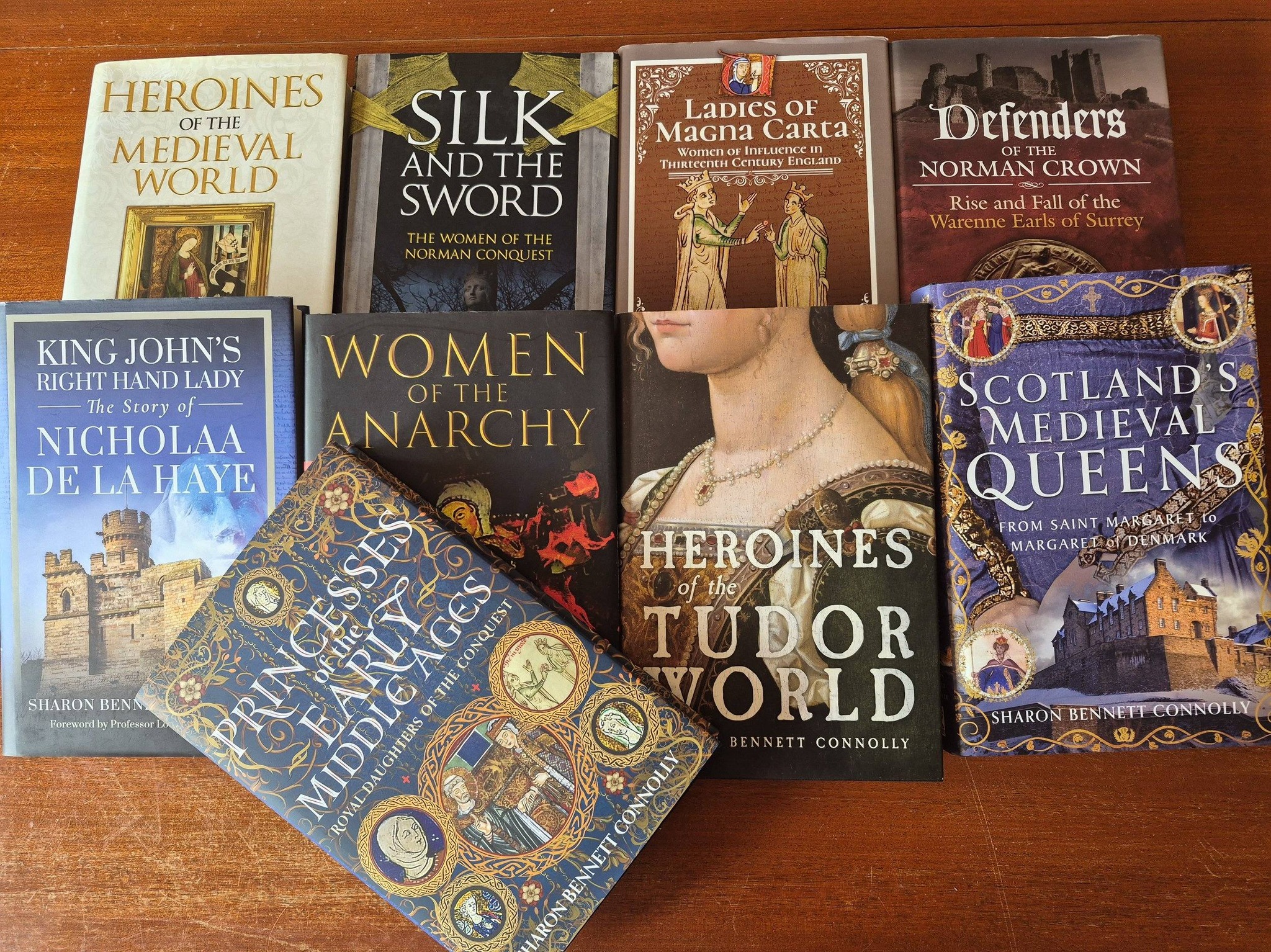
Out now: Scotland’s Medieval Queens

Books by Sharon Bennett Connolly

Scotland’s history is dramatic, violent and bloody. Being England’s northern neighbour has never been easy. Scotland’s queens have had to deal with war, murder, imprisonment, political rivalries and open betrayal. They have loved and lost, raised kings and queens, ruled and died for Scotland. From St Margaret, who became one of the patron saints of Scotland, to Elizabeth de Burgh and the dramatic story of the Scottish Wars of Independence, to the love story and tragedy of Joan Beaufort, to Margaret of Denmark and the dawn of the Renaissance, Scotland’s Medieval Queens have seen it all. This is the story of Scotland through their eyes.

Scotland’s Medieval Queens gives a thorough grounding in the history of the women who ruled Scotland at the side of its kings, often in the shadows, but just as interesting in their lives beyond the spotlight. It’s not a subject that has been widely covered, and Sharon is a pioneer in bringing that information into accessible history.’ Elizabeth Chadwick (New York Times bestselling author)

Available now from Amazon and Pen and Sword Books

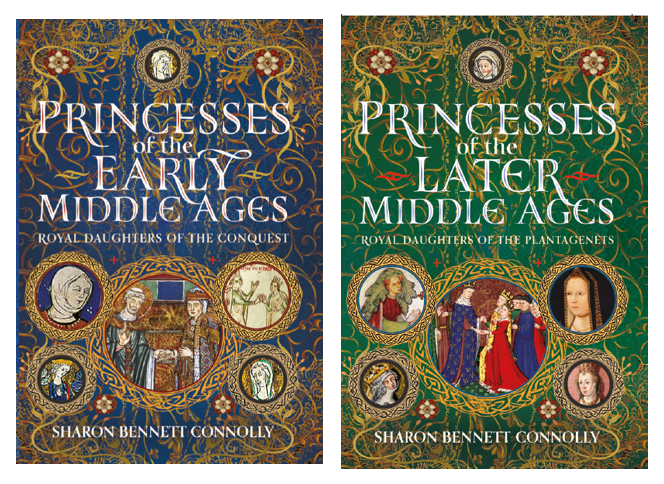
Coming 30 March 2026: Princesses of the Early Middle Ages
Books by Sharon Bennett Connolly

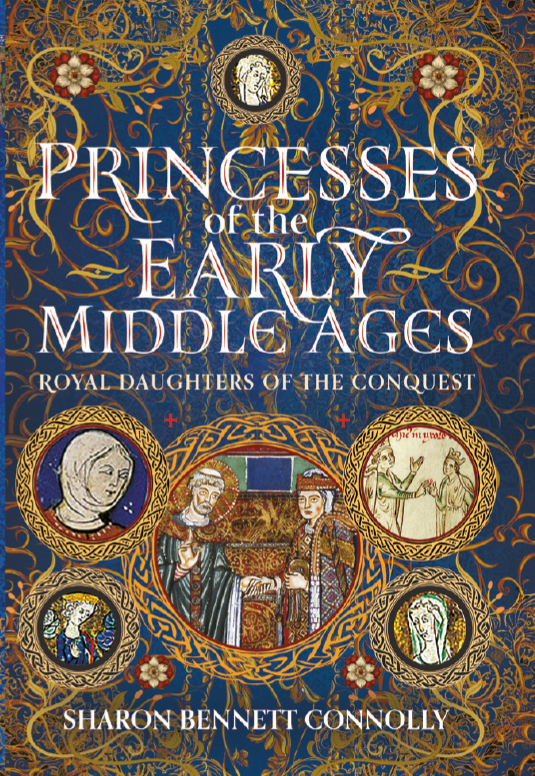
Daughters of kings were often used to seal treaty alliances and forge peace with England’s enemies. Princesses of the Early Middle Ages: Royal Daughters of the Conquest explores the lives of these young women, how they followed the stereotype, and how they sometimes managed to escape it. It will look at the world they lived in, and how their lives and marriages were affected by political necessity and the events of the time. Princesses of the Early Middle Ages will also examine how these girls, who were often political pawns, were able to control their own lives and fates. Whilst they were expected to obey their parents in their marriage choices, several princesses were able to exert their own influence on these choices, with some outright refusing the husbands offered to them.

Their stories are touching, inspiring and, at times, heartbreaking.

Princesses of the Early Middle Ages: Royal Daughters of the Conquest is now available for pre-order.

Also by Sharon Bennett Connolly:

Books by Sharon Bennett Connolly

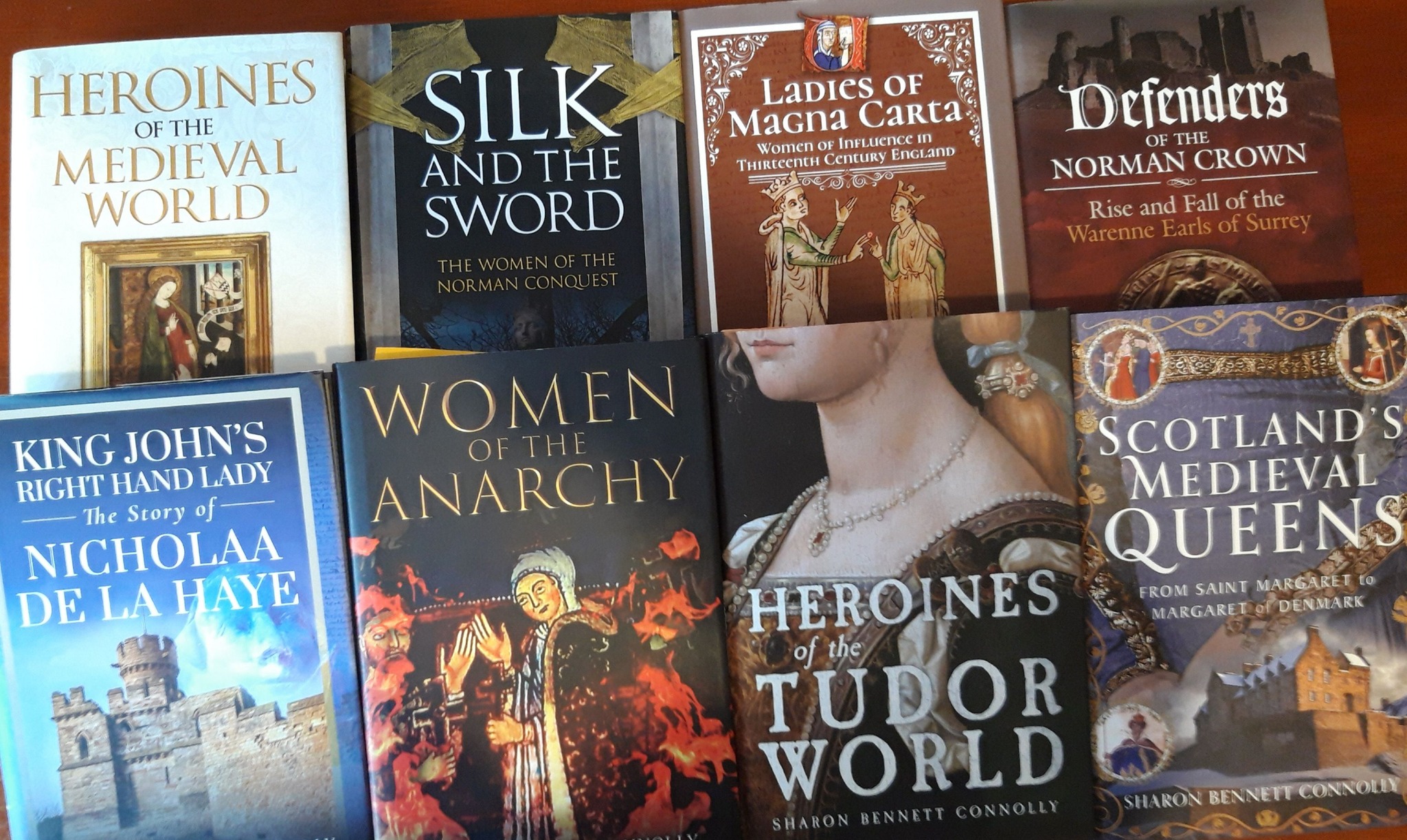
Heroines of the Tudor World tells the stories of the most remarkable women from European history in the time of the Tudor dynasty, 1485-1603. These are the women who ruled, the women who founded dynasties, the women who fought for religious freedom, their families and love. Heroines of the Tudor World is now available from Amberley Publishing and Amazon UK. Women of the Anarchy demonstrates how Empress Matilda and Matilda of Boulogne, unable to wield a sword themselves, were prime movers in this time of conflict and lawlessness. It shows how their strengths, weaknesses, and personal ambitions swung the fortunes of war one way – and then the other. Available from Bookshop.orgAmberley Publishing and Amazon UKKing John’s Right-Hand Lady: The Story of Nicholaa de la Haye is the story of a truly remarkable lady, the hereditary constable of Lincoln Castle and the first woman in England to be appointed sheriff in her own right. Available from all good bookshops Pen & Sword Booksbookshop.org and Amazon

Royal Historical Society

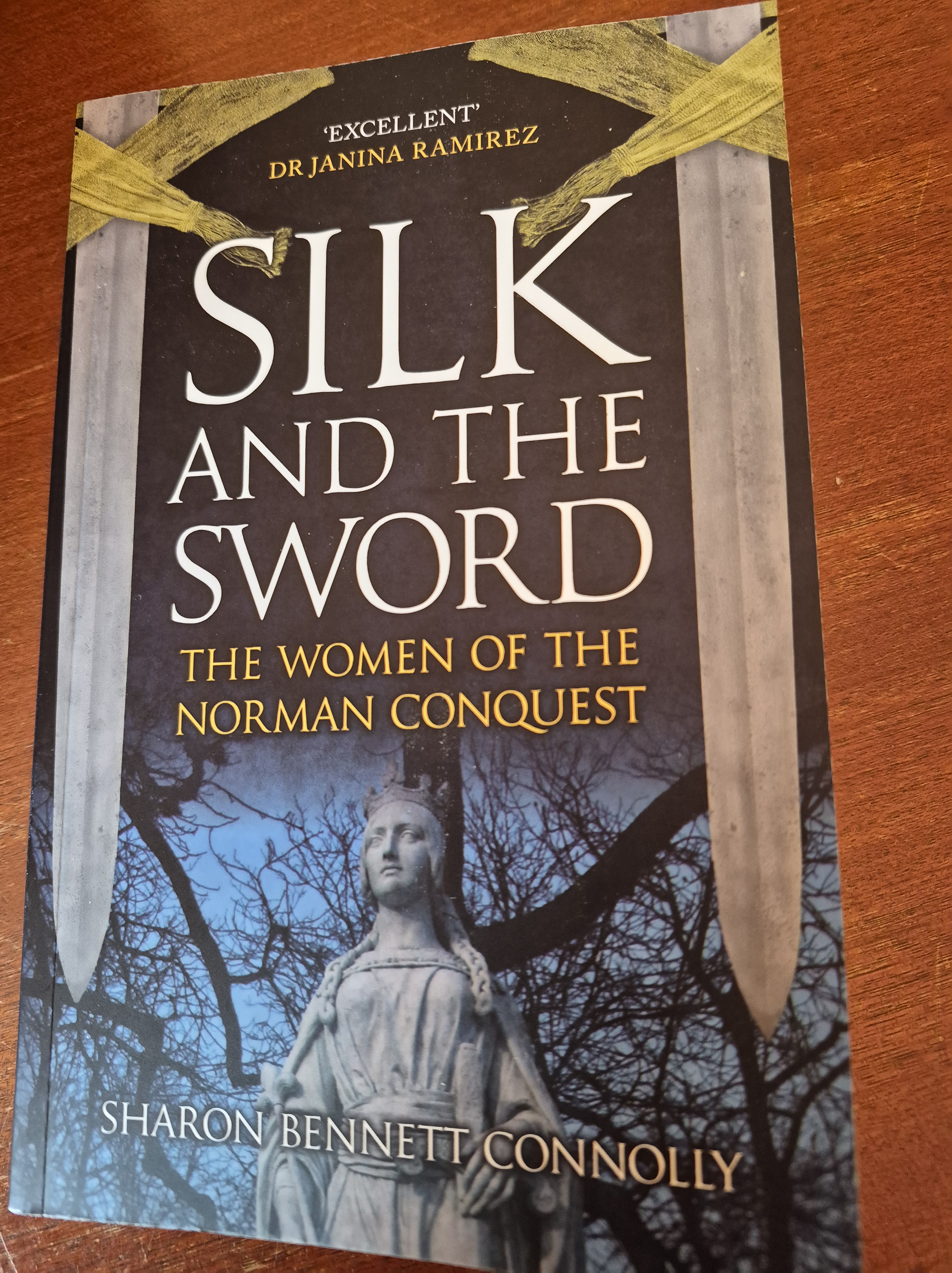
Defenders of the Norman Crown: The Rise and Fall of the Warenne Earls of Surrey tells the fascinating story of the Warenne dynasty, from its origins in Normandy, through the Conquest, Magna Carta, the wars and marriages that led to its ultimate demise in the reign of Edward III. Available from Pen & Sword BooksAmazon in the UK and US, and Bookshop.orgLadies of Magna Carta: Women of Influence in Thirteenth Century England looks into the relationships of the various noble families of the 13th century, and how they were affected by the Barons’ Wars, Magna Carta and its aftermath; the bonds that were formed and those that were broken. It is now available in paperback and hardback from Pen & SwordAmazon, and Bookshop.orgHeroines of the Medieval World tells the stories of some of the most remarkable women from Medieval history, from Eleanor of Aquitaine to Julian of Norwich. Available now from Amberley Publishing and Amazon, and Bookshop.orgSilk and the Sword: The Women of the Norman Conquest traces the fortunes of the women who had a significant role to play in the momentous events of 1066. Available now from Amazon,  Amberley Publishing, and Bookshop.org.

Alternate Endings: An anthology of historical fiction short stories including Long Live the King… which is my take what might have happened had King John not died in October 1216. Available in paperback and kindle from Amazon.

Podcast:
A Slice of Medieval

Have a listen to the A Slice of Medieval podcast, which I co-host with Historical fiction novelist Derek Birks. Derek and I welcome guests, such as Bernard Cornwell, Elizabeth Chadwick and Scott Mariani, and discuss a wide range of topics in medieval history, from significant events to the personalities involved. 

There are now over 80 episodes to listen to!

Every episode is also now available on YouTube.

*

Don’t forget! Signed and dedicated copies of all my books are available through my online bookshop.

For forthcoming online and in-person talks, please check out my Events Page.

You can be the first to read new articles by clicking the ‘Follow’ button, liking our Facebook page or joining me on TwitterThreadsBluesky and Instagram.

*

©2025 Sharon Bennett Connolly FRHistS and Grace Tierney

Black Agnes

History ... the Interesting Bits
Agnes of Dunbar (from a children’s book)

You may have noticed that I love the stories of women from medieval times who do the remarkable, who will defy a tyrant or hold a castle while under siege. Women like Nicholaa de la Haye. And yet, Nicholaa was not the only medieval woman to hold tenaciously to a castle under siege. It was more common than one might think. Matilda de Braose (or Briouze), the Lady of Hay, was another such, who held her castle against the besieging Welsh; as was Agnes of Dunbar, known to history as Black Agnes and a woman who was a blight on English forces in Scotland. Agnes was a bold lady whose acts of defiance against the English would surely have impressed Nicholaa, nationalities aside, of course.

Agnes was the eldest daughter of Thomas Randolph, 1st Earl of Moray, and his wife Isabel, a daughter of Sir John Stewart of Bunkle. Thomas Randolph was a favoured nephew of Robert the Bruce, King of Scots, and one of his most stalwart supporters. Randolph was rewarded with the earldom of Moray and the appointment as guardian during the minority of King Robert’s son and successor, David II, in 1329.

There is very little known of the early life of Agnes, until about 1320, when she was married to Patrick, Earl of Dunbar. We can imagine that Agnes envisioned a life as a typical laird’s lady, raising children, looking after the land and tenants while her husband was away fighting. Unfortunately, Agnes and Patrick would remain childless, so the countess was not preoccupied with raising children. Agnes’s younger sister, Isabel, was married to Sir Patrick Dunbar, Earl Patrick’s cousin, and it would be their son, George, who would be made heir to Earl Patrick and Agnes.

From the timing of the marriage, we can surmise that Agnes was probably born just after the turn of the century, into a country struggling to gain independence from its aggressive neighbour, England. It would, therefore, not be unreasonable to assume that she saw little of her father during her early years as he was frequently away fighting; even after the Scottish victory at Bannockburn in 1314, Randolph continued in active service for the Scottish crown, fighting with Robert the Bruce in Ireland in 1317, and in the borders with England in 1318 and 1319.

Scotland’s troubles continued long into the reign of David II, with the English backing David’s rival, Edward Balliol, son of Scotland’s former king, John Balliol. This despite David II being married to Edward III’s sister, Joan of the Tower. The throne would pass back and forth between the two claimants for several years. When Agnes’s father died in 1332, he was succeeded by her brother Thomas, who was killed just weeks later, at the Battle of Dupplin Moor, fighting those who had been disinherited during the Wars of Independence. Thomas, in turn, was succeeded by another brother, John, who was killed fighting the English at the Battle of Neville’s Cross in 1346.

History ... the Interesting Bits
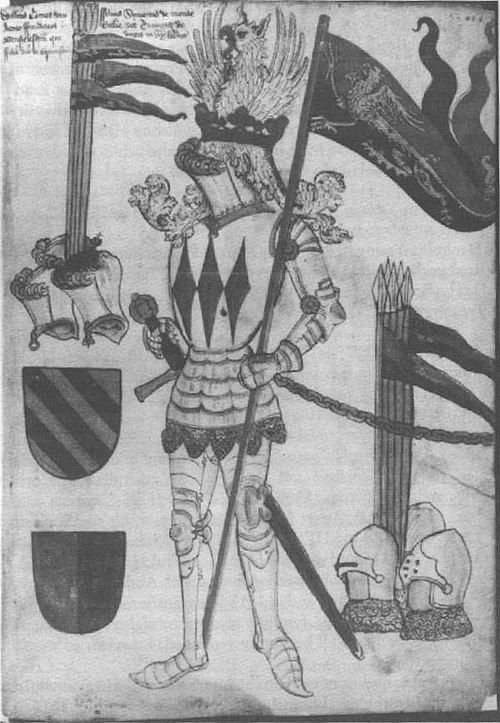
Arms of Patrick, Earl of March

On John’s death, the earldom of Moray would pass to Agnes’s husband in right of his wife. Agnes and Patrick were cousins within the prohibited degree of consanguinity and a dispensation had been needed for them to marry. According to the chronicler, Pitscottie, she gained her name of Black Agnes ‘be ressone she was blak skynnit’, suggesting Agnes had a dark complexion; her black hair, dark eyes and olive skin more common among Mediterranean countries than the northern fastness of Scotland.1 The English attributed a different reason to her name, to them, Black Agnes was the most evil Scotswoman who ever lived. Pitscottie went on to say of Agnes that she was ‘of greater spirit than it became a woman to be’, which, given her actions in the face of the enemy, is a fair appraisal of an incredible woman.2

Agnes was not the only woman to become heavily involved in the Scottish Wars of Independence, which had been a different kind of war from the very beginning. Robert the Bruce’s wife, daughter and sisters had been imprisoned for eight years by Edward I; his sister Christian would herself become involved in the fighting during her nephew David’s reign, defending the castle of Kildrummy against the supporters of Edward Balliol, in 1335.

Most of Agnes Randolph’s life is shrouded in mystery; there is very little mention of her existence until the English army appeared before her castle of Dunbar in January 1338. With the resumption of hostilities between England and Scotland in the 1330s, the castle of Dunbar became strategically important for both sides.

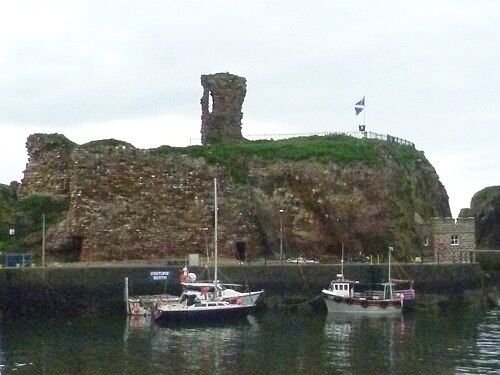
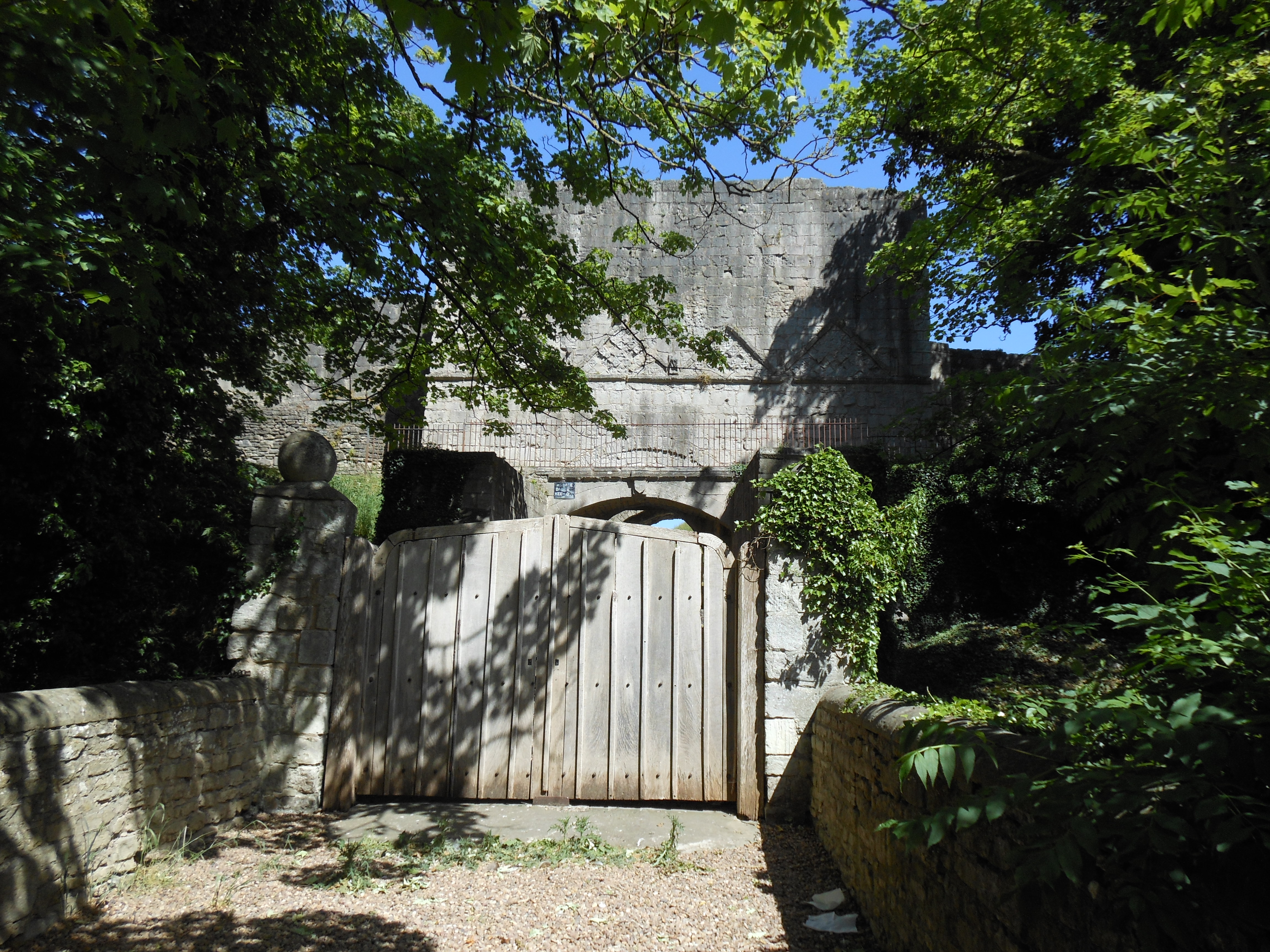
The stronghold had been rebuilt, at the expense of Edward III, in 1333, but by 1337 it was standing against England’s king. English affairs in the north lay in the hands of Richard (II) FitzAlan, Earl of Arundel, and William Montague, Earl of Salisbury, and it was these two experienced military leaders who decided to launch an English offensive by attacking Dunbar. An impressive stronghold, the castle was all but impregnable; it was built at the mouth of the Dunbar harbour, on separate rocks, with interlinking bridges and corridors.

History ... the Interesting Bits
The castle of Dunbar

Strategically, the castle’s position made it impossible for the English to march past it and leave it behind them, intact, able to harry the invaders and cut their lines of communication with England. Earl Patrick was away from home at the time, however, Scottish writer Nigel Tranter suggests that Agnes deliberately allowed herself to be besieged to give the Scottish forces time to rally and organise a resistance to the English invasion. Even so, it must have been a terrifying sight for the countess to look out from the battlements and see an army approaching; and the English earls must surely have been confident that they could beat the countess and her reduced garrison.

In January 1338, the English laid siege to Dunbar, surrounding it as best they could. The army had brought a legion of engineers with it, thus ensuring that a vast number of siege engines could be constructed and the castle’s inhabitants would face an almost constant barrage from missiles. When Salisbury demanded that Agnes surrender, she is said to have responded,

Of Scotland’s King I haud my House,
He pays me meat and fee,
And I will keep my gude and house,
While my house will keep me.3

The siege didn’t go exactly as the English planned. Agnes mocked them at every opportunity, appearing on the battlements even during bombardments. She is said to have had her maids dusting the battlements where they had been struck by missiles. When a siege engine known as a sow (a battering ram) was brought to face the castle, Agnes is said to have taunted the English by shouting ‘Beware, Montagow, for fallow shall they sow.’ The Scots would use the displaced rocks, caused by the barrages, and the missiles that had been fired at them, and rain them back down on their enemies. As the sow was destroyed and the English took cover, Agnes is said to have shouted ‘Behold the litter of English pigs.’4 Attack after attack was repulsed by Agnes and her men; a ballad, said to have been written by Salisbury himself, demonstrates Agnes’ steadfast attitude:

History ... the Interesting Bits
William Montague, from the Salisbury Roll

She makes a stir in tower and trench,
That brawling, boisterous, Scottish wench;
Came I early, came I late,
I found Agnes at the gate!5

The English even tried subterfuge to win the castle, bribing one of the castle’s guards to raise the gate and allow entry to the English attackers. However, the guard, having taken the money, went straight to Agnes:

Believing that they were going to be entering the castle, the Earl and his soldiers arrived at the gate. The guards, thinking Salisbury would be first to enter, dropped the gate after the first soldier stepped into the castle. Fortunately for Salisbury, one of his men had passed him on the approach. The thwarted earl retreated back to his camp with Agnes yelling at him from the castle walls: ‘Fare thee well Montague, I meant that you should have supped with us and support us in upholding the castle from the English!’5

At one point, the English used Agnes’s brother John Randolph in an attempt to persuade her to submit. One of the regents of Scotland during David II’s minority, John had been ambushed and captured in 1335. He was brought before Dunbar Castle, where Salisbury threatened to hang him in full view of his sister. Unperturbed, Agnes responded that John’s death could only be to her own benefit; although she could not inherit John’s titles, she was, alongside her sister, co-heir to his lands. John was given a reprieve and sent to imprisonment in England. Ironically, he would be freed in 1341 as part of a prisoner exchange; for the earl of Salisbury, of all people!

The problem for the English lay in the fact that they could not entirely surround the castle. Although they could besiege it from the land, the castle was still accessible by sea. An English fleet was guarding the harbour, but Sir Alexander Ramsay of Dalhousie managed to replenish the castle’s dwindling supplies by using a fleet of fishing boats, approaching in the early dawn from the cover of the Bass Rock. He managed to sneak through the enemy lines, making a dash for the harbour before the larger English vessels could get underway. Ramsay managed to land vital supplies and reinforcements for the garrison through a partially submerged entrance.

Agnes even sent the Earl of Salisbury some fresh-baked food when she knew the English supplies were running low, taunting the poor earl. Eventually, Agnes’s resistance proved too much for the English army, and, after nineteen weeks, on 10 June 1338, they lifted the siege, claiming their men and resources were needed for the king’s campaigns overseas. It had cost over £6,000, prompting one English chronicler to record that the siege had been ‘wasteful, and neither honourable nor secure, but useful and advantageous to the Scots’.6

History ... the Interesting Bits
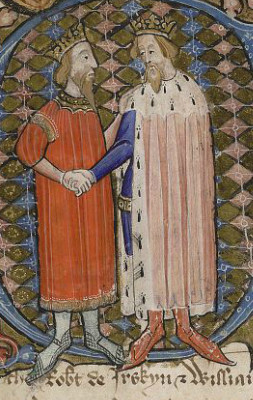
David II, King of Scots, and Edward III, King of England

The struggle against the English continued for several more years, but David II and his queen, Joan of the Tower, the daughter of Edward II and sister of Edward III, returned to Scotland amid great rejoicing in 1341; only for David to become a captive of Edward III following the Battle of Neville’s Cross in 1346. Scotland’s king spent eleven years in English captivity, while Scotland was ruled by his nephew and heir, Robert the Steward.

David returned in 1357, the same year that Patrick, Earl of Dunbar, participated in the raid that saw Berwick returned to Scottish sovereignty, for a short time at least. Earl Patrick continued to witness royal charters until July 1368 and remained active in Scottish affairs until his death in 1369. When Agnes also died in 1369, aged about 57, her father’s earldom and that of her husband passed to her nephew, George Dunbar.

Agnes of Dunbar was a women of status, raised to command households, if not men, who stepped up to the mark when the occasion demanded it. Although she was not educated in military techniques and tactics, she had lived within a world that was constantly on a war footing and when faced with a fight, she rose to the challenge. With her death, Black Agnes passed into legend, her tenacity and stalwart defence of Dunbar Castle a shining example of what a mere woman can be capable of achieving.

Images:

Courtesy of Wikipedia

Notes:

1. The historie and cronicles of Scotland … by Robert Lindesay of Pitscottie, ed. A. J. G. Mackay, 3 vols, Scottish Text Society, 42–3, 60 (1899–1911); 2. ibid; 3. Kyra Cornelius Kramer, Black Agnes and Psychological Warfare, kyrackramer.com; 4. Nigel Tranter, The Story of Scotland; 5. Kramer, Black Agnes and Psychological Warfare; 6. Historia Anglicana

Sources:

The historie and cronicles of Scotland … by Robert Lindesay of Pitscottie, ed. A. J. G. Mackay, 3 vols, Scottish Text Society, 42–3, 60 (1899–1911); Kyra Cornelius Kramer, Black Agnes and Psychological Warfare, kyrackramer.com; Nigel Tranter, The Story of Scotland; oxforddnb.com; Brewer’s British Royalty by David Williamson; Kings & Queens of Britain by Joyce Marlow; Mammoth Book of British Kings & Queens by Mike Ashley; Oxford Companion to British History Edited by John Cannon; Britain’s Royal Families by Alison Weir; educationscotland.gov.uk/scotlandhistory; englishmonarchs.co.uk; The Perfect King by Ian Mortimer; Scotland, History of a Nation by David Ross; The Life & Times of Edward III by Paul Johnson; The Reign of Edward III by W.M. Ormrod

*

My Books

Signed, dedicated copies of all my books are available through my online bookshop.

Out now: Scotland’s Medieval Queens

Books by Sharon Bennett Connolly

Scotland’s history is dramatic, violent and bloody. Being England’s northern neighbour has never been easy. Scotland’s queens have had to deal with war, murder, imprisonment, political rivalries and open betrayal. They have loved and lost, raised kings and queens, ruled and died for Scotland. From St Margaret, who became one of the patron saints of Scotland, to Elizabeth de Burgh and the dramatic story of the Scottish Wars of Independence, to the love story and tragedy of Joan Beaufort, to Margaret of Denmark and the dawn of the Renaissance, Scotland’s Medieval Queens have seen it all. This is the story of Scotland through their eyes.

Scotland’s Medieval Queens gives a thorough grounding in the history of the women who ruled Scotland at the side of its kings, often in the shadows, but just as interesting in their lives beyond the spotlight. It’s not a subject that has been widely covered, and Sharon is a pioneer in bringing that information into accessible history.’ Elizabeth Chadwick (New York Times bestselling author)

Available now from Amazon and Pen and Sword Books

Coming 30 March 2026: Princesses of the Early Middle Ages

Books by Sharon Bennett Connolly

Daughters of kings were often used to seal treaty alliances and forge peace with England’s enemies. Princesses of the Early Middle Ages: Royal Daughters of the Conquest explores the lives of these young women, how they followed the stereotype, and how they sometimes managed to escape it. It will look at the world they lived in, and how their lives and marriages were affected by political necessity and the events of the time. Princesses of the Early Middle Ages will also examine how these girls, who were often political pawns, were able to control their own lives and fates. Whilst they were expected to obey their parents in their marriage choices, several princesses were able to exert their own influence on these choices, with some outright refusing the husbands offered to them.

Their stories are touching, inspiring and, at times, heartbreaking.

Princesses of the Early Middle Ages: Royal Daughters of the Conquest is now available for pre-order.

Also by Sharon Bennett Connolly:

Books by Sharon Bennett Connolly

Heroines of the Tudor World tells the stories of the most remarkable women from European history in the time of the Tudor dynasty, 1485-1603. These are the women who ruled, the women who founded dynasties, the women who fought for religious freedom, their families and love. Heroines of the Tudor World is now available from Amberley Publishing and Amazon UK. Women of the Anarchy demonstrates how Empress Matilda and Matilda of Boulogne, unable to wield a sword themselves, were prime movers in this time of conflict and lawlessness. It shows how their strengths, weaknesses, and personal ambitions swung the fortunes of war one way – and then the other. Available from Bookshop.orgAmberley Publishing and Amazon UKKing John’s Right-Hand Lady: The Story of Nicholaa de la Haye is the story of a truly remarkable lady, the hereditary constable of Lincoln Castle and the first woman in England to be appointed sheriff in her own right. Available from all good bookshops Pen & Sword Booksbookshop.org and Amazon

Royal Historical Society

Defenders of the Norman Crown: The Rise and Fall of the Warenne Earls of Surrey tells the fascinating story of the Warenne dynasty, from its origins in Normandy, through the Conquest, Magna Carta, the wars and marriages that led to its ultimate demise in the reign of Edward III. Available from Pen & Sword BooksAmazon in the UK and US, and Bookshop.orgLadies of Magna Carta: Women of Influence in Thirteenth Century England looks into the relationships of the various noble families of the 13th century, and how they were affected by the Barons’ Wars, Magna Carta and its aftermath; the bonds that were formed and those that were broken. It is now available in paperback and hardback from Pen & SwordAmazon, and Bookshop.orgHeroines of the Medieval World tells the stories of some of the most remarkable women from Medieval history, from Eleanor of Aquitaine to Julian of Norwich. Available now from Amberley Publishing and Amazon, and Bookshop.orgSilk and the Sword: The Women of the Norman Conquest traces the fortunes of the women who had a significant role to play in the momentous events of 1066. Available now from Amazon,  Amberley Publishing, and Bookshop.org.

Alternate Endings: An anthology of historical fiction short stories including Long Live the King… which is my take what might have happened had King John not died in October 1216. Available in paperback and kindle from Amazon.

Podcast:

A Slice of Medieval

Have a listen to the A Slice of Medieval podcast, which I co-host with Historical fiction novelist Derek Birks. Derek and I welcome guests, such as Bernard Cornwell, Elizabeth Chadwick and Scott Mariani, and discuss a wide range of topics in medieval history, from significant events to the personalities involved. 

There are now over 80 episodes to listen to!

Every episode is also now available on YouTube.

*

Don’t forget! Signed and dedicated copies of all my books are available through my online bookshop.

For forthcoming online and in-person talks, please check out my Events Page.

You can be the first to read new articles by clicking the ‘Follow’ button, liking our Facebook page or joining me on TwitterThreadsBluesky and Instagram.

*

©2025 Sharon Bennett Connolly FRHistS

Book Corner: The Knight’s Pledge by Scott Mariani

History... the Interesting Bits

1191.

Will Bowman, now fully entangled in Richard Lionheart’s crusade, has reached the Holy Land. However, just as he and his crew are about to touch down in Acre, they are drawn into an intense battle at sea, where they are faced with the dreaded Byzantine weapon: Greek Fire.

Barely escaping with his life, Will gains the trust of Richard Lionheart, moving into his service. But as the siege of Acre continues, and Richard’s campaign grows ever more brutal and barbaric, Will begins to wonder just how safe his new position is.

And when the King sends him on a seemingly doomed mission, Will must ask himself: who exactly is he fighting for?

Well, Scott Mariani has taken to historical fiction like a duck to water. He has a flare for it. But then, he did draw me in with his Ben Hope novels, all of which had a historical mystery at the heart of the the story. With his second full, historical fiction, The Knight’s Pledge, he draws the reader into the action from the very first pages as his hero, Will Bowman, arrives at Acre to take part in the Third Crusade.

And an added bonus is that a quote from my review of the first book, The Pilgrim’s Revenge, is among the endorsements on the first pages!

And what an adventure we are treated to. Scott Mariani expertly blends fact with fiction and tells a story that will keep you hooked.

The story is gripping and full of suspense – you are never quite sure whether the heroes are going to succeed – or even make it out alive!

History... the Interesting Bits

Will had personally come face to face with King Richard only once, and then for only a few brief moments. But he had seen his monarch flying fearlessly into the thick of battle enough times to know how he would respond.

Sure enough, almost within a heartbeat the flagship had diverted course and was steering straight at the enemy vessel, all oars manned and powering as hard as they could go. The captain of Will’s ship instantly followed suit, with a clamour of shouted orders and the frenzied activity of the sailors all around them. Every crewman aboard knew his duty as well as he knew his own name, and they needed little encouragement as they rushed to their stations and flung themselves behind the oars. Amid the rapid pounding of the drum and hoarse cries of ‘Heave ho, boys,’ and ‘We’ll have at those bastards,’ the ship picked up pace and curved sharply around. As they leaned hard into the turn, the deck sloped like a pitched roof and the bows threw up a white wave that smothered the nearside rail with foam.

One by one, every other ship of the fleet was veering off their course to engage this new enemy. Will sprinted back across the sloping deck to where he and his companions had been sitting earlier and snatched up the weapons that he kept stowed next to his habitual sleeping place. With hands trembling in anticipation of the fight that would very soon be on them he buckled up his sword belt, then quickly tensioned and strung his bow stave, an action that was second nature to him. He had been an expert with the bow for such a large part of his life that it had become the name he was known by. His leather quiver contained a sheaf of arrows carefully fashioned by his own hand, made to fly straight and true and each fitted with an iron-pointed bodkin head capable of piercing a coat of chain mail like the one he was wearing under his leather jerkin.

Gabriel came running hot on his heels, and disregarding his precious chessmen that were strewn and rolling all about the deck he grabbed the curved falchion sword he favoured over the more conventional straight-bladed variety. Samson’s preference was for his short-handled war axe, a gift to him from Will, which had hammered and split the heads of many a foe in the battles they had fought en route.

But this new enemy was like no other they had faced before. As the deck levelled itself after their steep turn, Will glanced forward and saw the Saracen ship suddenly much closer, partly wreathed behind the curtain of roiling black smoke that was pouring from the burning galley. ‘Godspeed,’ he yelled at Gabriel and Samson, then ran for the laddered companionway that led up to the elevated section of the forecastle. It was already teeming with his fellow archers, mostly equipped with crossbows and only a minority who used the more old-fashioned but further-shooting and more accurate – when properly handled – longbow.

History... the Interesting Bits

Scott Mariani’s meticulous research and attention to detail helps to recreate the Holy Land of 1191. The sights, the smells, the spiders! Oh, and the insults! I have a new favourite insult; ‘scobberlotcher’.

Will Bowman proves how fearless and brave he can be. Though he is still young and has a naivety about him which I think will be increasingly challenged as his war goes on. It is fascinating to watch the evolution of this young man, from grieving farmer to warrior. And expert archer, he’s strong, courageous and loyal. He is quick-witted, intelligent, even, a natural leader of men, but still in possession of a sense of chivalry that will get him into trouble.

In the first half of the story, we follow the experiences of the army during the Siege of Acre, and its aftermath. Ever a writer with a sense of adventure, Scott Mariani then sends our hero on a near-suicidal mission in search of lost treasure. While it may not be in the historical record, the quest is certainly plausible – as is the outcome! (but no spoilers!)

All in all, The Knight’s Pledge is an absolute joy to read – or, rather, devour. Scott Mariani has lost none of his legendary storytelling skills in his transition from the thriller genre to historical fiction. And I like to think I can see a little of Ben Hope in this new hero, Will Bowman. I think Ben would certainly have approved of Will.

At least I know what I’m getting my dad for Christmas – he’s gonna love The Knight’s Pledge!

Buy the Book: The Knight’s Pledge

About the author:

History... the Interesting Bits

Scott Mariani is the No.1 Sunday Times bestselling author of the multi-million-selling Ben Hope thrillers. From 2025 he is launching into a new historical adventure series featuring medieval English hero Will Bowman, who is forced from his home to join King Richard ‘the Lionheart’ on the Third Crusade and rises up to become a knight. Book 1,THE PILGRIM’S REVENGE, is available from April 2025 and is published by Hodder & Stoughton.

Scott lives and writes in west Wales, UK. You can find out more about his work by visiting his official website.

*

My Books:

Signed, dedicated copies of all my books are available, please get in touch by completing the contact me form or through my online bookshop.

Out now: Scotland’s Medieval Queens

Books by Sharon Bennett Connolly

Scotland’s history is dramatic, violent and bloody. Being England’s northern neighbour has never been easy. Scotland’s queens have had to deal with war, murder, imprisonment, political rivalries and open betrayal. They have loved and lost, raised kings and queens, ruled and died for Scotland. From St Margaret, who became one of the patron saints of Scotland, to Elizabeth de Burgh and the dramatic story of the Scottish Wars of Independence, to the love story and tragedy of Joan Beaufort, to Margaret of Denmark and the dawn of the Renaissance, Scotland’s Medieval Queens have seen it all. This is the story of Scotland through their eyes.

Scotland’s Medieval Queens gives a thorough grounding in the history of the women who ruled Scotland at the side of its kings, often in the shadows, but just as interesting in their lives beyond the spotlight. It’s not a subject that has been widely covered, and Sharon is a pioneer in bringing that information into accessible history.’ Elizabeth Chadwick (New York Times bestselling author)

Available now from Amazon and Pen and Sword Books

Coming in 2026!

Daughters of kings were often used to seal treaty alliances and forge peace with England’s enemies. Princesses of the Early Middle Ages: Royal Daughters from the Conquest and Princesses of the Later Middle Ages: Royal Daughters of the Plantagenets will explore the lives of these young women, demonstrating how they followed the stereotype, and how they sometimes managed to escape it. It will look at the world they lived in, and how their lives and marriages were affected by political necessity and the events of the time.

Were they political pawns? Or, were they able to control their own lives and fates? What impact did they have on the world in which they lived?

Their stories are touching, inspiring and, at times, heartbreaking.

Princesses of the Early Middle Ages: Royal Daughters from the Conquest is now available for pre-order from Amazon and bookshop.org.

Also by me:

Books by Sharon Bennett Connolly

Heroines of the Tudor World tells the stories of the most remarkable women from European history in the time of the Tudor dynasty, 1485-1603. These are the women who ruled, the women who founded dynasties, the women who fought for religious freedom, their families and love. Heroines of the Tudor World is now available for pre-order from Amberley Publishing and Amazon UK. Women of the Anarchy demonstrates how Empress Matilda and Matilda of Boulogne, unable to wield a sword themselves, were prime movers in this time of conflict and lawlessness. It shows how their strengths, weaknesses, and personal ambitions swung the fortunes of war one way – and then the other. Available from Bookshop.orgAmberley Publishing and Amazon UKKing John’s Right-Hand Lady: The Story of Nicholaa de la Haye is the story of a truly remarkable lady, the hereditary constable of Lincoln Castle and the first woman in England to be appointed sheriff in her own right. Available from all good bookshops Pen & Sword Booksbookshop.org and Amazon

Royal Historical Society

Defenders of the Norman Crown: The Rise and Fall of the Warenne Earls of Surrey tells the fascinating story of the Warenne dynasty, from its origins in Normandy, through the Conquest, Magna Carta, the wars and marriages that led to its ultimate demise in the reign of Edward III. Available from Pen & Sword BooksAmazon in the UK and US, and Bookshop.orgLadies of Magna Carta: Women of Influence in Thirteenth Century England looks into the relationships of the various noble families of the 13th century, and how they were affected by the Barons’ Wars, Magna Carta and its aftermath; the bonds that were formed and those that were broken. It is now available in paperback and hardback from Pen & SwordAmazon, and Bookshop.orgHeroines of the Medieval World tells the stories of some of the most remarkable women from Medieval history, from Eleanor of Aquitaine to Julian of Norwich. Available now from Amberley Publishing and Amazon, and Bookshop.orgSilk and the Sword: The Women of the Norman Conquest traces the fortunes of the women who had a significant role to play in the momentous events of 1066. Available now from Amazon,  Amberley Publishing, and Bookshop.org.

Alternate Endings: An anthology of historical fiction short stories including Long Live the King… which is my take what might have happened had King John not died in October 1216. Available in paperback and kindle from Amazon.

*

Podcast:

History... the Interesting Bits

Have a listen to the A Slice of Medieval podcast, which I co-host with Historical fiction novelist Derek Birks. Derek and I welcome guests, such as Bernard Cornwell and Elizabeth Chadwick, and discuss a wide range of topics in medieval history, from significant events to the personalities involved. 

In episode 71, Derek Birks and I chat with Scott Mariani about his new hero, Will Bowman and the journey to the Third Crusade.
There are now over 80 episodes to listen to!

Every episode is also available on YouTube.

*

Don’t forget! Signed and dedicated copies of all my books are available through my online bookshop.

For forthcoming online and in-person talks, please check out my Events Page.

You can be the first to read new articles by clicking the ‘Follow’ button, liking our Facebook page or joining me on TwitterThreadsBluesky and Instagram.

*

©2025 Sharon Bennett Connolly FRHistS

Matilda of Scotland, the Good Queen

History... the Interesting Bits
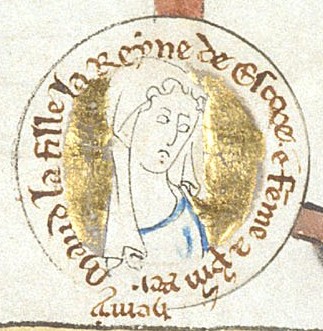
Matilda (Edith) of Scotland, Queen of England

Matilda of Scotland was the daughter of Malcolm III Canmore, King of Scots, and his wife, the saintly Queen Margaret. With Margaret’s descent from Alfred the Great, Matilda not only had the blood of Scottish kings flowing through her veins but also that of England’s Anglo-Saxon rulers. Born in the second half of 1080, Matilda was named Edith at her baptism, her name being changed to Matilda at the time of her marriage, most likely to make it more acceptable to the Norman barons. To avoid confusion, we will call her Matilda for the whole article.

The baby princess’s godfather was none other than Robert Curthose, who was visiting Scotland at the time of her birth. Her godmother was England’s queen, Matilda of Flanders. She and her younger sister, Mary, who was born in 1082, were sent to England to be educated by their maternal aunt Christina, at Romsey Abbey in 1086. A nun who spent time at both Romsey and Wilton abbeys, Christina was said to have treated Matilda harshly, the young princess constantly ‘in fear of the rod of my aunt’.1 Christina’s treatment of Matilda was made public during a church inquiry into whether or not Matilda had, in fact, been professed as a nun, at which point Matilda made her striking references to the ‘rage and hatred … that boiled up in me’.2

Before 1093 the two Scottish princesses, now approaching their teens, had moved on to Wilton Abbey to continue their education, away from the harsh discipline of their aunt. Like Romsey, Wilton was a renowned centre for women’s education and learning. It could accommodate between eighty and ninety women, and was once patronised by Edward the Confessor’s wife, Edith of Wessex. The abbey had a reputation for educating women from the highest echelons of the nobility and the royal family itself; the girls’ mother, Queen Margaret, had also been sent to Wilton to be educated after arriving in England in the late 1050s. The abbey was a popular destination for pilgrims, housing among its relics ‘a nail from the True Cross, a portion of the Venerable Bede and the body of St Edith’.3 Matilda’s first language was English, but she is known to have spoken French at Wilton. She also learned some Latin, read both the old and new testaments of the Bible, ‘the books of the Church fathers and some of the major Latin writers’.4

History... the Interesting Bits
Malcolm IV and St Margaret

By 1093, thoughts were turning to Matilda’s future, but politics intervened. King Malcolm had a disagreement with King William II Rufus after which ‘they parted with great discord, and the king Malcolm returned home to Scotland.’5 On his way home, Malcolm stopped at Wilton to collect his daughters. On his arrival, he found Matilda wearing a veil. The Scots king ripped the offending item from his daughter’s head, tearing it to pieces before trampling the garment into the earth.

Malcolm III insisted that the two girls were not destined for the religious life.

Father and daughters then returned to Scotland, only to find Queen Margaret was ailing, her health had been deteriorating gradually for some time. Despite the queen’s illness, King Malcolm took two of his sons and an army into England, raiding Northumberland. Malcolm and his eldest son, Edward, were killed. Queen Margaret was told the news just a few days later and died shortly after. Having lost both parents in such a short space of time, the two princesses were taken back south by their uncle Edgar the Ӕtheling, though whether they stayed at a convent or resided at court is unclear. Mary would eventually be married to Eustace III, Count of Boulogne, and was the mother of Matilda of Boulogne, wife of King Stephen.

Matilda herself was not short of suitors, who included Alan the Red, Count of Richmond and William de Warenne, Earl of Surrey. Orderic Vitalis explains:

Alain the Red, Count of Brittany, asked William Rufus for permission to marry Matilda, who was first called Edith, but was refused. Afterwards, William de Warenne, Earl of Surrey, asked for this princess; but reserved for another by God’s permission, she made a more illustrious marriage. Henry, having ascended the English throne, married Matilda.6

History... the Interesting Bits
Christina of Wessex

As events unfolded, Matilda was caught up in accusations and scandal surrounding her erstwhile nunnery at Wilton. She refused to return to the convent and insisted that she had never intended to dedicate herself to the church. When Archbishop Anselm ordered Osmund, Bishop of Salisbury to retrieve this ‘prodigal daughter of the king of Scots whom the devil made to cast off the veil’, the princess stood firm and defied him.’7

William II Rufus was famously killed in a hunting accident in the New Forest on 2 August 1100, shot by an arrow loosed by Walter Tirel. William II’s youngest brother, Henry, who was among the hunting party, wasted no time grieving his brother’s death. Leaving the dead king’s body to be looked after by others, he rode fast for Winchester. He seized control of the royal treasury before heading to London and his coronation, which took place on 5 August, just three days after William II’s death. Henry’s surviving older brother, Robert, was still on his way home from the Crusades, unable to take advantage of William’s death to claim the English crown for himself. The newly crowned King Henry I now needed a wife and settled on Matilda of Scotland.

The marriage was not without controversy, however, and before it could take place the church conducted an inquiry into the suggestion that Matilda was a runaway nun. Although Matilda vehemently rejected the claim that she had been professed as a nun, the fact witnesses had seen her wearing a veil on multiple occasions counted against her. Matilda appealed to Archbishop Anselm to look into the matter. The archbishop was appalled at the thought a religious vow may have been broken and declared that he ‘would not be induced by any pleading to take from God his bride and join her to any earthly husband’.8 After meeting with Matilda personally, and hearing her side of the story, the archbishop was persuaded to call an ecclesiastical council to decide the matter. Using Archbishop Lanfranc’s previous ruling that Anglo-Saxon women who had sought refuge in a convent after the Norman Conquest ‘could not be held as sworn nuns when they emerged from hiding’, the council ruled in Matilda’s favour.9 The council determined that ‘under the circumstances of the matter, the girl could not rightly be bound by any decision to prevent her from being free to dispose of her person in whatever way she legally wished’.10

History... the Interesting Bits
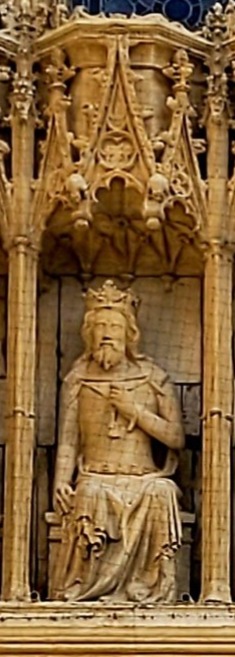
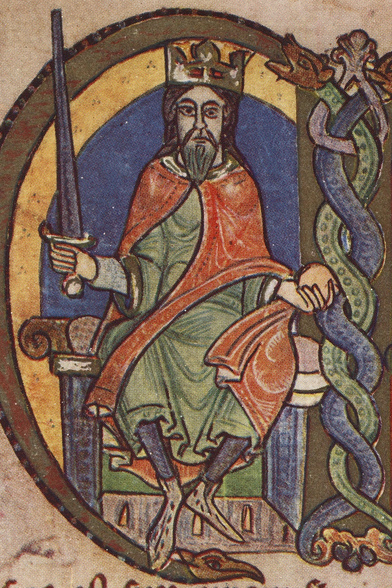
Henry I, King of England in Lincoln Cathedral’s Gallery of Kings

When the wedding finally went ahead, Archbishop Anselm related the controversy over Matilda’s status to the gathered congregation and asked if there were any objections. According to Eadmer, ‘The crowd cried out in one voice that the affair had been rightly decided and that there was no ground on which anyone … could possibly raise any scandal.’11

Henry I married Matilda of Scotland on 11 November 1100, at Westminster Abbey, her name officially and permanently changed from Edith. Marriage between Henry and Matilda represented a continuity of the old Anglo-Saxon royal line; an heir produced by the royal couple would be heir to both the Norman royal house and the ancient royal house of Wessex, creating a genuine unifying force within England. The marriage was also a union between the royal houses of England and Scotland. Offering the promise of peace on England’s troublesome northern border, it would allow Henry to look to his interests on the continent and watch for the return of his older brother, Robert, from crusade.

The honeymoon period for the royal couple was was short-lived and in 1101, Robert had returned and heard of King William’s death and Henry’s seizure of the crown. The duke sent messengers to Henry, asking him to hand over the kingdom. Henry refused. It probably came as no surprise to Henry, then, when Robert invaded England on 20 July 1101. One chronicler claimed that Matilda was in childbed at this time; if she was, the child did not survive. More likely given the timing is that the queen was having a difficult early pregnancy with Matilda, who was born seven months later.

Neither side, however, was keen on all-out war, especially a civil war, and peace talks began almost immediately as the two armies of the royal brothers came face to face at Alton. In the subsequent Treaty of Alton, the duke accepted an annuity of 3,000 marks, drawn from the revenues of England, to abandon his invasion and renounce his claims to the throne. In return, King Henry renounced his lands in Normandy save for Domfront, where he had made a solemn vow to the inhabitants that he would never relinquish control. The brothers agreed to support each other should either be attacked by a third party, and to be each other’s heir if neither sired a son.

History... the Interesting Bits
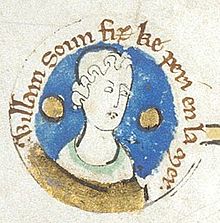
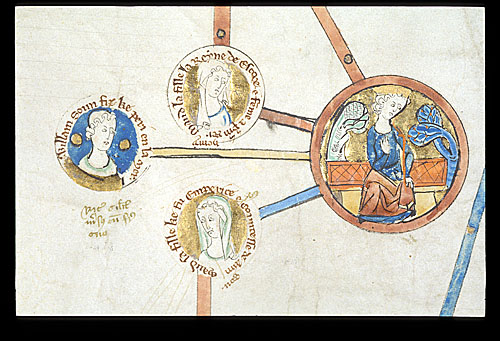
William the Ætheling

Robert returned to Normandy but would soon be pulled back to England by a sense of chivalric duty to his barons. The agreement at Alton between the brothers had left Earl William II de Warenne isolated and at Henry’s mercy. For violating his oath of homage to the king, and for violence perpetrated by his men in Norfolk, Earl Warenne’s English estates were declared forfeit and he was effectively forced to cross the English Channel into exile. Earl William complained to Duke Robert of his sufferings and losses on the duke’s behalf. The duke obviously felt some responsibility, as he set out for England to intercede with his brother on the earl’s behalf. Robert arrived at Henry’s court, uninvited and unwelcome, in 1103. Threatened with imprisonment by an angry brother, he was persuaded by Queen Matilda, to relinquish his annuity of 3,000 marks in return for the reinstatement of Earl William’s English estates and titles.

The primary duty of a queen was to secure the succession by producing an heir as soon as she possibly could. Henry still had his older brother, Robert, to contend with and an heir would certainly strengthen his position. By September 1103, Matilda of Scotland had fulfilled this duty by giving birth to a daughter, Matilda, in February 1102, and the much-desired son and heir, William, known as William Ætheling in an allusion to his descent from the Anglo-Saxon royal line, in September 1103. It is possible third child was either stillborn or short-lived. After the births of the royal children, the king and queen appear to have lived separately, with Queen Matilda establishing herself at Westminster. It was rumoured that the queen had chosen a life of celibacy once her duties of producing an heir had been fulfilled.

History... the Interesting Bits
The family of Henry I

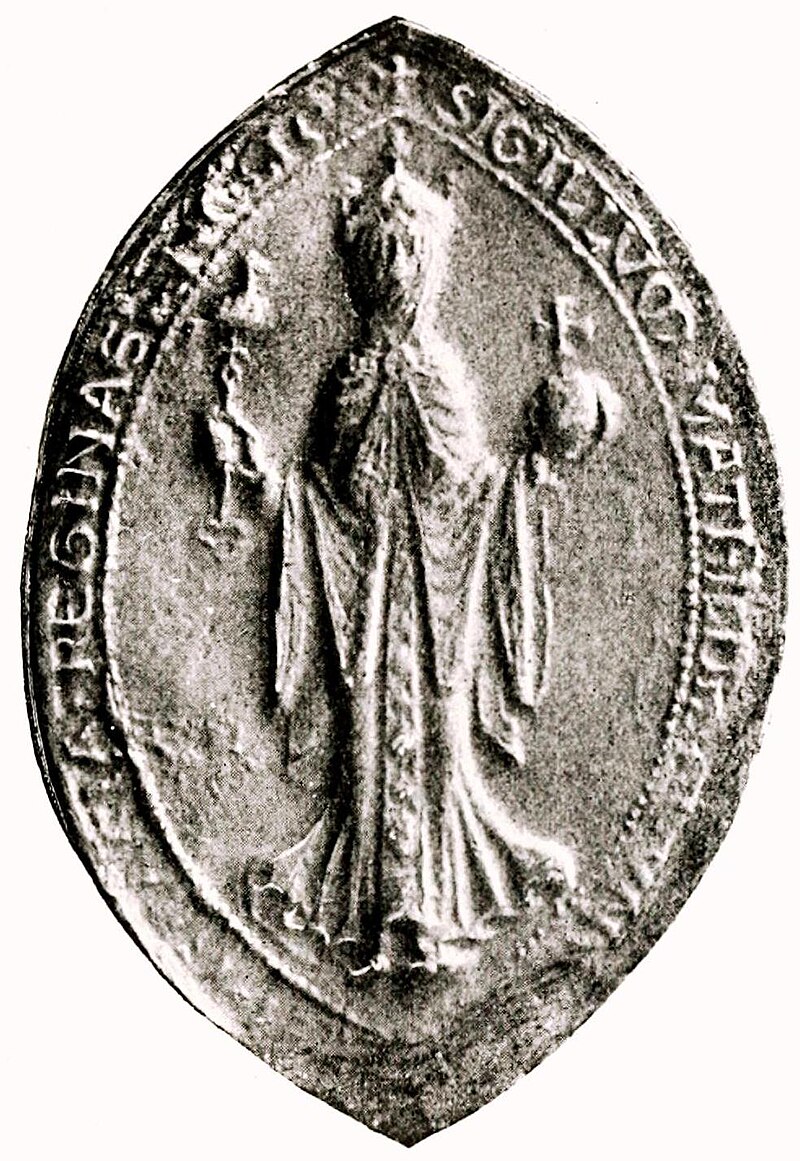
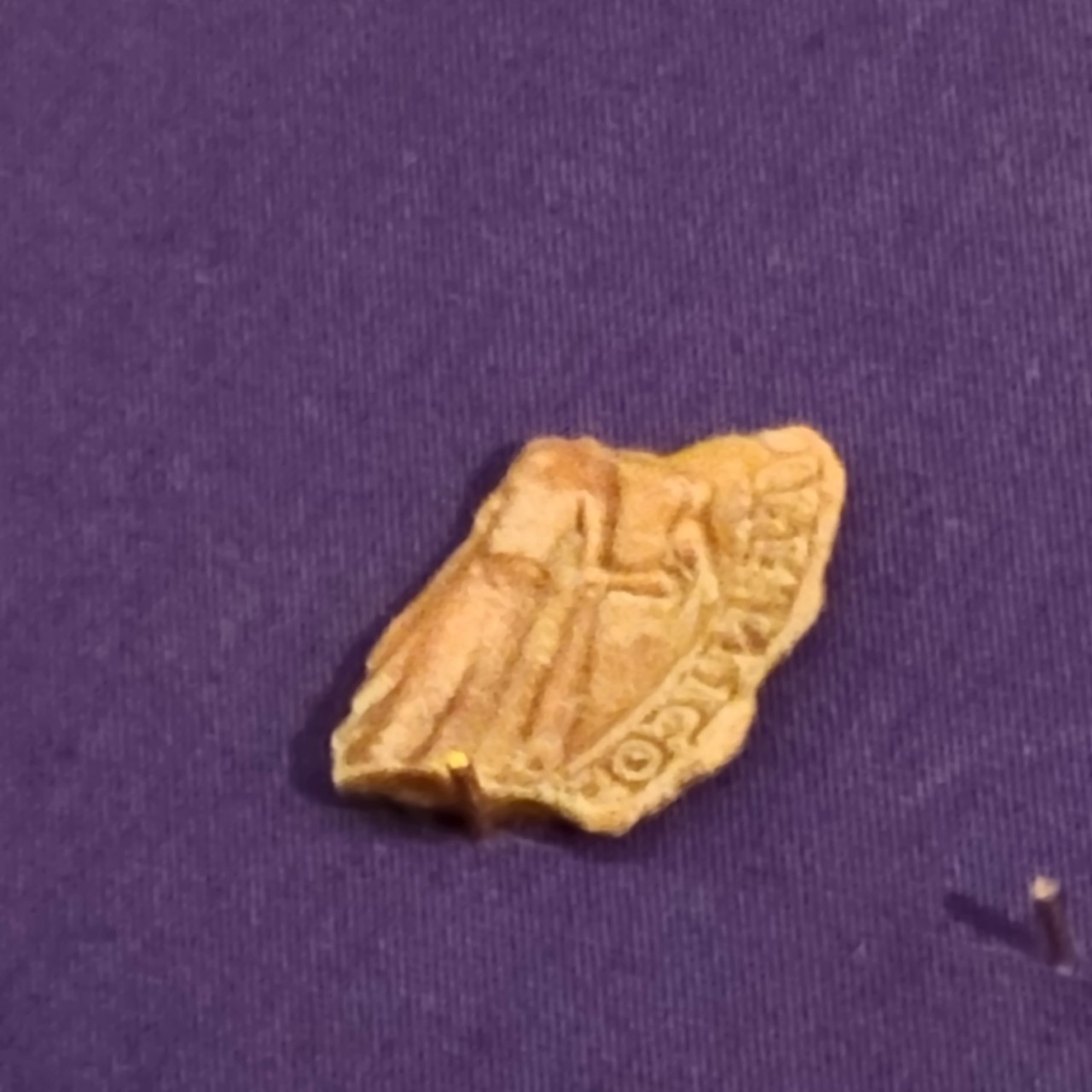
Disputes with Normandy were to be a feature of the first half of Henry’s reign, even after the capture of his brother, Robert at the Battle of Tinchebrai in 1106. Robert would spend the rest of his life imprisoned in England, but his son, William Clito, would later take up the fight. And while Henry subjugated Normandy, Queen Matilda remained in England, often chairing meetings of the king’s council during his absence. The queen had her own seal, which she appended to her charters and which depicted her ‘standing, crowned and wearing a long embroidered robe which falls in folds over her feet. Over this is a seamless mantle which has an embroidered border and is draped over her head. It is fastened at her throat by a brooch, and falls in folds over her arms. In her right hand she holds a sceptre surmounted by a dove, and in her left an orb surmounted by a cross.’.12

As queen, Matilda had received a generous dower settlement, which had been granted from those lands once held by Edith, Edward the Confessor’s queen. Surviving charters issued by Matilda show that she controlled the abbeys of Waltham, Barking and Malmesbury. She held further territory in Rutland and property in London including the wharf later known as Queenhithe, and she also received the tolls of Exeter. Her staff included two clerks who would eventually become bishops. The queen appears to have had a personal interest in managing her estates. In the charter granting Waltham Abbey to his wife, Henry mentions the ‘queen’s court’ held there. Among the queen’s many good works were the building of bridges in Surrey and Essex and the construction of a public bathhouse at Queenhithe. Working with Anselm, Archbishop of Canterbury, Queen Matilda founded a house for the Augustinian canons, Holy Trinity, at Aldgate in London. She also founded a leper hospital at St Giles, funded by sixty shillings a year from dock revenues at her wharf.

Leprosy and the care of lepers was of great concern to the queen. In addition to St Giles, she was the benefactress of a leper hospital at Chichester. Indeed, the queen’s brother David – later David I, King of Scots – told a tale in which he witnessed his sister administering to lepers in her own apartments in Westminster:

History... the Interesting Bits
David I, King of Scots

The place was full of lepers and there was the Queen standing in the middle of them. And taking off a linen cloth she had wrapped around her waist, she put it into a water basin and began to wash and dry their feet and kiss them most devotedly while she was bathing them and drying them with her hands. And I said to her ‘My Lady! What are you doing? Surely if the King knew about this he would never deign to kiss you with his lips after you had been polluted by the putrefied feet of lepers!’ Then she, under a smile, said ‘Who does not know that the feet of the Eternal King are to be preferred over the lips of a King who is going to die? Surely for that reason I called you, dearest brother, so that you might learn such works from my example.13

While this story may not be an exact recollection of the siblings’ conversation, it does serve to demonstrate the extent of Matilda’s piety, something she inherited from her sainted mother, Queen Margaret. The queen’s piety and interest in religion are evidenced in her surviving correspondence, which involved not only Archbishop Anselm but also leading church figures such as Pope Paschal II, Hildebert of Lavardin, Archbishop of Tours, Herbert of Losinga, Bishop of Norwich and Ivo, Bishop of Chartres. Though written by a clerk rather than in her own hand, these letters are the earliest surviving examples from an English queen.

Matilda and Anselm appear to have had a good working relationship, which is evidenced by her actions as mediator during the Investiture Controversy, which sought to clarify the rules of investiture within the church. In their correspondence, the archbishop wrote to Matilda as his ‘dearest Lady and daughter Matilda, Queen of the English’.14 Likewise, Matilda witnessed a charter at Rochester, prior to Anselm’s exile, as ‘Matildis reginae et filiae Anselmi archiepiscopi’ (Queen Matilda and daughter of Archbishop Anselm).15 And when Anselm was exiled from England from 1103, Queen Matilda acted as mediator between the archbishop, the king and the pope, Paschal II.

Books by Sharon Bennett Connolly
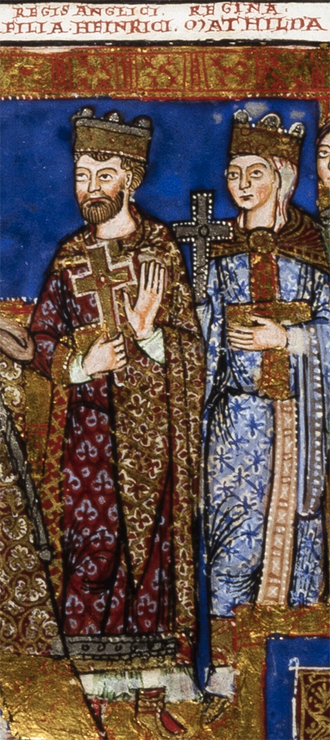
Empress Matilda depicted in an image from the Gospels of Henry the Lion.

The queen appears to have been well aware of her influence over the king, and its limitations. When Henry appropriated the revenues of Canterbury for himself, claiming it was a vacant see with the archbishop in exile, Matilda persuaded him to set aside a personal allowance for Anselm. However, when she was asked to intervene with the king a few years later, when he was attempting to extract more money from the clergy, Matilda ‘wept and insisted she could do nothing’.16 In 1104, Matilda even approached Pope Paschal II, asking for his intervention in the disagreement between Henry and Anselm.
Henry saw the investiture crisis as an erosion of his royal prerogative, and he was determined to cede no ground. But, with the pope threatening excommunication and Matilda voicing her own pleas to her husband, a compromise was eventually reached by which Henry would relinquish his powers to invest prelates but retain the right to receive homage for ‘temporalities’; this latter concession by the church would augment the secular powers of the crown. When Anselm was finally able to return home to England, in 1106, Matilda was there to personally welcome him back from his three-year exile. She then rode in advance of the archbishop, to ensure accommodation and welcoming ceremonies were in place along his route.

The Investiture Controversy served to demonstrate the extent to which Matilda’s influence could be exerted, not only on the king but internationally, through her correspondence with the church’s most powerful prelates. Matilda also acted as regent for Henry when he was away in Normandy, which was more than half of the time. A woman fulfilling such a role in her lord’s absence was far from unusual and indeed was accepted by the barony of the kingdom; Matilda’s daughter, Empress Matilda, would discover that a woman fulfilling this role on her own behalf faced far more resistance. Queen Matilda acted as regent for months at a time, most notably for ten-month spells from September 1114 and from April 1116. In her final regency Matilda was assisted by her only son, the teenage William Ætheling, who was now earnestly in training for his future role as King of England. He would later join his father in Normandy to continue his apprenticeship, fighting in his first battle there in 1119.

Another notable element of queenship was patronage. Queen Matilda commissioned William of Malmesbury to write the Gesta Regum Anglorum, a genealogical history of the royal house of Wessex which was finished after her death and presented to her daughter, Empress Matilda. She also commissioned a biography of her mother, The Life of St Margaret Queen of Scotland by Turgot, Prior of Durham and later Bishop of St Andrew’s, who had been her mother’s confessor. In 1111 the queen attended the ceremony for the translation of St Æthelwold’s relics at Winchester, and the following year she was in Gloucester to witness the presentation of gifts to the monks there.

History... the Interesting Bits
Seal of Queen Matilda

Matilda was also concerned with justice and in 1116 ordered the release of Bricstan of Chatteris, a prisoner who had apparently been unjustly condemned. Bricstan, who had intended to take holy orders before his arrest – the reason for which is unknown – called upon St Benedict and St Etheldreda for assistance. The two saints are said to have torn his chains from him. The shocked guards immediately turned to Queen Matilda, who ordered an investigation into the events. Satisfied that a miracle had occurred, the queen ordered Bricstans’s immediate release. She also ordered that special masses should be heard, and the bells of London should be rung in celebration.

Matilda of Scotland died on 1 May 1118 at Westminster, at the age of thirty-seven. King Henry was in Normandy at the time and Matilda was acting as regent, which suggests that her death was unexpected, though we do not know the cause. The canons of her foundation of Holy Trinity at Aldgate and the monks at Westminster both claimed the right to bury her. She was buried in Westminster Abbey, much to the chagrin of the monks of Aldgate who lodged a complaint with Henry on his return. Henry compensated the order with a gift of relics from the Byzantine emperor. He also confirmed his queen’s donations to Holy Trinity, Aldgate. The king gave money so that a perpetual light could be maintained at her tomb; this was still being paid in the reign of Henry III, Matilda’s great-great-grandson.
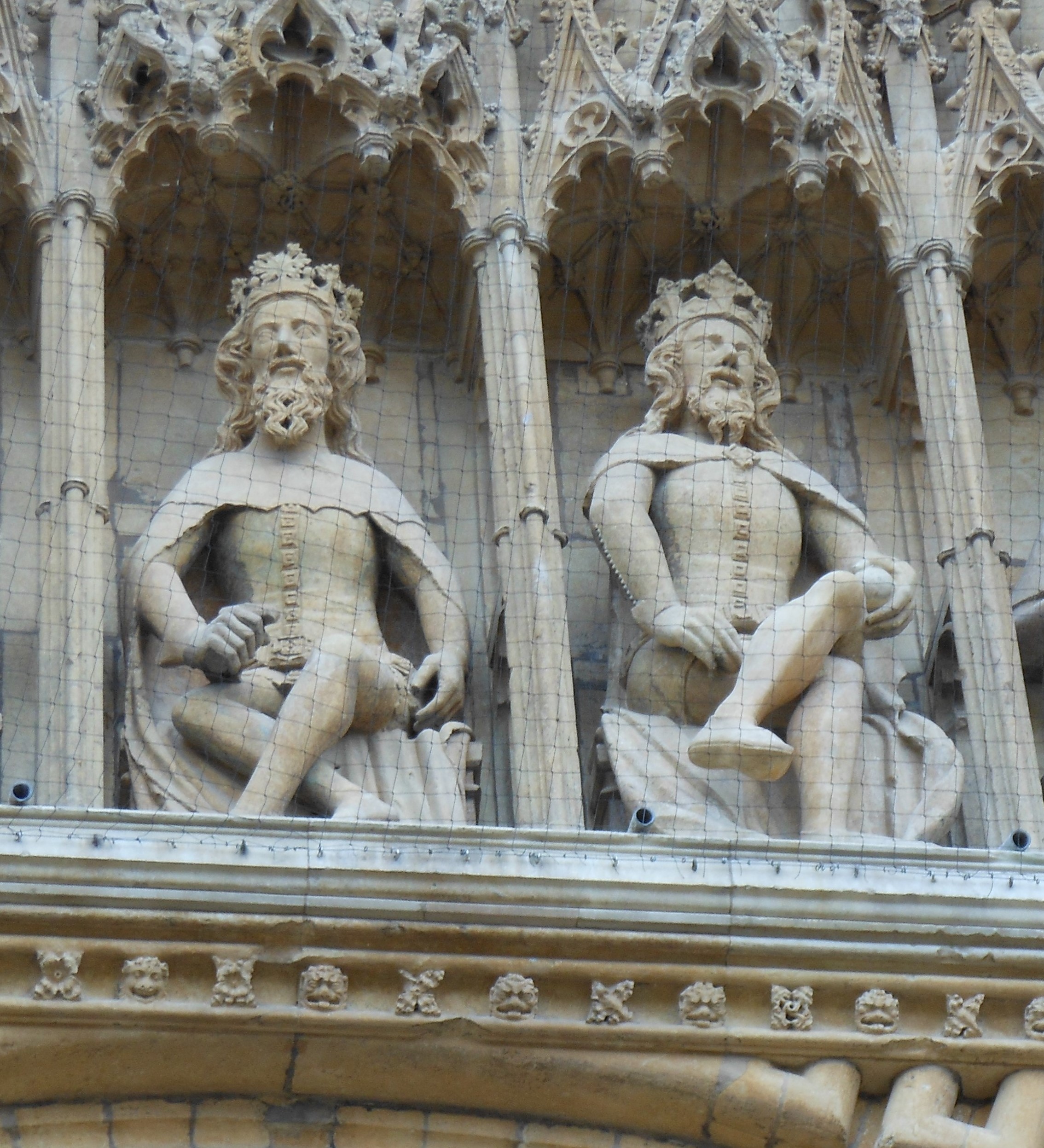
Matilda died a beloved queen, and was remembered as ‘Mold the Good Queen’ or ‘Good Queen Maud’. Praise for the queen is almost universal, although William of Malmesbury criticised her for patronising foreigners and reported that she ‘fell into the error of prodigal givers; bringing many claims to her tenantry, exposing them to injuries and taking away their property, but since she became known as a liberal benefactress, she scarcely regarded their outrage’.17

The Warenne Chronicle recorded her death with a fitting epitaph:

History... the Interesting Bits
Matilda of Scotland

So then, almost all of England’s bishops, magnates, abbots, priors, and indeed the innumerable common masses assembled with great sadness for her crowded funeral, and with many tears they attended her burial … I can sum up her praise in this brief declaration that from the time when England was first subject to kings, of all queens none was found like her, nor will a similar queen be found in coming ages whose memory will be held in praise and whose name will be blessed for centuries. So great was the sorrow at her absence and so great a devotion filled everyone, that several of the noblest clerics, whom she had much esteemed in life, stayed at her tomb for thirty days in vigils, prayers and fasting, and they kept mournful and devoted watch…18

A woman of proven ability in governing the kingdom, Queen Matilda served as an example of what a woman could do, and the power she could wield, albeit in her husband’s name.

*

Notes:

1. Lisa Hilton, Queens Consort: England’s Medieval Queens; 2. Eadmer of Canterbury, Historia Novorum in Anglia; 3. Hilton, Queens Consort; 4. ibid; 5. Michael Swanton (ed.), The Anglo-Saxon Chronicles; 6. Ordericus Vitalis, Histoire de Normandie, quatrième partie (my translation); 7. Anselm, quoted in Hilton, Queens Consort; 8. Eadmer, Historia Novorum in Anglia; 9. Hilton, Queens Consort; 10. Eadmer, Historia Novorum in Anglia; 11. ibid; 12. Susan M. Johns, Noblewomen, Aristocracy and Power in the Twelfth-Century Anglo-Norman Realm; 13. Ailred of Rievaulx, quoted in Hilton, Queens Consort; 14. epistolae.ccnmtl.columbia.edu; 15. Hilton, Queens Consort; 16. ibid; 17. William of Malmesbury, quoted in Hilton, Queens Consort; 18. Van Houts and Love, The Warenne (Hyde) Chronicle

Images:

Courtesy of Wikipedia except Henry I, which is ©2025 Sharon Bennett Connolly FRHistS

Sources:

Lisa Hilton, Queens Consort: England’s Medieval Queens; Eadmer of Canterbury, Historia Novorum in Anglia; Michael Swanton (ed.), The Anglo-Saxon Chronicles; Ordericus Vitalis, Histoire de Normandie; Susan M. Johns, Noblewomen, Aristocracy and Power in the Twelfth-Century Anglo-Norman Realm; epistolae.ccnmtl.columbia.edu; Teresa Cole, After the Conquest: The Divided Realm; Jeffrey James, The Bastard’s Sons: Robert, William and Henry of Normandy; Henry of Huntingdon, The History of the English People 1000-1154; Charles Spencer, The White Ship: Conquest, Anarchy and the Wrecking of Henry I’s Dream; E. Norton, England’s Queens: From Boudicca to Elizabeth of York; Nigel Tranter, The Story of Scotland; Elisabeth Van Houts, and Rosalind C. Love (eds and trans), The Warenne (Hyde) Chronicle; Oxford Dictionary of National Biography; Ordericus Vitalis, The Ecclesiastical History of Orderic Vitalis, 1075-1143; J. F. Andrews, Lost Heirs of the Medieval Crown: The Kings and Queens Who Never Were; Anne Crawford (ed.), Letters of the Queens of England; Elizabeth Norton, England’s Queens: From Boudicca to Elizabeth of York; Lida Sophia Townsley, ‘Twelfth-century English queens: charters and authority’, academia.edu;

*

My Books

Signed, dedicated copies of all my books are available through my online bookshop.

Out now: Scotland’s Medieval Queens

Books by Sharon Bennett Connolly

Scotland’s history is dramatic, violent and bloody. Being England’s northern neighbour has never been easy. Scotland’s queens have had to deal with war, murder, imprisonment, political rivalries and open betrayal. They have loved and lost, raised kings and queens, ruled and died for Scotland. From St Margaret, who became one of the patron saints of Scotland, to Elizabeth de Burgh and the dramatic story of the Scottish Wars of Independence, to the love story and tragedy of Joan Beaufort, to Margaret of Denmark and the dawn of the Renaissance, Scotland’s Medieval Queens have seen it all. This is the story of Scotland through their eyes.

Scotland’s Medieval Queens gives a thorough grounding in the history of the women who ruled Scotland at the side of its kings, often in the shadows, but just as interesting in their lives beyond the spotlight. It’s not a subject that has been widely covered, and Sharon is a pioneer in bringing that information into accessible history.’ Elizabeth Chadwick (New York Times bestselling author)

Available now from Amazon and Pen and Sword Books

Also by Sharon Bennett Connolly:

Books by Sharon Bennett Connolly

Heroines of the Tudor World tells the stories of the most remarkable women from European history in the time of the Tudor dynasty, 1485-1603. These are the women who ruled, the women who founded dynasties, the women who fought for religious freedom, their families and love. Heroines of the Tudor World is now available for pre-order from Amberley Publishing and Amazon UK. Women of the Anarchy demonstrates how Empress Matilda and Matilda of Boulogne, unable to wield a sword themselves, were prime movers in this time of conflict and lawlessness. It shows how their strengths, weaknesses, and personal ambitions swung the fortunes of war one way – and then the other. Available from Bookshop.orgAmberley Publishing and Amazon UKKing John’s Right-Hand Lady: The Story of Nicholaa de la Haye is the story of a truly remarkable lady, the hereditary constable of Lincoln Castle and the first woman in England to be appointed sheriff in her own right. Available from all good bookshops Pen & Sword Booksbookshop.org and Amazon

Royal Historical Society

Defenders of the Norman Crown: The Rise and Fall of the Warenne Earls of Surrey tells the fascinating story of the Warenne dynasty, from its origins in Normandy, through the Conquest, Magna Carta, the wars and marriages that led to its ultimate demise in the reign of Edward III. Available from Pen & Sword BooksAmazon in the UK and US, and Bookshop.orgLadies of Magna Carta: Women of Influence in Thirteenth Century England looks into the relationships of the various noble families of the 13th century, and how they were affected by the Barons’ Wars, Magna Carta and its aftermath; the bonds that were formed and those that were broken. It is now available in paperback and hardback from Pen & SwordAmazon, and Bookshop.orgHeroines of the Medieval World tells the stories of some of the most remarkable women from Medieval history, from Eleanor of Aquitaine to Julian of Norwich. Available now from Amberley Publishing and Amazon, and Bookshop.orgSilk and the Sword: The Women of the Norman Conquest traces the fortunes of the women who had a significant role to play in the momentous events of 1066. Available now from Amazon,  Amberley Publishing, and Bookshop.org.

Alternate Endings: An anthology of historical fiction short stories including Long Live the King… which is my take what might have happened had King John not died in October 1216. Available in paperback and kindle from Amazon.

Podcast:

A Slice of Medieval

Have a listen to the A Slice of Medieval podcast, which I co-host with Historical fiction novelist Derek Birks. Derek and I welcome guests, such as Bernard Cornwell and Elizabeth Chadwick, and discuss a wide range of topics in medieval history, from significant events to the personalities involved.

There are now over 70 episodes to listen to!

Every episode is also now available on YouTube.

*

Don’t forget! Signed and dedicated copies of all my books are available through my online bookshop.

For forthcoming online and in-person talks, please check out my Events Page.

You can be the first to read new articles by clicking the ‘Follow’ button, liking our Facebook page or joining me on TwitterThreadsBluesky and Instagram.

*

©2025 Sharon Bennett Connolly FRHistS

Wordly Women: Gillian Bagwell

History ... the Interesting Bits: Wordly Women
Near Dunvegan Castle, Isle of Skye

Time for another edition of Wordly Women! I am blown away by how receptive people have been to this little series and I am thoroughly enjoying having the chance to highlight the careers and writing experiences of the best of women writers in both history and and historical fiction. Today is another ‘fan girl’ edition as I get to chat with one of my favourite writers, Gillian Bagwell, who has written a wonderful novel about one of my Tudor Heroines, Bess of Hardwick.

Sharon: Firstly, welcome Gillian, what got you into writing?

Gillian: Both of my parents were writers, among other talents and accomplishments, interests, and they both read to my sisters and me a lot when we were kids, so I guess it seemed natural to write. I think I took my first writing class in junior high school. I’d had the idea for one of my novels (not yet published) long ago, and I recently discovered a story that I’d written based on that idea for that class when I was about thirteen. I’d forgotten about it.

Sharon: Tell us about your books.

Gillian: The three books that I have published are all based on the lives of real English women, two in the seventeenth century and one in the sixteenth century. My first novel, The Darling Strumpet, is based on the life of Nell Gwynn, one of the first English actresses and a longtime mistress of Charles II. She was a poor urchin who got her big break in life when Charles reopened the theatres soon after he was restored to the throne, and she got a job selling oranges. She caught the eye of Charles Hart, one of the leading actors, and he became her lover and mentor, teaching her to act, and they became an enormously popular duo onstage, with many “gay couple” (not as we use that phrase today!) comedies written specifically for them. Her career took place during one of the most amazing and important periods in the history of English theatre, when over the space of about fifteen years, performance practices went from Elizabethan/Jacobean to what remained essentially unchanged until the end of the nineteenth century.

History ... the Interesting Bits: Wordly Women
Experiencing the battlefield of Worcester

I learned about Jane Lane, the heroine of my second novel, when I was researching Nell Gwynn. Her story isn’t much remembered now, but she played a big part in helping Charles escape after the disastrous Battle of Worcester in 1651, saving not only his life but likely the future of the monarchy. She had a pass to travel with a manservant, so he disguised himself and travelled hundreds of miles with her. There were notices all along their way offering a reward of £1000 pounds for information leading to his capture—an enormous amount of money then—and they so narrowly escaped discovery so many times that his six-week odyssey became known as the Royal Miracle. The US title of the book is The September Queen. The UK published it as The King’s Mistress.

My third novel tells the story of Bess of Hardwick, who rose from genteel poverty to become probably the wealthiest and most powerful woman in England after Queen Elizabeth. She’s probably best known for building Hardwick Hall and the original Chatsworth, and for surviving four husbands. I didn’t think I could do justice to her very long and remarkable life in one novel, so Venus in Winter really only covers the first half of it, which included acting as keeper to Mary Queen of Scots for several years, and her granddaughter Arbella nearly succeeding Queen Elizabeth.

My fourth novel, The Tower on the Sea, not yet published, is a Gothic thriller with a heavy dose of romance set mostly on a tiny and remote Scottish island in 1901-1902. I’ve been working on a novel based on the life of Dame Flora MacLeod, who was chief of the Clan MacLeod from 1935 to her death in 1976, but as biographical fiction seems to be hard to sell these days, I’ve set it aside temporarily and am working on something completely different, which I’ll discuss below.

Sharon: What attracts you to the periods in which you write?

History ... the Interesting Bits: Wordly Women
William Shakespeare

Gillian: I became enamoured of Shakespeare very early on, and so was interested in sixteenth-century England. Around the time I turned fourteen, my father was hired as the director of education for the non-profit educational branch of the company that invented and produced the original Renaissance Pleasure Faires, a re-creation of a country fair in Elizabethan England with food, crafts, music, dancing, shows on stage and peformers improvising in the street with each other and the patrons. I know the concept of a Renaissance fair may be unfamiliar to many British people, but that original event inspired hundreds of copycats, mostly in the US but also in other countries. I wrote an article for Smithsonian Magazine about how the first Faire came about: The Surprisingly Radical Roots of the Renaissance Fair.

My whole family became involved and I performed at the Faires from when I was fourteen to when I was twenty—six weekends each at the Renaissance Faires in Southern and Northern California, and six weekends at the Great Dickens Christmas Fair, an indoor recreation of Victorian London at Christmastime. So I spent a lot of time in the sixteenth century and the nineteenth centuries!

Sharon: Who is your favourite Tudor and why?

Gillian: I think that would have to be Elizabeth. She survived an incredibly difficult childhood and youth, with her mother dead and vilified and her own future uncertain, and also managed to come through perilous times as a young woman, especially under the reign of her sister Mary. When she finally became queen, she ushered in a time of great change, mostly in good ways, and I think in general was a great leader—not an easy thing to be, especially for a woman, in those days.

Sharon: Who is your least favourite Tudor and why?

    Gillian: Henry VIII. It may be that he became the erratic tyrant he was especially later in life as the result of the injury to his leg and other medical problems, but it doesn’t erase the harm he caused to the six women who had the misfortune to marry him, his dissolution of the church and destruction not only of so many beautiful buildings but of the lives of so many people, both those who were of the church and those they helped, and much, much more.

    Sharon: How do you approach researching your books?
    Gillian: I read whatever I can find about my heroines, of course, as well as the period they lived in and the events that my books cover. But sometimes there isn’t much information available. The story of Jane Lane, for instance was very well known when Charles II was restored to the throne, but no one’s written a biography of her. There are several biographies of Bess of Hardwick, but they focus on her later life. One of them dispenses with her life up until her second marriage in the first twenty pages. So I have to piece together information, surmise what seems likely, and fill in the gaps with invention—of course mentioning in my author’s notes what historical facts I’ve taken liberty with. I’ve almost always gone to the UK on research trips, too, to find the places my main characters lived and where the action of their stories took place.

    History ... the Interesting Bits: Wordly Women
    Jane Lane

    There’s nothing like it not only for learning new things but getting inspiration. When I was researching The September Queen/The King’s Mistress, a good friend from London joined me on a trip following in the footsteps of Charles II from Worcester to Staffordshire and Shropshire, and then the route that he and Jane Lane took together. I didn’t know it at the time, but the Monarch’s Way is a marked footpath, which the Monarch’s Way Association maintains and has published maps of. When we went to Boscobel, it was near the end of the day and almost no one else was there. I found myself alone in a closet peering down into the priest hole where Charles hid. And at Trent, the lady at Trent Manor showed us around the house, including her bedroom, with the priest hole where Charles hid there. I also visit libraries and archives to use primary sources. I’ve done research at the British Library, the Theatre Museum in Covent Garden, the National Library and the National Records of Scotland, and the office of the Lord Lyon in Edinburgh. For my current work in progress, I recently I spent eight days at the Bodleian Library doing research and spent the rest of my time exploring Oxford, visiting places where the main characters lived and knew well. I even got a private tour of St. Hugh’s College, where each was principal, from the archivist.

    Sharon: Tell us your ‘favourite’ Stuart story you have come across in your research.

    History ... the Interesting Bits: Wordly Women
    A young Charles II

    Gillian: I’d say that’s the story of Charles II’s six-week odyssey trying to get out of England after the Battle of Worcester. Many, many common people risked their lives to help him, and it was a formative period in his life. He was only twenty-one at the time. He told the stories of his adventures for the rest of his life. Fortunately, the diarist Samuel Pepys sat him down decades later and over the course of a couple of days, took down the story in his famous shorthand. He then gathered all the accounts people had published of their parts in the story and bound them together. It’s an amazing resource, giving us a day-by-day and sometimes hour-by-hour account of what Charles did, said, wore, and ate. In the run-up to the publication of my book about Jane Lane, I blogged the daily events of those weeks. Here’s a link to the story, beginning with the Battle of Worcester: http://theroyalmiracle.blogspot.com/2011/09/september-3-1651-battle-of-worcester.html.

    Sharon: And do you have a favourite Tudor story?

    Gillian: There are many great stories about the Tudors, of course, but I became fascinated with this nugget mentioned in Robert Hutchinson’s The Last Days of Henry VIII, and have thought of writing a story or play about it. In the bitter cold of early February 1547, the body of Henry VIII lay at Windsor Castle, and amid clouds of incense, requiem masses were being held night and day to waft the soul of the dead tyrant to heaven. Fierce struggles for power raged at court, as the new king, Edward VI, was a child, and who controlled him would effectively rule. Against this backdrop of intrigue, John de Vere, the sixteenth Earl of Oxford, planned a dramatic event of his own: the presentation of a play he had written on the death of the king, to be performed by his own company of players. But as the actors rehearsed for their day in the winter sun, Bishop Gardiner, though recently banned from the Palace of Westminster, intended to claw his way back to power, and he would do whatever he must to prevent Oxford’s play from coming to the stage.

    I find a lot intriguing about this story, not least the fact that John de Vere was the father of Edward DeVere, the seventeenth Earl of Oxford, whom many serious people believe could have been the author of the plays attributed to William Shakespeare. He was almost seven years old at the time of this cancelled performance, and it’s interesting to think that he might have witnessed the drama offstage as well as on. The evidence for the argument for Oxford as the author includes a wealth of similarities in his life and experience and the plays; the fact that he was familiar with theatre from an early age, as his father kept a company of players; and that he was regarded as an accomplished and playwright, though none of his plays survive. Charlton Ogburn’s 600-page tome The Mysterious William Shakespeare is an exhaustive study of the evidence in favor of Oxford.

    Notable authorship skeptics include included Mark Rylance, Derek Jacobi, John Gielgud, Tyrone Guthrie, David McCullough, and Supreme Court Justices Sandra Day O’Connor, John Paul Stevens, Harry A. Blackmun, and Lewis F. Powell (Declaration of Reasonable Doubt, Shakespeare Oxford Fellowship – Famous Authorship Skeptics).

      Sharon: Tell us your least ‘favourite’ Tudor story you have come across in your research.

      Gillian: Many of the Tudors were responsible for a lot of bloodshed and cruelty, of course. I think Henry VIII’s persecution and elimination of the Pole family, who he considered a threat to his keeping the throne, ranks high, especially the murder of Lady Margaret Pole, the Countess of Salisbury, who was sixty-seven and had spent her life serving the Tudors. The executioner botched the job terribly, and it was a gruesome death. Here’s Tracy Borman’s post on the Historic Royal Palaces’ website: The Extraordinary Life and Death of Lady Margaret Pole, Countess of Salisbury.

      History ... the Interesting Bits: Wordly Women

      Sharon: Are there any other eras you would like to write about?

      Gillian: Well, I’ve moved into the early twentieth century with The Tower on the Sea, and both Flora MacLeod’s story and my current work in progress take me further into the 1900s and has a contemporary timeline too. There are other stories I’d love to write about, including from the eighteenth and nineteenth centuries.

      Sharon: What are you working on now?

      Gillian: I’m working on a novel with dual timelines inspired by the true story of Eleanor Jourdain and Charlotte Anne Moberly, two Oxford academics who visited Versailles in 1901, had a very strange experience, encountering people in eighteenth-century dress who behaved oddly, and came to believe they’d walked into the eighteenth century. I learned about this story from Miss Morison’s Ghosts, a British movie made in 1981, and I’ve wanted to write about it ever since. Having gone through the seventeen boxes of their notes, correspondence, drawings, photos, maps, and other documentation of their eight or so years of research about their experience at Versailles, I can say that something extraordinary happened to them, though I don’t know exactly what and neither did they.

      Sharon: And finally, what is the best thing about being a writer?

      Gillian: Exploring the worlds of my characters is endlessly fascinating. I get chills when I experience or discover something that connects me viscerally with the people I’m writing about, for instance holding letters they wrote, or being in the rooms where important things took place. And much as I like adventure and travel, all my life, I’ve been something of a homebody, too, so I love being able to work at home, especially on days when I don’t have to do anything but write.

        About Gillian Bagwell:

        History ... the Interesting Bits: Wordly Women
        Gillian Bagwell

        Gillian Bagwell’s historical novels have been praised for their vivid and lifelike characters and richly textured, compelling evocation of time and place. Her first career was in theatre, as an actress and later as a director and producer, and she founded the Pasadena Shakespeare Company and produced thirty-seven shows over ten years. Gillian has found her acting experience helpful to her writing, and many of the workshops and classes she’s taught at the annual Historical Novel Society Conferences in the US and the UK relate to her life in theatre, including writing effective historical dialogue, using acting tools to bring characters to life on the page, and giving effective public readings. She’s also a professional editor and provides writing coaching and manuscript evaluations. Gillian lives in Berkeley, California in the house where she grew up, her life enlivened by her five rescue cats.

        *

        My Books

        Signed, dedicated copies of all my books are available through my online bookshop.

        Out now: Scotland’s Medieval Queens

        Books by Sharon Bennett Connolly

        Scotland’s history is dramatic, violent and bloody. Being England’s northern neighbour has never been easy. Scotland’s queens have had to deal with war, murder, imprisonment, political rivalries and open betrayal. They have loved and lost, raised kings and queens, ruled and died for Scotland. From St Margaret, who became one of the patron saints of Scotland, to Elizabeth de Burgh and the dramatic story of the Scottish Wars of Independence, to the love story and tragedy of Joan Beaufort, to Margaret of Denmark and the dawn of the Renaissance, Scotland’s Medieval Queens have seen it all. This is the story of Scotland through their eyes.

        Scotland’s Medieval Queens gives a thorough grounding in the history of the women who ruled Scotland at the side of its kings, often in the shadows, but just as interesting in their lives beyond the spotlight. It’s not a subject that has been widely covered, and Sharon is a pioneer in bringing that information into accessible history.’ Elizabeth Chadwick (New York Times bestselling author)

        Available now from Amazon and Pen and Sword Books

        Also by Sharon Bennett Connolly:

        Books by Sharon Bennett Connolly

        Heroines of the Tudor World tells the stories of the most remarkable women from European history in the time of the Tudor dynasty, 1485-1603. These are the women who ruled, the women who founded dynasties, the women who fought for religious freedom, their families and love. Heroines of the Tudor World is now available for pre-order from Amberley Publishing and Amazon UK. Women of the Anarchy demonstrates how Empress Matilda and Matilda of Boulogne, unable to wield a sword themselves, were prime movers in this time of conflict and lawlessness. It shows how their strengths, weaknesses, and personal ambitions swung the fortunes of war one way – and then the other. Available from Bookshop.orgAmberley Publishing and Amazon UKKing John’s Right-Hand Lady: The Story of Nicholaa de la Haye is the story of a truly remarkable lady, the hereditary constable of Lincoln Castle and the first woman in England to be appointed sheriff in her own right. Available from all good bookshops Pen & Sword Booksbookshop.org and Amazon

        Royal Historical Society

        Defenders of the Norman Crown: The Rise and Fall of the Warenne Earls of Surrey tells the fascinating story of the Warenne dynasty, from its origins in Normandy, through the Conquest, Magna Carta, the wars and marriages that led to its ultimate demise in the reign of Edward III. Available from Pen & Sword BooksAmazon in the UK and US, and Bookshop.orgLadies of Magna Carta: Women of Influence in Thirteenth Century England looks into the relationships of the various noble families of the 13th century, and how they were affected by the Barons’ Wars, Magna Carta and its aftermath; the bonds that were formed and those that were broken. It is now available in paperback and hardback from Pen & SwordAmazon, and Bookshop.orgHeroines of the Medieval World tells the stories of some of the most remarkable women from Medieval history, from Eleanor of Aquitaine to Julian of Norwich. Available now from Amberley Publishing and Amazon, and Bookshop.orgSilk and the Sword: The Women of the Norman Conquest traces the fortunes of the women who had a significant role to play in the momentous events of 1066. Available now from Amazon,  Amberley Publishing, and Bookshop.org.

        Alternate Endings: An anthology of historical fiction short stories including Long Live the King… which is my take what might have happened had King John not died in October 1216. Available in paperback and kindle from Amazon.

        Podcast:

        A Slice of Medieval

        Have a listen to the A Slice of Medieval podcast, which I co-host with Historical fiction novelist Derek Birks. Derek and I welcome guests, such as Elizabeth Chadwick, Helen Castor, Ian Mortimer, Scott Mariani and Bernard Cornwell and discuss a wide range of topics in medieval history, from significant events to the personalities involved.

        Every episode is also now available on YouTube.

        *

        Don’t forget! Signed and dedicated copies of all my books are available through my online bookshop.

        For forthcoming online and in-person talks, please check out my Events Page.

        You can be the first to read new articles by clicking the ‘Follow’ button, liking our Facebook page or joining me on TwitterThreadsBluesky and Instagram.

        *

        ©2025 Sharon Bennett Connolly FRHistS

        The Women Behind Magna Carta

        History...the Interesting Bits
        Magna Carta

        Throughout my research into medieval women, two ladies in particular have popped up a number of times: Nicholaa de la Haye and Matilda de Braose. Their unique stories drew me into their world, and the turbulent times of King John. They were the spark that led me to look into the story of Magna Carta; how its clauses were influenced by women and how women used it to protect their own rights. Magna Carta was, perhaps, the first step on the long road to democracy in England, and many women played key roles in its creation and development.

        The Magna Carta of 1215 reflects the needs and events of the time in which it was issued; an England on the brink of civil war, disaffected barons demanding redress, the Church and cities such as London looking for protection. It was drawn up by barons looking for redress and legal protection from a king whose word could no longer be trusted, who meted out arbitrary punishments and heavy taxes. It was not a charter that was intended to form the protection and legal rights of every man, woman and child in the land; though it has come to be seen as just that in subsequent centuries. Indeed, the common man does not get a mention, and of the sixty-three clauses, only eight of them mention women as a gender.

        The significance of women in the Magna Carta story is not just their limited inclusion in the charter itself, but also in their experiences of the unsettled times in which they lived, in their influence on the charter itself and in their use of its clauses to exact redress for injustices they had experienced. The political crisis which saw the issuing of Magna Carta, and the civil war which followed, was not just significant to the barons involved, but to their wives and families, tenants and retainers. The conflict tore families apart as they took sides in the struggle and saw more than one baron change sides mid-crisis. Wives and daughters were caught in the middle, often torn by divided loyalties; between their birth family and the family into which they had married; between their fathers and their husbands. For instance, Matilda Marshal was the eldest daughter of William Marshal, a man known for his staunch loyalty to the crown, but she was married to Hugh Bigod, son of Roger, second Earl of Norfolk, one of the leaders of baronial opposition.

        History...the Interesting Bits
        Tomb of Nicholaa de la Haye, St Michael’s Church, Swaton

        Although they had very different experiences, they shared a number of similarities. Probably born within a few years of each other, they were contemporaries and both were key figures in the reign of King John, though for very different reasons. While Nicholaa de la Haye was a staunch supporter of the man who is, arguably, England’s most despised king in history, Matilda de Braose was one of his most female victims. Matilda’s family were harassed to Ireland and back by John, before she and her eldest son were left in a prison cell to starve to death; they were found after 11 days, Matilda’s head resting on her son’s chest, her son’s cheeks bearing the bite marks as evidence of lengths Matilda went to in her desperation to stay alive. It was Matilda’s experiences at the hands of King John that inspired clause 39 of Magna Carta, that clause that is still the cornerstone of British justice to this day:

        ‘No man shall be taken, imprisoned, outlawed, banished or in any way destroyed, nor will we proceed against or prosecute him, except by the lawful judgement of his peers or by the law of the land’

        Nicholaa de la Haye, on the other hand, had been a long-time supporter of King John. She first successfully defended Lincoln Castle, in support of John, in the siege of 1191; the siege lasted 40 days before William Longchamp, the hated justiciar, gave up and went home. In 1216, Nicholaa successfully defended it again, this time paying off the rebel barons so that they would lift the siege. In the aftermath, John came north and ravaged the Isle of Axholme, where the barons had retreated to, with ‘fire and sword’. It was after this even that Nicholaa, now in her 60s and recently widowed, offered to relinquish custody of the castle. John refused to accept her resignation and in October, hours before his death, appointed Nicholaa Sheriff of Lincolnshire: she was the first ever female sheriff in England.

        History...the Interesting Bits
        King John

        Although Nicholaa de la Haye and Matilda de Braose were the major influences behind my book, Ladies of Magna Carta, they were not the only women to make an impression on the Magna Carta story. The deeper I dug, the more stories I uncovered that deserved to be told. Matilda’s own daughter, Loretta de Braose, was one such. Recently widowed following the death of her husband, Robert de Breteuil, Earl of Leicester, Loretta had been forced by John to relinquish her dower rights; Magna Carta clauses 7 and 8 of Magna Carta, protecting widows’ rights:

        Clause 7:

        After her husband’s death, a widow shall have her marriage portion and her inheritance at once and without any hindrance; nor shall she pay anything for her dower, her marriage portion, or her inheritance which she and her husband held on the day of her husband’s death; and she may stay in her husband’s house for 40 days after his death, within which period her dower shall be assigned to her.

        Clause 8:

        No widow shall be compelled to marry so long as she wishes to live without a husband, provided that she gives security that she will not marry without our consent if she holds of us, or without the consent of the lord of whom she holds, if she holds of another.

        Furthermore, there are two women who can be clearly identified in Magna Carta itself, though they are not named, they are two Scottish princesses. The sisters of King Alexander II had been held hostage in England since 1209, when John forced the humiliating Treaty of Norham on their ailing father, King William the Lion. Clause 59 promised:

        ‘We will treat Alexander, king of Scots, concerning the return of his sisters and hostages and his liberties and rights in the same manner in which we will act towards our other barons of England, unless it ought to be otherwise because of the charters which we have from William his father, formerly king of Scots; and this shall be determined by the judgement of his peers in our court.

        Women not only influenced the clauses of Magna Carta, however, they also used Magna Carta to assert and protect their own rights. Women such as Ela of Salisbury, who used the promises of Magna Carta to avoid an unwelcome marriage proposal when her husband, William Longspée was missing and feared dead. Or Isabel d’Aubigny, Countess of Arundel, who proclaimed ‘Where are the liberties of England, so often recorded, so often granted and so often ransomed’, when King Henry III foolishly attempted to steal land that was rightfully hers. She must have been a fearsome opponent, as Henry responded to one of her petitions, saying that he would grant her leniency ‘so long as she says nothing opprobrious to us as she did when we were at Westminster!’

        History...the Interesting Bits
        Eleanor de Montfort

        And then there were the women for whom Magna Carta offered no protection or respite. Women such as Eleanor of Brittany, for whom even clause 39 could be of no help. Their royal blood and ability to be a focus for opposition to the crown meant that successive kings would keep them imprisoned, either in castles, as with Eleanor, or in a rural convent, as with Gwenllian of Wales, orphan daughter of Llywelyn, Prince of Wales and his wife, Eleanor de Montfort, who was herself a granddaughter of King John.

        It was Eleanor’s mother, also Eleanor, the youngest daughter of King John and not a year old at her father’s death, who, as the wife of Simon de Montfort, Earl of Leicester, would continue the struggle to curb the powers of the crown in the Second Barons’ War. She herself was defending Dover Castle when her husband was killed at the Battle of Evesham. She spent her final years in French exile. Her struggles to obtain her dower lands from the powerful Marshal family, guaranteed in Magna Carta, were a major component of Eleanor’s own dissatisfaction with her brother, Henry III.

        It is through the stories of these remarkable women and the relationships of the various noble families of the 13th century, that I wanted to examine how they were affected by the First Barons’ Wars, Magna Carta and its aftermath. It is a study of the bonds that were formed and those that were broken among the women of the great families of 13th century England, including the royal families of England and Scotland, the Marshals, the Bigods, the Salisburys, Braoses and Warennes.

        Their stories are inspirational, if heartbreaking at times.

        The Magna Carta story is told through the women involved in my third book, Ladies of Magna Carta: Women of Influence in Thirteenth Century England. And Nicholaa’s story is told in my full-length biography of NicholaaKing John’s Right-Hand Lady: the Story of Nicholaa de la Haye.

        Images:

        Courtesy of Wikipedia except Nicholaa de la Haye which is ©2023 Sharon Bennett Connolly FRHistS

        Sources:

        Richard of Devizes, The Chronicle of Richard of Devizes; Roger of Howden (Hoveden), The Annals of Roger of HowdenThe Plantagenet Chronicles edited by Elizabeth Hallam; Brassey’s Battles by John Laffin; 1215 The Year of Magna Carta by Danny Danziger & John Gillingham; The Life and times of King John by Maurice Ashley; The Plantagenets, the Kings Who Made England by Dan Jones; England Under the Norman and Angevin Kings  by Robert Bartlett; lincolnshirelife.co.uk; catherinehanley.co.uk; magnacarta800th.com; lothene.org; lincolncastle.com; The Sheriff: The Man and His Office by Irene Gladwin; Louise Wilkinson, Women in Thirteenth Century Lincolnshire; Richard Huscraft, Tales from the Long Twelfth Century; J.W.F. Hill, Medieval Lincoln; swaton.org.uk; oxforddnb.com; Stephen Church, King John: England, Magna Carta and the Making of a Tyrant; Marc Morris, King John; Pipe Rolls; Red Book of the Exchequer

        *

        My Books

        New releases in 2026:

        New Hardbacks

        Out now: Princesses of the Early Middle Ages: Royal Daughters of the Conquest 

        ‘My daughter wanted me to treat her more like a princess. So, I married her to a stranger to strengthen the alliance with Poland!’

        Books by Sharon Bennett Connolly

        The medieval princess has often been portrayed as a pawn in the political machinations of her father or brother, married off to distant lands for the sake of peace, or land, or both. Never to be seen or thought of again.

        But was that really her fate?

        From the daughters of Harold, the last Saxon king, to the sisters of Henry III, Princesses of the Early Middle Ages explores the lives of these young women, how they followed the stereotype, and how they sometimes managed to escape it. It will look at the world they lived in, and how their lives and marriages were affected by political necessity and the events of the time.

        Princesses of the Early Middle Ages: Royal Daughters of the Conquest is now available from Pen & Sword and Amazon.

        30 August: Princesses of the Later Middle Ages: Royal Daughters of the Plantagenets

        Continuing the story, Princesses of the Later Middle Ages: Royal Daughters of the Plantagenets looks at the lives of the princesses, from the treasured daughters of Henry III to the children of Edward IV, whose lives were turned upside down when they were declared illegitimate.

        What we see is a very different story, where a foreign marriage does not mean eternal exile, but a purpose in life, where a princess is a diplomat, an ambassador for England in her new country. She is the bond between allies – most of the time.

        Princesses of the Later Middle Ages: Royal Daughters of the Plantagenets is now available for pre-order through Pen & Sword and other booksellers.

        New Paperbacks:

        Books by Sharon Bennett Connoll

        OUT NOW! The momentous events of 1066, the story of invasion, battle and conquest, are well known. But what of the women? Silk and the Sword: The Women of the Norman Conquest traces the fortunes of the women who had a significant role to play during the Norman Conquest – wives, lovers, sisters, mothers, leaders. These are lives full of drama, pathos and sometimes mystery: Edith and Gytha searching the battlefield of Hastings for the body of Harold, his lover and mother united in their grief for the fallen king. Who was Ælfgyva, the lady of the Bayeux Tapestry, portrayed with a naked man at her feet?

        Janina Ramirez said it’s ‘Excellent’!

        COMING 15 July 2026: Heroines of the Tudor World focuses on the women who lived through the Renaissance and Reformation, examining the threats and challenges they faced and how they overcame them. These are the women who ruled, the women who founded dynasties, the women who fought for religious freedom, their families and love. These are the women who made a difference, who influenced countries, kings and the Reformation.

        Derek Birks: ‘An excellent account of the changing roles of women in Tudor society.’

        Annie Whitehead: ‘What a treat this book was to read. Bennett Connolly has an easy, conversation style of writing which welcomes you from the opening pages and draws you into her story.

        Also by Sharon Bennett Connolly:

        Books by Sharon Bennett Connolly

        Heroines of the Medieval World; Silk and the Sword: The Women of the Norman Conquest; Ladies of Magna Carta: Women of Influence in Thirteenth Century England; Defenders of the Norman Crown: Rise and Fall of the Warenne Earls of Surrey; King John’s Right Hand Lady: The Story of Nicholaa de la Haye; Women of the Anarchy; Heroines of the Tudor World; Scotland’s Medieval Queens: From St Margaret to Margaret of Denmark; Princesses of the Early Middle Ages: Royal Daughters of the Conquest (March 2026); Princesses of the Later Middle Ages; Royal Daughters of the Plantagenets (August 2026)

        Alternate Endings: An anthology of historical fiction short stories including Long Live the King… which is my take what might have happened had King John not died in October 1216. Available in paperback and kindle from Amazon.

        All my books on Amazon and Bookshop.org . You can also order direct from my publishers, Pen and Sword Books and Amberley Publishing.

        Podcast:

        A Slice of Medieval

        Have a listen to the A Slice of Medieval podcast, which I co-host with Historical fiction novelist Derek Birks. Derek and I welcome guests, such as Ian Mortimer, Bernard Cornwell, Elizabeth Chadwick and Scott Mariani, and discuss a wide range of topics in medieval history, from significant events to the personalities involved. 

        Every episode is also now available on YouTube.

        *

        Royal Historical Society

        Don’t forget! 

        Signed and dedicated copies of all my books are available through my online store.

        For forthcoming online and in-person talks, please check out my Events Page.

        You can be the first to read new articles by clicking the ‘Follow’ button, liking our Facebook page or joining me on Twitter and Instagram.

        *

        ©2023 Sharon Bennett Connolly FRHistS

        1191: Nicholaa de la Haye’s First Siege

        History... the Interesting bits
        Partial seal of Nicholaa de la Haye

        Nicholaa de la Haye first came to the attention of the chroniclers in the year 1191. She and her husband, Gerard de Camville, were in command of Lincoln Castle. Gerard was a talented administrator and was sheriff of Lincoln in 1189 and 1190 and again from 1199 to 1205. He was also hereditary constable of Lincoln Castle by right of his wife, Nicholaa. Although he had sworn allegiance to King Richard on his accession, in 1191 Gerard paid homage to the king’s brother John, then count of Mortain, for Lincoln Castle. This meant that Gerard and Nicholaa would be drawn into John’s dispute with King Richard’s chancellor, William Longchamp.

        Before King Richard’s departure on crusade, the king had extracted a promise from John and their illegitimate half-brother Geoffrey, Archbishop of York, that neither would set foot in England for three years. Although it seems highly unlikely that Longchamp released John from his oath, the prince was back in England by 1191, possibly on the insistence of his mother, Eleanor of Aquitaine, who was watching over her favourite son’s domains while he was away on crusade.

        Longchamp’s heavy-handed administration of the country caused much dissent among the barons and John chose to champion their cause. The catalyst for John’s armed opposition to William Longchamp may well have been the king’s recognition of his nephew, Arthur, Duke of Brittany still only a child of five years, as his heir; the only person in England who was meant to know was William Longchamp. However, it seems that Longchamp may have sounded out others to measure the level of support for Arthur. According to the chronicler William of Newburgh, he passed on the information to the king of Scots, at least, and possibly some of the Welsh princes. In early 1191 the news was widely leaked, and John came to hear of it.

        History... the Interesting bits
        Richard I and John side by side in the Gallery of Kings on the West Front of Lincoln cathedral

        According to William of Newburgh, John had expected to become the successor to the  kingdom, should the king not survive the cursade. Indeed, Richard’s advancement of his brother since his accession, in giving John lands in England and arranging his marriage to an English bride, all seemed to support this expectation. Richard’s actions in naming Arthur his heir, and Longchamp’s support for this, threatened to undermine John’s own claims and rights. Having heard the not-so-secret secret, John started building up his own powerbase. According to Richard of Devizes, John, ‘when he knew for certain that his brother had turned his back on England, presently perambulated the kingdom in a more popular manner, nor did he forbid his followers calling him the king’s heir.’

        Tensions were rising. Richard of Devizes reported that, as a result of the king’s departure on crusade, the nobles were ‘all stirred up in arms, castles closed, cities fortified and entrenchments thrown up.’

        John sent out letters, in secret, eliciting the support of the nobles against the justiciar. The king himself was so concerned over events in England that, in the spring, he had released Walter de Coutances, archbishop of Rouen, from his crusading vow and sent him back to sort things out. The king must have had concerns about the efficacy of William Longchamp’s rule, as he also sent a letter, to William Marshal, Hugh Bardolf, Geoffrey Fitz Peter and William Brewer, in which he ordered ‘If our chancellor does not act faithfully according to the advice of yourselves and others to whom we have committed the care of our kingdom, we order you to carry out your own dispositions in all the affairs of our kingdom, in castles and escheats, without any dispute.’

        Walter de Coutances landed at Shoreham on 27 June, 1191. The situation had already escalated, however.

        In 1190, on returning from his investigation into the massacre of the Jews of York, Longchamp stopped at Lincoln. He accused Gerard de Camville of harbouring thieves and robbers who preyed on the merchants attending the fair at Stamford. Longchamp had demanded that Gerard de Camville, described as ‘an enemy of the chancellor’ by the Crowland Chronicle, relinquish his custody of Lincoln Castle and swear allegiance to him, personally, as justiciar. Camville refused and instead ‘had done homage to Earl John, the king’s brother, for the castle of Lincoln, the custody whereof is known to belong to the inheritance of Nicholaa, the wife of the same Gerard, but under the king.’1

        In acting against Gerard de Camville, Longchamp had forced him into John’s arms. On learning of Gerard’s defiance, Longchamp sent overseas for foreign mercenaries and set out north with the troops he had under his command, attacking Wigmore along the way and forcing Roger de Mortimer, impeached for conspiracy against the king, to surrender his castles and abjure England for three years. As Gerard de Camville joined John at Nottingham, Longchamp continued to Lincoln where he besieged the castle as ‘Gerard was with the earl; and his wife Nicholaa proposing to herself nothing effeminate defended the castle like a man. The chancellor was wholly busied about Lincoln.’2

        History... the Interesting bits
        Lincoln castle, East Gate

        The formidable Nicholaa refused to yield, holding out for forty days before Longchamp raised the siege, having heard that Tickhill and Nottingham had fallen to John.

        Gerard’s decision to leave Nicholaa in command of the castle, even though Longchamp was heading her way with an army, may have been to emphasise the standing of the de la Haye family in Lincolnshire, and its connections to the castle itself. He believed Lincoln would rally to her side. That he did not appoint a male deputy to take charge is testament to his trust in Nicholaa and her abilities. She had, after all, grown up with the castle as her birth right and would have been familiar with every part of its defences, its strengths and weaknesses. Although she would not have been able to fight, with sword and shield, she could direct the defence, placing soldiers where they were most needed, organising supplies of weapons and ammunition, and ensuring the stores of food and drink were suitably rationed.

        Nicholaa was approaching forty when William Longchamp besieged her. She was no young, inexperienced girl, and she would have been used to command – and to her orders being obeyed. She was also a mother, of a daughter in her teens and at least two young boys, but it is unlikely that the children were in the castle; it is more likely they were being raised on her manor at Brattleby, just to the north of Lincoln. The castle itself may appear difficult to defend. The curtain wall was a third of a mile in length, but there was a steep drop on the south side. There were two main entrances, the East and West gates, and a number of postern gates. These had to be guarded closely. Similarly, the castle would also have been difficult to attack, and besiegers would have concentrated their energies on the main and postern gates. There is no record of Longchamp bringing up siege machinery, so it would have been a case of watching and waiting and hoping to starve out the castle occupants.

        Nicholaa held out for forty days, as demonstrated by the Pipe Roll of 1191, which showed that mercenaries were employed for that length of time on the siege of Lincoln Castle. All the same, it must have been a relief for Nicholaa, when William Longchamp gave up the siege and marched his soldiers away.

        According to Roger of Howden, the chancellor besieged Lincoln Castle, ‘having expelled Gerard de Camville from the keepership and the office of sheriff of Lincoln; which former office the chancellor gave to William de Stuteville and made him sheriff as well.’ John, in turn moved north in support of Gerard, quickly taking the ill-prepared royal castles of Tickhill (in Yorkshire) and Nottingham and demanding that Gerard de Camville be reinstated, saying that he ‘would visit him [the chancellor] with a rod of iron’.3

        History... the Interesting bits
        Gatehouse of Tickhill Castle, Yorkshire

        John admonished Longchamp, saying ‘it was not proper to take from the loyal men of the kingdom, well known and free, their charges and commit them to strangers and men unknown; that it was a mark of his folly that he had intrusted the king’s castles to such, because they would expose them to adventurers; that if it should go with every barbarian with that facility, that even the castles should be ready at all times for their reception, that he would no longer bear in silence the destruction of his brother’s kingdom and affairs.’4

        In the meantime, Walter de Coutances, Archbishop of Rouen but an Englishman by birth, had landed in England and hastened north to act as intermediary between the two warring factions. At some point in the escalating tensions, as Roger of Howden reports, William Longchamp, as papal legate, also issued a sentence of excommunication on John’s supporters. The list included John’s leading supporters, as well as Walter de Coutances, archbishop of Rouen, and Gerard de Camville.

        Despite the blatant mistrust on both sides, settlement was reached, with the aid of bishops trusted by both men, and of barons who ‘swore that they would provide satisfaction between the earl and the chancellor concerning their quarrels and questions to the honour of both parties and the peace of the kingdom.’5 Agreement, mostly favourable to John, was reached whereby John would relinquish the castles he had taken, but then Longchamp would give Tickhill into the custody of Reginald de Wasseville and Nottingham to William de Wenn, both men of John’s affinity who each agreed to give up a hostage to the chancellor. John also promised not to harbour outlaws in his lands. Longchamp also agreed to drop his support for Arthur as Richard’s heir, to support John’s claim and ‘if the king should die…should promote him to the kingdom with all his power.’6

        History... the Interesting bits
        The Lucy Tower, Lincoln Castle’s main keep

        Especial mention was made of Gerard de Camville, who was reinstated to Lincoln Castle, and ‘shall be reinstated in the office of sheriff of Lincoln, and on the same day a proper day shall be appointed for him to make his appearance in the court of our lord the king, there to abide his trial; and if in the judgement of the court of our lord the king proof can be given that he aught to lose that office as also the keepership of the castle of Lincoln, then he is to lose the same; but, if not, he is to keep it, unless in the meantime an agreement can be come to relative thereto on some other terms. And the lord John is not to support him against the decision of our lord the king, nor is he to harbour such outlaws or enemies to our lord the king, as shall be named to him, nor allow them to be harboured on his lands.’7

        So, Gerard and Nicholaa would be safe in their castle at Lincoln, at least for now. What may happen on the king’s return was still to be determined. They also benefited from John’s largesse; Gerard was appointed keeper of the honour of Wallingford.

        In the meantime, Nicholaa and Gerard could get on with the business of managing Lincoln Castle and the county of Lincolnshire.

        For now…

        Notes:

        1. Richard of Devizes, The Chronicle of Richard of Devizes, edited and translated by J. A. Giles
        2. ibid
        3. Roger of Howden (Hoveden), The Annals of Roger of Howden, translated by Henry T. Riley
        4. Devizes, The Chronicle of Richard of Devizes
        5. ibid
        6. ibid
        7. Howden, The Annals of Roger of Howden

        Sources:

        Richard of Devizes, The Chronicle of Richard of Devizes; Roger of Howden (Hoveden), The Annals of Roger of Howden; The Plantagenet Chronicles edited by Elizabeth Hallam; Brassey’s Battles by John Laffin; 1215 The Year of Magna Carta by Danny Danziger & John Gillingham; The Life and times of King John by Maurice Ashley; The Plantagenets, the Kings Who Made England by Dan Jones; England Under the Norman and Angevin Kings  by Robert Bartlett; lincolnshirelife.co.uk; catherinehanley.co.uk; magnacarta800th.com; lothene.org; lincolncastle.com; The Sheriff: The Man and His Office by Irene Gladwin; Louise Wilkinson, Women in Thirteenth Century Lincolnshire; Richard Huscraft, Tales from the Long Twelfth Century; J.W.F. Hill, Medieval Lincoln; swaton.org.uk; oxforddnb.com; Ingulph, Ingulph’ Chronicle of the Abbey of Croyland; Stephen Church, King John: England, Magna Carta and the Making of a Tyrant; Marc Morris, King John; Pipe Rolls; Red Book of the Exchequer

        My Books:

        Signed, dedicated copies of all my books are available, please get in touch by completing the contact me form or through my online bookshop.

        Out now: Scotland’s Medieval Queens

        Books by Sharon Bennett Connolly

        Scotland’s history is dramatic, violent and bloody. Being England’s northern neighbour has never been easy. Scotland’s queens have had to deal with war, murder, imprisonment, political rivalries and open betrayal. They have loved and lost, raised kings and queens, ruled and died for Scotland. From St Margaret, who became one of the patron saints of Scotland, to Elizabeth de Burgh and the dramatic story of the Scottish Wars of Independence, to the love story and tragedy of Joan Beaufort, to Margaret of Denmark and the dawn of the Renaissance, Scotland’s Medieval Queens have seen it all. This is the story of Scotland through their eyes.

        Scotland’s Medieval Queens gives a thorough grounding in the history of the women who ruled Scotland at the side of its kings, often in the shadows, but just as interesting in their lives beyond the spotlight. It’s not a subject that has been widely covered, and Sharon is a pioneer in bringing that information into accessible history.’ Elizabeth Chadwick (New York Times bestselling author)

        Available now from Amazon and Pen and Sword Books

        Also by me:

        Books by Sharon Bennett Connolly

        Heroines of the Tudor World tells the stories of the most remarkable women from European history in the time of the Tudor dynasty, 1485-1603. These are the women who ruled, the women who founded dynasties, the women who fought for religious freedom, their families and love. Heroines of the Tudor World is now available for pre-order from Amberley Publishing and Amazon UK. Women of the Anarchy demonstrates how Empress Matilda and Matilda of Boulogne, unable to wield a sword themselves, were prime movers in this time of conflict and lawlessness. It shows how their strengths, weaknesses, and personal ambitions swung the fortunes of war one way – and then the other. Available from Bookshop.orgAmberley Publishing and Amazon UKKing John’s Right-Hand Lady: The Story of Nicholaa de la Haye is the story of a truly remarkable lady, the hereditary constable of Lincoln Castle and the first woman in England to be appointed sheriff in her own right. Available from all good bookshops Pen & Sword Booksbookshop.org and Amazon

        Royal Historical Society

        Defenders of the Norman Crown: The Rise and Fall of the Warenne Earls of Surrey tells the fascinating story of the Warenne dynasty, from its origins in Normandy, through the Conquest, Magna Carta, the wars and marriages that led to its ultimate demise in the reign of Edward III. Available from Pen & Sword BooksAmazon in the UK and US, and Bookshop.orgLadies of Magna Carta: Women of Influence in Thirteenth Century England looks into the relationships of the various noble families of the 13th century, and how they were affected by the Barons’ Wars, Magna Carta and its aftermath; the bonds that were formed and those that were broken. It is now available in paperback and hardback from Pen & SwordAmazon, and Bookshop.orgHeroines of the Medieval World tells the stories of some of the most remarkable women from Medieval history, from Eleanor of Aquitaine to Julian of Norwich. Available now from Amberley Publishing and Amazon, and Bookshop.orgSilk and the Sword: The Women of the Norman Conquest traces the fortunes of the women who had a significant role to play in the momentous events of 1066. Available now from Amazon,  Amberley Publishing, and Bookshop.org.

        Alternate Endings: An anthology of historical fiction short stories including Long Live the King… which is my take what might have happened had King John not died in October 1216. Available in paperback and kindle from Amazon.

        *

        Podcast:

        A Slice of Medieval

        Have a listen to the A Slice of Medieval podcast, which I co-host with Historical fiction novelist Derek Birks. Derek and I welcome guests, such as Bernard Cornwell and Elizabeth Chadwick, and discuss a wide range of topics in medieval history, from significant events to the personalities involved. In episode 15, Derek Birks and I discuss Nicholaa’s remarkable story:

        There are now 80 episodes to listen to!

        Every episode is also available on YouTube.

        *

        Don’t forget! Signed and dedicated copies of all my books are available through my online bookshop.

        For forthcoming online and in-person talks, please check out my Events Page.

        You can be the first to read new articles by clicking the ‘Follow’ button, liking our Facebook page or joining me on TwitterThreadsBluesky and Instagram.

        *

        ©2023 Sharon Bennett Connolly FRHistS

        Ӕlfgyva: The Mysterious Woman in the Bayeux Tapestry

        The Bayeux Tapestry is the famous pictorial depiction of the Norman Conquest of 1066, and of the events of the two years leading up to it. Commissioned in the 1070s, probably by Bishop Odo of Bayeux, rather than a woven tapestry, the work is in fact an embroidery. Started within ten years of the Norman Conquest it is a near-contemporary narrative of the events that changed England forever. It is told from the viewpoint of the victorious Normans, but with a sympathetic view of the English, at times. It begins in 1064 with Harold’s journey to Normandy, his meeting with Duke William and campaigning in Brittany, followed by the controversial oath-swearing; it then follows Harold’s return to England and his coronation following the death of Edward the Confessor, before concentrating on William’s preparations for invasion and the Battle of Hastings itself; the missing end panels may have included King William’s coronation.

        As a prime example of how women have been given little or no part in the story of the Norman Conquest, out of 626 human figures, there are only three women who appear in the main narrative of the Bayeux Tapestry. One of these is easily identifiable as Edward the Confessor’s queen, Edith of Wessex, attending her husband on his deathbed. Another scene, as the Normans land on the shores of England, shows a woman and her child fleeing from a burning house, set alight by the invaders – possibly King Harold’s first wife, Edith Swanneck. The most intriguing woman in the Bayeux Tapestry, appears in one scene when Harold is in Normandy in 1064. She is identified as ‘Ӕlfgyva’, the name sewn into the tapestry above her head. However, the scene does not appear to be related in any way to the scenes either before or after and has therefore caused much discussion and theorising among historians.

        Ӕlfgyva appears to be in a doorway, possibly as a suggestion that she was indoors, with a priest touching her cheek. Whether the touch is in admonishment or blessing is open to interpretation, some take it is a collaboration of some sort between the two. Written in Latin as ‘Ubi unus clericus et Ӕlfgyva’, the inscription simply reads, ‘Here a certain cleric and Ӕlfgyva’. Incomplete, the phrase fails to identify Ӕlfgyva or the priest, nor the context in which the two are together. In the borders, at Ӕlfgyva’s feet, is a naked man, imitating the stance of the cleric, perhaps placed there to indicate some kind of scandal associated with the lady.

        As this is the only scene in the entire Bayeux Tapestry in which the woman is the leading character and considering that she is only one of three women depicted in the whole embroidery, the story which is depicted must be of some significance to the story of the Norman Conquest. But who was the mysterious Ӕlfgyva? Unfortunately, we are not without a substantial number of potential candidates who could be identified as Ӕlfgyva; Ӕlfgyva and its variants, Ӕlfgiva, Ӕlfgyfu, Ӕlfgifu and Elgiva, were popular names in England in the eleventh century. Indeed, Emma of Normandy’s name was changed to Ӕlfgifu on her marriage to King Ӕthelred II (often referred to as ‘the Unready’) and, just to make matters more confusing Ӕthelred’s first wife was also called Ӕlfgifu. Many historians have their own favourite theories for the identity of Ӕlfgyva; the numerous possible candidates include Emma herself, a sister of King Harold and the first, handfast wife of King Cnut. Each possibility comes with her own reasons for being the mysterious Ӕlfgyva, and her own claim for inclusion in the tapestry that tells the story of the Norman Conquest.

        Several theories can be easily discounted. In the 18th century, it was suggested that ‘Ӕlfgyva’ translated to mean ‘queen’ and the image was therefore of a clerk informing Queen Matilda that King William had promised one of their daughters as a bride for Harold of Wessex. Of course, in 1064, Matilda was not queen, and so ‘Ӕlfgyva’ would have to translate as ‘duchess’.  In the 19th century, it was suggested that the scene depicted the daughter of Matilda and William being informed of her betrothal. This theory ignores the fact that Matilda and William did not have a daughter with the name Ӕlfgyva. A final, easily discounted theory is that the lady is Ealdgyth, Harold’s future queen, receiving the news of Harold’s rescue, either from the shipwreck or from the clutches of Count Guy of Ponthieu, by Duke William. This is meant to demonstrate Harold’s dishonesty in agreeing to marry a daughter of Duke William while he has a betrothed waiting at home. The fact is that there is no evidence that Harold was betrothed to Ealdgyth any earlier than late 1065 or early 1066. In fact, we do not know when Harold and Ealdgyth were betrothed or married, but it is likely to have happened shortly before, or during, his kingship, when he needed the support of the Earls Edwin and Morcar, Ealdgyth’s brothers. 

        Ӕthelred II’s second wife is a candidate who does merit closer investigation. Emma of Normandy was the wife of Ӕthelred from the spring of 1002 until his death in 1016. In 1017, however, she married Ӕthelred’s nemesis and eventual successor, Cnut. Emma had three children by her first husband, Alfred, Edward and Goda, or Godgifu. She had three further children by King Cnut; Harthacnut, Gunhilda and an unnamed daughter who died as a child, aged 8. Emma’s name had been changed to Ӕlfgifu on her marriage to Ӕthelred and she was a prominent figure at the English court, having been crowned and anointed queen after the wedding ceremony. Emma gained even more prominence in the reign of King Cnut, who married her soon after he took the crown. Cnut appears to have trusted Emma a great deal and is known to have left his treasury with her, as did her son, Harthacnut.

        As Cnut’s wife, Emma served to provide a link between Ӕthelred’s ancient dynasty of Wessex, dating back to King Alfred and beyond, and the new Danish dynasty of Cnut. As Cnut’s queen, until his death in 1035, her position appeared unassailable. That changed, however, when Cnut died and was succeeded by his sons as co-regents. With Harthacnut fighting in Denmark, Emma was left isolated and Harold I Harefoot moved against her. Emma was banished from England, and Harold seized control of the whole country. Following Harold’s death in 1040, Emma and her son returned unopposed and Harthacnut finally claimed the crown. Her triumph was short-lived, however, as Harthacnut collapsed and died at a wedding in 1042, and was replaced as king by his older, half-brother, Edward. Edward was also a son of Queen Emma, but his relationship with his mother was far less cordial. Having been exiled in Normandy for twenty-five years, while his mother sat beside Cnut on the English throne for much of that time, Edward held a great deal of resentment for his Emma.

        Emma’s lands and property were all taken from her. The Dowager Queen’s close friend and advisor, Stigand, newly consecrated as bishop of East Anglia, shared in Emma’s disgrace and was stripped of office and ‘they took all that he had into their hands for the king, because he was nighest the counsel of his mother; and she acted as he advised, as men supposed’. Taken from the Anglo-Saxon Chronicle, this shows that Edward thought that Stigand had encouraged Emma in her perceived maltreatment of her only surviving son. It was probably as a result of this incident that various legends arose over Emma’s disgrace.

        One story, appearing only two centuries later, suggested that Emma’s relationship with Bishop Stigand was far more than that of a queen and her advisor and that he was, in fact, her lover. The story continues that Emma chose to prove her innocence in a trial by ordeal, and that she walked barefoot over white-hot ploughshares. Even though the tale varies depending on the source, the result is the same; when she completed the ordeal unharmed, and was thus proven guiltless, she was reconciled with her contrite son, Edward. Emma appears to have never recovered fully from the depredations placed on her. Both she and Stigand seem to have been reconciled, to some extent, with Edward’s regime by 1044 but she never again enjoyed the status to which she had become accustomed during the reigns of Cnut and Harthacnut.

        If Emma were the Ӕlfgyva/Ӕlfgifu of the Bayeux Tapestry, this story could well explain her inclusion, especially if the touch of the cleric in the Ӕlfgyva scene is that of a tender lover, rather than an admonishing priest. However, there are several reasons for discarding Emma as the candidate. The first instance of the story of Emma and Stigand as lovers appears two or three hundred years after her death, and there is no contemporary evidence of an affair that would have been the scandal of the decade, if not the century. Given that many of the chroniclers of the time were not averse to including such stories, it seems strange that they were all silent on the subject; unless, of course, the whole incident was a 14th century fabrication. Another argument against the theory is that Emma’s affair with Bishop Stigand, even in the unlikely event that it happened, would have had little bearing on the Norman Conquest, and would therefore be unlikely to merit inclusion in the Bayeux Tapestry.

        Another leading possibility for the identity of the Ӕlfgyva of the Bayeux Tapestry is Ӕlfgifu of Northampton. Ӕlfgifu was the first wife of King Cnut, whom he had married as a handfast wife, in the Danish fashion rather than in a church. She was born around 990, into a prominent and influential Midlands family. It was possibly as a love-match, but also as part of the policy of Cnut’s father, King Sweyn Forkbeard, to establish himself in the midlands, that Ӕlfgifu was married to Cnut sometime between 1013 and 1016. The couple had two sons, Swein and Harold Harefoot. Swein would later be sent by his father to rule Norway, with his mother as regent, but was driven out by the Norwegians following years of misrule. He died in Denmark and Ӕlfgifu returned to England and her only surviving son, Harold I Harefoot who was crowned as sole king in 1037.

        If Ӕlfgifu is the woman in the Bayeux Tapestry, then she is probably there in reference to a scandal that was spoken about even in her lifetime, in that Ӕlfgifu was so desperate to have a son by Cnut that she, with the help of a monk, passed off the new-born son a serving maid as her own child; Swein. Similar was said of Ӕlfgifu’s second son by Cnut, Harold I Harefoot, in the Anglo-Saxon Chronicle, which reported that, ‘some men said of Harold that he was son of King Cnut and Ӕlfgifu, daughter of Ealdorman Ӕlfhelm, but to many men it seemed quite unbelievable’. The scandalous stories arose after Cnut’s death in 1035, when Ӕlfgifu was back in England, working to establish the rule of her son, Harold Harefoot, as king. In another version of the tale, the monk had fathered the children himself. The stories may have been mere propaganda used to discredit Ӕlfgifu and cast doubts on the legitimacy of Harold and, therefore, his right to rule as Cnut’s successor.

        The main question arising from the theory that Ӕlfgifu of Northampton is the Ӕlfgyva of the Bayeux Tapestry would be the relevance of a scandal that had arisen more than thirty years earlier. It has been argued that both William and Harold would view the scandal as propaganda, to discredit any claims by the Norwegians, such as Harald Hardrada, to the English throne. The naked men in the margins of the scene, one of whom is swinging an axe, are used as further evidence that it was Ӕlfgifu’s scandalous behavior to which the tapestry is referring. However, the fact that both of Ӕlfgifu’s sons died without heirs and that, therefore, there were no claimants descended from her to contest the throne in 1066, makes Ӕlfgifu’s inclusion – if, indeed it is Ӕlfgifu – rather redundant.  

        My own leading candidate for Ӕlfgyva is a woman of a different name, but whose story included a scandal that would have been relevant to Harold of Wessex and his hostages. This lady was Eadgifu, or Eadgyva, who was Abbess of Leominster in 1046. Eadgifu’s story is told in the Anglo-Saxon Chronicle, when she came under the power of Swein Godwinson, oldest son of Earl Godwin and Countess Gytha. Swein, had been given an earldom made up from lands in Herefordshire, Gloucestershire, Berkshire, Oxfordshire and Somerset in 1043. In 1046 he had been campaigning in south Wales alongside Gruffydd, King of Gwynedd. The military campaign had ended successfully, with Swein receiving hostages for the good faith of the Welsh. On his return homeward, Swein stopped at Leominster, which was owned by the abbey of Leominster and administered by its abbess, Eadgifu. Swein abducted Eadgifu, probably in order to gain control of Leominster’s vast estates in Herefordshire. However, the king refused to give his permission for Swein and Eadgifu to marry; the pious King Edward the Confessor was understandably horrified at the idea of Swein marrying an abbess, a woman who had dedicated her life to God. Thwarted in his plans, Swein released Eadgifu after he had held her for some considerable time, possibly as long as a year.

        As a result of his actions, which were considered not only criminal but sacrilegious in the eyes of the church, Swein was forced to flee England. A few months later, Swein returned to England, but was exiled again for the murder of his cousin, Beorn Estrithson. He was eventually forgiven and allowed to return home. When the feud between Earl Godwin’s family and the king arose in 1051, Earl Godwin and Swein were forced to give up hostages to the king, each handing over a son, Wulfnoth for Godwin and Hakon for Swein. Rather than face the witan, Godwin and his family chose to go into exile at the end on 1051 and only returned to England in the spring of 1052. Swein would never return as he had left on barefoot pilgrimage to Jerusalem and died on his homeward journey. The two hostages, however, were not restored to the family and are thought to have been sent to Normandy, possibly as a way to guarantee the future cooperation of the Godwin family.

        It is possible that the union between Eadgifu and Swein resulted in a son, Hakon. It is not entirely certain that Hakon was the son of Eadgifu, but it does seem likely, as no other wife or concubine of Swein’s is mentioned in the chronicles. If he was the son of Eadgifu and Swein, the child would have been five or six years old when he was taken as a hostage to Normandy in 1052. If Eadgifu was the mother of Hakon it would not only explain her presence in the Bayeux Tapestry, but also the inclusion of Ӕlfgyva (Eadgifu) and her cleric in that part of the tapestry. Although there is no direct mention of these hostages in the tapestry, the scene immediately before the Ӕlfgyva scene is that of Harold arriving at Duke William’s court; and one of the possible reasons for Harold’s presence at William’s court was the recovery of the hostages, Eadgifu’s son included. Given the disgrace that Eadgifu must have faced, as an abbess having given birth to an illegitimate child, and the fact the child was only five years old when he was taken to Normandy as a hostage, it is not implausible that his mother accompanied him, and therefore is included in the Bayeux Tapestry as Hakon, no longer a valuable hostage given that his father had been dead for over ten years, was allowed to return to England with Earl Harold.

        There is one major flaw in this argument, and that is the confusion of names, Eadgifu and Ӕlfgyva are similar but very different names and it is hard to imagine that someone would make such a big mistake on so important an undertaking as the Bayeux Tapestry; although not implausible, given that Harold’s brother, Leofwine, is identified as Lewine on another portion of the tapestry. We do not know, moreover, that Eadgifu ever accompanied her son to Normandy, or visited him there while he was a hostage. However, Eadgifu’s story, the scandal associated with her abduction by Swein and the presence of her son in Normandy, still makes her a contender. The scene with the cleric could well be him giving her a blessing on her return to England, or an admonition on the fact she had a child out of wedlock – and while she was an abbess who had given her life to God. Despite the disparity in names, the fact that she had links to Normandy through her son, and that her story was associated with Harold’s visit to Normandy and the request for the hostages to be freed, gives her a relevance to the tapestry and makes her one of the most plausible candidates for Ӕlfgyva.

        Despite the many possibilities and theories surrounding Ӕlfgyva and her cleric, their identities and the reason for their inclusion in the Bayeux Tapestry, one fact remains; no definitive explanation is forthcoming. It is not beyond reason that the Ӕlfgyva of the Bayeux Tapestry is none of the ladies I have suggested, but someone else entirely who, in the passage of nearly a millennium, has been lost in the fogs of time. The story may well have been a familiar one at the time the tapestry was created, and no explanation beyond ‘Here a certain cleric and Ӕlfgyva’ may have been needed to identify the protagonists to viewers in the eleventh century.

        Today, however, the story and the identity of the players continues to elude us…

        A thorough investigation into Ӕlfgyva, the mysterious woman in the Bayeux Tapestry, is the last chapter in my book Silk and the Sword: the Women of the Norman Conquest, which is now available in paperback and ebook.

        Historical Writers Forum hosted a fabulous debate on ‘Ӕlfgyva’: The Mysterious Woman in the Bayeux Tapestry, which is available on YouTube. Hosted by Samantha Wilcoxson, it features myself, Pat Bracewell, Carol McGrath and Paula Lofting.

        *

        Images:

        Courtesy of Flickr and Wikipedia

        Sources:

        A Historical Document Pierre Bouet and François Neveux, bayeuxmuseum.com/en/un_document_historique_en; The Mystery Lady of the Bayeux Tapestry (article) by Paula Lofting, annabelfrage.qordpress.com; Ӕlfgyva: The Mysterious lady of the Bayeux Tapestry (article) by M.W. Campbell, Annales de Normandie; The Bayeux Tapestry, the Life Story of a Masterpiece by Carola Hicks; Æthelred II [Ethelred; known as Ethelred the Unready] (c. 966×8-1016) (article) by Simon Keynes, Oxford Dictionary of National Biography, oxforddnb.com; Britain’s Royal Families; the Complete Genealogy by Alison Weir; Queen Emma and the Vikings: The Woman Who Shaped the Events of 1066 by Harriet O’Brien; The Anglo-Saxon Chronicle translated by James Ingram; On the Spindle Side: the Kinswomen of Earl Godwin of Wessex by Ann Williams; Swein [Sweyn], earl by Ann Williams, Oxford Dictionary of National Biography, oxforddnb.com, 23 September 2004; Ӕlfgifu [Ӕlfgifu of Northampton (fl. 1006-1036) (article) by Pauline Stafford, Oxford Dictionary of National Biography, oxforddnb.com; The Chronicle of John of Worcester, translated and edited by Thomas Forester, A.M; The Anglo-Saxon Chronicles edited and translated by Michael Swanton.

        *

        My Books

        Signed, dedicated copies of all my books are available through my online bookshop or the Contact Me page.

        New releases in 2026:

        New Hardbacks

        Books by Sharon Bennett Connolly

        ‘My daughter wanted me to treat her more like a princess. So, I married her to a stranger to strengthen the alliance with Poland!’

        Princesses of the Early Middle Ages: Royal Daughters of the Conquest and Princesses of the Later Middle Ages: Royal Daughters of the Plantagenets tell the stories of England’s royal daughters from 1066 to the rise of the Tudors, from the last Anglo-Saxon princesses to the fall of the House of York.

        Were they really pampered pawns sent off to marriages on the Continent, out of sight and out of mind?

        Perhaps, there was different story, where a foreign marriage does not mean eternal exile, but a purpose in life, where a princess is a diplomat, an ambassador for England in her new country.

        Where she is the bond between allies – most of the time.

        Their stories are touching, inspiring and, at times, heartbreaking...

        Praise for Princesses of the Early Middle Ages:

        Heidi Malagisi: ‘This is another excellent book by Sharon Bennett Connolly. Extremely well researched and relatively easy to follow along, which is a great thing because there are so many Matildas and Eleanors in this book.

        Tony Riches: “I challenge anyone with an interest in medieval Britain to not find something they will learn from this book.

        Anna Belfrage: “I just love how [Sharon] presents this huge cast of real life people in a casual, chatty tone that has me expecting the various female protagonists to suddenly pop their head up and add their own commentary.

        Buy now: Princesses of the Early Middle Ages: Royal Daughters of the Conquest

        Praise for Princesses of the Later Middle Ages:

        Elizabeth Chadwick: ‘Really interesting and informative and gives a great handle on the goings on surrounding these ladies!’

        Kathryn Warner: ‘A deeply researched, richly detailed and fascinating account of late medieval England’s forgotten princesses. I loved it!’

        Pre-order: Princesses of the Later Middle Ages: Royal Daughters of the Plantagenets 

        New in Paperback:

        Books by Sharon Bennett Connolly

        The momentous events of 1066, the story of invasion, battle and conquest, are well known. But what of the women? Silk and the Sword: The Women of the Norman Conquest traces the fortunes of the women who had a significant role to play during the Norman Conquest – wives, lovers, sisters, mothers, leaders. These are lives full of drama, pathos and sometimes mystery: Edith and Gytha searching the battlefield of Hastings for the body of Harold, his lover and mother united in their grief for the fallen king. Who was Ælfgyva, the lady of the Bayeux Tapestry, portrayed with a naked man at her feet?

        Janina Ramirez said it’s ‘Excellent’!

        Heroines of the Tudor World focuses on the women who lived through the Renaissance and Reformation, examining the threats and challenges they faced and how they overcame them. These are the women who ruled, the women who founded dynasties, the women who fought for religious freedom, their families and love. These are the women who made a difference, who influenced countries, kings and the Reformation.

        Derek Birks: ‘An excellent account of the changing roles of women in Tudor society.’

        Annie Whitehead: ‘What a treat this book was to read. Bennett Connolly has an easy, conversation style of writing which welcomes you from the opening pages and draws you into her story.

        Available now from Amazon and Pen and Sword Books

        Also by Sharon Bennett Connolly:

        Books by Sharon Bennett Connolly

        Heroines of the Medieval World; Silk and the Sword: The Women of the Norman Conquest; Ladies of Magna Carta: Women of Influence in Thirteenth Century England; Defenders of the Norman Crown: Rise and Fall of the Warenne Earls of Surrey; King John’s Right Hand Lady: The Story of Nicholaa de la Haye; Women of the Anarchy; Heroines of the Tudor World; Scotland’s Medieval Queens: From St Margaret to Margaret of Denmark; Princesses of the Early Middle Ages: Royal Daughters of the Conquest (March 2026); Princesses of the Later Middle Ages; Royal Daughters of the Plantagenets (August 2026)

        Alternate Endings: An anthology of historical fiction short stories including Long Live the King… which is my take what might have happened had King John not died in October 1216. Available in paperback and kindle from Amazon.

        All my books on Amazon and Bookshop.org .

        You can also order direct from my publishers, Pen and Sword Books and Amberley Publishing.

        *

        Podcast:

        A Slice of Medieval

        Have a listen to the A Slice of Medieval podcast, which I co-host with Historical fiction novelist Derek Birks. Derek and I welcome guests, such as Bernard Cornwell, and discuss a wide range of topics in medieval history, from significant events to the personalities involved.

        We have just recorded our 100th episode which is a fabulous discussion with Max Adams about the significance of two historical treasures: the Bayeux Tapestry and Domesday Book.

        Every episode is also now available on YouTube.

        *

        Royal Historical Society

        Don’t forget! 

        Signed and dedicated copies of all my books are available through my online store.

        For forthcoming online and in-person talks, please check out my Events Page.

        You can be the first to read new articles by clicking the ‘Follow’ button, liking our Facebook page or joining me on TwitterThreadsBluesky and Instagram.

        *

        ©2022 Sharon Bennett Connolly FRHistS

        Eleanor of Aquitaine, Queen of France and England

        Tomb effigy of Eleanor of Aquitaine, Fontevrault

        Eleanor of Aquitaine is the only woman to have ever worn the crowns of both England and France. Eleanor was the ultimate survivor and, despite many setbacks, lived to a great age, revered and respected to the very end. Her life story has filled many a volume over the years; she has even been promoted as the first feminist. However, Eleanor lived within the bounds of medieval society, even if she did break the mould in many ways. Eleanor was born in the early 1120s, probably around 1122–4. Her father was Guillaume, 8th Count of Poitou and 10th Duke of Aquitaine. Her mother was Alienor, or Aenor, daughter of Aimery I, Vicomte of Châtellerault. Eleanor was one of three children; she had a sister called Petronilla and a brother, Guillaume. Little Guillaume died during childhood, shortly before the death of the children’s mother. After the death of her brother, Eleanor became her father’s heir, at least until he remarried.

        Duke William died unexpectedly during Easter week 1137, while on pilgrimage to Santiago de Compostela. Eleanor was somewhere in her mid-teens at the time of her father’s death, and was not expected to be able to rule the valuable inheritance of Aquitaine alone. Just months after her father’s death, in July 1137, she was married to Louis VII of France. It is entirely possible the marriage had been planned during her father’s lifetime and brought forward due to the Duke’s untimely death. At the time of the wedding, Louis was heir to the French throne. Although he had been crowned as junior king in 1131, during his father’s lifetime, a tradition in the French royal house, a way of securing or at least signalling the succession. Shortly after the wedding on 1 August 1137, he succeeded as sole King of France, when his father, Louis VI, died of dysentery. During the years of the marriage the significance of Eleanor’s lands was highlighted by the fact Louis went by the combined title of ‘King of the French and Duke of Aquitaine’.

        A 14th-century representation of, at left, the wedding of Louis and Eleanor; at right, Louis leaving on Crusade.

        There seems to have been some issue concerning Eleanor’s fertility, with her first child not arriving until eight years into the marriage. There is a story that the revered abbot, Bernard of Clairvaux, had a meeting with Eleanor sometime around 1144, at St Denis, and promised to intercede with God for a son and heir to the French throne. Although Eleanor’s first surviving child was born soon after, in 1145, it was a daughter, Marie, rather than the much-desired son. The year 1144, however, also saw the fall of Edessa, far away in the Holy Land, prompting the pope to call for a new Crusade. A Crusade appealed to Louis, who was seeking atonement for an atrocity committed in his name during the invasion of Champagne, in support of Eleanor’s sister, Petronilla. Petronilla had caused scandal at the French court, by running away with Raoul of Vermandois and marrying him, despite the fact he already had a wife, the niece of the Count of Champagne. As a consequence, the two lovers were both excommunicated. However, conflict with Champagne soon followed. When Louis’ men took the town of Vitry, some 1,300 men, women and children sought sanctuary in the town’s church. Every single one of them perished when the church was burned to the ground by Louis’ marauding soldiers.

        It may well be that Eleanor joined the Second Crusade in the hope that God looked favourably on her, enough to give her a son. Maybe she wanted to help her uncle, Raymond of Toulouse, who was Prince of Antioch, who had sent presents accompanied by appeals for help, to his niece and her husband. Or maybe it was Eleanor’s own desire for adventure. Whatever her reason, it was both Eleanor and Louis who took the cross at Vézelay on Easter Day, 31 March 1146, following an inspiring call to arms by Bernard of Clairvaux.

        Louis VII

        The Second Crusade proved to be the defining point of Eleanor’s marriage to Louis. Led jointly by Louis and the German emperor, Conrad III, it was an unmitigated disaster. Louis lost his personal bodyguard in the heavy defeat by the Seljuk Turks, at Laodicea, in January 1148, while still en route to Outremer. The French forces finally reached the Holy Land, arriving at Antioch, the home of Eleanor’s uncle, Raymond, just a few months later. The warm welcome and lavish attention to his niece soon brought about rumours that Raymond and Eleanor were more than niece and uncle. The persistent rumours of Eleanor’s infidelity, and incest with her uncle, led Louis to put her under close guard, despite a lack of any firm evidence of wrongdoing. She remained under such supervision – although discreetly, so as not to offend her vassals from Aquitaine, who made up a considerable part of Louis’ army. Looking at the evidence today, it is impossible to know whether the rumours, which included not just infidelity but also the birth of a child, had any foundation in truth or were merely fanciful accusations.

        Louis fulfilled his pilgrimage by entering Jerusalem in 1148, making the final leg of the journey to the Holy Sepulchre, on foot and fasting, just like countless pilgrims before him. In a council at Acre, Louis and his allies then decided that the best course of action was to take Damascus, with the original aim of the Crusade – to retake Edessa – being forgotten or sidelined. However, attempts to retake the city ended in failure and Louis returned, first to Antioch and then to Jerusalem. The Second Crusade was at an end and, owing to the rumours of infidelity, Louis and Eleanor’s marriage had been dealt a fatal blow.

        In 1149, Louis celebrated Easter in the Holy City of Jerusalem, before embarking at Acre for the return journey to France. Eleanor and her ladies travelled separately in another ship. They were reunited in September 1149 and were given a magnificent reception at Potenza, by King Roger of Sicily. From Sicily, they visited the pope, Eugenius III, at Tusculum. Eugenius attempted mediation in the royal marriage, going so far as to insist that they sleep together in a bed which he had personally blessed. Some temporary reconciliation must have been achieved, as their second daughter, Alix, was born within a year. However, with the failure to produce the desired male heir, a permanent reconciliation escaped them and a divorce, on the grounds of consanguinity, was finally proclaimed during Lent of 1152.

        Henry II

        Louis attempted to retain control of Aquitaine by insisting that he approve of any prospective husband of Eleanor’s; but the duchess rode away from the French court, and her daughters, returning to her own lands in Aquitaine in the spring of 1152. Eleanor’s marriage – and Aquitaine – was a coveted prize and her journey home was not without its perils. She is said to have narrowly escaped ambushes by the Count of Blois and Geoffrey of Anjou, second son of Empress Matilda and Geoffrey, Count of Anjou. Nevertheless, it seems likely that Eleanor had already decided her future even before her divorce was proclaimed by the clerics at Beaugency. A year earlier, Henry of Anjou and his father, Count Geoffrey, husband of Empress Matilda, had been in attendance at the French court for Henry to swear fealty for the Duchy of Normandy, and to settle disputes over the northwestern county, the Vexin. Although the Vexin issue was far from settled, Henry rode away, confirmed as Duke of Normandy and, possibly, with a promise of marriage from the soon-to-be divorced queen.

        Although the marriage of Henry and Eleanor is often presented as a love-match, it was a marriage of hardheaded practicality with mutual benefits. Eleanor needed a husband who was strong enough to stand up to Louis. As Duke of Normandy and Count of Anjou, and with the possibility of the crown of England tantalisingly close, Henry was the ideal choice as Eleanor’s new husband. They were married in Poitiers Cathedral in May 1152; Eleanor was around thirty years old and Henry was nineteen. Louis was furious and called Henry to court to explain himself for having married without the permission of his liege lord. When Henry failed to appear, Louis formed a coalition against him, persuading King Stephen to attack Normandy from England, while he attacked from the south. Stephen was keen to oblige, hoping to secure the English succession for his son, Eustace, and neutralise the threat posed by Henry. Louis’ other allies included Thibault of Blois, recently betrothed to Alix, the two-year-old daughter of Louis and Eleanor; and Henry of Champagne, who was now married to seven-year-old Marie, Louis and Eleanor’s eldest daughter, and Eleanor’s heir to Aquitaine, at least until Eleanor and Henry had a son.

        Louis had thought Henry was preoccupied with plans for invading England. Instead, he quickly reacted to the French king’s aggression, conducting a lightning campaign, which caught Louis off guard. The French king was completely outmanoeuvred and was quick to acquiesce when the Church called for peace. Henry could then turn his attention to England, which he invaded in However, the death of Stephen’s oldest son and heir, Eustace, in August of that year ultimately led to the Treaty of Winchester, with Stephen bypassing his youngest son, William, in order to settle the succession on Henry and bring to a close the twenty years of warfare, known as the Anarchy. When Stephen died the following year, Henry’s accession followed peacefully. Henry and Eleanor were crowned, together, in a magnificent ceremony in Westminster Abbey, on 19 December 1154. They now ruled an empire that stretched from the borders of Scotland in the north, to the borders of Spain in the south.

        Tomb effigies of Henry II and Eleanor of Aquitaine, Fontevrault

        By the time of her marriage to Henry, Eleanor had already survived the birthing chamber on at least two occasions, with the births of her daughters, Marie and Alix, by Louis VII. Although she had only produced two children in fifteen years of marriage to Louis, by the time of her coronation Eleanor had already provided Henry with a son and heir, William, born in August 1153. William died in England in 1156, aged just three, with his mother by his side, and his father away in the family’s Continental domains. However, he had already been joined in the nursery by another son, Henry, born in February 1155, and a daughter, Matilda, who was two months old when little William died. Childbirth was a dangerous time for women, with no guarantee that having survived once, twice or three times, you would survive a fourth or fifth confinement. Nevertheless, after William’s death, Eleanor safely delivered another five children into the world. Her favourite son, Richard, who was her choice as heir to Aquitaine, was born in September 1157 and another son, Geoffrey, who became Duke of Brittany when he married the duchy’s heiress, Constance, arrived twelve months later. Eleanor, who would become Queen of Castile, was born in October 1162, and Joanna, who would initially marry the King of Sicily and then Raymond VI of Toulouse, arrived in October 1165. Eleanor’s fifth son, and tenth and last child, John, was born at Christmas, 1167. Having given birth to ten children over the course of twenty-two years, Eleanor had survived the most perilous aspect of any medieval woman’s life. She would have been well aware of the risk she was taking every time she entered the birthing chamber, knowing that either she or the baby, or both, may not survive.

        During their married life together Henry was constantly on the move, travelling between his vast domains, dealing with restless barons, dispensing justice and holding court. Eleanor joined him when she could, depending on her state of pregnancy or recent childbirths. In 1156, for example, still grieving for her three-year-old son William, Eleanor crossed the English Channel with her surviving son, eighteen-month-old Henry, and daughter Matilda, when Matilda was just two months old, journeying to join Henry in Anjou, before moving on to Aquitaine in October. Travel had its own dangers; the English Channel is not the calmest of sea roads and Henry’s own uncle, William, son and heir of Henry I, had been killed in the White Ship tragedy in 1120, when his ship had foundered leaving harbour, killing all but one of the people on board.

        Tomb effigy thought to be William Marshal, the Temple Church, London

        Land journeys could be equally hazardous. Indeed, Eleanor was almost kidnapped or killed in April 1168, when travelling through the hills of Poitou, escorted by Patrick, Earl of Salisbury, and his men. The party were ambushed by Eleanor’s rebellious vassals, Geoffrey and Guy de Lusignan. Salisbury and his men were travelling, unarmoured, when the de Lusignans fell upon them. The earl ‘sent the Queen on to the castle’ at Poitiers while he and the remainder of his men held off the attackers, giving the queen time to make it to safety. The earl was killed by a lance during the vicious skirmish; his nephew, William Marshal, was wounded in the thigh and captured after having his horse killed under him. William spent several months in captivity, his wounds healing despite the harsh treatment meted out by the de Lusignans. William was a young, penniless knight and was finally released when Queen Eleanor agreed to pay his ransom. William then joined the queen’s household, before joining that of her son, Henry. William Marshal would faithfully serve five English kings – Henry II, Henry, the Young King, crowned during his father’s lifetime, Richard I the Lionheart, King John and, finally, Henry III, for whom the aged Marshal was regent.

        The years 1169 to 1173 were spent, almost exclusively for Eleanor, in her duchy of Aquitaine with her son, Richard, who she was training as her eventual successor. Richard was invested as Count of Poitou and, in 1169, paid homage to Eleanor’s first husband, King Louis, for the Duchy of Aquitaine. In 1173, however, news reached Henry II that his sons were plotting against him. The boys – now men – were tired of frequently having the possibility of power and responsibility dangled before them, only for their father to withdraw it at the last minute. Henry’s eldest son, Henry, the Young King, fled to the court of Louis VII, his father-in-law since his marriage to Louis’ daughter, Marguerite, in 1160. For unknown reasons, Eleanor sided with her sons against their father. It was later suggested that Eleanor had been incensed at Henry’s relationship with Rosamund Clifford – the Fair Rosamund – and that, wounded by this betrayal, had joined or incited her sons’ rebellion.

        Eleanor prepares to poison Rosamund by Evelyn De Morgan

        There is, in fact, no contemporary evidence that the affair caused Eleanor’s rebellion and her reasons remain obscure. She may have resented the restrictions of power placed on her, or the fact Henry would not allow their sons any exercise of power. Whatever the reason, Eleanor joined the rebellion, and lost. Her sons were outmanoeuvred and defeated by Henry. Far from humiliating them, however, Henry came to terms with his sons and an uneasy peace ensued. On the other hand, Henry was not so forgiving of Eleanor, who was captured while trying to escape Poitou; she had tried to reach the safety of the French court, dressed in men’s clothing. In 1174, Henry sent his queen to imprisonment in England, possibly at Salisbury, under heavy guard.

        Eleanor was kept securely at first, but her imprisonment was relaxed as the years passed, especially after the death of her son, Henry, the Young King, who had pleaded with his father from his deathbed in 1183, that his mother be treated less harshly. In subsequent years, Eleanor was allowed at court for some ceremonial occasions, and was allowed visits by her daughter, Matilda, who had been exiled with her husband, Henry of Saxony, from their German lands. Matilda was instrumental in getting the restrictions eased even further and, although she was still in the custody of guards, Eleanor was allowed to reside with Matilda at various locations in England, including Windsor and Berkhamsted. However, fifteen years of imprisonment in England, far away from her homeland and court in Aquitaine, cannot have been easy for a queen used to riding freely across the vast domains she and her husband possessed.

        The queen was only released after Henry’s death in 1189; indeed, ordering his mother’s release was one of the first acts of her son, Richard I. And the queen was there to welcome him for his ceremonial entry into Winchester in August 1189. Now in her mid-sixties, Eleanor was given a new lease of life, and lived it with the same energy and vigour she had in the years before her imprisonment. Almost immediately, Eleanor was trusted with the oversight of the government of England. In 1190 she travelled to Navarre, to collect Richard’s bride, Berengaria, and deliver the princess to her son, then en route to the Holy Land on the Third Crusade. After a winter journey over the Alps, the queen, now almost seventy, escorted Berenagria to a rendezvous with Richard at Messina in Sicily in March 1191. Having fulfilled her mission, Eleanor set off home, almost immediately; although not before what must have been an emotional reunion with her youngest daughter, Joanna, who was Queen of Sicily and had been widowed in November 1189, but held prisoner by her husband’s successor, Tancred. Richard affected her release and his sister was now to be a companion for his bride; Joanna accompanied Richard and Berenagria to the Holy Land.

        Richard I

        Eleanor was later instrumental in securing her son’s release from captivity in Germany. Richard had been captured by Leopold V, Duke of Austria, on his return journey from the Holy Land, in December 1192. He was handed over to the Holy Roman Emperor, Heinrich VI, in March 1193. During Richard’s captivity, Eleanor was inexhaustible in her attempts to raise the ransom, some 150,000 marks and to keep her son, John, in check. John took the opportunity created by Richard’s absence to make a play for power; he and Philip II Augustus, King of France, went so far as to offer Heinrich 80,000 marks to keep Richard incarcerated. John was still in open opposition to his brother when Eleanor finally secured Richard’s release, on 4 February 1194. Eleanor travelled to Germany to personally hand over the ransom payment and escort Richard home. As news of Richard’s release reached England, John fled to France.

        Richard’s death in April 1199, must have come as a horrific blow for Eleanor; the loss of her favourite son, at just forty-one years of age, caused immense grief. Richard’s death was soon followed by that of Joanna, Eleanor’s youngest daughter, who, heavily pregnant and hurt, had sought refuge with her mother at Rouen. Eleanor was by her daughter’s side as she gave birth to a son, Richard, who lived only long enough to be baptised. Joanna died within moments of her son, in September 1199, and mother and baby were buried together at the Abbey of Fontevrault.

        Having lost four of her children in quick succession – her two daughters with Louis, Alix and Marie, also died in 1197 and 1198, respectively – and with her youngest son, John, now on the English throne, Eleanor undertook one final, diplomatic mission. Nearing her eightieth year, Queen Eleanor journeyed across the Pyrenees to Castile, in search of a bride for Louis, the dauphin of France and grandson of her first husband, Louis VII. England’s Dowager Queen was received at the court of Alfonso VIII and her own daughter, Eleanor, Queen of Castile, with all the pomp and pageantry the Castilians could muster. She stayed there for more than two months, taking the opportunity to spend some time with her daughter and getting to know her granddaughters. Eleanor of Aquitaine seems to have decided that twelve-year-old Blanca would make a more suitable bride for Louis than her sister, Uracca. Eleanor then brought Blanca back to France and delivered her to her bridegroom, Louis; the couple were married in Normandy, as France was under papal interdict at the time, owing to the marital indiscretions of Louis’ father, King Philip II Augustus.

        King John

        Following her delivery of Blanca to her new husband, Eleanor retired to the Abbey at Fontevrault. She did not take the veil as a nun, but lived in her own house within the abbey’s precincts. However, the eighty-year-old queen had one final adventure in 1202, when she was besieged by her fifteen-year-old grandson, Arthur, Duke of Brittany, at Mirebeau. Arthur had rebelled against his uncle, King John, and made an attempt on the English throne. In a remarkable forced march, John quickly came to his mother’s rescue, capturing Arthur and his sister, Eleanor, and raising the siege. Arthur disappeared into King John’s dungeons at Rouen and probably died there during Easter, 1203. His sister, Eleanor, was sent to England, to a perpetual, if comfortable, imprisonment.

        The event was Eleanor’s last major adventure; increasingly frail, she retreated to Fontevrault, where she died on 1 April 1204, aged around eighty-two. She had outlived all but two of her children, with only Eleanor in Castile, and John in England, still living. She was buried in the abbey church alongside her second husband, Henry II, and her son, Richard, and daughter, Joanna. Eleanor of Aquitaine had survived the Second Crusade, several kidnap attempts, fifteen years of imprisonment and giving birth to ten children. She was the most remarkable woman of the medieval age, the ultimate survivor and a heroine to the core.

        *

        Images:

        Courtesy of Wikipedia

        Sources:

        .Jane Martindale, Eleanor, suo jure Duchess of Aquitaine (c.1122–1204) (article), Oxforddnb.com; Douglas Boyd, Eleanor, April Queen of Aquitaine; The Plantagenet Chronicles, edited by Elizabeth Hallam; Mike Ashley, The Mammoth Book of British Kings & Queens; Thomas Abridge, The greatest Knight; Mary Anne Everett Green, Lives of the Princesses of England from the Norman Conquest; Alison Weir Britain’s Royal Families, the Complete Genealogy; Robert Bartlett England Under the Norman and Angevin Kings; Alison Weir Eleanor of Aquitaine, by the Wrath of God, Queen of England; britannica.com; geni.com; royalwomenblogspot.co.uk; medievalqueens.com; Brewer’s Royalty by David Williamson

        *

        My Books:

        Signed, dedicated copies of all my books are available through my online bookshop.

        Out Now: Princesses of the Early Middle Ages

        Books by Sharon Bennett Connolly

        Daughters of kings were often used to seal treaty alliances and forge peace with England’s enemies. Princesses of the Early Middle Ages: Royal Daughters of the Conquest explores the lives of these young women, how they followed the stereotype, and how they sometimes managed to escape it. It will look at the world they lived in, and how their lives and marriages were affected by political necessity and the events of the time. Princesses of the Early Middle Ages will also examine how these girls, who were often political pawns, were able to control their own lives and fates. Whilst they were expected to obey their parents in their marriage choices, several princesses were able to exert their own influence on these choices, with some outright refusing the husbands offered to them.

        Their stories are touching, inspiring and, at times, heartbreaking.

        Princesses of the Early Middle Ages: Royal Daughters of the Conquest is now available from Pen & Sword and Amazon.

        Also by Sharon Bennett Connolly:

        Books by Sharon Bennett Connolly

        Signed, dedicated copies of all my books are available through my online bookshop. or by contacting me.

        Sharon is the author of:

        Heroines of the Medieval World; Silk and the Sword: The Women of the Norman Conquest; Ladies of Magna Carta: Women of Influence in Thirteenth Century England; Defenders of the Norman Crown: Rise and Fall of the Warenne Earls of Surrey; King John’s Right Hand Lady: The Story of Nicholaa de la Haye; Women of the Anarchy; Heroines of the Tudor World; Scotland’s Medieval Queens: From St Margaret to Margaret of Denmark; Princesses of the Early Middle Ages: Royal Daughters of the Conquest (March 2026); Princesses of the Later Middle Ages; Royal Daughters of the Plantagenets (August 2026)

        All my books on AmazonBookshop.org . You can also order direct from my publishers, Pen and Sword Books and Amberley Publishing.

        Podcast:

        A Slice of Medieval

        Have a listen to the A Slice of Medieval podcast, which I co-host with Historical fiction novelist Derek Birks. Derek and I welcome guests, such as Ian Mortimer, Bernard Cornwell, Elizabeth Chadwick and Scott Mariani, and discuss a wide range of topics in medieval history, from significant events to the personalities involved. 

        Every episode is also now available on YouTube.

        *

        Royal Historical Society

        Don’t forget! Signed and dedicated copies of all my books are available through my online bookshop.

        For forthcoming online and in-person talks, please check out my Events Page.

        You can be the first to read new articles by clicking the ‘Follow’ button, liking our Facebook page or joining me on Twitter and Instagram.

        ©2022 Sharon Bennett Connolly FRHistS

        Earl Warenne and the Second Crusade

        History ... the Interesting Bits
        Coat of arms of the Warenne earls of Surrey, in the Gundrada Chapel of Trinity Church, Southover

        When looking at a particular period or event in history, it can be easy to assume that it was all-consuming for those involved. The rest of the world blurs into the background as a country is consumed by war. Or does it? Even in medieval times, countries were not unaffected by the others around them. I almost got swept into the idea that the period known in English history as the Anarchy was a time when people thought of little else but who should be king – or queen. Even those fighting in the war were not so blinkered. Nor ignorant of events outside of England’s borders.

        Did you know, for instance, that not one, but two, contingents of crusaders left England’s shores in the midst of the Anarchy? One force was headed to Portugal, and the other to the Holy Land, to join the Second Crusade. One of those crusaders was William de Warenne, 3rd Earl of Warenne and Surrey.

        William (III) de Warenne was the son of William (II) de Warenne, 2nd Earl of Warenne and Surrey, and Isabel de Vermandois, a granddaughter of King Henry I of France. William was born in 1119, a year after his parents’ marriage. He was the eldest of five children. His two brothers, Reginald and Ralph, appear frequently in his story, suggesting a close family bond. Of his sisters, Ada married Prince Henry of Scotland, and was the mother of two Scottish kings, Malcolm IV and William the Lion. Gundreda de Warenne married Roger de Beaumont, Earl of Warwick, who was a cousin of Gundreda’s half-brothers, the famous Beaumont twins, Waleran and Robert.

        Waleran and Robert de Beaumont were the eldest sons of Isabel de Vermandois by her first husband, Robert de Beaumont, Count of Meulan and Earl of Leicester. Isabel had nine children with her first husband and five more with Earl Warenne. Interestingly, the two families appear to have got on rather well together. William (III) can often be found in the company of one or both of his older, twin, half-brothers, such as at the deathbed of Henry I, at Lyons-la-Forêt in 1135; William was there alongside his father, the second earl, and his brothers Waleran and Robert de Beaumont.

        Following his father’s death in 1138, William (III) inherited the lands and titles of the earl of Warenne and Surrey. As such, he was heavily involved in that period of history known as the Anarchy, the contest between King Stephen and Empress Matilda for England’s crown. As his father had done, the 3rd earl supported King Stephen, fighting at both the First Battle of Lincoln and the siege of Winchester in 1141. By the late 1140s, although the conflict between Stephen and Matilda was still unresolved, Earl Warenne and his half-brother, Waleran de Beaumont, appear to have wanted to get away from the constant unrest of the cousins’ war and looked to join a more noble enterprise.

        History ... the Interesting Bits
        Castle Acre Priory, Norfolk

        On 24 March 1146, Palm Sunday, near Vézélay, and perhaps motivated by the example of his royal cousin, Louis VII of France, William de Warenne took the cross and committed himself to the Second Crusade. From this moment on, the earl’s time was taken up with preparations for the expedition and making arrangements to ensure the security and administration of his earldom during his absence. Among others, he confirmed grants to Castle Acre Priory of the land of Thexton in Norfolk which Osmoda de Candos had given with the consent of her husband Philip: William’s brother Reginald is named in the charter and his brother Ralph, as well as his wife, Countess Ela, are all listed among the witnesses. He also confirmed a gift made to his brother Reginald whereby William son of Philip, gave his land of Harpley in Norfolk. During the winter of 1146–47, the earl granted to the monks of Castle Acre, a confirmation of any acquisitions which they might make, ‘from my fee of whatever tenancy within my tenseria [authority], whether by way of gift or purchase.’1

        In 1147, before leaving England’s shores, the earl, his family and leading magnates congregated at Lewes Priory for the dedication of the new priory church. Most of the royal court were present, as were Ralph and Reginald de Warenne, the earl’s brothers; four leading church prelates attended, including Theobald, Archbishop of Canterbury and Henry of Blois, Bishop of Winchester as well as the bishops of Rochester and Bath. Also present were the abbots of Reading and Battle, the prior of Canterbury and William d’Aubigny, Earl of Sussex. Earl Warenne appears to have used the occasion to set his affairs in order and guarantee the security of his earldom during his absence.

        History ... the Interesting Bits
        St Pancras Priory, Lewes

        The most significant charter issued on this occasion added to the endowment of Lewes’ priory church and promised that the earl would pay the taxes that the priory would ordinarily owe to the king. In it, the earl confirmed

        ‘all its lands of his fee, undertaking to acquit it of danegeld and all other services due to the king; and gift of tithe of corn, etc., from all his demesne lands and a full tenth penny of all his rents in England. He issued the charter when he caused the priory church to be dedicated and endowed it with the tenth penny of his rents, giving it seisin thereof by hair from his own head and that of Ralph de Warenne his brother, cut with a knife by Henry, bishop of Winchester, before the altar.’2

        The locks of hair of Earl William and his brother Ralph, ceremoniously cut off by Bishop Henry before the altar, would afterwards have been placed on the altar, alongside the knife used in the ceremony, and may have later been ‘filed’ within the charter when it was sealed. This is the last reference to Ralph de Warenne that I could find in the historical record. Given that only Ralph and William stored locks of their hair, and not Reginald, who we know stayed in England, I think it possible that Ralph accompanied his older brother on crusade.

        His affairs in order, the earldom was placed under the supervision of his very capable brother, Reginald de Warenne. The pope stipulated that church sanctions should not be invoked, ‘in respect of those men whom our beloved son Stephen the illustrious king of the English or his adversaries disinherited on the occasion of the war held for the realm before they took the cross.’3 In a time of continued civil war, this guaranteed protection of a crusader’s lands was a necessity. Earl William was now able to depart on crusade, secure in the knowledge that the family and lands he left behind were well protected from anyone wishing to take advantage of his absence:

        At Whitsuntide Lewis [Louis], king of France, and Theodorie, earl of Flanders, and the count of St Egidius, with an immense multitude from every part of France, and numbers of the English, assumed the cross and journeyed to Jerusalem, intending to expel the Infidels who had taken the city of Rohen. A still greater number accompanied Conrad, emperor of Germany; and both armies passed through the territories of the emperor of Constantinople, who afterwards betrayed them.

        Henry of Huntingdon
        History ... the Interesting Bits
        Louis VII, King of France

        There were, in fact, two crusades that departed England’s shores in 1147. Some of the crusaders, an Anglo-Flemish force, went to Portugal and successfully captured Lisbon from the Muslims. Earl William de Warenne and his older half-brother, Waleran de Beaumont, joined their cousin King Louis VII of France and set out for the Holy Land. Taking the overland route, they followed in the footsteps of the German emperor, Conrad III, who had left Germany in May and arrived in Constantinople in September. Louis, accompanied by his wife Eleanor of Aquitaine, arrived in Constantinople with his army on 4 October. Tensions ran high from the start. On initially hearing of the proposed crusade, Byzantine emperor Manuel Comnenus, afraid of losing local trading connections, made a truce with the Turkish sultan of Rum in 1146 to protect Constantinople’s Asian lands from attack. To the Western crusaders, this was more proof of the apostasy of the Eastern church. The more fervent of Louis’ followers accused Emperor Manuel of treason and urged Louis to attack the emperor. Louis, on the other hand, was persuaded to appease the emperor by his less volatile advisers and the king promised to restore any imperial lands they may capture.

        The German and French contingents met at Nicaea in November, with the Germans having already suffered a defeat at Dorylaeum on 25 October, after taking the inland route towards the kingdom of Jerusalem. The two armies, now combined, set off on the coastal route, following the path of the first crusaders’ advance into Philadelphia in Lydia. By the time they reached Ephesus, Conrad was seriously ill and returned to Constantinople to recover. The French king and his army continued on to Antioch; marching through difficult terrain in mid-winter proved particularly harrowing. The Seljuk Turks waited for the crusaders on the banks of the river Meander, but Louis’ army forced their way through. On 6 January 1148, they reached Laodicea and from there marched into the mountains that separate the Phrygia of the Pisidia. It was here that the army met with disaster.

        As they crossed Mount Cadmus, the vanguard advanced too far ahead under the leadership of Geoffrey de Rançon, thus becoming detached from the main body of the army. As the vanguard progressed across Mount Cadmus, the French column followed behind, secure in the knowledge that the vanguard occupied the high ground to their front. William de Warenne was in the king’s bodyguard, towards the rear of the column, as they advanced. When the Turks appeared, the French broke their ranks and rushed upon them with swords drawn; the disorder in the ranks handing the advantage to their enemy. Retreating, the French found themselves in a narrow gorge, with a steep precipice on one side and crags on the other. Horses, men and baggage were forced over the precipice by the advancing Turks. Louis VII’s biographer, Odo de Deuil, related the events:

        “…the king, who had been left behind in peril with certain of his nobles, since he was not accompanied by common soldiers or serjeants with bows (for he had not fortified himself for crossing the pass, which by common agreement he was to cross the next day), careless of his own life and with the desire of freeing the dying mob, pushed through the rear-guard and courageously checked the butchery of his middle division. He boldly assaulted the infidel, who outnumbered him a hundred times and whom the position aided a great deal; for there no horse could stand, I shall not say gallop, but barely stand, and the slower attack which resulted in the weakened knights’ thrust when wounding the enemy. On the slippery slope our men brandished their spears with all of their own might, but without the added force of their horses, and from the safe shelter of rocks and trees the Turks shot arrows. Freed by the knights’ efforts, the mob fled, carrying their own packs or leading the sumpter animals, and exposed the king and comrades to death in their stead….During the engagement the king lost his small but renowned royal guard; keeping a stout heart; however, he nimbly and bravely scaled a rock by making use of tree roots which God had provided for his safety. The enemy climbed after, in order to capture him, and the more distant rabble shot arrows at him. But by the will of God his cuirass protected him from the arrows, and to keep from being captured he defended the crag with his bloody sword, cutting off heads and hands of many opponents in the process…”

         Odo of Deuil, De Profectione Ludovici VII in Orientem
        History ... the Interesting Bits
        Laodicea

        King Louis’ bodyguard was cut down in the fighting and William de Warenne was among the fallen. Louis himself was able to escape the carnage, standing alone against a number of attackers. As the night drew in, the king and survivors were able to take advantage of the darkness to reunite with the vanguard, which had believed the king lost. In one of his letters to Abbot Sugar, King Louis wrote of the disaster on Mount Cadmus, explaining how he had been separated from the vanguard and his escort had been cut down, with the loss of his cousin, William de Warenne. He was too upset to give any more details and Mount Cadmus remains a battle of which very little is known beyond the basic details.

        “Nearby the baggage train was still crossing the pass, because the closer packed it was, the slower it fled over the crags. When he came upon it, the king, who was on foot, secured a horse and accompanied the men through the evening, which had already fallen. At that time breathless cohorts of knights from the camp met him and groaned when they saw him alone, bloody, and tired, for, without asking, they knew what had happened and mourned inconsolably for the missing royal escort, which numbered about forty (to wit, the count of Warenne and his brother Evrard of Breteuil, Manasses of Bulles and Gautier of Montjay and others; but I shall not record the names of all, lest I be considered unnecessarily wordy.)”

         Odo of Deuil, De Profectione Ludovici VII in Orientem


        Despite the heavy losses, King Louis’ crusade continued, reuniting with the German contingent between March and June 1148. They failed to take Edessa and were forced to withdraw from Damascus after a week of heavy fighting, when fresh Muslim forces arrived. The crusade ended in failure and the French king, who blamed Emperor Manuel Comnenus for the fiasco, accepted the aid of Manuel’s enemy Roger of Sicily, who sent ships to take the French forces home. Of the English forces, while William de Warenne was lost at Mount Cadmus, his brother Waleran de Beaumont, Count of Meulan and Earl of Worcester, made it back to England’s shores, narrowly surviving a shipwreck along the way; he founded a monastery in gratitude. Of the two Anglo-Norman bishops who accompanied the crusade, Roger of Chester died at Antioch and was buried there, whereas Arnulf of Lisieux, who had served as one of the leading diplomats, returned but with his reputation faded.

        History ... the Interesting Bits
        Seal of Isabel de Warenne, Countess of Surrey

        Perhaps it was always on the cards that the 3rd Earl Warenne’s unspectacular military career would end with his death in battle. He was only 28 years old and had held the earldom for just over nine years. The earl had been a stalwart supporter of King Stephen, not once wavering in his allegiance, despite his failures in Normandy and at Lincoln early on in his career. He had done extensive work on the family’s property at Castle Acre, reinforcing the castle and replanning the town, building the ramparts that now surround it. William de Warenne had been a generous benefactor to the church, especially the Warenne foundations at Lewes and Castle Acre.

        Even in his absence on crusade, the earl was still technically in charge; his brother, Reginald, issued a number of charters, each with the proviso that ‘if Jesus Christ brought back the earl [from the crusade] he would cause him to confirm it’ or ‘do his best to obtain the earl’s confirmation.’4

        The death of William de Warenne, 3rd Earl of Warenne and Surrey brought an end to the senior male line that had been founded with the creation of the earldom for William (I) de Warenne in 1088. The earl was survived by his wife, Ela de Talvas, still a young woman, and his daughter, Isabel de Warenne, a child probably no more than 10 years of age. Isabel was now the richest heiress in England and married to King Stephen‘s youngest son, William of Blois. The earl’s estates were left in the capable hands of his youngest brother, Reginald de Warenne, Baron of Wormegay, who would watch over them for his niece and her young husband.

        Notes:

        1 Edmund King, King Stephen; 2 Farrer, William and Charles Travis Clay, editors, Early Yorkshire Charters, Volume 8: The Honour of Warenne; 3 Epistolae Pontificum Romanorum ineditae quoted in Edmund King, King Stephen; 4 Farrer, William and Charles Travis Clay, editors, Early Yorkshire Charters, Volume 8: The Honour of Warenne; Odo of Deuil, De Profectione Ludovici VII in Orientem, magnacharta.com.

        Sources:

        Robert Batlett, England Under the Norman and Angevin Kings; Dan Jones, The Plantagenets; Donald Matthew, King Stephen; Medieval Lands Project on the Earls of Surrey, Conisbrough Castle; Farrer, William and Charles Travis Clay, editors, Early Yorkshire Charters, Volume 8: The Honour of Warenne; Morris, Marc King John: Treachery, Tyranny and the Road to Magna Carta; Church, Stephen, King John: England, Magna Carta and the Making of a Tyrant; doncasterhistory.co.uk; A History of the County of Sussex: Volume 2 edited by William Page; W.H. Blaauw, On the Early History of Lewes Priory, and its Seals, with extracts from a MS. Chronicle, Sussex Archaeological Collections; Rev. John Watson, Memoirs of the Ancient Earls of Warren and Surrey, and Their Descendants to the Present Time, Volume I;  Odo of Deuil, De Profectione Ludovici VII in Orientem; magnacharta.com; Cokayne, G.E., The Complete Peerage, Vol. XII; Henry of Huntingdon, The Chronicle of Henry of Huntingdon.

        Images:

        Louis VII and Laodicea courtesy of Wikipedia; Warenne seal, Castle Acre Priory, St Pancras Priory and Seal of Isabel de Warenne are ©2021 Sharon Bennett Connolly

        My Books

        Signed, dedicated copies of all my books are available through my online bookshop. or by contacting me.

        Coming 30 March 2026: Princesses of the Early Middle Ages

        Books by Sharon Bennett Connolly

        Daughters of kings were often used to seal treaty alliances and forge peace with England’s enemies. Princesses of the Early Middle Ages: Royal Daughters of the Conquest explores the lives of these young women, how they followed the stereotype, and how they sometimes managed to escape it. It will look at the world they lived in, and how their lives and marriages were affected by political necessity and the events of the time. Princesses of the Early Middle Ages will also examine how these girls, who were often political pawns, were able to control their own lives and fates. Whilst they were expected to obey their parents in their marriage choices, several princesses were able to exert their own influence on these choices, with some outright refusing the husbands offered to them.

        Their stories are touching, inspiring and, at times, heartbreaking.

        Princesses of the Early Middle Ages: Royal Daughters of the Conquest is now available for pre-order from Pen & Sword and Amazon.

        Also by Sharon Bennett Connolly:

        Books by Sharon Bennett Connolly

        Scotland’s history is dramatic, violent and bloody and Scotland’s Medieval Queens have seen it all. This is the story of Scotland through their eyes. Available now from Amazon and Pen and Sword BooksHeroines of the Tudor World tells the stories of the most remarkable women from European history in the time of the Tudor dynasty, 1485-1603. These are the women who ruled, the women who founded dynasties, the women who fought for religious freedom, their families and love. Heroines of the Tudor World is now available from Amberley Publishing and Amazon UK. Women of the Anarchy demonstrates how Empress Matilda and Matilda of Boulogne, unable to wield a sword themselves, were prime movers in this time of conflict and lawlessness. It shows how their strengths, weaknesses, and personal ambitions swung the fortunes of war one way – and then the other. Available from Bookshop.orgAmberley Publishing and Amazon UKKing John’s Right-Hand Lady: The Story of Nicholaa de la Haye is the story of a truly remarkable lady, the hereditary constable of Lincoln Castle and the first woman in England to be appointed sheriff in her own right. Available from all good bookshops Pen & Sword Booksbookshop.org and Amazon

        Defenders of the Norman Crown: The Rise and Fall of the Warenne Earls of Surrey tells the fascinating story of the Warenne dynasty, from its origins in Normandy, through the Conquest, Magna Carta, the wars and marriages that led to its ultimate demise in the reign of Edward III. Available from Pen & Sword BooksAmazon in the UK and US, and Bookshop.orgLadies of Magna Carta: Women of Influence in Thirteenth Century England looks into the relationships of the various noble families of the 13th century, and how they were affected by the Barons’ Wars, Magna Carta and its aftermath; the bonds that were formed and those that were broken. It is now available in paperback and hardback from Pen & SwordAmazon, and Bookshop.orgHeroines of the Medieval World tells the stories of some of the most remarkable women from Medieval history, from Eleanor of Aquitaine to Julian of Norwich. Available now from Amberley Publishing and Amazon, and Bookshop.orgSilk and the Sword: The Women of the Norman Conquest traces the fortunes of the women who had a significant role to play in the momentous events of 1066. Available now from Amazon,  Amberley Publishing, and Bookshop.org.

        Alternate Endings: An anthology of historical fiction short stories including Long Live the King… which is my take what might have happened had King John not died in October 1216. Available in paperback and kindle from Amazon.

        Podcast:

        A Slice of Medieval

        Have a listen to the A Slice of Medieval podcast, which I co-host with Historical fiction novelist Derek Birks. Derek and I welcome guests, such as Ian Mortimer, Bernard Cornwell, Elizabeth Chadwick and Scott Mariani, and discuss a wide range of topics in medieval history, from significant events to the personalities involved. 

        Every episode is also now available on YouTube.

        *

        Don’t forget! Signed and dedicated copies of all my books are available through my online bookshop.

        For forthcoming online and in-person talks, please check out my Events Page.

        You can be the first to read new articles by clicking the ‘Follow’ button, liking our Facebook page or joining me on TwitterThreadsBluesky and Instagram.

        ©2025 Sharon Bennett Connolly FRHistS