‘My daughter wanted me to treat her more like a princess.
So, I married her to a stranger to strengthen the alliance with Poland!’
From dutiful daughters to runaway nuns, from empresses to rebels. The life of a medieval princess was, perhaps, not as predictable as we have been led to believe. At times, it is true, they were married off to a foreign prince, never to see England or their family again. But we can count the number of girls that happened to on one hand. Which is quite remarkable, given the distances and pace of travel in medieval times, when a horse could cover around 20 miles a day and a horse litter, the popular form of travel for noble women, would cover far less than that.
Some princesses even visited home after they married or were visited by members of their family; some never even left England.
Marrying your daughter to a prince in a distant land and never hearing from her again was not the purpose of a royal marriage. It was never in the king’s interest to abandon his daughter, or sister, once she was married abroad. Royal daughters were raised to be a personal and diplomatic link to their homeland. They were the means of keeping communications open when all other options failed; private letters were used to warn against treachery or prevent a breakdown in diplomatic relations.
Some did escape this destiny. For instance, a number of William the Conqueror’s daughters became nuns. Cecilia had that life decided for her from a young age, but Adelida appears to have chosen this course after a number of failed marriage proposals. Perhaps she had had enough of the royal marriage market? King Stephen’s daughter, Mary, was also destined for the Church, with her parents even founding a religious house for her. Kidnapped for her royal blood, and forced into marriage, she would return to the convent after becoming a mother. The scandal was not of her making, unlike Gunhild, the daughter of King Harold II, who seems to have had a rather relaxed attitude to marriage and relationships; a woman before her time – by about 1,000 years! Gunhild had spent time in the convent, possibly having sought sanctuary after the Norman Conquest. There is uncertainty as to whether she ever took her vows; though the church seemed to believe she had and sought her return to the cloistered life.
Mary of Woodstock
Edward I’s daughter, Mary of Woodstock, was also destined for a career in the church, though she does not appear to have been suited to the contemplative lifestyle. She managed to spend as much time as she could at court; her father and brother regularly paying off gambling debts. Controversy even followed her beyond the grave, when John de Warenne, Earl of Surrey, trying to obtain a divorce from Mary’s niece, Joan of Bar, claimed that he had had an affair with her, a nun!
The last medieval royal nun was Bridget of York, the seventh and youngest daughter of Edward IV and Elizabeth Woodville. Only 3 years old when her father died and she and her siblings were declared illegitimate, by 1489 Bridget was living at Dartford Priory, in the care of its Prioress, Elizabeth Cressener. Although she was cloistered, Bridget was not forgotten, nor isolated from her family. In 1492, she was able to attend her mother’s funeral. She was remembered in the will of her grandmother Cecily Neville, Duchess of York and Elizabeth of York’s wardrobe accounts from 1502 to 1503 indicate that the queen sent money to her sister at Dartford.
One English princess travelled far from home, into Kyivan Rus. King Harold’s oldest daughter, Gytha, came from a different society and generation. The Godwin family had strong Scandinavian ties, and it would have been natural for Gytha and her brothers to look for shelter and a future within that sphere, which stretched all the way to the court of the Grand Princes of Kyiv, as far away from the conquering Normans as possible.
Following the Norman Conquest, the focus of England’s foreign policy changed. Royal daughters were married into the European countries that would benefit England, those with close links geographically and culturally.
While English kings married French princesses, and Scottish kings married English princesses, the reverse happened rarely, if ever. Only one Scottish princess, Matilda of Scotland, married an English king, Henry I. And no English princess ever married a French king or an heir to the French throne, not in medieval times. The closest we came to it was Blanche of Castile, granddaughter of Henry II and niece of King John, who married the future Louis VIII. With John having no legitimate daughter at the time, he had to be creative and reach out to his wider family for a suitable princess to cement the fragile peace between him and Philip II of France.
Empress Matilda depicted at the coronation of her granddaughter, Matilda of England, as Duchess of Saxony, in an image from the Gospels of Henry the Lion.
Although no English princess became a queen of France, that is not to say English princesses did not marry Frenchmen. It is, perhaps, a clear indication of the animosity of Anglo-French relations in medieval times that kings of England were far happier to marry their daughters to the counts and dukes of the many semi-autonomous regions of France, such as Brittany, Toulouse and Blois; regions that challenged and stalled the expansion of the kingdom of France itself. The marriages of daughters into Germany, the Low Countries and Spain also served the policy of containing England’s biggest rival within its borders and preventing expansion into territories that could threaten England’s trading routes and sphere of influence.
Royal women journeyed great distances to marry. Empress Matilda is, perhaps, the most famous, but also Joanna Plantagenet, Henry II’s daughter and Richard I’s sister, and Isabella, Henry III’s sister, travelled further than most of the English princesses. While Empress Matilda remained close to her family through letters, there may also have been a meeting with her father on the borders of their respective domains in the late 1110s. Of Joanna and Isabella, each received visits from their brothers. Though in Isabella’s case it was her brother Richard, rather than Henry himself, she would also have met up with her younger sister, Eleanor, who stayed in Italy while her husband, Simon de Montfort, joined her brother Richard on Crusade. And in Joanna’s case, it was a little more than a visit, joining her brother, Richard the Lionheart, in the Third Crusade. But it seems apparent that both brothers, on their way to the Crusades, planned their routes to facilitate a meeting with their respective sisters.
And then there were the scandals, King Henry I’s illegitimate daughter, Juliane, who tried to kill her own father with a crossbow. And Joan, Lady of Wales, the illegitimate daughter of King John, the wife of Llywelyn the Great, who was found in her husband’s bedroom with another man. Such stories serve to demonstrate that life was did not always give royal women a ‘happily ever after’.
There were also royal daughters who were not born as princesses, but achieved that style through their father’s claiming of the English throne. Of William the Conqueror’s daughters, only the youngest, Adela, Countess of Blois, was born ‘in the purple’. We know this as Godfrey of Reims wrote a poem saying just that:
The duke’s child would rise to become an excellent woman, The goddess did not think it sufficient for her to be of ducal status. The royal virgin obtained by fate that her father would be king. In order for Adela to be the daughter of a king, the Fates allowed the father to establish himself as king. Because the virgin was not allowed to leave the womb Her father owed the kingdom of England to her
Philippa, Queen of Denmark, Norway and Sweden
Later, Henry of Bolingbroke’s seizure of the throne in 1399 created two new princesses of England, Blanche and Philippa. Their mother, Mary de Bohun, had died giving birth to Philippa in 1394 and in 1398, their father had been sent into exile; only to return the following year and force Richard II’s abdication. Their father’s accession as Henry IV saw the two girls’ marriage prospects improve dramatically. As the daughters of a duke, they would have expected to marry a rich heir to English lands. As the daughters of a king, they were now bargaining chips in international relations. Marriage would see Philippa become queen of Denmark, Norway and Sweden, while Blanche would travel to Germany to become Countess Palatine, taking with her a magnificent, jewel-encrusted crown that has survived to this day. Blanche fulfilled her duties by producing a son and heir, in what appears to have been a happy and loving marriage. Philippa never realised the joy of motherhood but ably attended to her duties as queen in other ways, as a protector and patron of her people, even leading the defence of Copenhagen, and a trusted consort and regent for her husband, King Eric.
Though not technically princesses, even illegitimate daughters could prove useful to kings. Henry I, in particular, would use his 10 illegitimate daughters to strengthen and cement alliances just as legitimate princesses could have been, with one Sybilla of Normandy becoming Queen of Scots, on her marriage to King Alexander I. The advantage to a king was that such marriages brought kings and rivals into the family, without passing on any claim to the English throne, thus being no threat to the king’s legitimate heirs.
As a usurpation can make princesses, as in the case of Henry IV’s daughters, it can also unmake them. With Richard III’s seizure of the throne in 1483, the daughters of Edward IV went from being the pampered darlings of England, with glittering futures ahead of them, to the bastardised daughters of a bigamous dead king.
What a change in fortunes!
The York sisters from the window in Canterbury Cathedral
As events unfolded in the summer of 1483, and the two princes were held in the Tower of London, gradually seen less and less within the precincts of the fortress, until they were no longer seen at all, Elizabeth of York and her sisters remained in sanctuary with their mother. A focus for political disaffection and an embarrassment to the new regime, it was a situation that Richard III could not allow to continue. Rumours abounded that plans were afoot to sneak the old king’s daughters out of Sanctuary and away to the Continent, safely beyond the reach of Richard and at the disposal of loyal Yorkists wanting to reinstate the line of Edward IV. To thwart such plans, Richard decided to open negotiations with Elizabeth Woodville, to persuade her to allow her daughters to leave sanctuary. Agreement was reached in March 1484, whereby Elizabeth of York and her sisters would be treated as befitted the king’s kinswomen.
After almost a year within the confines of Westminster Abbey, the daughters of Edward IV emerged from their sanctuary and were given lodgings at court. They had lost the prospect of dazzling futures as queens and duchesses and their status was now forever tainted by the questions over their legitimacy.
Richard III himself did have at least two illegitimate children and one of those was a daughter, Katherine. She would not be a princess, but as the natural daughter of a king, she has her place in history. Unfortunately, the information on Katherine Plantagenet is scant. Her date and year of birth are unknown. Given Richard’s reputation for piety and loyalty, it is assumed that she was born before Richard’s marriage to Anne Neville in 1472, as she herself was married in 1484. The minimum age for girls to marry was 12, but most parents waited until their daughters were 14 or 15, at least, before finding them husbands. Richard chose his friend William Herbert, Earl of Huntingdon, as his daughter’s husband. Herbert agreed to provide Katherine with a jointure worth £200 a year. For his part, the king agreed to bear the costs of the marriage and to endow that couple with lands and lordships that they could pass on to their male heirs. Katherine died before the coronation of Elizabeth of York in 1486 and was buried in the church of St James Garlickhithe, London.
Crown of Blanche of England
The experiences of the royal daughters throughout the the medieval era are disparate, not just in their futures but even in their family lives as they were growing up. Not all princesses were made in the same mould and each one found her own way to deal with her life and the cards that she was dealt. In my research I frequently discovered instances of happy medieval marriages – and even if a marriage was not based on love, it did not mean that it would not be successful. Indeed, in many such cases the young woman concerned found her own way of succeeding, whether it was through her children or the management of estates – or the fact that a lasting peace was achieved between her two countries.
Events in England would surely have taught them to weather the storms of married life – and international relations.
One thing is certain, these women were not mere pawns, or ornaments on the arm of a king, prince, duke or lord. They were not simply baby-making machines. Yes, in the masculine world they inhabited, a boy was always a prime requirement. A son was needed to continue the family line, to rule and command armies. But daughters were also necessary. They had a purpose – to seal alliances and to act as diplomats to protect English interests in the countries into which they married.
Their stories are quite remarkable.
*
Princesses of the Early Middle Ages: Royal Daughters of the Conquest and Princesses of the Later Middle Ages: Royal Daughters of the Plantagenets tell the stories of England’s royal daughters from 1066 to the rise of the Tudors, from the last Anglo-Saxon princesses to the fall of the House of York.
Were they really pampered pawns sent off to marriages on the Continent, out of sight and out of mind?
Perhaps, there was different story, where a foreign marriage does not mean eternal exile, but a purpose in life, where a princess is a diplomat, an ambassador for England in her new country.
Where she is the bond between allies – most of the time.
Their stories are touching, inspiring and, at times, heartbreaking...
Praise for Princesses of the Early Middle Ages:
Heidi Malagisi: ‘This is another excellent book by Sharon Bennett Connolly. Extremely well researched and relatively easy to follow along, which is a great thing because there are so many Matildas and Eleanors in this book.‘
Tony Riches: “I challenge anyone with an interest in medieval Britain to not find something they will learn from this book.”
Anna Belfrage: “I just love how [Sharon] presents this huge cast of real life people in a casual, chatty tone that has me expecting the various female protagonists to suddenly pop their head up and add their own commentary.“
Praise for Princesses of the Later Middle Ages:
Elizabeth Chadwick:‘Really interesting and informative and gives a great handle on the goings on surrounding these ladies!’
Kathryn Warner: ‘A deeply researched, richly detailed and fascinating account of late medieval England’s forgotten princesses. I loved it!’
Signed, dedicated copies of all my books are available through my online bookshopor the Contact Me page.
New in Paperback:
The momentous events of 1066, the story of invasion, battle and conquest, are well known. But what of the women? Silk and the Sword: The Women of the Norman Conquest traces the fortunes of the women who had a significant role to play during the Norman Conquest – wives, lovers, sisters, mothers, leaders. These are lives full of drama, pathos and sometimes mystery: Edith and Gytha searching the battlefield of Hastings for the body of Harold, his lover and mother united in their grief for the fallen king. Who was Ælfgyva, the lady of the Bayeux Tapestry, portrayed with a naked man at her feet?
Janina Ramirez said it’s ‘Excellent’!
Heroines of the Tudor World focuses on the women who lived through the Renaissance and Reformation, examining the threats and challenges they faced and how they overcame them. These are the women who ruled, the women who founded dynasties, the women who fought for religious freedom, their families and love. These are the women who made a difference, who influenced countries, kings and the Reformation.
Derek Birks: ‘An excellent account of the changing roles of women in Tudor society.’
Annie Whitehead: ‘What a treat this book was to read. Bennett Connolly has an easy, conversation style of writing which welcomes you from the opening pages and draws you into her story.‘
Also by Sharon Bennett Connolly:
Heroines of the Medieval World; Silk and the Sword: The Women of the Norman Conquest; Ladies of Magna Carta: Women of Influence in Thirteenth Century England; Defenders of the Norman Crown: Rise and Fall of the Warenne Earls of Surrey; King John’s Right Hand Lady: The Story of Nicholaa de la Haye; Women of the Anarchy; Heroines of the Tudor World; Scotland’s Medieval Queens: From St Margaret to Margaret of Denmark; Princesses of the Early Middle Ages: Royal Daughters of the Conquest (March 2026); Princesses of the Later Middle Ages; Royal Daughters of the Plantagenets (August 2026)
Alternate Endings: An anthology of historical fiction short stories including Long Live the King… which is my take what might have happened had King John not died in October 1216. Available in paperback and kindle from Amazon.
Have a listen to theA Slice of Medieval podcast, which I co-host with Historical fiction novelist Derek Birks. Derek and I welcome guests, such as Ian Mortimer, Bernard Cornwell, Elizabeth Chadwick and Scott Mariani, and discuss a wide range of topics in medieval history, from significant events to the personalities involved.
Dr Ashley Firth is a woman after my own heart. Her first book, Trailblazing Medieval Women, is hitting the shops as I type and includes some of my favourite women, giving readers an insight into how women navigated the patriarchal society of the medieval era. Ashley’s work will, no doubt, intersect with my own work and it will be interesting to read Ashley’s take on these amaaaazzzzzzzzing women.
Today, Ashley gives us a tantalising taste of some of the incredible women who made an impact on medieval history.
Oh, how I am looking forward to reading this book!
Think Medieval Women Had No Power? Think Again
Wife and mother are often assumed to have been the primary roles of medieval women. Confined to the household and subject to the authority of their husbands, it can seem difficult to imagine how women could overcome the limitations placed upon them and exert any real power. Medieval texts and theories reinforced this perception, portraying women as intellectually inferior and governed by bodily desires, thereby justifying their subordination. By perpetuating such myths, men kept the monopoly and controlled the lives of the women over whom they were placed. By virtue of his sex, the lowliest male peasant was set above the queen in this gender dynamic, yet theory does not always reflect reality, and the reality is far more complex.
Marriage of Edward IV and Elizabeth Woodville(Wikimedia Commons)
Not all women were content with the traditional vocations for women centred around the family and the household, and some rejected them entirely. Many took on roles traditionally assigned to men and led armies and perhaps even fought on the battlefield. Some women found a conduit for their voices by putting pen to paper and telling us in their own words about their experiences while simultaneously influencing the cultural milieu of their day. Women could exert significant political and social influence through traditionally assigned gender roles. As wives and mothers, they could persuade their male relatives and even become the loudest voices at the royal court by virtue of their position.
Queens and royal women are some of the most visible women in medieval society, and for whom we have the best documentation of their experiences. During the Wars of the Roses, women were highly influential and played a significant role in shaping the outcome of this bloody civil war. Margaret of Anjou, wife of the weak and mentally unstable King Henry VI, was forced to assume power and authority when her husband was incapable. The incarceration of her husband and defeat in battle did not deter Margaret from fighting for the throne of Henry and their only son, Edward. Margaret refused to remain silent and instead was a prominent voice at court, making a series of successful alliances in her efforts to restore her deposed husband to the throne. Like her successor, Elizabeth Woodville, Margaret was criticised by her contemporaries for her behaviour and sexual slander was used to discredit both women, who proved to be a powerful influence over their respective husbands.
Elizabeth Woodville’s power, however, could not save her young sons, cruelly snatched from her grasp and no doubt met a grisly end, forever known as the Princes in the Tower. Elizabeth was more successful in securing the fate of her eldest daughter, Elizabeth of York, working secretly with the incomparable Margaret Beaufort, mother of Henry Tudor, to secure a prestigious marriage for her daughter and ensure her daughter followed her as a queen of England. Margaret is often accused of overshadowing the more reserved Elizabeth of York, but there is no reason to doubt Elizabeth was privately steering the course of Henry’s kingship just as much as her mother-in-law was. As the mother of Henry VIII, it is worth pondering if the Reformation would have even occurred if not for the death of the incredibly devout Elizabeth in 1503, just six years before the beginning of her son’s turbulent reign.
The monument of Aethelflaed, Tamworth Castle. (Author’s own image).
Another way women could exert power and influence was in the arena of war. Aethelflaed, daughter of King Alfred the Great, ruled the kingdom of Mercia throughout her husband’s illness and then as a ruler in her own right after he died in 911. Alongside her brother, Edward the Elder, Aethelflaed halted the attacks of the Vikings and even reclaimed much territory lost to them in the previous generations. Aethelflaed can be found directly participating in warfare, fulfilling the role of a commander.
Later examples of the involvement of women in warfare can be found on the Continent. Matilda of Tuscany raised and led armies in her struggle to secure her inheritance. The mighty Holy Roman Emperor proved no match for Matilda, and he was forced to relinquish his claims to Matilda’s Italian domains in the late eleventh century. Sikelgaita, the wife of the Southern Italian Norman ruler, Robert Guiscard, earned a reputation equally formidable as that of her husband. No mere passive consort to a powerful Norman baron, Sikelgaita lent authority to her husband’s power in the region through her lineage. Guiscard trusted Sikelgaita as a military commander and is perhaps best remembered for her orders to the fleeing soldiers of her husband’s army, whereby she challenged them to fight and ‘be men’. Born in the early fifteenth century, Joan of Arc is one of the most famous examples of a medieval woman participating in warfare. From humble origins, Joan followed what she believed to be spiritual voices, which led her all the way to the French court. Joan proved to be a valuableasset to the French Dauphin, achieving a series of military victories over the English and even securing his coronation before finding herself discarded by the monarch once her usefulness had run its course. Some women found power and even fame through their military activities and accomplishments, with women such as Joan of Arc continuing to intrigue modern audiences.
Christine de Pizan lectures a group of men (Wikimedia Commons)
By putting pen to paper, some medieval women challenged the prevailing opinion on the intellectual inabilities of women and found power through their words. Anna Comnena, the daughter of the Byzantine Emperor Alexius Comnenus, is credited as the first female Byzantine author. With access to eyewitnesses for the key events in her father’s reign, her female perspective on the workings of the Byzantine court in the eleventh century remains a valuable source for historians. Anna’s own bid for the throne after her father’s death was an abject failure, but she found more success with her penmanship in her later life. Christine de Pizan is the first recorded female author to make a living solely from her writings. A remarkable achievement considering most medieval male authors supplemented their income with an additional occupation. Christine’s works were commissioned by members of the French royal family, and she offered commentary and advice during the Hundred Years’ War. Her voice seems to us the loudest in her writings on the defence of the female sex and her challenges to the traditional view of the position of women in society.
A contemporary of Christine’s, Margery Kempe, a fifteenth-century English self-proclaimed mystic, in many ways represents the repressed voice of the majority of women. Margery’s book offers an insight into her strife as she struggles to commit her story to writing. Challenged by the authorities and by the Church during a time of growing anxiety about religious dissidence, Margery shows us both the vulnerability of women in medieval society, but also the power they could attain. Writing was one of the ways in which medieval women could significantly influence medieval culture and society. Their experiences as female authors in themselves challenged the theoretical discourse of their contemporaries, and their writings offer us a fresh female perspective on contemporary events.
Queen Emma and her sons being received by Duke Richard II of Normandy (Wikimedia Commons)
The medieval period is filled with examples of extraordinary women who moved beyond the confines of being a consort and exerted significant political influence. Emma of Normandy, the only woman to be crowned Queen of England twice, undoubtedly shaped the course of English history. Married to King Aethelred the ‘Unready’ in the early eleventh century, her husband’s reign was dominated by his struggles against Viking incursions. After his death, his successor, the Viking King Cnut, seized the throne and sought Emma as a bride to legitimise his kingship and to offer her invaluable political experience to his new regime. She worked tirelessly to secure the succession of her son, Harthancut, whom she ruled alongside. The abandonment of her eldest children in her homeland of Normandy paved the way for the Norman Conquest of 1066.
Empress Matilda was another royal woman who fought to secure the succession of her son. The heiress was passed over as the successor of her father, and her cousin, Stephen, seized the English throne. A brutal civil war ensued, known as the Anarchy. Although never achieving the coronation for herself, Matilda nevertheless ensured the succession of her son, Henry II. In 1152, Eleanor, the wealthy Duchess of Aquitaine, a title she held in her own right, married Henry II, just weeks after her annulment from her first husband, King Louis VII, making her the only woman to be crowned both queen of England and of France. Eleanor was a successful politician, acting independently of Henry throughout her tenure as consort. Eleanor continued to be an imposing presence at court in the successive reigns of her sons, Richard the Lionheart and King John and often acted for them both as regent.
Isabella of France(Wikimedia Commons)
Isabella of France successfully launched an invasion of England and overthrew her husband, King Edward II, in 1326, demonstrating just how powerful medieval women could be.
The innumerable examples of women in power force us to reconsider the roles and experiences of medieval women. Power could be achieved in a variety of ways and with varying degrees of success. What these examples of trailblazing women have sought to highlight is the varied experiences and opportunities open to women, and to illustrate that theory does not always equate to practice.
*
About the Book:
“The greatest glory for a woman is not to be spoken of at all, either for good or ill,” declared Pericles. For centuries, this sentiment echoed through the corridors of history, shaping a narrative that often confined women to silence, invisibility and the margins of power. But history is far richer and more complex than we’ve been led to believe.
This book reveals the lives of remarkable, trailblazing medieval women who refused to be written out of history. In a world dominated by men, they defied convention, challenged gender expectations, and carved out legacies as rulers, consorts, warriors, authors, and visionaries. From Anglo-Saxon female rulership to the political intrigue of the Wars of the Roses, these women stepped beyond the roles assigned to them and transformed the world around them, as well as the course of history.
Through meticulous research, this book brings their voices to the fore, revealing the impact they had not only in their own time but on the generations that followed. These are not just tales of exception, but of courage, intellect, and influence—testaments to the fact that women have always shaped history.
Their names deserve to be remembered. Their stories deserve to be told.
Ashley Sarah Firth holds a BA (Hons), MA, and PhD in medieval history from the University of Huddersfield. Her research focuses on the history of women, medieval gender and the Crusades. Formerly a university lecturer, she taught a wide range of topics from the Anglo-Saxon period to the Stuart era. Now a full-time historian, author and Visiting Research Fellow at the University of Huddersfield, Ashley is dedicated to bringing the stories of the past, especially those of overlooked women, to life for a wider audience. She lives in Manchester with her husband, their two children, and three dogs, where her love of history continues to inspire her writing and research.
Signed, dedicated copies of all my books are available through my online bookshop or the Contact Me page.
New releases in 2026:
New Hardbacks
Out now: Princesses of the Early Middle Ages: Royal Daughters of the Conquest
‘My daughter wanted me to treat her more like a princess. So, I married her to a stranger to strengthen the alliance with Poland!’
Princesses of the Early Middle Ages: Royal Daughters of the Conquest and Princesses of the Later Middle Ages: Royal Daughters of the Plantagenets tell the stories of England’s royal daughters from 1066 to the rise of the Tudors, from the last Anglo-Saxon princesses to the fall of the House of York.
Were they really pampered pawns sent off to marriages on the Continent, out of sight and out of mind?
Perhaps, there was different story, where a foreign marriage does not mean eternal exile, but a purpose in life, where a princess is a diplomat, an ambassador for England in her new country.
Where she is the bond between allies – most of the time.
Heidi Malagisi: ‘This is another excellent book by Sharon Bennett Connolly. Extremely well researched and relatively easy to follow along, which is a great thing because there are so many Matildas and Eleanors in this book.‘
Tony Riches: “I challenge anyone with an interest in medieval Britain to not find something they will learn from this book.”
Anna Belfrage: “I just love how [Sharon] presents this huge cast of real life people in a casual, chatty tone that has me expecting the various female protagonists to suddenly pop their head up and add their own commentary.“
OUT NOW! The momentous events of 1066, the story of invasion, battle and conquest, are well known. But what of the women? Silk and the Sword: The Women of the Norman Conquest traces the fortunes of the women who had a significant role to play during the Norman Conquest – wives, lovers, sisters, mothers, leaders. These are lives full of drama, pathos and sometimes mystery: Edith and Gytha searching the battlefield of Hastings for the body of Harold, his lover and mother united in their grief for the fallen king. Who was Ælfgyva, the lady of the Bayeux Tapestry, portrayed with a naked man at her feet?
Janina Ramirez said it’s ‘Excellent’!
COMING 15 July 2026: Heroines of the Tudor World focuses on the women who lived through the Renaissance and Reformation, examining the threats and challenges they faced and how they overcame them. These are the women who ruled, the women who founded dynasties, the women who fought for religious freedom, their families and love. These are the women who made a difference, who influenced countries, kings and the Reformation.
Derek Birks: ‘An excellent account of the changing roles of women in Tudor society.’
Annie Whitehead: ‘What a treat this book was to read. Bennett Connolly has an easy, conversation style of writing which welcomes you from the opening pages and draws you into her story.‘
Also by Sharon Bennett Connolly:
Heroines of the Medieval World; Silk and the Sword: The Women of the Norman Conquest; Ladies of Magna Carta: Women of Influence in Thirteenth Century England; Defenders of the Norman Crown: Rise and Fall of the Warenne Earls of Surrey; King John’s Right Hand Lady: The Story of Nicholaa de la Haye; Women of the Anarchy; Heroines of the Tudor World; Scotland’s Medieval Queens: From St Margaret to Margaret of Denmark; Princesses of the Early Middle Ages: Royal Daughters of the Conquest (March 2026); Princesses of the Later Middle Ages; Royal Daughters of the Plantagenets (August 2026)
Alternate Endings: An anthology of historical fiction short stories including Long Live the King… which is my take what might have happened had King John not died in October 1216. Available in paperback and kindle from Amazon.
Have a listen to theA Slice of Medieval podcast, which I co-host with Historical fiction novelist Derek Birks. Derek and I welcome guests, such as Ian Mortimer, Bernard Cornwell, Elizabeth Chadwick and Scott Mariani, and discuss a wide range of topics in medieval history, from significant events to the personalities involved.
1191. For Will Bowman, newly restored to the service of King Richard ‘Lionheart’, the war against Saladin in the Holy Land now reaches its bloody climax.
HERO
No sooner is it over than the skulduggery of traitors conspiring against Richard’s kingdom threatens the outbreak of yet more conflict.
WARRIOR
Torn between his destiny and his allegiance, Will yearns for a life of peace. But when a deadly new danger threatens the king, only one man can save him.
RESCUER
Now, Will and his companions must embark on their most dangerous voyage yet, a covert rescue mission deep into the heartlands of a ruthless foreign power. Is Will’s loyalty to Richard strong enough to die for him?
A couple of years back I got an email, out of the blue, from one of my favourite authors, Scott Mariani. Scott didn’t even know I was a fan. He had found my blog and had a new historical fiction series coming out and wondered if I could feature it on History…the Interesting Bits. I have to admit that, at first, I thought it was a scam. One of my favourite authors contacting me out of the blue? How likely is that?
But, no. It really was Scott and I had the pleasure of interviewing him for the blog – and for A Slice of Medieval. I admit, I did have a few ‘fangirl’ moments. All the same, I was nervous about reading the first Will Bowman book. Scott had written 30 books in the fabulous Ben Hope series. They were modern thrillers, although most of them had a historical element – which is what drew me to them. But could a thriller writer move to full-on historical fiction and keep the tension, weave a story within the facts to the high standards that historical fiction fans expect? I needn’t have worried, The Pilgrim’s Revenge and The Knight’s Pledge lived up to Scott’s usual standard, taking me into a period I have myself written about in both Princesses of the Early Middle Ages and King John’s Right Hand Lady: the Story of Nicholaa de la Haye.
That is, the Third Crusade.
In The Pilgrim’s Revenge, we saw Will Bowman join the crusade as it sailed from England, pursuing the men who had killed his wife. In The Knight’s Pledge, Will proves himself the capable fighter and a man with convictions, opposed to the slaughter of prisoners, at the same time, enraging and endearing himself to Richard the Lionheart. And the tale continues in Die For A King, with Will, now one of the king’s most trusted knights, reaching the end of the Crusade and looking for new purpose.
No sooner has he pledge himself to the Knights’ Hospitallers than he receives a visit from two queens, Eleanor of Aquitaine and Berengaria of Navarre, with news of Richard’s capture on his way home and a plea that he lead a rescue mission into Germany. Die For A King is a fictional historical adventure built around a historic incident that sent shockwaves through Europe: the capture and imprisonment of King Richard the Lionheart.
Will jerked his head around to look to the east. From behind the very same sparsely wooded rise he had been about to ride over to reconnoitre, were streaming a large body of fast-moving cavalry. How many exactly was hard to say at this distance, but it was clear that they greatly outnumbered the party of pilgrim knights now setting up camp in blissful ignorance of this imminent attack. Perhaps by as many as eight or even ten to one: a ratio rapidly growing more disadvantageous with every passing moment that he went on watching the long line of riders emerging into the open, riding hard and sending up a dust cloud that rose like smoke and then was whipped away by the breeze. Curving around due west. Heading straight towards them. At their head fluttered the black and white Mussulman banner of holy war. Already Will could hear carried on the wind their blood-curdling cries of ‘Allahu Akbar!’ Ours is the greater god. We will destroy you in the name of Allah.
Grisel was prancing and tossing his head nervously, snorting and rolling his eyes with his ears laid flat back. Will could feel the latent power of the stallion fighting to break free. ‘Steady, steady, boy,’ he murmured reassuringly, patting the horse’s thick neck. ‘You were right. Renier may wish he had taken heed of your warning.’
‘I would say that somebody should perhaps go and wake up King Richard,’ Gabriel said dryly. ‘He is about to get an unpleasant surprise, else.’
But there was no need, as the alarm was already being raised across the camp with urgent cries of ‘Attack!’ and ‘They are coming!’ Those knights who had relieved themselves of their bothersome helmets, shields and weapons now hurriedly prepared for the imminent assault. Horses whinnied and reared up; one got loose of its handlers and galloped off in a panic. Man ran here and there, squires racing to get agitated animals under control; knights grabbing lances and spears from the rack, pulling on armour, helms, shoes; scurrying back from the privacy of the rocks where they had been urinating; yelling or receiving orders.
Amid this scene of woeful confusion King Richard burst out from hi stent with his drawn sword in his hand, glanced about him and quickly grasped the situation. Thankfully for him, he had had the foresight not to remove his hauberk, belts or boots in order to rest. Pulling the coif over his head and strapping on his helmet he leaped astride his tall dun warhorse, Fauvel, and began marshalling the men to repel the attackers. Meanwhile the charging Saracen cavalry column was fast closing in, and Will’s fear was confirmed that this had been an ill-chosen spot to make camp. The valley was far too open, permitting the enemy enough space to surround them and close in for the kill. They must be stopped before that could be allowed to happen.
Will’s powerful bow was the best longer-range weapon the king’s men possessed, markedly superior in both reach and accuracy to the handful of crossbows some of the squires and one or two of the knights had brought along. But unlike the handy little bows that the Saracen riders favoured, it did present the serious disadvantage of being virtually unusable from the back of a horse, on account of its unwieldy length. Will had faced an enemy cavalry charge on foot before now, and was loathe to repeat the experience, given the choice: so, reluctantly abandoning the use of the bow for now, he hurried Grisel over to where a couple of lances remained among the rack of weaponry.
Will was as yet no great expert in the use of the lance, but under the tutelage of his mentor Robert Leighton he had come to appreciate its great effectiveness to the mounted warrior. Grabbing up one of them by its long, slim oak shaft, he reined Grisel back around to face the incoming Saracens.
Die For A King by Scott Mariani is a fabulous adventure, set in two parts and in two arena: the Holy Land and Germany. A rescue mission that is so audacious it may just succeed. Scott Mariani has woven fact – of the Third Crusade and Richard the Lionheart’s kidnapping – with the fictional rescue attempt. Though, as Scott says in his Historical Note, it may be fictional but it is entirely plausible. Eleanor of Aquitaine was a wily political operator and it is entirely conceivable that she had a back-up plan, should negotiations fail.
Die For A King portrays the best and worst in men: those willing to die for their friends against the mercenaries who are in it solely for the money. Will has been consistently loyal to King Richard but some of the characters he employs in his mission are not so nobly minded. One thing they all have in common, however, is their ability to fight. Will Bowman is a fascinating character. A young man who set out on a mission of revenge who has become a trusted member of King Richard’s household, and who will not compromise his principles, even when he incurs the wrath of the king. He is also a man you definitely want on your side in a fight. He is resourceful and resilient.
Scott Mariani creates an eminently plausible scenario. The characters are wonderfully colourful, playing to a strong storyline.
Tense and unpredictable, the story leaves the reader guessing to the very end.
This is storytelling at its very best – Scott is a master of the art.
Scott Mariani is the No.1 Sunday Times bestselling author of the multi-million-selling Ben Hope thrillers. From 2025 he is launching into a new historical adventure series featuring medieval English hero Will Bowman, who is forced from his home to join King Richard ‘the Lionheart’ on the Third Crusade and rises up to become a knight. Book 1, The Pilgrim’s Revenge, is available from April 2025 and is published by Hodder & Stoughton.
Scott lives and writes in west Wales, UK. You can find out more about his work by visiting his official website.
*
My Books
Signed, dedicated copies of all my books are available through my online bookshop or the Contact Me page.
New releases in 2026:
New Hardbacks
Out now: Princesses of the Early Middle Ages: Royal Daughters of the Conquest
‘My daughter wanted me to treat her more like a princess. So, I married her to a stranger to strengthen the alliance with Poland!’
Princesses of the Early Middle Ages: Royal Daughters of the Conquest and Princesses of the Later Middle Ages: Royal Daughters of the Plantagenets tell the stories of England’s royal daughters from 1066 to the rise of the Tudors, from the last Anglo-Saxon princesses to the fall of the House of York.
Were they really pampered pawns sent off to marriages on the Continent, out of sight and out of mind?
Perhaps, there was different story, where a foreign marriage does not mean eternal exile, but a purpose in life, where a princess is a diplomat, an ambassador for England in her new country.
Where she is the bond between allies – most of the time.
Heidi Malagisi: ‘This is another excellent book by Sharon Bennett Connolly. Extremely well researched and relatively easy to follow along, which is a great thing because there are so many Matildas and Eleanors in this book.‘
Tony Riches: “I challenge anyone with an interest in medieval Britain to not find something they will learn from this book.”
Anna Belfrage: “I just love how [Sharon] presents this huge cast of real life people in a casual, chatty tone that has me expecting the various female protagonists to suddenly pop their head up and add their own commentary.“
OUT NOW! The momentous events of 1066, the story of invasion, battle and conquest, are well known. But what of the women? Silk and the Sword: The Women of the Norman Conquest traces the fortunes of the women who had a significant role to play during the Norman Conquest – wives, lovers, sisters, mothers, leaders. These are lives full of drama, pathos and sometimes mystery: Edith and Gytha searching the battlefield of Hastings for the body of Harold, his lover and mother united in their grief for the fallen king. Who was Ælfgyva, the lady of the Bayeux Tapestry, portrayed with a naked man at her feet?
Janina Ramirez said it’s ‘Excellent’!
COMING 15 July 2026: Heroines of the Tudor World focuses on the women who lived through the Renaissance and Reformation, examining the threats and challenges they faced and how they overcame them. These are the women who ruled, the women who founded dynasties, the women who fought for religious freedom, their families and love. These are the women who made a difference, who influenced countries, kings and the Reformation.
Derek Birks: ‘An excellent account of the changing roles of women in Tudor society.’
Annie Whitehead: ‘What a treat this book was to read. Bennett Connolly has an easy, conversation style of writing which welcomes you from the opening pages and draws you into her story.‘
Also by Sharon Bennett Connolly:
Heroines of the Medieval World; Silk and the Sword: The Women of the Norman Conquest; Ladies of Magna Carta: Women of Influence in Thirteenth Century England; Defenders of the Norman Crown: Rise and Fall of the Warenne Earls of Surrey; King John’s Right Hand Lady: The Story of Nicholaa de la Haye; Women of the Anarchy; Heroines of the Tudor World; Scotland’s Medieval Queens: From St Margaret to Margaret of Denmark; Princesses of the Early Middle Ages: Royal Daughters of the Conquest (March 2026); Princesses of the Later Middle Ages; Royal Daughters of the Plantagenets (August 2026)
Alternate Endings: An anthology of historical fiction short stories including Long Live the King… which is my take what might have happened had King John not died in October 1216. Available in paperback and kindle from Amazon.
Have a listen to theA Slice of Medieval podcast, which I co-host with Historical fiction novelist Derek Birks. Derek and I welcome guests, such as Ian Mortimer, Bernard Cornwell, Elizabeth Chadwick and Scott Mariani, and discuss a wide range of topics in medieval history, from significant events to the personalities involved.
Simon de Montfort was a third son, whose prospects would have appeared bleak during his younger years; a younger son could expect to inherit little and had to make his own way in the world. An opportunity arose for him through his father’s claim to the earldom of Leicester, via his mother, Amicia de Beaumont. The continuing hostilities between England and France in the early years of the 13th century meant that Simon’s father was never able to take possession of this inheritance. When the senior Simon de Montfort had died in 1218, he was succeeded by his eldest son, Amaury, who then transferred his claims to the earldom of Leicester to his younger brother, Simon, who in turn then departed for England to claim his inheritance and make his fortune.
Simon was able to gain control of his family’s portion of the Leicester lands, although he was not able to obtain the earldom that went with them. In 1231, he did homage to Henry III for those lands, and he continued to rise through the ranks of the court throughout the 1230s. From 1234 he attended meetings of the great council, pursued diplomacy with Scotland and Wales, and acted as steward – a post traditionally held by the earls of Leicester – at Henry III’s wedding to Eleanor of Provence in 1234, although the earldom had still not been conferred on him.
Simon did make enemies, however; his closeness to Henry and the fact he was a foreigner did not endear him to his fellow nobles.
At some point after the mid-1230s, possibly at the wedding of Henry and Eleanor of Provence, Simon met the king’s youngest sister, Eleanor, and the couple fell in love. Eleanor was the widow of William Marshal, second Earl of Pembroke and had taken a vow of chastity on Marshal’s death in 1231. With the king’s permission, they married in January 1238, in a secret ceremony in Henry’s private chapel; Matthew Paris called it a ‘matrimonium clandestinum’, a clandestine marriage. Due to Eleanor’s vow of chastity, and the fact that Simon was a foreigner and a minor noble, and Eleanor a princess, secrecy was essential. Simon and Eleanor’s first child, a son named Henry, was born in November 1238; ten months after the wedding. And in the spring of 1239, Simon was confirmed as Earl of Leicester.
The marriage was to be the spark that would end Henry and Simon’s friendship, and in August 1239, at the churching of Eleanor of Provence, following the birth of Lord Edward, the king’s eldest son and heir, Henry turned on his brother-in-law. He accused Simon of seducing his sister and defiling her before their marriage; apparently Simon and Eleanor had intimated that Eleanor was pregnant in order to persuade Henry to sanction their marriage. Little Henry de Montfort’s arrival a full 10 months after the wedding being evidence that someone had played the king for a fool. Henry also charged Simon with bribing the Pope and using the crown as surety for his debts without the king’s permission.
Due to Eleanor’s vow of chastity, Simon had been prevailed upon to journey to Rome in March 1238, to seek a papal dispensation for the marriage. He had borrowed a large amount of money during his trip from the queen’s uncle, Thomas of Savoy, Count of Flanders, giving the king’s name as security. The king only discovered this when Thomas could not recover the money from Simon, and so approached Henry and asked for his money back. With further borrowing and accumulated interest, by this point, the initial £200 debt now amounted to £1,400.
Henry flew into a rage.
He forbade Simon and a pregnant Eleanor from attending the queen’s churching ceremony and the stunned couple had to flee London, taking a ship to France; so hasty was their departure that they were forced to leave their son behind, with his wet-nurse. Robert Grosseteste, Bishop of Lincoln and a friend of Simon’s, intervened on his behalf with the king and Simon was able to return to England in 1240, ostensibly to raise funds to go on Crusade and to collect his eldest son. Simon and Eleanor were only fully restored to favour on Simon’s return from the Barons’ Crusade in 1242. In the same year, Simon campaigned in Poitou, and between 1248 and 1252 he was in Gascony, acting as Henry’s seneschal. In the four years that Simon was abroad, Eleanor visited him in 1249–50, 1251 and 1253. Simon’s financial worries were gathering pace, with his Leicester lands being insufficient to support his growing family and his wife’s Marshal dower only being paid sporadically. To make matters worse, in 1252, Henry called Simon to Westminster to answer charges of brutal high-handedness in Gascony. Henry was thwarted by baronial support for Simon, who countered with arguments that Henry had contravened the terms of his commission and failed to support Simon financially.
Eleanor accompanied Simon on his visits to Paris, during the negotiations with Louis IX over Gascony. The arguments concerning Eleanor’s Marshal dower found their way into the discussions as the treaty included Henry’s sisters renouncing their claims to the former Plantagenet lands in France. Eleanor initially refused to do so until her dower was formally settled, and the French king and queen offered to act as mediators. In the end, a payment of 15,000 marks, due to Henry through the treaty, was set aside to act as a pledge for the future settlement of Eleanor’s dower.
The barons confronting Henry III at the Oxford Parliament
Growing baronial tensions led to Henry III agreeing to the Provisions of Oxford in 1258. Adopted during the Parliament at Oxford, the Provisions were a series of reforms aimed at making the royal court more efficient, with a council of 15 chosen to advise and supervise the king. The reforms created and regulated the officers of state, such as reviving the office of Justiciar, and limited the terms in office. They also stipulated that parliaments were to be held 3 times a year. However, in May 1261 papal bulls, issued by Alexander IV, arrived in England, absolving the king, queen and the realm of their oaths to adhere to the Provisions. Henry published the bulls at Winchester in early June. By the end of the year, resistance had collapsed and the king’s opponents were pardoned for their actions, and Simon de Montfort took his wife and children and left for the Continent.
Simon returned to England in April 1263. As relations between the king and the barons caused tensions, Simon emerged as the leader in the baronial opposition to Henry III’s ‘naïve foreign policies and his disastrous handling of domestic affairs’.1
Meeting at Oxford, the rebel barons insisted on the enforcement of the Provisions of Oxford of 1258. Many of the barons had grievances to work through. There were violent clashes when Montfort’s army attacked royalists and occupied the Welsh Marches. In May 1263 Montfort summoned his supporters to Worcester and told them to come armed for war. The king was in dire straits; his Savoyard allies were pursued and violated. The queen’s barge was attacked, pelted with mud, rotten eggs and stones, as it approached London Bridge, and the king was isolated in the Tower of London, surrounded by a hostile mob. Eleanor of Provence was eventually able to reunite with the king in the Tower, but the experience had shaken her.
On 15 July, Simon de Montfort’s army entered London, with Montfort appearing at the Tower the next day to ask for Henry’s submission; Henry had little choice but to agree. The king then rode with Simon to Windsor, where Lord Edward, who had been sympathetic to Simon but was now firmly on the side of his father, was continuing his resistance. The young prince relinquished the castle, if a little ungraciously, without a fight.
Simon de Montfort, Earl of Leicester and the king’s brother-in-law, now had control of the ministries of state and the royal castles of England.
Simon de Montfort, Earl of Leicester
But attempts to control the king failed. Simon became the baronial leader as they rose up in revolt and the Second Barons’ War broke out. Rochester Castle was besieged by Simon de Montfort between 19 and 26 April 1264, but Montfort was forced to withdraw to London when the royalist army arrived to relieve the castle. The king proceeded to secure the submission of the Channel ports. Simon de Montfort, with reinforcements from his son Henry and the London irregulars, marched out of London and headed south, hoping to bring the king’s forces to battle.
The two armies came face to face at Lewes in Sussex; Edward’s troops were billeted in the castle while Henry’s forces were camped further south, around St Pancras Priory. On 13 May 1264, Simon de Montfort and his men formally withdrew their homage to the king, and on the morning of 14 May, the two armies arrayed themselves for battle, with Henry having the larger force, but Simon having the higher ground. Eager for battle, Edward took the field in advance of Henry and charged the left of the baronial line, comprised of the raw troops recruited in London, before the rest of the royal army was ready.
Inevitably, in the face of such a ferocious attack, the Londoners broke and fled, Edward and his cavalry hot on their heels. Henry was left with no option but to hurry to the attack, climbing the hill to engage Simon’s centre. The royal left, led by the king’s brother, Richard of Cornwall, engaged Simon de Montfort’s right but, faced with stiff opposition, were pushed back down the hill. Despite attacking uphill, Henry’s division held its own in the centre, until Simon sent in his reserve to tip the balance in the barons’ favour. Simon’s troops pursued the royalist forces into the town of Lewes, with Henry only just able to disentangle himself from the street fighting and seek shelter in the priory. By the time Edward and his cavalry returned to the field, the battle was lost. Edward tried to rally his forces for a fresh offensive, but his leading barons thwarted his efforts by riding from the field.
Eleanor de Montfort and children
Instead of pulling back and regrouping, Edward chose to fight his way to his father, who had set up a defensive perimeter at the priory. Father and son were trapped; the next day they agreed to surrender.
The king was now firmly in Simon de Montfort’s control, little more than a figurehead with Edward held hostage for his father’s good behaviour. The heir to the throne was held under guard, first residing with Eleanor and later with her son, Henry de Montfort. Simon de Montfort was now the effective ruler of England, with Eleanor acting in support of her husband, hosting his allies at her castles at Wallingford and Odiham, corresponding with them and sending gifts.2
The king was forced to pardon the rebel barons and reinstate the Provisions of Oxford. De Montfort established a government based on the Provisions of Oxford and in 1265 called the Great Parliament, at which towns were asked to send their own representatives for the first time, in addition to the usual attendance of the barons and knights of the shires. This act earned for Simon recognition as the founder of the House of Commons.
Henry III from the Gallery of Kings, Lincoln Cathedral
Simon’s victory was short-lived. Henry’s wife, Eleanor of Provence, was already in France trying to gain support for his husband’s cause. She met with the lords who had escaped the battlefield at Lewes and learned of the disastrous battle. After advising the queen to gather a force for invasion, the exiled lords appealed to the King of France for aid for their cause. They returned to England at Whitsuntide in 1265, under the leadership of William de Valence, Earl of Pembroke, and John de Warenne, Earl of Surrey, ‘with a power of crossebowes and other men of warre’.3 He landed with a force of 120 men, both cavalry and infantry.
While King Henry was in the custody of Simon, Edward was under the supervision of his aunt, Eleanor. On 28 May, at Hereford, Edward escaped his captors, slipping his guard while out riding, and rendezvoused with William de Valence. Under Edward’s leadership, they attacked several towns in the Welsh Marches and on the night of 1–2 August, having ridden through the night from Worcester, launched a surprise attack on Kenilworth Castle, Simon de Montfort’s home. They captured a good number of Simon’s noble commanders, men and equipment, but the earl’s son, the younger Simon de Montfort, managed to escape with a sizeable force.
Edward faced Simon de Montfort at the Battle of Evesham on 4 August 1265. The battle effectively ended Simon de Montfort’s rebellion, with only small pockets of resistance holding out afterwards.
On the morning of the battle, Edward appeared on the high ground, north of the town of Evesham. Mistaken in the belief that the royal army was a contingent of reinforcements being brought up by the younger Simon de Montfort, the Earl of Leicester was taken by surprise. Still in Simon de Montfort’s custody, Henry had been brought to the battlefield. As soon as the king saw Edward, he abandoned Simon de Montfort, fighting meanwhile breaking out on all sides. Henry, who was wearing borrowed armour, was almost killed by Edward’s forces during the fighting before they recognised the king and escorted him to safety.
Medieval manuscript showing Simon’s mutilated body after the Battle of Evesham
The battle was a slaughter. Edward had decided that Simon de Montfort had to die and assigned men to the job of seeking out the rebel leader, dispatching him, and gruesomely mutilating him afterwards. Simon’s oldest son, Henry, was also killed in the fighting.
Eleanor had been staying at Odiham but had left for Dover as the tide turned against her family. It was at Dover Castle that Eleanor heard the news of her husband’s death and defeat. She withdrew into seclusion for ten days, to mourn her husband and son, but when she reappeared she was ready to take charge again. Rather than running for the Continent, she settled down to defend the castle. Her son, Simon, was holding Eleanor’s brother, Richard, at Kenilworth and only released him on condition that he would protect Eleanor’s interests; Henry, however, was in no mood to be compassionate towards his sister.
He wanted to disinherit and banish Eleanor.
The younger Simon then fled north, continuing the insurgence in the Isle of Axeholme in Lincolnshire, which had been a hotbed for rebellion during the First Barons’ War against King John. Edward took Dover in October 1265, allowing Eleanor a dignified retreat into exile, taking her daughter, Eleanor, with her.
Eleanor retired to the Domincan convent of Montargis, founded by her sister-in-law, Amicia de Montfort. In 1267 she was granted an annual payment of £500 from the English Exchequer, providing she remained in exile, thanks to the intervention of Louis IX, King of France. Edward I confirmed this soon after his accession; he had met his aunt on his way home from crusade in 1273 and loaning her £200, he wrote to his chancellor, saying that he had admitted her to his ‘grace and peace.’4 Edward and Eleanor were eventually reconciled, with the help of Marguerite, Queen of France and sister of Edward’s mother, Eleanor of Provence, who wrote to the new English king:
Seal of Eleanor, Countess of Pembroke and Leicester
‘To the very high and very noble prince, our very dear nephew, Edward, by the grace of God king of England, Marguerite, by the same grace queen of France, greetings and true love. Dear nephew, the countess of Leicester entreated us and asks that we entreat you to have pity on her and her will, and asked us also that we entreat for Amaury, her son the cleric, that you have pity on him and do right by him and render him your favour. And since we promised her that we would do it, we entreat for … things, and we entreat you also that you would act and command that the need that involves the will of said lady … and delivered as right, usage and custom of the country might give. And … as to the cleric, that there be honour and good, so much that God, and I, may be grateful to you, and that you cannot be blamed. And of these things … your will …, if it please you, the Monday before the feast of St Denis.’5
Eleanor had been a strong-willed, independent woman. Her seal depicted her as countess on one side and sister of the king on the other.She was involved in the governance of her estates and in disputes with lords over customs and property. She held wardships in her English manors and issued charters in her own name. She was a benevolent mistress, procuring grants and pardons for the men and women in her service. She supported Simon in his rebellion and was entrusted with the custody of her nephews, Edward and Henry (the son of Richard of Cornwall) after the Battle of Lewes. After Simon de Montfort’s defeat and death at Evesham, Eleanor continued to support her surviving sons, providing money for them to pay their soldiers and sending two of them to France with 11,000 marks in their possession. She negotiated the surrender of Dover Castle to Lord Edward, her safe passage to France and the safety of her people left behind in England.
In her French exile, Eleanor had the company of her only daughter, Eleanor de Montfort, who was probably born in 1258, at Kenilworth Castle. On her father’s death, Eleanor had fled into exile in France with her mother and brothers. Her brothers continued to Italy, where Guy and Simon would seek knightly employment, while Amaury studied medicine and theology at the university in Padua. The two Eleanors remained settled at the abbey at Montargis, until the elder Eleanor’s death there before 3 June 1275, with her daughter Eleanor and her son Amaury by her side. Eleanor, Countess of Pembroke and Leicester and a princess of England, was buried at the abbey which had been her home for the last ten years of her life.
Notes:
1. Louise Wilkinson (ed. and trans.), The Household Roll of Eleanor de Montfort; 2. ibid; 3. Holinshed quoted in Darren Baker, The Two Eleanors of Henry III: The Lives of Eleanor of Provence and Eleanor de Montfort; 4. Darren Baker, With All For All: The Life of Simon de Montfort; Royal Letters, Tower Collection #1125, quoted in Epistolae, ‘Eleanor of England’.
Sources:
Louise Wilkinson (ed. and trans.), The Household Roll of Eleanor de Montfort; Epistolae; Darren Baker, The Two Eleanors of Henry III: The Lives of Eleanor of Provence and Eleanor de Montfort; 4. Darren Baker, With All For All: The Life of Simon de Montfort; Rich Price, King John’s Letters Facebook group; Robert Bartlett England Under the Norman and Angevin Kings 1075-1225; Dan Jones The Plantagenets; the Kings who Made England; The Plantagenet Chronicle Edited by Elizabeth Hallam; Maurice Ashley The Life and Times of King John; Roy Strong, The Story of Britain; Oxford Companion to British History; Mike Ashley British Kings & Queens; David Williamson Brewer’s British Royalty; Ralph of Diceto, Images of History; Marc Morris, King John; Oxforddnb.com; Thomas Asbridge, The Greatest Knight; finerollshenry3.org.uk; Elizabeth Norton, She Wolves: The Notorious Queens of England; Moniek Bloks (ed.) ‘Eleanor of Leicester: A Broken Vow of Chastity’ (article), historyofroyalwomen.com; David Carpenter, Henry III: The Rise to Power and Personal Rule 1207-125; Mary Anne Everett Green, Lives of the Princesses of England from the Norman Conquest; Matthew Lewis, Henry III: the Son of Magna Carta; Anne Crawford (ed. and trans.), Letters of Medieval Women
Out now: Princesses of the Early Middle Ages: Royal Daughters of the Conquest
‘My daughter wanted me to treat her more like a princess. So, I married her to a stranger to strengthen the alliance with Poland!’
Princesses of the Early Middle Ages: Royal Daughters of the Conquest and Princesses of the Later Middle Ages: Royal Daughters of the Plantagenets tell the stories of England’s royal daughters from 1066 to the rise of the Tudors, from the last Anglo-Saxon princesses to the fall of the House of York.
Were they really pampered pawns sent off to marriages on the Continent, out of sight and out of mind?
Perhaps, there was different story, where a foreign marriage does not mean eternal exile, but a purpose in life, where a princess is a diplomat, an ambassador for England in her new country.
Where she is the bond between allies – most of the time.
OUT NOW! The momentous events of 1066, the story of invasion, battle and conquest, are well known. But what of the women? Silk and the Sword: The Women of the Norman Conquest traces the fortunes of the women who had a significant role to play during the Norman Conquest – wives, lovers, sisters, mothers, leaders. These are lives full of drama, pathos and sometimes mystery: Edith and Gytha searching the battlefield of Hastings for the body of Harold, his lover and mother united in their grief for the fallen king. Who was Ælfgyva, the lady of the Bayeux Tapestry, portrayed with a naked man at her feet?
Janina Ramirez said it’s ‘Excellent’!
COMING 15 July 2026: Heroines of the Tudor World focuses on the women who lived through the Renaissance and Reformation, examining the threats and challenges they faced and how they overcame them. These are the women who ruled, the women who founded dynasties, the women who fought for religious freedom, their families and love. These are the women who made a difference, who influenced countries, kings and the Reformation.
Derek Birks: ‘An excellent account of the changing roles of women in Tudor society.’
Annie Whitehead: ‘What a treat this book was to read. Bennett Connolly has an easy, conversation style of writing which welcomes you from the opening pages and draws you into her story.‘
Also by Sharon Bennett Connolly:
Heroines of the Medieval World; Silk and the Sword: The Women of the Norman Conquest; Ladies of Magna Carta: Women of Influence in Thirteenth Century England; Defenders of the Norman Crown: Rise and Fall of the Warenne Earls of Surrey; King John’s Right Hand Lady: The Story of Nicholaa de la Haye; Women of the Anarchy; Heroines of the Tudor World; Scotland’s Medieval Queens: From St Margaret to Margaret of Denmark; Princesses of the Early Middle Ages: Royal Daughters of the Conquest (March 2026); Princesses of the Later Middle Ages; Royal Daughters of the Plantagenets (August 2026)
Alternate Endings: An anthology of historical fiction short stories including Long Live the King… which is my take what might have happened had King John not died in October 1216. Available in paperback and kindle from Amazon.
Have a listen to theA Slice of Medieval podcast, which I co-host with Historical fiction novelist Derek Birks. Derek and I welcome guests, such as Ian Mortimer, Bernard Cornwell, Elizabeth Chadwick and Scott Mariani, and discuss a wide range of topics in medieval history, from significant events to the personalities involved.
In 1217, England was suffering the triple calamity of civil war, foreign invasion and a child king on the throne. The barons who had rebelled against King John in 1215 had appealed to the French king for support. That support had come in the form of Prince Louis, the future King Louis VIII of France, whose wife, Blanche of Castile, had her own claim to the English throne as a granddaughter of King Henry II and Eleanor of Aquitaine.
By the time of King John’s death, in the night of 18/19 October 1216, England was in a desperate state, with Louis controlling most of the country and having been proclaimed king in London, though he was not yet crowned. Only three royal castles held out against the French onslaught: Dover, Windsor and Lincoln. At the time, the defence of Lincoln Castle was being led by one of the most remarkable people of medieval history: Nicholaa de la Haye.
Almost forgotten by history, Nicholaa was not some fresh-faced beauty in need of rescue, when the French came knocking at the door. She was a mature woman in her 60s and the highly experienced castellan of Lincoln Castle. A formidable matriarch if ever there was one. And she already had one successful defence of Lincoln Castle under her belt, in 1191.
Nicholaa was probably born sometime in the early 1150s. She was the eldest daughter of Richard de la Haye, a minor Lincolnshire lord and hereditary castellan of Lincoln Castle, and his wife, Matilda de Vernon, niece of Baldwin de Redvers, Earl of Devon. When her father died in 1169, Nicholaa inherited his lands in Lincolnshire and Normandy – and his position as castellan of Lincoln Castle, a post she would hold for over 50 years, with a brief gap in the 1190s when Nicholaa and her husband were out of royal favour. Nicholaa was married twice, her husbands each successively holding the position of castellan at Lincoln by right of his wife, Nicholaa.
Nicholaa’s first husband, William Fitz Erneis, died in 1178. The couple had one child, a daughter named Matilda. Nicholaa had married again, before 1185, to Gerard de Canville, or Camville, whose brother, Richard, had accompanied Richard I on the Third Crusade. Nicholaa and Gerard had at least two children, sons named Richard and Thomas and possibly a daughter named Nicola. Nothing is known of Thomas beyond his name, but Richard married and fathered at least one child, a daughter named Idonea who married the oldest son of William Longespée, Earl of Salisbury. A son named Richard is mentioned but must have died young . Another daughter named Eustachia, is recorded as being in the custody of the earl of Salisbury in 1219; it may be that Eustachia died shortly afterwards or retired to a convent as it appears that Idonea was Nicholaa’s sole heir.
The Lucy Tower, Lincoln Castle
Nicholaa de la Haye first comes to the attention of chroniclers in 1191, when Prince John led a revolt against the rule of Richard I’s justiciar, William Longchamp. Many barons bridled under the harsh rule of Longchamp. John had set up his court at Nottingham Castle and Gerard de Camville, a supporter of John, joined him there, leaving Nicholaa in command of Lincoln. William Longchamp had headed north to halt John’s coup and laid siege to Lincoln Castle, intending to oust Nicholaa and install one of his own supporters, William de Stuteville.
The formidable Nicholaa refused to yield, successfully holding out for 40 days before Longchamp gave up the siege following the fall of the castles of Tickhill and Nottingham. In 1194, on King Richard’s return to England, Camville was stripped of his positions as Sheriff of Lincolnshire and castellan of the castle; the castle was only returned to Nicholaa and Gerard on John’s accession to the throne in 1199. His lands were also declared forfeit, but he was able to buy them back after paying a fine of 2,000 marks.
Nicholaa was widowed for a second time when Gerard de Camville died in December 1214. It seems, however, that, rather than passing control of the castle to her son, Richard, it remained in Nicholaa’s more than capable hands. It is thought that Richard Camville joined the rebellion against King John at some point, so leaving Nicholaa in charge was probably the sensible decision. Nicholaa had herself officially declared femme sole, so that she was legally responsible for her own lands and property.
Lincoln Castle’s East Gate
On one of King John’s visits to inspect the castle’s defences, in either 1215 or 1216, there was a rather dramatic display of fealty from Nicholaa:
‘And it once happened that after the war King John came to Lincoln and the said Nicholaa went out of the eastern gate of the castle carrying the keys of the castle in her hand and met the king and offered the keys to him as her lord and said she was a woman of great age and was unable to bear such fatigue any longer and he besought her saying, “My beloved Nicholaa, I will that you keep the castle as hitherto until I shall order otherwise.”’1
Nicholaa’s greatest hour came shortly after the death of King John, but as a result of the late king’s tyrannical actions. As we all know, King John’s reign was not exactly smooth sailing. He lost his French lands and was held to account by the barons of England for numerous examples of maladministration, corruption and outright murder! In June 1215 he had been forced to put his seal to Magna Carta in order to avoid war with his barons. However, within a matter of weeks, John had appealed to Pope Innocent III and the charter had been declared null and void; the barons were up in arms.
The rebel barons invited the king of France to take the throne of England; Philip II was not really interested but his son, Louis (the future Louis VIII), was. He had a claim to the English throne through his wife, Blanche of Castle, niece of King John, and so accepted the offer and launched an invasion. Landing on the Isle of Thanet in May 1216, Louis was proclaimed king of England in London in June. He was never crowned.
By the summer of 1216, rebel forces led by Gilbert de Gant had seized the city of Lincoln and laid siege to the castle. Nicholaa arranged a truce and ‘freed herself from this siege with a money payment.’2 King John came north – chasing the rebels into the marshes of the Isle of Axholme, devastating the area with ‘fire and sword’.3
King John from the Gallery of Kings, Lincoln Cathedral
As Louis consolidated his position in the south, John made an inspection of Lincoln Castle in September 1216. Moving south, just two weeks later, the king’s baggage train was lost as he crossed the Wash estuary and within a few more days, John lay desperately at the bishop of Lincoln’s castle at Newark. On 18 October 1216, just hours before his death, John appointed Nicholaa de la Haye as Sheriff of Lincolnshire in her own right. She is the first woman on record to be given the position; the second would be her granddaughter’s mother-in-law Ela, Countess of Salisbury. When the king died that night, as a storm raged overhead, half of his kingdom was in the hands of a foreign invader and his throne was now occupied by his 9-year-old son, Henry III. The elder statesman and notable soldier, William Marshal, Earl of Pembroke, was appointed regent for young Henry and set out to save the country.
Meanwhile, the English rebels, who had been driven from Lincoln in the summer of 1216, returned and took the city, once again laying siege to the castle. Reinforcements were sent north by Louis, under the Comte de Perche, arriving in March 1217 with siege machinery that were set to bombard and weaken the castle’s walls. Although in her 60s, Nicholaa de la Haye took charge of the defences and refused to be daunted by her position, with her newly-appointed deputy, Geoffrey de Serland, commanding the garrison as ‘the barons then made fierce assaults upon the castle, whilst the besieged returned their showers of stones and missiles with stones and deadly weapons with great courage.’4
With William Marshal declaring it would be ‘dishonourable not to help so brave a lady,’ the loyal English forces mustered at Newark on 17 May, with the intention of marching to Nicholaa’s relief.5 The English commanders included William Marshal, earl of Pembroke, his son, young William Marshal, and nephew John Marshal, in addition to Ranulph, Earl of Chester, William Longespée, Earl of Salisbury, Peter des Roches, Bishop of Winchester, and Faulke de Bréauté.
They led 406 knights, 317 crossbowmen and a large number of sergeants-at-arms, foot soldiers and camp followers. The enemy forces in Lincoln were led by Thomas, Comte de Perche, himself a grandson of Henry II’s daughter Matilda and therefore a cousin of King Henry III. The commanders of the English rebels in the city included Robert FitzWalter and Saer de Quincy, Earl of Winchester. They led approximately 600 knights and several thousand infantry.
From Newark, Marshal’s forces marched on Lincoln using a roundabout route, keeping close to the river, they marched past the city and were camping at or near Torksey by the 19 May. They came upon the city from the north in the early morning of 20 May. Before battle, William Marshal made a rousing speech, telling his men: ‘Now listen, my lords! There is honour and glory to be won here…’6
On seeing the arrival of the English forces, Nicholaa sent her deputy, Geoffrey de Serland, to meet with the regent. Serland returned with Peter des Roches, entering the castle by a postern gate, who told Nicholaa of Marshal’s plans for the battle, and then sneaked into the city via another postern gate to do a little reconnaissance. Des Roches discovered a barricaded gate in the city wall, which could be cleared in a matter of hours.
Marshal split his forces, sending Faulke de Bréauté into the castle with his crossbowmen. He entered through a postern gate and positioning his men on the walls to rain a fire of bolts on the besiegers. The earl of Chester was directed to attack the North Gate as William Marshal’s men attacked the newly cleared gate in the north western part of the city wall. According to the Histoire de Guillaume le Maréschal (History of William the Marshal), Marshal was so eager to advance that he almost forgot to don his helmet and had to be reminded.
The Battle of Lincoln from Matthew Paris’s Chronica Majora
It is not hard to imagine Nicholaa standing on the castle’s battlements, watching the initial charge, relieved that help had arrived, but desperate for victory.
The battle lasted a matter of hours. The fiercest fighting took place in the ground between the castle and cathedral; with the enemy’s commander, the Comte de Perche, killed in front of the cathedral itself. And with the death of their leader, the French and rebel barons lost heart and started pulling back. The rebel leaders, Saer de Quincy and Robert FiztWalter were both taken prisoner, as were many others. In total, about half of the enemy knights surrendered. The fleeing rebels were chased through the city streets. The city itself, which had supported the rebels and welcomed the French, was sacked and looted by the victorious army.
The Battle of Lincoln turned the tide of the war. By the summer, following a second defeat at sea off Sandwich in Kent, the French were forced to seek peace and eventually returned home. Magna Carta was reissued and Henry III’s regents could set about healing the country.
In a magnificent demonstration of ingratitude, within four days of the Battle of Lincoln, Nicholaa was relieved of her position as sheriff of Lincolnshire; the post was given to the king’s uncle William Longespée, Earl of Salisbury, who took control of the city and seized the castle. As the father-ion-law of Nicholaa’s granddaughter and heir, Salisbury most likely thought he had more right to hold Lincoln Castle than Nicholaa did. Nicholaa disagreed. Not one to give up easily, she travelled to court to remind the king’s regents of her services, and request her rights be restored to her. Eventually a compromise was reached whereby Salisbury remained as sheriff of the county, while Nicholaa held the city and her beloved castle.
Tomb effigy of Nicholaa de la Haye
A staunchly independent woman, Nicholaa issued some 25 surviving charters in her own name. She made grants to various religious houses, including Lincoln Cathedral, and even secured a royal grant for a weekly market on one of her properties. A most able adversary for some of the greatest military minds of the time, and a loyal supporter of King John, Nicholaa de la Haye was unique among her peers.
Nicholaa died at her manor of Swaton on on 20 November, 1230 and was buried in St Michael’s Church there.
The chroniclers were full of praise for Nicholaa, though they seemed to have difficulty in finding the right adjectives to describe her. Richard of Devizes said of her 1191 defence of Lincoln Castle, against William Longchamp, that she did it ‘without thinking of anything womanly’. The Dunstable annals refer to her as a ‘noble woman’, saying she acted ‘manfully’. And William Marshal called her ‘brave’.
Nicholaa’s stoic defence of Lincoln Castle gave Marshal the time to organise his forces, march to her aid and set the scene for one definitive battle that would prove to be the beginning of the end of the war. Within 3 months, the French invaders would be agreeing to peace and sailing for home. One cannot fail to feel admiration for a woman who managed to hold her own in a man’s world, who fought for her castle and her home in a time when women had so little say over their own lives – and at such an advanced age. Her bravery and tenacity saved Henry III’s throne. Not surprisingly, King Henry referred to her as ‘our beloved Nicholaa de la Haye’.
Nicholaa de la Haye was the woman who saved England.
1. Irene Gladwin, The Sheriff; The Man and His Office; 2. The Barnwell Annalist quotes in The Plantagenet Chronicles, edited by Elizabeth Hallam; 3. ibid; 4. Roger of Wendover, Roger of Wendover’s Flowers of History; 5. Histoire de Guillaume le Maréschal translated by Stewart Gregory; 6. ibid
Sources:
Irene Gladwin, The Sheriff; The Man and His Office; The Plantagenet Chronicles, edited by Elizabeth Hallam; Roger of Wendover, Roger of Wendover’s Flowers of History; Histoire de Guillaume le Maréschal translated by Stewart Gregory; J.W.F. Hill, Medieval Lincoln, Louise Wilkinson, Women in Thirteenth Century Lincolnshire; David Stocker; Daniel Power; Richard Huscroft, Tales from the Long Twelfth Century: The Rise and Fall of the Angevin Empire; magnacarta800th.com; Oxforddnb.com; Danny Danziger & John Gillingham, 1215 The Year of Magna Carta; Robert Bartlett, England Under the Norman and Angevin Kings; Marc Morris, King John: Treachery, Tyranny and the Road to Magna Carta; History of William Marshal, edited by David Crouch and Anthony J. Holden; finerollshenry3.co.uk; Ralph of Coggeshall, The English Chronicle.
Daughters of kings were often used to seal treaty alliances and forge peace with England’s enemies. Princesses of the Early Middle Ages: Royal Daughters of the Conquest explores the lives of these young women, how they followed the stereotype, and how they sometimes managed to escape it. It will look at the world they lived in, and how their lives and marriages were affected by political necessity and the events of the time. Princesses of the Early Middle Ages will also examine how these girls, who were often political pawns, were able to control their own lives and fates. Whilst they were expected to obey their parents in their marriage choices, several princesses were able to exert their own influence on these choices, with some outright refusing the husbands offered to them.
Their stories are touching, inspiring and, at times, heartbreaking.
Princesses of the Early Middle Ages: Royal Daughters of the Conquest is now available from Pen & Sword and Amazon.
Coming 30 August 2026: Princesses of the Later Middle Ages: Royal Daughters of the Plantagenets
Princesses of the Later Middle Ages examines the lives and experiences of England’s princesses, from the treasured daughters of Henry III to the children of Edward IV, whose lives were turned upside down when they were declared illegitimate.
What we see is a very different story, where a foreign marriage does not mean eternal exile, but a purpose in life, where a princess is a diplomat, an ambassador for England in her new country. She is the bond between allies – most of the time.
Princesses of the Later Middle Ages shines a light on the lives and experiences of these remarkable women.
Princesses of the Later Middle Ages: Royal Daughters of the Plantagenets is now available for pre-order through Pen & Sword and other booksellers.
Sharon is also the author of:
Heroines of the Medieval World; Silk and the Sword: The Women of the Norman Conquest; Ladies of Magna Carta: Women of Influence in Thirteenth Century England; Defenders of the Norman Crown: Rise and Fall of the Warenne Earls of Surrey; King John’s Right Hand Lady: The Story of Nicholaa de la Haye; Women of the Anarchy; Heroines of the Tudor World; Scotland’s Medieval Queens: From St Margaret to Margaret of Denmark; Princesses of the Early Middle Ages: Royal Daughters of the Conquest (March 2026); Princesses of the Later Middle Ages; Royal Daughters of the Plantagenets (August 2026)
Alternate Endings: An anthology of historical fiction short stories including Long Live the King… which is my take what might have happened had King John not died in October 1216. Available in paperback and kindle from Amazon.
Have a listen to theA Slice of Medieval podcast, which I co-host with Historical fiction novelist Derek Birks. Derek and I welcome guests, such as Ian Mortimer, Bernard Cornwell, Elizabeth Chadwick and Scott Mariani, and discuss a wide range of topics in medieval history, from significant events to the personalities involved.
One of the primary duties of a king is to marry and produce heirs; at least one son, preferably two (just in case anything happened to the first). This guarantees the succession and offers stability to a country. Even daughters were useful to a king, their marriages cementing alliances with friends and enemies alike. Although he only had one legitimate son, William the Ӕtheling, and one legitimate daughter, Empress Matilda, Henry I had more than 20 illegitimate children by a succession of mistresses, including at least 10 daughters.
The king recognised his illegitimate children and the taint of bastardy, especially for his daughters, did not unduly affect their marriage prospects. They were used to strengthen and cement alliances just as legitimate princesses would have been. However, they did not pass on any claim to the English throne, thus being no threat to the king’s heirs, William and Matilda.
One of the most colourful of Henry I’s illegitimate daughters is Juliane (or Juliana), possibly the king’s daughter by his mistress, Ansfride. Ansfride was the widow of Anskill, a knight who was a tenant of Abingdon Abbey who had died following his imprisonment by King William II. It is thought that Ansfride had at least three children by Henry, including Richard of Lincoln, who had perished in the White Ship disaster. Little is known of another son, Foulques, who may have died young or become a monk.
The fact Richard and Juliane were close in age, and that Richard would later intercede for Juliane with their father, suggests they may have shared a mother. Although the argument is not infallible, Henry was known to be promiscuous and may have had more than one mistress at the same time.
Juliane was probably born in the late 1080s or early 1090s. Shortly after her father’s accession to the throne in 1100, Juliane was married to Eustace de Pacy, also known as Eustace de Breteuil, the illegitimate son of William de Breteuil. Orderic Vitalis recorded the marriages of both Juliane and her half-sister Matilda, saying of Eustace ‘The king gave him his daughter Juliana in marriage, and promised effective help against Gael and all his other enemies. At that time too the king married another of his daughters to Rotrou, count of Mortagne and she bore her husband a daughter called Philippa.’1
Chateau d’Ivry la Bataille, Normandy (wiki)
The death of Eustace’s father caused conflict between William de Breteuil’s possible heirs. Eustace’s main rivals were his cousins William de Gael and Reginald de Grancey. De Gael died shortly afterwards, leaving Reginald and Eustace to fight it out, each drawing in neighbouring lords and magnates as allies, devastating and destabilising the region. When Eustace approached Henry I for aid, the marriage was arranged between Eustace and Juliane. The Normans, according to Vitalis ‘accepted Eustace, his son by a concubine, because they chose to be ruled by a fellow countryman who was a bastard rather than by a legitimate Breton or Burgundian.’2
Henry I’s direct involvement thus brought the conflict quickly to an end, securing Eustace’s position and, by extension, his loyalty. The king then took the opportunity to impose his own garrison on the strategically important castle at Ivry, giving him a direct military presence in the region, in addition to the family connections fostered through his daughter, Juliane.
Eustace and Juliane had at least three children. Their son, William, succeeded his father as Seigneur de Pacy and tried unsuccessfully to recover Breteuil, which had been given to Ralph de Gael, the son of William de Gael. Although we do not have their names, Juliane and Eustace also had 2 daughters, whose gruesome fate is often laid at Henry I’s door (more on that shortly). It was over Henry’s control of Ivry that the king and his son-in-law came into conflict in 1119. According to Orderic Vitalis, Eustace had made many appeals to King Henry over the years, asking for the stronghold’s restoration to his domains. Eustace was ‘urged by his compatriots and kinsmen’ to press the king for the restoration of Ivry.
Henry I, Lincoln Cathedral Gallery of Kings
Henry prevaricated, saying that he would return Ivry at a future date and giving Eustace the son of Ralph Harenc, the castle’s custodian, as a hostage. In return, Eustace’s two daughters were sent to King Henry as hostages. An exchange of hostages as guarantees of good behaviour, or an adherence to an agreement, were commonplace in Norman times. And surely, Juliane and Eustace would have been reassured that their daughters were safe and well cared for in their grandfather’s custody.
For some unknown reason, and supposedly at the urging of his ally Amaury de Montfort, Eustace mutilated the boy, blinding him before sending him back to his father. Eustace may have believed that his familial relationship with King Henry would shield him from any reprisals. If he did, he was soon to be disabused of such confidence. Harenc went straight to the king and told him of the injuries Eustace had inflicted upon his son. Deeply moved by his vassal’s experience, the king handed over his two granddaughters:
‘Ralph Harenc took Eustace’s daughters with the permission of the angry king and avenged his son by cruelly putting out their eyes and cutting off the tips of their nostrils. So innocent childhood, alas! suffered for the sins of the fathers, and the feelings of both parents were roused by the suffering and maiming of their offspring.’3
The king also consoled Harenc with gifts and the return of the castle at Ivry. As you would expect, when Juliane and Eustace were informed of their daughters’ fate, they ‘were in great distress.’4 Eustace then fortified his castles at Lire, Glos, Pont Saint-Pierre and Pacy, and ‘sent his wife Juliana, who was the king’s daughter by a concubine, to Breteuil, and provided her with the knights necessary to defend the fortress.’5
Not wanting to anger King Henry, the burgesses of Breteuil sent messages to the king, informing him of Juliane’s occupation of the fortress. Henry I immediately rode to the town, where the gates were readily opened for him. He then ‘laid siege to the castle in which his defiant daughter had shut herself up.’6
14th century depiction of a woman with a crossbow
Apparently, Juliane appealed to her father. Asking for a meeting, though, according to Orderic Vitalis, it was with evil intent. Juliane ‘hoped to murder him. She had a crossbow ready drawn for the purpose and shot a bolt at her father.’7 If you hadn’t yet worked it out, Juliane’s relationship with her father, by this point, was at an all-time low. There must have been hurt on both sides. Juliane’s two daughters had been maimed and permanently disfigured, if not by Henry’s orders, then at least by his acquiescence. Ralph Harenc would not have undertaken such a horrific action if he was not assured of the king’s support. Henry, on the other hand, now had his own grievance in his daughter’s attempt to kill him. In no mood to attempt appeasement or reconciliation,
‘The king immediately had the castle drawbridge destroyed, so that no one could enter or leave. Juliana, seeing that she was completely surrounded and that no one was at hand to help her, surrendered the castle to the king, but could find no means of persuading him to allow her to leave freely. Indeed by the king’s command she was forced to leap down from the walls, with no bridge or support, and fell shamefully, with bare buttocks, into the depths of the moat. This happened at the beginning of Lent, in the third week of February, when the castle moat was full to overflowing with winter rains, and the frozen waters naturally struck numbing cold into the tender flesh of the woman when she fell. The unlucky Amazon got out of the predicament shamefully as best she could and, withdrawing to her husband who was then at Pacy.’8
King Henry rewarded the burgesses of Breteuil with gifts and, not long after, gave the town to Ralph de Gael. Ralph had been one of the claimants of Breteuil on the death of Eustace’s father, William. He was the second son of William’s sister, Emma, and had been, according to Vitalis, William’s preferred heir at the time of his death. Ralph de Gael was given the entire lordship, save for Pacy which was still being held by Eustace. Eventually, Juliane and Eustace were reconciled with Henry I, possibly through the intervention of Juliane’s brother, Richard of Lincoln. Richard certainly spoke up for his sister in the king’s presence and ‘pleaded his sister’s cause.’9 He may well have been working behind the scenes to persuade their father to accept his sister’s submission, when it came. Friends of the couple also spoke up for them.
Rebellion against the king was not as fatalistic an action as it would be in the later medieval period. Nobles tended to keep their heads, at the expense of a forfeiture of lands. Which meant that submitting to the king meant a loss of pride and income but was not accompanied by a danger to life itself, not even if you had attempted to murder your royal father!
As always in the case of Eustace and Juliane, Vitalis credits their advisers in helping them make their decisions. And it is these counsellors, according to Vitalis, who persuaded Eustace and Juliane to approach the king whilst he was besieging Évreux. The couple
The arms of the town of Breteuil
‘hurried to the siege, entered the king’s tent barefoot, and fell at his feet. The king said to them in astonishment, “Why have you dared to approach me without my safe-conduct, after provoking me by so many wrongs?” To which Eustace replied, “You are my natural lord. Therefore I come to you without fear as to my lord, to offer my service loyally to you, and to make full restitution for my misdeeds, as you in your just compassion judge to be right.”’10
Appeased, the king was moved to mercy and ordered that Juliane should return to Pacy, whilst Eustace was to accompany the king to Rouen to ‘hear what is my pleasure.’11 Eustace must have accompanied his father-in-law with trepidation, waiting to hear how much his rebellion will cost him. And Juliane, awaiting news at Pacy, must have been no less anxious as to her husband’s fate and that of their lands. The king had already given Breteuil to Eustace’s cousin but offered Eustace ‘an annual rent of three hundred marks of silver in England.’12 Eustace was not to lose any more land and retained Pacy as his own fief, that would descend to his son.
Eustace ‘fortified Pacy with walls and watch-towers, and lived for more than twenty years, enjoying great wealth.’13 Eustace died at Pacy in February 1136. It is not known by how long Juliane survived him, her date of death has gone unrecorded but she ‘abandoned the self-indulgent life she had led for the religious life and, becoming a nun, served the Lord God in the new abbey of Fontevrault.’14 No mention is made of the fate of the couple’s unfortunate daughters; disfigured as they were, it is possible they sought seclusion in an abbey. The poor girls had paid a high price for their parents’ rebellion.
Juliane of Fontevrault was by far the most adventurous and notorious of Henry I’s numerous illegitimate daughters.
Notes:
1. Vitalis, The ecclesiastical history of Orderic Vitalis, vol. 6, p. 41; 2. ibid; 3. ibid, p. 213; 4. ibid; 5. ibid; 6. ibid; 7. ibid, pp. 213-215; 8, ibid, p. 215; 9. ibid, p. 279; 10. ibid; 11. ibid; 12. ibid; 13. ibid; 14. ibid
Vitalis, The ecclesiastical history of Orderic Vitalis, vol. 6; oxforddnb.com;Donald Matthew, King Stephen; Robert Bartlett, England Under the Norman and Angevin Kings; David Williamson, Brewer’s British Royalty; the History Today Companion to British History; Dan Jones, the Plantagenets; englishmonarchs.co.uk; The Oxford Companion to British History Edited by John Cannon; Mike Ashley, The Mammoth Book of British kings & Queens; Alison Weir, Britain’s Royal Families, the Complete Genealogy; medievalilsts.net; The Plantagenet Chronicles Edited by Elizabeth Hallam; The Warenne (Hyde) Chronicle, edited by Elisabeth Van Houts and Rosalind C. Love; Cockayne, G.E., The Complete Peerage of England, Scotland, Ireland, Great Britain and the United Kingdom, extant, extinct or dormant; fmg.ac, Catherine Hanely, Matilda; Henry of Huntingdon, The History of the English People1000-1154
Daughters of kings were often used to seal treaty alliances and forge peace with England’s enemies. Princesses of the Early Middle Ages: Royal Daughters of the Conquest explores the lives of these young women, how they followed the stereotype, and how they sometimes managed to escape it. It will look at the world they lived in, and how their lives and marriages were affected by political necessity and the events of the time. Princesses of the Early Middle Ages will also examine how these girls, who were often political pawns, were able to control their own lives and fates. Whilst they were expected to obey their parents in their marriage choices, several princesses were able to exert their own influence on these choices, with some outright refusing the husbands offered to them.
Their stories are touching, inspiring and, at times, heartbreaking.
Princesses of the Early Middle Ages: Royal Daughters of the Conquest is now available from Pen & Sword and Amazon.
Sharon is also the author of:
Heroines of the Medieval World; Silk and the Sword: The Women of the Norman Conquest; Ladies of Magna Carta: Women of Influence in Thirteenth Century England; Defenders of the Norman Crown: Rise and Fall of the Warenne Earls of Surrey; King John’s Right Hand Lady: The Story of Nicholaa de la Haye; Women of the Anarchy; Heroines of the Tudor World; Scotland’s Medieval Queens: From St Margaret to Margaret of Denmark; Princesses of the Early Middle Ages: Royal Daughters of the Conquest (March 2026); Princesses of the Later Middle Ages; Royal Daughters of the Plantagenets (August 2026)
Alternate Endings: An anthology of historical fiction short stories including Long Live the King… which is my take what might have happened had King John not died in October 1216. Available in paperback and kindle from Amazon.
Have a listen to theA Slice of Medieval podcast, which I co-host with Historical fiction novelist Derek Birks. Derek and I welcome guests, such as Ian Mortimer, Bernard Cornwell, Elizabeth Chadwick and Scott Mariani, and discuss a wide range of topics in medieval history, from significant events to the personalities involved.
I have been quiet for a couple of weeks as I was preparing for – and then taking part in – the Plantagenet Heroines Tour organised by Plantagenet Discoveries. The inspiration of the wonderful Maxine Sommer, Plantagenet Discoveries allows guests to follow in the footsteps of some of the greats of medieval history.
The tour lasted 9 days, though I was only with it for the first 7 days, acting as the tour guide and answering any and all questions from the guests – and there were a LOT of questions.
It was my first time as a ‘resident historian’ and I was not quite sure what to expect or how I would handle being ‘always on’ from the moment I awoke to getting back to my room at night. I needn’t have worried. History is my ‘thing’ and talking about it from morning until night was an absolute pleasure, and quite the adrenalin rush.
I met the tour leaders and 6 guests at an informal ‘getting to know you’ gathering in London on the Friday night. All 6 guests were women travelling alone, with one each coming from Ireland and Sweden, 2 from Australia and 2 from the US. All of us had one thing in common – a love of history.
My fist day involved an early rise and breakfast at the hotel in London before meeting out minibus driver for the week, Roger, and setting off at 8.30 am for our first destination: Old Sarum. Arriving on the outskirts of Salisbury at 10.30, we had a good explore of the old ruins. Old Sarum was home to Ela of Salisbury, and prison – even if it was gilded – to Eleanor of Aquitaine. It also gave me the chance to talk about all 3 of Eleanor’s Plantagenet daughters. It is not hard to imagine the magnificence and splendour of the lost castle, especially given the size of the foundations that remain. Even as you can see the ‘new’ cathedral (the foundations were laid in 1220) in the distance, so too can you walk around the floor plan of the old cathedral.
Coombe Abbey
If only these walls could talk, what stories they could tell.
I tried to do them justice. It was my first day and my narrative was a little stilted – I was still trying to find my feet but I was beginning to find my stride, answering questions, offering observations and analysis. Though I did often forget my place – I wasn’t on holiday. But talking history never feels like I’m working.
After lunch at the nearby Harvester – literally, you drove from the Old Sarum car park, turned right and the Harvester was on the left, with a view of Old Sarum from its door – we made our way to Coventry, and Coombe Abbey, our hotel for the night. I was particularly excited to stay at Coombe Abbey. Founded by the de Camville family, Nicholaa de la Haye‘s second husband, Gerard de Camville, is buried there – somewhere. Unfortunately, I did not find his burial place but the abbey itself did not disappoint. We enjoyed a 3-course meal that evening, breakfast and a wander around the grounds in the morning. The abbey retains many of its medieval features, with stone archways, a pulpit and the tomb of a murdered abbot, with a grand staircase and sumptuous bedrooms added to it. I didn’t want to leave!
And I definitely want to go back!
Kenilworth Castle
Sunday was a 2-castle day.
The morning was spent at Kenilworth Castle. Famous for its links to Robert Dudley, Earl of Leicester – Queen Elizabeth I’s favourite – it was a vast castle belonging to the medieval earls of Leicester. Simon de Montfort and his royal wife, Eleanor of England, lived here. In fact, after Simon’s death, his supporters continued to hold the castle through a 9-month long siege – the longest siege on English soil. John of Gaunt turned Kenilworth from a medieval fortress into a royal palace and it became one of the favourite residences, outside of London, of Margaret of Anjou.
There was much to explore, from the ‘new’ building of Dudley to the old Great Hall of Gaunt. So many stairs!
Discussion ranged from Simon de Montfort (we don’t like him) to Edward I, Henry III, the Battles of Lewes and Evesham and Eleanor’s teenage vow of chastity that lasted until she saw Simon de Montfort and married him. Which inevitably led to a discussion of Sharon Penman novels and the fates of Simon and Eleanor’s daughter, Eleanor de Montfort, and granddaughter, Princess Gwenllian.
The history I told was inspired by the castle itself and the questions of the guests, giving as much information as I could about the women, in particular, who would have known Kenilworth in its glory days.
The vaulted ceiling in the chapel at Conisbrough Castle
Our next stop was Conisbrough Castle. Definitely firmer ground for me. I was in my element. This is MY castle. I have told its story for over 30 years, both as a tour guide and writer. I wrote a book about the family who built it and, as you know, countless articles. So, I did my usual tour, going through the story of Ambrosius Aurelianus, through William de Warenne, the first earl, Hamelin, the man who built the keep, the visits of Henry II, King John and Edward II to the marital woes of John de Warenne, the 7th and last Earl of Warenne and Surrey. And not to forget the links to the house of York, to Richard III being the last to spend money on the castle in 1484.
We stood in the little chapel on the top floor of the keep, contemplating those kings who had knelt on those stones and prayed., You could feel the history around us.
That evening, we arrived at our base for the next 3 days, The Grand Hotel at York. And grand it was, indeed. A 5-star hotel with underfloor heating in the bathroom, it had once been the grand headquarters of LNER – the London and North Eastern Railways.. Once we were unpacked, we were treated to another sumptuous 3-course meal – I had a 50-layer lasagne. Even though I was walking over 10,000 steps a day, there was no way I would lose weight on this holiday – er, work trip!
Monday was spent in County Durham, with connections to the royal House of York everywhere!
Paintings in the chapel of Raby Castle
In the morning, we were treated to a private tour of Raby Castle. the wonderful guide, Marian, answered questions, pointed out the must-see parts of the castle and took us ‘behind the scenes’ to see the room that had once been the bedroom of none other than Cecily Neville, Duchess of York and mother of Kings Edward IV and Richard III. The stunning chapel includes paintings of Cecily and her mother Joan Beaufort, daughter of John of Gaunt and Katherine Swynford.
After lunch, we had a short visit into Staindrop, to St Mary’s Church, where Joan’s husband, Ralph Neville, is buried alone, though in a triple tomb atop which lay the effigies of Ralph and both his first wife, Margaret Stafford, and Joan herself. And I got to tell the story of Joan, her marriages and children and the influence she had on the events of the 15th century.
It was then just a 15-minute drive up the road to Barnard Castle. But my joke about getting my eyes tested landed flat – only the driver got it.
Barnard Castle has links, of course, to the earls of Warwick and to Richard III but instead I indulged my love of Scottish History by telling our guests about John Balliol, Scotland’s king who was also lord of Barnard Castle. Which story, of course, led into Robert the Bruce, Elizabeth de Burgh, the women of Bruce‘s affinity imprisoned by Edward I as well as David II and Joan Makepeace and Scotland’s Wars of Independence.
York Minster at sunset
I had definitely found my stride.
Dinner that evening was at a pub, the Guy Fawkes, in York and the next day we spent the morning in York Minster, where Edward III married Philippa of Hainault and where their baby son, William of Hatfield is buried. This was followed by a walk down the Shambles and a climb up Clifford’s Tower. The afternoon was free, so I joined a couple of the guests for lunch, followed by a wander around the Merchant Adventurers’ Hall and a visit to Jorvik Viking Centre.
After dinner in a quiet pub that evening, we took a wander to the Minster and saw the sunset on the River Ouse. The Minster bells were peeling. Indeed, the bells of all the churches in York were ringing to commemorate the centenary of the birth of Queen Elizabeth II.
We left York the next morning, heading for Lincoln.
But you cannot take international travelers to Yorkshire without taking them to our very own World Heritage Site, Fountains Abbey. The morning was spent in the peaceful surroundings of the abbey. Definitely a much-needed change of pace for a few hours. Though we did get into a little discussion about whether or not the story of Abelard and Heloise is a love story, or something more sinister…
The view from my room in the White Hart Hotel, Lincoln
We arrived in Lincoln at 3.30 that afternoon and headed straight for the castle. Staying at the White Hart Hotel, situated between castle and cathedral, was perfect – my room even had a stunning view of the cathedral!
Now, we were on my home turf. We had already discussed Nicholaa de la Haye at Coombe Abbey, but now I could show everyone her castle. The staff at the castle were incredibly forthcoming about Magna Carta, the 1217 Battle of Lincoln and their visiting artefact – the Chronica Maiora of Matthew Paris which was opened at the image of the battle.
Another after dinner stroll took us around the cathedral close, a walk we repeated in daylight the following morning, so I could point out the statues of Eleanor of Castile, Edward I and Margaret of France, the gold crown to commemorate Elizabeth II and the two houses associated with Katherine Swynford.
One of the highlights of the whole tour was to be able to take the guests into Lincoln Cathedral and show them the tombs of Katherine and her daughter Joan. There was a graduation event going on, for the University of Lincoln, but that did not particularly hinder our visit. We could not access the nave but we could visit the Angel Choir, the chantry chapels and the shrine of St Hugh, as well as the cloisters, the Chapter House and the cathedral museum – I had to point out Nicholaa’s seal!
My final duty was to join everyone for lunch in the Magna Carta pub, which turned into an impromptu book launch celebration for Princesses of the Early Middle Ages, as I got my first sight of my new book. As the tour continued down to London, to visit Leeds Castle and Canterbury Cathedral on the Saturday, I said my goodbyes with hugs and a few tears – and instructions for each and everyone of them to get in touch the next time they are in England.
I slept for 12 hours that night.
I was exhausted. My throat was raw from all the talking. But I had had a fabulous time. I hope that my snippets of information throughout the tour – including texted instructions of what to look out for in Canterbury Cathedral – made the holiday experience that little bit better for the guests.
Did I enjoy it? Most definitely! Would I do it again? In a heartbeat! Would I recommend the tour to anyone wanting to discover England’s rich history? Oh yes!
Daughters of kings were often used to seal treaty alliances and forge peace with England’s enemies. Princesses of the Early Middle Ages: Royal Daughters of the Conquest explores the lives of these young women, how they followed the stereotype, and how they sometimes managed to escape it. It will look at the world they lived in, and how their lives and marriages were affected by political necessity and the events of the time. Princesses of the Early Middle Ages will also examine how these girls, who were often political pawns, were able to control their own lives and fates. Whilst they were expected to obey their parents in their marriage choices, several princesses were able to exert their own influence on these choices, with some outright refusing the husbands offered to them.
Their stories are touching, inspiring and, at times, heartbreaking.
Princesses of the Early Middle Ages: Royal Daughters of the Conquest is now available from Pen & Sword and Amazon.
Sharon is the author of:
Heroines of the Medieval World; Silk and the Sword: The Women of the Norman Conquest; Ladies of Magna Carta: Women of Influence in Thirteenth Century England; Defenders of the Norman Crown: Rise and Fall of the Warenne Earls of Surrey; King John’s Right Hand Lady: The Story of Nicholaa de la Haye; Women of the Anarchy; Heroines of the Tudor World; Scotland’s Medieval Queens: From St Margaret to Margaret of Denmark; Princesses of the Early Middle Ages: Royal Daughters of the Conquest (March 2026); Princesses of the Later Middle Ages; Royal Daughters of the Plantagenets (August 2026)
Have a listen to theA Slice of Medieval podcast, which I co-host with Historical fiction novelist Derek Birks. Derek and I welcome guests, such as Ian Mortimer, Bernard Cornwell, Elizabeth Chadwick and Scott Mariani, and discuss a wide range of topics in medieval history, from significant events to the personalities involved.
We have a wonderful guest on History… the Interesting Bits today. To celebrate the paperback release of her wonderful dual biography of Philippa of Hainault and Alice Perrers, The Queen and the Mistress, Gemma Hollman is here to tell us about one of the primary duties of a queen.
Philippa of Hainault and the Power of Pregnant Queens
Philippa of Hainault
Medieval queens had many duties in life. They were to act as symbols of peace, their choice of spouse often made to end wars or confirm alliances; they were to intercede for the needy, obtaining pardons for criminals; they were to be charitable to the poor; patrons of artists, writers, and architects; and support their husbands in their difficult task as ruler. But, most importantly of all, they were to produce heirs.
This last role is most notable to us peering back through the actions of Henry VIII, whose quest for a male heir was part of his motivation in cycling through an unprecedented number of English queens. Medieval monarchs did not generally go to such extremes, and childless queens could and did exist – and could still wield significant power. But for those who did succeed, they could find a new level of status and influence unlocked for them.
Philippa of Hainault was the daughter of the Count and Countess of Hainault, Holland and Zeeland, a collection of territories in the Low Countries. Her homeland was wealthy from trade, and positioned to require careful political manoeuvring between the kingdoms of England and France. When the queen of England, Isabella of France, approached the Count and Countess for a marriage alliance between her son Edward and their daughter Philippa, they leapt at the chance to know their daughter would one day become a queen.
Isabella of France
The couple were teenagers, and the first few years of their marriage were hardly auspicious. Isabella of France had overthrown her husband, Edward II, and had her son made Edward III in his place. But though Philippa had thus become a queen far earlier than anticipated, she and her husband were kept under Isabella’s thumb. She did not want to give up her position at the top of the ladder. This was where Philippa would first discover the power of pregnancy for a queen.
Philippa fell pregnant around aged 15, and this was to change the course of her and her husband’s lives. Firstly, Philippa had never had a coronation, Isabella not wanting to have a rival as a consecrated consort. But now that Philippa would be giving birth to the new heir to the throne, it was unthinkable that she would remain uncrowned to do so. Whilst five months pregnant, she proceeded through London to receive her crown, the coronation sermons which reminded the queen of her duty to produce children seeming both poignant and redundant. Becoming pregnant had given Philippa her first taste of power.
That summer, Philippa gave birth to a healthy baby boy, and the English throne could breathe a sigh of relief that the succession was, for now, secured. The advent of a son also gave Edward III the push he needed to finally claim power for himself, overthrowing the rule of his mother and her lover. Philippa’s pregnancy had thus benefitted her husband, too.
Across the course of their marriage, Philippa was to give birth to twelve children, although sadly many did not outlive her. But each of these children bolstered Edward’s power, giving him bargaining chips to expand his empire through marriage alliances – or the promises of them. In turn, they provided status for Philippa, who was seen to have amply fulfilled the most important of queenly duties. They also gave her much comfort on a personal level, the queen being noted for keeping her children within her own household, rather than sending them away as was not uncommon.
The Burghers of Calais
Pregnancy also became a powerful mythmaking tool for Philippa. In the 1340s, Edward III spent the best part of a year besieging the key French port city of Calais. If he could capture Calais, then he would show his might to the French kingdom, and have a huge victory on his road to attempting to claim the French throne for himself. Philippa, as a loyal and loving wife, spent many months outside the walls with her husband, keeping him company during the siege and providing morale to the soldiers. Finally, the city surrendered. Edward had his day of glory.
However, the citizens of Calais were mournful of their fate. Many of them had died of starvation and disease, and those who had survived now had to leave their homes and belongings behind, all of which were now property of the English king. More importantly, the most prominent men of the city, known as burghers, knew that their lives were forfeit. In the face of such a lengthy siege, the leaders were often executed. The men came out of the city with nooses around their neck and surrendered themselves into Edward’s hands.
According to legend, Edward wished to go ahead with this punishment, and would not listen to any of his lords who pled for mercy. Suddenly, Queen Philippa of Hainault, who was exceedingly heavy with child, fell to her husband’s feet, weeping and begging him to spare the men. Overcome with emotion at seeing his dear, pregnant wife in such a state, Edward agreed to pardon the men, and handed them into Philippa’s custody.
Edward III
In reality, we know from records of Philippa’s other births that she could not have been pregnant at this time. The image of a pregnant queen was so powerful to medieval minds, that storytellers and chroniclers often leveraged it to make their story more meaningful. Philippa may well have interceded for the burghers, but she did not do so pregnant.
Philippa died in 1369 aged around 55, and she was surrounded by her husband and several of her surviving children. Asking Edward that he would be buried beside her when he died, so they could rest together forever, the king agreed; their tombs still stand in Westminster Abbey today. The country mourned the death of their great queen, who had been a steadying presence for four decades. Her many children and their spouses were represented on her tomb as little statues around the sides, reminding everyone even in death of the power of her pregnancies.
About the Book:
IN A WORLD WHERE MAN IS KING, CAN WOMEN REALLY HAVE IT ALL – AND KEEP IT?
Philippa of Hainault was Queen of England for forty-one years. Her marriage to Edward III, when they were both teenagers, was more political transaction than romantic wedding, but it would turn into a partnership of deep affection. The mother of twelve children, she was the perfect medieval queen: pious, unpolitical and fiercely loyal to both her king and adopted country.
Alice Perrers entered court as a young widow and would soon catch the eye of an ageing king whose wife was dying. Born to a family of London goldsmiths, this charismatic and highly intelligent woman would use her position as the king’s favourite to build up her own portfolio of land, wealth and prestige, only to see it all come crashing down as Edward himself neared death.
The Queen and the Mistress is a story of female power and passion, and how two very different women used their skills and charms to navigate a tumultuous royal court – and win the heart of the same man.
Author bio: Gemma Hollman is a historian and author who specialises in late medieval English history. A Fellow of the Royal Historical Society, she has a particular interest in the plethora of strong, intriguing and complicated women from the medieval period, a time she had always been taught was dominated by men. Gemma also works full-time in the heritage industry whilst running her historical blog, Just History Posts, which explores all periods of history in more depth. Gemma’s first book, Royal Witches, was a bestseller, and two more books have since followed: The Queen and the Mistress, and Women in the Middle Ages.
Daughters of kings were often used to seal treaty alliances and forge peace with England’s enemies. Princesses of the Early Middle Ages: Royal Daughters of the Conquest explores the lives of these young women, how they followed the stereotype, and how they sometimes managed to escape it. It will look at the world they lived in, and how their lives and marriages were affected by political necessity and the events of the time. Princesses of the Early Middle Ages will also examine how these girls, who were often political pawns, were able to control their own lives and fates. Whilst they were expected to obey their parents in their marriage choices, several princesses were able to exert their own influence on these choices, with some outright refusing the husbands offered to them.
Their stories are touching, inspiring and, at times, heartbreaking.
Princesses of the Early Middle Ages: Royal Daughters of the Conquest is now available from Pen & Sword and Amazon.
Sharon is the author of:
Heroines of the Medieval World; Silk and the Sword: The Women of the Norman Conquest; Ladies of Magna Carta: Women of Influence in Thirteenth Century England; Defenders of the Norman Crown: Rise and Fall of the Warenne Earls of Surrey; King John’s Right Hand Lady: The Story of Nicholaa de la Haye; Women of the Anarchy; Heroines of the Tudor World; Scotland’s Medieval Queens: From St Margaret to Margaret of Denmark; Princesses of the Early Middle Ages: Royal Daughters of the Conquest (March 2026); Princesses of the Later Middle Ages; Royal Daughters of the Plantagenets (August 2026)
Have a listen to theA Slice of Medieval podcast, which I co-host with Historical fiction novelist Derek Birks. Derek and I welcome guests, such as Ian Mortimer, Bernard Cornwell, Elizabeth Chadwick and Scott Mariani, and discuss a wide range of topics in medieval history, from significant events to the personalities involved.
Just a quick post to let you all know that my latest book, Princesses of the Early Middle Ages: Royal Daughters of the Conquest is released today in the UK.
Unfortunately, Amazon don’t have their copies yet and so have changed the publication date, but they should get their books in the next couple of days. In the meantime, if you have ordered direct from my publisher, Pen and Sword, your books should be on their way shortly.
About the book:
Daughters of kings were often used to seal treaty alliances and forge peace with England’s enemies. Princesses of the Early Middle Ages: Royal Daughters of the Conquest explores the lives of these young women, how they followed the stereotype, and how they sometimes managed to escape it. It will look at the world they lived in, and how their lives and marriages were affected by political necessity and the events of the time.
Princesses of the Early Middle Ages will also examine how these girls, who were often political pawns, were able to control their own lives and fates. Whilst they were expected to obey their parents in their marriage choices, several princesses were able to exert their own influence on these choices, with some outright refusing the husbands offered to them.
Their stories are touching, inspiring and, at times, heartbreaking.
Huge thanks to Historical Writers Association, Moniek Bloks, Matthew Harffy and Tony Riches for spreading the news today – your support means everything to me!
You can read about Princesses of the Early Middle Ages at:
And if you are across the pond, don’t worry, there’s not long to wait. The US release is just 2 months away, on 30 May 2026.
Princesses of the Early Middle Ages: Royal Daughters of the Conquest is now available from Pen & Sword and Amazon.
Coming 30 August: Princesses of the Later Middle Ages
‘My daughter wanted me to treat her more like a princess. So, I married her to a stranger to strengthen the alliance with Poland!’
The medieval princess has often been portrayed as a pawn in the political machinations of her father or brother, married off to distant lands for the sake of peace, or land, or both. Never to be seen or thought of again.
But was that really her fate?
Princesses of the Later Middle Ages: Royal Daughters of the Plantagenets examines the lives and experiences of England’s princesses, from the treasured daughters of Henry III to the children of Edward IV, whose lives were turned upside down when they were declared illegitimate.
What we see is a very different story, where a foreign marriage does not mean eternal exile, but a purpose in life, where a princess is a diplomat, an ambassador for England in her new country. She is the bond between allies – most of the time.
Princesses of the Later Middle Ages shines a light on the lives and experiences of these remarkable women.
Princesses of the Later Middle Ages is now available for pre-order.
Have a listen to theA Slice of Medieval podcast, which I co-host with Historical fiction novelist Derek Birks. Derek and I welcome guests, such as Ian Mortimer, Bernard Cornwell, Elizabeth Chadwick and Scott Mariani, and discuss a wide range of topics in medieval history, from significant events to the personalities involved.
I am very happy to announce that Lincoln Castle have brought back their wonderful Lunchtime Talks program for 2026 and they have asked ME! to give a talk about my favourite medieval heroine and Lincoln Castle’s own Nicholaa de la Haye.
The constable of Lincoln Castle for more than 50 years, Nicholaa faced down three sieges and was created sheriff of Lincolnshire in her own right. During the First Barons’ War, in the aftermath of Magna Carta, and following the death of King John, Nicholaa helped the great William Marshal defeat the rebel barons and send their French allies home. Acting ‘manfully’ and ‘without thinking of anything womanly,’ Nicholaa was the woman who saved England.
Nicholaa was amazing!
Date: 11 April 2026
Time: 1-2pm
Place: Lincoln Castle
And at only £5 a ticket, with a complimentary cup of tea or coffee, what have you got to lose?
Places are limited, so book early. To book your ticket, just CLICK HERE!
*
For more forthcoming online and in-person talks, please check out my Events Page.
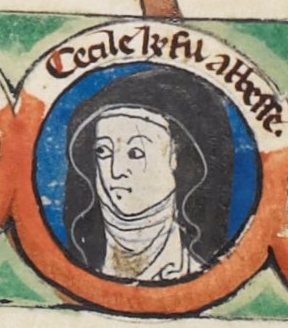
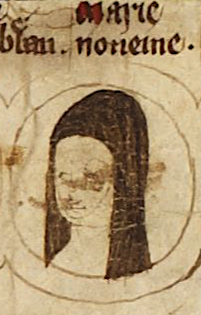
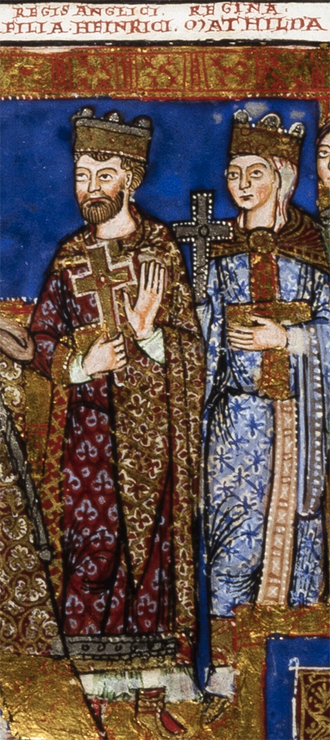
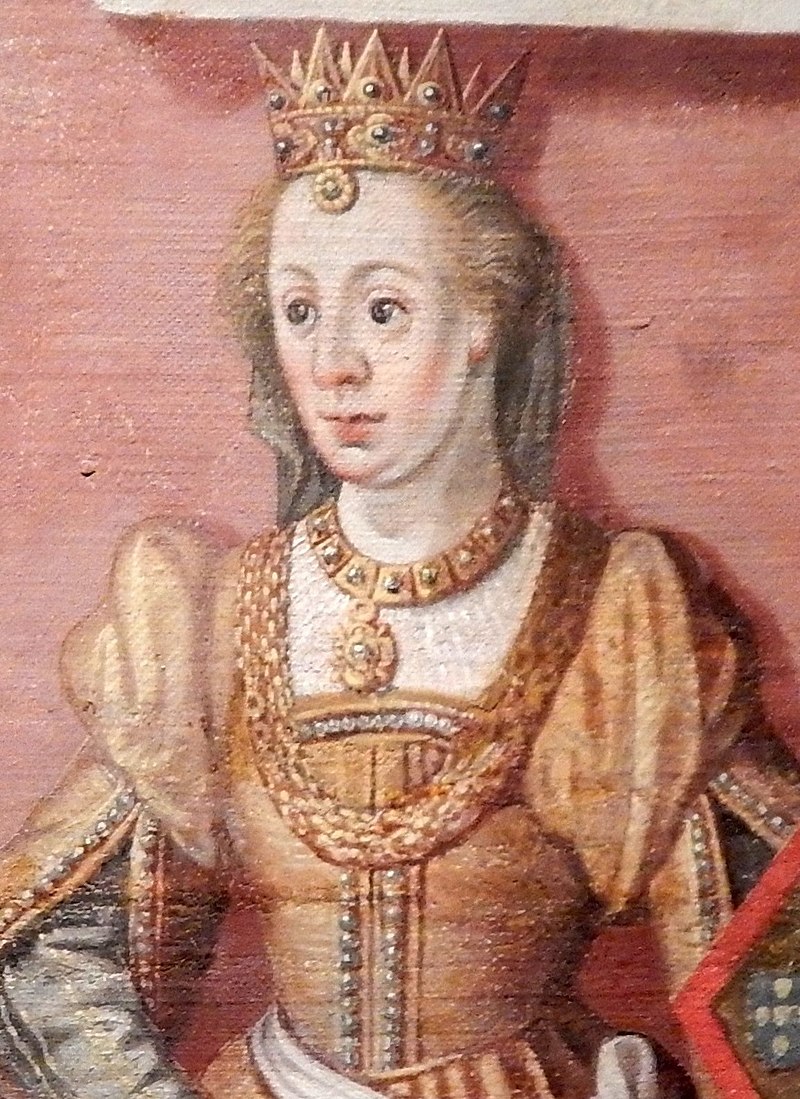
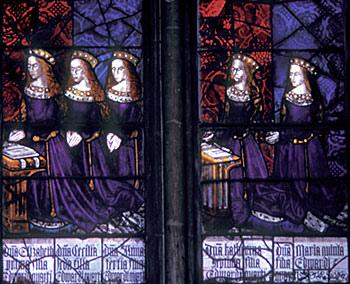
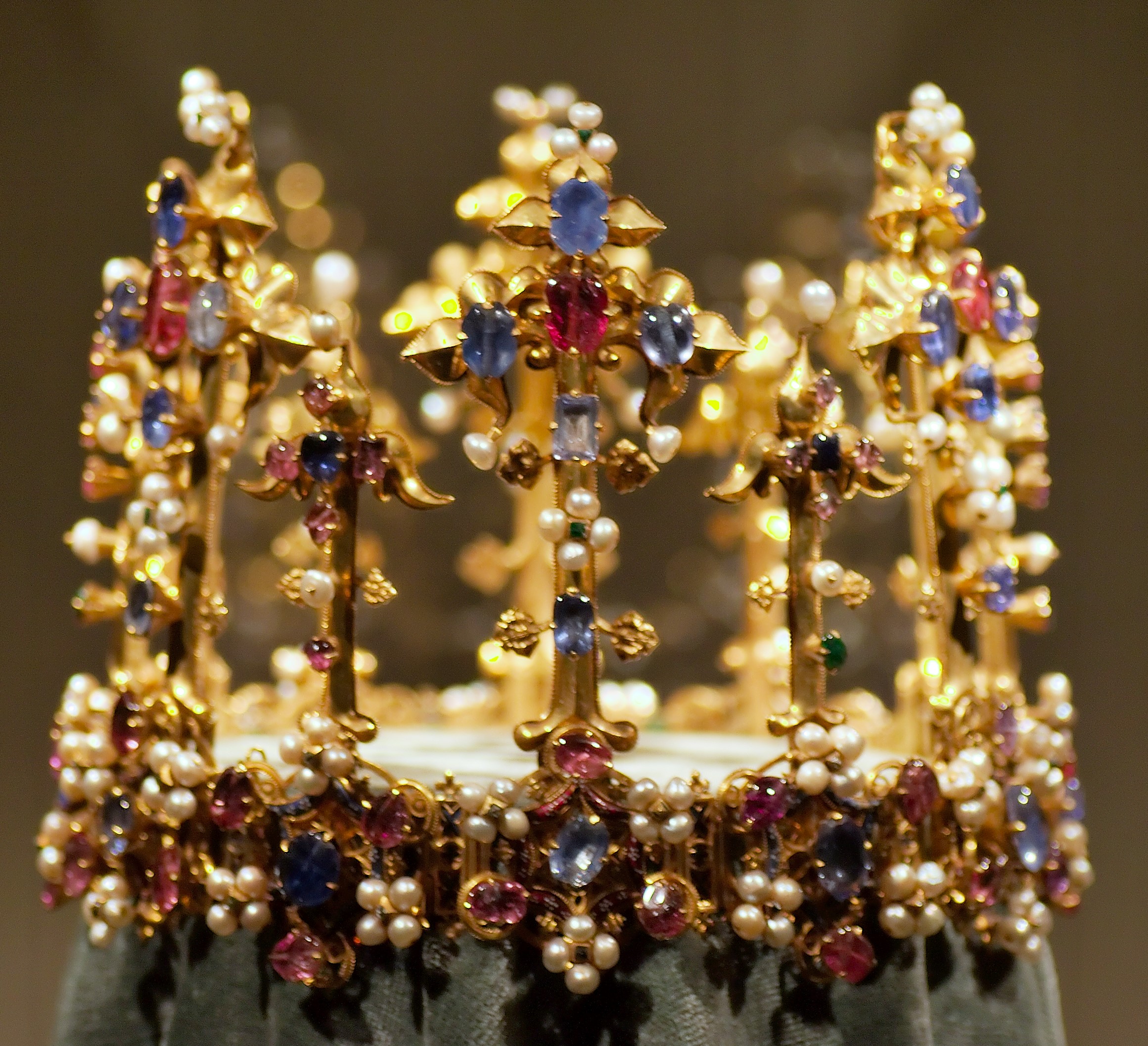
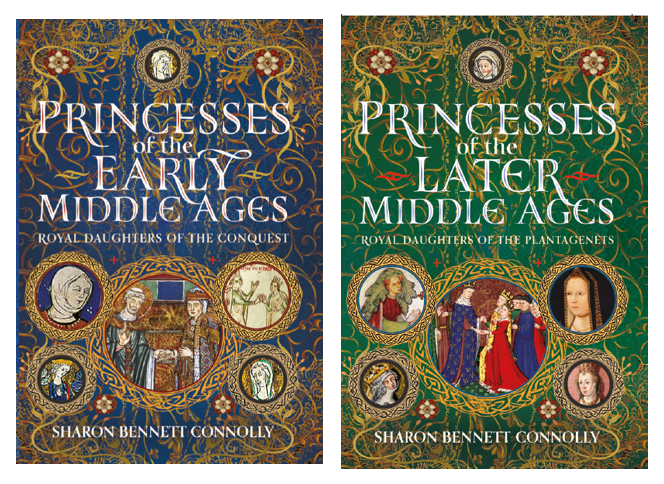
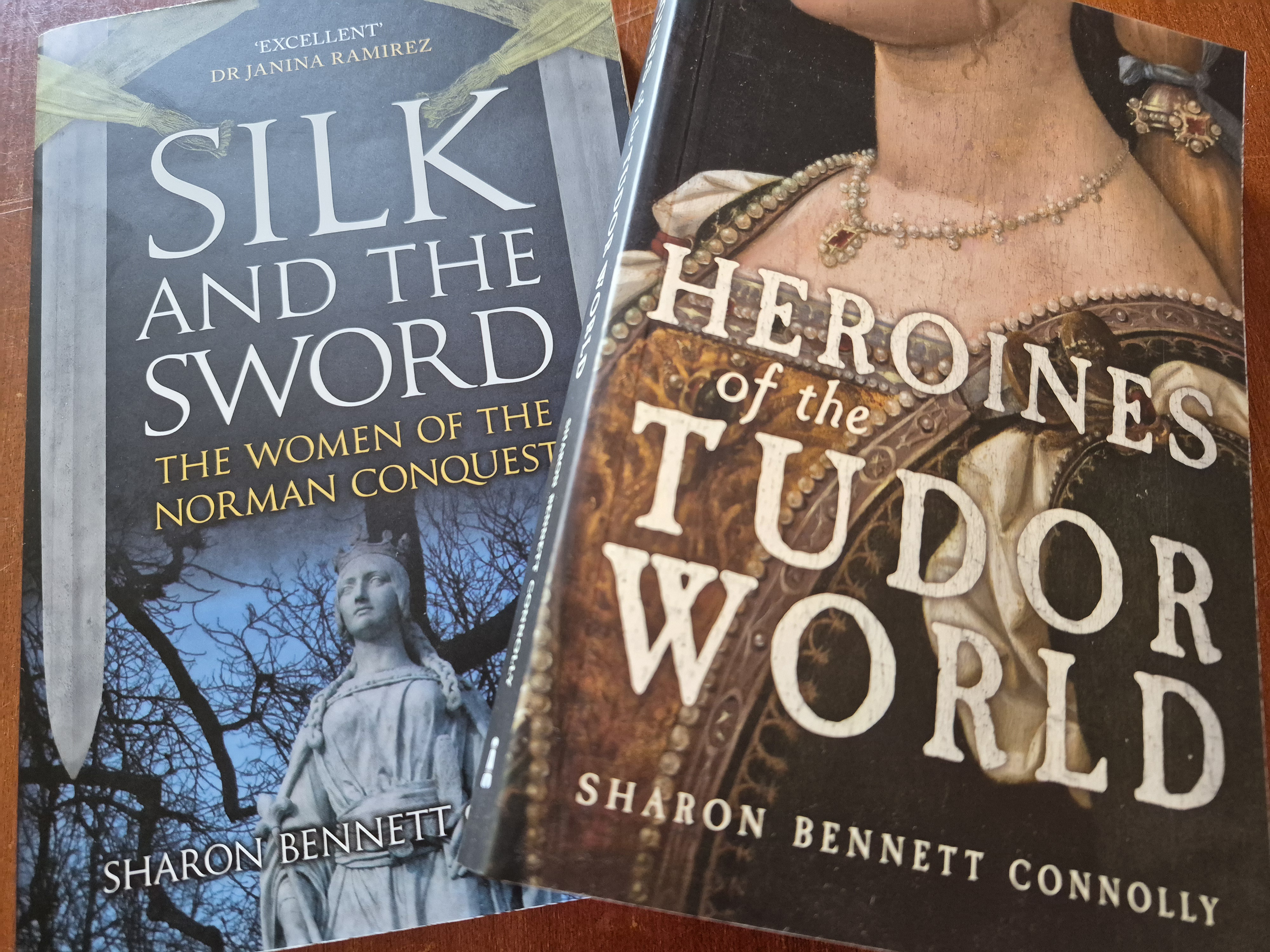
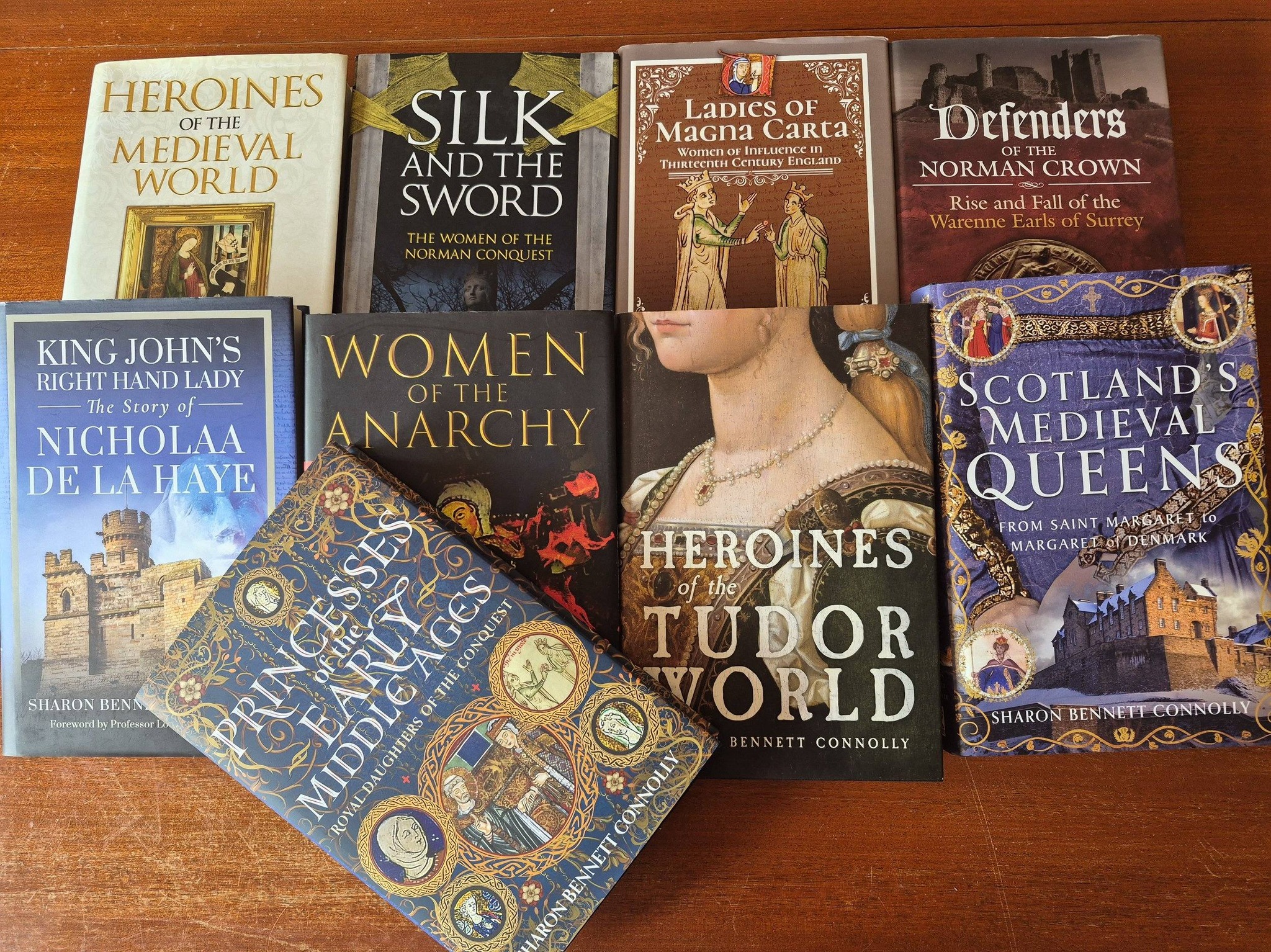

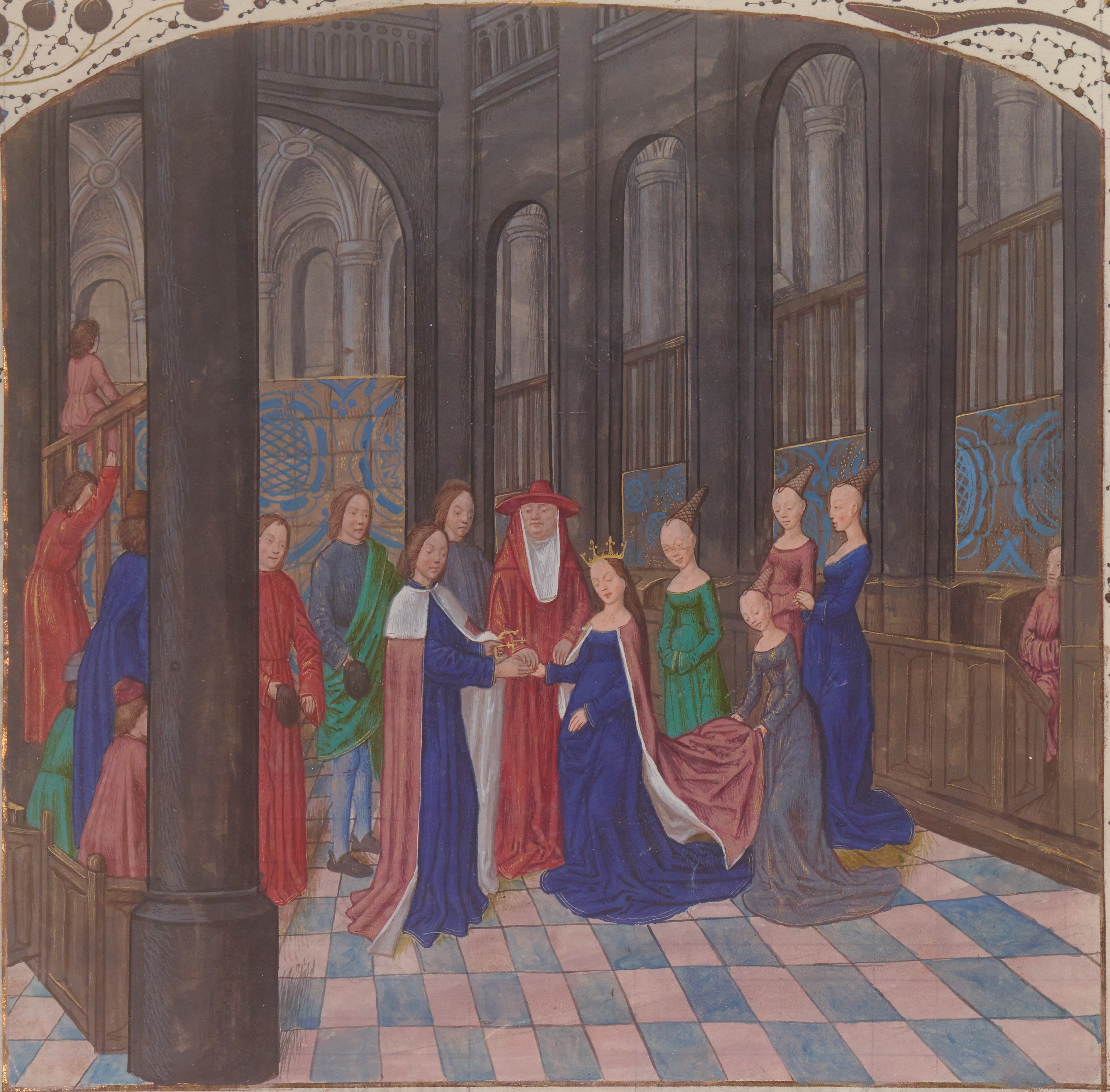
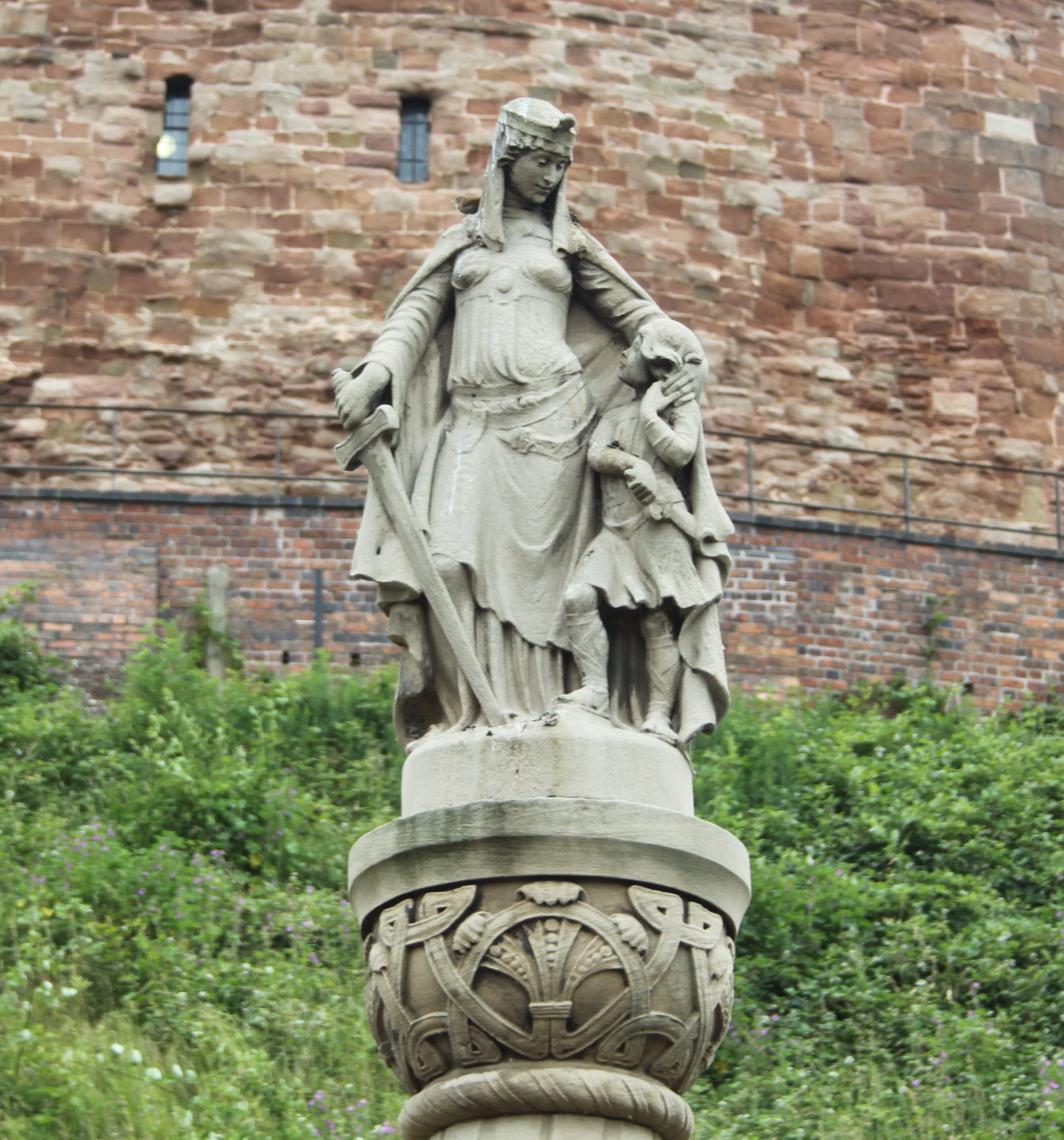
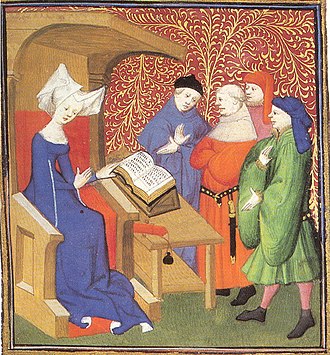
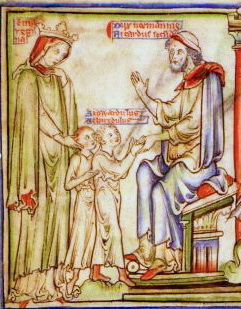
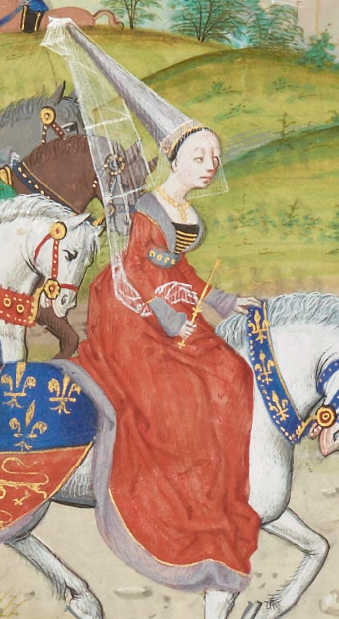
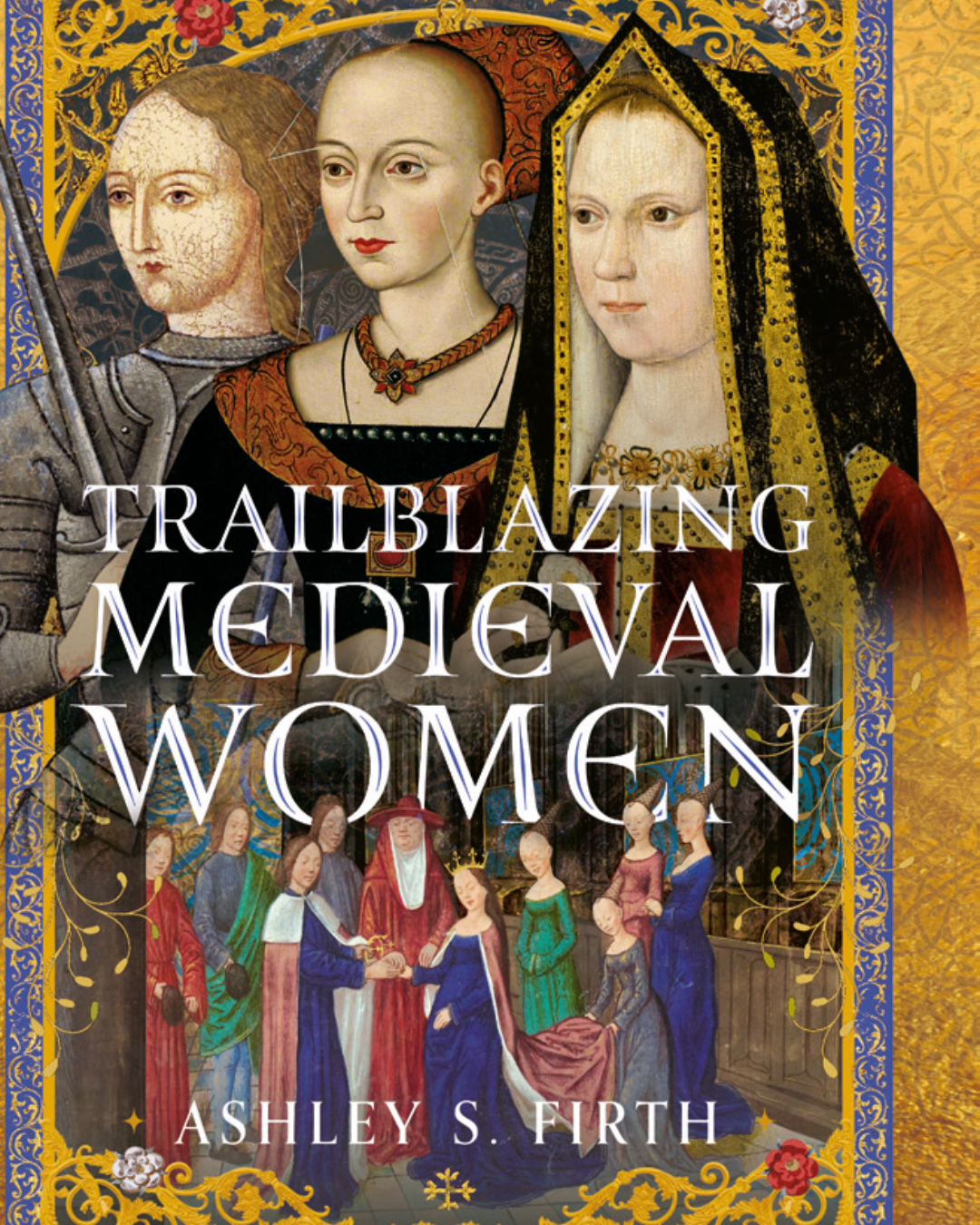



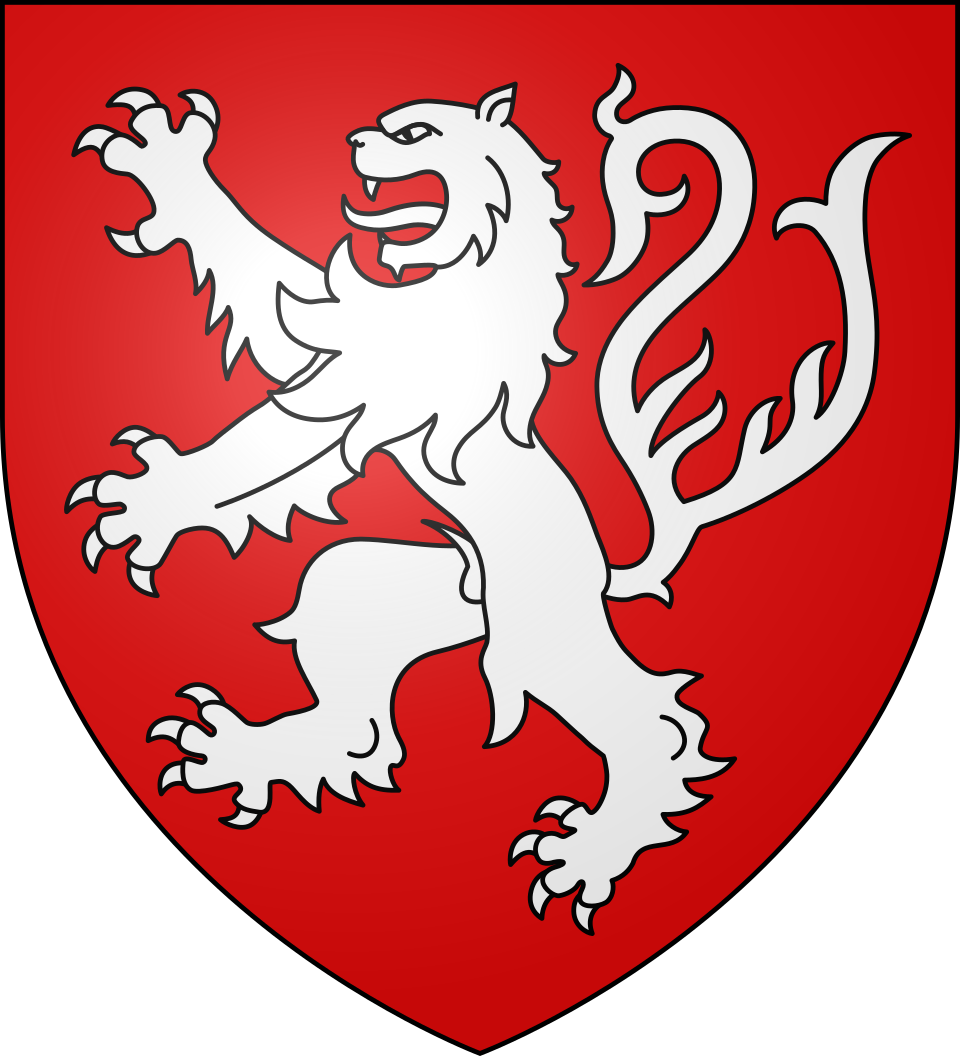
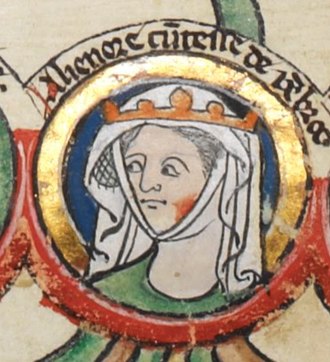

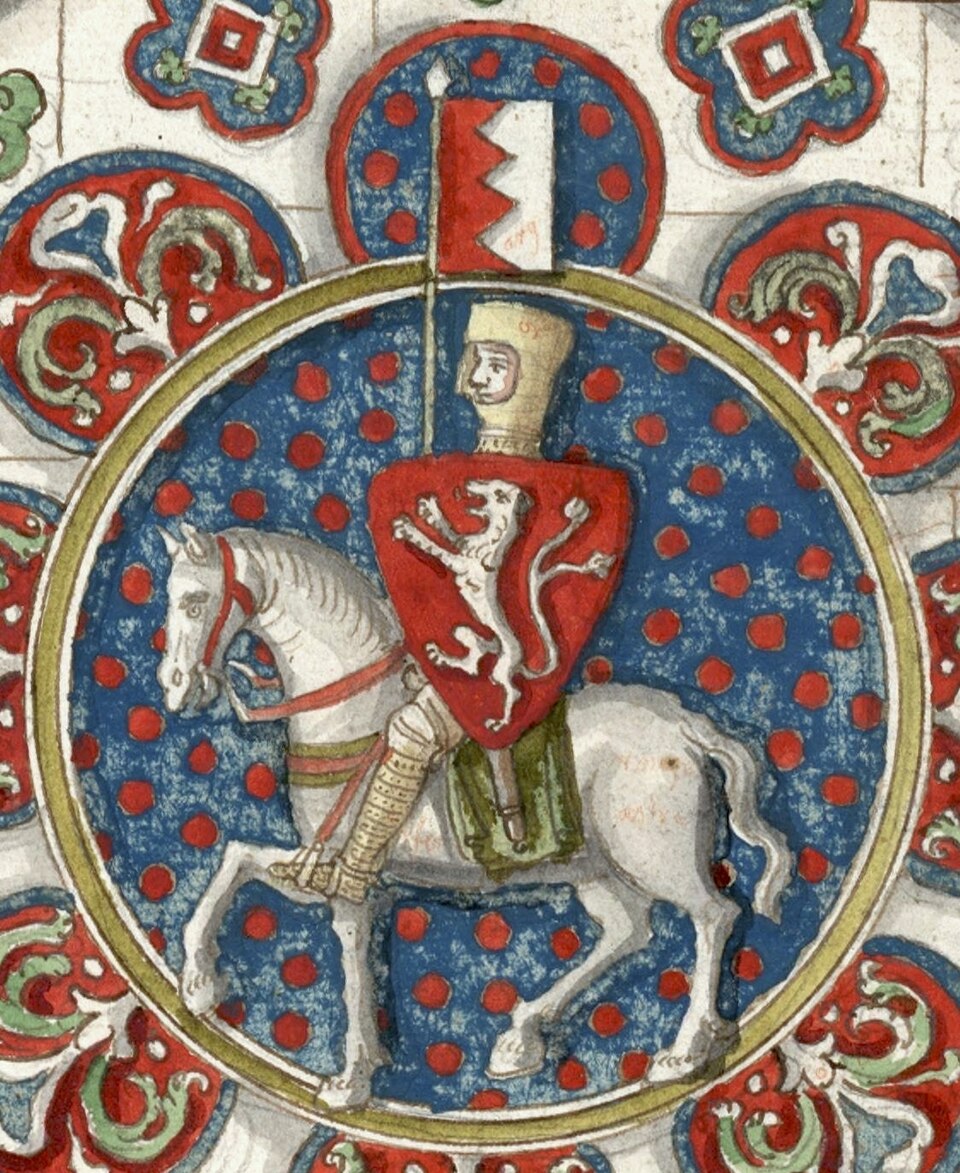
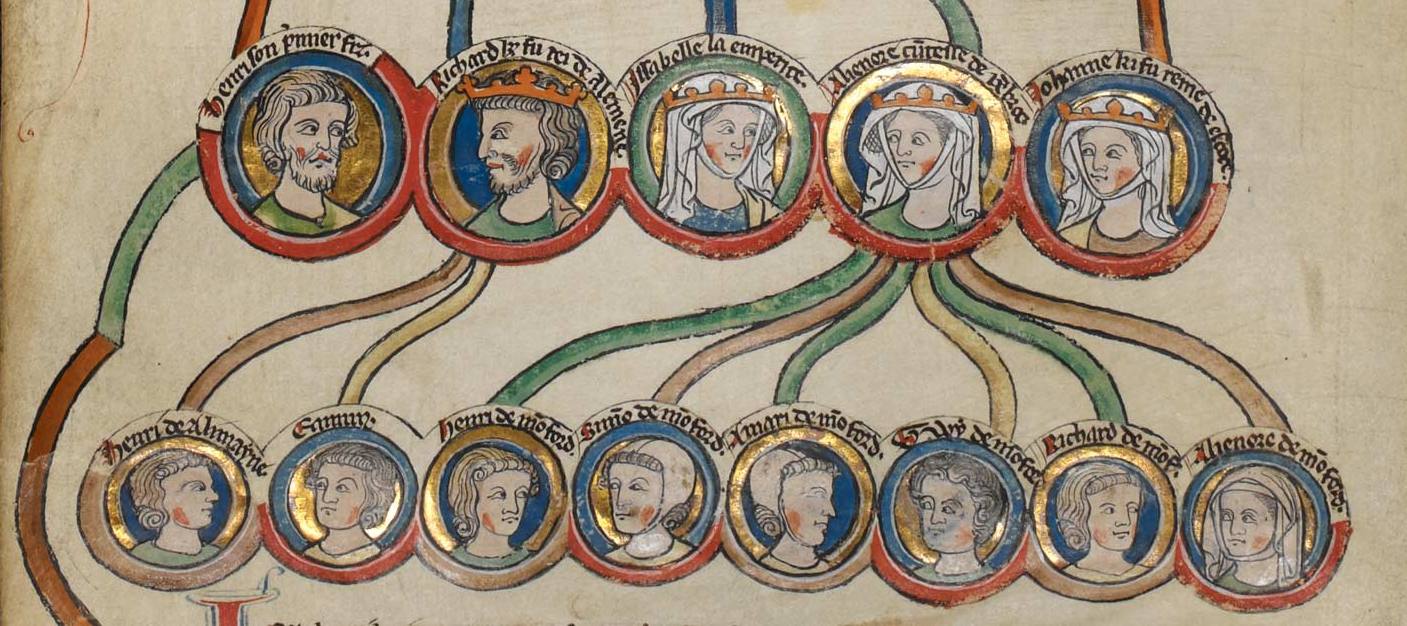
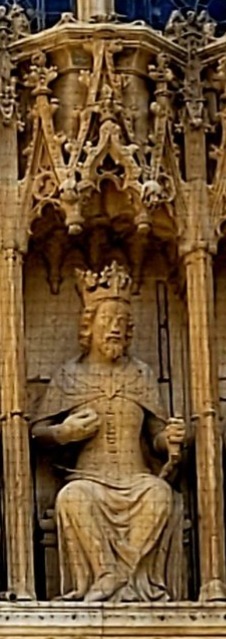
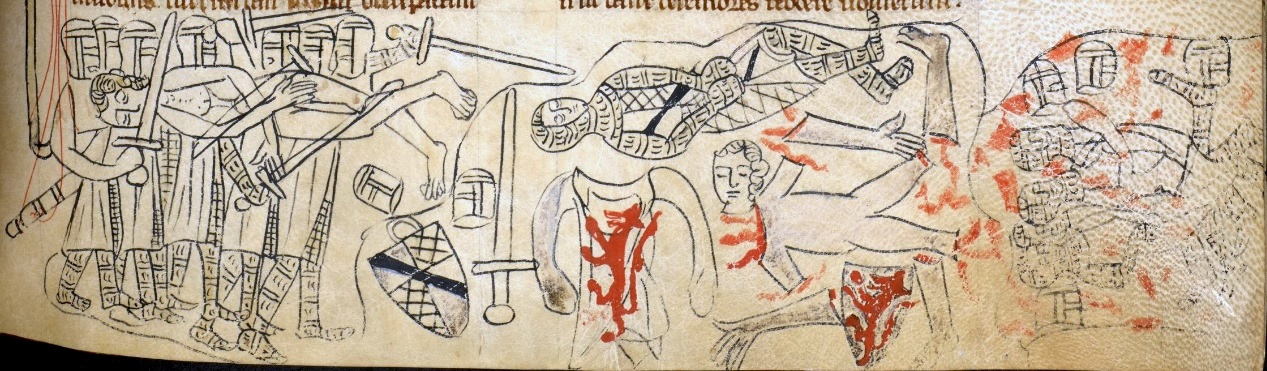
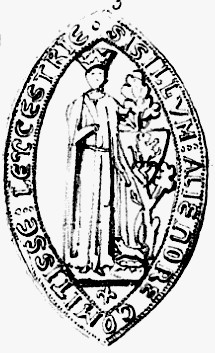
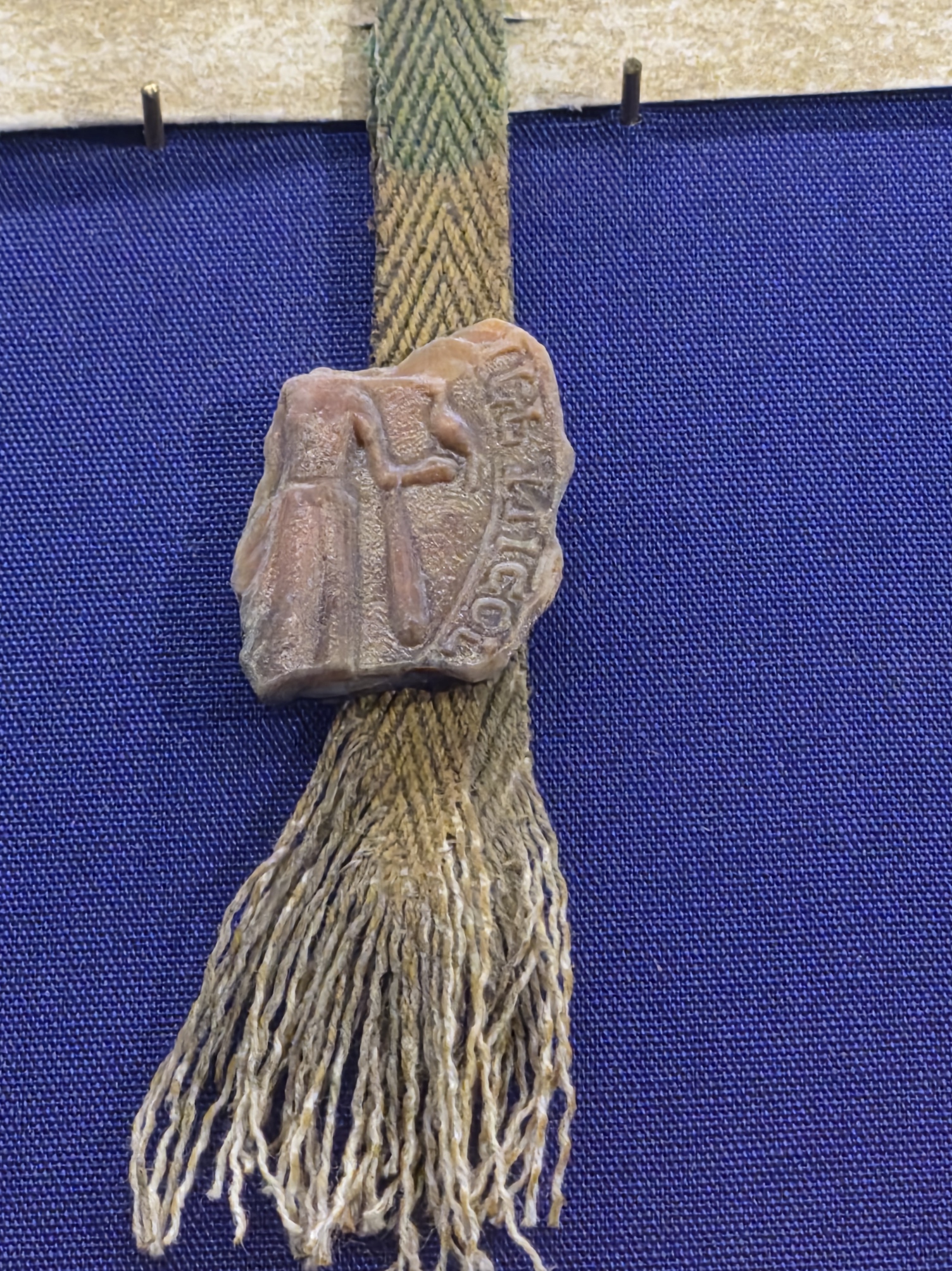
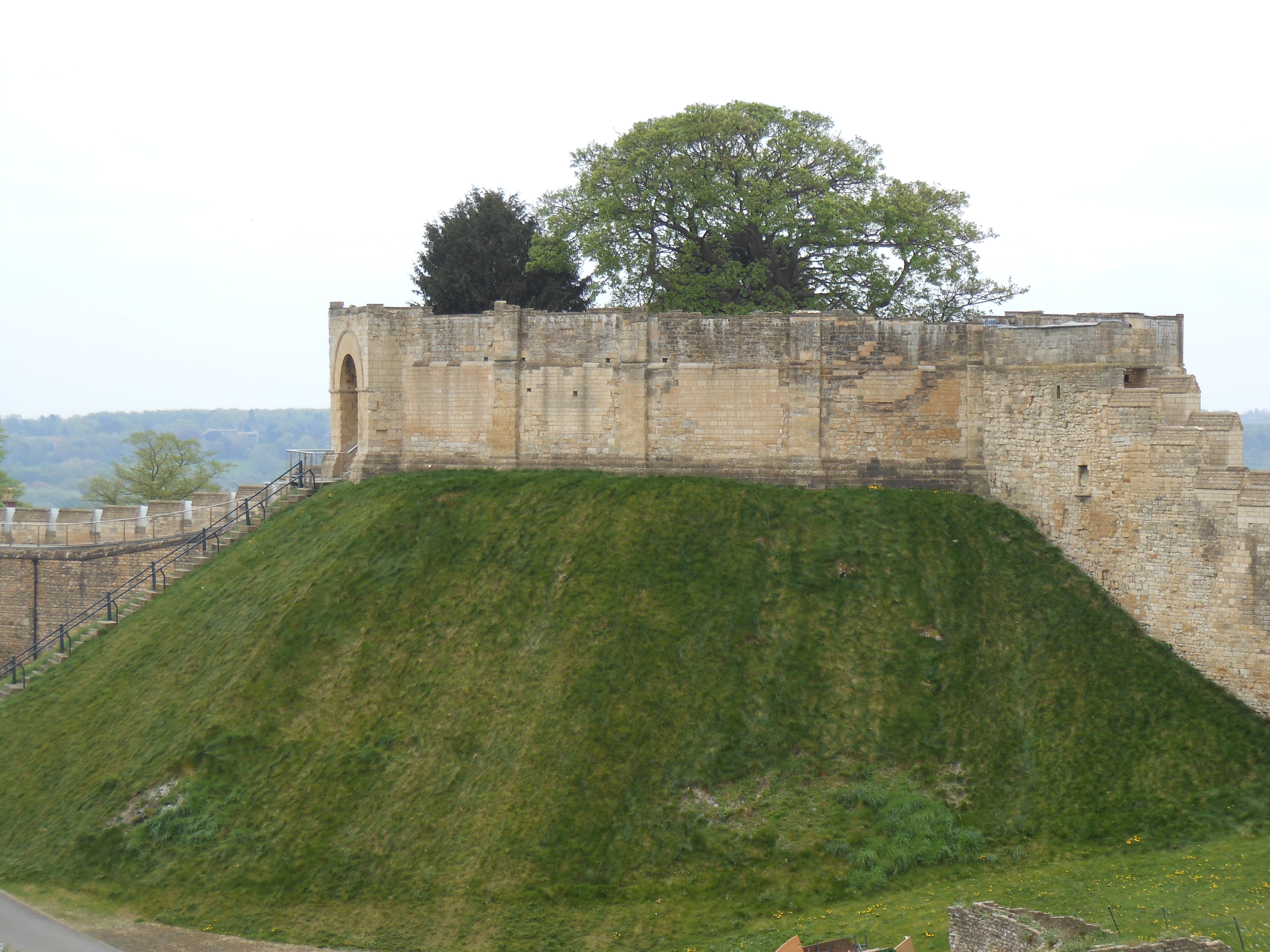
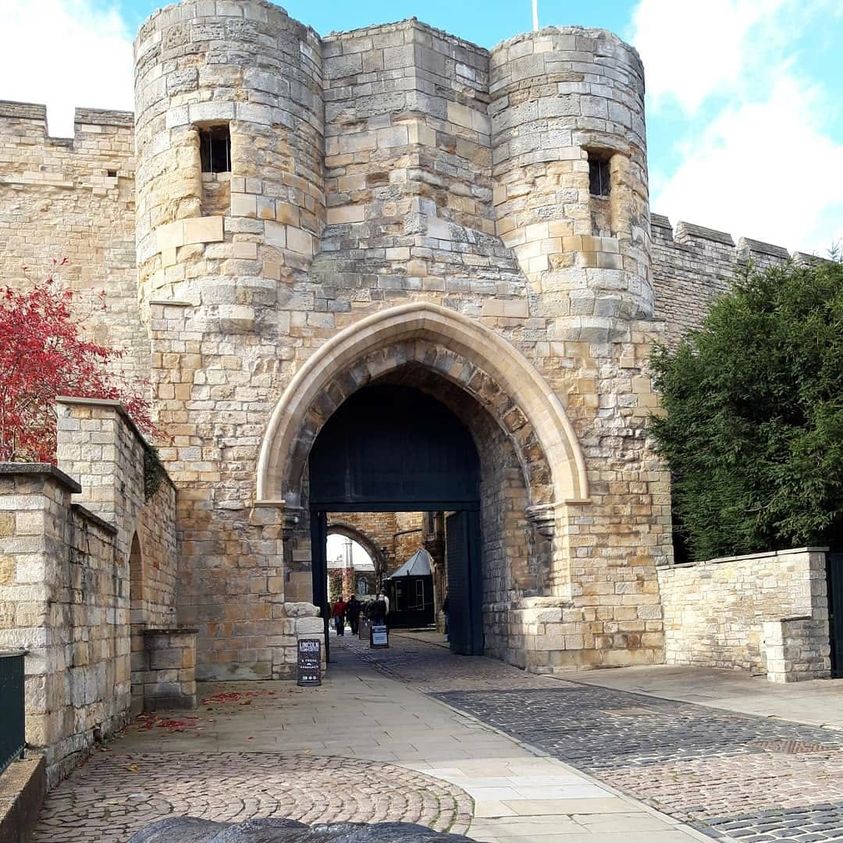
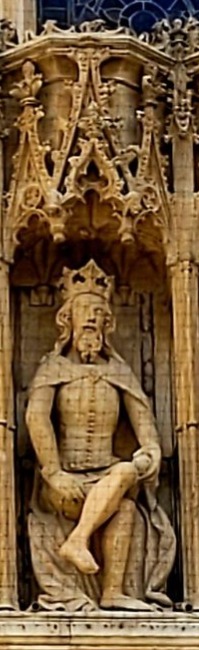
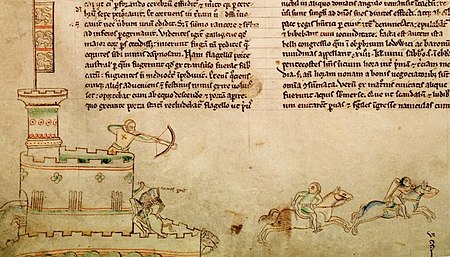
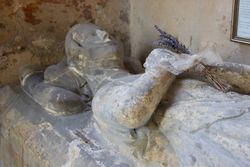
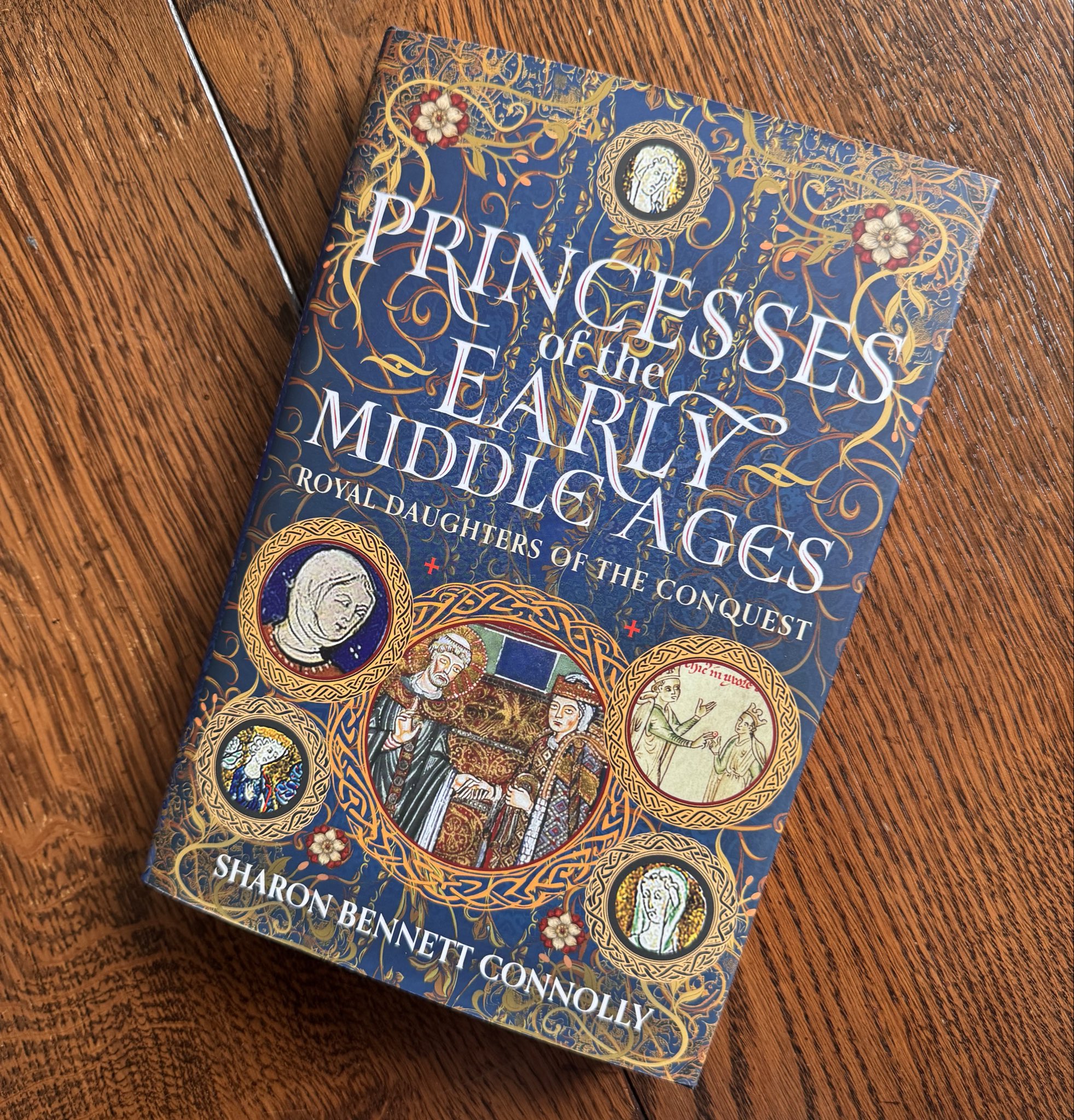
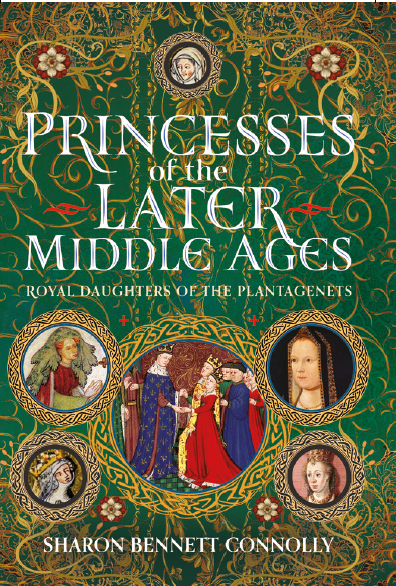
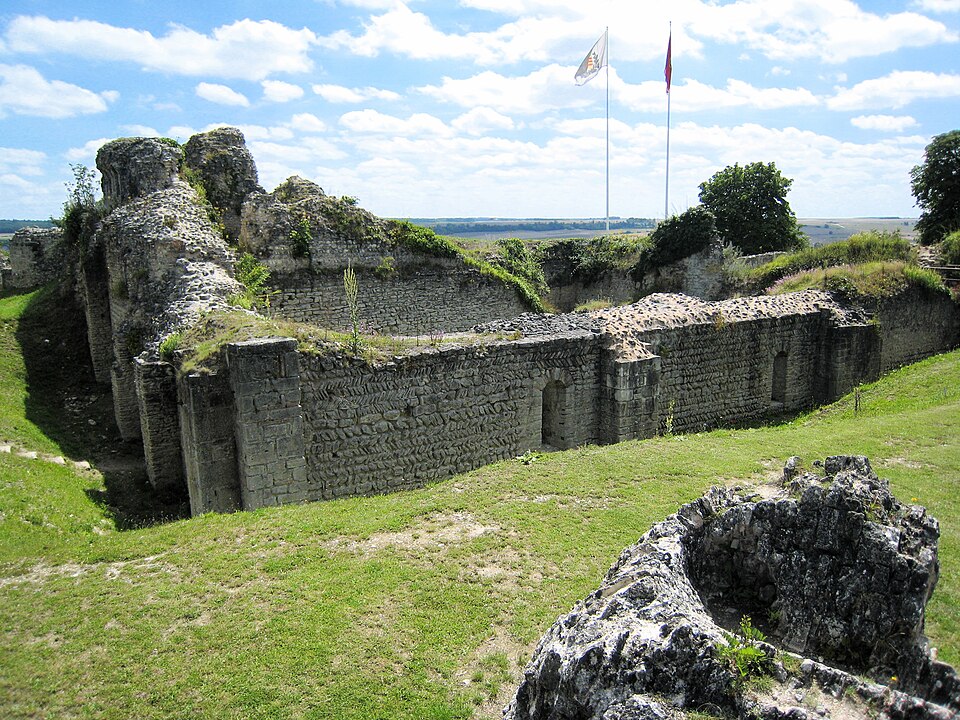
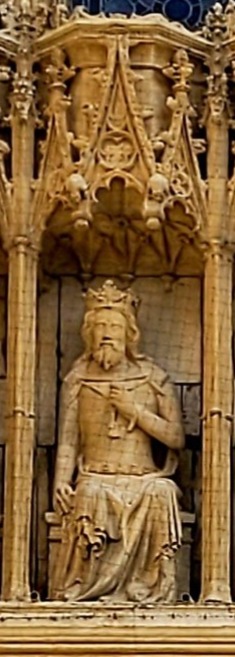
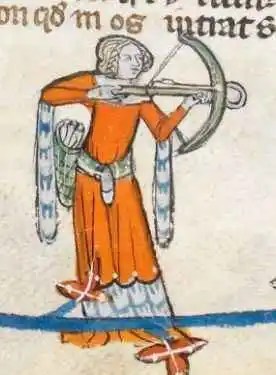
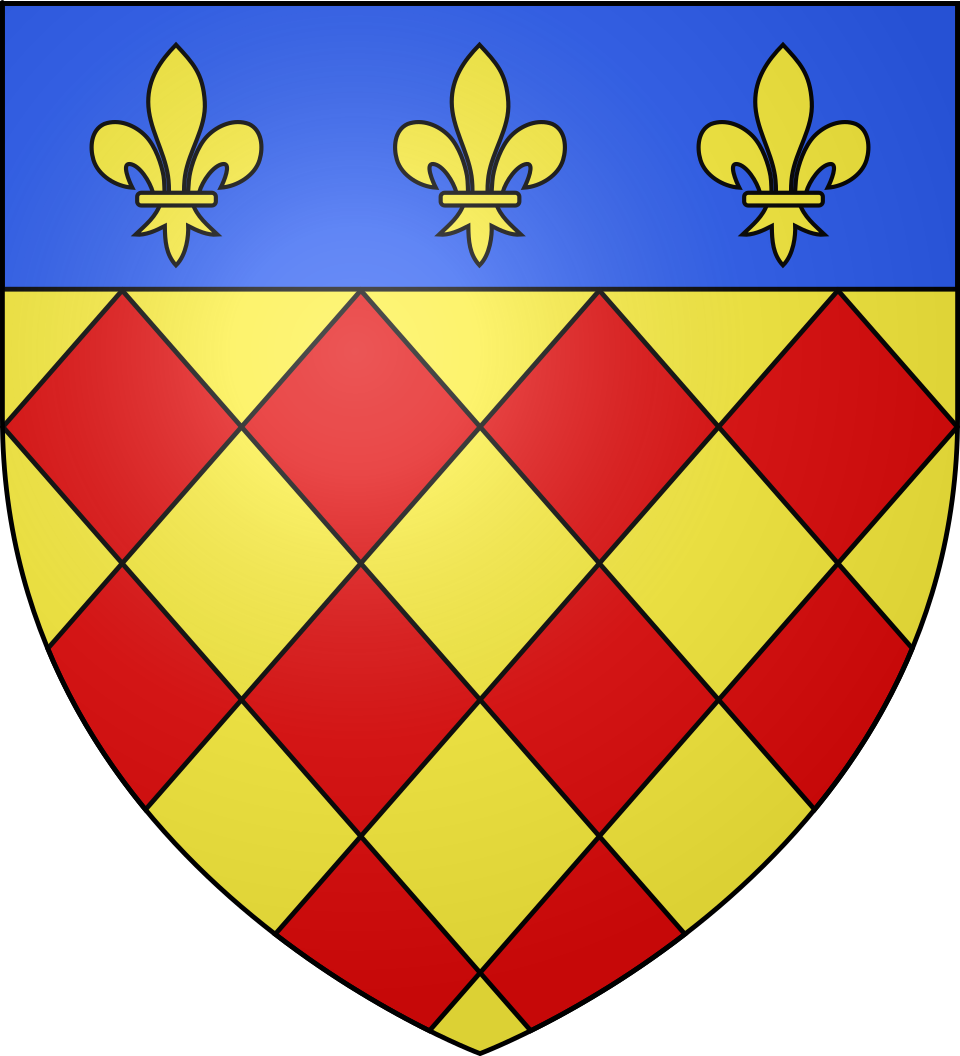

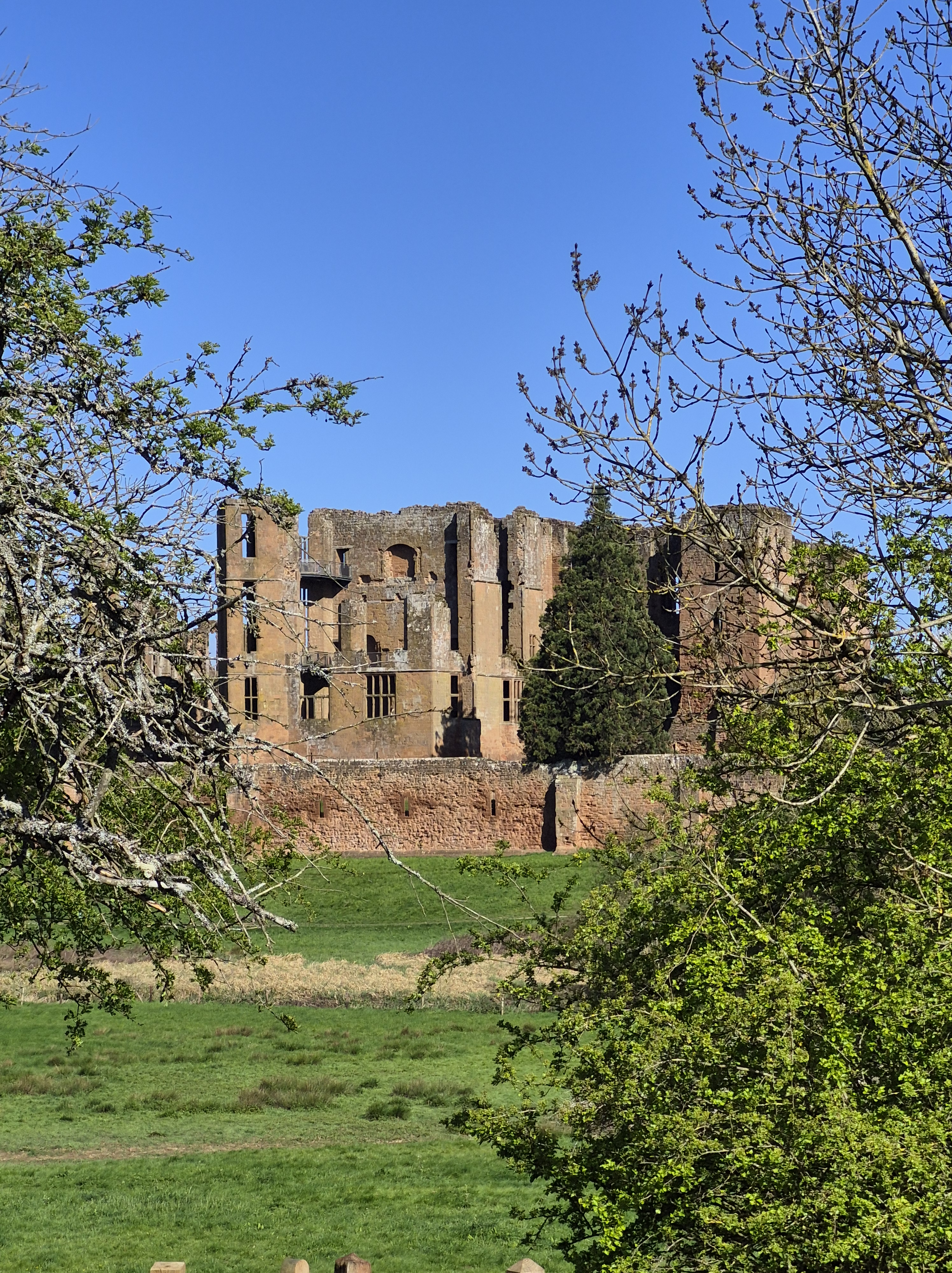

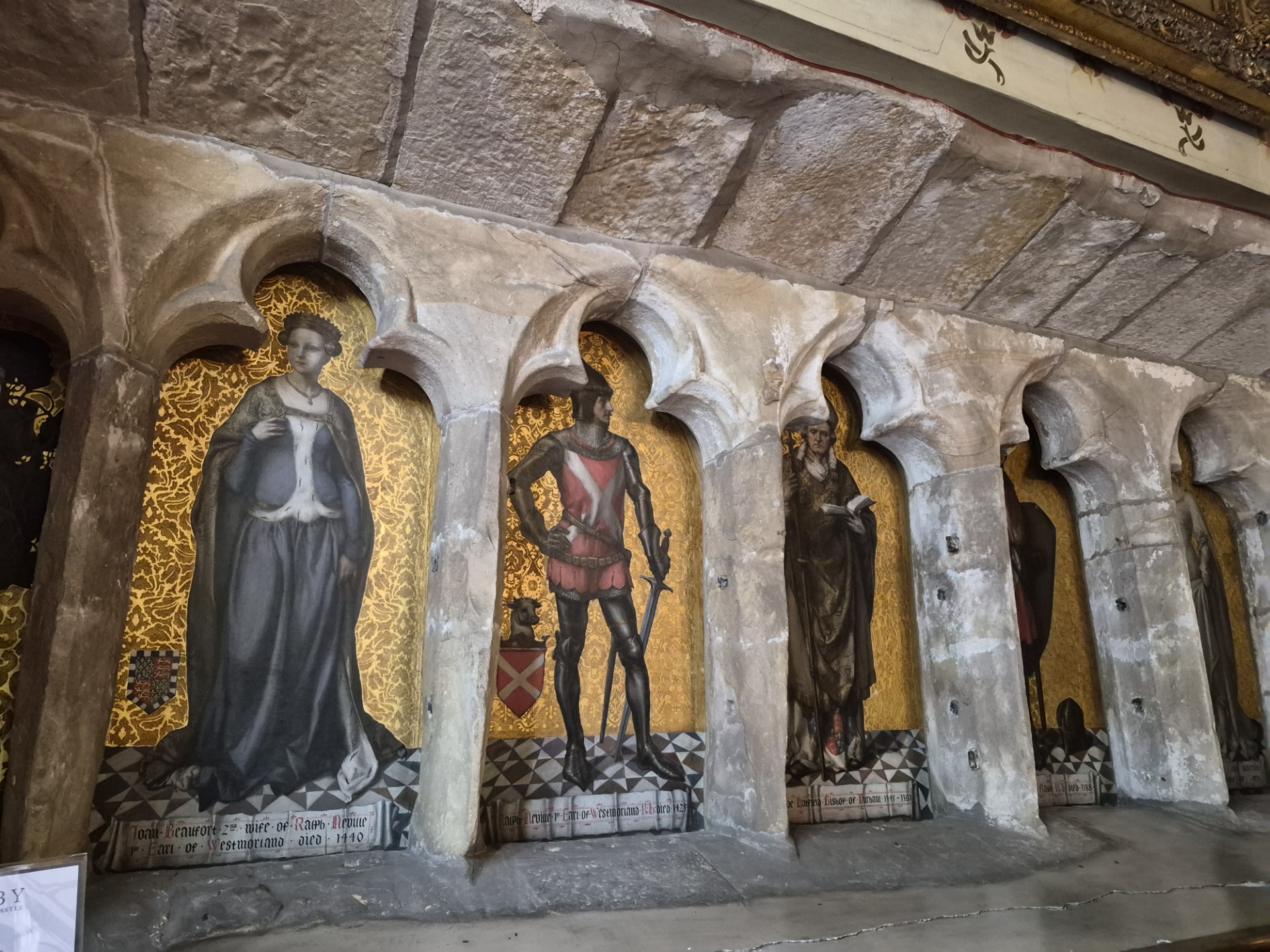


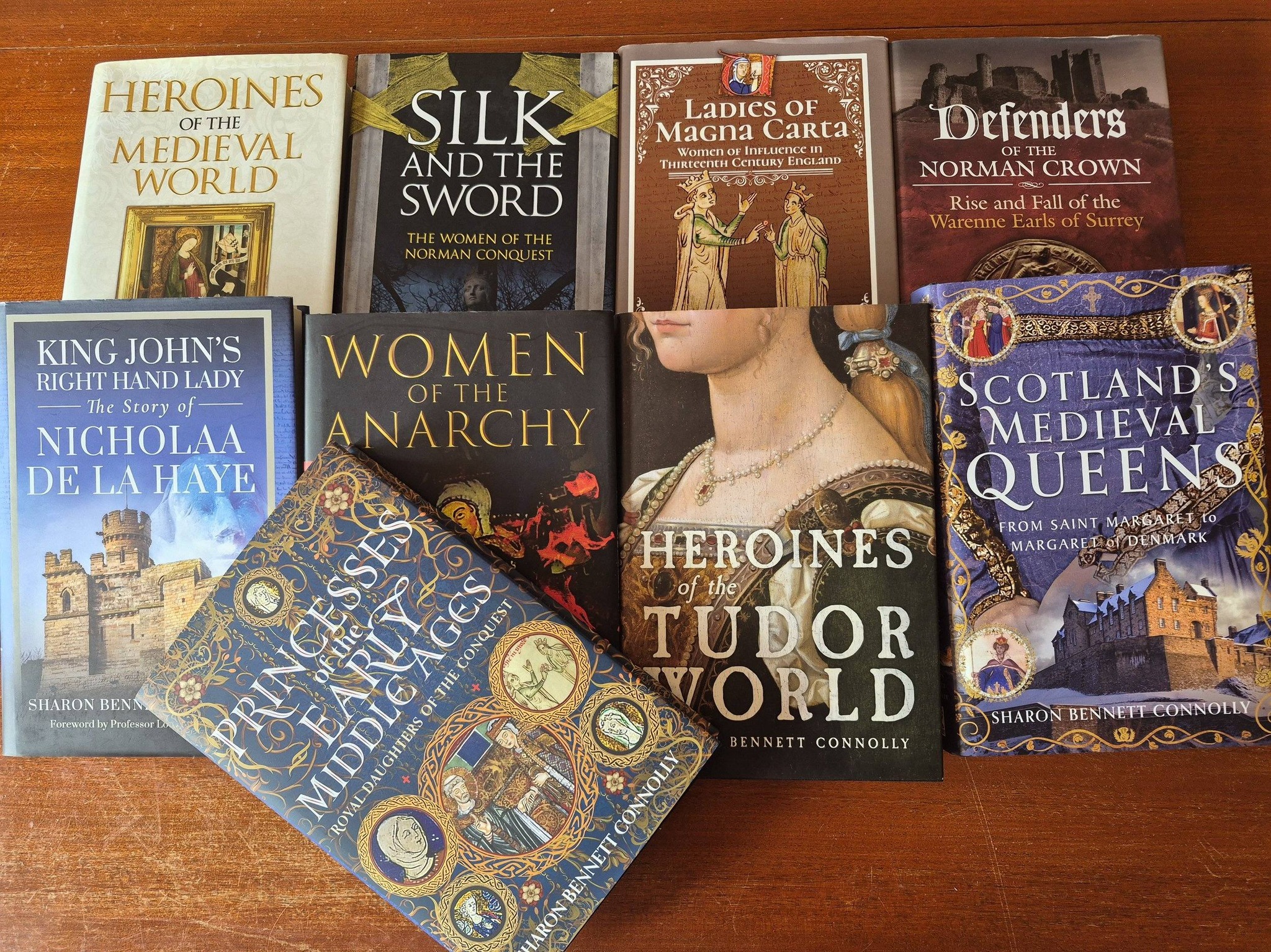
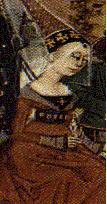
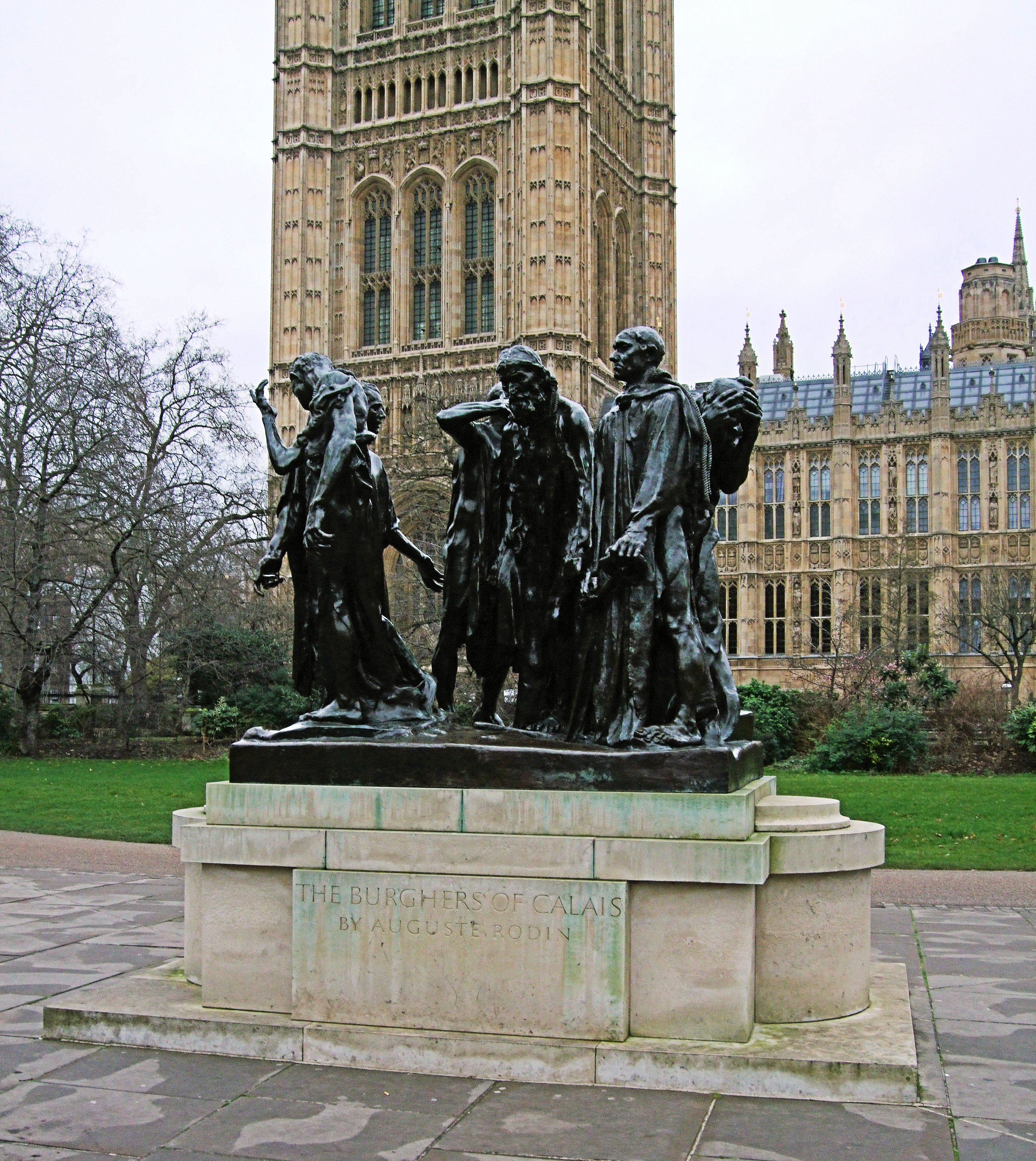
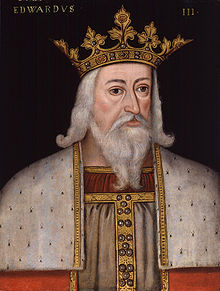

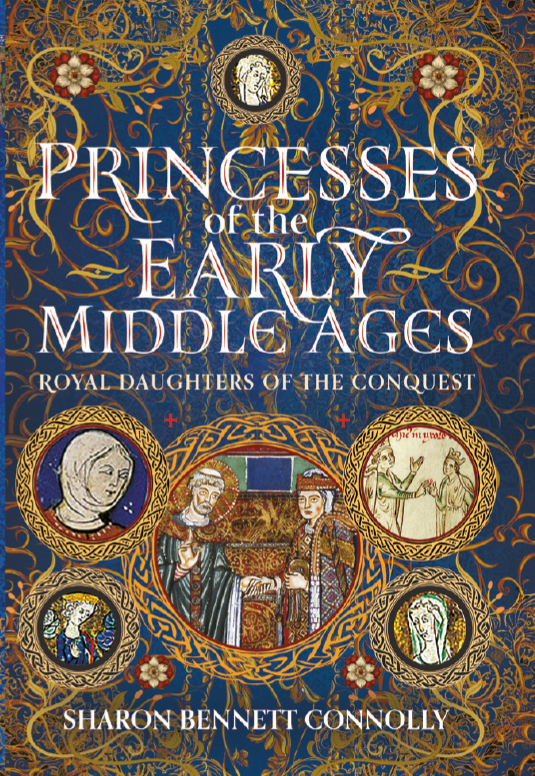

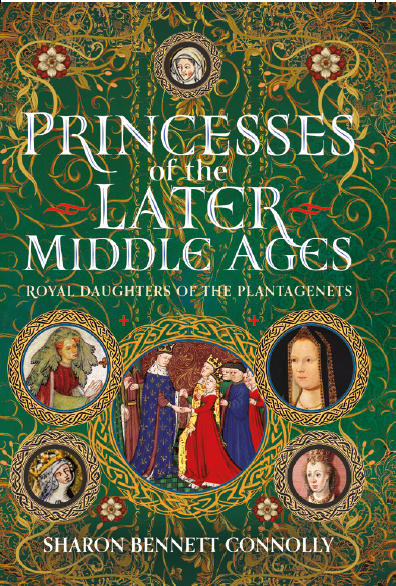
 History... the interesting bits!