‘My daughter wanted me to treat her more like a princess.
So, I married her to a stranger to strengthen the alliance with Poland!’
From dutiful daughters to runaway nuns, from empresses to rebels. The life of a medieval princess was, perhaps, not as predictable as we have been led to believe. At times, it is true, they were married off to a foreign prince, never to see England or their family again. But we can count the number of girls that happened to on one hand. Which is quite remarkable, given the distances and pace of travel in medieval times, when a horse could cover around 20 miles a day and a horse litter, the popular form of travel for noble women, would cover far less than that.
Some princesses even visited home after they married or were visited by members of their family; some never even left England.
Marrying your daughter to a prince in a distant land and never hearing from her again was not the purpose of a royal marriage. It was never in the king’s interest to abandon his daughter, or sister, once she was married abroad. Royal daughters were raised to be a personal and diplomatic link to their homeland. They were the means of keeping communications open when all other options failed; private letters were used to warn against treachery or prevent a breakdown in diplomatic relations.
Some did escape this destiny. For instance, a number of William the Conqueror’s daughters became nuns. Cecilia had that life decided for her from a young age, but Adelida appears to have chosen this course after a number of failed marriage proposals. Perhaps she had had enough of the royal marriage market? King Stephen’s daughter, Mary, was also destined for the Church, with her parents even founding a religious house for her. Kidnapped for her royal blood, and forced into marriage, she would return to the convent after becoming a mother. The scandal was not of her making, unlike Gunhild, the daughter of King Harold II, who seems to have had a rather relaxed attitude to marriage and relationships; a woman before her time – by about 1,000 years! Gunhild had spent time in the convent, possibly having sought sanctuary after the Norman Conquest. There is uncertainty as to whether she ever took her vows; though the church seemed to believe she had and sought her return to the cloistered life.
Mary of Woodstock
Edward I’s daughter, Mary of Woodstock, was also destined for a career in the church, though she does not appear to have been suited to the contemplative lifestyle. She managed to spend as much time as she could at court; her father and brother regularly paying off gambling debts. Controversy even followed her beyond the grave, when John de Warenne, Earl of Surrey, trying to obtain a divorce from Mary’s niece, Joan of Bar, claimed that he had had an affair with her, a nun!
The last medieval royal nun was Bridget of York, the seventh and youngest daughter of Edward IV and Elizabeth Woodville. Only 3 years old when her father died and she and her siblings were declared illegitimate, by 1489 Bridget was living at Dartford Priory, in the care of its Prioress, Elizabeth Cressener. Although she was cloistered, Bridget was not forgotten, nor isolated from her family. In 1492, she was able to attend her mother’s funeral. She was remembered in the will of her grandmother Cecily Neville, Duchess of York and Elizabeth of York’s wardrobe accounts from 1502 to 1503 indicate that the queen sent money to her sister at Dartford.
One English princess travelled far from home, into Kyivan Rus. King Harold’s oldest daughter, Gytha, came from a different society and generation. The Godwin family had strong Scandinavian ties, and it would have been natural for Gytha and her brothers to look for shelter and a future within that sphere, which stretched all the way to the court of the Grand Princes of Kyiv, as far away from the conquering Normans as possible.
Following the Norman Conquest, the focus of England’s foreign policy changed. Royal daughters were married into the European countries that would benefit England, those with close links geographically and culturally.
While English kings married French princesses, and Scottish kings married English princesses, the reverse happened rarely, if ever. Only one Scottish princess, Matilda of Scotland, married an English king, Henry I. And no English princess ever married a French king or an heir to the French throne, not in medieval times. The closest we came to it was Blanche of Castile, granddaughter of Henry II and niece of King John, who married the future Louis VIII. With John having no legitimate daughter at the time, he had to be creative and reach out to his wider family for a suitable princess to cement the fragile peace between him and Philip II of France.
Empress Matilda depicted at the coronation of her granddaughter, Matilda of England, as Duchess of Saxony, in an image from the Gospels of Henry the Lion.
Although no English princess became a queen of France, that is not to say English princesses did not marry Frenchmen. It is, perhaps, a clear indication of the animosity of Anglo-French relations in medieval times that kings of England were far happier to marry their daughters to the counts and dukes of the many semi-autonomous regions of France, such as Brittany, Toulouse and Blois; regions that challenged and stalled the expansion of the kingdom of France itself. The marriages of daughters into Germany, the Low Countries and Spain also served the policy of containing England’s biggest rival within its borders and preventing expansion into territories that could threaten England’s trading routes and sphere of influence.
Royal women journeyed great distances to marry. Empress Matilda is, perhaps, the most famous, but also Joanna Plantagenet, Henry II’s daughter and Richard I’s sister, and Isabella, Henry III’s sister, travelled further than most of the English princesses. While Empress Matilda remained close to her family through letters, there may also have been a meeting with her father on the borders of their respective domains in the late 1110s. Of Joanna and Isabella, each received visits from their brothers. Though in Isabella’s case it was her brother Richard, rather than Henry himself, she would also have met up with her younger sister, Eleanor, who stayed in Italy while her husband, Simon de Montfort, joined her brother Richard on Crusade. And in Joanna’s case, it was a little more than a visit, joining her brother, Richard the Lionheart, in the Third Crusade. But it seems apparent that both brothers, on their way to the Crusades, planned their routes to facilitate a meeting with their respective sisters.
And then there were the scandals, King Henry I’s illegitimate daughter, Juliane, who tried to kill her own father with a crossbow. And Joan, Lady of Wales, the illegitimate daughter of King John, the wife of Llywelyn the Great, who was found in her husband’s bedroom with another man. Such stories serve to demonstrate that life was did not always give royal women a ‘happily ever after’.
There were also royal daughters who were not born as princesses, but achieved that style through their father’s claiming of the English throne. Of William the Conqueror’s daughters, only the youngest, Adela, Countess of Blois, was born ‘in the purple’. We know this as Godfrey of Reims wrote a poem saying just that:
The duke’s child would rise to become an excellent woman, The goddess did not think it sufficient for her to be of ducal status. The royal virgin obtained by fate that her father would be king. In order for Adela to be the daughter of a king, the Fates allowed the father to establish himself as king. Because the virgin was not allowed to leave the womb Her father owed the kingdom of England to her
Philippa, Queen of Denmark, Norway and Sweden
Later, Henry of Bolingbroke’s seizure of the throne in 1399 created two new princesses of England, Blanche and Philippa. Their mother, Mary de Bohun, had died giving birth to Philippa in 1394 and in 1398, their father had been sent into exile; only to return the following year and force Richard II’s abdication. Their father’s accession as Henry IV saw the two girls’ marriage prospects improve dramatically. As the daughters of a duke, they would have expected to marry a rich heir to English lands. As the daughters of a king, they were now bargaining chips in international relations. Marriage would see Philippa become queen of Denmark, Norway and Sweden, while Blanche would travel to Germany to become Countess Palatine, taking with her a magnificent, jewel-encrusted crown that has survived to this day. Blanche fulfilled her duties by producing a son and heir, in what appears to have been a happy and loving marriage. Philippa never realised the joy of motherhood but ably attended to her duties as queen in other ways, as a protector and patron of her people, even leading the defence of Copenhagen, and a trusted consort and regent for her husband, King Eric.
Though not technically princesses, even illegitimate daughters could prove useful to kings. Henry I, in particular, would use his 10 illegitimate daughters to strengthen and cement alliances just as legitimate princesses could have been, with one Sybilla of Normandy becoming Queen of Scots, on her marriage to King Alexander I. The advantage to a king was that such marriages brought kings and rivals into the family, without passing on any claim to the English throne, thus being no threat to the king’s legitimate heirs.
As a usurpation can make princesses, as in the case of Henry IV’s daughters, it can also unmake them. With Richard III’s seizure of the throne in 1483, the daughters of Edward IV went from being the pampered darlings of England, with glittering futures ahead of them, to the bastardised daughters of a bigamous dead king.
What a change in fortunes!
The York sisters from the window in Canterbury Cathedral
As events unfolded in the summer of 1483, and the two princes were held in the Tower of London, gradually seen less and less within the precincts of the fortress, until they were no longer seen at all, Elizabeth of York and her sisters remained in sanctuary with their mother. A focus for political disaffection and an embarrassment to the new regime, it was a situation that Richard III could not allow to continue. Rumours abounded that plans were afoot to sneak the old king’s daughters out of Sanctuary and away to the Continent, safely beyond the reach of Richard and at the disposal of loyal Yorkists wanting to reinstate the line of Edward IV. To thwart such plans, Richard decided to open negotiations with Elizabeth Woodville, to persuade her to allow her daughters to leave sanctuary. Agreement was reached in March 1484, whereby Elizabeth of York and her sisters would be treated as befitted the king’s kinswomen.
After almost a year within the confines of Westminster Abbey, the daughters of Edward IV emerged from their sanctuary and were given lodgings at court. They had lost the prospect of dazzling futures as queens and duchesses and their status was now forever tainted by the questions over their legitimacy.
Richard III himself did have at least two illegitimate children and one of those was a daughter, Katherine. She would not be a princess, but as the natural daughter of a king, she has her place in history. Unfortunately, the information on Katherine Plantagenet is scant. Her date and year of birth are unknown. Given Richard’s reputation for piety and loyalty, it is assumed that she was born before Richard’s marriage to Anne Neville in 1472, as she herself was married in 1484. The minimum age for girls to marry was 12, but most parents waited until their daughters were 14 or 15, at least, before finding them husbands. Richard chose his friend William Herbert, Earl of Huntingdon, as his daughter’s husband. Herbert agreed to provide Katherine with a jointure worth £200 a year. For his part, the king agreed to bear the costs of the marriage and to endow that couple with lands and lordships that they could pass on to their male heirs. Katherine died before the coronation of Elizabeth of York in 1486 and was buried in the church of St James Garlickhithe, London.
Crown of Blanche of England
The experiences of the royal daughters throughout the the medieval era are disparate, not just in their futures but even in their family lives as they were growing up. Not all princesses were made in the same mould and each one found her own way to deal with her life and the cards that she was dealt. In my research I frequently discovered instances of happy medieval marriages – and even if a marriage was not based on love, it did not mean that it would not be successful. Indeed, in many such cases the young woman concerned found her own way of succeeding, whether it was through her children or the management of estates – or the fact that a lasting peace was achieved between her two countries.
Events in England would surely have taught them to weather the storms of married life – and international relations.
One thing is certain, these women were not mere pawns, or ornaments on the arm of a king, prince, duke or lord. They were not simply baby-making machines. Yes, in the masculine world they inhabited, a boy was always a prime requirement. A son was needed to continue the family line, to rule and command armies. But daughters were also necessary. They had a purpose – to seal alliances and to act as diplomats to protect English interests in the countries into which they married.
Their stories are quite remarkable.
*
Princesses of the Early Middle Ages: Royal Daughters of the Conquest and Princesses of the Later Middle Ages: Royal Daughters of the Plantagenets tell the stories of England’s royal daughters from 1066 to the rise of the Tudors, from the last Anglo-Saxon princesses to the fall of the House of York.
Were they really pampered pawns sent off to marriages on the Continent, out of sight and out of mind?
Perhaps, there was different story, where a foreign marriage does not mean eternal exile, but a purpose in life, where a princess is a diplomat, an ambassador for England in her new country.
Where she is the bond between allies – most of the time.
Their stories are touching, inspiring and, at times, heartbreaking...
Praise for Princesses of the Early Middle Ages:
Heidi Malagisi: ‘This is another excellent book by Sharon Bennett Connolly. Extremely well researched and relatively easy to follow along, which is a great thing because there are so many Matildas and Eleanors in this book.‘
Tony Riches: “I challenge anyone with an interest in medieval Britain to not find something they will learn from this book.”
Anna Belfrage: “I just love how [Sharon] presents this huge cast of real life people in a casual, chatty tone that has me expecting the various female protagonists to suddenly pop their head up and add their own commentary.“
Praise for Princesses of the Later Middle Ages:
Elizabeth Chadwick:‘Really interesting and informative and gives a great handle on the goings on surrounding these ladies!’
Kathryn Warner: ‘A deeply researched, richly detailed and fascinating account of late medieval England’s forgotten princesses. I loved it!’
Signed, dedicated copies of all my books are available through my online bookshopor the Contact Me page.
New in Paperback:
The momentous events of 1066, the story of invasion, battle and conquest, are well known. But what of the women? Silk and the Sword: The Women of the Norman Conquest traces the fortunes of the women who had a significant role to play during the Norman Conquest – wives, lovers, sisters, mothers, leaders. These are lives full of drama, pathos and sometimes mystery: Edith and Gytha searching the battlefield of Hastings for the body of Harold, his lover and mother united in their grief for the fallen king. Who was Ælfgyva, the lady of the Bayeux Tapestry, portrayed with a naked man at her feet?
Janina Ramirez said it’s ‘Excellent’!
Heroines of the Tudor World focuses on the women who lived through the Renaissance and Reformation, examining the threats and challenges they faced and how they overcame them. These are the women who ruled, the women who founded dynasties, the women who fought for religious freedom, their families and love. These are the women who made a difference, who influenced countries, kings and the Reformation.
Derek Birks: ‘An excellent account of the changing roles of women in Tudor society.’
Annie Whitehead: ‘What a treat this book was to read. Bennett Connolly has an easy, conversation style of writing which welcomes you from the opening pages and draws you into her story.‘
Also by Sharon Bennett Connolly:
Heroines of the Medieval World; Silk and the Sword: The Women of the Norman Conquest; Ladies of Magna Carta: Women of Influence in Thirteenth Century England; Defenders of the Norman Crown: Rise and Fall of the Warenne Earls of Surrey; King John’s Right Hand Lady: The Story of Nicholaa de la Haye; Women of the Anarchy; Heroines of the Tudor World; Scotland’s Medieval Queens: From St Margaret to Margaret of Denmark; Princesses of the Early Middle Ages: Royal Daughters of the Conquest (March 2026); Princesses of the Later Middle Ages; Royal Daughters of the Plantagenets (August 2026)
Alternate Endings: An anthology of historical fiction short stories including Long Live the King… which is my take what might have happened had King John not died in October 1216. Available in paperback and kindle from Amazon.
Have a listen to theA Slice of Medieval podcast, which I co-host with Historical fiction novelist Derek Birks. Derek and I welcome guests, such as Ian Mortimer, Bernard Cornwell, Elizabeth Chadwick and Scott Mariani, and discuss a wide range of topics in medieval history, from significant events to the personalities involved.
Dr Ashley Firth is a woman after my own heart. Her first book, Trailblazing Medieval Women, is hitting the shops as I type and includes some of my favourite women, giving readers an insight into how women navigated the patriarchal society of the medieval era. Ashley’s work will, no doubt, intersect with my own work and it will be interesting to read Ashley’s take on these amaaaazzzzzzzzing women.
Today, Ashley gives us a tantalising taste of some of the incredible women who made an impact on medieval history.
Oh, how I am looking forward to reading this book!
Think Medieval Women Had No Power? Think Again
Wife and mother are often assumed to have been the primary roles of medieval women. Confined to the household and subject to the authority of their husbands, it can seem difficult to imagine how women could overcome the limitations placed upon them and exert any real power. Medieval texts and theories reinforced this perception, portraying women as intellectually inferior and governed by bodily desires, thereby justifying their subordination. By perpetuating such myths, men kept the monopoly and controlled the lives of the women over whom they were placed. By virtue of his sex, the lowliest male peasant was set above the queen in this gender dynamic, yet theory does not always reflect reality, and the reality is far more complex.
Marriage of Edward IV and Elizabeth Woodville(Wikimedia Commons)
Not all women were content with the traditional vocations for women centred around the family and the household, and some rejected them entirely. Many took on roles traditionally assigned to men and led armies and perhaps even fought on the battlefield. Some women found a conduit for their voices by putting pen to paper and telling us in their own words about their experiences while simultaneously influencing the cultural milieu of their day. Women could exert significant political and social influence through traditionally assigned gender roles. As wives and mothers, they could persuade their male relatives and even become the loudest voices at the royal court by virtue of their position.
Queens and royal women are some of the most visible women in medieval society, and for whom we have the best documentation of their experiences. During the Wars of the Roses, women were highly influential and played a significant role in shaping the outcome of this bloody civil war. Margaret of Anjou, wife of the weak and mentally unstable King Henry VI, was forced to assume power and authority when her husband was incapable. The incarceration of her husband and defeat in battle did not deter Margaret from fighting for the throne of Henry and their only son, Edward. Margaret refused to remain silent and instead was a prominent voice at court, making a series of successful alliances in her efforts to restore her deposed husband to the throne. Like her successor, Elizabeth Woodville, Margaret was criticised by her contemporaries for her behaviour and sexual slander was used to discredit both women, who proved to be a powerful influence over their respective husbands.
Elizabeth Woodville’s power, however, could not save her young sons, cruelly snatched from her grasp and no doubt met a grisly end, forever known as the Princes in the Tower. Elizabeth was more successful in securing the fate of her eldest daughter, Elizabeth of York, working secretly with the incomparable Margaret Beaufort, mother of Henry Tudor, to secure a prestigious marriage for her daughter and ensure her daughter followed her as a queen of England. Margaret is often accused of overshadowing the more reserved Elizabeth of York, but there is no reason to doubt Elizabeth was privately steering the course of Henry’s kingship just as much as her mother-in-law was. As the mother of Henry VIII, it is worth pondering if the Reformation would have even occurred if not for the death of the incredibly devout Elizabeth in 1503, just six years before the beginning of her son’s turbulent reign.
The monument of Aethelflaed, Tamworth Castle. (Author’s own image).
Another way women could exert power and influence was in the arena of war. Aethelflaed, daughter of King Alfred the Great, ruled the kingdom of Mercia throughout her husband’s illness and then as a ruler in her own right after he died in 911. Alongside her brother, Edward the Elder, Aethelflaed halted the attacks of the Vikings and even reclaimed much territory lost to them in the previous generations. Aethelflaed can be found directly participating in warfare, fulfilling the role of a commander.
Later examples of the involvement of women in warfare can be found on the Continent. Matilda of Tuscany raised and led armies in her struggle to secure her inheritance. The mighty Holy Roman Emperor proved no match for Matilda, and he was forced to relinquish his claims to Matilda’s Italian domains in the late eleventh century. Sikelgaita, the wife of the Southern Italian Norman ruler, Robert Guiscard, earned a reputation equally formidable as that of her husband. No mere passive consort to a powerful Norman baron, Sikelgaita lent authority to her husband’s power in the region through her lineage. Guiscard trusted Sikelgaita as a military commander and is perhaps best remembered for her orders to the fleeing soldiers of her husband’s army, whereby she challenged them to fight and ‘be men’. Born in the early fifteenth century, Joan of Arc is one of the most famous examples of a medieval woman participating in warfare. From humble origins, Joan followed what she believed to be spiritual voices, which led her all the way to the French court. Joan proved to be a valuableasset to the French Dauphin, achieving a series of military victories over the English and even securing his coronation before finding herself discarded by the monarch once her usefulness had run its course. Some women found power and even fame through their military activities and accomplishments, with women such as Joan of Arc continuing to intrigue modern audiences.
Christine de Pizan lectures a group of men (Wikimedia Commons)
By putting pen to paper, some medieval women challenged the prevailing opinion on the intellectual inabilities of women and found power through their words. Anna Comnena, the daughter of the Byzantine Emperor Alexius Comnenus, is credited as the first female Byzantine author. With access to eyewitnesses for the key events in her father’s reign, her female perspective on the workings of the Byzantine court in the eleventh century remains a valuable source for historians. Anna’s own bid for the throne after her father’s death was an abject failure, but she found more success with her penmanship in her later life. Christine de Pizan is the first recorded female author to make a living solely from her writings. A remarkable achievement considering most medieval male authors supplemented their income with an additional occupation. Christine’s works were commissioned by members of the French royal family, and she offered commentary and advice during the Hundred Years’ War. Her voice seems to us the loudest in her writings on the defence of the female sex and her challenges to the traditional view of the position of women in society.
A contemporary of Christine’s, Margery Kempe, a fifteenth-century English self-proclaimed mystic, in many ways represents the repressed voice of the majority of women. Margery’s book offers an insight into her strife as she struggles to commit her story to writing. Challenged by the authorities and by the Church during a time of growing anxiety about religious dissidence, Margery shows us both the vulnerability of women in medieval society, but also the power they could attain. Writing was one of the ways in which medieval women could significantly influence medieval culture and society. Their experiences as female authors in themselves challenged the theoretical discourse of their contemporaries, and their writings offer us a fresh female perspective on contemporary events.
Queen Emma and her sons being received by Duke Richard II of Normandy (Wikimedia Commons)
The medieval period is filled with examples of extraordinary women who moved beyond the confines of being a consort and exerted significant political influence. Emma of Normandy, the only woman to be crowned Queen of England twice, undoubtedly shaped the course of English history. Married to King Aethelred the ‘Unready’ in the early eleventh century, her husband’s reign was dominated by his struggles against Viking incursions. After his death, his successor, the Viking King Cnut, seized the throne and sought Emma as a bride to legitimise his kingship and to offer her invaluable political experience to his new regime. She worked tirelessly to secure the succession of her son, Harthancut, whom she ruled alongside. The abandonment of her eldest children in her homeland of Normandy paved the way for the Norman Conquest of 1066.
Empress Matilda was another royal woman who fought to secure the succession of her son. The heiress was passed over as the successor of her father, and her cousin, Stephen, seized the English throne. A brutal civil war ensued, known as the Anarchy. Although never achieving the coronation for herself, Matilda nevertheless ensured the succession of her son, Henry II. In 1152, Eleanor, the wealthy Duchess of Aquitaine, a title she held in her own right, married Henry II, just weeks after her annulment from her first husband, King Louis VII, making her the only woman to be crowned both queen of England and of France. Eleanor was a successful politician, acting independently of Henry throughout her tenure as consort. Eleanor continued to be an imposing presence at court in the successive reigns of her sons, Richard the Lionheart and King John and often acted for them both as regent.
Isabella of France(Wikimedia Commons)
Isabella of France successfully launched an invasion of England and overthrew her husband, King Edward II, in 1326, demonstrating just how powerful medieval women could be.
The innumerable examples of women in power force us to reconsider the roles and experiences of medieval women. Power could be achieved in a variety of ways and with varying degrees of success. What these examples of trailblazing women have sought to highlight is the varied experiences and opportunities open to women, and to illustrate that theory does not always equate to practice.
*
About the Book:
“The greatest glory for a woman is not to be spoken of at all, either for good or ill,” declared Pericles. For centuries, this sentiment echoed through the corridors of history, shaping a narrative that often confined women to silence, invisibility and the margins of power. But history is far richer and more complex than we’ve been led to believe.
This book reveals the lives of remarkable, trailblazing medieval women who refused to be written out of history. In a world dominated by men, they defied convention, challenged gender expectations, and carved out legacies as rulers, consorts, warriors, authors, and visionaries. From Anglo-Saxon female rulership to the political intrigue of the Wars of the Roses, these women stepped beyond the roles assigned to them and transformed the world around them, as well as the course of history.
Through meticulous research, this book brings their voices to the fore, revealing the impact they had not only in their own time but on the generations that followed. These are not just tales of exception, but of courage, intellect, and influence—testaments to the fact that women have always shaped history.
Their names deserve to be remembered. Their stories deserve to be told.
Ashley Sarah Firth holds a BA (Hons), MA, and PhD in medieval history from the University of Huddersfield. Her research focuses on the history of women, medieval gender and the Crusades. Formerly a university lecturer, she taught a wide range of topics from the Anglo-Saxon period to the Stuart era. Now a full-time historian, author and Visiting Research Fellow at the University of Huddersfield, Ashley is dedicated to bringing the stories of the past, especially those of overlooked women, to life for a wider audience. She lives in Manchester with her husband, their two children, and three dogs, where her love of history continues to inspire her writing and research.
Signed, dedicated copies of all my books are available through my online bookshop or the Contact Me page.
New releases in 2026:
New Hardbacks
Out now: Princesses of the Early Middle Ages: Royal Daughters of the Conquest
‘My daughter wanted me to treat her more like a princess. So, I married her to a stranger to strengthen the alliance with Poland!’
Princesses of the Early Middle Ages: Royal Daughters of the Conquest and Princesses of the Later Middle Ages: Royal Daughters of the Plantagenets tell the stories of England’s royal daughters from 1066 to the rise of the Tudors, from the last Anglo-Saxon princesses to the fall of the House of York.
Were they really pampered pawns sent off to marriages on the Continent, out of sight and out of mind?
Perhaps, there was different story, where a foreign marriage does not mean eternal exile, but a purpose in life, where a princess is a diplomat, an ambassador for England in her new country.
Where she is the bond between allies – most of the time.
Heidi Malagisi: ‘This is another excellent book by Sharon Bennett Connolly. Extremely well researched and relatively easy to follow along, which is a great thing because there are so many Matildas and Eleanors in this book.‘
Tony Riches: “I challenge anyone with an interest in medieval Britain to not find something they will learn from this book.”
Anna Belfrage: “I just love how [Sharon] presents this huge cast of real life people in a casual, chatty tone that has me expecting the various female protagonists to suddenly pop their head up and add their own commentary.“
OUT NOW! The momentous events of 1066, the story of invasion, battle and conquest, are well known. But what of the women? Silk and the Sword: The Women of the Norman Conquest traces the fortunes of the women who had a significant role to play during the Norman Conquest – wives, lovers, sisters, mothers, leaders. These are lives full of drama, pathos and sometimes mystery: Edith and Gytha searching the battlefield of Hastings for the body of Harold, his lover and mother united in their grief for the fallen king. Who was Ælfgyva, the lady of the Bayeux Tapestry, portrayed with a naked man at her feet?
Janina Ramirez said it’s ‘Excellent’!
COMING 15 July 2026: Heroines of the Tudor World focuses on the women who lived through the Renaissance and Reformation, examining the threats and challenges they faced and how they overcame them. These are the women who ruled, the women who founded dynasties, the women who fought for religious freedom, their families and love. These are the women who made a difference, who influenced countries, kings and the Reformation.
Derek Birks: ‘An excellent account of the changing roles of women in Tudor society.’
Annie Whitehead: ‘What a treat this book was to read. Bennett Connolly has an easy, conversation style of writing which welcomes you from the opening pages and draws you into her story.‘
Also by Sharon Bennett Connolly:
Heroines of the Medieval World; Silk and the Sword: The Women of the Norman Conquest; Ladies of Magna Carta: Women of Influence in Thirteenth Century England; Defenders of the Norman Crown: Rise and Fall of the Warenne Earls of Surrey; King John’s Right Hand Lady: The Story of Nicholaa de la Haye; Women of the Anarchy; Heroines of the Tudor World; Scotland’s Medieval Queens: From St Margaret to Margaret of Denmark; Princesses of the Early Middle Ages: Royal Daughters of the Conquest (March 2026); Princesses of the Later Middle Ages; Royal Daughters of the Plantagenets (August 2026)
Alternate Endings: An anthology of historical fiction short stories including Long Live the King… which is my take what might have happened had King John not died in October 1216. Available in paperback and kindle from Amazon.
Have a listen to theA Slice of Medieval podcast, which I co-host with Historical fiction novelist Derek Birks. Derek and I welcome guests, such as Ian Mortimer, Bernard Cornwell, Elizabeth Chadwick and Scott Mariani, and discuss a wide range of topics in medieval history, from significant events to the personalities involved.
I have been quiet for a couple of weeks as I was preparing for – and then taking part in – the Plantagenet Heroines Tour organised by Plantagenet Discoveries. The inspiration of the wonderful Maxine Sommer, Plantagenet Discoveries allows guests to follow in the footsteps of some of the greats of medieval history.
The tour lasted 9 days, though I was only with it for the first 7 days, acting as the tour guide and answering any and all questions from the guests – and there were a LOT of questions.
It was my first time as a ‘resident historian’ and I was not quite sure what to expect or how I would handle being ‘always on’ from the moment I awoke to getting back to my room at night. I needn’t have worried. History is my ‘thing’ and talking about it from morning until night was an absolute pleasure, and quite the adrenalin rush.
I met the tour leaders and 6 guests at an informal ‘getting to know you’ gathering in London on the Friday night. All 6 guests were women travelling alone, with one each coming from Ireland and Sweden, 2 from Australia and 2 from the US. All of us had one thing in common – a love of history.
My fist day involved an early rise and breakfast at the hotel in London before meeting out minibus driver for the week, Roger, and setting off at 8.30 am for our first destination: Old Sarum. Arriving on the outskirts of Salisbury at 10.30, we had a good explore of the old ruins. Old Sarum was home to Ela of Salisbury, and prison – even if it was gilded – to Eleanor of Aquitaine. It also gave me the chance to talk about all 3 of Eleanor’s Plantagenet daughters. It is not hard to imagine the magnificence and splendour of the lost castle, especially given the size of the foundations that remain. Even as you can see the ‘new’ cathedral (the foundations were laid in 1220) in the distance, so too can you walk around the floor plan of the old cathedral.
Coombe Abbey
If only these walls could talk, what stories they could tell.
I tried to do them justice. It was my first day and my narrative was a little stilted – I was still trying to find my feet but I was beginning to find my stride, answering questions, offering observations and analysis. Though I did often forget my place – I wasn’t on holiday. But talking history never feels like I’m working.
After lunch at the nearby Harvester – literally, you drove from the Old Sarum car park, turned right and the Harvester was on the left, with a view of Old Sarum from its door – we made our way to Coventry, and Coombe Abbey, our hotel for the night. I was particularly excited to stay at Coombe Abbey. Founded by the de Camville family, Nicholaa de la Haye‘s second husband, Gerard de Camville, is buried there – somewhere. Unfortunately, I did not find his burial place but the abbey itself did not disappoint. We enjoyed a 3-course meal that evening, breakfast and a wander around the grounds in the morning. The abbey retains many of its medieval features, with stone archways, a pulpit and the tomb of a murdered abbot, with a grand staircase and sumptuous bedrooms added to it. I didn’t want to leave!
And I definitely want to go back!
Kenilworth Castle
Sunday was a 2-castle day.
The morning was spent at Kenilworth Castle. Famous for its links to Robert Dudley, Earl of Leicester – Queen Elizabeth I’s favourite – it was a vast castle belonging to the medieval earls of Leicester. Simon de Montfort and his royal wife, Eleanor of England, lived here. In fact, after Simon’s death, his supporters continued to hold the castle through a 9-month long siege – the longest siege on English soil. John of Gaunt turned Kenilworth from a medieval fortress into a royal palace and it became one of the favourite residences, outside of London, of Margaret of Anjou.
There was much to explore, from the ‘new’ building of Dudley to the old Great Hall of Gaunt. So many stairs!
Discussion ranged from Simon de Montfort (we don’t like him) to Edward I, Henry III, the Battles of Lewes and Evesham and Eleanor’s teenage vow of chastity that lasted until she saw Simon de Montfort and married him. Which inevitably led to a discussion of Sharon Penman novels and the fates of Simon and Eleanor’s daughter, Eleanor de Montfort, and granddaughter, Princess Gwenllian.
The history I told was inspired by the castle itself and the questions of the guests, giving as much information as I could about the women, in particular, who would have known Kenilworth in its glory days.
The vaulted ceiling in the chapel at Conisbrough Castle
Our next stop was Conisbrough Castle. Definitely firmer ground for me. I was in my element. This is MY castle. I have told its story for over 30 years, both as a tour guide and writer. I wrote a book about the family who built it and, as you know, countless articles. So, I did my usual tour, going through the story of Ambrosius Aurelianus, through William de Warenne, the first earl, Hamelin, the man who built the keep, the visits of Henry II, King John and Edward II to the marital woes of John de Warenne, the 7th and last Earl of Warenne and Surrey. And not to forget the links to the house of York, to Richard III being the last to spend money on the castle in 1484.
We stood in the little chapel on the top floor of the keep, contemplating those kings who had knelt on those stones and prayed., You could feel the history around us.
That evening, we arrived at our base for the next 3 days, The Grand Hotel at York. And grand it was, indeed. A 5-star hotel with underfloor heating in the bathroom, it had once been the grand headquarters of LNER – the London and North Eastern Railways.. Once we were unpacked, we were treated to another sumptuous 3-course meal – I had a 50-layer lasagne. Even though I was walking over 10,000 steps a day, there was no way I would lose weight on this holiday – er, work trip!
Monday was spent in County Durham, with connections to the royal House of York everywhere!
Paintings in the chapel of Raby Castle
In the morning, we were treated to a private tour of Raby Castle. the wonderful guide, Marian, answered questions, pointed out the must-see parts of the castle and took us ‘behind the scenes’ to see the room that had once been the bedroom of none other than Cecily Neville, Duchess of York and mother of Kings Edward IV and Richard III. The stunning chapel includes paintings of Cecily and her mother Joan Beaufort, daughter of John of Gaunt and Katherine Swynford.
After lunch, we had a short visit into Staindrop, to St Mary’s Church, where Joan’s husband, Ralph Neville, is buried alone, though in a triple tomb atop which lay the effigies of Ralph and both his first wife, Margaret Stafford, and Joan herself. And I got to tell the story of Joan, her marriages and children and the influence she had on the events of the 15th century.
It was then just a 15-minute drive up the road to Barnard Castle. But my joke about getting my eyes tested landed flat – only the driver got it.
Barnard Castle has links, of course, to the earls of Warwick and to Richard III but instead I indulged my love of Scottish History by telling our guests about John Balliol, Scotland’s king who was also lord of Barnard Castle. Which story, of course, led into Robert the Bruce, Elizabeth de Burgh, the women of Bruce‘s affinity imprisoned by Edward I as well as David II and Joan Makepeace and Scotland’s Wars of Independence.
York Minster at sunset
I had definitely found my stride.
Dinner that evening was at a pub, the Guy Fawkes, in York and the next day we spent the morning in York Minster, where Edward III married Philippa of Hainault and where their baby son, William of Hatfield is buried. This was followed by a walk down the Shambles and a climb up Clifford’s Tower. The afternoon was free, so I joined a couple of the guests for lunch, followed by a wander around the Merchant Adventurers’ Hall and a visit to Jorvik Viking Centre.
After dinner in a quiet pub that evening, we took a wander to the Minster and saw the sunset on the River Ouse. The Minster bells were peeling. Indeed, the bells of all the churches in York were ringing to commemorate the centenary of the birth of Queen Elizabeth II.
We left York the next morning, heading for Lincoln.
But you cannot take international travelers to Yorkshire without taking them to our very own World Heritage Site, Fountains Abbey. The morning was spent in the peaceful surroundings of the abbey. Definitely a much-needed change of pace for a few hours. Though we did get into a little discussion about whether or not the story of Abelard and Heloise is a love story, or something more sinister…
The view from my room in the White Hart Hotel, Lincoln
We arrived in Lincoln at 3.30 that afternoon and headed straight for the castle. Staying at the White Hart Hotel, situated between castle and cathedral, was perfect – my room even had a stunning view of the cathedral!
Now, we were on my home turf. We had already discussed Nicholaa de la Haye at Coombe Abbey, but now I could show everyone her castle. The staff at the castle were incredibly forthcoming about Magna Carta, the 1217 Battle of Lincoln and their visiting artefact – the Chronica Maiora of Matthew Paris which was opened at the image of the battle.
Another after dinner stroll took us around the cathedral close, a walk we repeated in daylight the following morning, so I could point out the statues of Eleanor of Castile, Edward I and Margaret of France, the gold crown to commemorate Elizabeth II and the two houses associated with Katherine Swynford.
One of the highlights of the whole tour was to be able to take the guests into Lincoln Cathedral and show them the tombs of Katherine and her daughter Joan. There was a graduation event going on, for the University of Lincoln, but that did not particularly hinder our visit. We could not access the nave but we could visit the Angel Choir, the chantry chapels and the shrine of St Hugh, as well as the cloisters, the Chapter House and the cathedral museum – I had to point out Nicholaa’s seal!
My final duty was to join everyone for lunch in the Magna Carta pub, which turned into an impromptu book launch celebration for Princesses of the Early Middle Ages, as I got my first sight of my new book. As the tour continued down to London, to visit Leeds Castle and Canterbury Cathedral on the Saturday, I said my goodbyes with hugs and a few tears – and instructions for each and everyone of them to get in touch the next time they are in England.
I slept for 12 hours that night.
I was exhausted. My throat was raw from all the talking. But I had had a fabulous time. I hope that my snippets of information throughout the tour – including texted instructions of what to look out for in Canterbury Cathedral – made the holiday experience that little bit better for the guests.
Did I enjoy it? Most definitely! Would I do it again? In a heartbeat! Would I recommend the tour to anyone wanting to discover England’s rich history? Oh yes!
Daughters of kings were often used to seal treaty alliances and forge peace with England’s enemies. Princesses of the Early Middle Ages: Royal Daughters of the Conquest explores the lives of these young women, how they followed the stereotype, and how they sometimes managed to escape it. It will look at the world they lived in, and how their lives and marriages were affected by political necessity and the events of the time. Princesses of the Early Middle Ages will also examine how these girls, who were often political pawns, were able to control their own lives and fates. Whilst they were expected to obey their parents in their marriage choices, several princesses were able to exert their own influence on these choices, with some outright refusing the husbands offered to them.
Their stories are touching, inspiring and, at times, heartbreaking.
Princesses of the Early Middle Ages: Royal Daughters of the Conquest is now available from Pen & Sword and Amazon.
Sharon is the author of:
Heroines of the Medieval World; Silk and the Sword: The Women of the Norman Conquest; Ladies of Magna Carta: Women of Influence in Thirteenth Century England; Defenders of the Norman Crown: Rise and Fall of the Warenne Earls of Surrey; King John’s Right Hand Lady: The Story of Nicholaa de la Haye; Women of the Anarchy; Heroines of the Tudor World; Scotland’s Medieval Queens: From St Margaret to Margaret of Denmark; Princesses of the Early Middle Ages: Royal Daughters of the Conquest (March 2026); Princesses of the Later Middle Ages; Royal Daughters of the Plantagenets (August 2026)
Have a listen to theA Slice of Medieval podcast, which I co-host with Historical fiction novelist Derek Birks. Derek and I welcome guests, such as Ian Mortimer, Bernard Cornwell, Elizabeth Chadwick and Scott Mariani, and discuss a wide range of topics in medieval history, from significant events to the personalities involved.
Just a quick post to let you all know that my latest book, Princesses of the Early Middle Ages: Royal Daughters of the Conquest is released today in the UK.
Unfortunately, Amazon don’t have their copies yet and so have changed the publication date, but they should get their books in the next couple of days. In the meantime, if you have ordered direct from my publisher, Pen and Sword, your books should be on their way shortly.
About the book:
Daughters of kings were often used to seal treaty alliances and forge peace with England’s enemies. Princesses of the Early Middle Ages: Royal Daughters of the Conquest explores the lives of these young women, how they followed the stereotype, and how they sometimes managed to escape it. It will look at the world they lived in, and how their lives and marriages were affected by political necessity and the events of the time.
Princesses of the Early Middle Ages will also examine how these girls, who were often political pawns, were able to control their own lives and fates. Whilst they were expected to obey their parents in their marriage choices, several princesses were able to exert their own influence on these choices, with some outright refusing the husbands offered to them.
Their stories are touching, inspiring and, at times, heartbreaking.
Huge thanks to Historical Writers Association, Moniek Bloks, Matthew Harffy and Tony Riches for spreading the news today – your support means everything to me!
You can read about Princesses of the Early Middle Ages at:
And if you are across the pond, don’t worry, there’s not long to wait. The US release is just 2 months away, on 30 May 2026.
Princesses of the Early Middle Ages: Royal Daughters of the Conquest is now available from Pen & Sword and Amazon.
Coming 30 August: Princesses of the Later Middle Ages
‘My daughter wanted me to treat her more like a princess. So, I married her to a stranger to strengthen the alliance with Poland!’
The medieval princess has often been portrayed as a pawn in the political machinations of her father or brother, married off to distant lands for the sake of peace, or land, or both. Never to be seen or thought of again.
But was that really her fate?
Princesses of the Later Middle Ages: Royal Daughters of the Plantagenets examines the lives and experiences of England’s princesses, from the treasured daughters of Henry III to the children of Edward IV, whose lives were turned upside down when they were declared illegitimate.
What we see is a very different story, where a foreign marriage does not mean eternal exile, but a purpose in life, where a princess is a diplomat, an ambassador for England in her new country. She is the bond between allies – most of the time.
Princesses of the Later Middle Ages shines a light on the lives and experiences of these remarkable women.
Princesses of the Later Middle Ages is now available for pre-order.
Have a listen to theA Slice of Medieval podcast, which I co-host with Historical fiction novelist Derek Birks. Derek and I welcome guests, such as Ian Mortimer, Bernard Cornwell, Elizabeth Chadwick and Scott Mariani, and discuss a wide range of topics in medieval history, from significant events to the personalities involved.
I am delighted to have been asked to take part in this year’s Online History Festival hosted by British History Events!
The theme and title of this year’s festival (their 6th) is ‘Defining Moments in British History’ – exploring six defining moments that have shaped Britain today. The festival is all online, taking place from the evening of Friday, 20th March until the evening of Sunday, 22nd March 2026.
Magna Carta: From Inception to Legacy
By 1215, the English barons’ objections to King John were almost beyond number. He had failed to face the French and had lost not only most of his family’s Continental possessions, but also those of his barons. Few had forgotten his treachery against his brother – his attempts on the throne whilst Richard was away on Crusade. His barons even complained that he forced himself on their wives and daughters.
The barons had had enough.
And the result was Magna Carta; a detailed document created to stave off civil war. It touched on the whole system of royal government. And it was granted to ‘all free men of the realm and their heirs forever’. It brought the king within the law, rather than above it.
It is the closest thing England has to a Constitution.
How significant was Magna Carta really?
In this lecture, I will explore the reasons for Magna Carta, the civil war that followed its creation and the people who fought for it and used it to assert their own rights. And we will look at how relevant it still is today, even beyond England’s shores.
So, I have been spending this week tweaking my PowerPoint presentation and recording the lecture.
There will be 6 talks from leading historians (including myself!), a live Q&A with all 6 historians, a live quiz, and a prize draw. Here is the line up!
Julian Humphrys explores ‘The Battle of Hastings: What Happened and What Followed’. Sharon Bennett Connolly (me!) traces ‘Magna Carta: From Inception to Legacy’. Matthew Lewis examines ‘How the Black Death Changed England Forever’. Gareth Russell tackles ‘Crisis of Faith: The Reformation in British History’. Jonathan Healey delves into ‘The British Civil Wars: How They Happened and Why They Matter’. Gareth Streeter looks at ‘The Birth of Britain: How the Glorious Revolution and the Act of Union Forged a Modern Nation’.
And I am really looking forward to the online Q&A and discussion.
Of course, Magna Carta is THE defining moment, but I will let the fellas have their say …
Don’t worry if you can’t watch all the talks as they go out – your ticket will give you access to everything in the festival until 31st May 2026.
Coming 30 March: Princesses of the Early Middle Ages
Daughters of kings were often used to seal treaty alliances and forge peace with England’s enemies. Princesses of the Early Middle Ages: Royal Daughters of the Conquest explores the lives of these young women, how they followed the stereotype, and how they sometimes managed to escape it. It will look at the world they lived in, and how their lives and marriages were affected by political necessity and the events of the time. Princesses of the Early Middle Ages will also examine how these girls, who were often political pawns, were able to control their own lives and fates. Whilst they were expected to obey their parents in their marriage choices, several princesses were able to exert their own influence on these choices, with some outright refusing the husbands offered to them.
Their stories are touching, inspiring and, at times, heartbreaking.
Princesses of the Early Middle Ages: Royal Daughters of the Conquest is now available for pre-order from Pen & Sword and Amazon.
Also by Sharon Bennett Connolly:
Scotland’s history is dramatic, violent and bloody and Scotland’s Medieval Queens have seen it all. This is the story of Scotland through their eyes. Available now fromAmazon and Pen and Sword Books. Heroines of the Tudor World tells the stories of the most remarkable women from European history in the time of the Tudor dynasty, 1485-1603. These are the women who ruled, the women who founded dynasties, the women who fought for religious freedom, their families and love. Heroines of the Tudor World is now available from Amberley Publishing and Amazon UK.Women of the Anarchy demonstrates how Empress Matilda and Matilda of Boulogne, unable to wield a sword themselves, were prime movers in this time of conflict and lawlessness. It shows how their strengths, weaknesses, and personal ambitions swung the fortunes of war one way – and then the other. Available from Bookshop.org, Amberley Publishing and Amazon UK. King John’s Right-Hand Lady: The Story of Nicholaa de la Haye is the story of a truly remarkable lady, the hereditary constable of Lincoln Castle and the first woman in England to be appointed sheriff in her own right. Available from all good bookshops Pen & Sword Books, bookshop.org and Amazon.
Alternate Endings: An anthology of historical fiction short stories including Long Live the King… which is my take what might have happened had King John not died in October 1216. Available in paperback and kindle from Amazon.
Podcast:
Have a listen to theA Slice of Medieval podcast, which I co-host with Historical fiction novelist Derek Birks. Derek and I welcome guests, such as Ian Mortimer, Bernard Cornwell, Elizabeth Chadwick and Scott Mariani, and discuss a wide range of topics in medieval history, from significant events to the personalities involved.
The tale of a journey that will shape the world for centuries to come…
France, 1096. Crowds gather in Sens, Northern France, to hear the Hermit speak. He talks of a great pilgrimage to Jerusalem, a quest filled with promise for those Christian soldiers who march with him.
Sybill knows the perils of the road ahead, but follow it she must. Her husband is a reckless gambler, easily swayed by the Hermit’s words. For Odo, the pilgrimage provides the chance to demonstrate his unshakeable piety, while his brother Fulk craves adventure and excitement.
Jeanne and Guillemette have been mistreated by the men in their lives and are desperate for this chance of redemption and a brighter future – but for the two women alone on the journey, life on the road will befull of perils…
As the lines between love and hate, virtue and sin, good and evil become blurred, each must survive as best they can. Who will live to reach the holy city, and will the sacrifices they make to get there be worth the price they all must pay?
The first instalment in a scintillating series on the crusades from a master of the genre!
I have been reading Michael Jecks ever since his first book, The Last Templar came out years ago (many, many years ago). He is one of my “go-to” authors. I loved the medieval murder mysteries of the Templar series, and the Jack Blackjack series of Tudor mysteries were engrossing and amusing. Equally, the Vintaine series, set in the Hundred Years War are absolutely fabulous. So, when I discovered Michael was writing a new series, set in the Crusades, I was intrigued but hesitant – yet another Richard the Lionheart tome? I wondered.
But no, Michael Jecks starts Pilgrim’s War where very few authors have ventured, the First Crusade.
It is a challenging topic to cover. Not as organised as later expeditions, the First Crusade was a mixture of soldiers, peasants, religious zealots and those in search of adventure. All intent on recovering Jerusalem. Led by a priest known as Peter the Hermit, they walked the length of Europe to reach the Holy Land, an undertaking not without a huge number of dangers, not least the hostility of the locals in the countries they passed through.
As they depart on the ultimate adventure, the pilgrims face disease, death and the dangers of foreign lands with the hostility of climate, landscape and people.
‘There!’ Benet said, returning to his wife and daughter. He was a man of middle height and had a broad smile that made his blue eyes all but disappear in a way that never failed to melt Sybille’s heart.
She returned his smile as the crowds thinned. The church loomed over them, and she glanced up at it, making the sign of the cross. It was a habit, but today it felt necessary, as though she had a need to ward off evil. The remaining crowd was chanting, fists punching the air as they cried: ‘Dieu le veut; Dieu le veut; Dieu le veut.’
At the farther side of the square women were stitching brown fustian crosses too teh left breast of those who had sworn to march to Jerusalem, while clerks accepted gifts to support the pilgrims. Many were happier to pay, she thought, than undertake such a perilous journey.
‘Josse?’ Benet said. ‘Take Richalda on ahead?’ He waited until their daughter was out of earshot before leading Sybille away from the crush. ‘The preacher spoke well. We should think about joining his pilgrimage!’
He gave a broad smile and opened his hand: in it lay a fabric cross. A shiver ran down Sybille’s spine. ‘What, you mean to leave us here? How long would it take you to travel all that way? We would not know whether you would ever return. No, husband, please do not do this.’
‘No, you and Richalda must come too,’ Benet said, still smiling. ‘The Hermit is gathering a huge army. Not just the scrags and tatters of the villages here, but many thousands. His military adviser is Sir Walter de Boissy-sans-Avoir, and the Pope is telling other knights to join with their feudal hosts, so armies will march from all over Christendom! The Hermit says he will lead his own army of the poor and meek, the common folk, who will show the path of righteousness. Imagine! And army of men and women dedicated to the support of God and winning back his land! Its is the greatest issue of our time!’ He smiled, his excitement palpable.
‘Benet, how could we afford such a -‘
‘My love, this is the beginning of our future.’ He laughed. ‘I’ll sell the house, and with the money we can buy all we need. If we carry gold, it will be easier to hold about our persons. I will hold it in my scrip, wife. and then, when we reach Jerusalem, we can settle there and enjoy a new life, a simpler life.’
Michael Jecks pulls together all the disparate groups of people to join the First Crusade. Ordinary peasants, apprentices, prostitutes, knights, men-at-arms and even children join the march east – to the Holy Land. Jecks recreates the passion and hope for eternal redemption that led so many, from all corners of Europe, to leave their homes and lives behind and join the quest to retake Jerusalem.
The depth of research is impressive. The story moves on at a pace and the hardships and dangers faced by the pilgrims are brought vividly to life. The drama is palpable.
Each character has his or her own reasons for joining the crusade, whether it is for redemption, adventure or a more personal reason, they need each other in order too complete their journey. But they also have their own demons to overcome, or succumb to. Some of the characters are likeable and sympathetic, despite the challenges they have faced so far in life, and even when they are less than kind to those around them. While there are others the reader may want to strangle with their own bare hands!
Michael Jecks has a knack of evoking a reader’s emotions. Isn’t that the beauty of a good book? It draws you in. It gets you to feel invested in the characters. It makes you laugh, cry – and get angry.
And Pilgrim’s War is a good book.
Actually, it’s a jolly good book and you will find it hard to put down.
And you know how I sometimes say, this is a book I would get for my dad? Well, I gave it to him for his birthday. He read it in 2 days and said it was ‘a cracking good book’.
Michael Jecks is the author of over 50 novels inspired by history and legend. He is the founder of Medieval Murderers, and has served on the committees of the Historical Writers’ Association, the CWA and he Detection Club. He was International Guest of Honour at the Bloody Words festival in Toronto, and Grand Master of the first parade in the New Orleans Mardi Gras.
Coming 30 March: Princesses of the Early Middle Ages
Daughters of kings were often used to seal treaty alliances and forge peace with England’s enemies. Princesses of the Early Middle Ages: Royal Daughters of the Conquest explores the lives of these young women, how they followed the stereotype, and how they sometimes managed to escape it. It will look at the world they lived in, and how their lives and marriages were affected by political necessity and the events of the time. Princesses of the Early Middle Ages will also examine how these girls, who were often political pawns, were able to control their own lives and fates. Whilst they were expected to obey their parents in their marriage choices, several princesses were able to exert their own influence on these choices, with some outright refusing the husbands offered to them.
Their stories are touching, inspiring and, at times, heartbreaking.
Princesses of the Early Middle Ages: Royal Daughters of the Conquest is now available for pre-order from Pen & Sword and Amazon.
Also by Sharon Bennett Connolly:
Scotland’s history is dramatic, violent and bloody and Scotland’s Medieval Queens have seen it all. This is the story of Scotland through their eyes. Available now fromAmazon and Pen and Sword Books. Heroines of the Tudor World tells the stories of the most remarkable women from European history in the time of the Tudor dynasty, 1485-1603. These are the women who ruled, the women who founded dynasties, the women who fought for religious freedom, their families and love. Heroines of the Tudor World is now available from Amberley Publishing and Amazon UK.Women of the Anarchy demonstrates how Empress Matilda and Matilda of Boulogne, unable to wield a sword themselves, were prime movers in this time of conflict and lawlessness. It shows how their strengths, weaknesses, and personal ambitions swung the fortunes of war one way – and then the other. Available from Bookshop.org, Amberley Publishing and Amazon UK. King John’s Right-Hand Lady: The Story of Nicholaa de la Haye is the story of a truly remarkable lady, the hereditary constable of Lincoln Castle and the first woman in England to be appointed sheriff in her own right. Available from all good bookshops Pen & Sword Books, bookshop.org and Amazon.
Alternate Endings: An anthology of historical fiction short stories including Long Live the King… which is my take what might have happened had King John not died in October 1216. Available in paperback and kindle from Amazon.
Podcast:
Have a listen to theA Slice of Medieval podcast, which I co-host with Historical fiction novelist Derek Birks. Derek and I welcome guests, such as Ian Mortimer, Bernard Cornwell, Elizabeth Chadwick and Scott Mariani, and discuss a wide range of topics in medieval history, from significant events to the personalities involved.
We will be having Michael Jecks on in a couple of weeks, to talk about Pilgrim’s War. In the meantime, have a listen to Michael’s first appearance, chatting about his Last Templar series.
Matilda of Scotland was the daughter of Malcolm III Canmore, King of Scots, and his wife, the saintly Queen Margaret. With Margaret’s descent from Alfred the Great, Matilda not only had the blood of Scottish kings flowing through her veins but also that of England’s Anglo-Saxon rulers. Born in the second half of 1080, Matilda was named Edith at her baptism, her name being changed to Matilda at the time of her marriage, most likely to make it more acceptable to the Norman barons. To avoid confusion, we will call her Matilda for the whole article.
The baby princess’s godfather was none other than Robert Curthose, who was visiting Scotland at the time of her birth. Her godmother was England’s queen, Matilda of Flanders. She and her younger sister, Mary, who was born in 1082, were sent to England to be educated by their maternal aunt Christina, at Romsey Abbey in 1086. A nun who spent time at both Romsey and Wilton abbeys, Christina was said to have treated Matilda harshly, the young princess constantly ‘in fear of the rod of my aunt’.1 Christina’s treatment of Matilda was made public during a church inquiry into whether or not Matilda had, in fact, been professed as a nun, at which point Matilda made her striking references to the ‘rage and hatred … that boiled up in me’.2
Before 1093 the two Scottish princesses, now approaching their teens, had moved on to Wilton Abbey to continue their education, away from the harsh discipline of their aunt. Like Romsey, Wilton was a renowned centre for women’s education and learning. It could accommodate between eighty and ninety women, and was once patronised by Edward the Confessor’s wife, Edith of Wessex. The abbey had a reputation for educating women from the highest echelons of the nobility and the royal family itself; the girls’ mother, Queen Margaret, had also been sent to Wilton to be educated after arriving in England in the late 1050s. The abbey was a popular destination for pilgrims, housing among its relics ‘a nail from the True Cross, a portion of the Venerable Bede and the body of St Edith’.3 Matilda’s first language was English, but she is known to have spoken French at Wilton. She also learned some Latin, read both the old and new testaments of the Bible, ‘the books of the Church fathers and some of the major Latin writers’.4
Malcolm IV and St Margaret
By 1093, thoughts were turning to Matilda’s future, but politics intervened. King Malcolm had a disagreement with King William II Rufus after which ‘they parted with great discord, and the king Malcolm returned home to Scotland.’5 On his way home, Malcolm stopped at Wilton to collect his daughters. On his arrival, he found Matilda wearing a veil. The Scots king ripped the offending item from his daughter’s head, tearing it to pieces before trampling the garment into the earth.
Malcolm III insisted that the two girls were not destined for the religious life.
Father and daughters then returned to Scotland, only to find Queen Margaret was ailing, her health had been deteriorating gradually for some time. Despite the queen’s illness, King Malcolm took two of his sons and an army into England, raiding Northumberland. Malcolm and his eldest son, Edward, were killed. Queen Margaret was told the news just a few days later and died shortly after. Having lost both parents in such a short space of time, the two princesses were taken back south by their uncle Edgar the Ӕtheling, though whether they stayed at a convent or resided at court is unclear. Mary would eventually be married to Eustace III, Count of Boulogne, and was the mother of Matilda of Boulogne, wife of King Stephen.
Matilda herself was not short of suitors, who included Alan the Red, Count of Richmond and William de Warenne, Earl of Surrey. Orderic Vitalis explains:
Alain the Red, Count of Brittany, asked William Rufus for permission to marry Matilda, who was first called Edith, but was refused. Afterwards, William de Warenne, Earl of Surrey, asked for this princess; but reserved for another by God’s permission, she made a more illustrious marriage. Henry, having ascended the English throne, married Matilda.6
Christina of Wessex
As events unfolded, Matilda was caught up in accusations and scandal surrounding her erstwhile nunnery at Wilton. She refused to return to the convent and insisted that she had never intended to dedicate herself to the church. When Archbishop Anselm ordered Osmund, Bishop of Salisbury to retrieve this ‘prodigal daughter of the king of Scots whom the devil made to cast off the veil’, the princess stood firm and defied him.’7
William II Rufus was famously killed in a hunting accident in the New Forest on 2 August 1100, shot by an arrow loosed by Walter Tirel. William II’s youngest brother, Henry, who was among the hunting party, wasted no time grieving his brother’s death. Leaving the dead king’s body to be looked after by others, he rode fast for Winchester. He seized control of the royal treasury before heading to London and his coronation, which took place on 5 August, just three days after William II’s death. Henry’s surviving older brother, Robert, was still on his way home from the Crusades, unable to take advantage of William’s death to claim the English crown for himself. The newly crowned King Henry I now needed a wife and settled on Matilda of Scotland.
The marriage was not without controversy, however, and before it could take place the church conducted an inquiry into the suggestion that Matilda was a runaway nun. Although Matilda vehemently rejected the claim that she had been professed as a nun, the fact witnesses had seen her wearing a veil on multiple occasions counted against her. Matilda appealed to Archbishop Anselm to look into the matter. The archbishop was appalled at the thought a religious vow may have been broken and declared that he ‘would not be induced by any pleading to take from God his bride and join her to any earthly husband’.8 After meeting with Matilda personally, and hearing her side of the story, the archbishop was persuaded to call an ecclesiastical council to decide the matter. Using Archbishop Lanfranc’s previous ruling that Anglo-Saxon women who had sought refuge in a convent after the Norman Conquest ‘could not be held as sworn nuns when they emerged from hiding’, the council ruled in Matilda’s favour.9 The council determined that ‘under the circumstances of the matter, the girl could not rightly be bound by any decision to prevent her from being free to dispose of her person in whatever way she legally wished’.10
Henry I, King of England in Lincoln Cathedral’s Gallery of Kings
When the wedding finally went ahead, Archbishop Anselm related the controversy over Matilda’s status to the gathered congregation and asked if there were any objections. According to Eadmer, ‘The crowd cried out in one voice that the affair had been rightly decided and that there was no ground on which anyone … could possibly raise any scandal.’11
Henry I married Matilda of Scotland on 11 November 1100, at Westminster Abbey, her name officially and permanently changed from Edith. Marriage between Henry and Matilda represented a continuity of the old Anglo-Saxon royal line; an heir produced by the royal couple would be heir to both the Norman royal house and the ancient royal house of Wessex, creating a genuine unifying force within England. The marriage was also a union between the royal houses of England and Scotland. Offering the promise of peace on England’s troublesome northern border, it would allow Henry to look to his interests on the continent and watch for the return of his older brother, Robert, from crusade.
The honeymoon period for the royal couple was was short-lived and in 1101, Robert had returned and heard of King William’s death and Henry’s seizure of the crown. The duke sent messengers to Henry, asking him to hand over the kingdom. Henry refused. It probably came as no surprise to Henry, then, when Robert invaded England on 20 July 1101. One chronicler claimed that Matilda was in childbed at this time; if she was, the child did not survive. More likely given the timing is that the queen was having a difficult early pregnancy with Matilda, who was born seven months later.
Neither side, however, was keen on all-out war, especially a civil war, and peace talks began almost immediately as the two armies of the royal brothers came face to face at Alton. In the subsequent Treaty of Alton, the duke accepted an annuity of 3,000 marks, drawn from the revenues of England, to abandon his invasion and renounce his claims to the throne. In return, King Henry renounced his lands in Normandy save for Domfront, where he had made a solemn vow to the inhabitants that he would never relinquish control. The brothers agreed to support each other should either be attacked by a third party, and to be each other’s heir if neither sired a son.
William the Ætheling
Robert returned to Normandy but would soon be pulled back to England by a sense of chivalric duty to his barons. The agreement at Alton between the brothers had left Earl William II de Warenne isolated and at Henry’s mercy. For violating his oath of homage to the king, and for violence perpetrated by his men in Norfolk, Earl Warenne’s English estates were declared forfeit and he was effectively forced to cross the English Channel into exile. Earl William complained to Duke Robert of his sufferings and losses on the duke’s behalf. The duke obviously felt some responsibility, as he set out for England to intercede with his brother on the earl’s behalf. Robert arrived at Henry’s court, uninvited and unwelcome, in 1103. Threatened with imprisonment by an angry brother, he was persuaded by Queen Matilda, to relinquish his annuity of 3,000 marks in return for the reinstatement of Earl William’s English estates and titles.
The primary duty of a queen was to secure the succession by producing an heir as soon as she possibly could. Henry still had his older brother, Robert, to contend with and an heir would certainly strengthen his position. By September 1103, Matilda of Scotland had fulfilled this duty by giving birth to a daughter, Matilda, in February 1102, and the much-desired son and heir, William, known as William Ætheling in an allusion to his descent from the Anglo-Saxon royal line, in September 1103. It is possible third child was either stillborn or short-lived. After the births of the royal children, the king and queen appear to have lived separately, with Queen Matilda establishing herself at Westminster. It was rumoured that the queen had chosen a life of celibacy once her duties of producing an heir had been fulfilled.
The family of Henry I
Disputes with Normandy were to be a feature of the first half of Henry’s reign, even after the capture of his brother, Robert at the Battle of Tinchebrai in 1106. Robert would spend the rest of his life imprisoned in England, but his son, William Clito, would later take up the fight. And while Henry subjugated Normandy, Queen Matilda remained in England, often chairing meetings of the king’s council during his absence. The queen had her own seal, which she appended to her charters and which depicted her ‘standing, crowned and wearing a long embroidered robe which falls in folds over her feet. Over this is a seamless mantle which has an embroidered border and is draped over her head. It is fastened at her throat by a brooch, and falls in folds over her arms. In her right hand she holds a sceptre surmounted by a dove, and in her left an orb surmounted by a cross.’.12
As queen, Matilda had received a generous dower settlement, which had been granted from those lands once held by Edith, Edward the Confessor’s queen. Surviving charters issued by Matilda show that she controlled the abbeys of Waltham, Barking and Malmesbury. She held further territory in Rutland and property in London including the wharf later known as Queenhithe, and she also received the tolls of Exeter. Her staff included two clerks who would eventually become bishops. The queen appears to have had a personal interest in managing her estates. In the charter granting Waltham Abbey to his wife, Henry mentions the ‘queen’s court’ held there. Among the queen’s many good works were the building of bridges in Surrey and Essex and the construction of a public bathhouse at Queenhithe. Working with Anselm, Archbishop of Canterbury, Queen Matilda founded a house for the Augustinian canons, Holy Trinity, at Aldgate in London. She also founded a leper hospital at St Giles, funded by sixty shillings a year from dock revenues at her wharf.
Leprosy and the care of lepers was of great concern to the queen. In addition to St Giles, she was the benefactress of a leper hospital at Chichester. Indeed, the queen’s brother David – later David I, King of Scots – told a tale in which he witnessed his sister administering to lepers in her own apartments in Westminster:
David I, King of Scots
The place was full of lepers and there was the Queen standing in the middle of them. And taking off a linen cloth she had wrapped around her waist, she put it into a water basin and began to wash and dry their feet and kiss them most devotedly while she was bathing them and drying them with her hands. And I said to her ‘My Lady! What are you doing? Surely if the King knew about this he would never deign to kiss you with his lips after you had been polluted by the putrefied feet of lepers!’ Then she, under a smile, said ‘Who does not know that the feet of the Eternal King are to be preferred over the lips of a King who is going to die? Surely for that reason I called you, dearest brother, so that you might learn such works from my example.13
While this story may not be an exact recollection of the siblings’ conversation, it does serve to demonstrate the extent of Matilda’s piety, something she inherited from her sainted mother, Queen Margaret. The queen’s piety and interest in religion are evidenced in her surviving correspondence, which involved not only Archbishop Anselm but also leading church figures such as Pope Paschal II, Hildebert of Lavardin, Archbishop of Tours, Herbert of Losinga, Bishop of Norwich and Ivo, Bishop of Chartres. Though written by a clerk rather than in her own hand, these letters are the earliest surviving examples from an English queen.
Matilda and Anselm appear to have had a good working relationship, which is evidenced by her actions as mediator during the Investiture Controversy, which sought to clarify the rules of investiture within the church. In their correspondence, the archbishop wrote to Matilda as his ‘dearest Lady and daughter Matilda, Queen of the English’.14 Likewise, Matilda witnessed a charter at Rochester, prior to Anselm’s exile, as ‘Matildis reginae et filiae Anselmi archiepiscopi’ (Queen Matilda and daughter of Archbishop Anselm).15 And when Anselm was exiled from England from 1103, Queen Matilda acted as mediator between the archbishop, the king and the pope, Paschal II.
Empress Matilda depicted in an image from the Gospels of Henry the Lion.
The queen appears to have been well aware of her influence over the king, and its limitations. When Henry appropriated the revenues of Canterbury for himself, claiming it was a vacant see with the archbishop in exile, Matilda persuaded him to set aside a personal allowance for Anselm. However, when she was asked to intervene with the king a few years later, when he was attempting to extract more money from the clergy, Matilda ‘wept and insisted she could do nothing’.16 In 1104, Matilda even approached Pope Paschal II, asking for his intervention in the disagreement between Henry and Anselm.
Henry saw the investiture crisis as an erosion of his royal prerogative, and he was determined to cede no ground. But, with the pope threatening excommunication and Matilda voicing her own pleas to her husband, a compromise was eventually reached by which Henry would relinquish his powers to invest prelates but retain the right to receive homage for ‘temporalities’; this latter concession by the church would augment the secular powers of the crown. When Anselm was finally able to return home to England, in 1106, Matilda was there to personally welcome him back from his three-year exile. She then rode in advance of the archbishop, to ensure accommodation and welcoming ceremonies were in place along his route.
The Investiture Controversy served to demonstrate the extent to which Matilda’s influence could be exerted, not only on the king but internationally, through her correspondence with the church’s most powerful prelates. Matilda also acted as regent for Henry when he was away in Normandy, which was more than half of the time. A woman fulfilling such a role in her lord’s absence was far from unusual and indeed was accepted by the barony of the kingdom; Matilda’s daughter, Empress Matilda, would discover that a woman fulfilling this role on her own behalf faced far more resistance. Queen Matilda acted as regent for months at a time, most notably for ten-month spells from September 1114 and from April 1116. In her final regency Matilda was assisted by her only son, the teenage William Ætheling, who was now earnestly in training for his future role as King of England. He would later join his father in Normandy to continue his apprenticeship, fighting in his first battle there in 1119.
Another notable element of queenship was patronage. Queen Matilda commissioned William of Malmesbury to write the Gesta Regum Anglorum, a genealogical history of the royal house of Wessex which was finished after her death and presented to her daughter, Empress Matilda. She also commissioned a biography of her mother, The Life of St Margaret Queen of Scotland by Turgot, Prior of Durham and later Bishop of St Andrew’s, who had been her mother’s confessor. In 1111 the queen attended the ceremony for the translation of St Æthelwold’s relics at Winchester, and the following year she was in Gloucester to witness the presentation of gifts to the monks there.
Seal of Queen Matilda
Matilda was also concerned with justice and in 1116 ordered the release of Bricstan of Chatteris, a prisoner who had apparently been unjustly condemned. Bricstan, who had intended to take holy orders before his arrest – the reason for which is unknown – called upon St Benedict and St Etheldreda for assistance. The two saints are said to have torn his chains from him. The shocked guards immediately turned to Queen Matilda, who ordered an investigation into the events. Satisfied that a miracle had occurred, the queen ordered Bricstans’s immediate release. She also ordered that special masses should be heard, and the bells of London should be rung in celebration.
Matilda of Scotland died on 1 May 1118 at Westminster, at the age of thirty-seven. King Henry was in Normandy at the time and Matilda was acting as regent, which suggests that her death was unexpected, though we do not know the cause. The canons of her foundation of Holy Trinity at Aldgate and the monks at Westminster both claimed the right to bury her. She was buried in Westminster Abbey, much to the chagrin of the monks of Aldgate who lodged a complaint with Henry on his return. Henry compensated the order with a gift of relics from the Byzantine emperor. He also confirmed his queen’s donations to Holy Trinity, Aldgate. The king gave money so that a perpetual light could be maintained at her tomb; this was still being paid in the reign of Henry III, Matilda’s great-great-grandson.
Matilda died a beloved queen, and was remembered as ‘Mold the Good Queen’ or ‘Good Queen Maud’. Praise for the queen is almost universal, although William of Malmesbury criticised her for patronising foreigners and reported that she ‘fell into the error of prodigal givers; bringing many claims to her tenantry, exposing them to injuries and taking away their property, but since she became known as a liberal benefactress, she scarcely regarded their outrage’.17
The Warenne Chronicle recorded her death with a fitting epitaph:
Matilda of Scotland
So then, almost all of England’s bishops, magnates, abbots, priors, and indeed the innumerable common masses assembled with great sadness for her crowded funeral, and with many tears they attended her burial … I can sum up her praise in this brief declaration that from the time when England was first subject to kings, of all queens none was found like her, nor will a similar queen be found in coming ages whose memory will be held in praise and whose name will be blessed for centuries. So great was the sorrow at her absence and so great a devotion filled everyone, that several of the noblest clerics, whom she had much esteemed in life, stayed at her tomb for thirty days in vigils, prayers and fasting, and they kept mournful and devoted watch…18
A woman of proven ability in governing the kingdom, Queen Matilda served as an example of what a woman could do, and the power she could wield, albeit in her husband’s name.
*
Notes:
1. Lisa Hilton, Queens Consort: England’s Medieval Queens; 2. Eadmer of Canterbury, Historia Novorum in Anglia; 3. Hilton, Queens Consort; 4. ibid; 5. Michael Swanton (ed.), The Anglo-Saxon Chronicles; 6. Ordericus Vitalis, Histoire de Normandie, quatrième partie (my translation); 7. Anselm, quoted in Hilton, Queens Consort; 8. Eadmer, Historia Novorum in Anglia; 9. Hilton, Queens Consort; 10. Eadmer, Historia Novorum in Anglia; 11. ibid; 12. Susan M. Johns, Noblewomen, Aristocracy and Power in the Twelfth-Century Anglo-Norman Realm; 13. Ailred of Rievaulx, quoted in Hilton, Queens Consort; 14. epistolae.ccnmtl.columbia.edu; 15. Hilton, Queens Consort; 16. ibid; 17. William of Malmesbury, quoted in Hilton, Queens Consort; 18. Van Houts and Love, The Warenne (Hyde) Chronicle
Lisa Hilton, Queens Consort: England’s Medieval Queens; Eadmer of Canterbury, Historia Novorum in Anglia; Michael Swanton (ed.), The Anglo-Saxon Chronicles; Ordericus Vitalis, Histoire de Normandie; Susan M. Johns, Noblewomen, Aristocracy and Power in the Twelfth-Century Anglo-Norman Realm; epistolae.ccnmtl.columbia.edu; Teresa Cole, After the Conquest: The Divided Realm; Jeffrey James, The Bastard’s Sons: Robert, William and Henry of Normandy; Henry of Huntingdon, The History of the English People 1000-1154; Charles Spencer, The White Ship: Conquest, Anarchy and the Wrecking of Henry I’s Dream; E. Norton, England’s Queens: From Boudicca to Elizabeth of York; Nigel Tranter, The Story of Scotland; Elisabeth Van Houts, and Rosalind C. Love (eds and trans), The Warenne (Hyde) Chronicle; Oxford Dictionary of National Biography; Ordericus Vitalis, The Ecclesiastical History of Orderic Vitalis, 1075-1143; J. F. Andrews, Lost Heirs of the Medieval Crown: The Kings and Queens Who Never Were; Anne Crawford (ed.), Letters of the Queens of England; Elizabeth Norton, England’s Queens: From Boudicca to Elizabeth of York; Lida Sophia Townsley, ‘Twelfth-century English queens: charters and authority’, academia.edu;
*
My Books
Signed, dedicated copies of all my books are available through my online bookshop.
Out now: Scotland’s Medieval Queens
Scotland’s history is dramatic, violent and bloody. Being England’s northern neighbour has never been easy. Scotland’s queens have had to deal with war, murder, imprisonment, political rivalries and open betrayal. They have loved and lost, raised kings and queens, ruled and died for Scotland. From St Margaret, who became one of the patron saints of Scotland, to Elizabeth de Burgh and the dramatic story of the Scottish Wars of Independence, to the love story and tragedy of Joan Beaufort, to Margaret of Denmark and the dawn of the Renaissance, Scotland’s Medieval Queens have seen it all. This is the story of Scotland through their eyes.
‘Scotland’s Medieval Queens gives a thorough grounding in the history of the women who ruled Scotland at the side of its kings, often in the shadows, but just as interesting in their lives beyond the spotlight. It’s not a subject that has been widely covered, and Sharon is a pioneer in bringing that information into accessible history.’ Elizabeth Chadwick (New York Times bestselling author)
Heroines of the Tudor World tells the stories of the most remarkable women from European history in the time of the Tudor dynasty, 1485-1603. These are the women who ruled, the women who founded dynasties, the women who fought for religious freedom, their families and love. Heroines of the Tudor World is now available for pre-order from Amberley Publishing and Amazon UK.Women of the Anarchy demonstrates how Empress Matilda and Matilda of Boulogne, unable to wield a sword themselves, were prime movers in this time of conflict and lawlessness. It shows how their strengths, weaknesses, and personal ambitions swung the fortunes of war one way – and then the other. Available from Bookshop.org, Amberley Publishing and Amazon UK. King John’s Right-Hand Lady: The Story of Nicholaa de la Haye is the story of a truly remarkable lady, the hereditary constable of Lincoln Castle and the first woman in England to be appointed sheriff in her own right. Available from all good bookshops Pen & Sword Books, bookshop.org and Amazon.
Alternate Endings: An anthology of historical fiction short stories including Long Live the King… which is my take what might have happened had King John not died in October 1216. Available in paperback and kindle from Amazon.
Podcast:
Have a listen to theA Slice of Medieval podcast, which I co-host with Historical fiction novelist Derek Birks. Derek and I welcome guests, such as Bernard Cornwell and Elizabeth Chadwick, and discuss a wide range of topics in medieval history, from significant events to the personalities involved.
It is time for another edition of Wordly Women! And today I am chatting with an author who, like me, likes to bring historical female characters to the fore, from the early medieval to the Tudors. She has also written a fabulous trilogy on Henry VIII himself. Judith Arnopp writes both historical fiction and non-fiction and has a wonderful back catalogue for you to explore, if you have not discovered her yet. Judith is also one of those authors who is happy to share her experiences with readers and writers alike.
Hello Judith! Welcome!
Sharon: What got you into writing?
Judith: It was so long ago now I barely remember. I have always written stories, as a child I wrote things to read to my dolls who were always very appreciative. When I was about fourteen I wrote a torrid romance featuring a heroine called Rosalind and a hero named Tybalt – I bet you can’t guess where the inspiration for those names came from – lol. My best friend used to come round every evening to hear the next chapter and there’d be hell to pay if it wasn’t ready. I’d love to get my hands on it now. I bet it was dreadful!
When marriage and children came along I still managed to write stories but now they featured my kids who loved listening to themselves having adventures. It wasn’t until my daughter and three sons had grown old enough not to need me 24/7 that I enrolled at the University of Wales and did a degree in English literature and Creative Writing. I loved it so much I stayed on to do a masters in Medieval History. I would have liked to remain at uni forever but one has to leave eventually and find a proper job.
At that time, we lived on a rural smallholding, far from town and suitable jobs were few so it made sense to concentrate on what I loved and what I was reasonably good at. Historical fiction was the obvious choice and luckily the internet, which was relatively new then, made easing myself into the book world achievable, even from the wilds of Wales. There were great online groups then, like You Write On where I encountered other authors, most of whom I am still in touch with today.
Sharon: Tell us about your books.
Judith: My first published novel was Peaceweaver; the story of Eadgyth, who was consort to both Gruffydd ap Llewellyn of Wales and Harold II of England. In the recent TV debacle, King and Conqueror, they renamed her Margaret for some reason and she played a much larger role in Harold’s story. My book is set in the years leading up to the Norman Conquest, culminating just after the Battle of Hastings.
A further two novels followed, The Forest Dwellers, set in the New forest after the invasion and another, The Song of Heledd, set in 7th century Powys. My early books barely made a ripple and sales were slow but people constantly asked me if I had written anything ‘Tudor’ – in the end, I caved in and wrote The Winchester Goose. That was the jumping off point really and I spent the next few years writing about Henry VIII’s queens, The Kiss of the Concubine, the story of Anne Boleyn, Intractable Heart, the story of Katheryn Parr, and was about Henry’s daughter, Mary. Once I’d written them I began to wonder if I was ready to tackle Henry himself.
Henry VIII is a huge undertaking. He had already cropped up in most of my books, The Beaufort Chronicle which is about his grandmother Margaret Beaufort, and A Song of Sixpence which is about his mother, Elizabeth of York. During the course of skirting around the king, I realised how few books there are that look at the events from his perspective. I knew it was time to stop being afraid, and just do it.
The four years it took me to write the trilogy were hard. I know it sounds silly but Henry figured so largely in my head that he became real and as I neared his later years, it became really difficult to live in such close proximity.
The trilogy is written in Henry’s voice. I imagined him sitting with me in my office as he related his story. Sometimes he would grow so indignant, so angry, so defensive that I forgot it was simply fiction.
Henry always had the perfect excuse and if he began to feel uncomfortable while making a confession he either grew angry and stormed out or just lied. He was a very unreliable narrator, which is something I love in other people’s books and it was fun to use the device in my own work. It is up to the reader to decide how much of his revelation is truth, and how much is gloss.
But somehow, particularly as I neared the end, I was able to empathise with him. I acknowledged his many sins but I had also come to a better understanding of what drove him. I wouldn’t say I pitied him exactly but I came to regret how his life unfolded. He could have been a great king.
Sharon: What attracts you to the Tudor period?
Judith: I think it is the intrigue, the uncertainty, the politics, the unacknowledged fear that everyone walked in. And then, of course, there are the fabulous clothes. When the reenactment group was still running I used to make heaps of Tudor gowns for when I played Mary I, and doublets and gowns for my husband who played Norfolk. Ill health has forced us to stop that for a while but I’d like to do it again. With a gown like that hanging in the wardrobe, it’s a shame not to.
We know so much about the reign of Henry VIII yet there are still so many questions that will never be answered. Nobody seemed to learn from past mistakes. After the plight of Anne Boleyn, why oh why did Katherine Howard play fast and loose with the king; and what was Jane Rochford thinking to encourage the queen in such a dangerous game?
I’d like to travel back in time to visit the Tudor court to find the answers, but not as a person, I value my head too much. Perhaps I could be a bird in the rafters of the great hall, or a fly on the bedchamber wall. Or maybe one of Henry’s beloved spaniels so I could listen in while he fondled my ears – that would be safer!
Sharon: Who is your favourite Tudor and why?
Judith: It is close between Margaret Beaufort or Henry VIII. I seem to be drawn to the historical figures who are regarded as ‘baddies’ but I am always puzzled by Margaret’s bad reputation. She was strong, brave, determined and loyal yet many people are convinced she was involved in the disappearance of the princes. Online arguments can be quite heated but I don’t join in. There is little point growing hot and bothered over a supposed crime with no evidence or even the certainty that foul play even took place. It would be totally out of character for Margaret, a pious woman of unblemished reputation to resort to infanticide. I disregard the theory yet remain totally fascinated. I do have my own ideas but like everyone else’s there is no evidence.
As to why Henry is one of my favourite Tudors, I guess I already answered that in the last question but I will try to sum it up.
If you put aside the fact of his crimes and focus on his motives, he becomes rather more understandable. I often wonder what I would have done were I in his shoes. To understand him we must put aside all modern opinion and look at it entirely from the perspective of a 16th century king.
He was unexpectedly thrust into kingship. He was raised to believe that as king his will was akin to God’s. It was drummed into him that a king’s first and only duty was to produce an heir, and protect the dynasty. He knew from the experience of losing his elder brother that one son was not enough for a king. In his youth, Henry excelled at everything, from wrestling and jousting to poetry and music. To fail was unthinkable and when he began to recognise he was not fulfilling expectations, it was unbearable. Time was running out, Katherine of Aragon was no longer fertile so he kicked out like an angry toddler and in doing so destroyed his wives, his oldest friends, his mentors, and he ultimately destroyed himself and his shining, unspotted image.
Many people hate Henry and I do not in any way admire him but he is nonetheless fascinating.
Sharon: Who is your least favourite Tudor and why?
Judith: I hate to say it but I think it is Jane Seymour. Not because of modern day perceptions of her as a home wrecker but simply because unlike the other queens, she does not emerge from the historical record as a fully rounded character. Even though she is often regarded as Henry’s greatest love, it is quite likely he would have moved on if he’d had time to grow tired of her. She is a bit yawny. The only extant historic item to provide a glimmer of her inner self is her splendid portrait. (which incidentally is on the cover of my non-fiction book about Tudor clothing, How to Dress Like A Tudor.)
Jane seems quite plain to our eyes, chubby face, cheesy-green skin tone which probably has more to do with the age of the painting than Jane herself. I suppose, after Anne, anyone would seem dull and we shouldn’t really compare them. If she’d had longer to make a personal dent in history I am sure I would feel differently but the only time I have felt a spark of interest in her is Hilary Mantel’s portrayal in Bring Out the Bodies. But that is fiction and Hilary was a genius.
Sharon: How do you approach researching your topic?
Judith: I’ve been researching in one way or another for donkey’s years but it wasn’t until I went to uni that I learned how to do it properly. I’ve been writing in roughly the same era for so long that I no longer need to research as deeply I used to. When I first began I had to know everything about Tudor life, customs, clothing, diet, housing, social niceties but now it is more a case of refreshing my knowledge. I usually write in the first person and I make a point of reading several different biographies of my subject, both contemporary and modern accounts to get a rounded picture.
As I said previously, I usually opt for ‘difficult’ characters so I read both sides of the matter, question everything and make a timeline of their lives, marking where they were and when so I can follow as close as possible in their footsteps.
But I always bear in mind that both primary and secondary accounts will be biased one way or another. There are very few first-person historical accounts (Oh how I’d love a secret diary of Margaret Beaufort to be discovered) so I can only surmise their inner thoughts by careful study of recorded reactions to events.
For instance, the death of Katherine and Henry’s children. We always hear how dreadful it must have been for her to watch her offspring die, and indeed it must have been. But they were Henry’s children too. His devastation must have been equal to Katherine’s. His grief would have matched his anger at God for depriving him of an heir. Of course, he hid it, he was very proud but I can imagine the death of each child increased his already burgeoning terror that he might fail to beget a son.
But sorry, I digress. Once I have sketched the outline of the story, I put aside the huge pile of research books I’ve accumulated and let my imagination take over. During the revision process I frequently return to my research to see where or if I have diverted – sometimes I correct it, but if it adds to the drama I don’t delete the scene but I make a note of the diversion in the authors’ note.
Sharon: Tell us your ‘favourite’ Wars of the Roses story you have come across in your research.
Judith: I’ve read historical fiction since I was a girl. I always sided with York (don’t shoot me!) and enjoyed books that portrayed women like Maguerite of Anjou and Margaret Beaufort as evil intentioned. Until relatively recently, any woman that stepped from her prescribed role was viewed negatively. As a young girl I never even questioned it but these days I am more neutral. I am old enough to realise that evil is in the eye of the beholder and things just aren’t black and white.
I still enjoy books set in the era but I no longer take up arms. As in any conflict there is good and bad on both sides.
It wasn’t until I began to read in this unbiased way that I even considered questioning Marguerite of Anjou’s portrayal in both fiction and non-fiction. She really wasn’t liked then and neither is she now. Shakespeare didn’t help by naming her as the ‘she-wolf’. But when you consider the whole York/Lancaster war from her point of view, the story changes.
She is an anointed queen, her incompetent husband goes a bit crazy, York comes strutting into court demanding to be regent when she has proven herself perfectly capable in the role but, of course, she is a woman, and a French woman at that! York then names her child illegitimate and somehow has him ousted from succession.
It is no wonder she was miffed!
Marguerite fought valiantly and tirelessly for her son’s rights until his death at Tewkesbury and there was nothing left to fight for. I rather admire that. Ok, some atrocities were carried out in her name, her ungoverned armies won her few friends but York and his contemporaries also carried out atrocious acts. The murder of Henry VI by Edward IV, the drowning of Clarence in the Tower. I could provide more examples.
Atrocities happen in war.
The injustices heaped upon Marguerite, coupled with the slurs that are still being spoken against her today inspired me to write her story but do not worry, I have not turned her into a saint. In my book, Marguerite: Hell Hath No Fury! you will encounter a young French girl who arrives in England to marry the king as part of the peace process at the end of the hundred years war. She is hated and reviled as a ‘foreigner’ from the start, saddled with an incompetent king, expected to produce an heir yet when she does, they name her an adulteress and her son a bastard.
As the long fight for justice continues, she is often rash, ungoverned, unwise. She grows angrier, and toward the end perhaps a little mad, but she fights tirelessly until she has nothing left worth fighting for. In judging Marguerite we should use the same rules as when judging her male counterparts.
Sharon: Tell us your least ‘favourite’ Wars of the Roses story you have come across in your research.
Judith: I don’t really have a ‘least favourite’. As a historian I try to remain objective so I am not squeamish when it comes to the murders and betrayal. If anything, the worse the story is, the more fascinating I find it.
It is important, imperative even, to view events from the perspective of the era. I am always impatient to hear Edmund Tudor derided as a child molester because of Margaret’s age when Henry VII was conceived. It may have raised a few eyebrows at the time but there is nothing in the record to suggest she was unwilling. Margaret was not alone, it was not unheard of and other women of the era also married and gave birth at a young age. Margaret always looked kindly on Edmund and in her will, requested to be buried with him rather than any of her other spouses. Her request was ignored and she lies in splendour at Westminster Abbey but her wish to be with Edmund suggests to me that she thought well of him and held no grudge, so why should we?
I try to keep a neutral opinion until the times comes to start writing and assume the persona of my chosen subject. As far as I am concerned, the more shocking the event, the better.
I am often so consumed by the subject of my novel that it prevents me from sleeping. The characters linger in my head for long after I’ve published and Henry has been the worst one for that. It is getting on for three years since the final volume of The Henrician Chronicle was published and he is still lurking but then, I guess it is to be expected as he always was an attention seeker.
Sharon: Are there any other eras you would like to write about?
Judith: Most of my books are set in transitional periods. I began my career writing about the Norman invasion, focusing on the problems regime changes bring. I covered the dissolution of the monasteries and the Reformation in Sisters of Arden, an era that was also life changing to the people of England. The war of the roses is similarly ‘transitional’ and there are still historical figures I’ve not yet covered. I quite fancy the glorious revolution and I’ve read a lot of novels set in and around WWI and WWII but I am too old now to carry out the research required to write in that era. It will be better to stick where I am, safe in the very dangerous world that I know.
Sharon: What are you working on now?
Judith: Marguerite: Hell Hath No Fury! was only published a short time ago and I am supposed to taking a few months off to rest. However, I have begun to play with something else. I have written a few chapters but am still finding my feet. Rather like The Book of Thornhold that jumps through several eras of history, it is about a place, rather than any particular period. The focus is on the history of the building, the people who lived there and the events that left a mark. Layers of history that build a transparency of events that shaped the building into what it is today. This of course, makes for a lot of research and the resulting book will be very hard to market but I’ve always been a glutton for punishment.
Sharon: And finally, what is the best thing about being a writer?
Judith: Oh, now there’s a question. It is very hard being a writer just now. It is all very fine when sitting in my own home, losing myself in time while tapping out fabulous stories but in recent years, marketing has become a living nightmare!
When I first began, around 2004, it was fun but now my mailbox in overflowing with faux promoters, faux publishers, tic-tockers, all demanding money for promises they either cannot fulfil or have no intention of delivering. It is no longer possible to know who to trust. There is also AI to deal with – a constant battle … AI stole our intellectual property for training purposes and is now putting the authors it stole from, and illustrators out of work … but I will leave it there, you asked what the best thing is…
For me it is the camaraderie with fellow authors, the mutual support, the back slapping, the advice, the encouragement. We may never meet face to face but authors understand things that non-writers can’t. I couldn’t do without them and neither could I continue to work without my readers. I appreciate every reader who takes the time to email to say how much they enjoy my work, the ones who go the extra mile of leaving a wonderful review or recommend my books to others. Like most authors, I need constant reassurance that I am doing ok. When the praise stops, the words falter and I am in danger of wandering away from my desk.
I am solitary by nature and writing is a lonely place but it pleases me to look up from my work and rediscover the wonderful view from my house that looks over Cardigan Bay. I save the few thousand words I have added to my wip, close my laptop and spend the rest of the day either gardening or walking on the beach or restoring my antique doll’s houses. Sometimes it is hard to believe that this is my job – I’ve no lengthy commute, no office clique to deal with, no rules. I may not be a big-name author but I love writing and I love my readers, and judging from their emails, they love me in return. I am grateful that they buy my books and keep me from penury. I am the author of my own life and that is just perfect.
About the Author:
Judith Arnopp’s novels are set during the War of the Roses and the Tudor era. They focus on women like Margaret Beaufort, Anne Neville, Elizabeth of York, Anne Boleyn, and Mary Tudor.
She has a Master’s degree in medieval studies and a BA in English and creative writing from the University of Wales, making Historical Fiction the obvious career choice. She lives on the coast of West Wales with her husband, John, and now her family have flown the nest she writes full time from her home overlooking Cardigan Bay. Her early books were set in the Anglo-Saxon period but since switching to the Wars of the roses and Tudor era her career has flourished and she now has a substantial collection of titles in her catalogue. All books are available on Kindle and in paperback, some are on Audible.
Judith also writes non-fiction, her most recent published by Pen and Sword is a study of Tudor clothing and fashion, How to Dress Like a Tudor. Her work features in several anthologies and magazines.
She runs a small seaside holiday let in Aberporth and when she has time for fun, likes to garden and restore antique doll’s houses. You can find her on most social media platforms.
Her novels include:
A Daughter of Warwick: the story of Anne Neville, Queen of Richard III; Marguerite: Hell Hath No Fury! the story of Marguerite of Anjou; A Song of Sixpence: the story of Elizabeth of York; The Beaufort Chronicle: the life of Lady Margaret Beaufort (three book series); A Matter of Conscience: Henry VIII, the Aragon Years (Book One of The Henrician Chronicle); A Matter of Faith: Henry VIII, the Days of the Phoenix (Book Two of The Henrician Chronicle); A Matter of Time: Henry VIII, the Dying of the Light (Book Three of The Henrician Chronicle); The Kiss of the Concubine: a story of Anne Boleyn; Sisters of Arden: on the Pilgrimage of Grace; The Winchester Goose: at the court of Henry VIII; Intractable Heart: the story of Katheryn Parr; The Heretic Wind: the life of Mary Tudor, Queen of England; Peaceweaver; The Forest Dwellers; The Song of Heledd; The Book of Thornhold
Signed, dedicated copies of all my books are available through my online bookshop.
Out now: Scotland’s Medieval Queens
Scotland’s history is dramatic, violent and bloody. Being England’s northern neighbour has never been easy. Scotland’s queens have had to deal with war, murder, imprisonment, political rivalries and open betrayal. They have loved and lost, raised kings and queens, ruled and died for Scotland. From St Margaret, who became one of the patron saints of Scotland, to Elizabeth de Burgh and the dramatic story of the Scottish Wars of Independence, to the love story and tragedy of Joan Beaufort, to Margaret of Denmark and the dawn of the Renaissance, Scotland’s Medieval Queens have seen it all. This is the story of Scotland through their eyes.
‘Scotland’s Medieval Queens gives a thorough grounding in the history of the women who ruled Scotland at the side of its kings, often in the shadows, but just as interesting in their lives beyond the spotlight. It’s not a subject that has been widely covered, and Sharon is a pioneer in bringing that information into accessible history.’ Elizabeth Chadwick (New York Times bestselling author)
Heroines of the Tudor World tells the stories of the most remarkable women from European history in the time of the Tudor dynasty, 1485-1603. These are the women who ruled, the women who founded dynasties, the women who fought for religious freedom, their families and love. Heroines of the Tudor World is now available for pre-order from Amberley Publishing and Amazon UK.Women of the Anarchy demonstrates how Empress Matilda and Matilda of Boulogne, unable to wield a sword themselves, were prime movers in this time of conflict and lawlessness. It shows how their strengths, weaknesses, and personal ambitions swung the fortunes of war one way – and then the other. Available from Bookshop.org, Amberley Publishing and Amazon UK. King John’s Right-Hand Lady: The Story of Nicholaa de la Haye is the story of a truly remarkable lady, the hereditary constable of Lincoln Castle and the first woman in England to be appointed sheriff in her own right. Available from all good bookshops Pen & Sword Books, bookshop.org and Amazon.
Alternate Endings: An anthology of historical fiction short stories including Long Live the King… which is my take what might have happened had King John not died in October 1216. Available in paperback and kindle from Amazon.
Podcast:
Have a listen to theA Slice of Medieval podcast, which I co-host with Historical fiction novelist Derek Birks. Derek and I welcome guests, such as Bernard Cornwell and Elizabeth Chadwick, and discuss a wide range of topics in medieval history, from significant events to the personalities involved.
Time for another edition of Wordly Women! It has been great fun, meeting all these amazing authors. I do hope everyone is enjoying it as much as I am. Today, I want to introduce you to a very dear friend, historical novelist Cathie Dunn. Cathie and I have known each other a good few years on Facebook, so much so that the first time we met in real life, there was no awkwardness. I love that about social media!
So, let me introduce you to Cathie!
Sharon: Hi, Cathie, first things first, what got you into writing?
Cathie: Ooh, that takes me back decades! It was the romantic historical novels by the likes of M.M. Kaye, Victoria Holt / Philippa Carr (Eleanor Burford’s pseudonyms), in my late teens that got me hooked. I loved Ms Holt’s gothic romance novels in particular, at the time. They were so atmospheric, and – growing up in Germany – I loved the vision of historic and haunted English manors. During the late 1990s and 2000s, after my move to the UK, I learnt a lot about how to create a compelling plot, within a realistic historical setting, by devouring novels by Helen Hollick, Elizabeth Chadwick, and Barbara Wood, amongst others. It was enough to make me embark on HE Certificate in Creative Writing (online) at Lancaster University (though at the time, I was the only one on the course who wrote historical fiction). But at least, it provided me with deeper insights into the writing craft.
Sharon: Tell us about your books.
Cathie: I started off with a project which went from romance to murder mystery to spy novel to (supposedly) a series of events set during the Anarchy – one of my favourite eras. To date, Dark Deceit is an undefined mix, which I’ll need to untangle at some point in time.
Sharon: Yes please! I want to read it!
Cathie: In 2009, I took part in NaNoWriMo, working on a Scottish romance set after the 1715 Jacobite rebellion. I used real locations and studied the background history in depth – too much for traditional romance publishers, who duly rejected it. Fortunately, Highland Arms was picked up by a fabulous US indie press, and my path was clear! I later wrote a second Scottish romance, A Highland Captive, set during the Wars of Independence.
After my move from Scotland to France, my focus changed to medieval French history, with a dual-timeline mystery inspired by my surroundings. Love Lost in Time delves into the distant past of the county of Carcassonne. And the novel immortalised a young cat I lost too soon, Shadow.
Next, I wrote a novel set at the court of Louis XIV. The Shadows of Versailles deals with a dark side of the otherwise glittering court: the Affair of the Poisons. It may be too dark for some readers, as it contains disturbing scenes of child abductions and black masses. Tragically, it’s all based on real, credible accounts of the time. Researching history can be revolting, at times.
After that serious topic, I needed a more positive distraction, and I promptly delved into the foundation years of Normandy, a county I love. Ascent tells the forgotten story of Poppa of Bayeux. Everyone with a TV now knows her more danico husband – Rollo – but who was the mother of his children? Sadly, she was overlooked in the recent series, Vikings. Ascent tells her (fictionalised) story.
Sharon: What attracts you to the early medieval period?
Cathie: It was an era of great change, all across the British Isles and the European continent. The old ways and beliefs had been discarded, to make way for a Church growing in political influence, and it all makes for fascinating research. New hierarchies were formed amidst a continuing power struggle between different families. As the appointments of ‘nobility’ grew into fashion, so did the influence of favourites and allies on rulers. It was a fascinating time.
Sharon: Who is your favourite early medieval character and why?
Image of the statue of Poppa of Bayeux, Bayeux – Photochrom Print Collection
Cathie: Ooh, that’s a tricky one. There are so many real people we know little about, especially women.
(So, a big *Thank You* to you for shining a light on them with your brilliant books!)
I do think Poppa of Bayeux deserves a lot more credit. She had to deal with so many challenges – married to a marauding stranger who was likely a decade or two older, and a Pagan; bearing his children; fleeing with him to Anglia; returning to see his power increase, while she is quietly forgotten. I quite like her to be my favourite early medieval character.
Charles Martel is another. He was a fascinating man, paving the way for a greater Frankish kingdom with his conquests across what is now France. Whilst most people know his grandson, Charlemagne, without Charles, Charlemagne’s ascent in the political sphere of central Europe would not have been possible. Was Charles likeable? Hm, I’m not sure. We know he was ruthless, efficient, and a capable leader of men. Did he have time to be nice? Perhaps that’s a question for another writing project…
Sharon: Who is your least favourite early medieval character and why?
Cathie: That would probably be Charles the Fat, Carolingian King of the Franks and Holy Roman Emperor for a few years in the 880s. He was ineffective, and hopeless at controlling different sections of his empire. He was deposed and died in early 888, and the crown went to Odo of Paris. The Carolingian dynasty was restored after Odo’s reign, though the crown of Frankia went back and forth for a while. This is the era Ascent is set in, and it made for intriguing research.
The real Rollo surely had his work cut out, having to deal with all these changing rulers and their agendas.
Sharon: How do you approach researching your topic?
Cathie: I love history books. I think by now I own more history books than novels! Usually, I start with checking online resources. Jstor is a useful site, where you can read a number of articles for free each month; Medievalists.net is another helpful resource.
But most online sites just give you only an overview, so you need to check books that focus on the relevant era. I have an array of history books on early, high & late medieval England, Tudor England, and medieval & Jacobite Scotland on my shelves. For my France-based novels, I consult non-fiction books in French, many of which I find (handily!) in second-hand bookshops. I also use German resources, where needed.
I find that having a range of resources from different countries to consult is the best way to get a fair overview of historic events. We know that original sources were often (though not always) based on what rulers wanted the rest of the world to know – that being not necessarily the full truth. The winner records history in his favour. So, drawing from sources in different languages adds to the experience in discovering the past.
Sharon: That is so true!
Sharon: Tell us your ‘favourite’ medieval story you have come across in your research.
Image of Albrecht Dürer’s painting of Charlemagne
Cathie: Unfortunately, it is difficult to find credible stories about early medieval characters, unless they were major players like Charlemagne, due to the loss (or deliberate omission) of references for lesser-known individuals.
Therefore, I’ve chosen Charlemagne’s wives and concubines as a story I find entertaining, and enlightening! I mean – how on earth did the man have the time to marry four times, have several concubines after the death of his last wife (and possibly before) – and father an estimated twenty (20!) children? His court was always travelling across his ever-expanding realm (and later, his empire), though it is said that his main seat at Aachen (Aix-la-Chapelle) became his favourite.
He insisted his illegitimate children were raised alongside his legitimate offspring, ensuring they all received an education deserving of their Royal bloodline. After his son Pepin’s untimely death, he even took his grandchildren in to be educated with the others.
This is a fact I recently discovered, and now I’m curious to find out more! With daughters, and especially illegitimate ones, usually being swept off into marriage or convents, his insistence that they are all educated is telling. Clearly, here was a man who valued learning – be that in practical skills or reading and writing.
For a man who ruthlessly expanded his territories, responsible for subjugation of peoples and a great number of deaths ranging from Germanic Saxony to the Iberian Peninsula, this shows an entirely different side of the ‘great Charles’.
Sharon: Tell us your least ‘favourite’ medieval story you have come across in your research.
Cathie: That has to be Charlemagne’s darkest episode – the subjugation of Germanic Pagan tribes in Saxony. The wars lasted – on and off – for three decades, and they were brutal. The Saxons did not give in easily, much to Charlemagne’s frustration, and their conversion to Christianity was slow. Their skirmishes into his territory vexed him immensely.
Eventually, according to the Royal Frankish Annals, the infamous ‘Blood Court’ massacre at Verden, in October 882, saw the execution of approx. 4,500 Saxon ‘rebels’ captured after recent battles. Their leader, Widukind, had managed to flee north.
Although later historians disputed the figure quoted in the annals, with several trying to make ridiculous excuses for Charlemagne’s actions, there seems to have been a great slaughter of thousands of prisoners, regardless. Charlemagne wanted to set an example, an effective deterrent.
Warfare continued for three more years, then it was all over for the Saxons, especially after Widukind converted to Christianity. But it was the massacre at Verden that remained like a blood stain on his otherwise pristine reputation.
Sharon: Are there any other eras you would like to write about?
Cathie: I do love different eras, as you know. The Anarchy is definitely high on my list, and I’ll have to revisit Dark Deceit to see where it takes me. (Sharon: Do it! Please!)
But I also love the court of Louis XIV of France, with all its superficial splendour and dark secret plots. The Affair of the Poisons is such an intriguing event, with many prolific nobles implicated in trying to influence the king’s opinion through nefarious deeds. Deeply disturbing, and utterly fascinating.
And then, of course, is the time of the Scottish Wars of Independence. It wasn’t easy to mess with a remarkable, power-hungry king like Edward I! (Sharon: Ooh, yes!)
But, ultimately, it’s the late Dark Ages (do we still call it that, as they weren’t really that dark?) and early Middle Ages that keep me hooked. Oh, to travel to Frankia for one day only…
Sharon: What are you working on now?
Cathie: My current WIP is called Treachery, and it’s the story of Sprota the Breton, handfasted wife of William Longsword – Poppa’s and Rollo’s son. Like his father and his two wives, William married Sprota in more danico (in the Danish custom), and Luitgarde of Vermandois in a proper Church blessing, for political reasons.
Even less is known of Sprota than of Poppa; mainly that she was mother to William’s only son, Richard, likely the first Duke of Normandy. (Rollo and William never were dukes.) I introduced her towards the end of Ascent, when she had to flee to Bayeux as William’s enemies closed in on him at his fortress in Fécamp. Following William’s assassination by Count Arnulf of Flanders in 842, Sprota had to remarry to keep her young son’s inheritance secure. And to ensure his safety!
Her responsibility as the mother of William’s heir, and her struggles for them to survive, make for an intriguing story. So many powerful men had set their sights on Normandy, wanting Richard out of the way. I hope to do Sprota justice, as, again, she has been forgotten in time.
The third and final instalment of my House of Normandy trilogy about the early ladies of Normandy will conclude in Reign, about Richard’s second wife (and previous lover), Gunnora.
Then there’s Poppa’s daughter Adela, married to the Count of Poitou. Perhaps a companion novel? 😉 Sigh…
Sharon: And finally, what is the best thing about being a writer?
Cathie: Exploring past histories is utterly fascinating, and I can only recommend it. That goes for the good and the bad we discover in our research.
Reliving the distant past is fun, but also a great responsibility, as we should stay as close to the few known facts as possible. An ogre can’t just turn into a Prince Charming, although looking at Charlemagne, he definitely had two sides to his character – the caring father interested in learning and culture, and ruthless ruler chopping off heads of his prisoners. A man of his times. But what about his women? (Cathie, behave! One novel at a time…)
And though my earlier works focused more on events and fictional characters, I now find it far more rewarding to bring forgotten women from the distant past back to life, even ‘just’ in fictionalised format. Their stories must be told.
Thank you again for letting me ramble on about my research and writing. It’s been fabulous revisiting my stories, and the real characters involved in them, and I hope your readers enjoy my interview.
Sharon: Cathie, thank you so much! It has been a pleasure! No wonder you and I get on so well!
About the Author:
Cathie Dunn is an Amazon-bestselling author of historical fiction, dual-timeline, mystery, and romance. She loves to infuse her stories with a strong sense of place and time, combined with a dark secret or mystery – and a touch of romance. Often, you can find her deep down the rabbit hole of historical research…
In addition, she is also a historical fiction book promoter with The Coffee Pot Book Club, a novel-writing tutor, and a keen book reviewer on her blog, Ruins & Reading.
After having lived in Scotland for almost two decades, Cathie is now enjoying the sunshine in the south of France with her husband, and her rescued pets, Ellie Dog & Charlie Cat.
She is a member of the Historical Novel Society, the Richard III Society, the Alliance of Independent Authors, and the Romantic Novelists’ Association.
Signed, dedicated copies of all my books are available through my online bookshop.
Out now: Scotland’s Medieval Queens
Scotland’s history is dramatic, violent and bloody. Being England’s northern neighbour has never been easy. Scotland’s queens have had to deal with war, murder, imprisonment, political rivalries and open betrayal. They have loved and lost, raised kings and queens, ruled and died for Scotland. From St Margaret, who became one of the patron saints of Scotland, to Elizabeth de Burgh and the dramatic story of the Scottish Wars of Independence, to the love story and tragedy of Joan Beaufort, to Margaret of Denmark and the dawn of the Renaissance, Scotland’s Medieval Queens have seen it all. This is the story of Scotland through their eyes.
‘Scotland’s Medieval Queens gives a thorough grounding in the history of the women who ruled Scotland at the side of its kings, often in the shadows, but just as interesting in their lives beyond the spotlight. It’s not a subject that has been widely covered, and Sharon is a pioneer in bringing that information into accessible history.’ Elizabeth Chadwick (New York Times bestselling author)
Heroines of the Tudor World tells the stories of the most remarkable women from European history in the time of the Tudor dynasty, 1485-1603. These are the women who ruled, the women who founded dynasties, the women who fought for religious freedom, their families and love. Heroines of the Tudor World is now available for pre-order from Amberley Publishing and Amazon UK.Women of the Anarchy demonstrates how Empress Matilda and Matilda of Boulogne, unable to wield a sword themselves, were prime movers in this time of conflict and lawlessness. It shows how their strengths, weaknesses, and personal ambitions swung the fortunes of war one way – and then the other. Available from Bookshop.org, Amberley Publishing and Amazon UK. King John’s Right-Hand Lady: The Story of Nicholaa de la Haye is the story of a truly remarkable lady, the hereditary constable of Lincoln Castle and the first woman in England to be appointed sheriff in her own right. Available from all good bookshops Pen & Sword Books, bookshop.org and Amazon.
Alternate Endings: An anthology of historical fiction short stories including Long Live the King… which is my take what might have happened had King John not died in October 1216. Available in paperback and kindle from Amazon.
Podcast:
Have a listen to theA Slice of Medieval podcast, which I co-host with Historical fiction novelist Derek Birks. Derek and I welcome guests, such as Bernard Cornwell and Elizabeth Chadwick, and discuss a wide range of topics in medieval history, from significant events to the personalities involved.
Few women in the medieval era were able to take the reins of government. Their role was primarily confined to the domestic sphere, with men taking on the job of governance – whether of lands, as a count or duke, or of a country, as king – because that was seen as their domain. Some women, however, did manage to rule, and to rule efficiently, although not without opposition. Most examples of women who took the reins of power follow the early deaths of their husbands, when they were called upon to rule as regents until their sons were old enough to rule alone.
One such woman was Anna of Kyiv, sometimes called Agnes. Born some time between 1024 and 1036, Anna was the daughter of Yaroslav the Wise, Grand-Duke of Kyiv, and Ingegerd of Sweden. Yaroslav and Ingegerd had nine children, several of whom had made royal marriages. Of their daughters, Anastasia had married Andrew I of Hungary, and Elizabeth (Elisiv) was the wife of Harold (Hardrada) of Norway. One son, Isiaslav, was married to the sister of the king of Poland, while another son, Vsevolod, married a daughter of the Byzantine emperor.
In 1051, Anna was to make the most prestigious marriage of all, when she became the second wife of Henry I, King of France. Following the death of his first wife, Matilda of Frisia, during childbirth, and in an attempt to find a wife who was not related to him within the Church’s prohibited degrees of kinship, Henry had sent an ambassador to Kyiv, laden with gifts, in search of a bride. Anna is said to have been renowned throughout Europe for her ‘exquisite beauty, literacy and wisdom’.1 Anna and Henry were married at the Cathedral of Reims on 19 May 1051; Anna was probably around twenty years old, while Henry was around forty-three.
Fresco at Saint Sophia’s Cathedral, Kyiv,Anna may be the one on the far left
As a demonstration of her superior level of education, Anna signed the marriage contract in her own hand, using her full name, whereas Henry could only manage a cross. At her coronation at Reims, Anna used a Slavic gospel to say her vows, which she had brought with her from Kyiv, rather than the traditional Latin Bible. Anne brought no land with her marriage dowry, but she did bring connections and wealth. The jewels she brought with her probably included a jacinth, which Abbot Suger later mounted in a reliquary of St Denis.2
Although it lasted only nine years, Anna and Henry’s marriage appears to have been a great success. The couple had three sons, of whom the oldest, Philip, born in 1052, succeeded his father as Philip I. He was known as Philip ‘the Amorous’ and reigned for forty-eight years, marrying twice; firstly to Bertha of Holland and secondly to Bertrade de Montfort, having three children – two sons and a daughter – with each wife. Anne and Henry’s second son, Robert, born in 1054/5, died young and the youngest, Hugh, born in 1057, became Count of Vermandois on his marriage to Adelaide, Countess of Vermandois. Hugh was vilified for failing to fulfil his Crusader vows by returning home early from the First Crusade, he died, in 1101, of wounds received in battle with the Turks after returning to the Holy Land. One of Hugh’s nine children, his daughter, Isabel de Vermandois, was married to Robert de Beaumont, Earl of Leicester, before her father departed on crusade, even though she was only aged 10 or 11 at the time. Isabel would marry, as her second husband, William de Warenne, 2nd Earl of Warenne and Surrey.
Seal of Henry I
Anna appears to have thought of France as provincial compared to her homeland of Kyiv; she is said to have written to her father in 1050 saying, ‘What a barbarous country you sent me to – the dwellings are sombre, the churches horrendous and the morals – terrible’.3 Anna, however, appears to have made an effort to settle into her adopted country, she learned the language and participated, to some extent, in government; she and Henry worked in partnership as king and queen. Several decrees include the phrase ‘With the consent of my wife Anna’ or ‘In the presence of Queen Anna’.4
Towards the end of Henry’s reign, Anna was counter-signatory to at least four charters, including a 1058 charter of concession to the monastery of St Maur-les-Fosses, signed ‘including my wife Anna and sons Philip, Robert and Hugh’ and a donation to the monastery at Hasnon, which was signed by King Henry, Prince Philip and Queen Anna.5
Charter issued jointly by Anna and her son, Philip I of France
The situation changed in 1060 when King Henry died. With Anna’s son Philip then only seven years old, a regency was set up with Baldwin V of Flanders as regent. He was the husband of King Henry’s sister Adele, and father of Matilda of Flanders, Queen of England. However, at the time, the Bishop of Chartres described Philip and his mother Anna as his sovereigns; moreover, Philip himself declared that, as a child, he ruled the kingdom jointly with his mother. The young king valued his mother’s advice and Anna signed numerous royal acts during her son’s reign; her signature was always either the first signature on the document or the second after that of King Philip. The acts included donations to monasteries, the renunciation of customs grants of exemptions and a charter to the Abbot of Marmoutier to build a church. In all, there are at least twenty-three acts that mentioned Anna, or carried her signature, between 1060 and 1075.6
Anna was held in high regard by many. Among her admirers was Pope Nicholas II himself, who wrote to her with high praise;
Nicholas, Bishop, servant of the servants of God, to the glorious queen, greeting and apostolic benediction. We give proper thanks to almighty God, the author of good will, because we have heard that the virile strength of virtues lives in a womanly breast. Indeed it has come to our ears, most distinguished daughter, that your serenity overflows with the munificence of pious generosity for the poor, sweats forth with the zeal of most devoted prayer, administers the force of punishment on behalf of those who are violently oppressed, and fulfills with other good works, insofar as it belongs to you, the office of royal dignity…7
Tomb of Ralph IV in the church of Saint-Pierre in Montdidier.
In 1061 Anna was involved in a scandal in France when she married Raoul, Count of Crepy and Valois, in what appears to have been a love-match. Raoul was an ally of the young king, but was already married to Eleanor. Eleanor’s family name is identified as “Haquenez” in two primary sources, but her origins are obscure. The count had repudiated Eleanor, on the grounds of adultery, in order to marry Queen Anna. However, Eleanor appealed to the pope, Alexander II, who ordered the Archbishop of Reims to investigate the matter.
Raoul was ordered to take Eleanor back, and was excommunicated when he refused; he and Anna left court as a result of the furore. However, Raoul and Anna were both important allies of the king, and continued advising Philip and acting as signatories to his royal acts, despite being exiled from the court. The king eventually forgave his mother and she was welcomed back to court following Raoul’s death in 1074. Her return to her family was probably short-lived, however, as it seems likely that Anna died in 1075, although the exact date of her death, and her final resting place, are lost to the thousand years that have passed since then.
Statue of Anne at the Abbey of Saint-Vincent
Anna of Kyiv left a mark on history in the remarkably high regard in which both her husband, Henry I, and her son Philip held her. She was a well-educated, pious woman whose advice and opinions were respected, not only within her family, but by such exalted persons as the pope and French bishops.
She proved that a woman could act wisely, at least in politics, if not in her second marriage, at a time when women were not expected, or allowed, to rule. The nature of her rule appears to have been a gentle hand on the shoulder of her son, whereas other women were more forceful as rulers – such as Adela of Normandy, Countess of Blois, the daughter of William the Conqueror, King of England, and Matilda of Flanders.
*
Images:
Courtesy of Wikipedia
Notes:
1. Prominent Russians: Anna Yaroslavna (article), russiapedia.rt.com/prominent-russians/the-ryurikovich-dynasty/anna-yaroslavna; 2. epistolae.ccnmtl.columbia.edu, Anne of Kiev (Anna Yaroslavna) (article). Quoted from Bauthier, 550; Hallu, 168, citing Comptes de Suger; 3. Prominent Russians: Anna Yaroslavna; 4. Moniek Bloks, Anne of Kiev, the First Female Regent of France; 5. epistolae.ccnmtl.columbia.edu, Anne of Kiev (Anna Yaroslavna) (article). The St Maur-les-Fosses charter reads ‘annuente mea conjuge Anna et prole Philippo, Roberto ac Hugone’; 6. epistolae.ccnmtl.columbia.edu, Anne of Kiev (Anna Yaroslavna) (article); 7. Letter from Pope Nicholas II to Anne of Kiev, October 1059, epistolae.ccnmtl.columbia.edu/letter/1190, translated by Ashleigh Imus.
Sources:
Prominent Russians: Anna Yaroslavna (article), russiapedia.rt.com/prominent-russians/the-ryurikovich-dynasty/anna-yaroslavna; epistolae.ccnmtl.columbia.edu, Anne of Kiev (Anna Yaroslavna) (article); Moniek Bloks, Anne of Kiev, the First Female Regent of France; Heroines of the Medieval World by Sharon Bennett Connolly; Silk and the Sword: The Women of the Norman Conquest by Sharon Bennett Connolly; Matilda by Tracy Borman; The Norman Conquest by Marc Morris; Elisabeth M.C. Van Houts and Rosalind C. Love (eds and trans), The Warenne (Hyde) Chronicle; W.S. Davis, A History of France from the Earliest Times to the Treaty of Versailles; Emily Joan Ward, Anne of Kiev (c.1024–c.1075) and a reassessment of maternal power in the minority kingship of Philip I of France (article); Charlotte M. Yonge, History of France; Pierre Goubert, The Course of French History
*
My Books
Signed, dedicated copies of all my books are available through my online store.
Out now: Scotland’s Medieval Queens
Scotland’s history is dramatic, violent and bloody. Being England’s northern neighbour has never been easy. Scotland’s queens have had to deal with war, murder, imprisonment, political rivalries and open betrayal. They have loved and lost, raised kings and queens, ruled and died for Scotland. From St Margaret, who became one of the patron saints of Scotland, to Elizabeth de Burgh and the dramatic story of the Scottish Wars of Independence, to the love story and tragedy of Joan Beaufort, to Margaret of Denmark and the dawn of the Renaissance, Scotland’s Medieval Queens have seen it all. This is the story of Scotland through their eyes.
‘Scotland’s Medieval Queens gives a thorough grounding in the history of the women who ruled Scotland at the side of its kings, often in the shadows, but just as interesting in their lives beyond the spotlight. It’s not a subject that has been widely covered, and Sharon is a pioneer in bringing that information into accessible history.’ Elizabeth Chadwick (New York Times bestselling author)
Heroines of the Tudor World tells the stories of the most remarkable women from European history in the time of the Tudor dynasty, 1485-1603. These are the women who ruled, the women who founded dynasties, the women who fought for religious freedom, their families and love. Heroines of the Tudor World is now available for pre-order from Amberley Publishing and Amazon UK.Women of the Anarchy demonstrates how Empress Matilda and Matilda of Boulogne, unable to wield a sword themselves, were prime movers in this time of conflict and lawlessness. It shows how their strengths, weaknesses, and personal ambitions swung the fortunes of war one way – and then the other. Available from Bookshop.org, Amberley Publishing and Amazon UK. King John’s Right-Hand Lady: The Story of Nicholaa de la Haye is the story of a truly remarkable lady, the hereditary constable of Lincoln Castle and the first woman in England to be appointed sheriff in her own right. Available from all good bookshops Pen & Sword Books, bookshop.org and Amazon.
Alternate Endings: An anthology of historical fiction short stories including Long Live the King… which is my take what might have happened had King John not died in October 1216. Available in paperback and kindle from Amazon.
Podcast:
Have a listen to theA Slice of Medieval podcast, which I co-host with Historical fiction novelist Derek Birks. Derek and I welcome guests, such as Bernard Cornwell, Helen Castor and Michael Jecks, and discuss a wide range of topics in medieval history, from significant events to the personalities involved.
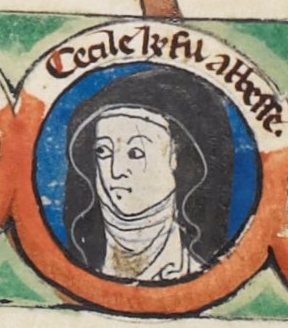
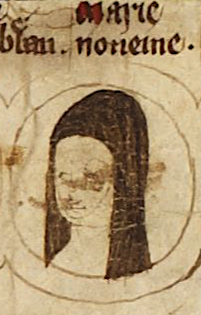
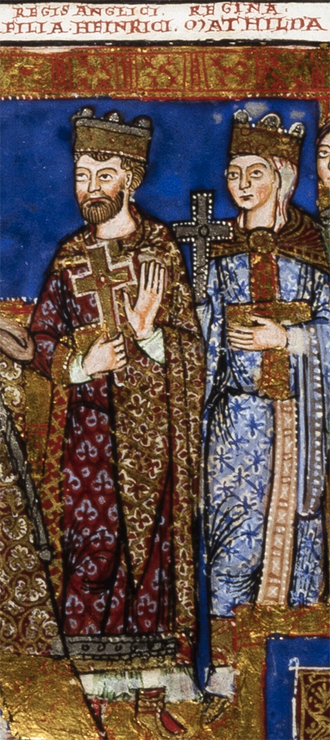
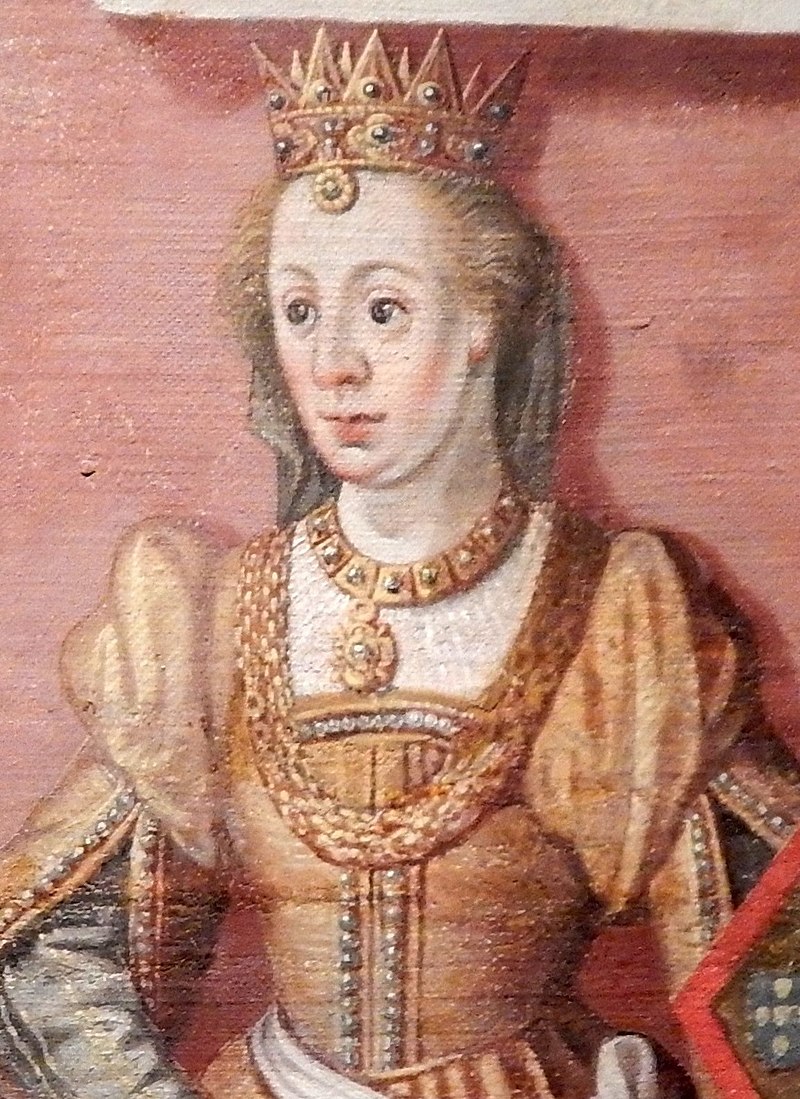
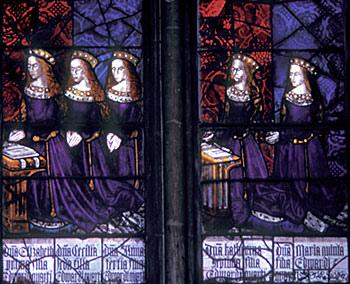
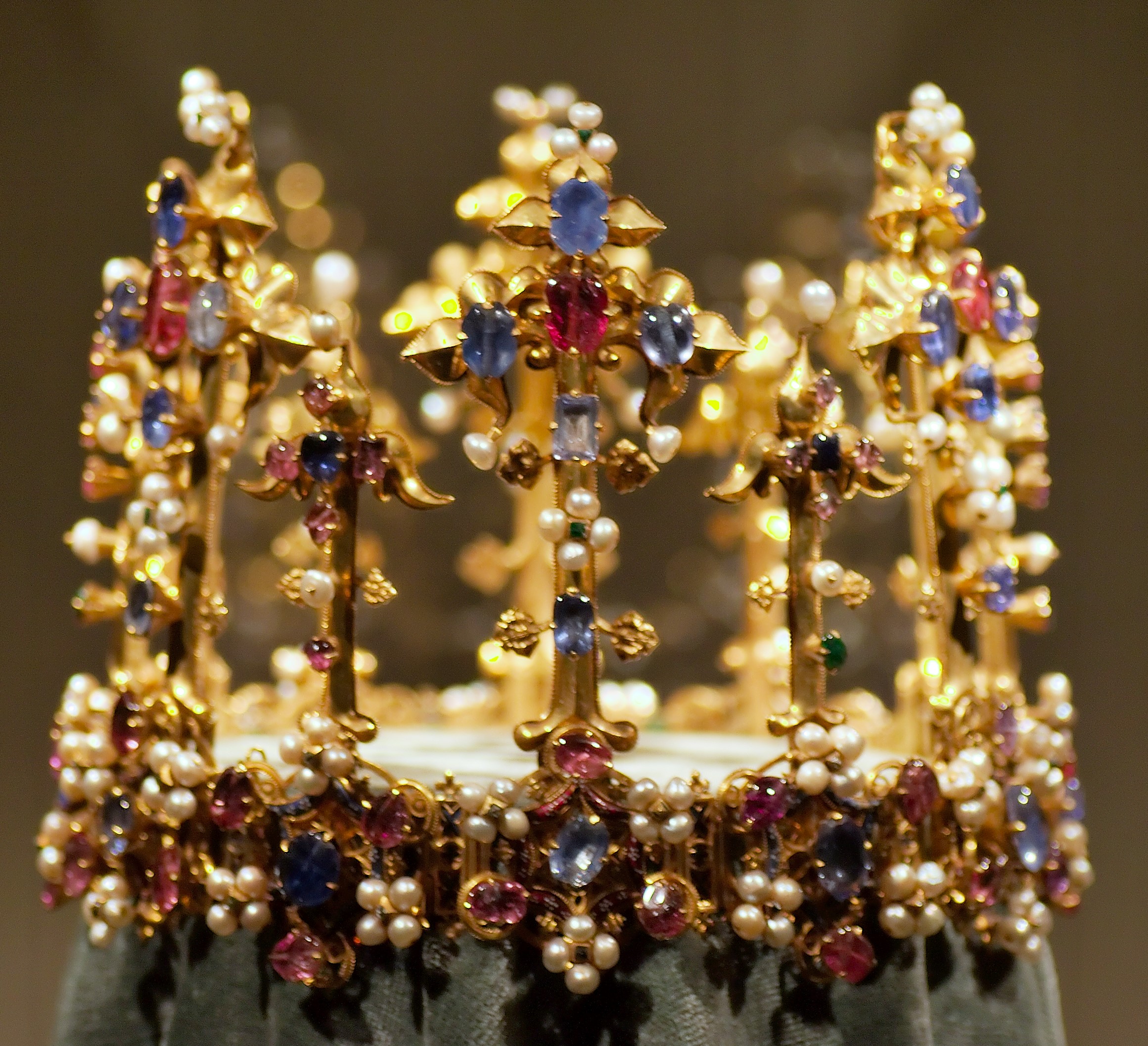
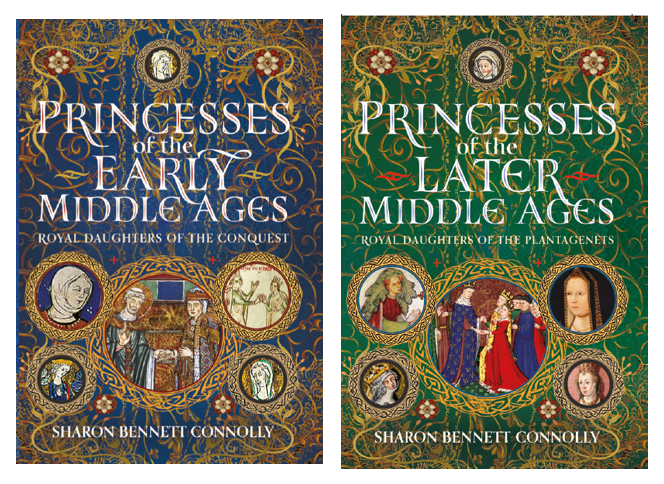
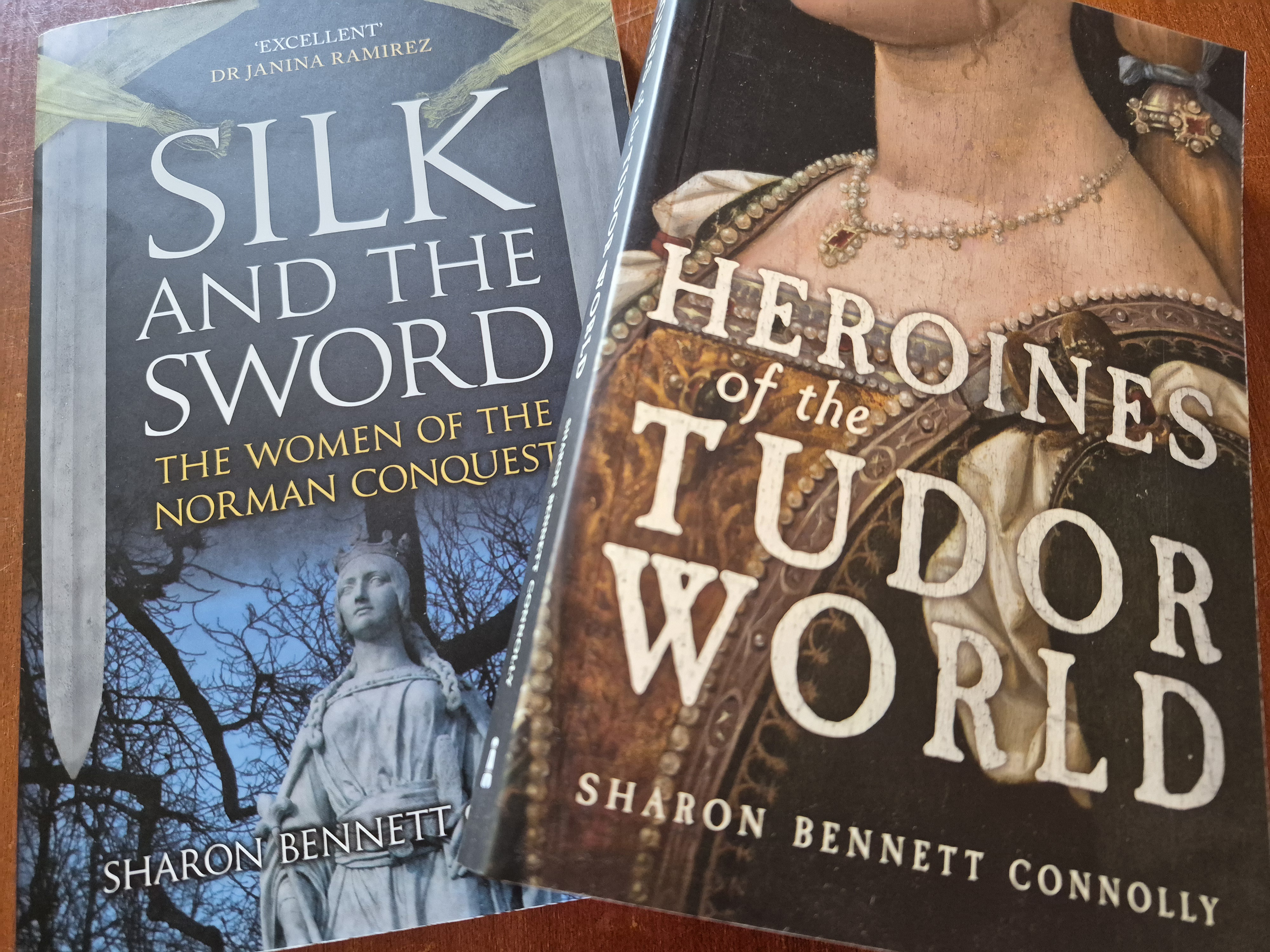
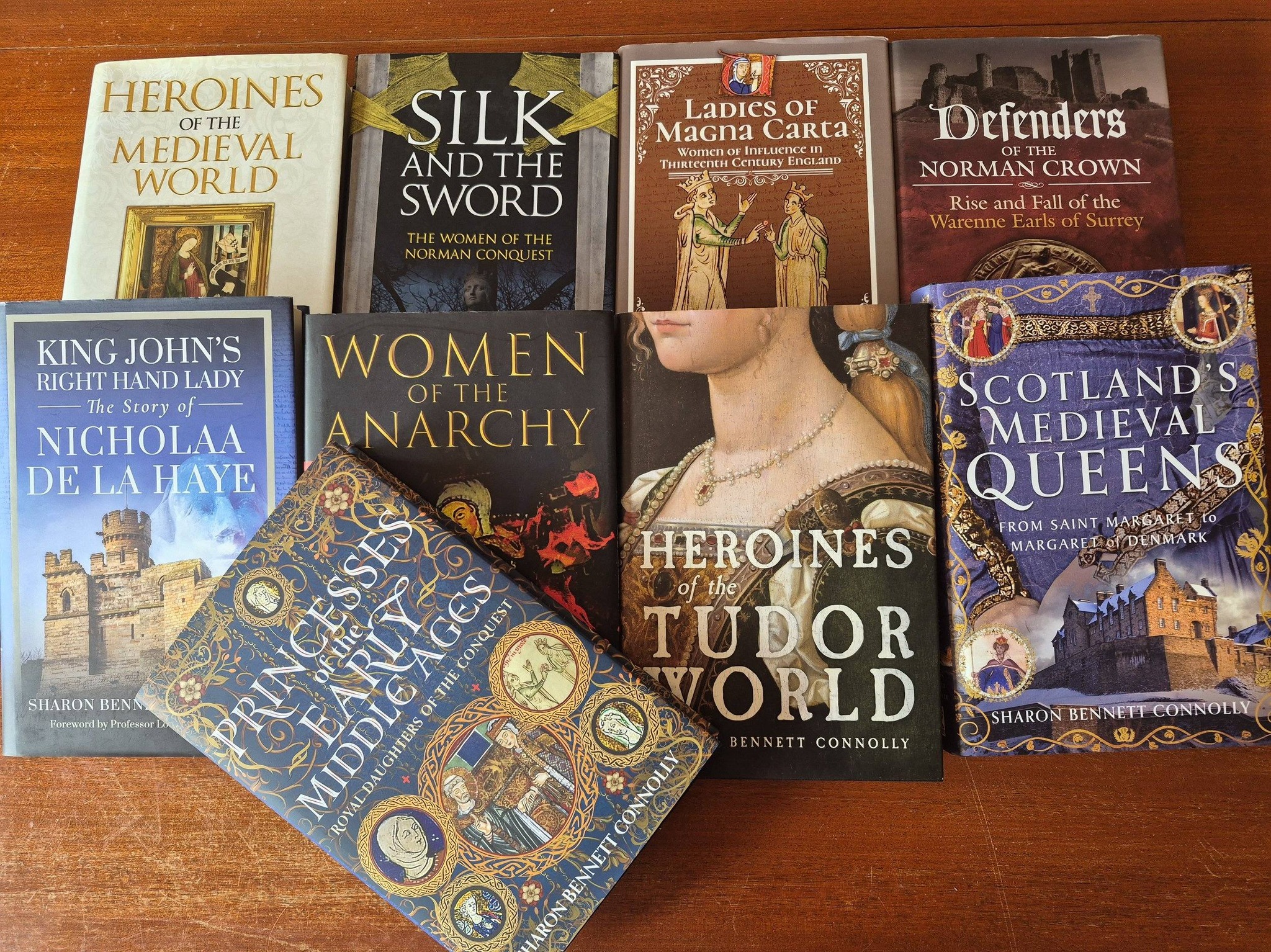

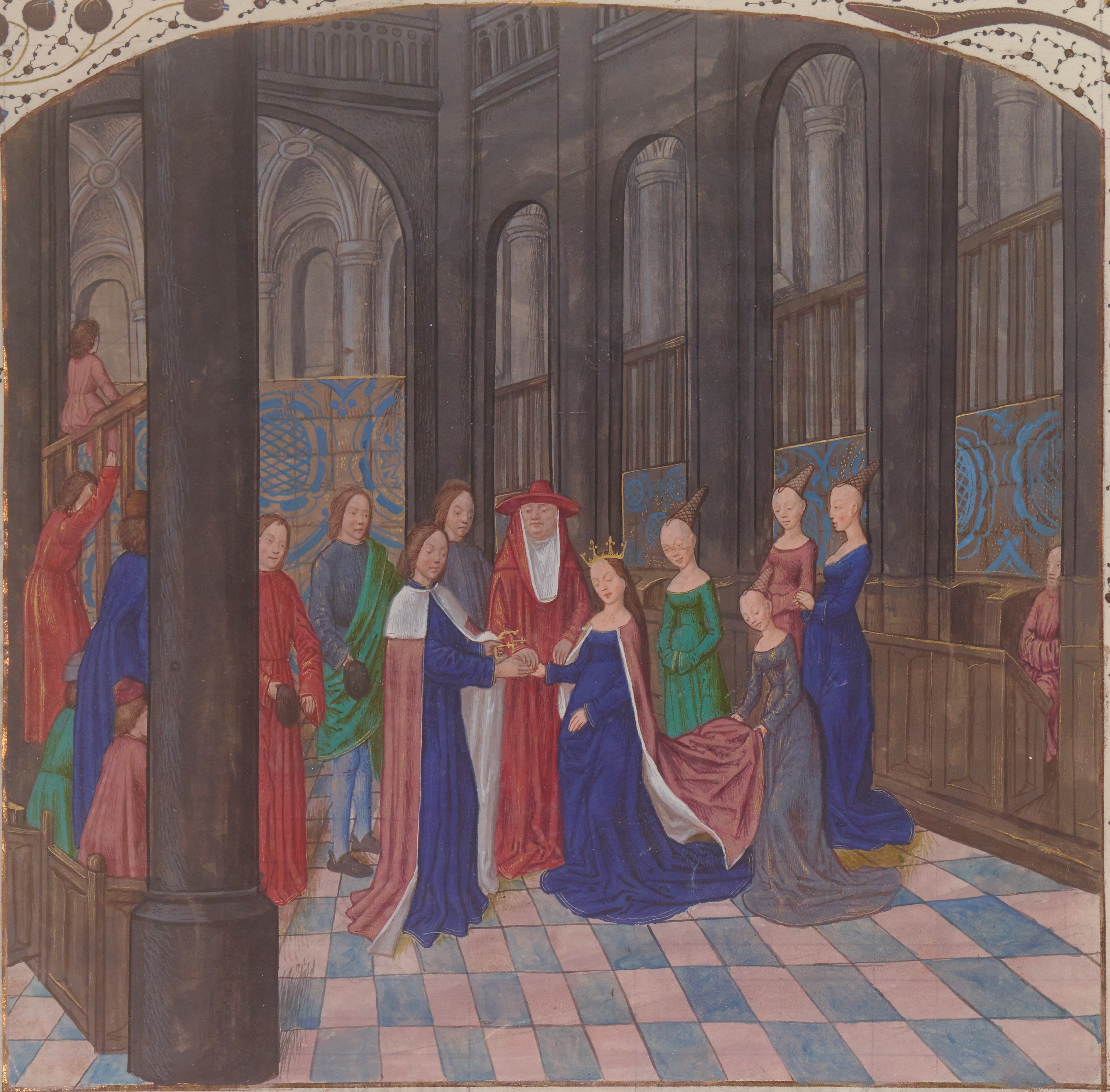
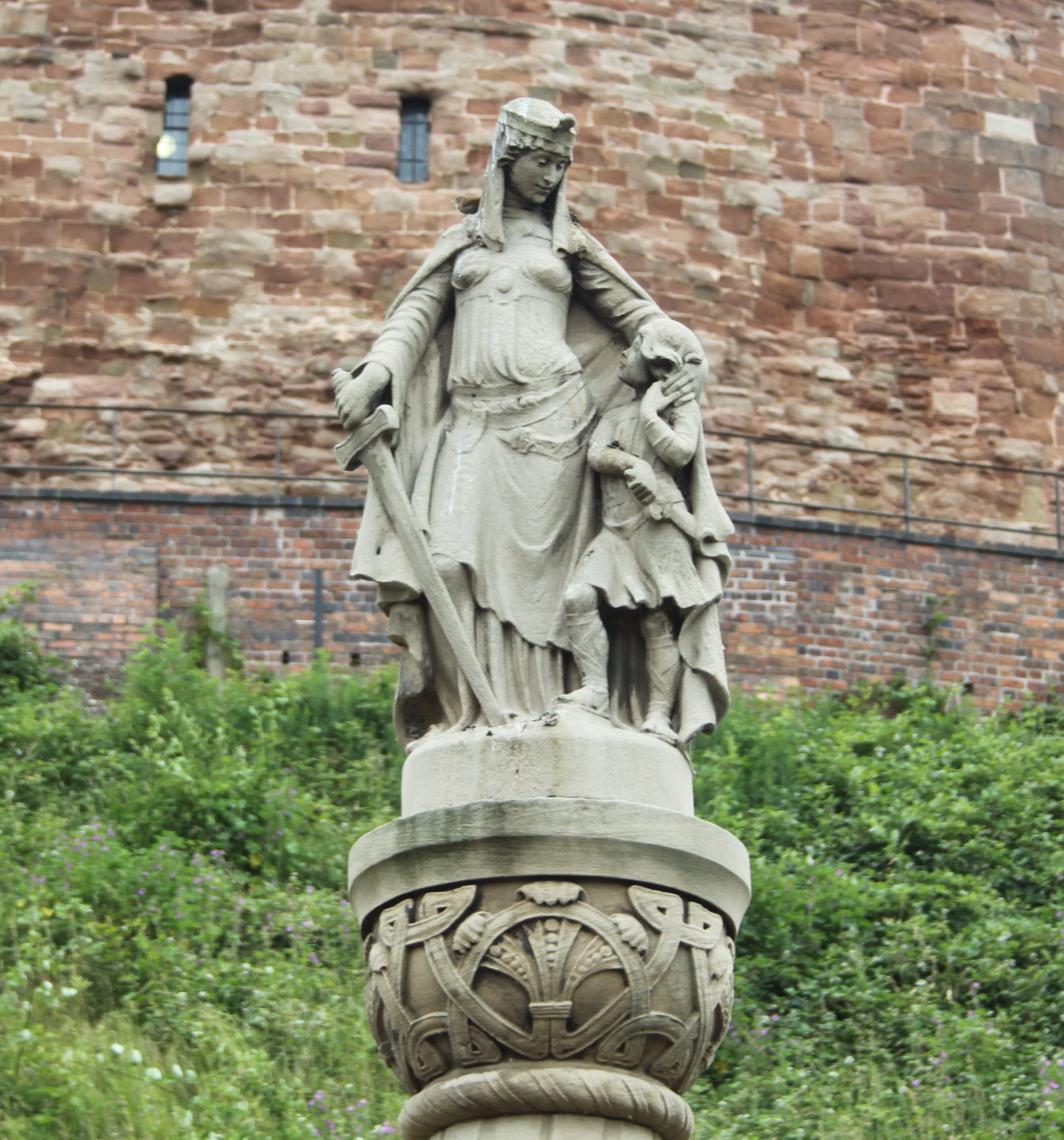
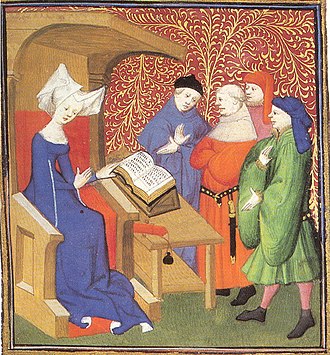
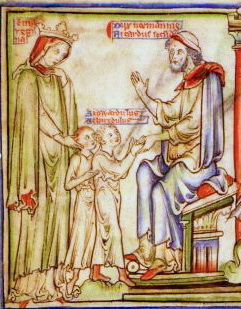
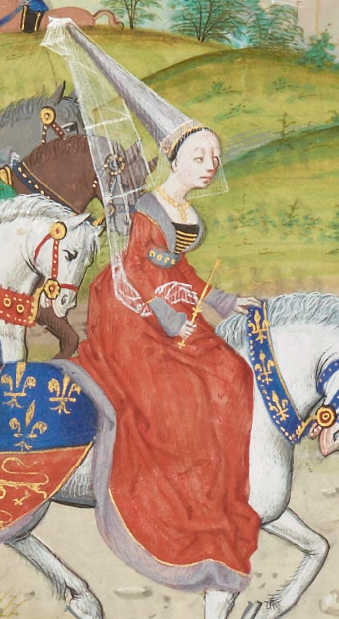
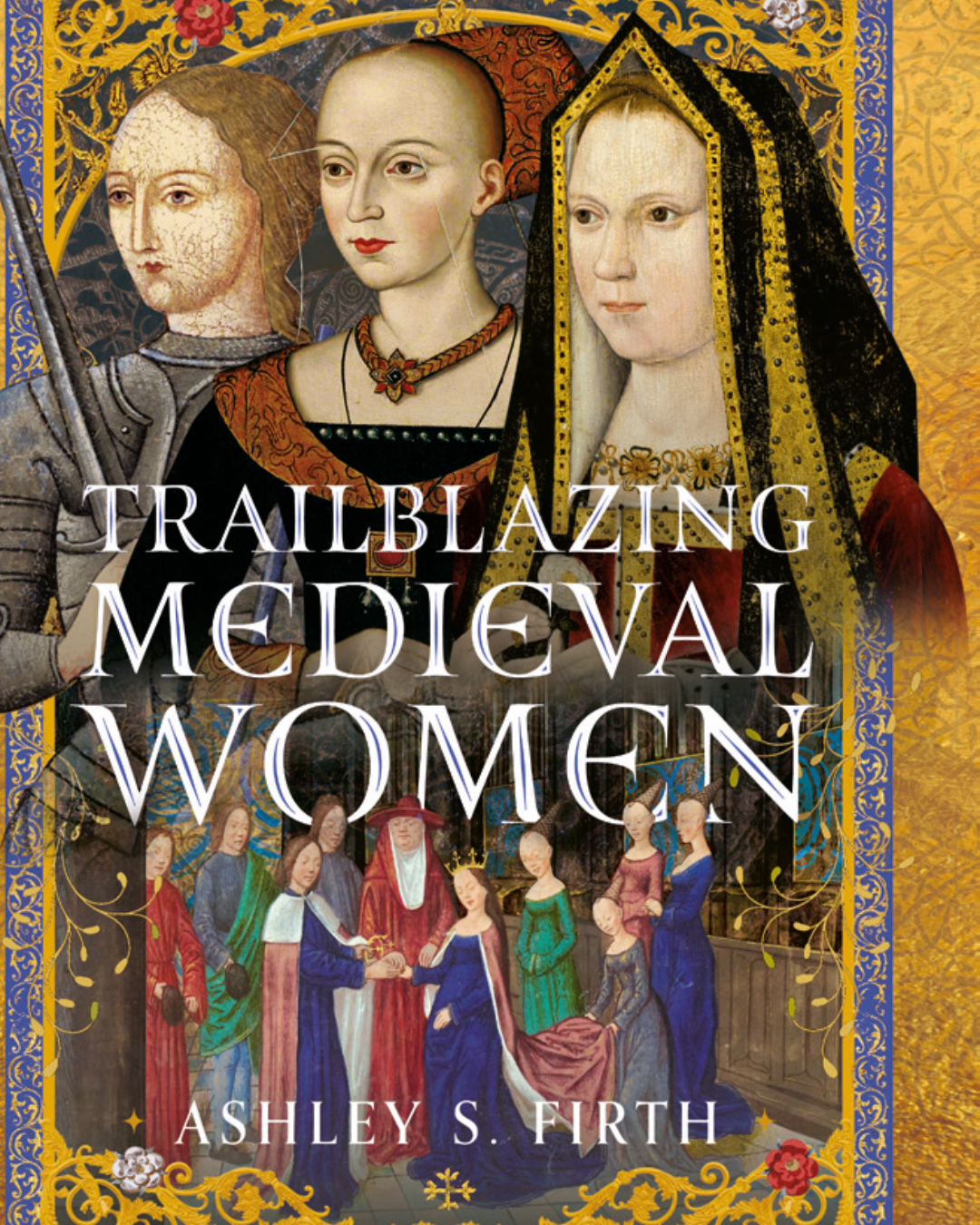

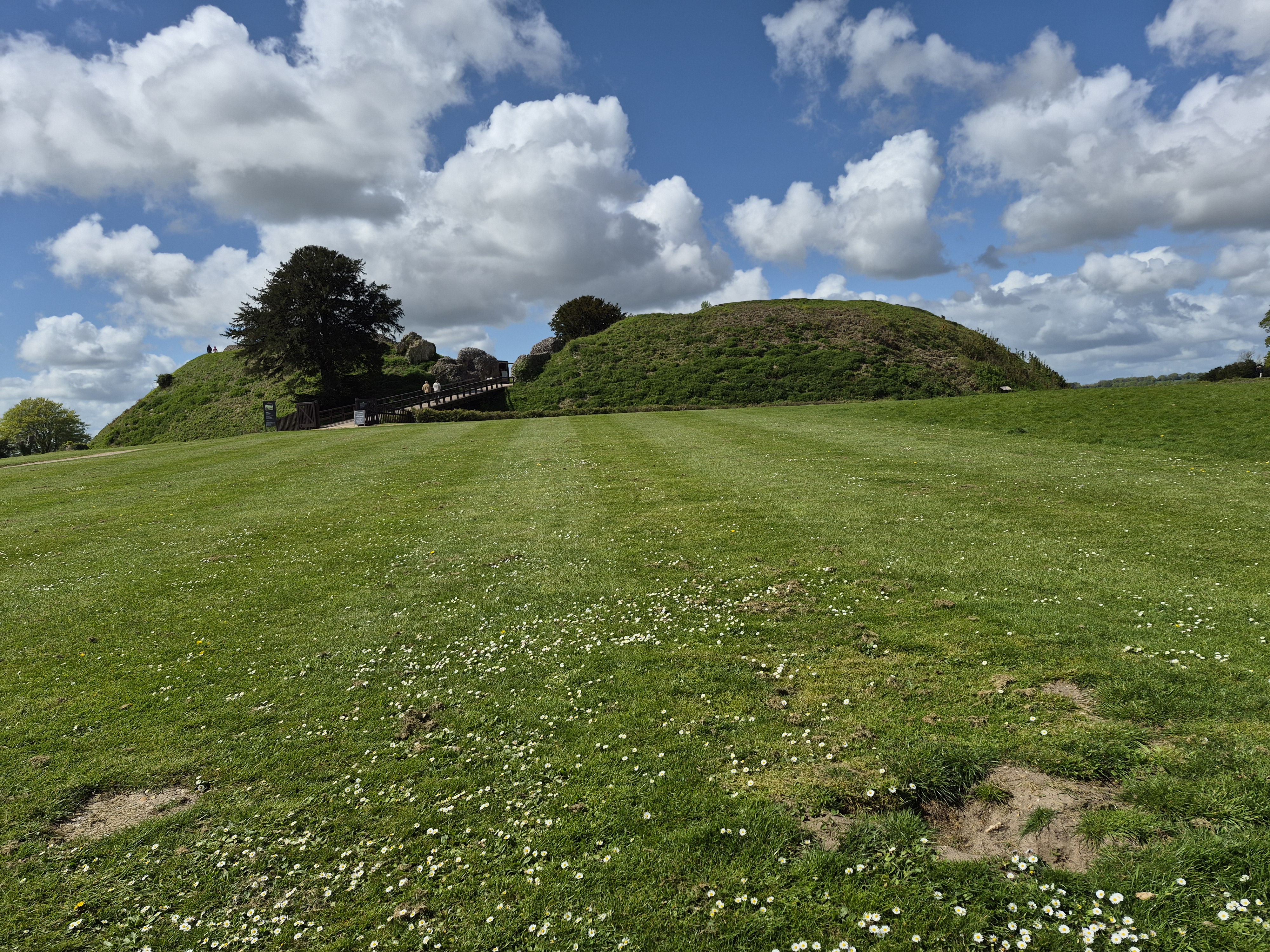
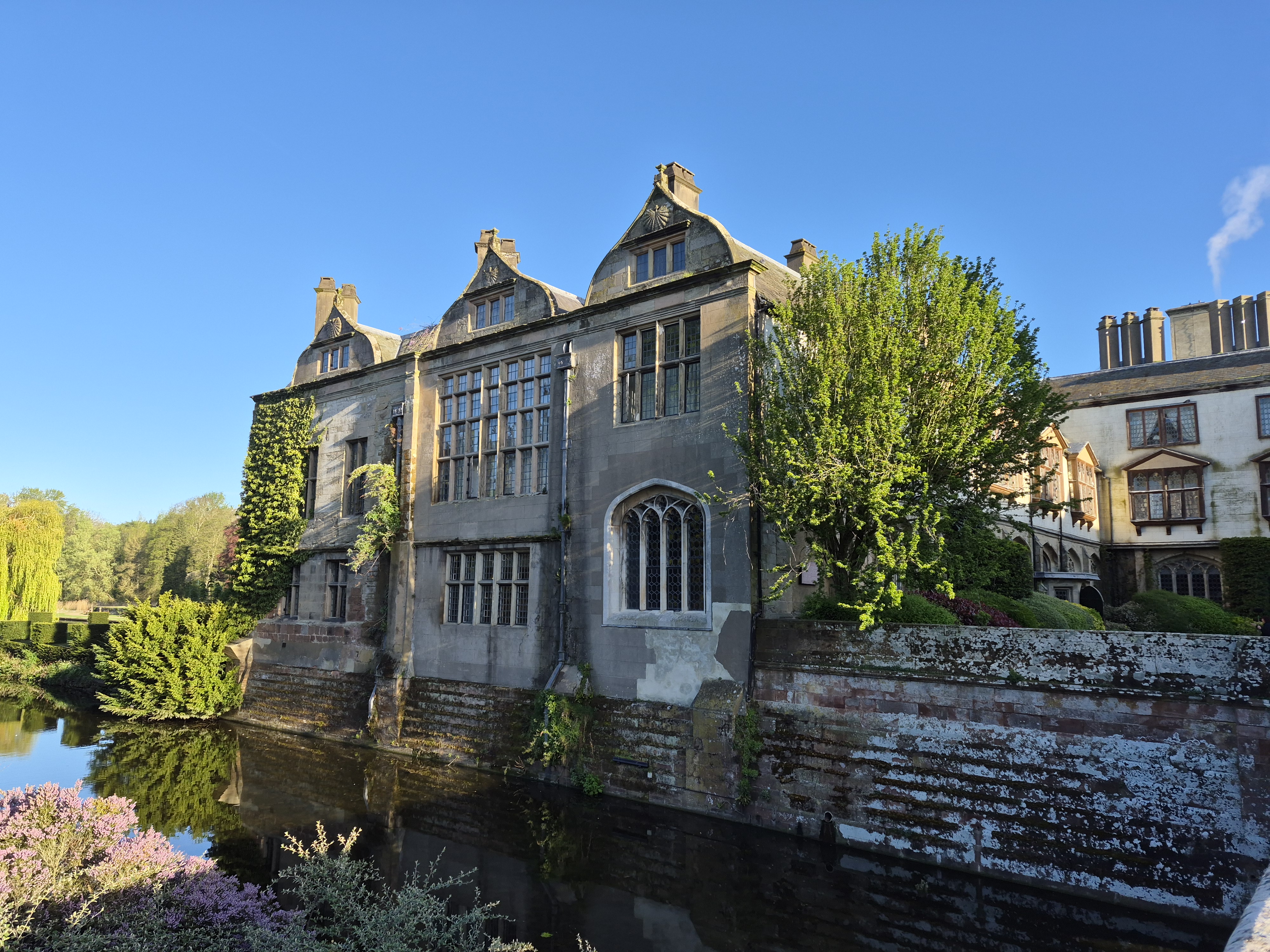
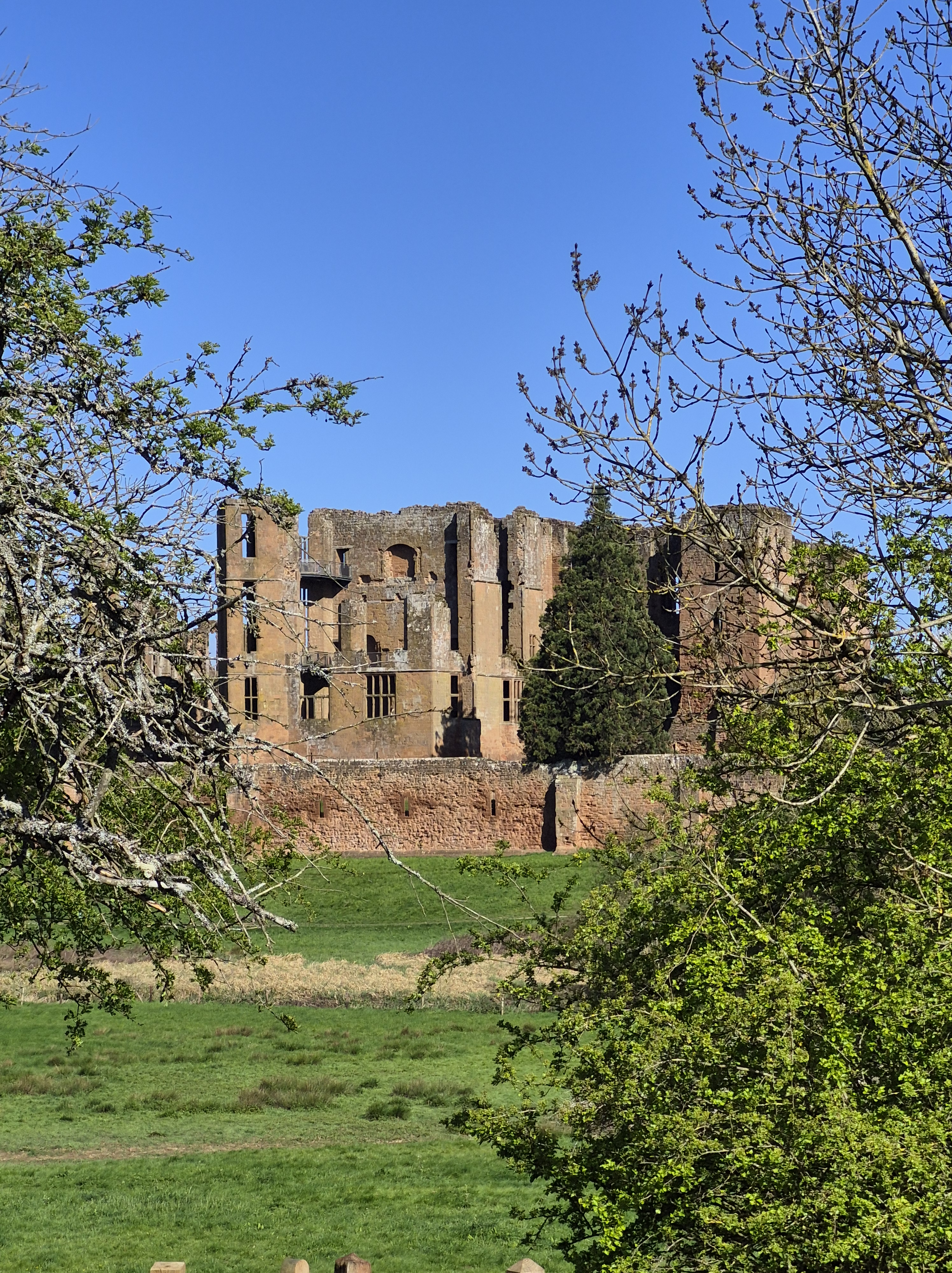

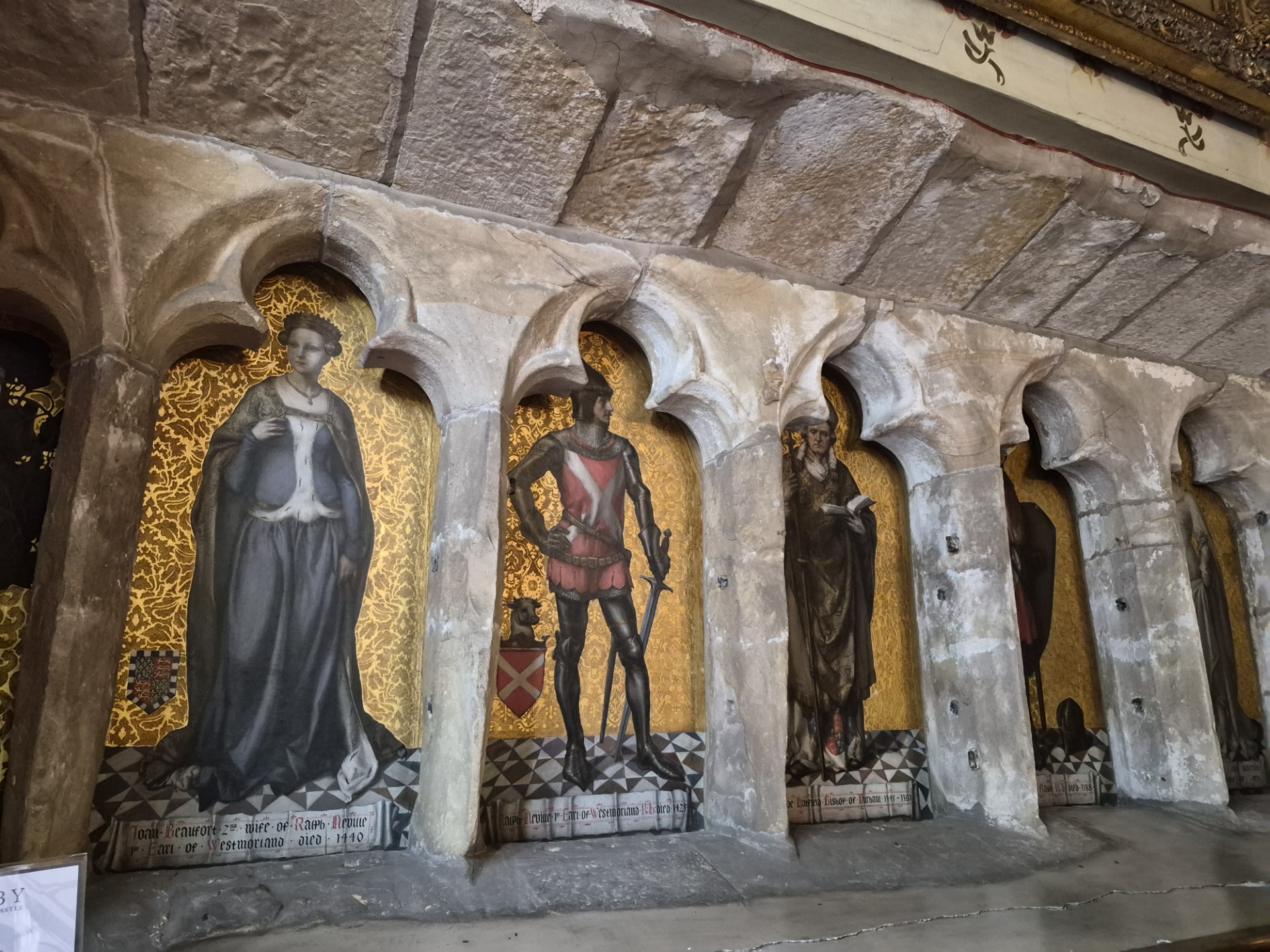
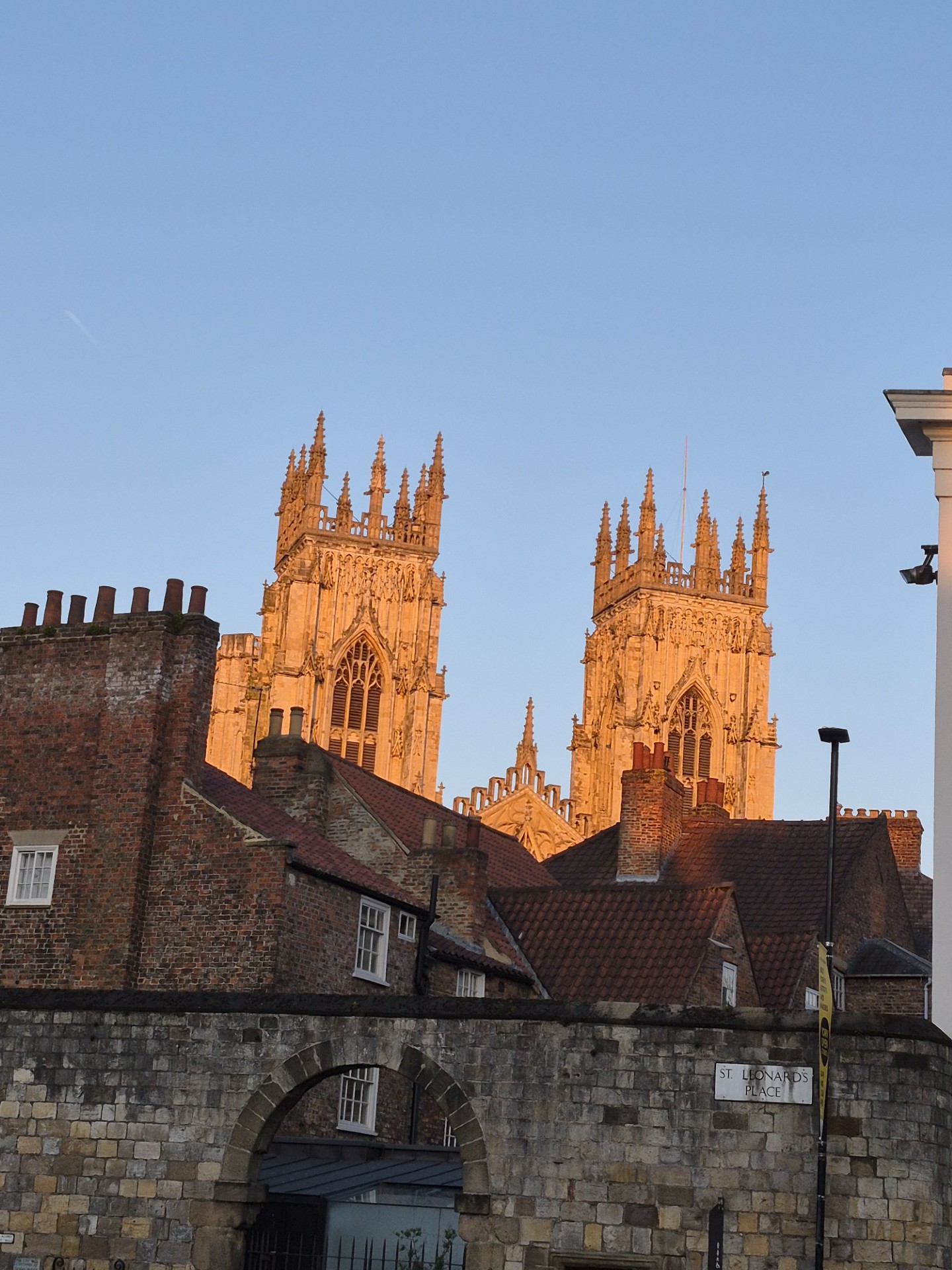
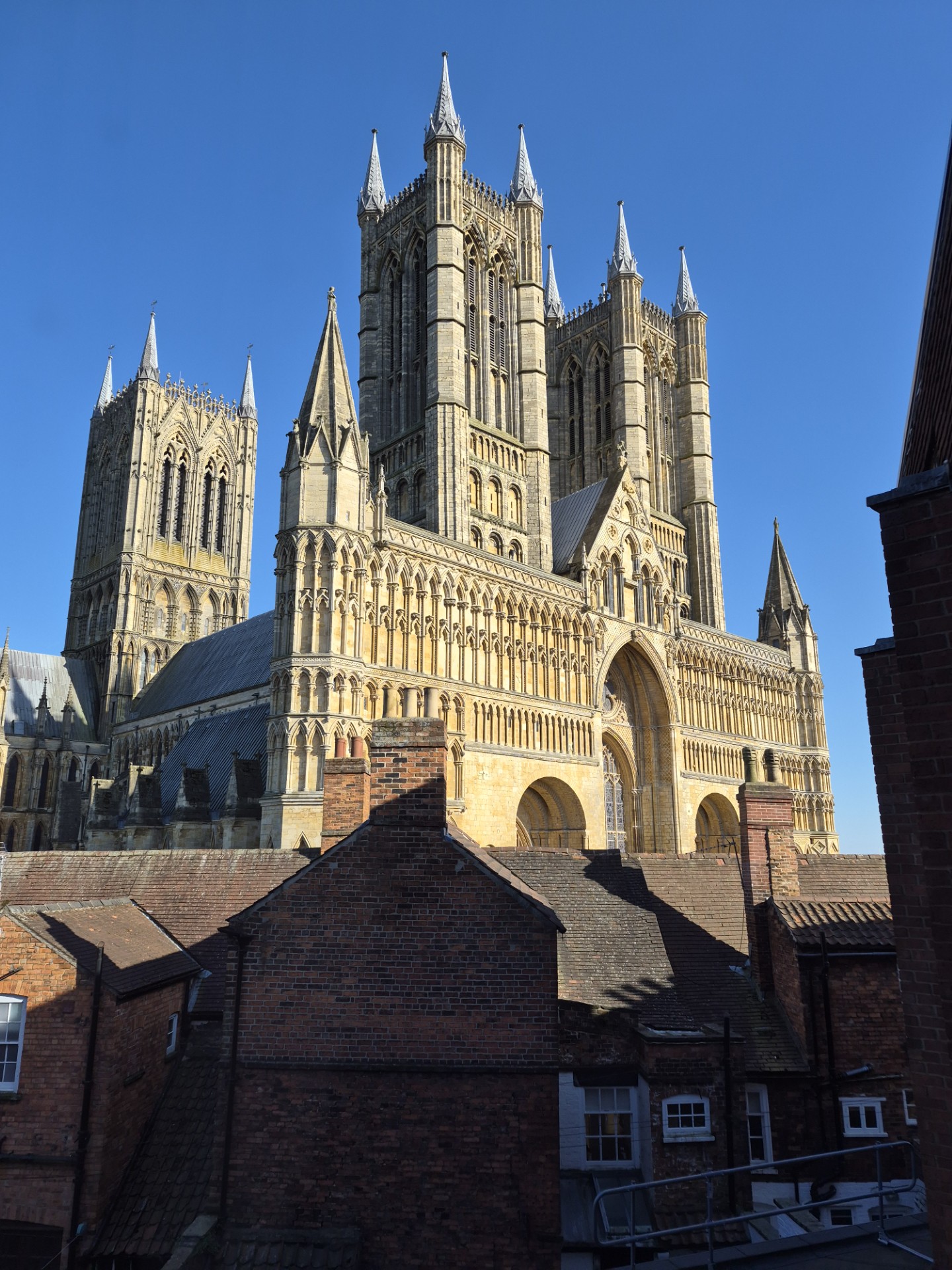

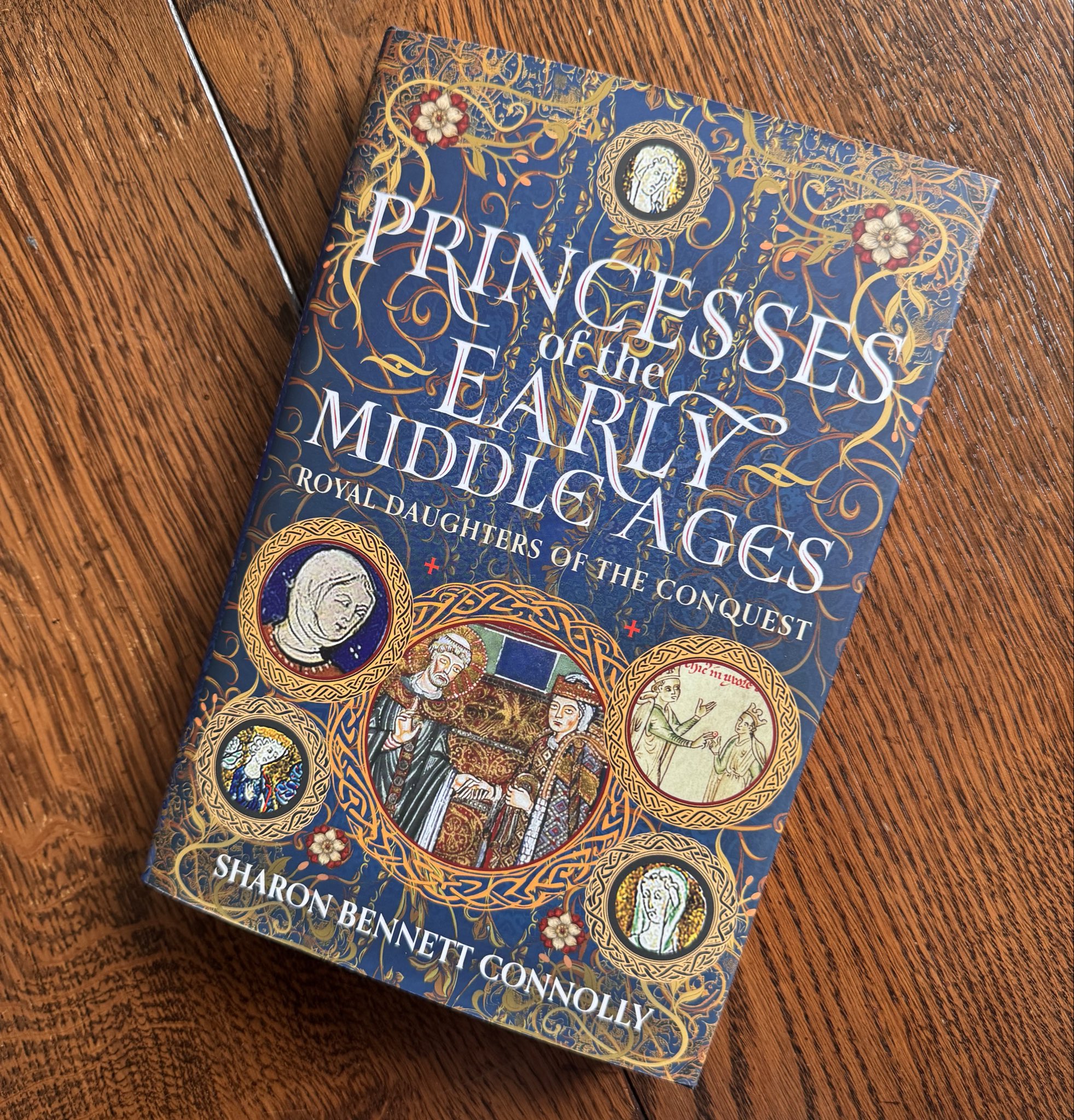
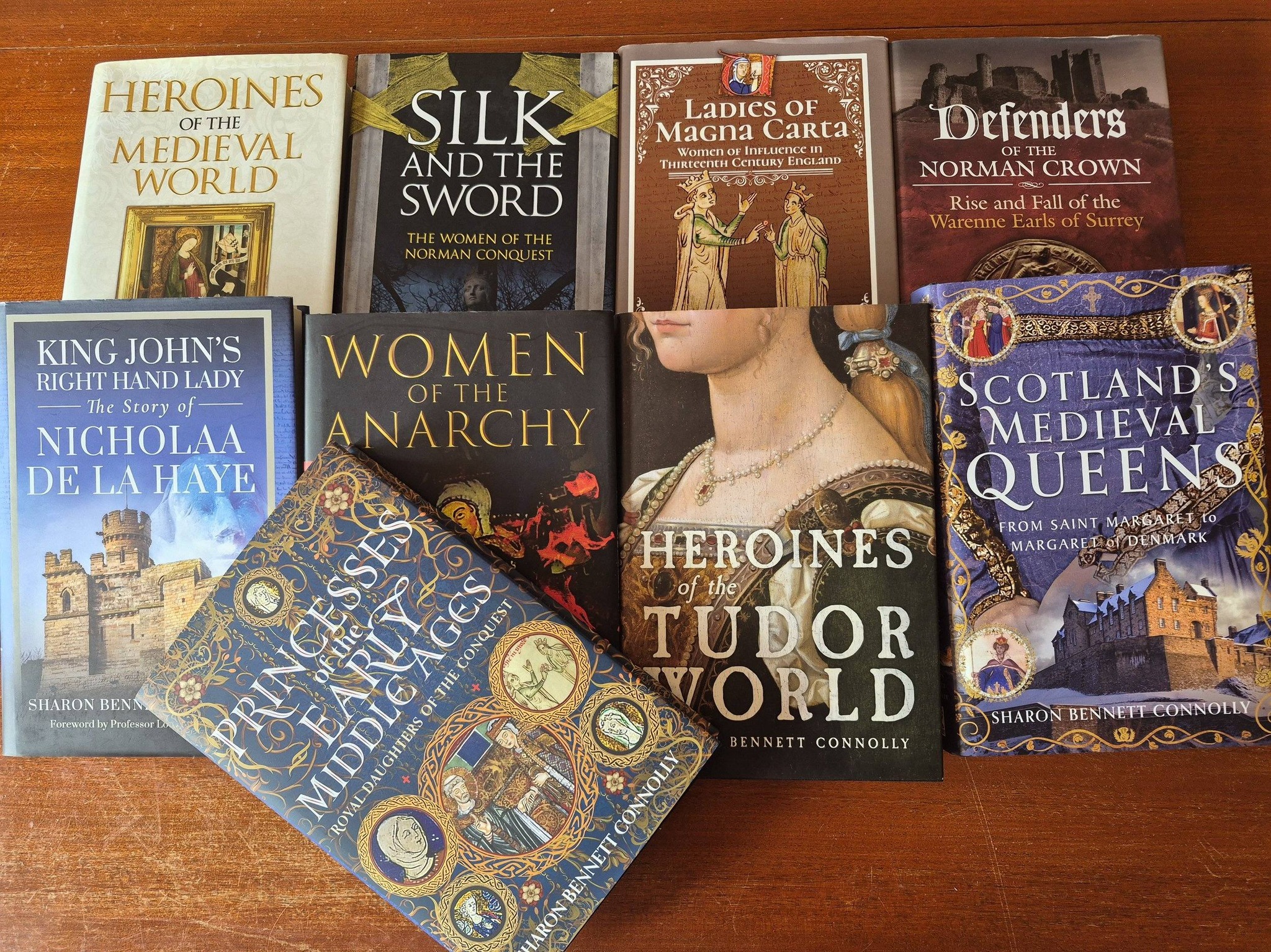
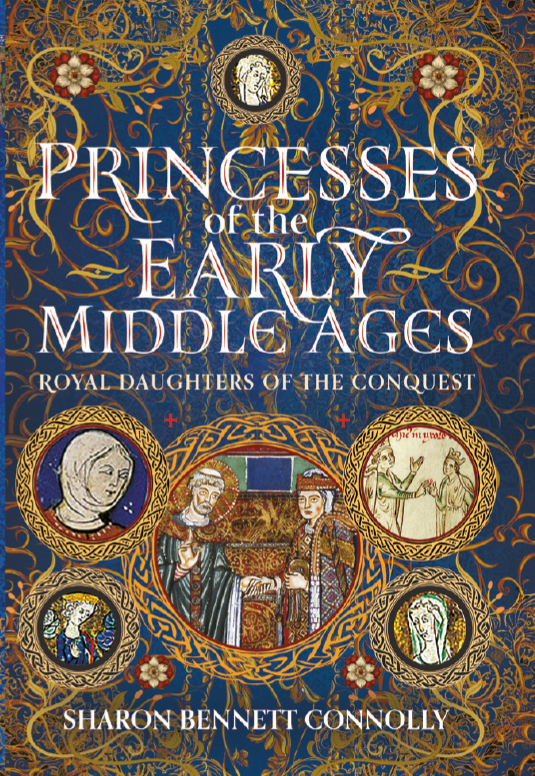
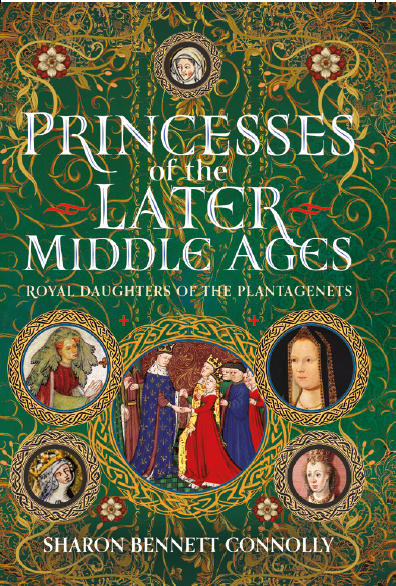

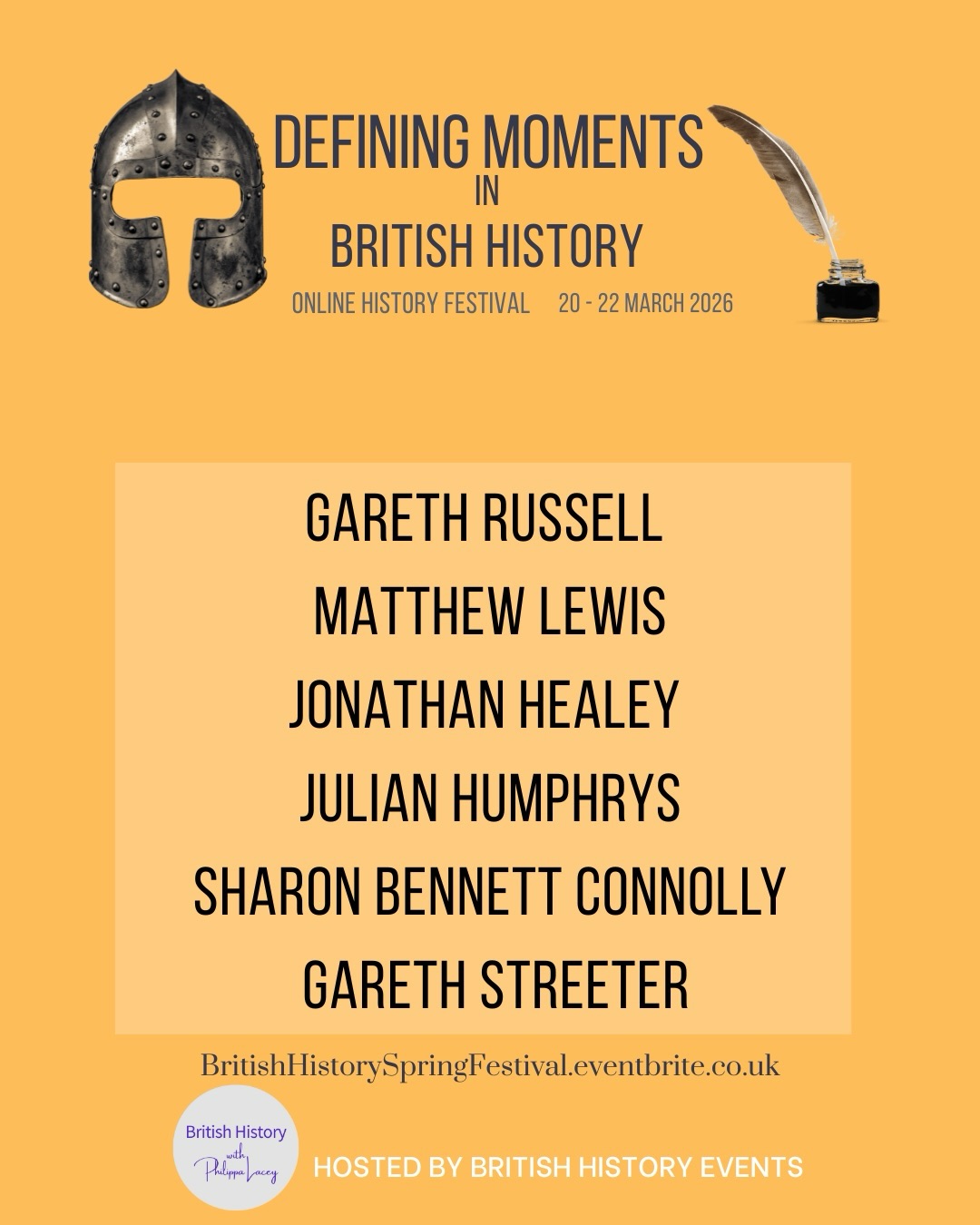

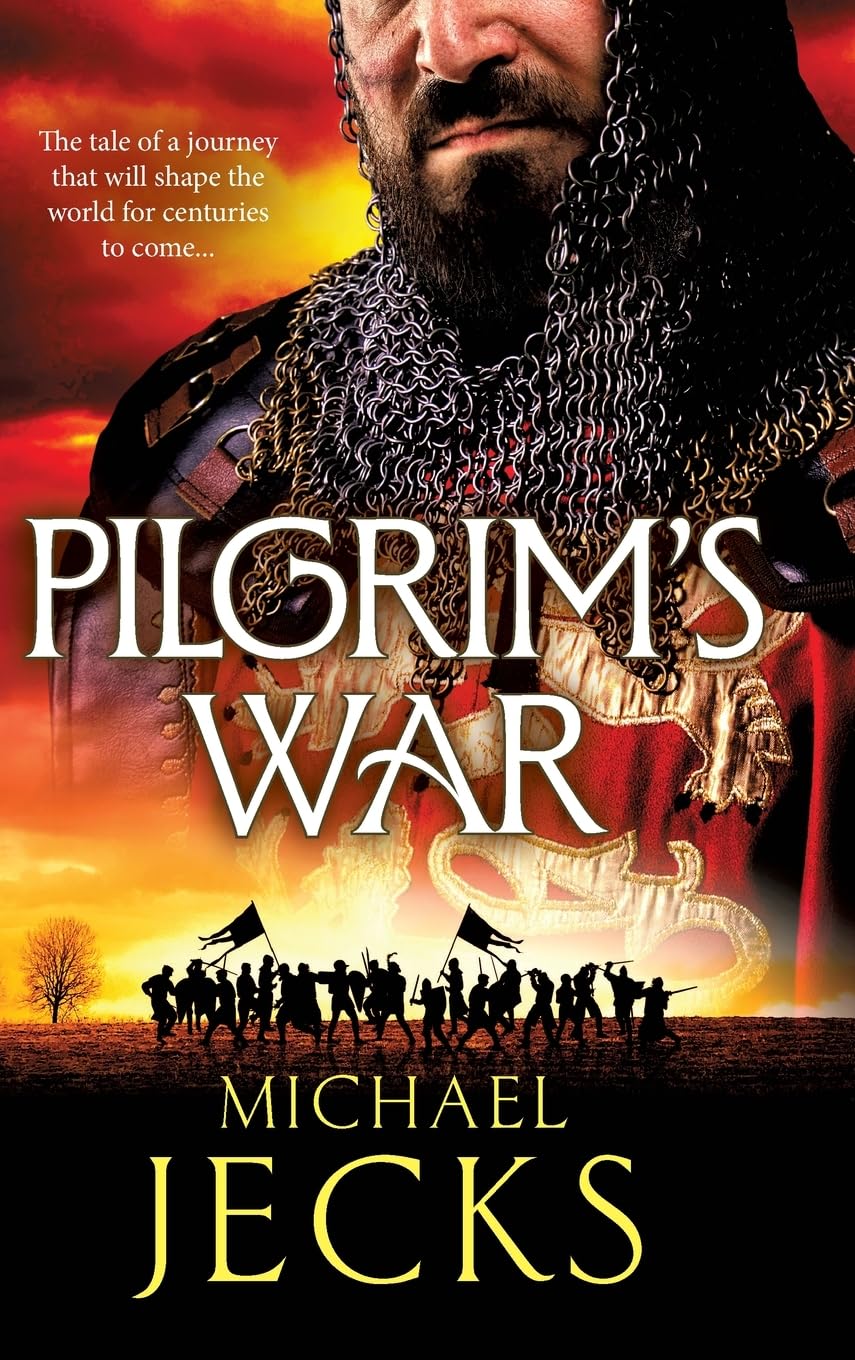


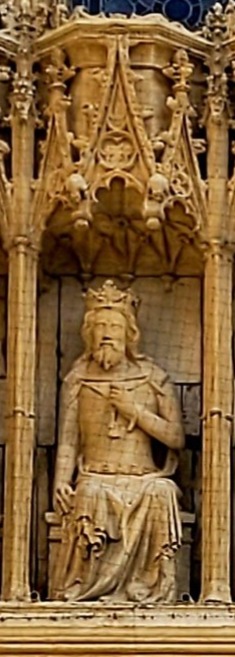
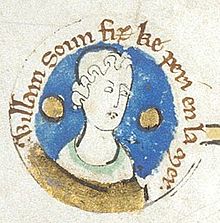
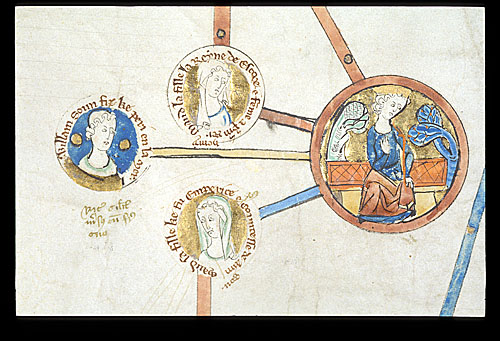
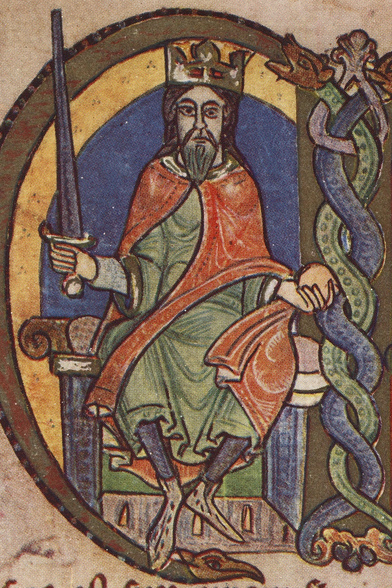
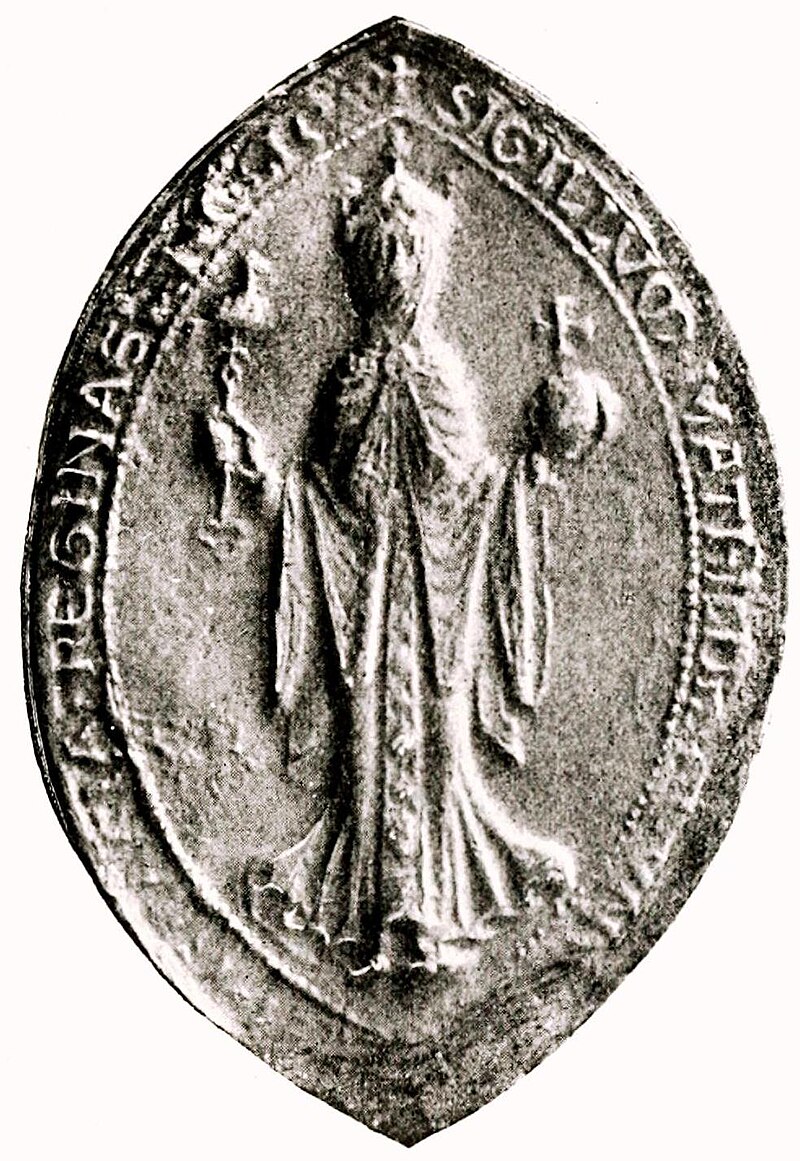
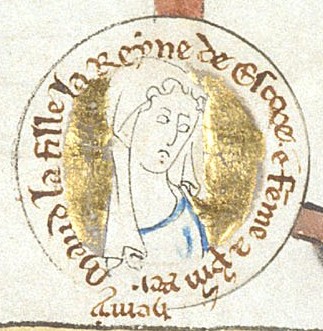


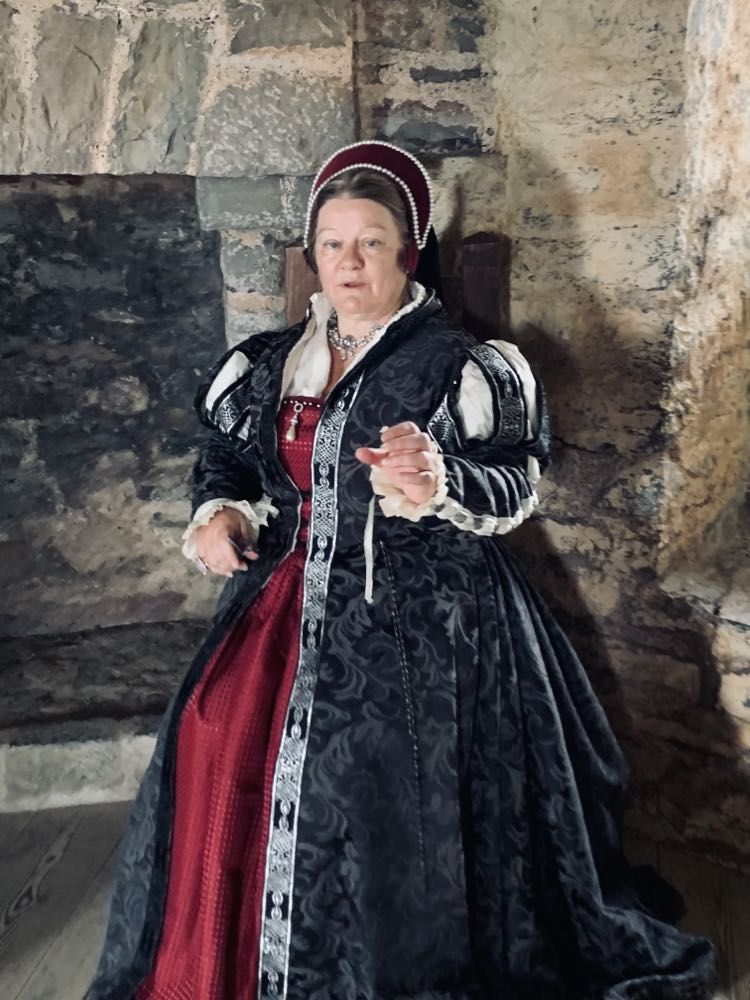





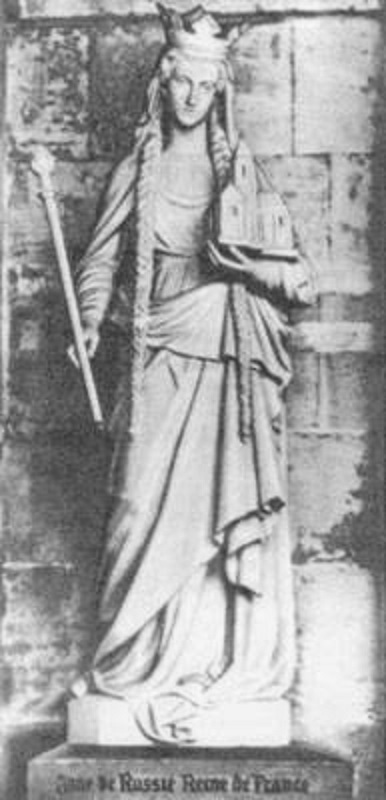
 History... the interesting bits!