Nicholaa: The Woman Who Saved England

Books by Sharon Bennett Connolly
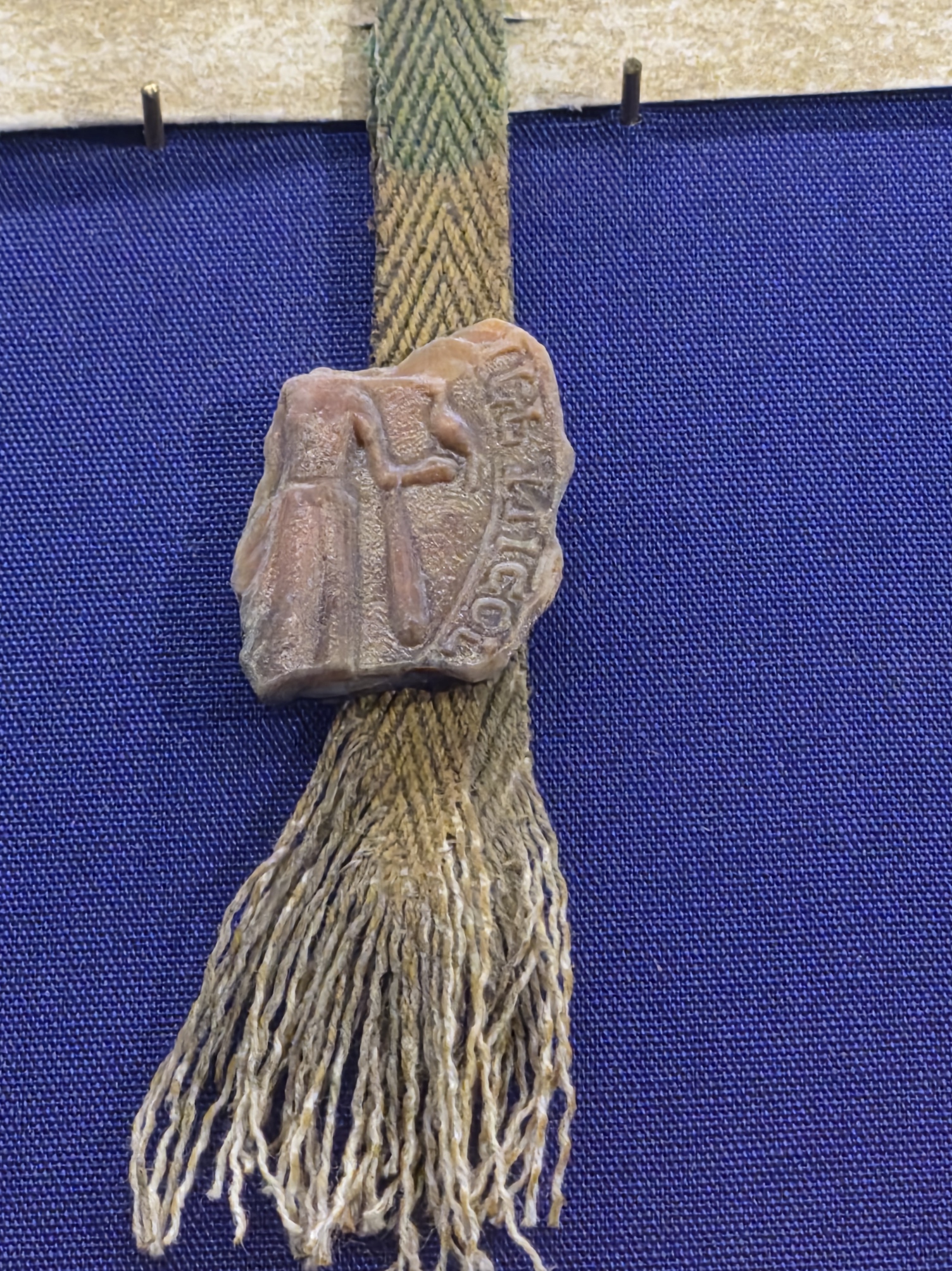
Seal of Nicholaa de la Haye, Lincoln Cathedral

In 1217, England was suffering the triple calamity of civil war, foreign invasion and a child king on the throne. The barons who had rebelled against King John in 1215 had appealed to the French king for support. That support had come in the form of Prince Louis, the future King Louis VIII of France, whose wife, Blanche of Castile, had her own claim to the English throne as a granddaughter of King Henry II and Eleanor of Aquitaine.

By the time of King John’s death, in the night of 18/19 October 1216, England was in a desperate state, with Louis controlling most of the country and having been proclaimed king in London, though he was not yet crowned. Only three royal castles held out against the French onslaught: Dover, Windsor and Lincoln. At the time, the defence of Lincoln Castle was being led by one of the most remarkable people of medieval history: Nicholaa de la Haye.

Almost forgotten by history, Nicholaa was not some fresh-faced beauty in need of rescue, when the French came knocking at the door. She was a mature woman in her 60s and the highly experienced castellan of Lincoln Castle. A formidable matriarch if ever there was one. And she already had one successful defence of Lincoln Castle under her belt, in 1191.

Nicholaa was probably born sometime in the early 1150s. She was the eldest daughter of Richard de la Haye, a minor Lincolnshire lord and hereditary castellan of Lincoln Castle, and his wife, Matilda de Vernon, niece of Baldwin de Redvers, Earl of Devon. When her father died in 1169, Nicholaa inherited his lands in Lincolnshire and Normandy – and his position as castellan of Lincoln Castle, a post she would hold for over 50 years, with a brief gap in the 1190s when Nicholaa and her husband were out of royal favour. Nicholaa was married twice, her husbands each successively holding the position of castellan at Lincoln by right of his wife, Nicholaa.

Nicholaa’s first husband, William Fitz Erneis, died in 1178. The couple had one child, a daughter named Matilda. Nicholaa had married again, before 1185, to Gerard de Canville, or Camville, whose brother, Richard, had accompanied Richard I on the Third Crusade. Nicholaa and Gerard had at least two children, sons named Richard and Thomas and possibly a daughter named Nicola. Nothing is known of Thomas beyond his name, but Richard married and fathered at least one child, a daughter named Idonea who married the oldest son of William Longespée, Earl of Salisbury. A son named Richard is mentioned but must have died young . Another daughter named Eustachia, is recorded as being in the custody of the earl of Salisbury in 1219; it may be that Eustachia died shortly afterwards or retired to a convent as it appears that Idonea was Nicholaa’s sole heir.
Books by Sharon Bennett Connolly
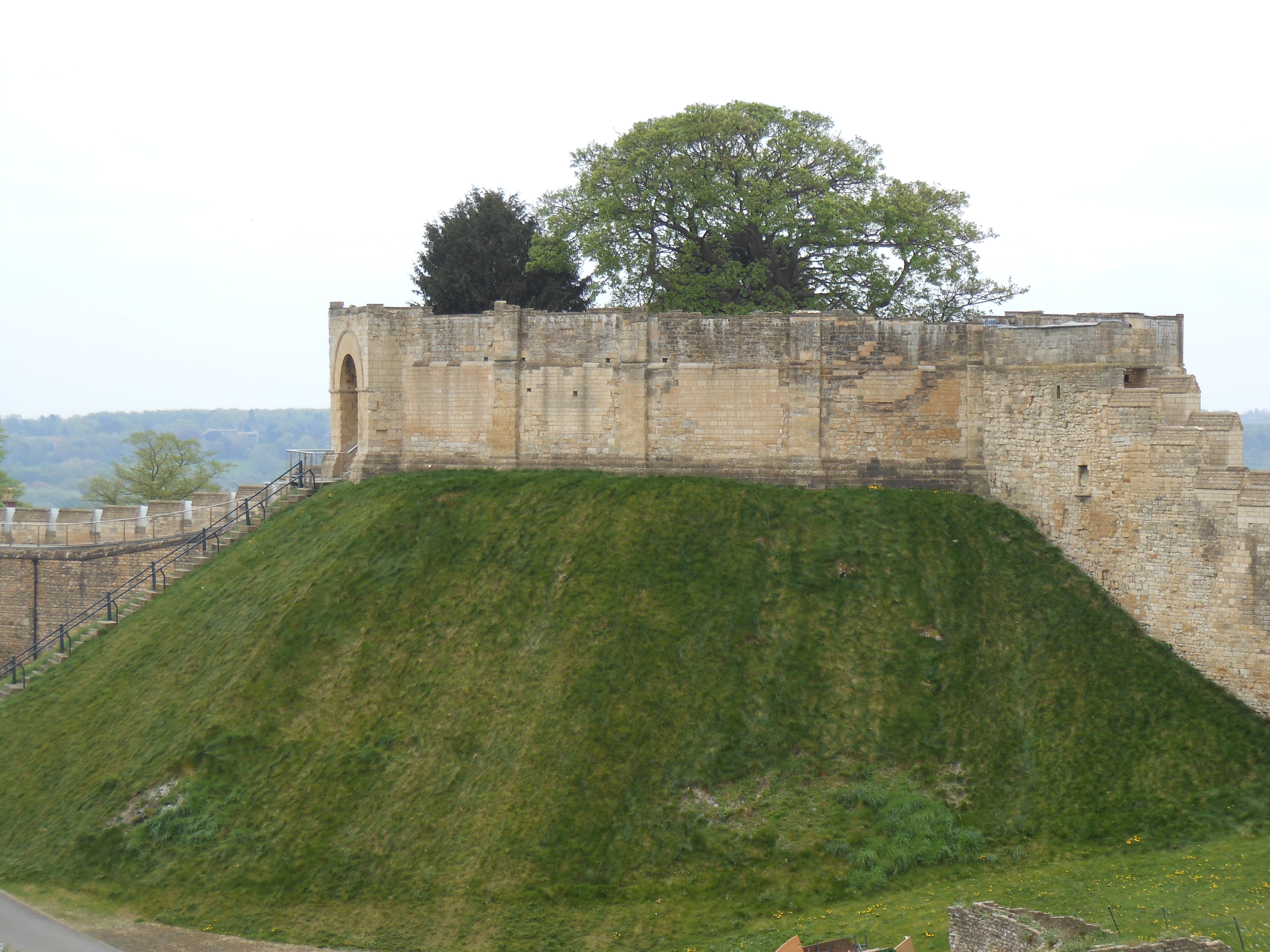
The Lucy Tower, Lincoln Castle

Nicholaa de la Haye first comes to the attention of chroniclers in 1191, when Prince John led a revolt against the rule of Richard I’s justiciar, William Longchamp. Many barons bridled under the harsh rule of Longchamp. John had set up his court at Nottingham Castle and Gerard de Camville, a supporter of John, joined him there, leaving Nicholaa in command of Lincoln. William Longchamp had headed north to halt John’s coup and laid siege to Lincoln Castle, intending to oust Nicholaa and install one of his own supporters, William de Stuteville.

The formidable Nicholaa refused to yield, successfully holding out for 40 days before Longchamp gave up the siege following the fall of the castles of Tickhill and Nottingham. In 1194, on King Richard’s return to England, Camville was stripped of his positions as Sheriff of Lincolnshire and castellan of the castle; the castle was only returned to Nicholaa and Gerard on John’s accession to the throne in 1199. His lands were also declared forfeit, but he was able to buy them back after paying a fine of 2,000 marks.

Nicholaa was widowed for a second time when Gerard de Camville died in December 1214. It seems, however, that, rather than passing control of the castle to her son, Richard, it remained in Nicholaa’s more than capable hands. It is thought that Richard Camville joined the rebellion against King John at some point, so leaving Nicholaa in charge was probably the sensible decision. Nicholaa had herself officially declared femme sole, so that she was legally responsible for her own lands and property.
Books by Sharon Bennett Connolly
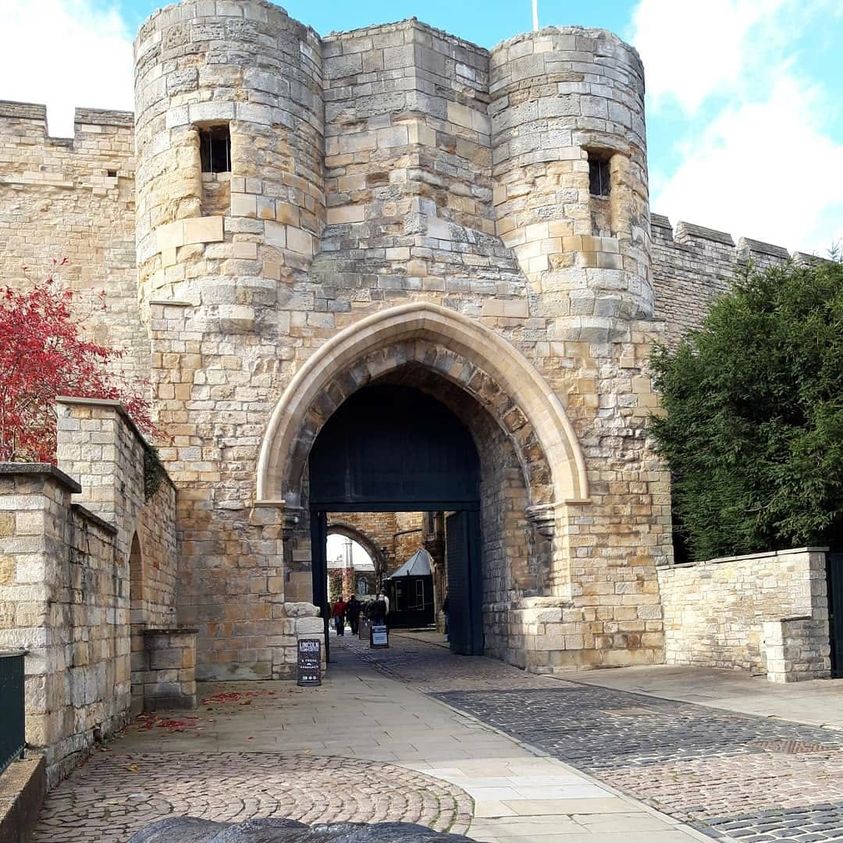
Lincoln Castle’s East Gate

On one of King John’s visits to inspect the castle’s defences, in either 1215 or 1216, there was a rather dramatic display of fealty from Nicholaa:

‘And it once happened that after the war King John came to Lincoln and the said Nicholaa went out of the eastern gate of the castle carrying the keys of the castle in her hand and met the king and offered the keys to him as her lord and said she was a woman of great age and was unable to bear such fatigue any longer and he besought her saying, “My beloved Nicholaa, I will that you keep the castle as hitherto until I shall order otherwise.”’1

Nicholaa’s greatest hour came shortly after the death of King John, but as a result of the late king’s tyrannical actions. As we all know, King John’s reign was not exactly smooth sailing. He lost his French lands and was held to account by the barons of England for numerous examples of maladministration, corruption and outright murder! In June 1215 he had been forced to put his seal to Magna Carta in order to avoid war with his barons. However, within a matter of weeks, John had appealed to Pope Innocent III and the charter had been declared null and void; the barons were up in arms.

The rebel barons invited the king of France to take the throne of England; Philip II was not really interested but his son, Louis (the future Louis VIII), was. He had a claim to the English throne through his wife, Blanche of Castle, niece of King John, and so accepted the offer and launched an invasion. Landing on the Isle of Thanet in May 1216, Louis was proclaimed king of England in London in June. He was never crowned.

By the summer of 1216, rebel forces led by Gilbert de Gant had seized the city of Lincoln and laid siege to the castle. Nicholaa arranged a truce and ‘freed herself from this siege with a money payment.’2 King John came north – chasing the rebels into the marshes of the Isle of Axholme, devastating the area with ‘fire and sword’.3
Books by Sharon Bennett Connolly
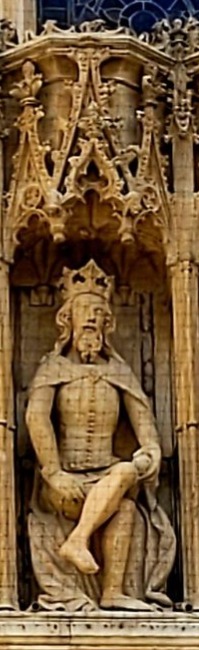
King John from the Gallery of Kings, Lincoln Cathedral

As Louis consolidated his position in the south, John made an inspection of Lincoln Castle in September 1216. Moving south, just two weeks later, the king’s baggage train was lost as he crossed the Wash estuary and within a few more days, John lay desperately at the bishop of Lincoln’s castle at Newark. On 18 October 1216, just hours before his death, John appointed Nicholaa de la Haye as Sheriff of Lincolnshire in her own right. She is the first woman on record to be given the position; the second would be her granddaughter’s mother-in-law Ela, Countess of Salisbury. When the king died that night, as a storm raged overhead, half of his kingdom was in the hands of a foreign invader and his throne was now occupied by his 9-year-old son, Henry III. The elder statesman and notable soldier, William Marshal, Earl of Pembroke, was appointed regent for young Henry and set out to save the country.

Meanwhile, the English rebels, who had been driven from Lincoln in the summer of 1216, returned and took the city, once again laying siege to the castle. Reinforcements were sent north by Louis, under the Comte de Perche, arriving in March 1217 with siege machinery that were set to bombard and weaken the castle’s walls. Although in her 60s, Nicholaa de la Haye took charge of the defences and refused to be daunted by her position, with her newly-appointed deputy, Geoffrey de Serland, commanding the garrison as ‘the barons then made fierce assaults upon the castle, whilst the besieged returned their showers of stones and missiles with stones and deadly weapons with great courage.’4

With William Marshal declaring it would be ‘dishonourable not to help so brave a lady,’ the loyal English forces mustered at Newark on 17 May, with the intention of marching to Nicholaa’s relief.5 The English commanders included William Marshal, earl of Pembroke, his son, young William Marshal, and nephew John Marshal, in addition to Ranulph, Earl of Chester, William Longespée, Earl of Salisbury, Peter des Roches, Bishop of Winchester, and Faulke de Bréauté.

They led 406 knights, 317 crossbowmen and a large number of sergeants-at-arms, foot soldiers and camp followers. The enemy forces in Lincoln were led by Thomas, Comte de Perche, himself a grandson of Henry II’s daughter Matilda and therefore a cousin of King Henry III. The commanders of the English rebels in the city included Robert FitzWalter and Saer de Quincy, Earl of Winchester. They led approximately 600 knights and several thousand infantry.

From Newark, Marshal’s forces marched on Lincoln using a roundabout route, keeping close to the river, they marched past the city and were camping at or near Torksey by the 19 May. They came upon the city from the north in the early morning of 20 May. Before battle, William Marshal made a rousing speech, telling his men: ‘Now listen, my lords! There is honour and glory to be won here…’6

On seeing the arrival of the English forces, Nicholaa sent her deputy, Geoffrey de Serland, to meet with the regent. Serland returned with Peter des Roches, entering the castle by a postern gate, who told Nicholaa of Marshal’s plans for the battle, and then sneaked into the city via another postern gate to do a little reconnaissance. Des Roches discovered a barricaded gate in the city wall, which could be cleared in a matter of hours.

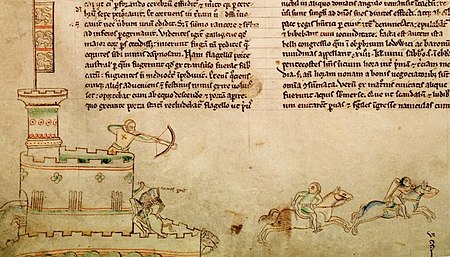
Marshal split his forces, sending Faulke de Bréauté into the castle with his crossbowmen. He entered through a postern gate and positioning his men on the walls to rain a fire of bolts on the besiegers. The earl of Chester was directed to attack the North Gate as William Marshal’s men attacked the newly cleared gate in the north western part of the city wall. According to the Histoire de Guillaume le Maréschal (History of William the Marshal), Marshal was so eager to advance that he almost forgot to don his helmet and had to be reminded.
History...the Interesting Bits
The Battle of Lincoln from Matthew Paris’s Chronica Majora

It is not hard to imagine Nicholaa standing on the castle’s battlements, watching the initial charge, relieved that help had arrived, but desperate for victory.

The battle lasted a matter of hours. The fiercest fighting took place in the ground between the castle and cathedral; with the enemy’s commander, the Comte de Perche, killed in front of the cathedral itself. And with the death of their leader, the French and rebel barons lost heart and started pulling back. The rebel leaders, Saer de Quincy and Robert FiztWalter were both taken prisoner, as were many others. In total, about half of the enemy knights surrendered. The fleeing rebels were chased through the city streets. The city itself, which had supported the rebels and welcomed the French, was sacked and looted by the victorious army.

The Battle of Lincoln turned the tide of the war. By the summer, following a second defeat at sea off Sandwich in Kent, the French were forced to seek peace and eventually returned home. Magna Carta was reissued and Henry III’s regents could set about healing the country.

In a magnificent demonstration of ingratitude, within four days of the Battle of Lincoln, Nicholaa was relieved of her position as sheriff of Lincolnshire; the post was given to the king’s uncle William Longespée, Earl of Salisbury, who took control of the city and seized the castle. As the father-ion-law of Nicholaa’s granddaughter and heir, Salisbury most likely thought he had more right to hold Lincoln Castle than Nicholaa did. Nicholaa disagreed. Not one to give up easily, she travelled to court to remind the king’s regents of her services, and request her rights be restored to her. Eventually a compromise was reached whereby Salisbury remained as sheriff of the county, while Nicholaa held the city and her beloved castle.
Books by Sharon Bennett Connolly
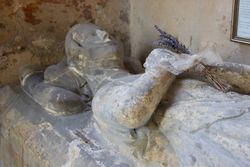
Tomb effigy of Nicholaa de la Haye

A staunchly independent woman, Nicholaa issued some 25 surviving charters in her own name. She made grants to various religious houses, including Lincoln Cathedral, and even secured a royal grant for a weekly market on one of her properties. A most able adversary for some of the greatest military minds of the time, and a loyal supporter of King John, Nicholaa de la Haye was unique among her peers.

Nicholaa died at her manor of Swaton on on 20 November, 1230 and was buried in St Michael’s Church there.

The chroniclers were full of praise for Nicholaa, though they seemed to have difficulty in finding the right adjectives to describe her. Richard of Devizes said of her 1191 defence of Lincoln Castle, against William Longchamp, that she did it ‘without thinking of anything womanly’. The Dunstable annals refer to her as a ‘noble woman’, saying she acted ‘manfully’. And William Marshal called her ‘brave’.

Nicholaa’s stoic defence of Lincoln Castle gave Marshal the time to organise his forces, march to her aid and set the scene for one definitive battle that would prove to be the beginning of the end of the war. Within 3 months, the French invaders would be agreeing to peace and sailing for home. One cannot fail to feel admiration for a woman who managed to hold her own in a man’s world, who fought for her castle and her home in a time when women had so little say over their own lives – and at such an advanced age. Her bravery and tenacity saved Henry III’s throne. Not surprisingly, King Henry referred to her as ‘our beloved Nicholaa de la Haye’.

Nicholaa de la Haye was the woman who saved England.

*

Nicholaa’s story is told in greater detail in my book King John’s Right Hand Lady: the Story of Nicholaa de la Haye

Images:

©2026 Sharon Bennett Connolly FRHistS except Battle of Lincoln which is courtesy of Wikimedia Commons

Footnotes:

1. Irene Gladwin, The Sheriff; The Man and His Office; 2. The Barnwell Annalist quotes in The Plantagenet Chronicles, edited by Elizabeth Hallam; 3. ibid; 4. Roger of Wendover, Roger of Wendover’s Flowers of History; 5. Histoire de Guillaume le Maréschal translated by Stewart Gregory; 6. ibid

Sources:

Irene Gladwin, The Sheriff; The Man and His Office; The Plantagenet Chronicles, edited by Elizabeth Hallam; Roger of Wendover, Roger of Wendover’s Flowers of History; Histoire de Guillaume le Maréschal translated by Stewart Gregory; J.W.F. Hill, Medieval Lincoln, Louise Wilkinson, Women in Thirteenth Century Lincolnshire; David Stocker; Daniel Power; Richard Huscroft, Tales from the Long Twelfth Century: The Rise and Fall of the Angevin Empire; magnacarta800th.com; Oxforddnb.com; Danny Danziger & John Gillingham, 1215 The Year of Magna Carta; Robert Bartlett, England Under the Norman and Angevin Kings; Marc Morris, King John: Treachery, Tyranny and the Road to Magna Carta; History of William Marshal, edited by David Crouch and Anthony J. Holden; finerollshenry3.co.uk; Ralph of Coggeshall, The English Chronicle.

*

My Books:

Signed, dedicated copies of all my books are available through my online bookshop. or by contacting me.

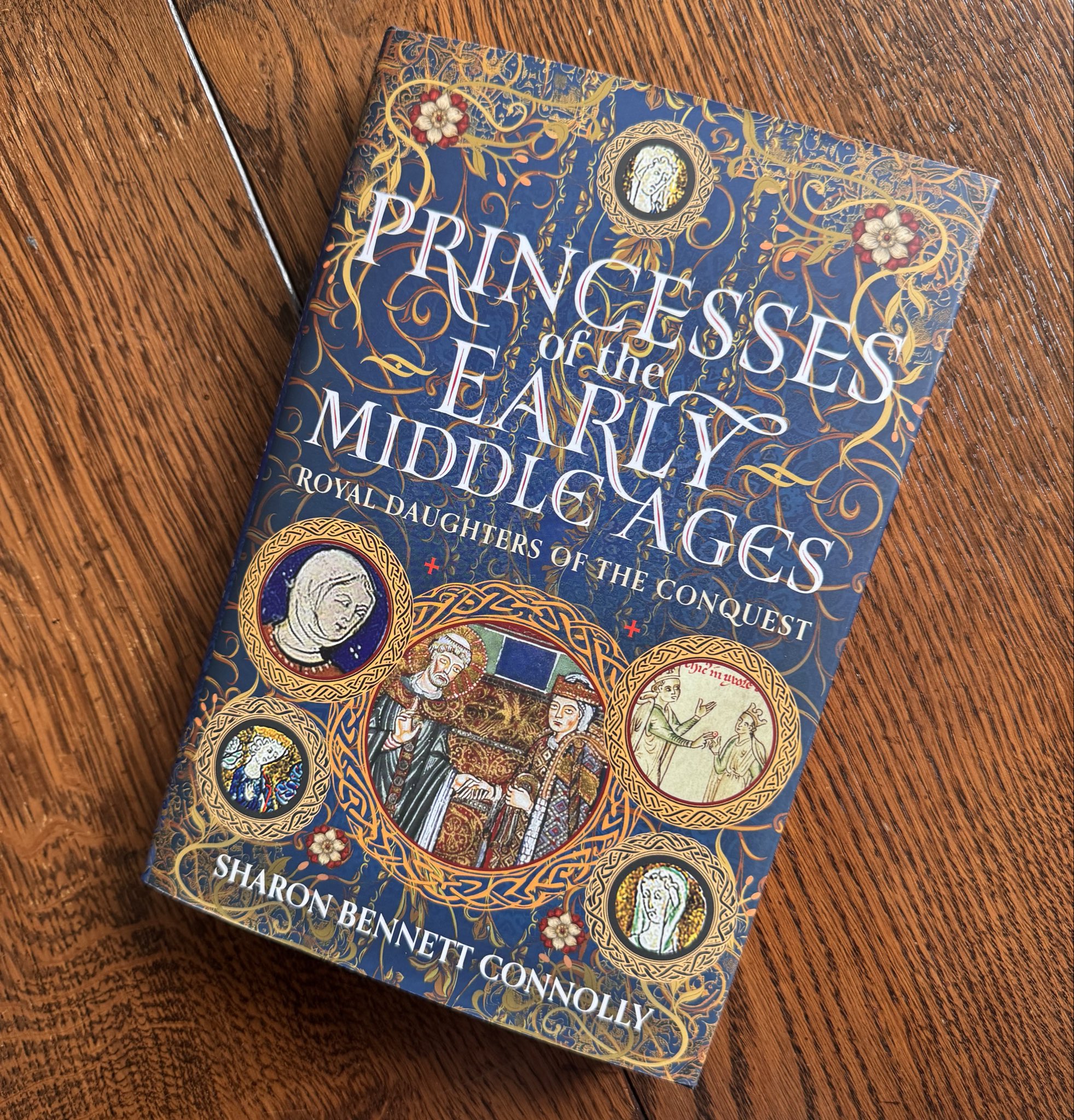
Out Now: Princesses of the Early Middle Ages
Books by Sharon Bennett Connolly

Daughters of kings were often used to seal treaty alliances and forge peace with England’s enemies. Princesses of the Early Middle Ages: Royal Daughters of the Conquest explores the lives of these young women, how they followed the stereotype, and how they sometimes managed to escape it. It will look at the world they lived in, and how their lives and marriages were affected by political necessity and the events of the time. Princesses of the Early Middle Ages will also examine how these girls, who were often political pawns, were able to control their own lives and fates. Whilst they were expected to obey their parents in their marriage choices, several princesses were able to exert their own influence on these choices, with some outright refusing the husbands offered to them.

Their stories are touching, inspiring and, at times, heartbreaking.

Princesses of the Early Middle Ages: Royal Daughters of the Conquest is now available from Pen & Sword and Amazon.

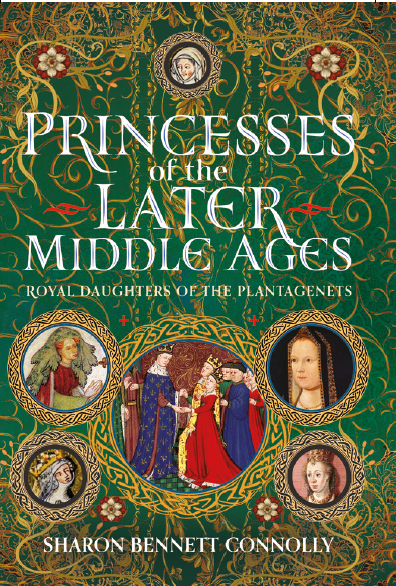
Coming 30 August 2026: Princesses of the Later Middle Ages: Royal Daughters of the Plantagenets
Books by Sharon Bennett Connolly

Princesses of the Later Middle Ages examines the lives and experiences of England’s princesses, from the treasured daughters of Henry III to the children of Edward IV, whose lives were turned upside down when they were declared illegitimate.

What we see is a very different story, where a foreign marriage does not mean eternal exile, but a purpose in life, where a princess is a diplomat, an ambassador for England in her new country. She is the bond between allies – most of the time.

Princesses of the Later Middle Ages shines a light on the lives and experiences of these remarkable women.

Princesses of the Later Middle Ages: Royal Daughters of the Plantagenets is now available for pre-order through Pen & Sword and other booksellers.

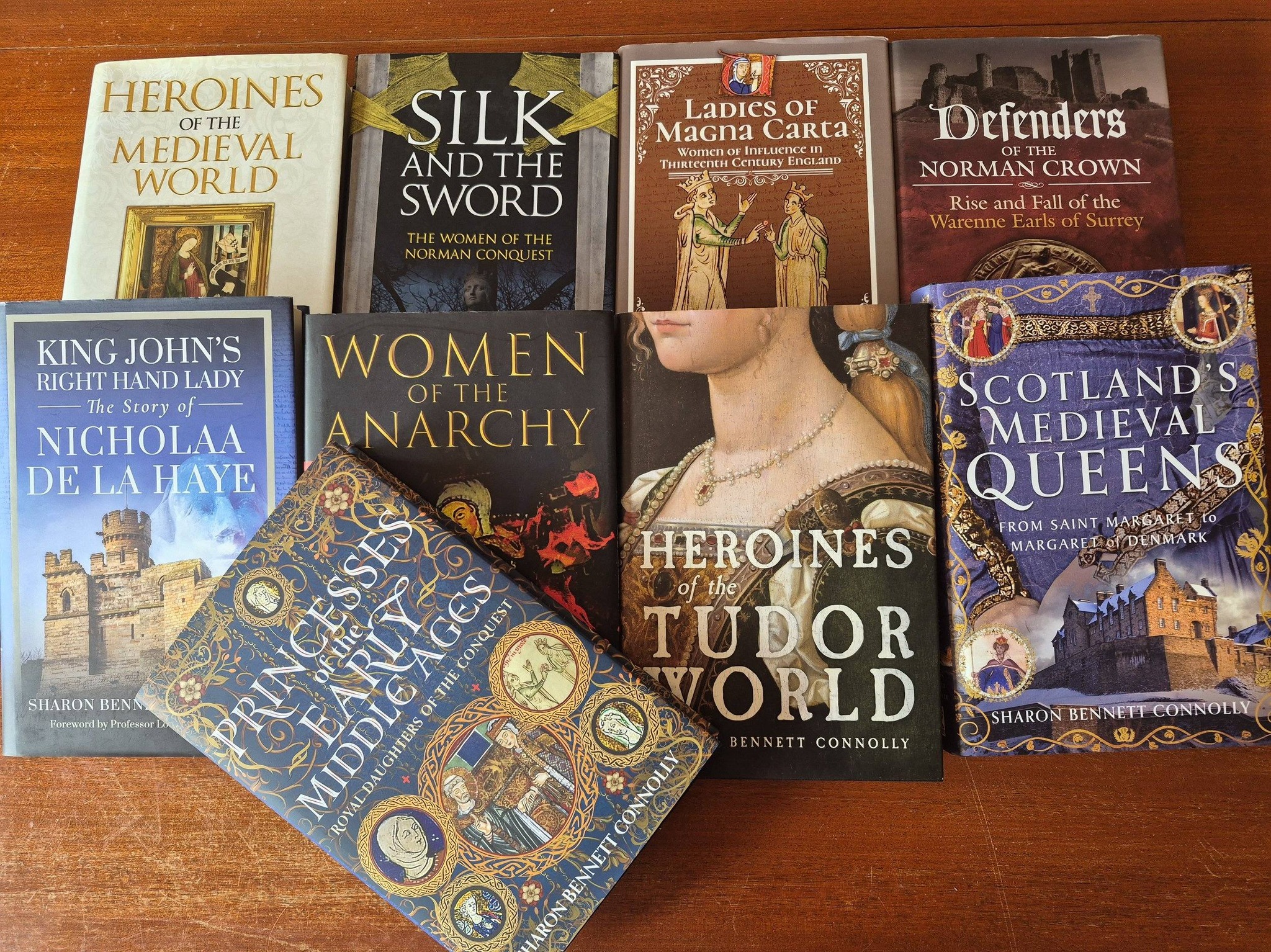
Sharon is also the author of:
Books by Sharon Bennett Connolly

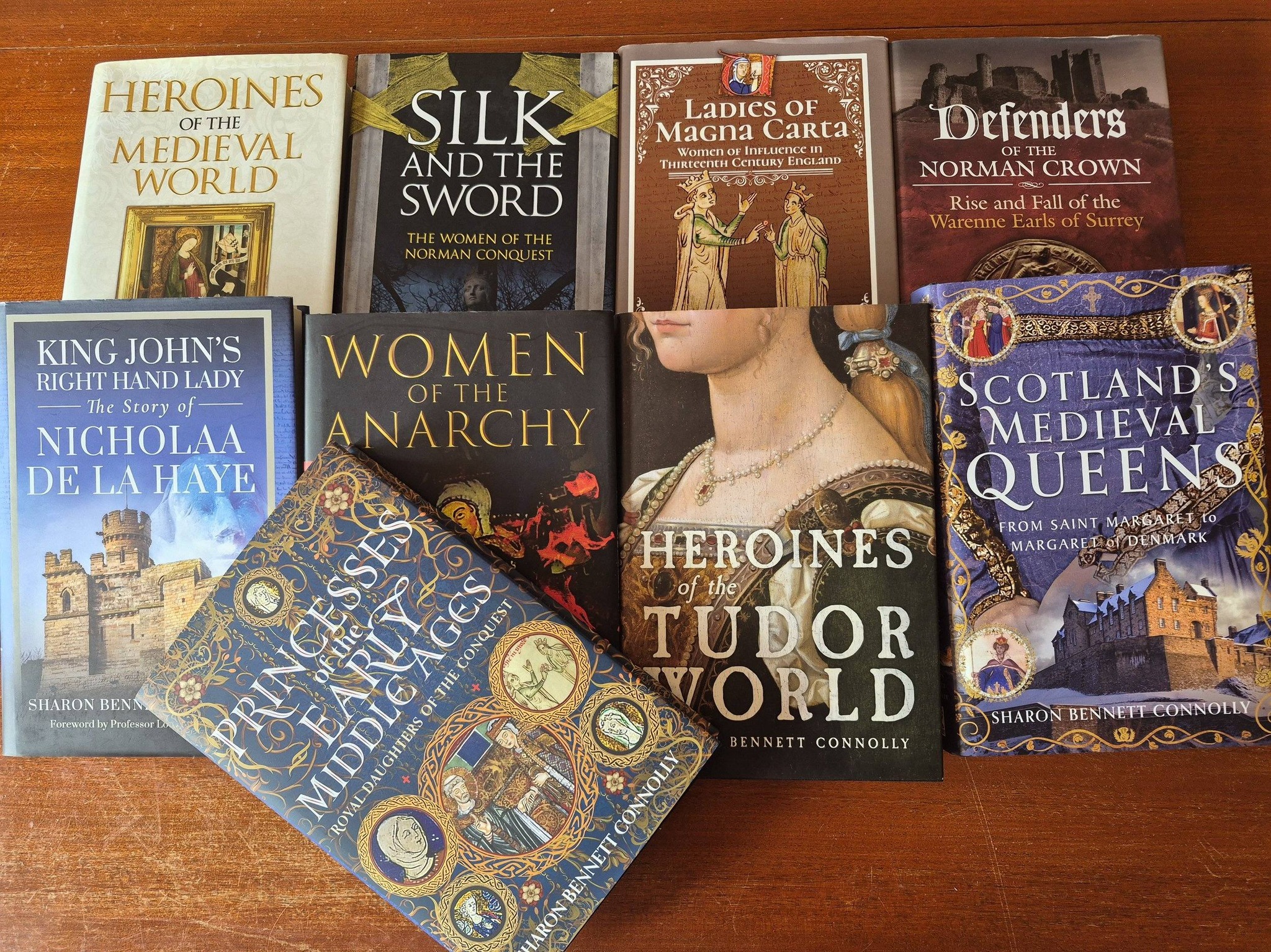
Heroines of the Medieval World; Silk and the Sword: The Women of the Norman Conquest; Ladies of Magna Carta: Women of Influence in Thirteenth Century England; Defenders of the Norman Crown: Rise and Fall of the Warenne Earls of Surrey; King John’s Right Hand Lady: The Story of Nicholaa de la Haye; Women of the Anarchy; Heroines of the Tudor World; Scotland’s Medieval Queens: From St Margaret to Margaret of Denmark; Princesses of the Early Middle Ages: Royal Daughters of the Conquest (March 2026); Princesses of the Later Middle Ages; Royal Daughters of the Plantagenets (August 2026)

Alternate Endings: An anthology of historical fiction short stories including Long Live the King… which is my take what might have happened had King John not died in October 1216. Available in paperback and kindle from Amazon.

All my books on AmazonBookshop.org . You can also order direct from my publishers, Pen and Sword Books and Amberley Publishing.

Podcast:
History...the Interesting Bits

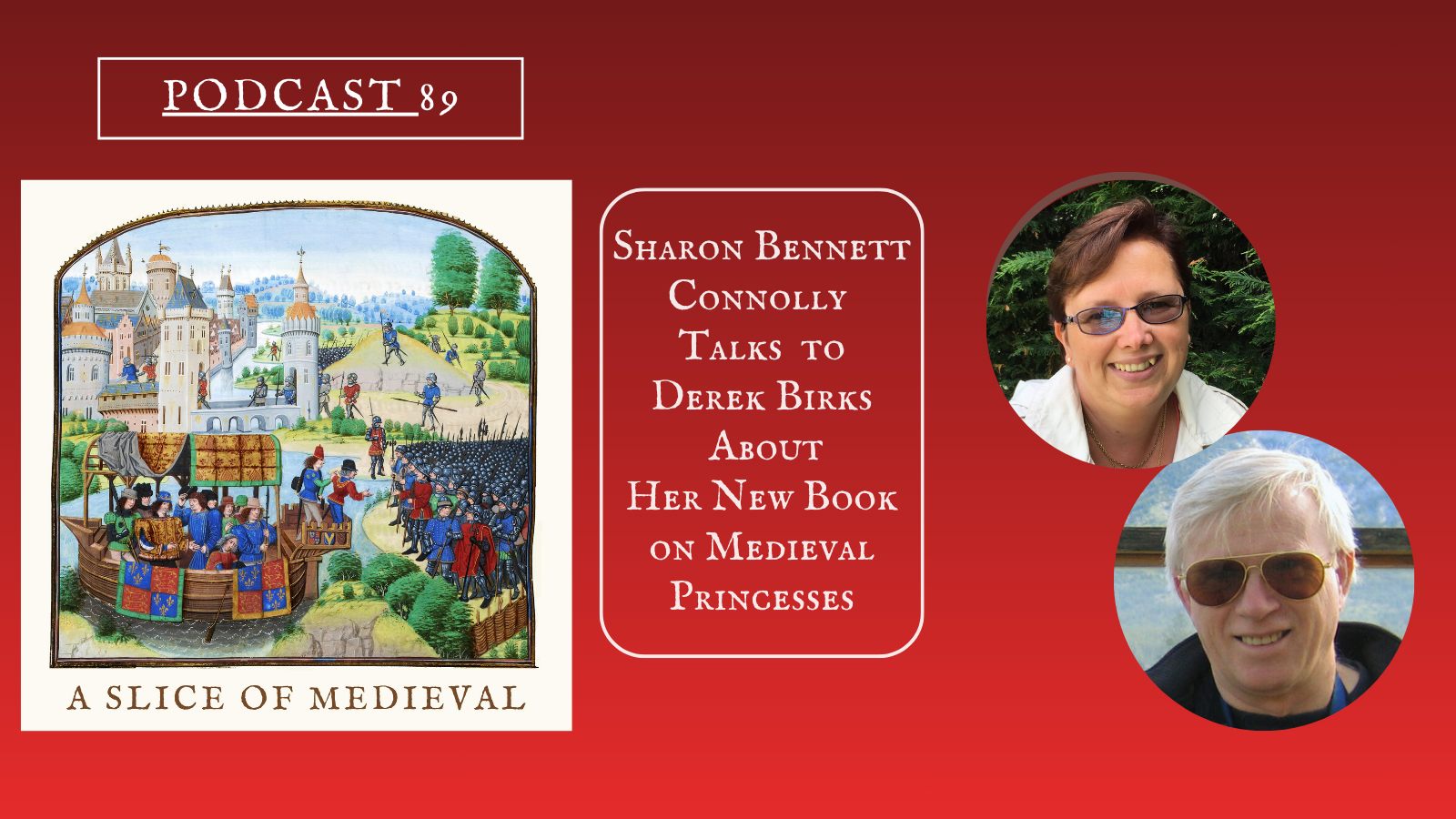
Have a listen to the A Slice of Medieval podcast, which I co-host with Historical fiction novelist Derek Birks. Derek and I welcome guests, such as Ian Mortimer, Bernard Cornwell, Elizabeth Chadwick and Scott Mariani, and discuss a wide range of topics in medieval history, from significant events to the personalities involved. 

Every episode is also now available on YouTube.

*
Royal Historical Society

Don’t forget! 

Signed and dedicated copies of all my books are available through my online bookshop.

For forthcoming online and in-person talks, please check out my Events Page.

You can be the first to read new articles by clicking the ‘Follow’ button, liking our Facebook page or joining me on TwitterThreadsBluesky and Instagram.

*

©2026 Sharon Bennett Connolly FRHistS
Juliane of Fontevrault, Henry I’s Rebellious daughter

History...the Interesting Bits
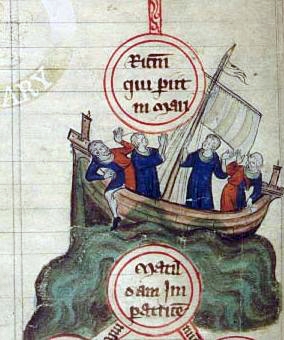
The Sinking of the White Ship

One of the primary duties of a king is to marry and produce heirs; at least one son, preferably two (just in case anything happened to the first). This guarantees the succession and offers stability to a country. Even daughters were useful to a king, their marriages cementing alliances with friends and enemies alike. Although he only had one legitimate son, William the Ӕtheling, and one legitimate daughter, Empress Matilda, Henry I had more than 20 illegitimate children by a succession of mistresses, including at least 10 daughters.

The king recognised his illegitimate children and the taint of bastardy, especially for his daughters, did not unduly affect their marriage prospects. They were used to strengthen and cement alliances just as legitimate princesses would have been. However, they did not pass on any claim to the English throne, thus being no threat to the king’s heirs, William and Matilda.

One of the most colourful of Henry I’s illegitimate daughters is Juliane (or Juliana), possibly the king’s daughter by his mistress, Ansfride. Ansfride was the widow of Anskill, a knight who was a tenant of Abingdon Abbey who had died following his imprisonment by King William II. It is thought that Ansfride had at least three children by Henry, including Richard of Lincoln, who had perished in the White Ship disaster. Little is known of another son, Foulques, who may have died young or become a monk.

The fact Richard and Juliane were close in age, and that Richard would later intercede for Juliane with their father, suggests they may have shared a mother. Although the argument is not infallible, Henry was known to be promiscuous and may have had more than one mistress at the same time.

Juliane was probably born in the late 1080s or early 1090s. Shortly after her father’s accession to the throne in 1100, Juliane was married to Eustace de Pacy, also known as Eustace de Breteuil, the illegitimate son of William de Breteuil. Orderic Vitalis recorded the marriages of both Juliane and her half-sister Matilda, saying of Eustace ‘The king gave him his daughter Juliana in marriage, and promised effective help against Gael and all his other enemies. At that time too the king married another of his daughters to Rotrou, count of Mortagne and she bore her husband a daughter called Philippa.’1

History...the Interesting Bits
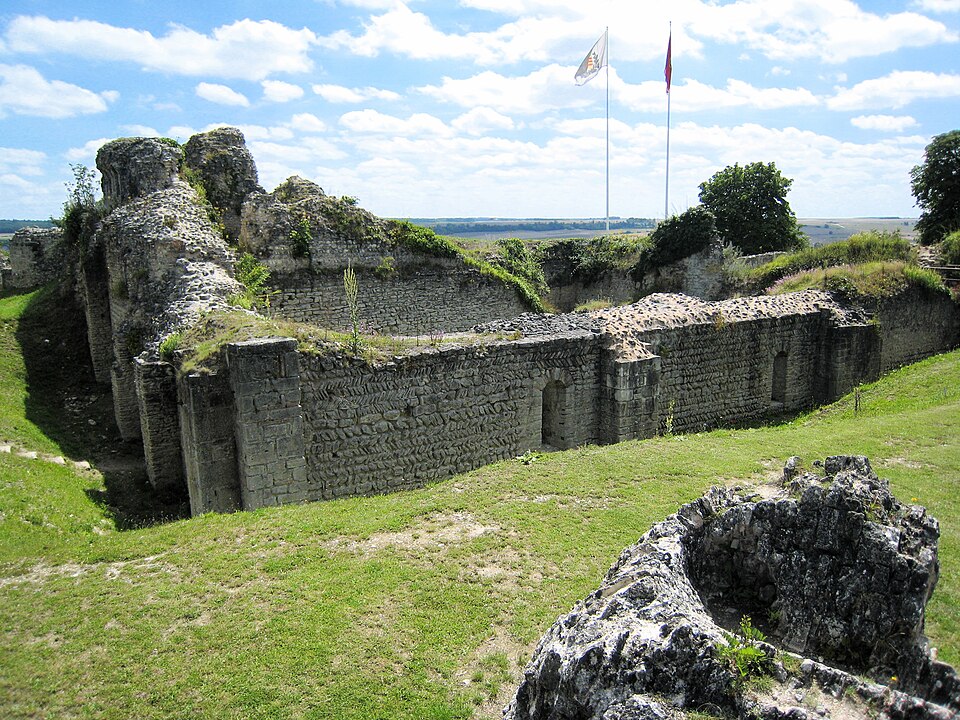
Chateau d’Ivry la Bataille, Normandy (wiki)

The death of Eustace’s father caused conflict between William de Breteuil’s possible heirs. Eustace’s main rivals were his cousins William de Gael and Reginald de Grancey. De Gael died shortly afterwards, leaving Reginald and Eustace to fight it out, each drawing in neighbouring lords and magnates as allies, devastating and destabilising the region. When Eustace approached Henry I for aid, the marriage was arranged between Eustace and Juliane. The Normans, according to Vitalis ‘accepted Eustace, his son by a concubine, because they chose to be ruled by a fellow countryman who was a bastard rather than by a legitimate Breton or Burgundian.’2

Henry I’s direct involvement thus brought the conflict quickly to an end, securing Eustace’s position and, by extension, his loyalty. The king then took the opportunity to impose his own garrison on the strategically important castle at Ivry, giving him a direct military presence in the region, in addition to the family connections fostered through his daughter, Juliane.

Eustace and Juliane had at least three children. Their son, William, succeeded his father as Seigneur de Pacy and tried unsuccessfully to recover Breteuil, which had been given to Ralph de Gael, the son of William de Gael. Although we do not have their names, Juliane and Eustace also had 2 daughters, whose gruesome fate is often laid at Henry I’s door (more on that shortly). It was over Henry’s control of Ivry that the king and his son-in-law came into conflict in 1119. According to Orderic Vitalis, Eustace had made many appeals to King Henry over the years, asking for the stronghold’s restoration to his domains. Eustace was ‘urged by his compatriots and kinsmen’ to press the king for the restoration of Ivry.

History...the Interesting Bits
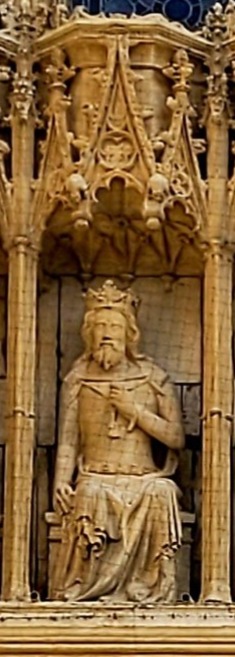
Henry I, Lincoln Cathedral Gallery of Kings

Henry prevaricated, saying that he would return Ivry at a future date and giving Eustace the son of Ralph Harenc, the castle’s custodian, as a hostage. In return, Eustace’s two daughters were sent to King Henry as hostages. An exchange of hostages as guarantees of good behaviour, or an adherence to an agreement, were commonplace in Norman times. And surely, Juliane and Eustace would have been reassured that their daughters were safe and well cared for in their grandfather’s custody.

For some unknown reason, and supposedly at the urging of his ally Amaury de Montfort, Eustace mutilated the boy, blinding him before sending him back to his father. Eustace may have believed that his familial relationship with King Henry would shield him from any reprisals. If he did, he was soon to be disabused of such confidence. Harenc went straight to the king and told him of the injuries Eustace had inflicted upon his son. Deeply moved by his vassal’s experience, the king handed over his two granddaughters:

‘Ralph Harenc took Eustace’s daughters with the permission of the angry king and avenged his son by cruelly putting out their eyes and cutting off the tips of their nostrils. So innocent childhood, alas! suffered for the sins of the fathers, and the feelings of both parents were roused by the suffering and maiming of their offspring.’3

The king also consoled Harenc with gifts and the return of the castle at Ivry. As you would expect, when Juliane and Eustace were informed of their daughters’ fate, they ‘were in great distress.’4 Eustace then fortified his castles at Lire, Glos, Pont Saint-Pierre and Pacy, and ‘sent his wife Juliana, who was the king’s daughter by a concubine, to Breteuil, and provided her with the knights necessary to defend the fortress.’5

Not wanting to anger King Henry, the burgesses of Breteuil sent messages to the king, informing him of Juliane’s occupation of the fortress. Henry I immediately rode to the town, where the gates were readily opened for him. He then ‘laid siege to the castle in which his defiant daughter had shut herself up.’6

History...the Interesting Bits
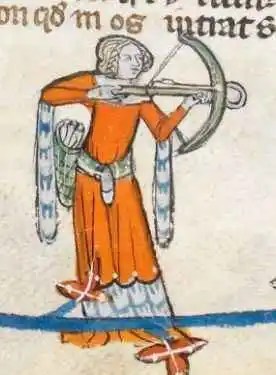
14th century depiction of a woman with a crossbow

Apparently, Juliane appealed to her father. Asking for a meeting, though, according to Orderic Vitalis, it was with evil intent. Juliane ‘hoped to murder him. She had a crossbow ready drawn for the purpose and shot a bolt at her father.’7 If you hadn’t yet worked it out, Juliane’s relationship with her father, by this point, was at an all-time low. There must have been hurt on both sides. Juliane’s two daughters had been maimed and permanently disfigured, if not by Henry’s orders, then at least by his acquiescence. Ralph Harenc would not have undertaken such a horrific action if he was not assured of the king’s support. Henry, on the other hand, now had his own grievance in his daughter’s attempt to kill him. In no mood to attempt appeasement or reconciliation,

‘The king immediately had the castle drawbridge destroyed, so that no one could enter or leave. Juliana, seeing that she was completely surrounded and that no one was at hand to help her, surrendered the castle to the king, but could find no means of persuading him to allow her to leave freely. Indeed by the king’s command she was forced to leap down from the walls, with no bridge or support, and fell shamefully, with bare buttocks, into the depths of the moat. This happened at the beginning of Lent, in the third week of February, when the castle moat was full to overflowing with winter rains, and the frozen waters naturally struck numbing cold into the tender flesh of the woman when she fell. The unlucky Amazon got out of the predicament shamefully as best she could and, withdrawing to her husband who was then at Pacy.’8

King Henry rewarded the burgesses of Breteuil with gifts and, not long after, gave the town to Ralph de Gael. Ralph had been one of the claimants of Breteuil on the death of Eustace’s father, William. He was the second son of William’s sister, Emma, and had been, according to Vitalis, William’s preferred heir at the time of his death. Ralph de Gael was given the entire lordship, save for Pacy which was still being held by Eustace. Eventually, Juliane and Eustace were reconciled with Henry I, possibly through the intervention of Juliane’s brother, Richard of Lincoln. Richard certainly spoke up for his sister in the king’s presence and ‘pleaded his sister’s cause.’9 He may well have been working behind the scenes to persuade their father to accept his sister’s submission, when it came. Friends of the couple also spoke up for them.

Rebellion against the king was not as fatalistic an action as it would be in the later medieval period. Nobles tended to keep their heads, at the expense of a forfeiture of lands. Which meant that submitting to the king meant a loss of pride and income but was not accompanied by a danger to life itself, not even if you had attempted to murder your royal father!

As always in the case of Eustace and Juliane, Vitalis credits their advisers in helping them make their decisions. And it is these counsellors, according to Vitalis, who persuaded Eustace and Juliane to approach the king whilst he was besieging Évreux. The couple

History...the Interesting Bits
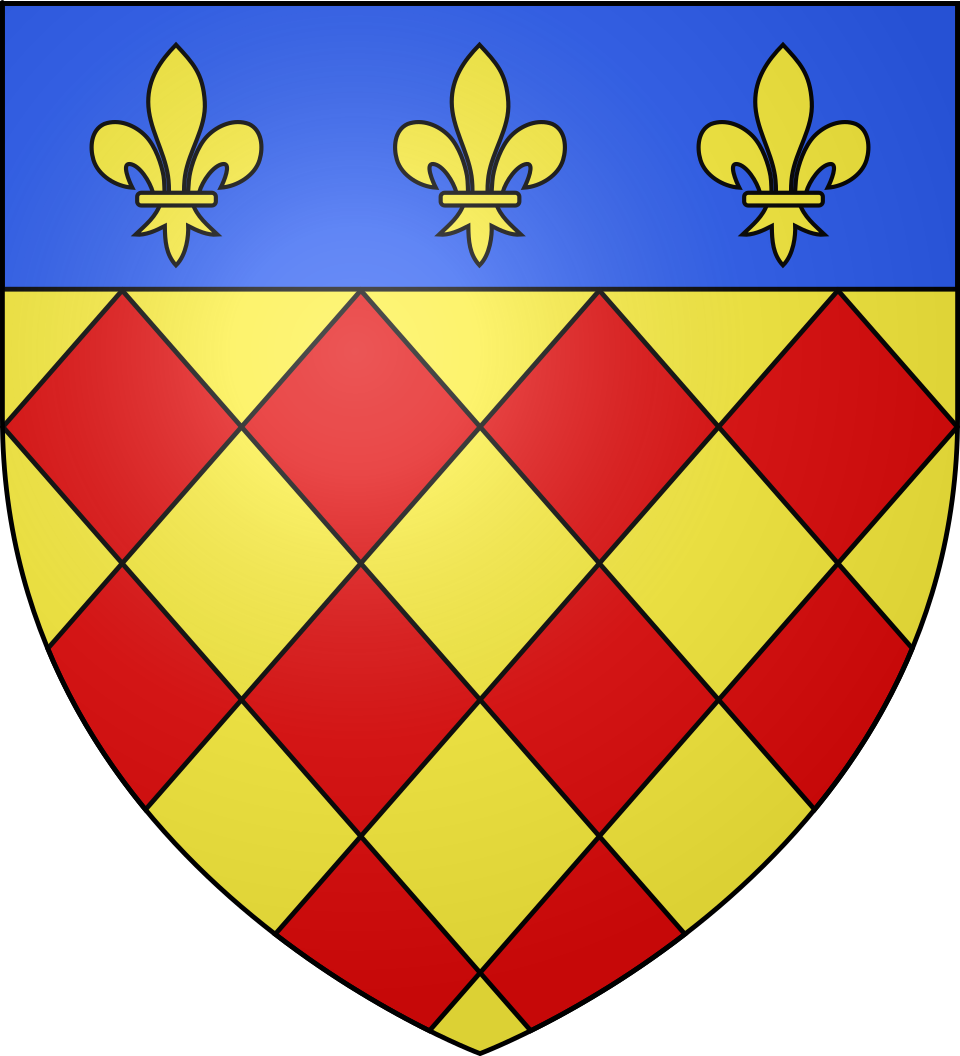
The arms of the town of Breteuil

‘hurried to the siege, entered the king’s tent barefoot, and fell at his feet. The king said to them in astonishment, “Why have you dared to approach me without my safe-conduct, after provoking me by so many wrongs?” To which Eustace replied, “You are my natural lord. Therefore I come to you without fear as to my lord, to offer my service loyally to you, and to make full restitution for my misdeeds, as you in your just compassion judge to be right.”’10

Appeased, the king was moved to mercy and ordered that Juliane should return to Pacy, whilst Eustace was to accompany the king to Rouen to ‘hear what is my pleasure.’11 Eustace must have accompanied his father-in-law with trepidation, waiting to hear how much his rebellion will cost him. And Juliane, awaiting news at Pacy, must have been no less anxious as to her husband’s fate and that of their lands. The king had already given Breteuil to Eustace’s cousin but offered Eustace ‘an annual rent of three hundred marks of silver in England.’12 Eustace was not to lose any more land and retained Pacy as his own fief, that would descend to his son.

Eustace ‘fortified Pacy with walls and watch-towers, and lived for more than twenty years, enjoying great wealth.’13 Eustace died at Pacy in February 1136. It is not known by how long Juliane survived him, her date of death has gone unrecorded but she ‘abandoned the self-indulgent life she had led for the religious life and, becoming a nun, served the Lord God in the new abbey of Fontevrault.’14 No mention is made of the fate of the couple’s unfortunate daughters; disfigured as they were, it is possible they sought seclusion in an abbey. The poor girls had paid a high price for their parents’ rebellion.

Juliane of Fontevrault was by far the most adventurous and notorious of Henry I’s numerous illegitimate daughters.

Notes:

1. Vitalis, The ecclesiastical history of Orderic Vitalis, vol. 6, p. 41; 2. ibid; 3. ibid, p. 213; 4. ibid; 5. ibid; 6. ibid; 7. ibid, pp. 213-215; 8, ibid, p. 215; 9. ibid, p. 279; 10. ibid; 11. ibid; 12. ibid; 13. ibid; 14. ibid

Images:

Courtesy of Wikipedia except Henry I which is ©2026 Sharon Bennett Connolly FRHistS and the depiction of a woman with a crossbow which is Smithfield Decretals 1300, 1340 f.43, British Library
Sources:

Vitalis, The ecclesiastical history of Orderic Vitalis, vol. 6; oxforddnb.com; Donald Matthew, King Stephen; Robert Bartlett, England Under the Norman and Angevin Kings; David Williamson, Brewer’s British Royalty; the History Today Companion to British History; Dan Jones, the Plantagenets; englishmonarchs.co.uk; The Oxford Companion to British History Edited by John CannonMike Ashley, The Mammoth Book of British kings & Queens; Alison Weir, Britain’s Royal Families, the Complete Genealogy; medievalilsts.net; The Plantagenet Chronicles Edited by Elizabeth Hallam; The Warenne (Hyde) Chronicle, edited by Elisabeth Van Houts and Rosalind C. Love; Cockayne, G.E., The Complete Peerage of England, Scotland, Ireland, Great Britain and the United Kingdom, extant, extinct or dormant; fmg.ac, Catherine Hanely, Matilda; Henry of Huntingdon, The History of the English People1000-1154

*

My Books

Signed, dedicated copies of all my books are available through my online bookshop. or by contacting me.

Out Now: Princesses of the Early Middle Ages

Books by Sharon Bennett Connolly

Daughters of kings were often used to seal treaty alliances and forge peace with England’s enemies. Princesses of the Early Middle Ages: Royal Daughters of the Conquest explores the lives of these young women, how they followed the stereotype, and how they sometimes managed to escape it. It will look at the world they lived in, and how their lives and marriages were affected by political necessity and the events of the time. Princesses of the Early Middle Ages will also examine how these girls, who were often political pawns, were able to control their own lives and fates. Whilst they were expected to obey their parents in their marriage choices, several princesses were able to exert their own influence on these choices, with some outright refusing the husbands offered to them.

Their stories are touching, inspiring and, at times, heartbreaking.

Princesses of the Early Middle Ages: Royal Daughters of the Conquest is now available from Pen & Sword and Amazon.

Sharon is also the author of:

Books by Sharon Bennett Connolly

Heroines of the Medieval World; Silk and the Sword: The Women of the Norman Conquest; Ladies of Magna Carta: Women of Influence in Thirteenth Century England; Defenders of the Norman Crown: Rise and Fall of the Warenne Earls of Surrey; King John’s Right Hand Lady: The Story of Nicholaa de la Haye; Women of the Anarchy; Heroines of the Tudor World; Scotland’s Medieval Queens: From St Margaret to Margaret of Denmark; Princesses of the Early Middle Ages: Royal Daughters of the Conquest (March 2026); Princesses of the Later Middle Ages; Royal Daughters of the Plantagenets (August 2026)

Alternate Endings: An anthology of historical fiction short stories including Long Live the King… which is my take what might have happened had King John not died in October 1216. Available in paperback and kindle from Amazon.

All my books on AmazonBookshop.org . You can also order direct from my publishers, Pen and Sword Books and Amberley Publishing.

Podcast:

History...the Interesting Bits

Have a listen to the A Slice of Medieval podcast, which I co-host with Historical fiction novelist Derek Birks. Derek and I welcome guests, such as Ian Mortimer, Bernard Cornwell, Elizabeth Chadwick and Scott Mariani, and discuss a wide range of topics in medieval history, from significant events to the personalities involved. 

Every episode is also now available on YouTube.

*

Royal Historical Society

Don’t forget! 

Signed and dedicated copies of all my books are available through my online bookshop.

For forthcoming online and in-person talks, please check out my Events Page.

You can be the first to read new articles by clicking the ‘Follow’ button, liking our Facebook page or joining me on TwitterThreadsBluesky and Instagram.

*

©2026 Sharon Bennett Connolly FRHistS
Plantagenet Heroines

History... the Interesting Bits
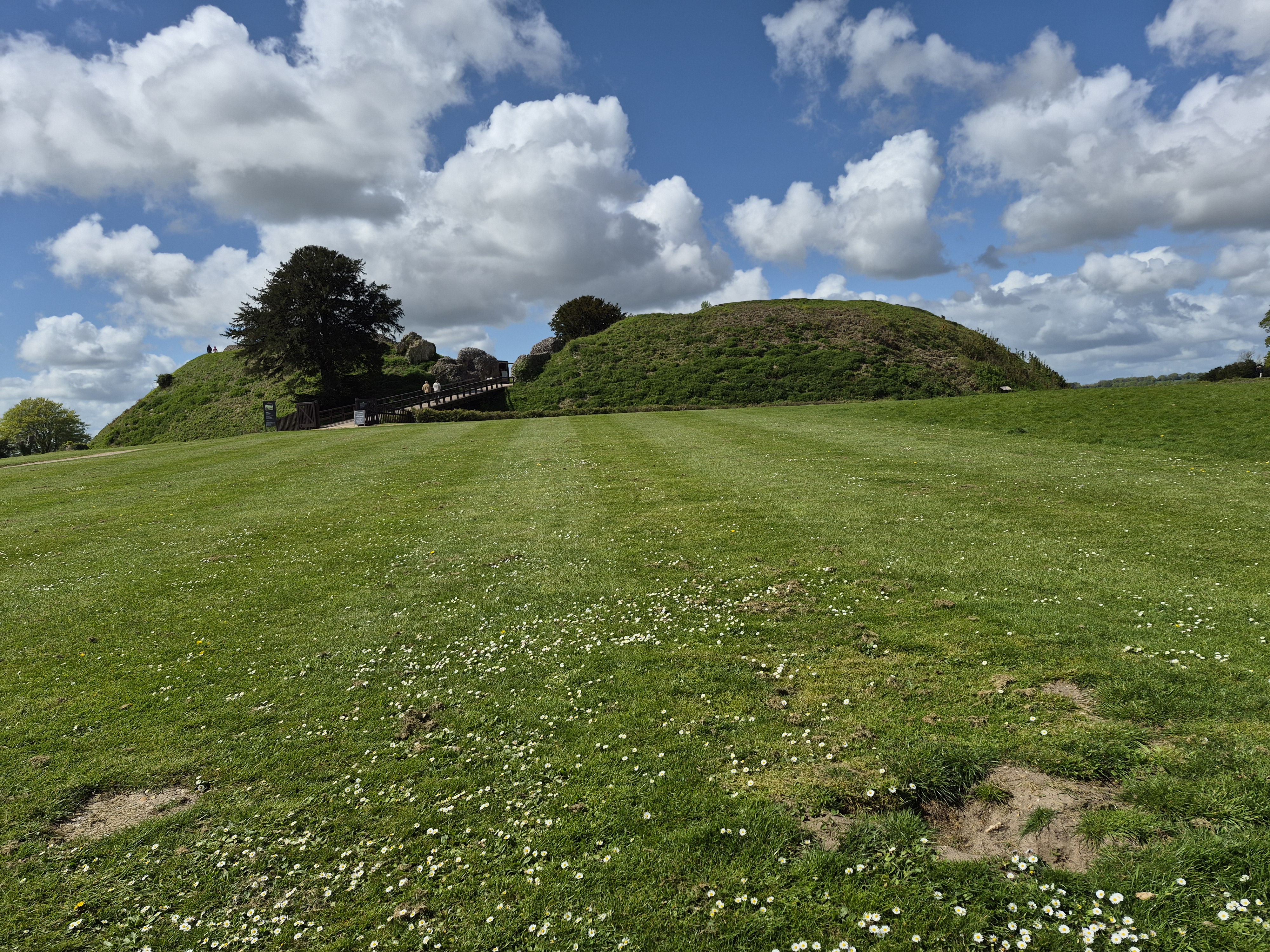
Old Sarum

I have been quiet for a couple of weeks as I was preparing for – and then taking part in – the Plantagenet Heroines Tour organised by Plantagenet Discoveries. The inspiration of the wonderful Maxine Sommer, Plantagenet Discoveries allows guests to follow in the footsteps of some of the greats of medieval history.

The tour lasted 9 days, though I was only with it for the first 7 days, acting as the tour guide and answering any and all questions from the guests – and there were a LOT of questions.

It was my first time as a ‘resident historian’ and I was not quite sure what to expect or how I would handle being ‘always on’ from the moment I awoke to getting back to my room at night. I needn’t have worried. History is my ‘thing’ and talking about it from morning until night was an absolute pleasure, and quite the adrenalin rush.

I met the tour leaders and 6 guests at an informal ‘getting to know you’ gathering in London on the Friday night. All 6 guests were women travelling alone, with one each coming from Ireland and Sweden, 2 from Australia and 2 from the US. All of us had one thing in common – a love of history.

My fist day involved an early rise and breakfast at the hotel in London before meeting out minibus driver for the week, Roger, and setting off at 8.30 am for our first destination: Old Sarum. Arriving on the outskirts of Salisbury at 10.30, we had a good explore of the old ruins. Old Sarum was home to Ela of Salisbury, and prison – even if it was gilded – to Eleanor of Aquitaine. It also gave me the chance to talk about all 3 of Eleanor’s Plantagenet daughters. It is not hard to imagine the magnificence and splendour of the lost castle, especially given the size of the foundations that remain. Even as you can see the ‘new’ cathedral (the foundations were laid in 1220) in the distance, so too can you walk around the floor plan of the old cathedral.

History... the Interesting Bits
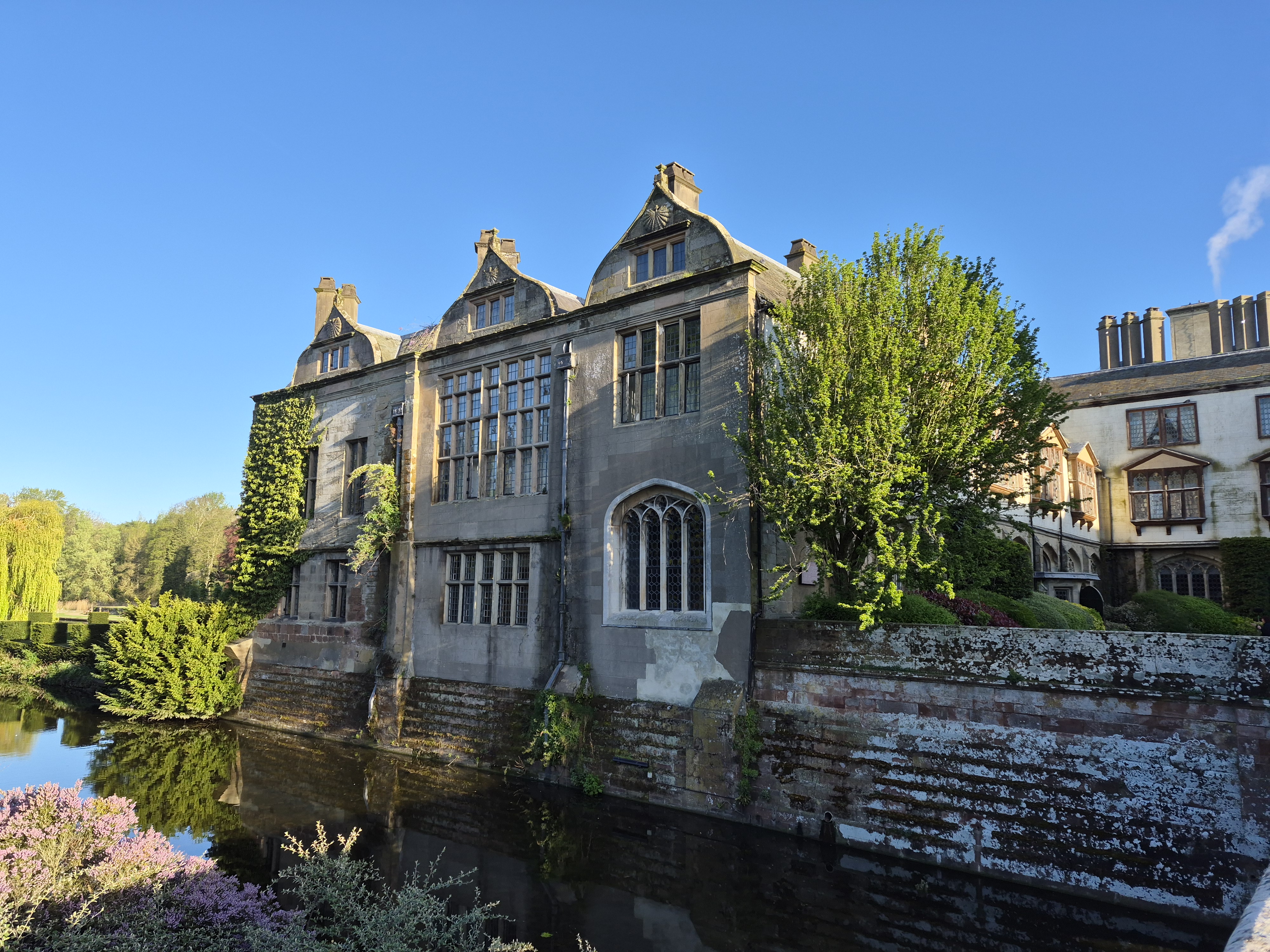
Coombe Abbey

If only these walls could talk, what stories they could tell.

I tried to do them justice. It was my first day and my narrative was a little stilted – I was still trying to find my feet but I was beginning to find my stride, answering questions, offering observations and analysis. Though I did often forget my place – I wasn’t on holiday. But talking history never feels like I’m working.

After lunch at the nearby Harvester – literally, you drove from the Old Sarum car park, turned right and the Harvester was on the left, with a view of Old Sarum from its door – we made our way to Coventry, and Coombe Abbey, our hotel for the night. I was particularly excited to stay at Coombe Abbey. Founded by the de Camville family, Nicholaa de la Haye‘s second husband, Gerard de Camville, is buried there – somewhere. Unfortunately, I did not find his burial place but the abbey itself did not disappoint. We enjoyed a 3-course meal that evening, breakfast and a wander around the grounds in the morning. The abbey retains many of its medieval features, with stone archways, a pulpit and the tomb of a murdered abbot, with a grand staircase and sumptuous bedrooms added to it. I didn’t want to leave!

And I definitely want to go back!

History... the Interesting Bits
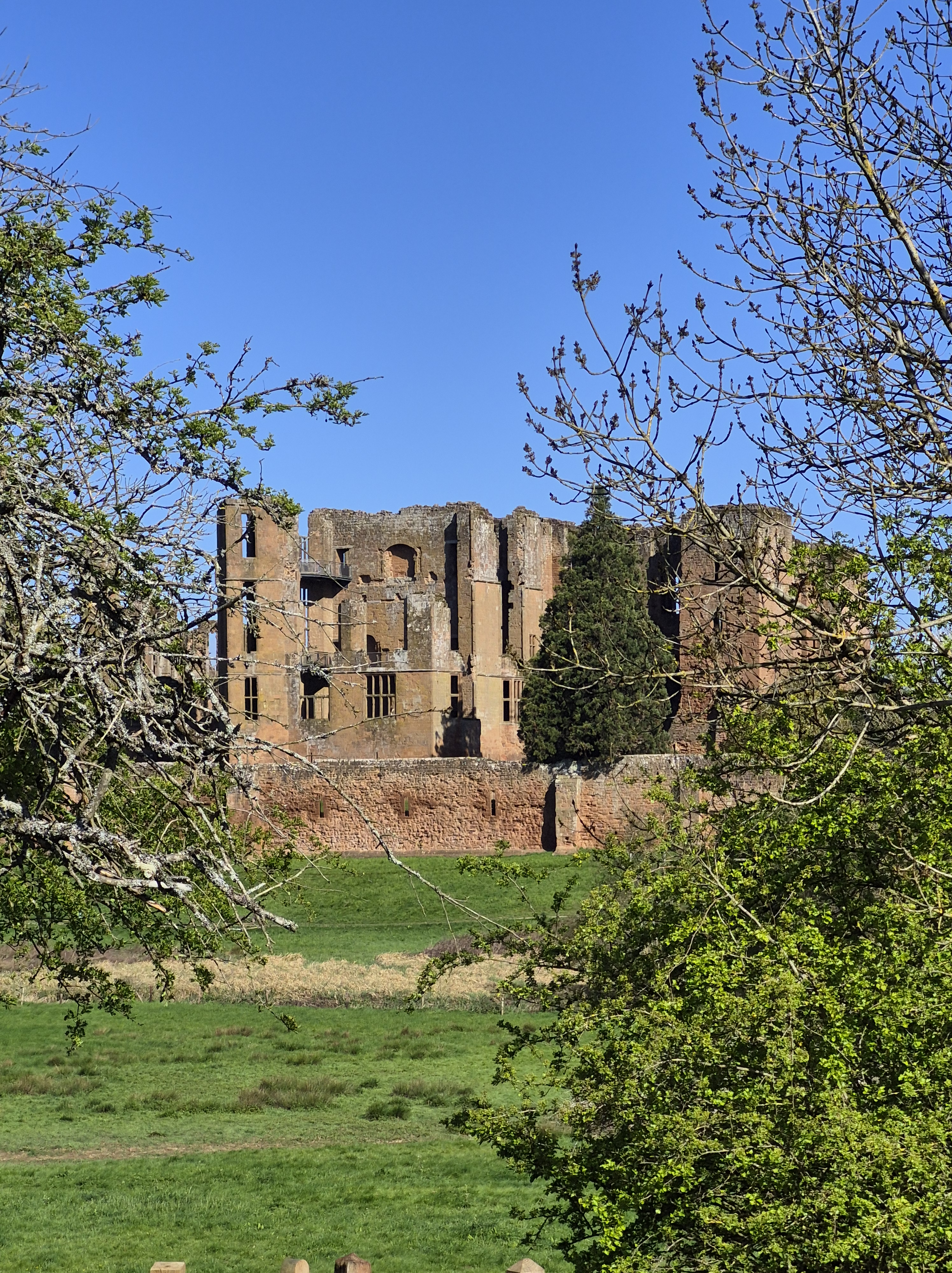
Kenilworth Castle

Sunday was a 2-castle day.

The morning was spent at Kenilworth Castle. Famous for its links to Robert Dudley, Earl of Leicester – Queen Elizabeth I’s favourite – it was a vast castle belonging to the medieval earls of Leicester. Simon de Montfort and his royal wife, Eleanor of England, lived here. In fact, after Simon’s death, his supporters continued to hold the castle through a 9-month long siege – the longest siege on English soil. John of Gaunt turned Kenilworth from a medieval fortress into a royal palace and it became one of the favourite residences, outside of London, of Margaret of Anjou.

There was much to explore, from the ‘new’ building of Dudley to the old Great Hall of Gaunt. So many stairs!

Discussion ranged from Simon de Montfort (we don’t like him) to Edward I, Henry III, the Battles of Lewes and Evesham and Eleanor’s teenage vow of chastity that lasted until she saw Simon de Montfort and married him. Which inevitably led to a discussion of Sharon Penman novels and the fates of Simon and Eleanor’s daughter, Eleanor de Montfort, and granddaughter, Princess Gwenllian.

The history I told was inspired by the castle itself and the questions of the guests, giving as much information as I could about the women, in particular, who would have known Kenilworth in its glory days.

History... the Interesting Bits
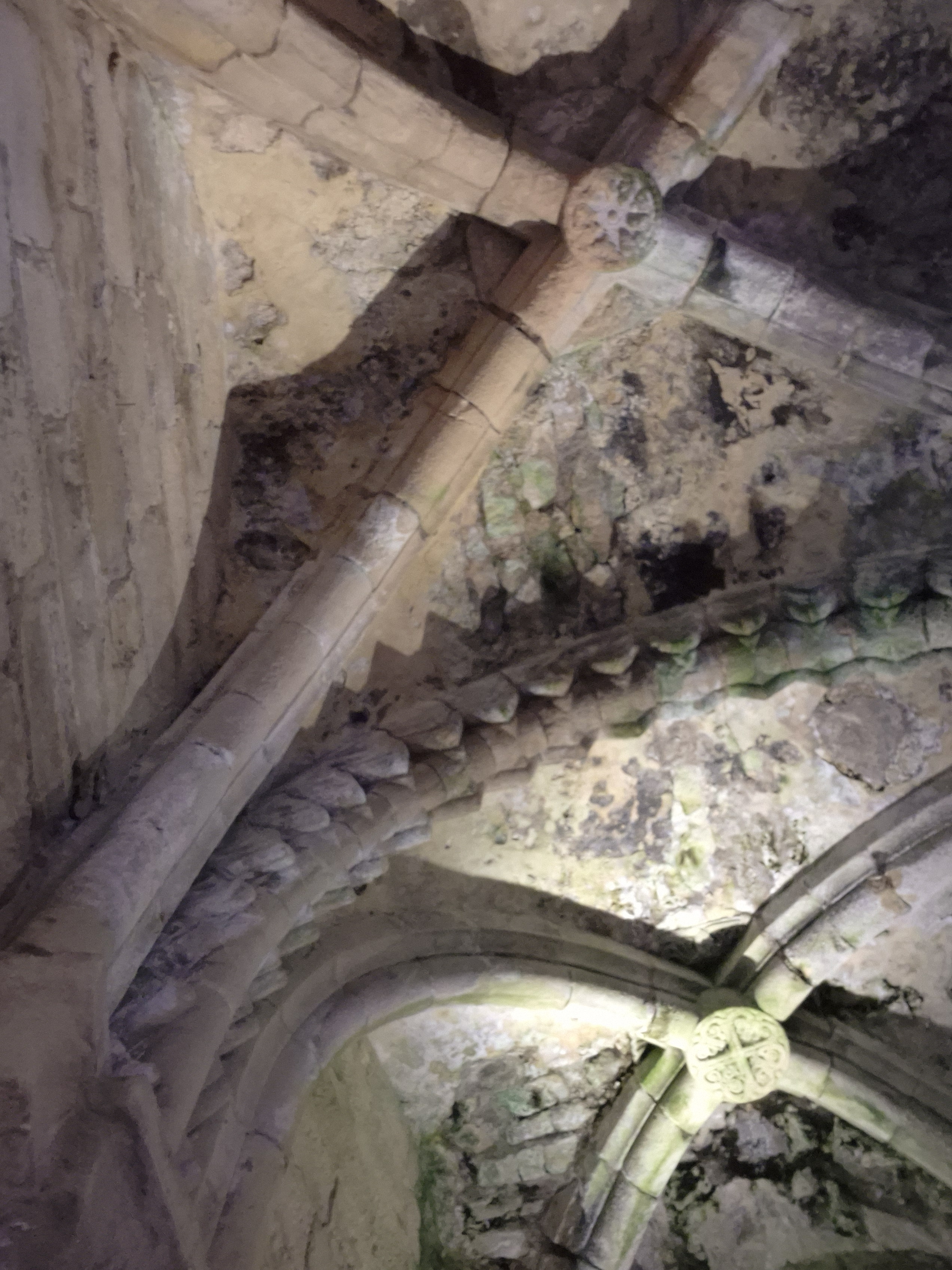
The vaulted ceiling in the chapel at Conisbrough Castle

Our next stop was Conisbrough Castle. Definitely firmer ground for me. I was in my element. This is MY castle. I have told its story for over 30 years, both as a tour guide and writer. I wrote a book about the family who built it and, as you know, countless articles. So, I did my usual tour, going through the story of Ambrosius Aurelianus, through William de Warenne, the first earl, Hamelin, the man who built the keep, the visits of Henry II, King John and Edward II to the marital woes of John de Warenne, the 7th and last Earl of Warenne and Surrey. And not to forget the links to the house of York, to Richard III being the last to spend money on the castle in 1484.

We stood in the little chapel on the top floor of the keep, contemplating those kings who had knelt on those stones and prayed., You could feel the history around us.

That evening, we arrived at our base for the next 3 days, The Grand Hotel at York. And grand it was, indeed. A 5-star hotel with underfloor heating in the bathroom, it had once been the grand headquarters of LNER – the London and North Eastern Railways.. Once we were unpacked, we were treated to another sumptuous 3-course meal – I had a 50-layer lasagne. Even though I was walking over 10,000 steps a day, there was no way I would lose weight on this holiday – er, work trip!

Monday was spent in County Durham, with connections to the royal House of York everywhere!

History... the Interesting Bits
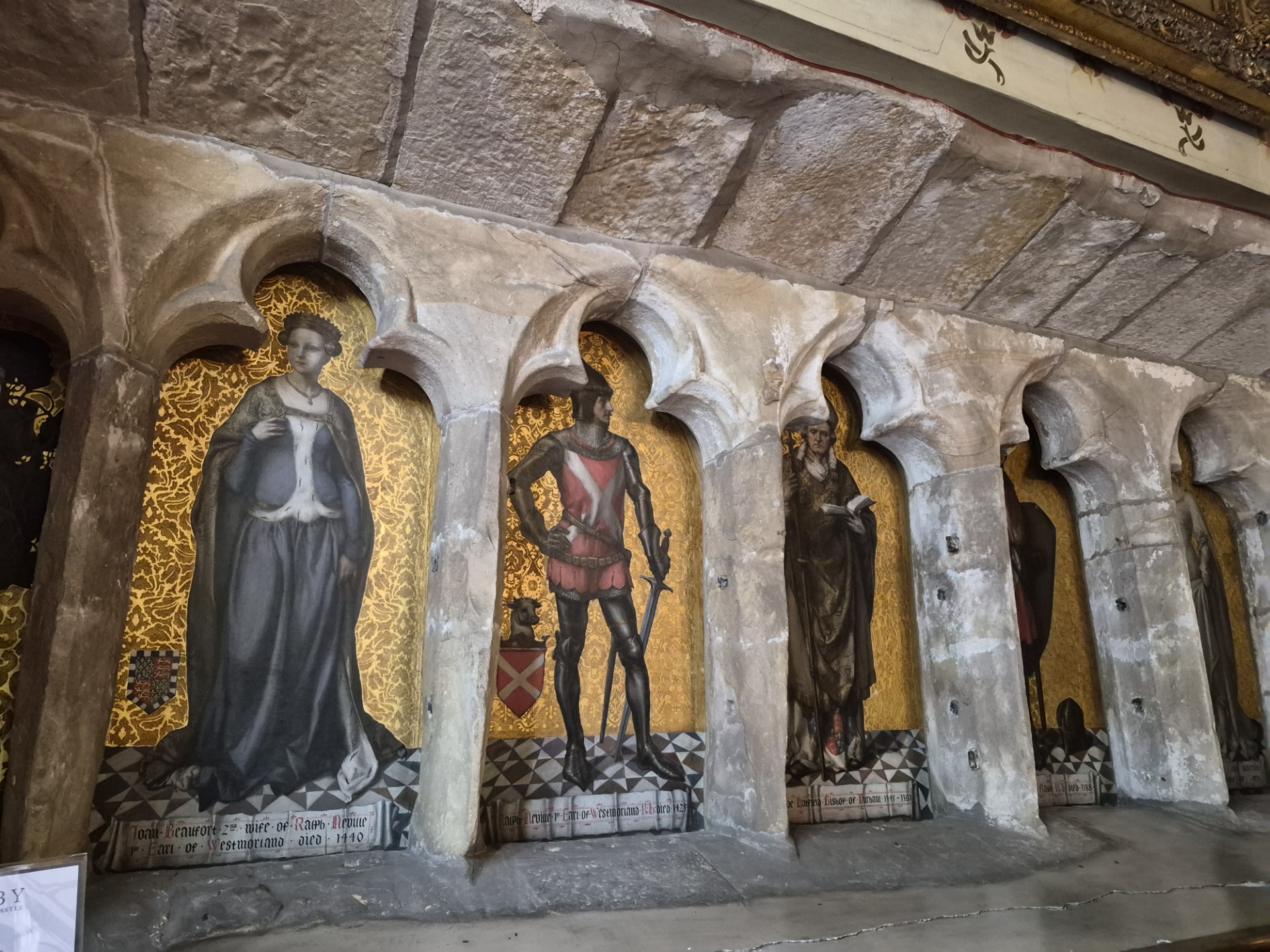
Paintings in the chapel of Raby Castle

In the morning, we were treated to a private tour of Raby Castle. the wonderful guide, Marian, answered questions, pointed out the must-see parts of the castle and took us ‘behind the scenes’ to see the room that had once been the bedroom of none other than Cecily Neville, Duchess of York and mother of Kings Edward IV and Richard III. The stunning chapel includes paintings of Cecily and her mother Joan Beaufort, daughter of John of Gaunt and Katherine Swynford.

After lunch, we had a short visit into Staindrop, to St Mary’s Church, where Joan’s husband, Ralph Neville, is buried alone, though in a triple tomb atop which lay the effigies of Ralph and both his first wife, Margaret Stafford, and Joan herself. And I got to tell the story of Joan, her marriages and children and the influence she had on the events of the 15th century.

It was then just a 15-minute drive up the road to Barnard Castle. But my joke about getting my eyes tested landed flat – only the driver got it.

Barnard Castle has links, of course, to the earls of Warwick and to Richard III but instead I indulged my love of Scottish History by telling our guests about John Balliol, Scotland’s king who was also lord of Barnard Castle. Which story, of course, led into Robert the Bruce, Elizabeth de Burgh, the women of Bruce‘s affinity imprisoned by Edward I as well as David II and Joan Makepeace and Scotland’s Wars of Independence.

History... the Interesting Bits
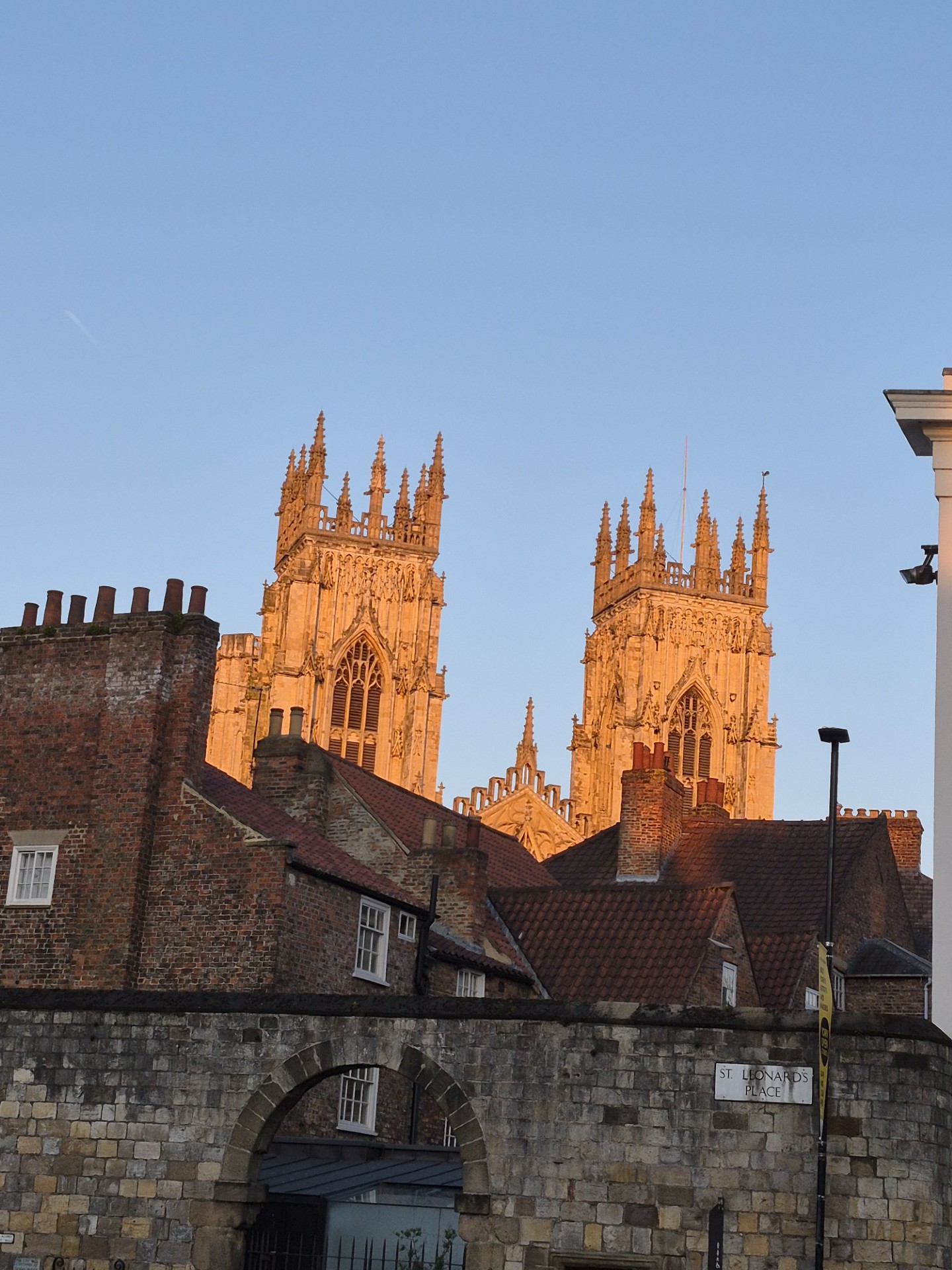
York Minster at sunset

I had definitely found my stride.

Dinner that evening was at a pub, the Guy Fawkes, in York and the next day we spent the morning in York Minster, where Edward III married Philippa of Hainault and where their baby son, William of Hatfield is buried. This was followed by a walk down the Shambles and a climb up Clifford’s Tower. The afternoon was free, so I joined a couple of the guests for lunch, followed by a wander around the Merchant Adventurers’ Hall and a visit to Jorvik Viking Centre.

After dinner in a quiet pub that evening, we took a wander to the Minster and saw the sunset on the River Ouse. The Minster bells were peeling. Indeed, the bells of all the churches in York were ringing to commemorate the centenary of the birth of Queen Elizabeth II.

We left York the next morning, heading for Lincoln.

But you cannot take international travelers to Yorkshire without taking them to our very own World Heritage Site, Fountains Abbey. The morning was spent in the peaceful surroundings of the abbey. Definitely a much-needed change of pace for a few hours. Though we did get into a little discussion about whether or not the story of Abelard and Heloise is a love story, or something more sinister…

History... the Interesting Bits
The view from my room in the White Hart Hotel, Lincoln

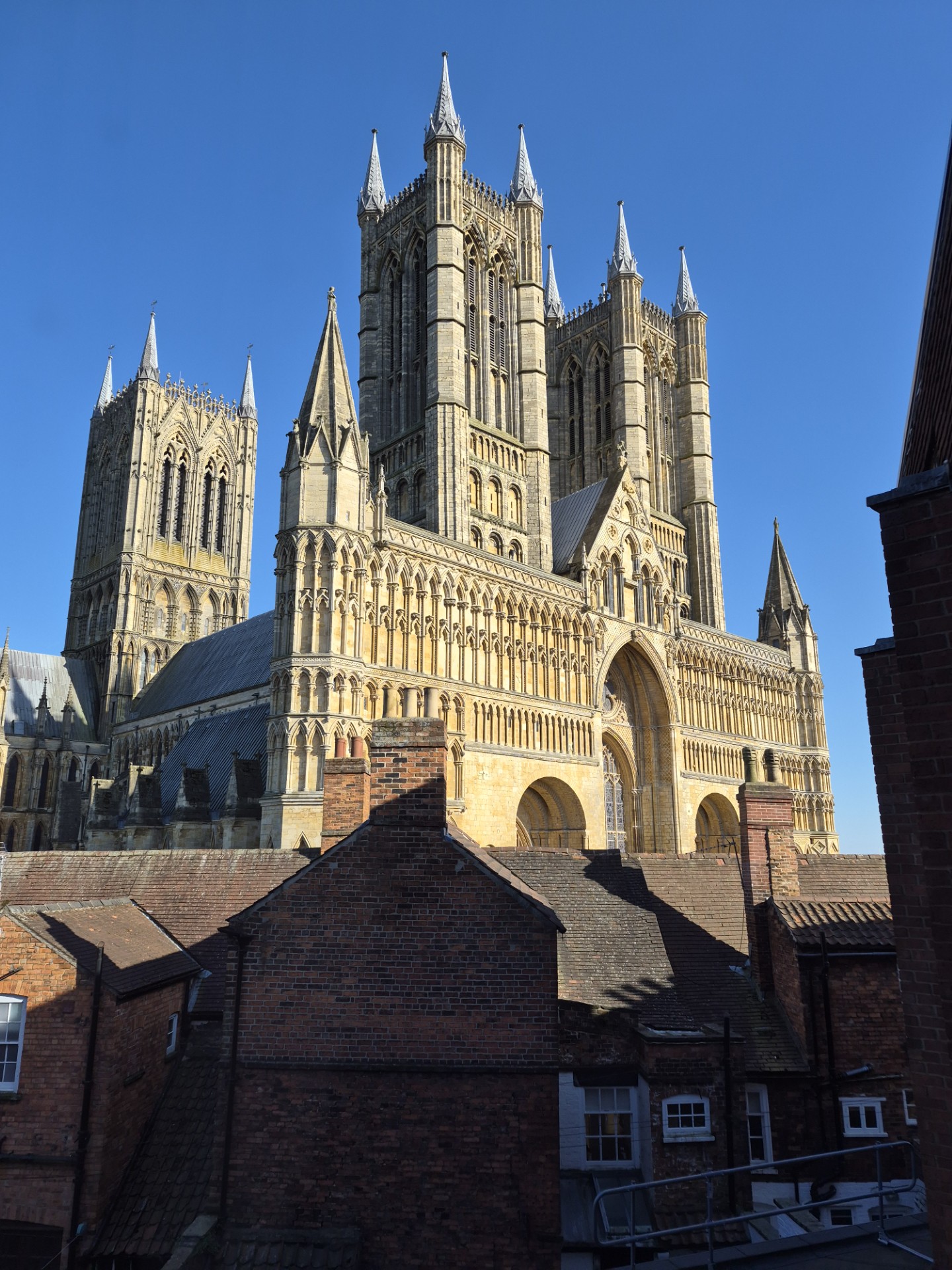
We arrived in Lincoln at 3.30 that afternoon and headed straight for the castle. Staying at the White Hart Hotel, situated between castle and cathedral, was perfect – my room even had a stunning view of the cathedral!

Now, we were on my home turf. We had already discussed Nicholaa de la Haye at Coombe Abbey, but now I could show everyone her castle. The staff at the castle were incredibly forthcoming about Magna Carta, the 1217 Battle of Lincoln and their visiting artefact – the Chronica Maiora of Matthew Paris which was opened at the image of the battle.

Another after dinner stroll took us around the cathedral close, a walk we repeated in daylight the following morning, so I could point out the statues of Eleanor of Castile, Edward I and Margaret of France, the gold crown to commemorate Elizabeth II and the two houses associated with Katherine Swynford.

One of the highlights of the whole tour was to be able to take the guests into Lincoln Cathedral and show them the tombs of Katherine and her daughter Joan. There was a graduation event going on, for the University of Lincoln, but that did not particularly hinder our visit. We could not access the nave but we could visit the Angel Choir, the chantry chapels and the shrine of St Hugh, as well as the cloisters, the Chapter House and the cathedral museum – I had to point out Nicholaa’s seal!

My final duty was to join everyone for lunch in the Magna Carta pub, which turned into an impromptu book launch celebration for Princesses of the Early Middle Ages, as I got my first sight of my new book. As the tour continued down to London, to visit Leeds Castle and Canterbury Cathedral on the Saturday, I said my goodbyes with hugs and a few tears – and instructions for each and everyone of them to get in touch the next time they are in England.

I slept for 12 hours that night.

I was exhausted. My throat was raw from all the talking. But I had had a fabulous time. I hope that my snippets of information throughout the tour – including texted instructions of what to look out for in Canterbury Cathedral – made the holiday experience that little bit better for the guests.

History... the Interesting Bits

Did I enjoy it? Most definitely!
Would I do it again? In a heartbeat!
Would I recommend the tour to anyone wanting to discover England’s rich history? Oh yes!

Do check out the website of Plantagenet Discoveries and have a look at the tours on offer.

*

My Books:

Signed, dedicated copies of all my books are available through my online bookshop. or by contacting me.

Out Now: Princesses of the Early Middle Ages

History... the Interesting Bits

Daughters of kings were often used to seal treaty alliances and forge peace with England’s enemies. Princesses of the Early Middle Ages: Royal Daughters of the Conquest explores the lives of these young women, how they followed the stereotype, and how they sometimes managed to escape it. It will look at the world they lived in, and how their lives and marriages were affected by political necessity and the events of the time. Princesses of the Early Middle Ages will also examine how these girls, who were often political pawns, were able to control their own lives and fates. Whilst they were expected to obey their parents in their marriage choices, several princesses were able to exert their own influence on these choices, with some outright refusing the husbands offered to them.

Their stories are touching, inspiring and, at times, heartbreaking.

Princesses of the Early Middle Ages: Royal Daughters of the Conquest is now available from Pen & Sword and Amazon.

Sharon is the author of:

History... the Interesting Bits

Heroines of the Medieval World; Silk and the Sword: The Women of the Norman Conquest; Ladies of Magna Carta: Women of Influence in Thirteenth Century England; Defenders of the Norman Crown: Rise and Fall of the Warenne Earls of Surrey; King John’s Right Hand Lady: The Story of Nicholaa de la Haye; Women of the Anarchy; Heroines of the Tudor World; Scotland’s Medieval Queens: From St Margaret to Margaret of Denmark; Princesses of the Early Middle Ages: Royal Daughters of the Conquest (March 2026); Princesses of the Later Middle Ages; Royal Daughters of the Plantagenets (August 2026)

All my books on AmazonBookshop.org . You can also order direct from my publishers, Pen and Sword Books and Amberley Publishing.

Podcast:

History...the Interesting Bits

Have a listen to the A Slice of Medieval podcast, which I co-host with Historical fiction novelist Derek Birks. Derek and I welcome guests, such as Ian Mortimer, Bernard Cornwell, Elizabeth Chadwick and Scott Mariani, and discuss a wide range of topics in medieval history, from significant events to the personalities involved. 

Every episode is also now available on YouTube.

*

Royal Historical Society

Don’t forget! Signed and dedicated copies of all my books are available through my online bookshop.

For forthcoming online and in-person talks, please check out my Events Page.

You can be the first to read new articles by clicking the ‘Follow’ button, liking our Facebook page or joining me on Twitter and Instagram.

©2026 Sharon Bennett Connolly FRHistS