Simon de Montfort was a third son, whose prospects would have appeared bleak during his younger years; a younger son could expect to inherit little and had to make his own way in the world. An opportunity arose for him through his father’s claim to the earldom of Leicester, via his mother, Amicia de Beaumont. The continuing hostilities between England and France in the early years of the 13th century meant that Simon’s father was never able to take possession of this inheritance. When the senior Simon de Montfort had died in 1218, he was succeeded by his eldest son, Amaury, who then transferred his claims to the earldom of Leicester to his younger brother, Simon, who in turn then departed for England to claim his inheritance and make his fortune.
Simon was able to gain control of his family’s portion of the Leicester lands, although he was not able to obtain the earldom that went with them. In 1231, he did homage to Henry III for those lands, and he continued to rise through the ranks of the court throughout the 1230s. From 1234 he attended meetings of the great council, pursued diplomacy with Scotland and Wales, and acted as steward – a post traditionally held by the earls of Leicester – at Henry III’s wedding to Eleanor of Provence in 1234, although the earldom had still not been conferred on him.
Simon did make enemies, however; his closeness to Henry and the fact he was a foreigner did not endear him to his fellow nobles.
At some point after the mid-1230s, possibly at the wedding of Henry and Eleanor of Provence, Simon met the king’s youngest sister, Eleanor, and the couple fell in love. Eleanor was the widow of William Marshal, second Earl of Pembroke and had taken a vow of chastity on Marshal’s death in 1231. With the king’s permission, they married in January 1238, in a secret ceremony in Henry’s private chapel; Matthew Paris called it a ‘matrimonium clandestinum’, a clandestine marriage. Due to Eleanor’s vow of chastity, and the fact that Simon was a foreigner and a minor noble, and Eleanor a princess, secrecy was essential. Simon and Eleanor’s first child, a son named Henry, was born in November 1238; ten months after the wedding. And in the spring of 1239, Simon was confirmed as Earl of Leicester.
The marriage was to be the spark that would end Henry and Simon’s friendship, and in August 1239, at the churching of Eleanor of Provence, following the birth of Lord Edward, the king’s eldest son and heir, Henry turned on his brother-in-law. He accused Simon of seducing his sister and defiling her before their marriage; apparently Simon and Eleanor had intimated that Eleanor was pregnant in order to persuade Henry to sanction their marriage. Little Henry de Montfort’s arrival a full 10 months after the wedding being evidence that someone had played the king for a fool. Henry also charged Simon with bribing the Pope and using the crown as surety for his debts without the king’s permission.
Due to Eleanor’s vow of chastity, Simon had been prevailed upon to journey to Rome in March 1238, to seek a papal dispensation for the marriage. He had borrowed a large amount of money during his trip from the queen’s uncle, Thomas of Savoy, Count of Flanders, giving the king’s name as security. The king only discovered this when Thomas could not recover the money from Simon, and so approached Henry and asked for his money back. With further borrowing and accumulated interest, by this point, the initial £200 debt now amounted to £1,400.
Henry flew into a rage.
He forbade Simon and a pregnant Eleanor from attending the queen’s churching ceremony and the stunned couple had to flee London, taking a ship to France; so hasty was their departure that they were forced to leave their son behind, with his wet-nurse. Robert Grosseteste, Bishop of Lincoln and a friend of Simon’s, intervened on his behalf with the king and Simon was able to return to England in 1240, ostensibly to raise funds to go on Crusade and to collect his eldest son. Simon and Eleanor were only fully restored to favour on Simon’s return from the Barons’ Crusade in 1242. In the same year, Simon campaigned in Poitou, and between 1248 and 1252 he was in Gascony, acting as Henry’s seneschal. In the four years that Simon was abroad, Eleanor visited him in 1249–50, 1251 and 1253. Simon’s financial worries were gathering pace, with his Leicester lands being insufficient to support his growing family and his wife’s Marshal dower only being paid sporadically. To make matters worse, in 1252, Henry called Simon to Westminster to answer charges of brutal high-handedness in Gascony. Henry was thwarted by baronial support for Simon, who countered with arguments that Henry had contravened the terms of his commission and failed to support Simon financially.
Eleanor accompanied Simon on his visits to Paris, during the negotiations with Louis IX over Gascony. The arguments concerning Eleanor’s Marshal dower found their way into the discussions as the treaty included Henry’s sisters renouncing their claims to the former Plantagenet lands in France. Eleanor initially refused to do so until her dower was formally settled, and the French king and queen offered to act as mediators. In the end, a payment of 15,000 marks, due to Henry through the treaty, was set aside to act as a pledge for the future settlement of Eleanor’s dower.
The barons confronting Henry III at the Oxford Parliament
Growing baronial tensions led to Henry III agreeing to the Provisions of Oxford in 1258. Adopted during the Parliament at Oxford, the Provisions were a series of reforms aimed at making the royal court more efficient, with a council of 15 chosen to advise and supervise the king. The reforms created and regulated the officers of state, such as reviving the office of Justiciar, and limited the terms in office. They also stipulated that parliaments were to be held 3 times a year. However, in May 1261 papal bulls, issued by Alexander IV, arrived in England, absolving the king, queen and the realm of their oaths to adhere to the Provisions. Henry published the bulls at Winchester in early June. By the end of the year, resistance had collapsed and the king’s opponents were pardoned for their actions, and Simon de Montfort took his wife and children and left for the Continent.
Simon returned to England in April 1263. As relations between the king and the barons caused tensions, Simon emerged as the leader in the baronial opposition to Henry III’s ‘naïve foreign policies and his disastrous handling of domestic affairs’.1
Meeting at Oxford, the rebel barons insisted on the enforcement of the Provisions of Oxford of 1258. Many of the barons had grievances to work through. There were violent clashes when Montfort’s army attacked royalists and occupied the Welsh Marches. In May 1263 Montfort summoned his supporters to Worcester and told them to come armed for war. The king was in dire straits; his Savoyard allies were pursued and violated. The queen’s barge was attacked, pelted with mud, rotten eggs and stones, as it approached London Bridge, and the king was isolated in the Tower of London, surrounded by a hostile mob. Eleanor of Provence was eventually able to reunite with the king in the Tower, but the experience had shaken her.
On 15 July, Simon de Montfort’s army entered London, with Montfort appearing at the Tower the next day to ask for Henry’s submission; Henry had little choice but to agree. The king then rode with Simon to Windsor, where Lord Edward, who had been sympathetic to Simon but was now firmly on the side of his father, was continuing his resistance. The young prince relinquished the castle, if a little ungraciously, without a fight.
Simon de Montfort, Earl of Leicester and the king’s brother-in-law, now had control of the ministries of state and the royal castles of England.
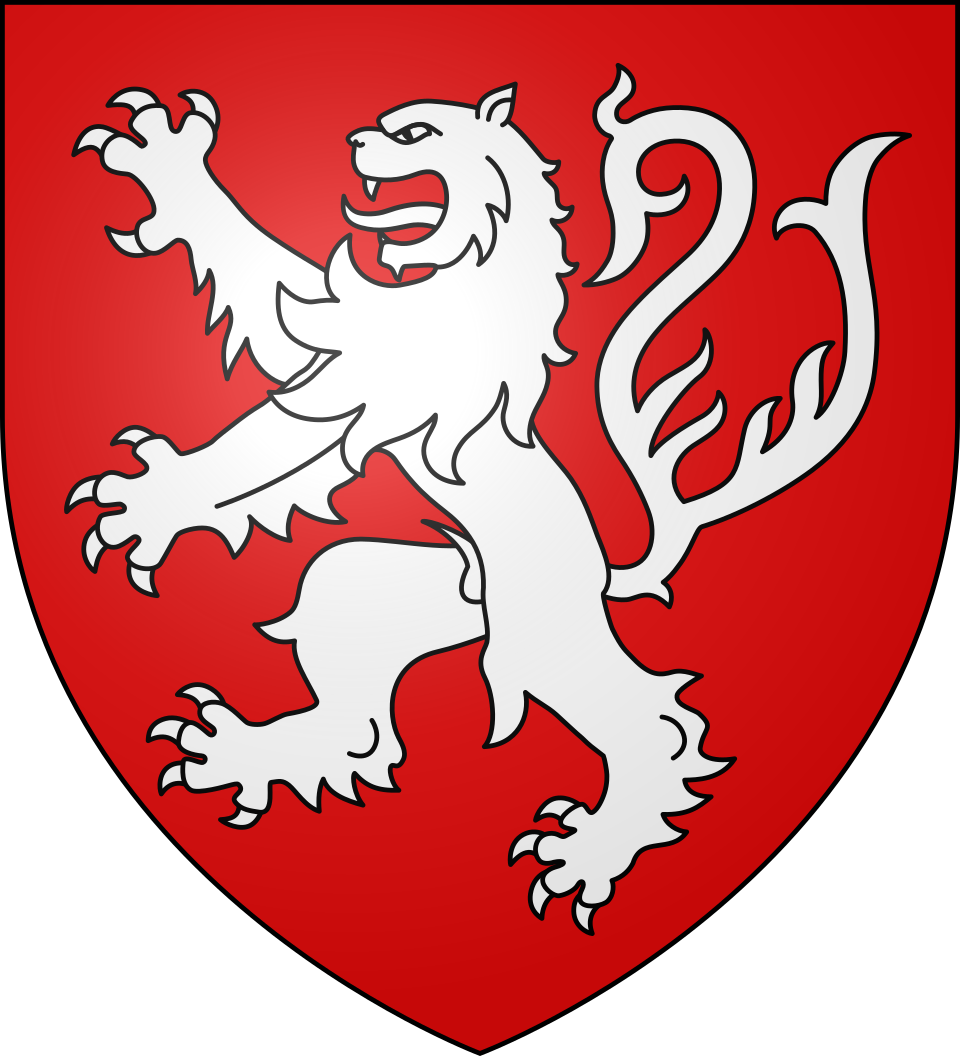
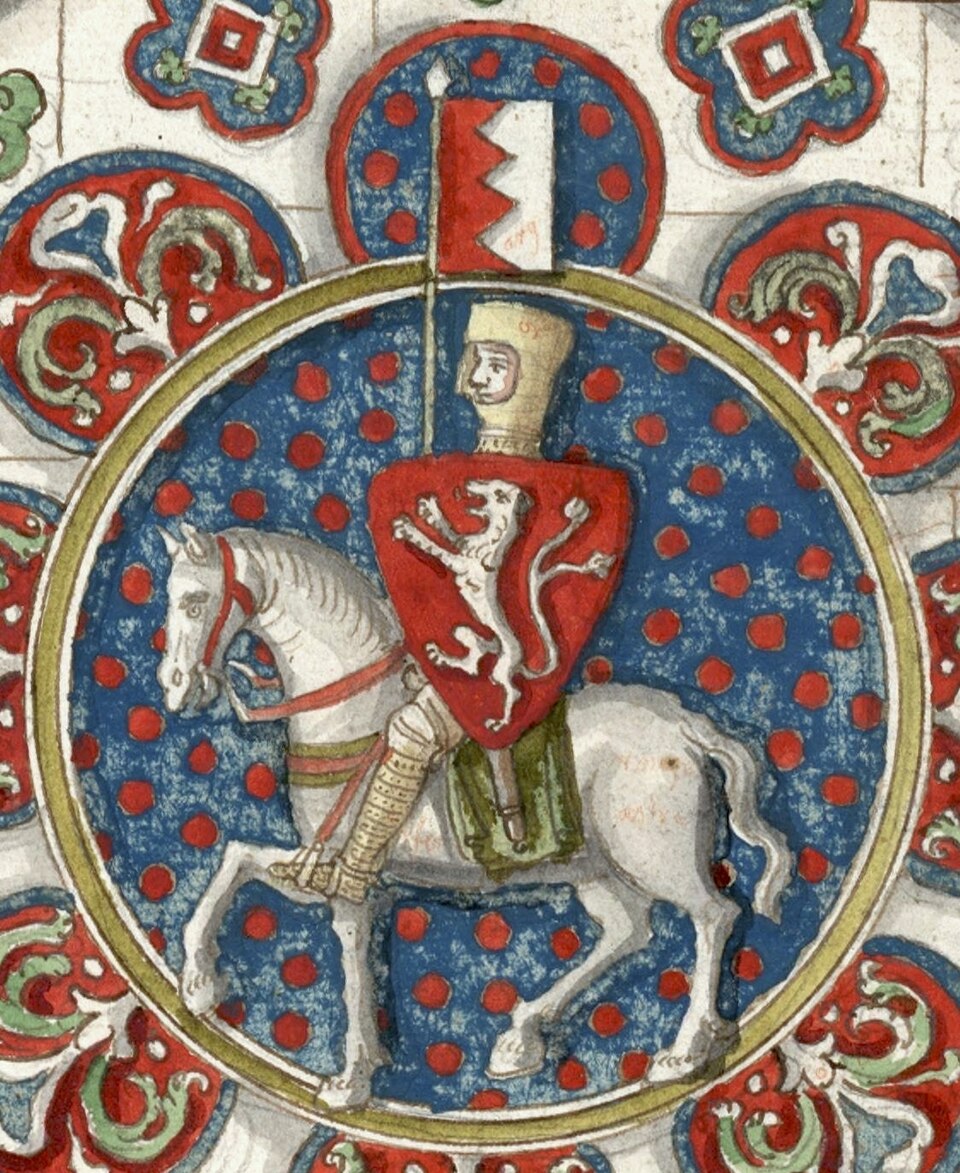
Simon de Montfort, Earl of Leicester
But attempts to control the king failed. Simon became the baronial leader as they rose up in revolt and the Second Barons’ War broke out. Rochester Castle was besieged by Simon de Montfort between 19 and 26 April 1264, but Montfort was forced to withdraw to London when the royalist army arrived to relieve the castle. The king proceeded to secure the submission of the Channel ports. Simon de Montfort, with reinforcements from his son Henry and the London irregulars, marched out of London and headed south, hoping to bring the king’s forces to battle.
The two armies came face to face at Lewes in Sussex; Edward’s troops were billeted in the castle while Henry’s forces were camped further south, around St Pancras Priory. On 13 May 1264, Simon de Montfort and his men formally withdrew their homage to the king, and on the morning of 14 May, the two armies arrayed themselves for battle, with Henry having the larger force, but Simon having the higher ground. Eager for battle, Edward took the field in advance of Henry and charged the left of the baronial line, comprised of the raw troops recruited in London, before the rest of the royal army was ready.
Inevitably, in the face of such a ferocious attack, the Londoners broke and fled, Edward and his cavalry hot on their heels. Henry was left with no option but to hurry to the attack, climbing the hill to engage Simon’s centre. The royal left, led by the king’s brother, Richard of Cornwall, engaged Simon de Montfort’s right but, faced with stiff opposition, were pushed back down the hill. Despite attacking uphill, Henry’s division held its own in the centre, until Simon sent in his reserve to tip the balance in the barons’ favour. Simon’s troops pursued the royalist forces into the town of Lewes, with Henry only just able to disentangle himself from the street fighting and seek shelter in the priory. By the time Edward and his cavalry returned to the field, the battle was lost. Edward tried to rally his forces for a fresh offensive, but his leading barons thwarted his efforts by riding from the field.
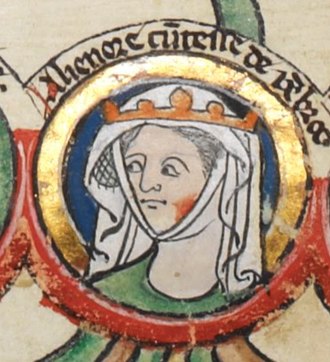
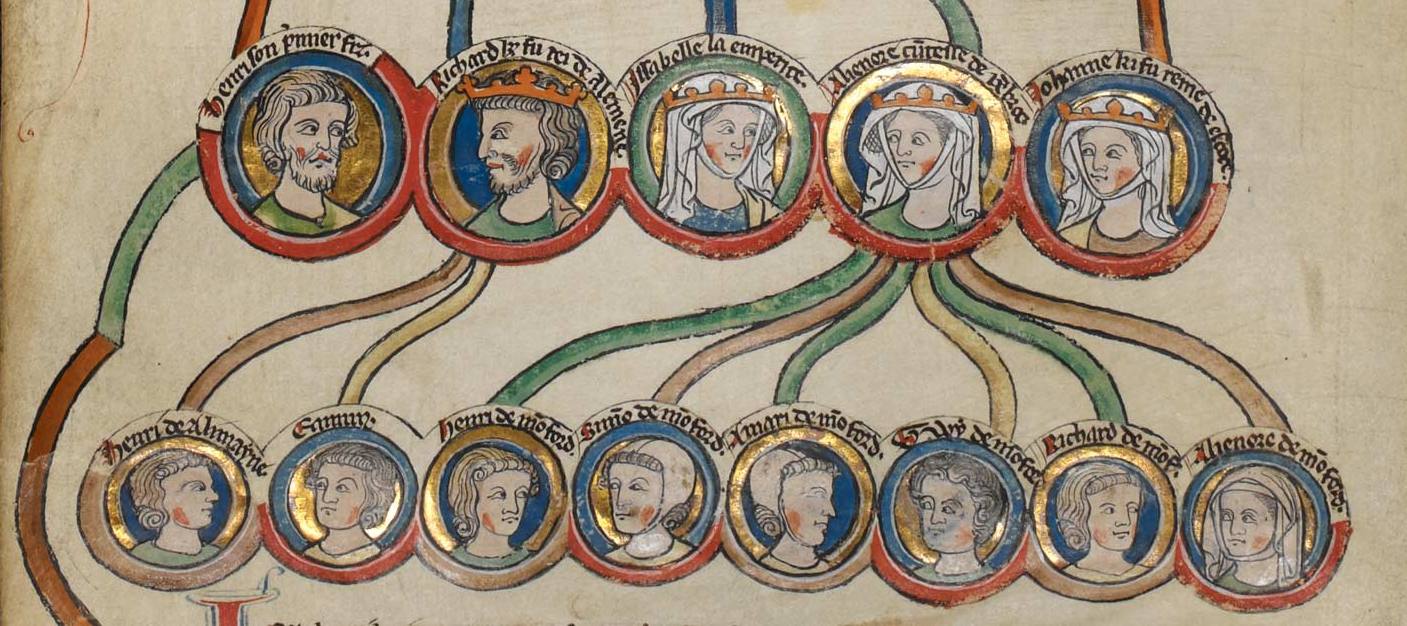
Eleanor de Montfort and children
Instead of pulling back and regrouping, Edward chose to fight his way to his father, who had set up a defensive perimeter at the priory. Father and son were trapped; the next day they agreed to surrender.
The king was now firmly in Simon de Montfort’s control, little more than a figurehead with Edward held hostage for his father’s good behaviour. The heir to the throne was held under guard, first residing with Eleanor and later with her son, Henry de Montfort. Simon de Montfort was now the effective ruler of England, with Eleanor acting in support of her husband, hosting his allies at her castles at Wallingford and Odiham, corresponding with them and sending gifts.2
The king was forced to pardon the rebel barons and reinstate the Provisions of Oxford. De Montfort established a government based on the Provisions of Oxford and in 1265 called the Great Parliament, at which towns were asked to send their own representatives for the first time, in addition to the usual attendance of the barons and knights of the shires. This act earned for Simon recognition as the founder of the House of Commons.
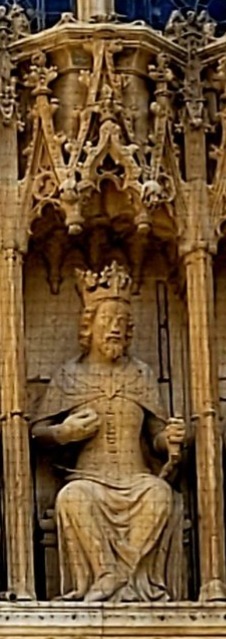
Henry III from the Gallery of Kings, Lincoln Cathedral
Simon’s victory was short-lived. Henry’s wife, Eleanor of Provence, was already in France trying to gain support for his husband’s cause. She met with the lords who had escaped the battlefield at Lewes and learned of the disastrous battle. After advising the queen to gather a force for invasion, the exiled lords appealed to the King of France for aid for their cause. They returned to England at Whitsuntide in 1265, under the leadership of William de Valence, Earl of Pembroke, and John de Warenne, Earl of Surrey, ‘with a power of crossebowes and other men of warre’.3 He landed with a force of 120 men, both cavalry and infantry.
While King Henry was in the custody of Simon, Edward was under the supervision of his aunt, Eleanor. On 28 May, at Hereford, Edward escaped his captors, slipping his guard while out riding, and rendezvoused with William de Valence. Under Edward’s leadership, they attacked several towns in the Welsh Marches and on the night of 1–2 August, having ridden through the night from Worcester, launched a surprise attack on Kenilworth Castle, Simon de Montfort’s home. They captured a good number of Simon’s noble commanders, men and equipment, but the earl’s son, the younger Simon de Montfort, managed to escape with a sizeable force.
Edward faced Simon de Montfort at the Battle of Evesham on 4 August 1265. The battle effectively ended Simon de Montfort’s rebellion, with only small pockets of resistance holding out afterwards.
On the morning of the battle, Edward appeared on the high ground, north of the town of Evesham. Mistaken in the belief that the royal army was a contingent of reinforcements being brought up by the younger Simon de Montfort, the Earl of Leicester was taken by surprise. Still in Simon de Montfort’s custody, Henry had been brought to the battlefield. As soon as the king saw Edward, he abandoned Simon de Montfort, fighting meanwhile breaking out on all sides. Henry, who was wearing borrowed armour, was almost killed by Edward’s forces during the fighting before they recognised the king and escorted him to safety.
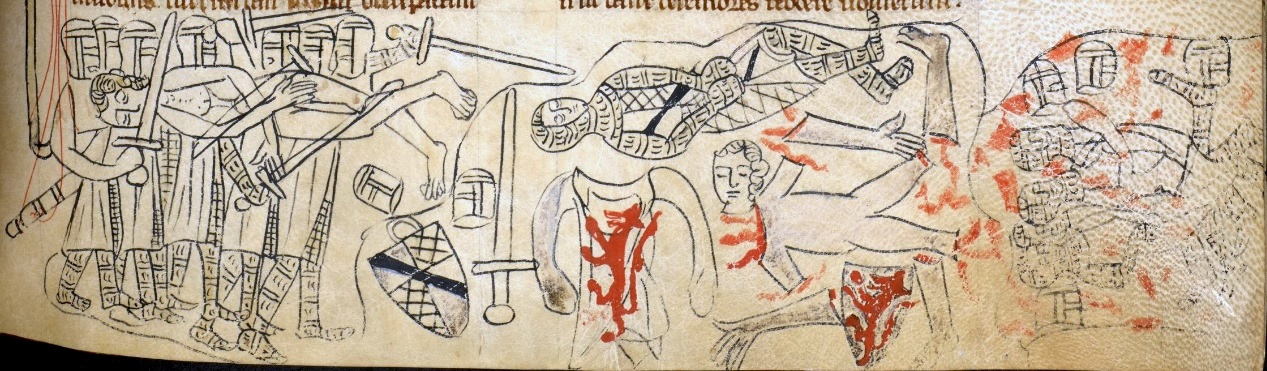
Medieval manuscript showing Simon’s mutilated body after the Battle of Evesham
The battle was a slaughter. Edward had decided that Simon de Montfort had to die and assigned men to the job of seeking out the rebel leader, dispatching him, and gruesomely mutilating him afterwards. Simon’s oldest son, Henry, was also killed in the fighting.
Eleanor had been staying at Odiham but had left for Dover as the tide turned against her family. It was at Dover Castle that Eleanor heard the news of her husband’s death and defeat. She withdrew into seclusion for ten days, to mourn her husband and son, but when she reappeared she was ready to take charge again. Rather than running for the Continent, she settled down to defend the castle. Her son, Simon, was holding Eleanor’s brother, Richard, at Kenilworth and only released him on condition that he would protect Eleanor’s interests; Henry, however, was in no mood to be compassionate towards his sister.
He wanted to disinherit and banish Eleanor.
The younger Simon then fled north, continuing the insurgence in the Isle of Axeholme in Lincolnshire, which had been a hotbed for rebellion during the First Barons’ War against King John. Edward took Dover in October 1265, allowing Eleanor a dignified retreat into exile, taking her daughter, Eleanor, with her.
Eleanor retired to the Domincan convent of Montargis, founded by her sister-in-law, Amicia de Montfort. In 1267 she was granted an annual payment of £500 from the English Exchequer, providing she remained in exile, thanks to the intervention of Louis IX, King of France. Edward I confirmed this soon after his accession; he had met his aunt on his way home from crusade in 1273 and loaning her £200, he wrote to his chancellor, saying that he had admitted her to his ‘grace and peace.’4 Edward and Eleanor were eventually reconciled, with the help of Marguerite, Queen of France and sister of Edward’s mother, Eleanor of Provence, who wrote to the new English king:
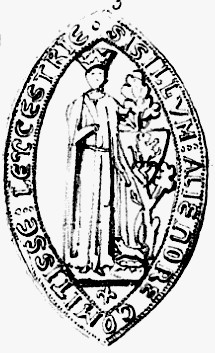
Seal of Eleanor, Countess of Pembroke and Leicester
‘To the very high and very noble prince, our very dear nephew, Edward, by the grace of God king of England, Marguerite, by the same grace queen of France, greetings and true love. Dear nephew, the countess of Leicester entreated us and asks that we entreat you to have pity on her and her will, and asked us also that we entreat for Amaury, her son the cleric, that you have pity on him and do right by him and render him your favour. And since we promised her that we would do it, we entreat for … things, and we entreat you also that you would act and command that the need that involves the will of said lady … and delivered as right, usage and custom of the country might give. And … as to the cleric, that there be honour and good, so much that God, and I, may be grateful to you, and that you cannot be blamed. And of these things … your will …, if it please you, the Monday before the feast of St Denis.’5
Eleanor had been a strong-willed, independent woman. Her seal depicted her as countess on one side and sister of the king on the other.She was involved in the governance of her estates and in disputes with lords over customs and property. She held wardships in her English manors and issued charters in her own name. She was a benevolent mistress, procuring grants and pardons for the men and women in her service. She supported Simon in his rebellion and was entrusted with the custody of her nephews, Edward and Henry (the son of Richard of Cornwall) after the Battle of Lewes. After Simon de Montfort’s defeat and death at Evesham, Eleanor continued to support her surviving sons, providing money for them to pay their soldiers and sending two of them to France with 11,000 marks in their possession. She negotiated the surrender of Dover Castle to Lord Edward, her safe passage to France and the safety of her people left behind in England.
In her French exile, Eleanor had the company of her only daughter, Eleanor de Montfort, who was probably born in 1258, at Kenilworth Castle. On her father’s death, Eleanor had fled into exile in France with her mother and brothers. Her brothers continued to Italy, where Guy and Simon would seek knightly employment, while Amaury studied medicine and theology at the university in Padua. The two Eleanors remained settled at the abbey at Montargis, until the elder Eleanor’s death there before 3 June 1275, with her daughter Eleanor and her son Amaury by her side. Eleanor, Countess of Pembroke and Leicester and a princess of England, was buried at the abbey which had been her home for the last ten years of her life.
Notes:
1. Louise Wilkinson (ed. and trans.), The Household Roll of Eleanor de Montfort; 2. ibid; 3. Holinshed quoted in Darren Baker, The Two Eleanors of Henry III: The Lives of Eleanor of Provence and Eleanor de Montfort; 4. Darren Baker, With All For All: The Life of Simon de Montfort; Royal Letters, Tower Collection #1125, quoted in Epistolae, ‘Eleanor of England’.
Sources:
Louise Wilkinson (ed. and trans.), The Household Roll of Eleanor de Montfort; Epistolae; Darren Baker, The Two Eleanors of Henry III: The Lives of Eleanor of Provence and Eleanor de Montfort; 4. Darren Baker, With All For All: The Life of Simon de Montfort; Rich Price, King John’s Letters Facebook group; Robert Bartlett England Under the Norman and Angevin Kings 1075-1225; Dan Jones The Plantagenets; the Kings who Made England; The Plantagenet Chronicle Edited by Elizabeth Hallam; Maurice Ashley The Life and Times of King John; Roy Strong, The Story of Britain; Oxford Companion to British History; Mike Ashley British Kings & Queens; David Williamson Brewer’s British Royalty; Ralph of Diceto, Images of History; Marc Morris, King John; Oxforddnb.com; Thomas Asbridge, The Greatest Knight; finerollshenry3.org.uk; Elizabeth Norton, She Wolves: The Notorious Queens of England; Moniek Bloks (ed.) ‘Eleanor of Leicester: A Broken Vow of Chastity’ (article), historyofroyalwomen.com; David Carpenter, Henry III: The Rise to Power and Personal Rule 1207-125; Mary Anne Everett Green, Lives of the Princesses of England from the Norman Conquest; Matthew Lewis, Henry III: the Son of Magna Carta; Anne Crawford (ed. and trans.), Letters of Medieval Women
Out now: Princesses of the Early Middle Ages: Royal Daughters of the Conquest
‘My daughter wanted me to treat her more like a princess. So, I married her to a stranger to strengthen the alliance with Poland!’
Princesses of the Early Middle Ages: Royal Daughters of the Conquest and Princesses of the Later Middle Ages: Royal Daughters of the Plantagenets tell the stories of England’s royal daughters from 1066 to the rise of the Tudors, from the last Anglo-Saxon princesses to the fall of the House of York.
Were they really pampered pawns sent off to marriages on the Continent, out of sight and out of mind?
Perhaps, there was different story, where a foreign marriage does not mean eternal exile, but a purpose in life, where a princess is a diplomat, an ambassador for England in her new country.
Where she is the bond between allies – most of the time.
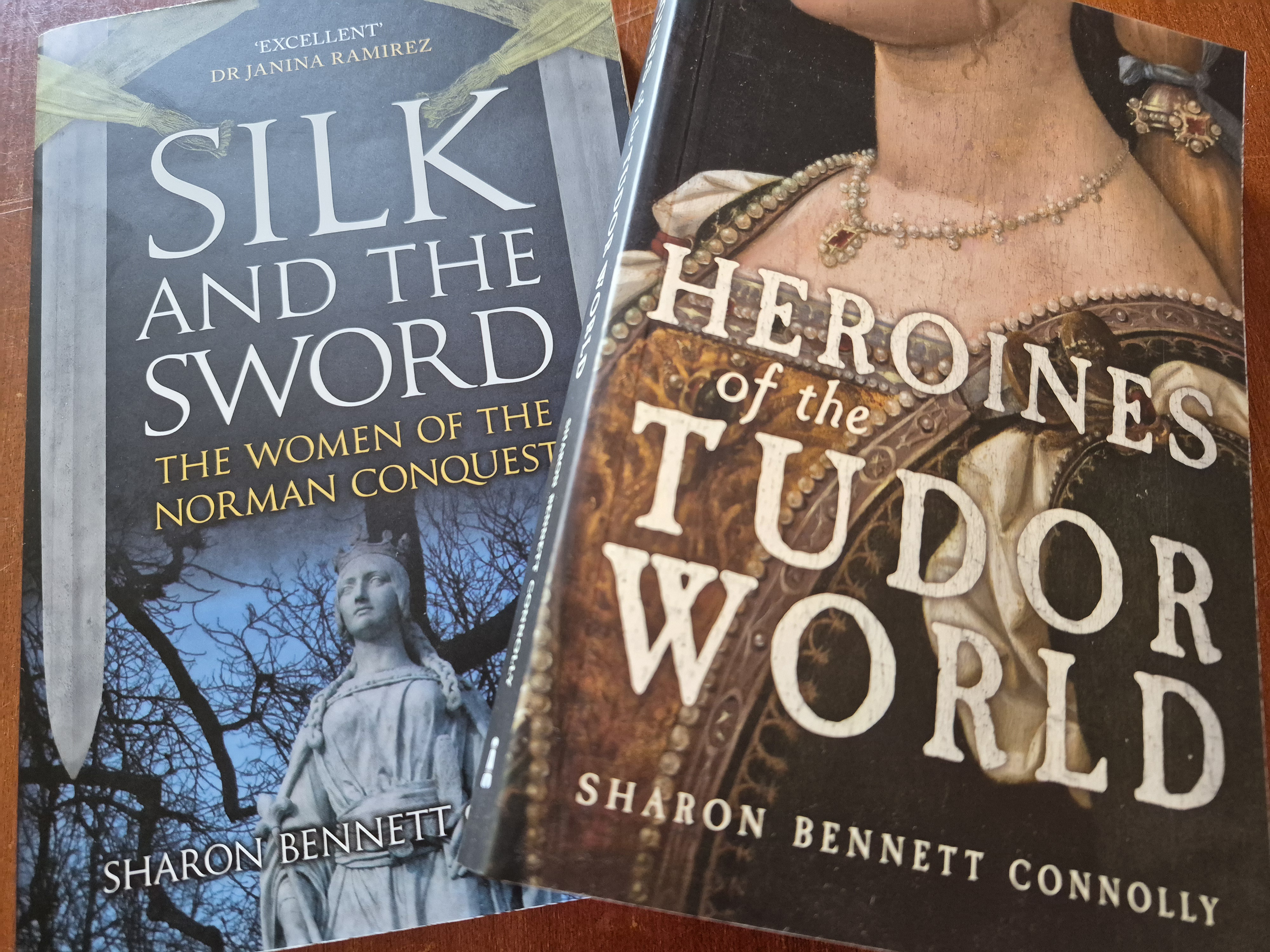
OUT NOW! The momentous events of 1066, the story of invasion, battle and conquest, are well known. But what of the women? Silk and the Sword: The Women of the Norman Conquest traces the fortunes of the women who had a significant role to play during the Norman Conquest – wives, lovers, sisters, mothers, leaders. These are lives full of drama, pathos and sometimes mystery: Edith and Gytha searching the battlefield of Hastings for the body of Harold, his lover and mother united in their grief for the fallen king. Who was Ælfgyva, the lady of the Bayeux Tapestry, portrayed with a naked man at her feet?
Janina Ramirez said it’s ‘Excellent’!
COMING 15 July 2026: Heroines of the Tudor World focuses on the women who lived through the Renaissance and Reformation, examining the threats and challenges they faced and how they overcame them. These are the women who ruled, the women who founded dynasties, the women who fought for religious freedom, their families and love. These are the women who made a difference, who influenced countries, kings and the Reformation.
Derek Birks: ‘An excellent account of the changing roles of women in Tudor society.’
Annie Whitehead: ‘What a treat this book was to read. Bennett Connolly has an easy, conversation style of writing which welcomes you from the opening pages and draws you into her story.‘
Also by Sharon Bennett Connolly:
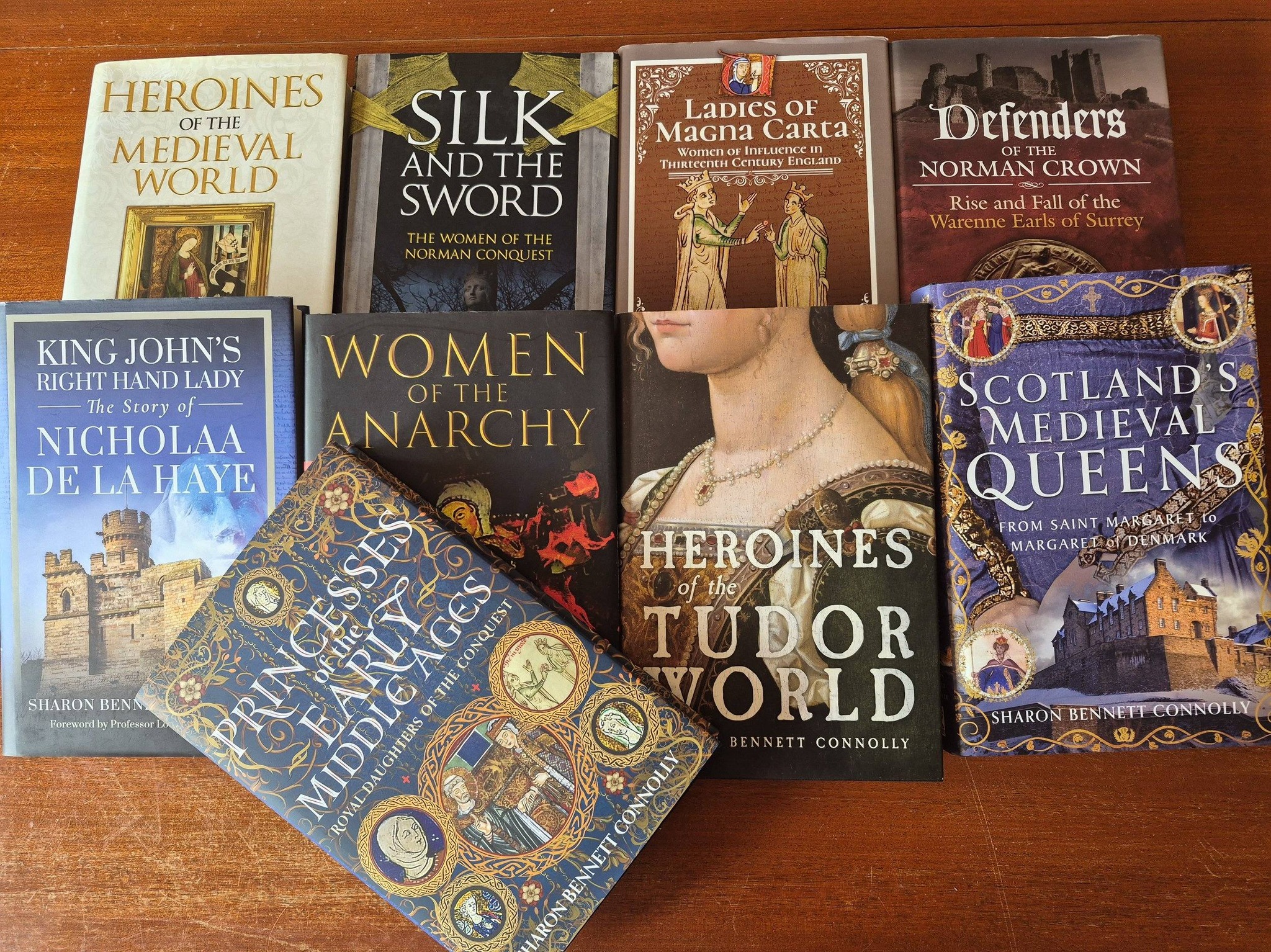
Heroines of the Medieval World; Silk and the Sword: The Women of the Norman Conquest; Ladies of Magna Carta: Women of Influence in Thirteenth Century England; Defenders of the Norman Crown: Rise and Fall of the Warenne Earls of Surrey; King John’s Right Hand Lady: The Story of Nicholaa de la Haye; Women of the Anarchy; Heroines of the Tudor World; Scotland’s Medieval Queens: From St Margaret to Margaret of Denmark; Princesses of the Early Middle Ages: Royal Daughters of the Conquest (March 2026); Princesses of the Later Middle Ages; Royal Daughters of the Plantagenets (August 2026)
Alternate Endings: An anthology of historical fiction short stories including Long Live the King… which is my take what might have happened had King John not died in October 1216. Available in paperback and kindle from Amazon.
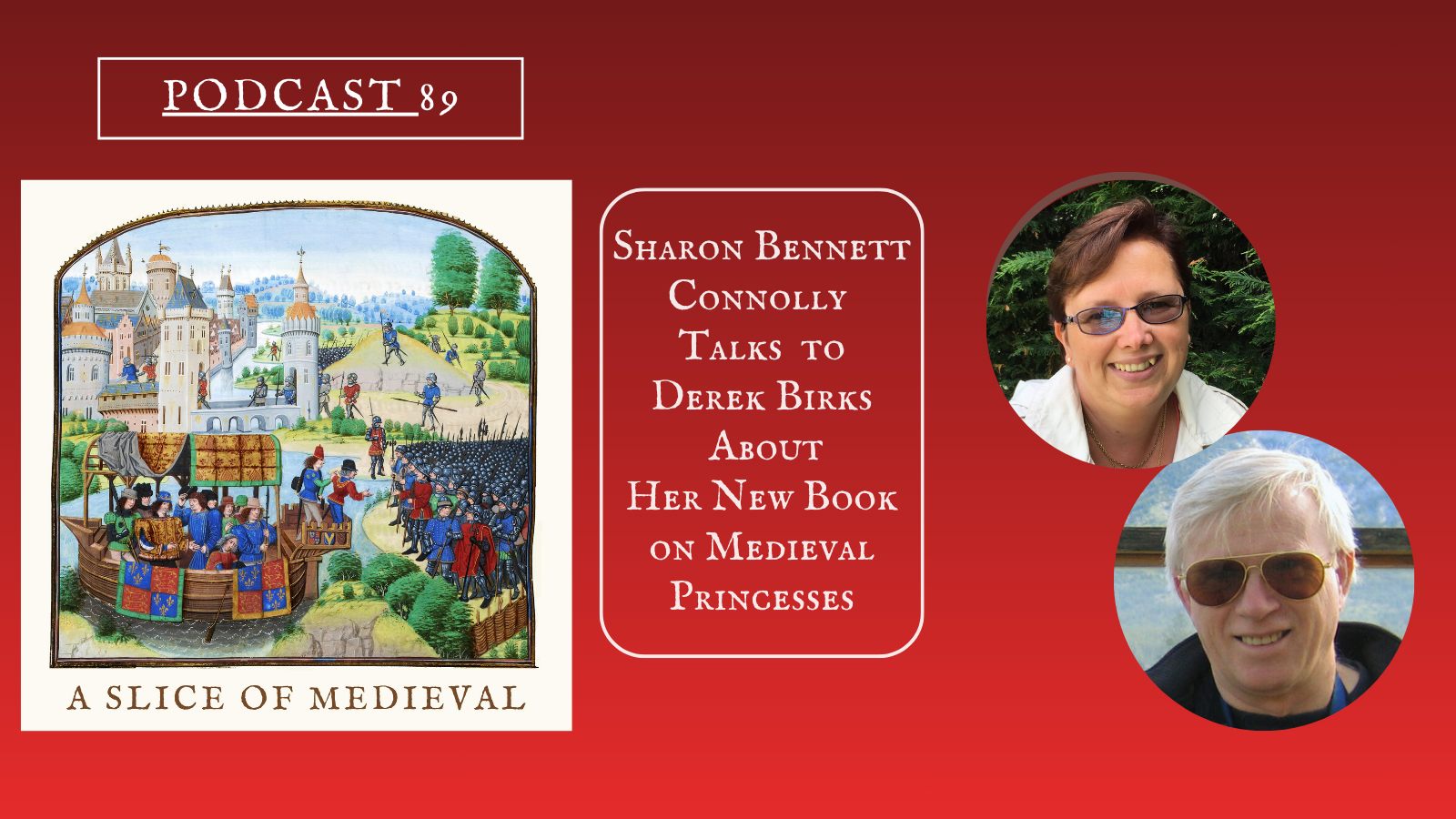
Have a listen to theA Slice of Medieval podcast, which I co-host with Historical fiction novelist Derek Birks. Derek and I welcome guests, such as Ian Mortimer, Bernard Cornwell, Elizabeth Chadwick and Scott Mariani, and discuss a wide range of topics in medieval history, from significant events to the personalities involved.




One thought on “Love and Rebellion: Eleanor and Simon de Montfort”