Nicholaa: The Woman Who Saved England

Books by Sharon Bennett Connolly
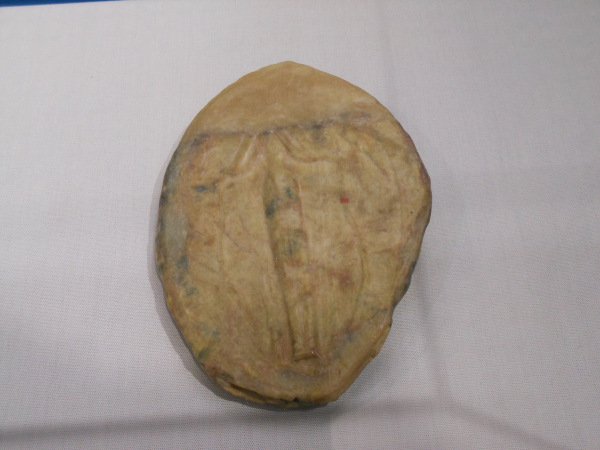
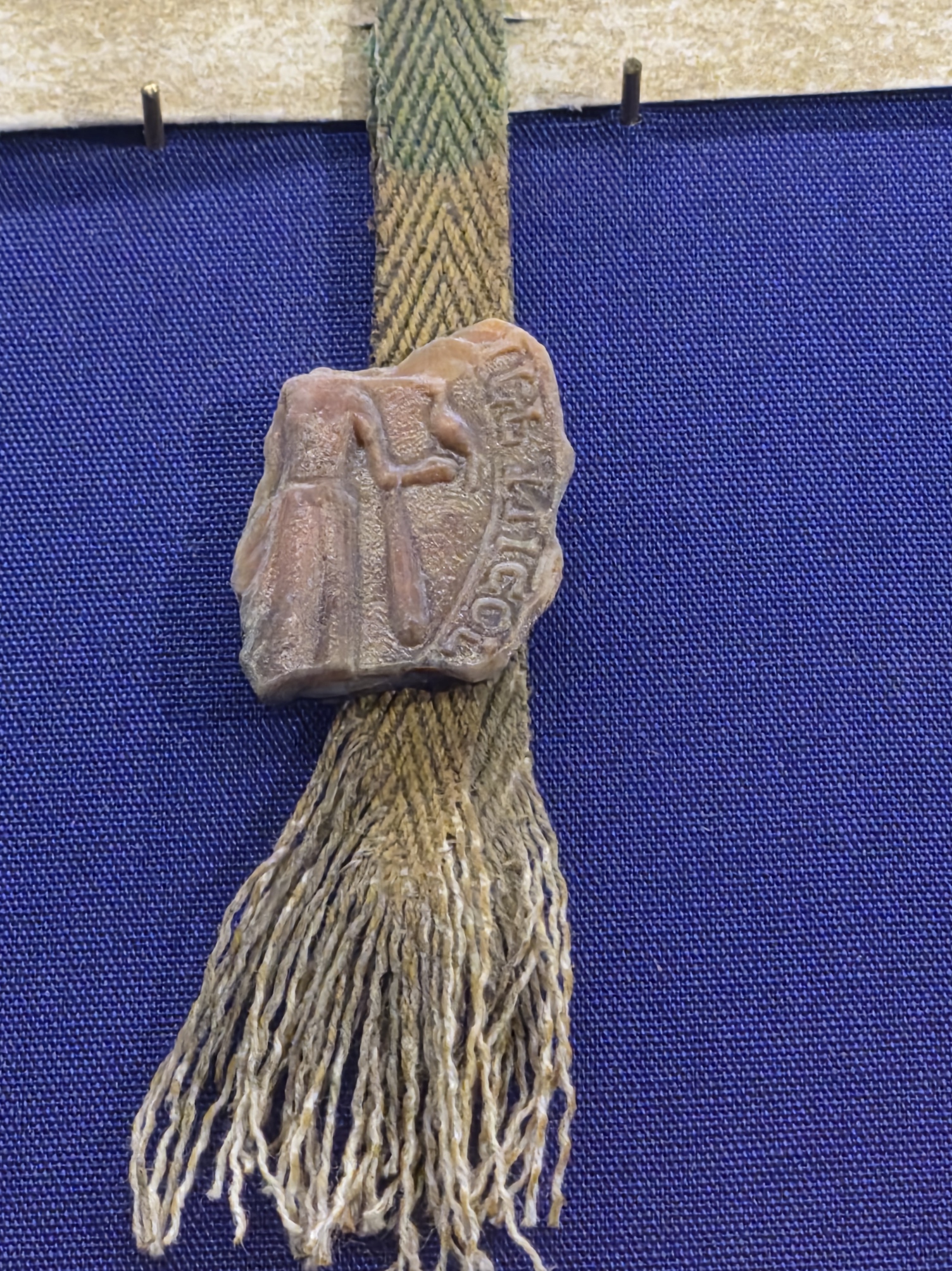
Seal of Nicholaa de la Haye, Lincoln Cathedral

In 1217, England was suffering the triple calamity of civil war, foreign invasion and a child king on the throne. The barons who had rebelled against King John in 1215 had appealed to the French king for support. That support had come in the form of Prince Louis, the future King Louis VIII of France, whose wife, Blanche of Castile, had her own claim to the English throne as a granddaughter of King Henry II and Eleanor of Aquitaine.

By the time of King John’s death, in the night of 18/19 October 1216, England was in a desperate state, with Louis controlling most of the country and having been proclaimed king in London, though he was not yet crowned. Only three royal castles held out against the French onslaught: Dover, Windsor and Lincoln. At the time, the defence of Lincoln Castle was being led by one of the most remarkable people of medieval history: Nicholaa de la Haye.

Almost forgotten by history, Nicholaa was not some fresh-faced beauty in need of rescue, when the French came knocking at the door. She was a mature woman in her 60s and the highly experienced castellan of Lincoln Castle. A formidable matriarch if ever there was one. And she already had one successful defence of Lincoln Castle under her belt, in 1191.

Nicholaa was probably born sometime in the early 1150s. She was the eldest daughter of Richard de la Haye, a minor Lincolnshire lord and hereditary castellan of Lincoln Castle, and his wife, Matilda de Vernon, niece of Baldwin de Redvers, Earl of Devon. When her father died in 1169, Nicholaa inherited his lands in Lincolnshire and Normandy – and his position as castellan of Lincoln Castle, a post she would hold for over 50 years, with a brief gap in the 1190s when Nicholaa and her husband were out of royal favour. Nicholaa was married twice, her husbands each successively holding the position of castellan at Lincoln by right of his wife, Nicholaa.

Nicholaa’s first husband, William Fitz Erneis, died in 1178. The couple had one child, a daughter named Matilda. Nicholaa had married again, before 1185, to Gerard de Canville, or Camville, whose brother, Richard, had accompanied Richard I on the Third Crusade. Nicholaa and Gerard had at least two children, sons named Richard and Thomas and possibly a daughter named Nicola. Nothing is known of Thomas beyond his name, but Richard married and fathered at least one child, a daughter named Idonea who married the oldest son of William Longespée, Earl of Salisbury. A son named Richard is mentioned but must have died young . Another daughter named Eustachia, is recorded as being in the custody of the earl of Salisbury in 1219; it may be that Eustachia died shortly afterwards or retired to a convent as it appears that Idonea was Nicholaa’s sole heir.
Books by Sharon Bennett Connolly
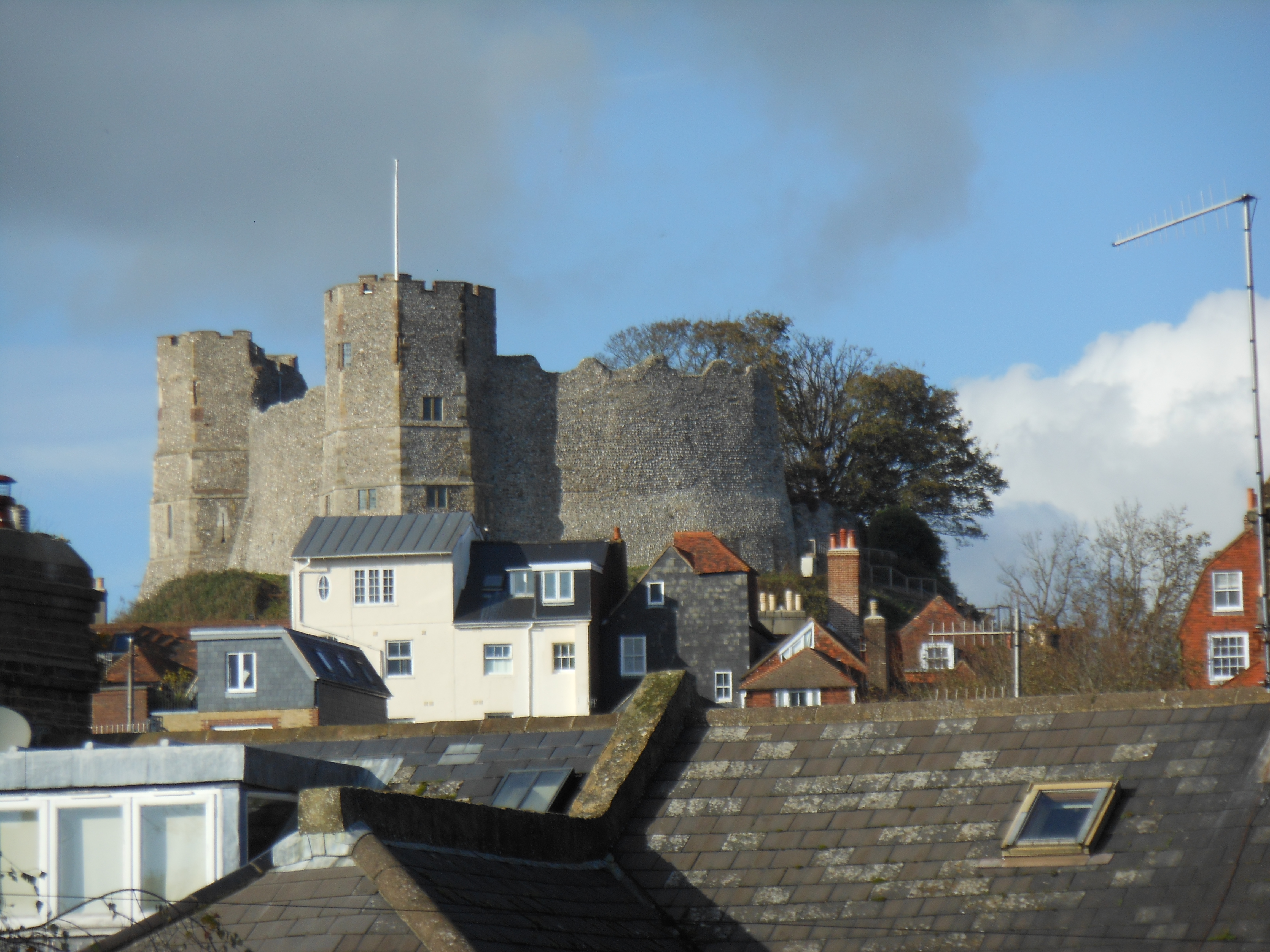
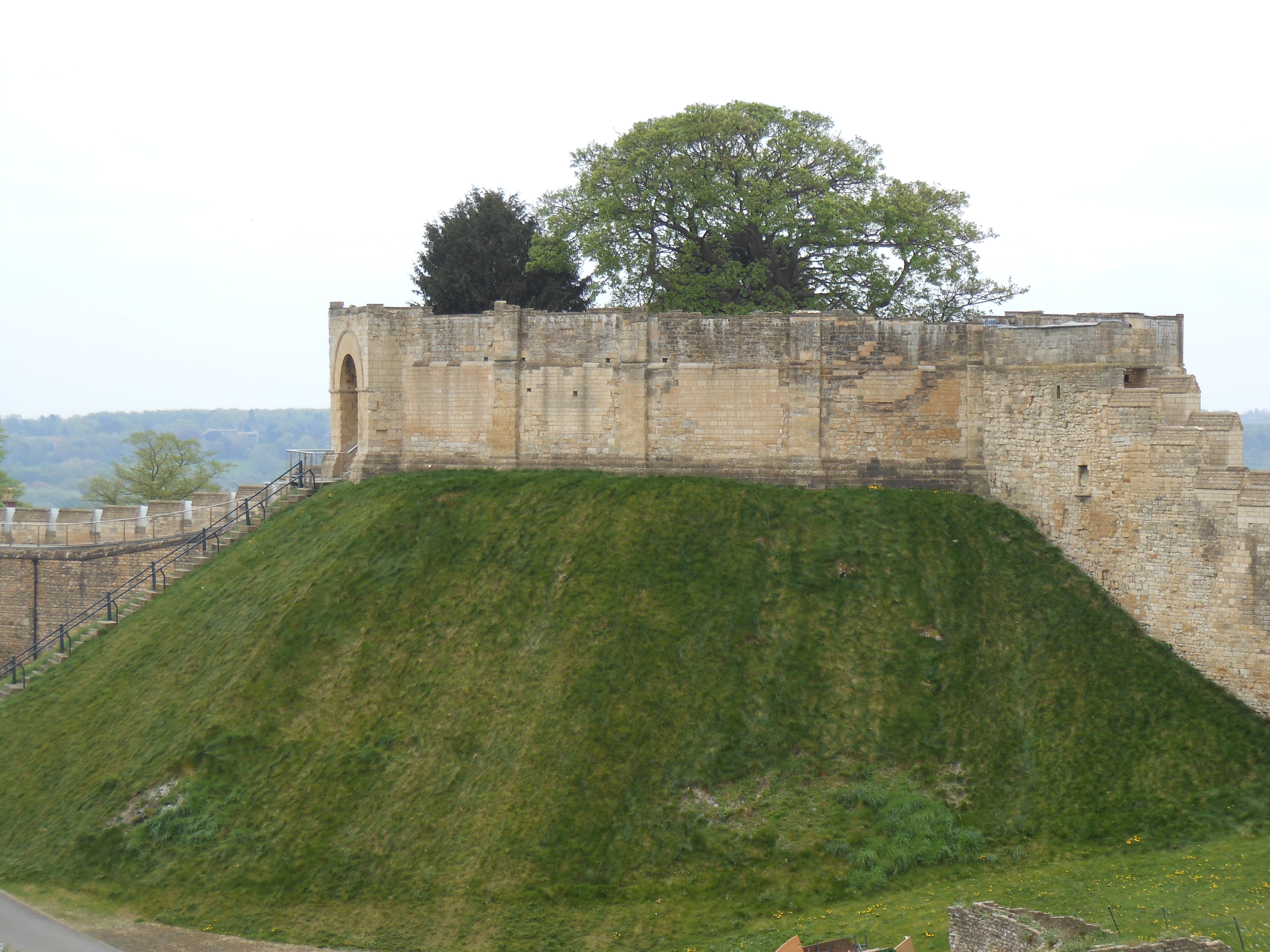
The Lucy Tower, Lincoln Castle

Nicholaa de la Haye first comes to the attention of chroniclers in 1191, when Prince John led a revolt against the rule of Richard I’s justiciar, William Longchamp. Many barons bridled under the harsh rule of Longchamp. John had set up his court at Nottingham Castle and Gerard de Camville, a supporter of John, joined him there, leaving Nicholaa in command of Lincoln. William Longchamp had headed north to halt John’s coup and laid siege to Lincoln Castle, intending to oust Nicholaa and install one of his own supporters, William de Stuteville.

The formidable Nicholaa refused to yield, successfully holding out for 40 days before Longchamp gave up the siege following the fall of the castles of Tickhill and Nottingham. In 1194, on King Richard’s return to England, Camville was stripped of his positions as Sheriff of Lincolnshire and castellan of the castle; the castle was only returned to Nicholaa and Gerard on John’s accession to the throne in 1199. His lands were also declared forfeit, but he was able to buy them back after paying a fine of 2,000 marks.

Nicholaa was widowed for a second time when Gerard de Camville died in December 1214. It seems, however, that, rather than passing control of the castle to her son, Richard, it remained in Nicholaa’s more than capable hands. It is thought that Richard Camville joined the rebellion against King John at some point, so leaving Nicholaa in charge was probably the sensible decision. Nicholaa had herself officially declared femme sole, so that she was legally responsible for her own lands and property.
Books by Sharon Bennett Connolly
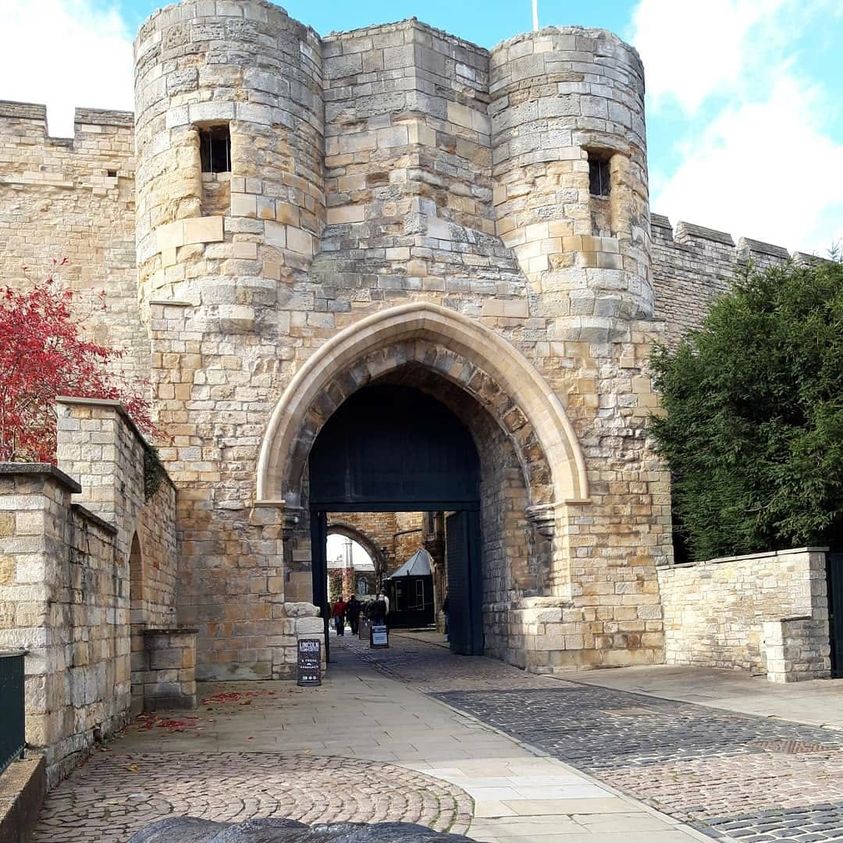
Lincoln Castle’s East Gate

On one of King John’s visits to inspect the castle’s defences, in either 1215 or 1216, there was a rather dramatic display of fealty from Nicholaa:

‘And it once happened that after the war King John came to Lincoln and the said Nicholaa went out of the eastern gate of the castle carrying the keys of the castle in her hand and met the king and offered the keys to him as her lord and said she was a woman of great age and was unable to bear such fatigue any longer and he besought her saying, “My beloved Nicholaa, I will that you keep the castle as hitherto until I shall order otherwise.”’1

Nicholaa’s greatest hour came shortly after the death of King John, but as a result of the late king’s tyrannical actions. As we all know, King John’s reign was not exactly smooth sailing. He lost his French lands and was held to account by the barons of England for numerous examples of maladministration, corruption and outright murder! In June 1215 he had been forced to put his seal to Magna Carta in order to avoid war with his barons. However, within a matter of weeks, John had appealed to Pope Innocent III and the charter had been declared null and void; the barons were up in arms.

The rebel barons invited the king of France to take the throne of England; Philip II was not really interested but his son, Louis (the future Louis VIII), was. He had a claim to the English throne through his wife, Blanche of Castle, niece of King John, and so accepted the offer and launched an invasion. Landing on the Isle of Thanet in May 1216, Louis was proclaimed king of England in London in June. He was never crowned.

By the summer of 1216, rebel forces led by Gilbert de Gant had seized the city of Lincoln and laid siege to the castle. Nicholaa arranged a truce and ‘freed herself from this siege with a money payment.’2 King John came north – chasing the rebels into the marshes of the Isle of Axholme, devastating the area with ‘fire and sword’.3
Books by Sharon Bennett Connolly
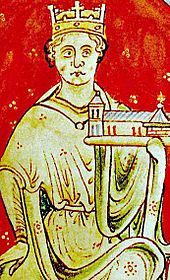
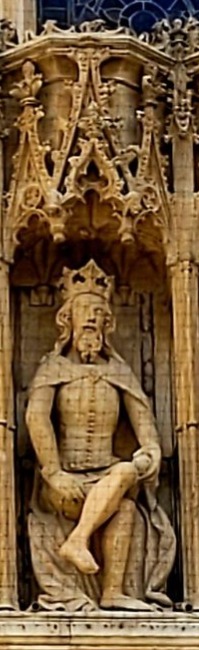
King John from the Gallery of Kings, Lincoln Cathedral

As Louis consolidated his position in the south, John made an inspection of Lincoln Castle in September 1216. Moving south, just two weeks later, the king’s baggage train was lost as he crossed the Wash estuary and within a few more days, John lay desperately at the bishop of Lincoln’s castle at Newark. On 18 October 1216, just hours before his death, John appointed Nicholaa de la Haye as Sheriff of Lincolnshire in her own right. She is the first woman on record to be given the position; the second would be her granddaughter’s mother-in-law Ela, Countess of Salisbury. When the king died that night, as a storm raged overhead, half of his kingdom was in the hands of a foreign invader and his throne was now occupied by his 9-year-old son, Henry III. The elder statesman and notable soldier, William Marshal, Earl of Pembroke, was appointed regent for young Henry and set out to save the country.

Meanwhile, the English rebels, who had been driven from Lincoln in the summer of 1216, returned and took the city, once again laying siege to the castle. Reinforcements were sent north by Louis, under the Comte de Perche, arriving in March 1217 with siege machinery that were set to bombard and weaken the castle’s walls. Although in her 60s, Nicholaa de la Haye took charge of the defences and refused to be daunted by her position, with her newly-appointed deputy, Geoffrey de Serland, commanding the garrison as ‘the barons then made fierce assaults upon the castle, whilst the besieged returned their showers of stones and missiles with stones and deadly weapons with great courage.’4

With William Marshal declaring it would be ‘dishonourable not to help so brave a lady,’ the loyal English forces mustered at Newark on 17 May, with the intention of marching to Nicholaa’s relief.5 The English commanders included William Marshal, earl of Pembroke, his son, young William Marshal, and nephew John Marshal, in addition to Ranulph, Earl of Chester, William Longespée, Earl of Salisbury, Peter des Roches, Bishop of Winchester, and Faulke de Bréauté.

They led 406 knights, 317 crossbowmen and a large number of sergeants-at-arms, foot soldiers and camp followers. The enemy forces in Lincoln were led by Thomas, Comte de Perche, himself a grandson of Henry II’s daughter Matilda and therefore a cousin of King Henry III. The commanders of the English rebels in the city included Robert FitzWalter and Saer de Quincy, Earl of Winchester. They led approximately 600 knights and several thousand infantry.

From Newark, Marshal’s forces marched on Lincoln using a roundabout route, keeping close to the river, they marched past the city and were camping at or near Torksey by the 19 May. They came upon the city from the north in the early morning of 20 May. Before battle, William Marshal made a rousing speech, telling his men: ‘Now listen, my lords! There is honour and glory to be won here…’6

On seeing the arrival of the English forces, Nicholaa sent her deputy, Geoffrey de Serland, to meet with the regent. Serland returned with Peter des Roches, entering the castle by a postern gate, who told Nicholaa of Marshal’s plans for the battle, and then sneaked into the city via another postern gate to do a little reconnaissance. Des Roches discovered a barricaded gate in the city wall, which could be cleared in a matter of hours.

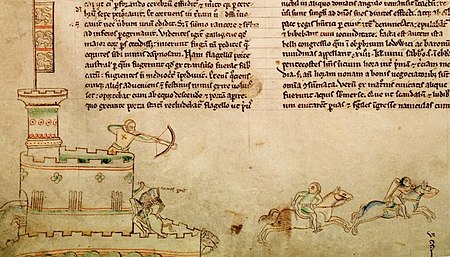
Marshal split his forces, sending Faulke de Bréauté into the castle with his crossbowmen. He entered through a postern gate and positioning his men on the walls to rain a fire of bolts on the besiegers. The earl of Chester was directed to attack the North Gate as William Marshal’s men attacked the newly cleared gate in the north western part of the city wall. According to the Histoire de Guillaume le Maréschal (History of William the Marshal), Marshal was so eager to advance that he almost forgot to don his helmet and had to be reminded.
History...the Interesting Bits
The Battle of Lincoln from Matthew Paris’s Chronica Majora

It is not hard to imagine Nicholaa standing on the castle’s battlements, watching the initial charge, relieved that help had arrived, but desperate for victory.

The battle lasted a matter of hours. The fiercest fighting took place in the ground between the castle and cathedral; with the enemy’s commander, the Comte de Perche, killed in front of the cathedral itself. And with the death of their leader, the French and rebel barons lost heart and started pulling back. The rebel leaders, Saer de Quincy and Robert FiztWalter were both taken prisoner, as were many others. In total, about half of the enemy knights surrendered. The fleeing rebels were chased through the city streets. The city itself, which had supported the rebels and welcomed the French, was sacked and looted by the victorious army.

The Battle of Lincoln turned the tide of the war. By the summer, following a second defeat at sea off Sandwich in Kent, the French were forced to seek peace and eventually returned home. Magna Carta was reissued and Henry III’s regents could set about healing the country.

In a magnificent demonstration of ingratitude, within four days of the Battle of Lincoln, Nicholaa was relieved of her position as sheriff of Lincolnshire; the post was given to the king’s uncle William Longespée, Earl of Salisbury, who took control of the city and seized the castle. As the father-ion-law of Nicholaa’s granddaughter and heir, Salisbury most likely thought he had more right to hold Lincoln Castle than Nicholaa did. Nicholaa disagreed. Not one to give up easily, she travelled to court to remind the king’s regents of her services, and request her rights be restored to her. Eventually a compromise was reached whereby Salisbury remained as sheriff of the county, while Nicholaa held the city and her beloved castle.
Books by Sharon Bennett Connolly
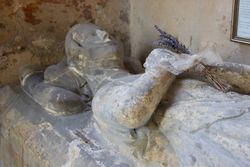
Tomb effigy of Nicholaa de la Haye

A staunchly independent woman, Nicholaa issued some 25 surviving charters in her own name. She made grants to various religious houses, including Lincoln Cathedral, and even secured a royal grant for a weekly market on one of her properties. A most able adversary for some of the greatest military minds of the time, and a loyal supporter of King John, Nicholaa de la Haye was unique among her peers.

Nicholaa died at her manor of Swaton on on 20 November, 1230 and was buried in St Michael’s Church there.

The chroniclers were full of praise for Nicholaa, though they seemed to have difficulty in finding the right adjectives to describe her. Richard of Devizes said of her 1191 defence of Lincoln Castle, against William Longchamp, that she did it ‘without thinking of anything womanly’. The Dunstable annals refer to her as a ‘noble woman’, saying she acted ‘manfully’. And William Marshal called her ‘brave’.

Nicholaa’s stoic defence of Lincoln Castle gave Marshal the time to organise his forces, march to her aid and set the scene for one definitive battle that would prove to be the beginning of the end of the war. Within 3 months, the French invaders would be agreeing to peace and sailing for home. One cannot fail to feel admiration for a woman who managed to hold her own in a man’s world, who fought for her castle and her home in a time when women had so little say over their own lives – and at such an advanced age. Her bravery and tenacity saved Henry III’s throne. Not surprisingly, King Henry referred to her as ‘our beloved Nicholaa de la Haye’.

Nicholaa de la Haye was the woman who saved England.

*

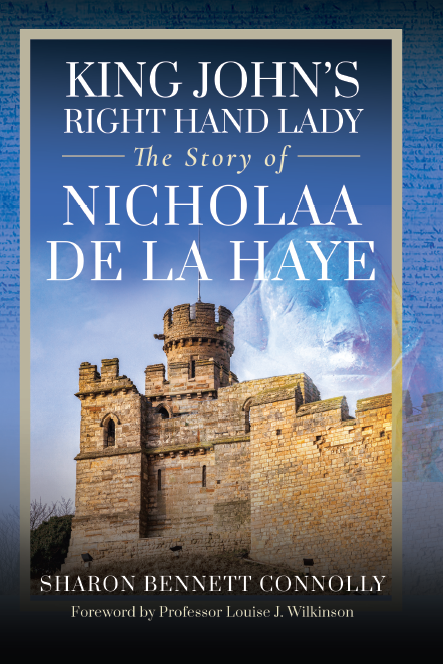
Nicholaa’s story is told in greater detail in my book King John’s Right Hand Lady: the Story of Nicholaa de la Haye

Images:

©2026 Sharon Bennett Connolly FRHistS except Battle of Lincoln which is courtesy of Wikimedia Commons

Footnotes:

1. Irene Gladwin, The Sheriff; The Man and His Office; 2. The Barnwell Annalist quotes in The Plantagenet Chronicles, edited by Elizabeth Hallam; 3. ibid; 4. Roger of Wendover, Roger of Wendover’s Flowers of History; 5. Histoire de Guillaume le Maréschal translated by Stewart Gregory; 6. ibid

Sources:

Irene Gladwin, The Sheriff; The Man and His Office; The Plantagenet Chronicles, edited by Elizabeth Hallam; Roger of Wendover, Roger of Wendover’s Flowers of History; Histoire de Guillaume le Maréschal translated by Stewart Gregory; J.W.F. Hill, Medieval Lincoln, Louise Wilkinson, Women in Thirteenth Century Lincolnshire; David Stocker; Daniel Power; Richard Huscroft, Tales from the Long Twelfth Century: The Rise and Fall of the Angevin Empire; magnacarta800th.com; Oxforddnb.com; Danny Danziger & John Gillingham, 1215 The Year of Magna Carta; Robert Bartlett, England Under the Norman and Angevin Kings; Marc Morris, King John: Treachery, Tyranny and the Road to Magna Carta; History of William Marshal, edited by David Crouch and Anthony J. Holden; finerollshenry3.co.uk; Ralph of Coggeshall, The English Chronicle.

*

My Books:

Signed, dedicated copies of all my books are available through my online bookshop. or by contacting me.

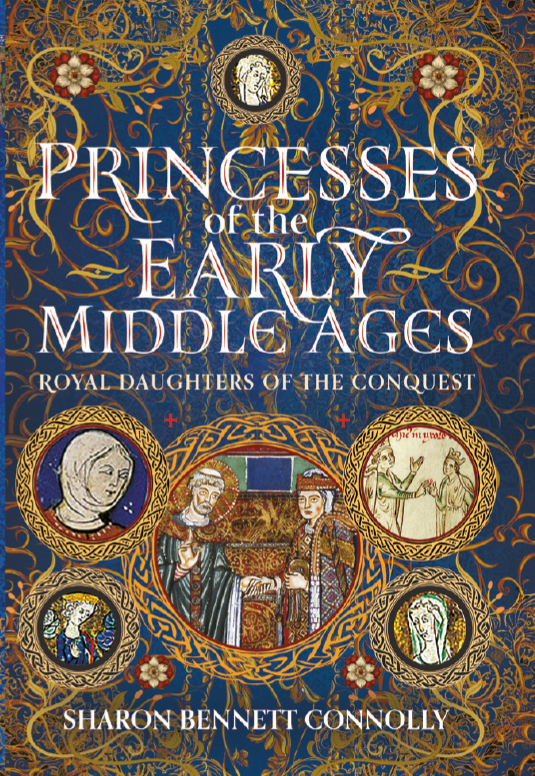
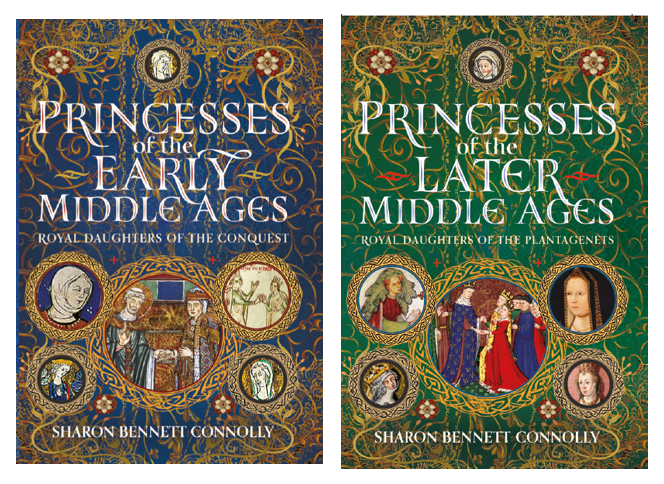
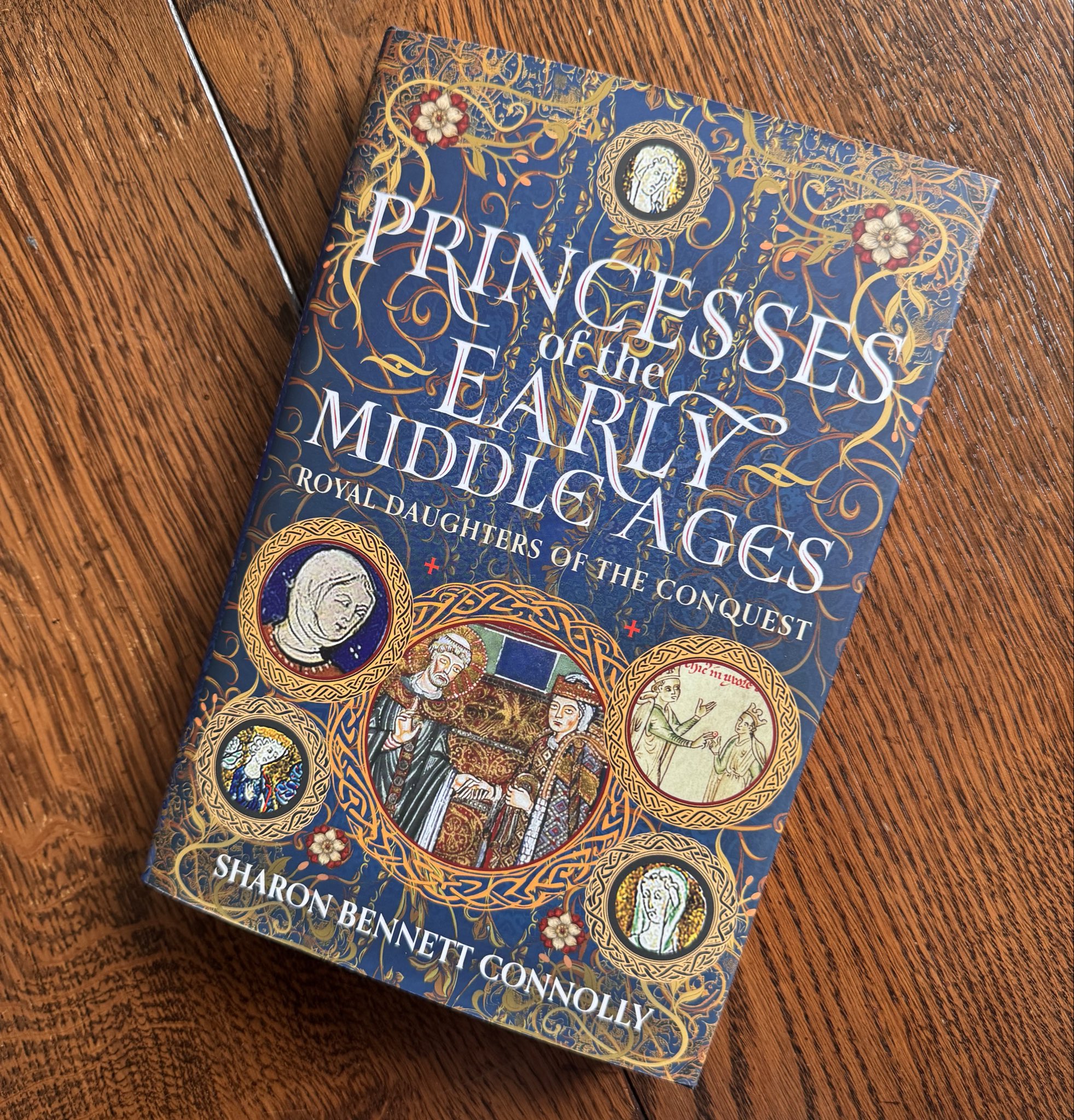
Out Now: Princesses of the Early Middle Ages
Books by Sharon Bennett Connolly

Daughters of kings were often used to seal treaty alliances and forge peace with England’s enemies. Princesses of the Early Middle Ages: Royal Daughters of the Conquest explores the lives of these young women, how they followed the stereotype, and how they sometimes managed to escape it. It will look at the world they lived in, and how their lives and marriages were affected by political necessity and the events of the time. Princesses of the Early Middle Ages will also examine how these girls, who were often political pawns, were able to control their own lives and fates. Whilst they were expected to obey their parents in their marriage choices, several princesses were able to exert their own influence on these choices, with some outright refusing the husbands offered to them.

Their stories are touching, inspiring and, at times, heartbreaking.

Princesses of the Early Middle Ages: Royal Daughters of the Conquest is now available from Pen & Sword and Amazon.

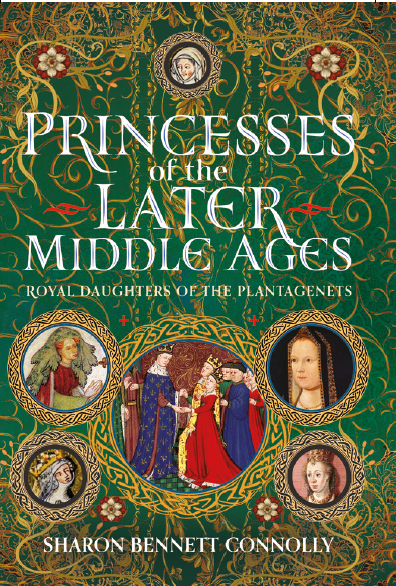
Coming 30 August 2026: Princesses of the Later Middle Ages: Royal Daughters of the Plantagenets
Books by Sharon Bennett Connolly

Princesses of the Later Middle Ages examines the lives and experiences of England’s princesses, from the treasured daughters of Henry III to the children of Edward IV, whose lives were turned upside down when they were declared illegitimate.

What we see is a very different story, where a foreign marriage does not mean eternal exile, but a purpose in life, where a princess is a diplomat, an ambassador for England in her new country. She is the bond between allies – most of the time.

Princesses of the Later Middle Ages shines a light on the lives and experiences of these remarkable women.

Princesses of the Later Middle Ages: Royal Daughters of the Plantagenets is now available for pre-order through Pen & Sword and other booksellers.

Sharon is also the author of:
Books by Sharon Bennett Connolly

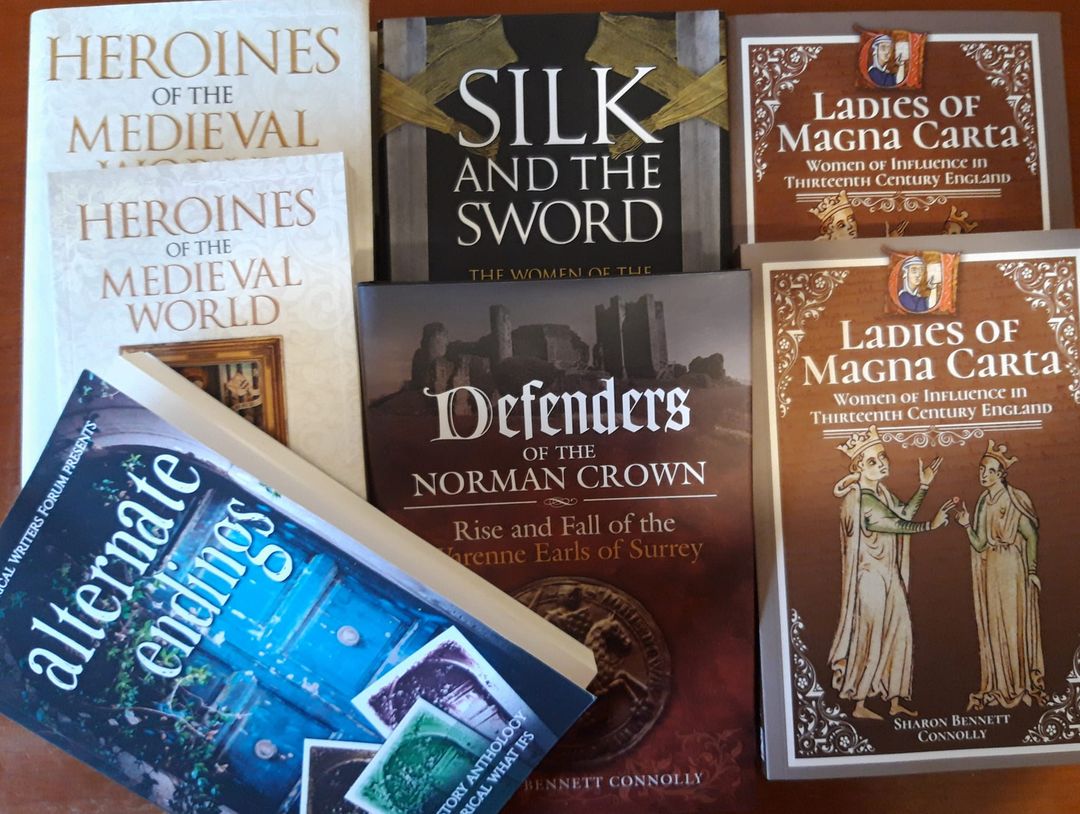
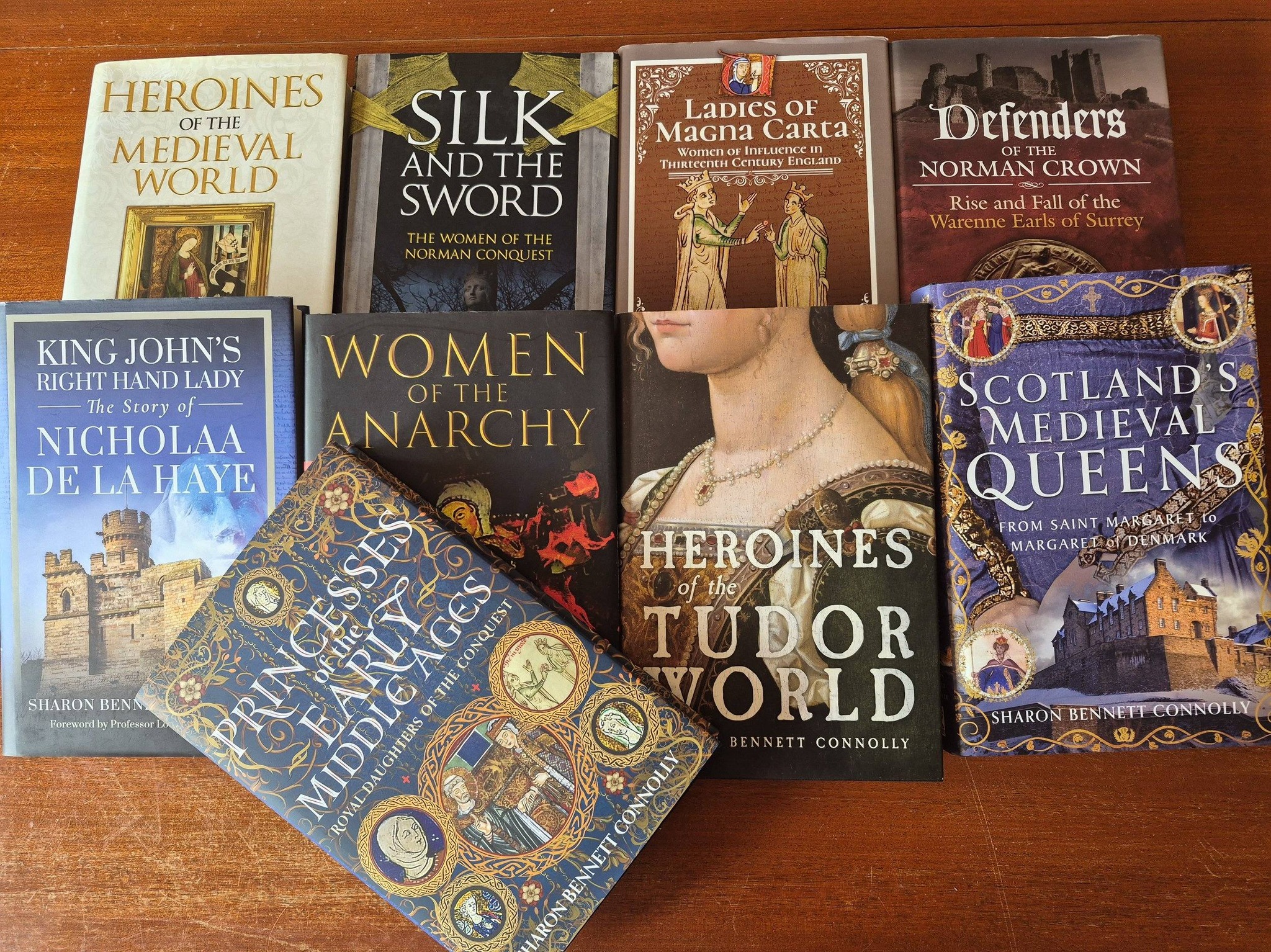
Heroines of the Medieval World; Silk and the Sword: The Women of the Norman Conquest; Ladies of Magna Carta: Women of Influence in Thirteenth Century England; Defenders of the Norman Crown: Rise and Fall of the Warenne Earls of Surrey; King John’s Right Hand Lady: The Story of Nicholaa de la Haye; Women of the Anarchy; Heroines of the Tudor World; Scotland’s Medieval Queens: From St Margaret to Margaret of Denmark; Princesses of the Early Middle Ages: Royal Daughters of the Conquest (March 2026); Princesses of the Later Middle Ages; Royal Daughters of the Plantagenets (August 2026)

Alternate Endings: An anthology of historical fiction short stories including Long Live the King… which is my take what might have happened had King John not died in October 1216. Available in paperback and kindle from Amazon.

All my books on AmazonBookshop.org . You can also order direct from my publishers, Pen and Sword Books and Amberley Publishing.

Podcast:
History...the Interesting Bits

Have a listen to the A Slice of Medieval podcast, which I co-host with Historical fiction novelist Derek Birks. Derek and I welcome guests, such as Ian Mortimer, Bernard Cornwell, Elizabeth Chadwick and Scott Mariani, and discuss a wide range of topics in medieval history, from significant events to the personalities involved. 

Every episode is also now available on YouTube.

*
Royal Historical Society

Don’t forget! 

Signed and dedicated copies of all my books are available through my online bookshop.

For forthcoming online and in-person talks, please check out my Events Page.

You can be the first to read new articles by clicking the ‘Follow’ button, liking our Facebook page or joining me on TwitterThreadsBluesky and Instagram.

*

©2026 Sharon Bennett Connolly FRHistS
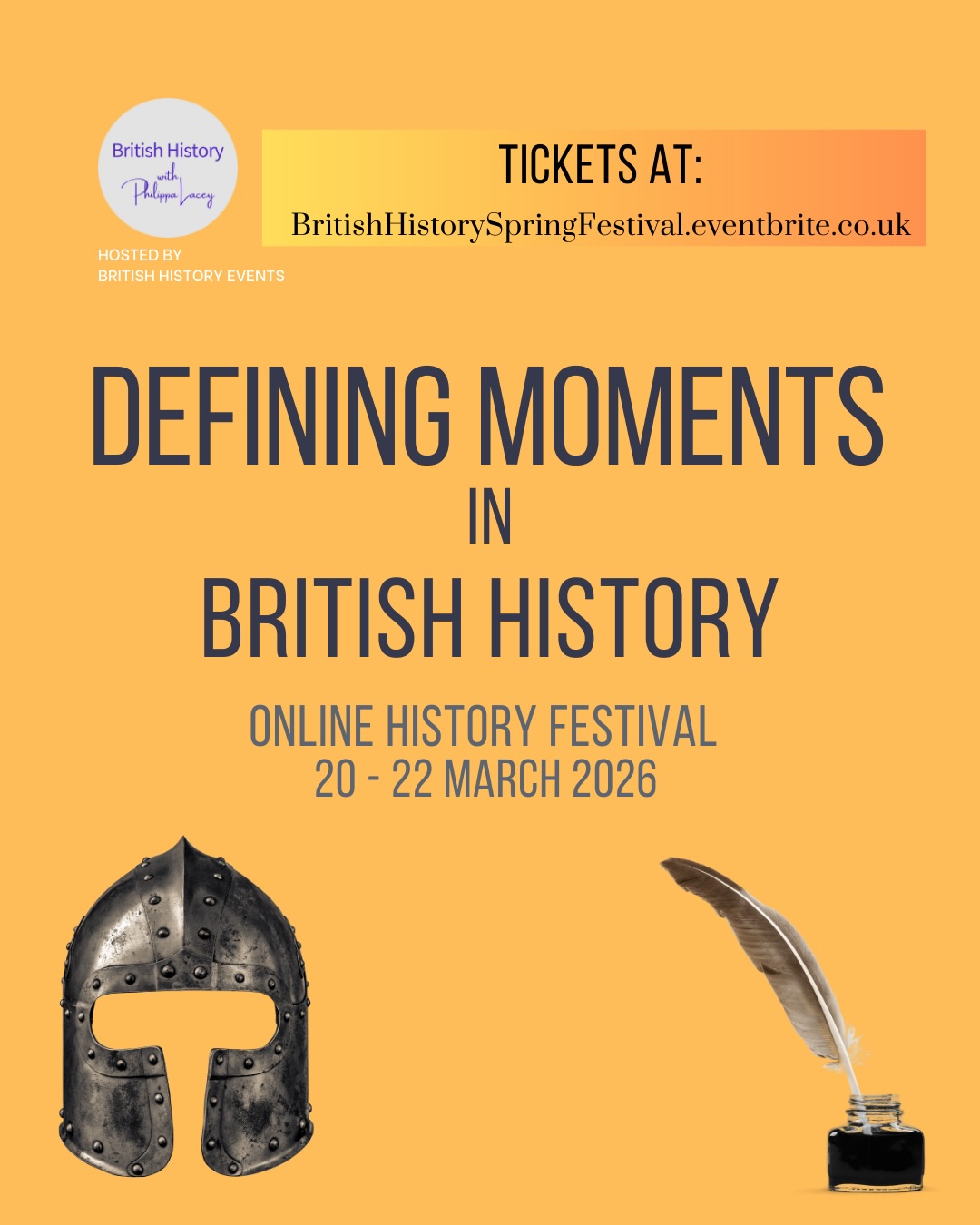
Online History Festival: Defining Moments in British History

History...the Interesting Bits

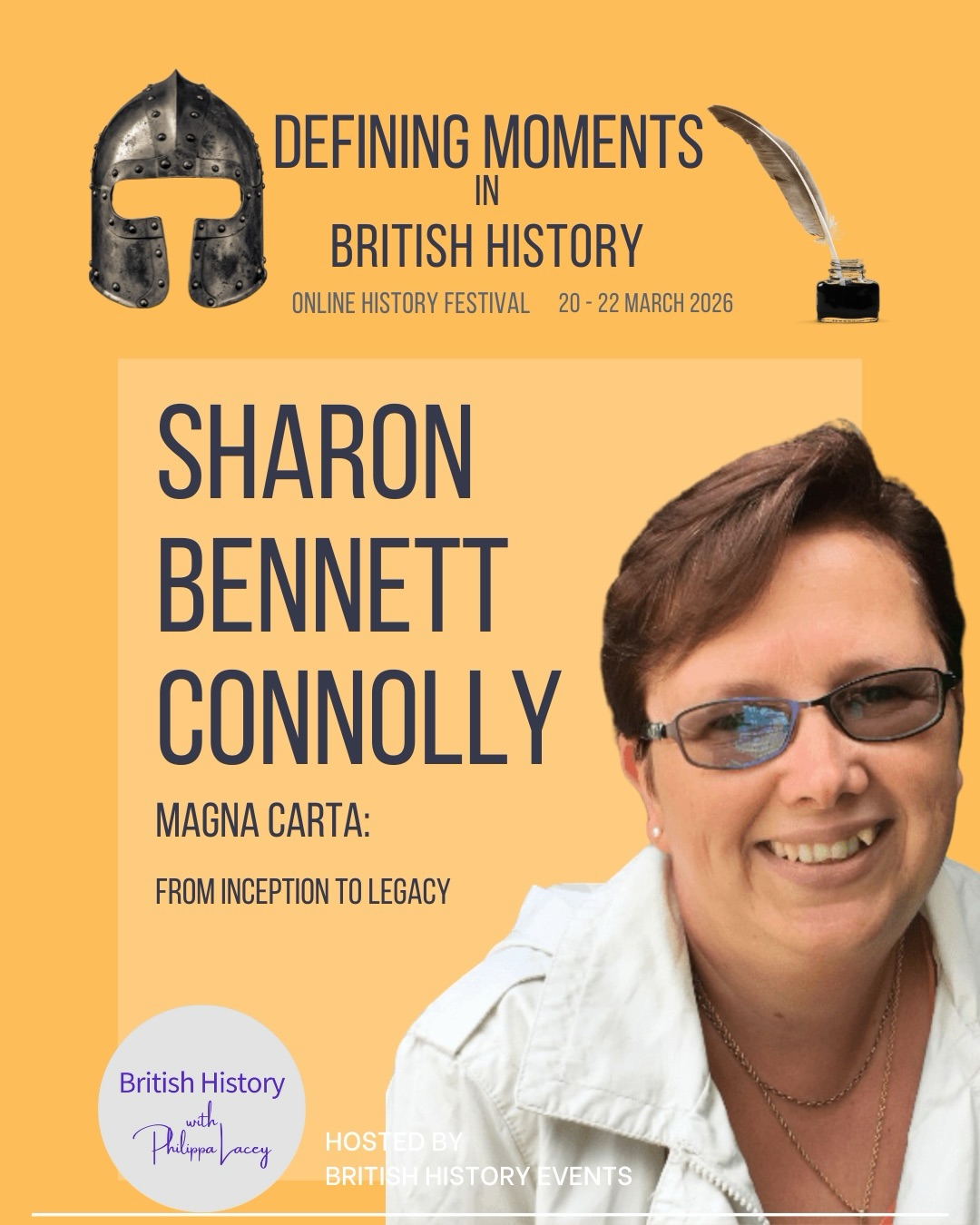
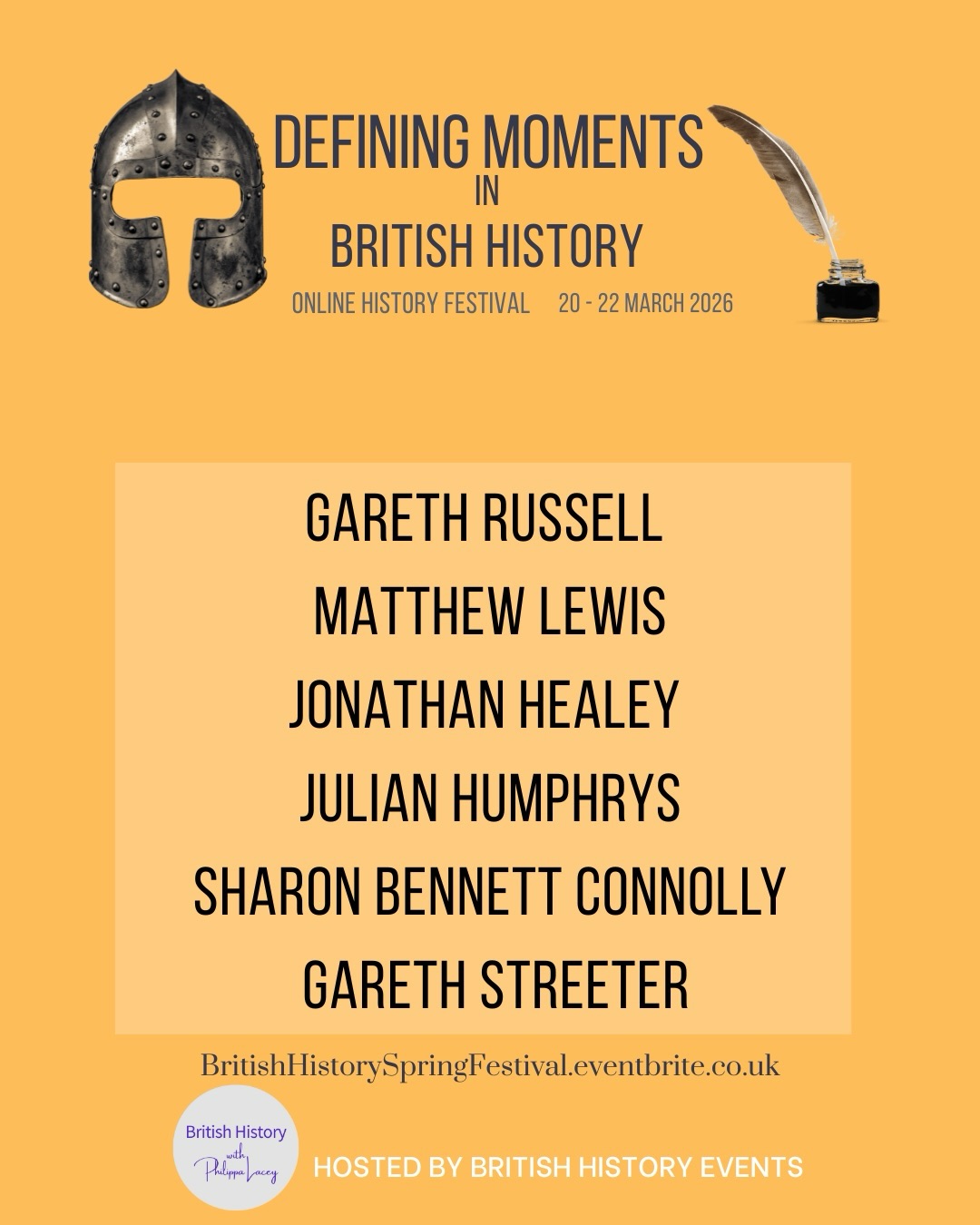
I am delighted to have been asked to take part in this year’s Online History Festival hosted by British History Events!

The theme and title of this year’s festival (their 6th) is ‘Defining Moments in British History’ – exploring six defining moments that have shaped Britain today. The festival is all online, taking place from the evening of Friday, 20th March until the evening of Sunday, 22nd March 2026.

Magna Carta: From Inception to Legacy

By 1215, the English barons’ objections to King John were almost beyond number. He had failed to face the French and had lost not only most of his family’s Continental possessions, but also those of his barons. Few had forgotten his treachery against his brother – his attempts on the throne whilst Richard was away on Crusade. His barons even complained that he forced himself on their wives and daughters.

The barons had had enough.

And the result was Magna Carta; a detailed document created to stave off civil war. It touched on the whole system of royal government. And it was granted to ‘all free men of the realm and their heirs forever’. It brought the king within the law, rather than above it.

It is the closest thing England has to a Constitution.

How significant was Magna Carta really?

In this lecture, I will explore the reasons for Magna Carta, the civil war that followed its creation and the people who fought for it and used it to assert their own rights. And we will look at how relevant it still is today, even beyond England’s shores.

So, I have been spending this week tweaking my PowerPoint presentation and recording the lecture.

History...the Interesting Bits

There will be 6 talks from leading historians (including myself!), a live Q&A with all 6 historians, a live quiz, and a prize draw. Here is the line up!

Julian Humphrys explores ‘The Battle of Hastings: What Happened and What Followed’.
Sharon Bennett Connolly (me!) traces ‘Magna Carta: From Inception to Legacy’.
Matthew Lewis examines ‘How the Black Death Changed England Forever’.
Gareth Russell tackles ‘Crisis of Faith: The Reformation in British History’.
Jonathan Healey delves into ‘The British Civil Wars: How They Happened and Why They Matter’.
Gareth Streeter looks at ‘The Birth of Britain: How the Glorious Revolution and the Act of Union Forged a Modern Nation’.

And I am really looking forward to the online Q&A and discussion.

Of course, Magna Carta is THE defining moment, but I will let the fellas have their say …

History...the Interesting Bits

Don’t worry if you can’t watch all the talks as they go out – your ticket will give you access to everything in the festival until 31st May 2026.

And you can watch them as often as you like.

Tickets are £22 + fees and are available now at: British History Events’ Online History Festival

If you have any questions, please ask. You can also email the event organisers at office@britishhistorytours.com.

We would all love to have you join us!

*

My Books

Signed, dedicated copies of all my books are available through my online bookshop. or by contacting me.

Coming 30 March: Princesses of the Early Middle Ages

Books by Sharon Bennett Connolly

Daughters of kings were often used to seal treaty alliances and forge peace with England’s enemies. Princesses of the Early Middle Ages: Royal Daughters of the Conquest explores the lives of these young women, how they followed the stereotype, and how they sometimes managed to escape it. It will look at the world they lived in, and how their lives and marriages were affected by political necessity and the events of the time. Princesses of the Early Middle Ages will also examine how these girls, who were often political pawns, were able to control their own lives and fates. Whilst they were expected to obey their parents in their marriage choices, several princesses were able to exert their own influence on these choices, with some outright refusing the husbands offered to them.

Their stories are touching, inspiring and, at times, heartbreaking.

Princesses of the Early Middle Ages: Royal Daughters of the Conquest is now available for pre-order from Pen & Sword and Amazon.

Also by Sharon Bennett Connolly:

Books by Sharon Bennett Connolly

Scotland’s history is dramatic, violent and bloody and Scotland’s Medieval Queens have seen it all. This is the story of Scotland through their eyes. Available now from Amazon and Pen and Sword BooksHeroines of the Tudor World tells the stories of the most remarkable women from European history in the time of the Tudor dynasty, 1485-1603. These are the women who ruled, the women who founded dynasties, the women who fought for religious freedom, their families and love. Heroines of the Tudor World is now available from Amberley Publishing and Amazon UK. Women of the Anarchy demonstrates how Empress Matilda and Matilda of Boulogne, unable to wield a sword themselves, were prime movers in this time of conflict and lawlessness. It shows how their strengths, weaknesses, and personal ambitions swung the fortunes of war one way – and then the other. Available from Bookshop.orgAmberley Publishing and Amazon UKKing John’s Right-Hand Lady: The Story of Nicholaa de la Haye is the story of a truly remarkable lady, the hereditary constable of Lincoln Castle and the first woman in England to be appointed sheriff in her own right. Available from all good bookshops Pen & Sword Booksbookshop.org and Amazon

Royal Historical Society

Defenders of the Norman Crown: The Rise and Fall of the Warenne Earls of Surrey tells the fascinating story of the Warenne dynasty, from its origins in Normandy, through the Conquest, Magna Carta, the wars and marriages that led to its ultimate demise in the reign of Edward III. Available from Pen & Sword BooksAmazon in the UK and US, and Bookshop.orgLadies of Magna Carta: Women of Influence in Thirteenth Century England looks into the relationships of the various noble families of the 13th century, and how they were affected by the Barons’ Wars, Magna Carta and its aftermath; the bonds that were formed and those that were broken. It is now available in paperback and hardback from Pen & SwordAmazon, and Bookshop.orgHeroines of the Medieval World tells the stories of some of the most remarkable women from Medieval history, from Eleanor of Aquitaine to Julian of Norwich. Available now from Amberley Publishing and Amazon, and Bookshop.orgSilk and the Sword: The Women of the Norman Conquest traces the fortunes of the women who had a significant role to play in the momentous events of 1066. Available now from Amazon,  Amberley Publishing, and Bookshop.org.

Alternate Endings: An anthology of historical fiction short stories including Long Live the King… which is my take what might have happened had King John not died in October 1216. Available in paperback and kindle from Amazon.

Podcast:

A Slice of Medieval

Have a listen to the A Slice of Medieval podcast, which I co-host with Historical fiction novelist Derek Birks. Derek and I welcome guests, such as Ian Mortimer, Bernard Cornwell, Elizabeth Chadwick and Scott Mariani, and discuss a wide range of topics in medieval history, from significant events to the personalities involved. 

Every episode is also now available on YouTube.

*

Don’t forget! Signed and dedicated copies of all my books are available through my online bookshop.

For forthcoming online and in-person talks, please check out my Events Page.

You can be the first to read new articles by clicking the ‘Follow’ button, liking our Facebook page or joining me on TwitterThreadsBluesky and Instagram.

*

©2026 Sharon Bennett Connolly FRHistS and British History Tours
Wordly Women: Elizabeth Chadwick

History ... the Interesting Bits
Elizabeth Chadwick and I at Newark Book Festival, 2018

Throughout my writing career, I have been very lucky to have enjoyed the friendship of Elizabeth Chadwick. A truly generous person, Elizabeth and I shared a stage at the Newark Book Festival in July 2018. I had only published my first book, Heroines of the Medieval World the previous September, and I was a nervous wreck. Elizabeth was the star of the show, I was the newcomer, and she could have easily dominated the conversation – no one would have blamed her. Everyone was there to see her, not me. But Elizabeth was calm, encouraging and made sure I had my say. I will never forget that.

So, it is an honour and a pleasure to welcome Elizabeth to History … the Interesting Bits as part of my Wordly Women series, to discuss her writing career and her love of history – and William Marshal, of course!

Sharon: Hi, Elizabeth. So, what got you into writing?

History ... the Interesting Bits

Elizabeth: I came into the world as a storyteller. I can remember very clearly telling myself stories with beginnings, middles and ends at the age of three. Throughout my childhood I made up stories, inspired from illustrations I liked in books. I’d invent whole tales around pieces of artwork, say from the wonderful pages of Ladybird books. Even at a young age I was asking myself ‘What if this happened?’ Who, where, what why? I learned the art of story telling just by having fun – and reading a lot obviously. I didn’t write anything down until my mid-teens by which time I decided that I wanted to bring some posterity to my verbal stories and so began writing them down. I was fifteen when I wrote my first historical novel, purely for fun, and enjoyed the experience so much that I decided that I wanted to do this for my career. Eight unpublished novels later I finally got there.

Sharon: Tell us about your books.

Elizabeth: I write historical fiction set in the Middle Ages, mostly covering England and France with a bit of the Middle East thrown in. I began writing my stories with imaginary protagonists but then moved on to biographical fiction. They are character-driven stories of the life and times of the people, focussing on their family lives interwoven with political and emotional drama. I research the period meticulously and blend fact and fiction with an emphasis on telling an engrossing story without depriving the facts of their integrity. I have award winning novels and New York Times bestsellers among my published novels to date.

Sharon: What attracts you to the medieval period?

History ... the Interesting Bits

Elizabeth: It was actually chance that brought me to the Middle Ages. As I’ve mentioned above, I told myself stories throughout my childhood. I enjoyed historical TV dramas and became quite hooked on The Six Wives of Henry VIII starring Keith Michell. That led me to write down my first ever story over the summer holidays when I was fourteen. I enjoyed the exercise, but ran out of steam, however, I’d laid the groundwork. I became very enamoured of a knight in a children’s TV program put out by the BBC and dubbed from the French. It was called Desert Crusader, In French it was Thibaud ou les Croisades. My weekly doses of Desert Crusader led me to take up my pen again, and this time I didn’t run out of steam. This time I wrote a whole novel. It started out as a piece of fan fiction I guess, but within two chapters had taken on a life of its own – rather like me making up brand new stories to the Ladybird books of my childhood. Once I had the basic visual inspiration I was off. Since I knew nothing about the Holy Land and very little about the Middle Ages I had to begin researching because I wanted my story to have veracity and feel real. However if I hadn’t fallen for actor Andre Lawrence as Thibaud, ‘Le Chevalier Blanc’ I might never have taken to the Medieval period the way I did. Such are moments of chance in our lives.

Sharon: Who is your favourite medieval character and why?

History ... the Interesting Bits
William Marshal

Elizabeth: It would have to be the great William Marshal. You don’t get many of his kind to the pound. He had an amazing life and great integrity. He rose from the ranks of the ordinary jobbing nobility and a life in the military, and by using his charisma, intelligence, physical abilities and sheer personality, came to the attention of the Angevin royal family. Having saved the life of Eleanor of Aquitaine, he was taken into royal service. He was a champion of the tourneys, a far-travelled pilgrim, a counsellor of kings. He had his ups and downs and he wasn’t perfect by any manner of means, but the Angevins trusted him enough to give him a fantastic marriage to a great heiress (and they appear to have been very compatible despite a more than 20 year age gap). He became earl of Pembroke under King John and involved in the development of Magna Carta. When King John died, William took over the rule of England on behalf of John’s 9 year old son Henry III. He dealt with the volatile political situation in a way that showed he had a firm grasp of the politics and a practical knowledge of what to do. And at the battle of Lincoln in 1217, aged approx. 71, he saw off the French and got the country back on an even keel.

Sharon: Who is your least favourite medieval character and why?

Elizabeth: I don’t have a least favourite. Even the villains are interesting. I have some very least favourite modern politicians, but that’s because they’re in my face and I am having to deal with emotions engendered as consequences of their actions rather than being more objective. I do find it fascinating how people almost come to blows over Richard III and Henry VII and hold such passionate loyalties over a pair of men who are now bones. The War of the Roses is fought over and over and over again all day online! Having said that, I do admit I have a huge fondness for William Marshal which is certainly not dispassionate. I don’t however, get in a lather about King John!

Sharon: How do you approach researching your topic?

History ... the Interesting Bits
Just some of Elizabeth’s research books

Elizabeth: I’ve been studying the Middle Ages since I was fifteen years old and I am a few decades older now, so I have a good grounding in the general research of the period. I don’t have to start from scratch. I research using academic and specialist books of which I have a wide-ranging library – in several rooms of my house! I research online these days – when I began my career that wasn’t an option, but now it is, and it’s more a case of limiting the information and knowing which are the bona fide sites. While there’s a great deal of marvellous research resources out there, it has to be said that sadly copious amounts of rubbish exist too and one has to become an expert at sifting. I might do bits of experimental living history. I used to re-enact before I ran out of time and I still have all the kit and friends in the business toward whom I can direct questions. I also have friends in the academic community who are very helpful.

Sharon: Tell us your ‘favourite’ medieval story you have come across in your research.

Elizabeth: I think that would have to be the great William Marshal who attended a tournament with his lord the Young King, eldest son of Henry II. During the tournament they captured another knight for ransom and brought him back to their own camp sitting on his horse with a lead rein. However, on the way there they had to pass some buildings and the captured knight lifted himself off his horse and shimmied up a gutter pipe and clambered onto a house gallery (upstairs veranda sort of thing). Meanwhile, William Marshal was riding along, holding the reins of a riderless horse and not realising his captive had absconded until the Young King, doubled up with laughter, let him know – he’d been in on the joke for a while!

Sharon: Tell us your least ‘favourite’ medieval story you have come across in your research.

History ... the Interesting Bits
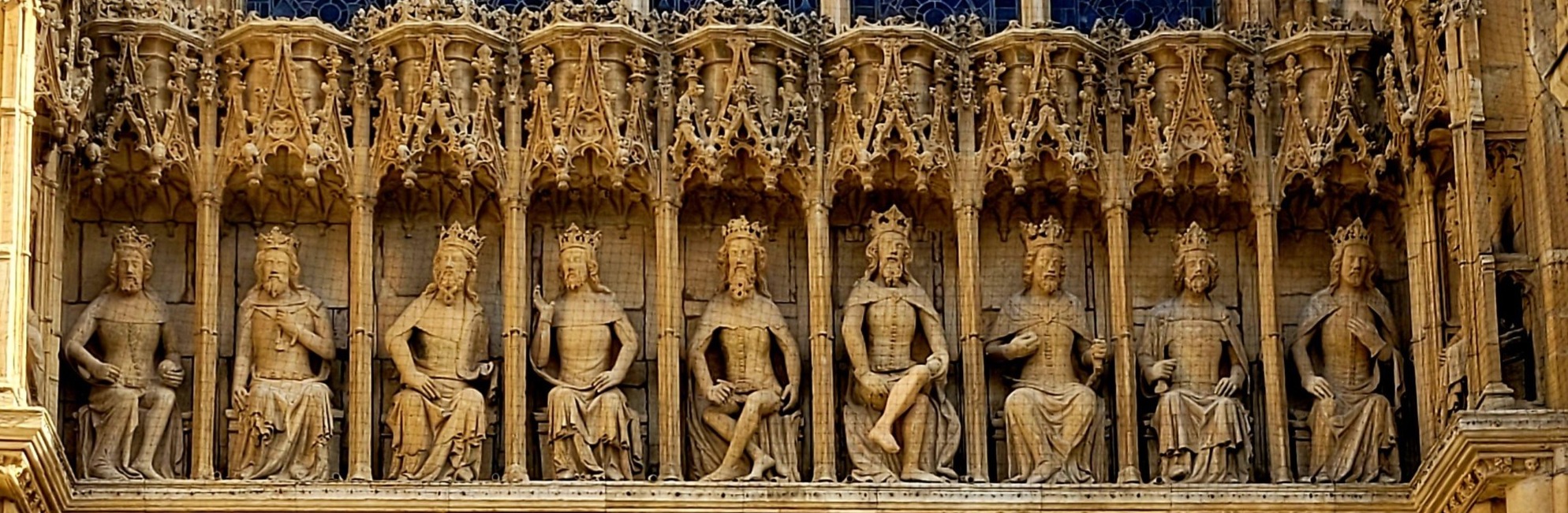
The Gallery of Kings, Lincoln Cathedral

Elizabeth: There are quite a few, but here’s a typical one. It would be in a work I was reading on criminal cases in Medieval Coventry. Someone stole a horse and was put in the stocks for it by the bailiff. But it was a very, very cold night and the criminal got frost bite which resulted in his lower legs perishing and then dropping off! He died, and the bailiff was arrested for murder – pretty gruesome!

Sharon: Are there any other eras you would like to write about?

Elizabeth: Arthurian might be interesting, although I’d need to do a lot of reading up because history has changed a lot since I became a fan of that era via various novels. When I first began writing as a teen, I almost wrote a Regency novel, but Medieval pipped Regency at the post. It might still be interesting to do, but again, I’d need to get stuck into the research so probably not.

Sharon: What are you working on now?

History ... the Interesting Bits
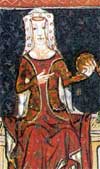
Joan of Kent

Elizabeth: I’ve just completed The Uncrowned Queen, the second part of Joan of Kent’s amazing story and I am now working on an untitled novel about Katherine Swynford and her two husbands – Hugh Swynford and John of Gaunt. I am finding it fascinating, especially the way research has moved on and changed datelines, nuances and our understanding of the period and the protagonists. It goes to show that so much of the time what we think we know is actually what we don’t know. Actually, if we are prepared to swallow long-cherished beliefs and re-learn, it’s immensely exciting and rewarding!

Sharon: And finally, what is the best thing about being a writer?

Elizabeth: Being your own boss to an extent. As long as I put in the word count, I can get up as I please and go to bed as I please. Equal with that are the many good friends I have made over my career, both the readers and the historians – and I’ve learned a lot of cool things too!

About the Author:

History ... the Interesting Bits

Elizabeth Chadwick is a UK million selling historical novelist whose works are based in the medieval period. She won a Betty Trask award for her first published novel The Wild Hunt and the RNA prize for Historical fiction in 2011 with To Defy A King. Her novel The Greatest Knight is a New York Times bestseller and has been optioned for film and TV together with several others in the same series. Specialising in the Middle Ages, with a particular interest in the life and times of William Marshal and the Angevin court, she occasionally lectures on the academic circuit and gives talks on historical tours. Elizabeth is also a member of The Royal Historical Society. When not writing, Elizabeth enjoys chatting to readers on all sorts of subjects but with a strong emphasis on reading and medieval history.

*

My books

Signed, dedicated copies of all my books are available through my online store.

Out now: Scotland’s Medieval Queens

Books by Sharon Bennett Connolly

Scotland’s history is dramatic, violent and bloody. Being England’s northern neighbour has never been easy. Scotland’s queens have had to deal with war, murder, imprisonment, political rivalries and open betrayal. They have loved and lost, raised kings and queens, ruled and died for Scotland. From St Margaret, who became one of the patron saints of Scotland, to Elizabeth de Burgh and the dramatic story of the Scottish Wars of Independence, to the love story and tragedy of Joan Beaufort, to Margaret of Denmark and the dawn of the Renaissance, Scotland’s Medieval Queens have seen it all. This is the story of Scotland through their eyes.

Scotland’s Medieval Queens gives a thorough grounding in the history of the women who ruled Scotland at the side of its kings, often in the shadows, but just as interesting in their lives beyond the spotlight. It’s not a subject that has been widely covered, and Sharon is a pioneer in bringing that information into accessible history.’ Elizabeth Chadwick (New York Times bestselling author)

Available now from Amazon and Pen and Sword Books

Also by Sharon Bennett Connolly:

Books by Sharon Bennett Connolly

Heroines of the Tudor World tells the stories of the most remarkable women from European history in the time of the Tudor dynasty, 1485-1603. These are the women who ruled, the women who founded dynasties, the women who fought for religious freedom, their families and love. Heroines of the Tudor World is now available for pre-order from Amberley Publishing and Amazon UK. Women of the Anarchy demonstrates how Empress Matilda and Matilda of Boulogne, unable to wield a sword themselves, were prime movers in this time of conflict and lawlessness. It shows how their strengths, weaknesses, and personal ambitions swung the fortunes of war one way – and then the other. Available from Bookshop.orgAmberley Publishing and Amazon UKKing John’s Right-Hand Lady: The Story of Nicholaa de la Haye is the story of a truly remarkable lady, the hereditary constable of Lincoln Castle and the first woman in England to be appointed sheriff in her own right. Available from all good bookshops Pen & Sword Booksbookshop.org and Amazon

Royal Historical Society

Defenders of the Norman Crown: The Rise and Fall of the Warenne Earls of Surrey tells the fascinating story of the Warenne dynasty, from its origins in Normandy, through the Conquest, Magna Carta, the wars and marriages that led to its ultimate demise in the reign of Edward III. Available from Pen & Sword BooksAmazon in the UK and US, and Bookshop.orgLadies of Magna Carta: Women of Influence in Thirteenth Century England looks into the relationships of the various noble families of the 13th century, and how they were affected by the Barons’ Wars, Magna Carta and its aftermath; the bonds that were formed and those that were broken. It is now available in paperback and hardback from Pen & SwordAmazon, and Bookshop.orgHeroines of the Medieval World tells the stories of some of the most remarkable women from Medieval history, from Eleanor of Aquitaine to Julian of Norwich. Available now from Amberley Publishing and Amazon, and Bookshop.orgSilk and the Sword: The Women of the Norman Conquest traces the fortunes of the women who had a significant role to play in the momentous events of 1066. Available now from Amazon,  Amberley Publishing, and Bookshop.org.

Alternate Endings: An anthology of historical fiction short stories including Long Live the King… which is my take what might have happened had King John not died in October 1216. Available in paperback and kindle from Amazon.

Podcast:

Have a listen to the A Slice of Medieval podcast, which I co-host with Historical fiction novelist Derek Birks. Derek and I welcome guests, such as Elizabeth Chadwick and Bernard Cornwell and discuss a wide range of topics in medieval history, from significant events to the personalities involved.

Every episode is also now available on YouTube.

*

Don’t forget! Signed and dedicated copies of all my books are available through my online bookshop.

For forthcoming online and in-person talks, please check out my Events Page.

You can be the first to read new articles by clicking the ‘Follow’ button, liking our Facebook page or joining me on TwitterThreadsBluesky and Instagram.

*

©2025 Sharon Bennett Connolly, FRHistS and Elizabeth Chadwick

The Women Behind Magna Carta

History...the Interesting Bits
Magna Carta

Throughout my research into medieval women, two ladies in particular have popped up a number of times: Nicholaa de la Haye and Matilda de Braose. Their unique stories drew me into their world, and the turbulent times of King John. They were the spark that led me to look into the story of Magna Carta; how its clauses were influenced by women and how women used it to protect their own rights. Magna Carta was, perhaps, the first step on the long road to democracy in England, and many women played key roles in its creation and development.

The Magna Carta of 1215 reflects the needs and events of the time in which it was issued; an England on the brink of civil war, disaffected barons demanding redress, the Church and cities such as London looking for protection. It was drawn up by barons looking for redress and legal protection from a king whose word could no longer be trusted, who meted out arbitrary punishments and heavy taxes. It was not a charter that was intended to form the protection and legal rights of every man, woman and child in the land; though it has come to be seen as just that in subsequent centuries. Indeed, the common man does not get a mention, and of the sixty-three clauses, only eight of them mention women as a gender.

The significance of women in the Magna Carta story is not just their limited inclusion in the charter itself, but also in their experiences of the unsettled times in which they lived, in their influence on the charter itself and in their use of its clauses to exact redress for injustices they had experienced. The political crisis which saw the issuing of Magna Carta, and the civil war which followed, was not just significant to the barons involved, but to their wives and families, tenants and retainers. The conflict tore families apart as they took sides in the struggle and saw more than one baron change sides mid-crisis. Wives and daughters were caught in the middle, often torn by divided loyalties; between their birth family and the family into which they had married; between their fathers and their husbands. For instance, Matilda Marshal was the eldest daughter of William Marshal, a man known for his staunch loyalty to the crown, but she was married to Hugh Bigod, son of Roger, second Earl of Norfolk, one of the leaders of baronial opposition.

History...the Interesting Bits
Tomb of Nicholaa de la Haye, St Michael’s Church, Swaton

Although they had very different experiences, they shared a number of similarities. Probably born within a few years of each other, they were contemporaries and both were key figures in the reign of King John, though for very different reasons. While Nicholaa de la Haye was a staunch supporter of the man who is, arguably, England’s most despised king in history, Matilda de Braose was one of his most female victims. Matilda’s family were harassed to Ireland and back by John, before she and her eldest son were left in a prison cell to starve to death; they were found after 11 days, Matilda’s head resting on her son’s chest, her son’s cheeks bearing the bite marks as evidence of lengths Matilda went to in her desperation to stay alive. It was Matilda’s experiences at the hands of King John that inspired clause 39 of Magna Carta, that clause that is still the cornerstone of British justice to this day:

‘No man shall be taken, imprisoned, outlawed, banished or in any way destroyed, nor will we proceed against or prosecute him, except by the lawful judgement of his peers or by the law of the land’

Nicholaa de la Haye, on the other hand, had been a long-time supporter of King John. She first successfully defended Lincoln Castle, in support of John, in the siege of 1191; the siege lasted 40 days before William Longchamp, the hated justiciar, gave up and went home. In 1216, Nicholaa successfully defended it again, this time paying off the rebel barons so that they would lift the siege. In the aftermath, John came north and ravaged the Isle of Axholme, where the barons had retreated to, with ‘fire and sword’. It was after this even that Nicholaa, now in her 60s and recently widowed, offered to relinquish custody of the castle. John refused to accept her resignation and in October, hours before his death, appointed Nicholaa Sheriff of Lincolnshire: she was the first ever female sheriff in England.

History...the Interesting Bits
King John

Although Nicholaa de la Haye and Matilda de Braose were the major influences behind my book, Ladies of Magna Carta, they were not the only women to make an impression on the Magna Carta story. The deeper I dug, the more stories I uncovered that deserved to be told. Matilda’s own daughter, Loretta de Braose, was one such. Recently widowed following the death of her husband, Robert de Breteuil, Earl of Leicester, Loretta had been forced by John to relinquish her dower rights; Magna Carta clauses 7 and 8 of Magna Carta, protecting widows’ rights:

Clause 7:

After her husband’s death, a widow shall have her marriage portion and her inheritance at once and without any hindrance; nor shall she pay anything for her dower, her marriage portion, or her inheritance which she and her husband held on the day of her husband’s death; and she may stay in her husband’s house for 40 days after his death, within which period her dower shall be assigned to her.

Clause 8:

No widow shall be compelled to marry so long as she wishes to live without a husband, provided that she gives security that she will not marry without our consent if she holds of us, or without the consent of the lord of whom she holds, if she holds of another.

Furthermore, there are two women who can be clearly identified in Magna Carta itself, though they are not named, they are two Scottish princesses. The sisters of King Alexander II had been held hostage in England since 1209, when John forced the humiliating Treaty of Norham on their ailing father, King William the Lion. Clause 59 promised:

‘We will treat Alexander, king of Scots, concerning the return of his sisters and hostages and his liberties and rights in the same manner in which we will act towards our other barons of England, unless it ought to be otherwise because of the charters which we have from William his father, formerly king of Scots; and this shall be determined by the judgement of his peers in our court.

Women not only influenced the clauses of Magna Carta, however, they also used Magna Carta to assert and protect their own rights. Women such as Ela of Salisbury, who used the promises of Magna Carta to avoid an unwelcome marriage proposal when her husband, William Longspée was missing and feared dead. Or Isabel d’Aubigny, Countess of Arundel, who proclaimed ‘Where are the liberties of England, so often recorded, so often granted and so often ransomed’, when King Henry III foolishly attempted to steal land that was rightfully hers. She must have been a fearsome opponent, as Henry responded to one of her petitions, saying that he would grant her leniency ‘so long as she says nothing opprobrious to us as she did when we were at Westminster!’

History...the Interesting Bits
Eleanor de Montfort

And then there were the women for whom Magna Carta offered no protection or respite. Women such as Eleanor of Brittany, for whom even clause 39 could be of no help. Their royal blood and ability to be a focus for opposition to the crown meant that successive kings would keep them imprisoned, either in castles, as with Eleanor, or in a rural convent, as with Gwenllian of Wales, orphan daughter of Llywelyn, Prince of Wales and his wife, Eleanor de Montfort, who was herself a granddaughter of King John.

It was Eleanor’s mother, also Eleanor, the youngest daughter of King John and not a year old at her father’s death, who, as the wife of Simon de Montfort, Earl of Leicester, would continue the struggle to curb the powers of the crown in the Second Barons’ War. She herself was defending Dover Castle when her husband was killed at the Battle of Evesham. She spent her final years in French exile. Her struggles to obtain her dower lands from the powerful Marshal family, guaranteed in Magna Carta, were a major component of Eleanor’s own dissatisfaction with her brother, Henry III.

It is through the stories of these remarkable women and the relationships of the various noble families of the 13th century, that I wanted to examine how they were affected by the First Barons’ Wars, Magna Carta and its aftermath. It is a study of the bonds that were formed and those that were broken among the women of the great families of 13th century England, including the royal families of England and Scotland, the Marshals, the Bigods, the Salisburys, Braoses and Warennes.

Their stories are inspirational, if heartbreaking at times.

The Magna Carta story is told through the women involved in my third book, Ladies of Magna Carta: Women of Influence in Thirteenth Century England. And Nicholaa’s story is told in my full-length biography of NicholaaKing John’s Right-Hand Lady: the Story of Nicholaa de la Haye.

Images:

Courtesy of Wikipedia except Nicholaa de la Haye which is ©2023 Sharon Bennett Connolly FRHistS

Sources:

Richard of Devizes, The Chronicle of Richard of Devizes; Roger of Howden (Hoveden), The Annals of Roger of HowdenThe Plantagenet Chronicles edited by Elizabeth Hallam; Brassey’s Battles by John Laffin; 1215 The Year of Magna Carta by Danny Danziger & John Gillingham; The Life and times of King John by Maurice Ashley; The Plantagenets, the Kings Who Made England by Dan Jones; England Under the Norman and Angevin Kings  by Robert Bartlett; lincolnshirelife.co.uk; catherinehanley.co.uk; magnacarta800th.com; lothene.org; lincolncastle.com; The Sheriff: The Man and His Office by Irene Gladwin; Louise Wilkinson, Women in Thirteenth Century Lincolnshire; Richard Huscraft, Tales from the Long Twelfth Century; J.W.F. Hill, Medieval Lincoln; swaton.org.uk; oxforddnb.com; Stephen Church, King John: England, Magna Carta and the Making of a Tyrant; Marc Morris, King John; Pipe Rolls; Red Book of the Exchequer

*

My Books

New releases in 2026:

New Hardbacks

Out now: Princesses of the Early Middle Ages: Royal Daughters of the Conquest 

‘My daughter wanted me to treat her more like a princess. So, I married her to a stranger to strengthen the alliance with Poland!’

Books by Sharon Bennett Connolly

The medieval princess has often been portrayed as a pawn in the political machinations of her father or brother, married off to distant lands for the sake of peace, or land, or both. Never to be seen or thought of again.

But was that really her fate?

From the daughters of Harold, the last Saxon king, to the sisters of Henry III, Princesses of the Early Middle Ages explores the lives of these young women, how they followed the stereotype, and how they sometimes managed to escape it. It will look at the world they lived in, and how their lives and marriages were affected by political necessity and the events of the time.

Princesses of the Early Middle Ages: Royal Daughters of the Conquest is now available from Pen & Sword and Amazon.

30 August: Princesses of the Later Middle Ages: Royal Daughters of the Plantagenets

Continuing the story, Princesses of the Later Middle Ages: Royal Daughters of the Plantagenets looks at the lives of the princesses, from the treasured daughters of Henry III to the children of Edward IV, whose lives were turned upside down when they were declared illegitimate.

What we see is a very different story, where a foreign marriage does not mean eternal exile, but a purpose in life, where a princess is a diplomat, an ambassador for England in her new country. She is the bond between allies – most of the time.

Princesses of the Later Middle Ages: Royal Daughters of the Plantagenets is now available for pre-order through Pen & Sword and other booksellers.

New Paperbacks:

Books by Sharon Bennett Connoll

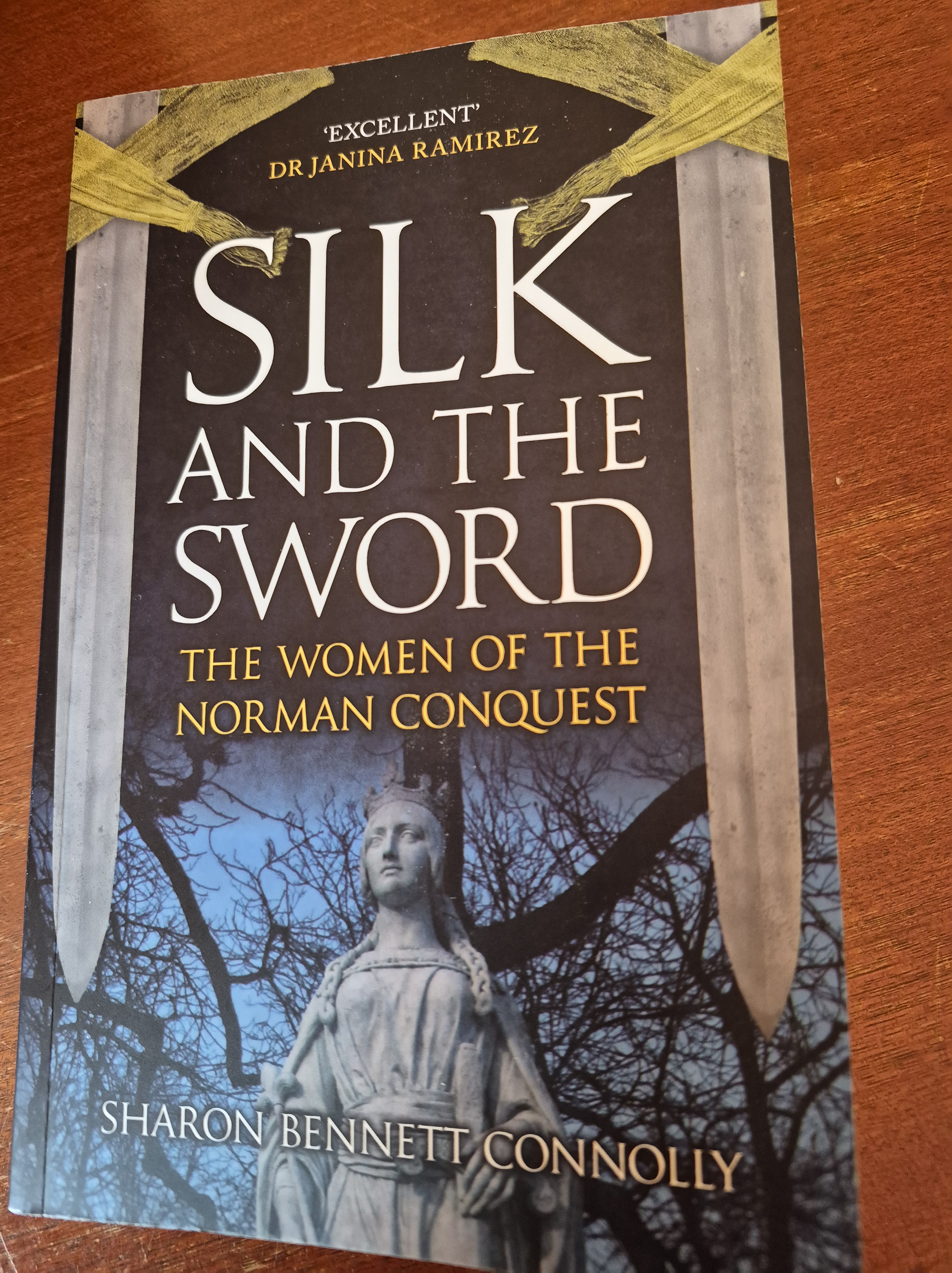
OUT NOW! The momentous events of 1066, the story of invasion, battle and conquest, are well known. But what of the women? Silk and the Sword: The Women of the Norman Conquest traces the fortunes of the women who had a significant role to play during the Norman Conquest – wives, lovers, sisters, mothers, leaders. These are lives full of drama, pathos and sometimes mystery: Edith and Gytha searching the battlefield of Hastings for the body of Harold, his lover and mother united in their grief for the fallen king. Who was Ælfgyva, the lady of the Bayeux Tapestry, portrayed with a naked man at her feet?

Janina Ramirez said it’s ‘Excellent’!

COMING 15 July 2026: Heroines of the Tudor World focuses on the women who lived through the Renaissance and Reformation, examining the threats and challenges they faced and how they overcame them. These are the women who ruled, the women who founded dynasties, the women who fought for religious freedom, their families and love. These are the women who made a difference, who influenced countries, kings and the Reformation.

Derek Birks: ‘An excellent account of the changing roles of women in Tudor society.’

Annie Whitehead: ‘What a treat this book was to read. Bennett Connolly has an easy, conversation style of writing which welcomes you from the opening pages and draws you into her story.

Also by Sharon Bennett Connolly:

Books by Sharon Bennett Connolly

Heroines of the Medieval World; Silk and the Sword: The Women of the Norman Conquest; Ladies of Magna Carta: Women of Influence in Thirteenth Century England; Defenders of the Norman Crown: Rise and Fall of the Warenne Earls of Surrey; King John’s Right Hand Lady: The Story of Nicholaa de la Haye; Women of the Anarchy; Heroines of the Tudor World; Scotland’s Medieval Queens: From St Margaret to Margaret of Denmark; Princesses of the Early Middle Ages: Royal Daughters of the Conquest (March 2026); Princesses of the Later Middle Ages; Royal Daughters of the Plantagenets (August 2026)

Alternate Endings: An anthology of historical fiction short stories including Long Live the King… which is my take what might have happened had King John not died in October 1216. Available in paperback and kindle from Amazon.

All my books on Amazon and Bookshop.org . You can also order direct from my publishers, Pen and Sword Books and Amberley Publishing.

Podcast:

A Slice of Medieval

Have a listen to the A Slice of Medieval podcast, which I co-host with Historical fiction novelist Derek Birks. Derek and I welcome guests, such as Ian Mortimer, Bernard Cornwell, Elizabeth Chadwick and Scott Mariani, and discuss a wide range of topics in medieval history, from significant events to the personalities involved. 

Every episode is also now available on YouTube.

*

Royal Historical Society

Don’t forget! 

Signed and dedicated copies of all my books are available through my online store.

For forthcoming online and in-person talks, please check out my Events Page.

You can be the first to read new articles by clicking the ‘Follow’ button, liking our Facebook page or joining me on Twitter and Instagram.

*

©2023 Sharon Bennett Connolly FRHistS

Cover Reveal: King John’s Right-Hand Lady

I am so excited!

It’s finally here!

King John’s Right-Hand Lady: the Story of Nicholaa de la Haye is now available for pre-order on Amazon in the UK (I will hopefully have a US release date shortly)

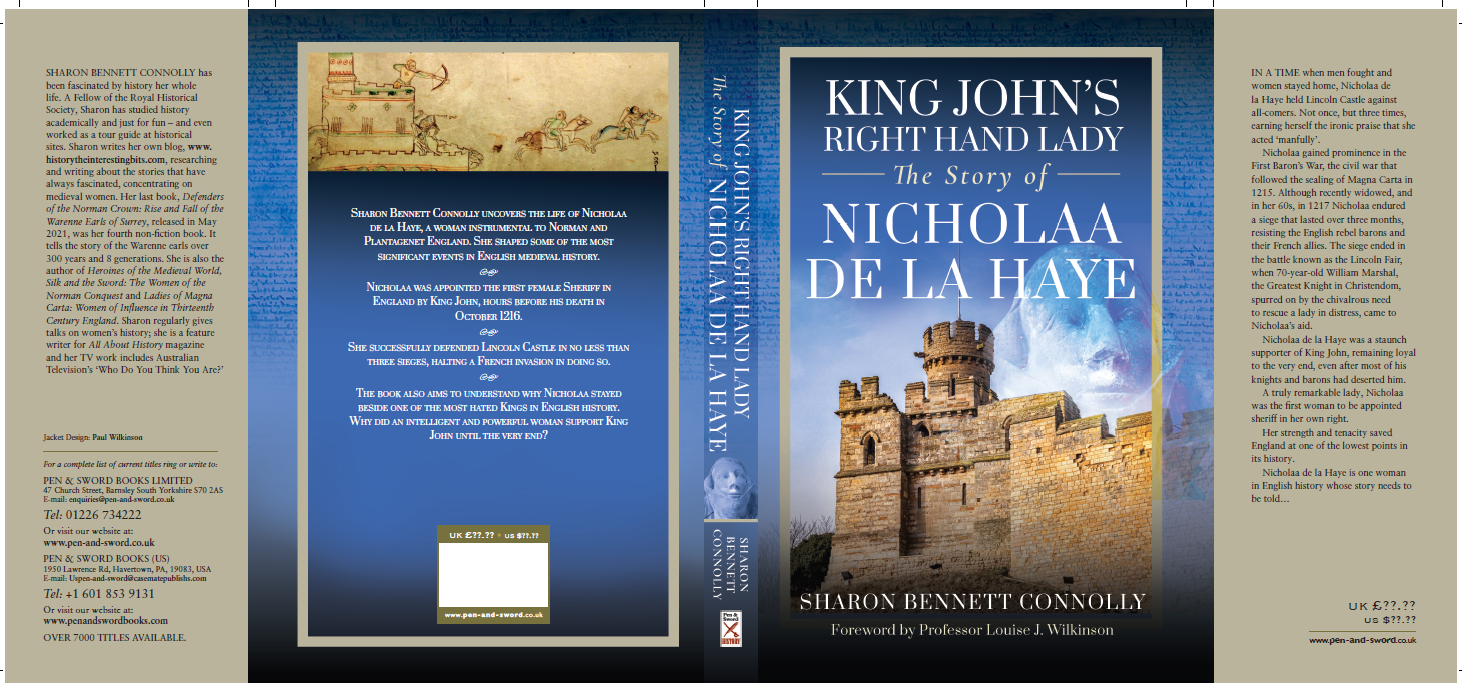
So, here is the stunning cover, designed by the fabulous cover design team at Pen & Sword.

And what a cover!

About the Book;

In a time when men fought and women stayed home, Nicholaa de la Haye held Lincoln Castle against all-comers. Not once, but three times, earning herself the ironic praise that she acted ‘manfully’. Nicholaa gained prominence in the First Baron’s War, the civil war that followed the sealing of Magna Carta in 1215.

Although recently widowed, and in her 60s, in 1217 Nicholaa endured a siege that lasted over three months, resisting the English rebel barons and their French allies. The siege ended in the battle known as the Lincoln Fair, when 70-year-old William Marshal, the Greatest Knight in Christendom, spurred on by the chivalrous need to rescue a lady in distress, came to Nicholaa’s aid.

Nicholaa de la Haye was a staunch supporter of King John, remaining loyal to the very end, even after most of his knights and barons had deserted him. A truly remarkable lady, Nicholaa was the first woman to be appointed sheriff in her own right. Her strength and tenacity saved England at one of the lowest points in its history. Nicholaa de la Haye is one woman in English history whose story needs to be told…

About me:

Sharon Bennett Connolly has been fascinated by history her whole life. A Fellow of the Royal Historical Society, Sharon has studied history academically and just for fun – and even worked as a tour guide at historical sites. Sharon writes her own blog, http://www.historytheinterestingbits.com, researching and writing about the stories that have always fascinated, concentrating on medieval women. Her last book, Defenders of the Norman Crown: Rise and Fall of the Warenne Earls of Surrey, was released in May 2021, is her fourth non-fiction book. It tells the story of the Warenne earls over 300 years and 8 generations. She is also the author of Heroines of the Medieval World, Silk and the Sword: The Women of the Norman Conquest and Ladies of Magna Carta: Women of Influence in Thirteenth Century England. Sharon regularly gives talks on women’s history; she is a feature writer for All About History magazine and her TV work includes Australian Television’s ‘Who Do You Think You Are?’

To pre-order:

King John’s Right-Hand Lady: The Story of Nicholaa de la Haye is now available for pre-order from Amazon UK.

My Books:

Signed, dedicated copies of all my books are available, please get in touch by completing the contact me form.

Defenders of the Norman Crown: The Rise and Fall of the Warenne Earls of Surrey tells the fascinating story of the Warenne dynasty, of the successes and failures of one of the most powerful families in England, from its origins in Normandy, through the Conquest, Magna Carta, the wars and marriages that led to its ultimate demise in the reign of Edward III. Defenders of the Norman Crown: Rise and Fall of the Warenne Earls of Surrey is now available from Pen & Sword BooksAmazon in the UK and US, Bookshop.org and Book Depository.

1 family. 8 earls. 300 years of English history!

Also by Sharon Bennett Connolly:

Ladies of Magna Carta: Women of Influence in Thirteenth Century England looks into the relationships of the various noble families of the 13th century, and how they were affected by the Barons’ Wars, Magna Carta and its aftermath; the bonds that were formed and those that were broken. It is now available in paperback and hardback from Pen & Sword,  AmazonBookshop.org and from Book Depository worldwide.

Heroines of the Medieval World tells the stories of some of the most remarkable women from Medieval history, from Eleanor of Aquitaine to Julian of Norwich. Available now from Amberley Publishing and Amazon, Bookshop.org and from Book Depository worldwide.

Silk and the Sword: The Women of the Norman Conquest traces the fortunes of the women who had a significant role to play in the momentous events of 1066. Available now from Amazon,  Amberley Publishing, Bookshop.org and Book Depository.

Alternate Endings: An anthology of historical fiction short stories including Long Live the King… which is my take what might have happened had King John not died in October 1216. Available in paperback and kindle from Amazon.

*

You can be the first to read new articles by clicking the ‘Follow’ button, liking our Facebook page or joining me on Twitter and Instagram.

©2023 Sharon Bennett Connolly

Long Live the King….

What would have happened if King John had not died in October 1216…?

Would England have been lost?

Find out in ‘Long Live the King…

I have finally done it!

I’ve written a fictional short story, and it’s out this week.

Alternate Endings is a compilation of short stories published by the Historical Writers Forum. I wasn’t sure about trying my hand at fiction, but there are so many What ifs in history that it was hard to resist. Having spent the last two years writing Nicholaa de la Haye’s biography – which will be published in May 2023, I thought it would be quite fun to take one event in Nicholaa’s life and see what might change if that event didn’t happen.

Nicholaa’s greatest benefactor and – dare I say? – friend was King John. He had been an ally since at least the early 1190s, but his death on the night of 18/19 October 1216 was a godsend for England. John’s reign had been plagued by unrest, civil war and the paranoia of the king himself. He had murdered his nephew, Arthur, starved Matilda de Braose to death in a dungeon and stolen the lands of those he was meant to protect. His reputation for underhand dealing, seducing the daughters of nobles and reneging on Magna Carta has seen him go down in history as Bad King John. He is a strong candidate for England’s worst ever king.

It has often been said that John’s death saved England.

I have to admit, I have a soft spot for King John. Not because he was such a warm, cuddly human being – he really wasn’t! But because his reign was full of so much drama. It was a time of transition, when England was losing its continental positions, when the barons were flexing their muscles and when the relationship between king and baron was in flux.

It is a fascinating period of history. So, when I was asked if I wanted to write a short story, I immediately thought of King John, of Nicholaa de la Haye and the upheaval that was Magna Carta and the First Barons’ War. Nicholaa’s involvement culminated in her defending Lincoln Castle through a prolonged siege that ended with the Second Battle of Lincoln. And I wondered… Would events have played out as they did if John had lived?

So… what would have happened if he had survived his illness in October 1216.

Well, you will have to wait and see…

But here’s a teaser….

Newark Castle

28 October 1216

John opened his eyes to a black, empty void.

   Is this it? Is this Hell?

   Has death finally claimed me?

He had been hovering on the brink for so long now. For exactly how long, he did not know. He could barely remember anything beyond the excruciating pain in his gut and head. Lying there in the dark, John took a mental inventory of his body. His head felt clearer than it had in days. The feeling that it was held in a vice had gone, replaced by a dull ache. The stabbing pains in his abdomen had also receded and now there was just a gentle throbbing.

  This could be death…

A groan slipped from between his lips. There was movement, the striking of flint and suddenly a flash of light. The candle’s flame illuminated the features of William Marshal. The Marshal leaned in to examine him, then turned to a lad curled up on bedding in the far corner, just lifting his head, looking groggy from sleep.

‘Godfrey, fetch the doctor. The king is awake.’ Marshal ordered.

‘He’s awake? He’s alive?’ asked a voice from the dark. It was heavily accented. Italian. Cardinal Guala, the papal legate.

‘Aye, your grace, he’s awake. At last!’ Marshal replied.

‘Praise be!’ exclaimed Guala, approaching the bed.

John tried to speak, but barely a croak came out. His mouth was so dry. Marshal signalled Guala to aid the king from the far side of the bed and between them, they lifted John and adjusted his pillows so that he was sitting up. He felt as useless as a new-born baby, he had not the strength to resist, even if he wanted to. Marshal turned to the table beside the bed and poured out a cup of water from the pewter jug. He held the cup to John’s lips, so that he could take a long, thirst-quenching draught. Nothing had ever tasted so wonderful!

John sank back into the pillows, exhausted, as the door opened and his physician entered, striding over to the bed.

I don’t want to give anything away, but the biggest challenge was to consider whether John’s survival would be a blessing or curse for England. And at least William Marshal and Nicholaa de la Haye are there to steady the boat – what could possibly go wrong?

About the book:

We all know the past is the past, but what if you could change history?

We asked eight historical authors to set aside the facts and rewrite the history they love. The results couldn’t be more tantalizing.

  • What if Julius Caesar never conquered Gaul?
  • What if Arthur Tudor lived and his little brother never became King Henry VIII?
  • What if Abigail Adams persuaded the Continental Congress in 1776 to give women the right to vote and to own property?

Dive in to our collection of eight short stories as we explore the alternate endings of events set in ancient Rome, Britain, the United States, and France.

An anthology of the Historical Writers Forum.

Alternate Endings is now available worldwide from Amazon.

*

My Books:

Signed, dedicated copies of all my books are available, please get in touch by completing the contact me form.

Defenders of the Norman Crown: The Rise and Fall of the Warenne Earls of Surrey tells the fascinating story of the Warenne dynasty, of the successes and failures of one of the most powerful families in England, from its origins in Normandy, through the Conquest, Magna Carta, the wars and marriages that led to its ultimate demise in the reign of Edward III. Defenders of the Norman Crown: Rise and Fall of the Warenne Earls of Surrey is now available from Pen & Sword BooksAmazon in the UK and US, Bookshop.org and Book Depository.

1 family. 8 earls. 300 years of English history!

Also by Sharon Bennett Connolly:

Ladies of Magna Carta: Women of Influence in Thirteenth Century England looks into the relationships of the various noble families of the 13th century, and how they were affected by the Barons’ Wars, Magna Carta and its aftermath; the bonds that were formed and those that were broken. It is now available in paperback and hardback from Pen & Sword, AmazonBookshop.org and from Book Depository worldwide.

Heroines of the Medieval World tells the stories of some of the most remarkable women from Medieval history, from Eleanor of Aquitaine to Julian of Norwich. Available now from Amberley Publishing and Amazon, Bookshop.org and Book Depository.

Silk and the Sword: The Women of the Norman Conquest traces the fortunes of the women who had a significant role to play in the momentous events of 1066.  Available now from Amazon,  Amberley Publishing, Bookshop.org and Book Depository.

*

You can be the first to read new articles by clicking the ‘Follow’ button, liking our Facebook page or joining me on Twitter and Instagram.

*

©2022 Sharon Bennett Connolly FRHistS.

Magna Carta’s Family Ties

Magna Carta

As I have been pursuing the various strands of research into the female personalities in medieval England, I have been struck, time and again, by how closely related the nobility were, through blood and marriage. Just look at the women who surround the Magna Carta story. Each of the women I wrote of had at least one familial connection to another great noble family; some had a number of links to several families. It is a tangled and complicated web, but I will try and give you a brief overview here.

As you may have noticed, my favourite medieval woman is Nicholaa de la Haye, castellan of Lincoln Castle; she successfully defended the castle through at least 3 sieges, the last 2 when she was a widow in her 60s. Nicholaa was related to King John’s half-brother, William  Longespée, Earl of Salisbury, through her son, Richard, whose daughter Idonea was married at a young age to William (II), Longespée’s son by his wife, Ela of Salisbury. It was as a result of this connection that William (I) Longespée claimed Lincoln Castle and the shrievalty of Lincolnshire following the Second Battle of Lincoln in May 1217. Longespée claimed that as they were his daughter-in-law’s inheritance, it was his right to administer them. Idonea’s father, Richard, had died sometime in the previous 12 months, leaving Idonea as his sole heir. Longespée appears to have conveniently forgotten – or ignored – the fact that the castle of Lincoln was Nicholaa’s by hereditary right – and Nicholaa was still very much alive!

Coat of arms of William Longespée, 3rd Earl of Salisbury

Despite Nicholaa’s stalwart defence of Lincoln Castle during a 10-week siege, Longespée was granted the position of sheriff just 4 days after the battle, and promptly seized the castle. Nicholaa’s refusal to accept this saw her presenting herself to the royal court and requesting she be reinstated. A compromise was reached whereby Longespée remained as sheriff of Lincolnshire, but Nicholaa was reinstated as castellan of Lincoln Castle, and given control of the city of Lincoln itself. Longespée was by no means satisfied and continued to scheme to gain control of the castle; Nicholaa doggedly held on and only retired from her position as castellan of Lincoln in 1226, 3 months after Longespée’s death.

Ela of Salisbury provided at least two further familial connections among my Ladies of Magna Carta. Through her grandfather, Patrick of Salisbury, Ela was a cousin of William Marshal and his five daughters. Marshal was the son of Patrick of Salisbury’s sister, Sybilla. Patrick himself had married, as his second wife, Ela de Talvas, who was the widow of William de Warenne, 3rd Earl of Warenne and Surrey. From her first marriage, Ela de Talvas was the mother of the heiress, Isabel de Warenne, Countess of Surrey in her own right and wife to, first, William of Blois, youngest son of King Stephen and secondly, Hamelin Plantagenet, illegitimate half-brother of King Henry II. Isabel de Warenne, therefore, was aunt to Ela of Salisbury, Richard the Lionheart and King John.

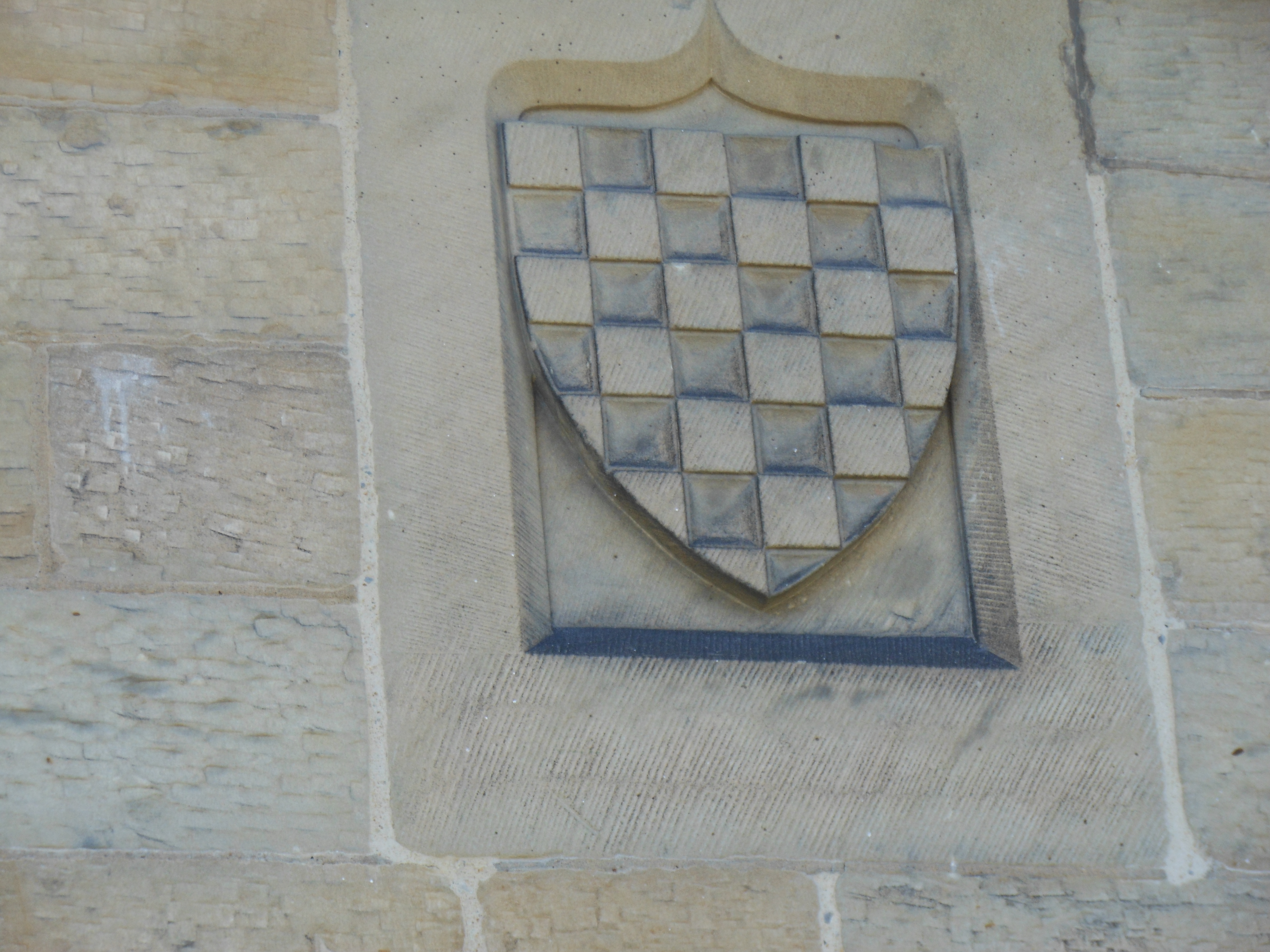
Arms of the Warenne earls of Surrey

Isabel de Warenne’s own aunt, Ada de Warenne, was married to the son and heir of King David I of Scotland, Henry, Earl of Huntingdon. Ada was the mother of two Scottish kings, Malcom IV the Maiden and William I the Lion. She was, therefore, the grandmother of the Scottish princesses, Margaret and Isabella, the only two women, other than the queen, Isabelle d’Angoulême, who can be clearly identified in a clause of Magna Carta. Margaret and Isabella had been handed over to King John as hostages following the 1209 Treaty of Norham, agreed between their father, William the Lion, and King John. John was supposed to find suitable husbands for the teenage girls; it had been implied that they would be married to John’s sons, Henry and Richard, but no marriages had ever materialised. Clause 59 of Magna Carta stipulated that John would find spouses for the princesses or send them home.

The two girls were eventually wed to English noblemen, though not until the 1220s. In 1221 Margaret married Hubert de Burgh, Henry III’s Justiciar and widower of another of my Ladies of Magna Carta, Isabella of Gloucester, who also had the dubious honour of having been the first wife of King John. Princess Isabella was married, in 1225, to Roger Bigod, Earl of Norfolk, who was 14 years her junior. The marriage was not a happy one. A third Scottish princess, Marjorie, who was several years younger than her two sisters and not part of the conditions of the Treaty of Norham, also married into the English nobility. She became the wife of Gilbert Marshal, 4th Earl of Pembroke, third son of the great William Marshal, Earl of Pembroke and regent for Henry III.

Hubert de Burgh from Matthew Paris’s Historia Anglorum

Roger Bigod was himself the son of Hugh Bigod, Earl of Norfolk, and Matilda Marshal, eldest daughter of William Marshal. Marshal was the man who had led the army that relieved Nicholaa de la Haye and the siege of Lincoln Castle in May 1220. Matilda married, as her second husband, William de Warenne, 5th Earl of Warenne and Surrey and only son of Isabel and Hamelin, mentioned earlier. Matilda’s sister, Isabel, was married to Gilbert de Clare, Earl of Gloucester; he was the nephew of the same Isabella of Gloucester who had been wife to King John, Geoffrey de Mandeville and Hubert de Burgh. Isabel Marshal then married, as her second husband, Richard, Earl of Cornwall, brother of Henry III and youngest son of King John. Another sister, Eva, married William (V) de Braose, grandson of William (IV) de Braose and Matilda, the poor woman who was imprisoned by King John and starved to death, alongside her eldest son, in his dungeons in 1210. It was Eva’s husband who was hanged by Llywelyn, Prince of Gwynedd, after he was found in Llywelyn’s bedroom with Llywelyn’s wife, Joan, Lady of Wales and illegitimate daughter of King John.

Which brings us neatly to the royal family. John’s eldest legitimate daughter, also named Joan, was betrothed as a child to Hugh X de Lusignan, Count of La Marche. The marriage never materialised, however, as Joan’s mother, Isabelle d’Angoulême, decided to marry Count Hugh in her daughter’s stead, causing a rather juicy scandal in the process! Joan was not without a suitor for long and within a year of her mother’s marriage she was married to Alexander II, King of Scots and brother of those same Scottish princesses who were included in Magna Carta’s clause 59. Of Joan’s sisters, Isabella was married to Frederick II, Holy Roman Emperor and Eleanor, only a baby at the time of her father’s death, was married to William (II) Marshal, eldest son and heir of the great William Marshal, at the age of 9. Eleanor was a widow before her 16th birthday, dramatically taking a vow of perpetual chastity in front of the Archbishop of Canterbury shortly after her husband’s death.

Arms of William Marshal, Earl of Pembroke

As her second husband, Eleanor married Simon de Montfort, Earl of Leicester, despite that pesky vow of chastity, which was to prove costly to Simon when he had to travel to Rome to seek a papal dispensation to have it annulled. Simon de Montfort was to continue the fight for reform that had been enshrined in Magna Carta, but would meet his end at the Battle of Evesham in 1265. Simon and Eleanor’s daughter, also named Eleanor, would marry Llywelyn, Prince of Wales, grandson of Llywelyn, Prince of Gwynedd. Eleanor died in childbirth in June 1282, while Llywelyn was defeated and killed by Edward I’s forces in December, the same year. Their only daughter, Gwenllian, was placed in a convent in Lincolnshire before she was 18 months old and would never leave it, dying there in 1337.

Another perpetual royal prisoner was Gwenllian’s distant cousin, Eleanor of Brittany, a granddaughter of Henry II, niece of King John and first cousin of Henry III. Her royal blood meant that she would never be afforded the protection enshrined in clause 39 of Magna Carta and inspired by the gruesome death of Matilda de Braose, that:

“No man shall be taken, imprisoned, outlawed, banished or in any way destroyed, nor will we proceed against or prosecute him, except by the lawful judgement of his peers or by the law of the land.”

There are many more familial links between the Ladies of Magna Carta. I could go on…

But I’m guessing that your heads are spinning and this is more than enough … for now.

Sources:

Rich Price, King John’s Letters Facebook group; Robert Bartlett England Under the Norman and Angevin Kings 1075-1225; Dan Jones The Plantagenets; the Kings who Made EnglandThe Plantagenet Chronicle Edited by Elizabeth Hallam; Maurice Ashley The Life and Times of King John; Roy Strong The Story of BritainOxford Companion to British History; Mike Ashley British Kings & Queens; David Williamson Brewer’s British Royalty; Ralph of Diceto, Images of History; Marc Morris, King John; David Crouch, William Marshal; Crouch and Holden, History of William Marshal; Crouch, David, ‘William Marshal [called the Marshal], fourth earl of Pembroke (c. 1146–1219)’, Oxforddnb.com; Flanagan, M.T., ‘Isabel de Clare, suo jure countess of Pembroke (1171×6–1220)’, Oxforddnb.com; Thomas Asbridge, The Greatest Knight; Chadwick, Elizabeth, ‘Clothing the Bones: Finding Mahelt Marshal’, livingthehistoryelizabethchadwick.blogspot.com; Stacey, Robert C., ‘Roger Bigod, fourth earl of Norfolk (c. 1212-1270)’, Oxforddnb.com; finerollshenry3.org.uk; Vincent, Nicholas, ‘William de Warenne, fifth earl of Surrey [Earl Warenne] (d. 1240)’, Oxforddnb.com.

*

My Books

Signed, dedicated copies of all my books are available through my online store.

OUT NOW! Heroines of the Tudor World

Heroines of the Tudor World tells the stories of the most remarkable women from European history in the time of the Tudor dynasty, 1485-1603. These are the women who ruled, the women who founded dynasties, the women who fought for religious freedom, their families and love. These are the women who made a difference, who influenced countries, kings and the Reformation. In the era dominated by the Renaissance and Reformation, Heroines of the Tudor World examines the threats and challenges faced by the women of the era, and how they overcame them. From writers to regents, from nuns to queens, Heroines of the Tudor World shines the spotlight on the women helped to shape Early Modern Europe.

Heroines of the Tudor World is now available for pre-order from Amberley Publishing and Amazon UK.

Coming 30 January 2025: Scotland’s Medieval Queens

Scotland’s history is dramatic, violent and bloody. Being England’s northern neighbour has never been easy. Scotland’s queens have had to deal with war, murder, imprisonment, political rivalries and open betrayal. They have loved and lost, raised kings and queens, ruled and died for Scotland. From St Margaret, who became one of the patron saints of Scotland, to Elizabeth de Burgh and the dramatic story of the Scottish Wars of Independence, to the love story and tragedy of Joan Beaufort, to Margaret of Denmark and the dawn of the Renaissance, Scotland’s Medieval Queens have seen it all. This is the story of Scotland through their eyes.

Available for pre-order now.

Also by Sharon Bennett Connolly:

Women of the Anarchy demonstrates how Empress Matilda and Matilda of Boulogne, unable to wield a sword themselves, were prime movers in this time of conflict and lawlessness. It shows how their strengths, weaknesses, and personal ambitions swung the fortunes of war one way – and then the other. Available from Bookshop.orgAmberley Publishing and Amazon UKKing John’s Right-Hand Lady: The Story of Nicholaa de la Haye is the story of a truly remarkable lady, the hereditary constable of Lincoln Castle and the first woman in England to be appointed sheriff in her own right. Available from all good bookshops Pen & Sword Booksbookshop.org and AmazonDefenders of the Norman Crown: The Rise and Fall of the Warenne Earls of Surrey tells the fascinating story of the Warenne dynasty, from its origins in Normandy, through the Conquest, Magna Carta, the wars and marriages that led to its ultimate demise in the reign of Edward III. Available from Pen & Sword BooksAmazon in the UK and US, and Bookshop.org

Ladies of Magna Carta: Women of Influence in Thirteenth Century England looks into the relationships of the various noble families of the 13th century, and how they were affected by the Barons’ Wars, Magna Carta and its aftermath; the bonds that were formed and those that were broken. It is now available in paperback and hardback from Pen & SwordAmazon, and Bookshop.orgHeroines of the Medieval World tells the stories of some of the most remarkable women from Medieval history, from Eleanor of Aquitaine to Julian of Norwich. Available now from Amberley Publishing and Amazon, and Bookshop.orgSilk and the Sword: The Women of the Norman Conquest traces the fortunes of the women who had a significant role to play in the momentous events of 1066. Available now from Amazon,  Amberley Publishing, and Bookshop.org.

Alternate Endings: An anthology of historical fiction short stories including Long Live the King… which is my take what might have happened had King John not died in October 1216. Available in paperback and kindle from Amazon.

Podcast:

Have a listen to the A Slice of Medieval podcast, which I co-host with Historical fiction novelist Derek Birks. Derek and I welcome guests, such as Bernard Cornwell and discuss a wide range of topics in medieval history, from significant events to the personalities involved.

*

Don’t forget! Signed and dedicated copies of all my books are available through my online store.

For forthcoming online and in-person talks, please check out my Events Page.

You can be the first to read new articles by clicking the ‘Follow’ button, liking our Facebook page or joining me on TwitterThreads and Instagram.

©2021 Sharon Bennett Connolly FRHistS

Daughters of the Greatest Knight

Arms of William Marshal, Earl of Pembroke

It is impossible to talk about anything related to Magna Carta without mentioning the man who has come to be known as ‘the Greatest Knight’: William Marshal, Earl of Pembroke, and his family. Marshal was one of the few nobles to stay loyal to King John throughout the Magna Carta crisis. That is not to say that the king and Marshal did not have their differences, nor that their relationship was always smooth sailing. However, William Marshal was famed for his loyalty and integrity and maintained his oaths to King John throughout his reign, regardless of the distrust between the two men.

The children of William and his wife, Isabel de Clare, cannot fail to have benefited from William Marshal’s rise through the ranks from fourth son and humble hearth knight, to earl of Pembroke and, eventually, regent for King Henry III. Their father’s position as a powerful magnate on the Welsh Marches, and the most respected knight in the kingdom, saw William’s daughters make advantageous marriages in the highest echelons of the English nobility.

William and Isabel were the parents of 10 children who survived to adulthood, 5 boys and 5 girls. In a bizarre and sad twist of fate, each of the boys would, in turn, succeed to the earldom, with not one leaving a male heir to continue the Marshal line. Of the girls, the couple’s eldest daughter was Matilda, also known as Maud or Mahelt. Given that her parents married in 1189 and she had two elder brothers, Matilda was probably born in 1193 or 1194. The Histoire de Guillaume le Maréchal wrote glowingly of Matilda, saying she had the gifts of

‘wisdom, generosity, beauty, nobility of heart, graciousness, and I can tell you in truth, all the good qualities which a noble lady should possess.’

 Histoire de Guillaume le Maréchal 

The Histoire goes on to say;

‘Her worthy father who loved her dearly, married her off, during his lifetime to the best and most handsome party he knew, to Sir Hugh Bigot.’

 Histoire de Guillaume le Maréchal 

Unfortunately for Matilda, her husband Hugh, the eldest son of the earl of Norfolk, was among the rebels during the Magna Carta crisis; their eldest son was taken hostage by the king when their castle at Framlingham surrendered to the royal army. It must have been a comfort to Matilda that, on John’s death, her son’s welfare, while still a hostage, would have been supervised by the new regent, the boy’s grandfather. When Hugh died in 1225, Matilda married for a second time just a few months later, to William de Warenne, Earl of Warenne and Surrey, thus uniting the Bigod, Warenne and Marshal families. The marriage appears to have been one of convenience rather than love but produced 2 children, a boy and a girl, John and Isabel. Matilda’s son by her second marriage, John de Warenne, joined his 3 older Bigod half-brothers, Roger, Hugh and Ralph as pall bearers for their mother’s coffin at her funeral in 1248, when she was laid to rest beside her mother at Tintern Abbey in Monmouthshire.

Seal of Matilda Marshal’s youngest son John de Warenne, 6th Earl of Warenne and Surrey

The next daughter, Isabel, was at least six years younger than Matilda, born in 1200. She was married to Gilbert de Clare, Earl of Gloucester and Hertford, who was twenty years her senior. Gilbert was the son of Richard de Clare, earl of Hertford, and Amicia, coheiress of William, Earl of Gloucester; through his mother he could trace his ancestry back to King Henry I, albeit through king’s illegitimate eldest son, Robert of Gloucester, the stalwart supporter of his half-sister, Empress Matilda. Gilbert’s aunt, Amicia’s sister, was Isabella of Gloucester, the discarded first wife of King John, who had held the earldom of Gloucester until her death on 14 October 1217, when it passed to Gilbert.

Both Gilbert and his father were named among the twenty-five barons appointed as Enforcers of Magna Carta in 1215; as a consequence, father and son were excommunicated at the beginning of 1216. After the death of King John, Gilbert sided with Prince Louis of France and was only reconciled with the royalist cause after the Battle of Lincoln in May 1217. This was despite having married Isabel, the second daughter of William Marshal, in 1214; Marshal had been regent of England for 9-year-old Henry III since King John’s death in October 1216. Like her older sister, Isabel had found her husband’s family were on the opposing side to her father in the Magna Carta crisis and the civil war that followed. They had 6 children together before Gilbert’s death in October 1230; he died on the return journey from an expedition to Brittany. Isabel was married again, not 6 months later, to the king’s younger brother, Richard, Earl of Cornwall. The early deaths of at least 2 children put a strain on this marriage and Richard had been seeking a divorce when Isabel found herself pregnant again. She was safely delivered of the longed-for son and heir, Henry of Almain in 1235. Tragically, Isabel herself died in childbirth, in 1240. Her baby son, Nicholas, died the same day.

The next-youngest of the Marshal sisters, Sibyl, was born around 1201: she was married to William de Ferrers, fifth earl of Derby. Unlike her elder sisters, Sibyl and her husband played little part in national affairs. Ferrers had been plagued by gout since his youth and led a largely secluded life. He was regularly transported by litter. Further, he had never fully recovered from an accident that had happened sometime in the 1230s. While crossing a bridge at St Neots in Huntingdonshire, Ferrers was thrown from his litter, into the water. It must have been a terrifying experience. He succeeded to the earldom of Derby on his father’s death in 1247 but died in 1254. During the marriage Sibyl gave birth to 7 children, all daughters: Agnes, Isabel, Maud, Sibyl, Joan, Agatha and Eleanor. Sibyl died sometime before 1247 and was laid to rest at Tintern Abbey, alongside her mother.

Tintern Abbey, Monmouthshire, resting place of several members of the Marshal family

William and Isabel Marshal’s fourth daughter, Eva, was born in about 1203 in Pembroke Castle, and so was only 16 when her father died – and 17 when she lost her mother. As a child, she spent several years with her family in exile in Ireland, only returning to England when her father was finally reconciled with King John in 1212. Sometime before 1221, Eva was married to William (V) de Braose, Lord of Abergavenny, son of Reginald de Braose and grandson of Matilda de Braose, who had died of starvation in King John’s dungeons in 1210. William de Braose was a wealthy Norman baron with estates along the Welsh Marches. He was hated by the Welsh, who had given him the nickname Gwilym Ddu, or Black William, and had been taken prisoner by Llywelyn ap Iorweth – Llywelyn the Great – in 1228.

Although he had been released after paying a ransom, de Braose later returned to Llywelyn’s court to arrange a marriage between his daughter, Isabella, and Llywelyn’s son and heir, Dafydd. During this stay, Eva’s husband was ‘caught in Llywelyn’s chamber with the King of England’s daughter, Llywelyn’s wife’. Whilst Llywelyn’s wife, Joan, Lady of Wales, the illegitimate daughter of King John, was imprisoned for a year, a much worse fate was meted out to William de Braose. He was publicly hanged on Llywelyn’s orders, leaving Eva a widow at the age of 27, with 4 young daughters, all under the age of 10. Despite the discomfort caused by Llywelyn’s execution of Braose, the marriage of Isabella and Dafydd went ahead, following some impressive diplomacy on Llywelyn’s part. Eva never remarried and spent her widowhood managing her own lands. She was caught up the revolt of her brother, Richard, in 1234, and appears to have acted as intermediary between her brother and the king to help resolve the situation. She died in 1246.

The youngest Marshal sister was Joan, who was still only a child when William Marshal died in 1219, being born in 1210. She is mentioned in the Histoire as having been called for by her ailing father, so that she could sing for him. Joan was married, before 1222, to Warin de Munchensi, a landholder and soldier who was born in the mid-1190s. When his father and older brother died in 1204 and 1208 (possibly), respectively, Warin was made a ward of his uncle William d’Aubigny, Earl of Arundel. He was ill-treated by King John, who demanded 2,000 marks in relief and quittance of his father’s Jewish debts on 23 December 1213. He was ordered to pay quickly and pledged his lands as a guarantee of his good behaviour.

Effigy identified as William Marshal, Temple Church, London

This harsh treatment drove him to ally with the rebel barons and he was captured fighting against the royalist forces, and his father-in-law, at the Battle of Lincoln, on 20 May 1217. He was, soon after, reconciled with the crown and served Henry III loyally on almost every military campaign of the next forty years. His marriage to Joan Marshal produced two children; John de Munchensi and a daughter, Joan, who would marry the king’s half-brother, William de Valence, fourth son of Isabelle d’Angoulême and her second husband, Hugh X de Lusignan, Count of La Marche. It was through his wife and, more accurately her mother, that William de Valence was allowed to accede to the earldom of Pembroke following the extinction of the Marshal male line. Joan Marshal died in 1234 and so never saw her daughter marry and become countess of Pembroke in 1247.

The various experiences of the 5 Marshal daughters serve as a demonstration of the divisions among the nobility, caused by the Magna Carta crisis, with several of them finding themselves on the opposing side to that of their father. It must have been a source of great anxiety for a family which appears to have been otherwise very close. These 5 young women also provide a snapshot of the fates of women in thirteenth century England, death in childbirth, early widowhood and second marriages arranged for personal security rather than love. What is evident is that, just like their father, these girls were an integral part of the Magna Carta story.

*

An earlier version of this article first appeared on Samantha Wilcoxson’s blog.

Sources:

Rich Price, King John’s Letters Facebook group; Robert Bartlett England Under the Norman and Angevin Kings 1075-1225; Dan Jones The Plantagenets; the Kings who Made EnglandThe Plantagenet Chronicle Edited by Elizabeth Hallam; Maurice Ashley The Life and Times of King John; Roy Strong The Story of BritainOxford Companion to British History; Mike Ashley British Kings & Queens; David Williamson Brewer’s British Royalty; Ralph of Diceto, Images of History; Marc Morris, King John; David Crouch, William Marshal; Crouch and Holden, History of William Marshal; Crouch, David, ‘William Marshal [called the Marshal], fourth earl of Pembroke (c. 1146–1219)’, Oxforddnb.com; Flanagan, M.T., ‘Isabel de Clare, suo jure countess of Pembroke (1171×6–1220)’, Oxforddnb.com; Thomas Asbridge, The Greatest Knight; Chadwick, Elizabeth, ‘Clothing the Bones: Finding Mahelt Marshal’, livingthehistoryelizabethchadwick.blogspot.com; Stacey, Robert C., ‘Roger Bigod, fourth earl of Norfolk (c. 1212-1270)’, Oxforddnb.com; finerollshenry3.org.uk; Vincent, Nicholas, ‘William de Warenne, fifth earl of Surrey [Earl Warenne] (d. 1240)’, Oxforddnb.com.

My Books

Signed, dedicated copies of all my books are available through my online bookshop.

Out now: Scotland’s Medieval Queens

Scotland’s history is dramatic, violent and bloody. Being England’s northern neighbour has never been easy. Scotland’s queens have had to deal with war, murder, imprisonment, political rivalries and open betrayal. They have loved and lost, raised kings and queens, ruled and died for Scotland. From St Margaret, who became one of the patron saints of Scotland, to Elizabeth de Burgh and the dramatic story of the Scottish Wars of Independence, to the love story and tragedy of Joan Beaufort, to Margaret of Denmark and the dawn of the Renaissance, Scotland’s Medieval Queens have seen it all. This is the story of Scotland through their eyes.

Scotland’s Medieval Queens gives a thorough grounding in the history of the women who ruled Scotland at the side of its kings, often in the shadows, but just as interesting in their lives beyond the spotlight. It’s not a subject that has been widely covered, and Sharon is a pioneer in bringing that information into accessible history.’ Elizabeth Chadwick (New York Times bestselling author)

Available now from Amazon and Pen and Sword Books

Also by Sharon Bennett Connolly:

Heroines of the Tudor World tells the stories of the most remarkable women from European history in the time of the Tudor dynasty, 1485-1603. These are the women who ruled, the women who founded dynasties, the women who fought for religious freedom, their families and love. Heroines of the Tudor World is now available for pre-order from Amberley Publishing and Amazon UK. Women of the Anarchy demonstrates how Empress Matilda and Matilda of Boulogne, unable to wield a sword themselves, were prime movers in this time of conflict and lawlessness. It shows how their strengths, weaknesses, and personal ambitions swung the fortunes of war one way – and then the other. Available from Bookshop.orgAmberley Publishing and Amazon UKKing John’s Right-Hand Lady: The Story of Nicholaa de la Haye is the story of a truly remarkable lady, the hereditary constable of Lincoln Castle and the first woman in England to be appointed sheriff in her own right. Available from all good bookshops Pen & Sword Booksbookshop.org and Amazon

Defenders of the Norman Crown: The Rise and Fall of the Warenne Earls of Surrey tells the fascinating story of the Warenne dynasty, from its origins in Normandy, through the Conquest, Magna Carta, the wars and marriages that led to its ultimate demise in the reign of Edward III. Available from Pen & Sword BooksAmazon in the UK and US, and Bookshop.orgLadies of Magna Carta: Women of Influence in Thirteenth Century England looks into the relationships of the various noble families of the 13th century, and how they were affected by the Barons’ Wars, Magna Carta and its aftermath; the bonds that were formed and those that were broken. It is now available in paperback and hardback from Pen & SwordAmazon, and Bookshop.orgHeroines of the Medieval World tells the stories of some of the most remarkable women from Medieval history, from Eleanor of Aquitaine to Julian of Norwich. Available now from Amberley Publishing and Amazon, and Bookshop.orgSilk and the Sword: The Women of the Norman Conquest traces the fortunes of the women who had a significant role to play in the momentous events of 1066. Available now from Amazon,  Amberley Publishing, and Bookshop.org.

Alternate Endings: An anthology of historical fiction short stories including Long Live the King… which is my take what might have happened had King John not died in October 1216. Available in paperback and kindle from Amazon.

Podcast:

Have a listen to the A Slice of Medieval podcast, which I co-host with Historical fiction novelist Derek Birks. Derek and I welcome guests, such as Bernard Cornwell and Michael Jecks, and discuss a wide range of topics in medieval history, from significant events to the personalities involved. Including an episode on William Marshal with Elizabeth Chadwick, author of The Greatest Knight. Every episode is now available on YouTube.

*

Don’t forget! Signed and dedicated copies of all my books are available through my online bookshop.

For forthcoming online and in-person talks, please check out my Events Page.

You can be the first to read new articles by clicking the ‘Follow’ button, liking our Facebook page or joining me on TwitterThreadsBluesky and Instagram.

*

©2021 Sharon Bennett Connolly FRHistS

Book Giveaway: Ladies of Magna Carta

Giveaway results!

First of all, i would like to say a huge thank you to everyone who entered the giveaway. There were 156 entries, which is truly incredible. But unfortunately there can be only one winnerAnd the winner is…Charlotte Clark.

Congratulations Charlotte. Thank you all for taking part and giving me such a confidence boost with your lovely comments.

If you do get your hands on a copy of Ladies of Magna Carta – or any of my books – do get in touch and I will send you a signed bookplate to pop in the front. Alternatively, I do have copies of all my books in stock if you’d like to purchase a signed and dedicated copy.

Love Sharon x

I realise that I haven’t done a giveaway in over a year. So, to celebrate the release of Ladies of Magna Carta in paperback in the UK this week, I thought I would do a giveaway. One signed copy of the brand spanking new paperback (it looks very pretty!) will go to the lucky competition winner.

Inspired by the lives of Matilda de Braose and Nichoaa de la Haye, My third book looks at the events surrounding the issuing of Magna Carta with a view to how it affected the women.

Praise for Ladies of Magna Carta:

“Sharon Bennett Connolly throws much needed light on the lives of the high-born women of thirteenth-century England…Connolly’s version of the first Plantagenets is superbly concise. No distractions or detours, hitting all the right nails on the head…Connolly’s book is an informative and delightful read about women aspiring to control their destiny against this backdrop, but their success or failure had less to do with Magna Carta than with the timeless principles of resourcefulness, determination and knowing how to skilfully handle the big guy. It’s these qualities that make their stories inspiring.”

Darren Baker, author of The Two Eleanors

“A well-researched and comprehensive study of the women who lived through, and were affected by, the Barons’ Revolt and the sealing of the Magna Carta. Ms Bennett Connolly has skilfully brought to the fore the lives of the women who have hitherto been hidden in the background. A must-read for anyone interested in this pivotal moment in English and Scottish history.”

Annie Whitehead, author of Women of Power in Anglo-Saxon England

It’s easy to enter!

The competition is open to everyone, wherever you are in the world. To win a signed and dedicated copy of Ladies of Magna Carta, simply leave a comment below or on my Facebook page and I will include you in the prize draw.

The draw will be made on Sunday 21 November.

*

My Books

Signed, dedicated copies of all my books are available, please get in touch by completing the contact me form.

Defenders of the Norman Crown: The Rise and Fall of the Warenne Earls of Surrey tells the fascinating story of the Warenne dynasty, of the successes and failures of one of the most powerful families in England, from its origins in Normandy, through the Conquest, Magna Carta, the wars and marriages that led to its ultimate demise in the reign of Edward III. Defenders of the Norman Crown: Rise and Fall of the Warenne Earls of Surrey is now available from Pen & Sword BooksAmazon in the UK and US and Book Depository.

1 family. 8 earls. 300 years of English history!

Also by Sharon Bennett Connolly:

Ladies of Magna Carta: Women of Influence in Thirteenth Century England looks into the relationships of the various noble families of the 13th century, and how they were affected by the Barons’ Wars, Magna Carta and its aftermath; the bonds that were formed and those that were broken. It is now available in paperback and hardback from Pen & Sword,  Amazon and from Book Depository worldwide.

Heroines of the Medieval World tells the stories of some of the most remarkable women from Medieval history, from Eleanor of Aquitaine to Julian of Norwich. Available now from Amberley Publishing and Amazon and Book Depository.

Silk and the Sword: The Women of the Norman Conquest traces the fortunes of the women who had a significant role to play in the momentous events of 1066.  Available now from Amazon,  Amberley Publishing, Book Depository.

*

You can be the first to read new articles by clicking the ‘Follow’ button, liking our Facebook page or joining me on Twitter and Instagram.

©2021 Sharon Bennett Connolly

Introducing the Earls of Warenne and Surrey

Books by Sharon Bennett Connolly
William de Warenne, 1st Earl of Warenne and Surrey, Trinity Church, Southover

The Warenne earls of Surrey were a fascinating family, right at the heart of English history and politics for almost 300 years, from the time of the Norman Conquest to the reign of Edward III. They held lands throughout England, acted as justiciars, sheriffs and generals – and yet, few people know their story.

But who were they?

William I de Warenne was rewarded for his support of King William II in the 1088 rebellion with the earldom of Surrey. However, the earls thereafter were as often referred to as the earls of Warenne – or the familial Earl Warenne, rather than earls of Surrey. The earldoms of Sussex and Strathearn (Scotland) were later added to these titles. As they appear to have preferred the simple familial title of Earl Warenne, that is how I have chosen to refer to them, except when establishing their titles. The Warenne’s extensive lands were spread over 13 counties and spanned the country from Lewes on the south coast to their castles of Conisbrough and Sandal in Yorkshire, with their family powerbase in East Anglia, where they built a magnificent priory, castle and medieval village at Castle Acre.

Wakefield, including Sandal Castle, appears to have come into the hands of the Warenne family at some point before 1121, during the tenure of the 2nd Earl Warenne. It is possible that they were acquired possibly in an exchange of lands with William Meschin, who had taken control of the Warenne holdings of Kimbolton in Huntingdonshire and Dean in Bedfordshire some time before 1130.

The family mausoleum was at St Pancras Priory in Lewes, founded by the first earl and his wife, Gundrada. It is the burial place of all but two subsequent earls and numerous other family members, as well as several earls of Arundel and their countesses.

For almost 300 years the Warenne earls of Surrey were some of the most influential men in the country, but the family died out rather ingloriously, with the seventh – and last – earl’s marital difficulties. Despite a prestigious marriage to a granddaughter of the king of England, John de Warenne, 7th Earl Warenne, died with no legitimate son to succeed him, though he had numerous acknowledged illegitimate children to whom he had given the family name.

Books by Sharon Bennett Connolly
Gundrada de Warenne, wife of the 1st earl

The first Warenne earl, William de Warenne, Earl of Warenne and Surrey, came to England with William the Conqueror’s invasion force and fought at the Battle of Hastings in 1066. As a younger son, he had little hope of an inheritance and had acquired his fortune and reputation fighting for the duke of Normandy, making his name as a young man at the 1054 Battle of Mortemer.

The Warennes were at the heart of English history and politics from the time of the Conquest to the death of John de Warenne, the 7th and last earl in 1347

So who were the Warenne earls?

Briefly,

William de Warenne was a distant cousin of William the Conqueror and fought at the Battle of Hastings. William was a trusted advisor and companion of King William I and was appointed justiciar in England during the king’s absences in Normandy. He pursued a personal feud against English freedom fighter, Hereward the Wake, after Hereward murdered his brother-in-law, Frederic. William was created Earl of Surrey by King William II, just weeks before his death in 1088, having been fatally wounded at the siege of Pevensey. William and his wife, Gundrada, founded the first Cluniac priory in England, St Pancras, at Lewes in Sussex. It would become the family mausoleum. William and Gundrada’s coffins were found in the 19th century, when the railway line was being laid, and are now interred in the Gundrada Chapel of Trinity Church, Southover.

Books by Sharon Bennett Connolly
The Warenne coat of arms, adopted by William de Warenne, 2nd Earl of Warenne and Surrey

He was succeeded by his oldest son, William II de Warenne (it was a popular name) who was earl for 50 years. This William had an awkward relationship with Henry I – William was thwarted in love by Henry when they both set their sights on the same woman, Matilda of Scotland. William supported Robert Curthose’s claim for the throne against Henry, but was persuaded to abandon the duke of Normandy in favour of the king of England after the former’s failed attempt to invade England led to Earl Warenne’s lands being confiscated by King Henry. From that moment on Earl Warenne was loyal to Henry and gave a rousing speech in favour of King Henry before the 1119 Battle of Bremule. He married Isabel de Vermandois, granddaughter of King Henry I of France and widow of Robert, Earl of Leicester. The relationship caused some scandal as one chronicler suggests Isabel and William ran away together, before Isabel’s first husband was dead. William’s royal ambitions would be realised when his daughter, Ada de Warenne, married Prince Henry of Scotland in 1139; William’s grandsons, Malcolm IV and William the Lion, both succeeded to the Scottish throne.

The 3rd earl fought on the wrong side (in my opinion) during the Anarchy; he supported King Stephen, rather than Empress Matilda. Also named William, he and his forces were ignominiously routed at the 1141 Battle of Lincoln, leaving King Stephen to be captured by Earl Robert of Gloucester. Earl Warenne redeemed himself by capturing the same Earl Robert during the Rout of Winchester in the summer of 1141, thus facilitating and exchange of commanders that saw King Stephen’s release from imprisonment at Bristol Castle. Perhaps growing tired of the constant civil war, in 1147 the earl left on the Second Crusade with his half-brother, Waleran de Beaumont, Count of Meulan, led by the brothers’ second cousin, Louis VII, and his wife, Eleanor of Aquitaine. Earl William was killed at the age of 28 at the Battle of Mount Cadmus in January 1148, leaving the earldom to his young daughter, Isabel.

Books by Sharon Bennett Connolly
Seal of Isabel de Warenne, 4th Countess of Warenne and Surrey in her own right

The 4th earl. Now this is where the subsequent numbering of earls gets confusing. There were two 4th earls, though some history books count them as the 4th and 5th earls. The earldom actually belonged to Isabel. Isabel de Warenne was 4th Countess of Warenne and Surrey in her own right. Her first husband, William of Blois (the first 4th earl), was the youngest son of King Stephen and her second husband, Hamelin Plantagenet (the second 4th earl), was the illegitimate half-brother of King Henry II; a thoroughly modern Hamelin changed his name from Plantagenet to de Warenne on marrying Isabel. The first marriage produced no children, which was a stroke of luck for Henry II, as William of Blois could have founded a royal dynasty to rival the mighty Plantagenets. The second marriage proved more fruitful, with three daughters and a son. Hamelin was a loyal supporter of his brother, Henry II, and nephews, Richard I and King John – despite the fact John seduced one of Hamelin’s daughters, fathering an illegitimate child with her. Hamelin also built the magnificent keep at Conisbrough Castle, South Yorkshire.

Their son, William de Warenne, the 5th Earl, was first cousin to both King Richard I and King John. He probably grew up in Normandy, and served with King Richard in France in the 1190s. William played an active role in English politics, negotiating with the rebels on John’s behalf in Spring 1215, attempting to avert civil war. He was a signatory of the Magna Carta in 1215 and again on its reissue in 1225; he was one of the few surviving earls to have witnessed both issues of the charter. He did side with the rebel barons and their French allies, for a time, but returned to the fold following King John’s death in October 1216. He then helped to negotiate the peace, in September 1217, which saw the French Prince Louis give up his claim to England and return home. He married Matilda Marshal, daughter of the great William Marshal, Earl of Pembroke and regent of England for the first few years of Henry III’s reign. The couple had two children; their daughter, Isabel d’Aubigny, Countess of Arundel, became famous for berating King Henry III over the appropriation of a wardship that was rightfully hers.

Books by Sharon Bennett Connolly
Seal of John de Warenne, 6th Earl of Warenne and Surrey

John de Warenne, the 6th earl, was the longest serving earl of them all, holding the title for 64 years. His father died when he was 8 years old. Henry III became his brother-in-law when he married the king’s half-sister, Alice de Lusignan, daughter of Queen Isabella of Angouleme and her second husband, Hugh X de Lusignan. The marriage was a happy one and, as far as we can tell, the couple truly loved each other; following Alice’s death in childbirth, John did not take another wife. John de Warenne fought in the Second Barons’ War and was a close associate of the future king, Edward I. He was at the Battle of Lewes in 1264, fighting for King Henry III against Simon de Montfort, but escaped to the continent when the battle was lost. John was probably at Evesham for the defeat and death of Simon de Montfort, though his presence is not recorded; he was certainly with Henry III’s son, Edward, in the days before the battle. His daughter, Isabella, was married to John Balliol, King of Scots, and the mother of Edward Balliol, who pursued his own claim to the Scottish throne in the 1330s. John was guardian of Scotland for a time and lost the Battle of Stirling to William Wallace in 1298. John de Warenne was a brutal man with a sense of humour; he once claimed the rights to all the rabbit warrens in Surrey – because it was his name! His son, William de Warenne, had died during a tournament in 1286, so when John died in 1304, aged 72, he was succeeded by his 18-year-old grandson, John II de Warenne.

Books by Sharon Bennett Connolly
Lewes Castle, Sussex, seat of the earls of Warenne and Surrey

John II de Warenne, the 7th and last earl of Warenne and Surrey, spent most of his adult life trying to divorce his wife, Jeanne de Bar (Joan of Bar), a granddaughter of King Edward I, in order to marry his mistress. He made various claims to try and effect a divorce, including that he had had an affair with his wife’s aunt, Mary of Woodstock, who had been a nun from the age of 7. John was embroiled in a private – but very public – feud with Thomas of Lancaster, Edward II’s most powerful vassal, and even went so far as kidnapping Lancaster’s wife, Alice de Lacey. In retaliation, Lancaster seized the Warenne castles of Conisbrough and Sandal, both being close to his own castle of Pontefract. The castles were only restored to John after Lancaster’s execution following his defeat at the Battle of Boroughbridge, in 1322. John was involved in many of the events that shaped the reign of Edward II, though he did not fight in the 1314 English defeat by the Scots at the Battle of Bannockburn. He supported Edward II to the end – almost, only adding his to support to Isabella of France and the future Edward III, when he saw that the king’s cause was hopeless. He died in 1347 at Conisbrough, still married to Jeanne de Bar and with no legitimate heir to succeed him. The earldom passed to his nephew, Richard FitzAlan, Earl of Arundel, but the Yorkshire lands, including Conisbrough and Sandal castles, passed to the crown and were given to Edward III’s fourth surviving son, Edmund of Langley, 1st Duke of York.

Books by Sharon Bennett Connolly
Castle Acre Priory, Norfolk, one of the Cluniac monasteries founded by the Warenne earls

And that is just a – very – brief summary of the earls.

The Warenne family has a fascinating history, standing at the heart of English politics for the better part of 3 centuries. They had a family bond that is not always found amongst the aristocracy, with brothers and sisters helping and supporting each other and working for the benefit of their family. Strategic marriages forged links with the greatest families in England, Scotland and France; their family connections spanned the greatest noble houses, from the Marshals, the FitzAlans, the Lusignans, the d’Aubignys and Percys to the Scottish, French and English royal families.

One family, over 8 generations, the Warennes were at the centre of 300 years of English history.

*

Selected Sources:

Elisabeth Van Houts, Hereward and Flanders (article), Anglo-Saxon England vol. 28; A History of the County of Sussex: Volume 2 edited by William Page; W.H. Blaauw, On the Early History of Lewes Priory, and its Seals, with extracts from a MS. Chronicle, Sussex Archaeological Collections; Edward Impey, Castle Acre Priory and Castle, English Heritage; Warenne, Gundrada de (d.1085) (article) by C.P. Lewis, Oxforddnb.com; Elisabeth M.C. Van Houts and Rosalind C. Love (eds and trans), The Warenne (Hyde) Chronicle; Jeffrey James, The Bastard’s Sons: Robert, William and Henry of Normandy; Early Yorkshire Charters Volume 8 Edited by William Farrer and Charles Travis Clay; Rev. John Watson, Memoirs of the Ancient Earls of Warren and Surrey, and Their Descendants to the Present Time, Volume I; Alfred S. Ellis, Biographical Notes on the Yorkshire Tenants Named in Domesday Book (article); C.P. Lewis, Warenne, William de, first Earl of Surrey [Earl Warenne] (d. 1088) (article), Oxforddnb.com; The Oxford Companion to British History Edited by John Cannon; The Plantagenets, the Kings who Made England by Dan Jones; History Today Companion to British History Edited by Juliet Gardiner and Neil Wenborn;  Brewer’s British Royalty by David Williamson; Britain’s Royal Families, the Complete Genealogy by Alison Weir; Conisbrough Castle Giudebook by Steven Brindle and Agnieszka Sadraei; The Mammoth Book of British Kings and Queens by Mike Ashley; The Plantagenets, the Kings that made Britain by Derek Wilson; royaldescent.net; F. Royston Fairbank, ‘The Last Earl of Warenne and Surrey, and the Distribution of his Possessions’, The Yorkshire Archaeological Journal, vol. XIX; Scott L. Waugh, ‘Warenne, John de, seventh earl of Surrey earl of Surrey and Sussex, Earl Warenne’, ODNB; ‘Annals written by a certain monk of Lewes, from the birth of Christ to the year 1312’ quoted in Blaauw, On the Early History of Lewes Priory; Kelcey Wilson-Lee, Daughters of Chivalry: The Forgotten Children of Edward I; Katheryn Warner, Philippa of Hainault: Mother of the English Nation

*

My Books:

Signed, dedicated copies of all my books are available through my online store.

Out now: Scotland’s Medieval Queens

Books by Sharon Bennett Connolly

Scotland’s history is dramatic, violent and bloody. Being England’s northern neighbour has never been easy. Scotland’s queens have had to deal with war, murder, imprisonment, political rivalries and open betrayal. They have loved and lost, raised kings and queens, ruled and died for Scotland. From St Margaret, who became one of the patron saints of Scotland, to Elizabeth de Burgh and the dramatic story of the Scottish Wars of Independence, to the love story and tragedy of Joan Beaufort, to Margaret of Denmark and the dawn of the Renaissance, Scotland’s Medieval Queens have seen it all. This is the story of Scotland through their eyes.

Scotland’s Medieval Queens gives a thorough grounding in the history of the women who ruled Scotland at the side of its kings, often in the shadows, but just as interesting in their lives beyond the spotlight. It’s not a subject that has been widely covered, and Sharon is a pioneer in bringing that information into accessible history.’ Elizabeth Chadwick (New York Times bestselling author)

Available now from Amazon and Pen and Sword Books

Also by Sharon Bennett Connolly:

Books by Sharon Bennett Connolly

Heroines of the Tudor World tells the stories of the most remarkable women from European history in the time of the Tudor dynasty, 1485-1603. These are the women who ruled, the women who founded dynasties, the women who fought for religious freedom, their families and love. Heroines of the Tudor World is now available from Amberley Publishing and Amazon UK. Women of the Anarchy demonstrates how Empress Matilda and Matilda of Boulogne, unable to wield a sword themselves, were prime movers in this time of conflict and lawlessness. It shows how their strengths, weaknesses, and personal ambitions swung the fortunes of war one way – and then the other. Available from Bookshop.orgAmberley Publishing and Amazon UKKing John’s Right-Hand Lady: The Story of Nicholaa de la Haye is the story of a truly remarkable lady, the hereditary constable of Lincoln Castle and the first woman in England to be appointed sheriff in her own right. Available from all good bookshops Pen & Sword Booksbookshop.org and Amazon

Royal Historical Society

Defenders of the Norman Crown: The Rise and Fall of the Warenne Earls of Surrey tells the fascinating story of the Warenne dynasty, from its origins in Normandy, through the Conquest, Magna Carta, the wars and marriages that led to its ultimate demise in the reign of Edward III. Available from Pen & Sword BooksAmazon in the UK and US, and Bookshop.orgLadies of Magna Carta: Women of Influence in Thirteenth Century England looks into the relationships of the various noble families of the 13th century, and how they were affected by the Barons’ Wars, Magna Carta and its aftermath; the bonds that were formed and those that were broken. It is now available in paperback and hardback from Pen & SwordAmazon, and Bookshop.orgHeroines of the Medieval World tells the stories of some of the most remarkable women from Medieval history, from Eleanor of Aquitaine to Julian of Norwich. Available now from Amberley Publishing and Amazon, and Bookshop.orgSilk and the Sword: The Women of the Norman Conquest traces the fortunes of the women who had a significant role to play in the momentous events of 1066. Available now from Amazon,  Amberley Publishing, and Bookshop.org.

Alternate Endings: An anthology of historical fiction short stories including Long Live the King… which is my take what might have happened had King John not died in October 1216. Available in paperback and kindle from Amazon.

Podcast:

A Slice of Medieval

Have a listen to the A Slice of Medieval podcast, which I co-host with Historical fiction novelist Derek Birks. Derek and I welcome guests, such as Bernard Cornwell and Michael Jecks, and discuss a wide range of topics in medieval history, from significant events to the personalities involved. 

Every episode is also now available on YouTube.

*

Don’t forget! Signed and dedicated copies of all my books are available through my online store.

For forthcoming online and in-person talks, please check out my Events Page.

You can be the first to read new articles by clicking the ‘Follow’ button, liking our Facebook page or joining me on TwitterThreadsBluesky and Instagram.

*

©2021 Sharon Bennett Connolly FRHistS