Guest Post: Philippa of Hainault and the Power of Pregnant Queens by Gemma Hollman

We have a wonderful guest on History… the Interesting Bits today. To celebrate the paperback release of her wonderful dual biography of Philippa of Hainault and Alice Perrers, The Queen and the Mistress, Gemma Hollman is here to tell us about one of the primary duties of a queen.

Philippa of Hainault and the Power of Pregnant Queens
History...the Interesting Bits
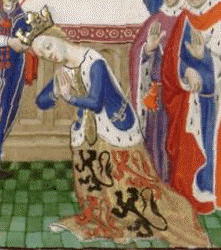
Philippa of Hainault

Medieval queens had many duties in life. They were to act as symbols of peace, their choice of spouse often made to end wars or confirm alliances; they were to intercede for the needy, obtaining pardons for criminals; they were to be charitable to the poor; patrons of artists, writers, and architects; and support their husbands in their difficult task as ruler. But, most importantly of all, they were to produce heirs.

This last role is most notable to us peering back through the actions of Henry VIII, whose quest for a male heir was part of his motivation in cycling through an unprecedented number of English queens. Medieval monarchs did not generally go to such extremes, and childless queens could and did exist – and could still wield significant power. But for those who did succeed, they could find a new level of status and influence unlocked for them.

Philippa of Hainault was the daughter of the Count and Countess of Hainault, Holland and Zeeland, a collection of territories in the Low Countries. Her homeland was wealthy from trade, and positioned to require careful political manoeuvring between the kingdoms of England and France. When the queen of England, Isabella of France, approached the Count and Countess for a marriage alliance between her son Edward and their daughter Philippa, they leapt at the chance to know their daughter would one day become a queen.
History...the Interesting Bits
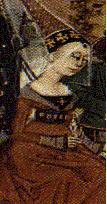
Isabella of France

The couple were teenagers, and the first few years of their marriage were hardly auspicious. Isabella of France had overthrown her husband, Edward II, and had her son made Edward III in his place. But though Philippa had thus become a queen far earlier than anticipated, she and her husband were kept under Isabella’s thumb. She did not want to give up her position at the top of the ladder. This was where Philippa would first discover the power of pregnancy for a queen.

Philippa fell pregnant around aged 15, and this was to change the course of her and her husband’s lives. Firstly, Philippa had never had a coronation, Isabella not wanting to have a rival as a consecrated consort. But now that Philippa would be giving birth to the new heir to the throne, it was unthinkable that she would remain uncrowned to do so. Whilst five months pregnant, she proceeded through London to receive her crown, the coronation sermons which reminded the queen of her duty to produce children seeming both poignant and redundant. Becoming pregnant had given Philippa her first taste of power.

That summer, Philippa gave birth to a healthy baby boy, and the English throne could breathe a sigh of relief that the succession was, for now, secured. The advent of a son also gave Edward III the push he needed to finally claim power for himself, overthrowing the rule of his mother and her lover. Philippa’s pregnancy had thus benefitted her husband, too.

Across the course of their marriage, Philippa was to give birth to twelve children, although sadly many did not outlive her. But each of these children bolstered Edward’s power, giving him bargaining chips to expand his empire through marriage alliances – or the promises of them. In turn, they provided status for Philippa, who was seen to have amply fulfilled the most important of queenly duties. They also gave her much comfort on a personal level, the queen being noted for keeping her children within her own household, rather than sending them away as was not uncommon.
History...the Interesting Bits
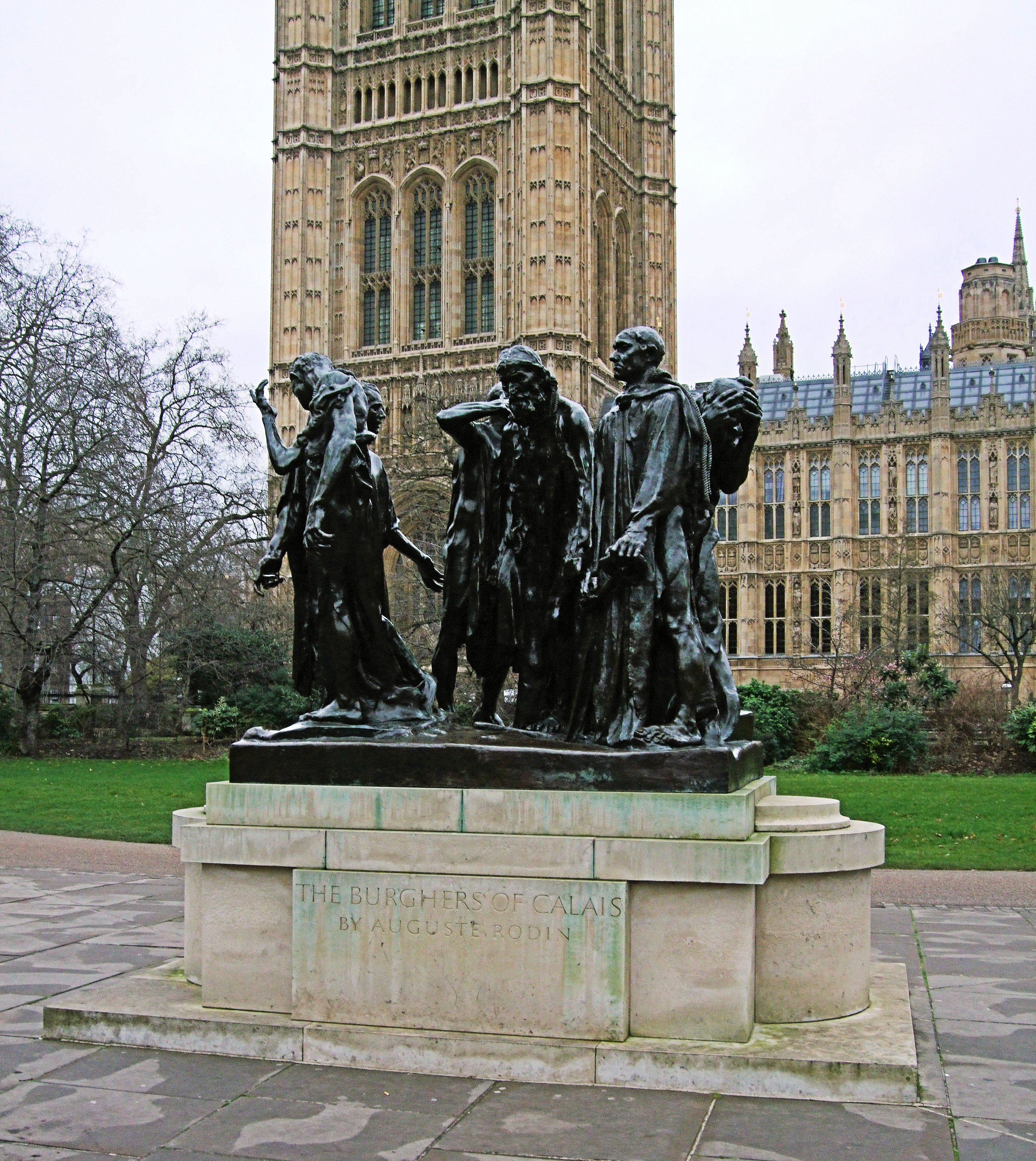
The Burghers of Calais

Pregnancy also became a powerful mythmaking tool for Philippa. In the 1340s, Edward III spent the best part of a year besieging the key French port city of Calais. If he could capture Calais, then he would show his might to the French kingdom, and have a huge victory on his road to attempting to claim the French throne for himself. Philippa, as a loyal and loving wife, spent many months outside the walls with her husband, keeping him company during the siege and providing morale to the soldiers. Finally, the city surrendered. Edward had his day of glory.

However, the citizens of Calais were mournful of their fate. Many of them had died of starvation and disease, and those who had survived now had to leave their homes and belongings behind, all of which were now property of the English king. More importantly, the most prominent men of the city, known as burghers, knew that their lives were forfeit. In the face of such a lengthy siege, the leaders were often executed. The men came out of the city with nooses around their neck and surrendered themselves into Edward’s hands.

According to legend, Edward wished to go ahead with this punishment, and would not listen to any of his lords who pled for mercy. Suddenly, Queen Philippa of Hainault, who was exceedingly heavy with child, fell to her husband’s feet, weeping and begging him to spare the men. Overcome with emotion at seeing his dear, pregnant wife in such a state, Edward agreed to pardon the men, and handed them into Philippa’s custody.
History...the Interesting Bits
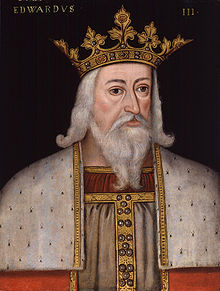
Edward III

In reality, we know from records of Philippa’s other births that she could not have been pregnant at this time. The image of a pregnant queen was so powerful to medieval minds, that storytellers and chroniclers often leveraged it to make their story more meaningful. Philippa may well have interceded for the burghers, but she did not do so pregnant.

Philippa died in 1369 aged around 55, and she was surrounded by her husband and several of her surviving children. Asking Edward that he would be buried beside her when he died, so they could rest together forever, the king agreed; their tombs still stand in Westminster Abbey today. The country mourned the death of their great queen, who had been a steadying presence for four decades. Her many children and their spouses were represented on her tomb as little statues around the sides, reminding everyone even in death of the power of her pregnancies.

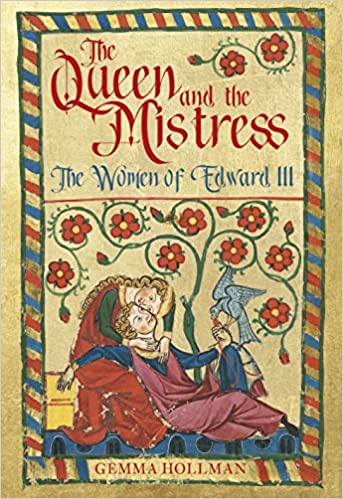
About the Book:
History...the Interesting Bits

IN A WORLD WHERE MAN IS KING, CAN WOMEN REALLY HAVE IT ALL – AND KEEP IT?

Philippa of Hainault was Queen of England for forty-one years. Her marriage to Edward III, when they were both teenagers, was more political transaction than romantic wedding, but it would turn into a partnership of deep affection. The mother of twelve children, she was the perfect medieval queen: pious, unpolitical and fiercely loyal to both her king and adopted country.

Alice Perrers entered court as a young widow and would soon catch the eye of an ageing king whose wife was dying. Born to a family of London goldsmiths, this charismatic and highly intelligent woman would use her position as the king’s favourite to build up her own portfolio of land, wealth and prestige, only to see it all come crashing down as Edward himself neared death.

The Queen and the Mistress is a story of female power and passion, and how two very different women used their skills and charms to navigate a tumultuous royal court – and win the heart of the same man.

To buy the book: Amazon

About the author:

History...the Interesting Bits

Author bio: Gemma Hollman is a historian and author who specialises in late medieval English history. A Fellow of the Royal Historical Society, she has a particular interest in the plethora of strong, intriguing and complicated women from the medieval period, a time she had always been taught was dominated by men. Gemma also works full-time in the heritage industry whilst running her historical blog, Just History Posts, which explores all periods of history in more depth. Gemma’s first book, Royal Witches, was a bestseller, and two more books have since followed: The Queen and the Mistress, and Women in the Middle Ages.

Where to find Gemma:

Websitehttps://justhistoryposts.com/Link for bookshttps://lnk.bio/GemmaHAuthorSocial media: Bluesky https://bsky.app/profile/gemmahauthor.bsky.social.

*

My Books:

Signed, dedicated copies of all my books are available through my online bookshop. or by contacting me.

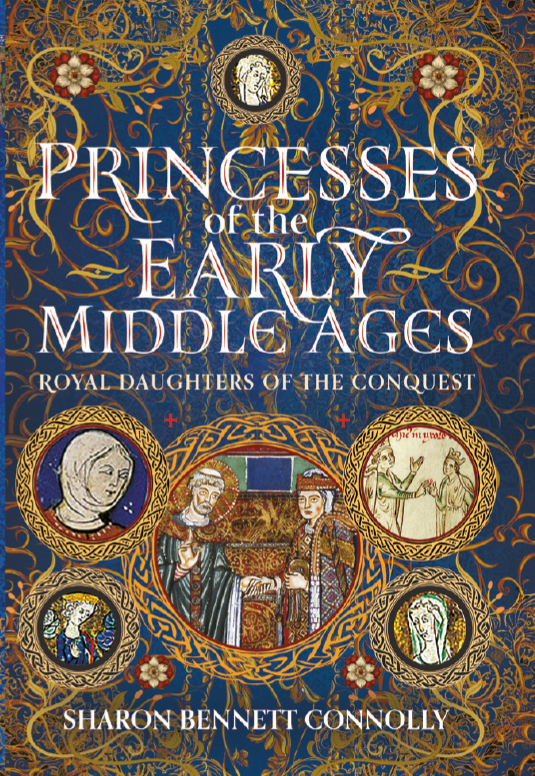
Out Now: Princesses of the Early Middle Ages
Books by Sharon Bennett Connolly

Daughters of kings were often used to seal treaty alliances and forge peace with England’s enemies. Princesses of the Early Middle Ages: Royal Daughters of the Conquest explores the lives of these young women, how they followed the stereotype, and how they sometimes managed to escape it. It will look at the world they lived in, and how their lives and marriages were affected by political necessity and the events of the time. Princesses of the Early Middle Ages will also examine how these girls, who were often political pawns, were able to control their own lives and fates. Whilst they were expected to obey their parents in their marriage choices, several princesses were able to exert their own influence on these choices, with some outright refusing the husbands offered to them.

Their stories are touching, inspiring and, at times, heartbreaking.

Princesses of the Early Middle Ages: Royal Daughters of the Conquest is now available from Pen & Sword and Amazon.

Sharon is the author of:

Books by Sharon Bennett Connolly

Heroines of the Medieval World; Silk and the Sword: The Women of the Norman Conquest; Ladies of Magna Carta: Women of Influence in Thirteenth Century England; Defenders of the Norman Crown: Rise and Fall of the Warenne Earls of Surrey; King John’s Right Hand Lady: The Story of Nicholaa de la Haye; Women of the Anarchy; Heroines of the Tudor World; Scotland’s Medieval Queens: From St Margaret to Margaret of Denmark; Princesses of the Early Middle Ages: Royal Daughters of the Conquest (March 2026); Princesses of the Later Middle Ages; Royal Daughters of the Plantagenets (August 2026)

All my books on AmazonBookshop.org . You can also order direct from my publishers, Pen and Sword Books and Amberley Publishing.

Podcast:
History...the Interesting Bits

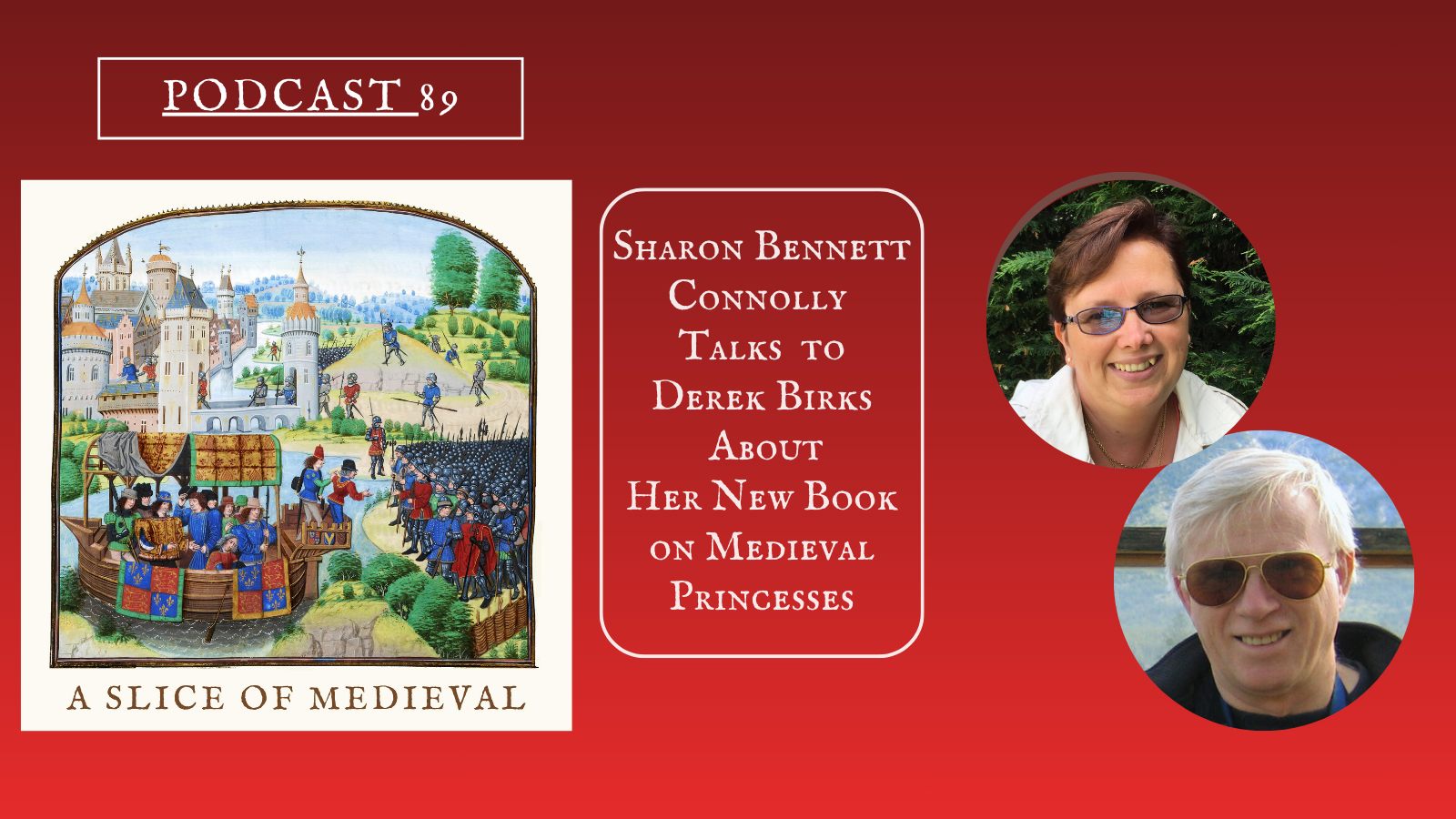
Have a listen to the A Slice of Medieval podcast, which I co-host with Historical fiction novelist Derek Birks. Derek and I welcome guests, such as Ian Mortimer, Bernard Cornwell, Elizabeth Chadwick and Scott Mariani, and discuss a wide range of topics in medieval history, from significant events to the personalities involved. 

Every episode is also now available on YouTube.

*
Royal Historical Society

Don’t forget! Signed and dedicated copies of all my books are available through my online bookshop.

For forthcoming online and in-person talks, please check out my Events Page.

You can be the first to read new articles by clicking the ‘Follow’ button, liking our Facebook page or joining me on Twitter and Instagram.

©2026 Sharon Bennett Connolly FRHistS and Gemma Hollman FRHistS
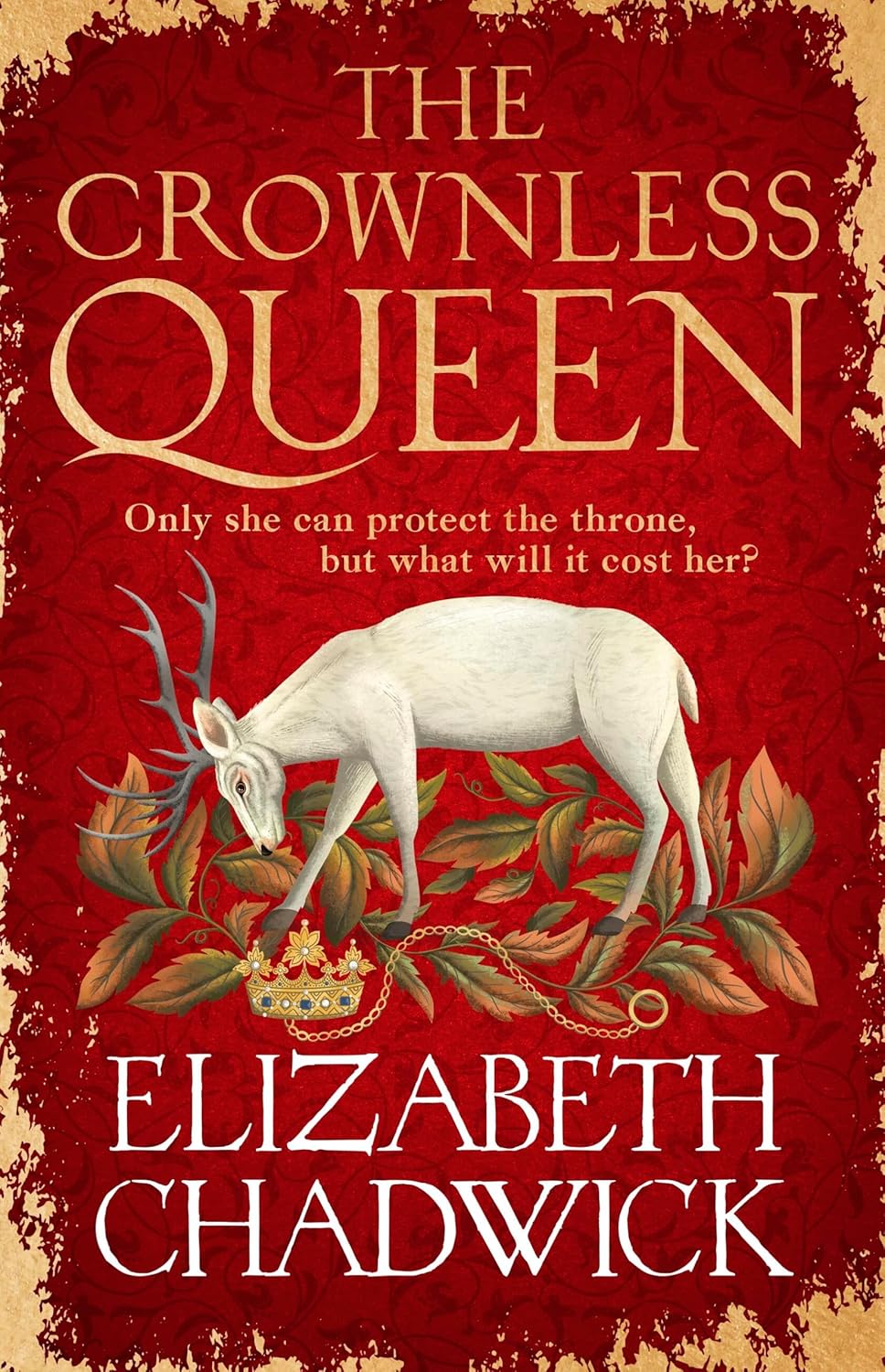
Book Corner: The Crownless Queen by Elizabeth Chadwick

History...the Interesting Bits

1360: Having left her days of rebellion behind, Jeanette of Kent has finally found contentment as a wife and mother. Then, she is delivered a new blow: her beloved husband, Thomas Holland, has died on duty overseas.

Though broken, Jeanette readies herself once more to fight to protect what is hers. And when Prince Edward, heir to the throne and her longtime friend, unexpectedly steps forward and offers marriage, she accepts for the sake of her family.

As their relationship deepens, love blossoms again for Jeanette, but it comes at a price. With great power comes great responsibility – not least bearing a future king – and, as the wheel of fortune climbs higher, it becomes harder and harder to hold on.

Jeanette has more to lose than ever before. But with the wolves gathering beneath her, can she survive the fall?

From the award-winning and bestselling author Elizabeth Chadwick comes the much-awaited second novel in the Jeanette of Kent duology, The Crownless Queen – bringing to a powerful conclusion the remarkable story of a woman who began life as a royal rebel and ended it behind the throne…

My new measure of how good is a book by Elizabeth Chadwick is the number of times it makes me cry – and how soon into the book it happens. With The Crownless Queen, I was an emotional wreck after the first chapter. This is the second book in a duology, telling the story of Joan, the Fair Maid of Kent, who had a rather chequered marital history. The book opens where The Royal Rebel ended, with Jeanette happily married to Thomas Holland. But the news (spoiler alert!) soon arrives of his death. Well, I was in tears. And it’s not like I don’t know the story – I have written about it myself on more than one occasion. But it was sad to read about the death of the man Joan had fought so hard to be with.

And it was an early indication of the emotional rollercoaster on which I was about to embark

Elizabeth Chadwick has a knack of making her historical characters feel ‘present’, and of getting her readers to feel invested in the lives of people who lived almost 700 years ago!

How does she do it?

The next day’s biting cold did not deter the men from their intention of riding out to hunt in the park beyond the palace complex. They gathered in the courtyard soon after a red sunrise and stood in breath-misted groups, talking, jesting, bonding as the grooms brought the horses and the dogs milled underfoot, snuffling, eager to be away.

Standing on the periphery to wave them off, Jeanette heard Edward ask Tom to hand him his gauntlets, which the boy did with careful alacrity, his cheeks rosy-bright with cold. Edward pulled them on, clenching his fists to ease the fit over his knuckles before turning to his black courses. He swung effortlessly into the saddle, long-legged, powerful. One hand on his thigh, the other gripping the reins, he observed Tom mounting his own pony and remarked positively on his horsemanship. Tom jutted his chin with pride and flicked Edward a worshipping look. Then Edward similarly complimented Johan and winked at him as he managed his sturdy little bay.

Jeanette smiled at the exchange while feeling a little sad. Her longing for Thomas was still strong this morning, like a shadow at her side. She wishes she had gone with him to Rouen, but there had been business to deal with at home and he had assured her it would not be for long. Nut it was three months now, and in the short winter daylight it felt like for evere.

The king gestured from the saddle of his dappled stallion and the fewterers blew the hunting horns, sounding the way. In a clatter of hooves and exuberant shouts, the company departed at the brisk trot, dogs straining their leashes and already giving excited tongue. Tom and Johan were too busy staying close to the Prince, their hero to turn and wave to her, and Jeanette recognised yet another sign of their all too rapid travel towards independent manhood.

When the last rider had clattered from the yard leaving the grooms to sweep up the dung, she set out with her two closest ladies, Hawise and Eleanor, to walk Hal and Nimble. Her daughters had remained behind in the communal royal nursery with their playmates, which meant Jeanette could stride out as she loved to do.

Elizabeth Chadwick conducts exemplary research for all her books. Her insistence on not changing the facts we do know adds an extra level of authenticity to her storytelling. Where Elizabeth excels is in the grey areas, where the facts are confusing or incomplete. Here, she presents the most likely scenario that will move the story along. It also means the reader gets a strong sense of the internal politics, familial alliances and machinations of the court of Edward III – and of the 14th century as a whole.

As The Crownless Queen demonstrates, Elizabeth Chadwick knows her characters so completely and intimately that she knows what they would do in most situations. And it is not just Edward and Jeanette (the Black Prince and Joan of Kent). John of Gaunt is a living, breathing character who grows and develops, nurturing his own relationship with Jeanette as a friend and sister. Other characters, prominent at Edward III’s court, such as Alice Perrers and Katherine Swynford, also play significant roles in the story, making the novel a fine-woven tapestry of the events of the 14th century.

The future Richard II, Jeanette’s youngest child, shows his personality at an early age. He is not just another child in the nursery, but one who is developing a personality and showing himself to be a big part of Jeanette’s story, just like his older Holland half-siblings. He has a fascination for pageantry and kingship; a foreshadowing of the king who defined ‘majesty’ and ‘tyranny’ in the same reign. Elizabeth Chadwick’s version of Richard reminded me of Helen Castor’s assessment of Richard’s childhood in The Eagle and the Hart and how the young prince was affected by his father’s ailing health, the hopes of the dynasty on his shoulders, and the lack of siblings his own age. All factors which contributed to Richard’s personality as king.

The Crownless Queen is an entertaining, engrossing novel that also gives plenty of food for thought for the historian. It flows beautifully through the story of the marriage of Jeanette and her prince. I loved every word!

It may rival The Greatest Knight as my favourite Elizabeth Chadwick novel – at least until her novel on Katherine Swynford comes out!

Buy the book: The Crownless Queen

About the author:

History...the Interesting Bits

New York Times bestselling author Elizabeth Chadwick lives in a cottage in the Vale of Belvoir in Nottinghamshire with her husband and their 4 terriers, Pip, Jack, Billy and Little Ted. Her first novel, The Wild Hunt, won a Betty Trask Award and To Defy a King won the RNA’s 2011 Historical Novel Prize. She was also shortlisted for the Romantic Novelists’ Award in 1998 for The Champion, in 2001 for Lords of the White Castle, in 2002 for The Winter Mantle and in 2003 for The Falcons of Montabard. Her sixteenth novel, The Scarlet Lion, was nominated by Richard Lee, founder of the Historical Novel Society, as one of the top ten historical novels of the last decade. She often lectures at conferences and historical venues, has been consulted for television documentaries and is a member of the Royal Historical Society.

For more details on Elizabeth Chadwick and her books, visit http://www.elizabethchadwick.com, follow her on Twitter, read her blogs or chat to her on her friendly Facebook page.

*

My Books:

Signed, dedicated copies of all my books are available through my online bookshop. or by contacting me.

Out Now: Princesses of the Early Middle Ages

Books by Sharon Bennett Connolly

Daughters of kings were often used to seal treaty alliances and forge peace with England’s enemies. Princesses of the Early Middle Ages: Royal Daughters of the Conquest explores the lives of these young women, how they followed the stereotype, and how they sometimes managed to escape it. It will look at the world they lived in, and how their lives and marriages were affected by political necessity and the events of the time. Princesses of the Early Middle Ages will also examine how these girls, who were often political pawns, were able to control their own lives and fates. Whilst they were expected to obey their parents in their marriage choices, several princesses were able to exert their own influence on these choices, with some outright refusing the husbands offered to them.

Their stories are touching, inspiring and, at times, heartbreaking.

Princesses of the Early Middle Ages: Royal Daughters of the Conquest is now available from Pen & Sword and Amazon.

Sharon is the author of:

Books by Sharon Bennett Connolly

Heroines of the Medieval World; Silk and the Sword: The Women of the Norman Conquest; Ladies of Magna Carta: Women of Influence in Thirteenth Century England; Defenders of the Norman Crown: Rise and Fall of the Warenne Earls of Surrey; King John’s Right Hand Lady: The Story of Nicholaa de la Haye; Women of the Anarchy; Heroines of the Tudor World; Scotland’s Medieval Queens: From St Margaret to Margaret of Denmark; Princesses of the Early Middle Ages: Royal Daughters of the Conquest (March 2026); Princesses of the Later Middle Ages; Royal Daughters of the Plantagenets (August 2026)

All my books on AmazonBookshop.org . You can also order direct from my publishers, Pen and Sword Books and Amberley Publishing.

Podcast:

History...the Interesting Bits

Have a listen to the A Slice of Medieval podcast, which I co-host with Historical fiction novelist Derek Birks. Derek and I welcome guests, such as Ian Mortimer, Bernard Cornwell, Elizabeth Chadwick and Scott Mariani, and discuss a wide range of topics in medieval history, from significant events to the personalities involved. 

Every episode is also now available on YouTube.

*

Royal Historical Society

Don’t forget! Signed and dedicated copies of all my books are available through my online bookshop.

For forthcoming online and in-person talks, please check out my Events Page.

You can be the first to read new articles by clicking the ‘Follow’ button, liking our Facebook page or joining me on Twitter and Instagram.

©2026 Sharon Bennett Connolly FRHistS