Guest Post: Anna of Denmark by Tony Riches

History...the Interesting Bits

My dear friend and fellow author, Tony Riches, has a new book out! Tony is one of those authors who actively encourages his fellow author. He was one of the first people to offer to review my book, Heroines of the Medieval World, even before I had finished writing it. Even today, as I was congratulating him on the release of his new book, Tony was sharing posts on social media, celebrating the paperback publication of my own Heroines of the Tudor World. He will never know how much his support and encouragement has meant to me me over the last 10 years. Which is why it so great for me to be able to give a little of that back, by inviting Tony to talk about his new book. And it is the start of what promises to be a fabulous new series.

For the last few years, Tony has been concentrating on the Tudors with books such as Drake – Tudor Corsair and his fabulous Brandon Trilogy. Tony’s recent 6-part Elizabethan Series highlighted the likes of Robert Devereux, Earl of Essex and Bess Throckmorton. An accomplished historical fiction writer, Tony has a way of bringing the past to life, recreating the lives and experiences of the people of the past with his extensive research ensuring authenticity.

With Queen Anna, the first book in his new Stuart Queens Trilogy, Tony is continuing his established ability to retell the history in a thoroughly entertaining and engaging manner.

So, what is the story behind Queen Anna? Over to Tony….

Anna of Denmark

History...the Interesting Bits
Sketch for a portrait of the architect Inigo Jones,
created by Anthony van Dyck around 1632.
(Wikimedia Commons)

While researching my new book, ‘Queen Anna’, about the life of Anna of Denmark, I realised the significance of her unlikely relationship with Inigo Jones, the son of clothworker from Smithfield, London. Together, they led an artistic renaissance that transformed the ‘masque’ into an important diplomatic spectacle, laid the foundations of British classical architecture, and influenced the public perception of the Stuart dynasty.

Anna arrived in England after the death of Queen Elizabeth I in 1603 as queen consort of King James VI and I, she brought with her a bold, artistic sensibility that redefined the Jacobean court. Anna employed Inigo Jones as her stage designer, and found he was a visionary artist and aspiring architect who would become her ultimate creative partner.

Stagecraft and Spectacular Masques

Queen Anna was passionate about the court masque, extravagant theatrical spectacles combining poetry, music, dancing, and elaborate set design. Collaborating with playwright Ben Jonson, who probably recommended Inigo Jones as a set designer, Queen Anna transformed these performances into dazzling displays of royal majesty.

For landmark productions like The Masque of Blackness (1605) and The Masque of Queens (1609), Anna commissioned the works and took centre stage as a performer, ordering the late queen’s priceless gowns to be adapted as costumes. Inigo Jones brought her theatrical visions to life using innovative stagecraft he’d discovered while working in Italy.

He designed exotic, glittering costumes and introduced innovative, movable scenery, perspective stage sets, and hidden machinery that amazed the court. Through these masques, Anna asserted her independence and cultural authority, and Inigo Jones established himself as the master of illusion in England.

Redefining Royal Spaces: Denmark House

History...the Interesting Bits
Masque costume “A Star” by Inigo Jones
(Wikimedia Commons)

As their creative alliance deepened, Queen Anna entrusted self-trained architect Inigo Jones with grander architectural commissions. In the 1610s, Anna made Somerset House on the Strand her primary London residence and renamed it Denmark House to honour her Danish heritage.

She appointed Inigo Jones, by then appointed the Surveyor of the King’s Works, to modernise and remodel the aging Tudor mansion. Jones introduced classical renaissance ideas, remodelling the courtly apartments, designing a grand new cabinet room, and creating a sophisticated, continental venue where Anna hosted foreign ambassadors, literary figures, and intellectuals.

The Masterpiece: The Queen’s House at Greenwich

Anna’s most enduring legacy with Inigo Jones came in 1616, when she commissioned him to design a private pavilion at Greenwich. The site presented an unusual challenge, as the main road between Deptford and Woolwich cut directly through the royal grounds.

Inigo Jones devised an elegant, symmetrical ‘H’-shaped villa that bridged over the bustling road, connecting the royal gardens to the palace grounds. Inspired by the Italian Palladian style Jones had studied abroad, the Queen’s House featured white stonework and harmonious proportions.

Their Legacy

History...the Interesting Bits
The Queen’s House at Greenwich
(Wikimedia Commons)

Queen Anna never saw her Greenwich palace completed. She fell ill and passed away in March 1619, leaving the building half-finished. Construction stalled for over a decade until work resumed under Queen Henrietta Maria, who saw Jones’s grand design realised in the 1630s.

The partnership between Anna of Denmark and Inigo Jones transformed English art and architecture. Anna provided the dynamic patronage, European ambition, and financial

backing, while Inigo Jones supplied the artistic and architectural genius. Together, they pushed Jacobean court culture into a brilliant new era and began a renaissance which endures to this day.

About the Book:

History...the Interesting Bits

A crown won in the eye of a storm. A queen who refuses to be broken…

Princess Anna of Denmark sails for Scotland to marry King James VI, but storms ravage her fleet, igniting a deadly obsession with witchcraft in her new home. Arriving in a strange and paranoid court, Anna finds her new husband’s bed is a treacherous place.

Surrounded by whispering courtiers and shifting alliances, Anna refuses to remain a passive pawn. When the court takes her children to raise them away from her, the young queen draws her line in the sand. From the windswept castles of Scotland to the glittering, dangerous English court, Anna is restored to her rightful place in history.

Buy Queen Anna

About the Author:

History...the Interesting Bits

Tony Riches is a full-time UK author of historical fiction. He lives with his wife in Pembrokeshire, West Wales and is a specialist in the lives of the early Tudors. As well as his Elizabethan series, Tony’s historical fiction novels include the best-selling Tudor trilogy and his Elizabethan series. For more information about Tony’s books please visit his website tonyriches.com and his blog, The Writing Desk and find him on Facebook, Instagram, Bluesky and Twitter @tonyriches.

Links: Website: Writing blog: Twitter: Bluesky: Facebook: Podcasts: Goodreads

*

My Books

Signed, dedicated copies of all my books are available through my online bookshop or the Contact Me page.

New releases in 2026:

New Hardbacks
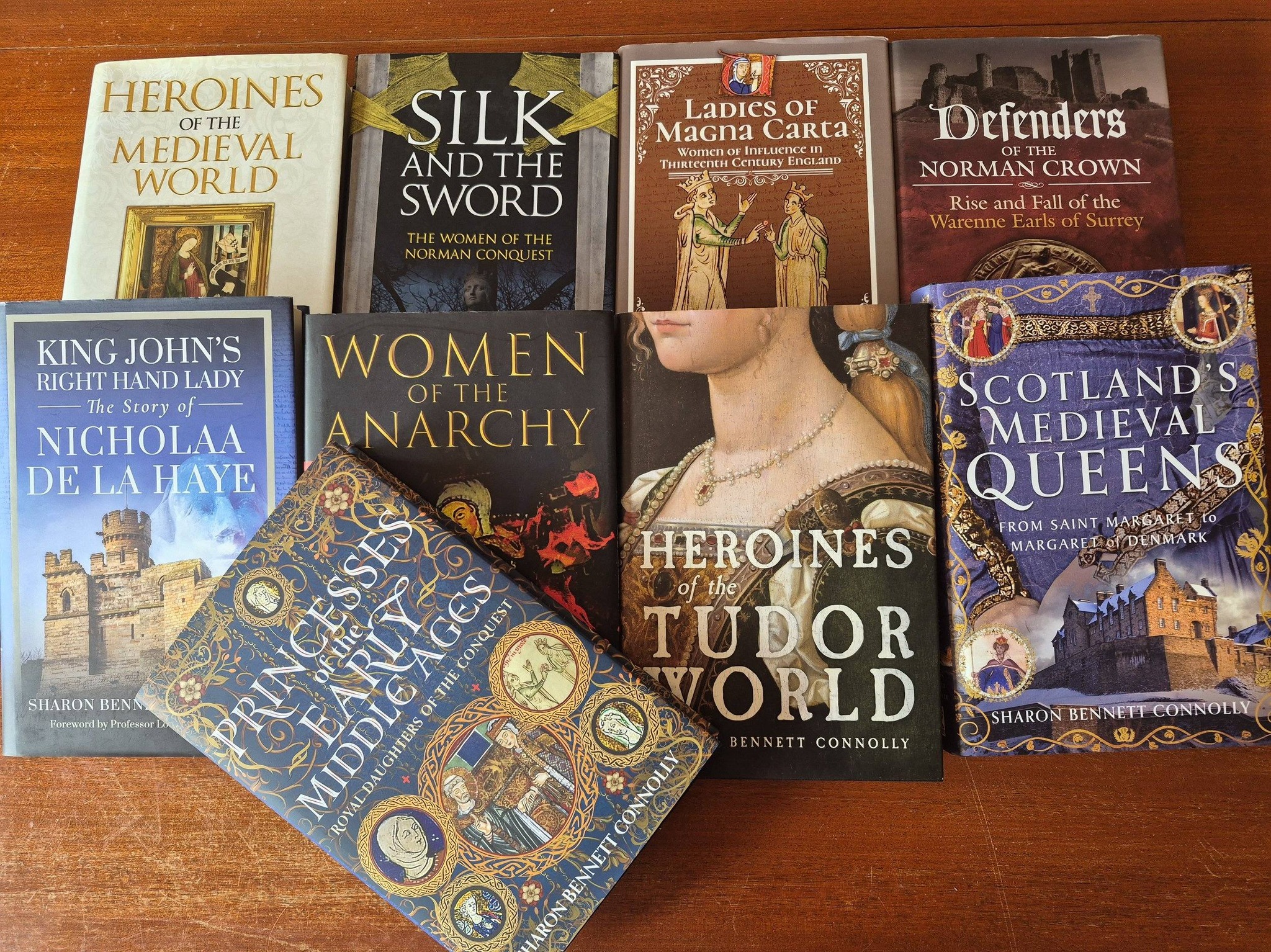
Books by Sharon Bennett Connolly

‘My daughter wanted me to treat her more like a princess. So, I married her to a stranger to strengthen the alliance with Poland!’

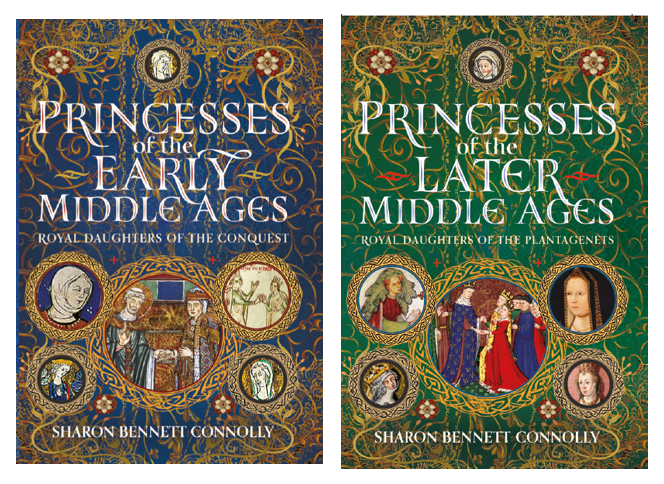
Princesses of the Early Middle Ages: Royal Daughters of the Conquest and Princesses of the Later Middle Ages: Royal Daughters of the Plantagenets tell the stories of England’s royal daughters from 1066 to the rise of the Tudors, from the last Anglo-Saxon princesses to the fall of the House of York.

Were they really pampered pawns sent off to marriages on the Continent, out of sight and out of mind?

Perhaps, there was different story, where a foreign marriage does not mean eternal exile, but a purpose in life, where a princess is a diplomat, an ambassador for England in her new country.

Where she is the bond between allies – most of the time.

Their stories are touching, inspiring and, at times, heartbreaking...

Heidi Malagisi: ‘This is another excellent book by Sharon Bennett Connolly. Extremely well researched and relatively easy to follow along, which is a great thing because there are so many Matildas and Eleanors in this book.

Tony Riches: “I challenge anyone with an interest in medieval Britain to not find something they will learn from this book.

Anna Belfrage: “I just love how [Sharon] presents this huge cast of real life people in a casual, chatty tone that has me expecting the various female protagonists to suddenly pop their head up and add their own commentary.

Buy now: Princesses of the Early Middle Ages: Royal Daughters of the Conquest

Pre-order: Princesses of the Later Middle Ages: Royal Daughters of the Plantagenets 

New in Paperback:
Books by Sharon Bennett Connolly

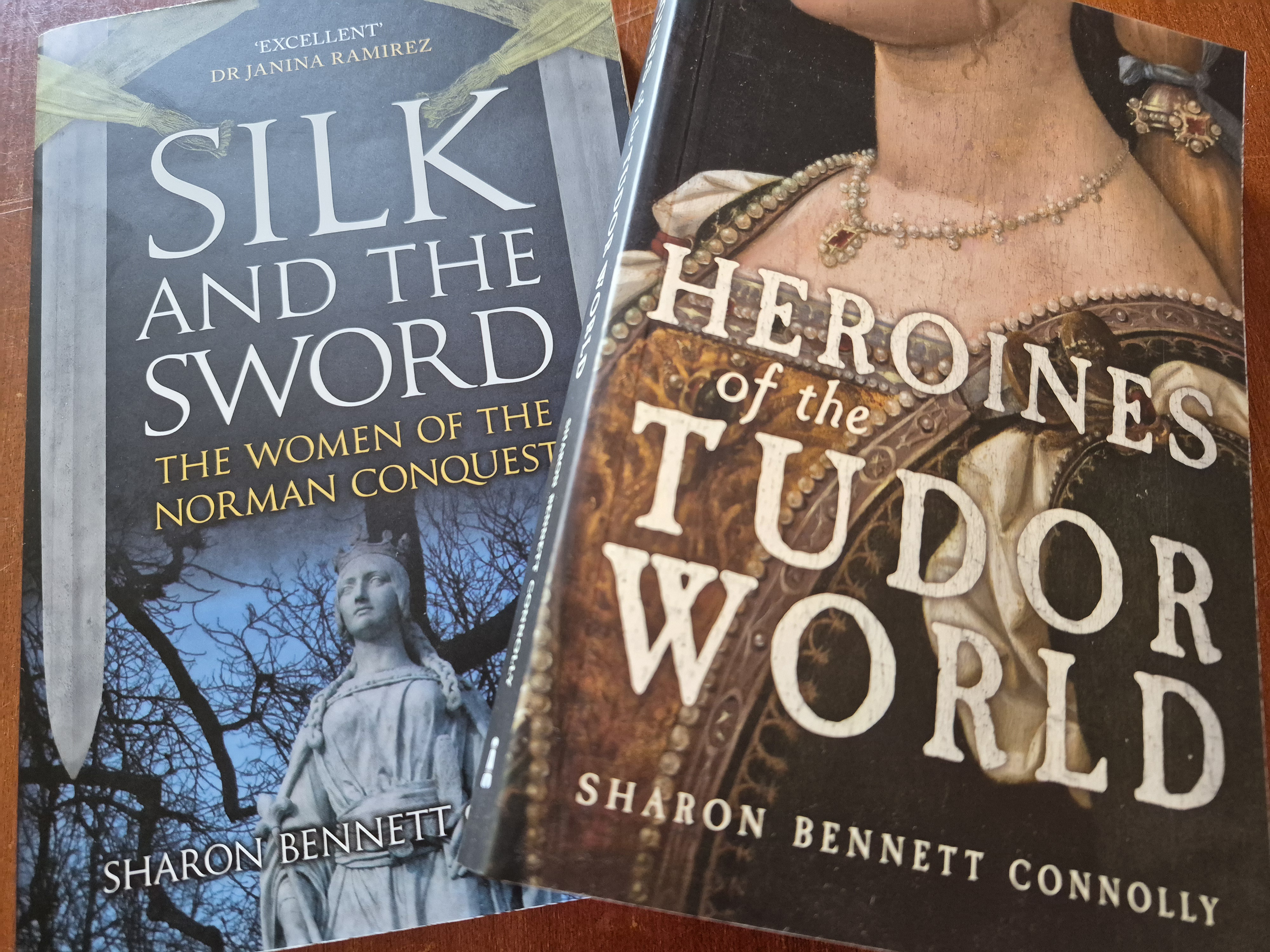
OUT NOW! The momentous events of 1066, the story of invasion, battle and conquest, are well known. But what of the women? Silk and the Sword: The Women of the Norman Conquest traces the fortunes of the women who had a significant role to play during the Norman Conquest – wives, lovers, sisters, mothers, leaders. These are lives full of drama, pathos and sometimes mystery: Edith and Gytha searching the battlefield of Hastings for the body of Harold, his lover and mother united in their grief for the fallen king. Who was Ælfgyva, the lady of the Bayeux Tapestry, portrayed with a naked man at her feet?

Janina Ramirez said it’s ‘Excellent’!

COMING 15 July 2026: Heroines of the Tudor World focuses on the women who lived through the Renaissance and Reformation, examining the threats and challenges they faced and how they overcame them. These are the women who ruled, the women who founded dynasties, the women who fought for religious freedom, their families and love. These are the women who made a difference, who influenced countries, kings and the Reformation.

Derek Birks: ‘An excellent account of the changing roles of women in Tudor society.’

Annie Whitehead: ‘What a treat this book was to read. Bennett Connolly has an easy, conversation style of writing which welcomes you from the opening pages and draws you into her story.

Also by Sharon Bennett Connolly:

Books by Sharon Bennett Connolly

Heroines of the Medieval World; Silk and the Sword: The Women of the Norman Conquest; Ladies of Magna Carta: Women of Influence in Thirteenth Century England; Defenders of the Norman Crown: Rise and Fall of the Warenne Earls of Surrey; King John’s Right Hand Lady: The Story of Nicholaa de la Haye; Women of the Anarchy; Heroines of the Tudor World; Scotland’s Medieval Queens: From St Margaret to Margaret of Denmark; Princesses of the Early Middle Ages: Royal Daughters of the Conquest (March 2026); Princesses of the Later Middle Ages; Royal Daughters of the Plantagenets (August 2026)

Alternate Endings: An anthology of historical fiction short stories including Long Live the King… which is my take what might have happened had King John not died in October 1216. Available in paperback and kindle from Amazon.

All my books on Amazon and Bookshop.org . You can also order direct from my publishers, Pen and Sword Books and Amberley Publishing.

*

Podcast:

A Slice of Medieval

Have a listen to the A Slice of Medieval podcast, which I co-host with Historical fiction novelist Derek Birks. Derek and I welcome guests, such as Ian Mortimer, Bernard Cornwell, Elizabeth Chadwick and Scott Mariani, and discuss a wide range of topics in medieval history, from significant events to the personalities involved. 

And Tony Riches was our first guest in A Slice of Medieval’s new series for 2026, A Slice of Medieval Goes Tudor!

Every episode is also now available on YouTube.

*

Don’t forget! 
Royal Historical Society

Signed and dedicated copies of all my books are available through my online bookshop.

For forthcoming online and in-person talks, please check out my Events Page.

You can be the first to read new articles by clicking the ‘Follow’ button, liking our Facebook page or joining me on Twitter and Instagram.

*

©2026 Sharon Bennett Connolly FRHistS and Tony Riches
Guest Post: Think Medieval Women Had No Power? Think Again by Ashley Firth

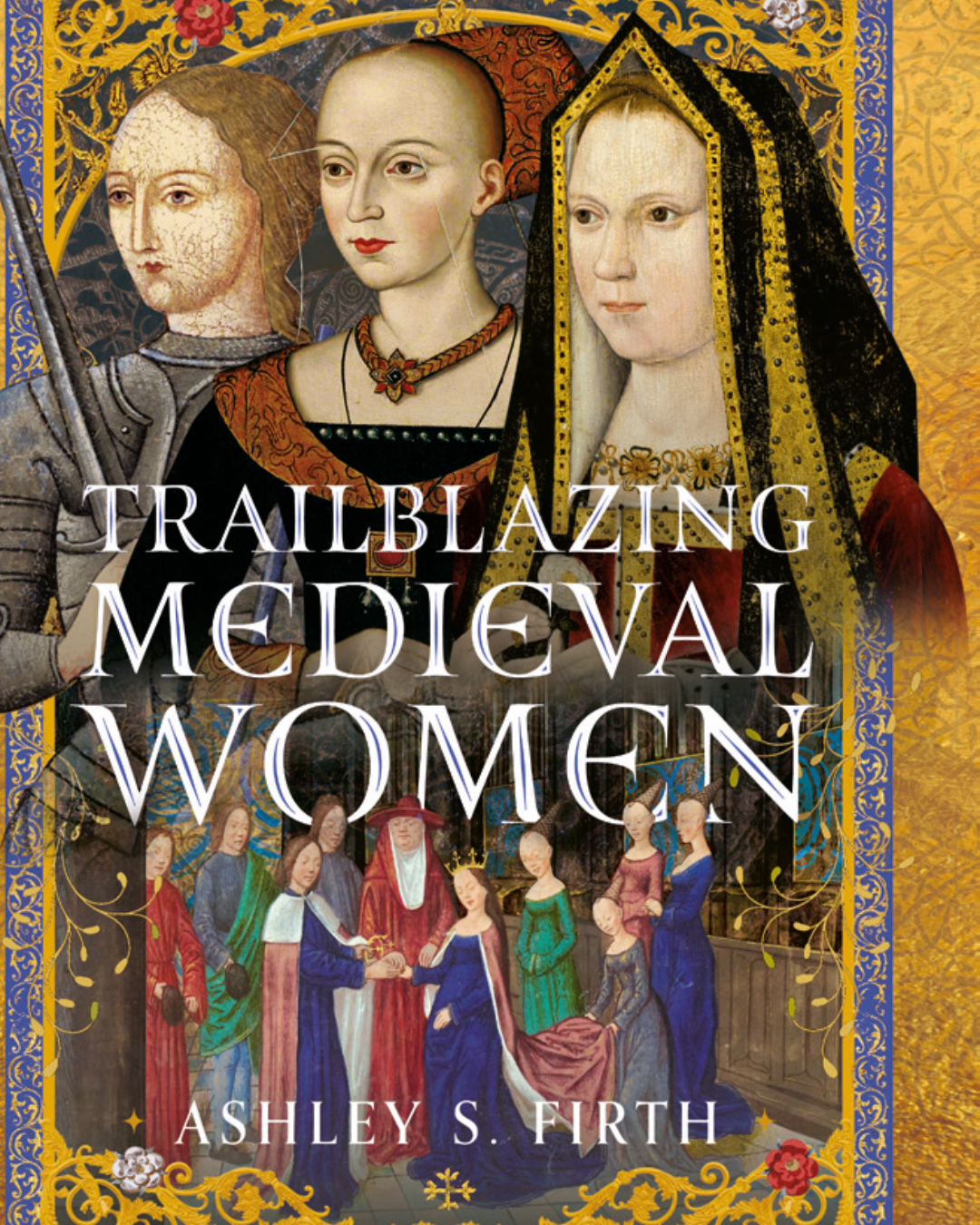
Dr Ashley Firth is a woman after my own heart. Her first book, Trailblazing Medieval Women, is hitting the shops as I type and includes some of my favourite women, giving readers an insight into how women navigated the patriarchal society of the medieval era. Ashley’s work will, no doubt, intersect with my own work and it will be interesting to read Ashley’s take on these amaaaazzzzzzzzing women.

Today, Ashley gives us a tantalising taste of some of the incredible women who made an impact on medieval history.

Oh, how I am looking forward to reading this book!

Think Medieval Women Had No Power? Think Again

Wife and mother are often assumed to have been the primary roles of medieval women. Confined to the household and subject to the authority of their husbands, it can seem difficult to imagine how women could overcome the limitations placed upon them and exert any real power. Medieval texts and theories reinforced this perception, portraying women as intellectually inferior and governed by bodily desires, thereby justifying their subordination. By perpetuating such myths, men kept the monopoly and controlled the lives of the women over whom they were placed. By virtue of his sex, the lowliest male peasant was set above the queen in this gender dynamic, yet theory does not always reflect reality, and the reality is far more complex.

History...the Interesting Bits
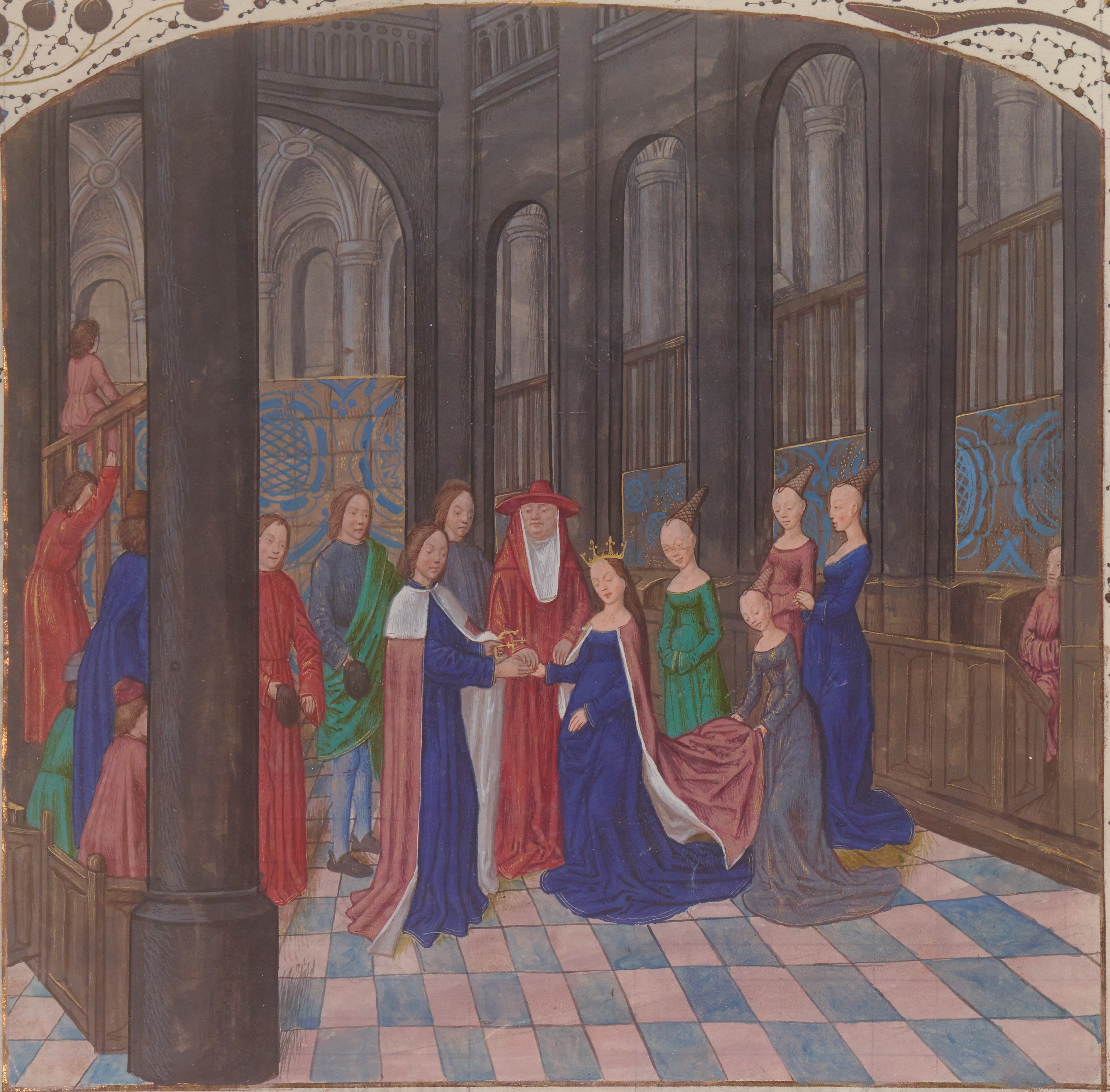
Marriage of Edward IV and Elizabeth Woodville (Wikimedia Commons)

Not all women were content with the traditional vocations for women centred around the family and the household, and some rejected them entirely. Many took on roles traditionally assigned to men and led armies and perhaps even fought on the battlefield. Some women found a conduit for their voices by putting pen to paper and telling us in their own words about their experiences while simultaneously influencing the cultural milieu of their day. Women could exert significant political and social influence through traditionally assigned gender roles. As wives and mothers, they could persuade their male relatives and even become the loudest voices at the royal court by virtue of their position.

Queens and royal women are some of the most visible women in medieval society, and for whom we have the best documentation of their experiences. During the Wars of the Roses, women were highly influential and played a significant role in shaping the outcome of this bloody civil war. Margaret of Anjou, wife of the weak and mentally unstable King Henry VI, was forced to assume power and authority when her husband was incapable. The incarceration of her husband and defeat in battle did not deter Margaret from fighting for the throne of Henry and their only son, Edward. Margaret refused to remain silent and instead was a prominent voice at court, making a series of successful alliances in her efforts to restore her deposed husband to the throne. Like her successor, Elizabeth Woodville, Margaret was criticised by her contemporaries for her behaviour and sexual slander was used to discredit both women, who proved to be a powerful influence over their respective husbands.

Elizabeth Woodville’s power, however, could not save her young sons, cruelly snatched from her grasp and no doubt met a grisly end, forever known as the Princes in the Tower. Elizabeth was more successful in securing the fate of her eldest daughter, Elizabeth of York, working secretly with the incomparable Margaret Beaufort, mother of Henry Tudor, to secure a prestigious marriage for her daughter and ensure her daughter followed her as a queen of England. Margaret is often accused of overshadowing the more reserved Elizabeth of York, but there is no reason to doubt Elizabeth was privately steering the course of Henry’s kingship just as much as her mother-in-law was. As the mother of Henry VIII, it is worth pondering if the Reformation would have even occurred if not for the death of the incredibly devout Elizabeth in 1503, just six years before the beginning of her son’s turbulent reign.

History... the Interesting Bits
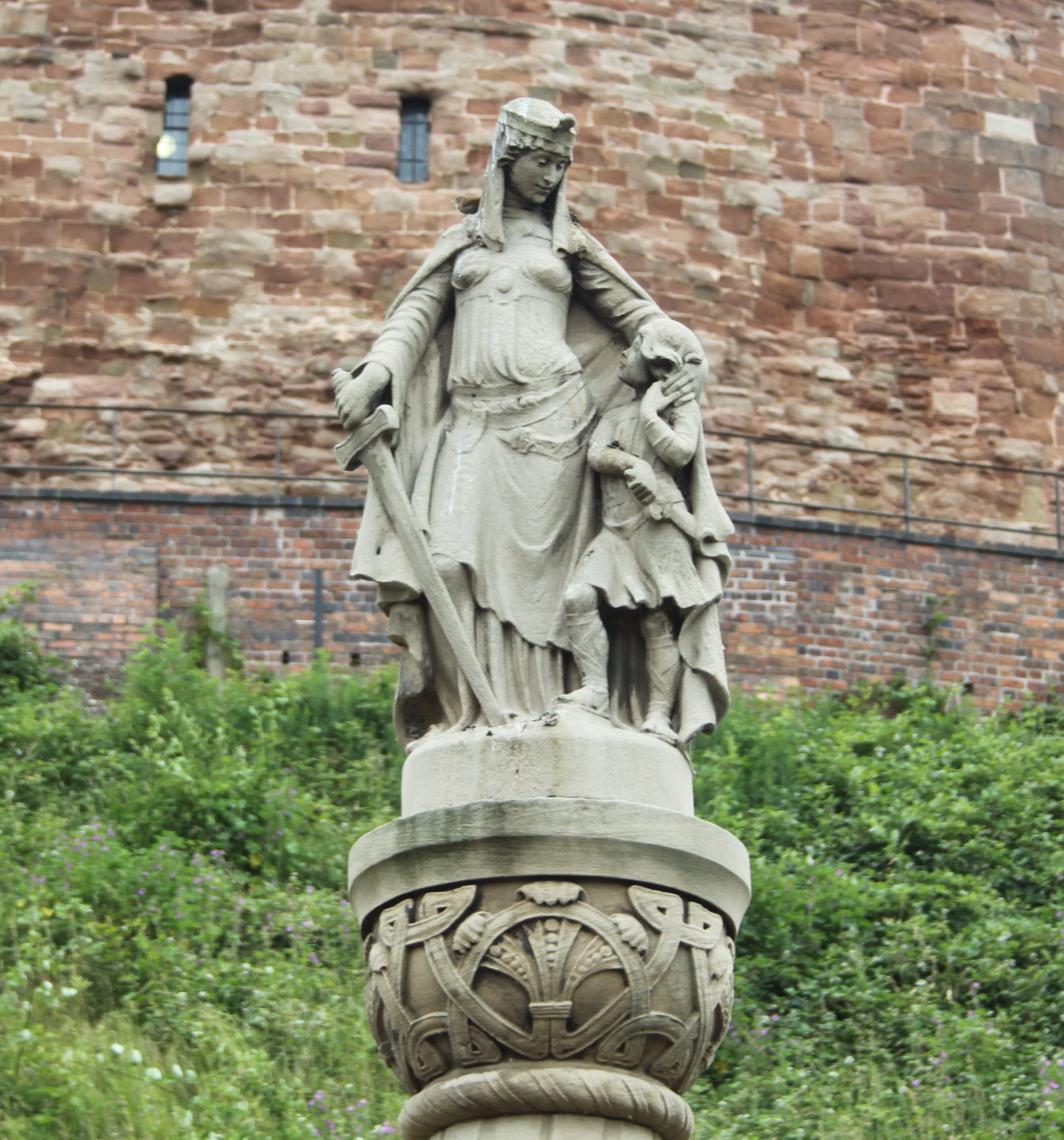
The monument of Aethelflaed, Tamworth Castle.
(Author’s own image).

Another way women could exert power and influence was in the arena of war. Aethelflaed, daughter of King Alfred the Great, ruled the kingdom of Mercia throughout her husband’s illness and then as a ruler in her own right after he died in 911. Alongside her brother, Edward the Elder, Aethelflaed halted the attacks of the Vikings and even reclaimed much territory lost to them in the previous generations. Aethelflaed can be found directly participating in warfare, fulfilling the role of a commander.

Later examples of the involvement of women in warfare can be found on the Continent. Matilda of Tuscany raised and led armies in her struggle to secure her inheritance. The mighty Holy Roman Emperor proved no match for Matilda, and he was forced to relinquish his claims to Matilda’s Italian domains in the late eleventh century. Sikelgaita, the wife of the Southern Italian Norman ruler, Robert Guiscard, earned a reputation equally formidable as that of her husband. No mere passive consort to a powerful Norman baron, Sikelgaita lent authority to her husband’s power in the region through her lineage. Guiscard trusted Sikelgaita as a military commander and is perhaps best remembered for her orders to the fleeing soldiers of her husband’s army, whereby she challenged them to fight and ‘be men’. Born in the early fifteenth century, Joan of Arc is one of the most famous examples of a medieval woman participating in warfare. From humble origins, Joan followed what she believed to be spiritual voices, which led her all the way to the French court. Joan proved to be a valuableasset to the French Dauphin, achieving a series of military victories over the English and even securing his coronation before finding herself discarded by the monarch once her usefulness had run its course. Some women found power and even fame through their military activities and accomplishments, with women such as Joan of Arc continuing to intrigue modern audiences.

History...the Interesting Bits
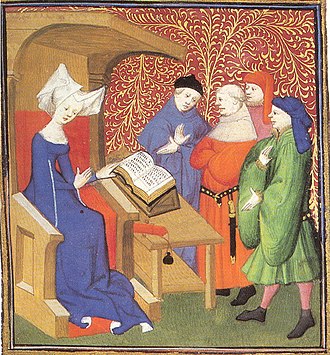
Christine de Pizan lectures a group of men (Wikimedia Commons)

By putting pen to paper, some medieval women challenged the prevailing opinion on the intellectual inabilities of women and found power through their words. Anna Comnena, the daughter of the Byzantine Emperor Alexius Comnenus, is credited as the first female Byzantine author. With access to eyewitnesses for the key events in her father’s reign, her female perspective on the workings of the Byzantine court in the eleventh century remains a valuable source for historians. Anna’s own bid for the throne after her father’s death was an abject failure, but she found more success with her penmanship in her later life. Christine de Pizan is the first recorded female author to make a living solely from her writings. A remarkable achievement considering most medieval male authors supplemented their income with an additional occupation. Christine’s works were commissioned by members of the French royal family, and she offered commentary and advice during the Hundred Years’ War. Her voice seems to us the loudest in her writings on the defence of the female sex and her challenges to the traditional view of the position of women in society.

A contemporary of Christine’s, Margery Kempe, a fifteenth-century English self-proclaimed mystic, in many ways represents the repressed voice of the majority of women. Margery’s book offers an insight into her strife as she struggles to commit her story to writing. Challenged by the authorities and by the Church during a time of growing anxiety about religious dissidence, Margery shows us both the vulnerability of women in medieval society, but also the power they could attain. Writing was one of the ways in which medieval women could significantly influence medieval culture and society. Their experiences as female authors in themselves challenged the theoretical discourse of their contemporaries, and their writings offer us a fresh female perspective on contemporary events.

History...the Interesting Bits
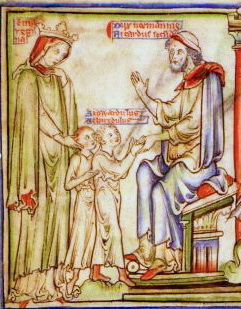
Queen Emma and her sons being received by Duke Richard II of Normandy (Wikimedia Commons)

The medieval period is filled with examples of extraordinary women who moved beyond the confines of being a consort and exerted significant political influence. Emma of Normandy, the only woman to be crowned Queen of England twice, undoubtedly shaped the course of English history. Married to King Aethelred the ‘Unready’ in the early eleventh century, her husband’s reign was dominated by his struggles against Viking incursions. After his death, his successor, the Viking King Cnut, seized the throne and sought Emma as a bride to legitimise his kingship and to offer her invaluable political experience to his new regime. She worked tirelessly to secure the succession of her son, Harthancut, whom she ruled alongside. The abandonment of her eldest children in her homeland of Normandy paved the way for the Norman Conquest of 1066.

Empress Matilda was another royal woman who fought to secure the succession of her son. The heiress was passed over as the successor of her father, and her cousin, Stephen, seized the English throne. A brutal civil war ensued, known as the Anarchy. Although never achieving the coronation for herself, Matilda nevertheless ensured the succession of her son, Henry II. In 1152, Eleanor, the wealthy Duchess of Aquitaine, a title she held in her own right, married Henry II, just weeks after her annulment from her first husband, King Louis VII, making her the only woman to be crowned both queen of England and of France. Eleanor was a successful politician, acting independently of Henry throughout her tenure as consort. Eleanor continued to be an imposing presence at court in the successive reigns of her sons, Richard the Lionheart and King John and often acted for them both as regent.

History...the Interesting Bits
Isabella of France (Wikimedia Commons)

Isabella of France successfully launched an invasion of England and overthrew her husband, King Edward II, in 1326, demonstrating just how powerful medieval women could be.

The innumerable examples of women in power force us to reconsider the roles and experiences of medieval women. Power could be achieved in a variety of ways and with varying degrees of success. What these examples of trailblazing women have sought to highlight is the varied experiences and opportunities open to women, and to illustrate that theory does not always equate to practice.

*

About the Book:

History...the Interesting Bits

“The greatest glory for a woman is not to be spoken of at all, either for good or ill,” declared Pericles. For centuries, this sentiment echoed through the corridors of history, shaping a narrative that often confined women to silence, invisibility and the margins of power. But history is far richer and more complex than we’ve been led to believe.

This book reveals the lives of remarkable, trailblazing medieval women who refused to be written out of history. In a world dominated by men, they defied convention, challenged gender expectations, and carved out legacies as rulers, consorts, warriors, authors, and visionaries. From Anglo-Saxon female rulership to the political intrigue of the Wars of the Roses, these women stepped beyond the roles assigned to them and transformed the world around them, as well as the course of history.

Through meticulous research, this book brings their voices to the fore, revealing the impact they had not only in their own time but on the generations that followed. These are not just tales of exception, but of courage, intellect, and influence—testaments to the fact that women have always shaped history.

Their names deserve to be remembered. Their stories deserve to be told.

Get Trailblazing Medieval Women.

About the Author:

History...the Interesting Bits

Ashley Sarah Firth holds a BA (Hons), MA, and PhD in medieval history from the University of Huddersfield. Her research focuses on the history of women, medieval gender and the Crusades. Formerly a university lecturer, she taught a wide range of topics from the Anglo-Saxon period to the Stuart era. Now a full-time historian, author and Visiting Research Fellow at the University of Huddersfield, Ashley is dedicated to bringing the stories of the past, especially those of overlooked women, to life for a wider audience. She lives in Manchester with her husband, their two children, and three dogs, where her love of history continues to inspire her writing and research.

Social Media Links: Facebook: Twitter: Instagram: Website.

*

My Books

Signed, dedicated copies of all my books are available through my online bookshop or the Contact Me page.

New releases in 2026:

New Hardbacks

Out now: Princesses of the Early Middle Ages: Royal Daughters of the Conquest

Books by Sharon Bennett Connolly

‘My daughter wanted me to treat her more like a princess. So, I married her to a stranger to strengthen the alliance with Poland!’

Princesses of the Early Middle Ages: Royal Daughters of the Conquest and Princesses of the Later Middle Ages: Royal Daughters of the Plantagenets tell the stories of England’s royal daughters from 1066 to the rise of the Tudors, from the last Anglo-Saxon princesses to the fall of the House of York.

Were they really pampered pawns sent off to marriages on the Continent, out of sight and out of mind?

Perhaps, there was different story, where a foreign marriage does not mean eternal exile, but a purpose in life, where a princess is a diplomat, an ambassador for England in her new country.

Where she is the bond between allies – most of the time.

Heidi Malagisi: ‘This is another excellent book by Sharon Bennett Connolly. Extremely well researched and relatively easy to follow along, which is a great thing because there are so many Matildas and Eleanors in this book.

Tony Riches: “I challenge anyone with an interest in medieval Britain to not find something they will learn from this book.

Anna Belfrage: “I just love how [Sharon] presents this huge cast of real life people in a casual, chatty tone that has me expecting the various female protagonists to suddenly pop their head up and add their own commentary.

Out now: Princesses of the Early Middle Ages: Royal Daughters of the Conquest

Pre-order: Princesses of the Later Middle Ages: Royal Daughters of the Plantagenets 

New in Paperback:

Books by Sharon Bennett Connolly

OUT NOW! The momentous events of 1066, the story of invasion, battle and conquest, are well known. But what of the women? Silk and the Sword: The Women of the Norman Conquest traces the fortunes of the women who had a significant role to play during the Norman Conquest – wives, lovers, sisters, mothers, leaders. These are lives full of drama, pathos and sometimes mystery: Edith and Gytha searching the battlefield of Hastings for the body of Harold, his lover and mother united in their grief for the fallen king. Who was Ælfgyva, the lady of the Bayeux Tapestry, portrayed with a naked man at her feet?

Janina Ramirez said it’s ‘Excellent’!

COMING 15 July 2026: Heroines of the Tudor World focuses on the women who lived through the Renaissance and Reformation, examining the threats and challenges they faced and how they overcame them. These are the women who ruled, the women who founded dynasties, the women who fought for religious freedom, their families and love. These are the women who made a difference, who influenced countries, kings and the Reformation.

Derek Birks: ‘An excellent account of the changing roles of women in Tudor society.’

Annie Whitehead: ‘What a treat this book was to read. Bennett Connolly has an easy, conversation style of writing which welcomes you from the opening pages and draws you into her story.

Also by Sharon Bennett Connolly:

Books by Sharon Bennett Connolly

Heroines of the Medieval World; Silk and the Sword: The Women of the Norman Conquest; Ladies of Magna Carta: Women of Influence in Thirteenth Century England; Defenders of the Norman Crown: Rise and Fall of the Warenne Earls of Surrey; King John’s Right Hand Lady: The Story of Nicholaa de la Haye; Women of the Anarchy; Heroines of the Tudor World; Scotland’s Medieval Queens: From St Margaret to Margaret of Denmark; Princesses of the Early Middle Ages: Royal Daughters of the Conquest (March 2026); Princesses of the Later Middle Ages; Royal Daughters of the Plantagenets (August 2026)

Alternate Endings: An anthology of historical fiction short stories including Long Live the King… which is my take what might have happened had King John not died in October 1216. Available in paperback and kindle from Amazon.

All my books on Amazon and Bookshop.org . You can also order direct from my publishers, Pen and Sword Books and Amberley Publishing.

*

Podcast:

A Slice of Medieval

Have a listen to the A Slice of Medieval podcast, which I co-host with Historical fiction novelist Derek Birks. Derek and I welcome guests, such as Ian Mortimer, Bernard Cornwell, Elizabeth Chadwick and Scott Mariani, and discuss a wide range of topics in medieval history, from significant events to the personalities involved. 

Every episode is also now available on YouTube.

*

Don’t forget! 

Royal Historical Society

Signed and dedicated copies of all my books are available through my online bookshop.

For forthcoming online and in-person talks, please check out my Events Page.

You can be the first to read new articles by clicking the ‘Follow’ button, liking our Facebook page or joining me on Twitter and Instagram.

*

©2026 Sharon Bennett Connolly FRHistS and Dr Ashley Firth

Book Corner: Die For A King by Scott Mariani

History ... the Interesting Bits

1191. For Will Bowman, newly restored to the service of King Richard ‘Lionheart’, the war against Saladin in the Holy Land now reaches its bloody climax.

HERO

No sooner is it over than the skulduggery of traitors conspiring against Richard’s kingdom threatens the outbreak of yet more conflict.

WARRIOR

Torn between his destiny and his allegiance, Will yearns for a life of peace. But when a deadly new danger threatens the king, only one man can save him.

RESCUER

Now, Will and his companions must embark on their most dangerous voyage yet, a covert rescue mission deep into the heartlands of a ruthless foreign power. Is Will’s loyalty to Richard strong enough to die for him?

A couple of years back I got an email, out of the blue, from one of my favourite authors, Scott Mariani. Scott didn’t even know I was a fan. He had found my blog and had a new historical fiction series coming out and wondered if I could feature it on History…the Interesting Bits. I have to admit that, at first, I thought it was a scam. One of my favourite authors contacting me out of the blue? How likely is that?

But, no. It really was Scott and I had the pleasure of interviewing him for the blog – and for A Slice of Medieval. I admit, I did have a few ‘fangirl’ moments. All the same, I was nervous about reading the first Will Bowman book. Scott had written 30 books in the fabulous Ben Hope series. They were modern thrillers, although most of them had a historical element – which is what drew me to them. But could a thriller writer move to full-on historical fiction and keep the tension, weave a story within the facts to the high standards that historical fiction fans expect? I needn’t have worried, The Pilgrim’s Revenge and The Knight’s Pledge lived up to Scott’s usual standard, taking me into a period I have myself written about in both Princesses of the Early Middle Ages and King John’s Right Hand Lady: the Story of Nicholaa de la Haye.

That is, the Third Crusade.

In The Pilgrim’s Revenge, we saw Will Bowman join the crusade as it sailed from England, pursuing the men who had killed his wife. In The Knight’s Pledge, Will proves himself the capable fighter and a man with convictions, opposed to the slaughter of prisoners, at the same time, enraging and endearing himself to Richard the Lionheart. And the tale continues in Die For A King, with Will, now one of the king’s most trusted knights, reaching the end of the Crusade and looking for new purpose.

No sooner has he pledge himself to the Knights’ Hospitallers than he receives a visit from two queens, Eleanor of Aquitaine and Berengaria of Navarre, with news of Richard’s capture on his way home and a plea that he lead a rescue mission into Germany. Die For A King is a fictional historical adventure built around a historic incident that sent shockwaves through Europe: the capture and imprisonment of King Richard the Lionheart.

Will jerked his head around to look to the east. From behind the very same sparsely wooded rise he had been about to ride over to reconnoitre, were streaming a large body of fast-moving cavalry. How many exactly was hard to say at this distance, but it was clear that they greatly outnumbered the party of pilgrim knights now setting up camp in blissful ignorance of this imminent attack. Perhaps by as many as eight or even ten to one: a ratio rapidly growing more disadvantageous with every passing moment that he went on watching the long line of riders emerging into the open, riding hard and sending up a dust cloud that rose like smoke and then was whipped away by the breeze. Curving around due west. Heading straight towards them. At their head fluttered the black and white Mussulman banner of holy war. Already Will could hear carried on the wind their blood-curdling cries of ‘Allahu Akbar!’ Ours is the greater god. We will destroy you in the name of Allah.

Grisel was prancing and tossing his head nervously, snorting and rolling his eyes with his ears laid flat back. Will could feel the latent power of the stallion fighting to break free. ‘Steady, steady, boy,’ he murmured reassuringly, patting the horse’s thick neck. ‘You were right. Renier may wish he had taken heed of your warning.’

‘I would say that somebody should perhaps go and wake up King Richard,’ Gabriel said dryly. ‘He is about to get an unpleasant surprise, else.’

But there was no need, as the alarm was already being raised across the camp with urgent cries of ‘Attack!’ and ‘They are coming!’ Those knights who had relieved themselves of their bothersome helmets, shields and weapons now hurriedly prepared for the imminent assault. Horses whinnied and reared up; one got loose of its handlers and galloped off in a panic. Man ran here and there, squires racing to get agitated animals under control; knights grabbing lances and spears from the rack, pulling on armour, helms, shoes; scurrying back from the privacy of the rocks where they had been urinating; yelling or receiving orders.

Amid this scene of woeful confusion King Richard burst out from hi stent with his drawn sword in his hand, glanced about him and quickly grasped the situation. Thankfully for him, he had had the foresight not to remove his hauberk, belts or boots in order to rest. Pulling the coif over his head and strapping on his helmet he leaped astride his tall dun warhorse, Fauvel, and began marshalling the men to repel the attackers. Meanwhile the charging Saracen cavalry column was fast closing in, and Will’s fear was confirmed that this had been an ill-chosen spot to make camp. The valley was far too open, permitting the enemy enough space to surround them and close in for the kill. They must be stopped before that could be allowed to happen.

Will’s powerful bow was the best longer-range weapon the king’s men possessed, markedly superior in both reach and accuracy to the handful of crossbows some of the squires and one or two of the knights had brought along. But unlike the handy little bows that the Saracen riders favoured, it did present the serious disadvantage of being virtually unusable from the back of a horse, on account of its unwieldy length. Will had faced an enemy cavalry charge on foot before now, and was loathe to repeat the experience, given the choice: so, reluctantly abandoning the use of the bow for now, he hurried Grisel over to where a couple of lances remained among the rack of weaponry.

Will was as yet no great expert in the use of the lance, but under the tutelage of his mentor Robert Leighton he had come to appreciate its great effectiveness to the mounted warrior. Grabbing up one of them by its long, slim oak shaft, he reined Grisel back around to face the incoming Saracens.

Die For A King by Scott Mariani is a fabulous adventure, set in two parts and in two arena: the Holy Land and Germany. A rescue mission that is so audacious it may just succeed. Scott Mariani has woven fact – of the Third Crusade and Richard the Lionheart’s kidnapping – with the fictional rescue attempt. Though, as Scott says in his Historical Note, it may be fictional but it is entirely plausible. Eleanor of Aquitaine was a wily political operator and it is entirely conceivable that she had a back-up plan, should negotiations fail.

Die For A King portrays the best and worst in men: those willing to die for their friends against the mercenaries who are in it solely for the money. Will has been consistently loyal to King Richard but some of the characters he employs in his mission are not so nobly minded. One thing they all have in common, however, is their ability to fight. Will Bowman is a fascinating character. A young man who set out on a mission of revenge who has become a trusted member of King Richard’s household, and who will not compromise his principles, even when he incurs the wrath of the king. He is also a man you definitely want on your side in a fight. He is resourceful and resilient.

Scott Mariani creates an eminently plausible scenario. The characters are wonderfully colourful, playing to a strong storyline.

Tense and unpredictable, the story leaves the reader guessing to the very end.

This is storytelling at its very best – Scott is a master of the art.

To buy: Die For A King

About the author:

History ... the Interesting Bits

Scott Mariani is the No.1 Sunday Times bestselling author of the multi-million-selling Ben Hope thrillers. From 2025 he is launching into a new historical adventure series featuring medieval English hero Will Bowman, who is forced from his home to join King Richard ‘the Lionheart’ on the Third Crusade and rises up to become a knight. Book 1, The Pilgrim’s Revenge, is available from April 2025 and is published by Hodder & Stoughton.

Scott lives and writes in west Wales, UK. You can find out more about his work by visiting his official website.

*

My Books

Signed, dedicated copies of all my books are available through my online bookshop or the Contact Me page.

New releases in 2026:

New Hardbacks

Out now: Princesses of the Early Middle Ages: Royal Daughters of the Conquest

Books by Sharon Bennett Connolly

 ‘My daughter wanted me to treat her more like a princess. So, I married her to a stranger to strengthen the alliance with Poland!’

Princesses of the Early Middle Ages: Royal Daughters of the Conquest and Princesses of the Later Middle Ages: Royal Daughters of the Plantagenets tell the stories of England’s royal daughters from 1066 to the rise of the Tudors, from the last Anglo-Saxon princesses to the fall of the House of York.

Were they really pampered pawns sent off to marriages on the Continent, out of sight and out of mind?

Perhaps, there was different story, where a foreign marriage does not mean eternal exile, but a purpose in life, where a princess is a diplomat, an ambassador for England in her new country.

Where she is the bond between allies – most of the time.

Heidi Malagisi: ‘This is another excellent book by Sharon Bennett Connolly. Extremely well researched and relatively easy to follow along, which is a great thing because there are so many Matildas and Eleanors in this book.

Tony Riches: “I challenge anyone with an interest in medieval Britain to not find something they will learn from this book.

Anna Belfrage: “I just love how [Sharon] presents this huge cast of real life people in a casual, chatty tone that has me expecting the various female protagonists to suddenly pop their head up and add their own commentary.

Out now: Princesses of the Early Middle Ages: Royal Daughters of the Conquest

Pre-order: Princesses of the Later Middle Ages: Royal Daughters of the Plantagenets 

New in Paperback:

Books by Sharon Bennett Connolly

OUT NOW! The momentous events of 1066, the story of invasion, battle and conquest, are well known. But what of the women? Silk and the Sword: The Women of the Norman Conquest traces the fortunes of the women who had a significant role to play during the Norman Conquest – wives, lovers, sisters, mothers, leaders. These are lives full of drama, pathos and sometimes mystery: Edith and Gytha searching the battlefield of Hastings for the body of Harold, his lover and mother united in their grief for the fallen king. Who was Ælfgyva, the lady of the Bayeux Tapestry, portrayed with a naked man at her feet?

Janina Ramirez said it’s ‘Excellent’!

COMING 15 July 2026: Heroines of the Tudor World focuses on the women who lived through the Renaissance and Reformation, examining the threats and challenges they faced and how they overcame them. These are the women who ruled, the women who founded dynasties, the women who fought for religious freedom, their families and love. These are the women who made a difference, who influenced countries, kings and the Reformation.

Derek Birks: ‘An excellent account of the changing roles of women in Tudor society.’

Annie Whitehead: ‘What a treat this book was to read. Bennett Connolly has an easy, conversation style of writing which welcomes you from the opening pages and draws you into her story.

Also by Sharon Bennett Connolly:

Books by Sharon Bennett Connolly

Heroines of the Medieval World; Silk and the Sword: The Women of the Norman Conquest; Ladies of Magna Carta: Women of Influence in Thirteenth Century England; Defenders of the Norman Crown: Rise and Fall of the Warenne Earls of Surrey; King John’s Right Hand Lady: The Story of Nicholaa de la Haye; Women of the Anarchy; Heroines of the Tudor World; Scotland’s Medieval Queens: From St Margaret to Margaret of Denmark; Princesses of the Early Middle Ages: Royal Daughters of the Conquest (March 2026); Princesses of the Later Middle Ages; Royal Daughters of the Plantagenets (August 2026)

Alternate Endings: An anthology of historical fiction short stories including Long Live the King… which is my take what might have happened had King John not died in October 1216. Available in paperback and kindle from Amazon.

All my books on Amazon and Bookshop.org . You can also order direct from my publishers, Pen and Sword Books and Amberley Publishing.

*

Podcast:

A Slice of Medieval

Have a listen to the A Slice of Medieval podcast, which I co-host with Historical fiction novelist Derek Birks. Derek and I welcome guests, such as Ian Mortimer, Bernard Cornwell, Elizabeth Chadwick and Scott Mariani, and discuss a wide range of topics in medieval history, from significant events to the personalities involved. 

Every episode is also now available on YouTube.

*

Don’t forget! 

Royal Historical Society

Don’t forget! Signed and dedicated copies of all my books are available through my online bookshop.

For forthcoming online and in-person talks, please check out my Events Page.

You can be the first to read new articles by clicking the ‘Follow’ button, liking our Facebook page or joining me on Twitter and Instagram.

©2026 Sharon Bennett Connolly FRHistS