Book Corner: Queen of Shadows by Anna Belfrage

History... the Interesting Bits

She should have stayed in the shadows—but Leonor de Guzmán yearned for the sun

Castile in the 1330s is a place of constant turmoil. King Alfonso must contend with the incursions from the Muslim Marinids eager to reclaim Al-Andalus while struggling with repeated rebellions against his firm rule.

When Alfonso needs respite, he finds it in the arms of his Leonor—the most beautiful woman in the realm. But while he may love Leonor over all others, his lawful wife, Maria of Portugal, is tired of being constantly displaced by the fair Leonor.
Leonor loves her man. She gives him healthy sons, a place to be himself. But she is only a mistress, even if Alfonso treats her like a queen. Leonor’s enemies watch and hate.

Flying too close to the sun comes at a high price. How much will Leonor’s love cost her?

Based on the true story of Alfonso XI and his complicated relationships to wife and life-long mistress.

Anna Belfrage does it again! She does have a knack of making history come to life!

Queen of Shadows tells the story of Leonor de Guzman through the eyes of the fictional character, Alma. Leonor de Guzmán y Ponce de León was the long-term mistress of Alfonso XI, King of Castile. She and Alfonso had 10 children together, the eldest surviving son, Enrique of Trastamara, being a year older than his legitimate half-brother Pedro the Cruel (or the Just), King of Castile.

King Alfonso was married to Maria of Portugal, but in love with Leonor. I always find it heartbreaking how women blame ‘the other woman’ rather than the man, who is betraying and hurting both his wife and his lover. Queen of Shadows does not shy away from portraying that betrayal and hurt – or the rivalry of the two women, one with a nursery full of illegitimate children and the other with one precious son who is the legitimate heir.

This fabulous novel explores the story of Castile at a crucial time, when the Reconquista is gathering pace and the Castilian king is fighting to recover lands lost to the Muslim invaders. Alfonso’s relationship with his own barons is tested by objections to his personal life. His alliance with Portugal is, likewise, put under immense strain.

All the ingredients for an intense drama, a story of love, hate and conflict. And the fate of kingdoms.

Doña Leonor took to her bed. Over the coming days, the house was sunk in gloom. Doña Leonor refusing to see anyone but Teresa.

“So sad,” Blanca said to Alma.

“Si.” Sad for all three of them. While Alma had never met Queen Maria, her mother had, saying she was a fine lady, soft-spoken and kind.

“Ah, well. The heart wants what the heart wants.” Blanca gave Alma a patronising smile. “You don’t understand yet, but one day you will.” She went back to her sewing. “She was devastated when he wed her.” Blanca spat out the pronoun. “But back then, theirs was nothing but a game of stolen kissed and caresses. It was worse when he felt pressured to lay with his wife, our lady recently delivered of their first son, little Pedro.”

Blanca stabbed the needle through the material. “Doña Leonor was utterly distraught, so pale, so silent. It was as if all life had drained out of her, and she walked these passages like a veritable ghost.” Blanca crossed herself. “Not that I believe in such.”

Alma did.

“And then, from somewhere came this anger, this strength, and she told her servants to never let the king over the threshold. She did not want to see him ever again.”

Alma gaped. “She did?”

“oh yes.” Blanca chuckled. She was so angry, screeching that he should stay with his wife and reconcile himself to a loveless marriage.”

“Is it truly loveless?”

“Rumour has it they disliked each other on sight.”

“Ah.”

“The king, however, wasn’t having it. When our lady, just to taunt him, made it known she would consider proposals of marriage, he alighted from the marital bed and stormed over.” Blanca shook her head. “Like an avenging angel he was, threatening the guards with death unless they let him – their king – through. And then he slammed open the door to the solar. ‘What is this?’ he yelled. ‘Are you considering wedding someone else?’ ‘Why not?’ she replied. ‘You have.’ ‘I had no choice,’ he roared.” Blanca shuddered. “He truly did roar. And then…” She waggled her brows.

“Yes?”

“They reconciled. And the next morning, it was as if all those heavy clouds hanging over our lady’s head had dispersed, and she was back to being happy and in love. It was so beautiful.” Blanca set a hand to her heart. “Verily like one of those romances, where the gallant knight wins the heart of his damsel.”

Except this gallant knight was wed elsewhere, and that, Alma knew, was a grievous, grievous sin.

Anna Belfrage tells the story through Alma, a midwife by training who becomes one of Leonor’s most trusted confidants. Through her service and marriage to Rodrigo – one of King Alfonso’s trusted knights – Alma gains money and influence. And sometimes the wrong kind of attention. Alma is the ruse through which the author shows you the Castilian court in all its glory – and all its backstabbing, machinations and treasonous intrigues.

Though fiction, Queen of Shadows fills some gaps in my own historical knowledge – and has sent me down more than one rabbit hole while I have been reading it. Some of it seems too fantastical to be true – but it is. Anna Belfrage has merely turned the facts into a story and filled in the gaps with the human interactions that we lack in history books.

The book sets the scene for the momentous struggle that engulfs Castile in the next generation, when legitimate son, Pedro and illegitimate son, Enrique of Trastamara, fight to the death for the crown. Enrique will emerge victorious as Enrique (Henry) II, King of Castile, killing his half-brother with his own hands. His grandson will marry Catherine of Lancaster, the legitimate daughter of John of Gaunt and Constance of Castile – and the granddaughter of Pedro the Cruel, thus uniting the two warring houses.

Queen of Shadows shows us how one generation can destroy the next with their actions and prejudices; the rivalry of Pedro and Enrique is firmly rooted in the rivalry of their mothers. And their father’s inability to appreciate the disaster he is causing by loving one woman when married to – and humiliating – another. The king gets what he wants but no one is happy with the situation – not even him!

The human story at the heart of Queen of Shadows is heartwarming but tragic. And shows how little control women have had over their lives in years past, even queens. It also provides a sharp contrast between duty and passion in the lives of the two women involved, Leonor de Guzman and Queen Maria. Leonor was loved but had to stay out of the limelight, whereas Queen Maria’s marriage was loveless, but she was the one on public display, with the son who would be king. What a situation!

Beautifully told and full of drama. Anna Belfrage has woven a story that is impossible to put down, that will raw you into this tale of love, betrayal and regret. I will leave it to you, the reader, to discover whether there will be a happy ending.

All I will say is: read it! You won’t regret it.

Buy Queen of Shadows

About the Author:

History... the Interesting Bits

Had Anna Belfrage been allowed to choose, she’d have become a professional time-traveller. No luck there, so instead she became a financial professional with two absorbing interests; history and writing. These days, Anna combines an exciting day-job with a large family and her writing endeavours. Plus she always finds the time to try out new recipes, chase down obscure rose bushes and initiate a home renovation scheme or two.

Anna has authored the acclaimed time travelling series The Graham Saga , set in 17th century Scotland and Maryland, as well as the equally acclaimed medieval series The King’s Greatest Enemy.

Anna has also published The Wanderer, a fast-paced contemporary romantic suspense trilogy with paranormal and time-slip ingredients. Her September 2020 release, His Castilian Hawk is a story of loyalty and love set against the complications of Edward I’s invasion of Wales in the late 13th century.

Her most recent release, The Whirlpools of Time, is a time travel romance set against the backdrop of brewing rebellion in the Scottish highlands.

All of Anna’s books have been awarded the IndieBRAG Medallion, she has several Historical Novel Society Editor’s Choices, and one of her books won the HNS Indie Award in 2015. She is also the proud recipient of several Reader’s Favorite medals as well as having won various Gold, Silver and Bronze Coffee Pot Book Club awards.

*

My Books

New releases in 2026:

New Hardbacks

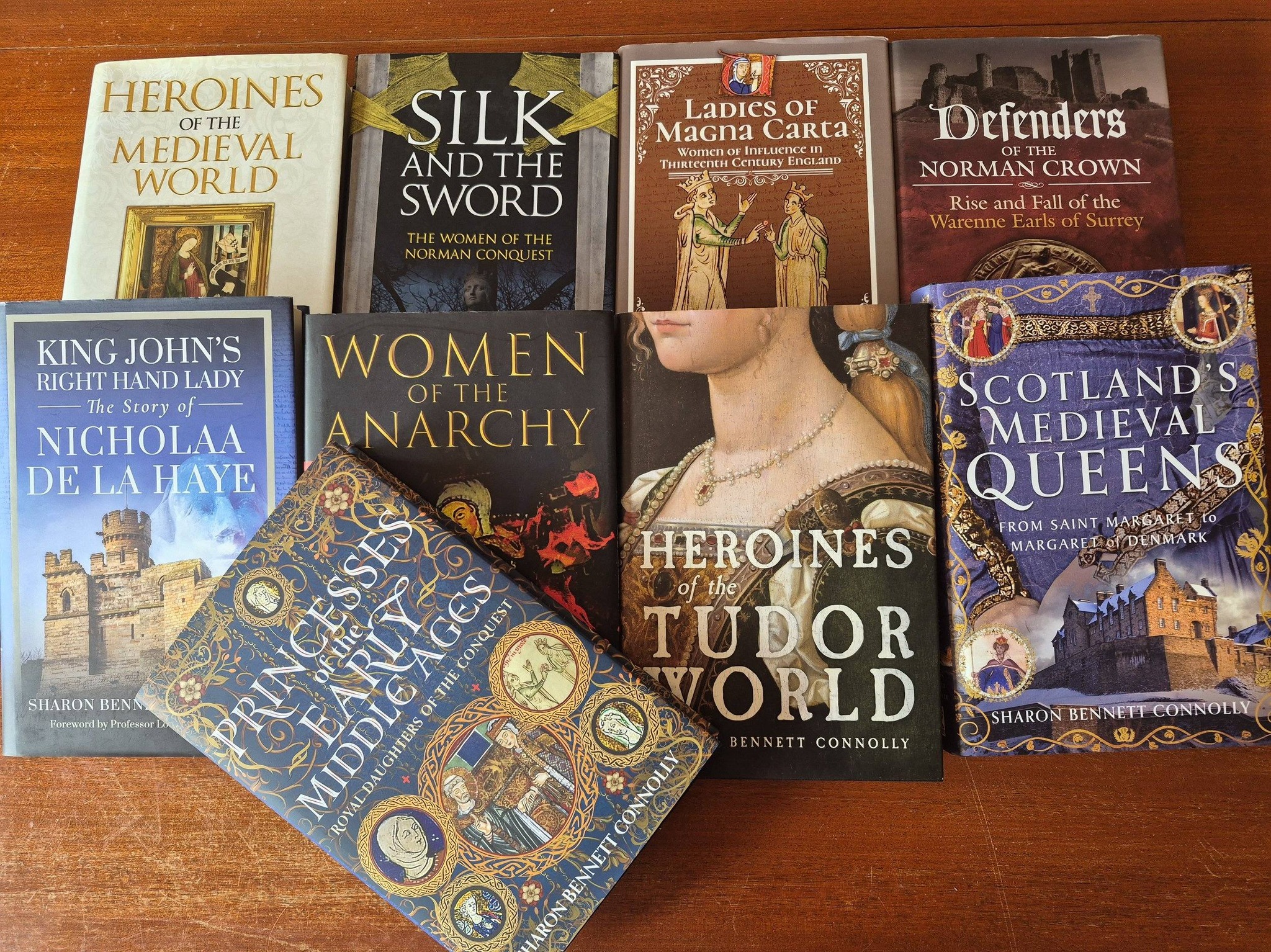
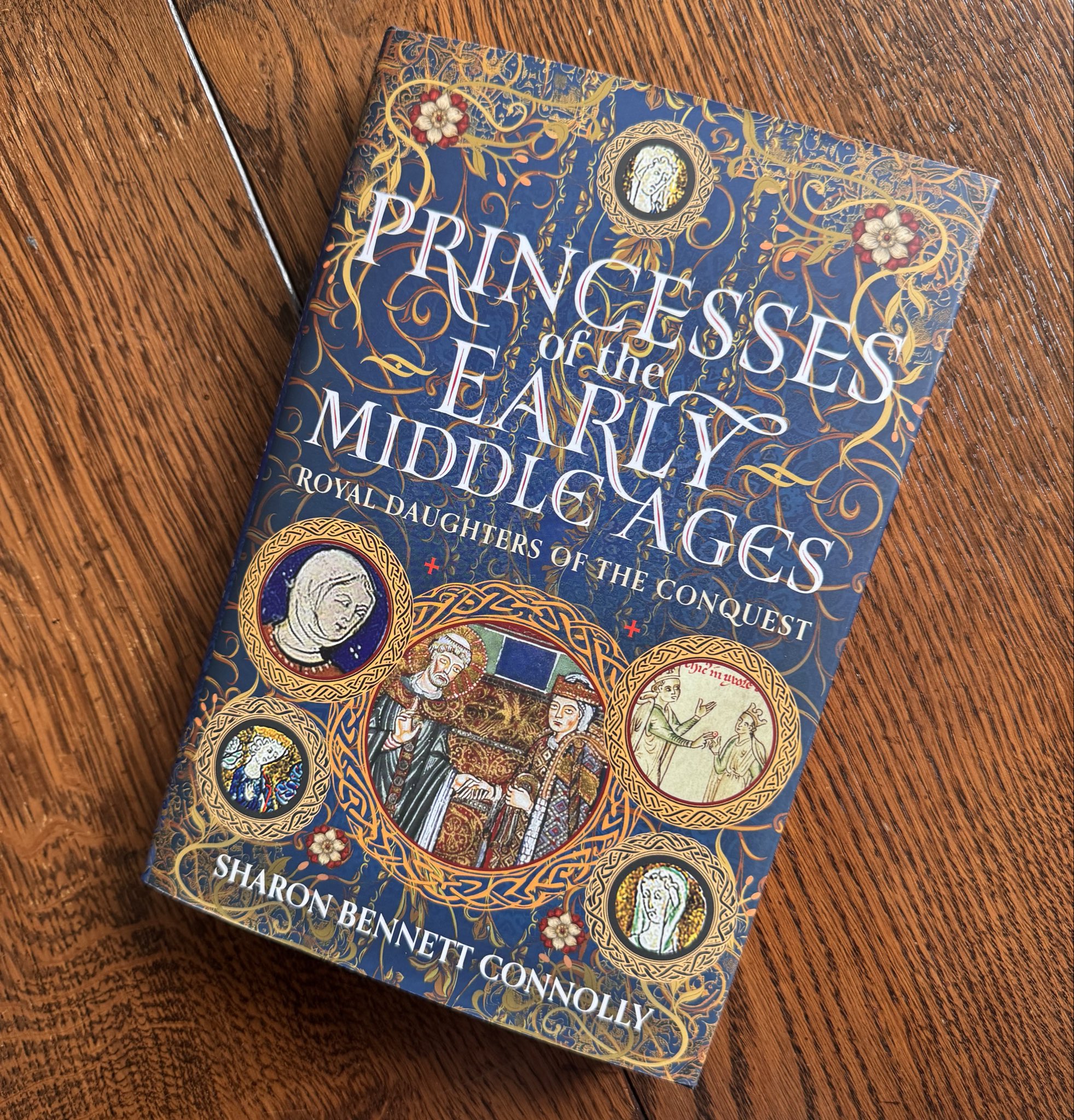
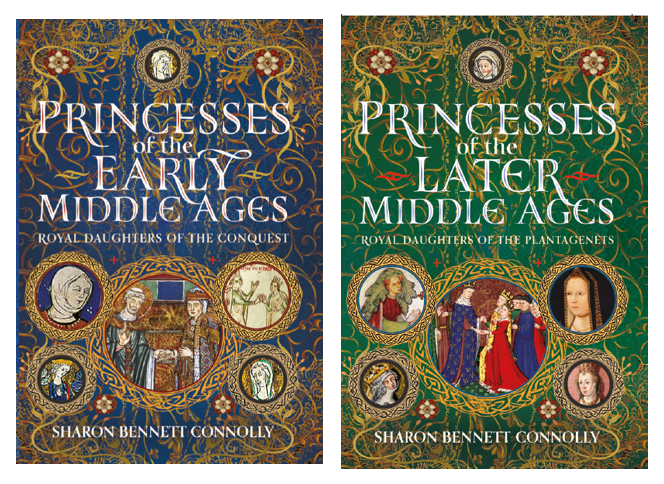
Out now: Princesses of the Early Middle Ages: Royal Daughters of the Conquest 
Books by Sharon Bennett Connolly

‘My daughter wanted me to treat her more like a princess. So, I married her to a stranger to strengthen the alliance with Poland!’

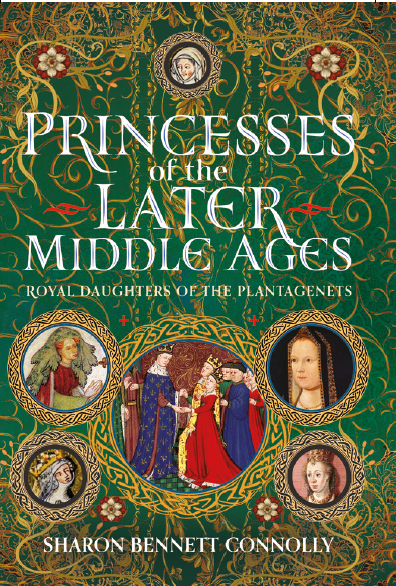
Princesses of the Early Middle Ages: Royal Daughters of the Conquest and Princesses of the Later Middle Ages: Royal Daughters of the Plantagenets tell the stories of England’s royal daughters from 1066 to the rise of the Tudors, from the last Anglo-Saxon princesses to the fall of the House of York.

Were they really pampered pawns sent off to marriages on the Continent, out of sight and out of mind?

Perhaps, there was different story, where a foreign marriage does not mean eternal exile, but a purpose in life, where a princess is a diplomat, an ambassador for England in her new country.

Where she is the bond between allies – most of the time.

Tony Riches: “I challenge anyone with an interest in medieval Britain to not find something they will learn from this book.

Anna Belfrage: “I just love how [Sharon] presents this huge cast of real life people in a casual, chatty tone that has me expecting the various female protagonists to suddenly pop their head up and add their own commentary.

Out now: Princesses of the Early Middle Ages: Royal Daughters of the Conquest

Pre-order: Princesses of the Later Middle Ages: Royal Daughters of the Plantagenets 

New in Paperback:
Books by Sharon Bennett Connolly

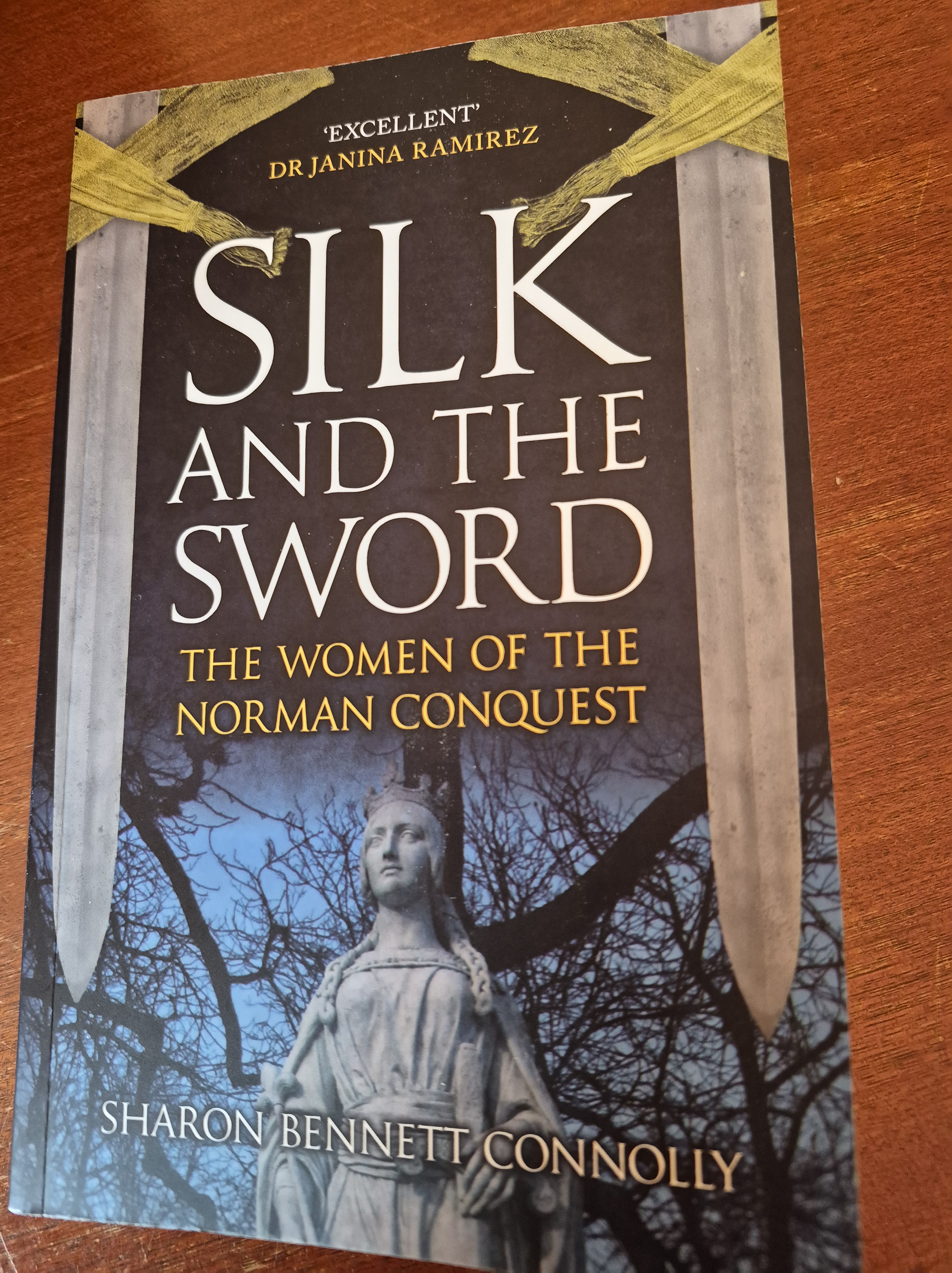
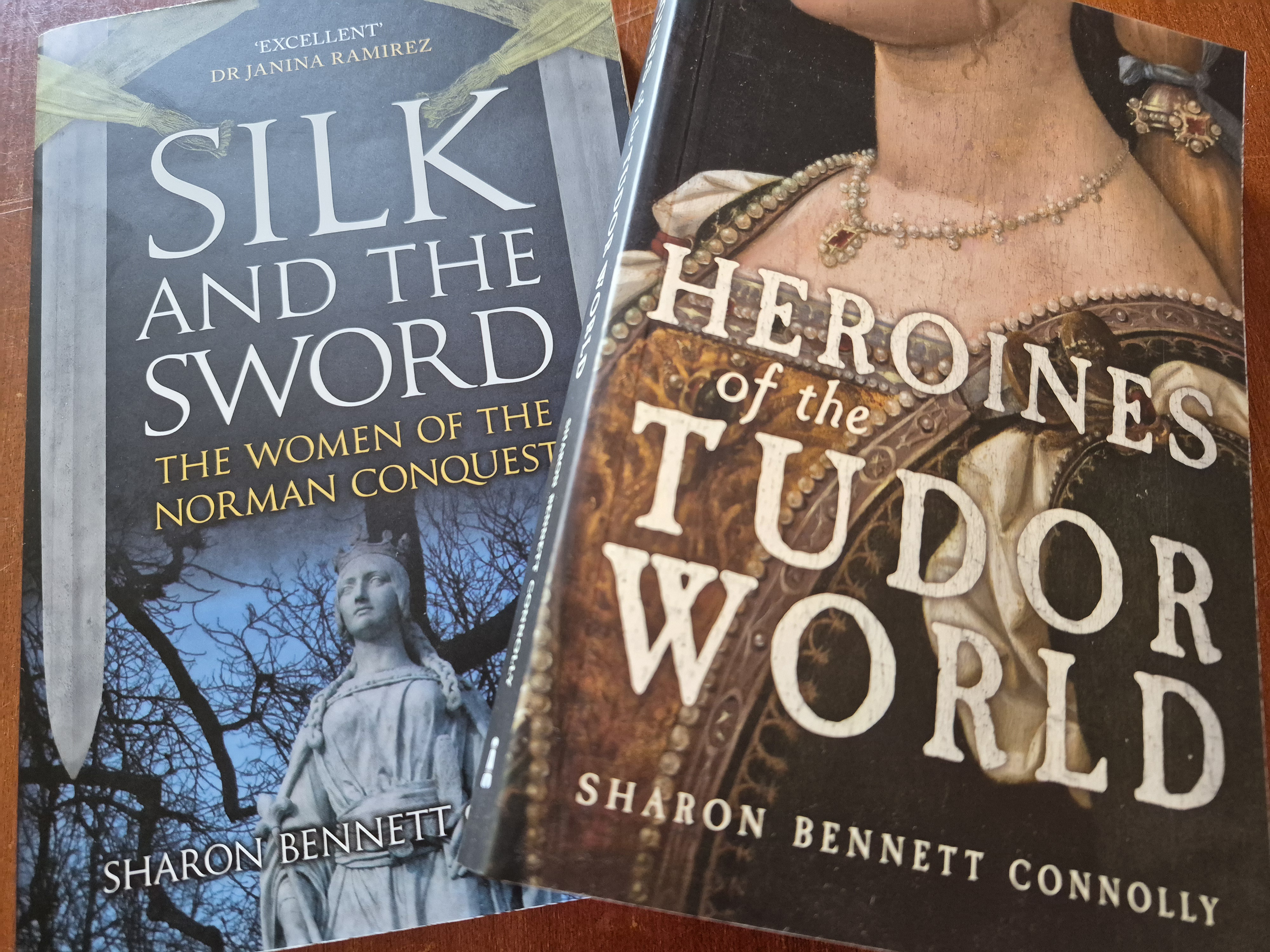
OUT NOW! The momentous events of 1066, the story of invasion, battle and conquest, are well known. But what of the women? Silk and the Sword: The Women of the Norman Conquest traces the fortunes of the women who had a significant role to play during the Norman Conquest – wives, lovers, sisters, mothers, leaders. These are lives full of drama, pathos and sometimes mystery: Edith and Gytha searching the battlefield of Hastings for the body of Harold, his lover and mother united in their grief for the fallen king. Who was Ælfgyva, the lady of the Bayeux Tapestry, portrayed with a naked man at her feet?

Janina Ramirez said it’s ‘Excellent’!

COMING 15 July 2026: Heroines of the Tudor World focuses on the women who lived through the Renaissance and Reformation, examining the threats and challenges they faced and how they overcame them. These are the women who ruled, the women who founded dynasties, the women who fought for religious freedom, their families and love. These are the women who made a difference, who influenced countries, kings and the Reformation.

Derek Birks: ‘An excellent account of the changing roles of women in Tudor society.’

Annie Whitehead: ‘What a treat this book was to read. Bennett Connolly has an easy, conversation style of writing which welcomes you from the opening pages and draws you into her story.

Also by Sharon Bennett Connolly:

Books by Sharon Bennett Connolly

Heroines of the Medieval World; Silk and the Sword: The Women of the Norman Conquest; Ladies of Magna Carta: Women of Influence in Thirteenth Century England; Defenders of the Norman Crown: Rise and Fall of the Warenne Earls of Surrey; King John’s Right Hand Lady: The Story of Nicholaa de la Haye; Women of the Anarchy; Heroines of the Tudor World; Scotland’s Medieval Queens: From St Margaret to Margaret of Denmark; Princesses of the Early Middle Ages: Royal Daughters of the Conquest (March 2026); Princesses of the Later Middle Ages; Royal Daughters of the Plantagenets (August 2026)

Alternate Endings: An anthology of historical fiction short stories including Long Live the King… which is my take what might have happened had King John not died in October 1216. Available in paperback and kindle from Amazon.

All my books on Amazon and Bookshop.org . You can also order direct from my publishers, Pen and Sword Books and Amberley Publishing.

Podcast:
History...the Interesting Bits

Have a listen to the A Slice of Medieval podcast, which I co-host with Historical fiction novelist Derek Birks. Derek and I welcome guests, such as Ian Mortimer, Bernard Cornwell, Elizabeth Chadwick and Scott Mariani, and discuss a wide range of topics in medieval history, from significant events to the personalities involved. 

Every episode is also now available on YouTube.

*
Royal Historical Society

Don’t forget! 

Signed and dedicated copies of all my books are available through my online store.

For forthcoming online and in-person talks, please check out my Events Page.

You can be the first to read new articles by clicking the ‘Follow’ button, liking our Facebook page or joining me on TwitterThreadsBluesky and Instagram.

*

©2026 Sharon Bennett Connolly FRHistS 
Love and Rebellion: Eleanor and Simon de Montfort

History...the Interesting Bits
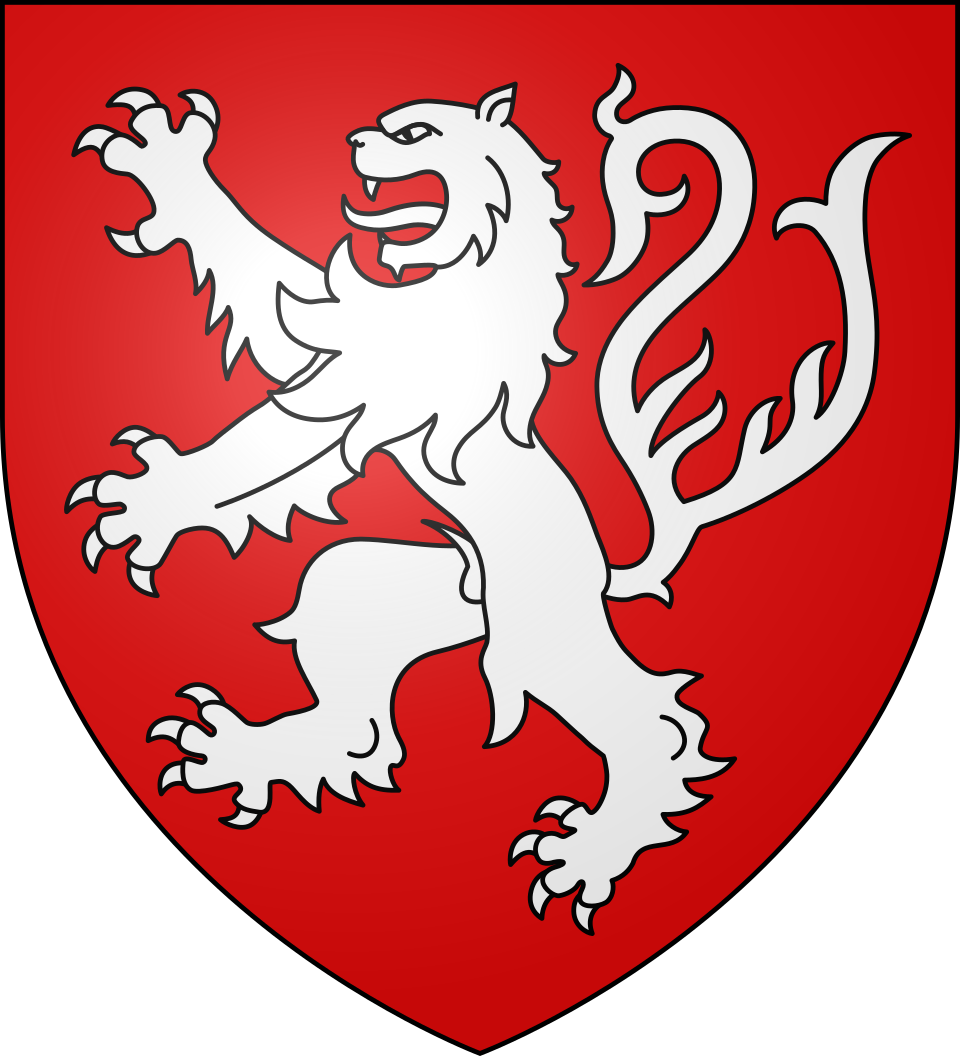
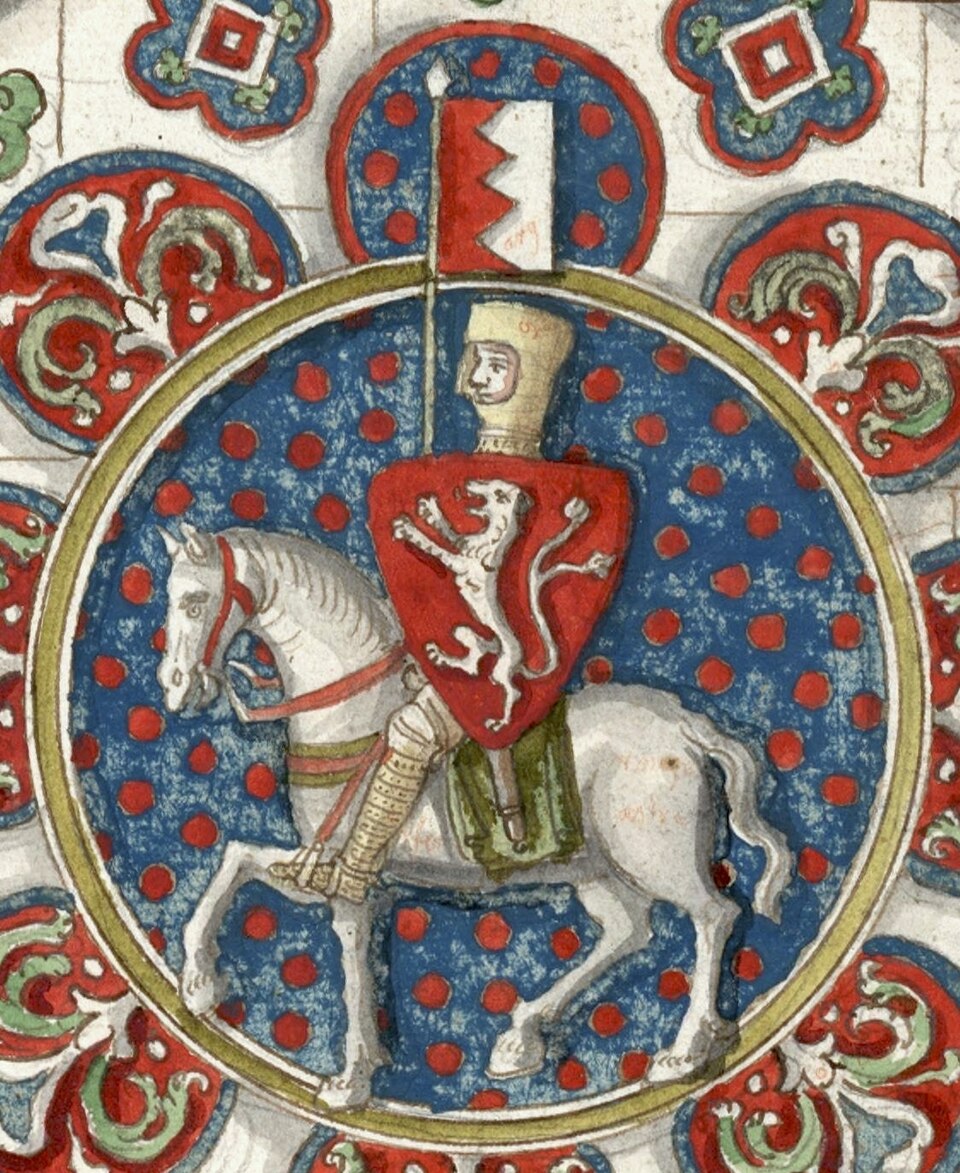
Arms of Simon de Montfort

Simon de Montfort was a third son, whose prospects would have appeared bleak during his younger years; a younger son could expect to inherit little and had to make his own way in the world. An opportunity arose for him through his father’s claim to the earldom of Leicester, via his mother, Amicia de Beaumont. The continuing hostilities between England and France in the early years of the 13th century meant that Simon’s father was never able to take possession of this inheritance. When the senior Simon de Montfort had died in 1218, he was succeeded by his eldest son, Amaury, who then transferred his claims to the earldom of Leicester to his younger brother, Simon, who in turn then departed for England to claim his inheritance and make his fortune.

Simon was able to gain control of his family’s portion of the Leicester lands, although he was not able to obtain the earldom that went with them. In 1231, he did homage to Henry III for those lands, and he continued to rise through the ranks of the court throughout the 1230s. From 1234 he attended meetings of the great council, pursued diplomacy with Scotland and Wales, and acted as steward – a post traditionally held by the earls of Leicester – at Henry III’s wedding to Eleanor of Provence in 1234, although the earldom had still not been conferred on him.

Simon did make enemies, however; his closeness to Henry and the fact he was a foreigner did not endear him to his fellow nobles.

At some point after the mid-1230s, possibly at the wedding of Henry and Eleanor of Provence, Simon met the king’s youngest sister, Eleanor, and the couple fell in love. Eleanor was the widow of William Marshal, second Earl of Pembroke and had taken a vow of chastity on Marshal’s death in 1231. With the king’s permission, they married in January 1238, in a secret ceremony in Henry’s private chapel; Matthew Paris called it a ‘matrimonium clandestinum’, a clandestine marriage. Due to Eleanor’s vow of chastity, and the fact that Simon was a foreigner and a minor noble, and Eleanor a princess, secrecy was essential. Simon and Eleanor’s first child, a son named Henry, was born in November 1238; ten months after the wedding. And in the spring of 1239, Simon was confirmed as Earl of Leicester.

History...the Interesting Bits

The marriage was to be the spark that would end Henry and Simon’s friendship, and in August 1239, at the churching of Eleanor of Provence, following the birth of Lord Edward, the king’s eldest son and heir, Henry turned on his brother-in-law. He accused Simon of seducing his sister and defiling her before their marriage; apparently Simon and Eleanor had intimated that Eleanor was pregnant in order to persuade Henry to sanction their marriage. Little Henry de Montfort’s arrival a full 10 months after the wedding being evidence that someone had played the king for a fool. Henry also charged Simon with bribing the Pope and using the crown as surety for his debts without the king’s permission.

Due to Eleanor’s vow of chastity, Simon had been prevailed upon to journey to Rome in March 1238, to seek a papal dispensation for the marriage. He had borrowed a large amount of money during his trip from the queen’s uncle, Thomas of Savoy, Count of Flanders, giving the king’s name as security. The king only discovered this when Thomas could not recover the money from Simon, and so approached Henry and asked for his money back. With further borrowing and accumulated interest, by this point, the initial £200 debt now amounted to £1,400.

Henry flew into a rage.

He forbade Simon and a pregnant Eleanor from attending the queen’s churching ceremony and the stunned couple had to flee London, taking a ship to France; so hasty was their departure that they were forced to leave their son behind, with his wet-nurse. Robert Grosseteste, Bishop of Lincoln and a friend of Simon’s, intervened on his behalf with the king and Simon was able to return to England in 1240, ostensibly to raise funds to go on Crusade and to collect his eldest son. Simon and Eleanor were only fully restored to favour on Simon’s return from the Barons’ Crusade in 1242. In the same year, Simon campaigned in Poitou, and between 1248 and 1252 he was in Gascony, acting as Henry’s seneschal. In the four years that Simon was abroad, Eleanor visited him in 1249–50, 1251 and 1253. Simon’s financial worries were gathering pace, with his Leicester lands being insufficient to support his growing family and his wife’s Marshal dower only being paid sporadically. To make matters worse, in 1252, Henry called Simon to Westminster to answer charges of brutal high-handedness in Gascony. Henry was thwarted by baronial support for Simon, who countered with arguments that Henry had contravened the terms of his commission and failed to support Simon financially.

Eleanor accompanied Simon on his visits to Paris, during the negotiations with Louis IX over Gascony. The arguments concerning
Eleanor’s Marshal dower found their way into the discussions as the treaty included Henry’s sisters renouncing their claims to the former Plantagenet lands in France. Eleanor initially refused to do so until her dower was formally settled, and the French king and queen offered to act as mediators. In the end, a payment of 15,000 marks, due to Henry through the treaty, was set aside to act as a pledge for the future settlement of Eleanor’s dower.

History...the Interesting Bits
The barons confronting Henry III at the Oxford Parliament

Growing baronial tensions led to Henry III agreeing to the Provisions of Oxford in 1258. Adopted during the Parliament at Oxford, the Provisions were a series of reforms aimed at making the royal court more efficient, with a council of 15 chosen to advise and supervise the king. The reforms created and regulated the officers of state, such as reviving the office of Justiciar, and limited the terms in office. They also stipulated that parliaments were to be held 3 times a year. However, in May 1261 papal bulls, issued by Alexander IV, arrived in England, absolving the king, queen and the realm of their oaths to adhere to the Provisions. Henry published the bulls at Winchester in early June. By the end of the year, resistance had collapsed and the king’s opponents were pardoned for their actions, and Simon de Montfort took his wife and children and left for the Continent.

Simon returned to England in April 1263. As relations between the king and the barons caused tensions, Simon emerged as the leader in the baronial opposition to Henry III’s ‘naïve foreign policies and his disastrous handling of domestic affairs’.1

Meeting at Oxford, the rebel barons insisted on the enforcement of the Provisions of Oxford of 1258. Many of the barons had grievances to work through. There were violent clashes when Montfort’s army attacked royalists and occupied the Welsh Marches. In May 1263 Montfort summoned his supporters to Worcester and told them to come armed for war. The king was in dire straits; his Savoyard allies were pursued and violated. The queen’s barge was attacked, pelted with mud, rotten eggs and stones, as it approached London Bridge, and the king was isolated in the Tower of London, surrounded by a hostile mob. Eleanor of Provence was eventually able to reunite with the king in the Tower, but the experience had shaken her.

On 15 July, Simon de Montfort’s army entered London, with Montfort appearing at the Tower the next day to ask for Henry’s submission; Henry had little choice but to agree. The king then rode with Simon to Windsor, where Lord Edward, who had been sympathetic to Simon but was now firmly on the side of his father, was continuing his resistance. The young prince relinquished the castle, if a little ungraciously, without a fight.

Simon de Montfort, Earl of Leicester and the king’s brother-in-law, now had control of the ministries of state and the royal castles of England.

History...the Interesting Bits
Simon de Montfort, Earl of Leicester

But attempts to control the king failed. Simon became the baronial leader as they rose up in revolt and the Second Barons’ War broke out. Rochester Castle was besieged by Simon de Montfort between 19 and 26 April 1264, but Montfort was forced to withdraw to London when the royalist army arrived to relieve the castle. The king proceeded to secure the submission of the Channel ports. Simon de Montfort, with reinforcements from his son Henry and the London irregulars, marched out of London and headed south, hoping to bring the king’s forces to battle.

The two armies came face to face at Lewes in Sussex; Edward’s troops were billeted in the castle while Henry’s forces were camped further south, around St Pancras Priory. On 13 May 1264, Simon de Montfort and his men formally withdrew their homage to the king, and on the morning of 14 May, the two armies arrayed themselves for battle, with Henry having the larger force, but Simon having the higher ground. Eager for battle, Edward took the field in advance of Henry and charged the left of the baronial line, comprised of the raw troops recruited in London, before the rest of the royal army was ready.

Inevitably, in the face of such a ferocious attack, the Londoners broke and fled, Edward and his cavalry hot on their heels. Henry was left with no option but to hurry to the attack, climbing the hill to engage Simon’s centre. The royal left, led by the king’s brother, Richard of Cornwall, engaged Simon de Montfort’s right but, faced with stiff opposition, were pushed back down the hill. Despite attacking uphill, Henry’s division held its own in the centre, until Simon sent in his reserve to tip the balance in the barons’ favour. Simon’s troops pursued the royalist forces into the town of Lewes, with Henry only just able to disentangle himself from the street fighting and seek shelter in the priory. By the time Edward and his cavalry returned to the field, the battle was lost. Edward tried to rally his forces for a fresh offensive, but his leading barons thwarted his efforts by riding from the field.

History...the Interesting Bits
Eleanor de Montfort and children

Instead of pulling back and regrouping, Edward chose to fight his way to his father, who had set up a defensive perimeter at the priory. Father and son were trapped; the next day they agreed to surrender.

The king was now firmly in Simon de Montfort’s control, little more than a figurehead with Edward held hostage for his father’s good behaviour. The heir to the throne was held under guard, first residing with Eleanor and later with her son, Henry de Montfort. Simon de Montfort was now the effective ruler of England, with Eleanor acting in support of her husband, hosting his allies at her castles at Wallingford and Odiham, corresponding with them and sending gifts.2

The king was forced to pardon the rebel barons and reinstate the Provisions of Oxford. De Montfort established a government based on the Provisions of Oxford and in 1265 called the Great Parliament, at which towns were asked to send their own representatives for the first time, in addition to the usual attendance of the barons and knights of the shires. This act earned for Simon recognition as the founder of the House of Commons.

History...the Interesting Bits
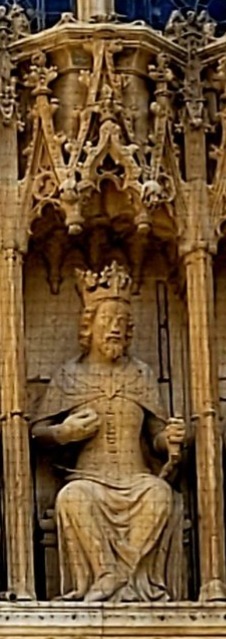
Henry III from the Gallery of Kings, Lincoln Cathedral

Simon’s victory was short-lived. Henry’s wife, Eleanor of Provence, was already in France trying to gain support for his husband’s cause. She met with the lords who had escaped the battlefield at Lewes and learned of the disastrous battle. After advising the queen to gather a force for invasion, the exiled lords appealed to the King of France for aid for their cause. They returned to England at Whitsuntide in 1265, under the leadership of William de Valence, Earl of Pembroke, and John de Warenne, Earl of Surrey, ‘with a power of crossebowes and other men of warre’.3 He landed with a force of 120 men, both cavalry and infantry.

While King Henry was in the custody of Simon, Edward was under the supervision of his aunt, Eleanor. On 28 May, at Hereford, Edward escaped his captors, slipping his guard while out riding, and rendezvoused with William de Valence. Under Edward’s leadership, they attacked several towns in the Welsh Marches and on the night of 1–2 August, having ridden through the night from Worcester, launched a surprise attack on Kenilworth Castle, Simon de Montfort’s home. They captured a good number of Simon’s noble commanders, men and equipment, but the earl’s son, the younger Simon de Montfort, managed to escape with a sizeable force.

Edward faced Simon de Montfort at the Battle of Evesham on 4 August 1265. The battle effectively ended Simon de Montfort’s rebellion, with only small pockets of resistance holding out afterwards.

On the morning of the battle, Edward appeared on the high ground, north of the town of Evesham. Mistaken in the belief that the royal army was a contingent of reinforcements being brought up by the younger Simon de Montfort, the Earl of Leicester was taken by surprise. Still in Simon de Montfort’s custody, Henry had been brought to the battlefield. As soon as the king saw Edward, he abandoned Simon de Montfort, fighting meanwhile breaking out on all sides. Henry, who was wearing borrowed armour, was almost killed by Edward’s forces during the fighting before they recognised the king and escorted him to safety.

History...the Interesting Bits
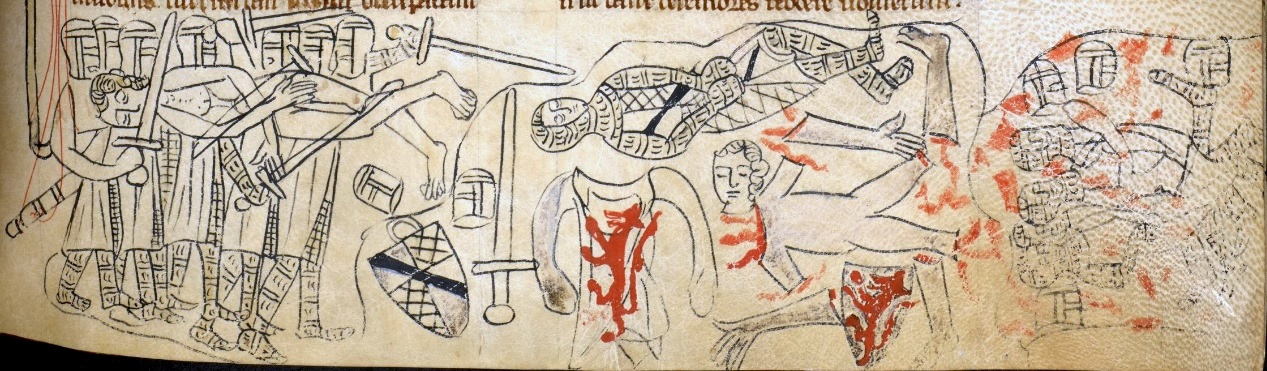
Medieval manuscript showing Simon’s mutilated body after the Battle of Evesham

The battle was a slaughter. Edward had decided that Simon de Montfort had to die and assigned men to the job of seeking out the rebel leader, dispatching him, and gruesomely mutilating him afterwards. Simon’s oldest son, Henry, was also killed in the fighting.

Eleanor had been staying at Odiham but had left for Dover as the tide turned against her family. It was at Dover Castle that Eleanor heard the news of her husband’s death and defeat. She withdrew into seclusion for ten days, to mourn her husband and son, but when she reappeared she was ready to take charge again. Rather than running for the Continent, she settled down to defend the castle. Her son, Simon, was holding Eleanor’s brother, Richard, at Kenilworth and only released him on condition that he would protect Eleanor’s interests; Henry, however, was in no mood to be compassionate towards his sister.

He wanted to disinherit and banish Eleanor.

The younger Simon then fled north, continuing the insurgence in the Isle of Axeholme in Lincolnshire, which had been a hotbed for rebellion during the First Barons’ War against King John. Edward took Dover in October 1265, allowing Eleanor a dignified retreat into exile, taking her daughter, Eleanor, with her.

Eleanor retired to the Domincan convent of Montargis, founded by her sister-in-law, Amicia de Montfort. In 1267 she was granted an annual payment of £500 from the English Exchequer, providing she remained in exile, thanks to the intervention of Louis IX, King of France. Edward I confirmed this soon after his accession; he had met his aunt on his way home from crusade in 1273 and loaning her £200, he wrote to his chancellor, saying that he had admitted her to his ‘grace and peace.’4 Edward and Eleanor were eventually reconciled, with the help of Marguerite, Queen of France and sister of Edward’s mother, Eleanor of Provence, who wrote to the new English king:

History... the Interesting Bits
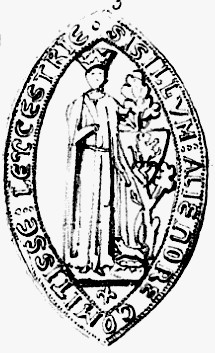
Seal of Eleanor, Countess of Pembroke and Leicester

‘To the very high and very noble prince, our very dear nephew, Edward, by the grace of God king of England, Marguerite, by the same grace queen of France, greetings and true love. Dear nephew, the countess of Leicester entreated us and asks that we entreat you to have pity on her and her will, and asked us also that we entreat for Amaury, her son the cleric, that you have pity on him and do right by him and render him your favour. And since we promised her that we would do it, we entreat for … things, and we entreat you also that you would act and command that the need that involves the will of said lady … and delivered as right, usage and custom of the country might give. And … as to the cleric, that there be honour and good, so much that God, and I, may be grateful to you, and that you cannot be blamed. And of these things … your will …, if it please you, the Monday before the feast of St Denis.’5

Eleanor had been a strong-willed, independent woman. Her seal depicted her as countess on one side and sister of the king on the other. She was involved in the governance of her estates and in disputes with lords over customs and property. She held wardships in her English manors and issued charters in her own name. She was a benevolent mistress, procuring grants and pardons for the men and women in her service. She supported Simon in his rebellion and was entrusted with the custody of her nephews, Edward and Henry (the son of Richard of Cornwall) after the Battle of Lewes. After Simon de Montfort’s defeat and death at Evesham, Eleanor continued to support her surviving sons, providing money for them to pay their soldiers and sending two of them to France with 11,000 marks in their possession. She negotiated the surrender of Dover Castle to Lord Edward, her safe passage to France and the safety of her people left behind in England.

In her French exile, Eleanor had the company of her only daughter, Eleanor de Montfort, who was probably born in 1258, at Kenilworth Castle. On her father’s death, Eleanor had fled into exile in France with her mother and brothers. Her brothers continued to Italy, where Guy and Simon would seek knightly employment, while Amaury studied medicine and theology at the university in Padua. The two Eleanors remained settled at the abbey at Montargis, until the elder Eleanor’s death there before 3 June 1275, with her daughter Eleanor and her son Amaury by her side. Eleanor, Countess of Pembroke and Leicester and a princess of England, was buried at the abbey which had been her home for the last ten years of her life.

Notes:

1. Louise Wilkinson (ed. and trans.), The Household Roll of Eleanor de Montfort; 2. ibid; 3. Holinshed quoted in Darren Baker, The Two Eleanors of Henry III: The Lives of Eleanor of Provence and Eleanor de Montfort; 4. Darren Baker, With All For All: The Life of Simon de Montfort; Royal Letters, Tower Collection #1125, quoted in Epistolae, ‘Eleanor of England’.

Sources:

Louise Wilkinson (ed. and trans.), The Household Roll of Eleanor de Montfort; Epistolae; Darren Baker, The Two Eleanors of Henry III: The Lives of Eleanor of Provence and Eleanor de Montfort; 4. Darren Baker, With All For All: The Life of Simon de Montfort; Rich Price, King John’s Letters Facebook group; Robert Bartlett England Under the Norman and Angevin Kings 1075-1225; Dan Jones The Plantagenets; the Kings who Made EnglandThe Plantagenet Chronicle Edited by Elizabeth Hallam; Maurice Ashley The Life and Times of King John; Roy Strong, The Story of BritainOxford Companion to British History; Mike Ashley British Kings & Queens; David Williamson Brewer’s British Royalty; Ralph of Diceto, Images of History; Marc Morris, King John; Oxforddnb.com; Thomas Asbridge, The Greatest Knight; finerollshenry3.org.uk; Elizabeth Norton, She Wolves: The Notorious Queens of England; Moniek Bloks (ed.) ‘Eleanor of Leicester: A Broken Vow of Chastity’ (article), historyofroyalwomen.com; David Carpenter, Henry III: The Rise to Power and Personal Rule 1207-125; Mary Anne Everett Green, Lives of the Princesses of England from the Norman Conquest; Matthew Lewis, Henry III: the Son of Magna Carta; Anne Crawford (ed. and trans.), Letters of Medieval Women

Images:

Courtesy of Wikipedia except King Henry III, which is ©2026 Sharon Bennett Connolly FRHistS 
*

My Books

New releases in 2026:

New Hardbacks

Out now: Princesses of the Early Middle Ages: Royal Daughters of the Conquest 

Books by Sharon Bennett Connolly

‘My daughter wanted me to treat her more like a princess. So, I married her to a stranger to strengthen the alliance with Poland!’

Princesses of the Early Middle Ages: Royal Daughters of the Conquest and Princesses of the Later Middle Ages: Royal Daughters of the Plantagenets tell the stories of England’s royal daughters from 1066 to the rise of the Tudors, from the last Anglo-Saxon princesses to the fall of the House of York.

Were they really pampered pawns sent off to marriages on the Continent, out of sight and out of mind?

Perhaps, there was different story, where a foreign marriage does not mean eternal exile, but a purpose in life, where a princess is a diplomat, an ambassador for England in her new country.

Where she is the bond between allies – most of the time.

Out now: Princesses of the Early Middle Ages: Royal Daughters of the Conquest

Pre-order: Princesses of the Later Middle Ages: Royal Daughters of the Plantagenets 

New in Paperback:

Books by Sharon Bennett Connolly

OUT NOW! The momentous events of 1066, the story of invasion, battle and conquest, are well known. But what of the women? Silk and the Sword: The Women of the Norman Conquest traces the fortunes of the women who had a significant role to play during the Norman Conquest – wives, lovers, sisters, mothers, leaders. These are lives full of drama, pathos and sometimes mystery: Edith and Gytha searching the battlefield of Hastings for the body of Harold, his lover and mother united in their grief for the fallen king. Who was Ælfgyva, the lady of the Bayeux Tapestry, portrayed with a naked man at her feet?

Janina Ramirez said it’s ‘Excellent’!

COMING 15 July 2026: Heroines of the Tudor World focuses on the women who lived through the Renaissance and Reformation, examining the threats and challenges they faced and how they overcame them. These are the women who ruled, the women who founded dynasties, the women who fought for religious freedom, their families and love. These are the women who made a difference, who influenced countries, kings and the Reformation.

Derek Birks: ‘An excellent account of the changing roles of women in Tudor society.’

Annie Whitehead: ‘What a treat this book was to read. Bennett Connolly has an easy, conversation style of writing which welcomes you from the opening pages and draws you into her story.

Also by Sharon Bennett Connolly:

Books by Sharon Bennett Connolly

Heroines of the Medieval World; Silk and the Sword: The Women of the Norman Conquest; Ladies of Magna Carta: Women of Influence in Thirteenth Century England; Defenders of the Norman Crown: Rise and Fall of the Warenne Earls of Surrey; King John’s Right Hand Lady: The Story of Nicholaa de la Haye; Women of the Anarchy; Heroines of the Tudor World; Scotland’s Medieval Queens: From St Margaret to Margaret of Denmark; Princesses of the Early Middle Ages: Royal Daughters of the Conquest (March 2026); Princesses of the Later Middle Ages; Royal Daughters of the Plantagenets (August 2026)

Alternate Endings: An anthology of historical fiction short stories including Long Live the King… which is my take what might have happened had King John not died in October 1216. Available in paperback and kindle from Amazon.

All my books on Amazon and Bookshop.org . You can also order direct from my publishers, Pen and Sword Books and Amberley Publishing.

Podcast:

History...the Interesting Bits

Have a listen to the A Slice of Medieval podcast, which I co-host with Historical fiction novelist Derek Birks. Derek and I welcome guests, such as Ian Mortimer, Bernard Cornwell, Elizabeth Chadwick and Scott Mariani, and discuss a wide range of topics in medieval history, from significant events to the personalities involved. 

Every episode is also now available on YouTube.

*

Royal Historical Society

Don’t forget! 

Signed and dedicated copies of all my books are available through my online store.

For forthcoming online and in-person talks, please check out my Events Page.

You can be the first to read new articles by clicking the ‘Follow’ button, liking our Facebook page or joining me on TwitterThreadsBluesky and Instagram.

*

©2026 Sharon Bennett Connolly FRHistS 


Wordly Women: Joanne Major

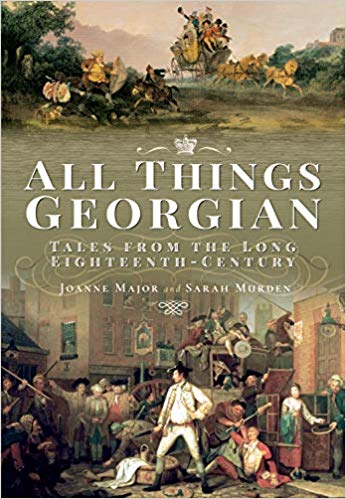
Today, it is an absolute pleasure to continue my Wordly Women interview series with my dear friend Joanne Major. Like me, Joanne likes to put the women back into the limelight, though she focuses on women of the Georgian era, rather than the medieval. Her book, All Things Georgian: Tales from the long Eighteenth Century, which she co-wrote with Sarah Murden, is one of the most beautiful books I have ever read. The sumptuous, colourful photos scattered throughout the book makes it esthetically pleasing to the eye. It also regales the reader with some of the best stories from the eighteenth century; scandals, love stories and mysteries fill the pages…

So, on with the interview…

Sharon: Welcome Joanne. First question is what got you into writing?

History ... the Interesting Bits

Joanne: I’ve always loved writing. I wrote stories as a child and taped the sheets of paper into homemade books. In my early 20s, I attempted to write a novel. Several, in fact, all of which still languish half-finished somewhere. Then, life got in the way and writing fell by the wayside, although I continued to make up stories in my head.

Then, via a genealogy forum, I met Sarah Murden. We stumbled upon a story, that of a Romany connection to the royal family. We began to research, intending it for an article in the Romany and Traveller Family History Society’s journal, but things snowballed, and it became a book. We discovered that we wrote in very different styles, so while the research was done together, I took on the writing duties.

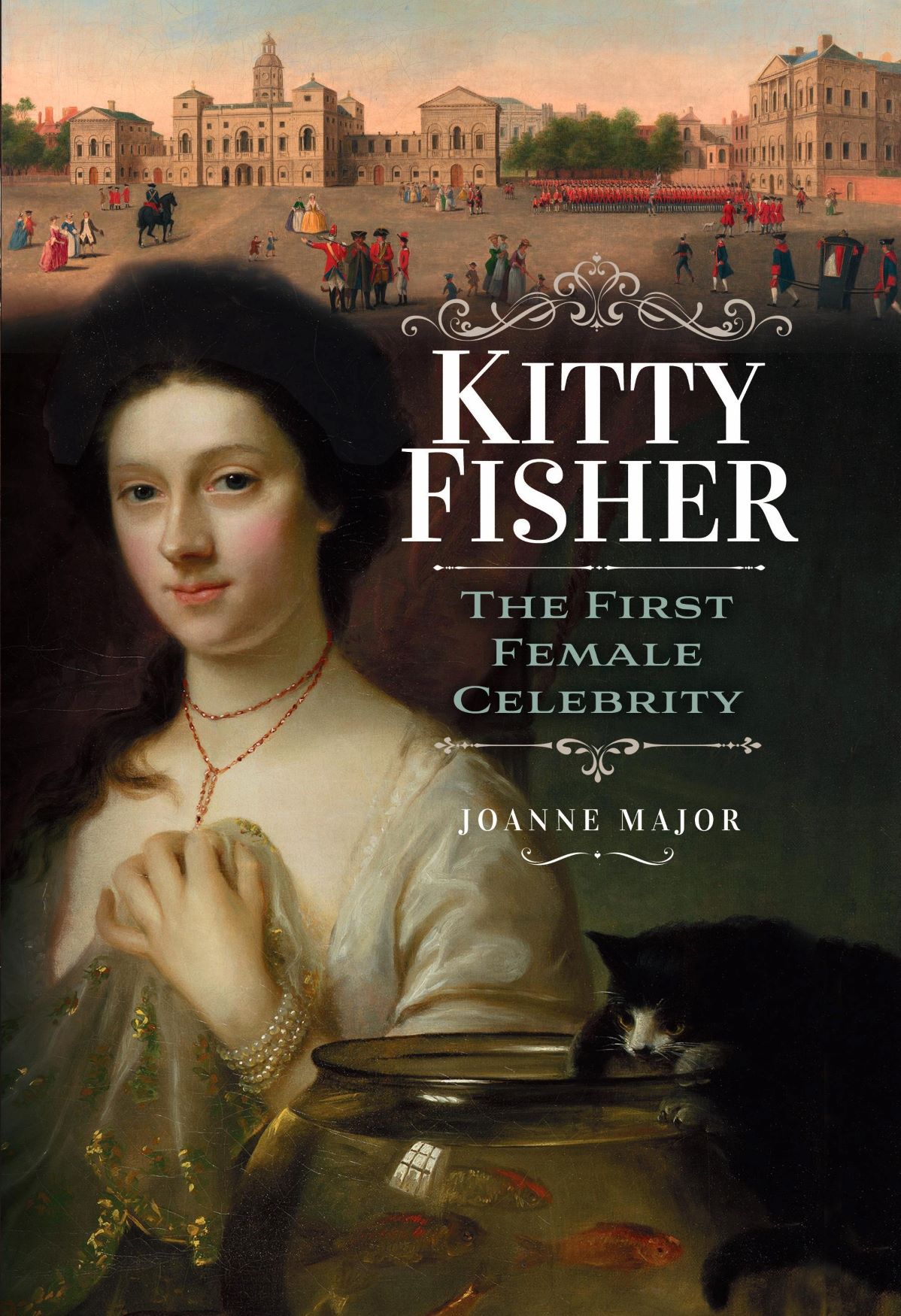
We ended up co-authoring five books, and then, at the age of 50, I made a whirlwind decision to enrol at university to study for a Creative Writing degree and continued onto an MA. I researched and wrote my first ‘solo’ nonfiction book whilst at university (Kitty Fisher: The First Female Celebrity). During that time, I also rediscovered my love of writing fiction (in short story form), and I now also enjoy writing short, angry poems.

So, it’s been a roundabout journey, one that started with wanting to write fiction, diverted into historical nonfiction, and along the way I found both my confidence and my ‘voice.’ I’m hoping it might end with me finally achieving my long-held ambition to write a novel, but I need a few more hours in the day for that right now.

Sharon: Tell us about your books.

History ... the Interesting Bits
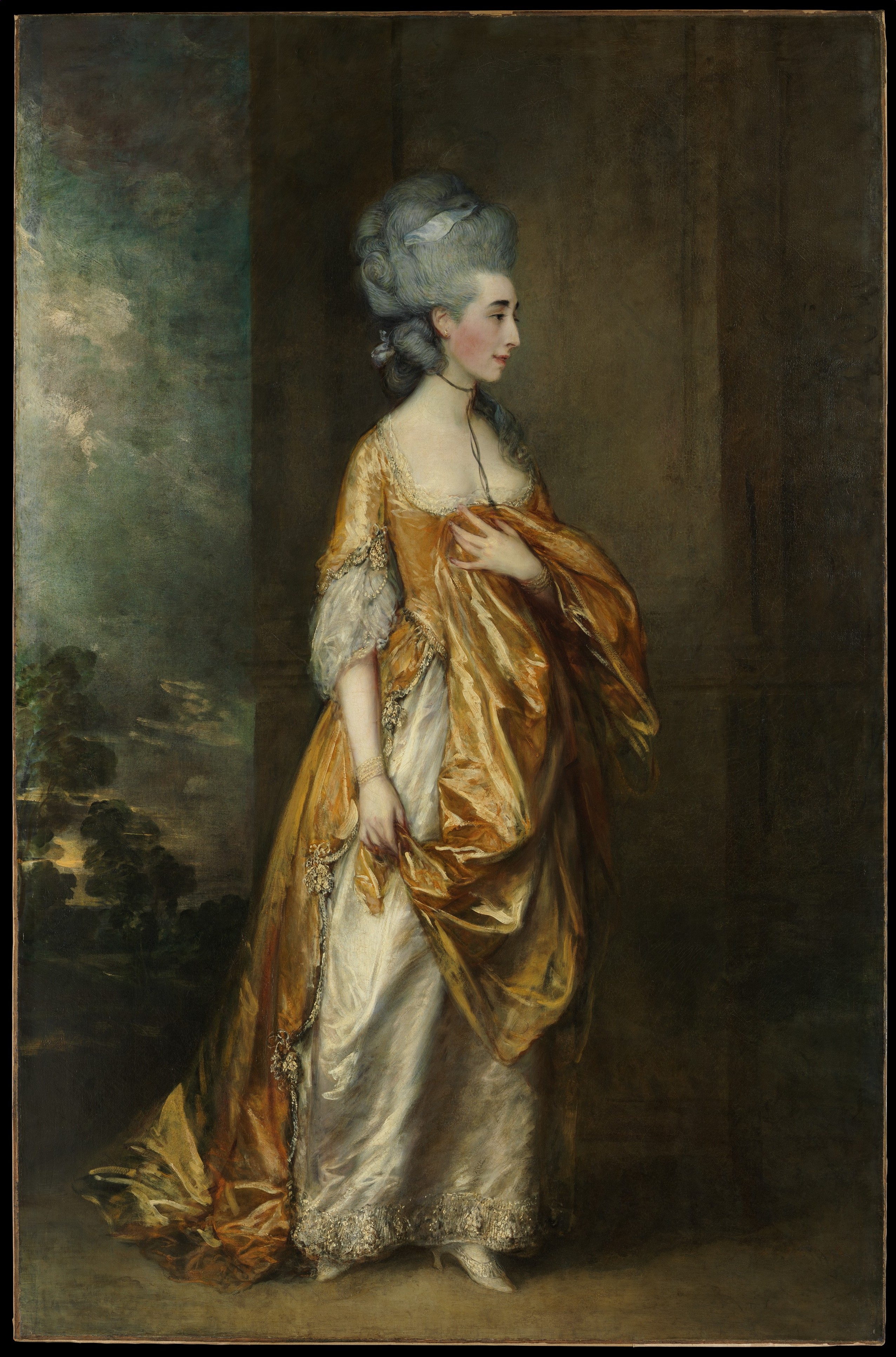
Grace Dalrymple Elliott by Thomas Gainsborough, 1778 – Met Museum

Joanne: I’ve had six historical nonfiction books published by Pen & Sword History, focusing on women’s history in the Georgian period, but with a little diversion into the 17th century and the Victorian era on occasion. I also have a book of historical short fiction.

The Extraordinary Life of a Georgian Courtesan: Grace Dalrymple Elliott, her Family, and Friends (originally issued in hardback as An Infamous Mistress): This is the biography of the Scottish-born Grace Dalrymple Elliott. Tall and beautiful, Grace was married to a doctor twice her age and about half her height, who divorced her while she was still in her teens. This launched her into a career as a courtesan, and her lovers included the Duke of Orléans (Philippe Egalité) and the Prince of Wales, later George IV (she bore him a child). Trapped in France during the revolutionary years, Grace left behind one of the few first-hand accounts of the time written by a woman.

A Right Royal Scandal: Two Marriages That Changed History: Although published second, this was the book that started it all. It looks at two generations of the royal family’s ancestors, the Cavendish-Bentincks of Welbeck Abbey. Just after the Battle of Waterloo, the Duke of Wellington’s married niece, Lady Anne Abdy, eloped with Lord Charles Bentinck. (He was a widower; his first wife was the daughter of Grace Dalrymple Elliott and King George IV.) The drama continued into the next generation when Anne and Charles’s eldest son made a secret marriage to a Romany girl he met while studying at Oxford, to the horror of his ducal relatives.

A Georgian Heroine: The Intriguing Life OF Rachel Charlotte Williams Biggs: If I floated this as the basis for a historical fiction novel, you’d say the story was too far-fetched. Mrs Biggs suffered horrendously. She was kidnapped and sexually abused twice and escaped to France, where she became trapped during the Revolution. Afterwards, she reinvented herself as a playwright and author, a ‘female politician’, and a spy. An ardent royalist who instigated George III’s jubilee celebrations almost single-handedly, if Mrs Biggs had been born a man, you’d already know all about her, but she was a woman and, during her lifetime, was anonymous.

All Things Georgian: Tales from the Long Eighteenth Century: A collection of 25 true tales from the era; for this one, the writing credits were shared between Sarah and me. It covers actresses, royalty, eccentrics, criminals, and inventions, and is lavishly illustrated in colour.

A History of the Dukes of Bolton, 1600-1815: Love Loyalty: The Bolton dukedom ran out of male heirs in the 1790s, and maybe this is why the family has been overlooked. In fact, over several generations they were crucial to events that shaped British history. The womenfolk were vital to the dynasty, too, with the estates passing through the female line more than once.

History ... the Interesting Bits

Kitty Fisher: The First Female Celebrity: I’ve described her thus because Kitty was a celebrity in the way we’d understand the concept today and was almost modern in how she approached her fame. Kitty would have loved TikTok and Instagram! Remembered as a courtesan, and the subject of several Joshua Reynolds’s portraits and a well-known nursery rhyme, I discovered a very different woman from the one I expected.

Castles, Conspiracies, and a Coronation: This is a (self-published) collection of short historical fiction, comprising two short stories, a novelette, and a novella in length, and ranging from medieval to the Victorian eras.

Sharon: What attracts you to the Georgian period?

Joanne: For me, it bridges ‘old’ and ‘new’ history. We see echoes of the Stuart and Tudor eras, but also the foundations of the modern world. I also love the fashion and the personalities. With the rise of the print industry (newspapers/satirical prints/magazines, etc.), people are brought to life in a way not always possible for earlier periods. (Having said all that, my stock, and only partly joking, answer is that Adam Ant’s ‘dandy highwayman’ may also have a lot to answer for!)

Sharon: Who is your favourite Georgian and why?

Joanne: It’s got to be Kitty Fisher. She surprised me more than once during my research. Although labelled as a famous courtesan, she wasn’t that successful and ended up being ‘kept’ by a syndicate of titled and well-to-do men who knew one another through a gambling club. As I researched, the woman behind the myth and legend emerged: Catherine Maria Fischer, an impetuous teenager who matured into an intelligent, kind, and fun-loving woman seeking love and security.

Sharon: Who is your least favourite Georgian and why?

History ... the Interesting Bits
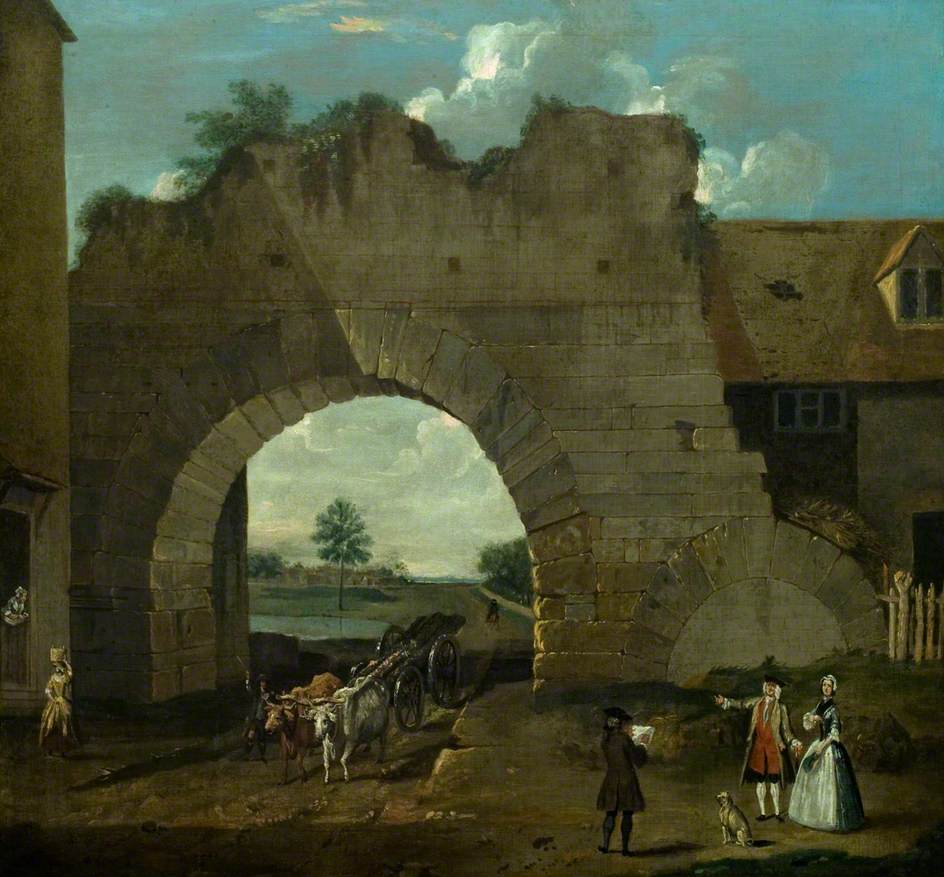
Drake, Nathan; Newport Arch, Lincoln; The Collection: Art & Archaeology in Lincolnshire (Usher Gallery); http://www.artuk.org/artworks/newport-arch-lincoln-81838

Joanne: There are quite a few I could mention, but because I live just outside Lincoln, I’m going to go for someone little-known, but who had a detrimental impact on the city. In the mid-eighteenth century, Sir Cecil Wray, 13th Baronet Wray of Glentworth, built a house on Eastgate in Lincoln. He named it Eastgate House, and all was perfect except for some old stone ruins in his garden. He had them demolished because they interrupted his view of the nearby Lincoln Cathedral. The old stonework was an archway and substantial remains of a wall which once formed the Roman Upper East Gate to the city. As an act of selfish stupidity, it ranks high. (For anyone who knows Lincoln, it was similar to the city’s Newport Arch. All that is left are some foundations in the grounds of The Lincoln Hotel.)

Sharon: How do you approach researching your topic?

Joanne: Everything I find out goes onto a timeline, to which I also add events of note. I find this helps in connecting dots that otherwise might be missed. The timeline becomes my ‘bible’ when writing and helps to ensure nothing is missed.

In terms of my research, I approach it as both a historian and a genealogist. Using genealogical techniques, such as interrogating the wills of extended family members or searching through parish registers, has yielded amazing results, often where it has long been believed no evidence survives.

My main difficulty is knowing when to stop researching and start writing.

Sharon: Tell us your ‘favourite’ true historical story you have come across in your research.

History ... the Interesting Bits
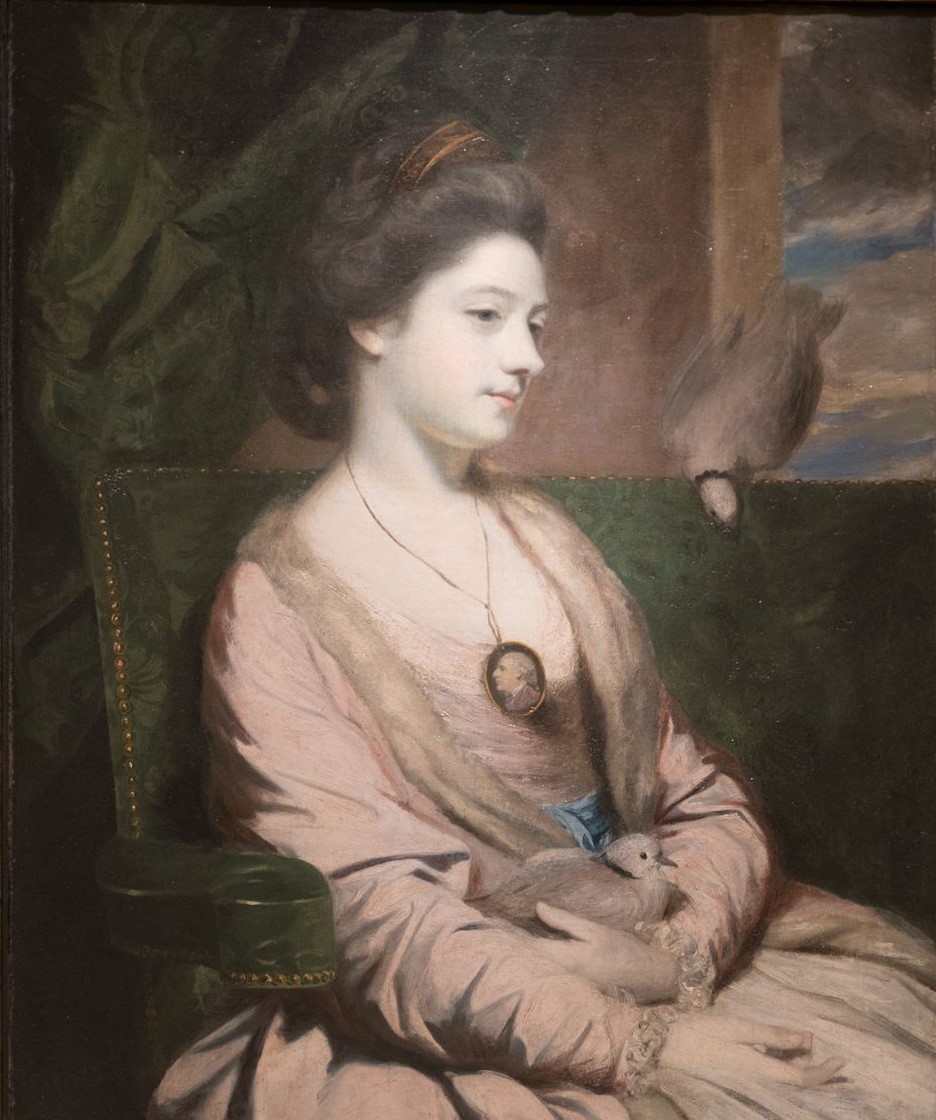
Kitty Fisher by Joshua Reynolds, New York Public Library

Joanne: My favourite true historical story starts with a false one. If you read anything about Kitty Fisher (other than my book!), you’ll hear that she met Casanova in a London brothel. He mentioned it in his memoirs and told a story about Kitty eating a banknote. I was looking forward to writing about this. Unfortunately, it became evident that it was a load of baloney. Kitty might have been in Casanova’s vicinity, perhaps at one of the capital’s pleasure gardens, but she never met him in a brothel. In fact, she was never in a brothel, full stop and Kitty never ate a bank note; that was a different courtesan, Fanny Murray.

Instead, other, more truthful stories about Kitty had been forgotten. It was reported that she started a trend for drinking tea in her box at the theatre, and I love the thought of her having a cuppa whilst in all her finery and jewels. Once, in the middle of winter, Kitty decided she wanted strawberries and set her admirers off on an expensive search to procure them. A fashion icon, she designed a hat, the ‘Kitty Fisher bonnet,’ which was advertised for sale as far away as Boston in the US.

Despite my initial disappointment that Kitty hadn’t in fact met Casanova, I enjoyed setting the record straight.

Sharon: Tell us your least ‘favourite’ true historical story you have come across in your research.

History ... the Interesting Bits
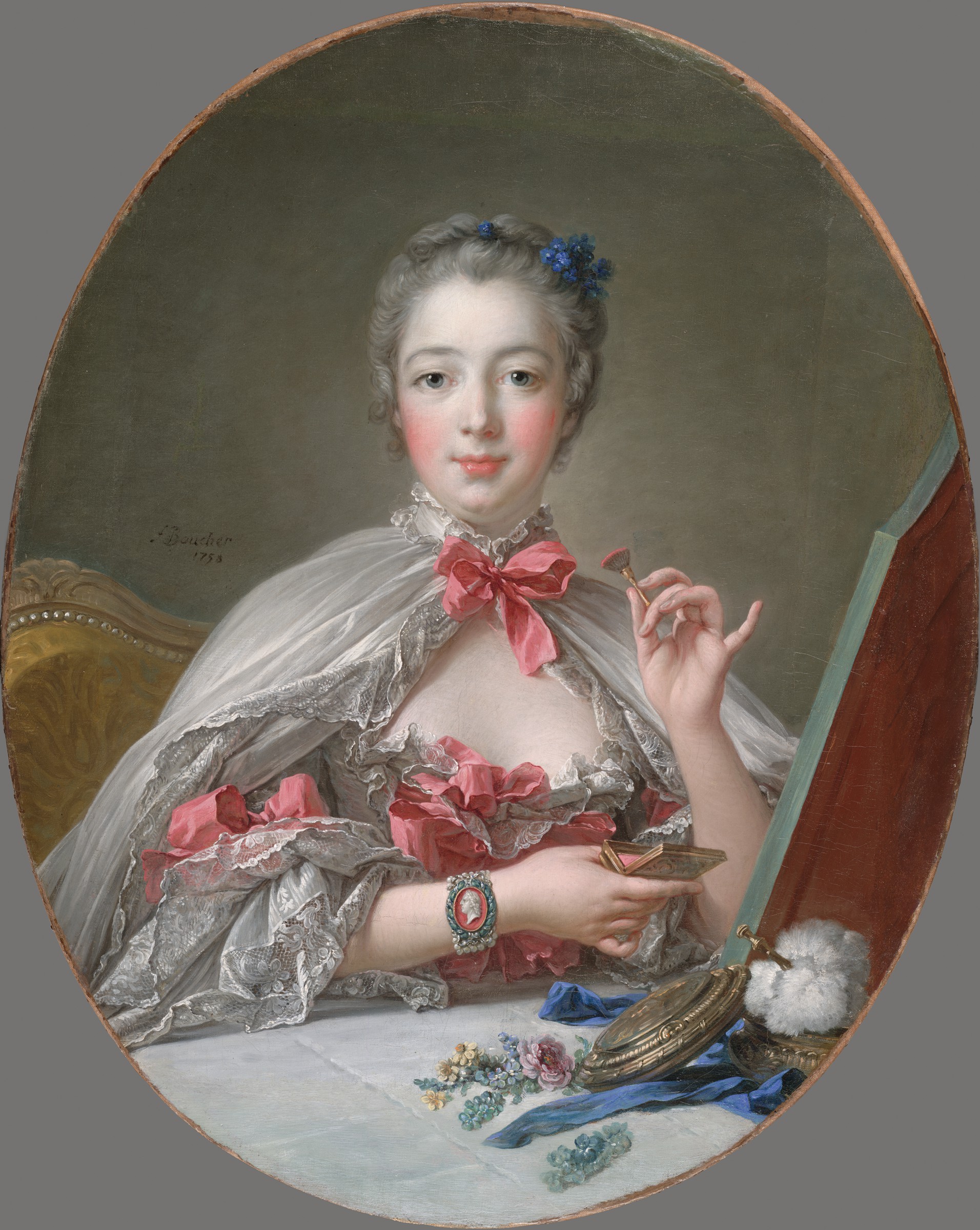
Madame de Pompadour at her toilette by François Boucher – Harvard Art Museums

Joanne: One of the downfalls of writing historical nonfiction is that you can’t rewrite history to give happy endings, however much you’d love to.

Women used a make-up item called ceruse, which whitened their skin. It contained lead. Heavy use was dangerous, and it hastened the fashion-conscious Kitty Fisher’s death. Believed to be suffering from TB, Kitty’s disease progressed at a speed that surprised everyone. Quite probably, the use of ceruse had damaged her immune system, leaving her body with little defence.

Sinetta Lambourne, the Romany girl who married Charles Cavendish Bentinck (A Right Royal Scandal), also used ceruse. She was described as ‘enamelled to her waist.’ In wanting to disguise her heritage, Sinetta fatally exposed both herself and her unborn children to lead poisoning. It’s particularly poignant as her husband obviously loved her exactly as she was, but Sinetta wanted to fit in with his world. (The Rev Charles Cavendish Bentinck made a second marriage. His granddaughter by his second wife was Elizabeth Bowes-Lyon, the ‘Queen Mother’.)

Sharon: Are there any other eras you would like to write about?

Joanne: In my 20s, I was involved in re-enactment, mainly with an English Civil War society, but dabbled in early medieval re-enacting, too. Whilst I am interested in earlier periods than those I write about, the scale of new research I’d have to do for nonfiction has so far ruled them out. I have set some of my short stories in other eras, however.

Sharon: What are you working on now?

Joanne: I have just written the biography of a Lincolnshire woman, Harriet Arbuthnot née Fane (1793-1834). Harriet married an MP (Charles Arbuthnot) and entered the inner circle of Tory politics. She was close friends with both Lord Castlereagh and the Duke of Wellington. Between 1820 and 1832, Harriet kept a journal which, as well as documenting politics, recounts her conversations with Wellington and others, and includes a bit of gossip, too.

I’ve used Harriet’s journal as a reference source in my books, and quoted her (for instance, her acid-tongued account of George IV’s coronation), but never realised she was from my home county. She’s always been known as either a diarist or as Wellington’s ‘best friend.’ (There were rumours, even in her lifetime, that their relationship was more, but it was a close friendship only.) My biography looks at Harriet as a woman in her own right, and I’ve got a lot of information about her life before she began to keep her journal. It’s due out in spring 2027.

Sharon: And finally, what is the best thing about being a writer?

Joanne: I’m not sure I can pick just one thing! I love words, and I enjoy losing myself in my writing. With historical nonfiction, it’s trying to bring the lives (and times) of my subjects to life in a way that will be accessible and interesting to readers. If I’m writing fiction, it’s the sheer pleasure of crafting a story and of creating the characters and settings.

With my nonfiction, I also enjoy the research immensely. I have a suspicion that all historians are frustrated detectives at heart, constantly looking for that last piece of the jigsaw. I’ve also been lucky enough, through my writing career, to visit some fascinating places that I’d never have gone to otherwise and met some amazing people along the way.

Author Bio

History ... the Interesting Bits

Joanne Major, author and historian, is captivated by the eighteenth and nineteenth centuries and in exploring the hitherto undiscovered women’s history of the period. She holds a BA (First Class) and MA (Distinction) in Creative Writing from the University of Lincoln. Joanne lives in Lincolnshire with her family and dogs, spending most days with one foot in the present and one in the past.

Joanne’s books are available via your bookshop of choice, direct from her publisher, or at Amazon UK and Amazon US.

Social Media

Website: Joanne Major, author, historian, and genealogist; Facebook; X/Twitter; Instagram

*

My Books

New releases in 2026:

New Hardbacks

Out now: Princesses of the Early Middle Ages: Royal Daughters of the Conquest 

Books by Sharon Bennett Connolly

‘My daughter wanted me to treat her more like a princess. So, I married her to a stranger to strengthen the alliance with Poland!’

Princesses of the Early Middle Ages: Royal Daughters of the Conquest and Princesses of the Later Middle Ages: Royal Daughters of the Plantagenets tell the stories of England’s royal daughters from 1066 to the rise of the Tudors, from the last Anglo-Saxon princesses to the fall of the House of York.

Were they really pampered pawns sent off to marriages on the Continent, out of sight and out of mind?

Perhaps, there was different story, where a foreign marriage does not mean eternal exile, but a purpose in life, where a princess is a diplomat, an ambassador for England in her new country.

Where she is the bond between allies – most of the time.

Out now: Princesses of the Early Middle Ages: Royal Daughters of the Conquest

Pre-order: Princesses of the Later Middle Ages: Royal Daughters of the Plantagenets 

New in Paperback:

Books by Sharon Bennett Connolly

OUT NOW! The momentous events of 1066, the story of invasion, battle and conquest, are well known. But what of the women? Silk and the Sword: The Women of the Norman Conquest traces the fortunes of the women who had a significant role to play during the Norman Conquest – wives, lovers, sisters, mothers, leaders. These are lives full of drama, pathos and sometimes mystery: Edith and Gytha searching the battlefield of Hastings for the body of Harold, his lover and mother united in their grief for the fallen king. Who was Ælfgyva, the lady of the Bayeux Tapestry, portrayed with a naked man at her feet?

Janina Ramirez said it’s ‘Excellent’!

COMING 15 July 2026: Heroines of the Tudor World focuses on the women who lived through the Renaissance and Reformation, examining the threats and challenges they faced and how they overcame them. These are the women who ruled, the women who founded dynasties, the women who fought for religious freedom, their families and love. These are the women who made a difference, who influenced countries, kings and the Reformation.

Derek Birks: ‘An excellent account of the changing roles of women in Tudor society.’

Annie Whitehead: ‘What a treat this book was to read. Bennett Connolly has an easy, conversation style of writing which welcomes you from the opening pages and draws you into her story.

Also by Sharon Bennett Connolly:

Books by Sharon Bennett Connolly

Heroines of the Medieval World; Silk and the Sword: The Women of the Norman Conquest; Ladies of Magna Carta: Women of Influence in Thirteenth Century England; Defenders of the Norman Crown: Rise and Fall of the Warenne Earls of Surrey; King John’s Right Hand Lady: The Story of Nicholaa de la Haye; Women of the Anarchy; Heroines of the Tudor World; Scotland’s Medieval Queens: From St Margaret to Margaret of Denmark; Princesses of the Early Middle Ages: Royal Daughters of the Conquest (March 2026); Princesses of the Later Middle Ages; Royal Daughters of the Plantagenets (August 2026)

Alternate Endings: An anthology of historical fiction short stories including Long Live the King… which is my take what might have happened had King John not died in October 1216. Available in paperback and kindle from Amazon.

All my books on Amazon and Bookshop.org . You can also order direct from my publishers, Pen and Sword Books and Amberley Publishing.

Podcast:

History...the Interesting Bits

Have a listen to the A Slice of Medieval podcast, which I co-host with Historical fiction novelist Derek Birks. Derek and I welcome guests, such as Ian Mortimer, Bernard Cornwell, Elizabeth Chadwick and Scott Mariani, and discuss a wide range of topics in medieval history, from significant events to the personalities involved. 

Every episode is also now available on YouTube.

*

Royal Historical Society

Don’t forget! 

Signed and dedicated copies of all my books are available through my online store.

For forthcoming online and in-person talks, please check out my Events Page.

You can be the first to read new articles by clicking the ‘Follow’ button, liking our Facebook page or joining me on Twitter and Instagram.

*

©2026 Sharon Bennett Connolly FRHistS and Joanne Major
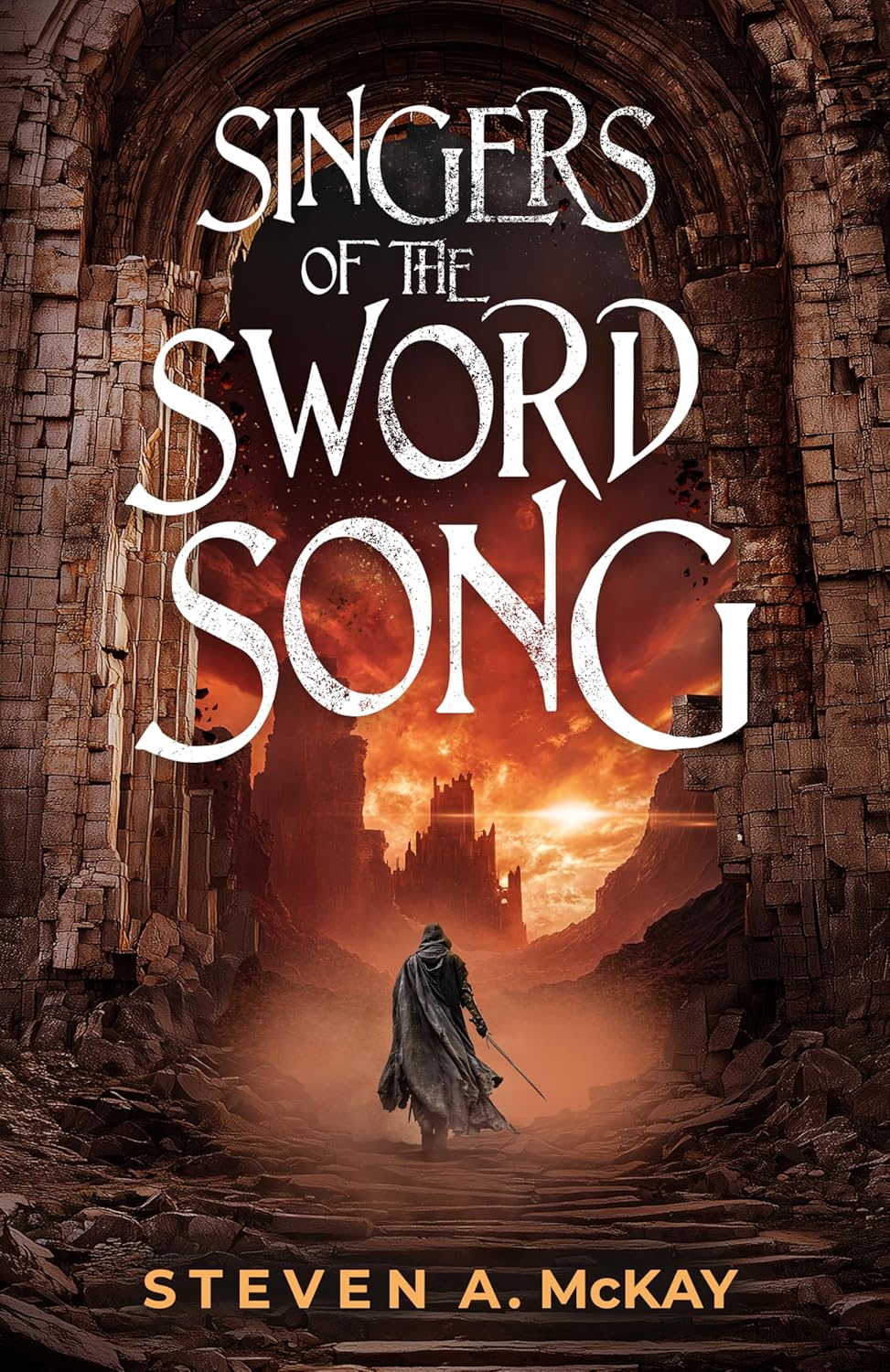
Book Corner: Singers of the Sword Song by Steven A. McKay

History...the Interesting Bits

He’d been quite a soft child before the Galnir got hold of him, the brutal sergeants turning the boy into the young man he was now. A man forged in blood, and fire, and steel, and death…
For thirty years war has raged across West Valkyros, an endless cycle of death and destruction ravaging two once-mighty kingdoms. In the aftermath of yet another vicious battle Wulfnoth, forced to serve in the elite Galnir infantry regiment since he was a child, attacks his own sadistic sergeant and deserts. Fleeing to the north, the desperate young warrior is joined on his travels by an experienced forester, and a beautiful singer they meet in a tavern brawl. Together the companions journey through the villages, towns, and great cities of Nemea sharing adventures, their bonds of loyalty and friendship growing as Wulfnoth struggles to navigate life outside the army and find his place in a world full of mythical monsters, murderous criminals, and powerful magical artefacts.
Unbeknown to the friends however, hunters are tracking their every move, intent on bringing the deserter to justice for his crimes. Just as Wulfnoth discovers that playing music can be as rewarding as wielding a sword in battle, a shocking revelation will give his life a new purpose and intertwine his fate with that of the very soldiers who seek to kill him.

Ooh, what a fabulous story!

Singers of the Sword Song: A heroic fantasy adventure by Steven A. McKay is the first book of a new series, The Sword Song Chronicles. Introducing our new heroes, Wulfnoth, Greybeard and Chrysanthe, caught in the midst of an epic struggle between two warring factions, Galnir and Nemea. Intent on escaping the Galnir he was forced to serve, Wulfnoth searches for new purpose, his sense of chivalry leading to both adventure and danger.

Singers of the Sword Song is Steven A. McKay’s first foray into fantasy and, I must say, I think he has a knack for it. To be fair, Steven’s Warrior Druid of Britain series borders on fantasy, with the exploits of Bellicus and Arthur drawing on the legends of King Arthur. But here, Steven has created a whole new world, with new lands for the reader to explore, strange beasts for him to defeat and magic.

Drawing on his knowledge of the medieval, Steven A. McKay has created a strange new world that is entirely credible and realistic. The fantasy is grounded in possibilities.

“How long will it take us to reach Herakas?” Wulfnoth asked as the little village called Kirea came into sight, woodsmoke curling into the air, the sounds of life already coming from the place even at that early hour.

“Depends how hard we ride,” said Greybeard. “I’ve been thinking about it – it’s going to be dangerous when we reach Herakas… Where would you go if I just led you to the next town along the road here and then we went our separate ways?”

Wulfnoth pursed his lips and shrugged. “I’ve no idea. I don’t know where I should go, or what I should do. My plan just now is simply to get as far away from the Galnir as possible. Whether that means travelling to Herakas or someplace else doesn’t seem important. I’ll be an outsider wherever I end up. The Galnir aren’t after you, though. If you don’t think it safe to go back to Herakas, why not just build a house here, in this village, and settle down?”

Greybeard’s contented smile faded as they rode past the first of the little round dwellings in the settlement, a haggard looking woman glaring out suspiciously at them. “You think the Galnir will stop pushing north when they’re finished doing whatever they’re up to in the Weeping Woods? No, neither do I. Sad to say, but Kirea, and other villages nearby, won’t be here for much longer. The war will sweep them away. I’m amazed they survived so long honestly.”

“We must warn them then.”

“You think they don’t know there’s been a battle not far to the south? Or that they didn’t feel those thumps like we did?”

“Then, by Balor, why are they still here?”

Greybeard frowned at him. “You don’t know much about people do you, lad? The Galnir really have changed since I was in their ranks. We can discuss it after – for now, let’s just get what we can here, and move on, eh? You might want to avoid mentioning the gods though. Balor is not worshipped in Nemea – his counterpart – here – is Terses. They don’t follow Ahrimaz either.”

“Well, who do they worship?”

“Like us, they have a vast number of gods and goddesses. Some reside in high Endomeros, and some in the Underlands. The most important ones are Noxis and Gerash. There’s also Pann, who some of our own people follow. Alectris and Dion are the most widely followed of the goddesses.” He smiled reassuringly. “You don’t need to know them all, or what they symbolise. Just remember not to mention any of our deities, like Balor or Ahrimaz, while you’re in Nemea.”

Wulfnoth felt quite excited as they dismounted and tied their animals to hitching posts that were set outside the largest building in the settlement. “What’s this place?” he asked, looking for a sign, or some other indication of what they might fid within.

“This is where the villagers bring their produce and goods to be bartered, or sold,” Greybeard told him, lifting the saddlebags from both horses and handing one to the young warrior. “Don’t expect anything fancy. We’ll be lucky to get much, and even luckier if we can sell any of this looted gear for a reasonable price.”

Steven A. MacKay builds a world that is, for the reader, at the same time strange and familiar. And deeply atmospheric. There are villages, taverns, caves, rivers and woods. Familiar animals live alongside fantastical beasts and people are the same as everywhere; looking after their own families, participating in conflicts they don’t know the reason for and trying to survive from day to day.

Wulfnoth is a wonderful, sympathetic hero. He is a young man who, having left the only life he has ever known, is now looking for purpose and a new place to belong. With his companions, Greybeard and Chrysanthe, he goes in search of a new life. Along the way, he learns that his own past is shrouded in secrets and betrayal, that those hunting him are not necessarily enemies and that the life he is lived is not the life he was born to.

Singers of the Sword Song by Steven A. McKay is the sum of all its parts. Wonderful characters navigating a strange world that is oddly familiar. The worlds of the medieval and fantasy merge into one to give the reader a wonderful adventure, leading them down unpredictable valleys and into dark, mystical caves, facing enemies of both the human and creature varieties.

This is escapism at its best, and one of those books that you will want to read long into the night, just to see what happens next. As the first in a series, it holds the promise of more stories to come, written in the familiar and engaging style of an author who has been one of my ‘must read’ authors for the last 10 years, at least. Steven A. McKay has pulled of yet another riveting story!

I cannot recommend it highly enough.

Buy the book: Singers of the Sword Song by Steven A. McKay is now available on Amazon

About the author:

Steven A. McKay was born in Scotland in 1977 and always enjoyed studying history. He decided to write his Forest Lord novels after seeing a house called “Sherwood” when he was out at work one day. Since then he’s started a new series, the Warrior Druid of Britain Chronicles, and just completed a trilogy about Alfred the Great.

In 2021 the Xbox game HOOD: Outlaws and Legends was released, featuring Steven’s writing.

Steven wrote the theme song for the podcast he co-hosted, Rock, Paper, Swords! with Matthew Harffy.

*

My Books:

Signed, dedicated copies of all my books are available through my online bookshop. or by contacting me.

Out Now: Princesses of the Early Middle Ages

Daughters of kings were often used to seal treaty alliances and forge peace with England’s enemies. Princesses of the Early Middle Ages: Royal Daughters of the Conquest explores the lives of these young women, how they followed the stereotype, and how they sometimes managed to escape it. It will look at the world they lived in, and how their lives and marriages were affected by political necessity and the events of the time. Princesses of the Early Middle Ages will also examine how these girls, who were often political pawns, were able to control their own lives and fates. Whilst they were expected to obey their parents in their marriage choices, several princesses were able to exert their own influence on these choices, with some outright refusing the husbands offered to them.

Their stories are touching, inspiring and, at times, heartbreaking.

Princesses of the Early Middle Ages: Royal Daughters of the Conquest is now available from Pen & Sword and Amazon.

Coming 30 August 2026: Princesses of the Later Middle Ages: Royal Daughters of the Plantagenets

Princesses of the Later Middle Ages examines the lives and experiences of England’s princesses, from the treasured daughters of Henry III to the children of Edward IV, whose lives were turned upside down when they were declared illegitimate.

What we see is a very different story, where a foreign marriage does not mean eternal exile, but a purpose in life, where a princess is a diplomat, an ambassador for England in her new country. She is the bond between allies – most of the time.

Princesses of the Later Middle Ages shines a light on the lives and experiences of these remarkable women.

Princesses of the Later Middle Ages: Royal Daughters of the Plantagenets is now available for pre-order through Pen & Sword and other booksellers.

Sharon is also the author of:

Books by Sharon Bennett Connolly

Heroines of the Medieval World; Silk and the Sword: The Women of the Norman Conquest; Ladies of Magna Carta: Women of Influence in Thirteenth Century England; Defenders of the Norman Crown: Rise and Fall of the Warenne Earls of Surrey; King John’s Right Hand Lady: The Story of Nicholaa de la Haye; Women of the Anarchy; Heroines of the Tudor World; Scotland’s Medieval Queens: From St Margaret to Margaret of Denmark; Princesses of the Early Middle Ages: Royal Daughters of the Conquest (March 2026); Princesses of the Later Middle Ages; Royal Daughters of the Plantagenets (August 2026)

Alternate Endings: An anthology of historical fiction short stories including Long Live the King… which is my take what might have happened had King John not died in October 1216. Available in paperback and kindle from Amazon.

All my books on AmazonBookshop.org . You can also order direct from my publishers, Pen and Sword Books and Amberley Publishing.

Podcast:

History...the Interesting Bits

Have a listen to the A Slice of Medieval podcast, which I co-host with Historical fiction novelist Derek Birks. Derek and I welcome guests, such as Ian Mortimer, Bernard Cornwell, Elizabeth Chadwick and Scott Mariani, and discuss a wide range of topics in medieval history, from significant events to the personalities involved. 

Every episode is also now available on YouTube.

*

Royal Historical Society

Don’t forget! Signed and dedicated copies of all my books are available through my online bookshop.

For forthcoming online and in-person talks, please check out my Events Page.

You can be the first to read new articles by clicking the ‘Follow’ button, liking our Facebook page or joining me on TwitterThreadsBluesky and Instagram.

*

©2026 Sharon Bennett Connolly FRHistS