Ela: Heiress, Wife and Abbess

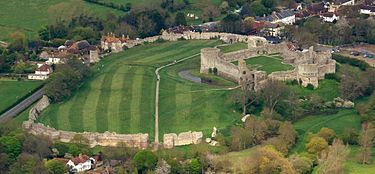
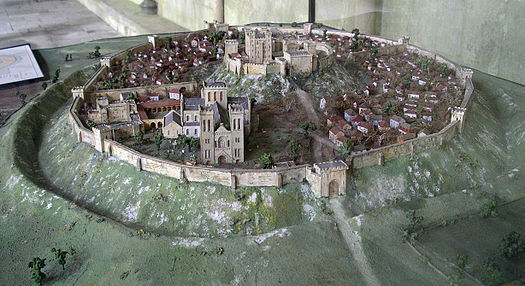
Model of Old Sarum

Ela of Salisbury was one of the most influential women of the thirteenth century. Ela was born at Amesbury in Wiltshire in 1187. She was the only surviving child – and sole heir – of William FitzPatrick, earl of Salisbury, and his wife, Eleanor de Vitré. Her father was a descendant of Walter, an ally of William the Conqueror, who had rewarded his support at Hastings with great estates which eventually passed to Ela. When her father died in 1196, Ela became Countess of Salisbury in her own right, and the most prized heiress in England.

There is a story that little Ela, only 9 years old at the time of her father’s death, was kidnapped by her uncle and hidden away in a castle in Normandy, so that he could gain control of the vast Salisbury inheritance. The tale goes, that an English knight, named William Talbot, toured the Norman castles in search of poor Ela, he would sing ballads beneath castle windows in the hope that the little Countess would hear him and join in with his singing. Whether a romantic legend or a true story, who can tell?

Whether she was rescued, or never kidnapped in the first place, we do not know. However, what we do know is that, on her father’s death, Ela’s wardship passed into the hands of the king himself, Richard I, the Lionheart. The king saw Ela as the opportunity to reward his loyal,  but illegitimate, brother, William Longspée (or Longsword), by offering him her hand in marriage. The Salisbury lands were a suitable reward for a king’s son, especially one born out of wedlock.
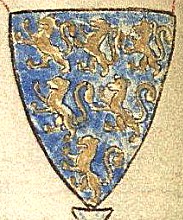
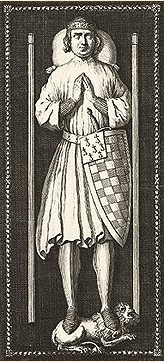
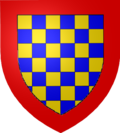
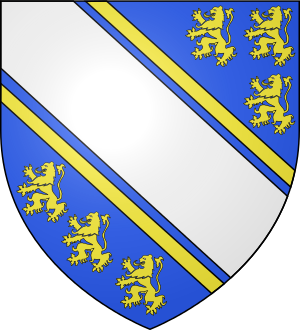
Arms of the Longspée earls of Salisbury

William Longspée was the son of Henry II by Ida de Tosney, wife of Roger Bigod, earl of Norfolk, from a relationship she had with the king before her marriage. For many years, it was thought that Longspée was the son of a common harlot, called Ikenai, and a full brother of another of Henry’s illegitimate sons, Geoffrey, Archbishop of York. There were also theories that his mother was, Rosamund Clifford, famed in ballads as ‘the Fair Rosamund’. However, it is now considered beyond doubt that his mother was, in fact, Ida de Tosney, with two pieces of evidence supporting this.  There is a charter in the cartulary of Bradenstoke Priory, made by William Longspée, in which he identifies his mother as the Countess Ida. There is also a prisoner roll from after the Battle of Bouvines, in which William Longspée is listed as the brother of Ralph Bigod (he was, in fact, Ralph’s half-brother).

Despite the misunderstandings over his mother, the identity of William Longspée’s father was never in doubt. He was Henry II’s son and served two of his half-brothers; Richard I and King John. At the time of his marriage to Ela, Longspée was in his early-to-mid-20’s, while his bride was not yet 10 years old; although she would not have been expected to consummate the marriage until she was 14 or 15.

William I Longspée had an impressive career during the reigns of his half-brothers, he served in Normandy with Richard between 1196 and 1198, and took part in John’s coronation in May, 1199. In 1213 he destroyed the French fleet off the Flemish coast. He commanded an army in northern France for John in 1214; and in July of the same year, he was captured at the Battle of Bouvines, after being clubbed on the head by the Bishop of Beauvais. Longspée was held for ransom and eventually exchanged, in March 1215, for John’s prisoner, Robert of Dreux, who had been captured at Nantes in 1214.

Longspée returned to England shortly afterwards and was one of the signatories of Magna Carta in 1215. He was still supporting John when Louis, the Dauphin, invaded England and took London; however, after Winchester fell to the French, in June 1216, Longspée defected to the Dauphin and remained in opposition to his brother for the rest of John’s life.¹

Following the death of King John in October 1216,  Longspée swore loyalty to his 9-year-old nephew, Henry III in March 1217. He was part of William Marshal’s army at the Battle of Lincoln Fair, when Lincoln Castle and its formidable castellan, Nicholaa de la Haye, were finally relieved from a 3-month siege by the French under the Comte de Perche.

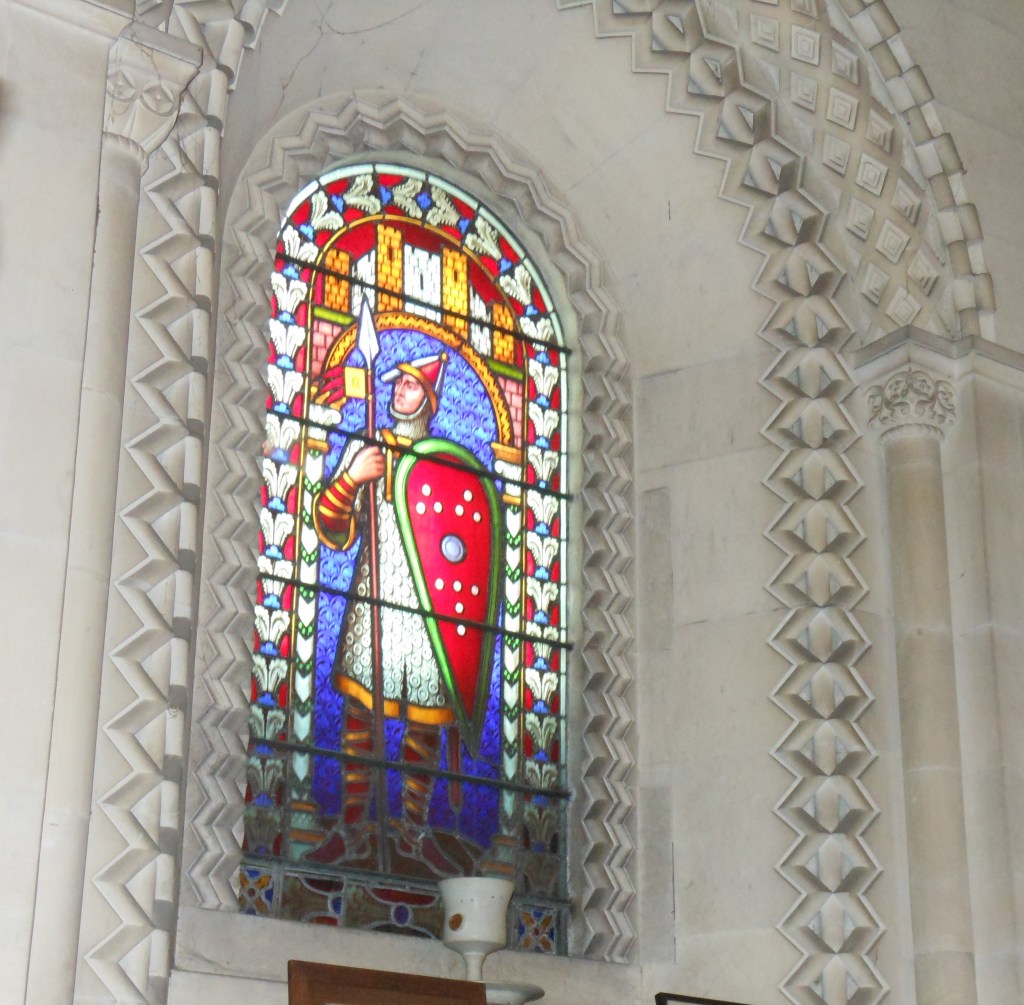
William II Longspée, 4th Earl of Salisbury

Although we know little-to-nothing of their married life, it appears to have been happy. The couple had at least 8 children together, if not more; 4 boys and 4 girls. Of their younger boys, Richard became a canon at the newly built Salisbury Cathedral, while Nicholas eventually rose to be Bishop of Salisbury and Stephen became Senschal of Gascony and Justiciar of Ireland.

The oldest son, William II Longspée, 4th Earl of Salisbury, was married to Idonea, granddaughter and sole heiress of the formidable Nicholaa de la Haye, who held Lincoln Castle against the French. The Salisburys and Nicholaa de la Haye would spend several years in legal disputes over the inheritance of Nicholaa’s Lincolnshire holdings; Idonea could inherit the lands that had belonged to her grandfather, Gerard de Canville (Nicholaa’s husband), but not the lands Nicholaa held in her own right. Nicholaa, however, was forced to relinquish her position as sheriff of Lincolnshire to the earl of Salisbury, but retained her position as castellan of Lincoln Castle until she retired in 1226.

William II Longspée went on Crusade with Richard, Earl of Cornwall, in 1240-1241 and later led the English contingent in the Seventh Crusade, led by Louis IX of France. His company formed part of the doomed vanguard, which was overwhelmed at Mansourah in Egypt, on 8 February 1250, and William was killed. William’s body was buried in Acre, but his effigy lies atop an empty tomb in Salisbury Cathedral. His mother is said to have experienced a vision of her son’s last moments at the time of his death.

Of Ela and William’s 4 daughters, Petronilla died unmarried, possibly having become a nun. Isabella married  William de Vescy, Lord of Alnwick and had children before her death in 1244. Named after her mother, Ela married, firstly Thomas de Beaumont, Earl of Warwick and, secondly, Phillip Basset; sadly, she had no children by either husband. There were possibly two daughters with the same name, Ida. The first Ida was married to Ralph de Somery before marrying, in 1220, William de Beauchamp, Baron Bedford, by whom she had 6 children. The second Ida who was married to Walter FitzRobert. Both Idas are identified in various records as the daughters of William and Ela, though it is possible that one is a granddaughter, the dates we have available do not suggest that.

As a couple, William Longspée and Ela were great patrons of the church, laying the 4th and 5th, respectively, foundation stones for the new Salisbury Cathedral in 1220. In 1225 Longspée was shipwrecked off the coast of Brittany and a rumour spread that he was dead. While he spent months recovering at an island monastery in France Hubert de Burgh, 1st Earl of Kent and husband of Isabel of Gloucester, proposed a marriage between Ela and his nephew, Reimund. Ela, however, would not even consider it, insisting that she knew William was alive and that, even were he dead, she would never consider marrying below her status. It has been suggested that she used clause 8 of Magna Carta to support her rejection of the offer; “No widow is to be distrained to marry while she wishes to live without a husband…”

William_Salisbury
William Longspee, Earl of Salisbury

As it turned out, William Longspée was still alive and eventually returned to his wife. However, he never seems to have recovered fully from his injuries and died at the royal castle at Salisbury shortly after his return home, on 7 March 1226. He was buried in a splendid tomb in Salisbury Cathedral.

Ela did not marry again. On her husband’s death, she was forced to relinquish her custody of Salisbury castle (although she did eventually buy it back), but was allowed to take over her husband’s role as Sheriff of Wiltshire, which he had held three times, holding the office continuously from 1213 until his death in 1226. Ela acted as Sheriff until 1228. She was known as a great patron of religious houses; she and her husband had co-founded Salisbury Cathedral and Ela herself founded two Augustinian religious houses. She managed to lay the foundation stones of both, at Hinton and Lacock, 16 miles apart, on the same day. The abbey at Hinton, Somerset, was endowed for monks, in memory of her husband, after they had found the original house, founded by Longspée at Hathorp unsuitable.

Lacock Priory was established in 1230 as a house for Augustinian canonesses at the village of Lacock in Wiltshire. Ela herself entered the priory in 1237 and became the first Abbess when it was upgraded to an Abbey in 1239. As Abbess, Ela was able to secure many rights and privileges for the abbey and its village. She obtained a copy of the 1225 issue of Magna Carta, which had been given to her husband for him to distribute around Wiltshire. She remained Abbess for 20 years, resigning in 1259. Ela remained at the abbey, however, and died there on 24 August, 1261.
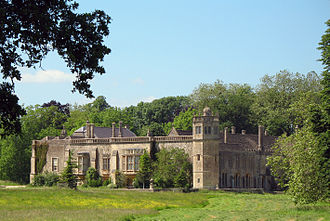
Lacock Abbey, Wiltshire

Ela of Salisbury outlived both her eldest son and grandson. She was succeeded as Countess of Salisbury by her great-granddaughter, Margaret, who was the daughter of William III Longspée. Margaret was married to Henry de Lacey, 3rd Earl of Lincoln, and was the mother of Alice de Lacey, 4th Countess of Lincoln and the unfortunate, unloved wife of Thomas, Earl of Lancaster, who was killed in rebellion against Edward II, at the Battle of Boroughbridge in 1322.

The 3rd Countess of Salisbury was described in the Register of St Osmund as “a woman indeed worthy of praise because she was filled with the fear of the Lord.”² Ela was not buried alongside her husband in Salisbury Cathedral, but within the Abbey that she had founded and ruled – and had called her home for the last 24 years of her life. Her tombstone demonstrates the high esteem in which she was held and records the words; “Below lie buried the bones of the venerable Ela, who gave this sacred house as a home for the nuns. She also had lived her as holy abbess and Countess of Salisbury, full  of good works.”³

*

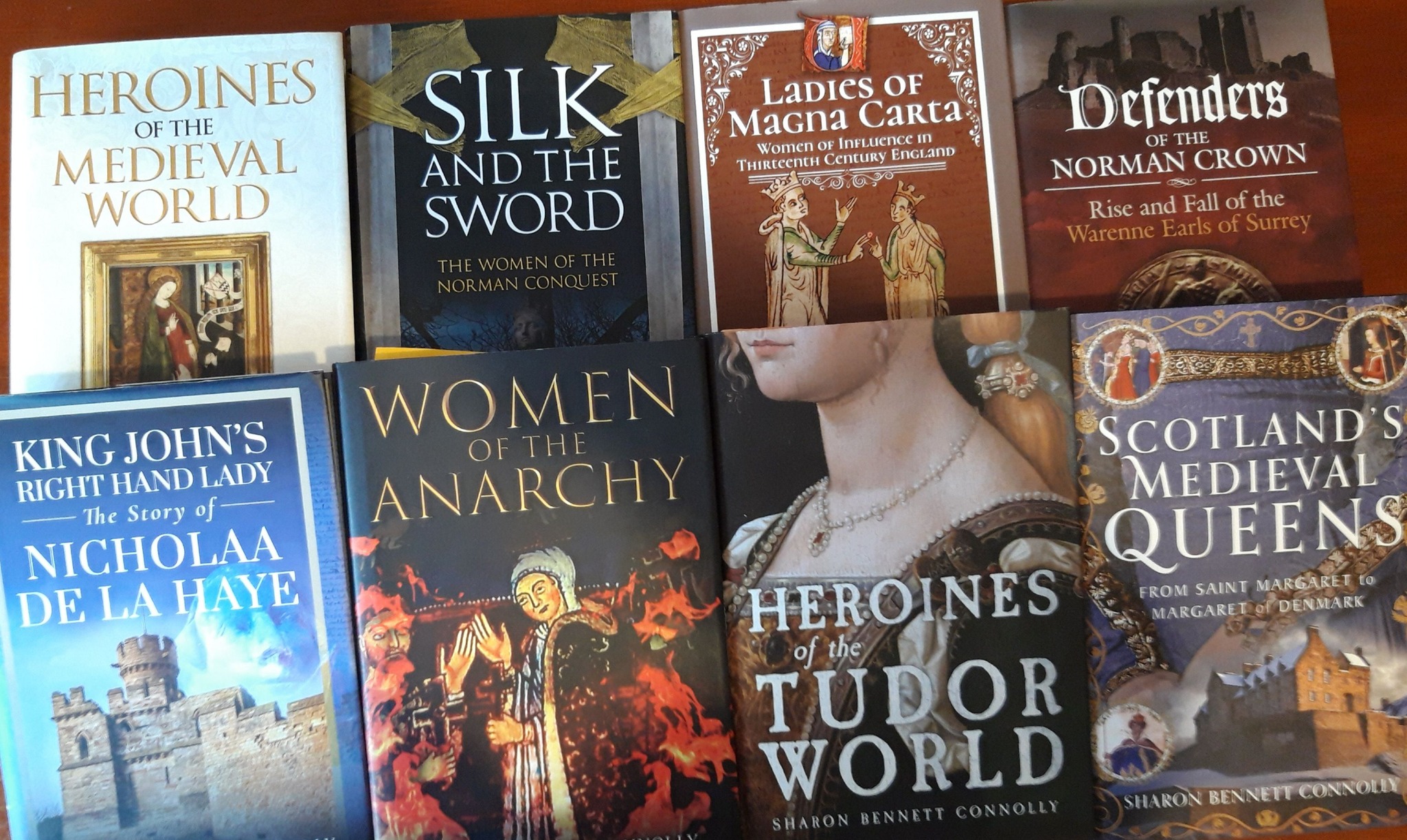
Ela’s story appears in greater detail in my book, Ladies of Magna Carta: Women of Influence in Thirteenth Century England.

Footnote: ¹With thanks to Rich Price for clarification of events; Rich is currently translating King John’s letters; ²Ela, suo jure Countess of Salisbury, Jennifer C Ward, Oxforddnb.com, October 2009; ³ Ela of Salisbury stanfordmagnacarta.worpress.com

*

Pictures courtesy of Wikipedia

*

Sources: The Plantagenet Chronicles edited by Elizabeth Hallam; Brassey’s Battles by John Laffin; 1215 The Year of Magna Carta by Danny Danziger & John Gillingham; The Life and Times of King John by Maurice Ashley; The Story of Britain by Roy Strong; The Plantagenets, the Kings Who Made England by Dan Jones; England Under the Norman and Angevin Kings  by Robert Bartlett; lincolnshirelife.co.uk; catherinehanley.co.uk; magnacarta800th.com; lothene.org; lincolncastle.com; The Sheriff: The Man and His Office by Irene Gladwin; Oxforddnb.com; stanfordmagnacarta.wordpress.com; A Year in the Life of Medieval England by Toni Mount; The Demon’s Brood by Desmond Seward; The Oxford Companion to British History, Edited by John Cannon; The Greatest Knight by Thomas Asbridge; Britain’s Royal Families by Alison Weir; chitterne.com

*

My Books:

Signed, dedicated copies of all my books are available through my online store.

Out now: Scotland’s Medieval Queens

Scotland’s history is dramatic, violent and bloody. Being England’s northern neighbour has never been easy. Scotland’s queens have had to deal with war, murder, imprisonment, political rivalries and open betrayal. They have loved and lost, raised kings and queens, ruled and died for Scotland. From St Margaret, who became one of the patron saints of Scotland, to Elizabeth de Burgh and the dramatic story of the Scottish Wars of Independence, to the love story and tragedy of Joan Beaufort, to Margaret of Denmark and the dawn of the Renaissance, Scotland’s Medieval Queens have seen it all. This is the story of Scotland through their eyes.

Available now from Amazon and Pen and Sword Books

Also by Sharon Bennett Connolly:

Heroines of the Tudor World tells the stories of the most remarkable women from European history in the time of the Tudor dynasty, 1485-1603. These are the women who ruled, the women who founded dynasties, the women who fought for religious freedom, their families and love. Heroines of the Tudor World is now available for pre-order from Amberley Publishing and Amazon UK. Women of the Anarchy demonstrates how Empress Matilda and Matilda of Boulogne, unable to wield a sword themselves, were prime movers in this time of conflict and lawlessness. It shows how their strengths, weaknesses, and personal ambitions swung the fortunes of war one way – and then the other. Available from Bookshop.orgAmberley Publishing and Amazon UKKing John’s Right-Hand Lady: The Story of Nicholaa de la Haye is the story of a truly remarkable lady, the hereditary constable of Lincoln Castle and the first woman in England to be appointed sheriff in her own right. Available from all good bookshops Pen & Sword Booksbookshop.org and Amazon

Defenders of the Norman Crown: The Rise and Fall of the Warenne Earls of Surrey tells the fascinating story of the Warenne dynasty, from its origins in Normandy, through the Conquest, Magna Carta, the wars and marriages that led to its ultimate demise in the reign of Edward III. Available from Pen & Sword BooksAmazon in the UK and US, and Bookshop.orgLadies of Magna Carta: Women of Influence in Thirteenth Century England looks into the relationships of the various noble families of the 13th century, and how they were affected by the Barons’ Wars, Magna Carta and its aftermath; the bonds that were formed and those that were broken. It is now available in paperback and hardback from Pen & SwordAmazon, and Bookshop.orgHeroines of the Medieval World tells the stories of some of the most remarkable women from Medieval history, from Eleanor of Aquitaine to Julian of Norwich. Available now from Amberley Publishing and Amazon, and Bookshop.orgSilk and the Sword: The Women of the Norman Conquest traces the fortunes of the women who had a significant role to play in the momentous events of 1066. Available now from Amazon,  Amberley Publishing, and Bookshop.org.

Alternate Endings: An anthology of historical fiction short stories including Long Live the King… which is my take what might have happened had King John not died in October 1216. Available in paperback and kindle from Amazon.

Podcast:

Have a listen to the A Slice of Medieval podcast, which I co-host with Historical fiction novelist Derek Birks. Derek and I welcome guests, such as Bernard Cornwell, Elizabeth Chadwick and Michael Jecks, and discuss a wide range of topics in medieval history, from significant events to the personalities involved. Every episode is also now available on YouTube.

*

Don’t forget! Signed and dedicated copies of all my books are available through my online store.

For forthcoming online and in-person talks, please check out my Events Page.

You can be the first to read new articles by clicking the ‘Follow’ button, liking our Facebook page or joining me on TwitterThreadsBluesky and Instagram.

*

©2017 Sharon Bennett Connolly FRHistS
The Struggles of Alice

tickhill_castle
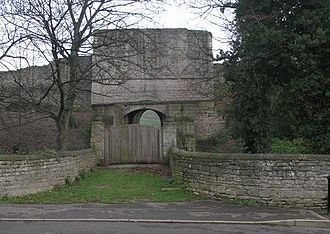
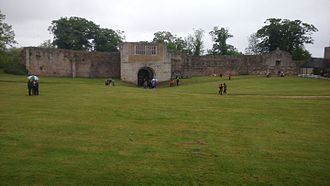
The bailey of Tickhill Castle, South Yorkshire

Alice, Countess of Eu, was born into 2 of the noblest families of England and France, and married into a third. The daughter of Henry, Count of Eu and Lord Hastings, her mother was Matilda, daughter of Hamelin and Isabel de Warenne, Earl and Countess of Surrey.

Through her maternal grandparents, Alice was closely related to the kings of England. Her grandfather, Hamelin, was the illegitimate  half-brother of King Henry II of England. Richard I and King John, therefore, were her cousins. Alice’s grandmother, Isabel de Warenne, had been one of the richest, most prized heiresses in England and had first been married to the younger son of King Stephen, before she married Hamelin.

Alice’s father, Henry, held lands in England and Normandy. The Honour of Tickhill, in Yorkshire, had been granted to Henry’s father John, Count of Eu, by King Stephen, in 1139, after proving his rights as heir to the original owners, the de Busil family, through Beatrice, the sister of Roger de Busil, who died in 1102. However, in 1141, Empress Matilda captured the castle after Count John was taken prisoner at the Battle of Lincoln. The castle seems to have stayed in  royal hands for many years afterwards, with Richard I taking possession on his accession; he then gave it to his brother John, as part of his holdings. As a consequence, the castle was besieged by the Bishop of Durham when John rebelled against Richard in 1194 and was surrendered only when the king returned to England following his capture and imprisonment in Germany, 3 years after Henry’s death.

Matilda and Henry had 4 children, 2 sons and 2 daughters. Alice was the eldest of the daughters, her sister Jeanne being younger. Sadly, both sons, Raoul and Guy, died young and in consecutive years, with Guy dying in 1185 and Raoul in 1186, leaving Alice as heir to her father’s lands.

Alice’s father died in 1191, and Alice became suo jure Countess of Eu and Lady Hastings. Alice’s mother, Matilda, later married again; her second husband was Henry d’Estouteville of Eckington, Lord of Valmont and Rames in Normandy. Matilda had a son, John, by d’Estouteville, and it was Alice’s half-brother, therefore, who became the heir to all the lands Matilda held in her own right, leaving Alice solely with the inheritance from her father.

Very little is known of Alice’s early years; we do not even have a year for her birth. Given that her grandparents did not marry until 1164, her parents would not have married until the early 1180s, which would mean is likely that Alice was born sometime around the mid-1180s. On her father’s death in 1191, she came into possession of lands in both England and Normandy, France. In August, 1209, Alice officially received the Comté of Eu from Philip II Augustus, King of France, when she also made a quitclaim of all rights to Neufchatel, Mortemer and Arques. Mortemer was a part of the de Warenne ancestral lands in Normandy, given to William I de Warenne by Willliam the Conqueror; suggesting that Alice was renouncing her own rights to the French de Warenne lands, as a granddaughter of Isabel de Warenne, Countess of Surrey.

Alice made a prestigious marriage to Raoul de Lusignan, the brother of Hugh IX de Lusignan and a powerful Poitevin lord. It was Raoul’s nephew, Hugh X, who would repudiate Joanna, the daughter of King John, in order to marry the dead king’s widow and queen, Isabelle d’Angoulême.

Raoul had been previously married to Marguerite de Courtney, but the marriage had been annulled by 1213, suggesting Alice and Raoul married around that time. On marrying Alice, Raoul became Raoul I, Count of Eu by right of his wife.

Arms of Humphrey de Bohun, 2nd Earl of Hereford and Earl of Essex, Constable of England

Raoul and Alice had four children together. Raoul II de Lusignan, Count of Eu and Guînes, was married 3 times and had one daughter, Marie de Lusignan, by his second wife, Yolande de Dreux. Raoul died sometime between 1245 and 1250 and was buried at the Abbey of Foucarmont. Mathilde married Humphgrey de Bohun, 2nd Earl of Hereford and Earl of Essex, and had 7 children together, including 4 boys. Mathilde died in August 1241 and was buried in Llanthony Secunda Priory, Gloucester. Her husband was buried beside her when he died in September 1275. Another son, Guerin (or Warin) de Lusignan died sometime after 29 September 1217, when he is granted the castle at Tickhill by Henry III. A second daughter, Jeanne, is mentioned in the necrology of the church of Eu, which records the anniversary of her death as 3 October, though no year is given.

In 1214 Alice, as Countess of Eu, was restored to the Honour of Tickhill by King John as part of the conditions of an agreement with her husband’s family, the de Lusignans. However, Robert de Vipont, who was in physical possession of the castle, refused to relinquish it, and claimed the castle in his own right. It took many years and much litigation before Alice finally took possession of the castle in 1222. Her husband, Raoul, died on 1st May, 1219, and was succeeded as Count of Eu by their son, Raoul II, still only a child.

It was left to Alice, now Dowager Countess, to administer the Eu inheritance. She paid 15,000 silver marks to the French King to receive the county of Eu in her own name and regained control of her English lands, entrusted to her uncle, the Earl of Surrey, as her representative, following her husband’s death.

Alice was a shrewd political survivor. However, with lands in France and England, two countries often at war, she found herself caught between a rock and a hard place. In 1225 she handed Tickhill Castle to Henry III, until the end of hostilities with France, as a means of safeguarding her lands. Nevertheless, this did not save her when she was ordered to levy troops for the French king, Louis IX, as Countess of Eu, and send her forces to fight for him. Henry III seized Tickhill Castle, although it was only permanently attached to the English crown after Alice’s death.

Alice was renowned for her wide patronage, both secular and religious, and has left numerous charters as testament. She was a benefactor of both French and English religious houses, including Battle Abbey and Christ Church, Canterbury in England and Eu and Foucarmont – where her son would be laid to rest – in France. Alice issued a charter in 1219, to Roche Abbey, which was witnessed by her uncle William, Earl de Warenne. She also granted an annual allowance to Loretta, Countess of Leicester, who was living as a recluse at Hackington.

Alice also granted several lands to others, such as Greetwell in the county of Lincoln, which had previously been held by Walter de Tylly in Alice’s name and was given to Earl de Warenne in August 1225; the earl was to annually render a sparrowhawk to Philippa de Tylly in payment.  In 1232 Alice issued a charter to Malvesin de Hersy, of Osberton in the county of Nottingham, providing him with all customs due to Tickhill in return for 2 knights’ fees. Malvesin had been constable of Tickhill in 1220-1 and his brother Sir Baldwin de Hersy was Constable of Consibrough Castle, seat of Earl de Warenne.

The gatehouse of Tickhill Castle

Having spent most of her life fighting for her rights to her lands in England and France, caught between 2 great nations, whose relations were acrimonious to say the least, Alice appears to have conducted herself admirably. Her connections to the powerful de Lusignan and de Warenne families could not have harmed her situation.

Now in her early 60s, and having been a widow for almost 30 years, Alice died sometime in May 1246, probably between the 13th and 15th, at La Mothe St Héray in Poitou, France, leaving a will. It seems likely that she was buried at her husband’s foundation of Fontblanche Priory in Exoudon.

*

Alice’s story features in my book, Defenders of the Norman Crown: Rise and Fall of the Warenne Earls of Surrey.

Pictures courtesy of Wikipedia.

*

Sources: Early Yorkshire Charters Volume 8: The Honour of Warenne, Edited by William Farrer and Charles Travis Clay; England Under the Norman and Angevin Kings by Robert Bartlett; Brewer’s British Royalty by David Williamson; Britain’s Royal Families, the Complete Genealogy by Alison Weir; british-history.ac.uk; kristiedean.com; English Heritage Guidebook for Conisbrough Castle by Steven Brindle and Agnieszka Sadrei; oxforddnb.com; Tickhill Castle Guide Leaflet, Lords of the Honour of Tickhill; fmg.ac.

*

My Books

Signed, dedicated copies of all my books are available through my online store.

OUT NOW! Heroines of the Tudor World

Heroines of the Tudor World tells the stories of the most remarkable women from European history in the time of the Tudor dynasty, 1485-1603. These are the women who ruled, the women who founded dynasties, the women who fought for religious freedom, their families and love. These are the women who made a difference, who influenced countries, kings and the Reformation. In the era dominated by the Renaissance and Reformation, Heroines of the Tudor World examines the threats and challenges faced by the women of the era, and how they overcame them. From writers to regents, from nuns to queens, Heroines of the Tudor World shines the spotlight on the women helped to shape Early Modern Europe.

Heroines of the Tudor World is now available for pre-order from Amberley Publishing and Amazon UK.

Coming 30 January 2025: Scotland’s Medieval Queens

Scotland’s history is dramatic, violent and bloody. Being England’s northern neighbour has never been easy. Scotland’s queens have had to deal with war, murder, imprisonment, political rivalries and open betrayal. They have loved and lost, raised kings and queens, ruled and died for Scotland. From St Margaret, who became one of the patron saints of Scotland, to Elizabeth de Burgh and the dramatic story of the Scottish Wars of Independence, to the love story and tragedy of Joan Beaufort, to Margaret of Denmark and the dawn of the Renaissance, Scotland’s Medieval Queens have seen it all. This is the story of Scotland through their eyes.

Available for pre-order now.

Also by Sharon Bennett Connolly:

Women of the Anarchy demonstrates how Empress Matilda and Matilda of Boulogne, unable to wield a sword themselves, were prime movers in this time of conflict and lawlessness. It shows how their strengths, weaknesses, and personal ambitions swung the fortunes of war one way – and then the other. Available from Bookshop.orgAmberley Publishing and Amazon UKKing John’s Right-Hand Lady: The Story of Nicholaa de la Haye is the story of a truly remarkable lady, the hereditary constable of Lincoln Castle and the first woman in England to be appointed sheriff in her own right. Available from all good bookshops Pen & Sword Booksbookshop.org and AmazonDefenders of the Norman Crown: The Rise and Fall of the Warenne Earls of Surrey tells the fascinating story of the Warenne dynasty, from its origins in Normandy, through the Conquest, Magna Carta, the wars and marriages that led to its ultimate demise in the reign of Edward III. Available from Pen & Sword BooksAmazon in the UK and US, and Bookshop.org

Ladies of Magna Carta: Women of Influence in Thirteenth Century England looks into the relationships of the various noble families of the 13th century, and how they were affected by the Barons’ Wars, Magna Carta and its aftermath; the bonds that were formed and those that were broken. It is now available in paperback and hardback from Pen & SwordAmazon, and Bookshop.orgHeroines of the Medieval World tells the stories of some of the most remarkable women from Medieval history, from Eleanor of Aquitaine to Julian of Norwich. Available now from Amberley Publishing and Amazon, and Bookshop.orgSilk and the Sword: The Women of the Norman Conquest traces the fortunes of the women who had a significant role to play in the momentous events of 1066. Available now from Amazon,  Amberley Publishing, and Bookshop.org.

Alternate Endings: An anthology of historical fiction short stories including Long Live the King… which is my take what might have happened had King John not died in October 1216. Available in paperback and kindle from Amazon.

Podcast:

Have a listen to the A Slice of Medieval podcast, which I co-host with Historical fiction novelist Derek Birks. Derek and I welcome guests, such as Bernard Cornwell, and discuss a wide range of topics in medieval history, from significant events to the personalities involved.

*

Don’t forget! Signed and dedicated copies of all my books are available through my online store.

For forthcoming online and in-person talks, please check out my Events Page.

You can be the first to read new articles by clicking the ‘Follow’ button, liking our Facebook page or joining me on TwitterThreads and Instagram.

*

©2017 Sharon Bennett Connolly, FRHistS

The Unfortunate Wives of Philip II of France

330px-the_coronation_of_philippe_ii_auguste_in_the_presence_of_henry_ii_of_england
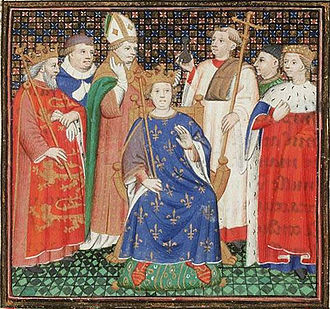
Coronation of Philip II Augustus

Philip II Augustus had acceded to the throne of France in 1180, at the tender age of fifteen. He married his first wife, Isabella of Hainault the same year; she was only ten-years-old. Isabella was the daughter of Baldwin V, count of Hainault, and Margaret I, countess of Flanders. At just one year old she had been betrothed to Henry, the future count of Champagne and nephew of Adele, queen of France. However, Isabella’s father later reneged on his promises, and arranged Isabella’s marriage to Philip, the son and heir of Louis VII. Philip had been crowned junior king of France in 1179. Isabella and Philip were married on 28 April 1180 and Isabella was crowned queen exactly one month later, even though her father-in-law was still king. With Louis VII’s death Philip and Isabella acceded to the throne as sole king and queen in September of the same year.

Philip was a capricious being when it came to his wives, indeed, he attempted to repudiate Isabella when she was only fourteen. Isabella’s father had taken the side of his enemies in war against Flanders, but he cited her failure to produce an heir as his reason for putting her aside, despite her still-tender age. Unfortunately for Philip, Isabella appeared before the council at Sens, called to support his repudiation of her, barefoot and penitent. Isabella was a popular queen and the people were so taken with this act of humility that their protests forced the king to take her back.

isabelladehainault
Isabella of Hainault

She gave birth to the desired son and heir, the future Louis VIII, three years later, in 1187. However, on 14 March 1190 she gave birth to twin boys, Robert and Philip, but died from complications the next day, aged just nineteen; the babies died three days after their mother. The Chronique rimee of Philippe Mouskes described her as “Queen Isabelle, she of noble form and lovely eyes.” Philip II left on Crusade just a few short months after Isabella’s death; however, with only one living son, he was soon looking around for a new wife.

Ingeborg was the daughter of Valdemar I the Great, king of Denmark, and Sofia of Minsk, and was the youngest of their eight surviving children. Born around 1176, it was only six years later, in 1182, that her father died. Valdemar was succeeded by Ingeborg’s older brother, Knut (or Canute) VI; and it fell to Knut to arrange Ingeborg’s future. I could not find any details of Ingeborg’s childhood, although she was probably educated to the standard expected of princesses of the time, in order to make her attractive in the international royal marriage market. A princess was expected to be able to manage a household, to sew, play music, sing, dance and much more.

Ingeborg held many political attractions for the king of France, her brother not only had a claim to the English throne, stretching back to the time of Cnut the Great, who ruled England in the eleventh century, but he also possessed an impressive navy, one which Philip would rather have with him, than against him. Such an alliance also helped France and Denmark to stand up to the expansionism of the Holy Roman Empire, under Emperor Henry VI.

On the conclusion of negotiations with Knut’s representatives, Philip sent an embassy to Denmark, to escort his bride back to France. The envoys were afforded a lavish reception at the Danish court, where the formal arrangements for the marriage were finalised. Ingeborg was provided with a dowry of 10,000 marks in gold and set out for a new life in France, accompanied by the French envoys and many Danish dignitaries, probably not expecting to ever see her homeland again. Ten years older than Ingeborg, Philip met his bride for the first time on their wedding day, 14 August 1193, in the cathedral church at Amiens. Ingeborg was crowned queen of France the next day, by the archbishop of Reims; her name changed to Isambour, to make it more acceptable to the French language, though what she thought of this, we cannot say.

ingeborg_of_denmark
Ingeborg of Denmark

At seventeen years of age, contemporary sources extolled her excellent qualities; in addition to the obligatory courtly praise of her appearance, comparing her beauty with that of Helen of Troy, she was a model of virtue. Ingeborg was described as ‘very kind, young of age but old of wisdom’ by Étienne de Tournai, who knew her well and said that the beauty of her soul overshadowed that of her face. Remarkably, given subsequent events, even those chroniclers devoted to her Philip II, such as Guillaume le Breton, spoke of the new queen with respect.

Unfortunately, no one knows what happened on the wedding night, but poor Ingeborg had one of the shortest honeymoon periods in history; and by the end of the coronation ceremony he had such an aversion to Ingeborg that he tried to get the Danish envoys to take her home with them. Ingeborg, however, refused to go, saying that she had been crowned queen of France, and her place was now in France. Queen Ingeborg sought sanctuary in a convent in Soissons, from where she wrote an appeal to the pope, Celestine III. Three months later, Philip established a friendly ecclesiastical council in Compiègne, in an attempt to have the marriage annulled. Ingeborg was present, but, speaking no French, had little understanding of the proceedings until they were interpreted for her.

Philip claimed that Ingeborg was related to his first wife, and the marriage was therefore within the prohibited degrees of consanguinity, going so far as to falsify his family tree to provide proof. As a result, the churchmen, sympathetic to their king, determined that the marriage was void.  When Ingeborg was informed of the decision, she appealed to Rome, protesting loudly “Mala Francia! Roma! Roma!” Her homeland finally took notice of Ingeborg’s plight and following a meeting with a Danish delegation, who produced their own genealogy showing that Ingeborg and Philippe had very little blood in common, the pope declared the decision by Philip’s ecclesiastical council to be invalid and ordered that Philip should take back his wife, and was not to remarry.

Thwarted by Ingeborg’s stubbornness, Philip decided to force her to acquiesce, by making Ingeborg’s life as uncomfortable as possible. She was placed under house arrest; first at an abbey near Lille, then at the monastery of Saint Maur des Fossés and at various other convents afterwards, her treatment becoming gradually harsher the longer she refused to give in. For seven years, the French court saw nothing of her; Étienne de Tournai reported, to the archbishop of Reims, that “she spent all her days in prayer, reading, work; solemn practices fill her every moment”.

330px-psalterofingeborg
Ingeborg’s psalter

Ingeborg would spend twenty years, incarcerated in various castles and abbeys, contesting any annulment. The longer her imprisonment, the more desperate her situation became; Ingeborg was forced to sell or pawn most of her possessions, even down to her clothing, in order to sustain herself. She later described herself, in a letter to the pope, Celestine III, as “…discarded like a dried and diseased branch; here I am, deprived of all help and consolation.”

As the consanguinity argument was not working for Philip, in pursuit of his divorce, and with his counsellors already having an eye on a new bride for the king, another argument was advanced; that of non-consummation. Ingeborg, however, remained steadfast, insisting that she and Philip had slept together on their wedding night. The pope again took Ingeborg’s side. Philip disregarded the pope’s decree to return to Ingeborg and took a new wife, Agnes of Merania, a German princess, in 1196. They had two children together, Philip and Marie, illegitimate due to their father’s bigamous marriage with their mother. However, in 1198, the new pope, Innocent III, asserted his authority by declaring the marriage invalid, he announced that Philip was still married to Ingeborg and ordered the king to return to his true wife.

agnes_of_merania_hedwig_codex
Agnes of Merania

Philip responded by making Ingeborg’s imprisonment even harsher. Following vigorous correspondence between Paris and the papacy Innocent responded with his most powerful weapon; excommunication. On 15 January 1200, the whole of France was put under interdict, all churches were closed. There were to be no church services or offices; no sacraments were to be performed, save for the baptism of new-borns and the last rites of the dying, until Philip acquiesced to the pope’s demands and, at least, renounced Agnes, even if he didn’t return to Ingeborg. Indeed, Philip’s own son, Louis, had to hold his wedding to Blanche of Castile, daughter of Eleanor of Castile, in Normandy due to the interdict.

Towards the end of the year Philip finally gave in. Poor Agnes was stripped of her status as Philip’s wife and exiled from court; she died in July 1201, heartbroken. Her two children by Philip were legitimised by the pope shortly afterwards. For Ingeborg, however, nothing changed. Philip refused to take her back and appealed again for an annulment, this time claiming that she had bewitched him on their wedding night. The appeal, again, was refused and Ingeborg was only released – finally – in 1213. Philippe’s change of heart was not out of any sense of guilt, affection or justice, but more for practicality. With King John’s barons risen against him, the situation in England was ripe to be exploited, and Philip needed peace with Denmark in order to concentrate his attentions on the greater prize; the English throne.

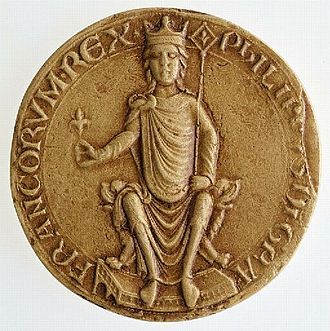
330px-sceau_de_philippe_auguste-_-_archives_nationales_-_sc-d157
Seal of Philip II Augusts

Ingeborg had been a prisoner in France for twenty years. Now, because of political expediency, she was not only free, but reinstated as queen, accorded the respect and dignity she had had a right to since her wedding day in 1193. However, her husband never returned to her bed; it was for outward appearances only. His son, Louis, now had his own son and heir, and so there was no need for Philip to be with Ingeborg, physically, in order to secure the succession. On his deathbed, in 1223, Philip II Augustus asked his son to treat Ingeborg well; while in his will, he left her 10,000 livres. The new king, Louis VIII, and his son, Louis IX, would both treat Ingeborg kindly and accord her all the respect due to her rank as dowager queen of France. Such an action was politically preferable to Louis; by recognising Ingeborg as legitimate queen of France he emphasised that Agnes had not been, and that, therefore, her children, especially Louis’s half-brother, Philip, had no right to the throne (despite his legitimisation by the pope).

After Philip’s death Ingeborg paid for masses to be said for his soul, whether out of duty, or as a sign of forgiveness, we’ll never know. A dignified and pious widow, she then retired to the priory of St Jean de l’Île, Corbeil. She died on 29 July, though the year of her death has variously been given as 1236, 1237, 1238 or 1239. Ingeborg survived her husband by more than fourteen years and was buried in a church in Corbeil, having spent twenty of her forty-five years, as queen, a prisoner of her husband.

*

Pictures courtesy of Wikipedia

Sources: Géraud, Hercule, Ingeburge de Danemark, reine de France, 1193-1236. Mémoire de feu Hercule Géraud, couronné par l’Académie des Inscriptions et Belles-Lettres dans sa séance du 11 août 1844. [Première partie.] Article; Étienne de Tournai, quoted in Géraud, Hercule, Ingeburge de Danemark, reine de France, 1193-1236. Mémoire de feu Hercule Géraud, couronné par l’Académie des Inscriptions et Belles-Lettres dans sa séance du 11 août 1844. [Première partie.] Article; Anna Belfrage Weep, Ingeborg, weep, (article) annabelfrage.wordpress.com; Goubert, Pierre The Course of French History; histoirefrance.net; historyofroyalwomen.com.

*

My books

Signed, dedicated copies of all my books are available through my online bookshop. or by contacting me.

Coming 30 March: Princesses of the Early Middle Ages

Books by Sharon Bennett Connolly

Daughters of kings were often used to seal treaty alliances and forge peace with England’s enemies. Princesses of the Early Middle Ages: Royal Daughters of the Conquest explores the lives of these young women, how they followed the stereotype, and how they sometimes managed to escape it. It will look at the world they lived in, and how their lives and marriages were affected by political necessity and the events of the time. Princesses of the Early Middle Ages will also examine how these girls, who were often political pawns, were able to control their own lives and fates. Whilst they were expected to obey their parents in their marriage choices, several princesses were able to exert their own influence on these choices, with some outright refusing the husbands offered to them.

Their stories are touching, inspiring and, at times, heartbreaking.

Princesses of the Early Middle Ages: Royal Daughters of the Conquest is now available for pre-order from Pen & Sword and Amazon.

Also by Sharon Bennett Connolly:

Books by Sharon Bennett Connolly

Scotland’s history is dramatic, violent and bloody and Scotland’s Medieval Queens have seen it all. This is the story of Scotland through their eyes. Available now from Amazon and Pen and Sword BooksHeroines of the Tudor World tells the stories of the most remarkable women from European history in the time of the Tudor dynasty, 1485-1603. These are the women who ruled, the women who founded dynasties, the women who fought for religious freedom, their families and love. Heroines of the Tudor World is now available from Amberley Publishing and Amazon UK. Women of the Anarchy demonstrates how Empress Matilda and Matilda of Boulogne, unable to wield a sword themselves, were prime movers in this time of conflict and lawlessness. It shows how their strengths, weaknesses, and personal ambitions swung the fortunes of war one way – and then the other. Available from Bookshop.orgAmberley Publishing and Amazon UKKing John’s Right-Hand Lady: The Story of Nicholaa de la Haye is the story of a truly remarkable lady, the hereditary constable of Lincoln Castle and the first woman in England to be appointed sheriff in her own right. Available from all good bookshops Pen & Sword Booksbookshop.org and Amazon

Defenders of the Norman Crown: The Rise and Fall of the Warenne Earls of Surrey tells the fascinating story of the Warenne dynasty, from its origins in Normandy, through the Conquest, Magna Carta, the wars and marriages that led to its ultimate demise in the reign of Edward III. Available from Pen & Sword BooksAmazon in the UK and US, and Bookshop.orgLadies of Magna Carta: Women of Influence in Thirteenth Century England looks into the relationships of the various noble families of the 13th century, and how they were affected by the Barons’ Wars, Magna Carta and its aftermath; the bonds that were formed and those that were broken. It is now available in paperback and hardback from Pen & SwordAmazon, and Bookshop.orgHeroines of the Medieval World tells the stories of some of the most remarkable women from Medieval history, from Eleanor of Aquitaine to Julian of Norwich. Available now from Amberley Publishing and Amazon, and Bookshop.orgSilk and the Sword: The Women of the Norman Conquest traces the fortunes of the women who had a significant role to play in the momentous events of 1066. Available now from Amazon,  Amberley Publishing, and Bookshop.org.

Alternate Endings: An anthology of historical fiction short stories including Long Live the King… which is my take what might have happened had King John not died in October 1216. Available in paperback and kindle from Amazon.

Podcast:

A Slice of Medieval

Have a listen to the A Slice of Medieval podcast, which I co-host with Historical fiction novelist Derek Birks. Derek and I welcome guests, such as Ian Mortimer, Bernard Cornwell, Elizabeth Chadwick and Scott Mariani, and discuss a wide range of topics in medieval history, from significant events to the personalities involved. 

Every episode is also now available on YouTube.

*

Don’t forget! Signed and dedicated copies of all my books are available through my online bookshop.

For forthcoming online and in-person talks, please check out my Events Page.

You can be the first to read new articles by clicking the ‘Follow’ button, liking our Facebook page or joining me on TwitterThreadsBluesky and Instagram.

*

©2017 Sharon Bennett Connolly FRHistS
The Real D’Artagnan

330px-paris-dumas-monument01
D’Artagnan – the Dumas monument, Paris

My favourite book of all time has to be The Three Musketeers by Alexandre Dumas. Nothing else comes close to this amazing story. It is full of everything; friendship, intrigue, betrayal, swashbuckling adventure and a doomed love story. The central character is D’Artagnan; he does not become a Musketeer until the very end, but he is the hero, his courage, skill and intelligence are unsurpassed.

But did you know d’Artagnan was real and so were the Regiment of Musketeers?

The Regiment of Musketeers were formed in France in 1622, as part of King Louis XIII’s personal bodyguard. Originally a compliment of 100 men, the regiment was made up of gentlemen and members of the nobility who were also proven soldiers; a candidate had to have served in the regular army before being considered for enrolment in the Musketeers.

The Musketeers were a mounted regiment, armed with swords and muskets. The 1st and 2nd companies were distinguished by the colour of their horses; grey for the 1st Company of Musketeers and black for the 2nd. Their captain was, in fact, the king; however, their everyday command was left to a captain-lieutenant, with a sub-lieutenant, an ensign and a cornet as junior officers. Their uniform comprised a blue, sleeveless, tunic with a cross of white velvet on the back and front, which was worn over a scarlet coat.

One thing that does hold true in the Dumas novels, is the Musketeers rivalry with the Cardinal’s Guard. Formed by Cardinal Richelieu for his own protection, the Guard and Musketeers kept up an ‘unhealthy’ rivalry, and competition was fierce between France’s 2 elite regiments.

330px-chateau_de_castelmore_lupiac
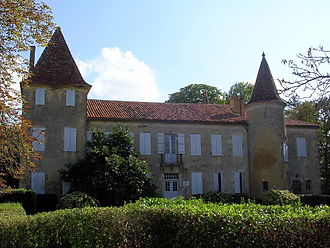
Chateau de Castelmore, Lupiac, Gascony

The Musketeer captain-lieutenant was a Captain Troisvilles (Tréville); while other members of the regiment included Armand de Sillègue d’Athos d’Autevielle (Athos), Isaac de Porteau (Porthos) and Henri d’Aramitz (Aramis). Of course, the most famous Musketeer of all is d’Artagnan or, to give him his full name, Charles Ogier de Batz de Castelmore, sieur d’Artagnan. D’Artagnan was born around 1613/15 in the château of Castelmore in Lupiac in Gascony.

His father was Bertrand de Batz,  seigneur de la Plaigne, while his mother was Françoise de Montesquiou, daughter of Jean de Montesquiou, seigneur d’Artagnan; and from whom the hero took his nom de guerre. D’Artagnan was one of 7 children with 3 brothers and 3 sisters. Paula and Jean, who became captain of the guards, were older, whilst Arnaud was younger and became an abbot. His 3 sisters, Claude, Henrye and Jeanne, all made good marriages.

No one could join the Musketeers without having proved themselves in the regular regiments. D’Artagnan joined the guards in the mid-1630s and served under Captain des Essarts. The regiment saw much action in the early 1640s, taking part in sieges at Arras, Aire-sur-la-Lys, la Bassée and Bapaume in 1640-41  and Collioure and Perpignan in 1642. Whether or not d’Artagnan was personally involved is unclear, but it is likely he took part in some – if not all – of these sieges.

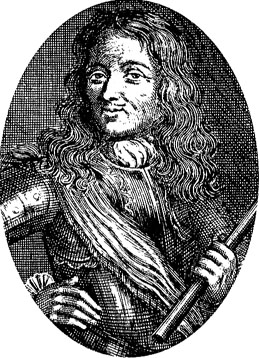
d_a
D’Artagnan

D’Artagnan managed to find himself a great patron, in the form of Cardinal Mazarin, Richelieu’s protégé and successor as First Minister of France. With the death of Louis XIII, in 1643, Mazarin was also regent for the new king, Louis XIV, who was only 5-years-old at his accession. With Mazarin’s patronage, aged about 30, d’Artagnan joined the Musketeers in 1644. Unfortunately for d’Artagnan, the Musketeers were disbanded only 2 years later, in 1646.

D’Artagnan, however, continued in the service of Cardinal Mazarin. He was active during the Fronde, the French civil wars that marred Louis XIV’s minority and gave the young king an abiding distaste for Paris. D’Artagnan carried out various missions and acted as a go-between for the Cardinal and his allies, when Mazarin was exiled from France in 1651.

D’Artagnan was ever in the thick of the fighting and narrowly escaped being killed, in 1654, at Stenay, while under the command of Turenne. He fought in sieges at Lancrecies and Saint-Ghislaine and, aged about 40, earned himself promotion, becoming captain of the Guards. When the Musketeers were reinstated, in 1657, d’Artagnan went ‘home’ and the following year he became sub-lieutenant, replacing Isaac de Baas. With Philippe-Julien de Mancini, duc de Nevers and Mazarin’s nephew, in the post of captain-lieutenant, the day-to-day command fell to d’Artagnan.

Although Alexandre Dumas’ hero stayed resolutely single, after the death of Constance, his true love, in reality d’Artagnan married, in 1659, Charlotte-Anne de Chanlecy, baronne de Sainte-Croix. They had 2 sons, born in 1660 and 1661 and both named Louis – after their godfathers, Louis XIV and his son Louis, the Dauphin. The marriage did not last long and the couple officially separated in 1665, possibly due to d’Artagnan’s long absences on duty.

nadar_-_alexander_dumas_pere_1802-1870_-_google_art_project_2
Alexandre Dumas, author of The Three Musketeers

The  last few years of his marriage coincided with d’Artagnan’s duty as gaoler to a high-profile political prisoner; Louis XIV’s former Superintendant of Finances, Nicholas Foucquet. D’Artagnan had been ordered to arrest Foucquet in September 1661, on charges of embezzlement and High Treason. The prosecution process was to take 3 years, with Foucquet becoming the ‘fall guy’ for decades of financial mismanagement and corruption; although most believed his real crime was to be more regal than the king himself. D’Artagnan’s duty as gaoler was only finally discharged in January 1665, when Foucquet was delivered to the prison-fortress of Pignerol, in the Italian Alps.

An initial sentence of banishment had been considered too lenient, and so Louis had changed it to one of perpetual imprisonment and solitary confinement, although he was allowed a valet. Foucquet died 15 years later. Some sources suggest that it was Foucquet’s valet, who had served the disgraced minister in prison, who became known as the Man in the Iron Mask, the prisoner in the Bastille, and the inspiration for the character in Dumas’ concluding Musketeer novel, The Vicomte de Bragelonne (Ten Year Later). Another d’Artagnan link to the Iron Mask story is Saint-Mars, d’Artagnan’s friend and second-in-command during the Foucquet affair, and eventual Governor of the Bastille – he was, in fact, still governor there at the time of the Man in the Iron Mask’s death.

With the failure of his marriage, d’Artagnan concentrated on his career as a soldier. In 1671 he was  again involved in a high-profile arrest, that of the Duc de Lauzun, who had dared to marry the Duchesse de Montpensier, la Grande Mademoiselle, cousin of Louis XIV. D’Artagnan and his Musketeers again made the journey across the Alps, delivering Lauzun to Pignerol on 16 December; his rooms were those directly below Foucquet, in the Angel Tower.¹

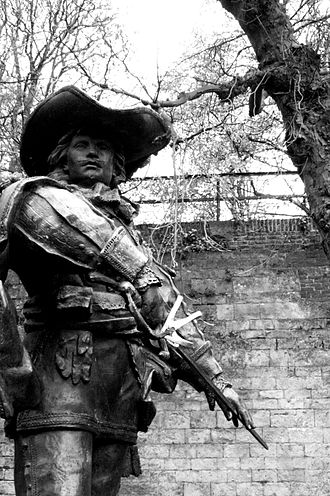
330px-statue_dartagnan
Statue of D’Artagnan, Maastricht

In 1672 d’Artagnan was appointed Governor of Lille, replacing the Mareschal d’Humières. However, by 1673, he was back in his rightful place, at the head of his regiment of Musketeers in the Dutch Wars. In May, 1673, Louis XIV had marched on Maastricht at the head of his troops, several thousand strong. By 10 June the town was surrounded,  not only by French forces, but also their English allies, and the siege began in earnest. The artillery bombardment began on 19th June and lasted for 5 days and was followed by an assault which included 4 battalions, 8 squadrons of the King’s Horse, 300 Grenadiers and the 1st company of the Musketeers, led by d’Artagnan.

D’Artagnan’s company attacked a demi-lune (half-moon) fortification, which protected the Tongres Gate. Within half an hour of fierce fighting, d’Artagnan’s men had control of the demi-lune, a flag of the fleur-de-lis planted firmly on the parapet. The Duke of Monmouth, on e of the English commanders, then decided to cross the open ground that separated the demi-lune from the Tongres Gate. It is likely that d’Artagnan, a more experienced soldier, advised against such foolhardy action, but once Monmouth led the charge, d’Artagnan could do nothing but follow, leading his Musketeers into the foray.

D’Artagnan made it to the ramparts of Maastricht before falling mortally wounded from a musket ball:

It was on this occasion that Monsieur D’Artagnan was killed. The intensity of musket fire was such that even hail could not fall more abundantly. Two musketeers trying to pick up Monsieur D’Artagnan were killed at his side, and two others who had taken their place and given themselves the same duty, were killed in the same way next to their captain, without even having the time to pick themselves up …. This battle went on for five hours in the light of day and out in the open, and one could almost say: “And the combat ceased due to a lack of combatants.”³

D’Artagnan died on 25th June, 1673, aged about 60; he was buried in Maastricht. Having lost their brilliant, legendary captain, the Musketeers were grief-stricken. As was Louis XIV, who, that evening, wrote to his wife, Maria Theresa, ‘Madame, I have lost d’Artagnan, in whom I had the utmost confidence and who merited it in all occasions.’²

Intelligent, loyal, steadfast and brave, d’Artagnan was as much a hero in real-life as on the page; but thanks to Alexandre Dumas his legend not only lives on, but grows…

the_musketeers_titlecard

*

Footnotes: ¹The Man Behind the Iron Mask by John Noone; ²The Death of D’Artagnan (article) Dr Josephine Wilkinson, Facebook page; ³Mercure Galant, June 1673, quoted by Dr Josephine Wilkinson

Thanks to Cindy Barris-Speke who informed me via Facebook that d’Artagnan is buried in Maastricht.

*

Pictures courtesy of Wikipedia

*

Sources: The Man Behind the Iron Mask by John Noone; The Death of D’Artagnan (article) Dr Josephine Wilkinson, Facebook page; jospha-josephine-wilkinson.blogspot.co.uk; sirclisto.com; Forgotten History, Unbelilevable Moments from the Past by Jem Duducu; awesomestories.com.

By Alexandre Dumas: The Three Musketeers (Les Trois Mousquetaires); Twenty Years After (Vingt Ans Apres); Dix And Plus Tard (Ten Years After, which includes the story of the Man in the Iron Mask)

*

My Books

Signed, dedicated copies of all my books are available through my online store.

Out now: Scotland’s Medieval Queens

Books by Sharon Bennett Connolly

Scotland’s history is dramatic, violent and bloody. Being England’s northern neighbour has never been easy. Scotland’s queens have had to deal with war, murder, imprisonment, political rivalries and open betrayal. They have loved and lost, raised kings and queens, ruled and died for Scotland. From St Margaret, who became one of the patron saints of Scotland, to Elizabeth de Burgh and the dramatic story of the Scottish Wars of Independence, to the love story and tragedy of Joan Beaufort, to Margaret of Denmark and the dawn of the Renaissance, Scotland’s Medieval Queens have seen it all. This is the story of Scotland through their eyes.

Scotland’s Medieval Queens gives a thorough grounding in the history of the women who ruled Scotland at the side of its kings, often in the shadows, but just as interesting in their lives beyond the spotlight. It’s not a subject that has been widely covered, and Sharon is a pioneer in bringing that information into accessible history.’ Elizabeth Chadwick (New York Times bestselling author)

Available now from Amazon and Pen and Sword Books

Also by Sharon Bennett Connolly:

Books by Sharon Bennett Connolly

Heroines of the Tudor World tells the stories of the most remarkable women from European history in the time of the Tudor dynasty, 1485-1603. These are the women who ruled, the women who founded dynasties, the women who fought for religious freedom, their families and love. Heroines of the Tudor World is now available from Amberley Publishing and Amazon UK. Women of the Anarchy demonstrates how Empress Matilda and Matilda of Boulogne, unable to wield a sword themselves, were prime movers in this time of conflict and lawlessness. It shows how their strengths, weaknesses, and personal ambitions swung the fortunes of war one way – and then the other. Available from Bookshop.orgAmberley Publishing and Amazon UKKing John’s Right-Hand Lady: The Story of Nicholaa de la Haye is the story of a truly remarkable lady, the hereditary constable of Lincoln Castle and the first woman in England to be appointed sheriff in her own right. Available from all good bookshops Pen & Sword Booksbookshop.org and Amazon

Royal Historical Society

Defenders of the Norman Crown: The Rise and Fall of the Warenne Earls of Surrey tells the fascinating story of the Warenne dynasty, from its origins in Normandy, through the Conquest, Magna Carta, the wars and marriages that led to its ultimate demise in the reign of Edward III. Available from Pen & Sword BooksAmazon in the UK and US, and Bookshop.orgLadies of Magna Carta: Women of Influence in Thirteenth Century England looks into the relationships of the various noble families of the 13th century, and how they were affected by the Barons’ Wars, Magna Carta and its aftermath; the bonds that were formed and those that were broken. It is now available in paperback and hardback from Pen & SwordAmazon, and Bookshop.orgHeroines of the Medieval World tells the stories of some of the most remarkable women from Medieval history, from Eleanor of Aquitaine to Julian of Norwich. Available now from Amberley Publishing and Amazon, and Bookshop.orgSilk and the Sword: The Women of the Norman Conquest traces the fortunes of the women who had a significant role to play in the momentous events of 1066. Available now from Amazon,  Amberley Publishing, and Bookshop.org.

Alternate Endings: An anthology of historical fiction short stories including Long Live the King… which is my take what might have happened had King John not died in October 1216. Available in paperback and kindle from Amazon.

Podcast:

Have a listen to the A Slice of Medieval podcast, which I co-host with Historical fiction novelist Derek Birks. Derek and I welcome guests, such as Bernard Cornwell and Michael Jecks, and discuss a wide range of topics in medieval history, from significant events to the personalities involved. 

Every episode is also now available on YouTube.

*

Don’t forget! Signed and dedicated copies of all my books are available through my online store.

For forthcoming online and in-person talks, please check out my Events Page.

You can be the first to read new articles by clicking the ‘Follow’ button, liking our Facebook page or joining me on TwitterThreadsBluesky and Instagram.

©Sharon Bennett Connolly 2016 FRHistS

Edgar – The Boy Who Wouldn’t Be King

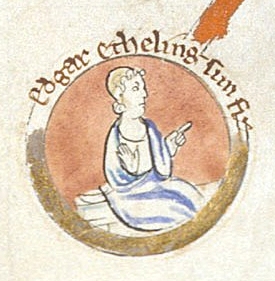
edgar_the_aetheling
Edgar the Aetheling

Edgar the Ætheling was the only son of Edward the Exile and his wife, Agatha. His father was the son of Edmund II Ironside, king of England in 1016; Edward’s grandfather was, therefore, Ӕthelred II (the Unready) and his uncle was Edward the Confessor, England’s king from 1042 until 1066. When his father was murdered in 1016 Edward and his younger brother, Edmund, were sent into exile of the continent by England’s new king, Cnut.

It is thought that Cnut intended that they would be killed, but the boys were protected by the king of Sweden and sent on to safety in Kiev, at the court of its prince, Jaroslav. Around 1043 Edward married Agatha, probably the daughter Liudolf, margrave of West Friesland and a relative of Emperor Heinrich III. Margaret, the oldest of three children, was born in either 1045 or 1046; her sister, Christina was born around 1050 and her brother Edgar, the Ӕtheling was born sometime between 1052 and 1056.

The family may have spent their whole lives in European exile, were it not for Edward the Confessor lacking an heir to the English throne; although Edward was married to Edith Godwinson, the couple remained childless. Sometime in 1054 Edward sent an embassy to Edward the Exile, to bring him back to England as ӕtheling, heir to the throne. The family could not travel immediately, possibly because Agatha was pregnant with Edgar, and only arrived in England in 1057, having journeyed by ship, provided by Emperor Heinrich III.

Just days after their return Edward the Exile was dead, whether by nefarious means or simply a twist of fate is uncertain. The suspicion has been raised that Edward’s rival for the throne, Harold Godwinson – the future Harold II – may have taken the opportunity to remove his rival; although it was Harold who brought Edward back to England, so surely, had he intended murder, he would have done it sooner?

Whatever the circumstances, the death of Edward the Exile was a blow for Edward the Confessor’s dynastic hopes. Little Edgar, now the ӕtheling was much too young to assume a political role. He and his sisters, along with their mother, were now in the protection of King Edward. They continued to live at court and by January 1066, when Edward the Confessor died, Margaret was approaching her twentieth birthday, while Edgar could have been as young as ten and was probably no older than fourteen. Due to his tender years, and lack of powerful allies, Edgar was passed over as a candidate for the throne in preference for the older and more experienced Harold Godwinson; who was crowned as Harold II.

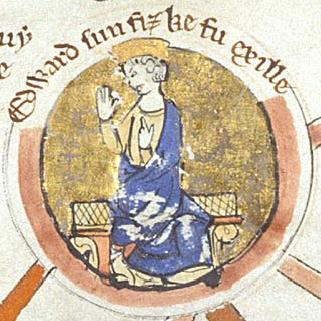
edward_the_exile
Edward the Exile. Edgar’s father

Following Harold’s death at the Battle of Hastings in October 1066, Edgar was proclaimed king in London by some of his supporters, led by Archbishop Ealdred of York, ‘as was his proper due by birth’¹; he was also promised backing by the earls Edwin and Morcar, brothers-in-law of Harold II but their support did not materialise, and without it Edgar’s cause was hopeless.  He submitted to William of Normandy, at Berkamsted, in early December. William treated Edgar honourably, allowing him his life and freedom, and giving him land.

However, by 1068 Edgar the Ӕtheling had become involved in the opposition to Norman rule, which had been festering in northern England. When events turned against him he fled to Scotland taking his mother and sisters along with him. The family was warmly received at Dunfermline by Scotland’s king, Malcolm III Canmore. At the time, Malcolm was married to Ingebiorg and the father of two sons, Duncan and Donald. Whether Ingebiorg died or was put aside, seems uncertain; her sons were exiled from court, although Duncan would eventually reign as Duncan II he was killed at the Battle of Monthechin in 1094.

Although we do not know Ingebiorg’s fate, we do know that in 1069 Malcolm asked Edgar and his mother for Margaret’s hand in marriage. Margaret was reluctant to agree to the marriage, she was more inclined to a religious life and had hoped to become a nun. Nonetheless, with pressure from Malcolm and, possibly, her own sense of obligation to the king who was sheltering her family, she eventually accepted his proposal. They were married at Dunfermline sometime in 1069 or 1070 and, by all accounts, it seems to have been a happy and successful marriage.

330px-stmargareth_edinburgh_castle2
St Margaret, queen of Scotland

In 1069, Edgar was back in northern England, at the head of the Northumbrian rebels who entered York. After defeat at York, he fled again to Scotland, but returned to lead the Northumbrian army when a Danish fleet arrived in the Humber. The army captured the Norman castle at York and killed its garrison. During the winter, Edgar narrowly evaded capture when he raided into Lincolnshire with a ship from the Danish fleet. Although he was part of the rebellion, there does not appear to have been any specific plans to make Edgar king and in 1070 William brought the full force of his wrath down on the north, systematically and brutally crushing the rebellion.

Edgar fled again to Scotland, and played no part in the 1071-2 rebellion at Ely. By 1074 he was in exile in Flanders. He was shipwrecked in the same year, while on the way to take control of the castle of Montreuil, offered to him by the French as a base from which he could torment King William. Having returned to Scotland, and on the advice of his brother-in-law, Malcolm III, Edgar submitted to William I and was established at his court. According to William of Malmesbury he remained ‘at court for many years, silently sunk into contempt through his indolence, or more mildly speaking, his simplicity’².

According to the Domesday Book, Edgar held 2 estates in Hertfordshire in 1086; Barkway and Hormead. He became close friends with 2 of the Conqueror’s sons; Robert Curthose and William Rufus. In 1086, he was sent to Apulia, another land under Norman rule, with a force of 200 knights, although the nature of his mission is unknown, the mission itself is testament to the high regard the Normans held him in. Edgar then joined Robert Curthose, duke since his father’s death in 1087, in Normandy, but was expelled from there in 1091, following a treaty between Robert and his brother, William II of England.

robert_curthose_-_ms_royal_14_b_vi
Robert Curthose, duke of Normandy

As a result, Edgar went to Scotland and encouraged Malcolm III to invade England. Peace was eventually restored and in 1093 Edgar was employed by William to escort King Malcolm to the English court. Both Malcolm and Margaret died within a few days of each other, in November 1093. In 1095 Edgar campaigned with William against the rebellious earl of Northumbria, Robert de Mowbray and by 1097 as guardian for his nephew, Edgar, in Scotland, he ‘went with an army, with the king’s support, into Scotland, and conquered the country in a severe battle’³ making his nephew and namesake king of Scotland.

According to Orderic Vitalis, in 1098 Edgar joined the First Crusade, arriving at Latakia in the Levant in June; having taken the area under his protection he then transferred it to Robert Curthose, also a Crusader. However, Orderic is the only source for Edgar’s participation and another possibility is that his journey to the Holy Land was later, in 1102 – or maybe he made 2 journeys?

Edgar returned to England in the early 1100s and fought his last action, for Robert Curthose, at the Battle of Tinchebrai in 1106. Robert was defeated by his younger brother, Henry I of England, and was imprisoned until his death in 1134. Edgar, however, was incarcerated for only a short while and was soon released;his Anglo-Saxon royal descent was no longer an issue of contention, since Henry had married Edgar’s niece, Matilda, soon after taking the crown in 1100.

matylda_zena
Matilda, Edgar’s niece and queen of England

Edgar seems to have been only a minor player in the politics and upheaval following the Norman Conquest. His political isolation meant that few took his claim to the English crown seriously. While his participation in military actions, and in relations with Scotland are mentioned in various documents, his death passed without notice – or remark. William of Malmesbury wrote of him in 1125, that ‘he now grows old in the country in privacy and quiet’². Nothing is mentioned of him thereafter; neither is it ever remarked that he had a wife of children.

If he had only been a few years older in that crucial year of 1066, his story could have been very different. instead, he simply slips from the pages of history, remembered only as England’s lost king.

*

Footnotes: ¹Anglo-Saxon Chronicle, 1066, Text D; ² William of Malmesbury, De gestis regum; ³Anglo-Saxon Chronicle, 1097, Text E.

*

Sources: Anglo-Saxon Chronicle; William of Malmesbury, De gestis regum; Oxforddnb.com; The History Today Companion to British History, Edited by juliet Gardner and Neil Wenborn; The Battle of Hastings, 1066 by m.K. Lawson; The Oxford Companion to British History edited by John Cannon; Britain’s Royal Families, the Complete Genealogy by Alison Weir; Edward the Confessor, King of England by Peter Rex; The Mammoth Book of British Kings & Queens by Mike Ashley; Brewer’s British Royalty by David Williamson; The Norman Conquest by Teresa Cole

*

Pictures courtesy of Wikipedia

*

My Books:

Signed, dedicated copies of all my books are available through my online bookshop.

OUT NOW: Scotland’s Medieval Queens

Books by Sharon Bennett Connolly

Scotland’s history is dramatic, violent and bloody. Being England’s northern neighbour has never been easy. Scotland’s queens have had to deal with war, murder, imprisonment, political rivalries and open betrayal. They have loved and lost, raised kings and queens, ruled and died for Scotland. From St Margaret, who became one of the patron saints of Scotland, to Elizabeth de Burgh and the dramatic story of the Scottish Wars of Independence, to the love story and tragedy of Joan Beaufort, to Margaret of Denmark and the dawn of the Renaissance, Scotland’s Medieval Queens have seen it all. This is the story of Scotland through their eyes.

Scotland’s Medieval Queens gives a thorough grounding in the history of the women who ruled Scotland at the side of its kings, often in the shadows, but just as interesting in their lives beyond the spotlight. It’s not a subject that has been widely covered, and Sharon is a pioneer in bringing that information into accessible history.’ Elizabeth Chadwick (New York Times bestselling author)

Available now from Amazon and Pen and Sword Books

Also by Sharon Bennett Connolly:

Books by Sharon Bennett Connolly

Heroines of the Tudor World tells the stories of the most remarkable women from European history in the time of the Tudor dynasty, 1485-1603. These are the women who ruled, the women who founded dynasties, the women who fought for religious freedom, their families and love. Heroines of the Tudor World is now available for pre-order from Amberley Publishing and Amazon UK. Women of the Anarchy demonstrates how Empress Matilda and Matilda of Boulogne, unable to wield a sword themselves, were prime movers in this time of conflict and lawlessness. It shows how their strengths, weaknesses, and personal ambitions swung the fortunes of war one way – and then the other. Available from Bookshop.orgAmberley Publishing and Amazon UKKing John’s Right-Hand Lady: The Story of Nicholaa de la Haye is the story of a truly remarkable lady, the hereditary constable of Lincoln Castle and the first woman in England to be appointed sheriff in her own right. Available from all good bookshops Pen & Sword Booksbookshop.org and Amazon

Books by Sharon Bennett Connolly

Defenders of the Norman Crown: The Rise and Fall of the Warenne Earls of Surrey tells the fascinating story of the Warenne dynasty, from its origins in Normandy, through the Conquest, Magna Carta, the wars and marriages that led to its ultimate demise in the reign of Edward III. Available from Pen & Sword BooksAmazon in the UK and US, and Bookshop.orgLadies of Magna Carta: Women of Influence in Thirteenth Century England looks into the relationships of the various noble families of the 13th century, and how they were affected by the Barons’ Wars, Magna Carta and its aftermath; the bonds that were formed and those that were broken. It is now available in paperback and hardback from Pen & SwordAmazon, and Bookshop.orgHeroines of the Medieval World tells the stories of some of the most remarkable women from Medieval history, from Eleanor of Aquitaine to Julian of Norwich. Available now from Amberley Publishing and Amazon, and Bookshop.orgSilk and the Sword: The Women of the Norman Conquest traces the fortunes of the women who had a significant role to play in the momentous events of 1066. Available now from Amazon,  Amberley Publishing, and Bookshop.org.

Alternate Endings: An anthology of historical fiction short stories including Long Live the King… which is my take what might have happened had King John not died in October 1216. Available in paperback and kindle from Amazon.

Podcast:

A Slice of Medieval

Have a listen to the A Slice of Medieval podcast, which I co-host with Historical fiction novelist Derek Birks. Derek and I welcome guests, such as Bernard Cornwell, and discuss a wide range of topics in medieval history, from significant events to the personalities involved. Definitely worth a listen!

Every episode is also now available on YouTube.

*

Don’t forget! Signed and dedicated copies of all my books are available through my online bookshop.

For forthcoming online and in-person talks, please check out my Events Page.

You can be the first to read new articles by clicking the ‘Follow’ button, liking our Facebook page or joining me on TwitterThreadsBluesky and Instagram.

©2016 Sharon Bennett Connolly FRHistS
John IV and the Struggle for Brittany

jan5bretan
John IV de Montfort, Duke of Brittany

After writing about Yolande de Dreux a few weeks back, I became intrigued with the story of her grandson, John de Montfort.

John was the only son of John, count of Montfort, and Joan of Flanders. He was probably born in November or December of 1339. His great-grandmother was Beatrice of England, a daughter of Henry III, who was the mother of his grandfather, Arthur, duke of Brittany. John is first mention in 1341 when his childless uncle, John III, duke of Brittany, provided him with 20,000 livres from his patrimony. However, when the duke died on 30 April 1341, the duchy was thrown into turmoil. Civil war erupted when John’s father and uncle-by-marriage, Charles de Blois, both laid claim to the duchy.

John de Montfort the elder was the son of Arthur, duke of Brittany, by his 2nd wife, Yolande. Charles de Blois was married to Jeanne de Penthièvre, daughter of Arthur’s second son by his first wife; Guy of Brittany. The bitter conflict was to be absorbed into the much greater struggle, between France and England, that became known as the Hundred Years’ War. Edward III of England supported young John’s father, while Philip VI of France backed Charles de Blois.

In November 1341 John’s father was captured and it was up to his mother to assume the de Montfort cause. Edward III sent troops to secure various strongholds, but by late 1342, after an unproductive campaign, he had minimised his military involvement, leaving a lieutenant in charge as he headed back to England, accompanied by John, who was about 3 years old at the time, his mother and his sister, Joan.

John’s mother was imprisoned in Tickhill Castle, Yorkshire, supposedly after succumbing to a mental illness, though more likely for political reasons. As a result, John was raised in the household of the queen, Philippa of Hainault. Their fortunes revived briefly when John’s father arrived in England 1345, paying homage to Edward III at Easter, having broken his parole and escaped the duchy. He led a small force back to Brittany, but died suddenly in September of the same year, leaving 6-year-old John in the guardianship of Edward III.

mary_plantagenet_of_brittany
Mary of England, John’s first wife

Sir Thomas Dagworth captured Charles de Blois at Le Roche Derrien in June 1347, giving the English the opportunity to discuss the succession issue. It looked for a time, that Edward would sacrifice; in 1353 a treaty was actually drafted that was heavily in de Blois’ favour, depriving John of most of his rights. Luckily, for John, it was never implemented and de Blois was eventually released, in return for a huge ransom, in 1356.

Edward resolved now to back young John’s claims. Around 17-years-old, John experienced his first military campaign when he fought alongside Henry, duke of Lancaster, in the siege of Rennes, from October 1356 to July 1357, and later taking part in the Rheims campaign of 1359-60. In March, 1361, John married Edward III’s daughter, Mary, at Woodstock. The marriage would end in tragedy as Mary, still only 17, died of plague in September of the same year. Discussions throughout the early 1360s offered no lasting political solution and, now having attained his majority, John returned to Brittany in the summer of 1362.

Further discussions hosted by the Black Prince, including plans to partition the duchy, failed. However, when Charles de Blois was eventually defeated killed in battle at Auray on 29th September 1364 Jeanne de Penthièvre was forced to come to terms with John de Montfort and the Treaty of Guérande was signed on 12th April 1365. John was recognised as John IV duke of Brittany  by Charles V of France, to whom he performed homage for his duchy in December 1366.

Initially, as duke of Brittany, John’s ties to England continued to be strong, his financial debts and other obligations ensuring this. In 1366 he married Joan Holland, step-daughter of Edward, the Black Prince. However, when a lull in the fighting ended in 1369 and France and England were at loggerheads once again, John was caught in a dilemma. As his overlord Charles V was expecting John to fight for France, while Edward III was his old ally and mentor and obviously felt deserving of his loyalty. His prevarications meant his Breton subjects grew restive and when John sided with Edward III, after receiving the earldom of Richmond in 1372 as a sweetener, they openly rebelled.

joana_canterbury
Joan of Navarre, John’s 3rd wife

By April 1373 John had lost everything; he fled to England as his duchy was overrun by French troops. And yet, worse was to follow. After participating in John of Gaunt’s chevauchée from Calais to Bordeaux, John was tried for treason in the Paris parlement in December 1378. In total, John spent 6 years in exile, living on his English estates and attending court and parliament; he was the 1st foreign prince to be made a Knight of the Garter, in 1374.

John was invited to Brittany in 1379 by his Breton subjects, who were beginning to become suspicious of Charles V’s intentions; realising that his attempts to bring Brittany into the French royal demesne would threaten her traditional privileges and independence. The Breton constable of France, Bertrand de Guesclin, deliberately failed to oppose the duke’s landing. After Charles V died in September 1380 a peace was negotiated with the aid of the count of Flanders and Louis, duke of Anjou, which was ratified in the 2nd Treaty of Guérande in April 1381.

A consequence of the treaty was that John de Montfort now opposed his former allies in England and Navarre. With Edward III dying in 1377, his young grandson was now King Richard II. The English still occupied Brest, and John was having difficulties in collecting revenues from his English estates. John’s wife, Duchess Joan, had been staying in England during the troubles but, after much wrangling, was finally returned to her husband in 1382, only to die in November 1384. Her death removed an important connection to the English court and Richard II, her half-brother.

The 1380s saw John consolidating his position in Brittany, making alliances with other French princes, such as the dukes of Berry and Burgundy and the king of Navarre. He developed the duchy’s institutions, encouraged trade, devised new taxes and exploited minting rights. On a cultural level,  John expanded his court and encouraged the arts by extensive patronage. He also encouraged loyalty to his family and dynasty, which was helped greatly by his marriage to Joan of Navarre in 1386 and the birth of his long-awaited heir in 1389.

330px-sceau_de_jean_v_-_duc_de_bretagne
John V, duke of Brittany

As Anglo-French diplomatic relations thawed in the 1390s, John was able to make a marriage alliance with John of Gaunt, whereby one of his daughters would marry a son of Gaunt’s heir, the earl of Derby. John de Montfort attended the wedding of Richard II and Isabella of France in 1396 and Brest was returned to him in 1397.

Joan and John had an affectionate relationship, producing 8 children, 7 of whom survived to adulthood. John and a second son, Arthur, each became duke of Brittany; Arthur was also constable of France and succeeded his nephew, John’s son Peter, as duke. He died in 1458 and was succeeded by his nephew, Francis, son of his younger brother, Richard, count of Étampes, who had died in 1439. A fourth son, Gilles, died in 1412. Joan and John also had 3 daughters: Marie, countess of Alençon; Blanche, countess of Armagnac and Marguerite, vicomtess de Rohan.

John de Montfort paid one last visit to England in 1398, when he took formal possession of Richmond, attended a Garter ceremony at Windsor and spent some time on progress with Richard II before returning home. He died at Nantes on 1st November 1399, where he was buried. In 1402 his widow, now the wife of Henry IV of England, erected an English-made alabaster tomb over his grave; it was destroyed during the French Revolution. Joan acted as regent for her 10-year-old son, John, until her marriage to Henry; when she entrusted the regency and custody of her Breton children, to the Duke of Burgundy.

Brittany remained an independent duchy within France for another 100 years.

*

Pictures courtesy of Wikipedia.

*

Sources: Ian Mortimer The Perfect King; Marc Morris Edward I: A Great and Terrible King by Marc Morris;  Brewer’s British Royalty by David Williamson; The Mammoth Book of British kings & Queens by Mike Ashley; Britain’s Royal Families by Alison Weir; The Oxford Companion to British History edited by John Cannon; The History Today Companion to British History Edited by Juliet Gardiner and Neil Wenborn; The Story of Scotland by Nigel Tranter; Scotland, History of a Nation by David Ross; oxforddnb.com; britannica.com; W.M. Ormrod The Reign of Edward III.

*

My books

Signed, dedicated copies of all my books are available through my online bookshop.

Out now: Scotland’s Medieval Queens

Scotland’s history is dramatic, violent and bloody. Being England’s northern neighbour has never been easy. Scotland’s queens have had to deal with war, murder, imprisonment, political rivalries and open betrayal. They have loved and lost, raised kings and queens, ruled and died for Scotland. From St Margaret, who became one of the patron saints of Scotland, to Elizabeth de Burgh and the dramatic story of the Scottish Wars of Independence, to the love story and tragedy of Joan Beaufort, to Margaret of Denmark and the dawn of the Renaissance, Scotland’s Medieval Queens have seen it all. This is the story of Scotland through their eyes.

Available now from Amazon and Pen and Sword Books

Also by Sharon Bennett Connolly:

Heroines of the Tudor World tells the stories of the most remarkable women from European history in the time of the Tudor dynasty, 1485-1603. These are the women who ruled, the women who founded dynasties, the women who fought for religious freedom, their families and love. Heroines of the Tudor World is now available for pre-order from Amberley Publishing and Amazon UK. Women of the Anarchy demonstrates how Empress Matilda and Matilda of Boulogne, unable to wield a sword themselves, were prime movers in this time of conflict and lawlessness. It shows how their strengths, weaknesses, and personal ambitions swung the fortunes of war one way – and then the other. Available from Bookshop.orgAmberley Publishing and Amazon UKKing John’s Right-Hand Lady: The Story of Nicholaa de la Haye is the story of a truly remarkable lady, the hereditary constable of Lincoln Castle and the first woman in England to be appointed sheriff in her own right. Available from all good bookshops Pen & Sword Booksbookshop.org and Amazon

Defenders of the Norman Crown: The Rise and Fall of the Warenne Earls of Surrey tells the fascinating story of the Warenne dynasty, from its origins in Normandy, through the Conquest, Magna Carta, the wars and marriages that led to its ultimate demise in the reign of Edward III. Available from Pen & Sword BooksAmazon in the UK and US, and Bookshop.orgLadies of Magna Carta: Women of Influence in Thirteenth Century England looks into the relationships of the various noble families of the 13th century, and how they were affected by the Barons’ Wars, Magna Carta and its aftermath; the bonds that were formed and those that were broken. It is now available in paperback and hardback from Pen & SwordAmazon, and Bookshop.orgHeroines of the Medieval World tells the stories of some of the most remarkable women from Medieval history, from Eleanor of Aquitaine to Julian of Norwich. Available now from Amberley Publishing and Amazon, and Bookshop.orgSilk and the Sword: The Women of the Norman Conquest traces the fortunes of the women who had a significant role to play in the momentous events of 1066. Available now from Amazon,  Amberley Publishing, and Bookshop.org.

Alternate Endings: An anthology of historical fiction short stories including Long Live the King… which is my take what might have happened had King John not died in October 1216. Available in paperback and kindle from Amazon.

Podcast:

Have a listen to the A Slice of Medieval podcast, which I co-host with Historical fiction novelist Derek Birks. Derek and I welcome guests, such as Bernard Cornwell and Michael Jecks, and discuss a wide range of topics in medieval history, from significant events to the personalities involved. Every episode is also now available on YouTube.

*

Don’t forget! Signed and dedicated copies of all my books are available through my online bookshop.

For forthcoming online and in-person talks, please check out my Events Page.

You can be the first to read new articles by clicking the ‘Follow’ button, liking our Facebook page or joining me on Twitter, Bluesky, Threads and Instagram.

©2016 Sharon Bennett Connolly FRHistS

Yolande and the Hope for the Scottish Succession

330px-sceau_de_yolande_decosse_-_duchesse_de_bretagne
Yolande de Dreux

Yolande de Dreux was Scotland’s Queen Consort for only  4 months and 14 days. In that short time, she carried the hope of a nation – and its king – to secure the Scottish succession.

Yolande was born into a cadet branch of the French royal family, probably sometime in the mid-1260s. Her father was Robert IV, Count of Dreux, who died in 1282 and her mother was Beatrice de Montfort, who died  in 1311. Beatrice was the daughter of Count Jean I de Montfort l’Amoury and his wife Jeanne de Chateaudun, Beatrice was therefore a great-granddaughter of Simon de Montfort, earl of Leicester, and heiress to the impressive de Montfort estates. One of 6 children, Yolande had 2 brothers and 3 sisters. Little is known of Yolande’s childhood but we can imagine that as a junior member of the Capetian dynasty, she grew up amidst some privilege and splendour.

Whilst Yolande was growing into adulthood Scotland was experiencing a “golden age”, a period of relative peace and prosperity. Her king, Alexander III was married to Margaret, daughter of Henry III of England and the couple had 3 children survive childhood. Their daughter, Margaret, born at Windsor on 28th February, 1261,  was married to Erik II, king of Norway, in August 1281. Their eldest son, Alexander, was born on 21st January 1264, at Jedburgh. On 15th November 1282 Alexander married Margaret, the daughter of Guy de Dampierre, Count of Flanders. A younger son, David was born on 20th March 1273.

Queen Margaret died in 1275 and within 8 years all 3 of her children were dead; 8-year-old David died at Stirling Castle at the end of June 1281, Margaret died in childbirth on 9th April 1283 and Alexander died at Lindores Abbey in January 1284, sometime around his 20th birthday. Alexander’s heir was now his infant granddaughter by Margaret and Erik, little Margaret, the Maid of Norway, born shortly before her mother’s death.

dscn4964
Jedburgh Abbey

With his entire dynasty resting on the life of his toddler granddaughter, Alexander started the search for a new wife. In February 1285 he sent a Scottish embassy to France for this sole purpose. Their successful search saw Yolande arrive in Scotland that same summer, accompanied by her brother John. Alexander and Yolande were married at Jedburgh Abbey, Roxburghshire, on 14th October 1285, the feast of St Calixtus, in front of a large congregation made up of Scottish and French nobles. Yolande was probably no more than 22 years of age, while Alexander was in his 44th year.

The marriage was one of the shortest in British royal history – and the shortest of any English or Scottish king, lasting less than 5 months. Tragedy struck on 19 March 1286.

Alexander had spent the day attending a council meeting in Edinburgh. When the meeting broke up he set off on horseback to join his wife at Kinghorn Castle in Fife. It was said he wanted to be there to celebrate her birthday and he may also have recently discovered that she was pregnant with the much-desired heir. For whatever the reason, he was eager to get to her and took only a small escort of 3 men and 2 local guides. It seems that, with bad weather closing in and daylight fading, several people counselled against continuing the journey, including the ferryman at the River Forth and the bailie at Inverkeithing, who argued that Alexander should stay the night and continue his journey in the morning as a heavy storm was brewing.

330px-alexander_iii_and_ollamh_righ
Alexander III

Only 8 miles from his destination, Alexander would hear none of it and insisted on continuing his journey. He somehow lost his escort in the dark and worsening weather, but continued alone. It was the next morning when his body was found on the foreshore of Pettycur, just a mile from his destination. The most likely explanation was that his horse had stumbled, throwing the king whose neck was broken in the fall, although at least one historical fiction writer has suggested foul play while others have suggested the king was drunk.

There followed months of uncertainty in Scotland. She had lost one of her most successful kings and the succession was in turmoil. Little Margaret, the Maid of Norway, had been recognised by the council as Alexander’s heir, but his queen was pregnant; and if she gave birth to a boy he would be king from his first breath. A regency council was established to rule until the queen gave birth.

In the event, Yolande either suffered a miscarriage, or the child was stillborn. Some sources, the Lanercost Chronicle in particular, have questioned whether Yolande was pregnant at all, suggesting that she was intending to pass off another woman’s baby as her own. The plan thwarted, the chronicle recorded that ‘women’s cunning always turns toward a wretched outcome‘.¹ However, there are major discrepancies in the chronicle’s apparently malicious account and tradition has the baby buried at Cambuskenneth.

artur_bretan
Arthur of Brittany

The throne passed to little Margaret and arrangements began to have her brought to England, with marriage negotiations being opened with Edward I for the little queen to marry his son and heir; the future Edward II. Yolande continued to reside in Scotland for some time, possibly at Stirling Castle, and was confirmed in her dower properties, which included an annual income of £200 from Berwick; she also had estates in the sheriffdom of Stirling and a horse stud at Jedworth.

Margaret’s death at sea in 1290, while on her journey to her new kingdom, threw Scotland into years of turmoil, with 13 nobles advancing their competing claims to the crown and Edward I of England claiming the right to choose Alexander III’s successor, and recognition as Scotland’s overlord. The English king’s imperialist ambitions had thrown Scotland into crisis by 1296.

Luckily for Yolande, she was already far away from Scotland and the brewing wars. In May 1294 Yolande had married for a second time; Arthur of Brittany was a similar age to Yolande and was the son and heir of Jean II, duke of Brittany and earl of Richmond. Yolande was the second wife of Arthur, who already had 3 sons, Jean, Guy and Peter, by his first wife, Marie, Vicomtesse de Limoges.

It is possible that Arthur chose Yolande as a bride due to the impressive de Montfort territories that she stood to inherit from her mother, although there were legal wranglings between Yolande and her younger sister, Jeanne, who also claimed the lands.

120px-blason_comtes_dreux
Arms of the counts of Dreux

Yolande and Arthur had 6 children together. Their eldest daughter, Joan was born a year after their marriage and married Robert, Lord of Cassel; she died in 1363. Beatrice was born c.1295 and married Guy, Lord of Laval; she lived until 1384. Their only son, John, was probably born 1295/6 and married Joan of Flanders. Of the 3 youngest daughters: Alice was born in the late 1290s married Bouchard VI, Count of Vendôme and died in 1377; Blanche was born in 1300 and died young; Mary was born in 1302 and became a nun, she died in 1377.

Arthur succeeded his father as Duke of Brittany in 1305 and ruled until his death in 1312. He was succeeded by John III, his eldest son by his first marriage. However, John’s death in 1341 sparked the War of the Breton Succession when Yolande’s son, John de Montfort, claimed the duchy in place of Joan of Penthièvre, daughter of Guy (Arthur’s 2nd son by his 1st wife), who was married to Charles of Blois, nephew of King Philip VI of France. Joan and Charles were therefore backed by the French crown, and Edward III of England supported the claims of John de Montfort; the war eventually became part of the greater conflict, the Hundred Years War. When John fell ill and died in 1345, the war continued in the name of his 6-year-old son and Yolande’s grandson, another John (John IV, duke of Brittany) and finally ended in John’s favour with the treaty of Guérande in April 1365.

jan5bretan
John IV Duke of Brittany

After being widowed for a second time Yolande did not remarry.

During her time in Brittany Yolande continued to administer to her Scottish estates; in October 1323 safe-conduct to Scotland was granted to a French knight  ‘for the dower of the Duchess of Brittany while she was Queen of Scotland‘.² It seems uncertain when Yolande died. Sources vary between 1324 and 1330, although she was still alive on 1st February 1324 when she made provision for the support of her daughter, Marie, who had become a nun.

These arrangements for her daughter are the last mention of Yolande in the historical record, the date of her death as uncertain as that of her birth.

*

Footnotes: ¹ Chronique de Lanercost, 118,  quoted by Jessica Nelson in Oxforddnb.com. ²CSP Scot.. 3. no. 829 quoted by Jessica Nelson in Oxforddnb.com.

*

Pictures courtesy of Wikipedia, except Jedburgh Abbey, which is ©2016 Sharon Bennett Connolly.

*

Sources: Marc Morris Edward I: A Great and Terrible King by Marc Morris;  Brewer’s British Royalty by David Williamson; The Mammoth Book of British kings & Queens by Mike Ashley; Britain’s Royal Families by Alison Weir; The Oxford Companion to British History edited by John Cannon; The History Today Companion to British History Edited by Juliet Gardiner and Neil Wenborn; The Story of Scotland by Nigel Tranter; Scotland, History of a Nation by David Ross; oxforddnb.com; undiscoveredscotland.co.uk; freelancehistorywriter.com.

*

My books

Signed, dedicated copies of all my books are available through my online store.

Out now: Scotland’s Medieval Queens

Scotland’s history is dramatic, violent and bloody. Being England’s northern neighbour has never been easy. Scotland’s queens have had to deal with war, murder, imprisonment, political rivalries and open betrayal. They have loved and lost, raised kings and queens, ruled and died for Scotland. From St Margaret, who became one of the patron saints of Scotland, to Elizabeth de Burgh and the dramatic story of the Scottish Wars of Independence, to the love story and tragedy of Joan Beaufort, to Margaret of Denmark and the dawn of the Renaissance, Scotland’s Medieval Queens have seen it all. This is the story of Scotland through their eyes.

Available now from Amazon and Pen and Sword Books

Also by Sharon Bennett Connolly:

Heroines of the Tudor World tells the stories of the most remarkable women from European history in the time of the Tudor dynasty, 1485-1603. These are the women who ruled, the women who founded dynasties, the women who fought for religious freedom, their families and love. Heroines of the Tudor World is now available for pre-order from Amberley Publishing and Amazon UK. Women of the Anarchy demonstrates how Empress Matilda and Matilda of Boulogne, unable to wield a sword themselves, were prime movers in this time of conflict and lawlessness. It shows how their strengths, weaknesses, and personal ambitions swung the fortunes of war one way – and then the other. Available from Bookshop.orgAmberley Publishing and Amazon UKKing John’s Right-Hand Lady: The Story of Nicholaa de la Haye is the story of a truly remarkable lady, the hereditary constable of Lincoln Castle and the first woman in England to be appointed sheriff in her own right. Available from all good bookshops Pen & Sword Booksbookshop.org and Amazon

Defenders of the Norman Crown: The Rise and Fall of the Warenne Earls of Surrey tells the fascinating story of the Warenne dynasty, from its origins in Normandy, through the Conquest, Magna Carta, the wars and marriages that led to its ultimate demise in the reign of Edward III. Available from Pen & Sword BooksAmazon in the UK and US, and Bookshop.orgLadies of Magna Carta: Women of Influence in Thirteenth Century England looks into the relationships of the various noble families of the 13th century, and how they were affected by the Barons’ Wars, Magna Carta and its aftermath; the bonds that were formed and those that were broken. It is now available in paperback and hardback from Pen & SwordAmazon, and Bookshop.orgHeroines of the Medieval World tells the stories of some of the most remarkable women from Medieval history, from Eleanor of Aquitaine to Julian of Norwich. Available now from Amberley Publishing and Amazon, and Bookshop.orgSilk and the Sword: The Women of the Norman Conquest traces the fortunes of the women who had a significant role to play in the momentous events of 1066. Available now from Amazon,  Amberley Publishing, and Bookshop.org.

Alternate Endings: An anthology of historical fiction short stories including Long Live the King… which is my take what might have happened had King John not died in October 1216. Available in paperback and kindle from Amazon.

Podcast:

Have a listen to the A Slice of Medieval podcast, which I co-host with Historical fiction novelist Derek Birks. Derek and I welcome guests, such as Bernard Cornwell and Michael Jecks, and discuss a wide range of topics in medieval history, from significant events to the personalities involved. Every episode is also now available on YouTube.

*

Don’t forget! Signed and dedicated copies of all my books are available through my online store.

For forthcoming online and in-person talks, please check out my Events Page.

You can be the first to read new articles by clicking the ‘Follow’ button, liking our Facebook page or joining me on TwitterThreadsBluesky and Instagram.

*

©2016 Sharon Bennett Connolly, FRHistS

William de Warenne, the Conqueror’s Man

History...the Interesting Bits
William de Warenne, 1st earl of Surrey

William de Warenne, first earl of Surrey, was a younger son of Rodulf de Warenne and his wife Beatrix. It is possible that Beatrix was a niece of Duchess Gunnor of Normandy, making young William a cousin of William the Bastard, duke of Normandy. The family name is probably derived from the hamlet of Varenne, part of the Warenne lands in the department of Seine-Inférieure, Normandy. William’s older brother, Rodulf or Ralph, would inherit the greater part of the Warenne family estates in Normandy.

His birth, as you might expect, is shrouded in the fog of time; a younger son of the minor nobility does not tend to get a mention until he does something remarkable or becomes someone notable. Although still young William was considered a capable and experienced enough soldier to be given joint command of a Norman army, by the mid-1050s. His first recorded military action is in the campaign against his own kinsman, Roger (I) de Mortemer of 1054, as one of the commanders of an army which defeated the French.

De Warenne was rewarded with some of the Mortemer lands; some of which he managed to retain even after Mortemer’s restoration to favour, including the castles of Mortemer and Bellencombre. Bellencrombe would become the capital of the de Warenne estates in Normandy. De Warenne received more rewards from the confiscated lands of William, count of Arques in 1053. Duke William’s confidence in de Warenne is demonstrated in the fact he was one of the barons consulted during the planning of the invasion of England in 1066.

In fact, William de Warenne is one of only a handful of Norman barons known to have fought at the Battle of Hastings on 14th October, 1066 as King William recalled his presence at the battle on his deathbed. De Warenne was rewarded with vast swathes of land throughout the country. According to the Domesday survey his lands extended over 13 counties; stretching from Conisbrough in Yorkshire to Lewes in Sussex. His territories were acquired over the course of the reign of William I and elevated him the highest rank of magnates. By 1086 his riches were only surpassed by the king’s half-brothers and his own kinsman, Roger de Montgomery. He is still in the Top 20 list of the richest people in History.

330px-bayeuxtapestryscene52
Battle of Hastings, 1066

Throughout his career, William de Warenne acquired lands in numerous counties, sometimes by nefarious means. Much of the property, such as Conisbrough, had formerly belonged to the late king, Harold. In Norfolk he is said to have asserted lordship over freemen not necessarily assigned to him. He had disputes with neighbouring landowners in Conisbrough, over which properties were sokelands and he is said to have stolen lands from the bishop of Durham and the abbot of Ely. Some acquisitions were obtained peacefully, such as the manor of Whitchurch in Shropshire, which was left to him by his kinsman Roger de Montgomery. William was an energetic and attentive landowner, and improved the economy of most of his estates; more than tripling his sheep flock at Castle Acre and doubling the value of his Yorkshire estates in just 20 years (at a time when the county was devastated by the Harrying of the North.

In 1067 William de Warenne was one of 4 prominent Normans appointed to govern England during William the Conqueror’s absence in Normandy. Following the Conquest, he continued to support the king and – subsequently – his son, William II Rufus – as a military commander for over 20 years. In 1074 he was with is father at  the abbey of Holy Trinity in Rouen and in 1083-85 he fought with the king on campaign in Maine, being wounded at the siege of the castle of Sainte-Suzanne.

In 1075, along with Richard de Clare, his fellow justiciar, he was sent to deal with the rebellion of Earl Ralph de Gael of East Anglia. De Gael had failed to respond to their summons to answer for an act of defiance and so the 2 lords faced and defeated the rebels at Fawdon in Cambridgeshire, mutilating their prisoners afterwards. Ralph withdrew to Norwich Castle; besieged for 3 months he managed to escape his attackers by boat, while the castle surrendered and was occupied by de Warenne.

History...the Interesting Bits
Gundrada de Warenne

William de Warenne was married to a Flemish noblewoman, Gundrada; her brother Gerbod was sometime earl of Chester and another brother, Frederic, held lands in Norfolk which eventually passed to Gundrada. He was murdered by Enlgish freedom fighter, Hereward the Wake; his murder giving rise to a personal feud between Hereward and William de Warenne:

Among his other crimes, by trickery [Hereward] killed Frederick, brother of Earl William of Warenne, a man distinguished by lineage and possessions, who one night was surrounded in his own house. On account of his murder, such discord arose between Hereward and the aforesaid William that it could not be settled by any reparation nor in any court.1

There has been considerable debate among historians over the theory that Gundrada may have been the daughter of William the Conqueror, but the confusion appears to have come from an unreliable charter belonging to Lewes Priory and Gundrada being part of the household of King William’s wife, Matilda; though it does seem likely that Matilda and Gundrada were related in some way, perhaps distant cousins. Gundrada and William were married sometime around the time of the Conquest, either before or after the expedition to conquer England.

They had 3 children together. Their eldest son, William, would succeed his father as Earl of Surrey and de Warenne. He married Isabel de Vermandois, widow of Robert de Beaumont, earl of Leicester; with whom he had, apparently, been having an affair even before the earl’s death. Young William had a chequered career, he supported the claims of Robert Curthose, duke of Normandy, to the English throne against the duke’s younger brother, Henry I. However, duke Robert lost and was captured and imprisoned by Henry. Henry eventually forgave William, who fought for the king at the Battle of Bremule and was with Henry he died in 1135.

A second son, Rainald de Warenne, led the assault on Rouen in 1090, for William II Rufus, in the conflict between the English king and his older brother, Duke Robert. However, by 1105 Rainald was now fighting for the duke against the youngest of the Conqueror’s sons, Henry I, defending the castle of Saint-Pierre-sur-Dives for the duke. He was captured by Henry the following year, but had been freed by September 1106. It is possible he died shortly after, but was certainly dead by 1118 when his brother issued a charter, in which he gave 6 churches to Lewes Priory, for the soul of deceased family members, including Rainald.

Gundrada and William also had a daughter, Edith, who married Gerard de Gournay, son of the lord of Gournay-en-Bray. Gerard also supported William II Rufus against Duke Robert and took part in the Crusade of 1096. Edith later accompanied him on pilgrimage back to Jerusalem, sometime after 1104, where he died. Gerard was succeeded by their son, Hugh de Gournay, whose daughter Gundreda would be the mother of Roger de Mowbray. Edith then married Drew de Monchy, with whom she had a son, Drew the Younger.

Castle_Acre_Castle
Castle Acre Castle, Norfolk

Gundrada died in childbirth at Castle Acre in Norfolk on 27th May 1085. She was buried in the chapter-house of the couple’s own of foundation Lewes Priory.

William’s second wife was a sister of Richard Guet, who was described as ‘frater comitissae Warennae’ when he gave the manor of Cowyck to Bermondsey Abbey in 1098.2 Guet was a landowner in Perche, Normandy, but his sister’s name has not survived the passage of time. All we know of her is that, a few days after her husband’s death, she attempted to gift 100 shillings to Ely Abbey in restitution for damage caused by William de Warenne. The monks refused the donation, hoping that Warenne’s departing soul had been claimed by demons.3

Despite this reputation at Ely, William de Warenne and his wife, Gundrada, had a reputation for piety. At some point in their marriage, either in 1077 or between 1081 and 1083, they went on pilgrimage to Rome. Due of war in Italy they only got as far as the great abbey of Cluny in Burgundy, where they were received into the fellowship of monks. On their return to England they founded a priory at Lewes, following the Cluniac rule and a prior and 3 monks were sent from Cluny to establish the foundation. It was the first Cluniac foundation in England.

pevensey_castle_aerial_alt
Pevensey Castle

Following the Conqueror’s death, William fought in support of the late king’s second son, William II Rufus against his older brother, Robert Curthose, who had inherited the dukedom of Normandy. He was rewarded in early 1088 with the earldom of Surrey. The new earl fought for William II Rufus during an invasion by Robert’s supporters and was badly wounded in the leg at the siege of Pevensey Castle, East Sussex, in the spring of 1088. He was taken to Lewes, where he died of his wounds on 24th June of the same year. Earl Warenne was buried beside his first wife, Gundrada, in the chapter-house of Lewes Priory.

Following the dissolution of Lewes Priory in the 16th century, Gundrada’s tombstone was 1st moved to Isfield Church; it was moved again in 1775 to the parish church of St John the Baptist at Southover in Lewes. The remains of Gundrada and William, themselves, were discovered in 2 leaden chests in 1845, when the railway line was excavated through the priory grounds. They were laid to rest, for a final time, at the Southover church, in 1847.

*

The story of William and Gundrada de Warenne appears in my book, Silk and the Sword: the Women of the Norman Conquest. It is told in much greater detail in Defenders of the Norman Crown: The Rise and Fall of the Warenne Earls of Surrey

*

Footnotes: ¹The Warenne (Hyde) Chronicle edited and translated by Elisabeth M.C. van Houts and Rosalind C. Love; 2Early Yorkshire Charters Volume 8: The Honour of Warenne, Edited by William Farrer and Charles Travis Clay; 3ibid

Images: Gundrada church window ©lewespriory.org.uk; William de Warenne church window ©Sharon Bennett Connolly; Bayeux Tapestry, Castle Acre and Pevensey Castle courtesy of Wikipedia.

SourcesEarly Yorkshire Charters Volume 8: The Honour of Warenne, Edited by William Farrer and Charles Travis Clay; England Under the Norman and Angevin Kings by Robert BatlettBrewer’s British Royalty by David WilliamsonBritain’s Royal Families, the Complete Genealogy by Alison Weir; british-history.ac.uk; kristiedean.com; English Heritage Guidebook for Conisbrough Castle by Steven Brindle and Agnieszka Sadrei; The Warenne (Hyde) Chronicle edited and translated by Elisabeth M.C. van Houts and Rosalind C. Love; oxforddnb.com.

*

My Books

Signed, dedicated copies of all my books are available through my online bookshop.

OUT NOW! Scotland’s Medieval Queens

Books by Sharon Bennett Connolly

Scotland’s history is dramatic, violent and bloody. Being England’s northern neighbour has never been easy. Scotland’s queens have had to deal with war, murder, imprisonment, political rivalries and open betrayal. They have loved and lost, raised kings and queens, ruled and died for Scotland. From St Margaret, who became one of the patron saints of Scotland, to Elizabeth de Burgh and the dramatic story of the Scottish Wars of Independence, to the love story and tragedy of Joan Beaufort, to Margaret of Denmark and the dawn of the Renaissance, Scotland’s Medieval Queens have seen it all. This is the story of Scotland through their eyes.

Scotland’s Medieval Queens gives a thorough grounding in the history of the women who ruled Scotland at the side of its kings, often in the shadows, but just as interesting in their lives beyond the spotlight. It’s not a subject that has been widely covered, and Sharon is a pioneer in bringing that information into accessible history.’ Elizabeth Chadwick (New York Times bestselling author)

Available now from Amazon and Pen and Sword Books

Also by Sharon Bennett Connolly:

Books by Sharon Bennett Connolly

Heroines of the Tudor World tells the stories of the most remarkable women from European history in the time of the Tudor dynasty, 1485-1603. These are the women who ruled, the women who founded dynasties, the women who fought for religious freedom, their families and love. Heroines of the Tudor World is now available for pre-order from Amberley Publishing and Amazon UK. Women of the Anarchy demonstrates how Empress Matilda and Matilda of Boulogne, unable to wield a sword themselves, were prime movers in this time of conflict and lawlessness. It shows how their strengths, weaknesses, and personal ambitions swung the fortunes of war one way – and then the other. Available from Bookshop.orgAmberley Publishing and Amazon UKKing John’s Right-Hand Lady: The Story of Nicholaa de la Haye is the story of a truly remarkable lady, the hereditary constable of Lincoln Castle and the first woman in England to be appointed sheriff in her own right. Available from all good bookshops Pen & Sword Booksbookshop.org and Amazon

Royal Historical Society

Defenders of the Norman Crown: The Rise and Fall of the Warenne Earls of Surrey tells the fascinating story of the Warenne dynasty, from its origins in Normandy, through the Conquest, Magna Carta, the wars and marriages that led to its ultimate demise in the reign of Edward III. Available from Pen & Sword BooksAmazon in the UK and US, and Bookshop.orgLadies of Magna Carta: Women of Influence in Thirteenth Century England looks into the relationships of the various noble families of the 13th century, and how they were affected by the Barons’ Wars, Magna Carta and its aftermath; the bonds that were formed and those that were broken. It is now available in paperback and hardback from Pen & SwordAmazon, and Bookshop.orgHeroines of the Medieval World tells the stories of some of the most remarkable women from Medieval history, from Eleanor of Aquitaine to Julian of Norwich. Available now from Amberley Publishing and Amazon, and Bookshop.orgSilk and the Sword: The Women of the Norman Conquest traces the fortunes of the women who had a significant role to play in the momentous events of 1066. Available now from Amazon,  Amberley Publishing, and Bookshop.org.

Alternate Endings: An anthology of historical fiction short stories including Long Live the King… which is my take what might have happened had King John not died in October 1216. Available in paperback and kindle from Amazon.

Podcast:

A Slice of Medieval

Have a listen to the A Slice of Medieval podcast, which I co-host with Historical fiction novelist Derek Birks. Derek and I welcome guests, such as Bernard Cornwell and Elizabeth Chadwick, and discuss a wide range of topics in medieval history, from significant events to the personalities involved.

Every episode is also now available on YouTube.

*

Don’t forget! Signed and dedicated copies of all my books are available through my online bookshop.

For forthcoming online and in-person talks, please check out my Events Page.

You can be the first to read new articles by clicking the ‘Follow’ button, liking our Facebook page or joining me on TwitterThreadsBluesky and Instagram.

*

©2016 Sharon Bennett Connolly, FRHistS

King Eadwig ‘All-Fair’ and the Coronation Scandal

eadwig_-_ms_royal_14_b_vi
King Eadwig

While researching Edward the Martyr and his stepmother, Ælfthryth, I came across a very interesting character. Eadwig (or Edwy) was young Edward’s uncle; the elder brother of Edward’s father, Edgar the Peaceable. Eadwig has one of the worst reputations of the Anglo-Saxon kings, even though he only reigned for 4 years; he was, supposedly, found in a compromising situation when he was meant to be presiding over his coronation feast.

I just had to know more about this king!

Eadwig was born around 940. He had an impressive royal pedigree, being the eldest surviving son of Edmund I (the Elder) and his 1st wife, Ælfgifu of Shaftesbury, who was later known as St Elgiva. Edmund was the son of Edward the Elder and, therefore, the grandson of King Alfred the Great, thus making Eadwig King Alfred’s great-grandson.

Eadwig’s mother Ælfgifu died in 944, and was buried at Shaftesbury Abbey; she left little Eadwig and his baby brother, Edgar, to be raised by their father. Although Edmund married again, he only survived his 1st wife by 2 years; he was stabbed by Leofa, an exiled thief, on 29 May 946, possibly as part of an assassination plot, although later sources suggest Edmund had recognised Leofa in the crowd and was killed while trying to arrest him.

With his eldest son no more than 6 years old, Edmund was succeeded as king by his brother, Eadred (known as Eadred Debilis Pedibus (“Weak-in-the-Feet”). Eadred’s chief supporters included his mother, Queen Eadgifu the 3rd wife of Edward the Elder, Archbishop Oda (or Odo) of Canterbury, Dunstan, abbot of Glastonbury and Æthelstan Half-King ealdorman of East Anglia.

330px-edmund_i_-_ms_royal_14_b_v
Edmund I, Eadwig’s father

As Eadred’s health failed, more responsibilities were entrusted to his chief supporters. Dunstan, for instance,  as well as being entrusted with the production of charter in the king’s name he was also given the guardianship of the royal treasures. Æthelstan is said to have been foster-father to Edgar, Eadwig’s younger brother, so it is possible that both boys were raised in his household.

Although we know nothing of Eadwig’s childhood it is assumed he was raised away from court, as his name does not appear on any charters during the reigns of his father or uncle. Eadwig and his brother only start appearing in authentic texts in 955, Eadred’s final year.

Eadred died on 23rd November 955 and was succeeded by 15-year-old Eadwig. A typical teenager, Eadwig immediately set about trying to assert his independence. He made appointments that were calculated to reduce the power and influence of Æthelstan Half-King, and then turned his attention to his grandmother, Queen Eadgifu, depriving her of all her possessions.

The most powerful and influential people in the country were probably pulling their hair out in frustration in no time. However, life carried on and Eadwig’s coronation took place at Kingston-Upon-Thames, probably at the end of January 956. And it was at the feast, to celebrate the coronation, that Eadwig’s reputation took a spectacular nosedive.

aelfgifu-mortimer
Eadwig defending Aelfgifu to Archbishop Oda

Eadwig seems to have grown bored – or tired – of the celebrations and retired to his own apartments, even though the coronation feast was in full swing. When Archbishop Oda noticed Eadwig’s absence, he sent Abbot Dunstan (the future saint and archbishop of Canterbury) in search of the errant king. Dunstan supposedly found Eadwig in a compromising situation with a young woman, ‘a girl of ripe age’¹ … and her mother. It is said that Dunstan was so furious he physically attacked the 2 women before dragging Eadwig back to the banquet.

The younger lady involved was most likely Ælfgifu, soon to be Eadwig’s wife. The story, however, is related in the life of St Dunstan and could well be an invention or, at the least, an exaggeration designed to highlight the conflict between Eadwig and the church, over his choice of bride. And during the battle of wits between king and church Ælfgifu’s mother, Æthelgifu, pressed Eadwig to have Dunstan deprived of all his possessions and sent into exile.

However, it seems the church held the upper hand; Eadwig and Ælfgifu were separated in 957 or 958 on the orders of Archbishop Oda ‘because they were too closely related’². Research suggests that Ælfgifu was from a junior or dispossessed branch of the royal family, possibly descended from Æthelred I (r. 865-71), brother of Alfred the Great, thus making the young lovers 3rd cousins. Ælfgifu lived on into the reign of King Edgar the Peaceable, but disappears from the historical record after 96.

Eadwig did not remarry.

Other aspects of Eadwig’s life appear to have been just as chaotic; his reign taken up with political disputes and trying to pacify his rebellious nobles. Eadwig’s surviving charters show a favouritism towards laymen, rather than the church, although he is remembered as a benefactor of Abingdon Abbey. Eadwig appointed 3 new ealdordoms during 956 alone, including Æthelwold, son of Æthelstan Half-King and 1st husband of Ælfthryth, the wicked stepmother of Edward the Martyr.

coin_of_king_eadwig_of_england
Coin of King Eadwig

By the summer of 957 the kingdom was divided in 2; the king ‘was wholly deserted by the norther people, being despised because he acted foolishly in the government committed to him, ruining with vain hatred the shrewd and the wise, and admitting with loving zeal the ignorant and those like himself’³. A political settlement was reached, probably aimed at preventing civil war, based on a geographical division of the country, rather than personal loyalties. Eadwig was to rule all the lands south of the River Thames, while his younger brother, Edgar, would rule in the north. Although the fact that it was Eadwig’s coins that were the country’s only currency until 959 suggests that Eadwig maintained overall authority.

This became the status quo until Eadwig’s death on 1st October 959 at Gloucester, when the kingdom was once again united under one ruler, King Edgar. Aged only around 19 when he died, the manner of Eadwig’s death is a mystery; it’s possible he died from some inherited family ailment, or a convenient accident, I suppose we’ll never know…. Eadwig was buried in the New Minster at Winchester, founded by his grandfather, King Edward the Elder.

s_594_diploma_of_king_eadwig_for_aelfwine_ad_956-tif
Diploma of King Eadwig for Aelfwine

Poor Eadwig’s reputation has suffered at the hands of the biographers of the early church leaders, particularly in the Life of St Dunstan, which depicts Eadwig as a debaucher, a despoiler of the church and an incompetent king. While William of Malmesbury called him a ‘wanton youth’ who ‘misused his personal beauty in lascivious behaviour’ 4, his nickname of ‘All-Fair’ suggests he wasn’t all bad. The chronicler, Æthelweard saying that Eadwig ‘for his great beauty he got the nickname Pancali [‘All-Fair’] from the common people’.5 According to the chronicler, Eadwig ‘held the kingdom for four years and deserved to be loved.’6

*

Footnotes: ¹ quoted by Simon Keynes in oxforddnb.com; ² Anglo-Saxon Chronicle, s.a. 958, text 1; ³ Vita S. Dunstan, ch. 24; 4 quoted by Simon Keynes in oxforddnb.com; 5 Chronicle of Æthelweard, 4.8; 6 ibid.

*

Pictures courtesy of Wikipedia

Sources: Brewer’s British Royalty by David Williamson; Britain’s Royal Families, the Complete Genealogy by Alison Weir; The Wordsworth Dictionary of British History by JP Kenyon; The Anglo-Saxons in 100 Facts by Martin Wall; Kings, Queens, Bones and Bastards by David Hilliam; The Mammoth Book of British kings & Queens by Mike Ashley; The Oxford Companion to British History Edited by John Cannon; oxforddnb.com.

*

My Books

Signed, dedicated copies of all my books are available through my online bookshop.

OUT NOW! Heroines of the Tudor World

Heroines of the Tudor World tells the stories of the most remarkable women from European history in the time of the Tudor dynasty, 1485-1603. These are the women who ruled, the women who founded dynasties, the women who fought for religious freedom, their families and love. These are the women who made a difference, who influenced countries, kings and the Reformation. In the era dominated by the Renaissance and Reformation, Heroines of the Tudor World examines the threats and challenges faced by the women of the era, and how they overcame them. From writers to regents, from nuns to queens, Heroines of the Tudor World shines the spotlight on the women helped to shape Early Modern Europe.

Heroines of the Tudor World is now available for pre-order from Amberley Publishing and Amazon UK.

Coming 30 January 2025: Scotland’s Medieval Queens

Scotland’s history is dramatic, violent and bloody. Being England’s northern neighbour has never been easy. Scotland’s queens have had to deal with war, murder, imprisonment, political rivalries and open betrayal. They have loved and lost, raised kings and queens, ruled and died for Scotland. From St Margaret, who became one of the patron saints of Scotland, to Elizabeth de Burgh and the dramatic story of the Scottish Wars of Independence, to the love story and tragedy of Joan Beaufort, to Margaret of Denmark and the dawn of the Renaissance, Scotland’s Medieval Queens have seen it all. This is the story of Scotland through their eyes.

Available for pre-order now.

Also by Sharon Bennett Connolly:

Women of the Anarchy demonstrates how Empress Matilda and Matilda of Boulogne, unable to wield a sword themselves, were prime movers in this time of conflict and lawlessness. It shows how their strengths, weaknesses, and personal ambitions swung the fortunes of war one way – and then the other. Available from Bookshop.orgAmberley Publishing and Amazon UKKing John’s Right-Hand Lady: The Story of Nicholaa de la Haye is the story of a truly remarkable lady, the hereditary constable of Lincoln Castle and the first woman in England to be appointed sheriff in her own right. Available from all good bookshops Pen & Sword Booksbookshop.org and AmazonDefenders of the Norman Crown: The Rise and Fall of the Warenne Earls of Surrey tells the fascinating story of the Warenne dynasty, from its origins in Normandy, through the Conquest, Magna Carta, the wars and marriages that led to its ultimate demise in the reign of Edward III. Available from Pen & Sword BooksAmazon in the UK and US, and Bookshop.org

Ladies of Magna Carta: Women of Influence in Thirteenth Century England looks into the relationships of the various noble families of the 13th century, and how they were affected by the Barons’ Wars, Magna Carta and its aftermath; the bonds that were formed and those that were broken. It is now available in paperback and hardback from Pen & Sword,  Amazon, and Bookshop.orgHeroines of the Medieval World tells the stories of some of the most remarkable women from Medieval history, from Eleanor of Aquitaine to Julian of Norwich. Available now from Amberley Publishing and Amazon, and Bookshop.orgSilk and the Sword: The Women of the Norman Conquest traces the fortunes of the women who had a significant role to play in the momentous events of 1066. Available now from Amazon,  Amberley Publishing, and Bookshop.org.

Alternate Endings: An anthology of historical fiction short stories including Long Live the King… which is my take what might have happened had King John not died in October 1216. Available in paperback and kindle from Amazon.

Podcast:

Have a listen to the A Slice of Medieval podcast, which I co-host with Historical fiction novelist Derek Birks. Derek and I welcome guests, such as Bernard Cornwell, and discuss a wide range of topics in medieval history, from significant events to the personalities involved.

*

Don’t forget! Signed and dedicated copies of all my books are available through my online bookshop.

For forthcoming online and in-person talks, please check out my Events Page.

You can be the first to read new articles by clicking the ‘Follow’ button, liking our Facebook page or joining me on TwitterThreads and Instagram.

©2016 Sharon Bennett Connolly FRHistS
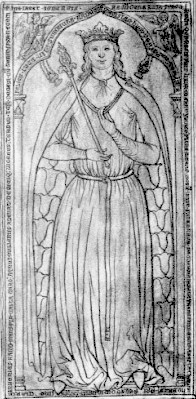
England’s First Queen, the Original Wicked Stepmother?

330px-A_Chronicle_of_England_-_Page_072_-_Edward_Murdered_at_Corfe
Queen Ælfthryth and King Edward at Corfe

After writing an article about Edward the Martyr the other week, I thought it only fair to take a look at the other side of the story and write about Ælfthryth, England’s first ever crowned queen and Edward’s stepmother – and possible murderer.

Author Annie Whitehead researched Ælfthryth for her book Alvar the Kingmaker and rather likes her. So she can’t be all bad – can she?

Ælfthryth was probably born around 945; the daughter of Ealdorman Ordgar of Devon and an unknown woman who is said to have been descended from the royal family. As you can imagine, after the passage of more than 1,000 years, nothing is known of her childhood; although she had a least one sibling, a brother, Ordulf, who was founder of Tavistock Abbey. She was married around the age of 11 to Æthelwold, the son of Æthelstan Half-King (I have to do a post about him! What a name!) and ealdorman of East Anglia.

Æthelwold died in 962, probably in a hunting accident, although there were rumours of murder on the orders of his wife’s supposed lover, King Edgar. Edgar and Æthelwold would have known each other very well. After being orphaned as a baby, Edgar was raised in Æthelstan’s household alongside his own sons; of whom Æthelwold was one of the youngest.  Some stories have Edgar wielding the dagger himself, while others don’t even mention murder. Whether the suspicion arose at the time of the event, or following Ælfthryth’s marriage to Edgar 2 years later, is also unclear.

Edgar’s marital history was already chequered. Ælfthryth could be Edgar’s second or third wife; she was certainly the third relationship by which children were born. Edgar’s first wife, Æthelfled “the Fair”, was the mother of his eldest son, Edward (the Martyr). Following Æthelfled’s death, Edgar had a relationship with Wulfryth from which a daughter, Edith, was born around 963/964. The sources are uncertain as to whether or not Edgar and Wulfryth married, and some even suggest that she was a nun Edgar had seduced; although this may be confusion due to the fact that Wulfryth entered a convent shortly after Edith was born. Edith joined her mother in the abbey at Wilton, where Wulfryth eventually became abbess; in time both mother and daughter would be venerated locally as saints.

New_Minster_Charter_966_detail_Edgar
King Edgar the Peaceable

Ælfthryth and Edgar were married in 964 and were soon the parents of 2 sons; Edmund and Æthelred. Despite having an older half-brother, Edward, it is Edmund who appears as Edgar’s acknowledged heir; his name being above that of Edward’s in a charter of 966, witnessed by both boys, which founded the New Minster at Winchester. Poor Ælfthryth must have been distraught when, in 971 and still only a child of about 7, young Edmund died.

The grandson of Edward the Elder, and great-grandson of Alfred the Great, Edgar had been king since 959; however on 11 May 973 he had a coronation, at Bath Abbey. Whether this was his first coronation, or a second ceremony seems to be still debated by historians. Edgar was about 30 and the venerated Archbishop Dunstan of Canterbury officiated. It is the first known coronation of a queen of England, Ælfthryth.

According to the Oxford Dictionary of National Biography there is a near contemporary account of the coronation, which depicts Ælfthryth feasting with many abbots and abbesses, wearing a silken gown sewn with pearls and precious stones. The coronation was an important display for Edgar and Ælfthryth, as a way to emphasise the legitimacy of their union, especially given Edgar’s marital history, and the claims of their children as Edgar’s heirs. Ælfthryth’s new position as a consecrated queen would give her surviving son, Æthelred, seniority over Edgar’s oldest son, Edward, whose mother was never queen.

However, when it came down to it, Æthelred’s tender age was held against him, when Ælfthryth’s security was destroyed just 3 years later. King Edgar died unexpectedly at the young age of 32. With their eldest son dead and the youngest only 7 years old, the crown went to Edgar’s eldest son, the 12/13-year-old Edward. Edward faced opposition when Ælfthryth pressed Æthelred’s claim, supported by several leading figures, including Bishop Æthelwold of Winchester and her first husband’s brother, Æthelwine, ealdorman of East Anglia.

Corfe_Castle,_Dorset
Corfe Castle, Dorset

However, with the backing of the revered, future saint, Archbishop Dunstan it was Edward who was crowned. Following his coronation Edward honoured his father’s promises to his wife, confirming the gift of jurisdiction over the whole of Dorset as Ælfthryth’s dower. As a consequence, Ælfthryth and her son, Æthelred, settled at Corfe, in the Purbeck Hills; it was a large estate surrounding a defensive mound, which would later become the Norman stronghold of Corfe Castle.

And it was at Corfe on 18th March 978 that Ælfthryth’s reputation was irrevocably damaged, following a visit from 16-year-old King Edward. Whether Edward had been out hunting, or was in the area to specifically visit his stepmother and half-brother seems to be uncertain. However, he did send a message that he would be calling on them and Ælfthryth’s retainers were awaiting the young king at the gate, when he arrived with a small retinue. Still sitting in the saddle he was handed a drink; and stabbed. It must have been a horrific sight, as the king’s horse panicked and bolted, racing off with Edward’s foot stuck in the stirrup and the dying king being dragged along behind.

330px-Ethelred_the_Unready
Æthelred II the Unready

The Anglo-Saxon Chronicle recorded:

No worse deed than this was ever done by the English nation since they first sought the land of Britain. Men murdered him, but God hath magnified him. He was in life an earthly king. He is now after death a heavenly saint.¹

Although Edward’s brother, Æthelred, only around 10 years old but now king of England, was above suspicion due to his age, Ælfthryth had no such protection. Some traditions go so far as to accuse Ælfthryth of wielding the dagger herself. However, while most believe she was complicit in the murder, it is by no means certain and it is entirely possible that court malcontents, who had migrated to Æthelred’s corner, were responsible for the murder.

Ælfthryth rode out the ensuing furore and with her son as the new king, Ælfthryth was exonerated of any complicity; amid the necessity of stabilising the country, establishing the new reign and rescuing England’s reputation. Æthelred was crowned at Kingston, Surrey, on 4th May 979, a year after his brother’s death and just a few months after the reburial of Edward’s remains, with great ceremony, at Shaftesbury. A council was established to assist the young king in ruling the country, probably involving Queen Ælfthryth, who may have acted as regent during Æthelred’s minority; it also included the aging Dunstan, Archbishop of Canterbury, Æthelwold, bishop of Winchester, and Ælfhere, ealdorman of Mercia.

As Dowager Queen Ælfthryth’s dower lands in Rutland and east Suffolk helped to extend West Saxon rule over East Anglia as a whole.

Even when Æthelred was old enough to rule alone, Ælfthryth did not retire entirely. Following her son’s marriage to Ælfgifu of York, it was Ælfthryth who seems to have had the responsibility of raising their first-born son and ætheling, Æthelstan. Æthelstan died aged about 20 in 1014, 2 years before his father, and spoke warmly of his grandmother in his will. Æthelred and Ælfgifu had over 10 children together, including Æthelred’s eventual successor in 1016, Edmund II Ironside, before Ælfgifu died; Æthelred then married Emma of Normandy, mother of England’s future kings, Harthacnut by her 2nd husband, King Cnut, and Edward the Confessor by Æthelred.

As queen Ælfthryth had substantial influence over the nunneries of England; she ousted the abbess of Barking, a cousin of Edgar’s second wife, Wulfthryth.  She endowed convents at Amesbury and Wherwell; her granddaughter would eventually become abbess of the latter.

Peterborough.Chronicle.firstpage
The Anglo-Saxon Chronicle, Peterborough

And it was to Wherwell that the queen did eventually retire from the limelight, sometime before the year 1000, dying there on 17 November in either 999, 1000 or 1001.

Over a thousand years later Ælfthryth’s actions and reputation are still being debated by historians. While it is not inconceivable that she played a part in Edward the Martyr’s death, we also have to be aware that women of power and influence were much vilified in Medieval times; a strong, independent woman would be blamed for many crimes, simply because she dared to know her own mind….

While I am not entirely convinced of her innocence, neither am I certain of her guilt.

Ælfthryth’s career and influence, however, stretched far beyond that one action. As the first crowned queen of England, her prestige and honour is incomparable with those who had gone before her. And it is telling, perhaps, that her daughter-in-law, Ælfgifu of York, was never crowned, nor was accorded the title while her Ælfthryth still lived. The next crowned Queen of England was Æthelred’s second wife, Emma of Normandy, who married the king after his mother’s death.

*

Footnotes:

¹ Anglo-Saxon Chronicle quoted by Martin Wall in The Anglo-Saxons in 100 Facts.

*

Pictures:

Courtesy of Wikipedia

Sources:

Brewer’s British Royalty by David Williamson; Britain’s Royal Families, the Complete Genealogy by Alison Weir; The Wordsworth Dictionary of British History by JP Kenyon; The Anglo-Saxons in 100 Facts by Martin Wall; Kings, Queens, Bones and Bastards by David Hilliam; The Mammoth Book of British kings & Queens by Mike Ashley; The Oxford Companion to British History Edited by John Cannon; oxforddnb.com.

*

My Books:

Signed, dedicated copies of all my books are available through my online bookshop.

Coming on 15 June 2024: Heroines of the Tudor World

Heroines of the Tudor World tells the stories of the most remarkable women from European history in the time of the Tudor dynasty, 1485-1603. These are the women who ruled, the women who founded dynasties, the women who fought for religious freedom, their families and love. These are the women who made a difference, who influenced countries, kings and the Reformation. In the era dominated by the Renaissance and Reformation, Heroines of the Tudor World examines the threats and challenges faced by the women of the era, and how they overcame them. From writers to regents, from nuns to queens, Heroines of the Tudor World shines the spotlight on the women helped to shape Early Modern Europe.

Heroines of the Tudor World is now available for pre-order from Amberley Publishing and Amazon UK.

Out Now! Women of the Anarchy

Two cousins. On the one side is Empress Matilda, or Maud. The sole surviving legitimate child of Henry I, she is fighting for her birthright and that of her children. On the other side is her cousin, Queen Matilda, supporting her husband, King Stephen, and fighting to see her own son inherit the English crown. Women of the Anarchy demonstrates how these women, unable to wield a sword, were prime movers in this time of conflict and lawlessness. It show how their strengths, weaknesses, and personal ambitions swung the fortunes of war one way – and then the other.

Available from Bookshop.orgAmberley Publishing and Amazon UK.

Also by Sharon Bennett Connolly:

King John’s Right-Hand Lady: The Story of Nicholaa de la Haye is the story of a truly remarkable lady, the hereditary constable of Lincoln Castle and the first woman in England to be appointed sheriff in her own right. It is is available from King John’s Right-Hand Lady: The Story of Nicholaa de la Haye is the story of a truly remarkable lady, the hereditary constable of Lincoln Castle and the first woman in England to be appointed sheriff in her own right. Available from all good bookshops or direct from Pen & Sword Booksbookshop.org and AmazonDefenders of the Norman Crown: The Rise and Fall of the Warenne Earls of Surrey tells the fascinating story of the Warenne dynasty, from its origins in Normandy, through the Conquest, Magna Carta, the wars and marriages that led to its ultimate demise in the reign of Edward III. Available from Pen & Sword BooksAmazon in the UK and US, and Bookshop.org

Ladies of Magna Carta: Women of Influence in Thirteenth Century England looks into the relationships of the various noble families of the 13th century, and how they were affected by the Barons’ Wars, Magna Carta and its aftermath; the bonds that were formed and those that were broken. It is now available in paperback and hardback from Pen & Sword,  Amazon, and Bookshop.orgHeroines of the Medieval World tells the stories of some of the most remarkable women from Medieval history, from Eleanor of Aquitaine to Julian of Norwich. Available now from Amberley Publishing and Amazon, and Bookshop.orgSilk and the Sword: The Women of the Norman Conquest traces the fortunes of the women who had a significant role to play in the momentous events of 1066. Available now from Amazon,  Amberley Publishing, and Bookshop.org.

Alternate Endings: An anthology of historical fiction short stories including Long Live the King… which is my take what might have happened had King John not died in October 1216. Available in paperback and kindle from Amazon.

Podcast:

Have a listen to the A Slice of Medieval podcast, which I co-host with Historical fiction novelist Derek Birks. Derek and I welcome guests, such as Bernard Cornwell and Elizabeth Chadwick, and discuss a wide range of topics in medieval history, from significant events to the personalities involved.

*

Don’t forget! Signed and dedicated copies of all my books are available through my online bookshop.

For forthcoming online and in-person talks, please check out my Events Page.

You can be the first to read new articles by clicking the ‘Follow’ button, liking our Facebook page or joining me on Twitter and Instagram.

*

©2016 Sharon Bennett Connolly FRHistS