Guest Post: Think Medieval Women Had No Power? Think Again by Ashley Firth

Dr Ashley Firth is a woman after my own heart. Her first book, Trailblazing Medieval Women, is hitting the shops as I type and includes some of my favourite women, giving readers an insight into how women navigated the patriarchal society of the medieval era. Ashley’s work will, no doubt, intersect with my own work and it will be interesting to read Ashley’s take on these amaaaazzzzzzzzing women.

Today, Ashley gives us a tantalising taste of some of the incredible women who made an impact on medieval history.

Oh, how I am looking forward to reading this book!

Think Medieval Women Had No Power? Think Again

Wife and mother are often assumed to have been the primary roles of medieval women. Confined to the household and subject to the authority of their husbands, it can seem difficult to imagine how women could overcome the limitations placed upon them and exert any real power. Medieval texts and theories reinforced this perception, portraying women as intellectually inferior and governed by bodily desires, thereby justifying their subordination. By perpetuating such myths, men kept the monopoly and controlled the lives of the women over whom they were placed. By virtue of his sex, the lowliest male peasant was set above the queen in this gender dynamic, yet theory does not always reflect reality, and the reality is far more complex.
History...the Interesting Bits
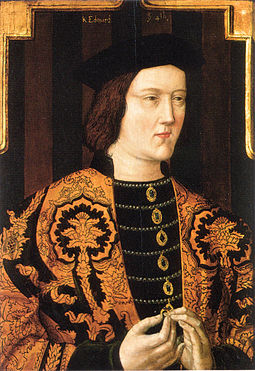
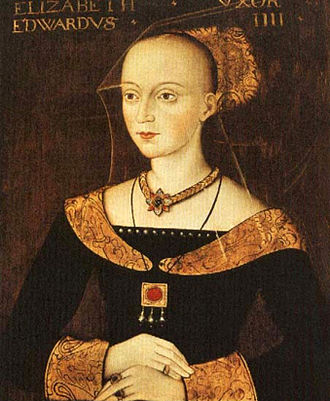
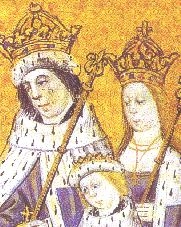
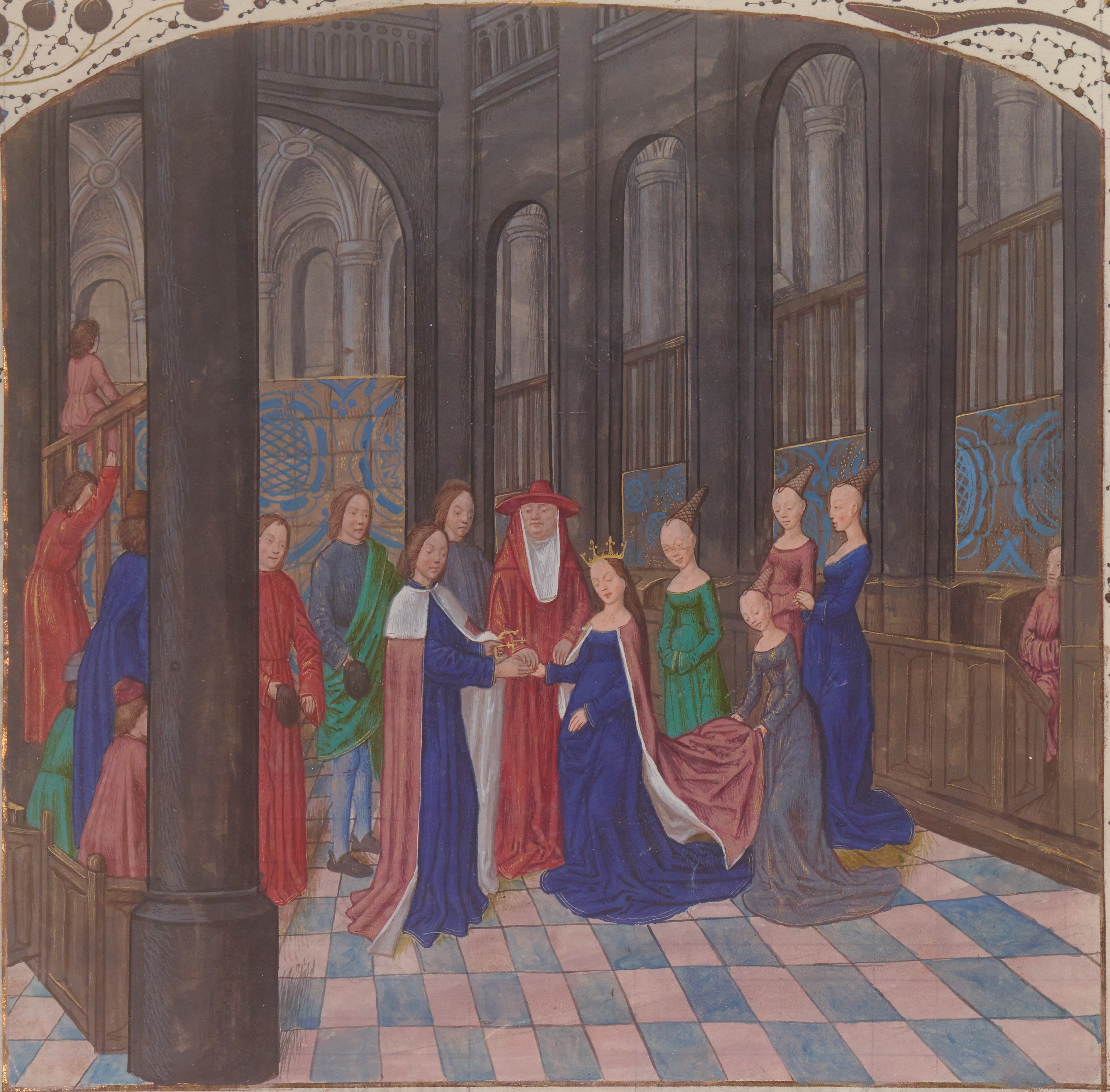
Marriage of Edward IV and Elizabeth Woodville (Wikimedia Commons)

Not all women were content with the traditional vocations for women centred around the family and the household, and some rejected them entirely. Many took on roles traditionally assigned to men and led armies and perhaps even fought on the battlefield. Some women found a conduit for their voices by putting pen to paper and telling us in their own words about their experiences while simultaneously influencing the cultural milieu of their day. Women could exert significant political and social influence through traditionally assigned gender roles. As wives and mothers, they could persuade their male relatives and even become the loudest voices at the royal court by virtue of their position.

Queens and royal women are some of the most visible women in medieval society, and for whom we have the best documentation of their experiences. During the Wars of the Roses, women were highly influential and played a significant role in shaping the outcome of this bloody civil war. Margaret of Anjou, wife of the weak and mentally unstable King Henry VI, was forced to assume power and authority when her husband was incapable. The incarceration of her husband and defeat in battle did not deter Margaret from fighting for the throne of Henry and their only son, Edward. Margaret refused to remain silent and instead was a prominent voice at court, making a series of successful alliances in her efforts to restore her deposed husband to the throne. Like her successor, Elizabeth Woodville, Margaret was criticised by her contemporaries for her behaviour and sexual slander was used to discredit both women, who proved to be a powerful influence over their respective husbands.

Elizabeth Woodville’s power, however, could not save her young sons, cruelly snatched from her grasp and no doubt met a grisly end, forever known as the Princes in the Tower. Elizabeth was more successful in securing the fate of her eldest daughter, Elizabeth of York, working secretly with the incomparable Margaret Beaufort, mother of Henry Tudor, to secure a prestigious marriage for her daughter and ensure her daughter followed her as a queen of England. Margaret is often accused of overshadowing the more reserved Elizabeth of York, but there is no reason to doubt Elizabeth was privately steering the course of Henry’s kingship just as much as her mother-in-law was. As the mother of Henry VIII, it is worth pondering if the Reformation would have even occurred if not for the death of the incredibly devout Elizabeth in 1503, just six years before the beginning of her son’s turbulent reign.
History... the Interesting Bits
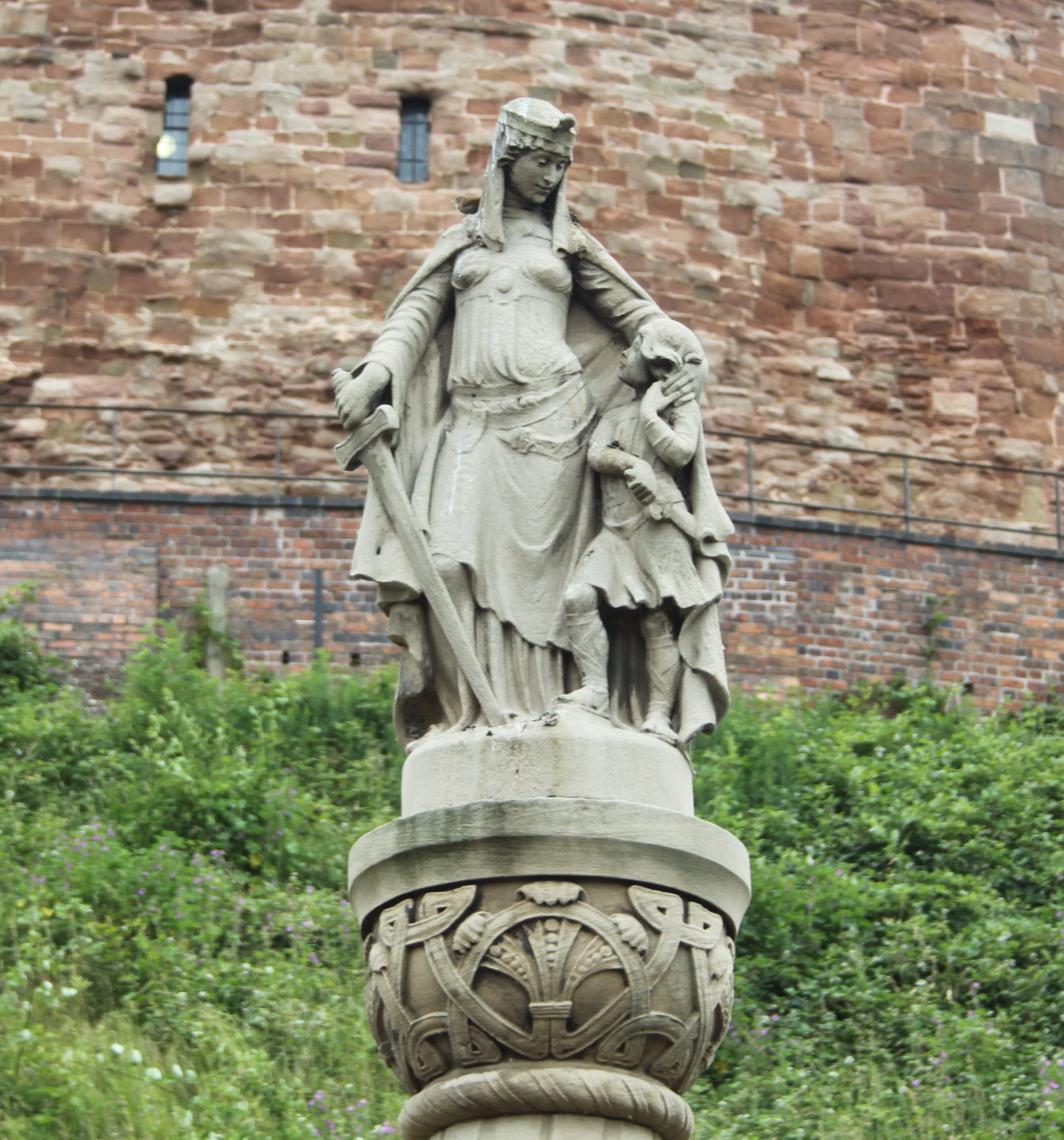
The monument of Aethelflaed, Tamworth Castle.
(Author’s own image).

Another way women could exert power and influence was in the arena of war. Aethelflaed, daughter of King Alfred the Great, ruled the kingdom of Mercia throughout her husband’s illness and then as a ruler in her own right after he died in 911. Alongside her brother, Edward the Elder, Aethelflaed halted the attacks of the Vikings and even reclaimed much territory lost to them in the previous generations. Aethelflaed can be found directly participating in warfare, fulfilling the role of a commander.

Later examples of the involvement of women in warfare can be found on the Continent. Matilda of Tuscany raised and led armies in her struggle to secure her inheritance. The mighty Holy Roman Emperor proved no match for Matilda, and he was forced to relinquish his claims to Matilda’s Italian domains in the late eleventh century. Sikelgaita, the wife of the Southern Italian Norman ruler, Robert Guiscard, earned a reputation equally formidable as that of her husband. No mere passive consort to a powerful Norman baron, Sikelgaita lent authority to her husband’s power in the region through her lineage. Guiscard trusted Sikelgaita as a military commander and is perhaps best remembered for her orders to the fleeing soldiers of her husband’s army, whereby she challenged them to fight and ‘be men’. Born in the early fifteenth century, Joan of Arc is one of the most famous examples of a medieval woman participating in warfare. From humble origins, Joan followed what she believed to be spiritual voices, which led her all the way to the French court. Joan proved to be a valuableasset to the French Dauphin, achieving a series of military victories over the English and even securing his coronation before finding herself discarded by the monarch once her usefulness had run its course. Some women found power and even fame through their military activities and accomplishments, with women such as Joan of Arc continuing to intrigue modern audiences.
History...the Interesting Bits
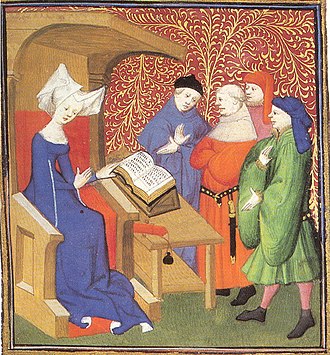
Christine de Pizan lectures a group of men (Wikimedia Commons)

By putting pen to paper, some medieval women challenged the prevailing opinion on the intellectual inabilities of women and found power through their words. Anna Comnena, the daughter of the Byzantine Emperor Alexius Comnenus, is credited as the first female Byzantine author. With access to eyewitnesses for the key events in her father’s reign, her female perspective on the workings of the Byzantine court in the eleventh century remains a valuable source for historians. Anna’s own bid for the throne after her father’s death was an abject failure, but she found more success with her penmanship in her later life. Christine de Pizan is the first recorded female author to make a living solely from her writings. A remarkable achievement considering most medieval male authors supplemented their income with an additional occupation. Christine’s works were commissioned by members of the French royal family, and she offered commentary and advice during the Hundred Years’ War. Her voice seems to us the loudest in her writings on the defence of the female sex and her challenges to the traditional view of the position of women in society.

A contemporary of Christine’s, Margery Kempe, a fifteenth-century English self-proclaimed mystic, in many ways represents the repressed voice of the majority of women. Margery’s book offers an insight into her strife as she struggles to commit her story to writing. Challenged by the authorities and by the Church during a time of growing anxiety about religious dissidence, Margery shows us both the vulnerability of women in medieval society, but also the power they could attain. Writing was one of the ways in which medieval women could significantly influence medieval culture and society. Their experiences as female authors in themselves challenged the theoretical discourse of their contemporaries, and their writings offer us a fresh female perspective on contemporary events.
History...the Interesting Bits
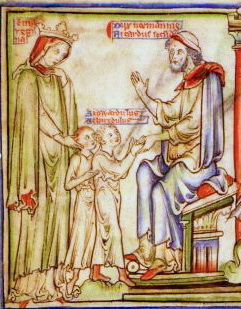
Queen Emma and her sons being received by Duke Richard II of Normandy (Wikimedia Commons)

The medieval period is filled with examples of extraordinary women who moved beyond the confines of being a consort and exerted significant political influence. Emma of Normandy, the only woman to be crowned Queen of England twice, undoubtedly shaped the course of English history. Married to King Aethelred the ‘Unready’ in the early eleventh century, her husband’s reign was dominated by his struggles against Viking incursions. After his death, his successor, the Viking King Cnut, seized the throne and sought Emma as a bride to legitimise his kingship and to offer her invaluable political experience to his new regime. She worked tirelessly to secure the succession of her son, Harthancut, whom she ruled alongside. The abandonment of her eldest children in her homeland of Normandy paved the way for the Norman Conquest of 1066.

Empress Matilda was another royal woman who fought to secure the succession of her son. The heiress was passed over as the successor of her father, and her cousin, Stephen, seized the English throne. A brutal civil war ensued, known as the Anarchy. Although never achieving the coronation for herself, Matilda nevertheless ensured the succession of her son, Henry II. In 1152, Eleanor, the wealthy Duchess of Aquitaine, a title she held in her own right, married Henry II, just weeks after her annulment from her first husband, King Louis VII, making her the only woman to be crowned both queen of England and of France. Eleanor was a successful politician, acting independently of Henry throughout her tenure as consort. Eleanor continued to be an imposing presence at court in the successive reigns of her sons, Richard the Lionheart and King John and often acted for them both as regent.
History...the Interesting Bits
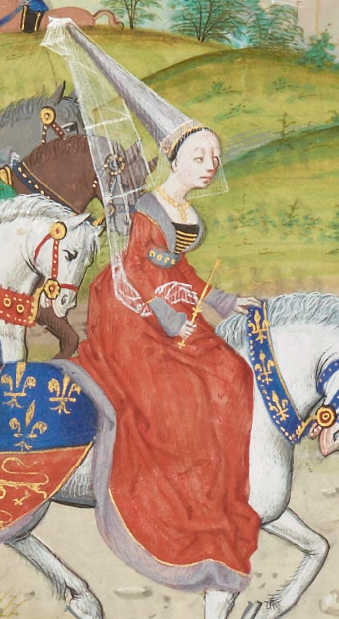
Isabella of France (Wikimedia Commons)

Isabella of France successfully launched an invasion of England and overthrew her husband, King Edward II, in 1326, demonstrating just how powerful medieval women could be.

The innumerable examples of women in power force us to reconsider the roles and experiences of medieval women. Power could be achieved in a variety of ways and with varying degrees of success. What these examples of trailblazing women have sought to highlight is the varied experiences and opportunities open to women, and to illustrate that theory does not always equate to practice.

*

About the Book:
History...the Interesting Bits

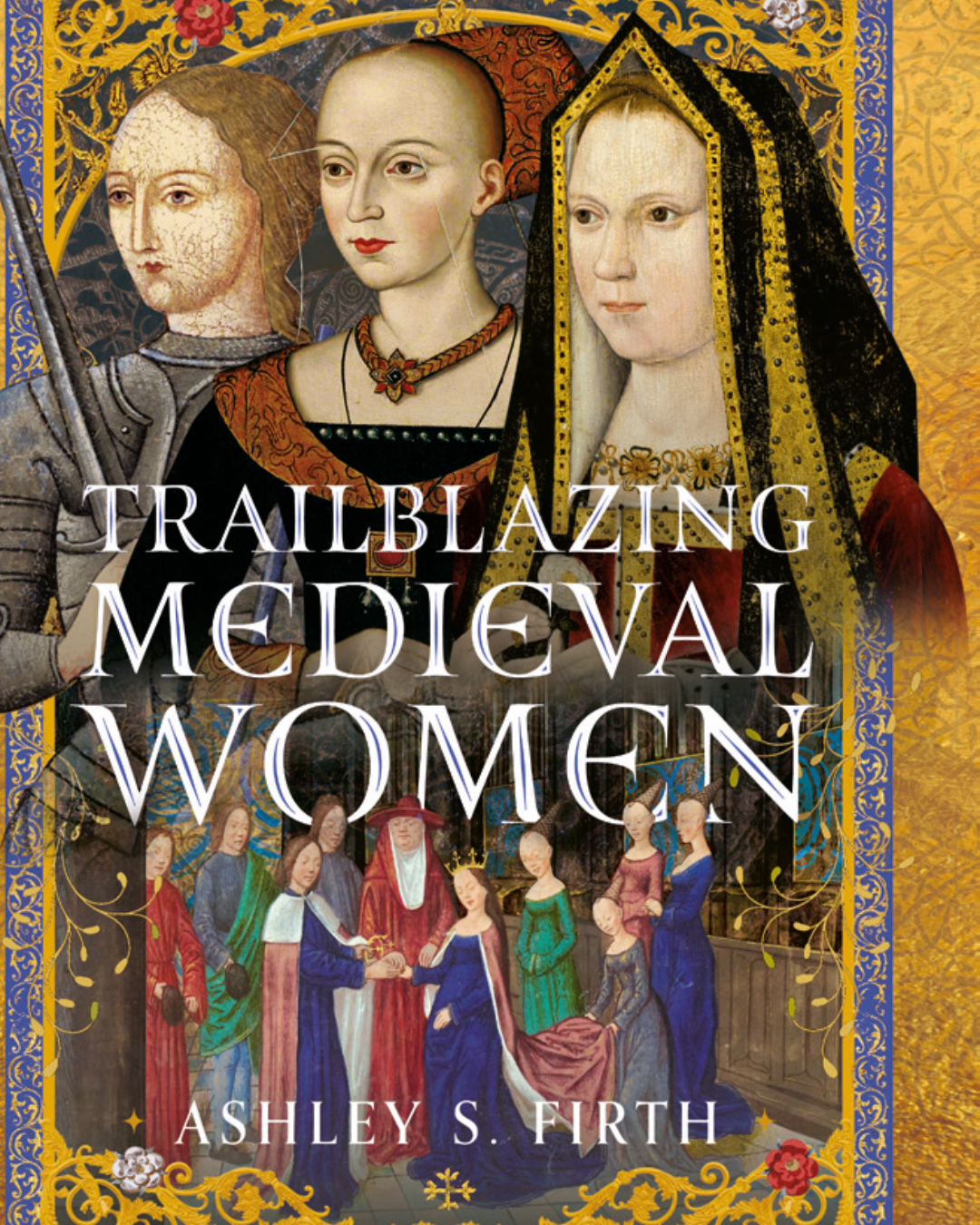
“The greatest glory for a woman is not to be spoken of at all, either for good or ill,” declared Pericles. For centuries, this sentiment echoed through the corridors of history, shaping a narrative that often confined women to silence, invisibility and the margins of power. But history is far richer and more complex than we’ve been led to believe.

This book reveals the lives of remarkable, trailblazing medieval women who refused to be written out of history. In a world dominated by men, they defied convention, challenged gender expectations, and carved out legacies as rulers, consorts, warriors, authors, and visionaries. From Anglo-Saxon female rulership to the political intrigue of the Wars of the Roses, these women stepped beyond the roles assigned to them and transformed the world around them, as well as the course of history.

Through meticulous research, this book brings their voices to the fore, revealing the impact they had not only in their own time but on the generations that followed. These are not just tales of exception, but of courage, intellect, and influence—testaments to the fact that women have always shaped history.

Their names deserve to be remembered. Their stories deserve to be told.

Get Trailblazing Medieval Women.

About the Author:

History...the Interesting Bits

Ashley Sarah Firth holds a BA (Hons), MA, and PhD in medieval history from the University of Huddersfield. Her research focuses on the history of women, medieval gender and the Crusades. Formerly a university lecturer, she taught a wide range of topics from the Anglo-Saxon period to the Stuart era. Now a full-time historian, author and Visiting Research Fellow at the University of Huddersfield, Ashley is dedicated to bringing the stories of the past, especially those of overlooked women, to life for a wider audience. She lives in Manchester with her husband, their two children, and three dogs, where her love of history continues to inspire her writing and research.

Social Media Links: Facebook: Twitter: Instagram: Website.

*

My Books

Signed, dedicated copies of all my books are available through my online bookshop or the Contact Me page.

New releases in 2026:

New Hardbacks

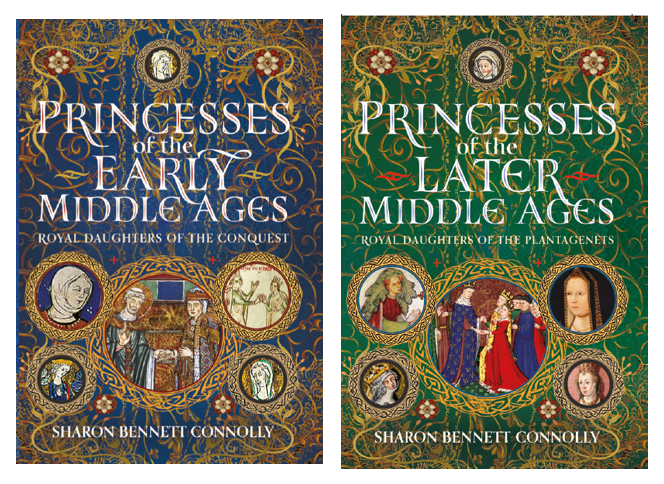
Out now: Princesses of the Early Middle Ages: Royal Daughters of the Conquest
Books by Sharon Bennett Connolly

‘My daughter wanted me to treat her more like a princess. So, I married her to a stranger to strengthen the alliance with Poland!’

Princesses of the Early Middle Ages: Royal Daughters of the Conquest and Princesses of the Later Middle Ages: Royal Daughters of the Plantagenets tell the stories of England’s royal daughters from 1066 to the rise of the Tudors, from the last Anglo-Saxon princesses to the fall of the House of York.

Were they really pampered pawns sent off to marriages on the Continent, out of sight and out of mind?

Perhaps, there was different story, where a foreign marriage does not mean eternal exile, but a purpose in life, where a princess is a diplomat, an ambassador for England in her new country.

Where she is the bond between allies – most of the time.

Heidi Malagisi: ‘This is another excellent book by Sharon Bennett Connolly. Extremely well researched and relatively easy to follow along, which is a great thing because there are so many Matildas and Eleanors in this book.

Tony Riches: “I challenge anyone with an interest in medieval Britain to not find something they will learn from this book.

Anna Belfrage: “I just love how [Sharon] presents this huge cast of real life people in a casual, chatty tone that has me expecting the various female protagonists to suddenly pop their head up and add their own commentary.

Out now: Princesses of the Early Middle Ages: Royal Daughters of the Conquest

Pre-order: Princesses of the Later Middle Ages: Royal Daughters of the Plantagenets 

New in Paperback:
Books by Sharon Bennett Connolly

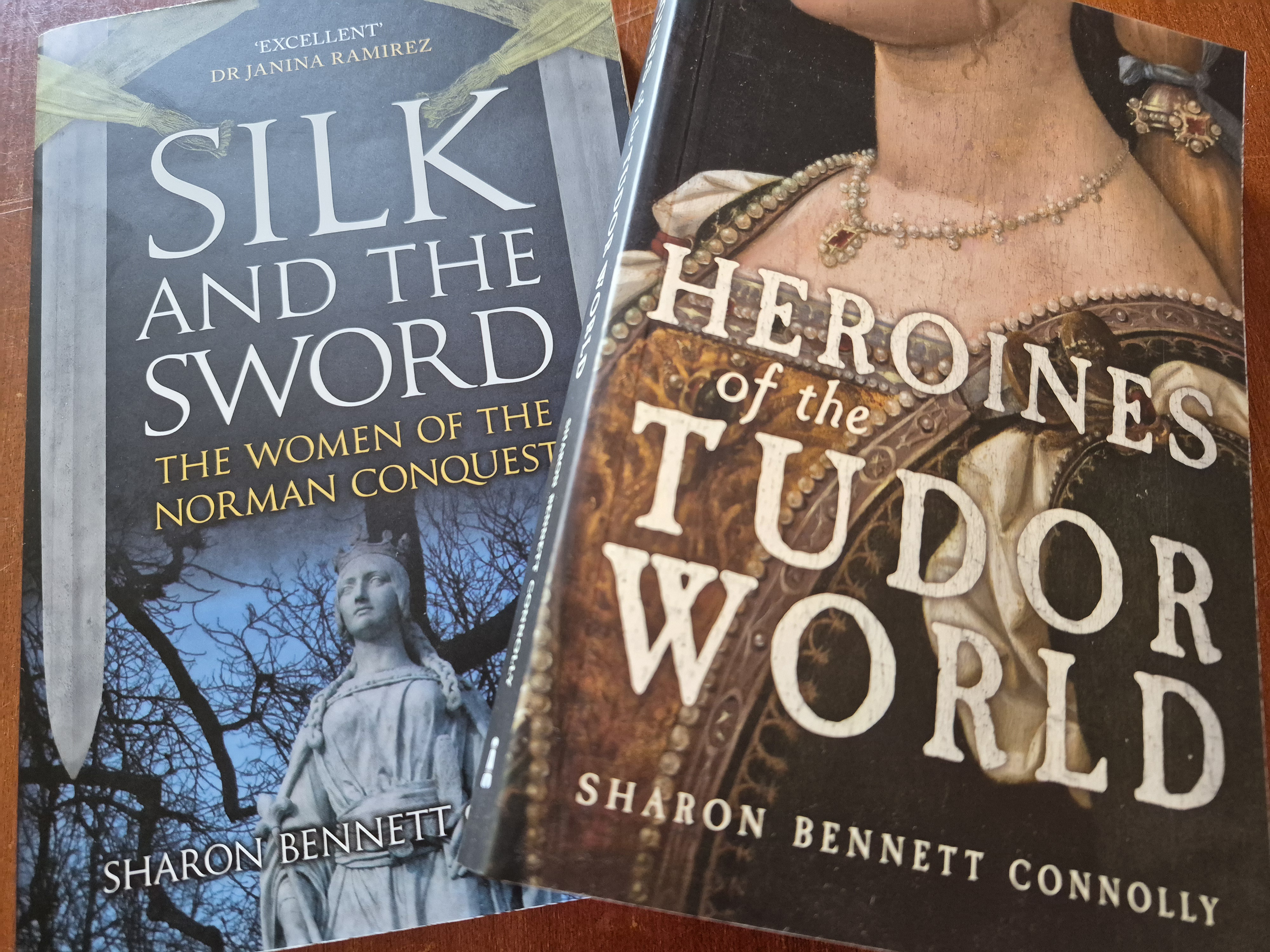
OUT NOW! The momentous events of 1066, the story of invasion, battle and conquest, are well known. But what of the women? Silk and the Sword: The Women of the Norman Conquest traces the fortunes of the women who had a significant role to play during the Norman Conquest – wives, lovers, sisters, mothers, leaders. These are lives full of drama, pathos and sometimes mystery: Edith and Gytha searching the battlefield of Hastings for the body of Harold, his lover and mother united in their grief for the fallen king. Who was Ælfgyva, the lady of the Bayeux Tapestry, portrayed with a naked man at her feet?

Janina Ramirez said it’s ‘Excellent’!

COMING 15 July 2026: Heroines of the Tudor World focuses on the women who lived through the Renaissance and Reformation, examining the threats and challenges they faced and how they overcame them. These are the women who ruled, the women who founded dynasties, the women who fought for religious freedom, their families and love. These are the women who made a difference, who influenced countries, kings and the Reformation.

Derek Birks: ‘An excellent account of the changing roles of women in Tudor society.’

Annie Whitehead: ‘What a treat this book was to read. Bennett Connolly has an easy, conversation style of writing which welcomes you from the opening pages and draws you into her story.

Also by Sharon Bennett Connolly:

Books by Sharon Bennett Connolly

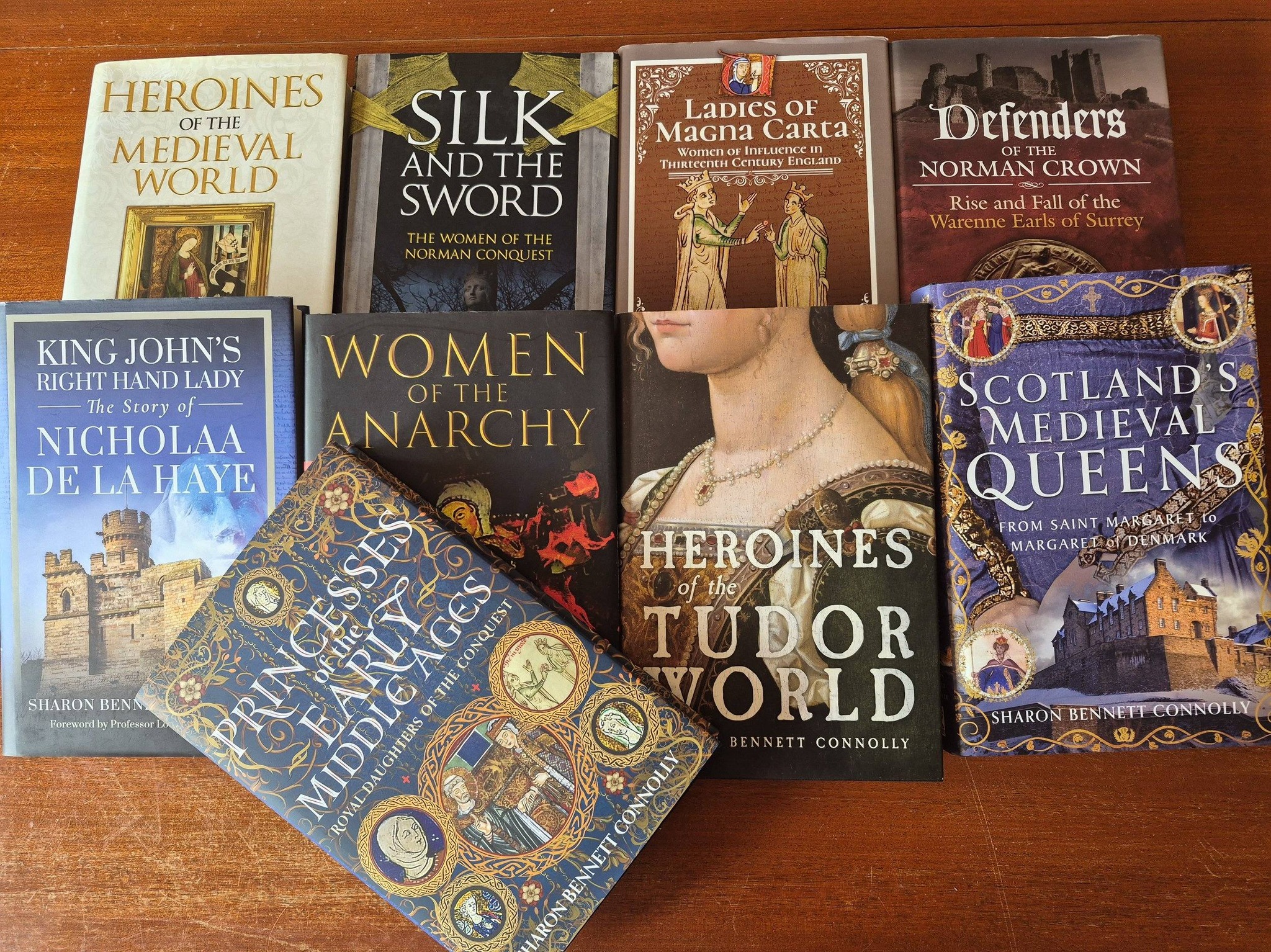
Heroines of the Medieval World; Silk and the Sword: The Women of the Norman Conquest; Ladies of Magna Carta: Women of Influence in Thirteenth Century England; Defenders of the Norman Crown: Rise and Fall of the Warenne Earls of Surrey; King John’s Right Hand Lady: The Story of Nicholaa de la Haye; Women of the Anarchy; Heroines of the Tudor World; Scotland’s Medieval Queens: From St Margaret to Margaret of Denmark; Princesses of the Early Middle Ages: Royal Daughters of the Conquest (March 2026); Princesses of the Later Middle Ages; Royal Daughters of the Plantagenets (August 2026)

Alternate Endings: An anthology of historical fiction short stories including Long Live the King… which is my take what might have happened had King John not died in October 1216. Available in paperback and kindle from Amazon.

All my books on Amazon and Bookshop.org . You can also order direct from my publishers, Pen and Sword Books and Amberley Publishing.

*

Podcast:

A Slice of Medieval

Have a listen to the A Slice of Medieval podcast, which I co-host with Historical fiction novelist Derek Birks. Derek and I welcome guests, such as Ian Mortimer, Bernard Cornwell, Elizabeth Chadwick and Scott Mariani, and discuss a wide range of topics in medieval history, from significant events to the personalities involved. 

Every episode is also now available on YouTube.

*

Don’t forget! 
Royal Historical Society

Signed and dedicated copies of all my books are available through my online bookshop.

For forthcoming online and in-person talks, please check out my Events Page.

You can be the first to read new articles by clicking the ‘Follow’ button, liking our Facebook page or joining me on Twitter and Instagram.

*

©2026 Sharon Bennett Connolly FRHistS and Dr Ashley Firth

Book Corner: Anthony Woodville, Sophisticate or Schemer? by Danielle Burton

The Woodville family are synonymous with the Wars of the Roses. While much has been published on the family as a whole, especially Elizabeth, wife of Edward IV, Anthony Woodville – the favourite sibling of Elizabeth – has been largely overlooked by history. He is famed for his arrest and execution in June 1483, but there is much more to learn from his life. Woodville was a man with an important cultural role. He was a knight, had a successful jousting career, and worked with the printing pioneer William Caxton. He was the printer’s only long-lasting patron in England and acted as translator for him, using the books printed by Caxton to educate Edward, Prince of Wales, the future Edward V.

This book seeks to bring Anthony Woodville out of the shadows of history, giving him the recognition he deserves and challenging the negative perceptions around him by investigating his personality and personal achievements in military, diplomatic and literary capacities.

I have always had the impression that Anthony Woodville would have stood out in any period of history. A Renaissance man, he championed the arts, patronised the printing press, was a renowned jouster and so well respected by his king that he was entrusted with the education and upbringing of the Prince of Wales – the future King Edward V.

I do think Woodville would have stood out in any generation, but it didn’t hurt that his sister was Elizabeth Woodville, Queen of England.

Anthony Woodville, as the queen’s brother, was at the centre of events during the reign of Edward IV. He accompanied his brother-in-law into exile when Henry VI briefly reclaimed the throne in 1470-71. He appeared in tournaments to celebrate the marriage of the king’s sister, Margaret, to the future duke of Burgundy. He was a poet and writer and was a patron of William Caxton, the man who brought the printing press to England. Caxton printed and published Woodville’s English translation of The Dictes and Sayings of the Philosophers. So why is there not a larger body of work on him?

Danielle Burton has rectified this omission with her fascinating, in-depth study, Anthony Woodville, Sophisticate or Schemer? She delves deep into Woodville’s life, family, loves and career.

The Woodville family are often viewed as grasping and power hungry. This is true of some of the family members, particularly Thomas Grey, Marquess of Dorset, who was the eldest son of Anthony’s sister Elizabeth by her first marriage to John Grey. However, Anthony, while of course benefitting from the advancement of his sister to the status of queen, notably avoided meddling wherever possible. His interests in piety, tutoring Edward, the Prince of Wales, jousting, and translating books let him play a background role in the Wars of the Roses.

While Anthony Woodville may have been a secondary figure in political terms, it is clear that he had a significant part in transforming English culture, especially through his patronage of William Caxton, as well as his tutelage of Edward. Prince of Wales, who resided at Ludlow Castle for around ten years. According to Dominic Mancini, and Italian visitor who stayed in England between late summer 1482 and July 1483, Anthony Woodville was ‘always considered a kind, serious and just man’ who was ‘tested by every vicissitude of life.’ It was for this reason that he had been entrusted with the ‘care and direction’ of the prince. Further to Mancini’s description of Anthony, he purposefully contrasts his character with that of other Woodvilles, who were ‘detested by the nobles.’ There is a certain amount of truth in this, for unlike some other family members Anthony preferred to stay away from court life, favouring more academic and religious pursuits.

As a debut work, Anthony Woodville, Sophisticate or Schemer? is very impressive. It is clear that Danielle Burton has done her research, thoroughly, using primary sources where possible. She uses her extensive knowledge of Anthony Woodville to suggest reasons for his actions and to fill in the gaps of our knowledge, clearly indicating her theories and supporting arguments. There are some minor errors, which other reviewers have highlighted, but nothing that changes the thrust of the arguments nor detracts from the enjoyment of reading. They certainly do not devalue the biography as a whole and are more a sign of the writer’s inexperience of the editing process. I certainly would not expect it to put a reader off.

I suspect Anthony Woodville is Danielle’s historical crush, but this adds to the passion in her retelling of his story. We all fall in love with our subjects, just a little bit. You cannot spend years studying a person without doing so.

Danielle Burton’s arguments are balanced and do not present Anthony Woodville and some flawless super hero. Rather, he is an accomplished knight who had his flaws and would often look to his own advantage. Who wouldn’t? He was, however, loyal to Edward IV and his nephew, Edward V. And, having been the younger Edward’s guardian since his early years, was probably a great influence on the teenage king. This would Explain why Richard, Duke of Gloucester – the future Richard III – saw him as a threat. In Anthony Woodville, Sophisticate or Schemer? Danielle looks into the events of 1483 in great detail, examining the relationship between Richard and Anthony and analysing what went wrong and why. Anthony Woodville’s execution at Pontefract Castle is a tragic consequence of the power struggle that followed the death of Edward IV and accession of Anthony’s charge, Edward V.

All in all, Anthony Woodville, Sophisticate or Schemer? by Danielle Burton is a much-needed addition to the study of the Wars of the Roses, highlighting a man of great influence who is often overlooked in favour of his royal contemporaries. It is an impressive piece of work.

Listen to: Danielle Burton talking about Anthony Woodville, Sophisticate or Schemer? with myself and Derek Birks on our podcast, on A Slice of Medieval.

To Buy the Book: Anthony Woodville, Sophisticate or Schemer? is available from Amazon or direct from Amberly Publishing.

About the Author: Danielle Burton has had a keen interest in the Wars of the Roses from a young age, including being a member of the Richard III Society since the age of 9. She has presented aspects of her research into the life of Anthony Woodville at various academic conferences, and works in the heritage sector.

*

My Books:

Signed, dedicated copies of all my books are available through my online bookshop.

Out Now! Women of the Anarchy

Two cousins. On the one side is Empress Matilda, or Maud. The sole surviving legitimate child of Henry I, she is fighting for her birthright and that of her children. On the other side is her cousin, Queen Matilda, supporting her husband, King Stephen, and fighting to see her own son inherit the English crown. Women of the Anarchy demonstrates how these women, unable to wield a sword, were prime movers in this time of conflict and lawlessness. It show how their strengths, weaknesses, and personal ambitions swung the fortunes of war one way – and then the other.

Available from Bookshop.orgAmberley Publishing and Amazon UK.

Coming on 15 June 2024: Heroines of the Tudor World

Heroines of the Tudor World tells the stories of the most remarkable women from European history in the time of the Tudor dynasty, 1485-1603. These are the women who ruled, the women who founded dynasties, the women who fought for religious freedom, their families and love. These are the women who made a difference, who influenced countries, kings and the Reformation. In the era dominated by the Renaissance and Reformation, Heroines of the Tudor World examines the threats and challenges faced by the women of the era, and how they overcame them. From writers to regents, from nuns to queens, Heroines of the Tudor World shines the spotlight on the women helped to shape Early Modern Europe.

Heroines of the Tudor World is now available for pre-order from Amberley Publishing and Amazon UK.

Also by Sharon Bennett Connolly:

King John’s Right-Hand Lady: The Story of Nicholaa de la Haye is the story of a truly remarkable lady, the hereditary constable of Lincoln Castle and the first woman in England to be appointed sheriff in her own right. Available from all good bookshops or direct from Pen & Sword Booksbookshop.org and AmazonDefenders of the Norman Crown: The Rise and Fall of the Warenne Earls of Surrey tells the fascinating story of the Warenne dynasty, from its origins in Normandy, through the Conquest, Magna Carta, the wars and marriages that led to its ultimate demise in the reign of Edward III. Available from Pen & Sword BooksAmazon in the UK and US, and Bookshop.org

Ladies of Magna Carta: Women of Influence in Thirteenth Century England looks into the relationships of the various noble families of the 13th century, and how they were affected by the Barons’ Wars, Magna Carta and its aftermath; the bonds that were formed and those that were broken. It is now available in paperback and hardback from Pen & Sword,  Amazon, and Bookshop.orgHeroines of the Medieval World tells the stories of some of the most remarkable women from Medieval history, from Eleanor of Aquitaine to Julian of Norwich. Available now from Amberley Publishing and Amazon, and Bookshop.orgSilk and the Sword: The Women of the Norman Conquest traces the fortunes of the women who had a significant role to play in the momentous events of 1066. Available now from Amazon,  Amberley Publishing, and Bookshop.org.

Alternate Endings: An anthology of historical fiction short stories including Long Live the King… which is my take what might have happened had King John not died in October 1216. Available in paperback and kindle from Amazon.

Podcast:

Have a listen to the A Slice of Medieval podcast, which I co-host with Historical fiction novelist Derek Birks. Derek and I welcome guests, such as Bernard Cornwell and Elizabeth Chadwick, and discuss a wide range of topics in medieval history, from significant events to the personalities involved.

*

Don’t forget! Signed and dedicated copies of all my books are available through my online bookshop.

For forthcoming online and in-person talks, please check out my Events Page.

You can be the first to read new articles by clicking the ‘Follow’ button, liking our Facebook page or joining me on Twitter and Instagram.

*

©2024 Sharon Bennett Connolly FRHistS 

Book Corner: Tudor Roses by Amy Licence

A dynasty is defined by its men: by their personalities, their wars and reigns, their laws and decisions. Their mothers, wives, sisters and daughters are often depicted as mere foils, shadowy figures whose value lies in the inheritance they brought, or the children they produced. Yet the Tudor dynasty is full of women who are fascinating in their own right, like Margaret Beaufort, who finally emerged triumphant after years of turmoil; Elizabeth of York and her steadying influence; Catherine of Aragon and Anne Boleyn, whose rivalry was played out against the backdrop of the Reformation; and Mary and Elizabeth, England’s first reigning queens. Then there were all the others: Henry VIII’s fascinating sisters who became queens of France and Scotland, and their offspring, the Brandon and Grey women, Lady Margaret Douglas and her granddaughter Arabella Stuart. Many more women danced the Pavane under Henry’s watchful eye or helped adjust Elizabeth’s ruff. These were strong women, wielding remarkable power, whether that was behind the scenes or on the international stage. Their contribution took England from the medieval era into the modern. It is time for a new narrative of the Tudor women: one that prioritises their experiences and their voices.

Tudor Roses: From Margaret Beaufort to Elizabeth I by Amy Licence continues the history started with Red Roses, which told the history of the women of the royal house of Lancaster, from Blanche of Lancaster to Margaret Beaufort and the start of the Tudor dynasty. Tudor Roses: From Margaret Beaufort to Elizabeth I is the fabulous sequel! Amy Licence has put all her considerable knowledge and research into this book to bring you a book on the Tudor period focussed on its incredible women.

Amy Licence brings the women to the fore, telling the stories of the Tudors through the lives and actions of the women who formed such a considerable part of the dynasty. Not only does she retell the lives of these women, but she puts those lives in context, assessing their influence and legacy on one of the most famous English dynasties – and on the European countries that England interacted with.

Amy Licence also draws not only on events of the time, but on the changing world around the dynasty, on the developments in literature, music, the arts and religion to give a rounded picture of the women of 16th century England. This gives the reader a deeper understanding of the rules and restrictions women had to live by at the time. It also demonstrates the areas in which women had liberties and the ability to express their own desires, wants and needs, and how they could assert control over their own lives.

This is Amy Licence at her best!

Excerpt:

It is not difficult to visualise the Tudor princesses sitting at their lessons, or roaming the gardens at Eltham. Surviving accounts give an indication of the adult-style clothing in which the children appeared, as the nursery was also a location for the entertainment of dignitaries and foreign visitors, and the children were a powerful, visible indicator of the dynasty’s future. In November 1495, Henry spent £7 on ‘diverse yerdes of silk’ for Henry and Margaret, while baby Mary the following years was clothed in kirtles of black silk and velvet, edged in ermine and mink. The following year as she was beginning to walk, her dresses were made of baby buckram, a fine cotton, not like the stiff, modern version, and she required linen smocks, three pairs of hose, eight pairs of single-soled shoes and four pairs of double. The children were frequent visitors to Windsor, Westminster, Greenwich, Sheen and Baynard’s Castle, or wherever their parents might be, attending important events and festivities, expected to show themselves to best advantage in front of guests. No doubt the girls were also influenced by Margaret Beaufort’s model of piety and were visible attendees at church on red letter days in the Catholic calendar, but they were also lively, energetic participants. One of Margaret’s most notable public appearances as a small child was her fifth birthday in November 1494, on which occasion her younger brother Henry was elevated to the Dukedom of York. A tournament lasting three days was held at Westminster, after which Margaret handed out the prizes, dressed in a velvet and buckram gown trimmed in gold lace with a white, winged cap in the Dutch style. Afterwards, Margaret and her young brother danced to the delight of the court.

At Eltham, Margaret and Mary were shielded from he dynastic struggles that their parents were experiencing in the 1490s. A second pretender, far more serious than the young Lambert Simnel, had emerged in Europe, and was being feted by enemies of the Tudor regime. Claiming to be Richard of Shrewsbury, the younger of the Princes in the Tower, a young Flemish merchant by the name of Perkin Warbeck arrived at the Burgundian court, swiftly winning over Elizabeth’s aunt Margaret, who schooled him in the details and manners of the Yorkist court and encouraged him to distribute coins minted in his name. Warbeck was initially welcomed at the court of Charles VIII of France, until Charles ejected him under terms of the Treaty of Etaples he signed with England in 1492. The pretender returned to Burgundy, where he was invited to attend the funeral of the Holy Roman Emperor and recognised as Richard IV. However, after a failed attempt to invade England, and a brief flirtation with Ireland, Warbeck went north, towards the Scottish king with whom Henry had hoped to ally his eldest daughter.

Amy Licence is an accomplished writer whose prose flows so freely that you almost feel like you are reading a novel. The narrative flows easily, absorbing the reading from the very first pages. As you may have come to expect from Ms Licence, her research is thorough and second-to-none. She delves into every aspect of the lives of the women and brings the whole era to life for the reader, showing how they interracted with the world around them, with the men in their lives – and with each other.

Her insight into the lives of the Tudor women is unparalleled.

It is always a pleasure to read a non-fiction book by Amy Licence and Tudor Roses: From Margaret Beaufort to Elizabeth I is no exception. In fact, it is probably one of Ms Licence’s best. For anyone interested in the Tudor period, this book is a must read. An essential addition to any library. I cannot recommend it highly enough.

Tudor Roses: From Margaret Beaufort to Elizabeth I is available from Amazon and Amberley Publishing.

About the author:

Amy Licence is an historian of women’s lives in the medieval and early modern period, from Queens to commoners. Her particular interest lies in the late fifteenth and early sixteenth century, in gender relations, Queenship and identity, rites of passage, pilgrimage, female orthodoxy and rebellion, superstition, magic, fertility and childbirth. She is also interested in Modernism, specifically Woolf and the Bloomsbury Group, Picasso and Post-Impressionism. She has been a teacher for over twenty years and is a Fellow of the Royal Historical Society.

Amy has written for The Guardian, The TLS, The New Statesman, BBC History, The English Review, The Huffington Post, The London Magazine and contributes regularly to BBC History Magazine. She has been interviewed regularly for BBC radio, including Woman’s Hour, and has appeared in several TV documentaries.

*

My Books

Signed, dedicated copies of all my books are available, please get in touch by completing the contact me form.

Defenders of the Norman Crown: The Rise and Fall of the Warenne Earls of Surrey tells the fascinating story of the Warenne dynasty, of the successes and failures of one of the most powerful families in England, from its origins in Normandy, through the Conquest, Magna Carta, the wars and marriages that led to its ultimate demise in the reign of Edward III. Defenders of the Norman Crown: Rise and Fall of the Warenne Earls of Surrey is now available from Pen & Sword BooksAmazon in the UK and US, Bookshop.org and Book Depository.

1 family. 8 earls. 300 years of English history!

Also by Sharon Bennett Connolly:

Ladies of Magna Carta: Women of Influence in Thirteenth Century England looks into the relationships of the various noble families of the 13th century, and how they were affected by the Barons’ Wars, Magna Carta and its aftermath; the bonds that were formed and those that were broken. It is now available in paperback and hardback from Pen & Sword,  AmazonBookshop.org and from Book Depository worldwide.

Heroines of the Medieval World tells the stories of some of the most remarkable women from Medieval history, from Eleanor of Aquitaine to Julian of Norwich. Available now from Amberley Publishing and Amazon, Bookshop.org and Book Depository.

Silk and the Sword: The Women of the Norman Conquest traces the fortunes of the women who had a significant role to play in the momentous events of 1066.  Available now from Amazon,  Amberley Publishing, Bookshop.org and Book Depository.

*

You can be the first to read new articles by clicking the ‘Follow’ button, liking our Facebook page or joining me on Twitter and Instagram.

©2022 Sharon Bennett Connolly 

The Infamous Jane Shore

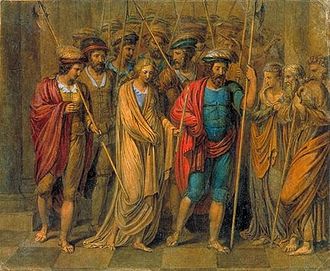
The Penance of Jane Shore by William Blake

Jane Shore is one of the most renowned of medieval royal mistresses, rivalling only Katherine Swynford in her fame. However, Jane was not so fortunate as Katherine; there was no ‘happily ever after’ with her royal lover. As she has gone down in history, the poor woman didn’t even get to keep her own name.

So, who is Jane Shore? Well, she’s not called Jane, for starters. In fact, that name seems to have only been attributed to her more than 50 years after her death, and by a playwright, of all people.

The young woman in question was born Elizabeth Lambert; she was the daughter of John Lambert, a citizen and mercer of London who died in 1487. Her mother, Amy, was the daughter of Robert Marshall, a London grocer, and died in 1488, the year after her husband. Elizabeth was probably born sometime before 1450 and was married, in her middle or late teens, to William Shore, a London goldsmith.

Elizabeth eventually became mistress to King Edward IV, the larger-than-life king who reigned from 1461 to 1483, except for a little interval in 1470-71 when Henry VI briefly regained the throne. Mistress Shore first appears in the historical record in the mid-1470s, possibly when she was already mistress to the king, when she petitioned for an annulment to her marriage. The grounds for the petition was her husband’s impotence.

The recent petition of Elizabeth Lambert alias Schore, of London states that she continued in her marriage to William Schore, layman of the diocese of London, and cohabited with him for the lawful time, but that he is so frigid and impotent that she, desirous of being a mother and having offspring, requested over and over again the official of London to cite the said William before him to answer her concerning the foregoing and the nullity of the said marriage and that, seeing the said official refused to do so she appealed to the Apostolic See.¹

King Edward IV

While it was not unheard of for a wife to petition for the dissolution of a marriage, it was certainly a rare occurrence; such appeals were expensive and rarely granted against the husband. It may well be that Elizabeth was already mistress to the king when she brought the divorce petition, it would certainly explain her ability to finance the case. The whole proceedings would have been as humiliating for Elizabeth as it was for her husband, William; but her developing relationship with the king may have given her the encouragement to endure it. However the petition came about, a woman’s right to bear children was considered sacrosanct and the annulment was granted, the papal mandate being dated to 1 March 1476.

Edward IV is as famous for his love life as he is for his prowess in battle. His irregular, secret marriage to Elizabeth Wydeville  provided enough ammunition and doubt for his brother, Richard of Gloucester, to declare his sons, Edward V and Richard (the Princes in the Tower), illegitimate and take the crown for himself. Gloucester claimed that Edward IV had already been married – again secretly – to one Eleanor Butler when he married Elizabeth Wydeville, making his children by Elizabeth illegitimate and therefore unable to inherit the throne. Of course, proof was lacking, but Edward’s own record with women provided sufficient doubt to enable Richard to seize the throne.

There is little doubt that Edward IV and his queen, Elizabeth, were happily married; the couple had numerous children together, of which 6 girls and 2 boys survived infancy. However, this did not prevent Edward from taking mistresses, of which Elizabeth Shore is said to have been his favourite.

There is a near-contemporary description of Mistress Shore, from Thomas More, who described a bright, intelligent woman;

“Proper she was and fair … yet delighted not men so much in her beauty, as in her pleasant behaviour. For a proper wit had she, and could both read well and write, merry of company, ready and quick of answer, neither mute nor full of babble, sometimes taunting without displeasure and not without disport … The merriest [of Edward’s mistresses] was this Shore’s wife, in whom the king therefore took special pleasure. For many he had, but her he loved, whose favour to say truth … she never abused to any man’s hurt.”¹

Edward IV’s queen, Elizabeth Wydeville

Of course, we cannot truly say whether or not Edward loved Elizabeth Shore, nor how deep was their relationship. Nor can we say how Elizabeth Wydeville felt about her husband’s relationship with Mistress Shore. In fact, very little contemporary evidence exists to prove the existence of a relationship. At least, not while Edward was alive. However, when Edward died in 1483 and his brother, Richard seized power, Elizabeth Shore was brought into the limelight, caught up in the power struggle following the king’s death and the accession of his 13-year-old son.

On the king’s death, Elizabeth Shore was in need of a protector and transferred her allegiance and affection to William, Lord Hastings, the late king’s best friend. As the political situation deteriorated in 1483, following Richard Duke of Gloucester’s arrest of Anthony Wydeville, the new king’s uncle and brother of Queen Elizabeth Wydeville, the queen fled to sanctuary at Westminster Abbey. Elizabeth Shore was accused of carrying messages between the queen in sanctuary and Lord Hastings, who was serving on the Privy Council. Whether she did or not, or even whether the queen and Hastings were plotting, we’ll probably never know.

Richard, now Lord Protector for his nephew Edward V, accused Hastings of treason and had him summarily executed within the Tower of London, on 13 June 1483. Elizabeth Shore was caught up in Hastings’ downfall; her goods being attached by the sheriffs of London, she was made to do public penance ‘for the lyfe that she ledd with the said lord hastyngys and other grete astatys’.² More praises Mistress Shore’s demeanour during her penance, stating;

“In which she went in countenance & pace demure so womanly, & albeit she were out of all array save her kyrtle only: yet went she so fair & lovely … that her great shame won her much praise.”²

There is some suggestion that, following the king’s death, Elizabeth Shore was a mistress of both Hastings and the late king’s stepson, Thomas Grey, Marquess of Dorset. In October 1483, when Grey joined Buckingham’s rebellion against Richard III, he was accused of holding ‘the unshameful and mischievous woman called Shore’s wife in adultery.’²

After her public penance, Elizabeth Shore was imprisoned in Ludgate Gaol for a time. During the same period, she attracted the attention of Thomas Lynom, the King’s Solicitor, who wanted to marry her. An undated letter, written to the Bishop of Lincoln by Richard III, himself, asks the bishop to intervene and persuade Lynom against the marriage, saying Lynom had been ‘merveillously blynded and abused.’²

Elizabeth was eventually released from gaol, into her father’s custody, on the payment of sureties; however, it seems Lynom was not dissuaded by the entreaties of the king and the bishop. He and Elizabeth were married before her father’s death on 1487, as is made clear in his will, in which he left his daughter a bed of arras and a painted cloth of Mary Magdalen and Martha.

Thomas Lynom survived the regime change of 1485, successfully transferring his services to the Tudors; he served bother Henry VII and Henry VIII and was a councillor for Arthur, Prince of Wales and controller of the rolls for the prince’s household.

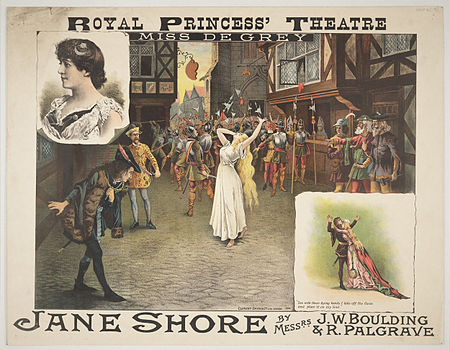
Theatre poster for ‘Jane Shore’

Thomas Lynom was dead by July 1518 and, according to More, Elizabeth fell on hard times after that, even claiming she had to resort to begging, although this seems unlikely.

Elizabeth Shore probably died around 1527, although she had long since retreated from the limelight. There is no evidence that she ever had any children – the reason for the dissolution of her first marriage – and her story may have ended there, were it not for the Tudor playwrights.

Her literary life was born through the works of William Shakespeare, Thomas Heywood and Nichols Rowe. It was Thomas Heywood who rechristened her ‘Jane’ and made her the focal point of his play, Edward IV, in 1599. However, despite the name change, the plays have, to say the least, guaranteed Elizabeth Shore’s place in history.

*

Footnotes: ¹Edward IV and Elizabeth Woodville: A True Romance by Amy Licence; ² quoted by Rosemary Horrox in Oxforddnb.com.

*

Sources: Edward IV and Elizabeth Woodville: A True Romance by Amy Licence; Elizabeth Shore – Jane by Rosemary Horrox in Oxforddnb.com; Richard III, England’s Black Legend by Desmond Seward; Edward IV, Glorious Son of York by Jeffrey James; Elizabeth Woodville, Mother of the Princes in the Tower by David Baldwin; Lancaster & York, The Wars of the Roses by Alison Weir, Richard III by Michael Hicks; Edward IV and the Wars of the Roses by David Santuiste.

Pictures courtesy of Wikipedia

*

My books

Signed, dedicated copies of all my books are available through my online bookshop.

Out Now! Women of the Anarchy

Two cousins. On the one side is Empress Matilda, or Maud. The sole surviving legitimate child of Henry I, she is fighting for her birthright and that of her children. On the other side is her cousin, Queen Matilda, supporting her husband, King Stephen, and fighting to see her own son inherit the English crown. Women of the Anarchy demonstrates how these women, unable to wield a sword, were prime movers in this time of conflict and lawlessness. It show how their strengths, weaknesses, and personal ambitions swung the fortunes of war one way – and then the other.

Available from Bookshop.orgAmberley Publishing and Amazon UK.

Coming on 15 June 2024: Heroines of the Tudor World

Heroines of the Tudor World tells the stories of the most remarkable women from European history in the time of the Tudor dynasty, 1485-1603. These are the women who ruled, the women who founded dynasties, the women who fought for religious freedom, their families and love. These are the women who made a difference, who influenced countries, kings and the Reformation. In the era dominated by the Renaissance and Reformation, Heroines of the Tudor World examines the threats and challenges faced by the women of the era, and how they overcame them. From writers to regents, from nuns to queens, Heroines of the Tudor World shines the spotlight on the women helped to shape Early Modern Europe.

Heroines of the Tudor World is now available for pre-order from Amberley Publishing and Amazon UK.

Also by Sharon Bennett Connolly:

King John’s Right-Hand Lady: The Story of Nicholaa de la Haye is the story of a truly remarkable lady, the hereditary constable of Lincoln Castle and the first woman in England to be appointed sheriff in her own right. It is is available from King John’s Right-Hand Lady: The Story of Nicholaa de la Haye is the story of a truly remarkable lady, the hereditary constable of Lincoln Castle and the first woman in England to be appointed sheriff in her own right. Available from all good bookshops or direct from Pen & Sword Booksbookshop.org and AmazonDefenders of the Norman Crown: The Rise and Fall of the Warenne Earls of Surrey tells the fascinating story of the Warenne dynasty, from its origins in Normandy, through the Conquest, Magna Carta, the wars and marriages that led to its ultimate demise in the reign of Edward III. Available from Pen & Sword BooksAmazon in the UK and US, and Bookshop.org

Ladies of Magna Carta: Women of Influence in Thirteenth Century England looks into the relationships of the various noble families of the 13th century, and how they were affected by the Barons’ Wars, Magna Carta and its aftermath; the bonds that were formed and those that were broken. It is now available in paperback and hardback from Pen & Sword,  Amazon, and Bookshop.orgHeroines of the Medieval World tells the stories of some of the most remarkable women from Medieval history, from Eleanor of Aquitaine to Julian of Norwich. Available now from Amberley Publishing and Amazon, and Bookshop.orgSilk and the Sword: The Women of the Norman Conquest traces the fortunes of the women who had a significant role to play in the momentous events of 1066. Available now from Amazon,  Amberley Publishing, and Bookshop.org.

Alternate Endings: An anthology of historical fiction short stories including Long Live the King… which is my take what might have happened had King John not died in October 1216. Available in paperback and kindle from Amazon.

Podcast:

Have a listen to the A Slice of Medieval podcast, which I co-host with Historical fiction novelist Derek Birks. Derek and I welcome guests, such as Bernard Cornwell and Elizabeth Chadwick, and discuss a wide range of topics in medieval history, from significant events to the personalities involved.

*

Don’t forget! Signed and dedicated copies of all my books are available through my online bookshop.

For forthcoming online and in-person talks, please check out my Events Page.

You can be the first to read new articles by clicking the ‘Follow’ button, liking our Facebook page or joining me on Twitter and Instagram.

©2017 Sharon Bennett Connolly FRHistS

The Queen’s Baby Sister

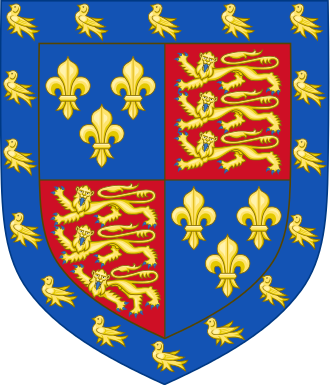
Coat_of_Arms_of_Sir_Richard_Wydeville,_1st_Earl_Rivers,_KG
Coat of arms of Katherine’s father, Sir Richard Wydeville, Earl Rivers, KG

Katherine Wydville (or Woodville) was born into relative obscurity. Her father was Sir Richard Wydville, a Lancastrian Knight who had made a shocking and advantageous marriage with Jacquetta of Luxembourg, widow of the king’s uncle John, Duke of Bedford. Born around 1458, Katherine was probably the youngest of the couple’s 14 or 15 children. Her eldest sister, Elizabeth, was already married to Sir John Grey and had 2 sons by him.

Little to nothing is known Katherine’s childhood. She did have at least one playmate; her sister, Mary, was just 2 years older than her and it is likely they were raised and educated together.

Katherine may have spent her whole life in obscurity were not for her sister Elizabeth and the fortunes of the Wars of the Roses. In 1461 Elizabeth’s husband was killed in the 2nd Battle of St Albans, fighting for the House of Lancaster. And in 1464 she made the match of the century – and a number of enemies – by her clandestine marriage to England’s handsome, young, Yorkist king, Edward IV.

Suddenly, little 6-year-old Katherine was the sister of the queen – and her marriage prospects had improved considerably. As the daughter of a baron she would have been looking to marry a local knight; as the sister of the queen, her family could now set their sights much higher.

There is considerable debate as to why Edward IV raised the Wydvilles so high. Some historians argue that the king was acting as a good husband and brother-in-law in advancing his wife’s family to the highest positions, arguing that convention required him to make provision for his wife’s siblings. An alternative theory is that Edward was creating a new nobility, binding the great aristocratic houses to his dynasty by marrying them into his extended family, thus creating an alternative power base to rival that of the Nevilles. According to David Baldwin, “Edward could not allow the lowly position of his wife’s relatives to diminish his own status, and, as a usurper, would have seized every opportunity to forge links with the great noble families.”¹

360px-Henry_Stafford
Henry Stafford, 2nd Duke of Buckingham

Whatever the reason, the end result was a series of marriages of the Wydville siblings into the great noble houses of the realm. Of Elizabeth’s sisters Margaret became Countess of Arundel, Anne became Countess of Kent, Jacquetta married Lord Strange of Knokyn and Mary married the Earl of Huntingdon. The most shocking marriage arrangement was that of Elizabeth’s brother, 19-year-old John, to the Dowager Duchess of Norfolk, 65-year-old Katherine Neville.

Young Katherine Wydville’s marriage was to be one of the most exalted; even before Queen Elizabeth’s coronation in 1465, 6-year-old Katherine was married to Henry Stafford, the 11-year-old Duke of Buckingham. David Baldwin describes the scene at Elizabeth’s coronation:

The peers included young Henry Stafford, Duke of Buckingham ‘born a pon a squyer [squire] shouldr’, and among the ladies was his new wife, Catherine Woodville, likewise carried…¹

The event must have been awe-inspiring for the children; the sumptuous costumes, the roar of the crowds. The Queen was attended by 13 duchesses and countesses dressed in red velvet, 14 baronesses in scarlet and miniver, and the ladies of 12 knights bannerets wearing scarlet.¹ One can only imagine the effect such an auspicious day could have on 2 young children who were right in the middle of the celebrations.

Katherine’s new husband, Henry Stafford, had been Duke of Buckingham since the age of 4; his father, Humphrey Stafford, had been wounded at the 1st Battle of St Albans and died of natural causes in 1458 and his grandfather, Sir Humphrey Stafford, 1st Duke of Buckingham, was killed at the Battle of Northampton in 1460; both were loyal supporters Henry VI and the House of Lancaster. This left 5-year-old Henry as Duke and in the care of his grandmother Anne Neville (sister of Cecily, the new king’s mother).

Coat_of_arms_of_Sir_Edward_Stafford,_3rd_Duke_of_Buckingham,_KG
Coat of arms of Sir Edward Stafford, 3rd Duke of Buckingham

Following Edward IV’s marriage to Elizabeth Wydville in 1464, Henry and his younger brother were given into the custody of the new queen, who was granted 500 marks out of the young duke’s Welsh lands – soon increased by a further £100 – for the maintenance of the 2 boys. John Giles, who later be employed as tutor to Edward IV’s sons, taught grammar to ‘the queen’s beloved brothers’ during 1465-7.²

The Stafford boys remained in the queen’s custody, along with the duke’s little wife, Katherine, until the Readeption of Henry VI in 1470-71 when the duke was again returned to the custody of his grandmother and her new husband, Walter Blount, Lord Mountjoy. His younger brother, Humphrey, had disappeared from the records by this point, probably having succumbed to a childhood illness.

By June 1473, still only 17, Buckingham was granted his livery as a duke and his grandfather’s estates. Although Edward IV had returned to the throne, he appears to have had no great love for Duke Henry and he was rarely at court; staying mainly on his estates with his wife and family.

330px-Edward_Stafford_3rd_Duke_of_Buckingham_1520
Edward Stafford, 3rd Duke of Buckingham

According to Domenico Mancini, writing in 1483, Buckingham resented his marriage due to his wife’s ‘humble origin’ and his wife certainly brought no marriage portion with her and has often been described as a ‘parvenu’ by historians.² However, the couple did have 5 children together, 4 of whom survived childhood.

Edward Stafford, the future 3rd Duke of Buckingham, was born in 1478. He would go on to marry Eleanor (d. 1530), the daughter of Henry Percy, 4th Earl of Northumberland, before his execution in 1521, during the reign of Henry VIII.

A 2nd son, Henry, Earl of Wiltshire, was born around 1479 and died in 1523. He married twice, firstly to Muriel or Margaret, daughter of Edward Grey, Viscount de Lisle and secondly to Cecilia, daughter of William Bonville, Baron Harrington.

A 3rd son, Humphrey, died young, but was followed by 2 daughters. Anne married Sir Walter Herbert who died in 1507. She then married George Hastings, Earl of Huntingdon. Katherine and Henry’s youngest daughter, Elizabeth, married Robert Radcliffe, Earl of Sussex, by whom she had 3 sons.

Portrait_of_Anne_Stafford
Anne Stafford, Countess of Huntingdon

With Edward IV’s death in 1483, Buckingham played a leading role in the turmoil which saw Edward’s 2 sons by Elizabeth Wydville declared illegitimate, and saw the late king’s brother, Richard of Gloucester claim the throne as Richard III. For a time, Buckingham was Richard’s staunchest ally and played a major role in Richard’s coronation – an event his wife Katherine, as one of the now-despised Wydvilles, did not attend.

However, by October 1483, and for still-unknown reasons, Buckingham mounted a coup against Richard, entering an alliance with Henry Tudor – in exile in Brittany – he attempted to raise Lancastrian support in the Welsh Marches. Katherine accompanied her husband from Brecon to Weobley, leaving her daughters at Brecon. Thwarted by the weather, the coup failed and Buckingham attempted to flee.

The Duke was arrested and executed at Salisbury on 2nd November 1483. The duchess and her youngest son, Henry, were captured and taken to London. Her eldest son, Edward, was also in the king’s custody. In December 1483, Katherine was allowed to have her servants and daughters brought to London from Wales. However, having been deprived of her dower and jointure, her financial position was precarious, until Richard III granted her an annuity of 200 marks.

330px-Arms_of_Jasper_Tudor,_Duke_of_Bedford.svg
Arms of Jasper Tudor, Duke of Bedford

Katherine’s situation was changed again following Henry VII’s defeat of Richard III at Bosworth. Katherine was married to Jasper Tudor, the new king’s uncle and newly created Duke of Bedford, before 7th November 1485. The new regime reversed Buckingham’s attainder, awarding Katherine not only her dower rights, but also a jointure of 1000 marks, as specified in Buckingham’s will.

This took her total revenue from the Buckingham estates to £2500 and therefore bolstered her new husband’s position as the representative of the king in Wales. Jasper had practically raised the new king single-handedly, sharing his exile in Brittany following the defeat of the Lancastrian cause at Tewkesbury in 1471. Katherine, a dukedom and becoming the king’s right-hand man in Wales; this was his reward.

As with most medieval marriages, we cannot know if there was any affection in Katherine’s relationships with either of her 1st 2 husbands; both marriages were made for political reasons. During her 2nd marriage, Katherine resided mainly at Thornbury in Gloucestershire, she and Jasper Tudor had no children together and her estates were kept under a separate administration to Tudor’s own lands.

Jasper Tudor died at Christmas, around the 21st December, 1491. Poor Katherine only gets a passing mention in his will; “I will that my Lady my wife and all other persons have such dues as shall be thought to them appertaining by right law and conscience.”³

330px-Thornbury.castle.west.front.arp.750pix
Thornbury Castle today

I can’t help hoping that Katherine found some affection and comfort in her 3rd and final marriage. By 24th February 1496 Katherine had married Richard Wingfield, a man 12 years her junior. They married without royal licence, the fine for which remained unpaid at Katherine’s death. Wingfield was probably in the duchess’s service before the marriage, as his 2 brothers, John and Edmund appear to have been. When he married Katherine he was a younger son in a rather large family, with few prospects as a consequence. However, he would go on to have a distinguished diplomatic career under Henry VIII, dying at Toledo in 1525.

Katherine herself died on 18th May 1497. The unpaid fine, imposed following her marriage to Wingfield, became a charge on her eldest son, Edward, the 3rd Duke of Buckingham. Her 3rd husband, however, did not forget her; despite remarrying, his will, drawn up in 1525, requested masses be said for the repose of Katherine’s soul.

*

Footnotes: ¹David Baldwin in Elizabeth Woodville; ²C.S.L. Davies in Oxforddnb.com; ³The Woodvilles by Susan Higginbotham.

*

Pictures taken from Wikipedia.

*

Sources: The Woodvilles by Susan Higginbotham; Elizabeth Woodville by David Baldwin; Brewer’s British Royalty by David Williamson; History Today Companion to British History Edited by Juliet Gardiner and Neil Wenborn; Britain’s Royal Families, the Complete Genealogy by Alison Weir; Edward IV and Elizabeth Woodville, A True Romance by Amy Licence; The Wars of the Roses by John Gillingham; The Oxford Companion to British History Edited by John Cannon; The Mammoth Book of British kings & Queens  by Mike Ashley; Oxforddnb.com.

*

My Books

Signed, dedicated copies of all my books are available through my online store.

Out now: Scotland’s Medieval Queens

Books by Sharon Bennett Connolly

Scotland’s history is dramatic, violent and bloody. Being England’s northern neighbour has never been easy. Scotland’s queens have had to deal with war, murder, imprisonment, political rivalries and open betrayal. They have loved and lost, raised kings and queens, ruled and died for Scotland. From St Margaret, who became one of the patron saints of Scotland, to Elizabeth de Burgh and the dramatic story of the Scottish Wars of Independence, to the love story and tragedy of Joan Beaufort, to Margaret of Denmark and the dawn of the Renaissance, Scotland’s Medieval Queens have seen it all. This is the story of Scotland through their eyes.

Scotland’s Medieval Queens gives a thorough grounding in the history of the women who ruled Scotland at the side of its kings, often in the shadows, but just as interesting in their lives beyond the spotlight. It’s not a subject that has been widely covered, and Sharon is a pioneer in bringing that information into accessible history.’ Elizabeth Chadwick (New York Times bestselling author)

Available now from Amazon and Pen and Sword Books

Also by Sharon Bennett Connolly:

Books by Sharon Bennett Connolly

Heroines of the Tudor World tells the stories of the most remarkable women from European history in the time of the Tudor dynasty, 1485-1603. These are the women who ruled, the women who founded dynasties, the women who fought for religious freedom, their families and love. Heroines of the Tudor World is now available from Amberley Publishing and Amazon UK. Women of the Anarchy demonstrates how Empress Matilda and Matilda of Boulogne, unable to wield a sword themselves, were prime movers in this time of conflict and lawlessness. It shows how their strengths, weaknesses, and personal ambitions swung the fortunes of war one way – and then the other. Available from Bookshop.orgAmberley Publishing and Amazon UKKing John’s Right-Hand Lady: The Story of Nicholaa de la Haye is the story of a truly remarkable lady, the hereditary constable of Lincoln Castle and the first woman in England to be appointed sheriff in her own right. Available from all good bookshops Pen & Sword Booksbookshop.org and Amazon

Royal Historical Society

Defenders of the Norman Crown: The Rise and Fall of the Warenne Earls of Surrey tells the fascinating story of the Warenne dynasty, from its origins in Normandy, through the Conquest, Magna Carta, the wars and marriages that led to its ultimate demise in the reign of Edward III. Available from Pen & Sword BooksAmazon in the UK and US, and Bookshop.orgLadies of Magna Carta: Women of Influence in Thirteenth Century England looks into the relationships of the various noble families of the 13th century, and how they were affected by the Barons’ Wars, Magna Carta and its aftermath; the bonds that were formed and those that were broken. It is now available in paperback and hardback from Pen & SwordAmazon, and Bookshop.orgHeroines of the Medieval World tells the stories of some of the most remarkable women from Medieval history, from Eleanor of Aquitaine to Julian of Norwich. Available now from Amberley Publishing and Amazon, and Bookshop.orgSilk and the Sword: The Women of the Norman Conquest traces the fortunes of the women who had a significant role to play in the momentous events of 1066. Available now from Amazon,  Amberley Publishing, and Bookshop.org.

Alternate Endings: An anthology of historical fiction short stories including Long Live the King… which is my take what might have happened had King John not died in October 1216. Available in paperback and kindle from Amazon.

Podcast:

A Slice of Medieval

Have a listen the A Slice of Medieval podcast, which I co-host with Historical fiction novelist Derek Birks. Derek and I welcome guests, such as Bernard Cornwell and discuss a wide range of topics in medieval history, from significant events to the personalities involved. In episode #43, Derek and I chat with Carol about Berengaria of Navarre and The Lost Queen. 

Every episode is also now available on YouTube.

*

Don’t forget! Signed and dedicated copies of all my books are available through my online store.

For forthcoming online and in-person talks, please check out my Events Page.

You can be the first to read new articles by clicking the ‘Follow’ button, liking our Facebook page or joining me on TwitterThreadsBluesky and Instagram.

*

© 2016 Sharon Bennett Connolly, FRHistS

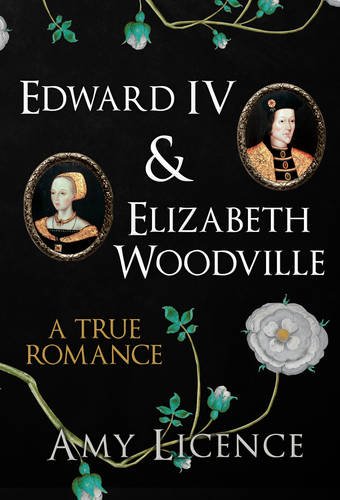
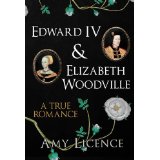
Book Corner: Edward IV and Elizabeth Woodville: A True Romance by Amy Licence

51T3oNzwxuLTraditionally it happened on May Day, early in the morning … two women slipped away from the manor house … They were a mother and daughter … They hurried on foot across the Wydeville land, towards the edge of the estate …. There stood a small priory or hermitage, dedicated to St Mary and St Michael … Waiting inside was a tall, athletic and distinguished young man in rich clothes, a priest and a choir boy and two gentlewomen, to act as witnesses. There, before this tiny group, Elizabeth Wydeville was married without pomp or ceremony to the King of England.”

It is the stuff legends are made of – and fairy tales. The story of how a penniless widow rose to become the Queen of England. After examining the lives of many of the characters of the Wars of the Roses and the Tudor period, author and historian Amy Licence has turned her attention to the greatest love story of Medieval England; Edward IV and Elizabeth Woodville, a true Cinderella story if ever there was one.

Amy Licence’s latest book, Edward IV and Elizabeth Woodville: A True Romance, is remarkable in that it is not a fairy tale, it’s not a historical fiction novel. It is the true story of how Edward IV came to be married to a mere ‘commoner’. In a wonderfully lively retelling of the lives of Edward IV and his queen, Ms Licence leaves no stone unturned. She tells the story from the beginning in a fascinating and engaging narrative of the lives of her main characters, and the lives of those around them.

255px-Edward_IV_PlantagenetEdward has become the ghost of a king, a historical filler before Richard III assumed the throne, a bit-player in Shakespeare’s trilogy about Henry VI, the father of the Princes in the Tower, the husband of the White Queen. Edward has become one of our many ‘missing kings’.”

Amy Licence goes into great detail about Edward’s love life and relationships, examining all the accusations ever levelled against him. Her love of her subjects shines through. The book provides a thorough analysis, whilst being lively and enthralling.

A True Romance” is a marvelous piece of research presented in such a manner that will have the novice and the expert glued to every page. The controversies surrounding the couple are discussed in detail: their secret marriage, Edward’s reputation, Elizabeth’s social status.

This romance is presented in the context of the period in which it happened. The author gives a comprehensive overview of the Wars of the Roses, and the characters involved, detailing the lives of the individuals close to Edward and Elizabeth, and the separate lives of the couple themselves before they come together. Their relationship is not only presented as a love story, but also in the context of the period in which they were living, demonstrating how big an upset it caused on the international stage.

330px-ElizabethWoodville… Elizabeth Wydeville, an unlikely queen, whom he had chosen in spite of tradition, in spite of advice, perhaps even in spite of himself. Her beauty was legendary but on almost every other level, she was an unacceptable choice for an English queen.

In this book Ms Licence demonstrates not only her extensive knowledge of the events of the era, but of all aspects of the period; from May Day traditions to the Sumptuary Laws, to the people themselves.

Amy Licence’s writing style is so easy to read and free-flowing, it is as if she is in the room talking to you. She brings the past to life in a vivid and entertaining way. Crammed full of facts and information taken from primary sources, the book tells the story not only of Edward and Elizabeth, but also of their wider family and affinity, demonstrating how the lives of their friends and family are interlinked and how it influences the couple, their decisions and the world around them.

The book discusses all aspects of the evidence available. This is presented in an objective and fair way; from the chronicles of the time, to literary representations and even rumours and archaeological evidence. The reliability and veracity of the evidence is explained and thoroughly analysed in detail, leaving the reader nodding in agreement at the author’s conclusions; her arguments are thorough and persuasive.

A major strength in Ms Licence’s work is that she shows respect when discussing the theories of fellow historians; whether she agrees with them or not.

EdwardIVThis biography of Edward IV and Elizabeth Woodville leaves no stone unturned. Amy Licence discusses every legend related to the couple, explores the development of their relationship and its effects on the lives of the couple, their families and the nation at large. Every aspect of their lives is discussed, leaving no situation unexamined and no rumour ignored.

Amy Licence presents a marriage and relationship that is as human and complex as any celebrity marriage of today. This is a wonderful study of one of the most famous love affairs in history in a book which is at once sympathetic, vivid and lively.

In short, this book is a fabulous biography of a romance that changed English history a forever. Thoroughly researched and stunningly presented, it is a must-read for all lovers of history, romance and the Wars of the Roses, themselves.

*

51T3oNzwxuL._AA160_Amy Licence has been a teacher for over a decade. She has an MA in Medieval and Tudor Studies and has published several scholarly articles on the Tudors. She is an author and historian of women’s lives in the medieval and Tudor period.

Edward IV & Elizabeth Woodville: A True Romance is available on Amazon in the UK from Monday 15th February and in the US soon.

*
My book, Heroines of the Medieval World,  is now available in hardback in the UK from both Amberley Publishing and Amazon UK and worldwide from Book Depository. It is also available on Kindle in both the UK and USA and will be available in Hardback from Amazon US from 1 May 2018.

Be the first to read new articles by clicking the ‘Follow’ button, liking our Facebook page or joining me on Twitter.

©2016 Sharon Bennett Connolly