Eight Interesting Discoveries on writing 11th century non-fiction

Following on from my 10 Facts About Women and Magna Carta, I thought I would revisit the Norman Conquest and started thinking about I found most interesting when writing about 1066 and the years either side. And here’s what I discovered:

1. Not all primary sources are contemporary.
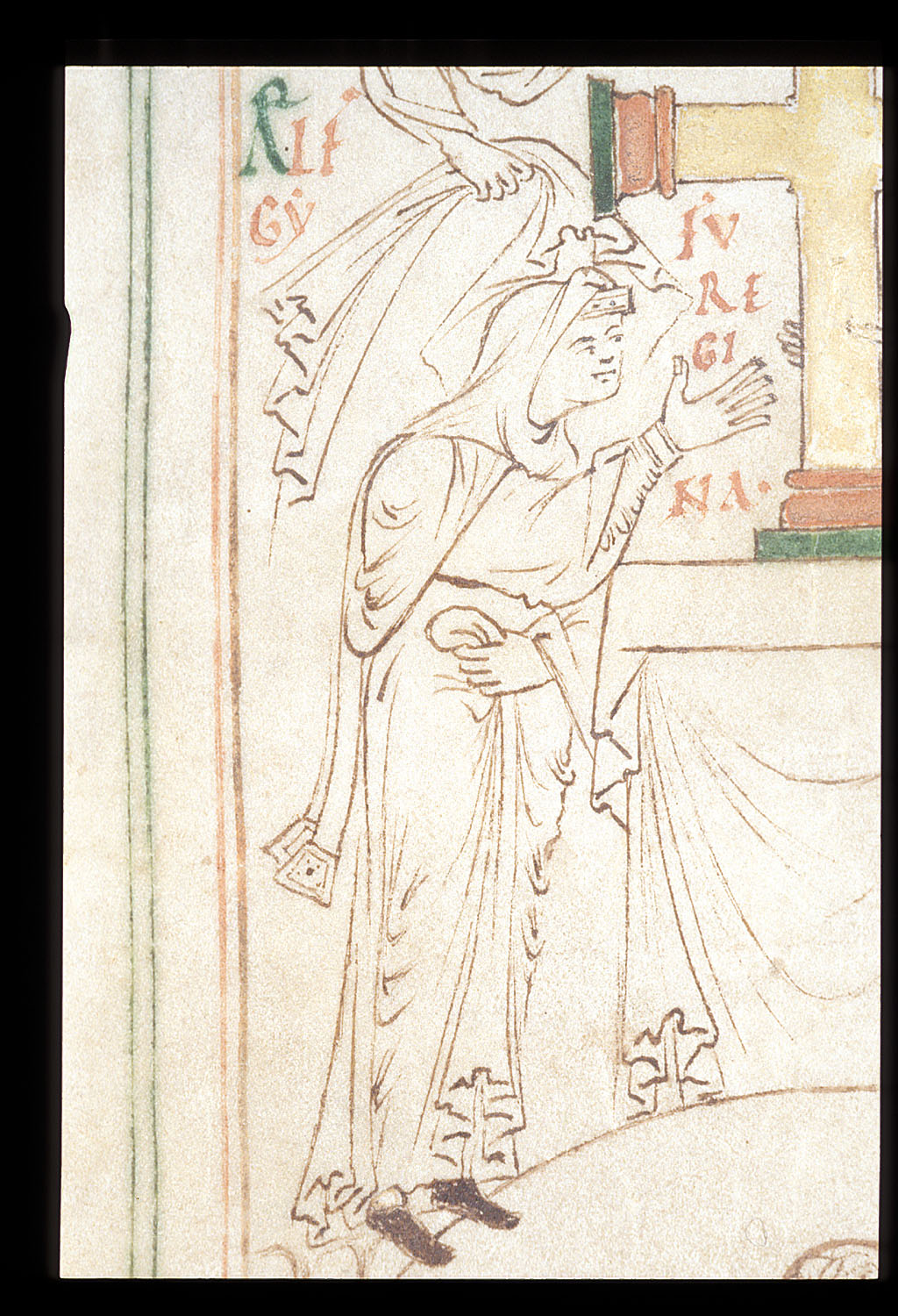
Emma of Normandy

Let me explain. Of course, all sources written in the 11th century are primary sources, but you do find people quoting sources as primary sources – only to discover that they were written 100 or even 200 years after the events.

One such legend, appearing two centuries after the events, suggested that Emma of Normandy’s relationship with her good friend, Bishop Stigand, was far more than that of her advisor and that he was, in fact, her lover – although the legend did get its bishops mixed up and named Ælfwine, rather than Stigand, as Emma’s lover. The story continues that Emma chose to prove her innocence in a trial by ordeal, and that she walked barefoot over white-hot ploughshares. Even though the tale varies depending on the source, the result is the same; when she completed the ordeal unharmed, and thus proven guiltless, she was reconciled with her contrite son, Edward.

However, there is no 11th century source for this event and it seems to have been created to explain Emma’s estrangement from her son, Edward the Confessor.

2. The Anglo-Saxon Chronicle is the most famous source of 11th century news. 

The Anglo-Saxon Chronicle gives wonderful snippets of information about life in Anglo-Saxon England – and the weather! If you have ever wondered where the English get their obsession with the weather, read the Anglo-Saxon Chronicle. It is also very dramatic.

For example, the year 1005 starts with; ‘Here in this year there was the great famine throughout the English race, such as no-one ever remembered on so grim before…’

1032 relates; ‘Here in this year appeared that wild-fire such as no man remembered before, and also it did damage everywhere in many places.’

And 1039 opens with ‘Here came the great gale…’

In 1053 we read, ‘Here [1052] was the great wind on the eve of the Feast of St Thomas, and the great wind was also all midwinter…’

And, of course, in 1066 we read about the appearance of Halley’s Comet; ‘Then throughout all England, a sign such as man ever saw before was seen in the heavens. Some me declared that it was the star comet, which some men called the ‘haired’ star; and it appeared first on the eve of the Great Litany, 24 April, and shone thus all the week….’

3. The Anglo-Saxon Chronicle is a fabulous source of news about church leaders.

Don’t get me wrong, the Anglo-Saxon Chronicle is invaluable to anyone studying the history of Anglo-Saxon Britain, but you can tell it was written by monks. There are some years where you learn little more than which church leader died, and who replaced him.

For example, the entry for 1023 from the E chronicle; ‘Here Bishop Wulfstan passed away, and Ælfric succeeded…’

And in 1032; ‘In the same year Ælfsige, bishop in Winchester, passed away, and Ælfwine, the king’s priest, succeeded to it.’

The only entry in the E Chronicle in 1033 was; ‘Here in this year Merehwit, bishop in Somerset, passed away, and he is buried in Glastonbury.’

And again in 1034; ‘Here Bishop Æthelric passed away.’

4. Not all inheritance was based on primogeniture.
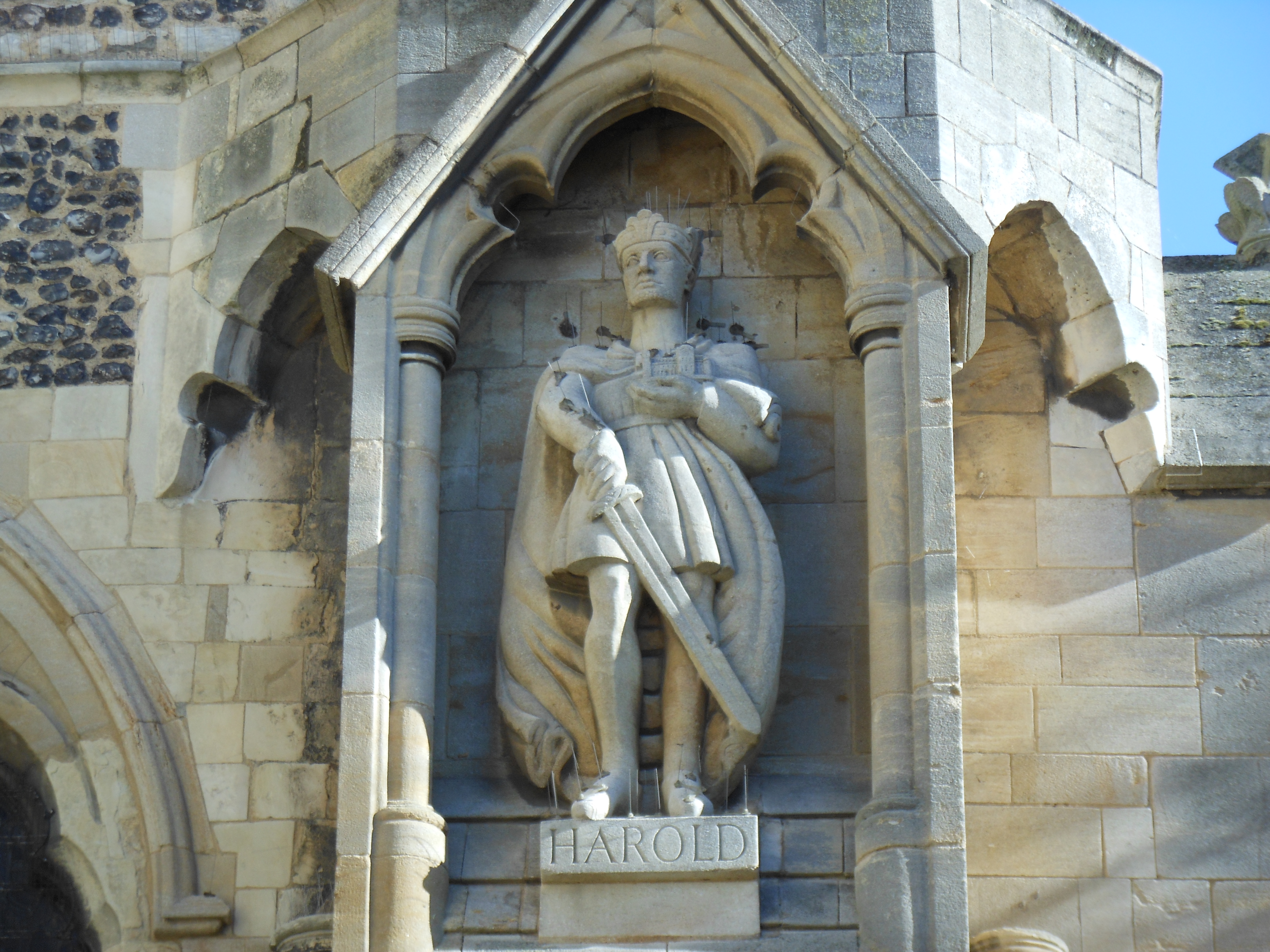
King Harold II, Waltham Abbey

Primogeniture, where the eldest son inherited from his father, was not unusual in 11th century England; when Earl Godwin of Wessex died, his eldest surviving son, Harold, succeeded him. However, it was not yet established as the definitive rule of inheritance of later centuries. When Siward, Earl of Northumbria, died in 1055 his heir, Waltheof, was still a child and too young to hold such a formidable position on the borders of Scotland. The earldom was given to Tostig Godwinson, the favourite brother of Edward the Confessor’s queen, Edith. Though he didn’t do a great job with it…

And in the opening days of 1066, when Edward the Confessor died, the ætheling, Edgar was only a teenager, and so was passed over as king for the more mature and militarily experienced Harold Godwinson, Earl of Wessex, who became King Harold II.

5. Travel to distant places was not uncommon for the nobility.

At different times in the 11th century, both King Cnut and Tostig Godwinson are known to have travelled to Rome; indeed, during his trip to Rome in 1027, Cnut was present at the coronation of Holy Roman Emperor, Conrad II and arranged for the marriage of his daughter by Emma of Normandy, Gunhilda, to Conrad’s son, the future King Henry III of Germany.

As for Tostig, travelling to Rome was not without its dangers, and shortly after leaving the city, his travelling party was caught up in a local dispute between the papacy and the Tuscan nobility; they were attacked. Tostig was able to escape by the ruse of one of his own thegns, a man named Gospatric, who pretended to be the earl.

Tostig and Harold’s brother, Swegn Godwinson, who had murdered his own cousin, even went on pilgrimage to Jerusalem – barefoot – he died on the journey home.

And when I started writing Silk and the Sword: The Women of the Norman Conquest I discovered that there are several links to the story of 1066 with the Russian principality of Kyiv. The baby sons of England’s short-lived king, Edmund II Ironside, who reigned and died in 1016, were given sanctuary and protection in Kyiv, saving them from the clutches of Edmund’s successor, King Cnut. The first wife of Harald Hardrada, the third contender for the English throne in 1066, Elisiv, was a Kyivan princess. And after the Conquest, Harold II Godwinson’s own daughter by Edith Swanneck, Gytha, would make her life in Kyiv as the wife of Vladimir II Monomakh and as the mother of Mstislav the Great, the last ruler of a united Kyivan Rus. Vladimir was the nephew of Harald Hardrada’s first wife, the Kyivan princess, Elisiv.

6. Having 2 wives at the same time was not THAT unusual.
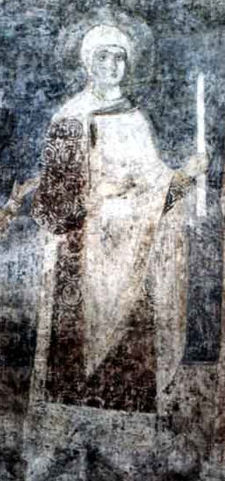
Elisiv of Kyiv

In the story of 1066 there were not one BUT three men who had two wives simultaneously.

Harold Godwinson is known for having been in a relationship with the famous Edith Swanneck for 20 years before becoming King, and then marrying Ealdgyth of Mercia without divorcing Edith. Edith is often referred to as Harold’s concubine, but most historians agree that she was his ‘hand-fast’ wife and had undergone a Danish – rather than Christian – style of wedding with Harold. Edith was no ignorant peasant, she was a wealthy woman in her own right and it is highly doubtful she would have accepted being Harold’s mistress, and raising his children, without some kind of marital protection.

Harald Hardrada also married a second ‘wife’, whilst still being married to Elisiv. Elisiv had given the Norwegian king two daughters, but his second wife, Thora, gave him two sons, Magnus and Olaf, who each, in turn, succeeded their father as King of Norway.

King Cnut was the first to take two wives; he had two sons by Ælfgifu of Northampton before marrying Emma of Normandy and producing a second family. The chronicles, however, claim that Ælfgifu’s sons were not the children of Cnut, with John (also known as Florence) of Worcester saying, ‘Ælfgiva desired to have a son by the king, but as she could not, she caused the new-born child of a certain priest to be brought to her, and made the king fully believe that she had just borne him a son’. And the Anglo-Saxon Chronicle claimed ‘[King] Harold [I Harefoot] also said that he was the son of king Canute and Ælfgiva of Northampton, although that is far from certain; for some say that he was the son of a cobbler, and that Ælfgiva had acted with regard to him as she had done in the case of Swein: for our part, as there are doubts on the subject, we cannot settle with any certainty the parentage of either.’

7. There were some incredible, strong women in the 11th century.
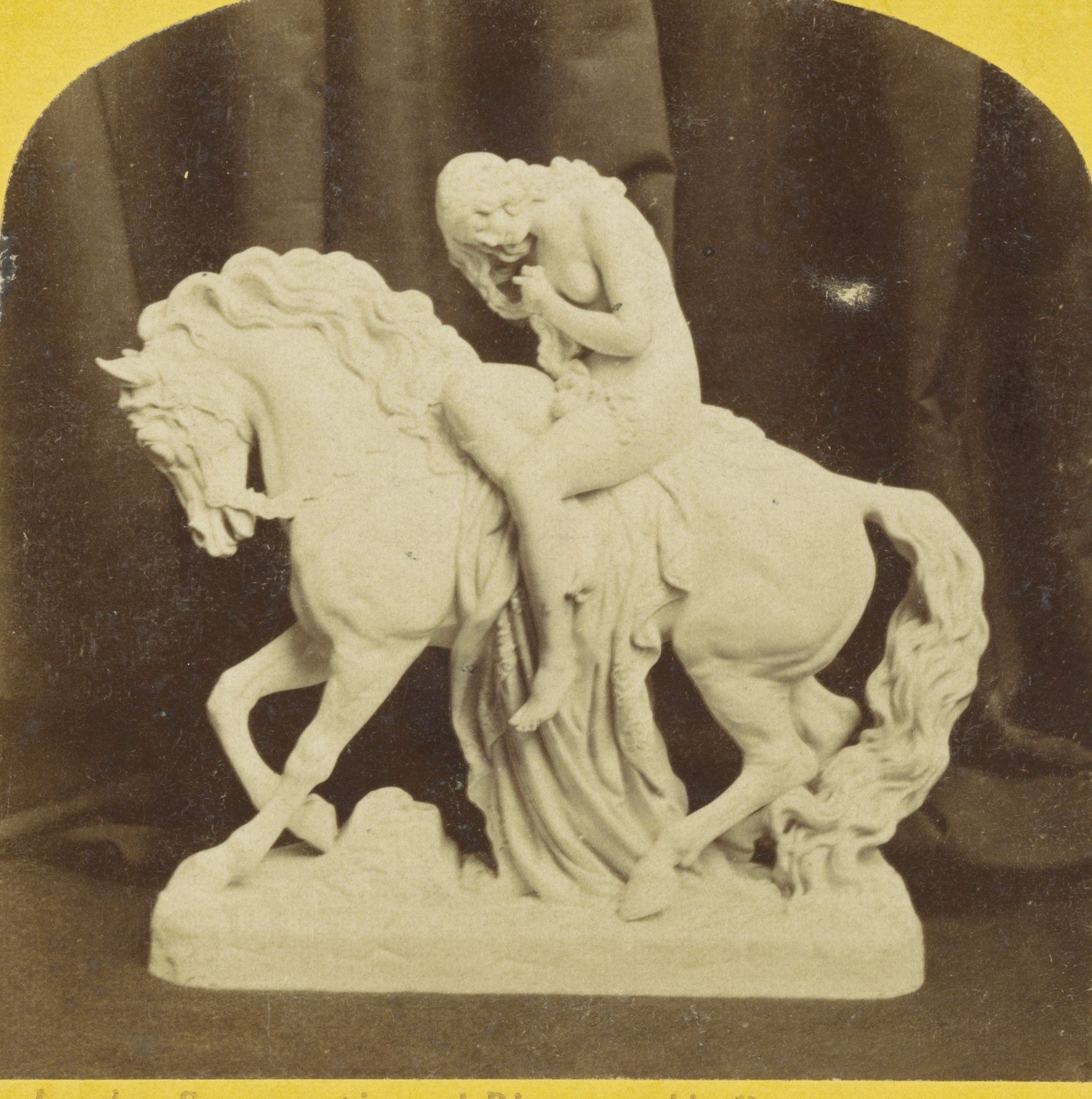
Lady Godiva

The story of the Norman Conquest invariably revolves around the men involved, Edward the Confessor, Harold II, William the Conqueror, Harald Hardrada, and so on. However, there were some amazing women whose strength and perseverance helped to steer and shape the events of the era.

There were, of course, the queens, Emma of Normandy, Edith of Wessex and Matilda of Flanders, who supported their husbands and helped to shape and – even – preserve history, with Emma and Edith both commissioning books to tell the stories of their times and Matilda being the image of queenship that all future queens of England modelled themselves on.

There was also the notorious Lady Godiva, who was probably a lot less scandalous than the legend, of her riding naked through Coventry, leads us to believe. And the incredible Gytha of Wessex, a woman whose story is entwined with every aspect of the period. From the reign of Cnut to that of William the Conqueror, Gytha and her family were involved in so many aspects of the 11th century, from the rise of her sons, through the Battle of Hastings itself, to the English resistance in the years immediately following the Conquest. Gytha was not one to give up easily, despite the horrendous losses her family suffered (three of her sons died in one single day at Hastings), she encouraged her grandsons to lead the opposition against the Conqueror in the west, but her eventual failure saw her seek shelter in Flanders, where she disappears from the pages of history.

8. There is still so much we don’t know!

Ӕlfgyva, the mysterious woman in the Bayeux Tapestry

What you discover when researching the 11th century and the Norman Conquest is that there are gaps in our knowledge. For instance, we do not know why Harold was travelling to Europe in 1064, when he was shipwrecked and became a guest at the court of William, Duke of Normandy (the future William the Conqueror). The Bayeux Tapestry depicts Harold swearing an oath during his stay there. Was Harold promising to support William’s claim to England when Edward the Confessor died?

The Bayeux Tapestry has another tantalising mystery. That of Ӕlfgyva. Ӕlfgyva is depicted in a doorway with a priest touching her cheek. Whether the touch is in admonishment or blessing is open to interpretation. Above her head, written in Latin, is the incomplete phrase  ‘Here a certain cleric and Ӕlfgyva’. But who was the mysterious Ӕlfgyva? Will we ever know?

Historical Writers Forum hosted a fabulous debate on ‘Ӕlfgyva’: The Mysterious Woman in the Bayeux Tapestry, which is available on YouTube. Hosted by Samantha Wilcoxson, it features myself, Pat Bracewell, Carol McGrath and Paula Lofting discussing the possible cadidates of Ӕlfgyva’s identity.

*

A version of this article was first published on Carol McGrath’s website in December 2018

Images:

Courtesy of Wikipedia, except King Harold II, which is ©2022 Sharon Bennett Connolly FRHistS.

Sources:

A Historical Document Pierre Bouet and François Neveux, bayeuxmuseum.com/en/un_document_historique_en; The Mystery Lady of the Bayeux Tapestry (article) by Paula Lofting, annabelfrage.qordpress.com; Ӕlfgyva: The Mysterious lady of the Bayeux Tapestry (article) by M.W. Campbell, Annales de Normandie; The Bayeux Tapestry, the Life Story of a Masterpiece by Carola Hicks; Æthelred II [Ethelred; known as Ethelred the Unready] (c. 966×8-1016) (article) by Simon Keynes, Oxford Dictionary of National Biography, oxforddnb.com; Britain’s Royal Families; the Complete Genealogy by Alison Weir; Queen Emma and the Vikings: The Woman Who Shaped the Events of 1066 by Harriet O’Brien; The Anglo-Saxon Chronicle translated by James Ingram; On the Spindle Side: the Kinswomen of Earl Godwin of Wessex by Ann Williams; Swein [Sweyn], earl by Ann Williams, Oxford Dictionary of National Biography, oxforddnb.com, 23 September 2004; Ӕlfgifu [Ӕlfgifu of Northampton (fl. 1006-1036) (article) by Pauline Stafford, Oxford Dictionary of National Biography, oxforddnb.com; The Chronicle of John of Worcester, translated and edited by Thomas Forester, A.M; The Anglo-Saxon Chronicles edited and translated by Michael Swanton.

*

My Books:

Signed, dedicated copies of all my books are available through my online store.

OUT NOW! Heroines of the Tudor World

Heroines of the Tudor World tells the stories of the most remarkable women from European history in the time of the Tudor dynasty, 1485-1603. These are the women who ruled, the women who founded dynasties, the women who fought for religious freedom, their families and love. These are the women who made a difference, who influenced countries, kings and the Reformation. In the era dominated by the Renaissance and Reformation, Heroines of the Tudor World examines the threats and challenges faced by the women of the era, and how they overcame them. From writers to regents, from nuns to queens, Heroines of the Tudor World shines the spotlight on the women helped to shape Early Modern Europe.

Heroines of the Tudor World is now available for pre-order from Amberley Publishing and Amazon UK.

Coming 30 January 2025: Scotland’s Medieval Queens
Scotland’s history is dramatic, violent and bloody. Being England’s northern neighbour has never been easy. Scotland’s queens have had to deal with war, murder, imprisonment, political rivalries and open betrayal. They have loved and lost, raised kings and queens, ruled and died for Scotland. From St Margaret, who became one of the patron saints of Scotland, to Elizabeth de Burgh and the dramatic story of the Scottish Wars of Independence, to the love story and tragedy of Joan Beaufort, to Margaret of Denmark and the dawn of the Renaissance, Scotland’s Medieval Queens have seen it all. This is the story of Scotland through their eyes.

Available for pre-order now.

Also by Sharon Bennett Connolly:
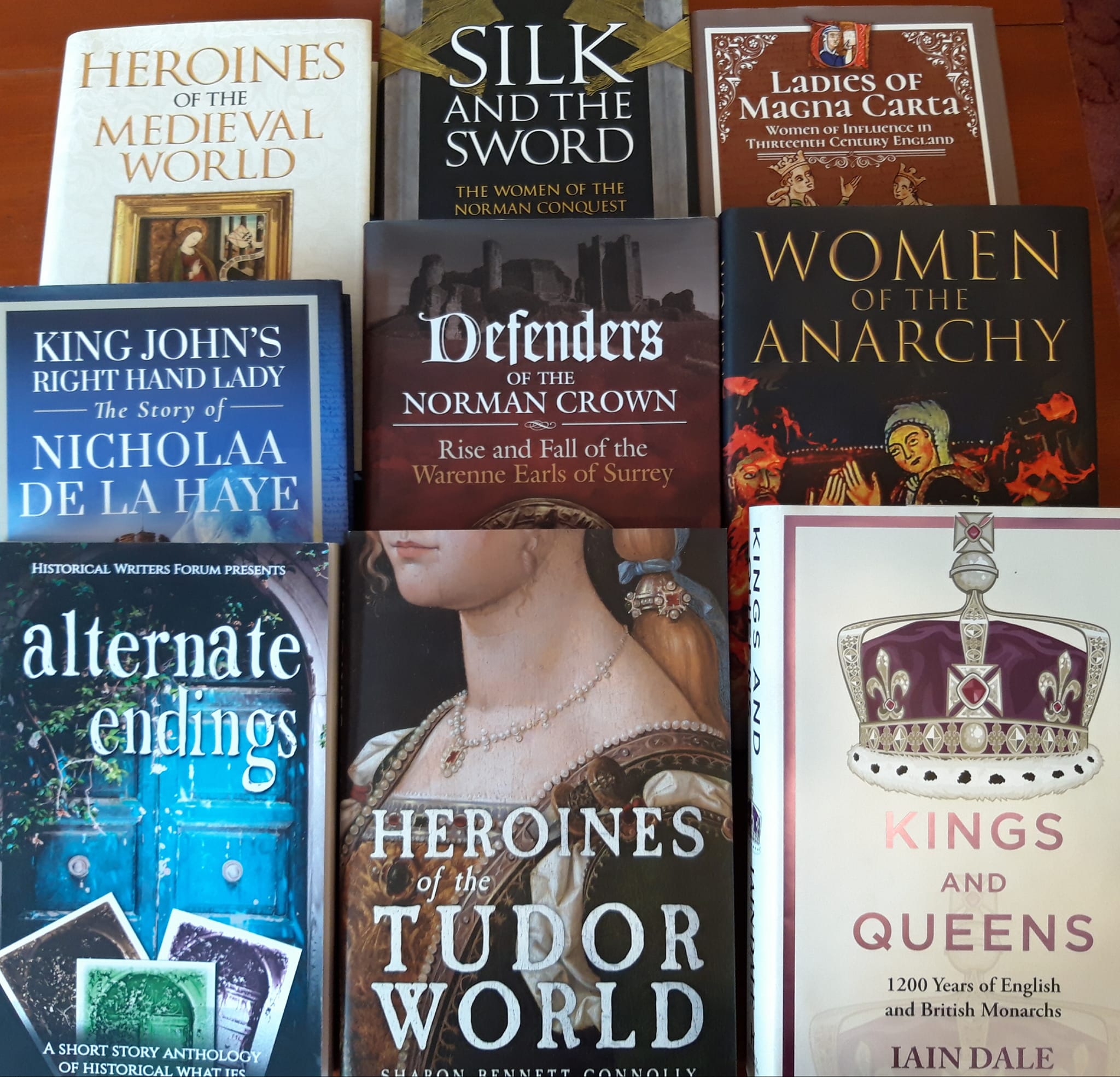
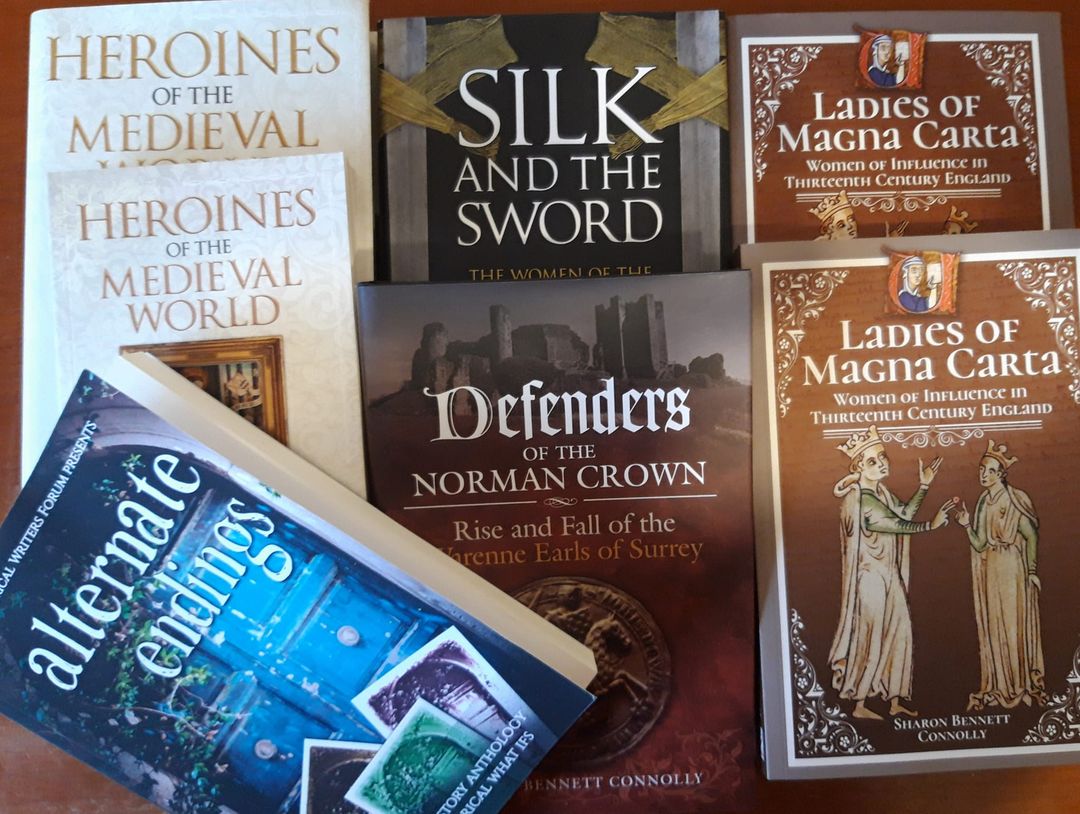
Women of the Anarchy demonstrates how Empress Matilda and Matilda of Boulogne, unable to wield a sword themselves, were prime movers in this time of conflict and lawlessness. It shows how their strengths, weaknesses, and personal ambitions swung the fortunes of war one way – and then the other. Available from Bookshop.org, Amberley Publishing and Amazon UK. King John’s Right-Hand Lady: The Story of Nicholaa de la Haye is the story of a truly remarkable lady, the hereditary constable of Lincoln Castle and the first woman in England to be appointed sheriff in her own right. Available from all good bookshops Pen & Sword Books, bookshop.org and Amazon. Defenders of the Norman Crown: The Rise and Fall of the Warenne Earls of Surrey tells the fascinating story of the Warenne dynasty, from its origins in Normandy, through the Conquest, Magna Carta, the wars and marriages that led to its ultimate demise in the reign of Edward III. Available from Pen & Sword Books, Amazon in the UK and US, and Bookshop.org. 
Ladies of Magna Carta: Women of Influence in Thirteenth Century England looks into the relationships of the various noble families of the 13th century, and how they were affected by the Barons’ Wars, Magna Carta and its aftermath; the bonds that were formed and those that were broken. It is now available in paperback and hardback from Pen & Sword,  Amazon, and Bookshop.org. Heroines of the Medieval World tells the stories of some of the most remarkable women from Medieval history, from Eleanor of Aquitaine to Julian of Norwich. Available now from Amberley Publishing and Amazon, and Bookshop.org. Silk and the Sword: The Women of the Norman Conquest traces the fortunes of the women who had a significant role to play in the momentous events of 1066. Available now from Amazon,  Amberley Publishing, and Bookshop.org.

Alternate Endings: An anthology of historical fiction short stories including Long Live the King… which is my take what might have happened had King John not died in October 1216. Available in paperback and kindle from Amazon.

Podcast:

Have a listen to the A Slice of Medieval podcast, which I co-host with Historical fiction novelist Derek Birks. Derek and I welcome guests, such as Bernard Cornwell, and discuss a wide range of topics in medieval history, from significant events to the personalities involved.

*

Don’t forget! Signed and dedicated copies of all my books are available through my online store.

For forthcoming online and in-person talks, please check out my Events Page.

You can be the first to read new articles by clicking the ‘Follow’ button, liking our Facebook page or joining me on Twitter, Threads and Instagram.

*

©2022 Sharon Bennett Connolly FRHistS.
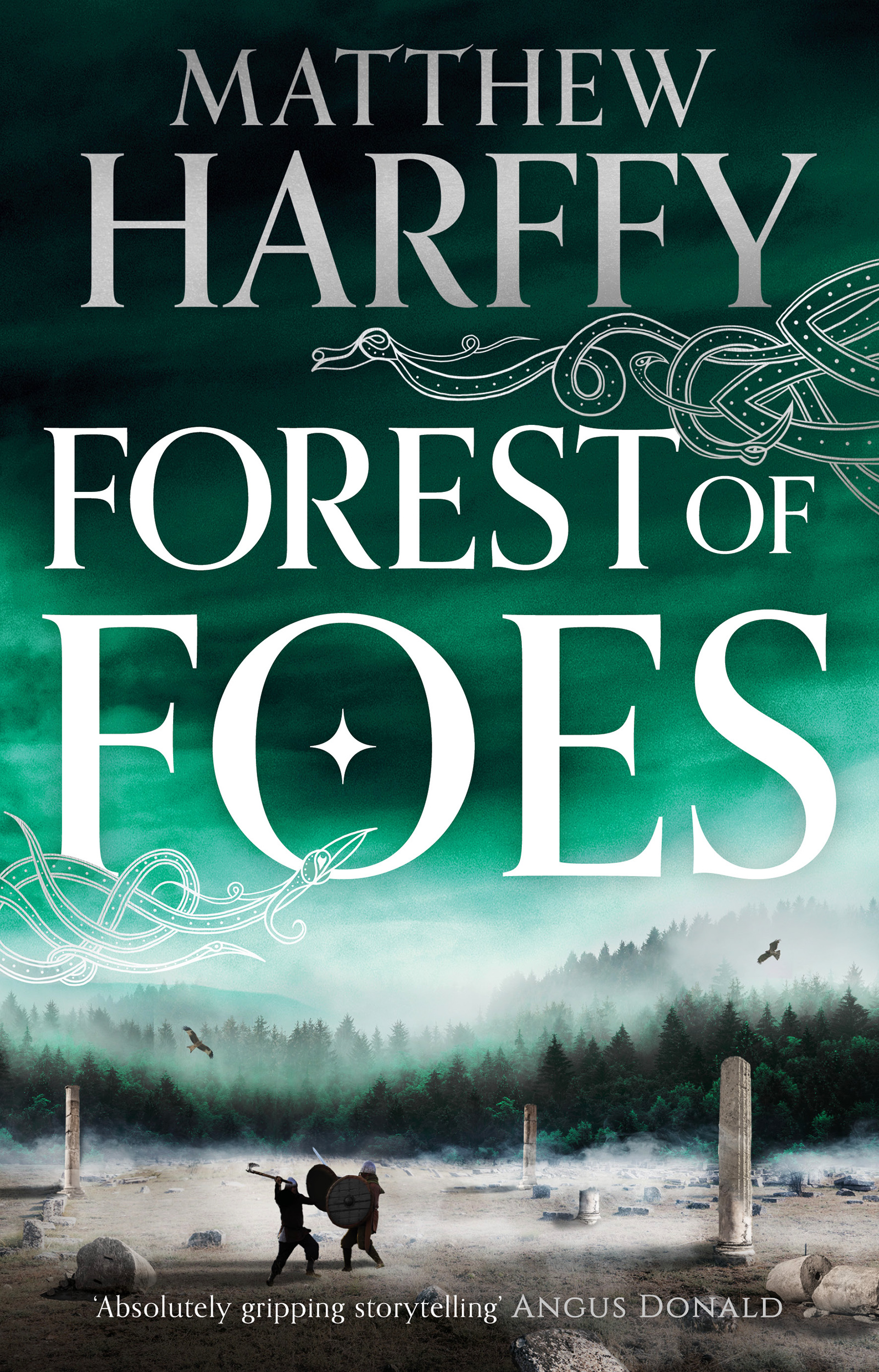
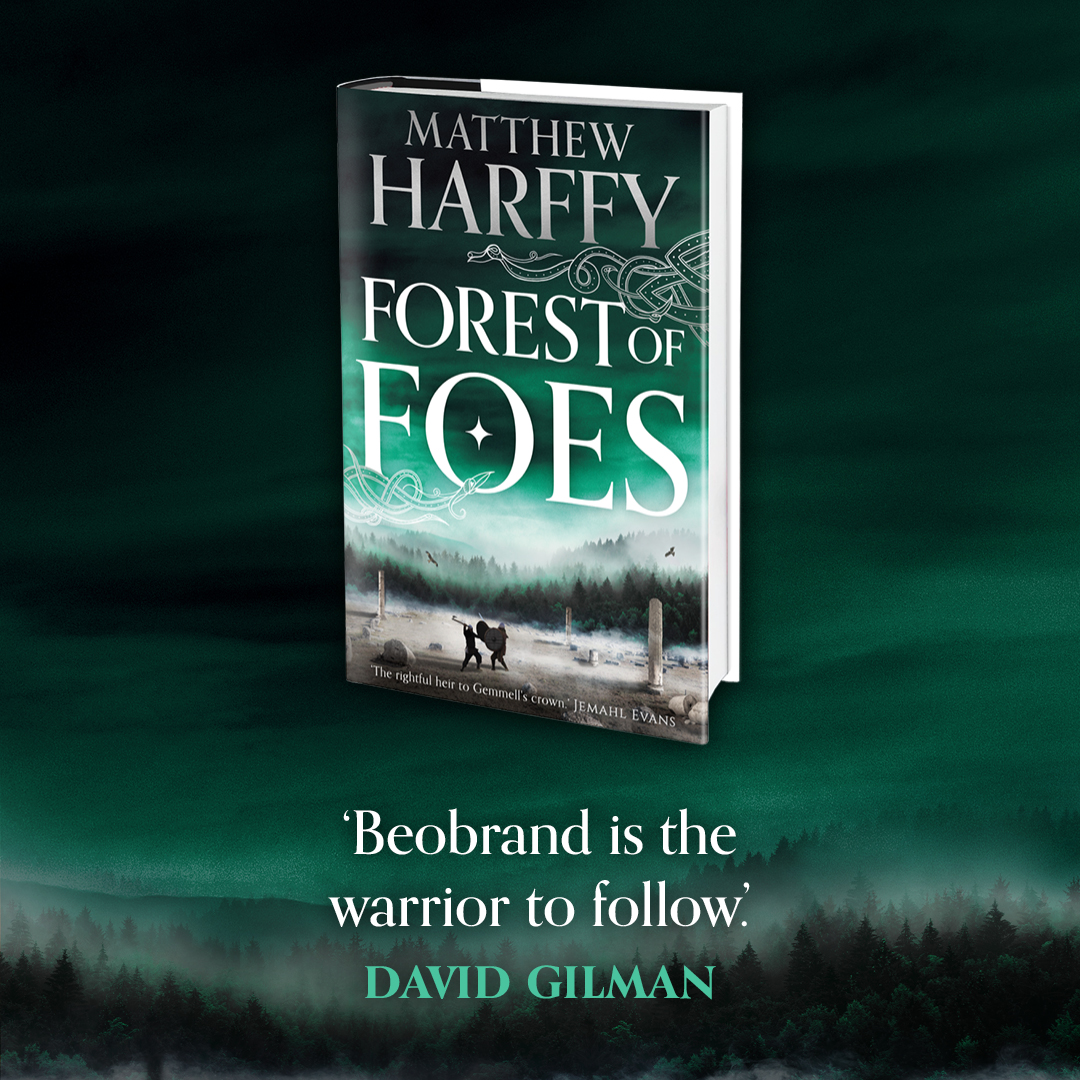
Book Corner: Forest of Foes by Matthew Harffy

AD 652. Beobrand has been ordered to lead a group of pilgrims to the holy city of Rome. Chief among them is Wilfrid, a novice of the church with some surprisingly important connections. Taking only Cynan and some of his best men, Beobrand hopes to make the journey through Frankia quickly and return to Northumbria without delay, though the road is long and perilous.

But where Beobrand treads, menace is never far behind. The lands of the Merovingian kings are rife with intrigue. The queen of Frankia is unpopular and her ambitious schemes, though benevolent, have made her powerful enemies. Soon Wilfrid, and Beobrand, are caught up in sinister plots against the royal house.

After interrupting a brutal ambush in a forest, Beobrand and his trusted gesithas find their lives on the line. Dark forces will stop at nothing to seize control of the Frankish throne, and Beobrand is thrown into a deadly race for survival through foreign lands where he cannot be sure who is friend and who is foe.

The only certainty is that if he is to save his men, thwart the plots, and unmask his enemies, blood will flow.

He’s done it again!

Magnificent adventure!

Forest of Foes by Matthew Harffy is the author’s 12th book and the 9th instalment of his magnificent Bernicia Chronicles. Beobrand is once again journeying over the Narrow Sea into Frankia. This time he is on his way to Rome, escorting a novice monk on his pilgrimage. Unfortunately, as with all Beobrand’s adventures, things don’t quite go to plan…

Beobrand and his loyal gesiths first save the wife of Clovis II, Queen Balthild, from an ambush in the woods and is then drawn into the world of the Frankish court and the conspiracies and controversies that surround it.

“What is he saying?” Beobrand asked Halinard in a quiet voice. The woman’s eyes flicked to him as he spoke, her expression questioning, no doubt surprised by his use of the Anglisc tongue. Beobrand marvelled at her apparent lack of fear.

“He says he will kill her, if let him go we do not,” said Halinard, his words clumsy yet clear.

“I hardly need you to tell me that,” replied Beobrand.

“I tell you what he says,” said Halinard, shaking his head. “He says nothing interesting.”

Brocard spoke to the man in the same calming tone he had used before. The brigand shouted more loudly, his voice cracking with his anger and fear. Behind him the maidservant looked ready to swoon.

Beobrand stepped closer to Brocard, beckoning for Halinard to follow him.

“Ask him his name,” he said in a low voice. Halinard translated. Brocard looked askance at Beobrand, then, with a shrug, he spoke to the brigand.

“Omer,” replied the brigand, narrowing his eyes as though he expected a trick.

Beobrand nodded.

“Offer him a horse,” Beobrand said. Halinard whispered his words in Frankish.

Brocard hesitated. One of his men, the one with the great bleeding wound on his face, growled something. Brocard held up his hand for patience and offered Omer a steed.

Omer replied and Beobrand understood enough to know that he wanted two mounts, one for him and one for his hostage.

“No,” Beobrand said in Frankish. He held up a single finger. “One horse.”

Omer shook his head and began to shout. Beobrand could not make out all the words, but it was clear Omer was not happy with the answer. Beobrand watched the knife blade waver at the woman’s lovely throat. Omer must know that if he killed her, he would surely follow the woman to the afterlife in moments. And yet men under such pressure do not always act reasonably and Beobrand became increasingly worried that the brigand might yet cut her throat by accident.

“Tell him he can have two horses,” he said. Halinard translated for him. Omer again looked as though he suspected he was being lured into a trap. He spoke quickly, urgently, but Beobrand could barely make sense of any of it. He was pleased though, to see that some of the tension had left Omer’s shoulders. The knife had lowered slightly from the lady’s neck. Brocard spoke up in anger at Beobrand’s offer. But before Beobrand could respond, the lady being held hostage moved with the speed of a striking serpent and Omer’s speech came to a sudden, choked halt. For a couple of heart beats he stood there, unmoving and silent, mouth opening and closing without sound. Then his hand fell, the knife tumbling from lifeless fingers.

Matthew Harffy has written yet another cracking Beobrand adventure. Changing the location to France has opened up a world of opportunities, which includes integrating the remarkable story of Balthild, the slave girl who became queen of the Franks as the wife of Clovis II. It also see Beobrand facing new challenges, including that of language. Matthew Harffy could have made life so much easier for himself by having Beobrand pick up the language of the Franks easily, but it makes for a better story, and a more credible one, that he struggles like the rest of us. No one is perfect.

As has come to be expected from Matthew Harffy’s writing, the character development is paramount and it is interesting to see how Cynan continues to grow into the role of war leader and confidant. There is tragedy along the way and, as with any great story, a few surprises that will leave the reader reeling. But it all makes for a fabulous story.

Do not expect your emotions to escape unscathed.

Forest of Foes by Matthew Harffy is an adventure not to be missed!

About the author:

Matthew Harffy lived in Northumberland as a child and the area had a great impact on him. The rugged terrain, ruined castles and rocky coastline made it easy to imagine the past. Decades later, a documentary about Northumbria’s Golden Age sowed the kernel of an idea for a series of historical fiction novels. The first of them is the action-packed tale of vengeance and coming of age, THE SERPENT SWORD.

Matthew has worked in the IT industry, where he spent all day writing and editing, just not the words that most interested him. Prior to that he worked in Spain as an English teacher and translator. Matthew lives in Wiltshire, England, with his wife and their two daughters.

Pre-order link

Amazon: https://amzn.to/3U5eD43

Follow Matthew Harffy

Twitter: @MatthewHarffy

Instagram: @beobrand

Website: matthewharffy.com

Follow Aries

Twitter: @AriesFiction

Facebook: Aries Fiction

Website: http://www.headofzeus.com

*

My Books:

Signed, dedicated copies of all my books are available, please get in touch by completing the contact me form.

Defenders of the Norman Crown: The Rise and Fall of the Warenne Earls of Surrey tells the fascinating story of the Warenne dynasty, of the successes and failures of one of the most powerful families in England, from its origins in Normandy, through the Conquest, Magna Carta, the wars and marriages that led to its ultimate demise in the reign of Edward III. Defenders of the Norman Crown: Rise and Fall of the Warenne Earls of Surrey is now available from Pen & Sword Books, Amazon in the UK and US, Bookshop.org and Book Depository.

1 family. 8 earls. 300 years of English history!

Also by Sharon Bennett Connolly:

Ladies of Magna Carta: Women of Influence in Thirteenth Century England looks into the relationships of the various noble families of the 13th century, and how they were affected by the Barons’ Wars, Magna Carta and its aftermath; the bonds that were formed and those that were broken. It is now available in paperback and hardback from Pen & Sword, Amazon, Bookshop.org and from Book Depository worldwide.

Heroines of the Medieval World tells the stories of some of the most remarkable women from Medieval history, from Eleanor of Aquitaine to Julian of Norwich. Available now from Amberley Publishing and Amazon, Bookshop.org and Book Depository.

Silk and the Sword: The Women of the Norman Conquest traces the fortunes of the women who had a significant role to play in the momentous events of 1066.  Available now from Amazon,  Amberley Publishing, Bookshop.org and Book Depository.

Alternate Endings: An anthology of historical fiction short stories including Long Live the King… which is my take what might have happened had King John not died in October 1216. Available in paperback and kindle from Amazon.

*

You can be the first to read new articles by clicking the ‘Follow’ button, liking our Facebook page or joining me on Twitter and Instagram.

©2020 Sharon Bennett Connolly FRHistS

Eleanor, daughter of a king, Countess of Pembroke

King John with his children Henry, Richard, Joan, Isabella and Eleanor

There was one daughter of King John for whom the legacy of Magna Carta and the struggle for political reform held particular significance. The life of Eleanor of England, and her husband Simon de Montfort, stands as the epilogue of the Magna Carta story. Although democratic government was still many centuries in the future, Magna Carta was the first step. The political movement led by Simon de Montfort was the second step …

However, had fate not stepped in, Eleanor may never have married Simon. From an early age, she had been the wife of another, until tragedy struck.

Eleanor of England was the youngest child of John and Isabelle d’Angoulême; she is said to have inherited her mother’s beauty and feisty temperament.1 Eleanor was thought to have been born at the height of her father’s troubles, in the midst of the Magna Carta crisis in 1215. However, historians are now inclined to the theory that she was born posthumously, sometime after the death of King John, either in late 1216 or early in 1217. She was named for her famous grandmother, Eleanor of Aquitaine. As a baby, little Eleanor was placed in the household of the bishop of Winchester, where her eldest brother, Henry, had been living since 1212.2 Eleanor’s father had died whilst the country was riven by war, on the night of 18/19 October 1216 at Newark. He was succeeded by Eleanor’s eldest brother Henry – now King Henry III. Eleanor’s mother, frozen out from any role in her son’s regency or life, returned to her native Angoulême and in 1220 married Hugh X de Lusignan, Count of La Marche.

In 1224 Eleanor’s future was decided when she was married to William (II) Marshal, Earl of Pembroke. The younger Marshal was the son of the first earl of Pembroke who had been regent in the early years of Henry III’s reign, and who had driven the French out of England following his victory at the Battle of Lincoln in May 1217. The first earl had a reputation for integrity and loyalty, having remained unwavering in his loyalty to King John during the Magna Carta crisis. The second earl, Eleanor’s husband, had been a hostage of the king between 1207 and 1213, as a guarantee of his father’s good behaviour. He later joined the baronial rebellion and was appointed marshal of the forces of the invader, Prince Louis. However, he returned to the Royalist cause when Louis refused him possession of Marlborough Castle, which had previously belonged to the younger Marshal’s grandfather.3

William (II) Marshal fought alongside his father at the Battle of Lincoln. On his father’s death in 1219, Marshal had succeeded him as earl of Pembroke and marshal of England; when his mother died in 1220, he succeeded to her lordships of Leinster and Netherwent. His younger brother, Richard Marshal, succeeded to the Clare lands in Ireland. In 1214 Marshal married Alice, the daughter of Baldwin de Béthune, Count of Aumâle, to whom he had been betrothed in 1203. The marriage was short-lived, however, as poor Alice died in 1216.

On 23 April 1224, William (II) Marshal was married to Eleanor; born in the 1190s, he was some twenty-or-so years older than his bride, who was no more than 9 years old on her wedding day, and may have been as young as 7.4

Eleanor of England, Countess of Pembroke

The marriage was agreed at the behest of the justiciar, Hubert de Burgh, and the papal legate, Pandulf, as a way of guaranteeing Marshal remained firmly in the justiciar’s camp, and to prevent the marshal making a foreign marriage. The match put an end to three years of indecision, as to whether Eleanor should marry a foreign prince or an English magnate. The king settled ten manors, confiscated from a French nobleman and already administered by Marshal, on his sister as her marriage portion.5

For the first five years of her marriage Eleanor continued to live at court, under the guardianship of Cecily of Sandford.6 In 1229, when she was 13 or 14, she went to live with her husband, and would spend her time travelling with him in England, France and Ireland. In May 1230, Marshal had taken twenty knights with him on Henry III’s expedition to Poitou. He also took his wife, probably at the behest of the king. Eleanor became seasick during the voyage to France and Henry had his ship drop anchor at the nearest landfall to give her time to recover, ordering the fleet to continue without them.7

Henry was probably hoping that Eleanor’s presence would help to secure the support of his mother and her second husband, Hugh de Lusignan, to his expedition against the French. Mother and daughter had not seen each other since Eleanor was a baby. Isabelle’s maternal affection for the children of her first husband, however, was practically non-existent, or deeply hidden, and Eleanor’s presence failed to persuade her mother and stepfather to remain loyal to Henry III. As we have seen in a previous article, Isabelle d’Angoulême‘s priorities as a French countess often clashed with those of her English family.

Marshal and Eleanor returned from France in the spring of 1231, with William handing over command of the English forces to Ranulf, Earl of Chester. Shortly after their return, the couple attended the wedding of Marshal’s widowed sister, Isabel, to the king’s brother, Richard, Earl of Cornwall. Family happiness turned to grief, however, when William (II) Marshal died suddenly in London a week later, on 6 April. He was buried beside his father at the Temple Church on 15 April 1231.

At the still very tender age of between 14 and 16, Eleanor was a now childless widow.

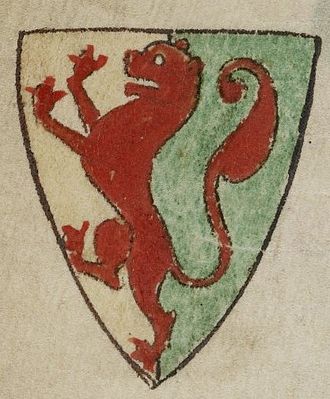
The arms of William Marshal, Earl of Pembroke

The earldom of Pembroke passed to William’s younger brother, Richard, and Eleanor would spend many years fighting unsuccessfully to get the entirety of her dowry from the Marshal family, which amounted to one third of the Marshal estates, according to the guarantees established by Magna Carta. The Great Charter stipulated a widow should receive the allocation of a dower within forty days of her husband’s death.

A year after William’s death Richard Marshal offered Eleanor £400 a year as her settlement. Henry III persuaded his sister to take it, wanting to be done with the business and probably well aware that it was as much as Eleanor was likely to get, despite the Marshal holdings amounting to an income of £3,000 a year.8 Henry stood as guarantor for the settlement but the payments would always be sporadic and unreliable, not helped by the fact that the earldom passed through four successive Marshal brothers between 1231 and 1245, each with differing priorities and more Marshal widows to assign their dowers.

In the midst of her grief, and influenced by her former governess, Eleanor took a vow of chastity in the presence of Edmund of Abingdon, Archbishop of Canterbury in 1234. Although she did not become a nun, the archbishop put a ring on her finger, to signify that she was a bride of Christ; she was, therefore, expected to remain chaste and virtuous for the rest of her life. As a result, the king seized her estates and Richard Marshal, as her husband’s heir, took many of her valuable chattels.

Knowing how teenagers see lost love as the end of the world, even today, one can understand Eleanor’s decision to take a vow of chastity, even if we cannot comprehend anyone giving such advice to a grieving 16-year-old. Eleanor may also have seen taking such a vow as a way of staving off her brother, the king, forcing her to remarry in the interests of the crown. Moreover, it put Eleanor’s life in her own hands and also served to appease the Marshal family, who would have seen their own lands, which made up Eleanor’s dower, controlled by another magnate or foreign prince had she remarried.

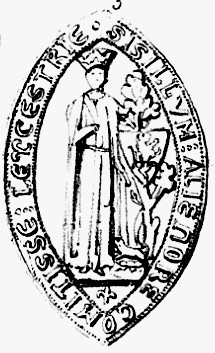
Eleanor’s seal as Countess of Leicester

The widowed Eleanor retired to the castle of Inkberrow in Worcestershire. King Henry III continued to watch over his sister throughout the 1230s; he sent her gifts of venison and timber for her manors. Throughout her life, Eleanor was known for her extravagant spending, which led to substantial debts; Henry lent her money and made sporadic payments to reduce the debts. And in 1237 her brother granted her Odiham Castle in Hampshire, which would become her principal residence.9

Although Eleanor spent the 7 years after William Marshal’s death as a young widow sworn to chastity, most people may have predicted that such a life would not last. And at some point after the mid-1230s, possibly at the wedding of Henry and Eleanor of Provence, Eleanor met Simon de Montfort, the man who would dominate English politics in the mid-thirteenth century.

The couple fell in love.

But that story is for another time…

*

Images:

Courtesy of Wikipedia

Footnotes:

1. Carol, ‘Eleanor of Leicester: A Broken Vow of Chastity’, historyofroyalwomen.com, 28 February 2017; 2. Elizabeth Norton, She Wolves; 3. R.F. Walker, ‘William Marshal, fifth earl of Pembroke (c. 1190–1231)’, oxforddnb.com; 4. Ibid; 5. Darren Baker, With All For All; 6. Elizabeth Hallam, ‘Eleanor, Countess of Pembroke and Leicester (1215?–1275)’, Oxforddnb.com; 7. Darren Baker, With All For All; 8. Ibid; Elizabeth Hallam, ‘Eleanor, Countess of Pembroke’.

Sources:

Rich Price, King John’s Letters Facebook group; Robert Bartlett England Under the Norman and Angevin Kings 1075-1225; Dan Jones The Plantagenets; the Kings who Made England; The Plantagenet Chronicle Edited by Elizabeth Hallam; Maurice Ashley The Life and Times of King John; Roy Strong The Story of Britain; Oxford Companion to British History; Mike Ashley British Kings & Queens; David Williamson Brewer’s British Royalty; Ralph of Diceto, Images of History; Marc Morris, King John; David Crouch, William Marshal; Crouch and Holden, History of William Marshal; Crouch, David, ‘William Marshal [called the Marshal], fourth earl of Pembroke (c. 1146–1219)’, Oxforddnb.com; Flanagan, M.T., ‘Isabel de Clare, suo jure countess of Pembroke (1171×6–1220)’, Oxforddnb.com; Thomas Asbridge, The Greatest Knight; Chadwick, Elizabeth, ‘Clothing the Bones: Finding Mahelt Marshal’, livingthehistoryelizabethchadwick.blogspot.com; Stacey, Robert C., ‘Roger Bigod, fourth earl of Norfolk (c. 1212-1270)’, Oxforddnb.com; finerollshenry3.org.uk; Vincent, Nicholas, ‘William de Warenne, fifth earl of Surrey [Earl Warenne] (d. 1240)’, Oxforddnb.com.

*

My Books:

Signed, dedicated copies of all my books are available through my online bookshop.

Out Now! Women of the Anarchy

Two cousins. On the one side is Empress Matilda, or Maud. The sole surviving legitimate child of Henry I, she is fighting for her birthright and that of her children. On the other side is her cousin, Queen Matilda, supporting her husband, King Stephen, and fighting to see her own son inherit the English crown. Women of the Anarchy demonstrates how these women, unable to wield a sword, were prime movers in this time of conflict and lawlessness. It show how their strengths, weaknesses, and personal ambitions swung the fortunes of war one way – and then the other.

Available from Bookshop.org, Amberley Publishing and Amazon UK.

Coming on 15 June 2024: Heroines of the Tudor World

Heroines of the Tudor World tells the stories of the most remarkable women from European history in the time of the Tudor dynasty, 1485-1603. These are the women who ruled, the women who founded dynasties, the women who fought for religious freedom, their families and love. These are the women who made a difference, who influenced countries, kings and the Reformation. In the era dominated by the Renaissance and Reformation, Heroines of the Tudor World examines the threats and challenges faced by the women of the era, and how they overcame them. From writers to regents, from nuns to queens, Heroines of the Tudor World shines the spotlight on the women helped to shape Early Modern Europe.

Heroines of the Tudor World is now available for pre-order from Amberley Publishing and Amazon UK.

Also by Sharon Bennett Connolly:

King John’s Right-Hand Lady: The Story of Nicholaa de la Haye is the story of a truly remarkable lady, the hereditary constable of Lincoln Castle and the first woman in England to be appointed sheriff in her own right. It is is available from King John’s Right-Hand Lady: The Story of Nicholaa de la Haye is the story of a truly remarkable lady, the hereditary constable of Lincoln Castle and the first woman in England to be appointed sheriff in her own right. Available from all good bookshops or direct from Pen & Sword Books, bookshop.org and Amazon. Defenders of the Norman Crown: The Rise and Fall of the Warenne Earls of Surrey tells the fascinating story of the Warenne dynasty, from its origins in Normandy, through the Conquest, Magna Carta, the wars and marriages that led to its ultimate demise in the reign of Edward III. Available from Pen & Sword Books, Amazon in the UK and US, and Bookshop.org. 

Ladies of Magna Carta: Women of Influence in Thirteenth Century England looks into the relationships of the various noble families of the 13th century, and how they were affected by the Barons’ Wars, Magna Carta and its aftermath; the bonds that were formed and those that were broken. It is now available in paperback and hardback from Pen & Sword,  Amazon, and Bookshop.org. Heroines of the Medieval World tells the stories of some of the most remarkable women from Medieval history, from Eleanor of Aquitaine to Julian of Norwich. Available now from Amberley Publishing and Amazon, and Bookshop.org. Silk and the Sword: The Women of the Norman Conquest traces the fortunes of the women who had a significant role to play in the momentous events of 1066. Available now from Amazon,  Amberley Publishing, and Bookshop.org.

Alternate Endings: An anthology of historical fiction short stories including Long Live the King… which is my take what might have happened had King John not died in October 1216. Available in paperback and kindle from Amazon.

Podcast:

Have a listen to the A Slice of Medieval podcast, which I co-host with Historical fiction novelist Derek Birks. Derek and I welcome guests, such as Bernard Cornwell and Elizabeth Chadwick, and discuss a wide range of topics in medieval history, from significant events to the personalities involved.

*

Don’t forget! Signed and dedicated copies of all my books are available through my online bookshop.

For forthcoming online and in-person talks, please check out my Events Page.

You can be the first to read new articles by clicking the ‘Follow’ button, liking our Facebook page or joining me on Twitter and Instagram.

©2022 Sharon Bennett Connolly FRHistS

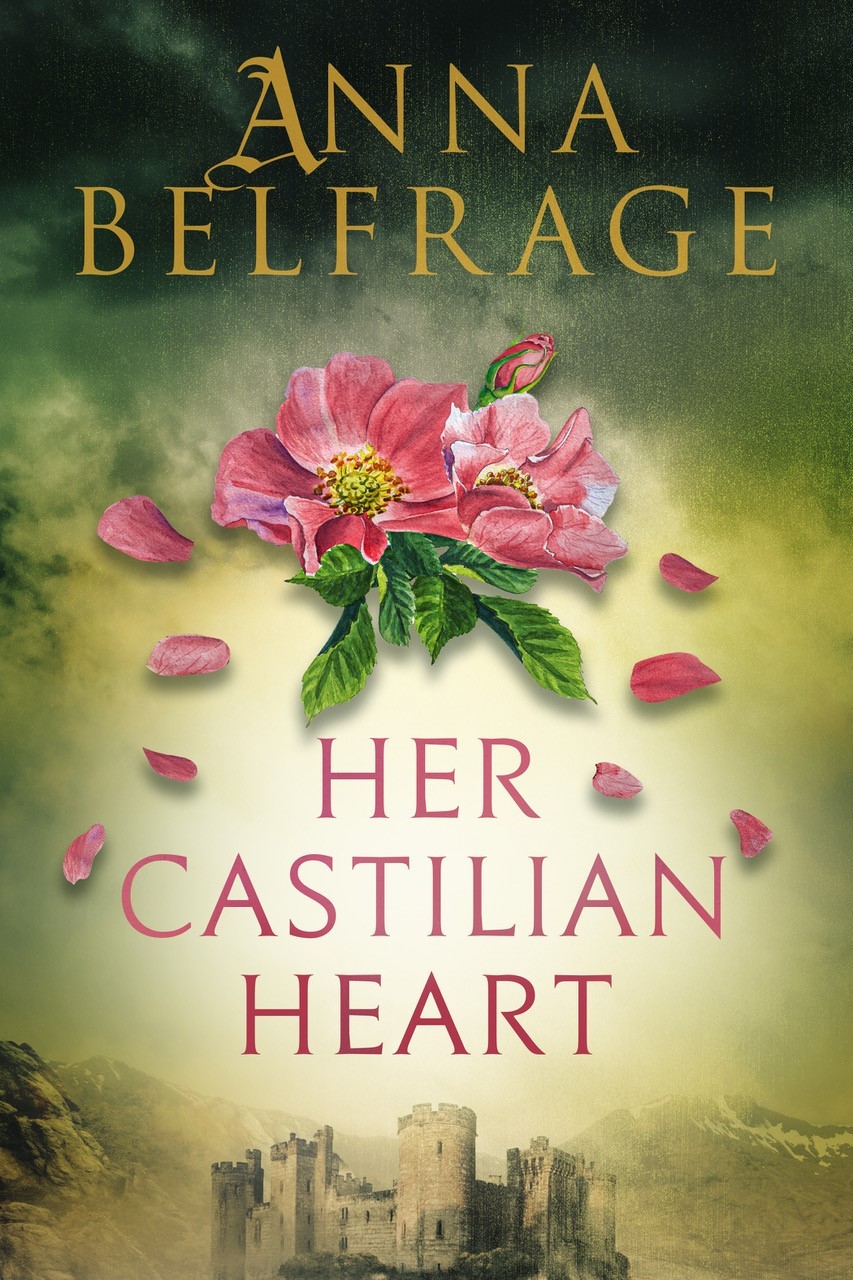
Book Corner: Her Castilian Heart by Anna Belfrage

Blood is not always thicker than water…

At times a common bloodline is something of a curse—or so Robert FitzStephan discovers when he realises his half-brother, Eustace de Lamont, wants to kill him.  

A murderous and greedy brother isn’t Robert’s only challenge.  He and his wife, Noor, also have to handle their infected relationship with a mightily displeased Queen Eleanor—all because of their mysterious little foundling whom they refuse to abandon or allow the queen to lock away.

Eustace is persistent. When Robert’s life hangs in the balance, it falls to Noor to do whatever it takes to rip them free from the toothy jaws of fate. Noor may be a woman, but weak she is not, and in her chest beats a heart as brave and ferocious as that of a lioness. But will her courage be enough to see them safe?

Her Castilian Heart by Anna Belfrage is yet another fast-paced adventure that is impossible to put down. I read it in 3 days!

Her Castilian Heart is the third in the series, set in the reign of Edward I, which follows Robert FitzStephan, an illegitimate son of a lord who has risen on his own merit to become a knight and landowner. He is married to the incomparable Noor, a relative of the queen, Eleanor of Castile. After being exiled to Spain for a short period, Noor and Robert are back in England, facing the anger and suspicions of the queen, and the jealousy of Robert’s brother.

As ever, Anna Belfrage has woven a tale of love, betrayal and intrigue that will leave the reader absorbed from beginning to end. Set with the backdrop of border skirmishes with Wales and the queen’s failing health, Noor and Robert are once again forced to negotiate the English court and its rivalries, intrigues and jealousies.

At present, she did not look much like a mother or wife: her hair had escaped its braid and the confines of the veil, long dark locks floating round her face. There was a smudge of something on her nose – ointment, he’s hazard, given the fragrance – and her brown skirts were covered with straw. He reached over and stroked her cheek with his maimed hand. She leaned into his touch, half closing her eyes.

‘Why is he here?’ she asked, moving close enough that she could stand on her toes and kiss his cheek.

‘Why?’ To drag me along to Wales.’

‘Now?’ She frowned. ‘This time of the year?’

‘I’ve campaigned during the winter before.’ He tapped her nose. ‘I’ll survive.’

She paled, and he regretted his choice of words.

‘It is a scouting expedition.’ he said. ‘We will keep to the shadows.’ He did not quite believe that. The moment Rhys of Maredudd had decided to raise the banners of rebellion yet again instead of disappearing into a hole somewhere, he’d effectively unleashed the vindictive rage of the English king. There’d be little scouting, more killing, as they encircled the rebel.

She snorted. ‘Mortimer is about as adept at staying in the shadows as I am at swimming.’

As his wife did not know how to swim, that was not an accolade. But it made him smile. He shook his head at her. ‘Roger is quite skilled at melting into the background when it suits him.’

‘Hmph! Then he can go himself.’

‘The king requires I accompany him.’ And as the king’s knight, Robert could not deny him.

‘The king is here? In England?’

He heard the quaver in her voice. Once the king and queen were back, there would be no putting off the audience with the queen, and they both feared Queen Eleanor’s reaction to the fact that they’d returned without that jewel she so desired. Or abandoning their foster son in foreign lands as instructed, but hopefully she’d never find that out. Upon returning home, Robert had sent an extensive account of their time abroad to the king, and despite being home for a year, he’d not heard from his liege until now, and then only indirectly via Roger Mortimer.

‘He remains in Gascony.’

Anna Belfrage’s storytelling is second-to-none and her research impeccable. She transports the reader to the court of Edward I, to the Europe of the 13th century. Meticulously recreating the sights, sounds and smells of the era, Anna rebuilds a lost world and immerses the reader entirely within its confines.

Her characters are full of life and vigour, having an energy of their own. They are not untouched by events, and grow and mature through their experiences. Neither Noor nor Robert forget the past and this informs their future. Anna Belfrage has created a hero and heroine that the reader can relate to, and empathise with.

Her Castilian Heart by Anna Belfrage will leave the reader breathless!

Anna Belfrage is a wonderful storyteller. She draws you into the book from the very first page, takes hold of your emotions, twists them around, puts them through the ringer and then – maybe – gives them back to you, battered, bruised and in tears. And you’ll want to go back for more! What an incredible experience!

*

To buy the book:

Her Castilian Heart is available now from: http://myBook.to/HEART

About the author:

Had Anna been allowed to choose, she’d have become a professional time-traveller. No luck there, so instead she became a financial professional with two absorbing interests; history and writing. These days, Anna combines an exciting day-job with a large family and her writing endeavours. Plus she always finds the time to try out new recipes, chase down obscure rose bushes and initiate a home renovation scheme or two.

Anna has authored the acclaimed time travelling series The Graham Saga , set in 17th century Scotland and Maryland, as well as the equally acclaimed medieval series The King’s Greatest Enemy.

Anna has also published The Wanderer, a fast-paced contemporary romantic suspense trilogy with paranormal and time-slip ingredients. Her September 2020 release, His Castilian Hawk is a story of loyalty and love set against the complications of Edward I’s invasion of Wales in the late 13th century.

Her most recent release, The Whirlpools of Time , is a time travel romance set against the backdrop of brewing rebellion in the Scottish highlands.

All of Anna’s books have been awarded the IndieBRAG Medallion, she has several Historical Novel Society Editor’s Choices, and one of her books won the HNS Indie Award in 2015. She is also the proud recipient of several Reader’s Favorite medals as well as having won various Gold, Silver and Bronze Coffee Pot Book Club awards.

Find out more about Anna, her books and enjoy her eclectic historical blog on her website, www.annabelfrage.com 

Social Media Links:

Website: www.annabelfrage.com; Amazon Author Page: http://Author.to/ABG; Twitter: https://twitter.com/abelfrageauthor; Book Bub: https://www.bookbub.com/profile/anna-belfrage; Instagram: https://instagram.com/annabelfrageauthor; Facebook: https://www.facebook.com/annabelfrageauthor; Goodreads: https://www.goodreads.com/author/show/6449528.Anna_Belfrage

*

My Books:

Signed, dedicated copies of all my books are available, please get in touch by completing the contact me form.

Defenders of the Norman Crown: The Rise and Fall of the Warenne Earls of Surrey tells the fascinating story of the Warenne dynasty, of the successes and failures of one of the most powerful families in England, from its origins in Normandy, through the Conquest, Magna Carta, the wars and marriages that led to its ultimate demise in the reign of Edward III. Defenders of the Norman Crown: Rise and Fall of the Warenne Earls of Surrey is now available from Pen & Sword Books, Amazon in the UK and US, Bookshop.org and Book Depository.

1 family. 8 earls. 300 years of English history!

Also by Sharon Bennett Connolly:

Ladies of Magna Carta: Women of Influence in Thirteenth Century England looks into the relationships of the various noble families of the 13th century, and how they were affected by the Barons’ Wars, Magna Carta and its aftermath; the bonds that were formed and those that were broken. It is now available in paperback and hardback from Pen & Sword,  Amazon, Bookshop.org and from Book Depository worldwide.

Heroines of the Medieval World tells the stories of some of the most remarkable women from Medieval history, from Eleanor of Aquitaine to Julian of Norwich. Available now from Amberley Publishing and Amazon, Bookshop.org and Book Depository.

Silk and the Sword: The Women of the Norman Conquest traces the fortunes of the women who had a significant role to play in the momentous events of 1066.  Available now from Amazon,  Amberley Publishing, Bookshop.org and Book Depository.

Alternate Endings: An anthology of historical fiction short stories including Long Live the King… which is my take what might have happened had King John not died in October 1216. Available in paperback and kindle from Amazon.

*

You can be the first to read new articles by clicking the ‘Follow’ button, liking our Facebook page or joining me on Twitter and Instagram.

*

©2022 Sharon Bennett Connolly, FRHistS

Guest Post: Alice Perrers, from Goldsmith’s Daughter to Lady of the Sun by Gemma Hollman

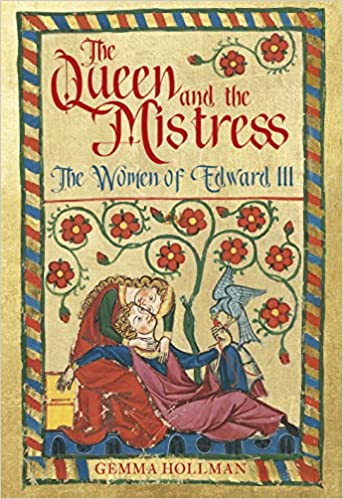
Today it is an absolute pleasure to welcome author and historian Gemma Hollman to History…the Interesting Bits as a stop on her blog tour for her latest book. The Queen and the Mistress: The Women of Edward III is a fascinating dual biography of Philippa of Hainault, queen of Edward III, and Alice Perrers, the king’s mistress.

Alice Perrers: From Goldsmith’s Daughter to Lady of the Sun

King Edward III

In the medieval period, a popular image came to be used to describe human life and society: that of the Wheel of Fortune. The idea was that the ancient goddess Fortuna was in control of a wheel which she would spin. People sat at various points on the wheel, and as Fortuna turned the wheel people would rise up to great heights, or drop to great lows. Medieval writers became enamoured with the symbolism of great people having a great fall because of the spinning of Fortune’s Wheel. One fourteenth-century courtier who epitomised the wheel was a woman named Alice Perrers, who was lucky enough to rise higher than her contemporaries could have imagined – but who also spun back down again.

Alice Perrers has been an enigma for centuries. Even many of her contemporaries did not really know who she was or where she came from, with chroniclers like Thomas Walsingham of St Albans Abbey making disparaging guesses to her lowly origins. Recent research has shown that Alice most likely came from a goldsmithing family in London, and so whilst she was not close to the upper echelons of society, when looking at the country as a whole she would have had a reasonable upbringing. The merchant classes had seen an upturn in their wealth during the reign of Edward III, who had been on the throne officially since 1327, and so Alice’s family probably enjoyed the benefits of this.

As the daughter of a trade family, Alice may have had some basic education, and her life initially followed the path of the majority of women of her time. She was married off, likely as a teenager, to another London goldsmith, and the couple found further wealth through the favour of the king; her husband was known to have supplied jewels to Edward III himself. But soon, Alice’s life took a turn when her husband died. The couple had no children, and her future was uncertain. Prospects for young widows were not always promising.

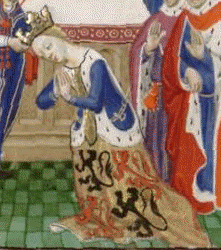
Queen Philippa of Hainault

Here, Fortuna turned her wheel and set Alice onto the path of greatness. She somehow found her way to court, in one of the most coveted positions in the kingdom as she became a damsel to Edward III’s wife, Queen Philippa of Hainault. Alice was catapulted into the wealth and glamour of the English monarchy. The court was filled with many of the greatest nobles of the period, including at times the captured French king, and it was a place filled with feasting, jousting, jewels, music, and writing. As one of the queen’s damsels, Alice had a place at centre stage to all that was going on. She would accompany the queen as she travelled across her various castles and attended events, and she was entitled to luxurious clothes. It must have seemed like life could not get better.

But Alice was an intelligent, ambitious, shrewd woman. Not content to simply receive the gifts afforded to her as a lady-in-waiting, Alice started to build up connections at court. She wined and dined with many powerful knights, merchants, and members of the nobility. She began to lend money and make property deals, extracting favourable terms for herself. Soon she had pieces of land of her own – quite a feat for a single woman of her status. But that was not all that Alice had obtained at court, for she had caught the eye of the king himself. Soon, a relationship began between them.

Edward III had been a loyal husband to his wife for over 30 years, but by the 1360s Philippa was severely unwell. It was clear she was not going to live for many more years, and this may have provided the impetus for Edward’s eyes to wander. Alice was a perfect choice for him. Young, likely beautiful, headstrong, it is easy to see why Edward found her attractive. But Edward had spent decades cultivating an image as a loyal, family man, and so the couple did their best to keep their relationship secret. If nothing else, to save the queen public humiliation.

The secrecy did not dampen their relationship, and within a few years Alice had given birth to 3 children with the king. At the end of the decade, the great queen died, and it was not long before Alice shifted to a more prominent place at court. Soon everybody knew that Alice had the king’s heart – and with it, a significant share of power. People were soon rushing to Alice to obtain favours with the king, offering her pieces of property and whatever else they thought she might like in the hope she may get them something in return. Even the Pope petitioned this mistress for help.

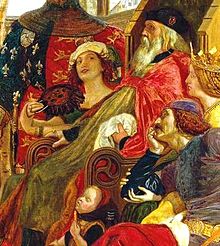
Alice Perrers and Edward III, painted by Ford Maddox Brown

As the 1370s wore on, Alice rose to the greatest heights of the wheel, almost taking on the position of unofficial queen. During the king’s jubilee year, Alice took centre stage in celebrations dressed as the Lady of the Sun. But as medieval writers loved to point out, the wheel also was fond of dropping people into a fall, and so too was this to happen to Alice. Eventually, the men at court got fed up with the undue influence of Alice and her friends on the king. They felt that those of old noble blood should be the only ones to advise the king, and finally the knights of the land gathered together at the Good Parliament to end their evil influence once and for all. Alice was banished from the king’s presence, and after his death the full weight of the law came for her. She was banished further – this time from the entire kingdom of England – and all of her hard-earned lands, jewels, and goods were taken from her.

But Alice was clever, and she had made contingency plans. She knew that her presence at court grated on those around her, and she had found powerful allies. It emerged that she had undertaken a secret marriage to a powerful knight, and he wasn’t going to give up Alice’s wealth. The couple fought for years to obtain the return of Alice’s possessions, and it was a fight that she carried with her to her death. Many of Alice’s female contemporaries had two paths in life: marriage or a nunnery. But Alice chose to forge one of her own, that of mistress and a powerful single woman. Was she as evil as her later reputation suggested? Or was there something more underneath the surface?

*

About the book:

IN A WORLD WHERE MAN IS KING, CAN WOMEN REALLY HAVE IT ALL – AND KEEP IT?

Philippa of Hainault was Queen of England for forty-one years. Her marriage to Edward III, when they were both teenagers, was more political transaction than romantic wedding, but it would turn into a partnership of deep affection. The mother of twelve children, she was the perfect medieval queen: pious, unpolitical and fiercely loyal to both her king and adopted country.

Alice Perrers entered court as a young widow and would soon catch the eye of an ageing king whose wife was dying. Born to a family of London goldsmiths, this charismatic and highly intelligent woman would use her position as the king’s favourite to build up her own portfolio of land, wealth and prestige, only to see it all come crashing down as Edward himself neared death.

The Queen and the Mistress is a story of female power and passion, and how two very different women used their skills and charms to navigate a tumultuous royal court – and win the heart of the same man.

To buy the book: Amazon

About the author:

Gemma Hollman is a historian and author who specialises in late medieval English history. A Fellow of the Royal Historical Society, her first book ‘Royal Witches’ was published in 2019 and her second book ‘The Queen and the Mistress’ will be released in November 2022. She has a particular interest in the plethora of strong, intriguing and complicated women from the medieval period, a time she had always been taught was dominated by men.

Gemma also works full-time in the heritage industry whilst running her historical blog, Just History Posts, which explores all periods of history in more depth.

*

My Books:

Signed, dedicated copies of all my books are available, please get in touch by completing the contact me form.

Defenders of the Norman Crown: The Rise and Fall of the Warenne Earls of Surrey tells the fascinating story of the Warenne dynasty, of the successes and failures of one of the most powerful families in England, from its origins in Normandy, through the Conquest, Magna Carta, the wars and marriages that led to its ultimate demise in the reign of Edward III. Defenders of the Norman Crown: Rise and Fall of the Warenne Earls of Surrey is now available from Pen & Sword Books, Amazon in the UK and US, Bookshop.org and Book Depository.

1 family. 8 earls. 300 years of English history!

Also by Sharon Bennett Connolly:

Ladies of Magna Carta: Women of Influence in Thirteenth Century England looks into the relationships of the various noble families of the 13th century, and how they were affected by the Barons’ Wars, Magna Carta and its aftermath; the bonds that were formed and those that were broken. It is now available in paperback and hardback from Pen & Sword, Amazon, Bookshop.org and from Book Depository worldwide.

Heroines of the Medieval World tells the stories of some of the most remarkable women from Medieval history, from Eleanor of Aquitaine to Julian of Norwich. Available now from Amberley Publishing and Amazon, Bookshop.org and Book Depository.

Silk and the Sword: The Women of the Norman Conquest traces the fortunes of the women who had a significant role to play in the momentous events of 1066.  Available now from Amazon,  Amberley Publishing, Bookshop.org and Book Depository.

Alternate Endings: An anthology of historical fiction short stories including Long Live the King… which is my take what might have happened had King John not died in October 1216. Available in paperback and kindle from Amazon.

*

You can be the first to read new articles by clicking the ‘Follow’ button, liking our Facebook page or joining me on Twitter and Instagram.

©2022 Sharon Bennett Connolly FRHistS

Book Corner: Edward I’s Regent by Michael Ray

Born at Christmas 1249 to Richard, Edmund of Cornwall was nephew to Henry III and cousin to Edward I. His eventful childhood took him to Germany when his father was elected king there. He was captured at the battle of Lewes and imprisoned for more than a year. Returning from crusade, he witnessed the brutal murder of his half-brother, which left him as heir to his father, the richest man in the kingdom. Throughout his life, Edmund played a crucial role in medieval England. As Regent of England, Earl of Cornwall and the richest man in the land, he was a leading force of the late-thirteenth century. This book considers Edmund’s life, his use of his wealth to lend to the king and others and to be a major benefactor of religious houses. His piety saw him found two new religious houses, rebuild another and bring the Holy Blood relic from Germany to Hailes abbey. His record as Regent of England for three years is assessed. The wide spread of his lands, which included 13castles and more than 800 places in 27 counties, and his tenants are set out as is his place in the local community. The basis of his wealth and its sources, including money from his lands but also from tin mining and marine dues in Cornwall, is explored and his knightly affinity and his close associates and officials are considered. On a personal level, the book examines his unsuccessful, childless marriage with the sister of the Earl of Gloucester. Edmund was a key figure throughout Edward I’s rein and the late-thirteenth century. In this insightful account, the man behind England’s ‘greatest king’ is at long last brought to the fore.

Edward I’s Regent: Edmund of Cornwall, The Man Behind England’s Greatest King by Michael Ray is a fascinating study of a little-known but highly significant noble of the reign of Edward I. Edmund of Cornwall was the son of Richard, Earl of Cornwall. Richard was the younger son of King John and Isabelle d’Angoulême, and brother to King Henry III. The second son of Richard of Cornwall, Edmund’s mother was Sanchia of Provence, younger sister of Henry III’s queen, Eleanor of Provence. Edmund may ever have become Earl of Cornwall, had his older brother, Henry of Almain, not been murdered by Guy de Montfort, son of the famous Simon de Montfort, in a church in Viterbo, Italy, in 1271.

With such a dramatic inheritance, it is no surprise that Edmund’s life and deeds were no less dramatic.

I do like this new tendency to look away from England’s monarchs and turn the spotlight on those who served them. It gives a more rounded approach to history and historical biography and greatly illuminates the reigns of the kings who are served. It also demonstrates how much is still left to study in history and how wide and deep historians can go in order to gain a greater understanding of the rule of medieval kings. The relationship between baron and king was, more often than not, one of mutual trust and reliance. Edward I’s Regent: Edmund of Cornwall, The Man Behind England’s Greatest King by Michael Ray serves to demonstrate just how deep and essential this relationship was.

On 29 November and December 1272, Edmund and Bishop Giffard sent letters requiring Llywelyn to come to the Ford of Montgomery, the traditional place for meetings between the English and Welsh rulers, to render his homage to the new monarch and to send the 3,000 marks he owed to the King by Christmas at the latest. The King needed the money for his crusade. Llywelyn neither came nor paid and the impasse continued until well after the new King’s return.

Meanwhile neither Edmund, or his officials, were not always well-behaved in the land of the absentee King. In January 1273, Edmund’s men were accused of occupying lands belonging to Peter de la Mare which led to the Chancellor, Walter de Merton, ordering the escheator to remedy the position. Despite this, in June, Edmund was still being obstructive. A long-running dispute with the Bishop of Exeter led to a threat of excommunication. Even though Edmund was at the heart of government, he was pursued by the Exchequer over his father’s debts. However, this did not prevent Edmund from being amongst those ready to go to France to meet and welcome back Edward I. Edmund was granted protection until August 1273 but he was still in Paris in December when he received 2,000 marks from the King. Whilst Edward I did not finally arrive back in England until 2 August 1274, it seems likely that Edmund had already returned as he asked Robert Burnell to summon a council in March. Edmund was present at the King’s coronation on 19 August 1274.

From the start of the reign, tasks were entrusted to Edmund by the King. At the beginning of 1275 Edmund was ready to resolve a dispute with Flemish merchants but was unable to act as the Count of Flanders had not sent a representative. In March, the King stayed at two of Edmund’s manors, Cippenham and Risborough in Buckinghamshire, and it can be assumed that Edmund was present. The first of many royal charters to be witnessed by Edmund was attested at Westminster on 22 October 1274.

Edward I’s Regent: Edmund of Cornwall, The Man Behind England’s Greatest King by Michael Ray is an in-depth study of a man who was an integral part of Edward I’s government, but whose life and career has often been overlooked. Michael Ray expertly examines every aspect of Edmund’s life and career in great detail. With the use of chronicles and charter evidence, the author demonstrates the extent to which Edmund of Cornwall was an integral part of Edward I’s administration and court,, both as a cousin to the king, an administrator and a soldier.

Thoroughly researched and with extensive footnotes and bibliography, this is an excellent book in every way. t is a pleasure to read.

Edward I’s Regent: Edmund of Cornwall, The Man Behind England’s Greatest King by Michael Ray is an eminently readable book that could only be an asset to the study of medieval history and the reign of Edward I in particular. Whether you are studying medieval history for academia or simply as a hobby, this is a book which is not to be missed. I can highly recommend it.

To buy the book:

Edward I’s Regent: Edmund of Cornwall, The Man Behind England’s Greatest King by Michael Ray is available in hardback and Kindle from Pen & Sword Books and Amazon.

About the author:

After school in Shropshire, Michael Ray read geography and town planning at King’s and University Colleges, London. Retiring early from a planning career, he returned to KCL and obtained a PhD after a study of aliens in thirteenth-century England. He has since been published in books, journals and on websites including Academia.

My Books:

Signed, dedicated copies of all my books are available, please get in touch by completing the contact me form.

Defenders of the Norman Crown: The Rise and Fall of the Warenne Earls of Surrey tells the fascinating story of the Warenne dynasty, of the successes and failures of one of the most powerful families in England, from its origins in Normandy, through the Conquest, Magna Carta, the wars and marriages that led to its ultimate demise in the reign of Edward III. Defenders of the Norman Crown: Rise and Fall of the Warenne Earls of Surrey is now available from Pen & Sword Books, Amazon in the UK and US, Bookshop.org and Book Depository.

1 family. 8 earls. 300 years of English history!

Also by Sharon Bennett Connolly:

Ladies of Magna Carta: Women of Influence in Thirteenth Century England looks into the relationships of the various noble families of the 13th century, and how they were affected by the Barons’ Wars, Magna Carta and its aftermath; the bonds that were formed and those that were broken. It is now available in paperback and hardback from Pen & Sword,  Amazon, Bookshop.org and from Book Depository worldwide.

Heroines of the Medieval World tells the stories of some of the most remarkable women from Medieval history, from Eleanor of Aquitaine to Julian of Norwich. Available now from Amberley Publishing and Amazon, Bookshop.org and Book Depository.

Silk and the Sword: The Women of the Norman Conquest traces the fortunes of the women who had a significant role to play in the momentous events of 1066.  Available now from Amazon,  Amberley Publishing, Bookshop.org and Book Depository.

Alternate endings: An anthology of historical fiction short stories including Long Live the King… which is my stake what might have happened had King John not died in October 1216. Available in paperback and kindle from Amazon.

*

You can be the first to read new articles by clicking the ‘Follow’ button, liking our Facebook page or joining me on Twitter and Instagram.

*

©2022 Sharon Bennett Connolly FRHistS.

Book Corner: Lord of the Eyrie by Katerina Dunne

Love, War, and the Price of Loyalty

Transylvania, Kingdom of Hungary, 1440:

Finally home after five years away, warrior-nobleman Sándor Szilágyi is met by a dying father, a resentful younger brother, his child-bride all grown up and the family estate raided by the Ottomans. As he struggles to adjust to life as a landlord, Sándor’s authority is challenged by two strong-minded and fearless women: Margit, his faithful and righteous wife, determined to keep him on the straight and narrow; and Anna, his sister-in-law, a scheming temptress bent on ruining him in order to take his land.

After committing a mortal sin and desperate to win back the woman he loves, Sándor seeks absolution by accepting his overlord’s summons to fight the Ottomans. But his obsession with war will lead him down a perilous path.

Loyalties are tested, danger lurks around every corner, and Sándor’s struggle to balance his duty to protect his land and family from his relatives’ greedy hands, as well as his duty to defend his country on the battlefield, will come at a terrible cost.

Lord of the Eyrie by Katerina Dunne is a fabulous adventure set in medieval Hungary. It has all the ingredients for an exciting novel; love, betrayal, war and family disharmony. And it all combines to create a memorable story that will have the reader on the edge of their seat throughout.

I have to admit, I don’t think I’ve ever read a book set in Hungary before, so this was a refreshing change for me. Of course, it is still set in medieval times, so the weaponry, tactics and societal laws were still very familiar. I wasn’t familiar with Hungary’s role in medieval Europe, nor in her battles against the outside forces eager to trespass into the country’s vast landscape. Reading Lord of the Eyrie was as much an adventure for me as the story was for the characters involved. And it was a wonderful adventure.

Katerina Dunne has woven a beautiful story, built on remarkable characters and a lead protagonist for whom honour and duty is second nature. The story is fast-paced and entirely unpredictable, with many twists and turns that leave the reader shouting at the book when a character is being naive, or crying when tragedy strikes.

Margit’s keys and gilded prayer book jingled as she hurried back from church along the colonnaded portico of the great hall. The morning mass always felt too long to her, and she was looking forward to breaking her fast. But that would have to wait. Lajos Kendi stood at the entrance to the keep. His flushed and sweaty face, dishevelled eyebrows and raspy breath indicated that something was amiss.

He took his hat off and bowed to her. “I’ve bad news, my lady. I must speak with your husband, but I can’t find him anywhere. Was he in church with you? Is he still in the chapel?”

“No. I have not seen him.” Margit pondered. “Perhaps he is in the armoury building, practising with the soldiers. Let us go and look for him.”

She sent her maid to the house to supervise the preparation of the breakfast table and followed Kendi to the exercise hall. Their arrival did not alert the soldiers and knights for the thick layer of hay on the floor muffled their footsteps.

In the middle of the hall, Sándor, venturing to teach his brother how to defend himself with a sword and shield against multiple attackers, was engaging in a fight against not one, but three opponents.

He was wearing only his joined hose and a shirt, unlaced at the front and with the sleeves rolled up. Despite his height, he moved with the nimbleness of a lynx, shouting instructions at his training partners and showing off his combat skills and physical strength.

Margit’s jaw dropped. Her pulse quickened, and her breath became short and shallow. How could she forget that women were not allowed in the training hall? As it was a warm day, her husband was not the only one who had stripped down to his undergarments. Although the men did not seem troubled by her presence, she flushed and dropped her gaze to the floor.

“My lord!” Lajos called out.

Sándor stopped, and so did the soldiers. He tossed down the wooden sword and shield and approached Kendi and Margit. “Whats’ the matter?”

Kendi glanced about to make sure that no one was listening. He spoke in a whisper. “We’ve a problem at the mine.”

Lord of the Eyrie is set in medieval Hungary, a land which Katerina Dunne recreates in astonishing detail. The landscape, the settlements, castles and people help to draw the reader into the story. Hungary is a land rich in resources but beset by enemies, both within and without, and the hero, Sándor, must navigate not only national politics, international enemies but also his own family tensions. It is a wonderful, rich and absorbing story.

Lord of the Eyrie is a thoroughly entertaining read, one that will keep you gripped to the very end. You will find yourself invested in the characters, in tears at times and hesitant to read on when disaster strikes. But you cannot let go!

Lord of the Eyrie will take you through the full range of emotions.

The family drama, the battle scenes and the intricately woven plotlines all serve to keep the reader wanting more. It was an absolute pleasure to read.

I do hope there is a book 2!

To buy the book:

Lord of the Eyrie by Katerina Dunne is now available on Amazon.

About the author:

Katerina Dunne is the pen-name of Katerina Vavoulidou. Originally from Athens, Greece, Katerina has been living in Ireland since 1999. She has a degree in English Language and Literature from the University of Athens, an MA in Film Studies from University College Dublin and an MPhil in Medieval History from Trinity College Dublin. While she used to write short stories for family and friends in her teenage years, she only took up writing seriously in 2016-17, when she started work on her first novel.

Katerina’s day job is in financial services, but in her free time she enjoys reading historical fiction and watching historically-themed movies and TV series. She is passionate about history, especially medieval history, and her main area of interest is 13th to 15th century Hungary. Although the main characters of her stories are fictional, Katerina uses real events and personalities as part of her narrative in order to bring to life the fascinating history of the medieval Kingdom of Hungary, a location and time period not so well-known to English-speaking readers.

For any comments or further information, you can contact Katerina by email: katerinadunnewriter@gmail.com

*

My Books:

Signed, dedicated copies of all my books are available, please get in touch by completing the contact me form.

Defenders of the Norman Crown: The Rise and Fall of the Warenne Earls of Surrey tells the fascinating story of the Warenne dynasty, of the successes and failures of one of the most powerful families in England, from its origins in Normandy, through the Conquest, Magna Carta, the wars and marriages that led to its ultimate demise in the reign of Edward III. Defenders of the Norman Crown: Rise and Fall of the Warenne Earls of Surrey is now available from Pen & Sword Books, Amazon in the UK and US, Bookshop.org and Book Depository.

1 family. 8 earls. 300 years of English history!

Also by Sharon Bennett Connolly:

Ladies of Magna Carta: Women of Influence in Thirteenth Century England looks into the relationships of the various noble families of the 13th century, and how they were affected by the Barons’ Wars, Magna Carta and its aftermath; the bonds that were formed and those that were broken. It is now available in paperback and hardback from Pen & Sword,  Amazon, Bookshop.org and from Book Depository worldwide.

Heroines of the Medieval World tells the stories of some of the most remarkable women from Medieval history, from Eleanor of Aquitaine to Julian of Norwich. Available now from Amberley Publishing and Amazon, Bookshop.org and Book Depository.

Silk and the Sword: The Women of the Norman Conquest traces the fortunes of the women who had a significant role to play in the momentous events of 1066.  Available now from Amazon,  Amberley Publishing, Bookshop.org and Book Depository.

*

You can be the first to read new articles by clicking the ‘Follow’ button, liking our Facebook page or joining me on Twitter and Instagram.

*

©2022 Sharon Bennett Connolly.

Book Corner: Femina by Janina Ramirez

The middle ages are seen as a bloodthirsty time of Vikings, saints and kings: a patriarchal society which oppressed and excluded women. But when we dig a little deeper into the truth, we can see that the ‘dark’ ages were anything but.

Oxford and BBC historian Janina Ramirez has uncovered countless influential women’s names struck out of historical records, with the word FEMINA annotated beside them. As gatekeepers of the past ordered books to be burnt, artworks to be destroyed, and new versions of myths, legends and historical documents to be produced, our view of history has been manipulated.

Only now, through a careful examination of the artefacts, writings and possessions they left behind, are the influential and multifaceted lives of women emerging. Femina goes beyond the official records to uncover the true impact of women like Jadwiga, the only female King in Europe, Margery Kempe, who exploited her image and story to ensure her notoriety, and the Loftus Princess, whose existence gives us clues about the beginnings of Christianity in England. See the medieval world with fresh eyes and discover why these remarkable women were removed from our collective memories.

When I wrote Heroines of the Medieval World five years ago, I said at the time that it was a book that needed to be written – I just wasn’t sure if I was the person to write it. If I had been asked who should write it, one of the top names on my list would have been Janina Ramirez. So I was not surprised when I discovered that Janina had written a book on medieval women, Femina: A New History of the Middle Ages, Through the Women Written Out of It.

I admit I was a little worried that Femina would make my Heroines obsolete or redundant, but I probably shouldn’t have been. After all, every writer has their own style and approach and every book – even if on the same topic – is written differently. And while the two books do overlap in places, we do not always reach the same conclusion and they really would complement each other on a book shelf (hint, hint!).

Femina: A New History of the Middle Ages, Through the Women Written Out of It looks at some of the most remarkable women of the medieval period, including two women you will be familiar with if you have read Heroines of the Medieval World, Æthelflæd, Lady of the Mercians and Jadwiga, ‘King’ of Poland. And the chapter on Jadwiga is particularly illuminating as Dr Ramirez applies her background in Art History to the symbolism and significance of Jadwiga’s reign, both on a political and spiritual level.

Janina Ramirez also provides great insight in to Emma of Normandy, who I looked at in detail for my own book, Silk and the Sword: the Women of the Norman Conquest. Study is even made of Ӕlfgyva, the mysterious woman in the Bayeux Tapestry, though Janina and I come to very different conclusions – and I would dearly love to have a face-to-face conversation with her to thrash out our theories. That would be fun!

Hild moved from Hartlepool to the site known then as Strenaeshalch and now as Whitby, in AD 657. Here she was granted land to build a double monastery where both men and women could learn the scriptures and dedicate themselves to a monastic life. And engraved stone slab commemorates her successor as abbess, Ælfflæd, and the use of the Latin script and alphabet supports Bede’s suggestion that Whitby was a centre of learning and literacy. But like at Hartlepool, finds from Hild’s abbacy include many luxuries such as decorative hairpins, golden book covers and even a comb with a runic inscription. Runes were the alphabet of the pre-Christian English, but the inscription is clearly Christian: My God. May God Almighty help Cy …’ Again, we find an object which links the Germanic warrior world to the new Christina one. Like Hild herself it straddles ideologies and a time of transition.

Hild was at the top of the tree in terms of influence in seventh-century Northumbria. Bede states that ‘even kings and princes sought and received her counsel’, and she acted as mentor to the daughter of Oswui, King of the Northumbrians from 642-670. What’s more, it was under her rule, in the monastery she founded herself, that the leaders of the English church gathered for the famous Synod of Whitby in AD 664. With Hild in charge of proceedings, the good and the great, representatives of Rome and Ireland, argued which traditions the Northumbrian church should follow. The result went the way of Rome. The variety and uniqueness of Celtic monasteries was lost to the rigour and routine of the Benedictine Rule, and monasticism in the north was transformed forever. For a woman to be involved in such high-level synodal processes is something extraordinary even today. It is also significant that five men who trained under Hild were all made bishops; if there were king-makers in the medieval world, then she was the bishop-maker. Whitby was the training ground for a new, Roman Christian, learned and respected English church. From Hild’s northern headland, educated men and women would stretch out the length and breadth of the country, assuming the very highest positions within churches and monasteries, including the archbishop of York. Hild’s influence would permeate the fabric of Christianity in this part of the world and its effects were felt down the centuries.

Femina: A New History of the Middle Ages, Through the Women Written Out of It is a fabulous study of a number of medieval women – and medieval woman in general. Dr Ramirez manages to combine what it was like to be a woman in medieval times, including their rights and the dangers they faced, such as childbirth, with the histories of particular women – and not always women you would expect to see in history book. The most fascinating chapter is that which is devoted to the Cathars, a religious sect much misunderstood and persecuted to extinction by the church. Janina Ramirez highlights not only their suffering and personal testimonies, but also the strength and respect that women held within the community. It truly is illuminating.

From warrior Viking women, to the successes of Æthelflæd and the excessive crying of Margery Kempe, Janina Ramirez shines a light on the lives and experiences of a huge variety of medieval women. Archaeological discoveries, religious artefacts and medieval artwork are used to describe and illuminate the world in which these women lived and died.

Femina: A New History of the Middle Ages, Through the Women Written Out of It is an engaging, entertaining read, with Janina Ramirez’s unique and wonderful take on medieval history. Introducing her vast knowledge of Art History into the mix adds vibrancy to the individual stories and brings these incredible women to life. Dr Ramirez is fabulous writer and communicator and takes the reader on an incredible journey of discovery through the medieval world. Her enthusiasm and fascination for the topic shines through on every page.

Femina: A New History of the Middle Ages, Through the Women Written Out of It by Janina Ramirez is truly a pleasure to read.

About the author:

Dr Janina Ramirez is a Sunday Times bestselling author, an Oxford lecturer, BBC broadcaster and researcher. She has presented and written over 30 hours of BBC history documentaries and series on TV and radio, and written five books for children and adults.

My books

Signed, dedicated copies of all my books are available, please get in touch by completing the contact me form.

Defenders of the Norman Crown: The Rise and Fall of the Warenne Earls of Surrey tells the fascinating story of the Warenne dynasty, of the successes and failures of one of the most powerful families in England, from its origins in Normandy, through the Conquest, Magna Carta, the wars and marriages that led to its ultimate demise in the reign of Edward III. Defenders of the Norman Crown: Rise and Fall of the Warenne Earls of Surrey is now available from Pen & Sword Books, Amazon in the UK and US, Bookshop.org and Book Depository.

1 family. 8 earls. 300 years of English history!

Also by Sharon Bennett Connolly:

Ladies of Magna Carta: Women of Influence in Thirteenth Century England looks into the relationships of the various noble families of the 13th century, and how they were affected by the Barons’ Wars, Magna Carta and its aftermath; the bonds that were formed and those that were broken. It is now available in paperback and hardback from Pen & Sword,  Amazon, Bookshop.org and from Book Depository worldwide.

Heroines of the Medieval World tells the stories of some of the most remarkable women from Medieval history, from Eleanor of Aquitaine to Julian of Norwich. Available now from Amberley Publishing and Amazon, Bookshop.org and Book Depository.

Silk and the Sword: The Women of the Norman Conquest traces the fortunes of the women who had a significant role to play in the momentous events of 1066.  Available now from Amazon,  Amberley Publishing, Bookshop.org and Book Depository.

*

You can be the first to read new articles by clicking the ‘Follow’ button, liking our Facebook page or joining me on Twitter and Instagram.

©2022 Sharon Bennett Connolly

Guest Post: Researching the Life of Sir Walter Raleigh by Tony Riches

It is a pleasure to welcome author Tony Riches to History…the Interesting Bits today. Tony is a fabulous storyteller who has just released the final book in his Tudor Adventurers series.

We have had Sir Francis Drake, the Earl of Essex and now we have the remarkable story of Sir Walter Raleigh. Tony is here to tell us a little bit about his research in Raleigh: Tudor Adventurer.

Researching the life of Sir Walter Raleigh

Tudor adventurer, courtier, explorer and poet, Sir Walter Raleigh has been called the last true Elizabethan.

My books aim to be as factually accurate as possible, with the creative use of fiction reserved for breathing life into my characters, and adding a sense of the places where they lived. I like to spend the summer months visiting actual locations and tracking down primary sources. In the research for my new book, Raleigh – Tudor Adventurer, I also studied Raleigh’s surviving letters and papers.

Public Domain letter from Sir Walter Raleigh to Lady Elizabeth (Bess) Raleigh,
endorsed: “Sir W. Rawley to his wiefe.”

Raleigh was a prodigious letter writer, but his personal archive was scattered widely, with many of his papers thought to be lost. Fortunately, the late Tudor historians, Joyce Youings and Agnes Latham discovered over two hundred of Raleigh’s letters, and Agnes Latham also collected Raleigh’s poetry, adding her invaluable commentary.

As well as offering me an authentic sense of Raleigh’s ‘voice’, these letters were a great help in sorting out the often confusing timeline of events. I was of aware of Raleigh’s tendency to exaggerate, flatter and posture in his writing, but there is no better way to develop an understanding of his motives. Here is an example of a surviving letter from Raleigh to his wife, Bess, which shows how difficult they can be to transcribe.

The next main source of information on Raleigh’s life was the fascinating Folgerpedia resource, ‘The Elizabethan Court Day by Day,’ created by Marion E. Colthorpe. This searchable archive provided me with access to a wealth of invaluable details, and clues for deeper research. The archive began as an investigation into the people and places visited by Queen Elizabeth I on her ‘progresses’, and the entertainments presented before her. It gradually expanded to trace the whereabouts of the queen on every day throughout her long reign, what she was doing, often what she was saying, and who her companions were.

Raleigh’s cell in the Tower of London (author’s photo)

Finally, my travels have taken me to rural Devon and Dorset, and in Raleigh’s footsteps across the sea to Ireland, where I visited the city of Cork and the harbour of Youghal, where he was briefly Mayor and had a house named ‘Myrtle Grove. I also visited the Tower of London and the cell where Raleigh was imprisoned.

My research has revealed Sir Walter Raleigh’s strengths and weaknesses, as a courtier and failed politician, soldier and poet, a man ready to speak up for the poor and to honour his debts. My hope is that my new book, Raleigh – Tudor Adventurer, will help readers see beyond the myths and half-truths, and have a better understanding of the man who has been called the last true Elizabethan.

Reference:

‘The Elizabethan Court Day by Day,’ by Marion E. Colthorpe, is licensed under an Attribution-ShareAlike 4.0 International license,m and can be found at https://folgerpedia.folger.edu/The_Elizabethan_Court_Day_by_Day

Book Links:

Amazon US: https://www.amazon.com/dp/B09Z98J183

Amazon UK: https://www.amazon.co.uk/dp/B09Z98J183

Amazon CA: https://www.amazon.ca/dp/B09Z98J183

Amazon AU: https://www.amazon.com.au/dp/B09Z98J183

About the author:

Tony Riches is a full-time UK author of Tudor historical fiction. He lives with his wife in Pembrokeshire, West Wales and is a specialist in the lives of the early Tudors. As well as his new Elizabethan series, Tony’s historical fiction novels include the best-selling Tudor trilogy and his Brandon trilogy, (about Charles Brandon and his wives). For more information about Tony’s books please visit his website tonyriches.com and his blog, The Writing Desk and find him on Facebook and Twitter @tonyriches

*

My Books

Signed, dedicated copies of all my books are available, please get in touch by completing the contact me form.

Defenders of the Norman Crown: The Rise and Fall of the Warenne Earls of Surrey tells the fascinating story of the Warenne dynasty, of the successes and failures of one of the most powerful families in England, from its origins in Normandy, through the Conquest, Magna Carta, the wars and marriages that led to its ultimate demise in the reign of Edward III. Defenders of the Norman Crown: Rise and Fall of the Warenne Earls of Surrey is now available from Pen & Sword Books, Amazon in the UK and US, Bookshop.org and Book Depository.

1 family. 8 earls. 300 years of English history!

Also by Sharon Bennett Connolly:

Ladies of Magna Carta: Women of Influence in Thirteenth Century England looks into the relationships of the various noble families of the 13th century, and how they were affected by the Barons’ Wars, Magna Carta and its aftermath; the bonds that were formed and those that were broken. It is now available in paperback and hardback from Pen & Sword,  Amazon, Bookshop.org and from Book Depository worldwide.

Heroines of the Medieval World tells the stories of some of the most remarkable women from Medieval history, from Eleanor of Aquitaine to Julian of Norwich. Available now from Amberley Publishing and Amazon, Bookshop.org and Book Depository.

Silk and the Sword: The Women of the Norman Conquest traces the fortunes of the women who had a significant role to play in the momentous events of 1066.  Available now from Amazon,  Amberley Publishing, Bookshop.org and Book Depository.

*

You can be the first to read new articles by clicking the ‘Follow’ button, liking our Facebook page or joining me on Twitter and Instagram.

©2022 Sharon Bennett Connolly and Tony Riches

Ӕlfgyva: The Mysterious Woman in the Bayeux Tapestry

The Bayeux Tapestry is the famous pictorial depiction of the Norman Conquest of 1066, and of the events of the two years leading up to it. Commissioned in the 1070s, probably by Bishop Odo of Bayeux, rather than a woven tapestry, the work is in fact an embroidery. Started within ten years of the Norman Conquest it is a near-contemporary narrative of the events that changed England forever. It is told from the viewpoint of the victorious Normans, but with a sympathetic view of the English, at times. It begins in 1064 with Harold’s journey to Normandy, his meeting with Duke William and campaigning in Brittany, followed by the controversial oath-swearing; it then follows Harold’s return to England and his coronation following the death of Edward the Confessor, before concentrating on William’s preparations for invasion and the Battle of Hastings itself; the missing end panels may have included King William’s coronation.

As a prime example of how women have been given little or no part in the story of the Norman Conquest, out of 626 human figures, there are only three women who appear in the main narrative of the Bayeux Tapestry. One of these is easily identifiable as Edward the Confessor’s queen, Edith of Wessex, attending her husband on his deathbed. Another scene, as the Normans land on the shores of England, shows a woman and her child fleeing from a burning house, set alight by the invaders – possibly King Harold’s first wife, Edith Swanneck. The most intriguing woman in the Bayeux Tapestry, appears in one scene when Harold is in Normandy in 1064. She is identified as ‘Ӕlfgyva’, the name sewn into the tapestry above her head. However, the scene does not appear to be related in any way to the scenes either before or after and has therefore caused much discussion and theorising among historians.

Ӕlfgyva appears to be in a doorway, possibly as a suggestion that she was indoors, with a priest touching her cheek. Whether the touch is in admonishment or blessing is open to interpretation, some take it is a collaboration of some sort between the two. Written in Latin as ‘Ubi unus clericus et Ӕlfgyva’, the inscription simply reads, ‘Here a certain cleric and Ӕlfgyva’. Incomplete, the phrase fails to identify Ӕlfgyva or the priest, nor the context in which the two are together. In the borders, at Ӕlfgyva’s feet, is a naked man, imitating the stance of the cleric, perhaps placed there to indicate some kind of scandal associated with the lady.

As this is the only scene in the entire Bayeux Tapestry in which the woman is the leading character and considering that she is only one of three women depicted in the whole embroidery, the story which is depicted must be of some significance to the story of the Norman Conquest. But who was the mysterious Ӕlfgyva? Unfortunately, we are not without a substantial number of potential candidates who could be identified as Ӕlfgyva; Ӕlfgyva and its variants, Ӕlfgiva, Ӕlfgyfu, Ӕlfgifu and Elgiva, were popular names in England in the eleventh century. Indeed, Emma of Normandy’s name was changed to Ӕlfgifu on her marriage to King Ӕthelred II (often referred to as ‘the Unready’) and, just to make matters more confusing Ӕthelred’s first wife was also called Ӕlfgifu. Many historians have their own favourite theories for the identity of Ӕlfgyva; the numerous possible candidates include Emma herself, a sister of King Harold and the first, handfast wife of King Cnut. Each possibility comes with her own reasons for being the mysterious Ӕlfgyva, and her own claim for inclusion in the tapestry that tells the story of the Norman Conquest.

Several theories can be easily discounted. In the 18th century, it was suggested that ‘Ӕlfgyva’ translated to mean ‘queen’ and the image was therefore of a clerk informing Queen Matilda that King William had promised one of their daughters as a bride for Harold of Wessex. Of course, in 1064, Matilda was not queen, and so ‘Ӕlfgyva’ would have to translate as ‘duchess’.  In the 19th century, it was suggested that the scene depicted the daughter of Matilda and William being informed of her betrothal. This theory ignores the fact that Matilda and William did not have a daughter with the name Ӕlfgyva. A final, easily discounted theory is that the lady is Ealdgyth, Harold’s future queen, receiving the news of Harold’s rescue, either from the shipwreck or from the clutches of Count Guy of Ponthieu, by Duke William. This is meant to demonstrate Harold’s dishonesty in agreeing to marry a daughter of Duke William while he has a betrothed waiting at home. The fact is that there is no evidence that Harold was betrothed to Ealdgyth any earlier than late 1065 or early 1066. In fact, we do not know when Harold and Ealdgyth were betrothed or married, but it is likely to have happened shortly before, or during, his kingship, when he needed the support of the Earls Edwin and Morcar, Ealdgyth’s brothers. 

Ӕthelred II’s second wife is a candidate who does merit closer investigation. Emma of Normandy was the wife of Ӕthelred from the spring of 1002 until his death in 1016. In 1017, however, she married Ӕthelred’s nemesis and eventual successor, Cnut. Emma had three children by her first husband, Alfred, Edward and Goda, or Godgifu. She had three further children by King Cnut; Harthacnut, Gunhilda and an unnamed daughter who died as a child, aged 8. Emma’s name had been changed to Ӕlfgifu on her marriage to Ӕthelred and she was a prominent figure at the English court, having been crowned and anointed queen after the wedding ceremony. Emma gained even more prominence in the reign of King Cnut, who married her soon after he took the crown. Cnut appears to have trusted Emma a great deal and is known to have left his treasury with her, as did her son, Harthacnut.

As Cnut’s wife, Emma served to provide a link between Ӕthelred’s ancient dynasty of Wessex, dating back to King Alfred and beyond, and the new Danish dynasty of Cnut. As Cnut’s queen, until his death in 1035, her position appeared unassailable. That changed, however, when Cnut died and was succeeded by his sons as co-regents. With Harthacnut fighting in Denmark, Emma was left isolated and Harold I Harefoot moved against her. Emma was banished from England, and Harold seized control of the whole country. Following Harold’s death in 1040, Emma and her son returned unopposed and Harthacnut finally claimed the crown. Her triumph was short-lived, however, as Harthacnut collapsed and died at a wedding in 1042, and was replaced as king by his older, half-brother, Edward. Edward was also a son of Queen Emma, but his relationship with his mother was far less cordial. Having been exiled in Normandy for twenty-five years, while his mother sat beside Cnut on the English throne for much of that time, Edward held a great deal of resentment for his Emma.

Emma’s lands and property were all taken from her. The Dowager Queen’s close friend and advisor, Stigand, newly consecrated as bishop of East Anglia, shared in Emma’s disgrace and was stripped of office and ‘they took all that he had into their hands for the king, because he was nighest the counsel of his mother; and she acted as he advised, as men supposed’. Taken from the Anglo-Saxon Chronicle, this shows that Edward thought that Stigand had encouraged Emma in her perceived maltreatment of her only surviving son. It was probably as a result of this incident that various legends arose over Emma’s disgrace.

One story, appearing only two centuries later, suggested that Emma’s relationship with Bishop Stigand was far more than that of a queen and her advisor and that he was, in fact, her lover. The story continues that Emma chose to prove her innocence in a trial by ordeal, and that she walked barefoot over white-hot ploughshares. Even though the tale varies depending on the source, the result is the same; when she completed the ordeal unharmed, and was thus proven guiltless, she was reconciled with her contrite son, Edward. Emma appears to have never recovered fully from the depredations placed on her. Both she and Stigand seem to have been reconciled, to some extent, with Edward’s regime by 1044 but she never again enjoyed the status to which she had become accustomed during the reigns of Cnut and Harthacnut.

If Emma were the Ӕlfgyva/Ӕlfgifu of the Bayeux Tapestry, this story could well explain her inclusion, especially if the touch of the cleric in the Ӕlfgyva scene is that of a tender lover, rather than an admonishing priest. However, there are several reasons for discarding Emma as the candidate. The first instance of the story of Emma and Stigand as lovers appears two or three hundred years after her death, and there is no contemporary evidence of an affair that would have been the scandal of the decade, if not the century. Given that many of the chroniclers of the time were not averse to including such stories, it seems strange that they were all silent on the subject; unless, of course, the whole incident was a 14th century fabrication. Another argument against the theory is that Emma’s affair with Bishop Stigand, even in the unlikely event that it happened, would have had little bearing on the Norman Conquest, and would therefore be unlikely to merit inclusion in the Bayeux Tapestry.

Another leading possibility for the identity of the Ӕlfgyva of the Bayeux Tapestry is Ӕlfgifu of Northampton. Ӕlfgifu was the first wife of King Cnut, whom he had married as a handfast wife, in the Danish fashion rather than in a church. She was born around 990, into a prominent and influential Midlands family. It was possibly as a love-match, but also as part of the policy of Cnut’s father, King Sweyn Forkbeard, to establish himself in the midlands, that Ӕlfgifu was married to Cnut sometime between 1013 and 1016. The couple had two sons, Swein and Harold Harefoot. Swein would later be sent by his father to rule Norway, with his mother as regent, but was driven out by the Norwegians following years of misrule. He died in Denmark and Ӕlfgifu returned to England and her only surviving son, Harold I Harefoot who was crowned as sole king in 1037.

If Ӕlfgifu is the woman in the Bayeux Tapestry, then she is probably there in reference to a scandal that was spoken about even in her lifetime, in that Ӕlfgifu was so desperate to have a son by Cnut that she, with the help of a monk, passed off the new-born son a serving maid as her own child; Swein. Similar was said of Ӕlfgifu’s second son by Cnut, Harold I Harefoot, in the Anglo-Saxon Chronicle, which reported that, ‘some men said of Harold that he was son of King Cnut and Ӕlfgifu, daughter of Ealdorman Ӕlfhelm, but to many men it seemed quite unbelievable’. The scandalous stories arose after Cnut’s death in 1035, when Ӕlfgifu was back in England, working to establish the rule of her son, Harold Harefoot, as king. In another version of the tale, the monk had fathered the children himself. The stories may have been mere propaganda used to discredit Ӕlfgifu and cast doubts on the legitimacy of Harold and, therefore, his right to rule as Cnut’s successor.

The main question arising from the theory that Ӕlfgifu of Northampton is the Ӕlfgyva of the Bayeux Tapestry would be the relevance of a scandal that had arisen more than thirty years earlier. It has been argued that both William and Harold would view the scandal as propaganda, to discredit any claims by the Norwegians, such as Harald Hardrada, to the English throne. The naked men in the margins of the scene, one of whom is swinging an axe, are used as further evidence that it was Ӕlfgifu’s scandalous behavior to which the tapestry is referring. However, the fact that both of Ӕlfgifu’s sons died without heirs and that, therefore, there were no claimants descended from her to contest the throne in 1066, makes Ӕlfgifu’s inclusion – if, indeed it is Ӕlfgifu – rather redundant.  

My own leading candidate for Ӕlfgyva is a woman of a different name, but whose story included a scandal that would have been relevant to Harold of Wessex and his hostages. This lady was Eadgifu, or Eadgyva, who was Abbess of Leominster in 1046. Eadgifu’s story is told in the Anglo-Saxon Chronicle, when she came under the power of Swein Godwinson, oldest son of Earl Godwin and Countess Gytha. Swein, had been given an earldom made up from lands in Herefordshire, Gloucestershire, Berkshire, Oxfordshire and Somerset in 1043. In 1046 he had been campaigning in south Wales alongside Gruffydd, King of Gwynedd. The military campaign had ended successfully, with Swein receiving hostages for the good faith of the Welsh. On his return homeward, Swein stopped at Leominster, which was owned by the abbey of Leominster and administered by its abbess, Eadgifu. Swein abducted Eadgifu, probably in order to gain control of Leominster’s vast estates in Herefordshire. However, the king refused to give his permission for Swein and Eadgifu to marry; the pious King Edward the Confessor was understandably horrified at the idea of Swein marrying an abbess, a woman who had dedicated her life to God. Thwarted in his plans, Swein released Eadgifu after he had held her for some considerable time, possibly as long as a year.

As a result of his actions, which were considered not only criminal but sacrilegious in the eyes of the church, Swein was forced to flee England. A few months later, Swein returned to England, but was exiled again for the murder of his cousin, Beorn Estrithson. He was eventually forgiven and allowed to return home. When the feud between Earl Godwin’s family and the king arose in 1051, Earl Godwin and Swein were forced to give up hostages to the king, each handing over a son, Wulfnoth for Godwin and Hakon for Swein. Rather than face the witan, Godwin and his family chose to go into exile at the end on 1051 and only returned to England in the spring of 1052. Swein would never return as he had left on barefoot pilgrimage to Jerusalem and died on his homeward journey. The two hostages, however, were not restored to the family and are thought to have been sent to Normandy, possibly as a way to guarantee the future cooperation of the Godwin family.

It is possible that the union between Eadgifu and Swein resulted in a son, Hakon. It is not entirely certain that Hakon was the son of Eadgifu, but it does seem likely, as no other wife or concubine of Swein’s is mentioned in the chronicles. If he was the son of Eadgifu and Swein, the child would have been five or six years old when he was taken as a hostage to Normandy in 1052. If Eadgifu was the mother of Hakon it would not only explain her presence in the Bayeux Tapestry, but also the inclusion of Ӕlfgyva (Eadgifu) and her cleric in that part of the tapestry. Although there is no direct mention of these hostages in the tapestry, the scene immediately before the Ӕlfgyva scene is that of Harold arriving at Duke William’s court; and one of the possible reasons for Harold’s presence at William’s court was the recovery of the hostages, Eadgifu’s son included. Given the disgrace that Eadgifu must have faced, as an abbess having given birth to an illegitimate child, and the fact the child was only five years old when he was taken to Normandy as a hostage, it is not implausible that his mother accompanied him, and therefore is included in the Bayeux Tapestry as Hakon, no longer a valuable hostage given that his father had been dead for over ten years, was allowed to return to England with Earl Harold.

There is one major flaw in this argument, and that is the confusion of names, Eadgifu and Ӕlfgyva are similar but very different names and it is hard to imagine that someone would make such a big mistake on so important an undertaking as the Bayeux Tapestry; although not implausible, given that Harold’s brother, Leofwine, is identified as Lewine on another portion of the tapestry. We do not know, moreover, that Eadgifu ever accompanied her son to Normandy, or visited him there while he was a hostage. However, Eadgifu’s story, the scandal associated with her abduction by Swein and the presence of her son in Normandy, still makes her a contender. The scene with the cleric could well be him giving her a blessing on her return to England, or an admonition on the fact she had a child out of wedlock – and while she was an abbess who had given her life to God. Despite the disparity in names, the fact that she had links to Normandy through her son, and that her story was associated with Harold’s visit to Normandy and the request for the hostages to be freed, gives her a relevance to the tapestry and makes her one of the most plausible candidates for Ӕlfgyva.

Despite the many possibilities and theories surrounding Ӕlfgyva and her cleric, their identities and the reason for their inclusion in the Bayeux Tapestry, one fact remains; no definitive explanation is forthcoming. It is not beyond reason that the Ӕlfgyva of the Bayeux Tapestry is none of the ladies I have suggested, but someone else entirely who, in the passage of nearly a millennium, has been lost in the fogs of time. The story may well have been a familiar one at the time the tapestry was created, and no explanation beyond ‘Here a certain cleric and Ӕlfgyva’ may have been needed to identify the protagonists to viewers in the eleventh century.

Today, however, the story and the identity of the players continues to elude us…

A thorough investigation into Ӕlfgyva, the mysterious woman in the Bayeux Tapestry, is the last chapter in my book Silk and the Sword: the Women of the Norman Conquest, which is now available in paperback and ebook.

Historical Writers Forum hosted a fabulous debate on ‘Ӕlfgyva’: The Mysterious Woman in the Bayeux Tapestry, which is available on YouTube. Hosted by Samantha Wilcoxson, it features myself, Pat Bracewell, Carol McGrath and Paula Lofting.

*

Images:

Courtesy of Flickr and Wikipedia

Sources:

A Historical Document Pierre Bouet and François Neveux, bayeuxmuseum.com/en/un_document_historique_en; The Mystery Lady of the Bayeux Tapestry (article) by Paula Lofting, annabelfrage.qordpress.com; Ӕlfgyva: The Mysterious lady of the Bayeux Tapestry (article) by M.W. Campbell, Annales de Normandie; The Bayeux Tapestry, the Life Story of a Masterpiece by Carola Hicks; Æthelred II [Ethelred; known as Ethelred the Unready] (c. 966×8-1016) (article) by Simon Keynes, Oxford Dictionary of National Biography, oxforddnb.com; Britain’s Royal Families; the Complete Genealogy by Alison Weir; Queen Emma and the Vikings: The Woman Who Shaped the Events of 1066 by Harriet O’Brien; The Anglo-Saxon Chronicle translated by James Ingram; On the Spindle Side: the Kinswomen of Earl Godwin of Wessex by Ann Williams; Swein [Sweyn], earl by Ann Williams, Oxford Dictionary of National Biography, oxforddnb.com, 23 September 2004; Ӕlfgifu [Ӕlfgifu of Northampton (fl. 1006-1036) (article) by Pauline Stafford, Oxford Dictionary of National Biography, oxforddnb.com; The Chronicle of John of Worcester, translated and edited by Thomas Forester, A.M; The Anglo-Saxon Chronicles edited and translated by Michael Swanton.

*

My Books

Signed, dedicated copies of all my books are available through my online bookshop or the Contact Me page.

New releases in 2026:

New Hardbacks

Books by Sharon Bennett Connolly

‘My daughter wanted me to treat her more like a princess. So, I married her to a stranger to strengthen the alliance with Poland!’

Princesses of the Early Middle Ages: Royal Daughters of the Conquest and Princesses of the Later Middle Ages: Royal Daughters of the Plantagenets tell the stories of England’s royal daughters from 1066 to the rise of the Tudors, from the last Anglo-Saxon princesses to the fall of the House of York.

Were they really pampered pawns sent off to marriages on the Continent, out of sight and out of mind?

Perhaps, there was different story, where a foreign marriage does not mean eternal exile, but a purpose in life, where a princess is a diplomat, an ambassador for England in her new country.

Where she is the bond between allies – most of the time.

Their stories are touching, inspiring and, at times, heartbreaking...

Praise for Princesses of the Early Middle Ages:

Heidi Malagisi: ‘This is another excellent book by Sharon Bennett Connolly. Extremely well researched and relatively easy to follow along, which is a great thing because there are so many Matildas and Eleanors in this book.‘

Tony Riches: “I challenge anyone with an interest in medieval Britain to not find something they will learn from this book.”

Anna Belfrage: “I just love how [Sharon] presents this huge cast of real life people in a casual, chatty tone that has me expecting the various female protagonists to suddenly pop their head up and add their own commentary.“

Buy now: Princesses of the Early Middle Ages: Royal Daughters of the Conquest

Praise for Princesses of the Later Middle Ages:

Elizabeth Chadwick: ‘Really interesting and informative and gives a great handle on the goings on surrounding these ladies!’

Kathryn Warner: ‘A deeply researched, richly detailed and fascinating account of late medieval England’s forgotten princesses. I loved it!’

Pre-order: Princesses of the Later Middle Ages: Royal Daughters of the Plantagenets 

New in Paperback:

Books by Sharon Bennett Connolly

The momentous events of 1066, the story of invasion, battle and conquest, are well known. But what of the women? Silk and the Sword: The Women of the Norman Conquest traces the fortunes of the women who had a significant role to play during the Norman Conquest – wives, lovers, sisters, mothers, leaders. These are lives full of drama, pathos and sometimes mystery: Edith and Gytha searching the battlefield of Hastings for the body of Harold, his lover and mother united in their grief for the fallen king. Who was Ælfgyva, the lady of the Bayeux Tapestry, portrayed with a naked man at her feet?

Janina Ramirez said it’s ‘Excellent’!

Heroines of the Tudor World focuses on the women who lived through the Renaissance and Reformation, examining the threats and challenges they faced and how they overcame them. These are the women who ruled, the women who founded dynasties, the women who fought for religious freedom, their families and love. These are the women who made a difference, who influenced countries, kings and the Reformation.

Derek Birks: ‘An excellent account of the changing roles of women in Tudor society.’

Annie Whitehead: ‘What a treat this book was to read. Bennett Connolly has an easy, conversation style of writing which welcomes you from the opening pages and draws you into her story.‘

Available now from Amazon and Pen and Sword Books

Also by Sharon Bennett Connolly:

Books by Sharon Bennett Connolly

Heroines of the Medieval World; Silk and the Sword: The Women of the Norman Conquest; Ladies of Magna Carta: Women of Influence in Thirteenth Century England; Defenders of the Norman Crown: Rise and Fall of the Warenne Earls of Surrey; King John’s Right Hand Lady: The Story of Nicholaa de la Haye; Women of the Anarchy; Heroines of the Tudor World; Scotland’s Medieval Queens: From St Margaret to Margaret of Denmark; Princesses of the Early Middle Ages: Royal Daughters of the Conquest (March 2026); Princesses of the Later Middle Ages; Royal Daughters of the Plantagenets (August 2026)

Alternate Endings: An anthology of historical fiction short stories including Long Live the King… which is my take what might have happened had King John not died in October 1216. Available in paperback and kindle from Amazon.

All my books on Amazon and Bookshop.org .

You can also order direct from my publishers, Pen and Sword Books and Amberley Publishing.

*

Podcast:

A Slice of Medieval

Have a listen to the A Slice of Medieval podcast, which I co-host with Historical fiction novelist Derek Birks. Derek and I welcome guests, such as Bernard Cornwell, and discuss a wide range of topics in medieval history, from significant events to the personalities involved.

We have just recorded our 100th episode which is a fabulous discussion with Max Adams about the significance of two historical treasures: the Bayeux Tapestry and Domesday Book.

Every episode is also now available on YouTube.

*

Royal Historical Society

Don’t forget! 

Signed and dedicated copies of all my books are available through my online store.

For forthcoming online and in-person talks, please check out my Events Page.

You can be the first to read new articles by clicking the ‘Follow’ button, liking our Facebook page or joining me on Twitter, Threads, Bluesky and Instagram.

*

©2022 Sharon Bennett Connolly FRHistS