Guest Post: Philippa of Hainault and the Power of Pregnant Queens by Gemma Hollman

We have a wonderful guest on History… the Interesting Bits today. To celebrate the paperback release of her wonderful dual biography of Philippa of Hainault and Alice Perrers, The Queen and the Mistress, Gemma Hollman is here to tell us about one of the primary duties of a queen.

Philippa of Hainault and the Power of Pregnant Queens
History...the Interesting Bits
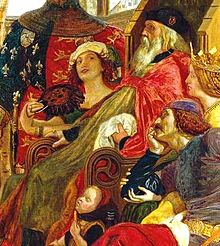
Philippa of Hainault

Medieval queens had many duties in life. They were to act as symbols of peace, their choice of spouse often made to end wars or confirm alliances; they were to intercede for the needy, obtaining pardons for criminals; they were to be charitable to the poor; patrons of artists, writers, and architects; and support their husbands in their difficult task as ruler. But, most importantly of all, they were to produce heirs.

This last role is most notable to us peering back through the actions of Henry VIII, whose quest for a male heir was part of his motivation in cycling through an unprecedented number of English queens. Medieval monarchs did not generally go to such extremes, and childless queens could and did exist – and could still wield significant power. But for those who did succeed, they could find a new level of status and influence unlocked for them.

Philippa of Hainault was the daughter of the Count and Countess of Hainault, Holland and Zeeland, a collection of territories in the Low Countries. Her homeland was wealthy from trade, and positioned to require careful political manoeuvring between the kingdoms of England and France. When the queen of England, Isabella of France, approached the Count and Countess for a marriage alliance between her son Edward and their daughter Philippa, they leapt at the chance to know their daughter would one day become a queen.
History...the Interesting Bits
Isabella of France

The couple were teenagers, and the first few years of their marriage were hardly auspicious. Isabella of France had overthrown her husband, Edward II, and had her son made Edward III in his place. But though Philippa had thus become a queen far earlier than anticipated, she and her husband were kept under Isabella’s thumb. She did not want to give up her position at the top of the ladder. This was where Philippa would first discover the power of pregnancy for a queen.

Philippa fell pregnant around aged 15, and this was to change the course of her and her husband’s lives. Firstly, Philippa had never had a coronation, Isabella not wanting to have a rival as a consecrated consort. But now that Philippa would be giving birth to the new heir to the throne, it was unthinkable that she would remain uncrowned to do so. Whilst five months pregnant, she proceeded through London to receive her crown, the coronation sermons which reminded the queen of her duty to produce children seeming both poignant and redundant. Becoming pregnant had given Philippa her first taste of power.

That summer, Philippa gave birth to a healthy baby boy, and the English throne could breathe a sigh of relief that the succession was, for now, secured. The advent of a son also gave Edward III the push he needed to finally claim power for himself, overthrowing the rule of his mother and her lover. Philippa’s pregnancy had thus benefitted her husband, too.

Across the course of their marriage, Philippa was to give birth to twelve children, although sadly many did not outlive her. But each of these children bolstered Edward’s power, giving him bargaining chips to expand his empire through marriage alliances – or the promises of them. In turn, they provided status for Philippa, who was seen to have amply fulfilled the most important of queenly duties. They also gave her much comfort on a personal level, the queen being noted for keeping her children within her own household, rather than sending them away as was not uncommon.
History...the Interesting Bits
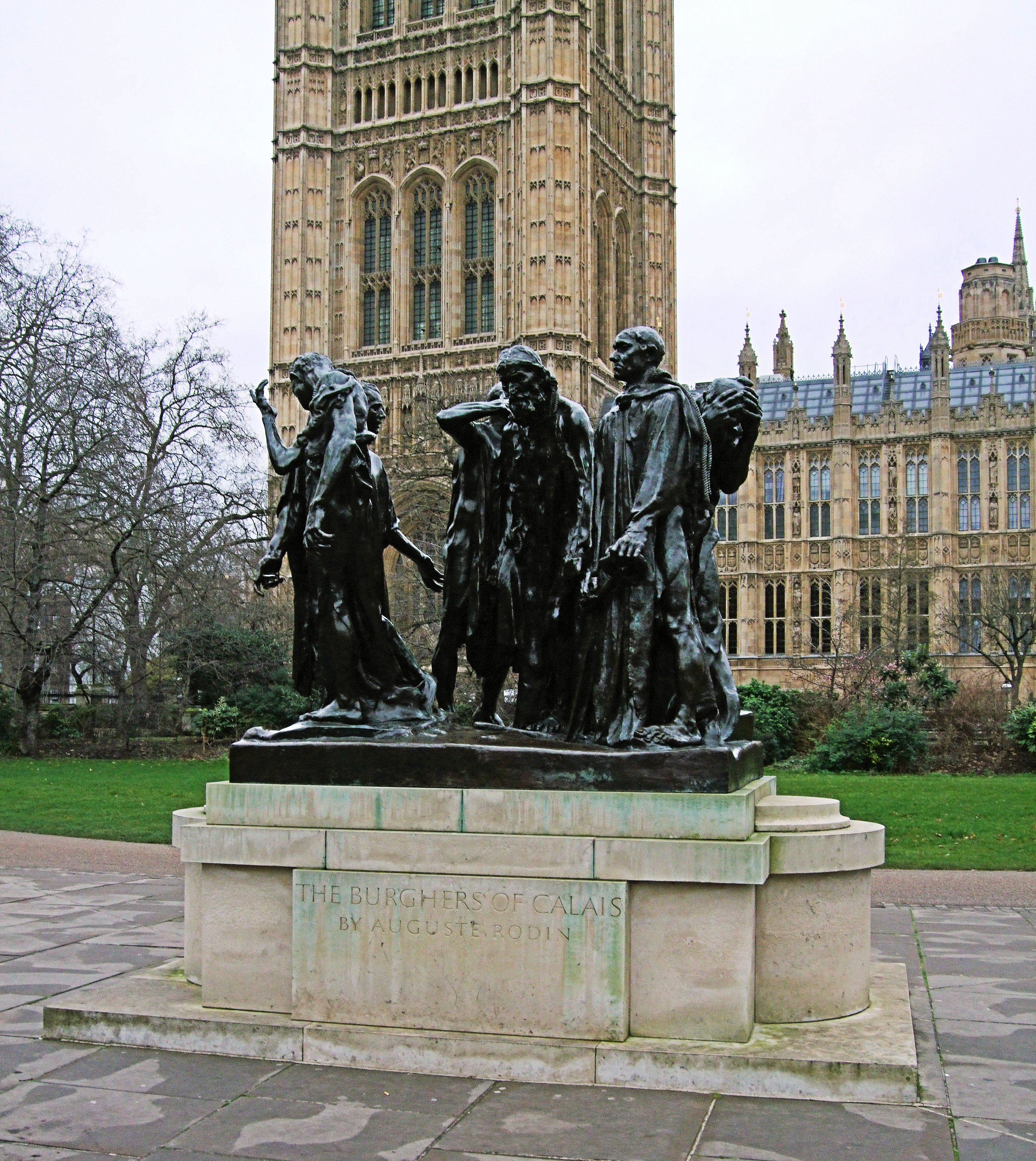
The Burghers of Calais

Pregnancy also became a powerful mythmaking tool for Philippa. In the 1340s, Edward III spent the best part of a year besieging the key French port city of Calais. If he could capture Calais, then he would show his might to the French kingdom, and have a huge victory on his road to attempting to claim the French throne for himself. Philippa, as a loyal and loving wife, spent many months outside the walls with her husband, keeping him company during the siege and providing morale to the soldiers. Finally, the city surrendered. Edward had his day of glory.

However, the citizens of Calais were mournful of their fate. Many of them had died of starvation and disease, and those who had survived now had to leave their homes and belongings behind, all of which were now property of the English king. More importantly, the most prominent men of the city, known as burghers, knew that their lives were forfeit. In the face of such a lengthy siege, the leaders were often executed. The men came out of the city with nooses around their neck and surrendered themselves into Edward’s hands.

According to legend, Edward wished to go ahead with this punishment, and would not listen to any of his lords who pled for mercy. Suddenly, Queen Philippa of Hainault, who was exceedingly heavy with child, fell to her husband’s feet, weeping and begging him to spare the men. Overcome with emotion at seeing his dear, pregnant wife in such a state, Edward agreed to pardon the men, and handed them into Philippa’s custody.
History...the Interesting Bits
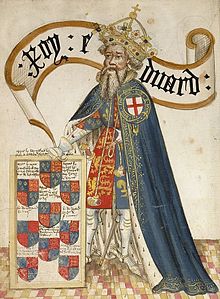
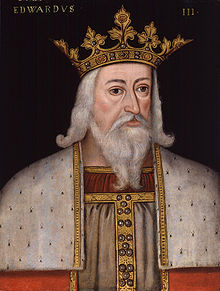
Edward III

In reality, we know from records of Philippa’s other births that she could not have been pregnant at this time. The image of a pregnant queen was so powerful to medieval minds, that storytellers and chroniclers often leveraged it to make their story more meaningful. Philippa may well have interceded for the burghers, but she did not do so pregnant.

Philippa died in 1369 aged around 55, and she was surrounded by her husband and several of her surviving children. Asking Edward that he would be buried beside her when he died, so they could rest together forever, the king agreed; their tombs still stand in Westminster Abbey today. The country mourned the death of their great queen, who had been a steadying presence for four decades. Her many children and their spouses were represented on her tomb as little statues around the sides, reminding everyone even in death of the power of her pregnancies.

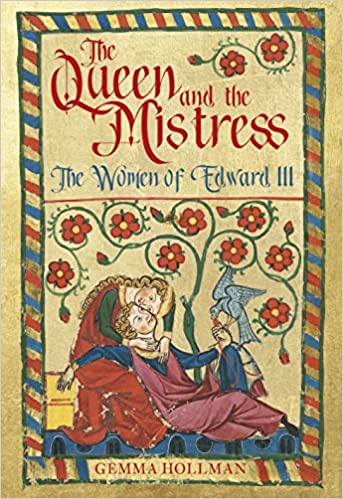
About the Book:
History...the Interesting Bits

IN A WORLD WHERE MAN IS KING, CAN WOMEN REALLY HAVE IT ALL – AND KEEP IT?

Philippa of Hainault was Queen of England for forty-one years. Her marriage to Edward III, when they were both teenagers, was more political transaction than romantic wedding, but it would turn into a partnership of deep affection. The mother of twelve children, she was the perfect medieval queen: pious, unpolitical and fiercely loyal to both her king and adopted country.

Alice Perrers entered court as a young widow and would soon catch the eye of an ageing king whose wife was dying. Born to a family of London goldsmiths, this charismatic and highly intelligent woman would use her position as the king’s favourite to build up her own portfolio of land, wealth and prestige, only to see it all come crashing down as Edward himself neared death.

The Queen and the Mistress is a story of female power and passion, and how two very different women used their skills and charms to navigate a tumultuous royal court – and win the heart of the same man.

To buy the book: Amazon

About the author:

History...the Interesting Bits

Author bio: Gemma Hollman is a historian and author who specialises in late medieval English history. A Fellow of the Royal Historical Society, she has a particular interest in the plethora of strong, intriguing and complicated women from the medieval period, a time she had always been taught was dominated by men. Gemma also works full-time in the heritage industry whilst running her historical blog, Just History Posts, which explores all periods of history in more depth. Gemma’s first book, Royal Witches, was a bestseller, and two more books have since followed: The Queen and the Mistress, and Women in the Middle Ages.

Where to find Gemma:

Websitehttps://justhistoryposts.com/Link for bookshttps://lnk.bio/GemmaHAuthorSocial media: Bluesky https://bsky.app/profile/gemmahauthor.bsky.social.

*

My Books:

Signed, dedicated copies of all my books are available through my online bookshop. or by contacting me.

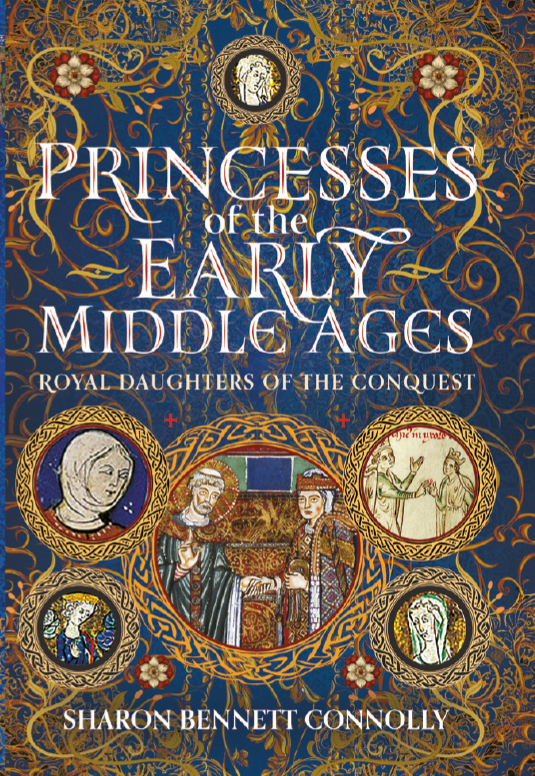
Out Now: Princesses of the Early Middle Ages
Books by Sharon Bennett Connolly

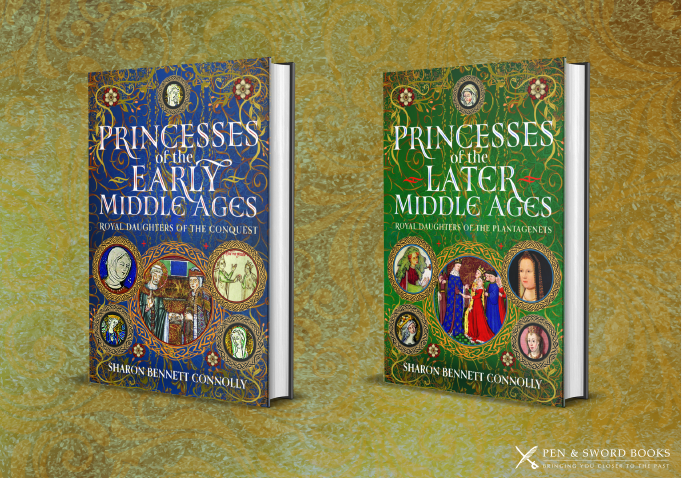
Daughters of kings were often used to seal treaty alliances and forge peace with England’s enemies. Princesses of the Early Middle Ages: Royal Daughters of the Conquest explores the lives of these young women, how they followed the stereotype, and how they sometimes managed to escape it. It will look at the world they lived in, and how their lives and marriages were affected by political necessity and the events of the time. Princesses of the Early Middle Ages will also examine how these girls, who were often political pawns, were able to control their own lives and fates. Whilst they were expected to obey their parents in their marriage choices, several princesses were able to exert their own influence on these choices, with some outright refusing the husbands offered to them.

Their stories are touching, inspiring and, at times, heartbreaking.

Princesses of the Early Middle Ages: Royal Daughters of the Conquest is now available from Pen & Sword and Amazon.

Sharon is the author of:

Books by Sharon Bennett Connolly

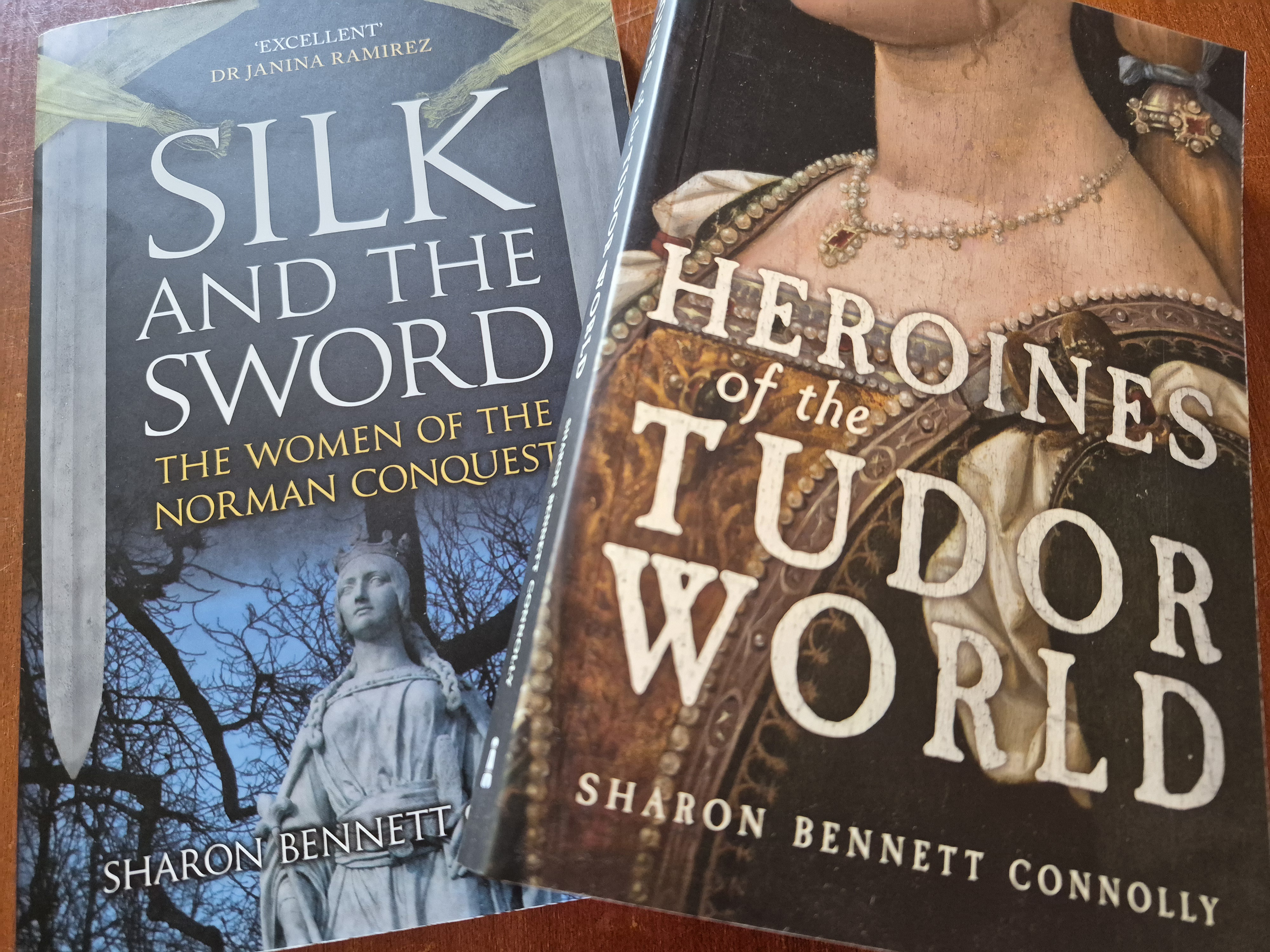
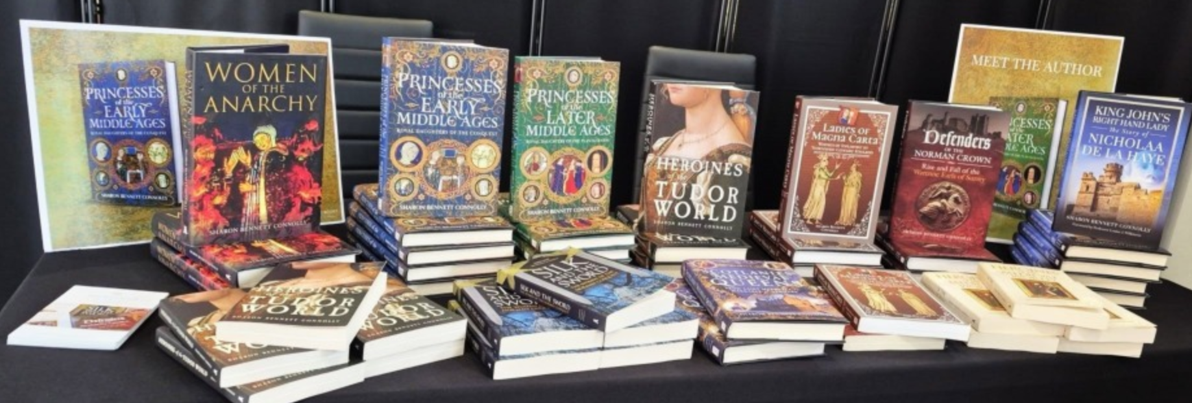
Heroines of the Medieval World; Silk and the Sword: The Women of the Norman Conquest; Ladies of Magna Carta: Women of Influence in Thirteenth Century England; Defenders of the Norman Crown: Rise and Fall of the Warenne Earls of Surrey; King John’s Right Hand Lady: The Story of Nicholaa de la Haye; Women of the Anarchy; Heroines of the Tudor World; Scotland’s Medieval Queens: From St Margaret to Margaret of Denmark; Princesses of the Early Middle Ages: Royal Daughters of the Conquest (March 2026); Princesses of the Later Middle Ages; Royal Daughters of the Plantagenets (August 2026)

All my books on AmazonBookshop.org . You can also order direct from my publishers, Pen and Sword Books and Amberley Publishing.

Podcast:
History...the Interesting Bits

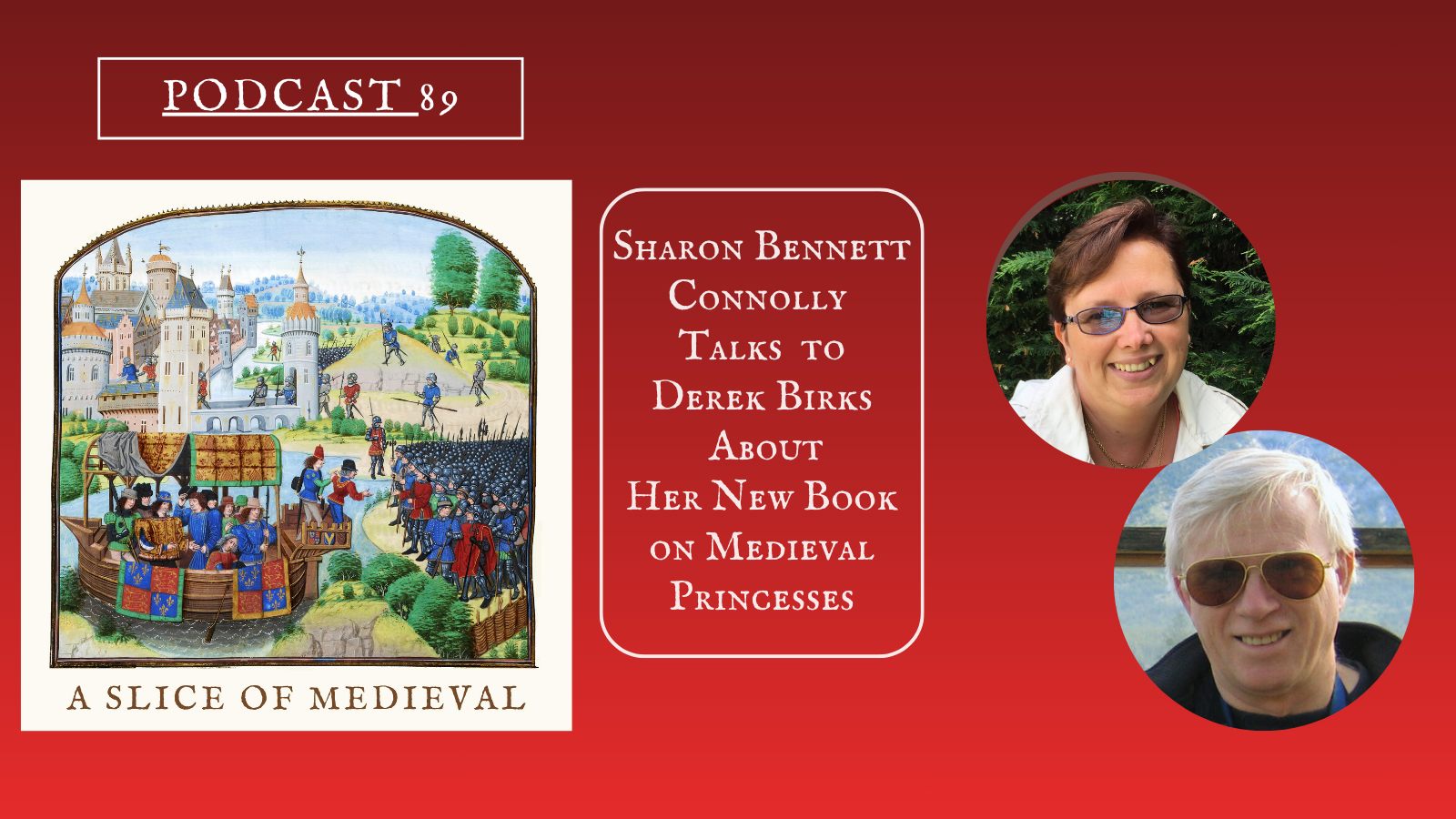
Have a listen to the A Slice of Medieval podcast, which I co-host with Historical fiction novelist Derek Birks. Derek and I welcome guests, such as Ian Mortimer, Bernard Cornwell, Elizabeth Chadwick and Scott Mariani, and discuss a wide range of topics in medieval history, from significant events to the personalities involved. 

Every episode is also now available on YouTube.

*
Royal Historical Society

Don’t forget! Signed and dedicated copies of all my books are available through my online bookshop.

For forthcoming online and in-person talks, please check out my Events Page.

You can be the first to read new articles by clicking the ‘Follow’ button, liking our Facebook page or joining me on Twitter and Instagram.

©2026 Sharon Bennett Connolly FRHistS and Gemma Hollman FRHistS

Guest Post: Alice Perrers, from Goldsmith’s Daughter to Lady of the Sun by Gemma Hollman

Today it is an absolute pleasure to welcome author and historian Gemma Hollman to History…the Interesting Bits as a stop on her blog tour for her latest book. The Queen and the Mistress: The Women of Edward III is a fascinating dual biography of Philippa of Hainault, queen of Edward III, and Alice Perrers, the king’s mistress.

Alice Perrers: From Goldsmith’s Daughter to Lady of the Sun

King Edward III

In the medieval period, a popular image came to be used to describe human life and society: that of the Wheel of Fortune. The idea was that the ancient goddess Fortuna was in control of a wheel which she would spin. People sat at various points on the wheel, and as Fortuna turned the wheel people would rise up to great heights, or drop to great lows. Medieval writers became enamoured with the symbolism of great people having a great fall because of the spinning of Fortune’s Wheel. One fourteenth-century courtier who epitomised the wheel was a woman named Alice Perrers, who was lucky enough to rise higher than her contemporaries could have imagined – but who also spun back down again.

Alice Perrers has been an enigma for centuries. Even many of her contemporaries did not really know who she was or where she came from, with chroniclers like Thomas Walsingham of St Albans Abbey making disparaging guesses to her lowly origins. Recent research has shown that Alice most likely came from a goldsmithing family in London, and so whilst she was not close to the upper echelons of society, when looking at the country as a whole she would have had a reasonable upbringing. The merchant classes had seen an upturn in their wealth during the reign of Edward III, who had been on the throne officially since 1327, and so Alice’s family probably enjoyed the benefits of this.

As the daughter of a trade family, Alice may have had some basic education, and her life initially followed the path of the majority of women of her time. She was married off, likely as a teenager, to another London goldsmith, and the couple found further wealth through the favour of the king; her husband was known to have supplied jewels to Edward III himself. But soon, Alice’s life took a turn when her husband died. The couple had no children, and her future was uncertain. Prospects for young widows were not always promising.

Queen Philippa of Hainault

Here, Fortuna turned her wheel and set Alice onto the path of greatness. She somehow found her way to court, in one of the most coveted positions in the kingdom as she became a damsel to Edward III’s wife, Queen Philippa of Hainault. Alice was catapulted into the wealth and glamour of the English monarchy. The court was filled with many of the greatest nobles of the period, including at times the captured French king, and it was a place filled with feasting, jousting, jewels, music, and writing. As one of the queen’s damsels, Alice had a place at centre stage to all that was going on. She would accompany the queen as she travelled across her various castles and attended events, and she was entitled to luxurious clothes. It must have seemed like life could not get better.

But Alice was an intelligent, ambitious, shrewd woman. Not content to simply receive the gifts afforded to her as a lady-in-waiting, Alice started to build up connections at court. She wined and dined with many powerful knights, merchants, and members of the nobility. She began to lend money and make property deals, extracting favourable terms for herself. Soon she had pieces of land of her own – quite a feat for a single woman of her status. But that was not all that Alice had obtained at court, for she had caught the eye of the king himself. Soon, a relationship began between them.

Edward III had been a loyal husband to his wife for over 30 years, but by the 1360s Philippa was severely unwell. It was clear she was not going to live for many more years, and this may have provided the impetus for Edward’s eyes to wander. Alice was a perfect choice for him. Young, likely beautiful, headstrong, it is easy to see why Edward found her attractive. But Edward had spent decades cultivating an image as a loyal, family man, and so the couple did their best to keep their relationship secret. If nothing else, to save the queen public humiliation.

The secrecy did not dampen their relationship, and within a few years Alice had given birth to 3 children with the king. At the end of the decade, the great queen died, and it was not long before Alice shifted to a more prominent place at court. Soon everybody knew that Alice had the king’s heart – and with it, a significant share of power. People were soon rushing to Alice to obtain favours with the king, offering her pieces of property and whatever else they thought she might like in the hope she may get them something in return. Even the Pope petitioned this mistress for help.

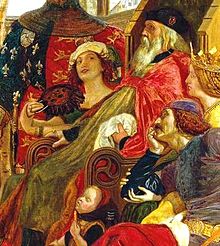
Alice Perrers and Edward III, painted by Ford Maddox Brown

As the 1370s wore on, Alice rose to the greatest heights of the wheel, almost taking on the position of unofficial queen. During the king’s jubilee year, Alice took centre stage in celebrations dressed as the Lady of the Sun. But as medieval writers loved to point out, the wheel also was fond of dropping people into a fall, and so too was this to happen to Alice. Eventually, the men at court got fed up with the undue influence of Alice and her friends on the king. They felt that those of old noble blood should be the only ones to advise the king, and finally the knights of the land gathered together at the Good Parliament to end their evil influence once and for all. Alice was banished from the king’s presence, and after his death the full weight of the law came for her. She was banished further – this time from the entire kingdom of England – and all of her hard-earned lands, jewels, and goods were taken from her.

But Alice was clever, and she had made contingency plans. She knew that her presence at court grated on those around her, and she had found powerful allies. It emerged that she had undertaken a secret marriage to a powerful knight, and he wasn’t going to give up Alice’s wealth. The couple fought for years to obtain the return of Alice’s possessions, and it was a fight that she carried with her to her death. Many of Alice’s female contemporaries had two paths in life: marriage or a nunnery. But Alice chose to forge one of her own, that of mistress and a powerful single woman. Was she as evil as her later reputation suggested? Or was there something more underneath the surface?

*

About the book:

IN A WORLD WHERE MAN IS KING, CAN WOMEN REALLY HAVE IT ALL – AND KEEP IT?

Philippa of Hainault was Queen of England for forty-one years. Her marriage to Edward III, when they were both teenagers, was more political transaction than romantic wedding, but it would turn into a partnership of deep affection. The mother of twelve children, she was the perfect medieval queen: pious, unpolitical and fiercely loyal to both her king and adopted country.

Alice Perrers entered court as a young widow and would soon catch the eye of an ageing king whose wife was dying. Born to a family of London goldsmiths, this charismatic and highly intelligent woman would use her position as the king’s favourite to build up her own portfolio of land, wealth and prestige, only to see it all come crashing down as Edward himself neared death.

The Queen and the Mistress is a story of female power and passion, and how two very different women used their skills and charms to navigate a tumultuous royal court – and win the heart of the same man.

To buy the book: Amazon

About the author:

Gemma Hollman is a historian and author who specialises in late medieval English history. A Fellow of the Royal Historical Society, her first book ‘Royal Witches’ was published in 2019 and her second book ‘The Queen and the Mistress’ will be released in November 2022. She has a particular interest in the plethora of strong, intriguing and complicated women from the medieval period, a time she had always been taught was dominated by men.

Gemma also works full-time in the heritage industry whilst running her historical blog, Just History Posts, which explores all periods of history in more depth.

*

My Books:

Signed, dedicated copies of all my books are available, please get in touch by completing the contact me form.

Defenders of the Norman Crown: The Rise and Fall of the Warenne Earls of Surrey tells the fascinating story of the Warenne dynasty, of the successes and failures of one of the most powerful families in England, from its origins in Normandy, through the Conquest, Magna Carta, the wars and marriages that led to its ultimate demise in the reign of Edward III. Defenders of the Norman Crown: Rise and Fall of the Warenne Earls of Surrey is now available from Pen & Sword BooksAmazon in the UK and US, Bookshop.org and Book Depository.

1 family. 8 earls. 300 years of English history!

Also by Sharon Bennett Connolly:

Ladies of Magna Carta: Women of Influence in Thirteenth Century England looks into the relationships of the various noble families of the 13th century, and how they were affected by the Barons’ Wars, Magna Carta and its aftermath; the bonds that were formed and those that were broken. It is now available in paperback and hardback from Pen & Sword, AmazonBookshop.org and from Book Depository worldwide.

Heroines of the Medieval World tells the stories of some of the most remarkable women from Medieval history, from Eleanor of Aquitaine to Julian of Norwich. Available now from Amberley Publishing and Amazon, Bookshop.org and Book Depository.

Silk and the Sword: The Women of the Norman Conquest traces the fortunes of the women who had a significant role to play in the momentous events of 1066.  Available now from Amazon,  Amberley Publishing, Bookshop.org and Book Depository.

Alternate Endings: An anthology of historical fiction short stories including Long Live the King… which is my take what might have happened had King John not died in October 1216. Available in paperback and kindle from Amazon.

*

You can be the first to read new articles by clicking the ‘Follow’ button, liking our Facebook page or joining me on Twitter and Instagram.

©2022 Sharon Bennett Connolly FRHistS

Alice Perrers, Mistress of the King

220px-Alice_Perrers_and_Edward_III
Alice Perrers and Edward III, painted by Ford Maddox Brown

Alice Perrers is one royal mistress who did not fare as well as her contemporary, Katherine Swynford. Whereas Katherine eventually married her prince; Alice was not so lucky, despite the fact she had been mistress of the King.

Although it is impossible to find any definite date, it seems likely that Alice Perrers was born in the late 1340s. For many years she was believed to be the daughter of Sir Richard Perrers, a prominent Hertfordshire landowner who had been both sheriff and Member of Parliament for his county. However, recent research has suggested that she is the daughter of either William Salisbury, a goldsmith, or one of his possible kinsmen, John or Gilbert Salisbury. Her mother was likely the Joan Salisbury involved in a joint purchase of a messuage in Canterbury with Alice Perrers and others in 1371. A John Salisbury was identified as her brother in a petition of 1377 or 1378 from John Cobham seeking payment of debts. Her first husband was Janyn Perrers, who may had been apprenticed to William Salisbury (Alice’s possible father or kinsman). He died in 1361 or 1362.1

The majority of what we know of Alice comes from the blatantly hostile St Albans Chronicle. The Chronicler claimed Alice was the daughter of an Essex tiler and a former domestic servant, suggesting she made her way to court by humble channels. She was described as ‘extremely ugly’ and ruling the king through her clever tongue. The king was certainly known to like clever and attractive women.

Sometime in the early 1360s – and certainly before 1366 – Alice joined the household of Queen Philippa of Hainault and started her affair with the king, Edward III. Alice would have been in her mid-to-late teens. It isn’t clear whether Alice joined the Queen’s household before or after the affair started; it may be that Edward placed her there, so she was close by. It does appear that the ailing queen acquiesced to the situation, even if she did not wholeheartedly approve.

Philippa_of_Hainault-mini
Queen Philippa of Hainault

Before his relationship with Alice, there seems to have been few, if any, extramarital affairs on Edward’s part; there are certainly no suggestions of illegitimate children as had happened with previous monarchs. If Edward had affairs they had been of short duration and incredibly discreet. This makes his relationship with Alice Perrers all the more surprising.

By 1366 Alice had been installed as a lady of the queen’s bedchamber. In 1364/5, she had left court to give birth to Edward’s first illegitimate child. The boy, Sir John Southeray,  would later marry Maud Percy, a sister of the future Earl of Northumberland. Two daughters were to follow, Joan and Jane, who were still young at the time of the king’s death in 1377. Jane later married Richard Northland and Joan married Robert Skerne, a lawyer.

Whilst in the queen’s household Edward granted Alice 2 tuns of wine; he also granted her wardships, land and jewels. Although the king gave gifts to all the queen’s ladies, those to Alice were particularly extravagant.

Following the queen’s death in 1369, Alice rose to greater prominence, she dominated the court. A devastated Edward leaned heavily on her considerable abilities; his own decline accelerated by his loss.

220px-Edward_III_of_England_(Order_of_the_Garter)
Edward III

As a result Alice was blamed for the setbacks and financial scandals of the last years of Edward’s reign. She was accused of being scheming and grasping, and making the king’s final years a misery.  The monastic chronicler, Walsingham, believed she had bewitched the king in order to secure his affections.

Whereas Queen Philippa had remained in the domestic environment, Alice Perrers had greater political ambitions. The court was dominated by a ‘narrow, exclusive and unpopular clique’2. Along with  Lord Latimer and Lord Neville, Edward’s chamberlain and steward respectively, Alice enjoyed almost total control of royal patronage; she became the king’s principal advisor and advanced her own friends into positions of influence.

Rumours arose that Edward had given Alice some of Queen Philippa’s jewels. It seems more likely that the jewels were a part of a collection previously given by the queen to Euphemia Hasleworth, rather than a part of the queen’s personal collection, but it further tarnished Alice’s reputation.The fact the gifts were recorded in the patent rolls suggests they were given on Edward’s personal order, rather than through Alice’s machinations.

By the early 1370s Alice had established her domination of the court. In 1371 she was granted the valuable manor of Wendover.

In 1375 a grand tournament was held at Smithfield in her honour. Alice rode from the Tower, through the city, dressed as the Lady of the Sun. Ladies led knights on silver chains.

In the early 1370s Alice had started looking to her future. The king was old and she was very aware that, without his protection she was likely to be thrown to the wolves. With this in mind she contracted a secret marriage to William Windsor and persuaded the king to appoint Windsor his lieutenant in Ireland, despite his record of previous maladministration of that same country.

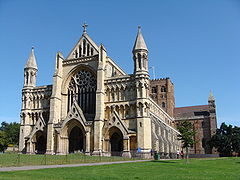
240px-StAlbansCathedral-PS02
The abbey of St Albans; home to the Chronicler, Walsingham

By 1376, shortly after the death of the Black Prince – Edward’s eldest son and heir – parliament took the lead. Known as the Good Parliament and having been called to advance the king subsidies they demanded their own petitions were answered first.

According to Walsingham: “the Parliamentary knights complained bitterly about one Alice Perrers, a wanton woman who was all too familiar with Edward III. They accused her of numerous misdeeds, performed by her and her friends in the realm. She far overstepped the bounds of feminine conduct: forgetful of her sex and her weakness, now besieging the king’s justices, now stationing herself among the doctors in the ecclesiastical courts, she did not fear to plead in defence of her cause and even to make illegal demands. As a result of the scandal and great shame which this brought on King Edward, not only in this kingdom but also in foreign lands, the knights sought her banishment from his side.3

The main accusations, voiced by Peter de la Mare, against Alice were that she had taken thousands of pounds from the royal purse and that she was notorious for the use of maintenance – protecting those accused in the king’s courts; Parliament stipulated that she and all women were prohibited from doing this. It was also during the parliament that Alice’s secret marriage to William Windsor was revealed. Assuming that, as a married couple, they had slept together this then made the king guilty of adultery.

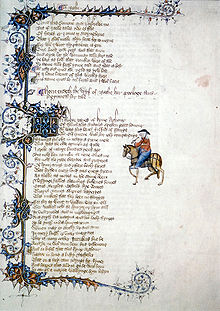
220px-Wife-of-Bath-ms
Chaucer’s The Wife of Bath

Edward III swore an oath by the Virgin Mary that he did not know she was married. William Windsor was summoned from Ireland to be prosecuted. Edward is said to have bought a chest and locked in it the accusations against Windsor, who he saw as the guilty party.

Edward begged for Alice to be shown mercy. She avoided prison and further prosecution on condition she no longer saw the king. If she broke the conditions, the punishment would be perpetual exile.

However, once parliament had disbanded John of Gaunt, as virtual ruler of the kingdom, recalled all those banished. Edward “recalled his mistress, Alice Perrers, to his company; she had been legally banished from his presence, on account of the scandal and shame which came from her wantonness. This was against the oath by which Alice had bound herself and which the king himself had ratified…4

Alice stayed with the king until his death.

Edward III died, probably from a stroke, on 21st June 1377. According to the St Albans Chronicler he was alone, save for his confessor. Walsingham went so far as to accuse Alice of stripping the rings from the king’s fingers; although she was never charged with the offence.

Following the king’s death, Alice’s sentence of banishment was reconfirmed, only to be reversed in 1379 at the request of her husband. William Windsor himself died in 1384 and Alice seems to have spent much of her final years in litigation over his will; Windsor left his estate to his 3 sisters.

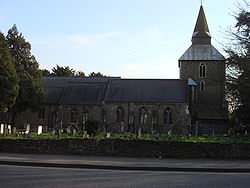
250px-Upminster_021
Church of St Lawrence, Upminster

As the king’s mistress Alice had dealt in property, and used her influence to guarantee a future income. She remained wealthy and was still litigating when she died in 1400. She was buried in the Church of St Lawrence, Upminster; her grave now lost to history.

Alice Perrers was the first king’s mistress to influence the courts of justice and the government of the kingdom. She had met the king when relatively young and naive; but was intelligent enough to realise the advantages and implications of her liaison with the king.

However, she was held up as an example of how a woman shouldn’t behave. She is thought to have been the inspiration for Chaucer’s The Wife of Bath.

*

Footnotes: ¹ C. Given-Wilson, Oxforddnb.com; 2WM Ormrod, The Reign of Edward III; 3&4 Thomas Walsingham, St Albans Chronicle

*

Pictures courtesy of Wikipedia.

*

Sources: The Perfect King, the Life of Edward III by Ian Mortimer; The Life and Time of Edward III by Paul Johnson; The Reign of Edward III  by WM Ormrod; The Oxford Companion to British History Edited by John Cannon; The Mammoth Book of British kings & Queens by Mike Ashley; The History Today Companion to British History Edited by Juliet Gardiner & Neil Wenborn; Britain’s’ Royal Families, the Complete Genealogy by Alison Weir; Brewer’s British Royalty by David Williamson; Chronicles of the Age of Chivalry Edited by Elizabeth Hallam; Kings & Queens of Britain by Joyce Marlow; The Plantagenets, the kings Who Made Britain by Dan Jones; britannica.com/biography/Alice-Perrers; historyinanhour.com; anneobrienbooks.com.

*

My books

Signed, dedicated copies of all my books are available through my online bookshop.

Out nowKing John’s Right-Hand Lady: The Story of Nicholaa de la Haye

In a time when men fought and women stayed home, Nicholaa de la Haye held Lincoln Castle against all-comers, gaining prominence in the First Baron’s War, the civil war that followed the sealing of Magna Carta in 1215. A truly remarkable lady, Nicholaa was the first woman to be appointed sheriff in her own right. Her strength and tenacity saved England at one of the lowest points in its history. Nicholaa de la Haye is one woman in English history whose story needs to be told…

King John’s Right-Hand Lady: The Story of Nicholaa de la Haye is now available from Pen & Sword Booksbookshop.org and Amazon.

Coming 15 January 2024: Women of the Anarchy

On the one side is Empress Matilda, or Maud. The sole surviving legitimate child of Henry I, she is fighting for her birthright and that of her children. On the other side is her cousin, Queen Matilda, supporting her husband, King Stephen, and fighting to see her own son inherit the English crown. Both women are granddaughters of St Margaret, Queen of Scotland and descendants of Alfred the Great of Wessex. Women of the Anarchy demonstrates how these women, unable to wield a sword, were prime movers in this time of conflict and lawlessness. It show how their strengths, weaknesses, and personal ambitions swung the fortunes of war one way – and then the other.

Available for pre-order from Amberley Publishing and Amazon UK.

Also by Sharon Bennett Connolly:

Defenders of the Norman Crown: The Rise and Fall of the Warenne Earls of Surrey tells the fascinating story of the Warenne dynasty, of the successes and failures of one of the most powerful families in England, from its origins in Normandy, through the Conquest, Magna Carta, the wars and marriages that led to its ultimate demise in the reign of Edward III. Defenders of the Norman Crown: Rise and Fall of the Warenne Earls of Surrey is now available from Pen & Sword BooksAmazon in the UK and US, and  Bookshop.org.

Ladies of Magna Carta: Women of Influence in Thirteenth Century England looks into the relationships of the various noble families of the 13th century, and how they were affected by the Barons’ Wars, Magna Carta and its aftermath; the bonds that were formed and those that were broken. It is now available in paperback and hardback from Pen & Sword,  Amazon, and Bookshop.org.

Heroines of the Medieval World tells the stories of some of the most remarkable women from Medieval history, from Eleanor of Aquitaine to Julian of Norwich. Available now from Amberley Publishing and Amazon, and Bookshop.org.

Silk and the Sword: The Women of the Norman Conquest traces the fortunes of the women who had a significant role to play in the momentous events of 1066. Available now from Amazon,  Amberley Publishing, and Bookshop.org.

Alternate Endings: An anthology of historical fiction short stories including Long Live the King… which is my take what might have happened had King John not died in October 1216. Available in paperback and kindle from Amazon.

Podcast:

Have a listen to the A Slice of Medieval podcast, which I co-host with Historical fiction novelist Derek Birks. Derek and I welcome guests, such as Bernard Cornwell, and discuss a wide range of topics in medieval history, from significant events to the personalities involved.

*

Don’t forget! Signed and dedicated copies of all my books are available through my online bookshop.

For forthcoming online and in-person talks, please check out my Events Page.

You can be the first to read new articles by clicking the ‘Follow’ button, liking our Facebook page or joining me on Twitter and Instagram.

*

©2015 Sharon Bennett Connolly FRHistS