Book Corner: Crime and Punishment in Tudor England: From Alchemists to Zealots by April Taylor

Crime and Punishment in Tudor England: From Alchemists to Zealots tells the story of the enactment of law and its penalties from Henry VII to Elizabeth I.

The sixteenth century was remarkable in many ways. In England, it was the century of the Tudor Dynasty. It heralded the Reformation, William Shakespeare, the first appearance of bottled beer in London pubs, Sir Francis Drake, and the Renaissance. Oh, and the Spanish Armadas―all five of them! Yes, five armadas and all failures.

It was a watershed century for crime and punishment. Henry VII’s paranoia about the loyalty of the nobility led to military-trained vagrants causing mayhem and murder. Henry VIII’s Reformation meant executions of those refusing to take the Oath of Supremacy. State-controlled religion―summed up through the five reigns as Roman Catholic; Anglo-Catholic; Protestant; Roman Catholic, and Sort of Protestant but I don’t mind so long as you swear the Oath of Supremacy―became an increasingly complex, not to say confusing, issue for ordinary people.

Although primary sources are rare and sometimes incomplete, the life of criminals and the punishments meted out to them still fascinates.

Read about: John Daniell and how he tried to blackmail the Earl of Essex. The Stafford insurrection of 1486, the first serious opposition to the new king. The activities of con-man extraordinaire, Gregory Wisdom, and many more.

Crime and punishment didn’t start with the Tudors and this book summarises judicial practices built on tradition from the Roman occupation. It covers often gory details―what happens to the body when it is beheaded, burned, boiled, or hanged?

Arranged in alphabetical order of crimes, it recounts tales of blackmail, infanticide, kidnapping, heresy, and sumptuary laws. Told with occasional low-key humour, the book also includes Tavern Talk, snippets of quirky information.

Dip into it at your pleasure.

I have to admit, Crime and Punishment in Tudor England: From Alchemists to Zealots by April Taylor is one of the best non-fiction books I have had the pleasure of reading this year. I have always had a fascination for the law – I was even considering it as a career at one stage, until I realised I couldn’t stand the 9 to 5 lifestyle. Give me shift work and odd hours any day! So, I have been looking forward to this book ever since I heard April was writing it.

Opening with a fabulous history of the development of England’s legal system, Crime and Punishment in Tudor England explains not only the crimes committed, but also the various legal processes under different monarchs and at different social levels. Every crime imaginable is covered, from infanticide to treason. And so are the punishments and the reasons behind them; and how often such punishments were intended to fit the crime – or to shame the perpetrator. Every part of the criminal justice system is analysed, from religious offenders to witchcraft, from capital punishment to torture, prison condition and labour camps. Crime and Punishment in Tudor England also looks into the influences on crime, such as the impact of economic and social conditions, in a century of religious and political upheaval throughout Europe.

I do have to warn you: this book is not to be read while eating, unless you have a strong stomach. April Taylor includes descriptions of the various methods of execution, including beheading, hanging, burning and the particularly gruesome method of boiling alive!

Boiling to Death

Boiling to death was not often used in Tudor England to be fair, although it was the designated punishment for coiners on the continent. The method is self-explanatory. The offender would be put into a large container which might be filled with water, oil, molten lead, wax or sometimes wine, heated to boiling point.

The most famous victim was Richard Roose, cook to the Bishop of Rochester, John Fisher. It was established that Roose had decided to poison his master and guests by serving them pottage for dinner. Fisher was known to be abstemious and did not partake of the pottage, and nobody can blame him since it sounds less than appetising.

Pottage was a kind of thick porridge that peasants relied on for centuries as a staple food. For them, it would consist of grains and vegetables, boiled in a pot and often kept simmering for hours or days to make sure it was safe to eat. If rich households ate it, often meat or fish was added, but if you can imagine a kind of hearty soup full of heaven knows what that has been boiled to extinction, you have an idea of what pottage was like.

This case became something of a political ‘hot potato’(even though nobody had yet encountered one in 1531 in England). Sixteen of Fisher’s guests became ill, one of them, a man called Curwen, died. The rest of the poisoned pottage was given to the poor, at which point Alice Trypptt also died from eating it.

Bishop Fisher had been Margaret Beaufort’s confessor and it was he who had taught the young Henry VIII the tenets of theology. However, and here is the political bit, at the time Roose conducted his ‘jest’, thinking the powder he had put in the pottage was a laxative that would make his fellow servants ill, Bishop Fisher was a vocal opponent of Henry VIII’s marriage to Anne Boleyn. Moreover, there were rumours that the Boleyn family had engineered the poisoning. Obviously they all liked pottage.

The Spanish ambassador, Chapuys, and Thomas More, neither of whom were sympathetic to Anne, told Henry of the rumours accusing her, to which Henry is alleged to have answered that she was blamed for everything.

Henry decided he must act with speed to make sure any such rumour was quashed and that neither his beloved’s character nor her family were sullied (a bit of a non-starter since she was already known as the ‘goggleeyed whore’ by the majority of the population who adored Katherine of Aragon).

Back to Henry. He immediately told Parliament he wanted a bill passing that any servant found guilty of poisoning or attempting to poison their master or mistress should be attainted for high treason and executed.

Henry was quite clever in some ways. Because he made the crime one of high treason, it meant there was no need for prior judicial process or a jury to determine the guilt or otherwise of the defendant. This was not to be the first time Henry dispensed justice with the tenets of common law.

While some of the more sensational and high profile cases are discussed – such as Anne Boleyn and Catherine Howard – April also introduces cases far less familiar to the reader. Encompassing murder, fraud, blackmail and all manner of crimes, April Taylor presents a fascinating insight into Tudor crimes, ably supported by actual – and fascinating – case studies. Theses case studies not only demonstrate the nature of crimes and their punishment, but also the changing attitudes to crime, and the shifting emphasis on punishments, from the dawn of the Tudor period to the royal dynasty’s demise in 1603.

Crime and Punishment in Tudor England also highlights various miscarriages of justice, including where officials accused innocent victims with the aim of appropriating their goods and property. There are some truly harrowing tales, such as the youngest felon executed in the Tudor era – a girl of the tender age of 11 – and the general treatment of children who fell foul of the criminal justice system. It makes you happy to be living in the 21st century!

April Taylor has managed to cram so much information into Crime and Punishment in Tudor England: From Alchemists to Zealots it really is an impressive tome. It is thorough and well referenced and is written in a lively, entertaining writing style, with a fair amount of wit thrown in for good measure.

I cannot recommend it highly enough. Crime and Punishment in Tudor England: From Alchemists to Zealots is a pleasure to read!

To buy the book:

Crime and Punishment in Tudor England: From Alchemists to Zealots by April Taylor is now available from Amazon and Pen and Sword Books.

About the author:

April Taylor was born in the historic county of Lincolnshire in the UK. Having caught the history bug from a young age, April has always been fascinated by the physical manifestation of times past in particularly the Tudor period. This interest deepened when she discovered one of the most important events of Henry VIII’s reign, the Lincolnshire Rebellion that led to the Pilgrimage of Grace in 1536, started eight miles from where April was born. April has always ensured her research is as meticulous as possible. During her study of the Tudors for her fictional Luke Ballard books, April was intrigued by frequent references to Henry VIII’s charisma. Choosing a career in librarianship, April honed her research skills but always leant towards the history of the area in which she lived. This led to numerous talks to schools and local groups, especially in Worcester, yet another place of historic importance in the UK. April Taylor now lives near the rugged coast of north-east England in close proximity to one of the priories that fell victim to Henry VIII’s Reformation. She frequently walks her golden retriever in local forests using that time to work through complicated plotlines. She sings in the medieval church and occupies her down-time dressmaking and cross-stitching.

My Books

Signed, dedicated copies of all my books are available through my online bookshop.
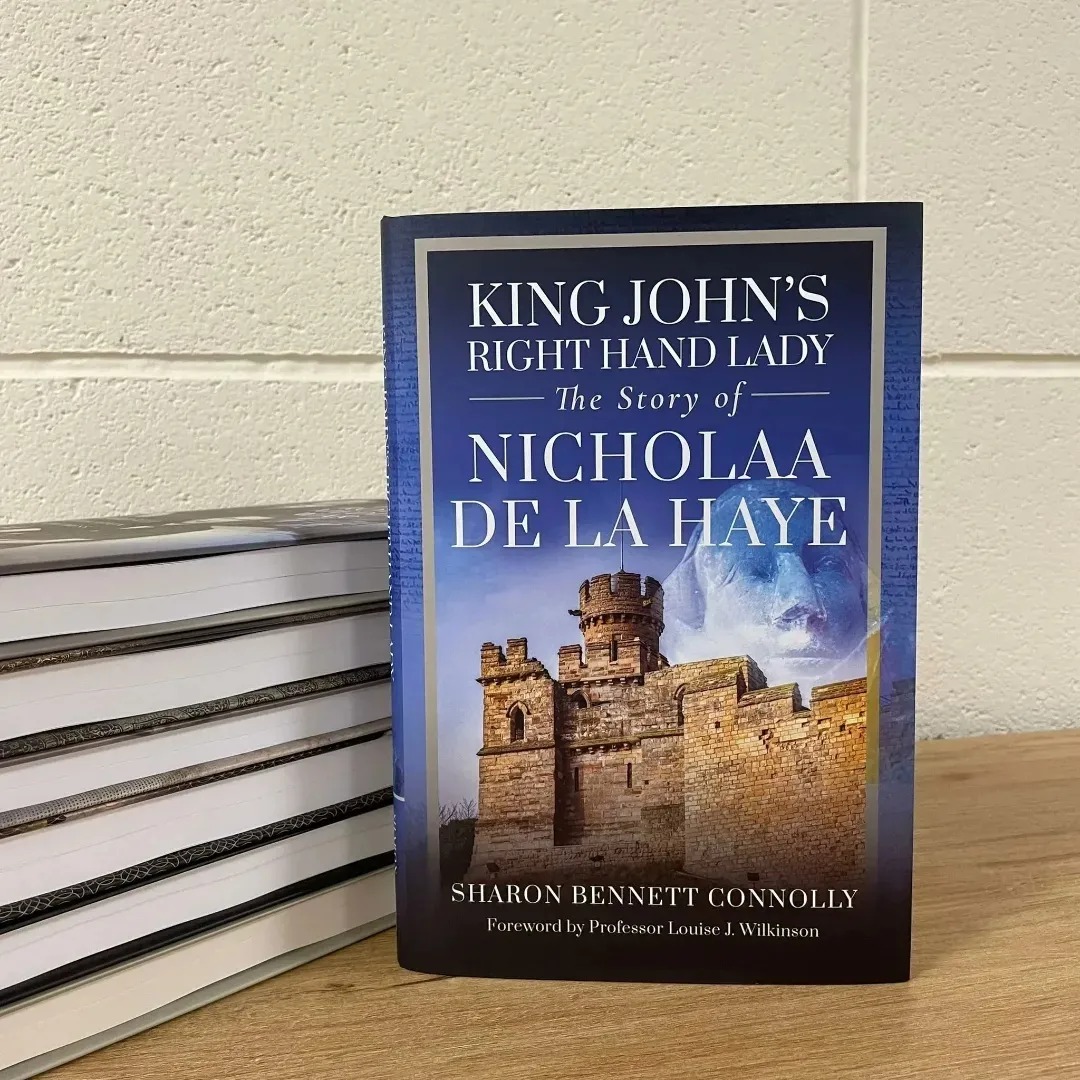
Out now: King John’s Right-Hand Lady: The Story of Nicholaa de la Haye

In a time when men fought and women stayed home, Nicholaa de la Haye held Lincoln Castle against all-comers, gaining prominence in the First Baron’s War, the civil war that followed the sealing of Magna Carta in 1215. A truly remarkable lady, Nicholaa was the first woman to be appointed sheriff in her own right. Her strength and tenacity saved England at one of the lowest points in its history. Nicholaa de la Haye is one woman in English history whose story needs to be told…

King John’s Right-Hand Lady: The Story of Nicholaa de la Haye is now available from Pen & Sword Books, bookshop.org and Amazon.

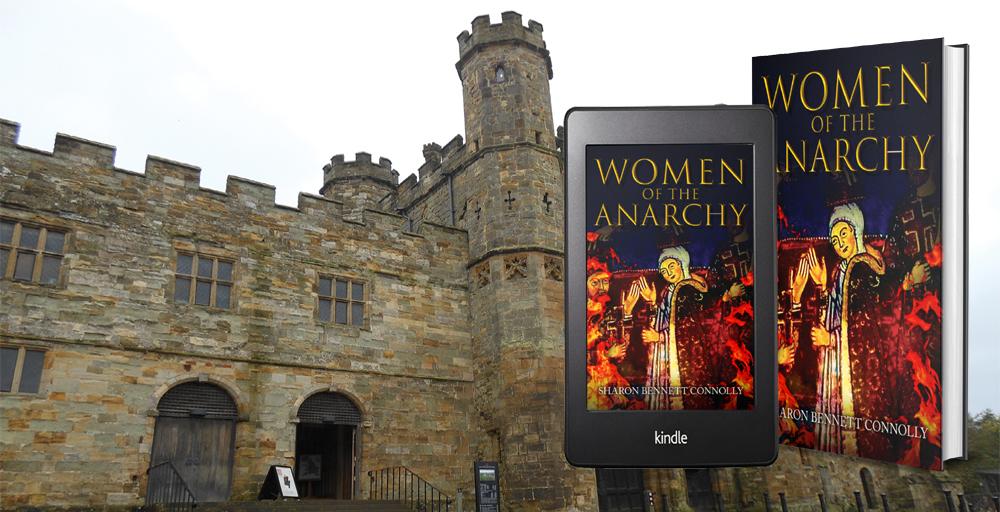
Coming 15 January 2024: Women of the Anarchy

On the one side is Empress Matilda, or Maud. The sole surviving legitimate child of Henry I, she is fighting for her birthright and that of her children. On the other side is her cousin, Queen Matilda, supporting her husband, King Stephen, and fighting to see her own son inherit the English crown. Both women are granddaughters of St Margaret, Queen of Scotland and descendants of Alfred the Great of Wessex. Women of the Anarchy demonstrates how these women, unable to wield a sword, were prime movers in this time of conflict and lawlessness. It show how their strengths, weaknesses, and personal ambitions swung the fortunes of war one way – and then the other.

Available for pre-order from Amberley Publishing and Amazon UK.

Also by Sharon Bennett Connolly:

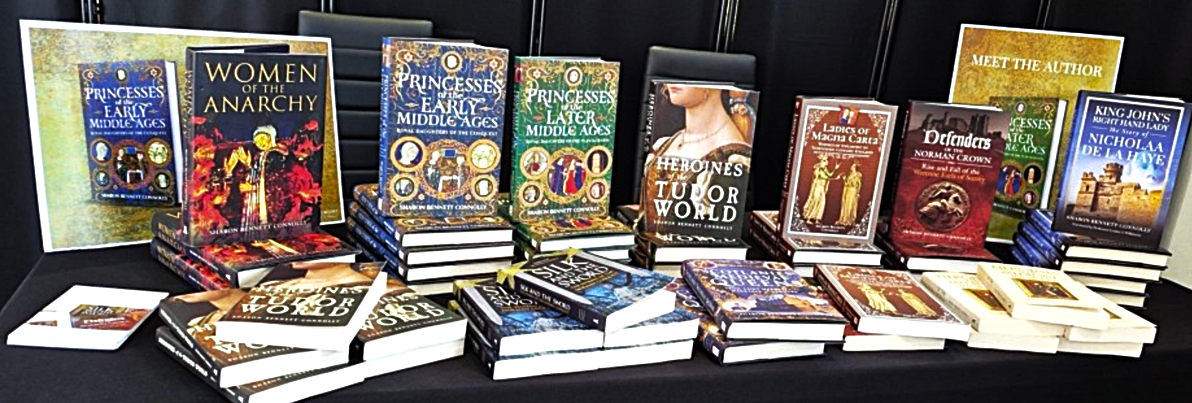
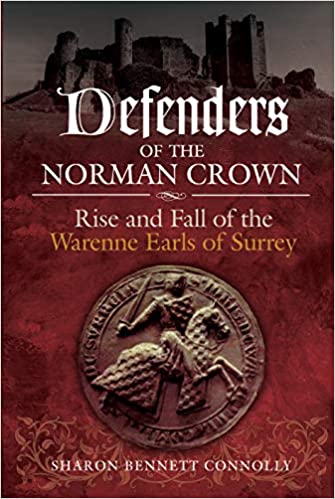
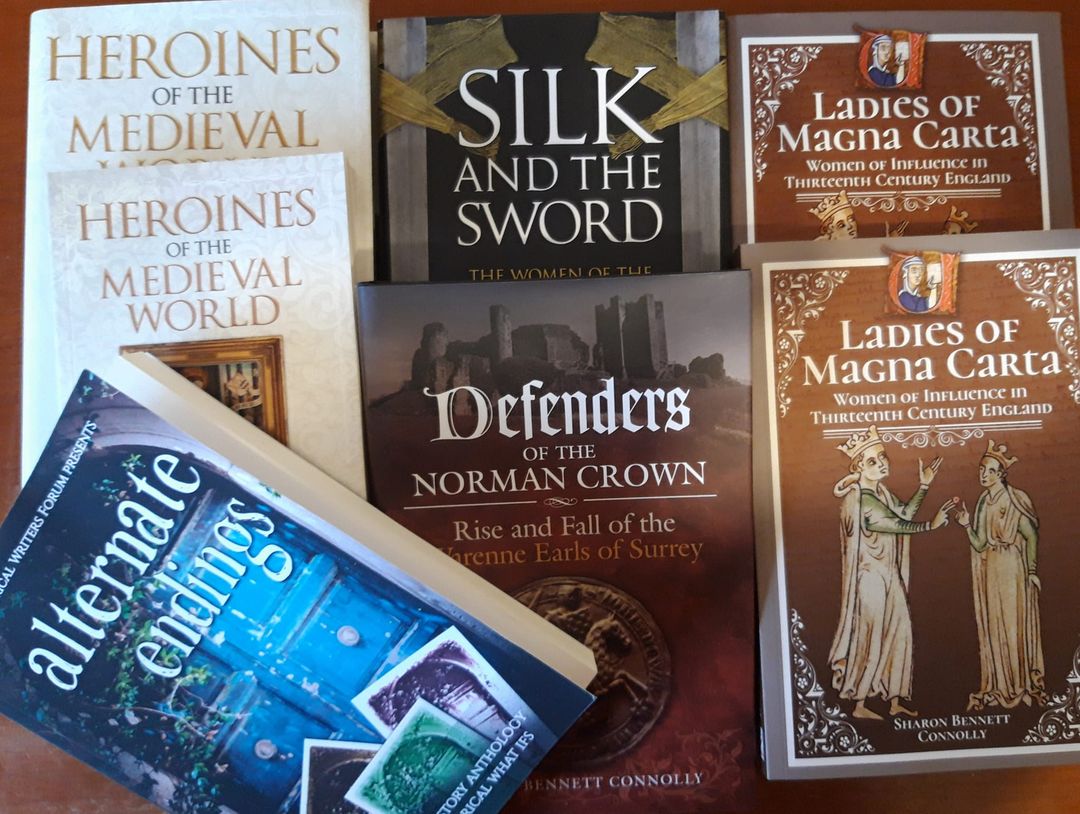
Defenders of the Norman Crown: The Rise and Fall of the Warenne Earls of Surrey tells the fascinating story of the Warenne dynasty, of the successes and failures of one of the most powerful families in England, from its origins in Normandy, through the Conquest, Magna Carta, the wars and marriages that led to its ultimate demise in the reign of Edward III. Defenders of the Norman Crown: Rise and Fall of the Warenne Earls of Surrey is now available from Pen & Sword Books, Amazon in the UK and US, and  Bookshop.org.

Ladies of Magna Carta: Women of Influence in Thirteenth Century England looks into the relationships of the various noble families of the 13th century, and how they were affected by the Barons’ Wars, Magna Carta and its aftermath; the bonds that were formed and those that were broken. It is now available in paperback and hardback from Pen & Sword,  Amazon, and Bookshop.org.
Heroines of the Medieval World tells the stories of some of the most remarkable women from Medieval history, from Eleanor of Aquitaine to Julian of Norwich. Available now from Amberley Publishing and Amazon, and Bookshop.org.

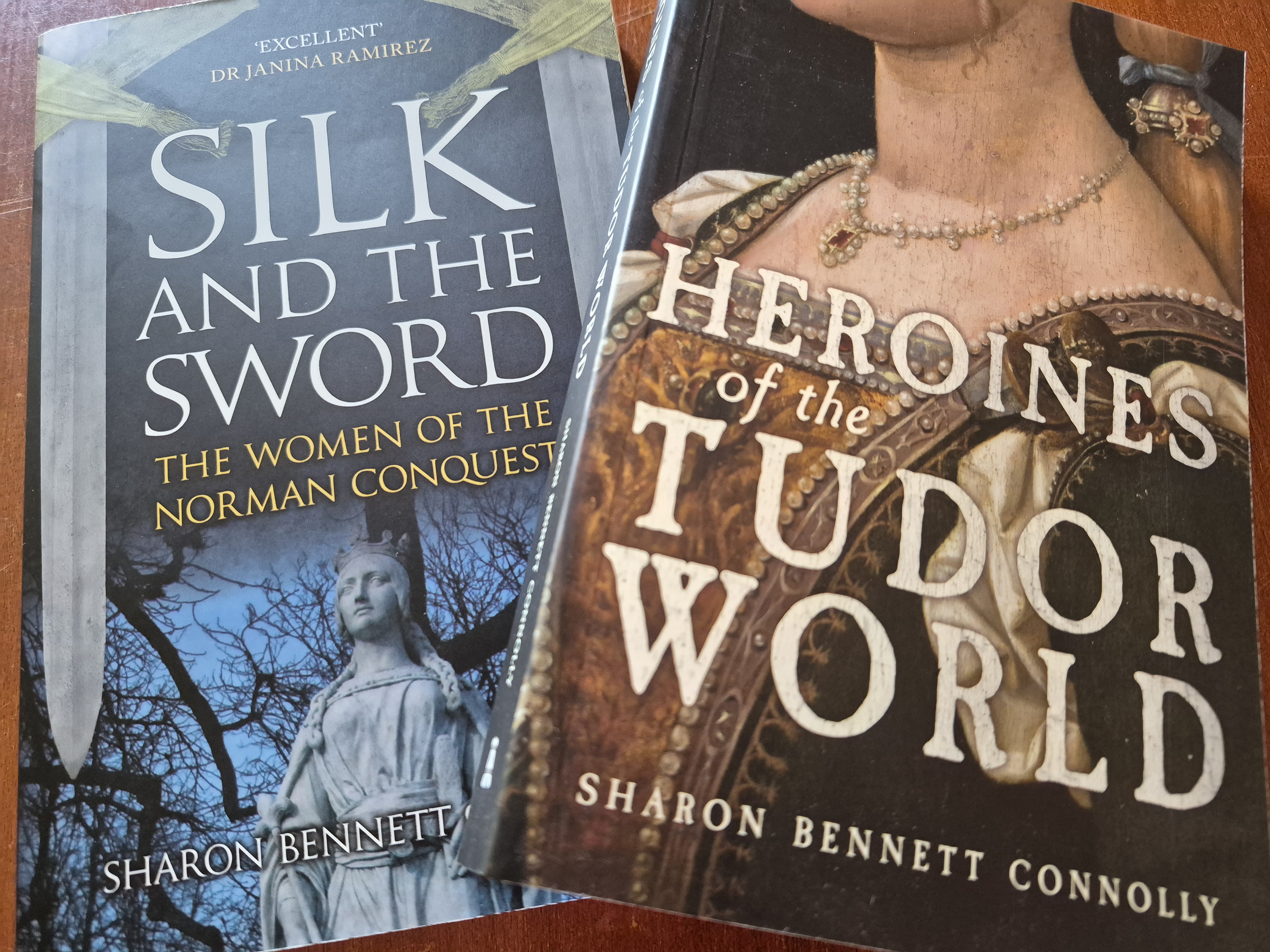
Silk and the Sword: The Women of the Norman Conquest traces the fortunes of the women who had a significant role to play in the momentous events of 1066. Available now from Amazon,  Amberley Publishing, and Bookshop.org.

Alternate Endings: An anthology of historical fiction short stories including Long Live the King… which is my take what might have happened had King John not died in October 1216. Available in paperback and kindle from Amazon.

Podcast:

Have a listen to the A Slice of Medieval podcast, which I co-host with Historical fiction novelist Derek Birks. Derek and I welcome guests, such as Bernard Cornwell, and discuss a wide range of topics in medieval history, from significant events to the personalities involved.

*

Don’t forget! Signed and dedicated copies of all my books are available through my online bookshop.

For forthcoming online and in-person talks, please check out my Events Page.

You can be the first to read new articles by clicking the ‘Follow’ button, liking our Facebook page or joining me on Twitter and Instagram.

©2023 Sharon Bennett Connolly FRHistS
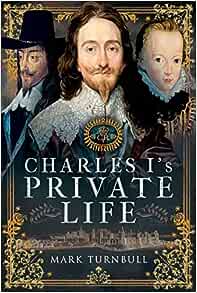
Guest Post: The Boy Who Would be King by Mark Turnbull

I am currently reading a fabulous, very personal biography of King Charles I, by Mark Turnbull. Charles I’s Private Life concentrates on the personal, rather than political, life of one of England’s most controversial kings – the only one to be convicted of treason and publicly executed. It is a fascinating, intimate, biography. And Mark has very kindly joined me today with a taster of what you can expect from the book.

The Boy who Would be King

The past is full of anchor points and legendary facts. Henry VIII’s marital record, for example, snags many history enthusiasts, helping the 118-year Tudor rule flourish in books, films, and television. By comparison, at 111 years, the Stuart era often flounders because this stormy period has so many complicated threads – most especially the Wars of the Three Kingdoms.

The monarch during the civil wars was King Charles I. His death is probably the most well-known fact about him that sticks in our minds. On a cold January afternoon, wearing two shirts lest shivering give the appearance of fear, he was executed outside his palace. In the aftermath of his death, his enemies were keen to portray him as a tyrant responsible for the deaths and atrocities. King Henry’s divorce had given birth to the Church of England, but it was Charles’s defence of it that led to his veneration as a martyr when the monarchy was eventually restored. Over the centuries he has increasingly become a two-dimensional martyr or murderer; an anachronism to many today. History has almost severed his personal character, life, and loves.

Charles I’s Private Life digs deep into the man behind the crown, to better understand him, and in turn, the wars that dominated his reign. With emphasis on his personal relationships, I have aimed to produce a most intimate biography. One of the fresh aspects is closer examination of his overlooked childhood – years that formed his character and beliefs.

Charles as a child with his parents, James VI and I and Anne of Denmar

Born in 1600, the second son of King James VI of Scotland had a sickly start. In 1603, when James acceded to the English throne, the royal family hurriedly crossed the border. Charles was not deemed to be up to the journey for another year. He initially struggled to walk and talk but fought and overcame this restrictive existence.

After the 1605 Gunpowder Treason broke, he would have known that his own death had been part of the plot. Aged five, whilst traversing Whitehall Palace, the hub of Stuart government, he was no stranger to gossip and fear. On one occasion, he wandered into one of his father’s meetings, only for James to hold him aloft in jubilant relief at their survival. While plague had wiped out many, it helped save the Stuarts. The opening of Parliament had been postponed on account of it, causing delays that saw the plot unravel. Pestilence also helped foster a strong bond between Charles and his elder brother, Henry, when the pair were packed off to the country to escape it.

Charles hero-worshipped his brother. When Henry was absent on progresses, a pining Charles would visit his brother’s stables and ride his horses. He offered to give “anie thing that I have” to his eldest sibling, whether it be horses, crossbows or books. One particular gem of research was a short poem Charles penned in 1608, aged seven, whilst preparing for a jaunt on Henry’s miniature vessel, named Disdain. There is a timeless innocence and excitement in the simplicity of the request for gunpowder for the cannons:

“Saterday is the day

let 4 great barrels of pouder cume away”

Many suggest Charles was overshadowed by Henry. The latter’s numerous talents, which he had no qualms of showing off, certainly made him a legendary figure. Athletic and good looking, he was paraded as the embodiment of honour, courage and princely virtue. The hopes of vast swathes of people were placed in him and as a result it is easy to write Charles off as irrelevant.

King Charles I

The elder, however, was not a good scholar and Charles was held up as an example to follow. Indeed, King James once threatened to leave the crown to Charles who was “far quicker at learning”. Despite his slim physique, Charles proved himself adept at running at the ring, handling a pike, hunting and riding. His future had seemed mapped out from a young age. Many references pointed, surprisingly, to a military career. It was one that Charles seemed to relish, and on one occasion the 6-year-old marched up to the Venetian Ambassador with a ‘harquebus’ on his shoulder to declare he was thus armed for the Republic’s service.

Though numerous siblings followed Charles (Robert, Mary and Sophia) they all perished at tragically young ages. As a result, Charles’s father called him ‘Baby Charles’ well into manhood. Apart from being embarrassing, the sobriquet must have been a constantly reminder of royal mortality. Considering Charles’s rushed christening and fragile early years, it seemed as though God had preserved him. But for what?

The sudden death of Prince Henry at the age of 18 was a momentous turning-point that shocked the three kingdoms. King James retreated to the country, while Queen Anna shut herself away and refused to eat. Princess Elizabeth was also inconsolable. The twelve-year-old Charles was left to lead the nation, whilst shouldering an impossible burden of expectation. I was struck by the similarities between Henry’s funeral in 1612 and that of Diana, Princess of Wales, in 1997. For Charles, who led the former through central London, it must have been traumatic to say the least.

A teenage sonnet Charles penned to his mother between the years 1613 and 1619 hints at innermost thoughts over the way his life and character changed forever. He wrote the sonnet to help explain their construction, but the contents are extremely poignant. The daily ‘fascherie’ [troubles] had, he wrote, quenched the heavenly furious fire that once burned inside him.

“In place whereof came sad & thorny cares

Which restlesly no time nor season spares”

From that moment on, Charles pretty much had to take on the guise of his dead brother. His own personality was often suppressed and stifled. Peeling back the layers of propaganda (that of his own and his enemies) reveals a man with faults and foibles, courage and charisma. New evidence in the biography also sheds light on key events such as the start of civil war in England and Charles’s death upon the scaffold.

This article was first published in Historia Magazine (Historical Writers Association)

About the Author:

After a visit to Helmsley Castle at the age of 10, Mark bought a pack of ‘top trump’ cards featuring the monarchs of England. The card portraying King Charles I fascinated him. Van Dyck’s regal portrait of the King and the fact that he was executed by his own people were the beginnings of a passionate interest in the Civil Wars that has lasted ever since.

Mark also produces a podcast called Cavalier Cast – The Civil War in Words. This was the first podcast solely dedicated to the Wars of the Three Kingdoms and explores a variety of topics with leading historians, archaeologists, and re-enactors. Mark lives in County Durham with his wife and two children. http://www.1642author.com

To Buy the Book:

Charles I’s Private Life by Mark Turnbull is now available from Amazon.

*

My Books

Signed, dedicated copies of all my books are available through my online store.

Out now: King John’s Right-Hand Lady: The Story of Nicholaa de la Haye

In a time when men fought and women stayed home, Nicholaa de la Haye held Lincoln Castle against all-comers, gaining prominence in the First Baron’s War, the civil war that followed the sealing of Magna Carta in 1215. A truly remarkable lady, Nicholaa was the first woman to be appointed sheriff in her own right. Her strength and tenacity saved England at one of the lowest points in its history. Nicholaa de la Haye is one woman in English history whose story needs to be told…

King John’s Right-Hand Lady: The Story of Nicholaa de la Haye is now available from Pen & Sword Books, bookshop.org and Amazon.

Coming 15 January 2024: Women of the Anarchy

On the one side is Empress Matilda, or Maud. The sole surviving legitimate child of Henry I, she is fighting for her birthright and that of her children. On the other side is her cousin, Queen Matilda, supporting her husband, King Stephen, and fighting to see her own son inherit the English crown. Both women are granddaughters of St Margaret, Queen of Scotland and descendants of Alfred the Great of Wessex. Women of the Anarchy demonstrates how these women, unable to wield a sword, were prime movers in this time of conflict and lawlessness. It show how their strengths, weaknesses, and personal ambitions swung the fortunes of war one way – and then the other.

Available for pre-order from Amberley Publishing and Amazon UK.

Also by Sharon Bennett Connolly:

Defenders of the Norman Crown: The Rise and Fall of the Warenne Earls of Surrey tells the fascinating story of the Warenne dynasty, of the successes and failures of one of the most powerful families in England, from its origins in Normandy, through the Conquest, Magna Carta, the wars and marriages that led to its ultimate demise in the reign of Edward III. Defenders of the Norman Crown: Rise and Fall of the Warenne Earls of Surrey is now available from Pen & Sword Books, Amazon in the UK and US, and  Bookshop.org.

Ladies of Magna Carta: Women of Influence in Thirteenth Century England looks into the relationships of the various noble families of the 13th century, and how they were affected by the Barons’ Wars, Magna Carta and its aftermath; the bonds that were formed and those that were broken. It is now available in paperback and hardback from Pen & Sword,  Amazon, and Bookshop.org.

Heroines of the Medieval World tells the stories of some of the most remarkable women from Medieval history, from Eleanor of Aquitaine to Julian of Norwich. Available now from Amberley Publishing and Amazon, and Bookshop.org.

Silk and the Sword: The Women of the Norman Conquest traces the fortunes of the women who had a significant role to play in the momentous events of 1066. Available now from Amazon,  Amberley Publishing, and Bookshop.org.

Alternate Endings: An anthology of historical fiction short stories including Long Live the King… which is my take what might have happened had King John not died in October 1216. Available in paperback and kindle from Amazon.

Podcast:

Have a listen to the A Slice of Medieval podcast, which I co-host with Historical fiction novelist Derek Birks. Derek and I welcome guests, such as Bernard Cornwell, and discuss a wide range of topics in medieval history, from significant events to the personalities involved.

*

Don’t forget! Signed and dedicated copies of all my books are available through my online store.

For forthcoming online and in-person talks, please check out my Events Page.

You can be the first to read new articles by clicking the ‘Follow’ button, liking our Facebook page or joining me on Twitter and Instagram.

©2023 Sharon Bennett Connolly FRHistS and Mark Turnbull

10 Facts about Nicholaa de la Haye that you may not know…

King John’s Right Hand Lady: The Story of Nicholaa de la Haye
Tomb effigy of Nicholaa de la Haye, St Michael’s Church, Swaton

As you may have noticed, Nicholaa de la Haye is a favourite of mine. She is the subject of my 5th book, King John’s Right Hand Lady: The Story of Nicholaa de la Haye. She was one of King John’s most stalwart supporters. She held Lincoln Castle against all-comers during the First Barons’ War which followed the sealing of Magna Carta in 1215. Her career is the more remarkable because Nicholaa was a woman in command of a castle in her own right. And she masterminded its defence against the might of the rebel barons and their French allies, even though the city of Lincoln was also against her.

So, who was she?

10 Things about Nicholaa de la Haye that you may not know…

1. Nicholaa had both English and Norman ancestry. Unlike many Normans, Nicholaa could trace her Lincolnshire roots, through her paternal grandmother, Muriel, to before the Norman Conquest; her grandmother’s grandfather was Colswein of Lincoln, an Englishman who had found favour with William the Conqueror in the years after the Conquest. Nicholaa’s father was Richard de la Haye, whose family originated from La Haye-du-Puits in Normandy, and was distantly related, through marriage, to William the Conqueror. Nicholaa’s mother was Matilda de Vernon, a niece of Baldwin de Redvers, Earl of Devon, the first magnate to rebel against King Stephen when he stole the throne from Empress Matilda.

2. Nicholaa was hereditary constable of Lincoln Castle. Just like her father and grandfather before her, Nicholaa held Lincoln Castle for the king. A charter dated between 1155 and 1158, issued by Henry II, confirmed the succession of Richard de la Haye to his father in all of his father’s lands in Lincolnshire, including the constableship of Lincoln Castle.

King John’s Right Hand Lady: The Story of Nicholaa de la Haye
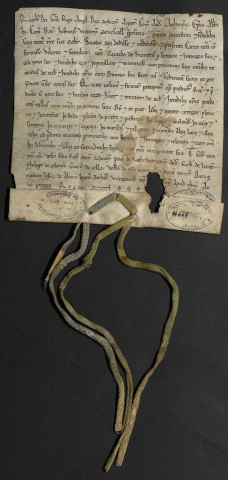
The Charte aux lacs d’Amour

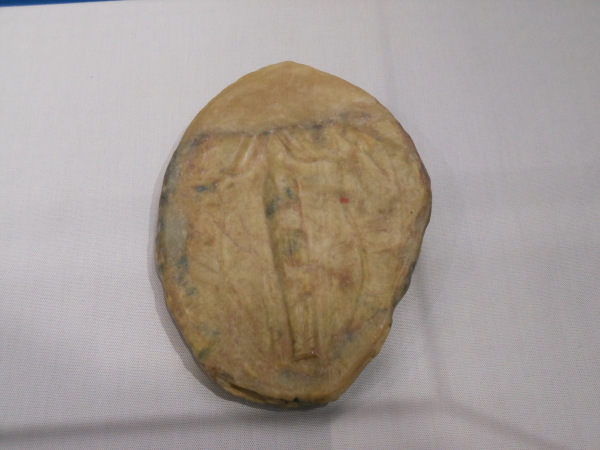
3. Nicholaa was the oldest of three sisters. Her sister Gila (or Julia) married Richard du Hommet, the grandson and son of successive constables of Normandy. In 1191 a charter was issued to Gila and Richard, known as the charte aux lacs d’amour (the charter of the laces of love), which had laces attached to the seal on which was written a love poem: ‘I am a pledge of love. Do not give me away. May whoever separates our love receive death’. Nicholaa’s other sister, Isabel de la Haye married William de Rollos, who was probably from Bourne, in Lincolnshire. The Rollos family returned to Normandy during the reign of King John.

4. Nicholaa’s first husband was William Fitz Erneis, who may have been a younger son of Robert Fitz Erneis, a minor Lincolnshire lord. Nicholaa and William had one surviving child, a daughter named Matilda, before William died in 1178. Nicholaa would later pay a fine of 300 marks to King Richard I so that she could marry her daughter to whomever she wished except, of course, to an enemy of the king. Nicholaa was still accounting for this debt until 1212. In 1201, she still owed 40 marks and a palfrey (a horse).

5. Before 1185, Nicholaa had remarried, this time to Gerard de Camville, son of Richard de Camville, lord of Middleton Stoney in Oxfordshire. A family with an impressive record of royal service, Richard had died in Italy in 1176 while escorting the king’s daughter, Joanna, to her wedding with King William of Sicily. Gerard’s half-brother, also called Richard, accompanied Richard the Lionheart on Crusade; this Richard de Camville was made governor of Cyprus before dying at Acre in 1191. Gerard himself served the kings Henry II, Richard the Lionheart and John. He was Constable of Lincoln Castle by right of his wife and sheriff of Lincolnshire on two occasions.

6. Nicholaa first comes to the attention of the chroniclers in 1191, when Prince John led the opposition to, William Longchamp, the man left in charge of England during Richard the Lionheart’s absence on crusade. Longchamp wanted Lincoln Castle for one of his friends and determined to take it. Gerard sought the help of Prince John swearing fealty to him at Nottingham, leaving to Nicholaa to hold the castle. William Longchamp hired a force of mercenaries and laid siege to the castle in Gerard’s absence. The formidable Nicholaa refused to yield, holding out for 40 days before Longchamp gave up and went home. Amusingly, Richard of Devizes said of this defence of Lincoln Castle, that she did it ‘without thinking of anything womanly’.

King John’s Right Hand Lady: The Story of Nicholaa de la Haye
The kings Nicholaa served: Henry II, Richard I King John and Henry III, Lincoln Cathedral

7. By the time the king arrived home in 1194, John had fled to France, leaving his supporters to face the music. On 31 March 1194, on the first day of his council at Nottingham, King Richard dispossessed Gerard de Camville of the castle and shrievalty of Lincoln. And on 2 April, Gerard was charged with harbouring outlaws (wonder if they mean Robin Hood?), treason for failing to answer the king’s justices’ summons over the harbouring of the said outlaws, and for taking up arms and aiding John in taking the castles of Tickhill and Nottingham. The outcome of the proceedings is not recorded, but given that Gerard was fined 2,000 marks to recover the king’s good will and his lands, we can assume that the judges did not find in his favour.

8. When Richard the Lionheart died on 6 April 1199 and was succeeded by his brother, John, Nicholaa and Gerard de Camville were restored to favour and to Lincoln Castle. Gerard was also appointed sheriff of Lincolnshire and served in that office for the next six years, becoming ‘a greater man than ever.’ In November 1200, Nicholaa and Gerard welcomed the kings of England and Scotland to Lincoln, where King William the Lion paid homage to King John outside the city walls.

King John’s Right Hand Lady: The Story of Nicholaa de la Haye
The Observatory Tower, Lincoln Castle

9. Gerard died in December 1214, leaving Nicholaa in command of Lincoln Castle. In 1216, she was besieged by a force of rebel barons who had taken up arms against King John in the aftermath of the issuing of Magna Carta. Nicholaa paid them off – they stopped attacking the castle but remained in the city. In the same year, Nicholaa met King John at the East Gate of Lincoln Castle, with the castle’s keys in her hand, offering to resign her position as constable, citing her weariness and great age (she was in her 60s). John refused, telling her to remain in post until he ordered otherwise.

10. On 18 October 1216, at Newark Castle, in one of his final acts and just hours before his death, King John appointed Nicholaa de la Haye as sheriff of Lincolnshire. She was the first woman in English history to be appointed to the office of sheriff in her own right – but she would not be the last.

King John’s Right Hand Lady: The Story of Nicholaa de la Haye
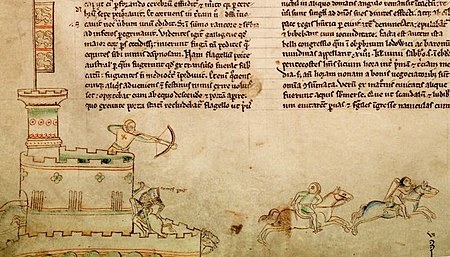
Depiction of the 1217 Battle of Lincoln from Matthew Paris

11. (Oops!) For 7 months, from October 1216 to May 1217, Lincoln Castle was once again under siege by a force of English rebel barons and their French allies under the command of the Comte de Perche. Nicholaa directed the castle’s defence until royalist forces could come to her aid. On 20 May 1217, William Marshal and the royalist army came to her relief, fighting the Battle of Lincoln through the city’s streets.

12. (double oops!) There was a rise in the number of baby girls named Nicholaa, in Lincolnshire, in the 13th century.

13. Have a listen to the A Slice of Medieval episode dedicated to Nicholaa de la Haye, where Derek Birks and I discuss the ins and outs – and highs and lows – of Nicholaa’s career.

Sources:

Richard of Devizes, The Chronicle of Richard of Devizes; Roger of Howden (Hoveden), The Annals of Roger of Howden; The Plantagenet Chronicles edited by Elizabeth Hallam; Brassey’s Battles by John Laffin; 1215 The Year of Magna Carta by Danny Danziger & John Gillingham; The Life and times of King John by Maurice Ashley; The Plantagenets, the Kings Who Made England by Dan Jones; England Under the Norman and Angevin Kings  by Robert Bartlett; lincolnshirelife.co.uk; catherinehanley.co.uk; magnacarta800th.com; lothene.org; lincolncastle.com; The Sheriff: The Man and His Office by Irene Gladwin; Louise Wilkinson, Women in Thirteenth Century Lincolnshire; Richard Huscraft, Tales from the Long Twelfth Century; J.W.F. Hill, Medieval Lincoln; swaton.org.uk; oxforddnb.com; Ingulph, Ingulph’ Chronicle of the Abbey of Croyland; Stephen Church, King John: England, Magna Carta and the Making of a Tyrant; Marc Morris, King John; Pipe Rolls; Red Book of the Exchequer

*

My Books

Signed, dedicated copies of all my books are available through my online bookshop or the Contact Me page.

New releases in 2026:

New Hardbacks

Books by Sharon Bennett Connolly

‘My daughter wanted me to treat her more like a princess. So, I married her to a stranger to strengthen the alliance with Poland!’

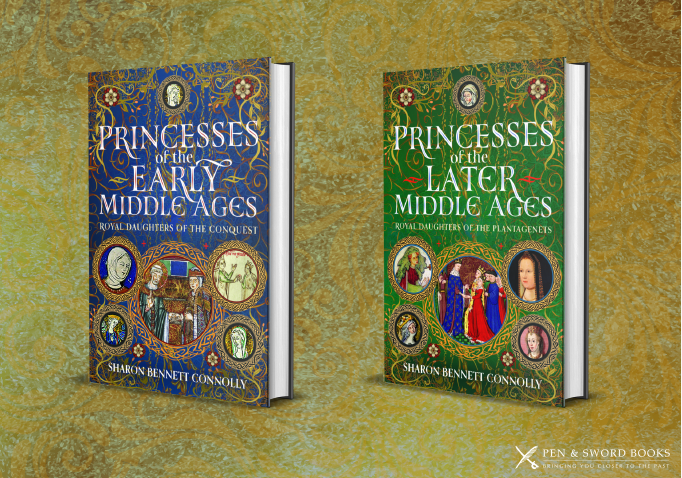
Princesses of the Early Middle Ages: Royal Daughters of the Conquest and Princesses of the Later Middle Ages: Royal Daughters of the Plantagenets tell the stories of England’s royal daughters from 1066 to the rise of the Tudors, from the last Anglo-Saxon princesses to the fall of the House of York.

Were they really pampered pawns sent off to marriages on the Continent, out of sight and out of mind?

Perhaps, there was different story, where a foreign marriage does not mean eternal exile, but a purpose in life, where a princess is a diplomat, an ambassador for England in her new country.

Where she is the bond between allies – most of the time.

Their stories are touching, inspiring and, at times, heartbreaking...

Praise for Princesses of the Early Middle Ages:

Heidi Malagisi: ‘This is another excellent book by Sharon Bennett Connolly. Extremely well researched and relatively easy to follow along, which is a great thing because there are so many Matildas and Eleanors in this book.‘

Tony Riches: “I challenge anyone with an interest in medieval Britain to not find something they will learn from this book.”

Anna Belfrage: ‘I just love how [Sharon] presents this huge cast of real life people in a casual, chatty tone that has me expecting the various female protagonists to suddenly pop their head up and add their own commentary.‘

Buy now: Princesses of the Early Middle Ages: Royal Daughters of the Conquest

Praise for Princesses of the Later Middle Ages:

Elizabeth Chadwick: ‘Really interesting and informative and gives a great handle on the goings on surrounding these ladies!‘

Kathryn Warner: ‘A deeply researched, richly detailed and fascinating account of late medieval England’s forgotten princesses. I loved it!‘

Pre-order: Princesses of the Later Middle Ages: Royal Daughters of the Plantagenets 

New in Paperback:

Books by Sharon Bennett Connolly

The momentous events of 1066, the story of invasion, battle and conquest, are well known. But what of the women? Silk and the Sword: The Women of the Norman Conquest traces the fortunes of the women who had a significant role to play during the Norman Conquest – wives, lovers, sisters, mothers, leaders. These are lives full of drama, pathos and sometimes mystery: Edith and Gytha searching the battlefield of Hastings for the body of Harold, his lover and mother united in their grief for the fallen king. Who was Ælfgyva, the lady of the Bayeux Tapestry, portrayed with a naked man at her feet?

Janina Ramirez said it’s ‘Excellent’!

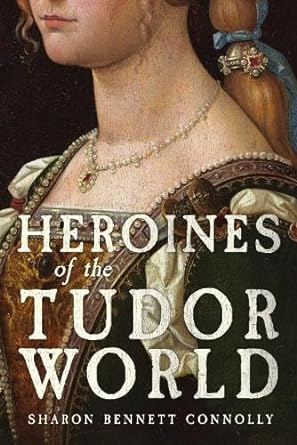
Heroines of the Tudor World focuses on the women who lived through the Renaissance and Reformation, examining the threats and challenges they faced and how they overcame them. These are the women who ruled, the women who founded dynasties, the women who fought for religious freedom, their families and love. These are the women who made a difference, who influenced countries, kings and the Reformation.

Derek Birks: ‘An excellent account of the changing roles of women in Tudor society.’

Annie Whitehead: ‘What a treat this book was to read. Bennett Connolly has an easy, conversation style of writing which welcomes you from the opening pages and draws you into her story.‘

Available now from Amazon and Pen and Sword Books

Also by Sharon Bennett Connolly:

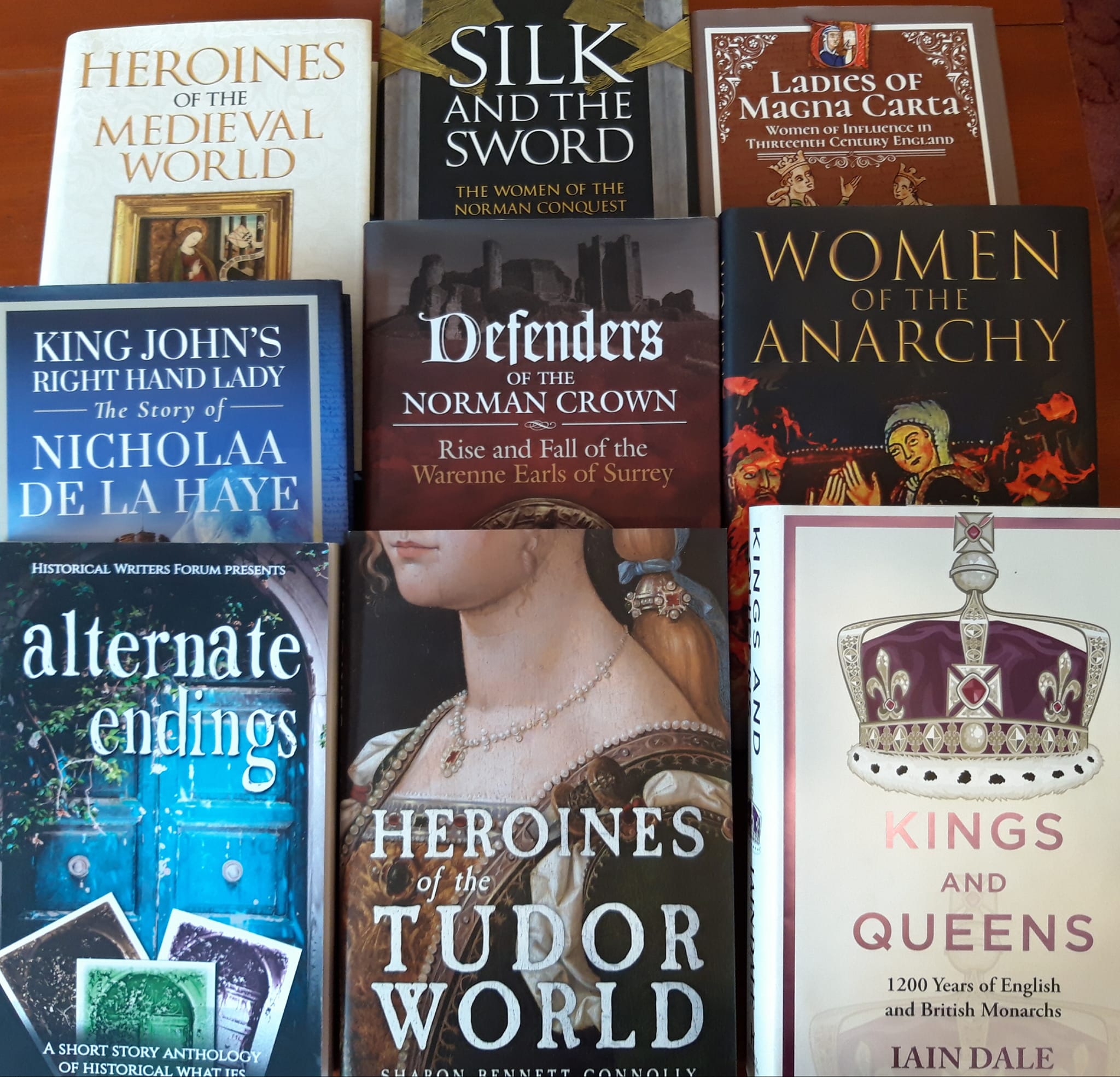
Heroines of the Medieval World; Silk and the Sword: The Women of the Norman Conquest; Ladies of Magna Carta: Women of Influence in Thirteenth Century England; Defenders of the Norman Crown: Rise and Fall of the Warenne Earls of Surrey; King John’s Right Hand Lady: The Story of Nicholaa de la Haye; Women of the Anarchy; Heroines of the Tudor World; Scotland’s Medieval Queens: From St Margaret to Margaret of Denmark; Princesses of the Early Middle Ages: Royal Daughters of the Conquest (March 2026); Princesses of the Later Middle Ages; Royal Daughters of the Plantagenets (August 2026)

Alternate Endings: An anthology of historical fiction short stories including Long Live the King… which is my take what might have happened had King John not died in October 1216. Available in paperback and kindle from Amazon.

*

Podcast:

A Slice of Medieval

Have a listen to the A Slice of Medieval podcast, which I co-host with Historical fiction novelist Derek Birks. Derek and I welcome guests, such as Bernard Cornwell and Elizabeth Chadwick, and discuss a wide range of topics in medieval history, from significant events to the personalities involved.

Every episode is also now available on YouTube.

There are now over 100 episodes available!

Royal Historical Society

*

Don’t Forget!

Signed, dedicated copies of all my books are available through my online bookshop or the Contact Me page.

For forthcoming online and in-person talks, please check out my Events Page.

You can be the first to read new articles by clicking the ‘Follow’ button, liking our Facebook page or joining me on Twitter, Threads, Bluesky and Instagram.

©2023 Sharon Bennett Connolly FRHistS

Guest Post: Childbirth and the Victorian Workhouse by Jessica Cox

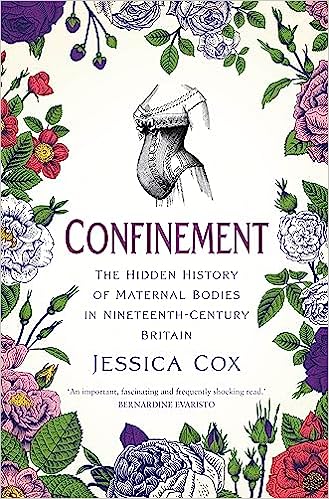
Today it is an absolute pleasure to welcome Jessica Cox to History…the Interesting Bits with a guest article offering insight into her newly released book, Confinement: The Hidden History of Maternal Bodies in Nineteenth-Century Britain

Childbirth and the Victorian Workhouse

by Jessica Cox

‘The patient […] stretched out her hand towards the child. The surgeon deposited it in her arms. She imprinted her cold white lips passionately on its forehead; passed her hands over her face; gazed wildly round; shuddered; fell back – and died’

So ends the life of the eponymous hero’s mother in the opening of Charles Dickens’s Oliver Twist (1838). Her infant son initially appears likely to follow in her footsteps:

For some time he lay gasping on a little flock mattress, rather unequally poised between this world and the next: the balance being decidedly in favour of the latter. Now, if, during this brief period, Oliver had been surrounded by careful grandmothers, anxious aunts, experienced nurses, and doctors of profound wisdom, he would most inevitably and indubitably have been killed in no time. There being nobody by, however, but a pauper old woman, who was rendered rather misty by an unwonted allowance of beer; and a parish surgeon who did such matters by contract; Oliver and Nature fought out the point between them.

Though fictional, the circumstances of Oliver’s birth reflect those of many thousands of babies born in the workhouses of Victorian Britain. Between 1861 and 1865 in London alone, almost twelve thousand women gave birth in workhouses. Giving birth in the workhouse was risky, with an average maternal mortality rate of 0.8 per cent. Overall, maternal mortality rates remained relatively steady throughout the Victorian period, with approximately one in two hundred births (0.5 per cent) resulting in the death of the mother, but this varied according to circumstances and locale. As these figures suggest, the maternal mortality risk in workhouses was somewhat higher than average, and in some of these institutions, it was higher still: in Islington workhouse in 1865, for instance, it was over five per cent.

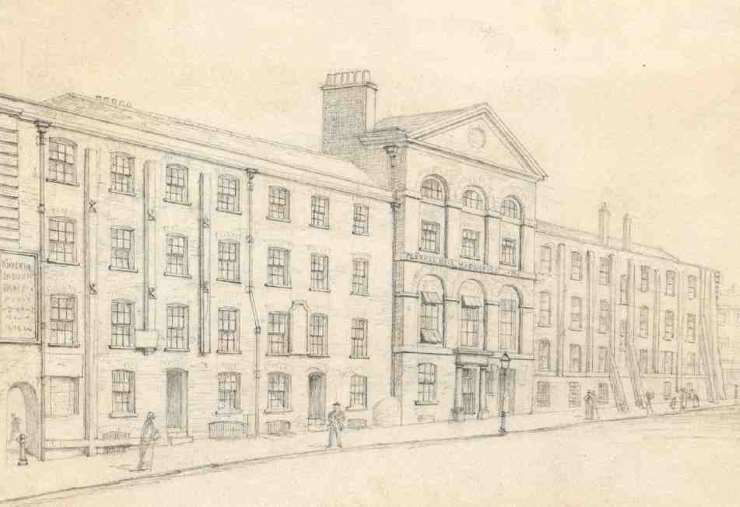
Clerkenwell Workhouse 1882

As Dickens’s description suggests, Oliver’s survival was against the odds. Infant mortality was high throughout the Victorian period – averaging around twenty per cent, but as high as fifty per cent in some areas. Amongst infants born in the workhouse whose mothers died in childbirth, it was even higher. If mother and baby did survive, they might be relocated to the workhouse nursery, and, as with the lying-in wards, these places were often far from sanitary, and unlikely to contribute to the recovery of mothers or the healthy development of infants. The Medical Officer at the Strand Workhouse in London included a description of the nursery there when testifying to a House of Commons select committee looking at conditions in the workhouse in 1861:

[The nursery] was a wretchedly damp and miserable room, nearly always overcrowded with young mothers and their infant children. That death relieved these young women of their illegitimate offspring was only what was to be expected, and that frequently the mothers followed in the same direction was only too true. I used to dread to go into this ward, it was so depressing. Scores and scores of distinctly preventable deaths of both mothers and children took place during my continuance in office through their being located in this horrible den.

The care which Oliver and his mother received also parallels the reality for many birthing women who ended up in one of Britain’s many workhouses. Such places, as the above description suggests, were often unsanitary, and medical assistance could not be guaranteed, though of course medical aid was no guarantee of a successful outcome anyway – especially in lying-in wards such as those found in the workhouses, where infections could be easily spread between patients. Whilst all workhouses were required to employ a medical officer, he was not necessarily summonsed to births, and in some instances, women were attended in childbirth only by fellow paupers. Whilst Dickens is guilty of perpetuating the stereotype of the drunken, incompetent midwife in his fiction (Martin Chuzzlewit’s Mrs Gamp being the most notable example), it was nonetheless the case that many of the women who gave birth in the Victorian workhouse received inadequate – and sometimes no – medical attention.

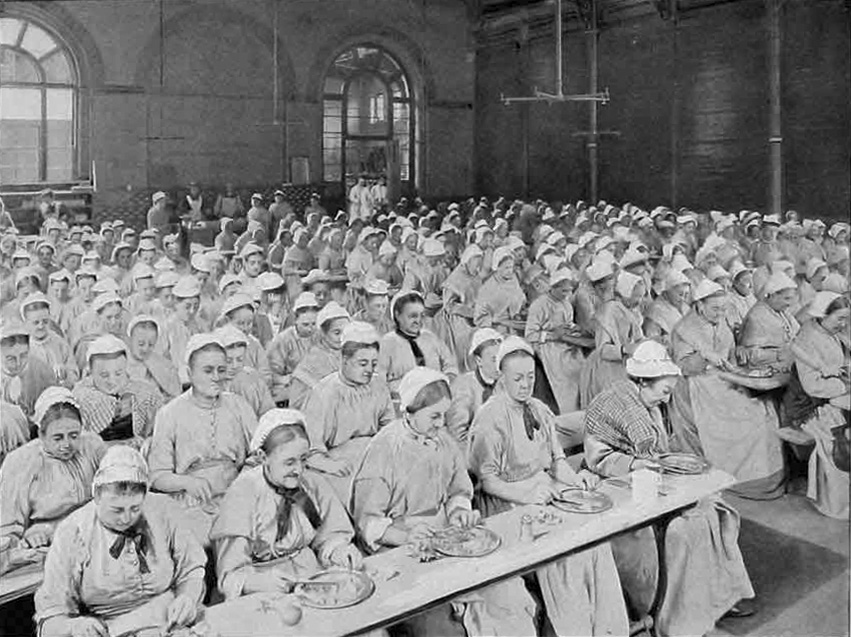
Dinnertime at St Pancras Workhouse, London, 1911

Like many of those born in the workhouse, Oliver Twist is illegitimate. The various lying-in hospitals in Victorian Britain, which provided support for poorer women in childbirth, typically offered aid only to married women, so poor unmarried mothers often had no choice but to attend the workhouse. By and large, these were far from welcoming institutions: concerns were raised about women taking advantage of the care provided and entering the workhouse too early. This resulted in some women being turned away. In one tragic case in 1857, an eighteen-year old woman was turned away from Bradford Workhouse after the matron decided the birth was not imminent. Shortly afterwards, she collapsed in the street, where she gave birth to a stillborn child without any medical assistance. In addition, some workhouses participated in the widespread moral condemnation of unmarried mothers, by forcing them to wear particular colours or items of clothing as a marker of their ‘disgrace’.

Despite the harsh conditions and attitudes associated with giving birth in the workhouse, it did at least – assuming the mother survived – allow for rest after childbirth: women were generally permitted to stay in the lying-in ward for one month following delivery. Whilst there is no doubt that the workhouse was not a particularly desirable option, all things considered, the alternative for poorer women was often to return to hard labour – domestic or paid – soon after giving birth. Prior to the establishment of the National Health Service, the workhouse represented one of the only means of state support for poorer citizens. Today, women who once would have had little choice but to give birth in the workhouse, risking their own and their babies’ lives, have undisputed rights to hospital and medical care. The last workhouses in Britain closed their doors in 1948 – the same year the NHS was formed.

Jessica Cox’s book Confinement: The Hidden History of Maternal Bodies in Nineteenth-Century Britain is published by The History Press and is available now.

About the book:

Covering a fascinating period of population growth, high infant mortality and deep social inequality, rapid medical advances and pseudoscientific quackery, Confinement is the untold history of pregnancy and childbirth in Victorian Britain.

During the nineteenth century, having children was frequently viewed as a woman’s central function and destiny – and yet the pregnant and postnatal body, as well as the birthing room, are almost entirely absent from the public conversation and written histories of the period. Confinement corrects this omission by exploring stories of pregnancy and motherhood across this period. Drawing on a range of contemporary sources, Jessica Cox charts the maternal experiences of women, examining fertility, pregnancy, miscarriage, childbirth, maternal mortality, unwanted pregnancies, infant loss, breastfeeding, and postnatal bodies and minds.

From the royal family to inhabitants of the workhouse, this absorbing history reveals what motherhood was truly like for the women of nineteenth-century Britain.

About the author:

Jessica Cox is a Reader in English Literature at Brunel University, London. She specialises in maternal histories, Victorian sensation fiction, the Brontes, and neo-Victorianism.

*

My Books

Signed, dedicated copies of all my books are available, please get in touch by completing the contact me form.

Out now: King John’s Right-Hand Lady: The Story of Nicholaa de la Haye

In a time when men fought and women stayed home, Nicholaa de la Haye held Lincoln Castle against all-comers, gaining prominence in the First Baron’s War, the civil war that followed the sealing of Magna Carta in 1215. A truly remarkable lady, Nicholaa was the first woman to be appointed sheriff in her own right. Her strength and tenacity saved England at one of the lowest points in its history. Nicholaa de la Haye is one woman in English history whose story needs to be told…

King John’s Right-Hand Lady: The Story of Nicholaa de la Haye is now available from Pen & Sword Books, bookshop.org and Amazon.

Coming 15 January 2024: Women of the Anarchy

On the one side is Empress Matilda, or Maud. The sole surviving legitimate child of Henry I, she is fighting for her birthright and that of her children. On the other side is her cousin, Queen Matilda, supporting her husband, King Stephen, and fighting to see her own son inherit the English crown. Both women are granddaughters of St Margaret, Queen of Scotland and descendants of Alfred the Great of Wessex. Women of the Anarchy demonstrates how these women, unable to wield a sword, were prime movers in this time of conflict and lawlessness. It show how their strengths, weaknesses, and personal ambitions swung the fortunes of war one way – and then the other.

Available for pre-order from Amberley Publishing and Amazon UK.

Also by Sharon Bennett Connolly:

Defenders of the Norman Crown: The Rise and Fall of the Warenne Earls of Surrey tells the fascinating story of the Warenne dynasty, of the successes and failures of one of the most powerful families in England, from its origins in Normandy, through the Conquest, Magna Carta, the wars and marriages that led to its ultimate demise in the reign of Edward III. Defenders of the Norman Crown: Rise and Fall of the Warenne Earls of Surrey is now available from Pen & Sword Books, Amazon in the UK and US, and  Bookshop.org.

Ladies of Magna Carta: Women of Influence in Thirteenth Century England looks into the relationships of the various noble families of the 13th century, and how they were affected by the Barons’ Wars, Magna Carta and its aftermath; the bonds that were formed and those that were broken. It is now available in paperback and hardback from Pen & Sword,  Amazon, and Bookshop.org.

Heroines of the Medieval World tells the stories of some of the most remarkable women from Medieval history, from Eleanor of Aquitaine to Julian of Norwich. Available now from Amberley Publishing and Amazon, and Bookshop.org.

Silk and the Sword: The Women of the Norman Conquest traces the fortunes of the women who had a significant role to play in the momentous events of 1066. Available now from Amazon,  Amberley Publishing, and Bookshop.org.

Alternate Endings: An anthology of historical fiction short stories including Long Live the King… which is my take what might have happened had King John not died in October 1216. Available in paperback and kindle from Amazon.

Podcast:

Have a listen to the A Slice of Medieval podcast, which I co-host with Historical fiction novelist Derek Birks. Derek and I welcome guests, such as Bernard Cornwell and discuss a wide range of topics in medieval history, from significant events to the personalities involved.

*

For forthcoming online and in-person talks, please check out my Events Page.

You can be the first to read new articles by clicking the ‘Follow’ button, liking our Facebook page or joining me on Twitter and Instagram.

©2023 Jessica Cox and Sharon Bennett Connolly FRHistS

Guest Post: Children of the House of Cleves by Heather R Darsie

Today it is an honour and pleasure to open the blog tour for Heather R. Darsie’s latest book, Children of the House of Cleves: Anna and Her Siblings. You may remember that Heather wrote a fabulous biography of Anna of Cleves, Henry VIII’s fourth wife, a few years back. She has now followed that up with a look into Anna’s family.

Mental Illness in the House of Cleves

By Heather R. Darsie, J.D.

The von der Mark family, particularly once it came to the mental health of Anna of Cleves’ fraternal nephew Johann Wilhelm, was marred with mental health issues. Unfortunately, it is impossible to diagnose individuals from hundreds of years ago with afflictions that the modern person would recognize. To that end, terms from the time are rather simplistic.

Anna of Cleves’ family did not appear to have any serious mental health concerns on her father Johann III’s side, although Johann was regarded as being simple-minded. Madness featured on the maternal, Jülich-Berg side of Anna’s family. Her mother Maria of Jülich-Berg’s paternal grandfather, Gerhard of Jülich-Berg. He, “fell in and out of madness, beginning when William was still an infant…” That eventually led to William’s regency on the late 15th century, until Gerhard died.

William’s daughter Maria, mother of Anna and her siblings, was said to have died in a fit of rage. She was recognized as an intelligent, capable woman in her lifetime. Beyond her heartbroken rage at the end of her life, there is nothing to hint that Gerhard’s mental instability was passed down to Maria.

Anna’s brother Wilhelm is difficult to discern. After a series of strokes in his forties and fifties, Wilhelm occasionally suffered from a mental stupor. Whether it was from the strokes or a mental disorder is hard to sort. However, whatever his post-stroke limitations, a regency was never necessary during Wilhelm’s long reign as Duke of Jülich-Cleves-Berg.

Anna’s second sister-in-law through Wilhelm, Maria von Habsburg, was prone to fits of melancholy. Sometimes, the fits, or what the modern person might suspect to be depression, could be quite intense. She was one of Juana the Mad’s granddaughters, after all.

With the exception of perhaps Gerhard of Jülich-Berg, no one in the family was quite as mad as Anna’s nephew, Johann Wilhelm of Jülich-Cleves-Berg. Johann Wilhelm’s peculiar disposition began presenting itself in his youth, although it was easy enough to put him away in a religious establishment. Unfortunately, by the time he became a young man, there was no hiding his infirmity.

Again, there are really only glimpses of what ailed Johann Wilhelm. At times, he seemed to have entered an almost catatonic state. At other times, he seemed perfectly lucid, but was highly paranoid.

As the decades rolled on and Anna’s brother Wilhelm sought method after method of treating Johann Wilhelm, nothing worked. Multiple doctors saw him, including a known quack. Even witches were consulted in hopes of curing Johann Wilhelm, but nothing worked. On top of Johann Wilhelm’s mental illness, he failed to conceive any children.

Likely motivated by her own desperation for a child, Johann Wilhelm’s wife arranged an exorcism for him,

“The exorcism, which began around 5 September 1599, was violent, but started off harmlessly enough. Johann Wilhelm and members of his court were at Hambach Castle [near the city of Jülich], then being used by the duke as a hunting lodge. Foreign priests … and their religious retinue awaited Johann Wilhelm and his company as they returned from a hunting excursion. The priests gathered in Hambach Castle’s galleries to greet Johann Wilhelm, who was immediately apprehensive when he saw them. According to the report, Johann Wilhelm behaved strangely toward them because, “he was able to think or suspect without a doubt that the priests or monks are not being called for in vain, but are called to the place for the sake of the cause” of exorcising him.

Aside from dispossessing Johann Wilhelm of whatever demon was harassing him, the monks and priests wished to remove any impediment to Johann Wilhelm’s marriage bed…. The hope was that God would make them fruitful. Johann Wilhelm was keenly aware that the United Duchies needed an heir, especially since his first marriage was childless.”

What follows is a curious description of the efforts to which the priests went in cleansing Johann Wilhelm of the demon or demons whom they believed were vexing him. It was a shameful event.

If this excerpt piqued your interest, consider reading Children of the House of Cleves: Anna and Her Siblings, set for release in the UK on 15 June 2023 and in the US/Internationally on 12 September 2023. Can’t wait until September? The US Kindle version is released on 15 June, too! You might also like to read Heather R. Darsie’s biography on Anna of Cleves, the first researched and written from the German perspective, Anna, Duchess of Cleves: The King’s Beloved Sister.

Children of the House of Cleves: Anna and Her Siblings is available from Amberley Publishing and Amazon in the UK and US

About the Author:

Heather R. Darsie is an independent researcher in the US specializing in early modern history. She focuses on researching the Holy Roman Empire and England in the early 16th century. She is the author of ‘Anna, Duchess of Cleves’ and ‘Catherine of Aragon – Spanish Princess’. Her primary career is as an attorney. She runs the website MaidensAndManuscripts.com.

Sources & Suggested Reading

1. Darsie, Heather R. Children of the House of Cleves: Anna and Her Siblings. Stroud: Amberley (2023).

2. Darsie, Heather R. Anna, Duchess of Cleves: The King’s Beloved Sister. Stroud: Amberley (2019).

*

My Books:

Signed, dedicated copies of all my books are available, please get in touch by completing the contact me form.

Out Now!

King John’s Right-Hand Lady: The Story of Nicholaa de la Haye is now available for pre-order from Pen & Sword Books, bookshop.org and Amazon UK. (I will hopefully have a US release date shortly)

In a time when men fought and women stayed home, Nicholaa de la Haye held Lincoln Castle against all-comers. Not once, but three times, earning herself the ironic praise that she acted ‘manfully.’ Nicholaa gained prominence in the First Baron’s War, the civil war that followed the sealing of Magna Carta in 1215.

A truly remarkable lady, Nicholaa was the first woman to be appointed sheriff in her own right. Her strength and tenacity saved England at one of the lowest points in its history. Nicholaa de la Haye is one woman in English history whose story needs to be told…

Coming 15 January 2024: Women of the Anarchy

On the one side is Empress Matilda, or Maud. The sole surviving legitimate child of Henry I, she is fighting for her birthright and that of her children. On the other side is her cousin, Queen Matilda, supporting her husband, King Stephen, and fighting to see her own son inherit the English crown. Both women are granddaughters of St Margaret, Queen of Scotland and descendants of Alfred the Great of Wessex. Women of the Anarchy demonstrates how these women, unable to wield a sword, were prime movers in this time of conflict and lawlessness. It show how their strengths, weaknesses, and personal ambitions swung the fortunes of war one way – and then the other.

Available for pre-order from Amberley Publishing and Amazon UK.

Also by me:

Defenders of the Norman Crown: The Rise and Fall of the Warenne Earls of Surrey tells the fascinating story of the Warenne dynasty, of the successes and failures of one of the most powerful families in England, from its origins in Normandy, through the Conquest, Magna Carta, the wars and marriages that led to its ultimate demise in the reign of Edward III. Defenders of the Norman Crown: Rise and Fall of the Warenne Earls of Surrey is now available from Pen & Sword Books, Amazon in the UK and US, and  Bookshop.org.

Ladies of Magna Carta: Women of Influence in Thirteenth Century England looks into the relationships of the various noble families of the 13th century, and how they were affected by the Barons’ Wars, Magna Carta and its aftermath; the bonds that were formed and those that were broken. It is now available in paperback and hardback from Pen & Sword,  Amazon, and Bookshop.org.

Heroines of the Medieval World tells the stories of some of the most remarkable women from Medieval history, from Eleanor of Aquitaine to Julian of Norwich. Available now from Amberley Publishing and Amazon, and Bookshop.org.

Silk and the Sword: The Women of the Norman Conquest traces the fortunes of the women who had a significant role to play in the momentous events of 1066. Available now from Amazon,  Amberley Publishing, and Bookshop.org.

Alternate Endings: An anthology of historical fiction short stories including Long Live the King… which is my take what might have happened had King John not died in October 1216. Available in paperback and kindle from Amazon.

*

Podcast:

Have a listen to my A Slice of Medieval podcast:

For forthcoming online and in-person talks, please check out my Events Page.

You can be the first to read new articles by clicking the ‘Follow’ button, liking our Facebook page or joining me on Twitter and Instagram.

*

©2023 Heather R. Darsie and Sharon Bennett Connolly FRHistS

1191: Nicholaa de la Haye’s First Siege

History... the Interesting bits
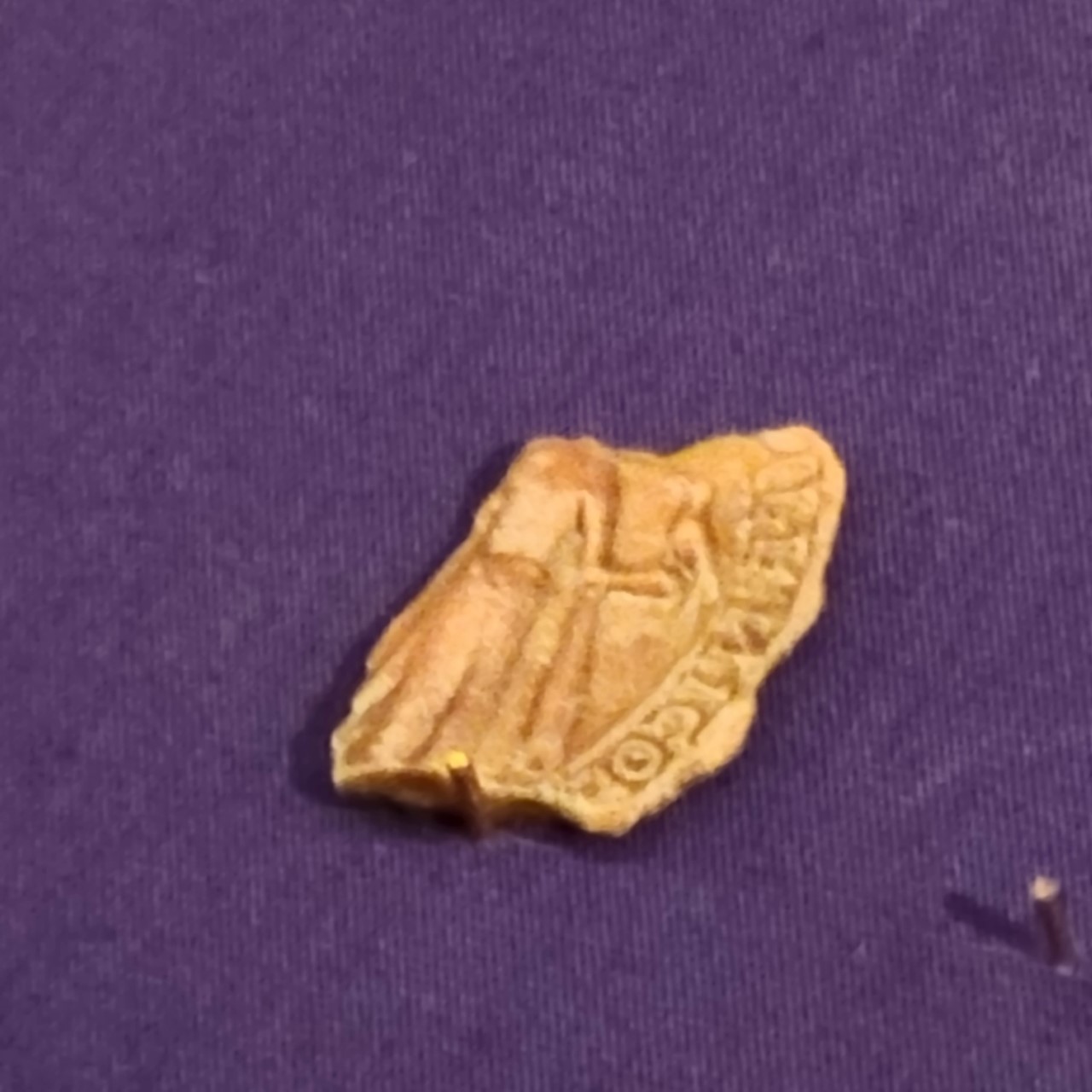
Partial seal of Nicholaa de la Haye

Nicholaa de la Haye first came to the attention of the chroniclers in the year 1191. She and her husband, Gerard de Camville, were in command of Lincoln Castle. Gerard was a talented administrator and was sheriff of Lincoln in 1189 and 1190 and again from 1199 to 1205. He was also hereditary constable of Lincoln Castle by right of his wife, Nicholaa. Although he had sworn allegiance to King Richard on his accession, in 1191 Gerard paid homage to the king’s brother John, then count of Mortain, for Lincoln Castle. This meant that Gerard and Nicholaa would be drawn into John’s dispute with King Richard’s chancellor, William Longchamp.

Before King Richard’s departure on crusade, the king had extracted a promise from John and their illegitimate half-brother Geoffrey, Archbishop of York, that neither would set foot in England for three years. Although it seems highly unlikely that Longchamp released John from his oath, the prince was back in England by 1191, possibly on the insistence of his mother, Eleanor of Aquitaine, who was watching over her favourite son’s domains while he was away on crusade.

Longchamp’s heavy-handed administration of the country caused much dissent among the barons and John chose to champion their cause. The catalyst for John’s armed opposition to William Longchamp may well have been the king’s recognition of his nephew, Arthur, Duke of Brittany still only a child of five years, as his heir; the only person in England who was meant to know was William Longchamp. However, it seems that Longchamp may have sounded out others to measure the level of support for Arthur. According to the chronicler William of Newburgh, he passed on the information to the king of Scots, at least, and possibly some of the Welsh princes. In early 1191 the news was widely leaked, and John came to hear of it.

History... the Interesting bits
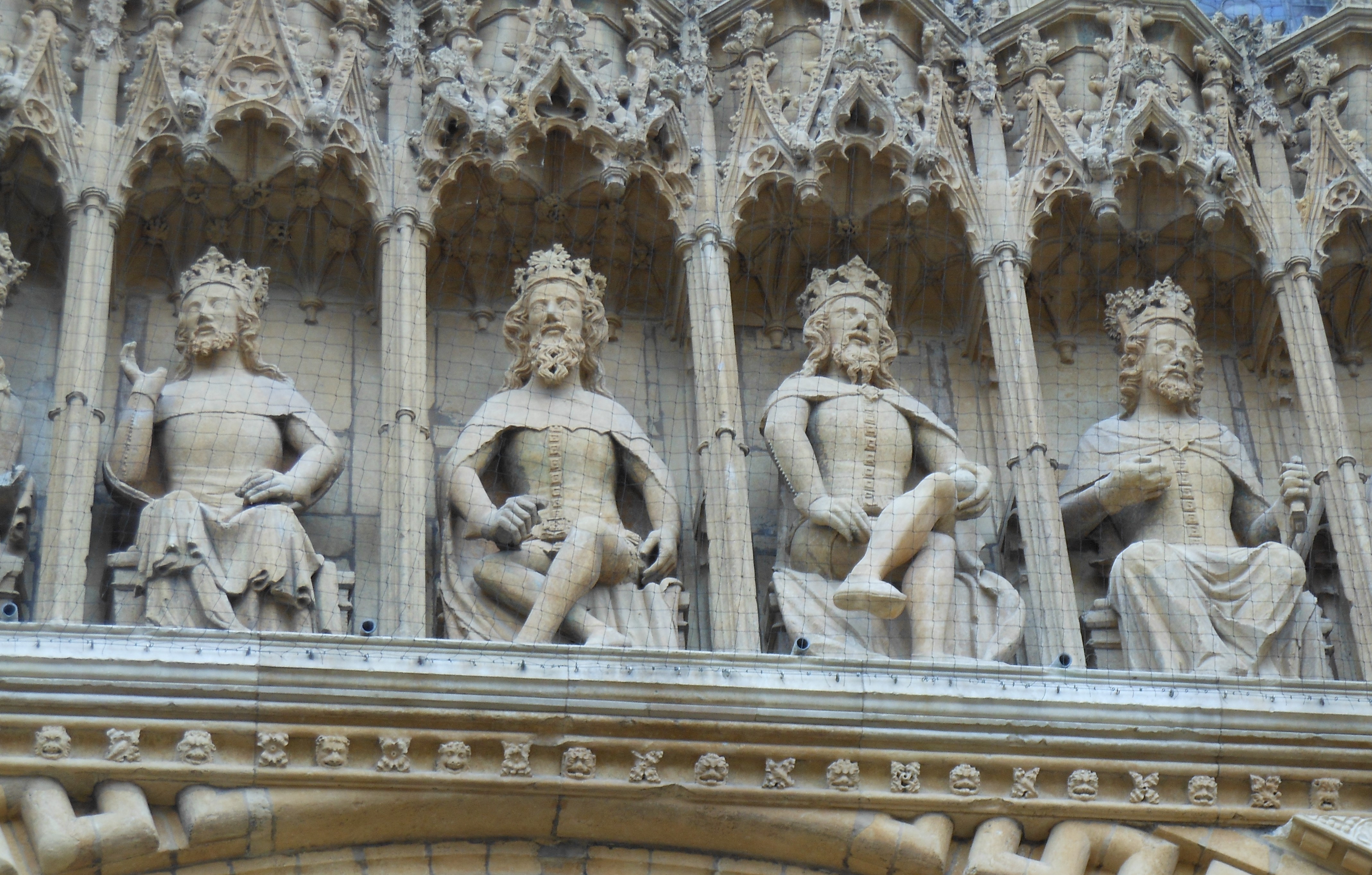
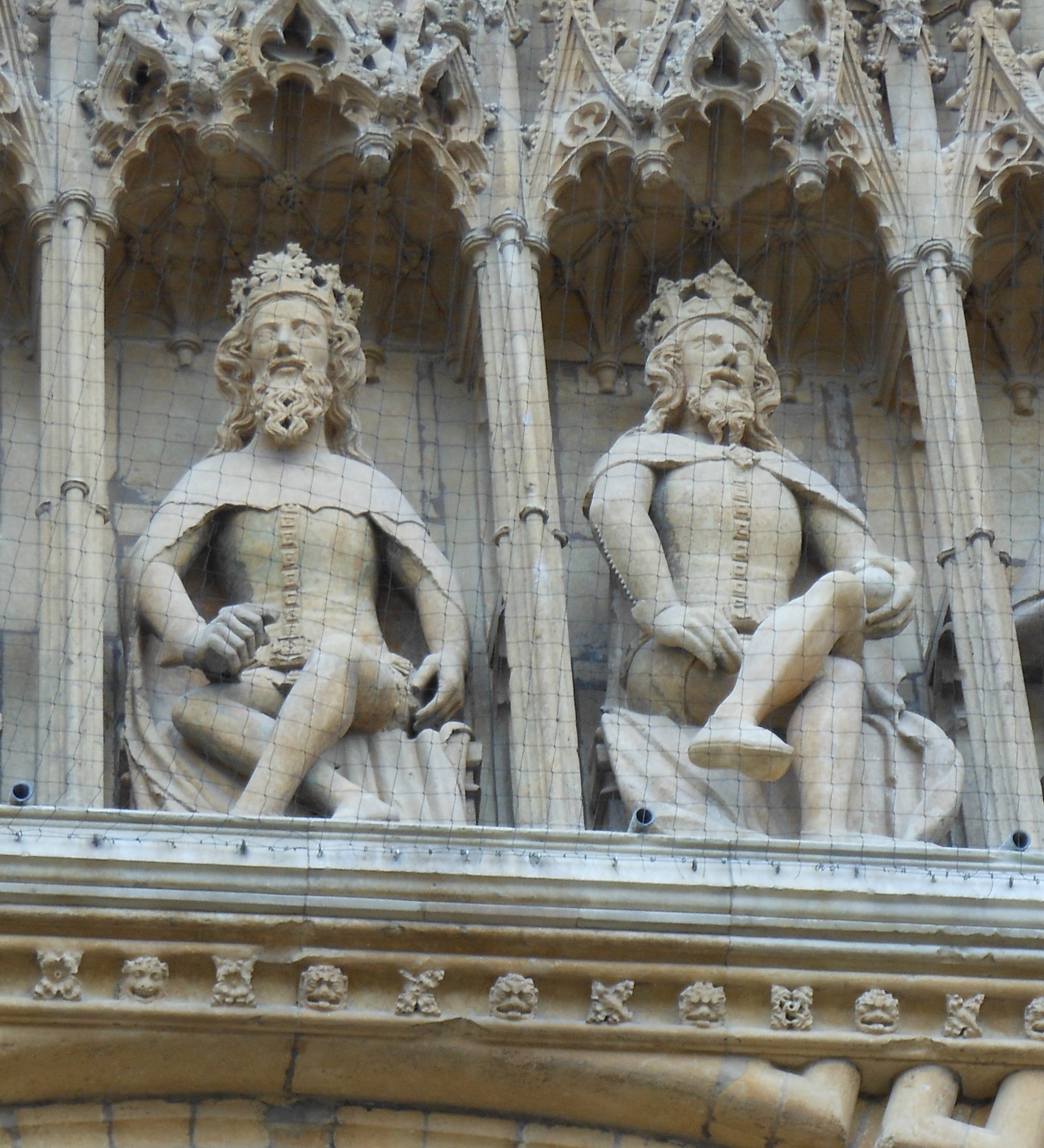
Richard I and John side by side in the Gallery of Kings on the West Front of Lincoln cathedral

According to William of Newburgh, John had expected to become the successor to the  kingdom, should the king not survive the cursade. Indeed, Richard’s advancement of his brother since his accession, in giving John lands in England and arranging his marriage to an English bride, all seemed to support this expectation. Richard’s actions in naming Arthur his heir, and Longchamp’s support for this, threatened to undermine John’s own claims and rights. Having heard the not-so-secret secret, John started building up his own powerbase. According to Richard of Devizes, John, ‘when he knew for certain that his brother had turned his back on England, presently perambulated the kingdom in a more popular manner, nor did he forbid his followers calling him the king’s heir.’

Tensions were rising. Richard of Devizes reported that, as a result of the king’s departure on crusade, the nobles were ‘all stirred up in arms, castles closed, cities fortified and entrenchments thrown up.’

John sent out letters, in secret, eliciting the support of the nobles against the justiciar. The king himself was so concerned over events in England that, in the spring, he had released Walter de Coutances, archbishop of Rouen, from his crusading vow and sent him back to sort things out. The king must have had concerns about the efficacy of William Longchamp’s rule, as he also sent a letter, to William Marshal, Hugh Bardolf, Geoffrey Fitz Peter and William Brewer, in which he ordered ‘If our chancellor does not act faithfully according to the advice of yourselves and others to whom we have committed the care of our kingdom, we order you to carry out your own dispositions in all the affairs of our kingdom, in castles and escheats, without any dispute.’

Walter de Coutances landed at Shoreham on 27 June, 1191. The situation had already escalated, however.

In 1190, on returning from his investigation into the massacre of the Jews of York, Longchamp stopped at Lincoln. He accused Gerard de Camville of harbouring thieves and robbers who preyed on the merchants attending the fair at Stamford. Longchamp had demanded that Gerard de Camville, described as ‘an enemy of the chancellor’ by the Crowland Chronicle, relinquish his custody of Lincoln Castle and swear allegiance to him, personally, as justiciar. Camville refused and instead ‘had done homage to Earl John, the king’s brother, for the castle of Lincoln, the custody whereof is known to belong to the inheritance of Nicholaa, the wife of the same Gerard, but under the king.’1

In acting against Gerard de Camville, Longchamp had forced him into John’s arms. On learning of Gerard’s defiance, Longchamp sent overseas for foreign mercenaries and set out north with the troops he had under his command, attacking Wigmore along the way and forcing Roger de Mortimer, impeached for conspiracy against the king, to surrender his castles and abjure England for three years. As Gerard de Camville joined John at Nottingham, Longchamp continued to Lincoln where he besieged the castle as ‘Gerard was with the earl; and his wife Nicholaa proposing to herself nothing effeminate defended the castle like a man. The chancellor was wholly busied about Lincoln.’2

History... the Interesting bits
Lincoln castle, East Gate

The formidable Nicholaa refused to yield, holding out for forty days before Longchamp raised the siege, having heard that Tickhill and Nottingham had fallen to John.

Gerard’s decision to leave Nicholaa in command of the castle, even though Longchamp was heading her way with an army, may have been to emphasise the standing of the de la Haye family in Lincolnshire, and its connections to the castle itself. He believed Lincoln would rally to her side. That he did not appoint a male deputy to take charge is testament to his trust in Nicholaa and her abilities. She had, after all, grown up with the castle as her birth right and would have been familiar with every part of its defences, its strengths and weaknesses. Although she would not have been able to fight, with sword and shield, she could direct the defence, placing soldiers where they were most needed, organising supplies of weapons and ammunition, and ensuring the stores of food and drink were suitably rationed.

Nicholaa was approaching forty when William Longchamp besieged her. She was no young, inexperienced girl, and she would have been used to command – and to her orders being obeyed. She was also a mother, of a daughter in her teens and at least two young boys, but it is unlikely that the children were in the castle; it is more likely they were being raised on her manor at Brattleby, just to the north of Lincoln. The castle itself may appear difficult to defend. The curtain wall was a third of a mile in length, but there was a steep drop on the south side. There were two main entrances, the East and West gates, and a number of postern gates. These had to be guarded closely. Similarly, the castle would also have been difficult to attack, and besiegers would have concentrated their energies on the main and postern gates. There is no record of Longchamp bringing up siege machinery, so it would have been a case of watching and waiting and hoping to starve out the castle occupants.

Nicholaa held out for forty days, as demonstrated by the Pipe Roll of 1191, which showed that mercenaries were employed for that length of time on the siege of Lincoln Castle. All the same, it must have been a relief for Nicholaa, when William Longchamp gave up the siege and marched his soldiers away.

According to Roger of Howden, the chancellor besieged Lincoln Castle, ‘having expelled Gerard de Camville from the keepership and the office of sheriff of Lincoln; which former office the chancellor gave to William de Stuteville and made him sheriff as well.’ John, in turn moved north in support of Gerard, quickly taking the ill-prepared royal castles of Tickhill (in Yorkshire) and Nottingham and demanding that Gerard de Camville be reinstated, saying that he ‘would visit him [the chancellor] with a rod of iron’.3

History... the Interesting bits
Gatehouse of Tickhill Castle, Yorkshire

John admonished Longchamp, saying ‘it was not proper to take from the loyal men of the kingdom, well known and free, their charges and commit them to strangers and men unknown; that it was a mark of his folly that he had intrusted the king’s castles to such, because they would expose them to adventurers; that if it should go with every barbarian with that facility, that even the castles should be ready at all times for their reception, that he would no longer bear in silence the destruction of his brother’s kingdom and affairs.’4

In the meantime, Walter de Coutances, Archbishop of Rouen but an Englishman by birth, had landed in England and hastened north to act as intermediary between the two warring factions. At some point in the escalating tensions, as Roger of Howden reports, William Longchamp, as papal legate, also issued a sentence of excommunication on John’s supporters. The list included John’s leading supporters, as well as Walter de Coutances, archbishop of Rouen, and Gerard de Camville.

Despite the blatant mistrust on both sides, settlement was reached, with the aid of bishops trusted by both men, and of barons who ‘swore that they would provide satisfaction between the earl and the chancellor concerning their quarrels and questions to the honour of both parties and the peace of the kingdom.’5 Agreement, mostly favourable to John, was reached whereby John would relinquish the castles he had taken, but then Longchamp would give Tickhill into the custody of Reginald de Wasseville and Nottingham to William de Wenn, both men of John’s affinity who each agreed to give up a hostage to the chancellor. John also promised not to harbour outlaws in his lands. Longchamp also agreed to drop his support for Arthur as Richard’s heir, to support John’s claim and ‘if the king should die…should promote him to the kingdom with all his power.’6

History... the Interesting bits
The Lucy Tower, Lincoln Castle’s main keep

Especial mention was made of Gerard de Camville, who was reinstated to Lincoln Castle, and ‘shall be reinstated in the office of sheriff of Lincoln, and on the same day a proper day shall be appointed for him to make his appearance in the court of our lord the king, there to abide his trial; and if in the judgement of the court of our lord the king proof can be given that he aught to lose that office as also the keepership of the castle of Lincoln, then he is to lose the same; but, if not, he is to keep it, unless in the meantime an agreement can be come to relative thereto on some other terms. And the lord John is not to support him against the decision of our lord the king, nor is he to harbour such outlaws or enemies to our lord the king, as shall be named to him, nor allow them to be harboured on his lands.’7

So, Gerard and Nicholaa would be safe in their castle at Lincoln, at least for now. What may happen on the king’s return was still to be determined. They also benefited from John’s largesse; Gerard was appointed keeper of the honour of Wallingford.

In the meantime, Nicholaa and Gerard could get on with the business of managing Lincoln Castle and the county of Lincolnshire.

For now…

Notes:

  1. Richard of Devizes, The Chronicle of Richard of Devizes, edited and translated by J. A. Giles
  2. ibid
  3. Roger of Howden (Hoveden), The Annals of Roger of Howden, translated by Henry T. Riley
  4. Devizes, The Chronicle of Richard of Devizes
  5. ibid
  6. ibid
  7. Howden, The Annals of Roger of Howden

Sources:

Richard of Devizes, The Chronicle of Richard of Devizes; Roger of Howden (Hoveden), The Annals of Roger of Howden; The Plantagenet Chronicles edited by Elizabeth Hallam; Brassey’s Battles by John Laffin; 1215 The Year of Magna Carta by Danny Danziger & John Gillingham; The Life and times of King John by Maurice Ashley; The Plantagenets, the Kings Who Made England by Dan Jones; England Under the Norman and Angevin Kings  by Robert Bartlett; lincolnshirelife.co.uk; catherinehanley.co.uk; magnacarta800th.com; lothene.org; lincolncastle.com; The Sheriff: The Man and His Office by Irene Gladwin; Louise Wilkinson, Women in Thirteenth Century Lincolnshire; Richard Huscraft, Tales from the Long Twelfth Century; J.W.F. Hill, Medieval Lincoln; swaton.org.uk; oxforddnb.com; Ingulph, Ingulph’ Chronicle of the Abbey of Croyland; Stephen Church, King John: England, Magna Carta and the Making of a Tyrant; Marc Morris, King John; Pipe Rolls; Red Book of the Exchequer

My Books:

Signed, dedicated copies of all my books are available, please get in touch by completing the contact me form or through my online bookshop.

Out now: Scotland’s Medieval Queens

Books by Sharon Bennett Connolly

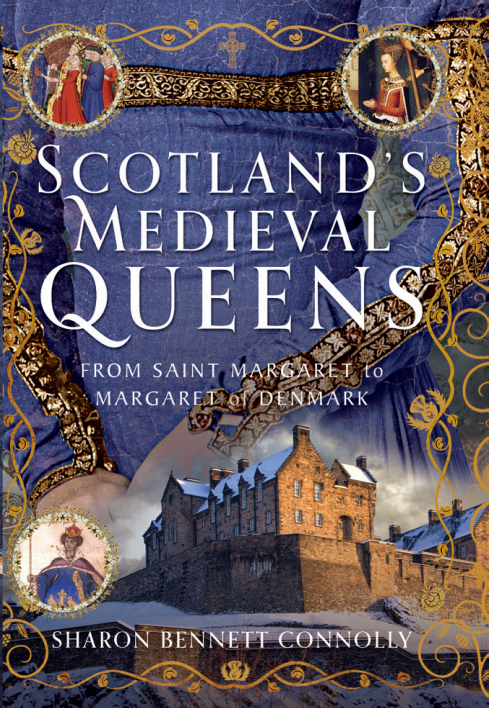
Scotland’s history is dramatic, violent and bloody. Being England’s northern neighbour has never been easy. Scotland’s queens have had to deal with war, murder, imprisonment, political rivalries and open betrayal. They have loved and lost, raised kings and queens, ruled and died for Scotland. From St Margaret, who became one of the patron saints of Scotland, to Elizabeth de Burgh and the dramatic story of the Scottish Wars of Independence, to the love story and tragedy of Joan Beaufort, to Margaret of Denmark and the dawn of the Renaissance, Scotland’s Medieval Queens have seen it all. This is the story of Scotland through their eyes.

‘Scotland’s Medieval Queens gives a thorough grounding in the history of the women who ruled Scotland at the side of its kings, often in the shadows, but just as interesting in their lives beyond the spotlight. It’s not a subject that has been widely covered, and Sharon is a pioneer in bringing that information into accessible history.’ Elizabeth Chadwick (New York Times bestselling author)

Available now from Amazon and Pen and Sword Books

Also by me:

Books by Sharon Bennett Connolly

Heroines of the Tudor World tells the stories of the most remarkable women from European history in the time of the Tudor dynasty, 1485-1603. These are the women who ruled, the women who founded dynasties, the women who fought for religious freedom, their families and love. Heroines of the Tudor World is now available for pre-order from Amberley Publishing and Amazon UK. Women of the Anarchy demonstrates how Empress Matilda and Matilda of Boulogne, unable to wield a sword themselves, were prime movers in this time of conflict and lawlessness. It shows how their strengths, weaknesses, and personal ambitions swung the fortunes of war one way – and then the other. Available from Bookshop.org, Amberley Publishing and Amazon UK. King John’s Right-Hand Lady: The Story of Nicholaa de la Haye is the story of a truly remarkable lady, the hereditary constable of Lincoln Castle and the first woman in England to be appointed sheriff in her own right. Available from all good bookshops Pen & Sword Books, bookshop.org and Amazon. 

Royal Historical Society

Defenders of the Norman Crown: The Rise and Fall of the Warenne Earls of Surrey tells the fascinating story of the Warenne dynasty, from its origins in Normandy, through the Conquest, Magna Carta, the wars and marriages that led to its ultimate demise in the reign of Edward III. Available from Pen & Sword Books, Amazon in the UK and US, and Bookshop.org. Ladies of Magna Carta: Women of Influence in Thirteenth Century England looks into the relationships of the various noble families of the 13th century, and how they were affected by the Barons’ Wars, Magna Carta and its aftermath; the bonds that were formed and those that were broken. It is now available in paperback and hardback from Pen & Sword, Amazon, and Bookshop.org. Heroines of the Medieval World tells the stories of some of the most remarkable women from Medieval history, from Eleanor of Aquitaine to Julian of Norwich. Available now from Amberley Publishing and Amazon, and Bookshop.org. Silk and the Sword: The Women of the Norman Conquest traces the fortunes of the women who had a significant role to play in the momentous events of 1066. Available now from Amazon,  Amberley Publishing, and Bookshop.org.

Alternate Endings: An anthology of historical fiction short stories including Long Live the King… which is my take what might have happened had King John not died in October 1216. Available in paperback and kindle from Amazon.

*

Podcast:

A Slice of Medieval

Have a listen to the A Slice of Medieval podcast, which I co-host with Historical fiction novelist Derek Birks. Derek and I welcome guests, such as Bernard Cornwell and Elizabeth Chadwick, and discuss a wide range of topics in medieval history, from significant events to the personalities involved. In episode 15, Derek Birks and I discuss Nicholaa’s remarkable story:

There are now 80 episodes to listen to!

Every episode is also available on YouTube.

*

Don’t forget! Signed and dedicated copies of all my books are available through my online bookshop.

For forthcoming online and in-person talks, please check out my Events Page.

You can be the first to read new articles by clicking the ‘Follow’ button, liking our Facebook page or joining me on Twitter, Threads, Bluesky and Instagram.

*

©2023 Sharon Bennett Connolly FRHistS

Two new books in one month!

King John’s Right Hand Lady: The Story of Nicholaa de la Haye

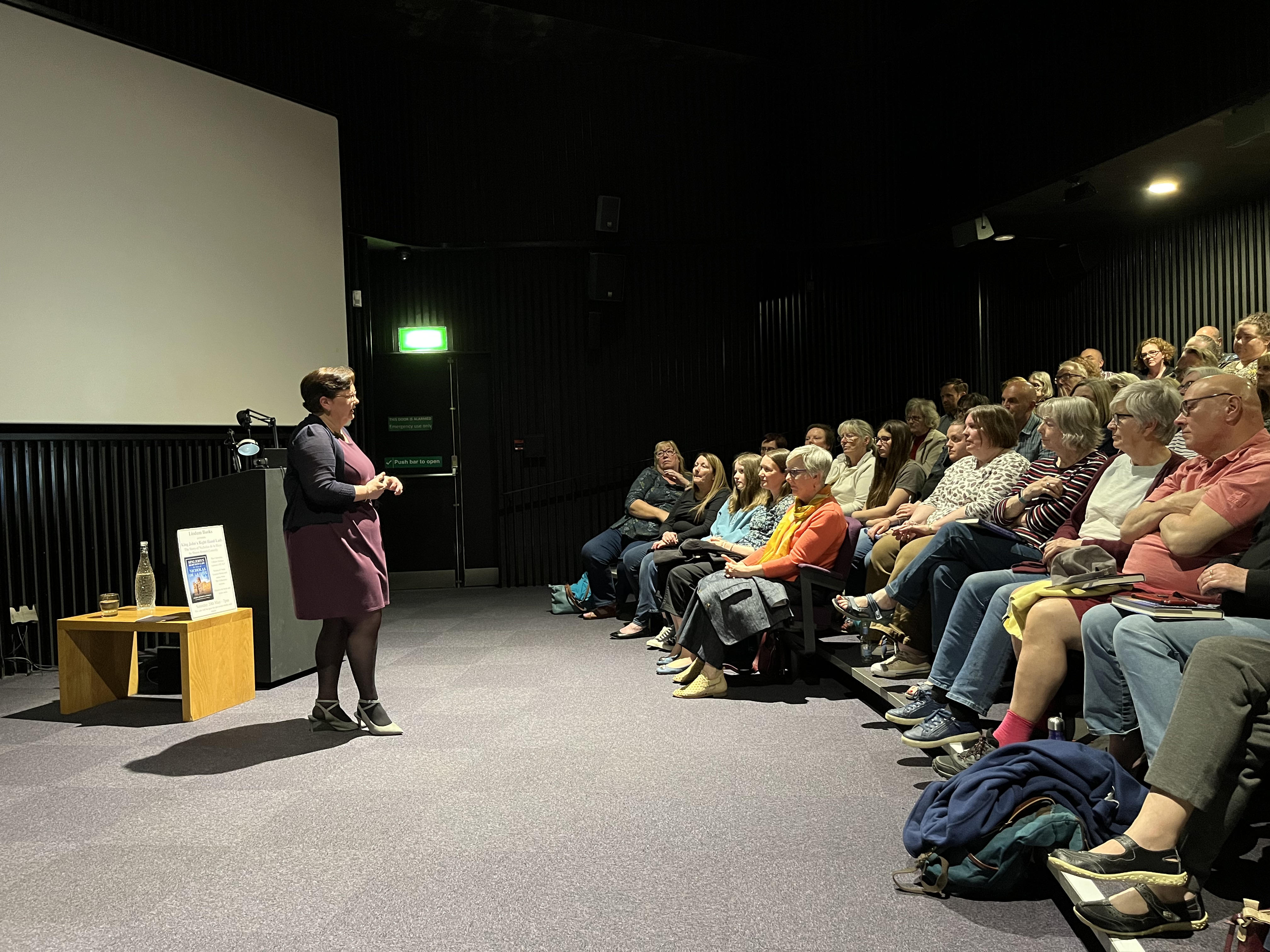
Well, it has been quite a journey, but my biography of Nicholaa de la Haye is now out in the world. My journey with Nicholaa started off with a blog post in 2015, shortly after a day trip to Lincoln Castle with my son. From that day on, I devoured everything I could find on Nicholaa. Nicholaa was one of the inspirations for my first book, Heroines of the Medieval World; I wanted to tell the stories of the most incredible women in medieval history and Nicholaa was certainly in my Top 10. And from that book, I started thinking that there was more scope to examine the women related to the Magna Carta story, especially Nicholaa and her contemporary, Matilda de Braose. The conflicting lives and experiences of these two women inspired Ladies of Magna Carta: Women of Influence in Thirteenth Century England; while Matilda became King John’s bitter enemy and ultimate victim, Nicholaa was a loyal ally, trusted to hold Lincoln Castle against the rebel barons and was the first woman to be appointed as a county sheriff.

As I was researching Nicholaa’s story for Ladies of Magna Carta, I got very excited as I realised that I may have enough material for a full biography. I contacted my editor, expected her to shut me down and say ‘no thanks, no one will be interested.’ But, instead, she said ‘go for it!’ And the project was born.

In a time when men fought and women stayed home, Nicholaa de la Haye held Lincoln Castle against all-comers. Not once, but three times, earning herself the ironic praise that she acted ‘manfully’. Nicholaa gained prominence in the First Baron’s War, the civil war that followed the sealing of Magna Carta in 1215. Although recently widowed, and in her 60s, in 1217 Nicholaa endured a siege that lasted over three months, resisting the English rebel barons and their French allies. The siege ended in the battle known as the Lincoln Fair, when 70-year-old William Marshal, the Greatest Knight in Christendom, spurred on by the chivalrous need to rescue a lady in distress, came to Nicholaa’s aid. Nicholaa de la Haye was a staunch supporter of King John, remaining loyal to the very end, even after most of his knights and barons had deserted him. A truly remarkable lady, Nicholaa was the first woman to be appointed sheriff in her own right. Her strength and tenacity saved England at one of the lowest points in its history. Nicholaa de la Haye is one woman in English history whose story needs to be told…

And early reviews are fantastic!

“Whilst I have read many wonderful new releases so far this year, and I look forward to reading and reviewing many more, I have to say this has been my favourite so far. Not only is Nicholaa’s story fascinating, the way Sharon presents her impeccable scholarship is second-to-none.
I hold this book up as the gold standard for how history should be written. Sharon does not just tell the narrative history, but actually presents the primary sources, showing not just what we know of Nicholaa’s life, but how we know it. It is wonderful to be able to read the sources and see how Sharon pieced together Nicholaa’s life and family. Where sources raise more questions than they answer, Sharon does not just run with a chosen narrative version, but admits to the ambiguities and gaps in the historical record, and where relevant, offers multiple theories as to what really happened.
I must thank Sharon Bennett Connolly of History the Interesting Bits for bringing this fascinating woman out of the shadows, and for doing so in such an illuminating way.” Jessica Carey-Bunning

“Connolly’s devotion to uncovering Nicholaa de la Haye’s life and her time in power as the constable of Lincoln in her own right is reflected throughout the book, and Connolly’s clear familiarity with the time period and the de la Haye family makes this book an incredibly fascinating read. Her prose and detail provides the reader with a complete understanding of the complicated late twelfth and early thirteenth century politics in London and the power struggles between various nobles and the sons of Henry II, and Connolly explains this wonderfully.” Lily Amidon

“An engrossing account of a little-known historical figure and the pivotal role she played in late 12th/early 13th century history and politics. This is one of those rare books that is scrupulously researched and scholarly but also grips like a novel. Setting the character of Nicolaa de la Haye in her historical context, “King John’s Right Hand Lady” casts light on the remarkable story of the woman who was England’s first female sheriff, and in doing so casts a fascinating light on the character of Nicolaa herself as well as the age she lived in. highly recommended.” Nicola Cornick

“History lovers will enjoy learning about this unique lady whom history nearly forgot. History academics will relish the depth of research, end notes, appendices, and comprehensive biography.” Christy Howl

“A strong, independent woman who lived a thrilling life and was willing to defend her home of Lincoln Castle even at the age of sixty, Nicholaa de la Haye was an unsung heroine of the thirteenth century. Connolly’s passion for telling Nicholaa’s tale of trials and tribulations exudes on every page. “King John’s Right Hand Lady: The Story of Nicholaa de la Haye” by Sharon Bennett Connolly is the perfect book for anyone who wants a story about the Plantagenets, King John, and the first female sheriff of England. A true triumph in exploring the life of a more hidden figure from the thirteenth century.” Heidi Malagisi

I am immensely grateful to everyone at Lindum Books and the Lincoln Museum, in Lincoln, who hosted the launch of King John’s Right Hand Lady: The Story of Nicholaa de la Haye, to a sell-out crowd at the Lincoln Museum, on 20 May 2023, the 806th anniversary of the 1217 Battle of Lincoln, in which Nicholaa played a pivotal role as Constable of Lincoln Castle. And thanks to the incredible audience, who laughed at my jokes in all the right places.

To Buy King John’s Right Hand Lady:

King John’s Right-Hand Lady: The Story of Nicholaa de la Haye is now available as a hardback and Kindle from Pen & Sword Books, bookshop.org and Amazon (UK and US).

I said two new books, didn’t I?

Well, yes, I did. Because on the same day that King John’s Right-Hand Lady: The Story of Nicholaa de la Haye hit the bookshops, the paperback edition of Defenders of the Norman Crown: Rise and Fall of the Warenne Earls of Surrey was also published:

In the reign of Edward I, when asked Quo Warranto? – by what warrant he held his lands – John de Warenne, the 6th earl of Warenne and Surrey, is said to have drawn a rusty sword, claiming ‘My ancestors came with William the Bastard, and conquered their lands with the sword, and I will defend them with the sword against anyone wishing to seize them.’

John’s ancestor, William de Warenne, 1st Earl of Surrey, fought for William the Conqueror at the Battle of Hastings in 1066. He was rewarded with enough land to make him one of the richest men of all time. In his search for a royal bride, the 2nd earl kidnapped the wife of a fellow baron. The 3rd earl died on crusade, fighting for his royal cousin, Louis VII of France…

For three centuries, the Warennes were at the heart of English politics at the highest level, until one unhappy marriage brought an end to the dynasty. The family moved in the most influential circles, married into royalty and were not immune to scandal.

Defenders of the Norman Crown tells the fascinating story of the Warenne dynasty, of the successes and failures of one of the most powerful families in England, from its origins in Normandy, through the Conquest, Magna Carta, the wars and marriages that led to its ultimate demise in the reign of Edward III.

Reviews:

“I loved Defenders of the Norman Crown.  Sharon Bennett Connolly’s detailed, meticulous research brings together a wealth of sources to give the reader a fascinating view of one of the powerful families on which the Crown depended for centuries. Politics and power, Marriages and mistresses,  Lordship and land, Defenders of the Norman Crown has it all. Sharon Bennett Connolly has written a very fine book indeed – I loved it.” Elizabeth Chadwick, author of The Greatest Knight

“I am reading and loving Defenders of the Norman Crown by Sharon Bennett Connolly and it’s stunning. The Warenne family, their sons, daughters and wives making gripping reading and vividly filling in fascinating background shading to the stories of medieval monarchs. Wonderful research and gripping true stories, all well substantiated with relevant sources.” Carol McGrath, author of the She-Wolf Trilogy

“Sharon Bennett Connolly has written an evocative narrative, highlighting the role the Warenne earls of Surrey played in the nation’s history. Her meticulous research is evident in every page, making the book both a reference guide and an immensely enjoyable read.“Kristie Dean, author of On the Trail of Richard III

“A vivid portrayal of a powerful aristocratic family. Sharon Bennett Connolly follows the fortunes of the Warenne earls of Surrey from supporters of William the Conqueror at the battle of Hastings to their eventual demise in the reign of Edward III. Connolly writes with verve and enthusiasm, bringing the Warennes to life in all their guises – warriors, landowners and crusaders – and does not neglect the women of the family. A highly readable and well-illustrated survey.” Michael Jones, author of The Black Prince

To Buy Defenders of the Norman Crown

Defenders of the Norman Crown: Rise and Fall of the Warenne Earls of Surrey was released in the UK on 31 May and will be out in the US on 6 August. And it is now available for pre-order from Pen & Sword Books, Bookshop.org and Amazon in the UK and US.

Signed, dedicated copies of all my books are available, please get in touch by completing the contact me form.

Also by me:

Ladies of Magna Carta: Women of Influence in Thirteenth Century England looks into the relationships of the various noble families of the 13th century, and how they were affected by the Barons’ Wars, Magna Carta and its aftermath; the bonds that were formed and those that were broken. It is now available in paperback and hardback from Pen & Sword,  Amazon, and Bookshop.org.

Heroines of the Medieval World tells the stories of some of the most remarkable women from Medieval history, from Eleanor of Aquitaine to Julian of Norwich. Available now from Amberley Publishing and Amazon, and Bookshop.org.

Silk and the Sword: The Women of the Norman Conquest traces the fortunes of the women who had a significant role to play in the momentous events of 1066. Available now from Amazon,  Amberley Publishing, and Bookshop.org.

Alternate Endings: An anthology of historical fiction short stories including Long Live the King… which is my take what might have happened had King John not died in October 1216. Available in paperback and kindle from Amazon.

*

Podcast:

Have a listen to my A Slice of Medieval podcast, where Derek Birks and I discuss Nicholaa’s remarkable story:

For forthcoming online and in-person talks, please check out my Events Page.

You can be the first to read new articles by clicking the ‘Follow’ button, liking our Facebook page or joining me on Twitter and Instagram.

*

©2023 Sharon Bennett Connolly FRHistS

Guest Post: “How we made an award winning short film about Henry VIII”

“How we made an award winning short film about Henry VIII”

Part of a blog series about ‘I am Henry,’ the new novel and award-winning short film of Henry VIII and Anne Boleyn, by Jan Hendrik Verstaten & Massimo Barbato.

When I set out to write a screenplay for a short film, it wasn’t my plan for it to be about the infamous Tudor monarch. All I envisioned was a middle-aged man in an empty white room.

While I sat down behind the computer, I felt a man’s presence. He seemed eager to engage with me even though he did not say a word, but just stood there in silence. I wondered if this was Henry VIII who had just died, and who had not fully grasped, yet, what that meant.

“I never set out to write about Henry VIII”

I was not convinced I wanted to write his story, and the approach to use a historic character, and certainly one that is so prominent in the history of England, was quite daunting to be honest. I am Dutch, and I doubted very much if I could do it. One thing that did interest me was his tragic relationship with Anne Boleyn, his second wife. This could possibly be the focus of the story, and I decided I wanted to know more about it.

Interesting coincidences occurred during the writing process

I started with Henry’s love letters to Anne. After that I read the account of Master Kingston about Anne’s tragic final visit to the Tower, and her execution. I also watched several documentaries and searched the internet for anything I could find about them.

Apart from this, my main method of preparation remained how I ‘sensed’ him, Anne Boleyn and later also Catherine of Aragon, his first wife. I tried as much as possible to allow them to be themselves. This led to interesting coincidences. For instance, I was not aware Catherine had written a letter in which she claimed that her ‘dead’ children were with her. A fact that I sensed and used in the film, only to discover afterwards, from a Tudor expert, that she had mentioned this herself in real life.

The script went through several drafts and Massimo was the very first person who gave his feedback. At the time, I also worked with script editor and author Lucy Hay who I respect a lot. Her feedback surprised me. “At its heart, the story of ‘I Am Henry’ is quite brilliant (in the truest sense of the word); it’s easily one of the best stories in a short film I have seen for a very long time.” Obviously, this gave me the confidence that I was on the right track with the subject.

The challenges of ‘production’

Massimo and I then started to work on the production of the film itself. The first person who came on board was the very talented cinematographer Simon Rowling. He suggested that we film a couple of the scenes in the massive crypt underneath St Mary Magdalene’s Church in Paddington, north London. We ended up filming the entire film on location at the church, as it had everything we were looking for. The crypt with its Gothic architecture and beautiful stained glass windows was used in the film ‘Les Misérables.’

Costumes are expensive. Even so, we were committed to be historically accurate, and were very lucky with Kristen Ernst Brown, our costume designer. She won Best Costume for I Am Henry, and succeeded without a lot of money to create a beautiful and authentic look, using black and gold as her main colour palette. This complemented the cinematography by Simon Rowling, which was inspired by Rembrandt, the great Dutch master painter.

The film won many awards which encouraged us to write the novel

In the UK we are fortunate with so many accomplished actors. The cast was absolutely phenomenal. Especially Fleur Keith as Anne Boleyn and Maria de Lima as Catherine of Aragon, but also Sebastian Street as Henry VIII.

‘I am Henry’ went on to win many awards ( in every category) including a Gold Remi, and received great reviews. The longest and one of our most favourite one is from Claire Ridgeway from the Anne Boleyn Files: https://www.theanneboleynfiles.com/i-am-henry-review/

Thousands of viewers have enjoyed the film, which encouraged us to write the novel. The film is still available on Amazon Prime.

‘I am Henry‘ is an innovative retelling of the story of Henry VIII and Anne Boleyn. Due for release in paperback and e-book format by MadeGlobal Publishing, in April 2023. For more information about the novel and the short film go to linktr.ee/iamhenryfilmandnovel

*

My Books:

Signed, dedicated copies of all my books are available, please get in touch by completing the contact me form.

Coming 30 May 2023!

King John’s Right-Hand Lady: The Story of Nicholaa de la Haye is now available for pre-order as a hardback and Kindle from Pen & Sword Books, bookshop.org and Amazon (UK and US).

In a time when men fought and women stayed home, Nicholaa de la Haye held Lincoln Castle against all-comers. Not once, but three times, earning herself the ironic praise that she acted ‘manfully’. Nicholaa gained prominence in the First Baron’s War, the civil war that followed the sealing of Magna Carta in 1215.

A truly remarkable lady, Nicholaa was the first woman to be appointed sheriff in her own right. Her strength and tenacity saved England at one of the lowest points in its history. Nicholaa de la Haye is one woman in English history whose story needs to be told…

Also by Sharon Bennett Connolly:

Defenders of the Norman Crown: The Rise and Fall of the Warenne Earls of Surrey tells the fascinating story of the Warenne dynasty, of the successes and failures of one of the most powerful families in England, from its origins in Normandy, through the Conquest, Magna Carta, the wars and marriages that led to its ultimate demise in the reign of Edward III. Defenders of the Norman Crown: Rise and Fall of the Warenne Earls of Surrey is now available from Pen & Sword Books, Amazon in the UK and US, and  Bookshop.org.

Ladies of Magna Carta: Women of Influence in Thirteenth Century England looks into the relationships of the various noble families of the 13th century, and how they were affected by the Barons’ Wars, Magna Carta and its aftermath; the bonds that were formed and those that were broken. It is now available in paperback and hardback from Pen & Sword,  Amazon, and Bookshop.org.

Heroines of the Medieval World tells the stories of some of the most remarkable women from Medieval history, from Eleanor of Aquitaine to Julian of Norwich. Available now from Amberley Publishing and Amazon, and Bookshop.org.

Silk and the Sword: The Women of the Norman Conquest traces the fortunes of the women who had a significant role to play in the momentous events of 1066. Available now from Amazon,  Amberley Publishing, and Bookshop.org.

Alternate Endings: An anthology of historical fiction short stories including Long Live the King… which is my take what might have happened had King John not died in October 1216. Available in paperback and kindle from Amazon.

*

For forthcoming online and in-person talks, please check out my Events Page.

You can be the first to read new articles by clicking the ‘Follow’ button, liking our Facebook page or joining me on Twitter and Instagram.

©2023 Sharon Bennett Connolly FRHistS
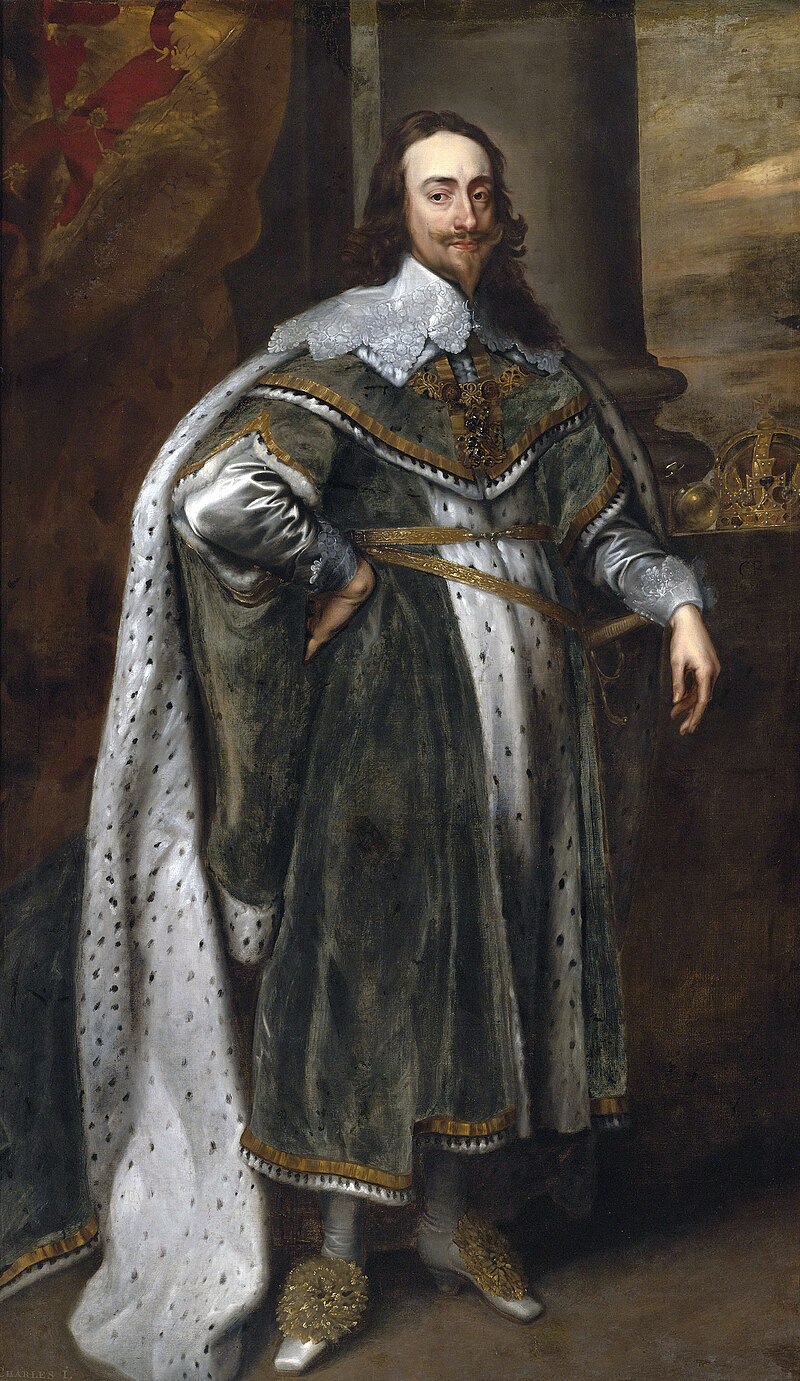
Christine de Pisan, Literary Trailblazer

Christine de Pisan (sitting) lecturing to a group of men

Christine de Pisan was the first woman in history to make a living from writing.

Christine de Pisan was born around 1364 in Venice, Italy; the family was from the village of Pizzano, just outside Bologna. Her father, Tommaso di Benvenuto da Pizzano, was a graduate of the University of Bologna and was a lecturer in astrology at the university, but moved to Venice in 1357. In the late 1360s Tommaso was invited to join both the Hungarian and the French royal courts. He chose France and moved his family, including Christine and her two brothers Paolo and Aghinolfo, to Paris, in December 1368, becoming royal physician and astrologer to Charles V. Christine’s father paid particular attention to his daughter’s education, allowing her to be taught to the same standards as a boy of her age, although her mother disapproved. She was tutored in history, literature, religion and the classical languages.1

In 1380, at the age of fifteen, Tommaso arranged a marriage for Christine with Etienne de Castel. Ten years older than Christine, Etienne was a graduate of the University of Paris and became a royal secretary in the year they married. The position of royal secretary was a lifetime appointment and only open to the intellectual elite, as they were often involved in diplomatic events. In the same year, on 16 September, Tommaso’s patron Charles V died, leaving the family in a precarious financial position. Christine was further challenged by a series of tragedies toward the end of the decade. Her father, Tommaso, died in 1387, leaving Christine’s mother and niece in his daughter’s care. Around the same time, Christine lost a child, his name unknown; although two children, Marie and Jean, survived infancy. In 1390 her husband Etienne passed away at Beauvais and Christine was left with the responsibility of providing for herself and her young children, as well as her mother and niece.

Christine explained herself, in her book Mutation of Fortune, how she had to take on the mantle of the man of the house,

Let me summarise this moment,

Just who I am, what all this meant.

How I, a woman, became a man by a flick of Fortune’s hand

How she changed my body’s form

To the perfect masculine norm.2

Illumination from The Book of the City of Ladies

Etienne had taken care of all the family’s financial dealings and it was a steep learning curve for Christine to learn to manage the accounts and pay off the family’s debts. Shortly after Etienne’s death, Christine found work as a copyist for a number of Parisian manuscript workshops. Eventually, around 1399, she began to compose her own prose and poetry as a means of supporting her family, and it was the grief of losing Etienne that informed Christine’s early works of poetry. Initially, she would send her works to members of the court, who sent her money in gratitude, with patrons eventually including Louis, Duke of Orléans, the Duke de Berry and France’s queen, Isabella of Bavaria. And as Christine’s fame spread beyond France, she could also count Philip II the Bold, Duke of Burgundy, and Thomas Montagu, 4th Earl of Salisbury, among her patrons. Writing in ballads and lais (poetry put to music), Christine could express her love and grief for Etienne and the sense of loss and loneliness she now felt,

Like the mourning dove I’m now alone,

And like a shepherdless sheep gone astray,

For death has long ago taken away

My loved one whom I constantly mourn…3

Christine de Pisan’s poems, amounted to ten volumes of verses, including L’Épistre au Dieu d’Amours (Letter to the God of Loves) which was published in 1399. In the early 1400s she also published Letters on the Debate of the Romance of the Rose, a response to Jean de Meun’s Le Roman de la Rose (The Romance of the Rose) attacking the traditional view of women causing the sins of men. Christine is, above all, remembered and revered for her work, Le Livre de la Cité des Dames (The Book of the City of Ladies), published in 1405. Well received in France, even in her own lifetime, it was later translated into Flemish and English. The book tells of the lives of past and present heroines, including pagan, Hebrew and Christian ladies who were renowned for being examples of exemplary womankind, famed for their chastity, loyalty and devotion. It included the lives of female saints who remained steadfast in their devotion to God in the face of martyrdom. City of Ladies was Christine’s response to the misogynistic portrait of womankind that was present in many works of the era, in which women were blamed for the misery in which men found themselves. The book suggests that women were capable of being anything, from warriors to artists and teachers, but stops short of suggesting that her contemporaries should pursue such careers.4

A page from Christine de Pisan’s The Book of the Three Virtues

In the same year, 1405, the sequel to City of Ladies, entitled Le Livre des Trois Vertus (The Book of the Three Virtues) was also published. This text was more of an instructional treatise, showing women how they should behave and how they could make a significant contribution to society from their various social spheres. In it Christine recommends that women should be modest and obedient as virgins, tolerant and humble as wives, and courageous and dignified as widows. It is possible that Le Livre des Trois Vertus was written as a book of instruction for eleven-year-old Marguerite de Nevers, the daughter of the Duke of Burgundy and bride of Louis of Guyenne, the heir to the throne of France. Although the book appears to be a contradiction of Christine’s own life, when she was making a name for herself as a writer to support her family, it has to be remembered that Christine was living in a male-dominated era, rather than the 21st century. She has often been advanced as the first feminist, but while she wanted to correct the negative view of women and improve the conditions of women, advancing arguments for better education and a role beyond the home, she was not intending to be revolutionary.

Christine’s writing proved so successful that she managed to pull herself out of debt and make a living at it; she was the first woman to ever become a professional writer. Her ability to write for varied audiences meant her work was often sought after. She eventually started receiving commissions to write specific items for her noble patrons, including political and moral works. A biography of Charles V, Le Livre des Fais et des Bonnes Meurs du Sage Roy Charles V (The Book of the Deeds and Good Character of the Wise King Charles V), which Christine wrote in 1404, was commissioned by the late king’s brother Philip, Duke of Burgundy. Her other works included The Book of the Body Politic and Feats of Arms and Chivalry. The latter was published anonymously as Christine doubted it would be taking seriously if a woman was identified as the author.

As Charles VI increasingly slipped into bouts of madness in the early 15th century, and France found itself on the verge of civil war, Christine would write about peace and the necessity of stable government. However, as France was dragged back into the Hundred Years War against England, she became increasingly marginalised. She retired from public life and retreated to the convent at Poissy, where her daughter was a nun. Her last work, in 1429, Le Ditié de Jehanne d’Arc (The Poem of Joan of Arc), extolled the virtues of Joan, the Maid of Orléans, as valiant and brave, chaste and pure; it was the only work written about Joan during her own lifetime. Writing at the height of Joan’s success. It portrayed the Maid, the leader of the revival of French fortunes in the war against the English, as the embodiment of the women Christine had written of in City of Ladies. However, Christine does not appear to have lived long enough to see the final chapters, and the tragedy, of Joan’s life – her imprisonment and death at the hands of the English. Christine probably died in 1430, the year before Joan.

Christine de Pisan presents her book to Isabeau of Bavaria, Queen of France

Christine de Pisan was one of the most remarkable women of her age. In her world, women were denied their own voice and independence. There were strictures placed on every aspect of their lives, by tradition and society. And yet she circumvented these strictures, not only by writing, but by writing to make a living, and by giving a voice and identity to women everywhere. She was not a feminist; the notion of feminism simply did not exist. However, she was a forerunner for the feminist movement, and a sign of the independence that women would eventually achieve.

The poet, political and social observer Christine de Pisan was the culmination of a series of remarkable female trailblazers, including Hildegard of Bingen, Heloise (of Heloise and Abelard fame) and Marie de France. She proved that women were just as capable as men of making successful careers as writers.

*

Notes:

1. The Life and Triumphs of Christine de Pizan (article), faculty.msmc.edu; 2. The Writing of Christine de Pizan translated by Nadia Margolis, edited by Charity Cannon Willard; 3. ibid; 4. The Book of the City of Ladies by Christine de Pisan, translated by Rosalind Brown-Grant

*

My Books:

Signed, dedicated copies of all my books are available through my online bookshop.

Coming 30 January 2025: Scotland’s Medieval Queens

Scotland’s history is dramatic, violent and bloody. Being England’s northern neighbour has never been easy. Scotland’s queens have had to deal with war, murder, imprisonment, political rivalries and open betrayal. They have loved and lost, raised kings and queens, ruled and died for Scotland. From St Margaret, who became one of the patron saints of Scotland, to Elizabeth de Burgh and the dramatic story of the Scottish Wars of Independence, to the love story and tragedy of Joan Beaufort, to Margaret of Denmark and the dawn of the Renaissance, Scotland’s Medieval Queens have seen it all. This is the story of Scotland through their eyes.

Available for pre-order now.

Also by Sharon Bennett Connolly:

Heroines of the Tudor World tells the stories of the most remarkable women from European history in the time of the Tudor dynasty, 1485-1603. These are the women who ruled, the women who founded dynasties, the women who fought for religious freedom, their families and love. Heroines of the Tudor World is now available for pre-order from Amberley Publishing and Amazon UK. Women of the Anarchy demonstrates how Empress Matilda and Matilda of Boulogne, unable to wield a sword themselves, were prime movers in this time of conflict and lawlessness. It shows how their strengths, weaknesses, and personal ambitions swung the fortunes of war one way – and then the other. Available from Bookshop.org, Amberley Publishing and Amazon UK. King John’s Right-Hand Lady: The Story of Nicholaa de la Haye is the story of a truly remarkable lady, the hereditary constable of Lincoln Castle and the first woman in England to be appointed sheriff in her own right. Available from all good bookshops Pen & Sword Books, bookshop.org and Amazon. 

Defenders of the Norman Crown: The Rise and Fall of the Warenne Earls of Surrey tells the fascinating story of the Warenne dynasty, from its origins in Normandy, through the Conquest, Magna Carta, the wars and marriages that led to its ultimate demise in the reign of Edward III. Available from Pen & Sword Books, Amazon in the UK and US, and Bookshop.org. Ladies of Magna Carta: Women of Influence in Thirteenth Century England looks into the relationships of the various noble families of the 13th century, and how they were affected by the Barons’ Wars, Magna Carta and its aftermath; the bonds that were formed and those that were broken. It is now available in paperback and hardback from Pen & Sword, Amazon, and Bookshop.org. Heroines of the Medieval World tells the stories of some of the most remarkable women from Medieval history, from Eleanor of Aquitaine to Julian of Norwich. Available now from Amberley Publishing and Amazon, and Bookshop.org. Silk and the Sword: The Women of the Norman Conquest traces the fortunes of the women who had a significant role to play in the momentous events of 1066. Available now from Amazon,  Amberley Publishing, and Bookshop.org.

Alternate Endings: An anthology of historical fiction short stories including Long Live the King… which is my take what might have happened had King John not died in October 1216. Available in paperback and kindle from Amazon.

Podcast:

Have a listen to the A Slice of Medieval podcast, which I co-host with Historical fiction novelist Derek Birks. Derek and I welcome guests, such as Bernard Cornwell and Ian Mortimer, and discuss a wide range of topics in medieval history, from significant events to the personalities involved. 

*

Don’t forget! Signed and dedicated copies of all my books are available through my online bookshop.

For forthcoming online and in-person talks, please check out my Events Page.

You can be the first to read new articles by clicking the ‘Follow’ button, liking our Facebook page or joining me on Twitter, Threads, Bluesky and Instagram.

*

©2023 Sharon Bennett Connolly FRHistS
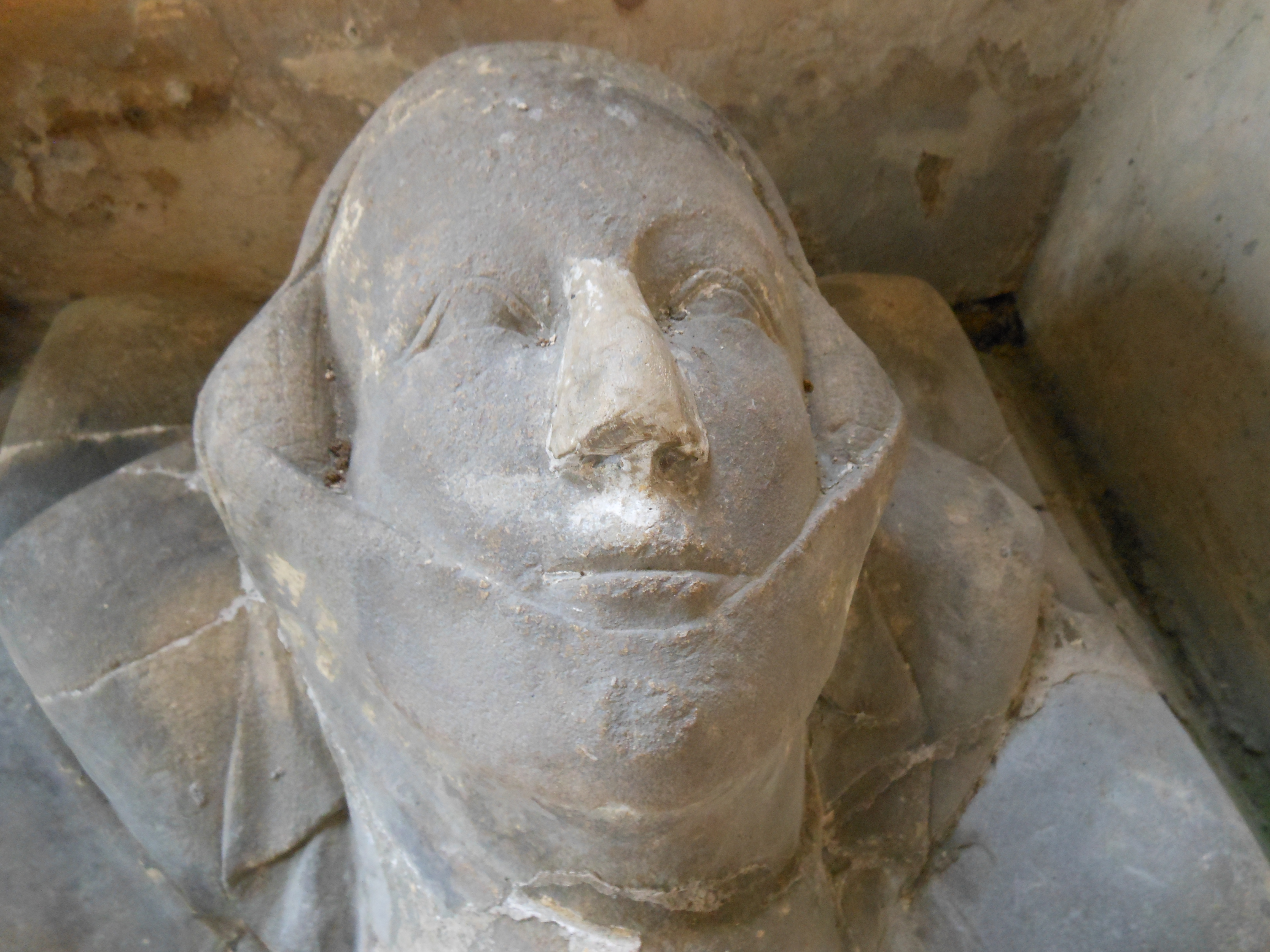
Isabel and Hamelin de Warenne: Marriage and Partnership

Seal of Isabel de Warenne, Conisbrough Castle

Isabel de Warenne was the only surviving child of William de Warenne, 3rd Earl of Warenne and Surrey, and his wife Adela, or Ela, de Talvas, daughter of William III of Ponthieu. When her father died on the Second Crusade to the Holy Land, in around 1148, Isabel became 4th Countess of Surrey in her own right and one of the most prized heiresses in England and Normandy, with large estates in Yorkshire, Norfolk and Sussex.

Isabel was born during a period of civil war in England, a time known as The Anarchy (c.1135-54), when King Stephen fought against Empress Matilda, the daughter of Henry I, for the right to rule England. Isabel’s father, William, was a staunch supporter of the king and had fought at the Battle of Lincoln in February 1141, though without distinction; his men were routed early on in the battle and William was among a number of earls who fled the field. He later redeemed himself that summer by capturing Empress Matilda’s brother and senior general, Robert Earl of Gloucester, at Winchester.

The earl appears to have tired of the civil war in 1147 and departed on Crusade with his half-brother, Waleran de Beaumont, Count of Meulan, and their cousin, King Louis VII of France. In the same year, as part of King Stephen’s attempts to control the vast de Warenne lands during a crucial time in the Anarchy, Earl Warenne’s only daughter, Isabel, was married to Stephen’s younger son, William of Blois, who would become Earl by right of his wife, following the 3rd earl’s death on Crusade in 1148; he was killed fighting in the doomed rearguard at the Battle of Mount Cadmus near Laodicea in January 1148.

It has been suggested that William of Blois was some 7 or 8 years younger than his wife, Isabel. However, this seems improbable and it appears more likely that the young couple were of similar ages. Isabel’s father had been born in 1119 and was no older than 29 when he died; his wife, Ela de Talvas, was a few years younger than her husband. This means that, even if the couple married as soon as they reached the ages allowed by the church to marry, 12 for a girl and 14 for a boy, and Ela fell pregnant on her wedding night, Isabel could have been no older 13 in 1147. Given the danger associated with girls giving birth before their teens, it seems plausible that Isabel was not born until the late 1130s and may have been between 10 and 12, or younger when she married William of Blois.

The Warenne coat of arms at Trinity Church, Southover

Even before it was known that Earl Warenne had died on crusade, William of Blois was already being referred to as earl in a number of charters relating to Warenne lands, one such charter, dated to c.1148, was issued by the earl’s brother with the proviso ‘that if God should bring back the earl [from the crusade] he would do his best to obtain the earl’s confirmation, or otherwise that of his lord earl William, the king’s son.’1 During the 3rd earl’s absence, and while the new earl and countess were still only children, the vast Warenne lands were administered by the 3rd earl’s youngest brother, Reginald de Warenne, Baron Wormegay, who was a renowned and accomplished administrator and estate manager. We do not know when news reached England of the earl’s death, the tidings may have arrived before the return of the earl’s half-brother, Waleran, later in the year. However, the future of the earldom was already secure with the succession of Isabel and her young husband, carefully watched over by Isabel’s uncle, Reginald.

In 1154 the young couple’s future prospects could have changed drastically when William’s elder brother Eustace, their father’s heir, died. As a consequence, William inherited his mother’s County of Boulogne from his brother, adding to his already substantial domains. He may also have expected to inherit his brother’s position as heir to the throne – or not. It seems that William’s ambitions did not extend to the lofty heights of the throne, or he was not considered suitable for the crown. Either way, the young man was removed from the succession by his own father. Stephen made a deal with Empress Matilda’s son, Henry of Anjou, that the crown would go to him on Stephen’s death, thus returning the crown to the rightful line of succession.

William seems to have accepted this, on the whole. Although there is some suggestion of his involvement in a plot against Henry later in 1154, during which William suffered a broken leg. William served Henry loyally, once he became king, until his own death, returning from the king’s campaign in Toulouse, in 1159.

Now in her mid-20s, and as their marriage had been childless, Isabel was once again a prize heiress. Although she seems to have had a little respite from the marriage market, by 1162 Henry II’s youngest brother, William X, Count of Poitou, was seeking a dispensation to marry her. The dispensation was refused by Thomas Becket, Archbishop of Canterbury, on the grounds of consanguinity; the archbishop’s objection was not that Isabel and William were too closely related, but that William and Isabel’s first husband had been cousins. William died shortly after the archbishop refused to sanction the marriage – it is said, of a broken heart.

Contemporary illustration of the murder of Thomas Becket

King Henry was not to be thwarted so easily in his plans to bring the Warenne lands into the royal family, and his illegitimate half-brother, Hamelin, was married to Isabel in 1164. The illegitimate son of Geoffrey, Count of Anjou, Hamelin was born sometime around 1130, when Geoffrey was estranged from his wife, Empress Matilda. His mother was, possibly, Adelaide of Angers, though this is by no means certain. Geoffrey had a second illegitimate child, Emma, who was possibly Hamelin’s full sister. Emma married the Welsh prince, Davydd ap Owain of Gwynedd. Geoffrey of Anjou was the second husband to Empress Matilda, daughter of Henry I of England and would be the mother of the future Henry II, Hamelin’s half-brother.

In an unusual step, Hamelin took his wife’s surname and bore the titles Earl of Warenne and Surrey in her right. Hamelin was incredibly loyal to Henry and his marriage to an heiress was reward for his support, whilst at the same time giving him position and influence within England. Hamelin and Isabel married in April 1164, Hamelin even taking the de Warenne surname after the marriage; Isabel’s trousseau cost an impressive £41 10s 8d. Hamelin became Earl of Surrey by right of his wife, though was more habitually called Earl Warenne. In some references, he is named as the 5th Earl of Surrey and in others the 4th: this confusion arises from the fact that the earldom belonged to Isabel, and her two husbands both held the earldom, sometimes being numbered the 4th and 5th earls to avoid confusion. They were, in fact, both, the 4th Earl of Surrey.

Hamelin supported his brother the king in the contest of wills that Henry was engaged in with his archbishop of Canterbury, Thomas Becket. When Henry called for the archbishop to appear at a great council at Northampton Castle on 12 October 1164, to answer to the charges laid against him, Hamelin was at the trial and spoke in support of his brother. Indeed, the new earl and the archbishop appear to have started a war of words; Hamelin defended Henry’s dignity and called Becket a traitor. The archbishop’s retort was ‘Were I a knight instead of a priest, my fist would prove you a liar!’ Ironically, it is thought that Hamelin’s denunciation of Becket was motivated by the injury caused to the royal family in Becket’s refusal to allow Henry’s brother, William – Hamelin’s half-brother – to marry Isabel de Warenne; who was now Hamelin’s wife.

Henry II

Hamelin’s animosity to Becket was not to survive the archbishop’s martyrdom and he actively participated in the cult that grew up around Thomas Becket after his violent death. In later life, the earl claimed that the cloth covering Becket’s tomb had cured his blindness, caused by a cataract, in one eye.

Hamelin was an influential and active member of the English barony. He supported Henry during his sons’ rebellion in 1173 and formed part of the entourage which escorted Princess Joanna (daughter of Henry and Eleanor of Aquitaine) to Sicily for her marriage to King William. Joanna’s escort was ordered not to return home until they had seen ‘the King of Sicily and Joanna crowned in wedlock’. Hamelin remained close to the crown even after Henry’s death, supporting his nephew, Richard I. Hamelin was among the earls present at Richard’s first coronation in September 1189; and carried one of the three swords at his second coronation in April 1194.

During Richard’s absence on Crusade, Hamelin sided with the Regent, William Longchamp, against the intrigues of Richard’s brother John. Hamelin held great store in the rule of law, attested by the legend on his seal, ‘pro lege, per lege’. This adherence to the law explains Hamelin’s support for Longchamp against that of his own nephew, John, and even as the justiciar’s overzealous actions alienated others. Hamelin was one of only two magnates entrusted with the collection and storage of the king’s ransom, when he was held captive by Duke Leopold of  Austria, appointed by Eleanor of Aquitaine; the other was William d’Aubigny, Earl of Arundel. Hamelin’s involvement with the court continued into the reign of King John; he was present at John’s coronation and at Lincoln when William, King of Scots, Isabel’s cousin, gave his oath of homage in November 1200.

The keep of Conisbrough Castle

Away from court, Hamelin appears to have been an avid builder; he built a cylindrical keep at his manor of Mortemer in Normandy. He then constructed a larger and improved version, using all the latest techniques of castle design, at his manor of Conisbrough, South Yorkshire. He may also have been the one to build Peel Castle at Thorne, a hunting lodge which had a 3-sided donjon that was of smaller, but similar, design to Conisbrough. Hamelin spent a lot of time and money on Conisbrough Castle, which took almost 10 years to complete, and it appears to have been a favourite family residence. King John visited there in 1201, and two of Hamelin’s daughters married landowners from the nearby manors of Tickhill and Sprotborough. His son, William de Warenne, the 5th earl, would complete the castle, rebuilding the curtain wall in stone.

Hamelin was also involved in a famous dispute with Hugh, abbot of Cluny, over the appointment of a new prior to St Pancras Priory, Lewes. Abbot Hugh was known as a man of great piety and honour; he had been prior of Lewes but was elected as abbot of Reading in 1186 and became abbot of Cluny in 1199. In 1200, Abbot Hugh appointed one Alexander to the vacant position of prior of Lewes, but Hamelin refused to accept the nomination. In establishing the priory at Lewes, the abbots of Cluny had apparently reserved the right to appoint the prior, and to admit all monks seeking entry into the order; however, Hamelin claimed that the patronage of the priory belonged to him, and it was his right to appoint the prior.

The dispute dragged on, and it was only after intervention from King John that agreement was eventually reached whereby, should the position of prior become vacant, the earl and the monks should send representatives to the abbot, who would nominate two candidates, of whom the earl’s proctors should choose one to be appointed prior.

Peel Castle, Thorne

The marriage of Hamelin and Isabel appears to have been highly successful. They had four surviving children. Their son and heir, William, would become the 5th Earl of Surrey and married Maud Marshal, daughter of the great William Marshal, Earl of Pembroke and regent for King Henry III. Ela married twice, firstly to a Robert de Newburn, of whom nothing else is known, and secondly to William Fitzwilliam of Sprotborough, a village just a few miles from Conisbrough. Isabel was married, firstly, to Robert de Lascy, who died in 1193, and secondly, no later than the spring of 1196, to Gilbert de Laigle, Lord of Pevensey.

Matilda, or Maud, married Henry, Count of Eu, who died around 1190; by Henry, she was the mother of Alice de Lusignan, who struggled to maintain her inheritance during the reign of King John. Matilda then married Henry d’Estouteville, a Norman lord. It was once thought that Matilda was the daughter of Hamelin by an earlier relationship, due to the supposed death date of Matilda’s husband, Henry, Count of Eu. There was a mistaken belief that Henry had died in 1172, which would mean that Matilda could not have been a daughter of the marriage of Isabel and Hamelin, who were married in 1164, as she would have been too young to have married and borne children with Henry. The Chronicle of the Counts of Eu records Henry’s death as 1183, which also appears to be an error as Henry was assessed for scutage for Wales at Michaelmas 1190; with this later death date it was entirely possible, and indeed likely, that Matilda was the legitimate daughter of both Hamelin and Countess Isabel.

St Pancras Priory, Lewes

One of the daughters – although it is not clear which – bore an illegitimate son, Richard Fitzroy, Baron Chilham, who was born, possibly, around 1190, by her cousin, John (the future King John). This must have caused considerable family tensions!

Hamelin died on 7th May 1202, in his early 70s and was buried in the chapter house at Lewes Priory, in Sussex. Isabel died in her mid-60s, in 1203, and was buried at Lewes Priory, alongside Hamelin. In 1202, Countess Isabel had granted ‘for the soul of her husband earl Hamelin, to the priory of St Katherine, Lincoln, of similar easements for 60 beasts, namely for 40 as of his gift and 20 as of hers.2 Together, Hamelin and Isabel had played important roles in English politics for almost 40 years, whilst raising a family and, literally, building a home at Conisbrough Castle.

Footnotes: 

1 Farrer, William and Charles Travis Clay, editors, Early Yorkshire Charters, Volume 8: The Honour of Warenne; 2 ibid

Sources:

Robert Batlett, England Under the Norman and Angevin Kings; Dan Jones, The Plantagenets; Donald Matthew, King Stephen; Medieval Lands Project on the Earls of Surrey, Conisbrough Castle; Farrer, William and Charles Travis Clay, editors, Early Yorkshire Charters, Volume 8: The Honour of Warenne; Morris, Marc King John: Treachery, Tyranny and the Road to Magna Carta; Church, Stephen, King John: England, Magna Carta and the Making of a Tyrant; doncasterhistory.co.uk; A History of the County of Sussex: Volume 2 edited by William Page; W.H. Blaauw, On the Early History of Lewes Priory, and its Seals, with extracts from a MS. Chronicle, Sussex Archaeological Collections; Rev. John Watson, Memoirs of the Ancient Earls of Warren and Surrey, and Their Descendants to the Present Time, Volume I;  Odo of Deuil, De Profectione Ludovici VII in Orientem; magnacharta.com; Cokayne, G.E., The Complete Peerage, Vol. XII; Henry of Huntingdon, The Chronicle of Henry of Huntingdon.

Images:

All images ©Sharon Bennett Connolly except Henry II and the illustration of Becket’s murder which is courtesy of Wikipedia.

*

My Books:

Signed, dedicated copies of all my books are available through my online bookshop.

Out Now! Women of the Anarchy

On the one side is Empress Matilda, or Maud. The sole surviving legitimate child of Henry I, she is fighting for her birthright and that of her children. On the other side is her cousin, Queen Matilda, supporting her husband, King Stephen, and fighting to see her own son inherit the English crown. Both women are granddaughters of St Margaret, Queen of Scotland and descendants of Alfred the Great of Wessex. Women of the Anarchy demonstrates how these women, unable to wield a sword, were prime movers in this time of conflict and lawlessness. It show how their strengths, weaknesses, and personal ambitions swung the fortunes of war one way – and then the other. Available from my online bookshop, bookshop.org, Amberley Publishing and Amazon UK.

Coming on 15 June 2024: Heroines of the Tudor World

Heroines of the Tudor World tells the stories of the most remarkable women from European history in the time of the Tudor dynasty, 1485-1603. These are the women who ruled, the women who founded dynasties, the women who fought for religious freedom, their families and love. These are the women who made a difference, who influenced countries, kings and the Reformation. In the era dominated by the Renaissance and Reformation, Heroines of the Tudor World examines the threats and challenges faced by the women of the era, and how they overcame them. Some famous, some infamous, some less well known, including Anne Boleyn, Elizabeth Barton, Catherine de Medici, Bess of Hardwick and Elizabeth I. From writers to regents, from nuns to queens, Heroines of the Tudor World shines the spotlight on the women helped to shape Early Modern Europe.

Heroines of the Tudor World is now available for pre-order from Amberley Publishing and Amazon UK.

Also by Sharon Bennett Connolly:

King John’s Right-Hand Lady: The Story of Nicholaa de la Haye is the story of a truly remarkable lady, the hereditary constable of Lincoln Castle and the first woman in England to be appointed sheriff in her own right. It is is available from Pen & Sword Books, bookshop.org and Amazon. Defenders of the Norman Crown: The Rise and Fall of the Warenne Earls of Surrey tells the fascinating story of the Warenne dynasty, from its origins in Normandy, through the Conquest, Magna Carta, the wars and marriages that led to its ultimate demise in the reign of Edward III. Available from Pen & Sword Books, Amazon in the UK and US, and Bookshop.org.

Ladies of Magna Carta: Women of Influence in Thirteenth Century England looks into the relationships of the various noble families of the 13th century, and how they were affected by the Barons’ Wars, Magna Carta and its aftermath; the bonds that were formed and those that were broken. It is now available in paperback and hardback from Pen & Sword,  Amazon, and Bookshop.org. Heroines of the Medieval World tells the stories of some of the most remarkable women from Medieval history, from Eleanor of Aquitaine to Julian of Norwich. Available now from Amberley Publishing and Amazon, and Bookshop.org. Silk and the Sword: The Women of the Norman Conquest traces the fortunes of the women who had a significant role to play in the momentous events of 1066. Available now from Amazon,  Amberley Publishing, and Bookshop.org.

Alternate Endings: An anthology of historical fiction short stories including Long Live the King… which is my take what might have happened had King John not died in October 1216. Available in paperback and kindle from Amazon.

Podcast:

Have a listen to the A Slice of Medieval podcast, which I co-host with Historical fiction novelist Derek Birks. Derek and I welcome guests, such as Bernard Cornwell and Elizabeth Chadwick, and discuss a wide range of topics in medieval history, from significant events to the personalities involved.

*

Don’t forget! Signed and dedicated copies of all my books are available through my online bookshop.

For forthcoming online and in-person talks, please check out my Events Page.

*You can be the first to read new articles by clicking the ‘Follow’ button, liking our Facebook page or joining me on Twitter and Instagram.

©2022 Sharon Bennett Connolly, FRHistS