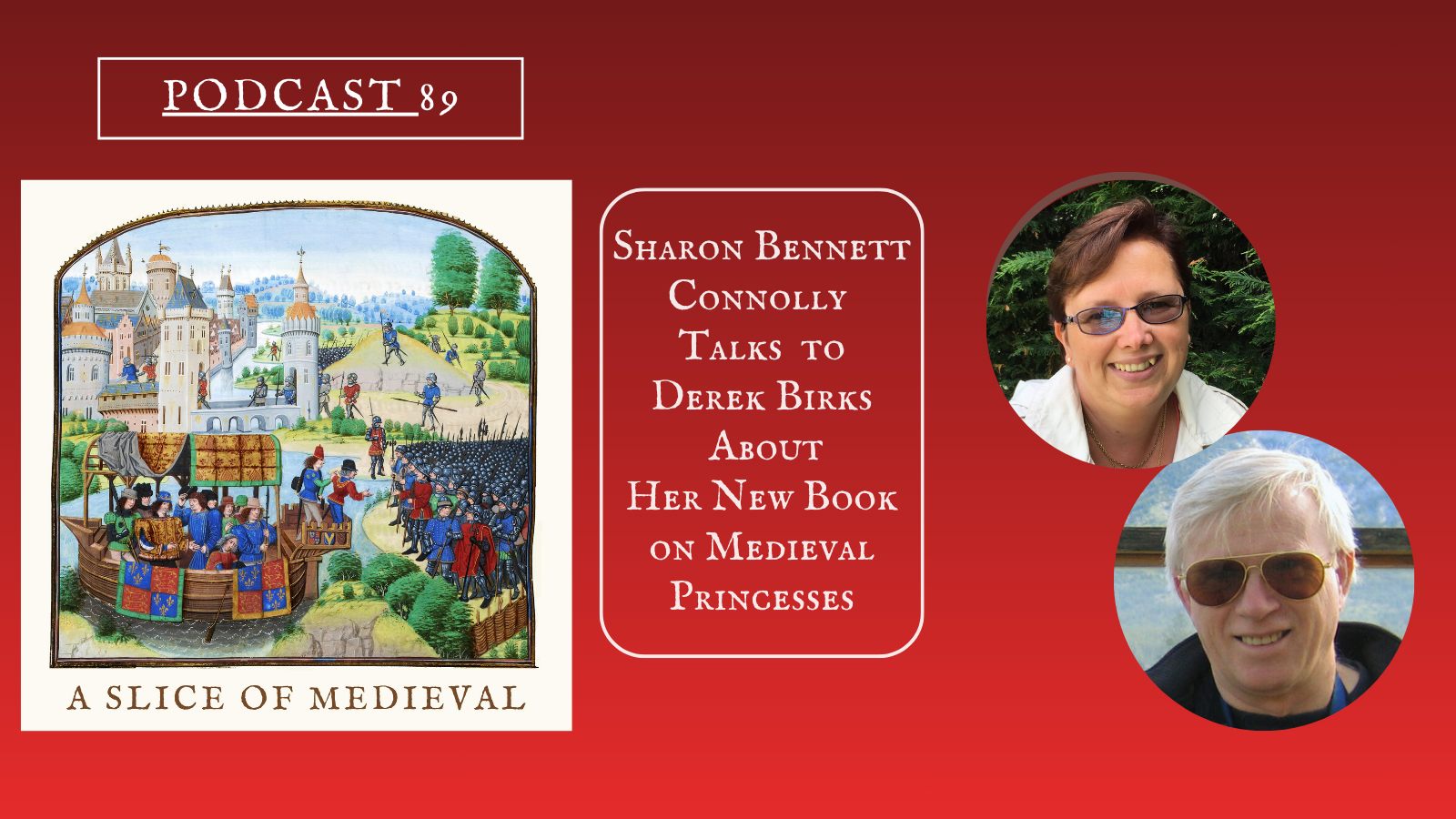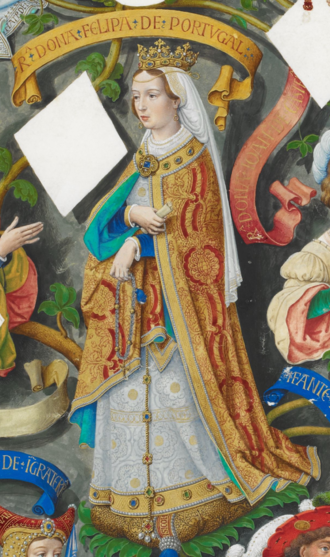
Illustrious Queen

Filipa_de_Lencastre,_Rainha_de_Portugal_-_The_Portuguese_Genealogy_(Genealogia_dos_Reis_de_Portugal)
Philippa of Lancaster, Queen of Portugal

Philippa of Lancaster was born at Leicester on 31st March 1360. She was the eldest daughter of John of Gaunt, Duke of Lancaster and 4th son of Edward III, and his first wife Blanche of Lancaster, great-great-granddaughter of Henry III. her father was one of the richest men in the country – and one of the most powerful.

Her life as a child would have been one of luxury and privilege, with a glorious dynastic marriage awaiting her in the future. Philippa was raised alongside her younger sister, Elizabeth, who was born in 1363, and her baby brother, Henry of Bolingbroke, born in 1367.

The children shared a household for some of their childhood and were given the best education available. The reformer John Wycliffe, first translator of the Bible into English, was among their tutors.

The children lost their mother when Blanche died at Tutbury on 12th September, 1368, more likely from the complications of childbirth than from the plague, as a daughter, Isabella, who did not survive, was born around the same time.

The children’s father was with Blanche when she died but departed on campaign to France soon after; it is doubtful the children’s care was interrupted. The Lancaster household was well-organised and by 1376 the girls had been appointed a new governess; Katherine Swynford, who was by this time also mistress to their father, John of Gaunt.

450px-Casamento_João_I_e_Filipa_Lencastre
Wedding of Philippa and King John

As with most high-born women of the time, Philippa’s marriage was in the hands of her father. John of Gaunt planned for her to contract a dynastic match which would benefit and complement his own dynastic ambitions. In 1374, Philippa was betrothed to Gaston, Count of Foix, but nothing came of it. In 1381/2 she was offered in marriage to Jean de Blois, claimant to the duchy of Brittany; and in 1383 her prospective husband was Count William of Ostrevant, the heir to Hainault, Holland and Zeeland.

In 1385 and 25 years old Philippa was still unmarried. However, in the following year her father took her on his military expedition to Spain, hoping to claim the kingdom of Castile in right of his 2nd wife, Constance. Philippa’s marriage to John – or Joao – I of Portugal was agreed as part of an alliance made between the 2 Johns at Ponte do Mouro in November 1386.

Philippa was married to King John at Oporto on 2nd February 1387, before they had even received the required papal dispensation. The British Museum has a beautifully illuminated manuscript (above) which depicts the wedding, with John of Gaunt and his wife, Constance, looking on. Philippa was 26 – about 10 years older than the average age for a princess to marry. John was 3 years her senior and had been king for just short of 2 years.

Anoniem_-_Koning_Johan_I_van_Portugal_(1450-1500)_-_Lissabon_Museu_Nacional_de_Arte_Antiga_19-10-2010_16-12-61
John I, King of Portugal

Philippa became known as ‘Dona Fillipa’ in Portugal and would be one of the country’s best-loved queens. Her natural disposition to austerity and piety was endearing to the Portuguese people. Philippa reformed the court and encouraged courtly games among her ladies. French poet Eustace Deschamps characterised her as the chief patron of the order of The Flower of England, casting her at the centre of the court and the May Day celebrations.

A patron of literature, Philippa was sent a copy of John Gower’s poem “Confessio amantis“, which was translated into Portuguese by Robert Payn, an English canon of Lisbon Cathedral.

Philippa had been made a Lady of the Garter in 1378 and was instrumental in fostering  links between England and Portugal, a practice helped by the mixture of English and Portuguese servants in her household. She was on good terms with both Richard II and his successor – her brother, Henry IV.

In 1399 she wrote to the Archbishop of Canterbury, Thomas Arundel, asking him to intervene with Henry on behalf of her friend, Bishop Henry Despenser of Norwich, who had angered the new king by defending Richard II at the time of Henry’s invasion of England and seizure of the throne.

Rogier_van_der_Weyden_(workshop_of)_-_Portrait_of_Isabella_of_Portugal
John and Philippa’s daughter Isabella, Duchess of Burgundy

Philippa also had a hand in persuading Henry to arrange the marriage of her stepdaughter, Beatriz (John’s illegitimate daughter) to the earl of Arundel in 1405.

Almost immediately after the wedding John returned to the war. In July 1387 Philippa miscarried their first child while visiting John at Curval, where he lay seriously ill. However, after what appears to have been a bumpy start, the couple seem well-matched. John had had 2 illegitimate children before his marriage, but was demonstrably faithful to Philippa after the wedding.

In fact when court gossip reached the queen that he had been unfaithful, John went to great lengths to convince Philippa of his innocence. He even went so far as to commemorate the event by having a room in the royal apartments at Sintra decorated with chattering magpies – he must have had a great sense of humour, and confidence in his relationship to be so bold.

Philippa and John were to have a large family, which they brought up with great care. Of their 9 children,  5 sons and one daughter survived infancy and would later be known in Portugal as ‘the Illustrious Generation’. Their eldest surviving son, Edward, was born in 1391 and would succeed his father as King of Portugal in 1433. Peter, Duke of Coimbra, was born in 1392 and would act as regent for his nephew, Afonso V, following Edward’s death in 1438.
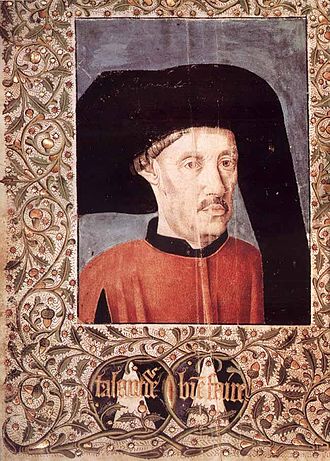
330px-Henry_the_Navigator_(Cronicas)
Prince Henry the Navigator

Their most famous son was Prince Henry ‘the Navigator’, Duke of Viseu, who was renowned for financing and researching great explorations – though he never undertook expeditions himself.

Their next youngest son was John, Duke of Beja and Constable of Portugal, who married Isabella, the daughter of Alfonso I, Duke of Braganza.

The baby of the family was Ferdinand, Grand Master of Aviz. He was born in 1402 and was later known as ‘the Saint Prince’ following his death as a prisoner of the Moors. Ferdinand had been held as a hostage for the return of Ceuta following the Disaster of Tangier, a siege led by his brother Henry. Ferdinand was held in increasingly severe confinement when it became apparent no ransom would be forthcoming, until he finally died in 1443.

John and Philippa’s one daughter, Isabella, was born in 1397 and would go on to marry Philip III the Good, Duke of Burgundy; and become the mother of Charles the Bold, Duke of Burgundy.

By 1415 Philippa’s oldest sons were itching to prove their martial prowess. Scorning their father’s offer to hold a magnificent tournament for them, they persuaded him to mount an attack on the port of Ceuta in North Africa. As they were about to set sail Philippa fell ill.
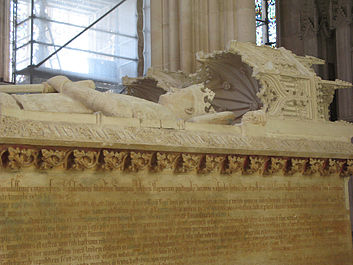
353px-BatalhaTombKingJohn
Tomb of John and Philippa

She had contracted plague and died at Odivelas, near Lisbon, on 18/19th July 1415. She was 55. On her deathbed she gave her 3 eldest sons, each, a jewel encrusted sword, in anticipation of their impending knighthoods, and a piece of the true cross. Giving them her blessing for the forthcoming military expedition she exhorted “them to preserve their faith and to fulfil the duties of their rank”¹.

The expedition sailed just 5 days after her death and Ceuta fell after only one day of siege, becoming Portugal’s first African possession.

Described as pious, charitable, affable and obedient to her husband, Portuguese historian Fernao Lopes, secretary to Philippa’s son, Fernando, held Philippa up as a model queen. Her piety was renowned; in later life she was said to regularly read the Book of Psalms.
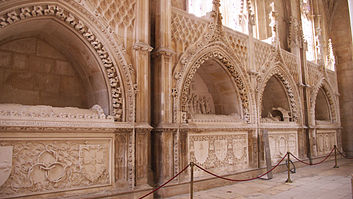
353px-Túmulos_de_los_Infantes
Tombs of the Infantes, the 4 younger sons of John and Philippa

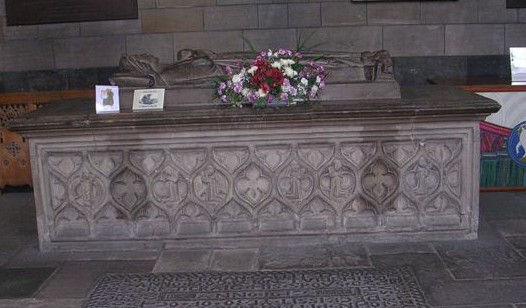
Queen Philippa was buried in the Dominican Priory at Batalha Abbey, which had been founded by her husband. King John arranged for a magnificent tomb to be built in the Capela do Fundador. Constructed between 1426 and 1434, it is topped by their effigies, clasping each others’ hands. King John himself was laid beside her after his death in August 1433.

Their sons, Ferdinand, John, Henry and Peter, were laid to rest along the south side of the same chapel.

*

Footnote: ¹ Edgar Prestage, The Portuguese pioneers.

*

Pictures courtesy of Wikipedia

*

Sources: The Plantagenets, the Kings who Made England by Dan Jones;  Brewer’s British Royalty by David Williamson; Britain’s Royal Families, the Complete Genealogy by Alison Weir; The Mammoth Book of British Kings and Queens by Mike Ashley; The Plantagenets, the Kings that made Britain by Derek Wilson;  englishmonarchs.co.uk; oxforddnb.com; annvictoriaroberts.co.uk.

*

My Books

Signed, dedicated copies of all my books are available through my online bookshop.

Out now: Scotland’s Medieval Queens

Books by Sharon Bennett Connolly

Scotland’s history is dramatic, violent and bloody. Being England’s northern neighbour has never been easy. Scotland’s queens have had to deal with war, murder, imprisonment, political rivalries and open betrayal. They have loved and lost, raised kings and queens, ruled and died for Scotland. From St Margaret, who became one of the patron saints of Scotland, to Elizabeth de Burgh and the dramatic story of the Scottish Wars of Independence, to the love story and tragedy of Joan Beaufort, to Margaret of Denmark and the dawn of the Renaissance, Scotland’s Medieval Queens have seen it all. This is the story of Scotland through their eyes.

Scotland’s Medieval Queens gives a thorough grounding in the history of the women who ruled Scotland at the side of its kings, often in the shadows, but just as interesting in their lives beyond the spotlight. It’s not a subject that has been widely covered, and Sharon is a pioneer in bringing that information into accessible history.’ Elizabeth Chadwick (New York Times bestselling author)

Available now from Amazon and Pen and Sword Books

Also by Sharon Bennett Connolly:

Books by Sharon Bennett Connolly

Heroines of the Tudor World tells the stories of the most remarkable women from European history in the time of the Tudor dynasty, 1485-1603. These are the women who ruled, the women who founded dynasties, the women who fought for religious freedom, their families and love. Heroines of the Tudor World is now available for pre-order from Amberley Publishing and Amazon UK. Women of the Anarchy demonstrates how Empress Matilda and Matilda of Boulogne, unable to wield a sword themselves, were prime movers in this time of conflict and lawlessness. It shows how their strengths, weaknesses, and personal ambitions swung the fortunes of war one way – and then the other. Available from Bookshop.orgAmberley Publishing and Amazon UKKing John’s Right-Hand Lady: The Story of Nicholaa de la Haye is the story of a truly remarkable lady, the hereditary constable of Lincoln Castle and the first woman in England to be appointed sheriff in her own right. Available from all good bookshops Pen & Sword Booksbookshop.org and Amazon

Books by Sharon Bennett Connolly

Defenders of the Norman Crown: The Rise and Fall of the Warenne Earls of Surrey tells the fascinating story of the Warenne dynasty, from its origins in Normandy, through the Conquest, Magna Carta, the wars and marriages that led to its ultimate demise in the reign of Edward III. Available from Pen & Sword BooksAmazon in the UK and US, and Bookshop.orgLadies of Magna Carta: Women of Influence in Thirteenth Century England looks into the relationships of the various noble families of the 13th century, and how they were affected by the Barons’ Wars, Magna Carta and its aftermath; the bonds that were formed and those that were broken. It is now available in paperback and hardback from Pen & SwordAmazon, and Bookshop.orgHeroines of the Medieval World tells the stories of some of the most remarkable women from Medieval history, from Eleanor of Aquitaine to Julian of Norwich. Available now from Amberley Publishing and Amazon, and Bookshop.orgSilk and the Sword: The Women of the Norman Conquest traces the fortunes of the women who had a significant role to play in the momentous events of 1066. Available now from Amazon,  Amberley Publishing, and Bookshop.org.

Alternate Endings: An anthology of historical fiction short stories including Long Live the King… which is my take what might have happened had King John not died in October 1216. Available in paperback and kindle from Amazon.

Podcast:

A Slice of Medieval

Have a listen to the A Slice of Medieval podcast, which I co-host with Historical fiction novelist Derek Birks. Derek and I welcome guests, such as Bernard Cornwell and discuss a wide range of topics in medieval history, from significant events to the personalities involved. Our first ever episode was a discussion on The Anarchy 

Every episode is also now available on YouTube.

*

Don’t forget! Signed and dedicated copies of all my books are available through my online bookshop.

For forthcoming online and in-person talks, please check out my Events Page.

You can be the first to read new articles by clicking the ‘Follow’ button, liking our Facebook page or joining me on TwitterThreadsBluesky and Instagram.

©2016 Sharon Bennett Connolly FRHistS

The Jilted Princess

JoanEngland
Joan of England, Queen of Scotland

Joan of England was the oldest of daughter of King John and his 2nd wife, Isabella of Angoulême. Born on 22 July 1210 she was the 3rd of 5 children; she had 2 older brothers and 2 younger sisters would join the family by 1215.

Even before her birth, she was mooted as a possible bride for Alexander of Scotland, son of King William I of Scotland. A verbal agreement between the two kings, after the Treaty of Norham, in 1209 provided for John to arrange the marriages of William’s two daughters, with one marrying a son of John’s, and Alexander marrying one of John’s daughters.

Following the death of William I a further treaty in 1212 agreed to the marriage of 14-year-old Alexander II to 2-year-old Joan. However, the agreement seems to have been made as a way of preventing Alexander from looking to the continent – and especially France – for a potential bride, and by extension allies.

It did not stop John from looking further afield, nevertheless, for a more favourable marriage alliance. Nor did it stop Alexander from siding with the Barons against King John; Alexander was one of the Magna Carta signatories. John refused a proposal from King Philip II of France, for his son John, and settled in 1214 for a marriage with his old enemies the de Lusignan’s.

In 1214 Joan was betrothed to Hugh X de Lusignan. Hugh was the son of John’s rival for the hand of Isabella in 1200; Isabella’s engagement to Hugh IX was broken off  in order for her to marry John. Following the betrothal Hugh, Lord of Lusignan and Count of La Marche, was given custody of Joan and of Saintes, Saintonge and the Isle of Oléron as pledges for her dowry. Joan was just 4 years old when she travelled to the south of France to live with her future husband’s family. She was away from England at the height of the Baron’s War, and at her father’s death in October 1216.

It’s possible she was reunited with her mother in 1217 when Isabella of Angoulême left England, abandoning her four other children, in order to govern her own lands in Angoulême.

In 1220 in a scandalous about-face Hugh repudiated Joan and married her mother, his father’s former betrothed. And poor 9-year-old Joan’s erstwhile future husband was now her step-father!

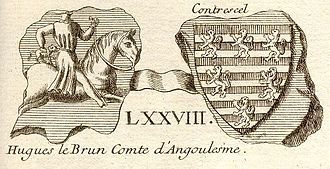
330px-Hugues_le_Brun
Hugh X de Lusignan, Joan’s betrothed and step-father

And worse was to come…

Instead of being sent back to England, as you would expect, Joan went from being Hugh’s betrothed – to being his prisoner. She was held hostage to ensure Hugh’s continued control of her dower lands, and to guarantee the transfer of his new wife’s dower, while England was withholding Queen Isabella’s dower against the return of Joan’s dower lands.

Negotiations to resolve the situation were ongoing. In the mean time, Henry III was already looking to arrange a new marriage for Joan. On 15th June 1220, in York, a conference between Alexander II and Henry III saw the Scots king agree to marry Joan, with a provision that he would marry Joan’s younger sister, Isabella, if Joan was not returned to England in time.

Negotiations for Joan’s return were long and difficult and not helped by the fact Hugh was threatening war in Poitou. Eventually, after Papal intervention, agreement was reached in October 1220 and Joan was surrendered to the English.

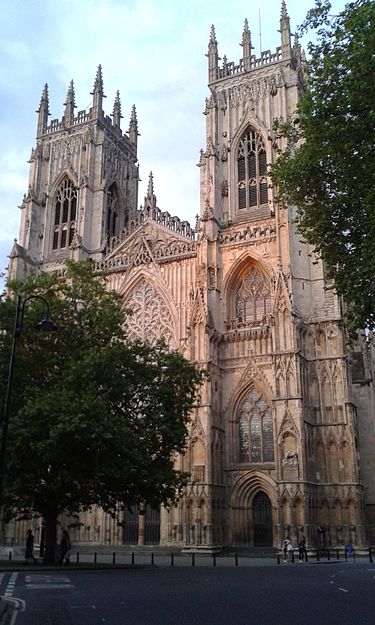
Joan and Alexander II were married on the 19th June 1221, at York Minster. Joan was just a month from her 11th birthday, while Alexander was 22. The archbishop of York performed the ceremony, which was witnessed Henry III and the great magnates of both realms. Henry III’s Pipe Rolls suggest the wedding was followed by 3 days of celebrations, costing £100. According to the Chronicle of Melrose ‘having celebrated the nuptials most splendidly, as was befitting, with all the natives of either realm rejoicing, [Alexander] conducted [Joan] to Scotland.’

York.mstr.
York Minster

The day before the wedding Alexander had assigned dower estates to Joan, worth an annual income of £1,000, including Jedburgh, Crail and Kinghorn. However, part of the dower was still held by Alexander’s mother, the dowager Queen Ermengarde, and Joan was not entitled to the income until after her mother-in-law’s death. This left Joan financially dependent on Alexander from the beginning.

There is a suggestion that Joan was not enamoured with Scotland and its society. She was hampered by her youth, her domineering mother-in-law and, eventually, by the fact she failed  to produce the desired heir. Her position was further hindered by tensions between her husband and brother from time to time.

In this, though, she seems to have found her purpose. Joan regularly acted as intermediary between the 2 kings. Alexander often used Joan’s personal letters to her brother as a way of communicating with Henry, while bypassing the formality of official correspondence between kings.

One such letter is a warning, possibly on behalf of Alexander’s constable, Alan of Galloway, of intelligence that Haakon IV of Norway was intending to aid Hugh de Lacy in Ireland. In the same letter she assured Henry that no one from Scotland would be going to Ireland to fight against Henry’s interests. Another letter, this time from Henry, was of a more personal nature, written in February 1235 it informed Joan of the marriage of their “beloved sister” Isabella to the holy Roman Emperor Frederick II, news at which he knew Joan “would greatly rejoice”.

In December 1235 Alexander and Joan were summoned to London, possibly for the coronation of Henry’s new queen, Eleanor of Provence. This would have been a long and arduous journey for the Scots monarchs, especially in the deepest part of winter.

Henry’s use of Joan as an intermediary suggests she did have some influence over her husband, this theory is supported by the fact that Joan accompanied Alexander to negotiations with the English king, at Newcastle in September 1236 and again at York in September 1237.

In 1234 Henry had granted Joan the manor of Fenstanton in Huntingdonshire and during the 1236 negotiations she was granted Driffield in Yorkshire, giving Joan an income independent of Scotland. Many have seen this as an indication that Joan was intending to spend more time in England, especially seeing as the chronicler Matthew Paris hints at an estrangement, although we cannot be certain.

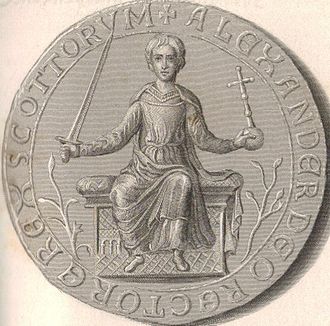
330px-Alexander_II_(Alba)_i
Alexander II

The 1236 and 1237 councils were attempts at resolving the ongoing claims of Alexander that King John had agreed to gift Northumberland to Alexander as part of the marriage contract between Alexander and Joan. Henry, of course, denied this. With the mediation of a papal legate, agreement was eventually reached in York at the 1237 council, with both queens present, when Alexander gave up the claim to Northumberland in return for lands in the northern counties with an annual income of £200.

Following the 1237 council Joan and her sister-in-law Eleanor of Provence departed on pilgrimage to the shrine of Thomas Becket at Canterbury. Given that Joan was now 27 and Eleanor already married for two years, it is possible both women were praying for children, and an heir.

Joan stayed in England for the rest of the year; much of the stay seems to have been informal and pleasurable. She spent Christmas at Henry’s court and was given new robes for herself, her clerks and servants, in addition to gifts of does and wine. Her widowed sister Eleanor, Countess of Pembroke, was present, along with the Countess of Chester and Joan’s cousin, the captive Eleanor of Brittany.

In late January arrangements were being made for Joan’s return to Scotland, but she fell ill before she could travel north. Still only 27 years of age Joan died on 4th March 1238 at Havering-atte-Bower in Essex, her brothers, King Henry III and Richard, Earl of Cornwall, were at her side.

HenryIII
Henry III

According to Matthew Paris ‘her death was grievous, however she merited less mourning, because she refused to return [to Scotland] although often summoned back by her husband’. And even in death Joan elected to stay in England. her will requested that she be buried at the Cistercian nunnery of Tarrant in Dorset.

The convent benefited greatly from Henry III’s almsgiving for the soul of his sister; in 1252, over 13 years after her death, the king ordered a marble effigy to be made for her tomb (which unfortunately has not survived).

Talking of her wedding day, the Chronicle of Lanercost had described Joan as ‘a girl still of a young age, but when she was an adult of comely beauty.’

Alexander II married again just over a year after Joan’s death, to Marie de Coucy and their son, Alexander III, the longed-for heir, was born in 1241. Alexander II died of a fever in 1249.

*

Images courtesy of Wikipedia

*

Sources: The Oxford Companion to British History Edited by John Cannon; The Plantagenets, the Kings who Made England by Dan Jones; History Today Companion to British History Edited by Juliet Gardiner and Neil Wenborn;  Brewer’s British Royalty by David Williamson; Britain’s Royal Families, the Complete Genealogy by Alison Weir; The Plantagenet Chronicles Edited by Elizabeth Hallam; The Mammoth Book of British Kings and Queens by Mike Ashley; The Plantagenets, the Kings that made Britain by Derek Wilson; England Under the Norman and Angevin Kings  by Robert Bartlett; http://www.britannica.com; oxforddnb.com; finerollshenry3.org.uk.

*

My Books

Signed, dedicated copies of all my books are available through my online bookshop. or by contacting me.

Unfortunately, postage costs make it very expensive to send books to the US. However, if you buy one of my books in the US, I can send out a signed book plate. Just send me your address and who to dedicate it to via my contacting me page.

Coming 30 March: Princesses of the Early Middle Ages

Daughters of kings were often used to seal treaty alliances and forge peace with England’s enemies. Princesses of the Early Middle Ages: Royal Daughters of the Conquest explores the lives of these young women, how they followed the stereotype, and how they sometimes managed to escape it. It will look at the world they lived in, and how their lives and marriages were affected by political necessity and the events of the time. Princesses of the Early Middle Ages will also examine how these girls, who were often political pawns, were able to control their own lives and fates. Whilst they were expected to obey their parents in their marriage choices, several princesses were able to exert their own influence on these choices, with some outright refusing the husbands offered to them.

Their stories are touching, inspiring and, at times, heartbreaking.

Princesses of the Early Middle Ages: Royal Daughters of the Conquest is now available for pre-order from Pen & Sword and Amazon.

Also by Sharon Bennett Connolly:

Scotland’s history is dramatic, violent and bloody and Scotland’s Medieval Queens have seen it all. This is the story of Scotland through their eyes. Available now from Amazon and Pen and Sword BooksHeroines of the Tudor World tells the stories of the most remarkable women from European history in the time of the Tudor dynasty, 1485-1603. These are the women who ruled, the women who founded dynasties, the women who fought for religious freedom, their families and love. Heroines of the Tudor World is now available from Amberley Publishing and Amazon UK. Women of the Anarchy demonstrates how Empress Matilda and Matilda of Boulogne, unable to wield a sword themselves, were prime movers in this time of conflict and lawlessness. It shows how their strengths, weaknesses, and personal ambitions swung the fortunes of war one way – and then the other. Available from Bookshop.orgAmberley Publishing and Amazon UKKing John’s Right-Hand Lady: The Story of Nicholaa de la Haye is the story of a truly remarkable lady, the hereditary constable of Lincoln Castle and the first woman in England to be appointed sheriff in her own right. Available from all good bookshops Pen & Sword Booksbookshop.org and Amazon

Defenders of the Norman Crown: The Rise and Fall of the Warenne Earls of Surrey tells the fascinating story of the Warenne dynasty, from its origins in Normandy, through the Conquest, Magna Carta, the wars and marriages that led to its ultimate demise in the reign of Edward III. Available from Pen & Sword BooksAmazon in the UK and US, and Bookshop.orgLadies of Magna Carta: Women of Influence in Thirteenth Century England looks into the relationships of the various noble families of the 13th century, and how they were affected by the Barons’ Wars, Magna Carta and its aftermath; the bonds that were formed and those that were broken. It is now available in paperback and hardback from Pen & SwordAmazon, and Bookshop.orgHeroines of the Medieval World tells the stories of some of the most remarkable women from Medieval history, from Eleanor of Aquitaine to Julian of Norwich. Available now from Amberley Publishing and Amazon, and Bookshop.orgSilk and the Sword: The Women of the Norman Conquest traces the fortunes of the women who had a significant role to play in the momentous events of 1066. Available now from Amazon,  Amberley Publishing, and Bookshop.org.

Alternate Endings: An anthology of historical fiction short stories including Long Live the King… which is my take what might have happened had King John not died in October 1216. Available in paperback and kindle from Amazon.

Podcast:

Have a listen to the A Slice of Medieval podcast, which I co-host with Historical fiction novelist Derek Birks. Derek and I welcome guests, such as Bernard Cornwell and Michael Jecks, and discuss a wide range of topics in medieval history, from significant events to the personalities involved. 

Every episode is also now available on YouTube.

*

Don’t forget! Signed and dedicated copies of all my books are available through my online bookshop.

For forthcoming online and in-person talks, please check out my Events Page.

You can be the first to read new articles by clicking the ‘Follow’ button, liking our Facebook page or joining me on TwitterThreadsBluesky and Instagram.

*

©2015 Sharon Bennett Connolly FRHistS

Anne of Gloucester, Daughter of a Traitor

History... the Interesting Bits
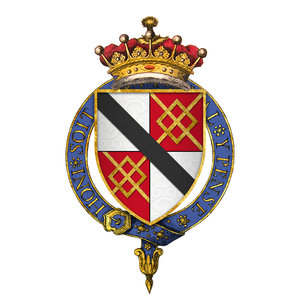
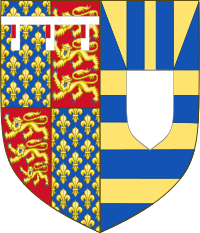
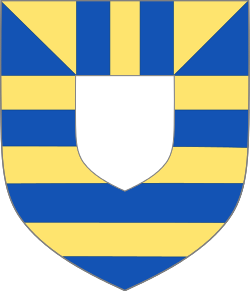
Arms of Anne of Gloucester, Countess of Stafford

Born sometime around 1382 Anne of Gloucester was the daughter of Thomas of Woodstock, 1st Duke of Gloucester, and Eleanor de Bohun.

Anne’s parentage was impeccable. Her father was the youngest son of the late king Edward III and his queen Philippa of Hainault, making Anne first cousins with the 2 subsequent kings, Richard II and Henry IV. Along with Henry IV’s wife, Mary de Bohun, Anne’s mother was co-heiress of the earls of Hereford.

Anne’s childhood would have been marred by the political conflicts of Richard II’s reign. By the late 1380s her father had set himself up in opposition to the king’s tyrannical rule and his reliance on personal favourites. As a leader of the Lords Appellant he was responsible for the arrest of Richard’s favourites and the curbing of the king’s powers.

Anne was probably born at Pleshey Castle and it was also the scene of her first wedding. In June 1391, aged only 8 or 9, Anne was married to Thomas Stafford, 3rd Earl of Stafford, who was about 15 years her senior. Thomas died in 1392, before the marriage could be consummated. Even before Thomas Stafford’s death, it seems, provision had already been made for Anne to marry one of his younger brothers. The brothers, William and Edmund, were wards of Anne’s father. The year after the elder boy William, died in 1395 (aged about 19), Anne was married to Edmund, now 5th Earl of Stafford.

History... the Interesting Bits
Thomas of Woodstock, Duke of Gloucester

In the year following her marriage, Anne was to suffer further tragedy when her father was personally arrested by the king, whilst recovering from illness at the family’s home of Pleshey Castle, Essex. Thomas was transported to imprisonment in Calais to await trial, under the care of the earl of Nottingham, from where his death was reported in September of the same year. A later inquiry established that Thomas Duke of Gloucester had been murdered, most likely on the night of 8th September, smothered under a mattress.

The Duke was declared a traitor and his lands and property were forfeited to the crown. Anne’s only brother, Humphrey, was made a ward of King Richard II and was with the king in Ireland 2 years later, when Henry Bolingbroke invaded England and claimed the crown as Henry IV. The new king ordered Humphrey’s return to England, but he died on the voyage home in August 1399, aged just 18.

Anne’s life was hit by 2 further losses in close succession. Her mother, Eleanor de Bohun died on 3rd October 1399. The Chronicler, Walsingham, said she died of a broken heart following the deaths of her husband and only son. Anne’s unmarried sister, Joan, died in August 1400. With her only remaining sibling, Isabel, taking the veil at the Minoresses in London on her 16th birthday in April 1402, Anne became one of the greatest heiresses in the kingdom. From 1399 she was recognised as Countess of Buckingham, Hereford and Northampton and was made a Lady of the Garter in 1405.

History... the Interesting Bits
Humphrey Stafford, Duke of Buckingham

In these same years Anne gave birth to 2 daughters and a son. Of her daughters Philippa died young and Anne would marry consecutively her cousins Edmund Mortimer, earl of March and John Holland, 2nd Duke of Exeter. Anne’s only son by Edmund Stafford, Humphrey, was born in 1402 and would go on to become the Duke of Buckingham. Loyal to King Henry VI at the outbreak of the Wars of the Roses, he would be killed at the Battle of Northampton in 1460. Humphrey’s son, Henry, would be husband to Henry VII’s mother, Margaret Beaufort.

On 21st July 1403 Anne was made a widow for the second time, when Edmund was killed fighting for the king at the Battle of Shrewsbury. Still only in her early 20s Anne was left with 2 young children and a dower income of £1500 a year. However, with her dower properties stretched across the strategically important Welsh Marches Anne’s remarriage was of great interest to Henry IV.

Of immediate concern was the security of those dower properties, giving Henry IV’s ongoing conflict with Owain Glyn Dwr and the Welsh. Sir William Bourchier, Count of Eu, was dispatched to help protect Anne and her properties from any Welsh incursions. And it was with this same knight that Anne, taking her future into her own hands, contracted a secret marriage some time before 20th November 1405.

The king was displeased with the clandestine marriage and the couple were fined ‘great sums’. However, Bourchier it seems was highly charismatic, a capable soldier and valued administrator, all factors which, when added to his proven loyalty to the Lancastrian king,  helped to ensure that the couple was soon forgiven.

History... the Interesting Bits
The Bourchier arms quartered with those of Thomas of Woodstock, Anne’s father

Sir William Bourchier would continue his impressive career under Henry V; fighting at Agincourt in 1415, after which he was appointed Constable of the Tower of London and took responsibility of the high-profile French prisoners captured in the battle. In letters Anne described with pride ‘the valiant prowess, wisdom and good governance’ her husband .

The couple seems to have been genuinely in love and soon had a nursery full of children, with 4 sons and a daughter all born before 1415. Anne promoted the careers of all her children and arranged marriages for them.

William and Anne’s eldest son, Henry 1st Earl of Essex was married to Isabel of Cambridge, daughter of Richard of Conisbrough. A Yorkist supporter, he fought at the Second battle of St Albans and at Towton, dying in April 1483.

Thomas Bourchier, most likely Anne and William’s second son, went to Oxford and then joined the Church. He rose to become Archbishop of Canterbury in 1454 and was made a cardinal in 1467. Although he was Chancellor for a short time, in the reign of Henry VI, Thomas was a loyal supporter of the Yorkist cause and it was Edward IV himself who wrote to the pope urging for Thomas’s promotion to cardinal. In his position as Archbishop of Canterbury, Thomas crowned both Richard III and Henry VII. He died in 1486 and was buried next to the high altar in Canterbury Cathedral.

History... the Interesting Bits
Cardinal Thomas Bourchier, Archbishop of Canterbury

Of their other sons; William Bourchier became Baron Fitzwarin in right of his wife and Sir John Bourchier was created Baron Berners following his marriage to Margery Berners. He was Constable of Windsor Castle in the 1460s. Anne and William’s only daughter, Eleanor Bourchier, married John de Mowbray, 3rd Duke of Norfolk, and was the mother of another John, the 4th Duke.

Although they seem to have been on opposing sides of the political spectrum, Humphrey Stafford remained close to his mother and his Bourchier half-siblings.

Anne was widowed for a third and final time when William died at Troyes in 1420. His body was sent back to England for burial at Llanthony Priory in Gloucestershire. Anne had an enduring friendship with the Prior, John Wyche, and corresponded with him in both French and English.

Although not yet 40 Anne never remarried. Throughout her marriages – and after – she was personally involved in estate management and her letters demonstrate a sound business acumen. Anne had loyal and talented administrators who helped her fight for her interests.  As earl of Buckingham, Anne’s father had revenues of £1,000 a year from the lordships of Oakham (Rutland) and Holderness (Yorkshire). While Oakham was returned to Anne in 1414 she only recovered Holderness in 1437, the year before she died.

While Anne was cousin to the king, Henry V, both he and his father had resented the unequal division of the Bohun inheritance in her favour. Henry V was to eventually force a new settlement on the recently widowed countess in 1421, this time heavily weighted  for the king’s benefit, leaving Anne just £1200 a year from her mother’s inheritance; and even this often fell into arrears.

History... the Interesting Bits
Llanthony Secunda Priory, Anne’s burial place

Anne had shared a love of the church with her mother and was known for her piety and love of learning. She died in October 1438, aged around 55. Her will, written “in the Englyshe tonge for my most profit redyng and vnderstandyng”, remembered her “most trewe and diligent” reatiners (Register of Henry Chichele.

Anne of Gloucester, mother to combatants on both sides of the Wars of the Roses and granddaughter of Edward III, was buried beside William at Llanthony Priory where, in 1453, her children set up a perpetual chantry for the welfare of their souls.

*

Pictures courtesy of Wikipedia

*

Sources: The Oxford Companion to British History Edited by John Cannon.;  Brewer’s British Royalty by David Williamson; Britain’s Royal Families, the Complete Genealogy by Alison Weir; Chronicles of the Age of Chivalry Edited by Elizabeth Hallam; The Mammoth Book of British Kings and Queens by Mike Ashley; oxforddnb.com; geni.com;  thepeerage.com.

*

My Books:

Signed, dedicated copies of all my books are available through my online bookshop or the Contact Me page.

New releases in 2026:

New Hardbacks

Books by Sharon Bennett Connolly

Out now: Princesses of the Early Middle Ages: Royal Daughters of the Conquest

‘My daughter wanted me to treat her more like a princess. So, I married her to a stranger to strengthen the alliance with Poland!’

Princesses of the Early Middle Ages: Royal Daughters of the Conquest and Princesses of the Later Middle Ages: Royal Daughters of the Plantagenets tell the stories of England’s royal daughters from 1066 to the rise of the Tudors, from the last Anglo-Saxon princesses to the fall of the House of York.

Were they really pampered pawns sent off to marriages on the Continent, out of sight and out of mind?

Perhaps, there was different story, where a foreign marriage does not mean eternal exile, but a purpose in life, where a princess is a diplomat, an ambassador for England in her new country.

Where she is the bond between allies – most of the time.

Heidi Malagisi: ‘This is another excellent book by Sharon Bennett Connolly. Extremely well researched and relatively easy to follow along, which is a great thing because there are so many Matildas and Eleanors in this book.

Tony Riches: “I challenge anyone with an interest in medieval Britain to not find something they will learn from this book.

Anna Belfrage: “I just love how [Sharon] presents this huge cast of real life people in a casual, chatty tone that has me expecting the various female protagonists to suddenly pop their head up and add their own commentary.

Out now: Princesses of the Early Middle Ages: Royal Daughters of the Conquest

Pre-order: Princesses of the Later Middle Ages: Royal Daughters of the Plantagenets 

New in Paperback:

Books by Sharon Bennett Connolly

OUT NOW! The momentous events of 1066, the story of invasion, battle and conquest, are well known. But what of the women? Silk and the Sword: The Women of the Norman Conquest traces the fortunes of the women who had a significant role to play during the Norman Conquest – wives, lovers, sisters, mothers, leaders. These are lives full of drama, pathos and sometimes mystery: Edith and Gytha searching the battlefield of Hastings for the body of Harold, his lover and mother united in their grief for the fallen king. Who was Ælfgyva, the lady of the Bayeux Tapestry, portrayed with a naked man at her feet?

Janina Ramirez said it’s ‘Excellent’!

COMING 15 July 2026: Heroines of the Tudor World focuses on the women who lived through the Renaissance and Reformation, examining the threats and challenges they faced and how they overcame them. These are the women who ruled, the women who founded dynasties, the women who fought for religious freedom, their families and love. These are the women who made a difference, who influenced countries, kings and the Reformation.

Derek Birks: ‘An excellent account of the changing roles of women in Tudor society.’

Annie Whitehead: ‘What a treat this book was to read. Bennett Connolly has an easy, conversation style of writing which welcomes you from the opening pages and draws you into her story.

Also by Sharon Bennett Connolly:

Books by Sharon Bennett Connolly

Heroines of the Medieval World; Silk and the Sword: The Women of the Norman Conquest; Ladies of Magna Carta: Women of Influence in Thirteenth Century England; Defenders of the Norman Crown: Rise and Fall of the Warenne Earls of Surrey; King John’s Right Hand Lady: The Story of Nicholaa de la Haye; Women of the Anarchy; Heroines of the Tudor World; Scotland’s Medieval Queens: From St Margaret to Margaret of Denmark; Princesses of the Early Middle Ages: Royal Daughters of the Conquest (March 2026); Princesses of the Later Middle Ages; Royal Daughters of the Plantagenets (August 2026)

Alternate Endings: An anthology of historical fiction short stories including Long Live the King… which is my take what might have happened had King John not died in October 1216. Available in paperback and kindle from Amazon.

All my books on Amazon and Bookshop.org . You can also order direct from my publishers, Pen and Sword Books and Amberley Publishing.

Podcast:

A Slice of Medieval

Have a listen to the A Slice of Medieval podcast, which I co-host with Historical fiction novelist Derek Birks. Derek and I welcome guests, such as Ian Mortimer, Bernard Cornwell, Elizabeth Chadwick and Scott Mariani, and discuss a wide range of topics in medieval history, from significant events to the personalities involved. 

Every episode is also now available on YouTube.

*

Don’t forget! 

Royal Historical Society

Signed and dedicated copies of all my books are available through my online bookshop.

You can be the first to read new articles by clicking the ‘Follow’ button, liking our Facebook page or joining me on Twitter and Instagram.

For forthcoming online and in-person talks, please check out my Events Page.

*

©2015 Sharon Bennett Connolly, FRHistS

Constance of York, the Rebel Countess

History...the Interesting Bits
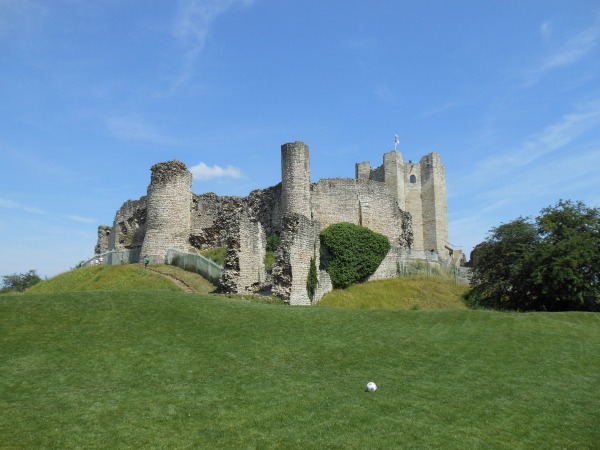
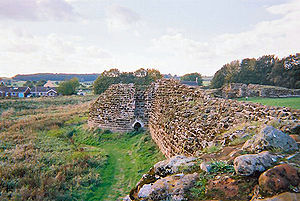
Conisbrough Castle, possible birthplace of Constance of York

Constance of York was born around 1374, possibly at Conisbrough Castle in Yorkshire (although that is far from certain). She was the second of 3 children born to Edmund of Langley, Duke of York and 5th son of Edward III, and his wife, Isabella of Castile. Edmund and Isabella also had 2 boys, Edward of Norwich in around 1373 and Richard of Conisbrough, who is thought to have been born around 1375/6, but could have been born as late as the early 1380s.

Near-contemporary sources suggest that Edmund and Isabella were an ill-matched pair and their relationship was a rocky one, with Isabella accused of having an affair with John Holland, Duke of Exeter and half-brother to Richard II. Holland has also been suggested as the father of Isabella’s youngest son, Richard. However, recent research into contemporary records contradicts this image.

Constance’s childhood was short-lived. At the age of 4, in April 1378, she was betrothed to Edward le Despenser. However, young Edward appears to have died shortly after the betrothal as by November 1379 Constance was married to his only surviving, younger brother, Thomas, who was about 6 at the time.

Isabella_of_Castile-Langley
Isabella of Castile, Constance’s mother

It is highly likely that 4-year-old Constance remained in her parents’ household for several years after her marriage, although she may have spent time also in the household of her mother-in-law, who retained wardship of young Thomas despite her husband’s death.

Thomas le Despenser was a great-grandson of the infamous Hugh le Despenser the Younger, despised favourite and alleged lover of Edward II, who was executed on a 50-foot high gallows in 1326. The marriage was seen as a good match on both sides: the Despenser family had a considerable fortune and were among the 12 richest families in the country, while Constance was a granddaughter of Edward III. Her hand in marriage completed the rehabilitation of the Despenser family.

In 1386, at just 12-years-old Constance was made a Lady of the Garter by her cousin, Richard II; she was one of the youngest ever recipients of the award. In 1392 Constance’s mother died and the following year her father re-married. His new bride was about 6 years younger than Constance and was a niece to Richard II; Joan Holland was the daughter of Thomas Holland, 2nd earl of Kent and granddaughter of Joan of Kent, Princess of Wales. In a bizarre twist, she was also the niece of John Holland, 1st Duke of Exeter, the late Duchess of York’s alleged lover.

Thomas, meanwhile, was learning his trade as a soldier. He served with Richard II in Scotland in 1385, probably as a page or squire, given his tender years. In 1388 he was knighted by the Earl of Arundel, following his involvement in a naval expedition against the French. In 1391 Thomas travelled to Prussia to join the “crusade” against the Lithuanians.

It seems likely that, by 1394 with Thomas back in England, Thomas and Constance were finally living together as a couple.  In March of that year, Thomas had been granted full possession of his lands; he had been a ward of his mother, Elizabeth de Burghersh, since his father Edward’s death in 1375.

Coat_of_Arms_of_Sir_Thomas_le_Despencer,_1st_Earl_of_Gloucester,_KG
Arms of Thomas le Despenser, 1st Earl of Gloucester

It’s possible the couple had as many as 5 children, but only 2 survived infancy; a son, Edward, died young, Hugh died around 1401 and a daughter, Elizabeth, born around 1398, also died young.

The first definite date of birth of a child is Richard, possibly their 2nd son but the first to survive childhood, who was born 30 November 1396. Richard would inherit his grandmother’s title of Baron Burghersh on her death in about 1402. Richard married his second cousin Eleanor, daughter of Ralph Neville, 1st Earl of Westmoreland, and Joan Beaufort, daughter of John of Gaunt and Katherine Swynford.

Unfortunately, Richard and Eleanor had no children before Richard died, still only in his 20s. His title passed to his younger sister, Isabella, who had been born around 1400 and was married successively to 2 men, cousins, of the same name; she married firstly Richard de Beauchamp, Earl of Worcester and secondly Richard de Beauchamp, Earl of Warwick. Isabella’s daughter by Warwick, Anne, would later marry Richard Neville, known as the Kingmaker, and be the mother of Richard III’s queen, Anne Neville.

Thomas le Despenser was a great supporter of Richard II, he was involved in the arrest and prosecution of the Appellant lords, the Duke of Gloucester and the Earl of Arundel in 1397; in return for which he received a share of their lands. And on the 29th September 1397, le Despenser was created Earl of Gloucester.

In spite of his close links with Richard II, Gloucester initially supported the accession of Henry Bolingbroke as Henry IV, after usurping Richard’s throne. However, after he was attainted for his role in the death of Thomas of Woodstock, Duke of Gloucester, and deprived of his earldom he became disillusioned with the new regime.

450px-Pontefract_Castle
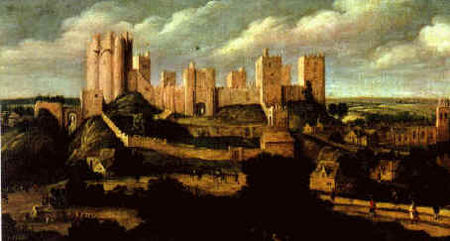
Painting of Pontefract Castle by Alexander Keirincx

Fearful of losing his estates, and possibly his life, in January 1400 he joined in a conspiracy with the earls of Kent, Salisbury and Huntingdon. Known as the Epiphany Rising, the earls planned to seize the king during a tournament at Windsor, intending to kill Henry IV and replace him with Richard II – still imprisoned at Pontefract Castle. The conspiracy was betrayed to the king by Edward of Norwich, Constance’s older brother and the conspirators were arrested and executed.  Richard II himself became the prime victim of the plot, which led Henry IV to believe it was too dangerous to keep the erstwhile king alive; he died shortly afterwards, still in custody at Pontefract Castle, probably from starvation.

Thomas le Despenser was executed on 13 January 1400. It is tempting to feel sorry for Constance of York, former Countess of Gloucester, mother of several infants and pregnant with her late husband’s child. And, indeed, it must have been difficult for her; a young, pregnant widow of a convicted traitor. With her husband’s lands forfeit, she could well have wondered what was going to happen to them all, especially following the death of her father in 1402. However, Constance herself was not beyond plotting.

Edward_of_Norwich_Duke_of_York
Edward of Norwich, 2nd Duke of York

In February 1405, during Owain Glyn Dwr‘s rebellion, Constance became involved in the plot to abduct Edmund Mortimer, 5th Earl of March from Windsor Castle. March had the greatest claim to the throne of all Henry IV’s rivals, being descended from Edward III’s second surviving son, Lionel of Antwerp. The plan was to deliver March and his younger brother, Roger, to their uncle, Sir Edmund Mortimer, who was married to Glyn Dwr’s daughter.

The boys were successfully released from Windsor, but recaptured before entering Wales. Although Constance does not seem to have suffered retribution for her part in the plot, she did implicate her brother Edward of Norwich, Duke of York, who was imprisoned in Pevensey Castle for seventeen weeks as a consequence.

Constance was also to cause scandal in her love life. As a young widow, she started a romantic liaison with Edmund Holland, 4th Earl of Kent. Edmund was the brother of Constance’s step-mother, Joan. A daughter, Eleanor, was born to the couple at Kenilworth in about 1405. She would later marry James Touchet, Lord Audley.

Whether or not Eleanor’s parents married became a bone of contention for the couple’s daughter, when she attempted to lay claim to her father’s lands and titles in 1430. Although Eleanor produced witnesses to prove the marriage of her parents, in about 1404, it was on the petition of Edmund’s sisters, Joan Duchess of York (Eleanor’s step-grandmother) and Margaret Holland, Duchess of Clarence, that Eleanor was adjudged illegitimate and unable to inherit from her father. With Eleanor declared illegitimate, Joan and Margaret became Edmund’s co-heirs and would divide their brother’s estate between them.

375px-Reading_Abbey_interior
Reading Abbey

Edmund was killed at the Battle of Ile-de-Brehat in September 1408 and buried on the island of Lavrec.

Constance outlived her lover by 8 years, dying on the 28 November 1416, the last survivor of the 3 York children. Her younger brother, Richard, had been executed in August 1415, for his part in the Southampton Plot to assassinate Henry V; and older brother Edward, Duke of York, was killed at Agincourt in October of the same year.

Constance of York, Countess of Gloucester, was buried at Reading Abbey in Berkshire.

*

Images:

Conisbrough Castle is ©2015 Sharon Bennett Connolly. All other pictures are courtesy of Wikipedia.

Sources:

Brewer’s British Royalty by David Williamson; History Today Companion to British History Edited by Juliet Gardiner & Neil Wenborn; The Mammoth Book of British kings & Queen by Mike Ashley; Britain’s Royal Families, the Complete Genealogy by Alison Weir; The Life and Times of Edward III by Paul Johnson; The Perfect King, the Life of Edward III by Ian Mortimer; Chronicles of the Age of Chivalry Edited by Elizabeth Hallam; yorkistage.blogspot.co.uk; richard111.com; The Oxford Companion to British History Edited by John Cannon.

*

My Books

Christmas is coming!

Signed, dedicated copies of all my books are available through my online bookshop.

Out now: Scotland’s Medieval Queens

Books by Sharon Bennett Connolly

Scotland’s history is dramatic, violent and bloody. Being England’s northern neighbour has never been easy. Scotland’s queens have had to deal with war, murder, imprisonment, political rivalries and open betrayal. They have loved and lost, raised kings and queens, ruled and died for Scotland. From St Margaret, who became one of the patron saints of Scotland, to Elizabeth de Burgh and the dramatic story of the Scottish Wars of Independence, to the love story and tragedy of Joan Beaufort, to Margaret of Denmark and the dawn of the Renaissance, Scotland’s Medieval Queens have seen it all. This is the story of Scotland through their eyes.

Scotland’s Medieval Queens gives a thorough grounding in the history of the women who ruled Scotland at the side of its kings, often in the shadows, but just as interesting in their lives beyond the spotlight. It’s not a subject that has been widely covered, and Sharon is a pioneer in bringing that information into accessible history.’ Elizabeth Chadwick (New York Times bestselling author)

Available now from Amazon and Pen and Sword Books

Coming 30 March 2026: Princesses of the Early Middle Ages

Books by Sharon Bennett Connolly

Daughters of kings were often used to seal treaty alliances and forge peace with England’s enemies. Princesses of the Early Middle Ages: Royal Daughters of the Conquest explores the lives of these young women, how they followed the stereotype, and how they sometimes managed to escape it. It will look at the world they lived in, and how their lives and marriages were affected by political necessity and the events of the time. Princesses of the Early Middle Ages will also examine how these girls, who were often political pawns, were able to control their own lives and fates. Whilst they were expected to obey their parents in their marriage choices, several princesses were able to exert their own influence on these choices, with some outright refusing the husbands offered to them.

Their stories are touching, inspiring and, at times, heartbreaking.

Princesses of the Early Middle Ages: Royal Daughters of the Conquest is now available for pre-order.

Also by Sharon Bennett Connolly:

Books by Sharon Bennett Connolly

Heroines of the Tudor World tells the stories of the most remarkable women from European history in the time of the Tudor dynasty, 1485-1603. These are the women who ruled, the women who founded dynasties, the women who fought for religious freedom, their families and love. Heroines of the Tudor World is now available from Amberley Publishing and Amazon UK. Women of the Anarchy demonstrates how Empress Matilda and Matilda of Boulogne, unable to wield a sword themselves, were prime movers in this time of conflict and lawlessness. It shows how their strengths, weaknesses, and personal ambitions swung the fortunes of war one way – and then the other. Available from Bookshop.orgAmberley Publishing and Amazon UKKing John’s Right-Hand Lady: The Story of Nicholaa de la Haye is the story of a truly remarkable lady, the hereditary constable of Lincoln Castle and the first woman in England to be appointed sheriff in her own right. Available from all good bookshops Pen & Sword Booksbookshop.org and Amazon

Books by Sharon Bennett Connolly

Defenders of the Norman Crown: The Rise and Fall of the Warenne Earls of Surrey tells the fascinating story of the Warenne dynasty, from its origins in Normandy, through the Conquest, Magna Carta, the wars and marriages that led to its ultimate demise in the reign of Edward III. Available from Pen & Sword BooksAmazon in the UK and US, and Bookshop.orgLadies of Magna Carta: Women of Influence in Thirteenth Century England looks into the relationships of the various noble families of the 13th century, and how they were affected by the Barons’ Wars, Magna Carta and its aftermath; the bonds that were formed and those that were broken. It is now available in paperback and hardback from Pen & SwordAmazon, and Bookshop.orgHeroines of the Medieval World tells the stories of some of the most remarkable women from Medieval history, from Eleanor of Aquitaine to Julian of Norwich. Available now from Amberley Publishing and Amazon, and Bookshop.orgSilk and the Sword: The Women of the Norman Conquest traces the fortunes of the women who had a significant role to play in the momentous events of 1066. Available now from Amazon,  Amberley Publishing, and Bookshop.org.

Alternate Endings: An anthology of historical fiction short stories including Long Live the King… which is my take what might have happened had King John not died in October 1216. Available in paperback and kindle from Amazon.

Podcast:

A Slice of Medieval

Have a listen to the A Slice of Medieval podcast, which I co-host with Historical fiction novelist Derek Birks. Derek and I welcome guests, such as Bernard Cornwell, Elizabeth Chadwick and Scott Mariani, and discuss a wide range of topics in medieval history, from significant events to the personalities involved. 

There are now over 75 episodes to listen to!

Every episode is also now available on YouTube.

*

Don’t forget! Signed and dedicated copies of all my books are available through my online bookshop.

For forthcoming online and in-person talks, please check out my Events Page.

You can be the first to read new articles by clicking the ‘Follow’ button, liking our Facebook page or joining me on TwitterThreadsBluesky and Instagram.

*

©2015 Sharon Bennett Connolly FRHistS

The Fascinating Marital Exploits of Joan, the Fair Maid of Kent

Joan_of_Kent
Joan, the Fair Maid of Kent

Joan of Kent was the daughter of Edmund of Woodstock, Earl of Kent and brother of Edward II. Edmund was a younger son of Edward I by his second wife, Margaret of France; he married Margaret Wake in 1325.

Joan was the third of four children, and was born on 28/9th September 1328 at Woodstock. When she was just 18 months old, Joan’s father was beheaded for treason on the orders of the Regent, Roger Mortimer and his lover, Queen Isabella; after becoming convinced that his brother, Edward II, was still alive, Edmund had become involved in a plot to free the erstwhile king.

Joan’s mother, Margaret Wake, was held under house arrest at Arundel Castle, along with all four of her children; Joan’s baby brother, John, was born a month after their father’s execution. Just a few months later, Edward III escaped Mortimer’s control and assumed power; he took over responsibility for his uncle’s family and Joan, a favourite of Edward’s queen, Philippa of Hainault, was raised at court.

The leading beauty of her day, Joan had little to offer a potential suitor, beyond her looks and keen intelligence. She had grown up in the same household as Edward III’s oldest children; his son and heir, Edward and his daughters Isabella and Joan.

Sometime around the age of 11 or 12, it seems that Joan secretly married, or promised to marry, Thomas Holland. However, shortly afterwards Holland left on Crusade to Prussia and during  his absence, Joan was married to William Montague, the future Earl of Salisbury in 1340/41.

Salisbury_1430
William Montague, Earl of Salisbury

When he returned to England, Thomas Holland discovered that his wife was married. Without the financial means to pursue his claim to be Joan’s husband through the church courts. Holland had to bide his time, joining Edward III’s campaigns in France, where he gained enough funds in ransoms to initiate the legal proceedings to recover his wife. In May 1348 Holland petitioned the pope, stating that Joan had been forced into her marriage with Salisbury. He went on to say that Joan had previously agreed to marry him and that their relationship had been consummated. He claimed her as his own wife, and Joan backed up his story.

It took 18 months for Joan’s marital status to be resolved, and for some of that time Salisbury kept Joan a prisoner, preventing her from presenting her testimony to the church lawyers. He was ordered to release her in order that she could give evidence at the inquisition looking into her marriage status.

In the mean time, England itself was in the grips of the Black Death, the bubonic plague. In order to lift the country’s spirits the king, Edward III, had arranged a grand tournament at Windsor, on St George’s Day, 23 April 1349. The knights in contention were founding members of the Order of the Garter; England’s greatest chivalric order, consisting of the king and 25 knights, it was probably founded in 1348, though the date is uncertain.

Joan herself is a part of the legend of the foundation of the Order of the Garter. She is said to be the lady who lost her garter during a ball celebrating the fall of Calais. Edward III is said to have returned the item to the 20-year-old damsel with the words “honi soit qui mal y pense” (evil to him who evil thinks).

Although the story is probably apocryphal (the fact a garter in those days was worn by men, not women, supporting this), Joan’s connection with the inaugural  tournament is all too true. Her presence brought an added bit of spice to the St George’s Day tournament of 1349. Her current husband, the Earl of Salisbury, fought on the king’s team, while Sir Thomas Holland was on the side of Prince Edward. Joan’s two husbands faced each other across the tournament field, with the object of their affection watching from the stands.

220px-Thomas_Holland_1430
Sir Thomas Holland

Although I couldn’t find the results of the tournament, Joan’s marital status was decided by Papal Bull on 13th November 1349, when the pope ordered her to divorce Salisbury and return to Holland. Which she did. I suppose we will never know if Joan had married Holland at the age of 11, or if they had an affair that only started after Holland returned from crusade, and the claim of a pre-contract was a clever ploy to get Joan out of an unhappy marriage.

It is easy for the cynic of the 21st century to nod their head sagely and say ‘good plan’. However, Joan and Thomas Holland were risking their eternal souls if they lied to a church court; such an oath was not to be undertaken lightly. It may be the romantic in me, but I cannot help but believe that Joan and Thomas were telling the truth about their promises to each other.

Joan succeeded her brother, John, as Baroness Wake of Liddell and Countess of Kent in December 1352 and was confirmed in her new titles in February 1353. Sir Thomas Holland, therefore, became Earl of Kent by right of his wife.

Joan and Sir Thomas Holland had five children together; three sons and two daughters. Edmund was born in 1352 and died young. Thomas, Earl of Kent, married Alice, the daughter of Richard FitzAlan, 10th Earl of Arundel; he died in 1397.  Their third son, John, was created Duke of Exeter in 1397 by his younger brother, King Richard II. He married Elizabeth of Lancaster, daughter of John of Gaunt and Blanche of Lancaster, but was executed in 1400 for his involvement in a plot to assassinate Henry IV and return his brother to the throne.

Of their daughters, Joan married John V, Duke of Brittany (who would marry Joanna of Navarre as his second wife, the future queen-consort of Henry IV), but died in 1384. Their youngest child, Matilda, was born in 1359 and married twice; first to Sir Hugh de Courtenay, who died in 1377, and then Waleran of Luxembourg, Count of St Pol and Ligny. Matilda died in 1391.

At the end of 1360 Sir Thomas Holland, a veteran soldier who had fought in the Crecy campaign, died from illness while in Normandy and Joan was left a widow.

Edward Prince of Wales – the Black Prince – may have offered comfort to the Lady Joan, his friend from childhood. Joan and Edward appear to have fallen in love. As widow with five children, and bringing no beneficial foreign alliance to the marriage table, Joan was hardly the ideal bride for the heir to the throne. Especially not with her dubious marital history. It was not the political match his father had wanted for his oldest son, but all attempts at a marriage alliance with a princess from the Low Countries had come to nought; and it seems the king was quite happy to accept his son’s choice of wife.

220px-Cernoch
Edward, the Black Prince

It must have caused quite a scandal at the time. Although a reputed beauty, Joan’s bigamous marriage to William Montague was well-known – and he was still alive. She had five children by her first husband, Thomas Holland. Moreover, she was 33 years of age, two years older than her prince. She hardly appeared ‘queen’ material.

However, according to the Chandos Herald Joan was “a lady of great worth…. very beautiful, pleasing and wise”. Edward III sent one of his own people to the pope to ask permission for the marriage, which was swiftly granted, securing the papal dispensations needed, given Edward and Joan were related withing the prohibited degrees (they were first cousins once removed).

With great ceremony Edward and Joan were married at Windsor on 10th October 1361, by the Archbishop of Canterbury and in the presence of the king and queen. Shortly after the wedding, the couple moved to Berkhamsted, where the king visited them after Christmas.

In 1363 they moved their entire household to Bordeaux, after the prince was given the Duchy of Aquitaine by his father. Their court there was lavish, exceeding the king’s own in brilliance.

In 1365 their first child was born; a son, Edward of Angoulême. His brother, Richard of Bordeaux, followed on 6th January 1367.

The chronicler, Froissart, tells the story:

In due course Joan, the princess, went into labour and by God’s grace was delivered of her child. It was a fine son, Richard of Bordeaux, born at Epiphany, 6 January , which that year fell on a Wednesday.

220px-Edward_of_Angouleme
Edward of Angouleme, from the Wilton Diptych

The child came into the world early in the morning to the great joy of the prince and the whole household, and was baptised the following Friday in the early afternoon on the holy font of St Andrew’s Church in the city of Bordeaux. The child was named Richard and he afterwards became King of England.”

Richard’s baptism was attended by three kings; Pedro of Castile, James IV of Majorca and Richard of Armenia. William Thorne, the Canterbury Chronicler, described them as the three ‘magi’ (or wise men), as Richard had been born on Epiphany, Twelfth Night; an auspicious sign for a bright future.

The Black Prince wrote fondly to his wife whilst campaigning in Spain: “Be assured, dearest companion, that we, our brother of Lancaster and all the great men of our army are, thank God, in good form.”

Froissart wrote of the Black Prince’s return from Spain, and his arrival in Bordeaux; “Where he was received with great celebrations. Princess Joan came to meet him and had Edward, her eldest son, carried with her; he was then about three years old.”

The Spanish campaign was aimed at supporting Pedro of Castile’s claim to the throne against that of his illegitimate half-brother, Henry of Trastamara. Although the Black Prince managed to re-establish Pedro’s rule, the Castilian king could not pay the English army and Edward, already with a reputation for heavy-handedness in Aquitaine, taxed the duchy in order to raise funds.

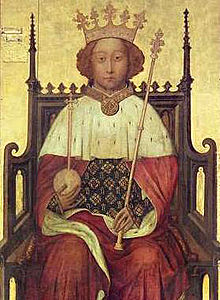
220px-Richard_II_King_of_England
Richard II

Sometime in late 1370 or early 1371 the young family suffered a heartbreaking tragedy. Little Edward of Angoulême died of bubonic plague. He was buried in Bordeaux, his funeral arranged by John of Gaunt and attended by all the great lords of Gascony.

Shortly afterwards, the remaining family returned to England, as reported by the chronicler Walsingham:

“When he had done this, Prince Edward hurried to return to England, as much because of the infirmities which troubled him, as because of lack of money. Therefore, at the beginning of January [1371], with his wife and small son Richard, and with  his household following behind, he reached Plymouth.”

The Black Prince’s health had been destroyed by a lifetime of campaigning. He returned to England a virtual invalid and died in 1376. Left a widow for a second time, Joan still had custody of her young son and was in charge of Richard’s education until his accession to the throne.

Edward III died in 1377, leaving the throne to 10-year-old Richard of Bordeaux. In his will he gave to Joan, Princess of Wales, a thousand marks and the free restitution of jewels she had pledged to him.

Despite her marital history, and a reputation for extravagance – she was said to have spent £200 on a set of jewelled buttons – Joan was loved by the English people. It was with her that John of Gaunt sought refuge following the sacking of his Savoy Palace in 1376, when the people were discontented with his rule.

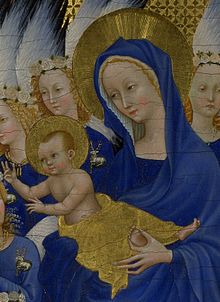
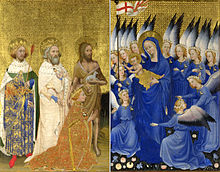
Wilton_diptych
The Wilton Diptych

Joan was seen as a calming influence of her son, Richard II, and was by his side during the dangerous days of the Peasant’s Revolt of 1381; she sheltered in the Tower of London and rode in a whirligig to accompany her 13-year-old son to meet with the rebels at Mile End.

In 1385 Joan’s son, John Holland, while campaigning in Scotland, killed Ralph Stafford, son of the second Earl of Stafford, in a quarrel. He fled to sanctuary at the shrine of St John of Beverley, but was condemned to death. Joan pleaded with Richard for days, begging him to pardon his half-brother. She died at Wallingford Castle, on or shortly after 7 August 1385. The, when she made her will. King pardoned his half-brother the following day.

Although the Edward, the Black Prince, had built a chantry chapel for his wife, at Canterbury Cathedral, with ceiling bosses of her face, Joan was not buried at Canterbury with the Black Prince, but at the Greyfriars at Stamford in Lincolnshire, beside her first husband, Sir Thomas Holland. Unfortunately, nothing remains of the abbey beyond a gatehouse. Thomas and Joan’s tombs are lost.

*

Pictures taken from Wikipedia.

*

Sources: The Perfect King, the Life of Edward III by Ian Mortimer; The Life and Time of Edward III by Paul Johnson; The Reign of Edward III  by WM Ormrod; The Mammoth Book of British kings & Queens by Mike Ashley; Britain’s’ Royal Families, the Complete Genealogy by Alison Weir; Brewer’s British Royalty by David Williamson; The Plantagenets, the Kings Who Made Britain by Dan Jones; englishmonarchs.co.uk; The Oxford Companion to British History edited by John Cannon; Chronicles of the Age of Chivalry Edited by Elizabeth Hallam; The Black Prince by Michael Jones.

*

My Books

Signed, dedicated copies of all my books are available through my online store.

Out now: Scotland’s Medieval Queens

Books by Sharon Bennett Connolly

Scotland’s history is dramatic, violent and bloody. Being England’s northern neighbour has never been easy. Scotland’s queens have had to deal with war, murder, imprisonment, political rivalries and open betrayal. They have loved and lost, raised kings and queens, ruled and died for Scotland. From St Margaret, who became one of the patron saints of Scotland, to Elizabeth de Burgh and the dramatic story of the Scottish Wars of Independence, to the love story and tragedy of Joan Beaufort, to Margaret of Denmark and the dawn of the Renaissance, Scotland’s Medieval Queens have seen it all. This is the story of Scotland through their eyes.

Scotland’s Medieval Queens gives a thorough grounding in the history of the women who ruled Scotland at the side of its kings, often in the shadows, but just as interesting in their lives beyond the spotlight. It’s not a subject that has been widely covered, and Sharon is a pioneer in bringing that information into accessible history.’ Elizabeth Chadwick (New York Times bestselling author)

Available now from Amazon and Pen and Sword Books

Also by Sharon Bennett Connolly:

Books by Sharon Bennett Connolly

Heroines of the Tudor World tells the stories of the most remarkable women from European history in the time of the Tudor dynasty, 1485-1603. These are the women who ruled, the women who founded dynasties, the women who fought for religious freedom, their families and love. Heroines of the Tudor World is now available from Amberley Publishing and Amazon UK. Women of the Anarchy demonstrates how Empress Matilda and Matilda of Boulogne, unable to wield a sword themselves, were prime movers in this time of conflict and lawlessness. It shows how their strengths, weaknesses, and personal ambitions swung the fortunes of war one way – and then the other. Available from Bookshop.orgAmberley Publishing and Amazon UKKing John’s Right-Hand Lady: The Story of Nicholaa de la Haye is the story of a truly remarkable lady, the hereditary constable of Lincoln Castle and the first woman in England to be appointed sheriff in her own right. Available from all good bookshops Pen & Sword Booksbookshop.org and Amazon

Books by Sharon Bennett Connolly

Defenders of the Norman Crown: The Rise and Fall of the Warenne Earls of Surrey tells the fascinating story of the Warenne dynasty, from its origins in Normandy, through the Conquest, Magna Carta, the wars and marriages that led to its ultimate demise in the reign of Edward III. Available from Pen & Sword BooksAmazon in the UK and US, and Bookshop.orgLadies of Magna Carta: Women of Influence in Thirteenth Century England looks into the relationships of the various noble families of the 13th century, and how they were affected by the Barons’ Wars, Magna Carta and its aftermath; the bonds that were formed and those that were broken. It is now available in paperback and hardback from Pen & SwordAmazon, and Bookshop.orgHeroines of the Medieval World tells the stories of some of the most remarkable women from Medieval history, from Eleanor of Aquitaine to Julian of Norwich. Available now from Amberley Publishing and Amazon, and Bookshop.orgSilk and the Sword: The Women of the Norman Conquest traces the fortunes of the women who had a significant role to play in the momentous events of 1066. Available now from Amazon,  Amberley Publishing, and Bookshop.org.

Alternate Endings: An anthology of historical fiction short stories including Long Live the King… which is my take what might have happened had King John not died in October 1216. Available in paperback and kindle from Amazon.

Podcast:

A Slice of Medieval

Have a listen to the A Slice of Medieval podcast, which I co-host with Historical fiction novelist Derek Birks. Derek and I welcome guests, such as Bernard Cornwell and Michael Jecks, and discuss a wide range of topics in medieval history, from significant events to the personalities involved. 

Every episode is also now available on YouTube.

*

Signed and dedicated copies of all my books are available through my online store.

For forthcoming online and in-person talks, please check out my Events Page.

You can be the first to read new articles by clicking the ‘Follow’ button, liking our Facebook page or joining me on TwitterThreadsBluesky and Instagram.

©Sharon Bennett Connolly 2015 FRHistS

The Mother of the House of York

200px-Arms_of_Philippa_of_Clarence,_5th_Countess_of_Ulster.svg
Arms of Philippa of Clarence

Princess Philippa of Clarence was born at Eltham Palace in Kent on the 16th August 1355.  She was named after her grandmother, Philippa of Hainault, queen of Edward III, who was one of her Godparents.

The first grandchild of Edward III she was the only child of Lionel of Antwerp, Duke of Clarence, and his 1st wife, Elizabeth de Burgh. Lionel was the 1st of Edward and Philippa’s children to marry.

Lionel was the 3rd son of Edward and Philippa, but the 2nd to survive childhood. Born in 1338, he was married to Elizabeth de Burgh in the Tower of London on the 9th September 1342. Lionel was almost 4 years old and his bride was 6 years older, born in 1332. Elizabeth was the daughter and heiress of William de Burgh, 3rd Earl of Ulster, who had died the year after her birth. It seems the couple lived together as husband and wife from 1352, when Lionel was 14 and Elizabeth 20. Lionel became Earl of Ulster by right of his wife and took possession of vast estates in Ireland and the Honour of Clare, in Suffolk; from which he was created Duke of Clarence by Parliament on 13th November 1362.

220px-LionelDukeOfClarenceAtWestminster
Lionel Duke of Clarence

Philippa lost her mother when she was just 8 years old. Elizabeth died in Dublin in December 1363, she was buried  at Clare Priory in Suffolk. Lionel was married again in May 1368, in Milan, to Violante Visconti, daughter of the Lord of Milan. He died at Alba just 5 months after the wedding, in October 1368, and was buried at Pavia; his body was later reinterred to lie beside Elizabeth at Clare Priory in Suffolk.

The dukedom of Clarence became extinct on Lionel’s death, but the earldom of Ulster and Honour of Clare passed to Philippa, his only daughter and heiress.

Although an orphan at the tender age of 13, Philippa’s future had been settled even by the time of her mother’s death in 1363. When only in her 4th year she was married, at the Queen’s Chapel in Reading, in February 1359, to 7-year-old Edmund Mortimer. Edmund was the great-grandson of Roger Mortimer, 1st Earl of March and lover of Edward II’s queen, and Edward III’s mother, Isabella of France.

Mortimer had been executed on Edward III’s orders in 1330 and the marriage was viewed as a reconciliation with the Mortimer family, powerful lords on the Welsh Marches. The children’s wedding was also the 1st in a string of royal marriages. Philippa was married before any of her aunts and uncles; but weddings for her uncle John of Gaunt to Blanche of Lancaster  and her aunt Margaret to John Hastings, 2nd Earl of Pembroke followed in May the same year.

250px-Arms_of_the_House_of_Mortimer.svg
Arms of the House of Mortimer

The marriage alliances were all part of Edward III’s policy to provide for his large brood of children and tie the great baronial families of the kingdom to the crown, by bringing them into the Royal family.

Edmund Mortimer succeeded to his father’s earldom as the 3rd Earl of March in the year after the marriage and the couple spent their time between properties in England, Wales and Ireland.

Their 1st child was born when Philippa was 15; she gave birth to a daughter, Elizabeth, at Usk in Monmouthshire, on 12th February 1371. 3 more children followed; Roger born at Usk on 11th April 1374, Philippa, born at Ludlow in Shropshire on 21st November 1375 and finally Edmund, who was born at Ludlow on 9th November 1377.

Marriage to Philippa had brought her husband power and influence. Through his steward, Peter de la Mare, he was instrumental in the Good Parliament of 1376, which argued against the influence of Edward III’s lover, Alice Perrers, and her friends, on the government of the kingdom. He spoke up for royal legitimacy and, using similar language to that used against his grandfather, Roger Mortimer, decried the influence an adulterous affair was having  on the dignity of the crown.

220px-Ludlow_Castle_from_Whitcliffe,_2011
Ludlow Castle, Shropshire

Following Edward III’s death in 1377, until her own death 6 months later, Philippa was, technically, heiress presumptive to the crown of her cousin, Richard II. However, in a supplementary document to his will, Edward III had practically disinherited his eldest granddaughter. He settled the inheritance of the throne on his grandson, Richard, son of his eldest son, the Black Prince and then, in turn, starting with John of Gaunt, on his surviving sons and their sons.

Edward had thus attempted to destroy any claim Philippa might have had to the throne whilst at the same time, revoking the royal status of the Mortimer earls of March.

Although there appear to be several death dates for Philippa, the most likely is that she died as a result of complications following Edmund’s birth, as she had made a will in November 1377, suggesting she was preparing for death. She passed away on, or shortly before, 7th January 1378 and was buried at Wigmore, Herefordshire, the burial-place of the Mortimers.

Edmund’s star, however, continued to rise and he was appointed Lieutenant of Ireland by Richard II on 22nd October 1380.  He died at Cork on 26th or 27th December 1381 and his body was brought back to Wigmore for burial. He was succeeded as 4th Earl of March by his eldest son, Roger; who had succeeded Philippa as Earl of Ulster on her death.

220px-Harry_Hotspur_Percy
Sir Henry “Hotspur” Percy and Elizabeth Mortimer

Roger spent many years in wardship following his father’s death. He was courageous, but had a reputation for religious and moral laxity. He was killed in Ireland in 1398, while acting as the king’s Lieutenant. It is possible that, at some point, he was named heir to the throne by Richard II, although there is considerable doubt in this.

Of Philippa and Edmund’s other children Elizabeth married Sir Henry “Hotspur” Percy sometime before May 1380. They had 2 children, but he was killed at the Battle of Shrewsbury in 1403. Elizabeth then married Thomas, 1st Baron Camoys, with whom she had a son who died young. Elizabeth died on 20th April 1417 and was buried at Trotton in Sussex, with her 2nd husband.

Philippa’s daughter and namesake, Philippa, married John Hastings, 3rd Earl of Pembroke, son of the Earl of Pembroke who had married Edward III’s daughter, Margaret. Following his death in 1389, she married Richard FitzAlan, 11th Earl of Arundel, who was executed in 1397. Her 3rd marriage was to Thomas Poynings, 5th Baron St John of Basing, around November 1399. She died in 1400 or 1401 and was buried at Boxgrove Priory in Sussex.

220px-Richard_Plantagenet,_3rd_Duke_of_York
Richard, Duke of York

Edmund’s namesake, Philippa and Edmund’s youngest son was married in about 1402 to Katherine, the daughter of Owen Glendower. They had several children, but all died young. Edmund himself died sometime between 1409 and 1411.

Philippa’s grandson, Roger’s son, Edmund, succeeded his father as Earl of March and Ulster; he became the king’s ward following his father’s death and, following the usurpation he was kept in Henry IV’s family circle.

Edmund seems to have suffered from a lack of ambition and when some barons tried to place him on the throne in 1415, it was Edmund himself who revealed the Southampton Plot to Henry V.

Edmund died of plague in Ireland in January 1425, but it is his sister, Anne Mortimer, who had been married to Richard of Conisbrough, that Philippa’s claim to the throne was passed to Anne and Richard’s son, Richard, Duke of York; thus laying the foundations for the Wars of the Roses and the accession of Edward IV and, later, his brother, Richard III.

*

Pictures taken from Wikipedia.

*

Sources: The Perfect King, the Life of Edward III by Ian Mortimer; The Life and Time of Edward III by Paul Johnson; The Reign of Edward III  by WM Ormrod; The Mammoth Book of British kings & Queens by Mike Ashley; Britain’s’ Royal Families, the Complete Genealogy by Alison Weir; Brewer’s British Royalty by David Williamson; The Plantagenets, the Kings Who Made Britain by Dan Jones; mortimerhistorysociety.org.uk.

*

My books:

Signed, dedicated copies of all my books are available through my online store.

Out now: Scotland’s Medieval Queens

Books by Sharon Bennett Connolly

Scotland’s history is dramatic, violent and bloody. Being England’s northern neighbour has never been easy. Scotland’s queens have had to deal with war, murder, imprisonment, political rivalries and open betrayal. They have loved and lost, raised kings and queens, ruled and died for Scotland. From St Margaret, who became one of the patron saints of Scotland, to Elizabeth de Burgh and the dramatic story of the Scottish Wars of Independence, to the love story and tragedy of Joan Beaufort, to Margaret of Denmark and the dawn of the Renaissance, Scotland’s Medieval Queens have seen it all. This is the story of Scotland through their eyes.

Scotland’s Medieval Queens gives a thorough grounding in the history of the women who ruled Scotland at the side of its kings, often in the shadows, but just as interesting in their lives beyond the spotlight. It’s not a subject that has been widely covered, and Sharon is a pioneer in bringing that information into accessible history.’ Elizabeth Chadwick (New York Times bestselling author)

Available now from Amazon and Pen and Sword Books

Also by Sharon Bennett Connolly:

Books by Sharon Bennett Connolly

Heroines of the Tudor World tells the stories of the most remarkable women from European history in the time of the Tudor dynasty, 1485-1603. These are the women who ruled, the women who founded dynasties, the women who fought for religious freedom, their families and love. Heroines of the Tudor World is now available from Amberley Publishing and Amazon UK. Women of the Anarchy demonstrates how Empress Matilda and Matilda of Boulogne, unable to wield a sword themselves, were prime movers in this time of conflict and lawlessness. It shows how their strengths, weaknesses, and personal ambitions swung the fortunes of war one way – and then the other. Available from Bookshop.orgAmberley Publishing and Amazon UKKing John’s Right-Hand Lady: The Story of Nicholaa de la Haye is the story of a truly remarkable lady, the hereditary constable of Lincoln Castle and the first woman in England to be appointed sheriff in her own right. Available from all good bookshops Pen & Sword Booksbookshop.org and Amazon

Royal Historical Society

Defenders of the Norman Crown: The Rise and Fall of the Warenne Earls of Surrey tells the fascinating story of the Warenne dynasty, from its origins in Normandy, through the Conquest, Magna Carta, the wars and marriages that led to its ultimate demise in the reign of Edward III. Available from Pen & Sword BooksAmazon in the UK and US, and Bookshop.orgLadies of Magna Carta: Women of Influence in Thirteenth Century England looks into the relationships of the various noble families of the 13th century, and how they were affected by the Barons’ Wars, Magna Carta and its aftermath; the bonds that were formed and those that were broken. It is now available in paperback and hardback from Pen & SwordAmazon, and Bookshop.orgHeroines of the Medieval World tells the stories of some of the most remarkable women from Medieval history, from Eleanor of Aquitaine to Julian of Norwich. Available now from Amberley Publishing and Amazon, and Bookshop.orgSilk and the Sword: The Women of the Norman Conquest traces the fortunes of the women who had a significant role to play in the momentous events of 1066. Available now from Amazon,  Amberley Publishing, and Bookshop.org.

Alternate Endings: An anthology of historical fiction short stories including Long Live the King… which is my take what might have happened had King John not died in October 1216. Available in paperback and kindle from Amazon.

Podcast:

A Slice of Medieval

Have a listen to the A Slice of Medieval podcast, which I co-host with Historical fiction novelist Derek Birks. Derek and I welcome guests, such as Bernard Cornwell and Michael Jecks, and discuss a wide range of topics in medieval history, from significant events to the personalities involved. 

Every episode is also now available on YouTube.

*

Don’t forget! Signed and dedicated copies of all my books are available through my online store.

For forthcoming online and in-person talks, please check out my Events Page.

You can be the first to read new articles by clicking the ‘Follow’ button, liking our Facebook page or joining me on TwitterThreadsBluesky and Instagram.

*

©2015 Sharon Bennett Connolly FRHistS
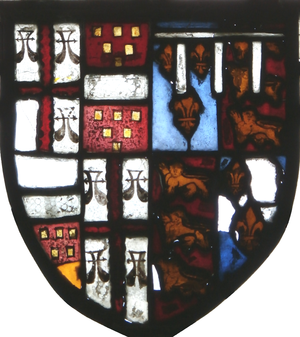
Blanche, Duchess of Lancaster

240px-Marriage_of_blanche_of_lancster_and_john_of_gaunt_1359
The wedding of Blanche of Lancaster and John of Gaunt, painted by Horace Wright, 1914

Blanche of Lancaster is one of those ladies of history more famous because of her children and the antics of her husband. Blanche’s life was pitifully short, but her legacy would see the unravelling of peace in the 15th century, and the decades of civil war called the Wars of the Roses.

Blanche of Lancaster was born around 25 March 1345, at Bolingbroke Castle in Lincolnshire. She was the second and youngest daughter of illustrious parents; Henry of Grosmont, Duke of Lancaster and Isabella de Beaumont. Henry of Grosmont was the grandson of Edmund Crouchback and a great-grandson of Henry III. Isabella was the daughter of Henry, 1st Baron de Beaumont and Earl of Buchan by right of his wife, Alice Comyn.

225px-Portrait_of_Henry,_Duke_of_Lancaster_-_William_Bruges's_Garter_Book_(c.1440-1450),_f.8_-_BL_Stowe_MS_594_(cropped)
Henry of Grosmont, Duke of Lancaster

Blanche had only one sibling, her older sister, Matilda, who was married, first to Ralph de Stafford and later to William V, Duke of Bavaria, Count of Holland, Hainault and Zeeland. Blanche herself was betrothed to John de Segrave as a child, but this seems to have been set aside soon afterwards.

By the late 1350s Blanche was a part of King Edward III’s plans to provide for his growing number of sons. As one of the country’s richest heiresses, Blanche was chosen as the bride for Edward’s 3rd surviving son, John of Gaunt. Blanche and John were 3rd cousins, being great-great-grandchildren of Henry III.

The couple was married on the 19 May 1359 at Reading Abbey in Berkshire. Blanche had just turned 14 and John was 19 years old.

In 1361 Blanche suffered a double tragedy; her father died of bubonic plague in Leicester in March and her mother succumbed to the same disease before the end of the year. While her sister inherited the earldoms of Leicester and Lincoln, John of Gaunt inherited those of Derby and Lancaster by right of his wife; however, the title of Duke of Lancaster became extinct with Henry of Grosmont’s death.

200px-Johnofgaunt
John of Gaunt, Duke of Lancaster

By April 1362 Blanche’s sister had also succumbed to the Black Death; there were some rumours of poison, but this seems unlikely. Maud had died childless and so Blanche inherited the remainder of her father’s estates. Blanche – and by extension John of Gaunt – now added the earldoms of Leicester and Lincoln to their vast holdings. John was invested with the title of Duke of Lancaster and was now the most powerful magnate in England; holding more than 30 castles, his lands and possessions were second only to those of the king.

Blanche herself was pregnant for most of her married life, giving birth to 7 children between 1360 and 1368. 3 sons, John, Edward and a second John, and a daughter, Isabella, died young. Two daughters and a son did, however, survive into adulthood.

Their eldest daughter, Philippa, was born on 31 March 1360  and would marry King John I of Portugal. Philippa was the mother of 8 children, known as the ‘Illustrious Generation’ in Portugal, including Edward, King of Portugal, Prince Henry the Navigator and Ferdinand the Holy Prince. Philippa herself would die of plague in 1415.

History....the Interesting Bits
Tomb of Henry IV and Joanna of Navarre, Canterbury Cathedral

A second daughter, Elizabeth, was born around 1363 at Burford, Shropshire. Although her first marriage to John Hastings, 3rd Earl of Pembroke, was annulled, her second marriage, to John Holland, 1st Duke of Exeter, would end with his execution for treason in 1400; they had 5 children. Elizabeth would marry for a 3rd time to John Cornwall, 1st Baron Fanhope, with whom she had a daughter before she died in 1426.

Blanche and John’s last surviving child, Henry of Bolingbroke, was born at Bolingbroke Castle in 1367, probably on 15 April. Having been exiled in the later years of the reign of his cousin, Richard II, Henry would return to England following the death of his father and confiscation of his inheritance by the king. Richard was forced to abdicate and Henry succeeded to the throne as King Henry IV.

300px-Old-Bolingbroke-Castle
Bolingbroke Castle, Lincolnshire, where Blanche of Lancaster was born

Henry’s first marriage, to Mary de Bohun, produced 7 children, including the future King Henry V; his second marriage was to Joanna of Navarre, Duchess of Brittany. Henry IV died on 20 March 1413 and was buried at Canterbury Cathedral; Joanna would be buried beside him following her own death in 1437.

By 1365 Blanche had taken Katherine Swynford into her household. Katherine was the wife of one of John of Gaunt’s Lincolnshire knights. Moreover, John was godfather to their daughter, Blanche, who was named after the Duchess. Young Blanche Swynford was lodged in the same chambers as the Duchess’s daughters, Philippa and Elizabeth and accorded the same luxuries as the princesses.

Having lost her parents and sister to the Black Death it is not surprising that Blanche was fearful of the disease. In the summer of 1368 she is said to have moved her family away from the city, to Bolingbroke Castle to escape the pestilence.

240px-Wenceslas_Hollar_-_John_of_Gaunt_(monument)
1658 etching by Wenceslas Hollar, of the tomb of John of Gaunt and Blanche of Lancaster

There seems to be some doubt over the year of her death – some sources say 1368, some 1369 – and even the nature of it. One theory is that Blanche succumbed to the bubonic plague, the disease she most feared, in 1369. As a daughter, Isabella, who died young, was born in 1368 some have suggested Blanche died in childbirth. Recent research by Amy Licence has discovered that Blanche died at Tutbury on 12 September, 1368, more likely from the complications of childbirth than from the plague. Her husband was by her side when she died and a letter has come to light in which John arranged to have prayers said for the soul of his lost duchess.¹

Blanche was buried in Old St Paul’s Cathedral, London; where John of Gaunt arranged for a splendid alabaster tomb and annual commemorations for the rest of his life. And despite 2 subsequent marriages, John of Gaunt would be interred next to Blanche following his own death in 1399. The tomb was lost when the cathedral was destroyed during the Great Fire of London in 1666.

Blanche is one of the few ladies of the 14th century of whom we have several descriptions. The Chronicler Froissart noted that she was “jone et jolie” – young and pretty.

The best description, however, is from Geoffrey Chaucer, Katherine Swynford’s brother-in-law, who was commissioned by John of Gaunt to write The Book of the Duchess, also known as The Deth of Blaunche. The poem is said to depict Gaunt’s mourning for his wife, in the tale of a Knight grieving for his lost love.

220px-The_Dreame_of_Chaucer_Book_of_the_Duchess
Geoffrey Chaucer’s ‘The Book of the Duchess’

Chaucer describes Blanche’s neck (yes, her neck) as “whyt, smothe, streght and flat. Naming the heroine “White”, he goes on to say she is “rody, fresh and lyvely hewed”.  Blanche (White) was “bothe fair and bright” and Nature’s “cheef patron of beautee”.

Despite his marrying Constance of Castile just 2 years later, and his eventual marriage to his mistress, Katherine Swynford, being singled out as one of the great love affairs of the age, it was said that Blanche was the love of his life.

Chaucer’s poem and the lavish tomb and commemorations are said to highlight Gaunt’s love for his first wife; the fact he was eventually buried beside her has been seen, by many, as the final proof of this love.

*

Footnote: ¹Red Roses: From Blanche of Gaunt to Margaret Beaufort by Amy Licence.

*

Photograph of the tomb of Henry IV and Joanna of Navarre are © Sharon Bennett Connolly, 2015. All other pictures are courtesy of Wikipedia.

*

Sources: Brewer’s British Royalty by David Williamson; Red Roses: From Blanche of Gaunt to Margaret Beaufort by Amy Licence; History Today Companion to British History Edited by Juliet Gardiner & Neil Wenborn; The mammoth Book of British kings & Queen by Mike Ashley; Britain’s Royal Families, the Complete Genealogy by Alison Weir; The Life and Times of Edward III by paul Johnson; The Perfect King, the Life of Edward III by Ian Mortimer; Chronicles of the Age of Chivalry Edited by Elizabeth Hallam; unofficialroyalty.com; katherineswynfordsociety.org.uk; The Reign of Edward III by WM Ormrod; The Plantagenets, the kings Who Made Britain by Dan Jones; englishmonarchs.co.uk; oxforddnb.com.

*

My Books

Signed, dedicated copies of all my books are available through my online bookshop.

Out now: Scotland’s Medieval Queens

Books by Sharon Bennett Connolly

Scotland’s history is dramatic, violent and bloody. Being England’s northern neighbour has never been easy. Scotland’s queens have had to deal with war, murder, imprisonment, political rivalries and open betrayal. They have loved and lost, raised kings and queens, ruled and died for Scotland. From St Margaret, who became one of the patron saints of Scotland, to Elizabeth de Burgh and the dramatic story of the Scottish Wars of Independence, to the love story and tragedy of Joan Beaufort, to Margaret of Denmark and the dawn of the Renaissance, Scotland’s Medieval Queens have seen it all. This is the story of Scotland through their eyes.

Scotland’s Medieval Queens gives a thorough grounding in the history of the women who ruled Scotland at the side of its kings, often in the shadows, but just as interesting in their lives beyond the spotlight. It’s not a subject that has been widely covered, and Sharon is a pioneer in bringing that information into accessible history.’ Elizabeth Chadwick (New York Times bestselling author)

Available now from Amazon and Pen and Sword Books

Also by Sharon Bennett Connolly:

Books by Sharon Bennett Connolly

Heroines of the Tudor World tells the stories of the most remarkable women from European history in the time of the Tudor dynasty, 1485-1603. These are the women who ruled, the women who founded dynasties, the women who fought for religious freedom, their families and love. Heroines of the Tudor World is now available for pre-order from Amberley Publishing and Amazon UK. Women of the Anarchy demonstrates how Empress Matilda and Matilda of Boulogne, unable to wield a sword themselves, were prime movers in this time of conflict and lawlessness. It shows how their strengths, weaknesses, and personal ambitions swung the fortunes of war one way – and then the other. Available from Bookshop.orgAmberley Publishing and Amazon UKKing John’s Right-Hand Lady: The Story of Nicholaa de la Haye is the story of a truly remarkable lady, the hereditary constable of Lincoln Castle and the first woman in England to be appointed sheriff in her own right. Available from all good bookshops Pen & Sword Booksbookshop.org and Amazon

History...the Interesting Bits

Defenders of the Norman Crown: The Rise and Fall of the Warenne Earls of Surrey tells the fascinating story of the Warenne dynasty, from its origins in Normandy, through the Conquest, Magna Carta, the wars and marriages that led to its ultimate demise in the reign of Edward III. Available from Pen & Sword BooksAmazon in the UK and US, and Bookshop.orgLadies of Magna Carta: Women of Influence in Thirteenth Century England looks into the relationships of the various noble families of the 13th century, and how they were affected by the Barons’ Wars, Magna Carta and its aftermath; the bonds that were formed and those that were broken. It is now available in paperback and hardback from Pen & SwordAmazon, and Bookshop.orgHeroines of the Medieval World tells the stories of some of the most remarkable women from Medieval history, from Eleanor of Aquitaine to Julian of Norwich. Available now from Amberley Publishing and Amazon, and Bookshop.orgSilk and the Sword: The Women of the Norman Conquest traces the fortunes of the women who had a significant role to play in the momentous events of 1066. Available now from Amazon,  Amberley Publishing, and Bookshop.org.

Alternate Endings: An anthology of historical fiction short stories including Long Live the King… which is my take what might have happened had King John not died in October 1216. Available in paperback and kindle from Amazon.

Podcast:

A Slice of Medieval

Have a listen to the A Slice of Medieval podcast, which I co-host with Historical fiction novelist Derek Birks. Derek and I welcome guests, such as Bernard Cornwell, Helen Castor and Michael Jecks, and discuss a wide range of topics in medieval history, from significant events to the personalities involved. In a recent episode, Kathryn Warner joined us to chat about Blanche’s husband, John of Gaunt

Every episode is also now available on YouTube.

*

Don’t forget! Signed and dedicated copies of all my books are available through my online bookshop.

For forthcoming online and in-person talks, please check out my Events Page.

You can be the first to read new articles by clicking the ‘Follow’ button, liking our Facebook page or joining me on TwitterThreadsBluesky and Instagram.


©2015 Sharon Bennett Connolly FRHistS

Alice Perrers, Mistress of the King

220px-Alice_Perrers_and_Edward_III
Alice Perrers and Edward III, painted by Ford Maddox Brown

Alice Perrers is one royal mistress who did not fare as well as her contemporary, Katherine Swynford. Whereas Katherine eventually married her prince; Alice was not so lucky, despite the fact she had been mistress of the King.

Although it is impossible to find any definite date, it seems likely that Alice Perrers was born in the late 1340s. For many years she was believed to be the daughter of Sir Richard Perrers, a prominent Hertfordshire landowner who had been both sheriff and Member of Parliament for his county. However, recent research has suggested that she is the daughter of either William Salisbury, a goldsmith, or one of his possible kinsmen, John or Gilbert Salisbury. Her mother was likely the Joan Salisbury involved in a joint purchase of a messuage in Canterbury with Alice Perrers and others in 1371. A John Salisbury was identified as her brother in a petition of 1377 or 1378 from John Cobham seeking payment of debts. Her first husband was Janyn Perrers, who may had been apprenticed to William Salisbury (Alice’s possible father or kinsman). He died in 1361 or 1362.1

The majority of what we know of Alice comes from the blatantly hostile St Albans Chronicle. The Chronicler claimed Alice was the daughter of an Essex tiler and a former domestic servant, suggesting she made her way to court by humble channels. She was described as ‘extremely ugly’ and ruling the king through her clever tongue. The king was certainly known to like clever and attractive women.

Sometime in the early 1360s – and certainly before 1366 – Alice joined the household of Queen Philippa of Hainault and started her affair with the king, Edward III. Alice would have been in her mid-to-late teens. It isn’t clear whether Alice joined the Queen’s household before or after the affair started; it may be that Edward placed her there, so she was close by. It does appear that the ailing queen acquiesced to the situation, even if she did not wholeheartedly approve.

Philippa_of_Hainault-mini
Queen Philippa of Hainault

Before his relationship with Alice, there seems to have been few, if any, extramarital affairs on Edward’s part; there are certainly no suggestions of illegitimate children as had happened with previous monarchs. If Edward had affairs they had been of short duration and incredibly discreet. This makes his relationship with Alice Perrers all the more surprising.

By 1366 Alice had been installed as a lady of the queen’s bedchamber. In 1364/5, she had left court to give birth to Edward’s first illegitimate child. The boy, Sir John Southeray,  would later marry Maud Percy, a sister of the future Earl of Northumberland. Two daughters were to follow, Joan and Jane, who were still young at the time of the king’s death in 1377. Jane later married Richard Northland and Joan married Robert Skerne, a lawyer.

Whilst in the queen’s household Edward granted Alice 2 tuns of wine; he also granted her wardships, land and jewels. Although the king gave gifts to all the queen’s ladies, those to Alice were particularly extravagant.

Following the queen’s death in 1369, Alice rose to greater prominence, she dominated the court. A devastated Edward leaned heavily on her considerable abilities; his own decline accelerated by his loss.

220px-Edward_III_of_England_(Order_of_the_Garter)
Edward III

As a result Alice was blamed for the setbacks and financial scandals of the last years of Edward’s reign. She was accused of being scheming and grasping, and making the king’s final years a misery.  The monastic chronicler, Walsingham, believed she had bewitched the king in order to secure his affections.

Whereas Queen Philippa had remained in the domestic environment, Alice Perrers had greater political ambitions. The court was dominated by a ‘narrow, exclusive and unpopular clique’2. Along with  Lord Latimer and Lord Neville, Edward’s chamberlain and steward respectively, Alice enjoyed almost total control of royal patronage; she became the king’s principal advisor and advanced her own friends into positions of influence.

Rumours arose that Edward had given Alice some of Queen Philippa’s jewels. It seems more likely that the jewels were a part of a collection previously given by the queen to Euphemia Hasleworth, rather than a part of the queen’s personal collection, but it further tarnished Alice’s reputation.The fact the gifts were recorded in the patent rolls suggests they were given on Edward’s personal order, rather than through Alice’s machinations.

By the early 1370s Alice had established her domination of the court. In 1371 she was granted the valuable manor of Wendover.

In 1375 a grand tournament was held at Smithfield in her honour. Alice rode from the Tower, through the city, dressed as the Lady of the Sun. Ladies led knights on silver chains.

In the early 1370s Alice had started looking to her future. The king was old and she was very aware that, without his protection she was likely to be thrown to the wolves. With this in mind she contracted a secret marriage to William Windsor and persuaded the king to appoint Windsor his lieutenant in Ireland, despite his record of previous maladministration of that same country.

240px-StAlbansCathedral-PS02
The abbey of St Albans; home to the Chronicler, Walsingham

By 1376, shortly after the death of the Black Prince – Edward’s eldest son and heir – parliament took the lead. Known as the Good Parliament and having been called to advance the king subsidies they demanded their own petitions were answered first.

According to Walsingham: “the Parliamentary knights complained bitterly about one Alice Perrers, a wanton woman who was all too familiar with Edward III. They accused her of numerous misdeeds, performed by her and her friends in the realm. She far overstepped the bounds of feminine conduct: forgetful of her sex and her weakness, now besieging the king’s justices, now stationing herself among the doctors in the ecclesiastical courts, she did not fear to plead in defence of her cause and even to make illegal demands. As a result of the scandal and great shame which this brought on King Edward, not only in this kingdom but also in foreign lands, the knights sought her banishment from his side.3

The main accusations, voiced by Peter de la Mare, against Alice were that she had taken thousands of pounds from the royal purse and that she was notorious for the use of maintenance – protecting those accused in the king’s courts; Parliament stipulated that she and all women were prohibited from doing this. It was also during the parliament that Alice’s secret marriage to William Windsor was revealed. Assuming that, as a married couple, they had slept together this then made the king guilty of adultery.

220px-Wife-of-Bath-ms
Chaucer’s The Wife of Bath

Edward III swore an oath by the Virgin Mary that he did not know she was married. William Windsor was summoned from Ireland to be prosecuted. Edward is said to have bought a chest and locked in it the accusations against Windsor, who he saw as the guilty party.

Edward begged for Alice to be shown mercy. She avoided prison and further prosecution on condition she no longer saw the king. If she broke the conditions, the punishment would be perpetual exile.

However, once parliament had disbanded John of Gaunt, as virtual ruler of the kingdom, recalled all those banished. Edward “recalled his mistress, Alice Perrers, to his company; she had been legally banished from his presence, on account of the scandal and shame which came from her wantonness. This was against the oath by which Alice had bound herself and which the king himself had ratified…4

Alice stayed with the king until his death.

Edward III died, probably from a stroke, on 21st June 1377. According to the St Albans Chronicler he was alone, save for his confessor. Walsingham went so far as to accuse Alice of stripping the rings from the king’s fingers; although she was never charged with the offence.

Following the king’s death, Alice’s sentence of banishment was reconfirmed, only to be reversed in 1379 at the request of her husband. William Windsor himself died in 1384 and Alice seems to have spent much of her final years in litigation over his will; Windsor left his estate to his 3 sisters.

250px-Upminster_021
Church of St Lawrence, Upminster

As the king’s mistress Alice had dealt in property, and used her influence to guarantee a future income. She remained wealthy and was still litigating when she died in 1400. She was buried in the Church of St Lawrence, Upminster; her grave now lost to history.

Alice Perrers was the first king’s mistress to influence the courts of justice and the government of the kingdom. She had met the king when relatively young and naive; but was intelligent enough to realise the advantages and implications of her liaison with the king.

However, she was held up as an example of how a woman shouldn’t behave. She is thought to have been the inspiration for Chaucer’s The Wife of Bath.

*

Alice Perrers’ story – and that of her daughters – appears in greater detail in my latest book, Princesses of the Later Middle Ages: Royal Daughters of the Plantagenets 

Footnotes: ¹ C. Given-Wilson, Oxforddnb.com; 2WM Ormrod, The Reign of Edward III; 3&4 Thomas Walsingham, St Albans Chronicle

Images courtesy of Wikipedia.

*

Sources: The Perfect King, the Life of Edward III by Ian Mortimer; The Life and Time of Edward III by Paul Johnson; The Reign of Edward III  by WM Ormrod; The Oxford Companion to British History Edited by John Cannon; The Mammoth Book of British kings & Queens by Mike Ashley; The History Today Companion to British History Edited by Juliet Gardiner & Neil Wenborn; Britain’s’ Royal Families, the Complete Genealogy by Alison Weir; Brewer’s British Royalty by David Williamson; Chronicles of the Age of Chivalry Edited by Elizabeth Hallam; Kings & Queens of Britain by Joyce Marlow; The Plantagenets, the kings Who Made Britain by Dan Jones; britannica.com/biography/Alice-Perrers; historyinanhour.com; anneobrienbooks.com.

*

My books

Signed, dedicated copies of all my books are available through my online bookshop or the Contact Me page.

New releases in 2026:

New Hardbacks

Books by Sharon Bennett Connolly

‘My daughter wanted me to treat her more like a princess. So, I married her to a stranger to strengthen the alliance with Poland!’

Princesses of the Early Middle Ages: Royal Daughters of the Conquest and Princesses of the Later Middle Ages: Royal Daughters of the Plantagenets tell the stories of England’s royal daughters from 1066 to the rise of the Tudors, from the last Anglo-Saxon princesses to the fall of the House of York.

Were they really pampered pawns sent off to marriages on the Continent, out of sight and out of mind?

Perhaps, there was different story, where a foreign marriage does not mean eternal exile, but a purpose in life, where a princess is a diplomat, an ambassador for England in her new country.

Where she is the bond between allies – most of the time.

Their stories are touching, inspiring and, at times, heartbreaking...

Praise for Princesses of the Early Middle Ages:

Heidi Malagisi: ‘This is another excellent book by Sharon Bennett Connolly. Extremely well researched and relatively easy to follow along, which is a great thing because there are so many Matildas and Eleanors in this book.

Tony Riches: “I challenge anyone with an interest in medieval Britain to not find something they will learn from this book.

Anna Belfrage: “I just love how [Sharon] presents this huge cast of real life people in a casual, chatty tone that has me expecting the various female protagonists to suddenly pop their head up and add their own commentary.

Buy now: Princesses of the Early Middle Ages: Royal Daughters of the Conquest

Praise for Princesses of the Later Middle Ages:

Elizabeth Chadwick: ‘Really interesting and informative and gives a great handle on the goings on surrounding these ladies!’

Kathryn Warner: ‘A deeply researched, richly detailed and fascinating account of late medieval England’s forgotten princesses. I loved it!’

Pre-order: Princesses of the Later Middle Ages: Royal Daughters of the Plantagenets 

New in Paperback:

Books by Sharon Bennett Connolly

The momentous events of 1066, the story of invasion, battle and conquest, are well known. But what of the women? Silk and the Sword: The Women of the Norman Conquest traces the fortunes of the women who had a significant role to play during the Norman Conquest – wives, lovers, sisters, mothers, leaders. These are lives full of drama, pathos and sometimes mystery: Edith and Gytha searching the battlefield of Hastings for the body of Harold, his lover and mother united in their grief for the fallen king. Who was Ælfgyva, the lady of the Bayeux Tapestry, portrayed with a naked man at her feet?

Janina Ramirez said it’s ‘Excellent’!

Heroines of the Tudor World focuses on the women who lived through the Renaissance and Reformation, examining the threats and challenges they faced and how they overcame them. These are the women who ruled, the women who founded dynasties, the women who fought for religious freedom, their families and love. These are the women who made a difference, who influenced countries, kings and the Reformation.

Derek Birks: ‘An excellent account of the changing roles of women in Tudor society.’

Annie Whitehead: ‘What a treat this book was to read. Bennett Connolly has an easy, conversation style of writing which welcomes you from the opening pages and draws you into her story.

Available now from Amazon and Pen and Sword Books

Also by Sharon Bennett Connolly:

Books by Sharon Bennett Connolly

Heroines of the Medieval World; Silk and the Sword: The Women of the Norman Conquest; Ladies of Magna Carta: Women of Influence in Thirteenth Century England; Defenders of the Norman Crown: Rise and Fall of the Warenne Earls of Surrey; King John’s Right Hand Lady: The Story of Nicholaa de la Haye; Women of the Anarchy; Heroines of the Tudor World; Scotland’s Medieval Queens: From St Margaret to Margaret of Denmark; Princesses of the Early Middle Ages: Royal Daughters of the Conquest (March 2026); Princesses of the Later Middle Ages; Royal Daughters of the Plantagenets (August 2026)

Alternate Endings: An anthology of historical fiction short stories including Long Live the King… which is my take what might have happened had King John not died in October 1216. Available in paperback and kindle from Amazon.

All my books on Amazon and Bookshop.org .

You can also order direct from my publishers, Pen and Sword Books and Amberley Publishing.

*

Podcast:

A Slice of Medieval

Have a listen to the A Slice of Medieval podcast, which I co-host with Historical fiction novelist Derek Birks. Derek and I welcome guests, such as Elizabeth Chadwick, Helen Castor, Ian Mortimer, Scott Mariani and Bernard Cornwell and discuss a wide range of topics in medieval history, from significant events to the personalities involved. 

Every episode is also now available on YouTube.

*

Don’t forget! 

Royal Historical Society

Signed and dedicated copies of all my books are available through my online bookshop.

For forthcoming online and in-person talks, please check out my Events Page.

You can be the first to read new articles by clicking the ‘Follow’ button, liking our Facebook page or joining me on Twitter and Instagram.

*

©2015 Sharon Bennett Connolly FRHistS
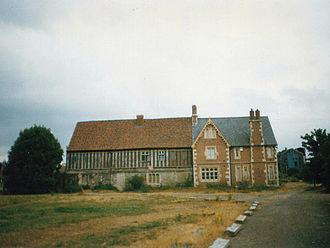
Poor Little Marjorie Bruce

Marjorie_Bruce_Paisley_Abbey
Tomb of Marjorie Bruce, Paisley Abbey

I’ve always had a soft spot for little Marjorie Bruce. Dead before her 20th birthday, her short life was filled with tragedy and adversity from the moment of her birth. I could find no pictures of her, just ones of her tomb; which just about sums it up for poor Marjorie.

Marjorie was born at a time of great upheaval for Scotland; Edward I was claiming overlordship of the country, and the right to choose its next king. John Balliol was picked as king, only for Edward to humiliate and dethrone him a short time later.

Marjorie’s father, Robert the Bruce, was one of the chief claimants of the Scots crown.

Marjorie was the only daughter of Robert the Bruce, Lord of Annandale and Earl of Carrick, and Isabella of Mar. Isabella was the daughter of Donald, 6th Earl of Mar, and Helen, possible illegitimate daughter of Llewelyn the Great, Prince of Wales.

Robert_I_and_Isabella_of_Mar
Marjorie’s parents; Robert the Bruce and Isabella of Mar

Isabella and Robert had married in 1295 and Marjorie arrived about 2 years later. At the age of only 19, Isabella died shortly after giving birth and poor Marjorie was left motherless, with a father who was fighting, alternately, for and against the English.

Even when still a baby, Marjorie was seen as a political pawn, when on 9 July 1297, Edward I demanded that she be handed over as a hostage to her father’s good behaviour. Three of Robert’s allies, ‘Robert bishop of Glasgow, James the Steward of Scotland, and Alexander de Lindesye, become guarantees for the Earl of Carrick’s loyalty till he delivers his daughter Margerie as a hostage.’ Although, there is no record that Marjorie was ever handed over to the English at this time.

Marjorie was named after her paternal grandmother, Marjorie, Countess of Carrick in her own right. And it seems highly likely that Marjorie’s care was handed to one of her father’s sister, either Mary or Christian.

At 6 years old Marjorie acquired a new step-mother when Robert married Elizabeth de Burgh, daughter of Richard de Burgh, Earl of Ulster, and god-daughter of Edward I. Although Edward I appears to have arranged the marriage in order to keep the Bruce’s loyalty, it was only a short while after the marriage that Robert the Bruce finally decided to join William Wallace and fight for Scotland.

In 1306, following his murder of his rival for the throne, John Comyn, Robert the Bruce defied Edward I by having himself crowned King of Scots at Scone Abbey. Little 8-year-old Marjorie was suddenly a Princess of Scotland as the daughter of  King Robert I; although her uncle Edward Bruce was designated Robert’s heir.

RobertBruceAndElizabethDeBurgh (280X280)_tcm4-562387
Robert the Bruce and his queen, Elizabeth de Burgh

Unfortunately Robert’s coronation infuriated Edward I even more. After King Robert was brought to battle, and defeated, at Methven in June 1306 he and his family became fugitives in their own land. Edward I of England was determined to hunt him down; sending men after Robert and all his adherents.

In August 1306 Robert split his party; while he headed west he sent Marjorie and Elizabeth to the north-east, possibly hoping they could escape to Orkney and onto Norway, where his sister, Isabel, was queen.

Accompanying Elizabeth and Marjorie were Robert’s other 2 sisters, Christian and Mary, and Isabella, Countess of Buchan, who had crowned Robert at Scone. They were escorted by John of Strathbogie, Earl of Atholl, and Robert’s younger brother, Sir Niall Bruce.

By September 1306, the women and their escort had reached Kildrummy Castle in Aberdeenshire; where Edward’s forces caught up with them. While Sir Niall Bruce and the garrison stoically attempted to hold off the English troops, the Earl of Atholl escaped with the women. Having made it to the far north of Scotland, but were apprehended at Tain, near Inverness, by the Earl of Ross, a supporter of the Comyns.

Kildrummy had fallen in the mean time.

170px-Gal_nations_edward_i
Edward I

Sir Niall Bruce and the Kildrummy garrison were handed over to the English and executed; Sir Niall suffered hanging, drawing and quartering at Berwick. The Earl of Atholl and the Bruce women, along with the Countess of Buchan, were sent south to King Edward.

When they reached London, the Earl of Atholl suffered the same fate as Sir Niall, the first earl to ever suffer a traitor’s execution.

Although Edward did not order the executions of the women folk, it cannot be said he treated them kindly. They were used to set an example; a demonstration of the price of rebellion against Edward.

For Mary Bruce and the Countess of Buchan, he ordered the construction of iron cages. Isabella, Countess of Buchan, who had set the crown of Scotland on Robert the Bruce’s head, was imprisoned in one such cage supposedly suspended high from the walls of Berwick castle, open the elements and the mockery of the people of Berwick. The same was ordered for Mary Bruce at Roxburgh. Although the cages were actually in rooms inside the two strongholds, rather than outside and suspended from the walls. Either way, it was still horrendous treatment for two noblewomen.

220px-Watton_Abbey
Watton Abbey, where Marjorie was confined for 8 years

Christian Bruce, whose husband had recently been executed as a traitor at Dumfries, was ordered to be confined at a convent at Sixhills in Lincolnshire; while Elizabeth de Burgh was confined to various manors in England and treated more kindly due to her father’s friendship with the king.

For Marjorie Bruce, these events must have been terrifying. Edward ordered her confined in an iron cage in the Tower of London, where no one was to speak to her. Whether Edward relented of his own free will, or was advised against such treatment of a child of not yet 10 years old, the order was rescinded and she was confined to a convent at Watton in Yorkshire.

On 15 March 1307, Edward sent orders for financial provision for Marjory: ‘The K. commands the sheriff of York, by view of the Prior of Wattone, to allow Margery daughter of Robert de Brus, staying in Wattone by the K.’s order, 3d. a day for her expenses, from the morrow of All Souls last year, when she came there; and a mark yearly for her dress.’

Although loyal to their king, we can only hope that the nuns took pity on the poor child, and treated her kindly. She was held at Watton for 8 years and it was only her father’s victory at Bannockburn, in 1314, that eventually secured her freedom.

175px-Paisley_abbey
Paisley Abbey

Robert the Bruce’s resounding victory over Edward I’s son and successor, Edward II, in the 1314 battle meant Bruce was finally in a position to insist on the return of his queen, daughter, sisters and the Countess of Buchan. With so many English nobles taken prisoner, the women were the price demanded in the exchange of hostages.

On Marjorie’s return to Scotland, King Robert almost immediately set about arranging her marriage. With the queen not yet having produced a child, the now-17-year-old Marjorie was needed to produce an heir for the Bruce dynasty.

Just 5 years older the Marjorie, Walter Stewart, the wealthy and powerful 6th High Steward of Scotland was the ideal candidate as a husband. Walter had distinguished himself as a commander at the Battle of Bannockburn, and was the man entrusted by Bruce to bring his family home for their English captivity.

Robert_II_of_Scotland
Robert II of Scotland

Walter and Marjorie were married shortly after, with Marjorie’s dowry including the Barony of Bathgate in West Lothian. Whatever happiness – if any – Marjorie derived from the marriage, however, was short-lived.

In 1316, whilst heavily pregnant, she fell from her horse when out riding near Paisley Abbey. Going into premature labour, Marjorie was taken to the Abbey, where she was delivered of a son, Robert, on 2nd March 1316. It is possible that Robert was delivered by caesarean as his mother was close to death. Marjorie survived the birth by just a few hours and died the same day.

Poor little Marjorie Bruce was dead at the tender age of 19 – the same as her mother before her – having lived through some of the most turbulent years of Scottish history.

Had she lived she would have seen her son succeed her brother, David II, on the Scots throne as King Robert II, founder of the Stewart dynasty.

*

Pictures courtesy of Wikipedia.

*

Sources: The Story of Scotland by Nigel Tranter; Brewer’s British Royalty by David Williamson; Kings & Queens of Britain by Joyce Marlow; Mammoth Book of British Kings & Queens by Mike Ashley; Oxford Companion to British History Edited by John Cannon; Edward I, A Great and Terrible King by Marc Morris; Britain’s Royal Families by Alison Weir; History Today Companion to British History Edited by Juliet Gardiner & Neil Wenborn; The Plantagenets, The Kings Who Made England by Dan Jones; The Illustrated Encyclopaedia of the Kings & Queens of Britain by Charles Phillips; Kings & Queens of Britain by Joyce Marlow; englishmonarchs.co.uk; educationscotland.gov.uk; Sisters of the Bruce; electricscotland.com.

*

My Books

Signed, dedicated copies of all my books are available through my online bookshop. or by contacting me.

Coming 30 March: Princesses of the Early Middle Ages

Books by Sharon Bennett Connolly

Daughters of kings were often used to seal treaty alliances and forge peace with England’s enemies. Princesses of the Early Middle Ages: Royal Daughters of the Conquest explores the lives of these young women, how they followed the stereotype, and how they sometimes managed to escape it. It will look at the world they lived in, and how their lives and marriages were affected by political necessity and the events of the time. Princesses of the Early Middle Ages will also examine how these girls, who were often political pawns, were able to control their own lives and fates. Whilst they were expected to obey their parents in their marriage choices, several princesses were able to exert their own influence on these choices, with some outright refusing the husbands offered to them.

Their stories are touching, inspiring and, at times, heartbreaking.

Princesses of the Early Middle Ages: Royal Daughters of the Conquest is now available for pre-order from Pen & Sword and Amazon.

Also by Sharon Bennett Connolly:

Books by Sharon Bennett Connolly

Scotland’s history is dramatic, violent and bloody and Scotland’s Medieval Queens have seen it all. This is the story of Scotland through their eyes. Available now from Amazon and Pen and Sword BooksHeroines of the Tudor World tells the stories of the most remarkable women from European history in the time of the Tudor dynasty, 1485-1603. These are the women who ruled, the women who founded dynasties, the women who fought for religious freedom, their families and love. Heroines of the Tudor World is now available from Amberley Publishing and Amazon UK. Women of the Anarchy demonstrates how Empress Matilda and Matilda of Boulogne, unable to wield a sword themselves, were prime movers in this time of conflict and lawlessness. It shows how their strengths, weaknesses, and personal ambitions swung the fortunes of war one way – and then the other. Available from Bookshop.orgAmberley Publishing and Amazon UKKing John’s Right-Hand Lady: The Story of Nicholaa de la Haye is the story of a truly remarkable lady, the hereditary constable of Lincoln Castle and the first woman in England to be appointed sheriff in her own right. Available from all good bookshops Pen & Sword Booksbookshop.org and Amazon

Defenders of the Norman Crown: The Rise and Fall of the Warenne Earls of Surrey tells the fascinating story of the Warenne dynasty, from its origins in Normandy, through the Conquest, Magna Carta, the wars and marriages that led to its ultimate demise in the reign of Edward III. Available from Pen & Sword BooksAmazon in the UK and US, and Bookshop.orgLadies of Magna Carta: Women of Influence in Thirteenth Century England looks into the relationships of the various noble families of the 13th century, and how they were affected by the Barons’ Wars, Magna Carta and its aftermath; the bonds that were formed and those that were broken. It is now available in paperback and hardback from Pen & SwordAmazon, and Bookshop.orgHeroines of the Medieval World tells the stories of some of the most remarkable women from Medieval history, from Eleanor of Aquitaine to Julian of Norwich. Available now from Amberley Publishing and Amazon, and Bookshop.orgSilk and the Sword: The Women of the Norman Conquest traces the fortunes of the women who had a significant role to play in the momentous events of 1066. Available now from Amazon,  Amberley Publishing, and Bookshop.org.

Alternate Endings: An anthology of historical fiction short stories including Long Live the King… which is my take what might have happened had King John not died in October 1216. Available in paperback and kindle from Amazon.

Podcast:

Have a listen to the A Slice of Medieval podcast, which I co-host with Historical fiction novelist Derek Birks. Derek and I welcome guests, such as Bernard Cornwell and Michael Jecks, and discuss a wide range of topics in medieval history, from significant events to the personalities involved. 

Every episode is also now available on YouTube.

*

Don’t forget! Signed and dedicated copies of all my books are available through my online store.

For forthcoming online and in-person talks, please check out my Events Page.

You can be the first to read new articles by clicking the ‘Follow’ button, liking our Facebook page or joining me on TwitterThreadsBluesky and Instagram.

*

©2015 Sharon Bennett Connolly FRHistS
Nicholaa de la Haye, England’s Forgotten Heroine

History...the Interesting Bits
Seal of Nicholaa de la Haye, Lincoln Cathedral

Nicholaa de la Haye is one of those very rare women in English history. She is renowned for her abilities, rather than her family and connections. In a time when men fought and women stayed home, Nicholaa de la Haye held Lincoln Castle against all-comers. Her strength and tenacity saved England at one of its lowest points in history.

The eldest daughter and co-heiress of Richard de la Haye and his wife, Matilda de Vernon, Nicholaa was probably born in the early-to-mid 1150s. Her father was Baron of Brattleby. Richard’s father was a Norman, Robert de la Haye of La Haye du Puits in the Cotentin. His mother, Muriel, was English, a Lincolnshire heiress as the granddaughter of Colswein of Lincoln. In 1166 Richard he was recorded as owing 20 knights’ fees, which had been reduced to 16 by 1172. When he died in 1169, Nicholaa inherited her father’s land in Lincolnshire and his position as hereditary castellan of Lincoln Castle, a position she would hold for over 50 years.

Nicholaa was married twice, her first husband, William Fitz Erneis, died in 1178, leaving Nicholaa a young widow with one daughter, Matilda. Before 1185 she married Gerard de Camville (or Canville), brother of Richard de Camville, admiral of Richard I’s crusading fleet during the Third Crusade. Nicholaa and Gerard had at least 2 children together; Richard and Thomas. Richard was heir to both Nicholaa and Gerard. Nothing is known of Thomas beyond his name. Another daughter may have been Nicholaa d’Eyncourt, who sued Nicholaa’s granddaughter for some de la Haye lands in the 1230s; however, while it seems certain that Nicholaa d’Eyncourt was kin, unfortunately, her exact relation to Nicholaa de la Haye has not been established.

Nicholaa’s husbands each claimed the position of castellan of Lincoln Castle by right of his wife; but Nicholaa seems to have been far from the normal subservient wife. When her husband was not in the castle, she was left in charge rather than an alternative, male deputy.

History...the Interesting Bits
Lincoln castle walls leading to the Observatory Tower

Nicholaa first comes to the attention of the chroniclers in 1191, when Prince John led the opposition to his brother’s chancellor, William Longchamp. Accusing him of harbouring outlaws, Longchamp demanded that Gerard de Camville relinquish Lincoln Castle to one of his own supporters. Gerard refused, and swore fealty to John, joining him at Nottingham Castle. Leaving Nicholaa to hold Lincoln. He probably assumed that Longchamp would not wage war on a woman. However, Richard I’s Chancellor, William Longchamp, had no such qualms. He headed north and laid siege to Lincoln Castle, probably assuming, wrongly, that Nicholaa would submit easily.

The formidable Nicholaa refused to yield, holding out for 40 days before Longchamp raised the siege, following the fall of the castles at Tickhill and Nottingham to John. Amusingly, Richard of Devizes said of this defence of Lincoln Castle, that she did it ‘without thinking of anything womanly’.

In 1194, on the king’s return, Camville was stripped of his positions as Sheriff of Lincolnshire and Castellan of the castle; only having it returned to him on the accession of King John in 1199.

As we all know, King John’s reign wasn’t exactly smooth sailing. He lost his French lands and was held to account by the barons of England for  numerous examples of maladministration, corruption and  outright murder. In 1215 he had been forced to seal the Great Charter, or Magna Carta, in order to avoid war. Although it eventually came to be considered a fundamental statement of English liberties, as a peace treaty Magna Carta failed miserably. Within months John had written to Pope Innocent III and the charter had been declared null and void; the barons were up in arms.

Gerard de Camville died in December 1214 and, although now a widow, it seems the castle remained in Nicholaa’s hands. On one of King John’s visits to inspect the castle’s defences in 1216, either in February or September there was a rather dramatic display of fealty from Nicholaa :

History...the Interesting Bits
Nicholaa de la Haye, Lincoln Castle

And once it happened that after the war King John came to Lincoln and the said Lady Nicholaa went out of the eastern gate of the castle carrying the keys of the castle in her hand and met the king and offered the keys to him as her lord and said she was a woman of great age and was unable to bear such fatigue any longer and he besought her saying, “My beloved Nicholaa, I will that you keep the castle as hitherto until I shall order otherwise”.¹

Whether Nicholaa ever intended to give up Lincoln, or the event was staged so that John could demonstrate his continued trust in Nicholaa, is open to debate. I suspect it was the latter. John was in the midst of civil war and running short of allies. Nicholaa had already demonstrated her abilities at defending Lincoln, and her loyalty to John – he would have been hard put to replace her. However, the event gave John the opportunity to reinforce his trust in Nicholaa in front of his barons.

The rebels invited the king of France to take the throne of England; instead Philip II‘s son, Louis (the future Louis VIII), accepted the offer and was hailed as King of England in London in June 1216. In the same year Nicholaa prevented another siege by paying off a rebel army, led by Gilbert de Gant, who remained in occupation of the city of Lincoln but lifted the siege of the castle. After Nicholaa paid off the 1216 besiegers, John came north and he chased the rebels into the Isle of Axholme ‘with fire and sword’.

As Louis consolidated his position in the south, John then made an inspection of Lincoln castle in September. Moving south, just 2 weeks later, the king’s baggage train was lost as he crossed the Wash estuary and within a few more days John was desperately ill, probably from dysentery. He moved on to the castle at Newark, from where, just hours before his death, John appointed Nicholaa de la Haye as Sheriff of Lincolnshire in her own right:

History...the Interesting Bits
The East Gate of Lincoln Castle

‘The King to the archbishops, bishops, earls, barons, knights, freeholders and others of the county of Lincoln etc.. Know that we have granted to our trusty and well-beloved, the lady Nicholaa de Haye and Philip Marc, the county of Lincoln with all its appurtenances, to be in their custody for so long as it may please us. We therefore command that you do heed and obey the said Nicholaa and Philip in all things as the bailiffs of the said county. And in testimony etc.. Witness myself, at Newark, the eighteenth day of October, in the eighteenth year of our reign.’

From King John’s Letters and Papers, translated by Rich Price

King John died at Newark on the night of 18/19th October 1216, with half his country occupied by a foreign invader and his throne now occupied by his 9-year-old son, Henry III. The elder statesman and notable soldier William Marshal, Earl of Pembroke was appointed Regent and set out to save the kingdom.

Meanwhile, Gilbert de Gant renewed the siege of Lincoln Castle, receiving reinforcements from Louis’ forces, under the Comte de Perche, in early 1217. Now in her 60s Nicholaa de la Haye took charge of the defences.

400px-BitvaLincoln1217ortho
The Battle of Lincoln, 1217

When the small force proved insufficient to force a surrender, the French had to send for reinforcements and siege engines. For almost 7 months, Nicholaa was besieged, with the circle tightening from March to mid-May as siege machinery bombarded the south and east walls of the castle. On the 20th May William Marshal arrived, from the north-west, with a relieving force. Attacking from the north of Lincoln, his army fell upon the besieging forces and, after about 6 hours of combat, routed the enemy; the French commander, the Comte de Perche, was killed in the fighting, and the rebel leaders captured.

The city, which had supported the rebels and welcomed the French, was sacked and looted by the victorious army; the battle becoming known as the Lincoln Fair, as a result. The Battle of Lincoln turned the tide of the war. After a further defeat in the naval Battle of Sandwich in the summer, the French were forced to seek peace and returned home. Magna Carta was reissued and Henry III’s regents could set about healing the country.

In a magnificent demonstration of ingratitude, within 4 days of the relief of the Castle, Nicholaa’s position of Sheriff of Lincolnshire was given to the king’s uncle William Longspée, Earl of Salisbury, who took control of the city and promptly seized the castle.

The king’s council should have known that Nicholaa would not give up her castle so easily. She travelled to court to remind the king’s regents of her services, and request her rights be restored to her. And in October 1217, an order was issued in Henry III’s name to

Magna_Carta_(British_Library_Cotton_MS_Augustus_II.106)
Magna carta

To our beloved and loyal uncle, W. Earl of Salisbury, greetings. Recently, our beloved and loyal lady, Mistress Nicholaa de Haya, came to us in London, begging us to restore her rights, and particularly the custody of Lincoln Castle, which she ought to have and usually possesses. We, considering her faithful service to our lord King J., our father, and our subsequently commended expenses, kindly, as was fitting, heeded her, restoring her rights, namely, the aforementioned custody of Lincoln Castle and others, saving our beloved and loyal R. Earl of Chester, in his matter [rather his right] which he claims to have in the same Castle. Furthermore, we have entrusted the county of Lincoln, along with the city of Lincoln, to the same Nicholaa, to be kept for as long as we please. And therefore we command you that, all delay and occasion postponed, you restore to her the said castle of Lincoln, with its appurtenances, removing from there all those who are on our part. And that you cause her to have without delay full possession of the said county with the city of Lincoln, as is above mentioned. And in testimony of this matter, etc. Witness the count, at Westminster, the 32nd (sic) day of October, in the second year of our reign.2

The settlement was not ideal, however, and some wrangling seems to have continued until Salisbury’s death in 1226.

Nicholaa’s granddaughter and heiress, Idonea – the daughter of Nicholaa’s eldest son Richard – was married to Salisbury’s son, William II Longspée; the couple inherited the de la Haye and Camville lands on Nicholaa’s death. As a result, Salisbury felt it was his right to hold his daughter-in-law’s inheritance, even though Nicholaa was not yet dead. Understandably, Nicholaa felt differently.

On the death of her second husband, Gerard de Camville, Nicholaa had declared herself femme sole, meaning she would be able to control her own lands. A staunchly independent woman, Nicholaa issued some 25 surviving charters in her name. She made grants to various religious houses, including Lincoln Cathedral, and even secured a royal grant for a weekly market for her village of Swaton.

History...the Interesting Bits
Land grant with Nicholaa de la Haye’s seal attached

A most able adversary for some of the greatest military minds of the time, and a loyal supporter of King John, Nicholaa de la Haye was unique among her peers. Although praised by the chroniclers, they seemed to find difficulty in describing a woman who acted in such a fashion;  the Dunstable annals refer to her as a ‘noble woman’, saying she acted ‘manfully’. One cannot fail to feel admiration for a woman who managed to hold her own in a man’s world, who fought for her castle and her home in a time when women had so little say over their own lives – and at such an advanced age. Her bravery and tenacity saved Henry III’s throne.

Not surprisingly, both King John and Henry III referred to her as ‘our beloved and faithful Nicholaa de la Haye’.

Nicholaa de la Haye, the woman who saved England, lived well into her 70s. By late 1226 she had retired to her manor at Swaton, dying there on 20 November, 1230. She was buried in St Michael’s Church, Swaton in Lincolnshire, where her tomb can be seen to this day.

*

Footnotes: ¹Irene Gladwin: The Sheriff; The Man and His Office; 2 ‘1217, membranes 11, 10, 9, 8’, in Calendar of Patent Rolls, Henry III: Volume 1, 1216-1225, ed. H C Maxwell Lyte (London, 1901), British History Online https://www.british-history.ac.uk/cal-pat-rolls/hen3/vol1/pp117-132 [accessed 16 July 2025].

*

Nicholaa’s story was the inspiration behind my third book, Ladies of Magna Carta: Women of Influence in Thirteenth Century England. And my full-length biography of Nicholaa, King John’s Right-Hand Lady: the Story of Nicholaa de la Haye, was published in May, 2023.

*

Image credits:

Photos of Lincoln Castle and Nicholaa’s seal, © Sharon Bennett Connolly 2015. Picture of the Battle of Lincoln and Magna Carta are courtesy of Wikipedia. Image of the land grant from the National Archives.

*

Sources:

The Plantagenet Chronicles edited by Elizabeth Hallam; Brassey’s Battles by John Laffin; 1215 The Year of Magna Carta by Danny Danziger & John Gillingham; The Life and times of King John by Maurice Ashley; The Story of Britain by Roy Strong; The Plantagenets, the Kings Who Made England by Dan Jones; England Under the Norman and Angevin Kings  by Robert Bartlett; lincolnshirelife.co.uk; catherinehanley.co.uk; magnacarta800th.com; lothene.org; lincolncastle.com; The Sheriff: The Man and His Office by Irene Gladwin; Elizabeth Chadwick; Nick Buckingham; swaton.org.uk; Women in Thirteenth Century Lincolnshire by Louise Wilkinson.

*

My Books

Signed, dedicated copies of all my books are available through my online bookshop. or by contacting me.

New releases in 2026:

Hardbacks

Out now: Princesses of the Early Middle Ages: Royal Daughters of the Conquest 

‘My daughter wanted me to treat her more like a princess. So, I married her to a stranger to strengthen the alliance with Poland!’

Books by Sharon Bennett Connolly

The medieval princess has often been portrayed as a pawn in the political machinations of her father or brother, married off to distant lands for the sake of peace, or land, or both. Never to be seen or thought of again.

But was that really her fate?

From the daughters of Harold, the last Saxon king, to the sisters of Henry III, Princesses of the Early Middle Ages explores the lives of these young women, how they followed the stereotype, and how they sometimes managed to escape it. It will look at the world they lived in, and how their lives and marriages were affected by political necessity and the events of the time.

Princesses of the Early Middle Ages: Royal Daughters of the Conquest is now available from Pen & Sword and Amazon.

30 August: Princesses of the Later Middle Ages: Royal Daughters of the Plantagenets

Continuing the story, Princesses of the Later Middle Ages: Royal Daughters of the Plantagenets looks at the lives of the princesses, from the treasured daughters of Henry III to the children of Edward IV, whose lives were turned upside down when they were declared illegitimate.

What we see is a very different story, where a foreign marriage does not mean eternal exile, but a purpose in life, where a princess is a diplomat, an ambassador for England in her new country. She is the bond between allies – most of the time.

Princesses of the Later Middle Ages: Royal Daughters of the Plantagenets is now available for pre-order through Pen & Sword and other booksellers.

New Paperbacks:

Books by Sharon Bennett Connolly

OUT NOW! The momentous events of 1066, the story of invasion, battle and conquest, are well known. But what of the women? Silk and the Sword: The Women of the Norman Conquest traces the fortunes of the women who had a significant role to play during the Norman Conquest – wives, lovers, sisters, mothers, leaders. These are lives full of drama, pathos and sometimes mystery: Edith and Gytha searching the battlefield of Hastings for the body of Harold, his lover and mother united in their grief for the fallen king. Who was Ælfgyva, the lady of the Bayeux Tapestry, portrayed with a naked man at her feet? Janina Ramirez said its ‘Excellent’!

COMING 15 July 2026: Heroines of the Tudor World focuses on the women who lived through the Renaissance and Reformation, examining the threats and challenges they faced and how they overcame them. These are the women who ruled, the women who founded dynasties, the women who fought for religious freedom, their families and love. These are the women who made a difference, who influenced countries, kings and the Reformation.

Derek Birks: ‘An excellent account of the changing roles of women in Tudor society.’

Annie Whitehead: ‘What a treat this book was to read. Bennett Connolly has an easy, conversation style of writing which welcomes you from the opening pages and draws you into her story.

Also by Sharon Bennett Connolly:

Books by Sharon Bennett Connolly

Heroines of the Medieval World; Silk and the Sword: The Women of the Norman Conquest; Ladies of Magna Carta: Women of Influence in Thirteenth Century England; Defenders of the Norman Crown: Rise and Fall of the Warenne Earls of Surrey; King John’s Right Hand Lady: The Story of Nicholaa de la Haye; Women of the Anarchy; Heroines of the Tudor World; Scotland’s Medieval Queens: From St Margaret to Margaret of Denmark; Princesses of the Early Middle Ages: Royal Daughters of the Conquest (March 2026); Princesses of the Later Middle Ages; Royal Daughters of the Plantagenets (August 2026)

Alternate Endings: An anthology of historical fiction short stories including Long Live the King… which is my take what might have happened had King John not died in October 1216. Available in paperback and kindle from Amazon.

All my books on AmazonBookshop.org . You can also order direct from my publishers, Pen and Sword Books and Amberley Publishing.

*

Podcast:

History...the Interesting Bits

Have a listen to the A Slice of Medieval podcast, which I co-host with Historical fiction novelist Derek Birks. Derek and I welcome guests, such as Ian Mortimer, Bernard Cornwell, Elizabeth Chadwick and Scott Mariani, and discuss a wide range of topics in medieval history, from significant events to the personalities involved. 

Every episode is also now available on YouTube.

*

Books by Sharon Bennett Connolly

Don’t forget! 

Signed and dedicated copies of all my books are available through my online bookshop.

For forthcoming online and in-person talks, please check out my Events Page.

You can be the first to read new articles by clicking the ‘Follow’ button, liking our Facebook page or joining me on TwitterThreads, Bluesky and Instagram.

©2015 Sharon Bennett Connolly FRHistS