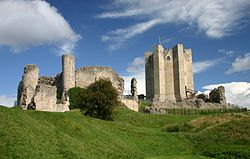
Conisbrough Castle – its Life and History

ConisbroughCastle

Growing up near Conisbrough Castle, South Yorkshire, I did not know much about its history. It was rather underrated. We always thought it was just a bland old place – it was great for exploring and rolling down the hills and playing hide and seek in the inner bailey. However, being so far from London, the centre of power,  it didn’t seem to have much history or national importance. The most famous thing about it was that it was used as the Saxon castle in Sir Walter Scott’s Ivanhoe.

The castle’s early history

English Heritage have spent a lot of money on it in recent years. When I worked there in the early 1990s there was no roof, it was open to the elements, with green moss on the walls and erosion caused by acid rain. And there was just a very narrow walkway around the inside of the keep. It was just a shell. Now it has a roof, floors on every level, sensitive lighting, information videos on each floor and a fantastic little visitor centre with a small museum. It looks so much better (although I still wouldn’t want to stand on the battlements on a windy day like today).
020
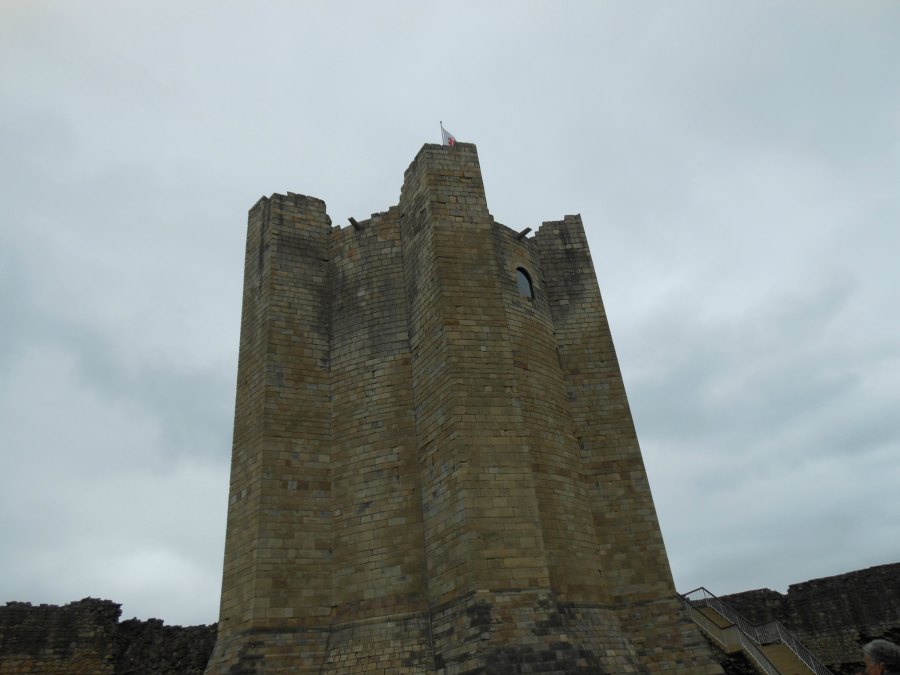
Conisbrough’s hexagonal keep

When I joined the castle team as a volunteer tour guide, I started looking into the actual history of the Castle, seeing it more for what it has been, than for the visitor attraction it is now. Instead of being a forgotten, unimportant little castle in the middle of nowhere, Conisbrough Castle comes to life through the history it has been a part of, and the people who have called it home.

According to Geoffrey of Monmouth, in his Historia Regum Britanniae (History of the Kings of Britain), Conisbrough was founded as ‘Conan’s Burg’ by a British leader called Conan. It was said to have later belonged to Ambrosius Aurelianus, a candidate for the legendary King Arthur. As Geoffrey of Monmouth says, Ambrosius captured the Saxon leader Hengist, once a mercenary for Vortigern, at the battle of ‘Maisbeli.’ And brought him to his stronghold at Conisbrough. Hengist was then beheaded on Ambrosius’ orders and buried at the entrance to the castle of ‘Cunengeburg’, that is Conisbrough. A small hill, locally called Hengist’s Mound, is in the grounds of the outer bailey.

What we know, for certain, is that by 1066 the Honour of Conisbrough belonged to Harold Godwinson, Earl of Wessex and later King Harold II of England, though there is no evidence that he ever visited. On a prominent, steep hill, the castle guards the main road between Sheffield and Doncaster to the east, and the navigable River Don to the north.
010 (2)
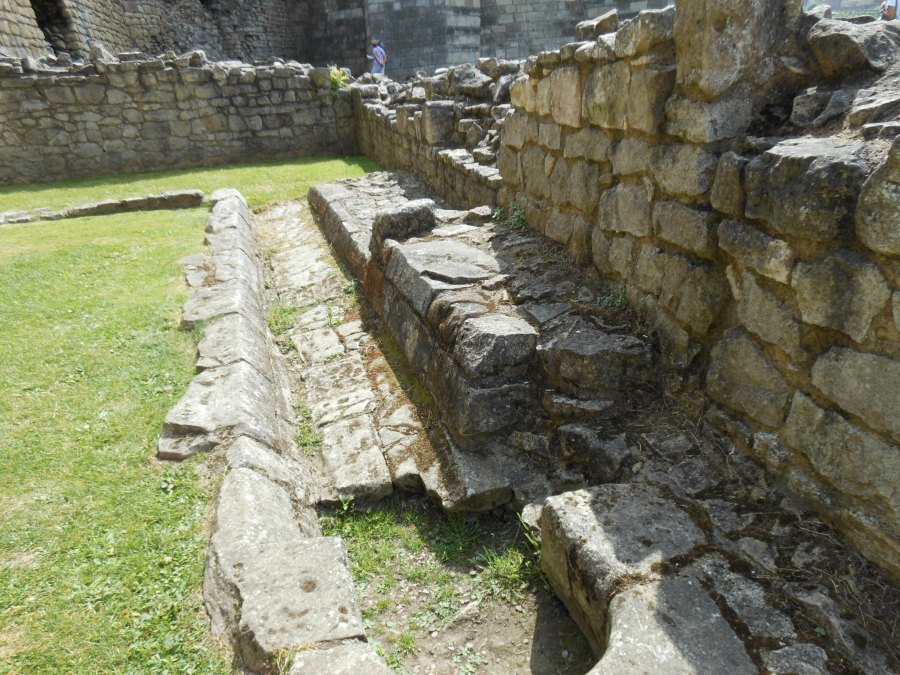
The kitchen range in the inner bailey

Following Harold’s defeat and death at the Battle of Hastings, and shortly after the Harrying of the North of 1068 Conisbrough was given to one of William the Conqueror’s greatest supporters, William de Warenne. Warenne was a cousin of Duke William of Normandy and fought alongside him at the Battle of Hastings. He was given land in various counties, including Lewes in Sussex and Conisbrough in Yorkshire; and although he developed his property at Castle Acre in Norfolk, little was done at Conisbrough. In those days the castle itself was little more than a wooden motte and bailey construction, surrounded by wooden palisades and earthworks.

*

A thoroughly modern Castle

It was not until the reign of Henry II that the Castle began to take on the majestic appearance we know today. Conisbrough came into the hands of Hamelin Plantagenet, illegitimate half-brother of King Henry II; Hamelin had married the de Warenne heiress, Isabel, 4th Countess of Warenne and Surrey, and became 4th Earl of Warenne and Surrey by right of his wife.

029
Fireplace in the bedchamber in the keep

It was Hamelin who built the spectacular hexagonal keep that we can see today. The stairs to the keep were originally accessed across a drawbridge, which could be raised in times of attack. The ground floor was used for storage, with a basement storeroom below, housing the keep’s well,  and accessed by ladder.

The first floor holds the great chamber, or solar, with a magnificent fireplace and seating in the glass-less window. According to Margaret Wood’s The English Medieval House, “It has been shown * that the two earliest known examples of a hooded fireplace, at Conisborough [sic] keep (c. 1185)‘ in Yorkshire (PI. XLI p), occur where the circular plan of the room made an arched fireplace difficult to construct. Here a lintel was formed along a chord of the circumference, and the resulting filling above assumed a hooded form.” This is where the Lord would have conducted business, or entertained important guests. Henry II, King John and King Edward II are known to have visited Conisbrough: King John even issued a charter from Conisbrough Castle in March 1201.
030
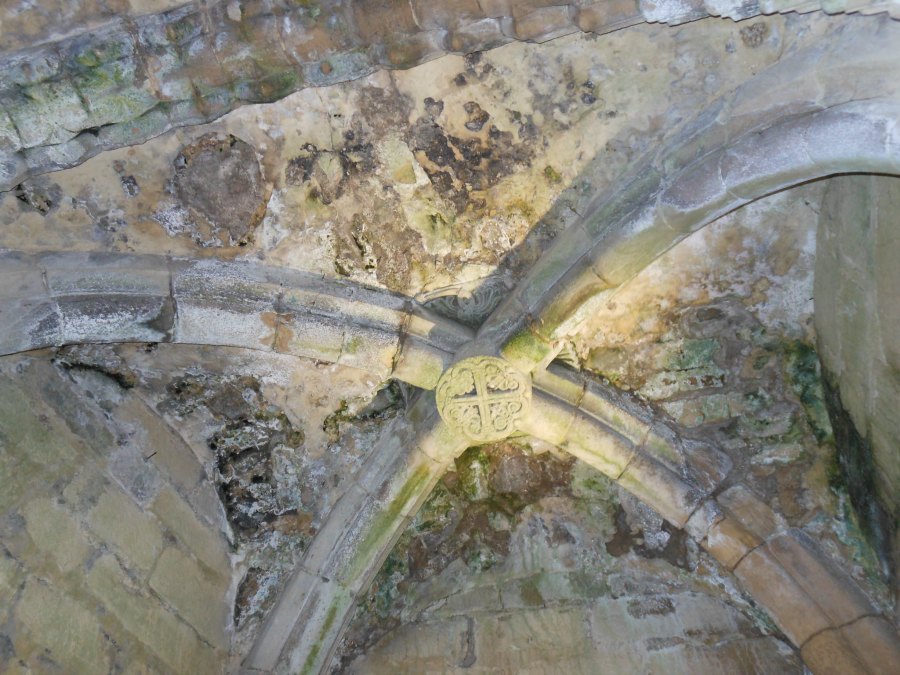
The chapel’s vaulted ceiling

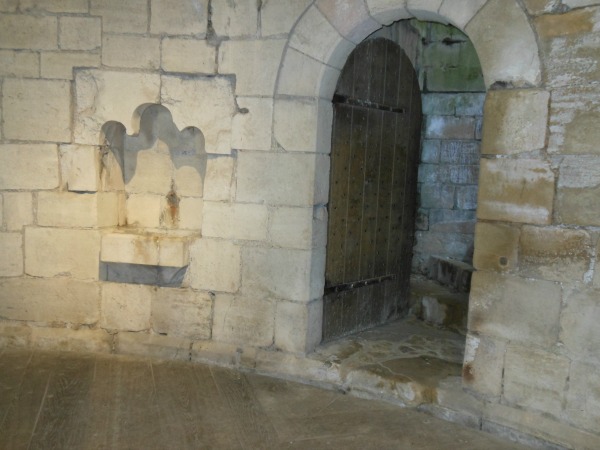
The second floor would have been sleeping quarters for the lord and lady. Both the solar and the bedchamber have impressive fireplaces, garderobes and a stone basin, which would have had running water delivered from a rainwater cistern on the roof.

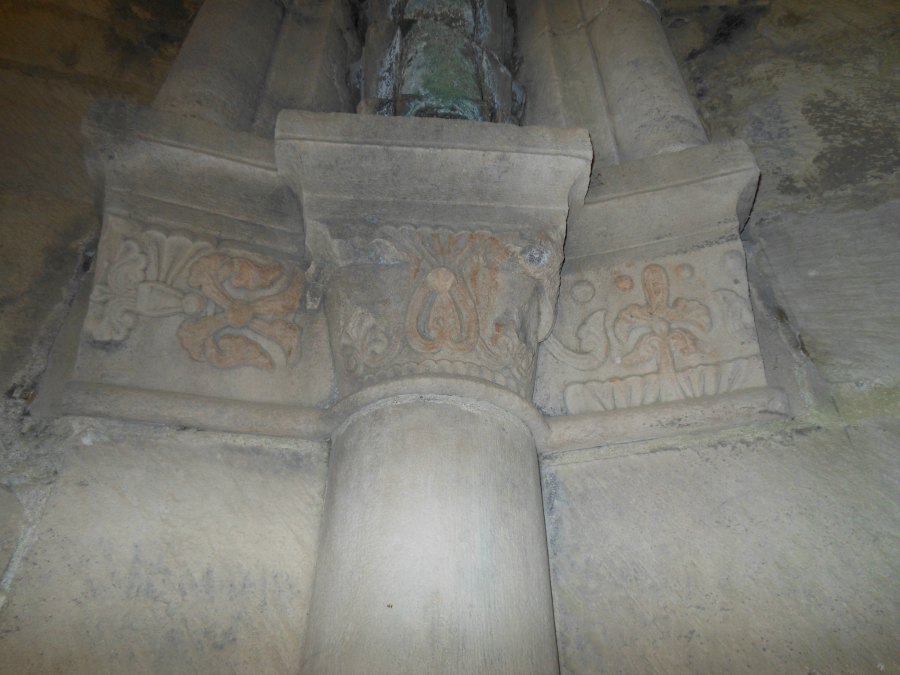
On this floor, also, built into one of the keep’s buttresses is the family’s private chapel. This may well have been the chapel endowed by Hamelin and Isabel in 1189-90, and dedicated to St Philip and St James (although there was a, now lost, second chapel in the inner bailey to which the endowment could refer). The chapel is well-decorated, with quatrefoil windows, elaborate carving on the columns and a wonderful vaulted ceiling.
036
Chapel carvings

There is a small sacristy for the priest, just to the left of the door, with another basin for the priest’s personal use, and cavities for storing the vestments and altar vessels.

The winding stairs, built within the keep’s thick walls, give access to each successive level and, eventually, to the battlements, with a panoramic view of the surrounding area.

These battlements also had cisterns to hold rainwater, a bread oven and weapons storage; and wooden hoardings stretching out over the bailey to aid in defence. The keep and curtain walls – which were built slightly later – were of a state-of-the art design in their day. The barbican, leading into the inner bailey, had 2 gatehouses and  a steep passageway guarded by high walls on both sides; an attacking force would have been defenceless against missiles from above, with nowhere to run in the cramped corridor.

041
View from the battlements

Although the encircling moat is dry (the keep is built high on a hill), all the detritus from the toilets and kitchens drained into it; another little aid to defence – imagine having to attack through that kind of waste?

None of the buildings in the inner bailey have survived, although you can see their stone foundations in the ground. Along one wall there were kitchens and service rooms leading into a great hall, with a raised dais at the far end, and a solar and living quarters above. Another range of buildings attached to the western wall also held living quarters, possibly for the garrison and any guests. There’s even a small jail cell just to the side of the barbican.

Although Conisbrough is not a large castle, the extensive range of buildings, the magnificent decorations of the fireplaces and chapel, suggest it would have been impressive in its day; and reflects the importance of the castle’s owners and occupants.

*

The Castle’s Residents

008 (2)
The inner bailey

The Warenne Earls of Surrey were close to the crown, and the centre of government, for the best part 3 centuries. The daughter of the 2nd Earl, Ada, had married the heir to the Scots throne and was mother to 2 Scottish kings; Malcolm the Maiden and William the Lion.

Hamelin’s son and heir, William, 5th Earl of Warenne and Surrey, married Maud Marshal, daughter of the Greatest knight, William Marshal, Earl of Pembroke and Regent during Henry III’s  infancy. A cousin of King John, William was deeply involved in the Magna Carta crisis, though not always in support of his cousin. Their son John, the 6th Earl, was Edward I’s lieutenant in Scotland and beat the Scots at the Battle of Dunbar in 1296, though he had been defeated by William Wallace at Stirling Bridge the following year. John’s daughter, Isabella, married John Balliol, King of Scots, and was mother to Edward Balliol, another Scottish king. John’s sister, Isabel, married Hugh d’Aubigny, 5th Earl of Arundel, and is remembered as the countess who stood up to Henry III, invoking Magna Carta, when he appropriated land that was rightfully hers.

The 7th – and last – Warenne earl, John, was a colourful character who lived through some of the most dramatic events of English history; the reign of Edweard II. John was the grandson of the 6th earl; his father, William de Warenne, had diedbeen killed in a tournament at Croydon, in December 1286, when John was just 6 months old. Although he was married to Joan of Bar, a granddaughter of Edward I, John lived openly with his mistress and made several unsuccessful attempts to obtain a divorce from his wife. A private feud with Thomas Earl of Lancaster saw John arrange the kidnapping of Earl Tomas’ wife, Alice de Lacey, possibly in retaliation for Lancaster standing in the way of Surrey’s longed-for divorce. The result was the 1st – and only – siege of Conisbrough Castle.

Lancaster sent forces to seize the Warenne castles at Sandal and Conisbrough. His men found the gates of Conisbrough closed to them. The castle was defended by only six men, including the town miller and three brothers, Thomas, Henry and William Greathead, who were men-at-arms. The siege lasted less than two hours and the defenders appear to have relinquished the castle after apparently putting up a token resistance; the three brothers were fined for drawing blood. The chapel in the castle’s inner bailey may have been damaged in the brief altercation, as the following year, Lancaster sent orders to his castellan at Conisbrough, John de Lassell, to ‘repailler la couverture de la chapele de Conynggesburgh.’1
028
The bedchamber in the keep, with wash basin and stairway leading to the garderobe and battlements

The last Earl of Surrey died without heirs in 1347 and Conisbrough passed to John de Warenne’s godson, Edmund of Langley, fourth son of Edward III. Edmund’s wife Isabella of Castile gave birth to her 3rd child, Richard Earl of Cambridge (also known as Richard of Conisbrough) at Conisbrough, possibly in the lavish bedchamber within the keep itself. Cambridge had the dubious reputation of being England’s poorest Earl and was executed following his involvement in the Southampton plot against Henry V; however, he is remembered to history as the grandfather of the Yorkist kings, Edward IV and Richard III.

Following Cambridge’s execution for treason in 1415 his 2nd wife, Maud Clifford, made Conisbrough her principal residence until her death in 1446. Maud entertained her Clifford family here and her great-nephew and godson John Clifford, known to Yorkists as the Butcher of Skipton was born there in 1435. In a strange twist of fate, John Clifford is the one accused of murdering the Earl of Cambridge’s 17-year-old grandson Edmund, Earl of Rutland, following the Lancastrian’s defeat of the Yorksists at the Battle of Wakefield on 30 December 1460. Maud died at the castle in August 1446 and is buried in Roche Abbey, about 10 miles from her home.

The castle underwent repairs during the reigns of Edward IV and Richard III, in 1482-3, but by 1538 a survey revealed the it had fallen into neglect and decay, with parts of the curtain wall having slipped down the embankment.

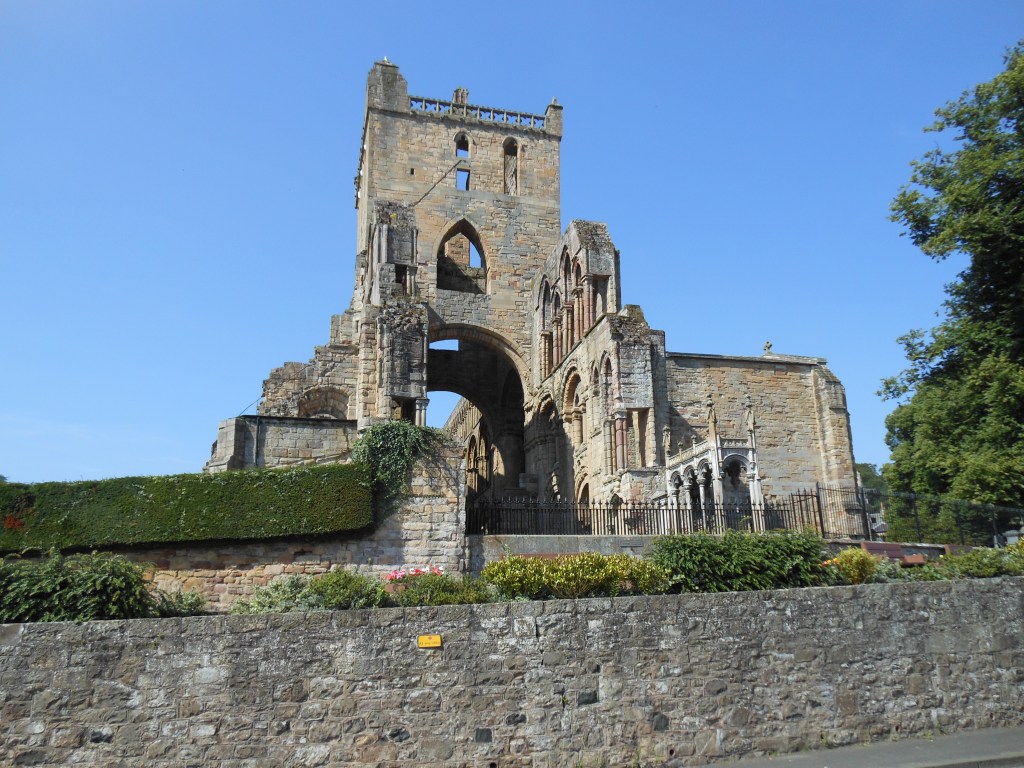
From then on, although it has had successive owners until it came under the protection of English Heritage, Conisbrough Castle has been a picturesque ruin, a wonderful venue for picnics and exploring its many hidden treasures.
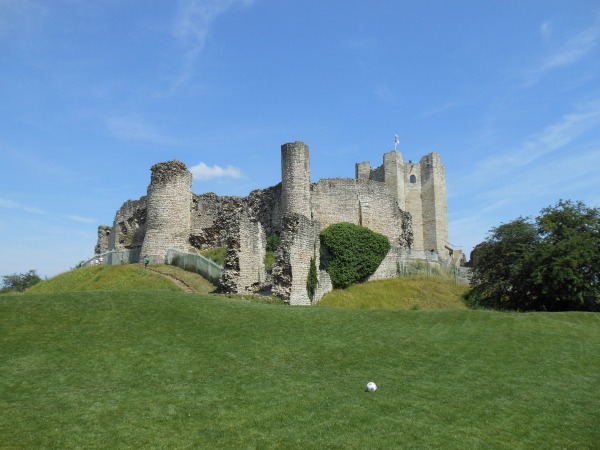
Conisbrough Castle from the outer bailey

*

All photographs are copyright to Sharon Bennett Connolly, 2015.

Footnote:

1 Hunter’s South Yorkshire ii; Deanery of Doncaster ii quoted in F. Royston Fairbank, The Last Earl of Warenne and Surrey, and the Distribution of His Possessions, Yorkshire Archaeological Journal, p. 213

*

Sources:

Further reading: East Yorkshire Charters Volume 8: The Honour of Warenne, edited by William Farrer & Charles Travis Clay; English Heritage Guidebook for Conisbrough Castle by Steven Brindle and Agnieszka Sadrei; English Tourist Board’s English Castles Almanac; The English Medieval House by Margaret Wood; http://www.kristiedean.com/butcher-skipton; On the Trail of the Yorks by Kristie Dean; F. Royston Fairbank, The Last Earl of Warenne and Surrey, and the Distribution of His Possessions, Yorkshire Archaeological Journal.

*

My Books
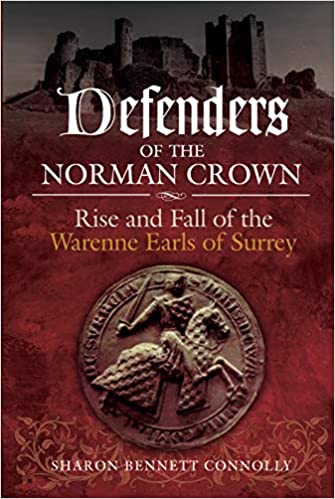
Defenders of the Norman Crown: The Rise and Fall of the Warenne Earls of Surrey tells the fascinating story of the Warenne dynasty, of the successes and failures of one of the most powerful families in England, from its origins in Normandy, through the Conquest, Magna Carta, the wars and marriages that led to its ultimate demise in the reign of Edward III.

1 family. 8 earls. 300 years of English history!

Defenders of the Norman Crown: Rise and Fall of the Warenne Earls of Surrey will be released in the UK on 31 May and in the US on 6 August. And it is now available for pre-order from Pen & Sword BooksAmazon in the UK and US and Book Depository.

Also by Sharon Bennett Connolly:

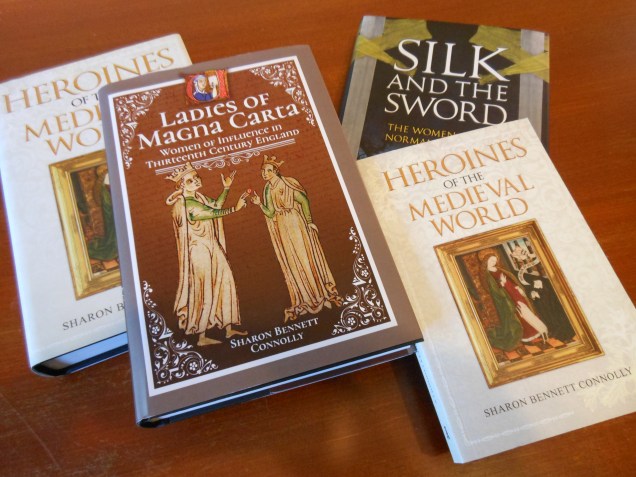
Ladies of Magna Carta: Women of Influence in Thirteenth Century England looks into the relationships of the various noble families of the 13th century, and how they were affected by the Barons’ Wars, Magna Carta and its aftermath; the bonds that were formed and those that were broken. It is now available from Pen & Sword,  Amazon and from Book Depository worldwide.

Heroines of the Medieval World tells the stories of some of the most remarkable women from Medieval history, from Eleanor of Aquitaine to Julian of Norwich. Available now from Amberley Publishing and Amazon and Book Depository.

Silk and the Sword: The Women of the Norman Conquest traces the fortunes of the women who had a significant role to play in the momentous events of 1066.  Available now from Amazon,  Amberley Publishing, Book Depository.

*

You can be the first to read new articles by clicking the ‘Follow’ button, liking our Facebook page or joining me on Twitter and Instagram.

©2020 Sharon Bennett Connolly
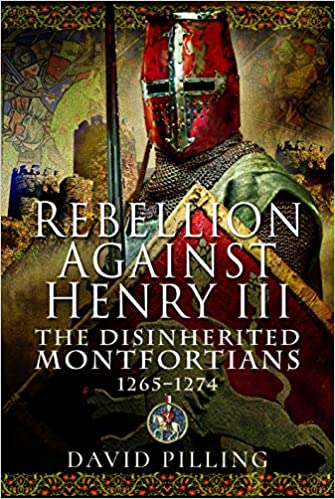
Book Corner: Rebellion Against Henry III by David Pilling

The ‘Montfortian’ civil wars in England lasted from 1259-67, though the death of Simon de Montfort and so many of his followers at the battle of Evesham in 1265 ought to have ended the conflict. In the aftermath of the battle, Henry III’s decision to disinherit all the surviving Montfortians served to prolong the war for another two years. Hundreds of landless men took up arms again to defend their land and property: the redistribution of estates in the wake of Evesham occurred on a massive scale, as lands were either granted away by the king or simply taken by his supporters. The Disinherited, as they were known, defied the might of the Crown longer than anyone could have reasonably expected. They were scattered, outnumbered and out-resourced, with no real unifying figure after the death of Earl Simon, and suffered a number of heavy defeats. Despite all their problems and setbacks, they succeeded in forcing the king into a compromise. The Dictum of Kenilworth, published in 1266, acknowledged that Henry could not hope to defeat the Disinherited via military force alone. The purely military aspects of the revolt, including effective use of guerilla-type warfare and major actions such as the battle of Chesterfield, the siege of Kenilworth and the capture of London, will all be featured. Charismatic rebel leaders such as Robert de Ferrers, the ‘wild and flighty’ Earl of Derby, Sir John de Eyvill, ‘the bold D’Eyvill’ and others such as Sir Adam de Gurdon, David of Uffington and Baldwin Wake all receive a proper appraisal.

Rebellion Against Henry III: The Disinherited Montfortians 1265-1274 by David Pilling covers an often overlooked period of history. It follows the mixed fortunes, of those who had supported Simon de Montfort during the Second Barons’ War, following Simon’s defeat and death at the Battle of Evesham. It is a book I never realised needed to be written, until I read it!

Over the years, reams and reams of paper have been dedicated to the conflict between King Henry III and Simon de Montfort, but this is the first book that looks at the aftermath, at what happened to those who survived the war and the dreadful, final Battle of Evesham, but found themselves on the losing side. Rebellion Against Henry III: The Disinherited Montfortians 1265-1274 is an engaging study of these noblemen, minor barons and knights, known collectively as the Disinherited.

I have touched on many events in Rebellion Against Henry III: The Disinherited Montfortians 1265-1274 for my own books, the recently published Ladies of Magna Carta and my next book about the Warenne Earls of Surrey. As a consequence, I was familiar with much of the main story, but was surprised at the level of continuing resistance that occurred after the defeat at Evesham. Interestingly, the hotspots of resistance had not changed since past rebellions; many of the Disinherited retreated to the wilds of the Isles of Axholme in Lincolnshire and Ely in Cambridgeshire; the former was associated with rebellion against King John, while the latter was the focus of resistance against William the Conqueror. Indeed, many of the names are familiar to students of the First Barons’ War that followed John’s rejection of Magna Carta.

The traumatic news of Evesham ripped the heart out of the baronial resistance in England. Earl Simon’s death or capture of most of the leading Montfortians in one fell swoop, demoralised rebel garrisons up and down the country. In the weeks after the battle one castle after another surrendered to the triumphant royalists. Wallingford and Berkhampstead submitted on 7 August, just three days after the slaughter, while Edward’s first move was to race north to secure his earldom of Chester. In the south, Windsor and the Tower quickly fell to the king, and Odiham and Rochester were in royal hands by the 14th. The castle of the Peak in Derbyshire held out a while longer, but submitted before January 1266.

This mass surrender left just two bastions of resistance in England. One was the mighty fortress of Kenilworth in Warwickshire, where Simon the Younger had retreated to grieve after his father’s death. The other was Dover Castle and the Cinque Ports in southeast England. Countess Eleanor, Simon’s widow, was holed up at Dover, and pirates from the rebel-held Cinque Ports still harassed shipping in the Channel.

At first there were hopes of a peaceful settlement to the war. While at Chester, Edward ordered letters to be drafted inviting the garrison at Kenilworth to surrender, on pain of disinheritance and loss of life. Simon the Younger, for his part, resisted the temptation to avenge himself on Richard of Almaine, Edward’s uncle, who was held prisoner at Kenilworth. Instead he released Almaine on 6 September, who in turn promised he would mediate with King Henry on Simon’s behalf.

Later that month, at Winchester, Edward ordered the chancellor Walter Giffard to make out letters of protection for four rebel knights. The persons and goods of these men – Richard de Havering, John de Havering, Simon de Stoke and William de Turevil – were not to be molested in any way, and they would be allowed to continue to hold their lands freely. They had sought Edward’s ‘goodwill’ on 7 August, the same day as the fall of Wallingford and Berkhampsted. and were responsible for restoring those castle to royal custody. In return Edward promised they would be safe from disinheritance and asked Giffard to provide some surety for his promise. Richard de Havering had served as the late Earl Simon’s estates steward, while John was his son and would later serve Edward as deputy justiciar of Noth Wales and seneschal of Gascony. Edward’s willingness to protect these men may have been driven by his desire to reconcile the Montfort clan after the butchery of Evesham.

Such efforts at rapprochement were shattered at Winchester parliament, which opened on 11 September….

Written in more than 20 short, punchy, chapters, the book looks at the leading figures among the Disinherited, the most notable Robert de Ferrers, Earl of Derby, John D’Eyville and many others. There is a fascinating case study at the back that almost – almost – convinces me that the legendary Robin Hood was among ranks of the Disinherited. David Pilling provides a pretty convincing argument, but I guess we’ll never know.

The author looks at the events from all sides, telling the story of the fight both from the point of view of the rebels and the royalists. Neither are the royalists always seen in a good light. David Pilling does highlight when such as John de Warenne, 6th Earl of Warenne and Surrey, and one of the more brutal men of the time, took advantage of the disorder in order to further their own ends. He also highlights the future Edward I’s impressive carrot-and-stick approach to dealing with the rebels, offering pardons where it was beneficial to the crown. The crown also were keen to ensure sentences of disinheritance were enforced if it meant the confiscated lands fell into the hands of royalists or their supporters.

Rebellion Against Henry III: The Disinherited Montfortians 1265-1274 is engagingly written and well referenced with an impressive bibliography. The only negative I can say about the book is that it lacks an index, which will cause problems for anyone wanting to use this book for research. And it would be a wonderful research tool, if it had an index. I’m hoping this omission will be rectified for the paperback version.

Despite that, Rebellion Against Henry III: The Disinherited Montfortians 1265-1274 by David Pilling was a thoroughly absorbing book. A very interesting read that highlights a 10-year period that is often overlooked after the momentous events of the previous decade. I have no hesitation in recommending it.

Rebellion Against Henry III: The Disinherited Montfortians 1265-1274 is available now in hardback and ebook from Amazon UK and Pen & Sword Books.

From the author:

I’m a writer and researcher, addicted to history for as long as I can remember. The medieval era has always held a fascination for me, perhaps because I spent much of my childhood exploring the misted ruins of castles in Wales. I also have an interest in the Byzantine Empire, the post-Roman period in Britain and the British & Irish Civil Wars.

I am a prolific author and have written and published a number of series and stand-alone tales. These include my first published novel, Folville’s Law, which chronicled the adventures of Sir John Swale in the last days of the reign of Edward II of England. This was followed by The White Hawk series, set during the Wars of the Roses, a six-part Arthurian series, and many more. I have also co-written two high fantasy novels with my good friend, Martin Bolton.

I am currently working on a book about the Montfortian civil wars in England in the late 13th century, and hope to produce more nonfiction works in the future, as well as continuing to work on fiction.

Most of my books are available as ebooks and paperbacks, and many are in the process of being converted to audio.

Enjoy!

https://www.goodreads.com/author/show/4979181.David_Pilling

http://pillingswritingcorner.blogspot.com/

*

My Books

Ladies of Magna Carta: Women of Influence in Thirteenth Century England  looks into the relationships of the various noble families of the 13th century, and how they were affected by the Barons’ Wars, Magna Carta and its aftermath; the bonds that were formed and those that were broken. It is now available from Pen & SwordAmazon and from Book Depository worldwide.

Also by Sharon Bennett Connolly:

Silk and the Sword: The Women of the Norman Conquest traces the fortunes of the women who had a significant role to play in the momentous events of 1066.  Available now from Amazon,  Amberley Publishing, Book Depository.

Heroines of the Medieval World tells the stories of some of the most remarkable women from Medieval history, from Eleanor of Aquitaine to Julian of Norwich. Available now from Amberley Publishing and Amazon and Book Depository.

*

You can be the first to read new articles by clicking the ‘Follow’ button, liking our Facebook page or joining me on Twitter and Instagram.

©2020 Sharon Bennett Connolly
Magna Carta and the Princesses of Scotland

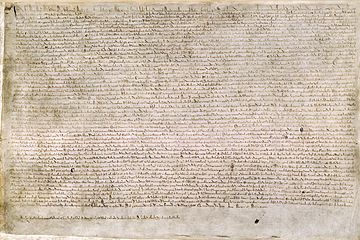
12215 Magna Carta, British Library

Other than the Queen of England, Isabelle d’Angoulême, only two women who can be clearly identified in Magna Carta itself. Though they are not mentioned by name, they are two Scottish princesses. The older sisters of King Alexander II had been held hostage in England since 1209, when John forced the humiliating Treaty of Norham on their ailing father, King William the Lion. Clause 59 of Magna Carta promised:

‘We will treat Alexander, king of Scots, concerning the return of his sisters and hostages and his liberties and rights in the same manner in which we will act towards our other barons of England, unless it ought to be otherwise because of the charters which we have from William his father, formerly king of Scots; and this shall be determined by the judgement of his peers in our court.

Taken from Marc Morris, King John

The king of Scots’ two sisters referred to in the clause were Margaret and Isabella, the oldest daughters of William I (the Lion), King of Scots, and his wife, Ermengarde de Beaumont. The two girls had been caught up in the power struggle between their father and the Plantagenet kings. William I had been the second of three sons of Henry, Earl of Northumberland, and his wife, Ada de Warenne. He was, therefore, a grandson of David I and great-grandson of Malcolm III Canmor and St Margaret, the Anglo-Saxon princess. William had succeeded to his father’s earldom of Northumberland in June 1153, when his older brother, Malcolm IV, succeeded their grandfather as King of Scots. William himself became King of Scots on Malcolm’s death on 9 December 1165, aged about 23.

When William was looking for a wife, in 1186, King Henry II suggested Ermengarde de Beaumont, daughter of Richard, Vicomte de Beaumont-sur-Sarthe, and great-granddaughter of Henry I of England through one of the king’s many illegitimate offspring. With such diluted royal blood, she was hardly a prestigious match for the king of Scots, but he reluctantly accepted the marriage after consulting his advisers. The wedding took place at Woodstock on 5 September 1186, with King Henry hosting four days of festivities and Edinburgh Castle was returned to the Scots as part of Ermengarde’s dowry.

William the Lion, King of Scots

After the wedding, King William accompanied King Henry to Marlborough whilst the new Scottish queen was escorted to her new home by Jocelin, Bishop of Glasgow, and other Scottish nobles. Before 1195 Queen Ermengarde gave birth to two daughters, Margaret and Isabella. A son, the future Alexander II, was finally born at Haddington on 24 August 1198, the first legitimate son born to a reigning Scottish king in seventy years; a contemporary remarked that ‘many rejoiced at his birth.’1 A third daughter, Marjorie, was born sometime later.

Margaret, the eldest daughter of William I and Ermengarde de Beaumont, had been born sometime between her parents’ marriage in 1186 and 1195, unfortunately we cannot be more specific. Given the apparent youth of Ermengarde on her wedding day, Margaret’s date of birth is more likely to have been 1190 or later. We do know that she was born by 1195, as she was mooted as a possible heir to King William I in the succession crisis of that year, when the king fell gravely ill. Primogeniture was not yet the established order of succession, nor was the idea of a female ruler a welcome one; the period known to history as the Anarchy, which followed King Stephen’s usurpation of the throne from Empress Matilda, would have still been fresh in people’s memories, even in Scotland. King David had, after all, supported his niece’s claims against those of her cousin. The lesson of 20 years of civil war, albeit over the border, would have given William’s counsellors pause for thought in their own succession issue.

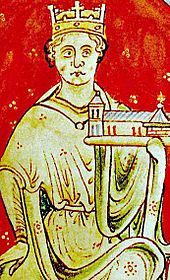
King John

Several options were proposed at the time, including marrying young Margaret to Otto of Saxony, son of Henry II’s eldest daughter Matilda and nephew of King Richard I. However, it was also proposed that Margaret should not even be considered as heir, that the kingdom should pass to her father’s younger brother, David. In the event, King William recovered and none of the options were pursued, but at least it means that we know Margaret was born before 1195. And when her brother, Alexander, was born in 1198, Margaret’s position as a possible heir was diminished further.

Margaret’s younger sister, Isabella’s date and year of birth is unknown; she was older than her brother, Alexander, who was born in 1198, but may have been born any time in the ten years before. She is not mentioned in the succession crisis of 1195, but that does not mean that she was born after, just that, being the younger daughter, she was not a subject of discussions. Jessica Nelson, in her article for the Oxford Dictionary of National Biography, suggests that Isabella was born in 1195 or 1196.

The two young princesses became the unwitting pawns in political relations between England and Scotland when the two kings, John and William the Lion, met at Norham, Northumberland, in the last week of July and first week of August 1209. The Scots were in a desperate position, with an ailing and ageing king, and a 10-year-old boy as heir, whilst the English, with their Welsh allies and foreign mercenaries, had an army big enough to force a Scottish submission. The subsequent treaty, agreed at Norham on 7 August, was humiliating for the Scots. John would have the castle at Tweedmouth dismantled, but the Scots would pay an extra £4,000 compensation for the damage they had caused to it. The Scots also agreed to pay 15,000 marks for peace and to surrender hostages, including the king’s two oldest legitimate daughters, Margaret and Isabella.

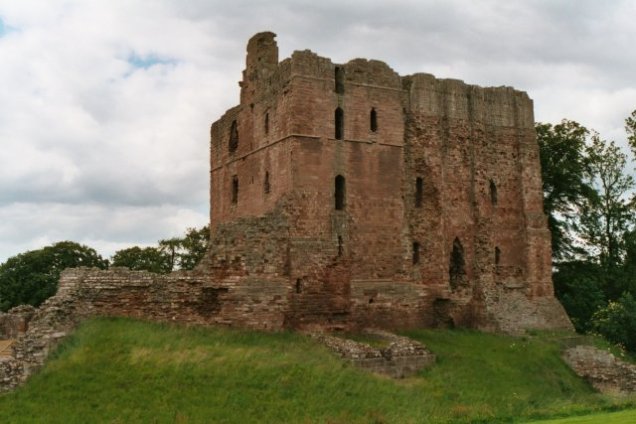
Norham Castle

As a sweetener, John promised to marry the princesses to his sons; although Henry was only 2 years old at the time and Richard was just 8 months, whilst the girls were probably in their early-to-mid teens. The king’s daughters and the other Scottish hostages were handed into the custody of England’s justiciar, at Carlisle on 16 August. How the girls, or their parents, thought about this turn of events, we know not. Given John’s proven record of prevarication and perfidy, King William may have hoped that the promised marriages would occur in good time, but may also have expected that John would find a way out of the promises made.

John’s demand of Margaret and Isabella as hostages, with the sweetener that they would be brides for his own sons, may well have been to prevent Margaret marrying elsewhere. King Philip II of France had expressed interest in a marriage between himself and Margaret, a union John would be keen to thwart. Thus, John’s control of the marriages of Margaret and Isabella would mean that they could not marry against the king of England’s own interests. It also meant that King William had lost two useful diplomatic bargaining chips; marriage alliances could be used to cement political ones, and these had been passed to John, weakening William’s position on the international stage. According to the chronicler Bower, the agreement specified that Margaret would marry John’s son, Henry, while Isabella would be married to an English nobleman of rank.

When the sisters were brought south, they were housed comfortably, as evidence demonstrates. While hostages in England, Margaret and Isabella were kept together, and lived comfortably, although John’s promise of arranging marriages for the girls remained unfulfilled. Payments for their upkeep were recorded by sheriffs and the king’s own wardrobe, which suggests the two princesses spent some time at court. In 1213 Isabella was residing at Corfe Castle in the household of John’s queen, Isabelle d’Angoulême; John’s niece, Eleanor of Brittany, held captive since the failed rebellion of her brother, Arthur of Brittany in 1202, was also there.

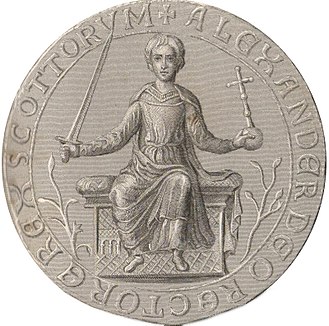
Alexander II, King of Scots

One can imagine the frustration of the Scots, to see their princesses languishing in the custody of the English; their inclusion in clause 59 of Magna Carta evidence of this. Unfortunately, King John tore up Magna Carta almost before the wax seals had dried, writing to the pope to have the charter declared void, leaving Alexander to join the baronial rebellion.

When Alexander came to terms with the government of Henry III in December 1217, he pressed for a resolution to the marriages of himself and his sisters, Margaret and Isabella, still languishing in English custody. In June 1220, at a meeting of King Henry III’s minority council, it was agreed that Margaret and Isabella would be married by October 1221 or allowed to return to Scotland.

King John had promised that Alexander would marry one of his daughters and Henry III, or rather his ministers, finally fulfilled this promise in June 1221, when his sister, Joan, was married to the Scots king at York. And it was probably at this event, when the Scottish and English royal families came together in celebration, that Margaret’s own future was finally resolved.

It was decided that she would marry Hubert de Burgh, the king’s justiciar and one of the leading figures of Henry III’s minority government. They were married in London on 3 October 1221, with King Henry himself giving the bride away. It was a major coup for Hubert de Burgh, who came from a gentry family rather than the higher echelons of the nobility; though it was a less prestigious match for Margaret, the daughter of a king. The couple had one child, a girl named Margaret but known as Megotta, who was probably born in the early 1220s.

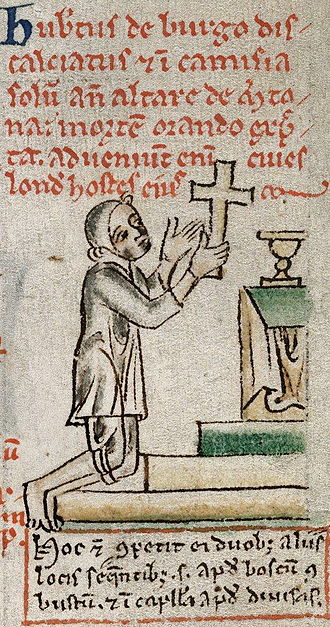
Hubert de Burgh from Matthew Paris

Isabella, however, remained unmarried and returned to Scotland in November 1222. Isabella’s own marriage prospects may have been damaged by the relatively lowly marriage of her older sister. Nevertheless, Alexander II was keen to look after his sister’s interests and continued to search for a suitable husband. A letter from Henry III alludes to a possible match between Isabella and William (II) Marshal, Earl of Pembroke but the earl was, instead, married to the king’s own younger sister, Eleanor

Isabella’s future was finally settled in June 1225, when she married Roger Bigod, fourth Earl of Norfolk, at Alnwick in Northumberland. On 20 May, the archbishop of York was given respite from his debts in order to attend the wedding of the King of Scots’ sister:

Order to the barons of the Exchequer to place in respite, until 15 days from Michaelmas in the ninth year, the demand for debts they make by summons of the Exchequer from W. archbishop of York, because the archbishop has set out for Alnwick where he is to be present to celebrate the marriage between Roger, son and heir of Earl H. Bigod, and Isabella, sister of the King of Scots.

finerollshenry3.org.uk /content/calendar/roll_022.html#it204_001, 20 May
1225.

Roger was the young son of Hugh Bigod, Earl of Norfolk, who had died earlier in the year, and Matilda Marshal, eldest daughter of William Marshal, Earl of Pembroke. Roger was still a minor, aged about 13, and possibly as much as seventeen years his wife’s junior. In 1224 King Alexander II had levied an aid of 10,000 marks towards the costs of his sisters’ marriages, as well as contributing £1,000 towards Henry III’s 1225 expedition to Gascony, suggesting the Scots king was eager to see both his sisters comfortably settled.

At the time of the marriage, Roger’s wardship was in the hands of Henry III’s uncle, William Longespée, Earl of Salisbury, but it was transferred to King Alexander II in 1226, after Longespée’s death. Now in the custody of the king of Scots, Roger and Isabella moved to Scotland, living at the Scottish court until Roger attained his majority in 1233 and entered into his inheritance.

The Marshal coat of arms

Ten years after the sealing of Magna Carta, and 16 years after they had been taken hostage, the two Scottish princesses were both finally settled into marriage, though less exalted marriages than their father had wished and hoped for, with English barons, rather than princes or kings. Their younger sister, Marjorie, would also marry into the English nobility in 1235, becoming the wife of Gilbert Marshal, 3rd son of the famed William Marshal who had become Earl of Pembroke the previous year.

Marjorie died in 1244, Isabella in 1253 and Margaret, the eldest, in 1259. Rather unusually for princesses, who would often be married off in foreign lands and separated from family, the 3 sisters would share their final resting place and be buried at the Church of the Black Friars in London.

*

Footnote:

1W.W. Scott, ‘Ermengarde de Beaumont (1233)’, Oxforddnb.com.

Images:

All images courtesy of Wikipedia except Magna Carta, which is ©2015 Sharon Bennett Connolly

Sources:

finerollshenry3.org.uk; W.W. Scott, ‘Ermengarde de Beaumont (1233)’, Oxforddnb.com; Marc Morris, King John; Jessica Nelson, ‘Isabella [Isabella Bigod], countess of Norfolk (b. 1195/1196, 1270)’, Oxforddnb.com; Nelson, Jessica A., ‘Isabella, Countess of Norfolk’, magnacarta800th.com; Louise J. Wilkinson, ‘Margaret, Princess of Scotland’, magnacarta800th.com; W.W. Scott, ‘Margaret, countess of Kent (b. 1187×1195, d. 1259)’, Oxforddnb.com; Keith Stringer, ‘Alexander II (1198–1249)’, Oxforddnb.com; Mackay, A.J.G. (ed.), The Historie and Chronicles of Scotland … by Robert Lindesay of Pitscottie; Ross, David, Scotland: History of a Nation; Church, Stephen, King John: England, Magna Carta and the Making of a Tyrant; Danziger, Danny and John Gillingham, 1215: The Year of Magna Carta; Crouch, David, William Marshal; The Story of Scotland by Nigel Tranter; Matthew Paris, Robert de Reading and others, Flores Historiarum, volume III.

*

My Books

Signed, dedicated copies of all my books are available through my online bookshop.

Out now! Scotland’s Medieval Queens

Scotland’s history is dramatic, violent and bloody. Being England’s northern neighbour has never been easy. Scotland’s queens have had to deal with war, murder, imprisonment, political rivalries and open betrayal. They have loved and lost, raised kings and queens, ruled and died for Scotland. From St Margaret, who became one of the patron saints of Scotland, to Elizabeth de Burgh and the dramatic story of the Scottish Wars of Independence, to the love story and tragedy of Joan Beaufort, to Margaret of Denmark and the dawn of the Renaissance, Scotland’s Medieval Queens have seen it all. This is the story of Scotland through their eyes.

Available now from Amazon and Pen and Sword Books

Also by Sharon Bennett Connolly:

Heroines of the Tudor World tells the stories of the most remarkable women from European history in the time of the Tudor dynasty, 1485-1603. These are the women who ruled, the women who founded dynasties, the women who fought for religious freedom, their families and love. Heroines of the Tudor World is now available for pre-order from Amberley Publishing and Amazon UK. Women of the Anarchy demonstrates how Empress Matilda and Matilda of Boulogne, unable to wield a sword themselves, were prime movers in this time of conflict and lawlessness. It shows how their strengths, weaknesses, and personal ambitions swung the fortunes of war one way – and then the other. Available from Bookshop.orgAmberley Publishing and Amazon UKKing John’s Right-Hand Lady: The Story of Nicholaa de la Haye is the story of a truly remarkable lady, the hereditary constable of Lincoln Castle and the first woman in England to be appointed sheriff in her own right. Available from all good bookshops Pen & Sword Booksbookshop.org and Amazon

Defenders of the Norman Crown: The Rise and Fall of the Warenne Earls of Surrey tells the fascinating story of the Warenne dynasty, from its origins in Normandy, through the Conquest, Magna Carta, the wars and marriages that led to its ultimate demise in the reign of Edward III. Available from Pen & Sword BooksAmazon in the UK and US, and Bookshop.orgLadies of Magna Carta: Women of Influence in Thirteenth Century England looks into the relationships of the various noble families of the 13th century, and how they were affected by the Barons’ Wars, Magna Carta and its aftermath; the bonds that were formed and those that were broken. It is now available in paperback and hardback from Pen & SwordAmazon, and Bookshop.orgHeroines of the Medieval World tells the stories of some of the most remarkable women from Medieval history, from Eleanor of Aquitaine to Julian of Norwich. Available now from Amberley Publishing and Amazon, and Bookshop.orgSilk and the Sword: The Women of the Norman Conquest traces the fortunes of the women who had a significant role to play in the momentous events of 1066. Available now from Amazon,  Amberley Publishing, and Bookshop.org.

Alternate Endings: An anthology of historical fiction short stories including Long Live the King… which is my take what might have happened had King John not died in October 1216. Available in paperback and kindle from Amazon.

Podcast:

Have a listen to the A Slice of Medieval podcast, which I co-host with Historical fiction novelist Derek Birks. Derek and I welcome guests, such as Bernard Cornwell and Elizabeth Chadwick, and discuss a wide range of topics in medieval history, from significant events to the personalities involved. Every episode is also now available on YouTube.

*

Don’t forget! Signed and dedicated copies of all my books are available through my online bookshop.

For forthcoming online and in-person talks, please check out my Events Page.

You can be the first to read new articles by clicking the ‘Follow’ button, liking our Facebook page or joining me on Twitter and Instagram.

©2020 Sharon Bennett Connolly FRHistS
Isabel de Warenne, Countess of Surrey

025
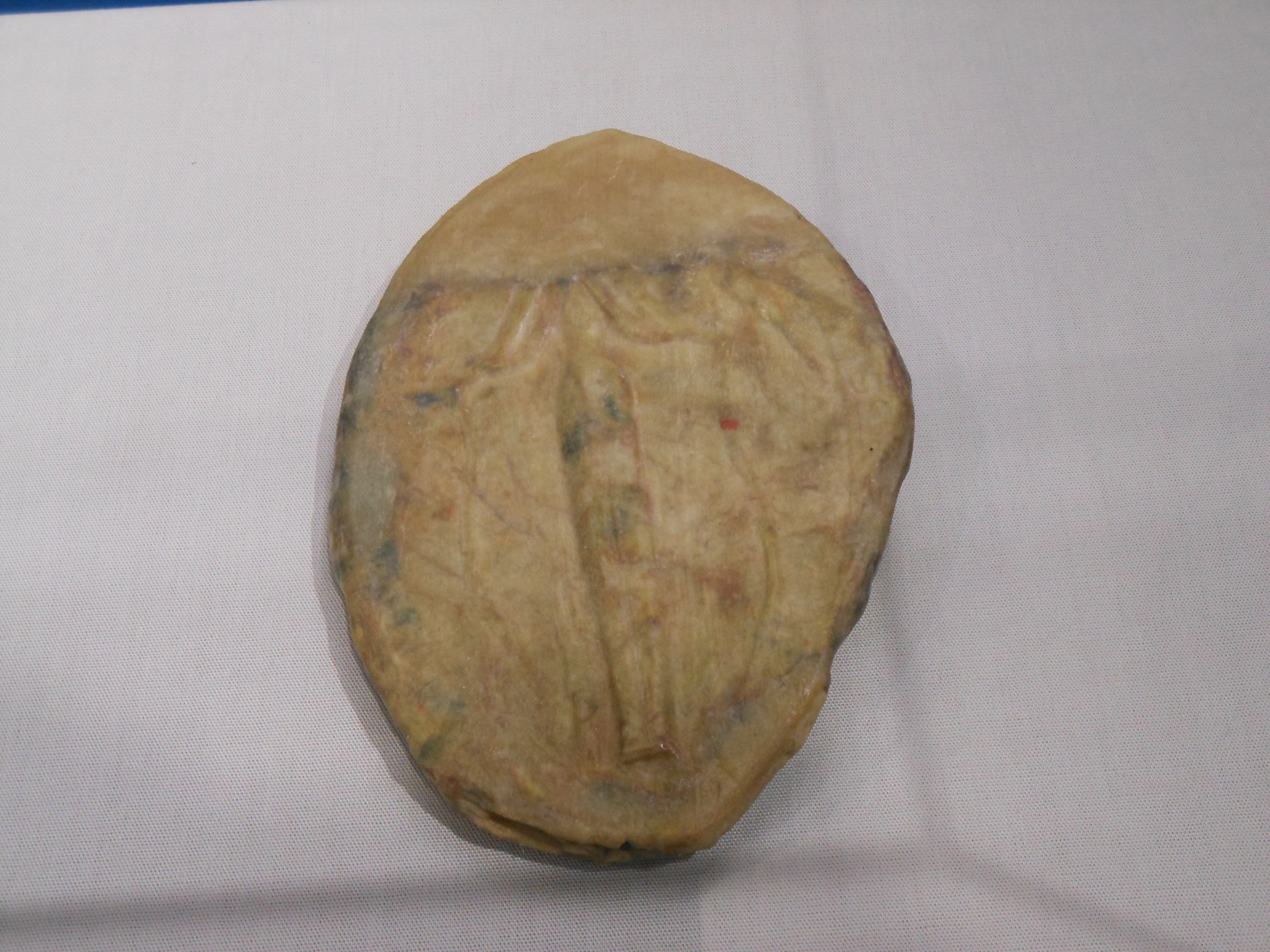
Seal of Isabel de Warenne, Conisbrough Castle

Isabel de Warenne was the only surviving child of William de Warenne, 3rd Earl of Warenne and Surrey, and his wife Adela, or Ela, de Talvas, daughter of William III of Ponthieu. When her father died on the Second Crusade to the Holy Land, in around 1148, Isabel became 4th Countess of Surrey, in her own right, and one of the most prized heiresses in England and Normandy, with large estates in Yorkshire.

Isabel was born during a period of civil war in England, a time known as The Anarchy (c.1135-54), when King Stephen fought against Empress Matilda, the daughter of Henry I, for the right to rule England. Isabel’s father, William, was a staunch supporter of the king and had fought at the Battle of Lincoln in February 1141, though without distinction; his men were routed early on in the battle and William was among a number of earls who fled the field. He later redeemed himself that summer by capturing Empress Matilda’s brother and senior general, Robert Earl of Gloucester, at Winchester.

The earl appears to have tired of the civil war in 1147 and departed on Crusade with his half-brother, Waleran de Beaumont, Count of Meulan, and their cousin, King Louis VII of France. In the same year, as part of King Stephen’s attempts to control the vast de Warenne lands during a crucial time in the Anarchy, Earl Warenne’s only daughter, Isabel, was married to Stephen’s younger son, William of Blois, who would become Earl by right of his wife, following the 3rd earl’s death on Crusade in 1148; the earl was killed fighting in the doomed rearguard at the Battle of Mount Cadmus near Laodicea in January 1148.

Lewes Priory

It has been suggested that William of Blois was some 7 or 8 years younger than his wife, Isabel. However, this seems improbable and it appears more likely that the young couple were of similar ages. Isabel’s father had been born in 1119 and was no older than 29 when he died; his wife, Ela de Talvas, was a few years younger than her husband. This means that, even if the couple married as soon as they reached the ages allowed by the church, 12 for a girl and 14 for a boy, which would have been 1133 at the earliest, and Ela fell pregnant on her wedding night, Isabel could have been no older 13 in 1147. Given the danger associated with girls giving birth before their teens, it seems plausible that Isabel was not born until the late 1130s and may have been between 10 and 12, or younger when she married William of Blois.

Even before it was known that Earl Warenne had died on crusade, William of Blois was already being referred to as earl in a number of charters relating to Warenne lands, one such charter, dated to c.1148, was issued with the proviso ‘that if God should bring back the earl [from the crusade] he would do his best to obtain the earl’s confirmation, or otherwise that of his lord earl William, the king’s son.’1

During the 3rd earl’s absence, and while the new earl and countess were still only children, the vast Warenne lands were administered by the 3rd earl’s youngest brother, Reginald de Warenne, Baron Wormegay, who was a renowned and accomplished administrator and estate manager. We do not know when news reached England of the earl’s death, the tidings may have arrived before the return of the earl’s half-brother, Waleran, later in the year. However, the future of the earldom was already secure with the succession of Isabel and her young husband, carefully watched over by Isabel’s uncle, Reginald.

In August 1153 the young couple’s future prospects could have changed drastically when William’s elder brother Eustace, their father’s heir, died. As a consequence, William inherited his mother’s County of Boulogne from his brother, adding to his already substantial domains. He may also have expected to inherit his brother’s position as heir to the throne – or not. It seems that William’s ambitions did not extend to the lofty heights of the throne, or he was not considered suitable for the crown. Either way, the young man was removed from the succession to the crown by his own father, when Stephen made a deal with Empress Matilda’s son, Henry of Anjou, that the throne would go to him on Stephen’s death, thus returning the crown to the rightful line of succession.

William seems to have accepted this, on the whole. Although there is some suggestion of his involvement in a plot against Henry later in 1154, during which William suffered a broken leg, he served Henry loyally, once he became king, until his own death, returning from the king’s campaign in Toulouse, in 1159.

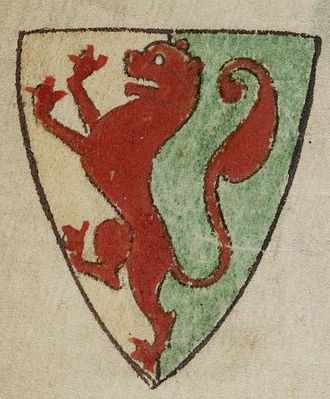
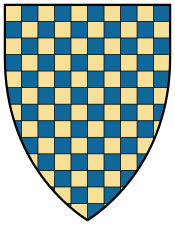
The Warenne coat of arms

Now in her mid-20s, and as their marriage had been childless, Isabel was once again a prize heiress. Although she seems to have had a little respite from the marriage market, by 1162 Henry II’s youngest brother, William X, Count of Poitou, was seeking a dispensation to marry her. The dispensation was refused by Thomas Becket, Archbishop of Canterbury, on the grounds of consanguinity; the archbishop’s objection was not that Isabel and William were too closely related, but that William and Isabel’s first husband had been cousins. William died shortly after the archbishop refused to sanction the marriage – it is said, of a broken heart.

King Henry was not to be thwarted so easily in his plans to bring the Warenne lands into the royal family, and his illegitimate half-brother, Hamelin, was married to Isabel in 1164. Hamelin was the son of Herny’s father, Geoffrey, Count of Anjou, and an unknown woman, born around 1130, in the time when Geoffrey and Empress Matilda were estranged. In an unusual step, Hamelin took his wife’s surname and bore the titles Earl of Warenne and Surrey in her right.

The marriage appears to have been highly successful. Hamelin was loyal to his brother and his nephew, Richard I, and played a prominent part in English politics whilst Richard was absent on the 3rd Crusade. He also built the highly innovative keep at Conisbrough in the 1170s and 1180s.

220px-Conisbrough_keep
The keep at Conisbrough Castle

Isabel and Hamelin had four surviving children. Their son and heir, William, would become the 5th Earl of Surrey and married Matilda Marshal, daughter of the great William Marshal, Earl of Pembroke and regent for King Henry III. There were also three daughters, Ela, Isabel and Matilda. It has been suggested that Matilda was Hamelin’s daughter by a previous relationship, but this theory is based on an erroneous death date for her husband. One of the daughters – although it is not clear which – bore an illegitimate son, Richard Fitzroy, by her cousin, John (the future King John).

Isabel died in her mid-60s, in 1203, and was buried at Lewes Priory, alongside Hamelin, who had died the previous year. In 1202, Countess Isabel had granted ‘for the soul of her husband earl Hamelin, to the priory of St Katherine, Lincoln, of similar easements for 60 beasts, namely for 40 as of his gift and 20 as of hers.’2

*

Footnotes: 1 Farrer, William and Charles Travis Clay, editors, Early Yorkshire Charters, Volume 8: The Honour of Warenne; 2 ibid

Sources: Robert Batlett, England Under the Norman and Angevin Kings; Dan Jones, The Plantagenets; Donald Matthew, King Stephen; Medieval Lands Project on the Earls of Surrey, Conisbrough Castle; Farrer, William and Charles Travis Clay, editors, Early Yorkshire Charters, Volume 8: The Honour of Warenne; Morris, Marc King John: Treachery, Tyranny and the Road to Magna Carta; Church, Stephen, King John: England, Magna Carta and the Making of a Tyrant; doncasterhistory.co.uk

Photos: All images © Sharon Bennett Connolly 2015.

*

My Books

Signed, dedicated copies of all my books are available through my online bookshop.

Coming 15 January 2024: Women of the Anarchy

On the one side is Empress Matilda, or Maud. The sole surviving legitimate child of Henry I, she is fighting for her birthright and that of her children. On the other side is her cousin, Queen Matilda, supporting her husband, King Stephen, and fighting to see her own son inherit the English crown. Both women are granddaughters of St Margaret, Queen of Scotland and descendants of Alfred the Great of Wessex. Women of the Anarchy demonstrates how these women, unable to wield a sword, were prime movers in this time of conflict and lawlessness. It show how their strengths, weaknesses, and personal ambitions swung the fortunes of war one way – and then the other.

Available for pre-order from Amberley Publishing and Amazon UK.

Coming on 15 June 2024: Heroines of the Tudor World

Heroines of the Tudor World tells the stories of the most remarkable women from European history in the time of the Tudor dynasty, 1485-1603. These are the women who ruled, the women who founded dynasties, the women who fought for religious freedom, their families and love. These are the women who made a difference, who influenced countries, kings and the Reformation. In the era dominated by the Renaissance and Reformation, Heroines of the Tudor World examines the threats and challenges faced by the women of the era, and how they overcame them. Some famous, some infamous, some less well known, including Anne Boleyn, Elizabeth Barton, Catherine de Medici, Bess of Hardwick and Elizabeth I. From writers to regents, from nuns to queens, Heroines of the Tudor World shines the spotlight on the women helped to shape Early Modern Europe.

Heroines of the Tudor World is now available for pre-order from Amberley Publishing and Amazon UK.

Also by Sharon Bennett Connolly:

King John’s Right-Hand Lady: The Story of Nicholaa de la Haye is the story of a truly remarkable lady, the hereditary constable of Lincoln Castle and the first woman in England to be appointed sheriff in her own right. It is is available from Pen & Sword Booksbookshop.org and Amazon. Defenders of the Norman Crown: The Rise and Fall of the Warenne Earls of Surrey tells the fascinating story of the Warenne dynasty, from its origins in Normandy, through the Conquest, Magna Carta, the wars and marriages that led to its ultimate demise in the reign of Edward III. Available from Pen & Sword BooksAmazon in the UK and US, and Bookshop.org.

Ladies of Magna Carta: Women of Influence in Thirteenth Century England looks into the relationships of the various noble families of the 13th century, and how they were affected by the Barons’ Wars, Magna Carta and its aftermath; the bonds that were formed and those that were broken. It is now available in paperback and hardback from Pen & Sword,  Amazon, and Bookshop.org. Heroines of the Medieval World tells the stories of some of the most remarkable women from Medieval history, from Eleanor of Aquitaine to Julian of Norwich. Available now from Amberley Publishing and Amazon, and Bookshop.org. Silk and the Sword: The Women of the Norman Conquest traces the fortunes of the women who had a significant role to play in the momentous events of 1066. Available now from Amazon,  Amberley Publishing, and Bookshop.org.

Alternate Endings: An anthology of historical fiction short stories including Long Live the King… which is my take what might have happened had King John not died in October 1216. Available in paperback and kindle from Amazon.

Podcast:

Have a listen to the A Slice of Medieval podcast, which I co-host with Historical fiction novelist Derek Birks. Derek and I welcome guests, such as Bernard Cornwell and Elizabeth Chadwick, and discuss a wide range of topics in medieval history, from significant events to the personalities involved.

*

Don’t forget! Signed and dedicated copies of all my books are available through my online bookshop.

For forthcoming online and in-person talks, please check out my Events Page.

*You can be the first to read new articles by clicking the ‘Follow’ button, liking our Facebook page or joining me on Twitter and Instagram.

Article: 2020 © Sharon Bennett Connolly FRHistS

Ladies of Magna Carta Blog Tour

Ladies of Magna Carta: Women of Influence in Thirteenth Century Europe is going on tour – virtually at least. With articles, book reviews and interviews coming over the next 2 weeks, we will be visiting such exotic places as Barnsley, Tennessee, the Yorkshire Dales, Sussex and Michigan – all from the desktop!

Here’s the itinerary!

First stop is 1st July at my amazing publishers, Pen and Sword, who have done a wonderful job of organising the tour. Here’s an article on the inspiration behind the book.

5th July, Joanna Arman, The History Lady, will publishing her thoughts on Ladies of Magna Carta. I’m not nervous – much!

6th July, I will be stopping by for a cuppa with Samantha Wilcoxson to talk about The Marshal Sisters.

7th July, I will be chatting with Susan Higginbotham on History Refreshed about why it is so hard to love Isabelle d’Angoulême.

I will be making 2 stops on 8th July, visiting Simon Turney’s S.J.A. Turney’s Books and More, with an article on the many Family Ties of the women of the Magna Carta a story, plus Simon has written a wonderful review of Ladies of Magna Carta. And then it’s a quick hop over to visit Carol McGrath for her review of Ladies of Magna Carta and a chat about history, research and writing in general.

9th July I’ll be visiting the inimitable author, Tony Riches, with an article on Matilda de Braose.

10th July its down to Surrey for a review from the wonderful Paula Lofting over at The Road to Hastings and Other Stories.

13th July its back over to the US to Adventures of a Tudor Nerd for ace reviewer Heidi Malagasi’s thoughts on Ladies of Magna carta.

14th July, its over to nursing historian Louise Wyatt for coffee and a Q &A – and a little taster from the book.

15th July its back over the pond to Tennessee, to visit Kristie Dean and give you 16 Facts About Woman and Magna Carta – it was supposed to be 10 but I got carried away!

16th July Last – but by no means least – stop on the tour is the amazing Derek Birks and one final – hopefully glowing – review.

Ladies of Magna Carta: Women of Influence in Thirteenth Century England  is now available from Pen & SwordAmazon and from Book Depository worldwide.

I would like to thank Rosie and Rebecca at Pen & Sword and all the authors and bloggers involved for taking part in this amazing tour. I am truly humbled and grateful that you have all taken the time to read Ladies of Magna Carta and shared your thoughts and blog space with me.

THANK YOU!

*

Signed book plates

If you have a copy of Ladies of Magna Carta and would like a signed book plate to pop in the front, for you or someone else, just drop me a line via the ‘Contact Me‘ page with your address and who you would like the dedication made out to, and I will get one out to you.

*

About me:

Sharon Bennett Connolly has been fascinated by history her whole life. She has studied history academically and just for fun – and even worked as a tour guide at historical sites. For Christmas 2014, her husband gave her a blog as a gift – http://www.historytheinterestingbits.com – and Sharon started researching and writing about the stories that have always fascinated, concentrating on medieval women. Her latest book, Ladies of Magna Carta: Women of Influence in Thirteenth Century England, released in May 2020, is her third non-fiction book. She is also the author of Heroines of the Medieval World and Silk and the Sword: The Women of the Norman Conquest. Sharon regularly gives talks on women’s history; she is a feature writer for All About History magazine and her TV work includes Australian Television’s ‘Who Do You Think You Are?

My Books

Out Now!

Ladies of Magna Carta: Women of Influence in Thirteenth Century England  looks into the relationships of the various noble families of the 13th century, and how they were affected by the Barons’ Wars, Magna Carta and its aftermath; the bonds that were formed and those that were broken. It is now available from Pen & SwordAmazon and from Book Depository worldwide.

Also by Sharon Bennett Connolly:

Silk and the Sword: The Women of the Norman Conquest traces the fortunes of the women who had a significant role to play in the momentous events of 1066.  Available now from Amazon,  Amberley Publishing, Book Depository.

Heroines of the Medieval World tells the stories of some of the most remarkable women from Medieval history, from Eleanor of Aquitaine to Julian of Norwich. Available now from Amberley Publishing and Amazon and Book Depository.

*

You can be the first to read new articles by clicking the ‘Follow’ button, liking our Facebook page or joining me on Twitter and Instagram.

©2020 Sharon Bennett Connolly
William the Lion, the Warenne King of Scots

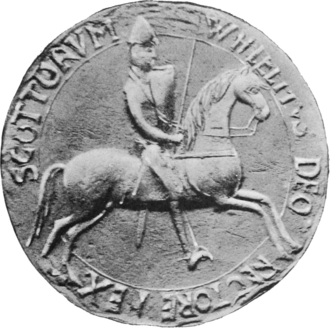
William the Lion, King of Scots

There is only one clause in Magna Carta that mentions particular women. Although they are not identified by name, they are easily identifiable due to their positions. These two women were the daughters of William I, the Lion, King of Scots. They were the sisters of the new King of Scots, Alexander II, and had been hostages in England since the treaty of Norham in 1209. Clause 59 of Magna Carta agrees to negotiate for their release, alongside a number of other Scottish hostages:

We will treat Alexander, king of Scots, concerning the return of his sisters and hostages and his liberties and rights in the same manner in which we will act towards our other barons of England, unless it ought to be otherwise because of the charters which we have from William his father, formerly king of Scots; and this shall be determined by the judgement of his peers in our court.1

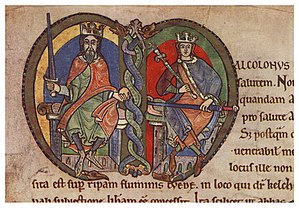
The king of Scots’ two sisters referred to in the clause were Margaret and Isabella, the oldest daughters of William I (the Lion), King of Scots, and his wife, Ermengarde de Beaumont. The two girls had been caught up in the power struggle between their father and the Plantagenet kings. William I was the second of the three sons of Henry, Earl of Northumberland, and his wife, Ada de Warenne. He was, therefore, a grandson of David I and great-grandson of Malcolm III Canmor and St Margaret, the Anglo-Saxon princess.

Magna Carta, Lincoln Castle

William had succeeded his father as earl of Northumberland in June 1153, when he was about 11 years old; William used ‘Warenne’ as his family name when earl of Northumberland. He lost the earldom, however, when his brother, Malcolm IV (known as Malcolm the Maiden) surrendered the northern counties of England to Henry II; he was given lands in Tynedale, worth £10 per annum, in compensation. This loss of Northumberland was never forgotten and was to colour William’s future dealings with the English crown throughout his reign.

William was probably knighted in 1159, when he accompanied King Henry and his own brother Malcolm on an expedition to Toulouse and in 1163 he was in attendance in a meeting with King Henry II at Woodstock where the Scots king did homage to the English king. The youngest of the royal brothers, David, was to remain in England as a hostage to Malcolm’s good behaviour. William ascended the Scottish throne on Malcolm’s death on 9 December 1165, aged about 23; his inauguration as king took place at Scone on Christmas Eve, 24 December. In 1166 William travelled to Normandy to meet with King Henry II and, although we do not know what they spoke of, it was reported that they parted on bad terms.

Malcolm IV, king of Scots

Nevertheless, in 1170 William and his brother David were at the English court, attending Henry II’s council at Windsor in April and were in London on 14 June, at the coronation of Henry’s eldest son, also Henry, the Young King; he died in 1183, six years before his father. Both William and his brother David did homage to the Young King after the coronation. And in 1173 when the Young King and his brothers, Richard and Geoffrey, rebelled against their father, Henry II, they sought William’s aid. The younger King Henry promised that he would give the northern counties of England to the Scots king, and the earldoms of Huntingdon with Cambridgeshire to the king’s brother, David, in return for their support in the rebellion.

William considered the offer, but after consulting his barons in the summer of 1173, he decided to ask Henry II to return Northumberland. He would renounce his homage if the English king refused. Henry II did refuse and William joined the Young King’s rebellion. He formed an alliance with Louis VII of France and Count Philippe of Flanders, who both promised mercenaries would be sent to England in support. This was the start of the long Scottish tradition of alliances with France, against England, which would become known as the Auld Alliance. On 20 August 1173 the Scottish forces moved south, to Alnwick, Warkworth and Newcastle.

Although they devastated the countryside, the campaign in Northumberland achieved very little; they were unable to take the strategically important castles. They moved on to Carlisle, but pulled back to Roxburgh after receiving news that a new English force was advancing. This force, under Ranulf de Glanville, the justiciar, burned Berwick before agreeing to a truce until 13 January 1174. The truce was later extended to 24 March 1174, after a payment of 300 marks by the bishop of Durham to King William. At the end of the truce, the Scots, accompanied by Flemish mercenaries, again advanced into England. They ravaged the Northumberland coast and besieged both Wark-on-Tweed and Carlisle castles, but failed to take either.

On 13 July, while much of the Scottish army was spread out in raiding parties, the Scots were the victims of a surprise attack. King William’s horse was killed, the king trapped underneath. William surrendered to Ranulf de Glanville and was taken first to Newcastle and then to Northampton, where he appeared before Henry II on 24 July. The Scots king was sentenced to imprisonment at Falaise in Normandy and the price of his freedom was to submit himself, his kingdom and the castles of Berwick, Roxburgh and Edinburgh to King Henry II. The Convention of Falaise on 1 December 1174 also granted that ‘the church of Scotland shall henceforward owe such subjection to the church of England as it should do.’2 It was a humiliating treaty for the Scots, which also required twenty Scottish noble hostages be handed to the English in return for their king’s freedom.

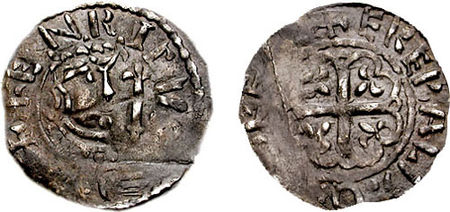
Coin of William’s father Henry of Scotland

King William arrived back in Scotland in February 1175, having spent two months in England until the handover of the Scottish castles had been completed. He returned to a revolt in Galloway, which he managed to quash, he was then faced with a threat from Donald Ban Macwilliam, grandson of Duncan II, who was gaining support for a challenge to the throne and a return to the royal line of Duncan II. Things quietened down for a time, but in April 1181, when the king and David were in Normandy Donald Ban Macwilliam led an uprising in Moray and Ross, apparently gaining full control of the two earldoms. One royal retainer, Gillecolm the Marischal, surrendered the castle of Auldearn and then joined the rebels.

The king was also faced with unrest in Galloway, where Gilbert of Galloway was vying with his nephew Roland for control of the region. Gilbert died on 1 January 1185 and shortly after King William invaded Galloway, alongside Gilbert’s nephew Roland. On 4 July 1185 William and his allies defeated the main force of Gilbert’s followers and by 1190 Roland had been granted the lordship of Galloway by King William while Gilbert’s son, Duncan, was made lord of Carrick. As a result, Galloway remained at peace well into the 13th century, until the death of Roland’s son, Alan, in 1234.

With Galloway subdued, in 1187 King William was finally able to quash the rebellion in the north, leading his considerable army as far as Inverness. On 31 July, at the now-lost site of ‘Mam Garvia’, Roland of Galloway faced the rebels in battle where over 500 of them were killed, including Donald Macwilliam, whose head was sent to King William.

The overlordship of Henry II caused additional problems for King William in the Scottish church; the archbishops of York and Canterbury both claimed the homage of the Scottish clergy. William also had a long running dispute with the papacy, with five successive popes, in fact, over the appointment of a bishop of St Andrews; neither king nor pope approved the other’s choice of candidate. The English king sided with the popes on the matter and in 1181 King William was excommunicated by the archbishop of Canterbury; the Scottish people, as a whole, were subsequently excommunicated by the bishop of Durham. Within two years, however, the papacy and the Scots king were on such good terms that the pope sent William the Golden Rose as a tribute to ‘a king of exceptional religious zeal’.3 On 13 March 1192 Pope Celestine III issued the papal bull, Cum universi, recognising the Scottish church as a ‘special daughter’ of the apostolic see and subject to Rome without an intermediary. Thereby denying the claims to superiority of both York and Canterbury.

Unusually for a king in this period, by 1180 William had been on the throne for fifteen years and was still unmarried. He had several illegitimate children but until he married, William’s heir was his younger brother, David. With this in mind, in 1184, William was at King Henry’s court to discuss a possible marriage with Henry’s granddaughter, Matilda of Saxony. The match was forbidden by the pope on the grounds of consanguinity. In May 1186, during a council at Woodstock, King Henry suggested Ermengarde de Beaumont as a bride for William. Ermengarde was the daughter of Richard, Vicomte de Beaumont-sur-Sarthe, who was himself the son of Constance, one of the many illegitimate daughters of King Henry I of England.

With such diluted royal blood, she was hardly a prestigious match for the king of Scots, but he reluctantly accepted the marriage after consulting his advisers. The wedding took place at Woodstock on 5 September 1186, with King Henry hosting four days of festivities. Edinburgh Castle was returned to the Scots as part of Ermengarde’s dowry. Although we do not know Ermengarde’s birth date, at the time of the marriage, she was referred to as ‘a girl’, suggesting that she may have only just reached the age of 12.

King William agreed to provide Ermengarde with £100 of rents and forty knights’ fees in Scotland, for the financial maintenance of her household; she also had dwellings and lands at Crail and Haddington, lands which had previously been held by William’s mother, Ada de Warenne. Between 1187 and 1195 Queen Ermengarde gave birth to two daughters, Margaret and Isabella. A son, the future Alexander II, was finally born at Haddington on 24 August 1198, the first legitimate son born to a reigning Scottish king in 70 years; a contemporary remarked that ‘many rejoiced at his birth.’4 A third daughter, Marjorie, was born sometime later.

On the death of King Henry II in 1189, King William again went south, and met with the new king, Richard I, at Canterbury, where he did homage for his English lands. Desperate for money for his crusade, on 5 December 1189, Richard abandoned his lordship of Scotland in the quitclaim of Canterbury; King William was released from the homage and submission given to Henry II, the castles of Roxburgh and Berwick were returned and the relationship between the kingdoms reverted to that in the time of Malcolm IV. The cost to the Scots was to be 10,000 marks, but Scotland was independent once again. However, Richard still refused to sell Northumberland back to William. The Scots king remained on good relations with King Richard, paying 2,000 marks towards his ransom in 1193. King William carried one of the three swords of state at Richard’s second coronation at Winchester on 17 April 1194.

In the spring of 1195 King William fell gravely ill at Clackmannan, causing a succession crisis, the king’s only legitimate children being daughters. The Scottish barons appear to have been divided, between recognising William’s oldest legitimate daughter, Margaret, as his heir, or marrying Margaret to Otto, Duke of Saxony, grandson of Henry II, and allowing Otto to succeed to the throne. A third faction claimed that either solution was contrary to the custom of the land, so long as the king had a brother who could succeed him. In the event, the king recovered from his illness and three years later the queen gave birth to Alexander, the much-desired son and heir. For the last years of the century, William was again occupied with unrest in the north. Before going on campaign in October 1201, he had the Scottish barons swear fealty to his son, Alexander, now 3 years old, a sensible precaution, given that he was approaching his sixtieth birthday.

Alexander II, William’s son and successor

Relations with England changed again in 1199, with the accession of King John. During the reign of King Richard, William had agreed with the justiciar, William Longchamp, and backed Arthur of Brittany as the king’s heir. John may well have remembered this and soon after his accession, in 1200, the two kings met at Lincoln, with William doing homage for his English lands. The matter of Northumberland, still in English hands, was raised and deferred on several occasions between 1199 and 1205. The two kings finally met for formal talks at York from 9 to 12 February 1206 and again from 26 to 28 May 1207, although we have little record of what was discussed. However, John appears to have been prevaricating, suggesting another meeting in October 1207, which the Scots rejected.

In the meantime, the death of the bishop of Durham meant John took over the vacant see and set about building a castle at Tweedmouth. The Scots, seeing this as a direct threat to Berwick, destroyed the building works and matters came to a crisis in 1209. After many threats, and with both sides building up their armies, the two kings met at Norham, Northumberland, in the last week of July and first week of August 1209. The Scots were in a desperate position, with an ailing and ageing king, and a 10-year-old boy as heir, whilst the English, with their Welsh allies and foreign mercenaries, had an army big enough to force a Scottish submission.

The subsequent treaty, agreed at Norham on 7 August, was humiliating for William and the Scots. They agreed to pay 15,000 marks for peace and to surrender hostages, including the king’s two oldest legitimate daughters, Margaret and Isabella. As a sweetener, John promised to marry the princesses to his sons; although Henry was only 2 years old at the time and Richard was just 8 months, whilst the girls were probably in their early-to-mid teens. John would have the castle at Tweedmouth dismantled, but the Scots would pay an extra £4,000 compensation for the damage they had caused to it. The king’s daughters and the other Scottish hostages were handed into the custody of England’s justiciar, at Carlisle on 16 August. How the girls, or their parents, thought about this turn of events, we know not. Given John’s proven record of prevarication and perfidy, King William may have hoped that the promised marriages would occur in good time, but may also have expected that John would find a way out of the promises made.

Arbroath Abbey, burial place of William the Lion

There is no mention of Queen Ermengarde being present for the treaty at Norham, although she did act as mediator in 1212, when her husband was absent, in negotiations with John at Durham. A contemporary observer described the Scottish queen as ‘an extraordinary woman, gifted with a charming and witty eloquence’.5 It seems likely that King John was not immune to the queen’s charms, as he did not ask for more hostages and agreed that the Scottish heir, Alexander, would be knighted and one day marry an English princess. Alexander was knighted at Clerkenwell on 4 March 1212.

King William I, later known as William the Lion, died on 4 December 1214, aged about 72, having reigned for a total of forty-nine years, almost to the day. He was buried before the high altar of Arbroath Abbey. William’s daughters were still in English custody, the conditions for their release would form one of the clauses of Magna Carta. He was succeeded by Alexander, his only legitimate son, who was proclaimed king at Scone on 6 December 1214, aged just 16. Queen Ermengarde was said to be distraught at her husband’s death. She lived for 19 more years, devoting her time to the founding of a Cistercian abbey at Balmerino in Fife. She died on 11 February 1233.

*

Footnotes: 1 Marc Morris, King John; 2E.L.G. Stones quoted in Scott, W.W., William I; 3Ross, David, Scotland: History of a Nation; 4W.W. Scott, Ermengarde de Beaumont (1233); 5Bower quoted in W.W. Scott, Ermengarde de Beaumont (1233),

Images: Courtesy of Wikipedia except Magna Carta which is ©2015 Sharon Bennett Connolly

Further reading: W.W. Scott, Ermengarde de Beaumont (d. 1233), Oxforddnb.com; Scott, W.W., William I [known as William the Lion] (c. 1142–1214) Oxforddnb.com; Scott, W.W., Malcolm IV (c. 1141–1165) Oxforddnb.com; Mackay, A.J.G. (ed.), The Historie and Chronicles of Scotland … by Robert Lindesay of Pitscottie; Ross, David, Scotland: History of a Nation; Farrer, William and Charles Travis Clay, editors, Early Yorkshire Charters, Volume 8: The Honour of Warenne; Morris, Marc King John: Treachery, Tyranny and the Road to Magna Carta; Church, Stephen, King John: England, Magna Carta and the Making of a Tyrant; Danziger, Danny and John Gillingham, 1215: The Year of Magna Carta; Crouch, David, William Marshal; fmg.ac; Brewer’s British Royalty by David Williamson; The Mammoth Book of British Kings and Queens by Mike Ashley; The Story of Scotland by Nigel Tranter; Ada, Queen Mother of Scotland (article) by Victoria Chandler.

*

My Books

Signed, dedicated copies of all my books are available through my online bookshop.

Coming 30 January 2025: Scotland’s Medieval Queens

Scotland’s history is dramatic, violent and bloody. Being England’s northern neighbour has never been easy. Scotland’s queens have had to deal with war, murder, imprisonment, political rivalries and open betrayal. They have loved and lost, raised kings and queens, ruled and died for Scotland. From St Margaret, who became one of the patron saints of Scotland, to Elizabeth de Burgh and the dramatic story of the Scottish Wars of Independence, to the love story and tragedy of Joan Beaufort, to Margaret of Denmark and the dawn of the Renaissance, Scotland’s Medieval Queens have seen it all. This is the story of Scotland through their eyes.

Available for pre-order now.

Also by Sharon Bennett Connolly:

Heroines of the Tudor World tells the stories of the most remarkable women from European history in the time of the Tudor dynasty, 1485-1603. These are the women who ruled, the women who founded dynasties, the women who fought for religious freedom, their families and love. Heroines of the Tudor World is now available for pre-order from Amberley Publishing and Amazon UK. Women of the Anarchy demonstrates how Empress Matilda and Matilda of Boulogne, unable to wield a sword themselves, were prime movers in this time of conflict and lawlessness. It shows how their strengths, weaknesses, and personal ambitions swung the fortunes of war one way – and then the other. Available from Bookshop.orgAmberley Publishing and Amazon UKKing John’s Right-Hand Lady: The Story of Nicholaa de la Haye is the story of a truly remarkable lady, the hereditary constable of Lincoln Castle and the first woman in England to be appointed sheriff in her own right. Available from all good bookshops Pen & Sword Booksbookshop.org and Amazon

Defenders of the Norman Crown: The Rise and Fall of the Warenne Earls of Surrey tells the fascinating story of the Warenne dynasty, from its origins in Normandy, through the Conquest, Magna Carta, the wars and marriages that led to its ultimate demise in the reign of Edward III. Available from Pen & Sword BooksAmazon in the UK and US, and Bookshop.orgLadies of Magna Carta: Women of Influence in Thirteenth Century England looks into the relationships of the various noble families of the 13th century, and how they were affected by the Barons’ Wars, Magna Carta and its aftermath; the bonds that were formed and those that were broken. It is now available in paperback and hardback from Pen & SwordAmazon, and Bookshop.orgHeroines of the Medieval World tells the stories of some of the most remarkable women from Medieval history, from Eleanor of Aquitaine to Julian of Norwich. Available now from Amberley Publishing and Amazon, and Bookshop.orgSilk and the Sword: The Women of the Norman Conquest traces the fortunes of the women who had a significant role to play in the momentous events of 1066. Available now from Amazon,  Amberley Publishing, and Bookshop.org.

Alternate Endings: An anthology of historical fiction short stories including Long Live the King… which is my take what might have happened had King John not died in October 1216. Available in paperback and kindle from Amazon.

Podcast:

Have a listen to the A Slice of Medieval podcast, which I co-host with Historical fiction novelist Derek Birks. Derek and I welcome guests, such as Bernard Cornwell, and discuss a wide range of topics in medieval history, from significant events to the personalities involved.

*

Don’t forget! Signed and dedicated copies of all my books are available through my online bookshop.

For forthcoming online and in-person talks, please check out my Events Page.

You can be the first to read new articles by clicking the ‘Follow’ button, liking our Facebook page or joining me on TwitterThreadsBluesky and Instagram.

*

©2020 Sharon Bennett Connolly FRHistS
Malcolm the Maiden

Malcolm IV

Malcolm IV (the Maiden), King of Scots, was the son of Prince Henry of Scotland and Ada de Warenne. He was the grandson of David I, King of Scots and great-grandson of Malcolm III, King of Scots and second his wife St Margaret, herself a descendant of Alfred the great. On his mother’s side, he was the grandson of William de Warenne, second Earl of Warenne and Surrey, and Isabel de Vermandois, granddaughter of King Henry I of France and his queen, Anna of Kiev.

The younger Malcolm was born between born between 23 April and 24 May 1141. He earned the soubriquet ‘the Maiden’ due to his youth, religious devotion and the fact he remained unmarried. Malcolm had become his grandfather’s heir following his father’s death in 1152, at which time he had been placed into the custody of Duncan, Earl of Fife, and taken on a progress around Scotland north of the Forth, following the old Celtic tradition of showing the heir to the kingdom. When King David I died less than twelve months after his son, Henry, on 24 May 1153, he was succeeded by his grandson, Malcolm. The new king succeeded to the crown at the age of twelve – possibly even on his twelfth birthday – as Malcolm IV.

The accession of Malcolm surpassed all the ambitions of his Warenne grandfather. William de Warenne, the second earl, had sought a royal bride for himself. He had not lived to see his daughter marry the heir to the Scottish throne not to see his grandson’s accession and coronation, which surpassed all of his aspirations and ambitions.

The chronicles make no mention of Malcolm’s mother, Ada, playing a part in the politics of Scotland during her eldest son’s kingship. She did appear at court often and was present for many of the important occasions; she was also a witness to no less than sixteen of Malcolm’s charters. Ada did, moreover, take great interest in the futures of her children, arranging the marriages of her two surviving daughters and employing any means possible to persuade her son to marry. The chronicler, William of Newburgh, relates a story of the lengths Ada had to go to in order to get her reluctant son to choose a bride. Ada went so far as to present her son with a young woman of noble birth, in his bed. Not wishing to cause an argument with his mother, Malcolm did not send her away and allowed the lady to spend the night in his royal bed; while he slept on the floor, wrapped in his cloak. Ada, it seems, was relentless in her attempts to persuade Malcolm to marry, until the young king tired of her constant nagging and begged her to hold her peace.

Coin of Malcolm’s father, Prince Henry, minted at Corbridge

While William of Newburgh makes it sound as if Ada was pushing for grandchildren, or tempting her son to lose his innocence, Ada’s constant attempts to discuss marriage with Malcolm had a political motive as much as a personal one. She was well aware of the importance of royal marriage, not just for the continuation of a dynasty and political alliance, but also for the strength and stability of the monarchy itself. Ada, moreover, was not the only one eager to see the young king settle down with a wife.

The Scottish curia regis (royal council) continued to pressure Malcolm to find a bride, even after his mother had given up. Arnold, Bishop of St Andrews encouraged Malcolm to follow the example of his recently married sisters. The king, however, was no more persuaded by the archbishop and his royal council than he was by his mother. He was eager to hold onto to the highest ideals of Christian knighthood and remain chaste. Malcolm’s relative youth may also have led him to believe that he had many years ahead of him and plenty of time before he needed to settle down and raise a family.

Malcolm’s kingship faced several challenges during his all-too-short reign. In November 1154, the young king was faced with a revolt from Somerled, Earl of Argyll. The unrest was to continue for several years, with Somerled only suing for peace in 1159 having been deprived of his chief supporters, the MacHeths, father and sons, who had been reconciled with the king in 1157.

Malcolm’s greatest challenge, however, was with his larger neighbour, England. While David I had taken advantage of the civil war in England during Stephen’s turbulent reign – known to history as the Anarchy – the accession of Henry II in 1154 changed the political landscape entirely. In 1157 the two kings met at Chester, where Malcolm performed homage ‘in the manner in which his grandfather had been the man of old King Henry’. 1 This homage suggests that Malcolm was accepting that he was a vassal of King Henry, as David I had done with King Henry I. He was also forced to resign his lordship of Northumberland, Cumberland and Westmorland, although the honour of Huntingdon was returned to the Scots king and his brother and heir, William, was given the lordship of Tynedale.

The charter to Kelso Abbey, depicting David I on the left with his grandson Malcolm IV on the right

In 1159 Malcolm, his brother and others joined Henry II and the English army on an expedition to Toulouse; William of Blois, son of King Stephen and husband of Malcolm’s cousin, Isabel de Warenne, Countess of Surrey, was also part of the expedition. The military enterprise gave Malcolm the chance to be knighted honourably in the field. The Scots contingent joined Henry II at Poitiers on 24 June and Henry knighted Malcolm at Périgueux a few days later. The expedition met with initial success and the army overran the county of Toulouse before laying siege to the city itself. However, the siege had to be abandoned when King Louis VII of France, another kinsman of Malcolm’s, intervened.

By the end of the year, Henry and Malcolm were back in Limoges, crossing to England shortly afterwards. Malcolm returned to Scotland in 1160 and to a revolt of six earls led by Feterth, Earl of Strathearn, angry at his expedition with the English army. Mediation by the clergy led to an uneasy peace and their abandoning of their besieging Malcolm at Perth. Unrest then arose in Galloway and Malcolm made several forays into the region before the end of the year, when Fergus, lord of Galloway, submitted to the king. It was the last major unrest by any Scottish earls for not only Malcolm’s reign, but for also for that of his brother, William I.

Malcolm was again summoned to meet Henry II in 1163. Despite falling ill at Doncaster, he was still expected to complete the journey to Henry’s court and arrived at Woodstock at the end of June. It seems Henry wanted to assert his supremacy over Britain, as a group of Welsh rulers had also been called to attend the English king. On 1 July, Malcolm renewed his oath to Henry and handed over hostages, the most senior of whom was his own youngest brother, David, soon to be made earl of Huntingdon. Homage given, Malcolm returned to Scotland, where he faced a revolt led by Somerled, Lord of the Isles, who was later killed in an attempted raid on Glasgow in 1164.

Jedburgh Abbey

Malcolm appears to have never fully recovered from the illness he suffered in Doncaster in 1163 and frequently complained of pains in his head and feet. He planned a pilgrimage to Santiago de Compostela, to pray for healing, but was too ill to undertake it. He died at Jedburgh on Thursday 9 December 1165, aged only 24: he had reigned for 12 years and 6 months and was buried among his ancestors at Dunfermline Abbey. We do not have his mother’s response to the death of her first-born son, but it cannot have been easy for her, only in her forties herself and already a widow of thirteen years. Malcolm was succeeded by his brother William, later known as William the Lion.

*

Footnote: 1 The Melrose Chronicle quoted in W.W. Scott, Malcolm IV (c. 1141–1165)

Images: courtesy of Wikipedia except Jedburgh which is ©2017 Sharon Bennett Connolly
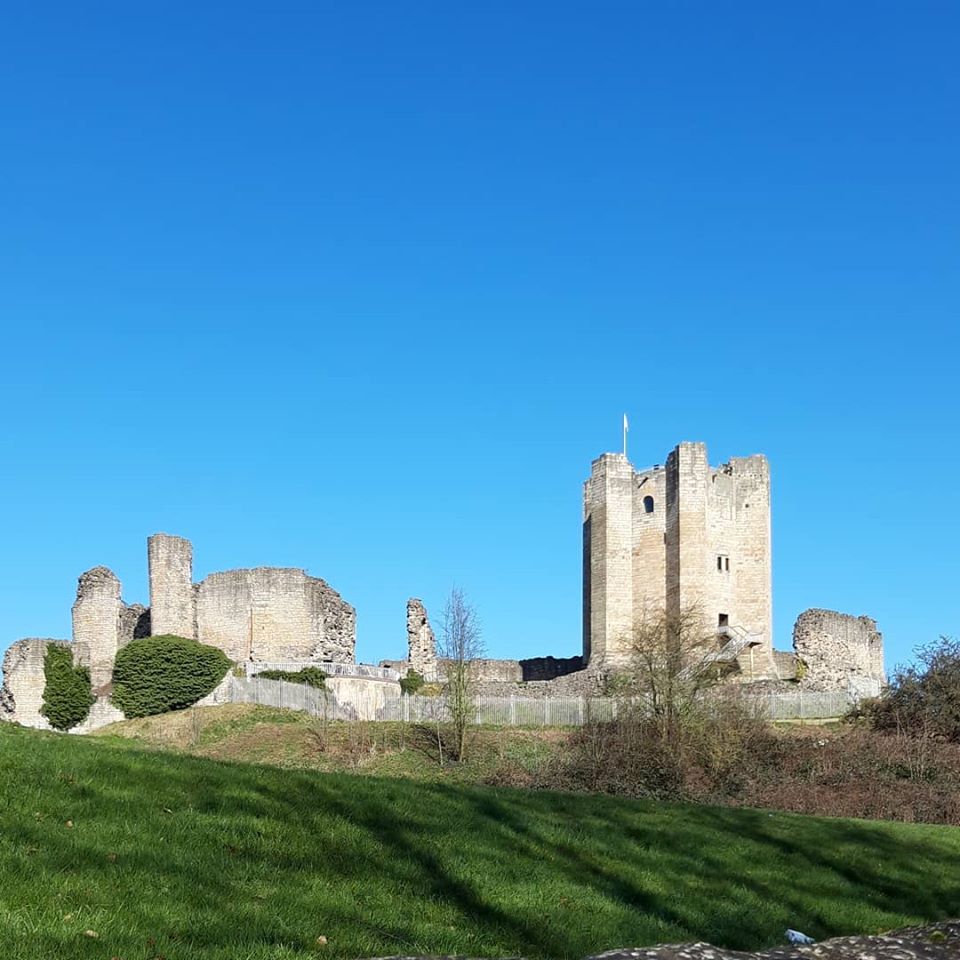
Further reading:

Scott, W.W., Malcolm IV (c. 1141–1165) Oxforddnb.com; Mackay, A.J.G. (ed.), The Historie and Chronicles of Scotland … by Robert Lindesay of Pitscottie; Ross, David, Scotland: History of a Nation; Farrer, William and Charles Travis Clay, editors, Early Yorkshire Charters, Volume 8: The Honour of Warenne; Morris, Marc King John: Treachery, Tyranny and the Road to Magna Carta; Church, Stephen, King John: England, Magna Carta and the Making of a Tyrant; Danziger, Danny and John Gillingham, 1215: The Year of Magna Carta; Crouch, David, William Marshal; fmg.ac; Brewer’s British Royalty by David Williamson; The Mammoth Book of British Kings and Queens by Mike Ashley; The Story of Scotland by Nigel Tranter; Ada, Queen Mother of Scotland (article) by Victoria Chandler.

*

My Books:

Signed, dedicated copies of all my books are available, please get in touch by completing the contact me form.

Out now!

King John’s Right-Hand Lady: The Story of Nicholaa de la Haye is now available for pre-order as a hardback and Kindle from Pen & Sword Booksbookshop.org and Amazon (UK and US).

In a time when men fought and women stayed home, Nicholaa de la Haye held Lincoln Castle against all-comers. Not once, but three times, earning herself the ironic praise that she acted ‘manfully’. Nicholaa gained prominence in the First Baron’s War, the civil war that followed the sealing of Magna Carta in 1215.

A truly remarkable lady, Nicholaa was the first woman to be appointed sheriff in her own right. Her strength and tenacity saved England at one of the lowest points in its history. Nicholaa de la Haye is one woman in English history whose story needs to be told…

Also by Sharon Bennett Connolly:

Defenders of the Norman Crown: The Rise and Fall of the Warenne Earls of Surrey tells the fascinating story of the Warenne dynasty, of the successes and failures of one of the most powerful families in England, from its origins in Normandy, through the Conquest, Magna Carta, the wars and marriages that led to its ultimate demise in the reign of Edward III. Defenders of the Norman Crown: Rise and Fall of the Warenne Earls of Surrey is now available from Pen & Sword BooksAmazon in the UK and US, and  Bookshop.org.

Ladies of Magna Carta: Women of Influence in Thirteenth Century England looks into the relationships of the various noble families of the 13th century, and how they were affected by the Barons’ Wars, Magna Carta and its aftermath; the bonds that were formed and those that were broken. It is now available in paperback and hardback from Pen & Sword,  Amazon, and Bookshop.org.

Heroines of the Medieval World tells the stories of some of the most remarkable women from Medieval history, from Eleanor of Aquitaine to Julian of Norwich. Available now from Amberley Publishing and Amazon, and Bookshop.org.

Silk and the Sword: The Women of the Norman Conquest traces the fortunes of the women who had a significant role to play in the momentous events of 1066. Available now from Amazon,  Amberley Publishing, and Bookshop.org.

Alternate Endings: An anthology of historical fiction short stories including Long Live the King… which is my take what might have happened had King John not died in October 1216. Available in paperback and kindle from Amazon.

*

For forthcoming online and in-person talks, please check out my Events Page.

You can be the first to read new articles by clicking the ‘Follow’ button, liking my Facebook page or joining me on Twitter and Instagram.

©2020 Sharon Bennett Connolly, FRHistS

Robert de Breteuil, the Crusading Earl

Sharon Bennett Connolly
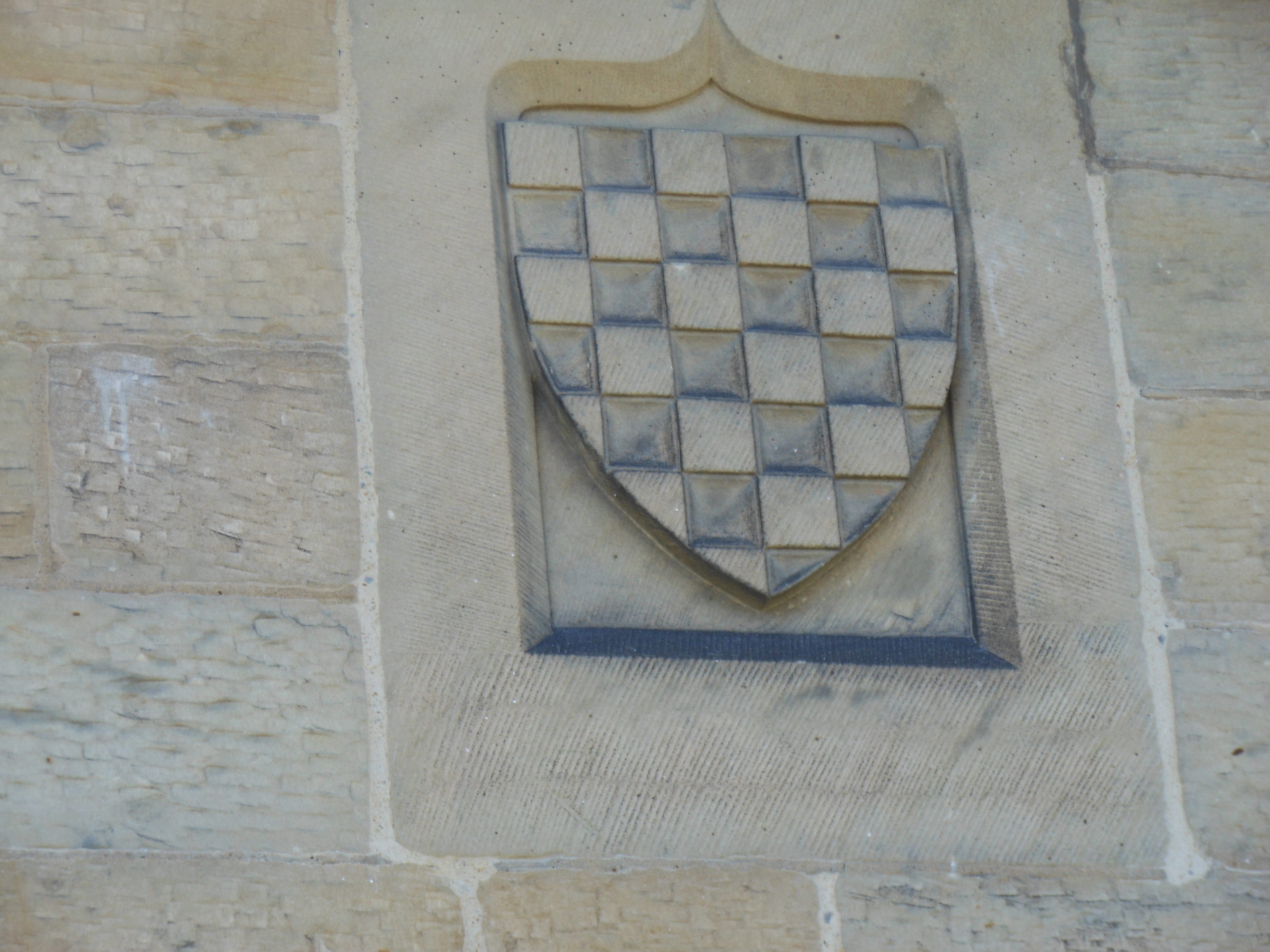
Arms of Robert de Breteuil, 4th Earl of Leicester

Robert de Breteuil, also known as Robert de Beaumont, was a remarkable individual whose adventures in the Holy Land would make a wonderful novel. A renowned warrior and a powerful magnate, he was a companion to the Plantagenet princes, both Richard the Lionheart and King John. Robert was the son-in-law of Matilda de Braose, whose horrific persecution by King John led to her death by starvation in one of John’s dungeons – and the inclusion of clause 39 in Magna Carta:

“No man shall be taken, imprisoned, outlawed, banished or in any way destroyed, nor will we proceed against or prosecute him, except by the lawful judgement of his peers or by the law of the land.”

Magna Carta, magnacartaresearch.og

Robert was the second son of Robert de Breteuil, 3rd earl of Leicester, and his wife, Petronilla de Grandmesnil and the great-grandson of Robert de Beaumont, Count of Meulan and 1st Earl of Leicester, and his wife, Elizabeth de Vermandois. Robert was probably born in the early-1160s and was closely associated with his elder brother William. As they grew up and entered public life they were linked with the household of their cousin, Robert, Count of Meulan, and they regularly appeared on their father’s charters together. Their younger brother, Roger, was bishop of St Andrews. William died in 1189, sometime after the accession of King Richard I. A later legend suggests he suffered from leprosy, though there is no contemporary evidence to corroborate this. William’s death meant Robert therefore became heir to their father’s earldom of Leicester.

Both Robert and his father were at the royal court at Verneiul on 2 January 1190 and joined the Third Crusade of Richard the Loinheart. Robert’s father took an overland route to the Holy Land, while it appears that Robert travelled with the king. Robert was with the king at Messina, Sicily, when news reached him of his father’s death. The 3rd earl had died on 31 August or 1 September 1190 and so Robert was invested as earl by the king on 2 February 1191, in Sicily.

During his time in the Holy Land, Robert was one of the leaders of the assault on Acre on 11 July 1191 and fought in the battle of Arsuf on 7 September. In November he rescued some ambushed Templars at Ibn-Ibrak and then was himself surrounded, with his knights, by a party of Turks outside the camp at Ramlah. Robert was rescued by his cousin Robert de Neubourg; in the process he nearly drowned in a river and had two horses killed under him.

Sharon Bennett Connolly
Seal of Robert de Breteuil

Robert and his men were prominent among the forces who stormed Deir al-Bela on 22 May 1192 and on 5 August 1192 he was one of the ten knights who helped to thwart an attempt to kidnap the king from his tent at Jaffa and the king himself rescued Robert when he was thrown from his horse. He probably set out for home in September or October 1192, having distinguished himself and earned the king’s eternal goodwill.1

Following his return from the crusade, Robert was occupied with the defence of Normandy, but was captured by King Philip Augustus’ forces in June 1194, after a skirmish outside Gourany. He was imprisoned at Étampes for more than a year and only freed after surrendering his castle and lordship of Pacy-sur-Eure to King Philip. His freedom was achieved sometime around February 1196 and in the same year he was married to the teenage Loretta de Braose. Loretta de Braose, was probably born in the early-to-mid-1180s,. She was one of the sixteen children of Matilda and William de Braose. Four of her sisters married prominent Welsh Marcher lords, but Loretta was married to Robert de Breteuil, 4th earl of Leicester.

The marriage was an alliance of two of the leading Anglo-Norman families of the Plantagenet world. He was a powerful earl who had made a name for himself on the crusades, whilst she was a daughter of one of the most powerful barons of the Welsh March. As her marriage portion, Loretta was given Tawstock, near Barnstaple in Devon.

Robert de Breteuil was back campaigning in 1197 and 1198 and was with King Richard when he was mortally wounded at Châlus in April 1199. He had had a long association with Richard’s brother since John had been Count of Mortain, and so was a firm supporter of John’s succession, acting as steward at his coronation on 27 May 1199, claiming the office his grandfather had relinquished in 1153. Robert was highly influential in the early years of John’s reign. He also fought for John in Normandy, being one of the major landholders in the duchy, and was rewarded generously for his support; he was granted Richmondshire in Yorkshire in September 1203. The following year he suffered the loss of his Continental estates when Normandy fell and was the biggest loser of the Anglo-Norman barons.

Although he was one of the two barons (the other being William Marshal) who was given a year to decide whether to pay homage to King Philip of France to try to retain his Norman estates, Robert was not punished by John. Indeed, he was given more lands in England, English lands that had belonged to families who had chosen to remain in Normandy, such as the Harcourts. Robert died before King Philip’s deadline, and so never did have to decide where and how to share his allegiances in order to keep all his lands.

Sharon Bennett Connolly
The ruins of Leicester Abbey, where Robert de Breteuil is buried

Robert died on 20 or 21 October 1204; the life of St Hugh of Lincoln reported that he died a leper, although this seems highly unlikely.1 He was buried in the choir of the Augustinian Abbey in Leicester. Robert and Loretta had remained childless, so Robert’s lands were divided between his two sisters. The earldom and the town of Leicester went to his eldest sister, Amice, the wife of Simon de Montfort and therefore grandmother of the Simon de Montfort who would marry King John’s daughter, Eleanor, and claim the earldom of Leicester for himself. Half of the old earldom, centred around Brackley in Northamptonshire, went to Robert’s younger sister, Margaret, wife of Saher de Quincy, Earl of Winchester.

It is a sad legacy that Robert’s death before John began the persecution of Loretta’s family meant that she was without her husband’s powerful protection when she needed it most. King John’s pursuit of the family did not end with the deaths of Matilda, who died in custody in 1210, and William de Braose, Lord of Bramber, who died in exile in France in 1211. In November 1207 John extracted a promise from Loretta that she would not remarry without the king’s permission and her lands were taken from her. She probably left for France shortly afterwards and only returned to England in 1214.

Once in England, Loretta was allowed to recover her confiscated estates after again to only marry as the king directed. The restoration of Loretta’s estates were complicated by the king’s desire to keep happy those who had benefited from tehir confiscation, such as the powerful Saher de Quincy, earl of Winchester. Loretta’s experiences in this respect may well have inspired clauses 7 and 8 of Magna Carta, which guaranteed that widows should have their marriage portions without hindrance and that they could remarry at their own pleasure, so long as it was with the king’s consent.

Sharon Bennett Connolly
Arms of William de Braose, Loretta’s father

Loretta took her future into her own hands, however, and in early 1221, took a vow of chastity and became an anchorite in Hackington, near Canterbury. An anchorite was a religious recluse who lived in a small cell within a church, allowed on the briefest of contact with others, although she was allowed attendants to help with her daily needs. Loretta’s influence was still in evidence, however, in that she obtained a pardon for a man who had accidentally killed another and helped to establish the Franciscan order in England. She died on 4 March, probably in 1266, and was buried at the church of St Stephen, Hackington.

It is a fact of life that whilst researching one particular person, you come across several others who spark your interest. I stumbled upon the stories of Robert de Breteuil and Loretta de Braose while researching for my book, Ladies of Magna Carta.

*

Footnote: ¹Oxforddnb.com

Sources: sussexcastles.com; genie.com; steyningmuseum.org.uk; berkshirehistory.com; England Under the Norman and Angevin Kings 1075-1225 by Robert Bartlett; Oxford Companion to British History Edited by John Cannon; The Story of Britain by Roy Strong; The Plantagenets, the Kings who Made England by Dan Jones; The Life and Times of King John by Maurice Ashley; The Plantagenet Chronicles Edited by Elizabeth Hallam; Oxforddnb.com; magnacartareseearch.org; Magna Carta by David Starkey; King John by Marc Morris; King John, England, Magna Carta and the Making of a Tyrant by Stephen Church; 1215, the Year of Magna Carta by Danny Danziger and John Gillingham; Women in Thirteenth Century Lincolnshire by Louise J. Wilkinson.

Pictures courtesy of Wikipedia

*

My Books

Signed, dedicated copies of all my books are available through my online store.

Out now: Scotland’s Medieval Queens

Scotland’s history is dramatic, violent and bloody. Being England’s northern neighbour has never been easy. Scotland’s queens have had to deal with war, murder, imprisonment, political rivalries and open betrayal. They have loved and lost, raised kings and queens, ruled and died for Scotland. From St Margaret, who became one of the patron saints of Scotland, to Elizabeth de Burgh and the dramatic story of the Scottish Wars of Independence, to the love story and tragedy of Joan Beaufort, to Margaret of Denmark and the dawn of the Renaissance, Scotland’s Medieval Queens have seen it all. This is the story of Scotland through their eyes.

Scotland’s Medieval Queens gives a thorough grounding in the history of the women who ruled Scotland at the side of its kings, often in the shadows, but just as interesting in their lives beyond the spotlight. It’s not a subject that has been widely covered, and Sharon is a pioneer in bringing that information into accessible history.’ Elizabeth Chadwick (New York Times bestselling author)

Available now from Amazon and Pen and Sword Books

Also by Sharon Bennett Connolly:

Heroines of the Tudor World tells the stories of the most remarkable women from European history in the time of the Tudor dynasty, 1485-1603. These are the women who ruled, the women who founded dynasties, the women who fought for religious freedom, their families and love. Heroines of the Tudor World is now available from Amberley Publishing and Amazon UK. Women of the Anarchy demonstrates how Empress Matilda and Matilda of Boulogne, unable to wield a sword themselves, were prime movers in this time of conflict and lawlessness. It shows how their strengths, weaknesses, and personal ambitions swung the fortunes of war one way – and then the other. Available from Bookshop.orgAmberley Publishing and Amazon UKKing John’s Right-Hand Lady: The Story of Nicholaa de la Haye is the story of a truly remarkable lady, the hereditary constable of Lincoln Castle and the first woman in England to be appointed sheriff in her own right. Available from all good bookshops Pen & Sword Booksbookshop.org and Amazon

Defenders of the Norman Crown: The Rise and Fall of the Warenne Earls of Surrey tells the fascinating story of the Warenne dynasty, from its origins in Normandy, through the Conquest, Magna Carta, the wars and marriages that led to its ultimate demise in the reign of Edward III. Available from Pen & Sword BooksAmazon in the UK and US, and Bookshop.orgLadies of Magna Carta: Women of Influence in Thirteenth Century England looks into the relationships of the various noble families of the 13th century, and how they were affected by the Barons’ Wars, Magna Carta and its aftermath; the bonds that were formed and those that were broken. It is now available in paperback and hardback from Pen & SwordAmazon, and Bookshop.orgHeroines of the Medieval World tells the stories of some of the most remarkable women from Medieval history, from Eleanor of Aquitaine to Julian of Norwich. Available now from Amberley Publishing and Amazon, and Bookshop.orgSilk and the Sword: The Women of the Norman Conquest traces the fortunes of the women who had a significant role to play in the momentous events of 1066. Available now from Amazon,  Amberley Publishing, and Bookshop.org.

Alternate Endings: An anthology of historical fiction short stories including Long Live the King… which is my take what might have happened had King John not died in October 1216. Available in paperback and kindle from Amazon.

Podcast:

Have a listen to the A Slice of Medieval podcast, which I co-host with Historical fiction novelist Derek Birks. Derek and I welcome guests, such as Bernard Cornwell and Michael Jecks, and discuss a wide range of topics in medieval history, from significant events to the personalities involved. Every episode is also now available on YouTube.

*

Don’t forget! Signed and dedicated copies of all my books are available through my online store.

For forthcoming online and in-person talks, please check out my Events Page.

You can be the first to read new articles by clicking the ‘Follow’ button, liking our Facebook page or joining me on TwitterThreadsBluesky and Instagram.

*

©2019 Sharon Bennett Connolly FRHistS

The Countess who Chastised a King

300px-royal_arms_of_england_1154-1189-svg
The arms of Hugh d’Aubigny, 5th Earl of Arundel

I recently came across the wonderful story of Isabel d’Aubigny, countess of Arundel, a woman who wouldn’t be cheated – even if it was by the king himself.

Isabel was born sometime in the late 1220s, the daughter of William de Warenne, 5th earl of Surrey and Warenne, and Matilda (or Maud) Marshal, daughter and co-heir of the Greatest Knight, William Marshal, earl of Pembroke. Through her grandfather, Hamelin Plantagenet, illegitimate half-brother of King Henry II, Isabel was a cousin of the king, Henry III.

With such impeccable parentage and family connections, it is no surprise that Isabel made a prestigious marriage. At no older than 8 years of age Isabel was married, in 1234, to 20-year-old Hugh d’Aubigny, 5th earl of Arundel. Hugh’s father, William, 3rd Earl of Arundel, had died in 1221, on his way home from the Fifth Crusade. William had been succeeded as 4th Earl by his oldest son and namesake, who died just 3 years after his father, aged just 21, leaving the earldom to his brother Hugh.

On their marriage, Isabel’s father granted the couple a manor at Marham in Norfolk, worth £40 a year in rent. The charter for this grant offers the only details available for the marriage. In 1242 Hugh accompanied the king on his expedition to Aquitaine. However, after just 9 years, on 7 May 1243, Hugh died; leaving Isabel, at 17 years of age, a childless widow, with a rather large dower.

Within weeks of her husband’s death, on 29th May, Isabel’s marriage was granted to Pierre de Genevre, a Savoyard favourite of the king, Henry III. However, the patent rolls show that provision was made for Isabel to remain unmarried should she so wish; although she would have to pay Pierre for the privilege. Given that she never remarried, she must have been more than happy to pay.

The de Warenne coat of arms

The Arundel inhheritance was divided between Hugh’s 4 sisters; Mabel, Isabel, Nicholaa and Cecily. The earldom itself went to Hugh’s nephew, his sister Isabel’s son, John FitzAlan. Isabel was well provided for, however, with her dower including the hundred and manor of Bourne in Lincolnshire, the manors of Wymondham and Kenninghall in Norfolk, Stansted in Essex and several properties in Norfolk and Buckinghamshire. Suffice to say, she was a very wealthy widow and would continue to be styled Countess of Arundel until her death.

In 1249, the same year as her mother died, Isabel founded the only English convent that was part of the Cistercian order. Established at Marham, two Cistercian abbots had inspected it in its first year. Isabel’s brother, John de Warenne, 6th Earl of Surrey, the Bishop of Norwich and Henry III himself all issued charters confirming the abbeys foundation. Along with other endowments, Isabel herself made 11 grants to the abbey in its early years, giving it a strong economic foundation. In 1252 Isabel was granted papal permission to visit the Cistercian house at Waverley to consult with him about her convent; Waverley’s annals record that she granted 4 marks and a cask of wine to the monks there.

Isabel was very protective of her property rights and went on the offensive when they were threatened, even if that meant going against the king. In 1252 Isabel did just that. One of her tenants, Thomas of Ingoldisthorpe, held a ¼ knight’s fee from Isabel at Fring and Snettisham; he also had property in the honour of Haughley, as an escheat from the crown. On his death in 1252 Henry III took all of Thomas’s lands in wardship until Thomas’s heir was of age, including Isabel’s ¼ knight’s fee. In March of 1252 Henry granted the wardship of the lands and marriage of the heir to his former treasurer and keeper of the king’s wardrobe, Peter Chaceporc. Had Thomas held his lands in chief from the king, Henry would have been within his rights to take prerogative wardship, however his land at Haughley was  held from the honour of Haughley, which only in the king’s hands as an escheat and Isabel had therefore been treated unjustly in being denied the wardship of his heirs.

Isabel took her grievances direct to the king, supposedly berating him for trampling on the rights laid out in Magna Carta. She is said to have asked:

‘Where are the liberties of England, so often recorded, so often granted, and so often ransomed?’¹

According to Matthew Paris, the chronicler and a personal friend of Isabel’s (though no particular fan of Henry), Henry scorned Isabel’s argument, ‘derisively and curling his nostrils’ and asked if the nobles of the realm had given her permission to speak on their behalf. Isabel argued that the king had given her the right to speak thus, in the articles granted in Magna Carta and accused the king of being a ‘shameless transgressor’ of the liberties laid down in the Great Charter, breaking his sworn oath to uphold its principles. At the end of the audience, Henry refused to be moved, ‘After listening to her [civilly] reproachful speech, the king was silent, and the countess, without obtaining or even asking for permission, returned home.’²

Arundel Castle

Isabel was one of the great nobles of England, the daughter of one earl and wife of another, and was obviously undaunted by an audience with the king. And although the king did not react to her reprimand immediately he did, eventually, admit that he may have been in the wrong, issuing a letter to her on 23 May 1253 saying:

‘Since the king has learnt that Thomas of Ingoldisthorpe, whose son and heir is in the custody of Peter Chaceporc by concession of the king, did not hold from the crown of the king in chief but from the honour of Haughley, which is in the hand of the king as his escheat, and that the same Thomas held from Hugh de Aubigny, once earl of Arundel, a quarter part of the fee of one knight with appurtenances in Fring and Snettisham and the service of which was assigned to Isabella, countess of Arundel, the widow of the foresaid earl, in dower, he has returned to the same countess custody of the foresaid quarter part of a fee with appurtenances; and the foresaid Peter is ordered to give the countess full seizin of the foresaid custody.’²

However, Isabel’s victory was incomplete, as in late 1253, while the king was overseas in Aquitaine, she instigated legal proceedings against Peter Chaceporc ‘for custody of Ingoldisthorpe’. Whether Chaceporc had not relinquished the land, or she believed she was entitled to more land than was returned to her, Isabel in fact lost the suit and was amerced £20 (30 marks) for a false claim. The writ was witnessed by Henry III’s queen, Eleanor of Provence, and his brother Richard, Earl of Cornwall.

As persistent as ever, and although he was overseas, Isabel appealed directly to the king, who responded with a pardon, although it seems he still smarted from the upbraiding she had given him earlier in the year:

‘3 April. Meilham. Henry, by the grace of God king of England, lord of Ireland, duke of Normandy and Aquitaine and count of Anjou sends greeting to his beloved consort E, by the same grace queen of England, lady of Ireland, duchess of Normandy and Aquitaine and countess of Anjou and to his beloved and faithful brother, R. earl of Cornwall. Know that we have pardoned our beloved and faithful Isabella countess of Arundel the 30m. at which she was amerced before our justices against our beloved and faithful … Peter Chaceporc, our Treasurer, for custody of Ingoldisthorpe. We, therefore, order you to cause the same countess to be quit of the aforesaid 30m. by our seal of England provided she says nothing opprobrious to us as she did when we were at Westminster and as we have signified to her by letter. Witness myself.’³

Holy Trinity Church, Marham

Isabel obviously had an eye for business, given that she could so concern herself with a ¼ knight’s fee out of the 60 that she held. A wealthy widow with impressive family connections, she was renowned not only for her religious endowment of the Cistercian convent at Marham, but also as a patron of religious texts, having commissioned at least 2 saints’ lives, including the life of St Richard of Wyche by Ralph Bocking. Isabel could count among her friends Richard Wych himself, the bishop of Chichester who was later canonised, and Matthew Paris. Paris translated  a life of Saint Edmund of Abingdon in to Anglo-Norman verse for Isabel’s personal use.

Isabel died shortly before 23 November 1282 and was laid to rest at her own foundation at Marham; her dower properties passed to her husband’s great-great nephew, Richard FitzAlan, 8th Earl of Arundel. Having spent almost 40 years as a childless widow, Isabel never remarried, her remarkable life dedicated to the patronage of her convent at Markham and religious writers, such as Paris and Bocking. This incredible woman stands out as the countess who reprimanded and humbled her king for his injustices.

*

Isabel’s remarkable story appears in my book, Defenders Of the Norman Crown: Rise and Fall of the Warenne Earls of Surrey.

Footnotes: 1. quoted by John A. Nichols in Oxforddnb.com; 2. quoted by Susanna Annesley in finerollshenry3.org.uk; 3. ibid.

*

Sources: John A. Nichols Oxforddnb.com; Susanna Annesley finerollshenry3.org.uk; Robert Bartlett England Under the Norman and Angevin Kings; Dan Jones The Plantagenets;David Williamson Brewer’s British Royalty; british-history.ac.uk; Early Yorkshire Charters Volume 8: The Honour of Warenne, Edited by William Farrer and Charles Travis Clay.

Pictures courtesy of Wikipedia: d’Aubigny arms by Sodocan; Warenne arms by Madboy74; Arundel Castle by Chensiyuan; Holy Trinity Church by John Billinger.

*

My Books

Signed, dedicated copies of all my books are available through my online bookshop.

Coming 30 January 2025: Scotland’s Medieval Queens

Scotland’s history is dramatic, violent and bloody. Being England’s northern neighbour has never been easy. Scotland’s queens have had to deal with war, murder, imprisonment, political rivalries and open betrayal. They have loved and lost, raised kings and queens, ruled and died for Scotland. From St Margaret, who became one of the patron saints of Scotland, to Elizabeth de Burgh and the dramatic story of the Scottish Wars of Independence, to the love story and tragedy of Joan Beaufort, to Margaret of Denmark and the dawn of the Renaissance, Scotland’s Medieval Queens have seen it all. This is the story of Scotland through their eyes.

Available for pre-order now.

Also by Sharon Bennett Connolly:

Heroines of the Tudor World tells the stories of the most remarkable women from European history in the time of the Tudor dynasty, 1485-1603. These are the women who ruled, the women who founded dynasties, the women who fought for religious freedom, their families and love. Heroines of the Tudor World is now available for pre-order from Amberley Publishing and Amazon UK. Women of the Anarchy demonstrates how Empress Matilda and Matilda of Boulogne, unable to wield a sword themselves, were prime movers in this time of conflict and lawlessness. It shows how their strengths, weaknesses, and personal ambitions swung the fortunes of war one way – and then the other. Available from Bookshop.orgAmberley Publishing and Amazon UKKing John’s Right-Hand Lady: The Story of Nicholaa de la Haye is the story of a truly remarkable lady, the hereditary constable of Lincoln Castle and the first woman in England to be appointed sheriff in her own right. Available from all good bookshops Pen & Sword Booksbookshop.org and Amazon

Defenders of the Norman Crown: The Rise and Fall of the Warenne Earls of Surrey tells the fascinating story of the Warenne dynasty, from its origins in Normandy, through the Conquest, Magna Carta, the wars and marriages that led to its ultimate demise in the reign of Edward III. Available from Pen & Sword BooksAmazon in the UK and US, and Bookshop.orgLadies of Magna Carta: Women of Influence in Thirteenth Century England looks into the relationships of the various noble families of the 13th century, and how they were affected by the Barons’ Wars, Magna Carta and its aftermath; the bonds that were formed and those that were broken. It is now available in paperback and hardback from Pen & SwordAmazon, and Bookshop.orgHeroines of the Medieval World tells the stories of some of the most remarkable women from Medieval history, from Eleanor of Aquitaine to Julian of Norwich. Available now from Amberley Publishing and Amazon, and Bookshop.orgSilk and the Sword: The Women of the Norman Conquest traces the fortunes of the women who had a significant role to play in the momentous events of 1066. Available now from Amazon,  Amberley Publishing, and Bookshop.org.

Alternate Endings: An anthology of historical fiction short stories including Long Live the King… which is my take what might have happened had King John not died in October 1216. Available in paperback and kindle from Amazon.

Podcast:

Have a listen to the A Slice of Medieval podcast, which I co-host with Historical fiction novelist Derek Birks. Derek and I welcome guests, such as Bernard Cornwell, and discuss a wide range of topics in medieval history, from significant events to the personalities involved.

*

Don’t forget! Signed and dedicated copies of all my books are available through my online bookshop.

For forthcoming online and in-person talks, please check out my Events Page.

You can be the first to read new articles by clicking the ‘Follow’ button, liking our Facebook page or joining me on TwitterThreadsBluesky and Instagram.

*

©2017 Sharon Bennett Connolly, FRHistS

“The Lincoln Fair” – the Battle that Saved England

The Battle of Lincoln by Matthew Paris

Saturday 20th May, 2017, marked the 800th anniversary of one of Medieval England’s most decisive battles. The Second Battle of Lincoln, also known as “The Lincoln Fair”, rescued England from the clutches of Louis, Dauphin of France and future King Louis VIII.

England had been in turmoil during the last years of the reign of King John, with the barons trying to curtail the worst of his excesses. It had been hoped that the 1215 issuing of Magna Carta would prevent war, but when John reneged on the Great Charter, war was inevitable. England’s disgruntled barons even went so far as to write to Philip II, King of France, and invite his son, Louis, to come and claim the throne. Louis jumped at the chance and landed on England’s shores in 1216.

Strategically placed in the centre of the country, Lincoln was a target for the rebel barons and their French allies. An important Royalist stronghold, it was held by the redoubtable hereditary castellan, Lady Nicholaa de la Haye, who had been widowed in the early months of 1215. Lincoln Castle had already been under siege in 1216, when the northern rebels had been paid to go away. The rebels – including the King of Scotland – then fled north as John’s army advanced on the city. It was probably after the 1216 siege that Nicholaa made a show of relinquishing her post as castellan; however, John had other ideas:

And once it happened that after the war King John came to Lincoln and the said Lady Nicholaa went out of the eastern gate of the castle carrying the keys of the castle in her hand and met the king and offered the keys to him as her lord and said she was a woman of great age and was unable to bear such fatigue any longer and he besought her saying, “My beloved Nicholaa, I will that you keep the castle as hitherto until I shall order otherwise”.¹

John went even further to show his trust in Nicholaa, who was a long-time supporter of the unpopular king. As Louis consolidated his position in the south, John made an inspection of Lincoln castle in September 1216. He then moved south, losing his baggage as he crossed the Wash and falling ill as he travelled. After a brief stay at Swineshead Abbey, he made his way to Newark, where he died on the night of 18/19 October. Mere hours earlier, John had made history by appointing Nicholaa to the post of Sheriff of Lincolnshire. She was the first woman to ever be appointed sheriff in her own right. .

The Observatory Tower, Lincoln Castle

When John died, half of his country was occupied by a foreign invader and his throne now occupied by his 9-year-old son, Henry III. The only royal castles still in royalist hands were Windsor, Dover – and Lincoln. The elder statesman and notable soldier William Marshal, Earl of Pembroke was appointed Regent and set out to save the kingdom.

Following the coronation of young Henry, Magna Carta was reissued and some of the rebel barons returned to the fold, not wanting to make war on a 9-year-old king. However, Louis still had powerful supporters and did not seem keen to give up on his dream to rule England.

Louis’ forces, under the Comte de Perche, along with leading rebels Saher de Quincy, Earl of Wonchester, and Robert FitzWalter, marched north intending to relieve Mountsorel Castle, which was being besieged by the Earl of Chester. Fearing he was facing the entire French invading force, Chester had withdrawn as the French arrived and Perche’s forces diverted to Lincoln. Gilbert de Gant, on hearing news of John’s death, had occupied the city in late 1216 with a small force. He was now reinforced by Perche’s army and in early 1217, they laid siege to the castle. Now in her 60s, Nicholaa de la Haye took charge of the defences, with the help of her lieutenant, Sir Geoffrey de Serland.

For almost 3 months – from March to mid-May – siege machinery continuously bombarded the south and east walls of the castle. When the allied force proved insufficient to force a surrender, the French had to send for reinforcements. This meant that half of Louis’ entire army was now outside the gates of Lincoln Castle and provided William Marshal with an opportunity; one decisive battle against Louis’ forces at Lincoln could destroy the hopes of Louis and the rebel barons, once and for all.

DSCN5225
Nicholaa de la Haye, Lincoln Castle

Risking all on one battle was a gamble, but one that Marshal was determined to take. Spurred on by the chivalrous need to rescue a lady in distress – the formidable Lady Nicholaa – Marshal ordered his forces to muster at Newark by 17th May. While the young king, Henry III, waited at Nottingham, Marshal’s army prepared for war. The papal legate, Guala Bicchieri, absolved the Royalist army of all their sins – of all the sins they had committed since their birth – and excommunicated the French and rebel forces, before riding to join the king at Nottingham.

While at Newark, Marshal set out the order of battle, although not without some argument. The Norman contingent and Ranulf, earl of Chester, both claimed the right to lead the vanguard. However, when Ranulf threatened to withdraw his men, it was decided to acquiesce to his demands.

Lincoln is an unusual city; its castle and cathedral sit at the top of a hill, with the rest of the city to the south, at the hill’s base. In the 12th century it was enclosed in a rectangular wall, which had stood since Roman times,  with 5 gates, and the castle abutting the wall at the north-west corner. William Marshal decided not to attack Lincoln from the south, which would have meant heading up the Fosse Way (the old Roman road) and forcing a crossing of the River Witham, before climbing the steep slope to the castle and cathedral (so steep, the road going up is called Steep Hill to this day). Instead he chose to take a circuitous route, so he could come at the city from the north-west and attack close to the castle and cathedral, directly where the enemy troops were concentrated.

On the 19th May Marshal’s forces rode from Newark alongside the the River Trent and set up camp at Torksey, about 8 miles to the north of Lincoln, or Stow, depending on the source you read. Or, perhaps, both.

Coronation of Louis VIII and Blanche of Castile. Louis’ claim to England was through his wife, a granddaughter of Henry II

The English commanders included William Marshal, earl of Pembroke, his son, Young William Marshal, and nephew, John Marshal, in addition to Ranulf, Earl of Chester, William Longspée, Earl of Salisbury, Peter des Roches, Bishop of Winchester, and Faulkes de Breauté, King John’s mercenary captain. They led 406 knights, 317 crossbowmen and a large number of sergeants-at-arms, foot soldiers and camp followers.

Although Louis was in charge of the French forces in England, those in Lincoln were led by Thomas, Comte de Perche, himself a grandson of Henry II’s daughter Matilda, and therefore a cousin of King Henry III. Perche was also related to William Marshal; both were descended from sisters of Patrick, 1st earl of Salisbury. The commanders of the English rebels in the city included Robert FitzWalter and Saer de Quincey, Earl of Winchester. They led over 600 knights and several thousand infantry.

At various points in the lead up to the battle, William Marshal is known to have made some stirring speeches. When battle was imminent, he made one more;

Now listen, my lords! There is honour and glory to be won here, and I know that here we have the chance to free our land. It is true that you can win this battle. Our lands and our possessions those men have taken and seized by force. Shame be upon the man who does not strive, this very day, to put up a challenge, and may the Lord our God decide the matter. You see them here in your power. So much do I fully guarantee, that they are ours for the taking, whatever happens. If courage and bravery are not found wanting.

Coat of arms of William Marshal

And, if we die …, God, who knows who are his loyal servants, will place us today in paradise, of that I am completely certain. And, if we beat them, it is no lie to say that we will have won eternal glory for the rest of our lives and for our kin. And I shall tell you another fact which works very badly against them: they are excommunicated and for that reason all the more trapped. I can tell you that they will come to a sticky end as they descend into hell. There you see men who have started a war on God and the Holy Church. I can fully guarantee you this, that God has surrendered them into our hands.

Let us make haste and attack them, for it is truly time to do so!²

As with all battles, the information gets confusing as the fighting commences, timings get distorted and facts mixed. No two sources give exactly the same information. So the story of a battle is a matter of putting the pieces together and making sense of various snippets of information – much as it would have been for the commanders on the day.

In the dawn of 20th May the English Royalist army marched south towards Lincoln, probably climbing to the ridge at Stow so as not to have that climb nearer to Lincoln, with the enemy in sight. Marshal had hoped that, on reaching the plain in front of the city walls, the French and rebels would come out and meet him and a pitched battle would be fought outside of the city. Marshal was resting everything – the very future of England – on the outcome of that one battle. However, it seems that, although the allied leaders did come out and take a look at the forces arrayed before them, they then chose to stay inside the city walls and wait for the Royalists to come to them.

The West Gate of Lincoln Castle

William Marshal’s nephew, John Marshal was sent to the castle, to ascertain the situation within the city, but as he approached, Nicholaa’s deputy, Geoffrey de Serland, was making his way out to report to the English commanders that the castle was still in Nicholaa’s hands. It is not hard to imagine Nicholaa or her deputy climbing the tallest towers of the castle – perhaps the one now known as the Observatory Tower, used in Matthew Paris’s illustration – to watch out for an approaching relief force. Seeing the Marshal’s banners appearing in the north must have been an amazing feeling.

The castle itself had two main gates, one in the eastern wall and one in the west, with postern gates in the Lucy Tower to the south-east of the castle, the tower known as Cobb Hall to the north-east corner and another in the northern wall. On ascertaining that the castle still held, Peter des Roches then made his way inside, most likely by either the postern gate in Cobb Hall, or the one in the northern wall. Having met with Nicholaa de la Haye in the Lucy Tower, it seems he then made his way into the town via its postern gate, to check the defences and try to find a way into the city.

According to the Histoire, des Roches’ reconnaissance proved successful and he reported to Marshal that there was a gate within the north-west wall of the city, which, although blockaded, could be cleared. As Marshal set men to clearing the blockaded gate, the earl of Chester was sent to attack the North Gate as a diversion and Faulkes de Breauté took his crossbowmen into the castle via a postern gate and set them on the ramparts above the East Gate, so their bolts could fire down on the besiegers.

De Breauté fell into disgrace in 1224 and so the major source for the Battle of Lincoln – the Histoire de Guillaume le Maréschale – plays down his role in the battle. However, his crossbowmen managed to keep the French forces focussed on the castle, rather than Marshal’s forces outside the city. De Breauté did make a sortie out of the East Gate, to attack the besiegers, but was taken prisoner and had to be rescued by his own men; although at what stage of the battle this happened is uncertain.

The Histoire tells how it took several hours, it seems, for Marshal’s men to break through the gate. The 70-year-old William Marshal was so eager to lead the charge that he had to be reminded to don his helmet. Once safely helmeted, he led his men through the city gates and down Bailgate to approach the castle from the north, his men spilling into the space between castle and cathedral, where the main force of the besiegers were still firing missiles at the castle.

Lincoln Cathedral viewed from the Castle. The fiercest fighting was between the 2 great buildings

The English forces took the enemy so totally by surprise that one man – according to the Histoire he was the enemy’s ‘most expert stonethrower’² – thought they were allies and continued loading the siege machinery, only to have his head struck from his shoulders.

Almost simultaneously, it seems, the earl of Chester had broken through a gate to the northeast and arrived from behind the cathedral. Battle was joined on all sides. Vicious, close-quarter combat had erupted in the narrow streets, but the fiercest fighting was in front of the cathedral. In the midst of the melee, William Longspée took a blow from Robert of Roppesley, whose  lance broke against the earl. The aged Marshal dealt a blow to Roppesley that the knight who, having crawled to a nearby house ‘out of fear, [he] went to hide in an upper room as quickly as he could’.³

The Comte de Perche made his stand in front of the cathedral, rallying his troops; and it was there he took a blow from Reginald Croc which breached the eye slit of his helmet. Croc himself was badly wounded and died the same day. The Comte continued to fight, striking several blows to the Marshal’s helmet (the one he had almost forgotten to don), before falling from his horse. It was thought the Comte was merely stunned until someone tried to remove his helmet and it was discovered that the point of Croc’s sword had pierced the count’s eye and continued into his brain, killing him.

With the death of their leader,  the French and rebel barons lost heart and started pulling back. They fled downhill, to the south of the city. Although they briefly rallied, making an uphill assault, the battle was lost. There was a bottleneck as the defeated soldiers tried to escape through the city gates, made worse by a cow stuck in the South Gate and the bridge across the Witham as the enemy forces fled. The cow could not be moved and so the rebels butchered it – only to discover a dead cow was even harder to move. The rebel leaders, Saher de Quincey and Robert FitzWalter were both taken prisoner, as were many others. In total, about half of the enemy knights surrendered.

The battle had lasted no more than 6 hours.

The East Gate of Lincoln Castle

Sadly, in the aftermath of the battle, women took to the river with their children, in small boats, to escape the unwanted attentions of the victorious army. However, not knowing how to control the overloaded craft, many capsized and the women and children drowned.

The city, which had supported the rebels, was sacked, churches included; the excommunication seen as permission that everything was fair game. Although, one does wonder how much choice the citizens had in siding with the rebels and their French allies – survive or die would have been the reality. The battle earned the name ‘The Lincoln Fair,’ possibly because of the amount of plunder gained by the victorious English army.

Immediately the battle was won, William Marshal, earl of Pembroke, rode to Nottingham to inform the king of the victory. The Battle of Lincoln turned the tide of the war. On hearing of the battle, Louis immediately lifted his siege of Dover Castle and withdrew to London. His situation became desperate, his English allies were bristling against the idea of Louis giving English land as reward to his French commanders and were beginning to see the young Henry III as rightful king – after all, the son couldn’t be blamed for the actions of the father. In August of the same year Louis was soundly defeated at sea in the Battle of Sandwich, off the Kent coast. By September he had sued for peace and returned to France.

Lincoln Cathedral

In an incredible demonstration of ingratitude, within 4 days of the relief of the Castle, Nicholaa de la Haye’s position of Sheriff of Lincolnshire was given to the king’s uncle William Longspée, Earl of Salisbury, who took control of the city and seized the castle. Salisbury was the father-in-law of Nicholaa’s granddaughter – and heir – Idonea de Camville. However, not one to give up easily, Nicholaa travelled to court to remind the king’s regents of her services, and request her rights be restored to her. A compromise was eventually reached whereby Salisbury remained as Sheriff of the County, while Nicholaa held the city and the castle. Although Salisbury never gave hope of acquiring the castle, it was still in Nicholaa’s hands when he died in 1226.

The battle had been a magnificent victory for the 70-year-old regent, William Marshal, Earl of Pembroke, and is a testament to his claim to the title ‘The Greatest Knight’. He staked the fate of the country on this one battle and pulled off a decisive victory, saving his king and country. Although, he could not have achieved it, had Nicholaa not so stubbornly held onto Lincoln Castle.

*

Footnotes: ¹Irene Gladwin: The Sheriff; The Man and His Office; ²Histoire de Guillaume le Maréschal translated by Stewart Gregory; ³ Quoted in Thomas Asbridge’s The greatest Knight

All photos from Lincoln – Castle, Cathedral, Nicholaa de la Haye and Magna Carta, © Sharon Bennett Connolly 2015. All other pictures are courtesy of Wikipedia.

*

You can read more on the story of the 1217 Battle of Lincoln – and Nicholaa de la Haye in particular – in my book, King John’s Right Hand Lady: The Story of Nicholaa de la Haye. Or listen to the episode on Nicholaa de la Haye in our A Slice of Medieval podcast

*

Sources: King John by Marc Morris; Henry III The Son of Magna Carta by Matthew Lewis; The Demon’s Brood by Desmond Seward; The Greatest Knight by Thomas Asbridge; The Knight Who Saved England by Richard Brooks; The Plantagenet Chronicles edited by Elizabeth Hallam; Brassey’s Battles by John Laffin; 1215 The Year of Magna Carta by Danny Danziger & John Gillingham; The Life and times of King John by Maurice Ashley; The Story of Britain by Roy Strong; The Plantagenets, the Kings Who Made England by Dan Jones; England Under the Norman and Angevin Kings  by Robert Bartlett; lincolnshirelife.co.uk; catherinehanley.co.uk; magnacarta800th.com; lothene.org; lincolncastle.com; Nick Buckingham; The Sheriff: The Man and His Office by Irene Gladwin; Elizabeth Chadwick; swaton.org.uk; Histoire de Guillaume le Mareschal translated by Stewart Gregory, usna.edu.

*

My Books

Signed, dedicated copies of all my books are available through my online bookshop.

Out now: Scotland’s Medieval Queens

Scotland’s history is dramatic, violent and bloody. Being England’s northern neighbour has never been easy. Scotland’s queens have had to deal with war, murder, imprisonment, political rivalries and open betrayal. They have loved and lost, raised kings and queens, ruled and died for Scotland. From St Margaret, who became one of the patron saints of Scotland, to Elizabeth de Burgh and the dramatic story of the Scottish Wars of Independence, to the love story and tragedy of Joan Beaufort, to Margaret of Denmark and the dawn of the Renaissance, Scotland’s Medieval Queens have seen it all. This is the story of Scotland through their eyes.

Scotland’s Medieval Queens gives a thorough grounding in the history of the women who ruled Scotland at the side of its kings, often in the shadows, but just as interesting in their lives beyond the spotlight. It’s not a subject that has been widely covered, and Sharon is a pioneer in bringing that information into accessible history.’ Elizabeth Chadwick (New York Times bestselling author)

Available now from Amazon and Pen and Sword Books

Also by Sharon Bennett Connolly:

Heroines of the Tudor World tells the stories of the most remarkable women from European history in the time of the Tudor dynasty, 1485-1603. These are the women who ruled, the women who founded dynasties, the women who fought for religious freedom, their families and love. Heroines of the Tudor World is now available from Amberley Publishing and Amazon UK. Women of the Anarchy demonstrates how Empress Matilda and Matilda of Boulogne, unable to wield a sword themselves, were prime movers in this time of conflict and lawlessness. It shows how their strengths, weaknesses, and personal ambitions swung the fortunes of war one way – and then the other. Available from Bookshop.orgAmberley Publishing and Amazon UKKing John’s Right-Hand Lady: The Story of Nicholaa de la Haye is the story of a truly remarkable lady, the hereditary constable of Lincoln Castle and the first woman in England to be appointed sheriff in her own right. Available from all good bookshops Pen & Sword Booksbookshop.org and Amazon

Defenders of the Norman Crown: The Rise and Fall of the Warenne Earls of Surrey tells the fascinating story of the Warenne dynasty, from its origins in Normandy, through the Conquest, Magna Carta, the wars and marriages that led to its ultimate demise in the reign of Edward III. Available from Pen & Sword BooksAmazon in the UK and US, and Bookshop.orgLadies of Magna Carta: Women of Influence in Thirteenth Century England looks into the relationships of the various noble families of the 13th century, and how they were affected by the Barons’ Wars, Magna Carta and its aftermath; the bonds that were formed and those that were broken. It is now available in paperback and hardback from Pen & SwordAmazon, and Bookshop.orgHeroines of the Medieval World tells the stories of some of the most remarkable women from Medieval history, from Eleanor of Aquitaine to Julian of Norwich. Available now from Amberley Publishing and Amazon, and Bookshop.orgSilk and the Sword: The Women of the Norman Conquest traces the fortunes of the women who had a significant role to play in the momentous events of 1066. Available now from Amazon,  Amberley Publishing, and Bookshop.org.

Alternate Endings: An anthology of historical fiction short stories including Long Live the King… which is my take what might have happened had King John not died in October 1216. Available in paperback and kindle from Amazon.

Podcast:

Have a listen to the A Slice of Medieval podcast, which I co-host with Historical fiction novelist Derek Birks. Derek and I welcome guests, such as Bernard Cornwell and Michael Jecks, and discuss a wide range of topics in medieval history, from significant events to the personalities involved. Every episode is also now available on YouTube.

*

Don’t forget! Signed and dedicated copies of all my books are available through my online bookshop.

For forthcoming online and in-person talks, please check out my Events Page.

You can be the first to read new articles by clicking the ‘Follow’ button, liking our Facebook page or joining me on TwitterThreadsBluesky and Instagram.

©2017 Sharon Bennett Connolly FRHistS