Her father’s only daughter. Her country’s only hope. Ireland, 1152
The King of Leinster, awaiting news of his newborn child, is disappointed to hear he has a daughter. Diarmait MacMurchada wanted another strapping son to shoulder a spear, wield a sword, and protect his kingdom. But the moment Diarmait holds tiny Aoife in his arms, he realised she would be his most precious treasure.
1166
Forced into exile Aoife and her family find themselves at the mercy of Henry II. Aoife – aware of her beauty but not its power – intrigues and beguiles Henry in equal measure. He agrees to help her father, an alliance that leads the MacMurchadas to the charistmatic Richard de Clare, a man dissatisfied with his lot and open to new horizons.
Diarmit promises Richard Aoife’s hand in marriage in return for his aid in Ireland, but Aoife has her own thoughts on the matter. She may be a prize, but she is not a pawn, and she will play the men at their own game. For herself, for her family, and for her country.
From the royal halls of scheming kings, to staunch Welsh border fortresses and the wild green kingdoms of Ireland, The Irish Princess is a sumptuous, journey of ambition and desire, love and loss, heartbreak and survival.
Elizabeth Chadwick’s The Irish Princess is one of the most anticipated historical fiction novels of the year. I was lucky enough to receive and advance copy from NetGalley – and it more than lives up to expectation. Telling the story of the marriage of Richard de Clare (Strongbow) and his Irish princess, Aoife MacMurchada, against the backdrop of the Norman invasion of Ireland it seamlessly weaves together the various strands to make an engaging and utterly engrossing story.
Aoife is a proud and precocious princess who has grown up amid the brutality of the power struggles of the Irish clans. She has seen brothers maimed and murdered, the heads of her father’s enemies decorating her home and had to flee into exile, all before she had left what should have been the innocence of childhood. Her marriage to Richard de Clare, Earl of Striguil, is a political necessity in the strategies of her father, to recover his lost kingdom of Leinster.
Richard de Clare, on the other hand, is a man on the outside; not trusted or employed by King Henry II, he sees helping Aoife’s father as an opportunity to gain a wife and heirs, lands and influence. He still has to play the courtier, however, and has to walk a fine line with Henry, deferring to the king whilst protecting his own interests – not an easy path to walk.
The entrance to the castle was above ground level with steps leading to a doorway decorated with a patterned arch of zig-zags and painted chevrons. A man stepped from the darkness of the arch and came down the steps to greet them. Tall and well proportioned, he moved with confident grace. His tunic was grey, topped by a cloak of a darker, charcoal hue, lined with squirrel fur, creating a strong but subtle contrast. His hair was the same rich auburn as the squirrel pelts.
Welcome to Striguil, sire.’ He bowed his head in courtesy and extended his hand to clasp her father’s. ‘I trust you have journeyed well?’ his voice was light, but the words were clearly spoken and his smile showed a flash of white teeth. he sent a brief glance in her direction, as he encompassed everyone in his greeting.
‘Well enough, my lord,’ her father answered in accented French. ‘But glad to arrive. You have a fine castle.’ His gaze roved the walls.
‘It serves its purpose well,’ de Clare replied, still smiling. ‘Will you come within?’
Diarmait presented Aoife’s mother and her brothers to de Clare, and then spread his arm in a flourish. ‘And this is my daughter Aoife.’
Aoife swallowed and held her ground as she had held it before King Henry. De Clare’s eyes were clear with a glassy mingling of sea-colours, utterly striking against the dark contrast of his pupils. His stare was as intense as Henry’s had been but assessing her rather than predatory.
‘My lady, you are indeed welcome,’ he said, speaking slowly and clearly to help her understand him. ‘Word of your great beauty has carried, and it is not exaggerated.’
Elizabeth Chadwick wonderfully combines the history of the conflict with the private lives and experiences of her leading characters. The personal stories are what make this book truly a incredible read. I wasn’t keen on Aoife at first, but she grows on you as she grows up and is a courageous heroine, who has to use all her attributes as a woman in order to survive and prosper. No shrinking violet and no meek, biddable child, she is well versed in the politics of Ireland and England, but knows her place as a woman of the times; advising and steering policy in private and charming the English king to gain his protection.
From Aoife herself, to her sister-in-law Basilia, from Richard de Clare to King Henry, it is the characters in The Irish Princess that serve as the backbone of the novel. They drive the direction of the story and the empathy and engagement of the reader, even more so than the action and intrigue of the times.
Elizabeth Chadwick, as always, has done extensive research and the historical story comes across in each page, even as she weaves in the recreated words and emotions of the characters, adding a sense of having a fly-on-the-wall view of events as they happened. The sweeping landscapes of Ireland, the bloody battlefields, the warmth and comfort of the lord’s hall and the intimacy of the lady’s private quarters are beautifully recreated and woven into the story to draw the reader into the world of Ireland at the time of the Norman invasion.
And to top it all, a cameo appearance by … (not saying, I don’t want to spoil the surprise!)
Fans of Elizabeth Chadwick – old and new – will not be disappointed by this wonderful novel. The author has lived up to every expectation in this wonderful novel. The story and characters are beautifully crafted to bring the reader an epic tale of love, war betrayal … and family.
The Irish Princess by Elizabeth Chadwick will be released on 12 September 2019 and is available from Amazon UK.
*
About the Author:
Myself and Elizabeth Chadwick at the Newark Book Festival, 2018
New York Times bestselling author Elizabeth Chadwick lives in a cottage in the Vale of Belvoir in Nottinghamshire with her husband and their 3 dogs. Her first novel, The Wild Hunt, won a Betty Trask Award and To Defy a King won the RNA’s 2011 Historical Novel Prize. She was also shortlisted for the Romantic Novelists’ Award in 1998 for The Champion, in 2001 for Lords of the White Castle, in 2002 for The Winter Mantle and in 2003 for The Falcons of Montabard. Her sixteenth novel, The Scarlet Lion, was nominated by Richard Lee, founder of the Historical Novel Society, as one of the top ten historical novels of the last decade. She often lectures at conferences and historical venues, has been consulted for television documentaries and is a member of the Royal Historical Society.
For more details on Elizabeth Chadwick and her books, visit http://www.elizabethchadwick.com, follow her on Twitter, read her blogs or chat to her on Facebook.
From Emma of Normandy, wife of both King Cnut and Æthelred II to Saint Margaret, a descendant of Alfred the Great himself, Silk and the Sword: the Women of the Norman Conquest traces the fortunes of the women who had a significant role to play in the momentous events of 1066. Available now from Amazon UK, Amberley Publishing,Book Depository and Amazon US.
Telling the stories of some of the most remarkable women from Medieval history, from Eleanor of Aquitaine to Julian of Norwich, Heroines of the Medieval World, is available now on kindle and in paperback in the UK from from both Amberley Publishing and Amazon, in the US from Amazon and worldwide from Book Depository.
*
You can be the first to read new articles by clicking the ‘Follow’ button, liking our Facebook page or joining me on Twitterand Instagram.
Robert de Breteuil, also known as Robert de Beaumont, was a remarkable individual whose adventures in the Holy Land would make a wonderful novel. A renowned warrior and a powerful magnate, he was a companion to the Plantagenet princes, both Richard the Lionheart and King John. Robert was the son-in-law of Matilda de Braose, whose horrific persecution by King John led to her death by starvation in one of John’s dungeons – and the inclusion of clause 39 in Magna Carta:
“No man shall be taken, imprisoned, outlawed, banished or in any way destroyed, nor will we proceed against or prosecute him, except by the lawful judgement of his peers or by the law of the land.”
Robert was the second son of Robert de Breteuil, 3rd earl of Leicester, and his wife, Petronilla de Grandmesnil and the great-grandson of Robert de Beaumont, Count of Meulan and 1st Earl of Leicester, and his wife, Elizabeth de Vermandois. Robert was probably born in the early-1160s and was closely associated with his elder brother William. As they grew up and entered public life they were linked with the household of their cousin, Robert, Count of Meulan, and they regularly appeared on their father’s charters together. Their younger brother, Roger, was bishop of St Andrews. William died in 1189, sometime after the accession of King Richard I. A later legend suggests he suffered from leprosy, though there is no contemporary evidence to corroborate this. William’s death meant Robert therefore became heir to their father’s earldom of Leicester.
Both Robert and his father were at the royal court at Verneiul on 2 January 1190 and joined the Third Crusade of Richard the Loinheart. Robert’s father took an overland route to the Holy Land, while it appears that Robert travelled with the king. Robert was with the king at Messina, Sicily, when news reached him of his father’s death. The 3rd earl had died on 31 August or 1 September 1190 and so Robert was invested as earl by the king on 2 February 1191, in Sicily.
During his time in the Holy Land, Robert was one of the leaders of the assault on Acre on 11 July 1191 and fought in the battle of Arsuf on 7 September. In November he rescued some ambushed Templars at Ibn-Ibrak and then was himself surrounded, with his knights, by a party of Turks outside the camp at Ramlah. Robert was rescued by his cousin Robert de Neubourg; in the process he nearly drowned in a river and had two horses killed under him.
Seal of Robert de Breteuil
Robert and his men were prominent among the forces who stormed Deir al-Bela on 22 May 1192 and on 5 August 1192 he was one of the ten knights who helped to thwart an attempt to kidnap the king from his tent at Jaffa and the king himself rescued Robert when he was thrown from his horse. He probably set out for home in September or October 1192, having distinguished himself and earned the king’s eternal goodwill.1
Following his return from the crusade, Robert was occupied with the defence of Normandy, but was captured by King Philip Augustus’ forces in June 1194, after a skirmish outside Gourany. He was imprisoned at Étampes for more than a year and only freed after surrendering his castle and lordship of Pacy-sur-Eure to King Philip. His freedom was achieved sometime around February 1196 and in the same year he was married to the teenage Loretta de Braose. Loretta de Braose, was probably born in the early-to-mid-1180s,. She was one of the sixteen children of Matilda and William de Braose. Four of her sisters married prominent Welsh Marcher lords, but Loretta was married to Robert de Breteuil, 4th earl of Leicester.
The marriage was an alliance of two of the leading Anglo-Norman families of the Plantagenet world. He was a powerful earl who had made a name for himself on the crusades, whilst she was a daughter of one of the most powerful barons of the Welsh March. As her marriage portion, Loretta was given Tawstock, near Barnstaple in Devon.
Robert de Breteuil was back
campaigning in 1197 and 1198 and was with King Richard when he was mortally
wounded at Châlus in April 1199. He had had a long association with Richard’s
brother since John had been Count of Mortain, and so was a firm supporter of
John’s succession, acting as steward at his coronation on 27 May 1199, claiming
the office his grandfather had relinquished in 1153. Robert was highly
influential in the early years of John’s reign. He also fought for John in
Normandy, being one of the major landholders in the duchy, and was rewarded
generously for his support; he was granted Richmondshire in Yorkshire in
September 1203. The following year he suffered the loss of his Continental
estates when Normandy fell and was the biggest loser of the Anglo-Norman
barons.
Although he was one of the two barons (the other being William Marshal) who was given a year to decide whether to pay homage to King Philip of France to try to retain his Norman estates, Robert was not punished by John. Indeed, he was given more lands in England, English lands that had belonged to families who had chosen to remain in Normandy, such as the Harcourts. Robert died before King Philip’s deadline, and so never did have to decide where and how to share his allegiances in order to keep all his lands.
The ruins of Leicester Abbey, where Robert de Breteuil is buried
Robert died on 20 or 21 October 1204; the life of St Hugh of Lincoln reported that he died a leper, although this seems highly unlikely.1 He was buried in the choir of the Augustinian Abbey in Leicester. Robert and Loretta had remained childless, so Robert’s lands were divided between his two sisters. The earldom and the town of Leicester went to his eldest sister, Amice, the wife of Simon de Montfort and therefore grandmother of the Simon de Montfort who would marry King John’s daughter, Eleanor, and claim the earldom of Leicester for himself. Half of the old earldom, centred around Brackley in Northamptonshire, went to Robert’s younger sister, Margaret, wife of Saher de Quincy, Earl of Winchester.
It is a sad legacy that Robert’s death before John began the persecution of Loretta’s family meant that she was without her husband’s powerful protection when she needed it most. King John’s pursuit of the family did not end with the deaths of Matilda, who died in custody in 1210, and William de Braose, Lord of Bramber, who died in exile in France in 1211. In November 1207 John extracted a promise from Loretta that she would not remarry without the king’s permission and her lands were taken from her. She probably left for France shortly afterwards and only returned to England in 1214.
Once in England, Loretta was allowed to recover her confiscated estates after again to only marry as the king directed. The restoration of Loretta’s estates were complicated by the king’s desire to keep happy those who had benefited from tehir confiscation, such as the powerful Saher de Quincy, earl of Winchester. Loretta’s experiences in this respect may well have inspired clauses 7 and 8 of Magna Carta, which guaranteed that widows should have their marriage portions without hindrance and that they could remarry at their own pleasure, so long as it was with the king’s consent.
Arms of William de Braose, Loretta’s father
Loretta took her future into her own hands, however, and in early 1221, took a vow of chastity and became an anchorite in Hackington, near Canterbury. An anchorite was a religious recluse who lived in a small cell within a church, allowed on the briefest of contact with others, although she was allowed attendants to help with her daily needs. Loretta’s influence was still in evidence, however, in that she obtained a pardon for a man who had accidentally killed another and helped to establish the Franciscan order in England. She died on 4 March, probably in 1266, and was buried at the church of St Stephen, Hackington.
It is a fact of life that whilst researching one particular person, you come across several others who spark your interest. I stumbled upon the stories of Robert de Breteuil and Loretta de Braose while researching for my book, Ladies of Magna Carta.
*
Footnote: ¹Oxforddnb.com
Sources: sussexcastles.com; genie.com; steyningmuseum.org.uk; berkshirehistory.com; England Under the Norman and Angevin Kings 1075-1225 byRobert Bartlett; Oxford Companion to British History Edited by John Cannon; The Story of Britain by Roy Strong; The Plantagenets, the Kings who Made England by Dan Jones; The Life and Times of King John by Maurice Ashley; The Plantagenet Chronicles Edited by Elizabeth Hallam; Oxforddnb.com; magnacartareseearch.org; Magna Carta by David Starkey; King John by Marc Morris; King John, England, Magna Carta and the Making of a Tyrant by Stephen Church; 1215, the Year of Magna Carta by Danny Danziger and John Gillingham; Women in Thirteenth Century Lincolnshire by Louise J. Wilkinson.
Pictures courtesy of Wikipedia
*
My Books
Signed, dedicated copies of all my books are available through my online store.
Out now: Scotland’s Medieval Queens
Scotland’s history is dramatic, violent and bloody. Being England’s northern neighbour has never been easy. Scotland’s queens have had to deal with war, murder, imprisonment, political rivalries and open betrayal. They have loved and lost, raised kings and queens, ruled and died for Scotland. From St Margaret, who became one of the patron saints of Scotland, to Elizabeth de Burgh and the dramatic story of the Scottish Wars of Independence, to the love story and tragedy of Joan Beaufort, to Margaret of Denmark and the dawn of the Renaissance, Scotland’s Medieval Queens have seen it all. This is the story of Scotland through their eyes.
‘Scotland’s Medieval Queens gives a thorough grounding in the history of the women who ruled Scotland at the side of its kings, often in the shadows, but just as interesting in their lives beyond the spotlight. It’s not a subject that has been widely covered, and Sharon is a pioneer in bringing that information into accessible history.’ Elizabeth Chadwick (New York Times bestselling author)
Heroines of the Tudor World tells the stories of the most remarkable women from European history in the time of the Tudor dynasty, 1485-1603. These are the women who ruled, the women who founded dynasties, the women who fought for religious freedom, their families and love. Heroines of the Tudor World is now available from Amberley Publishing and Amazon UK.Women of the Anarchy demonstrates how Empress Matilda and Matilda of Boulogne, unable to wield a sword themselves, were prime movers in this time of conflict and lawlessness. It shows how their strengths, weaknesses, and personal ambitions swung the fortunes of war one way – and then the other. Available from Bookshop.org, Amberley Publishing and Amazon UK. King John’s Right-Hand Lady: The Story of Nicholaa de la Haye is the story of a truly remarkable lady, the hereditary constable of Lincoln Castle and the first woman in England to be appointed sheriff in her own right. Available from all good bookshops Pen & Sword Books, bookshop.org and Amazon.
Alternate Endings: An anthology of historical fiction short stories including Long Live the King… which is my take what might have happened had King John not died in October 1216. Available in paperback and kindle from Amazon.
Podcast:
Have a listen to theA Slice of Medieval podcast, which I co-host with Historical fiction novelist Derek Birks. Derek and I welcome guests, such as Bernard Cornwell and Michael Jecks, and discuss a wide range of topics in medieval history, from significant events to the personalities involved. Every episode is also now available on YouTube.
*
Don’t forget!Signed and dedicated copies of all my books are available through my online store.
For forthcoming online and in-person talks, please check out my Events Page.
Today marks the 375th anniversary of the Battle of Tippermuir and it is a pleasure to welcome author Mark Turnbull to History…the Interesting Bits with an article of the English Civil War battle. Over to Mark….
British Civil War cavalry (The English Civil War Society) Montrose only had three horses at the Battle of Tippermuir
Three hundred and seventy-five years ago a son of Scotland secured his first victory in the name of King Charles I. The Battle of Tippermuir produced the famous ‘highland charge’ as well as the legend of the Earl of Montrose, but a matter of days prior, it seemed like none of this could be borne from a few seeds of resistance.
When three Scotsmen crossed the border in August 1644, they did not look back. Carlisle Castle was barely visible; nothing more than a red-stoned pimple on the top of a hill in the distance. William Rollo was a horseman par-excellence, honed through being entirely lame. Colonel William Sibbald rode alongside Rollo, both ignoring the groom trailing behind and leading a spare horse.
The trio left an England riven apart by civil war. King Charles I and his Parliament had been battling it out for two years, but eight months ago, Scotland had stepped from the side-lines and thrown their bonnets into the ring with Parliament. Scotland’s army of covenanters had marched into England and just won a stunning victory outside of York. Sibbald and Rollo intended to assist the King by beginning a guerrilla war in their homeland to draw back the covenanter army.
British Civil War Pikemen. Montrose’s men were poorly armed and he suggested they take stones from the earth and bash the enemies’ brains out.
Sewn into the saddle of the riderless horse was King Charles’s commission and his royal standard; two instruments essential to the plan. The man entrusted with securing the nation and restoring their Scottish-born King’s authority, was none other than the pretended groom himself; James Graham, Earl of Montrose. One fact remained in keeping with his disguise – Montrose only had one measly horse to lead and just Sibbald and Rollo to assist him. However, Montrose was banking on the Earl of Antrim’s promise to assemble an army of twelve thousand Irishmen to serve the King. But this readymade army was delivered with missing components – it turned out to number only sixteen-hundred. Led by Alasdair MacColla, they landed on the west coast and headed east to Aberdeen, but finding no royalist support there, turned south, meeting Montrose, Sibbald and Rollo in Blair Athol.
The English Civil War Society. Montrose unfurled the King’s Royal Standard in August 1644 which saw many clans join him.
On 28 August 1644 Montrose unfurled the King’s standard. In answer, the Scottish Parliament conscripted local Stewarts, Robertsons and Grahams to put the insurgents down. Having discarded his groom’s garb, Montrose emerged from his chrysalis, donned highland dress and broadsword, and encouraged his men to insert strands of oats into their bonnets as a means of signifying their allegiance. Much success was harvested when the clans sent against Montrose actually joined him and boosted his numbers to two thousand. Yet his troops remained untrained, armed only with dirks and swords and with just three horses between them.
Montrose was well aware that their impetus could be scattered by even so much as a biting highland wind. He had to strike now, before his men melted away, and as such, he marched them to Perth, gathering a few hundred more recruits on the way. On 1 September 1644 at Tippermuir, Montrose met a covenanter army hastily sent by the Scottish Parliament under the command of Lord Elcho.
The two sides were relatively equal in numbers, but the covenanters possessed cavalry. Montrose placed McColla and his Irishmen in the centre, and promptly took his own position on the right wing, opposite the only experienced officer in the enemy army. Each of his men had ammunition for only a single gunshot, therefore it was imperative that every last one found their marks. Devastating it was then, when the covenanters sent skirmishers forward with the cry ‘Jesus and no quarter,’ to draw and expend royalist firepower. Nevertheless, the covenanter skirmishers were sent packing and pushed back to their own front lines. Montrose had thinned the troops on his army’s left and right to three-deep, and as a result these longer lines prevented any attempts to outflank him.
Montrose crossed into Scotland in August 1644 disguised as a groom, with only two other men. At one point it’s said that a man bid the groom, “Good Morning, my lord.”
To his troops, Montrose was characteristically honest, suggesting a novel way to counter their shortage of arms and ammunition; pick stones out of the ground, bash the enemy’s brains out and then seize theirs. Without his charisma, these words would have rung hollow, but his men heeded them like the gospels and he led them against the enemy cavalry throwing missiles, roaring and rampaging down the slope. This tirade of aggression and fervour sent the enemy horsemen fleeing from the field. Not used to such unbridled determination, the covenanters clattered through their own infantry and a rot began which ate through their entire resolve.
The furious highland charge proved its efficiency long before the days of Culloden, still one hundred years off. Tippermuir was Montrose’s first battle of many. The start of an immense cat and mouse chase with superior covenanter forces that would make him, in the words of The Montrose Society, one of Scotland’s most noble and militarily gifted leaders. Against all odds, this lifelong admirer of Alexander the Great would come tantalisingly close to securing the whole of Scotland for the King.
*
More about Mark: I became hooked on the English Civil War at the age of 10. We’d visited Helmsley Castle and my parents bought me a pack of ‘top trump’ cards featuring the monarchs of England. The minute I saw Van Dyck’s portrait of King Charles I at the hunt, I wanted to know more. The painting, costumes and the King’s image were fascinating and then turning over, I read how he was executed. I’d started trying to write stories at a young age (earliest was my own plot for a children’s television show called Thomas the Tank Engine!) so as my interest grew in the English Civil War, my interest in writing automatically seemed to go hand in hand.
The first civil war book I bought was Christopher Hibbert’s ‘Cavaliers and Roundheads’ and I decided that I also wanted to keep the history and its characters alive in writing, so eventually I began creating my own historical novel. I’ve made sure I have kept true to historical events and characters and ‘Allegiance of Blood’ is due out later this year.
It opens at Edgehill and follows a fictional character, Sir Francis Berkeley, whose life and family are turned upside down by the twists and turns of this momentous period. The story also features many historical characters along the way, allowing the reader a fly-on-the-wall view of the deadly allegiances that threaten Francis.
I’m also writing articles at the moment about various civil war battles, seeing as there are many 375th anniversaries coming up.
From Emma of Normandy, wife of both King Cnut and Æthelred II to Saint Margaret, a descendant of Alfred the Great himself, Silk and the Sword: the Women of the Norman Conquest traces the fortunes of the women who had a significant role to play in the momentous events of 1066. Available now from Amazon UK, Amberley Publishing,Book Depository and Amazon US.
Telling the stories of some of the most remarkable women from Medieval history, from Eleanor of Aquitaine to Julian of Norwich, Heroines of the Medieval World, is available now on kindle and in paperback in the UK from from both Amberley Publishing and Amazon, in the US from Amazon and worldwide from Book Depository.
*
You can be the first to read new articles by clicking the ‘Follow’ button, liking our Facebook page or joining me on Twitterand Instagram.
Dux Ambrosius Aurelianus has served the Roman Empire with distinction.
His bucellarii, a small band of irregular soldiers, have helped to bring a fragile peace to the beleaguered empire in the west. But, with the empire now at peace, his master, Flavius Aetius, decides to chain up his dogs of war.
Ambrosius and his men are left to idle away their days in a rural backwater, but Ambrosius’ boredom is brutally swept aside when old rivals seize the opportunity to destroy him.
Pursued as a traitor by the imperial guard, Ambrosius takes his loyal band, along with other dissident soldiers and a Saxon girl, Inga, into the mountains.
Since nowhere is safe, Ambrosius travels north, across the crumbling ruins of the empire, to his estranged family in Gaul. But there too, he finds nothing but conflict, for his home town is now besieged by a small army of rebellious Franks.
Freedom and peace seem a world away.
Whatever course the soldier takes, Ambrosius and his bucellarii will need to muster all their strength and skill to survive.
At the twilight of the empire, they may be the Last of the Romans…
I have to admit that I loved Derek Birks‘ books on the Wars of the Roses, but was a little dubious about this excursion into the late Roman era. I enjoy reading some Roman novelists, such as SJA Turney and Gordon Doherty, but I do prefer the medieval and I was concerned that I might not enjoy The Last of the Romans as much as other Roman stories or, indeed, Derek’s Wars of the Roses series. I needn’t have worried.
The Last of the Romans opens as the Roman Empire is falling apart and follows one man, Ambrosius Aurelianus, and his small band of soldiers as they try to escape the clutches of vengeful assassins. We follow the small cohort of soldiers as the escape northern Italy across France, with the constant threat of attack nagging their every step. The reader is drawn into their desperate fight to survive and escape, the bucellarii’s loyalty to their dux tested to the limit.
Ambrosius Aurelianus has always been a personal favourite of mine – he has links to my ‘local’ – Conisbrough Castle – and is a contender for the legendary King Arthur. The Last of the Romans tells the story of Ambrosius’ career in the Roman army, before his arrival in Britain. The book draws a portrait of the man as a great warrior and leader, driven by a need to survive and protect those who follow him and trust him.
For the past three years Rome’s supreme military commander, the Magister Utriusque Militiae, Flavius Aetius, had sent Ambrosius wherever trouble erupted across the failing empire. Wherever an army was too many, or an assassin too few, he and his band of disparate bucellarii were despatched – and death went along for the ride. They slew every zealot, every ambitious politician, every fool and murderer, across the empire from the west coast of Galicia to eastern Thrace. In truth, Ambrosius and his comrades did little else but send men to an early grave.
Since he was recruited in Gallia, he reflected that his own fortunes had become inextricably harnessed to those of Magister Aetius. He could not resist a grim smile of admiration for the man who, against all the odds, still held the fate of the western empire in his firm grip. Without him, Ambrosius would still be a renegade bandit living among the Franks in north-western Gallia. Instead he was the commander of an elite band of mounted warmongers and carried the rank of dux. He was both feared and despised by his enemies – and very likely by some of the imperial guard as well.
Thus, Ambrosius slept alone; yet, there she lay… half-covered by the coarse blanket. So, yes, he was getting soft. But then, after the sudden demise of the Hun king, Attila, everything had changed. Peace had come to Rome – albeit a fragile peace brokered by exhausted combatants, but a peace all the same. And, in the wake of peace, it seemed that the wolf must remain caged. So, Ambrosius found himself marooned in this shabby caupona on the shores of a lake far from the imperial court. While he preferred to remain at the inn, most of his bucellarii made frequent visits to nearby Verona where they were no doubt even now exhausting whatever coin they had left.
“Even you need to stop killing eventually,” Aetius had told him. “Believe me, you need a rest from it; I know that better than anyone: killing eats into your soul…”
The Last of the Romans is a departure from Derek Birks’ usual era, the Wars of the Roses. And as a consequence, he has moved away from a period of history that is constantly discussed and analysed, to one where the sources are few and far between. He has had to reconstruct a world that has not existed for 1,500 years. the landscape and architecture of late-Roman era France is described in fabulous detail, transporting the reader to the time and place where Roman law was breaking down, and native leaders were battling – against each other and the Roman regional commanders – to fill the void.
As you would expect from Derek Birks, the action is never-ending. The story moves at a fantastic pace, leaving the reader little time to catch their breath. The battles are meticulously choreographed, while appearing totally chaotic; the battle to survive only rivaled by the relentless pursuit of their enemies. The Last of the Romans brings the fall of the Roman Empire into vivid, colourful perspective.
What makes this book impossible to put down are the characters, the heroic Aurelius Ambrosius, loyal Marcellus and Inga, the freed slave whose bravery earns her a special place in the heart of the bucellarii. There is love, loss, confusion, courage and hatred. Through Ambrosius Aurelianus and his small band of men, we see the individual struggle to survive amidst the greater catastrophe and upheaval that always accompanies the end of a civilisation.
The Last of the Romans is a gripping adventure. Exciting, enthralling and fast-paced it is an amazing novel for the author’s first excursion into the era. It works perfectly as a standalone novel, but I truly hope Derek Birks decides to continue the story – I am desperate to know where Ambrosius and his bucellarii go next!
The Last of the Romans is now available on Kindle from Amazon and will be released in paperback shortly.
*
About the author:
Derek was born in Hampshire in England but spent his teenage years in Auckland, New Zealand, where he still has strong family ties.
On his return to England, he read history at Reading University and for many years he taught history in a secondary school. Whilst he enjoyed his teaching career and it paid the bills, he found a creative outlet in theatrical activities, stage-managing many plays and outdoor Shakespeare performances. Derek always wanted to write and began, aged 17, writing stories, songs and poetry – in fact virtually anything. Inevitably, work and family life took precedence for a long period of time but in 2010 Derek took early retirement to indulge his passion for history and concentrate on his writing. He is interested in a wide range of historical themes but his particular favourite is the late medieval period.
Derek writes action-packed fiction which is rooted in accurate history. He also produces podcasts on the Wars of the Roses for those interested in the real historical background to his books. Check them out on his website at: https://www.derekbirks.com/history-podcasts/
His historical fiction works include: Rebels & Brothers – a 4-book series set during the fifteenth century, which follows a fictional family, the Elders, through their struggle to survive the Wars of the Roses up to 1471. The Craft of Kings – a sequel series which finds the Elder family ten years later in 1481. The latest book in this series is book 3, Echoes of Treason, which is set during the short and turbulent reign of Richard III.
He has recently embarked upon a new Post-Roman series and the first book is out now: The Last of the Romans
Apart from his writing, he enjoys travelling – sometimes, but not always, to carry out research for his books. He also spends his time walking, swimming and taking part in archaeological digs.
He was a regular presence at the Harrogate History Festival, is an active member of the Historical Novel Society and you will also find him each summer signing books – and selling them – at the Chalke Valley History Festival outside Salisbury in Wiltshire.
From Emma of Normandy, wife of both King Cnut and Æthelred II to Saint Margaret, a descendant of Alfred the Great himself, Silk and the Sword: the Women of the Norman Conquest traces the fortunes of the women who had a significant role to play in the momentous events of 1066. Available now from Amazon UK, Amberley Publishing,Book Depository and Amazon US.
Telling the stories of some of the most remarkable women from Medieval history, from Eleanor of Aquitaine to Julian of Norwich, Heroines of the Medieval World, is available now on kindle and in paperback in the UK from from both Amberley Publishing and Amazon, in the US from Amazon and worldwide from Book Depository.
*
You can be the first to read new articles by clicking the ‘Follow’ button, liking our Facebook page or joining me on Twitterand Instagram.
It is with great pleasure that I welcome author Margaret Skea to the blog today, talking about her latest book, Katharina: Fortitude, the history behind it and giving you a little teaser from the book itself.
As crazy ideas go, thinking of writing what
could best be described as a fictionalized biography of Katharina von Bora, the
escaped nun who married the reformer Martin Luther, ranked highly. It had popped into my head, seemingly from
nowhere, but once there, as crazy ideas so often do, it burrowed its way in so
far no amount of rational thinking would dislodge it.
There were plenty of good reasons not to write her story.
Reason 1. I knew almost nothing about her, and
it seemed that nobody else knew much about her either.
I did find a slim volume, of some 89 pages,
written by a native German within the Luther Foundation, Martin Treu, well
placed to have found any information there was to find. But the opening words were
hardly encouraging.
‘It is impossible to write a biography of Katharina von Bora. The scanty and often enough fragmentary nature of the evidence allows for only a biographical sketch…’ Hmm.
Katharina
Reason 2. I didn’t speak or read German, so whatever
‘fragmentary evidence’ existed, I couldn’t even read it for myself. Not the
best start.
Reason 3. I was in the middle of writing my
third Scottish novel, and there was a publisher waiting for it to be delivered,
so the timing wasn’t exactly ideal. However, the Luther 500 anniversary was
only just over one year away, so I knew if I was going to write about her it
had to be immediately.
And there she was, hovering at my shoulder,
shadowy and insubstantial, but refusing to go away. So the Scottish book set
aside, I began to plan how I could make this crazy idea a reality. I read and
re-read the 89 pages of the little book until I knew them almost by heart and
scoured every other source I could find (in English) that made any reference to
her at all. Treu had also set me a
challenge – he wrote:
‘The lacunae in the sources have tempted authors and authoresses to fill in the gaps with their own imagination.’
Well, yes, that is, after all, what historical fiction writers do. But he
went on:
‘The
result is frequently a picture that says more about the writer and their time
than about the person and journey through life of Katharina von Bora.’
Ah, that was different – I didn’t want to write about my time, or me, I wanted to write about her time and about her.
The Lutherhaus portal commissioned by Luther as a gift for Katharina
But pessimistic as he was about anyone’s
chances, I did find some wee nuggets in his book, and in others, that gave me a
starting point, despite that there is dispute over her parentage, her
birthplace, the circumstances surrounding her admission to two different
convents, and little direct evidence of her character. Retracing her steps in Saxony, which involved driving over 1000
miles, gave me a real sense of her environment, including the terrain she
travelled, the architecture, and artefacts, and many aspects of her life and
times. There were some surprises, too, particularly
in relation to Martin Luther and his almost modern attitude towards her, as
well as the discovery of many myths that needed to be dispelled. But perhaps
the biggest challenge was finding a ‘voice’ for her and so I began to write
snippets in 1st person present tense. And what started as a
preliminary experiment continued throughout both books and the story truly
became Katharina’s.
I hope I have done her justice and that readers will get as much enjoyment in reading as I found in writing it.
Here is the opening section as a wee
taster:
Chapter One
Wittenberg June 1525.
Martin Luther
The music stops, the sound of the fiddle dying away, the piper trailing a fraction behind, as he has done all evening. I cannot help but smile as I curtsy to Justus Jonas, his answering twinkle suggesting he shares my amusement.
‘Thank you, Frau Luther,’ and then, his smile wider, so that even before he continues I suspicion it isn’t the piping amuses him, ‘For a renegade nun, you dance well.’
It is on the tip of my tongue to respond with ‘ For a cleric, so do you,’ but I stop myself, aware that should I be overheard it would likely be considered inappropriate for any woman, far less a newly married one, to speak so to an older man, however good a friend he has been. And on this day of all days, I do not wish to invite censure. Instead I say, ‘I have been well taught. Barbara saw to that. She did not wish me to disgrace myself or her, and there is a pair of slippers with the soles worn through to testify to the hours of practice she insisted upon.’
‘She succeeded admirably then.’
All around us there is the buzz of laughter and chatter, an air of goodwill evident in every flushed face. Martin is waiting at the foot of the dais, and as we turn towards him, his smile of thanks to Justus is evidence he too is grateful for the seal of approval, of me and of the marriage, our shared dance a tangible sign to the whole town that Justus Jonas at least has no reservations regarding our union. Over his shoulder I catch Barbara’s eye and she nods also. I nod back, but am unable to suppress altogether the inner voice, tonight there is drink taken, tomorrow some may feel differently.
As if he can read my mind, Justus says, a new seriousness in his tone, ‘You have not made a mistake, either of you.’ He waves his hand at the folk clustered in groups along the length of the room. ‘Look around. When the difficult times come, as no doubt they will, remember tonight and the number of those who came to wish you well.’
* * *
The first challenge is not long in coming. We stroll home in the moonlight, accompanied by those guests who will spend the night in the cloister with us, adding their acceptance to our union. Among them are Martin’s parents, and three councillors from Mansfeld, snatches of their conversation penetrating my thoughts.
Hans Luder’s tone, though gruff, cannot mask his satisfaction. ‘It is a good day’s work, and glad I am to see it, however long the wait.’
Martin’s mother’s voice is sweet and low, but bubbles with amusement, like a sparkling wine as it is poured into a glass. ‘Old you may be, but I trust your end is not yet nigh.’
There is an answering chuckle from one of the councillors, ‘Indeed,’ Frau Luder, ‘So do we all.’
Lutherhaus
Hearing him, I tuck my arm into Martin’s, the momentary disagreement regarding Cardinal Albert’s gift forgotten, and look up at the myriad stars: pin-pricks of light in an ink-flooded sky, and my heart swells. Frau Luther – the spelling may be different, but the status is the same and a title to be proud of, and though our marriage is already two weeks old, it is the first time I have felt it truly mine. The music still rings in my ears, memory of the dancing, the coin in the chest: all symbols of the regard in which the doctor is held and in which I now share, spreading a warmth through me from the top of my head to the tip of my toes. Jusuts is right. This is not a mistake, or not on my part at least. And, pray God, he is right about Martin also. We part from the company at the door of our chamber, and the light from the oil lamp flickers on the bedspread Barbara Cranach gifted to us. It is the last thing I see before sleep, the first when I wake, a talisman-harbinger of good things to come.
About the author
Margaret Skea is an award-winning novelist and short story writer. Short story credits include Neil Gunn, Fish, the Historical Novel Society and Mslexia.
Growing up during the ‘Troubles in Northern Ireland it is perhaps inevitable that her writing often focuses on the pressures of living within conflict. Her debut novel Turn of the Tide, was the Historical Fiction winner in an Harper Collins-sponsored competition. It also gained her the Beryl Bainbridge Award for ‘Best First-Time Novelist 2014’.
Katharina: Deliverance, a fictionalised biography based on the early life of the reformer Martin Luther’s wife, was placed 2nd in the Historical Novel Society New Novel Award 2018.
The newly released, Katharina: Fortitude, is the powerful conclusion to Katharina’s story, but both books can easily be read as a stand-alone.
I would like to say a HUGE thank you to Margaret for such a fabulous post and wish her every success with Kathariana: Fortitude .
Kathariana: Fortitude came out 2 weeks ago and has been entered into the Kindle Storyteller Award. The competition opened in May, and yet Katharina is already at #65 out of over 5,000 entries. To be in with a chance of winning it needs to get into top 10. The book is currently on sale at 99p, so why not give it a go? I have! Just follow the link: https://books2read.com/u/4j11BX
From Emma of Normandy, wife of both King Cnut and Æthelred II to Saint Margaret, a descendant of Alfred the Great himself, Silk and the Sword: the Women of the Norman Conquest traces the fortunes of the women who had a significant role to play in the momentous events of 1066. Available now from Amazon UK, Amberley Publishing,Book Depository and Amazon US.
Telling the stories of some of the most remarkable women from Medieval history, from Eleanor of Aquitaine to Julian of Norwich, Heroines of the Medieval World, is available now on kindle and in paperback in the UK from from both Amberley Publishing and Amazon, in the US from Amazon and worldwide from Book Depository.
*
You can be the first to read new articles by clicking the ‘Follow’ button, liking our Facebook page or joining me on Twitterand Instagram.
The new research in this biography solves the riddle of the disappearance of Joanna of Flanders early in the Hundred Years’ War, a leader described by David Hume as ‘the most extraordinary woman of the age’.
Joanna of Flanders, Countess de Montfort and Duchess of Brittany, vanished from public life after 1343 amid the Breton Wars of Succession during the Hundred Years’ War. As wife of the late Duke John de Montfort, Joanna’s rightful place was in Brittany as regent of the duchy for their five-year-old son and heir, John of Brittany. Famed for the defence of Hennebont in 1342 during her husband’s imprisonment, she, along with her children, had accompanied Edward III to England in February 1343 and never departed. She resided in comfortable obscurity at Tickhill Castle, Yorkshire, until her death around 1374.
What happened to her and why? Her extended absence should have provoked more suspicion, but it did not. Edward III certainly orchestrated her relocation from London to Yorkshire and sanctioned her indefinite detention.
Delving deeper into her story the answers to those two questions explore the complexities of medieval social structures, notably in the care of the vulnerable and the custody of women. The 19th-century Breton historian de la Borderie asked if Joanna’s ‘many tests had reversed her intelligence and thrown her into the abyss of madness’, a position accepted by many modern historians – but not by Julie Sarpy.
When my publishers, Amberley, asked if I would like to review Julie Sarpy’s Joanna of Flanders: Heroine and Exile I jumped at the chance. I first came across Joanna of Flanders when writing an article about her son, John V, Duke of Brittany; and I remember thinking, ‘I must look into this woman’. I have not yet had the opportunity (though I will write a blog post if I ever get the time). So, although I was aware of Joanna, I know only the bare bones of her story. Which is why this book intrigued me so much!
Julie Sarpy has done an incredible job of researching the story of Joanna of Flanders. Her investigation has uncovered some remarkable facts about Joanna’s life, the times she lived through and the treatment she received at the hands of her supposed ally, Edward III. This is a balanced, in-depth study of a woman who deserves her time in the limelight. Joanna of Flanders is, in short, an amazing woman, whose story deserves to be known by a much wider audience.
I have to admit to a personal interest in the tale, in grew up not far from Tickhill Castle, South Yorkshire, the site of Joanna’s imprisonment. And though everyone in the area knows about the castle’s connections to King John, to the de Warennes and to the dukes of Lancaster (it is now owned by the duchy of Lancaster), no one seems to know of its role as the prison of poor Joanna.
Joanna of Flanders’ life has not been given its full measure. One wonders how such a remarkable woman has been lost to the ages and ostensibly marginalised. For Joanna of Flanders, Countess of Montfort and Richmond, Duchess of Brittany, was, in her time, the heroine of Hennebont, the pivotal siege during the first half of the Breton Civil War (1341-1365) that prevented the French from taking over Brittany and routing the English early in the Hundred Years’ War (1337-1453). That was no small feat for anyone, especially a fourteenth-century woman. In fact, she seems to have been exceptional in many ways. Medieval French chronicler and contemporary Jean Froissart professed Joanna of Flanders ‘to possess the courage of a man and the heart of a lion.’ Breton historian Dom Lobineau said of the Countess of Montfort, ‘no adversity could crush her. her consistency in the most desperate circumstances always reassured those who attached [themselves] to her.’ She marshalled men and resources, unlike her rival the Breton-French Jeanne de Penthievre’s husband. Joanna of Flanders rallied her husband’s supporters, the pro-English Montfortist faction, in his absence during the Siege of Hennebont and then secured the safety of his heirs in England, with the aid of Edward III.
Julie Sarpy’s investigation into the life and imprisonment of Joann of Flanders is a fascinating study. The author follows the evidence from the records and chronicles of the time and reconstructs Joanna’s story, dispelling the false stories of her madness and clearly presenting Joanna of Flanders as a political prisoner; a remarkable woman whose imprisonment was essential to furthering the ambitions of her ally, Edward III.
Well written, entertaining and informative, this is an engaging and enjoyable book that should attract any history fan who wants to learn more about Joanna’s life and the wider story of the the Breton Civil War. From the first page, the author draws you in with the mystery of Joanna’ imprisonment and the teaser of who may benefit from having her out of the way. Julie Sarpy then takes you through the complexities of the Breton ducal family, the background and prosecution of the war before concentrating on Joanna’s imprisonment, the reasons behind it and the legal implications.
This is a thorough and absorbing study of a woman who has been largely neglected by history. It’s a story that deserves to be heard and that has been told, in Joanna of Flanders: Heroine and Exile, with remarkable skill and judgement – and a little sympathy for the heroine. I cannot recommend it highly enough.
About the author:
Originally from Louisiana, Julia Sarpy is a subject specialist librarian and adjunct faculty at Nova Southeastern University. She received her doctorate in European History from the University of Houston. A UCLA alum, she also hold master’s degrees from University of North Texas and Southern Methodist University.
Joanna of Flanders: Heroine and Exile is now available from Amberley Publishing and Amazon in the UK and will be released on 1 October 2019 in the US; it is available for pre-order on Amazon US.
From Emma of Normandy, wife of both King Cnut and Æthelred II to Saint Margaret, a descendant of Alfred the Great himself, Silk and the Sword: the Women of the Norman Conquest traces the fortunes of the women who had a significant role to play in the momentous events of 1066. Available now from Amazon UK, Amberley Publishing,Book Depository and Amazon US.
Telling the stories of some of the most remarkable women from Medieval history, from Eleanor of Aquitaine to Julian of Norwich, Heroines of the Medieval World, is available now on kindle and in paperback in the UK from from both Amberley Publishing and Amazon, in the US from Amazon and worldwide from Book Depository.
*
You can be the first to read new articles by clicking the ‘Follow’ button, liking our Facebook page or joining me on Twitterand Instagram.
Take a romp through the long eighteenth-century in this collection of 25 short tales. Marvel at the Queen s Ass, gaze at the celestial heavens through the eyes of the past and be amazed by the equestrian feats of the Norwich Nymph. Journey to the debauched French court at Versailles, travel to Covent Garden and take your seat in a box at the theatre and, afterwards, join the mile-high club in a new-fangled hot air balloon. Meet actresses, whores and high-born ladies, politicians, inventors, royalty and criminals as we travel through the Georgian era in all its glorious and gruesome glory. In roughly chronological order, covering the reign of the four Georges, 1714-1830 and set within the framework of the main events of the era, these tales are accompanied by over 100 stunning colour illustrations.
I have to say that All Things Georgian: Tales from the long Eighteenth Century is one of the most beautiful books I have ever read. Crammed full of glossy, colourful paintings and photographs, it is impossible for the reader not to appreciate how aesthetically pleasing this book is. It is a pleasure to browse through, just to appreciate the gorgeous images scattered throughout the book.
Having said that, the images are not all this book has to offer. All Things Georgian: Tales from the long Eighteenth Century is co-written by Joanne Major and Sarah Murden and is replete with some of the best stories from the eighteenth century; scandals, love stories and mysteries fill the pages. The most amazing characters of the Georgian era complement the colourful photos; from Marie Antoinette to ‘Crazy Sally’, from coffee shop rivalries, to smuggling, female jockeys and intrepid balloon rides.
This book has stories to entertain everyone.
On the evening of 20 June 1791, Louis XVI and Marie Antoinette of France, together with their children and a handful of trusted attendants, made an ill-fated attempt to escape the revolutionary forces who were keeping them closely watched. The plan had taken many weeks to bring to fruition and the French queen, to whom it was inconceivable that she should survive without the everyday luxuries with which she was surrounded, had been engaged in smuggling various items to the safety of her sister in Brussels. AN infamous Scottish courtesan played a key role in one of these transactions, risking her life in Marie Antoinette’s service.
Grace Dalrymple Elliott, tall, willowy and stunningly beautiful, had gained her notoriety following a very public Criminal Conversation trial and divorce from her portly little husband, Dr (later Sir) John Eliot; Grace had been discovered in a Berkeley Row bagnio with her lover, the worthless Viscount Valentia who soon after discarded his mistress. The handsome Earl of Cholmondeley became her protector; tall and athletic, he was the perfect match for Grace, and the two made an attractive if slightly disreputable couple but, when a countess’s coronet was not forthcoming, Grace left for France and the arms of Louis XVI’s cousin, Louis Philippe Joseph, Duke d’ Orléans (later known as Philippe Egalité). A brief interlude back in London followed where grace bagged the affections of the young Prince of Wales and gained a permanent memento of her royal dalliance in the person of her daughter, Georgiana, who the future monarch privately – if not publicly – acknowledged as his child. The Earl of Cholmondeley became the child’s guardian and Grace, with an annuity from the royal purse, returned to her French duke, only to become trapped in Paris during the French Revolution. …
Sarah Murden and Joanne Major have done a wonderful job of recreating the Georgian world. The language is beautiful, the stories both exciting and entertaining; and scattered with just the right amount of famous and infamous people to make the reader go ‘ooh!’. The two authors are so in sync that it is impossible to discern which story is told by one of the writers and which by the other.
I usually read through books as quickly as possible, devouring them, so-to-speak. However, with All Things Georgian: Tales from the long Eighteenth Century I have taken my time, read only one or two of the fabulous stories at a time. Reading this book is a truly pleasurable experience, and I wanted to take my time and savour every moment.
All Things Georgian: Tales from the long Eighteenth Century by Joanne Major and Sarah Murden is a wonderful little treasure trove of stories and facts, brought to life in beautiful prose and accompanied by glorious images. Well researched and beautifully presented, it would be a stunning addition to any library – it even smells special!
All Things Georgian: Tales from the long Eighteenth Century is available from Amazon UK and US.
About the authors:
Joanne Major and Sarah Murden are supersleuthing historians who enjoy bringing the Georgian era to life. Their lives were changed forever when they (metaphorically) met an eighteenth-century courtesan, and this is now their fourth book together. Along with their respective families, they live in Lincolnshire.
From Emma of Normandy, wife of both King Cnut and Æthelred II to Saint Margaret, a descendant of Alfred the Great himself, Silk and the Sword: the Women of the Norman Conquest traces the fortunes of the women who had a significant role to play in the momentous events of 1066. Available now from Amazon UK, Amberley Publishing,Book Depository and Amazon US.
Telling the stories of some of the most remarkable women from Medieval history, Heroines of the Medieval World, is now available in hardback in the UK from Amazon UK, and in the US from Amazon US. It is available now in paperback in the UK from from both Amberley Publishing and Amazon and worldwide from Book Depository.
*
You can be the first to read new articles by clicking the ‘Follow’ button, liking our Facebook page or joining me on Twitter.
Orkney, 931: A young woman flees her home to secure a life for her unborn child. Eighteen years later, a witch foretells that she must lose him once more.
The subject of a Viking prophecy, it is Einar’s destiny to leave Iceland and fight his father – of whom only only one will survive.
As the clouds of war gather, he will fight unimaginable foes, forge new friendships, and discover what it truly means to be a warrior.
Not everyone will survive, but who will conquer all?
Odin’s Game by Tim Hodkinson is a wonderful, involved story, weaving a tale from the icy chill of Iceland to the dramatic landscape of Ireland, with a sojourn on the Orkneys in between. It tells the story of a young man’s journey to become a warrior, whilst uncovering the secrets of his parentage. It is not a straight forward journey. Fraught with danger, and the clash of two worlds and two religions, the Christian and the Norse gods, young Einar must fight for survival.
The characters are believable and wholly original. The reader is drawn into their troubles and finds themselves cheering on the ragtag crew that the hero, Einar, has found himself attached to. These are violent times, with war and intrigue being practically the norm. Betrayal is only ever just around the corner and it is a testament to the strength of the story in the the novel that the reader never quite knows from where the betrayal will come – nor from where the hero, Einar, will get his strength and support. Einar has to face a steep learning curve if he is to survive and prosper.
‘My mother’s Irish,’ Einar said. ‘When I was young, she used to tell me stories about it. I suppose ever since then I’ve had this notion of going there. She never talks about it now.’
Asmundarsson stopped his horse. Einar reined his own to a halt to avoid riding into the back of him. They had reached a wider part of the path where a long, flat rock stretched out, overhanging the precipice that dropped down to the icy waters of the tumbling river below.
‘Irish?’ The merchant whipped his head round and fixed Einar with a glare, his eyes narrowed. Einar was taken aback by this sudden change in demeanour. ‘I was told there’s a farm here run by an Irishwoman who works it all by herself.’
‘That’s my mother, Unn Kjartinsdottir,’ Einar said, his feelings of pride mixing with confusion and unease at the intensity with which the merchant was looking at him. ‘I help her, of course.’
To his further surprise, Asmundarsson’s expression changed again. His eyes widened and his jaw dropped open, making his mouth gape amid the grey hairs of his plaited beard.
‘It’s you …’ the merchant breathed.
As if from nowhere, mean appeared all round them. They scrambled up from behind rocks above the path. Several more jumped up on the path ahead. They wore iron helmets and their faces were masked behind helmet visors, they crouched behind the cover of round iron-bound shields. They bore spears.
Einar felt as if he was frozen. Fear and shock locked him to the saddle. His chest was so tight he could not breathe in.
‘It’s trouble, lad!’ Asmundarsson shouted, wheeling his horse to ride back the way they had come. There were other men close behind them and Einar realised they must have been waiting, hidden, for them to pass by then jumped out onto the path to block their escape. Asmundarsson could go nowhere.
The little details demonstrate the extent to which the author has obviously researched the history and customs of the Norsemen. Weapons and fighting techniques are as accurate as any I have read; as are the finer details of clothing, customs and the relationships between the Norwegians, Irish and the Icelanders. The result for the reader is a total immersion into the unfolding story. The landscape is just as absorbing as the characters in the novel. You can practically feel the cold seeping into your bones in Iceland; or the damp, harsh conditions of Ireland.
This is a thoroughly enjoyable story that will draw the reader in from the opening pages. One of the most unpredictable stories I have read in recent times, it will keep you on your toes, wondering what will happen next and whether any will get out alive. The tension is palpable!
If you enjoy a good, original story, full of action and intrigue, and a bag full of tension – this is the book for you!
Odin’s Game is a thoroughly enjoyable adventure, twisting and turning in unexpected ways as the story unfolds. And, like all good stories, the ending does not exactly turn out as the reader would guess, leaving you wanting more. I sincerely hope that this is the beginning of a wonderful series of adventures fro Einar and his companions. It was a delight to read every page.
About the Author
Tim Hodkinson grew up in
Northern Ireland where the rugged coast and call of the Atlantic ocean led to a
lifelong fascination with vikings and a degree in Medieval English and Old
Norse Literature. Apart from Old Norse sagas, Tim’s more recent writing heroes
include Ben Kane, Giles Kristian, Bernard Cornwell, George RR Martin and Lee
Child. After several years New Hampshire, USA, Tim has returned to Northern
Ireland, where he lives with his wife and children.
From Emma of Normandy, wife of both King Cnut and Æthelred II to Saint Margaret, a descendant of Alfred the Great himself, Silk and the Sword: the Women of the Norman Conquest traces the fortunes of the women who had a significant role to play in the momentous events of 1066. Available now from Amazon UK, Amberley Publishing,Book Depository and Amazon US.
Telling the stories of some of the most remarkable women from Medieval history, Heroines of the Medieval World, is now available in hardback in the UK from Amazon UK, and in the US from Amazon US. It is available now in paperback in the UK from from both Amberley Publishing and Amazon and worldwide from Book Depository.
*
You can be the first to read new articles by clicking the ‘Follow’ button, liking our Facebook page or joining me on Twitter.
Gwenllian was the only child of Llywelyn ab Gruffuddd, also known as Llywelyn the Last, Prince of Wales. Her mother was Eleanor de Montfort, who was the daughter of Eleanor of England, sister of Henry III, and Simon de Montfort, Earl of Leicester. Llywelyn and Eleanor had married in Worcester Cathedral in October 1278, in a lavish ceremony attended by Edward I, King of England, and Alexander III, King of Scots.
Memorial to Gwenllian, Sempringham, Lincolnshire
Gwenllian, a descendant of both Welsh and English royalty, was born in June 1282 at the palace of Garth Celyn, Abergwyngregyn, near Bangor; her mother died giving birth to her. Shortly after her birth, Edward I concluded his conquest of Wales. Gwenllian’s father, Llywelyn, was killed in an ambush on 11 December 1282 – and just six months after her birth, Gwenllian was an orphan. Her uncle Dafydd, Llywelyn’s younger brother, became the little princess’s legal guardian. After his brother’s death, Dafydd continued the fight for Welsh independence but was betrayed to the English, in June 1283.
Dafydd, his wife, children and little Gwenllian were captured at Bera Mountain in Snowdonia, where they had been in hiding. At just one year old, Gwenllian was taken, by sea, probably to thwart any attempt at rescue, from Wales, the land of her birth. She would never see her homeland again. The baby girl was placed behind the high walls of the Gilbertine priory of Sempringham, in Lincolnshire, just south of the great city of Lincoln. Her female cousins, the seven daughters of Dafydd, were also placed in various nunneries, so it is possible some of her cousins were with her. Dafydd’s legitimate daughter, Gwladus, who was a similar age to Gwenllian, was placed in Sixhills, another Gilbertine priory, in the Lincolnshire Wolds.
Statue of Gwenllian’s father, Llywelyn the Last at Cardiff City Hall
Dafydd’s two sons, Llywelyn and Owain, were imprisoned in Bristol Castle; the eldest, Llywelyn, died there in 1287, just four years after his capture. Owain was still living in 1325, every night securely incarcerated in a specially constructed timber cage within Bristol Castle. Dafydd himself suffered the horrendous ‘traitor’s death’; he was hung, drawn and quartered at Shrewsbury.
The Gilbertines were the only wholly-English monastic community. Their founder, St Gilbert, had some form of physical deformity, which prevented him from pursuing a career as a knight. He trained as a clerk in France, studying under Master Anselm at Laon. He eventually entered the household of the Bishop of Lincoln and, in 1129, was appointed Vicar of Sempringham and West Torrington. He established the first priory there in 1131, with seven local women vowing to live a life of chastity, poverty and obedience. Sempringham Priory was a double-house, housing both men and women in segregated quarters.
At its height, the priory housed 200 nuns and forty canons. The order followed strict rules, based on those of the Augustinian and Premonstratensian monasteries. By the time of Gilbert’s death in 1189 there were thirteen priories in England; this number had risen to twenty-five at the time of the Reformation.1
Gwenllian was a prisoner at the Gilbertine Priory of St Mary, at Sempringham, for the rest of her life. A prisoner of three English kings, Edward I, Edward II and Edward III, she was a rallying figure for the subjugated Welsh and too valuable to ever be freed. Edward I wrote to the Prior and Prioress of Sempringham of his decision to place Gwenllian in their custody, on 11 November 1283: ‘… Having the Lord before our eyes, pitying also her sex and her age, that the innocent may not seem to atone for the iniquity and ill-doing of the wicked and contemplating especially the life in your Order’.2
Memorial plaque to Gwenllian on the memorial at Sempringham
Although Edward wanted Gwenllian to be forgotten, he could not afford to forget about her himself, and four years after she was placed in the convent, Edward ordered Thomas Normanvill to ‘go to the places where the daughters of Llewellyn and of David his brother, who have taken the veil in the Order of Sempringham, are dwelling, and to report upon their state and custody by next Parliament’.3 The extent of Gwenllian’s knowledge of her own history and homeland is far from certain. Having been taken from Wales at six months old, she is said not to have spoken a word of Welsh and may not have even known how to spell her name; she is referred to as ‘Wencillian’, in a document sent to Edward III at the time of her death, although spelling was far from uniform in the 14th century.
Gwenllian was probably well-cared for. Edward III endowed her with a pension of £20 a year, which was paid to the priory for her food and clothing. Whether Gwenllian was treated according to her rank at the priory is unknown. However, she was aware of her importance and her family connections; as David Pilling points out and she does in fact call herself Princess of Wales, daughter of Llywelyn ap Gruffudd in a petition of 1327 to Edward II:
Wentliane, daughter of Lewelyn [Llywelyn], formerly Prince of Wales, prays the King of his grace to remember her and aid her, since the King, his father, promised her when she was put in the house of Sempringham, £100 of land and rent; whereof he told Walter de Langeton, then Treasurer, that he had given her £20 from the Exchequer yearly; and with this she has been provided.4
She is said to have received gifts from her cousin the king, and may have spent time in Edward III’s company, when he visited the priory at Easter-time in 1328; the young king issued a charter from Sempringham on 2 April of that year.5
St Andrew’s Church, Sempringham stands close to the site of the Gilbertine priory of Sempringham
Gwenllian may also have spent time in the company of Joan Mortimer, the daughter of Roger Mortimer, supposed lover of Isabelle of France, Edward III’s mother, and ruler of England after the deposition of her huusband, Edward II. Joan was held at Sempringham following her father’s downfall in 1330. She was only eighteen at the time, however, so may have had little in common, beyond their joint status as prisoners of the crown, with Gwenllian, who was a woman now in her late forties who had spent her entire life in conventual seclusion. The profound difference between Joan and Gwenllian, of course, is that Joan was released after a short time.
Gwenllian only found her freedom in death. She died on 7 June 1337, the same month as her fifty-fifth birthday. She was buried at the priory where she had spent all but eighteen months of her life. Her grave was lost at the time of the dissolution of the monasteries, in the 16th century. However, a memorial plaque was placed near St Andrew’s Church in Sempringham in 1993, stating:
In memory of Gwenllian, daughter of the last Prince of Wales. Born at Abergwyngregyn 12.06.1282. Died at Sempringham 7.6.1337. Having been held prisoner for 54 years.6
Although she left very few marks on the world, a child whose very future was stolen by Edward I, Gwenllian’s remarkable story has not been forgotten. In 2009 a mountain in Snowdonia in Wales, formerly known as Carnedd Uchaf, was renamed Carnedd Gwenllian in the lost princess’s honour.
Footnotes: [1] David Ross, editor, Sempringham Priory, Church and Holy Well, britainexpress.com; [2] englishmonarchs.co.uk; [3] ibid; [4] William Rees, Calendar of Ancient Petitions Relating to Wales [5] Calendar of the Charter Rolls. 1-14, Edward III; [6] The Princess Gwenllian Society, Princessgwenllian.co.uk
Sources: castlewales.com; snowdoniaheritage.info; William Rees, Calendar of Ancient Petitions Relating to Wales; Marc Morris A Great and Terrible King;David Williamson Brewer’s British royalty; Mike Ashley The Mammoth Book of British kings & Queens; Alison Weir Britain’s Royal Families; Roy Strong The Story of Britain; Dan Jones The Plantagenets; the Kings who Made England; Chronicles of the Age of Chivalry Edited by Elizabeth Hallam; The Oxford Companion to British History; The History Today Companion to British History; Derek Wilson The Plantagenets; britainexpress.com; englishmonarchs.co.uk; princessgwenllian.co.uk; Calendar of the Charter Rolls; David Pilling.
Signed, dedicated copies of all my books are available through my online store.
Out now: Scotland’s Medieval Queens
Scotland’s history is dramatic, violent and bloody. Being England’s northern neighbour has never been easy. Scotland’s queens have had to deal with war, murder, imprisonment, political rivalries and open betrayal. They have loved and lost, raised kings and queens, ruled and died for Scotland. From St Margaret, who became one of the patron saints of Scotland, to Elizabeth de Burgh and the dramatic story of the Scottish Wars of Independence, to the love story and tragedy of Joan Beaufort, to Margaret of Denmark and the dawn of the Renaissance, Scotland’s Medieval Queens have seen it all. This is the story of Scotland through their eyes.
‘Scotland’s Medieval Queens gives a thorough grounding in the history of the women who ruled Scotland at the side of its kings, often in the shadows, but just as interesting in their lives beyond the spotlight. It’s not a subject that has been widely covered, and Sharon is a pioneer in bringing that information into accessible history.’ Elizabeth Chadwick (New York Times bestselling author)
Heroines of the Tudor World tells the stories of the most remarkable women from European history in the time of the Tudor dynasty, 1485-1603. These are the women who ruled, the women who founded dynasties, the women who fought for religious freedom, their families and love. Heroines of the Tudor World is now available from Amberley Publishing and Amazon UK.Women of the Anarchy demonstrates how Empress Matilda and Matilda of Boulogne, unable to wield a sword themselves, were prime movers in this time of conflict and lawlessness. It shows how their strengths, weaknesses, and personal ambitions swung the fortunes of war one way – and then the other. Available from Bookshop.org, Amberley Publishing and Amazon UK. King John’s Right-Hand Lady: The Story of Nicholaa de la Haye is the story of a truly remarkable lady, the hereditary constable of Lincoln Castle and the first woman in England to be appointed sheriff in her own right. Available from all good bookshops Pen & Sword Books, bookshop.org and Amazon.
Alternate Endings: An anthology of historical fiction short stories including Long Live the King… which is my take what might have happened had King John not died in October 1216. Available in paperback and kindle from Amazon.
Podcast:
Have a listen to theA Slice of Medieval podcast, which I co-host with Historical fiction novelist Derek Birks. Derek and I welcome guests, such as Bernard Cornwell and Michael Jecks, and discuss a wide range of topics in medieval history, from significant events to the personalities involved. Every episode is also now available on YouTube.
*
Don’t forget!Signed and dedicated copies of all my books are available through my online bookshop.
For forthcoming online and in-person talks, please check out my Events Page.
I have to admit, I expected Emma of Normandy to be the woman who stole the show with my second book, Silk and the Sword: the Women of the Norman Conquest, but I was pleasantly surprised to discover it was Gytha of Wessex! Gytha completes the triumvirate of remarkable women who presided over the first half of the eleventh century in England; the others being Emma of Normandy and the legendary Lady Godiva. However, unlike Emma and Godiva, Gytha was at the centre of events before, during and after the fateful year of 1066. Her story is far too long to be told in one blog post, so I will concentrate on the lesser known part of the story; the early years of the marriage of Godwin and Gytha.
A woman of impeccable pedigree, Gytha was the mother of a large brood of children that included several earls, the queen of Edward the Confessor and the last Anglo-Saxon king of England. Raised in Denmark, Gytha was the daughter of Thorgils Sprakaleg, a Danish magnate who himself was said to have been the grandson of a bear and a Swedish maiden. Although obviously not true, such a legend serves to weave a sense of mystery and legacy into a family. Little is known of her mother; a later story suggested she was Tyra, daughter of Harold Bluetooth, king of Norway and Denmark, but this has been discounted by historians.
Gytha was probably either born in the last decade of the tenth century or the first decade of the eleventh, and she had at least two brothers. Eilaf who was Earl of Gloucestershire under King Cnut while her second brother, Earl Ulf, was married to King Cnut’s sister, Estrith, and was the father of Swein Estrithson, King of Denmark from 1047 to 1076. Earl Ulf had two other children, Beorn Estrithson and Asbjørn; Beorn spent time with his aunt’s family and was murdered by his cousin, Gytha’s oldest son, Swein Godwinson, in 1049. Ulf acted as Regent of Denmark for King Cnut before he was killed, apparently on the orders of Cnut himself, on Christmas Day 1026.
It was in about 1022 that Gytha was married to Godwin. According to The Life of King Edward, commissioned by Gytha’s daughter, Queen Edith, it was early in his reign that King Cnut took Godwin with him to Denmark, where the king ‘tested more closely his wisdom’, and ‘admitted [him] to his council and gave him his sister [sic] as wife.’¹ Although Gytha was not, in fact, Cnut’s sister, she was still a part of the extended Danish royal family; giving her to Godwin as a wife was a substantial reward and a sign of Cnut’s trust in him. What Gytha thought of being given in marriage to a man below her station, no matter how much a favourite of Cnut’s he was, we can only surmise. We can assume that she probably had little say in the matter; once Cnut had decided on the marriage, who could refuse such a powerful king?
King Cnut with Gytha’s brother, Earl Ulf
Godwin’s background is obscured by time, but it is likely that he was the son of Wulfnoth Cild, a Sussex thegn who fell afoul of the politics and political machinations of the reign of Æthelred II the Unready. The appellation ‘Cild’ denotes a young man or warrior and is usually applied to those of rank in Anglo-Saxon England. In 1009 Wulfnoth had been accused of treason by Brihtric, the brother of the powerful and wily Eadric Streona. What treason he had committed is unclear, and it is likely that the charges were unfounded. The accusations came during the muster of the magnificent new fleet, built on the orders of Æthelred II to counter the incursions of the Scandinavians. Wulfnoth fled to sea, taking twenty of the new ships with him. According to the Anglo-Saxon Chronicle, Brihtric went in pursuit of him, with eighty ships, but his force was run aground in a heavy storm and then attacked by Wulfnoth, who set fire to Brihtric’s ships. The destruction of the greater part of the fleet was to put an end to any hope of campaigning off the English coast and Æthelred gave up on the project and went home.
It is possible that Godwin was married to a lady called Thyra, before he married Gytha. According to William of Malmesbury, Thyra was Cnut’s sister, and a quite unpleasant lady. She is said to have had a son who, while out riding a horse ‘was carried into the Thames, and perished in the stream: his mother, too, paid the penalty of her cruelty; being killed by a stroke of lightning. For it is reported, that she was in the habit of purchasing companies of slaves in England, and sending them into Denmark; more especially girls, whose beauty and age rendered them more valuable, that she might accumulate money by this horrid traffic.’²
Godwin appears to have accumulated considerable lands during the reign of Cnut. Although only one charter survives from the period, in which Cnut granted him Polhampton in Hampshire, Godwin also possessed manors in Kent, Sussex and Hampshire, some of which had previously belonged to the royal estates in the reign of Æthelred II. Although we don’t hear of Gytha at this time – the chronicles rarely mention the women – we can assume that she enjoyed and benefitted from the favour her husband received from King Cnut. It is likely that she spent the majority of her time in the 1020s and 1030s giving birth to, and raising, her large brood of children. Gytha and Godwin had a large family of at least ten – possibly eleven – children.
Their daughter Edith was probably born within a year of the marriage and would become Queen of England as the wife of King Edward the Confessor. Although we cannot be certain of the order of birth, the eldest son seems likely to have been Swein, who was born in about 1023, with Harold – the future King Harold II – probably arriving the year after. Five more sons may have followed; Tostig, Gyrth, Leofwine, Wulfnoth and possibly Alfgar.
Death of Leofwine at the Battle of Hastings, depicted in the Bayeux Tapestry
Tostig, Gyrth and Leofwine all became earls under Edward the Confessor and were deeply involved in the events of 1066, although not all on the same side. While still only a child, Wulfnoth was taken to Normandy as a hostage in about 1052, with his nephew, Hakon (the son of Wulfnoth’s older brother, Swein). Wulfnoth died sometime after 1087, but whether in England or Normandy is unclear. It is possible that young Hakon died whilst still a hostage in Normandy; however, there is some suggestion that he was released following Harold’s visit to Normandy in 1064 and fought – and died – alongside his uncles at the Battle of Hastings on 14 October 1066. Little is known of Alfgar; if he existed, he may have been a monk at Reims in France.
As well as Edith, Gytha and Godwin are thought to have had two or three more daughters. Little is known of Eadgiva (or Eadgifu), but for her name and that she held the comital estate of Crewkerne in Somerset; she is also on a list of women in confraternity with the New Minster at Winchester but may have been dead by 1066. A younger daughter, Gunhilda, is believed to have been a vowess from an early age and became a nun after the Conquest, either at St Omer in France or Bruges in Flanders. Gunhilda died at Bruges on 24 August 1087 and is buried in Bruges Cathedral.
When Edward the Confessor came to the throne in 1042 the support of the powerful Earl Godwin was essential to the success of his accession. Among the lands acquired by Godwin during the 1040s was Woodchester in Gloucestershire, which he bought for Gytha. The manor was intended to support her when she stayed at Berekely, for ‘she was unwilling to use up anything from that manor because of the destruction of the abbey.’¹
As Godwin’s star continued to rise; so too did that of his family. In 1043 an earldom, centred on Hereford, had been created for his eldest son, Swein, and in 1044 Harold, the next oldest, was made Earl of East Anglia. Gytha must have been proud to see her husband and sons rise so high, and surely was overjoyed as she became the mother of a queen when her eldest daughter, Edith, married King Edward on 23 January 1045. The family must have appeared unassailable to their fellow and rival nobles.
For Gytha, it was mostly a time for pride in her children, although one of her sons would disappoint and humiliate her. Swein Godwinson was, by most accounts, a rather unpleasant character. Although a notable fighter, he was ruthless and determined. One source suggests that Swein had, at some point, impugned his mother’s reputation, claiming that he was not the son of Godwin, but of the former king, Cnut. The claim was indignantly refuted by Gytha, who gathered together the noble ladies of Wessex to witness her oath that Godwin was Swein’s father. It is impossible to imagine what must have gone through Gytha’s mind when Swein made this claim. To be so blatantly accused of infidelity by her eldest son, someone who should have had a care for his mother’s reputation, must have been heartbreaking. Whether it was a political move – to pursue a claim to the throne as Cnut’s heir – or not, Swein effectively rejected Godwin as his father and called his mother an unfaithful wife.
Harold Godwinson, King of England
In the national theater, moreover, the year 1051 brought a crisis that threatened the family’s very position in English society. Edward the Confessor, unhappy at the apparently unassailable position of the Godwin family, sought to curb the Earl of Wessex’s strength and influence. Both sides raised their retainers, intending to defend their positions with force, if necessary. Civil war loomed.
The two sides came back from the brink, with Godwin called before the king to answer for his actions. The king, however, offered to take the earl back into his peace ‘when he gave him back his brother alive.’ Earl Godwin’s involvement in the death of Edward’s brother, Alfred, had come back to haunt him. Godwin would have known, at that moment, that there was no chance of reconciliation. The earl rode away from London, returning to Bosham. John of Worcester takes up the story:
… but his army gradually dwindling away and deserting him, he did not venture to abide the judgment of the king’s court, but fled, under cover of night. When, therefore, the morning came, the king, in his witan, with the unanimous consent of the whole army, made a decree that Godwin and his five sons should be banished. Thereupon he and his wife Gytha, and Tostig and his wife Judith, the daughter of Baldwin, count of Flanders, and two of his other sons, namely, Sweyn and Gyrth, went, without loss of time, to Thorney, where a ship had been got ready for them. They quickly laded her with as much gold, silver, and other valuable articles as she could hold, and, embarking in great haste, directed her course towards Flanders and Baldwin the count.³
Godwin and Gytha’s two other sons, Harold and Leofwine, headed west; arriving at Bristol, they took Swein’s ship, which had already been prepared and provisioned for him, and sailed to exile in Ireland. The couple’s youngest son, Wulfstan, and Swein’s son, Hakon, may already have been in the custody of King Edward as hostages. Queen Edith, therefore, was the only Godwin who remained at liberty in England, although not for long. She was banished to the nunnery at Wherwell, where Edward’s half-sister was abbess; her land, jewels and possessions were taken from her and Edward may have started divorce proceedings, though they were never completed.
Godwin and Gytha, along with Swein, Tostig and the family’s retainers, spent the winter in Bruges from where Swein, looking to the salvation of his soul, set out on pilgrimage to Jerusalem. According to John of Worcester, Swein walked the whole way, barefoot, but caught a cold on the way home and died. In the spring of 1052, the family set about orchestrating their return to England. After some initial setbacks, Godwin attacked the Isle of Wight and was reunited with his sons, Harold and Leofwine, newly arrived from Ireland. They proceeded, along the Sussex and Kent coasts, to London, unopposed, and anchored on the south bank of the Thames, opposite the forces of the king and his earls who were waiting on the north bank with fifty ships.
Queen Edith of Wessex
Godwin sent to the king, requesting the restoration of his lands and the lands of his sons, but Edward flatly refused. However, public opinion had turned against the king; his strong support for his Norman advisers and the visit of William of Normandy soon after the Godwin’s exile, had soured public opinion which turned to favour Godwin and his family. The Norman contingent of Edward’s administration, seeing events were turning against them, and that Godwin would be welcomed back into the fold, mounted their horses and fled London, some going north, some west; presumably with Godwin and Gytha’s son, Wulfstan, and their grandson, Hakon, as hostages.
The following morning Godwin met the king in a council outside London. The Earl begged forgiveness of the king, declaring that he and his sons were innocent of the charges laid against them. Despite his underlying fury, Edward had no choice but to grant Godwin a pardon and restore the lands and titles of the whole family. According to the Anglo-Saxon Chronicle, Gytha is even mentioned in the agreement, whereby the council ‘gave Godwin fairly his earldom, so full and so free as he at first possessed it, and his sons also all that they formerly had; and his wife and his daughter so full and so free as they formerly had.’ Soon after, their daughter, Edith, was fetched from her incarceration in the nunnery and reinstated as queen.
The Anglo-Saxon Chronicle also mentions that Godwin fell sick shortly after the conclusion of negotiations with Edward. Given that the earl died at Easter 1053, we can imagine that Gytha spent the winter nursing her ailing husband. On Easter Monday (12 April), Godwin was dining with his sons, Harold and Tostig, and King Edward, at Winchester, when ‘he suddenly sank towards the foot-stool, deprived of speech and of all his strength; he was carried to the king’s chamber, and it was thought it would pass over, but it was not so; but he continued like this unspeaking and helpless, through until the Thursday and then gave up his life. And he lies there in the Old Minster; and his son Harold succeeded to his earldom.’ [ASC]
Writing later, with a flair for the dramatic, William of Malmesbury had Godwin’s last words to Edward before he collapsed as; ‘May God not permit me to swallow if I have done anything to endanger Alfred or to hurt you.’² Contemporary chronicles do not mention such a declaration, so while it makes Godwin’s death appear as divine justice, it is more than likely untrue.
King Harold’s coronation in the Bayeux Tapestry
Following his death on 15 April 1053, the House of Godwin continued its inexorable rise. Harold had succeeded to his father’s earldom of Wessex and in 1055 Tostig was given the earldom of Northumbria; Earl Siward had died at York, leaving only a young son, Waltheof, to succeed him. It was thought too dangerous to leave a county which bordered Scotland in the hands of a child, and so the earldom was awarded to Tostig. When Ælfgar succeeded to his father Leofric’s earldom of Mercia in 1057, he had to relinquish the earldom of East Anglia, which was given to Gyrth, one of Gytha’s younger sons. Another son, Leofwine, appears to have succeeded to part of the earldom of Ralph, Earl of Hereford, on his death in 1057, gaining lands in the south Midlands.
Gytha’s movements in the years immediately after Godwin’s death have gone unrecorded. The widow of the great earl probably spent most of her time in retirement on her estates, possibly visiting her family on occasion and spending time at King Edward’s court, with her daughter, Queen Edith. One can imagine she would watch the success of her son’s with pride, unaware of the looming storm clouds that would see 4 of her sons lying dead on battlefields at Stamford Bridge and Hastings within the short space of 3 weeks in the autumn of 1066.
*
Footnotes: ¹Godwine, earl of Wessex (d. 1053) by Ann Williams, oxforddnb.com; ²The History of the Kings of England and of his Own Times by William Malmesbury; ³The Chronicle of John of Worcester, translated and edited by Thomas Forester; [ASC] The Anglo-Saxon Chronicle translated by James Ingram
*
Sources: The English and the Norman Conquest by Dr Ann Williams; Brewer’s British Royalty by David Williamson; Britain’s Royal Families, the Complete Genealogy by Alison Weir; The Wordsworth Dictionary of British History by JP Kenyon; The Norman Conquestby Marc Morris; Harold, the King Who Fell at Hastings by Peter Rex; The Anglo-Saxons in 100 Facts by Martin Wall; The Anglo-Saxon Age by Martin Wall; Kings, Queens, Bones and Bastards by David Hilliam; The Mammoth Book of British kings & Queens by Mike Ashley; The Oxford Companion to British History Edited by John Cannon; The Anglo-Saxon Chronicles translated and edited by Michael Swaton; The Anglo-Saxon Chronicle translated by James Ingram; Queen Emma and the Vikings by Harriett O’Brien; The Bayeux Tapestry by Carola Hicks; oxforddnb.com.
*
My Books
Signed, dedicated copies of all my books are available through my online bookshop.
Out now: Scotland’s Medieval Queens
Scotland’s history is dramatic, violent and bloody. Being England’s northern neighbour has never been easy. Scotland’s queens have had to deal with war, murder, imprisonment, political rivalries and open betrayal. They have loved and lost, raised kings and queens, ruled and died for Scotland. From St Margaret, who became one of the patron saints of Scotland, to Elizabeth de Burgh and the dramatic story of the Scottish Wars of Independence, to the love story and tragedy of Joan Beaufort, to Margaret of Denmark and the dawn of the Renaissance, Scotland’s Medieval Queens have seen it all. This is the story of Scotland through their eyes.
Heroines of the Tudor World tells the stories of the most remarkable women from European history in the time of the Tudor dynasty, 1485-1603. These are the women who ruled, the women who founded dynasties, the women who fought for religious freedom, their families and love. Heroines of the Tudor World is now available for pre-order from Amberley Publishing and Amazon UK.Women of the Anarchy demonstrates how Empress Matilda and Matilda of Boulogne, unable to wield a sword themselves, were prime movers in this time of conflict and lawlessness. It shows how their strengths, weaknesses, and personal ambitions swung the fortunes of war one way – and then the other. Available from Bookshop.org, Amberley Publishing and Amazon UK. King John’s Right-Hand Lady: The Story of Nicholaa de la Haye is the story of a truly remarkable lady, the hereditary constable of Lincoln Castle and the first woman in England to be appointed sheriff in her own right. Available from all good bookshops Pen & Sword Books, bookshop.org and Amazon.
Alternate Endings: An anthology of historical fiction short stories including Long Live the King… which is my take what might have happened had King John not died in October 1216. Available in paperback and kindle from Amazon.
Podcast
Have a listen to theA Slice of Medieval podcast, which I co-host with Historical fiction novelist Derek Birks. Derek and I welcome guests, such as Bernard Cornwell, Elizabeth Chadwick and Michael Jecks, and discuss a wide range of topics in medieval history, from significant events to the personalities involved. Every episode is also now available on YouTube.
*
Don’t forget!Signed and dedicated copies of all my books are available through my online bookshop.
For forthcoming online and in-person talks, please check out my Events Page.
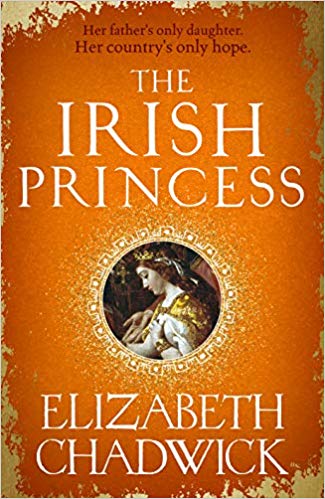







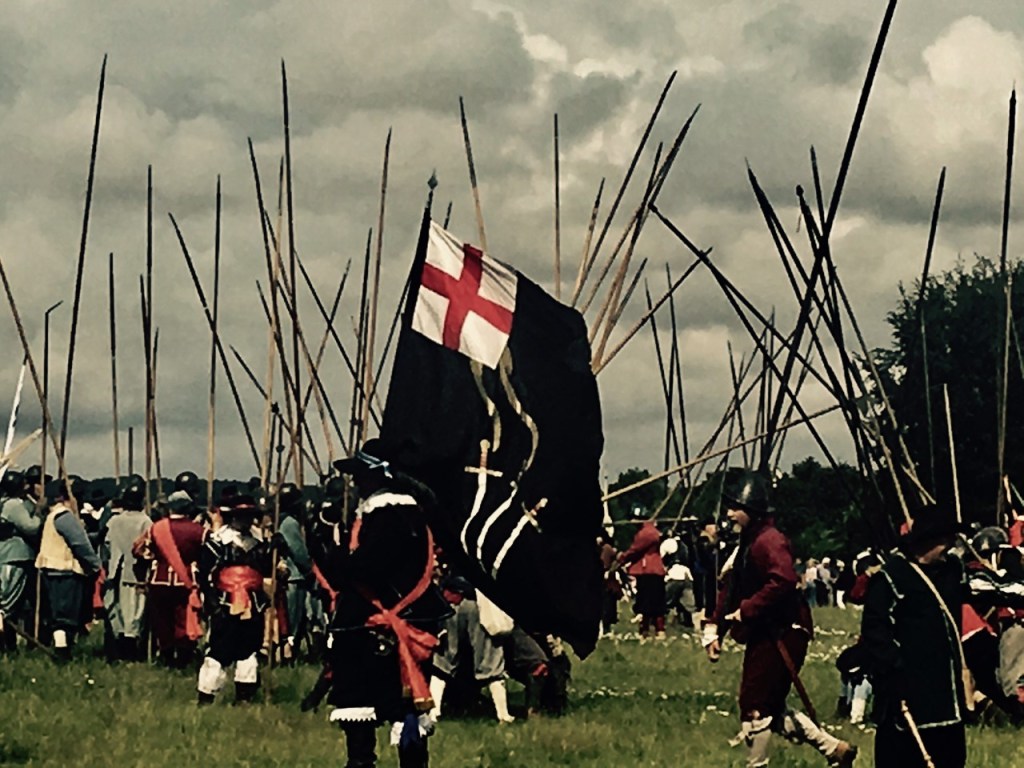
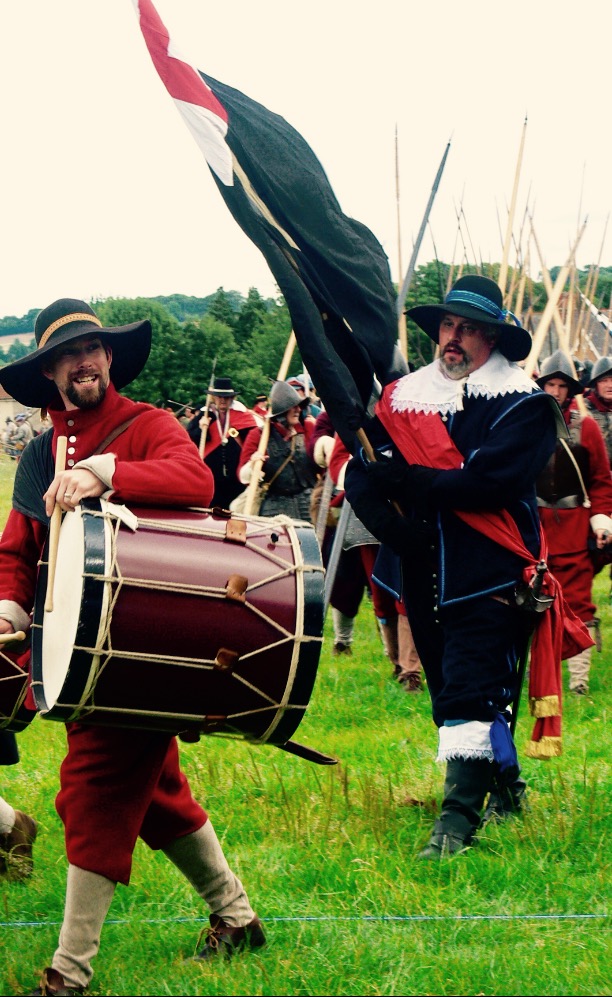
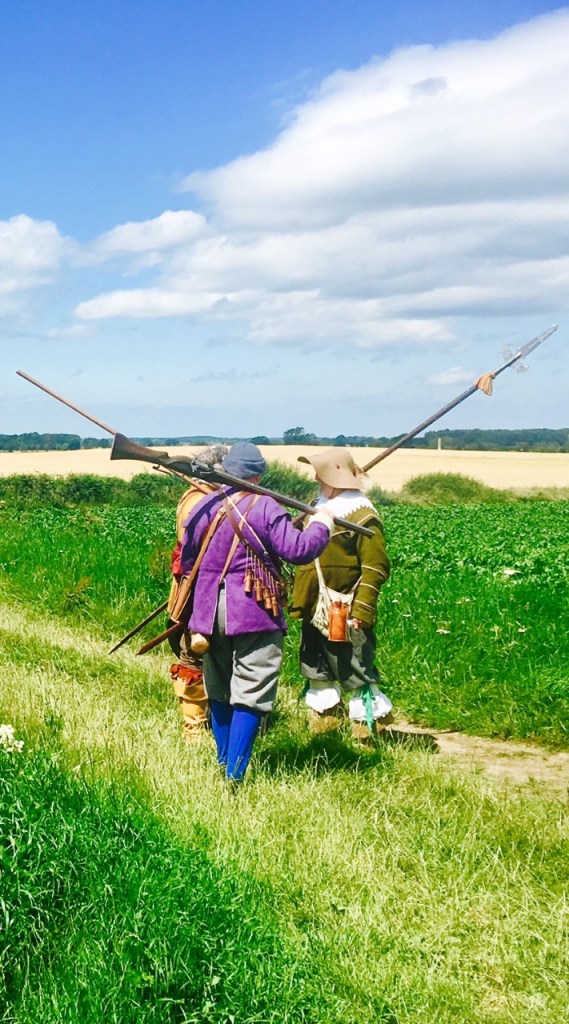


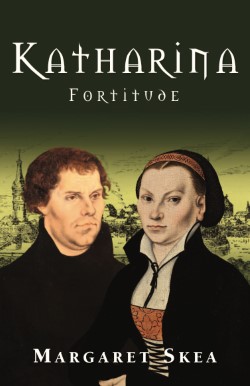
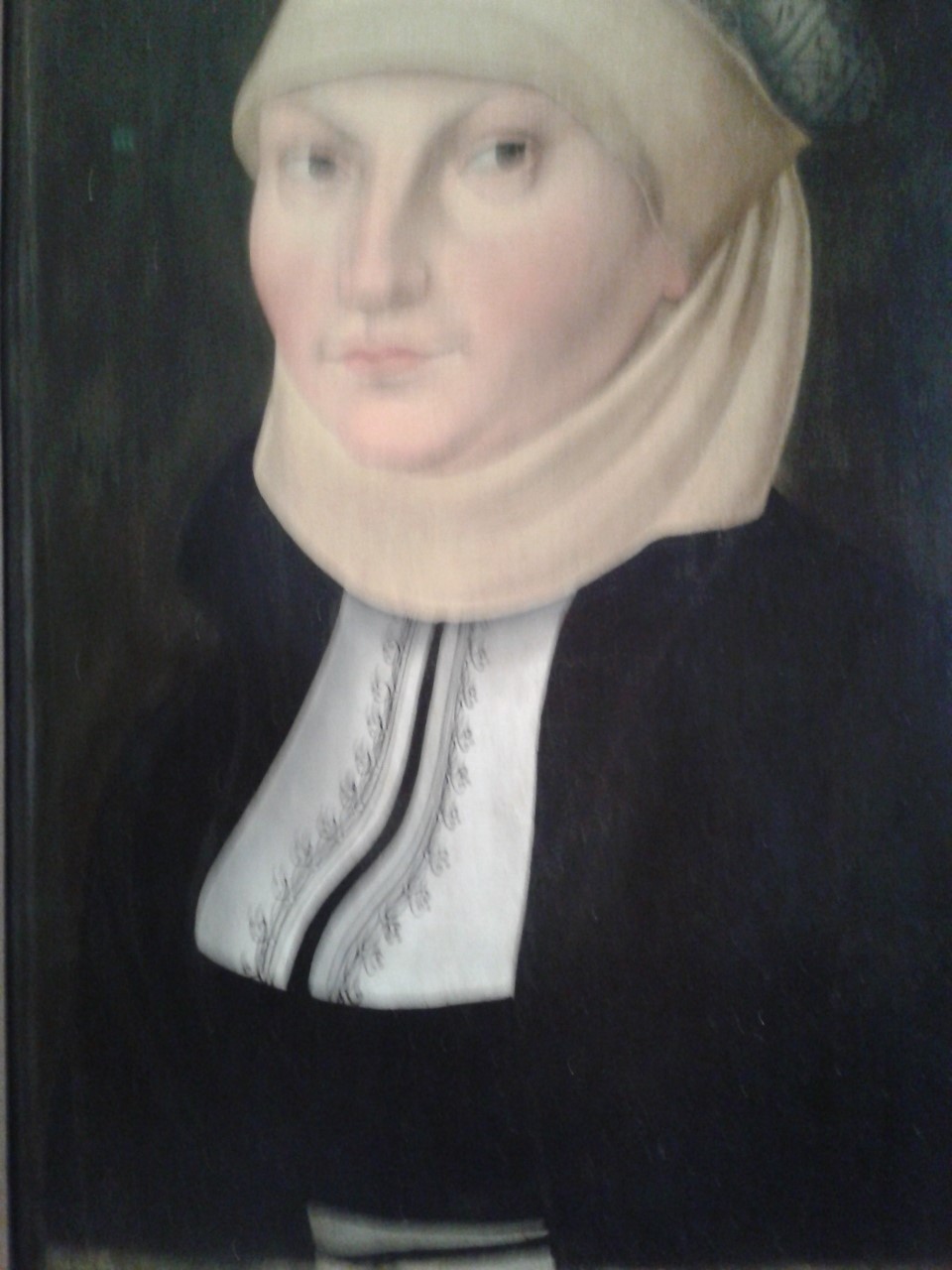
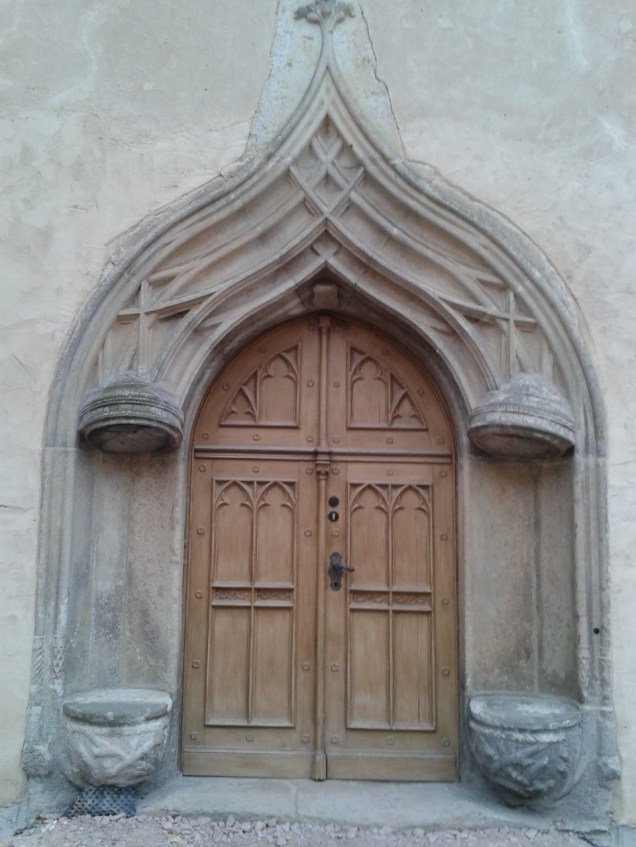
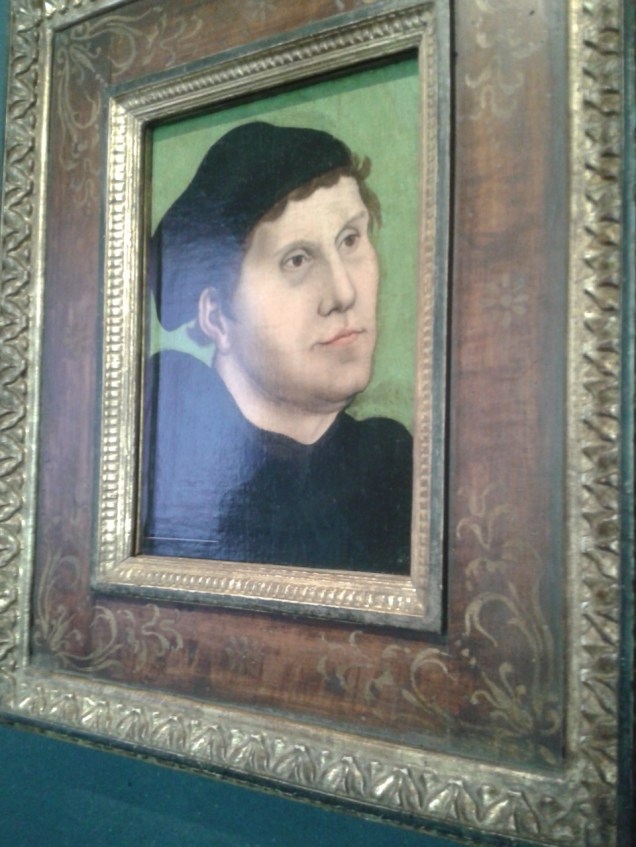
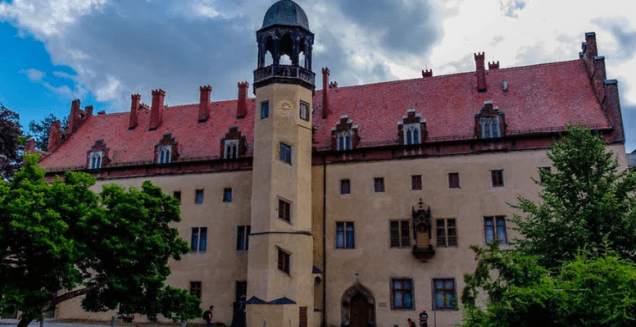
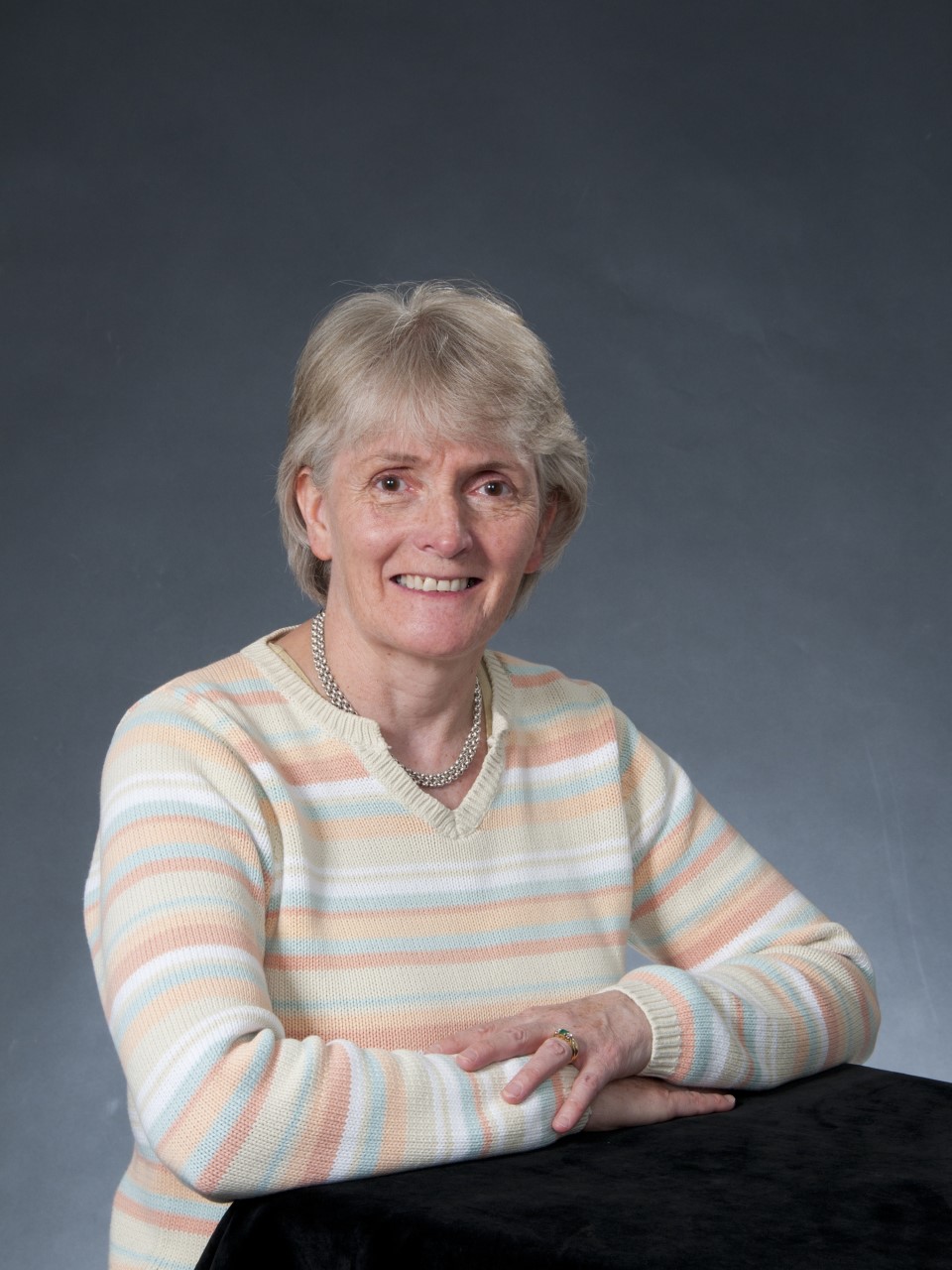
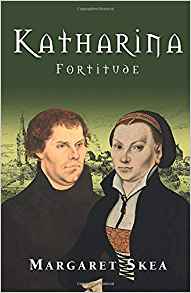
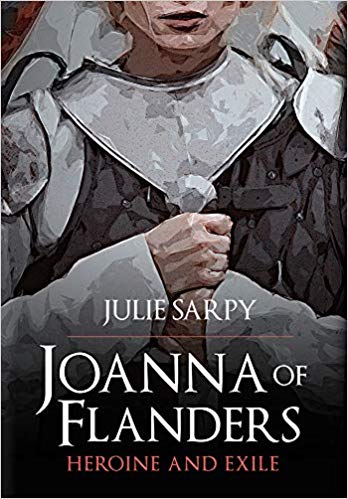
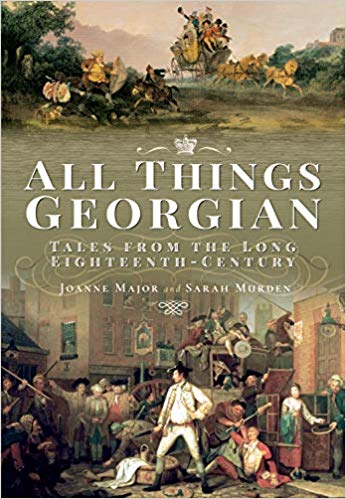
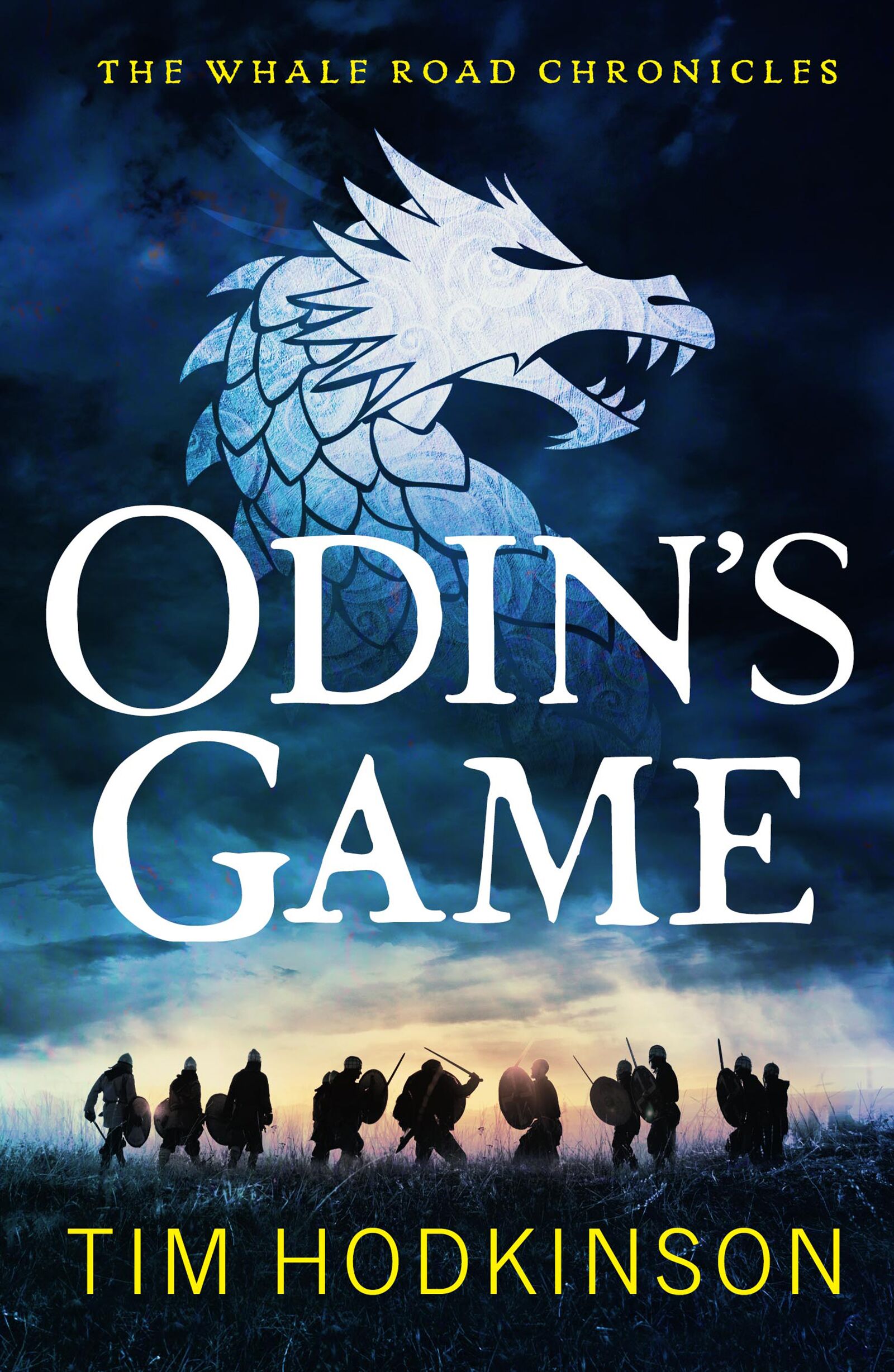


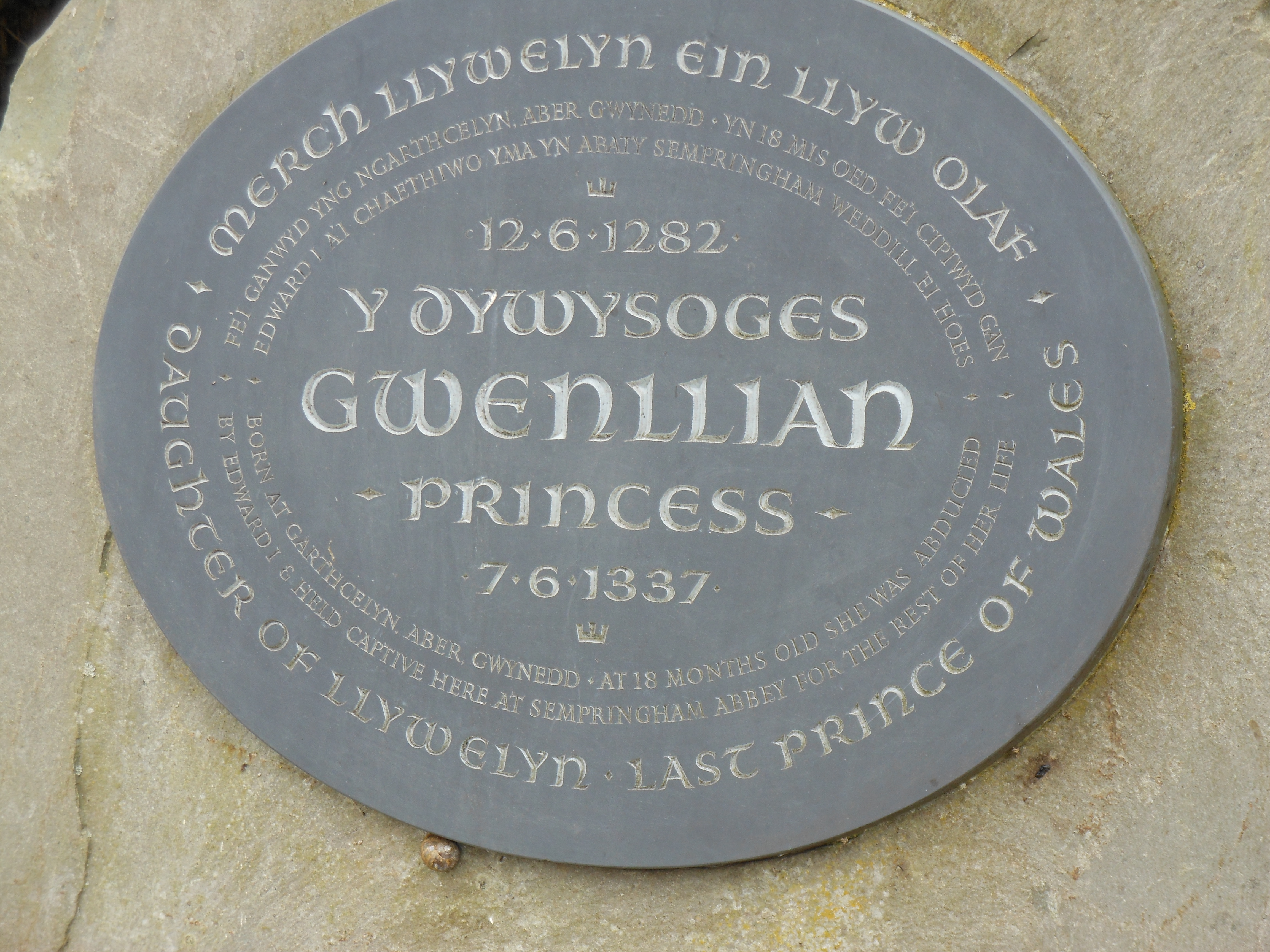


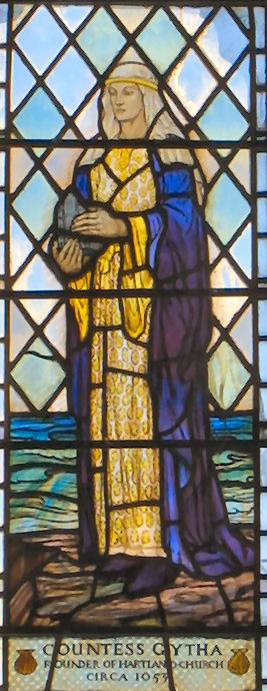
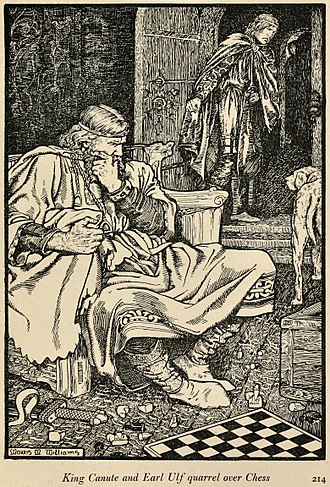
 History... the interesting bits!