Book Corner: Interview with historian Amy Licence

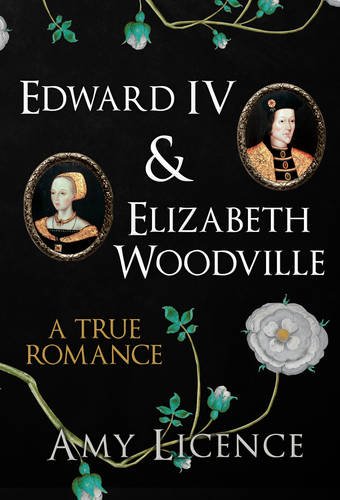
51T3oNzwxuLThis week I have had the good fortune to review a wonderful new joint biography of Edward IV and Elizabeth Woodville by author and historian Amy Licence.

Amy was also kind enough to answer a few questions for me; about her love of writing and history.

What made you become a writer?
I’ve always been a writer, since I could write, since I could formulate a narrative. I wrote my first story when I was three and I decided that was what I wanted to do when I was eight years old – that was after I rejected the possibility of being a ballerina, an actor, an architect and an interior designer. I sent off my first novel at sixteen – it was rejected, of course! Since then I’ve always written, it was just something I had to do, I don’t feel right it I’m not writing: if I’m breathing, I’m writing. Words – their meaning and rhythm – are how I make sense of the world. I kept doing it all through university, and while I was a teacher, having articles, poems and stories published, but it wasn’t until 2011 that I finally signed a contract!

With young children around, how do you discipline yourself to write?
Luckily for me, it’s not a question of having to discipline myself. Writing is my escape and my relaxation; I feel most myself when I’m writing, so it’s essential for me to do it. Finding the time can be difficult though, so I write by stealth, whenever and wherever I can. It’s not too hard because I love it; I always have a book in my hand to research from or a notebook to jot ideas in. My hands will be changing a nappy while my head is in the fifteenth century. I have to be very organised to divide my time between my children and my work so I choose how I spend my time and try not to waste it. I don’t watch a lot of TV, for example. I have to be able to switch in and out of it quickly, as I’ll be writing and then a plaintive voice will ask for a drink, or for a story to be read, so I’m off for ten minutes then back to finish my thought.

10384680_10153841333263942_6977345604197683474_n
Amy Licence

How do you organise your writing day?
Usually it fits around the school day, so it’s balanced between getting my eldest son ready and out on time and playing with my younger one. I manage to do my best work in the morning once I get back, between about 9 and 11, often with my younger boy sitting beside me, drawing or playing. We’ll have lunch together and play in the afternoon. The boys will happily play together for about an hour when we get in from the school run so I sometimes manage another hour then. I’ll try and do some more in the evening too, or at least sit with my family if they’re watching TV with a pile of books and do some research. We try and spend as much time together as we can on the weekend but if I have a deadline looming, my husband will take the boys out for a morning.

How many projects do you have going at once, or do you concentrate on one at a time?
It depends upon my deadlines. I usually have four or five ideas for different things running in my head and work on them at different speeds. Typically, I might have one main book to be written, which I’m preparing for a deadline, and a second in the planning and research stage, plus a couple of novels I’m tinkering with and a number of articles and/or reviews. Each has a different speed. I have two reading piles too; one with books for my writing, which I’m dipping in and out of, and another for escapism reading. I like to have four or five books on the go that are totally different to what I’m writing about – the Post-Impressionists, Ted Hughes, D.H Lawrence and Tolstoy at the moment.

How long do you spend researching your subject before you start writing?
This is an odd one because it has been a slow-burning process. I’m not coming to any of my topics new, so although I’m writing about them now, I’ve been reading about them for 25 years. By the time I was 15 I’d read all the books in my local library about the Tudors and I completed my MA in Medieval and Tudor history in 1995. Since then I’ve been reading everything new about them I can get my hands on. So the general research has been on-going. With each book though, I do more specific “honing” research, which is the trawling through primary sources and that can take between 6 and 9 months.

What do you enjoy most about writing as a career?
I actually enjoy the process of writing! It’s lovely when a book comes out and the reviews start to come in; it’s great to see my name on Amazon and it’s a real buzz to give author talks to people who are interested in my work. Best of all though, is just me sitting down at the computer and writing. It takes me to another place.
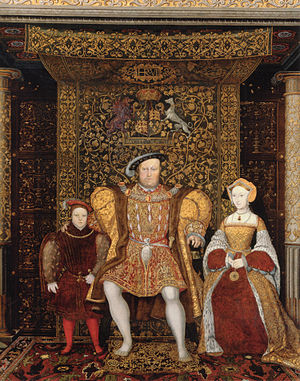
300px-Family_of_Henry_VIII_c_1545_detail
The family of Henry VIII

What is the worst thing about writing as a career?
That it’s not a viable career. I work long hours, very hard, building on years of perseverance and dedication, overcoming rejections and I get paid less than if I was working in a supermarket stacking shelves.

How long does it take to do a project from start to finish?
Again this can vary, given that the ideas have been brewing for a long time, but the period from signing a contract to submitting the book is usually about a year, sometimes more.

Have you ever considered writing a novel? What would it be about?
Novel writing was my first love. I worked for ten years with a top literary agent and submitted about five novels to them; they loved them and said my writing was beautiful but that the market wasn’t quite right for them. I like to write literary fiction; my heroes are Woolf, Dostoevsky, Gorky and Nabokov but the current market isn’t particularly welcoming for new authors in this style. I have written historical fiction too; while I was at university I wrote a novel about the death of Amy Dudley and more recently, one about a teeth stealer on the battlefield of Waterloo, plus I’m half way through one about Edward IV. It’s just finding the time to finish it!

Who are your favourite personalities from history?
Quite honestly, I get interested in most characters I research. I don’t go for particular sides or affiliations, but I am drawn to people who challenged or defied the rules in some way, either breaking the law or transgressing social boundaries. I’m interested in people’s motivation under duress and the people who really carved out their own niches and made their own luck so I am fascinated by the lives of Edward IV and Richard III.
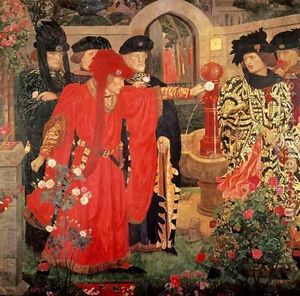
Choosing_the_Red_and_White_Roses
Choosing the Red and White Roses

Which is your favourite and why, the Wars of the Roses or the Tudor era?
I like both very much, I like the century straddling the two, from about 1450 to 1550. I think we tend to perpetuate something of an artificial divide between them and I’ve just submitted a book proposal that covers exactly this period, both Wars of the Roses and Tudors and looks at the continuity. If I had to choose between one or the other, I’d probably go for the court of Edward IV, simply because the Tudors have already received so much attention.

Why Edward IV and Elizabeth? What is it about them that fascinates you?
I think there are so many interesting things about this pair, individually and collectively. The more I research Edward, the more of an interesting figure I find him, in terms of his personal rule, charisma and abilities: he was a supremely able man who conquered the country twice and held it together by force of his personality. I really think he has been overlooked by history. His marriage to Elizabeth and their relationship intrigues me too. I also feel that she has had a very raw deal from historians, almost written up as a caricature, typifying the notions of patriarchal history and “cherchez la femme”, and she deserves to be analysed far more objectively. Despite the initial objections to her background, birth, age and marital history, Elizabeth can be seen as conforming to contemporary notions of ideal queenship; beautiful, fertile, submissive. She is a paradox who has divided historians for centuries, but much of that is the repetition of a patriarchal mind-set that has remained unchallenged until recently.

What era that you haven’t yet written about would you like to get your teeth into?
Good question. Definitely the English Civil War and its aftermath; I’d love to do something on the failed experiment of the radical sects in the C17th, or on Charles and Cromwell, or the period slightly before. I’d also quite like to write about Eleanor of Aquitaine and I’m very keen to do another early C20th book, about some of the makers of Modernism. I have plans in the pipeline for that last one.

51V9Q+iXiyLA lot of your work has been about women in history. What attracted you to their stories?
I wrote my first published book, In Bed with the Tudors, because I’d just had my first child. I was interested to explore the experiences of women during pregnancy and birth in the past, so I suppose it does have a lot to do with the fact that I am a woman. However, I’m also drawn to write about marginal figures whose stories have been overlooked and I’m fascinated by alternative narratives. In my forthcoming “Red Roses” (The History Press, March 2016) I trace an alternative thread to the male metanarrative that has dominated historiography, connecting the women of the Lancastrian dynasty between the 1340s and 1509 and seeking common themes in their lives. The study of women’s history is comparatively new and it’s shocking how often their lives are simply retold in the same ways, without attempts being made to get inside their heads and see things from their perspectives.

Do you every get writer’s block? If so, how do you get round it?
I don’t believe in writer’s block. If you’re a serious writer, you have to be professional about it and just get on with it. There is always something to be done, even if it turns out not to be perfect. If you’re finding one section difficult, write another part, or go back and revise. If writing is tricky that day, research, read, make notes, collect images or jot down some ideas. You can always go back and change them, or reject them entirely, but it’s a process of crafting and clarification, so the next time you attempt that bit, it will be that little bit better. If you produce nothing, you have nothing to work with, you’re still at step one. My mantras are: “the worst thing you write is always better than the best thing you don’t write” and “the only way to do it, is to do it!”

Do you find social media – such as Facebook – a help or a distraction?
Both. It has been invaluable for connecting me with wonderful, like-minded people from all round the world. I thank them profusely for their friendship and kindness, for sharing their thoughts and research; I’ve made some great friends on Facebook who have inspired and influenced me and kept me sane. It is also my shop-front and without question, has helped me reach a far wider audience and update people about my work and appearances. However, it can be a huge time waster. Sometimes, especially with deadlines looming, I have to step back from it, or else I would get nothing done.
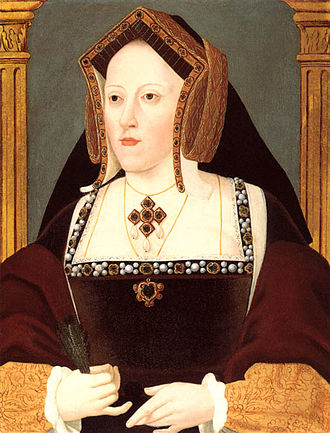
330px-Catherine_aragon
Catherine of Aragon

What is your next project?
I’ve signed three contracts and am about to sign one more, to keep me busy for the next couple of years. I will keep some of those projects secret for a while, but can tell you I’ve begun writing a huge biography of Catherine of Aragon. Catherine tends to get often in terms of her gynecological record and marriage to Henry but I want to analyse her as a queen in the context of her childhood and parentage. I want to explore the influence of her mother Isabella – who expelled the Jews from Spain and founded the secular branch of the Inquisition, as well as patronising female humanist scholars – and how this shaped the mind-set of a woman who never forgot she was Isabella’s daughter and resisted Henry’s demands because she felt the higher calling of God. I want to see Catherine as a Renaissance woman in her own right. Henry is definitely taking a back seat for this one.

I’d like to extend a huge thank you to Amy Licence for answering all my questions and giving us an insight into her writing life. Edward IV & Elizabeth Woodville: A True Romance is available from Monday 15th February in the Uk and Red Roses: From Blanche of Gaunt to Margaret Beaufort is set for release in early March.

*

My book, Heroines of the Medieval World,  is now available in hardback in the UK from both Amberley Publishing and Amazon UK and worldwide from Book Depository. It is also available on Kindle in both the UK and USA and will be available in Hardback from Amazon US from 1 May 2018.

Be the first to read new articles by clicking the ‘Follow’ button, liking our Facebook page or joining me on Twitter.
Book Corner: Edward IV and Elizabeth Woodville: A True Romance by Amy Licence

51T3oNzwxuLTraditionally it happened on May Day, early in the morning … two women slipped away from the manor house … They were a mother and daughter … They hurried on foot across the Wydeville land, towards the edge of the estate …. There stood a small priory or hermitage, dedicated to St Mary and St Michael … Waiting inside was a tall, athletic and distinguished young man in rich clothes, a priest and a choir boy and two gentlewomen, to act as witnesses. There, before this tiny group, Elizabeth Wydeville was married without pomp or ceremony to the King of England.”

It is the stuff legends are made of – and fairy tales. The story of how a penniless widow rose to become the Queen of England. After examining the lives of many of the characters of the Wars of the Roses and the Tudor period, author and historian Amy Licence has turned her attention to the greatest love story of Medieval England; Edward IV and Elizabeth Woodville, a true Cinderella story if ever there was one.

Amy Licence’s latest book, Edward IV and Elizabeth Woodville: A True Romance, is remarkable in that it is not a fairy tale, it’s not a historical fiction novel. It is the true story of how Edward IV came to be married to a mere ‘commoner’. In a wonderfully lively retelling of the lives of Edward IV and his queen, Ms Licence leaves no stone unturned. She tells the story from the beginning in a fascinating and engaging narrative of the lives of her main characters, and the lives of those around them.

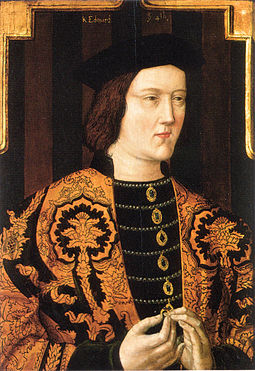
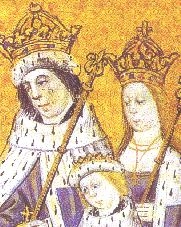
255px-Edward_IV_PlantagenetEdward has become the ghost of a king, a historical filler before Richard III assumed the throne, a bit-player in Shakespeare’s trilogy about Henry VI, the father of the Princes in the Tower, the husband of the White Queen. Edward has become one of our many ‘missing kings’.”

Amy Licence goes into great detail about Edward’s love life and relationships, examining all the accusations ever levelled against him. Her love of her subjects shines through. The book provides a thorough analysis, whilst being lively and enthralling.

A True Romance” is a marvelous piece of research presented in such a manner that will have the novice and the expert glued to every page. The controversies surrounding the couple are discussed in detail: their secret marriage, Edward’s reputation, Elizabeth’s social status.

This romance is presented in the context of the period in which it happened. The author gives a comprehensive overview of the Wars of the Roses, and the characters involved, detailing the lives of the individuals close to Edward and Elizabeth, and the separate lives of the couple themselves before they come together. Their relationship is not only presented as a love story, but also in the context of the period in which they were living, demonstrating how big an upset it caused on the international stage.

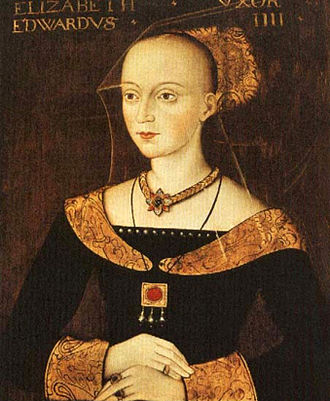
330px-ElizabethWoodville… Elizabeth Wydeville, an unlikely queen, whom he had chosen in spite of tradition, in spite of advice, perhaps even in spite of himself. Her beauty was legendary but on almost every other level, she was an unacceptable choice for an English queen.

In this book Ms Licence demonstrates not only her extensive knowledge of the events of the era, but of all aspects of the period; from May Day traditions to the Sumptuary Laws, to the people themselves.

Amy Licence’s writing style is so easy to read and free-flowing, it is as if she is in the room talking to you. She brings the past to life in a vivid and entertaining way. Crammed full of facts and information taken from primary sources, the book tells the story not only of Edward and Elizabeth, but also of their wider family and affinity, demonstrating how the lives of their friends and family are interlinked and how it influences the couple, their decisions and the world around them.

The book discusses all aspects of the evidence available. This is presented in an objective and fair way; from the chronicles of the time, to literary representations and even rumours and archaeological evidence. The reliability and veracity of the evidence is explained and thoroughly analysed in detail, leaving the reader nodding in agreement at the author’s conclusions; her arguments are thorough and persuasive.

A major strength in Ms Licence’s work is that she shows respect when discussing the theories of fellow historians; whether she agrees with them or not.

EdwardIVThis biography of Edward IV and Elizabeth Woodville leaves no stone unturned. Amy Licence discusses every legend related to the couple, explores the development of their relationship and its effects on the lives of the couple, their families and the nation at large. Every aspect of their lives is discussed, leaving no situation unexamined and no rumour ignored.

Amy Licence presents a marriage and relationship that is as human and complex as any celebrity marriage of today. This is a wonderful study of one of the most famous love affairs in history in a book which is at once sympathetic, vivid and lively.

In short, this book is a fabulous biography of a romance that changed English history a forever. Thoroughly researched and stunningly presented, it is a must-read for all lovers of history, romance and the Wars of the Roses, themselves.

*

51T3oNzwxuL._AA160_Amy Licence has been a teacher for over a decade. She has an MA in Medieval and Tudor Studies and has published several scholarly articles on the Tudors. She is an author and historian of women’s lives in the medieval and Tudor period.

Edward IV & Elizabeth Woodville: A True Romance is available on Amazon in the UK from Monday 15th February and in the US soon.

*
My book, Heroines of the Medieval World,  is now available in hardback in the UK from both Amberley Publishing and Amazon UK and worldwide from Book Depository. It is also available on Kindle in both the UK and USA and will be available in Hardback from Amazon US from 1 May 2018.

Be the first to read new articles by clicking the ‘Follow’ button, liking our Facebook page or joining me on Twitter.
©2016 Sharon Bennett Connolly

Book Corner: The Serpent Sword by Matthew Harffy

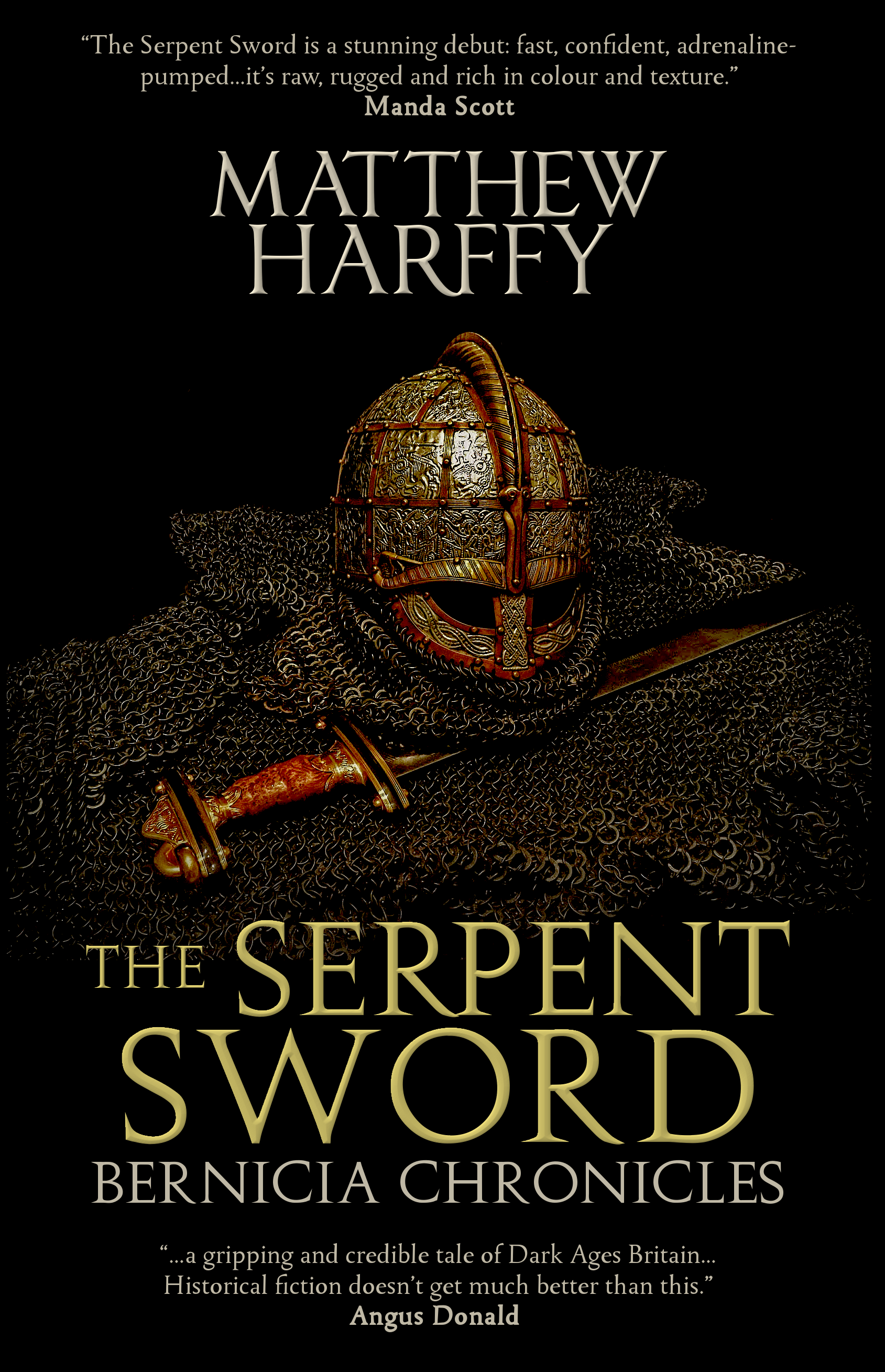
TheSerpentSwordFrontCoverOver at the Review today!

I recently had the pleasure of reading and reviewing Matthew Harffy‘s debut novel, The Serpent Sword for The Review.

Here’s a taster:

The Serpent Sword is Matthew Harffy’s debut novel (not that you would know it), and the first installment of his Bernicia Chronicles. Set in the turbulence of 7th century Northumbria, The Serpent Sword is a wonderful story full of action, adventure, betrayal … and just a little romance. The novel leads you across the countryside of the ancient kingdom of Bernicia, taking you from battlefield, to ancient strongholds or small villages and religious settlements; meeting heroes and villains, friends and foes along the way. The fast-paced action leaves you eager to see how the story ends while experiencing a wealth of emotions along the way.

The two-fold story-line keeps you on your toes, seeing the young hero tackling the enemies of Bernicia – in the forces of Penda and Cadwallon – whilst searching for his brother’s killer….”

To read the full review, and to be in with the chance of winning a signed copy of the book, just visit The Review and leave a comment. The winner will be drawn on Monday 15th February. Good luck!

*

My book, Heroines of the Medieval World,  is now available in hardback in the UK from both Amberley Publishing and Amazon UK and worldwide from Book Depository. It is also available on Kindle in both the UK and USA and will be available in Hardback from Amazon US from 1 May 2018.

Be the first to read new articles by clicking the ‘Follow’ button, liking our Facebook page or joining me on Twitter.
Book Corner: The Dead Gods

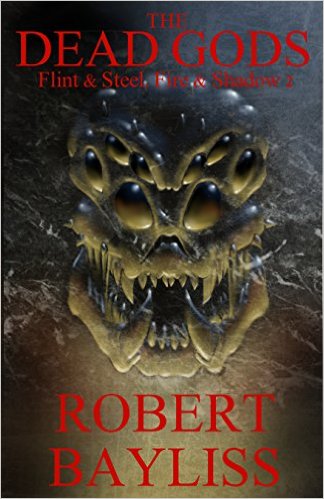
51cTI5WlWsL._SX322_BO1,204,203,200_Over on The Review blog!

Read my review of Robert Bayliss‘s The Dead Gods: Flint & Steel, Fire & Shadow 2.

“After encountering the dark god of Acaross, the Taleeli Commander Kaziviere finds himself transported into the heart of that shadowy realm. Perplexed by the Commander’s disappearance the Sun Shard wielder Tuan, his comrade Bronic, Klesh the Flinter and Kaziviere’s lover Tamzine, embark on a quest to find him.


As war between Acaross and Taleel draws ever nearer Kaziviere discovers the horrific nature of the Messiah of Shadows and his monstrous children, The Dead Gods.”

The Dead Gods: Flint & Steel, Fire & Shadow 2 is a beautiful tale of the fantasy genre, with an atmosphere straight out of the medieval world. I am very much a fan of historical fiction, or modern-day archaeological thrillers. Fantasy is a whole new genre for me, so I had no idea what to expect when I opened the cover of The Dead Gods. It was a complete surprise to me – and a very pleasant one. It took me way out of my reading comfort zone and yet had me enthralled from the first page.

The Dead Gods is the second book in the Flint & Steel, Fire & Shadow book series,but you wouldn’t know it. From the beginning the book works well as a standalone, with the events of the first book revealed as memories in the thoughts of the main protagonists in a way that is subtle and not overwhelming. Ingeniously, the author makes the past all a part of the present. The back story is introduced as I go along, when it is needed to explain a person or event, rather than in huge lumps that take you away from the actual story.

Robert Bayliss cleverly draws on aspects of various eras to create a fantasy world of magic, myth and adventure. Every detail is intricately woven in an amalgamation of the medieval, early modern, and the supernatural. Packed full of action, suspense and mystery – and some suitably demonic bad guys; the story moves rapidly, leaving you few moments to take a breath – or even let out the breath you weren’t aware you’d been holding for at least the last two pages!

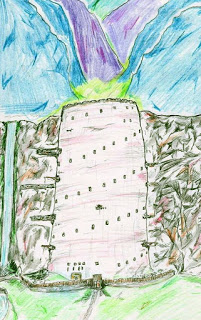
12571214_10208959495763515_1982989518_n
Fortress of Tiers

The narrative is wonderfully descriptive, the language evocative:

There was a hammering at the door and a voice demanded from the other side, “Dogel! We heard a noise, is anything ill?”
“Wait,” Kaziviere said. “We will need supplies and clothes.”
The girl grinned. “you don’t like what you see?” she said, facing the gladiator in her nakedness. “there is no time, savage!” she hissed. “If you want to live, jump!” She launched herself from the window and was gone.
Behind him he heard the door being tentatively opened. On the floor the dogel gasped, his eyes looking wildly around from his battered face.
“Tamzine!” Kaziviere said, casting his spell of hope into the world. 

The lead character are wonderful creations, with their own powers to enthrall the reader. Braebec, Kaziviere, Tuan and Tamzine are heroes of the highest caliber. Each has his, or her, own strengths and weaknesses; confronting enemies head-on, while maintaining their humanity at some considerable cost. They fight to the bitter end and prove themselves worthy of the time you’ve invested in getting to know them.

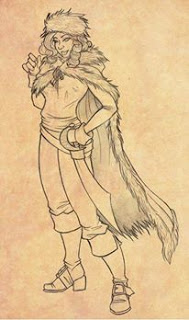
12571229_10208959497563560_860731857_n
Princess Karla

The villains are superbly nasty and supernatural, to the point of making you subconsciously cringe as you read about them (although only occasionally). They attract the worst of humanity to their cause.

The contrast between the human heroes and the other-worldly villains provides a brilliant contrast for the reader, making it easy to root for the heroes. We are also introduced to characters our heroes meet along the way, who act as foils and distraction to the bad guys – and the heroes. People such as the alluring Princess Karla and her father, the Khan, have their own agendas that could divert our heroes from their purpose.

To be honest, my review can’t ever do this book justice. It fascinates and enthralls as it entertains. In short, you will have to read it to believe it. But beware, once it has you in its grip, you will be absorbed into this strange world until the very last page. And it will leave you desperate to read the next installment ….

*

My book, Heroines of the Medieval World,  is now available in hardback in the UK from both Amberley Publishing and Amazon UK and worldwide from Book Depository. It is also available on Kindle in both the UK and USA and will be available in Hardback from Amazon US from 1 May 2018.

Be the first to read new articles by clicking the ‘Follow’ button, liking our Facebook page or joining me on Twitter.
*

Pictures © Robert Bayliss

Book Corner: The Pawns of Sion

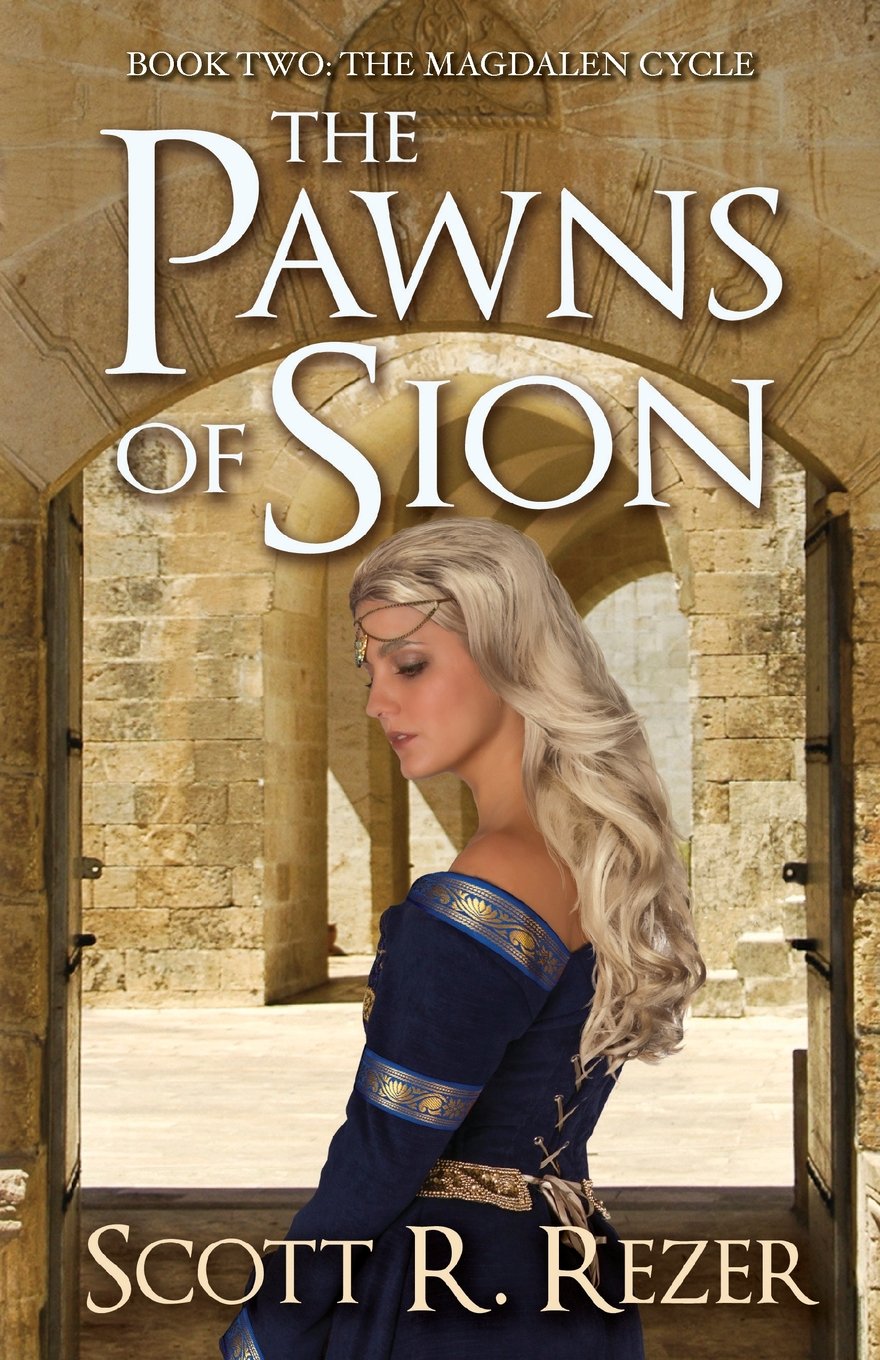
715UoPpSVSLOver on The Review blog!

Read my review of Scott R. Rezer‘s The Pawns of Sion.

“At first glance The Pawns of Sion looks like a straightforward story about the politics and rivalries of the Kingdom of Jerusalem. But once you start reading, you discover the novel delves deeper than you’d ever thought possible. Scott R. Rezer has created a story which merges two realms, that of man and that of the angels. The war between Salehdin and the Christians runs parallel with the greater, age-old battle of good versus evil. The author has cleverly interwoven the two realms in a deep, intense book. The plot is detailed and unveiled in layers the deeper into the book you get.

Set in the years immediately before the Third Crusade, the action moves fast and furious from the death of King Baldwin V, through the behind-the-scenes manipulations of the Order of Sion and the Magdalen’s attempts to stop them, while Salehdin takes advantage of the deep divisions revealed among the Christian lords. And underlying it all is the centuries-long search for the Holy Grail….”

I found The Pawns of Sion both fascinating and intriguing. It looks deeper into the origins of Christianity than other Crusader novels and the age-old battle of good against evil mirrors the irreconcilable differences of the Christian and Muslim combatants. There is the occasional missing word in the text, but this does not detract from the overall enjoyment of the book. The author knows how to evoke the reader’s sympathy – or distaste – for particular characters. You find yourself rooting for the good guys.

The full depth of the story is slowly  revealed – each revelation releasing a new feature of the plot. And as each new secret is disclosed, it adds a little explanation to the motives and desires of the protagonists.

The language is, at times, haunting, drawing aside the veils between the realm of the natural world and that of the spiritual, giving the reader a sense of the surreal:

….Her magic shrank from the shadow of his evil rather than endure its touch.
“Did you think you could defeat me with so little a thing as the death of your beloved daughter?”
“You have no place here, Simon,” she hissed, ignoring his taunt. She drew a thin silver blade from the belt beneath her cloak. The rasping sound of metal upon metal overwhelmed the silence of the wood. “You never have.”
“Your words wound me, Mariamne,” said Amalric de Lusignan. “Why must we continually bicker when we might become friends?”
She walked towards him, sword on shoulder, shedding her immortal glamour and taking on a semblance men knew….

330px-SangrealAs with many people, the Knights Templar have always held me in awe and although they are not the heroes of the story, their Grand Master Gerard de Ridefort is one of the leading characters. The author makes good use of the known protagonists of the time, weaving his story around their lives and the events that shaped the Holy Land and its politics at the time. Each character is imbued with the qualities passed down by history.

Balian d’Ibelin is the good, noble knight, whose integrity is beyond question. Guion (Guy) de Lusignan is the weak, easily manipulated, indecisive king, while his wife, Sybilla, is the pawn he uses to gain power. Then there’s the young Ernoul, a fictional character who struggles to come to terms with his destiny. The historical characters are intermingled with the fictional ones, allowing the writer to create his own story within the historical record.

The characters are brought to life in the hot, arid backdrop of the Holy Land in the second half of 12th century. The author has recreated the Medieval Near East vividly, cleverly evincing the heat, the dust and the thirst, in the reader’s mind.

Although I found the duality of the story confusing at first, it didn’t take me long to find myself totally immersed in the concept, and in the general story itself. I like the depth of the story; the first few chapters reveal a complexity to the politics and religion of the Holy Land of the time. Individual stories are expertly woven together to make one great tapestry; a tapestry depicting the disasters befalling Outremer which would eventually lead to the launch of the Third Crusade. And behind it all are the origins of Christianity itself, the fight for good against evil and the search for the greatest relic, the Holy Grail.

It’s going to be very interesting, to see how this story continues in Book 3.

*

My book, Heroines of the Medieval World,  is now available in hardback in the UK from both Amberley Publishing and Amazon UK and worldwide from Book Depository. It is also available on Kindle in both the UK and USA and will be available in Hardback from Amazon US from 1 May 2018.

Be the first to read new articles by clicking the ‘Follow’ button, liking our Facebook page or joining me on Twitter.
©2016 Sharon Bennett Connolly

Book Corner: Steven A. McKay’s ‘The Forest Lord’ Series

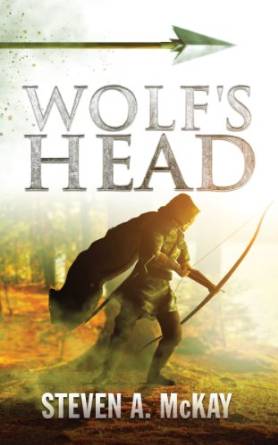
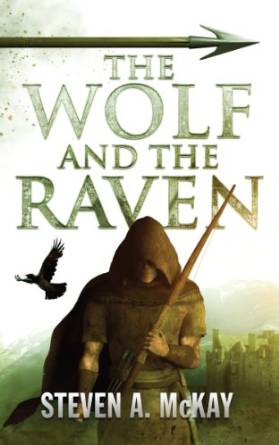
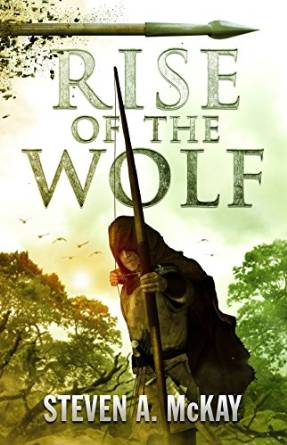
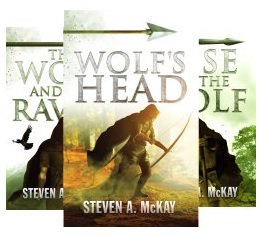
CX0jE-zWcAEQNWnSteven A. McKay‘s The Forest Lord series of books is a wonderful, refreshing new take in the Robin Hood Legend. All the usual heroes are there, including Little John, Friar Tuck, Will Scarlet and Maid Marian, battling against their old enemies, the Sheriff of Nottingham and the despicable Sir Guy of Gisbourne.

However, what has changed is the time and location. Instead of the wilds of Sherwood Forest, The Forest Lord books are set in Barnsdale Forest in what is now West Yorkshire, while young Robin’s family lives in the nearby village of Wakefield. Gone also is the vile Prince John – and you won’t see King Richard the Lionheart either. The story is set in the time of Edward II, the rebellion of his cousin, Thomas of Lancaster providing the back-story to the first book; while the aftermath of Thomas’s defeat at the Battle of Boroughbridge is still being felt in the second book, The Wolf and the Raven, as the surviving rebels are hunted down.

1stWolf’s Head introduces you Robin as a newly outlawed teenager, finding refuge in a gang of outlaws in Barnsdale Forest. We follow Robin as the youth learns how to fight, how to deal with loss and how to lead men, while making mistakes and enemies along the way. As Robin and his companions, including a grieving Templar and his sergeant, become embroiled in the rebellion; they must find a way through the politics and the fighting to survive.

In The Wolf and the Raven, in the aftermath of a violent rebellion Robin Hood and his men must fight for survival with an enemy deadlier than any they’ve faced before. Sir Guy of Gisbourne, the king’s own bounty hunter, stalks the greenwood, bringing bloody justice to the outlaws and rebels who hide there.

While new friends, shattered loyalties, and a hate-fuelled hunter that threatens to wipe out not only Robin’s companions but his entire family all play a part in the Rise of the Wolf.

2Steven A. McKay has woven together a wonderful story of love, war, loyalty, hatred and a fight for survival set in one of the greatest periods of greed and unrest in English history. As a Yorkshire lass I can testify to the veracity of the author’s vivid depiction of the county and its people; although the landscape may have changed in 700 years, the Yorkshire spirit hasn’t.

The stories combine the fight for survival with the camaraderie of men who trust their lives to each other. There are tender moments, when Robin’s men put Marian’s freedom above their own desire for release from outlawry. There are moments of humour; such as when, in a bizarre twist, Edward II asks Robin and Little John to join his rowing team. And there are ‘yucky’ moments involving a castle toilet …. but I will not give away any more spoilers and ruin your enjoyment of a great story.

The characters are wonderfully vivid. While Robin is young and vulnerable, but develops into a strong, considerate leader, his nemesis Sir Guy of Gisbourne is suitably despicable and only gets worse. I have to say I like the Sheriff of Nottingham a little more than I have done in past depictions; the poor chap seems to have as many troubles on the right side of the law, as Robin has on the wrong side of it.

1Steven A. McKay has taken the Robin Hood legend expanded and enhanced it and made it his own. In case you were wondering, the traditional Robin Hood is still alive throughout the books, rescuing children and damsels and stealing from the rich; teaching them a lesson on the way.

The action is thrilling and you find yourself on the edge of your seat – or reading until the early hours – just hoping for it all to turn out right for our brave hero.

With the final instalment of the story still to come, the stage is set for one exciting, final fight for survival and victory in the green woods.

Will the boys finally get their one, over-riding desire – the chance to go home to their families and live as normal men? Will they all come through it alive? And does Gisbourne finally get  his comeuppance?

I can’t wait to find out.

*

My book, Heroines of the Medieval World,  is now available in hardback in the UK from both Amberley Publishing and Amazon UK and worldwide from Book Depository. It is also available on Kindle in both the UK and USA and will be available in Hardback from Amazon US from 1 May 2018.

Be the first to read new articles by clicking the ‘Follow’ button, liking our Facebook page or joining me on Twitter.
©2016 Sharon Bennett Connolly

Book Corner: South of Burnt Rocks

Over on The Review blog!

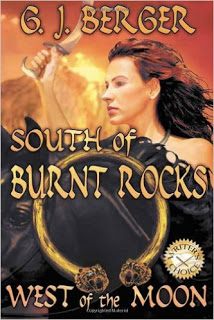
Read my review of G.J. Berger‘s wonderful South of Burnt Rocks West of the Moon.

 “After three great wars, Rome has crushed Carthage. Now the undefended riches of Iberia beckon–gold, tin, olives, wine, and healthy young bodies to enslave. Burnt Rocks tells the story of Lavena, last child of the strongest remaining Iberian tribal leader at a time when Rome plunders and loots her land. At times helped only by her father’s favorite dog, a special horse, or guided by spirits of the earth and sky, she strives to unite her people and oust the Roman menace. Based on real characters, places, and events, Burnt Rocks recreates that shadowy history–and eternal human nature rubbed raw.”

51FzxidZXAL._SX331_BO1,204,203,200_

South of Burnt Rocks West of the Moon was a wonderful surprise.  It is one of those thought-provoking books that you don’t come across very often; transporting you back in time to the Roman occupation of the Iberian Peninsular. The heroine is a young girl, Lavena, not yet out of her teens, who is trying to fulfill her promise to her parents and save her people, whilst at the same time coming to terms with her father’s past.

Having peacefully co-existed with the Iberian natives, the Roman army has a new leader, and new agenda. They are searching for their lost scouts, for native gold, and eager for slaves. The Romans are relentless but Lavena must find a way to fight them with her small band of devoted warriors.
Among the Roman legions is one man, Martius, who searches for the truth about his missing brother but is also drawn to the ‘barbari’ girl, who appears to him in only glimpses through the trees.
The wonderful prose of the book draws you in,  the language paints its own picture of Roman occupied Spain, respecting the spirits and ancestors of the native tribes and weaving a spell that keeps you enthralled in the book to the very end.
When Lavena has to face a council of elders to give them the news of Rome’s aggression and  to plea for help, the picture is vividly described, the words magically entrancing:
“We humbly come to you, to this village, without any men, because the Roman overseer, Piso, left this land, and Rome sent a monster army in his place.”
The nobles quieted and leaned in further.
“That new army has more fighters and weapons and its killing madness is greater than I know how to tell you – and it comes this way.”…
“They come for all the gold in this land, for the young ones to take back as slaves – and the young women and girls to ruin in a manner none should ever know.”
… She told them what she could of the battle for her village, but not about how her mother and those with her died, not about the real end of the she-warriors. She told them how she fled.


G.J. Berger recreates the land of the Iberian Peninsular wonderfully; describing the landscape and its people in such amazing language that you can’t help but feel transported there. The contrast with the vast fighting force of the Roman army, the inexorable, unbeatable military machine that moves over the land relentlessly.
The characters are vivid and have a realism to be marvelled at. They are human, suffering through their fears and doubts, making mistakes and sometimes surviving in spite of themselves. You find yourself urging Lavena on, while feeling suitably disgusted at the mean, lascivious, grasping Roman leaders.
Throughout the book, you can feel the author has a strong sense of direction; he knows where he wants to take you, but knows that the journey is what matters. We follow Lavena from her training as a warrior, through the loss of everything she holds dear, to her final confrontation with the Roman army, knowing everything she has been through, everything that has led her to that moment…
I can’t tell you how much I enjoyed reading this novel. It was a surprise from the first words, drawing you in, leading you on Lavena’s journey and seeing the country of Spain in its early days; the landscape itself becoming part of the story. The sights, sounds and smells of Roman Spain invade your mind as you read.
It is hard to believe this is a debut novel. The storyline is impressive, the language polished; everything about it comes from a storyteller of immense skill and vision.
It is a book not to be missed.
*
My book, Heroines of the Medieval World,  is now available in hardback in the UK from both Amberley Publishing and Amazon UK and worldwide from Book Depository. It is also available on Kindle in both the UK and USA and will be available in Hardback from Amazon US from 1 May 2018.

Be the first to read new articles by clicking the ‘Follow’ button, liking our Facebook page or joining me on Twitter.
 

Book Corner: An Interview with Toby Clements

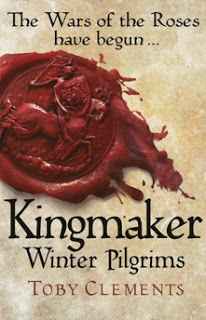
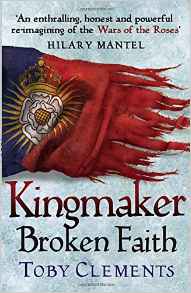
kingmaker for HWAMyself and Jayne Smith interviewed Toby Clements for The Review.
Toby Clements has kindly offered a signed copy of his book for a lucky winner.  Just leave a comment at the bottom of the blog or on our Facebook page. The winner will be drawn on 12th November.

While at the Harrogate History Festival Jayne and I tried to grab a couple of writers to do exclusive interviews for the Review Blog. Unfortunately, Toby Clements was always busy with panels, preparing to interview Stephen Church about King John – or on a really long bike ride. So we jotted the questions down and Toby was kind enough to reply by email.

Writing about the Wars of the Roses, Toby Clements’ first book in the Kingmaker series, Winter Pilgrims, earned him a place among the 5 finalists for the 2015 Historical Writers’ Association Crown for Debut Historical Fiction. The second book in the trilogy, Broken Faith, is out now and Mr Clements is working on book 3 as I write.

  1. What made you start writing? It is a terrible cliché and I am only telling you because it is quite funny, but I was always telling stories as a child, only I had a weird stammer, so that I se-e-ed things like tha-at, and I used to tell my older brother these terrible bedtime stories based on us having watched the HG Wells Time Machine film together with my father who described the Morlocks as ‘hairy buggers’ – it was the 1970s, so that was OK then – and so my early stories were all about the Hairy Buggers, told to my brother, punctuated by his six-year-old’s snores on the bunk bed above. After a while my mother suggested I write them down because I was getting pretty tired trying to stay awake to finish them.
  2.  Who are your major writing influences? I am a HUGE fan of Hilary Mantel’s writing, but also of Bernard Cornwell’s plots, so my literary influence would be an imaginary son/daughter of theirs.
  3. What first got you interested in writing history? Another terrible cliché: two enthusiastic teachers at my primary school: Colin Stoupe and Hugh Fairey, to whom I owe great thanks.
  4. Why choose the Wars of the Roses as you setting? I was always a warlike child, I suppose, and I was at school near Tewkesbury – one of the key battles of the Wars of the Roses – and I’d loved the Ladybird edition of Warwick the Kingmaker since before I could read. But what really got me into it was the idea of the Battle of Towton being fought in the driving snow, lasting all day, and during which more Englishmen were killed even on the first of the Somme. I thought: HOW did that come to pass, when their fathers and grandfathers had fought shoulder to shoulder with one another at Agincourt and so on…
  5. What made you choose a monk and a nun as your central characters? I wanted someone who would perhaps know nothing of the politics of the 15th Century world, and so could ask the right questions at the right time without me shoe-horning in a load of random exposition, and who could see things afresh and react to them, rather than that world being so ordinary they would not bother to describe it. That I have two heroes is a chance quirk of researching fate.

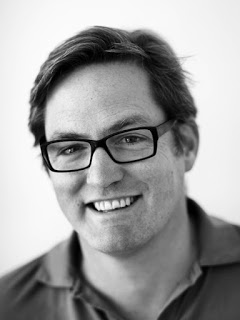
    B&W__6005086-1
    Toby Clements
  6. Who do you think is your best character? Who is your personal favourite? And why? Katherine is the greatest, because she always knows exactly what to do, even if her choices are often very hard. Thomas is more like me: a bit bumbling, just sort of going along for as quiet a life as possible. He is pretty affable, and doesn’t bother to say much, but when he knows what he is supposed to be doing, he is pretty good at it.
  7. What comes first, the storyline or the research? I change my mind about this every month. At the beginning it is all accuracy – a la Hilary Mantel – but as the month wears on and the money gets tight, I start to think this is a luxury I can’t really afford. One look at the bestseller charts will tell you which the readers prefer.
  8. Which do you find easiest to develop, the plot or the characters? I struggle with plot, I suppose. My characters are all quite modest and ordinary, so they come quite easily.
  9. Do you know how the book is going to end when you start it? Kind of. I know I have to get them somewhere at such and such a time, and the known history acts as a series of pegs on which to hang the skein of their adventures, so that is pretty easy to map out. As to who dies and who falls in love, and so on… yes, I think I do, but am open to changing my mind.
  10. How do you approach your writing day? I am at my desk by 8.30 and just try to bash away while I can. Sometimes I have to go off and do other jobs – I review books and am a sort of jobbing carpenter – but if I am at home, I try to chug through until about 6. Sometimes I get a load done, sometimes not much. It varies because I don’t really plan my writing very well in advance.
  11. If Ridley Scott was to approach you to make a film of your books, who would you want to play Thomas and Katherine? I honestly don’t know. I don’t watch enough films or telly, really. Sorry.index
  12. Have you ever changed your mind about killing off a character? I have, but no one major, and each time I am damn glad I did. A dead character is no use whatsoever. In Winter Pilgrims I had Sir John die at the battle of Towton, ‘unobserved during that afternoon’ but my editor insisted that was too sad, so Katherine saved his life with some revolutionary brain surgery.
  13. What is next in the pipeline, after the Kingmaker Trilogy? I have one more novel to write set in the Wars of the Roses, but this will be a more complex piece, from multiple points of view, and more of a political novel than a fighting novel. After that I have a slight idea for another series, but I am not sure how commercial it will prove, so it may never see the light of day. We shall see.
  14. Which other periods of history would you like to write about? I don’t have another period about which I am so interested, so I think it will be close to the 15th Century or maybe it will be a little later. I don’t want to choose another just because I have to. In a way I’d rather stop writing than it become something I must do.


A huge ‘thank you’ to Toby Clements for answering our questions! You can find Toby Clements on his pinterest page and his books are available on Amazon.

*

My book, Heroines of the Medieval World,  is now available in hardback in the UK from both Amberley Publishing and Amazon UK and worldwide from Book Depository. It is also available on Kindle in both the UK and USA and will be available in Hardback from Amazon US from 1 May 2018.

Be the first to read new articles by clicking the ‘Follow’ button, liking our Facebook page or joining me on Twitter.
Book Corner: An Interview with Novelist Derek Birks

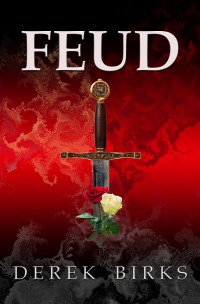
Whilst at the Harrogate History Festival last week I had the opportunity to do some interviews for The Review, with my Review colleague, Jayne Smith. The 1st interview was with the charming Derek Birks, author of the Rebels & Brothers series of books, which I have recently reviewed.junefeudcover

What made you start writing? I always wanted to write. I started at about 17, writing adventure stories, but they were rubbish. Then I got caught up with other things. 40 years later I wanted to find out if I could do it. looking back, I couldn’t have written the books I have when I was that age.

Why are your stories set in the Wars of the Roses? It’s always been one of my favourite periods. The characters are so fascinating – you couldn’t make up the characters and situations if you tried.

Who were your major writing influences? Bernard Cornwell and Alexandre Dumas. I love the Musketeers stuff. And Bernard Cornwell was a breath of fresh air – his writing was less polite than anything else around at the time.

How do you approach your writing day? I write almost entirely in the mornings, staring around 7.30. I can write for as long as I want, but usually finish about 1 o’clock and then have lunch.

If you lose track, do you give up or carry on? If I hit a snag, to clear my mind I go for a walk, or a swim and don’t think about it – then the ideas pop in my head. It helps to make for a better plot, usually. The same happens if my editor – my son- says something is not working; I’ll think about it and come up with something better.

How do you kill off your characters? I started my first book writing something direct and full of action, but that meant some characters would die. By the 3rd book my characters’ attitude to death changed. In the first 2 there was no fear of the consequences. By the 3rd I looked at battle weariness and regret and the characters look at it differently. I changed my mind about killing a character I had always intended to kill off – and killed off someone else instead. In book 4, someone had to die, it was just a matter of deciding who.

DSCN3985
Derek Birks,, Jayne Smith and myself.

Most books written about wars have women as peripheral characters, weak and helpless. Why did you write Eleanor as a fighter? There is an audience for a strong woman. I tried to have several different women’s roles, and Eleanor was the antidote to the traditional women’s roles. She’s a catalyst for control. She has an edge in that men don’t expect her reactions.

Do your characters talk to you? I don’t think they do. I sometimes go to bed thinking of the story line. But they do have specific theme music; Eleanor’s is Try by Pink and Ned’s is Brothers in Arms by Dire Straits.

Who do you think is your best character and who is your favourite? I would like to think Ned is my best character – and Eleanor is definitely my favourite. I can’t imagine Eleanor getting older. She was the hardest to develop through the book sand I hope she grew up.

If someone said they wanted to make a film, do you have an actor or actress in mind to play Ned and Eleanor? Ned would need to be someone with an amount of vulnerability – Sean Bean wouldn’t be right for it. Eleanor would be someone like the woman in Kill Bill – Uma Thurman?

Do you know how the book is going to end when you start it? Usually, yes. I wrote the end of Feud before writing the middle. With the 2nd and 3rd books yes. With the 4th I knew there was going to be an almighty clash, but didn’t know who would go – I was going to do a Butch & Sundance thing where everyone but 1 died, but decided that was less plausible. I hope the ending came across plausible.

shroud
Did you change any of  your characters halfway through? With my 3 main characters – the 3 siblings – I had a clear idea of what they would be like at the beginning and where they were going. But I did change Robert. At one point he could be viewed as an out-and-out villain, but he was more complex in book 4. Normally I don’t change whether or not they are essentially good or bad.


What’s Next? I wanted to do something like Dumas did with the Musketeers sequel, you know, Twenty Years After. So the next series is set 12 years after, in 1482/3. Some characters from the 1st series will be in it. I’ve only written 10,000 words so far, so its in the very early stages. It will be a series, but it may go on for a while. I have learnt from writing the first series, the first of the new series will be written as a stand alone, with few or no loose ends. 

A big thank you to Derek Birks for answering our questions.

*

My book, Heroines of the Medieval World,  is now available in hardback in the UK from both Amberley Publishing and Amazon UK and worldwide from Book Depository. It is also available on Kindle in both the UK and USA and will be available in Hardback from Amazon US from 1 May 2018.

Be the first to read new articles by clicking the ‘Follow’ button, liking our Facebook page or joining me on Twitter.
©2015 Sharon Bennett Connolly

Book Corner: Rebels and Brothers by Derek Birks

junefeudcoverDerek Birks‘ ‘Rebels & Brothers’ series of 4 novels is a tour de force in Wars of the Roses fiction.

Many books claim to be ‘in the best tradition of Bernard Cornwell’ or ‘a worthy successor to Cornwell’. But very few live up to such promise. however, when I read Derek Birks’ debut novel I thought that, just maybe, I had found one that lived up to such high praise. By the 2nd book I knew the praise was well-deserved.

The Rebels & Brothers series grabs you on the 1st page and keeps you hooked until the very end. And yet they leave you bereft once you have finished, as you know you are not going to read another book as good anytime soon.

The books interweave the personal stories of the Elder family with the wider political and martial drama of the Wars of the Roses. We follow the 3 Elder siblings, Ned, Eleanor and Emma, as they try to negotiate a safe passage through the war, whilst battling a family feud and making enemies at the highest levels of society.

Feud: In 1459, as England stands on the brink of the Wars of the Roses, Ned Elder, a Yorkshire knight, finds himself caught up in the wars when his family is brutally attacked by a local rival, Lord Radcliffe. Ned’s sisters, Emma and Eleanor, are abducted and he must find a way to rescue them. With only a few loyal companions, Ned is hounded across the land by the Radcliffes. Ned and his sisters fight back, but they are young and they make mistakes – and new enemies – along the way. All will be decided on the snowy battlefield of Towton – for Ned and for England.

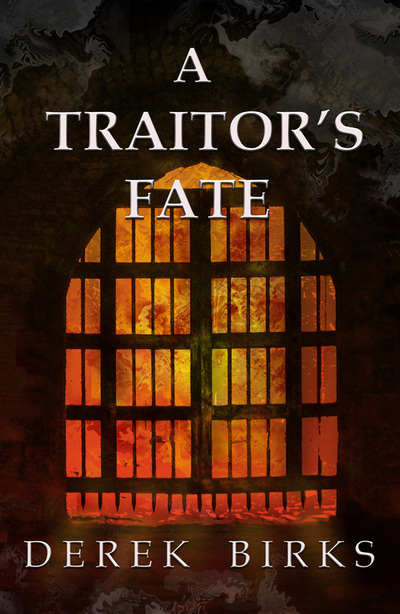
A Traitor’s Fate opens in 1464. The feud with the Radcliffes is over and the Elder siblings have won a hard-fought peace. But one man can’t accept the outcome and finds a new ally to help him achieve his revenge.

Ned is sent to confront a Lancastrian revolt by the new king, Edward of York, he finds his enemies are on his own side, as well as that of the rebels. Branded a traitor by his own commander, the Earl of Warwick, Ned is soon a wanted man in hostile territory and the price on his head only rises when he stumbles upon a royal secret.

Meanwhile, Eleanor and Emma watch over Ned’s pregnant wife, Amelie, wtraitorith only a small garrison of old men and boys to protect them.

A condemned man, Ned fights to escape his pursuers before his whole family suffers destruction.

Having read Feud I was expecting great things from the 2nd book – and it did not disappoint. The story is told in great detail, the action is fast-paced and the characters elicit a great deal of sympathy and empathy. A Traitor’s Fate is one of those increasingly rare stories which are impossible to put down – and yet, at the same time as you can’t wait to get to the end, you don’t want it to finish.

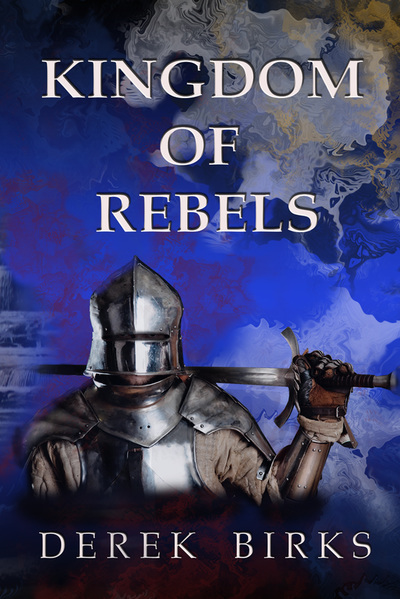
Book 3 of the series, Kingdom of Rebels, takes you on a journey through one of the most turbulent periods of the reign of Edward IV, through the eyes of this one Yorkshire family trying to survive the feuds and battles of the Wars of the Roses, whilst simultaneously trying not to destroy each other. It is impossible not to feel invested in the characters – they are flawed and damaged, but trying their best to survive and you find yourself willing them on.

The story sees Ned Elder exiled to Burgundy by the Earl of Warwick, but for his enemies this is still not enough. At the same time, but far away on the Scottish border, Ned’s sister Eleanor defends the small, beleaguered fortress of Crag Tower; with only a handful of men, she desperately awaits Ned’s return.

Set against the backdrop of a nervous kingdom, where its 2 most powerful men – Edward IV and the Earl of Warwick – are at loggerheads, Ned must fight – yet again – to save his family.

One by one Ned’s family and friends are caught up in Warwick’s web of treason. The fate of the Elders and those who serve them lies once more in the balance as all are drawn back to Yorkshire where they face old enemies once more.

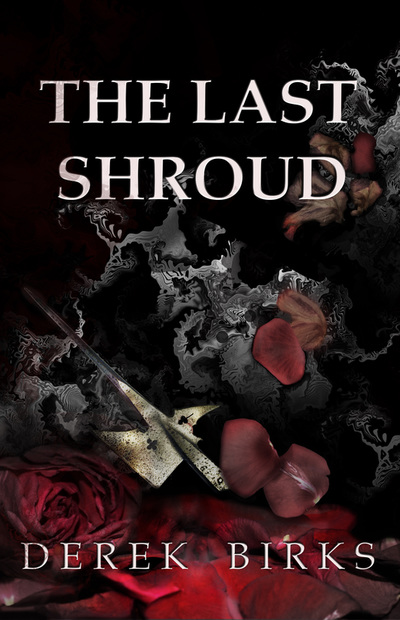
The Last Shroud sees Ned Elder caught in the middle of Warwick’s rebellion against Edward IV. The king has enemies on all sides and flees to the Low Countries, leaving his few loyal retainers to keep their heads down until his return; when they must take up their swords for one last campaign…

But is Ned the warrior he once was? As the kingdom spirals into civil war, divisions between Ned and his sisters, Emma and Eleanor, threaten the family’s very survival. Out of the turmoil of rebellion steps an old enemy who offers to help, but can he be trusted?

Will the Elder family stand together when it matters most? They must, if they are tkingdomo survive.

With The Last Shroud, the Elder family story comes to an end – and what an ending!

It has been a rollercoaster ride through the Kingdoms & Brothers series and this book is no exception. Following Ned and the rest of the Elders through the Warwick Rebellion against Edward IV and culminating with the Battle of Tewkesbury, the family fights to survive, mending some – but not all – bridges along the way, and still making new enemies.

As ever, the story telling is fast-paced and masterful, and the finale frenetic. A worthy final chapter to what has been a magnificent series.

There are several themes running through all 4 books.

The Elders face many enemies, and some change from book to book. But one enemy stays the same: the powerful Earl of Warwick. Offended by a young Ned at the Battle of St Albans, Warwick takes every opportunity to try to bring Ned down – and ruin his family. Using the feud with the Radcliffes he encourages and aids Ned’s numerous enemies in their endeavours.

Set in one of the most turbulent periods of Medieval history, the battle scenes are vivid, hectic and alive with action. The family doesn’t survive unscathed and it is the losses and hardships they suffer, and how they react to them, that makes them such sympathetic and likeable characters.

A great feature of the stories are the strong, independent women. They don’t just sit at home, sewing in the solar and waiting for their men to come home. They are not victimsshroud, nor powerless. They are fighters, women who take what life throws at them and battle on. But they find romance too, and face the trials and tribulations of love just as stoically as they do their enemies.

Derek Birks follows the historical story of the Wars of the Roses with great accuracy, dropping Ned and his family into the well-known events wherever they can cause the most drama, or see the most action. The Elders are present at all the key events, from the opening shots at the 1st Battle of St Albans, to the Yorkist victory at Tewkesbury.

To put it succinctly, this series is edge-of-your-seat action from start to end, leaving you breathless in your armchair. Believe me, you don’t want to miss a moment.

*

My book, Heroines of the Medieval World,  is now available in hardback in the UK from both Amberley Publishing and Amazon UK and worldwide from Book Depository. It is also available on Kindle in both the UK and USA and will be available in Hardback from Amazon US from 1 May 2018.

You can be the first to read new articles by clicking the ‘Follow’ button, liking our Facebook page or joining me on Twitter.
*

©2015 Sharon Bennett Connolly