Book Corner: The Last Legionnaire by Paul Fraser Collard

indexJack Lark has come a long way since his days as a gin palace pot boy. But can he surrender the thrill of freedom to return home?

London, 1859. After years fighting for Queen and country, Jack walks back into his mother’s East End gin palace a changed man. Haunted by the horrors of battle, and the constant fight for survival, he longs for a life to call his own. But the city – and its people – has altered almost beyond recognition, and Jack cannot see a place for himself there.

A desperate moment leaves him indebted to the Devil – intelligence officer Major John Ballard, who once again leads Jack to the battlefield with a task he can’t refuse. He tried to deny being a soldier once. He won’t make the same mistake again.

Europe is about to go to war. Jack Lark will march with them.
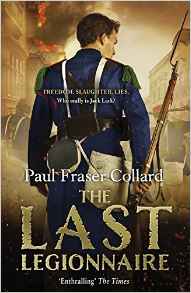
Jack Lark is back!

I have spent a wonderful week on the battlefields of Victorian Europe, reading Jack Lark’s latest adventure. The Last Legionnaire is the 5th book in Paul Fraser Collard‘s fabulous series of novels based on the chameleon soldier, Jack Lark – and what a fabulous, eye-catching book cover! Lark is a serial imposter, one day taking on the guise of a rank-and-file soldier, the next sitting comfortably, in a captain’s uniform, the officers mess. This makes for some interesting and uncomfortable situations; it means you can always find Jack where the action is, but also means he’s vulnerable to the demands of intelligence officer, Major Ballard, who knows his secret.
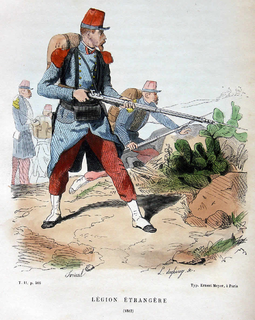
255px-Légion_Étrangère_1852
A French Legionnaire, 1852

The story begins by bringing Jack home the rookeries of Whitechapel, in London, where the poorest a most desperate of Victorian society reside. However, he soon realises it’s no longer home; Jack Lark is one of those men who is most comfortable in the army, among soldiers. It’s what he’s good at. And it doesn’t take long to find his way back to war – with the French army – in search of a man who ran away from home and joined the French Foreign Legion.

There is action in abundance. It is frenetic and vivid. Paul Collard’s battlefield scenes are a masterpiece of descriptive writing. You can almost hear the cacophony of the cannons, see the regiments advancing in column, hear the screams of the wounded and frightened horses.  The author manages to impart not only the action, but also the misery, the fear, the danger – and the lust for battle, the addiction to fighting and the power a man can find in sword, bayonet and rifle. Descriptions of the battlefield hospital, the surgeons at work – as well as the battlefield itself – demonstrate the grim reality of war.

The story is at times touching and often brutal. Jack Lark is a unique character. He serves as an example of how men can find a pleasure, or sense of accomplishment, in battle … and in another battle survived. The Last Legionnaire always has a view to the human element. Jack is aware of is soldiering abilities, even scared of what he is; he knows what he is capable of and tries hard to keep himself under control. But he also has a chivalric nature; he wouldn’t be able to resist helping a damsel in distress, rescuing a child or stopping a regiment, on the verge of panic, from running.

“I’ve seen men like you before.” Palmer broke the silence. “They survive a battle or two, so they start to believe that they’re good at fighting, that they have a talent for it.” He watched Jack pull out the small pot of grease that he used to seal each freshly loaded chamber on his revolver. “Truth is they were just lucky. One day that luck runs out, and they’re just as dead as the poor bastard who died in the first five minutes of his first battle.”

Jack stopped what he was doing and met Palmer’s flat stare. “And you’re different, I suppose?”

Palmer shrugged. “I do what has to be done, nothing more, nothing less. I know that one day  my luck will run out. I don’t see the point in trying to make that day come along any quicker than it needs to.”

Jack’s anger had disappeared. He could not argue against the truth. He returned his attention to his revolver. Only when he had finished loading it did he look at Palmer again. “What about that lucky man? What if his luck holds? What if he goes on surviving?

“Then I pity the poor bastard.”

Paul Collard’s characters are incredibly diverse and full of life. Jack invokes the reader’s sympathy for a man who tries to do the right thing, but sometimes manages to go the wrong way about it. He marches to war with a small entourage, a mismatch of individuals who all want something from him.
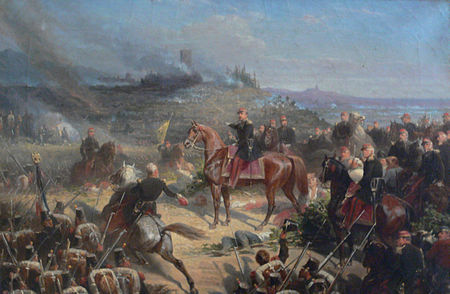
450px-Yvon_Bataille_de_Solferino_Compiegne
Battle of Solferino, 1859

His sense of chivalry means he has taken under his wing a face from his past; Mary, and her young son Billy, no longer have a home and Jack does his best to protect and support them, despite frequent criticism of his inadequacies. Major Ballard is an intelligence officer; comfortable in using others’ weaknesses in order to achieve his ends. And then there’s Palmer, Ballard’s man, but he has a soft spot for Jack; he sees much of himself in the younger man. The partnership of Jack and Palmer is a strong part of the story. The 2 men grow to like and trust each other; they play to their individual strengths and their banter is enjoyable and entertaining.

Ever since reading Beau Geste as a child, I’ve had a soft spot for French Foreign Legion stories and this one is fabulous. Paul Collard has done his homework and it shines through, his knowledge of the Legion, their history and ethos, is second-to-none.

The author has an incredible sense of adventure, which he manages to get across on every page of his writing; you can tell he grew up reading Cornwell, MacDonald-Fraser and Forrester. Jack Lark is his own unique hero and he is a worthy successor to the great literary soldiers who came before him. I couldn’t help imagining him sat round a table with Sharpe, Flashman and Hornblower; he would certainly be able to hold his own when it came to telling the stories of their adventures!

*

Paul Fraser Collard‘s Jack Lark series of books are available now from Amazon

*

My book, Heroines of the Medieval World,  is now available in hardback in the UK from both Amberley Publishing and Amazon UK and worldwide from Book Depository. It is also available on Kindle in both the UK and USA and will be available in Hardback from Amazon US from 1 May 2018.

Be the first to read new articles by clicking the ‘Follow’ button, liking our Facebook page or joining me on Twitter.

Book Corner: Interview with Paul Fraser Collard

Author ImageJack Lark exploded onto Kindles and bookshelves everywhere in Paul’s 1st novel, The Scarlet Thief, and now, 3 years later, The Last Legionnaire is Jack Lark’s 5th adventure. And what an adventure!

This week, after finishing his latest book, The Last Legionnaire, I was lucky enough to catch up with its author, Paul Fraser Collard and ask him a few questions about his writing and  the hero of his books, Jack Lark.

What made you become a writer? I have always read a lot. For years, I spent my daily commute to work reading anything I could get my hands on. My favourite books were always historical fiction, especially the Sharpe novels by Bernard Cornwell. When I was in my early thirties, I began to wonder if I had it in me to write my own novel. One day, after a tough day at work, I opened up my laptop and made a start.

Who are your major writing influences? Bernard Cornwell stands out. I have read every book he has ever written. For me, he gets the mix of historical detail and plot exactly right. The books never fail to sweep me away into the past whilst still giving me a wonderful education into the period he is covering.

I would also say I have been influenced by the fantastic George McDonald Fraser. His Flashman series is quite magnificent. I could never hope to write anything close to such brilliance, but it did give me the idea of setting each novel in a new setting with a different cast of supporting characters.

index2Jack Lark is quite a unique character, a soldier/officer impostor. How did you come up with him as your character? Is he based on an actual historic person? The idea for Jack was developed from the desire to find a way to move a character around without tying him to a single regiment or a particular military campaign. I knew that is what I wanted to make my series stand out, and so I thought long and hard how to create a character that was unique enough to be able to travel the Victorian world.

The idea for an imposter came from the real story of Percy Toplis, a man made famous by the BBC TV series called The Monocled Mutineer. Percy was a rogue from a mining town in the north of England, yet he managed to pass himself off as a British army officer during the First Word War. Poor Percy met a rather nasty end, but he gave me the proof I felt I needed that a lad from a very humble background could manage to impersonate an officer.

If someone said they wanted to make a film of your books, who would you pick to play Jack Lark? Goodness, I hope this happens! However, I am dreadful at answering this question. I just don’t know of any actor that matches the picture of Jack that I carry in my head. Perhaps readers of this interview can send me their suggestions!

How long do you spend researching a novel before you start writing? I always start any novel with a period of research. This generally begins whilst I am still working on another book. I work full time so everything has to be fitted in 2as and when I can. I would say that on average I spend around three months learning the history of the next novel. Some have been easier than others. The American Civil War or the events of the Indian Mutiny are covered by hundreds of books, whereas the campaign against the Shah of Persia and the battle of Khoosh-Ab barely feature anywhere!

What comes first, your storyline or your research? They both develop together. The history gives me the framework and the plot is the fabric that gets woven around it. I put the two together in a very detailed plan that tends to be around 20-30,000 words. Then all I have to do it flesh it all out.

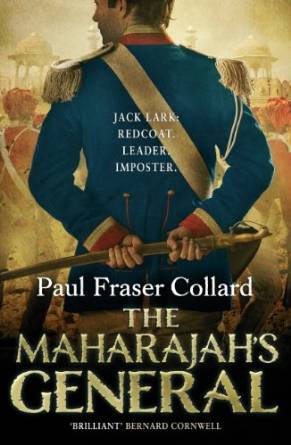
With The Last Legionnaire, Jack becomes embroiled in a war that Britain took no part in; how did you decide where he was going to fight next? I always have a vague idea where Jack is going for the next couple of novels. From there, I cast around to see what events happened in the years following the last novel I have planned. The tricky bit is thinking of how Jack can go from one to the other. I remember a review of The Maharajah’s General that stated that it would be a dull series indeed, if Jack just moved from one convenient identity to another (a Victorian version of Mr Ben, if you like!). So I always think very carefully about the link between the novels. Hopefully they work!

Do you know how the book is going to end when you start it? Pretty much. As I have to cram my writing into short gaps in my day, I need to be able to write fast. This makes planning pretty important and my novel outline is always very detailed. That said, it can and does change. The ending to The Last Legionnaire change dramatically about one week before I had to submit it to my editor. The ending I had planned just didn’t sit well and so it had to be changed.

How do you organise your writing day? My writing time is squeezed into my commute at the start and the end of the day. I have quite a long journey so that gives me just under two hours a day dedicated to writing. I then fit what I can into other times. This means I have to be very disciplined about using what time I have as e3ffectively as I can. I try hard to write at full speed on the train, making sure I cram as much productivity into those two hours as I can. I am not one of those writers who had the luxury of ruminating over the perfect sentence!

What do you enjoy most about writing? Creating the story is the best bit and I love plotting and creating the detailed outline.

What is the worst thing about writing? Finishing the first draft! This gets harder, if I start planning the next novel before I have finished the current one.

How long does it take to do a project from start to finish? So far I am getting a novel done in around ten months. I tend to work on multiple books at the same time. Right now I am polishing book 6, writing a short story whilst also plotting and researching for book 7.

Who are your favourite personalities from history? Is there anyone you would particularly like to write about, or include in Jack’s adventures? I love the idea of working in a reference to Flashman in one of Jack’s stories, but I must say, I have always been much more interested in the ordinary men and women who found themselves caught up in the cataclysm of war than the great and famous personalities. For me, the tale of an ordinary infantryman is more interesting than that of a famous general. Apart from a few exceptions, Jack’s stories will focus on what the battles were like for the poor bloody individuals on the front line.

What other historical periods would you like to write about? I w4ould really enjoy writing about WW2. If anything this period fascinates me even more than the Victorian Empire. I have written a novel set in WW2, but for now it is on the back burner as its needs a re-write that I just don’t have time to do. For the moment at least!

Do you ever get writer’s block? If so, how do you get around it? I have to say that I don’t often get writer’s block. I think this is because I have so little time to actually write. I tend to do my thinking at other times. When I sit down to write, I slip into blast mode and just go for it. If I do get stuck then I jump to something else. I cannot bear to waste time! It is too precious.

Do you find social media – such as Facebook – a benefit or a hindrance? I love it! The publishers are very keen on social media and I was a little daunted at first. But now I think it is the best outlet I have. I have found so many brilliant people on Facebook and on Twitter and I would now count many of them as friends. I love the fact that I can be available to anyone kind enough to read my books and I always enjoy being able to chat about history or anything else that comes up.

What will be your next project? Where is Jack fighting next – and when do we get to read it? Next up is the start of The American Civil War and specifically the First Battle of Bull Run (Jack fights for the Union in this one). If you have finished The Last Leindexgionnaire then you will have an idea of what takes Jack across the Atlantic.

This one should be out early in 2017.

How many more Jack Lark adventures do we have to look forward to? Do you have a number in mind, or will he keep fighting until there are no wars left? I cannot imagine ever letting Jack settle down and I hope he can keep going for many years, and many novels, to come. You will know when I have written the last one as I will make sure the cover image is of him facing the reader for the first time.

*

I would like to extend my thanks to Paul Fraser Collard for his fantastic answers. Look out for my review of The Last Legionnaire, which should go live on Friday 13th May, 2016.

*

My book, Heroines of the Medieval World,  is now available in hardback in the UK from both Amberley Publishing and Amazon UK and worldwide from Book Depository. It is also available on Kindle in both the UK and USA and will be available in Hardback from Amazon US from 1 May 2018.

Be the first to read new articles by clicking the ‘Follow’ button, liking our Facebook page or joining me on Twitter.
©2016 Sharon Bennett Connolly

Book Corner: In the Shadow of the Storm, by Anna Belfrage

51FcCxVcaOL._SX310_BO1,204,203,200_Adam de Guirande owes his lord, Sir Roger Mortimer, much more than loyalty. He owes Sir Roger for his life and all his worldly goods, he owes him for his beautiful wife – even if Kit is not quite the woman Sir Roger thinks she is. So when Sir Roger rises in rebellion against the king, Adam has no choice but to ride with him – no matter what the ultimate cost may be. England in 1321 is a confusing place. Edward II has been forced by his barons to exile his favourite, Hugh Despenser. The barons, led by the powerful Thomas of Lancaster, Roger Mortimer and Humphrey de Bohun, have reasons to believe they have finally tamed the king. But Edward is not about to take things lying down, and fate is a fickle mistress, favouring first one, then the other… The Welsh Marches explode into war, and soon Sir Roger and his men are fighting for their very lives. When hope splutters and dies, when death seems inevitable, it falls to Kit to save her man – if she can….

In the Shadow of the Storm is the first book in Anna Belfrage’s new series, The King’s Greatest Enemy, and what a magnificent introduction to Anna’s new heroes and heroines! Set in one the most tumultuous periods of English history, the book expertly blends the personal lives of its heroic couple, Sir Adam and Kit, his new wife, with the national drama of the disintegrating reign of Edward II.

Seal_of_Edward_II-2
Seal of Edward II

I know it’s a bit of a cliché, but this book is impossible to put down. The action and intrigue are, to put it simply, riveting. In the Shadow of the Storm has a great mix of love story and rebellion, and of heroes and villains and a heavy dose of adventure; it has you in tears one minute and on the edge of your seat with excitement the next.

Kit is my new hero! In a world where women’s rules were very specifically defined, Kit pushes the boundaries in order to achieve what she wants – but she never quite exceeds them. A young woman kidnapped from her sheltered life and thrown into a marriage to a man she has never met, and into the world of her new husband’s lord; where war, intrigue and a secret threatens to destroy the growing love the couple have for each other. However, not only does she manage to avoid sinking, Kit becomes a champion swimmer.

Adam went to the nearby table, sloshed wine into a goblet and drank deeply before passing it to her.

“I hadn’t expected to find you a virgin,” he said, eyes the colour of pewter raking her body up and down.

“What do you mean, my lord?”

“Don’t give me that.” He reclaimed the cup and leaned against one of the bedposts. “Do you think I don’t know about you and Lord Roger?” Not only was he tall, he was big, a thick, fair fuzz covering his chest, the hair darkening closer to his groin.

“Lord who?” Kit’s head ached.

“Mortimer,” he clarified with an edge to his voice. “Our lord and master.”

Adam is a knight sworn to Lord Roger Mortimer, balancing a burgeoning love for his wife and family with his duty to his lord. Kit and Adam are a very real, down-to-earth, young couple; newly married they are still discovering each other. Misunderstandings and insecurities lead to a married life that is anything but smooth. And in the midst of their developing love and trust, they are thrown into the middle of Mortimer’s rebellion against Edward II.

Isabella_of_France
Isabella of France, Edward II’s queen

Ranged against them are enemies aplenty. Adam’s own step-brother, Guy, has eyes on Kit – and on everything Adam possesses – and will go to extraordinarily vicious lengths to achieve his goal. While the most despicable of all is Hugh le Despenser the younger, Edward II’s favourite and a man with a particular hatred for Adam and his lord. Vindictive and cruel, Despenser is determined to destroy Adam; Kit has to use all her courage and skill to thwart him – and to save her husband’s life.

Anna Belfrage manages to weave a wonderful story around the very real history of a desperate time for England and her people. The threats and dangers of living in a divided, unstable realm, with forces polarizing between the king and queen, are vividly depicted, drawing the reader deeper and deeper into the 14th century.

The author’s deep knowledge of the period serves to make the reader believe they are actually there, watching the action, weighing the choices and living the harsh reality of a realm on the brink of civil war. The history is impeccable, with Kit and Adam’s story slipping into the historical timeline so neatly that it is practically impossible to see the line where history ends and fiction begins.

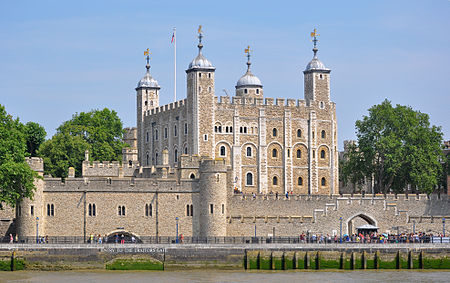
450px-Tower_of_London_viewed_from_the_River_Thames
Tower of London

Anna Belfrage’s depiction of the historical characters is exquisite. Despenser is suitably heinous; he makes your skin crawl when he walks into a scene. Lord Roger Mortimer is determined, charming … and noble. The personalities are diverse and fascinating. The landscapes are so vividly describes as to be dramatic; you could almost imagine yourself riding along the rivers of the Welsh Marches, incarcerated in a dark, cold dungeon, or walking along the main thoroughfare of the ancient town of Shrewsbury.

In the Shadow of the Storm is a wonderfully exciting book; a clever blend of intrigue, romance and action. Anna Belfrage is a master story-teller and has done her homework well – she brings the 14th century to vivid, colourful life. It will be difficult to read anything better this year …. but I can’t wait to see if Book 2 in The King’s Greatest Enemy series, Days of Sun and Glory, proves me wrong……

*

nna Belfrage is the author of the extremely popular time travelling series, The Graham Saga. To find out more about this incredible author and her books, please visit her website.

Pictures of Edward II and Isabella of France are courtesy of Wikipedia.

*

My book, Heroines of the Medieval World,  is now available in hardback in the UK from both Amberley Publishing and Amazon UK and worldwide from Book Depository. It is also available on Kindle in both the UK and USA and will be available in Hardback from Amazon US from 1 May 2018.

Be the first to read new articles by clicking the ‘Follow’ button, liking our Facebook page or joining me on Twitter.

©2016 Sharon BennettConnolly


Book Corner: Hanging Mary by Susan Higginbotham

51lmZWdly4L._SX331_BO1,204,203,200_In 1864 Washington, one has to be careful with talk of secession. Better to speak only when in the company of the trustworthy, like Mrs. Surratt. A widow who runs a small boarding house, Mary Surratt isn’t half as committed to the cause as her son, Johnny. If he s not escorting veiled spies, he s inviting home men like John Wilkes Booth, the actor who is even more charming in person than he is on the stage. But when President Lincoln is killed, the question of what Mary knew becomes more important than anything else. Based on the true history of Mary Surratt, Hanging Mary reveals the untold story of those on the other side of the assassin’s gun.

 Hanging Mary is a wonderfully deep, thought-provoking book which transports you back to 19th century Washington and walks you through the months leading up to the Lincoln Assassination, the assassination itself and, finally, the dreadful aftermath. More than a novel, Hanging Mary allows you to experience the lives of the men and women caught up, however unwittingly, in the conspiracies of John Wilkes Booth.

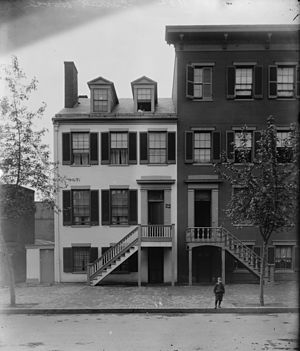
300px-Mary_Surratt_house_-_Brady-Handy
Mary Surratt’s boarding house

As the title suggests, the eponymous heroine, Mary Surratt pays the ultimate price for her southern sympathies. One of the 2 narrators, Mary tells the story of how her respectable boarding house and its residents were caught up in the plot to kill the president.

The other narrator is Mary’s boarder, Nora Fitzpatrick, a young woman who sees Mary as a surrogate mother. A spectator, rather than a conspirator, Nora watches the unravelling of the lives of those in the boarding house. Caught up in the aftermath, but unable to desert her former landlady, she bears witness to the events as they unfold. Between them, Mary and Nora, reveal the story of the plot to kidnap Lincoln, which eventually led to his assassination at Ford’s Theatre. We watch the comings and goings at the boarding house, are introduced to the dashing actor, John Wilkes Booth, and to Mary’s own son, John H Surratt.

As the story develops we experience the fear of not knowing what will happen, of being imprisoned and of not knowing what is happening in the wider world as the tale moves inexorably to its conclusion.

Nora: ….Mr Wilson came to our room. “Collect your things, Miss Fitzpatrick. You’re to be released, and your father is waiting to take you home.”

“What about the others, sir?”

“The orders concern only you, miss”

I embraced Anna. “They’ll free you and your mother soon, I just know it. They’re investigating and realizing that we’re innocent of all this.”

“I hope so.”

Brushing my eyes I left the dejected Anna behind, I followed Mr Wilson to the office where I had been searched. There my father was pacing around. “Nora!” He took me into his arms. “My darling child, I have been frantic with worry.”

“And she’s safe and sound, just as I told you,” Mr Wilson said. “Can we give you a ride in the ambulance? It’s a dreary day, as you know.”

“Thank you, but I prefer to take my daughter home myself,” my father said stiffly.

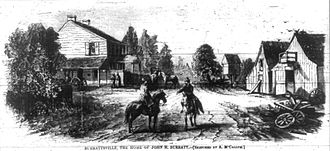
Surrattsville_-_print_-_1867
Surrattsville, where the family owned the local tavern.

You cannot read this book without being touched by Mary’s story. It draws you in, takes hold and refuses to let you go. By the climax of the trial, it was impossible to put the novel down; I read late into the night, feeling that witnessing the end of Mary’s journey was an obligation that had to be seen through. The words paint images in your mind that are vivid, at times horrifying, but which let you know that you are witnessing history and a brutal justice.

The book stays with you for days afterwards, thinking of the dignity of the woman who faced her fate with as much stoicism as she could muster. The novel reminds you of the humanity and compassion of those who stuck by Mary in her time of need; those who supported and helped her and tried to obtain a reprieve, even though they didn’t know her.

Susan Higginbotham has used her extensive research skills to recreate life in 1860s Washington. The book is full of little tidbits of information which will amaze the modern reader; such as that petitioners could walk straight into the White House and ask to see the president (can you imagine that?). The locations are described in vivid detail; down to the graffiti on the prison walls and the crowds outside the White House during the president’s speech. You find yourself immersed, not only in the story, but in the heart of Washington DC itself; in the social life and the politics and in the death throes of the Civil War itself.

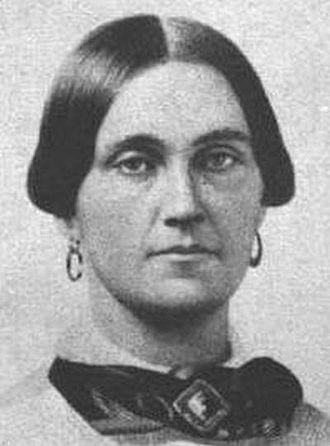
330px-Mary_Surratt
Mary Surratt

The strength of this book, however, is in the characters. Mary Surratt is a sympathetic heroine, trying to make it through life as best she can after her late husband had wasted away most of their money. She is caught between supporting her son, an active sympathiser of the South, and protecting her daughter, Anna. Her all-too-human trait of going with the flow, and her failure to recognise the dangers surrounding the plotters, draws her  into the edges of the conspiracy, but how much she actually knew, and whether she committed treason, is  open to interpretation.

John Wilkes Booth comes across as a smooth-talking, gallant charmer, who tends to know the right thing to say. It’s easy to imagine how his swarthy, confident manner could draw Mary into his conspiracy, to make her believe she is just being helpful, but doing nothing wrong. However, Booth’s refusal to be taken alive meant anyone associated with him was caught up in the web of conspiracy, and left Mary with no one to attest to her level of involvement – or lack thereof.

The author has used the memoirs of those involved, court transcripts and newspaper reports in order to recreate Mary Surratt’s life as faithfully as possible. Telling the human side of the story the book takes you on an emotional rollercoaster, with moving and powerful imagery. But it is well worth the disturbed sleep, to be able to experience such a wonderful, thought-provoking, poignant story.

This is a book not to be missed and a story that needed telling – I can’t recommend it highly enough. The language, history, the personal stories – even the locations – all combine to make this novel a unique piece of literature and an experience in itself.

*

Susan Higginbotham‘s meticulously researched historical fiction brought to life by her heartfelt writing delights readers. Higginbotham runs her own historical fiction/history blog, History Refreshed by Susan Higginbotham, and owns a bulletin board, Historical Fiction Online. She has worked as an editor and an attorney and lives in Apex, North Carolina, with her family.

Available from Amazon in the UK & the US.

*

Pictures are courtesy of Wikipedia.

*

My book, Heroines of the Medieval World,  is now available in hardback in the UK from both Amberley Publishing and Amazon UK and worldwide from Book Depository. It is also available on Kindle in both the UK and USA and will be available in Hardback from Amazon US from 1 May 2018.

Be the first to read new articles by clicking the ‘Follow’ button, liking our Facebook page or joining me on Twitter.

©2016 Sharon Bennett Connolly

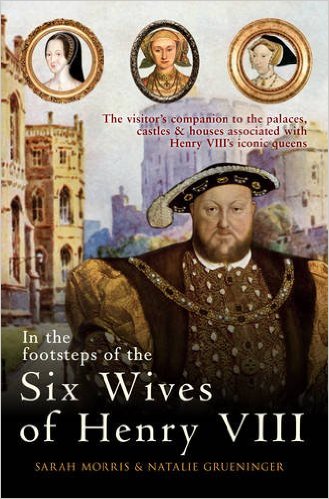
Book Corner: In the Footsteps of the Six Wives of Henry VIII by Sarah Morris and Natalie Grueninger

51C52QElN8L._SX327_BO1,204,203,200_This book provides a fresh perspective on the lives of Henry VIII’s six wives by embarking on a journey through the manors, castles and palaces in which their lives were played out.

Each location is described in a fascinating narrative that unearths the queens’ lives in documents and artefacts, as well as providing practical visitor information based on the authors’ first-hand knowledge of each site. Accompanied by an extensive range of images including timelines, maps, photographs and sketches, this book brings us closer than ever to the women behind the legends, providing a personal and illuminating journey in the footsteps of the six wives of Henry VIII.

In the Footsteps of the Six Wives of Henry VIII, by Sarah Morris and Natalie Grueninger, is an absolute treasure trove of pictures and information of the many historic locations associated with Henry VIII’s 6 wives. The book is divided into 7 easy-to-follow sections; the 1st covers the principal Royal residences of the period and the 6 subsequent portions are each dedicated to one of the 6 wives, in chronological order.

054 (2)
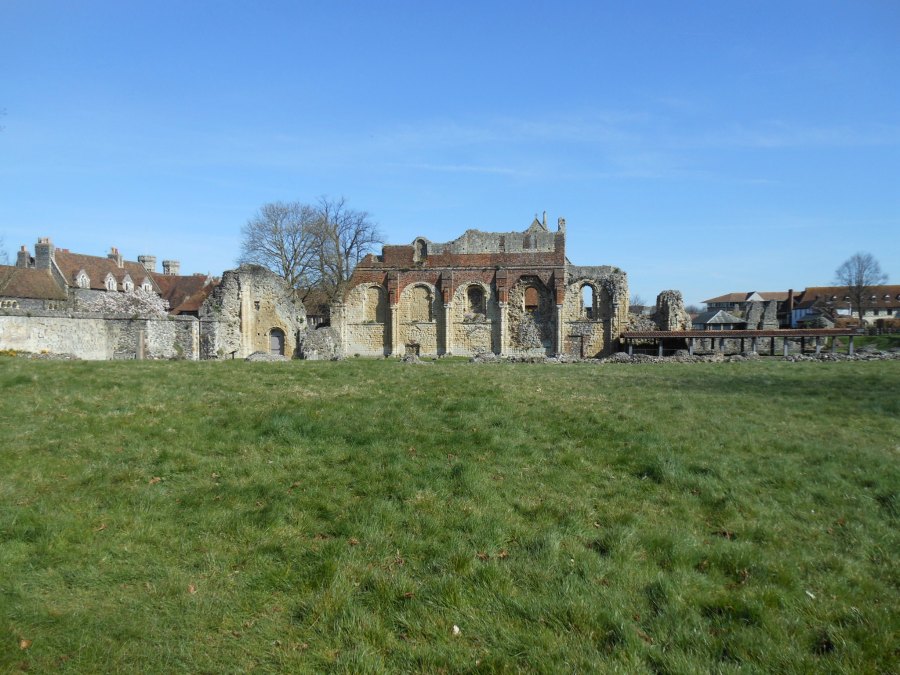
St Augustine’s Abbey, Canterbury

The book examines each of Henry’s queens in turn, looking at the locations associated with them, not only when they were queen, but also from their childhood and early life. In each section, we are treated to the queen’s story, her triumphs and failures, told through the palaces in which she experienced them.

In the Footsteps of the Six Wives of Henry VIII takes you on a visit of each location, whether it’s a palace or manor house, the authors give vivid tours, telling you what to look out for, what is still extant – and what is lost to history. In one location, they guide you to a housing estate and point out the walls which once made up the exterior of a Henry VIII’s now-lost palace. You are also provided with a practical guide to the locations covered, giving you visitor information, parking suggestions, details on refreshments and facilities.

135
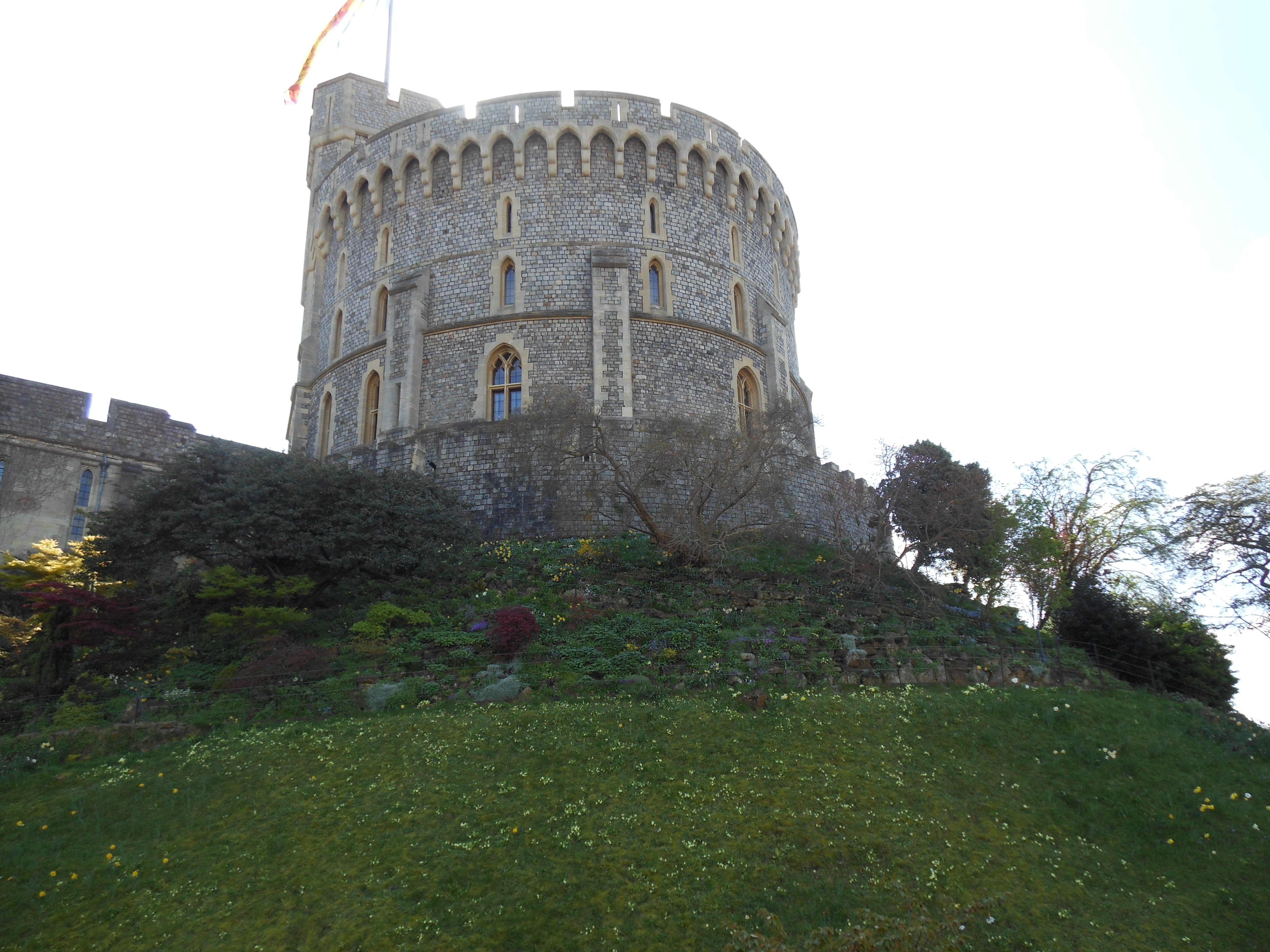
Windsor Castle

With Katherine of Aragon, we visit the magnificent palaces of Spain, while Anne Boleyn takes us from Burgundy to the Loire Valley. Jane Seymour allows us to investigate the renowned Wolf Hall and Anne of Cleves gives us a fascinating glimpse into Germany’s wonderful castles. Jane Seymour The tragic story of Katherine Howard allows us to join Henry’s great progress of 1541,  through Lincolnshire and Yorkshire, before the tragic last months of imprisonment at Syon House. Which finally brings us to Katherine Parr, investigating the locations associated with her first 2 marriages, her life with Henry and then her final years with Thomas Seymour.To walk the grounds and corridors of Hampton Court Palace is to walk in the footsteps of all the Tudor kings and queens. Within the Tudor palace’s russet-coloured walls, the present fades into the brickwork and the past emerges to greet us. Although mush of the Tudor palace has, over the years, been modified or demolished and replaced with William III’s and Mary II’s baroque palace, the buildings that survive propel us back through the years to a time when Hampton Court was one of Henry VIII’s most beloved palaces, at the centre of court life and politics.

020 (2)
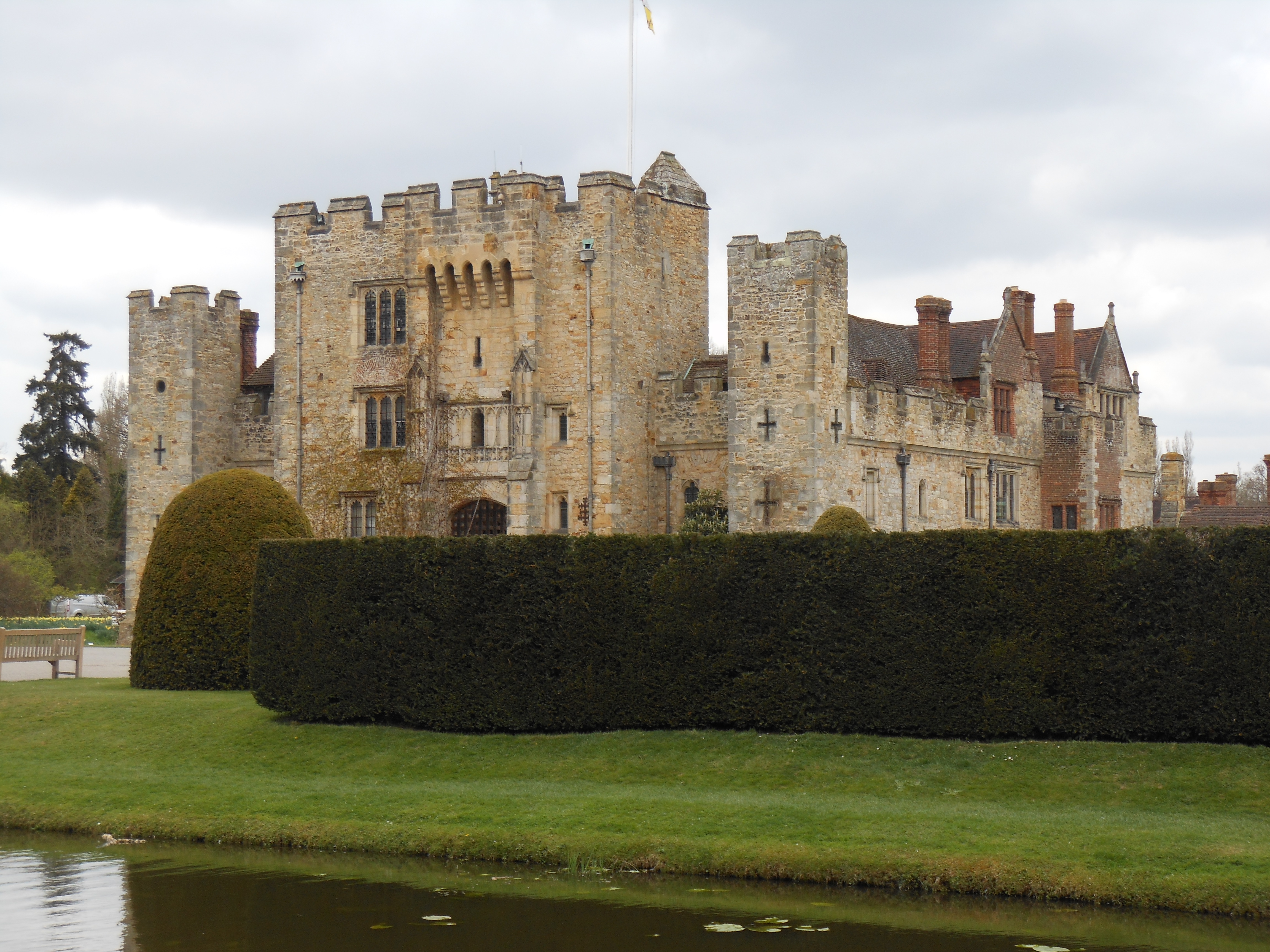
Hever Castle, Kent

If nothing else, it is worth reading In the Footsteps of the Six Wives of Henry VIII for the research the Sarah Morris and Natalie Grueninger have conducted into the Anne of Cleves panels. These wonderful wood carvings are discussed and investigated in detail; their fascinating story told for the first time in its entirety. It is not hard to imagine the feelings of curiosity and, sometimes,  disappointment the authors must have felt as they tried to uncover the provenance of these panels, and their associations with Henry VIII’s 4th wife. Their eventual success and discoveries are a testament to the author’s persistence and tenacity.

This book is amply supported by quotes from primary sources, describing the locations as they were at the time the queens lived. The authors have a wonderful habit of discussing the difficulties involved in locating and identifying some of the less famous sites, making you feel part of their investigations.

178
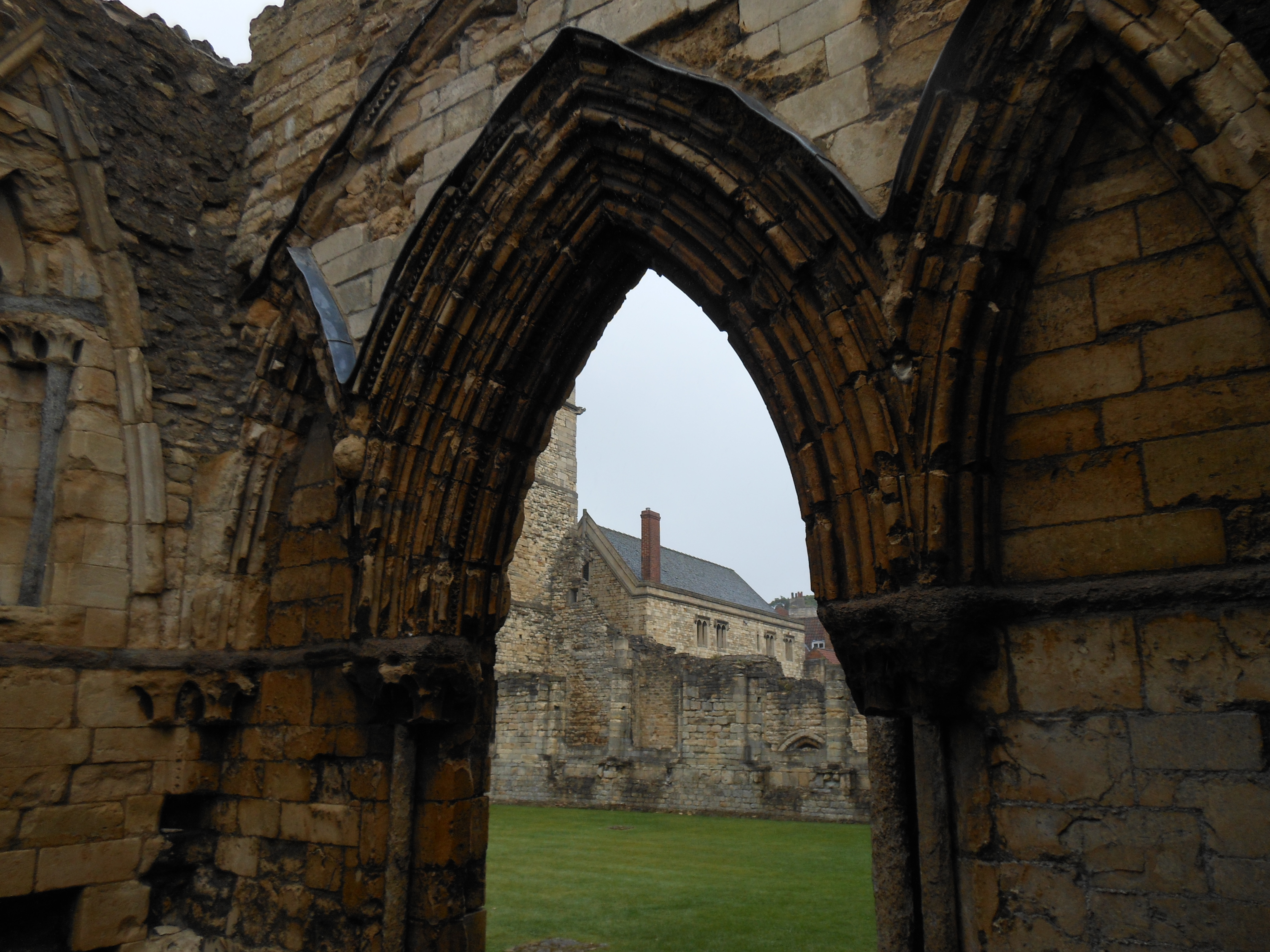
The Bishop’s Palace, Lincoln

An abundance of photographs and illustrations are included in the book. These include colourful photos of the sites as they are now, black and white floor plans from the Tudor period and artwork painted through the ages.

Sarah Morris and Natalie Grueninger have created a wonderful book, which is a combination of history book and travel guide. They have worked so well together it is impossible to see the join; they speak with one voice in this stunning collaboration. The book is produced in a way to make it easy to dip in and out of, making it possible to read only about the locations you are currently touring, or to read from beginning to end in a couple of sittings. But be careful, in just looking up one specific location you may find that you lose an entire hour without noticing.

The only criticism I would have is that there are no footnotes to clarify the source of quotations, which makes it harder to use as a research tool, but not impossible. This fault is partly offset, moreover, by an extensive bibliography of primary and secondary sources, and in no way detracts from the enjoyment of the book as a whole.

Remarkably, the authors give equal empathy to each of Henry’s wives. It is impossible to discern a bias for Katherine of Aragon or Anne Boleyn (a remarkable achievement). Each property is subject to the same attention to detail, whether it was a frequently occupied palace, or a manor house visited for just a few days while on progress.

052
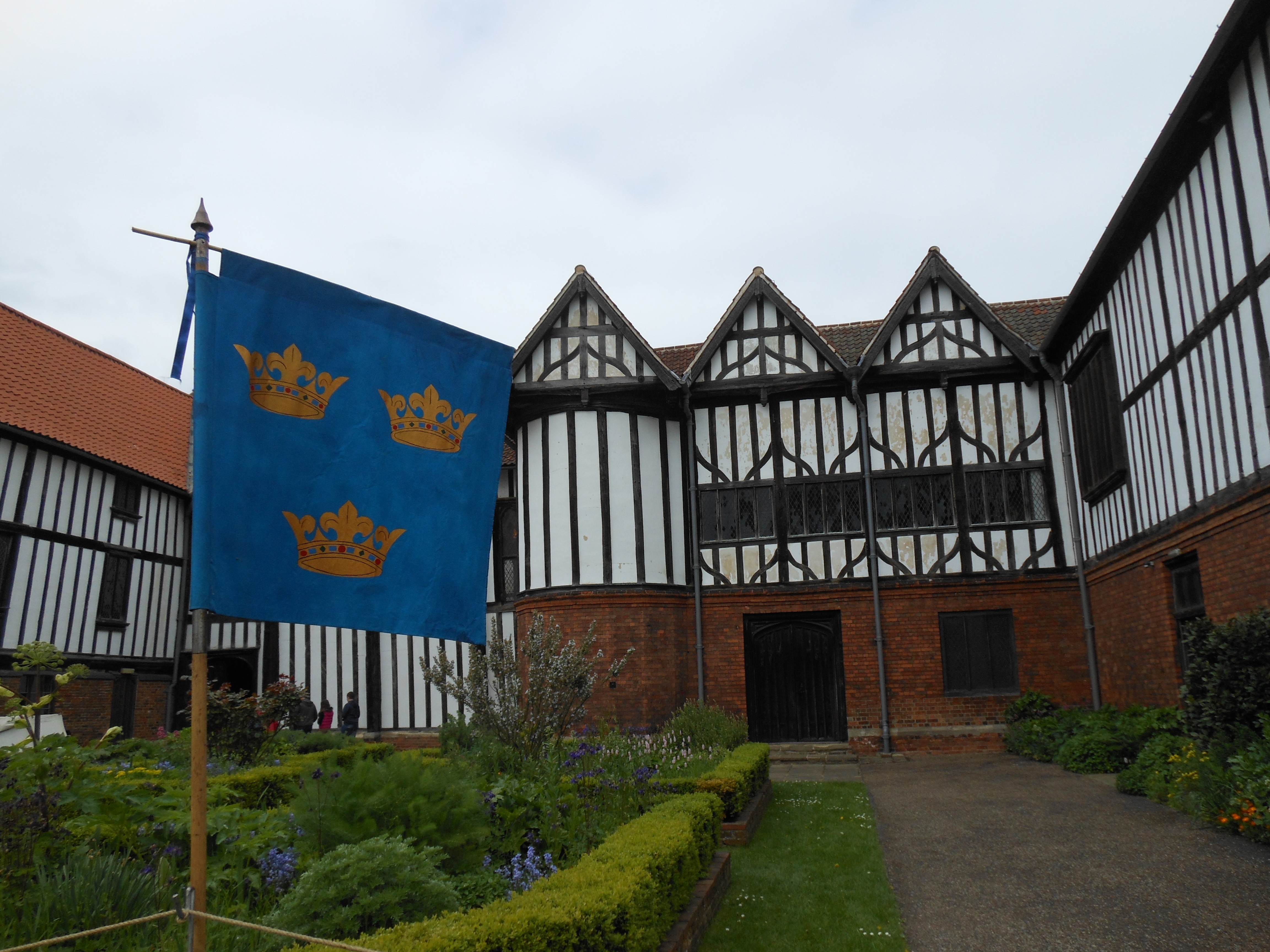
Gainsborough Old Hall, Lincolnshire

In the Footsteps of the Six Wives of Henry VIII is beautifully written and thoroughly engaging. You can practically hear, see and smell the Tudors. The book is a detailed, enjoyable and enlightening read, no matter whether you are intending to travel to the palaces, or visiting them through the book, you are in for a real treat. The authors have an incredible ability to invoke the past and recreate the sumptuous, lavish lives of England’s most fascinating queen consorts. It will be a valued addition to anyone’s Tudor library.

*

My book, Heroines of the Medieval World,  is now available in hardback in the UK from both Amberley Publishing and Amazon UK and worldwide from Book Depository. It is also available on Kindle in both the UK and USA and will be available in Hardback from Amazon US from 1 May 2018.

Be the first to read new articles by clicking the ‘Follow’ button, liking our Facebook page or joining me on Twitter.

*

Photographs ©Sharon Bennett Connolly 2016

Book Corner: On the Trail of the Yorks by Kristie Dean

24th March On the Trail slider 13

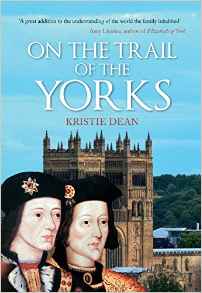
Today is the last day of Kristie Dean‘s Blog Tour to celebrate the release of her latest book, On the Trail of the Yorks. Congratulations to Kristie on what has been a wonderful virtual book tour – and ‘thank you’ for asking History…the Interesting Bits to be a part of it.

So, I think, for the last day, it is only fair to give you my review of this remarkable book.

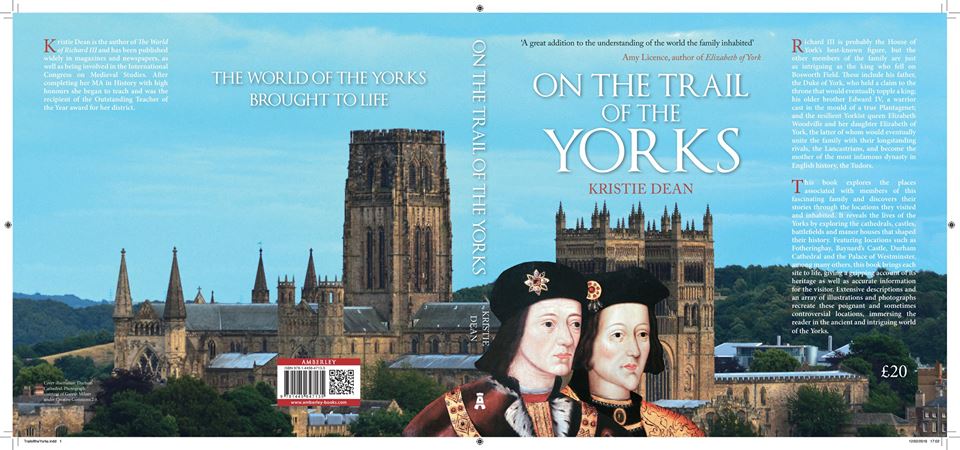
12791083_736187379851237_1299001826319792577_nRichard III is probably the House of York’s best-known figure, but the other members of the family are just as intriguing as the king who fell on Bosworth Field. This book explores the places associated with members of this fascinating family and discovers their stories through the locations they visited and inhabited. It reveals the lives of the Yorks by exploring the cathedrals, castles, battlefields and manor houses that shaped their history. Featuring locations such as Fotheringhay, Baynard’s Castle, Durham Cathedral and the Palace of Westminster, among many others, this book brings each site to life, giving a gripping account of its heritage as well as accurate information for the visitor. Extensive descriptions and an array of illustrations and photographs recreate these poignant and sometimes controversial locations, immersing the reader in the ancient and intriguing world of the Yorks.

Just over a year ago Kristie Dean published her book, The World of Richard III. This was a unique book with its own inimitable style. A combination of history book and travel guide, Ms Dean told the story of Richard III through the geographical locations associated with him. In On the Trail of the Yorks Kristie Dean has extended her research to include the rest of Richard’s family, from his father the Duke of York through his wife and brothers to his niece, Elizabeth of York, queen of Henry VII.

1422626_729589277177714_706482969626694562_nThe book is laid out in an easy-to-follow format, with each main character of the Yorkist dynasty getting their own chapter. The chapters then follow a loosely chronological manner, based on when the locations were used, or visited, by the person in question. Ms Dean always gives a history of the association between the Yorks and the historic site, while also giving a general history of the location. The book acts as a practical guide for each location; giving not only useful contact details, but also travel information and what to look out for while you are there.

The centre of the book has a treasure trove of colourful and black and white images. Including portraits depicting leading members of the House of York and photographs of the places the Yorks and Kristie Dean have visited. The wonderful pictures help to bring the history to life and you find yourself flicking between the descriptions of the various sites and the related pictures.

Kristie Dean also discusses locations which are no longer available to us. Her description of Old St Paul’s Cathedral, which was destroyed during the 1666 Great Fire of London, is so thorough and passionate that it leaves the reader bereft at the thought of what is lost.

Some places are familiar to any fan of the Yorkist dynasty; York, Fotheringhay, Ludlow and, of course, Middleham. While other locations are less-instantly recognisable as having Yorkist connections, but just as interesting; castles such as Conisbrough and the shrine of Our Lady of Walsingham. The book itself takes you from locations in England to Ireland and into France and the Continent, with comprehensive travel information as you go; giving you a tour of some of the best historic sites that Europe has to offer – whilst never moving from your armchair.

220px-Eltham_Palace_-_geograph.org.uk_-_19354
Eltham Palace

No matter how familiar it is to us, each location is given the same level of attention, with detailed descriptions of the site, the things to see – and what not to miss – and the Yorkist story behind  it. Kristie Dean builds up the personal stories of the individual members of the family through the buildings and places particularly associated with them.

On every page Kristie Dean’s passion and enthusiasm for her subject shines through. Here, she writes about Westminster Hall:

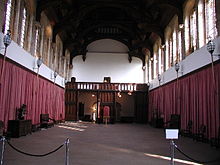
Few other places have survived to offer the York enthusiast such a rich tapestry of history; few other places allow one to stand under the same roof where so much history has passed. The atmospheric presence of those long gone can be felt, separated from today’s visitor by only the thin wall of time. You might feel hurried to move on to the next room, but find a corner and stand for a moment to experience the atmosphere…..

This book allows the reader to vicariously visit the locations associated with the family of the House of York, with the history of each site, descriptions of what it would have looked like in the 15th century and descriptions of what is available to visit today.

065
Bosworth Battlefield

You can vividly imagine being in Staindrop Church, or the church at Fotheringhay during the re-internment of Richard Duke of York in 1476, or feasting at the castle afterwards. Kristie Dean’s own information and knowledge is enhanced by her use of contemporary quotes, to give past descriptions of the locations and of the events she is describing.

It would be easy for a book of this kind to be confusing and higgledy-piggledy, but the author keeps focussed throughout and makes the book easy to follow, both as a history book and as a guide-book; keeping on topic and explaining any overlaps.

The work is thorough and impressive in the blend of history and geography, allowing you to use the book as a general history and tour guide, while each chapter and location is designed as a standalone guide, allowing you to drop in and out of the book as you please; a useful tool when travelling.

In short, this is a wonderful resource for both the armchair traveller, and the historical tourist, enhanced by photographs of locations and a level of detail that is second-to-none. It is a ‘must have’ on the book shelves for any fan of Richard III, the House of York or the Wars of the Roses in general, in order to enhance our knowledge of the period.

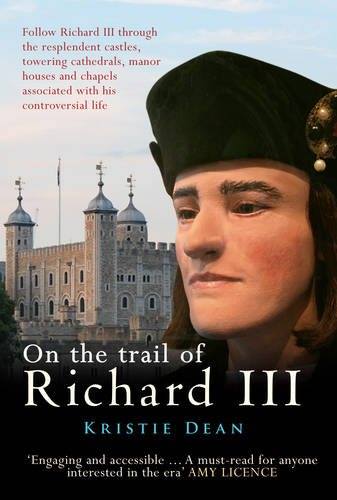
KristieKristie Dean has an MA in History and now enjoys teaching the subject, following a successful career in public relations. Her particular historic interest is the medieval era, specifically the Plantagenets, the Wars of the Roses and the Tudors. When not traveling for research, you can find Kristie at home in Tennessee with her husband, three dogs, and two cats. On the Trail of the Yorks is available now from Amazon UK and from Amazon US in May. And The World of Richard III will be released in paperback in May 2016, with its new title ….  On the Trail of Richard III.

*

My book, Heroines of the Medieval World,  is now available in hardback in the UK from both Amberley Publishing and Amazon UK and worldwide from Book Depository. It is also available on Kindle in both the UK and USA and will be available in Hardback from Amazon US from 1 May 2018.

Be the first to read new articles by clicking the ‘Follow’ button, liking our Facebook page or joining me on Twitter.

*

Pictures: Eltham Palace courtesy of Wikipedia; Bosworth ©SharonBennettConnolly 2014

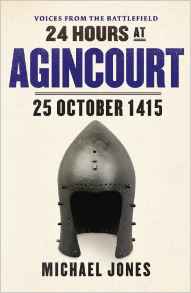
Book Corner: 24 Hours at Agincourt by Michael Jones

24 hrsAgincourt was an astonishing clash of arms, a pivotal moment in the Hundred Years War and the history of warfare in general.

In August 1415, King Henry V claimed the throne of France and landed an army in Normandy. Two months later, outside the small village of Agincourt in Picardy, he was preparing for certain defeat. On 25 October his exhausted, starving and ailing troops faced a far larger French army, whose soldiers were fresh for combat and determined to destroy their opponents. But what was to take place in the following 24 hours, it seemed only the miraculous intervention of God could explain.

Interlacing eyewitness accounts, background chronicle and documentary sources with a new interpretation of the battle’s onset, acclaimed military historian Michael Jones takes the reader into the heart of this extraordinary feat of arms. He brings the longbowmen and knights to life, portrays the dilemmas of the commanders and shows the brutal reality on the ground, as archers seized swords, daggers and even mallets to beat their opponents, and heavily armoured men-at-arms sank into knee-deep mud in a bloody fight that astounded the courts of Europe.

Last October, at the Harrogate History Festival, I watched a panel entitled ‘600 Years of Beating the French’. Although it concentrated on the Battle of Waterloo – which was commemorating its 200th anniversary – there was one lone voice talking about Agincourt.

I have to admit, I’ve never really read much about Agincourt  until last year. I wrote a blog post to commemorate the battle’s 600th anniversary and it piqued my interest. I managed to corner the ‘lone voice’ in the book shop afterwards and told him I had little love for the Lancastrian king and didn’t understand the reverence held for him and his victory at Agincourt.

DSCN3983
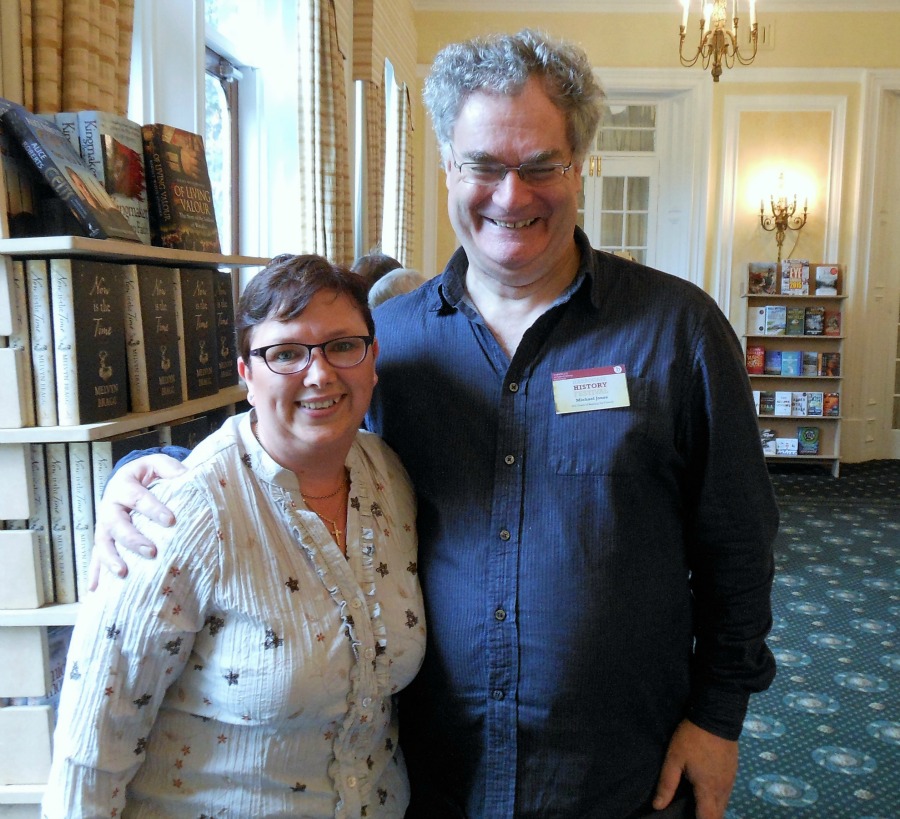
Myself and Michael Jones

I asked Dr Jones what was so special about Agincourt and Henry V in particular. Michael Jones was passionate and intensely knowledgeable on the subject and, luckily, was more than happy to try to persuade me of the merits of Henry V.

As a result of the conversation I bought his book (which he very kindly signed), which turned out to be a fascinating read.

24 Hours at Agincourt: 25th October 1415 provides a detailed analysis of the battle, focussing on the immediate pre-battle preparations and on the action itself. The book covers all aspects of the campaign – and of campaigning in the early 15th century in general.

24 Hours at Agincourt is a full and frank account of Henry V’s 1415 campaign. Dr Jones analyses not only the leadership but also the propaganda, business transactions, the men themselves and even the religious undertones of the day. He discusses the requirements for a successful military campaign, such as good supply lines,  leadership and reconnaissance and analyses the effects of what happens when one or more of these goes wrong.

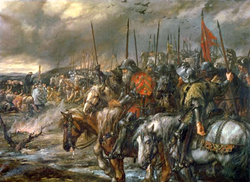
250px-Morning_of_the_Battle_of_Agincourt,_25th_October_1415
Morning of the Battle of Agincourt

Michael Jones leads us through the story of Agincourt, from the launch of the campaign in England, through the Siege of Harfleur and the march to Agincourt to the battle itself and the aftermath. He discusses at length the value and quality of both the English and French commanders, and of their decisions of the day, analysing their weapons and tactics – and their overall effectiveness.

Henry’s own battle experience at Shrewsbury in 1405 demonstrated to him the terrible effectiveness of the English longbow, and it is likely that on the Agincourt campaign he wished to forge these bowmen into a formidable fighting force…

The book draws heavily on the primary sources from both sides of the battle. Dr Jones carefully evaluates these sources, analysing them for bias and discussing their proximity to the action. He also uses the examples of earlier battles of the Hundred Years’ War and the wars against Scotland to demonstrate and discuss the development of battle strategies.

The book offers a new interpretation of the battle which attempts to explain some of the confusion and ambiguity in the contemporary sources, providing new insights into the planning and prosecution of the battle. Dr Jones gives credit to Henry V’s impressive group of captains, his ‘Band of Brothers’, discussing the abilities of each and their contributions to the campaign and the battle itself.

300px-Schlacht_von_Azincourt
Agincourt

A major strength of the book is that Michael Jones looks at the battle from both sides, analysing the French contribution to its outcome as thoroughly as he does the English. The French tactics are explained and discussed, as are the strength and qualities of France’s allies, and the divisions among the commanders.

24 Hours at Agincourt is a lively, descriptive book which demonstrates Dr Jones’ passion and enthusiasm for his subject. The narrative is engaging and entertaining. Michael Jones is passionate about Henry V and the significance of his victory at Agincourt, and this shines through when talking to him and in his writing. He convincingly argues of Henry V’s qualities as a general and also rehabilitates Edward Duke of York as a key figure at the centre of the battle’s history. He explains how it was these two men, working together, who were pivotal to the success of the campaign.

I have to admit, for anyone interested in knowing more about Agincourt,  I cannot recommend this book highly enough. Dr Jones’ writing style is so easy and engaging – it was an absolute pleasure to read. I have a new-found admiration for Henry V – even if I still don’t like his father.

24 Hours at Agincourt is available from Amazon.

About the Author:

I did my history PhD at the University of Bristol and subsequently taught at the University of South West England, Glasgow University and Winchester College. I am a fellow of the Royal Historical Society and a member of the British Commission for Military History and now work freelance as a writer, tour guide and presenter.

Among my history titles I have written on the battles of Agincourt, Bosworth, Stalingrad and Leningrad, and in After Hitler, provided an account of the last days of the Second World War in Europe. I am also the author, with Malcolm Underwood, of The King’s Mother (a biography of Margaret Beaufort, mother of Henry VII), with Philippa Langley, The King’s Grave: the Search for Richard III and with Philippa Gregory and David Baldwin, The Women of the Cousins’ War.

I have been a consultant to a number of TV programmes, including Channel 4’s Richard III: Fact or Fiction, the History Channel’s Warriors series, the National Geographic’s Mystery Files and Russia Today’s The Children of Stalingrad. I have also been interviewed on the BBC’s Today programme and appeared on Melvyn Bragg’s In Our Time.

I am fascinated by timeless themes of military history: leadership, morale and motivation at moments of crisis – and how people respond to challenges against the odds. I have worked closely with veterans of the battle of Stalingrad and siege of Leningrad – and their stories of fortitude and resolve in desperate circumstances remain deeply moving. In my medieval titles, most recently my biography of the Black Prince, I am drawn to the age of chivalry, and the remarkable esprit de corps and camaraderie that bound together its foremost fighters.

*

My Books

Ladies of Magna Carta: Women of Influence in Thirteenth Century England  looks into the relationships of the various noble families of the 13th century, and how they were affected by the Barons’ Wars, Magna Carta and its aftermath; the bonds that were formed and those that were broken. It is now available from Pen & SwordAmazon and from Book Depository worldwide.

1500x500

Also by Sharon Bennett Connolly:

Silk and the Sword: The Women of the Norman Conquest traces the fortunes of the women who had a significant role to play in the momentous events of 1066.  Available now from Amazon,  Amberley Publishing, Book Depository.

Heroines of the Medieval World tells the stories of some of the most remarkable women from Medieval history, from Eleanor of Aquitaine to Julian of Norwich. Available now from Amberley Publishing and Amazon and Book Depository.

*

You can be the first to read new articles by clicking the ‘Follow’ button, liking our Facebook page or joining me on Twitter and Instagram.

*

Pictures courtesy of Wikipedia; except Michael Jones and myself, ©SharonBennettConnolly2015

©2016 Sharon Bennett Connolly

Book Corner: Interview with Kristie Dean

12791083_736187379851237_1299001826319792577_nThis week I have the great pleasure of starting off Kristie Dean’s Blog Tour, in honour of the launch of her new book, On the Trail of the Yorks.

Just a year ago she published the book, The World of Richard III and on Monday her latest offering, On the Trail of the Yorks goes on sale in the UK. Kristie’s books are a unique and fascinating blend of history and travel writing; they bring to life the castles, palaces and other locations  associated with one of the ,most famous kings – and families – in British history.

Here, she talks to me about her love of history and writing.

What made you become a writer?
When I was a little girl I would spend my time creating stories for the other kids. I also wrote and distributed a neighborhood newspaper. I was always writing – poems, short stories, and even reports. I wrote a research paper for my 7th grade teacher and she later talked to my parents, telling them I was pushing myself too hard. It wasn’t that; I just couldn’t stand a blank page, and so I was always looking for new ways of writing.

With a career as a teacher, how do you discipline yourself to write?
When I am working on a book, writing consumes my life. I come home from work and write for three or four hours plus I write all day Saturday and most of Sunday. If I have a school event or my husband convinces me to go out, I take that evening off. I take a week off every May to take my students to Washington DC, although I do take research materials to read on the bus. I also am a mentor teacher at my school, so that takes a chunk of time. But, just like writing and teaching, it is worthwhile and enjoyable.

How do you organise your writing day?
At 5 p.m., I get home and write until at least 8 p.m. On weekends, I am researching/writing by 9 a.m. and usually going until 5 p.m. If I am writing about a certain location and I am in a ‘zone’ I will often continue until I am done.

Kristie
Kristie Dean

How many projects do you have going at once, or do you concentrate on one at a time?
With my time constraints, I usually have one or two in the back of my mind, but I only work on one at a time. I would love to be able to work on two or three projects at a time. Authors who are able to do this amaze me.

Your books are quite unique, a combination of history and historical locations, what made you decide to write them this way?
I traveled to Europe several times and always ended up frustrated with my guidebooks. I ended up making my own guides to each location for myself and fellow travelers to reach deeper in the history. Since I was particularly fascinated with the Plantagenets (especially Richard III) and Anne Boleyn, I was frustrated there weren’t any guides to places associated with them. Then a member of a history group I am in wrote an excellent guide for Anne Boleyn. This helped me to realize that I wasn’t the only one who wanted to explore the history of a location, so I decided to start with the historical figure I was most interested in, which was Richard III.

How long do you spend researching your book before you start writing?
This is a tough one to answer since it varies. I already had a great deal of information on Richard III and the Wars of the Roses, so much of my research involved the locations associated with him. However, I have been researching for a fiction book for years. Whether it ever sees the light of day is a different story.

What do you enjoy most about writing?
I love getting to delve into the lives of historic figures and locations. I also like visiting each place to get a feel for it. I enjoy trying to make history come alive for my readers.

What is the worst thing about writing?
The long hours of solitude. It can get lonely, and when I am up against a deadline I do not have time to go out with friends.

How long does it take to do a project from start to finish?
About a year. It depends on the book and how much research I’ve done prior. It also depends on where the research takes me. I became interested in Margaret of York while writing my latest book and spent several hours researching information that I did not even need for the book.

Have you ever considered writing a novel? What would it be about?
(Laughs) Oh yes, I have. It would be a thriller, I think. I love reading those types of novels. I might eventually do an historic fiction novel, too.

Who are your favourite personalities from history?
Oh my. It would be easier to answer who doesn’t interest me, but I will give it a try. Richard III, obviously. Anne Boleyn, All the Plantagenet queens, St Margaret, Margaret of York, Cecily Neville, Anne Neville, Llywelyn Fawr, and several lesser known women from history. From a more modern time, Winston Churchill intrigues me.

What are your favourite places from history?1422626_729589277177714_706482969626694562_n
All of England, Scotland, and Wales. I feel like the area is a second home for me. I love traveling and exploring each region. Middleham Castle is one of my favourites, as well as Llanrhychwyn Church, which is believed to be the oldest church in Wales. This little church is a gem, said to have been built by Llywelyn Fawr for his wife, Joan. I had a difficult time finding it, but Sharon Kay Penman helped me by putting me in touch with someone who lived in the area. Pam took me straight there, and I was immediately enchanted.

Your last book was The World of Richard III and the new one is On the Trail of the Yorks, what is it that fascinates you about Richard III and the House of York?
I have been fascinated by that time period for a long time. It’s a time of turbulence, a time of changing allies and enemies, and a time of controversy. It just pulls me in. Originally, I was interested in the controversy surrounding Richard III, but now I am captivated by the entire period.
On another note, The World of Richard III is going to undergo a title change to On the Trail of Richard III for the paperback version. This will keep the two books aligned.

Would you ever consider doing a book about the House of Lancaster and the locations associated with it?
I would, but I think many of the locations would be the same. Of course, the difference would be what the Lancastrians would be doing at each location. It is certainly an interesting idea.

Do you ever get writer’s block? If so, how do you get around it?
Not often. When I do it is a sign that I need a break. So, I get up, play with my three dogs and two cats or take a walk outside. Or I clean the bathroom. I am always excited to get back to writing after that.

Do you find social media – such as Facebook – a benefit or a hindrance?
It’s a benefit, but I confess to not being the best at it. I don’t get around to the various groups as often as I want, so sometimes I am out of the loop. I do have several wonderfulyorks Facebook friends who help me admin my groups and keep me up to date on what’s happening in the other history groups.

What is be your next project?
I have a book about locations associated with some of history’s forgotten women brewing in my head, but it has a serious contender in Margaret, Mary and Arthur Tudor. I am not sure which will win out in the end. I am taking a much-needed break right now to collaborate with some friends on a joint project. I will spend two weeks in East Anglia this summer with them doing research.

I would like to extend a huge ‘thank you’ to Kristie Dean for her wonderful answers and wish her the every success with her latest book. And look out for my review of On the Trail of the Yorks next week!

*

Kristie Dean has an MA in History and now enjoys teaching the subject, following a successful career in public relations. Her particular historic interest is the medieval era, specifically the Plantagenets, the Wars of the Roses and the Tudors. When not traveling for research, you can find Kristie at home in Tennessee with her husband, three dogs, and two cats. On the Trail of the Yorks is available from Amazon UK from 15th March 2016 and from Amazon US in May. And On the Trail of Richard III is due for release in paperback in May.

*

My book, Heroines of the Medieval World,  is now available in hardback in the UK from both Amberley Publishing and Amazon UK and worldwide from Book Depository. It is also available on Kindle in both the UK and USA and will be available in Hardback from Amazon US from 1 May 2018.

Be the first to read new articles by clicking the ‘Follow’ button, liking our Facebook page or joining me on Twitter.
©2016 Sharon Bennett Connolly

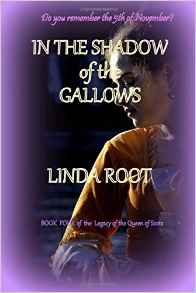
Book Corner: Linda Root’s ‘In the Shadow of the Gallows’

indexMy latest book review, of Linda Root’s wonderful novel, In the Shadow of the Gallows – set in early Stuart England – has gone live over at The Review today!

The great benefit of being book reviewer is that, every now and then, you get to read a wonderful gem of a story that may otherwise have slipped by you. In the Shadow of the Gallows is a first class political thriller which takes the reader on a wild ride through Scotland and England – the intrigues of the Gunpowder Plot. You need to keep your wits about you to successfully navigate the intricate twists and turns of the unfolding plot. But this book is well and truly worth the sleepless nights you will have wondering how the protagonists will get out of their latest jam – and whether they will win in the end.

Our Scottish heroes have to navigate their way through plot, counter-plot and conspiracy in order to survive and get themselves safely home…..

To read the full review of this fantastic novel – and to enter the prize draw and be in with a chance of winning one of two e-books in the giveaway, simply visit The Review and leave a comment. Good luck!

*

My book, Heroines of the Medieval World,  is now available in hardback in the UK from both Amberley Publishing and Amazon UK and worldwide from Book Depository. It is also available on Kindle in both the UK and USA and will be available in Hardback from Amazon US from 1 May 2018.

Be the first to read new articles by clicking the ‘Follow’ button, liking our Facebook page or joining me on Twitter.
©2016 Sharon Bennett Connolly

Book Corner – Red Roses by Amy Licence

51V9Q+iXiyLRed Roses: From Blanche of Gaunt to Margaret Beaufort traces the story of the women of the House of Lancaster, from the children borne by Blanche, wife of John of Gaunt, in the fourteenth century, through the turbulent fifteenth century to the advent of Margaret Beaufort’s son in 1485 and the establishment of the Tudor dynasty. From the secret liaisons of Katherine Swynford and Catherine of Valois to the love lives of Mary de Bohun and Jacquetta of Luxembourg, to the queenship of Joan of Navarre and Margaret of Anjou, this book explores their experiences as women. What bound them to their cause? What real influence did they wield?

With this book, historian Amy Licence has excelled herself. Red Roses is a thorough and  comprehensive examination of the lives of the women of the House of Lancaster, from its inception with the marriage of Blanche of Lancaster and John of Gaunt to its crowning glory, with the regency of Margaret Beaufort for her 17-year-old grandson, Henry VIII.

I have waited eagerly for this book, bringing together all the Lancastrian ladies in one volume was an incredible undertaking and has been achieved with great skill and tact. As I have researched several of these ladies myself over the last year I was keen to see if Amy Licence’s own opinions and theories differed greatly from my own. (And I was happy to see I hadn’t made any glaring errors in my own assessments).

240px-Marriage_of_blanche_of_lancster_and_john_of_gaunt_1359
The birth of the Lancastrian dynasty: the marriage of Blanche of Lancaster and John of Gaunt

I was amazed at the detailed research involved in creating this book, and the little extra snippets of information which the author has found, but which had eluded earlier historians. There are several new pieces of information brought to light, which were previously unknown – and I will have to edit some of my own articles, including those on Blanche and Katherine Swynford in light of this new information.

This meticulously research is presented in a largely chronological format, detailing not only the lives of John of Gaunt’s 3 wives and of the major Lancastrian wives who came after, but also of women with less  obvious Lancastrian links, such as Joan Beaufort, queen of James I.

The author takes care to bring to light the struggles of some and the near obscurity of others; demonstrating how some women became the centre of attention, stepping into the limelight, while others remained influential only in the family sphere, bringing into the world the next generation of the dynasty – or dying in the attempt. She considers how some were bargaining tools in international diplomacy, while others were tainted by scandal, how some were countesses while others were queens; but they were all great and interesting ladies worthy of our attention.

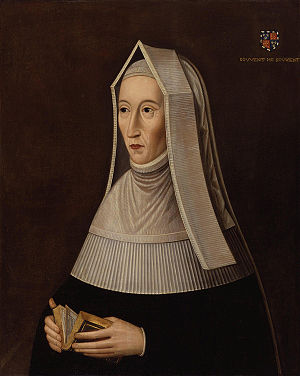
300px-Lady_Margaret_Beaufort_from_NPG
Margaret Beaufort

Amy Licence emphasises the deep sense of family and duty each woman felt towards the Lancastrian dynasty. She skilfully highlights the changes in the actions and responsibilities of the women over time; clearly demonstrating the differences in expectations from the marriage of Blanche of Lancaster to the marriages of Margaret Beaufort.

Ms Licence’s passionate narrative builds on the lives of these women, demonstrating how events impacted on them, and how they influenced those around them, not only in their close family spheres, but also on the international stage. The work analyses the effects on the fortunes of the dynasty and the lives of the women, caused by plague, war and political machinations and discusses the vulnerabilities and risks of being a woman in the later middle ages; from childbirth to accusations of witchcraft.

It appears that the ideal Lancastrian woman of the fourteenth century was essentially well bred and beautiful, an adored wife and mother, pious and dignified, devoted and loyal to the dynasty’s cause. Yet, as the fifteenth century advanced, women marrying Lancastrian husbands increasingly began to step outside this role, to challenge it and redefine concepts of femininity and rule…..

A great strength of the book, which spans a 150-year time period, is the way in which the author successfully maintains, throughout, the links between the various eras in which these women lived. She displays a deep understanding of how traditions and perceptions will have changed over time during the period under investigation. After all, how much has life changed for us since 1866?

The text provides thorough analysis of primary and secondary sources, and even includes assessments of popular fiction classics and arguments put forward by contemporary historians. These assessments are fair, persuasive counter-arguments professed with demonstrative respect for the authors in question. In the end, however, Ms Licence presents her own findings in a clear, convincing manner.

330px-MargaretAnjou
Margaret of Anjou, the last Lancastrian queen

The only minor bug-bear I have with the book is the title. Blanche of Lancaster was never actually known as Blanche of Gaunt, but I guess it will make the book appear to a wider audience; as so many more people have heard of John of Gaunt than have heard of Blanche.

I love the way Amy Licence clearly explains the relationships between the disparate Lancastrian women, whether it is familial, chronological, or by experience. For example, Katherine Swynford is discussed not only in respect of her relationship with John of Gaunt, but also as governess to his children, companion to his daughter-in-law and as matriarch of the extended Lancastrian family.

This is a comprehensive and thorough analysis of the lives of the Lancastrian women, told in an engaging and entertaining manner. Amy Licence tells the story, not only of the individual women, but also of a dynasty; and how that dynasty was held together by the wives and mothers essential to its survival, continued existence and eventual success. She also takes care to demonstrate how responsibilities and perceptions changed through time, affected by events and changing circumstances.

I have to recommend Red Roses as a thoroughly enjoyable read. The author engages with the reader from the outset, drawing you in to the lives of these varied and remarkable women, demonstrating how they all fit together in the story of the House of Lancaster, like the individual pieces of a jigsaw.

In short, this is a wonderful book, telling the story of a dynasty and, in my opinion, Amy Licence’s best yet.

*

10384680_10153841333263942_6977345604197683474_nAmy Licence has been a teacher for over a decade. She has an MA in Medieval and Tudor Studies and has published several scholarly articles on the Tudors. She is an author and historian of women’s lives in the medieval and Tudor period.

Red Roses: From Blanche of Gaunt to Margaret Beaufort is available on Amazon in the UK from Monday 7th March and in the US from Monday 15th March 2016.

*

My book, Heroines of the Medieval World,  is now available in hardback in the UK from both Amberley Publishing and Amazon UK and worldwide from Book Depository. It is also available on Kindle in both the UK and USA and will be available in Hardback from Amazon US from 1 May 2018.

Be the first to read new articles by clicking the ‘Follow’ button, liking our Facebook page or joining me on Twitter.

©2016 Sharon BennettConnolly