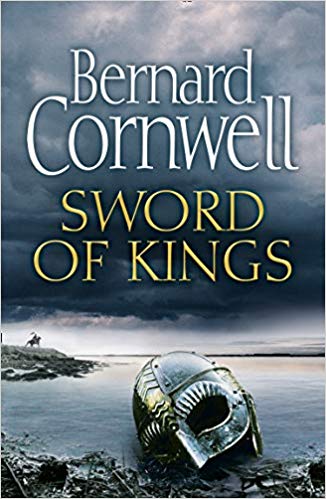
Book Corner: Sword of Kings by Bernard Cornwell

Uhtred of Bebbanburg is a man of his word.

An oath bound him to King Alfred. An oath bound him to Æthelflaed. And now an oath will wrench him away from the ancestral home he fought so hard to regain. For Uhtred has sworn that on King Edward’s death, he will kill two men. And now Edward is dying.

A violent attack drives Uhtred south with a small band of warriors, and headlong into the battle for kingship. Plunged into a world of shifting alliances and uncertain loyalties, he will need all his strength and guile to overcome the fiercest warrior of them all.
 
As two opposing Kings gather their armies, fate drags Uhtred to London, and a struggle for control that must leave one King victorious, and one dead. But fate – as Uhtred has learned to his cost – is inexorable. Wyrd bið ful ãræd. And Uhtred’s destiny is to stand at the heart of the shield wall once again…

I have said a few times that I am a big Bernard Cornwell fan. I have been reading his books since I was 14 and the Sharpe series was the inspiration for my dissertation at university. He is the most thoughtful author out there; he publishes a book every year in October, just in time for my birthday (for which the hubby and I are equally grateful!). This year was no exception.

This is the 12th outing for Uhtred of Bebbanburgh and Bernard Cornwell has done it again! Sword of Kings is a thoroughly enjoyable adventure set in 10th century England. Full of action, intrigue, friendship and a little bit of love, the master storyteller has given us yet another book that is impossible to put down.

Uhtred’s penchant for swearing oaths, and for standing by his oaths, once again gets him into trouble. This time he has sworn to help put Athelstan on the throne; the grandson of King Alfred and nephew of Uhtred’s former love, Æthelflaed, he is the eldest son of King Edward the Elder. But there is a question over his legitimacy and other, powerful nobles would see Athelstan’s half-brother, Ælfweard. Luckily for Athelstan, Uhtred has also sworn to kill Ælfweard and his uncle, Æthelhelm. However, fulfilling an oath is not as easy as making it!

So Æthelhelm the Younger had sent his youngest brother to kill me. He had equipped a fleet, and offered gold to the crew, and placed a rancid priest on the ships to inspire Æthelwulf with righteous anger. Æthelhelm knew it would be next to impossible to kill me while I stayed inside the fortress and knew too that he could not send sufficient en to ambush me on my lands without those men being discovered and slaughtered by Northumbria’s warriors, so he had been clever. Her had sent men to ambush me at sea.

Æthelwulf was the fleet’s leader, but Æthelhelm knew that his brother, though imbued with the family’s hatred of me, was not the most ruthless of men, and so he had sent Father Ceolnoth to fill Æthelwulf with holy stupidity, and he also sent the man they called Edgar. Except that was not his real name. Æthelhelm had wanted no one to know of the fleet’s true allegiance, or to connect my death to his orders. He had hoped the blame would be placed on piracy, or on some passing Norse ship, and so he had commanded the leaders to use any name except their own. Æthelwulf had become Wistan, and I learned that Edgar was really Waormund.

I knew Waormund. He was a huge West Saxon, a brutal man, with a slab face scarred from his right eyebrow to his lower left jaw. I remembered his eyes, dead as stone. In battle Waormund was a man you would want standing beside you because he was capable of terrible violence, but he was also a man who revelled in that savagery. A strong man, even taller than me, and implacable. He was a warrior, and, though you might want his help in a battle, no one but a fool would want Waormund as an enemy. ‘Why,’ I asked Æthelwulf the next morning, ‘was Waormund in your smallest ship?’

‘I ordered him into that ship, lord, because I wanted him gone! He is not a Christian.’

‘He’s a pagan?’

‘He’s a beast. It was Waormund who tortured the captives. I tried to stop him.’

But Father Ceolnoth encouraged him?’

‘Yes.’ Æthelwulf nodded miserably. We were walking on Bebbanburg’s ramparts. The sun glittered from an empty sea and a small wind brought the smell of seaweed and salt. ‘I tried to stop Waormund,’ Æthelwulf went on, ‘and he cursed me and he cursed God.’

‘He cursed your god?’ I asked, amused.

As we have come to expect from Bernard Cornwell, the action is non-stop. the writing is up to his usual high standard, keeping the reader enthralled from the first page to the last. Uhtred gets himself into some of the worst scrapes yet, leaving the reader petrified that his luck will finally run out…

Uhtred has always been a sympathetic character to me, ruthless in battle but with a softer side for his lovers and (most of) his children. What shines through in this book, probably more so than in the rest of the series, is his friendship with Finan. These two men have been through Hell together – slavery and countless battles – and their relationship has always remained strong. In Sword of Kings it is this friendship that drives the book; their mutual trust and reliance on each other, in battle and out, is what makes this book so engaging.

Bernard Cornwell is a natural storyteller, one of the best at the craft. Sword of Kings is yet more testament to that fact. You never quite know how it is going to work out for Uhtred – he is not immune to loss and suffering – which is what always makes these books so gripping – you know he is not going to come out of his adventures totally unscathed. The suspense, the drama, the intrigue and action all come together to make yet another perfect chapter in Uhtred’s story.

Uhtred may be fictional, but other characters are real, and as always, there is an author’s note at the end to explain the history behind the story.

*

About the Author

Bernard Cornwell was born in London and worked in television until he met his American wife and moved to the US. Denied a work permit, he wrote a novel and has been writing ever since.

A master storyteller with a passion for history, his current bestselling series, THE LAST KINGDOM, is centred around the creation of England. It is also a major TV series on Netflix, with Bernard playing a cameo role in season three. The fourth season is currently being filmed.

He is also the author of THE GRAIL QUEST series, set in the Hundred Years’ War, THE WARLORD chronicles, set in Arthurian Britain, a number of standalone novels, one non-fiction work on Waterloo and the series with which he began, the SHARPE series.

For exciting news, tour and publication details, and exclusive content from Bernard visit http://www.bernardcornwell.net and like his author page on Facebook/Bernard.Cornwel

*

My Books

Silk and the Sword: The Women of the Norman Conquest

From Emma of Normandy, wife of both King Cnut and Æthelred II to Saint Margaret, a descendant of Alfred the Great himself, Silk and the Sword: the Women of the Norman Conquest traces the fortunes of the women who had a significant role to play in the momentous events of 1066.  Available now from Amazon UK,  Amberley Publishing, Book Depository and Amazon US.

Heroines of the Medieval World

Telling the stories of some of the most remarkable women from Medieval history, from Eleanor of Aquitaine to Julian of Norwich, Heroines of the Medieval World,  is available now on kindle and in paperback in the UK from from both Amberley Publishing and Amazon, in the US from Amazon and worldwide from Book Depository.

*

You can be the first to read new articles by clicking the ‘Follow’ button, liking our Facebook page or joining me on Twitter and Instagram.

©2019 Sharon Bennett Connolly
Guest Post: This Blighted Expedition by Lynn Bryant

Ever since I first discovered Bernard Cornwell’s Richard Sharpe 30 years ago, I have had a fascination for all-things Napoleonic – the Peninsular War in particular (I even wrote my university dissertation on it!). The Walcheren expedition of 1809 was an extension of this conflict, and a rather disastrous one. Author Lynn Bryant is currently writing a fiction series, The Manxman Series, based on the events of the Walcheren Campaign. Book 2, This Blighted Expedition, is out this week. Today Lynn visits us to talk about the research behind the book.

This Blighted Expedition: a novel of the Walcheren Campaign of 1809 (Book 2 in the Manxman series)

This Blighted Expedition is my eleventh published historical novel, and the second in the Manxman series, which follows the fortunes of the fictional Captain Hugh Kelly of HMS Iris, his wife Roseen and his young first lieutenant Alfred Durrell. This book takes them to the Walcheren campaign of 1809 where a huge joint operation between the army and the navy went disastrously wrong, and led to an ignominious retreat, the deaths of over 4000 men from the deadly Walcheren fever and a Parliamentary inquiry.

Researching Walcheren has been very different to researching the better known campaigns of the wars for my Peninsular War Saga. There is a huge amount of published contemporary material in the form of letters and journals about the Peninsular War. Officers, and in a few cases, their enlisted men, wrote endlessly to their family and friends about their experiences in the war, and modern historians have done a remarkable job of discovering, editing and publishing these accounts. When researching the doings of my fictional regiment at the siege of Badajoz, the problem was having time to sift through all the material and also of knowing when to stop. Writing fiction, as opposed to history, there comes a point when you have to decide how you’re going to write it and then stop researching. You are not trying to give a perfect account of events, you’re trying to give a credible account of events from the point of view of your characters. There’s a big difference.

With Walcheren, I was unusually lucky to have a great deal of help with the sources, in the person of Dr Jacqueline Reiter, who is something of an expert on the campaign. Jacqueline has done an enormous amount of research on Walcheren, and has written an excellent biography of John Pitt, second Earl of Chatham, who commanded the army during the campaign. She is currently working on a biography of Sir Home Popham, the controversial navy officer who played such a large part in the planning and execution of the joint operation at Walcheren. Not only did Jacqueline point me in the direction of the few books written on the subject, but she also generously shared her own notes and sources from many years of research.

With a joint operation, I needed to follow both the army and the navy. As always, my starting point was to read any books on the subject to get a general overview, and I’ve listed them in full below. There aren’t many, but I read Jacqueline’s book on Chatham, and the books by Martin R Howard and Gordon Bond on the campaign. There is a brief account of the campaign in Andrew Limm’s Walcheren to Waterloo and a frustratingly short mention of it in Hugh Popham’s biography of Sir Home Riggs Popham. I was also very grateful to Carl Christie, for sharing his excellent thesis on the campaign with me as well as his list of sources.

There are some accounts by both army and navy officers. Many are very brief, and included in volumes describing their more glorious achievements in later campaigns. One of the most useful sources for the navy was the letters and journals of Edward Codrington, which are available online. I owe the story of the wreck of the Venerable to him and to Dr McGrigor, who was aboard the ship and described it vividly in his autobiography. Jacqueline Reiter generously shared her research notes on the log of the Venerable, which confirmed McGrigor’s account of the army wives aboard the vessel.

Some of my old favourite army writers include an account of Walcheren, including Private Harris and Private Wheeler and it is from them that I have taken my account of the fever, along with several medical men who wrote about it. The Proceedings of the Army give daily accounts of the progress of the siege works, once again shared by Dr Reiter, and offer a marvellous impression of the mind-numbing tedium of the digging of trenches and building of batteries.

I am indebted to Gareth Glover for sending me the account of the campaign by Joseph Barrallier of the 71st who told the story of Pack’s abortive attack on Veere really well. Excerpts of diaries by Captain Bowlby of the 4th foot and General Trench are very short, but give marvellous small details which help to bring a novel to life, such as Trench’s mention of the order of 24th July stating that plundering would be punished by ‘instant death’. Trench is also scathing about Chatham’s abilities as a commander, and writes that: “yesterday about 12 o’clock he got under way being preceded by a column of 8 waggons in the first of which was a life turtle, he had a fresh horse at Schore but did not attempt to go further than Crabbendyke, tho’ Batz was but 7 miles off.” Evidently Chatham’s indolence and slow progress was a source of frustration in his army.

The rather unusual aspect of the Walcheren campaign was the large number of civilians who accompanied the army, including a number of journalists, most of them invited by that relentless self-publicist, Sir Home Popham. Once again, I am indebted to Jacqui Reiter for a lot of information about them, including the diary and letters of young Lord Lowther. Lowther was a gift wrapped in silver paper for a historical novelist, and almost everything I have written about him was true.

In addition to sources which are directly relevant to the campaign, I spent a great deal of time reading online accounts of the Parliamentary inquiry into Walcheren, since I decided that the story of one of my characters, needed to end with his appearance before the House of Commons. This turned out to be one of those impulsive decisions a writer makes, without really thinking about the amount of work involved. I did the same thing at the end of the first book in the series, by choosing to end the novel with a general Court Martial which took hours of research into procedure and rules of evidence. It turns out that a Parliamentary inquiry takes even longer although as a set piece to end the novel, it was very effective.

While most of my research is done sitting at my desk, I was lucky enough to be able to go to Walcheren earlier this year, to visit many of the sites I’ve been writing about. The apartment we stayed in was in one of the many old houses on Korendijk in Middelburg, which would have been there at the time Katja de Groot was living there and I was ridiculously excited when our hostess explained that the old beams in the house are so scarred and in some places burned, because they were all re-used from broken up ships in the Vlissingen and Antwerp dockyards. That kind of on the ground research is priceless and I feel as though I know Katja’s lovely Middelburg home personally.

This Blighted Expedition is available on Kindle and will be available in paperback in a few weeks. In the end, it is always my aim, as a novelist to engage the reader with my characters, both fictional and real. The research is a framework, on which to build a story, and by the end of the book it often feels as though I’ve been playing a game of Jenga with the research, carefully removing as much of it as I can to enable the story to stand up but not taking out so much that the whole thing comes crashing down. I hope I’ve achieved it and that readers enjoy the end result.

As this is a blog post, not a thesis, I’ve provided a short book list but if readers have any further questions about online sources, please contact me on my website, on Facebook or on Twitter and I’ll do my best to answer them.

Bibliography

Bond, Gordon, The Grand Expedition: the British invasion of Holland in 1809 (University of Georgia Press, 1979); Christie, Carl A, The Walcheren Expedition of 1809 (PhD, University of Dundee, 1975); Howard, Martin R,        Walcheren 1809: the scandalous destruction of a British army; Limm, Andrew, Walcheren to Waterloo: the British Army in the Low Countries during the French Revolution and Napoleonic Wars (Pen and Sword, 2018); Popham, Hugh, A Damned Cunning Fellow: the eventful life of Rear-Admiral Sir Home Popham (The Old Ferry Press, 1991); Reiter, Jacqueline, The Late Lord: the life of John Pitt, 2nd Earl of Chatham (Pen and Sword 2017).

About the author:

Lynn Bryant was born and raised in London’s East End. She studied History at University and had dreams of being a writer from a young age. Since this was clearly not something a working class girl made good could aspire to, she had a variety of careers including a librarian, NHS administrator, relationship counsellor and manager of an art gallery before realising that most of these were just as unlikely as being a writer and took the step of publishing her first book.

She now lives in the Isle of Man and is married to a man who understands technology, which saves her a job, and has two grown up children and two Labradors. History is still a passion, with a particular enthusiasm for the Napoleonic era and the sixteenth century. When not writing she waits on the Labradors, reads anything that’s put in front of her and makes periodic and unsuccessful attempts to keep a tidy house.

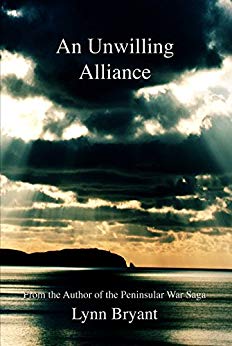
This Blighted Expedition is available on Amazon kindle here and will be out in paperback by the end of November. To celebrate publication, the first book, An Unwilling Alliance is available from 1st to 5th November 2019 FREE on Amazon here.

In the meantime, I am about to embark on book six of the Peninsular War Saga. It’s called An Unrelenting Enmity and to give myself a kick start with the writing process, I am attempting NaNaWriMo for the first time ever. To follow my progress why not join me on my blog over at Writing with Labradors, or on Facebook or Twitter?

*

My Books

Silk and the Sword: The Women of the Norman Conquest

From Emma of Normandy, wife of both King Cnut and Æthelred II to Saint Margaret, a descendant of Alfred the Great himself, Silk and the Sword: the Women of the Norman Conquest traces the fortunes of the women who had a significant role to play in the momentous events of 1066.  Available now from Amazon UK,  Amberley Publishing, Book Depository and Amazon US.

Heroines of the Medieval World

Telling the stories of some of the most remarkable women from Medieval history, from Eleanor of Aquitaine to Julian of Norwich, Heroines of the Medieval World,  is available now on kindle and in paperback in the UK from from both Amberley Publishing and Amazon, in the US from Amazon and worldwide from Book Depository.

*

You can be the first to read new articles by clicking the ‘Follow’ button, liking our Facebook page or joining me on Twitter and Instagram.

©2019 Sharon Bennett Connolly
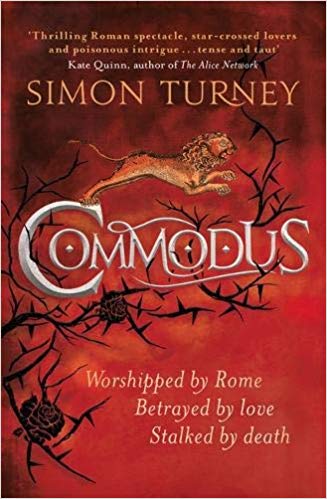
Book Corner: Commodus by Simon Turney

Worshipped by Rome. Betrayed by love. Stalked by death. Rome is enjoying a period of stability and prosperity. The Empire’s borders are growing, and there are two sons in the imperial succession for the first time in Rome’s history. But all is not as it appears. Cracks are beginning to show. Two decades of war have taken their toll, and there are whispers of a sickness in the East. The Empire stands on the brink of true disaster, an age of gold giving way to one of iron and rust, a time of reason and strength sliding into hunger and pain. The decline may yet be halted, though. One man tries to hold the fracturing empire together. To Rome, he is their emperor, their Hercules, their Commodus. But Commodus is breaking up himself, and when the darkness grips, only one woman can hold him together. To Rome she was nothing. The plaything of the emperor. To Commodus, she was everything. She was Marcia.

Commodus by Simon Turney is the second in his The Damned Emperors series, exploring the lives of those emperors even Rome wanted to erase from history. The first in the series, Caligula was a fabulous and intelligent read that really made you think about the political intrigues of ancient Rome. Commodus is no less thought-provoking.

The thing that struck me after reading both Caligula and Commodus is why on earth would anyone want to be emperor – or even close to the emperor in ancient Rome. Yes, the job came with ‘phenomenal cosmic power’ (as the genie in Aladdin would put it) but you did not expect to die in your bed – unless it was from poison or an assassin in the night.

What makes The Damned Emperors series so unique is that Simon Turney uses the women close to the emperor to tell his story. In Caligula it was his own sister, Livilla, who witnessed her brother’s rise to ‘the purple’ and followed his story to an inevitable violent conclusion. In Commodus the tale is told through Marcia, a childhood friend who rose to be the emperor’s lover and consort, though not his wife and empress. Each woman is able to narrate the emperor’s life and the events which shape his personality and rule. Each book is a standalone.

‘I’m supposed to turn my other cheek to you, ignore your violence and forgive you. And because I want to be a good Christian, I’ll do that. I’ll forgive you but only this once.’

He made .to push me again, but perhaps something in my expression stopped him. Certainly, he stepped back. I was a freedwoman of the emperor Lucius Verus, and he was a slave. I had allowed him to get away with pushing me over in anger, but I had warned him not to do so again. For my part, I meant every word. I would punch him in the eye if he tried again. For his part, I suspect he thought I meant I would report his behaviour to the major-domo, which would have seen him beaten at the very least. Whatever the case, he walked away. As he reached the door, he paused and turned.

‘In the old days, they used to burn your sort.’

And then he was gone. I seethed, shaking, promising myself that one day I would settle that score. I received my second shock in a short space as Commodus emerged from the shadows near another door, confusion creasing his young, innocent face.

‘What’s a Criss-chen?’ he asked, stumbling a little over the unfamiliar word.

Hmm. I thought lessons would be cancelled today, what with Fulvus bedridden, but it seemed I was to teach instead. I thought long and hard on the question as he watched me with those intelligent, searching eyes.

‘We believe in only one God. He is the creator of all things and the world is made according to His plan.’ I shrugged, trotting out the words I’d heard so many times. ‘There’s more to it, but that’s the main thing.’

‘Which god?’

Marcia’s own story is as fascinating as that of the emperor she adores, and serves as an example of how power corrupts not only the leaders, but those around them. Marcia is an interesting character who uses necessity and love to justify actions that many would find questionable, if not downright abhorrent. And yet you can’t help liking and sympathising with a woman who had little real power and influence over her own life, let alone anyone the emperor’s!

Simon Turney is a master of intrigue and has a remarkable ability to get inside the head of the women who lived alongside these emperors. And then into the heads of the emperors themselves. You cannot help but have sympathy for these great men, who rose to such heights that they practically ruled the world, but could trust no one. His knowledge of Roman history is second-to-none and he puts it to good use in depicting not only the Roman psyche, but also the Roman way of life.

Simon Turney vividly recreates the streets of Rome, the buildings, people and events to the extent that you can practically smell the markets, the blood in the arenas and the wondrous aromas of the lavish meals served to the imperial family. As a consequence, you can also feel the despair and despondency of the poor and unrepresented populace – the plebs and the slaves – who are ignored and left to suffer famine and plague by their indifferent rulers.

Commodus is not always an easy read, but it is fascinating. It draws you in from the very first pages, and leads you on a journey of discovery, not only of the emperor himself but of the life of the imperial family. It is eye-opening! Beautifully written and addictive, it is one of those books that you can’t wait to finish – and yet, desperately want it not to end.

To buy the book:

Commodus: The Damned Emperors Book 2 by Simon Turney is available from Amazon in the UK and US.

About the author:

Simon lives with his wife, children and dogs in rural North Yorkshire. Having spent much of his childhood visiting historic sites with his grandfather, a local photographer, Simon fell in love with the Roman heritage of the region, beginning with the world famous Hadrian’s Wall. His fascination with the ancient world snowballed from there with great interest in Egypt, Greece and Byzantium, though his focus has always been Rome. A born and bred Yorkshireman with a love of country, history and architecture, Simon spends most of his rare free time travelling the world visiting historic sites, writing, researching the ancient world and reading voraciously.

Simon’s early career meandered along an arcane and eclectic path of everything from the Ministry of Agriculture to computer network management before finally settling back into the ancient world. During those varied years, Simon returned to university study to complete an honours degree in classical history through the Open University. With what spare time he had available and a rekindled love of all things Roman, he set off on an epic journey to turn Caesar’s Gallic War diaries into a novel accessible to all. The first volume of Marius’ Mules was completed in 2003 and has garnered international success, bestseller status and rave reviews, spawning numerous sequels. Marius’ Mules is still one of Simon’s core series and although Roman fiction features highly he now has Byzantine, Fantasy and Medieval series, too, as well as several collaborations and short stories in other genres.

Now, with in excess of 25 novels available and 5 awaiting release, Simon is a prolific writer, spanning genres and eras and releasing novels both independently and through renowned publishers including Canelo and Orion. Simon writes full time and is represented by MMB Creative literary agents.

Look out for Roman military novels featuring Caesar’s Gallic Wars in the form of the bestselling Marius’ Mules series, Roman thrillers in the Praetorian series, set during the troubled reign of Commodus, adventures around the 15th century Mediterranean world in the Ottoman Cycle, and a series of Historical Fantasy novels with a Roman flavour called the Tales of the Empire.

*

My Books

Silk and the Sword: The Women of the Norman Conquest

From Emma of Normandy, wife of both King Cnut and Æthelred II to Saint Margaret, a descendant of Alfred the Great himself, Silk and the Sword: the Women of the Norman Conquest traces the fortunes of the women who had a significant role to play in the momentous events of 1066.  Available now from Amazon UK,  Amberley Publishing, Book Depository and Amazon US.

Heroines of the Medieval World

Telling the stories of some of the most remarkable women from Medieval history, from Eleanor of Aquitaine to Julian of Norwich, Heroines of the Medieval World,  is available now on kindle and in paperback in the UK from from both Amberley Publishing and Amazon, in the US from Amazon and worldwide from Book Depository.

*

You can be the first to read new articles by clicking the ‘Follow’ button, liking our Facebook page or joining me on Twitter and Instagram.

©2019 Sharon Bennett Connolly 
Book Corner: The Legitimacy of Bastards by Helen Matthews

For the nobility and gentry in later medieval England, land was a source of wealth and status. Their marriages were arranged with this in mind, and it is not surprising that so many of them had mistresses and illegitimate children. John de Warenne, earl of Surrey, married at the age of twenty to a ten-year-old granddaughter of Edward I, had at least eight bastards and a complicated love life. In theory, bastards were at a considerable disadvantage. Regarded as filius nullius’ or the son of no one, they were unable to inherit real property and barred from the priesthood. In practice, illegitimacy could be less of a stigma in late medieval England than it became between the sixteenth and late twentieth centuries. There were ways of making provision for illegitimate offspring and some bastards did extremely well: in the church; through marriage; as soldiers; a few even succeeding to the family estates. _The Legitimacy of Bastards_ is the first book to consider the individuals who had illegitimate children, the ways in which they provided for them and attitudes towards both the parents and the bastard children. It also highlights important differences between the views of illegitimacy taken by the Church and by the English law.

I often come across non-fiction books about which I think ‘ooh, this could be handy for research’, but every once in a while I come across a book and I just think ‘wow! This is so useful! Every one needs a copy!’ The Legitimacy of Bastards; The Place of Illegitimate Children in Later Medieval England by Helen Matthews definitely falls in this latter category.

The Legitimacy of Bastards; The Place of Illegitimate Children in Later Medieval England examines the church and lay laws governing illegitimacy in later medieval England, and portrays the reality of bastard children. Based on the author’s own thesis, the book should be the ‘go to’ tool for anyone who needs to study the stigma, status and reality of illegitimacy in medieval England.

Divided into 6 chapters, The Legitimacy of Bastards; The Place of Illegitimate Children in Later Medieval England explores the legal status of illegitimate children and the various types – or categories – of illegitimacy within medieval society; whether they be children of unmarried parents, married parents or of members of the clergy dictated their prospects in life and career opportunities. The book also examines the methods used by parents in order to get around the various limitations placed on illegitimate children, such as legal devices, church careers and, of course, marriage.

One of the challenges of researching illegitimacy in later medieval England is that there is no single source of reliable records of the kind that is available, for example, for some of the Italian city states. It is no accident that the comprehensive study of bastardy in England begins with the sixteenth century and the introduction of parochial registration of births, marriages and deaths in 1538. Even then, the level of detail prior to 1850 is limited. Any attempt to establish the prevalence of illegitimacy in the period before parish registers are available is clearly even more problematic. Illegitimate children cannot be identified by their name alone. Bastards who were recognised by their fathers would very often take their father’s name, though some were known by their mother’s surname. It should be noted that a surname beginning with ‘Fitz-‘ simply means ‘son of’ and does not itself denote illegitimacy, although it became common for royal bastards to have names of this type, for example Henry Fitzroy, the son of Henry VIII (1509-47) and Elizabeth Blount, a lady-in-waiting to Katherine of Aragon.

However, some attempt has been made to do so at the level of peasant society by exploiting manorial records, mainly in the context of wider studies of a particular peasant community. As in the Italian city states, it is the existence of financial records that makes this possible. In this case the records concerned are payments of fines. These were either leyrwite, a fine for single women and widows of unfree status who committed fornication, or childwyte, a fine for giving birth to an illegitimate child.

The Legitimacy of Bastards; The Place of Illegitimate Children in Later Medieval England looks into illegitimacy throughout all levels of society, from the royal family to the lowly peasant. Incredibly useful to my own research, Helen Matthews presents the experiences of John de Warenne, 7th Earl of Surrey, as a case study of the practicalities of illegitimacy. This chapter helps the reader to understand the life and limitations of a child born outside of marriage, as well as the extraordinary lengths that parents were willing to go in order to advance the prospects of their children.

I had no idea how complex the laws surrounding illegitimacy in England, not just on inheritance, but also on marriage prospects, on the difference between church and state and on the difference between clerical and lay requirements for the legitimisation of a child.

An easy book to read, Helen Matthews has made good use of the materials and evidence available to build a picture of the realities of illegitimacy in later medieval England, not just for the child themselves, but for their families and the legitimate heirs. Impeccably researched and rich in detail The Legitimacy of Bastards; The Place of Illegitimate Children in Later Medieval England is a wonderful research tool and an engaging read, with none of the dryness that you often find in books developed from academic theses.

The only downside of The Legitimacy of Bastards; The Place of Illegitimate Children in Later Medieval England is that there are no footnotes, which makes it hard for the researcher to follow up some of the details; however, there is an exhaustive and impressive bibliography and an impressive list of the subjects used in the book for ease of cross-referencing.

The further I read into The Legitimacy of Bastards; The Place of Illegitimate Children in Later Medieval England the more I realised how useful this book will be to any researcher, student of history or casual reader around the subject. The impeccable research and engaging writing style make this a valuable addition to anyone’s medieval library.

I cannot recommend it highly enough!

To buy the book:

The Legitimacy of Bastards; The Place of Illegitimate Children in Later Medieval England is available from Pen & Sword and Amazon in the UK and US.

About the Author:

Helen Matthews studied medieval history at UCL and Royal Holloway. A chance remark in a footnote inspired her to embark on the thesis on medieval bastards, on which this book is based.

*

My Books

Silk and the Sword: The Women of the Norman Conquest

From Emma of Normandy, wife of both King Cnut and Æthelred II to Saint Margaret, a descendant of Alfred the Great himself, Silk and the Sword: the Women of the Norman Conquest traces the fortunes of the women who had a significant role to play in the momentous events of 1066.  Available now from Amazon UK,  Amberley Publishing, Book Depository and Amazon US.

Heroines of the Medieval World

Telling the stories of some of the most remarkable women from Medieval history, from Eleanor of Aquitaine to Julian of Norwich, Heroines of the Medieval World,  is available now on kindle and in paperback in the UK from from both Amberley Publishing and Amazon, in the US from Amazon and worldwide from Book Depository.

*

You can be the first to read new articles by clicking the ‘Follow’ button, liking our Facebook page or joining me on Twitter and Instagram.

©2019 Sharon Bennett Connolly

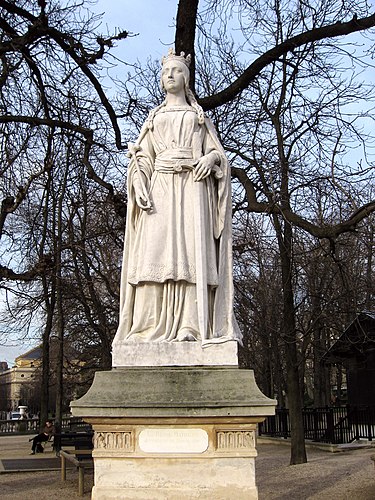
Matilda of Flanders, Queen of the Conqueror

History ... the Interesting Bits
Matilda of Flanders

Matilda of Flanders was the consummate duchess and queen. Born in the early to mid-1030s, possibly around 1032, Matilda was the daughter of Baldwin V, Count of Flanders, and his wife Adela of France, a daughter of Robert the Pious, King of France. Matilda had two brothers and each of them became Count of Flanders in his turn; Baldwin of Mons and Robert the Frisian. As is often the case with medieval women, we know very little of Matilda’s early life, though it is likely she was raised alongside her aunt, Judith, her father’s sister who was of a similar age to Matilda, and who would go on to marry Tostig, Earl of Northumberland and brother of king Harold II.

The first time Matilda appears on the world stage is when her marriage is being discussed. There is a popular story of how Matilda refused to marry William, Duke of Normandy, stating that she was too highly born to marry a bastard. As the legend goes; on hearing this, William was so infuriated that he rode to Flanders and confronted Matilda. He is said to have thrown her to the ground, before pulling her braids and cutting her with his spurs. Matilda, unlikely as it seems, then accepted his proposal and they were married. Despite the story most likely being a later invention, William was the one to propose the marriage and, although he was a duke, his illegitimacy would have meant making a proposal to a niece of the King of France was audacious, to say the least.

The arrangements for the marriage of Matilda and William probably started in 1048, but it was a long, drawn out matter, marred by papal and political machinations. The Synod of Reims, of 3 and 4 October 1049, issued a decree instructing Count Baldwin not to allow the marriage of his daughter to Duke William. However, despite these papal objections, Matilda and William were married by 1053, at the latest. A penance was later imposed on the couple for their disobedience in marrying against papal prohibition. Each was to found an abbey; William founded the Abbaye-aux-Hommes, or St Stephen’s Abbey, in his Norman capital of Caen, while Matilda founded the Abbaye-aux-Dames, or Holy Trinity Abbey, in the same city. The two abbeys still stand to this day.

History ... the Interesting Bits
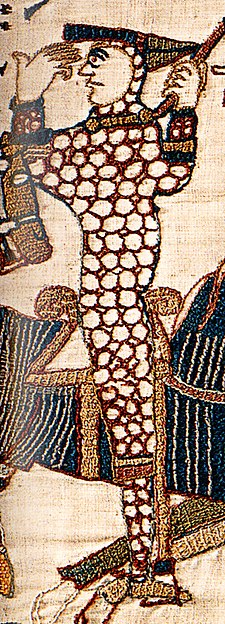
William the Conqueror from the Bayeux Tapestry

The marriage between Matilda and William proved to be a strong and trusting relationship; William is one of very few medieval kings believed to have been completely faithful to his wife, no known lovers or illegitimate children have ever been uncovered, although that did not stop the rumours. William of Malmesbury related one such story, of William having a mistress, the daughter of a priest, who Matilda ordered to be hamstrung and disinherited; in punishment, Matilda is said to have been beaten to death by a horse bridle. Malmesbury himself was sceptical of the story and, given that Matilda’s death came after a short illness in 1083, it does seem rather far-fetched.

William trusted Matilda to act as regent in Normandy during his many absences on campaign or in England. Their relationship appears to have been more of a partnership than most marriages of the time; she was witness to thirty-nine pre-conquest and sixty-one post-conquest charters. Matilda supported her husband’s proposed invasion of England; she promised a great ship for William’s personal use, called the Mora. Just before leaving for England in 1066, William accompanied Matilda to the consecration of her foundation, Holy Trinity Abbey – the Abbaye-aux-Dames – in Caen, arranging for his duchess to act as regent in his absence. The Conquest was a close-run thing and it was not until 1068 that William felt secure enough to bring his wife to England for her coronation. Matilda, six months pregnant with her son Henry, who would be born at Selby in September, was crowned Queen of England in Westminster Abbey, by Archbishop Ealdred of Canterbury, at Whitsuntide 1068.

Matilda and William had a large family, with four boys and at least four daughters. Of their sons; the eldest, Robert Curthose, would inherit Normandy, Richard was killed in a hunting accident as a youth, William, known as Rufus, became King William II, and the youngest was the future King Henry I. Of the four or five daughters; Adeliza became a nun following a series of failed marriage plans, Cecilia was given to the convent of Ste Trinité as a child, Constance married Alain Fergant, Duke of Brittany, and Adela married Stephen of Blois and was the mother of King Stephen of England. There are suggestions of two further daughters, Matilda and Agatha, though evidence for their existence is limited. Queen Matilda was very close to her family, especially her eldest son, Robert. William and Robert, father and son, however, were often at loggerheads, with Robert rebelling against his father as a young man. Matilda was constantly trying to play the peacemaker. During a period of exile imposed on Robert, Matilda still supported her son as best she could; she would send him vast amounts of silver and gold through a Breton messenger, Samson.

Although the problems with Robert, their eldest son, caused considerable tensions within the marriage, Matilda and William’s relationship is one of the most successful of the medieval period. Their partnership as rulers, and as husband and wife, was strong and appeared to be one built on mutual respect. One contemporary remarked that ‘The Queen adored the King and the King the Queen.’1

History ... the Interesting Bits
Matilda’s youngest son Henry I, King of England

Matilda’s piety was renowned. Although founding the Abbaye aux Dames in Caen was a penance for her irregular marriage to William, her constant and repeated donations to religious houses demonstrated her dedication to her faith. The nuns of her abbey at Ste Trinité, Caen, received a substantial bequest from Matilda’s will, written the year before her death; as well as her crown and sceptre, they were given a chalice, a chasuble, a mantle of brocade, two golden chains with a cross, a chain decorated with emblems for hanging a lamp in front of the altar, several large candelabras, the draperies for her horse and all the vases ‘which she had not yet handed out during her life’. 2

Having drawn up her will in 1082, it is possible that Matilda was aware of her illness long before her last summer. The continuing worry over the rift between her husband and beloved son cannot have helped her health, and the arrival of winter saw her gravely ill. Matilda died on 2 November 1083, having ‘confessed her sins with bitter tears and, after fully accomplishing all that Christian custom requires and being fortified by the saving sacrament’.3 Her husband was with her throughout the final moments of her illness, and he ‘… showed many days of the deepest mourning how much he missed the love of her whom he had lost’.4 She was buried at Ste Trinité, Caen, following a funeral that lasted two days and that was attended by a host of monks, abbots, bishops and nuns and a host of people came to pay homage. There is no record of which of her children attended the funeral, although her daughter Cecilia was most likely in attendance, being a nun of the abbey. The original tombstone still survives; it has an inscription carved around the edge, emphasising her royal descent on her mother’s side.

History ... the Interesting Bits
Queen Matilda’s Grave, Ste Trinité, Caen

Matilda’s height has been discussed frequently by historians, with some claiming that she was a dwarf. The casket, containing her bones, was opened in 1961 and misreported as revealing a woman of about 4ft 2in tall. However, Professor Dastague, from the Institut D’Anthropologie at Caen, who was present at the original dig confirmed that it had been calculated that Matilda was in fact 152cm, about 5ft, in height.5 Matilda’s actual height cannot be said with certainty, however, as the skeleton which was examined was incomplete. The queen’s grave had been destroyed in the sixteenth century, during the French Wars of Religion, and much of her remains never recovered.

William the Conqueror followed his wife to the grave four years later, in 1087. In many aspects of her life, Matilda is clearly seen as the ideal medieval wife and mother. Ever supportive of her husband, he relied heavily on her to administer Normandy in his frequent absences. Even when disobeying William, in her support of their eldest son Robert, she was still trying to be the embodiment of the good medieval woman, playing the peacemaker between warring members of her family. Her piety and steadfast support of her husband provided an example for future queens, and noble ladies, to follow.

*

This article, first appeared in March 2019, as Matilda of Flanders: The Ideal Medieval Queen, on Mary Anne Yarde’s wonderful blog Myths, Legends, Book and Coffee Pots.

*

Footnotes:

[1] Les Oeuvres Poétiques de Baudri de Bourgueil edited by P. Abrahams; [2] Musset, La Reine Mathilde, quoted by Elizabeth van Houts in oxforddnb.com. [3] Matilda by Tracy Borman, [4] Chronicles of the Kings of England, From the Earliest Period to the Reign of King Stephen by William of Malmesbury; [5] A Historical Obstetric Enigma: How Tall was Matilda? (article) by J Dewhurst Journal of Obstetriccs and Gynaecology.

Pictures:

Courtesy of Wikipedia

Sources:

England Under the Norman and Angevin Kings by Robert Bartlett; Heroines of the Medieval World by Sharon Bennett Connolly; Chronicles of the Kings of England, From the Earliest Period to the Reign of King Stephen by William of Malmesbury; Silk and the Sword: The Women of the Norman Conquest by Sharon Bennett Connolly; Brewer’s British Royalty by David Williamson; Britain’s Royal Families, the Complete Genealogy by Alison Weir; Matilda by Tracy Borman; The Norman Conquest by Marc Morris; The Anglo-Saxon Chronicles by Michael Swanton; The Anglo-Saxon Chronicle by James Ingram; The Mammoth Book of British Kings and Queens by Mike Ashley; oxforddnb.comQueen Matilda, wife of William the Conqueror, was NOT a Dwarf (article) by Marc Morris, marcmorris.org.uk; womenshistory.about.com; epistolae.ccnmtl.columbia.edu;  Les Oeuvres Poétiques de Baudri de Bourgueil edited by P. Abrahams

*

My Books

Signed, dedicated copies of all my books are available through my online store.

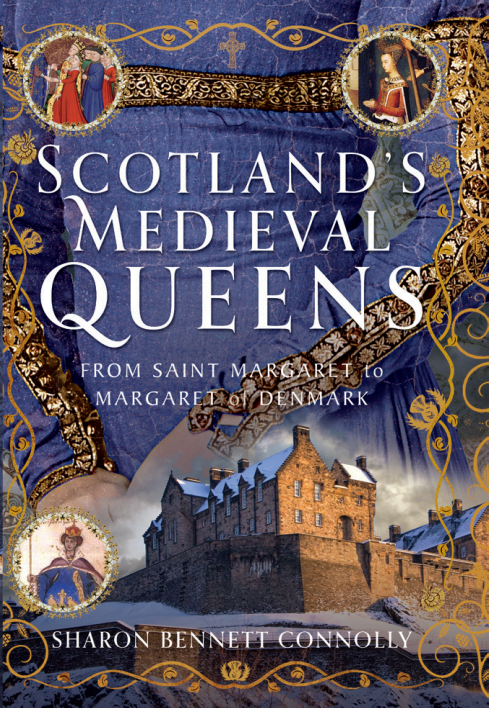
Out now: Scotland’s Medieval Queens

Books by Sharon Bennett Connolly

Scotland’s history is dramatic, violent and bloody. Being England’s northern neighbour has never been easy. Scotland’s queens have had to deal with war, murder, imprisonment, political rivalries and open betrayal. They have loved and lost, raised kings and queens, ruled and died for Scotland. From St Margaret, who became one of the patron saints of Scotland, to Elizabeth de Burgh and the dramatic story of the Scottish Wars of Independence, to the love story and tragedy of Joan Beaufort, to Margaret of Denmark and the dawn of the Renaissance, Scotland’s Medieval Queens have seen it all. This is the story of Scotland through their eyes.

Scotland’s Medieval Queens gives a thorough grounding in the history of the women who ruled Scotland at the side of its kings, often in the shadows, but just as interesting in their lives beyond the spotlight. It’s not a subject that has been widely covered, and Sharon is a pioneer in bringing that information into accessible history.’ Elizabeth Chadwick (New York Times bestselling author)

Available now from Amazon and Pen and Sword Books

Also by Sharon Bennett Connolly:

Books by Sharon Bennett Connolly

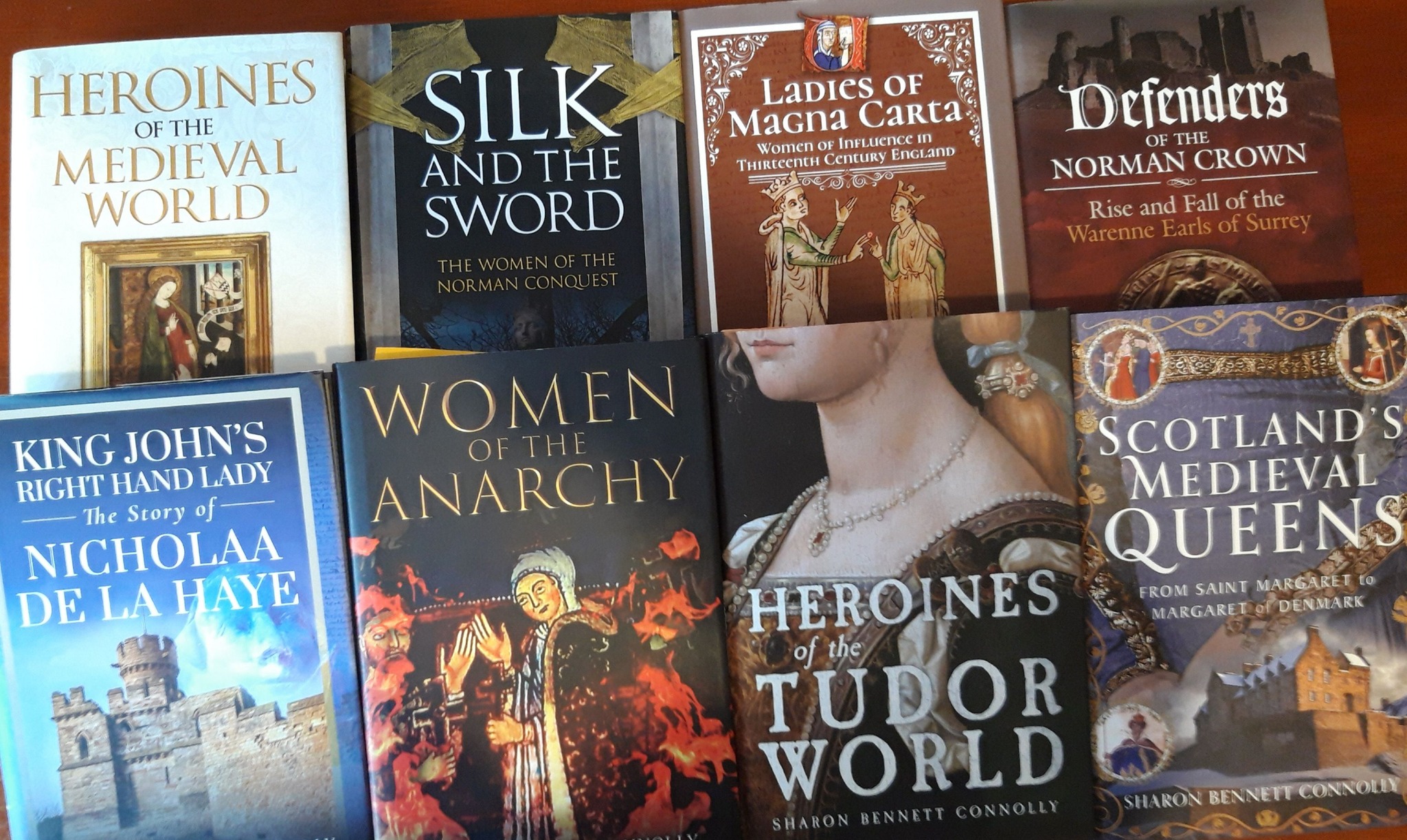
Heroines of the Tudor World tells the stories of the most remarkable women from European history in the time of the Tudor dynasty, 1485-1603. These are the women who ruled, the women who founded dynasties, the women who fought for religious freedom, their families and love. Heroines of the Tudor World is now available for pre-order from Amberley Publishing and Amazon UK. Women of the Anarchy demonstrates how Empress Matilda and Matilda of Boulogne, unable to wield a sword themselves, were prime movers in this time of conflict and lawlessness. It shows how their strengths, weaknesses, and personal ambitions swung the fortunes of war one way – and then the other. Available from Bookshop.orgAmberley Publishing and Amazon UKKing John’s Right-Hand Lady: The Story of Nicholaa de la Haye is the story of a truly remarkable lady, the hereditary constable of Lincoln Castle and the first woman in England to be appointed sheriff in her own right. Available from all good bookshops Pen & Sword Booksbookshop.org and Amazon

History ... the Interesting Bits

Defenders of the Norman Crown: The Rise and Fall of the Warenne Earls of Surrey tells the fascinating story of the Warenne dynasty, from its origins in Normandy, through the Conquest, Magna Carta, the wars and marriages that led to its ultimate demise in the reign of Edward III. Available from Pen & Sword BooksAmazon in the UK and US, and Bookshop.orgLadies of Magna Carta: Women of Influence in Thirteenth Century England looks into the relationships of the various noble families of the 13th century, and how they were affected by the Barons’ Wars, Magna Carta and its aftermath; the bonds that were formed and those that were broken. It is now available in paperback and hardback from Pen & SwordAmazon, and Bookshop.orgHeroines of the Medieval World tells the stories of some of the most remarkable women from Medieval history, from Eleanor of Aquitaine to Julian of Norwich. Available now from Amberley Publishing and Amazon, and Bookshop.orgSilk and the Sword: The Women of the Norman Conquest traces the fortunes of the women who had a significant role to play in the momentous events of 1066. Available now from Amazon,  Amberley Publishing, and Bookshop.org.

Alternate Endings: An anthology of historical fiction short stories including Long Live the King… which is my take what might have happened had King John not died in October 1216. Available in paperback and kindle from Amazon.

Podcast:

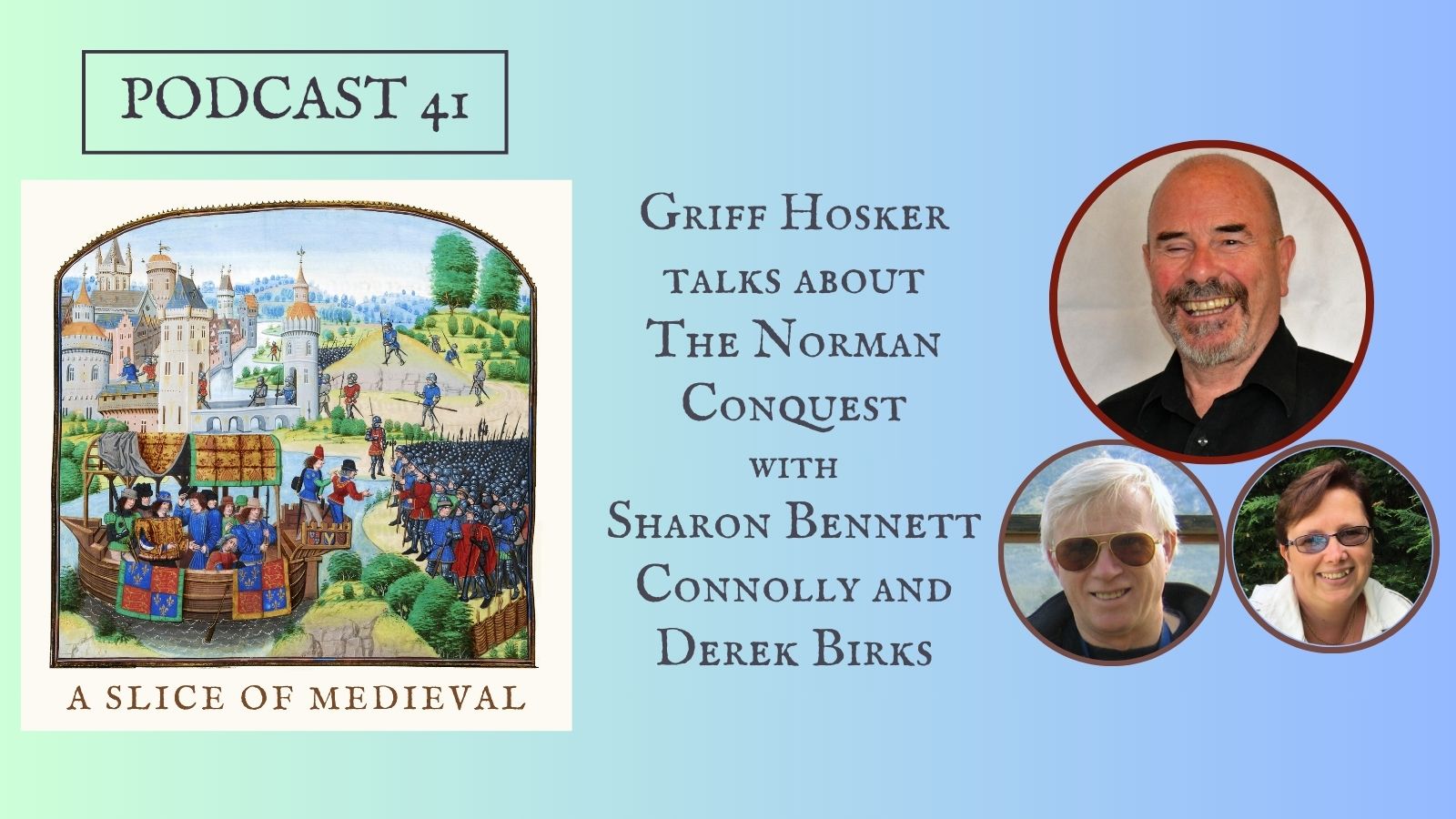
Have a listen to the A Slice of Medieval podcast, which I co-host with Historical fiction novelist Derek Birks. Derek and I welcome guests, such as Bernard Cornwell and Elizabeth Chadwick, and discuss a wide range of topics in medieval history, from significant events to the personalities involved. Episode 41 was on the Norman Conquest!

Every episode is also now available on YouTube.

*

Don’t forget! Signed and dedicated copies of all my books are available through my online bookshop.

For forthcoming online and in-person talks, please check out my Events Page.

You can be the first to read new articles by clicking the ‘Follow’ button, liking our Facebook page or joining me on TwitterThreadsBluesky and Instagram.

*

©2019 Sharon Bennett Connolly FRHistS

Judith of Flanders, Countess of Northumberland

History...the Interesting Bits
Judith of Flanders

Judith of Flanders was born sometime in the early 1030s. Her father was Baldwin IV, Count of Flanders; he died in 1035, when Judith was, at most, five years old and possibly still only a baby.

Baldwin had been count since the age of seven, from 987. His first wife was Orgive of Luxembourg, the mother of Baldwin’s son and heir, Baldwin V, who was born in 1012. Orgive died in 1030. Their son, Baldwin V, married Adele of France, the second daughter of Robert II (the Pious), King of France, and they had at least three children together, including Baldwin VI, Count of Flanders, and Matilda of Flanders, Duchess of Normandy and Queen of England as the wife of William the Conqueror. After Orgive’s death, Baldwin IV married again. In about 1031 he wed Eleanor of Normandy, the daughter of Baldwin’s neighbour, Richard II, Duke of Normandy, and his wife, Judith of Brittany. Eleanor’s brother was Robert I, Duke of Normandy, the father of William the Conqueror, who became Duke of Normandy and King of England. Eleanor’s daughter and only child Judith, therefore, was a first cousin of William the Conqueror, the future King of England, as well as aunt of his wife, Matilda.

When her father died in 1035, Judith’s older brother, who was about twenty years her senior, succeeded as Count Baldwin V; it would be he who decided on Judith’s future when the time came for her to marry. We know nothing of Judith’s childhood or level of education. As the daughter of a count, expected to make a good marriage into another ruling or noble family, she would have been taught how to run a large household, dancing, embroidery and possibly some languages, such as Latin. It is unlikely, however, that she was taught to read and write, skills usually reserved for members of the Church. It is possible she was raised alongside her niece, Matilda, who was of a similar age to Judith.

History...the Interesting Bits
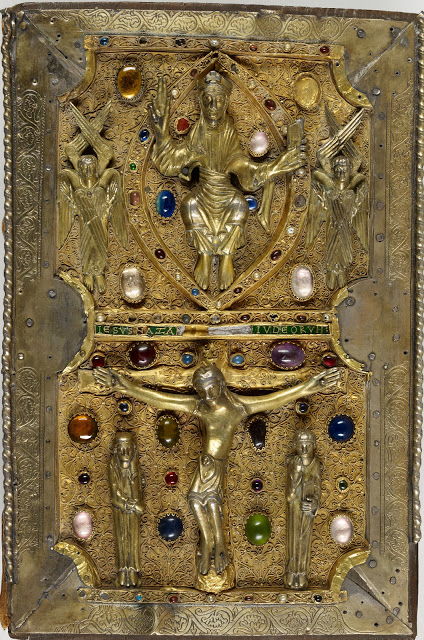
Cover of one of the four gospels commissioned by Judith of Flanders

In the late summer or autumn of 1051, Judith was married to Tostig, a son of the powerful Earl Godwin of Wessex and his wife, Gytha. And when the family fell foul of King Edward the Confessor, Judith accompanied them into exile; back to her homeland of Flanders. Tostig was probably the third eldest son of Godwin and Gytha of Wessex, one of his older brothers being the future King Harold II of England. He would have been in his early twenties at the time of his marriage and the family’s subsequent exile; Judith was no more than six years younger than him, which would suggest she was at least fifteen years old at the time of her marriage.

Judith would have returned to her new homeland of England when Tostig and his family forced their return from exile in 1052. After some vigorous negotiations in London, an uneasy peace was restored between Earl Godwin and the king. Judith and Tostig would have finally been able to settle down to married life, following months of uncertainty and upheaval. Although it is impossible to say for certain, they were probably given one of Godwin’s many comital estates, somewhere in Wessex, in which to set up their household. Their marriage appears to have been a successful one, with no rumours of infidelity recorded by the various chroniclers of the time. They are thought to have had two sons together, Skuli Tostisson Kongsfostre and Ketil Tostisson, born in 1052 and 1054, respectively.

Tostig was created earl of Northumbria in 1055 and spent the next few years sparring with Malcolm III, King of Scots. However, with peace restored Tostig left on pilgrimage to Rome in 1061, taking Judith with him. They were accompanied by several English bishops, including Ealdred, bishop of Worcester, who had just been made archbishop of York by King Edward, and was travelling to Rome to receive his pallium.

Their party reached Rome in the spring of 1061, where they were received honourably by Pope Nicholas; Tostig given the honour of attending a synod, possibly that held on 15 April at Easter 1061, at which Tostig is said to have sat next to the pope. Shortly after departing Rome for their homeward journey, Tostig’s party were caught up in a local dispute between the papacy and the Tuscan nobility; they were ambushed while travelling along the Via Cassia, by the Count of Galeria. Tostig was able to escape by the ruse of one of his own thegns pretending to be the earl. Judith and a large portion of the party had gone on ahead and were unaware for some time of what had befallen Tostig. She must have been relieved to hear of the failure of the attack when Tostig eventually caught up with her.

History...the Interesting Bits
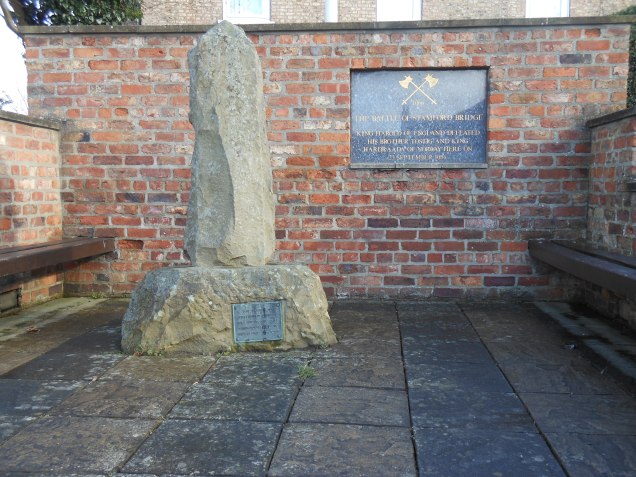
Memorial to the Battle of Stamford Bridge, York

Judith appears to have been a very pious individual, although some stories have come down to us of disagreements between the Earl and his countess, and the Church. One story from Symeon of Durham tells of Judith’s attempts to circumvent the rules of the community of St Cuthbert. Despite there being a specific injunction forbidding women to enter the precincts of the church in which lay the shrine of St Cuthbert, Judith was determined to get around this. She sent one of her own maidservants to attempt entry, but the poor girl fell ill as soon as she crossed the boundary and died shortly afterwards, clearly demonstrating the power of St Cuthbert’s will. We can assume that Judith gave up trying to enter the shrine after that! Judith sent gifts to the cathedral – including a crucifix, church ornaments and images of the Virgin Mary and St John the Evangelist, decorated in gold and silver – to make amends for her disastrous attempt to break the rules.

Despite this, the relationship between the couple and the Church at Durham was generally cordial and mutually appreciated. The earl and countess were notable for almsgiving in Northumbria, and for their generosity towards the community of St Cuthbert. In return Æthelwine, Bishop of Durham, was generous enough to give Judith a relic containing some of St Oswine’s hair. As a consequence, Tostig and Judith are both commemorated in the Durham Liber Vitae.

In 1065, rebellion in Northumbria, and the lack of support from his fellow nobles – including his brother Harold – saw Tostig and his family banished from England; he and Judith, their children and their entire household, crossed the English Channel on 1 November 1065. They made their way to Flanders, to seek refuge with Judith’s brother, Count Baldwin, where they were warmly welcomed just a few days before Christmas.

History...the Interesting Bits
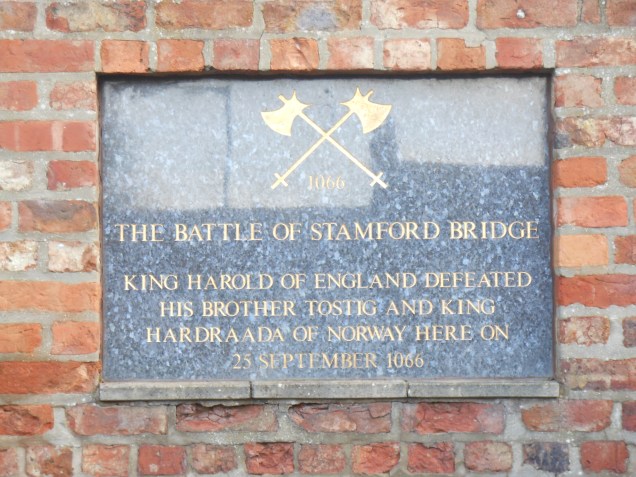
Memorial Plaque, Stamford Bridge, York

However, everything changed in January 1066, with the death of Edward the Confessor and the accession of Tostig’s brother, Harold, to the English throne. Not one to miss an opportunity, Tostig started raiding English shores, before invading from Scotland with his ally Harald Hardrada, King of Norway. They defeated the Northumbrians at the Battle of Fulford, near York, on 20 September, before facing Tostig’s brother, King Harold II, across the battlefield of Stamford Bridge 5 days later. King Harold proved victorious and Tostig and his ally, Harald Hardrada, were both killed in the fighting.

Judith’s whereabouts during Tostig’s invasion are not mentioned. It is possible that she stayed safe in Flanders with her family and two young sons, the oldest of whom was about fourteen by 1066. However, she may have travelled with her husband; there is a suggestion that at least one of her sons fought at Stamford Bridge and travelled to Norway with the survivors. Following Tostig’s defeat at Stamford Bridge, and Harold’s subsequent death at the Battle of Hastings, Judith’s two sons by Tostig eventually sought refuge with King Olaf ‘the Peaceable’ of Norway, Harald Hardrada’s son who had been allowed to return home following his father’s defeat and death at Stamford Bridge. Little is known of their movements after that, other than that the oldest, Skuli Tostisson Kongsfostre, must have married and had children as he was the ancestor of King Inge II of Norway.

History...the Interesting Bits
Wedding of Judith of Flanders and Welf IV, Duke of Bavaria

For a time, Judith remained in Flanders from where her older, half-brother, Count Baldwin V, arranged a second marriage for her in about 1070, to Welf IV, the newly created Duke of Bavaria. The couple were to have two sons and a daughter; Welf, who succeeded his father as Duke of Bavaria and died in 1119, Henry and Kunizza, who married Count Frederick of Diessen and died in 1120. Henry succeeded his brother as Duke of Bavaria and died in 1126; he had at least seven children by his wife, Wulfhilde of Saxony.

A patron of the arts, Judith is renowned for the commissioning of four gospel books, luxurious creations produced in England, probably at Winchester. When Judith left England, she took these gospels, with other manuscripts and relics in her private collection, with her to Flanders. After she remarried, they accompanied her to southern Germany.

On 12 March 1094, with the approval of her husband and sons, Judith drew up a list of bequests. She bequeathed the four gospels and other treasures, to the monastery at Weingarten, a foundation of her husband’s family, thus helping to disseminate Anglo-Saxon art throughout southern Europe. Among the bequests was also a relic of Christ’s blood, given to her by her father. She died a year later, on 5 March 1095, and was buried at the Abbey of Weingarten. Judith is remembered at Weingarten as a widowed queen of England, perhaps a testimony to how close her first husband got to the English throne.

*

This article, Judith of Flanders, Countess of Northumberland, first appeared on Mary Anne Yarde’s wonderful blog Myths, Legends, Book and Coffee Pots.

*

Images:

Courtesy of Wikipedia, except Stamford Bridge memorials ©2018 Sharon Bennett Connolly and Judith’s gospel courtesy of the British Library.

Sources:

The English and the Norman Conquest by Dr Ann Williams; Brewer’s British Royalty by David Williamson; Britain’s Royal Families, the Complete Genealogy by Alison Weir; The Wordsworth Dictionary of British History by JP Kenyon; The Norman Conquest by Marc Morris; Harold, the King Who Fell at Hastings by Peter Rex; The Anglo-Saxons in 100 Facts by Martin Wall; The Anglo-Saxon Age by Martin Wall; Kings, Queens, Bones and Bastards by David Hilliam; The Mammoth Book of British kings & Queens by Mike Ashley; The Oxford Companion to British History Edited by John Cannon; The Anglo-Saxon Chronicles translated and edited by Michael Swaton; The Anglo-Saxon Chronicle translated by James Ingram; Queen Emma and the Vikings by Harriett O’Brien; The Bayeux Tapestry by Carola Hicks; On the Spindle Side: the Kinswomen of Earl Godwin of Wessex by Ann Williams; oxforddnb.com.

*

My Books

Signed, dedicated copies of all my books are available through my online store.

OUT NOW! Scotland’s Medieval Queens

Books by Sharon Bennett Connolly

Scotland’s history is dramatic, violent and bloody. Being England’s northern neighbour has never been easy. Scotland’s queens have had to deal with war, murder, imprisonment, political rivalries and open betrayal. They have loved and lost, raised kings and queens, ruled and died for Scotland. From St Margaret, who became one of the patron saints of Scotland, to Elizabeth de Burgh and the dramatic story of the Scottish Wars of Independence, to the love story and tragedy of Joan Beaufort, to Margaret of Denmark and the dawn of the Renaissance, Scotland’s Medieval Queens have seen it all. This is the story of Scotland through their eyes.

Scotland’s Medieval Queens gives a thorough grounding in the history of the women who ruled Scotland at the side of its kings, often in the shadows, but just as interesting in their lives beyond the spotlight. It’s not a subject that has been widely covered, and Sharon is a pioneer in bringing that information into accessible history.’ Elizabeth Chadwick (New York Times bestselling author)

Available now from Amazon and Pen and Sword Books

Also by Sharon Bennett Connolly:

Books by Sharon Bennett Connolly

Heroines of the Tudor World tells the stories of the most remarkable women from European history in the time of the Tudor dynasty, 1485-1603. These are the women who ruled, the women who founded dynasties, the women who fought for religious freedom, their families and love. Heroines of the Tudor World is now available for pre-order from Amberley Publishing and Amazon UK. Women of the Anarchy demonstrates how Empress Matilda and Matilda of Boulogne, unable to wield a sword themselves, were prime movers in this time of conflict and lawlessness. It shows how their strengths, weaknesses, and personal ambitions swung the fortunes of war one way – and then the other. Available from Bookshop.orgAmberley Publishing and Amazon UKKing John’s Right-Hand Lady: The Story of Nicholaa de la Haye is the story of a truly remarkable lady, the hereditary constable of Lincoln Castle and the first woman in England to be appointed sheriff in her own right. Available from all good bookshops Pen & Sword Booksbookshop.org and Amazon

Historical Novel Society

Defenders of the Norman Crown: The Rise and Fall of the Warenne Earls of Surrey tells the fascinating story of the Warenne dynasty, from its origins in Normandy, through the Conquest, Magna Carta, the wars and marriages that led to its ultimate demise in the reign of Edward III. Available from Pen & Sword BooksAmazon in the UK and US, and Bookshop.orgLadies of Magna Carta: Women of Influence in Thirteenth Century England looks into the relationships of the various noble families of the 13th century, and how they were affected by the Barons’ Wars, Magna Carta and its aftermath; the bonds that were formed and those that were broken. It is now available in paperback and hardback from Pen & SwordAmazon, and Bookshop.orgHeroines of the Medieval World tells the stories of some of the most remarkable women from Medieval history, from Eleanor of Aquitaine to Julian of Norwich. Available now from Amberley Publishing and Amazon, and Bookshop.orgSilk and the Sword: The Women of the Norman Conquest traces the fortunes of the women who had a significant role to play in the momentous events of 1066. Available now from Amazon,  Amberley Publishing, and Bookshop.org.

Alternate Endings: An anthology of historical fiction short stories including Long Live the King… which is my take what might have happened had King John not died in October 1216. Available in paperback and kindle from Amazon.

Podcast:

A Slice of Medieval

Have a listen to the A Slice of Medieval podcast, which I co-host with Historical fiction novelist Derek Birks. Derek and I welcome guests, such as Bernard Cornwell, and discuss a wide range of topics in medieval history, from significant events to the personalities involved. A recent episode saw Derek and I looking at the years before the Norman Conquest in A Triumvirate of Earls.

Every episode is also now available on YouTube.

*

Don’t forget! Signed and dedicated copies of all my books are available through my online store.

For forthcoming online and in-person talks, please check out my Events Page.

You can be the first to read new articles by clicking the ‘Follow’ button, liking our Facebook page or joining me on TwitterThreads and Instagram.

©2019 Sharon Bennett Connolly FRHistS

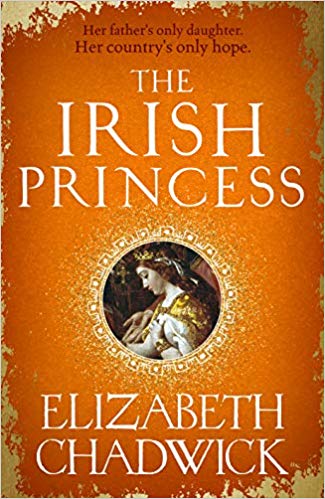
Book Corner: the Irish Princess by Elizabeth Chadwick

Her father’s only daughter.
Her country’s only hope.
Ireland, 1152

The King of Leinster, awaiting news of his newborn child, is disappointed to hear he has a daughter. Diarmait MacMurchada wanted another strapping son to shoulder a spear, wield a sword, and protect his kingdom. But the moment Diarmait holds tiny Aoife in his arms, he realised she would be his most precious treasure.

1166

Forced into exile Aoife and her family find themselves at the mercy of Henry II. Aoife – aware of her beauty but not its power – intrigues and beguiles Henry in equal measure. He agrees to help her father, an alliance that leads the MacMurchadas to the charistmatic Richard de Clare, a man dissatisfied with his lot and open to new horizons.

Diarmit promises Richard Aoife’s hand in marriage in return for his aid in Ireland, but Aoife has her own thoughts on the matter. She may be a prize, but she is not a pawn, and she will play the men at their own game. For herself, for her family, and for her country.

From the royal halls of scheming kings, to staunch Welsh border fortresses and the wild green kingdoms of Ireland, The Irish Princess is a sumptuous, journey of ambition and desire, love and loss, heartbreak and survival.

Elizabeth Chadwick’s The Irish Princess is one of the most anticipated historical fiction novels of the year. I was lucky enough to receive and advance copy from NetGalley – and it more than lives up to expectation. Telling the story of the marriage of Richard de Clare (Strongbow) and his Irish princess, Aoife MacMurchada, against the backdrop of the Norman invasion of Ireland it seamlessly weaves together the various strands to make an engaging and utterly engrossing story.

Aoife is a proud and precocious princess who has grown up amid the brutality of the power struggles of the Irish clans. She has seen brothers maimed and murdered, the heads of her father’s enemies decorating her home and had to flee into exile, all before she had left what should have been the innocence of childhood. Her marriage to Richard de Clare, Earl of Striguil, is a political necessity in the strategies of her father, to recover his lost kingdom of Leinster.

Richard de Clare, on the other hand, is a man on the outside; not trusted or employed by King Henry II, he sees helping Aoife’s father as an opportunity to gain a wife and heirs, lands and influence. He still has to play the courtier, however, and has to walk a fine line with Henry, deferring to the king whilst protecting his own interests – not an easy path to walk.

The entrance to the castle was above ground level with steps leading to a doorway decorated with a patterned arch of zig-zags and painted chevrons. A man stepped from the darkness of the arch and came down the steps to greet them. Tall and well proportioned, he moved with confident grace. His tunic was grey, topped by a cloak of a darker, charcoal hue, lined with squirrel fur, creating a strong but subtle contrast. His hair was the same rich auburn as the squirrel pelts.

Welcome to Striguil, sire.’ He bowed his head in courtesy and extended his hand to clasp her father’s. ‘I trust you have journeyed well?’ his voice was light, but the words were clearly spoken and his smile showed a flash of white teeth. he sent a brief glance in her direction, as he encompassed everyone in his greeting.

‘Well enough, my lord,’ her father answered in accented French. ‘But glad to arrive. You have a fine castle.’ His gaze roved the walls.

‘It serves its purpose well,’ de Clare replied, still smiling. ‘Will you come within?’

Diarmait presented Aoife’s mother and her brothers to de Clare, and then spread his arm in a flourish. ‘And this is my daughter Aoife.’

Aoife swallowed and held her ground as she had held it before King Henry. De Clare’s eyes were clear with a glassy mingling of sea-colours, utterly striking against the dark contrast of his pupils. His stare was as intense as Henry’s had been but assessing her rather than predatory.

‘My lady, you are indeed welcome,’ he said, speaking slowly and clearly to help her understand him. ‘Word of your great beauty has carried, and it is not exaggerated.’

Elizabeth Chadwick wonderfully combines the history of the conflict with the private lives and experiences of her leading characters. The personal stories are what make this book truly a incredible read. I wasn’t keen on Aoife at first, but she grows on you as she grows up and is a courageous heroine, who has to use all her attributes as a woman in order to survive and prosper. No shrinking violet and no meek, biddable child, she is well versed in the politics of Ireland and England, but knows her place as a woman of the times; advising and steering policy in private and charming the English king to gain his protection.

From Aoife herself, to her sister-in-law Basilia, from Richard de Clare to King Henry, it is the characters in The Irish Princess that serve as the backbone of the novel. They drive the direction of the story and the empathy and engagement of the reader, even more so than the action and intrigue of the times.

Elizabeth Chadwick, as always, has done extensive research and the historical story comes across in each page, even as she weaves in the recreated words and emotions of the characters, adding a sense of having a fly-on-the-wall view of events as they happened. The sweeping landscapes of Ireland, the bloody battlefields, the warmth and comfort of the lord’s hall and the intimacy of the lady’s private quarters are beautifully recreated and woven into the story to draw the reader into the world of Ireland at the time of the Norman invasion.

And to top it all, a cameo appearance by … (not saying, I don’t want to spoil the surprise!)

Fans of Elizabeth Chadwick – old and new – will not be disappointed by this wonderful novel. The author has lived up to every expectation in this wonderful novel. The story and characters are beautifully crafted to bring the reader an epic tale of love, war betrayal … and family.

The Irish Princess by Elizabeth Chadwick will be released on 12 September 2019 and is available from Amazon UK.

*

About the Author:

Myself and Elizabeth Chadwick at the Newark Book Festival, 2018

New York Times bestselling author Elizabeth Chadwick lives in a cottage in the Vale of Belvoir in Nottinghamshire with her husband and their 3 dogs. Her first novel, The Wild Hunt, won a Betty Trask Award and To Defy a King won the RNA’s 2011 Historical Novel Prize. She was also shortlisted for the Romantic Novelists’ Award in 1998 for The Champion, in 2001 for Lords of the White Castle, in 2002 for The Winter Mantle and in 2003 for The Falcons of Montabard. Her sixteenth novel, The Scarlet Lion, was nominated by Richard Lee, founder of the Historical Novel Society, as one of the top ten historical novels of the last decade. She often lectures at conferences and historical venues, has been consulted for television documentaries and is a member of the Royal Historical Society.

For more details on Elizabeth Chadwick and her books, visit http://www.elizabethchadwick.com, follow her on Twitter, read her blogs or chat to her on Facebook.

*

My books

Silk and the Sword: The Women of the Norman Conquest

From Emma of Normandy, wife of both King Cnut and Æthelred II to Saint Margaret, a descendant of Alfred the Great himself, Silk and the Sword: the Women of the Norman Conquest traces the fortunes of the women who had a significant role to play in the momentous events of 1066.  Available now from Amazon UK,  Amberley Publishing, Book Depository and Amazon US.

Heroines of the Medieval World

Telling the stories of some of the most remarkable women from Medieval history, from Eleanor of Aquitaine to Julian of Norwich, Heroines of the Medieval World,  is available now on kindle and in paperback in the UK from from both Amberley Publishing and Amazon, in the US from Amazon and worldwide from Book Depository.

*

You can be the first to read new articles by clicking the ‘Follow’ button, liking our Facebook page or joining me on Twitter and Instagram.

©2019 Sharon Bennett Connolly
Robert de Breteuil, the Crusading Earl

Sharon Bennett Connolly
Arms of Robert de Breteuil, 4th Earl of Leicester

Robert de Breteuil, also known as Robert de Beaumont, was a remarkable individual whose adventures in the Holy Land would make a wonderful novel. A renowned warrior and a powerful magnate, he was a companion to the Plantagenet princes, both Richard the Lionheart and King John. Robert was the son-in-law of Matilda de Braose, whose horrific persecution by King John led to her death by starvation in one of John’s dungeons – and the inclusion of clause 39 in Magna Carta:

“No man shall be taken, imprisoned, outlawed, banished or in any way destroyed, nor will we proceed against or prosecute him, except by the lawful judgement of his peers or by the law of the land.”

Magna Carta, magnacartaresearch.og

Robert was the second son of Robert de Breteuil, 3rd earl of Leicester, and his wife, Petronilla de Grandmesnil and the great-grandson of Robert de Beaumont, Count of Meulan and 1st Earl of Leicester, and his wife, Elizabeth de Vermandois. Robert was probably born in the early-1160s and was closely associated with his elder brother William. As they grew up and entered public life they were linked with the household of their cousin, Robert, Count of Meulan, and they regularly appeared on their father’s charters together. Their younger brother, Roger, was bishop of St Andrews. William died in 1189, sometime after the accession of King Richard I. A later legend suggests he suffered from leprosy, though there is no contemporary evidence to corroborate this. William’s death meant Robert therefore became heir to their father’s earldom of Leicester.

Both Robert and his father were at the royal court at Verneiul on 2 January 1190 and joined the Third Crusade of Richard the Loinheart. Robert’s father took an overland route to the Holy Land, while it appears that Robert travelled with the king. Robert was with the king at Messina, Sicily, when news reached him of his father’s death. The 3rd earl had died on 31 August or 1 September 1190 and so Robert was invested as earl by the king on 2 February 1191, in Sicily.

During his time in the Holy Land, Robert was one of the leaders of the assault on Acre on 11 July 1191 and fought in the battle of Arsuf on 7 September. In November he rescued some ambushed Templars at Ibn-Ibrak and then was himself surrounded, with his knights, by a party of Turks outside the camp at Ramlah. Robert was rescued by his cousin Robert de Neubourg; in the process he nearly drowned in a river and had two horses killed under him.

Sharon Bennett Connolly
Seal of Robert de Breteuil

Robert and his men were prominent among the forces who stormed Deir al-Bela on 22 May 1192 and on 5 August 1192 he was one of the ten knights who helped to thwart an attempt to kidnap the king from his tent at Jaffa and the king himself rescued Robert when he was thrown from his horse. He probably set out for home in September or October 1192, having distinguished himself and earned the king’s eternal goodwill.1

Following his return from the crusade, Robert was occupied with the defence of Normandy, but was captured by King Philip Augustus’ forces in June 1194, after a skirmish outside Gourany. He was imprisoned at Étampes for more than a year and only freed after surrendering his castle and lordship of Pacy-sur-Eure to King Philip. His freedom was achieved sometime around February 1196 and in the same year he was married to the teenage Loretta de Braose. Loretta de Braose, was probably born in the early-to-mid-1180s,. She was one of the sixteen children of Matilda and William de Braose. Four of her sisters married prominent Welsh Marcher lords, but Loretta was married to Robert de Breteuil, 4th earl of Leicester.

The marriage was an alliance of two of the leading Anglo-Norman families of the Plantagenet world. He was a powerful earl who had made a name for himself on the crusades, whilst she was a daughter of one of the most powerful barons of the Welsh March. As her marriage portion, Loretta was given Tawstock, near Barnstaple in Devon.

Robert de Breteuil was back campaigning in 1197 and 1198 and was with King Richard when he was mortally wounded at Châlus in April 1199. He had had a long association with Richard’s brother since John had been Count of Mortain, and so was a firm supporter of John’s succession, acting as steward at his coronation on 27 May 1199, claiming the office his grandfather had relinquished in 1153. Robert was highly influential in the early years of John’s reign. He also fought for John in Normandy, being one of the major landholders in the duchy, and was rewarded generously for his support; he was granted Richmondshire in Yorkshire in September 1203. The following year he suffered the loss of his Continental estates when Normandy fell and was the biggest loser of the Anglo-Norman barons.

Although he was one of the two barons (the other being William Marshal) who was given a year to decide whether to pay homage to King Philip of France to try to retain his Norman estates, Robert was not punished by John. Indeed, he was given more lands in England, English lands that had belonged to families who had chosen to remain in Normandy, such as the Harcourts. Robert died before King Philip’s deadline, and so never did have to decide where and how to share his allegiances in order to keep all his lands.

Sharon Bennett Connolly
The ruins of Leicester Abbey, where Robert de Breteuil is buried

Robert died on 20 or 21 October 1204; the life of St Hugh of Lincoln reported that he died a leper, although this seems highly unlikely.1 He was buried in the choir of the Augustinian Abbey in Leicester. Robert and Loretta had remained childless, so Robert’s lands were divided between his two sisters. The earldom and the town of Leicester went to his eldest sister, Amice, the wife of Simon de Montfort and therefore grandmother of the Simon de Montfort who would marry King John’s daughter, Eleanor, and claim the earldom of Leicester for himself. Half of the old earldom, centred around Brackley in Northamptonshire, went to Robert’s younger sister, Margaret, wife of Saher de Quincy, Earl of Winchester.

It is a sad legacy that Robert’s death before John began the persecution of Loretta’s family meant that she was without her husband’s powerful protection when she needed it most. King John’s pursuit of the family did not end with the deaths of Matilda, who died in custody in 1210, and William de Braose, Lord of Bramber, who died in exile in France in 1211. In November 1207 John extracted a promise from Loretta that she would not remarry without the king’s permission and her lands were taken from her. She probably left for France shortly afterwards and only returned to England in 1214.

Once in England, Loretta was allowed to recover her confiscated estates after again to only marry as the king directed. The restoration of Loretta’s estates were complicated by the king’s desire to keep happy those who had benefited from tehir confiscation, such as the powerful Saher de Quincy, earl of Winchester. Loretta’s experiences in this respect may well have inspired clauses 7 and 8 of Magna Carta, which guaranteed that widows should have their marriage portions without hindrance and that they could remarry at their own pleasure, so long as it was with the king’s consent.

Sharon Bennett Connolly
Arms of William de Braose, Loretta’s father

Loretta took her future into her own hands, however, and in early 1221, took a vow of chastity and became an anchorite in Hackington, near Canterbury. An anchorite was a religious recluse who lived in a small cell within a church, allowed on the briefest of contact with others, although she was allowed attendants to help with her daily needs. Loretta’s influence was still in evidence, however, in that she obtained a pardon for a man who had accidentally killed another and helped to establish the Franciscan order in England. She died on 4 March, probably in 1266, and was buried at the church of St Stephen, Hackington.

It is a fact of life that whilst researching one particular person, you come across several others who spark your interest. I stumbled upon the stories of Robert de Breteuil and Loretta de Braose while researching for my book, Ladies of Magna Carta.

*

Footnote: ¹Oxforddnb.com

Sources: sussexcastles.com; genie.com; steyningmuseum.org.uk; berkshirehistory.com; England Under the Norman and Angevin Kings 1075-1225 by Robert Bartlett; Oxford Companion to British History Edited by John Cannon; The Story of Britain by Roy Strong; The Plantagenets, the Kings who Made England by Dan Jones; The Life and Times of King John by Maurice Ashley; The Plantagenet Chronicles Edited by Elizabeth Hallam; Oxforddnb.com; magnacartareseearch.org; Magna Carta by David Starkey; King John by Marc Morris; King John, England, Magna Carta and the Making of a Tyrant by Stephen Church; 1215, the Year of Magna Carta by Danny Danziger and John Gillingham; Women in Thirteenth Century Lincolnshire by Louise J. Wilkinson.

Pictures courtesy of Wikipedia

*

My Books

Signed, dedicated copies of all my books are available through my online store.

Out now: Scotland’s Medieval Queens

Scotland’s history is dramatic, violent and bloody. Being England’s northern neighbour has never been easy. Scotland’s queens have had to deal with war, murder, imprisonment, political rivalries and open betrayal. They have loved and lost, raised kings and queens, ruled and died for Scotland. From St Margaret, who became one of the patron saints of Scotland, to Elizabeth de Burgh and the dramatic story of the Scottish Wars of Independence, to the love story and tragedy of Joan Beaufort, to Margaret of Denmark and the dawn of the Renaissance, Scotland’s Medieval Queens have seen it all. This is the story of Scotland through their eyes.

Scotland’s Medieval Queens gives a thorough grounding in the history of the women who ruled Scotland at the side of its kings, often in the shadows, but just as interesting in their lives beyond the spotlight. It’s not a subject that has been widely covered, and Sharon is a pioneer in bringing that information into accessible history.’ Elizabeth Chadwick (New York Times bestselling author)

Available now from Amazon and Pen and Sword Books

Also by Sharon Bennett Connolly:

Heroines of the Tudor World tells the stories of the most remarkable women from European history in the time of the Tudor dynasty, 1485-1603. These are the women who ruled, the women who founded dynasties, the women who fought for religious freedom, their families and love. Heroines of the Tudor World is now available from Amberley Publishing and Amazon UK. Women of the Anarchy demonstrates how Empress Matilda and Matilda of Boulogne, unable to wield a sword themselves, were prime movers in this time of conflict and lawlessness. It shows how their strengths, weaknesses, and personal ambitions swung the fortunes of war one way – and then the other. Available from Bookshop.orgAmberley Publishing and Amazon UKKing John’s Right-Hand Lady: The Story of Nicholaa de la Haye is the story of a truly remarkable lady, the hereditary constable of Lincoln Castle and the first woman in England to be appointed sheriff in her own right. Available from all good bookshops Pen & Sword Booksbookshop.org and Amazon

Defenders of the Norman Crown: The Rise and Fall of the Warenne Earls of Surrey tells the fascinating story of the Warenne dynasty, from its origins in Normandy, through the Conquest, Magna Carta, the wars and marriages that led to its ultimate demise in the reign of Edward III. Available from Pen & Sword BooksAmazon in the UK and US, and Bookshop.orgLadies of Magna Carta: Women of Influence in Thirteenth Century England looks into the relationships of the various noble families of the 13th century, and how they were affected by the Barons’ Wars, Magna Carta and its aftermath; the bonds that were formed and those that were broken. It is now available in paperback and hardback from Pen & SwordAmazon, and Bookshop.orgHeroines of the Medieval World tells the stories of some of the most remarkable women from Medieval history, from Eleanor of Aquitaine to Julian of Norwich. Available now from Amberley Publishing and Amazon, and Bookshop.orgSilk and the Sword: The Women of the Norman Conquest traces the fortunes of the women who had a significant role to play in the momentous events of 1066. Available now from Amazon,  Amberley Publishing, and Bookshop.org.

Alternate Endings: An anthology of historical fiction short stories including Long Live the King… which is my take what might have happened had King John not died in October 1216. Available in paperback and kindle from Amazon.

Podcast:

Have a listen to the A Slice of Medieval podcast, which I co-host with Historical fiction novelist Derek Birks. Derek and I welcome guests, such as Bernard Cornwell and Michael Jecks, and discuss a wide range of topics in medieval history, from significant events to the personalities involved. Every episode is also now available on YouTube.

*

Don’t forget! Signed and dedicated copies of all my books are available through my online store.

For forthcoming online and in-person talks, please check out my Events Page.

You can be the first to read new articles by clicking the ‘Follow’ button, liking our Facebook page or joining me on TwitterThreadsBluesky and Instagram.

*

©2019 Sharon Bennett Connolly FRHistS

Guest Post: The Battle of Tippermuir by Mark Turnbull

Today marks the 375th anniversary of the Battle of Tippermuir and it is a pleasure to welcome author Mark Turnbull to History…the Interesting Bits with an article of the English Civil War battle. Over to Mark….

British Civil War cavalry (The English Civil War Society) 
Montrose only had three horses at the Battle of Tippermuir

Three hundred and seventy-five years ago a son of Scotland secured his first victory in the name of King Charles I. The Battle of Tippermuir produced the famous ‘highland charge’ as well as the legend of the Earl of Montrose, but a matter of days prior, it seemed like none of this could be borne from a few seeds of resistance.

When three Scotsmen crossed the border in August 1644, they did not look back. Carlisle Castle was barely visible; nothing more than a red-stoned pimple on the top of a hill in the distance. William Rollo was a horseman par-excellence, honed through being entirely lame. Colonel William Sibbald rode alongside Rollo, both ignoring the groom trailing behind and leading a spare horse.

The trio left an England riven apart by civil war. King Charles I and his Parliament had been battling it out for two years, but eight months ago, Scotland had stepped from the side-lines and thrown their bonnets into the ring with Parliament. Scotland’s army of covenanters had marched into England and just won a stunning victory outside of York. Sibbald and Rollo intended to assist the King by beginning a guerrilla war in their homeland to draw back the covenanter army.

British Civil War Pikemen. Montrose’s men were poorly armed and he suggested they take stones from the earth and bash the enemies’ brains out.

Sewn into the saddle of the riderless horse was King Charles’s commission and his royal standard; two instruments essential to the plan. The man entrusted with securing the nation and restoring their Scottish-born King’s authority, was none other than the pretended groom himself; James Graham, Earl of Montrose. One fact remained in keeping with his disguise – Montrose only had one measly horse to lead and just Sibbald and Rollo to assist him. However, Montrose was banking on the Earl of Antrim’s promise to assemble an army of twelve thousand Irishmen to serve the King. But this readymade army was delivered with missing components – it turned out to number only sixteen-hundred. Led by Alasdair MacColla, they landed on the west coast and headed east to Aberdeen, but finding no royalist support there, turned south, meeting Montrose, Sibbald and Rollo in Blair Athol.

The English Civil War Society. Montrose unfurled the King’s Royal Standard in August 1644 which saw many clans join him.

On 28 August 1644 Montrose unfurled the King’s standard. In answer, the Scottish Parliament conscripted local Stewarts, Robertsons and Grahams to put the insurgents down. Having discarded his groom’s garb, Montrose emerged from his chrysalis, donned highland dress and broadsword, and encouraged his men to insert strands of oats into their bonnets as a means of signifying their allegiance. Much success was harvested when the clans sent against Montrose actually joined him and boosted his numbers to two thousand. Yet his troops remained untrained, armed only with dirks and swords and with just three horses between them.

Montrose was well aware that their impetus could be scattered by even so much as a biting highland wind. He had to strike now, before his men melted away, and as such, he marched them to Perth, gathering a few hundred more recruits on the way. On 1 September 1644 at Tippermuir, Montrose met a covenanter army hastily sent by the Scottish Parliament under the command of Lord Elcho.

The two sides were relatively equal in numbers, but the covenanters possessed cavalry. Montrose placed McColla and his Irishmen in the centre, and promptly took his own position on the right wing, opposite the only experienced officer in the enemy army. Each of his men had ammunition for only a single gunshot, therefore it was imperative that every last one found their marks. Devastating it was then, when the covenanters sent skirmishers forward with the cry ‘Jesus and no quarter,’ to draw and expend royalist firepower. Nevertheless, the covenanter skirmishers were sent packing and pushed back to their own front lines. Montrose had thinned the troops on his army’s left and right to three-deep, and as a result these longer lines prevented any attempts to outflank him.

Montrose crossed into Scotland in August 1644 disguised as a groom, with only two other men. At one point it’s said that a man bid the groom, “Good Morning, my lord.”

To his troops, Montrose was characteristically honest, suggesting a novel way to counter their shortage of arms and ammunition; pick stones out of the ground, bash the enemy’s brains out and then seize theirs. Without his charisma, these words would have rung hollow, but his men heeded them like the gospels and he led them against the enemy cavalry throwing missiles, roaring and rampaging down the slope. This tirade of aggression and fervour sent the enemy horsemen fleeing from the field. Not used to such unbridled determination, the covenanters clattered through their own infantry and a rot began which ate through their entire resolve.

The furious highland charge proved its efficiency long before the days of Culloden, still one hundred years off. Tippermuir was Montrose’s first battle of many. The start of an immense cat and mouse chase with superior covenanter forces that would make him, in the words of The Montrose Society, one of Scotland’s most noble and militarily gifted leaders. Against all odds, this lifelong admirer of Alexander the Great would come tantalisingly close to securing the whole of Scotland for the King.

*

More about Mark: I became hooked on the English Civil War at the age of 10. We’d visited Helmsley Castle and my parents bought me a pack of ‘top trump’ cards featuring the monarchs of England. The minute I saw Van Dyck’s portrait of King Charles I at the hunt, I wanted to know more. The painting, costumes and the King’s image were fascinating and then turning over, I read how he was executed. I’d started trying to write stories at a young age (earliest was my own plot for a children’s television show called Thomas the Tank Engine!) so as my interest grew in the English Civil War, my interest in writing automatically seemed to go hand in hand. 

The first civil war book I bought was Christopher Hibbert’s ‘Cavaliers and Roundheads’ and I decided that I also wanted to keep the history and its characters alive in writing, so eventually I began creating my own historical novel. I’ve made sure I have kept true to historical events and characters and ‘Allegiance of Blood’ is due out later this year. 

It opens at Edgehill and follows a fictional character, Sir Francis Berkeley, whose life and family are turned upside down by the twists and turns of this momentous period. The story also features many historical characters along the way, allowing the reader a fly-on-the-wall view of the deadly allegiances that threaten Francis.

I’m also writing articles at the moment about various civil war battles, seeing as there are many 375th anniversaries coming up. 

I have re-enacted before and would love to again, but at the minute writing takes up my spare time.
To buy Mark’s books: www.allegianceofblood.com
Join Mark on his Facebook page: ttps://m.facebook.com/markturnbullauthor

*

My books

Silk and the Sword: The Women of the Norman Conquest

From Emma of Normandy, wife of both King Cnut and Æthelred II to Saint Margaret, a descendant of Alfred the Great himself, Silk and the Sword: the Women of the Norman Conquest traces the fortunes of the women who had a significant role to play in the momentous events of 1066.  Available now from Amazon UK,  Amberley Publishing, Book Depository and Amazon US.

Heroines of the Medieval World

Telling the stories of some of the most remarkable women from Medieval history, from Eleanor of Aquitaine to Julian of Norwich, Heroines of the Medieval World,  is available now on kindle and in paperback in the UK from from both Amberley Publishing and Amazon, in the US from Amazon and worldwide from Book Depository.

*

You can be the first to read new articles by clicking the ‘Follow’ button, liking our Facebook page or joining me on Twitter and Instagram.

©2019 Sharon Bennett Connolly and Mark Turnbull

Book Corner: The Last of the Romans by Derek Birks

Northern Italy.

Dux Ambrosius Aurelianus has served the Roman Empire with distinction.

His bucellarii, a small band of irregular soldiers, have helped to bring a fragile peace to the beleaguered empire in the west. But, with the empire now at peace, his master, Flavius Aetius, decides to chain up his dogs of war.

Ambrosius and his men are left to idle away their days in a rural backwater, but Ambrosius’ boredom is brutally swept aside when old rivals seize the opportunity to destroy him.
Pursued as a traitor by the imperial guard, Ambrosius takes his loyal band, along with other dissident soldiers and a Saxon girl, Inga, into the mountains.

Since nowhere is safe, Ambrosius travels north, across the crumbling ruins of the empire, to his estranged family in Gaul. But there too, he finds nothing but conflict, for his home town is now besieged by a small army of rebellious Franks.
Freedom and peace seem a world away. 

Whatever course the soldier takes, Ambrosius and his bucellarii will need to muster all their strength and skill to survive.

At the twilight of the empire, they may be the Last of the Romans…

I have to admit that I loved Derek Birks‘ books on the Wars of the Roses, but was a little dubious about this excursion into the late Roman era. I enjoy reading some Roman novelists, such as SJA Turney and Gordon Doherty, but I do prefer the medieval and I was concerned that I might not enjoy The Last of the Romans as much as other Roman stories or, indeed, Derek’s Wars of the Roses series. I needn’t have worried.

The Last of the Romans opens as the Roman Empire is falling apart and follows one man, Ambrosius Aurelianus, and his small band of soldiers as they try to escape the clutches of vengeful assassins. We follow the small cohort of soldiers as the escape northern Italy across France, with the constant threat of attack nagging their every step. The reader is drawn into their desperate fight to survive and escape, the bucellarii’s loyalty to their dux tested to the limit.

Ambrosius Aurelianus has always been a personal favourite of mine – he has links to my ‘local’ – Conisbrough Castle – and is a contender for the legendary King Arthur. The Last of the Romans tells the story of Ambrosius’ career in the Roman army, before his arrival in Britain. The book draws a portrait of the man as a great warrior and leader, driven by a need to survive and protect those who follow him and trust him.

For the past three years Rome’s supreme military commander, the Magister Utriusque Militiae, Flavius Aetius, had sent Ambrosius wherever trouble erupted across the failing empire. Wherever an army was too many, or an assassin too few, he and his band of disparate bucellarii were despatched – and death went along for the ride. They slew every zealot, every ambitious politician, every fool and murderer, across the empire from the west coast of Galicia to eastern Thrace. In truth, Ambrosius and his comrades did little else but send men to an early grave.

Since he was recruited in Gallia, he reflected that his own fortunes had become inextricably harnessed to those of Magister Aetius. He could not resist a grim smile of admiration for the man who, against all the odds, still held the fate of the western empire in his firm grip. Without him, Ambrosius would still be a renegade bandit living among the Franks in north-western Gallia. Instead he was the commander of an elite band of mounted warmongers and carried the rank of dux. He was both feared and despised by his enemies – and very likely by some of the imperial guard as well.

Thus, Ambrosius slept alone; yet, there she lay… half-covered by the coarse blanket. So, yes, he was getting soft. But then, after the sudden demise of the Hun king, Attila, everything had changed. Peace had come to Rome – albeit a fragile peace brokered by exhausted combatants, but a peace all the same. And, in the wake of peace, it seemed that the wolf must remain caged. So, Ambrosius found himself marooned in this shabby caupona on the shores of a lake far from the imperial court. While he preferred to remain at the inn, most of his bucellarii made frequent visits to nearby Verona where they were no doubt even now exhausting whatever coin they had left.

“Even you need to stop killing eventually,” Aetius had told him. “Believe me, you need a rest from it; I know that better than anyone: killing eats into your soul…”

The Last of the Romans is a departure from Derek Birks’ usual era, the Wars of the Roses. And as a consequence, he has moved away from a period of history that is constantly discussed and analysed, to one where the sources are few and far between. He has had to reconstruct a world that has not existed for 1,500 years. the landscape and architecture of late-Roman era France is described in fabulous detail, transporting the reader to the time and place where Roman law was breaking down, and native leaders were battling – against each other and the Roman regional commanders – to fill the void.

As you would expect from Derek Birks, the action is never-ending. The story moves at a fantastic pace, leaving the reader little time to catch their breath. The battles are meticulously choreographed, while appearing totally chaotic; the battle to survive only rivaled by the relentless pursuit of their enemies. The Last of the Romans brings the fall of the Roman Empire into vivid, colourful perspective.

What makes this book impossible to put down are the characters, the heroic Aurelius Ambrosius, loyal Marcellus and Inga, the freed slave whose bravery earns her a special place in the heart of the bucellarii. There is love, loss, confusion, courage and hatred. Through Ambrosius Aurelianus and his small band of men, we see the individual struggle to survive amidst the greater catastrophe and upheaval that always accompanies the end of a civilisation.

The Last of the Romans is a gripping adventure. Exciting, enthralling and fast-paced it is an amazing novel for the author’s first excursion into the era. It works perfectly as a standalone novel, but I truly hope Derek Birks decides to continue the story – I am desperate to know where Ambrosius and his bucellarii go next!

The Last of the Romans is now available on Kindle from Amazon and will be released in paperback shortly.

*

About the author:

Derek was born in Hampshire in England but spent his teenage years in Auckland, New Zealand, where he still has strong family ties. 

On his return to England, he read history at Reading University and for many years he taught history in a secondary school. Whilst he enjoyed his teaching career and it paid the bills, he found a creative outlet in theatrical activities, stage-managing many plays and outdoor Shakespeare performances.
Derek always wanted to write and began, aged 17, writing stories, songs and poetry – in fact virtually anything. Inevitably, work and family life took precedence for a long period of time but in 2010 Derek took early retirement to indulge his passion for history and concentrate on his writing. He is interested in a wide range of historical themes but his particular favourite is the late medieval period. 

Derek writes action-packed fiction which is rooted in accurate history. He also produces podcasts on the Wars of the Roses for those interested in the real historical background to his books. Check them out on his website at: https://www.derekbirks.com/history-podcasts/

His historical fiction works include: 
Rebels & Brothers – a 4-book series set during the fifteenth century, which follows a fictional family, the Elders, through their struggle to survive the Wars of the Roses up to 1471.  The Craft of Kings – a sequel series which finds the Elder family ten years later in 1481. The latest book in this series is book 3, Echoes of Treason, which is set during the short and turbulent reign of Richard III.

He has recently embarked upon a new Post-Roman series and the first book is out now: The Last of the Romans

Apart from his writing, he enjoys travelling – sometimes, but not always, to carry out research for his books. He also spends his time walking, swimming and taking part in archaeological digs.

He was a regular presence at the Harrogate History Festival, is an active member of the Historical Novel Society and you will also find him each summer signing books – and selling them – at the Chalke Valley History Festival outside Salisbury in Wiltshire.

His books are available on Amazon in the UK and US.
You can find Derek at;
Amazon
Blog
Facebook
Twitter 

*

My books

Silk and the Sword: The Women of the Norman Conquest

From Emma of Normandy, wife of both King Cnut and Æthelred II to Saint Margaret, a descendant of Alfred the Great himself, Silk and the Sword: the Women of the Norman Conquest traces the fortunes of the women who had a significant role to play in the momentous events of 1066.  Available now from Amazon UK,  Amberley Publishing, Book Depository and Amazon US.

Heroines of the Medieval World

Telling the stories of some of the most remarkable women from Medieval history, from Eleanor of Aquitaine to Julian of Norwich, Heroines of the Medieval World,  is available now on kindle and in paperback in the UK from from both Amberley Publishing and Amazon, in the US from Amazon and worldwide from Book Depository.

*

You can be the first to read new articles by clicking the ‘Follow’ button, liking our Facebook page or joining me on Twitter and Instagram.

*

©2019 Sharon Bennett Connolly