The Jilted Princess

JoanEngland
Joan of England, Queen of Scotland

Joan of England was the oldest of daughter of King John and his 2nd wife, Isabella of Angoulême. Born on 22 July 1210 she was the 3rd of 5 children; she had 2 older brothers and 2 younger sisters would join the family by 1215.

Even before her birth, she was mooted as a possible bride for Alexander of Scotland, son of King William I of Scotland. A verbal agreement between the two kings, after the Treaty of Norham, in 1209 provided for John to arrange the marriages of William’s two daughters, with one marrying a son of John’s, and Alexander marrying one of John’s daughters.

Following the death of William I a further treaty in 1212 agreed to the marriage of 14-year-old Alexander II to 2-year-old Joan. However, the agreement seems to have been made as a way of preventing Alexander from looking to the continent – and especially France – for a potential bride, and by extension allies.

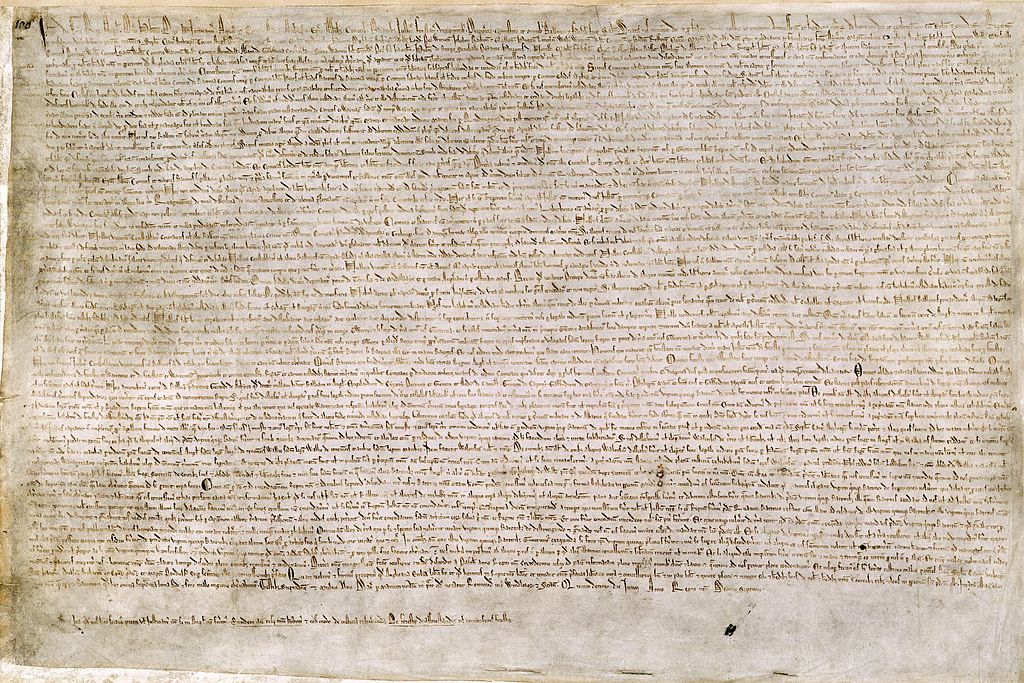
It did not stop John from looking further afield, nevertheless, for a more favourable marriage alliance. Nor did it stop Alexander from siding with the Barons against King John; Alexander was one of the Magna Carta signatories. John refused a proposal from King Philip II of France, for his son John, and settled in 1214 for a marriage with his old enemies the de Lusignan’s.

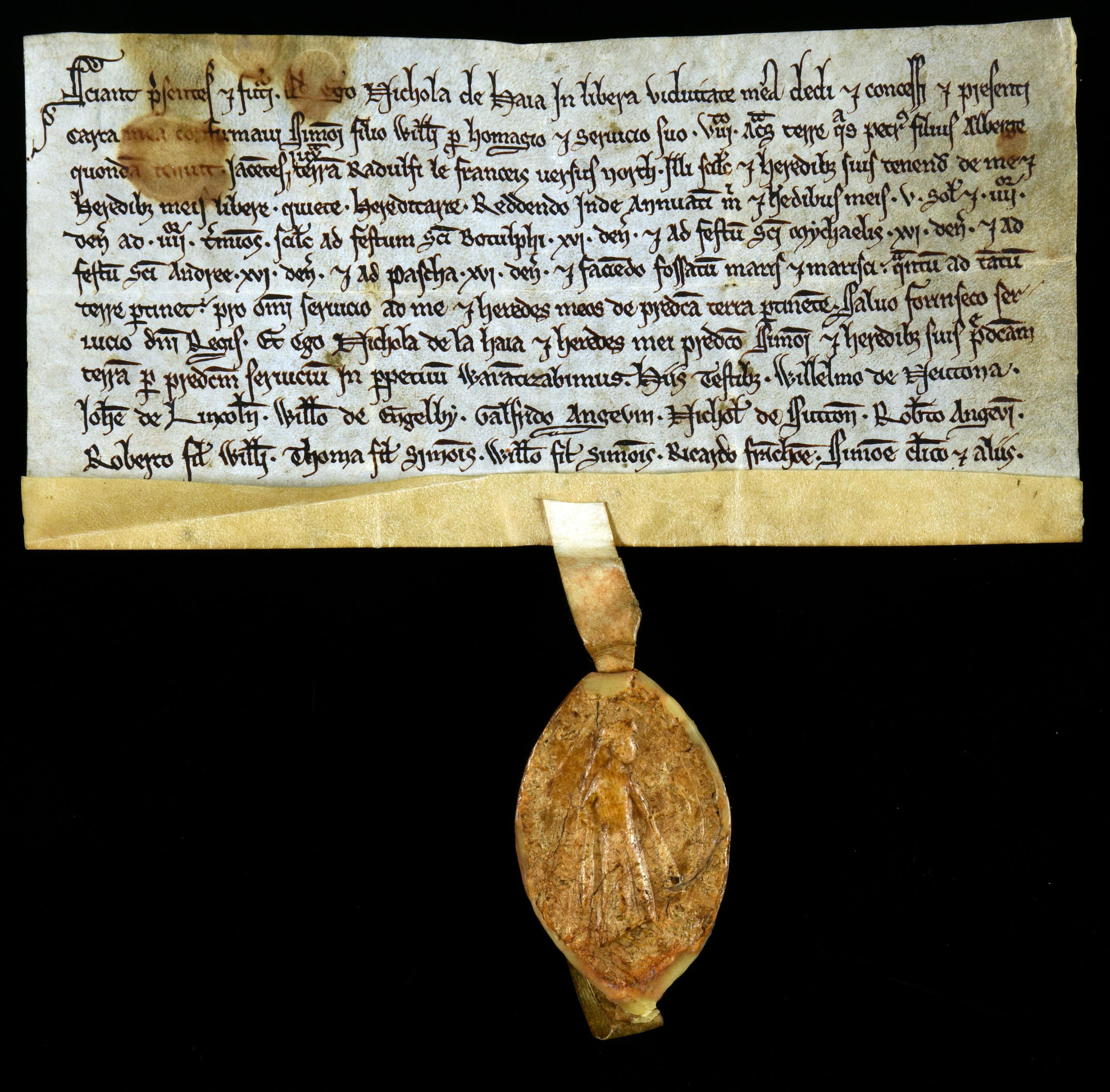
In 1214 Joan was betrothed to Hugh X de Lusignan. Hugh was the son of John’s rival for the hand of Isabella in 1200; Isabella’s engagement to Hugh IX was broken off  in order for her to marry John. Following the betrothal Hugh, Lord of Lusignan and Count of La Marche, was given custody of Joan and of Saintes, Saintonge and the Isle of Oléron as pledges for her dowry. Joan was just 4 years old when she travelled to the south of France to live with her future husband’s family. She was away from England at the height of the Baron’s War, and at her father’s death in October 1216.

It’s possible she was reunited with her mother in 1217 when Isabella of Angoulême left England, abandoning her four other children, in order to govern her own lands in Angoulême.

In 1220 in a scandalous about-face Hugh repudiated Joan and married her mother, his father’s former betrothed. And poor 9-year-old Joan’s erstwhile future husband was now her step-father!
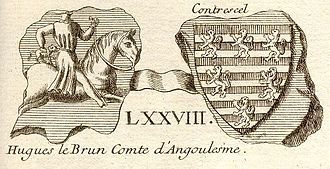
330px-Hugues_le_Brun
Hugh X de Lusignan, Joan’s betrothed and step-father

And worse was to come…

Instead of being sent back to England, as you would expect, Joan went from being Hugh’s betrothed – to being his prisoner. She was held hostage to ensure Hugh’s continued control of her dower lands, and to guarantee the transfer of his new wife’s dower, while England was withholding Queen Isabella’s dower against the return of Joan’s dower lands.

Negotiations to resolve the situation were ongoing. In the mean time, Henry III was already looking to arrange a new marriage for Joan. On 15th June 1220, in York, a conference between Alexander II and Henry III saw the Scots king agree to marry Joan, with a provision that he would marry Joan’s younger sister, Isabella, if Joan was not returned to England in time.

Negotiations for Joan’s return were long and difficult and not helped by the fact Hugh was threatening war in Poitou. Eventually, after Papal intervention, agreement was reached in October 1220 and Joan was surrendered to the English.

Joan and Alexander II were married on the 19th June 1221, at York Minster. Joan was just a month from her 11th birthday, while Alexander was 22. The archbishop of York performed the ceremony, which was witnessed Henry III and the great magnates of both realms. Henry III’s Pipe Rolls suggest the wedding was followed by 3 days of celebrations, costing £100. According to the Chronicle of Melrose ‘having celebrated the nuptials most splendidly, as was befitting, with all the natives of either realm rejoicing, [Alexander] conducted [Joan] to Scotland.’
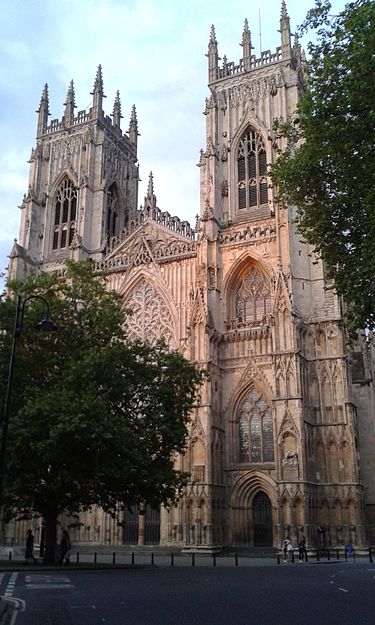
York.mstr.
York Minster

The day before the wedding Alexander had assigned dower estates to Joan, worth an annual income of £1,000, including Jedburgh, Crail and Kinghorn. However, part of the dower was still held by Alexander’s mother, the dowager Queen Ermengarde, and Joan was not entitled to the income until after her mother-in-law’s death. This left Joan financially dependent on Alexander from the beginning.

There is a suggestion that Joan was not enamoured with Scotland and its society. She was hampered by her youth, her domineering mother-in-law and, eventually, by the fact she failed  to produce the desired heir. Her position was further hindered by tensions between her husband and brother from time to time.

In this, though, she seems to have found her purpose. Joan regularly acted as intermediary between the 2 kings. Alexander often used Joan’s personal letters to her brother as a way of communicating with Henry, while bypassing the formality of official correspondence between kings.

One such letter is a warning, possibly on behalf of Alexander’s constable, Alan of Galloway, of intelligence that Haakon IV of Norway was intending to aid Hugh de Lacy in Ireland. In the same letter she assured Henry that no one from Scotland would be going to Ireland to fight against Henry’s interests. Another letter, this time from Henry, was of a more personal nature, written in February 1235 it informed Joan of the marriage of their “beloved sister” Isabella to the holy Roman Emperor Frederick II, news at which he knew Joan “would greatly rejoice”.

In December 1235 Alexander and Joan were summoned to London, possibly for the coronation of Henry’s new queen, Eleanor of Provence. This would have been a long and arduous journey for the Scots monarchs, especially in the deepest part of winter.

Henry’s use of Joan as an intermediary suggests she did have some influence over her husband, this theory is supported by the fact that Joan accompanied Alexander to negotiations with the English king, at Newcastle in September 1236 and again at York in September 1237.

In 1234 Henry had granted Joan the manor of Fenstanton in Huntingdonshire and during the 1236 negotiations she was granted Driffield in Yorkshire, giving Joan an income independent of Scotland. Many have seen this as an indication that Joan was intending to spend more time in England, especially seeing as the chronicler Matthew Paris hints at an estrangement, although we cannot be certain.
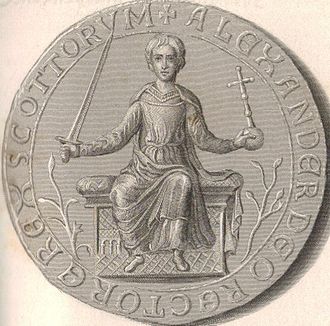
330px-Alexander_II_(Alba)_i
Alexander II

The 1236 and 1237 councils were attempts at resolving the ongoing claims of Alexander that King John had agreed to gift Northumberland to Alexander as part of the marriage contract between Alexander and Joan. Henry, of course, denied this. With the mediation of a papal legate, agreement was eventually reached in York at the 1237 council, with both queens present, when Alexander gave up the claim to Northumberland in return for lands in the northern counties with an annual income of £200.

Following the 1237 council Joan and her sister-in-law Eleanor of Provence departed on pilgrimage to the shrine of Thomas Becket at Canterbury. Given that Joan was now 27 and Eleanor already married for two years, it is possible both women were praying for children, and an heir.

Joan stayed in England for the rest of the year; much of the stay seems to have been informal and pleasurable. She spent Christmas at Henry’s court and was given new robes for herself, her clerks and servants, in addition to gifts of does and wine. Her widowed sister Eleanor, Countess of Pembroke, was present, along with the Countess of Chester and Joan’s cousin, the captive Eleanor of Brittany.

In late January arrangements were being made for Joan’s return to Scotland, but she fell ill before she could travel north. Still only 27 years of age Joan died on 4th March 1238 at Havering-atte-Bower in Essex, her brothers, King Henry III and Richard, Earl of Cornwall, were at her side.
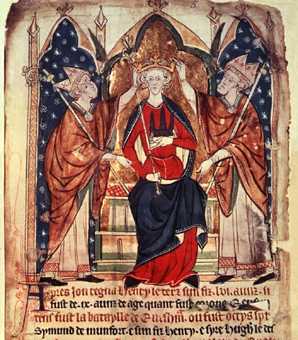
HenryIII
Henry III

According to Matthew Paris ‘her death was grievous, however she merited less mourning, because she refused to return [to Scotland] although often summoned back by her husband’. And even in death Joan elected to stay in England. her will requested that she be buried at the Cistercian nunnery of Tarrant in Dorset.

The convent benefited greatly from Henry III’s almsgiving for the soul of his sister; in 1252, over 13 years after her death, the king ordered a marble effigy to be made for her tomb (which unfortunately has not survived).

Talking of her wedding day, the Chronicle of Lanercost had described Joan as ‘a girl still of a young age, but when she was an adult of comely beauty.’

Alexander II married again just over a year after Joan’s death, to Marie de Coucy and their son, Alexander III, the longed-for heir, was born in 1241. Alexander II died of a fever in 1249.

*

Images courtesy of Wikipedia

*

Sources: The Oxford Companion to British History Edited by John Cannon; The Plantagenets, the Kings who Made England by Dan Jones; History Today Companion to British History Edited by Juliet Gardiner and Neil Wenborn;  Brewer’s British Royalty by David Williamson; Britain’s Royal Families, the Complete Genealogy by Alison Weir; The Plantagenet Chronicles Edited by Elizabeth Hallam; The Mammoth Book of British Kings and Queens by Mike Ashley; The Plantagenets, the Kings that made Britain by Derek Wilson; England Under the Norman and Angevin Kings  by Robert Bartlett; http://www.britannica.com; oxforddnb.com; finerollshenry3.org.uk.

*

My Books

Signed, dedicated copies of all my books are available through my online bookshop.

Coming 30 January 2025: Scotland’s Medieval Queens
Scotland’s history is dramatic, violent and bloody. Being England’s northern neighbour has never been easy. Scotland’s queens have had to deal with war, murder, imprisonment, political rivalries and open betrayal. They have loved and lost, raised kings and queens, ruled and died for Scotland. From St Margaret, who became one of the patron saints of Scotland, to Elizabeth de Burgh and the dramatic story of the Scottish Wars of Independence, to the love story and tragedy of Joan Beaufort, to Margaret of Denmark and the dawn of the Renaissance, Scotland’s Medieval Queens have seen it all. This is the story of Scotland through their eyes.

Available for pre-order now.

Also by Sharon Bennett Connolly:
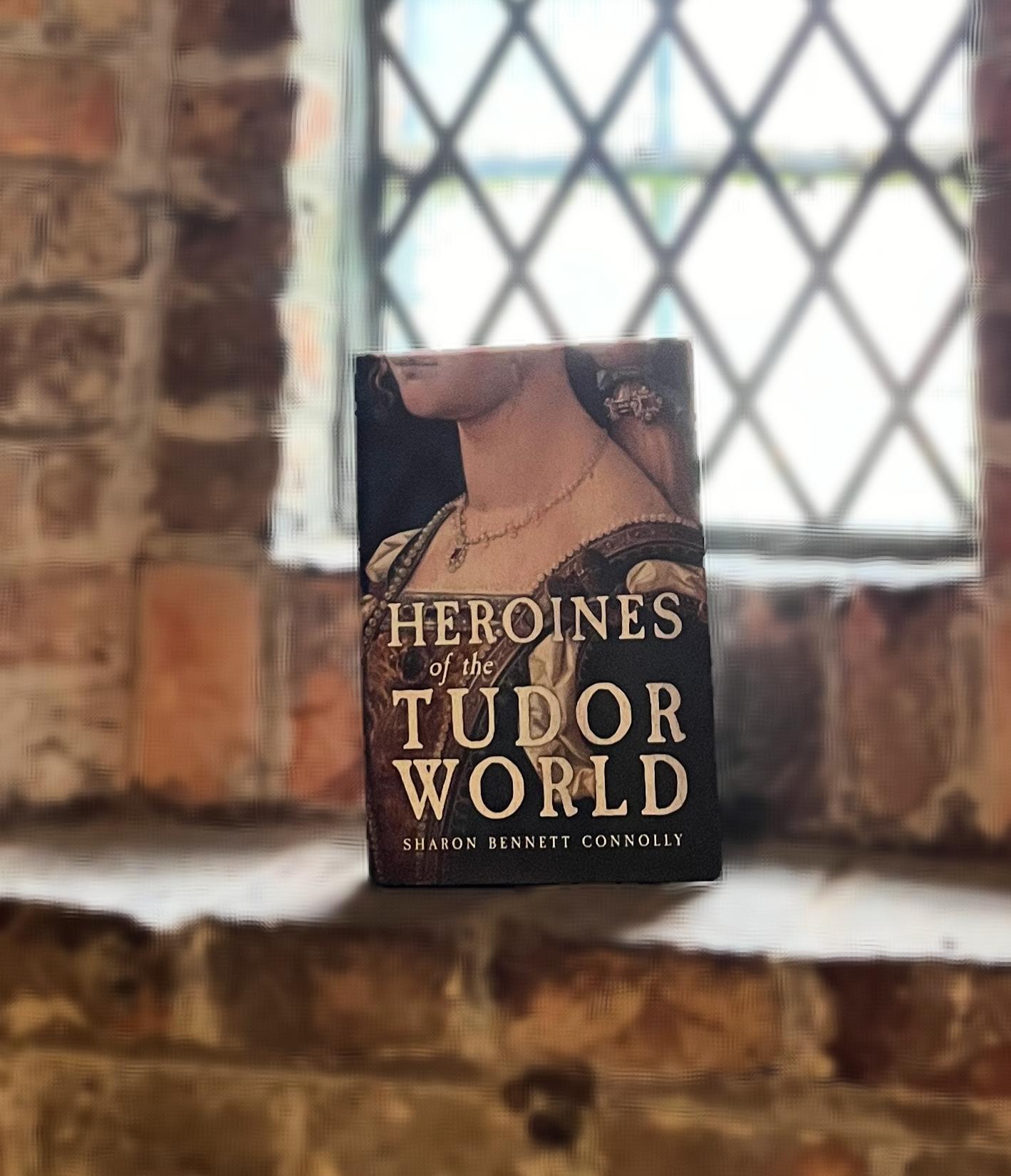
Heroines of the Tudor World tells the stories of the most remarkable women from European history in the time of the Tudor dynasty, 1485-1603. These are the women who ruled, the women who founded dynasties, the women who fought for religious freedom, their families and love. Heroines of the Tudor World is now available for pre-order from Amberley Publishing and Amazon UK. Women of the Anarchy demonstrates how Empress Matilda and Matilda of Boulogne, unable to wield a sword themselves, were prime movers in this time of conflict and lawlessness. It shows how their strengths, weaknesses, and personal ambitions swung the fortunes of war one way – and then the other. Available from Bookshop.orgAmberley Publishing and Amazon UKKing John’s Right-Hand Lady: The Story of Nicholaa de la Haye is the story of a truly remarkable lady, the hereditary constable of Lincoln Castle and the first woman in England to be appointed sheriff in her own right. Available from all good bookshops Pen & Sword Booksbookshop.org and Amazon

Defenders of the Norman Crown: The Rise and Fall of the Warenne Earls of Surrey tells the fascinating story of the Warenne dynasty, from its origins in Normandy, through the Conquest, Magna Carta, the wars and marriages that led to its ultimate demise in the reign of Edward III. Available from Pen & Sword BooksAmazon in the UK and US, and Bookshop.orgLadies of Magna Carta: Women of Influence in Thirteenth Century England looks into the relationships of the various noble families of the 13th century, and how they were affected by the Barons’ Wars, Magna Carta and its aftermath; the bonds that were formed and those that were broken. It is now available in paperback and hardback from Pen & SwordAmazon, and Bookshop.orgHeroines of the Medieval World tells the stories of some of the most remarkable women from Medieval history, from Eleanor of Aquitaine to Julian of Norwich. Available now from Amberley Publishing and Amazon, and Bookshop.orgSilk and the Sword: The Women of the Norman Conquest traces the fortunes of the women who had a significant role to play in the momentous events of 1066. Available now from Amazon,  Amberley Publishing, and Bookshop.org.

Alternate Endings: An anthology of historical fiction short stories including Long Live the King… which is my take what might have happened had King John not died in October 1216. Available in paperback and kindle from Amazon.

Podcast:

Have a listen to the A Slice of Medieval podcast, which I co-host with Historical fiction novelist Derek Birks. Derek and I welcome guests, such as Bernard Cornwell and Michael Jecks, and discuss a wide range of topics in medieval history, from significant events to the personalities involved. Every episode is also now available on YouTube.

*

Don’t forget! Signed and dedicated copies of all my books are available through my online bookshop.

For forthcoming online and in-person talks, please check out my Events Page.

You can be the first to read new articles by clicking the ‘Follow’ button, liking our Facebook page or joining me on TwitterThreadsBluesky and Instagram.

*

©2015 Sharon Bennett Connolly FRHistS
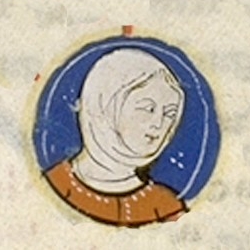
Adela of Normandy – Daughter of the Conqueror

Adela
Adela of Normandy, Countess of Blois and Chartres

Adela of Normandy was the daughter of William the Conqueror, Duke of Normandy and King of England,  and his wife, Matilda of Flanders.

Although most sources give her date of birth around 1061/2, the Oxford Database of National Biography argues that her birth was after the Norman Conquest, as contemporary poetry suggests she was born the daughter of a king, rather than a duke.

Adela was one of nine or ten children born to William and Matilda, with at least four sisters and four brothers, although only three of her brothers survived to adulthood. Given her high level of literacy, and her patronage of poets in adulthood, it is likely that Adela was very well-educated as a child; either through tutors or possibly through residence in a convent, as happened with many daughters of the nobility at that time.

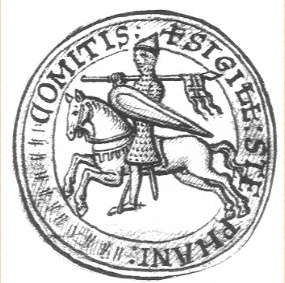
As a child, it seems, a marriage was arranged between Adela and Simon Crispin, count of Amiens; however, the groom chose to take monastic vows and an alternative marriage had to be found. As part of an alliance directed against the aggressive counts of Anjou, Adela was then  betrothed to Stephen of Blois, son of Count Theobald III, count of Blois and Champagne. Stephen was about 20 years older than his bride. The formal betrothal took place at Bourgueil and was later followed by a lavish wedding ceremony in Chartres Cathedral in about 1081.

StepanBlois_1089
Stephen, Count of Blois and Chartres

Adela and Stephen would have up to eleven children in all, with at least two sons born before Stephen succeeded his father as Count of Blois and Champagne in 1090.

Of their five daughters, Matilda married Richard d’Avranches, 2nd Earl of Chester. Tragically, he couple drowned in the White Ship disaster which deprived Henry I of his son and heir, William. Another daughter, Eleanor, married Raoul, Count of Vermandois. He was the brother of Isabelle de Vermandois, Countess of Leicester and Surrey.

Adela’s eldest surviving son seems to have been disinherited at an early age. However, while he is described as an ‘idiot’ by some, William was married to Agnes, the daughter of Giles, Lord of Sulli, and was given the titles Count of Chartres and Lord of Sulli, but was not allowed to inherit the richer county of Blois; which went to his younger brother, Theobald.

Poetry from the time of her wedding describes Adela as valorous, learned and generous. Indeed, she seems to have been a great asset to her husband, who included her in charitable donations and even in his early judicial rulings. Adela developed a cordial relationship with Bishop Ivo of Chartres, which worked well to maintain the peace between the laity and the clergy in the county.

In 1095 Stephen of Blois joined the First Crusade, leaving Adela as head of the family and regent of his domains.  Letters that the count sent to his wife indicate a great level of affection and trust; Adela was given charge of the family’s finances. However, Stephen’s return from crusade appears of have been less than happy. Adela  believed that he had not fulfilled his crusader’s vow and her criticism may have been a contributing factor in his return to the Holy Land in 1101 – she certainly approved of it.

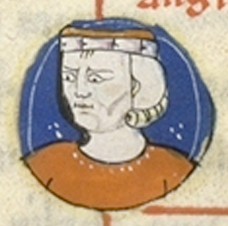
Theobald
Theobald IV, Count of Blois and Champagne

Stephen was killed in combat in the Holy Land, during the siege of Ramallah in May 1102. He was succeeded as Count of Blois by his 2nd surviving son, Theobald. Theobald was knighted in 1107, by which point his older brother, William, had already been removed from the succession to Blois. William inherited the lesser title of Count of Chartres.

Following Stephen’s death Adela continued to act as regent until Theobald attained his majority. Even after Theobald came of age, mother and son ruled jointly until Adela retired from public life in 1120.

Adela was particularly close to her younger brother, Henry, who would later become King Henry I of England. She even supported him against their oldest brother, Robert, when Henry claimed the English crown.

An able administrator and negotiator, Adela settled many disputes among monasteries, and even between monasteries and laymen, in her own domains and beyond. Anselm, archbishop of Canterbury during the reign of William II and Henry I, praised her skills as negotiator and peacemaker following her success at achieving a temporary truce between Anselm and her brother in 1105.

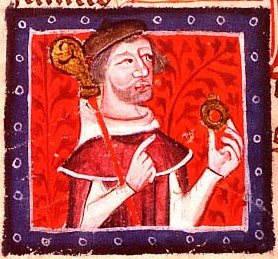
HenryBlois
Henry of Blois, Bishop of Winchester

Anselm described her as an ardent supporter of papal reform, and enjoyed her hospitality during his exile from England. Adela hosted many other church dignitaries, including archbishop Thurstan of York and Pope Paschal II. Her family’s prestige and power was bolstered by her friendships with the leading ecclesiastic figures in both France and England.

An avid  patroness of the arts, Adela corresponded with such dignitaries as Hildebert, bishop of Le Mans and Abbot Baudri of Bourgeuil – later bishop of Dol – who both wrote poems dedicated to the countess. The book Ecclesiastical History Together with the Deeds of the Romans and the Franks, written by Hugh of Fleury, was dedicated to Adela.

One of Adela’s youngest sons, Henry of Winchester, was dedicated to the church at an early age, and was raised at the Priory of Cluny in France. He was nominated as Bishop of Winchester in 1129 and was a great support to his older brother, Stephen, when he claimed the throne of England on his uncle Henry’s death in 1135, at the expense of Henry’s daughter, Matilda

An active ruler Adela regularly toured the family’s domains, both as regent and mother of the reigning count. She also maintained links with the Anglo-Norman and Capetian kings. In 1101 Adela sent knights to help Philip I of France’s son, Louis, battling against rebels north of Paris.

Stepan_Blois
King Stephen

However, by 1107 her son Theobald had joined the revolt and relations with France were to deteriorate further in 1113 when the allied forces of Theobald, Henry I and Adela defeated a Capetian-Angevin army. After further conflict in 1118 Adela used her wealth and diplomatic skills to benefit her family.

In 1120 Adela stopped using the title of countess and retired to the Clunaic Priory of Marcigny;  the same year that her daughter Matilda died in the White Ship disaster off Barfleur in Normandy. She continued to be active in political affairs and lived to see her son, Stephen, claim the throne of England, though not the 20 years of conflict that ensued.

Aged almost 70, and having been a widow for half of her life, this most remarkable woman, Adela of Normandy, former Countess of Blois and Chartres, died in 1137, possibly on 8th March. Although later tradition has her buried with her mother at Holy Trinity in Caen, contemporary sources say she was buried at Marcigny.

*

Pictures courtesy of Wikipedia

*

Sources: England Under the Norman and Angevin Kings  by Robert Bartlett; Heroines of the Medieval World by Sharon Bennett Connolly; Silk and the Sword: The Women of the Norman Conquest by Sharon Bennett Connolly;  Brewer’s British Royalty by David Williamson; Britain’s Royal Families, the Complete Genealogy by Alison Weir; The Mammoth Book of British Kings and Queens by Mike Ashley; oxforddnb.com;  epistolae.ccnmtl.columbia.edu; womenshistory.about.com.

*

My Books

Signed, dedicated copies of all my books are available through my online bookshop.

Out now: Scotland’s Medieval Queens

Scotland’s history is dramatic, violent and bloody. Being England’s northern neighbour has never been easy. Scotland’s queens have had to deal with war, murder, imprisonment, political rivalries and open betrayal. They have loved and lost, raised kings and queens, ruled and died for Scotland. From St Margaret, who became one of the patron saints of Scotland, to Elizabeth de Burgh and the dramatic story of the Scottish Wars of Independence, to the love story and tragedy of Joan Beaufort, to Margaret of Denmark and the dawn of the Renaissance, Scotland’s Medieval Queens have seen it all. This is the story of Scotland through their eyes.

Available now from Amazon and Pen and Sword Books

Also by Sharon Bennett Connolly:

Heroines of the Tudor World tells the stories of the most remarkable women from European history in the time of the Tudor dynasty, 1485-1603. These are the women who ruled, the women who founded dynasties, the women who fought for religious freedom, their families and love. Heroines of the Tudor World is now available for pre-order from Amberley Publishing and Amazon UK. Women of the Anarchy demonstrates how Empress Matilda and Matilda of Boulogne, unable to wield a sword themselves, were prime movers in this time of conflict and lawlessness. It shows how their strengths, weaknesses, and personal ambitions swung the fortunes of war one way – and then the other. Available from Bookshop.orgAmberley Publishing and Amazon UKKing John’s Right-Hand Lady: The Story of Nicholaa de la Haye is the story of a truly remarkable lady, the hereditary constable of Lincoln Castle and the first woman in England to be appointed sheriff in her own right. Available from all good bookshops Pen & Sword Booksbookshop.org and Amazon

Defenders of the Norman Crown: The Rise and Fall of the Warenne Earls of Surrey tells the fascinating story of the Warenne dynasty, from its origins in Normandy, through the Conquest, Magna Carta, the wars and marriages that led to its ultimate demise in the reign of Edward III. Available from Pen & Sword BooksAmazon in the UK and US, and Bookshop.orgLadies of Magna Carta: Women of Influence in Thirteenth Century England looks into the relationships of the various noble families of the 13th century, and how they were affected by the Barons’ Wars, Magna Carta and its aftermath; the bonds that were formed and those that were broken. It is now available in paperback and hardback from Pen & SwordAmazon, and Bookshop.orgHeroines of the Medieval World tells the stories of some of the most remarkable women from Medieval history, from Eleanor of Aquitaine to Julian of Norwich. Available now from Amberley Publishing and Amazon, and Bookshop.orgSilk and the Sword: The Women of the Norman Conquest traces the fortunes of the women who had a significant role to play in the momentous events of 1066. Available now from Amazon,  Amberley Publishing, and Bookshop.org.

Alternate Endings: An anthology of historical fiction short stories including Long Live the King… which is my take what might have happened had King John not died in October 1216. Available in paperback and kindle from Amazon.

Podcast:

Have a listen to the A Slice of Medieval podcast, which I co-host with Historical fiction novelist Derek Birks. Derek and I welcome guests, such as Bernard Cornwell and Michael Jecks, and discuss a wide range of topics in medieval history, from significant events to the personalities involved. Every episode is also now available on YouTube.

*

Don’t forget! Signed and dedicated copies of all my books are available through my online bookshop.

For forthcoming online and in-person talks, please check out my Events Page.

You can be the first to read new articles by clicking the ‘Follow’ button, liking our Facebook page or joining me on Twitter and Instagram.

*

©2015 Sharon Bennett Connolly FRHistS.

Sanchia of Provence, Queen of the Romans

One of 4 sisters, all of whom became queens, Sanchia of Provence was born in Aix-en-Provence in about 1228. She was the third daughter of Raymond Berengar V, Count of Provence, and his wife Beatrice of Savoy.

Sanchie
Sanchie de Provence

Sanchia was 7 years younger than her oldest sister, Marguerite, who married Louis IX of France in 1234. Her second oldest sister, Eleanor, was 5 years her senior and married Henry III of England in 1236. Sanchia probably spent most of her childhood with Beatrice, who, as the youngest of the 4 sisters, was 3 years younger than Sanchia and didn’t marry until 1246; she would become Queen of Naples in 1266.

I could find no information on Sanchia’s childhood, beyond the fact that the sisters were all close, and remained so throughout their lives; thus helping to forge international relations through their exceptional familial bond.

The one description I could find of Sanchia was that she was ‘of incomparable beauty’.

Sanchia had originally been married, by proxy, to Raymond VII of Toulouse; however Raymond had failed to obtain an annulment of his previous marriage and the arrangement was declared void. In the mean time Richard, Earl of Cornwall and brother of Henry III of England visited Provence in 1241; he saw in Sanchia the chance to ally himself more closely with his brother’s interests, whilst at the same time strengthening his family’s position on the continent.

330px-Richard_of_Cornwall_
Richard Earl of Cornwall

Richard and Sanchia were betrothed by proxy in July 1242, following negotiations at Tarascon, led by Sanchia’s uncle, Peter of Savoy, and the Savoyard bishop of Hereford, Peter d’Aigueblanche.

Richard was the second and youngest son of King John of England and Isabella of Angoulême. Born in 1209, he was just 7 years old when his father died. A renowned soldier, Crusader, negotiator and administrator, Richard was one of the wealthiest men in Europe. He already had a son, Henry of Almain by his first wife, Isabella Marshal, daughter of the great William Marshal Earl of Pembroke. Isabella had died in childbirth in January 1240, after giving birth to a second son, who was stillborn.

In August-September 1242, following a failed campaign against Louis IX with his step-father, Hugh de Lusignan, Richard had planned to visit his future bride in Provence, before returning to England. However a falling-out with his brother, Henry III, and a fear of kidnapping forced Richard to change his plans and head straight for home, thus delaying a reunion with his bride-to-be.

Sanchia arrived in England in 1243. She and Richard were married in Westminster Abbey on 23rd November 1243. Sanchia was a girl of about 15, while Richard was 34. On his marriage, Richard confirmed in his possession of Cornwall and the honours of Wallingford and Eye. He was also given £2000 in cash by the king, and a promise of 1000 marks a year, in return for a renunciation of all claims to lands in Gascony and Ireland.

Richard’s marriage to Sanchia greatly improved his relations with the Savoyards, a powerful contingent of the queen’s relatives living in England. Following the marriage Richard served Peter of Savoy, titular earl of Richmond, as a banker and political ally.

Edmund,_2nd_Earl_of_Cornwall
Edmund, 2nd Earl of Cornwall

Richard and Sanchia had only 2 children. Their eldest son, Richard, was born at Wallingford in July 1246 and died there the following month; the little baby was buried at Grove Mill. Another son, Edmund, was born at Berkhamsted on 26 December 1249 and was baptised by his mother’s uncle, Boniface of Savoy, Archbishop of Canterbury. He would be knighted at the age of 22 and married Margaret, the daughter of Richard de Clare. However, the marriage was childless and the couple officially separated in February 1294.

Edmund had departed on crusade with the king’s son and heir, Edward (the future Edward I) when he heard of the murder of his older brother, Henry of Almain (son of Richard and his 1st wife, Isabella Marshal), who was murdered in Viterbo by the sons of Simon de Montfort. Edmund returned home to his father, who died the following year, leaving Edmund as the 2nd Earl of Cornwall. With no heir to succeed him, the earldom reverted to the crown on Edmund’s death in 1300.

In 1246 Sanchia’s father, Raymond Berengar V, died, leaving Provence to the youngest of his daughters; Beatrice was the only daughter still unmarried. Several suitors now set out to ‘win’ the heiress and her mother appealed to the pope for protection. The pope and Louis IX together decided that the most appropriate husband for Beatrice was Louis’ brother, Charles of Anjou. Beatrice’s mother offered no objection; however Henry III and Richard sought – unsuccessfully – to oppose the marriage, unsurprising when you consider their wives were denied their share of their father’s inheritance.

Statue_Raimond_Bérenger_IV
Raymond Berengar V, Count of Provence

Sanchia and her sister, Eleanor, were not as cut off from their family as most royal brides of the period appear to have been. Their mother, Beatrice of Savoy, arrived in England in 1248 with her brother, Thomas, to visit both her daughters.

Sanchia also accompanied her husband on an embassy to the French court in 1250, taking the opportunity to meet with her big sister, Marguerite; and possibly her little sister Beatrice, who was by then married to Charles of Anjou. Sanchia also joined the family gathering in Chartres and Paris in 1254, when Louis IX and queen Marguerite received Henry III and queen Eleanor; Her mother Countess Beatrice and youngest sister Beatrice were also present.

Sanchia and her sister Eleanor seem to have been in close contact ever since Sanchia arrived in England. Henry III officially recognised Sanchia as a voice in family dynastic matters. In the 1253 Calendar of Patent Rolls, she is included in a grant to her uncle, Peter of Savoy:

Grant to Peter de Sabaudia that if he have an heir male of his wife, he may assign or bequeath the lordship of his lands and heir to whom he will. The king also wills that the said heir shall not be married to anyone without the consent of Queen Eleanor and Sanchia, countess of Cornwall, and the brothers of the said Peter.”

Calendar of Patent Rolls, 1253

Sanchia seem to have had some influence in pleading for others. The Patent Rolls of 1255 record her achieving a pardon for a man who received an outlaw and again, in 1256, they record her gaining a licence to a man to enclose a wood.

330px-Beatrix4
Beatrice of Savoy, Countess of Provence

Henry III had made attempts to gain his brother a crown; he had accepted the crown of Sicily, offered by the pope, on his brother’s behalf, but the enterprise to recover the kingdom from the Hohenstaufens proved beyond the king’s means. In 1256, however, another opportunity arose with the death of William of Holland, papal candidate to be Holy Roman Emperor. With the support of his brother and his considerable wealth, diplomatic skills and imperial connections, Richard set about earning his election to the Empire.

On 26 December 1256 the crown of Germany was offered to Richard by the archbishop of Cologne. with his rival, King Alfonso of Castile, too busy with troubles at home to travel to Germany to claim the crown; Richard and Sanchia, with a large entourage including their son Edmund, but only half of the electors on their side, made their way to Aachen.

Sanchia and Richard were crowned as king and queen of Germany on 17 May 1257, by the archbishop of Cologne; being styled as the king and queen of the Romans, Richard still needed papal ratification to become Holy Roman Emperor. The coronation was followed by a splendid feast for Richard’ supporters before the new king and queen departed on progress around their new kingdom. Richard held his 1st royal parliament, or diet, in Mainz in September, and another progress in the spring of 1258 was spent confirming imperial privileges and issuing charters.

However, papal confirmation of Richard’s titles were not forthcoming and in the winter of 1258/9 Richard and Sanchia returned home to an England riven by baronial rebellion. Richard acted as mediator between his brother the king and his brother-in-law, Simon de Montfort, leader of the baronial opposition.

330px-Hailes_Abbey
Hailes Abbey, final resting place of Sanchia, her husband, Richard, and son, Edmund.

The political situation was still unresolved when Sanchia died at Berkhamsted on 9th November 1261 and was buried at Hailes Abbey 6 days later; her husband was absent from her death-bed and funeral.

After Sanchia’s death a grant in the Patent Rolls of Henry III:

for the saving of the king’s soul and of Sanchia, queen of Almain [Germany], to the master and brethren of the hospital of St Katharine without the Tower London of 50s a year at the Exchequer for the maintenance of a chaplain celebrating divine service daily in the chapel of St John within the Tower for her soul”.

Although she was only about 33 at her death, Sanchia’s legacy came from the close relationship with her sisters. All 4 sisters, and their mother, took part in the negotiations which led to the 1259 Treaty of Paris, improving relations between the French and English kings.

*

Pictures courtesy of Wikipedia

*

Sources:  The Plantagenet Chronicles edited by Elizabeth Hallam;  The Story of Britain by Roy Strong; The Plantagenets, the Kings Who Made England by Dan Jones; England Under the Norman and Angevin Kings  by Robert Bartlett; oxforddnb.com;  Brewer’s British Royalty by David Williamson; epistolae.ccnmtl.columbia.edu

*

My Books

Signed, dedicated copies of all my books are available through my online store.

OUT NOW! Heroines of the Tudor World

Heroines of the Tudor World tells the stories of the most remarkable women from European history in the time of the Tudor dynasty, 1485-1603. These are the women who ruled, the women who founded dynasties, the women who fought for religious freedom, their families and love. These are the women who made a difference, who influenced countries, kings and the Reformation. In the era dominated by the Renaissance and Reformation, Heroines of the Tudor World examines the threats and challenges faced by the women of the era, and how they overcame them. From writers to regents, from nuns to queens, Heroines of the Tudor World shines the spotlight on the women helped to shape Early Modern Europe.

Heroines of the Tudor World is now available for pre-order from Amberley Publishing and Amazon UK.

Coming 30 January 2025: Scotland’s Medieval Queens

Scotland’s history is dramatic, violent and bloody. Being England’s northern neighbour has never been easy. Scotland’s queens have had to deal with war, murder, imprisonment, political rivalries and open betrayal. They have loved and lost, raised kings and queens, ruled and died for Scotland. From St Margaret, who became one of the patron saints of Scotland, to Elizabeth de Burgh and the dramatic story of the Scottish Wars of Independence, to the love story and tragedy of Joan Beaufort, to Margaret of Denmark and the dawn of the Renaissance, Scotland’s Medieval Queens have seen it all. This is the story of Scotland through their eyes.

Available for pre-order now.

Also by Sharon Bennett Connolly:

Women of the Anarchy demonstrates how Empress Matilda and Matilda of Boulogne, unable to wield a sword themselves, were prime movers in this time of conflict and lawlessness. It shows how their strengths, weaknesses, and personal ambitions swung the fortunes of war one way – and then the other. Available from Bookshop.orgAmberley Publishing and Amazon UKKing John’s Right-Hand Lady: The Story of Nicholaa de la Haye is the story of a truly remarkable lady, the hereditary constable of Lincoln Castle and the first woman in England to be appointed sheriff in her own right. Available from all good bookshops Pen & Sword Booksbookshop.org and AmazonDefenders of the Norman Crown: The Rise and Fall of the Warenne Earls of Surrey tells the fascinating story of the Warenne dynasty, from its origins in Normandy, through the Conquest, Magna Carta, the wars and marriages that led to its ultimate demise in the reign of Edward III. Available from Pen & Sword BooksAmazon in the UK and US, and Bookshop.org

Ladies of Magna Carta: Women of Influence in Thirteenth Century England looks into the relationships of the various noble families of the 13th century, and how they were affected by the Barons’ Wars, Magna Carta and its aftermath; the bonds that were formed and those that were broken. It is now available in paperback and hardback from Pen & SwordAmazon, and Bookshop.orgHeroines of the Medieval World tells the stories of some of the most remarkable women from Medieval history, from Eleanor of Aquitaine to Julian of Norwich. Available now from Amberley Publishing and Amazon, and Bookshop.orgSilk and the Sword: The Women of the Norman Conquest traces the fortunes of the women who had a significant role to play in the momentous events of 1066. Available now from Amazon,  Amberley Publishing, and Bookshop.org.

Alternate Endings: An anthology of historical fiction short stories including Long Live the King… which is my take what might have happened had King John not died in October 1216. Available in paperback and kindle from Amazon.

Podcast:

Have a listen to the A Slice of Medieval podcast, which I co-host with Historical fiction novelist Derek Birks. Derek and I welcome guests, such as Bernard Cornwell, and discuss a wide range of topics in medieval history, from significant events to the personalities involved.

*

Don’t forget! Signed and dedicated copies of all my books are available through my online bookshop.

For forthcoming online and in-person talks, please check out my Events Page.

You can be the first to read new articles by clicking the ‘Follow’ button, liking our Facebook page or joining me on Twitter and Instagram.

©2015 Sharon Bennett Connolly FRHistS
For the Sake of a Crown – the Marriage of John of Gaunt and Constance of Castile

Constança_de_Castela,_Duquesa_de_Lencastre_-_The_Portuguese_Genealogy_(Genealogia_dos_Reis_de_Portugal)
Constance of Castile

Constance of Castile was born in 1354 at Castro Kerez, Castile. Her father was Peter, or Pedro, king of Castile. Although he had earned himself the nickname of Peter the Cruel, he was also known as Peter the Just, depending on whether you were talking to his enemies, or his friends. In 1353 18-year-old Peter had married, in a secret ceremony, Maria de Padilla, who would bear him 4 children; of which Constance was the second oldest.

In the summer of the same year, a couple of months shy of his 19th birthday, on 3rd June, Peter had been practically coerced into marriage with 14-year-old Blanche de Bourbon, by his mother, Maria of Portugal, and his counsellors. Blanche was the daughter of Peter I, Duke of Bourbon, and Isabella de Valois; through her mother, Blanche was a cousin of the king of France. As a consequence of the marriage, Peter was forced to deny that a marriage ceremony with Maria ever took place. However, almost immediately after the wedding, Peter deserted his new bride and returned to Maria.

Blanche was imprisoned in the castle of Arevalo. Her cousin, Jean II, King of France, called for her release and asked the pope to excommunicate Peter for imprisoning her. The pope, Innocent VI, refused. Blanche was eventually moved to the town of Medina Sidonia, far remote from any possible rescue by Peter’s enemies from Aragon or France. It was at Medina Sidonia that Blanche died in 1361, though whether by murder or from natural causes is disputed (but that is a story for another time…).

Peter was married again, in 1354, to Juana de Castro, with whom he had a son, John. Despite the marriage, his relationship with Maria de Padilla endured. Peter and Maria were together until Maria’s death in 1361, probably from plague, and they had 3 daughters and a son. Although their son died young, their 3 daughters grew to adulthood. The eldest, Beatrice, entered the Abbey of Santa Clara at Tordesillas and so it would be Constance who eventually became her father’s heir.

Little is known of Constance’s childhood. She was around 7 when her mother died, her sister Isabella was a year younger and their baby brother, Alfonso was about 2. Alfonso would die in 1362.

170px-Estatua_de_Pedro_I_el_Cruel_(M.A.N.)_01
King Peter of Castile

Peter of Castile was engaged in constant wars with Aragon from 1356 to 1366, followed by the 1366 Castilian Civil War which saw him dethroned by his illegitimate half-brother, Henry of Trastamara.

Peter turned to his neighbours for help. He fled over the Pyrenees, to Aquitaine and England’s Prince of Wales, Edward the Black Prince. Peter brought his 2 daughters with him. The Black Prince agreed to mount an expedition to restore Peter to his throne, and would take his brother, John of Gaunt, along with him.

Constance and Isabella were handed over to the English as collateral against thee repayment of the costs of the expedition; a staggering £176,000 that Peter could never hope to repay.

In 1367 the Black Prince and John of Gaunt led an army across the Pyrenees, defeating Henry of Trastamara at the Battle of Najera, despite his being backed by the French. Trastamara fled Castile and Peter was restored to his throne, but could not repay the costs of the expedition. Unable to pay his army, and with his health in decline, the Black Prince left Spain for Aquitaine.

Peter was eventually murdered by Henry of Trastamara in March 1369; Henry usurped the throne as King Henry II, ignoring the rights of his niece Constance, who became ‘de jure’ Queen of Castile on 13th March 1369. However, Constance and her sister remained in English hands.

200px-Dukeoflancaster
The surrender of Santiago de Compostela to John of Gaunt, Constance of Castile is the lady on horseback

John of Gaunt’s wife of almost 10 years, Blanche Duchess of Lancaster, had died at Tutbury on 12th September, 1368, more likely from the complications of childbirth than from the plague. Shortly after John started a liaison with a woman who would be his mistress for the next 25 years, Katherine Swynford.

However, John of Gaunt was not done with his dynastic ambitions and saw in Constance of Castile the chance to gain his own crown. John and Constance were married, probably at Rocquefort, in Guyenne on 21st September 1371.

From 1372 John assumed the title King of Castile and Leon, by right of his wife. Crowds lined the streets when, as Queen of Castile, Constance was given a ceremonial entry into London in February 1372. Her brother-in-law, the Black Prince, escorted her through the city to be formally welcomed by her husband at his residence of the Savoy Palace.

Constance’s sister, Isabella, came with her, and would marry Constance’s brother-in-law Edmund of Langley, 5th son of Edward III, in July 1372.

Little is known of Constance’s relationship with her husband’s mistress, Katherine Swynford; except for an incident in June 1381. Amid the turmoil of the Peasant’s Revolt, John is said to have given up his mistress and reconciled with his wife, suggesting their relationship wasn’t all smooth. Katherine returned to  her manor in Lincolnshire where, it seems, John visited her from time to time.

200px-Johnofgaunt
John of Gaunt

Constance was made a Lady of the Garter in 1378. Constance and John, King and Queen of Castile and Duke and Duchess of Lancaster, had 2 children. A son, John, was born in 1374 at Ghent in Flanders, but died the following year. Their daughter Catherine, or Catalina,  of Lancaster was born at Hertford Castle, sometime between June 1372 and March 1373. She would be made a Lady of the Garter in 1384.

John had several plans to recover his wife’s Castilian crown, but suffered from a lack of finances. Until 1386 when John I of Castile, son of Henry of Trastamara, attempted to claim the crown of Portugal. John of Avis, King of Portugal, turned to John of Gaunt for help. John saw this as his opportunity to overthrow John of Castile and claim the crown.

Having  landed in Galicia, however, John was unable to bring the Castilians to battle and his army succumbed to sickness. The opposing forces eventually agreed the Treaty of Bayonne, where in return for a substantial sum, John of Gaunt abandoned his claim to Castile. The treaty also saw a marriage alliance, between John of Castile’s son, Henry and Constance and John’s daughter, Catherine.

Catalina-de-Lancaster
Catherine of Lancaster

Catherine married Henry III of Castile in September 1388 at the Church if St Antolin, Fuentarrabia, Castile. Catherine therefore sat on the throne denied her mother. Catherine would have 3 children; 2 daughters, Katherine and Mary, and a son. Catherine and Henry’s son, John II, would succeed his father just a few months after his birth, with Catherine having some limited say in the Regency, and custody of her son until he was around 10. She died on the 2nd June 1418 and is buried in Toledo, Spain. Her great-granddaughter, Catherine of Aragon, would marry Henry VIII of England.

Constance and John returned to England in 1389. Constance of Castile died on the 24th March 1394 at Leicester Castle and was buried at Newark Abbey in Leicester, far away from her Castilian homeland. Just two years later her widower would marry his long-time mistress, Katherine Swynford. When he died in 1399, however, John of Gaunt chose to be buried beside his first wife, Blanche of Lancaster.

It is hard to imagine that Constance was happy with her husband’s living arrangements, a belief highlighted by the 1381 reconciliation. It cannot have been easy, being at the centre of a love story that was not her own. John of Gaunt had offered Constance the chance to be a part of the English royal family, and to recover her crown. Although he failed in his personal ambition, John of Gaunt did manage to secure the crown for Constance’s descendants, through their daughter Catherine and grandson, John II of Castile.

*

Pictures taken from Wikipedia.

*

Sources: The Perfect King, the Life of Edward III by Ian Mortimer; The Life and Time of Edward III by Paul Johnson; The Reign of Edward III  by WM Ormrod; The Mammoth Book of British kings & Queens by Mike Ashley; Britain’s’ Royal Families, the Complete Genealogy by Alison Weir; Brewer’s British Royalty by David Williamson; The Plantagenets, the Kings Who Made Britain by Dan Jones; englishmonarchs.co.uk; The Oxford Companion to British History edited by John Cannon; Chronicles of the Age of Chivalry Edited by Elizabeth Hallam.

*

My Books

Signed, dedicated copies of all my books are available through my online store.

Out now: Scotland’s Medieval Queens

Scotland’s history is dramatic, violent and bloody. Being England’s northern neighbour has never been easy. Scotland’s queens have had to deal with war, murder, imprisonment, political rivalries and open betrayal. They have loved and lost, raised kings and queens, ruled and died for Scotland. From St Margaret, who became one of the patron saints of Scotland, to Elizabeth de Burgh and the dramatic story of the Scottish Wars of Independence, to the love story and tragedy of Joan Beaufort, to Margaret of Denmark and the dawn of the Renaissance, Scotland’s Medieval Queens have seen it all. This is the story of Scotland through their eyes.

Available now from Amazon and Pen and Sword Books

Also by Sharon Bennett Connolly:

Heroines of the Tudor World tells the stories of the most remarkable women from European history in the time of the Tudor dynasty, 1485-1603. These are the women who ruled, the women who founded dynasties, the women who fought for religious freedom, their families and love. Heroines of the Tudor World is now available for pre-order from Amberley Publishing and Amazon UK. Women of the Anarchy demonstrates how Empress Matilda and Matilda of Boulogne, unable to wield a sword themselves, were prime movers in this time of conflict and lawlessness. It shows how their strengths, weaknesses, and personal ambitions swung the fortunes of war one way – and then the other. Available from Bookshop.orgAmberley Publishing and Amazon UKKing John’s Right-Hand Lady: The Story of Nicholaa de la Haye is the story of a truly remarkable lady, the hereditary constable of Lincoln Castle and the first woman in England to be appointed sheriff in her own right. Available from all good bookshops Pen & Sword Booksbookshop.org and Amazon

Defenders of the Norman Crown: The Rise and Fall of the Warenne Earls of Surrey tells the fascinating story of the Warenne dynasty, from its origins in Normandy, through the Conquest, Magna Carta, the wars and marriages that led to its ultimate demise in the reign of Edward III. Available from Pen & Sword BooksAmazon in the UK and US, and Bookshop.orgLadies of Magna Carta: Women of Influence in Thirteenth Century England looks into the relationships of the various noble families of the 13th century, and how they were affected by the Barons’ Wars, Magna Carta and its aftermath; the bonds that were formed and those that were broken. It is now available in paperback and hardback from Pen & SwordAmazon, and Bookshop.orgHeroines of the Medieval World tells the stories of some of the most remarkable women from Medieval history, from Eleanor of Aquitaine to Julian of Norwich. Available now from Amberley Publishing and Amazon, and Bookshop.orgSilk and the Sword: The Women of the Norman Conquest traces the fortunes of the women who had a significant role to play in the momentous events of 1066. Available now from Amazon,  Amberley Publishing, and Bookshop.org.

Alternate Endings: An anthology of historical fiction short stories including Long Live the King… which is my take what might have happened had King John not died in October 1216. Available in paperback and kindle from Amazon.

Podcast:

Have a listen to the A Slice of Medieval podcast, which I co-host with Historical fiction novelist Derek Birks. Derek and I welcome guests, such as Bernard Cornwell and Michael Jecks, and discuss a wide range of topics in medieval history, from significant events to the personalities involved. Every episode is also now available on YouTube.

*

Don’t forget! Signed and dedicated copies of all my books are available through my online store.

For forthcoming online and in-person talks, please check out my Events Page.

You can be the first to read new articles by clicking the ‘Follow’ button, liking our Facebook page or joining me on TwitterThreadsBluesky and Instagram.


*

©2015 Sharon Bennett Connolly FRHistS
The Maid of Norway – The Tragic Story of Scotland’s First Queen Regnant

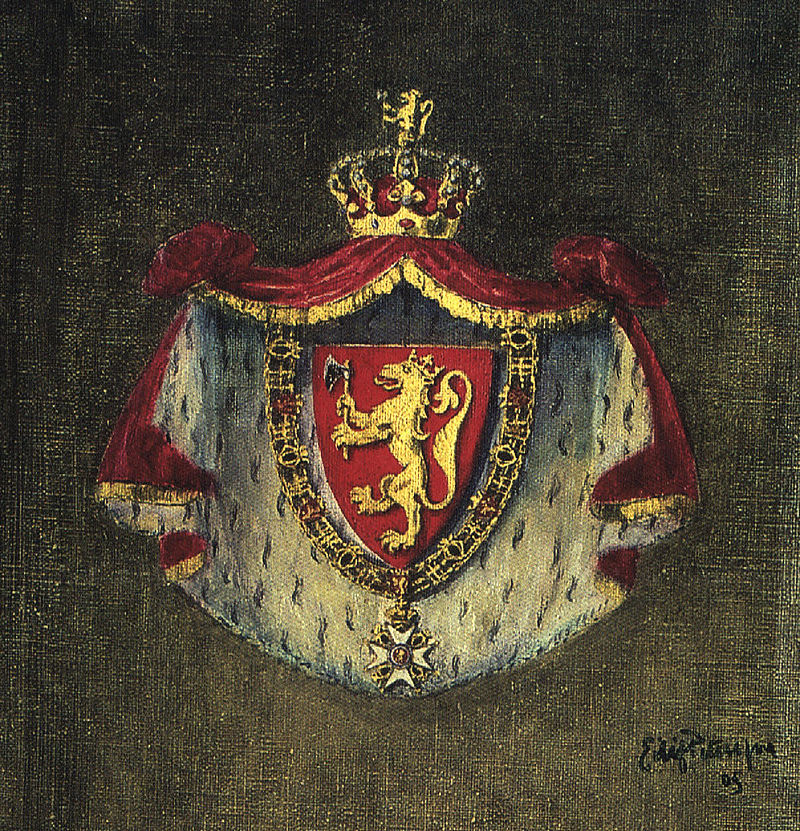
800px-Kongevåpen_1905
The coat of arms of Norway

The story of Margaret, the Maid of Norway, is short and sad. The little girl died before her 8th birthday, and before she ever set foot in the country of which she was Queen. And her death set into a motion a chain of events that would see Scotland torn apart by war for years to come.

Margaret’s claim to the Scottish throne came from her grandfather, Alexander III. Alexander had come to the throne at the age of 8 and had proved to be a very capable and strong monarch. He had married, on 26th December 1251, Margaret, the daughter of Henry III of England and Eleanor of Provence.

Margaret and Alexander had 3 children together. Their eldest daughter, Margaret, was born in February 1261 at Windsor Castle. And of their 2 sons; Alexander was born in 1264 at Jedburgh and David who was born in March 1273. However, their family was soon to face a succession of tragedies. Queen Margaret died in February 1275 at Cupar Castle. And 8-year-old David died in June 1281 at Stirling Castle.

220px-Margaret_Plantagenet,_Queen_of_Scotland
Margaret of England, Queen of Scotland

One happy event in the midst of the tragedy, was the marriage of 20-year-old Margaret of Scotland to 13-year-old Erik Magnusson around the 31st August 1281. Erik had become King Erik II of Norway the year before, with a royal council ruling for the under-age king.

Eric came of age in 1282 and the following year, on the 9th April 1283, Margaret gave birth to a daughter, another Margaret. The queen died giving birth to Margaret; at Tonsberg, Norway, and was buried in Christ’s Kirk, Bergen.

For Alexander III, even more tragedy was to follow in January 1284 when his son and heir, Alexander, died aged just 20. Alexander’s death sparked a succession crisis for Scotland’s king. He had no brothers or uncles to succeed him; his only heir was his 8-month-old granddaughter, Margaret, in Norway. In the same year Alexander obtained, from his nobles, a recognition of Margaret’s right to succeed to the throne, should he fail to produce any further heirs.

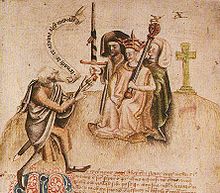
220px-Alexander_III_and_Ollamh_Rígh
The coronation of Alexander III

However, the death of his last surviving child also prompted Alexander III to look for a new wife. And on 1st November 1285, at Jedburgh Abbey, Alexander married Yolande de Dreux, daughter of Robert IV, Count of Dreux, in the hope of producing an heir.

Shortly after the marriage, on 18/19 March 1286, Alexander was on his way to visit his new bride, one night, when he got separated from his escort during a violent storm; his horse appears to have lost its footing and fallen down an embankment. The king’s body, with his neck broken, was found on the beach the next day, just a mile from where his wife was staying, at Kinghorn in Fife.

With the new queen pregnant 6 Guardians were appointed to rule the kingdom until the arrival of Alexander’s posthumous heir. However, Yolande either miscarried, or the baby was still-born and by the end of the year it was clear that Scotland had to look elsewhere for a ruler. Alexander’s only surviving heir was now 3-year-old Margaret of Norway.

Within weeks of Alexanders death Robert Bruce and John Balliol had both made attempts on the crown and the south-west was raised in rebellion. However the majority of Scots, represented by the 6 Guardians, gave their backing to Margaret, the Maid of Norway and Bruce and Balliol were forcibly held in check.

Eirik_Magnusson_(Stavanger_cathedral)
Erik II Magnusson

As early as 1284 Alexander III had, following the death of his last son, floated the idea that England and Scotland might unite through marriage. In response to a letter of condolence from his brother-in-law, Edward I, Alexander had suggested that, through his tiny granddaughter, ‘much may yet come to pass’.

The prospect at the time had not been without risk, however; should Alexander have more children, England would have been committed to a disadvantageous marriage with a Norwegian princess. But with Alexander’s death, and the queen’s child dead, Margaret’s accession seemed certain.

With the Guardians maintaining an uneasy peace between the competing claims of Margaret, Robert Bruce and John Balliol, Erik II of Norway sought the help of Edward I of England. Messengers were sent between the English and Norwegian courts and in Spring 1289 serious negotiations began.

On 6th November 1289 an international summit was held at Salisbury. The Norwegian ambassadors met with Edward and his advisers. It’s possible the Scottish Guardians had also sent representatives, but some sources say the Scots were excluded from these initial talks. The summit proved successful and it was agreed that Margaret would marry Edward of Caernarfon, Edward I’s son and heir, within the next 12 months.

For the Scottish, the marriage alliance promised an end to the years of uncertainty and to the latent threats they had been facing since 1286. For Margaret, a marriage alliance with England gave the Maid a powerful protector.

edward03
Alexander III of Scotland (left) with Edward I of England (centre) and Llewelyn, prince of Wales (right)

In March 1290 the community of Scotland, comprising over 100 Scotsmen of substance, met to ratify the marriage agreement. They wrote to Edward expressing their will to proceed with the wedding. The Guardians of Scotland, however, had sworn an oath to preserve Alexander III’s kingdom intact and undiminished for his eventual heirs, and their overriding concern now was to safeguard Scotland’s future independence.

It was agreed at Brigham that, although Edward and Margaret were not yet of marriageable age, the would be regarded as married on Margaret’s arrival from Norway – and Edward of Caernarfon would be King of Scotland from that moment. The business of Scottish government and law was to remain in Scotland and be run by a resident Viceroy or lieutenant.

There was no common ground, however, on the issue of royal fortresses: Edward I wanted to appoint all custodians as a guarantee of security but the Scots saw this as a demand for the surrender of sovereignty. In the final agreement, ratified at Northampton, the point is glossed over with an agreement that keepers would be appointed by the ‘common advice of the Scots and the English king’.

The reason Edward acquiesced on – or, rather, failed to push – the castles issue was the news that Margaret had already left Norway. Edward wanted the deal signed and sealed before the Scots’ hand was strengthened by the physical possession of their queen.

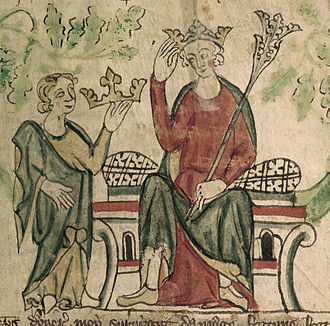
Edward_II_-_British_Library_Royal_20_A_ii_f10_(detail)
Edward of Carnarvon

In the final agreement, the Scots got a clear statement safeguarding their independence. Edward promised that Scotland should remain ‘free in itself, and without subjection from the kingdom of England’.

Margaret set sail in September 1290; accompanied by Bishop Narve of Bergen, she was bound for Leith. In preparation for the Maid’s arrival, Edward I sent gifts for his future daughter-in-law; and the magnates of Scotland began to assemble at Scone Abbey, Perth, in anticipation of the enthronement of their new queen.

However, storms drove the Maid’s ship off course and she landed at St Margaret’s Hope, South Ronaldsay, on Orkney. Scottish and English representatives rode north to Orkney to meet her. Sometime between 26 and 29 September 1290, Margaret died at Orkney, in the arms of the Bishop, supposedly from the effects of a severe bout of seasickness. She was 7 years old.

As the Scottish and English messengers returned south with news of the Maid’s death, Margaret’s body was returned to Norway. She was buried beside her mother, in the north aisle of Christ’s Kirk, in Bergen.

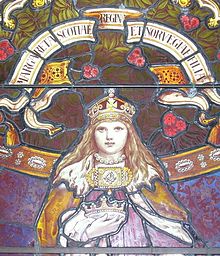
220px-Margaret,_Maid_of_Norway
Margaret, Maid of Norway, Queen of Scotland

Her father confirmed the identity of the body before her burial, an act that proved significant in 1300, a year after Erik’s death, when a woman turned up in Bergen. claiming to be Margaret. Reports say the woman appeared to be 40 years old, when Margaret would have only been 17, and she gained popular support, despite the king’s identification Margaret’s body, before finally being convicted as ‘the False Margareth’; she was burned at the stake in 1301.

The tragedy of Margaret’s death brought an end to the rule of the House of Dunkeld, begun with Malcolm III Canmore in 1058, and plunged Scotland into crisis. Edward I’s intervention with his judgement of the 13 Competitors for the crown, and his backing of John Balliol as the next King, saw the beginning of Scotland’s Wars of Independence. Marred not only be English invasion, but also the in-fighting among the Scottish nobles, it was not until Robert the Bruce emerged victorious that Scotland found her feet again.

*

Pictures taken from Wikipedia, except that of Edward I, Alexander III and Llewelyn, which was taken from castlewales.com

*

Sources: castlewales.com; Marc Morris Edward I: A Great and Terrible King; David Williamson Brewer’s British royalty; Mike Ashley The Mammoth Book of British kings & Queens; Alison Weir Britain’s Royal Families; Roy Strong The Story of Britain; Dan Jones The Plantagenets; the Kings who Made England; Chronicles of the Age of Chivalry Edited by Elizabeth Hallam; The Oxford Companion to British History edited by John Cannon; The History Today Companion to British History Edited by Juliet Gardiner and Neil Wenborn; The Plantagenets by Derek Wilson; The Story of Scotland by Nigel Tranter; royal.gov.uk; britroyals.com; undiscoveredscotland.co.uk; englishmonarchs.co.uk; educationscotland.gov.uk.

*

My Books

Signed, dedicated copies of all my books are available through my online store.

OUT NOW! Heroines of the Tudor World

Heroines of the Tudor World tells the stories of the most remarkable women from European history in the time of the Tudor dynasty, 1485-1603. These are the women who ruled, the women who founded dynasties, the women who fought for religious freedom, their families and love. These are the women who made a difference, who influenced countries, kings and the Reformation. In the era dominated by the Renaissance and Reformation, Heroines of the Tudor World examines the threats and challenges faced by the women of the era, and how they overcame them. From writers to regents, from nuns to queens, Heroines of the Tudor World shines the spotlight on the women helped to shape Early Modern Europe.

Heroines of the Tudor World is now available for pre-order from Amberley Publishing and Amazon UK.

Coming 30 January 2025: Scotland’s Medieval Queens

Scotland’s history is dramatic, violent and bloody. Being England’s northern neighbour has never been easy. Scotland’s queens have had to deal with war, murder, imprisonment, political rivalries and open betrayal. They have loved and lost, raised kings and queens, ruled and died for Scotland. From St Margaret, who became one of the patron saints of Scotland, to Elizabeth de Burgh and the dramatic story of the Scottish Wars of Independence, to the love story and tragedy of Joan Beaufort, to Margaret of Denmark and the dawn of the Renaissance, Scotland’s Medieval Queens have seen it all. This is the story of Scotland through their eyes.

Available for pre-order now.

Also by Sharon Bennett Connolly:

Women of the Anarchy demonstrates how Empress Matilda and Matilda of Boulogne, unable to wield a sword themselves, were prime movers in this time of conflict and lawlessness. It shows how their strengths, weaknesses, and personal ambitions swung the fortunes of war one way – and then the other. Available from Bookshop.orgAmberley Publishing and Amazon UKKing John’s Right-Hand Lady: The Story of Nicholaa de la Haye is the story of a truly remarkable lady, the hereditary constable of Lincoln Castle and the first woman in England to be appointed sheriff in her own right. Available from all good bookshops Pen & Sword Booksbookshop.org and AmazonDefenders of the Norman Crown: The Rise and Fall of the Warenne Earls of Surrey tells the fascinating story of the Warenne dynasty, from its origins in Normandy, through the Conquest, Magna Carta, the wars and marriages that led to its ultimate demise in the reign of Edward III. Available from Pen & Sword BooksAmazon in the UK and US, and Bookshop.org

Ladies of Magna Carta: Women of Influence in Thirteenth Century England looks into the relationships of the various noble families of the 13th century, and how they were affected by the Barons’ Wars, Magna Carta and its aftermath; the bonds that were formed and those that were broken. It is now available in paperback and hardback from Pen & Sword,  Amazon, and Bookshop.orgHeroines of the Medieval World tells the stories of some of the most remarkable women from Medieval history, from Eleanor of Aquitaine to Julian of Norwich. Available now from Amberley Publishing and Amazon, and Bookshop.orgSilk and the Sword: The Women of the Norman Conquest traces the fortunes of the women who had a significant role to play in the momentous events of 1066. Available now from Amazon,  Amberley Publishing, and Bookshop.org.

Alternate Endings: An anthology of historical fiction short stories including Long Live the King… which is my take what might have happened had King John not died in October 1216. Available in paperback and kindle from Amazon.

Podcast:

Have a listen to the A Slice of Medieval podcast, which I co-host with Historical fiction novelist Derek Birks. Derek and I welcome guests, such as Bernard Cornwell, and discuss a wide range of topics in medieval history, from significant events to the personalities involved.

*

Don’t forget! Signed and dedicated copies of all my books are available through my online bookshop.

For forthcoming online and in-person talks, please check out my Events Page.

You can be the first to read new articles by clicking the ‘Follow’ button, liking our Facebook page or joining me on TwitterThreads and Instagram.

©2015 Sharon Bennett Connolly FRHistS
Katherine Swynford, Duchess of Scandal

220px-Arms_of_Katherine_Swynford.svg
Arms of Katherine Swynford

Katherine Swynford is, arguably, the most famous – or infamous – of English ladies  to have risen so high as to become the first lady of the kingdom, without ever being queen.

Born Katherine de Roet in Hainault, now in modern-day Belgium, in around 1350, her father was Sir Paon de Roet of Guyenne. Unfortunately, as can be the way with Medieval women, I could find no mention of her mother’s identity.

Sir Paon was a Hainault knight who travelled to England with its new queen, Philippa of Hainault, as part of her retinue. As a consequence, Katherine was raised at the English court of Queen Philippa and her illustrious husband, King Edward III.

Katherine and her older sister, Philippa, were eventually given positions as ladies-in-waiting to members of the royal family. Philippa joined the household of Elizabeth de Burgh, wife of Lionel of Antwerp, where she met her future husband, the literary giant of the age, Geoffrey Chaucer.

By 1365 Katherine was serving in the household of Blanche, Duchess of Lancaster, and her husband John of Gaunt, third surviving son of Edward III and Philippa of Lancaster. Sometime before 1367 Katherine married a Lincolnshire knight, Sir Hugh Swynford of Coleby and Kettlethorpe, possibly at St Clement Danes Church on the Strand, London. They had at least 2 children, Blanche and Thomas (born May 1367 and September 1368, respectively); John of Gaunt was Blanche’s godfather. A third possible child was Margaret Swynford (born c. 1369), who was nominated as a nun at Barking. Sir Hugh was a tenant of John of Gaunt’s and accompanied him to Europe in 1366 and 1370.

200px-Johnofgaunt
John of Gaunt

In 1368 in order to avoid the plague, Blanche is said to have moved her family to Bolingbroke in the Lincolnshire countryside. By the end of summer, she was at Tutbury, where she died in childbirth in September, the same year. However, rather than leaving the household on Blanche’s death, Katherine was appointed governess to the 2 daughters of Gaunt and the late Duchess, Philippa and Elizabeth.

Katherine’s husband, Sir Hugh, died in 1371 and shortly afterwards rumours started arising of a relationship between John of Gaunt and the young widow. Whether the affair started before Sir Hugh’s death is uncertain and some sources suggest this was the case.

Although John married his second wife, Constance of Castile, on 21st September 1371. John and Constance’s marriage was a dynastic one; John was hoping to gain a kingdom for himself, through his wife. From January 1372 John assumed the title King of Castile and Leon, by right of his wife, although he was never able to consolidate his position. John’s younger brother, Edmund, would marry Constance’s sister, Isabella.

Constance gave birth to a daughter, Catherine, in 1373 and a son, John in 1374 – John died the following year. Catherine would marry Henry III of Castile, becoming Queen Consort of Castile and Leon and thus fulfilling her father’s ambition of his descendants sitting on the throne of Castile.

200px-Delaroche_-_Beaufort_and_Joan_of_Arc
Delaroche’s painting of Cardinal Henry Beaufort (son of Katherine Swynford) interrogating Joan of Arc

By 1372 Katherine’s status within Gaunt’s household had risen, indicating their developing relationship. While continuing in her post of governess to Philippa and Elizabeth, Katherine bore 4 children between 1373 and 1379, acknowledged by John of Gaunt as his own; John, Henry, Thomas and Joan. They were given the surname of Beaufort, possibly after their father’s lost French lordship in Anjou, but that is not certain.

I could find no record of Constance’s – or Katherine’s – reactions to Gaunt’s living arrangements. It’s hard to imagine that either was completely happy with the situation, but Gaunt does appear to have fulfilled his obligations to both women. In 1377, John granted Katherine the manors of Wheatley and Gringley in Nottinghamshire, with an annual income of £150. The gift was seen as a public acknowledgement of Katherine’s position – and a slight to Gaunt’s wife. Contemporary chroniclers denounced Katherine as ‘une deblesce et enchantresce‘ (a devil and enchantress).

There is some record that John of Gaunt formally renounced his relationship with Katherine and reconciled with his wife in June 1381, possibly as a way to recover some popularity during the Peasant’s Revolt. The revolt blamed 13-year-old King Richard II’s counsellors as the cause of the country’s problems. John of Gaunt was one of the main targets for the rebels’ anger and his Savoy Palace on the Strand was burned to the ground, despite Gaunt’s absence from the centre of proceedings; he was on his way to Scotland at the time.

046
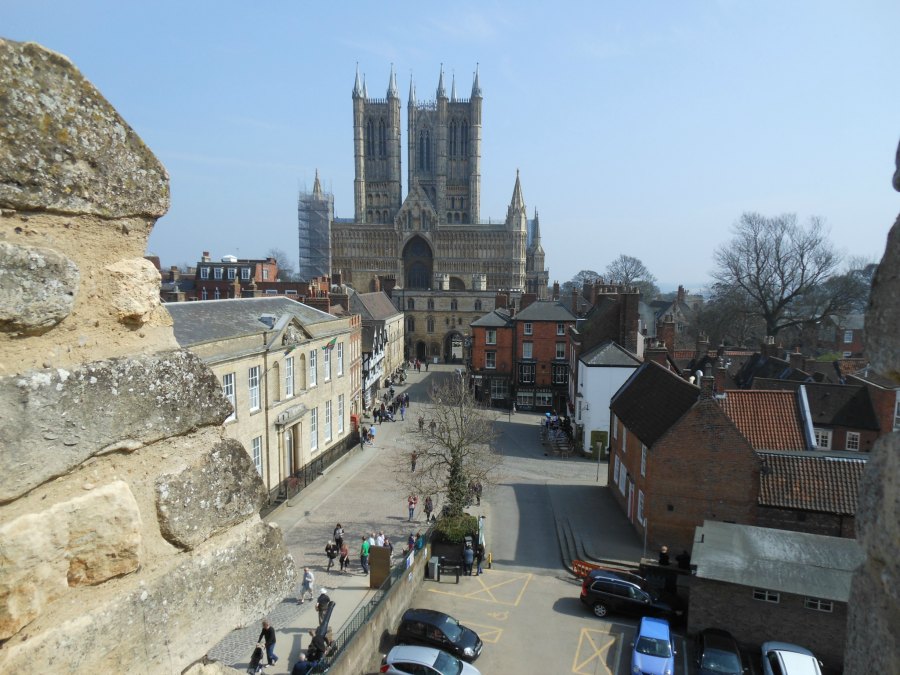
Lincoln Cathedral today, viewed from the walls of Lincoln Castle

Katherine left court and settled at her late husband’s manor at Kettlethorpe, before moving to a rented townhouse in Lincoln. John of Gaunt visited her regularly throughout the 1380s, and Katherine was frequently at court. John of Gaunt kept a stable of 12 horses for her use and her relationship with Gaunt and his family remained cordial. She is known to have lent him money for his Castilian expedition of 1386 and in 1387 received a New Years’ gift from the countess of Derby, the wife of John’s eldest son, Henry.

With 4 children by John of Gaunt but still only, officially, governess to his daughters, Katherine was made a Lady of the Garter in 1388. However, her situation changed again following Constance’s death at the end of 1394.

At Lincoln Cathedral, in January 1396 and a quarter of a century after the start of their relationship, John of Gaunt and Katherine Swynford were married. Styled Lady Katherine, Duchess of Lancaster, she was, briefly, the first Lady in England following the death of Queen Anne of Bohemia. Although the marriage undoubtedly caused surprise and upset among members of the royal court, it had a very practical outcome.

Once they were married John of Gaunt was able to petition the pope for the legitimisation his children by Katherine. This was achieved by papal bull on 1st September 1396, and confirmed by Richard II’s royal patent on 9th February 1397. The result was the children’s exalted position in court society and a marked improvement in their marriage and career prospects. A further Charter in the reign of Henry IV appears to have excluded the Beauforts from the succession, though there is some question as to the legitimacy of the exclusion as the relevant phrase appears to have been inserted after the Act was written.

073
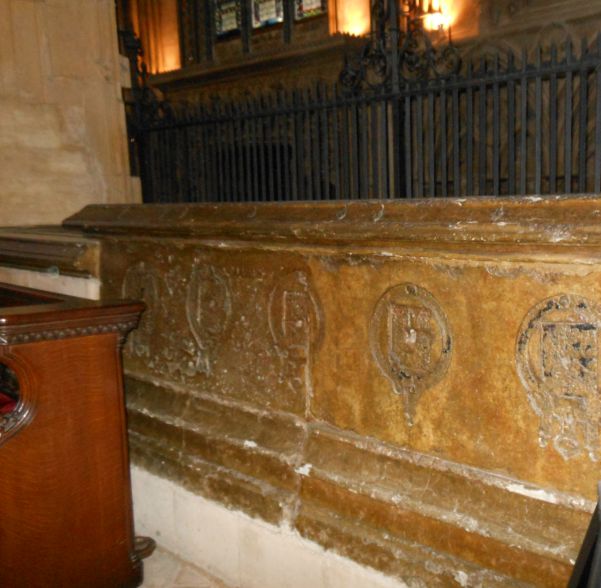
Tombs of Katherine Swynford, Duchess of Lancaster, and her daughter Joan Beaufort, Countess of Westmorland. Lincoln Cathedral

John and Katherine’s final happiness was of short duration, however, as John of Gaunt died on the 3rd of February 1399; he was buried beside his first wife, Blanche of Lancaster, in St Paul’s Cathedral, London. His son and heir, Henry Bolingbroke, had recently been exiled to the Continent for 10 years. Richard II extended that exile to a life term and confiscated the Lancastrian lands.

Following Gaunt’s death Katherine returned to her townhouse in Lincoln; close to the east end of the Cathedral. Her son, Henry Beaufort, had become Bishop of Lincoln shortly after being legitimised.

Katherine died at Lincoln on 10th May 1403. She was buried, close to the High Altar, in the cathedral in which she had married her prince just 7 years earlier. Her daughter Joan, Countess of Westmoreland, was laid to rest beside her, following her death in 1440, with a slightly smaller tomb. The tombs themselves are empty, with Katherine and Joan buried beneath the floor of the Cathedral.

Katherine appears to have had a good relationship with John of Gaunt’s children; she was very close to Philippa and Elizabeth. Henry IV, Katherine’s stepson, referred to her in her widowhood as ‘The King’s Mother’.

And together, through their children Katherine and John left a legacy that would change the  course of English and Scottish history.

220px-Swyntomb
Katherine Swynford’s tomb, 1809

Henry Beaufort would rise to the position of Bishop of Winchester and Cardinal. Thomas, an able soldier, would rise to become Duke of Exeter and serve on the council of his great-nephew, Henry VI.

Less impressively, their grandson Edmund (son of John, Earl of Somerset) was responsible for great losses of territory whilst Regent of France for young Henry VI.

Katherine and John’s daughter, Joan, was the mother of Cecily Neville, Duchess of York, who would be the mother of 2 kings of England; Edward IV and Richard III. Their son John, Earl of Somerset, was grandfather of Margaret Beaufort and great-grandfather of the first Tudor King, Henry VII. John’s daughter, Joan Beaufort, married James I of Scotland in another of history’s great love stories.

*

Photographs of Lincoln and Katherine Swynford’s tomb are © Sharon Bennett Connolly, 2015. All other pictures are courtesy of Wikipedia.

*

Sources: katherineswynfordsociety.org.uk; Brewer’s British Royalty by David Williamson; History Today Companion to British History Edited by Juliet Gardiner & Neil Wenborn; The mammoth Book of British kings & Queen by Mike Ashley; Britain’s Royal Families, the Complete Genealogy by Alison Weir; The Life and Times of Edward III by paul Johnson; The Perfect King, the Life of Edward III by Ian Mortimer; The Reign of Edward III by WM Ormrod; Chronicles of the Age of Chivalry Edited by Elizabeth Hallam; womenshistory.about.com/od/medrenqueens/a/Katherine-Swynford.

*

My Books

Signed, dedicated copies of all my books are available through my online bookshop.

Coming on 15 June 2024: Heroines of the Tudor World

Heroines of the Tudor World tells the stories of the most remarkable women from European history in the time of the Tudor dynasty, 1485-1603. These are the women who ruled, the women who founded dynasties, the women who fought for religious freedom, their families and love. These are the women who made a difference, who influenced countries, kings and the Reformation. In the era dominated by the Renaissance and Reformation, Heroines of the Tudor World examines the threats and challenges faced by the women of the era, and how they overcame them. From writers to regents, from nuns to queens, Heroines of the Tudor World shines the spotlight on the women helped to shape Early Modern Europe.

Heroines of the Tudor World is now available for pre-order from Amberley Publishing and Amazon UK.

Out Now! Women of the Anarchy

Two cousins. On the one side is Empress Matilda, or Maud. The sole surviving legitimate child of Henry I, she is fighting for her birthright and that of her children. On the other side is her cousin, Queen Matilda, supporting her husband, King Stephen, and fighting to see her own son inherit the English crown. Women of the Anarchy demonstrates how these women, unable to wield a sword, were prime movers in this time of conflict and lawlessness. It show how their strengths, weaknesses, and personal ambitions swung the fortunes of war one way – and then the other.

Available from Bookshop.orgAmberley Publishing and Amazon UK.

Also by Sharon Bennett Connolly:

King John’s Right-Hand Lady: The Story of Nicholaa de la Haye is the story of a truly remarkable lady, the hereditary constable of Lincoln Castle and the first woman in England to be appointed sheriff in her own right. It is is available from King John’s Right-Hand Lady: The Story of Nicholaa de la Haye is the story of a truly remarkable lady, the hereditary constable of Lincoln Castle and the first woman in England to be appointed sheriff in her own right. Available from all good bookshops or direct from Pen & Sword Booksbookshop.org and AmazonDefenders of the Norman Crown: The Rise and Fall of the Warenne Earls of Surrey tells the fascinating story of the Warenne dynasty, from its origins in Normandy, through the Conquest, Magna Carta, the wars and marriages that led to its ultimate demise in the reign of Edward III. Available from Pen & Sword BooksAmazon in the UK and US, and Bookshop.org

Ladies of Magna Carta: Women of Influence in Thirteenth Century England looks into the relationships of the various noble families of the 13th century, and how they were affected by the Barons’ Wars, Magna Carta and its aftermath; the bonds that were formed and those that were broken. It is now available in paperback and hardback from Pen & Sword,  Amazon, and Bookshop.orgHeroines of the Medieval World tells the stories of some of the most remarkable women from Medieval history, from Eleanor of Aquitaine to Julian of Norwich. Available now from Amberley Publishing and Amazon, and Bookshop.orgSilk and the Sword: The Women of the Norman Conquest traces the fortunes of the women who had a significant role to play in the momentous events of 1066. Available now from Amazon,  Amberley Publishing, and Bookshop.org.

Alternate Endings: An anthology of historical fiction short stories including Long Live the King… which is my take what might have happened had King John not died in October 1216. Available in paperback and kindle from Amazon.

Podcast:

Have a listen to the A Slice of Medieval podcast, which I co-host with Historical fiction novelist Derek Birks. Derek and I welcome guests, such as Bernard Cornwell and Elizabeth Chadwick, and discuss a wide range of topics in medieval history, from significant events to the personalities involved.

*

Don’t forget! Signed and dedicated copies of all my books are available through my online bookshop.

For forthcoming online and in-person talks, please check out my Events Page.

You can be the first to read new articles by clicking the ‘Follow’ button, liking our Facebook page or joining me on Twitter and Instagram.

*

©2015 Sharon Bennett Connolly FRHistS
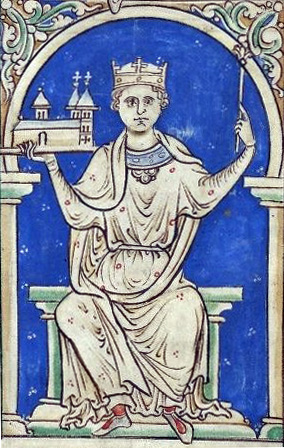
Poor Little Marjorie Bruce

Marjorie_Bruce_Paisley_Abbey
Tomb of Marjorie Bruce, Paisley Abbey

I’ve always had a soft spot for little Marjorie Bruce. Dead before her 20th birthday, her short life was filled with tragedy and adversity from the moment of her birth. I could find no pictures of her, just ones of her tomb; which just about sums it up for poor Marjorie.

Marjorie was born at a time of great upheaval for Scotland; Edward I was claiming overlordship of the country, and the right to choose its next king. John Balliol was picked as king, only for Edward to humiliate and dethrone him a short time later.

Marjorie’s father, Robert the Bruce, was one of the chief claimants of the Scots crown.

Marjorie was the only daughter of Robert the Bruce, Lord of Annandale and Earl of Carrick, and Isabella of Mar. Isabella was the daughter of Donald, 6th Earl of Mar, and Helen, possible illegitimate daughter of Llewelyn the Great, Prince of Wales.

Robert_I_and_Isabella_of_Mar
Marjorie’s parents; Robert the Bruce and Isabella of Mar

Isabella and Robert had married in 1295 and Marjorie arrived about 2 years later. At the age of only 19, Isabella died shortly after giving birth and poor Marjorie was left motherless, with a father who was fighting, alternately, for and against the English.

Even when still a baby, Marjorie was seen as a political pawn, when on 9 July 1297, Edward I demanded that she be handed over as a hostage to her father’s good behaviour. Three of Robert’s allies, ‘Robert bishop of Glasgow, James the Steward of Scotland, and Alexander de Lindesye, become guarantees for the Earl of Carrick’s loyalty till he delivers his daughter Margerie as a hostage.’ Although, there is no record that Marjorie was ever handed over to the English at this time.

Marjorie was named after her paternal grandmother, Marjorie, Countess of Carrick in her own right. And it seems highly likely that Marjorie’s care was handed to one of her father’s sister, either Mary or Christian.

At 6 years old Marjorie acquired a new step-mother when Robert married Elizabeth de Burgh, daughter of Richard de Burgh, Earl of Ulster, and god-daughter of Edward I. Although Edward I appears to have arranged the marriage in order to keep the Bruce’s loyalty, it was only a short while after the marriage that Robert the Bruce finally decided to join William Wallace and fight for Scotland.

In 1306, following his murder of his rival for the throne, John Comyn, Robert the Bruce defied Edward I by having himself crowned King of Scots at Scone Abbey. Little 8-year-old Marjorie was suddenly a Princess of Scotland as the daughter of  King Robert I; although her uncle Edward Bruce was designated Robert’s heir.

RobertBruceAndElizabethDeBurgh (280X280)_tcm4-562387
Robert the Bruce and his queen, Elizabeth de Burgh

Unfortunately Robert’s coronation infuriated Edward I even more. After King Robert was brought to battle, and defeated, at Methven in June 1306 he and his family became fugitives in their own land. Edward I of England was determined to hunt him down; sending men after Robert and all his adherents.

In August 1306 Robert split his party; while he headed west he sent Marjorie and Elizabeth to the north-east, possibly hoping they could escape to Orkney and onto Norway, where his sister, Isabel, was queen.

Accompanying Elizabeth and Marjorie were Robert’s other 2 sisters, Christian and Mary, and Isabella, Countess of Buchan, who had crowned Robert at Scone. They were escorted by John of Strathbogie, Earl of Atholl, and Robert’s younger brother, Sir Niall Bruce.

By September 1306, the women and their escort had reached Kildrummy Castle in Aberdeenshire; where Edward’s forces caught up with them. While Sir Niall Bruce and the garrison stoically attempted to hold off the English troops, the Earl of Atholl escaped with the women. Having made it to the far north of Scotland, but were apprehended at Tain, near Inverness, by the Earl of Ross, a supporter of the Comyns.

Kildrummy had fallen in the mean time.

170px-Gal_nations_edward_i
Edward I

Sir Niall Bruce and the Kildrummy garrison were handed over to the English and executed; Sir Niall suffered hanging, drawing and quartering at Berwick. The Earl of Atholl and the Bruce women, along with the Countess of Buchan, were sent south to King Edward.

When they reached London, the Earl of Atholl suffered the same fate as Sir Niall, the first earl to ever suffer a traitor’s execution.

Although Edward did not order the executions of the women folk, it cannot be said he treated them kindly. They were used to set an example; a demonstration of the price of rebellion against Edward.

For Mary Bruce and the Countess of Buchan, he ordered the construction of iron cages. Isabella, Countess of Buchan, who had set the crown of Scotland on Robert the Bruce’s head, was imprisoned in one such cage supposedly suspended high from the walls of Berwick castle, open the elements and the mockery of the people of Berwick. The same was ordered for Mary Bruce at Roxburgh. Although the cages were actually in rooms inside the two strongholds, rather than outside and suspended from the walls. Either way, it was still horrendous treatment for two noblewomen.

220px-Watton_Abbey
Watton Abbey, where Marjorie was confined for 8 years

Christian Bruce, whose husband had recently been executed as a traitor at Dumfries, was ordered to be confined at a convent at Sixhills in Lincolnshire; while Elizabeth de Burgh was confined to various manors in England and treated more kindly due to her father’s friendship with the king.

For Marjorie Bruce, these events must have been terrifying. Edward ordered her confined in an iron cage in the Tower of London, where no one was to speak to her. Whether Edward relented of his own free will, or was advised against such treatment of a child of not yet 10 years old, the order was rescinded and she was confined to a convent at Watton in Yorkshire.

On 15 March 1307, Edward sent orders for financial provision for Marjory: ‘The K. commands the sheriff of York, by view of the Prior of Wattone, to allow Margery daughter of Robert de Brus, staying in Wattone by the K.’s order, 3d. a day for her expenses, from the morrow of All Souls last year, when she came there; and a mark yearly for her dress.’

Although loyal to their king, we can only hope that the nuns took pity on the poor child, and treated her kindly. She was held at Watton for 8 years and it was only her father’s victory at Bannockburn, in 1314, that eventually secured her freedom.

175px-Paisley_abbey
Paisley Abbey

Robert the Bruce’s resounding victory over Edward I’s son and successor, Edward II, in the 1314 battle meant Bruce was finally in a position to insist on the return of his queen, daughter, sisters and the Countess of Buchan. With so many English nobles taken prisoner, the women were the price demanded in the exchange of hostages.

On Marjorie’s return to Scotland, King Robert almost immediately set about arranging her marriage. With the queen not yet having produced a child, the now-17-year-old Marjorie was needed to produce an heir for the Bruce dynasty.

Just 5 years older the Marjorie, Walter Stewart, the wealthy and powerful 6th High Steward of Scotland was the ideal candidate as a husband. Walter had distinguished himself as a commander at the Battle of Bannockburn, and was the man entrusted by Bruce to bring his family home for their English captivity.

Robert_II_of_Scotland
Robert II of Scotland

Walter and Marjorie were married shortly after, with Marjorie’s dowry including the Barony of Bathgate in West Lothian. Whatever happiness – if any – Marjorie derived from the marriage, however, was short-lived.

In 1316, whilst heavily pregnant, she fell from her horse when out riding near Paisley Abbey. Going into premature labour, Marjorie was taken to the Abbey, where she was delivered of a son, Robert, on 2nd March 1316. It is possible that Robert was delivered by caesarean as his mother was close to death. Marjorie survived the birth by just a few hours and died the same day.

Poor little Marjorie Bruce was dead at the tender age of 19 – the same as her mother before her – having lived through some of the most turbulent years of Scottish history.

Had she lived she would have seen her son succeed her brother, David II, on the Scots throne as King Robert II, founder of the Stewart dynasty.

*

Pictures courtesy of Wikipedia.

*

Sources: The Story of Scotland by Nigel Tranter; Brewer’s British Royalty by David Williamson; Kings & Queens of Britain by Joyce Marlow; Mammoth Book of British Kings & Queens by Mike Ashley; Oxford Companion to British History Edited by John Cannon; Edward I, A Great and Terrible King by Marc Morris; Britain’s Royal Families by Alison Weir; History Today Companion to British History Edited by Juliet Gardiner & Neil Wenborn; The Plantagenets, The Kings Who Made England by Dan Jones; The Illustrated Encyclopaedia of the Kings & Queens of Britain by Charles Phillips; Kings & Queens of Britain by Joyce Marlow; englishmonarchs.co.uk; educationscotland.gov.uk; Sisters of the Bruce; electricscotland.com.

*

My Books

Signed, dedicated copies of all my books are available through my online store.

Out now: Scotland’s Medieval Queens

Scotland’s history is dramatic, violent and bloody. Being England’s northern neighbour has never been easy. Scotland’s queens have had to deal with war, murder, imprisonment, political rivalries and open betrayal. They have loved and lost, raised kings and queens, ruled and died for Scotland. From St Margaret, who became one of the patron saints of Scotland, to Elizabeth de Burgh and the dramatic story of the Scottish Wars of Independence, to the love story and tragedy of Joan Beaufort, to Margaret of Denmark and the dawn of the Renaissance, Scotland’s Medieval Queens have seen it all. This is the story of Scotland through their eyes.

Available now from Amazon and Pen and Sword Books

Also by Sharon Bennett Connolly:

Heroines of the Tudor World tells the stories of the most remarkable women from European history in the time of the Tudor dynasty, 1485-1603. These are the women who ruled, the women who founded dynasties, the women who fought for religious freedom, their families and love. Heroines of the Tudor World is now available for pre-order from Amberley Publishing and Amazon UK. Women of the Anarchy demonstrates how Empress Matilda and Matilda of Boulogne, unable to wield a sword themselves, were prime movers in this time of conflict and lawlessness. It shows how their strengths, weaknesses, and personal ambitions swung the fortunes of war one way – and then the other. Available from Bookshop.orgAmberley Publishing and Amazon UKKing John’s Right-Hand Lady: The Story of Nicholaa de la Haye is the story of a truly remarkable lady, the hereditary constable of Lincoln Castle and the first woman in England to be appointed sheriff in her own right. Available from all good bookshops Pen & Sword Booksbookshop.org and Amazon

Defenders of the Norman Crown: The Rise and Fall of the Warenne Earls of Surrey tells the fascinating story of the Warenne dynasty, from its origins in Normandy, through the Conquest, Magna Carta, the wars and marriages that led to its ultimate demise in the reign of Edward III. Available from Pen & Sword BooksAmazon in the UK and US, and Bookshop.orgLadies of Magna Carta: Women of Influence in Thirteenth Century England looks into the relationships of the various noble families of the 13th century, and how they were affected by the Barons’ Wars, Magna Carta and its aftermath; the bonds that were formed and those that were broken. It is now available in paperback and hardback from Pen & SwordAmazon, and Bookshop.orgHeroines of the Medieval World tells the stories of some of the most remarkable women from Medieval history, from Eleanor of Aquitaine to Julian of Norwich. Available now from Amberley Publishing and Amazon, and Bookshop.orgSilk and the Sword: The Women of the Norman Conquest traces the fortunes of the women who had a significant role to play in the momentous events of 1066. Available now from Amazon,  Amberley Publishing, and Bookshop.org.

Alternate Endings: An anthology of historical fiction short stories including Long Live the King… which is my take what might have happened had King John not died in October 1216. Available in paperback and kindle from Amazon.

Podcast:

Have a listen to the A Slice of Medieval podcast, which I co-host with Historical fiction novelist Derek Birks. Derek and I welcome guests, such as Bernard Cornwell and Michael Jecks, and discuss a wide range of topics in medieval history, from significant events to the personalities involved. Every episode is also now available on YouTube.

*

Don’t forget! Signed and dedicated copies of all my books are available through my online store.

For forthcoming online and in-person talks, please check out my Events Page.

You can be the first to read new articles by clicking the ‘Follow’ button, liking our Facebook page or joining me on TwitterThreadsBluesky and Instagram.

*

©2015 Sharon Bennett Connolly FRHistS

The Remarkably Resilient Jacqueline d’Hainault

220px-Jacoba_van_Beieren_door_Hollandse_school_ca_1600
Jacqueline of Hainault

Jacqueline of Hainault, also known as Jacoba of Bavaria, is one of those Medieval ladies who seems to have slipped under the radar of history. Until last week I knew very little about her; and yet her life is one of the most colourful I have ever come across.

Born on or shortly before the 16th July 1401 at Le Quesnoy, Flanders, Jacqueline was the daughter of William VI, Count of Holland, and Marguerite of Burgundy; her grandfather was Philippe the Bold, Duke of Burgundy.

Although she had at least 9 illegitimate siblings, Jacqueline was her father’s sole heir. And in order to strengthen her position, William arranged a marriage for Jacqueline while she was still an infant. In 1406 she was betrothed to John of Valois, Duke of Touraine, the fourth son of King Charles VI of France, and only 3 years older than Jacqueline. With little chance of inheriting the French throne, and with a view to him eventually ruling Hainault, the responsibility for John’s education was handed over to  Count William; he would be raised alongside his future wife.

Jean_de_Touraine,_dauphin_of_France
John, Duke of Touraine

The young couple married in 1415 at The Hague. Only 4 months after the wedding John’s older brother Louis, Dauphin of France, died and John became Dauphin and heir to the French throne.

Within 2 years John himself was dead, on 4th April 1417, with rumours circulating that he was poisoned, although this is far from certain. His younger brother, Charles, became Dauphin and Jacqueline was a widow at only 16.

In the meantime, although Holland was not subject to Salic Law (where a woman could not inherit), Jacqueline’s father had been having a hard time getting his people and Sigismund, the Holy Roman Emperor, to accept Jacqueline as his heir. They finally refused outright in 1416.

When Count William died only 2 months after her husband, on 31st May 1417, Jacqueline was accepted as Countess of Hainault; however Holland and Zeeland recognised her uncle John of Bavaria, backed by Sigismund, as their count.

At this point Jacqueline’s mother and uncle stepped in. Margaret of Burgundy and her brother, John the Fearless, Duke of Burgundy, started looking around for a suitable husband for Jacqueline. Unfortunately they decided on her cousin John IV, Duke of Brabant. The Duke of Burgundy saw the marriage as an opportunity to expand his influence over Jacqueline’s lands, and applied for a Papal Dispensation. The Dispensation was given, but withdrawn just over 2 weeks later, following pressure from Sigismund.

John_IV,_Duke_of_Brabant
John IV Duke of Brabant

The couple married anyway, in March 1418. The marriage was a disaster, politically and personally. John managed to antagonise both his wife and her subjects. Initially Jacqueline’s husband helped in the fight against her avaricious uncle, John of Bavaria and in 1419 John the Fearless settled the dispute in his niece’s favour; only for John of Brabant to then mortgage Holland and Zeeland to John of Bavaria for a period of 12 years.

Jacqueline ran away; first to her mother in Hainault and then on to England, where she was welcomed by Henry V. The king granted her a pension, and made her godmother to his only son, the future Henry VI.

In  1421 Jacqueline repudiated her marriage to John of Brabant, with the support of Antipope Benedict XIII in Avignon. And in 1422, with a view to strengthening England’s position against France, she married the king’s younger brother Humphrey, Duke of Gloucester. The public were behind the marriage and even supported Humphrey’s attempts to recover Jacqueline’s lands.

As Duchess of Gloucester, Jacqueline was made a Lady of the Garter in 1423, and, at some point, accepted Eleanor Cobham into her household as a lady-in-waiting; Eleanor would later go on to become Humphrey’s 2nd wife. In 1424 Jacqueline gave birth to her only recorded child, who was stillborn.

In 1424 Humphrey and Jacqueline led an army to the Low Countries, to recover Jacqueline;s inheritance. Though Humphrey managed to recover much of Hainault, he came up against opposition from the new Duke of Burgundy, Philip III The Good, destroying the Anglo-Burgundian alliance.

120px-HumphreyGloucester
Humphrey, Duke of Gloucester

Many of Jacqueline’s subjects, however, considered Humphrey an invader and, refusing to recognising him as count, gave their support to Burgundy. So, in 1425, Humphrey returned to England; Jacqueline’s mother had objected to her returning with him, so she moved on to Mons.

The officials of Mons had promised to protect Jacqueline, but once Gloucester was gone, she was handed over to the Duke of Burgundy and imprisoned in Ghent. In the same year her uncle, John of Bavaria, died and her lands were handed over to Burgundy, as regent, by John of Brabant.

Jacqueline escaped her imprisonment, dressed as a man, and escaped escorted by 2 knights, to Gouda. From Gouda, she led the Dutch resistance to the Burgundian takeover. However, when Burgundy besieged Gouda, she was forced to surrender.

In the meantime, Pope Martin V had authorised an investigation into the state of Jacqueline’s marriages. In 1428 he declared her marriage to Humphrey of Gloucester null and void, as her marriage to John of Brabant was legally valid. John of Brabant had died in 1426, so a remarriage between Humphrey and Jacqueline would have been acceptable – had Humphrey’s attentions not already turned to Eleanor Cobham.

220px-Jacoba_van_Beieren_(1401-1436),_gravin_van_Holland_en_Zeeland
Jacqueline of Hainault

Jacqueline still had sympathisers in England, however and the ladies of London petitioned Humphrey, according to the chronicler Stow their letters  “containing matter of rebuke and sharpe reprehension of the Duke of Gloucester, because he would not deliver his wife Jacqueline out of her grievous imprisonment, being then held prisoner by the Duke of Burgundy, suffering her to remaine so unkindly, contrary to the law of God and the honourable estate of matrimony”.

Humphrey had managed to get a 9,000 marks grant from the king’s council, in 1427, to help Jacqueline recover her lands; however John, Duke of Bedford, put a stop to the expedition by opening up negotiations with the Duke of Burgundy.

So, in 1428, Jacqueline of Hainault is a prisoner of the Duke of Burgundy, with no prospect of help from England. With few options left to her, she came to an agreement with Philip the Good. In the Treaty of Delft, of 3rd July 1428, Jacqueline retained her title of countess, but administration for her 3 counties passed to Philip. Philip the Good was confirmed as her heir, should she die childless; and she was not to marry without the consent of Philip, her mother and the 3 counties.

220px-Frank_van_Borssele
Francis van Borselen

Philip, however, broke the treaty by mortgaging the revenues of Holland and Zeeland to members of the Borselen family from Zeeland.

In 1432 Jacqueline secretly married one of the Borselen family, Francis, Lord of Zuilen and St Maartensdijk.

Whether or not this was a plot to overthrow Burgundian rule in Holland, Philip the good certainly saw it that way. Francis was imprisoned in October 1432 and Jacqueline was forced to abdicate as countess in 1433, relinquishing her titles in return for an income from several estates. After years of civil war, Jacqueline’s financial position prior to the settlement had been desperate.

Jacqueline and Francis’ relationship appears to have been a love match and, in July 1434 they had a 2nd, public, marriage ceremony at Maartensdijk Castle. After such an adventurous life, and having fought so hard for her inheritance, Jacqueline settled down to married life. Her happiness was short-lived, however, as Jacqueline died at Teilingen on 8th October 1436, probably of tuberculosis. She was buried at the Hague.

*

Pictures courtesy of Wikipedia

*

Sources: Brewer’s British Royalty by David Williamson; History Today Companion to British History Edited by Juliet Gardiner and Neil Wenborn; Britain’s Royal Families, the Complete Genealogy by Alison Weir; medievalists.net; r3.org; susanhigginbotham.com; britannica.com; historyofroyalwomen.com.

*

My books

Signed, dedicated copies of all my books are available through my online bookshop.

Out now: Scotland’s Medieval Queens

Books by Sharon Bennett Connolly

Scotland’s history is dramatic, violent and bloody. Being England’s northern neighbour has never been easy. Scotland’s queens have had to deal with war, murder, imprisonment, political rivalries and open betrayal. They have loved and lost, raised kings and queens, ruled and died for Scotland. From St Margaret, who became one of the patron saints of Scotland, to Elizabeth de Burgh and the dramatic story of the Scottish Wars of Independence, to the love story and tragedy of Joan Beaufort, to Margaret of Denmark and the dawn of the Renaissance, Scotland’s Medieval Queens have seen it all. This is the story of Scotland through their eyes.

Scotland’s Medieval Queens gives a thorough grounding in the history of the women who ruled Scotland at the side of its kings, often in the shadows, but just as interesting in their lives beyond the spotlight. It’s not a subject that has been widely covered, and Sharon is a pioneer in bringing that information into accessible history.’ Elizabeth Chadwick (New York Times bestselling author)

Available now from Amazon and Pen and Sword Books

Also by Sharon Bennett Connolly:

Books by Sharon Bennett Connolly

Heroines of the Tudor World tells the stories of the most remarkable women from European history in the time of the Tudor dynasty, 1485-1603. These are the women who ruled, the women who founded dynasties, the women who fought for religious freedom, their families and love. Heroines of the Tudor World is now available from Amberley Publishing and Amazon UK. Women of the Anarchy demonstrates how Empress Matilda and Matilda of Boulogne, unable to wield a sword themselves, were prime movers in this time of conflict and lawlessness. It shows how their strengths, weaknesses, and personal ambitions swung the fortunes of war one way – and then the other. Available from Bookshop.orgAmberley Publishing and Amazon UKKing John’s Right-Hand Lady: The Story of Nicholaa de la Haye is the story of a truly remarkable lady, the hereditary constable of Lincoln Castle and the first woman in England to be appointed sheriff in her own right. Available from all good bookshops Pen & Sword Booksbookshop.org and Amazon

Books by Sharon Bennett Connolly

Defenders of the Norman Crown: The Rise and Fall of the Warenne Earls of Surrey tells the fascinating story of the Warenne dynasty, from its origins in Normandy, through the Conquest, Magna Carta, the wars and marriages that led to its ultimate demise in the reign of Edward III. Available from Pen & Sword BooksAmazon in the UK and US, and Bookshop.orgLadies of Magna Carta: Women of Influence in Thirteenth Century England looks into the relationships of the various noble families of the 13th century, and how they were affected by the Barons’ Wars, Magna Carta and its aftermath; the bonds that were formed and those that were broken. It is now available in paperback and hardback from Pen & SwordAmazon, and Bookshop.orgHeroines of the Medieval World tells the stories of some of the most remarkable women from Medieval history, from Eleanor of Aquitaine to Julian of Norwich. Available now from Amberley Publishing and Amazon, and Bookshop.orgSilk and the Sword: The Women of the Norman Conquest traces the fortunes of the women who had a significant role to play in the momentous events of 1066. Available now from Amazon,  Amberley Publishing, and Bookshop.org.

Alternate Endings: An anthology of historical fiction short stories including Long Live the King… which is my take what might have happened had King John not died in October 1216. Available in paperback and kindle from Amazon.

Podcast:

A Slice of Medieval

Have a listen to the A Slice of Medieval podcast, which I co-host with Historical fiction novelist Derek Birks. Derek and I welcome guests, such as Bernard Cornwell and Michael Jecks, and discuss a wide range of topics in medieval history, from significant events to the personalities involved. Every episode is also now available on YouTube.

*

Don’t forget! Signed and dedicated copies of all my books are available through my online bookshop.

For forthcoming online and in-person talks, please check out my Events Page.

You can be the first to read new articles by clicking the ‘Follow’ button, liking our Facebook page or joining me on TwitterThreadsBluesky and Instagram.

*

©2015 Sharon Bennett Connolly FRHistS
Witchy Woman – the Fall of Eleanor Cobham, Duchess of Gloucester

300px-Starborough_Castle
Sterborough Castle, possible birthplace of Eleanor

Born around 1400 and probably at the castle of Sterborough in Kent, Eleanor Cobham was the daughter of Sir Reginald Cobham of Sterborough and his wife Eleanor, daughter of Sir Thomas Culpeper of Rayal.

As is often the case with Medieval women, nothing is known of Eleanor’s early life. She appeared at court in her early 20s, when she was appointed lady-in-waiting to Jacqueline of Hainault,  Duchess of Gloucester.

Jacqueline had come to England to escape her 2nd husband, the abusive John IV Duke of Brabant. She obtained an annulment of the marriage from the Antipope, Benedict XIII, and married Humphrey, Duke of Gloucester, in 1423. He would spend a large amount of their marriage trying to recover Jacqueline’s lands from the Dukes of Brabant and Burgundy.

120px-HumphreyGloucester
Humphrey Duke of Gloucester

Humphrey was a younger brother of King Henry V and John, Duke of Bedford. He had fought at the Battle of Shrewsbury at the age of 12 years and 9 months and would go on to fight at Agincourt in 1415. On Henry V’s death, Humphrey acted as Protector for  his young nephew, Henry VI, whenever his older brother, the Duke of Bedford, was away fighting in France. However, he seems to have been little liked and was never trusted with full Regency powers.

In 1428 Pope Martin V refused to recognise the annulment of Jacqueline’s previous marriage to John of Brabant and declared the Gloucester marriage null and void. However, John of Brabant had died in 1426 and so Humphrey and Jacqueline were free to remarry – if they wanted to. In the mean time, Humphrey’s attention had turned to Eleanor of Cobham and he made no attempt to keep Jacqueline by his side.

This did not go down too well with the good ladies of London, who petitioned parliament between Christmas 1427 and Easter 1428.

According to the chronicler Stow their letters were delivered to Humphrey, the archbishops and the lords “containing matter of rebuke and sharpe reprehension of the Duke of Gloucester, because he would not deliver his wife Jacqueline out of her grievous imprisonment, being then held prisoner by the Duke of Burgundy, suffering her to remaine so unkindly, contrary to the law of God and the honourable estate of matrimony”.

220px-Arms_of_Humphrey_of_Lancaster,_1st_Duke_of_Gloucester.svg
Coat of arms of Humphrey, Duke of Gloucester

Humphrey paid the petition little attention and married Eleanor sometime between 1428 and 1431. It has been suggested that Eleanor was the mother of Humphrey’s 2 illegitimate children – Arthur and Antigone – although this seems unlikely as Humphrey made no attempt to legitimise them following the marriage (as his grandfather John of Gaunt had done with his Beaufort children by Katherine Swynford).

Described by Aeneas Sylvius as “a woman distinguished in her form” and “beautiful and marvellously pleasant” by Jean de Waurin, Eleanor and Humphrey had a small but lively court at their residence of La Plesaunce at Greenwich. Humphrey had a lifelong love of learning, which Eleanor most likely shared, and the couple attracted scholars, musicians and poets to their court.

On 25th June 1431, as Duchess of Gloucester, Eleanor was admitted to the fraternity of the monastery of St Albans – to which her husband already belonged – and in 1432 she was made a Lady of the Garter.

Eleanor’s status rose even higher in 1435, with the death of John Duke of Bedford. Whilst Henry VI was still childless, John had been heir presumptive. He died having had no children and so the position passed to Humphrey, Duke of Gloucester.

With her heightened status, Eleanor received sumptuous Christmas gifts from the king; and her father was given custody of the French hostage Charles, Duke of Orleans – a prisoner since Agincourt.

But in 1441 came Eleanor’s dramatic downfall.

Master Thomas Southwell, a canon of St Stephen’s Chapel at Westminster, and Master Roger Bolyngbroke, a scholar, astronomer and cleric – and alleged necromancer, were arrested for casting the King’s horoscope and predicting his death.

humphrey__eleanor
Eleanor – alongside Humphrey – joining the confraternity of St Albans, 1431

Southwell and Bolyngbroke, along with Margery Jourdemayne, known as the Witch of Eye and renowned for selling potions and spells, were accused of making a wax image of the king, ‘the which image they dealt so with, that by their devilish incantations and sorcery they intended to bring out of life, little and little, the king’s person, as they little and little consumed that image’.

Bolyngbroke implicated Eleanor during questioning, saying she had asked him to cast her horoscope and predict her future; for the wife of the heir to the throne, this was a dangerous practise. Did she have her eye on the throne itself?

On hearing of the arrest of her associates Eleanor fled to Sanctuary at Westminster. Of 28 charges against her she admitted to 5. Eleanor denied the treason charges, but confessed to obtaining potions from Jourdemayne in order to help her conceive a child. Awaiting further proceedings, as Eleanor remained in Sanctuary, pleading sickness, she tried to escape by river. Thwarted, she was escorted to Leeds Castle on 11th August and held there for 2 months.

Having returned to Westminster Eleanor was examined by an ecclesiastical tribunal on 19th October and on the 23rd she faced Bolyngbroke, Southwell and Jourdemayne who accused her of being the “causer and doer of all these deeds”.

Eleanor was found guilty of sorcery and witchcraft; she was condemned to do public penance and perpetual imprisonment. Of her co-accused; Bolyngbroke was hanged, drawn and quartered, Southwell died in the Tower of London and Margery Jourdemayne was burned at the stake at Smithfield.

The_Penance_of_Eleanor_(Abbey)
The Penance of Eleanor by Edwin Austin Abbey

Eleanor’s own chaplain, Master John Hume, had also been arrested, although he was accused only of knowing of the others’ actions and was later pardoned.

On 3 occasions Eleanor was made to do public penance at various churches in London; on the 1st of such, 13th November 1441, bareheaded and dressed in black carrying a wax taper, she walked from Temple Bar to St Paul’s Cathedral, where she offered the wax taper at the high altar. Following 2 further penances, at Christ Church and St Michael’s in Cornhill, Eleanor was sent first to Chester Castle and then to Kenilworth. Her circumstances much reduced, Eleanor was allowed a household of only 12 persons.

Eleanor’s witchcraft conviction discredited her husband; Humphrey was marginalised and on 6th November 1441 his marriage was annulled. Humphrey’s enemies, Margaret of Anjou (Henry VI’s queen) and the Earl of Suffolk, convinced the king that his uncle was plotting against him. In February 1447, Humphrey was arrested and confined in Bury St Edmunds. He died a week later, on 23rd February; some claimed it was murder, but the most likely cause of death is stroke.

1000px-Beaumaris-01s
Beaumaris Castle, Anglesey

Eleanor was moved to Peel Castle on the Isle of Man, in 1446 and one final time in 1449 when she was transferred to Beaumaris Castle on Anglesey.

Eleanor Cobham, one time Duchess of Gloucester and wife to the heir to England’s throne, having risen so high – and fallen so low – died still a prisoner, at Beaumaris Castle on 7th July 1452; she was buried at Beaumaris, at the expense of Sir William Beauchamp, the castle’s constable.

*

Pictures courtesy of Wikipedia

*

Sources: Brewer’s British Royalty by David Williamson; History Today Companion to British History Edited by Juliet Gardiner and Neil Wenborn; The Mammoth Book of British Kings & Queens by Mike Ashley; Britain’s Royal Families, the Complete Genealogy by Alison Weir; The Oxford Companion to British History Edited by John Cannon; The Plantagenets, the Kings who made England by Dan Jones; The Plantagenets, the Kings that Made Britain by Derek Wilson; madameguillotine.co.uk; susanhigginbotham.com; The Medieval Mind.

*

My Books

Signed, dedicated copies of all my books are available through my online bookshop.

OUT NOW! Heroines of the Tudor World

Heroines of the Tudor World tells the stories of the most remarkable women from European history in the time of the Tudor dynasty, 1485-1603. These are the women who ruled, the women who founded dynasties, the women who fought for religious freedom, their families and love. These are the women who made a difference, who influenced countries, kings and the Reformation. In the era dominated by the Renaissance and Reformation, Heroines of the Tudor World examines the threats and challenges faced by the women of the era, and how they overcame them. From writers to regents, from nuns to queens, Heroines of the Tudor World shines the spotlight on the women helped to shape Early Modern Europe.

Heroines of the Tudor World is now available for pre-order from Amberley Publishing and Amazon UK.

Also by Sharon Bennett Connolly:

Women of the Anarchy demonstrates how Empress Matilda and Matilda of Boulogne, unable to wield a sword themselves, were prime movers in this time of conflict and lawlessness. It shows how their strengths, weaknesses, and personal ambitions swung the fortunes of war one way – and then the other. Available from Bookshop.orgAmberley Publishing and Amazon UKKing John’s Right-Hand Lady: The Story of Nicholaa de la Haye is the story of a truly remarkable lady, the hereditary constable of Lincoln Castle and the first woman in England to be appointed sheriff in her own right. Available from all good bookshops Pen & Sword Booksbookshop.org and AmazonDefenders of the Norman Crown: The Rise and Fall of the Warenne Earls of Surrey tells the fascinating story of the Warenne dynasty, from its origins in Normandy, through the Conquest, Magna Carta, the wars and marriages that led to its ultimate demise in the reign of Edward III. Available from Pen & Sword BooksAmazon in the UK and US, and Bookshop.org

Ladies of Magna Carta: Women of Influence in Thirteenth Century England looks into the relationships of the various noble families of the 13th century, and how they were affected by the Barons’ Wars, Magna Carta and its aftermath; the bonds that were formed and those that were broken. It is now available in paperback and hardback from Pen & Sword,  Amazon, and Bookshop.orgHeroines of the Medieval World tells the stories of some of the most remarkable women from Medieval history, from Eleanor of Aquitaine to Julian of Norwich. Available now from Amberley Publishing and Amazon, and Bookshop.orgSilk and the Sword: The Women of the Norman Conquest traces the fortunes of the women who had a significant role to play in the momentous events of 1066. Available now from Amazon,  Amberley Publishing, and Bookshop.org.

Alternate Endings: An anthology of historical fiction short stories including Long Live the King… which is my take what might have happened had King John not died in October 1216. Available in paperback and kindle from Amazon.

Podcast:

Have a listen to the A Slice of Medieval podcast, which I co-host with Historical fiction novelist Derek Birks. Derek and I welcome guests, such as Bernard Cornwell and discuss a wide range of topics in medieval history, from significant events to the personalities involved.

*

Don’t forget! Signed and dedicated copies of all my books are available through my online bookshop.

For forthcoming online and in-person talks, please check out my Events Page.

You can be the first to read new articles by clicking the ‘Follow’ button, liking our Facebook page or joining me on Twitter and Instagram.

©2015 Sharon Bennett Connolly FRHistS

Nicholaa de la Haye, England’s Forgotten Heroine

History...the Interesting Bits
Seal of Nicholaa de la Haye, Lincoln Cathedral

Nicholaa de la Haye is one of those very rare women in English history. She is renowned for her abilities, rather than her family and connections. In a time when men fought and women stayed home, Nicholaa de la Haye held Lincoln Castle against all-comers. Her strength and tenacity saved England at one of its lowest points in history.

The eldest daughter and co-heiress of Richard de la Haye and his wife, Matilda de Vernon, Nicholaa was probably born in the early-to-mid 1150s. Her father was Baron of Brattleby. Richard’s father was a Norman, Robert de la Haye of La Haye du Puits in the Cotentin. His mother, Muriel, was English, a Lincolnshire heiress as the granddaughter of Colswein of Lincoln. In 1166 Richard he was recorded as owing 20 knights’ fees, which had been reduced to 16 by 1172. When he died in 1169, Nicholaa inherited her father’s land in Lincolnshire and his position as hereditary castellan of Lincoln Castle, a position she would hold for over 50 years.

Nicholaa was married twice, her first husband, William Fitz Erneis, died in 1178, leaving Nicholaa a young widow with one daughter, Matilda. Before 1185 she married Gerard de Camville (or Canville), brother of Richard de Camville, admiral of Richard I’s crusading fleet during the Third Crusade. Nicholaa and Gerard had at least 2 children together; Richard and Thomas. Richard was heir to both Nicholaa and Gerard. Nothing is known of Thomas beyond his name. Another daughter may have been Nicholaa d’Eyncourt, who sued Nicholaa’s granddaughter for some de la Haye lands in the 1230s; however, while it seems certain that Nicholaa d’Eyncourt was kin, unfortunately, her exact relation to Nicholaa de la Haye has not been established.

Nicholaa’s husbands each claimed the position of castellan of Lincoln Castle by right of his wife; but Nicholaa seems to have been far from the normal subservient wife. When her husband was not in the castle, she was left in charge rather than an alternative, male deputy.

History...the Interesting Bits
Lincoln castle walls leading to the Observatory Tower

Nicholaa first comes to the attention of the chroniclers in 1191, when Prince John led the opposition to his brother’s chancellor, William Longchamp. Accusing him of harbouring outlaws, Longchamp demanded that Gerard de Camville relinquish Lincoln Castle to one of his own supporters. Gerard refused, and swore fealty to John, joining him at Nottingham Castle. Leaving Nicholaa to hold Lincoln. He probably assumed that Longchamp would not wage war on a woman. However, Richard I’s Chancellor, William Longchamp, had no such qualms. He headed north and laid siege to Lincoln Castle, probably assuming, wrongly, that Nicholaa would submit easily.

The formidable Nicholaa refused to yield, holding out for 40 days before Longchamp raised the siege, following the fall of the castles at Tickhill and Nottingham to John. Amusingly, Richard of Devizes said of this defence of Lincoln Castle, that she did it ‘without thinking of anything womanly’.

In 1194, on the king’s return, Camville was stripped of his positions as Sheriff of Lincolnshire and Castellan of the castle; only having it returned to him on the accession of King John in 1199.

As we all know, King John’s reign wasn’t exactly smooth sailing. He lost his French lands and was held to account by the barons of England for  numerous examples of maladministration, corruption and  outright murder. In 1215 he had been forced to seal the Great Charter, or Magna Carta, in order to avoid war. Although it eventually came to be considered a fundamental statement of English liberties, as a peace treaty Magna Carta failed miserably. Within months John had written to Pope Innocent III and the charter had been declared null and void; the barons were up in arms.

Gerard de Camville died in December 1214 and, although now a widow, it seems the castle remained in Nicholaa’s hands. On one of King John’s visits to inspect the castle’s defences in 1216, either in February or September there was a rather dramatic display of fealty from Nicholaa :

History...the Interesting Bits
Nicholaa de la Haye, Lincoln Castle

And once it happened that after the war King John came to Lincoln and the said Lady Nicholaa went out of the eastern gate of the castle carrying the keys of the castle in her hand and met the king and offered the keys to him as her lord and said she was a woman of great age and was unable to bear such fatigue any longer and he besought her saying, “My beloved Nicholaa, I will that you keep the castle as hitherto until I shall order otherwise”.¹

Whether Nicholaa ever intended to give up Lincoln, or the event was staged so that John could demonstrate his continued trust in Nicholaa, is open to debate. I suspect it was the latter. John was in the midst of civil war and running short of allies. Nicholaa had already demonstrated her abilities at defending Lincoln, and her loyalty to John – he would have been hard put to replace her. However, the event gave John the opportunity to reinforce his trust in Nicholaa in front of his barons.

The rebels invited the king of France to take the throne of England; instead Philip II‘s son, Louis (the future Louis VIII), accepted the offer and was hailed as King of England in London in June 1216. In the same year Nicholaa prevented another siege by paying off a rebel army, led by Gilbert de Gant, who remained in occupation of the city of Lincoln but lifted the siege of the castle. After Nicholaa paid off the 1216 besiegers, John came north and he chased the rebels into the Isle of Axholme ‘with fire and sword’.

As Louis consolidated his position in the south, John then made an inspection of Lincoln castle in September. Moving south, just 2 weeks later, the king’s baggage train was lost as he crossed the Wash estuary and within a few more days John was desperately ill, probably from dysentery. He moved on to the castle at Newark, from where, just hours before his death, John appointed Nicholaa de la Haye as Sheriff of Lincolnshire in her own right:

History...the Interesting Bits
The East Gate of Lincoln Castle

‘The King to the archbishops, bishops, earls, barons, knights, freeholders and others of the county of Lincoln etc.. Know that we have granted to our trusty and well-beloved, the lady Nicholaa de Haye and Philip Marc, the county of Lincoln with all its appurtenances, to be in their custody for so long as it may please us. We therefore command that you do heed and obey the said Nicholaa and Philip in all things as the bailiffs of the said county. And in testimony etc.. Witness myself, at Newark, the eighteenth day of October, in the eighteenth year of our reign.’

From King John’s Letters and Papers, translated by Rich Price

King John died at Newark on the night of 18/19th October 1216, with half his country occupied by a foreign invader and his throne now occupied by his 9-year-old son, Henry III. The elder statesman and notable soldier William Marshal, Earl of Pembroke was appointed Regent and set out to save the kingdom.

Meanwhile, Gilbert de Gant renewed the siege of Lincoln Castle, receiving reinforcements from Louis’ forces, under the Comte de Perche, in early 1217. Now in her 60s Nicholaa de la Haye took charge of the defences.

400px-BitvaLincoln1217ortho
The Battle of Lincoln, 1217

When the small force proved insufficient to force a surrender, the French had to send for reinforcements and siege engines. For almost 7 months, Nicholaa was besieged, with the circle tightening from March to mid-May as siege machinery bombarded the south and east walls of the castle. On the 20th May William Marshal arrived, from the north-west, with a relieving force. Attacking from the north of Lincoln, his army fell upon the besieging forces and, after about 6 hours of combat, routed the enemy; the French commander, the Comte de Perche, was killed in the fighting, and the rebel leaders captured.

The city, which had supported the rebels and welcomed the French, was sacked and looted by the victorious army; the battle becoming known as the Lincoln Fair, as a result. The Battle of Lincoln turned the tide of the war. After a further defeat in the naval Battle of Sandwich in the summer, the French were forced to seek peace and returned home. Magna Carta was reissued and Henry III’s regents could set about healing the country.

In a magnificent demonstration of ingratitude, within 4 days of the relief of the Castle, Nicholaa’s position of Sheriff of Lincolnshire was given to the king’s uncle William Longspée, Earl of Salisbury, who took control of the city and promptly seized the castle.

The king’s council should have known that Nicholaa would not give up her castle so easily. She travelled to court to remind the king’s regents of her services, and request her rights be restored to her. And in October 1217, an order was issued in Henry III’s name to

Magna_Carta_(British_Library_Cotton_MS_Augustus_II.106)
Magna carta

To our beloved and loyal uncle, W. Earl of Salisbury, greetings. Recently, our beloved and loyal lady, Mistress Nicholaa de Haya, came to us in London, begging us to restore her rights, and particularly the custody of Lincoln Castle, which she ought to have and usually possesses. We, considering her faithful service to our lord King J., our father, and our subsequently commended expenses, kindly, as was fitting, heeded her, restoring her rights, namely, the aforementioned custody of Lincoln Castle and others, saving our beloved and loyal R. Earl of Chester, in his matter [rather his right] which he claims to have in the same Castle. Furthermore, we have entrusted the county of Lincoln, along with the city of Lincoln, to the same Nicholaa, to be kept for as long as we please. And therefore we command you that, all delay and occasion postponed, you restore to her the said castle of Lincoln, with its appurtenances, removing from there all those who are on our part. And that you cause her to have without delay full possession of the said county with the city of Lincoln, as is above mentioned. And in testimony of this matter, etc. Witness the count, at Westminster, the 32nd (sic) day of October, in the second year of our reign.2

The settlement was not ideal, however, and some wrangling seems to have continued until Salisbury’s death in 1226.

Nicholaa’s granddaughter and heiress, Idonea – the daughter of Nicholaa’s eldest son Richard – was married to Salisbury’s son, William II Longspée; the couple inherited the de la Haye and Camville lands on Nicholaa’s death. As a result, Salisbury felt it was his right to hold his daughter-in-law’s inheritance, even though Nicholaa was not yet dead. Understandably, Nicholaa felt differently.

On the death of her second husband, Gerard de Camville, Nicholaa had declared herself femme sole, meaning she would be able to control her own lands. A staunchly independent woman, Nicholaa issued some 25 surviving charters in her name. She made grants to various religious houses, including Lincoln Cathedral, and even secured a royal grant for a weekly market for her village of Swaton.

History...the Interesting Bits
Land grant with Nicholaa de la Haye’s seal attached

A most able adversary for some of the greatest military minds of the time, and a loyal supporter of King John, Nicholaa de la Haye was unique among her peers. Although praised by the chroniclers, they seemed to find difficulty in describing a woman who acted in such a fashion;  the Dunstable annals refer to her as a ‘noble woman’, saying she acted ‘manfully’. One cannot fail to feel admiration for a woman who managed to hold her own in a man’s world, who fought for her castle and her home in a time when women had so little say over their own lives – and at such an advanced age. Her bravery and tenacity saved Henry III’s throne.

Not surprisingly, both King John and Henry III referred to her as ‘our beloved and faithful Nicholaa de la Haye’.

Nicholaa de la Haye, the woman who saved England, lived well into her 70s. By late 1226 she had retired to her manor at Swaton, dying there on 20 November, 1230. She was buried in St Michael’s Church, Swaton in Lincolnshire, where her tomb can be seen to this day.

*

Footnotes: ¹Irene Gladwin: The Sheriff; The Man and His Office; 2 ‘1217, membranes 11, 10, 9, 8’, in Calendar of Patent Rolls, Henry III: Volume 1, 1216-1225, ed. H C Maxwell Lyte (London, 1901), British History Online https://www.british-history.ac.uk/cal-pat-rolls/hen3/vol1/pp117-132 [accessed 16 July 2025].

*

Nicholaa’s story was the inspiration behind my third book, Ladies of Magna Carta: Women of Influence in Thirteenth Century England. And my full-length biography of Nicholaa, King John’s Right-Hand Lady: the Story of Nicholaa de la Haye, was published in May, 2023.

*

Image credits:

Photos of Lincoln Castle and Nicholaa’s seal, © Sharon Bennett Connolly 2015. Picture of the Battle of Lincoln and Magna Carta are courtesy of Wikipedia. Image of the land grant from the National Archives.

*

Sources:

The Plantagenet Chronicles edited by Elizabeth Hallam; Brassey’s Battles by John Laffin; 1215 The Year of Magna Carta by Danny Danziger & John Gillingham; The Life and times of King John by Maurice Ashley; The Story of Britain by Roy Strong; The Plantagenets, the Kings Who Made England by Dan Jones; England Under the Norman and Angevin Kings  by Robert Bartlett; lincolnshirelife.co.uk; catherinehanley.co.uk; magnacarta800th.com; lothene.org; lincolncastle.com; The Sheriff: The Man and His Office by Irene Gladwin; Elizabeth Chadwick; Nick Buckingham; swaton.org.uk; Women in Thirteenth Century Lincolnshire by Louise Wilkinson.

*

My Books:

Signed, dedicated copies of all my books are available through my online bookshop.

Out now: Scotland’s Medieval Queens

Books by Sharon Bennett Connolly

Scotland’s history is dramatic, violent and bloody. Being England’s northern neighbour has never been easy. Scotland’s queens have had to deal with war, murder, imprisonment, political rivalries and open betrayal. They have loved and lost, raised kings and queens, ruled and died for Scotland. From St Margaret, who became one of the patron saints of Scotland, to Elizabeth de Burgh and the dramatic story of the Scottish Wars of Independence, to the love story and tragedy of Joan Beaufort, to Margaret of Denmark and the dawn of the Renaissance, Scotland’s Medieval Queens have seen it all. This is the story of Scotland through their eyes.

Available for pre-order now.

Also by Sharon Bennett Connolly:

Books by Sharon Bennett Connolly

Heroines of the Tudor World tells the stories of the most remarkable women from European history in the time of the Tudor dynasty, 1485-1603. These are the women who ruled, the women who founded dynasties, the women who fought for religious freedom, their families and love. Heroines of the Tudor World is now available for pre-order from Amberley Publishing and Amazon UK. Women of the Anarchy demonstrates how Empress Matilda and Matilda of Boulogne, unable to wield a sword themselves, were prime movers in this time of conflict and lawlessness. It shows how their strengths, weaknesses, and personal ambitions swung the fortunes of war one way – and then the other. Available from Bookshop.orgAmberley Publishing and Amazon UKKing John’s Right-Hand Lady: The Story of Nicholaa de la Haye is the story of a truly remarkable lady, the hereditary constable of Lincoln Castle and the first woman in England to be appointed sheriff in her own right. Available from all good bookshops Pen & Sword Booksbookshop.org and Amazon

Books by Sharon Bennett Connolly

Defenders of the Norman Crown: The Rise and Fall of the Warenne Earls of Surrey tells the fascinating story of the Warenne dynasty, from its origins in Normandy, through the Conquest, Magna Carta, the wars and marriages that led to its ultimate demise in the reign of Edward III. Available from Pen & Sword BooksAmazon in the UK and US, and Bookshop.orgLadies of Magna Carta: Women of Influence in Thirteenth Century England looks into the relationships of the various noble families of the 13th century, and how they were affected by the Barons’ Wars, Magna Carta and its aftermath; the bonds that were formed and those that were broken. It is now available in paperback and hardback from Pen & SwordAmazon, and Bookshop.orgHeroines of the Medieval World tells the stories of some of the most remarkable women from Medieval history, from Eleanor of Aquitaine to Julian of Norwich. Available now from Amberley Publishing and Amazon, and Bookshop.orgSilk and the Sword: The Women of the Norman Conquest traces the fortunes of the women who had a significant role to play in the momentous events of 1066. Available now from Amazon,  Amberley Publishing, and Bookshop.org.

Alternate Endings: An anthology of historical fiction short stories including Long Live the King… which is my take what might have happened had King John not died in October 1216. Available in paperback and kindle from Amazon.

Podcast:

A Slice of Medieval

Have a listen to the episode of A Slice of Medieval podcast, in which my co-host Derek Birks. Derek and I discuss Nicholaa’s story. We also welcome guests, such as Bernard Cornwell, and discuss a wide range of topics in medieval history, from significant events to the personalities involved.

*

Don’t forget! Signed and dedicated copies of all my books are available through my online bookshop.

For forthcoming online and in-person talks, please check out my Events Page.

You can be the first to read new articles by clicking the ‘Follow’ button, liking our Facebook page or joining me on TwitterThreads, Bluesky and Instagram.

©2015 Sharon Bennett Connolly FRHistS