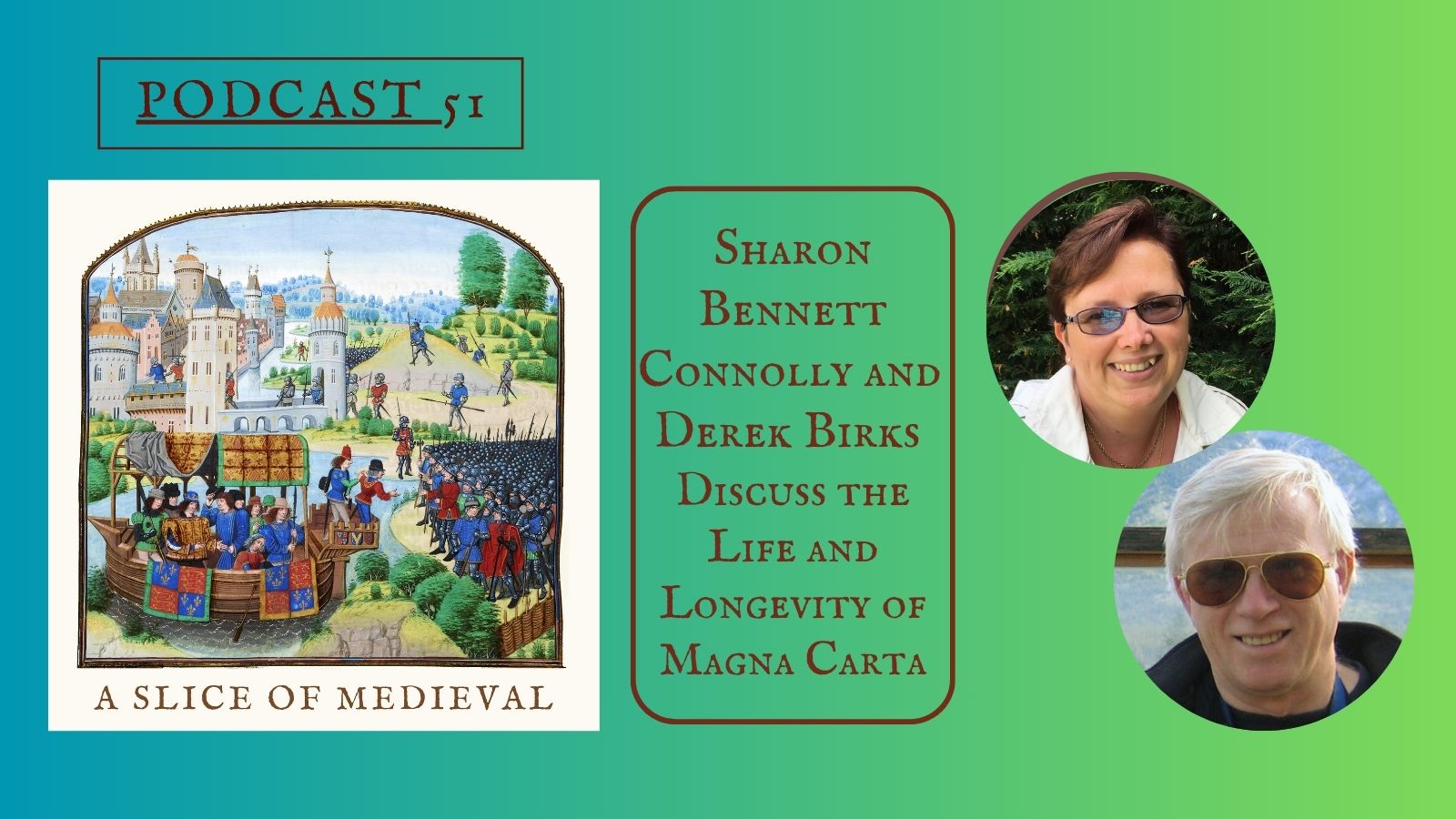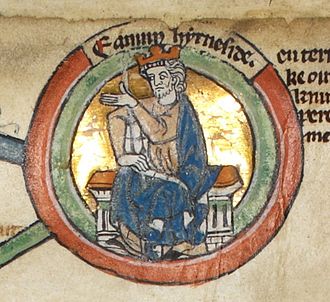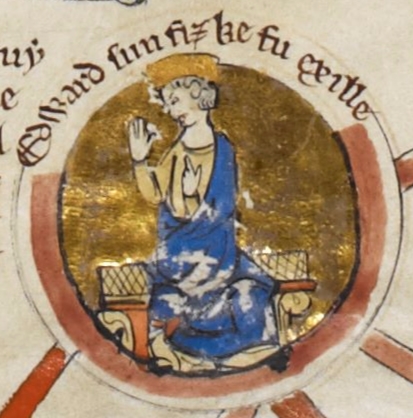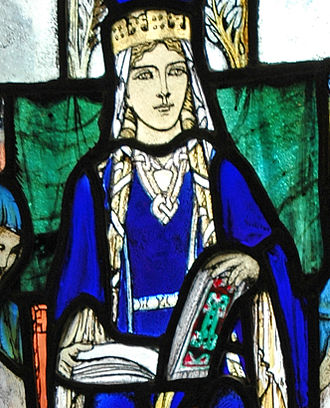
The Dreadful Fate of Alfred the Aetheling

History ... the Interesting Bits
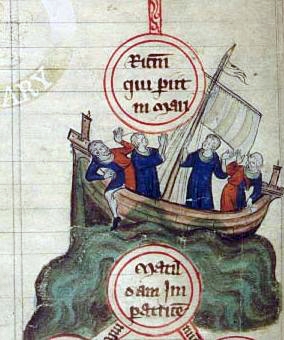
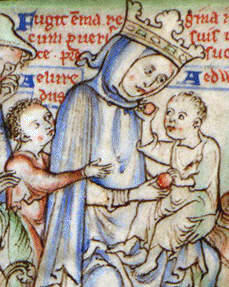
Emma fleeing England with Edward and Alfred, following the invasion of Sweyn Forkbeard

Alfred the Ætheling was the younger son of Æthelred II the Unready and his second wife, Emma of Normandy.

Emma was the daughter of Richard I, Duke of Normandy, and his wife, Gunnora. Born in around 985/987, she was married to Æthelred at Winchester on 5 April 1002, at which time she was given the English name Ælfgifu, although in the Anglo-Saxon Chronicle she is often referred to, simply, as ‘The Lady’. Her marriage with Æthelred was an attempt to seal a peace between England and Normandy, and to persuade the Normans not to allow the Viking raiders to winter in their lands between raids into England. Although the Vikings continued to shelter in Normandy during the winter, and raiding into England continued throughout the early years of the 11th century, the marriage was a success in that it produced two more sons and a daughter for Æthelred; a second family considering he was the father of as many as thirteen children by his first wife, Ælfgifu of York, including at least six sons.

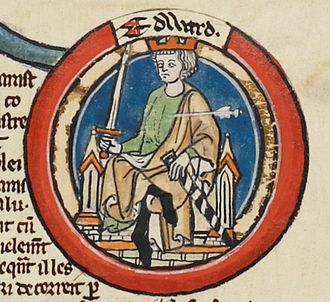
Of Emma and Æthelred’s two sons the eldest, Edward, would eventually succeed to the English throne following the death of his half-brother, Harthacnut, son of Emma by her second husband, King Cnut. Edward became king in 1042 and ruled until his death on 5 January 1066, leaving the crown on his deathbed to the ill-fated Harold II Godwinson. Edward’s younger brother, Alfred, however, was to suffer a rather different fate.

Alfred was born sometime before 1012 and styled ætheling, or throne-worthy, although he had numerous older brothers also holding that title. However, whilst still a young child, his father’s hold on the kingdom was becoming ever more precarious. By 1013 Danish king Sweyn Forkbeard was gaining victory after victory. Emma and her children were sent to safety in her native Normandy. The Anglo-Saxon Chronicle records:

‘the Lady then turned across the sea to her brother Richard, and Ӕlfsige, abbot of Peterborough with her. And the king sent Bishop Ӕlfhun across the sea with the ӕthelings Edward and Alfred in order that he should look after them.’¹

Ӕthelred spent Christmas on the Isle of Wight, before joining his family in Normandy as Sweyn consolidated his victory. The Dane’s ascendancy was short-lived however, as he died after a fall from his horse on 3 February 1014. His death gave Ӕthelred a way back to his kingdom and he sent Edward to England to negotiate his return with the English Witan, who invited Æthelred to resume the throne ‘if he would govern them better than he did before’.¹ Unfortunately, despite his promises, Æthelred proved just as inept as before, failing to defeat the Danish invaders, led by Sweyn’s son Cnut. The beleaguered Æthelred died just two years later, on 23 April 1016, and was succeeded by his oldest surviving son by his first wife, Edmund II Ironside. Although Edmund put up a valiant fight against the Danish invaders, a summer of fighting took its toll and he died on 30 November 1016, probably from wounds received in the recent string of battles. The rumours of murder by a sword thrust into the bowels as Edmund visited the latrine, only arose centuries later.
History ... the Interesting Bits
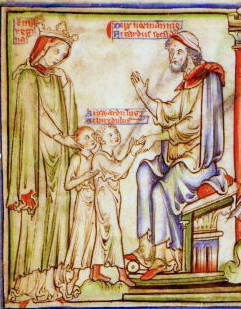
Emma, with Edward and Alfred, welcomed to the Norman court by Duke Richard II

Alfred and his brother Edward, again, sought in exile in Normandy, as Cnut consolidated his control on the whole of England.. One of the new king’s first actions was to send for their mother Emma, who he married on 2 July 1017. Marrying Emma was a sensible move for Cnut, she was a link to the old regime and provided a sense of continuity for England’s conquered people. How much choice had in accepting the most powerful man in the country as her husband, we do not know; she may have thought it the only way of ensuring Cnut did not pursue the deaths of her sons in exile. Emma gave Cnut three children including a son, Harthacnut, and two daughters; one, who’s name is lost, died aged 8 and is buried in Bosham, Sussex. A second daughter, Gunhilda, married Henry III, Emperor of Germany.

When Cnut died in 1035 Emma was in England and retired to her manor in Winchester, taking the royal treasury with her, in the hope she could pass it to her son, Harthacnut. However, Harthacnut was in Denmark and it was Harold Harefoot, one of Cnut’s two sons by Ælfgifu of Northampton, who seized the initiative. An agreement was reached whereby the half-brothers ruled as co-kings with Emma acting for Harthacnut, in his absence, and ruling in Wessex.

As it was, in 1036 Harold was accepted as England’s ruler, Harthacnut was ruling in Denmark and Emma was living on her estates in Winchester. Emma faced tragedy, however, when her son Alfred arrived in England. The ætheling was probably approaching thirty years of age and had been living in exile in Normandy for the last twenty years, arrived in England. According to Norman sources, it was Edward who had first tried to join their mother in Winchester in 1036, sailing up the Solent and winning a battle near Southampton before returning to Normandy with his plunder. It was after this that Alfred attempted to visit his mother in Winchester, but many feared he would make a play for the crown.

However, before he had the chance to see Emma, the ӕtheling was welcomed by Earl Godwin, taken to Godwin’s estate at Guildford, where he was seized and taken to Ely. At Ely he was blinded; blinding was a symbolic gesture aimed at destroying his worth as a king.

The Anglo-Saxon Chronicle retold the tale in rhyme:
History ... the Interesting Bits
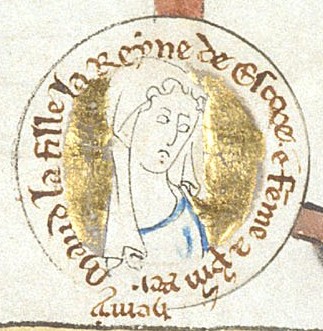
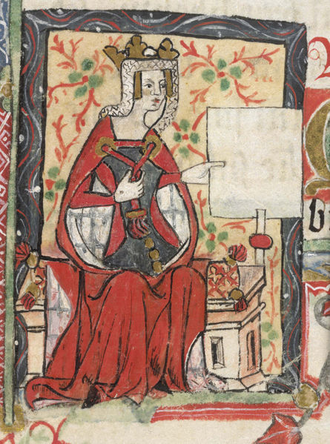
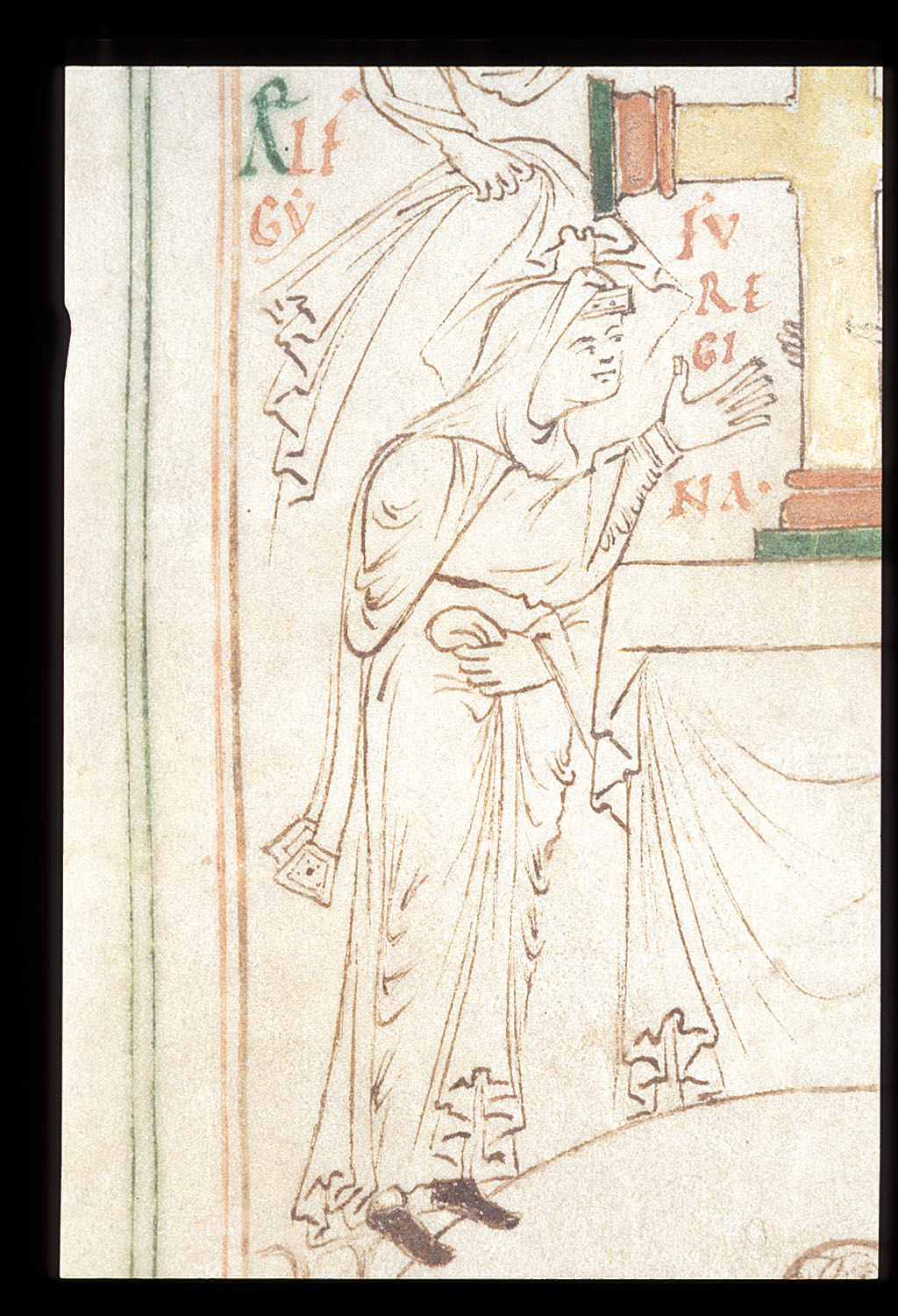
Detail of Queen Emma before an altar

‘But then Godwine stopped him, and set him in captivity,

and drove off his companions, and some variously killed;

some of them were sold for money, some cruelly destroyed,

some of them were fettered, some of them were blinded,

some maimed, some scalped.

No more horrible deed was done in this country

since the Danes came and made peace here.

Now we must trust to the dear God

that they who, without blame, were so wretchedly destroyed

rejoice happily with Christ.

The ӕtheling still lived; he was threatened with every evil;

until it was decided that he be led

to Ely town, fettered thus.

As soon as he came on ship he was blinded,

and blind thus brought to the monks.

And there he dwelt as long as he lived.

Afterwards he was buried, as well befitted him,

full honourably, as he was entitled,

at the west end, very near at hand to the steeple,

in the south side-chapel. His soul is with Christ.²

Emma’s own biography, the Encomium Emmae Reginae tells the story slightly differently, saying that Harold Harefoot forged a letter from Emma to her son, which claimed that the English would prefer Edward or Alfred as king, enticing Alfred to come to England and claim the crown. It does seem likely that Alfred received such a letter, but it may well have come from Emma herself, who sought to lay the blame on Harold when the expedition failed so abysmally.
History ... the Interesting Bits
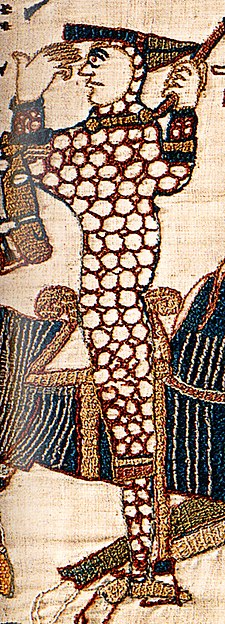
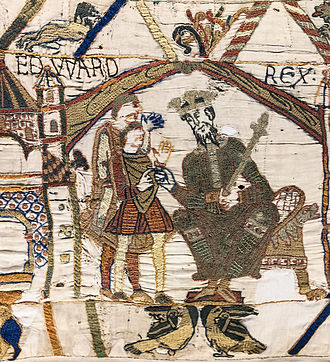
Edward the Confessor, taken from the Bayeux Tapestry

The sources are confusing over what exactly happened. Some state that when Alfred arrived in England, he was met by Earl Godwin, who swore fealty to him and established the ætheling at Guildford, but then Harold attacked in the night and took Alfred to Ely, where he was tried, blinded, killed and buried. While others suggest that Godwin betrayed Alfred and handed him over to King Harold. Either way, the result is always the same; Alfred was blinded and either intentionally killed or died from wounds caused by his blinding, on Harold’s orders, with or without the connivance of Godwin in late 1036 or early 1037.³ This one potential threat to Harold’s crown was thus eliminated and buried in Ely.

Emma must have been relieved that at least Edward had remained safe in Normandy. Despite the fact she had not seen him for many years, the loss of Alfred must have been a cruel blow to his mother. His brothers, moreover, did not forget Alfred’s fate. On his accession in 1040, Harthacnut pursued the prosecution of Godwin and Lyfing, the Bishop of Worcester and Crediton who had also been implicated in Alfred’s death, for Alfred’s murder. Lyfing was deprived of his see in punishment. Godwin gave the king a warship carrying eighty fighting men as appeasement – an expensive sweetener – and swore that he had not wanted the prince blinded and that whatever he had done had been on the orders of King Harold.

Like Harthacnut, Edward was never convinced of Godwin’s innocence, a fact which added to the increasing distrust and conflict between the king and his most powerful earl in the first ten years of Edward’s reign. Indeed, when the Godwin family and Edward quarrelled in 1051, it was Edward’s demand to have his brother returned to him that made Earl Godwin realise there would be no rapprochement; the earl sailed into exile in Flanders with his family. When he did manage to negotiate his return the following year, Edward and Godwin were still wary of each other. Moreover, when Godwin died at Winchester 1052, having collapsed during the Easter feast to entertain the king, a story arose that Godwin had called on God to choke him with a mouthful of cake if he were guilty of Alfred’s murder. Needless to say, Earl Godwin collapsed on the floor the very next moment. Though it is a great moral story, there is probably little truth in it, and it is likely we will never know the extent of Godwin’s guilt, or innocence.

*

Footnotes: ¹The Anglo-Saxon Chronicle translated by James ingram; ²The Anglo-Saxon Chronicles translated and edited by Michael Swaton; ³Alfred Ætheling (article) by M.K.Lawson, oxforddnb.com

*

Pictures courtesy of Wikipedia, except Queen Emma, courtesy of British Library.

Sources: Brewer’s British Royalty by David Williamson; Britain’s Royal Families, the Complete Genealogy by Alison Weir;The Wordsworth Dictionary of British History by JP Kenyon; The Anglo-Saxons in 100 Facts by Martin Wall; Kings, Queens, Bones and Bastards by David Hilliam; The Mammoth Book of British kings & Queens by Mike Ashley; The Oxford Companion to British History Edited by John Cannon; The Anglo-Saxon Chronicles translated and edited by Michael Swaton; The Anglo-Saxon Chronicle translated by James Ingram; Queen Emma and the Vikings by Harriett O’Brien; The Bayeux Tapestry by Carola Hicks; oxforddnb.com.

*

My Books

Signed, dedicated copies of all my books are available through my online bookshop.

Out now: Scotland’s Medieval Queens

Books by Sharon Bennett Connolly

Scotland’s history is dramatic, violent and bloody. Being England’s northern neighbour has never been easy. Scotland’s queens have had to deal with war, murder, imprisonment, political rivalries and open betrayal. They have loved and lost, raised kings and queens, ruled and died for Scotland. From St Margaret, who became one of the patron saints of Scotland, to Elizabeth de Burgh and the dramatic story of the Scottish Wars of Independence, to the love story and tragedy of Joan Beaufort, to Margaret of Denmark and the dawn of the Renaissance, Scotland’s Medieval Queens have seen it all. This is the story of Scotland through their eyes.

Scotland’s Medieval Queens gives a thorough grounding in the history of the women who ruled Scotland at the side of its kings, often in the shadows, but just as interesting in their lives beyond the spotlight. It’s not a subject that has been widely covered, and Sharon is a pioneer in bringing that information into accessible history.’ Elizabeth Chadwick (New York Times bestselling author)

Available now from Amazon and Pen and Sword Books

Also by Sharon Bennett Connolly:

Books by Sharon Bennett Connolly

Heroines of the Tudor World tells the stories of the most remarkable women from European history in the time of the Tudor dynasty, 1485-1603. These are the women who ruled, the women who founded dynasties, the women who fought for religious freedom, their families and love. Heroines of the Tudor World is now available for pre-order from Amberley Publishing and Amazon UK. Women of the Anarchy demonstrates how Empress Matilda and Matilda of Boulogne, unable to wield a sword themselves, were prime movers in this time of conflict and lawlessness. It shows how their strengths, weaknesses, and personal ambitions swung the fortunes of war one way – and then the other. Available from Bookshop.orgAmberley Publishing and Amazon UKKing John’s Right-Hand Lady: The Story of Nicholaa de la Haye is the story of a truly remarkable lady, the hereditary constable of Lincoln Castle and the first woman in England to be appointed sheriff in her own right. Available from all good bookshops Pen & Sword Booksbookshop.org and Amazon

Defenders of the Norman Crown: The Rise and Fall of the Warenne Earls of Surrey tells the fascinating story of the Warenne dynasty, from its origins in Normandy, through the Conquest, Magna Carta, the wars and marriages that led to its ultimate demise in the reign of Edward III. Available from Pen & Sword BooksAmazon in the UK and US, and Bookshop.orgLadies of Magna Carta: Women of Influence in Thirteenth Century England looks into the relationships of the various noble families of the 13th century, and how they were affected by the Barons’ Wars, Magna Carta and its aftermath; the bonds that were formed and those that were broken. It is now available in paperback and hardback from Pen & SwordAmazon, and Bookshop.orgHeroines of the Medieval World tells the stories of some of the most remarkable women from Medieval history, from Eleanor of Aquitaine to Julian of Norwich. Available now from Amberley Publishing and Amazon, and Bookshop.orgSilk and the Sword: The Women of the Norman Conquest traces the fortunes of the women who had a significant role to play in the momentous events of 1066. Available now from Amazon,  Amberley Publishing, and Bookshop.org.

Alternate Endings: An anthology of historical fiction short stories including Long Live the King… which is my take what might have happened had King John not died in October 1216. Available in paperback and kindle from Amazon.

Podcast:

Have a listen to the A Slice of Medieval podcast, which I co-host with Historical fiction novelist Derek Birks. Derek and I welcome guests, such as Elizabeth Chadwick, Helen Castor, Ian Mortimer, Scott Mariani and Bernard Cornwell and discuss a wide range of topics in medieval history, from significant events to the personalities involved.

Every episode is also now available on YouTube.

*

Don’t forget! Signed and dedicated copies of all my books are available through my online bookshop.

For forthcoming online and in-person talks, please check out my Events Page.

You can be the first to read new articles by clicking the ‘Follow’ button, liking our Facebook page or joining me on TwitterThreadsBluesky and Instagram.

*

©2018 Sharon Bennett Connolly FRHistS
The Wives and Family of King Harold II

History ... the Interesting Bits
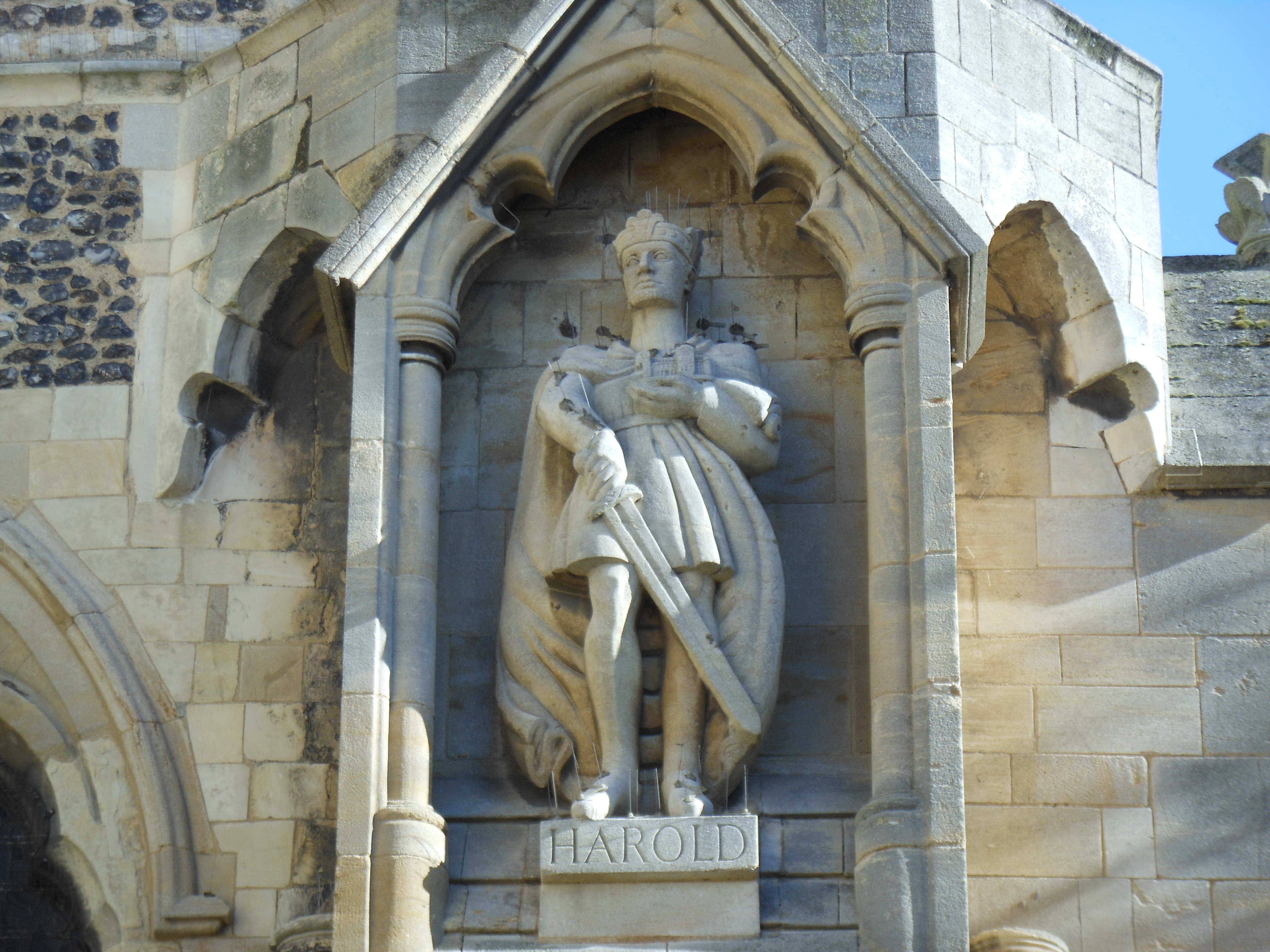
Statue of King Harold II at Waltham Abbey

The future king, Harold II Godwinson, was born into an Anglo-Danish family whose extensive influence and power meant they were frequently seen as the power behind the throne. This also meant that they were often seen as a threat to the man wearing the crown – especially Edward the Confessor – and suffered exile as a result.

Harold was born around 1022/3 to Godwin and his wife, Gytha Thorkelsdottir. Gytha was a member of the extended Danish royal family, as her brother, Ulf, was married to King Cnut the Great’s sister, Estrith. Gytha’s nephew, Sweyn Estrithson, would eventually rule Denmark as king. Harold received the earldom of East Anglia in 1044 and, as the oldest surviving son of Godwin, Earl of Wessex, he succeeded to his father’s earldom in 1053. Godwin died at Winchester in Easter week of 1053, after collapsing during a feast to entertain his son-in-law, King Edward the Confessor.

Harold’s sister, Edith, was the wife of King Edward; she had married him in January 1046. However, the fact they had no children meant there was no clear successor to the English crown; a situation that would be a major cause of the crisis of 1066. Of Harold’s brothers three were to become earls; Tostig, Gyrth and Leofwine. However, Tostig was driven out of his earldom of Northumberland by an uprising in 1065 and replaced with Morcar, the brother of Edwin, earl of Mercia. Gyrth and Leofwine both fought – and died – alongside Harold at Hastings. Harold’s older brother, Sweyn, once Earl of Hereford, had left on pilgrimage to Jerusalem in 1051, to atone for his many sins, which included the murder of his own cousin and the kidnapping and rape of an abbess, Eadgifu. He died – or was killed – on his journey home. Another, younger brother, Wulfnoth, was a hostage at the court of William, Duke of Normandy, along with his nephew – Sweyn’s son – Hakon.

History ... the Interesting Bits
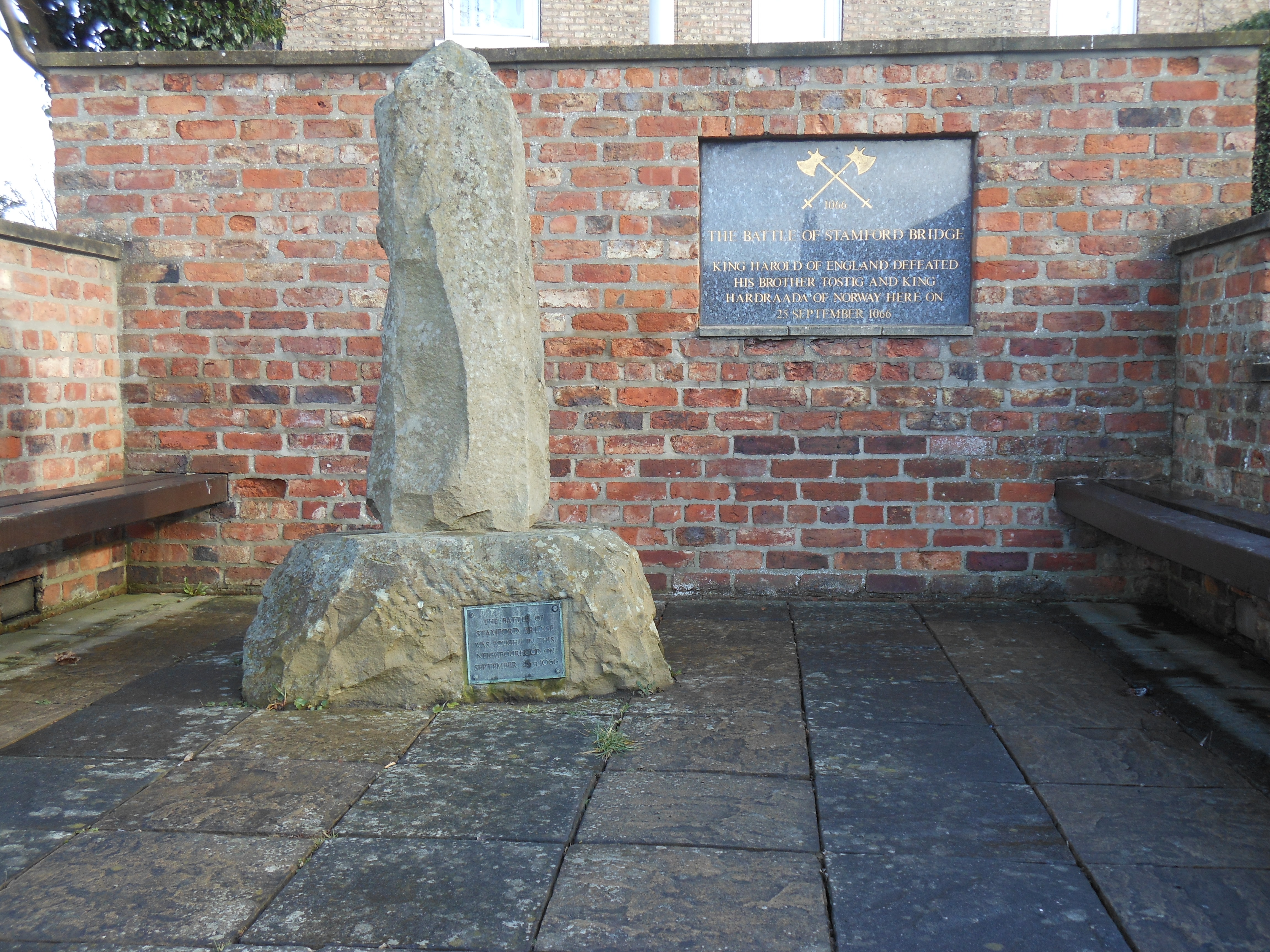
Memorial to the 1066 Battle of Stamford bridge just outside York

Harold, himself, was not only one of the king’s foremost earls but also one of his most respected advisors and generals. In short, the Godwinsons were the most powerful family in the kingdom, after the king himself – and often resented for the fact. At one point Harold, with his father and brothers, had been exiled from England after quarrelling with the king. During a visit to Normandy in 1064, Harold is even said to have sworn an oath to back William of Normandy’s claim to the English throne in the likely event that Edward the Confessor died without an heir; a claim that William used to the full in order to secure papal approval for his invasion of England.

However, when it came to the moment of truth, it was Harold the old king is said to have named on his deathbed as his successor. He was crowned on 6 January, just hours after the burial of Edward the Confessor in Westminster Abbey. There was no gentle introduction to kingship for King Harold II, however, and  almost immediately he had to prepare to defend England against the rival claimants of Norway and Normandy; and against his own brother, Tostig, who had joined forces with Harald Hardrada, King of Norway.

Harold’s love life was as tangled as his political life.

History ... the Interesting Bits
The battlefield of Hastings

Harold probably met Edith the Swan-neck (or Swanneshals) at about the same time as he became Earl of East Anglia, in 1044, which makes it possible that Edith the Swan-neck and the East Anglian magnate, Eadgifu the Fair, are one and the same. Eadgifu the Fair held over 270 hides of land and was one of the richest magnates in England. The majority of her estates lay in Cambridgeshire, but she also held land in Buckinghamshire, Hertfordshire, Essex and Suffolk; in the Domesday Book, Eadgifu held the manor at Harkstead in Suffolk, which was attached to Harold’s manor of Brightlingsea in Essex, and some of her Suffolk lands were tributary to Harold’s manor of East Bergholt.

While it is by no means certain that Eadgifu is Edith the Swan-neck, several historians – including Ann Williams in the Oxford Database of National Biography – make convincing arguments that they were. Even their names, Eadgifu and Eadgyth, are so similar that the difference could be merely a matter of spelling or mistranslation; indeed, the Abbey of St Benet of Hulme, Norfolk, remembers an Eadgifu Swanneshals among its patrons.

History ... the Interesting Bits
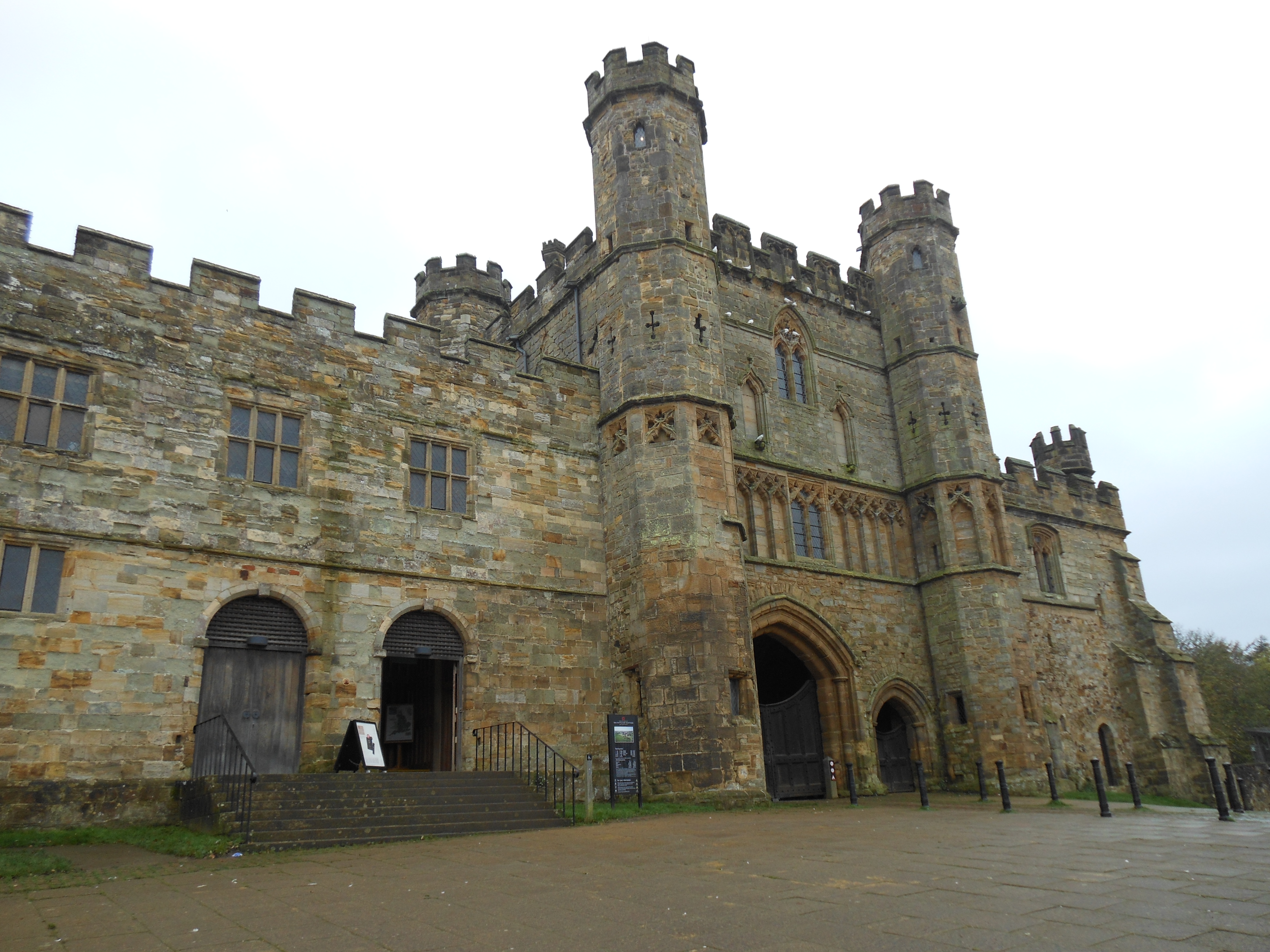
The gatehouse of Battle Abbey

What we do know is that by 1065 Harold had been living with the wonderfully-named Eadgyth Swanneshals (Edith the Swan-neck) for twenty years. History books label her as Harold’s concubine, but Edith was, obviously, no weak and powerless peasant, so it’s highly likely they went through a hand-fasting ceremony  – or ‘Danish marriage’ – a marriage, but not one recognised by the Church. It was not an uncommon practice – King Cnut had married his first wife, Ælfgifu of Northampton, in the same fashion. Edith being a hand-fast wife meant that Harold was still free to marry a second ‘wife’ in a Christian ceremony at a later date. Although we can’t say why Harold didn’t marry Edith in a manner recognised by the Church, it may be that they were both young and one or both of their families would not consent to their marriage.

Harold and Edith had about six children together – including three sons, Godwin, Edmund, Magnus and possibly a fourth, Ulf. They also had two daughters. Gytha married Vladimir Monomakh, Great Prince of Kiev, and is the ancestress of the current queen, Elizabeth II, through her descent from Philippa of Hainault. A second daughter, Gunnhild, spent sometime in Wilton Abbey in Wiltshire, although it is not certain that she was there with the intention of becoming a nun, or for safety and protection from the invading Normans. However, she is said to have eloped, before taking her vows, with a Breton knight, Alan the Red.

History ... the Interesting Bits
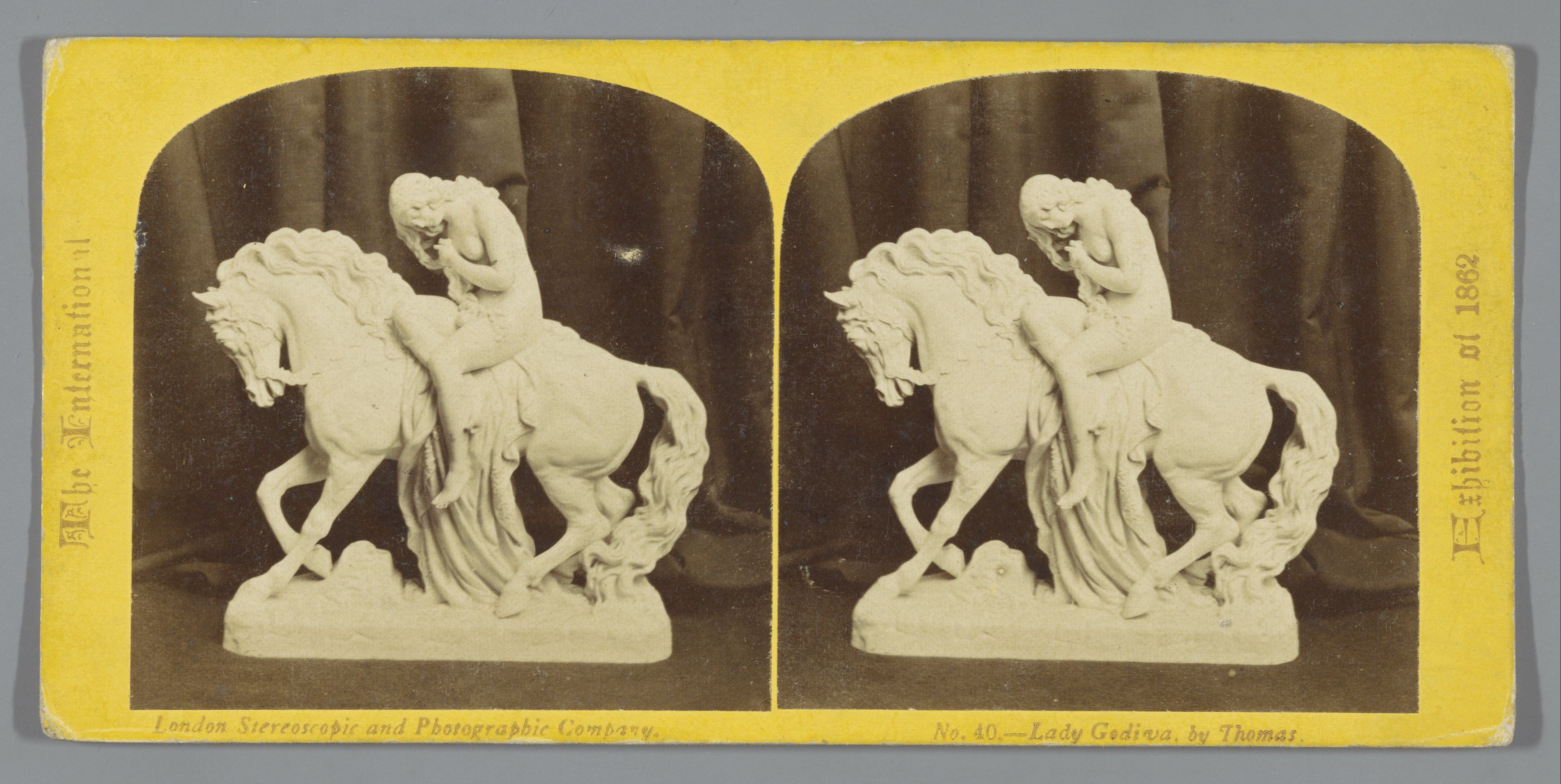
Lady Godiva, grandmother of Harold’s second wife, Ealdgyth

However, despite their twenty years and many children, and with the health of the king, Edward the Confessor, deteriorating, it became politically expedient for Harold to marry, to strengthen his position as England’s premier earl and, possibly, next king. Ealdgyth of Mercia was the daughter of Alfgar, Earl of Mercia, and granddaughter of the famous Lady Godiva and, according to William of Jumièges, very beautiful. Her brothers were Edwin, Earl of Mercia, and Morcar, who replaced Harold’s brother Tostig as Earl of Northumberland in the last months of 1065.

Ealdgyth was the widow of Gruffuddd ap Llywelyn, King of Gwynedd from 1039 and ruler of all Wales after 1055, with whom she had had at least one child, a daughter, Nest. Gruffuddd had been murdered in 1063, following an English expedition into Wales. Gruffudd’s own men are said to have betrayed their king, killed him and presented his head to Harold in submission. Harold’s subsequent marriage to Ealdgyth, which probably took place at the end of 1065 or beginning of 1066, not only secured the support of the earls of Northumbria and Mercia, but also weakened the political ties of the same earls with the new rulers of north Wales.

History ... the Interesting Bits
William the Conqueror, Harold’s nemesis

As Harold’s wife Ealdgyth was, therefore, for a short time, Queen of England. However, with Harold having to defend his realm, first against Harold Hardrada and his own brother, Tostig, at Stamford Bridge in September of 1066 and, subsequently, against William of Normandy at Hastings, it is unlikely Ealdgyth had time to enjoy her exalted status. At the time of the Battle of Hastings, on 14 October 1066, Ealdgyth was in London, but her brothers took her north to Chester soon after. Although sources are contradictory, it seems possible Ealdgyth was heavily pregnant and gave birth to a son, or twin sons, Harold and Ulf Haroldson, within months of the battle. The identity of Ulf’s mother seems to be sorely disputed, with some believing he was the twin brother of Harold and others that he was the youngest son of Edith Swan-neck; I suppose we will never know for certain.

Unfortunately, we hear nothing of Ealdgyth after the birth of Harold (and Ulf); her fate remains unknown. Young Harold is said to have grown up in exile on the Continent and died in 1098.

Despite his marriage to Ealdgyth of Mercia it seems Edith the Swan-neck remained close to Harold and it was she who was said to be waiting close by when the king faced William of Normandy at Senlac Hill near Hastings on 14 October 1066. She awaited the outcome alongside Harold’s mother, Gytha. Having lost a son, Tostig, just two weeks before, fighting against his brother and with the Norwegians at the Battle of Stamford Bridge, Gytha lost three more sons – Harold, Gyrth and Leofwine and, possibly, her grandson, Haakon, in the fierce battle at Hastings.

History ... the Interesting Bits
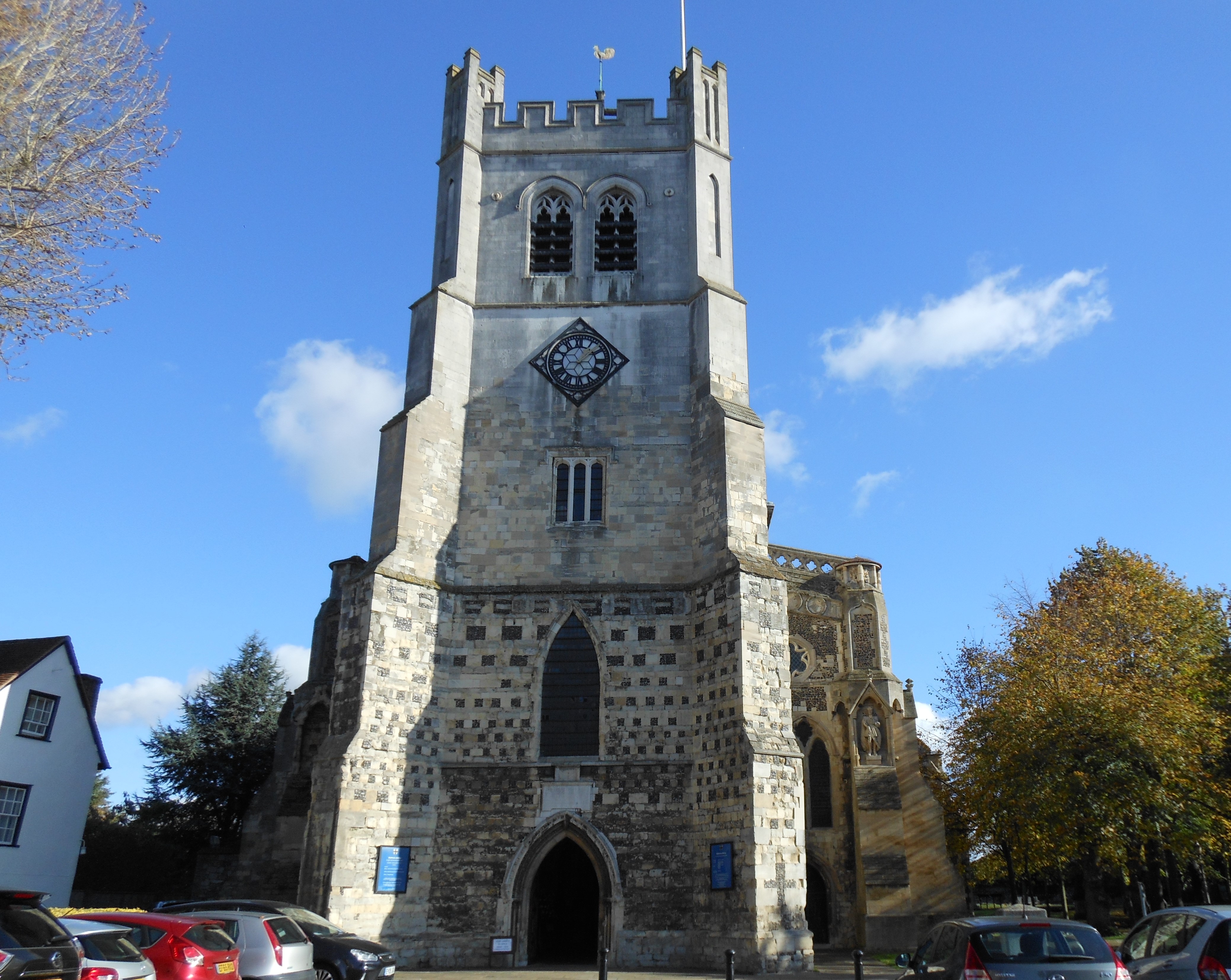
Waltham Abbey, where Edith is said to have brought Harold’s body after the Battle of Hastings

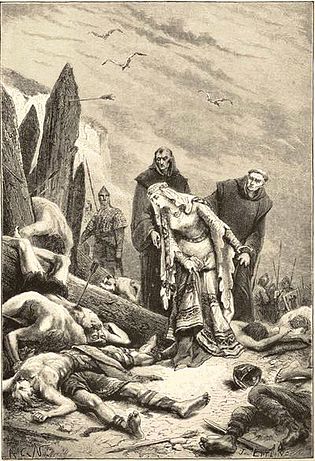
It is heart-wrenching, even now, to think of Edith and the elderly Gytha, wandering the blood-soaked field after the battle, in search of the fallen king. Sources say that Gytha was unable to identify her sons amid the mangled and mutilated bodies. It fell to Edith to find Harold, by undoing the chain mail of the victims, in order to recognise certain identifying marks on the king’s body – probably tattoos. There is a tradition, from the monks of Waltham Abbey, of Edith bringing Harold’s body to them for burial, soon after the battle. Although other sources suggest Harold was buried close to the battlefield, and without ceremony, it is hard not to hope that Edith was able to perform this last service for the king. However, any trace of Harold’s remains was swept away by Henry VIII’s dissolution of the monasteries, so the grave of England’s last Anglo-Saxon king is lost to history.

History ... the Interesting Bits
Edith searching the battlefield of Hastings for Harold’s body

After another year or so of leading resistance to Norman rule in the south-west, Harold’s mother, Gytha, eventually fled into exile on the Continent, taking Harold and Edith’s daughter, another Gytha, with her. Gytha and her nephew, Swein Estrithson, King of Denmark, arranged the marriage of the younger Gytha to the prince of Smolensk and – later – Kiev, Vladimir II Monomakh.

Edith and Harold’s sons fled to Ireland with all but one living into the 1080s, though the dates of their eventual deaths remain uncertain. Gunnhild remained in her nunnery at Wilton until sometime before 1093, when she became the wife or concubine of Alan the Red, a Norman magnate. Whether or not she was kidnapped seems to be in question but when Alan died in 1093, instead of returning to the convent, Gunnhild became the mistress of Alan’s brother and heir, Alan Niger. Alan Rufus held vast lands in East Anglia – lands that had once belonged to Eadgifu the Fair and, if Eadgifu was Edith the Swan-neck, it’s possible that Alan married Gunnhild to strengthen his claims to her mother’s lands.

History ... the Interesting Bits
Stone marking the site of Harold’s grave at Waltham Abbey

After 1066 Edith’s lands had passed to Ralph de Gael, but he rebelled against King William and so they were eventually given to Alan the Red. Gunnhild and Alan are thought to have had a daughter, Matilda, who was married to Walter d’Eyncourt. Matilda and Walter’s oldest son, William d’Eyncourt, died as a child whilst fostered in the household of William II Rufus. He was buried in Lincoln Cathedral; his grave is now lost but his grave marker is preserved in the cathedral’s museum.

Of Edith the Swan-neck, there is no trace after Harold is interred at Waltham Abbey. Although she spent twenty years at the side of the man who would become king, and her daughter, Gytha, would be an ancestress of the English royal family of today, Edith simply disappears from the pages of history. Overall, history has treated Edith kindly; sympathising with a woman who remained loyal to her man to the end, despite the fact her official status was questionable.

*

Pictures ©2018 Sharon Bennett Connolly except Lady Godiva, which is courtesy of the Rijksmuseum and Edith at Hastings and William the Conqueror, which are courtesy of Wikipedia.

*

Sources: The English and the Norman Conquest by Dr Ann Williams; Brewer’s British Royalty by David Williamson; Britain’s Royal Families, the Complete Genealogy by Alison Weir; The Wordsworth Dictionary of British History by JP Kenyon; The Norman Conquest by Marc Morris; Harold, the King Who Fell at Hastings by Peter Rex; The Anglo-Saxons in 100 Facts by Martin Wall; The Anglo-Saxon Age by Martin Wall; Kings, Queens, Bones and Bastards by David Hilliam; The Mammoth Book of British kings & Queens by Mike Ashley; The Oxford Companion to British History Edited by John Cannon; The Anglo-Saxon Chronicles translated and edited by Michael Swaton; The Anglo-Saxon Chronicle translated by James Ingram; Queen Emma and the Vikings by Harriett O’Brien; The Bayeux Tapestry by Carola Hicks; oxforddnb.com.

*

My books

Signed, dedicated copies of all my books are available through my online store.

Out now: Scotland’s Medieval Queens

Books by Sharon Bennett Connolly

Scotland’s history is dramatic, violent and bloody. Being England’s northern neighbour has never been easy. Scotland’s queens have had to deal with war, murder, imprisonment, political rivalries and open betrayal. They have loved and lost, raised kings and queens, ruled and died for Scotland. From St Margaret, who became one of the patron saints of Scotland, to Elizabeth de Burgh and the dramatic story of the Scottish Wars of Independence, to the love story and tragedy of Joan Beaufort, to Margaret of Denmark and the dawn of the Renaissance, Scotland’s Medieval Queens have seen it all. This is the story of Scotland through their eyes.

Scotland’s Medieval Queens gives a thorough grounding in the history of the women who ruled Scotland at the side of its kings, often in the shadows, but just as interesting in their lives beyond the spotlight. It’s not a subject that has been widely covered, and Sharon is a pioneer in bringing that information into accessible history.’ Elizabeth Chadwick (New York Times bestselling author)

Available now from Amazon and Pen and Sword Books

Also by Sharon Bennett Connolly:

Books by Sharon Bennett Connolly

Heroines of the Tudor World tells the stories of the most remarkable women from European history in the time of the Tudor dynasty, 1485-1603. These are the women who ruled, the women who founded dynasties, the women who fought for religious freedom, their families and love. Heroines of the Tudor World is now available from Amberley Publishing and Amazon UK. Women of the Anarchy demonstrates how Empress Matilda and Matilda of Boulogne, unable to wield a sword themselves, were prime movers in this time of conflict and lawlessness. It shows how their strengths, weaknesses, and personal ambitions swung the fortunes of war one way – and then the other. Available from Bookshop.orgAmberley Publishing and Amazon UKKing John’s Right-Hand Lady: The Story of Nicholaa de la Haye is the story of a truly remarkable lady, the hereditary constable of Lincoln Castle and the first woman in England to be appointed sheriff in her own right. Available from all good bookshops Pen & Sword Booksbookshop.org and Amazon

Books by Sharon Bennett Connolly

Defenders of the Norman Crown: The Rise and Fall of the Warenne Earls of Surrey tells the fascinating story of the Warenne dynasty, from its origins in Normandy, through the Conquest, Magna Carta, the wars and marriages that led to its ultimate demise in the reign of Edward III. Available from Pen & Sword BooksAmazon in the UK and US, and Bookshop.orgLadies of Magna Carta: Women of Influence in Thirteenth Century England looks into the relationships of the various noble families of the 13th century, and how they were affected by the Barons’ Wars, Magna Carta and its aftermath; the bonds that were formed and those that were broken. It is now available in paperback and hardback from Pen & SwordAmazon, and Bookshop.orgHeroines of the Medieval World tells the stories of some of the most remarkable women from Medieval history, from Eleanor of Aquitaine to Julian of Norwich. Available now from Amberley Publishing and Amazon, and Bookshop.orgSilk and the Sword: The Women of the Norman Conquest traces the fortunes of the women who had a significant role to play in the momentous events of 1066. Available now from Amazon,  Amberley Publishing, and Bookshop.org.

Alternate Endings: An anthology of historical fiction short stories including Long Live the King… which is my take what might have happened had King John not died in October 1216. Available in paperback and kindle from Amazon.

Podcast:

A Slice of Medieval

Have a listen to the A Slice of Medieval podcast, which I co-host with Historical fiction novelist Derek Birks. Derek and I welcome guests, such as Bernard Cornwell, Scott Mariana and Michael Jecks, and discuss a wide range of topics in medieval history, from significant events to the personalities involved. 

Every episode is also now available on YouTube.

*

Don’t forget! Signed and dedicated copies of all my books are available through my online store.

For forthcoming online and in-person talks, please check out my Events Page.

You can be the first to read new articles by clicking the ‘Follow’ button, liking our Facebook page or joining me on TwitterThreadsBluesky and Instagram.

*

©2018 Sharon Bennett Connolly FRHistS
In Search of Ӕlfgifu of York, Ӕthelred II’s First Wife

Æthelread II the Unready

The first wife of Ӕthelred II, Ӕlfgifu of York is a shadowy figure in history, with very little known about her. She was probably born sometime in the 960s. Ӕthelred and Ӕlfgifu were married around 985, when he was in his late teens or early twenties; Ӕlfgifu may have been a little younger.

The monk Ailred of Rievaulx, writing in the 1150s, identified her as the daughter of, Thored. Ailred had served in the household of David I, King of Scotland, a great-great-grandson of Ӕthelred II and Ӕlfgifu through his mother, Queen Margaret and so Ailred was well place to learn the ancestry of King David with some accuracy. Thored was Earl of Northumbria between, about, 975 and 992 and regularly attested charters by King Ӕthelred II during the 980s.

Marriage to the daughter of the leading noble of Northumbria would have been a beneficial move for King Ӕthelred. It would have helped to expand and strengthen his influence over the north of England, an area notoriously independent of the royal administration of the south, and bring him powerful friends and allies.

Ӕthelred was the youngest son of King Edgar the Peaceable and his last wife, Ælfthryth. The grandson of Edward the Elder, and great-grandson of Alfred the Great, Edgar was king from 959 until his death in 975. His wife, Ælfthryth, was probably born around 945; she was the daughter of Ealdorman Ordgar of Devon, her mother an unknown woman who is said to have been descended from the royal family. She was first married around the age of eleven to Æthelwold, the son of Æthelstan Half-King, ealdorman of East Anglia. However, Æthelwold died in 962, probably in a hunting accident, although there were rumours of murder on the orders of his wife’s supposed lover, King Edgar. Edgar’s marital history was already chequered. Ælfthryth could be Edgar’s second or third wife; she was certainly the third relationship by which children were born.

Ælfgifu’s son Edmund II Ironside

Ælfthryth and Edgar were married in 964 and were soon the parents of two sons; Edmund and Æthelred. Despite having an older half-brother, Edward, it is Edmund who was treated as Edgar’s acknowledged heir; his name being above that of Edward’s in a charter of 966, witnessed by both boys, which founded the New Minster at Winchester. Poor Ælfthryth must have been distraught when, in 971 and still only a child of about seven, young Edmund died.

When King Edgar died suddenly in 975 it was Edward, at the age of  13, who was proclaimed king, despite Ælfthryth trying to claim the crown for her surviving son, Æthelred, who was aged between 7 and 10 years of age. Edward reigned for just 3 years before he met a violent and untimely death at Corfe Castle in Dorset.

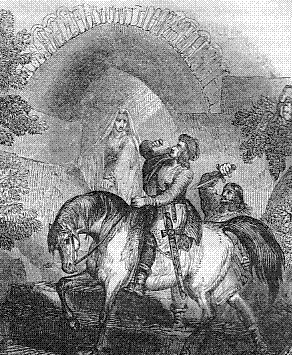
It was on 18th March 978 that 16-year-old King Edward visited his step-mother and half-brother at Ælfthryth’s estate at Corfe. Whether Edward had been out hunting, or was in the area to specifically visit Ælfthryth and Æthelred seems to be uncertain. However, he did send a message that he would be calling on them and Ælfthryth’s retainers were awaiting the young king at the gate, when he arrived with a small retinue. Still sitting in the saddle, he was handed a drink; and stabbed. It must have been a horrific sight, as the king’s horse panicked and bolted, racing off with Edward’s foot stuck in the stirrup and the dying king being dragged along behind. The Anglo-Saxon Chronicle recorded:

No worse deed than this was ever done by the English nation since they first sought the land of Britain. Men murdered him, but God hath magnified him. He was in life an earthly king. He is now after death a heavenly saint. ¹

With Edward’s death his surviving brother, Æthelred, possibly as young as 10 years old, and certainly no older than 13, was now king of England, with his mother and a council of prominent nobleman to guide him. He would rule over a tumultuous period in English history, when Saxon England was under frequent attacks from the Danes. His tendency to inaction, indecision, his ineffectual handling of the Danish incursions and the fact he lost the throne to Sweyn Forkbeard, have earned him a reputation as one of England’s worst rulers.

Edward the Exile, grandson of Ælfgifu and father of St Margaret, Queen of Scotland

As his mother and adviser – and a force to be reckoned with – it may well have been Ælfthryth who chose Ӕlfgifu of York as a bride for Æthelred. It is also possible, even likely, that Ælfgifu was never crowned because her mother-in-law, the crowned and anointed queen, was still alive. Indeed,  Ælfgifu’s successor as Æthelred’s wife, Emma of Normandy, was given a coronation, but Ælfthryth was dead by then.

In the 15-or-so years of marriage to Ӕlfgifu of York, the couple had a large number of children, including at least 6 boys and 4 girls. It is even likely that Ӕlfgifu’s mother-in-law, Ælfthryth, raised a number of her children, including the royal couple’s first-born son and ætheling, Æthelstan. Ӕthelstan, was born c.986 but would die before his father, in June 1014, either killed in battle or from wounds received during the wars against Sweyn Forkbeard and his son Cnut. Ӕthelred and Ӕlfgifu’s other sons included Ecgberht, Edmund, Eadred, Eadwig and Edgar and all died young.

In April 1016 Edmund succeeded his father as King Edmund II Ironside but died in November of the same year, probably from wounds received in battle after a summer of constant fighting. His sons, Edward and Edmund, escaped Cnut by being sent into exile in eastern Europe. King Edmund’s sole-surviving brother Eadwig was murdered in 1017, on the orders of the victorious King Cnut.

Of Ӕthelred and Ӕlfgifu’s daughters, three were married to prominent Saxon noblemen. Edith was married to the traitorous Ealdorman, Eadric Streona, who kept changing sides during the wars against the Danes and eventually met his death on the orders of the triumphant King Cnut. Ӕlfgifu married Uhtred, Earl of Northumbria, an ally of Edmund Ironside who had to submit to Cnut when his earldom was under threat of being overrun by the Danes. He and forty of his supporters were murdered on Cnut’s orders in 1016. A third daughter, Wulfhild, married Ulfcytel, Ealdorman of East Anglia, who was killed in the fighting of 1016. A possible fourth daughter, whose name is unknown, became the abbess at Wherwell, a prominent convent at the time, and died in the 1050s.

Other than the children she bore, however, Ӕlfgifu of York has left very little imprint on history.  She gets barely a mention in the chronicles of the time. Sulcard of Westminster, writing in the second half of the eleventh century, says that she was “of very noble English stock”, but fails to give her name, while William of Malmesbury ignores her altogether. John of Worcester makes mention of Ӕlfgifu, giving her name and listing her sons but states, probably erroneously, that she was the daughter of Ӕthelberht. Ailred of Rievaulx provides us with the details of Ӕlfgifu’s parentage but, again, fails to name her. The poor woman doesn’t even make it into the Anglo-Saxon Chronicle.

St Margaret, Queen of Scotland

There is no evidence that Ӕlfgifu was a crowned and anointed as queen, unlike her successor, Emma of Normandy. We know nothing of her, not her personality or her actions during her time as Ӕthelred’s wife. We don’t even know the date of her death, though it must have been before April 1002, when Ӕthelred married Emma of Normandy.

Ӕlfgifu of York’s story has been greatly overshadowed by her larger-than-life successor, Emma of Normandy, the twice-crowned Queen of England as the wife of both Ӕthelred II (the Unready) and King Cnut (the Great). However, although she may have had little impact on history during her lifetime, it is the blood of Ӕlfgifu of York that still runs in the veins of the British royal family today, through the descendants of her son, Edmund II Ironside and his granddaughter, St Margaret, Queen of Scotland. Margaret’s daughter, Edith, was married to King Henry I of England. Her name was changed to Matilda on her marriage and it is through this Matilda and her daughter and namesake, Matilda, the Lady of the English, that all English kings and queens are descended.

*

Footnotes: ¹ Anglo-Saxon Chronicle edited by Michael Swanton.

*

Pictures courtesy of Wikipedia

Sources: Brewer’s British Royalty by David Williamson; Britain’s Royal Families, the Complete Genealogy by Alison Weir;The Wordsworth Dictionary of British History by JP Kenyon; The Anglo-Saxons in 100 Facts by Martin Wall; Kings, Queens, Bones and Bastards by David Hilliam; The Mammoth Book of British kings & Queens by Mike Ashley; The Oxford Companion to British History Edited by John Cannon; The Anglo-Saxon Chronicles translated and edited by Michael Swaton; The Anglo-Saxon Chronicle translated by James Ingram; Queen Emma and the Vikings by Harriett O’Brien; The Bayeux Tapestry by Carola Hicks; oxforddnb.com.

*

My books

Signed, dedicated copies of all my books are available through my online store.

Out nowKing John’s Right-Hand Lady: The Story of Nicholaa de la Haye

In a time when men fought and women stayed home, Nicholaa de la Haye held Lincoln Castle against all-comers, gaining prominence in the First Baron’s War, the civil war that followed the sealing of Magna Carta in 1215. A truly remarkable lady, Nicholaa was the first woman to be appointed sheriff in her own right. Her strength and tenacity saved England at one of the lowest points in its history. Nicholaa de la Haye is one woman in English history whose story needs to be told…

King John’s Right-Hand Lady: The Story of Nicholaa de la Haye is now available from Pen & Sword Booksbookshop.org and Amazon.

Coming 15 January 2024: Women of the Anarchy

On the one side is Empress Matilda, or Maud. The sole surviving legitimate child of Henry I, she is fighting for her birthright and that of her children. On the other side is her cousin, Queen Matilda, supporting her husband, King Stephen, and fighting to see her own son inherit the English crown. Both women are granddaughters of St Margaret, Queen of Scotland and descendants of Alfred the Great of Wessex. Women of the Anarchy demonstrates how these women, unable to wield a sword, were prime movers in this time of conflict and lawlessness. It show how their strengths, weaknesses, and personal ambitions swung the fortunes of war one way – and then the other.

Available for pre-order from Amberley Publishing and Amazon UK.

Also by Sharon Bennett Connolly:

Defenders of the Norman Crown: The Rise and Fall of the Warenne Earls of Surrey tells the fascinating story of the Warenne dynasty, of the successes and failures of one of the most powerful families in England, from its origins in Normandy, through the Conquest, Magna Carta, the wars and marriages that led to its ultimate demise in the reign of Edward III. Defenders of the Norman Crown: Rise and Fall of the Warenne Earls of Surrey is now available from Pen & Sword BooksAmazon in the UK and US, and  Bookshop.org.

Ladies of Magna Carta: Women of Influence in Thirteenth Century England looks into the relationships of the various noble families of the 13th century, and how they were affected by the Barons’ Wars, Magna Carta and its aftermath; the bonds that were formed and those that were broken. It is now available in paperback and hardback from Pen & Sword,  Amazon, and Bookshop.org.

Heroines of the Medieval World tells the stories of some of the most remarkable women from Medieval history, from Eleanor of Aquitaine to Julian of Norwich. Available now from Amberley Publishing and Amazon, and Bookshop.org.

Silk and the Sword: The Women of the Norman Conquest traces the fortunes of the women who had a significant role to play in the momentous events of 1066. Available now from Amazon,  Amberley Publishing, and Bookshop.org.

Alternate Endings: An anthology of historical fiction short stories including Long Live the King… which is my take what might have happened had King John not died in October 1216. Available in paperback and kindle from Amazon.

New Podcast:

Have a listen to the A Slice of Medieval podcast, which I co-host with Historical fiction novelist Derek Birks. Derek and I welcome guests, such as Bernard Cornwell, and discuss a wide range of topics in medieval history, from significant events to the personalities involved.

*

Signed and dedicated copies of all my books are available through my online store.

For forthcoming online and in-person talks, please check out my Events Page.

You can be the first to read new articles by clicking the ‘Follow’ button, liking our Facebook page or joining me on Twitter and Instagram.

*

©2018 Sharon Bennett Connolly FRHistS

Edgar – The Boy Who Wouldn’t Be King

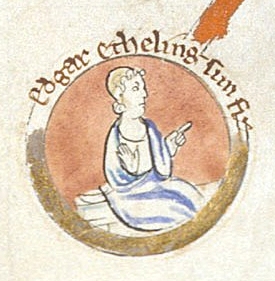
edgar_the_aetheling
Edgar the Aetheling

Edgar the Ætheling was the only son of Edward the Exile and his wife, Agatha. His father was the son of Edmund II Ironside, king of England in 1016; Edward’s grandfather was, therefore, Ӕthelred II (the Unready) and his uncle was Edward the Confessor, England’s king from 1042 until 1066. When his father was murdered in 1016 Edward and his younger brother, Edmund, were sent into exile of the continent by England’s new king, Cnut.

It is thought that Cnut intended that they would be killed, but the boys were protected by the king of Sweden and sent on to safety in Kiev, at the court of its prince, Jaroslav. Around 1043 Edward married Agatha, probably the daughter Liudolf, margrave of West Friesland and a relative of Emperor Heinrich III. Margaret, the oldest of three children, was born in either 1045 or 1046; her sister, Christina was born around 1050 and her brother Edgar, the Ӕtheling was born sometime between 1052 and 1056.

The family may have spent their whole lives in European exile, were it not for Edward the Confessor lacking an heir to the English throne; although Edward was married to Edith Godwinson, the couple remained childless. Sometime in 1054 Edward sent an embassy to Edward the Exile, to bring him back to England as ӕtheling, heir to the throne. The family could not travel immediately, possibly because Agatha was pregnant with Edgar, and only arrived in England in 1057, having journeyed by ship, provided by Emperor Heinrich III.

Just days after their return Edward the Exile was dead, whether by nefarious means or simply a twist of fate is uncertain. The suspicion has been raised that Edward’s rival for the throne, Harold Godwinson – the future Harold II – may have taken the opportunity to remove his rival; although it was Harold who brought Edward back to England, so surely, had he intended murder, he would have done it sooner?

Whatever the circumstances, the death of Edward the Exile was a blow for Edward the Confessor’s dynastic hopes. Little Edgar, now the ӕtheling was much too young to assume a political role. He and his sisters, along with their mother, were now in the protection of King Edward. They continued to live at court and by January 1066, when Edward the Confessor died, Margaret was approaching her twentieth birthday, while Edgar could have been as young as ten and was probably no older than fourteen. Due to his tender years, and lack of powerful allies, Edgar was passed over as a candidate for the throne in preference for the older and more experienced Harold Godwinson; who was crowned as Harold II.

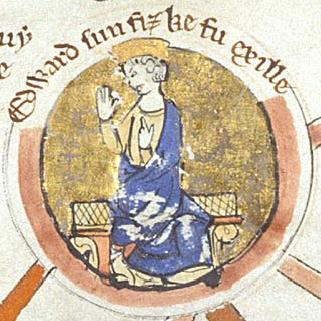
edward_the_exile
Edward the Exile. Edgar’s father

Following Harold’s death at the Battle of Hastings in October 1066, Edgar was proclaimed king in London by some of his supporters, led by Archbishop Ealdred of York, ‘as was his proper due by birth’¹; he was also promised backing by the earls Edwin and Morcar, brothers-in-law of Harold II but their support did not materialise, and without it Edgar’s cause was hopeless.  He submitted to William of Normandy, at Berkamsted, in early December. William treated Edgar honourably, allowing him his life and freedom, and giving him land.

However, by 1068 Edgar the Ӕtheling had become involved in the opposition to Norman rule, which had been festering in northern England. When events turned against him he fled to Scotland taking his mother and sisters along with him. The family was warmly received at Dunfermline by Scotland’s king, Malcolm III Canmore. At the time, Malcolm was married to Ingebiorg and the father of two sons, Duncan and Donald. Whether Ingebiorg died or was put aside, seems uncertain; her sons were exiled from court, although Duncan would eventually reign as Duncan II he was killed at the Battle of Monthechin in 1094.

Although we do not know Ingebiorg’s fate, we do know that in 1069 Malcolm asked Edgar and his mother for Margaret’s hand in marriage. Margaret was reluctant to agree to the marriage, she was more inclined to a religious life and had hoped to become a nun. Nonetheless, with pressure from Malcolm and, possibly, her own sense of obligation to the king who was sheltering her family, she eventually accepted his proposal. They were married at Dunfermline sometime in 1069 or 1070 and, by all accounts, it seems to have been a happy and successful marriage.

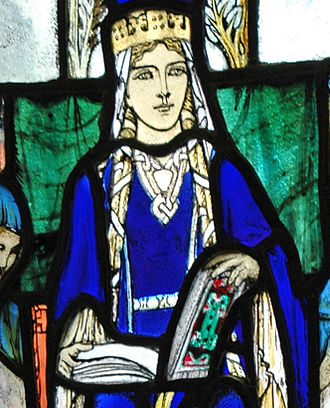
330px-stmargareth_edinburgh_castle2
St Margaret, queen of Scotland

In 1069, Edgar was back in northern England, at the head of the Northumbrian rebels who entered York. After defeat at York, he fled again to Scotland, but returned to lead the Northumbrian army when a Danish fleet arrived in the Humber. The army captured the Norman castle at York and killed its garrison. During the winter, Edgar narrowly evaded capture when he raided into Lincolnshire with a ship from the Danish fleet. Although he was part of the rebellion, there does not appear to have been any specific plans to make Edgar king and in 1070 William brought the full force of his wrath down on the north, systematically and brutally crushing the rebellion.

Edgar fled again to Scotland, and played no part in the 1071-2 rebellion at Ely. By 1074 he was in exile in Flanders. He was shipwrecked in the same year, while on the way to take control of the castle of Montreuil, offered to him by the French as a base from which he could torment King William. Having returned to Scotland, and on the advice of his brother-in-law, Malcolm III, Edgar submitted to William I and was established at his court. According to William of Malmesbury he remained ‘at court for many years, silently sunk into contempt through his indolence, or more mildly speaking, his simplicity’².

According to the Domesday Book, Edgar held 2 estates in Hertfordshire in 1086; Barkway and Hormead. He became close friends with 2 of the Conqueror’s sons; Robert Curthose and William Rufus. In 1086, he was sent to Apulia, another land under Norman rule, with a force of 200 knights, although the nature of his mission is unknown, the mission itself is testament to the high regard the Normans held him in. Edgar then joined Robert Curthose, duke since his father’s death in 1087, in Normandy, but was expelled from there in 1091, following a treaty between Robert and his brother, William II of England.

robert_curthose_-_ms_royal_14_b_vi
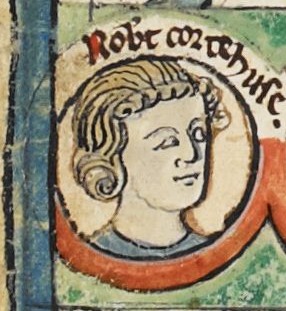
Robert Curthose, duke of Normandy

As a result, Edgar went to Scotland and encouraged Malcolm III to invade England. Peace was eventually restored and in 1093 Edgar was employed by William to escort King Malcolm to the English court. Both Malcolm and Margaret died within a few days of each other, in November 1093. In 1095 Edgar campaigned with William against the rebellious earl of Northumbria, Robert de Mowbray and by 1097 as guardian for his nephew, Edgar, in Scotland, he ‘went with an army, with the king’s support, into Scotland, and conquered the country in a severe battle’³ making his nephew and namesake king of Scotland.

According to Orderic Vitalis, in 1098 Edgar joined the First Crusade, arriving at Latakia in the Levant in June; having taken the area under his protection he then transferred it to Robert Curthose, also a Crusader. However, Orderic is the only source for Edgar’s participation and another possibility is that his journey to the Holy Land was later, in 1102 – or maybe he made 2 journeys?

Edgar returned to England in the early 1100s and fought his last action, for Robert Curthose, at the Battle of Tinchebrai in 1106. Robert was defeated by his younger brother, Henry I of England, and was imprisoned until his death in 1134. Edgar, however, was incarcerated for only a short while and was soon released;his Anglo-Saxon royal descent was no longer an issue of contention, since Henry had married Edgar’s niece, Matilda, soon after taking the crown in 1100.

matylda_zena
Matilda, Edgar’s niece and queen of England

Edgar seems to have been only a minor player in the politics and upheaval following the Norman Conquest. His political isolation meant that few took his claim to the English crown seriously. While his participation in military actions, and in relations with Scotland are mentioned in various documents, his death passed without notice – or remark. William of Malmesbury wrote of him in 1125, that ‘he now grows old in the country in privacy and quiet’². Nothing is mentioned of him thereafter; neither is it ever remarked that he had a wife of children.

If he had only been a few years older in that crucial year of 1066, his story could have been very different. instead, he simply slips from the pages of history, remembered only as England’s lost king.

*

Footnotes: ¹Anglo-Saxon Chronicle, 1066, Text D; ² William of Malmesbury, De gestis regum; ³Anglo-Saxon Chronicle, 1097, Text E.

*

Sources: Anglo-Saxon Chronicle; William of Malmesbury, De gestis regum; Oxforddnb.com; The History Today Companion to British History, Edited by juliet Gardner and Neil Wenborn; The Battle of Hastings, 1066 by m.K. Lawson; The Oxford Companion to British History edited by John Cannon; Britain’s Royal Families, the Complete Genealogy by Alison Weir; Edward the Confessor, King of England by Peter Rex; The Mammoth Book of British Kings & Queens by Mike Ashley; Brewer’s British Royalty by David Williamson; The Norman Conquest by Teresa Cole

*

Pictures courtesy of Wikipedia

*

My Books:

Signed, dedicated copies of all my books are available through my online bookshop.

OUT NOW: Scotland’s Medieval Queens

Books by Sharon Bennett Connolly

Scotland’s history is dramatic, violent and bloody. Being England’s northern neighbour has never been easy. Scotland’s queens have had to deal with war, murder, imprisonment, political rivalries and open betrayal. They have loved and lost, raised kings and queens, ruled and died for Scotland. From St Margaret, who became one of the patron saints of Scotland, to Elizabeth de Burgh and the dramatic story of the Scottish Wars of Independence, to the love story and tragedy of Joan Beaufort, to Margaret of Denmark and the dawn of the Renaissance, Scotland’s Medieval Queens have seen it all. This is the story of Scotland through their eyes.

Scotland’s Medieval Queens gives a thorough grounding in the history of the women who ruled Scotland at the side of its kings, often in the shadows, but just as interesting in their lives beyond the spotlight. It’s not a subject that has been widely covered, and Sharon is a pioneer in bringing that information into accessible history.’ Elizabeth Chadwick (New York Times bestselling author)

Available now from Amazon and Pen and Sword Books

Also by Sharon Bennett Connolly:

Books by Sharon Bennett Connolly

Heroines of the Tudor World tells the stories of the most remarkable women from European history in the time of the Tudor dynasty, 1485-1603. These are the women who ruled, the women who founded dynasties, the women who fought for religious freedom, their families and love. Heroines of the Tudor World is now available for pre-order from Amberley Publishing and Amazon UK. Women of the Anarchy demonstrates how Empress Matilda and Matilda of Boulogne, unable to wield a sword themselves, were prime movers in this time of conflict and lawlessness. It shows how their strengths, weaknesses, and personal ambitions swung the fortunes of war one way – and then the other. Available from Bookshop.orgAmberley Publishing and Amazon UKKing John’s Right-Hand Lady: The Story of Nicholaa de la Haye is the story of a truly remarkable lady, the hereditary constable of Lincoln Castle and the first woman in England to be appointed sheriff in her own right. Available from all good bookshops Pen & Sword Booksbookshop.org and Amazon

Books by Sharon Bennett Connolly

Defenders of the Norman Crown: The Rise and Fall of the Warenne Earls of Surrey tells the fascinating story of the Warenne dynasty, from its origins in Normandy, through the Conquest, Magna Carta, the wars and marriages that led to its ultimate demise in the reign of Edward III. Available from Pen & Sword BooksAmazon in the UK and US, and Bookshop.orgLadies of Magna Carta: Women of Influence in Thirteenth Century England looks into the relationships of the various noble families of the 13th century, and how they were affected by the Barons’ Wars, Magna Carta and its aftermath; the bonds that were formed and those that were broken. It is now available in paperback and hardback from Pen & SwordAmazon, and Bookshop.orgHeroines of the Medieval World tells the stories of some of the most remarkable women from Medieval history, from Eleanor of Aquitaine to Julian of Norwich. Available now from Amberley Publishing and Amazon, and Bookshop.orgSilk and the Sword: The Women of the Norman Conquest traces the fortunes of the women who had a significant role to play in the momentous events of 1066. Available now from Amazon,  Amberley Publishing, and Bookshop.org.

Alternate Endings: An anthology of historical fiction short stories including Long Live the King… which is my take what might have happened had King John not died in October 1216. Available in paperback and kindle from Amazon.

Podcast:

A Slice of Medieval

Have a listen to the A Slice of Medieval podcast, which I co-host with Historical fiction novelist Derek Birks. Derek and I welcome guests, such as Bernard Cornwell, and discuss a wide range of topics in medieval history, from significant events to the personalities involved. Definitely worth a listen!

Every episode is also now available on YouTube.

*

Don’t forget! Signed and dedicated copies of all my books are available through my online bookshop.

For forthcoming online and in-person talks, please check out my Events Page.

You can be the first to read new articles by clicking the ‘Follow’ button, liking our Facebook page or joining me on TwitterThreadsBluesky and Instagram.

©2016 Sharon Bennett Connolly FRHistS
William de Warenne, the Conqueror’s Man

History...the Interesting Bits
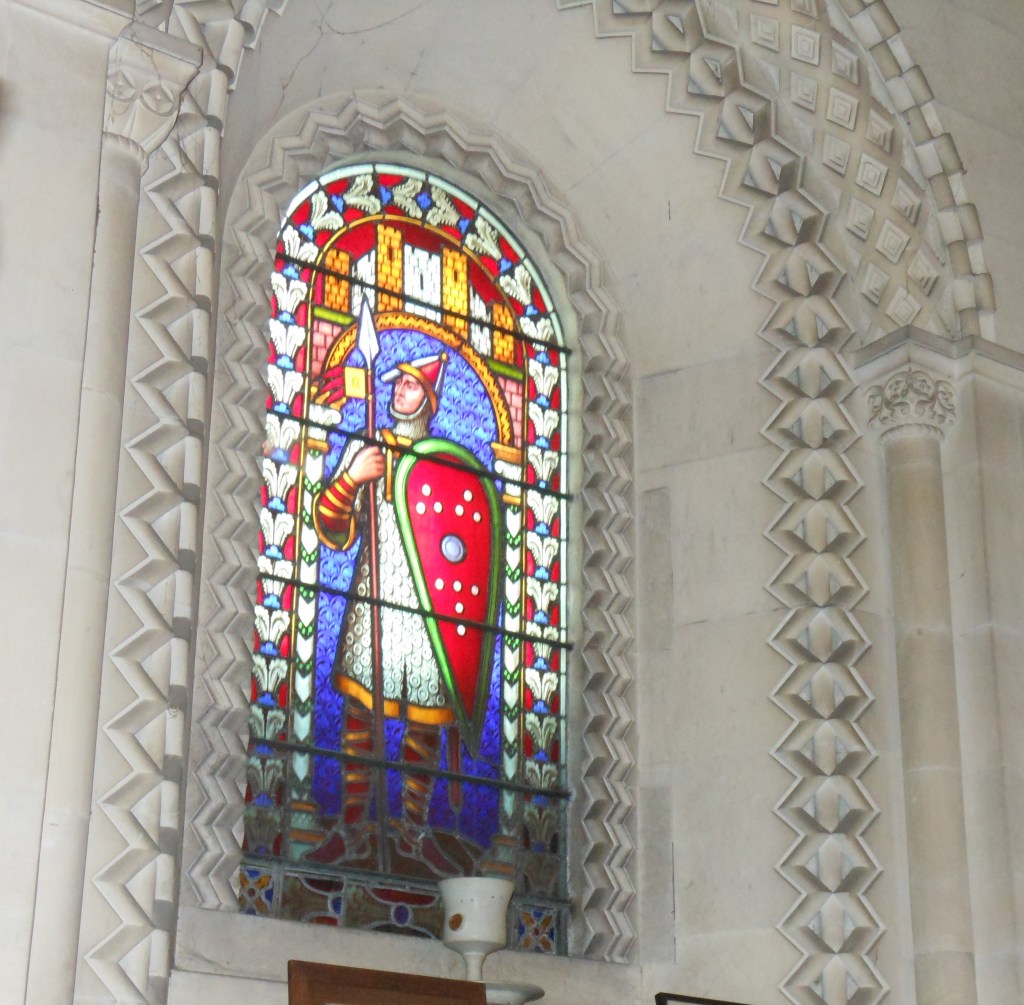
William de Warenne, 1st earl of Surrey

William de Warenne, first earl of Surrey, was a younger son of Rodulf de Warenne and his wife Beatrix. It is possible that Beatrix was a niece of Duchess Gunnor of Normandy, making young William a cousin of William the Bastard, duke of Normandy. The family name is probably derived from the hamlet of Varenne, part of the Warenne lands in the department of Seine-Inférieure, Normandy. William’s older brother, Rodulf or Ralph, would inherit the greater part of the Warenne family estates in Normandy.

His birth, as you might expect, is shrouded in the fog of time; a younger son of the minor nobility does not tend to get a mention until he does something remarkable or becomes someone notable. Although still young William was considered a capable and experienced enough soldier to be given joint command of a Norman army, by the mid-1050s. His first recorded military action is in the campaign against his own kinsman, Roger (I) de Mortemer of 1054, as one of the commanders of an army which defeated the French.

De Warenne was rewarded with some of the Mortemer lands; some of which he managed to retain even after Mortemer’s restoration to favour, including the castles of Mortemer and Bellencombre. Bellencrombe would become the capital of the de Warenne estates in Normandy. De Warenne received more rewards from the confiscated lands of William, count of Arques in 1053. Duke William’s confidence in de Warenne is demonstrated in the fact he was one of the barons consulted during the planning of the invasion of England in 1066.

In fact, William de Warenne is one of only a handful of Norman barons known to have fought at the Battle of Hastings on 14th October, 1066 as King William recalled his presence at the battle on his deathbed. De Warenne was rewarded with vast swathes of land throughout the country. According to the Domesday survey his lands extended over 13 counties; stretching from Conisbrough in Yorkshire to Lewes in Sussex. His territories were acquired over the course of the reign of William I and elevated him the highest rank of magnates. By 1086 his riches were only surpassed by the king’s half-brothers and his own kinsman, Roger de Montgomery. He is still in the Top 20 list of the richest people in History.

330px-bayeuxtapestryscene52
Battle of Hastings, 1066

Throughout his career, William de Warenne acquired lands in numerous counties, sometimes by nefarious means. Much of the property, such as Conisbrough, had formerly belonged to the late king, Harold. In Norfolk he is said to have asserted lordship over freemen not necessarily assigned to him. He had disputes with neighbouring landowners in Conisbrough, over which properties were sokelands and he is said to have stolen lands from the bishop of Durham and the abbot of Ely. Some acquisitions were obtained peacefully, such as the manor of Whitchurch in Shropshire, which was left to him by his kinsman Roger de Montgomery. William was an energetic and attentive landowner, and improved the economy of most of his estates; more than tripling his sheep flock at Castle Acre and doubling the value of his Yorkshire estates in just 20 years (at a time when the county was devastated by the Harrying of the North.

In 1067 William de Warenne was one of 4 prominent Normans appointed to govern England during William the Conqueror’s absence in Normandy. Following the Conquest, he continued to support the king and – subsequently – his son, William II Rufus – as a military commander for over 20 years. In 1074 he was with is father at  the abbey of Holy Trinity in Rouen and in 1083-85 he fought with the king on campaign in Maine, being wounded at the siege of the castle of Sainte-Suzanne.

In 1075, along with Richard de Clare, his fellow justiciar, he was sent to deal with the rebellion of Earl Ralph de Gael of East Anglia. De Gael had failed to respond to their summons to answer for an act of defiance and so the 2 lords faced and defeated the rebels at Fawdon in Cambridgeshire, mutilating their prisoners afterwards. Ralph withdrew to Norwich Castle; besieged for 3 months he managed to escape his attackers by boat, while the castle surrendered and was occupied by de Warenne.

History...the Interesting Bits
Gundrada de Warenne

William de Warenne was married to a Flemish noblewoman, Gundrada; her brother Gerbod was sometime earl of Chester and another brother, Frederic, held lands in Norfolk which eventually passed to Gundrada. He was murdered by Enlgish freedom fighter, Hereward the Wake; his murder giving rise to a personal feud between Hereward and William de Warenne:

Among his other crimes, by trickery [Hereward] killed Frederick, brother of Earl William of Warenne, a man distinguished by lineage and possessions, who one night was surrounded in his own house. On account of his murder, such discord arose between Hereward and the aforesaid William that it could not be settled by any reparation nor in any court.1

There has been considerable debate among historians over the theory that Gundrada may have been the daughter of William the Conqueror, but the confusion appears to have come from an unreliable charter belonging to Lewes Priory and Gundrada being part of the household of King William’s wife, Matilda; though it does seem likely that Matilda and Gundrada were related in some way, perhaps distant cousins. Gundrada and William were married sometime around the time of the Conquest, either before or after the expedition to conquer England.

They had 3 children together. Their eldest son, William, would succeed his father as Earl of Surrey and de Warenne. He married Isabel de Vermandois, widow of Robert de Beaumont, earl of Leicester; with whom he had, apparently, been having an affair even before the earl’s death. Young William had a chequered career, he supported the claims of Robert Curthose, duke of Normandy, to the English throne against the duke’s younger brother, Henry I. However, duke Robert lost and was captured and imprisoned by Henry. Henry eventually forgave William, who fought for the king at the Battle of Bremule and was with Henry he died in 1135.

A second son, Rainald de Warenne, led the assault on Rouen in 1090, for William II Rufus, in the conflict between the English king and his older brother, Duke Robert. However, by 1105 Rainald was now fighting for the duke against the youngest of the Conqueror’s sons, Henry I, defending the castle of Saint-Pierre-sur-Dives for the duke. He was captured by Henry the following year, but had been freed by September 1106. It is possible he died shortly after, but was certainly dead by 1118 when his brother issued a charter, in which he gave 6 churches to Lewes Priory, for the soul of deceased family members, including Rainald.

Gundrada and William also had a daughter, Edith, who married Gerard de Gournay, son of the lord of Gournay-en-Bray. Gerard also supported William II Rufus against Duke Robert and took part in the Crusade of 1096. Edith later accompanied him on pilgrimage back to Jerusalem, sometime after 1104, where he died. Gerard was succeeded by their son, Hugh de Gournay, whose daughter Gundreda would be the mother of Roger de Mowbray. Edith then married Drew de Monchy, with whom she had a son, Drew the Younger.

Castle_Acre_Castle
Castle Acre Castle, Norfolk

Gundrada died in childbirth at Castle Acre in Norfolk on 27th May 1085. She was buried in the chapter-house of the couple’s own of foundation Lewes Priory.

William’s second wife was a sister of Richard Guet, who was described as ‘frater comitissae Warennae’ when he gave the manor of Cowyck to Bermondsey Abbey in 1098.2 Guet was a landowner in Perche, Normandy, but his sister’s name has not survived the passage of time. All we know of her is that, a few days after her husband’s death, she attempted to gift 100 shillings to Ely Abbey in restitution for damage caused by William de Warenne. The monks refused the donation, hoping that Warenne’s departing soul had been claimed by demons.3

Despite this reputation at Ely, William de Warenne and his wife, Gundrada, had a reputation for piety. At some point in their marriage, either in 1077 or between 1081 and 1083, they went on pilgrimage to Rome. Due of war in Italy they only got as far as the great abbey of Cluny in Burgundy, where they were received into the fellowship of monks. On their return to England they founded a priory at Lewes, following the Cluniac rule and a prior and 3 monks were sent from Cluny to establish the foundation. It was the first Cluniac foundation in England.

pevensey_castle_aerial_alt
Pevensey Castle

Following the Conqueror’s death, William fought in support of the late king’s second son, William II Rufus against his older brother, Robert Curthose, who had inherited the dukedom of Normandy. He was rewarded in early 1088 with the earldom of Surrey. The new earl fought for William II Rufus during an invasion by Robert’s supporters and was badly wounded in the leg at the siege of Pevensey Castle, East Sussex, in the spring of 1088. He was taken to Lewes, where he died of his wounds on 24th June of the same year. Earl Warenne was buried beside his first wife, Gundrada, in the chapter-house of Lewes Priory.

Following the dissolution of Lewes Priory in the 16th century, Gundrada’s tombstone was 1st moved to Isfield Church; it was moved again in 1775 to the parish church of St John the Baptist at Southover in Lewes. The remains of Gundrada and William, themselves, were discovered in 2 leaden chests in 1845, when the railway line was excavated through the priory grounds. They were laid to rest, for a final time, at the Southover church, in 1847.

*

The story of William and Gundrada de Warenne appears in my book, Silk and the Sword: the Women of the Norman Conquest. It is told in much greater detail in Defenders of the Norman Crown: The Rise and Fall of the Warenne Earls of Surrey

*

Footnotes: ¹The Warenne (Hyde) Chronicle edited and translated by Elisabeth M.C. van Houts and Rosalind C. Love; 2Early Yorkshire Charters Volume 8: The Honour of Warenne, Edited by William Farrer and Charles Travis Clay; 3ibid

Images: Gundrada church window ©lewespriory.org.uk; William de Warenne church window ©Sharon Bennett Connolly; Bayeux Tapestry, Castle Acre and Pevensey Castle courtesy of Wikipedia.

SourcesEarly Yorkshire Charters Volume 8: The Honour of Warenne, Edited by William Farrer and Charles Travis Clay; England Under the Norman and Angevin Kings by Robert BatlettBrewer’s British Royalty by David WilliamsonBritain’s Royal Families, the Complete Genealogy by Alison Weir; british-history.ac.uk; kristiedean.com; English Heritage Guidebook for Conisbrough Castle by Steven Brindle and Agnieszka Sadrei; The Warenne (Hyde) Chronicle edited and translated by Elisabeth M.C. van Houts and Rosalind C. Love; oxforddnb.com.

*

My Books

Signed, dedicated copies of all my books are available through my online bookshop.

OUT NOW! Scotland’s Medieval Queens

Books by Sharon Bennett Connolly

Scotland’s history is dramatic, violent and bloody. Being England’s northern neighbour has never been easy. Scotland’s queens have had to deal with war, murder, imprisonment, political rivalries and open betrayal. They have loved and lost, raised kings and queens, ruled and died for Scotland. From St Margaret, who became one of the patron saints of Scotland, to Elizabeth de Burgh and the dramatic story of the Scottish Wars of Independence, to the love story and tragedy of Joan Beaufort, to Margaret of Denmark and the dawn of the Renaissance, Scotland’s Medieval Queens have seen it all. This is the story of Scotland through their eyes.

Scotland’s Medieval Queens gives a thorough grounding in the history of the women who ruled Scotland at the side of its kings, often in the shadows, but just as interesting in their lives beyond the spotlight. It’s not a subject that has been widely covered, and Sharon is a pioneer in bringing that information into accessible history.’ Elizabeth Chadwick (New York Times bestselling author)

Available now from Amazon and Pen and Sword Books

Also by Sharon Bennett Connolly:

Books by Sharon Bennett Connolly

Heroines of the Tudor World tells the stories of the most remarkable women from European history in the time of the Tudor dynasty, 1485-1603. These are the women who ruled, the women who founded dynasties, the women who fought for religious freedom, their families and love. Heroines of the Tudor World is now available for pre-order from Amberley Publishing and Amazon UK. Women of the Anarchy demonstrates how Empress Matilda and Matilda of Boulogne, unable to wield a sword themselves, were prime movers in this time of conflict and lawlessness. It shows how their strengths, weaknesses, and personal ambitions swung the fortunes of war one way – and then the other. Available from Bookshop.orgAmberley Publishing and Amazon UKKing John’s Right-Hand Lady: The Story of Nicholaa de la Haye is the story of a truly remarkable lady, the hereditary constable of Lincoln Castle and the first woman in England to be appointed sheriff in her own right. Available from all good bookshops Pen & Sword Booksbookshop.org and Amazon

Royal Historical Society

Defenders of the Norman Crown: The Rise and Fall of the Warenne Earls of Surrey tells the fascinating story of the Warenne dynasty, from its origins in Normandy, through the Conquest, Magna Carta, the wars and marriages that led to its ultimate demise in the reign of Edward III. Available from Pen & Sword BooksAmazon in the UK and US, and Bookshop.orgLadies of Magna Carta: Women of Influence in Thirteenth Century England looks into the relationships of the various noble families of the 13th century, and how they were affected by the Barons’ Wars, Magna Carta and its aftermath; the bonds that were formed and those that were broken. It is now available in paperback and hardback from Pen & SwordAmazon, and Bookshop.orgHeroines of the Medieval World tells the stories of some of the most remarkable women from Medieval history, from Eleanor of Aquitaine to Julian of Norwich. Available now from Amberley Publishing and Amazon, and Bookshop.orgSilk and the Sword: The Women of the Norman Conquest traces the fortunes of the women who had a significant role to play in the momentous events of 1066. Available now from Amazon,  Amberley Publishing, and Bookshop.org.

Alternate Endings: An anthology of historical fiction short stories including Long Live the King… which is my take what might have happened had King John not died in October 1216. Available in paperback and kindle from Amazon.

Podcast:

A Slice of Medieval

Have a listen to the A Slice of Medieval podcast, which I co-host with Historical fiction novelist Derek Birks. Derek and I welcome guests, such as Bernard Cornwell and Elizabeth Chadwick, and discuss a wide range of topics in medieval history, from significant events to the personalities involved.

Every episode is also now available on YouTube.

*

Don’t forget! Signed and dedicated copies of all my books are available through my online bookshop.

For forthcoming online and in-person talks, please check out my Events Page.

You can be the first to read new articles by clicking the ‘Follow’ button, liking our Facebook page or joining me on TwitterThreadsBluesky and Instagram.

*

©2016 Sharon Bennett Connolly, FRHistS

The Short Life and Sad Death of Edward the Martyr

330px-Edward_the_Martyr_-_MS_Royal_14_B_VI
Edward the Martyr

Poor Edward the Martyr is one of the great ‘what ifs’ of Medieval history. It’s not that he was anything special in the kingly department, it’s simply that he didn’t get the chance to be – or to not be – any kind of king.

Born around 962 he was the eldest son of Edgar the Peaceable, king of England. His mother was Æthelfled “the Fair”, daughter of Ealdorman Ordmaer. There seems to be some confusion as to Æthelfled’s actual status (not surprising given the distance of over 1,000 years, I suppose). Some sources say she and Edgar were married, but later divorced. However, others suggest that young Edward’s legitimacy was in doubt and that his parents never married. This last is compounded by suggestions of ‘youthful indiscretion’ on Edgar’s part.

Nothing is heard of Edward’s mother after his birth, possibly suggesting that she died shortly after. Edgar, however, married again – or at least formed another relationship. His 2nd wife was Wulfthryth, with whom he had a daughter, Edith (Eadgyth). Wulfryth became the abbess of  Wilton and young Edith followed her mother into the convent.

And then Edgar formed a 3rd and final relationship that would have far-reaching consequences for his first-born son, Edward. Edgar married the daughter of Ordgar, a powerful Devon thegn who died in 971. Unlike Edgar’s previous ‘wives’, Ælfryth was crowned and anointed as queen, following her marriage with Edgar, which was officially blessed by the church. Ælfryth gave Edgar 2 sons; Edmund, who died in 971  and Æthelred, born in 968.

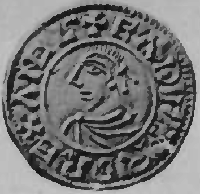
EdwardMartyr
Coin of Edward the Martyr

Both Edward and Edmund appear in a charter of 966, as witnesses to the foundation of the New Minster at Winchester. Curiously, Edward’s name appears below that of his half-brother, suggesting Edmund was regarded as his father’s heir, rather than his older sibling.

Little is known of Edward’s childhood; according to Byrthferth of Ramsey he was fostered for some years by Sideman, bishop of Crediton and protégé of Ælfhere, ealdorman of western Mercia and the most powerful ealdorman in England at the time.

When his father died in 975, Edward, at 13 years of age but with doubtful legitimacy, was one of 2 rival candidates for the crown. Edward was up against his baby brother, Æthelred; undoubtedly legitimate but only 6 or 7 years old. With both too young to make an independent bid for power, each boy was backed by court factions.

Æthelred’s mother, Ælfryth, garnered support for her son from Æthelwold, bishop of Winchester, Byrhtnoth, ealdorman of Essex, and Æthelwine, ealdorman of east Anglia and brother of  Ælfrythf’s 1st husband. However, Edward had the backing of ealdorman  Ælfhere and, possibly, Oswald, archbishop of York. However, the crucial support came from Dunstan, the highly influential and saintly archbishop of Canterbury, who crowned Edward personally.

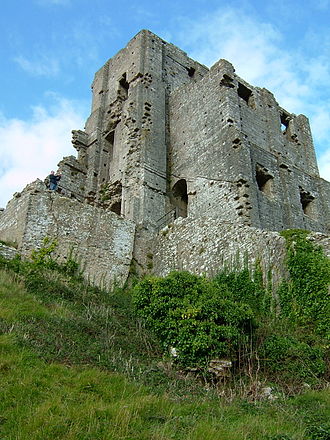
330px-Corfe_Castle2
Corfe Castle

We know very little of Edward the Martyr, and what we have is contradictory to the extreme. According to Byrthferth, Edward himself was known for having a hot temper; a temper which instilled fear within the people of his own household. However, Osbern maintained that men had a good opinion of Edward.

With Edward too young to rule alone,  Ealdorman Ælfhere held the reins of government. Only 3 charters have survived, 2 of which were issued in Crediton, Edward’s childhood home. The regime’s influence seem to be very limited the further north you look, especially in the Danelaw. In the Five Boroughs region (including Stamford and Lincoln), coinage was below the standard of that of his father, Edgar. The short reign was overshadowed by a backlash to Edgar’s previous ecclesiastical policies, seeing a violent reaction against the expansion of the reformed monasteries; however, Edward retained the support of Dunstan, who did much to influence church policy and direction.

Dunstan’s influence saw  him call a meeting of councillors in Calne in 978. Held in an upper room, the meeting turned into disaster when the floor gave way. Many councillors were killed or injured; however, Dunstan, possibly in his early 70s by then, miraculously survived when the rafter on which he was standing was the only one that didn’t give way.

330px-A_Chronicle_of_England_-_Page_072_-_Edward_Murdered_at_Corfe
Aelfryth presenting Edward with a drink

Edward seems to have been benevolent towards his stepmother, bearing her no ill will following her attempts to claim the throne for her own son. He allowed Ælfryth to claim her part of his father’s dower and thus confirmed her jurisdiction over the whole of Dorset. She and Æthelred settled at Corfe, a castle and large estate in the Purbeck Hills.

Ælfryth, however, may have been less forgiving and unwilling to settle for her son being Edward’s heir. When the opportunity presented itself, she is said to have jumped at it, with few qualms.

In March 978 Edward had decided to visit his half-brother at Corfe; arriving on the evening of 18th March, with only a small band of men accompanying him. According to  the chronicles, he was met at the gates of Corfe Castle by Ælfryth’s retainers; he had probably sent ahead to warn of his arrival and would have expected a welcome, someone to take his horse and lead him into the castle. Sources vary, some suggesting that he was presented with a cup; so he could quench his thirst after a long ride.

What is certain, is that Edward was pulled from his horse and stabbed – murdered. Following the stabbing, Edward’s horse bolted; with the dying king’s foot caught in the styrrup, he was dragged along the ground for some considerable distance.

He was 16.

Death_of_edward_martyr
The murder of Edward

He was buried quickly and without ceremony somewhere close by – possibly Wareham. With Æthelred considered too young to be guilty, the finger of accusation pointed straight at his mother, Ælfryth.

An anointed king was seen as God’s representative on earth, with regicide being viewed as a heinous crime. In spite of this, Edward’s killers escaped punishment. Ælfryth was the prime suspect. As late as 40 years after the killing, Archbishop Wulfstan of York laid the blame firmly at her door, in the D text of the Anglo-Saxon Chronicle, which opined:

No worse deed than this was ever done by the English nation since they first sought the land of Britain. Men murdered him, but God hath magnified him. He was in life an earthly king. He is now after death a heavenly saint.¹

However, given the political reality of her position as mother of the king, it was expedient for her to remain beyond suspicion. Although Ælfryth appears guilty, and many fingers pointed at her, it is just as likely that one of her household, as supporters of Æthelred, formed the conspiracy to advance their own aims; having a king on the throne who owes you his crown can be useful to your career.

We will never know.

Although the crown was not conferred on Æthelred straight away, whatever the dowager queen’s actions, at between 9 and 11 years old, at most, her son was now the only candidate for the succession. However, it was only after an interregnum and a period of negotiations that the crown was settled on Æthelred.

Almost a year after Edward’s death, the young king was exhumed by Ealdorman Ælfhere. Edward’s erstwhile supporter stayed a couple of days at Wareham before escorting the body to the nunnery at Shaftesbury. It was only after Edward was safely re-buried with the honour to which he was entitled as king, that Æthelred was crowned by Archbishop Dunstan; on 4th May 979.

Edward was soon venerated as a saint and martyr with Æthelred himself championing his brother’s cult, translating Edward’s bones to a new shrine at Shaftesbury Abbey in 1001. A grant of that year, in favour of Shaftesbury, stated that the gift was being made to God and to

“his saint, my brother Edward, whom drenched with his own blood, the Lord has seen fit to magnify in our time through many miracles.”²

Shaftesbury_Abbey
Shaftesbury Abbey

During the Dissolution of the Monasteries in the 16th century, Shaftesbury Abbey was destroyed and Edward’s shrine lost. However, in 1931 his grave was discovered and his bones were removed to a bank vault in Croydon, as neither the Churches of England or Rome would take the relics for reburial. Tests on the remains, in 1970, seemed to confirm they were Edward’s, the injuries on the bones being consistent with the wounds Edward is known to have received. The young king’s remains were finally removed from the bank, in September 1984, to be interred in a shrine in the Russian Orthodox Cemetery at Brookwood, Surrey.

And despite the fact Shaftesbury would like to have Edward back, so far as I can discover he remains the only Saxon king to be resting in a Russian Orthodox cemetery.

*

Footnotes: ¹ Anglo-Saxon Chronicle quoted by Martin Wall in The Anglo-Saxons in 100 Facts; ² AS chart., S899 quoted by Cyril Hart in Oxforddnb.com.

*

Pictures courtesy of Wikipedia

Sources: Brewer’s British Royalty by David Williamson; Britain’s Royal Families, the Complete Genealogy by Alison Weir;The Wordsworth Dictionary of British History by JP Kenyon; The Anglo-Saxons in 100 Facts by Martin Wall; Kings, Queens, Bones and Bastards by David Hilliam; The Mammoth Book of British kings & Queens by Mike Ashley; The Oxford Companion to British History Edited by John Cannon; oxforddnb.com.

*

My Books

Signed, dedicated copies of all my books are available through my online bookshop.

Out Now! Women of the Anarchy

Two cousins. On the one side is Empress Matilda, or Maud. The sole surviving legitimate child of Henry I, she is fighting for her birthright and that of her children. On the other side is her cousin, Queen Matilda, supporting her husband, King Stephen, and fighting to see her own son inherit the English crown. Women of the Anarchy demonstrates how these women, unable to wield a sword, were prime movers in this time of conflict and lawlessness. It show how their strengths, weaknesses, and personal ambitions swung the fortunes of war one way – and then the other.

Available from Bookshop.orgAmberley Publishing and Amazon UK.

Coming on 15 June 2024: Heroines of the Tudor World

Heroines of the Tudor World tells the stories of the most remarkable women from European history in the time of the Tudor dynasty, 1485-1603. These are the women who ruled, the women who founded dynasties, the women who fought for religious freedom, their families and love. These are the women who made a difference, who influenced countries, kings and the Reformation. In the era dominated by the Renaissance and Reformation, Heroines of the Tudor World examines the threats and challenges faced by the women of the era, and how they overcame them. From writers to regents, from nuns to queens, Heroines of the Tudor World shines the spotlight on the women helped to shape Early Modern Europe.

Heroines of the Tudor World is now available for pre-order from Amberley Publishing and Amazon UK.

Also by Sharon Bennett Connolly:

King John’s Right-Hand Lady: The Story of Nicholaa de la Haye is the story of a truly remarkable lady, the hereditary constable of Lincoln Castle and the first woman in England to be appointed sheriff in her own right. It is is available from King John’s Right-Hand Lady: The Story of Nicholaa de la Haye is the story of a truly remarkable lady, the hereditary constable of Lincoln Castle and the first woman in England to be appointed sheriff in her own right. Available from all good bookshops or direct from Pen & Sword Booksbookshop.org and AmazonDefenders of the Norman Crown: The Rise and Fall of the Warenne Earls of Surrey tells the fascinating story of the Warenne dynasty, from its origins in Normandy, through the Conquest, Magna Carta, the wars and marriages that led to its ultimate demise in the reign of Edward III. Available from Pen & Sword BooksAmazon in the UK and US, and Bookshop.org

Ladies of Magna Carta: Women of Influence in Thirteenth Century England looks into the relationships of the various noble families of the 13th century, and how they were affected by the Barons’ Wars, Magna Carta and its aftermath; the bonds that were formed and those that were broken. It is now available in paperback and hardback from Pen & Sword,  Amazon, and Bookshop.orgHeroines of the Medieval World tells the stories of some of the most remarkable women from Medieval history, from Eleanor of Aquitaine to Julian of Norwich. Available now from Amberley Publishing and Amazon, and Bookshop.orgSilk and the Sword: The Women of the Norman Conquest traces the fortunes of the women who had a significant role to play in the momentous events of 1066. Available now from Amazon,  Amberley Publishing, and Bookshop.org.

Alternate Endings: An anthology of historical fiction short stories including Long Live the King… which is my take what might have happened had King John not died in October 1216. Available in paperback and kindle from Amazon.

Podcast:

Have a listen to the A Slice of Medieval podcast, which I co-host with Historical fiction novelist Derek Birks. Derek and I welcome guests, such as Bernard Cornwell and Elizabeth Chadwick, and discuss a wide range of topics in medieval history, from significant events to the personalities involved.

*

Don’t forget! Signed and dedicated copies of all my books are available through my online bookshop.

For forthcoming online and in-person talks, please check out my Events Page.

You can be the first to read new articles by clicking the ‘Follow’ button, liking our Facebook page or joining me on Twitter and Instagram.

*

©2016 Sharon Bennett Connolly FRHistS.

Gundrada, Daughter of Debate

resizer.php
Gundrada de Warenne, Church of St John the Baptist, Southover

In 1066 William de Warenne joined his namesake the Duke of Normandy on his expedition to conquer England.  De Warenne is one of the few named knights involved in the Battle of Hastings, and one of William of Normandy’s most trusted captains.

Sometime in the years either side of the Conquest, William had married Gundrada.

Gundrada’s parentage has long been a subject of debate among historians. For many years she was believed to be the daughter of William the Conqueror and his wife, Matilda of Flanders. It seems the misunderstanding arose with the monks at Lewes Priory, when a copy of an earlier charter claimed she was the daughter of Matilda of Flanders. Lewes was founded as a Cluniac monastery by William and Gundrada and it may be that the monks got carried away with the idea of their foundress having royal blood, or that there was an error when copying the charter from the original.

For whatever reason, the claims by Lewes Priory have caused controversy throughout the ensuing centuries. In the sixteenth century Leland believed that she was the Conqueror’s daughter, while Orderic Vitalis had stated that she was ‘Sister of Gherbode, a Fleming, to whom King William the First had given the City and Earldom of Chester’¹ By the 1800s it was thought that Gundrada was not a daughter of the King, but of the queen, Matilda, by an earlier, forgotten marriage to a Flemish nobleman called Gerbod.

Other suggestions have included that she was an adopted daughter, raised alongside William and Matilda’s own children who were of a similar age. Alternatively, due to her Flemish origins, it has been argued that the confusion arose as she had joined Matilda’s household at an early age; an assertion supported by Matilda’s gift to Gundrada of the manor of Carlton in Cambridge – a manor Gundrada later gave to Lewes Priory.

69111381_136159050499
William de Warenne, 1st earl of Warenne and Surrey, Church of St John the Baptist, Southover

In 1888 in the English Historical Review, E.A. Freeman used the priory’s original charter to conclude that there was no familial relationship between Gundrada and William the Conqueror. In it, while the king and William de Warenne, both, mention Gundrada, neither refer to her as being related to the king or queen. Freeman stated ‘there is nothing to show that Gundrada was the daughter either of King William or of Queen Matilda; there is a great deal to show that she was not.’²

It now seems more likely that Gundrada was a Flemish noblewoman, the sister of Gerbod who would be, for a brief time, Earl of Chester. Her father may also have been called Gerbod, and was the hereditary advocate of the monastery of St Bertin; a title which later will pass down through the de Warenne family. Another brother, Frederic, had land in Sussex and Kent, even before the Conquest. The brothers, it seems, were deeply involved in the politics of Flanders and Normandy; indeed, it is thought that Gerbod resigned his responsibilities in Chester in order to return to the continent to oversee the family’s land and duties there. Frederic, along with the count of Flanders, was witness to Count Guy of Ponthieu’s  charter to the abbey of St Riquier in 1067.

William de Warenne was well rewarded for his part in the Norman Conquest, receiving lands in 13 counties, including the Honour of Consibrough in South Yorkshire, previously owned by the last Saxon king, Harold II Godwinson. De Warenne’s brothers-in-law had also joined the expedition, and Frederic was rewarded with the lands of a man named Toki; in Norfolk, Suffolk and Cambridgeshire, worth over £100.

However, Frederic was unable to enjoy his good fortune for long, as he was killed in the rebellion of Hereward the Wake in 1070. His lands at Castle Acre and elsewhere, still known as ‘Frederic’s Fief’ in 1086, were inherited by his sister, who retained control of them throughout her lifetime. One manor was given to the abbey of St Riquier, possibly by Gundrada in memory of her brother.

800px-LewesPriory1
Lewes Priory, Sussex

Gundrada’s other brother, Gerbod resigned his position in Chester in 1070 and returned to Flanders which was in the midst of civil war, following the death of its count. Gerbod’s return was essential to guarantee the safety of the family’s lands and interests. The former earl’s fate is uncertain; one report has him killed while another sees him imprisoned, and a third claims Gerbod accidentally killed his lord, Count Arnulf, at the Battle of Kassel in 1071. According to this last account, Gerbod travelled to Rome to perform penance. He intended to have the hand that struck the fatal blow amputated but was persuaded against it and eventually became a monk at Cluny.

It seems that neither brother raised a family, as Gerbod’s lands in Flanders were also inherited by Gundrada; the family interest in the abbey of St Bertin would eventually be passed on to Gundrada and William’s 2nd son, Reynold.

As with so many nobles of the 11th century, Gundrada and William were known for their piety. In 1077 the couple made a pilgrimage to Rome; en route, they visited the magnificent abbey of Cluny in Burgundy. They must have been impressed with the abbey, as it inspired them to found their own Cluniac priory at Lewes in Sussex. In 1078 the abbot of Cluny sent over the first monks as William and Gundrada were supervising the new monastery’s construction; it would be the first Cluniac house in England. All the churches on the de Warenne’s vast estates were given to the priory, including endowments from her brother Frederic’s lands in Norfolk.

Castle_Acre_Castle
Castle Acre, Norfolk

Gundrada and William had 3 children together. Their eldest son, William, would succeed his father as Earl of Surrey and de Warenne. He married Isabel de Vermandois, widow of Robert de Beaumont, earl of Leicester; with whom he had, apparently, been having an affair even before the earl’s death. Young William had a chequered career, he supported the claims of Robert Curthose, duke of Normandy, to the English throne against the duke’s younger brother, Henry I. However, duke Robert lost and was captured and imprisoned by Henry. Henry eventually forgave William, who fought for the king at the Battle of Bremule and was with Henry he died in 1135.

69110904_130412014050
Gundrada’s tombstone, St John’s Church, Southover

A second son, Reynold de Warenne, led the assault on Rouen in 1090, for William II Rufus, in the conflict between the English king and his older brother, Duke Robert. However, by 1105 Reynold was now fighting for the duke against the youngest of the Conqueror’s sons, Henry I, defending the castle of Saint-Pierre-sur-Dives for the duke. He was captured by Henry the following year, but had been freed by September 1106. It is possible he died shortly after, but was certainly dead by 1118 when his brother issued a charter, in which he gave 6 churches to Lewes Priory, for the soul of deceased family members, including Reynold.

Gundrada and William also had a daughter, Edith, who married Gerard de Gournay, son of the lord of Gournay-en-Bray. Gerard also supported William II Rufus against Duke Robert and took part in the Crusade of 1096. Edith later accompanied him on pilgrimage back to Jerusalem, sometime after 1104, where he died. Gerard was succeeded by their son, Hugh de Gournay, whose daughter Gundreda would be the mother of Roger de Mowbray. Edith then married Drew de Monchy, with whom she had a son, Drew the Younger.

William de Warenne was created earl of Surrey shortly before his death in 1088; after he had helped William II to suppress a revolt led by Bishop Odo of Bayeux. De Warenne was wounded in the leg during the fighting and was taken to Lewes Priory where he died a short time later.

69111381_130412146348
Tombs of Gundrada and William de Warenne

Gundrada had died in childbirth at Castle Acre in Norfolk on 27th May 1085, therefore never receiving the title of countess. She was buried in the chapter house of Lewes Priory; her husband would be buried beside her 3 years later. Around 1145 new monastic buildings were consecrated at Lewes Priory, Gundrada’s bones were placed in a leaden chest and interred under a tombstone of black Tournai marble, ‘richly carved in the Romanesque style, with foliage and lions’ heads’³. The sculptor was trained at Cluny and would later work for Henry I’s nephew, Henry of Blois, bishop of Winchester and brother of King Stephen.

The tombstone read:

Gundrada, offspring of dukes, glory of the age, noble shoot,
brought to the churches of the English the balm of her character.
As a Martha …
she was to the wretched; a Mary she was in her piety.
That part of Martha [in her] died; the greater part of Mary survives.
O, pious Pancras, witness of truth and justice,
she makes you her heir; may you in your clemency accept the mother.
The sixth day of the kalends of June, showing itself,
broke the alabaster containing her flesh …4

Following the dissolution of Lewes Priory in the 16th century, the tombstone was first moved to Isfield Church; it was moved again in 1775 to the parish church of St John at Southover in Lewes. The remains of Gundrada and William were discovered in 2 leaden chests in 1845 and finally laid to rest at the Southover church in 1847.

The dynasty founded by William and Gundrada would continue until the death of John, the 7th and final de Warenne Earl of Surrey, in 1347.

*

The story of William and Gundrada de Warenne appears in my books, Silk and the Sword: the Women of the Norman Conquest and in even greater detail in Defenders of the Norman Crown: Rise and Fall of the Warenne Earls of Surrey.

*

Footnotes: ¹Early Yorkshire Charters Volume 8 Edited by William Farrer and Charles Travis Clay; ²ibid; ³C.P.Lewis, Oxforddnb.com; 4 Elisabeth M.C. Van Houts and Rosalind C. Love (eds and trans), The Warenne (Hyde) Chronicle

Images: Gundrada and William de Warenne church windows ©lewespriory.org.uk; Castle Acre and Lewes Priory courtesy of Wikipedia; Gundrada’s tombstone and the tombs of Gundrada and William courtesy of findagrave.com.

Sources: Early Yorkshire Charters Volume 8: The Honour of Warenne, Edited by William Farrer and Charles Travis Clay; England Under the Norman and Angevin Kings by Robert Batlett; Brewer’s British Royalty by David Williamson; Britain’s Royal Families, the Complete Genealogy by Alison Weir; british-history.ac.uk; kristiedean.com; English Heritage Guidebook for Conisbrough Castle by Steven Brindle and Agnieszka Sadrei; oxforddnb.com.

*

My Books

Signed, dedicated copies of all my books are available through my online bookshop.

Coming on 15 June224: Heroines of the Tudor World

Heroines of the Tudor World tells the stories of the most remarkable women from European history in the time of the Tudor dynasty, 1485-1603. These are the women who ruled, the women who founded dynasties, the women who fought for religious freedom, their families and love. These are the women who made a difference, who influenced countries, kings and the Reformation. In the era dominated by the Renaissance and Reformation, Heroines of the Tudor World examines the threats and challenges faced by the women of the era, and how they overcame them. From writers to regents, from nuns to queens, Heroines of the Tudor World shines the spotlight on the women helped to shape Early Modern Europe.

Heroines of the Tudor World is now available for pre-order from Amberley Publishing and Amazon UK.

Out Now! Women of the Anarchy

Two cousins. On the one side is Empress Matilda, or Maud. The sole surviving legitimate child of Henry I, she is fighting for her birthright and that of her children. On the other side is her cousin, Queen Matilda, supporting her husband, King Stephen, and fighting to see her own son inherit the English crown. Women of the Anarchy demonstrates how these women, unable to wield a sword, were prime movers in this time of conflict and lawlessness. It show how their strengths, weaknesses, and personal ambitions swung the fortunes of war one way – and then the other.

Available from Bookshop.orgAmberley Publishing and Amazon UK.

Also by Sharon Bennett Connolly:

King John’s Right-Hand Lady: The Story of Nicholaa de la Haye is the story of a truly remarkable lady, the hereditary constable of Lincoln Castle and the first woman in England to be appointed sheriff in her own right. It is is available from King John’s Right-Hand Lady: The Story of Nicholaa de la Haye is the story of a truly remarkable lady, the hereditary constable of Lincoln Castle and the first woman in England to be appointed sheriff in her own right. Available from all good bookshops, from Pen & Sword Booksbookshop.org and AmazonDefenders of the Norman Crown: The Rise and Fall of the Warenne Earls of Surrey tells the fascinating story of the Warenne dynasty, from its origins in Normandy, through the Conquest, Magna Carta, the wars and marriages that led to its ultimate demise in the reign of Edward III. Available from Pen & Sword BooksAmazon in the UK and US, and Bookshop.org

Ladies of Magna Carta: Women of Influence in Thirteenth Century England looks into the relationships of the various noble families of the 13th century, and how they were affected by the Barons’ Wars, Magna Carta and its aftermath; the bonds that were formed and those that were broken. It is now available in paperback and hardback from Pen & Sword,  Amazon, and Bookshop.orgHeroines of the Medieval World tells the stories of some of the most remarkable women from Medieval history, from Eleanor of Aquitaine to Julian of Norwich. Available now from Amberley Publishing and Amazon, and Bookshop.orgSilk and the Sword: The Women of the Norman Conquest traces the fortunes of the women who had a significant role to play in the momentous events of 1066. Available now from Amazon,  Amberley Publishing, and Bookshop.org.

Alternate Endings: An anthology of historical fiction short stories including Long Live the King… which is my take what might have happened had King John not died in October 1216. Available in paperback and kindle from Amazon.

Podcast:

Have a listen to the A Slice of Medieval podcast, which I co-host with Historical fiction novelist Derek Birks. Derek and I welcome guests, such as Bernard Cornwell and discuss a wide range of topics in medieval history, from significant events to the personalities involved. Our first ever episode was a discussion on The Anarchy

*

Don’t forget! Signed and dedicated copies of all my books are available through my online bookshop.

For forthcoming online and in-person talks, please check out my Events Page.

You can be the first to read new articles by clicking the ‘Follow’ button, liking our Facebook page or joining me on Twitter and Instagram.

*

©2016 Sharon Bennett Connolly FRHistS
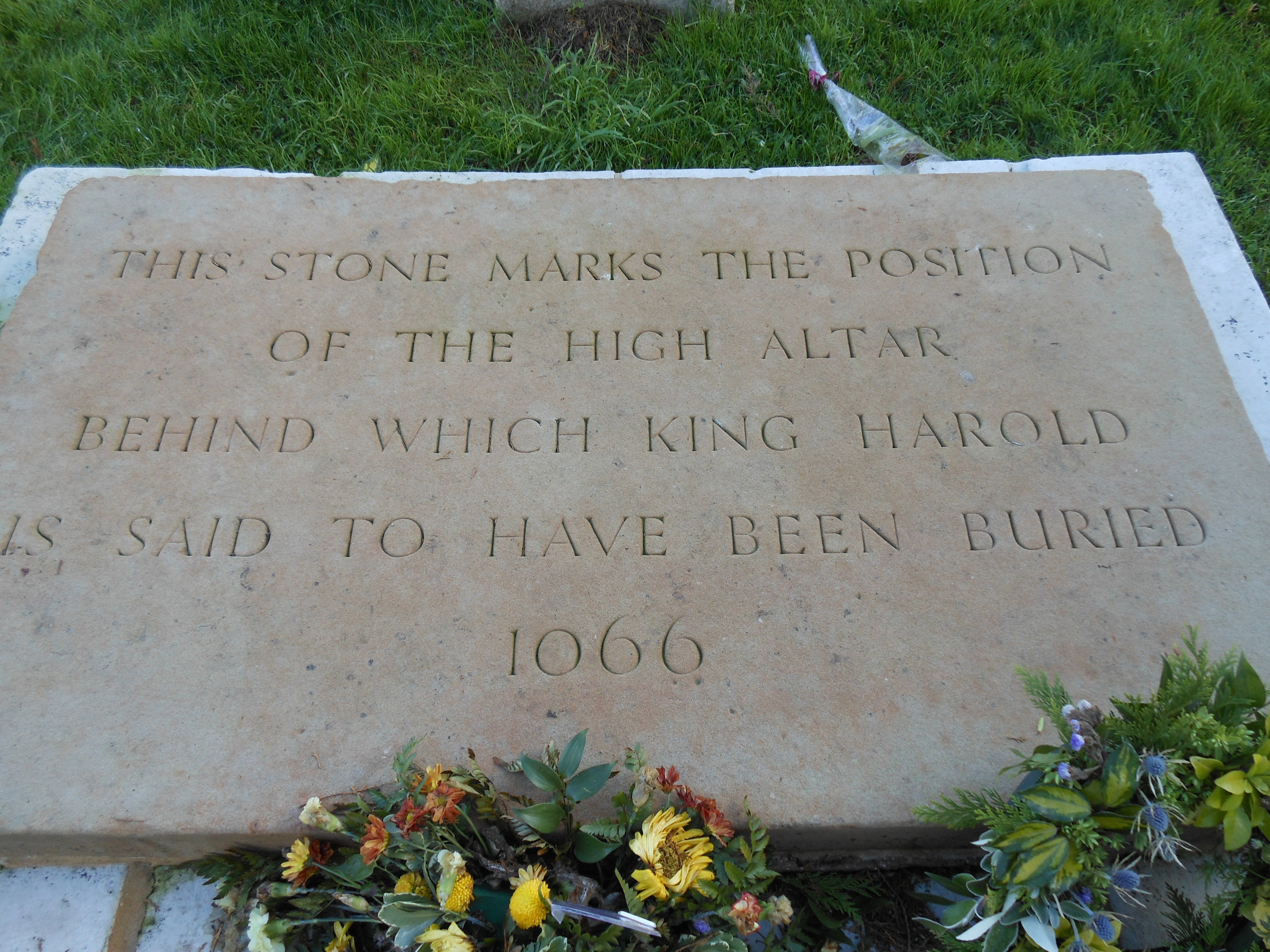
The Ætheling and the Tragedy of the White Ship

220px-Vilém_syn
William the Atheling

In the late summer of 1103 England’s queen, Matilda of Scotland, gave birth to a son. Named after his grandfather, William the Conqueror, the young prince would be known to history as William the Ætheling. He is one of those historical figures who resides in the shadows, more famous for his death than his all-too-short life as the heir to England’s throne.

William’s father, Henry, was a younger son of William the Conqueror and Matilda of Flanders. When his father had died in 1087, the patrimony of England and Normandy was divided between Henry’s older brothers; the eldest, Robert Curthose, inherited Normandy while William II Rufus became King of England. Henry was given money and lands. It has been said that Henry was intended for a life in the church; however, when his father died, Henry was already 18 and would have joined the church as a child if that was the career set out for him. Instead, the little brother seems to have set his sights on greater things and, as a result, was distrusted by William II, who kept him close, so he could not cause any mischief.

On 2 August, 1100, while out hunting in the New Forest, William was struck by a stray arrow and killed. Some say it was planned, others that it was an accident; I guess we’ll never know for sure…

Henry, however, did not waste the opportunity. With his older brother Robert still on his way back from Crusading in the Holy Land, Henry seized the initiative, the treasury and the kingdom; he was crowned at Westminster Abbey just 3 days after his brother’s death. Within months Henry had found himself a bride with impeccable parentage. Matilda had been born Edith of Scotland and was the daughter of Malcolm III, King of Scots. Through her mother, St Margaret, she was the great-granddaughter of Edmund II Ironside, the Anglo-Saxon king of England who died in 1016. She changed her name on marrying Henry, as Edith was considered ‘too Saxon’ for Norman tastes.

Matylda_zena
Matilda of Scotland

Henry and Matilda were married in November 1100 and within 3 years were the proud parents of 2 children. Their daughter, Adelaide, was born in 1102; she would adopt the name Matilda on her marriage to the Holy Roman Emperor, Henry V, and would be known to history as the Empress Matilda (or Maud, though this appears to have been a later nickname). Although some historians suggest they were twins, it is most likely that Matilda’s younger brother, William, was born in 1103; a message of congratulations was sent to Henry I by Pope Paschal II on 23 November of that year.

The soubriquet of Ætheling is attributed to chronicler Orderic Vitalis and harks back to Anglo-Saxon times as a title given to the king’s designated heir. According to William of Malmesbury, William, with an Anglo-Saxon mother and Norman father, represented the hope of reconciliation between the conquered and conquerors of England.

Although the king and queen had only 2 children – a possible third child is thought to have died young – the king had numerous illegitimate offspring by various women, several of whom were raised alongside his legitimate children. William and a number of his illegitimate brothers, including Robert, Earl of Gloucester, were tutored by Otuel (or Othuer) fitzEarl, natural son of Hugh, Earl of Chester. fitzEarl had been made castellan of the Tower of London and so it is likely that the prince and his brothers were frequently in residence there, in order to pursue their education.

330px-Empress_Mathilda
William’s sister, Empress Matilda

According to William of Malmesbury, William was trained for his future role ‘with fond hope and immense care’. In 1108, while their father was away in Normandy, William and his sister were entrusted to the spiritual care of Anselm, the revered Archbishop of Canterbury.

In 1110 William’s sister, Matilda, left for Germany; she was to continue her education at the court of her future husband, but would not be married until January 1114, just before her 12th birthday. William was still only 6 years old when his sister left; Matilda was 8. It’s sad to think the young siblings would never meet again.

Following his sister’s departure, William’s education continued apace. By 1113, aged just 10, William began to attest royal documents. While still only 9, in February of that year, William was betrothed, at Alençon, to Alice (who changed her name to Matilda on her marriage), the daughter of Fulk V, count of Anjou and Maine. The betrothal formed part of his father’s wider diplomacy, which had also included his sister’s marriage to the Holy Roman Emperor.

Henry I spent the early part of his reign fighting against his brother, Robert Curthose, and, later, Robert’s son, William Clito, trying to secure a smooth succession for William. Robert had been decisively defeated at Tinchebrai in 1106 and spent his remaining years – until his death in 1134 – a prisoner of his brother. Henry subsequently claimed Normandy for the English crown, but William Clito was still a thorn in his side. Clito was supported by the French king, Louis VI; who used him as a counter to Henry’s attempts to conquer Maine.

345px-Henry1
Henry I

In 1115, according to the Anglo-Saxon Chronicle, Henry arranged for the Norman barons to do homage and swear fealty to William, in an attempt to counter the claims of William Clito. A similar ceremony was arranged in England in 1116, for all the great men and barons of England to swear fealty to William as the king’s heir. The Warenne (Hyde) Chronicle referred to William as ‘rex Norman-Angllorum, ut putabatur futurus’ (assumed to be the future king of the Norman-English).

On 1st May 1118 William’s mother, Queen Matilda, died at Westminster and was laid to rest in Westminster Abbey. We do not know how the young prince felt at the loss of his mother – he was 15 at the time. However, it is from this point that William took on more responsibility, acting as regent whenever the king was away in Normandy.

In December 1118 Henry’s troops defeated the Angevins, under Fulk of Anjou, at Alençon. To counteract the defeat, William and Alice/Matilda of Anjou were married, with the Count settling Maine on them as their marriage gift, thus deserting the cause of the French king. Inevitably, war with Louis VI followed.

On 20 August 1119, 16-year-old William was with his father at the Battle of Brémule. Henry won the fight against the forces of Louis VI of France and William Clito. During the battle, William had captured the palfrey of his cousin, William Clito, which he chivalrously returned at the end of the battle.

In the same year William witnessed a charter at Rouen, in which he was described as ‘dei gratia, rex designatus’ (by the grace of God, king designate). And continuing his education in diplomacy, in November 1119, William accompanied his father to a meeting with Pope Calixtus II, (William’s second cousin once removed).

330px-Sceau_de_Louis_VI
Louis VI of France

At the turn of the year, it must have seemed to Henry that his dynasty – and the future of England – was secure in the hands of his son; at the age of 16 he was experienced in warfare and diplomacy and married to Matilda, though she was probably still under 10 years of age, who brought with her the county of Maine as her marriage portion (and the promise of Anjou should her father die whilst on Crusade).

In 1120 peace was finally achieved with France, with William being created Duke of Normandy by his father, and paying homage for the duchy to King Louis; a precedent that would be used  by future English kings, in order to avoid a king paying homage to a fellow king for part of his holdings. William, in turn, then received the homage of the Norman barons. Accompanied by his father, wife and several of his half brothers and sisters, it must have been a time of great rejoicing and festivities.

The final entry of the Warenne (Hyde) Chronicle set the scene:

At last King Henry restored peace with his diligence and money and decided to come to England with much triumph and joy, but God omnipotent, who, just as the blessed Job says, ‘loosens the belt of kings, and girds their kidneys with a rope’, out of his just judgment turned the king’s joy into grief and victory into sorrow. Having descended with his two sons, William and Richard, and with Theobald count of Blois, his nephew, and with many relatives and a crowd of nobles, to the seaport, called Barfleur, on the designated day he began to board his ship with favourable winds and a prosperous sea…

The Warenne (Hyde) Chronicle, edited by Elisabeth m.C. Van Houts and Rosalind C. Love

Indeed, when the large party prepared to cross the Channel, to return to England, it seems several of them were still celebrating. While Henry made the crossing in his own ship, taking with him several nobles and his daughter-in-law, the prince took the offer of a newly built ship, the Blanche Nef – or White Ship – which its owner, Thomas fitzStephen, claimed would guarantee a swift, safe passage. William the Ætheling was accompanied by many of the young nobles of the great families of England, including his half-sister, Matilda, and half-brother, Richard of Lincoln.

WhiteShipSinking
The Sinking of the White Ship

Most of the passengers and crew were still drunk from celebrating when the ship finally left the harbour of Barfleur, in the dark, on the evening of 25 November, 1120. Oderic Vitalis described the scene:

At length he gave the signal to put to sea. Then the rowers made haste to take up their oars and, in high spirits because they knew nothing of what lay ahead, put the rest of the equipment ready and made the ship lean forward and race through the sea. As the drunken oarsmen were rowing with all their might, and the luckless helmsman paid scant attention to steering the ship though he sea, the port side of the White Ship struck violently against a huge rock, which was uncovered each day as the tide ebbed and covered once more at high tide. Two planks were shattered and, terrible to relate, the ship capsized without warning. Everyone cried out at once in their great peril, but the water pouring into the boat soon drowned their cries and all alike perished.

William was ushered into a small boat and was being rowed to safety when he is said to have heard the cries of his half-sister, Matilda. The prince insisted on rowing to her aid, but the little boat was overwhelmed by those trying to make it to safety, and capsized, taking everyone with it.

Vitalis, Oderic, The Ecclesiastical History of Oderic Vitalis.

William the Ætheling was 17-years-old.

With only one survivor, a butcher from Rouen, over 300 souls were lost – drowned – and only a handful of bodies were ever recovered. With the sinking of the White Ship Henry I lost his son; England and Normandy lost their next ruler.

Young Matilda had lost her husband. Still only a child, Matilda had made the crossing of the Channel with the King, rather than her husband, and sometime after the disaster she returned to her father’s court. In 1121 Matilda became a nun, eventually becoming abbess of the convent at Fontevrault. She died in 1158.

With the uncertainty that followed, Louis VI renewed his support of William Clito, who continued to be a thorn in Henry I’s side until his death fighting in Flanders in 1128. Henry himself, in the hope of producing another son, married  again in 1121; to Adeliza of Louvain. Unfortunately, the marriage proved childless and Henry spent the final years of his reign trying to secure the throne for his daughter, Matilda. Empress Matilda had returned to Henry’s court in England following the death of her husband in 1125 and was married again,  in 1128, to Geoffrey, Count of Anjou – the brother of Matilda of Anjou – in the hope that the union would strengthen her claim to the throne.

In the end, however, despite the fact Henry had made the barons of England swear fealty to Matilda as his successor Henry’s nephew, Stephen, claimed the throne on the old king’s death in 1135; thus ushering in 19 years of warfare, an era which became known as The Anarchy.

Reading_Abbey_03
Chapter house of Reading Abbey

William’s death was a tragedy, not only on a national scale, but also a personal one, for Henry I. According to the Anglo-Saxon Chronicle the disaster was ‘a double grief: first that they lost their lives so swiftly; second that few of their bodies were found afterwards’. The young prince’s body was never recovered, leaving no monument to his life, save for Reading Abbey, established as a priory – and later an abbey – in 1121 by Henry I,

‘for the salvation of my soul and that of king William my father and king William my brother and William my son and queen Matilda my mother and queen Matilda my wife and all of my predecessors and successors.’

*

Sources: oxforddnb.com; Oderic Vitalis, The Ecclesiastical History of Orderic Vitalis; Donald Matthew, King Stephen; Robert Bartlett, England Under the Norman and Angevin Kings; David Williamson, Brewer’s British Royalty; the History Today Companion to British History; Dan Jones, the Plantagenets; englishmonarchs.co.uk; The Oxford Companion to British History Edited by John Cannon; Mike Ashley, The Mammoth Book of British kings & Queens; Alison Weir, Britain’s Royal Families, the Complete Genealogy; medievalilsts.net; The Plantagenet Chronicles Edited by Elizabeth Hallam; The Warenne (Hyde) Chronicle, edited by Elisabeth Van Houts and Rosalind C. Love .

*

Pictures courtesy of Wikipedia

*

My Books

Signed, dedicated copies of all my books are available through my online bookshop.

Out now! Scotland’s Medieval Queens

Books by Sharon Bennett Connolly

Scotland’s history is dramatic, violent and bloody. Being England’s northern neighbour has never been easy. Scotland’s queens have had to deal with war, murder, imprisonment, political rivalries and open betrayal. They have loved and lost, raised kings and queens, ruled and died for Scotland. From St Margaret, who became one of the patron saints of Scotland, to Elizabeth de Burgh and the dramatic story of the Scottish Wars of Independence, to the love story and tragedy of Joan Beaufort, to Margaret of Denmark and the dawn of the Renaissance, Scotland’s Medieval Queens have seen it all. This is the story of Scotland through their eyes.

Scotland’s Medieval Queens gives a thorough grounding in the history of the women who ruled Scotland at the side of its kings, often in the shadows, but just as interesting in their lives beyond the spotlight. It’s not a subject that has been widely covered, and Sharon is a pioneer in bringing that information into accessible history.’ Elizabeth Chadwick (New York Times bestselling author)

Available now from Amazon and Pen and Sword Books

Also by Sharon Bennett Connolly:

Books by Sharon Bennett Connolly

Heroines of the Tudor World tells the stories of the most remarkable women from European history in the time of the Tudor dynasty, 1485-1603. These are the women who ruled, the women who founded dynasties, the women who fought for religious freedom, their families and love. Heroines of the Tudor World is now available for pre-order from Amberley Publishing and Amazon UK. Women of the Anarchy demonstrates how Empress Matilda and Matilda of Boulogne, unable to wield a sword themselves, were prime movers in this time of conflict and lawlessness. It shows how their strengths, weaknesses, and personal ambitions swung the fortunes of war one way – and then the other. Available from Bookshop.orgAmberley Publishing and Amazon UKKing John’s Right-Hand Lady: The Story of Nicholaa de la Haye is the story of a truly remarkable lady, the hereditary constable of Lincoln Castle and the first woman in England to be appointed sheriff in her own right. Available from all good bookshops Pen & Sword Booksbookshop.org and Amazon

Royal Historical Society

Defenders of the Norman Crown: The Rise and Fall of the Warenne Earls of Surrey tells the fascinating story of the Warenne dynasty, from its origins in Normandy, through the Conquest, Magna Carta, the wars and marriages that led to its ultimate demise in the reign of Edward III. Available from Pen & Sword BooksAmazon in the UK and US, and Bookshop.orgLadies of Magna Carta: Women of Influence in Thirteenth Century England looks into the relationships of the various noble families of the 13th century, and how they were affected by the Barons’ Wars, Magna Carta and its aftermath; the bonds that were formed and those that were broken. It is now available in paperback and hardback from Pen & SwordAmazon, and Bookshop.orgHeroines of the Medieval World tells the stories of some of the most remarkable women from Medieval history, from Eleanor of Aquitaine to Julian of Norwich. Available now from Amberley Publishing and Amazon, and Bookshop.orgSilk and the Sword: The Women of the Norman Conquest traces the fortunes of the women who had a significant role to play in the momentous events of 1066. Available now from Amazon,  Amberley Publishing, and Bookshop.org.

Alternate Endings: An anthology of historical fiction short stories including Long Live the King… which is my take what might have happened had King John not died in October 1216. Available in paperback and kindle from Amazon.

Podcast:

A Slice of Medieval

Have a listen to the A Slice of Medieval podcast, which I co-host with Historical fiction novelist Derek Birks. Our very first episode was on The Anarchy. Derek and I welcome guests, such as Bernard Cornwell, and discuss a wide range of topics in medieval history, from significant events to the personalities involved.

There are now over 75 episodes to listen to!

Every episode is also now available on YouTube.

*

Don’t forget! Signed and dedicated copies of all my books are available through my online bookshop.

For forthcoming online and in-person talks, please check out my Events Page.

You can be the first to read new articles by clicking the ‘Follow’ button, liking our Facebook page or joining me on TwitterThreadsBluesky and Instagram.

*

©2016 Sharon Bennett Connolly FRHistS
Adela of Normandy – Daughter of the Conqueror

Adela
Adela of Normandy, Countess of Blois and Chartres

Adela of Normandy was the daughter of William the Conqueror, Duke of Normandy and King of England,  and his wife, Matilda of Flanders.

Although most sources give her date of birth around 1061/2, the Oxford Database of National Biography argues that her birth was after the Norman Conquest, as contemporary poetry suggests she was born the daughter of a king, rather than a duke.

Adela was one of nine or ten children born to William and Matilda, with at least four sisters and four brothers, although only three of her brothers survived to adulthood. Given her high level of literacy, and her patronage of poets in adulthood, it is likely that Adela was very well-educated as a child; either through tutors or possibly through residence in a convent, as happened with many daughters of the nobility at that time.

As a child, it seems, a marriage was arranged between Adela and Simon Crispin, count of Amiens; however, the groom chose to take monastic vows and an alternative marriage had to be found. As part of an alliance directed against the aggressive counts of Anjou, Adela was then  betrothed to Stephen of Blois, son of Count Theobald III, count of Blois and Champagne. Stephen was about 20 years older than his bride. The formal betrothal took place at Bourgueil and was later followed by a lavish wedding ceremony in Chartres Cathedral in about 1081.

StepanBlois_1089
Stephen, Count of Blois and Chartres

Adela and Stephen would have up to eleven children in all, with at least two sons born before Stephen succeeded his father as Count of Blois and Champagne in 1090.

Of their five daughters, Matilda married Richard d’Avranches, 2nd Earl of Chester. Tragically, he couple drowned in the White Ship disaster which deprived Henry I of his son and heir, William. Another daughter, Eleanor, married Raoul, Count of Vermandois. He was the brother of Isabelle de Vermandois, Countess of Leicester and Surrey.

Adela’s eldest surviving son seems to have been disinherited at an early age. However, while he is described as an ‘idiot’ by some, William was married to Agnes, the daughter of Giles, Lord of Sulli, and was given the titles Count of Chartres and Lord of Sulli, but was not allowed to inherit the richer county of Blois; which went to his younger brother, Theobald.

Poetry from the time of her wedding describes Adela as valorous, learned and generous. Indeed, she seems to have been a great asset to her husband, who included her in charitable donations and even in his early judicial rulings. Adela developed a cordial relationship with Bishop Ivo of Chartres, which worked well to maintain the peace between the laity and the clergy in the county.

In 1095 Stephen of Blois joined the First Crusade, leaving Adela as head of the family and regent of his domains.  Letters that the count sent to his wife indicate a great level of affection and trust; Adela was given charge of the family’s finances. However, Stephen’s return from crusade appears of have been less than happy. Adela  believed that he had not fulfilled his crusader’s vow and her criticism may have been a contributing factor in his return to the Holy Land in 1101 – she certainly approved of it.

Theobald
Theobald IV, Count of Blois and Champagne

Stephen was killed in combat in the Holy Land, during the siege of Ramallah in May 1102. He was succeeded as Count of Blois by his 2nd surviving son, Theobald. Theobald was knighted in 1107, by which point his older brother, William, had already been removed from the succession to Blois. William inherited the lesser title of Count of Chartres.

Following Stephen’s death Adela continued to act as regent until Theobald attained his majority. Even after Theobald came of age, mother and son ruled jointly until Adela retired from public life in 1120.

Adela was particularly close to her younger brother, Henry, who would later become King Henry I of England. She even supported him against their oldest brother, Robert, when Henry claimed the English crown.

An able administrator and negotiator, Adela settled many disputes among monasteries, and even between monasteries and laymen, in her own domains and beyond. Anselm, archbishop of Canterbury during the reign of William II and Henry I, praised her skills as negotiator and peacemaker following her success at achieving a temporary truce between Anselm and her brother in 1105.

HenryBlois
Henry of Blois, Bishop of Winchester

Anselm described her as an ardent supporter of papal reform, and enjoyed her hospitality during his exile from England. Adela hosted many other church dignitaries, including archbishop Thurstan of York and Pope Paschal II. Her family’s prestige and power was bolstered by her friendships with the leading ecclesiastic figures in both France and England.

An avid  patroness of the arts, Adela corresponded with such dignitaries as Hildebert, bishop of Le Mans and Abbot Baudri of Bourgeuil – later bishop of Dol – who both wrote poems dedicated to the countess. The book Ecclesiastical History Together with the Deeds of the Romans and the Franks, written by Hugh of Fleury, was dedicated to Adela.

One of Adela’s youngest sons, Henry of Winchester, was dedicated to the church at an early age, and was raised at the Priory of Cluny in France. He was nominated as Bishop of Winchester in 1129 and was a great support to his older brother, Stephen, when he claimed the throne of England on his uncle Henry’s death in 1135, at the expense of Henry’s daughter, Matilda

An active ruler Adela regularly toured the family’s domains, both as regent and mother of the reigning count. She also maintained links with the Anglo-Norman and Capetian kings. In 1101 Adela sent knights to help Philip I of France’s son, Louis, battling against rebels north of Paris.

Stepan_Blois
King Stephen

However, by 1107 her son Theobald had joined the revolt and relations with France were to deteriorate further in 1113 when the allied forces of Theobald, Henry I and Adela defeated a Capetian-Angevin army. After further conflict in 1118 Adela used her wealth and diplomatic skills to benefit her family.

In 1120 Adela stopped using the title of countess and retired to the Clunaic Priory of Marcigny;  the same year that her daughter Matilda died in the White Ship disaster off Barfleur in Normandy. She continued to be active in political affairs and lived to see her son, Stephen, claim the throne of England, though not the 20 years of conflict that ensued.

Aged almost 70, and having been a widow for half of her life, this most remarkable woman, Adela of Normandy, former Countess of Blois and Chartres, died in 1137, possibly on 8th March. Although later tradition has her buried with her mother at Holy Trinity in Caen, contemporary sources say she was buried at Marcigny.

*

Pictures courtesy of Wikipedia

*

Sources: England Under the Norman and Angevin Kings  by Robert Bartlett; Heroines of the Medieval World by Sharon Bennett Connolly; Silk and the Sword: The Women of the Norman Conquest by Sharon Bennett Connolly;  Brewer’s British Royalty by David Williamson; Britain’s Royal Families, the Complete Genealogy by Alison Weir; The Mammoth Book of British Kings and Queens by Mike Ashley; oxforddnb.com;  epistolae.ccnmtl.columbia.edu; womenshistory.about.com.

*

My Books

Signed, dedicated copies of all my books are available through my online bookshop.

Out now: Scotland’s Medieval Queens

Scotland’s history is dramatic, violent and bloody. Being England’s northern neighbour has never been easy. Scotland’s queens have had to deal with war, murder, imprisonment, political rivalries and open betrayal. They have loved and lost, raised kings and queens, ruled and died for Scotland. From St Margaret, who became one of the patron saints of Scotland, to Elizabeth de Burgh and the dramatic story of the Scottish Wars of Independence, to the love story and tragedy of Joan Beaufort, to Margaret of Denmark and the dawn of the Renaissance, Scotland’s Medieval Queens have seen it all. This is the story of Scotland through their eyes.

Available now from Amazon and Pen and Sword Books

Also by Sharon Bennett Connolly:

Heroines of the Tudor World tells the stories of the most remarkable women from European history in the time of the Tudor dynasty, 1485-1603. These are the women who ruled, the women who founded dynasties, the women who fought for religious freedom, their families and love. Heroines of the Tudor World is now available for pre-order from Amberley Publishing and Amazon UK. Women of the Anarchy demonstrates how Empress Matilda and Matilda of Boulogne, unable to wield a sword themselves, were prime movers in this time of conflict and lawlessness. It shows how their strengths, weaknesses, and personal ambitions swung the fortunes of war one way – and then the other. Available from Bookshop.orgAmberley Publishing and Amazon UKKing John’s Right-Hand Lady: The Story of Nicholaa de la Haye is the story of a truly remarkable lady, the hereditary constable of Lincoln Castle and the first woman in England to be appointed sheriff in her own right. Available from all good bookshops Pen & Sword Booksbookshop.org and Amazon

Defenders of the Norman Crown: The Rise and Fall of the Warenne Earls of Surrey tells the fascinating story of the Warenne dynasty, from its origins in Normandy, through the Conquest, Magna Carta, the wars and marriages that led to its ultimate demise in the reign of Edward III. Available from Pen & Sword BooksAmazon in the UK and US, and Bookshop.orgLadies of Magna Carta: Women of Influence in Thirteenth Century England looks into the relationships of the various noble families of the 13th century, and how they were affected by the Barons’ Wars, Magna Carta and its aftermath; the bonds that were formed and those that were broken. It is now available in paperback and hardback from Pen & SwordAmazon, and Bookshop.orgHeroines of the Medieval World tells the stories of some of the most remarkable women from Medieval history, from Eleanor of Aquitaine to Julian of Norwich. Available now from Amberley Publishing and Amazon, and Bookshop.orgSilk and the Sword: The Women of the Norman Conquest traces the fortunes of the women who had a significant role to play in the momentous events of 1066. Available now from Amazon,  Amberley Publishing, and Bookshop.org.

Alternate Endings: An anthology of historical fiction short stories including Long Live the King… which is my take what might have happened had King John not died in October 1216. Available in paperback and kindle from Amazon.

Podcast:

Have a listen to the A Slice of Medieval podcast, which I co-host with Historical fiction novelist Derek Birks. Derek and I welcome guests, such as Bernard Cornwell and Michael Jecks, and discuss a wide range of topics in medieval history, from significant events to the personalities involved. Every episode is also now available on YouTube.

*

Don’t forget! Signed and dedicated copies of all my books are available through my online bookshop.

For forthcoming online and in-person talks, please check out my Events Page.

You can be the first to read new articles by clicking the ‘Follow’ button, liking our Facebook page or joining me on Twitter and Instagram.

*

©2015 Sharon Bennett Connolly FRHistS.

Love, Adultery and a Fake Kidnapping? The story of Isabel de Vermandois

Adelaide_of_Vermandois
Adelaide de Vermandois, mother of Isabel

Born around 1085, Isabel de Vermandois had the blood of kings flowing through her veins. Her father was Hugh Capet, younger son of King Henry I of France. Her mother was Adelaide de Vermandois, a descendant of the ancient Carolingian dynasty. She was one of her parents’ 9 surviving children; 4 boys and 5 girls.

As with many medieval women, there are no images of Isabel; not even a description of her appearance. Her life can be pieced together, somewhat, through her marriages and through her children. When researching her, her name also frequently appears as Elisabeth; Elisabeth being the Latin version of her name, whereas Isabelle/Isabel appears to derive from the French/Spanish languages.

From her birth, as the granddaughter of the King of France, Isabel was a valuable prize. Her childhood proved to be  depressingly short. By 1096 a marriage was mooted between Isabel and Robert de Beaumont, Count of Meulan, who was 35 years her senior.

Robert de Beaumont was a seasoned warrior and courtier, with lands in both England and Normandy. He had fought alongside William the conqueror at the Battle of Hastings and was with William II Rufus when he was killed in a hunting accident in the New Forest. A loyal supporter of Henry I, he would fight for his king at the Battle of Tinchebrai in 1106, and receive the earldom of Leicester in 1107.

Hugh_I_of_Vermandois
Hugh I, Count of Vermandois, Isabel’s father

The marriage was originally opposed by the church; the prospective couple were related within the prohibited degrees and Isabel was not yet at the minimum legal age to marry – 12. Before leaving on Crusade, however, Isabel’s father was able to persuade Pope Urban to issue a dispensation and the marriage went ahead in 1096.

Isabel was around 11 years old, Robert de Beaumont was about 46.

Isabel gave Robert 9 children; the first was a daughter, Emma, born in 1102. Twin boys followed in 1104; Waleran and Robert de Beaumont, earls of Worcester and Leicester, respectively. The brothers were active supporters of King Stephen during the conflict with Empress Matilda, popularly known as the Anarchy, but while Robert would come to terms with Matilda’s son, the future Henry II, in 1153, Waleran was distrusted due to his support of Louis VII of France.

Another daughter, Isabel, was a mistress of Henry I before being married to Gilbert de Clare, 1st Earl of Pembroke. Through her son Richard de Clare, 2nd Earl of Pembroke, she would be the grandmother of Isabel de Clare, wife of the great knight and Regent for Henry III, William Marshal.

Sharon Bennett Connolly
Arms of Isabel de Vermandois assumed by William de Warenne following their marriage.

Isabel’s marriage to Robert de Beaumont seems to have ended in scandal and controversy. The chronicler Henry of Huntingdon reported that she was seduced by William de Warenne, 2nd Earl of Surrey, suggesting they had a love affair, which lasted for several years. It’s hard to blame a young woman of 30, in an arranged marriage to a man more than twice her age, for looking elsewhere for love and comfort.

William de Warenne had failed, in 1093, to obtain a royal bride for himself in a match with Matilda of Scotland (she went on to marry Henry I), and so looked elsewhere for a bride. It seems that de Warenne hatched a plot to kidnap Isabel – possibly with her approval – after de Beaumont refused to grant his wife a divorce. Huntingdon has the aged warrior dying of shame following his wife’s betrayal:

But when he was at the height of his fame, it happened that another count stole his wife, by intrigue and violent treachery. Because of this, in his old age his mind was troubled, and, darkened by anguish, he passed into the shadows of grief, and never again experienced happiness or cheerfulness. After days given over to sorrow he fell into an illness that heralded his death …

Henry of Huntingdon, The History of the English People 1000-1154

However … Henry of Huntingdon’s accusations may well be a misinterpretation of the facts; and be based on rumours arising from Isabel and William marrying within only a few months of her first husband’s death, that they must have been having an affair if they married so soon afterwards. Wealthy widows were a target for ambitious men, though. They were at risk of being kidnapped, raped and forced to marry their rapist. Isabel circumvented this risk by marrying William de Warenne, a man she knew and was of equal rank with her late husband.

Whether the story is true, or not, is highly questionable, but great for the novelists. However, Robert de Beaumont died soon after, on 5th June 1118, and William and Isabel married as soon as they could; William was approaching 50, had been Earl of Surrey for 30 years and, as yet, had no heir to succeed him.

Sharon Bennett Connolly
Castle Acre, residence of the Earls of Surrey

William de Warenne, 2nd Earl of Surrey, had a chequered career. He had succeeded his father in 1088, but was disinherited by Henry I for his support of Henry’s brother Robert Curthose, Duke of Normandy, in his attempt on the English throne. De Warenne was restored to favour in 1103 and thereafter remained loyal. He would be one of the earls present at Henry I’s death on 1st December 1135 at Lyons-la-Foret.

On his marriage to Isabel, William assumed the Vermandois coat of arms as his own and the blue and yellow checks became known as the ‘Warenne chequer’.

Isabel and William had several children; their son and heir, William, the future 3rd earl was born in 1119. He would die on Crusade in January 1148 in the Battle of Mount Cadmus, at Laodicea in Turkey, whilst fighting in the elite royal guard of his cousin, King Louis VII of France. His only child, a daughter, Isabel, became the greatest heiress in England.

Another 2 sons followed, Ralph and Rainald, and 2 daughters. Gundreda married Roger de Beaumont, Earl of Warwick and Ada married Prince Henry of Scotland, Earl of Huntingdon, son and heir of David I of Scotland. Two of Ada’s sons became kings of Scotland; Malcolm IV and William the Lion.

Sharon Bennett Connolly
Lewes Priory, final resting place of Isabel de Vermandois, Countess of Leicester and Surrey

Isabel’s two families seem to have got on quite well. Not only did Gundreda de Warenne marry a  cousin of her Beaumont siblings, but William de Warenne also had both his son and step sons with him when he attended Henry I on his deathbed. The Beaumont and Warenne half-brothers looked after each other, and their interests, during the period known as the Anarchy, when King Stephen and Empress Matilda were vying for the crown. Young William de Warenne, the 3rd Earl, was only 18 or 19 when his father died, and was guided and advised by his half-brothers Waleran and Robert, 15 years his senior.

Although her life was tinged with scandal, Isabel of Vermandois has had a great influence on the history of England and Scotland. From her are descended the greatest families of England and all subsequent Scottish monarchs.

William de Warenne died in 1138, having held the earldom of Surrey for 50 years; he was buried at his father’s feet at Lewes Priory. Isabel survived him by almost 10 years, dying around 1147/8. She was also buried at Lewes Priory, close to her husband.

*

Pictures taken from Wikipedia, except Castle Acre and Lewes Priory, which are ©2019, Sharon Bennett Connolly FRHistS
Sources: Early Yorkshire Charters Volume 8: The Honour of Warenne, Edited by William Farrer and Charles Travis Clay; England Under the Norman and Angevin Kings by Robert Bartlett; Brewer’s British Royalty by David Williamson; The History of the English People 1000-1154 by Henry of Huntingdon; Britain’s Royal Families, the Complete Genealogy by Alison Weir; british-history.ac.uk; kristiedean.com; knight-france.com; Rev. John Watson, Memoirs of the Ancient Earls of Warren and Surrey, and Their Descendants to the Present Time, Volume I; Elisabeth M.C. Van Houts and Rosalind C. Love (eds and trans), The Warenne (Hyde) Chronicle; Elisabeth Van Houts, ‘The Warenne View of the Past’, in Proceedings of the Battle Conference 2003, edited by John Gillingham.

*

My Books

Signed, dedicated copies of all my books are available through my online bookshop.

Out now: Scotland’s Medieval Queens

Books by Sharon Bennett Connolly

Scotland’s history is dramatic, violent and bloody. Being England’s northern neighbour has never been easy. Scotland’s queens have had to deal with war, murder, imprisonment, political rivalries and open betrayal. They have loved and lost, raised kings and queens, ruled and died for Scotland. From St Margaret, who became one of the patron saints of Scotland, to Elizabeth de Burgh and the dramatic story of the Scottish Wars of Independence, to the love story and tragedy of Joan Beaufort, to Margaret of Denmark and the dawn of the Renaissance, Scotland’s Medieval Queens have seen it all. This is the story of Scotland through their eyes.

Scotland’s Medieval Queens gives a thorough grounding in the history of the women who ruled Scotland at the side of its kings, often in the shadows, but just as interesting in their lives beyond the spotlight. It’s not a subject that has been widely covered, and Sharon is a pioneer in bringing that information into accessible history.’ Elizabeth Chadwick (New York Times bestselling author)

Available now from Amazon and Pen and Sword Books

Also by Sharon Bennett Connolly:

Books by Sharon Bennett Connolly

Heroines of the Tudor World tells the stories of the most remarkable women from European history in the time of the Tudor dynasty, 1485-1603. These are the women who ruled, the women who founded dynasties, the women who fought for religious freedom, their families and love. Heroines of the Tudor World is now available from Amberley Publishing and Amazon UK. Women of the Anarchy demonstrates how Empress Matilda and Matilda of Boulogne, unable to wield a sword themselves, were prime movers in this time of conflict and lawlessness. It shows how their strengths, weaknesses, and personal ambitions swung the fortunes of war one way – and then the other. Available from Bookshop.orgAmberley Publishing and Amazon UKKing John’s Right-Hand Lady: The Story of Nicholaa de la Haye is the story of a truly remarkable lady, the hereditary constable of Lincoln Castle and the first woman in England to be appointed sheriff in her own right. Available from all good bookshops Pen & Sword Booksbookshop.org and Amazon

Books by Sharon Bennett Connolly

Defenders of the Norman Crown: The Rise and Fall of the Warenne Earls of Surrey tells the fascinating story of the Warenne dynasty, from its origins in Normandy, through the Conquest, Magna Carta, the wars and marriages that led to its ultimate demise in the reign of Edward III. Available from Pen & Sword BooksAmazon in the UK and US, and Bookshop.orgLadies of Magna Carta: Women of Influence in Thirteenth Century England looks into the relationships of the various noble families of the 13th century, and how they were affected by the Barons’ Wars, Magna Carta and its aftermath; the bonds that were formed and those that were broken. It is now available in paperback and hardback from Pen & SwordAmazon, and Bookshop.orgHeroines of the Medieval World tells the stories of some of the most remarkable women from Medieval history, from Eleanor of Aquitaine to Julian of Norwich. Available now from Amberley Publishing and Amazon, and Bookshop.orgSilk and the Sword: The Women of the Norman Conquest traces the fortunes of the women who had a significant role to play in the momentous events of 1066. Available now from Amazon,  Amberley Publishing, and Bookshop.org.

Alternate Endings: An anthology of historical fiction short stories including Long Live the King… which is my take what might have happened had King John not died in October 1216. Available in paperback and kindle from Amazon.

Podcast:

Books by Sharon Bennett Connolly

Have a listen to the A Slice of Medieval podcast, which I co-host with Historical fiction novelist Derek Birks. Derek and I welcome guests, such as Bernard Cornwell and Michael Jecks, and discuss a wide range of topics in medieval history, from significant events to the personalities involved. Every episode is also now available on YouTube.

*

Don’t forget! Signed and dedicated copies of all my books are available through my online bookshop.

For forthcoming online and in-person talks, please check out my Events Page.

You can be the first to read new articles by clicking the ‘Follow’ button, liking our Facebook page or joining me on TwitterThreadsBluesky and Instagram.

©2015 Sharon Bennett Connolly FRHistS