Book Launch: Defenders of the Norman Crown

In the reign of Edward I, when asked Quo Warranto ‘by what warrant he held his lands’ John de Warenne, the 6th earl of Surrey, is said to have drawn a rusty sword, claiming “My ancestors came with William the Bastard, and conquered their lands with the sword, and I will defend them with the sword against anyone wishing to seize them”

John’s ancestor, William de Warenne, 1st Earl of Surrey, fought for William the Conqueror at the Battle of Hastings in 1066. He was rewarded with enough land to make him one of the richest men of all time.

In his search for a royal bride, the 2nd earl kidnapped the wife of a fellow baron.

The 3rd earl died on crusade, fighting for his royal cousin, Louis VII of France…

For three centuries, the Warennes were at the heart of English politics at the highest level, until one unhappy marriage brought an end to the dynasty. The family moved in the highest circles, married into royalty and were not immune to scandal. Defenders of the Norman Crown tells the fascinating story of the Warenne dynasty, of the successes and failures of one of the most powerful families in England, from its origins in Normandy, through the Conquest, Magna Carta, the wars and marriages that led to its ultimate demise in the reign of Edward III.

It’s finally here!

My fourth non-fiction book, Defenders of the Norman Crown: Rise and Fall of the Warenne Earls of Surrey, comes out today in hardback in the UK – it will be released in the US and elsewhere on 6 August. Telling the remarkable story of the Earls of Warenne and Surrey, and their family, from the time of the Norman Conquest to the reign of Edward III, Defenders of the Norman Crown follows a family right at the heart of Anglo-Norman England.

1 family. 8 earls. 300 years of English history!

And here’s what early reviewers are saying:

Sharon Bennett Connolly has written an evocative narrative, highlighting the role the Warenne earls of Surrey played in the nation’s history. Her meticulous research is evident in every page, making the book both a reference guide and an immensely enjoyable read.

Kristie Dean, author of On the Trail of the Yorks and The World of Richard III

Another great read from Pen & Sword. I’m vaguely familiar with this family, so reading a book specifically about their history from inception to the end of it, was very interesting. It’s definitely one I’d like to have on my shelf to reference again in the future.

NetGalley, Caidyn Young
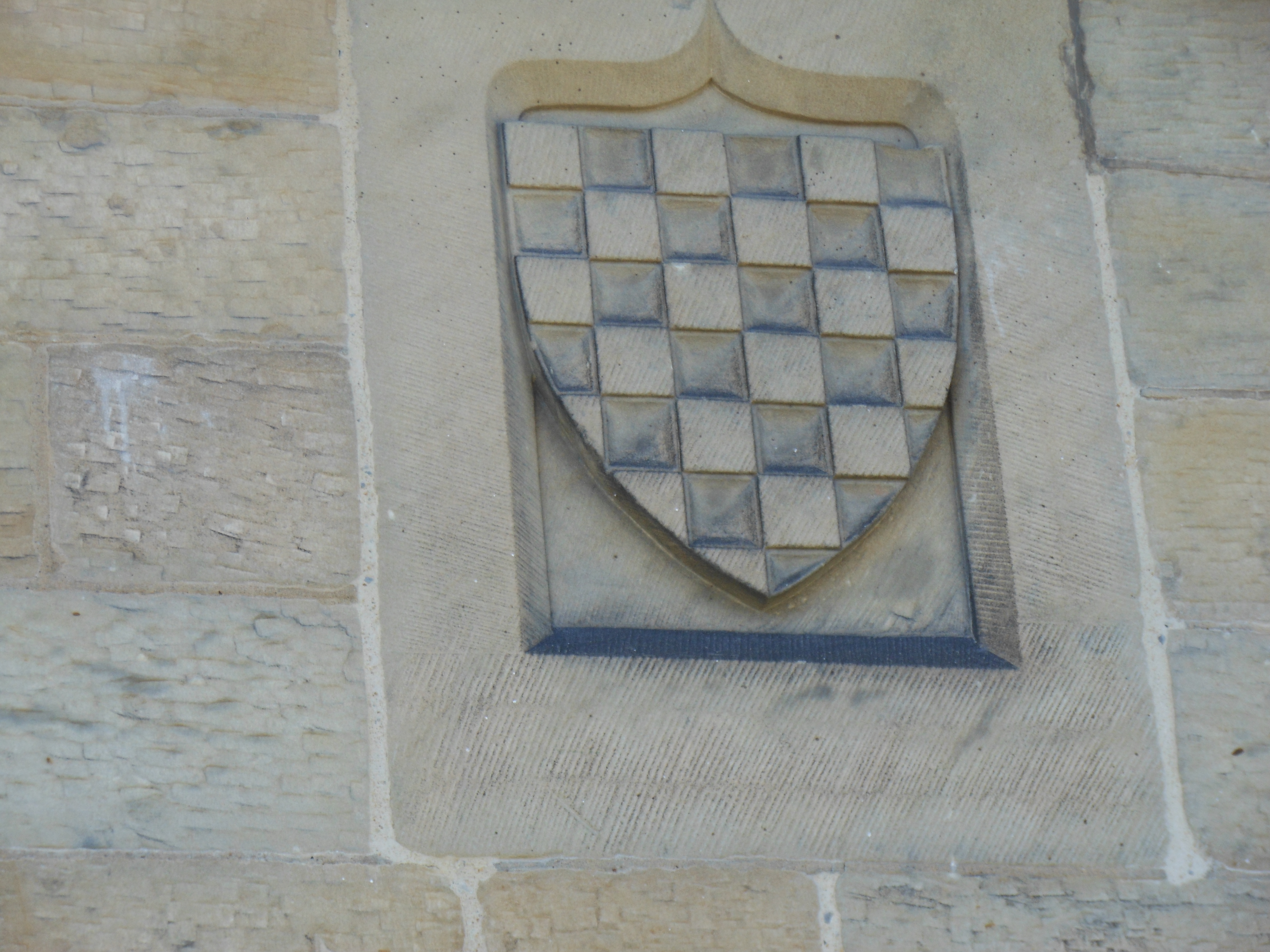
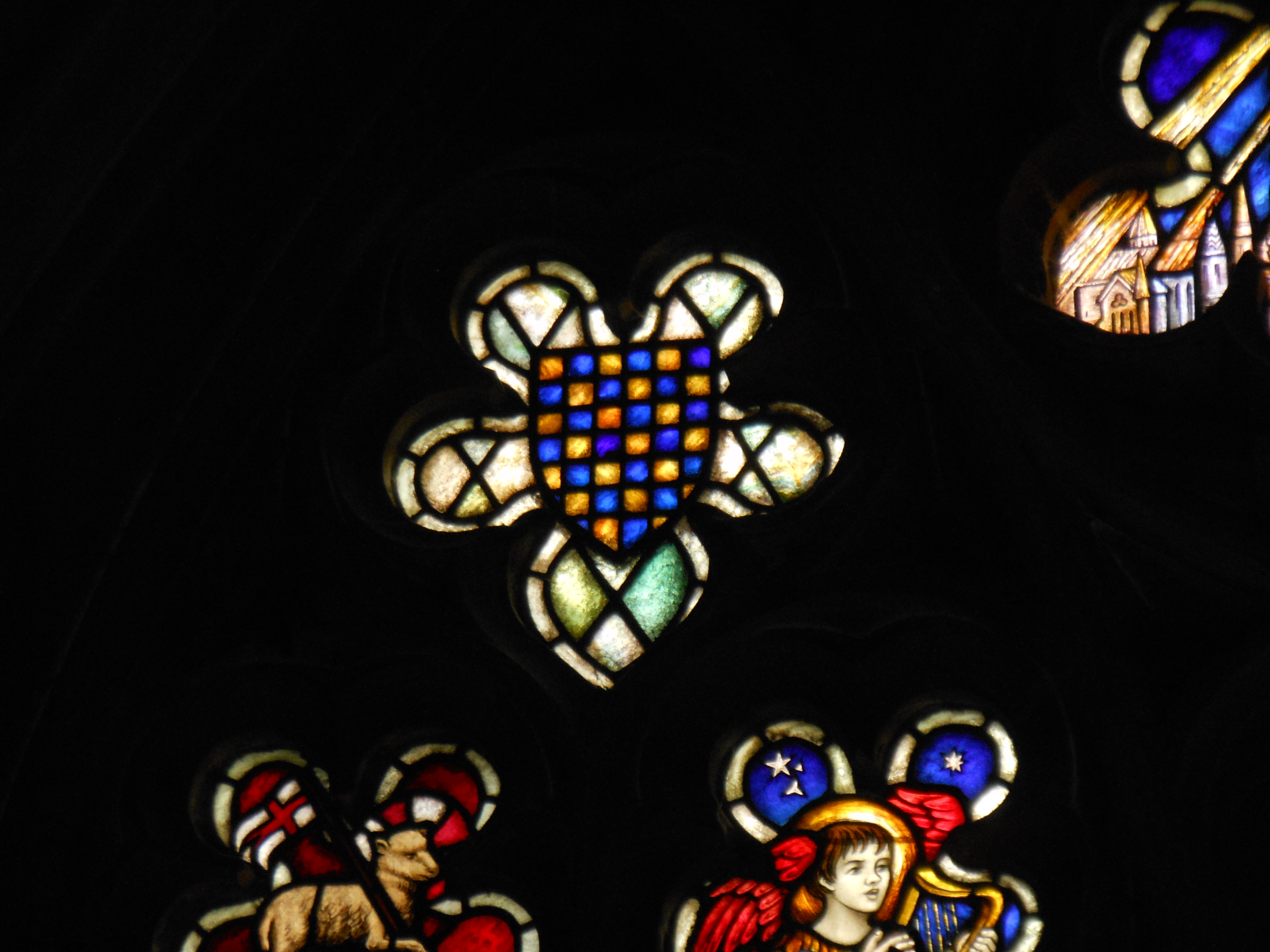
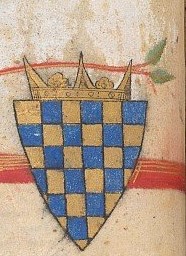
Warenne coat of arms

5 out of 5 stars

An impressive and long overdue publication about the earls of Surrey, the Warenne (Varenne in Normandy) and their steadfast contributions and deep loyalties to the English Crown from the heyday of the Norman Conquest and the battlefield of Hastings to the glorious reign of Edward III. Ms. Bennett Connolly has given us a solidly researched portrait of a medieval family and its successful longevity during the three long and troublesome centuries that followed the Norman establishment on the throne and the roles played by its successive and prominent members in the shadows of the crown. A colorful tapestry through all the ups and downs of medieval England, its monarchical shenanigans and its military and political restlessness. Highly recommended to anyone interested in English and European medieval history.

NetGalley, jean luc estrella

Oh my goodness, Sharon Bennett Connolly has done it again! This was the perfect romp through a medieval family! Honor, scandal, marriages, and intrigue all play into the Warrene family lines.
Beginning with William of Normandy, and going down through the Wars of the Roses, this book will read as an action-packed, give me all the information book!

I loved this one! The Warrene family was very prominent throughout the medieval history of England, and this book will dive into their past, and share everything that you could ever want to know about this ambitious family.

And if you would like to hear a little more about the Warenne earls, I presented the David Hey Memorial Lecture in 2020 as part of the Doncaster Local Heritage Festival. The lecture, Warenne: The Earls of Surrey and Conisbrough Castle, is still available to watch on YouTube.

Rebecca Hill, NetGalley

And …

To survive during the reigns of the Norman and Plantagenet Kings of England, one must understand where their loyalty and trust lied. Did they follow the crown or did they take a risk and follow those who opposed the person who wore the crown? For one family, there was no question who they were loyal to, which was the crown. The Warenne Earls of Surrey served the Kings of England from William the Conqueror to Edward III, gaining titles, prestige, and marriages that would cement their names in history books. They survived some of the most turbulent times in English history even if they did have a few scandals in their illustrious history. In Sharon Bennett Connolly’s latest non-fiction adventure, “Defenders of the Norman Crown: The Rose and Fall of the Warenne Earls of Surrey ”, she explores this family’s history that spanned over three centuries.

I would like to thank Pen and Sword Books and NetGalley for sending me a copy of this book. I have been a fan of Sharon Bennett Connolly’s books for a while now, so when I heard about this title, I knew I wanted to read it. I was going in a bit blind since I have never heard of the Warenne Earls of Surrey, but that is part of the fun of studying a new aspect of history.

The first Earl of Surrey, William de Warenne began this family’s tradition of royal loyalty as he joined William the Conqueror on his journey to England and fought alongside him to establish Norman rule at the Battle of Hastings. William’s descendants would be involved in some of the most important events of the time, from the crusades to the 1st and 2nd Baron’s Wars and the sealing of the Magna Carta. At some points, the earls would briefly switch sides if they thought the king was not in the best interest of the country, but they remained at the heart of English politics and worked hard to help guide the king and the country to become stronger.

What made the Warennes a tour de force when it came to noble families was their ability to marry well, except for the final earl and his scandalous relationships. The second earl desired to marry into the royal family, which did not happen, but his daughter, Ada de Warenne would marry William the Lion, King of Scotland. One of the daughters of Hamlin and Isabel de Warenne would be the mistress of King John and would give birth to his illegitimate son Richard of Chilham. The only woman of the family who inherited the earldom of Surrey, Isabel de Warenne, was married twice and so both of her husbands, William of Blois and Hamelin of Anjou, are considered the 4th earl of Surrey.

Connolly does a wonderful job explaining each story in de Warenne’s long history, including the minor branches of the family. I was able to understand the difference between family members who shared the same first name, (like William, John, and Isabel) but I know that others might have struggled with this aspect. I think it would have been helpful if Connolly had included either a family tree or a list of family members of the de Warennes at the beginning of this book to help readers who did struggle.

I found this particular title fascinating. The de Warenne’s were a family that proved loyalty to the crown and good marriages went a long way to cement one’s legacy in medieval England. Connolly proved that she has a passion for bringing obscure noble families to the spotlight through her impeccable research. If you want a nonfiction book of a noble family full of loyalty, love, and action, you should check out “Defenders of the Norman Crown: The Rise and Fall of the Warenne Earls of Surrey” by Sharon Bennett Connolly.

Heidi Malagisi, NetGalley and Adventures of a Tudor Nerd

David Hey Memorial Lecture

Last year, I presented the David Hey Memorial Lecture for Doncaster Heritage Festival, entitled Warenne: The Earls of Surrey and Conisbrough Castle. Just press play on the link below if you would like to watch and hear a little more about the Warennes.

Defenders of the Norman Crown: Rise and Fall of the Warenne Earls of Surrey is released in the UK today and in the US on 6 August. And it is now available from Pen & Sword BooksAmazon in the UK and US and Book Depository.

Signed copies!

If you would like a signed, dedicated copy of  Defenders of the Norman Crown: Rise and Fall of the Warenne Earls of Surrey, or any of my books, please get in touch by completing the contact me form.

Online Book Launch Event

Defenders of the Norman Crown online Book Launch!I am going to do a Zoom online talk to celebrate the launch of Defenders of the Norman Crown: Rise and Fall of the Warenne Earls of Surrey.It will be on Saturday 5th June from 7pm UK time, with a talk followed by a Q&A. Bring your own wine and cake!

If you would like to join me (please do!) then just pm me with your email address and I will send you an invite. If you would like to come along, please get in touch via the CONTACT ME form and I will send you an invite. Can’t wait to tell you all about Defenders of the Norman Crown and the Warenne earls of Surrey.

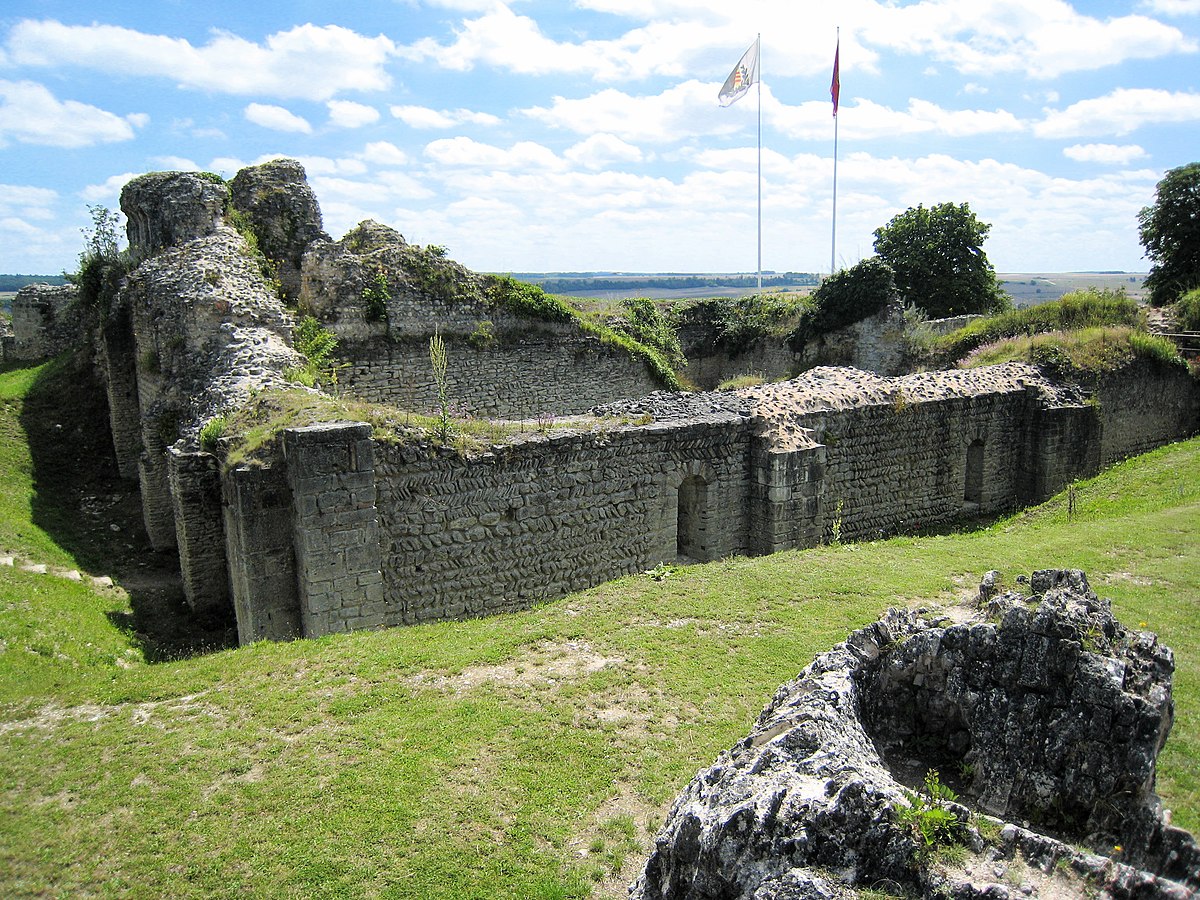
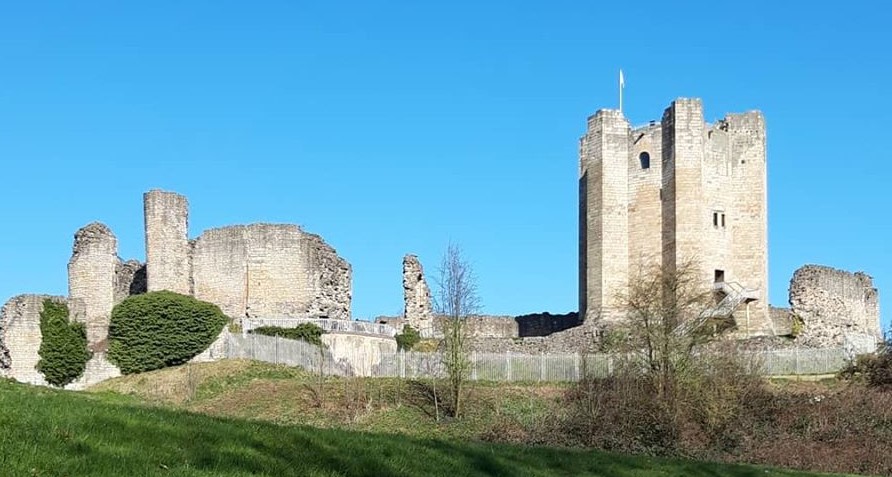
The Warenne stronghold of Conisbrough Castle

Also by Sharon Bennett Connolly:

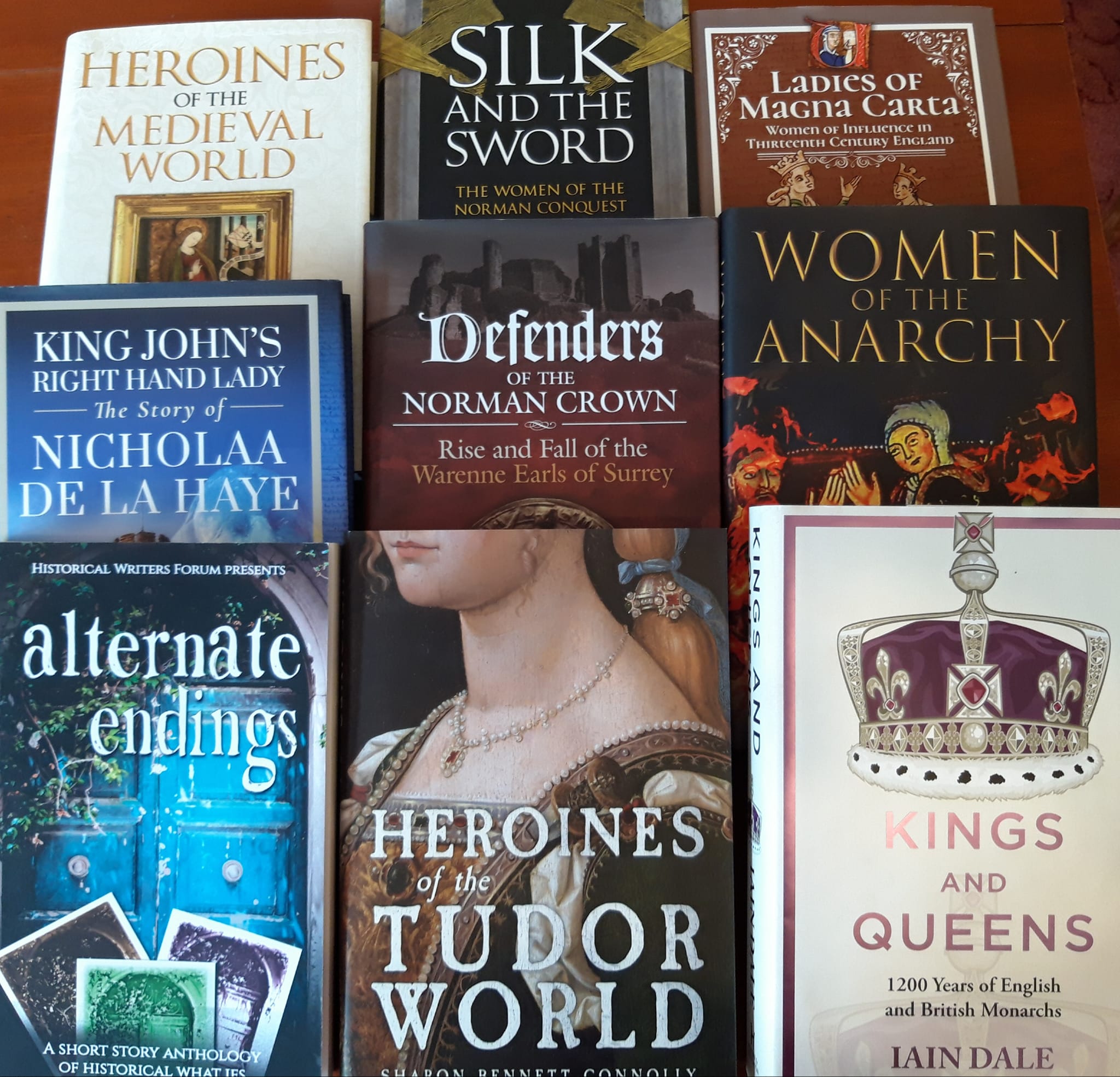
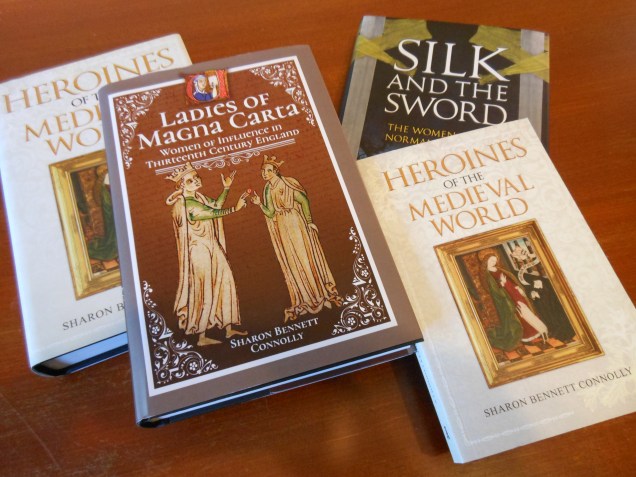
Ladies of Magna Carta: Women of Influence in Thirteenth Century England looks into the relationships of the various noble families of the 13th century, and how they were affected by the Barons’ Wars, Magna Carta and its aftermath; the bonds that were formed and those that were broken. It is now available from Pen & Sword,  Amazon and from Book Depository worldwide.

Heroines of the Medieval World tells the stories of some of the most remarkable women from Medieval history, from Eleanor of Aquitaine to Julian of Norwich. Available now from Amberley Publishing and Amazon and Book Depository.

Silk and the Sword: The Women of the Norman Conquest traces the fortunes of the women who had a significant role to play in the momentous events of 1066.  Available now from Amazon,  Amberley Publishing, Book Depository.

*

You can be the first to read new articles by clicking the ‘Follow’ button, liking our Facebook page or joining me on Twitter and Instagram.

*

Images: ©2021 Sharon Bennett Connolly

©2021 Sharon Bennett Connolly

The Origins of the Warenne Family

The Warenne coat of arms, Holy Trinity Church Southover

From the time of the Norman Conquest to the death of the seventh and last earl, the Warenne family was at the heart of English politics and the establishment, providing military and administrative support to the Crown. In the years following 1066 William I de Warenne, who became the first Earl of Surrey in 1088, was the fourth richest man in England and the richest not related to the royal family – he ranks at number 18 in MSN.com’s Top 20 Richest People of All Time. The earls of Surrey were at the centre of the major crises of medieval England, from the Norman Conquest itself to the deposition of Edward II and accession of Edward III. Strategic marriages forged links with the leading noble houses in England and Scotland, from the Marshals, the FitzAlans, the d’Aubignys and Percys to the Scottish and English royal families themselves.

But where did they originate?

As with most medieval Anglo-Norman families, the origins of the Warenne family are shrouded in the sands of time and the distance of over a thousand years. Given that the family hailed from Normandy, it is likely that they had Scandinavian ancestry, just like the majority of Normans, including their duke, William (known as William the Bastard, or William the Conqueror). Duke William was descended from the famous Rollo, the first Norse, or Viking, ruler of Normandy. William was the illegitimate son of Robert I the Magnificent, who was duke of Normandy from 1027 until his death in Nicaea in 1035, whilst returning from pilgrimage to Jerusalem. Before departing on this pilgrimage, Robert had named William, then only 7 or 8 years old, as his heir, despite the question mark over his birth.

Several studies were written in the 18th, 19th and 20th centuries in an attempt to establish the Warenne family’s origins, and its relationship to the duke of Normandy. The family name is probably derived from the hamlet of Varenne, situated just south of Arques in northern France and 13 miles from Bellencombre. The village is situated on the river of the same name, Varenne (previously known as Guarenne). Varenne was part of the Warenne lands in the département of Seine-Inférieure, Normandy. William de Warenne, the first earl of Surrey, was a younger son of Rodulf, or Ralph, de Warenne.

Rodulf was a minor Norman lord with lands in the Pays de Caux; his first wife, Beatrix, was the mother of William and his older brother, another Rodulf, and possibly an unnamed sister. Although William de Warenne’s ancestry is far from clear, it seems likely that his mother Beatrix was a niece of Duchess Gunnor. As the wife of Duke Richard I of Normandy, Gunnor was the mother of Emma of Normandy and the great-grandmother of Duke William of Normandy. Emma of Normandy was wife of both Ӕthelred II and King Cnut, kings of England; she holds the distinction of being the only woman to have been crowned queen of England twice, with two different husbands. Emma was the mother of Harthacnut and Edward the Confessor, also kings of England, and great-aunt of Duke William, later king of England. If Beatrix’s familial link to Duchess Gunnor is true, it would mean that William de Warenne was a second cousin, once removed, of the victorious duke of Normandy, later to be known as William the Conqueror. The two families were certainly related in some way, as Anselm, Archbishop of Canterbury, would later forbid a marriage between William de Warenne’s son, another William, and an illegitimate daughter of Henry I on the grounds of consanguinity (meaning the couple was too closely related by blood to be allowed to marry).

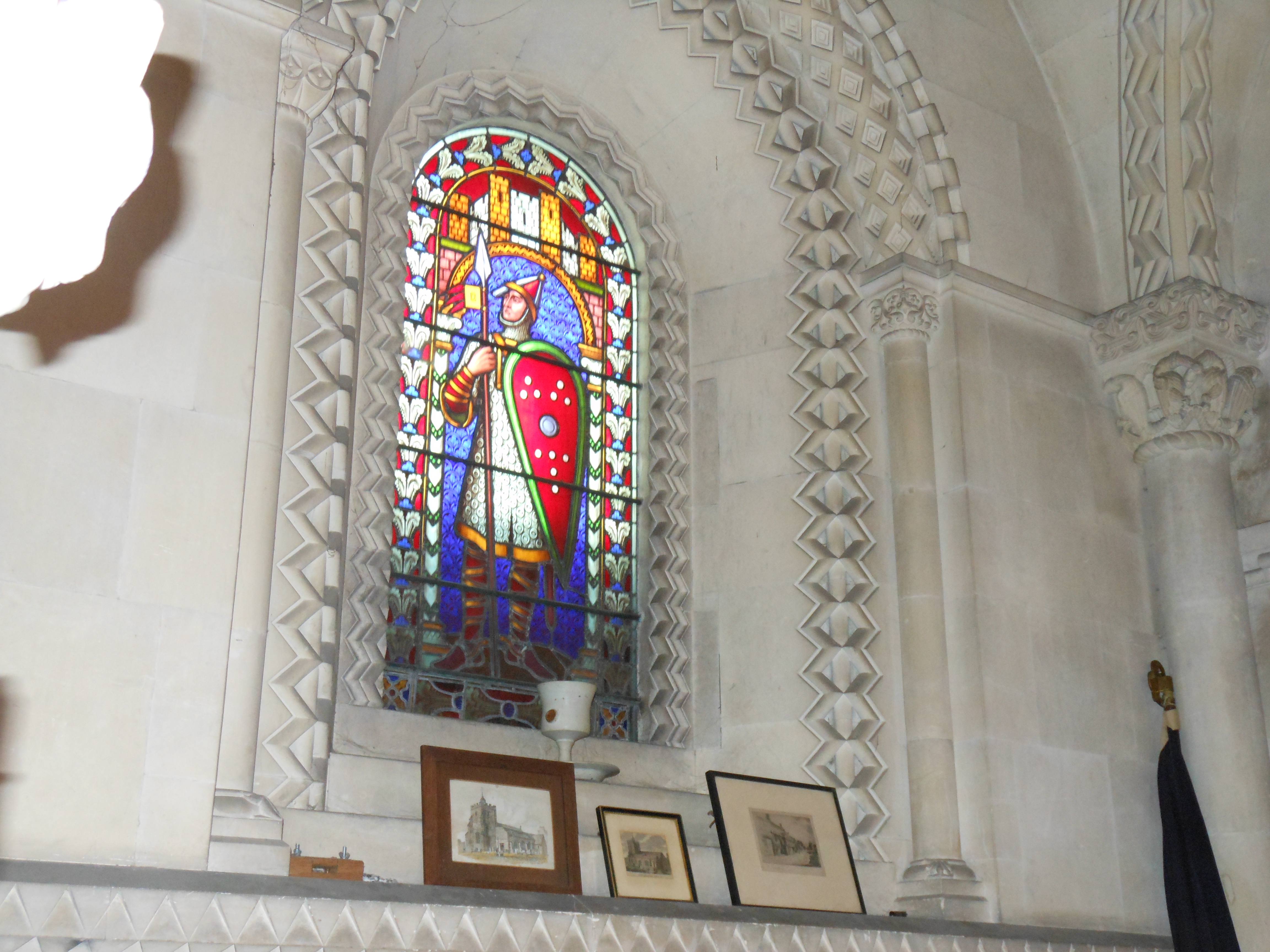
William de Warenne, 1st Earl of Warenne and Surrey, Holy Trinity Church, Southover

In 1782 Rev John Watson wrote a two-volume biography of the Warenne earls of Surrey for Sir George Warren, to demonstrate the knight’s descent from the Warenne earls. Watson tried to establish the origins of the Warennes, but his family trees are confusing, and his sources are not cited. He claimed that the Warennes were descended from Herfastus through a daughter who married Walter de Saint Martin. This daughter supposedly gave birth to William de Warenne, Earl of Varenne in Normandy, who in turn married a daughter of Rafe de Torta, a Danish nobleman who was protector of Normandy in the time of Duke Richard I. This William de Warenne was, supposedly, the father of William I de Warenne. Although there are no sources mentioned, it seems likely that Rev Watson got his information from the chronicler Robert de Torigny. There was no mention of Rodulf, who is clearly identified in the cartulary of the Holy Trinity of Rouen as being the father of William de Warenne and his older brother: ‘ filii eorum Rodulfus et Willelmus’.

It was suggested by Robert de Torigny, in his additions to the Gesta Normannorum Ducum of William of Jumièges, that William de Warenne was the brother of another Norman baron, Ralph de Mortemer. However, de Torigny’s genealogies are also rather confusing and it seems more likely that the two lords were cousins, as described by Orderic Vitalis, rather than brothers. Both are said to be descended from Hugh, who later joined the church and became bishop of Coutances. William’s father, Rodulf de Warenne, has been described as ‘ filius episcopi’, as was Roger de Mortemer, Ralph’s father. The cartulary of Rouen’s Abbey of the Holy Trinity describes Rodulf and Roger as co-heirs, implying they were brothers, in the abbey’s purchase of 100 acres of woodland. The relevant charter can be dated to before 1055 as it is witnessed by Mauger, Archbishop of Rouen, who was deposed in that year. Duke William, Rodulf’s wife Beatrix and Roger’s two sons, William and Hugh, were also witnesses to the charter.

William’s father, Rodulf I de Warenne, who survived to a grand old age and died around 1074, is also mentioned in a charter of Robert I, Duke of Normandy, father of William the Conqueror which can be dated to sometime between 1030 and 1035, when Duke Robert left on his pilgrimage to the Holy Land, and confirmed the foundation of the Abbey of St Amand at Rouen. The duke died on his return journey and was succeeded by his son, William. Briefly, the details of the charter give sufficient information of the landscape to suggest that Rodulf’s lands must have been outside Rouen’s existing city wall; it describes the land ‘as far as the wall of the city that sweeps from there to the land of Ralph de Warenne.’ The land was to the east of the city and close to Mount Saint Catherine, where the Abbey of the Holy Trinity stood.

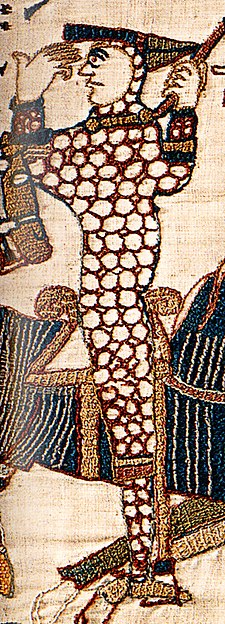
William the Conqueror depicted in the Bayeux Tapestry

In 1053, the year by which William of Normandy had married Matilda of Flanders, Rodulf, described as ‘quidam miles de Warenna, Radulfus nomine’ (‘a Warenne knight named Ralph’), gave all his land in Vascoeuil, in the Eure département, to the Abbey of St Pierre de Préaux. This charter also granted high justice to the duke of Normandy, which suggests that Vascoeuil was a part of the ducal demesne, another possible indication of a familial link between Rodulf, and his wife, and the ducal house. Rodulf’s wife Beatrix gave her consent to the gift, with Rodulf’s brother Godfrey being a witness on the charter.

Sometime between May 1055 and 1059, Beatrix died and Rodulf married his second wife, Emma. Rodulf and Beatrix had at least three children. The oldest was Rodulf (or Ralph) II de Warenne, who inherited the greater part of the Warenne estates from his father. William de Warenne was the second son of the family. The feodary of Philip II Augustus, King of France, dated between 1210 and 1220 demonstrates that some of the Warenne estates, both in the Pays de Caux and near Rouen, by the dawn of the thirteenth century, formed part of the barony of Esneval. This suggests that Rodulf II had at least one child, and that his lands eventually passed through a daughter, an heiress, who married into the d’Esneval family. These lands are shown to be in the hands of Robert d’Esneval in return of knights’ fees in 1172.13

Rodulf I de Warenne also had a daughter, whose name is unknown, though whether her mother was Beatrix or Emma is undetermined as she does not appear as a witness on any charters, unlike her brothers. This daughter was married to Erneis de Coulances and had two sons, Richard and Roger. Richard became lord of Coulances and a benefactor of the Abbey of St Evroul; he had fifteen children by his wife, Adelaisa and died on 15 September 1125. Roger, also named Roger de Guarenna and described by Orderic Vitalis as nephew of William Earl of Surrey, became a monk at St Evroul in 1081, spending forty-six years there.

Another branch of the Warenne family may have descended from Roger, son of Ralph (or Rodulf) de Warethnæ, who held lands near Arques and was himself witness to a charter in favour of the Abbey of St Wandrille sometime before 1045. There is no extant evidence of a familial link, but it is possible, given that Roger and Rodulf were of the same generation, that they were cousins and that Rodulf is likely to be the Rodulf referred to as Rodulf Warethna in an entry in the Holy Trinity cartulary, undated but probably around 1060, in which Hugh de Flamanville sold to the abbey tithe and land in Emanville, Motteville and Flamanville.

William’s father, Rodulf I de Warenne, appears to have survived well beyond the Norman Conquest of England; he is recorded in 1074 as having made a gift of a church and tithe in the Pays de Caux to the Abbey of Holy Trinity in Rouen. The charter is witnessed by Rodulf, his wife and his sons: ‘Signum ipsius Rodulfi. Signum Emmæ uxoris ejus. Signum Rodulfi filii eorum. Signum Willelmi fratris ejus’ (‘Signed Rodulf our son and William his brother’). This is the last mention of Rodulf I and he is likely to have died shortly afterwards.

By this time William I de Warenne was a wealthy lord in his own right, with extensive lands in England and Normandy.

Sources:

Elisabeth Van Houts, Hereward and Flanders (article), Anglo-Saxon England vol. 28; A History of the County of Sussex: Volume 2 edited by William Page; W.H. Blaauw, On the Early History of Lewes Priory, and its Seals, with extracts from a MS. Chronicle, Sussex Archaeological Collections; Edward Impey, Castle Acre Priory and Castle, English Heritage; Warenne, Gundrada de (d.1085) (article) by C.P. Lewis, Oxforddnb.com, oxforddnb.com; Elisabeth M.C. Van Houts and Rosalind C. Love (eds and trans), The Warenne (Hyde) Chronicle; Jeffrey James, The Bastard’s Sons: Robert, William and Henry of Normandy; Early Yorkshire Charters Volume 8 Edited by William Farrer and Charles Travis Clay; Rev. John Watson, Memoirs of the Ancient Earls of Warren and Surrey, and Their Descendants to the Present Time, Volume I; Alfred S. Ellis, Biographical Notes on the Yorkshire Tenants Named in Domesday Book (article); C.P. Lewis, Warenne, William de, first Earl of Surrey [Earl Warenne] (d. 1088) (article), Oxforddnb.com

*

My books

Coming 31st May:

Defenders of the Norman Crown: The Rise and Fall of the Warenne Earls of Surrey tells the fascinating story of the Warenne dynasty, of the successes and failures of one of the most powerful families in England, from its origins in Normandy, through the Conquest, Magna Carta, the wars and marriages that led to its ultimate demise in the reign of Edward III.

Defenders of the Norman Crown: Rise and Fall of the Warenne Earls of Surrey will be released in the UK on 31 May and in the US on 6 August. And it is now available for pre-order from Pen & Sword BooksAmazon in the UK and US and Book Depository.

Also by Sharon Bennett Connolly:

Ladies of Magna Carta: Women of Influence in Thirteenth Century England looks into the relationships of the various noble families of the 13th century, and how they were affected by the Barons’ Wars, Magna Carta and its aftermath; the bonds that were formed and those that were broken. It is now available from Pen & Sword,  Amazon and from Book Depository worldwide.

Heroines of the Medieval World tells the stories of some of the most remarkable women from Medieval history, from Eleanor of Aquitaine to Julian of Norwich. Available now from Amberley Publishing and Amazon and Book Depository.

Silk and the Sword: The Women of the Norman Conquest traces the fortunes of the women who had a significant role to play in the momentous events of 1066.  Available now from Amazon,  Amberley Publishing, Book Depository.

You can be the first to read new articles by clicking the ‘Follow’ button, liking our Facebook page or joining me on Twitter and Instagram.

©2021 Sharon Bennett Connolly

Defenders of the Norman Crown

Defenders of the Norman Crown: Rise and Fall of the Warenne Earls of Surrey is now available for pre-order.

In the reign of Edward I, when asked Quo Warranto? – by what warrant he held his lands – John de Warenne, the 6th earl of Warenne and Surrey, is said to have drawn a rusty sword, claiming ‘My ancestors came with William the Bastard, and conquered their lands with the sword, and I will defend them with the sword against anyone wishing to seize them.’

John’s ancestor, William de Warenne, 1st Earl of Surrey, fought for William the Conqueror at the Battle of Hastings in 1066. He was rewarded with enough land to make him one of the richest men of all time. In his search for a royal bride, the 2nd earl kidnapped the wife of a fellow baron. The 3rd earl died on crusade, fighting for his royal cousin, Louis VII of France…

For three centuries, the Warennes were at the heart of English politics at the highest level, until one unhappy marriage brought an end to the dynasty. The family moved in the most influential circles, married into royalty and were not immune to scandal.

Defenders of the Norman Crown tells the fascinating story of the Warenne dynasty, of the successes and failures of one of the most powerful families in England, from its origins in Normandy, through the Conquest, Magna Carta, the wars and marriages that led to its ultimate demise in the reign of Edward III.

As a child, I regularly visited Conisbrough Castle. I have fond memories of summer picnics in the outer bailey, rolling down the hills and sneaking past the man in his little hut to get into the inner bailey without paying (sorry about that).

Conisbrough Castle

In those days the history of the castle mainly focused on the fact it was the inspiration for the Saxon stronghold of the eponymous hero’s father in Sir Walter Scott’s novel, Ivanhoe. Scott is said to have been driving by in a carriage, on his way to Scotland, when he saw the castle and decided it was the perfect setting for a Saxon lord’s home – quite ironic, considering the fact it had been a Norman stronghold since the Conquest, although it had previously belonged to the unfortunate King Harold II, defeated and killed at the Battle of Hastings.

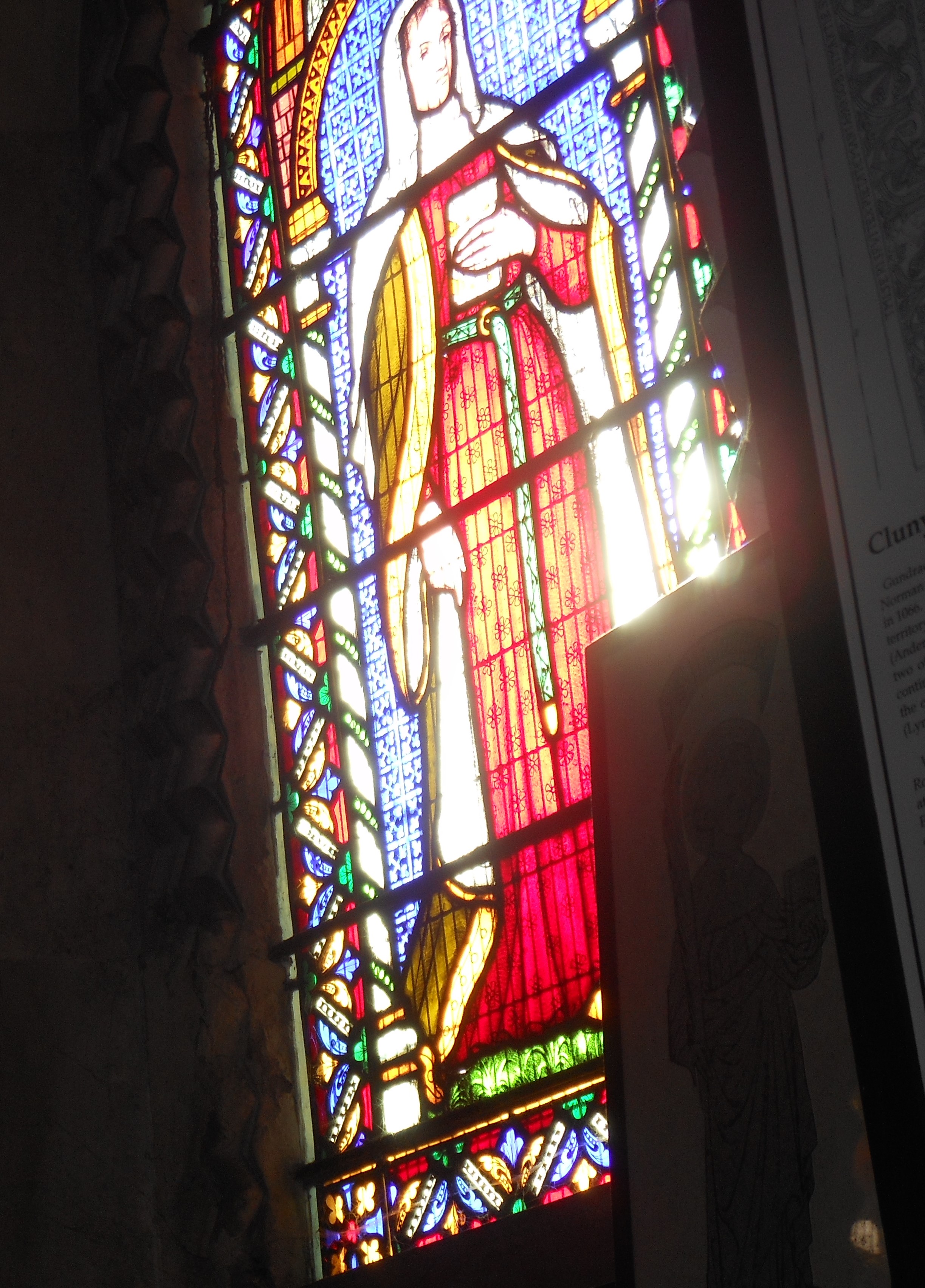
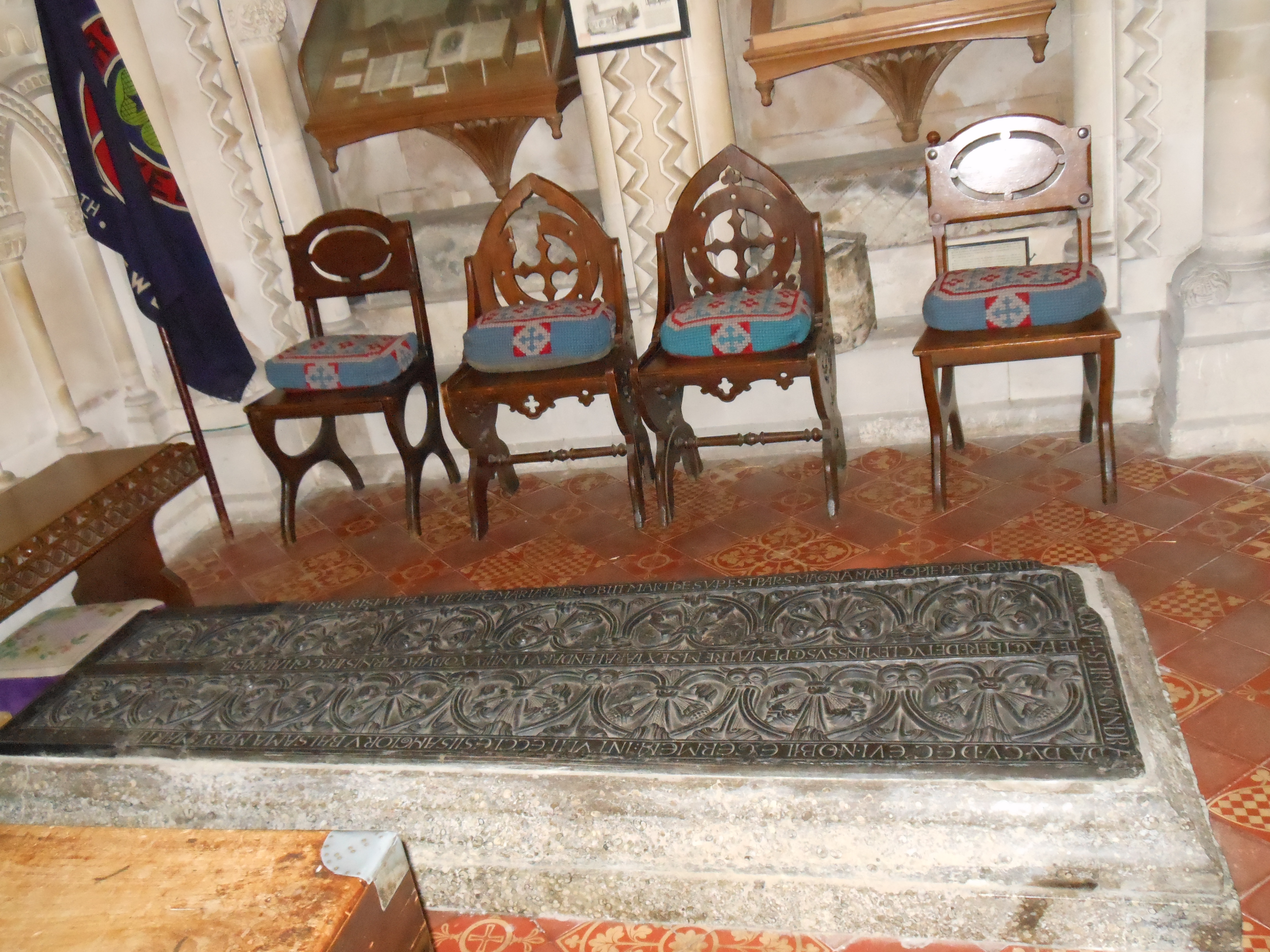
As a tour guide at the castle in the 1990s, I developed a fascination for the family that had once owned Conisbrough Castle and built the magnificent hexagonal keep: the Warenne earls of Surrey. The last Warenne earl died 674 years ago and the castle became a royal castle shortly after. However, for almost 300 years, from the Norman Conquest to 1347, Conisbrough Castle was part of the vast Warenne demesne. The extensive Warenne lands spanned the country from Lewes on the south coast to their castles of Conisbrough and Sandal in Yorkshire, with their family powerbase in East Anglia, where they built a magnificent priory, castle and medieval village at Castle Acre. The family mausoleum was at St Pancras Priory in Lewes, founded by the first earl and his wife, Gundrada, burial place of all but two subsequent earls and numerous other family members.

St Pancras Priory, Lewes

The Warennes were at the heart of English history and politics from the time of the Conquest to their demise. The Warenne story is one of drama, tragedy, glory and ambition that was consigned to history with the death of John II de Warenne, the seventh and last Earl of Warenne, Surrey, Sussex and Strathearn. The dynasty founded by William and Gundrada in the turmoil of the Norman Conquest, would continue to serve the Crown until John’s death in 1347.

To tell the Warenne story has been a personal ambition for a long time; I cannot wait for you to read the story of this incredible family.

Defenders of the Norman Crown: Rise and Fall of the Warenne Earls of Surrey

Defenders of the Norman Crown: Rise and Fall of the Warenne Earls of Surrey will be released in the UK on 31 May and in the US on 6 August. And it is now available for pre-order from Pen & Sword Books, Amazon in the UK and US and Book Depository.

*

Also by Sharon Bennett Connolly:

Ladies of Magna Carta: Women of Influence in Thirteenth Century England looks into the relationships of the various noble families of the 13th century, and how they were affected by the Barons’ Wars, Magna Carta and its aftermath; the bonds that were formed and those that were broken. It is now available from Pen & Sword,  Amazon and from Book Depository worldwide.

Heroines of the Medieval World tells the stories of some of the most remarkable women from Medieval history, from Eleanor of Aquitaine to Julian of Norwich. Available now from Amberley Publishing and Amazon and Book Depository.

Silk and the Sword: The Women of the Norman Conquest traces the fortunes of the women who had a significant role to play in the momentous events of 1066.  Available now from Amazon,  Amberley Publishing, Book Depository.

*

You can be the first to read new articles by clicking the ‘Follow’ button, liking our Facebook page or joining me on Twitter and Instagram.

©2021 Sharon Bennett Connolly.

Book Corner: Reading Round up 2

As I said the other day, I am well behind on the list of book reviews I still have to write up, so the second article to include mini-reviews of several books that I have read and enjoyed over the last few months, to clear the backlog and give you some fabulous ideas if you’re looking for that next read (or a last minute Christmas pressie).

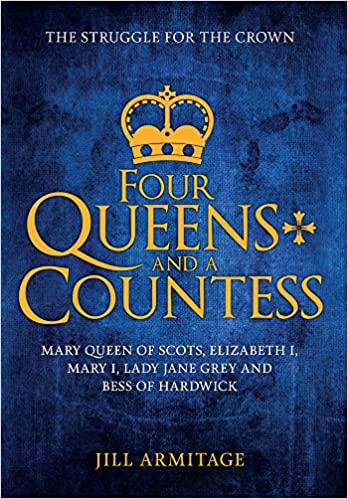
Four Queens and a Countess by Jill Armitage

When Mary Stuart was forced off the Scottish throne she fled to England, a move that made her cousin Queen Elizabeth very uneasy. Elizabeth had continued the religious changes made by her father and England was a Protestant country, yet ardent Catholics plotted to depose Elizabeth and put Mary Stuart on the English throne. So what was Queen Elizabeth going to do with a kingdomless queen likely to take hers? She had her placed under house arrest with her old friend Bess of Hardwick, then married to her fourth husband, the wealthy and influential Earl of Shrewsbury. The charismatic Scotswoman was treated more like a dowager queen than a prisoner and enjoyed the Shrewsbury’s affluent lifestyle until Bess suspected Mary of seducing her husband. But for sixteen years, with the never-ending threat of a Catholic uprising, Bess was forced to accommodate Mary and her entourage at enormous cost to both her finances and her marriage. Bess had also known the doomed Jane Grey and Mary Tudor, Queen of France. She had been in service in the Grey household and companion to the infant Jane. Mary Tudor had been godmother to Bess’s fifth child. Four Queens and a Countess delves deep into the relationships of these women with their insurmountable differences, the way they tried to accommodate them and the lasting legacy this has left. The clash of personalities and its deadly political background have never been examined in detail before.

Jill Armitage looks at the second half of the Tudor period through the lives of the four queens that shaped it and one remarkable countess. The flowing narrative tells the stories of Lady Jane Grey – the queen for 9 days – Mary I, Elizabeth I and Mary Queen of Scots alongside that of Bess of Hardwick, jailer of the Scottish queen. Four Queens and a Countess is a wonderful study of these remarkable women; women who, between them, influenced the direction of England for generations to come.

Jill Armitage investigates their various characters, relationships and disagreements, and explains how their relationships with each other affected the nations as a whole, and each other on an individual basis. Four Queens and a Countess is a thoroughly enjoyable and absorbing read, providing new insight and a refreshing change of focus on the Tudor era.

I highly recommend it!

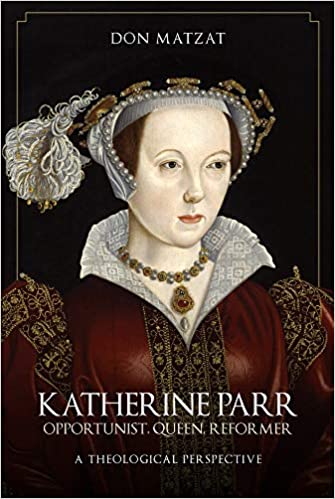
Katherine Parr: Oppportunist, Queen, Reformer by Don Matzat

Don Matzat here provides a new perspective on the life of Katherine Parr, the sixth and final wife of the infamous Henry VIII. While most biographers suggest that Katherine chose to marry the obese, irascible monarch in order to further some reformation or obey a divine imperative, the author goes against the tide and concludes that Katherine was an opportunist who married the king in order to enjoy the comforts of being the Queen of England, proven by her sumptuous lifestyle. But everything changed for Katherine when she had a dramatic conversion experience, embracing the primary tenets of the Protestant Reformation as described in her seminal work, The Lamentation of a Sinner. Her newly found belief placed her in a precarious position, not only with her husband but with the heresy hunters who, with the king’s blessing, beheaded those who held such beliefs. Yet Katherine had the courage to discuss her faith with her dangerous husband during the final months of his life. The life of Katherine Parr was one of drama, intrigue, danger, deceit, clandestine romance, scandal, tragedy and mystery. She came to a tragic end, and for three hundred years her burial site remained unknown. Katherine ruled England while Henry went to war against France. She was the first woman published in England under her own name. Her Lamentation of a Sinner is a little-known gem of the Protestant Reformation. Her influence upon the children of Henry, the future monarchs Edward VI, Mary I and Elizabeth I, would affect English history for many years to come.

I think, out of all Henry VIII’s queens, Katherine Parr’s story fascinates me the most. And its not just because she lived at Gainsborough Old Hall – one of my favourite haunts – for a time. Henry VIII was Katherine’s third husband – and she was his sixth wife. But Katherine Parr was so much more than Henry VIII’s wife. She was an intelligent woman and a proponent of the new Protestant faith – indeed, she almost met the fate of her predecessors, Anne Boleyn and Catherine Howard, when Henry suspected her of heresy.

Author Don Matzat looks at Katherine’s life and her religious outlook using The Lamentations of a Sinner, written by Katherine herself, to give him an insight into Katherine the woman and Katherine the queen.

In Katherine Parr: Opportunist, Queen, Reformer Don Matzat uses Katherine Parr’s own writings and letters to paint a vivid picture of this remarkable queen. Beautifully written, engaging and thoroughly researched, this book is a wonderful addition to any Tudor library.

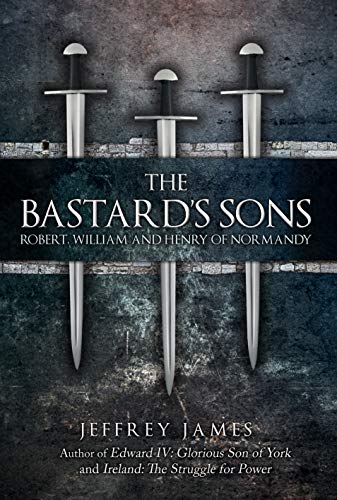
The Bastard’s Sons by Jeffrey James

“William the Conqueror’s intellect is said to have remained clear right up to his death. He would have questioned whether any of his three sons individually had the ability to rule the troublesome amalgam of England, Normandy and Maine once he was gone. The Bastard’s Sons is the story of those three men: Robert, William and Henry of Normandy.

Of Robert, the dying king is said to have claimed he was ‘a proud and silly prodigal’, adding that ‘the country which is subject to his dominion will be truly wretched’. Yet Robert became a great crusader. William got on better with his namesake, known to us as William Rufus for his florid looks. He was, like his father, of kingship material, and might have gained the throne of England on his father’s nod, but, equally plausibly, orchestrated a coup. The youngest of the Bastard’s sons, Henry, inherited money from his father, but not land. To placate Henry, the Conqueror is alleged to have told him that one day he would gain both England and Normandy.

The stage was set for an epic power struggle between the three men and their barons, who held lands on both sides of the Channel and were thus caught in a difficult position. A mysterious death in the forest, a crusading hero’s return and the tenacity of an overlooked third son would all combine to see this issue settled once and for all.”

The Bastard’s Sons: Robert, William and Henry of Normandy by Jeffrey James is a wonderful book telling the story of the post-Conquest years through the power struggles of William the Conqueror’s three surviving sons. In a wonderful, engaging narrative, Jeffrey James provides a unique insight into these three, very different brothers.

By looking at their relationships with each other, at the nobles who surrounded and supported them, and at the events of the latter part of the eleventh century and beginning of the twelfth, Jeffrey James shows us how these three brothers influenced each other’s lives, and the lives of those around them; as well as the politics of England and Normandy and of Europe in general.

The Bastard’s Sons: Robert, William and Henry of Normandy is an absorbing read, offering a new perspective on the post Conquest years and demonstrating the far reaching influences of all three of William the Conqueror’s surviving sons. It is a must-read for anyone interested in the post Conquest years of England and Normandy, and in the establishment of the Norman dynasty.

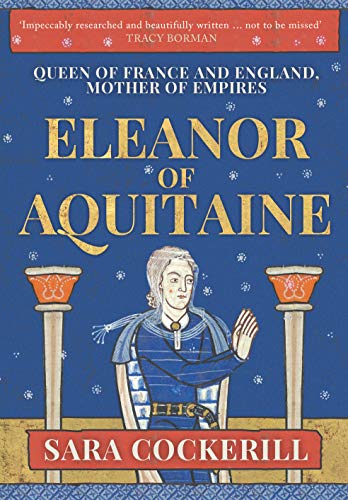
Eleanor of Aquitaine by Sara Cockerill

“In the competition for remarkable queens, Eleanor of Aquitaine tends to win. In fact her story sometimes seems so extreme it ought to be made up.

The headlines: orphaned as a child, Duchess in her own right, Queen of France, crusader, survivor of a terrible battle, kidnapped by her own husband, captured by pirates, divorced for barrenness, Countess of Anjou, Queen of England, mother of at least five sons and three daughters, supporter of her sons’ rebellion against her own husband, his prisoner for fifteen years, ruler of England in her own right, traveller across the Pyrenees and Alps in winter in her late sixties and seventies, and mentor to the most remarkable queen medieval France was to know (her own granddaughter, obviously).

It might be thought that this material would need no embroidery. But the reality is that Eleanor of Aquitaine’s life has been subjected to successive reinventions over the years, with the facts usually losing the battle with speculation and wishful thinking.

In this biography Sara Cockerill has gone back to the primary sources, and the wealth of recent first-rate scholarship, and assessed which of the claims about Eleanor can be sustained on the evidence. The result is a complete re-evaluation of this remarkable woman’s even more remarkable life. A number of oft-repeated myths are debunked and a fresh vision of Eleanor emerges. In addition the book includes the fruits of her own research, breaking new ground on Eleanor’s relationship with the Church, her artistic patronage and her relationships with all of her children, including her family by her first marriage.”

Sara Cockerill’s Eleanor of Aquitaine: Queen of France and England, Mother of Empires was one of the most anticipated history books of 2019 and it did not disappoint. Dispelling many of the rumours and stories that float around whenever Eleanor of Aquitaine is mentioned, Sara Cockerill looks for the real woman behind the legend.

Mainly using primary sources, Sara Cockerill re-examines every aspect of Eleanor’s life. The research is impeccable and Sara Cockerill’s arguments and analysis are well reasoned and compelling. Eleanor of Aquitaine: Queen of France and England, Mother of Empires is essential reading for anyone interested in the era in general and Eleanor of Aquitaine’s story in particular.

This is one of those books that should sit in all medieval history lovers’ libraries, to be read and devoured.

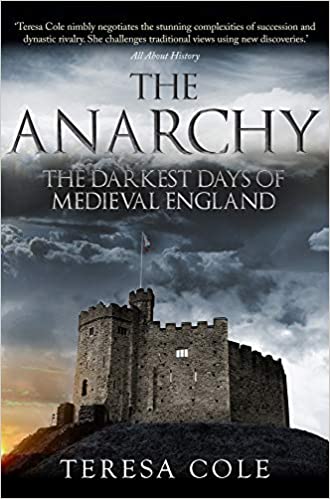
The Anarchy by Teresa Cole

When the mighty Henry I died in December 1135, leaving no legitimate son, who was to replace him on the throne of England? Would it be Stephen, nephew to the king and showered with favours that maybe gave him ideas above his station? Or could it be a woman, Henry’s own choice, his daughter Matilda, who had been sent away when eight years old to marry the Holy Roman Emperor, widowed, then forced into a hated second marriage for political reasons? Stephen was the first to act, seizing the throne that had been promised to Matilda, but he would find taking a crown far easier than keeping it. The resulting struggle became known as ‘the Anarchy,’ a time when fortune changed sides as frequently and dramatically as in any page-turning thriller, and with a cast of characters to match – some passionately supporting Stephen or Matilda, others simply out to grab what they could from the chaos. These supporting players are not overlooked here: Henry of Blois, brother of Stephen, Bishop of Winchester, and largely orchestrator of the church’s response to the conflict; Robert of Gloucester, illegitimate son of Henry I and chief supporter of his half-sister; and Geoffrey of Anjou, husband of Matilda, determined to secure Normandy (traditional enemy of Anjou) for himself. Covering all the twists and turns of this war between cousins, as first one side then the other seemed within touching distance of total victory, The Anarchy blends contemporary, sometimes eyewitness accounts with modern analysis to describe a period of England’s history so dark and lawless that those who lived through it declared that ‘Christ and his saints slept.’

When I told Amberley I wanted to do a book about the Anarchy, they were reluctant, saying that Teresa Cole had a book coming out about the Anarchy, and they were worried the books would be too similar. So I promised to concentrate on the Women of the Anarchy (my book’s working title), but was – from that moment – curious to read Teresa Cole’s take on the events. Luckily I got the chance.

The Anarchy: The Darkest Days of Medieval England is an intelligent, engaging study of the 19 years of English history during which the Anglo-Saxon Chronicle bemoaned that ‘Christ and his Saints slept’. Told in a chronological narrative, Teresa Cole examines every aspect of the period; the personalities involved and the extent of devastation and destruction caused by the conflict – both in England and Normandy.

Using eyewitness accounts and contemporary chronicles, Teresa Cole examines the motives behind the two protagonists, King Stephen and Empress Matilda, looking at their reasons for wanting the throne – and for wanting to keep it. The Anarchy: The Darkest Days of Medieval England also provides insight into the leading supporters on both sides of the conflict and demonstrates that though war was waged over a 19 year period, the main battles were fought in the early years and by 1147 the nobles were getting so tired of war they were looking to make mutual protection treaties between themselves, or go on crusade, rather than continue a war that had been fought to a stalemate.

The Anarchy: The Darkest Days of Medieval England is an interesting, enjoyable read offering new insight and perspective on an often overlooked period of English history, the only time that a woman led a faction to war on English soil.

All these books are available from Amberley Publishing.

*

My Books

Ladies of Magna Carta: Women of Influence in Thirteenth Century England looks into the relationships of the various noble families of the 13th century, and how they were affected by the Barons’ Wars, Magna Carta and its aftermath; the bonds that were formed and those that were broken. It is now available from Pen & Sword,  Amazon and from Book Depository worldwide.

Also by Sharon Bennett Connolly:

Silk and the Sword: The Women of the Norman Conquest traces the fortunes of the women who had a significant role to play in the momentous events of 1066.  Available now from Amazon,  Amberley Publishing, Book Depository.

Heroines of the Medieval World tells the stories of some of the most remarkable women from Medieval history, from Eleanor of Aquitaine to Julian of Norwich. Available now from Amberley Publishing and Amazon and Book Depository.

*

You can be the first to read new articles by clicking the ‘Follow’ button, liking our Facebook page or joining me on Twitter and Instagram.

©2020 Sharon Bennett Connolly

Book Corner: Reading Round-up 1

I am well behind on the list of book reviews I still have to write up, so I though I would do a couple of articles that include mini-reviews of several books that I have read and enjoyed over the last few months, to clear the backlog and give you some fabulous ideas if you’re looking for that next read.

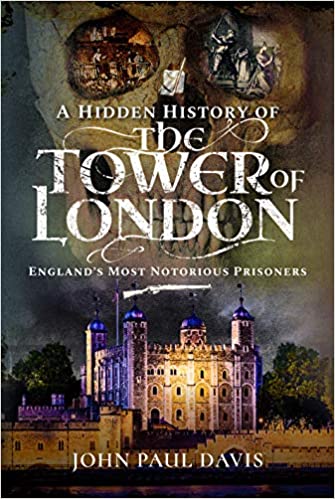
A Hidden History of the Tower of London by John Paul Davis

Famed as the ultimate penalty for traitors, heretics and royalty alike, being sent to the Tower is known to have been experienced by no less than 8,000 unfortunate souls. Many of those who were imprisoned in the Tower never returned to civilisation and those who did, often did so without their head! It is hardly surprising that the Tower has earned itself a reputation among the most infamous buildings on the planet. There have, of course, been other towers. Practically every castle ever built has consisted of at least one; indeed, even by the late 14th century, the Tower proudly boasted no less than 21. Yet even as early as the 1100s, the effect that the first Tower had on the psyche of the local population was considerable. The sight of the dark four-pointed citadel – at the time the largest building in London – as it appeared against the backdrop of the expanding city gave rise to many legends, ranging from the exact circumstances of its creation to what went on within its strong walls. In ten centuries what once consisted of a solitary keep has developed into a complex castle around which the history of England has continuously evolved. So revered has it become that legend has it that should the Tower fall, so would the kingdom. Beginning with the early tales surrounding its creation, this book investigates the private life of an English icon. Concentrating on the Tower’s developing role throughout the centuries, not in terms of its physical expansion into a site of unique architectural majesty or many purposes but through the eyes of those who experienced its darker side, it pieces together the, often seldom-told, human story and how the fates of many of those who stayed within its walls contributed to its lasting effect on England’s – and later the UK’s – destiny. From ruthless traitors to unjustly killed Jesuits, vanished treasures to disappeared princes and jaded wives to star-crossed lovers, this book provides a raw and at times unsettling insight into its unsolved mysteries and the lot of its unfortunate victims, thus explaining how this once typical castle came to be the place we will always remember as THE TOWER.

What a wonderful read!

Packed to the brim with the best stories from the Tower, and almost 1,000 years of history – some you will know and some you won’t. John Paul Davis tells the remarkable story of the Tower of London through the lives of the people who have resided under its roofs – some of them most unfortunate indeed! We hear the stories of those fortunate people who escaped – and the not-so-fortunate who died in the attempt. John Paul Davis examines every aspect of the Tower of London, its role as a royal fortress, prison and place of execution; and the national events in which it played apart, such as the Peasants’ Revolt and the executions of 2 of Henry VIII’s queens. Written in 23 chapters, the story of the Tower as a prison is told from its foundation in 1066 to the present day.

With these incredible and often heart breaking stories, John Paul Davis clearly demonstrates how the fortress acquired its sinister reputation.

A Hidden History of the Tower of London is a thoroughly enjoyable read, and impossible to put down.

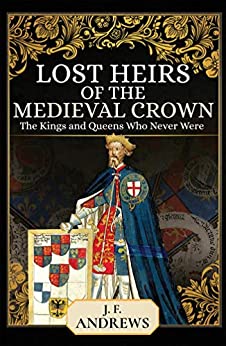
Lost Heirs of the Medieval Crown by J.F. Andrews

When William the Conqueror died in 1087 he left the throne of England to William Rufus … his second son. The result was an immediate war as Rufus’s elder brother Robert fought to gain the crown he saw as rightfully his; this conflict marked the start of 400 years of bloody disputes as the English monarchy’s line of hereditary succession was bent, twisted and finally broken when the last Plantagenet king, Richard III, fell at Bosworth in 1485.

The Anglo-Norman and Plantagenet dynasties were renowned for their internecine strife, and in Lost Heirs we will unearth the hidden stories of fratricidal brothers, usurping cousins and murderous uncles; the many kings – and the occasional queen – who should have been but never were. History is written by the winners, but every game of thrones has its losers too, and their fascinating stories bring richness and depth to what is a colourful period of history. King John would not have gained the crown had he not murdered his young nephew, who was in line to become England’s first King Arthur; Henry V would never have been at Agincourt had his father not seized the throne by usurping and killing his cousin; and as the rival houses of York and Lancaster fought bloodily over the crown during the Wars of the Roses, life suddenly became very dangerous indeed for a young boy named Edmund.

With Lost Heirs of the Medieval Crown, author JF Andrews provides a fascinating study of the also-rans and almost-made-its of medieval history; those children of the kings of England who died before they could claim their birth-right, or were passed over due to the dynastic squabbles of the Norman and Plantagenet dynasties that ruled England from the Norman Conquest in 1066 to the advent of the Tudor age.

From the battles of Robert Curthose, eldest son of William the Conqueror, to the tragic lives of the Yorkist heirs, Edward V, Edward of Middleham and Edward Earl of Warwick, Lost Heirs of the Medieval Crown is a thoroughly engaging read, examining the lives of the heirs who were unable to claim their birthright, imprisoned for their royal blood, died before their time, or died in the attempt to claim the throne. Each individual story is brought into one volume, and demonstrates the struggle for power and supremacy in medieval England.

Beautifully written and well researched, it is an engaging read.

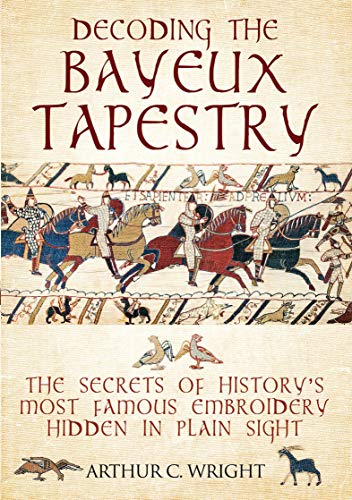
Decoding the Bayeux Tapestry by Arthur C. Wright

For the first time, a scholar reveals the meaning of the marginal images on the Bayeux Tapestry, unlocking a completely new meaning of the work.
 
The story of the Norman Conquest and the Battle of Hastings as shown in the Bayeux Tapestry is arguably the most widely-known in the panoply of English history, and over the last 200 years there have been hundreds of books on the Tapestry seeking to analyze its meanings. Yet, there is one aspect of the embroidery that has been virtually ignored or dismissed as unimportant by historians—the details in the margins.
 
The fables shown in the margins are neither just part of a decorative ribbon, nor are they discontinuous. They follow on in sequence. When this is understood, it becomes clear that they must relate to the action shown on the body of the Tapestry. After careful examination, the purpose of these images is to amplify, elaborate, or explain the main story.
 
In this groundbreaking study, Arthur Wright reveals the significance of the images in the margins. Now it is possible to see the “whole” story as never before, enabling a more complete picture of the Bayeux Tapestry to be constructed. Wright reexamines many of the scenes in the main body of the work, showing that a number of the basic assumptions, so often taught as facts, have been based on nothing more than reasoned conjecture.
 
It might be thought that after so much has been written about the Bayeux Tapestry there was nothing more to be said, but Decoding the Bayeux Tapestry shows how much there is still to be learned.

Decoding the Bayeux Tapestry: The Secrets of History’s Most Famous Embroidery Hidden in Plain Sight by Arthur C. Wright is a wonderful, engaging study of this most famous of embroideries, retelling the Norman Invasion in stunning, colourful needlework. Arthur C. Wright studies every aspect of the Tapestry, from the beasts in the margins to the story being played out in dramatic detail in the main part of the Tapestry. The author demonstrates how the images in the tapestry, even the animals and mystical creatures in the margin, serve to tell the story of the tapestry and the Norman Conquest.

An entertaining read and thoughtful study of the most famous of tapestries Decoding the Bayeux Tapestry is an illuminating work, beautifully illustrated along the way with images from the famous needlework.

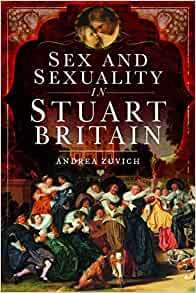
Sex and Sexuality in Stuart Britain by Andrea Zuvich

Peek beneath the bedsheets of Stuart Britain in this frank, informative, and captivating look at the sexual lives of the peoples of the British Isles between 1603 and 1714. Popular Stuart historian Andrea Zuvich, The Seventeenth Century Lady , explores our ancestors’ ingenious, surprising, bizarre, and often entertaining beliefs and solutions to the challenges associated with maintaining a healthy sex life, along with the prevailing attitudes towards male and female sexual behaviour. The author sheds light not only on the saucy love lives of the Royal Stuarts, but also on the dark underbelly of the Stuart era with histories of prostitution, sexual violence, infanticide, and sexual deviance. What was considered sexually attractive in Stuart Britain? At which ages would people be old enough for marriage? What were the penalties for adultery, incest, and fornication? How did Stuart-era peoples deal with infertility, sexually-transmitted illnesses, and child mortality? Find out the answers to these questions – and more – as fashion, food, science, art, medicine, magic, literature, love, politics, faith and superstition of the day are all examined, leaving the reader with a new regard for the ingenuity and character of our seventeenth and early eighteenth-century ancestors.

Sex and Sexuality in Stuart Britain by Andrea Zuvich is a wonderful study of the bedroom exploits of the Stuart dynasty of the seventeenth century. Andrea Zuvich examines all aspects of Stuart sexual life, from attitudes to rape and pornography, to the notions of love and marriage. Zuvich also looks at the lives of the Stuart monarchs, examining the rumours around them, the various mistress and lovers and the perceptions they gave to their people and to history. This is a truly fascinating study of a part of life that is important to all of us – and necessary for our continued existence – but so rarely talked about. Sex and Sexuality in Stuart Britain is so much more than a study of sexual practices in Stuart Britain, it also analyses the effects of child mortality, the dangers of childbirth. It also looks at the seedier side of society, such as infanticide and sexually transmitted diseases.

Sex and Sexuality in Stuart Britain is fascinating! It is a book that needed to be written and provides a wonderful contrast to the usual books on Stuart Britain, which concentrate on the Civil Wars, rather than the lives, loves and desires of the people. Andrea Zuvich has written a marvelous study of Stuart attitudes towards sex and sexuality, leaving no stone unturned to give the reader a comprehensive view of Stuart life, including the legal, social and personal aspects and implications.

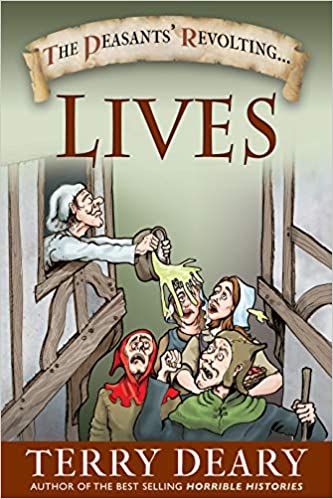
The Peasants Revolting Lives by Terry Deary

Today we are aware of how the rich and privileged have lived in the past because historians write about them endlessly. The poor have largely been ignored and, as a result, their contributions to our modern world are harder to unearth. Skilled raconteur TERRY DEARY takes us back through the centuries with a poignant but humorous look at how life treated the common folk who scratched out a living at the very bottom of society. Their world was one of foul food, terrible toilets, danger, disease and death the last, usually premature. Discover the stories of the teacher turned child-catcher who rounded up local waifs and strays and put them to work, and the thousands of children who descended into the hazardous depths to dig for coal. Read all about the agricultural workers who escaped the Black Death only to be thwarted by greedy landowners. And would you believe the one about the man who betrothed his 7-year-old daughter to a Holy Roman Emperor, or even the brothel that was run by a bishop? On the flip side, learn how cash-strapped citizens used animal droppings for house building and as a cure for baldness; how sparrow s brains were incorporated into aphrodisiacal brews; and how mixing tea with dried elder leaves could turn an extra profit. And of the milestones that brought some meaning to ordinary lives, here are the trials and tribulations of courtship and marriage; the ruthless terrors of the sporting arena; and the harsh disciplines of education all helping to alleviate the daily grind. The Peasants Revolting Lives celebrates those who have endured against the odds. From medieval miseries to the idiosyncrasies of being a twenty-first-century peasant, tragedy and comedy sit side by side in these tales of survival and endurance in the face of hardship.
Terry Deary’s The Peasants’ Revolting Lives is a fun and fascinating read for all the family. Whenever a Terry Deary book arrives on the doorstep, there is an inevitable squabble between myself and my son as to who should read it first – I tend to lose!

With stories that are often amusing, sometimes gruesome and all true, Terry Deary examines every aspect of the life of the peasant – throughout history – from work and religion, to sport, entertainment and education. The book is packed full of facts, each story or anecdote intended to inform and entertain – and they do!

The Peasants’ Revolting Lives is a wonderful reading experience for adult and child alike. The stories are so engaging and interesting that you don’t even realise you are learning about the trials and hardships of life as a peasant down the centuries. It is a must-read for any history lover.

All these books are available from Pen & Sword, with 30% off throughout December.

*

My Books

Ladies of Magna Carta: Women of Influence in Thirteenth Century England looks into the relationships of the various noble families of the 13th century, and how they were affected by the Barons’ Wars, Magna Carta and its aftermath; the bonds that were formed and those that were broken. It is now available from Pen & Sword,  Amazon and from Book Depository worldwide.

Also by Sharon Bennett Connolly:

Silk and the Sword: The Women of the Norman Conquest traces the fortunes of the women who had a significant role to play in the momentous events of 1066.  Available now from Amazon,  Amberley Publishing, Book Depository.

Heroines of the Medieval World tells the stories of some of the most remarkable women from Medieval history, from Eleanor of Aquitaine to Julian of Norwich. Available now from Amberley Publishing and Amazon and Book Depository.

*

You can be the first to read new articles by clicking the ‘Follow’ button, liking our Facebook page or joining me on Twitter and Instagram.

©2020 Sharon Bennett Connolly

Jolabokaflod – the Christmas Giveaway

Competition Closed

And the winner is …. Sue Barnard.

Thank you to everyone who entered. If you do get a copy of any of my books, either for yourself or others, please get in touch via the ‘contact me’ page and I will send you out a signed book plate to pop in the front.

My very best wishes for a wonderful Christmas and amazing New Year!

It is my pleasure to be the one to kick of the Historical Writers’ Forum Christmas Advent Blog Hop. And what better way to celebrate the end of 2020 with a book giveaway or special offer for practically every day of advent – so be sure to follow the blog hop through our Facebook page.

You could be a winner!

This year we are celebrating with Jolabokaflod as our Christmas blog hop theme! If you are not familiar with Jolabokaflod, it is the wonderful Icelandic tradition of giving books as gifts on Christmas Eve – except we are doing it for Advent.

And my contribution to Jolabokaflod is a signed paperback copy of my first book, Heroines of the Medieval World – either for yourself or as a gift for a friend or loved one – the dedication is entirely up to you!

Heroines of the Medieval World Giveaway!

Heroines of the Medieval World looks at the lives of the women who broke the mould: those who defied social norms and made their own future, consequently changing lives, society and even the course of history. Some of the women are famous, such as Eleanor of Aquitaine, who was not only a duchess in her own right but also Queen Consort of France through her first marriage and Queen Consort of England through her second, in addition to being a crusader and a rebel. Then there are the more obscure but no less remarkable figures such as Nicholaa de la Haye, who defended Lincoln Castle in the name of King John, and Maud de Braose, who spoke out against the same king’s excesses and whose death (or murder) was the inspiration for a clause in Magna Carta. Women had to walk a fine line in the Middle Ages, but many learned to survive – even flourish – in this male-dominated world. Some led armies, while others made their influence felt in more subtle ways, but all made a contribution to their era and should be remembered for daring to defy and lead in a world that demanded they obey and follow.

The Jolabokaflod Giveaway!

The giveaway is a signed and dedicated – for you or someone you love – paperback copy of my first book, Heroines of the Medieval World. The giveaway is open worldwide – and I will do my best to get the book to you in time for the big day, wherever you are.

Here is a taster:

From Chapter 3: Medieval Mistresses

The most successful of mistresses must be Katherine Swynford, the one mistress who defied the odds and eventually married her man, thus spawning a multitude of novels and love stories. Katherine was born around 1350; she was the younger daughter of Sir Payn Roelt, a Hainault knight in the service of Edward III’s queen, Philippa of Hainault, who eventually rose to be Guyenne King of Arms. Unfortunately, the identity of her mother has never been established, not an unusual situation when you think Katherine was born to an obscure knight and her significance only became evident later in life. Katherine and her older sister, Philippa,
appear to have been spent their early years in Queen Philippa’s household. Philippa de Roelt (or Rouet) joined the household of Elizabeth de Burgh, wife of Lionel of Antwerp, where she met her future husband, the literary giant of his age, Geoffrey Chaucer.

By 1365 Katherine was serving Blanche, Duchess of Lancaster, the first wife of John of Gaunt. John was the third surviving son of Edward III and Queen Philippa, and had married Blanche, co-heiress of Henry of Grosmont, Duke of Lancaster, in 1359. Soon after joining Blanche’s household, Katherine was married to Sir Hugh Swynford of Coleby and Kettlethorpe, Lincolnshire. Sir Hugh was a knight and tenant of John of Gaunt, who would serve with his lord on campaigns in 1366 and 1370. The couple had two children, Thomas and Blanche, who was named after the duchess. John of Gaunt stood as little Blanche’s godfather and she was raised alongside his own daughters by Duchess Blanche. Following the duchess’s death in September 1368, Katherine became governess to the duke’s three children: Elizabeth, Philippa and Henry. Three years after the death of Blanche, in September 1371, John married again, this time to a Spanish princess, Constance of Castile, the daughter of Pedro the Cruel, King of Castile, and Maria de Padilla, the king’s concubine-turned-wife. The marriage was a dynastic move, with Constance being heiress to the kingdom of Castile there was a distinct chance of John becoming King of Castile, if only John could wrest it from her father’s killer and illegitimate brother, Henry of Trastámara. From January 1372, he assumed the title of King of Castile and Leon, though in name only as he was never able
to consolidate his position.

Shortly after the marriage of John and Constance, in November 1371, Sir Hugh Swynford died while serving overseas, leaving Katherine a widow with two very young children; the youngest was probably less than two years old. It was not long after Sir Hugh’s death that Katherine became John of Gaunt’s mistress; although some sources suggest the couple were lovers even before Sir Hugh’s death, which has brought into question the paternity of Katherine’s eldest son by John of Gaunt. However, the majority of historians agree the relationship between John and Katherine started in late 1371 or early 1372 and was developing well in the spring of that year, when Katherine received rewards and a significant increase in her status within Gaunt’s household….

It’s easy to enter!

The competition is open to everyone, wherever you are in the world. To win a signed and dedicated copy of Heroines of the Medieval World, simply leave a comment below, on the Historical Writers Forum Blog Hop Facebook Page or on my own Facebook page and I will include you in the prize draw.

The draw will be made on Sunday 6 December 2020.

Good Luck!

And don’t forget to follow the rest of the blog hop!

Dec 4th Alex Marchant; Dec 5th Cathie Dunn; Dec 6th Jennifer C Wilson; Dec 8th Danielle Apple; Dec 9th Angela Rigley; Dec 10th Christine Hancock; Dec 12th Janet Wertman; Dec 13th Vanessa Couchman; Dec 14th Sue Barnard; Dec 15th Wendy J Dunn; Dec 16th Margaret Skea; Dec 17th Nancy Jardine; Dec 18th Tim Hodkinson; Dec 19th Salina Baker; Dec 20th Paula Lofting; Dec 21st Nicky Moxey; Dec 22nd Samantha Wilcoxson; Dec 23rd Jen Black; 24th Lynn Bryant

*

My Books

Ladies of Magna Carta: Women of Influence in Thirteenth Century England  looks into the relationships of the various noble families of the 13th century, and how they were affected by the Barons’ Wars, Magna Carta and its aftermath; the bonds that were formed and those that were broken. It is now available from Pen & SwordAmazon and from Book Depository worldwide.

Also by Sharon Bennett Connolly:

Silk and the Sword: The Women of the Norman Conquest traces the fortunes of the women who had a significant role to play in the momentous events of 1066.  Available now from Amazon,  Amberley Publishing, Book Depository.

Heroines of the Medieval World tells the stories of some of the most remarkable women from Medieval history, from Eleanor of Aquitaine to Julian of Norwich. Available now from Amberley Publishing and Amazon and Book Depository.

*

You can be the first to read new articles by clicking the ‘Follow’ button, liking our Facebook page or joining me on Twitter and Instagram.

©2020 Sharon Bennett Connolly 

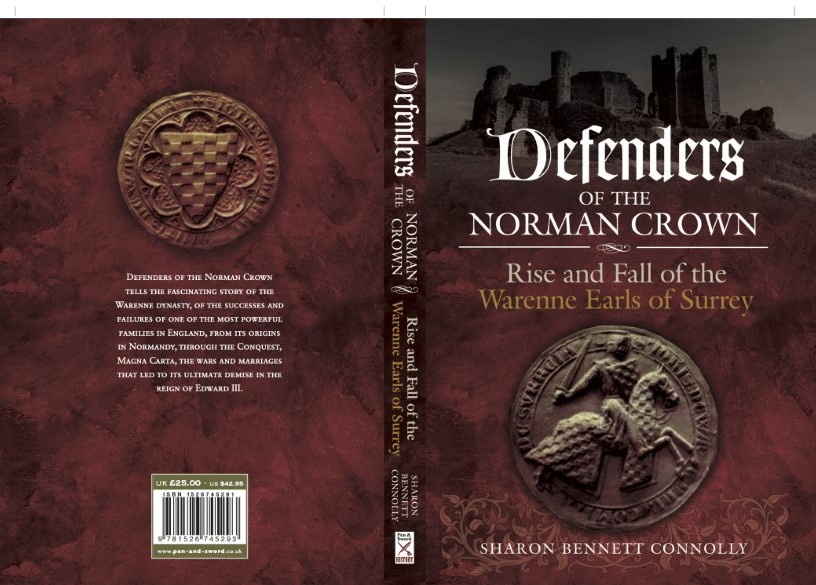
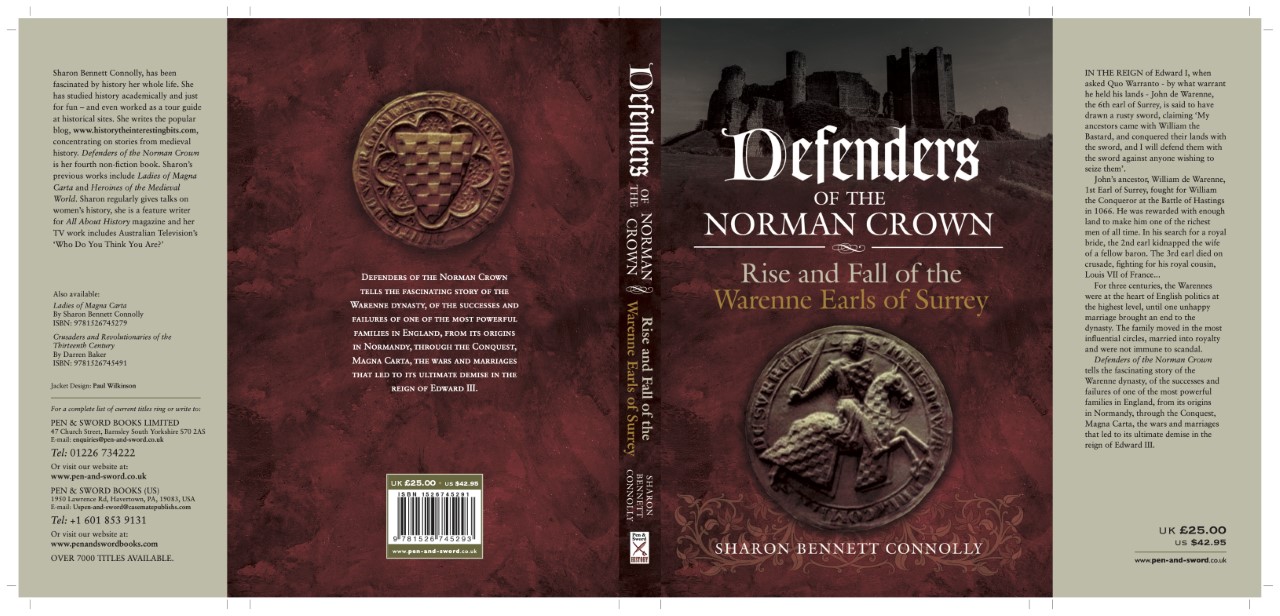
Cover and Title reveal – Defenders of the Norman Crown

Here it is!

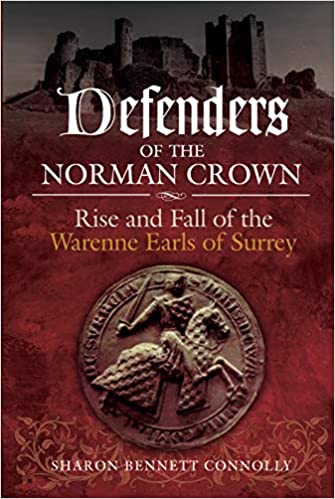
The finalised cover for Defenders of the Norman Crown: Rise and Fall of the Warenne Earls of Surrey, coming out next year.

Huge thanks to designer Paul Wilkinson at Pen & Sword for making my book look sooo good!

Defenders of the Norman Crown: Rise and Fall of the Warenne Earls of Surrey

In the reign of Edward I, when asked Quo Warranto? – by what warrant he held his lands – John de Warenne, the 6th earl of Warenne and Surrey, is said to have drawn a rusty sword, claiming ‘My ancestors came with William the Bastard, and conquered their lands with the sword, and I will defend them with the sword against anyone wishing to seize them.’

John’s ancestor, William de Warenne, 1st Earl of Surrey, fought for William the Conqueror at the Battle of Hastings in 1066. He was rewarded with enough land to make him one of the richest men of all time. In his search for a royal bride, the 2nd earl kidnapped the wife of a fellow baron. The 3rd earl died on crusade, fighting for his royal cousin, Louis VII of France…

For three centuries, the Warennes were at the heart of English politics at the highest level, until one unhappy marriage brought an end to the dynasty. The family moved in the most influential circles, married into royalty and were not immune to scandal.

Defenders of the Norman Crown tells the fascinating story of the Warenne dynasty, of the successes and failures of one of the most powerful families in England, from its origins in Normandy, through the Conquest, Magna Carta, the wars and marriages that led to its ultimate demise in the reign of Edward III.

Warenne arms

If you have been following this blog for any length of time, you will have noticed that I have a fondness for the Warennes. The family were earls of Surrey from 1088 until the death of the last Warenne earl in 1347. They possessed lands throughout England, stretching from Lewes in Sussex to Castle Rising in Norfolk and on to Conisbrough and Sandal Castles in Yorkshire.

Growing up close to the Warenne castle at Conisbrough in South Yorkshire, I developed a fascination for the castle’s history, for its connections to royalty, and for the family which built this amazing stronghold – the Warennes. As a student, I worked at the castle as a volunteer tour guide and started researching the story of the family. Many, many years later, when Pen & Sword asked me for some book ideas, I suggested writing a biography of the family, not really expecting them to say ‘yes’ – but they did. Defenders of the Norman Crown: Rise and Fall of the Warenne Earls of Surrey is a book I have always wanted to write, but never expected I would get the chance.

From the time of the Norman Conquest to the death of the seventh and last earl, the Warenne family was at the heart of English politics and the establishment, providing military and administrative support to the Crown. In the years following 1066 William I de Warenne, who became the first Earl of Surrey in 1088, was the fourth richest man in England and the richest not related to the royal family – he ranks at number 18 in MSN.com’s Top 20 Richest People of All Time.

Conisbrough Castle

The earls of Surrey were at the centre of the major crises of medieval England, from the Norman Conquest itself to the deposition of Edward II and accession of Edward III. Strategic marriages forged links with the leading noble houses in England and Scotland, from the Marshals, the FitzAlans, the d’Aubignys and Percys to the Scottish and English royal families themselves. Indeed, it is from Ada de Warenne, daughter of the second earl, married to the oldest son of the king of Scots, that all the leading competitors for the Scottish throne, after the death of Margaret, Maid of Norway in 1286, are descended. Queen Elizabeth II, herself, can trace her own lineage back to Ada and, through Ada, to the second earl of Warenne and Surrey.

In the 14th century, one unhappy marriage brought the dynasty to an end, the family’s influence and achievements almost forgotten…

Writing Defenders of the Norman Crown: Rise and Fall of the Warenne Earls of Surrey and researching this incredible family has been an amazing experience – a dream come true – and I will be eternally grateful to Pen & Sword for allowing me to tell their story.

Defenders of the Norman Crown: Rise and Fall of the Warenne Earls of Surrey tells the story of this remarkable dynasty. It is a story of power, ambition, loyalty and – above all – family!

Defenders of the Norman Crown: The Rise and Fall of the Warenne Earls of Surrey will be released in the UK on 31 May and is now available for pre-order from Pen & Sword Books.

*

My Books

Ladies of Magna Carta: Women of Influence in Thirteenth Century England  looks into the relationships of the various noble families of the 13th century, and how they were affected by the Barons’ Wars, Magna Carta and its aftermath; the bonds that were formed and those that were broken. It is now available from Pen & SwordAmazon and from Book Depository worldwide.

Also by Sharon Bennett Connolly:

Silk and the Sword: The Women of the Norman Conquest traces the fortunes of the women who had a significant role to play in the momentous events of 1066.  Available now from Amazon,  Amberley Publishing, Book Depository.

Heroines of the Medieval World tells the stories of some of the most remarkable women from Medieval history, from Eleanor of Aquitaine to Julian of Norwich. Available now from Amberley Publishing and Amazon and Book Depository.

*

You can be the first to read new articles by clicking the ‘Follow’ button, liking our Facebook page or joining me on Twitter and Instagram.

©2020 Sharon Bennett Connolly 

Guest Post: All the Ælfgifus by Annie Whitehead

Today it is a pleasure to welcome Annie Whitehead to History … the Interesting Bits as a stop on her Women of Power in Anglo-Saxon England Blog Tour.

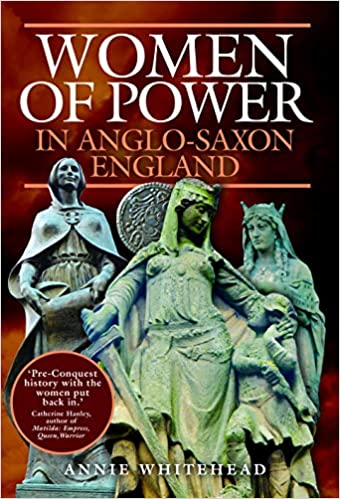
Women of Power in Anglo-Saxon England examines the lives of individual women in a way that has often been done for the Anglo-Saxon men but not for their wives, sisters, mothers and daughters. It tells their stories: those who ruled and schemed, the peace-weavers and the warrior women, the saints and the sinners. It explores, and restores, their reputations.

Over to you Annie….

All the Ælfgifus

I was recently interviewed on BBC Radio Northampton where we chatted about a lady known as Ælfgifu of Northampton. During the pre-recording chat, it became clear that there was some confusion over the name. I told the presenter that I wasn’t the least surprised, as there are no fewer than eight ladies with that name featured in my new book. I thought I’d take this opportunity to introduce them. (The name, incidentally, translates as Elf-gift, which I think is rather beautiful.)

Ælfgifu, daughter of Edward the Elder

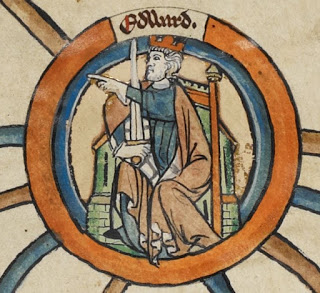
Edward the Elder

We don’t know a great deal about her but I do feel rather sorry for her. She and her sister, Eadgyth, were, apparently, both sent to Germany so that the future emperor, Otto, could choose one of them as his bride. He married Eadgyth – it was, apparently, ‘love at first sight’ – and Ælfgifu married another prince. What Ælfgifu felt about being rejected by Otto, we can only surmise. Of course, Otto might not have been every young girl’s dream, in which case Ælfgifu might have considered that she’d had a lucky escape. It must have rankled though, being declared less attractive than her sister.

Ælfgifu of Shaftesbury

King Edmund was the son of Edward the Elder and a half-brother of the Ælfgifu mentioned above. He became king at around the age of eighteen and his first wife, Ælfgifu, bore him two sons, both future kings. Her identity is debateable and her background unknown. She wasn’t married for long. Her son Eadwig (I’ll come back to him) was probably born around 940, and his younger brother Edgar around 943. King Edmund himself died in 946 – the victim of a brawl, or perhaps a political assassination – having married again, so his first marriage must have ended not long after Edgar’s birth. Ælfgifu is known as Ælfgifu of Shaftesbury, and it would be easy to assume that she retired to Shaftesbury Abbey in the manner of a number of previous queens, but the short-lived nature of her marriage and the young age of her children suggest another scenario. It is plausible that she died in childbirth, either in labour with Edgar or with a subsequent pregnancy in which both mother and child died. If she did indeed die in childbirth then she cannot have been a nun at Shaftesbury, but merely a benefactor.

Ælfgifu the Harlot

Mortimer portrait of Dunstan scolding 
Ælfgifu the Harlot

In 955 Edmund’s brother, who’d succeeded him, died and was in turn succeeded by Edmund’s son, Eadwig (see, I told you I’d come back to him). Life at court got rather interesting when Eadwig, still only a teenager, married a young woman named Ælfgifu. Many of you will know the story of how he was found in bed on his coronation day with his wife, and her mother. Depending on which version one reads, the mother was banished and/or hamstrung in punishment, or she threatened the abbot who found them, and who was himself subsequently banished, that she would have his eyes put out if he ever returned. The young couple’s marriage was annulled two years later, on the grounds that they were too closely related. However, Ælfgifu is presumed to be the same woman who left a will, in which she’s identified as being descended from the brother of Alfred the Great. This being so, she was descended from the branch of the royal family that had risen up in rebellion. Ælfgifu’s marrying the king might have been seen as an attempt to strengthen those claims. It’s not a theory which I whole-heartedly embrace but it does seem that there was a lot of political manoeuvring at court and I suspect Ælfgifu was an innocent caught up in the turmoil. She was certainly welcomed back to court by Eadwig’s brother when he became king.

Ælfgifu of York – Possibly

Aethelred the Unready

That brother of Eadwig’s had a son, known to history as Æthelred the Unready. His first wife’s identity is a bit of a mystery. The chronicler John of Worcester said that she was called Ælfgifu, and that she was the daughter of an ealdorman called Æthelberht. But there is no evidence of this woman’s father; no ealdorman named Æthelberht is recorded elsewhere. Roger of Wendover said that she was a ‘woman of low birth’, while Ailred of Rievaulx, writing in the mid-twelfth century, said that she was the daughter of a man named Thored, but he didn’t name her. It is possible that Æthelred was married first to a woman named Ælfgifu and then to the daughter of Thored, but it is generally accepted that this was one woman and, combining the two versions, that she was Ælfgifu, daughter of Thored.

We don’t hear much from her as she didn’t witness any charters and is otherwise unnamed in the sources. What she did do, though, is have at least nine children, (one of whom was also called Ælfgifu, whose husband was murdered by her sister’s husband, which must have made for awkward family Christmases)! She must have lived until the eleventh century, for her youngest son, Edgar, did not appear on charter witness lists until 1001. We do not know exactly how old the royal children would typically have been when they first appeared on the witness lists, but we do know that they were sometimes still babes in arms. It is not known what happened to Ælfgifu and it is possible that she died at around the same time, for King Æthelred got married again in 1002…

…To a woman named Emma, but who was given the English name of Ælfgifu. As if this wasn’t confusing enough! And after Æthelred the Unready died, Emma married again. Her husband was King Cnut, who already had a wife/concubine:

Ælfgifu of Northampton

Emma – Ælfgifu of Northampton’s rival

This Ælfgifu came from a powerful Mercian family. Her father was ealdorman of Northumbria, her uncle founded Burton Abbey and her grandmother founded Wolverhampton. Ælfgifu’s father was murdered and her brothers were blinded and generally Æthelred the Unready mistrusted the family, as well he might. For at some point, possibly around 1013, Ælfgifu married Cnut, the son of the invader, Swein Forkbeard. She had two sons by Cnut, and they were given Danish names – Swein and Harold – as if recognised as potential heirs, but when Cnut became king, he married Emma and also had a son with her, who was named Harthacnut.

Emma, with her credentials as an English queen, was no doubt important to Cnut, but so too was Ælfgifu of Northampton, and Cnut had a task for her to perform. Cnut had an empire to rule, and Harthacnut was sent to Denmark while in 1030, Ælfgifu and her son Swein were sent to Norway, there to rule for Cnut. The regency in Norway may have been hugely symbolic, and it is telling that the period was remembered in Scandinavian history as ‘Ælfgifu’s time’, but for various reasons it wasn’t hugely successful. Swein died in 1035, but so too did Cnut.

Now a (rather unseemly at times) battle began as Emma and Ælfgifu fought for their sons to succeed. You can read all about these fraught years in my new book but the upshot was that Ælfgifu was successful in the short term and Harold ‘Harefoot’ became king. Sadly though he died in 1040. We don’t know what happened to Ælfgifu after this, but there is a French twelfth-century story which speaks of a woman named Alveva and it’s possible that she lived out her years as an exile in southern France.

By 1066, another Harold was on the throne. He had a wife/concubine who’s known to history as Edith Swanneck, and one of her children was a daughter named Ælfgifu.

Ælfgifu the Unlucky

But the last Ælfgifu I want to talk about is one I’ve nicknamed ‘unlucky’. You’ll recall that Ælfgifu of Northampton’s brothers were blinded. They weren’t the only ones and in 993 a man named Ælfgar suffered the same fate. His wife was another woman named Ælfgifu. When Ælfgifu of Northampton’s father was killed and her brothers blinded, another man was named as being deprived of all his property. With a little bit of detective work I was able to say with some degree of certainty that this man was the second husband of our last Ælfgifu, which means that her first husband was blinded and the second was deprived of all his property. Given that it’s clear the name Ælfgifu seems to have been given only to noblewomen, I think this one must have expected a slightly more comfortable and uneventful life!

Follow the Blog Tour!

Annie’s book, Women of Power in Anglo-Saxon England, was published by Pen & Sword Books in June 2020. It can be purchased from Pen & Sword and online.

About the Author:

Annie is an author and historian and an elected member of the Royal Historical Society and has won awards and prizes for her fiction and nonfiction.

Published works include Mercia: The Rise and Fall of a Kingdom (Amberley Books) and novels and stories set in Anglo-Saxon England, including To Be A Queen, the story of Æthelflæd, Lady of the Mercians, longlisted for HNS Book of the Year 2016. She was the inaugural winner of the Dorothy Dunnett/HWA Short Story Competition in 2017. You can connect with Annie through her Website, on Facebook, Twitter and on her Blog and Amazon Author Page.

All images are in the public domain.

*

My Books

Ladies of Magna Carta: Women of Influence in Thirteenth Century England  looks into the relationships of the various noble families of the 13th century, and how they were affected by the Barons’ Wars, Magna Carta and its aftermath; the bonds that were formed and those that were broken. It is now available from Pen & SwordAmazon and from Book Depository worldwide.

Also by Sharon Bennett Connolly:

Silk and the Sword: The Women of the Norman Conquest traces the fortunes of the women who had a significant role to play in the momentous events of 1066.  Available now from Amazon,  Amberley Publishing, Book Depository.

Heroines of the Medieval World tells the stories of some of the most remarkable women from Medieval history, from Eleanor of Aquitaine to Julian of Norwich. Available now from Amberley Publishing and Amazon and Book Depository.

*

You can be the first to read new articles by clicking the ‘Follow’ button, liking our Facebook page or joining me on Twitter and Instagram.

©2020 Sharon Bennett Connolly

The Warennes and the First Cluniac Priory in England

Lewes Priory Sussex

As with so many nobles of the eleventh century, Gundrada and William de Warenne were known for their piety. Either in 1077 or 1081-3 (the dates vary according to the sources) the couple set off on a pilgrimage to Rome. Unfortunately, they never actually made it as far as Italy, due to the outbreak of war between the pope, Hildebrand, and the Holy Roman Emperor. They did, however, reach the magnificent abbey of St Peter and St Paul at Cluny in Burgundy, where Gundrada’s brother, Gerbod, was now a monk and they themselves were received into the fellowship of the monks.

Shortly after the Norman Conquest, Gerbod had been made Earl of Chester, but had resigned this position and returned to Flanders in 1071. Gerbod’s return home had been essential to guarantee the safety of the family’s lands and interests there. The former earl of Chester’s eventual fate is uncertain, however; one report has him killed while another sees him imprisoned. His most likely fate comes from a third account, which claims that Gerbod accidentally killed his lord, Count Arnulf III, the nephew of Queen Matilda, at the Battle of Cassel in 1071. According to this last account, Gerbod travelled to Rome to perform penance for killing his young lord, but was prevented from his self-imposed mutilation by Pope Gregory VII. Instead, the pope sent him to Abbot Hugh at Cluny, who gave Gerbod absolution and admitted him to the order as a monk.1 This would explain William and Gundrada‘s visit to Cluny and the Warenne attraction to the Cluniac order, which led to the foundation of the priory of St Pancras at Lewes, the first Cluniac priory founded in England.

The memorial to the 1264 Battle of Lewes, in the grounds of Lewes Priory

Although Abbot Hugh was absent at the time of the de Warenne’s visit, the abbey at Cluny inspired the couple, they ‘were so struck with the high standard of religious life maintained there that they determined to put their proposed foundation under Cluny, and accordingly desired the abbot to send three or four of his monks to begin the monastery. He, however, would not at first consent—fearing that at so great a distance from their mother-house they would become undisciplined’.2

It was only after William and Gundrada managed to gain the backing of the king, William the Conqueror, that the abbot gave his consent and eventually sent a monk named Lanzo, to act as prior, with three other monks to found the community. William gave them the church of St Pancras at Lewes, which had recently been rebuilt in stone, and the land surrounding it. Their territory was extended by William de Warenne acquiring ‘all the land and the island near Lewes which is called Southye’ for his monks, in return for, every Nativity of St John the Baptist, the delivery of ‘ten arrows, barbed, shafted, and feathered.’3 William and Gundrada were expecting to build a community to house twelve monks. All the churches on the vast Warenne estates were given to the priory, including endowments from the lands of Gundrada’s brother Frederic in Norfolk, recently inherited by Gundrada. The priory was to pay a fixed sum of 50s a year to the abbey at Cluny, but the independence of the Lewes monks was severely restricted, with the right of appointing its prior and admitting new monks being solely the reserve of the abbot of Cluny.4 A second priory, started by William but finished by his son, also William, was built on the family’s lands at Castle Acre in Norfolk.

The Cluniac order were unique in the church in that they had been granted exemption from excommunication by Pope Alexander II in 1061, who declared that anyone attempting to excommunicate the monks of Cluny would be ‘accursed by our Lord and St Peter, and fit to be burnt in eternal fire with the devil and the traitor Judas, and to be cast down with the impious into the abyss and Tartarean chaos.’5 The order had been founded in the year 910 by monks seeking to pursue a more austere lifestyle and a stricter interpretation of the Rule of St Benedict, laid down in the sixth century and the basis for medieval monastic life. Cluniac monks were renowned for the length and rigour of their church worship, the strict rules that governed them and their freedom from lay control and episcopal control, save for the pope. Their stringent rule contrasted with the order’s love of art and decoration, as demonstrated in the magnificent façade of the Cluniac priory of Castle Acre in Norfolk.6

Castle Acre Priory, Norfolk

The first Cluniac priory in England, St Pancras was also the acknowledged chief among Cluny’s establishments in England, all of which were founded within 150 years of the Norman Conquest; it became one of the wealthiest monasteries in the country. The family chronicle, the Warenne Chronicle may have originated at St Pancras Priory. Although it is also called the Hyde Chronicle, it is so called because it was discovered at Hyde Abbey in Winchester. It’s origin before that is unknown, so it is entirely possible that the chronicle originated was written at Lewes. This would also explain the chronicler’s extensive knowledge of the Warenne family.

Not only did the priory receive gifts and grants from each successive earl of Warenne, but also from other quarters, including those who wished to be buried there and those wanting to become monks. Among the grants issued to the priory over the years were allowances of venison for sick monks, fishing rights, the monopoly of eels from the Warenne’s Yorkshire properties and the right of taking wood three days a week from Pentecost (fifty days after Easter Sunday) to St Peter’s day (29 June).7 Of the Warenne earls of Surrey, all were buried at the priory at Lewes, except the third earl, who died on crusade in the Holy Land, and William of Blois, the first husband of Isabel de Warenne, who was buried in France. In addition to the family members, Lewes Priory was the chosen final resting place for the rich and noble, including earls and countesses of Arundel, and members of the prominent Nevill, Maltravers and Bohun families.

Gundrada died in childbirth at Castle Acre in Norfolk on 27 May 1085. It seems the misunderstanding over Gundrada’s parentage, and the claim that she was the daughter of William the Conqueror and his queen, Matilda of Flanders, arose with the monks at Lewes Priory, when a copy of an earlier charter claimed she was the daughter of Matilda of Flanders. Whether this was accidental or a deliberate misdirection is open to conjecture; the impression of royal links could give houses an advantage over other monasteries when seeking patronage. 

Gundrada died before her husband received his earldom, and so never bore the title of countess. She was buried in the chapter house of St Pancras Priory at Lewes; her husband would be buried beside her three years later. Around 1145, when new monastic buildings were consecrated at St Pancras, Gundrada’s bones were placed in a leaden chest and interred under a tombstone of black Tournai marble, ‘richly carved in the Romanesque style, with foliage and lions’ heads’.8 The sculptor was trained at Cluny and would later work for Henry I’s nephew, Henry of Blois, Bishop of Winchester and brother of King Stephen. The inscription on the tombstone, which runs along all four sides and down the middle, reads:

‘Gundrada, offspring of dukes, glory of the age, noble shoot,

brought to the churches of the English the balm of her character.

As a Martha …

That part of Martha [in her] died; the greater part of Mary survives.

she was to the wretched; a Mary she was in her piety.

O, pious Pancras, witness of truth and justice,

she makes you her heir; may you in your clemency accept the mother.

The sixth day of the kalends of June, showing itself,

broke the alabaster containing her flesh …’

Elisabeth M.C. Van Houts and Rosalind C. Love (eds and trans), The Warenne (Hyde) Chronicle

William de Warenne was awarded the earldom of Surrey in the spring of 1088. He did not live long enough to enjoy his new title, however, dying within months, or possibly weeks, of attaining the honour, in June 1088. It is conceivable that William’s epitaph was written by Orderic Vitalis himself, who recreates it in volume iv of his Ecclesiastical History. [45] It reads:

‘Earl William, in this place your fame is kindled.

You built this house and were its generous friend:

This (place) honours your body, because pleasing was the gift

you gave so willingly to the poor of Christ.

The saint himself, Pancras, your heir, who guards your ashes,

Will raise you to the mansions of the blessed in the stars.

Saint Pancras give, we pray, a seat in heaven

To him who for your glory gave this house.’

Elisabeth M.C. Van Houts and Rosalind C. Love (eds and trans), The Warenne (Hyde) Chronicle
St John the Baptist church, Southover

Following the dissolution of St Pancras Priory at Lewes in the sixteenth century, the tombstone was first moved to Isfield Church; it was moved again in 1775 to the parish church of St John the Baptist at Southover in Lewes. The church is situated close to the grounds of the ruined priory and may once have been within the priory’s precincts. The remains of Gundrada and William were discovered in the ruined priory in two leaden chests in 1845 and finally laid to rest in the Gundrada chapel at the Southover church in 1847. 9

The priory founded by William and Gundrada would continue its association with the Warenne family until the death of John, the seventh and final Warenne Earl of Surrey, who was buried there in 1347. The relationship was not always amicable, however; Earl Hamelin, the 4th Earl Warenne and second husband of Countess Isabel, had a long-running disagreement with the founding house at Cluny.

But that is a story for another day….

*

Images:

All images are ©2020 Sharon Bennett Connolly

Footnotes:

1Elisabeth Van Houts, Hereward and Flanders (article), Anglo-Saxon England vol. 28; 2A History of the County of Sussex: Volume 2 edited by William Page; 3 Lewes Chartulary quoted in W.H. Blaauw, On the Early History of Lewes Priory, and its Seals, with extracts from a MS. Chronicle, Sussex Archaeological Collections; 4W.H. Blaauw, On the Early History of Lewes Priory, and its Seals, with extracts from a MS. Chronicle, Sussex Archaeological Collections; 5Bullarum. Rom. Pontiff. Collectio, t.l. Roma, 1739-62 quoted in ibid; 6Edward Impey, Castle Acre Priory and Castle, English Heritage; 7Blaauw; 8Warenne, Gundrada de (d.1085) (article) by C.P. Lewis, Oxforddnb.com, oxforddnb.com; 9Elisabeth M.C. Van Houts and Rosalind C. Love (eds and trans), The Warenne (Hyde) Chronicle

Sources:

Elisabeth Van Houts, Hereward and Flanders (article), Anglo-Saxon England vol. 28; A History of the County of Sussex: Volume 2 edited by William Page; W.H. Blaauw, On the Early History of Lewes Priory, and its Seals, with extracts from a MS. Chronicle, Sussex Archaeological Collections; Edward Impey, Castle Acre Priory and Castle, English Heritage; Warenne, Gundrada de (d.1085) (article) by C.P. Lewis, Oxforddnb.com, oxforddnb.com; Elisabeth M.C. Van Houts and Rosalind C. Love (eds and trans), The Warenne (Hyde) Chronicle; Jeffrey James, The Bastard’s Sons: Robert, William and Henry of Normandy; Early Yorkshire Charters Volume 8 Edited by William Farrer and Charles Travis Clay; Rev. John Watson, Memoirs of the Ancient Earls of Warren and Surrey, and Their Descendants to the Present Time, Volume I; Alfred S. Ellis, Biographical Notes on the Yorkshire Tenants Named in Domesday Book (article); C.P. Lewis, Warenne, William de, first Earl of Surrey [Earl Warenne] (d. 1088) (article), Oxforddnb.com

*

My Books

Signed, dedicated copies of all my books are available through my online store.

Out now: Scotland’s Medieval Queens

Scotland’s history is dramatic, violent and bloody. Being England’s northern neighbour has never been easy. Scotland’s queens have had to deal with war, murder, imprisonment, political rivalries and open betrayal. They have loved and lost, raised kings and queens, ruled and died for Scotland. From St Margaret, who became one of the patron saints of Scotland, to Elizabeth de Burgh and the dramatic story of the Scottish Wars of Independence, to the love story and tragedy of Joan Beaufort, to Margaret of Denmark and the dawn of the Renaissance, Scotland’s Medieval Queens have seen it all. This is the story of Scotland through their eyes.

Scotland’s Medieval Queens gives a thorough grounding in the history of the women who ruled Scotland at the side of its kings, often in the shadows, but just as interesting in their lives beyond the spotlight. It’s not a subject that has been widely covered, and Sharon is a pioneer in bringing that information into accessible history.’ Elizabeth Chadwick (New York Times bestselling author)

Available now from Amazon and Pen and Sword Books

Also by Sharon Bennett Connolly:

Heroines of the Tudor World tells the stories of the most remarkable women from European history in the time of the Tudor dynasty, 1485-1603. These are the women who ruled, the women who founded dynasties, the women who fought for religious freedom, their families and love. Heroines of the Tudor World is now available for pre-order from Amberley Publishing and Amazon UK. Women of the Anarchy demonstrates how Empress Matilda and Matilda of Boulogne, unable to wield a sword themselves, were prime movers in this time of conflict and lawlessness. It shows how their strengths, weaknesses, and personal ambitions swung the fortunes of war one way – and then the other. Available from Bookshop.orgAmberley Publishing and Amazon UKKing John’s Right-Hand Lady: The Story of Nicholaa de la Haye is the story of a truly remarkable lady, the hereditary constable of Lincoln Castle and the first woman in England to be appointed sheriff in her own right. Available from all good bookshops Pen & Sword Booksbookshop.org and Amazon

Defenders of the Norman Crown: The Rise and Fall of the Warenne Earls of Surrey tells the fascinating story of the Warenne dynasty, from its origins in Normandy, through the Conquest, Magna Carta, the wars and marriages that led to its ultimate demise in the reign of Edward III. Available from Pen & Sword BooksAmazon in the UK and US, and Bookshop.orgLadies of Magna Carta: Women of Influence in Thirteenth Century England looks into the relationships of the various noble families of the 13th century, and how they were affected by the Barons’ Wars, Magna Carta and its aftermath; the bonds that were formed and those that were broken. It is now available in paperback and hardback from Pen & SwordAmazon, and Bookshop.orgHeroines of the Medieval World tells the stories of some of the most remarkable women from Medieval history, from Eleanor of Aquitaine to Julian of Norwich. Available now from Amberley Publishing and Amazon, and Bookshop.orgSilk and the Sword: The Women of the Norman Conquest traces the fortunes of the women who had a significant role to play in the momentous events of 1066. Available now from Amazon,  Amberley Publishing, and Bookshop.org.

Alternate Endings: An anthology of historical fiction short stories including Long Live the King… which is my take what might have happened had King John not died in October 1216. Available in paperback and kindle from Amazon.

Podcast:

Have a listen to the A Slice of Medieval podcast, which I co-host with Historical fiction novelist Derek Birks. Derek and I welcome guests, such as Bernard Cornwell and Michael Jecks, and discuss a wide range of topics in medieval history, from significant events to the personalities involved. Every episode is also now available on YouTube.

*

Don’t forget! Signed and dedicated copies of all my books are available through my online store.

For forthcoming online and in-person talks, please check out my Events Page.

You can be the first to read new articles by clicking the ‘Follow’ button, liking our Facebook page or joining me on TwitterThreadsBluesky and Instagram.

*

©2020 Sharon Bennett Connolly FRHistS

Conisbrough Castle – its Life and History

ConisbroughCastle

Growing up near Conisbrough Castle, South Yorkshire, I did not know much about its history. It was rather underrated. We always thought it was just a bland old place – it was great for exploring and rolling down the hills and playing hide and seek in the inner bailey. However, being so far from London, the centre of power,  it didn’t seem to have much history or national importance. The most famous thing about it was that it was used as the Saxon castle in Sir Walter Scott’s Ivanhoe.

The castle’s early history

English Heritage have spent a lot of money on it in recent years. When I worked there in the early 1990s there was no roof, it was open to the elements, with green moss on the walls and erosion caused by acid rain. And there was just a very narrow walkway around the inside of the keep. It was just a shell. Now it has a roof, floors on every level, sensitive lighting, information videos on each floor and a fantastic little visitor centre with a small museum. It looks so much better (although I still wouldn’t want to stand on the battlements on a windy day like today).

020
Conisbrough’s hexagonal keep

When I joined the castle team as a volunteer tour guide, I started looking into the actual history of the Castle, seeing it more for what it has been, than for the visitor attraction it is now. Instead of being a forgotten, unimportant little castle in the middle of nowhere, Conisbrough Castle comes to life through the history it has been a part of, and the people who have called it home.

According to Geoffrey of Monmouth, in his Historia Regum Britanniae (History of the Kings of Britain), Conisbrough was founded as ‘Conan’s Burg’ by a British leader called Conan. It was said to have later belonged to Ambrosius Aurelianus, a candidate for the legendary King Arthur. As Geoffrey of Monmouth says, Ambrosius captured the Saxon leader Hengist, once a mercenary for Vortigern, at the battle of ‘Maisbeli.’ And brought him to his stronghold at Conisbrough. Hengist was then beheaded on Ambrosius’ orders and buried at the entrance to the castle of ‘Cunengeburg’, that is Conisbrough. A small hill, locally called Hengist’s Mound, is in the grounds of the outer bailey.

What we know, for certain, is that by 1066 the Honour of Conisbrough belonged to Harold Godwinson, Earl of Wessex and later King Harold II of England, though there is no evidence that he ever visited. On a prominent, steep hill, the castle guards the main road between Sheffield and Doncaster to the east, and the navigable River Don to the north.

010 (2)
The kitchen range in the inner bailey

Following Harold’s defeat and death at the Battle of Hastings, and shortly after the Harrying of the North of 1068 Conisbrough was given to one of William the Conqueror’s greatest supporters, William de Warenne. Warenne was a cousin of Duke William of Normandy and fought alongside him at the Battle of Hastings. He was given land in various counties, including Lewes in Sussex and Conisbrough in Yorkshire; and although he developed his property at Castle Acre in Norfolk, little was done at Conisbrough. In those days the castle itself was little more than a wooden motte and bailey construction, surrounded by wooden palisades and earthworks.

*

A thoroughly modern Castle

It was not until the reign of Henry II that the Castle began to take on the majestic appearance we know today. Conisbrough came into the hands of Hamelin Plantagenet, illegitimate half-brother of King Henry II; Hamelin had married the de Warenne heiress, Isabel, 4th Countess of Warenne and Surrey, and became 4th Earl of Warenne and Surrey by right of his wife.

029
Fireplace in the bedchamber in the keep

It was Hamelin who built the spectacular hexagonal keep that we can see today. The stairs to the keep were originally accessed across a drawbridge, which could be raised in times of attack. The ground floor was used for storage, with a basement storeroom below, housing the keep’s well,  and accessed by ladder.

The first floor holds the great chamber, or solar, with a magnificent fireplace and seating in the glass-less window. According to Margaret Wood’s The English Medieval House, “It has been shown * that the two earliest known examples of a hooded fireplace, at Conisborough [sic] keep (c. 1185)‘ in Yorkshire (PI. XLI p), occur where the circular plan of the room made an arched fireplace difficult to construct. Here a lintel was formed along a chord of the circumference, and the resulting filling above assumed a hooded form.” This is where the Lord would have conducted business, or entertained important guests. Henry II, King John and King Edward II are known to have visited Conisbrough: King John even issued a charter from Conisbrough Castle in March 1201.

030
The chapel’s vaulted ceiling

The second floor would have been sleeping quarters for the lord and lady. Both the solar and the bedchamber have impressive fireplaces, garderobes and a stone basin, which would have had running water delivered from a rainwater cistern on the roof.

On this floor, also, built into one of the keep’s buttresses is the family’s private chapel. This may well have been the chapel endowed by Hamelin and Isabel in 1189-90, and dedicated to St Philip and St James (although there was a, now lost, second chapel in the inner bailey to which the endowment could refer). The chapel is well-decorated, with quatrefoil windows, elaborate carving on the columns and a wonderful vaulted ceiling.

036
Chapel carvings

There is a small sacristy for the priest, just to the left of the door, with another basin for the priest’s personal use, and cavities for storing the vestments and altar vessels.

The winding stairs, built within the keep’s thick walls, give access to each successive level and, eventually, to the battlements, with a panoramic view of the surrounding area.

These battlements also had cisterns to hold rainwater, a bread oven and weapons storage; and wooden hoardings stretching out over the bailey to aid in defence. The keep and curtain walls – which were built slightly later – were of a state-of-the art design in their day. The barbican, leading into the inner bailey, had 2 gatehouses and  a steep passageway guarded by high walls on both sides; an attacking force would have been defenceless against missiles from above, with nowhere to run in the cramped corridor.

041
View from the battlements

Although the encircling moat is dry (the keep is built high on a hill), all the detritus from the toilets and kitchens drained into it; another little aid to defence – imagine having to attack through that kind of waste?

None of the buildings in the inner bailey have survived, although you can see their stone foundations in the ground. Along one wall there were kitchens and service rooms leading into a great hall, with a raised dais at the far end, and a solar and living quarters above. Another range of buildings attached to the western wall also held living quarters, possibly for the garrison and any guests. There’s even a small jail cell just to the side of the barbican.

Although Conisbrough is not a large castle, the extensive range of buildings, the magnificent decorations of the fireplaces and chapel, suggest it would have been impressive in its day; and reflects the importance of the castle’s owners and occupants.

*

The Castle’s Residents

008 (2)
The inner bailey

The Warenne Earls of Surrey were close to the crown, and the centre of government, for the best part 3 centuries. The daughter of the 2nd Earl, Ada, had married the heir to the Scots throne and was mother to 2 Scottish kings; Malcolm the Maiden and William the Lion.

Hamelin’s son and heir, William, 5th Earl of Warenne and Surrey, married Maud Marshal, daughter of the Greatest knight, William Marshal, Earl of Pembroke and Regent during Henry III’s  infancy. A cousin of King John, William was deeply involved in the Magna Carta crisis, though not always in support of his cousin. Their son John, the 6th Earl, was Edward I’s lieutenant in Scotland and beat the Scots at the Battle of Dunbar in 1296, though he had been defeated by William Wallace at Stirling Bridge the following year. John’s daughter, Isabella, married John Balliol, King of Scots, and was mother to Edward Balliol, another Scottish king. John’s sister, Isabel, married Hugh d’Aubigny, 5th Earl of Arundel, and is remembered as the countess who stood up to Henry III, invoking Magna Carta, when he appropriated land that was rightfully hers.

The 7th – and last – Warenne earl, John, was a colourful character who lived through some of the most dramatic events of English history; the reign of Edweard II. John was the grandson of the 6th earl; his father, William de Warenne, had diedbeen killed in a tournament at Croydon, in December 1286, when John was just 6 months old. Although he was married to Joan of Bar, a granddaughter of Edward I, John lived openly with his mistress and made several unsuccessful attempts to obtain a divorce from his wife. A private feud with Thomas Earl of Lancaster saw John arrange the kidnapping of Earl Tomas’ wife, Alice de Lacey, possibly in retaliation for Lancaster standing in the way of Surrey’s longed-for divorce. The result was the 1st – and only – siege of Conisbrough Castle.

Lancaster sent forces to seize the Warenne castles at Sandal and Conisbrough. His men found the gates of Conisbrough closed to them. The castle was defended by only six men, including the town miller and three brothers, Thomas, Henry and William Greathead, who were men-at-arms. The siege lasted less than two hours and the defenders appear to have relinquished the castle after apparently putting up a token resistance; the three brothers were fined for drawing blood. The chapel in the castle’s inner bailey may have been damaged in the brief altercation, as the following year, Lancaster sent orders to his castellan at Conisbrough, John de Lassell, to ‘repailler la couverture de la chapele de Conynggesburgh.’1

028
The bedchamber in the keep, with wash basin and stairway leading to the garderobe and battlements

The last Earl of Surrey died without heirs in 1347 and Conisbrough passed to John de Warenne’s godson, Edmund of Langley, fourth son of Edward III. Edmund’s wife Isabella of Castile gave birth to her 3rd child, Richard Earl of Cambridge (also known as Richard of Conisbrough) at Conisbrough, possibly in the lavish bedchamber within the keep itself. Cambridge had the dubious reputation of being England’s poorest Earl and was executed following his involvement in the Southampton plot against Henry V; however, he is remembered to history as the grandfather of the Yorkist kings, Edward IV and Richard III.

Following Cambridge’s execution for treason in 1415 his 2nd wife, Maud Clifford, made Conisbrough her principal residence until her death in 1446. Maud entertained her Clifford family here and her great-nephew and godson John Clifford, known to Yorkists as the Butcher of Skipton was born there in 1435. In a strange twist of fate, John Clifford is the one accused of murdering the Earl of Cambridge’s 17-year-old grandson Edmund, Earl of Rutland, following the Lancastrian’s defeat of the Yorksists at the Battle of Wakefield on 30 December 1460. Maud died at the castle in August 1446 and is buried in Roche Abbey, about 10 miles from her home.

The castle underwent repairs during the reigns of Edward IV and Richard III, in 1482-3, but by 1538 a survey revealed the it had fallen into neglect and decay, with parts of the curtain wall having slipped down the embankment.

From then on, although it has had successive owners until it came under the protection of English Heritage, Conisbrough Castle has been a picturesque ruin, a wonderful venue for picnics and exploring its many hidden treasures.

Conisbrough Castle from the outer bailey

*

All photographs are copyright to Sharon Bennett Connolly, 2015.

Footnote:

1 Hunter’s South Yorkshire ii; Deanery of Doncaster ii quoted in F. Royston Fairbank, The Last Earl of Warenne and Surrey, and the Distribution of His Possessions, Yorkshire Archaeological Journal, p. 213

*

Sources:

Further reading: East Yorkshire Charters Volume 8: The Honour of Warenne, edited by William Farrer & Charles Travis Clay; English Heritage Guidebook for Conisbrough Castle by Steven Brindle and Agnieszka Sadrei; English Tourist Board’s English Castles Almanac; The English Medieval House by Margaret Wood; http://www.kristiedean.com/butcher-skipton; On the Trail of the Yorks by Kristie Dean; F. Royston Fairbank, The Last Earl of Warenne and Surrey, and the Distribution of His Possessions, Yorkshire Archaeological Journal.

*

My Books

Defenders of the Norman Crown: The Rise and Fall of the Warenne Earls of Surrey tells the fascinating story of the Warenne dynasty, of the successes and failures of one of the most powerful families in England, from its origins in Normandy, through the Conquest, Magna Carta, the wars and marriages that led to its ultimate demise in the reign of Edward III.

1 family. 8 earls. 300 years of English history!

Defenders of the Norman Crown: Rise and Fall of the Warenne Earls of Surrey will be released in the UK on 31 May and in the US on 6 August. And it is now available for pre-order from Pen & Sword BooksAmazon in the UK and US and Book Depository.

Also by Sharon Bennett Connolly:

Ladies of Magna Carta: Women of Influence in Thirteenth Century England looks into the relationships of the various noble families of the 13th century, and how they were affected by the Barons’ Wars, Magna Carta and its aftermath; the bonds that were formed and those that were broken. It is now available from Pen & Sword,  Amazon and from Book Depository worldwide.

Heroines of the Medieval World tells the stories of some of the most remarkable women from Medieval history, from Eleanor of Aquitaine to Julian of Norwich. Available now from Amberley Publishing and Amazon and Book Depository.

Silk and the Sword: The Women of the Norman Conquest traces the fortunes of the women who had a significant role to play in the momentous events of 1066.  Available now from Amazon,  Amberley Publishing, Book Depository.

*

You can be the first to read new articles by clicking the ‘Follow’ button, liking our Facebook page or joining me on Twitter and Instagram.

©2020 Sharon Bennett Connolly