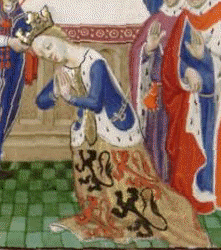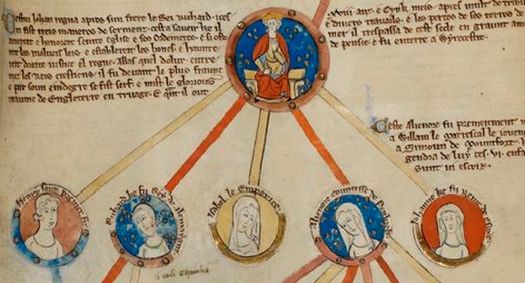
Eleanor, daughter of a king, Countess of Pembroke

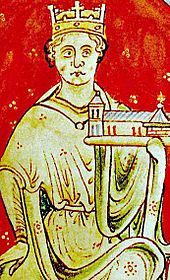
King John with his children Henry, Richard, Joan, Isabella and Eleanor

There was one daughter of King John for whom the legacy of Magna Carta and the struggle for political reform held particular significance. The life of Eleanor of England, and her husband Simon de Montfort, stands as the epilogue of the Magna Carta story. Although democratic government was still many centuries in the future, Magna Carta was the first step. The political movement led by Simon de Montfort was the second step …

However, had fate not stepped in, Eleanor may never have married Simon. From an early age, she had been the wife of another, until tragedy struck.

Eleanor of England was the youngest child of John and Isabelle d’Angoulême; she is said to have inherited her mother’s beauty and feisty temperament.1 Eleanor was thought to have been born at the height of her father’s troubles, in the midst of the Magna Carta crisis in 1215. However, historians are now inclined to the theory that she was born posthumously, sometime after the death of King John, either in late 1216 or early in 1217. She was named for her famous grandmother, Eleanor of Aquitaine. As a baby, little Eleanor was placed in the household of the bishop of Winchester, where her eldest brother, Henry, had been living since 1212.2 Eleanor’s father had died whilst the country was riven by war, on the night of 18/19 October 1216 at Newark. He was succeeded by Eleanor’s eldest brother Henry – now King Henry III. Eleanor’s mother, frozen out from any role in her son’s regency or life, returned to her native Angoulême and in 1220 married Hugh X de Lusignan, Count of La Marche.

In 1224 Eleanor’s future was decided when she was married to William (II) Marshal, Earl of Pembroke. The younger Marshal was the son of the first earl of Pembroke who had been regent in the early years of Henry III’s reign, and who had driven the French out of England following his victory at the Battle of Lincoln in May 1217. The first earl had a reputation for integrity and loyalty, having remained unwavering in his loyalty to King John during the Magna Carta crisis. The second earl, Eleanor’s husband, had been a hostage of the king between 1207 and 1213, as a guarantee of his father’s good behaviour. He later joined the baronial rebellion and was appointed marshal of the forces of the invader, Prince Louis. However, he returned to the Royalist cause when Louis refused him possession of Marlborough Castle, which had previously belonged to the younger Marshal’s grandfather.3

William (II) Marshal fought alongside his father at the Battle of Lincoln. On his father’s death in 1219, Marshal had succeeded him as earl of Pembroke and marshal of England; when his mother died in 1220, he succeeded to her lordships of Leinster and Netherwent. His younger brother, Richard Marshal, succeeded to the Clare lands in Ireland. In 1214 Marshal married Alice, the daughter of Baldwin de Béthune, Count of Aumâle, to whom he had been betrothed in 1203. The marriage was short-lived, however, as poor Alice died in 1216.

On 23 April 1224, William (II) Marshal was married to Eleanor; born in the 1190s, he was some twenty-or-so years older than his bride, who was no more than 9 years old on her wedding day, and may have been as young as 7.4
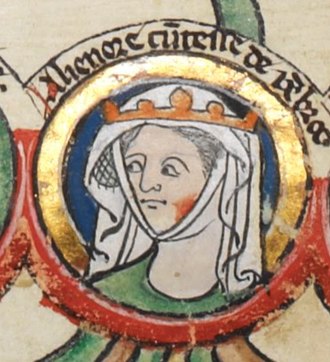
Eleanor of England, Countess of Pembroke

The marriage was agreed at the behest of the justiciar, Hubert de Burgh, and the papal legate, Pandulf, as a way of guaranteeing Marshal remained firmly in the justiciar’s camp, and to prevent the marshal making a foreign marriage. The match put an end to three years of indecision, as to whether Eleanor should marry a foreign prince or an English magnate. The king settled ten manors, confiscated from a French nobleman and already administered by Marshal, on his sister as her marriage portion.5

For the first five years of her marriage Eleanor continued to live at court, under the guardianship of Cecily of Sandford.6 In 1229, when she was 13 or 14, she went to live with her husband, and would spend her time travelling with him in England, France and Ireland. In May 1230, Marshal had taken twenty knights with him on Henry III’s expedition to Poitou. He also took his wife, probably at the behest of the king. Eleanor became seasick during the voyage to France and Henry had his ship drop anchor at the nearest landfall to give her time to recover, ordering the fleet to continue without them.7

Henry was probably hoping that Eleanor’s presence would help to secure the support of his mother and her second husband, Hugh de Lusignan, to his expedition against the French. Mother and daughter had not seen each other since Eleanor was a baby. Isabelle’s maternal affection for the children of her first husband, however, was practically non-existent, or deeply hidden, and Eleanor’s presence failed to persuade her mother and stepfather to remain loyal to Henry III. As we have seen in a previous article, Isabelle d’Angoulême‘s priorities as a French countess often clashed with those of her English family.

Marshal and Eleanor returned from France in the spring of 1231, with William handing over command of the English forces to Ranulf, Earl of Chester. Shortly after their return, the couple attended the wedding of Marshal’s widowed sister, Isabel, to the king’s brother, Richard, Earl of Cornwall. Family happiness turned to grief, however, when William (II) Marshal died suddenly in London a week later, on 6 April. He was buried beside his father at the Temple Church on 15 April 1231.

At the still very tender age of between 14 and 16, Eleanor was a now childless widow.
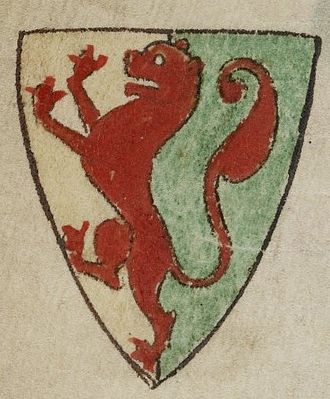
The arms of William Marshal, Earl of Pembroke

The earldom of Pembroke passed to William’s younger brother, Richard, and Eleanor would spend many years fighting unsuccessfully to get the entirety of her dowry from the Marshal family, which amounted to one third of the Marshal estates, according to the guarantees established by Magna Carta. The Great Charter stipulated a widow should receive the allocation of a dower within forty days of her husband’s death.

A year after William’s death Richard Marshal offered Eleanor £400 a year as her settlement. Henry III persuaded his sister to take it, wanting to be done with the business and probably well aware that it was as much as Eleanor was likely to get, despite the Marshal holdings amounting to an income of £3,000 a year.8 Henry stood as guarantor for the settlement but the payments would always be sporadic and unreliable, not helped by the fact that the earldom passed through four successive Marshal brothers between 1231 and 1245, each with differing priorities and more Marshal widows to assign their dowers.

In the midst of her grief, and influenced by her former governess, Eleanor took a vow of chastity in the presence of Edmund of Abingdon, Archbishop of Canterbury in 1234. Although she did not become a nun, the archbishop put a ring on her finger, to signify that she was a bride of Christ; she was, therefore, expected to remain chaste and virtuous for the rest of her life. As a result, the king seized her estates and Richard Marshal, as her husband’s heir, took many of her valuable chattels.

Knowing how teenagers see lost love as the end of the world, even today, one can understand Eleanor’s decision to take a vow of chastity, even if we cannot comprehend anyone giving such advice to a grieving 16-year-old. Eleanor may also have seen taking such a vow as a way of staving off her brother, the king, forcing her to remarry in the interests of the crown. Moreover, it put Eleanor’s life in her own hands and also served to appease the Marshal family, who would have seen their own lands, which made up Eleanor’s dower, controlled by another magnate or foreign prince had she remarried.
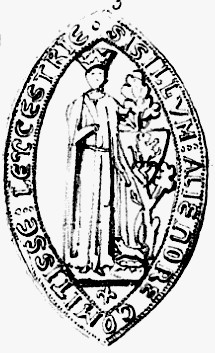
Eleanor’s seal as Countess of Leicester

The widowed Eleanor retired to the castle of Inkberrow in Worcestershire. King Henry III continued to watch over his sister throughout the 1230s; he sent her gifts of venison and timber for her manors. Throughout her life, Eleanor was known for her extravagant spending, which led to substantial debts; Henry lent her money and made sporadic payments to reduce the debts. And in 1237 her brother granted her Odiham Castle in Hampshire, which would become her principal residence.9

Although Eleanor spent the 7 years after William Marshal’s death as a young widow sworn to chastity, most people may have predicted that such a life would not last. And at some point after the mid-1230s, possibly at the wedding of Henry and Eleanor of Provence, Eleanor met Simon de Montfort, the man who would dominate English politics in the mid-thirteenth century.

The couple fell in love.

But that story is for another time…

*

Images:

Courtesy of Wikipedia

Footnotes:

1. Carol, ‘Eleanor of Leicester: A Broken Vow of Chastity’, historyofroyalwomen.com, 28 February 2017; 2. Elizabeth Norton, She Wolves; 3. R.F. Walker, ‘William Marshal, fifth earl of Pembroke (c. 1190–1231)’, oxforddnb.com; 4. Ibid; 5. Darren Baker, With All For All; 6. Elizabeth Hallam, ‘Eleanor, Countess of Pembroke and Leicester (1215?–1275)’, Oxforddnb.com; 7. Darren Baker, With All For All; 8. Ibid; Elizabeth Hallam, ‘Eleanor, Countess of Pembroke’.

Sources:

Rich Price, King John’s Letters Facebook group; Robert Bartlett England Under the Norman and Angevin Kings 1075-1225; Dan Jones The Plantagenets; the Kings who Made EnglandThe Plantagenet Chronicle Edited by Elizabeth Hallam; Maurice Ashley The Life and Times of King John; Roy Strong The Story of BritainOxford Companion to British History; Mike Ashley British Kings & Queens; David Williamson Brewer’s British Royalty; Ralph of Diceto, Images of History; Marc Morris, King John; David Crouch, William Marshal; Crouch and Holden, History of William Marshal; Crouch, David, ‘William Marshal [called the Marshal], fourth earl of Pembroke (c. 1146–1219)’, Oxforddnb.com; Flanagan, M.T., ‘Isabel de Clare, suo jure countess of Pembroke (1171×6–1220)’, Oxforddnb.com; Thomas Asbridge, The Greatest Knight; Chadwick, Elizabeth, ‘Clothing the Bones: Finding Mahelt Marshal’, livingthehistoryelizabethchadwick.blogspot.com; Stacey, Robert C., ‘Roger Bigod, fourth earl of Norfolk (c. 1212-1270)’, Oxforddnb.com; finerollshenry3.org.uk; Vincent, Nicholas, ‘William de Warenne, fifth earl of Surrey [Earl Warenne] (d. 1240)’, Oxforddnb.com.

*

My Books:

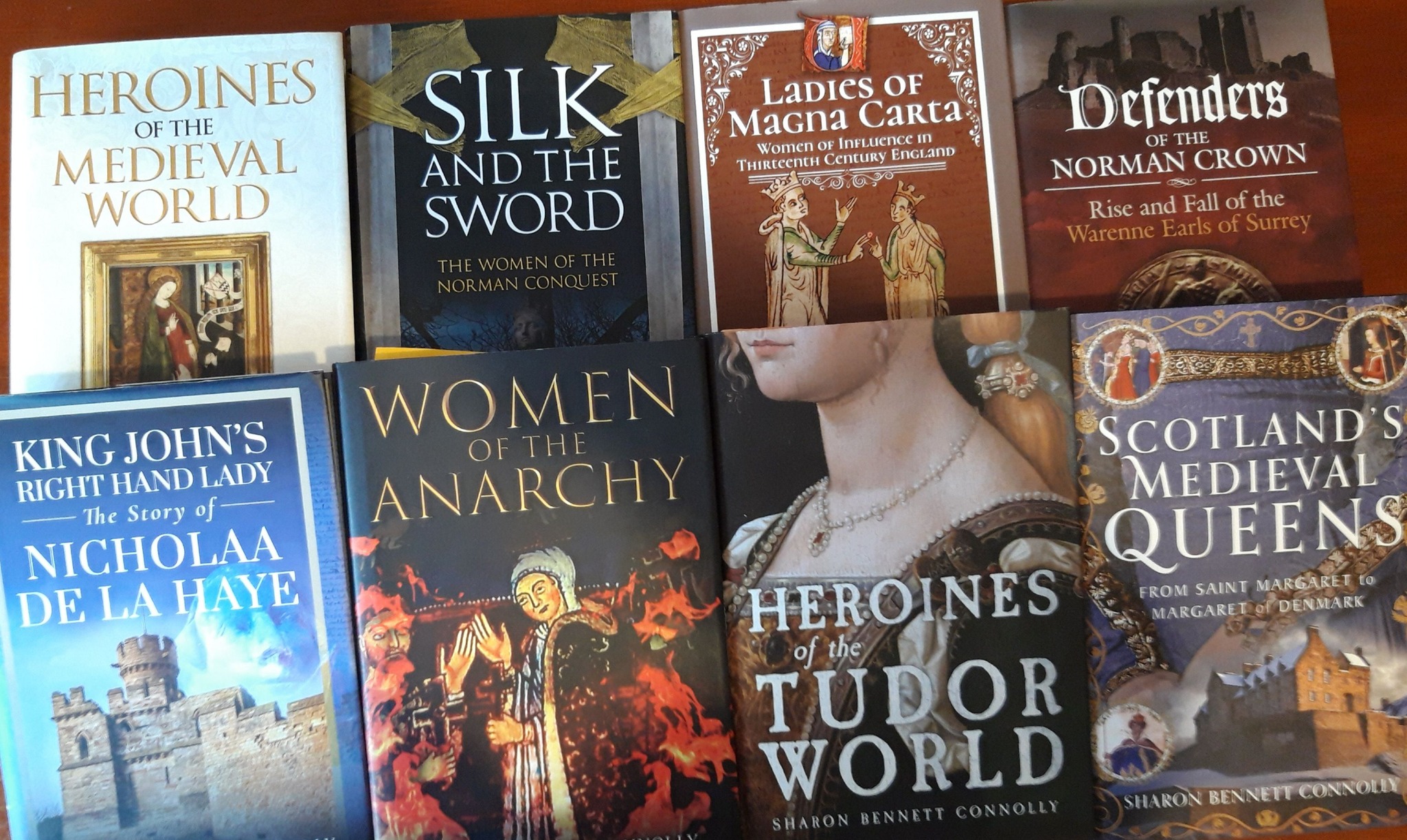
Signed, dedicated copies of all my books are available through my online bookshop.

Out Now! Women of the Anarchy
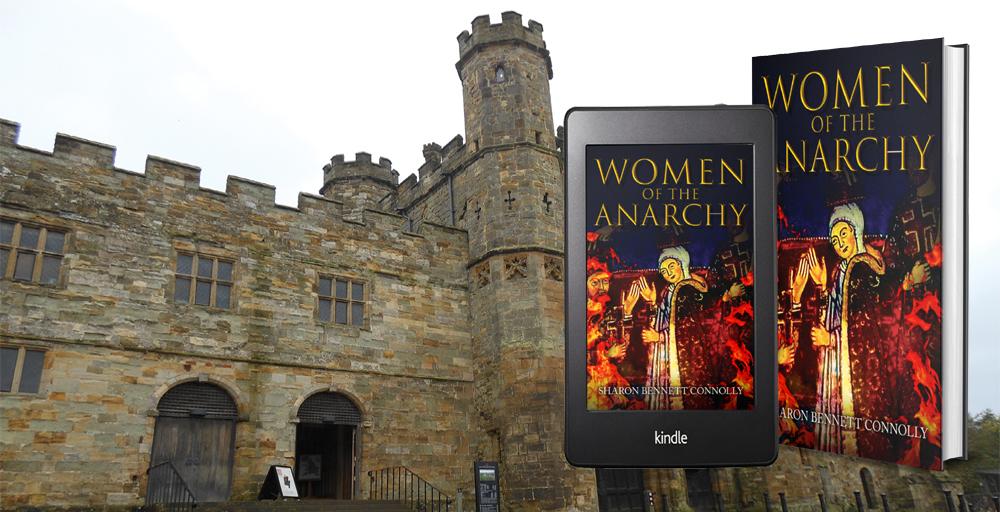
Two cousins. On the one side is Empress Matilda, or Maud. The sole surviving legitimate child of Henry I, she is fighting for her birthright and that of her children. On the other side is her cousin, Queen Matilda, supporting her husband, King Stephen, and fighting to see her own son inherit the English crown. Women of the Anarchy demonstrates how these women, unable to wield a sword, were prime movers in this time of conflict and lawlessness. It show how their strengths, weaknesses, and personal ambitions swung the fortunes of war one way – and then the other.

Available from Bookshop.orgAmberley Publishing and Amazon UK.

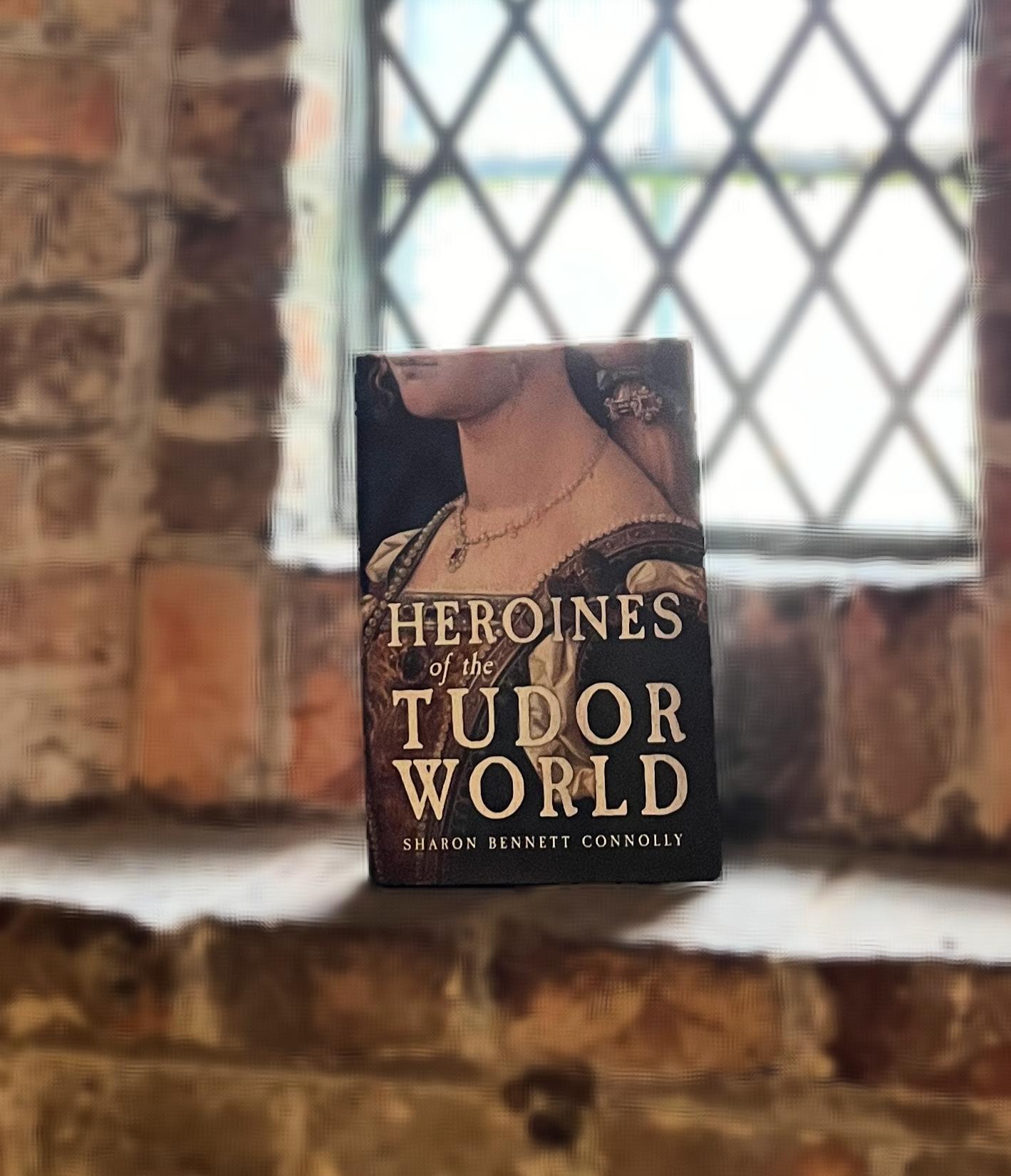
Coming on 15 June 2024: Heroines of the Tudor World
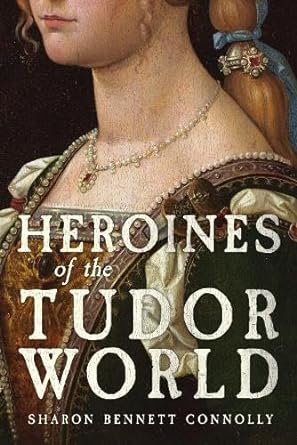
Heroines of the Tudor World tells the stories of the most remarkable women from European history in the time of the Tudor dynasty, 1485-1603. These are the women who ruled, the women who founded dynasties, the women who fought for religious freedom, their families and love. These are the women who made a difference, who influenced countries, kings and the Reformation. In the era dominated by the Renaissance and Reformation, Heroines of the Tudor World examines the threats and challenges faced by the women of the era, and how they overcame them. From writers to regents, from nuns to queens, Heroines of the Tudor World shines the spotlight on the women helped to shape Early Modern Europe.

Heroines of the Tudor World is now available for pre-order from Amberley Publishing and Amazon UK.

Also by Sharon Bennett Connolly:

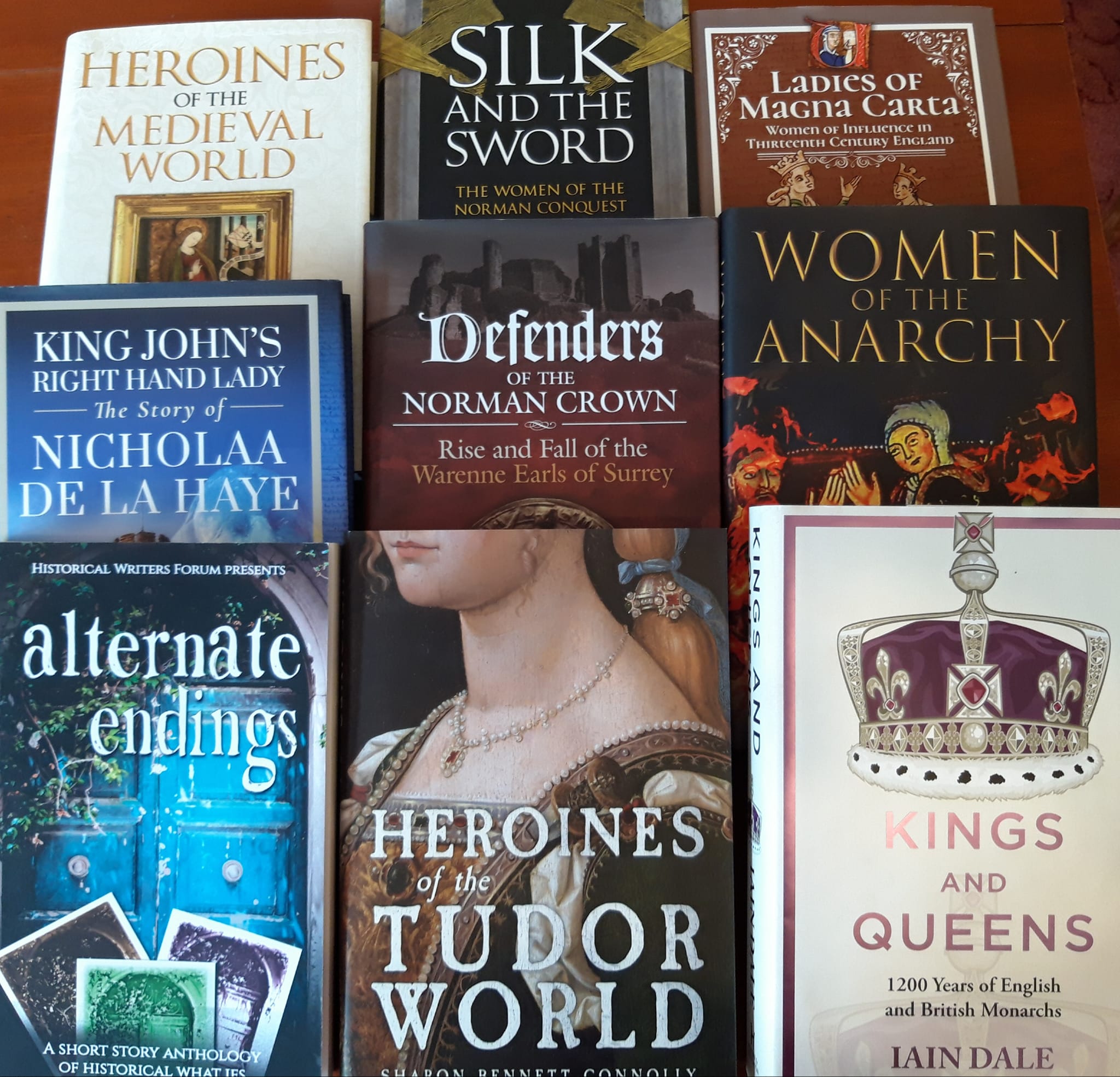
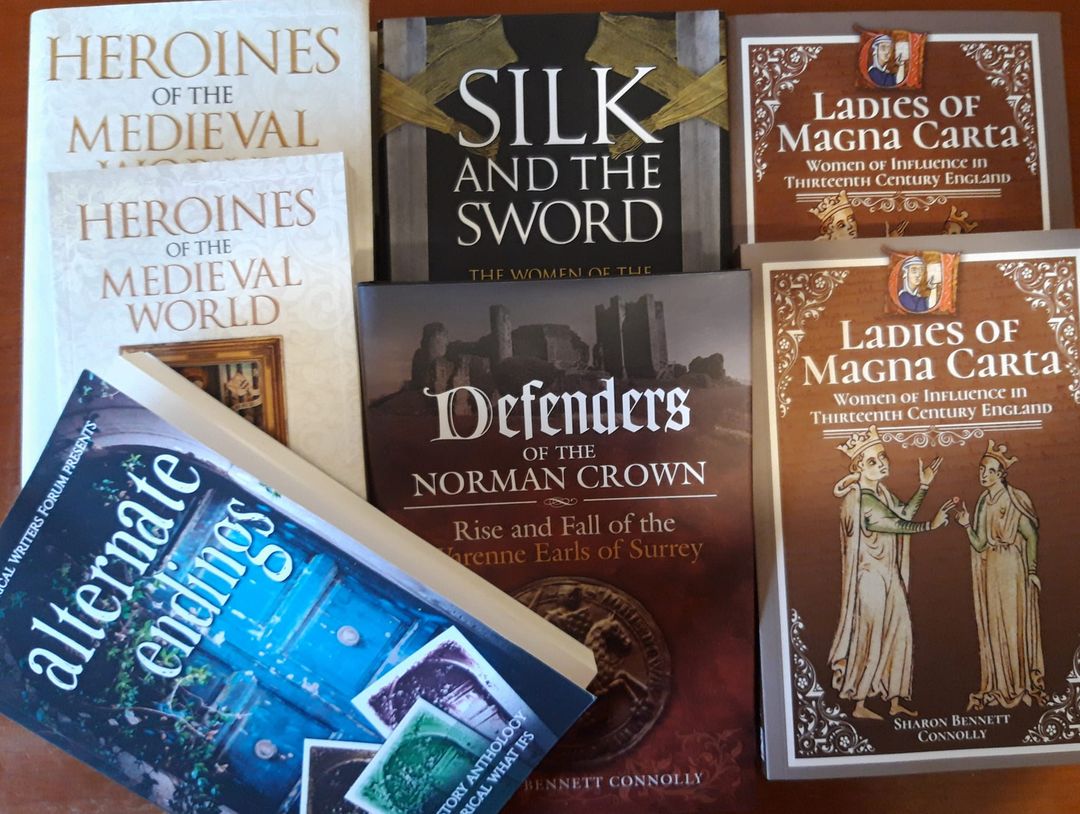
King John’s Right-Hand Lady: The Story of Nicholaa de la Haye is the story of a truly remarkable lady, the hereditary constable of Lincoln Castle and the first woman in England to be appointed sheriff in her own right. It is is available from King John’s Right-Hand Lady: The Story of Nicholaa de la Haye is the story of a truly remarkable lady, the hereditary constable of Lincoln Castle and the first woman in England to be appointed sheriff in her own right. Available from all good bookshops or direct from Pen & Sword Booksbookshop.org and AmazonDefenders of the Norman Crown: The Rise and Fall of the Warenne Earls of Surrey tells the fascinating story of the Warenne dynasty, from its origins in Normandy, through the Conquest, Magna Carta, the wars and marriages that led to its ultimate demise in the reign of Edward III. Available from Pen & Sword BooksAmazon in the UK and US, and Bookshop.org

Ladies of Magna Carta: Women of Influence in Thirteenth Century England looks into the relationships of the various noble families of the 13th century, and how they were affected by the Barons’ Wars, Magna Carta and its aftermath; the bonds that were formed and those that were broken. It is now available in paperback and hardback from Pen & Sword,  Amazon, and Bookshop.orgHeroines of the Medieval World tells the stories of some of the most remarkable women from Medieval history, from Eleanor of Aquitaine to Julian of Norwich. Available now from Amberley Publishing and Amazon, and Bookshop.orgSilk and the Sword: The Women of the Norman Conquest traces the fortunes of the women who had a significant role to play in the momentous events of 1066. Available now from Amazon,  Amberley Publishing, and Bookshop.org.

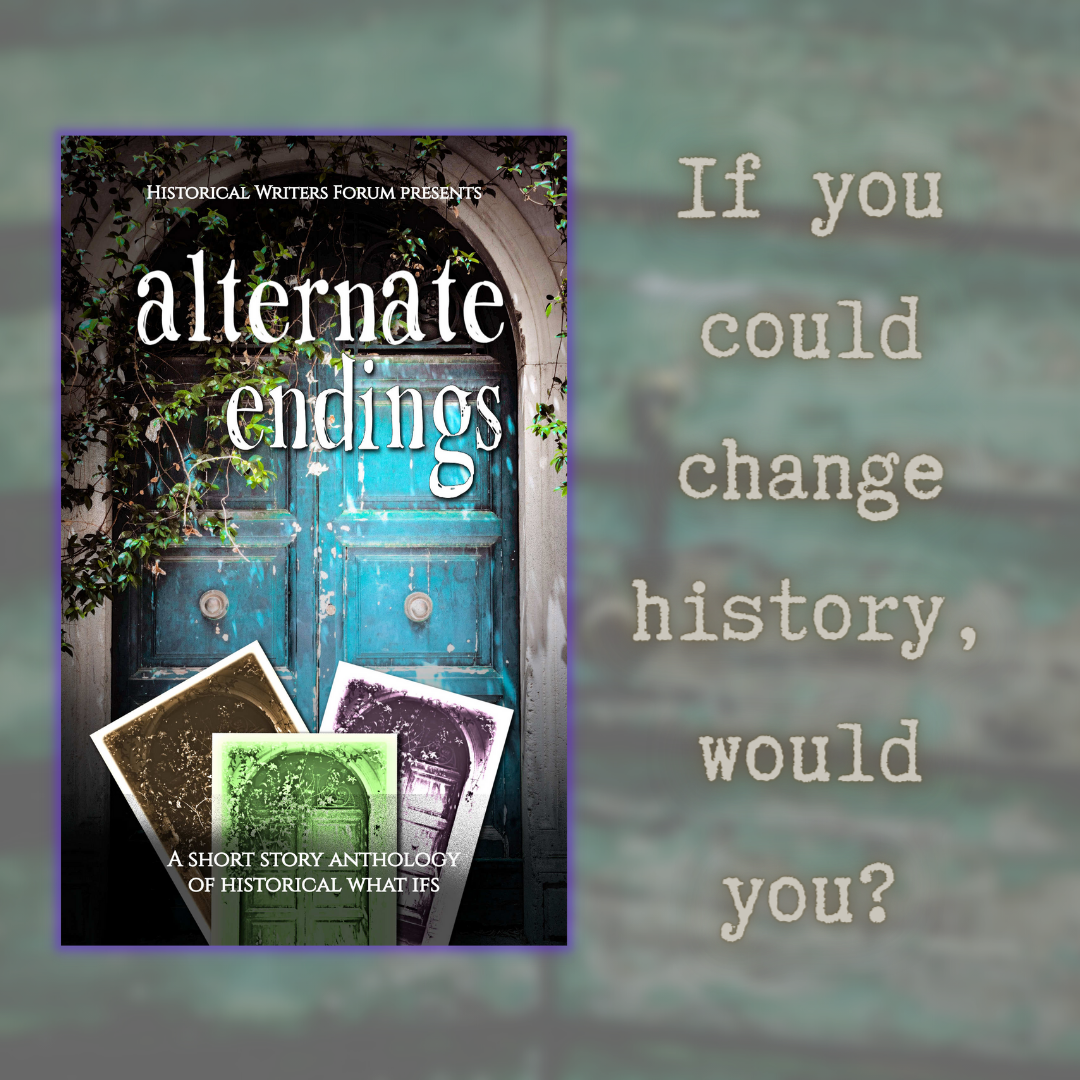
Alternate Endings: An anthology of historical fiction short stories including Long Live the King… which is my take what might have happened had King John not died in October 1216. Available in paperback and kindle from Amazon.

Podcast:

Have a listen to the A Slice of Medieval podcast, which I co-host with Historical fiction novelist Derek Birks. Derek and I welcome guests, such as Bernard Cornwell and Elizabeth Chadwick, and discuss a wide range of topics in medieval history, from significant events to the personalities involved.

*

Don’t forget! Signed and dedicated copies of all my books are available through my online bookshop.

For forthcoming online and in-person talks, please check out my Events Page.

You can be the first to read new articles by clicking the ‘Follow’ button, liking our Facebook page or joining me on Twitter and Instagram.

©2022 Sharon Bennett Connolly FRHistS
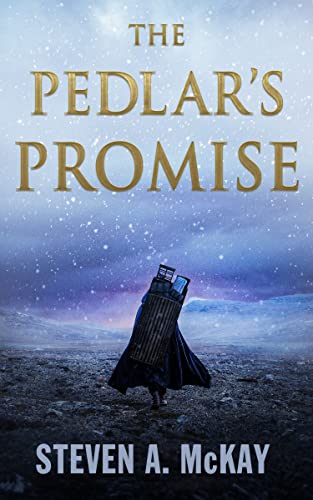
Book Corner: The Pedlar’s Promise by Steven A. McKay

Medieval England, December

A pedlar has been sent to Wakefield with an unexpected and apparently quite valuable Christmas gift for John Little and his friend Will Scaflock. Unfortunately, the pedlar likes his ale a little too much and somehow gets lost and ends up in the wrong town. With no other work to do, or any strange mysteries to solve for a change, the pair of bored former outlaws decide to ride out and track down their gift. Of course, things don’t quite go as smoothly as hoped and they experience a series of hair-raising adventures on the snowy roads and villages of Yorkshire before their quest finally ends with a surprise…

Will our heroes ever find their quarry? What is the mysterious gift their friend Robert Stafford has sent to them from Brandesburton? And who the hell thought it was a good idea to go riding around northern England in the depths of winter searching for a drunk old pedlar?
Pour yourself a warm glass of wassail and settle in beside the fire to find out!

The Pedlar’s Promise continues the series of short winter stories including Friar Tuck and the Christmas Devil, Faces of Darkness, The House in the Marsh, and Sworn To God, and brings some much-needed cheer to the gloomy winter months.

It must be nearly Christmas because there’s a new novella out featuring Little John, Will Scarlet and Friar Tuck.

Steven A. McKay is becoming a master of the mystery thriller. The Pedlar’s Promise is yet another intriguing adventure involving the former outlaws Little John and Will Scarlet takes the reader on an entertaining, muddy journey through Yorkshire.

These novellas follow on from Steven’s The Forest Lord series, telling the story of Robin Hood. They provide a little insight into the adventures of Robin’s leading men – Little John, Tuck and Will – after their lives as outlaws come to an end. The three remain firm friends, reminisce about their time with Robin, and get into some interesting scrapes. The Pedlar’s Promise is one such mini-adventure, when Will and John go in search of an errant pedlar in the depths of winter.

Suddenly the door burst open, snow whirling into the room as a dark, hooded figure forced his way through the icy gale and into the ale house. Muttering, the newcomer shut out the gale, making sure the latch was firmly in place before stamping towards Alexander Gilbert, the purple-nosed owner of the alehouse, and demanding a drink.

Once furnished with an ale the stocky figure turned towards the hearth and grinned, seeing the two men framed by the flickering orange flames.

“Tuck!” John cried, and Will Scaflock laughed, gesturing for the friar to come and join them at their small circular table.

“God’s blood,” Tuck growled as he planted his hefty behind on the stool next to Little John. “It’s freezing out there.”

“Maybe,” the bailiff conceded. “But that just makes it all the more enjoyable to drink an ale or three in here, beside the fire and in the company of good friends, eh, Will?”

Scaflock hoisted his mug aloft, smiling, but Tuck just rolled his eyes and pulled the collar of his brown cassock tighter around his neck.

“Cheer up.” John laughed. “You’re just hungry.”

“How d’you know that?” Tuck demanded, wiping foam from his upper lip and eyeing the bailiff suspiciously.

“You’re always hungry,” John replied sardonically, gesturing for Alexander to bring them some of his fabled broth. That was always a favourite on a night such as this, even if the amount of actual meat and other ingredients in it varied depending on the year’s harvest. Providing ale and warm food was a sure way to cheer Friar Tuck, and the bailiff knew it.

The innkeeper soon bustled over, placing a bowl and some bread in front of Tuck, who happily accepted. “Thank you, Alexander,” he said, lifting the bread and dipping it into the thick, steaming liquid. “Did you get the gift I sent you from Brandesburton?” he asked, turning his attention back to his friends.

“What gift?” John asked with a frown.

As I say with every one of Steven A. McKay’s novellas, this book was too short. It’s not that the story was rushed or shallow. It’s just that, the story ends way too soon. I really do think Steven should write a full-length mystery with Will Scarlet and Little John. These novellas are tantalising but they always leave me wanting much, much more. (Are you listening Steven?)

Having said that, The Pedlar’s Promise is a perfect little read that you can get through in one or two sittings. The story is fast-flowing and draws the reader in from the very beginning, as I have come to expect from Steven A. McKay. His characters are consistent in their actions and it is like reading about the adventures of old friends. Where the previous two novellas, The House in the Marsh and Faces of Darkness were quite dark and broody, and had me hiding under the covers at various points, The Pedlar’s Promise has a different tone and can be quite light-hearted in places. And has a brilliant twist at the end!

I don’t want to tell you too much and ruin the experience, but The Pedlar’s Promise by Steven A. McKay is well worth a read!

I cannot recommend it highly enough!

To Buy the Book:

The Pedlar’s Promise is now available from Amazon.

From Steven A. McKay:

I was born in Scotland in 1977 and always enjoyed studying history – well, the interesting bits, not so much what they taught us in school. I decided to write my Forest Lord series after seeing a house called “Sherwood” when I was out at work one day. I’d been thinking about maybe writing a novel but couldn’t come up with a subject or a hero so, to see that house, well…It felt like a message from the gods and my rebooted Robin Hood was born.

My current Warrior Druid of Britain series was similarly inspired, although this time it was the 80’s TV show “Knightmare”, and their version of Merlin that got my ideas flowing. Of course, the bearded old wizard had been done to death in fiction, so I decided to make my hero a giant young warrior-druid living in post-Roman Britain and he’s been a great character to write.

In 2021 the Xbox/Playstation/PC game HOOD: Outlaws and Legends was released, featuring my writing. I did the character backstories and the lore for the maps and collectables and it was such a fantastic experience!

I was once in a heavy metal band although I tend to just play guitar in my study these days. I’m sure the neighbours absolutely love me.

Check out my website at stevenamckay.com and sign up for the email list – in return I’ll send you a FREE short story, as well as offering chances to win signed books, free audiobooks and other quite good things!

*

My Books:

Signed, dedicated copies of all my books are available, please get in touch by completing the contact me form.

Defenders of the Norman Crown: The Rise and Fall of the Warenne Earls of Surrey tells the fascinating story of the Warenne dynasty, of the successes and failures of one of the most powerful families in England, from its origins in Normandy, through the Conquest, Magna Carta, the wars and marriages that led to its ultimate demise in the reign of Edward III. Defenders of the Norman Crown: Rise and Fall of the Warenne Earls of Surrey is now available from Pen & Sword BooksAmazon in the UK and US, Bookshop.org and Book Depository.

1 family. 8 earls. 300 years of English history!

Also by Sharon Bennett Connolly:

Ladies of Magna Carta: Women of Influence in Thirteenth Century England looks into the relationships of the various noble families of the 13th century, and how they were affected by the Barons’ Wars, Magna Carta and its aftermath; the bonds that were formed and those that were broken. It is now available in paperback and hardback from Pen & Sword, AmazonBookshop.org and from Book Depository worldwide.

Heroines of the Medieval World tells the stories of some of the most remarkable women from Medieval history, from Eleanor of Aquitaine to Julian of Norwich. Available now from Amberley Publishing and Amazon, Bookshop.org and Book Depository.

Silk and the Sword: The Women of the Norman Conquest traces the fortunes of the women who had a significant role to play in the momentous events of 1066.  Available now from Amazon,  Amberley Publishing, Bookshop.org and Book Depository.

Alternate Endings: An anthology of historical fiction short stories including Long Live the King… which is my take what might have happened had King John not died in October 1216. Available in paperback and kindle from Amazon.

*

You can be the first to read new articles by clicking the ‘Follow’ button, liking our Facebook page or joining me on Twitter and Instagram.

©2020 Sharon Bennett Connolly FRHistS

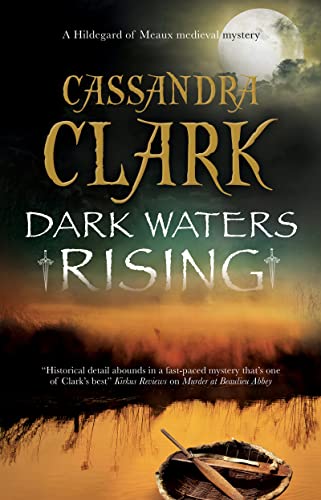
Book Corner: Dark Waters Rising by Cassandra Clark

A storm is coming . . . Can nun sleuth Hildegard solve the murder of a lay sister before the rising flood waters trap her with a cunning killer?

Autumn, 1394. All is not well at Swyne Priory. Dissension has arisen amongst the nuns. The new novices whisper in corners, spreading malicious rumours and sharing dark secrets.

The Prioress gives Hildegard an order: search out the cause of this unrest, and put a stop to it. But before Hildegard can investigate, she’s forced to deal with a new problem: the arrival of a mysterious stranger in the middle of the night, claiming his life is in danger.

Hildegard isn’t sure whether to believe him, but when a body is discovered near the priory, she’s soon plunged into a dark and dangerous puzzle where nothing is as it seems. All she knows for certain is that a storm is coming, threatening to cut the priory off from the outside world and trap them with a killer . . .

Dark Waters Rising is the twelfth and final novel of Cassandra Clark’s fabulous series charting the adventure of her nun-turned-sleuth Hildegard of Meaux. Deep in the wilds of Yorkshire, amidst a storm that threatens to drown everything and everyone, Hildegard is thrown into yet another mystery when a court musician appears at the gates of her abbey, just as one of the abbey’s servants is viciously murdered. Coincidence?

Dark Waters Rising is set in the turbulent reign of King Richard II, when the king’s own relatives are always looking to their own advantage – to the detriment of the king and those who support him. It is a thrilling murder mystery, tinged with court intrigue, despite the distance between Yorkshire and London. The political connotations are never far from the minds of Hildegard and her colleagues. Hildegard has to consider the motives of the major players on the national stage, and of those closer to home if she is to uncover the murderer and keep her fellow nuns safe.

Cassandra Clark is the consummate story teller and draws the reader in from the very first pages, taking them on a journey of deceit and discovery as the tale unravels and the villains – and friends – are unmasked.

Hildegard took charge. ‘He’s going to wake the entire priory. Keep the beam in place.’

Speaking through the peephole she demanded, ‘Who’s there?’

From the lane a voice gasped something and Hildegard had to ask again. ‘Who is it? Declare yourself.’

‘I beg you – please, sister, for the love of God, let me in – I beg you, let me inside or I’m a dead man!

‘Your name, sir?’

‘Master Leonin, King’s musician, and I beg entry to your convent. Sister, I mean you no harm – I am alone. One man only. Help me!’

‘Are you armed?’

A pause followed.

Hildegard repeated the question. Eventually a hesitant voice replied, ‘Only with my one knife, for eating and practical purposes while travelling.’

‘That could mean anything, ‘ whispered Blanche the porteress.

Hildegard whispered back. ‘Fear not. I have my own knife, equally practical.’

She gave a glance towards several nuns who, roused from their beds, had crowded into the lodge. She noticed one or two looking as formidable as ever and decided to take a risk.

Peering back through the peephole she could just about discern a hooded figure move into view. Behind him was the short bridge over the moat and beyond that only the dense black of the thicket at the edge of the woods. Apart from this one fellow battering at the door there was no sign of anyone else, no band of cut-throats, nothing but the swish of rain and the gurgling in the gutters as it spewed down through the waste pipes.

She whispered to Blanche, ‘Go on. Open it slowly.’ She gave a last hurried glance outside before stepping back as the bar slid out, the door flew open, and the stranger fell inside.

He was clawing for breath and gasping, ‘I thank you with all my heart, dear sisters! Thank you, thank you!’

His hood fell back and they saw he had black hair plastered to his skull and a clean-shaven face washed by rain. Kneeling in the puddle he brought in he seemed incapable of rising to his feet. With hands clasped he lifted his face to them, eyes stark with something liker terror. He was no more than a boy, a very handsome, exotic-looking boy, wearing filthy but expensive velvet and worn-out embroidered Spanish-leather boots.

‘My blessed saviours – my dear angels of mercy,’ he whispered in a strange accent, then he astonished them all by leaning forward to kiss the flagstones in front of them.

‘Can you stand on your feet, young fellow?’ Hildegard demanded. ‘Come, get up. You’re safe from whatever threatens you outside our precinct.’

‘A moment.’ He was gasping for air. With what seemed like fear, head bent over his clasped hands as a prayer issued from his lips, he broke off with a sob then took another gulping breath before slowly subsiding to the floor in a dead faint.

In Dark Waters Rising Cassandra Clark evokes an atmosphere of desolation and isolation within a storm-swept Yorkshire of the 14th century. Her knowledge of the landscape and its people adds to the authenticity of the story and the history. All is intricately woven into the story to draw the reader into the world of late 14th century England – and the intrigues that abounded.

The reign of Richard II is woefully underrepresented in fiction and non-fiction alike, so it is refreshing to see an entire series of stories set in the period. It s even more refreshing to see them sympathetic to Richard II, rather than championing the Lancastrian cause of Henry of Bolingbroke, the future King Henry IV.

I like Hildegard. She is a no-nonsense, practical nun who just gets on with things. You can imagine that she is the one everyone goes to for advice. The sensible one. Cassandra Clark manages to include a wide range of diverse and individual characters, both in the religious houses and those around them, creating a rich tapestry of personalities for this medieval tale.

If you haven’t met Hildegard of Meaux, yet, I suggest you acquaint yourself with this amazing series.

Beautifully written and expertly told, the story and plot reveals itself gradually, building to the inevitable climax, and the ending of a fabulous series of stories.

Hildegard of Meaux will be sorely missed!

*

To Buy the Book:

Dark Waters Rising by Cassandra Clark is now available from Amazon.

About the author:

Cassandra Clark is an award-winning scriptwriter for theatre, radio and television, and the author of nine previous novels in the Hildegard of Meaux medieval mystery series. Running wild near the ruins of the Abbey of Meaux in the East Riding as a child became her inspiration for the series while the discovery in a dusty archive of the Chronicle of Meaux written in 1395 is the secret source for her research.

*

My Books:

Signed, dedicated copies of all my books are available, please get in touch by completing the contact me form.

Defenders of the Norman Crown: The Rise and Fall of the Warenne Earls of Surrey tells the fascinating story of the Warenne dynasty, of the successes and failures of one of the most powerful families in England, from its origins in Normandy, through the Conquest, Magna Carta, the wars and marriages that led to its ultimate demise in the reign of Edward III. Defenders of the Norman Crown: Rise and Fall of the Warenne Earls of Surrey is now available from Pen & Sword Books, Amazon in the UK and US, Bookshop.org and Book Depository.

1 family. 8 earls. 300 years of English history!

Also by Sharon Bennett Connolly:

Ladies of Magna Carta: Women of Influence in Thirteenth Century England looks into the relationships of the various noble families of the 13th century, and how they were affected by the Barons’ Wars, Magna Carta and its aftermath; the bonds that were formed and those that were broken. It is now available in paperback and hardback from Pen & SwordAmazonBookshop.org and from Book Depository worldwide.

Heroines of the Medieval World tells the stories of some of the most remarkable women from Medieval history, from Eleanor of Aquitaine to Julian of Norwich. Available now from Amberley Publishing and Amazon, Bookshop.org and Book Depository.

Silk and the Sword: The Women of the Norman Conquest traces the fortunes of the women who had a significant role to play in the momentous events of 1066.  Available now from Amazon,  Amberley Publishing, Bookshop.org and Book Depository.

Alternate Endings: An anthology of historical fiction short stories including Long Live the King… which is my take what might have happened had King John not died in October 1216. Available in paperback and kindle from Amazon.

*

You can be the first to read new articles by clicking the ‘Follow’ button, liking our Facebook page or joining me on Twitter and Instagram.

*

©2022 Sharon Bennett Connolly, FRHistS

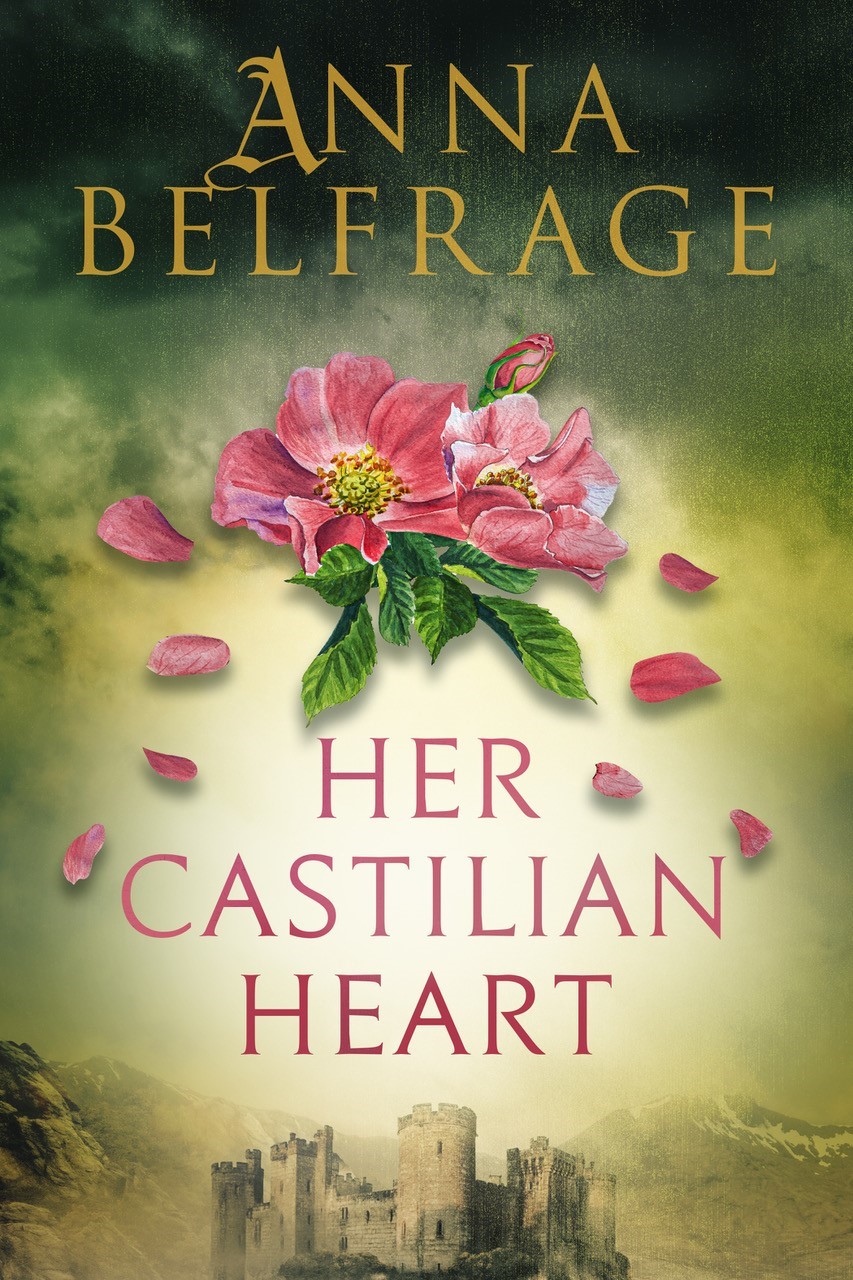
Book Corner: Her Castilian Heart by Anna Belfrage

Blood is not always thicker than water…

At times a common bloodline is something of a curse—or so Robert FitzStephan discovers when he realises his half-brother, Eustace de Lamont, wants to kill him.  

A murderous and greedy brother isn’t Robert’s only challenge.  He and his wife, Noor, also have to handle their infected relationship with a mightily displeased Queen Eleanor—all because of their mysterious little foundling whom they refuse to abandon or allow the queen to lock away.

Eustace is persistent. When Robert’s life hangs in the balance, it falls to Noor to do whatever it takes to rip them free from the toothy jaws of fate. Noor may be a woman, but weak she is not, and in her chest beats a heart as brave and ferocious as that of a lioness. But will her courage be enough to see them safe?

Her Castilian Heart by Anna Belfrage is yet another fast-paced adventure that is impossible to put down. I read it in 3 days!

Her Castilian Heart is the third in the series, set in the reign of Edward I, which follows Robert FitzStephan, an illegitimate son of a lord who has risen on his own merit to become a knight and landowner. He is married to the incomparable Noor, a relative of the queen, Eleanor of Castile. After being exiled to Spain for a short period, Noor and Robert are back in England, facing the anger and suspicions of the queen, and the jealousy of Robert’s brother.

As ever, Anna Belfrage has woven a tale of love, betrayal and intrigue that will leave the reader absorbed from beginning to end. Set with the backdrop of border skirmishes with Wales and the queen’s failing health, Noor and Robert are once again forced to negotiate the English court and its rivalries, intrigues and jealousies.

At present, she did not look much like a mother or wife: her hair had escaped its braid and the confines of the veil, long dark locks floating round her face. There was a smudge of something on her nose – ointment, he’s hazard, given the fragrance – and her brown skirts were covered with straw. He reached over and stroked her cheek with his maimed hand. She leaned into his touch, half closing her eyes.

‘Why is he here?’ she asked, moving close enough that she could stand on her toes and kiss his cheek.

‘Why?’ To drag me along to Wales.’

‘Now?’ She frowned. ‘This time of the year?’

‘I’ve campaigned during the winter before.’ He tapped her nose. ‘I’ll survive.’

She paled, and he regretted his choice of words.

‘It is a scouting expedition.’ he said. ‘We will keep to the shadows.’ He did not quite believe that. The moment Rhys of Maredudd had decided to raise the banners of rebellion yet again instead of disappearing into a hole somewhere, he’d effectively unleashed the vindictive rage of the English king. There’d be little scouting, more killing, as they encircled the rebel.

She snorted. ‘Mortimer is about as adept at staying in the shadows as I am at swimming.’

As his wife did not know how to swim, that was not an accolade. But it made him smile. He shook his head at her. ‘Roger is quite skilled at melting into the background when it suits him.’

‘Hmph! Then he can go himself.’

‘The king requires I accompany him.’ And as the king’s knight, Robert could not deny him.

‘The king is here? In England?’

He heard the quaver in her voice. Once the king and queen were back, there would be no putting off the audience with the queen, and they both feared Queen Eleanor’s reaction to the fact that they’d returned without that jewel she so desired. Or abandoning their foster son in foreign lands as instructed, but hopefully she’d never find that out. Upon returning home, Robert had sent an extensive account of their time abroad to the king, and despite being home for a year, he’d not heard from his liege until now, and then only indirectly via Roger Mortimer.

‘He remains in Gascony.’

Anna Belfrage’s storytelling is second-to-none and her research impeccable. She transports the reader to the court of Edward I, to the Europe of the 13th century. Meticulously recreating the sights, sounds and smells of the era, Anna rebuilds a lost world and immerses the reader entirely within its confines.

Her characters are full of life and vigour, having an energy of their own. They are not untouched by events, and grow and mature through their experiences. Neither Noor nor Robert forget the past and this informs their future. Anna Belfrage has created a hero and heroine that the reader can relate to, and empathise with.

Her Castilian Heart by Anna Belfrage will leave the reader breathless!

Anna Belfrage is a wonderful storyteller. She draws you into the book from the very first page, takes hold of your emotions, twists them around, puts them through the ringer and then – maybe – gives them back to you, battered, bruised and in tears. And you’ll want to go back for more! What an incredible experience!

*

To buy the book:

Her Castilian Heart is available now from: http://myBook.to/HEART

About the author:

Had Anna been allowed to choose, she’d have become a professional time-traveller. No luck there, so instead she became a financial professional with two absorbing interests; history and writing. These days, Anna combines an exciting day-job with a large family and her writing endeavours. Plus she always finds the time to try out new recipes, chase down obscure rose bushes and initiate a home renovation scheme or two.

Anna has authored the acclaimed time travelling series The Graham Saga , set in 17th century Scotland and Maryland, as well as the equally acclaimed medieval series The King’s Greatest Enemy.

Anna has also published The Wanderer, a fast-paced contemporary romantic suspense trilogy with paranormal and time-slip ingredients. Her September 2020 release, His Castilian Hawk is a story of loyalty and love set against the complications of Edward I’s invasion of Wales in the late 13th century.

Her most recent release, The Whirlpools of Time , is a time travel romance set against the backdrop of brewing rebellion in the Scottish highlands.

All of Anna’s books have been awarded the IndieBRAG Medallion, she has several Historical Novel Society Editor’s Choices, and one of her books won the HNS Indie Award in 2015. She is also the proud recipient of several Reader’s Favorite medals as well as having won various Gold, Silver and Bronze Coffee Pot Book Club awards.

Find out more about Anna, her books and enjoy her eclectic historical blog on her website, www.annabelfrage.com 

Social Media Links:

Website: www.annabelfrage.com; Amazon Author Page: http://Author.to/ABG; Twitter: https://twitter.com/abelfrageauthor; Book Bub: https://www.bookbub.com/profile/anna-belfrage; Instagram: https://instagram.com/annabelfrageauthor; Facebook: https://www.facebook.com/annabelfrageauthor; Goodreads: https://www.goodreads.com/author/show/6449528.Anna_Belfrage

*

My Books:

Signed, dedicated copies of all my books are available, please get in touch by completing the contact me form.

Defenders of the Norman Crown: The Rise and Fall of the Warenne Earls of Surrey tells the fascinating story of the Warenne dynasty, of the successes and failures of one of the most powerful families in England, from its origins in Normandy, through the Conquest, Magna Carta, the wars and marriages that led to its ultimate demise in the reign of Edward III. Defenders of the Norman Crown: Rise and Fall of the Warenne Earls of Surrey is now available from Pen & Sword BooksAmazon in the UK and US, Bookshop.org and Book Depository.

1 family. 8 earls. 300 years of English history!

Also by Sharon Bennett Connolly:

Ladies of Magna Carta: Women of Influence in Thirteenth Century England looks into the relationships of the various noble families of the 13th century, and how they were affected by the Barons’ Wars, Magna Carta and its aftermath; the bonds that were formed and those that were broken. It is now available in paperback and hardback from Pen & Sword,  AmazonBookshop.org and from Book Depository worldwide.

Heroines of the Medieval World tells the stories of some of the most remarkable women from Medieval history, from Eleanor of Aquitaine to Julian of Norwich. Available now from Amberley Publishing and Amazon, Bookshop.org and Book Depository.

Silk and the Sword: The Women of the Norman Conquest traces the fortunes of the women who had a significant role to play in the momentous events of 1066.  Available now from Amazon,  Amberley Publishing, Bookshop.org and Book Depository.

Alternate Endings: An anthology of historical fiction short stories including Long Live the King… which is my take what might have happened had King John not died in October 1216. Available in paperback and kindle from Amazon.

*

You can be the first to read new articles by clicking the ‘Follow’ button, liking our Facebook page or joining me on Twitter and Instagram.

*

©2022 Sharon Bennett Connolly, FRHistS

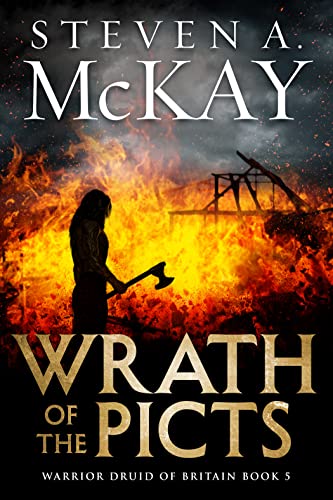
Book Corner: Wrath of the Picts by Steven A McKay

Princess Catia has gone missing and once again it falls to the legendary druid, Bellicus, to find her. Was the child taken by force, or did she go willingly with the Pictish warrior-woman, Aife?

Their trail leads far north to the windswept fortress of Dunnottar, so the druid must journey there with his companions, Duro, Eburus, and the fearsome wardog, Cai. Leaving Dun Breatann in the hands of Queen Narina and her enigmatic new husband, Ysfael, the friends ride out, but things are never as straightforward as they seem…
Violence and death follow Bellicus as he seeks to discover the fate of the princess. In doing so, he also finds himself on the trail of the swordsman, Lancelot, who disappeared months before when his warband was slaughtered by Saxons. Will the druid be in time to save them both? Or will their enemies, old and new,earn the bloody vengeance and glory they so desperately desire?
Ambition, lust, grief, and the power of the old gods combine in Wrath of the Picts as the druid and his companions are thrust towards a shocking finale that will leave Dun Breatann in turmoil and Northern Britain ravaged again by war.

Bellicus is back!

Wrath of the Picts is book no. 5 in Steven A. McKay’s magnificent series, Warrior Druid of Britain. Having spent some time campaigning with Arthur against the Saxons, Bellicus is called back north after Princess Catia goes missing, supposedly kidnapped by the warrior princess, Aife. But all is not as it seems…

Steven A. McKay once again draws his reader into a story chock full of adventure, treachery and a good few battles as Bellicus tries to make sense of events. It also a story of trust, friendship and loyalty that sees Bellicus and his good friends, Duro and Eburus, risking their lives in order to save the princess and discover the truth behind the uneasy atmosphere of his fortress home, Dun Breatann.

This is a story not to be missed.

“Where are all the Damnonii warriors?” Duro asked in a low voice. It was evening and Bellicus had joined them at last in the great hall. The cooking fires kept the chill of approaching autumn at bay and the homely orange glow would have made for a much more pleasant atmosphere if they weren’t surrounded by Ysfael’s men.

“Some of them are guarding the walls – you just haven’t seen them yet,” Bellicus replied, happily digging into the thick stew a serving girl had placed before him: beef, carrot, cabbage, onion and parsley had all gone into it and the druid couldn’t remember ever tasting, or smelling, much better. “The rest went out to deal with some Dalriadan raiders a few days ago. I expect they’ll return soon enough.”

Duro shook his head almost imperceptibly, glancing around as if spies were eavesdropping although, in truth, the Votadini warriors eating and carousing around them were making more than enough noise to mask what the centurion was saying. None of Ysfael’s men were paying them much attention other than to throw them the occasional curious glance. “It’s not right,” Duro opined. “Narina shouldn’t have let Gavo take her men off, leaving her alone with these … outsiders.”

Bellicus shrugged. He agreed completely, but Narina was her own woman and did things her way. She clearly trusted Ysfael.

Just then the door opened and Bellicus smiled, jerking his head for Duro to look over his shoulder for he was sitting with his back to the entrance. “What were you saying about Gavo?”

The centurion glanced back, mouth open as he chewed a piece of meat, and broke into a smile as he saw the Damnonii guard captain coming towards them. A bear of a man, Gavo had long hair and a grizzled beard which were both turning from brown to grey now that he was in his fortieth year. He wore reed checked trousers, a loose fitting blue tunic, and a bronze torc around his neck which marked his high rank, although it was obvious from his bearing he was a man used to command.

“Are you still here?” Gavo said, taking a seat beside Eburus and eyeing him with clear surprise. “I thought you’d have joined your kinsmen at the other benches.”
The Votadini shrugged, and said in his heavily accented tones, “These are my friends. I’m used to their company now. Ysfael will no doubt order me to join his ranks again soon enough, but until then I’lll sit with who I choose.”

“See?” Duro hissed. “Even he doesn’t trust the Votadini, and he’s one of them!”

The Warrior Druid of Britain series is set in the time after the Romans have left and the Saxon tribes are beginning to settle in England, causing conflict with the native Britons. The great warlord, Arthur, is attempting to hold them back. In the north, in Scotland, Bellicus is druid to the Damnoni tribe, but has been spending time fighting alongside Arthur. With Catia’s disappearance, he has been called home to lead the search for the lost princess. Set in the twilight of the Roman Empire and before the creation of the kingdoms of England and Scotland, Steve A. McKay has recreated the time that is often called the Dark Ages. His vivid imagination and impeccable research brings the period to life for the reader. The ancient landscapes, authentic weapons and tactics, all the way down to the textiles, halls and food, help to draw the reader into the story and allow them to suspend belief and travel back to a simpler, but more vicious time.

Steven A. McKay’s great skill is in the characters he creates. He makes the reader care about their stories and about their fate. Bellicus is a tall, likeable druid with an intelligent mind and a great aptitude for fighting and tactics. He has his weaknesses though, and a soft spot for the princess Catia and her mother, Narina. This gives the character a vulnerability that in turn leaves the reader wondering if he can see the big picture, and if he will succeed in his mission. Alongside his great friend, Duro, the heroes are tasked with saving the day, but not without great personal cost. And I love that Lancelot gets to play a part in Wrath of the Picts, away from teh Arthurian legend and forging his own path.

Wrath of the Picts draws thew reader in from the first page and keeps you hooked until the very last. Steven A McKay is such a skillful storyteller that you cannot wait for the book to finish – and yet, dread getting to the end. Whether it is the first book in the series, or the fifth, the stories are always fresh, new and engaging.

And Wrath of the Picts is just a fabulous adventure!

*

To buy the book:

Wrath of the Picts by Steven A. McKay is now available from Amazon

About the Author:

I was born in Scotland in 1977 and always enjoyed studying history – well, the interesting bits, not so much what they taught us in school. I decided to write my Forest Lord series after seeing a house called “Sherwood” when I was out at work one day. I’d been thinking about maybe writing a novel but couldn’t come up with a subject or a hero so, to see that house, well…It felt like a message from the gods and my rebooted Robin Hood was born.

My current Warrior Druid of Britain series was similarly inspired, although this time it was the 80’s TV show “Knightmare”, and their version of Merlin that got my ideas flowing. Of course, the bearded old wizard had been done to death in fiction, so I decided to make my hero a giant young warrior-druid living in post-Roman Britain and he’s been a great character to write.

In 2021 the Xbox/Playstation/PC game HOOD: Outlaws and Legends was released, featuring my writing. I did the character backstories and the lore for the maps and collectables and it was such a fantastic experience!

I was once in a heavy metal band although I tend to just play guitar in my study these days. I’m sure the neighbours absolutely love me.

Check out my website at stevenamckay.com and sign up for the email list – in return I’ll send you a FREE short story, as well as offering chances to win signed books, free audiobooks and other quite good things!

*

My Books:

Signed, dedicated copies of all my books are available, please get in touch by completing the contact me form.

Defenders of the Norman Crown: The Rise and Fall of the Warenne Earls of Surrey tells the fascinating story of the Warenne dynasty, of the successes and failures of one of the most powerful families in England, from its origins in Normandy, through the Conquest, Magna Carta, the wars and marriages that led to its ultimate demise in the reign of Edward III. Defenders of the Norman Crown: Rise and Fall of the Warenne Earls of Surrey is now available from Pen & Sword BooksAmazon in the UK and US, Bookshop.org and Book Depository.

1 family. 8 earls. 300 years of English history!

Also by Sharon Bennett Connolly:

Ladies of Magna Carta: Women of Influence in Thirteenth Century England looks into the relationships of the various noble families of the 13th century, and how they were affected by the Barons’ Wars, Magna Carta and its aftermath; the bonds that were formed and those that were broken. It is now available in paperback and hardback from Pen & Sword,  AmazonBookshop.org and from Book Depository worldwide.

Heroines of the Medieval World tells the stories of some of the most remarkable women from Medieval history, from Eleanor of Aquitaine to Julian of Norwich. Available now from Amberley Publishing and Amazon, Bookshop.org and Book Depository.

Silk and the Sword: The Women of the Norman Conquest traces the fortunes of the women who had a significant role to play in the momentous events of 1066.  Available now from Amazon,  Amberley Publishing, Bookshop.org and Book Depository.

Alternate Endings: An anthology of historical fiction short stories including Long Live the King… which is my take what might have happened had King John not died in October 1216. Available in paperback and kindle from Amazon.

*

You can be the first to read new articles by clicking the ‘Follow’ button, liking our Facebook page or joining me on Twitter and Instagram.

©2022 Sharon Bennett Connolly FRHistS

Guest Post: Alice Perrers, from Goldsmith’s Daughter to Lady of the Sun by Gemma Hollman

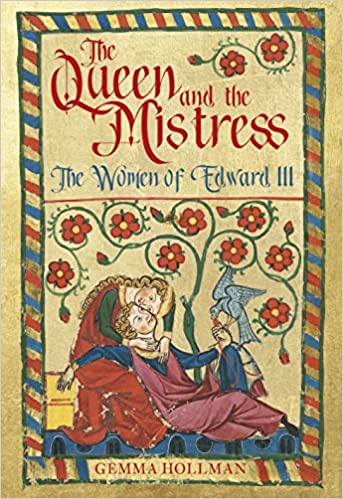
Today it is an absolute pleasure to welcome author and historian Gemma Hollman to History…the Interesting Bits as a stop on her blog tour for her latest book. The Queen and the Mistress: The Women of Edward III is a fascinating dual biography of Philippa of Hainault, queen of Edward III, and Alice Perrers, the king’s mistress.

Alice Perrers: From Goldsmith’s Daughter to Lady of the Sun

King Edward III

In the medieval period, a popular image came to be used to describe human life and society: that of the Wheel of Fortune. The idea was that the ancient goddess Fortuna was in control of a wheel which she would spin. People sat at various points on the wheel, and as Fortuna turned the wheel people would rise up to great heights, or drop to great lows. Medieval writers became enamoured with the symbolism of great people having a great fall because of the spinning of Fortune’s Wheel. One fourteenth-century courtier who epitomised the wheel was a woman named Alice Perrers, who was lucky enough to rise higher than her contemporaries could have imagined – but who also spun back down again.

Alice Perrers has been an enigma for centuries. Even many of her contemporaries did not really know who she was or where she came from, with chroniclers like Thomas Walsingham of St Albans Abbey making disparaging guesses to her lowly origins. Recent research has shown that Alice most likely came from a goldsmithing family in London, and so whilst she was not close to the upper echelons of society, when looking at the country as a whole she would have had a reasonable upbringing. The merchant classes had seen an upturn in their wealth during the reign of Edward III, who had been on the throne officially since 1327, and so Alice’s family probably enjoyed the benefits of this.

As the daughter of a trade family, Alice may have had some basic education, and her life initially followed the path of the majority of women of her time. She was married off, likely as a teenager, to another London goldsmith, and the couple found further wealth through the favour of the king; her husband was known to have supplied jewels to Edward III himself. But soon, Alice’s life took a turn when her husband died. The couple had no children, and her future was uncertain. Prospects for young widows were not always promising.

Queen Philippa of Hainault

Here, Fortuna turned her wheel and set Alice onto the path of greatness. She somehow found her way to court, in one of the most coveted positions in the kingdom as she became a damsel to Edward III’s wife, Queen Philippa of Hainault. Alice was catapulted into the wealth and glamour of the English monarchy. The court was filled with many of the greatest nobles of the period, including at times the captured French king, and it was a place filled with feasting, jousting, jewels, music, and writing. As one of the queen’s damsels, Alice had a place at centre stage to all that was going on. She would accompany the queen as she travelled across her various castles and attended events, and she was entitled to luxurious clothes. It must have seemed like life could not get better.

But Alice was an intelligent, ambitious, shrewd woman. Not content to simply receive the gifts afforded to her as a lady-in-waiting, Alice started to build up connections at court. She wined and dined with many powerful knights, merchants, and members of the nobility. She began to lend money and make property deals, extracting favourable terms for herself. Soon she had pieces of land of her own – quite a feat for a single woman of her status. But that was not all that Alice had obtained at court, for she had caught the eye of the king himself. Soon, a relationship began between them.

Edward III had been a loyal husband to his wife for over 30 years, but by the 1360s Philippa was severely unwell. It was clear she was not going to live for many more years, and this may have provided the impetus for Edward’s eyes to wander. Alice was a perfect choice for him. Young, likely beautiful, headstrong, it is easy to see why Edward found her attractive. But Edward had spent decades cultivating an image as a loyal, family man, and so the couple did their best to keep their relationship secret. If nothing else, to save the queen public humiliation.

The secrecy did not dampen their relationship, and within a few years Alice had given birth to 3 children with the king. At the end of the decade, the great queen died, and it was not long before Alice shifted to a more prominent place at court. Soon everybody knew that Alice had the king’s heart – and with it, a significant share of power. People were soon rushing to Alice to obtain favours with the king, offering her pieces of property and whatever else they thought she might like in the hope she may get them something in return. Even the Pope petitioned this mistress for help.

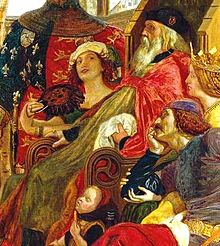
Alice Perrers and Edward III, painted by Ford Maddox Brown

As the 1370s wore on, Alice rose to the greatest heights of the wheel, almost taking on the position of unofficial queen. During the king’s jubilee year, Alice took centre stage in celebrations dressed as the Lady of the Sun. But as medieval writers loved to point out, the wheel also was fond of dropping people into a fall, and so too was this to happen to Alice. Eventually, the men at court got fed up with the undue influence of Alice and her friends on the king. They felt that those of old noble blood should be the only ones to advise the king, and finally the knights of the land gathered together at the Good Parliament to end their evil influence once and for all. Alice was banished from the king’s presence, and after his death the full weight of the law came for her. She was banished further – this time from the entire kingdom of England – and all of her hard-earned lands, jewels, and goods were taken from her.

But Alice was clever, and she had made contingency plans. She knew that her presence at court grated on those around her, and she had found powerful allies. It emerged that she had undertaken a secret marriage to a powerful knight, and he wasn’t going to give up Alice’s wealth. The couple fought for years to obtain the return of Alice’s possessions, and it was a fight that she carried with her to her death. Many of Alice’s female contemporaries had two paths in life: marriage or a nunnery. But Alice chose to forge one of her own, that of mistress and a powerful single woman. Was she as evil as her later reputation suggested? Or was there something more underneath the surface?

*

About the book:

IN A WORLD WHERE MAN IS KING, CAN WOMEN REALLY HAVE IT ALL – AND KEEP IT?

Philippa of Hainault was Queen of England for forty-one years. Her marriage to Edward III, when they were both teenagers, was more political transaction than romantic wedding, but it would turn into a partnership of deep affection. The mother of twelve children, she was the perfect medieval queen: pious, unpolitical and fiercely loyal to both her king and adopted country.

Alice Perrers entered court as a young widow and would soon catch the eye of an ageing king whose wife was dying. Born to a family of London goldsmiths, this charismatic and highly intelligent woman would use her position as the king’s favourite to build up her own portfolio of land, wealth and prestige, only to see it all come crashing down as Edward himself neared death.

The Queen and the Mistress is a story of female power and passion, and how two very different women used their skills and charms to navigate a tumultuous royal court – and win the heart of the same man.

To buy the book: Amazon

About the author:

Gemma Hollman is a historian and author who specialises in late medieval English history. A Fellow of the Royal Historical Society, her first book ‘Royal Witches’ was published in 2019 and her second book ‘The Queen and the Mistress’ will be released in November 2022. She has a particular interest in the plethora of strong, intriguing and complicated women from the medieval period, a time she had always been taught was dominated by men.

Gemma also works full-time in the heritage industry whilst running her historical blog, Just History Posts, which explores all periods of history in more depth.

*

My Books:

Signed, dedicated copies of all my books are available, please get in touch by completing the contact me form.

Defenders of the Norman Crown: The Rise and Fall of the Warenne Earls of Surrey tells the fascinating story of the Warenne dynasty, of the successes and failures of one of the most powerful families in England, from its origins in Normandy, through the Conquest, Magna Carta, the wars and marriages that led to its ultimate demise in the reign of Edward III. Defenders of the Norman Crown: Rise and Fall of the Warenne Earls of Surrey is now available from Pen & Sword BooksAmazon in the UK and US, Bookshop.org and Book Depository.

1 family. 8 earls. 300 years of English history!

Also by Sharon Bennett Connolly:

Ladies of Magna Carta: Women of Influence in Thirteenth Century England looks into the relationships of the various noble families of the 13th century, and how they were affected by the Barons’ Wars, Magna Carta and its aftermath; the bonds that were formed and those that were broken. It is now available in paperback and hardback from Pen & Sword, AmazonBookshop.org and from Book Depository worldwide.

Heroines of the Medieval World tells the stories of some of the most remarkable women from Medieval history, from Eleanor of Aquitaine to Julian of Norwich. Available now from Amberley Publishing and Amazon, Bookshop.org and Book Depository.

Silk and the Sword: The Women of the Norman Conquest traces the fortunes of the women who had a significant role to play in the momentous events of 1066.  Available now from Amazon,  Amberley Publishing, Bookshop.org and Book Depository.

Alternate Endings: An anthology of historical fiction short stories including Long Live the King… which is my take what might have happened had King John not died in October 1216. Available in paperback and kindle from Amazon.

*

You can be the first to read new articles by clicking the ‘Follow’ button, liking our Facebook page or joining me on Twitter and Instagram.

©2022 Sharon Bennett Connolly FRHistS
Book Corner: Women of the American Revolution

Women of the American Revolution will explore the trials of war and daily life for women in the United States during the War for Independence. What challenges were caused by the division within communities as some stayed loyal to the king and others became patriots? How much choice did women have as their loyalties were assumed to be that of their husbands or fathers? The lives of women of the American Revolution will be examined through an intimate look at some significant women of the era. Some names will be familiar, such as Martha Washington who travelled to winter camps to care for her husband and rally the troops or Abigail Adams who ran the family’s farms and raised children during John’s long absences. Elizabeth Schuyler Hamilton is popular for her role in Hamilton the musical, but did you know she was also an early activist working tirelessly for multiple social causes? Decide for yourself if the espionage of Agent 355 or the ride of Sybil Ludington are history or myth. Not all American women served the side of the revolutionaries. Peggy Shippen gambled on the loyalist side and paid severe consequences. From early historian Mercy Otis Warren to Dolley Madison, who defined what it means to be a US First Lady, women of the American Revolution strived to do more than they had previously thought possible during a time of hardship and civil war.

I have to admit, I stepped right out of my comfort zone with Women of the American Revolution by Samantha Wilcoxson. And I know very little about the period – except there was something to do with tea and Boston Harbour – Boston, Massachusetts rather than Boston, Lincolnshire (I am definitely more familiar with the latter!). There was some chap called George Washington, too…

So I was going into this book with a very open mind, eager to learn all I could about the women who helped – or sometimes hindered – in the creation of the United States of America. Women of the American Revolution will certainly give readers a greater understanding of the American Revolution and War of Independence; it fills a gap in the study of the period and is long overdue.

Most books on the American Revolution concentrate on the politics or the military actions, but Samantha Wilcoxson has approached the familiar story from an under represented angle; the women. And what incredible women they were. Some are well known, such as Martha Washington Abigail Adams and Dolley Madison. Others less so famous, such as the mysterious Agent 355. And there is the story of Margaret Shippen Arnold, who was considered incapable of being complicit in her husband’s defection to the British – because she was a woman.

In addition to her household skills, Martha [Washington] was taught to be a lady while confined in corsets that helped form her figure and correct her posture. Virginia ladies of Martha’s time were trained to mimic British aristocracy in their manners and decorum. Simply walking and sitting could be a challenge in the full skirts that were the fashion. Martha apparently learned these skills well, because she flawlessly played the role of hostess as a married woman, even when thrust into the public world as America’s original First Lady (although that title was not used during her husband’s time in office). Her parents ensured that she could ride elegantly in a sidesaddle while maintaining perfect posture. Physical control and poise were also vital when learning to dance, a skill not to be underestimated in its importance in eighteenth century Virginia.

The objective would have been for her to eventually obtain a satisfactory husband, and in this Martha most certainly made her parents proud. Daniel Parke Custis belonged to the closest America had to an aristocracy. Rich and possessing thousands of acres of land, the Custis family was such a step up for Martha that Daniel’s father initially forbade his son to marry her. This is where one gains the first insight into the woman Martha would become. Though only eighteen years old, Martha courageously stood up to her future father-in-law. He had threatened to disinherit Daniel and throw the family silver into the street rather than allow Martha to use it, but she managed to charm him into giving his reluctant blessing. The couple was married when Martha was nineteen years old and her bridegroom was twenty years her senior. This age difference was not uncommon or a barrier to their happiness. The skills Martha had learned at the Dandridge home made her a competent manager of the larger Custis plantation, prophetically named White House.

A large enslaved population made it possible for Daniel and Martha to profitably run the Custis estate. Ne evidence exists that Martha believed owning slaves was immoral or wrong in any way. While she did not support cruel treatment or sales that broke up families, Martha also could not understand when enslaved people ran away from what she felt was a comfortable home. It was a lifestyle she had been born into and never questioned, even as the colonies strived toward their freedom.

Women of the American Revolution is a wonderful collection of the stories of the most remarkable women of the era. Through the historical record and their own letters Samantha Wilcoxson has brought these women back to life, their stories as vivid as they must have been over 200 years ago. The books combines the women’s involvement in the national and international politics and events of the day with their day-to-day lives as wives and mothers. It is an illuminating and informative book on so many levels.

Women of the American Revolution tells the story of these remarkable women, warts and all, but does not try to attach modern-day morals on people who lived so many generations ago. In this way, Samantha Wilcoxson does not ignore the women’s attitude to slavery, or to female emancipation, but explains them in the context of the time. The abundance of letters written by some of the women provide a unique insight into their minds, and into the times they lived in.

And I have to say Samantha Wilcoxson has written an eminently accessible book, whether you are knowledgeable of the era or not. Her research is thorough and impeccable and presented in a beautifully written volume that will stand proud in any library. By focusing on the women, Women of the American Revolution fills a gap in the history and study of the American Revolution. Without a study of the women of the time, no history of any period is complete.

This is Samantha Wilcoxson’s first foray into non-fiction but I truly hope she will write more!

Women of the American Revolution by Samantha Wilcoxson is an informative and entertaining read. I loved this book! And I learned so much! I cannot recommend it highly enough.

To Buy the Book:

Women of the American Revolution by Samantha Wilcoxson is available now from Amazon and Pen and Sword in the UK. It is available for pre-order on Amazon in the US and is now available worldwide from Book Depository.

About the Author:

Samantha Wilcoxson is an author of historical fiction and administrator of a history blog. She has written four full-length novels, three novellas, and two middle grade chapter books. Topics of her writing have ranged from the Wars of the Roses to America’s Civil Rights Movement. Samantha is passionate about history and exploring the personal side of events. In her writing, she urges the reader to truly experience what it might have felt like to live through a moment in history. Samantha’s most recent novel is biographical fiction featuring Catherine Donohue, one of America’s “radium girls.” She is currently working on a novelization of the life of Nathan Hale, and features in Hauntings, an anthology published by the Historical Writers Forum.

*

My books:

Signed, dedicated copies of all my books are available, please get in touch by completing the contact me form.

Defenders of the Norman Crown: The Rise and Fall of the Warenne Earls of Surrey tells the fascinating story of the Warenne dynasty, of the successes and failures of one of the most powerful families in England, from its origins in Normandy, through the Conquest, Magna Carta, the wars and marriages that led to its ultimate demise in the reign of Edward III. Defenders of the Norman Crown: Rise and Fall of the Warenne Earls of Surrey is now available from Pen & Sword BooksAmazon in the UK and US, Bookshop.org and Book Depository.

1 family. 8 earls. 300 years of English history!

Also by Sharon Bennett Connolly:

Ladies of Magna Carta: Women of Influence in Thirteenth Century England looks into the relationships of the various noble families of the 13th century, and how they were affected by the Barons’ Wars, Magna Carta and its aftermath; the bonds that were formed and those that were broken. It is now available in paperback and hardback from Pen & Sword,  AmazonBookshop.org and from Book Depository worldwide.

Heroines of the Medieval World tells the stories of some of the most remarkable women from Medieval history, from Eleanor of Aquitaine to Julian of Norwich. Available now from Amberley Publishing and Amazon, Bookshop.org and Book Depository.

Silk and the Sword: The Women of the Norman Conquest traces the fortunes of the women who had a significant role to play in the momentous events of 1066.  Available now from Amazon,  Amberley Publishing, Bookshop.org and Book Depository.

Alternate endings: An anthology of historical fiction short stories including Long Live the King… which is my stake what might have happened had King John not died in October 1216. Available in paperback and kindle from Amazon.

*

You can be the first to read new articles by clicking the ‘Follow’ button, liking our Facebook page or joining me on Twitter and Instagram.

*

©2022 Sharon Bennett Connolly FRHistS.

Long Live the King….

What would have happened if King John had not died in October 1216…?

Would England have been lost?

Find out in ‘Long Live the King…

I have finally done it!

I’ve written a fictional short story, and it’s out this week.

Alternate Endings is a compilation of short stories published by the Historical Writers Forum. I wasn’t sure about trying my hand at fiction, but there are so many What ifs in history that it was hard to resist. Having spent the last two years writing Nicholaa de la Haye’s biography – which will be published in May 2023, I thought it would be quite fun to take one event in Nicholaa’s life and see what might change if that event didn’t happen.

Nicholaa’s greatest benefactor and – dare I say? – friend was King John. He had been an ally since at least the early 1190s, but his death on the night of 18/19 October 1216 was a godsend for England. John’s reign had been plagued by unrest, civil war and the paranoia of the king himself. He had murdered his nephew, Arthur, starved Matilda de Braose to death in a dungeon and stolen the lands of those he was meant to protect. His reputation for underhand dealing, seducing the daughters of nobles and reneging on Magna Carta has seen him go down in history as Bad King John. He is a strong candidate for England’s worst ever king.

It has often been said that John’s death saved England.

I have to admit, I have a soft spot for King John. Not because he was such a warm, cuddly human being – he really wasn’t! But because his reign was full of so much drama. It was a time of transition, when England was losing its continental positions, when the barons were flexing their muscles and when the relationship between king and baron was in flux.

It is a fascinating period of history. So, when I was asked if I wanted to write a short story, I immediately thought of King John, of Nicholaa de la Haye and the upheaval that was Magna Carta and the First Barons’ War. Nicholaa’s involvement culminated in her defending Lincoln Castle through a prolonged siege that ended with the Second Battle of Lincoln. And I wondered… Would events have played out as they did if John had lived?

So… what would have happened if he had survived his illness in October 1216.

Well, you will have to wait and see…

But here’s a teaser….

Newark Castle

28 October 1216

John opened his eyes to a black, empty void.

   Is this it? Is this Hell?

   Has death finally claimed me?

He had been hovering on the brink for so long now. For exactly how long, he did not know. He could barely remember anything beyond the excruciating pain in his gut and head. Lying there in the dark, John took a mental inventory of his body. His head felt clearer than it had in days. The feeling that it was held in a vice had gone, replaced by a dull ache. The stabbing pains in his abdomen had also receded and now there was just a gentle throbbing.

  This could be death…

A groan slipped from between his lips. There was movement, the striking of flint and suddenly a flash of light. The candle’s flame illuminated the features of William Marshal. The Marshal leaned in to examine him, then turned to a lad curled up on bedding in the far corner, just lifting his head, looking groggy from sleep.

‘Godfrey, fetch the doctor. The king is awake.’ Marshal ordered.

‘He’s awake? He’s alive?’ asked a voice from the dark. It was heavily accented. Italian. Cardinal Guala, the papal legate.

‘Aye, your grace, he’s awake. At last!’ Marshal replied.

‘Praise be!’ exclaimed Guala, approaching the bed.

John tried to speak, but barely a croak came out. His mouth was so dry. Marshal signalled Guala to aid the king from the far side of the bed and between them, they lifted John and adjusted his pillows so that he was sitting up. He felt as useless as a new-born baby, he had not the strength to resist, even if he wanted to. Marshal turned to the table beside the bed and poured out a cup of water from the pewter jug. He held the cup to John’s lips, so that he could take a long, thirst-quenching draught. Nothing had ever tasted so wonderful!

John sank back into the pillows, exhausted, as the door opened and his physician entered, striding over to the bed.

I don’t want to give anything away, but the biggest challenge was to consider whether John’s survival would be a blessing or curse for England. And at least William Marshal and Nicholaa de la Haye are there to steady the boat – what could possibly go wrong?

About the book:

We all know the past is the past, but what if you could change history?

We asked eight historical authors to set aside the facts and rewrite the history they love. The results couldn’t be more tantalizing.

  • What if Julius Caesar never conquered Gaul?
  • What if Arthur Tudor lived and his little brother never became King Henry VIII?
  • What if Abigail Adams persuaded the Continental Congress in 1776 to give women the right to vote and to own property?

Dive in to our collection of eight short stories as we explore the alternate endings of events set in ancient Rome, Britain, the United States, and France.

An anthology of the Historical Writers Forum.

Alternate Endings is now available worldwide from Amazon.

*

My Books:

Signed, dedicated copies of all my books are available, please get in touch by completing the contact me form.

Defenders of the Norman Crown: The Rise and Fall of the Warenne Earls of Surrey tells the fascinating story of the Warenne dynasty, of the successes and failures of one of the most powerful families in England, from its origins in Normandy, through the Conquest, Magna Carta, the wars and marriages that led to its ultimate demise in the reign of Edward III. Defenders of the Norman Crown: Rise and Fall of the Warenne Earls of Surrey is now available from Pen & Sword BooksAmazon in the UK and US, Bookshop.org and Book Depository.

1 family. 8 earls. 300 years of English history!

Also by Sharon Bennett Connolly:

Ladies of Magna Carta: Women of Influence in Thirteenth Century England looks into the relationships of the various noble families of the 13th century, and how they were affected by the Barons’ Wars, Magna Carta and its aftermath; the bonds that were formed and those that were broken. It is now available in paperback and hardback from Pen & Sword, AmazonBookshop.org and from Book Depository worldwide.

Heroines of the Medieval World tells the stories of some of the most remarkable women from Medieval history, from Eleanor of Aquitaine to Julian of Norwich. Available now from Amberley Publishing and Amazon, Bookshop.org and Book Depository.

Silk and the Sword: The Women of the Norman Conquest traces the fortunes of the women who had a significant role to play in the momentous events of 1066.  Available now from Amazon,  Amberley Publishing, Bookshop.org and Book Depository.

*

You can be the first to read new articles by clicking the ‘Follow’ button, liking our Facebook page or joining me on Twitter and Instagram.

*

©2022 Sharon Bennett Connolly FRHistS.

Earl Warenne’s Search for a Royal Bride

As you may know, in medieval times most noble marriages were arranged by parents. They were usually alliances between families whose interests were aligned, and whose assets and connections could be mutually beneficial to each other. Rarely did an earl have to search for his own wife. However, it did happen.

William de Warenne, 1st Earl of Warenne and Surrey

William de Warenne, the second Earl of Warenne and Surrey, was about 20 when he inherited the earldom – and vast tracts of land stretching from the South Coast to Yorkshire – from his father in 1088. His mother, Gundrada de Warenne, had died in childbirth 3 years previously. And his father had spent his final days helping King William II put down a rebellion. The first earl was grievously wounded at the siege of Pevensey and died a few days later. The earldom itself was still in its infancy, having been conferred on the first earl scant months before his demise. With all this going on, therefore, it is no surprise that arranging his son and heir’s marriage had not made it onto the earl’s pressing agenda.

The second earl would have to make his own arrangements. And he set his sights rather high. William was interested in a royal bride. The young woman in question was Matilda of Scotland (at that time, she was known as Edith), daughter of Malcom III Canmor, King of Scots, and his wife, the saintly Queen Margaret. Edith/Matilda not only had the blood of Scottish kings flowing through her veins, but also the blood of England’s Anglo-Saxon kings; her mother Margaret was the daughter of Edward the Exile, a grandson of King Æthelræd II the Unready, and a descendant of Alfred the Great. Born in the early 1080s, Matilda and her sister Mary had been raised and educated by their aunt, Christine, at the abbey of Romsey, though their father had apparently insisted that they were not destined for the religious life. Matilda and her sister had returned to Scotland in 1093, after their father’s falling-out with King William II Rufus, but were brought back south in 1094, by their uncle Edgar, following Malcolm’s death in battle at Alnwick and Queen Margaret’s own sad demise just days later. Mary would eventually be married to Eustace III, Count of Boulogne, and was the mother of Matilda of Boulogne, wife of King Stephen. At some point after Edith/Matilda’s return to England, William de Warenne sought Matilda’s hand in marriage, although he was not the only one. As Orderic Vitalis says:

‘Alain the Red, Count of Brittany, asked William Rufus for permission to marry Matilda, who was first called Edith, but was refused. Afterwards, William de Warenne, Earl of Surrey, asked for this princess; but reserved for another by God’s permission, she made a more illustrious marriage. Henry, having ascended the English throne, married Matilda’

Orderic Vitalis
The Warenne coat of arms, adopted by the second earl

Following the rebuff from King William, Earl William seems to have rarely appeared at court. A royal bride would have been a major asset for a man with Earl William’s ambition, but a marriage alliance of the powerful Warennes with a descendant of the Scottish and Anglo-Saxon royal houses could have been perceived as a threat to the ruling Normans. Aware that William de Warenne was disappointed with the loss of his royal bride and then seeing her married to the new king, Henry I attempted to make amends and win the earl’s support by offering one of his illegitimate daughters as an alternative bride. Unfortunately, Anselm, Archbishop of Canterbury, opposed the marriage on the grounds of consanguinity – the bride and groom were distant cousins – and Earl William was once again disappointed.

William, it seems, was quite bitter at having been thwarted in his plans to marry the Scottish princess, and then the king’s daughter, to the extent that he is credited with making up derogatory nicknames for the king and queen. He ridiculed Henry’s studious approach to hunting by calling him ‘stagfoot’; a reference to Henry’s claim that he could tell the number of tines in a stag’s antlers by examining the beast’s hoofprint, although the nickname could also be applied to Henry’s notorious womanising and the numerous illegitimate offspring that resulted. In a dig at both Henry and Queen Matilda, Earl William is believed to have been behind the Anglo-Saxon nicknames ‘Godric and Goda’, used by some of the Norman nobles as an insult and possibly an allusion to Henry’s inclination towards his English subjects at the expense of his Norman ones.

Gundrada de Warenne

In all the years of unrest with Normandy, Earl William de Warenne would remain a bachelor. With peace finally achieved, however, it seems that the earl was at last ready to settle down. Unfortunately, the new object of his affections was Isabel de Vermandois. And she was married.

Also sometimes known as Elisabeth, Isabel had the blood of kings flowing through her veins; her father was Hugh Capet, Count of Vermandois by right of his wife, a younger son of King Henry I of France and Anna of Kyiv. Her mother was Adelaide de Vermandois, a descendant of the ancient Carolingian dynasty. Isabel was one of her parents’ nine surviving children, four boys and five girls. As with many medieval women, there are no images of Isabel, not even a description of her appearance. Her life can be pieced together, somewhat, through her marriages and through her children. From the moment of her birth, as the granddaughter of the King of France, Isabel was a valuable prize on the international marriage market. As a result, her childhood proved to be depressingly short. By 1096 a marriage was mooted between Isabel and Robert de Beaumont, Count of Meulan and Earl of Leicester, he was 46 years old. Isabel was about 10. Robert de Beaumont was a seasoned warrior and courtier, with lands in both England and Normandy. He had fought alongside William the Conqueror at the Battle of Hastings and was with William II Rufus when he was killed in a hunting accident in the New Forest. A loyal supporter of Henry I, he would fight for his king at the Battle of Tinchebrai in 1106 and received the earldom of Leicester in 1107.

The marriage was originally opposed by the church. Not only were the prospective couple related within the prohibited degrees, but also, Isabel was not yet 12, the minimum legal age that a girl could marry. Before leaving on the First Crusade, however, Isabel’s father was able to persuade Pope Urban to issue a dispensation and the marriage went ahead in 1096. The fact their first child was not born until 1102 suggests that, despite her father’s haste in arranging Isabel’s marriage, her husband at least gave the young girl time to mature before taking her to his bed. Isabel gave Robert nine children; the first was a daughter, Emma, born in 1102. Twin boys followed in 1104; Waleran and Robert de Beaumont, earls of Worcester and Leicester, respectively. The brothers were active supporters of King Stephen during the conflict with Empress Matilda, popularly known as the Anarchy. Another daughter, Isabel, was a mistress of Henry I before being married to Gilbert de Clare, first Earl of Pembroke. Through her son Richard de Clare, second Earl of Pembroke, she would be the grandmother of Isabel de Clare, wife of the great knight and regent for Henry III, William Marshal.

Waleran de Beaumont

Isabel’s marriage to Robert de Beaumont appears to have ended in scandal and controversy. The chronicler Henry of Huntingdon reported that she was seduced by Earl William de Warenne, saying of Robert that ‘when he was at the height of his fame, it happened that another count stole his wife, by intrigue and violent treachery.’ It is hard to blame a young woman of thirty, in an arranged marriage to a man more than twice her age, for looking elsewhere for love and comfort. Although William de Warenne himself must have been around fifty and still twenty years Isabel’s senior. Huntingdon suggests that Earl William hatched a plot to kidnap Isabel – possibly with her approval – after Robert de Beaumont refused to grant his wife a divorce. It was claimed that the adultery of his wife with the earl had made the end of Robert de Beaumont’s life all-the-more miserable. Beaumont died on 5 June 1118, in England.

Such rumours of adultery, however, may have been little more than gossip, or a later invention, arising from the haste in which Isabel de Vermandois was married to Earl William de Warenne following her husband’s demise. The marriage was arranged, or at least sanctioned, by the king, possibly at the instigation of Earl Warenne, though this is by no means proof of any relationship prior to the marriage. Earl Warenne was badly in need of a wife, having been active on the political stage for thirty years and still with no son to succeed him. Indeed, the death of his brother, Rainald, leaving no heirs, sometime before 1118, may have prompted Earl William to consider the future of the earldom with more of a sense of urgency. It is thought he may have been the father of two illegitimate sons, Rainald blundus and Rainald brunus, who appear as brothers of the third earl in a charter.

Castle Acre Priory, Norfolk, rebuilt on its present site by the second Earl Warenne

Isabel and William appear to have married very soon after Robert de Beaumont’s death, given that their first child, a son also named William, was born in 1119: he would become the third Earl Warenne on his father’s death in 1138. At least four more children followed, including two sons. Ralph de Warenne, does not seem to have married and may have joined his big brother on crusade; nothing is heard of him following his brother’s departure for the Holy Land. A third son, Reginald de Warenne, would marry the heiress to the barony of Wormegay: he was a trusted administrator of the Warenne lands for his brother, the third earl.

William and Isabel also had two daughters. Ada de Warenne fulfilled her father’s royal ambitions when she married Henry of Huntingdon, heir to the Scottish throne. Two of Ada’s sons became kings of Scotland; Malcolm IV and William the Lion. Another daughter, Gundreda, is described as ‘uterine sister’ of Waleran de Beaumont, Isabel de Vermandois’ son by her first marriage. Gundreda is a clear demonstration of how well Countess Isabel’s two families integrated. Gundreda married Roger de Beaumont, a cousin of her Beaumont half-siblings. Roger had become earl of Warwick on his father’s death in 1119 and must have been some years older than his wife, who cannot have been born before 1120. Roger de Beaumont vacillated during the period known as The Anarchy, but finally sided with King Stephen. He was with the royal court when news reached it that his wife, Countess Gundreda, had tricked the garrison of Warwick castle into surrendering to the supporters of Henry of Anjou, the future King Henry II. The earl apparently died from the shock of hearing of his wife’s betrayal on 12 June 1153.

St Pancras Priory, Lewes, where both William and Isabel were laid to rest

On his marriage to Isabel, Earl William adopted the Vermandois coat of arms as his own and the blue and yellow checks became known as the ‘Warenne chequer’, perhaps to highlight his wife’s illustrious ancestry as a member of the French royal family. William and Isabel enjoyed 20 years of married life before the earl died, in his early 70s, and having been one of the leading magnates of England and Normandy for fifty years. William de Warenne, second Earl Warenne died on or around 11 May 1138 and was buried at his father’s feet at St Pancras Priory, Lewes. When he died, he left the earldom with more land than he had inherited and even greater prestige, having married a member of the French royal family. Isabel de Vermandois outlived her husband by almost ten years, dying around 1147 or 1148. She was also buried at Lewes Priory, close to her second husband.

*

Images: Gundrada church window, William de Warenne church window and Warenne coat of arms ©Sharon Bennett Connolly, courtesy of Trinity Church, Southover; St Pancras Priory and Castle Acre Priory ©Sharon Bennett Connolly Waleran de Beaumont courtesy of Wikipedia.

SourcesEarly Yorkshire Charters Volume 8: The Honour of Warenne, Edited by William Farrer and Charles Travis Clay; England Under the Norman and Angevin Kings by Robert Bartlett; Brewer’s British Royalty by David Williamson; Britain’s Royal Families, the Complete Genealogy by Alison Weir; british-history.ac.uk; kristiedean.com; English Heritage Guidebook for Conisbrough Castle by Steven Brindle and Agnieszka Sadrei; The Warenne (Hyde) Chronicle edited and translated by Elisabeth M.C. van Houts and Rosalind C. Love; The Ecclesiastical History of England and Normandy by Orderic Vitalis oxforddnb.com.

*

My Books:

Signed, dedicated copies of all my books are available through my online bookshop.

Out now: Scotland’s Medieval Queens

Scotland’s history is dramatic, violent and bloody. Being England’s northern neighbour has never been easy. Scotland’s queens have had to deal with war, murder, imprisonment, political rivalries and open betrayal. They have loved and lost, raised kings and queens, ruled and died for Scotland. From St Margaret, who became one of the patron saints of Scotland, to Elizabeth de Burgh and the dramatic story of the Scottish Wars of Independence, to the love story and tragedy of Joan Beaufort, to Margaret of Denmark and the dawn of the Renaissance, Scotland’s Medieval Queens have seen it all. This is the story of Scotland through their eyes.

Scotland’s Medieval Queens gives a thorough grounding in the history of the women who ruled Scotland at the side of its kings, often in the shadows, but just as interesting in their lives beyond the spotlight. It’s not a subject that has been widely covered, and Sharon is a pioneer in bringing that information into accessible history.’ Elizabeth Chadwick (New York Times bestselling author)

Available now from Amazon and Pen and Sword Books

Also by Sharon Bennett Connolly:

Heroines of the Tudor World tells the stories of the most remarkable women from European history in the time of the Tudor dynasty, 1485-1603. These are the women who ruled, the women who founded dynasties, the women who fought for religious freedom, their families and love. Heroines of the Tudor World is now available for pre-order from Amberley Publishing and Amazon UK. Women of the Anarchy demonstrates how Empress Matilda and Matilda of Boulogne, unable to wield a sword themselves, were prime movers in this time of conflict and lawlessness. It shows how their strengths, weaknesses, and personal ambitions swung the fortunes of war one way – and then the other. Available from Bookshop.orgAmberley Publishing and Amazon UKKing John’s Right-Hand Lady: The Story of Nicholaa de la Haye is the story of a truly remarkable lady, the hereditary constable of Lincoln Castle and the first woman in England to be appointed sheriff in her own right. Available from all good bookshops Pen & Sword Booksbookshop.org and Amazon

Defenders of the Norman Crown: The Rise and Fall of the Warenne Earls of Surrey tells the fascinating story of the Warenne dynasty, from its origins in Normandy, through the Conquest, Magna Carta, the wars and marriages that led to its ultimate demise in the reign of Edward III. Available from Pen & Sword BooksAmazon in the UK and US, and Bookshop.orgLadies of Magna Carta: Women of Influence in Thirteenth Century England looks into the relationships of the various noble families of the 13th century, and how they were affected by the Barons’ Wars, Magna Carta and its aftermath; the bonds that were formed and those that were broken. It is now available in paperback and hardback from Pen & SwordAmazon, and Bookshop.orgHeroines of the Medieval World tells the stories of some of the most remarkable women from Medieval history, from Eleanor of Aquitaine to Julian of Norwich. Available now from Amberley Publishing and Amazon, and Bookshop.orgSilk and the Sword: The Women of the Norman Conquest traces the fortunes of the women who had a significant role to play in the momentous events of 1066. Available now from Amazon,  Amberley Publishing, and Bookshop.org.

Alternate Endings: An anthology of historical fiction short stories including Long Live the King… which is my take what might have happened had King John not died in October 1216. Available in paperback and kindle from Amazon.

Podcast:

Have a listen to the A Slice of Medieval podcast, which I co-host with Historical fiction novelist Derek Birks. Derek and I welcome guests, such as Bernard Cornwell and Michael Jecks, and discuss a wide range of topics in medieval history, from significant events to the personalities involved. Every episode is also now available on YouTube.

*

Don’t forget! Signed and dedicated copies of all my books are available through my online bookshop.

For forthcoming online and in-person talks, please check out my Events Page.

You can be the first to read new articles by clicking the ‘Follow’ button, liking our Facebook page or joining me on TwitterThreadsBluesky and Instagram.

*

©2022 Sharon Bennett Connolly FRHistS.

Ӕlfgyva: The Mysterious Woman in the Bayeux Tapestry

The Bayeux Tapestry is the famous pictorial depiction of the Norman Conquest of 1066, and of the events of the two years leading up to it. Commissioned in the 1070s, probably by Bishop Odo of Bayeux, rather than a woven tapestry, the work is in fact an embroidery. Started within ten years of the Norman Conquest it is a near-contemporary narrative of the events that changed England forever. It is told from the viewpoint of the victorious Normans, but with a sympathetic view of the English, at times. It begins in 1064 with Harold’s journey to Normandy, his meeting with Duke William and campaigning in Brittany, followed by the controversial oath-swearing; it then follows Harold’s return to England and his coronation following the death of Edward the Confessor, before concentrating on William’s preparations for invasion and the Battle of Hastings itself; the missing end panels may have included King William’s coronation.

As a prime example of how women have been given little or no part in the story of the Norman Conquest, out of 626 human figures, there are only three women who appear in the main narrative of the Bayeux Tapestry. One of these is easily identifiable as Edward the Confessor’s queen, Edith of Wessex, attending her husband on his deathbed. Another scene, as the Normans land on the shores of England, shows a woman and her child fleeing from a burning house, set alight by the invaders – possibly King Harold’s first wife, Edith Swanneck. The most intriguing woman in the Bayeux Tapestry, appears in one scene when Harold is in Normandy in 1064. She is identified as ‘Ӕlfgyva’, the name sewn into the tapestry above her head. However, the scene does not appear to be related in any way to the scenes either before or after and has therefore caused much discussion and theorising among historians.

Ӕlfgyva appears to be in a doorway, possibly as a suggestion that she was indoors, with a priest touching her cheek. Whether the touch is in admonishment or blessing is open to interpretation, some take it is a collaboration of some sort between the two. Written in Latin as ‘Ubi unus clericus et Ӕlfgyva’, the inscription simply reads, ‘Here a certain cleric and Ӕlfgyva’. Incomplete, the phrase fails to identify Ӕlfgyva or the priest, nor the context in which the two are together. In the borders, at Ӕlfgyva’s feet, is a naked man, imitating the stance of the cleric, perhaps placed there to indicate some kind of scandal associated with the lady.

As this is the only scene in the entire Bayeux Tapestry in which the woman is the leading character and considering that she is only one of three women depicted in the whole embroidery, the story which is depicted must be of some significance to the story of the Norman Conquest. But who was the mysterious Ӕlfgyva? Unfortunately, we are not without a substantial number of potential candidates who could be identified as Ӕlfgyva; Ӕlfgyva and its variants, Ӕlfgiva, Ӕlfgyfu, Ӕlfgifu and Elgiva, were popular names in England in the eleventh century. Indeed, Emma of Normandy’s name was changed to Ӕlfgifu on her marriage to King Ӕthelred II (often referred to as ‘the Unready’) and, just to make matters more confusing Ӕthelred’s first wife was also called Ӕlfgifu. Many historians have their own favourite theories for the identity of Ӕlfgyva; the numerous possible candidates include Emma herself, a sister of King Harold and the first, handfast wife of King Cnut. Each possibility comes with her own reasons for being the mysterious Ӕlfgyva, and her own claim for inclusion in the tapestry that tells the story of the Norman Conquest.

Several theories can be easily discounted. In the 18th century, it was suggested that ‘Ӕlfgyva’ translated to mean ‘queen’ and the image was therefore of a clerk informing Queen Matilda that King William had promised one of their daughters as a bride for Harold of Wessex. Of course, in 1064, Matilda was not queen, and so ‘Ӕlfgyva’ would have to translate as ‘duchess’.  In the 19th century, it was suggested that the scene depicted the daughter of Matilda and William being informed of her betrothal. This theory ignores the fact that Matilda and William did not have a daughter with the name Ӕlfgyva. A final, easily discounted theory is that the lady is Ealdgyth, Harold’s future queen, receiving the news of Harold’s rescue, either from the shipwreck or from the clutches of Count Guy of Ponthieu, by Duke William. This is meant to demonstrate Harold’s dishonesty in agreeing to marry a daughter of Duke William while he has a betrothed waiting at home. The fact is that there is no evidence that Harold was betrothed to Ealdgyth any earlier than late 1065 or early 1066. In fact, we do not know when Harold and Ealdgyth were betrothed or married, but it is likely to have happened shortly before, or during, his kingship, when he needed the support of the Earls Edwin and Morcar, Ealdgyth’s brothers. 

Ӕthelred II’s second wife is a candidate who does merit closer investigation. Emma of Normandy was the wife of Ӕthelred from the spring of 1002 until his death in 1016. In 1017, however, she married Ӕthelred’s nemesis and eventual successor, Cnut. Emma had three children by her first husband, Alfred, Edward and Goda, or Godgifu. She had three further children by King Cnut; Harthacnut, Gunhilda and an unnamed daughter who died as a child, aged 8. Emma’s name had been changed to Ӕlfgifu on her marriage to Ӕthelred and she was a prominent figure at the English court, having been crowned and anointed queen after the wedding ceremony. Emma gained even more prominence in the reign of King Cnut, who married her soon after he took the crown. Cnut appears to have trusted Emma a great deal and is known to have left his treasury with her, as did her son, Harthacnut.

As Cnut’s wife, Emma served to provide a link between Ӕthelred’s ancient dynasty of Wessex, dating back to King Alfred and beyond, and the new Danish dynasty of Cnut. As Cnut’s queen, until his death in 1035, her position appeared unassailable. That changed, however, when Cnut died and was succeeded by his sons as co-regents. With Harthacnut fighting in Denmark, Emma was left isolated and Harold I Harefoot moved against her. Emma was banished from England, and Harold seized control of the whole country. Following Harold’s death in 1040, Emma and her son returned unopposed and Harthacnut finally claimed the crown. Her triumph was short-lived, however, as Harthacnut collapsed and died at a wedding in 1042, and was replaced as king by his older, half-brother, Edward. Edward was also a son of Queen Emma, but his relationship with his mother was far less cordial. Having been exiled in Normandy for twenty-five years, while his mother sat beside Cnut on the English throne for much of that time, Edward held a great deal of resentment for his Emma.

Emma’s lands and property were all taken from her. The Dowager Queen’s close friend and advisor, Stigand, newly consecrated as bishop of East Anglia, shared in Emma’s disgrace and was stripped of office and ‘they took all that he had into their hands for the king, because he was nighest the counsel of his mother; and she acted as he advised, as men supposed’. Taken from the Anglo-Saxon Chronicle, this shows that Edward thought that Stigand had encouraged Emma in her perceived maltreatment of her only surviving son. It was probably as a result of this incident that various legends arose over Emma’s disgrace.

One story, appearing only two centuries later, suggested that Emma’s relationship with Bishop Stigand was far more than that of a queen and her advisor and that he was, in fact, her lover. The story continues that Emma chose to prove her innocence in a trial by ordeal, and that she walked barefoot over white-hot ploughshares. Even though the tale varies depending on the source, the result is the same; when she completed the ordeal unharmed, and was thus proven guiltless, she was reconciled with her contrite son, Edward. Emma appears to have never recovered fully from the depredations placed on her. Both she and Stigand seem to have been reconciled, to some extent, with Edward’s regime by 1044 but she never again enjoyed the status to which she had become accustomed during the reigns of Cnut and Harthacnut.

If Emma were the Ӕlfgyva/Ӕlfgifu of the Bayeux Tapestry, this story could well explain her inclusion, especially if the touch of the cleric in the Ӕlfgyva scene is that of a tender lover, rather than an admonishing priest. However, there are several reasons for discarding Emma as the candidate. The first instance of the story of Emma and Stigand as lovers appears two or three hundred years after her death, and there is no contemporary evidence of an affair that would have been the scandal of the decade, if not the century. Given that many of the chroniclers of the time were not averse to including such stories, it seems strange that they were all silent on the subject; unless, of course, the whole incident was a 14th century fabrication. Another argument against the theory is that Emma’s affair with Bishop Stigand, even in the unlikely event that it happened, would have had little bearing on the Norman Conquest, and would therefore be unlikely to merit inclusion in the Bayeux Tapestry.

Another leading possibility for the identity of the Ӕlfgyva of the Bayeux Tapestry is Ӕlfgifu of Northampton. Ӕlfgifu was the first wife of King Cnut, whom he had married as a handfast wife, in the Danish fashion rather than in a church. She was born around 990, into a prominent and influential Midlands family. It was possibly as a love-match, but also as part of the policy of Cnut’s father, King Sweyn Forkbeard, to establish himself in the midlands, that Ӕlfgifu was married to Cnut sometime between 1013 and 1016. The couple had two sons, Swein and Harold Harefoot. Swein would later be sent by his father to rule Norway, with his mother as regent, but was driven out by the Norwegians following years of misrule. He died in Denmark and Ӕlfgifu returned to England and her only surviving son, Harold I Harefoot who was crowned as sole king in 1037.

If Ӕlfgifu is the woman in the Bayeux Tapestry, then she is probably there in reference to a scandal that was spoken about even in her lifetime, in that Ӕlfgifu was so desperate to have a son by Cnut that she, with the help of a monk, passed off the new-born son a serving maid as her own child; Swein. Similar was said of Ӕlfgifu’s second son by Cnut, Harold I Harefoot, in the Anglo-Saxon Chronicle, which reported that, ‘some men said of Harold that he was son of King Cnut and Ӕlfgifu, daughter of Ealdorman Ӕlfhelm, but to many men it seemed quite unbelievable’. The scandalous stories arose after Cnut’s death in 1035, when Ӕlfgifu was back in England, working to establish the rule of her son, Harold Harefoot, as king. In another version of the tale, the monk had fathered the children himself. The stories may have been mere propaganda used to discredit Ӕlfgifu and cast doubts on the legitimacy of Harold and, therefore, his right to rule as Cnut’s successor.

The main question arising from the theory that Ӕlfgifu of Northampton is the Ӕlfgyva of the Bayeux Tapestry would be the relevance of a scandal that had arisen more than thirty years earlier. It has been argued that both William and Harold would view the scandal as propaganda, to discredit any claims by the Norwegians, such as Harald Hardrada, to the English throne. The naked men in the margins of the scene, one of whom is swinging an axe, are used as further evidence that it was Ӕlfgifu’s scandalous behavior to which the tapestry is referring. However, the fact that both of Ӕlfgifu’s sons died without heirs and that, therefore, there were no claimants descended from her to contest the throne in 1066, makes Ӕlfgifu’s inclusion – if, indeed it is Ӕlfgifu – rather redundant.  

My own leading candidate for Ӕlfgyva is a woman of a different name, but whose story included a scandal that would have been relevant to Harold of Wessex and his hostages. This lady was Eadgifu, or Eadgyva, who was Abbess of Leominster in 1046. Eadgifu’s story is told in the Anglo-Saxon Chronicle, when she came under the power of Swein Godwinson, oldest son of Earl Godwin and Countess Gytha. Swein, had been given an earldom made up from lands in Herefordshire, Gloucestershire, Berkshire, Oxfordshire and Somerset in 1043. In 1046 he had been campaigning in south Wales alongside Gruffydd, King of Gwynedd. The military campaign had ended successfully, with Swein receiving hostages for the good faith of the Welsh. On his return homeward, Swein stopped at Leominster, which was owned by the abbey of Leominster and administered by its abbess, Eadgifu. Swein abducted Eadgifu, probably in order to gain control of Leominster’s vast estates in Herefordshire. However, the king refused to give his permission for Swein and Eadgifu to marry; the pious King Edward the Confessor was understandably horrified at the idea of Swein marrying an abbess, a woman who had dedicated her life to God. Thwarted in his plans, Swein released Eadgifu after he had held her for some considerable time, possibly as long as a year.

As a result of his actions, which were considered not only criminal but sacrilegious in the eyes of the church, Swein was forced to flee England. A few months later, Swein returned to England, but was exiled again for the murder of his cousin, Beorn Estrithson. He was eventually forgiven and allowed to return home. When the feud between Earl Godwin’s family and the king arose in 1051, Earl Godwin and Swein were forced to give up hostages to the king, each handing over a son, Wulfnoth for Godwin and Hakon for Swein. Rather than face the witan, Godwin and his family chose to go into exile at the end on 1051 and only returned to England in the spring of 1052. Swein would never return as he had left on barefoot pilgrimage to Jerusalem and died on his homeward journey. The two hostages, however, were not restored to the family and are thought to have been sent to Normandy, possibly as a way to guarantee the future cooperation of the Godwin family.

It is possible that the union between Eadgifu and Swein resulted in a son, Hakon. It is not entirely certain that Hakon was the son of Eadgifu, but it does seem likely, as no other wife or concubine of Swein’s is mentioned in the chronicles. If he was the son of Eadgifu and Swein, the child would have been five or six years old when he was taken as a hostage to Normandy in 1052. If Eadgifu was the mother of Hakon it would not only explain her presence in the Bayeux Tapestry, but also the inclusion of Ӕlfgyva (Eadgifu) and her cleric in that part of the tapestry. Although there is no direct mention of these hostages in the tapestry, the scene immediately before the Ӕlfgyva scene is that of Harold arriving at Duke William’s court; and one of the possible reasons for Harold’s presence at William’s court was the recovery of the hostages, Eadgifu’s son included. Given the disgrace that Eadgifu must have faced, as an abbess having given birth to an illegitimate child, and the fact the child was only five years old when he was taken to Normandy as a hostage, it is not implausible that his mother accompanied him, and therefore is included in the Bayeux Tapestry as Hakon, no longer a valuable hostage given that his father had been dead for over ten years, was allowed to return to England with Earl Harold.

There is one major flaw in this argument, and that is the confusion of names, Eadgifu and Ӕlfgyva are similar but very different names and it is hard to imagine that someone would make such a big mistake on so important an undertaking as the Bayeux Tapestry; although not implausible, given that Harold’s brother, Leofwine, is identified as Lewine on another portion of the tapestry. We do not know, moreover, that Eadgifu ever accompanied her son to Normandy, or visited him there while he was a hostage. However, Eadgifu’s story, the scandal associated with her abduction by Swein and the presence of her son in Normandy, still makes her a contender. The scene with the cleric could well be him giving her a blessing on her return to England, or an admonition on the fact she had a child out of wedlock – and while she was an abbess who had given her life to God. Despite the disparity in names, the fact that she had links to Normandy through her son, and that her story was associated with Harold’s visit to Normandy and the request for the hostages to be freed, gives her a relevance to the tapestry and makes her one of the most plausible candidates for Ӕlfgyva.

Despite the many possibilities and theories surrounding Ӕlfgyva and her cleric, their identities and the reason for their inclusion in the Bayeux Tapestry, one fact remains; no definitive explanation is forthcoming. It is not beyond reason that the Ӕlfgyva of the Bayeux Tapestry is none of the ladies I have suggested, but someone else entirely who, in the passage of nearly a millennium, has been lost in the fogs of time. The story may well have been a familiar one at the time the tapestry was created, and no explanation beyond ‘Here a certain cleric and Ӕlfgyva’ may have been needed to identify the protagonists to viewers in the eleventh century.

Today, however, the story and the identity of the players continues to elude us…

Historical Writers Forum hosted a fabulous debate on ‘Ӕlfgyva’: The Mysterious Woman in the Bayeux Tapestry, which is available on YouTube. Hosted by Samantha Wilcoxson, it features myself, Pat Bracewell, Carol McGrath and Paula Lofting.

*

Images:

Courtesy of Flickr and Wikipedia

Sources:

A Historical Document Pierre Bouet and François Neveux, bayeuxmuseum.com/en/un_document_historique_en; The Mystery Lady of the Bayeux Tapestry (article) by Paula Lofting, annabelfrage.qordpress.com; Ӕlfgyva: The Mysterious lady of the Bayeux Tapestry (article) by M.W. Campbell, Annales de Normandie; The Bayeux Tapestry, the Life Story of a Masterpiece by Carola Hicks; Æthelred II [Ethelred; known as Ethelred the Unready] (c. 966×8-1016) (article) by Simon Keynes, Oxford Dictionary of National Biography, oxforddnb.com; Britain’s Royal Families; the Complete Genealogy by Alison Weir; Queen Emma and the Vikings: The Woman Who Shaped the Events of 1066 by Harriet O’Brien; The Anglo-Saxon Chronicle translated by James Ingram; On the Spindle Side: the Kinswomen of Earl Godwin of Wessex by Ann Williams; Swein [Sweyn], earl by Ann Williams, Oxford Dictionary of National Biography, oxforddnb.com, 23 September 2004; Ӕlfgifu [Ӕlfgifu of Northampton (fl. 1006-1036) (article) by Pauline Stafford, Oxford Dictionary of National Biography, oxforddnb.com; The Chronicle of John of Worcester, translated and edited by Thomas Forester, A.M; The Anglo-Saxon Chronicles edited and translated by Michael Swanton.

*

My Books

Signed, dedicated copies of all my books are available through my online store.

OUT NOW! Heroines of the Tudor World

Heroines of the Tudor World tells the stories of the most remarkable women from European history in the time of the Tudor dynasty, 1485-1603. These are the women who ruled, the women who founded dynasties, the women who fought for religious freedom, their families and love. These are the women who made a difference, who influenced countries, kings and the Reformation. In the era dominated by the Renaissance and Reformation, Heroines of the Tudor World examines the threats and challenges faced by the women of the era, and how they overcame them. From writers to regents, from nuns to queens, Heroines of the Tudor World shines the spotlight on the women helped to shape Early Modern Europe.

Heroines of the Tudor World is now available for pre-order from Amberley Publishing and Amazon UK.

Coming 30 January 2025: Scotland’s Medieval Queens

Scotland’s history is dramatic, violent and bloody. Being England’s northern neighbour has never been easy. Scotland’s queens have had to deal with war, murder, imprisonment, political rivalries and open betrayal. They have loved and lost, raised kings and queens, ruled and died for Scotland. From St Margaret, who became one of the patron saints of Scotland, to Elizabeth de Burgh and the dramatic story of the Scottish Wars of Independence, to the love story and tragedy of Joan Beaufort, to Margaret of Denmark and the dawn of the Renaissance, Scotland’s Medieval Queens have seen it all. This is the story of Scotland through their eyes.

Available for pre-order now.

Also by Sharon Bennett Connolly:

Women of the Anarchy demonstrates how Empress Matilda and Matilda of Boulogne, unable to wield a sword themselves, were prime movers in this time of conflict and lawlessness. It shows how their strengths, weaknesses, and personal ambitions swung the fortunes of war one way – and then the other. Available from Bookshop.orgAmberley Publishing and Amazon UKKing John’s Right-Hand Lady: The Story of Nicholaa de la Haye is the story of a truly remarkable lady, the hereditary constable of Lincoln Castle and the first woman in England to be appointed sheriff in her own right. Available from all good bookshops Pen & Sword Booksbookshop.org and AmazonDefenders of the Norman Crown: The Rise and Fall of the Warenne Earls of Surrey tells the fascinating story of the Warenne dynasty, from its origins in Normandy, through the Conquest, Magna Carta, the wars and marriages that led to its ultimate demise in the reign of Edward III. Available from Pen & Sword BooksAmazon in the UK and US, and Bookshop.org

Ladies of Magna Carta: Women of Influence in Thirteenth Century England looks into the relationships of the various noble families of the 13th century, and how they were affected by the Barons’ Wars, Magna Carta and its aftermath; the bonds that were formed and those that were broken. It is now available in paperback and hardback from Pen & Sword,  Amazon, and Bookshop.orgHeroines of the Medieval World tells the stories of some of the most remarkable women from Medieval history, from Eleanor of Aquitaine to Julian of Norwich. Available now from Amberley Publishing and Amazon, and Bookshop.orgSilk and the Sword: The Women of the Norman Conquest traces the fortunes of the women who had a significant role to play in the momentous events of 1066. Available now from Amazon,  Amberley Publishing, and Bookshop.org.

Alternate Endings: An anthology of historical fiction short stories including Long Live the King… which is my take what might have happened had King John not died in October 1216. Available in paperback and kindle from Amazon.

Podcast:

Have a listen to the A Slice of Medieval podcast, which I co-host with Historical fiction novelist Derek Birks. Derek and I welcome guests, such as Bernard Cornwell, and discuss a wide range of topics in medieval history, from significant events to the personalities involved.

*

Don’t forget! Signed and dedicated copies of all my books are available through my online store.

For forthcoming online and in-person talks, please check out my Events Page.

You can be the first to read new articles by clicking the ‘Follow’ button, liking our Facebook page or joining me on TwitterThreads and Instagram.

©2022 Sharon Bennett Connolly FRHistS