Joan Beaufort: a Medieval Matriarch

History...the Interesting bits
Joan Beaufort, Countess of Westmorland, from the Neville Book of Hours

Joan Beaufort was the youngest child and only daughter of John of Gaunt and his mistress, Katherine Swynford. Her father, Gaunt, was the third surviving son of Edward III and his queen, Philippa of Hainault. He had married Blanche of Lancaster in 1359 – a marriage which eventually brought him the title of Duke of Lancaster. With Blanche he had 3 surviving legitimate children: Elizabeth, Philippa and Henry – the future king, Henry IV.

Joan’s mother, Katherine Swynford, was a member of Blanche’s household and had been married to a Lincolnshire knight, Sir Hugh Swynford, in 1367. They had 3 children together; Blanche, Thomas and Margaret. Sir Hugh was a tenant of John of Gaunt and served on the continent with him in 1366 and 1370. John of Gaunt was widowed in 1368, when Blanche died in childbirth. Katherine had been governess to the Lancaster children for a number of years when Hugh died in November 1371, leaving her a young widow with 3 children to feed.

John and Katherine may have begun their relationship shortly after Hugh’s death, despite John having married again, to Constance of Castile, in September 1371. John and Katherine’s first child, John, was probably born in 1372, with 3 more children, Henry, Thomas and Joan, born before 1379. They would be given the surname of Beaufort, though no one seems to know quite where the name came from. Although the children were illegitimate, the boys enjoyed successful careers during the reign of their half-brother, Henry IV; with John in politics, Henry rising to the rank of cardinal in the church and Thomas pursuing a military career.

Joan was the youngest of the Beaufort children, born sometime between 1377 and 1379. She was close to her family. She joined the household of her sister-in-law, Mary de Bohun, wife of her half-brother, the future Henry IV, in 1386. It seems that she was accompanied by her mum, Katherine Swynford, possibly because Katherine and John of Gaunt had separated and John was reconciled with his second wife, Constance of Castile. Joan was about 7-years-old and was continuing her education and being prepared for her first marriage – she had just been betrothed to 10-year-old Robert Ferrers of Oversley, Warwickshire. Robert would become one of her father’s retainers and, through his mother, heir to the estates of the Botelers of Wem, Shropshire. They were married in 1392, when Joan was 13 or 14 and 2 daughters were born in quick succession; Elizabeth in 1393 and Mary the following year. The marriage was cut short, however, when Robert died in 1395 or 1396, leaving Joan – still only in her mid-teens – a widow with young children.

History...the Interesting bits
John of Gaunt, Joan’s father

As the granddaughter of a king, Joan was bound not to remain a widow for long. And her marriage prospects improved drastically in February 1396, when her parents were married in Lincoln Cathedral. Shortly after he married Katherine, John of Gaunt applied to the pope to have their children declared legitimate; the papal bull declaring the legitimacy of Joan and her brothers arrived in September of the same year. As the legitimate granddaughter of a king, Joan’s status was improved immensely and she was soon married to the recently widowed 6th baron of Raby and later earl of Westmorland, Ralph Neville.

Unlike many medieval women, we have some idea of what Joan may have looked like, thanks to a miniature by Pol de Limbourg. Taken from the Neville Book of Hours, it shows Joan dressed piously in black and white, though her cloak and cuffs are lined with ermine and she wears the Lancastrian S-collar around her neck. Her features are delicate. Her hands, with rings on the fingers, are clasped in prayer.

Joan was a learned woman, she was educated to the same standard as her legitimate half-sisters, Philippa and Elizabeth of Lancaster. She seems to have possessed a considerable library, the texts being largely devotional. She owned a copy of ‘Les Cronikels de Jerusalem et de Viage de Godfray de Boylion’ (Chronicles of Jerusalem and the Voyages of Godfrey de Bouillon) which she lent to her nephew, Henry V, but had to petition the Council for its return after Henry’s death. Her brother, Thomas, had left her a book, titled ‘Tristram’.

Thomas Hoccleve dedicated a volume of poems, ‘Hoccleve’s Works’ to her sending it to her around 1422, saying:

Go, smal book to the noble excellence

Of my lady of Westmerland and seye,

Her humble seruant with al reuerence

Him recommandith vn-to hir nobleye.

Also, an early copy of Hoccleve’s ‘Regiment of Princes’ was made for Joan’s son-in-law, John Mowbray.
History...the Interesting bits
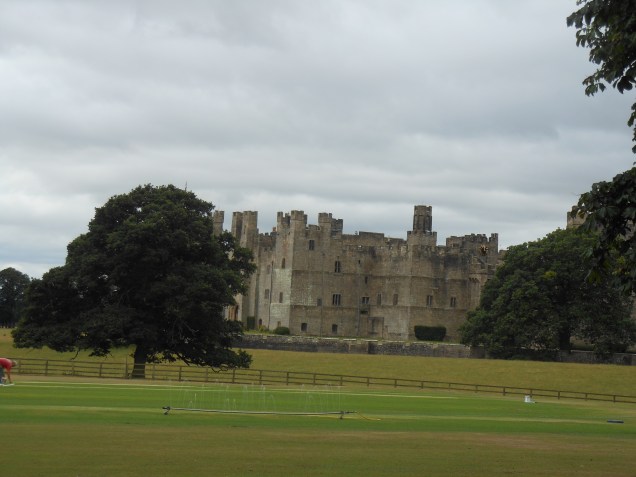
Raby Castle, Count Durham

Known for her piety, Joan left many bequests to religious institutions in her will, especially monasteries in the north. Admitted to the sisterhood at St Albans, she was also licensed to appropriate for the support of the chantry the advowson of the church of Welton, in the Howden area; and it was Joan who saw the completion of the college at Staindrop, founded by her husband in 1408. According to antiquarian, John Leland, Joan ‘erectid the very house self of the college’ in the form of a medieval hospital. Her piety, however, was not always conventional. Her father had been a defender of the Lollards – he employed John Wycliffe, the first person to translate the Bible into English, as a tutor to his children. And Joan seems to have had a similar religious curiosity – hence her association with Margery Kempe.

Margery Kempe was a mystic from Lyn, Norfolk; she claimed to have visions of Christ and travelled throughout England and on the Continent. She wrote the Book of Margery Kempe which recounted the story of her life and her visions and considered to be the first ever autobiography in English. Joan invited Margery Kempe to visit her at Raby. She also wrote a letter to exonerate Margery from accusations of corruption. Margery’s own testimony says they knew each other for ‘this two years and more’. In 1417 Margery was brought before the Archbishop of York, accused of advising Joan’s daughter, Elizabeth Greystoke, to leave her husband. Margery was found ‘not guilty’ of the offence and under questioning, admitted she had told Countess Joan and her daughter a ‘good tale of a lady who was damned because she would not love her enemies’. Margery even suggested her questioners ask Joan for corroboration of her testimony, demonstrating her trust that the Countess would back her.

Joan enjoyed influence at court – as the sister of one king, Henry IV, and aunt to his successor, Henry V. She was named in royal grants as ‘the king’s sister’ and made a Lady of the Garter in the reign of her cousin, Richard II. She was compassionate and used her influence to petition the king to aid those less fortunate, such as Christopher and Margaret Standith, who had fallen on hard times after Christopher had been dismissed from his father’s service for marrying for love. Joan wrote the king, asking him to give Margaret a position in the household of his queen, Joan of Navarre.

It can be argued that Joan had a strong bond of affection and purpose with her husband. They both wanted to see their family’s prospects improved even further, arranging advantageous marriages for their large brood of children. Although, it is unclear how much influence Joan had when her husband, the Earl of Westmorland, manage to entail the bulk of his estates onto his children by Joan, rather than the children by his first marriage to Margaret Stafford. This seems to have been a sensible strategy, given that his children by Joan were closely related to the royal family – Joan being the half sister of King Henry IV. The strategy, however, caused Joan problems after her husband’s death and led to a family feud – which sometimes turned violent – which wasn’t resolved until after Joan died.
History...the Interesting bits
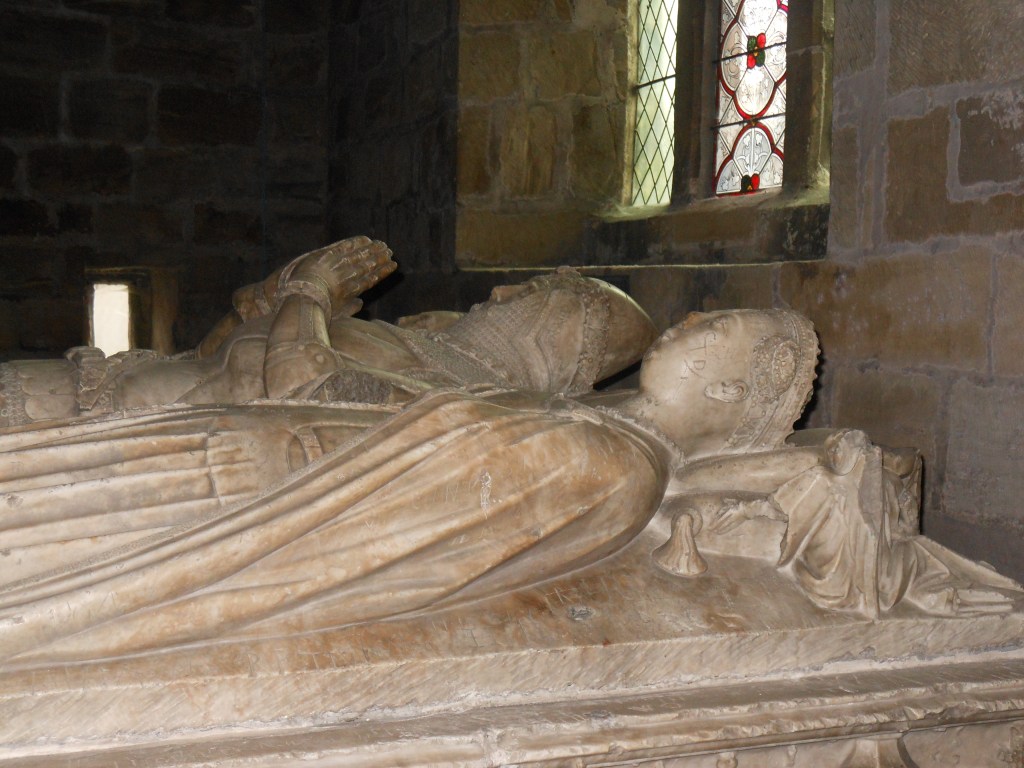
Tomb of Ralph Neville, St Mary’s Church, Staindrop

Joan was a strong influence on her daughters and daughters-in-law. She concerned herself with matters of family – such as her children’s marriages – rather than business. Ralph’s son, also Ralph, by his first marriage, was married to Mary, Joan’s younger daughter from her first marriage. Ralph and Joan’s children were married into many of the leading noble dynasties of the time and served to strengthen the position of the Beauforts as a whole. Such significant marriages saw their eldest daughter, Katherine, married to John Mowbray, 2nd Duke of Norfolk – it was Katherine who later married John Woodville, brother-in-law of her nephew Edward IV; Katherine was around 65 years old and John just 20. Of other daughters, Eleanor married Henry Percy, 2nd Earl of Northumberland, while Anne married Humphrey Stafford, a descendant of Edward III and 1st Duke of Buckingham. Of their sons, Richard Neville married Alice Montagu, heiress to the earldom of Salisbury, and became Earl of Salisbury by right of his wife; their son, Richard Neville, was the Earl of Warwick known as the Kingmaker. Robert Neville became Bishop of Durham and other sons married rich heiresses to claim titles and positions for themselves.

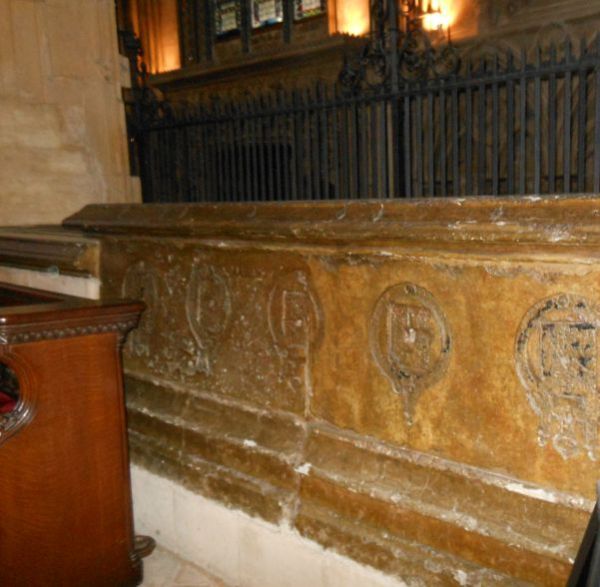
Ralph died in 1425 and was buried at Staindrop, close to Raby Castle. His tomb includes effigies of both Joan and his first wife, although neither woman is buried beside him. Joan was herself responsible for the negotiations after her husband’s death, which saw their youngest daughter, Cecily, married to Richard, Duke of York. Two of Cecily’s sons would become Kings of England; Edward IV and Richard III.

Having married young herself, and having become a mother before she was 15 years old, Joan was sensible to the dangers of girls marrying too young and ensured that none of her daughters or daughters-in-law, faced the dangers of childbirth before they were 17 or 18 years of age. She even kept married couples apart – such as Cecily and the Duke of York – when necessary, in order to protect the girls.
History...the Interesting bits
Joan’s tomb, beside that of her her mother, in Lincoln Cathedral

On 28 November 1437, Joan was granted licence for the foundation of a chantry with two chaplains at Lincoln Cathedral, to pray daily for the soul of her mother, Katherine Swynford, as well as for herself, her husband, brother (Cardinal Henry Beaufort) and father. On the same day, she secured a grant for daily prayers to be said at Staindrop Church – where her husband Ralph, Earl of Westmorland, was buried – for the souls of her husband, brother and father.

Joan died at Howden, a manor near Beverley in her son Robert’s possession as Bishop of Durham, on 13 November 1440. In her will, she requested to be buried with her mother, with whom she had a strong bond in life, but also for her mother’s burial site to be enlarged and enclosed. It seems likely that the now-lost wrought iron screens which surrounded her mother’s tomb, were added at this time, rather than when Katherine died in 1403. Joan’s epitaph claimed that the whole nation grieved at her death.

There is, however, no clear indication why Joan chose to be buried with her mother, rather than at Staindrop with her husband. It may be that as the granddaughter of a king (Edward III), she thought Lincoln Cathedral a more appropriate resting place, or that she wanted to be as close to her mother in death as she had been in life.

*

Pictures: John of Gaunt and Joan Beaufort courtesy of Wikipedia. All other photos ©SharonBennettConnolly FRHistS

*

Sources: katherineswynfordsociety.org.uk; Red Roses: Blanche of Gaunt to Margaret Beaufort by Amy Licence; The Nevills of Middleham by K.L. Clark; The House of Beaufort: the Bastard Line that Captured the Crown by Nathen Amin; Brewer’s British Royalty by David Williamson; History Today Companion to British History Edited by Juliet Gardiner & Neil Wenborn; The mammoth Book of British kings & Queen by Mike Ashley; Britain’s Royal Families, the Complete Genealogy by Alison Weir; The Life and Times of Edward III by Paul Johnson; The Perfect King, the Life of Edward III by Ian Mortimer; The Reign of Edward III by WM Ormrod; Chronicles of the Age of Chivalry Edited by Elizabeth Hallam; Oxforddnb.com; womenshistory.about.com/od/medrenqueens/a/Katherine-Swynford.

*

My Books

Signed, dedicated copies of all my books are available through my online bookshop.

Out now: Scotland’s Medieval Queens

Books by Sharon Bennett Connolly

Scotland’s history is dramatic, violent and bloody. Being England’s northern neighbour has never been easy. Scotland’s queens have had to deal with war, murder, imprisonment, political rivalries and open betrayal. They have loved and lost, raised kings and queens, ruled and died for Scotland. From St Margaret, who became one of the patron saints of Scotland, to Elizabeth de Burgh and the dramatic story of the Scottish Wars of Independence, to the love story and tragedy of Joan Beaufort, to Margaret of Denmark and the dawn of the Renaissance, Scotland’s Medieval Queens have seen it all. This is the story of Scotland through their eyes.

Scotland’s Medieval Queens gives a thorough grounding in the history of the women who ruled Scotland at the side of its kings, often in the shadows, but just as interesting in their lives beyond the spotlight. It’s not a subject that has been widely covered, and Sharon is a pioneer in bringing that information into accessible history.’ Elizabeth Chadwick (New York Times bestselling author)

Available now from Amazon and Pen and Sword Books

Also by Sharon Bennett Connolly:
Books by Sharon Bennett Connolly

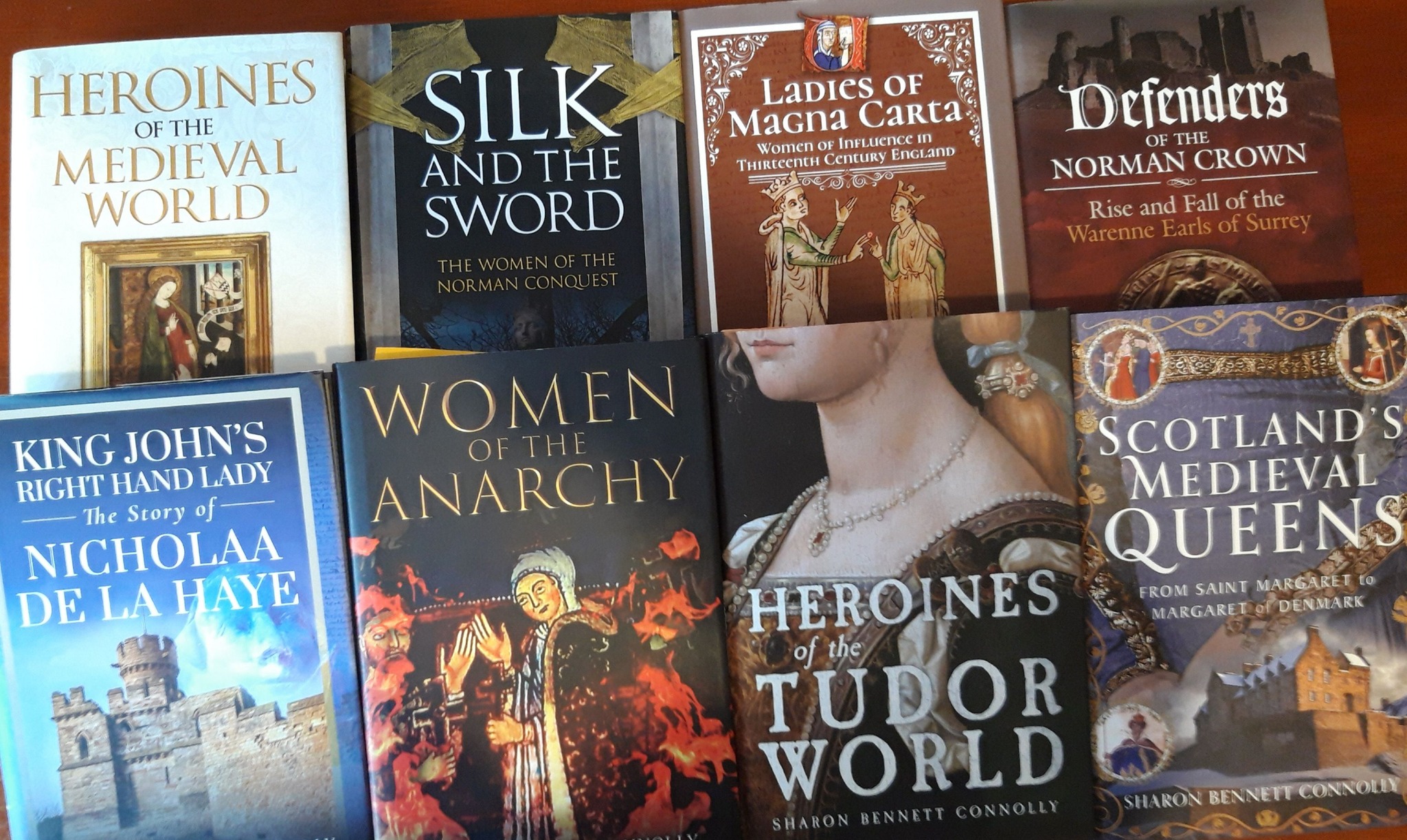
Heroines of the Tudor World tells the stories of the most remarkable women from European history in the time of the Tudor dynasty, 1485-1603. These are the women who ruled, the women who founded dynasties, the women who fought for religious freedom, their families and love. Heroines of the Tudor World is now available for pre-order from Amberley Publishing and Amazon UK. Women of the Anarchy demonstrates how Empress Matilda and Matilda of Boulogne, unable to wield a sword themselves, were prime movers in this time of conflict and lawlessness. It shows how their strengths, weaknesses, and personal ambitions swung the fortunes of war one way – and then the other. Available from Bookshop.orgAmberley Publishing and Amazon UKKing John’s Right-Hand Lady: The Story of Nicholaa de la Haye is the story of a truly remarkable lady, the hereditary constable of Lincoln Castle and the first woman in England to be appointed sheriff in her own right. Available from all good bookshops Pen & Sword Booksbookshop.org and Amazon

Royal Historical Society

Defenders of the Norman Crown: The Rise and Fall of the Warenne Earls of Surrey tells the fascinating story of the Warenne dynasty, from its origins in Normandy, through the Conquest, Magna Carta, the wars and marriages that led to its ultimate demise in the reign of Edward III. Available from Pen & Sword BooksAmazon in the UK and US, and Bookshop.orgLadies of Magna Carta: Women of Influence in Thirteenth Century England looks into the relationships of the various noble families of the 13th century, and how they were affected by the Barons’ Wars, Magna Carta and its aftermath; the bonds that were formed and those that were broken. It is now available in paperback and hardback from Pen & SwordAmazon, and Bookshop.orgHeroines of the Medieval World tells the stories of some of the most remarkable women from Medieval history, from Eleanor of Aquitaine to Julian of Norwich. Available now from Amberley Publishing and Amazon, and Bookshop.orgSilk and the Sword: The Women of the Norman Conquest traces the fortunes of the women who had a significant role to play in the momentous events of 1066. Available now from Amazon,  Amberley Publishing, and Bookshop.org.

Alternate Endings: An anthology of historical fiction short stories including Long Live the King… which is my take what might have happened had King John not died in October 1216. Available in paperback and kindle from Amazon.

Podcast:

A Slice of Medieval

Have a listen to the A Slice of Medieval podcast, which I co-host with Historical fiction novelist Derek Birks. Derek and I welcome guests, such as Bernard Cornwell and Elizabeth Chadwick, and discuss a wide range of topics in medieval history, from significant events to the personalities involved.

There are now 80 episodes to listen to!

Every episode is also available on YouTube.

*

Don’t forget! Signed and dedicated copies of all my books are available through my online bookshop.

For forthcoming online and in-person talks, please check out my Events Page.

You can be the first to read new articles by clicking the ‘Follow’ button, liking our Facebook page or joining me on TwitterThreadsBluesky and Instagram.

©2019 Sharon Bennett Connolly FRHistS
Book Corner: the Irish Princess by Elizabeth Chadwick

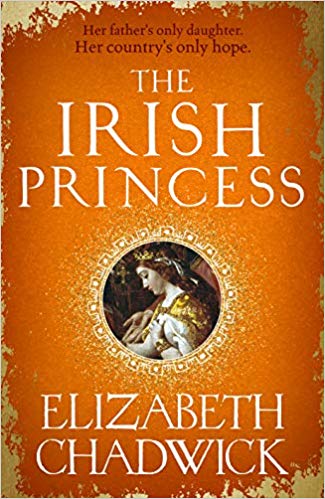
Her father’s only daughter.
Her country’s only hope.
Ireland, 1152

The King of Leinster, awaiting news of his newborn child, is disappointed to hear he has a daughter. Diarmait MacMurchada wanted another strapping son to shoulder a spear, wield a sword, and protect his kingdom. But the moment Diarmait holds tiny Aoife in his arms, he realised she would be his most precious treasure.

1166

Forced into exile Aoife and her family find themselves at the mercy of Henry II. Aoife – aware of her beauty but not its power – intrigues and beguiles Henry in equal measure. He agrees to help her father, an alliance that leads the MacMurchadas to the charistmatic Richard de Clare, a man dissatisfied with his lot and open to new horizons.

Diarmit promises Richard Aoife’s hand in marriage in return for his aid in Ireland, but Aoife has her own thoughts on the matter. She may be a prize, but she is not a pawn, and she will play the men at their own game. For herself, for her family, and for her country.

From the royal halls of scheming kings, to staunch Welsh border fortresses and the wild green kingdoms of Ireland, The Irish Princess is a sumptuous, journey of ambition and desire, love and loss, heartbreak and survival.

Elizabeth Chadwick’s The Irish Princess is one of the most anticipated historical fiction novels of the year. I was lucky enough to receive and advance copy from NetGalley – and it more than lives up to expectation. Telling the story of the marriage of Richard de Clare (Strongbow) and his Irish princess, Aoife MacMurchada, against the backdrop of the Norman invasion of Ireland it seamlessly weaves together the various strands to make an engaging and utterly engrossing story.

Aoife is a proud and precocious princess who has grown up amid the brutality of the power struggles of the Irish clans. She has seen brothers maimed and murdered, the heads of her father’s enemies decorating her home and had to flee into exile, all before she had left what should have been the innocence of childhood. Her marriage to Richard de Clare, Earl of Striguil, is a political necessity in the strategies of her father, to recover his lost kingdom of Leinster.

Richard de Clare, on the other hand, is a man on the outside; not trusted or employed by King Henry II, he sees helping Aoife’s father as an opportunity to gain a wife and heirs, lands and influence. He still has to play the courtier, however, and has to walk a fine line with Henry, deferring to the king whilst protecting his own interests – not an easy path to walk.

The entrance to the castle was above ground level with steps leading to a doorway decorated with a patterned arch of zig-zags and painted chevrons. A man stepped from the darkness of the arch and came down the steps to greet them. Tall and well proportioned, he moved with confident grace. His tunic was grey, topped by a cloak of a darker, charcoal hue, lined with squirrel fur, creating a strong but subtle contrast. His hair was the same rich auburn as the squirrel pelts.

Welcome to Striguil, sire.’ He bowed his head in courtesy and extended his hand to clasp her father’s. ‘I trust you have journeyed well?’ his voice was light, but the words were clearly spoken and his smile showed a flash of white teeth. he sent a brief glance in her direction, as he encompassed everyone in his greeting.

‘Well enough, my lord,’ her father answered in accented French. ‘But glad to arrive. You have a fine castle.’ His gaze roved the walls.

‘It serves its purpose well,’ de Clare replied, still smiling. ‘Will you come within?’

Diarmait presented Aoife’s mother and her brothers to de Clare, and then spread his arm in a flourish. ‘And this is my daughter Aoife.’

Aoife swallowed and held her ground as she had held it before King Henry. De Clare’s eyes were clear with a glassy mingling of sea-colours, utterly striking against the dark contrast of his pupils. His stare was as intense as Henry’s had been but assessing her rather than predatory.

‘My lady, you are indeed welcome,’ he said, speaking slowly and clearly to help her understand him. ‘Word of your great beauty has carried, and it is not exaggerated.’

Elizabeth Chadwick wonderfully combines the history of the conflict with the private lives and experiences of her leading characters. The personal stories are what make this book truly a incredible read. I wasn’t keen on Aoife at first, but she grows on you as she grows up and is a courageous heroine, who has to use all her attributes as a woman in order to survive and prosper. No shrinking violet and no meek, biddable child, she is well versed in the politics of Ireland and England, but knows her place as a woman of the times; advising and steering policy in private and charming the English king to gain his protection.

From Aoife herself, to her sister-in-law Basilia, from Richard de Clare to King Henry, it is the characters in The Irish Princess that serve as the backbone of the novel. They drive the direction of the story and the empathy and engagement of the reader, even more so than the action and intrigue of the times.

Elizabeth Chadwick, as always, has done extensive research and the historical story comes across in each page, even as she weaves in the recreated words and emotions of the characters, adding a sense of having a fly-on-the-wall view of events as they happened. The sweeping landscapes of Ireland, the bloody battlefields, the warmth and comfort of the lord’s hall and the intimacy of the lady’s private quarters are beautifully recreated and woven into the story to draw the reader into the world of Ireland at the time of the Norman invasion.

And to top it all, a cameo appearance by … (not saying, I don’t want to spoil the surprise!)

Fans of Elizabeth Chadwick – old and new – will not be disappointed by this wonderful novel. The author has lived up to every expectation in this wonderful novel. The story and characters are beautifully crafted to bring the reader an epic tale of love, war betrayal … and family.

The Irish Princess by Elizabeth Chadwick will be released on 12 September 2019 and is available from Amazon UK.

*

About the Author:

Myself and Elizabeth Chadwick at the Newark Book Festival, 2018

New York Times bestselling author Elizabeth Chadwick lives in a cottage in the Vale of Belvoir in Nottinghamshire with her husband and their 3 dogs. Her first novel, The Wild Hunt, won a Betty Trask Award and To Defy a King won the RNA’s 2011 Historical Novel Prize. She was also shortlisted for the Romantic Novelists’ Award in 1998 for The Champion, in 2001 for Lords of the White Castle, in 2002 for The Winter Mantle and in 2003 for The Falcons of Montabard. Her sixteenth novel, The Scarlet Lion, was nominated by Richard Lee, founder of the Historical Novel Society, as one of the top ten historical novels of the last decade. She often lectures at conferences and historical venues, has been consulted for television documentaries and is a member of the Royal Historical Society.

For more details on Elizabeth Chadwick and her books, visit http://www.elizabethchadwick.com, follow her on Twitter, read her blogs or chat to her on Facebook.

*

My books

Silk and the Sword: The Women of the Norman Conquest

From Emma of Normandy, wife of both King Cnut and Æthelred II to Saint Margaret, a descendant of Alfred the Great himself, Silk and the Sword: the Women of the Norman Conquest traces the fortunes of the women who had a significant role to play in the momentous events of 1066.  Available now from Amazon UK,  Amberley Publishing, Book Depository and Amazon US.

Heroines of the Medieval World

Telling the stories of some of the most remarkable women from Medieval history, from Eleanor of Aquitaine to Julian of Norwich, Heroines of the Medieval World,  is available now on kindle and in paperback in the UK from from both Amberley Publishing and Amazon, in the US from Amazon and worldwide from Book Depository.

*

You can be the first to read new articles by clicking the ‘Follow’ button, liking our Facebook page or joining me on Twitter and Instagram.

©2019 Sharon Bennett Connolly

Robert de Breteuil, the Crusading Earl

Sharon Bennett Connolly
Arms of Robert de Breteuil, 4th Earl of Leicester

Robert de Breteuil, also known as Robert de Beaumont, was a remarkable individual whose adventures in the Holy Land would make a wonderful novel. A renowned warrior and a powerful magnate, he was a companion to the Plantagenet princes, both Richard the Lionheart and King John. Robert was the son-in-law of Matilda de Braose, whose horrific persecution by King John led to her death by starvation in one of John’s dungeons – and the inclusion of clause 39 in Magna Carta:

“No man shall be taken, imprisoned, outlawed, banished or in any way destroyed, nor will we proceed against or prosecute him, except by the lawful judgement of his peers or by the law of the land.”

Magna Carta, magnacartaresearch.og

Robert was the second son of Robert de Breteuil, 3rd earl of Leicester, and his wife, Petronilla de Grandmesnil and the great-grandson of Robert de Beaumont, Count of Meulan and 1st Earl of Leicester, and his wife, Elizabeth de Vermandois. Robert was probably born in the early-1160s and was closely associated with his elder brother William. As they grew up and entered public life they were linked with the household of their cousin, Robert, Count of Meulan, and they regularly appeared on their father’s charters together. Their younger brother, Roger, was bishop of St Andrews. William died in 1189, sometime after the accession of King Richard I. A later legend suggests he suffered from leprosy, though there is no contemporary evidence to corroborate this. William’s death meant Robert therefore became heir to their father’s earldom of Leicester.

Both Robert and his father were at the royal court at Verneiul on 2 January 1190 and joined the Third Crusade of Richard the Loinheart. Robert’s father took an overland route to the Holy Land, while it appears that Robert travelled with the king. Robert was with the king at Messina, Sicily, when news reached him of his father’s death. The 3rd earl had died on 31 August or 1 September 1190 and so Robert was invested as earl by the king on 2 February 1191, in Sicily.

During his time in the Holy Land, Robert was one of the leaders of the assault on Acre on 11 July 1191 and fought in the battle of Arsuf on 7 September. In November he rescued some ambushed Templars at Ibn-Ibrak and then was himself surrounded, with his knights, by a party of Turks outside the camp at Ramlah. Robert was rescued by his cousin Robert de Neubourg; in the process he nearly drowned in a river and had two horses killed under him.

Sharon Bennett Connolly
Seal of Robert de Breteuil

Robert and his men were prominent among the forces who stormed Deir al-Bela on 22 May 1192 and on 5 August 1192 he was one of the ten knights who helped to thwart an attempt to kidnap the king from his tent at Jaffa and the king himself rescued Robert when he was thrown from his horse. He probably set out for home in September or October 1192, having distinguished himself and earned the king’s eternal goodwill.1

Following his return from the crusade, Robert was occupied with the defence of Normandy, but was captured by King Philip Augustus’ forces in June 1194, after a skirmish outside Gourany. He was imprisoned at Étampes for more than a year and only freed after surrendering his castle and lordship of Pacy-sur-Eure to King Philip. His freedom was achieved sometime around February 1196 and in the same year he was married to the teenage Loretta de Braose. Loretta de Braose, was probably born in the early-to-mid-1180s,. She was one of the sixteen children of Matilda and William de Braose. Four of her sisters married prominent Welsh Marcher lords, but Loretta was married to Robert de Breteuil, 4th earl of Leicester.

The marriage was an alliance of two of the leading Anglo-Norman families of the Plantagenet world. He was a powerful earl who had made a name for himself on the crusades, whilst she was a daughter of one of the most powerful barons of the Welsh March. As her marriage portion, Loretta was given Tawstock, near Barnstaple in Devon.

Robert de Breteuil was back campaigning in 1197 and 1198 and was with King Richard when he was mortally wounded at Châlus in April 1199. He had had a long association with Richard’s brother since John had been Count of Mortain, and so was a firm supporter of John’s succession, acting as steward at his coronation on 27 May 1199, claiming the office his grandfather had relinquished in 1153. Robert was highly influential in the early years of John’s reign. He also fought for John in Normandy, being one of the major landholders in the duchy, and was rewarded generously for his support; he was granted Richmondshire in Yorkshire in September 1203. The following year he suffered the loss of his Continental estates when Normandy fell and was the biggest loser of the Anglo-Norman barons.

Although he was one of the two barons (the other being William Marshal) who was given a year to decide whether to pay homage to King Philip of France to try to retain his Norman estates, Robert was not punished by John. Indeed, he was given more lands in England, English lands that had belonged to families who had chosen to remain in Normandy, such as the Harcourts. Robert died before King Philip’s deadline, and so never did have to decide where and how to share his allegiances in order to keep all his lands.

Sharon Bennett Connolly
The ruins of Leicester Abbey, where Robert de Breteuil is buried

Robert died on 20 or 21 October 1204; the life of St Hugh of Lincoln reported that he died a leper, although this seems highly unlikely.1 He was buried in the choir of the Augustinian Abbey in Leicester. Robert and Loretta had remained childless, so Robert’s lands were divided between his two sisters. The earldom and the town of Leicester went to his eldest sister, Amice, the wife of Simon de Montfort and therefore grandmother of the Simon de Montfort who would marry King John’s daughter, Eleanor, and claim the earldom of Leicester for himself. Half of the old earldom, centred around Brackley in Northamptonshire, went to Robert’s younger sister, Margaret, wife of Saher de Quincy, Earl of Winchester.

It is a sad legacy that Robert’s death before John began the persecution of Loretta’s family meant that she was without her husband’s powerful protection when she needed it most. King John’s pursuit of the family did not end with the deaths of Matilda, who died in custody in 1210, and William de Braose, Lord of Bramber, who died in exile in France in 1211. In November 1207 John extracted a promise from Loretta that she would not remarry without the king’s permission and her lands were taken from her. She probably left for France shortly afterwards and only returned to England in 1214.

Once in England, Loretta was allowed to recover her confiscated estates after again to only marry as the king directed. The restoration of Loretta’s estates were complicated by the king’s desire to keep happy those who had benefited from tehir confiscation, such as the powerful Saher de Quincy, earl of Winchester. Loretta’s experiences in this respect may well have inspired clauses 7 and 8 of Magna Carta, which guaranteed that widows should have their marriage portions without hindrance and that they could remarry at their own pleasure, so long as it was with the king’s consent.

Sharon Bennett Connolly
Arms of William de Braose, Loretta’s father

Loretta took her future into her own hands, however, and in early 1221, took a vow of chastity and became an anchorite in Hackington, near Canterbury. An anchorite was a religious recluse who lived in a small cell within a church, allowed on the briefest of contact with others, although she was allowed attendants to help with her daily needs. Loretta’s influence was still in evidence, however, in that she obtained a pardon for a man who had accidentally killed another and helped to establish the Franciscan order in England. She died on 4 March, probably in 1266, and was buried at the church of St Stephen, Hackington.

It is a fact of life that whilst researching one particular person, you come across several others who spark your interest. I stumbled upon the stories of Robert de Breteuil and Loretta de Braose while researching for my book, Ladies of Magna Carta.

*

Footnote: ¹Oxforddnb.com

Sources: sussexcastles.com; genie.com; steyningmuseum.org.uk; berkshirehistory.com; England Under the Norman and Angevin Kings 1075-1225 by Robert Bartlett; Oxford Companion to British History Edited by John Cannon; The Story of Britain by Roy Strong; The Plantagenets, the Kings who Made England by Dan Jones; The Life and Times of King John by Maurice Ashley; The Plantagenet Chronicles Edited by Elizabeth Hallam; Oxforddnb.com; magnacartareseearch.org; Magna Carta by David Starkey; King John by Marc Morris; King John, England, Magna Carta and the Making of a Tyrant by Stephen Church; 1215, the Year of Magna Carta by Danny Danziger and John Gillingham; Women in Thirteenth Century Lincolnshire by Louise J. Wilkinson.

Pictures courtesy of Wikipedia

*

My Books

Signed, dedicated copies of all my books are available through my online store.

Out now: Scotland’s Medieval Queens

Scotland’s history is dramatic, violent and bloody. Being England’s northern neighbour has never been easy. Scotland’s queens have had to deal with war, murder, imprisonment, political rivalries and open betrayal. They have loved and lost, raised kings and queens, ruled and died for Scotland. From St Margaret, who became one of the patron saints of Scotland, to Elizabeth de Burgh and the dramatic story of the Scottish Wars of Independence, to the love story and tragedy of Joan Beaufort, to Margaret of Denmark and the dawn of the Renaissance, Scotland’s Medieval Queens have seen it all. This is the story of Scotland through their eyes.

Scotland’s Medieval Queens gives a thorough grounding in the history of the women who ruled Scotland at the side of its kings, often in the shadows, but just as interesting in their lives beyond the spotlight. It’s not a subject that has been widely covered, and Sharon is a pioneer in bringing that information into accessible history.’ Elizabeth Chadwick (New York Times bestselling author)

Available now from Amazon and Pen and Sword Books

Also by Sharon Bennett Connolly:

Heroines of the Tudor World tells the stories of the most remarkable women from European history in the time of the Tudor dynasty, 1485-1603. These are the women who ruled, the women who founded dynasties, the women who fought for religious freedom, their families and love. Heroines of the Tudor World is now available from Amberley Publishing and Amazon UK. Women of the Anarchy demonstrates how Empress Matilda and Matilda of Boulogne, unable to wield a sword themselves, were prime movers in this time of conflict and lawlessness. It shows how their strengths, weaknesses, and personal ambitions swung the fortunes of war one way – and then the other. Available from Bookshop.orgAmberley Publishing and Amazon UKKing John’s Right-Hand Lady: The Story of Nicholaa de la Haye is the story of a truly remarkable lady, the hereditary constable of Lincoln Castle and the first woman in England to be appointed sheriff in her own right. Available from all good bookshops Pen & Sword Booksbookshop.org and Amazon

Defenders of the Norman Crown: The Rise and Fall of the Warenne Earls of Surrey tells the fascinating story of the Warenne dynasty, from its origins in Normandy, through the Conquest, Magna Carta, the wars and marriages that led to its ultimate demise in the reign of Edward III. Available from Pen & Sword BooksAmazon in the UK and US, and Bookshop.orgLadies of Magna Carta: Women of Influence in Thirteenth Century England looks into the relationships of the various noble families of the 13th century, and how they were affected by the Barons’ Wars, Magna Carta and its aftermath; the bonds that were formed and those that were broken. It is now available in paperback and hardback from Pen & SwordAmazon, and Bookshop.orgHeroines of the Medieval World tells the stories of some of the most remarkable women from Medieval history, from Eleanor of Aquitaine to Julian of Norwich. Available now from Amberley Publishing and Amazon, and Bookshop.orgSilk and the Sword: The Women of the Norman Conquest traces the fortunes of the women who had a significant role to play in the momentous events of 1066. Available now from Amazon,  Amberley Publishing, and Bookshop.org.

Alternate Endings: An anthology of historical fiction short stories including Long Live the King… which is my take what might have happened had King John not died in October 1216. Available in paperback and kindle from Amazon.

Podcast:

Have a listen to the A Slice of Medieval podcast, which I co-host with Historical fiction novelist Derek Birks. Derek and I welcome guests, such as Bernard Cornwell and Michael Jecks, and discuss a wide range of topics in medieval history, from significant events to the personalities involved. Every episode is also now available on YouTube.

*

Don’t forget! Signed and dedicated copies of all my books are available through my online store.

For forthcoming online and in-person talks, please check out my Events Page.

You can be the first to read new articles by clicking the ‘Follow’ button, liking our Facebook page or joining me on TwitterThreadsBluesky and Instagram.

*

©2019 Sharon Bennett Connolly FRHistS
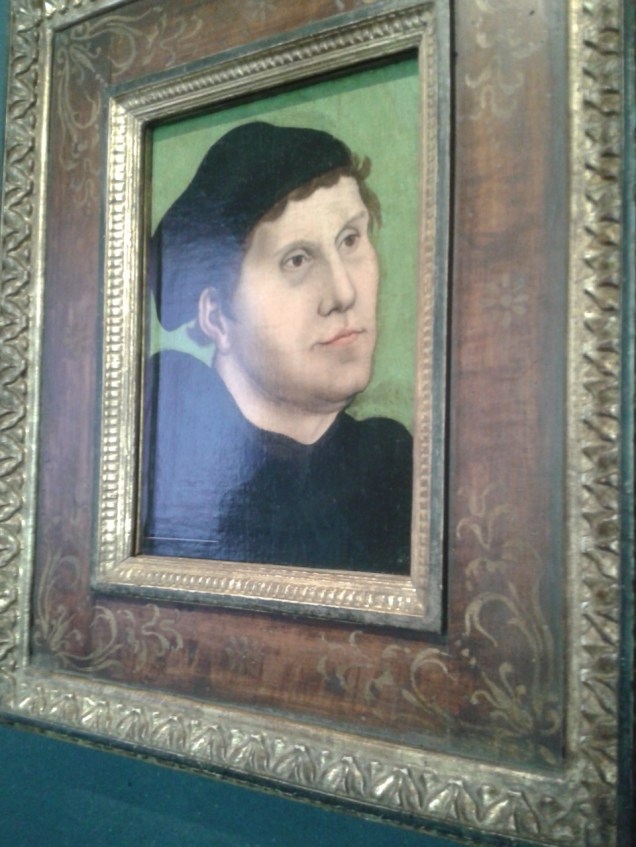
Guest Post: Katharina by Margaret Skea

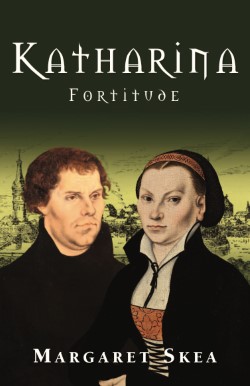
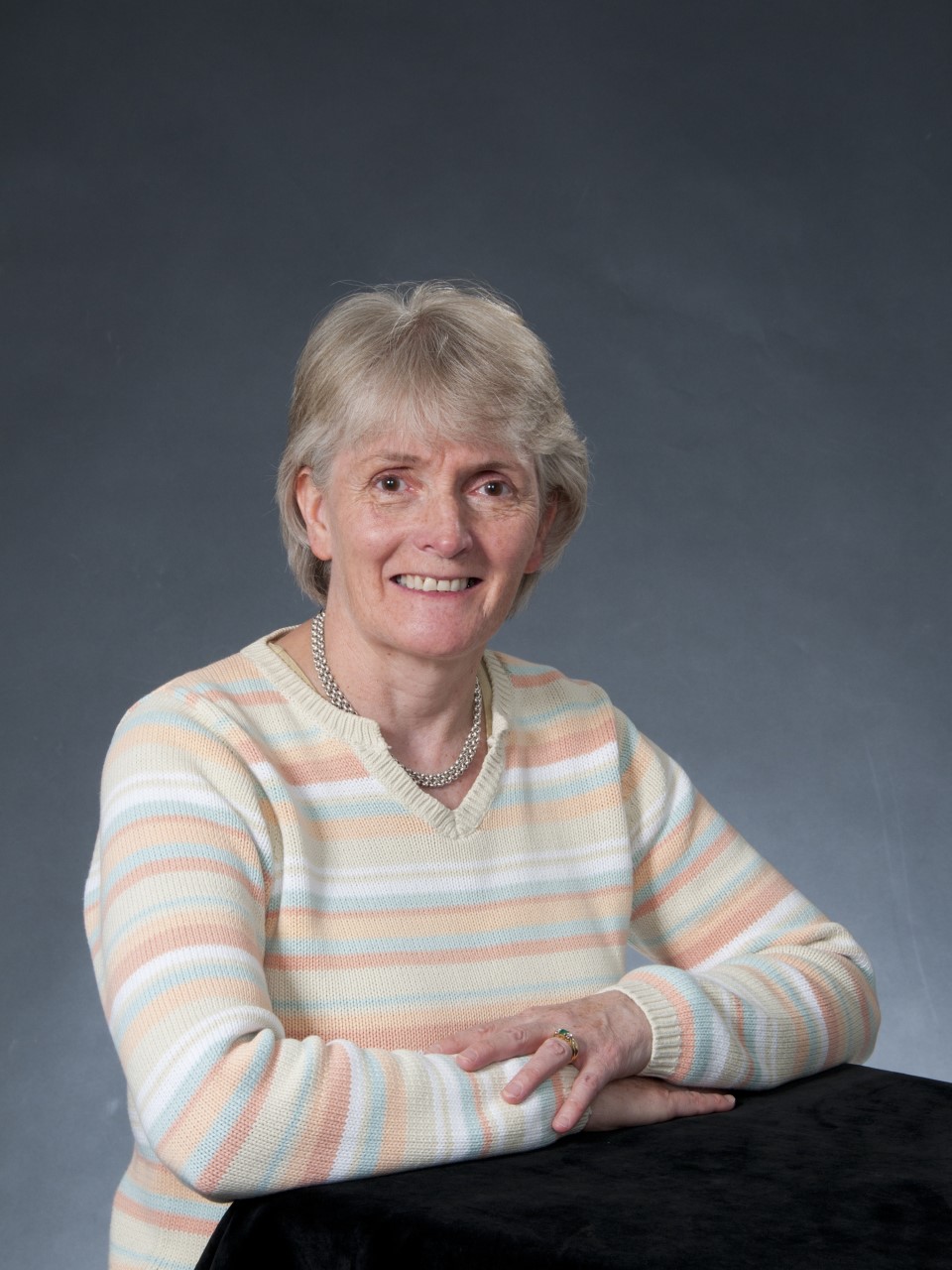
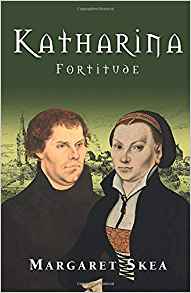
It is with great pleasure that I welcome author Margaret Skea to the blog today, talking about her latest book, Katharina: Fortitude, the history behind it and giving you a little teaser from the book itself.

As crazy ideas go, thinking of writing what could best be described as a fictionalized biography of Katharina von Bora, the escaped nun who married the reformer Martin Luther, ranked highly.  It had popped into my head, seemingly from nowhere, but once there, as crazy ideas so often do, it burrowed its way in so far no amount of rational thinking would dislodge it.

There were plenty of good reasons not to write her story.

Reason 1. I knew almost nothing about her, and it seemed that nobody else knew much about her either.

I did find a slim volume, of some 89 pages, written by a native German within the Luther Foundation, Martin Treu, well placed to have found any information there was to find. But the opening words were hardly encouraging.

It is impossible to write a biography of Katharina von Bora. The scanty and often enough fragmentary nature of the evidence allows for only a biographical sketch…’ Hmm.

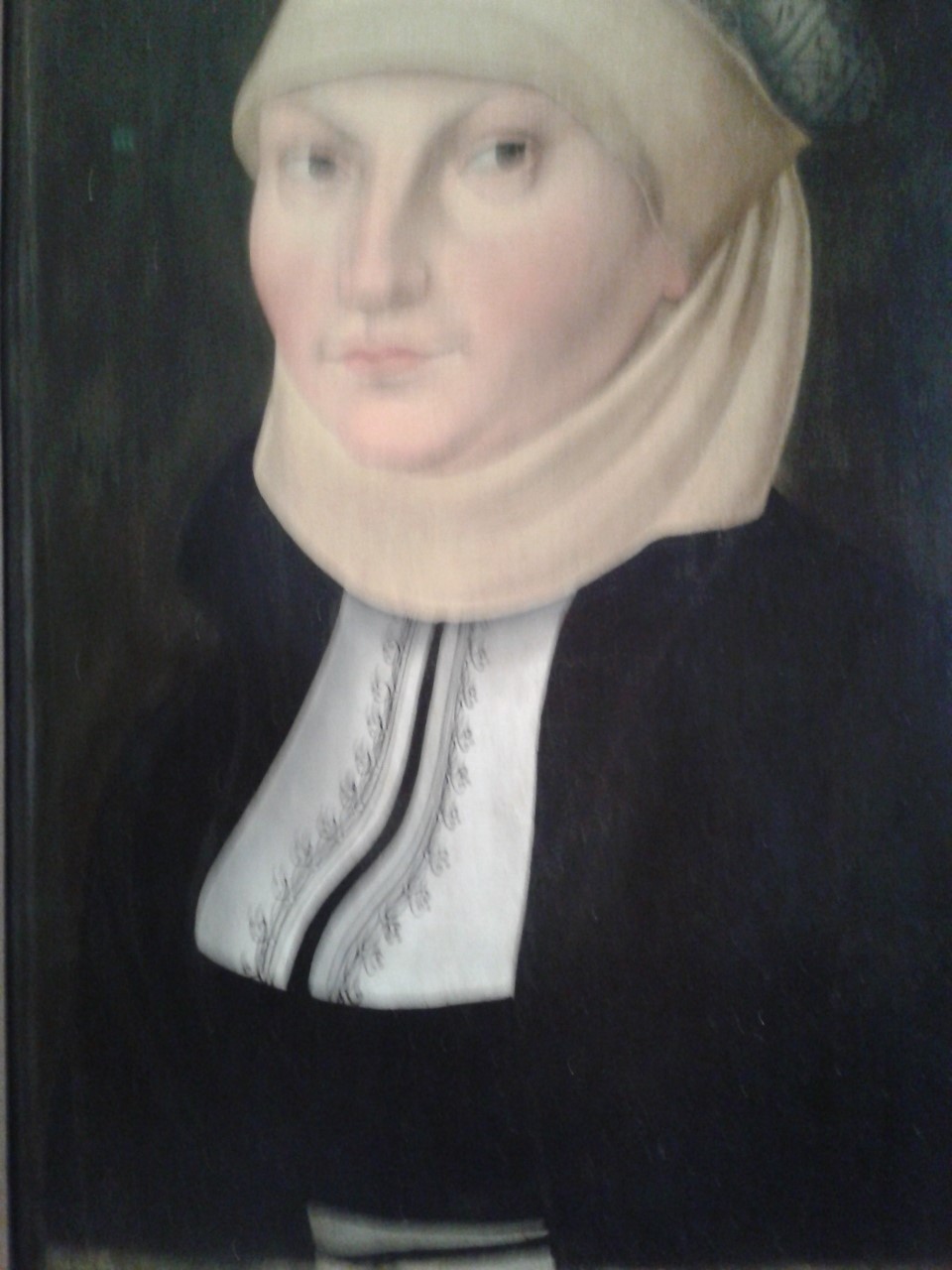
Katharina

Reason 2.  I didn’t speak or read German, so whatever ‘fragmentary evidence’ existed, I couldn’t even read it for myself. Not the best start.

Reason 3. I was in the middle of writing my third Scottish novel, and there was a publisher waiting for it to be delivered, so the timing wasn’t exactly ideal. However, the Luther 500 anniversary was only just over one year away, so I knew if I was going to write about her it had to be immediately.

And there she was, hovering at my shoulder, shadowy and insubstantial, but refusing to go away. So the Scottish book set aside, I began to plan how I could make this crazy idea a reality. I read and re-read the 89 pages of the little book until I knew them almost by heart and scoured every other source I could find (in English) that made any reference to her at all.  Treu had also set me a challenge – he wrote: 

The lacunae in the sources have tempted authors and authoresses to fill in the gaps with their own imagination.’

Well, yes, that is, after all,  what historical fiction writers do. But he went on:

The result is frequently a picture that says more about the writer and their time than about the person and journey through life of Katharina von Bora.’

Ah, that was different – I didn’t want to write about my time, or me, I wanted to write about her time and about her.

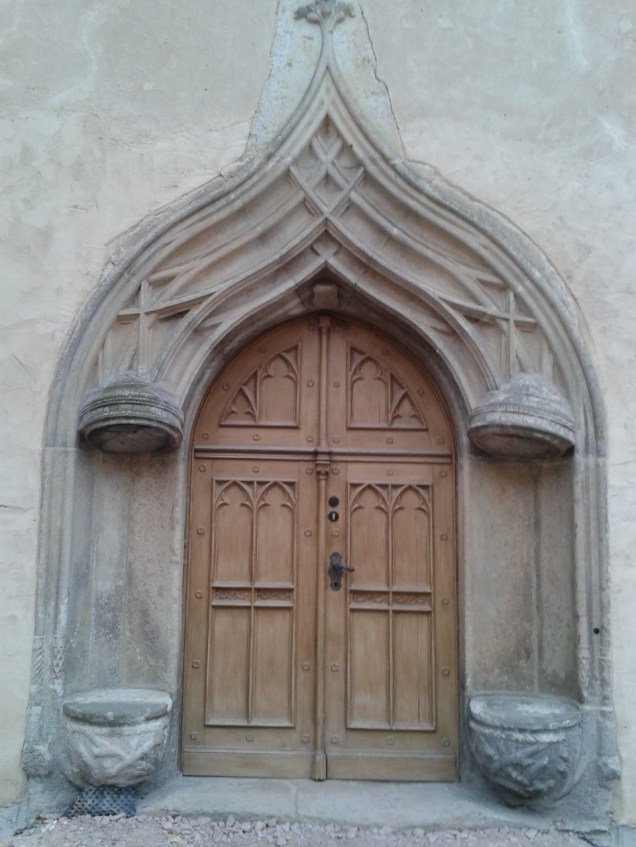
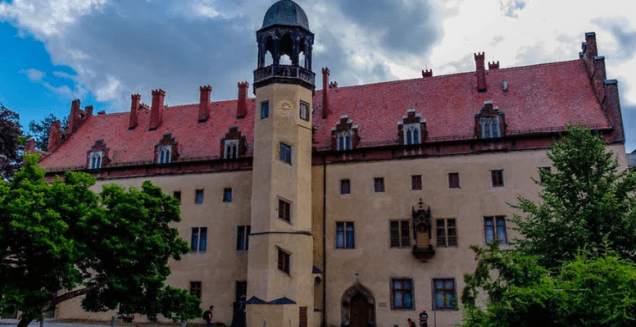
The Lutherhaus portal commissioned by Luther as a gift for Katharina

But pessimistic as he was about anyone’s chances, I did find some wee nuggets in his book, and in others, that gave me a starting point, despite that there is dispute over her parentage, her birthplace, the circumstances surrounding her admission to two different convents, and little direct evidence of her character.  Retracing her steps  in Saxony, which involved driving over 1000 miles, gave me a real sense of her environment, including the terrain she travelled, the architecture, and artefacts, and many aspects of her life and times.  There were some surprises, too, particularly in relation to Martin Luther and his almost modern attitude towards her, as well as the discovery of many myths that needed to be dispelled. But perhaps the biggest challenge was finding a ‘voice’ for her and so I began to write snippets in 1st person present tense. And what started as a preliminary experiment continued throughout both books and the story truly became Katharina’s.

I hope I have done her justice and that readers will get as much enjoyment in reading as I found in writing it. 

Here is the opening section as a wee taster:

Chapter One

Wittenberg June 1525.

Martin Luther

The music stops, the sound of the fiddle dying away, the piper trailing a fraction behind, as he has done all evening. I cannot help but smile as I curtsy to Justus Jonas, his answering twinkle suggesting he shares my amusement.

‘Thank you, Frau Luther,’ and then, his smile wider, so that even before he continues I suspicion it isn’t the piping amuses him, ‘For a renegade nun, you dance well.’

It is on the tip of my tongue to respond with ‘ For a cleric, so do you,’ but I stop myself, aware that should I be overheard it would likely be considered inappropriate for any woman, far less a newly married one, to speak so to an older man, however good a friend he has been. And on this day of all days, I do not wish to invite censure. Instead I say, ‘I have been well taught. Barbara saw to that. She did not wish me to disgrace myself or her, and there is a pair of slippers with the soles worn through to testify to the hours of practice she insisted upon.’

‘She succeeded admirably then.’

All around us there is the buzz of laughter and chatter, an air of goodwill evident in every flushed face. Martin is waiting at the foot of the dais, and as we turn towards him, his smile of thanks to Justus is evidence he too is grateful for the seal of approval, of me and of the marriage, our shared dance a tangible sign to the whole town that Justus Jonas at least has no reservations regarding our union. Over his shoulder I catch Barbara’s eye and she nods also. I nod back, but am unable to suppress altogether the inner voice, tonight there is drink taken, tomorrow some may feel differently.

As if he can read my mind, Justus says, a new seriousness in his tone, ‘You have not made a mistake, either of you.’ He waves his hand at the folk clustered in groups along the length of the room. ‘Look around. When the difficult times come, as no doubt they will, remember tonight and the number of those who came to wish you well.’

                             *                            *                       *

The first challenge is not long in coming. We stroll home in the moonlight, accompanied by those guests who will spend the night in the cloister with us, adding their acceptance to our union.  Among them are Martin’s parents, and three councillors from Mansfeld, snatches of their conversation penetrating my thoughts.

Hans Luder’s tone, though gruff, cannot mask his satisfaction. ‘It is a good day’s work, and glad I am to see it, however long the wait.’

Martin’s mother’s voice is sweet and low, but bubbles with amusement, like a sparkling wine as it is poured into a glass. ‘Old you may be, but I trust your end is not yet nigh.’

There is an answering chuckle from one of the councillors,  ‘Indeed,’ Frau Luder, ‘So do we all.’

Lutherhaus

Hearing him, I tuck my arm into Martin’s, the momentary disagreement regarding Cardinal Albert’s gift forgotten, and look up at the myriad stars: pin-pricks of light in an ink-flooded sky, and my heart swells.  Frau Luther – the spelling may be different, but the status is the same and a title to be proud of, and though our marriage is already two weeks old, it is the first time I have felt it truly mine. The music still rings in my ears, memory of the dancing, the coin in the chest: all symbols of the regard in which the doctor is held and in which I now share, spreading a warmth through me from the top of my head to the tip of my toes. Jusuts is right. This is not a mistake, or not on my part at least. And, pray God, he is right about Martin also. We part from the company at the door of our chamber, and the light from the oil lamp flickers on the bedspread Barbara Cranach gifted to us. It is the last thing I see before sleep, the first when I wake, a talisman-harbinger of good things to come.

About the author

Margaret Skea is an award-winning novelist and short story writer. Short story credits include Neil GunnFish, the Historical Novel Society and Mslexia.

Growing up during the ‘Troubles in Northern Ireland it is perhaps inevitable that her writing often focuses on the pressures of living within conflict. Her debut novel Turn of the Tide, was the Historical Fiction winner in an Harper Collins-sponsored competition. It also gained her the Beryl Bainbridge Award for ‘Best First-Time Novelist 2014’.

Katharina: Deliverance, a fictionalised biography based on the early life of the reformer Martin Luther’s wife, was placed 2nd in the Historical Novel Society New Novel Award 2018.

The newly released, Katharina: Fortitude, is the powerful conclusion to Katharina’s story, but both books can easily be read as a stand-alone.

In an attempt to embrace the digital age she now has her own website at www.margaretskea.com and you can also follow her on Twitter at @margaretskea1 or on FB https://www.facebook.com/MargaretSkeaAuthor.Novels/

Book link: https://books2read.com/u/4j11BX

I would like to say a HUGE thank you to Margaret for such a fabulous post and wish her every success with Kathariana: Fortitude .

Kathariana: Fortitude came out 2 weeks ago and has been entered into the Kindle Storyteller Award. The competition opened in May, and yet Katharina is already at #65 out of over 5,000 entries. To be in with a chance of winning it needs to get into top 10. The book is currently on sale at 99p, so why not give it a go? I have! Just follow the link: https://books2read.com/u/4j11BX

*

My books

Silk and the Sword: The Women of the Norman Conquest

From Emma of Normandy, wife of both King Cnut and Æthelred II to Saint Margaret, a descendant of Alfred the Great himself, Silk and the Sword: the Women of the Norman Conquest traces the fortunes of the women who had a significant role to play in the momentous events of 1066.  Available now from Amazon UK,  Amberley Publishing, Book Depository and Amazon US.

Heroines of the Medieval World

Telling the stories of some of the most remarkable women from Medieval history, from Eleanor of Aquitaine to Julian of Norwich, Heroines of the Medieval World,  is available now on kindle and in paperback in the UK from from both Amberley Publishing and Amazon, in the US from Amazon and worldwide from Book Depository.

*

You can be the first to read new articles by clicking the ‘Follow’ button, liking our Facebook page or joining me on Twitter and Instagram.

*

©2019 Sharon Bennett Connolly and Margaret Skea

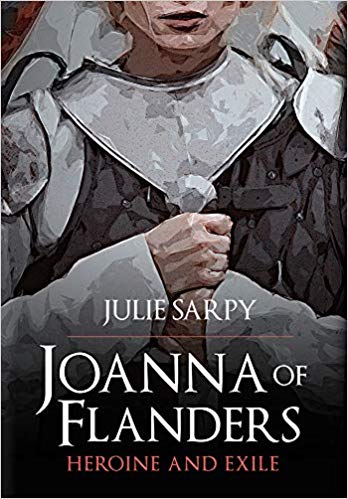
Book Corner: Joanna of Flanders, Heroine and Exile by Julie Sarpy

The new research in this biography solves the riddle of the disappearance of Joanna of Flanders early in the Hundred Years’ War, a leader described by David Hume as ‘the most extraordinary woman of the age’.

Joanna of Flanders, Countess de Montfort and Duchess of Brittany, vanished from public life after 1343 amid the Breton Wars of Succession during the Hundred Years’ War. As wife of the late Duke John de Montfort, Joanna’s rightful place was in Brittany as regent of the duchy for their five-year-old son and heir, John of Brittany. Famed for the defence of Hennebont in 1342 during her husband’s imprisonment, she, along with her children, had accompanied Edward III to England in February 1343 and never departed. She resided in comfortable obscurity at Tickhill Castle, Yorkshire, until her death around 1374.

What happened to her and why? Her extended absence should have provoked more suspicion, but it did not. Edward III certainly orchestrated her relocation from London to Yorkshire and sanctioned her indefinite detention.

Delving deeper into her story the answers to those two questions explore the complexities of medieval social structures, notably in the care of the vulnerable and the custody of women. The 19th-century Breton historian de la Borderie asked if Joanna’s ‘many tests had reversed her intelligence and thrown her into the abyss of madness’, a position accepted by many modern historians – but not by Julie Sarpy.

When my publishers, Amberley, asked if I would like to review Julie Sarpy’s Joanna of Flanders: Heroine and Exile I jumped at the chance. I first came across Joanna of Flanders when writing an article about her son, John V, Duke of Brittany; and I remember thinking, ‘I must look into this woman’. I have not yet had the opportunity (though I will write a blog post if I ever get the time). So, although I was aware of Joanna, I know only the bare bones of her story. Which is why this book intrigued me so much!

Julie Sarpy has done an incredible job of researching the story of Joanna of Flanders. Her investigation has uncovered some remarkable facts about Joanna’s life, the times she lived through and the treatment she received at the hands of her supposed ally, Edward III. This is a balanced, in-depth study of a woman who deserves her time in the limelight. Joanna of Flanders is, in short, an amazing woman, whose story deserves to be known by a much wider audience.

I have to admit to a personal interest in the tale, in grew up not far from Tickhill Castle, South Yorkshire, the site of Joanna’s imprisonment. And though everyone in the area knows about the castle’s connections to King John, to the de Warennes and to the dukes of Lancaster (it is now owned by the duchy of Lancaster), no one seems to know of its role as the prison of poor Joanna.

Joanna of Flanders’ life has not been given its full measure. One wonders how such a remarkable woman has been lost to the ages and ostensibly marginalised. For Joanna of Flanders, Countess of Montfort and Richmond, Duchess of Brittany, was, in her time, the heroine of Hennebont, the pivotal siege during the first half of the Breton Civil War (1341-1365) that prevented the French from taking over Brittany and routing the English early in the Hundred Years’ War (1337-1453). That was no small feat for anyone, especially a fourteenth-century woman. In fact, she seems to have been exceptional in many ways. Medieval French chronicler and contemporary Jean Froissart professed Joanna of Flanders ‘to possess the courage of a man and the heart of a lion.’ Breton historian Dom Lobineau said of the Countess of Montfort, ‘no adversity could crush her. her consistency in the most desperate circumstances always reassured those who attached [themselves] to her.’ She marshalled men and resources, unlike her rival the Breton-French Jeanne de Penthievre’s husband. Joanna of Flanders rallied her husband’s supporters, the pro-English Montfortist faction, in his absence during the Siege of Hennebont and then secured the safety of his heirs in England, with the aid of Edward III.

Julie Sarpy’s investigation into the life and imprisonment of Joann of Flanders is a fascinating study. The author follows the evidence from the records and chronicles of the time and reconstructs Joanna’s story, dispelling the false stories of her madness and clearly presenting Joanna of Flanders as a political prisoner; a remarkable woman whose imprisonment was essential to furthering the ambitions of her ally, Edward III.

Well written, entertaining and informative, this is an engaging and enjoyable book that should attract any history fan who wants to learn more about Joanna’s life and the wider story of the the Breton Civil War. From the first page, the author draws you in with the mystery of Joanna’ imprisonment and the teaser of who may benefit from having her out of the way. Julie Sarpy then takes you through the complexities of the Breton ducal family, the background and prosecution of the war before concentrating on Joanna’s imprisonment, the reasons behind it and the legal implications.

This is a thorough and absorbing study of a woman who has been largely neglected by history. It’s a story that deserves to be heard and that has been told, in Joanna of Flanders: Heroine and Exile, with remarkable skill and judgement – and a little sympathy for the heroine. I cannot recommend it highly enough.

About the author:

Originally from Louisiana, Julia Sarpy is a subject specialist librarian and adjunct faculty at Nova Southeastern University. She received her doctorate in European History from the University of Houston. A UCLA alum, she also hold master’s degrees from University of North Texas and Southern Methodist University.

Joanna of Flanders: Heroine and Exile is now available from Amberley Publishing and Amazon in the UK and will be released on 1 October 2019 in the US; it is available for pre-order on Amazon US.

*

My books

Silk and the Sword: The Women of the Norman Conquest

From Emma of Normandy, wife of both King Cnut and Æthelred II to Saint Margaret, a descendant of Alfred the Great himself, Silk and the Sword: the Women of the Norman Conquest traces the fortunes of the women who had a significant role to play in the momentous events of 1066.  Available now from Amazon UK,  Amberley Publishing, Book Depository and Amazon US.

Heroines of the Medieval World

Telling the stories of some of the most remarkable women from Medieval history, from Eleanor of Aquitaine to Julian of Norwich, Heroines of the Medieval World,  is available now on kindle and in paperback in the UK from from both Amberley Publishing and Amazon, in the US from Amazon and worldwide from Book Depository.

*

You can be the first to read new articles by clicking the ‘Follow’ button, liking our Facebook page or joining me on Twitter and Instagram.

*

©2019 Sharon Bennett Connolly

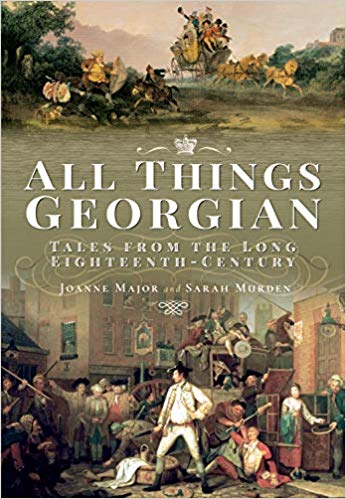
Book Corner: All Things Georgian by Joanne Major and Sarah Murden

Take a romp through the long eighteenth-century in this collection of 25 short tales. Marvel at the Queen s Ass, gaze at the celestial heavens through the eyes of the past and be amazed by the equestrian feats of the Norwich Nymph. Journey to the debauched French court at Versailles, travel to Covent Garden and take your seat in a box at the theatre and, afterwards, join the mile-high club in a new-fangled hot air balloon. Meet actresses, whores and high-born ladies, politicians, inventors, royalty and criminals as we travel through the Georgian era in all its glorious and gruesome glory. In roughly chronological order, covering the reign of the four Georges, 1714-1830 and set within the framework of the main events of the era, these tales are accompanied by over 100 stunning colour illustrations.

I have to say that All Things Georgian: Tales from the long Eighteenth Century is one of the most beautiful books I have ever read. Crammed full of glossy, colourful paintings and photographs, it is impossible for the reader not to appreciate how aesthetically pleasing this book is. It is a pleasure to browse through, just to appreciate the gorgeous images scattered throughout the book.

Having said that, the images are not all this book has to offer. All Things Georgian: Tales from the long Eighteenth Century is co-written by Joanne Major and Sarah Murden and is replete with some of the best stories from the eighteenth century; scandals, love stories and mysteries fill the pages. The most amazing characters of the Georgian era complement the colourful photos; from Marie Antoinette to ‘Crazy Sally’, from coffee shop rivalries, to smuggling, female jockeys and intrepid balloon rides.

This book has stories to entertain everyone.

On the evening of 20 June 1791, Louis XVI and Marie Antoinette of France, together with their children and a handful of trusted attendants, made an ill-fated attempt to escape the revolutionary forces who were keeping them closely watched. The plan had taken many weeks to bring to fruition and the French queen, to whom it was inconceivable that she should survive without the everyday luxuries with which she was surrounded, had been engaged in smuggling various items to the safety of her sister in Brussels. AN infamous Scottish courtesan played a key role in one of these transactions, risking her life in Marie Antoinette’s service.

Grace Dalrymple Elliott, tall, willowy and stunningly beautiful, had gained her notoriety following a very public Criminal Conversation trial and divorce from her portly little husband, Dr (later Sir) John Eliot; Grace had been discovered in a Berkeley Row bagnio with her lover, the worthless Viscount Valentia who soon after discarded his mistress. The handsome Earl of Cholmondeley became her protector; tall and athletic, he was the perfect match for Grace, and the two made an attractive if slightly disreputable couple but, when a countess’s coronet was not forthcoming, Grace left for France and the arms of Louis XVI’s cousin, Louis Philippe Joseph, Duke d’ Orléans (later known as Philippe Egalité). A brief interlude back in London followed where grace bagged the affections of the young Prince of Wales and gained a permanent memento of her royal dalliance in the person of her daughter, Georgiana, who the future monarch privately – if not publicly – acknowledged as his child. The Earl of Cholmondeley became the child’s guardian and Grace, with an annuity from the royal purse, returned to her French duke, only to become trapped in Paris during the French Revolution. …

Sarah Murden and Joanne Major have done a wonderful job of recreating the Georgian world. The language is beautiful, the stories both exciting and entertaining; and scattered with just the right amount of famous and infamous people to make the reader go ‘ooh!’. The two authors are so in sync that it is impossible to discern which story is told by one of the writers and which by the other.

I usually read through books as quickly as possible, devouring them, so-to-speak. However, with All Things Georgian: Tales from the long Eighteenth Century I have taken my time, read only one or two of the fabulous stories at a time. Reading this book is a truly pleasurable experience, and I wanted to take my time and savour every moment.

All Things Georgian: Tales from the long Eighteenth Century by Joanne Major and Sarah Murden is a wonderful little treasure trove of stories and facts, brought to life in beautiful prose and accompanied by glorious images. Well researched and beautifully presented, it would be a stunning addition to any library – it even smells special!

All Things Georgian: Tales from the long Eighteenth Century is available from Amazon UK and US.

About the authors:

Joanne Major and Sarah Murden are supersleuthing historians who enjoy bringing the Georgian era to life. Their lives were changed forever when they (metaphorically) met an eighteenth-century courtesan, and this is now their fourth book together. Along with their respective families, they live in Lincolnshire.

*

My books

Silk and the Sword: The Women of the Norman Conquest

From Emma of Normandy, wife of both King Cnut and Æthelred II to Saint Margaret, a descendant of Alfred the Great himself, Silk and the Sword: the Women of the Norman Conquest traces the fortunes of the women who had a significant role to play in the momentous events of 1066.  Available now from Amazon UK,  Amberley Publishing, Book Depository and Amazon US.

Heroines of the Medieval World

Telling the stories of some of the most remarkable women from Medieval history, Heroines of the Medieval World,  is now available in hardback in the UK from Amazon UK, and in the US from Amazon US. It is available now in paperback in the UK from from both Amberley Publishing and Amazon and worldwide from Book Depository.

*

You can be the first to read new articles by clicking the ‘Follow’ button, liking our Facebook page or joining me on Twitter.

*

©2019 Sharon Bennett Connolly


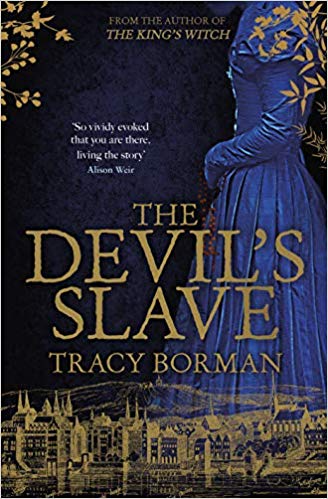
Book Corner: The Devil’s Slave by Tracy Borman

Frances Gorges has already survived the accusation of witchcraft.

But if her torturers at the court of King James knew of her love for Tom Wintour, one of the executed members of the gunpowder plot, it would mean certain death.

Pregnant with Tom’s child, hiding under the reluctant protection of her spiteful and ambitious brother, Frances lives in fear – until she is offered the chance to make a respectable – if loveless – marriage and return to court.

She will not be expected to sleep with her husband. The only price she must pay for safety is to give up the cause for which her lover died.

But old loyalties are hard to deny, and soon Frances is drawn back into the snake-pit scheming of the factions trying to take the throne.

Everywhere she turns, it seems that someone has the power to force her deeper into danger until, all too late, Frances hears the warnings of her own heart.

Compelling, sensual, suspenseful, The Devil’s Slave is a standalone sequel to The King’s Witch and further evidence that one of our finest historians is also a brilliant novelist.

Another stunning instalment of the Frances Gorges story from Tracy Borman. The young woman who barely escaped the fallout of the Gunpowder Plot with her life is once again drawn into the intrigues of the fledgling Stuart court. Skilled with herbs and a secret Catholic make her twice the target for the staunchly protestant witch-hunter King James and his minister, Robert Cecil. Frances’s return to court with her husband and son sees her trying to negotiate her way through the various Catholic plots that surround the crown and court.

Tracy Borman weaves a tale that is fraught with tension, with danger lurking around every corner, or behind every rose bush. At times, it seems that everyone is a chameleon – and no one is as they seem. And, just like the heroine, the reader is drawn into the plots and intrigues of the court. This engaging, entertaining story will keep the reader enthralled until the very last page.

The history and story are effortlessly woven together.

She looked down at her hands as she struggled to maintain her composure. Dorothy reached forward and took them in her own. ‘I understand your fears, Frances,’ she said softly. ‘These are dangerous times for those of us who share the true faith. I know that you wish to protect your son, as I do mine. But you cannot condemn him – and yourself – to life of falsehood, of heresy. To do so would be to damn him in the next life, as well as this one. You cannot think that is what Tom would have wished for his son.’

‘Tom would have wished him to stay alive!’ Frances cried, the tears now streaming down her cheeks. ‘What would you have me do? Parade him as the son of a condemned traitor? Forfeit his safety, his happiness, his life? And all for what? A cause that died with Tom and the rest?’

Dorothy fell silent, but her grip on Frances’s hands tightened. ‘It did not die, Fraces,’ she said. ‘It is stronger now than ever. The death of Tom and his companions has intensified people’s hatred of this heretic king and drawn thousands more to our cause. I don not speak out of blind faith,’ she continued, as if reading Frances’s thoughts. ‘We have learned from the lessons of the past. Cecil’s spies are now outnumbered by those of our cause. How do you suppose I was able to find out about my nephew? The time is almost ripe to act. We have powerful supporters at court, and the King of Spain stands in readiness with a huge army.’

Frances’s mind was reeling…

Tracy Borman’s vast knowledge of the Stuart court and the various royal palaces in which The Devil’s Slave is set, serve to add a level of authenticity into the story that is rarely seen in a novel, whilst the subtlety in delivering the facts avoids giving the reader a lecture in Stuart history. The blend of fact and fiction is indistinguishable, leaving the reader with many avenues of research to pursue later, if they are so inclined.

The locations of lavish palaces, manor houses and the Tower of London are recreated in great detail. Tracy Borman uses her extensive knowledge to rebuild the Stuart world for the modern reader. The prose is a pleasure to read and devour, while the plot delves deep into the dark corners of Stuart history.

However, her greatest creations in the book are the characters, whether real or imagined. The personalities of Sir Walter Raleigh and Arbella Stuart, alongside the various members of the royal family, are wonderfully deep, complex individuals who serve to add spice and colour to an already fabulous story. The heroine, Frances Gorges, is a woman with whom many can feel empathy. Drawn into the various intrigues much against her inclination, but with a desire to protect her family, she is forced to navigate her way through the various dangers, always with the knowledge of what faces her should she fail.

The Devil’s Slave, as with The King’s Witch, is a story that is not to be missed. For the reader, it provides a truly enjoyable sojourn in the realm of early Stuart England and must appeal to all with an interest in history, intrigue and adventure. I cannot recommend it highly enough!

The Devil’s Slave by Tracy Borman is available from Amazon.

About the Author:

Tracy Borman is joint Chief Curator of Historic Royal Palaces and Chief Executive of the Heritage Education Trust. She studied and taught history at the University of Hull and was awarded a PhD in 1997. 

Tracy is the author of a number of highly acclaimed books, including Thomas Cromwell: The Untold Story of Henry VIII’s Most Faithful Servant, Matilda: Wife of the Conqueror, First Queen of England, Elizabeth’s Women: The Hidden Story of the Virgin Queen and Witches: A Tale of Sorcery, Scandal and Seduction. Tracy is also a regular broadcaster and public speaker, giving talks on her books across the UK and abroad. She lives in Surrey with her daughter.

*

My Books

Silk and the Sword: The Women of the Norman Conquest

From Emma of Normandy, wife of both King Cnut and Æthelred II to Saint Margaret, a descendant of Alfred the Great himself, Silk and the Sword: the Women of the Norman Conquest traces the fortunes of the women who had a significant role to play in the momentous events of 1066.  Available now from Amazon UK,  Amberley Publishing, Book Depository and Amazon US.

Heroines of the Medieval World

Telling the stories of some of the most remarkable women from Medieval history, Heroines of the Medieval World,  is now available in hardback in the UK from Amazon UK, and in the US from Amazon US. It is available now in paperback in the UK from from both Amberley Publishing and Amazon and worldwide from Book Depository.

*

You can be the first to read new articles by clicking the ‘Follow’ button, liking our Facebook page or joining me on Twitter.

©2019 Sharon Bennett Connolly

Little Princess Gwenllian

Gwenllian was the only child of Llywelyn ab Gruffuddd, also known as Llywelyn the Last, Prince of Wales. Her mother was Eleanor de Montfort, who was the daughter of Eleanor of England, sister of Henry III, and Simon de Montfort, Earl of Leicester. Llywelyn and Eleanor had married in Worcester Cathedral in October 1278, in a lavish ceremony attended by Edward I, King of England, and Alexander III, King of Scots.

Sharon Bennett Connolly
Memorial to Gwenllian, Sempringham, Lincolnshire

Gwenllian, a descendant of both Welsh and English royalty, was born in June 1282 at the palace of Garth Celyn, Abergwyngregyn, near Bangor; her mother died giving birth to her. Shortly after her birth, Edward I concluded his conquest of Wales. Gwenllian’s father, Llywelyn, was killed in an ambush on 11 December 1282 – and just six months after her birth, Gwenllian was an orphan. Her uncle Dafydd, Llywelyn’s younger brother, became the little princess’s legal guardian. After his brother’s death, Dafydd continued the fight for Welsh independence but was betrayed to the English, in June 1283.

Dafydd, his wife, children and little Gwenllian were captured at Bera Mountain in Snowdonia, where they had been in hiding. At just one year old, Gwenllian was taken, by sea, probably to thwart any attempt at rescue, from Wales, the land of her birth. She would never see her homeland again. The baby girl was placed behind the high walls of the Gilbertine priory of Sempringham, in Lincolnshire, just south of the great city of Lincoln. Her female cousins, the seven daughters of Dafydd, were also placed in various nunneries, so it is possible some of her cousins were with her. Dafydd’s legitimate daughter, Gwladus, who was a similar age to Gwenllian, was placed in Sixhills, another Gilbertine priory, in the Lincolnshire Wolds.

Llywelyn
Statue of Gwenllian’s father, Llywelyn the Last at Cardiff City Hall

Dafydd’s two sons, Llywelyn and Owain, were imprisoned in Bristol Castle; the eldest, Llywelyn, died there in 1287, just four years after his capture. Owain was still living in 1325, every night securely incarcerated in a specially constructed timber cage within Bristol Castle. Dafydd himself suffered the horrendous ‘traitor’s death’; he was hung, drawn and quartered at Shrewsbury.

The Gilbertines were the only wholly-English monastic community. Their founder, St Gilbert, had some form of physical deformity, which prevented him from pursuing a career as a knight. He trained as a clerk in France, studying under Master Anselm at Laon. He eventually entered the household of the Bishop of Lincoln and, in 1129, was appointed Vicar of Sempringham and West Torrington. He established the first priory there in 1131, with seven local women vowing to live a life of chastity, poverty and obedience. Sempringham Priory was a double-house, housing both men and women in segregated quarters.

At its height, the priory housed 200 nuns and forty canons. The order followed strict rules, based on those of the Augustinian and Premonstratensian monasteries. By the time of Gilbert’s death in 1189 there were thirteen priories in England; this number had risen to twenty-five at the time of the Reformation.1

Gwenllian was a prisoner at the Gilbertine Priory of St Mary, at Sempringham, for the rest of her life. A prisoner of three English kings, Edward I, Edward II and Edward III, she was a rallying figure for the subjugated Welsh and too valuable to ever be freed. Edward I wrote to the Prior and Prioress of Sempringham of his decision to place Gwenllian in their custody, on 11 November 1283: ‘… Having the Lord before our eyes, pitying also her sex and her age, that the innocent may not seem to atone for the iniquity and ill-doing of the wicked and contemplating especially the life in your Order’.2

Sharon Bennett Connolly
Memorial plaque to Gwenllian on the memorial at Sempringham

Although Edward wanted Gwenllian to be forgotten, he could not afford to forget about her himself, and four years after she was placed in the convent, Edward ordered Thomas Normanvill to ‘go to the places where the daughters of Llewellyn and of David his brother, who have taken the veil in the Order of Sempringham, are dwelling, and to report upon their state and custody by next Parliament’.3 The extent of Gwenllian’s knowledge of her own history and homeland is far from certain. Having been taken from Wales at six months old, she is said not to have spoken a word of Welsh and may not have even known how to spell her name; she is referred to as ‘Wencillian’, in a document sent to Edward III at the time of her death, although spelling was far from uniform in the 14th century.

Gwenllian was probably well-cared for. Edward III endowed her with a pension of £20 a year, which was paid to the priory for her food and clothing. Whether Gwenllian was treated according to her rank at the priory is unknown. However, she was aware of her importance and her family connections; as David Pilling points out and she does in fact call herself Princess of Wales, daughter of Llywelyn ap Gruffudd in a petition of 1327 to Edward II:

Wentliane, daughter of Lewelyn [Llywelyn], formerly Prince of Wales, prays the King of his grace to remember her and aid her, since the King, his father, promised her when she was put in the house of Sempringham, £100 of land and rent; whereof he told Walter de Langeton, then Treasurer, that he had given her £20 from the Exchequer yearly; and with this she has been provided.4

She is said to have received gifts from her cousin the king, and may have spent time in Edward III’s company, when he visited the priory at Easter-time in 1328; the young king issued a charter from Sempringham on 2 April of that year.5

Sharon Bennett Connolly
St Andrew’s Church, Sempringham stands close to the site of the Gilbertine priory of Sempringham

Gwenllian may also have spent time in the company of Joan Mortimer, the daughter of Roger Mortimer, supposed lover of Isabelle of France, Edward III’s mother, and ruler of England after the deposition of her huusband, Edward II. Joan was held at Sempringham following her father’s downfall in 1330. She was only eighteen at the time, however, so may have had little in common, beyond their joint status as prisoners of the crown, with Gwenllian, who was a woman now in her late forties who had spent her entire life in conventual seclusion. The profound difference between Joan and Gwenllian, of course, is that Joan was released after a short time.

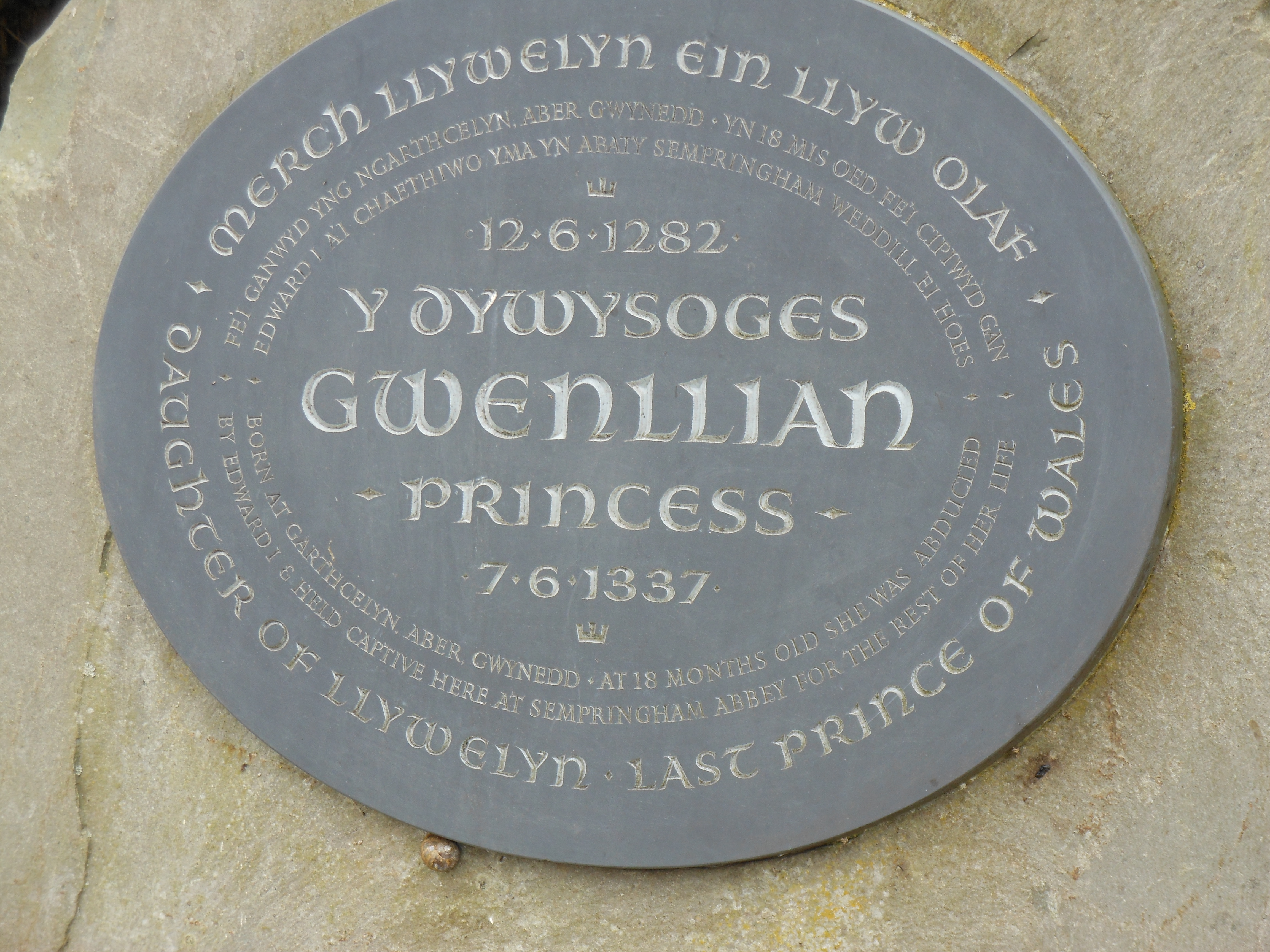
Gwenllian only found her freedom in death. She died on 7 June 1337, the same month as her fifty-fifth birthday. She was buried at the priory where she had spent all but eighteen months of her life. Her grave was lost at the time of the dissolution of the monasteries, in the 16th century. However, a memorial plaque was placed near St Andrew’s Church in Sempringham in 1993, stating:

In memory of Gwenllian, daughter of the last Prince of Wales. Born at Abergwyngregyn 12.06.1282. Died at Sempringham 7.6.1337. Having been held prisoner for 54 years.6

Although she left very few marks on the world, a child whose very future was stolen by Edward I, Gwenllian’s remarkable story has not been forgotten. In 2009 a mountain in Snowdonia in Wales, formerly known as Carnedd Uchaf, was renamed Carnedd Gwenllian in the lost princess’s honour.

*

Gwenllian’s story, and that of her mother and grandmother, is told in my latest book, Ladies of Magna Carta: Women of Influence in Thirteenth Century England.

Footnotes: [1] David Ross, editor, Sempringham Priory, Church and Holy Well, britainexpress.com; [2] englishmonarchs.co.uk; [3] ibid; [4] William Rees, Calendar of Ancient Petitions Relating to Wales [5] Calendar of the Charter Rolls. 1-14, Edward III; [6] The Princess Gwenllian Society, Princessgwenllian.co.uk

Sources: castlewales.com; snowdoniaheritage.info; William Rees, Calendar of Ancient Petitions Relating to Wales; Marc Morris A Great and Terrible King;David Williamson Brewer’s British royalty; Mike Ashley The Mammoth Book of British kings & Queens; Alison Weir Britain’s Royal Families; Roy Strong The Story of Britain; Dan Jones The Plantagenets; the Kings who Made England; Chronicles of the Age of Chivalry Edited by Elizabeth Hallam; The Oxford Companion to British History; The History Today Companion to British History; Derek Wilson The Plantagenets; britainexpress.com; englishmonarchs.co.uk; princessgwenllian.co.uk; Calendar of the Charter Rolls; David Pilling.

Images: Photos of Sempringham Church and memorial ©2019 Sharon Bennett Connolly. Llywelyn the Last courtesy of Wikipedia.

*

My Books

Signed, dedicated copies of all my books are available through my online store.

Out now: Scotland’s Medieval Queens

Books by Sharon Bennett Connolly

Scotland’s history is dramatic, violent and bloody. Being England’s northern neighbour has never been easy. Scotland’s queens have had to deal with war, murder, imprisonment, political rivalries and open betrayal. They have loved and lost, raised kings and queens, ruled and died for Scotland. From St Margaret, who became one of the patron saints of Scotland, to Elizabeth de Burgh and the dramatic story of the Scottish Wars of Independence, to the love story and tragedy of Joan Beaufort, to Margaret of Denmark and the dawn of the Renaissance, Scotland’s Medieval Queens have seen it all. This is the story of Scotland through their eyes.

Scotland’s Medieval Queens gives a thorough grounding in the history of the women who ruled Scotland at the side of its kings, often in the shadows, but just as interesting in their lives beyond the spotlight. It’s not a subject that has been widely covered, and Sharon is a pioneer in bringing that information into accessible history.’ Elizabeth Chadwick (New York Times bestselling author)

Available now from Amazon and Pen and Sword Books

Also by Sharon Bennett Connolly:

Books by Sharon Bennett Connolly

Heroines of the Tudor World tells the stories of the most remarkable women from European history in the time of the Tudor dynasty, 1485-1603. These are the women who ruled, the women who founded dynasties, the women who fought for religious freedom, their families and love. Heroines of the Tudor World is now available from Amberley Publishing and Amazon UK. Women of the Anarchy demonstrates how Empress Matilda and Matilda of Boulogne, unable to wield a sword themselves, were prime movers in this time of conflict and lawlessness. It shows how their strengths, weaknesses, and personal ambitions swung the fortunes of war one way – and then the other. Available from Bookshop.orgAmberley Publishing and Amazon UKKing John’s Right-Hand Lady: The Story of Nicholaa de la Haye is the story of a truly remarkable lady, the hereditary constable of Lincoln Castle and the first woman in England to be appointed sheriff in her own right. Available from all good bookshops Pen & Sword Booksbookshop.org and Amazon

Defenders of the Norman Crown: The Rise and Fall of the Warenne Earls of Surrey tells the fascinating story of the Warenne dynasty, from its origins in Normandy, through the Conquest, Magna Carta, the wars and marriages that led to its ultimate demise in the reign of Edward III. Available from Pen & Sword BooksAmazon in the UK and US, and Bookshop.orgLadies of Magna Carta: Women of Influence in Thirteenth Century England looks into the relationships of the various noble families of the 13th century, and how they were affected by the Barons’ Wars, Magna Carta and its aftermath; the bonds that were formed and those that were broken. It is now available in paperback and hardback from Pen & SwordAmazon, and Bookshop.orgHeroines of the Medieval World tells the stories of some of the most remarkable women from Medieval history, from Eleanor of Aquitaine to Julian of Norwich. Available now from Amberley Publishing and Amazon, and Bookshop.orgSilk and the Sword: The Women of the Norman Conquest traces the fortunes of the women who had a significant role to play in the momentous events of 1066. Available now from Amazon,  Amberley Publishing, and Bookshop.org.

Alternate Endings: An anthology of historical fiction short stories including Long Live the King… which is my take what might have happened had King John not died in October 1216. Available in paperback and kindle from Amazon.

Podcast:

Have a listen to the A Slice of Medieval podcast, which I co-host with Historical fiction novelist Derek Birks. Derek and I welcome guests, such as Bernard Cornwell and Michael Jecks, and discuss a wide range of topics in medieval history, from significant events to the personalities involved. Every episode is also now available on YouTube.

*

Don’t forget! Signed and dedicated copies of all my books are available through my online bookshop.

For forthcoming online and in-person talks, please check out my Events Page.

You can be the first to read new articles by clicking the ‘Follow’ button, liking our Facebook page or joining me on TwitterThreadsBluesky and Instagram.


©2019 Sharon Bennett Connolly FRHistS

Emma of Normandy, Queen of England

Detail of Emma of Normandy before an altar

In the years leading up to the Norman Conquest of 1066 one woman, in particular, stands out as the matriarch of the period: Emma of Normandy.

As wife of both Æthelred II and King Cnut, Emma of Normandy was the lynchpin of the story of the 11th century. As a Norman, and the mother of both a Danish king of England and a Saxon King of England, it was Emma who bound all three sides together in the conflict of 1066. Her story is suitably dramatic; with exile, tragedy and scandal all playing their part, starkly contrasting with the wealth and privilege of her role as the only twice-crowned Queen of England.

Emma was the daughter of Richard I, Duke of Normandy, and his wife, Gunnora. Born in around 985/987, she was married to Æthelred at Winchester on 5 April 1002, at which time she was given the English name Ælfgifu, although in the Anglo-Saxon Chronicle she is often referred to, simply, as ‘The Lady’. Her marriage with Æthelred was an attempt to seal a peace between England and Normandy, and to persuade the Normans not to allow the Viking raiders, who tormented England’s shores, to winter in their lands between raids into England. Despite the fact the Vikings continued to shelter in Normandy every winter, and raiding into England continued throughout the early years of the 11th century, the marriage was a success in that it produced two more sons and a daughter for Æthelred; a second family considering he was the father of as many as thirteen children by his first wife, Ælfgifu of York, including at least six sons.

Edward the Confessor

Of Emma and Æthelred’s two sons the eldest, Edward, would eventually succeed his half-brother, Harthacnut, to the English throne in 1042, ruling until his death on 5 January 1066. Edward’s younger brother, Alfred, was cruelly murdered during the reign of his step-brother, Harold I Harefoot. Harold was the son of Cnut by his first, handfast wife, Ælfgifu of Northampton. Alfred had arrived in England in 1036, ostensibly to visit his mother, though there are also theories that he intended to mount a challenge for the throne, and was welcomed by Earl Godwin of Wessex. However, his party were ambushed whilst being entertained by Godwin and Alfred was seized and taken to the abbey at Ely in Cambridgeshire, where he was later blinded and either murdered, or succumbed to his wounds. Either way, he died on 5 February 1037 and was buried in Ely Cathedral. Edward and Alfred’s sister, Goda (or Godgifu), was married firstly to Drogo, Count of Mantes and, secondly to Eustace II, Count of Boulogne. One of her sons by Drogo, Ralph, was made Earl of Hereford by his uncle, Edward, but earned himself the insulting nickname Ralph the Timid after fleeing the Welsh in battle.

As the Viking raids increased from 1010 onwards, Æthelred’s position on the throne proved precarious and he sent his wife and her young sons to Normandy for safety, before being forced into exile there himself in 1013, when Sweyn Forkbeard seized the throne. Sweyn’s death early in 1014 offered Æthelred a way back and he sent Edward to England to negotiate his return with the English Witan, who invited Æthelred to resume the throne ‘if he would govern them better than he did before’.1 Despite his promises, Æthelred proved just as inept as previously, failing to defeat the Danish invaders, led by Cnut. Æthelred died just two years later, on 23 April 1016 (ironically, St George’s Day), and was succeeded by his oldest surviving son by his first wife, Edmund II Ironside. Although Edmund put up a valiant fight against the Danish invaders, led by Cnut, a summer of fighting took its toll and he died on 30 November 1016.

Coin from the reign of Harthacnut

Cnut took control of the whole of England and one of his first actions was to send for Emma, who he married on 2 July 1017. Although Emma appears to have had little influence during the reign of her first husband, her marriage with Cnut appears to have been a partnership. She was a more visible figure in public, enjoying considerable influence at court and offering substantial patronage to the church. She gave Cnut three children including a son, Harthacnut, and two daughters, one who’s name is lost, died aged 8 and is buried in Bosham, Sussex. A second daughter, Gunhilda, married Henry III, Emperor of Germany.

When Cnut died in 1035 Emma was in England and retired to her manor in Winchester, taking the royal treasury with her in the hope she could pass it to her son, Harthacnut. However, Harthacnut was in Denmark and it was Harold Harefoot, one of Cnut’s sons by Ælfgifu of Northampton, who seized the initiative. An agreement was reached whereby the half-brothers ruled as co-kings with Emma acting for Harthacnut and ruling in Wessex. However, two years later Harthacnut had still not returned to England and Harold took the crown for himself, driving Emma into exile with Count Baldwin in Flanders.

Genealogical table of Cnut, Harold I and Harthacnut

Harthacnut appears to have been, by far, Emma’s favourite child. It was for his accession to the English throne that she schemed, rather than for her eldest son, Edward. In the early months of 1040 she and Harthacnut were preparing to invade England when they heard of Harold’s death. Harthacnut succeeded to the English throne without a fight and a year later invited his half-brother Edward, who had spent almost 25 years in Norman exile, to join him in England as his successor.

Harthacnut reigned for just ten days short of two years, he died after collapsing during a wedding celebration at Lambeth. He was buried alongside his father in the old minster at Winchester and Emma gave the head of St Valentine to the new minster for her son’s soul. Emma’s relationship with Edward, however, was more strained than that she experienced with Harthacnut. Years of separation and a strong sense of abandonment on Edward’s part cannot have helped the situation. Following his coronation in 1043, one of Edward’s first actions was to ride to Winchester and take charge of the Treasury, which had been left in his mother’s hands by Harthacnut. Accompanied by the three greatest earls of his realm – Siward, Godwin and Leofric – ‘they deprived her of all the treasure that she had; which were immense; because she was formerly very hard upon the king her son, and did less for him than he wished before he was king…’2

Emma’s friend and close adviser, Bishop Stigand, was deprived of his bishopric, although he was later reinstated and created Bishop of Winchester. He eventually rose to be Archbishop of Canterbury but was removed from office by William the Conqueror. However, at the time of her disgrace, Emma and Stigand’s close relationship gave rise to a later legend that they were more than friends and that Emma was accused of adultery with Stigand (although the 13th century story claimed the bishop’s name was Ælfwine). There is no contemporary evidence of the story, however, and it first appears more than 100 years after the Conquest. As the story went, Emma was accused of adultery and required to walk across red-hot ploughshares in order to prove her innocence. Being neither cut nor burned by the instruments she was declared innocent. As a consequence, Emma was welcomed back into the royal circle by a contrite Edward.

Winchester Cathedral

Although the story is almost certainly a fabrication, Emma was eventually reconciled with Edward, although she enjoyed a much less exalted position as the king’s mother than she had when Harthacnut reigned. She eventually retired to her own estates, living away from the limelight until her death on 6 March 1052. She was buried in the old minster at Winchester, alongside her second husband, Cnut and her favourite son, Harthacnut. Emma’s story forms the basis for the book Encomium Emmae Reginae, possibly commissioned by Emma herself, which provides a significant insight into English politics for the first half of the 11th century.

Emma had played a pivotal role in English politics in the first half of the 11th century, the effects of which would lead to the fateful events of 1066. She helped to shape the events from which the unique situation of the Norman Conquest would arise.  A prominent figure, particularly in the reigns of Cnut and Harthacnut, she was the most distinguished woman of her time. More than any other single person, Emma’s story provides the background to the Norman Conquest through the political and personal relationships formed in the first half of the 11th century.

*

Footnotes: 1The Anglo-Saxon Chronicle translated by James Ingram; 2ibid.

Picture credits: Detail of Emma of Normandy before an altar courtesy of the British Library; Edward the confessor courtesy of Wikipedia; coin from the reign of Harthacnut, courtesy of Hedning, taken from Wikipedia; Genealogical table of Cnut, Harold I and Harthacnut from the Genealogical Chronicle of the English Kings, British Library; Winchester Cathedral courtesy of Anne Marie Bouchard.

Sources: The English and the Norman Conquest by Dr Ann Williams; Brewer’s British Royalty by David Williamson; Britain’s Royal Families, the Complete Genealogy by Alison Weir; The Wordsworth Dictionary of British History by JP Kenyon; The Norman Conquest by Marc Morris; Harold, the King Who Fell at Hastings by Peter Rex; The Anglo-Saxons in 100 Facts by Martin Wall; The Anglo-Saxon Age by Martin Wall; Kings, Queens, Bones and Bastards by David Hilliam; The Mammoth Book of British kings & Queens by Mike Ashley; The Oxford Companion to British History Edited by John Cannon; The Anglo-Saxon Chronicles translated and edited by Michael Swanton; The Anglo-Saxon Chronicle translated by James Ingram; Queen Emma and the Vikings by Harriett O’Brien; The Bayeux Tapestry by Carola Hicks; On the Spindle Side: the Kinswomen of Earl Godwin of Wessex by Ann Williams; oxforddnb.com.

*

My books

Signed, dedicated copies of all my books are available through my online bookshop.

Out now: Scotland’s Medieval Queens

Scotland’s history is dramatic, violent and bloody. Being England’s northern neighbour has never been easy. Scotland’s queens have had to deal with war, murder, imprisonment, political rivalries and open betrayal. They have loved and lost, raised kings and queens, ruled and died for Scotland. From St Margaret, who became one of the patron saints of Scotland, to Elizabeth de Burgh and the dramatic story of the Scottish Wars of Independence, to the love story and tragedy of Joan Beaufort, to Margaret of Denmark and the dawn of the Renaissance, Scotland’s Medieval Queens have seen it all. This is the story of Scotland through their eyes.

Available now from Amazon and Pen and Sword Books

Also by Sharon Bennett Connolly:

Heroines of the Tudor World tells the stories of the most remarkable women from European history in the time of the Tudor dynasty, 1485-1603. These are the women who ruled, the women who founded dynasties, the women who fought for religious freedom, their families and love. Heroines of the Tudor World is now available for pre-order from Amberley Publishing and Amazon UK. Women of the Anarchy demonstrates how Empress Matilda and Matilda of Boulogne, unable to wield a sword themselves, were prime movers in this time of conflict and lawlessness. It shows how their strengths, weaknesses, and personal ambitions swung the fortunes of war one way – and then the other. Available from Bookshop.orgAmberley Publishing and Amazon UKKing John’s Right-Hand Lady: The Story of Nicholaa de la Haye is the story of a truly remarkable lady, the hereditary constable of Lincoln Castle and the first woman in England to be appointed sheriff in her own right. Available from all good bookshops Pen & Sword Booksbookshop.org and Amazon

Defenders of the Norman Crown: The Rise and Fall of the Warenne Earls of Surrey tells the fascinating story of the Warenne dynasty, from its origins in Normandy, through the Conquest, Magna Carta, the wars and marriages that led to its ultimate demise in the reign of Edward III. Available from Pen & Sword BooksAmazon in the UK and US, and Bookshop.orgLadies of Magna Carta: Women of Influence in Thirteenth Century England looks into the relationships of the various noble families of the 13th century, and how they were affected by the Barons’ Wars, Magna Carta and its aftermath; the bonds that were formed and those that were broken. It is now available in paperback and hardback from Pen & SwordAmazon, and Bookshop.orgHeroines of the Medieval World tells the stories of some of the most remarkable women from Medieval history, from Eleanor of Aquitaine to Julian of Norwich. Available now from Amberley Publishing and Amazon, and Bookshop.orgSilk and the Sword: The Women of the Norman Conquest traces the fortunes of the women who had a significant role to play in the momentous events of 1066. Available now from Amazon,  Amberley Publishing, and Bookshop.org.

Alternate Endings: An anthology of historical fiction short stories including Long Live the King… which is my take what might have happened had King John not died in October 1216. Available in paperback and kindle from Amazon.

Podcast:

Have a listen to the A Slice of Medieval podcast, which I co-host with Historical fiction novelist Derek Birks. Derek and I welcome guests, such as Bernard Cornwell and Elizabeth Chadwick, and discuss a wide range of topics in medieval history, from significant events to the personalities involved. Every episode is also now available on YouTube.

*

Don’t forget! Signed and dedicated copies of all my books are available through my online bookshop.

For forthcoming online and in-person talks, please check out my Events Page.

You can be the first to read new articles by clicking the ‘Follow’ button, liking our Facebook page or joining me on Twitter and Instagram.

©2019 Sharon Bennett Connolly FRHistS

Margaret of Wessex, Scotland’s Sainted Queen

St Margaret, Queen of Scotland

Margaret of Wessex is a remarkable character to study. Her piety and devotion to the church saw her canonised as St Margaret just 150 years after her death; and named as Patroness of Scotland in the seventeenth century. Margaret had an impeccable Saxon pedigree – she was the daughter of Edward the Exile and his wife, Agatha. Edward was the son of Edmund II, usually known as Ironside, King of England in 1016; Edward’s grandfather was, therefore, Æthelred II (the Unready) and his uncle was Edward the Confessor, England’s king from 1042 until 1066. Such valuable royal blood meant she would never be allowed to pursue a life of seclusion in a convent.

When his father, Edmund II, was murdered in 1016, Edward and his younger brother Edmund were sent into exile on the Continent by England’s new king, Cnut. It is thought that Cnut intended that they would be killed once they had left English soil, but the boys were protected by Olof, King of Sweden, and sent on to safety in Kiev, where his daughter Ingegerd was wife of the ruling prince, Jaroslav the Wise. Edmund died sometime between 1046 and 1054, having married the unnamed daughter of a Hungarian king. Edward was also married, in c.1043, to Agatha, whose origins are uncertain: she may have been a daughter of Jaroslav; however, it is possible she was the daughter of Luidolf, Margrave of West Friesland and therefore a relative of Emperor Heinrich III.

Margaret, the eldest of three children, was born in either 1045 or 1046; her sister, Christina, was born around 1050 and her brother Edgar, the Ætheling, was born sometime between 1052 and 1056. The family might have spent their whole lives in European exile, were it not for Edward the Confessor lacking an heir to the English throne; although Edward was married to Edith Godwinson, the couple remained childless. Sometime in 1054 King Edward sent an embassy to Edward the Exile, to bring him back to England as ætheling, the heir to the throne. The embassy sought the aid of Heinrich III, possibly to facilitate communications. The family did not travel immediately, however, possibly because Agatha was pregnant with Edgar, and it was not until 1057 that another embassy, this time led by Harold Godwinson, was sent to bring Edward the Exile home and the family finally arrived in England, having journeyed in a ship  provided by Emperor Heinrich III’s successor, Heinrich IV.

Edmund II Ironside and his descendants

On 19 April, just days after their return, Edward the Exile died, whether by nefarious means or a simple twist of fate is uncertain. The suspicion has been raised that Edward’s rival for the throne, Harold Godwinson – the future King Harold II – may have taken the opportunity to remove his rival; although it was Harold who accompanied Edward back to England, so surely, had he intended murder, he would have done it sooner? Whatever the circumstances, the death of Edward the Exile was a blow for Edward the Confessor’s dynastic hopes. Edward’s little son Edgar, now the ætheling, was much too young to assume a political role. He and his sisters, with their mother, were now under the protection of King Edward. Edgar was given into the custody of Edward’s queen, Edith of Wessex, while the girls were sent to the royal convent at Wilton, to continue their education.

The family continued to live at court and by 5 January 1066, when Edward the Confessor died, Margaret was approaching her twentieth birthday. However, Edgar could have been as young as ten and was probably no older than fourteen; and due to his tender years, the young ætheling was passed over as candidate for the throne in preference for the older and more experienced (both politically and militarily) Harold Godwinson, who was crowned as King Harold II.

Following Harold’s death at the Battle of Hastings in October 1066, Edgar was proclaimed king in London, by some of his supporters, but was incapable of mounting any real challenge to William the Conqueror and his army of Normans; he had no option but to come to terms with the duke. However, Edgar was unsettled under Norman rule and by 1068  he had become involved in the opposition to the new regime, which had been festering in northern England. William’s ruthless response – the Harrying of the North – saw Edgar fleeing for his life; he made his way to Scotland, taking his mother and sisters with him.

Malcolm II Canmore

The family was warmly received at Dunfermline by Scotland’s king, Malcolm III Canmore. In 1057, King Malcolm had defeated King Macbeth in battle, at Lumphanan, to take the throne. By 1069 he was well established as king and married to Ingebiorg; the couple had at least two sons, Duncan and Donald. Ingebiorg seems to have disappeared from the scene before the Saxon royal family’s arrival in Scotland. Whether she died or was put aside seems uncertain, although her death seems most likely, leaving Malcolm free to find another wife. In 1069 Malcolm asked Edgar and his mother for Margaret’s hand in marriage. Margaret was reluctant to agree to the marriage as she was more inclined to a religious life and had hoped to become a nun. Nonetheless, with pressure from Malcolm, her brother and, possibly, her own sense of obligation to the king who was sheltering her family, she eventually accepted his proposal. They were married at Dunfermline sometime in 1069 or 1070 and, by all accounts, it seems to have been a happy and successful marriage and partnership. Margaret’s life as Queen of Scotland did not prevent her pursuing an active religious life; indeed, her position gave her a unique opportunity to influence the practice of Christianity in Scotland.

Margaret strove to bring the Church of Scotland into conformity with the practices of Western Catholicism, and away from the tenets of the Celtic Church, which had a great deal of influence in the country. She encouraged the Scottish clergy, and its people, to receive communion more than once a year at Easter, to refrain from working on a Sunday and to observe the Lenten fast from Ash Wednesday, rather than the following Monday. Queen Margaret also urged the clergy to celebrate Mass with a common ritual and sought to forbid marriage between a man and his stepmother or sister-in-law.

The queen was supported in all her reforms by her husband; indeed, if Malcolm III had not given his support it is doubtful that Margaret’s influence would have achieved much, if anything at all. The king’s role in her attempts at religious reform is vague, although Malcolm did arrange a conference for the clergy to introduce a number of reforms. Margaret was present, and embarrassed some of the clerics by knowing more about the proper procedures of the Church than they did. She even had the papal manuals to quote from.

Dunfermline Abbey

The queen founded a monastic community at Dunfermline, building the first major stone church in Scotland; and arranged with Lanfranc, Archbishop of Canterbury, to send monks from the cathedral monastery at Canterbury to become its first community. Although it started as a priory, it was elevated to an independent abbey in 1128, at the instigation of Margaret’s son, David I.

Margaret was a strong figure; she was pious but also worldly-wise. Having grown up on the Continent, she was familiar with many of the courts of Europe and had met some of its leading churchmen. A modernising queen, Margaret brought luxury to the Scottish court and into the lives of the nobles of her new country. A Life of St Margaret was commissioned by her daughter, Matilda, when she became Queen of England. It was written sometime between 1100 and 1107 by Turgot, Margaret’s former chaplain and the prior of Durham.

The biography emphasises the queen’s compassion for children and the poor and stresses her piety, pointing to the severity of her self-denial and her frequent fasting. However, it also tells us that she had a love of etiquette and formality, and had a fondness for fine clothes and jewellery.¹ Margaret enjoyed a high reputation in the Anglo-Norman world, even in her own lifetime; Orderic Vitalis described her as ‘eminent from her high birth, but even more renowned for her virtue and holy life’.²

Malcolm III and St Margaret

Margaret and Malcolm would have a large family, with six sons and two daughters growing to adulthood. Margaret took great care in educating them, ensuring they were given the essentials for their future royal careers. Her second son, Edmund, became king in November 1094, ruling jointly with his uncle – Malcolm’s brother  – Donald III, following the death of his half-brother, Duncan II. Edmund ruled south of the Forth/Clyde boundary, while Donald ruled the north, although there is no indication that he was ever crowned. In 1097, the co-kings were deposed in favour of Edmund’s younger brother, Edgar; Edmund became a monk at Montacute Abbey, Somerset, and died there, having never married. Edgar himself died on 8 January 1107. Unmarried and childless, he was succeeded by his brother, Alexander I, who died in April 1124. David I succeeded Alexander; he reigned until 1153 and was succeeded, in turn, by his grandson, Malcolm IV the Maiden. Another son, Æthelred, styled Earl of Fife, became Lay Abbot at Dunkeld and died around 1097. Malcolm and Margaret also had two daughters: Edith, who changed her name to Matilda on marrying King Henry I of England; and Mary, who married Eustace III, Count of Boulogne, and was the mother of Matilda of Boulogne, wife of Stephen, King of England. Edith (Matilda) and Mary were educated at Romsey Abbey, where Margaret’s sister, Christina was abbess.

As King of Scots, Malcolm also had claims to Cumbria and Northumbria and in 1069/70, he made raids into Northumberland. William I responded by sending an army north and the eventual peace treaty saw Malcolm’s oldest son by Ingebiorg, Duncan, being sent south as a hostage and guarantee of his good faith. Duncan would eventually reign, briefly, as Duncan II but was killed at the Battle of Monthechin in 1094. Malcolm made frequent raids into Northumberland, notably in 1079 and 1091, in attempts to gain control over the county.

When a diplomatic mission in 1092 failed, he attacked again in 1093, taking his eldest son by Margaret, Edward, with him. Malcolm was killed at the Siege of Alnwick, on 13 November 1093; Edward died shortly after, near Jedburgh, from wounds received at the Siege. Margaret died on 16 November 1093, just days after the battle, possibly on receiving the news, brought by her son Edgar, of the deaths of her husband and eldest son. Although the fact her body was weakened by her frequent fasting may have hastened her death. She was buried in the abbey she had founded at Dunfermline. Malcolm was initially buried at Tynemouth, but his remains were later moved to join his wife at Dunfermline.

Margaret’s sons honoured their mother’s memory, encouraging the popular cult of St  Margaret that developed soon after the queen’s death, to foster the idea that she should be made a saint; such an honour would serve to enhance the political and religious status of their family. One of the miracles attributed to her was that in 1199 Scotland’s king, William the Lion, was persuaded against launching an invasion of England after experiencing a vision while holding a vigil at Margaret’s tomb at Dunfermline. Her canonisation came in 1250, and in 1673 Pope Clement X named her Patroness of Scotland. Following the Reformation, the remains of both Margaret and Malcolm were removed to Spain by Philip II and reinterred in a chapel at the Escorial in Madrid.

St Margaret, Queen of Scotland

Margaret was a direct descendant of King Alfred the Great of Wessex. Her Saxon royal blood guaranteed she would not be allowed to enter a convent, she was too valuable on the marriage market. However, through her efforts to reform the Scottish Church, it could be said that she found a better way to worship God. Her legacy was cemented through the work of her son, David I, who continued in her policy of Church reform; while her Saxon blood found its way back into the English royal family through her daughter, Matilda, and her marriage to Henry I. Saint Margaret’s royal lineage ensured that she would not be allowed to devote her entire life to God, but her position as Queen of Scotland gave her the opportunity to direct her devotional tendencies into Church reform, making her a heroine to generations of Scots.

*

Footnotes:

¹ Vita B Simonis, col. 1219, quoted by Elizabeth van Houts in oxforddnb.com, May 2008; ² Quoted by epistolae.ccnmtl.columbia.edu.

*

Images:

All pictures courtesy of Wikipedia, except: Dunfermline Abbey courtesy of Angela Bennett; Edmund II Ironside and his descendants courtesy of British Library Catalogue of Illuminated Manuscripts.

*

Sources:

epistolae.ccnmtl.columbia.edu; Brewer’s British Royalty by David Williamson; Britain’s Royal Families, the Complete Genealogy by Alison Weir;The Wordsworth Dictionary of British History by JP Kenyon; The Anglo-Saxons in 100 Facts by Martin Wall; Kings, Queens, Bones and Bastards by David Hilliam; Heroines of the Medieval World by Sharon Bennett Connolly; The Mammoth Book of British kings & Queens by Mike Ashley; The Oxford Companion to British History Edited by John Cannon; The Anglo-Saxon Chronicles translated and edited by Michael Swanton; The Anglo-Saxon Chronicle translated by James Ingram; Queen Emma and the Vikings by Harriett O’Brien; The Bayeux Tapestry by Carola Hicks; oxforddnb.com.

*

My Books:

Signed, dedicated copies of all my books are available through my online store.

Coming 30 January 2025: Scotland’s Medieval Queens

Scotland’s history is dramatic, violent and bloody. Being England’s northern neighbour has never been easy. Scotland’s queens have had to deal with war, murder, imprisonment, political rivalries and open betrayal. They have loved and lost, raised kings and queens, ruled and died for Scotland. From St Margaret, who became one of the patron saints of Scotland, to Elizabeth de Burgh and the dramatic story of the Scottish Wars of Independence, to the love story and tragedy of Joan Beaufort, to Margaret of Denmark and the dawn of the Renaissance, Scotland’s Medieval Queens have seen it all. This is the story of Scotland through their eyes.

Available for pre-order now.

Also by Sharon Bennett Connolly:

Heroines of the Tudor World tells the stories of the most remarkable women from European history in the time of the Tudor dynasty, 1485-1603. These are the women who ruled, the women who founded dynasties, the women who fought for religious freedom, their families and love. Heroines of the Tudor World is now available for pre-order from Amberley Publishing and Amazon UK. Women of the Anarchy demonstrates how Empress Matilda and Matilda of Boulogne, unable to wield a sword themselves, were prime movers in this time of conflict and lawlessness. It shows how their strengths, weaknesses, and personal ambitions swung the fortunes of war one way – and then the other. Available from Bookshop.orgAmberley Publishing and Amazon UKKing John’s Right-Hand Lady: The Story of Nicholaa de la Haye is the story of a truly remarkable lady, the hereditary constable of Lincoln Castle and the first woman in England to be appointed sheriff in her own right. Available from all good bookshops Pen & Sword Booksbookshop.org and Amazon

Defenders of the Norman Crown: The Rise and Fall of the Warenne Earls of Surrey tells the fascinating story of the Warenne dynasty, from its origins in Normandy, through the Conquest, Magna Carta, the wars and marriages that led to its ultimate demise in the reign of Edward III. Available from Pen & Sword BooksAmazon in the UK and US, and Bookshop.orgLadies of Magna Carta: Women of Influence in Thirteenth Century England looks into the relationships of the various noble families of the 13th century, and how they were affected by the Barons’ Wars, Magna Carta and its aftermath; the bonds that were formed and those that were broken. It is now available in paperback and hardback from Pen & SwordAmazon, and Bookshop.orgHeroines of the Medieval World tells the stories of some of the most remarkable women from Medieval history, from Eleanor of Aquitaine to Julian of Norwich. Available now from Amberley Publishing and Amazon, and Bookshop.orgSilk and the Sword: The Women of the Norman Conquest traces the fortunes of the women who had a significant role to play in the momentous events of 1066. Available now from Amazon,  Amberley Publishing, and Bookshop.org.

Alternate Endings: An anthology of historical fiction short stories including Long Live the King… which is my take what might have happened had King John not died in October 1216. Available in paperback and kindle from Amazon.

Podcast:

Have a listen to the A Slice of Medieval podcast, which I co-host with Historical fiction novelist Derek Birks. Derek and I welcome guests, such as Bernard Cornwell, and discuss a wide range of topics in medieval history, from significant events to the personalities involved.

*

Don’t forget! Signed and dedicated copies of all my books are available through my online bookshop.

For forthcoming online and in-person talks, please check out my Events Page.

You can be the first to read new articles by clicking the ‘Follow’ button, liking our Facebook page or joining me on Twitter and Instagram.

*

©2019 Sharon Bennett Connolly FRHistS