A Thwarted Love Match and the Murder of Becket

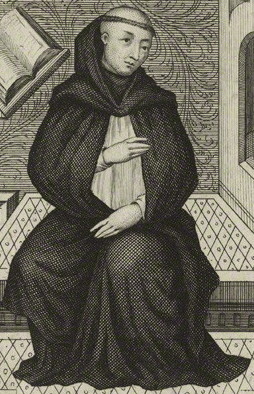
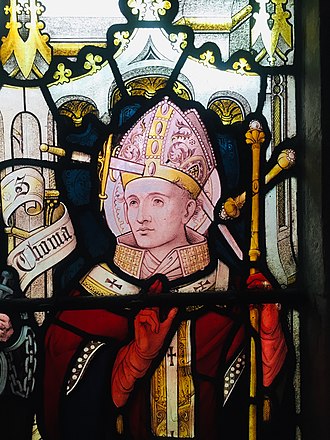
Thomas Becket, Archbishop of Canterbury

You may have heard of the murder of Thomas Becket, but did you know one of the four knights involved may have had a more personal motive for attacking the controversial archbishop of Canterbury than his colleagues? Richard Brito had been a knight in the household of Henry II’s youngest brother, William of Anjou, also known as William FitzEmpress. He was also William’s friend. William was the youngest son of Empress Matilda and her husband Geoffrey, Count of Anjou. Empress Matilda had been one of the rival claimants for the English throne during the Anarchy, fighting against her cousin, King Stephen.

King Stephen’s youngest son, William of Blois, had been married to the great heiress, Isabel de Warenne, Countess of Warenne and Surrey in her own right. His death while returning from campaigning in Toulouse in 1159, left Isabel a wealthy young widow, and highly desirable marriage prize.

Though recently widowed, Isabel would have been well aware that she was expected to remarry, just as her mother had done. The fact she held the mighty earldom of Surrey would have made settling her future even more pressing; the earl of Warenne had contributed knights and men from his own lands to the armies of both King Stephen and Henry II. This was expected to continue, but Isabel could not be expected to lead men into battle. It is all the more surprising, therefore, that Isabel was allowed some respite in the marriage market and the prospect of a husband is not mentioned until 1162.

By this time Henry II’s youngest brother, William FitzEmpress, was seeking a dispensation to marry her. The dispensation was refused by Thomas Becket, Archbishop of Canterbury, on the grounds of consanguinity. The objection was not due to a blood relationship between Isabel and William, but between William and Isabel’s first husband, William of Blois, who were second cousins. It has often been suggested that this was a love-match rather than an arranged marriage. We will, of course, never know how Isabel felt but William died shortly afterwards, at Rouen on 30 January 1164, whilst visiting his mother, possibly seeking her assistance in the matter. Many of his friends claimed that he died of a broken heart after being disappointed in his desire to marry Isabel. He was 27.
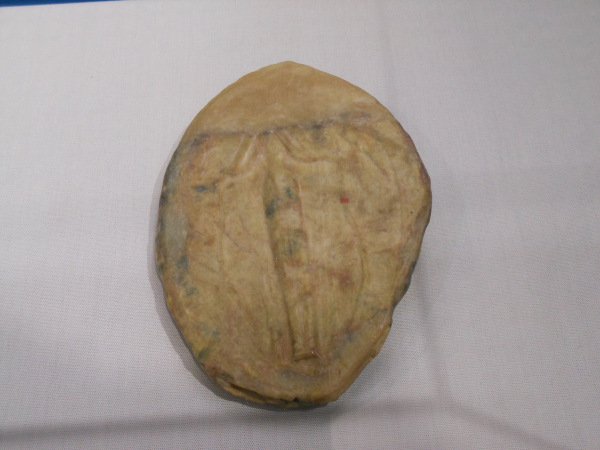
Seal of Isabel de Warenne, Conisbrough Castle

The relationship between Henry II and Thomas Becket had been rocky ever since Becket became archbishop of Canterbury. Henry had thought that putting his friend in charge of the church in England would mean the two would be able to work together. However, once in the post, Becket had essentially abandoned Henry’s policies and sought to defend and extend the influence and rights of the church in England, while Henry sought to curb them. A clash was inevitable and came about when Henry sought to extend the jurisdiction of secular courts over English clergymen and to protect the traditional rights of royal government in regard to the church. In January 1164 Henry had issued the Constitutions of Clarendon. The sixteen constitutions were intended to curb clerical independence and weaken the connection of the English church with Rome. Becket consented to the Constitutions, but disputes continued throughout 1164. Henry called for the archbishop to appear at a great council at Northampton Castle on 12 October 1164, to answer to the charges laid against him.

Among numerous other issues, Becket was called to account for his behaviour concerning land disputes between the church and crown, contempt of royal authority and malfeasance in the chancellor’s office. The bishops, earls and barons of the realm were all present, including Roger, archbishop of York, the most senior clergyman in England after the archbishop of Canterbury. Henry II’s brother, Hamelin, was at the trial and spoke in support of Henry. Indeed, Hamelin, the new earl of Warenne and Surrey, and the archbishop appear to have started a war of words; Hamelin defended Henry’s dignity and called Becket a traitor. Ironically, it is thought that Hamelin’s denunciation of Becket was motivated by the injury caused to the royal family in Becket’s refusal to allow King Henry’s brother, William, to marry Isabel de Warenne; who was now Hamelin’s wife. Convicted of the charges against him, Becket stormed out and fled to exile in France, where he received protection from Louis VII.

There followed six years of negotiations, accusations and counter-accusations, before an accord was agreed and Becket was finally able to return to England and his see at Canterbury. Henry II wrote to his son Henry, the Young King, saying:

Henry king of England to his son Henry, king of England, greeting.

May you know that Thomas archbishop of Canterbury has made peace with me in accordance with my wishes. Therefore I order that he and his followers may have peace and that you see to it that he and his followers, who on his behalf left England, should have their possessions in peace and with honour, as they did three months before they left England. Summon before you some of the best and oldest knights of the honour of Saltwood and on their oath you should make an inquiry as to what of the fief of the archbishopric of Canterbury is there, and make sure that the archbishop gets what has been recognised as part of his fief. Witness Archbishop Rotrou of Rouen, at Chinon.

The Plantagenet Chronicles, edited by Elizabeth Hallam

After six years of exile, Thomas Becket arrived at Sandwich, on the Kent coast, on 1 December 1170. Shortly before arriving on England’s shores, however, in November 1170 Becket, rather than being conciliatory, had sent representatives ahead to pronounce the excommunication of those clerics (the archbishop of York and the bishops of London and Salisbury) who had been involved in the coronation of Henry II’s son and heir, Henry the Young King, in June 1170. He then proceeded to impose his discipline on his monks, refusing to ordain all but one of those who had been admitted during his six-year absence.

On hearing of the excommunications, during his Christmas court in Normandy, Henry is said to have pronounced the fateful words:

‘What miserable drones and traitors have I nurtured and promoted in my household who let their lord be treated with such shameful contempt by a low-born clerk!’ 

Franck Barlow, Oxforddnb.com
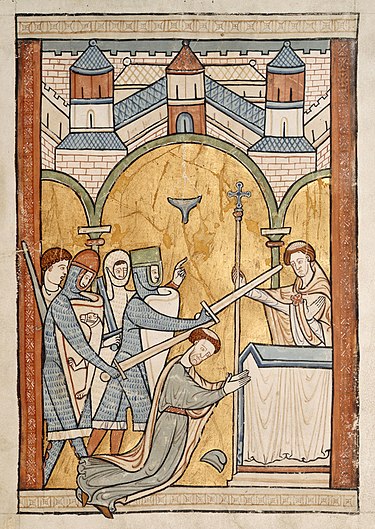
Contemporary illustration of the murder of Thomas Becket

Four knights heeded Henry’s words and left Normandy to confront the archbishop. One of William FitzEmpress’s former knights, Richard Brito, was among the quartet who murdered Thomas Becket on 29 December 1170. The knights had travelled from Normandy to demand that the archbishop restore the English bishops who had been suspended from their offices, and to absolve those under sentence of excommunication. Becket refused, saying that it was not

‘for a lesser judge to dissolve the sentence of a superior, and that it was not for any man to undermine what had been decreed by the apostolic see.’

The Plantagenet Chronicles, edited by Elizabeth Hallam

According to William FitzStephen the knights attempted to arrest the archbishop and a struggle ensued after he refused to go with them. The archbishop’s companion, Master Edward Grim, stepped into the path of the first stroke meant for Becket. The archbishop then gave thanks to God, saying

‘Into thy hands, O Lord, I commend my spirit.’ As he knelt down, clasping and stretching out his hands to God, a second stroke was dealt him on the head, at which he fell flat on his face hard by an altar there dedicated to St Benedict … On the right hand he fell, as one proceeding to the right hand of God. While he lay there stricken, Richard Brito smote him with such force that the sword was broken against his head, and the pavement of the church: ‘Take that,’ said he, ‘for the love of my lord William, the king’s brother.’

The Plantagenet Chronicles, edited by Elizabeth Hallam

Beyond this extreme reaction by William’s knight, Richard Brito, there is little evidence that the proposed marriage between William and Isabel was a true love match, and we have no indication of Isabel’s thoughts on the matter. Even without the love angle, for William, marrying Isabel would have been an attractive prospect and would have given him position and power in England, not only as the king’s brother but also as one of the foremost magnates in England and Normandy.
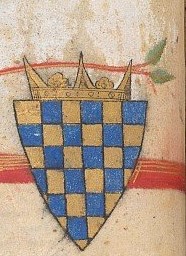
The Warenne coat of arms

For King Henry, the proposed marriage would have been a very practical match. It would have been the perfect solution to the dilemma of what to do with Isabel and the vast Warenne holdings in England and Normandy; to bring them into the royal family and to have them held by the king’s own brother. Henry II was not to be so easily thwarted, however, and indeed did not object to Thomas Becket’s ruling against the marriage of William FitzEmpress and Isabel de Warenne. He came up with a solution that would achieve the same end, while satisfying the restrictions of the church: his brother Hamelin.

In the aftermath of the murder, Richard Brito and his three accomplices

plundered the property of the archbishop, the clothes of the clergy and servants, and even the utensils from the workshop. They swiftly made off with all the which they found in his stables, as spoils.

The Plantagenet Chronicles, edited by Elizabeth Hallam

Brito and the three other knights, Riginald Fitzurse, Sir William Traci and Hugh de Morville fled to Scotland and then to Knaresborough Castle in Yorkshire, owned by Morville. All four were excommunicated by Pope Alexander III at Easter 1171. They were each ordered to make a 14-year pilgrimage to the Holy Land in penitence.  Once their penitential duties in the Holy Land were fulfilled, they were to visit the holy places barefoot and in hair shirts and then to live alone for the rest of their lives on the Black Mountain near Antioch and spend their time in vigil, prayer, and lamentation. It is believed that none of the four knights returned from the Holy Land, though one legend has Brito, also known as Richard le Breton, eventually retiring to the island of Jersey. Nothing more is known of his eventual fate.

Thomas Becket, Archbishop of Canterbury, was canonised on Ash Wednesday, 21 February 1173.

*

Images:

Courtesy of Wikipedia except seal of Isabel de Warenne which is ©Sharon Bennett Connolly.

Sources:

Robert Batlett, England Under the Norman and Angevin Kings; Elizabeth Hallam, editor, The Plantagenet Chronicles; Dan Jones, The Plantagenets; Donald Matthew, King Stephen; Medieval Lands Project on the Earls of Surrey, Conisbrough Castle; Farrer, William and Charles Travis Clay, editors, Early Yorkshire Charters, Volume 8: The Honour of Warenne; Rev. John Watson, Memoirs of the Ancient Earls of Warren and Surrey and their Descendants to the Present Time; Morris, Marc King John: Treachery, Tyranny and the Road to Magna Carta; Church, Stephen, King John: England, Magna Carta and the Making of a Tyrant; doncasterhistory.co.uk; Oxforddnb.com.

*

My books:

Signed, dedicated copies of all my books are available through my online bookshop.

Coming 30 January 2025: Scotland’s Medieval Queens
Scotland’s history is dramatic, violent and bloody. Being England’s northern neighbour has never been easy. Scotland’s queens have had to deal with war, murder, imprisonment, political rivalries and open betrayal. They have loved and lost, raised kings and queens, ruled and died for Scotland. From St Margaret, who became one of the patron saints of Scotland, to Elizabeth de Burgh and the dramatic story of the Scottish Wars of Independence, to the love story and tragedy of Joan Beaufort, to Margaret of Denmark and the dawn of the Renaissance, Scotland’s Medieval Queens have seen it all. This is the story of Scotland through their eyes.

Available for pre-order now.

Also by Sharon Bennett Connolly:
Heroines of the Tudor World tells the stories of the most remarkable women from European history in the time of the Tudor dynasty, 1485-1603. These are the women who ruled, the women who founded dynasties, the women who fought for religious freedom, their families and love. Heroines of the Tudor World is now available for pre-order from Amberley Publishing and Amazon UK. Women of the Anarchy demonstrates how Empress Matilda and Matilda of Boulogne, unable to wield a sword themselves, were prime movers in this time of conflict and lawlessness. It shows how their strengths, weaknesses, and personal ambitions swung the fortunes of war one way – and then the other. Available from Bookshop.orgAmberley Publishing and Amazon UKKing John’s Right-Hand Lady: The Story of Nicholaa de la Haye is the story of a truly remarkable lady, the hereditary constable of Lincoln Castle and the first woman in England to be appointed sheriff in her own right. Available from all good bookshops Pen & Sword Booksbookshop.org and Amazon

Defenders of the Norman Crown: The Rise and Fall of the Warenne Earls of Surrey tells the fascinating story of the Warenne dynasty, from its origins in Normandy, through the Conquest, Magna Carta, the wars and marriages that led to its ultimate demise in the reign of Edward III. Available from Pen & Sword BooksAmazon in the UK and US, and Bookshop.orgLadies of Magna Carta: Women of Influence in Thirteenth Century England looks into the relationships of the various noble families of the 13th century, and how they were affected by the Barons’ Wars, Magna Carta and its aftermath; the bonds that were formed and those that were broken. It is now available in paperback and hardback from Pen & SwordAmazon, and Bookshop.orgHeroines of the Medieval World tells the stories of some of the most remarkable women from Medieval history, from Eleanor of Aquitaine to Julian of Norwich. Available now from Amberley Publishing and Amazon, and Bookshop.orgSilk and the Sword: The Women of the Norman Conquest traces the fortunes of the women who had a significant role to play in the momentous events of 1066. Available now from Amazon,  Amberley Publishing, and Bookshop.org.

Alternate Endings: An anthology of historical fiction short stories including Long Live the King… which is my take what might have happened had King John not died in October 1216. Available in paperback and kindle from Amazon.

Podcast:
Have a listen to the A Slice of Medieval podcast, which I co-host with Historical fiction novelist Derek Birks. Derek and I welcome guests, such as Bernard Cornwell and Elizabeth Chadwick, and discuss a wide range of topics in medieval history, from significant events to the personalities involved.

*

Don’t forget! Signed and dedicated copies of all my books are available through my online bookshop.

For forthcoming online and in-person talks, please check out my Events Page.

You can be the first to read new articles by clicking the ‘Follow’ button, liking our Facebook page or joining me on TwitterThreadsBluesky and Instagram.

©2020 Sharon Bennett Connolly FRHistS
Guest Post: The Women of the House of Montfort by Darren Baker

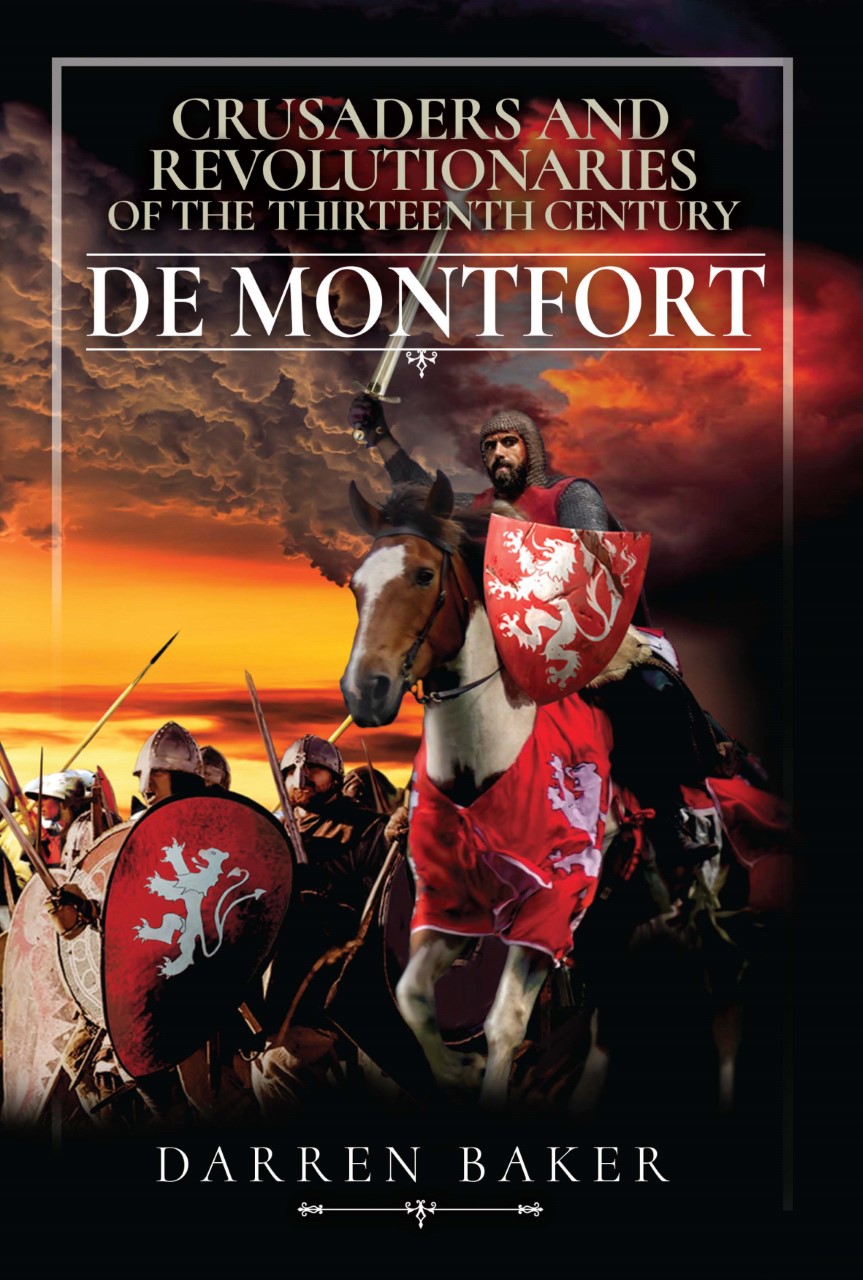
It is a pleasure to welcome historian Darren Baker to History … the Interesting Bits today, with a guest article about the women of the family of Simon de Montfort. Darren is the author of The Two Eleanors, a book telling the dual biography of Eleanor of Provence, wife of Henry III, and Eleanor of England, wife of Simon de Montfort. Darren’s latest book, Crusaders and Revolutionaries of the Thirteenth Century: De Montfort, was released in November from Pen & Sword and is a stunning biography of the the Montfort family.

So, over to Darren …

The Women of the House of Montfort

Darren Baker

King Philip I of France leaving his wife for Bertrade de Montfort

The house of Montfort arose some 50 kilometres west of Paris in a place known today as Montfort l’Amaury. Their family name ‘de Montfort’ is usually associated with two Simons, father and son, the relentless Albigensian crusader and the determined English revolutionary, both men of the 13th century. Other family members went further afield and established lordships in Italy and the crusader states.

Less known is the prominence of the de Montfort women. Their influence reaches back to the 11th century, starting with Isabella. Her father, Simon I, gave her in marriage to Ralph de Tosny, who in turn forced his sister Agnes to marry this first Simon. When Isabella fell out with her father’s children with Agnes, she put on armour and led a body knights in the field against her half-brothers.

Isabella’s half-sister Bertrade was married to Fulk IV of Anjou. She grew tired of his lecherous ways and took as her next husband the king of France, Philip I, who deserted his wife to marry her. Hoping to see her son with Philip succeed to the throne over her stepson Louis (VI), Bertrade had the older youth poisoned, but the attempt failed and brought about her disgrace. She died in a nunnery in 1117, not living to see her son from her first marriage, Fulk V of Anjou, become king of Jerusalem.

Two generations later, Simon III stood loyally by the English in their fight with the French. He was rewarded with marriages for his three children into the Anglo-Norman nobility. His oldest son Amaury V married Mabel, daughter of the earl of Gloucester, the next son Simon IV married Amicia, daughter of the earl of Leicester, and daughter Bertrade II married Hugh, the earl of Chester. This Bertrade was the mother of the legendary Ranulf de Blondeville, arguably the last of the great Anglo-Norman barons.

The senior branch of the house of Montfort died out in 1213, but Amicia’s son Simon V (the crusader), who was already the count of Montfort, inherited the earldom of Leicester. It was confiscated by King John in 1207 and ended up in the custody of Ranulf. It was from Ranulf that Simon VI acquired Leicester in 1231 and became an English noble, but that’s getting ahead of the story.

Eleanor de Montfort and children

Simon V’s wife was Alice de Montmorency. She was very much an active crusader against the Albigensians and often participated in her husband’s war councils. Their daughter Petronilla was born during the crusade and baptised by Dominic de Guzman, founder of the Dominican order. After Simon’s death in 1218, Alice placed Petronilla in a nunnery, where she became the abbess later in life. Alice’s oldest daughter Amicia founded the nunnery of Montargis, south of Paris, and died there in 1252.

In England, Alice’s son Simon VI rose high in royal favour and married Eleanor, the youngest sister of King Henry III and widow of William Marshal II. Together she and Simon had five sons and one daughter. The clash between Eleanor’s husband and brother ended in civil war and Simon’s death in 1265 at the battle of Evesham. Eleanor left England to live out the rest of her life in Montargis and took her namesake daughter with her.

Guy de Montfort was the only one of Eleanor’s sons to marry. He found service under Charles of Anjou, the king of Sicily, and rapidly advanced to become the count of Nola. He received a Tuscan heiress as his bride, but he scandalised the family in 1271 by vengefully murdering his cousin. Guy escaped punishment for the most part and had two daughters, of whom only the youngest Anastasia survived to adulthood. She became the countess of Nola at her father’s death in 1292 and married into the Orsini family of Rome.

Eleanor de Montfort died in 1275, living long enough to see her daughter marry Llywelyn of Wales by proxy. Later that year, the boat carrying young Eleanor and her brother Amaury VIII was captured by the forces of their cousin King Edward I, who had been alerted to their intentions. Eleanor was confined at Windsor Castle and not freed to marry Llywelyn until 1278.

She died four years later giving birth to a daughter Gwenllian. When Llywelyn was then killed, the baby girl was placed in a nunnery in Lincolnshire. By the time of her death in 1337, the de Montfort family, once so admired and respected across Europe and the Mediterranean, seemed long extinct. But their fortunes were about to be revived.

Joan of Navarre, Queen of England

This part of the story goes back to Simon V and Alice’s oldest son Amaury VII, who succeeded his father as the count of Montfort. He was followed by his son John, whose wife was pregnant when he left on crusade and died overseas. The daughter born to her, Beatrice, became the countess of Montfort when she came of age. She married Robert of Dreux and had a daughter Yolande, who became the second wife of King Alexander III of Scotland in 1285 in the hope of producing an heir to that throne.

It didn’t happen, and after Alexander died, Yolande married Arthur II of Brittany. Their son John succeeded her as the count of Montfort, and when his half-brother the duke of Brittany died in 1341 without an heir, John put in a claim for the duchy. It turned into a war of succession, which was won by his son, another John of Montfort, in 1365, a hundred years after Evesham.

In 1386, this John of Montfort took as his third wife the famous Joan of Navarre. She was the mother of his children and after his death became the queen of England with her marriage to King Henry IV. It was through her and Yolande that the Montfort family line returned to England.

About the Author:

Darren Baker was born in California, raised in South Carolina, and came to Europe in 1990, settling permanently in the Czech Republic. A former submariner in the US Pacific fleet, he later studied languages at the University of Connecticut and works as a translator. A trip to the UK inspired him to revisit the events of 13th century England, which he does on his website simon2014.com and in his books. His newly released Crusaders and Revolutionaries of the Thirteenth Century: De Montfort is his fourth on the subject.

*

My Books

Ladies of Magna Carta: Women of Influence in Thirteenth Century England looks into the relationships of the various noble families of the 13th century, and how they were affected by the Barons’ Wars, Magna Carta and its aftermath; the bonds that were formed and those that were broken. It is now available from Pen & Sword,  Amazon and from Book Depository worldwide.

Also by Sharon Bennett Connolly:

Silk and the Sword: The Women of the Norman Conquest traces the fortunes of the women who had a significant role to play in the momentous events of 1066.  Available now from Amazon,  Amberley Publishing, Book Depository.

Heroines of the Medieval World tells the stories of some of the most remarkable women from Medieval history, from Eleanor of Aquitaine to Julian of Norwich. Available now from Amberley Publishing and Amazon and Book Depository.

*

You can be the first to read new articles by clicking the ‘Follow’ button, liking our Facebook page or joining me on Twitter and Instagram.

©2020 Sharon Bennett Connolly

Book Corner: Reading Round up 2

As I said the other day, I am well behind on the list of book reviews I still have to write up, so the second article to include mini-reviews of several books that I have read and enjoyed over the last few months, to clear the backlog and give you some fabulous ideas if you’re looking for that next read (or a last minute Christmas pressie).

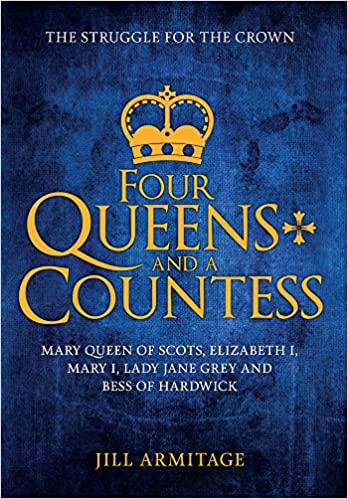
Four Queens and a Countess by Jill Armitage

When Mary Stuart was forced off the Scottish throne she fled to England, a move that made her cousin Queen Elizabeth very uneasy. Elizabeth had continued the religious changes made by her father and England was a Protestant country, yet ardent Catholics plotted to depose Elizabeth and put Mary Stuart on the English throne. So what was Queen Elizabeth going to do with a kingdomless queen likely to take hers? She had her placed under house arrest with her old friend Bess of Hardwick, then married to her fourth husband, the wealthy and influential Earl of Shrewsbury. The charismatic Scotswoman was treated more like a dowager queen than a prisoner and enjoyed the Shrewsbury’s affluent lifestyle until Bess suspected Mary of seducing her husband. But for sixteen years, with the never-ending threat of a Catholic uprising, Bess was forced to accommodate Mary and her entourage at enormous cost to both her finances and her marriage. Bess had also known the doomed Jane Grey and Mary Tudor, Queen of France. She had been in service in the Grey household and companion to the infant Jane. Mary Tudor had been godmother to Bess’s fifth child. Four Queens and a Countess delves deep into the relationships of these women with their insurmountable differences, the way they tried to accommodate them and the lasting legacy this has left. The clash of personalities and its deadly political background have never been examined in detail before.

Jill Armitage looks at the second half of the Tudor period through the lives of the four queens that shaped it and one remarkable countess. The flowing narrative tells the stories of Lady Jane Grey – the queen for 9 days – Mary I, Elizabeth I and Mary Queen of Scots alongside that of Bess of Hardwick, jailer of the Scottish queen. Four Queens and a Countess is a wonderful study of these remarkable women; women who, between them, influenced the direction of England for generations to come.

Jill Armitage investigates their various characters, relationships and disagreements, and explains how their relationships with each other affected the nations as a whole, and each other on an individual basis. Four Queens and a Countess is a thoroughly enjoyable and absorbing read, providing new insight and a refreshing change of focus on the Tudor era.

I highly recommend it!

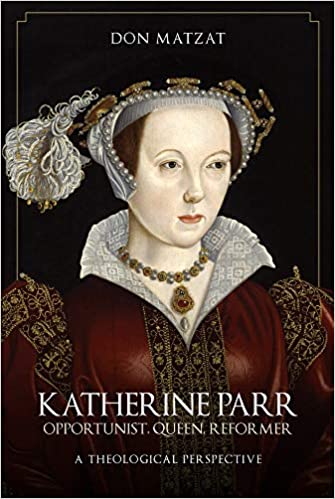
Katherine Parr: Oppportunist, Queen, Reformer by Don Matzat

Don Matzat here provides a new perspective on the life of Katherine Parr, the sixth and final wife of the infamous Henry VIII. While most biographers suggest that Katherine chose to marry the obese, irascible monarch in order to further some reformation or obey a divine imperative, the author goes against the tide and concludes that Katherine was an opportunist who married the king in order to enjoy the comforts of being the Queen of England, proven by her sumptuous lifestyle. But everything changed for Katherine when she had a dramatic conversion experience, embracing the primary tenets of the Protestant Reformation as described in her seminal work, The Lamentation of a Sinner. Her newly found belief placed her in a precarious position, not only with her husband but with the heresy hunters who, with the king’s blessing, beheaded those who held such beliefs. Yet Katherine had the courage to discuss her faith with her dangerous husband during the final months of his life. The life of Katherine Parr was one of drama, intrigue, danger, deceit, clandestine romance, scandal, tragedy and mystery. She came to a tragic end, and for three hundred years her burial site remained unknown. Katherine ruled England while Henry went to war against France. She was the first woman published in England under her own name. Her Lamentation of a Sinner is a little-known gem of the Protestant Reformation. Her influence upon the children of Henry, the future monarchs Edward VI, Mary I and Elizabeth I, would affect English history for many years to come.

I think, out of all Henry VIII’s queens, Katherine Parr’s story fascinates me the most. And its not just because she lived at Gainsborough Old Hall – one of my favourite haunts – for a time. Henry VIII was Katherine’s third husband – and she was his sixth wife. But Katherine Parr was so much more than Henry VIII’s wife. She was an intelligent woman and a proponent of the new Protestant faith – indeed, she almost met the fate of her predecessors, Anne Boleyn and Catherine Howard, when Henry suspected her of heresy.

Author Don Matzat looks at Katherine’s life and her religious outlook using The Lamentations of a Sinner, written by Katherine herself, to give him an insight into Katherine the woman and Katherine the queen.

In Katherine Parr: Opportunist, Queen, Reformer Don Matzat uses Katherine Parr’s own writings and letters to paint a vivid picture of this remarkable queen. Beautifully written, engaging and thoroughly researched, this book is a wonderful addition to any Tudor library.

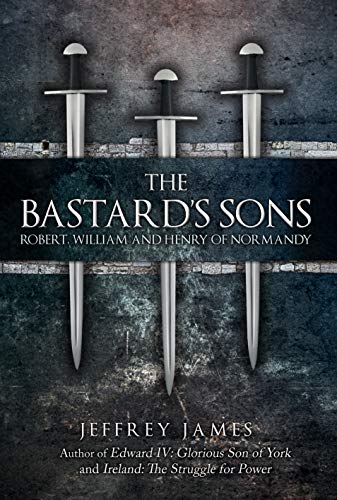
The Bastard’s Sons by Jeffrey James

“William the Conqueror’s intellect is said to have remained clear right up to his death. He would have questioned whether any of his three sons individually had the ability to rule the troublesome amalgam of England, Normandy and Maine once he was gone. The Bastard’s Sons is the story of those three men: Robert, William and Henry of Normandy.

Of Robert, the dying king is said to have claimed he was ‘a proud and silly prodigal’, adding that ‘the country which is subject to his dominion will be truly wretched’. Yet Robert became a great crusader. William got on better with his namesake, known to us as William Rufus for his florid looks. He was, like his father, of kingship material, and might have gained the throne of England on his father’s nod, but, equally plausibly, orchestrated a coup. The youngest of the Bastard’s sons, Henry, inherited money from his father, but not land. To placate Henry, the Conqueror is alleged to have told him that one day he would gain both England and Normandy.

The stage was set for an epic power struggle between the three men and their barons, who held lands on both sides of the Channel and were thus caught in a difficult position. A mysterious death in the forest, a crusading hero’s return and the tenacity of an overlooked third son would all combine to see this issue settled once and for all.”

The Bastard’s Sons: Robert, William and Henry of Normandy by Jeffrey James is a wonderful book telling the story of the post-Conquest years through the power struggles of William the Conqueror’s three surviving sons. In a wonderful, engaging narrative, Jeffrey James provides a unique insight into these three, very different brothers.

By looking at their relationships with each other, at the nobles who surrounded and supported them, and at the events of the latter part of the eleventh century and beginning of the twelfth, Jeffrey James shows us how these three brothers influenced each other’s lives, and the lives of those around them; as well as the politics of England and Normandy and of Europe in general.

The Bastard’s Sons: Robert, William and Henry of Normandy is an absorbing read, offering a new perspective on the post Conquest years and demonstrating the far reaching influences of all three of William the Conqueror’s surviving sons. It is a must-read for anyone interested in the post Conquest years of England and Normandy, and in the establishment of the Norman dynasty.

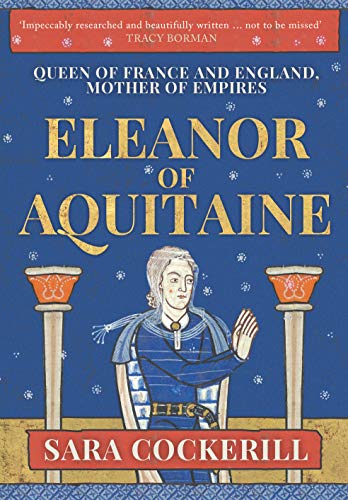
Eleanor of Aquitaine by Sara Cockerill

“In the competition for remarkable queens, Eleanor of Aquitaine tends to win. In fact her story sometimes seems so extreme it ought to be made up.

The headlines: orphaned as a child, Duchess in her own right, Queen of France, crusader, survivor of a terrible battle, kidnapped by her own husband, captured by pirates, divorced for barrenness, Countess of Anjou, Queen of England, mother of at least five sons and three daughters, supporter of her sons’ rebellion against her own husband, his prisoner for fifteen years, ruler of England in her own right, traveller across the Pyrenees and Alps in winter in her late sixties and seventies, and mentor to the most remarkable queen medieval France was to know (her own granddaughter, obviously).

It might be thought that this material would need no embroidery. But the reality is that Eleanor of Aquitaine’s life has been subjected to successive reinventions over the years, with the facts usually losing the battle with speculation and wishful thinking.

In this biography Sara Cockerill has gone back to the primary sources, and the wealth of recent first-rate scholarship, and assessed which of the claims about Eleanor can be sustained on the evidence. The result is a complete re-evaluation of this remarkable woman’s even more remarkable life. A number of oft-repeated myths are debunked and a fresh vision of Eleanor emerges. In addition the book includes the fruits of her own research, breaking new ground on Eleanor’s relationship with the Church, her artistic patronage and her relationships with all of her children, including her family by her first marriage.”

Sara Cockerill’s Eleanor of Aquitaine: Queen of France and England, Mother of Empires was one of the most anticipated history books of 2019 and it did not disappoint. Dispelling many of the rumours and stories that float around whenever Eleanor of Aquitaine is mentioned, Sara Cockerill looks for the real woman behind the legend.

Mainly using primary sources, Sara Cockerill re-examines every aspect of Eleanor’s life. The research is impeccable and Sara Cockerill’s arguments and analysis are well reasoned and compelling. Eleanor of Aquitaine: Queen of France and England, Mother of Empires is essential reading for anyone interested in the era in general and Eleanor of Aquitaine’s story in particular.

This is one of those books that should sit in all medieval history lovers’ libraries, to be read and devoured.

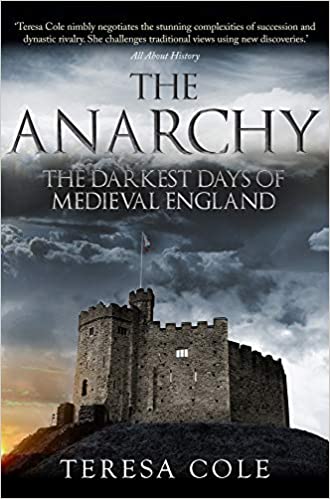
The Anarchy by Teresa Cole

When the mighty Henry I died in December 1135, leaving no legitimate son, who was to replace him on the throne of England? Would it be Stephen, nephew to the king and showered with favours that maybe gave him ideas above his station? Or could it be a woman, Henry’s own choice, his daughter Matilda, who had been sent away when eight years old to marry the Holy Roman Emperor, widowed, then forced into a hated second marriage for political reasons? Stephen was the first to act, seizing the throne that had been promised to Matilda, but he would find taking a crown far easier than keeping it. The resulting struggle became known as ‘the Anarchy,’ a time when fortune changed sides as frequently and dramatically as in any page-turning thriller, and with a cast of characters to match – some passionately supporting Stephen or Matilda, others simply out to grab what they could from the chaos. These supporting players are not overlooked here: Henry of Blois, brother of Stephen, Bishop of Winchester, and largely orchestrator of the church’s response to the conflict; Robert of Gloucester, illegitimate son of Henry I and chief supporter of his half-sister; and Geoffrey of Anjou, husband of Matilda, determined to secure Normandy (traditional enemy of Anjou) for himself. Covering all the twists and turns of this war between cousins, as first one side then the other seemed within touching distance of total victory, The Anarchy blends contemporary, sometimes eyewitness accounts with modern analysis to describe a period of England’s history so dark and lawless that those who lived through it declared that ‘Christ and his saints slept.’

When I told Amberley I wanted to do a book about the Anarchy, they were reluctant, saying that Teresa Cole had a book coming out about the Anarchy, and they were worried the books would be too similar. So I promised to concentrate on the Women of the Anarchy (my book’s working title), but was – from that moment – curious to read Teresa Cole’s take on the events. Luckily I got the chance.

The Anarchy: The Darkest Days of Medieval England is an intelligent, engaging study of the 19 years of English history during which the Anglo-Saxon Chronicle bemoaned that ‘Christ and his Saints slept’. Told in a chronological narrative, Teresa Cole examines every aspect of the period; the personalities involved and the extent of devastation and destruction caused by the conflict – both in England and Normandy.

Using eyewitness accounts and contemporary chronicles, Teresa Cole examines the motives behind the two protagonists, King Stephen and Empress Matilda, looking at their reasons for wanting the throne – and for wanting to keep it. The Anarchy: The Darkest Days of Medieval England also provides insight into the leading supporters on both sides of the conflict and demonstrates that though war was waged over a 19 year period, the main battles were fought in the early years and by 1147 the nobles were getting so tired of war they were looking to make mutual protection treaties between themselves, or go on crusade, rather than continue a war that had been fought to a stalemate.

The Anarchy: The Darkest Days of Medieval England is an interesting, enjoyable read offering new insight and perspective on an often overlooked period of English history, the only time that a woman led a faction to war on English soil.

All these books are available from Amberley Publishing.

*

My Books

Ladies of Magna Carta: Women of Influence in Thirteenth Century England looks into the relationships of the various noble families of the 13th century, and how they were affected by the Barons’ Wars, Magna Carta and its aftermath; the bonds that were formed and those that were broken. It is now available from Pen & Sword,  Amazon and from Book Depository worldwide.

Also by Sharon Bennett Connolly:

Silk and the Sword: The Women of the Norman Conquest traces the fortunes of the women who had a significant role to play in the momentous events of 1066.  Available now from Amazon,  Amberley Publishing, Book Depository.

Heroines of the Medieval World tells the stories of some of the most remarkable women from Medieval history, from Eleanor of Aquitaine to Julian of Norwich. Available now from Amberley Publishing and Amazon and Book Depository.

*

You can be the first to read new articles by clicking the ‘Follow’ button, liking our Facebook page or joining me on Twitter and Instagram.

©2020 Sharon Bennett Connolly

Book Corner: Reading Round-up 1

I am well behind on the list of book reviews I still have to write up, so I though I would do a couple of articles that include mini-reviews of several books that I have read and enjoyed over the last few months, to clear the backlog and give you some fabulous ideas if you’re looking for that next read.

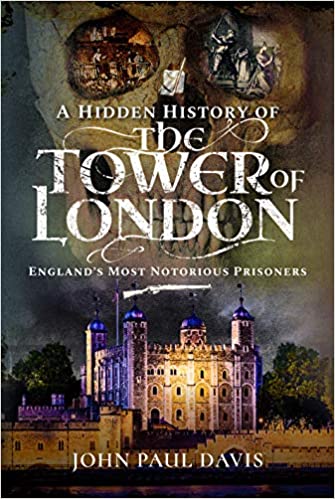
A Hidden History of the Tower of London by John Paul Davis

Famed as the ultimate penalty for traitors, heretics and royalty alike, being sent to the Tower is known to have been experienced by no less than 8,000 unfortunate souls. Many of those who were imprisoned in the Tower never returned to civilisation and those who did, often did so without their head! It is hardly surprising that the Tower has earned itself a reputation among the most infamous buildings on the planet. There have, of course, been other towers. Practically every castle ever built has consisted of at least one; indeed, even by the late 14th century, the Tower proudly boasted no less than 21. Yet even as early as the 1100s, the effect that the first Tower had on the psyche of the local population was considerable. The sight of the dark four-pointed citadel – at the time the largest building in London – as it appeared against the backdrop of the expanding city gave rise to many legends, ranging from the exact circumstances of its creation to what went on within its strong walls. In ten centuries what once consisted of a solitary keep has developed into a complex castle around which the history of England has continuously evolved. So revered has it become that legend has it that should the Tower fall, so would the kingdom. Beginning with the early tales surrounding its creation, this book investigates the private life of an English icon. Concentrating on the Tower’s developing role throughout the centuries, not in terms of its physical expansion into a site of unique architectural majesty or many purposes but through the eyes of those who experienced its darker side, it pieces together the, often seldom-told, human story and how the fates of many of those who stayed within its walls contributed to its lasting effect on England’s – and later the UK’s – destiny. From ruthless traitors to unjustly killed Jesuits, vanished treasures to disappeared princes and jaded wives to star-crossed lovers, this book provides a raw and at times unsettling insight into its unsolved mysteries and the lot of its unfortunate victims, thus explaining how this once typical castle came to be the place we will always remember as THE TOWER.

What a wonderful read!

Packed to the brim with the best stories from the Tower, and almost 1,000 years of history – some you will know and some you won’t. John Paul Davis tells the remarkable story of the Tower of London through the lives of the people who have resided under its roofs – some of them most unfortunate indeed! We hear the stories of those fortunate people who escaped – and the not-so-fortunate who died in the attempt. John Paul Davis examines every aspect of the Tower of London, its role as a royal fortress, prison and place of execution; and the national events in which it played apart, such as the Peasants’ Revolt and the executions of 2 of Henry VIII’s queens. Written in 23 chapters, the story of the Tower as a prison is told from its foundation in 1066 to the present day.

With these incredible and often heart breaking stories, John Paul Davis clearly demonstrates how the fortress acquired its sinister reputation.

A Hidden History of the Tower of London is a thoroughly enjoyable read, and impossible to put down.

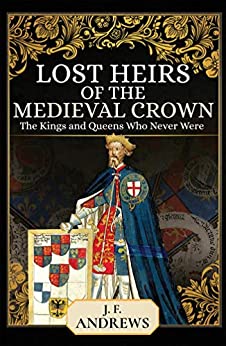
Lost Heirs of the Medieval Crown by J.F. Andrews

When William the Conqueror died in 1087 he left the throne of England to William Rufus … his second son. The result was an immediate war as Rufus’s elder brother Robert fought to gain the crown he saw as rightfully his; this conflict marked the start of 400 years of bloody disputes as the English monarchy’s line of hereditary succession was bent, twisted and finally broken when the last Plantagenet king, Richard III, fell at Bosworth in 1485.

The Anglo-Norman and Plantagenet dynasties were renowned for their internecine strife, and in Lost Heirs we will unearth the hidden stories of fratricidal brothers, usurping cousins and murderous uncles; the many kings – and the occasional queen – who should have been but never were. History is written by the winners, but every game of thrones has its losers too, and their fascinating stories bring richness and depth to what is a colourful period of history. King John would not have gained the crown had he not murdered his young nephew, who was in line to become England’s first King Arthur; Henry V would never have been at Agincourt had his father not seized the throne by usurping and killing his cousin; and as the rival houses of York and Lancaster fought bloodily over the crown during the Wars of the Roses, life suddenly became very dangerous indeed for a young boy named Edmund.

With Lost Heirs of the Medieval Crown, author JF Andrews provides a fascinating study of the also-rans and almost-made-its of medieval history; those children of the kings of England who died before they could claim their birth-right, or were passed over due to the dynastic squabbles of the Norman and Plantagenet dynasties that ruled England from the Norman Conquest in 1066 to the advent of the Tudor age.

From the battles of Robert Curthose, eldest son of William the Conqueror, to the tragic lives of the Yorkist heirs, Edward V, Edward of Middleham and Edward Earl of Warwick, Lost Heirs of the Medieval Crown is a thoroughly engaging read, examining the lives of the heirs who were unable to claim their birthright, imprisoned for their royal blood, died before their time, or died in the attempt to claim the throne. Each individual story is brought into one volume, and demonstrates the struggle for power and supremacy in medieval England.

Beautifully written and well researched, it is an engaging read.

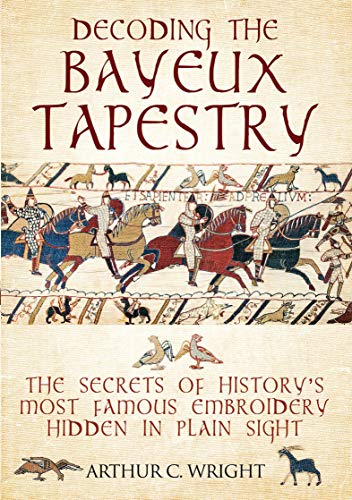
Decoding the Bayeux Tapestry by Arthur C. Wright

For the first time, a scholar reveals the meaning of the marginal images on the Bayeux Tapestry, unlocking a completely new meaning of the work.
 
The story of the Norman Conquest and the Battle of Hastings as shown in the Bayeux Tapestry is arguably the most widely-known in the panoply of English history, and over the last 200 years there have been hundreds of books on the Tapestry seeking to analyze its meanings. Yet, there is one aspect of the embroidery that has been virtually ignored or dismissed as unimportant by historians—the details in the margins.
 
The fables shown in the margins are neither just part of a decorative ribbon, nor are they discontinuous. They follow on in sequence. When this is understood, it becomes clear that they must relate to the action shown on the body of the Tapestry. After careful examination, the purpose of these images is to amplify, elaborate, or explain the main story.
 
In this groundbreaking study, Arthur Wright reveals the significance of the images in the margins. Now it is possible to see the “whole” story as never before, enabling a more complete picture of the Bayeux Tapestry to be constructed. Wright reexamines many of the scenes in the main body of the work, showing that a number of the basic assumptions, so often taught as facts, have been based on nothing more than reasoned conjecture.
 
It might be thought that after so much has been written about the Bayeux Tapestry there was nothing more to be said, but Decoding the Bayeux Tapestry shows how much there is still to be learned.

Decoding the Bayeux Tapestry: The Secrets of History’s Most Famous Embroidery Hidden in Plain Sight by Arthur C. Wright is a wonderful, engaging study of this most famous of embroideries, retelling the Norman Invasion in stunning, colourful needlework. Arthur C. Wright studies every aspect of the Tapestry, from the beasts in the margins to the story being played out in dramatic detail in the main part of the Tapestry. The author demonstrates how the images in the tapestry, even the animals and mystical creatures in the margin, serve to tell the story of the tapestry and the Norman Conquest.

An entertaining read and thoughtful study of the most famous of tapestries Decoding the Bayeux Tapestry is an illuminating work, beautifully illustrated along the way with images from the famous needlework.

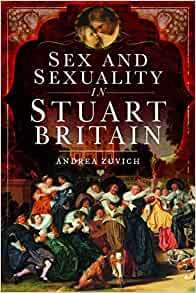
Sex and Sexuality in Stuart Britain by Andrea Zuvich

Peek beneath the bedsheets of Stuart Britain in this frank, informative, and captivating look at the sexual lives of the peoples of the British Isles between 1603 and 1714. Popular Stuart historian Andrea Zuvich, The Seventeenth Century Lady , explores our ancestors’ ingenious, surprising, bizarre, and often entertaining beliefs and solutions to the challenges associated with maintaining a healthy sex life, along with the prevailing attitudes towards male and female sexual behaviour. The author sheds light not only on the saucy love lives of the Royal Stuarts, but also on the dark underbelly of the Stuart era with histories of prostitution, sexual violence, infanticide, and sexual deviance. What was considered sexually attractive in Stuart Britain? At which ages would people be old enough for marriage? What were the penalties for adultery, incest, and fornication? How did Stuart-era peoples deal with infertility, sexually-transmitted illnesses, and child mortality? Find out the answers to these questions – and more – as fashion, food, science, art, medicine, magic, literature, love, politics, faith and superstition of the day are all examined, leaving the reader with a new regard for the ingenuity and character of our seventeenth and early eighteenth-century ancestors.

Sex and Sexuality in Stuart Britain by Andrea Zuvich is a wonderful study of the bedroom exploits of the Stuart dynasty of the seventeenth century. Andrea Zuvich examines all aspects of Stuart sexual life, from attitudes to rape and pornography, to the notions of love and marriage. Zuvich also looks at the lives of the Stuart monarchs, examining the rumours around them, the various mistress and lovers and the perceptions they gave to their people and to history. This is a truly fascinating study of a part of life that is important to all of us – and necessary for our continued existence – but so rarely talked about. Sex and Sexuality in Stuart Britain is so much more than a study of sexual practices in Stuart Britain, it also analyses the effects of child mortality, the dangers of childbirth. It also looks at the seedier side of society, such as infanticide and sexually transmitted diseases.

Sex and Sexuality in Stuart Britain is fascinating! It is a book that needed to be written and provides a wonderful contrast to the usual books on Stuart Britain, which concentrate on the Civil Wars, rather than the lives, loves and desires of the people. Andrea Zuvich has written a marvelous study of Stuart attitudes towards sex and sexuality, leaving no stone unturned to give the reader a comprehensive view of Stuart life, including the legal, social and personal aspects and implications.

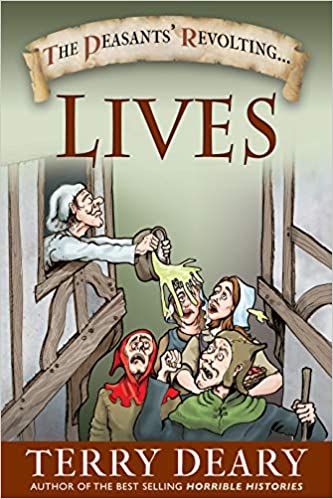
The Peasants Revolting Lives by Terry Deary

Today we are aware of how the rich and privileged have lived in the past because historians write about them endlessly. The poor have largely been ignored and, as a result, their contributions to our modern world are harder to unearth. Skilled raconteur TERRY DEARY takes us back through the centuries with a poignant but humorous look at how life treated the common folk who scratched out a living at the very bottom of society. Their world was one of foul food, terrible toilets, danger, disease and death the last, usually premature. Discover the stories of the teacher turned child-catcher who rounded up local waifs and strays and put them to work, and the thousands of children who descended into the hazardous depths to dig for coal. Read all about the agricultural workers who escaped the Black Death only to be thwarted by greedy landowners. And would you believe the one about the man who betrothed his 7-year-old daughter to a Holy Roman Emperor, or even the brothel that was run by a bishop? On the flip side, learn how cash-strapped citizens used animal droppings for house building and as a cure for baldness; how sparrow s brains were incorporated into aphrodisiacal brews; and how mixing tea with dried elder leaves could turn an extra profit. And of the milestones that brought some meaning to ordinary lives, here are the trials and tribulations of courtship and marriage; the ruthless terrors of the sporting arena; and the harsh disciplines of education all helping to alleviate the daily grind. The Peasants Revolting Lives celebrates those who have endured against the odds. From medieval miseries to the idiosyncrasies of being a twenty-first-century peasant, tragedy and comedy sit side by side in these tales of survival and endurance in the face of hardship.

Terry Deary’s The Peasants’ Revolting Lives is a fun and fascinating read for all the family. Whenever a Terry Deary book arrives on the doorstep, there is an inevitable squabble between myself and my son as to who should read it first – I tend to lose!

With stories that are often amusing, sometimes gruesome and all true, Terry Deary examines every aspect of the life of the peasant – throughout history – from work and religion, to sport, entertainment and education. The book is packed full of facts, each story or anecdote intended to inform and entertain – and they do!

The Peasants’ Revolting Lives is a wonderful reading experience for adult and child alike. The stories are so engaging and interesting that you don’t even realise you are learning about the trials and hardships of life as a peasant down the centuries. It is a must-read for any history lover.

All these books are available from Pen & Sword, with 30% off throughout December.

*

My Books

Ladies of Magna Carta: Women of Influence in Thirteenth Century England looks into the relationships of the various noble families of the 13th century, and how they were affected by the Barons’ Wars, Magna Carta and its aftermath; the bonds that were formed and those that were broken. It is now available from Pen & Sword,  Amazon and from Book Depository worldwide.

Also by Sharon Bennett Connolly:

Silk and the Sword: The Women of the Norman Conquest traces the fortunes of the women who had a significant role to play in the momentous events of 1066.  Available now from Amazon,  Amberley Publishing, Book Depository.

Heroines of the Medieval World tells the stories of some of the most remarkable women from Medieval history, from Eleanor of Aquitaine to Julian of Norwich. Available now from Amberley Publishing and Amazon and Book Depository.

*

You can be the first to read new articles by clicking the ‘Follow’ button, liking our Facebook page or joining me on Twitter and Instagram.

©2020 Sharon Bennett Connolly

Guest Post: Empress Hermine and the Tragic Wedding

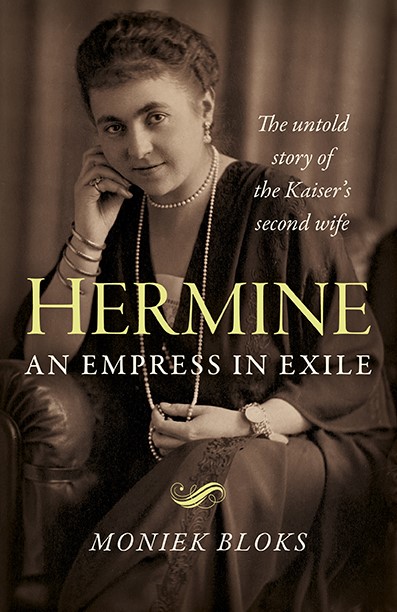
Today it is a pleasure to welcome author Moniek Bloks to History … The Interesting Bits on the first stop of her book tour. Moniek is the author of a new biography of Kaiser Wilhelm II’s second wife, Hermine Reuss of Greiz. The book, Hermine; An Empress in Exile will be released in the UK on Friday 11th December.

So, it’s over to Moniek:

Hermine

Empress Hermine and the tragic wedding

Caroline and her husband

Hermine Reuss of Greiz was one of the five daughters of Heinrich XXII, Prince Reuss of Greiz and his wife Princess Ida of Schaumburg-Lippe. Her childhood was overshadowed by the death of her mother in childbirth and the incurable disability of her only brother.  A 13-year marriage to Prince Johann Georg of Schönaich-Carolath produced five children before her husband’s death of tuberculosis. However determined never to be married again, Hermine ended up meeting the exiled German Emperor Wilhelm II, and soon fate had other plans.

But before Hermine had even married her first husband, she met the Emperor as a 15-year-old girl. In 1903, her elder sister Caroline was destined to marry Wilhelm Ernst, Grand Duke of Saxe-Weimar-Eisenach. Hermine and Caroline were especially close, and Caroline was only three years older than her. On 30 April 1903, Caroline married the Grand Duke at Bückeburg Palace, but Caroline was deeply unhappy; she hardly knew the man she was going to marry and abhorred the life that was waiting for her in Weimar.

Though faced with the separation of her much-beloved sister, Hermine’s memories of that day also focused on a man who towered above everyone else, the Emperor. Her uncle and guardian, who was hosting the wedding, promised to introduce her to him and young Hermine dutifully curtseyed to him. It was an unforgettable experience for her, but the Emperor paid little attention. She later said, “How could he have foreseen that this blushing little girl was his future wife? I stood there, frozen on the spot where the Emperor had received my greeting. The Emperor went on and chatted with my uncle.”

Caroline

It wasn’t just Caroline who had doubts about the wedding. Wilhelm Ernst received a stern talking to from the Emperor, and he said, “Only love can turn a palace into a home. Caroline is like a little bird, fallen out of its nest. She will miss the sisters who loved her. It will take her some time before she learns to be at home on the cold parquet floor of your castle.” He then raised his voice and said, “You have given me an Oath of Allegiance, and I order you to marry tomorrow.” The wedding went ahead as planned.

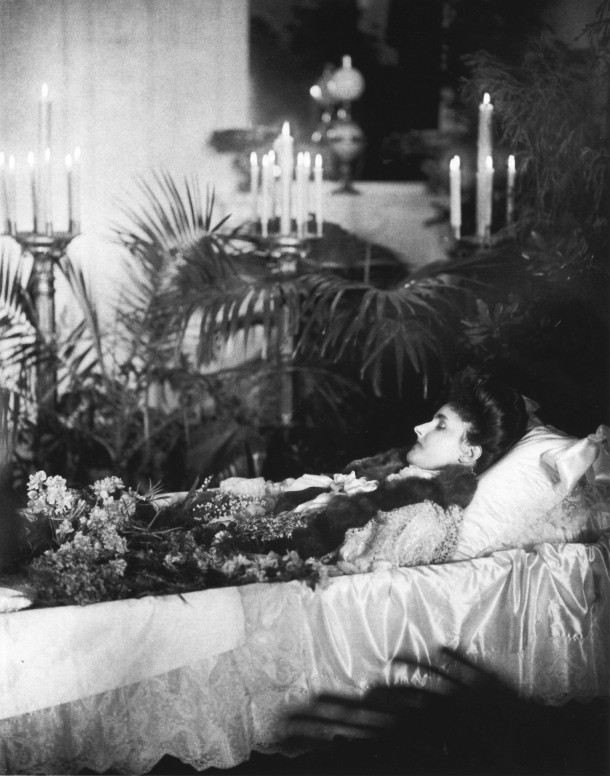
Caroline remained deeply unhappy, took up smoking and barely ate. The unhappiness of her marriage consumed her body, and she was soon emaciated. On 17 January 1905, Hermine sat by her dying sister’s bedside. On top of everything, Caroline had fallen ill with influenza, and her weakened body simply could not fight the disease. Hermine wrote, “The attack was so violent that there was no hope of her recovery from the first. She received the tenderest care, but all effort was in vain. In her heart of hearts, she did not wish to live.”

Hermine would always remember that she first met her future husband at her sister’s wedding but mostly, she would remember the dear sister she lost.

Many thanks to Moniek for a wonderful post and my very best wishes on her latest release. Please do follow the rest of the blog tour.

The book Hermine: An Empress in Exile will be released on 11 December 2020 (UK) and 1 January 2021 (US).

About the book:

Hermine Reuss of Greiz is perhaps better known as the second wife of the Kaiser (Emperor Wilhelm II of Germany) whom she married shortly after the death of his first wife Auguste Viktoria and while he was in exile in the Netherlands. She was by then a widow herself with young children. She was known to be ambitious about wanting to return to power, and her husband insisted on her being called ‘Empress’. To achieve her goal, she turned to the most powerful man in Germany at the time, Adolf Hitler. Unfortunately, her dream was not realised as Hitler refused to restore the monarchy and with the death of Wilhelm in 1941, Hermine was forced to return to her first husband’s lands. She was arrested shortly after the end of the Second World War and would die under mysterious circumstances while under house arrest by the Red Army.

*

About the author:

Moniek Bloks

Moniek Bloks is the editor of the successful blog History of Royal Women. She lives in the Netherlands and has a background in law.

Her interest in historical royal women and writing began at an early age, and she has been glad to share the stories of often little-known royal women.

When she isn’t writing, she is visiting castles and palaces around Europe with her trusty camera.

*

My Books

Ladies of Magna Carta: Women of Influence in Thirteenth Century England looks into the relationships of the various noble families of the 13th century, and how they were affected by the Barons’ Wars, Magna Carta and its aftermath; the bonds that were formed and those that were broken. It is now available from Pen & Sword, Amazon and from Book Depository worldwide.

Also by Sharon Bennett Connolly:

Silk and the Sword: The Women of the Norman Conquest traces the fortunes of the women who had a significant role to play in the momentous events of 1066.  Available now from Amazon,  Amberley Publishing, Book Depository.

Heroines of the Medieval World tells the stories of some of the most remarkable women from Medieval history, from Eleanor of Aquitaine to Julian of Norwich. Available now from Amberley Publishing and Amazon and Book Depository.

*

You can be the first to read new articles by clicking the ‘Follow’ button, liking our Facebook page or joining me on Twitter and Instagram.

©2020 Sharon Bennett Connolly and Moniek Bloks

Jolabokaflod – the Christmas Giveaway

Competition Closed

And the winner is …. Sue Barnard.

Thank you to everyone who entered. If you do get a copy of any of my books, either for yourself or others, please get in touch via the ‘contact me’ page and I will send you out a signed book plate to pop in the front.

My very best wishes for a wonderful Christmas and amazing New Year!

It is my pleasure to be the one to kick of the Historical Writers’ Forum Christmas Advent Blog Hop. And what better way to celebrate the end of 2020 with a book giveaway or special offer for practically every day of advent – so be sure to follow the blog hop through our Facebook page.

You could be a winner!

This year we are celebrating with Jolabokaflod as our Christmas blog hop theme! If you are not familiar with Jolabokaflod, it is the wonderful Icelandic tradition of giving books as gifts on Christmas Eve – except we are doing it for Advent.

And my contribution to Jolabokaflod is a signed paperback copy of my first book, Heroines of the Medieval World – either for yourself or as a gift for a friend or loved one – the dedication is entirely up to you!

Heroines of the Medieval World Giveaway!

Heroines of the Medieval World looks at the lives of the women who broke the mould: those who defied social norms and made their own future, consequently changing lives, society and even the course of history. Some of the women are famous, such as Eleanor of Aquitaine, who was not only a duchess in her own right but also Queen Consort of France through her first marriage and Queen Consort of England through her second, in addition to being a crusader and a rebel. Then there are the more obscure but no less remarkable figures such as Nicholaa de la Haye, who defended Lincoln Castle in the name of King John, and Maud de Braose, who spoke out against the same king’s excesses and whose death (or murder) was the inspiration for a clause in Magna Carta. Women had to walk a fine line in the Middle Ages, but many learned to survive – even flourish – in this male-dominated world. Some led armies, while others made their influence felt in more subtle ways, but all made a contribution to their era and should be remembered for daring to defy and lead in a world that demanded they obey and follow.

The Jolabokaflod Giveaway!

The giveaway is a signed and dedicated – for you or someone you love – paperback copy of my first book, Heroines of the Medieval World. The giveaway is open worldwide – and I will do my best to get the book to you in time for the big day, wherever you are.

Here is a taster:

From Chapter 3: Medieval Mistresses

The most successful of mistresses must be Katherine Swynford, the one mistress who defied the odds and eventually married her man, thus spawning a multitude of novels and love stories. Katherine was born around 1350; she was the younger daughter of Sir Payn Roelt, a Hainault knight in the service of Edward III’s queen, Philippa of Hainault, who eventually rose to be Guyenne King of Arms. Unfortunately, the identity of her mother has never been established, not an unusual situation when you think Katherine was born to an obscure knight and her significance only became evident later in life. Katherine and her older sister, Philippa,
appear to have been spent their early years in Queen Philippa’s household. Philippa de Roelt (or Rouet) joined the household of Elizabeth de Burgh, wife of Lionel of Antwerp, where she met her future husband, the literary giant of his age, Geoffrey Chaucer.

By 1365 Katherine was serving Blanche, Duchess of Lancaster, the first wife of John of Gaunt. John was the third surviving son of Edward III and Queen Philippa, and had married Blanche, co-heiress of Henry of Grosmont, Duke of Lancaster, in 1359. Soon after joining Blanche’s household, Katherine was married to Sir Hugh Swynford of Coleby and Kettlethorpe, Lincolnshire. Sir Hugh was a knight and tenant of John of Gaunt, who would serve with his lord on campaigns in 1366 and 1370. The couple had two children, Thomas and Blanche, who was named after the duchess. John of Gaunt stood as little Blanche’s godfather and she was raised alongside his own daughters by Duchess Blanche. Following the duchess’s death in September 1368, Katherine became governess to the duke’s three children: Elizabeth, Philippa and Henry. Three years after the death of Blanche, in September 1371, John married again, this time to a Spanish princess, Constance of Castile, the daughter of Pedro the Cruel, King of Castile, and Maria de Padilla, the king’s concubine-turned-wife. The marriage was a dynastic move, with Constance being heiress to the kingdom of Castile there was a distinct chance of John becoming King of Castile, if only John could wrest it from her father’s killer and illegitimate brother, Henry of Trastámara. From January 1372, he assumed the title of King of Castile and Leon, though in name only as he was never able
to consolidate his position.

Shortly after the marriage of John and Constance, in November 1371, Sir Hugh Swynford died while serving overseas, leaving Katherine a widow with two very young children; the youngest was probably less than two years old. It was not long after Sir Hugh’s death that Katherine became John of Gaunt’s mistress; although some sources suggest the couple were lovers even before Sir Hugh’s death, which has brought into question the paternity of Katherine’s eldest son by John of Gaunt. However, the majority of historians agree the relationship between John and Katherine started in late 1371 or early 1372 and was developing well in the spring of that year, when Katherine received rewards and a significant increase in her status within Gaunt’s household….

It’s easy to enter!

The competition is open to everyone, wherever you are in the world. To win a signed and dedicated copy of Heroines of the Medieval World, simply leave a comment below, on the Historical Writers Forum Blog Hop Facebook Page or on my own Facebook page and I will include you in the prize draw.

The draw will be made on Sunday 6 December 2020.

Good Luck!

And don’t forget to follow the rest of the blog hop!

Dec 4th Alex Marchant; Dec 5th Cathie Dunn; Dec 6th Jennifer C Wilson; Dec 8th Danielle Apple; Dec 9th Angela Rigley; Dec 10th Christine Hancock; Dec 12th Janet Wertman; Dec 13th Vanessa Couchman; Dec 14th Sue Barnard; Dec 15th Wendy J Dunn; Dec 16th Margaret Skea; Dec 17th Nancy Jardine; Dec 18th Tim Hodkinson; Dec 19th Salina Baker; Dec 20th Paula Lofting; Dec 21st Nicky Moxey; Dec 22nd Samantha Wilcoxson; Dec 23rd Jen Black; 24th Lynn Bryant

*

My Books

Ladies of Magna Carta: Women of Influence in Thirteenth Century England  looks into the relationships of the various noble families of the 13th century, and how they were affected by the Barons’ Wars, Magna Carta and its aftermath; the bonds that were formed and those that were broken. It is now available from Pen & SwordAmazon and from Book Depository worldwide.

Also by Sharon Bennett Connolly:

Silk and the Sword: The Women of the Norman Conquest traces the fortunes of the women who had a significant role to play in the momentous events of 1066.  Available now from Amazon,  Amberley Publishing, Book Depository.

Heroines of the Medieval World tells the stories of some of the most remarkable women from Medieval history, from Eleanor of Aquitaine to Julian of Norwich. Available now from Amberley Publishing and Amazon and Book Depository.

*

You can be the first to read new articles by clicking the ‘Follow’ button, liking our Facebook page or joining me on Twitter and Instagram.

©2020 Sharon Bennett Connolly 

Book Corner: Cesare and Lucrezia Borgia by Samantha Morris

Myths and rumour have shrouded the Borgia family for centuries – tales of incest, intrigue and murder have been told of them since they themselves walked the hallways of the Apostolic Palace. In particular, vicious rumour and slanderous tales have stuck to the names of two members of the infamous Borgia family – Cesare and Lucrezia, brother and sister of history’s most notorious family. But how much of it is true, and how much of it is simply rumour aimed to blacken the name of the Borgia family? In the first ever biography solely on the Borgia siblings, Samantha Morris tells the true story of these two fascinating individuals from their early lives, through their years living amongst the halls of the Vatican in Rome until their ultimate untimely deaths. Cesare and Lucrezia Borgia begins in the bustling metropolis of Rome with the siblings ultimately being used in the dynastic plans of their father, a man who would become Pope, and takes the reader through the separate, yet fascinatingly intertwined, lives of the notorious siblings. One tale, that of Cesare, ends on the battlefield of Navarre, whilst the other ends in the ducal court of Ferrara. Both Cesare and Lucrezia led lives full of intrigue and danger, lives which would attract the worst sort of rumour begun by their enemies. Drawing on both primary and secondary sources Morris brings the true story of the Borgia siblings, so often made out to be evil incarnate in other forms of media, to audiences both new to the history of the Italian Renaissance and old.

Cesare and Lucrezia Borgia: Brother and Sister of History’s Most Vilified Family by Samantha Morris is a fascinating look at two of the most famous villains in history; a brother and sister renowned for murder, intrigue and incest. Or are they? Samantha Morris’s beautifully written dual biography of these siblings aims to peal away the centuries of rumour and accusations and find the real people beneath the legend.

Samantha Morris combines a lively, engaging narrative with keen historical analysis, uncovering the facts embedded in the legends, rumours and scandals. She demonstrates a deep understanding not only of her subjects and their motivations but of the political theatre of Italy, the papacy and Europe in general at that time.

In Cesare and Lucrezia Borgia: Brother and Sister of History’s Most Vilified Family, Samantha Morris expertly separates rumour from fact to provide a balanced appraisal of these famous siblings; their strengths and weakness. Using creditable sources, papal records and even family letters, she clearly establishes the facts behind the lies of the incest accusation, whilst demonstrating how such accusations came about and the various efforts to sully the name of the Borgia family.

The careers of the Borgia children were decided and laid out before them before they could even waalk. Juan was chosen as the son who would be the military leader, the great Duke who would go on to continue the Borgia line; Cesare was destined for a life in the Church; Lucrezia would be forced into diplomatic marriages and Gioffre would do the same. The children were their father’s pawns, important chess pieces but Cesare in particular did not like the career path that was chosen for him.

When Cesare was just six years old, the Pope granted a dispensation that allowed him to hold Church benefices despite his illegitimacy and the following year, 1482, King Ferdinand of Aragon exempted him from a law that would stop him from holding lordships in Spain due to his illegitimacy. Being bastard born would not get in the way of raising Cesare Borgia to the heights that his father so wanted for him.

By the age of just fifteen, Cesare had already been given a vast number of Church benefices including the Bishopric of Pamplona, the ancient capital of Navarre. This caused particular outrage as the young man had not yet taken his holy orders and Cardinal Rodrigo Borgia did his best to calm down the populace, telling them that Cesare’s elevation was simply down to his merits and hard work. Cesare, on a break from the University of Perugia and busy on a hunting trip, found himself having to write a letter to the people of Navarre to try and soothe their anger. But it didn’t work and the Pope had to intervene to halt the rebellion.

From tracing their origins in Spain, to the spectacular heights to which the family rose, to the politics that brought about the demise of Cesare and meant the family were embroiled in constant struggles for land and power, Samantha Morris charts the successes and failures – and underhand dealings of the infamous family. The siblings’ father and family patriarch, Rodrigo Borgia, Pope Alexander VI is depicted as a scheming but capable man and pope who loved his children dearly. He sought to establish his illegitimate children in lives and careers appropriate to their rank as the children of a reigning pope.

Lucrezia Borgia comes across as an intelligent, passionate woman, far removed from , the poisoner of legend conducting a love affair with her own brother. She proved herself capable of ruling and was loving and loyal to her family. She pursued an active political career despite her almost constant pregnancies, and suffered incalculable griefs and family loss. Lucrezia, however, is not depicted as a pure, innocent virgin, but a well educated, politically astute woman who may also have conducted certain indiscretions, or at least platonic love affairs, during her lifetime. She is a woman who made the best of the life that was mapped out for her.

Cesare, on the other hand, is a ruthless man not cut out for the career in the church to which he appeared destined. The untimely murder of his older brother meant he went from cardinal to soldier, a job to which he was much better suited and a thousand times more capable and dedicated. Cesare is a complex character; accused of numerous murders, including those of his own brother and Lucrezia’s second husband, he is remembered to history as a ruthless, scheming murderer and seducer of his own sister. While he may have been ruthless and scheming – and a murderer to some extent, Samantha Morris goes on to prove that not all the murders laid at Cesare’s door were his responsibility.

As an aside, the reader cannot fail to notice the prevalence of syphillis in Italy at the time. A countless number of the protagonists in the story suffered from this disfiguring disease, Cesare Borgia among them. The French, attempting to conquer Italy at the time, called it ‘the Italian disease’, though in England it was known as ‘the French disease’ – those same invading French soldiers took the dreadful disease with them when they returned home.

Cesare and Lucrezia Borgia: Brother and Sister of History’s Most Vilified Family is an engaging narrative of the history of not only these most famous Italian siblings, but also Italy, the papacy and wider European politics at the time when the world was moving from the Medieval era into the Early Modern, when the Renaissance was in full swing and the Reformation was just around the corner. Samantha Morris demonstrates the power of the papacy, of Pope Alexander VI in particular, and how papal factions caused the rise – and fall – of the Borgia family.

Cesare and Lucrezia Borgia: Brother and Sister of History’s Most Vilified Family is an entertaining and enthralling read – one not to be missed!

Cesare and Lucrezia Borgia: Brother and Sister of History’s Most Vilified Family by Samantha Morris is available from Pen & Sword Books and Amazon.

About the author:

Samantha Morris studied archaeology at the University of Winchester and it was there, whilst working on a dissertation about the battlefield archaeology of the English Civil War that her interest in the Italian Renaissance began. Her main area of interest is the history of the Borgia family and the papacy of Pope Alexander VI, however she also has a keen interest in the history of other Renaissance families. Samantha has previously written on the Borgia family and runs a successful blog based mainly on the history of the Italian Renaissance, but with snippets of other eras thrown in too.

*

My Books

Ladies of Magna Carta: Women of Influence in Thirteenth Century England  looks into the relationships of the various noble families of the 13th century, and how they were affected by the Barons’ Wars, Magna Carta and its aftermath; the bonds that were formed and those that were broken. It is now available from Pen & SwordAmazon and from Book Depository worldwide.

Also by Sharon Bennett Connolly:

Silk and the Sword: The Women of the Norman Conquest traces the fortunes of the women who had a significant role to play in the momentous events of 1066.  Available now from Amazon,  Amberley Publishing, Book Depository.

Heroines of the Medieval World tells the stories of some of the most remarkable women from Medieval history, from Eleanor of Aquitaine to Julian of Norwich. Available now from Amberley Publishing and Amazon and Book Depository.

*

You can be the first to read new articles by clicking the ‘Follow’ button, liking our Facebook page or joining me on Twitter and Instagram.

©2020 Sharon Bennett Connolly 

Mary of Woodstock, Royal Nun

History... the Interesting Bits
Mary of Woodstock

To many noble women, the religious life was a career that had been decided for them by their parents when they were still children, as with Mary of Blois. However, for some, this did not necessarily mean they spent their entire lives in the seclusion of the convent. This was the certainly case with Princess Mary, daughter of Edward I and Eleanor of Castile.

Mary of Woodstock was born on 11 or 12 March 1279, the 6th daughter of King Edward and Queen Eleanor. Edward and Eleanor were quite a nomadic couple, travelling among their domains, so their children were raised in the royal nursery, based largely at the royal palaces of Woodstock and Windsor; visits from their parents were quite infrequent and from Edward, their father, even less so.

Eleanor of Castile endured a remarkable number of pregnancies, the first was when she was about 13 or 14, resulting in a child who was stillborn or died shortly after birth. The fact that several children died before they reached adulthood has been suggested as a reason for her keeping her distance from her children when they were young; however, it is just as likely that the simple fact Edward and Eleanor ruled a vast kingdom, including their lands in France, meant their responsibilities necessitated long absences.

Eleanor’s almost-constant pregnancies, resulting in a total of sixteen children, meant there were regular additions to the nursery, which also housed a number of children from noble families, sent to be raised alongside the king’s children. Mary would have had many companions, including her brother Alphonso, who was heir to the throne and 5 years her senior, and her sister Margaret, who was 4 years older than Mary. She would be joined by another sister, Elizabeth of Rhuddlan, 3 years later.

History... the Interesting Bits
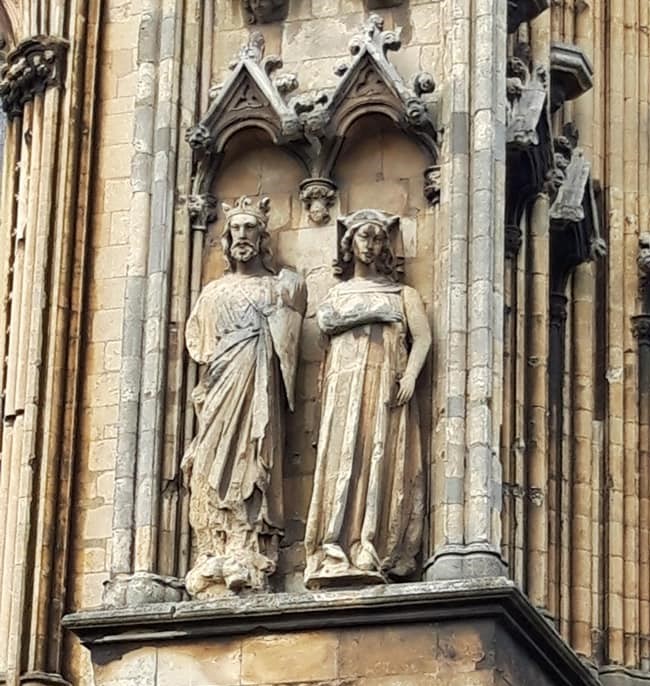
Edward I and Eleanor of Castile, Lincoln Cathedral

In 1285, a year after the death of Prince Alphonso, the king took his family on a progress into Kent. Edward went on pilgrimage to the shrine of St Thomas Becket, at Canterbury, before spending a week at Leeds Castle with his family, followed by some hunting in Hampshire. It was at the end of this family holiday that they arrived at Amesbury priory in Wiltshire, where little Mary, still only 6 years old, was veiled as a nun; much to the delight of her grandmother, Eleanor of Provence, but to the consternation of her mother, the queen. Indeed, the Chronicle of Nicholas Trivet emphasises that Mary’s veiling was done by her father, at the request of her grandmother, but only with the ‘assent’ of her mother.1

It may well be that Eleanor had reservations about her daughter’s vocation being decided at such a young age, or that she feared it was only being done so Mary’s grandmother, Eleanor of Provence, would have a companion in the abbey. After a long and eventful life, and with her health failing, the dowager queen took her own vows at around the same time and retired to Amesbury Priory for her final years, dying there in June 1291. Mary’s veiling had been in the planning for some years; Edward I had been in correspondence with the abbey at Fontevrault, the mother house of Amesbury, since 1282, when the little princess was barely 3 years old.

Eleanor’s reluctance, therefore, was probably more to do with when Mary was to become a nun, rather than the vocation itself; after all, the conventual life was considered a good career for a noble lady. The timing of her veiling may have been advanced not only by the failing health of Eleanor of Provence, but also by the imminent departure of Mary’s parents. Edward and Eleanor were about to embark for the Continent and were expecting to be in France for a considerable time, years rather than months.

History... the Interesting Bits
The Priory Church, now the parish church, Amesbury

The actual veiling ceremony must have been very moving. It took place at Amesbury Abbey on 15 August 1285, where Mary was one of 14 high-born girls who took their vows together. It may well be that her cousin, Eleanor of Brittany – another granddaughter of Eleanor of Provence – took her vows at the same time; Eleanor would later demonstrate a great dedication to the religious life and, eventually, become Abbess of Fontevrault.

Mary’s life at the abbey was probably a very comfortable existence; in the year she was veiled, Mary was awarded an annual income of £100, rising to £200 a year in 1292, following the death of Eleanor of Provence. As she was still only a child, the nuns at Amesbury would have been responsible not only for Mary’s spiritual life, but also for her education. However, the cloistered life by no means meant that Mary was confined and separated from her family for any length of time. She made frequent visits to court throughout her life, and was present for most family occasions.

Having taken the veil in August 1285, Mary returned to be with her family in the autumn, to see the unveiling of the newly created Winchester Round Table and the creation of 44 new knights by her father, the king. She visited her family again in March and May of 1286, each visit lasting about a month. These visits also meant Mary had the chance to bid farewell to her parents, who departed for an extended stay in France in 1286. On 13 August 1289, Mary, her 4 sisters and little brother Edward were at Dover to welcome their parents home, after a 3-year absence.

History... the Interesting Bits
King Edward I

Mary visited court again in 1290 and stayed for the wedding of her older sister, Joan of Acre, to Gilbert de Clare, Earl of Gloucester and Hertford; Joan and Gilbert were married in a private ceremony at Westminster on 30 April. It is likely that she was back at court later in the year for another wedding, this one at Westminster Abbey in July when her sister, Margaret, married John, the future Duke of Brabant.

Mary would have seen quite a lot of her parents in the spring of 1290 as her father chose Amesbury as the location for a special meeting, convened to settle the arrangements for the English succession. Edward may have chosen the abbey so that his ailing mother could be present for the discussions. The Archbishop of Canterbury and 5 other bishops, in addition to Edward, Eleanor of Castile and Eleanor of Provence, were all present to formalise the settling of the succession on Edward’s only surviving son, 6-year-old Edward of Caernarvon. Should Edward of Caernarvon die without heirs, it was decided that the succession would then pass to Edward I’s eldest daughter, the newly married Countess of Gloucester and Hereford, Joan of Acre.

Eleanor of Castile was a distant mother when her children were young, but she seems to have developed closer relationships as they grew older, so it is not hard to imagine her taking the opportunity to spend time with 12-year-old Mary while they were staying at the abbey. It was probably one of the last times that Mary spent any real time with her mother, who died at Harby, near Lincoln, on 28 November 1290.

History... the Interesting Bits
The viscera tomb of Eleanor of Castile, Lincoln cathedral

Indeed, it may well have been one of the last times they saw each other; Eleanor was at the king’s palace of Clipstone in Nottinghamshire when it was realised that her illness was probably fatal. Some of her children, Joan, Edward and Elizabeth, were summoned to the queen’s bedside; although Mary is not mentioned, it does not mean that she did not visit her mother one last time.2 Mary’s deep affection for her mother was demonstrated in 1297 when she and her younger sister, Elizabeth, jointly paid for a special Mass in their mother’s honour.

Mary’s career in the Church was far from spectacular; although her high birth gave her some influence, she never made high office and was never given a priory or abbey of her own. However, she was given custody of several aristocratic nuns at Amesbury, trusted to oversee their education and spiritual training. Convent life seems to have held few restrictions for her. Mary was regularly away from the cloister. She was frequently at court, or with various members of her family. In 1293 Mary spent time with her brother, Edward, and in 1297 she spent 5 weeks at court, taking the opportunity to spend some time with her sister, Elizabeth, who had been recently married to John, Count of Holland, and was preparing to join him there. In the event, news of John’s death arrived before her departure and Elizabeth never left England.

History... the Interesting Bits
Nicholas Trivet

Mary had many cultural interests and was a patron of Nicholas Trivet, who dedicated his chronicle, Annales Sex Regum Angliae, to her. Mary was probably Trivet’s source for many of the details of Edward I’s family and the inclusion of several anecdotes that demonstrated Edward’s luck, such as the story of the king’s miraculous escape from a falling stone while sitting and playing chess. He had stood up to stretch his legs when the stone from the vaulted ceiling landed on the chair he had just vacated.3 The stories that Mary passed on to Trivet also serve to demonstrate that she was at court on a regular basis. The financial provisions settled on her by Edward I meant that Mary did not have to suffer from her vows of poverty.

In addition to the £200 a year she received from 1292, Mary was also granted 40 cocks a year from the royal forests and 20 tuns of wine from Southampton. In 1302, the provision was changed and she was given a number of manors and the borough of Wilton in lieu of the £200, but only for as long as she remained in England. Given that a proposed move to Fontevrault had been dropped shortly after the death of Eleanor of Provence, the likelihood of Mary leaving England seems to have been only a remote possibility.

Mary had a penchant for high living; she travelled to court with an entourage big enough to require 24 horses. By 1305, despite her income, she was substantially in debt, with the escheator south of the Trent being ordered to provide her with £200 in order to satisfy her creditors. Mary also had a taste for gambling, mainly at dice, and her father is known to have paid off at least one gambling debt.4 Following her father’s death in 1307, her younger brother, now King Edward II, continued to support Mary financially and she continued to make regular visits to court.

Mary died sometime around 1322 and was buried where she had lived, at Amesbury Priory. She was a princess whose future was decided for her at a very young age. She doesn’t seem to have excelled at the religious life, in that she never achieved significant office, but she did make the most of the life chosen for her, making frequent pilgrimages and taking charge of the young, aristocratic ladies who joined the convent. Despite her dedication to the Church, she found her own path within it and seems to have achieved a healthy (for her) balance between the cloister and the court.

History... the Interesting Bits
The Warenne coat of arms

There was, however, one moment of scandal; although it did not arise until more than 20 years after Mary’s death. In 1345, in a final, desperate attempt to escape an unhappy marriage John de Warenne, Earl of Surrey, claimed that he had had an affair with Mary and that, therefore, his marriage to her niece, Joan of Bar, was invalid due to the close blood relationship of the 2 women. Although it is highly unlikely that the claim was anything more than Surrey’s desperate attempt to find a way out of his marriage, it cannot be ignored that Mary was frequently at court and such an opportunity may have arisen; Mary was only a few years older than John de Warenne. The ecclesiastical court, however, refused to believe the earl’s claims and Mary’s reputation remains – largely – intact.

*

Mary of Woodstock’s story appears in greater detail in my latest book, Princesses of the Later Middle Ages: Royal Daughters of the Plantagenets .

Footnotes:

1 Eleanor of Castile: The Shadow Queen by Sara Cockerill; 2 A Palace for Our Kings by James Wright; 3 Annales Sex Regum Angliae by Nicholas Trivet; 4 Eleanor of Castile: The Shadow Queen by Sara Cockerill

Images

Courtesy of Wikipedia except the statues of Edward I and Eleanor of Castile and Eleanor’s viscera tomb at Lincoln Cathedral, which are ©2020 Sharon Bennett Connolly.

Sources:

Edward I A Great and Terrible King by Marc Morris; Brewer’s British Royalty by David Williamson; Britain’s Royal Families by Alison Weir; The Mammoth Book of British Kings & Queens by Mike Ashley; The Plantagenets, The Kings Who Made England by Dan Jones; OxfordDNB.com; findagrave.com; susanhigginbotham.com; womenshistory.about.com; Daughters of Chivalry by Kelcey Wilson-Lee; Nobility and Kingship in Medieval England by Andrew M. Spencer; Memoirs of the Ancient Earls of Warren and Surrey, and Their Descendants to the Present Time, Volumes I and II by Rev. John Watson; Eleanor of Castile: The Shadow Queen by Sara Cockerill; A Palace for Our Kings: The History and Archaeology of a Medieval Royal Palace in the Heart of Sherwood Forest by James Wright

My Books

Signed, dedicated copies of all my books are available through my online bookshop or the Contact Me page.

New releases in 2026:

New Hardbacks

Books by Sharon Bennett Connolly


‘My daughter wanted me to treat her more like a princess. So, I married her to a stranger to strengthen the alliance with Poland!’

Princesses of the Early Middle Ages: Royal Daughters of the Conquest and Princesses of the Later Middle Ages: Royal Daughters of the Plantagenets tell the stories of England’s royal daughters from 1066 to the rise of the Tudors, from the last Anglo-Saxon princesses to the fall of the House of York.

Were they really pampered pawns sent off to marriages on the Continent, out of sight and out of mind?

Perhaps, there was different story, where a foreign marriage does not mean eternal exile, but a purpose in life, where a princess is a diplomat, an ambassador for England in her new country.

Where she is the bond between allies – most of the time.

Their stories are touching, inspiring and, at times, heartbreaking...

Praise for Princesses of the Early Middle Ages: Royal Daughters of the Conquest:

Heidi Malagisi: ‘This is another excellent book by Sharon Bennett Connolly. Extremely well researched and relatively easy to follow along, which is a great thing because there are so many Matildas and Eleanors in this book.

Tony Riches: “I challenge anyone with an interest in medieval Britain to not find something they will learn from this book.

Anna Belfrage: “I just love how [Sharon] presents this huge cast of real life people in a casual, chatty tone that has me expecting the various female protagonists to suddenly pop their head up and add their own commentary.

Praise for: Princesses of the Later Middle Ages: Royal Daughters of the Plantagenets:

Elizabeth Chadwick: Every history buff should have this excellent work on their shelves. Sharon Bennett Connolly brings these often forgotten ladies of the Middle Ages out of the shadows and stands them in the spotlight. Triumphs, tragedies, elopements, stormy marriages, love stories, formidable personalities, it’s all here on the pages of history, brought to life by the meticulous research of Sharon Bennett Connolly. I loved it!

Kathryn Warner: A deeply researched, richly detailed and fascinating account of late medieval England’s forgotten princesses. I loved it!

Buy now: Princesses of the Early Middle Ages: Royal Daughters of the Conquest

Pre-order: Princesses of the Later Middle Ages: Royal Daughters of the Plantagenets 

Out now in Paperback:

Books by Sharon Bennett Connolly

The momentous events of 1066, the story of invasion, battle and conquest, are well known. But what of the women? Silk and the Sword: The Women of the Norman Conquest traces the fortunes of the women who had a significant role to play during the Norman Conquest – wives, lovers, sisters, mothers, leaders. These are lives full of drama, pathos and sometimes mystery: Edith and Gytha searching the battlefield of Hastings for the body of Harold, his lover and mother united in their grief for the fallen king. Who was Ælfgyva, the lady of the Bayeux Tapestry, portrayed with a naked man at her feet?

Janina Ramirez said it’s ‘Excellent’!

Heroines of the Tudor World focuses on the women who lived through the Renaissance and Reformation, examining the threats and challenges they faced and how they overcame them. These are the women who ruled, the women who founded dynasties, the women who fought for religious freedom, their families and love. These are the women who made a difference, who influenced countries, kings and the Reformation.

Derek Birks: ‘An excellent account of the changing roles of women in Tudor society.’

Annie Whitehead: ‘What a treat this book was to read. Bennett Connolly has an easy, conversation style of writing which welcomes you from the opening pages and draws you into her story.

Also by Sharon Bennett Connolly:

Books by Sharon Bennett Connolly

Heroines of the Medieval World; Silk and the Sword: The Women of the Norman Conquest; Ladies of Magna Carta: Women of Influence in Thirteenth Century England; Defenders of the Norman Crown: Rise and Fall of the Warenne Earls of Surrey; King John’s Right Hand Lady: The Story of Nicholaa de la Haye; Women of the Anarchy; Heroines of the Tudor World; Scotland’s Medieval Queens: From St Margaret to Margaret of Denmark; Princesses of the Early Middle Ages: Royal Daughters of the Conquest (March 2026); Princesses of the Later Middle Ages; Royal Daughters of the Plantagenets (August 2026)

Alternate Endings: An anthology of historical fiction short stories including Long Live the King… which is my take what might have happened had King John not died in October 1216. Available in paperback and kindle from Amazon.

All my books on Amazon and Bookshop.org . You can also order direct from my publishers, Pen and Sword Books and Amberley Publishing.

Podcast:

Have a listen to the A Slice of Medieval podcast, which I co-host with Historical fiction novelist Derek Birks. Derek and I welcome guests, such as Ian Mortimer, Bernard Cornwell, Elizabeth Chadwick and Scott Mariani, and discuss a wide range of topics in medieval history, from significant events to the personalities involved. 

Every episode is also now available on YouTube.

*

Don’t forget! 

Signed and dedicated copies of all my books are available through my online store.

For forthcoming online and in-person talks, please check out my Events Page.

You can be the first to read new articles by clicking the ‘Follow’ button, liking our Facebook page or joining me on TwitterThreadsBluesky and Instagram.

*

©2020 Sharon Bennett Connolly, FRHistS
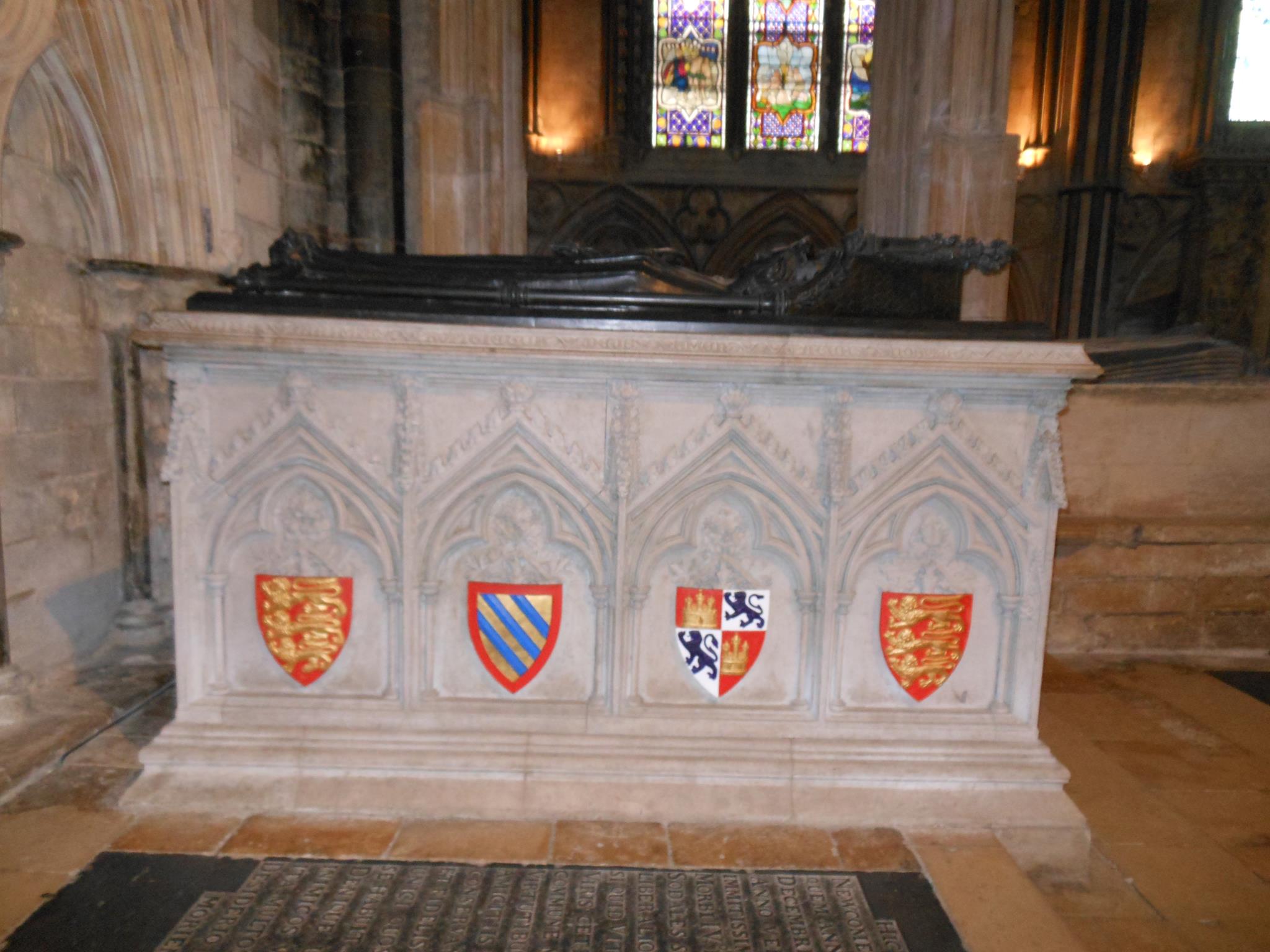
Book Corner: Betrayal

“Loyalty breaks as easily as a silken thread.”

Misplaced trust, power hunger, emotional blackmail, and greed haunt twelve characters from post-Roman Britain to the present day. And betrayal by family, lover, comrade can be even more devastating.

Read twelve tales by twelve accomplished writers who explore these historical yet timeless challenges.

AD455—Roman leader Ambrosius is caught in a whirlpool of shifting allegiances
AD940—Alyeva and cleric Dunstan navigate the dangers of the Anglo Saxon court
1185—Knight Stephan fights for comradeship, duty, and honour. But what about love?
1330—The powerful Edmund of Kent enters a tangled web of intrigue
1403—Thomas Percy must decide whether to betray his sovereign or his family
1457—Estelle is invited to the King of Cyprus’s court, but deception awaits
1483—Has Elysabeth made the right decision to bring Prince Edward to London?
1484—Margaret Beaufort contemplates the path to treason
1577—Francis Drake contends with disloyalty at sea
1650—Can James Hart, Royalist highwayman, stop a nemesis destroying his friend?
1718—Pirate Annie Bonny, her lover Calico Jack, and a pirate hunter. Who will win?
1849/present—Carina must discover her ancestor’s betrayer in Italy or face ruin.

Betrayal: Historical Stories is a wonderful anthology of 12 short stories exploring the concept of betrayal, either of country, family or lovers. Featuring some of the best authors of the moment, Betrayal: Historical Stories features stories from post-Roman Britain to an alternative reality in modern times, where the Roman Empire never fell but continued under powerful, influential women in Roma Nova.

There is something in this book for everyone. There are kings and queens, knights, pirates and cavalier highwaymen. There are stories of love, loyalty and friendship combined with implacable enemies, broken promises, family secrets and – above all – betrayal!

The remarkable diversity of the stories make this anthology a gripping read. You never know what story you are going to come across next, whether its the exploits of Sir Francis Drake, the heartbreaking story of 13-year-old Edward V’s journey to London, from his proclamation as king to his deposition and imprisonment in the Tower of London. Each story is written by a different author; their voices are as distinct as their characters.

In a book of short stories, it is impossible to pick an extract that shows the full range of writing on offer. However, it is possible to choose and extract that highlights the high standard of writing throughout the book. So here’s an excerpt from Honour of Thieves by Cryssa Bazos:

A panicked rider appeared from around the bend, twisted in the saddle, his attention fixed behind him as though the hounds of hell snapped at his feet. When he finally turned to face the road ahead, he saw James barring his way and screamed. the rider yanked hard on teh reins, and his horse skidded to a bone’jarring halt. He fought to keep himself from launching over his horse’s head.

James levelled his pistol at him. ‘Stand and deliver!’

A bead of sweat trickled down the man’s brow. ‘Ah, Master Highwayman. Do you not remember me? I passed this way before. You afforded me a free pas through Moot Hill.’ When he received no acknowledgement, he pressed on, his voice cracking, ‘I’m the pauper you took pity on. Do you not recall?’

James studied the man. Same battered hat and frayed cloak, a nearly broken horse better suited for the pasture than the road. True, he had last taken the man for a beggar, as he was meant to, but since then he had learned the truth. ‘A thrice of days ago; I haven’t forgotten. I allowed you the freedom of the highway.’

‘Blessed be the day.’ The man beamed and wiped his forehead with his sleeve. ‘Naturally, there’s no profit accosting me.’ His smile faded when he realised that the pistol was still trained on him. ‘I’m not even a Parliamentarian – I’m a good Royalist still mourning his fallen king … like yourself.’

James lifted a brow, satisfied to see the man squirm. Lying sod. Many travellers had passed this way over the last year pretending to share the highwayman’s abhorrence for their Parliamentarian usurpers in order to save their purse. James had seen through their ruses, but this one had somehow rooked him. That set his teeth on edge. ‘You pled your case well, claiming to be a half-starved hare.’ He swept his gaze to the man’s new leather boots. Clearly, the man’s subterfuge did not extend to the discomfort of ill-fitting shoes. ‘I took pity on you – instead of taking, I gave you a goodly sum to keep you well and a few coins besides to drink my health.’

‘God save you -‘

‘Did you have that drink?’ James asked.

‘Of course! I sang your praises at a public house that night.’

‘Are you certain?’

Silence.

I have read some of the authors before. Derek Birks, Tony Riches, Annie Whitehead, Cryssa Bazos and Anna Belfrage are among my favourite authors and I have reviewed their books before. These short stories allowed me to revisit some of their best characters, from Ambrosius Aurelianus to Captain James Hart, Sir Stephan de l’Aigle and Kit and Adam de Guirande of Anna Belfrage’s The King’s Greatest Enemy series.

Reading Betrayal: Historical Stories was a combination of spending a few hours with old friends and meeting new ones. Elizabeth St John, Judith Arnopp and Alison Morton were authors I was familiar with, but had not read before. I am now going to rectify that and go through their back catalogue to catch up. Alison’s Roma Nova short story provided an intriguing alternative to the modern day, showing us how the world might be, had a Roman Empire survived and flourished into the modern world, under the auspices of 12 ruling families.

The stories are beautifully written, enjoyable diversions. It is impossible to choose a favourite! Betrayal: Historical Stories showcases some of the best writing in historical fiction today. It is a pure pleasure to read.

What a fabulous way to discover new authors and new adventures!

The Betrayal: Historical Stories anthology is available for free from Amazon UK and Amazon US.

*

My Books

Ladies of Magna Carta: Women of Influence in Thirteenth Century England  looks into the relationships of the various noble families of the 13th century, and how they were affected by the Barons’ Wars, Magna Carta and its aftermath; the bonds that were formed and those that were broken. It is now available from Pen & SwordAmazon and from Book Depository worldwide.

Also by Sharon Bennett Connolly:

Silk and the Sword: The Women of the Norman Conquest traces the fortunes of the women who had a significant role to play in the momentous events of 1066.  Available now from Amazon,  Amberley Publishing, Book Depository.

Heroines of the Medieval World tells the stories of some of the most remarkable women from Medieval history, from Eleanor of Aquitaine to Julian of Norwich. Available now from Amberley Publishing and Amazon and Book Depository.

*

You can be the first to read new articles by clicking the ‘Follow’ button, liking our Facebook page or joining me on Twitter and Instagram.

©2020 Sharon Bennett Connolly 

Book Corner: The Errant Hours by Kate Innes

A headlong journey through the physical and spiritual dangers of Plantagenet Britain, in all its savage pageantry. Welsh Marches, July 1284 – the uprising in Wales is over, the leader gruesomely executed, the dead are buried. But for Illesa Arrowsmith, the war’s aftermath is just as brutal. When her brother is thrown into the Forester’s prison on false charges, she is left impoverished and alone. All Illesa has left is the secret manuscript entrusted to her – a book so powerful it can save lives, a book so valuable that its discovery could lead to her death. When the bailiff’s daughter finds it, Illesa decides to run, and break her brother out of jail by whatever means. But the powerful Forester tracks them down, and Illesa must put herself and the book at the mercy of an unscrupulous knight who threatens to reveal all their secrets, one by one. Inspired by the seductive art of illuminated manuscripts, The Errant Hours draws from the deep well of medieval legend to weave a story of survival and courage, trickery and love.

Every now and again you come across a book that draws you in and makes you lose entire days to reading. For me, The Errant Hours by Kate Innes was one of those books: I lost the whole of last weekend to reading the final 200 pages because I HAD to get to the end. Of course, I now wish I’d taken a little longer over it, but this was a book I needed to devour. With just short of 400 pages of beautiful prose, a unique storyline and the perfect combination of intrigue, betrayal and love, The Errant Hours is a perfect book for lockdown or those long, dark, winter nights.

A brother-sister relationship most of us can relate to, family secrets and mysteries and a beautiful, valuable book all come together to create The Errant Hours by Kate Innes. Illesa Arrowsmith losing her home to her creditors and helping her reckless brother escape the Forester’s prison is only the start of her adventures; adventures that will lead her to the heart of the court of Edward I and into the political turmoil of the English conquest of Wales. While the national political climate contrasts perfectly with the turmoil in Illesa’s own life as she attempts to uncover her own origins and her feelings for Sir Richard Burnel, the knight who could be both protector and her accuser.

‘Illesa!’

She ignored the angry whisper and went back towards the torchlight. The guard’s head had changed position. She stood still, watching him. A thin stream of saliva came from the corner of his open mouth. His jerkin was unbuttoned. The iron chain was wound around his belt and the end hung down behind the bench.

Illesa slowly undid the buckle and loosened the chain, pulling it, link by link, off the leather belt. Gathering the chain in her hand, she pulled it up. There was a dull clang. The guard grunted and shifted on the bench, but his eyes remained closed. The ring holding the keys was caught between the wall and the bench. Illesa held the chain in her left hand and knelt down. She reached under the bench, her arms stretched around the guard, straining not to touch him. Her fingers brushed against the keys, and she let them rest on her palm. Illesa let the chain slip slowly out of her left hand until she held it, and the keys, in her right hand. She got shakily to her feet and ran to the cell door.

‘Where is the lock?’ she whispered.

‘Here, follow my hand.’Illesa saw the vague whiteness of Kit’s fingers; she put her own on top of them, feeling for the keyhole with her thumb.

‘Got it,’ she said, fumbling with the larger key.

It slid easily into the hole, but as she turned it there was a terrible screeching sound of metal against metal. Something hit the floor with a loud thump and a gasp of pain.

Kit pushed the door, nearly knocking Illesa over as he ran out of the cell.

‘Follow me!’

Kate Innes must have done a remarkable amount of research to produce such a historically accurate work of historical fiction. Although her leading characters are fictional, the supporting characters are very much historical fact, with Edward I, Eleanor of Castile, young Prince Alphonso and John, 6th Earl Warenne all making an appearance. I didn’t know one of the Warennes would be making an appearance in the story – it was such a lovely surprise!

I particularly liked Kate Innes’ portrayal of Earl Warenne as a brutal, brash lord who spares little thought for the niceties – he certainly comes across as that in my research for my own forthcoming book on the Warennes, Defenders of the Norman Crown: Rise and Fall of the Warenne Earls of Surrey. In fact, I think Kate Innes was a little more generous with Warenne’s personality than some chroniclers were!

The fictional characters, Illesa, her brother Kit and the knight, Richard Burnel, are the central actors in the story. Their personalities, appearance and relationships are wonderfully ‘fleshed’ out. Illesa is a strong female character, but one that is not out of place in 13th century England. A young woman with determination and capability, she is also all-too-aware of the limitations forced on her by her sex.

A beautifully crafted tome, The Errant Hours by Kate Innes is a unique insight into 13th century England. The narrative flows freely and Illesa’s story will keep the reader entranced from the first page to the last. I cannot recommend it highly enough and have already put book 2, All the Winding World, on my Christmas list.

The Errant Hours by Kate Innes is available from Amazon.

About the author:

Kate Innes was born in London and lived and worked in America and Zimbabwe. She is now based in Shropshire, and it is the history and natural beauty of this area that provides inspiration for both her fiction and poetry.

She originally trained as an archaeologist and a teacher, and then worked as a Museum Education Officer around the Midlands, writing poetry in her spare time. After the arrival of her children, Kate began work on her medieval novel ‘The Errant Hours’ which was published in 2015.

The Historical Novel Society selected ‘The Errant Hours’ as an ‘Editor’s Choice’, and it was added to the reading list of the Medieval Studies Department at Bangor University. It is one of Book Riot’s ‘One Hundred Must Read Medieval Novels’.

Her second novel, ‘All the Winding World’ is a sequel to ‘The Errant Hours’, set ten years later. It is due to be published on the 22 June 2018.

Kate has been writing and performing poetry for many years, usually with a particular focus on animals, art and the natural world. Her poem ‘Flocks of Words’ won first prize in the ‘Imagined Worlds’ Competition held by the Friends of Samuel Taylor Coleridge. Her first collection, also called ‘Flocks of Words’, was published in Spring 2017 and many of these poems form part of a performance with the acoustic music group ‘Whalebone’.

Kate runs writing workshops, gives illustrated talks, works collaboratively with communities and undertakes commissions and residencies.

http://www.kateinneswriter.com

*

My Books

Ladies of Magna Carta: Women of Influence in Thirteenth Century England  looks into the relationships of the various noble families of the 13th century, and how they were affected by the Barons’ Wars, Magna Carta and its aftermath; the bonds that were formed and those that were broken. It is now available from Pen & SwordAmazon and from Book Depository worldwide.

Also by Sharon Bennett Connolly:

Silk and the Sword: The Women of the Norman Conquest traces the fortunes of the women who had a significant role to play in the momentous events of 1066.  Available now from Amazon,  Amberley Publishing, Book Depository.

Heroines of the Medieval World tells the stories of some of the most remarkable women from Medieval history, from Eleanor of Aquitaine to Julian of Norwich. Available now from Amberley Publishing and Amazon and Book Depository.

*

You can be the first to read new articles by clicking the ‘Follow’ button, liking our Facebook page or joining me on Twitter and Instagram.

©2020 Sharon Bennett Connolly