Guest Post: Alice Perrers, from Goldsmith’s Daughter to Lady of the Sun by Gemma Hollman

Today it is an absolute pleasure to welcome author and historian Gemma Hollman to History…the Interesting Bits as a stop on her blog tour for her latest book. The Queen and the Mistress: The Women of Edward III is a fascinating dual biography of Philippa of Hainault, queen of Edward III, and Alice Perrers, the king’s mistress.

Alice Perrers: From Goldsmith’s Daughter to Lady of the Sun

King Edward III

In the medieval period, a popular image came to be used to describe human life and society: that of the Wheel of Fortune. The idea was that the ancient goddess Fortuna was in control of a wheel which she would spin. People sat at various points on the wheel, and as Fortuna turned the wheel people would rise up to great heights, or drop to great lows. Medieval writers became enamoured with the symbolism of great people having a great fall because of the spinning of Fortune’s Wheel. One fourteenth-century courtier who epitomised the wheel was a woman named Alice Perrers, who was lucky enough to rise higher than her contemporaries could have imagined – but who also spun back down again.

Alice Perrers has been an enigma for centuries. Even many of her contemporaries did not really know who she was or where she came from, with chroniclers like Thomas Walsingham of St Albans Abbey making disparaging guesses to her lowly origins. Recent research has shown that Alice most likely came from a goldsmithing family in London, and so whilst she was not close to the upper echelons of society, when looking at the country as a whole she would have had a reasonable upbringing. The merchant classes had seen an upturn in their wealth during the reign of Edward III, who had been on the throne officially since 1327, and so Alice’s family probably enjoyed the benefits of this.

As the daughter of a trade family, Alice may have had some basic education, and her life initially followed the path of the majority of women of her time. She was married off, likely as a teenager, to another London goldsmith, and the couple found further wealth through the favour of the king; her husband was known to have supplied jewels to Edward III himself. But soon, Alice’s life took a turn when her husband died. The couple had no children, and her future was uncertain. Prospects for young widows were not always promising.
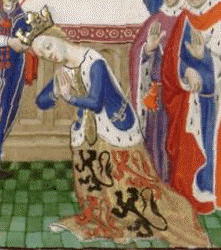
Queen Philippa of Hainault

Here, Fortuna turned her wheel and set Alice onto the path of greatness. She somehow found her way to court, in one of the most coveted positions in the kingdom as she became a damsel to Edward III’s wife, Queen Philippa of Hainault. Alice was catapulted into the wealth and glamour of the English monarchy. The court was filled with many of the greatest nobles of the period, including at times the captured French king, and it was a place filled with feasting, jousting, jewels, music, and writing. As one of the queen’s damsels, Alice had a place at centre stage to all that was going on. She would accompany the queen as she travelled across her various castles and attended events, and she was entitled to luxurious clothes. It must have seemed like life could not get better.

But Alice was an intelligent, ambitious, shrewd woman. Not content to simply receive the gifts afforded to her as a lady-in-waiting, Alice started to build up connections at court. She wined and dined with many powerful knights, merchants, and members of the nobility. She began to lend money and make property deals, extracting favourable terms for herself. Soon she had pieces of land of her own – quite a feat for a single woman of her status. But that was not all that Alice had obtained at court, for she had caught the eye of the king himself. Soon, a relationship began between them.

Edward III had been a loyal husband to his wife for over 30 years, but by the 1360s Philippa was severely unwell. It was clear she was not going to live for many more years, and this may have provided the impetus for Edward’s eyes to wander. Alice was a perfect choice for him. Young, likely beautiful, headstrong, it is easy to see why Edward found her attractive. But Edward had spent decades cultivating an image as a loyal, family man, and so the couple did their best to keep their relationship secret. If nothing else, to save the queen public humiliation.

The secrecy did not dampen their relationship, and within a few years Alice had given birth to 3 children with the king. At the end of the decade, the great queen died, and it was not long before Alice shifted to a more prominent place at court. Soon everybody knew that Alice had the king’s heart – and with it, a significant share of power. People were soon rushing to Alice to obtain favours with the king, offering her pieces of property and whatever else they thought she might like in the hope she may get them something in return. Even the Pope petitioned this mistress for help.
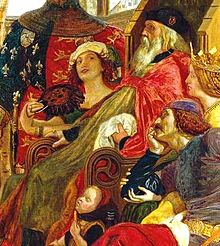
Alice Perrers and Edward III, painted by Ford Maddox Brown

As the 1370s wore on, Alice rose to the greatest heights of the wheel, almost taking on the position of unofficial queen. During the king’s jubilee year, Alice took centre stage in celebrations dressed as the Lady of the Sun. But as medieval writers loved to point out, the wheel also was fond of dropping people into a fall, and so too was this to happen to Alice. Eventually, the men at court got fed up with the undue influence of Alice and her friends on the king. They felt that those of old noble blood should be the only ones to advise the king, and finally the knights of the land gathered together at the Good Parliament to end their evil influence once and for all. Alice was banished from the king’s presence, and after his death the full weight of the law came for her. She was banished further – this time from the entire kingdom of England – and all of her hard-earned lands, jewels, and goods were taken from her.

But Alice was clever, and she had made contingency plans. She knew that her presence at court grated on those around her, and she had found powerful allies. It emerged that she had undertaken a secret marriage to a powerful knight, and he wasn’t going to give up Alice’s wealth. The couple fought for years to obtain the return of Alice’s possessions, and it was a fight that she carried with her to her death. Many of Alice’s female contemporaries had two paths in life: marriage or a nunnery. But Alice chose to forge one of her own, that of mistress and a powerful single woman. Was she as evil as her later reputation suggested? Or was there something more underneath the surface?

*

About the book:
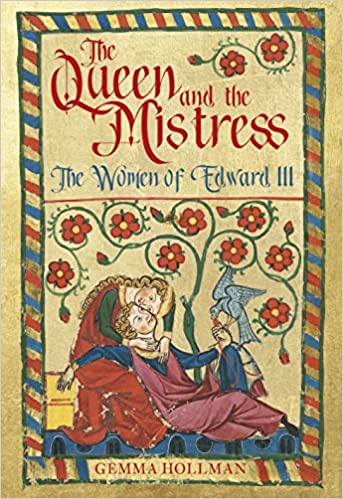
IN A WORLD WHERE MAN IS KING, CAN WOMEN REALLY HAVE IT ALL – AND KEEP IT?

Philippa of Hainault was Queen of England for forty-one years. Her marriage to Edward III, when they were both teenagers, was more political transaction than romantic wedding, but it would turn into a partnership of deep affection. The mother of twelve children, she was the perfect medieval queen: pious, unpolitical and fiercely loyal to both her king and adopted country.

Alice Perrers entered court as a young widow and would soon catch the eye of an ageing king whose wife was dying. Born to a family of London goldsmiths, this charismatic and highly intelligent woman would use her position as the king’s favourite to build up her own portfolio of land, wealth and prestige, only to see it all come crashing down as Edward himself neared death.

The Queen and the Mistress is a story of female power and passion, and how two very different women used their skills and charms to navigate a tumultuous royal court – and win the heart of the same man.

To buy the book: Amazon

About the author:

Gemma Hollman is a historian and author who specialises in late medieval English history. A Fellow of the Royal Historical Society, her first book ‘Royal Witches’ was published in 2019 and her second book ‘The Queen and the Mistress’ will be released in November 2022. She has a particular interest in the plethora of strong, intriguing and complicated women from the medieval period, a time she had always been taught was dominated by men.

Gemma also works full-time in the heritage industry whilst running her historical blog, Just History Posts, which explores all periods of history in more depth.

*

My Books:

Signed, dedicated copies of all my books are available, please get in touch by completing the contact me form.

Defenders of the Norman Crown: The Rise and Fall of the Warenne Earls of Surrey tells the fascinating story of the Warenne dynasty, of the successes and failures of one of the most powerful families in England, from its origins in Normandy, through the Conquest, Magna Carta, the wars and marriages that led to its ultimate demise in the reign of Edward III. Defenders of the Norman Crown: Rise and Fall of the Warenne Earls of Surrey is now available from Pen & Sword BooksAmazon in the UK and US, Bookshop.org and Book Depository.

1 family. 8 earls. 300 years of English history!

Also by Sharon Bennett Connolly:

Ladies of Magna Carta: Women of Influence in Thirteenth Century England looks into the relationships of the various noble families of the 13th century, and how they were affected by the Barons’ Wars, Magna Carta and its aftermath; the bonds that were formed and those that were broken. It is now available in paperback and hardback from Pen & Sword, AmazonBookshop.org and from Book Depository worldwide.

Heroines of the Medieval World tells the stories of some of the most remarkable women from Medieval history, from Eleanor of Aquitaine to Julian of Norwich. Available now from Amberley Publishing and Amazon, Bookshop.org and Book Depository.

Silk and the Sword: The Women of the Norman Conquest traces the fortunes of the women who had a significant role to play in the momentous events of 1066.  Available now from Amazon,  Amberley Publishing, Bookshop.org and Book Depository.

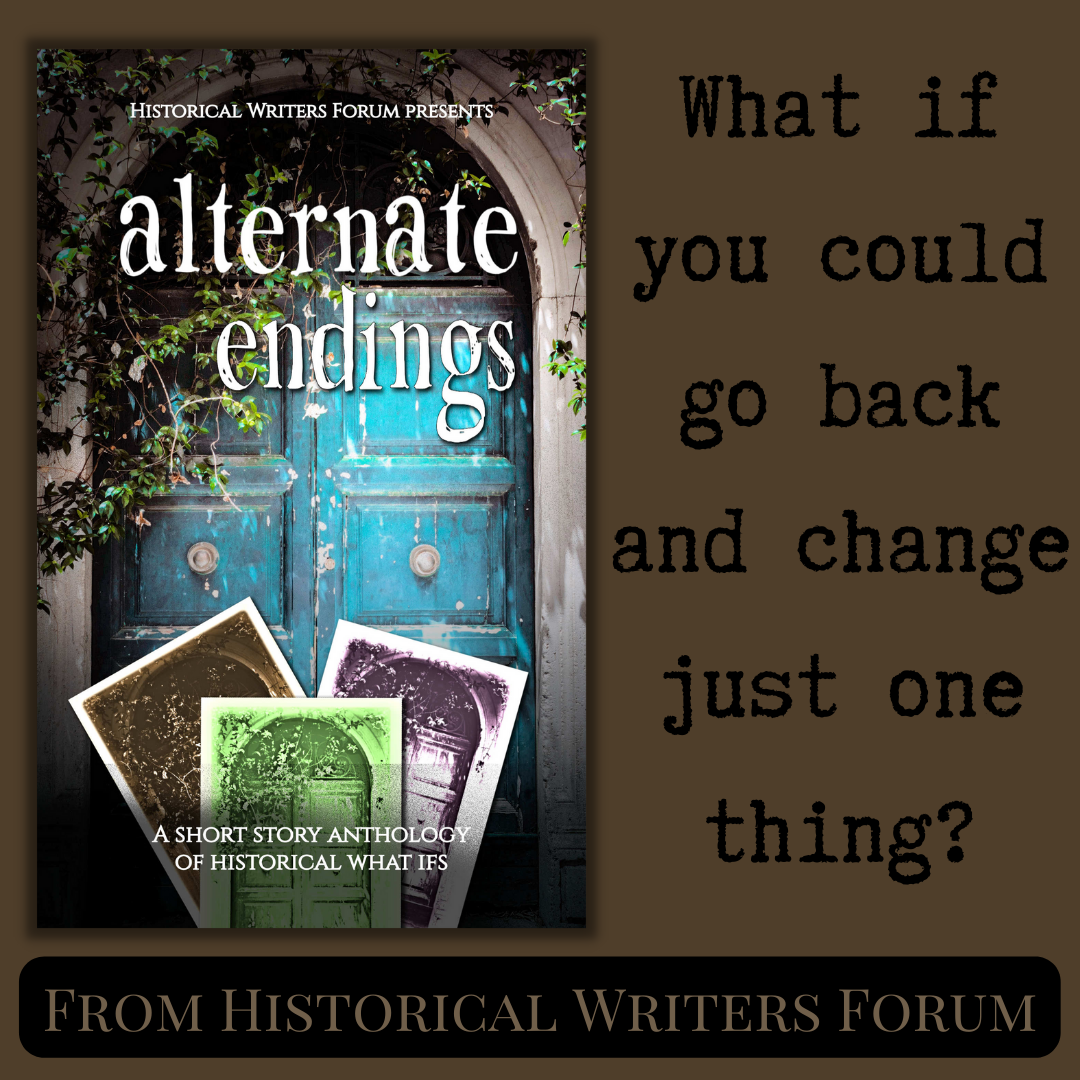
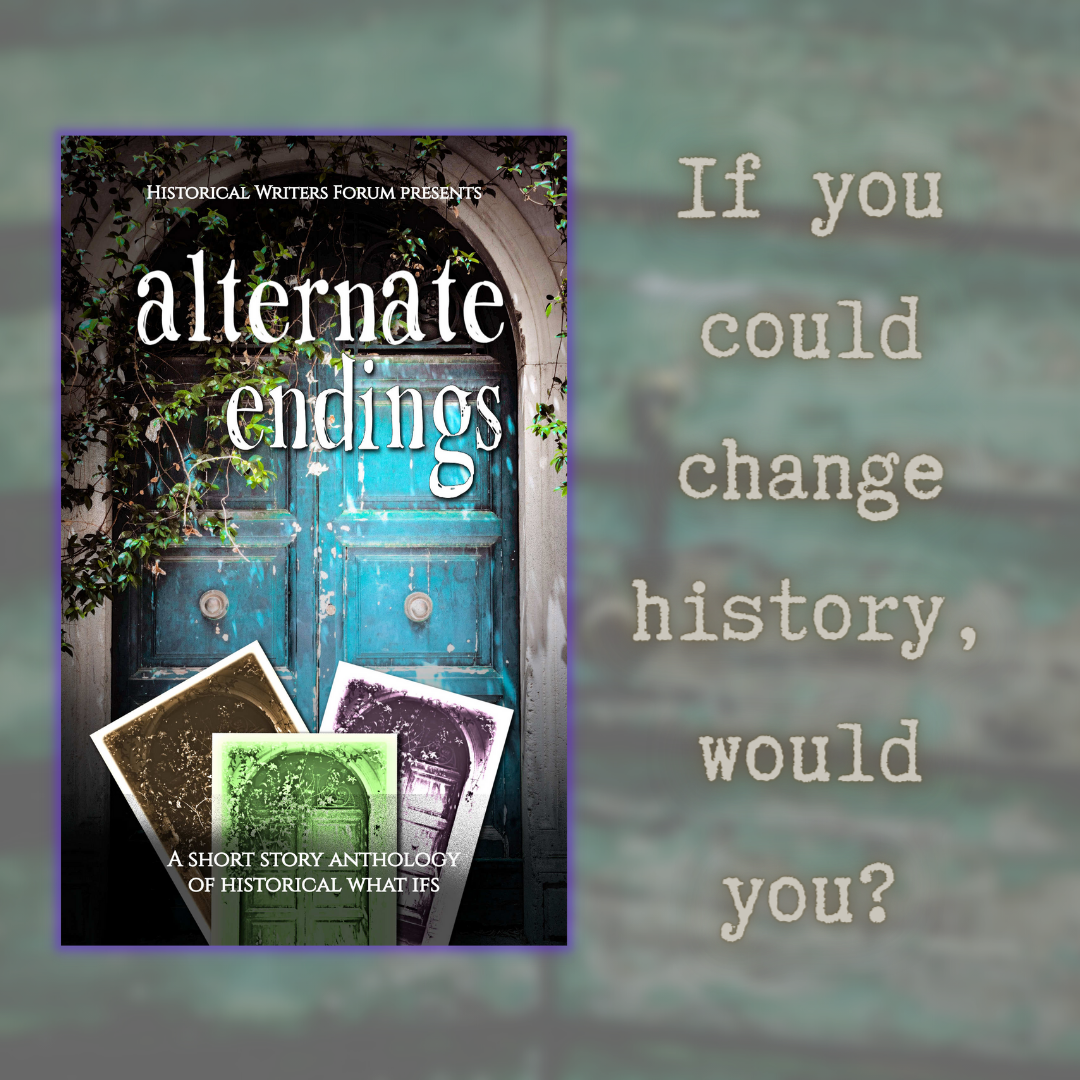
Alternate Endings: An anthology of historical fiction short stories including Long Live the King… which is my take what might have happened had King John not died in October 1216. Available in paperback and kindle from Amazon.

*

You can be the first to read new articles by clicking the ‘Follow’ button, liking our Facebook page or joining me on Twitter and Instagram.

©2022 Sharon Bennett Connolly FRHistS

Book Corner: Women of the American Revolution

Women of the American Revolution will explore the trials of war and daily life for women in the United States during the War for Independence. What challenges were caused by the division within communities as some stayed loyal to the king and others became patriots? How much choice did women have as their loyalties were assumed to be that of their husbands or fathers? The lives of women of the American Revolution will be examined through an intimate look at some significant women of the era. Some names will be familiar, such as Martha Washington who travelled to winter camps to care for her husband and rally the troops or Abigail Adams who ran the family’s farms and raised children during John’s long absences. Elizabeth Schuyler Hamilton is popular for her role in Hamilton the musical, but did you know she was also an early activist working tirelessly for multiple social causes? Decide for yourself if the espionage of Agent 355 or the ride of Sybil Ludington are history or myth. Not all American women served the side of the revolutionaries. Peggy Shippen gambled on the loyalist side and paid severe consequences. From early historian Mercy Otis Warren to Dolley Madison, who defined what it means to be a US First Lady, women of the American Revolution strived to do more than they had previously thought possible during a time of hardship and civil war.

I have to admit, I stepped right out of my comfort zone with Women of the American Revolution by Samantha Wilcoxson. And I know very little about the period – except there was something to do with tea and Boston Harbour – Boston, Massachusetts rather than Boston, Lincolnshire (I am definitely more familiar with the latter!). There was some chap called George Washington, too…

So I was going into this book with a very open mind, eager to learn all I could about the women who helped – or sometimes hindered – in the creation of the United States of America. Women of the American Revolution will certainly give readers a greater understanding of the American Revolution and War of Independence; it fills a gap in the study of the period and is long overdue.

Most books on the American Revolution concentrate on the politics or the military actions, but Samantha Wilcoxson has approached the familiar story from an under represented angle; the women. And what incredible women they were. Some are well known, such as Martha Washington Abigail Adams and Dolley Madison. Others less so famous, such as the mysterious Agent 355. And there is the story of Margaret Shippen Arnold, who was considered incapable of being complicit in her husband’s defection to the British – because she was a woman.

In addition to her household skills, Martha [Washington] was taught to be a lady while confined in corsets that helped form her figure and correct her posture. Virginia ladies of Martha’s time were trained to mimic British aristocracy in their manners and decorum. Simply walking and sitting could be a challenge in the full skirts that were the fashion. Martha apparently learned these skills well, because she flawlessly played the role of hostess as a married woman, even when thrust into the public world as America’s original First Lady (although that title was not used during her husband’s time in office). Her parents ensured that she could ride elegantly in a sidesaddle while maintaining perfect posture. Physical control and poise were also vital when learning to dance, a skill not to be underestimated in its importance in eighteenth century Virginia.

The objective would have been for her to eventually obtain a satisfactory husband, and in this Martha most certainly made her parents proud. Daniel Parke Custis belonged to the closest America had to an aristocracy. Rich and possessing thousands of acres of land, the Custis family was such a step up for Martha that Daniel’s father initially forbade his son to marry her. This is where one gains the first insight into the woman Martha would become. Though only eighteen years old, Martha courageously stood up to her future father-in-law. He had threatened to disinherit Daniel and throw the family silver into the street rather than allow Martha to use it, but she managed to charm him into giving his reluctant blessing. The couple was married when Martha was nineteen years old and her bridegroom was twenty years her senior. This age difference was not uncommon or a barrier to their happiness. The skills Martha had learned at the Dandridge home made her a competent manager of the larger Custis plantation, prophetically named White House.

A large enslaved population made it possible for Daniel and Martha to profitably run the Custis estate. Ne evidence exists that Martha believed owning slaves was immoral or wrong in any way. While she did not support cruel treatment or sales that broke up families, Martha also could not understand when enslaved people ran away from what she felt was a comfortable home. It was a lifestyle she had been born into and never questioned, even as the colonies strived toward their freedom.

Women of the American Revolution is a wonderful collection of the stories of the most remarkable women of the era. Through the historical record and their own letters Samantha Wilcoxson has brought these women back to life, their stories as vivid as they must have been over 200 years ago. The books combines the women’s involvement in the national and international politics and events of the day with their day-to-day lives as wives and mothers. It is an illuminating and informative book on so many levels.

Women of the American Revolution tells the story of these remarkable women, warts and all, but does not try to attach modern-day morals on people who lived so many generations ago. In this way, Samantha Wilcoxson does not ignore the women’s attitude to slavery, or to female emancipation, but explains them in the context of the time. The abundance of letters written by some of the women provide a unique insight into their minds, and into the times they lived in.

And I have to say Samantha Wilcoxson has written an eminently accessible book, whether you are knowledgeable of the era or not. Her research is thorough and impeccable and presented in a beautifully written volume that will stand proud in any library. By focusing on the women, Women of the American Revolution fills a gap in the history and study of the American Revolution. Without a study of the women of the time, no history of any period is complete.

This is Samantha Wilcoxson’s first foray into non-fiction but I truly hope she will write more!

Women of the American Revolution by Samantha Wilcoxson is an informative and entertaining read. I loved this book! And I learned so much! I cannot recommend it highly enough.

To Buy the Book:

Women of the American Revolution by Samantha Wilcoxson is available now from Amazon and Pen and Sword in the UK. It is available for pre-order on Amazon in the US and is now available worldwide from Book Depository.

About the Author:

Samantha Wilcoxson is an author of historical fiction and administrator of a history blog. She has written four full-length novels, three novellas, and two middle grade chapter books. Topics of her writing have ranged from the Wars of the Roses to America’s Civil Rights Movement. Samantha is passionate about history and exploring the personal side of events. In her writing, she urges the reader to truly experience what it might have felt like to live through a moment in history. Samantha’s most recent novel is biographical fiction featuring Catherine Donohue, one of America’s “radium girls.” She is currently working on a novelization of the life of Nathan Hale, and features in Hauntings, an anthology published by the Historical Writers Forum.

*

My books:

Signed, dedicated copies of all my books are available, please get in touch by completing the contact me form.

Defenders of the Norman Crown: The Rise and Fall of the Warenne Earls of Surrey tells the fascinating story of the Warenne dynasty, of the successes and failures of one of the most powerful families in England, from its origins in Normandy, through the Conquest, Magna Carta, the wars and marriages that led to its ultimate demise in the reign of Edward III. Defenders of the Norman Crown: Rise and Fall of the Warenne Earls of Surrey is now available from Pen & Sword BooksAmazon in the UK and US, Bookshop.org and Book Depository.

1 family. 8 earls. 300 years of English history!

Also by Sharon Bennett Connolly:

Ladies of Magna Carta: Women of Influence in Thirteenth Century England looks into the relationships of the various noble families of the 13th century, and how they were affected by the Barons’ Wars, Magna Carta and its aftermath; the bonds that were formed and those that were broken. It is now available in paperback and hardback from Pen & Sword,  AmazonBookshop.org and from Book Depository worldwide.

Heroines of the Medieval World tells the stories of some of the most remarkable women from Medieval history, from Eleanor of Aquitaine to Julian of Norwich. Available now from Amberley Publishing and Amazon, Bookshop.org and Book Depository.

Silk and the Sword: The Women of the Norman Conquest traces the fortunes of the women who had a significant role to play in the momentous events of 1066.  Available now from Amazon,  Amberley Publishing, Bookshop.org and Book Depository.

Alternate endings: An anthology of historical fiction short stories including Long Live the King… which is my stake what might have happened had King John not died in October 1216. Available in paperback and kindle from Amazon.

*

You can be the first to read new articles by clicking the ‘Follow’ button, liking our Facebook page or joining me on Twitter and Instagram.

*

©2022 Sharon Bennett Connolly FRHistS.

Long Live the King….

What would have happened if King John had not died in October 1216…?

Would England have been lost?

Find out in ‘Long Live the King…

I have finally done it!

I’ve written a fictional short story, and it’s out this week.

Alternate Endings is a compilation of short stories published by the Historical Writers Forum. I wasn’t sure about trying my hand at fiction, but there are so many What ifs in history that it was hard to resist. Having spent the last two years writing Nicholaa de la Haye’s biography – which will be published in May 2023, I thought it would be quite fun to take one event in Nicholaa’s life and see what might change if that event didn’t happen.

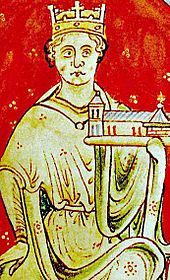
Nicholaa’s greatest benefactor and – dare I say? – friend was King John. He had been an ally since at least the early 1190s, but his death on the night of 18/19 October 1216 was a godsend for England. John’s reign had been plagued by unrest, civil war and the paranoia of the king himself. He had murdered his nephew, Arthur, starved Matilda de Braose to death in a dungeon and stolen the lands of those he was meant to protect. His reputation for underhand dealing, seducing the daughters of nobles and reneging on Magna Carta has seen him go down in history as Bad King John. He is a strong candidate for England’s worst ever king.

It has often been said that John’s death saved England.

I have to admit, I have a soft spot for King John. Not because he was such a warm, cuddly human being – he really wasn’t! But because his reign was full of so much drama. It was a time of transition, when England was losing its continental positions, when the barons were flexing their muscles and when the relationship between king and baron was in flux.

It is a fascinating period of history. So, when I was asked if I wanted to write a short story, I immediately thought of King John, of Nicholaa de la Haye and the upheaval that was Magna Carta and the First Barons’ War. Nicholaa’s involvement culminated in her defending Lincoln Castle through a prolonged siege that ended with the Second Battle of Lincoln. And I wondered… Would events have played out as they did if John had lived?

So… what would have happened if he had survived his illness in October 1216.

Well, you will have to wait and see…

But here’s a teaser….

Newark Castle

28 October 1216

John opened his eyes to a black, empty void.

   Is this it? Is this Hell?

   Has death finally claimed me?

He had been hovering on the brink for so long now. For exactly how long, he did not know. He could barely remember anything beyond the excruciating pain in his gut and head. Lying there in the dark, John took a mental inventory of his body. His head felt clearer than it had in days. The feeling that it was held in a vice had gone, replaced by a dull ache. The stabbing pains in his abdomen had also receded and now there was just a gentle throbbing.

  This could be death…

A groan slipped from between his lips. There was movement, the striking of flint and suddenly a flash of light. The candle’s flame illuminated the features of William Marshal. The Marshal leaned in to examine him, then turned to a lad curled up on bedding in the far corner, just lifting his head, looking groggy from sleep.

‘Godfrey, fetch the doctor. The king is awake.’ Marshal ordered.

‘He’s awake? He’s alive?’ asked a voice from the dark. It was heavily accented. Italian. Cardinal Guala, the papal legate.

‘Aye, your grace, he’s awake. At last!’ Marshal replied.

‘Praise be!’ exclaimed Guala, approaching the bed.

John tried to speak, but barely a croak came out. His mouth was so dry. Marshal signalled Guala to aid the king from the far side of the bed and between them, they lifted John and adjusted his pillows so that he was sitting up. He felt as useless as a new-born baby, he had not the strength to resist, even if he wanted to. Marshal turned to the table beside the bed and poured out a cup of water from the pewter jug. He held the cup to John’s lips, so that he could take a long, thirst-quenching draught. Nothing had ever tasted so wonderful!

John sank back into the pillows, exhausted, as the door opened and his physician entered, striding over to the bed.

I don’t want to give anything away, but the biggest challenge was to consider whether John’s survival would be a blessing or curse for England. And at least William Marshal and Nicholaa de la Haye are there to steady the boat – what could possibly go wrong?

About the book:

We all know the past is the past, but what if you could change history?

We asked eight historical authors to set aside the facts and rewrite the history they love. The results couldn’t be more tantalizing.

  • What if Julius Caesar never conquered Gaul?
  • What if Arthur Tudor lived and his little brother never became King Henry VIII?
  • What if Abigail Adams persuaded the Continental Congress in 1776 to give women the right to vote and to own property?

Dive in to our collection of eight short stories as we explore the alternate endings of events set in ancient Rome, Britain, the United States, and France.

An anthology of the Historical Writers Forum.

Alternate Endings is now available worldwide from Amazon.

*

My Books:

Signed, dedicated copies of all my books are available, please get in touch by completing the contact me form.

Defenders of the Norman Crown: The Rise and Fall of the Warenne Earls of Surrey tells the fascinating story of the Warenne dynasty, of the successes and failures of one of the most powerful families in England, from its origins in Normandy, through the Conquest, Magna Carta, the wars and marriages that led to its ultimate demise in the reign of Edward III. Defenders of the Norman Crown: Rise and Fall of the Warenne Earls of Surrey is now available from Pen & Sword BooksAmazon in the UK and US, Bookshop.org and Book Depository.

1 family. 8 earls. 300 years of English history!

Also by Sharon Bennett Connolly:

Ladies of Magna Carta: Women of Influence in Thirteenth Century England looks into the relationships of the various noble families of the 13th century, and how they were affected by the Barons’ Wars, Magna Carta and its aftermath; the bonds that were formed and those that were broken. It is now available in paperback and hardback from Pen & Sword, AmazonBookshop.org and from Book Depository worldwide.

Heroines of the Medieval World tells the stories of some of the most remarkable women from Medieval history, from Eleanor of Aquitaine to Julian of Norwich. Available now from Amberley Publishing and Amazon, Bookshop.org and Book Depository.

Silk and the Sword: The Women of the Norman Conquest traces the fortunes of the women who had a significant role to play in the momentous events of 1066.  Available now from Amazon,  Amberley Publishing, Bookshop.org and Book Depository.

*

You can be the first to read new articles by clicking the ‘Follow’ button, liking our Facebook page or joining me on Twitter and Instagram.

*

©2022 Sharon Bennett Connolly FRHistS.

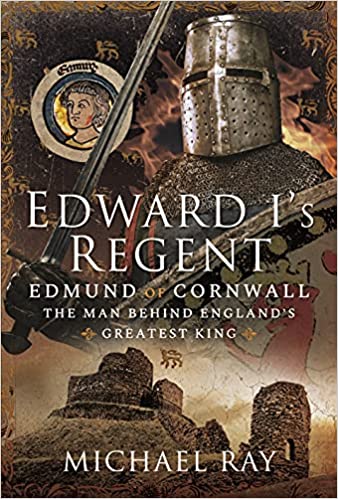
Book Corner: Edward I’s Regent by Michael Ray

Born at Christmas 1249 to Richard, Edmund of Cornwall was nephew to Henry III and cousin to Edward I. His eventful childhood took him to Germany when his father was elected king there. He was captured at the battle of Lewes and imprisoned for more than a year. Returning from crusade, he witnessed the brutal murder of his half-brother, which left him as heir to his father, the richest man in the kingdom. Throughout his life, Edmund played a crucial role in medieval England. As Regent of England, Earl of Cornwall and the richest man in the land, he was a leading force of the late-thirteenth century. This book considers Edmund’s life, his use of his wealth to lend to the king and others and to be a major benefactor of religious houses. His piety saw him found two new religious houses, rebuild another and bring the Holy Blood relic from Germany to Hailes abbey. His record as Regent of England for three years is assessed. The wide spread of his lands, which included 13castles and more than 800 places in 27 counties, and his tenants are set out as is his place in the local community. The basis of his wealth and its sources, including money from his lands but also from tin mining and marine dues in Cornwall, is explored and his knightly affinity and his close associates and officials are considered. On a personal level, the book examines his unsuccessful, childless marriage with the sister of the Earl of Gloucester. Edmund was a key figure throughout Edward I’s rein and the late-thirteenth century. In this insightful account, the man behind England’s ‘greatest king’ is at long last brought to the fore.

Edward I’s Regent: Edmund of Cornwall, The Man Behind England’s Greatest King by Michael Ray is a fascinating study of a little-known but highly significant noble of the reign of Edward I. Edmund of Cornwall was the son of Richard, Earl of Cornwall. Richard was the younger son of King John and Isabelle d’Angoulême, and brother to King Henry III. The second son of Richard of Cornwall, Edmund’s mother was Sanchia of Provence, younger sister of Henry III’s queen, Eleanor of Provence. Edmund may ever have become Earl of Cornwall, had his older brother, Henry of Almain, not been murdered by Guy de Montfort, son of the famous Simon de Montfort, in a church in Viterbo, Italy, in 1271.

With such a dramatic inheritance, it is no surprise that Edmund’s life and deeds were no less dramatic.

I do like this new tendency to look away from England’s monarchs and turn the spotlight on those who served them. It gives a more rounded approach to history and historical biography and greatly illuminates the reigns of the kings who are served. It also demonstrates how much is still left to study in history and how wide and deep historians can go in order to gain a greater understanding of the rule of medieval kings. The relationship between baron and king was, more often than not, one of mutual trust and reliance. Edward I’s Regent: Edmund of Cornwall, The Man Behind England’s Greatest King by Michael Ray serves to demonstrate just how deep and essential this relationship was.

On 29 November and December 1272, Edmund and Bishop Giffard sent letters requiring Llywelyn to come to the Ford of Montgomery, the traditional place for meetings between the English and Welsh rulers, to render his homage to the new monarch and to send the 3,000 marks he owed to the King by Christmas at the latest. The King needed the money for his crusade. Llywelyn neither came nor paid and the impasse continued until well after the new King’s return.

Meanwhile neither Edmund, or his officials, were not always well-behaved in the land of the absentee King. In January 1273, Edmund’s men were accused of occupying lands belonging to Peter de la Mare which led to the Chancellor, Walter de Merton, ordering the escheator to remedy the position. Despite this, in June, Edmund was still being obstructive. A long-running dispute with the Bishop of Exeter led to a threat of excommunication. Even though Edmund was at the heart of government, he was pursued by the Exchequer over his father’s debts. However, this did not prevent Edmund from being amongst those ready to go to France to meet and welcome back Edward I. Edmund was granted protection until August 1273 but he was still in Paris in December when he received 2,000 marks from the King. Whilst Edward I did not finally arrive back in England until 2 August 1274, it seems likely that Edmund had already returned as he asked Robert Burnell to summon a council in March. Edmund was present at the King’s coronation on 19 August 1274.

From the start of the reign, tasks were entrusted to Edmund by the King. At the beginning of 1275 Edmund was ready to resolve a dispute with Flemish merchants but was unable to act as the Count of Flanders had not sent a representative. In March, the King stayed at two of Edmund’s manors, Cippenham and Risborough in Buckinghamshire, and it can be assumed that Edmund was present. The first of many royal charters to be witnessed by Edmund was attested at Westminster on 22 October 1274.

Edward I’s Regent: Edmund of Cornwall, The Man Behind England’s Greatest King by Michael Ray is an in-depth study of a man who was an integral part of Edward I’s government, but whose life and career has often been overlooked. Michael Ray expertly examines every aspect of Edmund’s life and career in great detail. With the use of chronicles and charter evidence, the author demonstrates the extent to which Edmund of Cornwall was an integral part of Edward I’s administration and court,, both as a cousin to the king, an administrator and a soldier.

Thoroughly researched and with extensive footnotes and bibliography, this is an excellent book in every way. t is a pleasure to read.

Edward I’s Regent: Edmund of Cornwall, The Man Behind England’s Greatest King by Michael Ray is an eminently readable book that could only be an asset to the study of medieval history and the reign of Edward I in particular. Whether you are studying medieval history for academia or simply as a hobby, this is a book which is not to be missed. I can highly recommend it.

To buy the book:

Edward I’s Regent: Edmund of Cornwall, The Man Behind England’s Greatest King by Michael Ray is available in hardback and Kindle from Pen & Sword Books and Amazon.

About the author:

After school in Shropshire, Michael Ray read geography and town planning at King’s and University Colleges, London. Retiring early from a planning career, he returned to KCL and obtained a PhD after a study of aliens in thirteenth-century England. He has since been published in books, journals and on websites including Academia.

My Books:

Signed, dedicated copies of all my books are available, please get in touch by completing the contact me form.

Defenders of the Norman Crown: The Rise and Fall of the Warenne Earls of Surrey tells the fascinating story of the Warenne dynasty, of the successes and failures of one of the most powerful families in England, from its origins in Normandy, through the Conquest, Magna Carta, the wars and marriages that led to its ultimate demise in the reign of Edward III. Defenders of the Norman Crown: Rise and Fall of the Warenne Earls of Surrey is now available from Pen & Sword BooksAmazon in the UK and US, Bookshop.org and Book Depository.

1 family. 8 earls. 300 years of English history!

Also by Sharon Bennett Connolly:

Ladies of Magna Carta: Women of Influence in Thirteenth Century England looks into the relationships of the various noble families of the 13th century, and how they were affected by the Barons’ Wars, Magna Carta and its aftermath; the bonds that were formed and those that were broken. It is now available in paperback and hardback from Pen & Sword,  AmazonBookshop.org and from Book Depository worldwide.

Heroines of the Medieval World tells the stories of some of the most remarkable women from Medieval history, from Eleanor of Aquitaine to Julian of Norwich. Available now from Amberley Publishing and Amazon, Bookshop.org and Book Depository.

Silk and the Sword: The Women of the Norman Conquest traces the fortunes of the women who had a significant role to play in the momentous events of 1066.  Available now from Amazon,  Amberley Publishing, Bookshop.org and Book Depository.

Alternate endings: An anthology of historical fiction short stories including Long Live the King… which is my stake what might have happened had King John not died in October 1216. Available in paperback and kindle from Amazon.

*

You can be the first to read new articles by clicking the ‘Follow’ button, liking our Facebook page or joining me on Twitter and Instagram.

*

©2022 Sharon Bennett Connolly FRHistS.

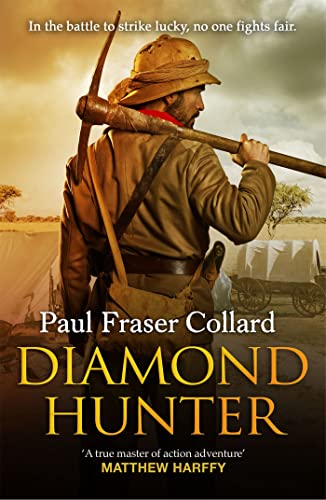
Book Corner: Diamond Hunter by Paul Fraser Collard

South Africa, 1871. Jack Lark no longer walks alone. With the worldly Anna Baker by his side, he travels to the Cape Colony diamond fields determined to seek their fortune – and an adventurous new life together.

The journey north soon turns violent as tensions erupt between other hopeful diggers and a gang of Boer men. Everyone has their eye on the same elusive prize – and some will stop at nothing to get it.

For Jack and Anna, unearthing a diamond is only half the battle. Getting out of the mines alive will prove far more difficult – and dangerous. And when the worst happens, Jack finds himself tested as no enemy, no man and no war has ever before.

Diamond Hunter by Paul Fraser Collard is the 11th book in the fabulous Jack Lark series. Jack Lark has made a career of being an imposter, finding his home and employment in the various wars of the 19th century. But what do you do when the guns fall silent? In the last book, Commander, Jack had followed the many adventurers of his era and joined an expedition to explore the River Nile. In Diamond Hunter he stays in Africa, but turns his hand to entirely different profession, though one that can be just as brutal and cut-throat as war.

In the opening pages of Diamond Hunter, we find Jack Lark content, with a woman who is his equal in every way, and with enough money to help him on to his next adventure. However, his constant search of adventure is still bubbling beneath the surface and he is now in southern Africa, ready to stake everything in the search for fortune, or at least a diamond big enough to see him comfortable, for now.

However, for Jack Lark, nothing is ever easy. The journey is always fraught with danger and trouble does seem to find him out! And I do wonder what Jack ever did for Paul Fraser Collard to give him such a hard time? Poor bloke. He really goes through it this time.

‘Shit.’ Jack gently moved Anna’s arm away, pushing himself to his feet with a groan as the action set off the pain in his spine, the persistent backache so much worse after hours of walking and periods riding in the jarring wagon. but it was not enough to stop him straightening up, then offering a hand to Anna to help her up too. It never occurred to him to leave her behind.

‘They’ve been drinking.’ She brushed down the seat of her trousers.

‘Probably. Ready?’ He gave her a moment to prepare.

She sucked down a deep breath. ‘Ready.’

Jack did not wait for more. The voices were getting louder. Whoever had been angered was making one hell of a fuss.

It took them no more than a dozen paces to round the wagon and see what was going on. The four Boers were squared up, facing three of the Cape colonists. The fourth was lying on his back, blood smothering his face like a mask.

‘What the hell is happening?’ Jack shouted as he came closer. It was not his fight, but it was his future that would be thrown into jeopardy if something happened to force JW to turn around. He would not allow that to happen.

‘Keep out of it.’ One of the colonists turned to snap at him.

It did not deter him, and he came closer, Anna just behind him. He could see Clarke and Goodfellow lurking on the far side of the wagon, watching what was going on while making sure they kept a safe distance from the fracas. JW and Fred were standing by as if readying themselves to pick up the pieces of whatever occurred, while JW’s wife was sitting at a campfire a good dozen yards away, her face set in a cherubic smile as she stared at the flames, seemingly blithely unaware of what was going on.

As Jack approached, the colonist who had been knocked to the ground slowly got to his feet, his hand lifting to smear the blood from his face.

Paul Fraser Collard is a fabulous storyteller. He transports not only his characters, but also his readers, to the most exotic and dangerous parts of the world of the nineteenth century. In Diamond Hunter he recrates the gritty, muddy and miserable landscape of the South African diamond fields. Honestly, you can practically taste the dust in your mouth!

Jack Lark is one of the best character developments in modern literature. In Diamond Hunter, he is finally comfortable in his own skin. Though that doesn’t mean his problems are over. He accepts who and what he is, but for Jack Lark, that will always mean facing trouble head on – it is one of his most endearing qualities! Jack is more affected by people and events than he likes to believe. He can’t help but help, which always leads him into trouble.

Diamond Hunter is gritty, harsh and sometimes hard to read. It also enjoyable, engrossing and absolutely fabulous. Diamond Hunter is a book you will not want to put down. A totally immersive and absorbing adventure, it leaves the reader as physically and emotionally drained as it does Jack Lark. I think it may be the best adventure yet.

To Buy the book:

Diamond Hunter by Paul Fraser Collard is now available from Amazon.

About the author:

Paul’s love of military history started at an early age. A childhood spent watching films like Waterloo and Zulu whilst reading Sharpe, Flashman and the occasional Commando comic, gave him a desire to know more of the men who fought in the great wars of the Nineteenth and Twentieth Centuries. This fascination led to a desire to write and his series of novels featuring the brutally courageous Victorian rogue and imposter Jack Lark burst into life in 2013. Since then Paul has continued to write, developing the Jack Lark series to great acclaim. To find out more about Paul and his novels visit http://www.paulfrasercollard.com or find him on twitter @pfcollard

*

My Books:

Signed, dedicated copies of all my books are available, please get in touch by completing the contact me form.

Defenders of the Norman Crown: The Rise and Fall of the Warenne Earls of Surrey tells the fascinating story of the Warenne dynasty, of the successes and failures of one of the most powerful families in England, from its origins in Normandy, through the Conquest, Magna Carta, the wars and marriages that led to its ultimate demise in the reign of Edward III. Defenders of the Norman Crown: Rise and Fall of the Warenne Earls of Surrey is now available from Pen & Sword BooksAmazon in the UK and US, Bookshop.org and Book Depository.

1 family. 8 earls. 300 years of English history!

Also by Sharon Bennett Connolly:

Ladies of Magna Carta: Women of Influence in Thirteenth Century England looks into the relationships of the various noble families of the 13th century, and how they were affected by the Barons’ Wars, Magna Carta and its aftermath; the bonds that were formed and those that were broken. It is now available in paperback and hardback from Pen & Sword,  AmazonBookshop.org and from Book Depository worldwide.

Heroines of the Medieval World tells the stories of some of the most remarkable women from Medieval history, from Eleanor of Aquitaine to Julian of Norwich. Available now from Amberley Publishing and Amazon, Bookshop.org and Book Depository.

Silk and the Sword: The Women of the Norman Conquest traces the fortunes of the women who had a significant role to play in the momentous events of 1066.  Available now from Amazon,  Amberley Publishing, Bookshop.org and Book Depository.

*

You can be the first to read new articles by clicking the ‘Follow’ button, liking our Facebook page or joining me on Twitter and Instagram.

*

©2022 Sharon Bennett Connolly FRHistS.

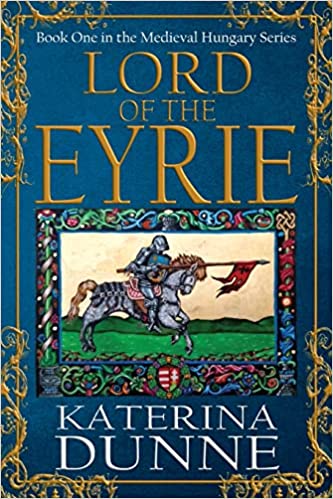
Book Corner: Lord of the Eyrie by Katerina Dunne

Love, War, and the Price of Loyalty

Transylvania, Kingdom of Hungary, 1440:

Finally home after five years away, warrior-nobleman Sándor Szilágyi is met by a dying father, a resentful younger brother, his child-bride all grown up and the family estate raided by the Ottomans. As he struggles to adjust to life as a landlord, Sándor’s authority is challenged by two strong-minded and fearless women: Margit, his faithful and righteous wife, determined to keep him on the straight and narrow; and Anna, his sister-in-law, a scheming temptress bent on ruining him in order to take his land.

After committing a mortal sin and desperate to win back the woman he loves, Sándor seeks absolution by accepting his overlord’s summons to fight the Ottomans. But his obsession with war will lead him down a perilous path.

Loyalties are tested, danger lurks around every corner, and Sándor’s struggle to balance his duty to protect his land and family from his relatives’ greedy hands, as well as his duty to defend his country on the battlefield, will come at a terrible cost.

Lord of the Eyrie by Katerina Dunne is a fabulous adventure set in medieval Hungary. It has all the ingredients for an exciting novel; love, betrayal, war and family disharmony. And it all combines to create a memorable story that will have the reader on the edge of their seat throughout.

I have to admit, I don’t think I’ve ever read a book set in Hungary before, so this was a refreshing change for me. Of course, it is still set in medieval times, so the weaponry, tactics and societal laws were still very familiar. I wasn’t familiar with Hungary’s role in medieval Europe, nor in her battles against the outside forces eager to trespass into the country’s vast landscape. Reading Lord of the Eyrie was as much an adventure for me as the story was for the characters involved. And it was a wonderful adventure.

Katerina Dunne has woven a beautiful story, built on remarkable characters and a lead protagonist for whom honour and duty is second nature. The story is fast-paced and entirely unpredictable, with many twists and turns that leave the reader shouting at the book when a character is being naive, or crying when tragedy strikes.

Margit’s keys and gilded prayer book jingled as she hurried back from church along the colonnaded portico of the great hall. The morning mass always felt too long to her, and she was looking forward to breaking her fast. But that would have to wait. Lajos Kendi stood at the entrance to the keep. His flushed and sweaty face, dishevelled eyebrows and raspy breath indicated that something was amiss.

He took his hat off and bowed to her. “I’ve bad news, my lady. I must speak with your husband, but I can’t find him anywhere. Was he in church with you? Is he still in the chapel?”

“No. I have not seen him.” Margit pondered. “Perhaps he is in the armoury building, practising with the soldiers. Let us go and look for him.”

She sent her maid to the house to supervise the preparation of the breakfast table and followed Kendi to the exercise hall. Their arrival did not alert the soldiers and knights for the thick layer of hay on the floor muffled their footsteps.

In the middle of the hall, Sándor, venturing to teach his brother how to defend himself with a sword and shield against multiple attackers, was engaging in a fight against not one, but three opponents.

He was wearing only his joined hose and a shirt, unlaced at the front and with the sleeves rolled up. Despite his height, he moved with the nimbleness of a lynx, shouting instructions at his training partners and showing off his combat skills and physical strength.

Margit’s jaw dropped. Her pulse quickened, and her breath became short and shallow. How could she forget that women were not allowed in the training hall? As it was a warm day, her husband was not the only one who had stripped down to his undergarments. Although the men did not seem troubled by her presence, she flushed and dropped her gaze to the floor.

“My lord!” Lajos called out.

Sándor stopped, and so did the soldiers. He tossed down the wooden sword and shield and approached Kendi and Margit. “Whats’ the matter?”

Kendi glanced about to make sure that no one was listening. He spoke in a whisper. “We’ve a problem at the mine.”

Lord of the Eyrie is set in medieval Hungary, a land which Katerina Dunne recreates in astonishing detail. The landscape, the settlements, castles and people help to draw the reader into the story. Hungary is a land rich in resources but beset by enemies, both within and without, and the hero, Sándor, must navigate not only national politics, international enemies but also his own family tensions. It is a wonderful, rich and absorbing story.

Lord of the Eyrie is a thoroughly entertaining read, one that will keep you gripped to the very end. You will find yourself invested in the characters, in tears at times and hesitant to read on when disaster strikes. But you cannot let go!

Lord of the Eyrie will take you through the full range of emotions.

The family drama, the battle scenes and the intricately woven plotlines all serve to keep the reader wanting more. It was an absolute pleasure to read.

I do hope there is a book 2!

To buy the book:

Lord of the Eyrie by Katerina Dunne is now available on Amazon.

About the author:

Katerina Dunne is the pen-name of Katerina Vavoulidou. Originally from Athens, Greece, Katerina has been living in Ireland since 1999. She has a degree in English Language and Literature from the University of Athens, an MA in Film Studies from University College Dublin and an MPhil in Medieval History from Trinity College Dublin. While she used to write short stories for family and friends in her teenage years, she only took up writing seriously in 2016-17, when she started work on her first novel.

Katerina’s day job is in financial services, but in her free time she enjoys reading historical fiction and watching historically-themed movies and TV series. She is passionate about history, especially medieval history, and her main area of interest is 13th to 15th century Hungary. Although the main characters of her stories are fictional, Katerina uses real events and personalities as part of her narrative in order to bring to life the fascinating history of the medieval Kingdom of Hungary, a location and time period not so well-known to English-speaking readers.

For any comments or further information, you can contact Katerina by email: katerinadunnewriter@gmail.com

*

My Books:

Signed, dedicated copies of all my books are available, please get in touch by completing the contact me form.

Defenders of the Norman Crown: The Rise and Fall of the Warenne Earls of Surrey tells the fascinating story of the Warenne dynasty, of the successes and failures of one of the most powerful families in England, from its origins in Normandy, through the Conquest, Magna Carta, the wars and marriages that led to its ultimate demise in the reign of Edward III. Defenders of the Norman Crown: Rise and Fall of the Warenne Earls of Surrey is now available from Pen & Sword BooksAmazon in the UK and US, Bookshop.org and Book Depository.

1 family. 8 earls. 300 years of English history!

Also by Sharon Bennett Connolly:

Ladies of Magna Carta: Women of Influence in Thirteenth Century England looks into the relationships of the various noble families of the 13th century, and how they were affected by the Barons’ Wars, Magna Carta and its aftermath; the bonds that were formed and those that were broken. It is now available in paperback and hardback from Pen & Sword,  AmazonBookshop.org and from Book Depository worldwide.

Heroines of the Medieval World tells the stories of some of the most remarkable women from Medieval history, from Eleanor of Aquitaine to Julian of Norwich. Available now from Amberley Publishing and Amazon, Bookshop.org and Book Depository.

Silk and the Sword: The Women of the Norman Conquest traces the fortunes of the women who had a significant role to play in the momentous events of 1066.  Available now from Amazon,  Amberley Publishing, Bookshop.org and Book Depository.

*

You can be the first to read new articles by clicking the ‘Follow’ button, liking our Facebook page or joining me on Twitter and Instagram.

*

©2022 Sharon Bennett Connolly.

Guest Post: First Impressions and their Consequences by Anna Belfrage

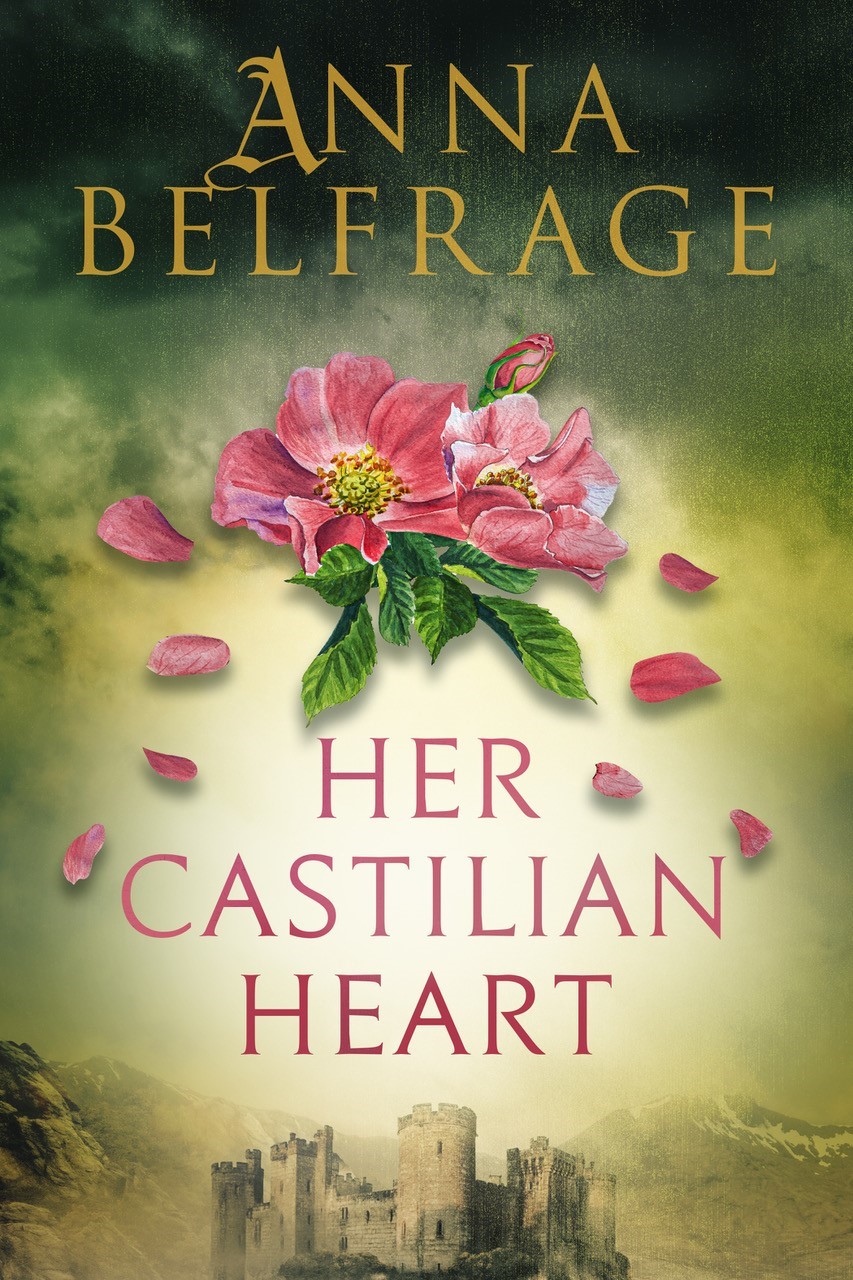
It is always a pleasure to welcome my good friend and fellow author, Anna Belfrage, to History…the Interesting Bits. Anna’s fabulous new Castilian Saga is a pleasure to read – and I will be posting a review of the latest instalment, Her Castilian Heart, shortly. But, for now, Anna is here to tell us about how she met the hero and the story that developed…

First impressions and their consequences.

The first time I met Robert FitzStephan, he had his arms full of apple blossom.

“Sorry,” he said, squeezing by me on the narrow stairs, “I have a wife to make amends to.” And off he went, leaving me in the damp gloom with a flaring torch the only source of light. I suppose this is when I should clarify that this was not an IRL (in real life) meeting: no, all of this happened in my roomy brain, an ever-expanding universe in which my characters pop up out of nowhere, demanding I tell their stories.

Robert FitzStepahn left an impression of light eyes and a HUGE nose and. . .

“Not that huge,” he protests, setting a finger to the rather impressive protuberance.

“No, it isn’t,” his wife, Noor says (apparently, the apple blossom did the trick) She gives me a severe look. “And one should not make fun of people because of their looks.”

“I wasn’t,” I try. After all, Robert is tall and broad and strong and. . .

Noor gives me another glare. “He’s mine!”

Of course. I don’t want a medieval man—I don’t live in that era, no matter that I write about it.

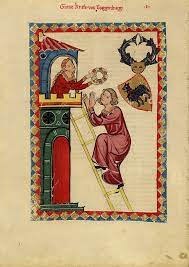
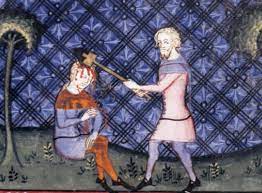
A Courting Man, Codex Manesse

Now, aside from being tall and all that, Robert is a self-made man, a man whose years of loyal service to his king, Edward I, were rewarded when the king gave him Noor—Eleanor d’Outremer—in marriage. With Noor came a fortified manor and some lands—and an indirect blood-tie to Queen Eleanor. Not that being related to the queen is necessarily a boon.

Initially, the Robert and Noor marriage had its bumps—as described in His Castilian Hawk. Like when Robert realised Noor was related to the princes of Gwynedd and that the orphan she’d taken in was the unknown son of the rebellious Dafydd ap Gruffyd, former prince whose head now adorned London Bridge. Should the king find out about the child, he’d lock the toddler up with the child’s unfortunate brothers in Bristol Castle and potentially sever Robert’s head for harbouring him. Our hero was somewhat torn between his loyalties to his liege and those to his wife. . .

“Never,” Robert says. “I am the king’s man, but my wife comes first.”  

Aww. . . Such a nice quality in a man!

Noor’s decision to take in the orphan was to have consequences, especially once Queen Eleanor began suspecting who the child was. Which was how Robert and Noor found themselves unofficially exiled to Aragon and Castile—arriving just in time for Robert to participate in the battle of Col de Panissars, where the king of Aragon defeated the French who’d attempted to invade his country under the of a crusade. Their sojourn on the Iberian Peninsula was fraught with adventure and danger, as described in The Castilian Pomegranate.

In Her Castilian Heart, Robert and Noor are safely back in England. Well, safely may not be the right word, what with Robert’s half-brother wanting to murder him, but still. Plus, the queen remains suspicious of their foundling, and God alone knows what an irate queen may do. This time, the events are woven round King Edward’s attempts to broker peace between the pope, the king of France and the king of Aragon—that failed French effort to invade Aragon, a.k.a. the Aragonese Crusade, has caused quite a political mess.

King Edward’s reasons for involving himself are to some extent personal: one of his daughters is contracted to marry King Alfonso of Aragon, but the pope has threatened him with brimstone and sulphur if he allows his daughter to do so without the pope’s explicit permission. Which isn’t forthcoming, as the pope is seriously ticked off about the fact that Aragon has taken Sicily back from Charles d’Anjou. The pope has a much better relationship with the Angevin than with the king of Aragon—maybe because he excommunicated Alfonso’s father for having supported the Sicilians when they rebelled against years of Angevin oppression (and then consolidated Sicily as part of his kingdom)

Philippe of France wants restitution for the loss of the crown of Aragon—which is rather odd, seeing as Aragon wasn’t his to begin with, but the young French king has not lived down the humiliation of losing to Aragon. Young Alfonso wants peace—but not at the expense of relinquishing Sicily, and no way is he going to compensate the French for invading his kingdom! In fact, they should compensate him!

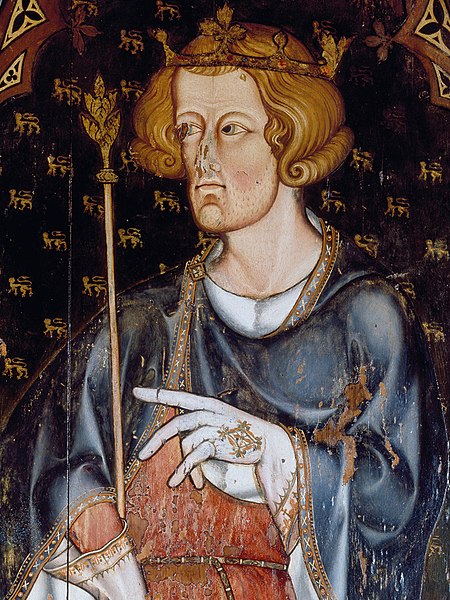
King Edward I

King Edward is faced with quite the balancing act: how is he to placate the pope, somehow knock some sense into the young hot-headed kings and deliver a treaty that will hold? And on top of all this, King Edward has an ailing wife and the rebellious Welsh to handle! Not that he involves himself in the actual fighting win Wales—he leaves the rekindled Welsh uprising to Robert to handle together with Roger Mortimer.

Her Castilian Heart was originally supposed to be the final book in this series, but as Robert has as yet not shared the reason for having to placate his wife with apple blossom, I still have more stories to tell about Robert, Noor, their foundling Lionel—and the brave and rebellious Welsh. King Edward may think he has the Welsh dragon tamed, but he is wrong—oh, so wrong!

About Her Castilian Heart:

Blood is not always thicker than water…

At times a common bloodline is something of a curse—or so Robert FitzStephan discovers when he realises his half-brother, Eustace de Lamont, wants to kill him.  

A murderous and greedy brother isn’t Robert’s only challenge.  He and his wife, Noor, also have to handle their infected relationship with a mightily displeased Queen Eleanor—all because of their mysterious little foundling whom they refuse to abandon or allow the queen to lock away.

Eustace is persistent. When Robert’s life hangs in the balance, it falls to Noor to do whatever it takes to rip them free from the toothy jaws of fate. Noor may be a woman, but weak she is not, and in her chest beats a heart as brave and ferocious as that of a lioness. But will her courage be enough to see them safe?

To buy the book:

Her Castilian Heart is available now from: http://myBook.to/HEART

About the author:

Had Anna been allowed to choose, she’d have become a professional time-traveller. No luck there, so instead she became a financial professional with two absorbing interests; history and writing. These days, Anna combines an exciting day-job with a large family and her writing endeavours. Plus she always finds the time to try out new recipes, chase down obscure rose bushes and initiate a home renovation scheme or two.

Anna has authored the acclaimed time travelling series The Graham Saga , set in 17th century Scotland and Maryland, as well as the equally acclaimed medieval series The King’s Greatest Enemy.

Anna has also published The Wanderer, a fast-paced contemporary romantic suspense trilogy with paranormal and time-slip ingredients. Her September 2020 release, His Castilian Hawk is a story of loyalty and love set against the complications of Edward I’s invasion of Wales in the late 13th century.

Her most recent release, The Whirlpools of Time , is a time travel romance set against the backdrop of brewing rebellion in the Scottish highlands.

All of Anna’s books have been awarded the IndieBRAG Medallion, she has several Historical Novel Society Editor’s Choices, and one of her books won the HNS Indie Award in 2015. She is also the proud recipient of several Reader’s Favorite medals as well as having won various Gold, Silver and Bronze Coffee Pot Book Club awards.

Find out more about Anna, her books and enjoy her eclectic historical blog on her website, www.annabelfrage.com 

Social Media Links:

Website: www.annabelfrage.com; Twitter: https://twitter.com/abelfrageauthor; Facebook: https://www.facebook.com/annabelfrageauthor; Instagram: https://instagram.com/annabelfrageauthor; Book Bub: https://www.bookbub.com/profile/anna-belfrage; Amazon Author Page: http://Author.to/ABG; Goodreads: https://www.goodreads.com/author/show/6449528.Anna_Belfrage

*

My Books:

Signed, dedicated copies of all my books are available, please get in touch by completing the contact me form.

Defenders of the Norman Crown: The Rise and Fall of the Warenne Earls of Surrey tells the fascinating story of the Warenne dynasty, of the successes and failures of one of the most powerful families in England, from its origins in Normandy, through the Conquest, Magna Carta, the wars and marriages that led to its ultimate demise in the reign of Edward III. Defenders of the Norman Crown: Rise and Fall of the Warenne Earls of Surrey is now available from Pen & Sword BooksAmazon in the UK and US, Bookshop.org and Book Depository.

1 family. 8 earls. 300 years of English history!

Also by Sharon Bennett Connolly:

Ladies of Magna Carta: Women of Influence in Thirteenth Century England looks into the relationships of the various noble families of the 13th century, and how they were affected by the Barons’ Wars, Magna Carta and its aftermath; the bonds that were formed and those that were broken. It is now available in paperback and hardback from Pen & Sword,  AmazonBookshop.org and from Book Depository worldwide.

Heroines of the Medieval World tells the stories of some of the most remarkable women from Medieval history, from Eleanor of Aquitaine to Julian of Norwich. Available now from Amberley Publishing and Amazon, Bookshop.org and Book Depository.

Silk and the Sword: The Women of the Norman Conquest traces the fortunes of the women who had a significant role to play in the momentous events of 1066.  Available now from Amazon,  Amberley Publishing, Bookshop.org and Book Depository.

*

You can be the first to read new articles by clicking the ‘Follow’ button, liking our Facebook page or joining me on Twitter and Instagram.

*

©2022 Sharon Bennett Connolly.

Guest Post: The Dark Earth by Gordon Doherty

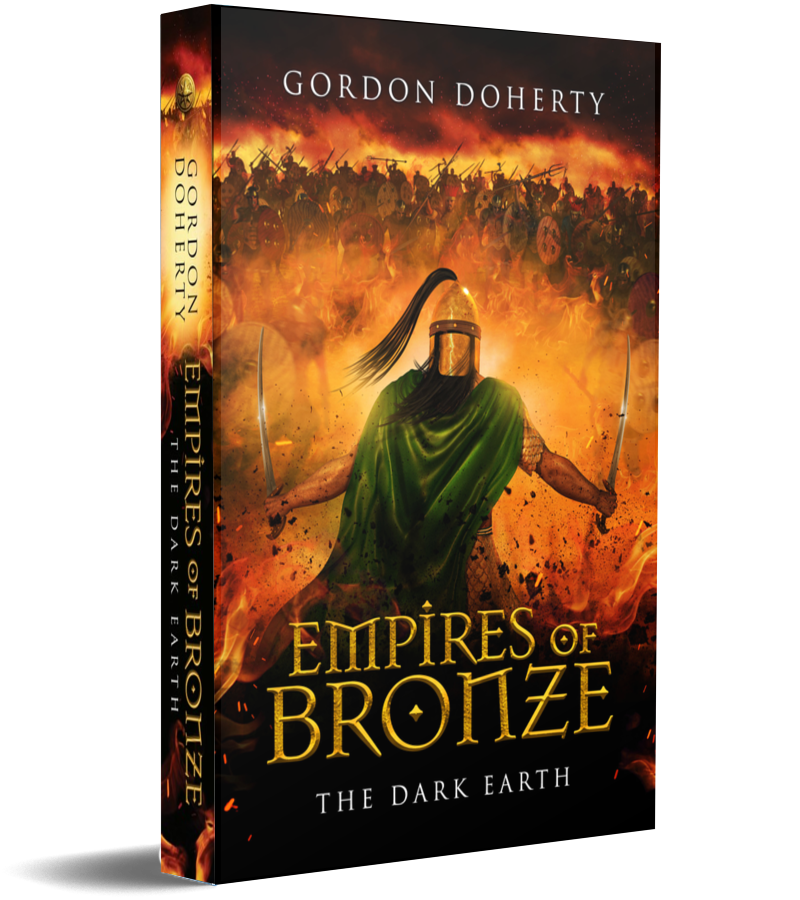
Today it is a pleasure to welcome author Gordon Doherty to History … the Interesting Bits. Gordon’s latest novel The Dark Earth is the 6th book in his Empires of Bronze series. And it is a scorcher! literally! Look out for my review in the coming weeks. But in the meantime, here’s Gordon to tell us about the meaning behind the title.

The Dark Earth

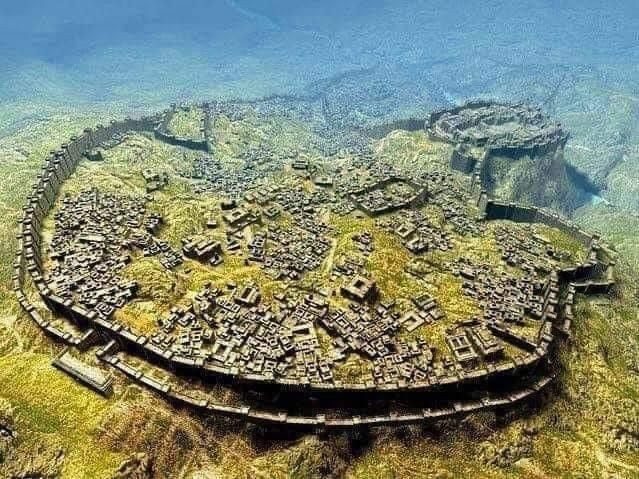
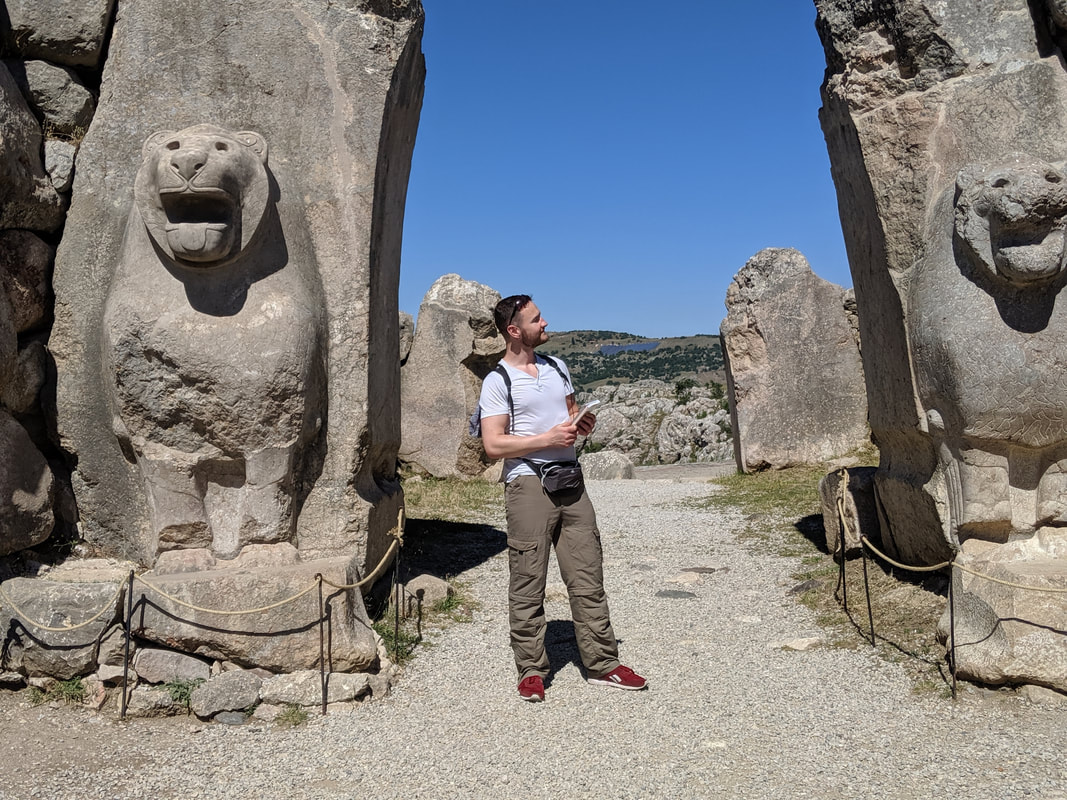
Hattusa

The Dark Earth’? Cool book title… but what does it actually mean?

As a book title, ‘The Dark Earth‘ sounds probably quite ominous and mysterious. But there’s more to it than that.

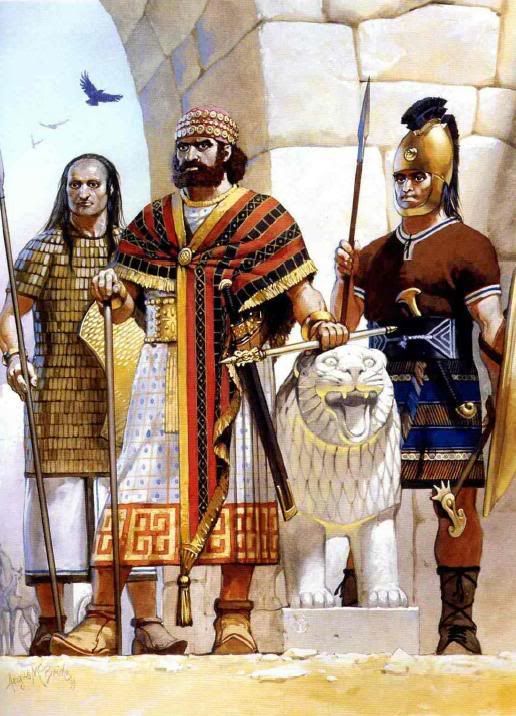
The book tells the story of the catastrophic change that occurred in the era known as the Bronze Age Collapse – a period of a few decades beginning around 1230 BC, when the mighty empires of the near east world were blasted into oblivion or battered into a pale shadow of their former selves.

The tale is told from the point of view of the Hittite Empire, arguably *the* superpower of the age, having only recently seen off the mighty Pharaoh Ramesses II of Egypt at the epic Battle of Kadesh.

Yet come 1170 BC, the Hittites were gone, their Anatolian heartlands a deserted, windswept, drought-ravaged wasteland, their great cities lying in tumbled heaps, their power but a memory. This was a time of earthquakes, invaders, famine, death and destruction… a veritable end of days.

And that is where the relevance of the title arises: Hittite tradition (interpreted from the tablets excavated from their ruined cities) speaks of an afterlife realm known as – you guessed it – ‘The Dark Earth‘.

This is no paradise-like Elysium or Valhalla. No, this is a sinister and unsettling place, somewhere deep underground where “Bloodless shades wander, not recognising one another. They eat mud and drink muddy water”. It is described as having “Seven ringed walls round the palace of the Goddess of death, and seven gatekeepers at each barrier.”

The Hittites were pantheistic, worshipping mountains, trees, rivers, everything around them. They used to believe that pits, holes and shafts, graves, springs, caves or wells were potential routes into this land of the dead.

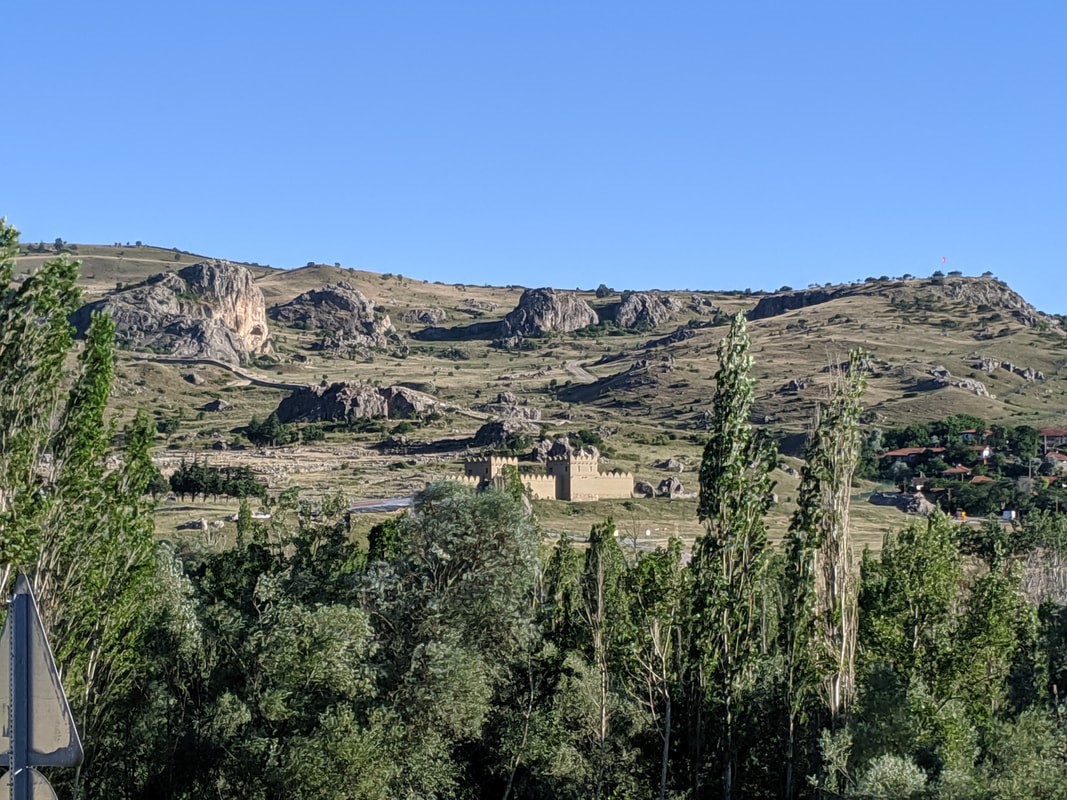
Hattusa today

This was perhaps by reinforced by the lore of the Goddess Ishtar’s descent into the underworld. Within the ruins of Hattusa, the massive Hittite capital, there is even a stone-lined stairwell that descends into the hillside upon which the city is built, and this is thought to have been known as ‘The Gateway to the Dark Earth.’

So there you go. The novel tells the story of the death of a mighty empire. But there is so much more to it than that. Every ending is a new beginning, after all…

*

To buy The Dark Earth:

Links: · Amazon: http://getbook.at/eob6 · Apple: https://books.apple.com/us/book/empires-of-bronze-the-dark-earth-empires-of-bronze-6/id1620805899 · Google: https://play.google.com/store/books/details?id=N1ZuEAAAQBAJ · Kobo: https://www.kobo.com/gb/en/ebook/empires-of-bronze-the-dark-earth-empires-of-bronze-6 · SW: https://www.smashwords.com/books/view/1142101 · BandN: https://www.barnesandnoble.com/w/empires-of-bronze-gordon-doherty/1141388565?ean=2940165840036

About the Book

Hattusa

The time will come, as all times must, when the world will shake, and fall to dust…

1237 BC: It is an age of panic. The great empires are in disarray – ravaged by endless drought, shaken by ferocious earthquakes and starved of precious tin. Some say the Gods have abandoned mankind.

When Tudha ascends the Hittite throne, the burden of stabilising the realm falls upon his shoulders. Despite his valiant endeavours, things continue to disintegrate; allies become foes, lethal plots arise, and enemy battle horns echo across Hittite lands.

Hattusa

Yet this is nothing compared to the colossal, insidious shadow emerging from the west. Crawling unseen towards Tudha’s collapsing Hittite world comes a force unlike any ever witnessed; an immeasurable swarm of outlanders, driven by the cruel whip of nature, spreading fire and destruction: the Sea Peoples.

Every age must end. The measure of a man is how he chooses to face it.

*

About the author:

Gordon is a Scottish writer, addicted to reading and writing historical fiction. His novels have been Amazon smash-hits, and have gone on to be translated and published in Russia, Italy and Greece.

Gordon Doherty

Gordon’s love of history was first kindled by visits to the misty Roman ruins of Britain and the sun-baked antiquities of Turkey and Greece. His expeditions since have taken him all over the world and back and forth through time (metaphorically, at least), allowing him to write tales of the later Roman Empire, Byzantium, Classical Greece and even the distant Bronze Age.

For exciting news, extracts and exclusive content from Gordon:

Visit http://www.gordondoherty.co.uk

Follow him on Twitter @GordonDoherty

Follow his author page on http://www.facebook.com/gordon.doherty

Subscribe to his YouTube channel: http://www.youtube.com/c/GordonDohertyAuthor

*

My Books

Signed, dedicated copies of all my books are available, please get in touch by completing the contact me form.

Defenders of the Norman Crown: The Rise and Fall of the Warenne Earls of Surrey tells the fascinating story of the Warenne dynasty, of the successes and failures of one of the most powerful families in England, from its origins in Normandy, through the Conquest, Magna Carta, the wars and marriages that led to its ultimate demise in the reign of Edward III. Defenders of the Norman Crown: Rise and Fall of the Warenne Earls of Surrey is now available from Pen & Sword BooksAmazon in the UK and US, Bookshop.org and Book Depository.

1 family. 8 earls. 300 years of English history!

Also by Sharon Bennett Connolly:

Ladies of Magna Carta: Women of Influence in Thirteenth Century England looks into the relationships of the various noble families of the 13th century, and how they were affected by the Barons’ Wars, Magna Carta and its aftermath; the bonds that were formed and those that were broken. It is now available in paperback and hardback from Pen & Sword,  AmazonBookshop.org and from Book Depository worldwide.

Heroines of the Medieval World tells the stories of some of the most remarkable women from Medieval history, from Eleanor of Aquitaine to Julian of Norwich. Available now from Amberley Publishing and Amazon, Bookshop.org and Book Depository.

Silk and the Sword: The Women of the Norman Conquest traces the fortunes of the women who had a significant role to play in the momentous events of 1066.  Available now from Amazon,  Amberley Publishing, Bookshop.org and Book Depository.

*

You can be the first to read new articles by clicking the ‘Follow’ button, liking our Facebook page or joining me on Twitter and Instagram.

©2022 Sharon Bennett Connolly and Gordon Doherty

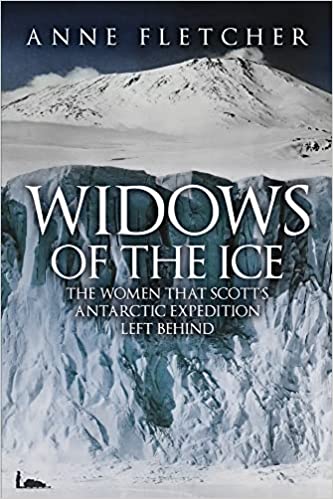
Book Corner: Widows of the Ice by Anne Fletcher

As Captain Scott lay freezing and starving to death on his return journey from the South Pole, he wrote with a stub of pencil his final words: ‘For God’s sake look after our people.’ Uppermost in his mind were the three women who would now be widows: Kathleen, his own bohemian artist wife; Oriana, the devout wife of the expedition’s chief scientist, Ted Wilson; and Lois, the Welsh working-class wife of Petty Officer Edgar Evans.

When the news came that the men were dead, they became heroes, their story filling column inches in newspapers across the world. Their widows were thrust into the limelight, forced to grieve in public view, keeping a stiff upper lip while the world praised their husbands’ sacrifice. These three women had little in common except that their husbands had died together, but this shared experience was to shape the rest of their lives.

Each experienced their loss differently, their treatment by the press and the public influenced by their class and contemporary notions of both manliness and womanly behaviour. Each had to rebuild their life, fiercely and loyally defending their husbands’ legacies and protecting their fatherless children in the face of financial hardship, public criticism and intense press scrutiny. Widows of the Ice is not the story of famous women but of forgotten wives, whose love and support helped to shape one of the most iconic moments in British history. They have drifted to the outer edges of the Antarctic narrative, and bringing them back gives a new perspective to a story we thought we already knew. It is a story of imperialistic dreams, misogyny and classism, but also of enormous courage, high ideals, duty – and, above all, love.

A few years ago, I went to a talk at the Wakefield Archives, given by Anne Fletcher, about her book, From the Mill to Monte Carlo. As we were chatting afterwards, she told me a bit about her next project, writing about the wives of Scott’s doomed polar exhibition. I remember thinking at the time, ‘I didn’t even know they had wives’, and told Anne I thought it would be a fascinating project. How right I was!

Widows of the Ice tells the story of three remarkable and very different women, who had to stay at home and wait for news for months on end. They came from very different backgrounds and social classes, and their experiences, both in how they were treated and how their husbands were remembered, reflected that. But there was one thing they all had in common; they had lost their husbands in the race to be the first to reach the South Pole.

Kathleen Scott, Lois Evans and Oriana (Ory) Wilson deserve to remembered just as much as their husbands, Robert Falcon Scott, Edgar Evans and Edward (Ted) Wilson. They were the faces the public saw as news of their husband’s tragic deaths unfolded. They had to work through their grief under the gaze of the cameras, with journalists intruding on every aspect of their lives, as people tried to make sense of what had happened. Through their own letters, in their own words, and the national papers, Anne Fletcher has managed to rebuild their stories, to give the reader unparalleled insight into the lives and experiences of these three very different women.

For Kathleen and Ory, the final goodbyes were yet to come. As officers’ wives, they had the option to go to New Zealand with the expedition and both were determined to travel as far as they possibly could. Ory packed up and prepared to accompany Ted, but Kathleen’s position was a little different. She was the mother of a very young child. Sailing with Con [Robert Falcon Scott] would mean leaving nine-month-old Peter for four months. But she felt that she should; she needed to go with Con.

“… looking back over my life I can think of nothing that hurt more hideously than unlocking the sturdy fingers that clung round mine as I left the laughing, tawny-haired baby Hercules … (but) I had chosen, and joy never left me for long. In agonies and ecstasies of reciprocated love I followed my husband.”

Peter was left in the care of his grandmother Hannah Scott at her home in Henley, where three of Con’s sisters lived too. Rose, whose husband had died in 196, leaving her almost penniless, had moved into her mother’s home with her ten-year-old daughter Erica. Katherine had married Harry Lurgar Brownlow, a surgeon, in 1901 and lived in St Andrew’s Road. Grace, the only one of Con’s sisters not to marry, had also set up home in Henley. Peter would have the love and attention of his grandmother, aunts and cousins while his mother was away – but he would never see his father again.

As Ted sailed away from Cardiff’s harbour on board Terra Nova, Ory travelled to Southampton to board the ship that would reunite her with her husband on the other side of the world. She was to travel in greater comfort than he because RSS Saxon was a passenger liner, part of a fleet run by the Union Castle Line, which operated between Europe and South Africa. Ory was not the only Terra Nova wife aboard. Hilda Evans’s husband Teddy was commanding Terra Nova as it sailed to South Africa so she, like Ory, would see her husband again there. Kathleen was on board too, but she was not alone. Con had stayed behind to try to raise more of the funds that the expedition needed, and so she now shared a cabin with him, enjoying the last few precious weeks together.

Widows of the Ice was an emotional rollercoaster. It is not often that I find myself crying at a non-fiction book, but Widows of the Ice did it to me more than once. It is a heroic story, not just of the doomed polar explorers, but of their stalwart wives. In an age of instant communication and 24-hour news channels, it is hard to imagine the long months of waiting for news, hoping your husbands are alive, but knowing that they could have perished long ago. 

It is hard to imagine the thoughts that must have gone through these women’s minds, knowing that they had been widows for a year, all the time looking forward to a reunion that would never happen. The letters they wrote in this time are heart breaking, so full of a hope that you know is going to be dashed in the cruellest of ways. And then having to live out the grief in the glare of the public eye!

Widows of the Ice is a true story, beautifully told with sympathy and empathy, and always with an eye to the tragedy you are watching unfold. These women were so much more than wives and widows – their strength, their passion and their sacrifices are demonstrated on every page.

My congratulations to Anne Fletcher for writing such a unique, illuminating and heart wrenching book, for bringing the stories of these incredible women to life. If there is only one non-fiction book you read this year, read Widows of the Ice, you won’t regret it.

To buy the book:

Widows of the Ice is now available from Amberley Publishing and Amazon UK.

About the author:

Anne Fletcher is an historian and writer. She has a successful career in heritage and has worked at some of the most exciting historic sites in the country including Hampton Court Palace, St Paul’s Cathedral, Westminster Abbey, Bletchley Park and Tower Bridge. She is the great-great-great niece of Joseph Hobson Jagger, ‘the man who broke the bank at Monte Carlo’ and he is the subject of her book ‘From the Mill to Monte Carlo’ published by Amberley Publishing 2018. Her search for his story started with only a photograph, a newspaper article and the lyrics of the famous song. The story was featured in national newspapers.

*

My Books

Signed, dedicated copies of all my books are available, please get in touch by completing the contact me form.

Defenders of the Norman Crown: The Rise and Fall of the Warenne Earls of Surrey tells the fascinating story of the Warenne dynasty, of the successes and failures of one of the most powerful families in England, from its origins in Normandy, through the Conquest, Magna Carta, the wars and marriages that led to its ultimate demise in the reign of Edward III. Defenders of the Norman Crown: Rise and Fall of the Warenne Earls of Surrey is now available from Pen & Sword BooksAmazon in the UK and US, Bookshop.org and Book Depository.

1 family. 8 earls. 300 years of English history!

Also by Sharon Bennett Connolly:

Ladies of Magna Carta: Women of Influence in Thirteenth Century England looks into the relationships of the various noble families of the 13th century, and how they were affected by the Barons’ Wars, Magna Carta and its aftermath; the bonds that were formed and those that were broken. It is now available in paperback and hardback from Pen & Sword,  AmazonBookshop.org and from Book Depository worldwide.

Heroines of the Medieval World tells the stories of some of the most remarkable women from Medieval history, from Eleanor of Aquitaine to Julian of Norwich. Available now from Amberley Publishing and Amazon, Bookshop.org and Book Depository.

Silk and the Sword: The Women of the Norman Conquest traces the fortunes of the women who had a significant role to play in the momentous events of 1066.  Available now from Amazon,  Amberley Publishing, Bookshop.org and Book Depository.

*

You can be the first to read new articles by clicking the ‘Follow’ button, liking our Facebook page or joining me on Twitter and Instagram.

©2022 Sharon Bennett Connolly

Guest Post: Researching the Life of Sir Walter Raleigh by Tony Riches

It is a pleasure to welcome author Tony Riches to History…the Interesting Bits today. Tony is a fabulous storyteller who has just released the final book in his Tudor Adventurers series.

We have had Sir Francis Drake, the Earl of Essex and now we have the remarkable story of Sir Walter Raleigh. Tony is here to tell us a little bit about his research in Raleigh: Tudor Adventurer.

Researching the life of Sir Walter Raleigh

Tudor adventurer, courtier, explorer and poet, Sir Walter Raleigh has been called the last true Elizabethan.

My books aim to be as factually accurate as possible, with the creative use of fiction reserved for breathing life into my characters, and adding a sense of the places where they lived. I like to spend the summer months visiting actual locations and tracking down primary sources. In the research for my new book, Raleigh – Tudor Adventurer, I also studied Raleigh’s surviving letters and papers.

Public Domain letter from Sir Walter Raleigh to Lady Elizabeth (Bess) Raleigh,
endorsed: “Sir W. Rawley to his wiefe.”

Raleigh was a prodigious letter writer, but his personal archive was scattered widely, with many of his papers thought to be lost. Fortunately, the late Tudor historians, Joyce Youings and Agnes Latham discovered over two hundred of Raleigh’s letters, and Agnes Latham also collected Raleigh’s poetry, adding her invaluable commentary.

As well as offering me an authentic sense of Raleigh’s ‘voice’, these letters were a great help in sorting out the often confusing timeline of events. I was of aware of Raleigh’s tendency to exaggerate, flatter and posture in his writing, but there is no better way to develop an understanding of his motives. Here is an example of a surviving letter from Raleigh to his wife, Bess, which shows how difficult they can be to transcribe.

The next main source of information on Raleigh’s life was the fascinating Folgerpedia resource, ‘The Elizabethan Court Day by Day,’ created by Marion E. Colthorpe. This searchable archive provided me with access to a wealth of invaluable details, and clues for deeper research. The archive began as an investigation into the people and places visited by Queen Elizabeth I on her ‘progresses’, and the entertainments presented before her. It gradually expanded to trace the whereabouts of the queen on every day throughout her long reign, what she was doing, often what she was saying, and who her companions were.

Raleigh’s cell in the Tower of London (author’s photo)

Finally, my travels have taken me to rural Devon and Dorset, and in Raleigh’s footsteps across the sea to Ireland, where I visited the city of Cork and the harbour of Youghal, where he was briefly Mayor and had a house named ‘Myrtle Grove. I also visited the Tower of London and the cell where Raleigh was imprisoned.

My research has revealed Sir Walter Raleigh’s strengths and weaknesses, as a courtier and failed politician, soldier and poet, a man ready to speak up for the poor and to honour his debts. My hope is that my new book, Raleigh – Tudor Adventurer, will help readers see beyond the myths and half-truths, and have a better understanding of the man who has been called the last true Elizabethan.

Reference:

‘The Elizabethan Court Day by Day,’ by Marion E. Colthorpe, is licensed under an Attribution-ShareAlike 4.0 International license,m and can be found at https://folgerpedia.folger.edu/The_Elizabethan_Court_Day_by_Day

Book Links:

Amazon US: https://www.amazon.com/dp/B09Z98J183

Amazon UK: https://www.amazon.co.uk/dp/B09Z98J183

Amazon CA: https://www.amazon.ca/dp/B09Z98J183

Amazon AU: https://www.amazon.com.au/dp/B09Z98J183

About the author:

Tony Riches is a full-time UK author of Tudor historical fiction. He lives with his wife in Pembrokeshire, West Wales and is a specialist in the lives of the early Tudors. As well as his new Elizabethan series, Tony’s historical fiction novels include the best-selling Tudor trilogy and his Brandon trilogy, (about Charles Brandon and his wives). For more information about Tony’s books please visit his website tonyriches.com and his blog, The Writing Desk and find him on Facebook and Twitter @tonyriches

*

My Books

Signed, dedicated copies of all my books are available, please get in touch by completing the contact me form.

Defenders of the Norman Crown: The Rise and Fall of the Warenne Earls of Surrey tells the fascinating story of the Warenne dynasty, of the successes and failures of one of the most powerful families in England, from its origins in Normandy, through the Conquest, Magna Carta, the wars and marriages that led to its ultimate demise in the reign of Edward III. Defenders of the Norman Crown: Rise and Fall of the Warenne Earls of Surrey is now available from Pen & Sword BooksAmazon in the UK and US, Bookshop.org and Book Depository.

1 family. 8 earls. 300 years of English history!

Also by Sharon Bennett Connolly:

Ladies of Magna Carta: Women of Influence in Thirteenth Century England looks into the relationships of the various noble families of the 13th century, and how they were affected by the Barons’ Wars, Magna Carta and its aftermath; the bonds that were formed and those that were broken. It is now available in paperback and hardback from Pen & Sword,  AmazonBookshop.org and from Book Depository worldwide.

Heroines of the Medieval World tells the stories of some of the most remarkable women from Medieval history, from Eleanor of Aquitaine to Julian of Norwich. Available now from Amberley Publishing and Amazon, Bookshop.org and Book Depository.

Silk and the Sword: The Women of the Norman Conquest traces the fortunes of the women who had a significant role to play in the momentous events of 1066.  Available now from Amazon,  Amberley Publishing, Bookshop.org and Book Depository.

*

You can be the first to read new articles by clicking the ‘Follow’ button, liking our Facebook page or joining me on Twitter and Instagram.

©2022 Sharon Bennett Connolly and Tony Riches