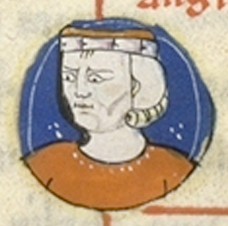
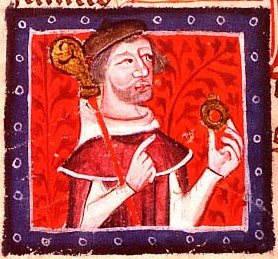
Robert de Breteuil, the Crusading Earl

Sharon Bennett Connolly
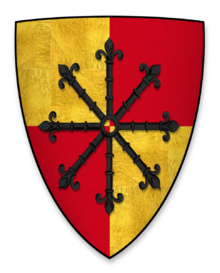
Arms of Robert de Breteuil, 4th Earl of Leicester

Robert de Breteuil, also known as Robert de Beaumont, was a remarkable individual whose adventures in the Holy Land would make a wonderful novel. A renowned warrior and a powerful magnate, he was a companion to the Plantagenet princes, both Richard the Lionheart and King John. Robert was the son-in-law of Matilda de Braose, whose horrific persecution by King John led to her death by starvation in one of John’s dungeons – and the inclusion of clause 39 in Magna Carta:

“No man shall be taken, imprisoned, outlawed, banished or in any way destroyed, nor will we proceed against or prosecute him, except by the lawful judgement of his peers or by the law of the land.”

Magna Carta, magnacartaresearch.og

Robert was the second son of Robert de Breteuil, 3rd earl of Leicester, and his wife, Petronilla de Grandmesnil and the great-grandson of Robert de Beaumont, Count of Meulan and 1st Earl of Leicester, and his wife, Elizabeth de Vermandois. Robert was probably born in the early-1160s and was closely associated with his elder brother William. As they grew up and entered public life they were linked with the household of their cousin, Robert, Count of Meulan, and they regularly appeared on their father’s charters together. Their younger brother, Roger, was bishop of St Andrews. William died in 1189, sometime after the accession of King Richard I. A later legend suggests he suffered from leprosy, though there is no contemporary evidence to corroborate this. William’s death meant Robert therefore became heir to their father’s earldom of Leicester.

Both Robert and his father were at the royal court at Verneiul on 2 January 1190 and joined the Third Crusade of Richard the Loinheart. Robert’s father took an overland route to the Holy Land, while it appears that Robert travelled with the king. Robert was with the king at Messina, Sicily, when news reached him of his father’s death. The 3rd earl had died on 31 August or 1 September 1190 and so Robert was invested as earl by the king on 2 February 1191, in Sicily.

During his time in the Holy Land, Robert was one of the leaders of the assault on Acre on 11 July 1191 and fought in the battle of Arsuf on 7 September. In November he rescued some ambushed Templars at Ibn-Ibrak and then was himself surrounded, with his knights, by a party of Turks outside the camp at Ramlah. Robert was rescued by his cousin Robert de Neubourg; in the process he nearly drowned in a river and had two horses killed under him.

Sharon Bennett Connolly
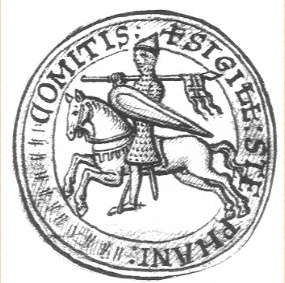
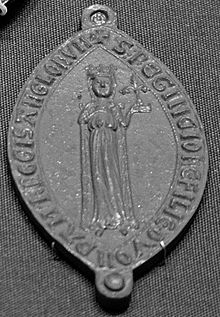
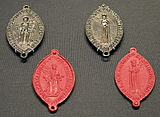
Seal of Robert de Breteuil

Robert and his men were prominent among the forces who stormed Deir al-Bela on 22 May 1192 and on 5 August 1192 he was one of the ten knights who helped to thwart an attempt to kidnap the king from his tent at Jaffa and the king himself rescued Robert when he was thrown from his horse. He probably set out for home in September or October 1192, having distinguished himself and earned the king’s eternal goodwill.1

Following his return from the crusade, Robert was occupied with the defence of Normandy, but was captured by King Philip Augustus’ forces in June 1194, after a skirmish outside Gourany. He was imprisoned at Étampes for more than a year and only freed after surrendering his castle and lordship of Pacy-sur-Eure to King Philip. His freedom was achieved sometime around February 1196 and in the same year he was married to the teenage Loretta de Braose. Loretta de Braose, was probably born in the early-to-mid-1180s,. She was one of the sixteen children of Matilda and William de Braose. Four of her sisters married prominent Welsh Marcher lords, but Loretta was married to Robert de Breteuil, 4th earl of Leicester.

The marriage was an alliance of two of the leading Anglo-Norman families of the Plantagenet world. He was a powerful earl who had made a name for himself on the crusades, whilst she was a daughter of one of the most powerful barons of the Welsh March. As her marriage portion, Loretta was given Tawstock, near Barnstaple in Devon.

Robert de Breteuil was back campaigning in 1197 and 1198 and was with King Richard when he was mortally wounded at Châlus in April 1199. He had had a long association with Richard’s brother since John had been Count of Mortain, and so was a firm supporter of John’s succession, acting as steward at his coronation on 27 May 1199, claiming the office his grandfather had relinquished in 1153. Robert was highly influential in the early years of John’s reign. He also fought for John in Normandy, being one of the major landholders in the duchy, and was rewarded generously for his support; he was granted Richmondshire in Yorkshire in September 1203. The following year he suffered the loss of his Continental estates when Normandy fell and was the biggest loser of the Anglo-Norman barons.

Although he was one of the two barons (the other being William Marshal) who was given a year to decide whether to pay homage to King Philip of France to try to retain his Norman estates, Robert was not punished by John. Indeed, he was given more lands in England, English lands that had belonged to families who had chosen to remain in Normandy, such as the Harcourts. Robert died before King Philip’s deadline, and so never did have to decide where and how to share his allegiances in order to keep all his lands.

Sharon Bennett Connolly
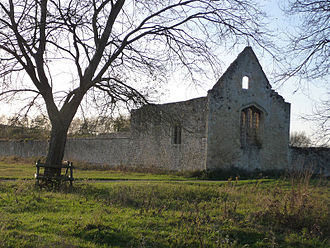
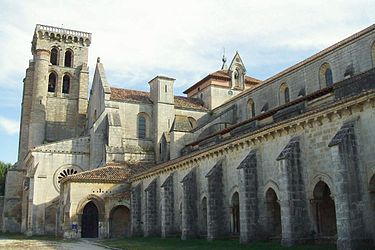
The ruins of Leicester Abbey, where Robert de Breteuil is buried

Robert died on 20 or 21 October 1204; the life of St Hugh of Lincoln reported that he died a leper, although this seems highly unlikely.1 He was buried in the choir of the Augustinian Abbey in Leicester. Robert and Loretta had remained childless, so Robert’s lands were divided between his two sisters. The earldom and the town of Leicester went to his eldest sister, Amice, the wife of Simon de Montfort and therefore grandmother of the Simon de Montfort who would marry King John’s daughter, Eleanor, and claim the earldom of Leicester for himself. Half of the old earldom, centred around Brackley in Northamptonshire, went to Robert’s younger sister, Margaret, wife of Saher de Quincy, Earl of Winchester.

It is a sad legacy that Robert’s death before John began the persecution of Loretta’s family meant that she was without her husband’s powerful protection when she needed it most. King John’s pursuit of the family did not end with the deaths of Matilda, who died in custody in 1210, and William de Braose, Lord of Bramber, who died in exile in France in 1211. In November 1207 John extracted a promise from Loretta that she would not remarry without the king’s permission and her lands were taken from her. She probably left for France shortly afterwards and only returned to England in 1214.

Once in England, Loretta was allowed to recover her confiscated estates after again to only marry as the king directed. The restoration of Loretta’s estates were complicated by the king’s desire to keep happy those who had benefited from tehir confiscation, such as the powerful Saher de Quincy, earl of Winchester. Loretta’s experiences in this respect may well have inspired clauses 7 and 8 of Magna Carta, which guaranteed that widows should have their marriage portions without hindrance and that they could remarry at their own pleasure, so long as it was with the king’s consent.

Sharon Bennett Connolly
Arms of William de Braose, Loretta’s father

Loretta took her future into her own hands, however, and in early 1221, took a vow of chastity and became an anchorite in Hackington, near Canterbury. An anchorite was a religious recluse who lived in a small cell within a church, allowed on the briefest of contact with others, although she was allowed attendants to help with her daily needs. Loretta’s influence was still in evidence, however, in that she obtained a pardon for a man who had accidentally killed another and helped to establish the Franciscan order in England. She died on 4 March, probably in 1266, and was buried at the church of St Stephen, Hackington.

It is a fact of life that whilst researching one particular person, you come across several others who spark your interest. I stumbled upon the stories of Robert de Breteuil and Loretta de Braose while researching for my book, Ladies of Magna Carta.

*

Footnote: ¹Oxforddnb.com

Sources: sussexcastles.com; genie.com; steyningmuseum.org.uk; berkshirehistory.com; England Under the Norman and Angevin Kings 1075-1225 by Robert Bartlett; Oxford Companion to British History Edited by John Cannon; The Story of Britain by Roy Strong; The Plantagenets, the Kings who Made England by Dan Jones; The Life and Times of King John by Maurice Ashley; The Plantagenet Chronicles Edited by Elizabeth Hallam; Oxforddnb.com; magnacartareseearch.org; Magna Carta by David Starkey; King John by Marc Morris; King John, England, Magna Carta and the Making of a Tyrant by Stephen Church; 1215, the Year of Magna Carta by Danny Danziger and John Gillingham; Women in Thirteenth Century Lincolnshire by Louise J. Wilkinson.

Pictures courtesy of Wikipedia

*

My Books

Signed, dedicated copies of all my books are available through my online store.

Out now: Scotland’s Medieval Queens

Scotland’s history is dramatic, violent and bloody. Being England’s northern neighbour has never been easy. Scotland’s queens have had to deal with war, murder, imprisonment, political rivalries and open betrayal. They have loved and lost, raised kings and queens, ruled and died for Scotland. From St Margaret, who became one of the patron saints of Scotland, to Elizabeth de Burgh and the dramatic story of the Scottish Wars of Independence, to the love story and tragedy of Joan Beaufort, to Margaret of Denmark and the dawn of the Renaissance, Scotland’s Medieval Queens have seen it all. This is the story of Scotland through their eyes.

Scotland’s Medieval Queens gives a thorough grounding in the history of the women who ruled Scotland at the side of its kings, often in the shadows, but just as interesting in their lives beyond the spotlight. It’s not a subject that has been widely covered, and Sharon is a pioneer in bringing that information into accessible history.’ Elizabeth Chadwick (New York Times bestselling author)

Available now from Amazon and Pen and Sword Books

Also by Sharon Bennett Connolly:
Heroines of the Tudor World tells the stories of the most remarkable women from European history in the time of the Tudor dynasty, 1485-1603. These are the women who ruled, the women who founded dynasties, the women who fought for religious freedom, their families and love. Heroines of the Tudor World is now available from Amberley Publishing and Amazon UK. Women of the Anarchy demonstrates how Empress Matilda and Matilda of Boulogne, unable to wield a sword themselves, were prime movers in this time of conflict and lawlessness. It shows how their strengths, weaknesses, and personal ambitions swung the fortunes of war one way – and then the other. Available from Bookshop.orgAmberley Publishing and Amazon UKKing John’s Right-Hand Lady: The Story of Nicholaa de la Haye is the story of a truly remarkable lady, the hereditary constable of Lincoln Castle and the first woman in England to be appointed sheriff in her own right. Available from all good bookshops Pen & Sword Booksbookshop.org and Amazon

Defenders of the Norman Crown: The Rise and Fall of the Warenne Earls of Surrey tells the fascinating story of the Warenne dynasty, from its origins in Normandy, through the Conquest, Magna Carta, the wars and marriages that led to its ultimate demise in the reign of Edward III. Available from Pen & Sword BooksAmazon in the UK and US, and Bookshop.orgLadies of Magna Carta: Women of Influence in Thirteenth Century England looks into the relationships of the various noble families of the 13th century, and how they were affected by the Barons’ Wars, Magna Carta and its aftermath; the bonds that were formed and those that were broken. It is now available in paperback and hardback from Pen & SwordAmazon, and Bookshop.orgHeroines of the Medieval World tells the stories of some of the most remarkable women from Medieval history, from Eleanor of Aquitaine to Julian of Norwich. Available now from Amberley Publishing and Amazon, and Bookshop.orgSilk and the Sword: The Women of the Norman Conquest traces the fortunes of the women who had a significant role to play in the momentous events of 1066. Available now from Amazon,  Amberley Publishing, and Bookshop.org.

Alternate Endings: An anthology of historical fiction short stories including Long Live the King… which is my take what might have happened had King John not died in October 1216. Available in paperback and kindle from Amazon.

Podcast:

Have a listen to the A Slice of Medieval podcast, which I co-host with Historical fiction novelist Derek Birks. Derek and I welcome guests, such as Bernard Cornwell and Michael Jecks, and discuss a wide range of topics in medieval history, from significant events to the personalities involved. Every episode is also now available on YouTube.

*

Don’t forget! Signed and dedicated copies of all my books are available through my online store.

For forthcoming online and in-person talks, please check out my Events Page.

You can be the first to read new articles by clicking the ‘Follow’ button, liking our Facebook page or joining me on TwitterThreadsBluesky and Instagram.

*

©2019 Sharon Bennett Connolly FRHistS

‘Fair Rosamund’

Fair Rosamund by John William Waterhouse

The story of Rosamund de Clifford is shrouded in more legends than most medieval lives. After Eleanor of Aquitaine, she is the woman most associated with Henry II, king of England. In historical fiction, she is the woman who claimed his heart and stole him away from his queen. But who was she? How much of her story is real, how much is fantasy?

Rosamund de Clifford was probably born around 1140. She was the daughter of Walter de Clifford, a lord on the Welsh Marches, and his wife Margaret de Tosny. We know nothing of her childhood, she may have been educated at Godstow Abbey, but it is not certain; nor is when she actually met the king. The rest of her life is made of rumour and gossip.

Rosamund’s father served Henry II on campaign in Wales in the 1160s. It is possible that the king first met the young woman on a visit to de Clifford’s residence of Bredelais during the campaign. Some theories have Henry’s affair with Rosamund starting around 1165, the first Christmas that Henry spent apart from his queen, Eleanor of Aquitaine. Eleanor held her Christmas court at Angers while Henry was at Oxford. Henry had a tendency to be constantly on the move and it was unusual for him to be so immobile, which has led to suspicions that this was when his love affair with Rosamund began. However, there is evidence that Henry may also have been nursing some sort of injury, which would also curtail his movements.

Henry and Eleanor were to have one more child, John, born at Christmas 1166, which suggests the Christmas 1165 separation was more due to the logistics of ruling large domains than it was to Henry finding love elsewhere. However, there is a later story of Eleanor intending to have her lying in at the royal palace of Woodstock, only to find Rosamund in residence on her arrival and quickly relocating to Oxford to give birth.

Henry and Eleanor holding court

Henry was never a faithful husband and was known to have several illegitimate children, including William Longspée and Geoffrey, Archbishop of York. He numbered among his conquests Rohese, a daughter of the prominent de Clare family and Ida de Tosny, who later married Hugh Bigod, earl of Norfolk, and was mother of Longspée. If Henry and Rosamund did begin their relationship in the mid-1160s, they did a marvellous job of keeping the affair secret, as it was not made public until 1174.

Henry’s relationship with his queen soured considerably in the early 1170s with Eleanor taking the side of their sons and joining them in open rebellion in 1172-73. Henry managed to crush the rebellion and forgave his sons, but he was not so lenient with Eleanor. In 1174 he escorted her to England and installed her in Old Sarum, condemning her to what would be 15 years of imprisonment; she would only be released when her favourite son, Richard I, ascended the throne in 1189.

In the same year as Eleanor’s imprisonment, Henry’s relationship with Rosamund became common knowledge. She resided at the royal palace of Woodstock in Oxfordshire, which was extensively refurbished in the early 1170s. It was said that ‘King Henry had made for her a house of wonderful workmanship, a labyrinth of Daedelian design.’¹ There was said to be a labyrinth, a secret bower where Henry and Rosamund met and a well where Rosamund bathed. Rosamund’s Well can still be seen today in the grounds of Blenheim Palace, which now stands where Woodstock once stood.

Although it has come down through legend as a great love story, nothing is known of Rosamund’s feelings towards Henry, nor whether she any any say in her position as the king’s mistress. The chroniclers of the time, of course, painted her as the fallen woman, a seductress and adulteress. They created puns derived from her name; Rosamund, or rosa mundi meaning the rose of the world became rosa immunda – the unclean rose – and rosa immundi – the unchaste rose.

The ruins of Godstow Abbey

That poor Rosamund was blamed for Henry’s infidelity was a sign of the times; women were the daughters of Eve, temptation for honourable men who had no power to resist them. Rosamund’s early death was seen as a just punishment for her lascivious lifestyle. Rosamund ended her relationship with Henry in 1175/6 and withdrew to Godstow Abbey. It seems likely that she was already ill when she entered the priory and she died in 1176. Henry paid for a lavish tomb within the convent church, at which the nuns left floral tributes on a daily basis. In the years following Rosamund’s death, Henry endowed the convent with 2 churches at Wycombe and Bloxham, new buildings and substantial amounts of building materials. Rosamund’s father, Walter, granted the abbey mills and a meadow, for the souls of his wife and daughter.

Unfortunately, however, Rosamund was not allowed to rest in peace. In 1190 when  the saintly Bishop Hugh of Lincoln visited Godstow he was horrified that Rosamund’s tomb had a place of honour within the church and ordered her remains to be removed. The tomb was resited in the nun’s chapter house, with an accompanying inscription admonishing her lifestyle:

This tomb doth here enclose the world’s most beauteous Rose,

Rose passing sweet erewhile, now nought but odour vile.²

Eleanor prepares to poison Rosamund by Evelyn De Morgan

Rosamund’s early death – she was still only in her 30s – inspired legends of revenge; Eleanor has been variously accused of stabbing her in her bath and poisoning her. In one extravagant version, Rosamund was hidden in her secret bower within a maze but, with the help of a silken thread, a jealous Eleanor still found her and stabbed her while she bathed. In another the discarded queen forced Rosamund to drink from a poison cup. Of course, a closely guarded prisoner in Old Sarum or at Winchester as she was, it was impossible for Eleanor to do any such thing. But it makes for a good story!

Rosamund’s relationship with Henry probably lasted no more than 10 years and possibly as little as 3 years. She may have seen little of Henry in that time, as he was a constantly on the move and only spent a little over 3 of those 10 years in England in total. It is possible that Rosamund sometimes travelled with him, discreetly, although this seems unlikely given that no one knew of her until after Eleanor’s rebellion and imprisonment. There are some theories that suggest Henry had lost interest in Rosamund even before her death, and that was the reason for her retirement to Godstow. Although his lavish endowment of the Abbey may argue otherwise, Henry is said to have turned his attentions to his son Richard’s fiancée, Princess Alys, sister of Philip II of France.

Perhaps the truth of Rosamund’s story matters less than the legend and romance that has grown up around it. Maybe the story of unrequited love, secret trysts and hidden bowers are just as important to history than the sordid truth a woman seduced by a king with little say in the direction of her own life, denied husband, children and a future.

Maybe the romance is what makes the story more palatable.

The Ballad of Fair Rosamund

The Flower of the World

When as king Henry ruled this land,

The second of that name,

Besides the queene, he dearly loved

A faire and comely dame

Most peerless was her beautye founde,

Her favour, and her face;

A sweeter creature in this worlde

Could never prince embrace.

Her crisped lockes like threads of golds

Appeared to each man’s sight;

Her sparkling eyes, like Orient pearles,

Did cast a heavenlye light.

The blood within her crystal cheeks

Did such a colour drive,

As though the lillye and the rose

For mastership did strive.

Yea Rossamonde, fair Rosamonde,

Her name was called so,

To whom our queene, dame Ellinor,

Was known a deadly foe.

The king therefore, for her defence

Against the furious queene,

At Woodstocke builded such a bower,

The like was never seene.

Most curiously that bower was built

Of stone and timber strong,

An hundred and fifty doors

Did to this bower belong.

And they so cunningly contriv’d,

With turnings round about,

That none but with a clue of thread

Could enter in and out.³

*

Footnotes: ¹Polychronicon quoted in Oxforddnb.com; ² Speed quoted in Oxforddnb.com; ³Anonymous quoted in Eleanor, April Queen of Aquitaine by Douglas Boyd

Pictures courtesy of Wikipedia

Sources: Oxforddnb.com by T.A. Archer, rev by Elizabeth Hallam; Wordsworth Dictionary of British History by J.P. Kenyon; kings, Queens, Bones and Bastards by David Hilliam; England Under the Norman and Angevin Kings 1075-1225 by Robert Bartlett; King John by Marc Morris; The Devil’s Brood by Desmond Seward; The Greatest Knight by Thomas Asbridge; Eleanor, April Queen of Aquitaine by Douglas Boyd; Eleanor of Aquitaine by Alison Weir; The Plantagenet Chronicles Edited by Elizabeth Hallam.

*

My books

Signed, dedicated copies of all my books are available through my online bookshop.

Out Now! Women of the Anarchy

Two cousins. On the one side is Empress Matilda, or Maud. The sole surviving legitimate child of Henry I, she is fighting for her birthright and that of her children. On the other side is her cousin, Queen Matilda, supporting her husband, King Stephen, and fighting to see her own son inherit the English crown. Women of the Anarchy demonstrates how these women, unable to wield a sword, were prime movers in this time of conflict and lawlessness. It show how their strengths, weaknesses, and personal ambitions swung the fortunes of war one way – and then the other.

Available from Bookshop.orgAmberley Publishing and Amazon UK.

Coming on 15 June 2024: Heroines of the Tudor World

Heroines of the Tudor World tells the stories of the most remarkable women from European history in the time of the Tudor dynasty, 1485-1603. These are the women who ruled, the women who founded dynasties, the women who fought for religious freedom, their families and love. These are the women who made a difference, who influenced countries, kings and the Reformation. In the era dominated by the Renaissance and Reformation, Heroines of the Tudor World examines the threats and challenges faced by the women of the era, and how they overcame them. From writers to regents, from nuns to queens, Heroines of the Tudor World shines the spotlight on the women helped to shape Early Modern Europe.

Heroines of the Tudor World is now available for pre-order from Amberley Publishing and Amazon UK.

Also by Sharon Bennett Connolly:

King John’s Right-Hand Lady: The Story of Nicholaa de la Haye is the story of a truly remarkable lady, the hereditary constable of Lincoln Castle and the first woman in England to be appointed sheriff in her own right. It is is available from King John’s Right-Hand Lady: The Story of Nicholaa de la Haye is the story of a truly remarkable lady, the hereditary constable of Lincoln Castle and the first woman in England to be appointed sheriff in her own right. Available from all good bookshops or direct from Pen & Sword Booksbookshop.org and AmazonDefenders of the Norman Crown: The Rise and Fall of the Warenne Earls of Surrey tells the fascinating story of the Warenne dynasty, from its origins in Normandy, through the Conquest, Magna Carta, the wars and marriages that led to its ultimate demise in the reign of Edward III. Available from Pen & Sword BooksAmazon in the UK and US, and Bookshop.org

Ladies of Magna Carta: Women of Influence in Thirteenth Century England looks into the relationships of the various noble families of the 13th century, and how they were affected by the Barons’ Wars, Magna Carta and its aftermath; the bonds that were formed and those that were broken. It is now available in paperback and hardback from Pen & Sword,  Amazon, and Bookshop.orgHeroines of the Medieval World tells the stories of some of the most remarkable women from Medieval history, from Eleanor of Aquitaine to Julian of Norwich. Available now from Amberley Publishing and Amazon, and Bookshop.orgSilk and the Sword: The Women of the Norman Conquest traces the fortunes of the women who had a significant role to play in the momentous events of 1066. Available now from Amazon,  Amberley Publishing, and Bookshop.org.

Alternate Endings: An anthology of historical fiction short stories including Long Live the King… which is my take what might have happened had King John not died in October 1216. Available in paperback and kindle from Amazon.

Podcast:

Have a listen to the A Slice of Medieval podcast, which I co-host with Historical fiction novelist Derek Birks. Derek and I welcome guests, such as Bernard Cornwell and Elizabeth Chadwick, and discuss a wide range of topics in medieval history, from significant events to the personalities involved.

*

Don’t forget! Signed and dedicated copies of all my books are available through my online bookshop.

For forthcoming online and in-person talks, please check out my Events Page.

You can be the first to read new articles by clicking the ‘Follow’ button, liking our Facebook page or joining me on Twitter and Instagram.

*

©2017 Sharon Bennett Connolly FRHistS

The Ætheling and the Tragedy of the White Ship

220px-Vilém_syn
William the Atheling

In the late summer of 1103 England’s queen, Matilda of Scotland, gave birth to a son. Named after his grandfather, William the Conqueror, the young prince would be known to history as William the Ætheling. He is one of those historical figures who resides in the shadows, more famous for his death than his all-too-short life as the heir to England’s throne.

William’s father, Henry, was a younger son of William the Conqueror and Matilda of Flanders. When his father had died in 1087, the patrimony of England and Normandy was divided between Henry’s older brothers; the eldest, Robert Curthose, inherited Normandy while William II Rufus became King of England. Henry was given money and lands. It has been said that Henry was intended for a life in the church; however, when his father died, Henry was already 18 and would have joined the church as a child if that was the career set out for him. Instead, the little brother seems to have set his sights on greater things and, as a result, was distrusted by William II, who kept him close, so he could not cause any mischief.

On 2 August, 1100, while out hunting in the New Forest, William was struck by a stray arrow and killed. Some say it was planned, others that it was an accident; I guess we’ll never know for sure…

Henry, however, did not waste the opportunity. With his older brother Robert still on his way back from Crusading in the Holy Land, Henry seized the initiative, the treasury and the kingdom; he was crowned at Westminster Abbey just 3 days after his brother’s death. Within months Henry had found himself a bride with impeccable parentage. Matilda had been born Edith of Scotland and was the daughter of Malcolm III, King of Scots. Through her mother, St Margaret, she was the great-granddaughter of Edmund II Ironside, the Anglo-Saxon king of England who died in 1016. She changed her name on marrying Henry, as Edith was considered ‘too Saxon’ for Norman tastes.

Matylda_zena
Matilda of Scotland

Henry and Matilda were married in November 1100 and within 3 years were the proud parents of 2 children. Their daughter, Adelaide, was born in 1102; she would adopt the name Matilda on her marriage to the Holy Roman Emperor, Henry V, and would be known to history as the Empress Matilda (or Maud, though this appears to have been a later nickname). Although some historians suggest they were twins, it is most likely that Matilda’s younger brother, William, was born in 1103; a message of congratulations was sent to Henry I by Pope Paschal II on 23 November of that year.

The soubriquet of Ætheling is attributed to chronicler Orderic Vitalis and harks back to Anglo-Saxon times as a title given to the king’s designated heir. According to William of Malmesbury, William, with an Anglo-Saxon mother and Norman father, represented the hope of reconciliation between the conquered and conquerors of England.

Although the king and queen had only 2 children – a possible third child is thought to have died young – the king had numerous illegitimate offspring by various women, several of whom were raised alongside his legitimate children. William and a number of his illegitimate brothers, including Robert, Earl of Gloucester, were tutored by Otuel (or Othuer) fitzEarl, natural son of Hugh, Earl of Chester. fitzEarl had been made castellan of the Tower of London and so it is likely that the prince and his brothers were frequently in residence there, in order to pursue their education.

330px-Empress_Mathilda
William’s sister, Empress Matilda

According to William of Malmesbury, William was trained for his future role ‘with fond hope and immense care’. In 1108, while their father was away in Normandy, William and his sister were entrusted to the spiritual care of Anselm, the revered Archbishop of Canterbury.

In 1110 William’s sister, Matilda, left for Germany; she was to continue her education at the court of her future husband, but would not be married until January 1114, just before her 12th birthday. William was still only 6 years old when his sister left; Matilda was 8. It’s sad to think the young siblings would never meet again.

Following his sister’s departure, William’s education continued apace. By 1113, aged just 10, William began to attest royal documents. While still only 9, in February of that year, William was betrothed, at Alençon, to Alice (who changed her name to Matilda on her marriage), the daughter of Fulk V, count of Anjou and Maine. The betrothal formed part of his father’s wider diplomacy, which had also included his sister’s marriage to the Holy Roman Emperor.

Henry I spent the early part of his reign fighting against his brother, Robert Curthose, and, later, Robert’s son, William Clito, trying to secure a smooth succession for William. Robert had been decisively defeated at Tinchebrai in 1106 and spent his remaining years – until his death in 1134 – a prisoner of his brother. Henry subsequently claimed Normandy for the English crown, but William Clito was still a thorn in his side. Clito was supported by the French king, Louis VI; who used him as a counter to Henry’s attempts to conquer Maine.

345px-Henry1
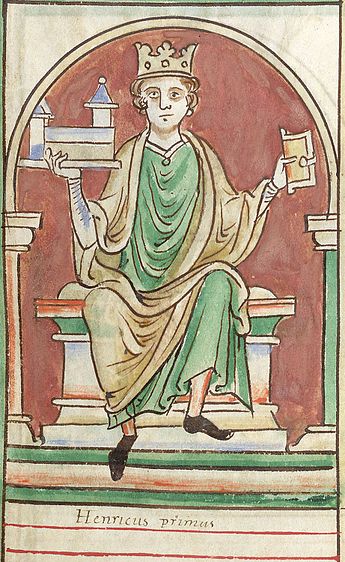
Henry I

In 1115, according to the Anglo-Saxon Chronicle, Henry arranged for the Norman barons to do homage and swear fealty to William, in an attempt to counter the claims of William Clito. A similar ceremony was arranged in England in 1116, for all the great men and barons of England to swear fealty to William as the king’s heir. The Warenne (Hyde) Chronicle referred to William as ‘rex Norman-Angllorum, ut putabatur futurus’ (assumed to be the future king of the Norman-English).

On 1st May 1118 William’s mother, Queen Matilda, died at Westminster and was laid to rest in Westminster Abbey. We do not know how the young prince felt at the loss of his mother – he was 15 at the time. However, it is from this point that William took on more responsibility, acting as regent whenever the king was away in Normandy.

In December 1118 Henry’s troops defeated the Angevins, under Fulk of Anjou, at Alençon. To counteract the defeat, William and Alice/Matilda of Anjou were married, with the Count settling Maine on them as their marriage gift, thus deserting the cause of the French king. Inevitably, war with Louis VI followed.

On 20 August 1119, 16-year-old William was with his father at the Battle of Brémule. Henry won the fight against the forces of Louis VI of France and William Clito. During the battle, William had captured the palfrey of his cousin, William Clito, which he chivalrously returned at the end of the battle.

In the same year William witnessed a charter at Rouen, in which he was described as ‘dei gratia, rex designatus’ (by the grace of God, king designate). And continuing his education in diplomacy, in November 1119, William accompanied his father to a meeting with Pope Calixtus II, (William’s second cousin once removed).

330px-Sceau_de_Louis_VI
Louis VI of France

At the turn of the year, it must have seemed to Henry that his dynasty – and the future of England – was secure in the hands of his son; at the age of 16 he was experienced in warfare and diplomacy and married to Matilda, though she was probably still under 10 years of age, who brought with her the county of Maine as her marriage portion (and the promise of Anjou should her father die whilst on Crusade).

In 1120 peace was finally achieved with France, with William being created Duke of Normandy by his father, and paying homage for the duchy to King Louis; a precedent that would be used  by future English kings, in order to avoid a king paying homage to a fellow king for part of his holdings. William, in turn, then received the homage of the Norman barons. Accompanied by his father, wife and several of his half brothers and sisters, it must have been a time of great rejoicing and festivities.

The final entry of the Warenne (Hyde) Chronicle set the scene:

At last King Henry restored peace with his diligence and money and decided to come to England with much triumph and joy, but God omnipotent, who, just as the blessed Job says, ‘loosens the belt of kings, and girds their kidneys with a rope’, out of his just judgment turned the king’s joy into grief and victory into sorrow. Having descended with his two sons, William and Richard, and with Theobald count of Blois, his nephew, and with many relatives and a crowd of nobles, to the seaport, called Barfleur, on the designated day he began to board his ship with favourable winds and a prosperous sea…

The Warenne (Hyde) Chronicle, edited by Elisabeth m.C. Van Houts and Rosalind C. Love

Indeed, when the large party prepared to cross the Channel, to return to England, it seems several of them were still celebrating. While Henry made the crossing in his own ship, taking with him several nobles and his daughter-in-law, the prince took the offer of a newly built ship, the Blanche Nef – or White Ship – which its owner, Thomas fitzStephen, claimed would guarantee a swift, safe passage. William the Ætheling was accompanied by many of the young nobles of the great families of England, including his half-sister, Matilda, and half-brother, Richard of Lincoln.

WhiteShipSinking
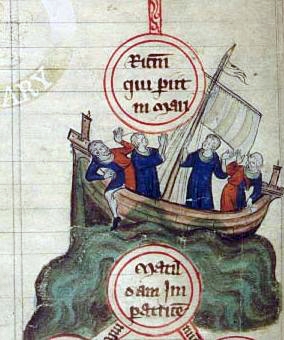
The Sinking of the White Ship

Most of the passengers and crew were still drunk from celebrating when the ship finally left the harbour of Barfleur, in the dark, on the evening of 25 November, 1120. Oderic Vitalis described the scene:

At length he gave the signal to put to sea. Then the rowers made haste to take up their oars and, in high spirits because they knew nothing of what lay ahead, put the rest of the equipment ready and made the ship lean forward and race through the sea. As the drunken oarsmen were rowing with all their might, and the luckless helmsman paid scant attention to steering the ship though he sea, the port side of the White Ship struck violently against a huge rock, which was uncovered each day as the tide ebbed and covered once more at high tide. Two planks were shattered and, terrible to relate, the ship capsized without warning. Everyone cried out at once in their great peril, but the water pouring into the boat soon drowned their cries and all alike perished.

William was ushered into a small boat and was being rowed to safety when he is said to have heard the cries of his half-sister, Matilda. The prince insisted on rowing to her aid, but the little boat was overwhelmed by those trying to make it to safety, and capsized, taking everyone with it.

Vitalis, Oderic, The Ecclesiastical History of Oderic Vitalis.

William the Ætheling was 17-years-old.

With only one survivor, a butcher from Rouen, over 300 souls were lost – drowned – and only a handful of bodies were ever recovered. With the sinking of the White Ship Henry I lost his son; England and Normandy lost their next ruler.

Young Matilda had lost her husband. Still only a child, Matilda had made the crossing of the Channel with the King, rather than her husband, and sometime after the disaster she returned to her father’s court. In 1121 Matilda became a nun, eventually becoming abbess of the convent at Fontevrault. She died in 1158.

With the uncertainty that followed, Louis VI renewed his support of William Clito, who continued to be a thorn in Henry I’s side until his death fighting in Flanders in 1128. Henry himself, in the hope of producing another son, married  again in 1121; to Adeliza of Louvain. Unfortunately, the marriage proved childless and Henry spent the final years of his reign trying to secure the throne for his daughter, Matilda. Empress Matilda had returned to Henry’s court in England following the death of her husband in 1125 and was married again,  in 1128, to Geoffrey, Count of Anjou – the brother of Matilda of Anjou – in the hope that the union would strengthen her claim to the throne.

In the end, however, despite the fact Henry had made the barons of England swear fealty to Matilda as his successor Henry’s nephew, Stephen, claimed the throne on the old king’s death in 1135; thus ushering in 19 years of warfare, an era which became known as The Anarchy.

Reading_Abbey_03
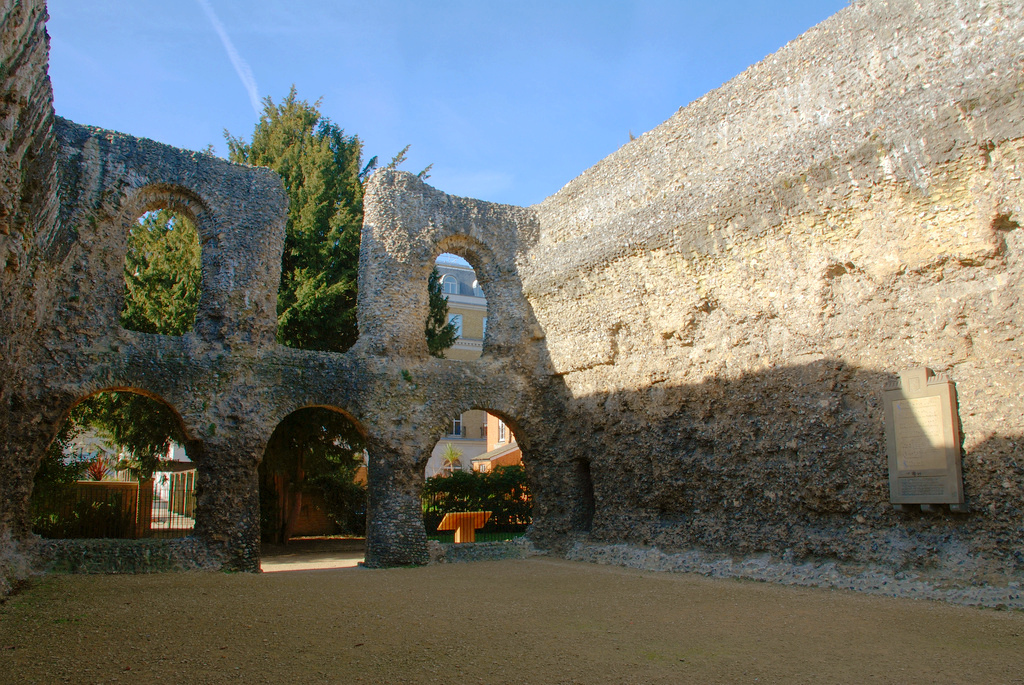
Chapter house of Reading Abbey

William’s death was a tragedy, not only on a national scale, but also a personal one, for Henry I. According to the Anglo-Saxon Chronicle the disaster was ‘a double grief: first that they lost their lives so swiftly; second that few of their bodies were found afterwards’. The young prince’s body was never recovered, leaving no monument to his life, save for Reading Abbey, established as a priory – and later an abbey – in 1121 by Henry I,

‘for the salvation of my soul and that of king William my father and king William my brother and William my son and queen Matilda my mother and queen Matilda my wife and all of my predecessors and successors.’

*

Sources: oxforddnb.com; Oderic Vitalis, The Ecclesiastical History of Orderic Vitalis; Donald Matthew, King Stephen; Robert Bartlett, England Under the Norman and Angevin Kings; David Williamson, Brewer’s British Royalty; the History Today Companion to British History; Dan Jones, the Plantagenets; englishmonarchs.co.uk; The Oxford Companion to British History Edited by John Cannon; Mike Ashley, The Mammoth Book of British kings & Queens; Alison Weir, Britain’s Royal Families, the Complete Genealogy; medievalilsts.net; The Plantagenet Chronicles Edited by Elizabeth Hallam; The Warenne (Hyde) Chronicle, edited by Elisabeth Van Houts and Rosalind C. Love .

*

Pictures courtesy of Wikipedia

*

My Books

Signed, dedicated copies of all my books are available through my online bookshop.

Out now! Scotland’s Medieval Queens

Books by Sharon Bennett Connolly

Scotland’s history is dramatic, violent and bloody. Being England’s northern neighbour has never been easy. Scotland’s queens have had to deal with war, murder, imprisonment, political rivalries and open betrayal. They have loved and lost, raised kings and queens, ruled and died for Scotland. From St Margaret, who became one of the patron saints of Scotland, to Elizabeth de Burgh and the dramatic story of the Scottish Wars of Independence, to the love story and tragedy of Joan Beaufort, to Margaret of Denmark and the dawn of the Renaissance, Scotland’s Medieval Queens have seen it all. This is the story of Scotland through their eyes.

Scotland’s Medieval Queens gives a thorough grounding in the history of the women who ruled Scotland at the side of its kings, often in the shadows, but just as interesting in their lives beyond the spotlight. It’s not a subject that has been widely covered, and Sharon is a pioneer in bringing that information into accessible history.’ Elizabeth Chadwick (New York Times bestselling author)

Available now from Amazon and Pen and Sword Books

Also by Sharon Bennett Connolly:

Books by Sharon Bennett Connolly

Heroines of the Tudor World tells the stories of the most remarkable women from European history in the time of the Tudor dynasty, 1485-1603. These are the women who ruled, the women who founded dynasties, the women who fought for religious freedom, their families and love. Heroines of the Tudor World is now available for pre-order from Amberley Publishing and Amazon UK. Women of the Anarchy demonstrates how Empress Matilda and Matilda of Boulogne, unable to wield a sword themselves, were prime movers in this time of conflict and lawlessness. It shows how their strengths, weaknesses, and personal ambitions swung the fortunes of war one way – and then the other. Available from Bookshop.orgAmberley Publishing and Amazon UKKing John’s Right-Hand Lady: The Story of Nicholaa de la Haye is the story of a truly remarkable lady, the hereditary constable of Lincoln Castle and the first woman in England to be appointed sheriff in her own right. Available from all good bookshops Pen & Sword Booksbookshop.org and Amazon

Royal Historical Society

Defenders of the Norman Crown: The Rise and Fall of the Warenne Earls of Surrey tells the fascinating story of the Warenne dynasty, from its origins in Normandy, through the Conquest, Magna Carta, the wars and marriages that led to its ultimate demise in the reign of Edward III. Available from Pen & Sword BooksAmazon in the UK and US, and Bookshop.orgLadies of Magna Carta: Women of Influence in Thirteenth Century England looks into the relationships of the various noble families of the 13th century, and how they were affected by the Barons’ Wars, Magna Carta and its aftermath; the bonds that were formed and those that were broken. It is now available in paperback and hardback from Pen & SwordAmazon, and Bookshop.orgHeroines of the Medieval World tells the stories of some of the most remarkable women from Medieval history, from Eleanor of Aquitaine to Julian of Norwich. Available now from Amberley Publishing and Amazon, and Bookshop.orgSilk and the Sword: The Women of the Norman Conquest traces the fortunes of the women who had a significant role to play in the momentous events of 1066. Available now from Amazon,  Amberley Publishing, and Bookshop.org.

Alternate Endings: An anthology of historical fiction short stories including Long Live the King… which is my take what might have happened had King John not died in October 1216. Available in paperback and kindle from Amazon.

Podcast:

A Slice of Medieval

Have a listen to the A Slice of Medieval podcast, which I co-host with Historical fiction novelist Derek Birks. Our very first episode was on The Anarchy. Derek and I welcome guests, such as Bernard Cornwell, and discuss a wide range of topics in medieval history, from significant events to the personalities involved.

There are now over 75 episodes to listen to!

Every episode is also now available on YouTube.

*

Don’t forget! Signed and dedicated copies of all my books are available through my online bookshop.

For forthcoming online and in-person talks, please check out my Events Page.

You can be the first to read new articles by clicking the ‘Follow’ button, liking our Facebook page or joining me on TwitterThreadsBluesky and Instagram.

*

©2016 Sharon Bennett Connolly FRHistS
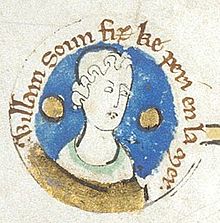
Eleanor of England, Queen Leonor of Castile

EleonoraAngl
Eleanor of England, Queen of Castile

On 13th October 1162 (1161 has also been suggested, but most sources agree on 1162) the Queen of England gave birth to a 2nd daughter at Domfront Castle in Normandy, Eleanor. She was the 6th child of Europe’s most glamorous and controversial couple; Henry II and Eleanor of Aquitaine. Named after her mother Eleanor was baptised by Cardinal Henry of Pisa, with the chronicler Robert de Torigny standing as her godfather.

Of Eleanor’s 4 older brothers 3 had survived infancy; Henry, the Young King, Richard the Lionheart and Geoffrey – later Duke of Brittany. Geoffrey was nearest to Eleanor in age, but already 4 years old when she was born. Eleanor’s older sister, Matilda, had been born in 1156 and would be married to Henry V ‘the Lion’, Duke of Saxony and Bavaria, when Eleanor was just 6 years old. At the age of 3 Eleanor would be joined by a baby sister, Joanna, in the Plantagenet nursery and by a last brother, John, in 1166.

Eleanor’s birth coincided with an awkward period in her parents’ marriage. Eleanor of Aquitaine’s vassals, unhappy with Henry’s rule, were attempting to get her marriage to Henry annulled on the grounds of consanguinity. Although the plot was unsuccessful and the Cardinals were unimpressed with the argument, it cannot have been an easy time for the King and Queen.

450px-DonjonDomfront61
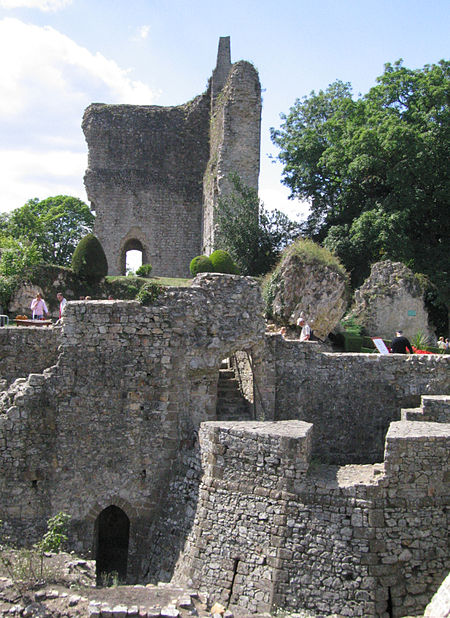
Domfront, Eleanor’s birthplace

Eleanor’s early childhood was quite nomadic. She travelled often with her parents, in her mother’s entourage. Henry had been absent from the country for 5 years when Eleanor first came to England with her parents in 1163. The Royal family would spend the Christmas of 1164/5 at Marlborough, while in the midst of the crisis of Henry’s disagreements with his archbishop of Canterbury, Thomas a Becket. Eleanor of Aquitaine would then take her children to Winchester, from where they visited Sherborne Castle in Dorset and the Isle of Wight before moving to Westminster.

In February 1165 3-year-old Eleanor was betrothed to the infant son of Frederick Barbarossa, Frederick, in order to cement a treaty with the Emperor. And following the conclusion of the treaty the Archbishop of Cologne was introduced to Eleanor and Matilda (who was to marry Henry the Lion). However, where Matilda departed for her new life in Germany in 1168, Eleanor’s proposed marriage was still in the distant future.

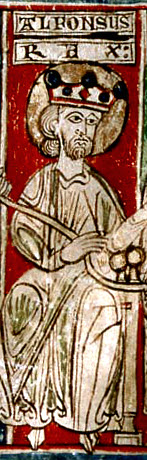
Alfons8Kastilie
Alfonso VIII of Castile

Some historians have speculated that Eleanor was educated for some time at Fontevrault Abbey, along with her younger sister Joanna and her baby brother, John, who spent 5 years there after initially being intended for the church. However, by 1168 she was with her mother, who had decided to settle in Aquitaine and was allowed, by Henry II, to have her children with her.

By 1170 Eleanor’s marriage to the Emperor’s son was no longer a part of Henry II’s plans, and he decided to look elsewhere for an alliance. Seeking to extend his influence across the Pyrenees and to prevent a French alliance with Castile, Henry betrothed Eleanor to 7-year-old Alfonso VIII, king of Castile since he was just 2 years old. Raoul de Faye, Seneschal of Poitou for Eleanor of Aquitaine, was influential in negotiating the marriage; arranging for Eleanor to receive Gascony as her dowry, but only after the death of her mother.

September 1170 saw Eleanor on her way to Castile. A month short of her 8th birthday, some historians suggest she was escorted as far as Bordeaux by her mother, but this is not supported by the contemporary chronicles. However, she would have been given a suitable escort – as the daughter of a king and as a future queen herself – to see her safely to her new country. The wedding took place at Burgos Cathedral in 1174, when the bride was twelve-years-old.

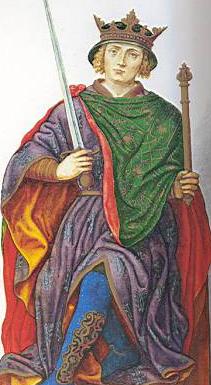
Enrique_I_de_Castilla
Henry I, King of Castile

Eleanor and Alfonso appear to have had a very successful marriage, and a close, trusting relationship. Eleanor is renowned for introducing her mother’s Poitevin culture into the Castilian court. The court encouraged the culture and architecture of Eleanor’s youth, whilst blending it with the luxuries offered by the neighbouring Moorish culture. Castilian poet Ramon Vidal described Eleanor as “Queen Leonore modestly clad in a mantle of rich stuff, red, with a silver border wrought with golden lions.” While the troubadour Pierre Vidal described to Eleanor as elegant and gracious.

Eleanor and Alfonso would have 7 children that survived infancy. Their eldest daughter Berengaria would marry Alfonso IX, King of Leon, and would act as regent in Castile for her younger brother, Henry I, before succeeding him as queen regnant. Berengaria and Alfonso’s marriage was dissolved by the papacy, on the grounds of consanguinity; but their children were declared legitimate. Shortly after succeeding to the throne of Castile, Berengaria abdicated in favour of her son, Ferdinand III, but continued to act as his closest adviser.

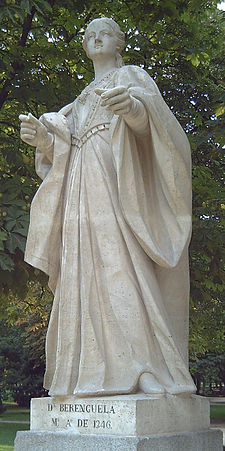
225px-Doña_Berenguela_01
Berengaria, Queen of Castile

One daughter, Eleanor, married James I, king of Aragon, but they divorced in 1229. While another, Constance, was dedicated as a nun and eventually became abbess of the abbey of Las Huelgas, founded by her parents in 1187. The abbey’s nuns were drawn from the highest ranks of the Spanish nobility, they belonged to the  Cistercian Order, a closed community mainly cut off from the world.

Alfonso and Eleanor had 2 sons who would survive childhood. The eldest, Ferdinand, predeceased his parents, dying of a fever in 1209 or 1211. Henry I would succeed his father, but died in 1217 when a loose roof tile fell on his head. He was 13 years old.

Two other daughters survived childhood. Eleanor’s 2nd eldest daughter, 14-year-old Urraca, was initially suggested as the bride of the future Louis VIII of France, son of Philip II Augustus. In 1200 the girls’ grandmother, Eleanor of Aquitaine, was instrumental in arranging the marriage; her dowry was to be provided from the territories Richard I had won from France at the end of the 12th century.

D._Urraca_de_Castela,_Rainha_de_Portugal_-_The_Portuguese_Genealogy_(Genealogia_dos_Reis_de_Portugal)
Urraca, Queen of Portugal

Eleanor of Aquitaine outlived all but 2 of her children. With the deaths of Richard I and his sister Joanna in 1199, only Eleanor in Castile and her baby brother John, now King of England, remained of the once large brood of 4 boys and 3 girls who had survived infancy.

Such recent losses may have helped to persuade the 77-year-old Eleanor of Aquitaine to travel to Castile, in person and in the depths of winter, to collect the granddaughter who would be Louis’ bride. The reunion of the 2 Eleanors would surely have been highly emotional.

She was received at Alfonso’s court with all the pageantry and courtesies appropriate for most remarkable woman of her time. The Dowager Queen of England stayed with her daughter for over 2 months, taking the opportunity to spend some time with her daughter and grandchildren, as the marriage would not be able to take place until after Lent.

In getting to know her granddaughters, Eleanor of Aquitaine seems to have decided that 12-year-old Blanca would make a more suitable bride for Louis. Whether it was because of the girls’ temperaments or simply a matter of names, as some historians have suggested. Urraca was not a name easily translated into French, whereas Blanca, as Blanche, was easily  recognisable.

Blancheofcastile
Blanche of Castile, Queen of France

It was, therefore, 12-year-old Blanche who travelled back to France with her grandmother to marry the Dauphin, Louis – the same Louis who would be invited to become England’s king by the rebel barons and laid siege to Lincoln Castle in 1216. Blanche and Louis were married in Normandy, as France was under papal interdict at the time; Blanche would be the mother, and lifelong adviser, of Louis IX (St Louis).

In 1206 Urraca married the heir to the throne of Portugal – the future King Alfonso II.

Eleanor of England and Alfonso VIII appear to have had a happy, successful marriage, producing a family of 4 sons and 8 daughters over a 16 year period. Eleanor enhanced the culture of the Castilian court and acted as a diplomatic conduit between her husband and brothers, Richard and John, in order to aid each other and keep the peace – most of the time. However, in 1204, following the death of Eleanor of Aquitaine, Alfonso had to resort to a show of military force in order to successfully claim his wife’s dower rights over Gascony from John.

Burgos_-_Las_Huelgas_10
Abbey of Las Huelgas

Their happy marriage came to an end when Alfonso died in Burgos on 6th October 1214. He was buried in the Abbey of Las Huelgas, where their daughter, Constance, was now Abbess, leaving Eleanor as regent for their 10-year-old son, Henry I. Broken-hearted Eleanor, however, only survived her husband by a little over 3 weeks. Overcome with grief she died in Burgos on 31st October 1214, and was laid to rest beside her beloved husband; leaving their daughter Berengaria to take up the regency for Henry.

Of Eleanor’s grandchildren 2 were to become saints, Louis IX of France and Berengaria’s son Ferdinand III, king of Castile; her great-granddaughter and namesake, Eleanor of Castile (Ferdinand’s daughter), would become Queen of England as the wife of Edward I.

*

Pictures courtesy of Wikipedia

*

Sources: Brewer’s Royalty by David Williamson; The Mammoth Book of British Kings & Queens by Mike Ashley; Britain’s Royal Families, the Complete Genealogy by Alison Weir; The Plantagenet Chronicles Edited by Elizabeth Hallam; England Under the Norman and Angevin Kings by Robert Bartlett; Eleanor of Aquitaine, by the Wrath of God, Queen of England by Alison Weir; Eleanor, April Queen of Aquitaine by Douglas Boyd; oxforddnb.com.

*

My Books

Christmas is coming!

Signed, dedicated copies of all my books are available through my online bookshop.

Coming 15 January 2024: Women of the Anarchy

On the one side is Empress Matilda, or Maud. The sole surviving legitimate child of Henry I, she is fighting for her birthright and that of her children. On the other side is her cousin, Queen Matilda, supporting her husband, King Stephen, and fighting to see her own son inherit the English crown. Both women are granddaughters of St Margaret, Queen of Scotland and descendants of Alfred the Great of Wessex. Women of the Anarchy demonstrates how these women, unable to wield a sword, were prime movers in this time of conflict and lawlessness. It show how their strengths, weaknesses, and personal ambitions swung the fortunes of war one way – and then the other.

Available for pre-order from Amberley Publishing and Amazon UK.

Also by Sharon Bennett Connolly:

Out nowKing John’s Right-Hand Lady: The Story of Nicholaa de la Haye is the story of a truly remarkable lady. Nicholaa de la Haye was the hereditary constable of Lincoln Castle and the first woman in England to be appointed sheriff in her own right. Her strength and tenacity saved England at one of the lowest points in its history. Nicholaa de la Haye is one woman in English history whose story needs to be told…

King John’s Right-Hand Lady: The Story of Nicholaa de la Haye is now available from Pen & Sword Booksbookshop.org and Amazon.

Defenders of the Norman Crown: The Rise and Fall of the Warenne Earls of Surrey tells the fascinating story of the Warenne dynasty, of the successes and failures of one of the most powerful families in England, from its origins in Normandy, through the Conquest, Magna Carta, the wars and marriages that led to its ultimate demise in the reign of Edward III. Defenders of the Norman Crown: Rise and Fall of the Warenne Earls of Surrey is now available from Pen & Sword BooksAmazon in the UK and US, and Bookshop.org.

Ladies of Magna Carta: Women of Influence in Thirteenth Century England looks into the relationships of the various noble families of the 13th century, and how they were affected by the Barons’ Wars, Magna Carta and its aftermath; the bonds that were formed and those that were broken. It is now available in paperback and hardback from Pen & Sword,  Amazon, and Bookshop.org.

Heroines of the Medieval World tells the stories of some of the most remarkable women from Medieval history, from Eleanor of Aquitaine to Julian of Norwich. Available now from Amberley Publishing and Amazon, and Bookshop.org.

Silk and the Sword: The Women of the Norman Conquest traces the fortunes of the women who had a significant role to play in the momentous events of 1066. Available now from Amazon,  Amberley Publishing, and Bookshop.org.

Alternate Endings: An anthology of historical fiction short stories including Long Live the King… which is my take what might have happened had King John not died in October 1216. Available in paperback and kindle from Amazon.

Podcast:

Have a listen to the A Slice of Medieval podcast, which I co-host with Historical fiction novelist Derek Birks. Derek and I welcome guests, such as Bernard Cornwell, and discuss a wide range of topics in medieval history, from significant events to the personalities involved.

*

Don’t forget! Signed and dedicated copies of all my books are available through my online bookshop.

For forthcoming online and in-person talks, please check out my Events Page.

You can be the first to read new articles by clicking the ‘Follow’ button, liking our Facebook page or joining me on Twitter and Instagram.

*

©2016 Sharon Bennett Connolly FRHistS
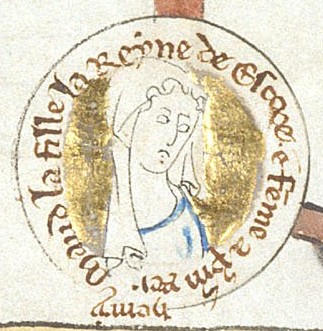
Adela of Normandy – Daughter of the Conqueror

Adela
Adela of Normandy, Countess of Blois and Chartres

Adela of Normandy was the daughter of William the Conqueror, Duke of Normandy and King of England,  and his wife, Matilda of Flanders.

Although most sources give her date of birth around 1061/2, the Oxford Database of National Biography argues that her birth was after the Norman Conquest, as contemporary poetry suggests she was born the daughter of a king, rather than a duke.

Adela was one of nine or ten children born to William and Matilda, with at least four sisters and four brothers, although only three of her brothers survived to adulthood. Given her high level of literacy, and her patronage of poets in adulthood, it is likely that Adela was very well-educated as a child; either through tutors or possibly through residence in a convent, as happened with many daughters of the nobility at that time.

As a child, it seems, a marriage was arranged between Adela and Simon Crispin, count of Amiens; however, the groom chose to take monastic vows and an alternative marriage had to be found. As part of an alliance directed against the aggressive counts of Anjou, Adela was then  betrothed to Stephen of Blois, son of Count Theobald III, count of Blois and Champagne. Stephen was about 20 years older than his bride. The formal betrothal took place at Bourgueil and was later followed by a lavish wedding ceremony in Chartres Cathedral in about 1081.

StepanBlois_1089
Stephen, Count of Blois and Chartres

Adela and Stephen would have up to eleven children in all, with at least two sons born before Stephen succeeded his father as Count of Blois and Champagne in 1090.

Of their five daughters, Matilda married Richard d’Avranches, 2nd Earl of Chester. Tragically, he couple drowned in the White Ship disaster which deprived Henry I of his son and heir, William. Another daughter, Eleanor, married Raoul, Count of Vermandois. He was the brother of Isabelle de Vermandois, Countess of Leicester and Surrey.

Adela’s eldest surviving son seems to have been disinherited at an early age. However, while he is described as an ‘idiot’ by some, William was married to Agnes, the daughter of Giles, Lord of Sulli, and was given the titles Count of Chartres and Lord of Sulli, but was not allowed to inherit the richer county of Blois; which went to his younger brother, Theobald.

Poetry from the time of her wedding describes Adela as valorous, learned and generous. Indeed, she seems to have been a great asset to her husband, who included her in charitable donations and even in his early judicial rulings. Adela developed a cordial relationship with Bishop Ivo of Chartres, which worked well to maintain the peace between the laity and the clergy in the county.

In 1095 Stephen of Blois joined the First Crusade, leaving Adela as head of the family and regent of his domains.  Letters that the count sent to his wife indicate a great level of affection and trust; Adela was given charge of the family’s finances. However, Stephen’s return from crusade appears of have been less than happy. Adela  believed that he had not fulfilled his crusader’s vow and her criticism may have been a contributing factor in his return to the Holy Land in 1101 – she certainly approved of it.

Theobald
Theobald IV, Count of Blois and Champagne

Stephen was killed in combat in the Holy Land, during the siege of Ramallah in May 1102. He was succeeded as Count of Blois by his 2nd surviving son, Theobald. Theobald was knighted in 1107, by which point his older brother, William, had already been removed from the succession to Blois. William inherited the lesser title of Count of Chartres.

Following Stephen’s death Adela continued to act as regent until Theobald attained his majority. Even after Theobald came of age, mother and son ruled jointly until Adela retired from public life in 1120.

Adela was particularly close to her younger brother, Henry, who would later become King Henry I of England. She even supported him against their oldest brother, Robert, when Henry claimed the English crown.

An able administrator and negotiator, Adela settled many disputes among monasteries, and even between monasteries and laymen, in her own domains and beyond. Anselm, archbishop of Canterbury during the reign of William II and Henry I, praised her skills as negotiator and peacemaker following her success at achieving a temporary truce between Anselm and her brother in 1105.

HenryBlois
Henry of Blois, Bishop of Winchester

Anselm described her as an ardent supporter of papal reform, and enjoyed her hospitality during his exile from England. Adela hosted many other church dignitaries, including archbishop Thurstan of York and Pope Paschal II. Her family’s prestige and power was bolstered by her friendships with the leading ecclesiastic figures in both France and England.

An avid  patroness of the arts, Adela corresponded with such dignitaries as Hildebert, bishop of Le Mans and Abbot Baudri of Bourgeuil – later bishop of Dol – who both wrote poems dedicated to the countess. The book Ecclesiastical History Together with the Deeds of the Romans and the Franks, written by Hugh of Fleury, was dedicated to Adela.

One of Adela’s youngest sons, Henry of Winchester, was dedicated to the church at an early age, and was raised at the Priory of Cluny in France. He was nominated as Bishop of Winchester in 1129 and was a great support to his older brother, Stephen, when he claimed the throne of England on his uncle Henry’s death in 1135, at the expense of Henry’s daughter, Matilda

An active ruler Adela regularly toured the family’s domains, both as regent and mother of the reigning count. She also maintained links with the Anglo-Norman and Capetian kings. In 1101 Adela sent knights to help Philip I of France’s son, Louis, battling against rebels north of Paris.

Stepan_Blois
King Stephen

However, by 1107 her son Theobald had joined the revolt and relations with France were to deteriorate further in 1113 when the allied forces of Theobald, Henry I and Adela defeated a Capetian-Angevin army. After further conflict in 1118 Adela used her wealth and diplomatic skills to benefit her family.

In 1120 Adela stopped using the title of countess and retired to the Clunaic Priory of Marcigny;  the same year that her daughter Matilda died in the White Ship disaster off Barfleur in Normandy. She continued to be active in political affairs and lived to see her son, Stephen, claim the throne of England, though not the 20 years of conflict that ensued.

Aged almost 70, and having been a widow for half of her life, this most remarkable woman, Adela of Normandy, former Countess of Blois and Chartres, died in 1137, possibly on 8th March. Although later tradition has her buried with her mother at Holy Trinity in Caen, contemporary sources say she was buried at Marcigny.

*

Pictures courtesy of Wikipedia

*

Sources: England Under the Norman and Angevin Kings  by Robert Bartlett; Heroines of the Medieval World by Sharon Bennett Connolly; Silk and the Sword: The Women of the Norman Conquest by Sharon Bennett Connolly;  Brewer’s British Royalty by David Williamson; Britain’s Royal Families, the Complete Genealogy by Alison Weir; The Mammoth Book of British Kings and Queens by Mike Ashley; oxforddnb.com;  epistolae.ccnmtl.columbia.edu; womenshistory.about.com.

*

My Books

Signed, dedicated copies of all my books are available through my online bookshop.

Out now: Scotland’s Medieval Queens

Scotland’s history is dramatic, violent and bloody. Being England’s northern neighbour has never been easy. Scotland’s queens have had to deal with war, murder, imprisonment, political rivalries and open betrayal. They have loved and lost, raised kings and queens, ruled and died for Scotland. From St Margaret, who became one of the patron saints of Scotland, to Elizabeth de Burgh and the dramatic story of the Scottish Wars of Independence, to the love story and tragedy of Joan Beaufort, to Margaret of Denmark and the dawn of the Renaissance, Scotland’s Medieval Queens have seen it all. This is the story of Scotland through their eyes.

Available now from Amazon and Pen and Sword Books

Also by Sharon Bennett Connolly:

Heroines of the Tudor World tells the stories of the most remarkable women from European history in the time of the Tudor dynasty, 1485-1603. These are the women who ruled, the women who founded dynasties, the women who fought for religious freedom, their families and love. Heroines of the Tudor World is now available for pre-order from Amberley Publishing and Amazon UK. Women of the Anarchy demonstrates how Empress Matilda and Matilda of Boulogne, unable to wield a sword themselves, were prime movers in this time of conflict and lawlessness. It shows how their strengths, weaknesses, and personal ambitions swung the fortunes of war one way – and then the other. Available from Bookshop.orgAmberley Publishing and Amazon UKKing John’s Right-Hand Lady: The Story of Nicholaa de la Haye is the story of a truly remarkable lady, the hereditary constable of Lincoln Castle and the first woman in England to be appointed sheriff in her own right. Available from all good bookshops Pen & Sword Booksbookshop.org and Amazon

Defenders of the Norman Crown: The Rise and Fall of the Warenne Earls of Surrey tells the fascinating story of the Warenne dynasty, from its origins in Normandy, through the Conquest, Magna Carta, the wars and marriages that led to its ultimate demise in the reign of Edward III. Available from Pen & Sword BooksAmazon in the UK and US, and Bookshop.orgLadies of Magna Carta: Women of Influence in Thirteenth Century England looks into the relationships of the various noble families of the 13th century, and how they were affected by the Barons’ Wars, Magna Carta and its aftermath; the bonds that were formed and those that were broken. It is now available in paperback and hardback from Pen & SwordAmazon, and Bookshop.orgHeroines of the Medieval World tells the stories of some of the most remarkable women from Medieval history, from Eleanor of Aquitaine to Julian of Norwich. Available now from Amberley Publishing and Amazon, and Bookshop.orgSilk and the Sword: The Women of the Norman Conquest traces the fortunes of the women who had a significant role to play in the momentous events of 1066. Available now from Amazon,  Amberley Publishing, and Bookshop.org.

Alternate Endings: An anthology of historical fiction short stories including Long Live the King… which is my take what might have happened had King John not died in October 1216. Available in paperback and kindle from Amazon.

Podcast:

Have a listen to the A Slice of Medieval podcast, which I co-host with Historical fiction novelist Derek Birks. Derek and I welcome guests, such as Bernard Cornwell and Michael Jecks, and discuss a wide range of topics in medieval history, from significant events to the personalities involved. Every episode is also now available on YouTube.

*

Don’t forget! Signed and dedicated copies of all my books are available through my online bookshop.

For forthcoming online and in-person talks, please check out my Events Page.

You can be the first to read new articles by clicking the ‘Follow’ button, liking our Facebook page or joining me on Twitter and Instagram.

*

©2015 Sharon Bennett Connolly FRHistS.

Joanna of England, the Lionheart’s Little Sister

220px-Joanna_Plantagenet
Joanna of England

Joanna of England was born in October 1165, the 7th child and youngest daughter of Henry II of England and Eleanor of Aquitaine. Ten years younger than her eldest brother, Henry the Young King, she was born at a time when their parents’ relationship was breaking down; her mother would eventually go to war against her husband, before being imprisoned by him for the last 16 years of Henry’s reign.

Born at Angers Castle in Anjou, Christmas 1165 was the first ever Christmas her parents spent apart; with Henry still in England dealing with a Welsh revolt, it would be several months before he met his new daughter for the first time. Although Joanna spent much of her childhood at her mother’s court in Poitiers, she and her younger brother, John, spent sometime boarding at the magnificent Abbey of Fontevraud. Whilst there Joanna was educated in the skills needed to run a large, aristocratic household and in several languages; English, Norman French and rudimentary Latin.

160px-Britishmuseumsealofjoanna
Joanna’s seals

When Eleanor and her sons rebelled in 1173, Henry II went to war against his wife. When she was captured – wearing men’s clothes – she was sent to imprisonment in England. Joanna joined her father’s entourage and frequently appeared at Henry’s Easter and Christmas courts.

3 years later, Eleanor was allowed to travel to Winchester to say ‘goodbye’ to her youngest daughter, who had been betrothed to King William II of Sicily. Provided with a trousseau, probably similar to that of her sister Matilda on her marriage to Henry the Lion, Joanna set out from Winchester at the end of August 1176; escorted by Bishop John of Norwich and her uncle, Hamelin de Warenne.

Joanna’s entourage must have been a sight to see. Once on the Continent, she was escorted from Barfleur by her brother Henry, the Young King. Her large escort was intended to dissuade bandit attacks against her impressive dowry, which included fine horses, gems and precious metals. At Poitiers, Joanna was met by another brother, Richard, who escorted his little sister to Toulouse in a leisurely and elegant progress.

Dedication_mosaic_-_Cathedral_of_Monreale_-_Italy_2015_(crop)
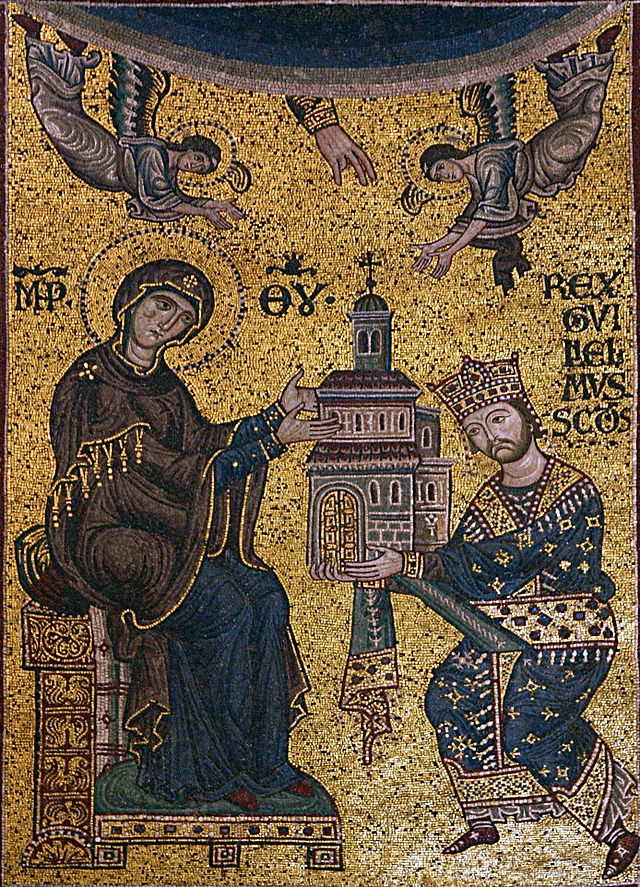
William II dedicating the Cathedral of Monreale to the Virgin Mary

Having finally reached Sicily 12-year-old Joanna was married to 24-year-old William on 13th February 1177, in Palermo Cathedral. The marriage ceremony was followed by her coronation as Queen of Sicily. Joanna must have looked magnificent, her bejewelled dress cost £114 – not a small sum at the time.

Sicily was an ethnically diverse country; William’s court was composed of Christian, Muslim and Greek advisers. William himself spoke, read and wrote Arabic and, in fact, kept a harem of both Christian and Muslim girls within the palace. Although she was kept secluded, it must have been a strange life for a young girl, partly raised in a convent.

Joanna and William only had one child, Bohemond, Duke of Apulia, who was born – and died – in 1181. And when William died without an heir in November 1189, Joanna became a pawn in the race for the succession. William’s aunt, Constance was the rightful heir, but she was married to Henry VI, Holy Roman Emperor and many feared being absorbed into his empire. William II’s illegitimate nephew, Tancred of Lecce, seized the initiative. He claimed the throne and, in need of money, imprisoned Joanna and stole her dowry and the treasures left to her by her husband.

180px-Vilem2Sicilie_smrt
William II of Sicily on his deathbed

Who knows how long Joanna would have remained imprisoned, if it had not been for her brother’s eagerness to go on Crusade? Having gained the English throne in 1189 Richard I – the Lionheart – had wasted no time in organising the Third Crusade and arrived at Messina in Sicily in September 1190.

Richard demanded Joanna’s release; and fearing the Crusader king’s anger Tancred capitulated and freed Joanna, paying 40,000 ounces of gold towards the Crusade in fulfilment of William II’s promise of aid.

Described as beautiful and spirited, Joanna had been Queen of Sicily for 13 years and it seems that, while at her brother’s court, she caught the eye of Richard’s co-Crusdaer, King Philip II of France. Richard was having none of it and moved Joanna to the Priory of Bagnara on the mainland, out of sight and hopefully out of mind.

Richard stayed in Sicily for sometime, negotiating a treaty with Tancred which would recognise him as rightful king of Sicily in return for the remainder of Joanna’s dowry and 19 ships to support the Crusade. He was also waiting for his bride, Berengaria of Navarre, to catch up with him.

Richard_I_and_Joan_greeting_Philip_Augustus
Joanna with her brother, Richard the Lionheart, and King Philip II of France

During Lent of 1191 Joanna had a brief reunion with her mother Eleanor of Aquitaine when she arrived in Sicily, having escorted Richard’s bride. Joanna became Berengaria’s chaperone and they were lodged together at Bagnara, like ‘two doves in a cage’.

Unable to marry in the Lenten season, Richard sent Joanna and Berengaria on ahead of the main army, and departed Sicily for the Holy Land.

The Royal ladies’ ship was driven to Limassol on Cyprus by a storm. After several ships were crippled and then plundered by the islanders, the ruler of Cyprus, Isaac Comnenus, tried to lure Joanna and Berengaria ashore. Richard came to the rescue, reduced Cyprus in 3 weeks and clamped Comnenus in chains (silver ones apparently). Lent being over, Richard and Berengaria were married, with great pomp and celebration, before the whole party continued their journey to the Holy Land, arriving at Acre in June 1191.

Joanna’s time in the Holy Land was spent in Acre and Jaffa, accompanying her sister-in-law and following – at a safe distance – behind the Crusading army. She spent Christmas 1191 with Richard and Berengaria, at Beit-Nuba, just 12 miles from Jerusalem. However, although he re-took Acre and Jaffa, Richard fell out with his allies and was left without a force strong enough to take Jerusalem.

In attempts to reach a political settlement with the Muslim leader, Saladin, Richard even offered Joanna as a bride for Saladin’s brother. His plans were scuppered, however, when Joanna refused outright to even consider marrying a Muslim, despite the fact Richard’s plan would have seen her installed as Queen of Jerusalem.

When a 3-year truce was eventually agreed with Saladin, Joanna and Berengaria were sent ahead of the army, to Sicily and onto Rome where they were to await Richard’s arrival. Richard, however, never made it; falling into the hands of Duke Leopold of Austria, he was handed over to his enemy, the Holy Roman Emperor.

With Richard imprisoned, Berengaria and Joanna arrived back in Poitiers. Berengaria herself set out to help raise the ransom money for Richard’s release, which finally came about in February 1194.

220px-Raimond6Toulouse
Raymond VI Count of Toulouse

Joanna spent the next few years at her mother’s and brother’s courts, her wealth having been squandered by Richard’s Crusade. But at the age of 31 she was proposed as a bride for Raymond VI, Count of Toulouse. Her title as Queen of Sicily would give him greater prestige while bringing the County of Toulouse into the Plantagenet fold, a long-time aim of Eleanor’s.

3-times married Raymond does not seem to have been ideal husband material; he had been excommunicated for marrying his third wife whilst still married to his second. And he now repudiated wife number 3, confining her to a convent, in order to marry Joanna. Despite such a colourful history, the wedding went ahead and Joanna and Raymond were married in Rouen in October 1196, with Queen Berengaria in attendance.

Although not a happy marriage Joanna gave birth to a son, Raymond, in around 1197 and a daughter, possibly called Mary, in 1198. Little is known of Mary, and it is possible she died in infancy. Raymond succeeded his father as Raymond VII Count of Toulouse, and married twice.

220px-RaimondVIIToulouse1242
Raymond VII Count of Toulouse

Raymond VI was not a popular Count of Toulouse and while he was away in the Languedoc, in 1199, dealing with rebel barons, Joanna herself tried to face down her husband’s enemies. She laid siege to a rebel stronghold at Cassee. Mid-siege, however, her troops turned traitor and fired the army’s camp – Joanna managed to escape, but was probably injured.

A pregnant Joanna was then trying to make her way to her brother Richard when she heard of his death. She diverted course and finally reached her mother at Niort. Hurt, distressed and pregnant, Eleanor sent her to Fontevraud to be looked after by the nuns.

With no allowance from her husband, Joanna returned to her mother and brother – King John – in Rouen in June 1199, pleading poverty; Eleanor managed to persuade John to give his sister an annual pension of 100 marks.

Joanna’s last few months must have been a desperate time. Too ill to travel and heavily pregnant, she remained at Rouen. In September, King John gave her a lump sum of 3,000 marks, to dispose of in her will; she specifically mentioned a legacy towards the cost of a new kitchen at Fontevraud and asked Eleanor to dispose of the remainder in charitable works for the religious and the poor.

800px-Abbaye_Fontevraud_-_Eglise_Abbatiale,_facade_ouest
The Church at the Abbey of Fontevraud

Knowing she was dying, Joanna became desperate to be veiled as a nun at Fontevraud; a request normally denied to married women – especially when they were in the late stages of pregnancy. However, seeing how desperate her daughter was, Eleanor sent for Matilda, the Abbess of Fontevraud but, fearing the Abbess would arrive too late, she also asked Hubert Walter, the Archbishop of Canterbury, to intervene. The Archbishop tried to dissuade Joanna, but was impressed by her fervour and convened a committee of nuns and clergy; who agreed that Joanna must be ‘inspired by heaven’.

In Eleanor’s presence, the Archbishop admitted Joanna to the Order of Fontevraud. Joanna was too weak to stand and died shortly after the ceremony; her son, Richard, was born a few minutes later and lived only long enough to be baptised. She died on 4 September 1199, a month short of her 34th birthday.

Joanna and her baby son were interred together at Fontevraud, the funeral cortege having been escorted there by Eleanor of Aquitaine and King John.

The Winchester Annalist said of Joanna, that she was;

a woman whose masculine spirit overcame the weakness of her sex

Winchester Annalist quoted in Oxforddnb.com

*

Do have a listen to our recent episode of A Slice of Medieval in which Derek and I chat with Catherine Hanley about her biography of Joanna, Lionessheart.

Pictures taken from Wikipedia

References: Mike Ashley The Mammoth Book of Kings & Queens; Alison Weir Britain’s Royal Families, the Complete Genealogy; Robert Bartlett England Under the Norman and Angevin Kings; Alison Weir Eleanor of Aquitaine, by the Wrath of God, Queen of England; Douglas Boyd Eleanor, April Queen of Aquitaine; bestofsicily.com; Oxforddnb.com; britannica.com; geni.com; royalwomenblogspot.co.uk; medievalqueens.com.

*

My books

Signed, dedicated copies of all my books are available through my online bookshop.

Out now: Scotland’s Medieval Queens

Books by Sharon Bennett Connolly

Scotland’s history is dramatic, violent and bloody. Being England’s northern neighbour has never been easy. Scotland’s queens have had to deal with war, murder, imprisonment, political rivalries and open betrayal. They have loved and lost, raised kings and queens, ruled and died for Scotland. From St Margaret, who became one of the patron saints of Scotland, to Elizabeth de Burgh and the dramatic story of the Scottish Wars of Independence, to the love story and tragedy of Joan Beaufort, to Margaret of Denmark and the dawn of the Renaissance, Scotland’s Medieval Queens have seen it all. This is the story of Scotland through their eyes.

Scotland’s Medieval Queens gives a thorough grounding in the history of the women who ruled Scotland at the side of its kings, often in the shadows, but just as interesting in their lives beyond the spotlight. It’s not a subject that has been widely covered, and Sharon is a pioneer in bringing that information into accessible history.’ Elizabeth Chadwick (New York Times bestselling author)

Available now from Amazon and Pen and Sword Books

Also by Sharon Bennett Connolly:

Books by Sharon Bennett Connolly

Heroines of the Tudor World tells the stories of the most remarkable women from European history in the time of the Tudor dynasty, 1485-1603. These are the women who ruled, the women who founded dynasties, the women who fought for religious freedom, their families and love. Heroines of the Tudor World is now available for pre-order from Amberley Publishing and Amazon UK. Women of the Anarchy demonstrates how Empress Matilda and Matilda of Boulogne, unable to wield a sword themselves, were prime movers in this time of conflict and lawlessness. It shows how their strengths, weaknesses, and personal ambitions swung the fortunes of war one way – and then the other. Available from Bookshop.orgAmberley Publishing and Amazon UKKing John’s Right-Hand Lady: The Story of Nicholaa de la Haye is the story of a truly remarkable lady, the hereditary constable of Lincoln Castle and the first woman in England to be appointed sheriff in her own right. Available from all good bookshops Pen & Sword Booksbookshop.org and Amazon

Royal Historical Society

Defenders of the Norman Crown: The Rise and Fall of the Warenne Earls of Surrey tells the fascinating story of the Warenne dynasty, from its origins in Normandy, through the Conquest, Magna Carta, the wars and marriages that led to its ultimate demise in the reign of Edward III. Available from Pen & Sword BooksAmazon in the UK and US, and Bookshop.orgLadies of Magna Carta: Women of Influence in Thirteenth Century England looks into the relationships of the various noble families of the 13th century, and how they were affected by the Barons’ Wars, Magna Carta and its aftermath; the bonds that were formed and those that were broken. It is now available in paperback and hardback from Pen & SwordAmazon, and Bookshop.orgHeroines of the Medieval World tells the stories of some of the most remarkable women from Medieval history, from Eleanor of Aquitaine to Julian of Norwich. Available now from Amberley Publishing and Amazon, and Bookshop.orgSilk and the Sword: The Women of the Norman Conquest traces the fortunes of the women who had a significant role to play in the momentous events of 1066. Available now from Amazon,  Amberley Publishing, and Bookshop.org.

Alternate Endings: An anthology of historical fiction short stories including Long Live the King… which is my take what might have happened had King John not died in October 1216. Available in paperback and kindle from Amazon.

Podcast:

A Slice of Medieval

Have a listen to the A Slice of Medieval podcast, which I co-host with Historical fiction novelist Derek Birks. Derek and I welcome guests, such as Elizabeth Chadwick, Helen Castor, Ian Mortimer, Scott Mariani and Bernard Cornwell and discuss a wide range of topics in medieval history, from significant events to the personalities involved. 

Every episode is also now available on YouTube.

*

Don’t forget! Signed and dedicated copies of all my books are available through my online store.

For forthcoming online and in-person talks, please check out my Events Page.

You can be the first to read new articles by clicking the ‘Follow’ button, liking our Facebook page or joining me on TwitterThreadsBluesky and Instagram.

©2015 Sharon Bennett Connolly FRHistS
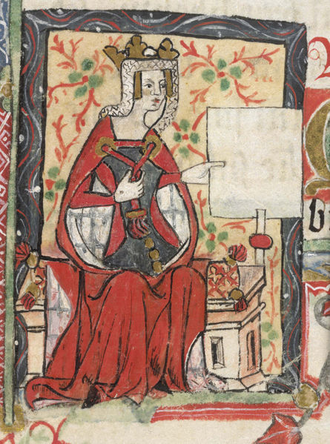
Isabella of Gloucester, the Lost Queen of England

170px-john_of_england_john_lackland
King John

Isabella of Gloucester is a shadow in the pages of history. I could find no pictures of her. Until recently, no one even seemed certain of her name; in the history books she has been called Isabel, Isabella, Hawise, Avice – probably due to different language interpretations, translations and misunderstandings. However, Rich Price, who has done extensive research on primary sources from King John‘s reign has clarified that The Close Rolls definitely name her as ‘comitissa Isabella’ and ‘Isabella filia Willielmi comitis’ (Isabella, daughter of Count William), so we’ll stick with Isabella.

Isabella was the youngest daughter, and co-heiress, of William, 2nd Earl of Gloucester and his wife, Hawise, daughter of Robert de Beaumont, 2nd Earl of Leicester; Isabella was therefore a great-granddaughter of Isabel de Vermandois (and a distant cousin of the Warennes). Through her father, Isabella was a descendant of Robert of Gloucester, the illegitimate half-brother of Empress Matilda who was his sister’s leading general during the civil war known as The Anarchy. We know very little of Isabella’s childhood, although, considering her social status, as the daughter of one of England’s wealthiest earls, it is likely that she was given the education expected of a high-ranking noblewoman and taught to run a large household, as well as the social graces of singing, dancing and needlework. Her parents’ marriage appears to have been a successful one. Isabella’s mother, Countess Hawise, was a regular witness to her husband’s charters and was mentioned in several of them, especially in the pro amina clauses of grants made to religious houses that sought spiritual benefits for those named.

Although her date of birth has been lost to history – most sources say between 1173 and 1176, though she may have been born in the 1160s – she was betrothed in 1176, possibly whilst still in her cradle, to Prince John. The youngest son of Henry II and Eleanor of Aquitaine, John was 9 years old at the time of the betrothal. Under the terms of the marriage agreement, Earl William recognised John as heir to the earldom of Gloucester, effectively disinheriting Isabella’s two elder sisters. The marriage was to be a way for Henry II to provide for his youngest son. After the Earl of Gloucester’s death in 1183, his entire estate was passed to Isabella, who had been made a ward of the king. However the wedding did not take place until 1189, when John was 21.

Baldwin, the Archbishop of Canterbury at the time, opposed the marriage as the couple were related within the prohibited degrees, both being a great-grandchild of Henry I, and ordered that they should not live together as husband and wife. John promised to seek a papal dispensation, in order to overcome Baldwin’s objections – although it appears this was never obtained. Nevertheless, John and Isabella were married on 29 August, 1189, at Marlborough Castle, Wiltshire. Although Isabella and John were married for ten years, their marriage was neither happy nor successful. They spent some time together in the first years of their marriage and issued joint charters during a visit to Normandy around 1190–91. However, they appear to have spent less and less time in each others’ company as the years went on. They never had any children and it is during this time in his life that John’s illegitimate children, including Richard of Chilham and Joan Lady of Wales, were probably born. In 1193, as part of his plotting with Philip Augustus, John promised to marry the French king’s half-sister, Alys, who had previously been betrothed to John’s own brother, Richard. Nothing eventually came of the marriage proposal, but it was an implicit rejection of Isabella as his wife.

John succeeded to the throne on the death of his older brother Richard I – the Lionheart – on 6 April 1199. He was crowned king on 27 May 1199; the fact that Isabella was not crowned alongside him, suggests that John was already looking for a way out of the marriage. Isabella would never be styled Queen of England.

Books by Sharon Bennett Connolly
Coat of arms of Geoffrey de Mandeville, Earl of Essex and Gloucester

Within months of his succession, possibly as early as 30 August 1199 (the day after their 10th wedding anniversary), but certainly by 1200, John had obtained a divorce on the grounds of consanguinity; the bishops of Lisieux, Bayeux and Avranches, sitting in Normandy, provided the required judgement.

However, in order to keep his hold on the substantial Gloucester lands, John imposed a royal wardship on Isabella for the next 14 years. When John remarried, to Isabelle d’Angouleme, his new, young wife (she was no more than 12 on her wedding day and possibly a year or two younger) was lodged with Isabella of Gloucester at Winchester, the countess’s allowance was raised from £50 to £80 to cover the extra expenditure that comes with housing a queen. John’s wife and ex-wife were housed together until a few weeks before the birth of Isabelle’s first child by John, the future King Henry III, who was born in 1207.

The king eventually arranged a new marriage for Isabella, to a man who was over 16 years her junior. In 1214, although possibly past child-bearing age – certainly safe child-bearing age – she was married to Geoffrey de Mandeville, Earl of Essex, who had paid the considerable sum of 20,000 marks to become her second husband and Earl of Gloucester ‘jure uxoris‘ (by right of his wife), a huge sum which he could never hope to repay. Indeed, he soon defaulted on his payments. Just 2 years later, in 1216, de Mandeville died from wounds he had received in a tournament in London.

One of the Magna Carta sureties, de Mandeville was in a state of rebellion against the king when he died; as a result, all his lands and titles – including the earldom of Gloucester – were forfeit to the crown. Isabella’s feelings towards John may well be seen in the fact that, even after de Mandeville’s death, she continued to support the rebels. Isabella was now a widow and although virtually penniless appears to have reveled in her first taste of freedom, styling herself on one charter ‘Countess of Gloucester and Essex in my free widowhood’. It was not until 17th September 1217, almost a year after the death of King John, that Isabella’s lands were returned to her.

220px-Hubert_de_Burgh-Paris
Hubert de burgh

At about the same time – or shortly after – Isabella was married for a third and final time, to Hubert de Burgh. Hubert De Burgh had become Chief Justiciar of England in 1215 and would rise to be Regent during the minority of Henry III. It was only several years after Isabella’s death that he would be created Earl of Kent.

On 13 October 1217 the sheriffs of nine counties were ordered to relinquish custody of Isabella’s lands to de Burgh. This final marriage was, sadly, very short-lived and Isabella was dead within only a few weeks of her wedding day and almost exactly a year after the death of her first husband, King John.

Isabella died on 14 October 1217, probably at Keynsham Abbey near Bristol, and was buried at the cathedral of Christ Church, Canterbury. Shortly before her death, Isabella made a grant to the monks of Canterbury, of £10 of land in her manor of Petersfield, Hampshire, which was witnessed by Hubert de Burgh and other members of his household.

In spite of her three marriages, Isabella never had children and was succeeded to the earldom of Gloucester by her nephew, Gilbert de Clare.

She was laid to rest in Canterbury Cathedral, Kent.

  *

Isabella of Gloucester’s story appears in greater detail in my book, Ladies of Magna Carta: Women of Influence in Thirteenth Century England.

Further Reading: Robert Bartlett England Under the Norman and Angevin Kings 1075-1225; Dan Jones The Plantagenets; the Kings who Made England; The Plantagenet Chronicle Edited by Elizabeth Hallam; Maurice Ashley The Life and Times of King John; Roy Strong The Story of Britain; Oxford Companion to British History; Mike Ashley British Kings & Queens; David Williamson Brewer’s British Royalty; Rich Price King John’s Letters Facebook page; finerollshenry3.org.uk; Oxforddnb.com; magnacarta800th.com; Church, Stephen, King John: England, Magna Carta and the Making of a Tyrant; Danziger, Danny and John Gillingham, 1215: The Year of Magna Carta.

Pictures courtesy of Wikipedia.

*

My Books

Signed, dedicated copies of all my books are available through my online bookshop.

Out now: Scotland’s Medieval Queens

Books by Sharon Bennett Connolly

Scotland’s history is dramatic, violent and bloody. Being England’s northern neighbour has never been easy. Scotland’s queens have had to deal with war, murder, imprisonment, political rivalries and open betrayal. They have loved and lost, raised kings and queens, ruled and died for Scotland. From St Margaret, who became one of the patron saints of Scotland, to Elizabeth de Burgh and the dramatic story of the Scottish Wars of Independence, to the love story and tragedy of Joan Beaufort, to Margaret of Denmark and the dawn of the Renaissance, Scotland’s Medieval Queens have seen it all. This is the story of Scotland through their eyes.

Scotland’s Medieval Queens gives a thorough grounding in the history of the women who ruled Scotland at the side of its kings, often in the shadows, but just as interesting in their lives beyond the spotlight. It’s not a subject that has been widely covered, and Sharon is a pioneer in bringing that information into accessible history.’ Elizabeth Chadwick (New York Times bestselling author)

Available now from Amazon and Pen and Sword Books

Also by Sharon Bennett Connolly:

Books by Sharon Bennett Connolly

Heroines of the Tudor World tells the stories of the most remarkable women from European history in the time of the Tudor dynasty, 1485-1603. These are the women who ruled, the women who founded dynasties, the women who fought for religious freedom, their families and love. Heroines of the Tudor World is now available for pre-order from Amberley Publishing and Amazon UK. Women of the Anarchy demonstrates how Empress Matilda and Matilda of Boulogne, unable to wield a sword themselves, were prime movers in this time of conflict and lawlessness. It shows how their strengths, weaknesses, and personal ambitions swung the fortunes of war one way – and then the other. Available from Bookshop.orgAmberley Publishing and Amazon UKKing John’s Right-Hand Lady: The Story of Nicholaa de la Haye is the story of a truly remarkable lady, the hereditary constable of Lincoln Castle and the first woman in England to be appointed sheriff in her own right. Available from all good bookshops Pen & Sword Booksbookshop.org and Amazon

Defenders of the Norman Crown: The Rise and Fall of the Warenne Earls of Surrey tells the fascinating story of the Warenne dynasty, from its origins in Normandy, through the Conquest, Magna Carta, the wars and marriages that led to its ultimate demise in the reign of Edward III. Available from Pen & Sword BooksAmazon in the UK and US, and Bookshop.orgLadies of Magna Carta: Women of Influence in Thirteenth Century England looks into the relationships of the various noble families of the 13th century, and how they were affected by the Barons’ Wars, Magna Carta and its aftermath; the bonds that were formed and those that were broken. It is now available in paperback and hardback from Pen & SwordAmazon, and Bookshop.orgHeroines of the Medieval World tells the stories of some of the most remarkable women from Medieval history, from Eleanor of Aquitaine to Julian of Norwich. Available now from Amberley Publishing and Amazon, and Bookshop.orgSilk and the Sword: The Women of the Norman Conquest traces the fortunes of the women who had a significant role to play in the momentous events of 1066. Available now from Amazon,  Amberley Publishing, and Bookshop.org.

Alternate Endings: An anthology of historical fiction short stories including Long Live the King… which is my take what might have happened had King John not died in October 1216. Available in paperback and kindle from Amazon.

Podcast:

Have a listen to the A Slice of Medieval podcast, which I co-host with Historical fiction novelist Derek Birks. Derek and I welcome guests, such as Bernard Cornwell and Elizabeth Chadwick, and discuss a wide range of topics in medieval history, from significant events to the personalities involved.

Every episode is also now available on YouTube.

*

Signed and dedicated copies of all my books are available through my online store.

For forthcoming online and in-person talks, please check out my Events Page.

You can be the first to read new articles by clicking the ‘Follow’ button, liking our Facebook page or joining me on TwitterThreadsBluesky and Instagram.

©2015 Sharon Bennett Connolly FRHistS