William Longespée, the King’s Illegitimate Son

For many years, although William Longespée’s father was known, the identity of his mother was very much in question. William Longespée was the son of Henry II, king of England, and it was thought that his mother was a common harlot, called Ikenai. In that case, he would have been a full brother of another of Henry’s illegitimate sons, Geoffrey, Archbishop of York. There were also theories that his mother was Rosamund Clifford, famed in ballads as ‘the Fair Rosamund’. However, it is now considered beyond doubt that his mother was, in fact, Ida de Tosney, wife of Roger Bigod, Earl of Norfolk, from a relationship she had with the king before her marriage.

History...the Interesting Bits
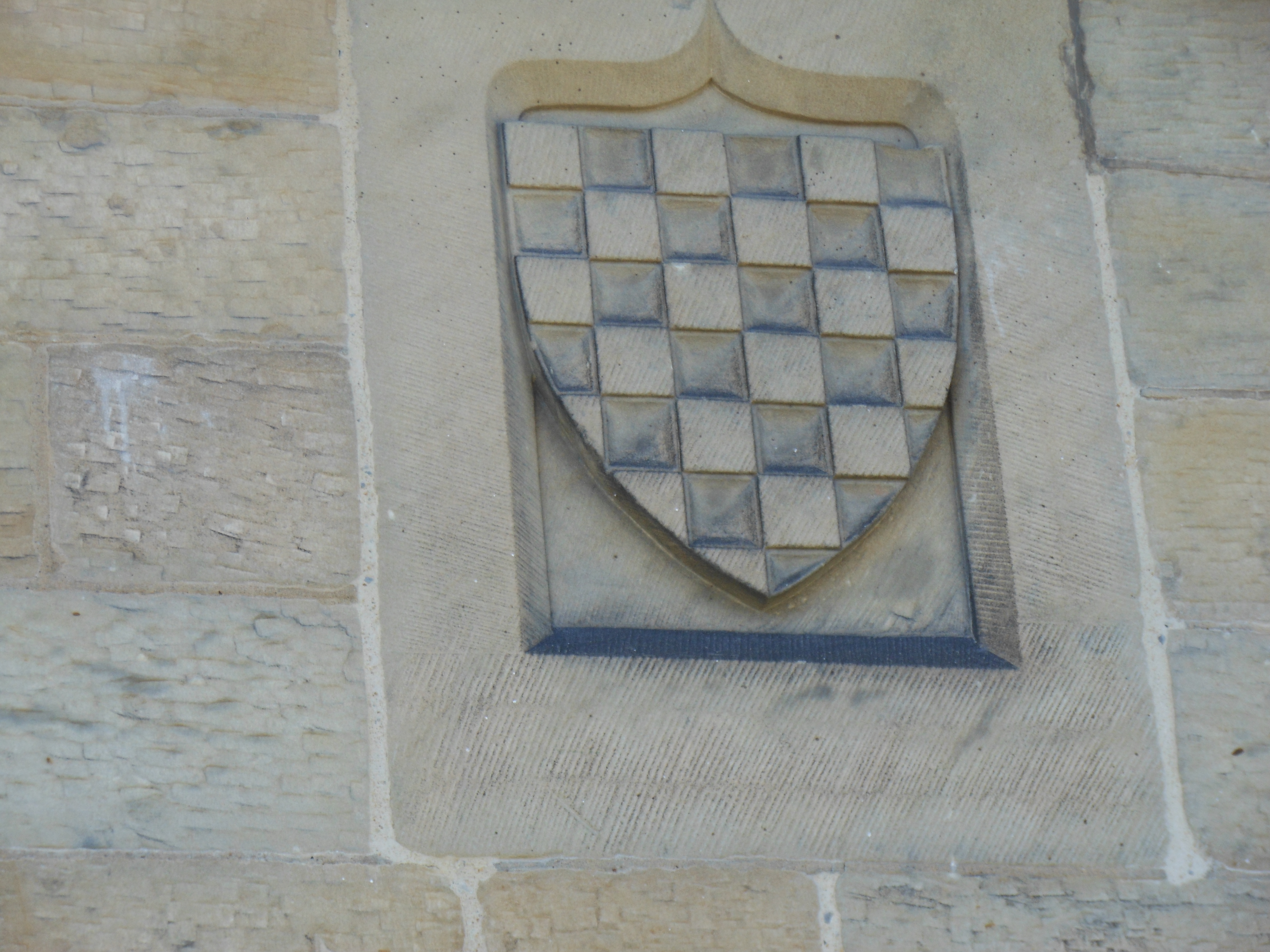
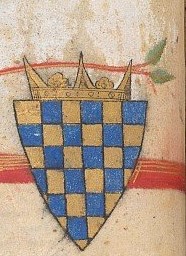
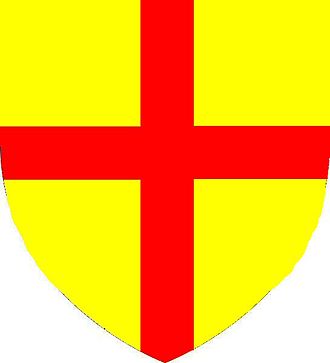
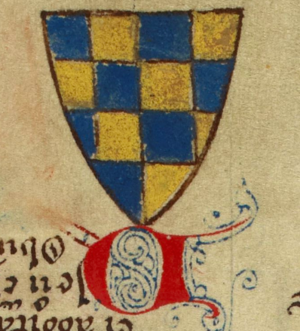
Coat of arms of William Longespée, 3rd Earl of Salisbury

There are two extant pieces of evidence supporting this. The first is a charter in the cartulary of Bradenstoke Priory, made by William Longespée, in which he refers explicitly to his mother as ‘Countess Ida, my mother’. There is also a prisoner roll from after the Battle of Bouvines, in which a fellow captive, one the sons of Ida and the earl of Norfolk, Ralph Bigod, is listed as ‘Ralph Bigod, brother [halfbrother] of the earl of Salisbury’. Ralph was a younger son of Earl Roger and Ida and had been fighting under Longespée’s command in the battle in which both were taken prisoner.

Ida was probably the daughter of Roger (III) de Tosney, a powerful Anglo-Norman lord, and his wife, also called Ida. She was made a royal ward after her father’s death and became mistress of King Henry II sometime afterwards. She gave the king one son, William Longespée, who was born around 1176, making him ten years younger than the king’s youngest legitimate son, John. Around Christmas 1181, Ida was married to Roger Bigod, Earl of Norfolk and through his mother’s Norfolk family, Longespée had four half-brothers, Hugh, William, Ralph and Roger and two half-sisters, Mary and Margery.

Despite the misunderstandings over his mother, the identity of William Longespée’s father was never in doubt. He was Henry II’s son and acknowledged by his father; as an illegitimate son of Henry II, William Longespée’s fortune and position in society were inextricably linked with the fortunes of his royal half-brothers, King Richard I and King John, both of whom he served. Longespée adopted the coat of arms of his paternal grandfather, Geoffrey Plantagenet, Count of Anjou, of azure, six leoncels rampant or [gold], to emphasise his descent from the Angevin counts.

The moniker of Longespée (also Lungespée or Longsword) harkens back to his Norman forebear and namesake William Longsword, second Duke of Normandy (reigned 928–942), from whom he was descended through his father, the king. Little is known of Longespée’s childhood, upbringing or education, though a letter of 1220 that Longespée sent to Hubert de Burgh reminds the justiciar that they were raised together, probably fostered in a noble household. In 1188, Longespée had been given the manor of Appleby in Lincolnshire by his father, but he did not come into prominence until the reign of his half-brother Richard I.

It was King Richard who arranged Longespée’s marriage to the rich heiress Ela of Salisbury. Ela’s father, William, Earl of Salisbury, had carried the sceptre at Richard I’s coronation, in 1194 he had served as high sheriff of Somerset and Dorset and in 1195 campaigned with King Richard in Normandy. In the same year, he was one of the four earls who supported the canopy of state at Richard’s second coronation, and attended the great council, called by the king, at Nottingham. He died in 1196, leaving his only child, Ela, as his sole heir. Ela became Countess of Salisbury in her own right, and the most prized heiress in England.

On her father’s death, Ela’s wardship passed into the hands of the king himself, Richard I, the Lionheart. The king saw Ela as the opportunity to reward his loyal, but illegitimate, half-brother, William Longespée, by offering him her hand in marriage; the Salisbury lands being seen as a suitable reward for a king’s son, especially one born out of wedlock. They would give Longespée a power base in England. Ela and Longespée were married in the same year her father died, 1196. At the time of his marriage to Ela, Longespée was in his early twenties, while his bride was not yet 10 years old, although she would not have been expected to consummate the marriage until she was 14 or 15, and they would not have lived as husband and wife until Ela was at least 12 years old, the church’s legal age of marriage for a girl.

Ela’s new husband was an experienced soldier and statesman and would be able to protect Ela, her lands and interests. William acquired the title Earl of Salisbury by right of his wife and took over the management of the vast Salisbury estates.
History...the Interesting Bits
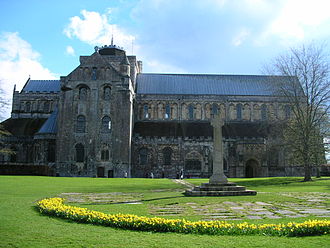
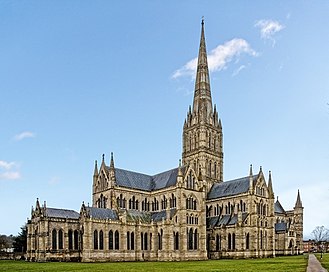
Salisbury Cathedral

William (I) Longespée had an impressive military and political career during the reigns of his half-brothers. He first served in Normandy with Richard between 1196 and 1198, attesting several charters for his brother at Château Gaillard, and taking part in the campaigns against King Philip II of France, gaining essential military experience. He took part in John’s coronation on 27 May 1199 and was frequently with John thereafter. The half-brothers appear to have enjoyed a very cordial relationship; the court rolls record them gaming together and John granting Longespée numerous royal favours, from gifts of wine to an annual pension. By 1201 Longespée, along with William Marshal and Geoffrey fitz Peter, Earl of Essex ‘were seen by John at this stage in his reign as the main props to his rule, and lavish gifts followed.’1

Although Longespée’s marriage to Ela of Salisbury gave him rank and prestige, it was not a wealthy earldom. The barony commanded fifty-six knights’ fees and gave the earl custody of the royal fortress of Salisbury, but Longespée had no castle of his own. He was made sheriff of Wiltshire on 3 separate occasions, 1199–1202, 1203–1207 and 1213–1226, but was never granted the position as a hereditary right by the king. As sheriff, it was Longespée’s task to hunt down the famous outlaw Fulk Fitzwarin, whom he besieged in Stanley Abbey in 1202. When Fitzwarin and his band of about 30 men were pardoned in 1203, Longespée was among those who secured the pardon from the king. During his career, William was also entrusted with several important diplomatic missions. In 1202 he negotiated a treaty with Sancho VII of Navarre and in 1204 he and William Marshal escorted the Welsh prince Llywelyn to the king at Worcester. He was also sent to Scotland on a diplomatic mission to King William the Lion in 1205 and was with John at York in November 1206 when the two kings met. The earl was also involved in the election of his nephew, Otto, as German emperor, heading an embassy to the princes of Germany which resulted in Otto’s coronation.

William Longespée’s most prominent role during the reign of King John, however, was as a military leader. He was a commander of considerable ability. In August 1202 he had fought alongside William Marshal and William de Warenne, Earl of Surrey, hounding the retreating forces of King Philip of France. The French king had withdrawn from the siege of Arques following news of John’s victory over his nephew, Arthur, at Mirebeau. Longespée and his lightly-armed fellow earls, however, narrowly escaped capture from a counterattack led by William de Barres. Following the fall of Normandy, Longespée was given command of Gascony in May 1204. In September of the same year he was also given custody of Dover castle and made warden of the Cinque Ports; he retained both offices until May 1206. In 1208 Longespée was appointed warden of the Welsh Marches and in 1210 he joined King John on the Irish expedition which had been prompted by William de Braose fleeing to Ireland to escape John’s persecution. In 1213 he allied with the counts of Holland and Boulogne, led an expeditionary force to the aid of Count Ferrand of Flanders against King Philip II and on 30 May he achieved a significant naval victory when his forces destroyed the French fleet off the Flemish coast near Damme, burning many enemy ships and capturing others. The victory forced King Philip to abandon plans for an invasion of England.

In 1214 William Longespée commanded an army in northern France for the king, while John was campaigning in Poitou. He managed to recover most of the lands lost by the count of Flanders and,, in July of the same year, he commanded the right-wing of the allied army at the Battle of Bouvines, alongside Renaud de Dammartin, Count of Boulogne. William fought bravely but was captured, after being clubbed on the head by Philippe, the bishop of Beauvais. According to the Histoire de Guillaume le Maréchal the battle had been fought against the earl’s advice, and if it were not for Longespée’s own heroic actions, Emperor Otto would have been taken prisoner or, worse, killed. The battle was a military disaster for the English forces in France and ended John’s hopes of recovering his Continental possessions. William Longespée was held prisoner for almost a year. He was eventually ransomed and exchanged in March 1215, for John’s prisoner, Robert, son of the count of Dreux, who had been captured at Nantes in 1214.

William Longespée was back in England by May 1215 and appointed to examine the state of royal castles. However, England was reaching crisis point by this time, with the rebellion of the barons gathering pace. Although unable to prevent rebels from gaining control of London, he was effective against the rebels in Devon, forcing them to abandon Exeter. He was named among those barons who had advised John to grant Magna Carta, though whether he was actually present at Runnymede, when the charter was sealed, is unknown. He was granted lands from the royal demesne in August 1215 in compensation for the loss of Trowbridge, which had been returned to Henry de Bohun, one of the twenty-five barons appointed to the committee to oversee the enforcement of the terms of Magna Carta. Also in 1215, following the fall of Rochester, Longespée was given the task of containing the rebels in London, while John led the rest of his forces north. Alongside Faulkes de Bréauté and Savaric de Mauléon, he led a punitive chevauchée through Essex, Hertfordshire, Middlesex, Cambridgeshire and Huntingdonshire. However, in the early weeks of 1216, when Walter Buc’s Brabançon mercenaries ravaged the Isle of Ely, it was Longespée who protected the women from their worst excesses.

Longespée was still supporting John when Louis, the Dauphin, landed on 21 May 1216; however, Louis’ rapid advance through the southern counties, and the fall of Winchester in June 1216, led the earl of Salisbury to submit and ally with Louis. He remained in opposition to his half-brother for the rest of John’s life. Unfounded rumours, recorded by William the Breton, suggested that Longespée’s desertion of John was caused by the king’s seduction of Ela while the earl was a prisoner of war in France. It seems more likely that, like so many others, he saw John’s cause as lost and decided to cut his own losses. With Longespée’s defection, and that of William de Warenne, Earl of Surrey, John’s support was severely diminished and in retaliation, John ordered his brother’s lands seized in August 1216.
History...the Interesting Bits
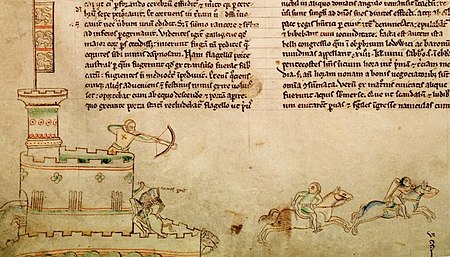
Battle of Lincoln 1217, from Matthew Paris

Despite the death of King John in October 1216, Longespée remained with Louis and even called for Hubert de Burgh to surrender Dover to the French. However, when Louis returned to France in March 1217, to gather reinforcements, Longespée submitted to the king, swearing loyalty to his 9-year-old nephew, Henry III. He was also absolved of the sentence of excommunication which had been passed on all those who had defected to Louis. Along with Longespée, William Marshal’s eldest son, William (II), and a hundred other men from Wiltshire and the south-west, returned to the king’s peace. Longespée was now instrumental in driving the French from England and defeating the remaining rebel barons. He was part of William Marshal’s army at the Battle of Lincoln Fair on 20 May 1217, when Lincoln Castle and its formidable castellan, Nicholaa de la Haye, were finally relieved following a months-long siege by the French under the Comte de Perche.

We know nothing of William and Ela’s married life, although it appears to have been a happy one. The couple had at least eight children together, if not more; 4 boys and 4 girls. Of their 3 youngest boys, Richard became a canon at the newly built Salisbury Cathedral, Stephen became seneschal of Gascony and justiciar of Ireland, and their youngest son, Nicholas, was elected bishop of Salisbury in 1291; he was consecrated at Canterbury by Archbishop John Pecham on 16 March 1292. Already in his sixties, Nicholas died on 18 May 1297. In 1216, the oldest son, William II Longespée, fourth Earl of Salisbury, was granted marriage by King John to Idonea, granddaughter and sole heiress of the formidable Nicholaa de la Haye. Both children were very young when the grant was made, with Idonea being, possibly, no older than 8, the youngest age that a betrothal was sanctioned by the church, though she could not be married until the age of 12. John ordered that:

History...the Interesting Bits
Effigy from William Longespée’s tomb

The sheriffs of Oxford and of Berkshire are commanded that they cause William, Earl of Salisbury, to have the right of marriage of the daughter of Richard de Canville, born of Eustacia, who was the daughter of Gilbert Basset and wife of the said Richard, for William his first-born son by his wife Ela, Countess of Salisbury, with all the inheritance belonging to the said Richard’s daughter from her mother in their Bailiwicks. Witness myself, at Reigate, the twenty second day of April.

Letter from King John, 22 April 1216

This order may be the source of Nicholaa de la Haye’s later wranglings with Salisbury. Although it states that Salisbury should take possession of Idonea’s inheritance from her mother, the earl may have assumed – or presumed – to take all of Idonea’s inheritance into his custody, regardless of the fact Nicholaa was still very much alive at this time. It also suggests that Richard de Canville, Idonea’s father, may have already been deceased, despite most mentions of him have him dying in the first quarter of 1217. Otherwise, she would have still been in her father’s custody. Salisbury and Nicholaa de la Haye would spend several years in legal disputes over the inheritance of Nicholaa’s Lincolnshire holdings, and tried repeatedly to take Lincoln Castle from her. William (II) Longespée went on crusade with Richard, Earl of Cornwall, in 1240–1 and later led the English contingent in the Seventh Crusade led by Louis IX of France. His company formed part of the doomed vanguard, which was overwhelmed at Mansourah in Egypt on 8 February 1250. William’s body was buried in Acre, but his effigy lies atop an empty tomb in Salisbury Cathedral. His mother, Ela, is said to have experienced a vision of her son’s last moments at the time of his death.

Of William and Ela’s 4 daughters, Petronilla died unmarried, possibly having become a nun. Isabella married William de Vescy, Lord of Alnwick, and had children before her death in 1244. Another daughter, named Ela after her mother, married firstly Thomas de Beaumont, Earl of Warwick and, secondly, Phillip Basset; sadly, she had no children by either husband. A fourth daughter, Ida, married Walter fitzRobert; her second marriage was to William de Beauchamp, Baron Bedford, by whom she had 6 children.

As a couple, William Longespée and Ela were great patrons of the church, laying the 4th and 5th foundation stones for the new Salisbury Cathedral in 1220. William de Warenne, Earl of Surrey and a cousin to Ela – Ela’s father was half-brother to William’s mother, Countess Isabel de Warenne – also laid a foundation stone. In the first half of the 1220s, Longespée played an influential role in the minority government of Henry III and also served in Gascony to secure the last remaining Continental possessions of the English king. In 1225 he was shipwrecked off the coast of Brittany and a rumour spread that he was dead. While he spent months recovering at the island monastery of Ré, Hubert de Burgh, first Earl of Kent and widower of Isabella of Gloucester, proposed a marriage between Ela and his nephew, Reimund. Ela, however, would not even consider it, insisting that she knew William was alive and that, even if he were dead, she would never presume to marry below her status. It has been suggested that she used clause 8 of Magna Carta to support her rejection of the offer:

‘No widow is to be distrained to marry while she wishes to live without a husband.’

Clause 8, 1215 Magna Carta
History...the Interesting Bits
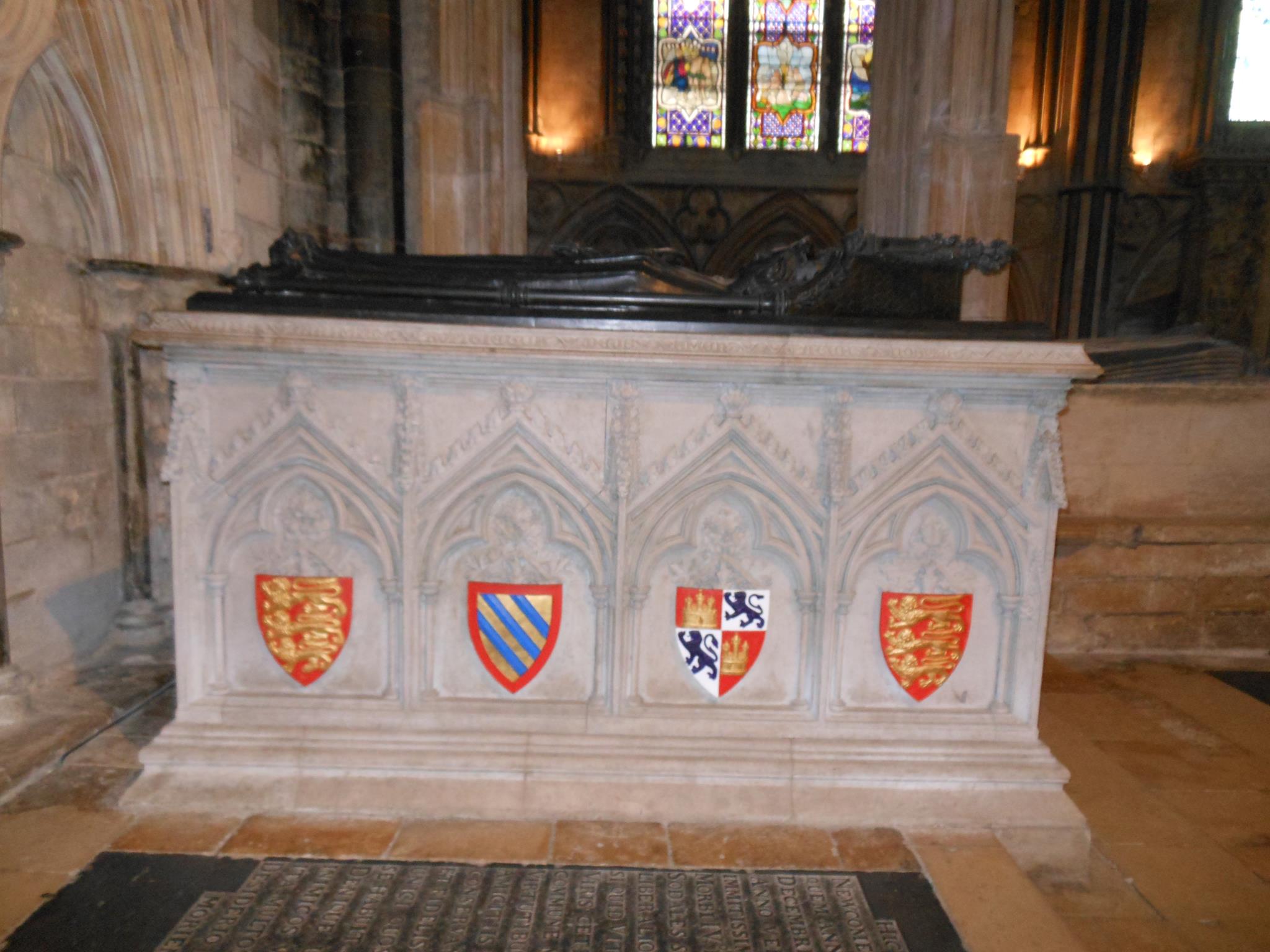
Tomb of William Longespée, Salisbury Cathedral

As it turned out, William Longespée was, indeed, still alive and he eventually returned to England and his wife; after landing in Cornwall, he made his way to Salisbury. From Salisbury he went to Marlborough to complain to the king that Reimund had tried to marry Ela whilst he was still alive. According to the Annals and antiquities of Lacock Abbey, Reimund was present at Longespée’s audience with the king, confessed his wrongdoing and offered to make reparations, thus restoring peace.

Unfortunately, Longespée never seems to have recovered fully from his injuries and died at the royal castle of Salisbury shortly after his return home, on 7 March 1226, amid rumours of being poisoned by Hubert de Burgh or his nephew. He was buried in a splendid tomb in Salisbury Cathedral.

Although the earldom of Salisbury still belonged to his wife, his son, William (II) Longespée was sometimes called Earl of Salisbury, but never legally bore the title as he died before his mother. Ela did not marry again. On her husband’s death, she was forced to relinquish her custody of the royal castle at Salisbury, although she did eventually buy it back. More importantly, she was allowed to take over her husband’s role as sheriff of Wiltshire, which he had held 3 times in his career and continuously from 1213 until his death in 1226. Ela herself served twice as sheriff of Wiltshire from 1227 until 1228 and again from 1231 to 1237.

Ela of Salisbury outlived both her eldest son and grandson. She was succeeded as Countess of Salisbury by her great-granddaughter, Margaret, who was the daughter of William III Longespée. Just over 10 years after she was widowed, Ela entered her own foundation of Lacock Priory in 1237 and became the first Abbess when it was upgraded to an Abbey in 1239. As Abbess, Ela was able to secure many rights and privileges for the abbey and its village. She obtained a copy of the 1225 issue of Magna Carta, which had been given to her husband for him to distribute around Wiltshire. She remained Abbess for 20 years, resigning in 1259. Ela remained at the abbey, however, and died there on 24th August, 1261.

*

Footnotes:

1David Crouch, William Marshal

Images courtesy of Wikipedia.

Sources:

finerollshenry3.org.uk; Oxforddnb.com; magnacarta800th.com; Church, Stephen, King John: England, Magna Carta and the Making of a Tyrant; Danziger, Danny and John Gillingham, 1215: The Year of Magna Carta; Crouch, David, William Marshal; Matthew Paris, Robert de Reading and others, Flores Historiarum, volume III; Robert Bartlett England Under the Norman and Angevin Kings 1075-1225; Dan Jones The Plantagenets; the Kings who Made England; Maurice Ashley The Life and Times of King John; Roy Strong The Story of BritainOxford Companion to British History; Mike Ashley British Kings & Queens; David Williamson Brewer’s British Royalty; Rich Price King John’s Letters Facebook page; Elizabeth Hallam, editor, The Plantagenet Chronicles; Donald Matthew, King Stephen; Medieval Lands Project on the Earls of Surrey, Conisbrough Castle; Farrer, William and Charles Travis Clay, editors, Early Yorkshire Charters, Volume 8: The Honour of Warenne; Rev. John Watson, Memoirs of the Ancient Earls of Warren and Surrey and their Descendants to the Present Time; Morris, Marc King John: Treachery, Tyranny and the Road to Magna Carta; doncasterhistory.co.uk.

*

My books

Signed, dedicated copies of all my books are available through my online bookshop.

Out now: Scotland’s Medieval Queens

Books by Sharon Bennett Connolly

Scotland’s history is dramatic, violent and bloody. Being England’s northern neighbour has never been easy. Scotland’s queens have had to deal with war, murder, imprisonment, political rivalries and open betrayal. They have loved and lost, raised kings and queens, ruled and died for Scotland. From St Margaret, who became one of the patron saints of Scotland, to Elizabeth de Burgh and the dramatic story of the Scottish Wars of Independence, to the love story and tragedy of Joan Beaufort, to Margaret of Denmark and the dawn of the Renaissance, Scotland’s Medieval Queens have seen it all. This is the story of Scotland through their eyes.

Scotland’s Medieval Queens gives a thorough grounding in the history of the women who ruled Scotland at the side of its kings, often in the shadows, but just as interesting in their lives beyond the spotlight. It’s not a subject that has been widely covered, and Sharon is a pioneer in bringing that information into accessible history.’ Elizabeth Chadwick (New York Times bestselling author)

Available now from Amazon and Pen and Sword Books

Also by Sharon Bennett Connolly:

Books by Sharon Bennett Connolly

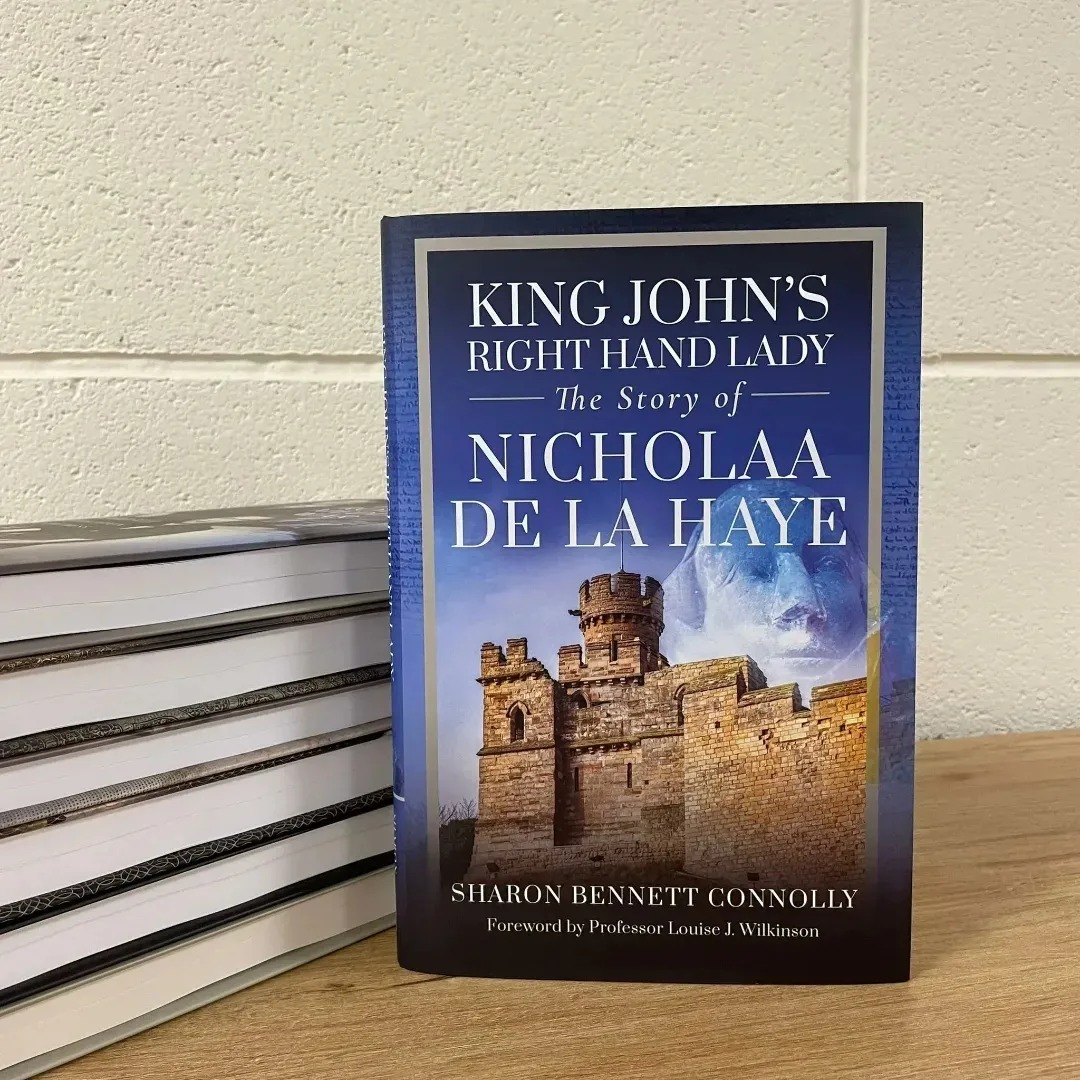
Heroines of the Tudor World tells the stories of the most remarkable women from European history in the time of the Tudor dynasty, 1485-1603. These are the women who ruled, the women who founded dynasties, the women who fought for religious freedom, their families and love. Heroines of the Tudor World is now available for pre-order from Amberley Publishing and Amazon UK. Women of the Anarchy demonstrates how Empress Matilda and Matilda of Boulogne, unable to wield a sword themselves, were prime movers in this time of conflict and lawlessness. It shows how their strengths, weaknesses, and personal ambitions swung the fortunes of war one way – and then the other. Available from Bookshop.orgAmberley Publishing and Amazon UKKing John’s Right-Hand Lady: The Story of Nicholaa de la Haye is the story of a truly remarkable lady, the hereditary constable of Lincoln Castle and the first woman in England to be appointed sheriff in her own right. Available from all good bookshops Pen & Sword Booksbookshop.org and Amazon

Royal Historical Society

Defenders of the Norman Crown: The Rise and Fall of the Warenne Earls of Surrey tells the fascinating story of the Warenne dynasty, from its origins in Normandy, through the Conquest, Magna Carta, the wars and marriages that led to its ultimate demise in the reign of Edward III. Available from Pen & Sword BooksAmazon in the UK and US, and Bookshop.orgLadies of Magna Carta: Women of Influence in Thirteenth Century England looks into the relationships of the various noble families of the 13th century, and how they were affected by the Barons’ Wars, Magna Carta and its aftermath; the bonds that were formed and those that were broken. It is now available in paperback and hardback from Pen & SwordAmazon, and Bookshop.orgHeroines of the Medieval World tells the stories of some of the most remarkable women from Medieval history, from Eleanor of Aquitaine to Julian of Norwich. Available now from Amberley Publishing and Amazon, and Bookshop.orgSilk and the Sword: The Women of the Norman Conquest traces the fortunes of the women who had a significant role to play in the momentous events of 1066. Available now from Amazon,  Amberley Publishing, and Bookshop.org.

Alternate Endings: An anthology of historical fiction short stories including Long Live the King… which is my take what might have happened had King John not died in October 1216. Available in paperback and kindle from Amazon.

Podcast:

A Slice of Medieval

Have a listen to the A Slice of Medieval podcast, which I co-host with Historical fiction novelist Derek Birks. Derek and I welcome guests, such as Bernard Cornwell and discuss a wide range of topics in medieval history, from significant events to the personalities involved.

Every episode is also now available on YouTube.

*

Don’t forget! Signed and dedicated copies of all my books are available through my online bookshop.

For forthcoming online and in-person talks, please check out my Events Page.

You can be the first to read new articles by clicking the ‘Follow’ button, liking our Facebook page or joining me on TwitterThreadsBluesky and Instagram.

*

©2021 Sharon Bennett Connolly FRHistS

Tudor Society in Lincolnshire

Kateryn Parr, Henry VIII’s 6th queen

In 1485 England was a small kingdom, the whole country consisted of a population of less than 3 million people, with 60,000 living in the capital, London.1 The Wars of the Roses was very much a recent trauma in the national memory. The country was a predominantly rural society, with local loyalties to local landowners – such as the Percies in Northumberland – taking precedence over national considerations. Noticeable regional differences varied in speech, diet, cloth, farming methods, the shape of church towers, and even the veneration of the saints. In Tudor Lincolnshire the Fens were yet to be drained, few roads were well-maintained and even they could be treacherous in heavy rains. Lincoln itself had been effected by the decline in the wool trade, and with a shrinking population, its size and prosperity were also decreasing.

A distinction was also rising among the aristocracy of the county and that of the royal court. In the regions, the minor nobility served the king as sheriffs, escheators and justices of the peace, or representing their county in parliament. The greater aristocracy, however, were looking for positions and influence at court; for themselves and their families. The Tudor court was a micro-world in itself. It set the standards in manners for the whole country. Service to the monarch was the primary concern. Most courtiers were related to each other, marriages were negotiated between the prominent families and service to the queen was the highest position a lady could aspire to.

At first glance you would think there was very little interaction between the nobility of Lincolnshire and the Tudor court. However, as we delve deeper we can see that, not only was there movement between the court and the county, it was not only one-sided, but fluid and travelling in both directions. When looking at this over the Tudor period – of over a hundred years of history – we notice the subtle changes in the interactions between the county and royal court, not only based on the progress of the time, but also the personalities involved and their personal experiences.

For some ladies, marrying into a member of the Lincoln aristocracy was a way of getting away from the glare of the court. For Elizabeth (Bessie) Blount, lady-in-waiting to Katherine of Aragon, a former mistress of Henry VIII and the mother of his illegitimate son Henry Fitzroy, Duke of Richmond, it was the chance at a normal life. Born in 1500, Bessie Blount married Gilbert Tailboys in 1519, following her affair with Henry VIII and just months after the birth of the king’s son. The marriage was probably arranged by Henry as a ‘reward’ for Bessie. The couple settled on Gilbert’s family estates at Kyme in Lincolnshire. And despite being far from court, Bessie was not forgotten by the king. She continued to receive Henry’s favour, with various grants between 1522 and 1539 and New Years’ gifts throughout her life; in 1532 Henry sent her a gilt goblet with a cover weighing over 35 ounces.2

Effigy of Elizabeth Blount

Bessie and Gilbert had three children together, Elizabeth, George and Robert, before his death in 1530. Gilbert Tailboys had settled part of his Lincolnshire estates on Elizabeth, giving her an annual income of £200 a year for life. Following his death, Bessie appears to have been happy to stay in Lincolnshire instead of returning to her Shropshire roots, or an unwelcoming royal court. In 1535 she married again, to the soldier Edward Fiennes de Clinton, 9th Baron Clinton and Saye, who was 12 years her junior. Although de Clinton had his family seat in Kent, they settled on Bessie’s Lincolnshire estates. They had three daughters together, Bridget, Katherine and Margaret, before Bessie died sometime before June 1541 (when Clinton remarried). While Elizabeth appears to have stayed away from court, Clinton’s marriage to the king’s former mistress brought him royal favour; he attended on the king at Calais and Boulogne in 1532 and acted as cup-bearer at the coronation of Anne Boleyn in 1533. Following the Lincolnshire Uprising of 1536, one of several rebellions which formed the Pilgrimage of Grace, Clinton was rewarded for staying loyal to the king – most Lincolnshire gentlemen had joined the rebellion – with the dissolved monastery of Sempringham.

Lincolnshire aristocratic families were often very closely related. Elizabeth and Edward’s daughter, Bridget, married Sir Robert Dymoke II, son of Sir Edward Dymoke and his wife Anne, who was the daughter of George Tailboys and the sister of Elizabeth’s first husband, Gilbert. The Dymoke family held Scrivelsby in Lincolnshire, through which tenure they were king’s champions; Sir Edward was champion at the coronations of Edward VI, Mary I and Elizabeth I. Sir Edward’s sister, Margaret, was born in Scrivelsby around 1500 and served several of Henry’s queens. After first marrying Richard Vernon of Haddon Hall, Derbyshire, she then married Sir William Coffin, Anne Boleyn’s Master of Horse. Margaret had been one of Queen Katherine of Aragon’s gentlewomen at the Field of Cloth of Gold and would also serve Henry VIII’s two subsequent queens.

Margaret, however, was not a favourite of Henry’s second queen, Anne Boleyn. She was one of the women who attended the disgraced queen in the Tower of London. Anne was recorded as complaining to her jailer, Sir William Kingston, “I think much unkindness in the king to put such about me as I never loved.”3 Margaret Dymoke, Lady Coffin slept on a pallet bed in the Queen’s bedchamber during her time in the Tower. In her desperation the queen confided in Margaret, unaware that she was acting as a spy for the state. Master Kingston reported to Thomas Cromwell that “I have everything told me by Mistress Coffin that she thinks meet for me to know.” 4 There is also a possibility that Margaret was not only a spy for Kingston, but also for the Imperial ambassador, Eustace Chapuys, who wrote “The lady who had charge of her [Anne] has sent to tell me in great secrecy that the concubine, before and after receiving the sacrament, affirmed to her, on the damnations of her soul, that she had never been unfaithful to the king.”5

Anne Boleyn in the Tower by Edouard Cibot

Following Anne’s execution, Margaret joined the household of Queen Jane Seymour. Lady Coffin was in high favour in Jane Seymour’s establishment and acted as intermediary for several families who had hopes of placing a daughter in the royal household. Margaret remained with the queen until the end, and was among the mourners who attended the late queen’s body as it lay in state, keeping vigil and attending masses for her soul. Margaret was in the funeral procession that accompanied Jane’s body to her final resting place in St George’s Chapel, Windsor. She rode in the third carriage and bore Princess Mary’s train at the requiem mass; Mary was chief mourner and rode on a horse trapped with black velvet.6

There were several ladies associated with the Tudor court, who married into Lincolnshire society. The most famous must surely be one of Henry VIII’s own queens. Henry’s sixth wife, Kateryn Parr was the daughter of Sir Thomas Parr and his wife, Maud Green Parr, a lady-in-waiting to Katherine of Aragon. When Sir Thomas died while Kateryn was still a child, Maud took it on herself to arrange her daughter’s future. After a failed proposal to marry Katherine to the son of Lord Dacre, In 1529 Maud turned to another of her late husband’s relatives and arranged for Kateryn to marry Edward Burgh the eldest son of Sir Thomas Burgh, Baron Burgh of Gainsborough, Lincolnshire. Sir Thomas’s father, Sir Edward, had been declared a lunatic and Sir Thomas, himself, was renowned for his violent outbursts and wild rages (possibly due to an inherited mental instability in the family) and had a tyrannical control over his family. The first two years of the marriage, spent at Sir Thomas’s new Hall at Gainsborough (now known as the Old Hall), was an unhappy time for Kateryn. She wrote, regularly, to her mother of her unhappiness and it seems the situation was only resolved following a visit by Maud Parr, who persuaded Sir Thomas to allow Edward and Kateryn to move to their own, smaller, house at Kirton-in-Lindsey, a few miles outside of Gainsborough.

We do not know whether Edward was a sickly individual, or whether or not he succumbed to a sudden illness, but their happiness was short-lived, as he died in the spring of 1533, after only 4 years of marriage. Having no children, Kateryn was left with little from the marriage, and, with her mother having died the previous year, she was virtually alone in the world; possibly as a remedy to her isolation, Kateryn married her second husband, Lord Latimer, in the same year as she lost her first. There is no record that Kateryn served any of henry VIII’s queens. Her first appearance at court seems to be in 1542, when she became a lady-in-waiting in Mary Tudor’s household, before she caught the King’s eye. She does not seem to have forgotten her time with the Burgh family, however, and when she became queen Kateryn paid a pension from her own purse to her former sister-in-law, Elizabeth Owen, widow of her husband’s younger brother, Thomas. Poor Elizabeth had been accused of adultery by her domineering father-in-law, Sir Thomas, and her children were declared illegitimate by Act of Parliament in 1542.

Lord Burgh’s third surviving son, William, born in the early 1520s, would eventually succeed his father to the barony. He married Katherine Fiennes de Clinton, daughter of Edward Fiennes de Clinton – the future Earl of Lincoln – and Bessie Blount, demonstrating the interlinking relationships between the various great Lincolnshire families.

Where Kateryn Parr was linked to Lincolnshire before joining the royal court, others saw Lincolnshire as a place of retirement. Maria de Salinas was a lady-in-waiting and close friend to Katherine of Aragon; indeed, it seems that she came to England with the Spanish princess in 1501 for the marriage to Henry’s older brother, Arthur, Prince of Wales. Katherine and Maria were very close and by 1514 Caroz de Villagarut, ambassador of Katherine’s father, Ferdinand of Aragon, was complaining of Maria’s influence over the queen after she tried to persuade Katherine not to cooperate with the ambassador and encouraged the Queen to favour her English subjects.7 In June 1516 Maria married the largest landowner in Lincolnshire, William Willoughby, 11th Baron Willoughby de Eresby. The King and Queen paid for the wedding, which took place at Greenwich, and gave them a wedding gift of Grimsthorpe Castle, in Lincolnshire. The Queen even provided Maria with a dowry of 1100 marks.

Grimsthorpe Castle, Lincolnshire

Maria remained at court for some years after her wedding, and attended Katherine at the Field of Cloth of Gold in 1520. Henry VIII was godfather to Maria and William’s oldest son, Henry, who died in infancy. Another son, Francis, also died young and their daughter Katherine, born in 1519, would be the only surviving child of the marriage. Lord Willoughby died in 1526, and for several years afterwards Maria was embroiled in a legal dispute with her brother-in-law, Sir Christopher Willoughby, over the inheritance of the Willoughby lands. It seems William had settled some lands on Maria which were entailed to Sir Christopher. The dispute went to the Star Chamber and caused Sir Thomas More, the king’s chancellor and a prominent lawyer, to make an initial redistribution of some of the disputed lands.

This must have been a hard fight for a newly-widowed Maria, and the dispute threatened the stability of Lincolnshire itself, given the extensive lands involved. However, Maria attracted a powerful ally in Charles Brandon, Duke of Suffolk and brother-in-law of the King, who called on the assistance of Cardinal Thomas Wolsey, Henry’s first minister at the time, in the hope of resolving the situation. Suffolk had managed to obtain the wardship of Katherine Willoughby in 1529, intending her to marry his eldest son and heir Henry, Earl of Lincoln, and so had a vested interest in a favourable settlement for Maria. This interest became even greater following the death of Mary Tudor, Suffolk’s wife and Henry VIII’s sister, in September 1533, when only three months later the fifty-year-old Duke of Suffolk married fourteen-year-old Katherine, himself. Although Suffolk pursued the legal case with more vigour after the wedding, a final settlement was not reached until the reign of Elizabeth I. Suffolk eventually became the greatest landowner in Lincolnshire and, despite the age difference, the marriage does appear to have been successful. Katherine served at court, in the household of Henry VIII’s 6th and last queen, Katherine Parr. She was widowed in 1545 and lost her two sons – and heirs – by the Duke, Henry and Charles, to the sweating sickness, within hours of each other in 1551.

As duchess of Suffolk, Katherine was a stalwart of the Protestant learning and used her position to introduce Protestant clergy to Lincolnshire, even inviting Hugh Latimer to preach at Grimsthorpe Castle. It was she and Sir William Cecil who persuaded Kateryn Parr to publish her book, The Lamentacion of a Sinner in 1547, demonstrating her continuing links with the court despite her first husband’s death.

Following the death of her sons by Suffolk, Katherine no longer had a financial interest in the Suffolk estates, which went to the heirs of Mary Tudor, Henry VIII’s sister. However, Katherine still had her own Willoughby estates to look after and it was in order to safeguard these that Katherine married her gentleman usher, Richard Bertie. The couple had a difficult time navigating the religious tensions of the age and even went into exile on the Continent during the reign of the Catholic Queen, Mary I. Following their return to England, on Elizabeth’s accession, Katherine resumed her position in Tudor society; her relations with the court, however, were strained by her tendency towards Puritan learning. She used her position in Lincolnshire and extensive patronage to help disseminate the Puritan teachings. The records of Katherine’s Lincolnshire household show that she employed Miles Coverdale – a prominent critic of the Elizabethan church – as tutor to her two children by Bertie; Susan and Peregrine.8 Unfortunately, Katherine died after a long illness, on 19th September 1580 and was buried in her native Lincolnshire, in Spilsby Church.

Katherine Willoughby, Duchess of Suffolk by Hans Holbein the Younger

Katherine’s mother, Maria de Salinas, Lady Willoughby, had died in 1539 and had stayed loyal to her mistress, Katherine of Aragon, throughout her married life and widowhood. Indeed, when Katherine was reported to be dying at Kimbolton Castle, Maria applied for a license to visit her ailing mistress, but was refused by Sir Thomas Cromwell, the King’s chief minister at the time. Despite this setback, Maria set out from London to visit Katherine at the beginning of January 1536 and contrived to get herself admitted by Sir Edmund Bedingfield by claiming a fall from her horse meant she could travel no further. According to Sarah Morris and Nathalie Grueninger, Katherine and Maria spent hours talking in their native Castilian; the former queen died in Maria’s arms on 7th January 1536. Katherine of Aragon was buried in Peterborough Cathedral on 29th January, with Maria and her daughter, Katherine, attending the funeral.9

The composition of the Tudor court changed under Elizabeth I. The new queen valued loyalty and most positions went to members of her extended family; the Howards and Careys among them. Throughout the forty-five years of Elizabeth’s reign, only twenty-eight women were appointed to salaried positions in the privy Chamber. Positions in the Bedchamber, Privy Chamber and Presence Chamber were highly sought after and mainly given to ladies from the same families, who were assigned positions based on their social status. The senior positions were those of the Chief and Second Gentlewoman of the Privy Chamber, these were followed by the Ladies of the Bedchamber, the Ladies of the Privy Chamber and the Ladies of the Presence Chamber, in descending order. Unmarried young ladies were given positions as maids of honour and were supervised by the Mother of the Maids.

Elizabeth Fitzgerald, a great granddaughter of Elizabeth Woodville, had entered Princess Elizabeth’s household in 1539, possibly as a maid of honour but ostensibly to be raised alongside her cousin. She was only nine or ten years old at the time. Elizabeth Fitzgerald had been born in Ireland in about 1528 and was the second daughter of Gerald Fitzgerald, 9th Earl of Kildare. Her mother was Lady Elizabeth Grey, daughter of Sir Thomas Grey, Marquess of Dorset and only surviving son of Elizabeth Woodville, Edward IV’s queen. Elizabeth Fitzgerald must have been quite a beauty as Henry Howard, Earl of Surrey, wrote a sonnet, From Tuscan cam my ladies worthi race in praise of her as his Fair Geraldine; Bewty of kind, her vertues from above; Happy ys he that may obtaine her love.10

In 1542 Elizabeth married her first husband, Sir Anthony Browne, but he died in 1548 and their two sons died in infancy. In 1552 she married again, this time to Edward Fiennes de Clinton, 9th Baron Clinton and Saye; the same Baron Clinton who had married Bessie Blount in 1535. Clinton had remarried in 1541, after Bessie’s death, to Ursula, daughter of William, 7th Baron Stourton; Ursula was a niece of John Dudley, Duke of Northumberland during the reign of Edward VI. She died in 1551 and Edward married Elizabeth the following year. Sir Edward Fiennes de Clinton had led a very successful military career and in May 1550 he had been appointed a privy councillor and lord high admiral of England. He was made a knight of the garter in April 1551 and, later in the same year, was given the former Howard property of Tattershall Castle in Lincolnshire, which he made his principal residence. Clinton was an adept political survivor; after being involved in the plot to put Jane Grey on the throne he was imprisoned for a short while, but managed to win Queen Mary’s trust and was active in her military campaigns. With the accession of Elizabeth I, Clinton was appointed a privy councillor and his wife, Elizabeth Fiennes de Clinton, was appointed Gentlewoman of the Privy Chamber ‘without wages’ (this indicated her high-born status, as salaried members were drawn from the lower ranks of the nobility).

Elizabeth Fitzgerald, painted by Steven van der Meulen

In 1572 Baron Clinton was rewarded for his service with the earldom of Lincoln. Elizabeth had practically been raised with the new queen since she was ten years old and was able to use her influence at court to benefit her family, affecting the restoration of the Fitzgeralds to their blood and lineage, which they had lost when Elizabeth was a child. Suits made to Elizabeth as Countess of Lincoln demonstrate that she was believed to have influence with the queen, who she served until 1585. Edward trusted his wife considerably, and made her executor of his will, bequeathing Semprigham to Elizabeth, and Tattershall to his eldest son, Henry (his son by Ursula). Edward, Earl of Lincoln, died in 1585 and just before his father’s death, his son Henry had written to William Cecil, Lord Burghley, in an attempt to overturn his father’s will, accusing Elizabeth of attempting to deprive him of his inheritance, and of maligning him to the queen. However, Henry’s tactic failed and the will was confirmed in 1587. Elizabeth herself appears to have withdrawn from court following her husband’s death and when she died in March 1589 was laid to rest beside her husband in the Lincoln Chapel of St George’s Chapel Windsor.

The court and society were both in a state of change during Elizabeth’s reign. Local Lincolnshire lords, such as the Burghs of Gainsborough, were increasingly absentee landlords, preferring to stay in their southern properties closer to the royal court and leaving their estates to run themselves. The Burghs increasingly resided mainly at their residence in Surrey, Sterborough Castle. Lord Thomas de Burgh fell heavily into debt in service of the Queen and was in failing health when his wife, Lady Frances begged Queen Elizabeth that he be relieved of his position as Governor of the Brill in the Netherlands. Sir Robert Sydney is quoted as saying in November 1595 “God send lady… better success than my lady Borow [Burgh], whose desire was absolutely denied and the Queen took it very ill that in such time he could desire to be from this government.”11 When Lord Burgh died in 1597 he asked the Queen, in his will, to protect his wife and family, who were now living in poverty due to his having spent his patrimony in Elizabeth’s service. The Queen, however, devised a a way of avoiding the duty imposed upon her, by requesting that whoever was appointed to Lord Burgh’s now vacant post, as Governor of Brill, should give £500 a year to his widow for her maintenance.

Religious divisions were becoming more pronounced as Queen Elizabeth’s reign advanced, not only between Catholicism and Protestantism, but within Protestantism itself. With the encouragement of Katherine Willoughby, Duchess of Suffolk, ministers with Puritan leanings had been appointed to various churches throughout Lincolnshire. Several of the Pilgrim Fathers, who sailed to America on the Mayflower, would come from the region, including William Brewster and William Bradford. Families with strong ties to service at the Tudor court, such as the Burghs of Gainsborough, were moving south, closer to London and the person of the Queen, while other families were moving north. The Old Hall at Gainsborough was sold to William Hickman, a wealthy merchant who was the grandson of Sir William Locke, Henry VIII’s Royal Mercer, and the son of Lady Rose Hickman.

According to Lady Rose her father, Sir William Locke, a merchant with strong links to Antwerp, had smuggled ‘herectic’ Protestant writings from abroad for Queen Anne Boleyn herself. Lady Rose had long been familiar with the new learning and wrote in 1610: “My mother in the dayes of King Henry the 8th came to some light of the gospel by means of some English books sent privately to her by my father’s factor from beyond the sea: where upon she used to call me with my 2 sisters into her chamber to read to us out of these same good books very privately for feare of troble because these good books were then accepted hereticall…”12

Gainsborough Old Hall, home to the Burghs and then the Hickmans

The Hickman family had become known for their Puritan leanings; Puritans were those who wanted the ‘purer’ church as envisaged in the reign of Edward VI, rather than the compromise established by Elizabeth I. In 1593, in order to curb the activities of such religious dissidents, Elizabeth I’s government had approved the ‘Act Against Puritans’, whereby it became illegal to become a Puritan or encourage others to that tendency.  As a result, official appointments at court, for those known to have Puritan connections, suddenly dried up. Lady Rose’s son Walter, deeply entrenched in court circles and an old hand at brokering appointments for friends and family (usually with a financial incentive) discovered the implications of the new stance in 1594. The Cecil Papers show that Walter was refused when he applied for the position of Receiver of the Court of Wards for his brother William, despite offering an inducement of £1,000.13 The increasing hostility towards Puritans, and the possibility of escalating religious persecution, may well have persuaded William to move his family north; away from the prying eyes of the authorities and into Lincolnshire, a county with strong Puritan leanings thanks to the efforts of Katherine Willoughby, Duchess of Suffolk.

In the early years of the Tudor dynasty, the counties of Lincolnshire and Yorkshire were still greatly associated with the old Yorkist dynasty. Henry VII made a progress through the counties only a year after his accession, keeping Easter 1486 at Lincoln and making a great show of regal pomp. His son, Henry VIII, also saw the need to show himself to his northern subjects. Following the defeat of the Pilgrimage of Grace and its forebear, the Lincolnshire Rising, Henry made a great progress through Lincolnshire and Yorkshire. He spent several days at Gainsborough Old Hall in August 1541, holding meetings of the Privy Council there on the 14th, 15th and 16th of August.  At Lincoln Henry and his young queen, Katherine Howard, made a great show of royal majesty; “The King and Queen came riding into their tent, which was pitched at the furthest end of the liberty of Lincoln, and there shifted their apparel, from green and crimson velvet respectively, to cloth of gold and silver…”14

Henry VIII’s children, however, did not venture north. Although Elizabeth I had intended to visit York at various points in her reign, she stayed within the Home Counties, venturing no further north than East Anglia. This may well have contributed to the changing nature of Tudor Society in Lincolnshire, where the influence from court circles appears to have waned as the years progressed.  Lincolnshire towns, such as Gainsborough and Boston, provided such families with the opportunities of, to some extent, religious freedom while also allowing them to continue with their merchant activities, due to navigable rivers that would take goods to the East coast ports and on to the Continent. Whereas those who saw the government as a hindrance to their personal liberties ventured away further from the centre of power; those who saw their futures in the person of the monarch, and whose duties at the Tudor Court were taking up more and more of their time, saw the need to move closer to London and the centre of power,

*

Footnotes:

1 Neville Williams, The Life and Times of Henry VII; 2 Beverley A Murphy, Bastard Prince: Henry VIII’s Lost Son; 3 Letters and Papers, Foreign and Domestic, of Henry VIII, Volume 10, note 797; 4 Ibid; 5 Ibid; 6 Letters and Papers Volume 12, Part 2, note 1600; 7 Retha M. Warnicke, Oxforddnb.com; 8 Susan Wabuda, Oxforddnb.com; 9 Sarah Morris and Natalie Grueninger, In the Footsteps of the Six Wives of Henry VIII; 10 H. Howard [earl of Surrey], Poems, ed. E. Jones (1964); 11 Quoted by Sue Allan in A Guide to Gainsborough Old Hall; 12 Religion and politics in mid-Tudor England through the eyes of an English Protestant Woman: the Recollections of Rose Hickman; 13 Quoted by Sue Allan in A Guide to Gainsborough Old Hall; 14 Letters and Papers, Foreign and Domestic, of Henry VIII, 1541

Images;

Courtesy of Wikipedia except Grimsthorpe Castle and Gainsborough Old Hall, which are ©Sharon Bennett Connolly

Sources:

John Leland Leland’s Itinerary in England and Wales 1535-43 edited by L Toulmin Smith (1906-10); Letters and Papers, Foreign and Domestic, of the Reign of Henry VIII 1509-47 edited by JS Brewer, James Gairdner and RH Brodie, HMSO London 1862-1932; Privy Purse Expenses of King Henry VIII from November MDXIX to December MDXXXII edited by Sir Nicholas Harris Nicolas 1827; Religion and politics in mid-Tudor England through the eyes of an English Protestant Woman: the Recollections of Rose Hickman edited by Maria Dowling and Joy Shakespeare; Bulletin of the Institute of Historical Research, 1980 & 1982; Oxforddnb.com; A Guide to Gainsborough Old Hall by Sue Allan; The Life and Times of Henry VII by Neville Williams; Bastard Prince: Henry VIII’s Lost Son by Beverley A Murphy; In the Footsteps of the Six Wives of Henry VIII by Sarah Morris and Natalie Grueninger; H. Howard [earl of Surrey], Poems, ed. E. Jones (1964); The Earlier Tudors by J.D. Mackie; Religion and politics in mid-Tudor England through the eyes of an English Protestant Woman: the Recollections of Rose Hickman; Tudorplace.com; Elizabeth’s Women by Tracy Borman; England Under the Tudors by Arthur D Innes; Henry VIII: King and Court by Alison Weir; In Bed with the Tudors by Amy Licence; Ladies-in-Waiting: Women who Served at the Tudor Court by Victoria Sylvia Evans; The Six Wives and Many Mistresses of Henry VIII: The Women’s Stories by Amy Licence.

*

My Books

Signed, dedicated copies of all my books are available through my online bookshop.

OUT NOW! Heroines of the Tudor World

Heroines of the Tudor World tells the stories of the most remarkable women from European history in the time of the Tudor dynasty, 1485-1603. These are the women who ruled, the women who founded dynasties, the women who fought for religious freedom, their families and love. These are the women who made a difference, who influenced countries, kings and the Reformation. In the era dominated by the Renaissance and Reformation, Heroines of the Tudor World examines the threats and challenges faced by the women of the era, and how they overcame them. From writers to regents, from nuns to queens, Heroines of the Tudor World shines the spotlight on the women helped to shape Early Modern Europe.

Heroines of the Tudor World is now available for pre-order from Amberley Publishing and Amazon UK.

Also by Sharon Bennett Connolly:

Women of the Anarchy demonstrates how Empress Matilda and Matilda of Boulogne, unable to wield a sword themselves, were prime movers in this time of conflict and lawlessness. It shows how their strengths, weaknesses, and personal ambitions swung the fortunes of war one way – and then the other. Available from Bookshop.orgAmberley Publishing and Amazon UKKing John’s Right-Hand Lady: The Story of Nicholaa de la Haye is the story of a truly remarkable lady, the hereditary constable of Lincoln Castle and the first woman in England to be appointed sheriff in her own right. Available from all good bookshops Pen & Sword Booksbookshop.org and AmazonDefenders of the Norman Crown: The Rise and Fall of the Warenne Earls of Surrey tells the fascinating story of the Warenne dynasty, from its origins in Normandy, through the Conquest, Magna Carta, the wars and marriages that led to its ultimate demise in the reign of Edward III. Available from Pen & Sword BooksAmazon in the UK and US, and Bookshop.org

Ladies of Magna Carta: Women of Influence in Thirteenth Century England looks into the relationships of the various noble families of the 13th century, and how they were affected by the Barons’ Wars, Magna Carta and its aftermath; the bonds that were formed and those that were broken. It is now available in paperback and hardback from Pen & Sword,  Amazon, and Bookshop.orgHeroines of the Medieval World tells the stories of some of the most remarkable women from Medieval history, from Eleanor of Aquitaine to Julian of Norwich. Available now from Amberley Publishing and Amazon, and Bookshop.orgSilk and the Sword: The Women of the Norman Conquest traces the fortunes of the women who had a significant role to play in the momentous events of 1066. Available now from Amazon,  Amberley Publishing, and Bookshop.org.

Alternate Endings: An anthology of historical fiction short stories including Long Live the King… which is my take what might have happened had King John not died in October 1216. Available in paperback and kindle from Amazon.

Podcast:

Have a listen to the A Slice of Medieval podcast, which I co-host with Historical fiction novelist Derek Birks. Derek and I welcome guests, such as Bernard Cornwell and discuss a wide range of topics in medieval history, from significant events to the personalities involved.

*

Don’t forget! Signed and dedicated copies of all my books are available through my online bookshop.

For forthcoming online and in-person talks, please check out my Events Page.

You can be the first to read new articles by clicking the ‘Follow’ button, liking our Facebook page or joining me on Twitter and Instagram.

© 2021 Sharon Bennett Connolly FRHistS

Hubert de Burgh Part 2: The Minority of Henry III

Hubert de Burgh seeking sanctuary in 1234, from Matthew Paris’s Historia Anglorum

As we have already seen, Hubert de Burgh was a key ally of King John during the Magna Carta crisis. Having risen from the ranks of minor land owner to one of the most senior positions in the land, King’s Justiciar, de Burgh was indispensable to King John. As justiciar, in the Magna Carta, Hubert de Burgh is mentioned as being the one to hold ultimate responsibility in the realm whenever the king was abroad; this was a considerable change to the role of justiciar in former reigns, when he was primarily responsible as president of the exchequer and chief justice. He was, essentially, the most powerful man in the land after the king himself.

After sealing Magna Carta at Runnymede on 15 June 1215, John was soon writing to the pope to have Magna Carta annulled. England was plunged into civil war. The barons invited the French dauphin, Prince Louis, to join them and make a play for the throne. Louis was the son of John’s erstwhile friend Philip II Augustus, King of France, and the husband of his niece Blanche, who was the daughter of his sister Eleanor, Queen of Castile.

Louis and his men had landed on the Isle of Thanet on 14 May 1216. The dauphin advanced through Kent and took Canterbury before moving onto Winchester. Louis was hailed as King of England in London in June of 1216. John seems to have been undecided as to how to act; he sent his oldest son Henry to safety at Devizes Castle in Wiltshire. Dover Castle, under the command of Hubert de Burgh, held out against the French and rebel forces, as did Windsor and Lincoln, under the formidable Nicholaa de la Haye. Despite the death of King John, at Newark on the night of 18/19 October 1216, William Longespée, Earl of Salisbury, John’s illegitimate half-brother, had remained with Louis and it was he who called for Hubert de Burgh to surrender Dover to the French. De Burgh was besieged at Dover Castle, the gateway to England from the Continent, from 22 July 1216 until King John’s death in October of the same year, when the Dauphin Louis abandoned the siege.

Ten days after his father’s death, on 28 October, 9-year-old Henry III was crowned at Gloucester and William Marshal was appointed as the young king’s regent. Hubert de Burgh attended a council of the new king, Henry III, at Bristol on 11 November 1216, when Magna Carta was reissued; he appears as justiciar at the head of the list of lay barons on the witness list. In the spring of 1217, he was back at Dover, having reprovisioned it, and from April he was once again under siege. The Battle of Lincoln , on 20 May 1217 saw the allied French and rebel forces defeated by William Marshal, causing Louis to lift the siege at Dover and retire to London and await reinforcements.

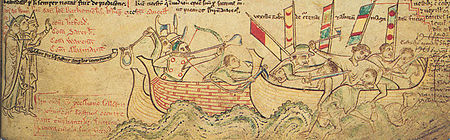
Hubert de Burgh then commanded an English fleet in a naval battle off Sandwich on 24 August 1217, which saw the English ships under defeat the French fleet and capture their flagship. The English naval forces had intercepted the French bringing equipment and supplies to Prince Louis, the dauphin of France;

The Battle of Sandwich, 1217

‘On 24 August, the whole enemy fleet joined battle with the king’s men, not far from the Isle of Thanet. Many of their ships and some of the leaders of the French party were captured, but the rest were able to evade capture by flight; many of the lesser men were killed. Scattered in confusion, the enemy could not regroup.’

The Barnwell Annalist

King John’s illegitimate son, Richard of Chilham, is said to have played a significant part in the battle. Richard brought his own ship alongside the French flagship, the most formidable of the enemy’s vessels, commanded by Eustace the Monk. Richard and his men boarded the ship. Roger of Wendover suggests that it was Richard himself who beheaded Eustace the Monk after his capture. Although other sources disagree with this, none deny that Richard’s actions in the battle were significant.

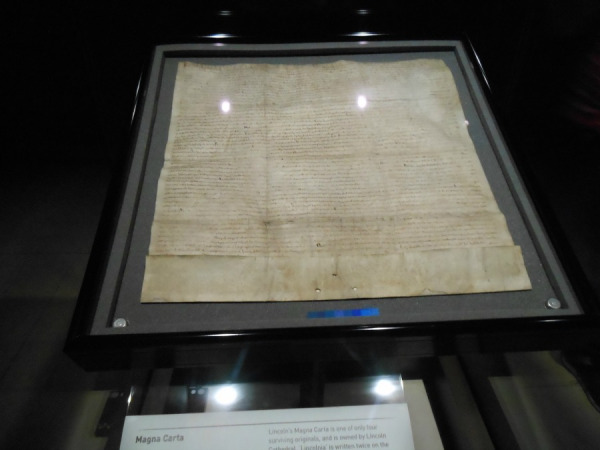
Lincoln Cathedral’s Magna Carta, held at Lincoln Castle

The Battle of Sandwich thus consolidated the Royalist victory over the rebels and their French allies. As a consequence, the English were able to dictate terms to Louis; Louis agreed to a settlement of £10,000 as an inducement to go home. Peace was signed at Kingston Upon Thames on 12 September and the French left England shortly afterwards. Magna Carta was issued a third time, along with a new charter, the Charter of the Forest, issued for the first time.

On the personal front, Hubert de Burgh’s first wife, Beatrice de Warenne, had died sometime before 18 December 1214. De Burgh retained Beatrice’s lands at Wormegay throughout his lifetime and they only passed to her eldest son, William Bardolf, on de Burgh’s death in May 1243. William Bardolf’s inheritance of Portslade and Harthill, both held from the honour of Warenne, serve to demonstrate the continued connections that this junior branch of the family held with the powerful Warenne earls throughout the thirteenth century.

In September 1217, de Burgh married Isabella of Gloucester, King John’s discarded first wife. On 13 October 1217 the sheriffs of nine counties were ordered to relinquish custody of Isabella’s lands to de Burgh. This was Isabella’s third and final marriage – she had previously married to John, before he became king, and Geoffrey de Mandeville, Earl of Essex, one of the rebel barons; he had died in 1216 whilst still in rebellion against the king. This final marriage for Isabella was, sadly, very short-lived and Isabella was dead within a month, possibly only a few weeks, of her wedding day and almost exactly a year after the death of her first husband, King John.

Isabella died on 14 October 1217, probably at Keynsham Abbey near Bristol, and was buried at the cathedral of Christ Church, Canterbury. Shortly before her death, Isabella made a grant to the monks of Canterbury, of £10 of land in her manor of Petersfield, Hampshire, which was witnessed by Hubert de Burgh and other members of his household.

Two years later, following the death of William Marshal in 1219, Hubert de Burgh took over the reins of government, alongside the young king’s tutor, Peter des Roches, Bishop of Winchester, and the papal legate, Pandulf. This central government, however, was weakened by the fact the castles, manors and sheriffdoms of the realm were held by those who had served King John, and who claimed they could not be removed from their positions until the king reached his majority. These same lords were siphoning off revenue that should have gone to the treasury, further weakening the authority of the crown. It was only when the king reached his majority at the end of 1223 that de Burgh could dismiss many of the sheriffs and castellans. However, this resulted in a bitter power struggle that was to last for the next decade, and would eventually lead to Hubert de Burgh’s political downfall, arrest and imprisonment.

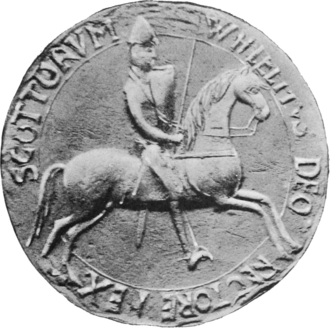
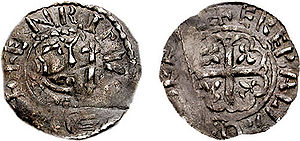
Seal of William the Lion, King of Scots

In June 1221, Alexander II, King of Scots, married Henry III’s sister Joan, at York. It was probably at this event, when the Scottish and English royal families came together in celebration, that the future of Alexander’s sister Margaret, a hostage in England since the treaty of Norham in 1209, was finally resolved. Margaret was the eldest daughter of William I the Lion, King of Scots, and a granddaughter of Ada de Warenne; she was therefore a second cousin of de Burgh’s first wife, Beatrice de Warenne.

It was decided that Margaret would be married to Hubert de Burgh. They ceremony took place in London on 3 October 1221, with King Henry himself giving the bride away. Each of his previous marriages had given de Burgh social and political advancement, and valuable familial connections. Marrying Margaret of Scotland was no less an impressive match, but would later be used against him by his enemies, who accused de Burgh of marrying Margaret while the king was still too young to decide if he might want to marry the Scottish princess himself, as his father had proposed. Hubert de Burgh did, after all, have far humbler origins than one would expect for the spouse of a princess. The Scottish preferred to view Hubert de Burgh as the royal justiciar he had become, rather than the member of the minor noble family into which he had been born.

Margaret was at least 26 years of age when she married Hubert de Burgh and may even have been over 30. De Burgh was in his early fifties. Due to Margaret’s high status as a Scottish princess, many of the grants of lands and privileges were made to the couple jointly, rather than solely to Hubert de Burgh. De Burgh was made earl of Kent in 1227, with the title specifically entailed on his children by Margaret, rather than on his children by his first marriage to Beatrice de Warenne. Hubert de Burgh and Margaret, had one child, a girl named Margaret but known as Megotta, who was probably born in the early 1220s. There were rumours that de Burgh was planning to divorce Margaret in 1232, but he fell from royal favour before such a move could be pursued.

Hubert de Burgh was at the height of his power throughout the 1220s. In 1224, he arranged for the marriage of William (II) Marshal, 2nd Earl of Pembroke, to the king’s youngest sister, Eleanor. The bride was no more than 9 years old on her wedding day, whereas Marshal was about 30. The marriage was agreed at the behest of de Burgh,and the papal legate, Pandulf, as a way of guaranteeing Marshal remained firmly in the justiciar’s camp, and to prevent him making a foreign marriage. The match put an end to three years of indecision, as to whether Eleanor should marry a foreign prince or an English magnate. The king settled ten manors, confiscated from a French nobleman and already administered by Marshal, on his sister as her marriage portion.

When it was thought that William Longspée, Earl of Salisbury, was dead following a shipwreck off the Brittany coast, in 1225, Hubert de Burgh sought to take advantage of the earl’s death to further his own family connections. While Salisbury spent months recovering at the island monastery of Ré in France, Hubert de Burgh proposed a marriage between Salisbury’s wife, Ela, and his own nephew, Reimund. Ela, however, would not even consider it, insisting that she knew William was alive and that, even if he were dead, she would never presume to marry below her status, a right provided in Magna Carta. However, as it turned out, William Longespée was, indeed, still alive and he eventually returned to England and his wife, landing in Cornwall and then making his way to Salisbury. From Salisbury he went to Marlborough to complain to the king that Reimund had tried to marry Ela whilst he was still alive. According to the Annals and Antiquities of Lacock Abbey Reimund was present at Longespée’s audience with the king, confessed his wrongdoing and offered to make reparations, thus restoring peace. Unfortunately, Longespée never seems to have recovered fully from his injuries and died at the royal castle at Salisbury shortly after his return home, on 7 March 1226, amid rumours of being poisoned by Hubert de Burgh or his nephew.

Arms of William de Warenne, Conisbrough Castle

William de Warenne, 5th Earl of Warenne and Surrey, was a staunch ally of the justiciar, Hubert de Burgh, who had been married to his cousin Beatrice de Warenne, the daughter and heir of William de Warenne of Wormegay. He had supported de Burgh in 1223–4, when the justiciar’s position was threatened by rivals at court. However, with the king attaining his majority and fully taking up the reins of government in 1227, Hubert de Burgh’s hold on power weakened. The king’s administration was divided by powerful factions and de Burgh fell from favour; he was stripped of his offices and imprisoned. William de Warenne was drawn into the downfall of his former patron, when de Burgh was imprisoned in 1232. Warenne was one of the four earls tasked with keeping de Burgh in custody at Devizes Castle and when de Burgh’s enemies themselves fell in 1234, Warenne was the earl to accept the surrender of de Burgh’s castles at Bramber and Knepp, which had been taken by the former justiciar’s enemies.

With her husband’s downfall, Princess Margaret, Countess of Kent, and her daughter, were deprived of all their belongings. They sought sanctuary at Bury St Edmunds, from where they were forbidden to leave by the king’s own order. Margaret humbled herself before the king when he visited Bury St Edmunds, perhaps softening Henry III somewhat as the king then allowed her to visit her husband so they could discuss their situation. Relations between the king and de Burgh thawed slightly in 1234. In February Margaret was given possession of Hubert de Burgh’s hereditary lands and in May of the same year de Burgh was finally pardoned and the king ‘undertook to do what grace he will.’

Hubert de Burgh’s castle of Hadleigh, Essex

Whilst in sanctuary Margaret secretly arranged the marriage of Megotta to Richard de Clare, Earl of Hertford and Gloucester, the son of Isabel Marshal and Gilbert de Clare, who was of similar age to Megotta. The young couple may have known each other as Richard was a ward of Hubert de Burgh until the justiciar’s disgrace in 1232. Hubert de Burgh may not have known of his wife’s activities and the discovery of the arrangement in 1236 reignited tensions between the king and his former justiciar, who was attempting to regain the king’s trust.

The discovery of the marriage was a devastating blow to de Burgh; he had lost the king’s confidence completely and retired from public life. The death of Megotta in 1237 was a further blow but did not ease the tensions with the king. Hubert de Burgh and Margaret were finally pardoned for the marriage in October 1239, de Burgh surrendering his three castles in Upper Gwent and Hadleigh Castle in Essex as part of the agreement. De Burgh did not return to office, despite the pardon, and remained in retirement until his death. He died at his Surrey manor of Banstead in May 1243 and was buried at the Blackfriars in London, a monastery of which he was a benefactor, and where Margaret would be buried when she died in 1259.

*

Images:

Courtesy of Wikipedia except the Magna Carta and the Warenne arms, which are ©Sharon Bennett Connolly.

Sources:

finerollshenry3.org.uk; Oxforddnb.com; magnacarta800th.com; Church, Stephen, King John: England, Magna Carta and the Making of a Tyrant; Danziger, Danny and John Gillingham, 1215: The Year of Magna Carta; Crouch, David, William Marshal; Matthew Paris, Robert de Reading and others, Flores Historiarum, volume III; Robert Bartlett England Under the Norman and Angevin Kings 1075-1225; Dan Jones The Plantagenets; the Kings who Made England; Maurice Ashley The Life and Times of King John; Roy Strong The Story of BritainOxford Companion to British History; Mike Ashley British Kings & Queens; David Williamson Brewer’s British Royalty; Rich Price King John’s Letters Facebook page; Elizabeth Hallam, editor, The Plantagenet Chronicles; Donald Matthew, King Stephen; Medieval Lands Project on the Earls of Surrey, Conisbrough Castle; Farrer, William and Charles Travis Clay, editors, Early Yorkshire Charters, Volume 8: The Honour of Warenne; Rev. John Watson, Memoirs of the Ancient Earls of Warren and Surrey and their Descendants to the Present Time; Morris, Marc King John: Treachery, Tyranny and the Road to Magna Carta; doncasterhistory.co.uk.

*

My books

Signed, dedicated copies of all my books are available, please get in touch by completing the contact me form.

Coming 30 May 2023!

King John’s Right-Hand Lady: The Story of Nicholaa de la Haye is now available for pre-order as a hardback and Kindle from Pen & Sword Booksbookshop.org and Amazon (UK and US).

In a time when men fought and women stayed home, Nicholaa de la Haye held Lincoln Castle against all-comers. Not once, but three times, earning herself the ironic praise that she acted ‘manfully’. Nicholaa gained prominence in the First Baron’s War, the civil war that followed the sealing of Magna Carta in 1215.

A truly remarkable lady, Nicholaa was the first woman to be appointed sheriff in her own right. Her strength and tenacity saved England at one of the lowest points in its history. Nicholaa de la Haye is one woman in English history whose story needs to be told…

Also by Sharon Bennett Connolly:

Defenders of the Norman Crown: The Rise and Fall of the Warenne Earls of Surrey tells the fascinating story of the Warenne dynasty, of the successes and failures of one of the most powerful families in England, from its origins in Normandy, through the Conquest, Magna Carta, the wars and marriages that led to its ultimate demise in the reign of Edward III. Defenders of the Norman Crown: Rise and Fall of the Warenne Earls of Surrey is now available from Pen & Sword BooksAmazon in the UK and US, and  Bookshop.org.

Ladies of Magna Carta: Women of Influence in Thirteenth Century England looks into the relationships of the various noble families of the 13th century, and how they were affected by the Barons’ Wars, Magna Carta and its aftermath; the bonds that were formed and those that were broken. It is now available in paperback and hardback from Pen & Sword,  Amazon, and Bookshop.org.

Heroines of the Medieval World tells the stories of some of the most remarkable women from Medieval history, from Eleanor of Aquitaine to Julian of Norwich. Available now from Amberley Publishing and Amazon, and Bookshop.org.

Silk and the Sword: The Women of the Norman Conquest traces the fortunes of the women who had a significant role to play in the momentous events of 1066. Available now from Amazon,  Amberley Publishing, and Bookshop.org.

Alternate Endings: An anthology of historical fiction short stories including Long Live the King… which is my take what might have happened had King John not died in October 1216. Available in paperback and kindle from Amazon.

*

For forthcoming online and in-person talks, please check out my Events Page.

You can be the first to read new articles by clicking the ‘Follow’ button, liking our Facebook page or joining me on Twitter and Instagram.

©2021 Sharon Bennett Connolly, FRHistS

A Thwarted Love Match and the Murder of Becket

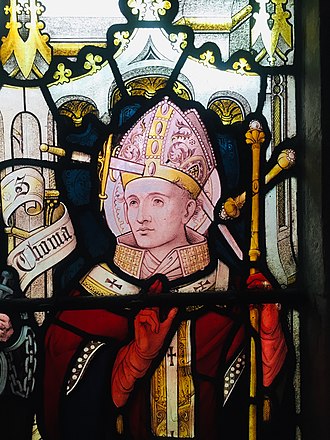
Thomas Becket, Archbishop of Canterbury

You may have heard of the murder of Thomas Becket, but did you know one of the four knights involved may have had a more personal motive for attacking the controversial archbishop of Canterbury than his colleagues? Richard Brito had been a knight in the household of Henry II’s youngest brother, William of Anjou, also known as William FitzEmpress. He was also William’s friend. William was the youngest son of Empress Matilda and her husband Geoffrey, Count of Anjou. Empress Matilda had been one of the rival claimants for the English throne during the Anarchy, fighting against her cousin, King Stephen.

King Stephen’s youngest son, William of Blois, had been married to the great heiress, Isabel de Warenne, Countess of Warenne and Surrey in her own right. His death while returning from campaigning in Toulouse in 1159, left Isabel a wealthy young widow, and highly desirable marriage prize.

Though recently widowed, Isabel would have been well aware that she was expected to remarry, just as her mother had done. The fact she held the mighty earldom of Surrey would have made settling her future even more pressing; the earl of Warenne had contributed knights and men from his own lands to the armies of both King Stephen and Henry II. This was expected to continue, but Isabel could not be expected to lead men into battle. It is all the more surprising, therefore, that Isabel was allowed some respite in the marriage market and the prospect of a husband is not mentioned until 1162.

By this time Henry II’s youngest brother, William FitzEmpress, was seeking a dispensation to marry her. The dispensation was refused by Thomas Becket, Archbishop of Canterbury, on the grounds of consanguinity. The objection was not due to a blood relationship between Isabel and William, but between William and Isabel’s first husband, William of Blois, who were second cousins. It has often been suggested that this was a love-match rather than an arranged marriage. We will, of course, never know how Isabel felt but William died shortly afterwards, at Rouen on 30 January 1164, whilst visiting his mother, possibly seeking her assistance in the matter. Many of his friends claimed that he died of a broken heart after being disappointed in his desire to marry Isabel. He was 27.

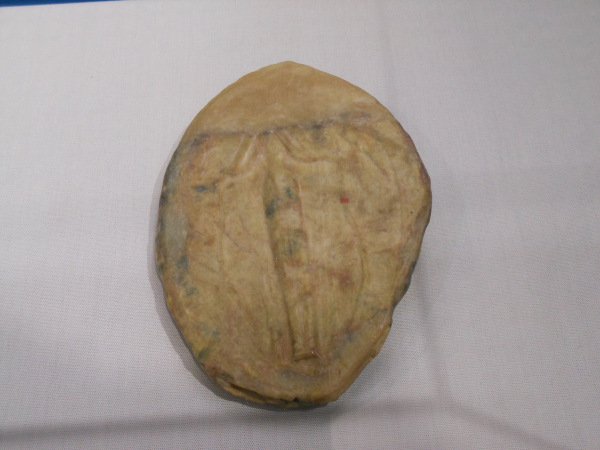
Seal of Isabel de Warenne, Conisbrough Castle

The relationship between Henry II and Thomas Becket had been rocky ever since Becket became archbishop of Canterbury. Henry had thought that putting his friend in charge of the church in England would mean the two would be able to work together. However, once in the post, Becket had essentially abandoned Henry’s policies and sought to defend and extend the influence and rights of the church in England, while Henry sought to curb them. A clash was inevitable and came about when Henry sought to extend the jurisdiction of secular courts over English clergymen and to protect the traditional rights of royal government in regard to the church. In January 1164 Henry had issued the Constitutions of Clarendon. The sixteen constitutions were intended to curb clerical independence and weaken the connection of the English church with Rome. Becket consented to the Constitutions, but disputes continued throughout 1164. Henry called for the archbishop to appear at a great council at Northampton Castle on 12 October 1164, to answer to the charges laid against him.

Among numerous other issues, Becket was called to account for his behaviour concerning land disputes between the church and crown, contempt of royal authority and malfeasance in the chancellor’s office. The bishops, earls and barons of the realm were all present, including Roger, archbishop of York, the most senior clergyman in England after the archbishop of Canterbury. Henry II’s brother, Hamelin, was at the trial and spoke in support of Henry. Indeed, Hamelin, the new earl of Warenne and Surrey, and the archbishop appear to have started a war of words; Hamelin defended Henry’s dignity and called Becket a traitor. Ironically, it is thought that Hamelin’s denunciation of Becket was motivated by the injury caused to the royal family in Becket’s refusal to allow King Henry’s brother, William, to marry Isabel de Warenne; who was now Hamelin’s wife. Convicted of the charges against him, Becket stormed out and fled to exile in France, where he received protection from Louis VII.

There followed six years of negotiations, accusations and counter-accusations, before an accord was agreed and Becket was finally able to return to England and his see at Canterbury. Henry II wrote to his son Henry, the Young King, saying:

Henry king of England to his son Henry, king of England, greeting.

May you know that Thomas archbishop of Canterbury has made peace with me in accordance with my wishes. Therefore I order that he and his followers may have peace and that you see to it that he and his followers, who on his behalf left England, should have their possessions in peace and with honour, as they did three months before they left England. Summon before you some of the best and oldest knights of the honour of Saltwood and on their oath you should make an inquiry as to what of the fief of the archbishopric of Canterbury is there, and make sure that the archbishop gets what has been recognised as part of his fief. Witness Archbishop Rotrou of Rouen, at Chinon.

The Plantagenet Chronicles, edited by Elizabeth Hallam

After six years of exile, Thomas Becket arrived at Sandwich, on the Kent coast, on 1 December 1170. Shortly before arriving on England’s shores, however, in November 1170 Becket, rather than being conciliatory, had sent representatives ahead to pronounce the excommunication of those clerics (the archbishop of York and the bishops of London and Salisbury) who had been involved in the coronation of Henry II’s son and heir, Henry the Young King, in June 1170. He then proceeded to impose his discipline on his monks, refusing to ordain all but one of those who had been admitted during his six-year absence.

On hearing of the excommunications, during his Christmas court in Normandy, Henry is said to have pronounced the fateful words:

‘What miserable drones and traitors have I nurtured and promoted in my household who let their lord be treated with such shameful contempt by a low-born clerk!’ 

Franck Barlow, Oxforddnb.com
Contemporary illustration of the murder of Thomas Becket

Four knights heeded Henry’s words and left Normandy to confront the archbishop. One of William FitzEmpress’s former knights, Richard Brito, was among the quartet who murdered Thomas Becket on 29 December 1170. The knights had travelled from Normandy to demand that the archbishop restore the English bishops who had been suspended from their offices, and to absolve those under sentence of excommunication. Becket refused, saying that it was not

‘for a lesser judge to dissolve the sentence of a superior, and that it was not for any man to undermine what had been decreed by the apostolic see.’

The Plantagenet Chronicles, edited by Elizabeth Hallam

According to William FitzStephen the knights attempted to arrest the archbishop and a struggle ensued after he refused to go with them. The archbishop’s companion, Master Edward Grim, stepped into the path of the first stroke meant for Becket. The archbishop then gave thanks to God, saying

‘Into thy hands, O Lord, I commend my spirit.’ As he knelt down, clasping and stretching out his hands to God, a second stroke was dealt him on the head, at which he fell flat on his face hard by an altar there dedicated to St Benedict … On the right hand he fell, as one proceeding to the right hand of God. While he lay there stricken, Richard Brito smote him with such force that the sword was broken against his head, and the pavement of the church: ‘Take that,’ said he, ‘for the love of my lord William, the king’s brother.’

The Plantagenet Chronicles, edited by Elizabeth Hallam

Beyond this extreme reaction by William’s knight, Richard Brito, there is little evidence that the proposed marriage between William and Isabel was a true love match, and we have no indication of Isabel’s thoughts on the matter. Even without the love angle, for William, marrying Isabel would have been an attractive prospect and would have given him position and power in England, not only as the king’s brother but also as one of the foremost magnates in England and Normandy.

The Warenne coat of arms

For King Henry, the proposed marriage would have been a very practical match. It would have been the perfect solution to the dilemma of what to do with Isabel and the vast Warenne holdings in England and Normandy; to bring them into the royal family and to have them held by the king’s own brother. Henry II was not to be so easily thwarted, however, and indeed did not object to Thomas Becket’s ruling against the marriage of William FitzEmpress and Isabel de Warenne. He came up with a solution that would achieve the same end, while satisfying the restrictions of the church: his brother Hamelin.

In the aftermath of the murder, Richard Brito and his three accomplices

plundered the property of the archbishop, the clothes of the clergy and servants, and even the utensils from the workshop. They swiftly made off with all the which they found in his stables, as spoils.

The Plantagenet Chronicles, edited by Elizabeth Hallam

Brito and the three other knights, Riginald Fitzurse, Sir William Traci and Hugh de Morville fled to Scotland and then to Knaresborough Castle in Yorkshire, owned by Morville. All four were excommunicated by Pope Alexander III at Easter 1171. They were each ordered to make a 14-year pilgrimage to the Holy Land in penitence.  Once their penitential duties in the Holy Land were fulfilled, they were to visit the holy places barefoot and in hair shirts and then to live alone for the rest of their lives on the Black Mountain near Antioch and spend their time in vigil, prayer, and lamentation. It is believed that none of the four knights returned from the Holy Land, though one legend has Brito, also known as Richard le Breton, eventually retiring to the island of Jersey. Nothing more is known of his eventual fate.

Thomas Becket, Archbishop of Canterbury, was canonised on Ash Wednesday, 21 February 1173.

*

Images:

Courtesy of Wikipedia except seal of Isabel de Warenne which is ©Sharon Bennett Connolly.

Sources:

Robert Batlett, England Under the Norman and Angevin Kings; Elizabeth Hallam, editor, The Plantagenet Chronicles; Dan Jones, The Plantagenets; Donald Matthew, King Stephen; Medieval Lands Project on the Earls of Surrey, Conisbrough Castle; Farrer, William and Charles Travis Clay, editors, Early Yorkshire Charters, Volume 8: The Honour of Warenne; Rev. John Watson, Memoirs of the Ancient Earls of Warren and Surrey and their Descendants to the Present Time; Morris, Marc King John: Treachery, Tyranny and the Road to Magna Carta; Church, Stephen, King John: England, Magna Carta and the Making of a Tyrant; doncasterhistory.co.uk; Oxforddnb.com.

*

My books:

Signed, dedicated copies of all my books are available through my online bookshop.

Coming 30 January 2025: Scotland’s Medieval Queens

Scotland’s history is dramatic, violent and bloody. Being England’s northern neighbour has never been easy. Scotland’s queens have had to deal with war, murder, imprisonment, political rivalries and open betrayal. They have loved and lost, raised kings and queens, ruled and died for Scotland. From St Margaret, who became one of the patron saints of Scotland, to Elizabeth de Burgh and the dramatic story of the Scottish Wars of Independence, to the love story and tragedy of Joan Beaufort, to Margaret of Denmark and the dawn of the Renaissance, Scotland’s Medieval Queens have seen it all. This is the story of Scotland through their eyes.

Available for pre-order now.

Also by Sharon Bennett Connolly:

Heroines of the Tudor World tells the stories of the most remarkable women from European history in the time of the Tudor dynasty, 1485-1603. These are the women who ruled, the women who founded dynasties, the women who fought for religious freedom, their families and love. Heroines of the Tudor World is now available for pre-order from Amberley Publishing and Amazon UK. Women of the Anarchy demonstrates how Empress Matilda and Matilda of Boulogne, unable to wield a sword themselves, were prime movers in this time of conflict and lawlessness. It shows how their strengths, weaknesses, and personal ambitions swung the fortunes of war one way – and then the other. Available from Bookshop.orgAmberley Publishing and Amazon UKKing John’s Right-Hand Lady: The Story of Nicholaa de la Haye is the story of a truly remarkable lady, the hereditary constable of Lincoln Castle and the first woman in England to be appointed sheriff in her own right. Available from all good bookshops Pen & Sword Booksbookshop.org and Amazon

Defenders of the Norman Crown: The Rise and Fall of the Warenne Earls of Surrey tells the fascinating story of the Warenne dynasty, from its origins in Normandy, through the Conquest, Magna Carta, the wars and marriages that led to its ultimate demise in the reign of Edward III. Available from Pen & Sword BooksAmazon in the UK and US, and Bookshop.orgLadies of Magna Carta: Women of Influence in Thirteenth Century England looks into the relationships of the various noble families of the 13th century, and how they were affected by the Barons’ Wars, Magna Carta and its aftermath; the bonds that were formed and those that were broken. It is now available in paperback and hardback from Pen & SwordAmazon, and Bookshop.orgHeroines of the Medieval World tells the stories of some of the most remarkable women from Medieval history, from Eleanor of Aquitaine to Julian of Norwich. Available now from Amberley Publishing and Amazon, and Bookshop.orgSilk and the Sword: The Women of the Norman Conquest traces the fortunes of the women who had a significant role to play in the momentous events of 1066. Available now from Amazon,  Amberley Publishing, and Bookshop.org.

Alternate Endings: An anthology of historical fiction short stories including Long Live the King… which is my take what might have happened had King John not died in October 1216. Available in paperback and kindle from Amazon.

Podcast:

Have a listen to the A Slice of Medieval podcast, which I co-host with Historical fiction novelist Derek Birks. Derek and I welcome guests, such as Bernard Cornwell and Elizabeth Chadwick, and discuss a wide range of topics in medieval history, from significant events to the personalities involved.

*

Don’t forget! Signed and dedicated copies of all my books are available through my online bookshop.

For forthcoming online and in-person talks, please check out my Events Page.

You can be the first to read new articles by clicking the ‘Follow’ button, liking our Facebook page or joining me on TwitterThreadsBluesky and Instagram.

©2020 Sharon Bennett Connolly FRHistS

Mary of Woodstock, Royal Nun

Mary of Woodstock

To many noble women, the religious life was a career that had been decided for them by their parents when they were still children, as with Mary of Blois. However, for some, this did not necessarily mean they spent their entire lives in the seclusion of the convent. This was the certainly case with Princess Mary, daughter of Edward I and Eleanor of Castile.

Mary of Woodstock was born on 11 or 12 March 1279, the 6th daughter of King Edward and Queen Eleanor. Edward and Eleanor were quite a nomadic couple, travelling among their domains, so their children were raised in the royal nursery, based largely at the royal palaces of Woodstock and Windsor; visits from their parents were quite infrequent and from Edward, their father, even less so.

Eleanor of Castile endured a remarkable number of pregnancies, the first was when she was about 13 or 14, resulting in a child who was stillborn or died shortly after birth. The fact that several children died before they reached adulthood has been suggested as a reason for her keeping her distance from her children when they were young; however, it is just as likely that the simple fact Edward and Eleanor ruled a vast kingdom, including their lands in France, meant their responsibilities necessitated long absences.

Eleanor’s almost-constant pregnancies, resulting in a total of sixteen children, meant there were regular additions to the nursery, which also housed a number of children from noble families, sent to be raised alongside the king’s children. Mary would have had many companions, including her brother Alphonso, who was heir to the throne and 5 years her senior, and her sister Margaret, who was 4 years older than Mary. She would be joined by another sister, Elizabeth of Rhuddlan, 3 years later.

Edward I and Eleanor of Castile, Lincoln Cathedral

In 1285, a year after the death of Prince Alphonso, the king took his family on a progress into Kent. Edward went on pilgrimage to the shrine of St Thomas Becket, at Canterbury, before spending a week at Leeds Castle with his family, followed by some hunting in Hampshire. It was at the end of this family holiday that they arrived at Amesbury priory in Wiltshire, where little Mary, still only 6 years old, was veiled as a nun; much to the delight of her grandmother, Eleanor of Provence, but to the consternation of her mother, the queen. Indeed, the Chronicle of Nicholas Trivet emphasises that Mary’s veiling was done by her father, at the request of her grandmother, but only with the ‘assent’ of her mother.1

It may well be that Eleanor had reservations about her daughter’s vocation being decided at such a young age, or that she feared it was only being done so Mary’s grandmother, Eleanor of Provence, would have a companion in the abbey. After a long and eventful life, and with her health failing, the dowager queen took her own vows at around the same time and retired to Amesbury Priory for her final years, dying there in June 1291. Mary’s veiling had been in the planning for some years; Edward I had been in correspondence with the abbey at Fontevrault, the mother house of Amesbury, since 1282, when the little princess was barely 3 years old.

Eleanor’s reluctance, therefore, was probably more to do with when Mary was to become a nun, rather than the vocation itself; after all, the conventual life was considered a good career for a noble lady. The timing of her veiling may have been advanced not only by the failing health of Eleanor of Provence, but also by the imminent departure of Mary’s parents. Edward and Eleanor were about to embark for the Continent and were expecting to be in France for a considerable time, years rather than months.

The Priory Church, now the parish church, Amesbury

The actual veiling ceremony must have been very moving. It took place at Amesbury Abbey on 15 August 1285, where Mary was one of 14 high-born girls who took their vows together. It may well be that her cousin, Eleanor of Brittany – another granddaughter of Eleanor of Provence – took her vows at the same time; Eleanor would later demonstrate a great dedication to the religious life and, eventually, become Abbess of Fontevrault.

Mary’s life at the abbey was probably a very comfortable existence; in the year she was veiled, Mary was awarded an annual income of £100, rising to £200 a year in 1292, following the death of Eleanor of Provence. As she was still only a child, the nuns at Amesbury would have been responsible not only for Mary’s spiritual life, but also for her education. However, the cloistered life by no means meant that Mary was confined and separated from her family for any length of time. She made frequent visits to court throughout her life, and was present for most family occasions.

Having taken the veil in August 1285, Mary returned to be with her family in the autumn, to see the unveiling of the newly created Winchester Round Table and the creation of 44 new knights by her father, the king. She visited her family again in March and May of 1286, each visit lasting about a month. These visits also meant Mary had the chance to bid farewell to her parents, who departed for an extended stay in France in 1286. On 13 August 1289, Mary, her 4 sisters and little brother Edward were at Dover to welcome their parents home, after a 3-year absence.

King Edward I

Mary visited court again in 1290 and stayed for the wedding of her older sister, Joan of Acre, to Gilbert de Clare, Earl of Gloucester and Hertford; Joan and Gilbert were married in a private ceremony at Westminster on 30 April. It is likely that she was back at court later in the year for another wedding, this one at Westminster Abbey in July when her sister, Margaret, married John, the future Duke of Brabant.

Mary would have seen quite a lot of her parents in the spring of 1290 as her father chose Amesbury as the location for a special meeting, convened to settle the arrangements for the English succession. Edward may have chosen the abbey so that his ailing mother could be present for the discussions. The Archbishop of Canterbury and 5 other bishops, in addition to Edward, Eleanor of Castile and Eleanor of Provence, were all present to formalise the settling of the succession on Edward’s only surviving son, 6-year-old Edward of Caernarvon. Should Edward of Caernarvon die without heirs, it was decided that the succession would then pass to Edward I’s eldest daughter, the newly married Countess of Gloucester and Hereford, Joan of Acre.

Eleanor of Castile was a distant mother when her children were young, but she seems to have developed closer relationships as they grew older, so it is not hard to imagine her taking the opportunity to spend time with 12-year-old Mary while they were staying at the abbey. It was probably one of the last times that Mary spent any real time with her mother, who died at Harby, near Lincoln, on 28 November 1290.

The viscera tomb of Eleanor of Castile, Lincoln cathedral

Indeed, it may well have been one of the last times they saw each other; Eleanor was at the king’s palace of Clipstone in Nottinghamshire when it was realised that her illness was probably fatal. Some of her children, Joan, Edward and Elizabeth, were summoned to the queen’s bedside; although Mary is not mentioned, it does not mean that she did not visit her mother one last time.2 Mary’s deep affection for her mother was demonstrated in 1297 when she and her younger sister, Elizabeth, jointly paid for a special Mass in their mother’s honour.

Mary’s career in the Church was far from spectacular; although her high birth gave her some influence, she never made high office and was never given a priory or abbey of her own. However, she was given custody of several aristocratic nuns at Amesbury, trusted to oversee their education and spiritual training. Convent life seems to have held few restrictions for her. Mary was regularly away from the cloister. She was frequently at court, or with various members of her family. In 1293 Mary spent time with her brother, Edward, and in 1297 she spent 5 weeks at court, taking the opportunity to spend some time with her sister, Elizabeth, who had been recently married to John, Count of Holland, and was preparing to join him there. In the event, news of John’s death arrived before her departure and Elizabeth never left England.

Nicholas Trivet

Mary had many cultural interests and was a patron of Nicholas Trivet, who dedicated his chronicle, Annales Sex Regum Angliae, to her. Mary was probably Trivet’s source for many of the details of Edward I’s family and the inclusion of several anecdotes that demonstrated Edward’s luck, such as the story of the king’s miraculous escape from a falling stone while sitting and playing chess. He had stood up to stretch his legs when the stone from the vaulted ceiling landed on the chair he had just vacated.3 The stories that Mary passed on to Trivet also serve to demonstrate that she was at court on a regular basis. The financial provisions settled on her by Edward I meant that Mary did not have to suffer from her vows of poverty.

In addition to the £200 a year she received from 1292, Mary was also granted 40 cocks a year from the royal forests and 20 tuns of wine from Southampton. In 1302, the provision was changed and she was given a number of manors and the borough of Wilton in lieu of the £200, but only for as long as she remained in England. Given that a proposed move to Fontevrault had been dropped shortly after the death of Eleanor of Provence, the likelihood of Mary leaving England seems to have been only a remote possibility.

Mary had a penchant for high living; she travelled to court with an entourage big enough to require 24 horses. By 1305, despite her income, she was substantially in debt, with the escheator south of the Trent being ordered to provide her with £200 in order to satisfy her creditors. Mary also had a taste for gambling, mainly at dice, and her father is known to have paid off at least one gambling debt.4 Following her father’s death in 1307, her younger brother, now King Edward II, continued to support Mary financially and she continued to make regular visits to court.

Mary died sometime around 1322 and was buried where she had lived, at Amesbury Priory. She was a princess whose future was decided for her at a very young age. She doesn’t seem to have excelled at the religious life, in that she never achieved significant office, but she did make the most of the life chosen for her, making frequent pilgrimages and taking charge of the young, aristocratic ladies who joined the convent. Despite her dedication to the Church, she found her own path within it and seems to have achieved a healthy (for her) balance between the cloister and the court.

The Warenne coat of arms

There was, however, one moment of scandal; although it did not arise until more than 20 years after Mary’s death. In 1345, in a final, desperate attempt to escape an unhappy marriage John de Warenne, Earl of Surrey, claimed that he had had an affair with Mary and that, therefore, his marriage to her niece, Joan of Bar, was invalid due to the close blood relationship of the 2 women. Although it is highly unlikely that the claim was anything more than Surrey’s desperate attempt to find a way out of his marriage, it cannot be ignored that Mary was frequently at court and such an opportunity may have arisen; Mary was only a few years older than John de Warenne. The ecclesiastical court, however, refused to believe the earl’s claims and Mary’s reputation remains – largely – intact.

*

Footnotes:

1 Eleanor of Castile: The Shadow Queen by Sara Cockerill; 2 A Palace for Our Kings by James Wright; 3 Annales Sex Regum Angliae by Nicholas Trivet; 4 Eleanor of Castile: The Shadow Queen by Sara Cockerill

Images

Courtesy of Wikipedia except the statues of Edward I and Eleanor of Castile and Eleanor’s viscera tomb at Lincoln Cathedral, which are ©2020 Sharon Bennett Connolly.

Sources:

Edward I A Great and Terrible King by Marc Morris; Brewer’s British Royalty by David Williamson; Britain’s Royal Families by Alison Weir; The Mammoth Book of British Kings & Queens by Mike Ashley; The Plantagenets, The Kings Who Made England by Dan Jones; OxfordDNB.com; findagrave.com; susanhigginbotham.com; womenshistory.about.com; Daughters of Chivalry by Kelcey Wilson-Lee; Nobility and Kingship in Medieval England by Andrew M. Spencer; Memoirs of the Ancient Earls of Warren and Surrey, and Their Descendants to the Present Time, Volumes I and II by Rev. John Watson; Eleanor of Castile: The Shadow Queen by Sara Cockerill; A Palace for Our Kings: The History and Archaeology of a Medieval Royal Palace in the Heart of Sherwood Forest by James Wright

My Books

Signed, dedicated copies of all my books are available through my online store.

Out now: Scotland’s Medieval Queens

Scotland’s history is dramatic, violent and bloody. Being England’s northern neighbour has never been easy. Scotland’s queens have had to deal with war, murder, imprisonment, political rivalries and open betrayal. They have loved and lost, raised kings and queens, ruled and died for Scotland. From St Margaret, who became one of the patron saints of Scotland, to Elizabeth de Burgh and the dramatic story of the Scottish Wars of Independence, to the love story and tragedy of Joan Beaufort, to Margaret of Denmark and the dawn of the Renaissance, Scotland’s Medieval Queens have seen it all. This is the story of Scotland through their eyes.

Available now from Amazon and Pen and Sword Books

Also by Sharon Bennett Connolly:

Heroines of the Tudor World tells the stories of the most remarkable women from European history in the time of the Tudor dynasty, 1485-1603. These are the women who ruled, the women who founded dynasties, the women who fought for religious freedom, their families and love. Heroines of the Tudor World is now available for pre-order from Amberley Publishing and Amazon UK. Women of the Anarchy demonstrates how Empress Matilda and Matilda of Boulogne, unable to wield a sword themselves, were prime movers in this time of conflict and lawlessness. It shows how their strengths, weaknesses, and personal ambitions swung the fortunes of war one way – and then the other. Available from Bookshop.orgAmberley Publishing and Amazon UKKing John’s Right-Hand Lady: The Story of Nicholaa de la Haye is the story of a truly remarkable lady, the hereditary constable of Lincoln Castle and the first woman in England to be appointed sheriff in her own right. Available from all good bookshops Pen & Sword Booksbookshop.org and Amazon

Defenders of the Norman Crown: The Rise and Fall of the Warenne Earls of Surrey tells the fascinating story of the Warenne dynasty, from its origins in Normandy, through the Conquest, Magna Carta, the wars and marriages that led to its ultimate demise in the reign of Edward III. Available from Pen & Sword BooksAmazon in the UK and US, and Bookshop.orgLadies of Magna Carta: Women of Influence in Thirteenth Century England looks into the relationships of the various noble families of the 13th century, and how they were affected by the Barons’ Wars, Magna Carta and its aftermath; the bonds that were formed and those that were broken. It is now available in paperback and hardback from Pen & SwordAmazon, and Bookshop.orgHeroines of the Medieval World tells the stories of some of the most remarkable women from Medieval history, from Eleanor of Aquitaine to Julian of Norwich. Available now from Amberley Publishing and Amazon, and Bookshop.orgSilk and the Sword: The Women of the Norman Conquest traces the fortunes of the women who had a significant role to play in the momentous events of 1066. Available now from Amazon,  Amberley Publishing, and Bookshop.org.

Alternate Endings: An anthology of historical fiction short stories including Long Live the King… which is my take what might have happened had King John not died in October 1216. Available in paperback and kindle from Amazon.

Podcast:

Have a listen to the A Slice of Medieval podcast, which I co-host with Historical fiction novelist Derek Birks. Derek and I welcome guests, such as Bernard Cornwell and Michael Jecks, and discuss a wide range of topics in medieval history, from significant events to the personalities involved. Every episode is also now available on YouTube.

*

Don’t forget! Signed and dedicated copies of all my books are available through my online store.

For forthcoming online and in-person talks, please check out my Events Page.

You can be the first to read new articles by clicking the ‘Follow’ button, liking our Facebook page or joining me on TwitterThreadsBluesky and Instagram.

©2020 Sharon Bennett Connolly, FRHistS

Mary, Reluctant Countess of Boulogne

History ... the Interesting Bits
Mary’s mother, Matilda of Boulogne

Mary of Blois was the youngest daughter of Stephen of Blois and his wife, Matilda of Boulogne, herself the granddaughter of St Margaret, queen of Scotland. Mary was born in Blois, France around 1136. She was destined for the cloister from an early age and, while still a young girl, was placed in a convent at St Sulpice in Rennes.

Mary’s lineage and the quirks of fate, however, meant that Mary’s peaceful convent life would be violently cut short.

Mary’s father Stephen was the nephew of Henry I, and his closest, legitimate, male relatives. Following the death of his only legitimate son, William Adelin, in the White Ship disaster of 1120, and with his only other legitimate child, Empress Matilda, living in Germany, it seems that Henry looked at Stephen as a possible successor. However, when Matilda’s husband died in 1125 and the empress returned to her father’s court, Stephen’s position was left undetermined. Stephen remained prominent at the English court, always present as a viable alternative to the succession of a woman – Empress Matilda.

In the confusion following Henry’s death in December 1135, it was Stephen who acted quickly and decisively. As he claimed the crown in England and his adherents secured Normandy in Stephen’s name, Empress Matilda was home in Anjou with her husband Geoffrey, Count of Anjou and two young sons, Henry and Geoffrey. She was pregnant with her third and youngest son, William.

What followed was a period known as the Anarchy, almost 20 years of conflict and bloodshed as Stephen and the Empress Matilda battled for supremacy of England and Normandy. Ultimately, Stephen managed to retain control of England but lost Normandy to Count Geoffrey, who passed it on to his and Matilda’s eldest son, Henry FitzEmpress. Henry, was eager to win back his birthright and following several incursions by Henry – whilst still in his teens – he and Stephen came to an agreement.

History ... the Interesting Bits
King Stephen

Stephen and his wife Matilda had five children in total, but only three, including Mary, who survived infancy. Of Stephen and Matilda’s three children, Eustace IV, Count of Boulogne, was the eldest to survive into adulthood, and was groomed as his father’s heir. He was married to Constance of France, daughter of King Louis VI and sister of Louis VII, in 1140 and knighted in 1147. He died in August 1153, after suffering some form of seizure. The Anglo-Saxon Chronicle said of him

‘he had little success, and with just cause, because he was an evil man, because wheresoever he came he did more evil than good; he robbed the lands and laid great taxes on them.’

Anglo_Saxon Chronicles, edited by Michael Swanton

The Gesta Stephani, however, paints a picture of

‘a young man of high character … his manners were grave; he excelled in warlike exercises and had great natural courage … he was courteous and affable … and possessed much of his father’s spirit … ever ready to draw close the bands of peace’ but ‘never shrank from presenting a resolute and indomitable front to his enemies.’

Gesta Stephani

Stephen’s youngest son was William, who was born around 1134/5. In 1149 he married Isabel de Warenne, sole heiress to William de Warenne, third earl of Surrey, in order to bring the vast Warenne lands within the influence of the crown. William would succeed to the County of Boulogne in 1153, on the death of Eustace. Shortly after his brother’s death, and with the help of the clergy, William made an agreement with Henry of Anjou, whereby he waived his own rights to the crown in return for assurances explicitly recognising his rights to his lands, as Count of Boulogne and Mortain and Earl of Surrey.

History ... the Interesting Bits
Romsey Abbey

Mary, who had been in the convent at St Sulpice in Rennes, was moved around 1150-52, apparently after some discord with the nunnery. Her parents founded a new convent for her at Lillechurch (Higham) in Kent, making it a sister convent with Rennes’ St Sulpice. Mary does not appear to have been given the title of prioress. However, a charter of Henry II, dated around 1155-58, confirmed Lillechurch to Mary and her nuns, suggesting she held some position of authority. Before 1160, however, Mary had become abbess of the great abbey at Romsey, an older and more prestigious institution than her little foundation at Lillechurch.

Mary’s brother William died without issue in 1159 during the Siege of Toulouse. Though a nun, Mary succeeded him in the County of Boulogne. As a consequence, in 1160 Mary’s life was turned upside down. She was suddenly a great heiress, countess of Boulogne in her own right and too great a marriage prize to be allowed to remain secluded in the cloisters. She was abducted from Romsey Abbey by Matthew of Alsace, second son of the Count of Flanders, and forced to marry him. This may well have been a political move; although there does not appear to be any proof that Henry II sanctioned it, most sources imply that the marriage was forced on her by the king and he certainly benefited from Mary being safely married to a loyal vassal. She was, after all, not only a great heiress but, through her father, she had a strong, rival claim to the throne of England.

History ... the Interesting Bits
Henry II and his mother, Empress Matilda, from a 12th century manuscript

There was great outrage among the clergy; marriage with a nun was a breach against canon law and opposed by the leading ecclesiastical figures of the day. One source suggested the pope had granted a dispensation for the marriage. However, given that Pope Alexander III expressed great disapproval in a letter to the archbishop of Rheims, his consent seems highly unlikely. The pope imposed an interdict on Matthew of Alsace and pressed the claims of the wife of Mary’s brother, Eustace, to the Boulogne estates; even though Constance had died some fourteen years before. The furore seems to have died down eventually, and the marriage was allowed to stand.

Unfortunately for Henry II, Matthew turned out to be a not-so-loyal vassal and rebelled at least twice. The first occasion arose when Matthew tried to press his claims to Mortain, land that should have been part of Mary’s inheritance but was now held by Henry II. The king was not too accommodating. An agreement was eventually reached whereby, in return for £1,000, Matthew would renounce all claims to those parts of his wife’s estates that were still in royal hands.

Mary seems to have had little love for Henry II, possibly due to his involvement in her abduction and marriage, or simply because of the fact their respective families had spent many years at war. With so much bad history, you wouldn’t expect them to have an affectionate relationship, but Mary appears to have actively worked against Henry. Following a meeting with the ambassadors of the emperor, Frederick Barbarossa, she wrote to King Louis of France. In the document, she describes Henry II as ‘the fraudulent king’, while informing Louis of Henry’s manoeuvring against him.

Mary and Matthew had two children, daughters Ida and Mathilde; and it was after the birth of Mathilde that the couple were divorced, in 1170. There is some suggestion that Matthew was pressured to agree to the divorce by his dying father and the emperor, Frederick Barbarossa, probably in the hope of having the interdict – placed on Matthew on his marriage to Mary – lifted. After the divorce, Matthew would continue to rule Boulogne and was succeeded by Ida on his death in 1173.

History ... the Interesting Bits
Mary’s younger daughter Mathilde, Duchess of Brabant

Ida (b. c1160) married three times; her first husband, Gerard III, count of Gueldres, who died in 1183. Her short marriage to her second husband, Berthold IV, Duke of Zehringen, ended in his death in 1186. Ida’s last marriage was to Reginald, or Renaud, de Tree, Count of Dammartin, who was a childhood friend of France’s king, Philip Augustus. It seems Renaud abducted Ida and forced her into marriage. He died in 1227, outliving Ida, who died in 1216, by eleven years. It was Matilda, the daughter of Ida and Renaud, who inherited Boulogne from Ida, and would also become Queen of Portugal through her marriage to Alfonso III of Portugal.

Born in 1170 Ida’s younger sister, Mathilde, married Henry I, duke of Louvain and Brabant, when she was nine-years-old. She would have seven children before her death sometime in 1210 or 1211; she was buried in St Peter’s Church, Leuven.

The interdict, which had been placed on Matthew on his marriage to Mary, was finally lifted when she returned to the convent life in 1169-70, becoming a simple Benedictine nun at St Austrebert, Montreuil. Mary died there in July 1182, possibly on the 25th, aged about forty-six, and was buried within the convent that had been her home for over ten years. A woman who obviously believed that her life should be devoted to God, she is remarkable in that she managed to fulfil her dynastic duties in a forced marriage, and yet asserted herself so that she was able to return to the secluded life she so obviously craved.

*

Sources:

Donald Matthew, King Stephen; Robert Bartlett, England Under the Norman and Angevin Kings; David Williamson, Brewer’s British Royalty; the History Today Companion to British History; Dan Jones, the Plantagenets; englishmonarchs.co.uk; The Oxford Companion to British History; Mike Ashley, The Mammoth Book of British Kings & Queens; Alison Weir, Britain’s Royal Families, the Complete Genealogy; S.P. Thompson, Oxforddnb.com, Mary [Mary of Blois], suo jure countess of Boulogne (d. 1182), princess and abbess of Romsey; Anglo_Saxon Chronicles, edited by Michael Swanton; Gesta Stephani.

*

My Books

Signed, dedicated copies of all my books are available through my online bookshop.

Out now: Scotland’s Medieval Queens

Books by Sharon Bennett Connolly

Scotland’s history is dramatic, violent and bloody. Being England’s northern neighbour has never been easy. Scotland’s queens have had to deal with war, murder, imprisonment, political rivalries and open betrayal. They have loved and lost, raised kings and queens, ruled and died for Scotland. From St Margaret, who became one of the patron saints of Scotland, to Elizabeth de Burgh and the dramatic story of the Scottish Wars of Independence, to the love story and tragedy of Joan Beaufort, to Margaret of Denmark and the dawn of the Renaissance, Scotland’s Medieval Queens have seen it all. This is the story of Scotland through their eyes.

Scotland’s Medieval Queens gives a thorough grounding in the history of the women who ruled Scotland at the side of its kings, often in the shadows, but just as interesting in their lives beyond the spotlight. It’s not a subject that has been widely covered, and Sharon is a pioneer in bringing that information into accessible history.’ Elizabeth Chadwick (New York Times bestselling author)

Available now from Amazon and Pen and Sword Books

Also by Sharon Bennett Connolly:

Books by Sharon Bennett Connolly

Heroines of the Tudor World tells the stories of the most remarkable women from European history in the time of the Tudor dynasty, 1485-1603. These are the women who ruled, the women who founded dynasties, the women who fought for religious freedom, their families and love. Heroines of the Tudor World is now available for pre-order from Amberley Publishing and Amazon UK. Women of the Anarchy demonstrates how Empress Matilda and Matilda of Boulogne, unable to wield a sword themselves, were prime movers in this time of conflict and lawlessness. It shows how their strengths, weaknesses, and personal ambitions swung the fortunes of war one way – and then the other. Available from Bookshop.orgAmberley Publishing and Amazon UKKing John’s Right-Hand Lady: The Story of Nicholaa de la Haye is the story of a truly remarkable lady, the hereditary constable of Lincoln Castle and the first woman in England to be appointed sheriff in her own right. Available from all good bookshops Pen & Sword Booksbookshop.org and Amazon

Books by Sharon Bennett Connolly

Defenders of the Norman Crown: The Rise and Fall of the Warenne Earls of Surrey tells the fascinating story of the Warenne dynasty, from its origins in Normandy, through the Conquest, Magna Carta, the wars and marriages that led to its ultimate demise in the reign of Edward III. Available from Pen & Sword BooksAmazon in the UK and US, and Bookshop.orgLadies of Magna Carta: Women of Influence in Thirteenth Century England looks into the relationships of the various noble families of the 13th century, and how they were affected by the Barons’ Wars, Magna Carta and its aftermath; the bonds that were formed and those that were broken. It is now available in paperback and hardback from Pen & SwordAmazon, and Bookshop.orgHeroines of the Medieval World tells the stories of some of the most remarkable women from Medieval history, from Eleanor of Aquitaine to Julian of Norwich. Available now from Amberley Publishing and Amazon, and Bookshop.orgSilk and the Sword: The Women of the Norman Conquest traces the fortunes of the women who had a significant role to play in the momentous events of 1066. Available now from Amazon,  Amberley Publishing, and Bookshop.org.

Alternate Endings: An anthology of historical fiction short stories including Long Live the King… which is my take what might have happened had King John not died in October 1216. Available in paperback and kindle from Amazon.

Podcast:

A Slice of Medieval

Have a listen to the A Slice of Medieval podcast, which I co-host with Historical fiction novelist Derek Birks. Derek and I welcome guests, such as Bernard Cornwell and discuss a wide range of topics in medieval history, from significant events to the personalities involved.

Every episode is also now available on YouTube.

*

Don’t forget! Signed and dedicated copies of all my books are available through my online bookshop.

For forthcoming online and in-person talks, please check out my Events Page.

You can be the first to read new articles by clicking the ‘Follow’ button, liking our Facebook page or joining me on TwitterThreadsBluesky and Instagram.

©2020 Sharon Bennett Connolly FRHistS
Matilda Marshal, Countess of Norfolk, Warenne and Surrey

Matilda – also known as Mahelt or Maud – was the eldest daughter of the great William Marshal, Earl of Pembroke, known to many as The Greatest Knight! She lived through on of the most tumultuous periods of English history, the reign of King John, Magna Carta, the First Barons’ War and the minority of King Henry III.

Effigy identified as William Marshal, Temple Church, London

Although we do not have a birth date for Matilda Marshal, given that her parents married in 1189 and she had two elder brothers, Matilda was probably born in 1193 or 1194. She was the third child and eldest daughter of William Marshal and his wife Isabel de Clare. The Histoire de Guillaume le Marechale praises Matilda saying she had the gifts of ‘wisdom, generosity, beauty, nobility of heart, graciousness, and I can tell you in truth, all the good qualities which a noble lady should possess.’1 The Histoire goes on to say; ‘Her worthy father who loved her dearly, married her off, during his lifetime to the best and most handsome party he knew, to Sir Hugh Bigot.’2 Of William and Isabel’s five daughters, it is only Matilda who is mentioned in the Histoire as being ‘loved dearly’ by her father.

In 1207 when the Marshal family moved to Ireland, William looked to settle Matilda’s future. Now aged 13 of 14, Matilda was old enough to be married and William approached Roger Bigod, second Earl of Norfolk, to propose a match between Matilda and Roger’s son and heir, Hugh Bigod. Hugh was Roger’s son by his wife Ida de Tosny, former mistress of King Henry II and the mother of the king’s son, William Longespée, Earl of Salisbury. Roger and Ida had married at Christmas in 1181 and so Hugh was probably in his mid-twenties when the marriage with Matilda was suggested.

Coat of arms of Matilda’s 1st husband Hugh Bigod, 3rd Earl of Norfolk

According to the Histoire William asked Roger Bigod ‘graciously, being the wise man he was, to arrange a handsome marriage between his own daughter and his son Hugh. The boy was worthy, mildmannered, and noblehearted and the young lady was a very young thing and both noble and beautiful. The marriage was a most suitable one and pleased both families involved.’3 The match was a good one. After the marriage, Matilda lived with her husband at the earl of Norfolk’s magnificent thirteen-towered castle at Framlingham. In 1209 she gave birth to a son, Roger, who would succeed his father as 4th Earl of Norfolk. Another son, Hugh, was born in 1212, and a daughter, Isabelle in 1215. A third and final son, Ralph, was probably born in 1216 or 1217.

Matilda’s family was deeply divided by the Magna Carta crisis and subsequent civil war. Her husband and father-in-law had joined the ranks of the baronial rebellion in 1215, as had her brother, William Marshal the Younger, whilst her father remained a staunch supporter of the king, holding the Welsh Marches for the Royalist cause during the civil war.

In 1216 the war touched Matilda personally, with Framlingham Castle being besieged by King John, who demanded the castle’s surrender:

The King to his well-beloved men, William le Enveise, constable of Framlingham, and all the knights presently with him in that castle, greetings. We command that you deliver up to our trusty and well beloved William de Harcourt and Elias de Beauchamp the castle of Framlingham. And in testimony hereof we thereto send you these our letters patent. Witness myself, at Framlingham, the thirteenth day of March, in the seventeenth year of our reign.4

We do not know whether Matilda was in residence at the castle at the time of the siege; her father-in-law was in, or on his way to, London and her husband Hugh’s whereabouts are unknown, but he was not at Framlingham. The king allowed the constable, William le Enveise, to send messengers to the earl and seek advice on what they should do. The earl probably advised the constable to surrender as the castle capitulated to the king without a fight two days later. One of Matilda’s sons, most likely the eldest, Roger, was taken as hostage.

It is not hard to imagine what thoughts and feelings – and fears – must have gone through Matilda’s mind, knowing that her young son, only 6 or 7 years of age, was in the custody of King John. The king’s treatment of Matilda de Braose was common knowledge, and rumours of what had happened to Arthur of Brittany were rife. Her own two older brothers, William and Richard, had also been held for several years as hostages to their father’s good behaviour. It must have been a comfort to Matilda, however, to know that King John depended on the loyalty of her father, and so would treat the boy well, if only to avoid alienating the man whose support he sorely needed.

Framlingham Castle, Suffolk

Despite King John’s death in October 1216, Matilda’s husband and father-in-law remained in rebellion, supporting the claims of Louis of France, the dauphin, who had invaded England early in 1216 and controlled much of the south. The earl of Norfolk only came to terms with the Royalist government when the French prince returned home in September 1217; after which he was finally restored to the earldom of Norfolk and Framlingham Castle was returned to him. It was probably also at this time that his grandson, Roger, was returned to his mother; his last year as a hostage would have been when his own grandfather, William Marshal, was in power as regent. Which must have allowed Matilda to rest easier and allayed her fears for her son.

Matilda spent time with her father while he was dying in April and May 1219. The Histoire says of Matilda at her father’s deathbed:

‘My lady Mahelt [Matilda] la Bigote was so full of grief she almost went out of her mind, so great was her love for him. Often she appealed to God, asking Him why He was taking from her what her heart loved most.’5

It goes on to tell the story of the ailing William Marshal calling for his daughters to sing to him. William asked Matilda to be the first to sing:

‘She had no wish to do so for her life at the time was a bitter cup, but she
had no wish to disobey her father’s command. She started to sing since
she wished to please her father, and she sang exceedingly well, giving a
verse of a song in a sweet, clear voice.’6

Matilda’s husband, Hugh, succeeded to the title of earl of Norfolk when his father died sometime between April and August 1221, probably aged well into his seventies. The new earl, however, only enjoyed his title for four years; he died suddenly in 1225, aged only 43. He was succeeded by their eldest son, Roger, then only 16 years old and therefore still a minor. His wardship was given to William Longespée, Earl of Salisbury, the young earl’s half-uncle, but when Longespée died the following year, the wardship was transferred to Alexander II, King of Scots.

With custody of the young earl of Norfolk, and of all his lands, Alexander II married Roger to his sister, Isabella of Scotland. The only lands not granted to the king of Scots were those which Matilda held in dower as Hugh Bigod’s widow. Matilda was still only 32 when Hugh died, with three of her four children still to care for. As a valuable marriage prize she, or her family, acted quickly to secure her future and safety and within three months of her husband’s death, Matilda was married once more.

Arms of William de Warenne

Her second husband was William de Warenne, 5th Earl of Surrey, also known as Earl Warenne. William was the only son of Isabel de Warenne, Countess of Surrey in her own right, and her second husband, Hamelin de Warenne, half-brother of King Henry II. Matilda was the earl’s second wife, his first wife, also called Matilda, the daughter of William d’Aubigny, second Earl of Arundel had died childless on 6 February 1215 and was buried at Lewes Priory, Sussex. William de Warenne was a neighbour of the Bigods, having lands centred in Castle Acre in Norfolk, and he had joined the rebellion against King John at about the same time as Roger Bigod, although William was back in the Royalist camp by March 1217 and was a prominent participant in the negotiations which ended the war in August 1217.

Probably born in the late 1260s, William was considerably older than his new wife and the marriage appears to have been one of practicality, rather than affection. The earl had purchased Matilda’s marriage, essentially meaning her dower in Norfolk, before July 1225. Matilda continued to style herself as ‘Matildis la Bigot’ in charters, with ‘Matildis de Warenne’ added only as an afterthought, or not at all. For example, a charter from the early 1240s, following the death of William de Warenne, has the salutation, ‘ego Latilda Bigot comitissa Norf ’ et Warenn.’7 This may be an indication that this second marriage was not of Matilda’s own choosing and she may even have preferred to remain a widow, rather than entering into this second marriage. The continuing use of her name from her first marriage possibly being her own mark of rebellion against her new situation.

After the resolution of the crisis of 1216/1217 William de Warenne served the crown faithfully, save for his brief involvement in the confederation against it led by Henry III’s brother Richard of Cornwall, between July and October 1227. He was forced to surrender Tickhill Castle, but his disgrace was only temporary and in 1228 he received the third penny for the county of Surrey for the first time, an honorary payment previously denied to William and his father. In 1230 William de Warenne was appointed keeper of the east-coast ports of England during the king’s expedition to Brittany. In 1236 he was cup bearer at the coronation of Eleanor of Provence and in 1237 he witnessed the reissue of Magna Carta; the ageing earl was one of the few surviving barons who had been witness to the original charter in 1215.

The Warenne stronghold of Castle Acre Castle, Norfolk

In his early 70s, William de Warenne died in London on 27 or 28 May 1240; he was buried before the high altar at his family’s foundation of Lewes Priory in Sussex. In his memory, the king ordered that a wayside cross be erected on the road between Carshalton and Merton, in Surrey.

Matilda bore her second husband two children, a boy and a girl, John and Isabel (later Isabel d’Aubigny). John would succeed his father as earl and attained his majority in 1248, when he succeeded to the vast Warenne estates. He would pursue a martial career and was one of Edward I’s fiercest generals. Matilda did not marry again after William’s death. In 1246, as the last surviving child of William Marshal, and with neither of her five brothers leaving a son, Matilda was granted the Marshal’s rod by King Henry III. She did, at this point, change her name on charters, to ‘Martill marescalla Angliae, comitissa Norfolciae et Warennae.’8

Emphasising her Marshal name as her father’s eldest surviving child, Matilda was, significantly, claiming the title Marshal of England as her right, thus increasing her power and prestige, and taking the authority of the marshal as her own. Matilda appears to have acted independently during her second marriage, purchasing land in the Don Valley in South Yorkshire, close to the Warenne stronghold of Conisbrough Castle and after the queen she was ‘undoubtedly the most powerful and wealthy woman in England from 1242 onwards.’9

Tintern Abbey Monmouthshire

Matilda Marshal died in 1248, either on 27 March or at the beginning of April, in her mid-50s. Choosing to be interred with her Marshal family, rather than either of her husbands, Matilda was buried at Tintern Abbey, Monmouthshire. Her three Bigod sons and their Warenne half-brother carried their mother’s bier into the church, where she was laid to rest close to her mother, Isabel, two of her brothers, Walter and Ancel, and her sister, Sybil. It is through Matilda’s marriage to Hugh Bigod, Earl of Norfolk, that the present duke of Norfolk also bears the title of Earl Marshal.

Images:

Courtesy of Wikipedia except Castle Acre Castle which is ©2019Sharon Bennett Connolly.

Footnotes:

1David Crouch and Anthony Holden, History of William Marshal: Text and Translation; 2 ibid; 3ibid; 4Letter of 13 March 1216, Rich Price, King John’s Letters; 5Crouch and Holden, History of William Marshal: Text and Translation; 6ibid; 7Chadwick, Elizabeth, ‘Clothing the Bones: Finding Mahelt Marshal’, livingthehistoryelizabethchadwick.blogspot.com; 8Vincent, Nicholas, ‘William de Warenne, fifth earl of Surrey [Earl Warenne] (d. 1240)’, Oxforddnb.com; 9David Crouch quoted in Chadwick, ‘Clothing the Bones: Finding Mahelt Marshal’.

Sources:

Rich Price, King John’s Letters Facebook group; Robert Bartlett England Under the Norman and Angevin Kings 1075-1225; Dan Jones The Plantagenets; the Kings who Made EnglandThe Plantagenet Chronicle Edited by Elizabeth Hallam; Maurice Ashley The Life and Times of King John; Roy Strong The Story of BritainOxford Companion to British History; Mike Ashley British Kings & Queens; David Williamson Brewer’s British Royalty; Ralph of Diceto, Images of History; Marc Morris, King John; David Crouch, William Marshal; Crouch and Holden, History of William Marshal; Crouch, David, ‘William Marshal [called the Marshal], fourth earl of Pembroke (c. 1146–1219)’, Oxforddnb.com; Flanagan, M.T., ‘Isabel de Clare, suo jure countess of Pembroke (1171×6–1220)’, Oxforddnb.com; Thomas Asbridge, The Greatest Knight; Chadwick, Elizabeth, ‘Clothing the Bones: Finding Mahelt Marshal’, livingthehistoryelizabethchadwick.blogspot.com; Stacey, Robert C., ‘Roger Bigod, fourth earl of Norfolk (c. 1212-1270)’, Oxforddnb.com; finerollshenry3.org.uk; Vincent, Nicholas, ‘William de Warenne, fifth earl of Surrey [Earl Warenne] (d. 1240)’, Oxforddnb.com.

My Books

Signed, dedicated copies of all my books are available through my online bookshop.

Out Now! Women of the Anarchy

Two cousins. On the one side is Empress Matilda, or Maud. The sole surviving legitimate child of Henry I, she is fighting for her birthright and that of her children. On the other side is her cousin, Queen Matilda, supporting her husband, King Stephen, and fighting to see her own son inherit the English crown. Women of the Anarchy demonstrates how these women, unable to wield a sword, were prime movers in this time of conflict and lawlessness. It show how their strengths, weaknesses, and personal ambitions swung the fortunes of war one way – and then the other.

Available from Bookshop.orgAmberley Publishing and Amazon UK.

Coming on 15 June 2024: Heroines of the Tudor World

Heroines of the Tudor World tells the stories of the most remarkable women from European history in the time of the Tudor dynasty, 1485-1603. These are the women who ruled, the women who founded dynasties, the women who fought for religious freedom, their families and love. These are the women who made a difference, who influenced countries, kings and the Reformation. In the era dominated by the Renaissance and Reformation, Heroines of the Tudor World examines the threats and challenges faced by the women of the era, and how they overcame them. From writers to regents, from nuns to queens, Heroines of the Tudor World shines the spotlight on the women helped to shape Early Modern Europe.

Heroines of the Tudor World is now available for pre-order from Amberley Publishing and Amazon UK.

Also by Sharon Bennett Connolly:

King John’s Right-Hand Lady: The Story of Nicholaa de la Haye is the story of a truly remarkable lady, the hereditary constable of Lincoln Castle and the first woman in England to be appointed sheriff in her own right. It is is available from King John’s Right-Hand Lady: The Story of Nicholaa de la Haye is the story of a truly remarkable lady, the hereditary constable of Lincoln Castle and the first woman in England to be appointed sheriff in her own right. Available from all good bookshops or direct from Pen & Sword Booksbookshop.org and AmazonDefenders of the Norman Crown: The Rise and Fall of the Warenne Earls of Surrey tells the fascinating story of the Warenne dynasty, from its origins in Normandy, through the Conquest, Magna Carta, the wars and marriages that led to its ultimate demise in the reign of Edward III. Available from Pen & Sword BooksAmazon in the UK and US, and Bookshop.org

Ladies of Magna Carta: Women of Influence in Thirteenth Century England looks into the relationships of the various noble families of the 13th century, and how they were affected by the Barons’ Wars, Magna Carta and its aftermath; the bonds that were formed and those that were broken. It is now available in paperback and hardback from Pen & Sword,  Amazon, and Bookshop.orgHeroines of the Medieval World tells the stories of some of the most remarkable women from Medieval history, from Eleanor of Aquitaine to Julian of Norwich. Available now from Amberley Publishing and Amazon, and Bookshop.orgSilk and the Sword: The Women of the Norman Conquest traces the fortunes of the women who had a significant role to play in the momentous events of 1066. Available now from Amazon,  Amberley Publishing, and Bookshop.org.

Alternate Endings: An anthology of historical fiction short stories including Long Live the King… which is my take what might have happened had King John not died in October 1216. Available in paperback and kindle from Amazon.

Podcast:

Have a listen to the A Slice of Medieval podcast, which I co-host with Historical fiction novelist Derek Birks. Derek and I welcome guests, such as Bernard Cornwell and Elizabeth Chadwick, and discuss a wide range of topics in medieval history, from significant events to the personalities involved.

*

Don’t forget! Signed and dedicated copies of all my books are available through my online bookshop.

For forthcoming online and in-person talks, please check out my Events Page.

You can be the first to read new articles by clicking the ‘Follow’ button, liking our Facebook page or joining me on Twitter and Instagram.

*

©2020 Sharon Bennett Connolly, FRHistS

Ada de Warenne, Queen Mother of Scotland

300px-Prince_Henry_of_Scotland_1139_692124
Coin of Prince Henry of Scotland

Ada de Warenne was born around 1120, daughter of William de Warenne 2nd Earl of Surrey and Isabel de Vermandois. Through her mother, she was a great-granddaughter of Henry I of France and half-sister to twins Waleran and Robert de Beaumont, Count of Meulan and 2nd Earl of Leicester, respectively, and Hugh de Beaumont, 1st Earl of Bedford. Her niece, Isabel de Warenne, would marry William of Blois, the younger son of King Stephen and, following his death, Hamelin, half-brother of Henry II of England. Ada’s family connections were of the highest quality in the Anglo-Norman world.

As a consequence, Ada’s future marriage became an international concern. On 9 April 1139, following the defeat of the Scottish army at the Battle of the Standard, the Treaty of Durham was concluded between King Stephen of England and King David I of Scots. Primarily negotiated by Stephen’s wife, Queen Matilda – King David’s own niece – the terms were extremely favourable to the defeated Scots. All the lands that Prince Henry of Scotland, King David’s son and heir, had held in 1138 were returned to him, save for the castles at Bamburgh and Newcastle, for which he was recompensed with two towns of equal value in the south. Furthermore, Henry was confirmed as earl of Huntingdon and created earl of Northumbria, a title which encompassed Northumberland, Durham, Cumberland, Westmoreland and the parts of Lancashire north of the Ribble.

Malcolm IV, King of Scots

It was agreed that English law would remain in force in these regions, but that the barons within the earldom were permitted to do homage to Prince Henry, saving only their allegiance to King Stephen. In return, King David and his son promised a permanent peace and provided four hostages. Although the text of the treaty is now lost, it seems likely that the prince’s marriage to Ada de Warenne, sister of the third Earl Warenne and half-sister of the Beaumont twins, was included in the terms of the Treaty of Durham.

Shortly after the treaty was signed, Prince Henry joined King Stephen’s court for a time, accompanying Stephen on campaign, which came not without a little risk. While Stephen’s forces besieged Ludlow, Henry was dragged from his horse by an iron hook, and nearly taken prisoner, but he was gallantly rescued from the enemy by the King himself.

It was probably during his stay with Stephen’s court that Henry married his bride. Orderic Vitalis claims that the marriage was a love match. However, the timing clearly suggests that the union was a consequence of the 1139 treaty of Durham, perhaps with the intention of drawing Henry into Stephen’s corner by allying him in marriage to his staunchest supporters, the Beaumont twins; although it is not inconceivable that affection grew between the couple during Henry’s stay at Stephen’s court. On her marriage, which took place sometime between the conclusion of the treaty of Durham and Henry’s return to Scotland, Ada became Countess of Huntingdon and Northumbria and Lady of Haddington and Crail.

Henry was the only surviving son of King David I of Scotland and his queen, Matilda (or Maud), widow of Simon (I) de Senlis, who had died in 1113. Henry’s mother, Matilda, was the daughter of Waltheof, Earl of Northumbria, and Judith of Lens, a niece of William the Conqueror. Henry’s older brother, Malcolm, was tragically killed when a toddler; he was reportedly murdered by a Scandinavian monk in his father’s service, who is said to have savagely attacked the child with his artificial iron hand. Needless to say, the murderous monk was executed: David ordered that he be torn apart by wild horses.

The marriage of Ada and Henry produced three sons and three daughters.

William the Lion, King of Scots

Ada never became Queen of Scots as Henry of Scotland died in 1152, a year before the death of David I. On his son’s death, David recognised his grandson and Ada’s eldest son, Malcolm, as his heir. During her son’s reign, Ada became known as the Queen Mother of Scotland. At this time, in her charters, she is most frequently styled ‘Ada comitissa regis Scottorum.’

Born in 1142, Malcolm succeeded to the crown at the age of 11 as Malcolm IV. Also known as Malcolm the Maiden, he died, unmarried, at Jedburgh in December 1165. Ada had been trying to arrange a suitable bride for him when he died.

He was succeeded by Ada’s second son, William I the Lion. William was one of the longest reigning kings of Scots in history, ruling for 49 years. He married Ermengarde de Beaumont, a granddaughter of Henry I of England by his illegitimate daughter, Constance. William and Ermengarde had three daughters and a son, who succeeded his father as Alexander II in 1214. Their two eldest daughters, Margaret and Isabella, are mentioned in a clause of Magna Carta. They became hostages of King John following the treaty of Norham in 1209; the English king had promised to marry at least one of them to his son, the future King Henry III, and to find a suitable husband for the other. Both girls married English nobles – eventually. Their brother, Alexander II, married Henry III’s sister, Joan, but the marriage was childless.

Ada and Henry’s third son, David, Earl of Huntingdon, married Matilda of Chester and it is through the daughters of David that Robert the Bruce and John Balliol both based their claims as Competitors to the Scots crown in the 1290s.

Of the three daughters, Matilda died young, in 1152, the same year as her father, meaning poor Ada faced a double grief, of losing a husband and a daughter in one year. Ada’s namesake, Ada of Huntingdon married Floris III, Count of Holland, in 1161. She had four sons and four daughters before the count died at Antioch while on the Third Crusade, in 1190. The younger Ada’s great-great-grandson, Floris V, Count of Holland, was one of the Thirteen Competitors for the Scots crown in 1291. Lastly, Margaret married Conan IV, Duke of Brittany and Earl of Richmond in 1160. She was the mother of Constance, Duchess of Brittany, wife of Henry II’s son Geoffrey and mother of the tragic Arthur of Brittany who was murdered by King John, and Eleanor, the Pearl of Brittany who spent all her adult life in ‘honourable imprisonment’ in England.

220px-St_Martin's_Kirk,_Haddington_03
St Martin’s Kirk, Haddington

Following her husband’s death Ada played little part in the politics of Scotland. She did, however, take great interest in the futures of her children, arranging the marriages of her daughters and seeking a bride for her son, King Malcolm IV. She later retired to her dower lands at Haddington in East Lothian, given to her by David I. It was possibly the first Royal Burgh in Scotland.

A generous patroness of the Church, Ada de Warenne died in 1178, shortly after founding the nunnery at Haddington. She is believed to be buried in the Haddington area, possibly in St Mary’s Church, although the exact location of her grave is lost to history. In 1198 her grandson, the future Alexander II, would be born in her old palace at Haddington, after her dower-lands were passed on to her daughter-in-law, Queen Ermengarde.

*

Images from Wikipedia.

Further Reading: G.W.S. Barrow, David I (c. 1185-1153) (article), Oxforddnb.com; Keith Stringer, Ada [née Ada de Warenne], countess of Northumberland (c. 1123-1178), Oxforddnb.com; Keith Stringer, Henry, earl of Northumberland (c. 1115-1152) (article), Oxforddnb.com; The Chronicle of Henry of Huntingdon; W.W. Scott, Malcolm IV (c. 1141–1165) (article), (article), Oxforddnb.com; Comprising the history of England, from the invasion of Julius Caesar to the accession of Henry II. Also, the Acts of Stephen, King of England and duke of Normandy Translated and edited by Thomas Forester; Early Yorkshire Charters Volume 8: The Honour of Warenne, Edited by William Farrer and Charles Travis Clay; Brewer’s British Royalty by David Williamson; The Mammoth Book of British Kings and Queens by Mike Ashley; The Story of Scotland by Nigel Tranter; Ada, Queen Mother of Scotland (article) by Victoria Chandler; David Ross, Scotland: History of a Nation; Matthew Lewis, Stephen and Matilda’s Civil War: Cousins of Anarchy; Stephen Spinks, Robert the Bruce: Champion of a Nation.

*

My Books:

Signed, dedicated copies of all my books are available through my online bookshop.

Coming 30 January 2025: Scotland’s Medieval Queens

Scotland’s history is dramatic, violent and bloody. Being England’s northern neighbour has never been easy. Scotland’s queens have had to deal with war, murder, imprisonment, political rivalries and open betrayal. They have loved and lost, raised kings and queens, ruled and died for Scotland. From St Margaret, who became one of the patron saints of Scotland, to Elizabeth de Burgh and the dramatic story of the Scottish Wars of Independence, to the love story and tragedy of Joan Beaufort, to Margaret of Denmark and the dawn of the Renaissance, Scotland’s Medieval Queens have seen it all. This is the story of Scotland through their eyes.

Available for pre-order now.

Also by Sharon Bennett Connolly:

Heroines of the Tudor World tells the stories of the most remarkable women from European history in the time of the Tudor dynasty, 1485-1603. These are the women who ruled, the women who founded dynasties, the women who fought for religious freedom, their families and love. Heroines of the Tudor World is now available for pre-order from Amberley Publishing and Amazon UK. Women of the Anarchy demonstrates how Empress Matilda and Matilda of Boulogne, unable to wield a sword themselves, were prime movers in this time of conflict and lawlessness. It shows how their strengths, weaknesses, and personal ambitions swung the fortunes of war one way – and then the other. Available from Bookshop.orgAmberley Publishing and Amazon UKKing John’s Right-Hand Lady: The Story of Nicholaa de la Haye is the story of a truly remarkable lady, the hereditary constable of Lincoln Castle and the first woman in England to be appointed sheriff in her own right. Available from all good bookshops Pen & Sword Booksbookshop.org and Amazon

Defenders of the Norman Crown: The Rise and Fall of the Warenne Earls of Surrey tells the fascinating story of the Warenne dynasty, from its origins in Normandy, through the Conquest, Magna Carta, the wars and marriages that led to its ultimate demise in the reign of Edward III. Available from Pen & Sword BooksAmazon in the UK and US, and Bookshop.orgLadies of Magna Carta: Women of Influence in Thirteenth Century England looks into the relationships of the various noble families of the 13th century, and how they were affected by the Barons’ Wars, Magna Carta and its aftermath; the bonds that were formed and those that were broken. It is now available in paperback and hardback from Pen & SwordAmazon, and Bookshop.orgHeroines of the Medieval World tells the stories of some of the most remarkable women from Medieval history, from Eleanor of Aquitaine to Julian of Norwich. Available now from Amberley Publishing and Amazon, and Bookshop.orgSilk and the Sword: The Women of the Norman Conquest traces the fortunes of the women who had a significant role to play in the momentous events of 1066. Available now from Amazon,  Amberley Publishing, and Bookshop.org.

Alternate Endings: An anthology of historical fiction short stories including Long Live the King… which is my take what might have happened had King John not died in October 1216. Available in paperback and kindle from Amazon.

Podcast:

Have a listen to the A Slice of Medieval podcast, which I co-host with Historical fiction novelist Derek Birks. Derek and I welcome guests, such as Bernard Cornwell and Elizabeth Chadwick, and discuss a wide range of topics in medieval history, from significant events to the personalities involved.

*

Don’t forget! Signed and dedicated copies of all my books are available through my online bookshop.

For forthcoming online and in-person talks, please check out my Events Page.

You can be the first to read new articles by clicking the ‘Follow’ button, liking our Facebook page or joining me on TwitterThreadsBluesky and Instagram.

©2020 Sharon Bennett Connolly FRHistS

The Warennes and the First Cluniac Priory in England

Lewes Priory Sussex

As with so many nobles of the eleventh century, Gundrada and William de Warenne were known for their piety. Either in 1077 or 1081-3 (the dates vary according to the sources) the couple set off on a pilgrimage to Rome. Unfortunately, they never actually made it as far as Italy, due to the outbreak of war between the pope, Hildebrand, and the Holy Roman Emperor. They did, however, reach the magnificent abbey of St Peter and St Paul at Cluny in Burgundy, where Gundrada’s brother, Gerbod, was now a monk and they themselves were received into the fellowship of the monks.

Shortly after the Norman Conquest, Gerbod had been made Earl of Chester, but had resigned this position and returned to Flanders in 1071. Gerbod’s return home had been essential to guarantee the safety of the family’s lands and interests there. The former earl of Chester’s eventual fate is uncertain, however; one report has him killed while another sees him imprisoned. His most likely fate comes from a third account, which claims that Gerbod accidentally killed his lord, Count Arnulf III, the nephew of Queen Matilda, at the Battle of Cassel in 1071. According to this last account, Gerbod travelled to Rome to perform penance for killing his young lord, but was prevented from his self-imposed mutilation by Pope Gregory VII. Instead, the pope sent him to Abbot Hugh at Cluny, who gave Gerbod absolution and admitted him to the order as a monk.1 This would explain William and Gundrada‘s visit to Cluny and the Warenne attraction to the Cluniac order, which led to the foundation of the priory of St Pancras at Lewes, the first Cluniac priory founded in England.

The memorial to the 1264 Battle of Lewes, in the grounds of Lewes Priory

Although Abbot Hugh was absent at the time of the de Warenne’s visit, the abbey at Cluny inspired the couple, they ‘were so struck with the high standard of religious life maintained there that they determined to put their proposed foundation under Cluny, and accordingly desired the abbot to send three or four of his monks to begin the monastery. He, however, would not at first consent—fearing that at so great a distance from their mother-house they would become undisciplined’.2

It was only after William and Gundrada managed to gain the backing of the king, William the Conqueror, that the abbot gave his consent and eventually sent a monk named Lanzo, to act as prior, with three other monks to found the community. William gave them the church of St Pancras at Lewes, which had recently been rebuilt in stone, and the land surrounding it. Their territory was extended by William de Warenne acquiring ‘all the land and the island near Lewes which is called Southye’ for his monks, in return for, every Nativity of St John the Baptist, the delivery of ‘ten arrows, barbed, shafted, and feathered.’3 William and Gundrada were expecting to build a community to house twelve monks. All the churches on the vast Warenne estates were given to the priory, including endowments from the lands of Gundrada’s brother Frederic in Norfolk, recently inherited by Gundrada. The priory was to pay a fixed sum of 50s a year to the abbey at Cluny, but the independence of the Lewes monks was severely restricted, with the right of appointing its prior and admitting new monks being solely the reserve of the abbot of Cluny.4 A second priory, started by William but finished by his son, also William, was built on the family’s lands at Castle Acre in Norfolk.

The Cluniac order were unique in the church in that they had been granted exemption from excommunication by Pope Alexander II in 1061, who declared that anyone attempting to excommunicate the monks of Cluny would be ‘accursed by our Lord and St Peter, and fit to be burnt in eternal fire with the devil and the traitor Judas, and to be cast down with the impious into the abyss and Tartarean chaos.’5 The order had been founded in the year 910 by monks seeking to pursue a more austere lifestyle and a stricter interpretation of the Rule of St Benedict, laid down in the sixth century and the basis for medieval monastic life. Cluniac monks were renowned for the length and rigour of their church worship, the strict rules that governed them and their freedom from lay control and episcopal control, save for the pope. Their stringent rule contrasted with the order’s love of art and decoration, as demonstrated in the magnificent façade of the Cluniac priory of Castle Acre in Norfolk.6

Castle Acre Priory, Norfolk

The first Cluniac priory in England, St Pancras was also the acknowledged chief among Cluny’s establishments in England, all of which were founded within 150 years of the Norman Conquest; it became one of the wealthiest monasteries in the country. The family chronicle, the Warenne Chronicle may have originated at St Pancras Priory. Although it is also called the Hyde Chronicle, it is so called because it was discovered at Hyde Abbey in Winchester. It’s origin before that is unknown, so it is entirely possible that the chronicle originated was written at Lewes. This would also explain the chronicler’s extensive knowledge of the Warenne family.

Not only did the priory receive gifts and grants from each successive earl of Warenne, but also from other quarters, including those who wished to be buried there and those wanting to become monks. Among the grants issued to the priory over the years were allowances of venison for sick monks, fishing rights, the monopoly of eels from the Warenne’s Yorkshire properties and the right of taking wood three days a week from Pentecost (fifty days after Easter Sunday) to St Peter’s day (29 June).7 Of the Warenne earls of Surrey, all were buried at the priory at Lewes, except the third earl, who died on crusade in the Holy Land, and William of Blois, the first husband of Isabel de Warenne, who was buried in France. In addition to the family members, Lewes Priory was the chosen final resting place for the rich and noble, including earls and countesses of Arundel, and members of the prominent Nevill, Maltravers and Bohun families.

Gundrada died in childbirth at Castle Acre in Norfolk on 27 May 1085. It seems the misunderstanding over Gundrada’s parentage, and the claim that she was the daughter of William the Conqueror and his queen, Matilda of Flanders, arose with the monks at Lewes Priory, when a copy of an earlier charter claimed she was the daughter of Matilda of Flanders. Whether this was accidental or a deliberate misdirection is open to conjecture; the impression of royal links could give houses an advantage over other monasteries when seeking patronage. 

Gundrada died before her husband received his earldom, and so never bore the title of countess. She was buried in the chapter house of St Pancras Priory at Lewes; her husband would be buried beside her three years later. Around 1145, when new monastic buildings were consecrated at St Pancras, Gundrada’s bones were placed in a leaden chest and interred under a tombstone of black Tournai marble, ‘richly carved in the Romanesque style, with foliage and lions’ heads’.8 The sculptor was trained at Cluny and would later work for Henry I’s nephew, Henry of Blois, Bishop of Winchester and brother of King Stephen. The inscription on the tombstone, which runs along all four sides and down the middle, reads:

‘Gundrada, offspring of dukes, glory of the age, noble shoot,

brought to the churches of the English the balm of her character.

As a Martha …

That part of Martha [in her] died; the greater part of Mary survives.

she was to the wretched; a Mary she was in her piety.

O, pious Pancras, witness of truth and justice,

she makes you her heir; may you in your clemency accept the mother.

The sixth day of the kalends of June, showing itself,

broke the alabaster containing her flesh …’

Elisabeth M.C. Van Houts and Rosalind C. Love (eds and trans), The Warenne (Hyde) Chronicle

William de Warenne was awarded the earldom of Surrey in the spring of 1088. He did not live long enough to enjoy his new title, however, dying within months, or possibly weeks, of attaining the honour, in June 1088. It is conceivable that William’s epitaph was written by Orderic Vitalis himself, who recreates it in volume iv of his Ecclesiastical History. [45] It reads:

‘Earl William, in this place your fame is kindled.

You built this house and were its generous friend:

This (place) honours your body, because pleasing was the gift

you gave so willingly to the poor of Christ.

The saint himself, Pancras, your heir, who guards your ashes,

Will raise you to the mansions of the blessed in the stars.

Saint Pancras give, we pray, a seat in heaven

To him who for your glory gave this house.’

Elisabeth M.C. Van Houts and Rosalind C. Love (eds and trans), The Warenne (Hyde) Chronicle
St John the Baptist church, Southover

Following the dissolution of St Pancras Priory at Lewes in the sixteenth century, the tombstone was first moved to Isfield Church; it was moved again in 1775 to the parish church of St John the Baptist at Southover in Lewes. The church is situated close to the grounds of the ruined priory and may once have been within the priory’s precincts. The remains of Gundrada and William were discovered in the ruined priory in two leaden chests in 1845 and finally laid to rest in the Gundrada chapel at the Southover church in 1847. 9

The priory founded by William and Gundrada would continue its association with the Warenne family until the death of John, the seventh and final Warenne Earl of Surrey, who was buried there in 1347. The relationship was not always amicable, however; Earl Hamelin, the 4th Earl Warenne and second husband of Countess Isabel, had a long-running disagreement with the founding house at Cluny.

But that is a story for another day….

*

Images:

All images are ©2020 Sharon Bennett Connolly

Footnotes:

1Elisabeth Van Houts, Hereward and Flanders (article), Anglo-Saxon England vol. 28; 2A History of the County of Sussex: Volume 2 edited by William Page; 3 Lewes Chartulary quoted in W.H. Blaauw, On the Early History of Lewes Priory, and its Seals, with extracts from a MS. Chronicle, Sussex Archaeological Collections; 4W.H. Blaauw, On the Early History of Lewes Priory, and its Seals, with extracts from a MS. Chronicle, Sussex Archaeological Collections; 5Bullarum. Rom. Pontiff. Collectio, t.l. Roma, 1739-62 quoted in ibid; 6Edward Impey, Castle Acre Priory and Castle, English Heritage; 7Blaauw; 8Warenne, Gundrada de (d.1085) (article) by C.P. Lewis, Oxforddnb.com, oxforddnb.com; 9Elisabeth M.C. Van Houts and Rosalind C. Love (eds and trans), The Warenne (Hyde) Chronicle

Sources:

Elisabeth Van Houts, Hereward and Flanders (article), Anglo-Saxon England vol. 28; A History of the County of Sussex: Volume 2 edited by William Page; W.H. Blaauw, On the Early History of Lewes Priory, and its Seals, with extracts from a MS. Chronicle, Sussex Archaeological Collections; Edward Impey, Castle Acre Priory and Castle, English Heritage; Warenne, Gundrada de (d.1085) (article) by C.P. Lewis, Oxforddnb.com, oxforddnb.com; Elisabeth M.C. Van Houts and Rosalind C. Love (eds and trans), The Warenne (Hyde) Chronicle; Jeffrey James, The Bastard’s Sons: Robert, William and Henry of Normandy; Early Yorkshire Charters Volume 8 Edited by William Farrer and Charles Travis Clay; Rev. John Watson, Memoirs of the Ancient Earls of Warren and Surrey, and Their Descendants to the Present Time, Volume I; Alfred S. Ellis, Biographical Notes on the Yorkshire Tenants Named in Domesday Book (article); C.P. Lewis, Warenne, William de, first Earl of Surrey [Earl Warenne] (d. 1088) (article), Oxforddnb.com

*

My Books

Signed, dedicated copies of all my books are available through my online store.

Out now: Scotland’s Medieval Queens

Scotland’s history is dramatic, violent and bloody. Being England’s northern neighbour has never been easy. Scotland’s queens have had to deal with war, murder, imprisonment, political rivalries and open betrayal. They have loved and lost, raised kings and queens, ruled and died for Scotland. From St Margaret, who became one of the patron saints of Scotland, to Elizabeth de Burgh and the dramatic story of the Scottish Wars of Independence, to the love story and tragedy of Joan Beaufort, to Margaret of Denmark and the dawn of the Renaissance, Scotland’s Medieval Queens have seen it all. This is the story of Scotland through their eyes.

Scotland’s Medieval Queens gives a thorough grounding in the history of the women who ruled Scotland at the side of its kings, often in the shadows, but just as interesting in their lives beyond the spotlight. It’s not a subject that has been widely covered, and Sharon is a pioneer in bringing that information into accessible history.’ Elizabeth Chadwick (New York Times bestselling author)

Available now from Amazon and Pen and Sword Books

Also by Sharon Bennett Connolly:

Heroines of the Tudor World tells the stories of the most remarkable women from European history in the time of the Tudor dynasty, 1485-1603. These are the women who ruled, the women who founded dynasties, the women who fought for religious freedom, their families and love. Heroines of the Tudor World is now available for pre-order from Amberley Publishing and Amazon UK. Women of the Anarchy demonstrates how Empress Matilda and Matilda of Boulogne, unable to wield a sword themselves, were prime movers in this time of conflict and lawlessness. It shows how their strengths, weaknesses, and personal ambitions swung the fortunes of war one way – and then the other. Available from Bookshop.orgAmberley Publishing and Amazon UKKing John’s Right-Hand Lady: The Story of Nicholaa de la Haye is the story of a truly remarkable lady, the hereditary constable of Lincoln Castle and the first woman in England to be appointed sheriff in her own right. Available from all good bookshops Pen & Sword Booksbookshop.org and Amazon

Defenders of the Norman Crown: The Rise and Fall of the Warenne Earls of Surrey tells the fascinating story of the Warenne dynasty, from its origins in Normandy, through the Conquest, Magna Carta, the wars and marriages that led to its ultimate demise in the reign of Edward III. Available from Pen & Sword BooksAmazon in the UK and US, and Bookshop.orgLadies of Magna Carta: Women of Influence in Thirteenth Century England looks into the relationships of the various noble families of the 13th century, and how they were affected by the Barons’ Wars, Magna Carta and its aftermath; the bonds that were formed and those that were broken. It is now available in paperback and hardback from Pen & SwordAmazon, and Bookshop.orgHeroines of the Medieval World tells the stories of some of the most remarkable women from Medieval history, from Eleanor of Aquitaine to Julian of Norwich. Available now from Amberley Publishing and Amazon, and Bookshop.orgSilk and the Sword: The Women of the Norman Conquest traces the fortunes of the women who had a significant role to play in the momentous events of 1066. Available now from Amazon,  Amberley Publishing, and Bookshop.org.

Alternate Endings: An anthology of historical fiction short stories including Long Live the King… which is my take what might have happened had King John not died in October 1216. Available in paperback and kindle from Amazon.

Podcast:

Have a listen to the A Slice of Medieval podcast, which I co-host with Historical fiction novelist Derek Birks. Derek and I welcome guests, such as Bernard Cornwell and Michael Jecks, and discuss a wide range of topics in medieval history, from significant events to the personalities involved. Every episode is also now available on YouTube.

*

Don’t forget! Signed and dedicated copies of all my books are available through my online store.

For forthcoming online and in-person talks, please check out my Events Page.

You can be the first to read new articles by clicking the ‘Follow’ button, liking our Facebook page or joining me on TwitterThreadsBluesky and Instagram.

*

©2020 Sharon Bennett Connolly FRHistS
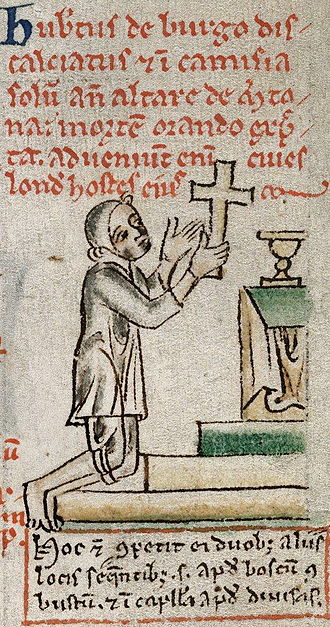
The Two Wives of King John

King John

One of the most intriguing relationships of the Magna Carta story is that between Isabella of Gloucester and Isabelle d’Angoulême, the two wives of King John.

Isabella of Gloucester is a unique individual in the story of Magna Carta. She is, in many ways, a shadow in the pages of history, and yet she held one of the greatest earldoms in England. There are no pictures of her, not even a description of her personality or appearance. At one time, no one even seemed certain of her name; she has been called Isabel, Isabella, Hawise, Avice – but Isabella is how she appears in the Close Rolls.1

Isabella was the youngest daughter and co-heiress of William, second Earl of Gloucester, who was himself the son of Robert of Gloucester, an illegitimate son of King Henry I and Empress Matilda’s half-brother and stalwart supporter during her war against King Stephen. Earl William’s wife was Hawise, the daughter of Robert de Beaumont, third Earl of Leicester. Isabella’s only brother Robert had died in 1166, making Isabella and her two sisters co-heiresses to the earldom of Gloucester. Although her date of birth has been lost to history, it seems likely she was born in the early 1160s.

We know very little of Isabella’s childhood, although, considering her social status, as the daughter of one of England’s wealthiest earls, it is likely that she was given the education expected of a high-ranking noblewoman and taught to run a large household, as well as the social graces of singing, dancing and needlework. Her parents’ marriage appears to have been a successful one. Isabella’s mother, Countess Hawise, was a regular witness to her husband’s charters and was mentioned in several of them, especially in the pro amina clauses of grants made to religious houses that sought spiritual benefits for those named.

Arms of Geoffrey de Mandeville, Isabella of Gloucester’s second husband

Isabella’s father, although a first cousin of Henry II, had a complicated relationship with the king, especially after Henry had taken Bristol Castle from the earl; the castle had been held by William’s father before him. Despite remaining loyal to Henry II during the rebellion of the king’s sons in 1173–74 and agreeing to the marriage of his youngest daughter to Prince John, Earl William’s loyalty remained suspect and he was arrested and imprisoned in 1183. The unfortunate earl died whilst still a captive, on 23 November 1183.

Isabella was betrothed, in 1176, to Prince John, the youngest son of Henry II and Eleanor of Aquitaine. John was 9 years old at the time of the betrothal, while Isabella was probably a few years older. Under the terms of the marriage agreement, Earl William recognised John as heir to the earldom of Gloucester, effectively disinheriting Isabella’s two elder sisters. The marriage was to be a way for Henry II to provide for his youngest son. After the Earl of Gloucester’s death in 1183, his entire estate was passed to Isabella, who had been made a ward of the king.

Isabella’s older sisters were both already married; Mabel was the wife of Amaury of Évreux and Amicia was married to the earl of Hertford. On their father’s death they had both been explicitly excluded from the estate to prevent the division of the comital inheritance and they received annuities of £100 each in compensation. Taking Isabella into wardship, Henry II therefore seized all the Gloucester lands and made the income from them available for John’s use, as Isabella’s future husband. The king, however, appears to have kept his options open and had not finalised John’s marriage to Isabella by the time of his death; in case a more suitable alliance came along.

Winchester Cathedral, Isabella and Isabelle shared a household in Winchester

King Richard I, on the other hand, thought it expedient to get his brother safely married, on his own accession to the throne in 1189. The wedding took place at Marlborough Castle in Wiltshire on 29 August 1189; John was 21 and Isabella may have been approaching 30. Baldwin, the archbishop of Canterbury at the time, opposed the marriage as the couple were related within the third degree of consanguinity; they were second cousins, both being great-grandchildren of Henry I. John had to promise to seek a papal dispensation and, even then, the couple were ordered, by the archbishop, not to sleep together.

Although Isabella and John were married for ten years, their marriage was neither happy nor successful. They spent some time together in the first years of their marriage as they issued charters together during a visit to Normandy around 1190–91.2 However, they appear to have spent less and less time together as the years went on. They never had any children and it is during this time in his life that John’s illegitimate children, including Richard of Chilham and Joan Lady of Wales, were born; a further suggestion that the couple were not close. In 1193, as part of his plotting with Philip Augustus, John promised to marry the French king’s half-sister, Alice, who had previously been betrothed to John’s own brother, Richard. Nothing eventually came of the marriage proposal, but it was an implicit rejection of Isabella as his wife.

John succeeded to the throne on the death of his older brother, Richard the Lionheart, on 6 April 1199. He was crowned, alone, on 27 May 1199; the fact that Isabella was not crowned with him suggests that John was already looking for a way out of the marriage. Poor Isabella would never be styled ‘queen’ and it was possibly as early as August 1199, but certainly by early 1200, that John obtained a divorce on the grounds of consanguinity, the very objection for which he was supposed to have obtained a dispensation when he married Isabella in 1189. The bishops of Lisieux, Bayeux and Avranches, sitting in Normandy, provided the required judgement. One chronicler said of John that ‘seized by hope of a more elevated marriage, he acted on wicked counsel and rejected his wife.’3

Keen to keep his hold on the substantial Gloucester lands, John took Isabella into wardship, again, holding her in ‘honourable confinement’ for the next fourteen years. Little is known of her day-to-day life, although she does appear to have remained on civil terms with King John. John met the expenses of Isabella’s household and staff and sent her numerous gifts, including wine and cloth. Things may well have been a little awkward at times, especially after John found himself another wife.

Westminster Abbey, where Isabelle d’Angoulême was crowned Queen of England

Having discarded Isabella, John began to look elsewhere for a new wife; he sent ambassadors to the Iberian peninsula to investigate the possibilities of a match with the daughter of the king of Portugal. However, any such plans were hastily abandoned when John set his sights on Isabelle d’Angoulême.

Isabelle was the only child of Audemar (or Aymer), Count of Angoulême and Alice de Courtenay. Alice was the daughter Peter de Courtenay, lord of Montargis and Chateaurenard, and a cousin of king Philip II Augustus of France. Through her Courtenay family connections, Isabelle was also related to the royal houses of Jerusalem, Hungary, Aragon and Castile. There was one tiny problem, however, Isabelle was already betrothed to Hugh IX de Lusignan. The marriage was intended to end the bitter rivalry of the two families but would also be a threat to Angevin power in the region, effectively splitting Aquitaine in two, with the Lusignans controlling the centre.

John therefore suggested to Count Audemar that he marry Isabelle himself. The count jumped at the chance of seeing his daughter become queen of England. Isabelle and John were married on 24 August 1200; Isabelle was no more than 12 and may have been as young as 10, John was 33 or 34.

Seal of Isabelle d’Angoulême

When John remarried in 1200 to Isabelle d’Angoulême, he housed his new wife with his ex-wife, which could have been rather awkward for both women. Queen Isabelle was still very young, probably no more than 12 years old on her marriage. Despite the chroniclers claiming Isabelle was a temptress and kept John in bed when he should have been ruling the kingdom, in the early years of their marriage, the king appears to have treated her more like a child than a wife; which she, of course, was. Her independence was severely limited by John keeping personal control of her finances.

When she was not at court with the king, Isabelle spent time at Marlborough or in the household of John’s first wife, Isabella of Gloucester, at Winchester. Isabella’s allowance was raised from £50 to £80 a year, to pay for the extra expenses incurred by housing the queen.4 The young queen remained in Isabella of Gloucester’s household until the birth of her first child, Henry, in 1207; in that year Isabella of Gloucester was moved to Sherborne before the queen gave birth. And now that she no longer had the care of the queen, Isabella’s allowance was reduced back down to £50 a year.

One may imagine this was quite awkward for Isabella of Gloucester, the discarded wife being forced to host her former husband’s young bride. On closer reflection, however, it may also have been a comfort to her. The teenage queen would probably have been lively company for the 40-something countess who had never been blessed with children. She may have felt protective and motherly to the girl, especially knowing John as well as she must have done.

Following the birth of her first son, Henry, Isabelle gave John four more children; another son, Richard, born in 1209 and daughters, Joan, born in 1210, Isabella, born in 1214 and Eleanor, who was born in either 1215 or 1216, and married the famed Simon de Montfort, Earl of Leicester, as her second husband. Following John’s death in 1216, Isabelle returned to France, to her county of Angoulême, where, in 1220, she married Hugh X de Lusignan, the son of her former betrothed.

The gatehouse to Canterbury Cathedral, where Isabella of Gloucester is buried

Isabella of Gloucester was finally allowed to remarry in 1214; a letters patent issued by John on 28 January 1214 informed all the knights and tenants of the honour of Gloucester that ‘we have given Isabella, countess of Gloucester, our kinswoman’ in marriage to Geoffrey de Mandeville, Earl of Essex.5 Mandeville had to pay the massive sum of 20,000 marks for the privilege of marrying the king’s first wife; an amount he could never hope to repay. He was one of the barons who rose in rebellion during the Magna Carta crisis of 1215.

*

Footnotes:

1 Rich Price, King John’s Letters Facebook group; 2 Louise Wilkinson, Isabel of Gloucester, wife of King John, magnacarta800th.com; 3 Ralph of Diceto, Images of History; 4 Lisa Hilton, Queen’s Consort: England’s Medieval Queens; 5 Louise Wilkinson, Isabel of Gloucester, wife of King John, magnacarta800th.com

Sources:

Rich Price, King John’s Letters Facebook group; Louise Wilkinson, Isabel of Gloucester, wife of King John, magnacarta800th.com; Robert Bartlett England Under the Norman and Angevin Kings 1075-1225; Dan Jones The Plantagenets; the Kings who Made EnglandThe Plantagenet Chronicle Edited by Elizabeth Hallam; Maurice Ashley The Life and Times of King John; Roy Strong The Story of BritainOxford Companion to British History; Mike Ashley British Kings & Queens; David Williamson Brewer’s British Royalty; Robert B. Patterson, Isabella, suo jure Countess of Gloucester (c. 1160-1217), Oxforddnb.com; Ralph of Diceto, Images of History; Lisa Hilton, Queen’s Consort: England’s Medieval Queens; Marc Morris, King John; Elizabeth Norton, She-Wolves: The Notorious Queens of England; Louise Wilkinson, Isabella of Angoulême, wife of King John, magnacarta800th.com

Images:

Courtesy of Wikipedia, except Winchester Cathedral is ©2020 courtesy of Anne Marie Bouchard, Westminster Abbey, ©2020 courtesy of Daniel Gleave and Canterbury Cathedral which is ©2020 Sharon Bennett Connolly.

*

My Books:

Signed, dedicated copies of all my books are available through my online bookshop. or by contacting me.

Coming 30 March: Princesses of the Early Middle Ages

Books by Sharon Bennett Connolly

Daughters of kings were often used to seal treaty alliances and forge peace with England’s enemies. Princesses of the Early Middle Ages: Royal Daughters of the Conquest explores the lives of these young women, how they followed the stereotype, and how they sometimes managed to escape it. It will look at the world they lived in, and how their lives and marriages were affected by political necessity and the events of the time. Princesses of the Early Middle Ages will also examine how these girls, who were often political pawns, were able to control their own lives and fates. Whilst they were expected to obey their parents in their marriage choices, several princesses were able to exert their own influence on these choices, with some outright refusing the husbands offered to them.

Their stories are touching, inspiring and, at times, heartbreaking.

Princesses of the Early Middle Ages: Royal Daughters of the Conquest is now available for pre-order from Pen & Sword and Amazon.

Also by Sharon Bennett Connolly:

Books by Sharon Bennett Connolly

Scotland’s history is dramatic, violent and bloody and Scotland’s Medieval Queens have seen it all. This is the story of Scotland through their eyes. Available now from Amazon and Pen and Sword BooksHeroines of the Tudor World tells the stories of the most remarkable women from European history in the time of the Tudor dynasty, 1485-1603. These are the women who ruled, the women who founded dynasties, the women who fought for religious freedom, their families and love. Heroines of the Tudor World is now available from Amberley Publishing and Amazon UK. Women of the Anarchy demonstrates how Empress Matilda and Matilda of Boulogne, unable to wield a sword themselves, were prime movers in this time of conflict and lawlessness. It shows how their strengths, weaknesses, and personal ambitions swung the fortunes of war one way – and then the other. Available from Bookshop.orgAmberley Publishing and Amazon UKKing John’s Right-Hand Lady: The Story of Nicholaa de la Haye is the story of a truly remarkable lady, the hereditary constable of Lincoln Castle and the first woman in England to be appointed sheriff in her own right. Available from all good bookshops Pen & Sword Booksbookshop.org and Amazon

Defenders of the Norman Crown: The Rise and Fall of the Warenne Earls of Surrey tells the fascinating story of the Warenne dynasty, from its origins in Normandy, through the Conquest, Magna Carta, the wars and marriages that led to its ultimate demise in the reign of Edward III. Available from Pen & Sword BooksAmazon in the UK and US, and Bookshop.orgLadies of Magna Carta: Women of Influence in Thirteenth Century England looks into the relationships of the various noble families of the 13th century, and how they were affected by the Barons’ Wars, Magna Carta and its aftermath; the bonds that were formed and those that were broken. It is now available in paperback and hardback from Pen & SwordAmazon, and Bookshop.orgHeroines of the Medieval World tells the stories of some of the most remarkable women from Medieval history, from Eleanor of Aquitaine to Julian of Norwich. Available now from Amberley Publishing and Amazon, and Bookshop.orgSilk and the Sword: The Women of the Norman Conquest traces the fortunes of the women who had a significant role to play in the momentous events of 1066. Available now from Amazon,  Amberley Publishing, and Bookshop.org.

Alternate Endings: An anthology of historical fiction short stories including Long Live the King… which is my take what might have happened had King John not died in October 1216. Available in paperback and kindle from Amazon.

Podcast:

A Slice of Medieval

Have a listen to the A Slice of Medieval podcast, which I co-host with Historical fiction novelist Derek Birks. Derek and I welcome guests, such as Ian Mortimer, Bernard Cornwell, Elizabeth Chadwick and Scott Mariani, and discuss a wide range of topics in medieval history, from significant events to the personalities involved. 

Every episode is also now available on YouTube.

*

Don’t forget! Signed and dedicated copies of all my books are available through my online bookshop.

For forthcoming online and in-person talks, please check out my Events Page.

You can be the first to read new articles by clicking the ‘Follow’ button, liking our Facebook page or joining me on TwitterThreadsBluesky and Instagram.

*

©2020 Sharon Bennett Connolly FRHistS