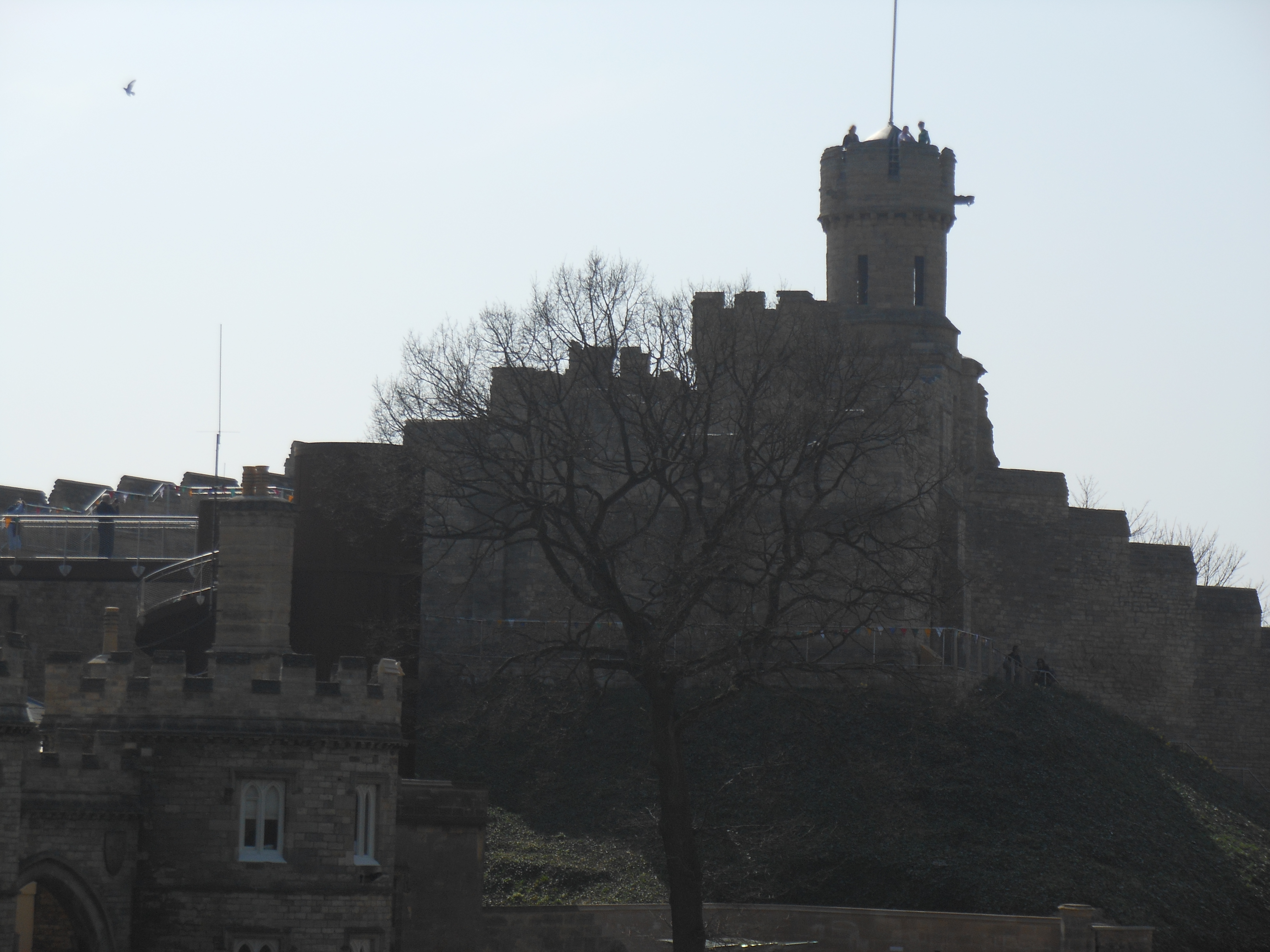
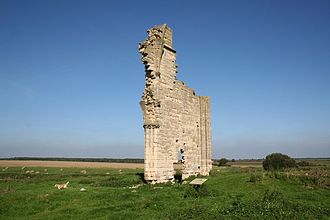
Gundrada, Daughter of Debate

resizer.php
Gundrada de Warenne, Church of St John the Baptist, Southover

In 1066 William de Warenne joined his namesake the Duke of Normandy on his expedition to conquer England.  De Warenne is one of the few named knights involved in the Battle of Hastings, and one of William of Normandy’s most trusted captains.

Sometime in the years either side of the Conquest, William had married Gundrada.

Gundrada’s parentage has long been a subject of debate among historians. For many years she was believed to be the daughter of William the Conqueror and his wife, Matilda of Flanders. It seems the misunderstanding arose with the monks at Lewes Priory, when a copy of an earlier charter claimed she was the daughter of Matilda of Flanders. Lewes was founded as a Cluniac monastery by William and Gundrada and it may be that the monks got carried away with the idea of their foundress having royal blood, or that there was an error when copying the charter from the original.

For whatever reason, the claims by Lewes Priory have caused controversy throughout the ensuing centuries. In the sixteenth century Leland believed that she was the Conqueror’s daughter, while Orderic Vitalis had stated that she was ‘Sister of Gherbode, a Fleming, to whom King William the First had given the City and Earldom of Chester’¹ By the 1800s it was thought that Gundrada was not a daughter of the King, but of the queen, Matilda, by an earlier, forgotten marriage to a Flemish nobleman called Gerbod.

Other suggestions have included that she was an adopted daughter, raised alongside William and Matilda’s own children who were of a similar age. Alternatively, due to her Flemish origins, it has been argued that the confusion arose as she had joined Matilda’s household at an early age; an assertion supported by Matilda’s gift to Gundrada of the manor of Carlton in Cambridge – a manor Gundrada later gave to Lewes Priory.

69111381_136159050499
William de Warenne, 1st earl of Warenne and Surrey, Church of St John the Baptist, Southover

In 1888 in the English Historical Review, E.A. Freeman used the priory’s original charter to conclude that there was no familial relationship between Gundrada and William the Conqueror. In it, while the king and William de Warenne, both, mention Gundrada, neither refer to her as being related to the king or queen. Freeman stated ‘there is nothing to show that Gundrada was the daughter either of King William or of Queen Matilda; there is a great deal to show that she was not.’²

It now seems more likely that Gundrada was a Flemish noblewoman, the sister of Gerbod who would be, for a brief time, Earl of Chester. Her father may also have been called Gerbod, and was the hereditary advocate of the monastery of St Bertin; a title which later will pass down through the de Warenne family. Another brother, Frederic, had land in Sussex and Kent, even before the Conquest. The brothers, it seems, were deeply involved in the politics of Flanders and Normandy; indeed, it is thought that Gerbod resigned his responsibilities in Chester in order to return to the continent to oversee the family’s land and duties there. Frederic, along with the count of Flanders, was witness to Count Guy of Ponthieu’s  charter to the abbey of St Riquier in 1067.

William de Warenne was well rewarded for his part in the Norman Conquest, receiving lands in 13 counties, including the Honour of Consibrough in South Yorkshire, previously owned by the last Saxon king, Harold II Godwinson. De Warenne’s brothers-in-law had also joined the expedition, and Frederic was rewarded with the lands of a man named Toki; in Norfolk, Suffolk and Cambridgeshire, worth over £100.

However, Frederic was unable to enjoy his good fortune for long, as he was killed in the rebellion of Hereward the Wake in 1070. His lands at Castle Acre and elsewhere, still known as ‘Frederic’s Fief’ in 1086, were inherited by his sister, who retained control of them throughout her lifetime. One manor was given to the abbey of St Riquier, possibly by Gundrada in memory of her brother.

800px-LewesPriory1
Lewes Priory, Sussex

Gundrada’s other brother, Gerbod resigned his position in Chester in 1070 and returned to Flanders which was in the midst of civil war, following the death of its count. Gerbod’s return was essential to guarantee the safety of the family’s lands and interests. The former earl’s fate is uncertain; one report has him killed while another sees him imprisoned, and a third claims Gerbod accidentally killed his lord, Count Arnulf, at the Battle of Kassel in 1071. According to this last account, Gerbod travelled to Rome to perform penance. He intended to have the hand that struck the fatal blow amputated but was persuaded against it and eventually became a monk at Cluny.

It seems that neither brother raised a family, as Gerbod’s lands in Flanders were also inherited by Gundrada; the family interest in the abbey of St Bertin would eventually be passed on to Gundrada and William’s 2nd son, Reynold.

As with so many nobles of the 11th century, Gundrada and William were known for their piety. In 1077 the couple made a pilgrimage to Rome; en route, they visited the magnificent abbey of Cluny in Burgundy. They must have been impressed with the abbey, as it inspired them to found their own Cluniac priory at Lewes in Sussex. In 1078 the abbot of Cluny sent over the first monks as William and Gundrada were supervising the new monastery’s construction; it would be the first Cluniac house in England. All the churches on the de Warenne’s vast estates were given to the priory, including endowments from her brother Frederic’s lands in Norfolk.

Castle_Acre_Castle
Castle Acre, Norfolk

Gundrada and William had 3 children together. Their eldest son, William, would succeed his father as Earl of Surrey and de Warenne. He married Isabel de Vermandois, widow of Robert de Beaumont, earl of Leicester; with whom he had, apparently, been having an affair even before the earl’s death. Young William had a chequered career, he supported the claims of Robert Curthose, duke of Normandy, to the English throne against the duke’s younger brother, Henry I. However, duke Robert lost and was captured and imprisoned by Henry. Henry eventually forgave William, who fought for the king at the Battle of Bremule and was with Henry he died in 1135.

69110904_130412014050
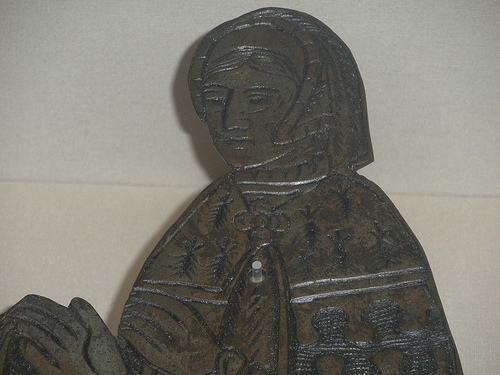
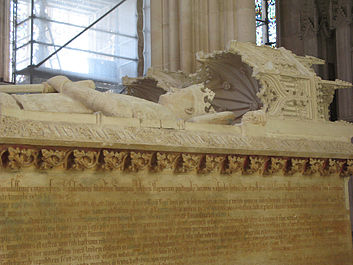
Gundrada’s tombstone, St John’s Church, Southover

A second son, Reynold de Warenne, led the assault on Rouen in 1090, for William II Rufus, in the conflict between the English king and his older brother, Duke Robert. However, by 1105 Reynold was now fighting for the duke against the youngest of the Conqueror’s sons, Henry I, defending the castle of Saint-Pierre-sur-Dives for the duke. He was captured by Henry the following year, but had been freed by September 1106. It is possible he died shortly after, but was certainly dead by 1118 when his brother issued a charter, in which he gave 6 churches to Lewes Priory, for the soul of deceased family members, including Reynold.

Gundrada and William also had a daughter, Edith, who married Gerard de Gournay, son of the lord of Gournay-en-Bray. Gerard also supported William II Rufus against Duke Robert and took part in the Crusade of 1096. Edith later accompanied him on pilgrimage back to Jerusalem, sometime after 1104, where he died. Gerard was succeeded by their son, Hugh de Gournay, whose daughter Gundreda would be the mother of Roger de Mowbray. Edith then married Drew de Monchy, with whom she had a son, Drew the Younger.

William de Warenne was created earl of Surrey shortly before his death in 1088; after he had helped William II to suppress a revolt led by Bishop Odo of Bayeux. De Warenne was wounded in the leg during the fighting and was taken to Lewes Priory where he died a short time later.

69111381_130412146348
Tombs of Gundrada and William de Warenne

Gundrada had died in childbirth at Castle Acre in Norfolk on 27th May 1085, therefore never receiving the title of countess. She was buried in the chapter house of Lewes Priory; her husband would be buried beside her 3 years later. Around 1145 new monastic buildings were consecrated at Lewes Priory, Gundrada’s bones were placed in a leaden chest and interred under a tombstone of black Tournai marble, ‘richly carved in the Romanesque style, with foliage and lions’ heads’³. The sculptor was trained at Cluny and would later work for Henry I’s nephew, Henry of Blois, bishop of Winchester and brother of King Stephen.

The tombstone read:

Gundrada, offspring of dukes, glory of the age, noble shoot,
brought to the churches of the English the balm of her character.
As a Martha …
she was to the wretched; a Mary she was in her piety.
That part of Martha [in her] died; the greater part of Mary survives.
O, pious Pancras, witness of truth and justice,
she makes you her heir; may you in your clemency accept the mother.
The sixth day of the kalends of June, showing itself,
broke the alabaster containing her flesh …4

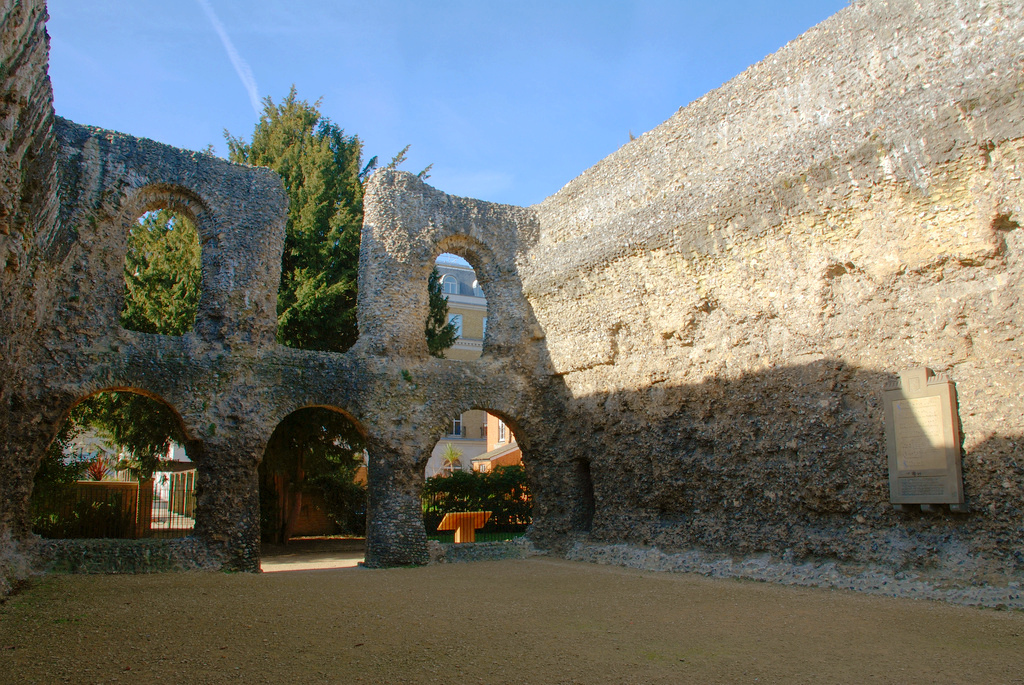
Following the dissolution of Lewes Priory in the 16th century, the tombstone was first moved to Isfield Church; it was moved again in 1775 to the parish church of St John at Southover in Lewes. The remains of Gundrada and William were discovered in 2 leaden chests in 1845 and finally laid to rest at the Southover church in 1847.

The dynasty founded by William and Gundrada would continue until the death of John, the 7th and final de Warenne Earl of Surrey, in 1347.

*

The story of William and Gundrada de Warenne appears in my books, Silk and the Sword: the Women of the Norman Conquest and in even greater detail in Defenders of the Norman Crown: Rise and Fall of the Warenne Earls of Surrey.

*

Footnotes: ¹Early Yorkshire Charters Volume 8 Edited by William Farrer and Charles Travis Clay; ²ibid; ³C.P.Lewis, Oxforddnb.com; 4 Elisabeth M.C. Van Houts and Rosalind C. Love (eds and trans), The Warenne (Hyde) Chronicle

Images: Gundrada and William de Warenne church windows ©lewespriory.org.uk; Castle Acre and Lewes Priory courtesy of Wikipedia; Gundrada’s tombstone and the tombs of Gundrada and William courtesy of findagrave.com.

Sources: Early Yorkshire Charters Volume 8: The Honour of Warenne, Edited by William Farrer and Charles Travis Clay; England Under the Norman and Angevin Kings by Robert Batlett; Brewer’s British Royalty by David Williamson; Britain’s Royal Families, the Complete Genealogy by Alison Weir; british-history.ac.uk; kristiedean.com; English Heritage Guidebook for Conisbrough Castle by Steven Brindle and Agnieszka Sadrei; oxforddnb.com.

*

My Books

Signed, dedicated copies of all my books are available through my online bookshop.

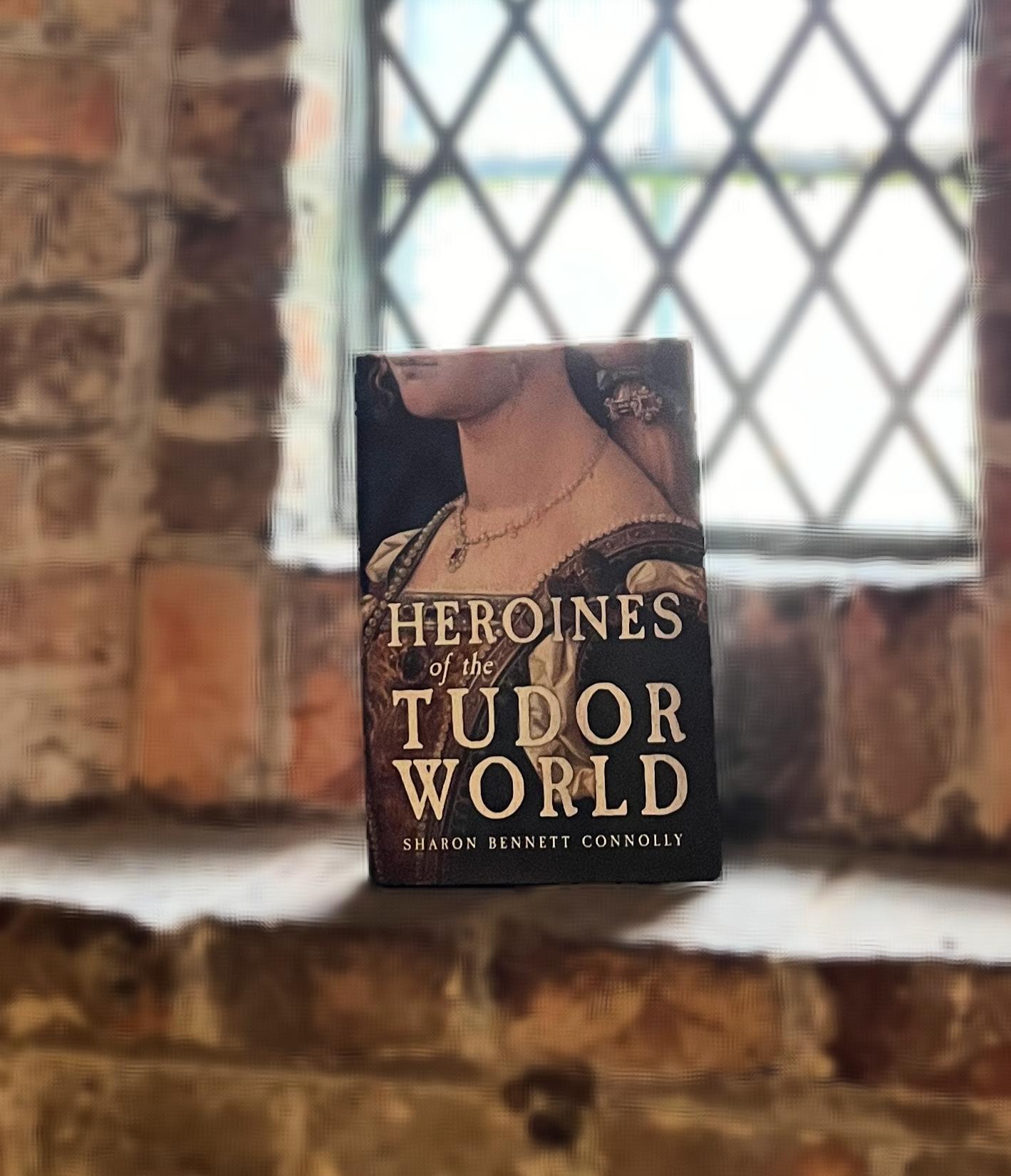
Coming on 15 June224: Heroines of the Tudor World
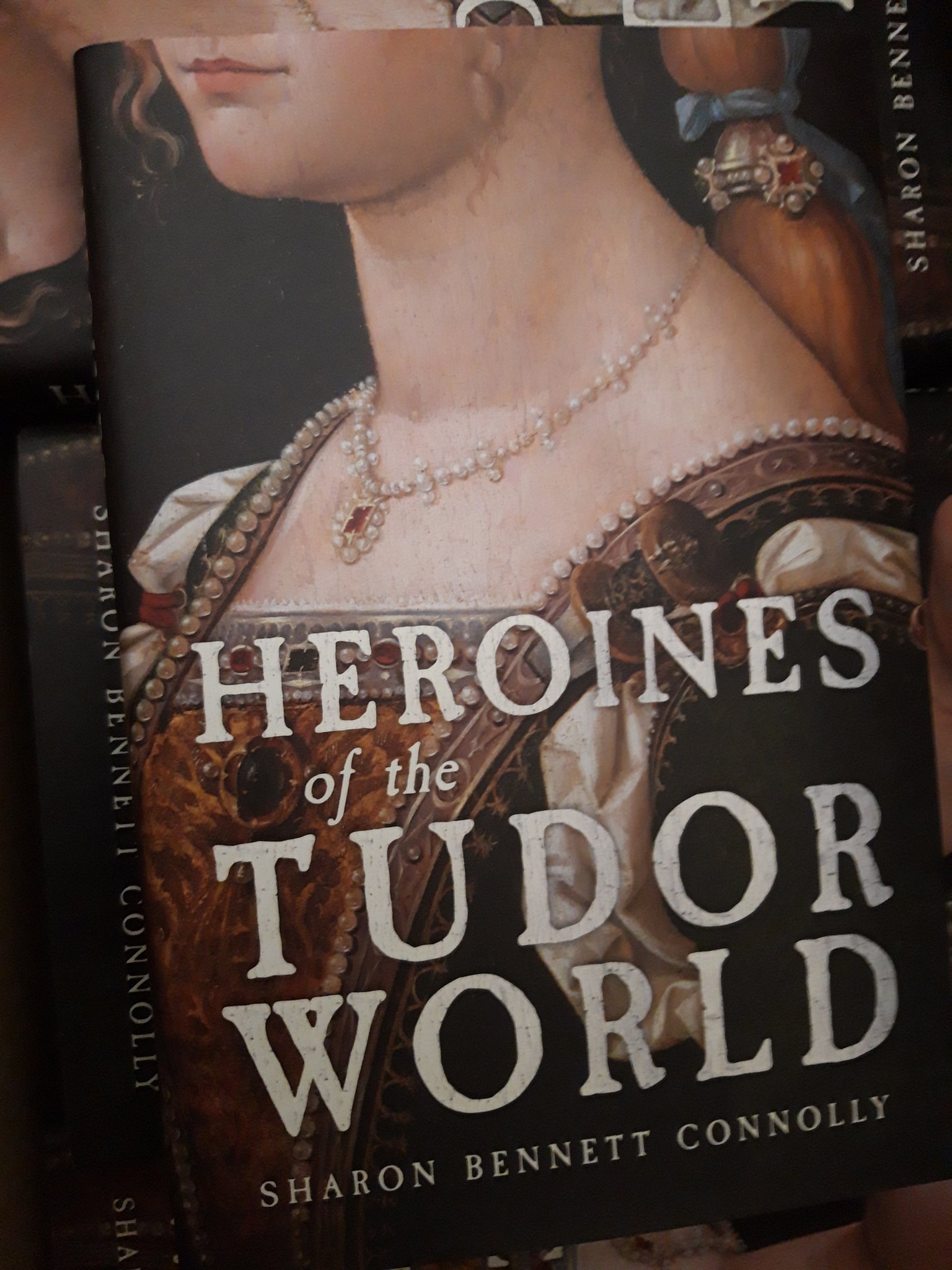
Heroines of the Tudor World tells the stories of the most remarkable women from European history in the time of the Tudor dynasty, 1485-1603. These are the women who ruled, the women who founded dynasties, the women who fought for religious freedom, their families and love. These are the women who made a difference, who influenced countries, kings and the Reformation. In the era dominated by the Renaissance and Reformation, Heroines of the Tudor World examines the threats and challenges faced by the women of the era, and how they overcame them. From writers to regents, from nuns to queens, Heroines of the Tudor World shines the spotlight on the women helped to shape Early Modern Europe.

Heroines of the Tudor World is now available for pre-order from Amberley Publishing and Amazon UK.

Out Now! Women of the Anarchy
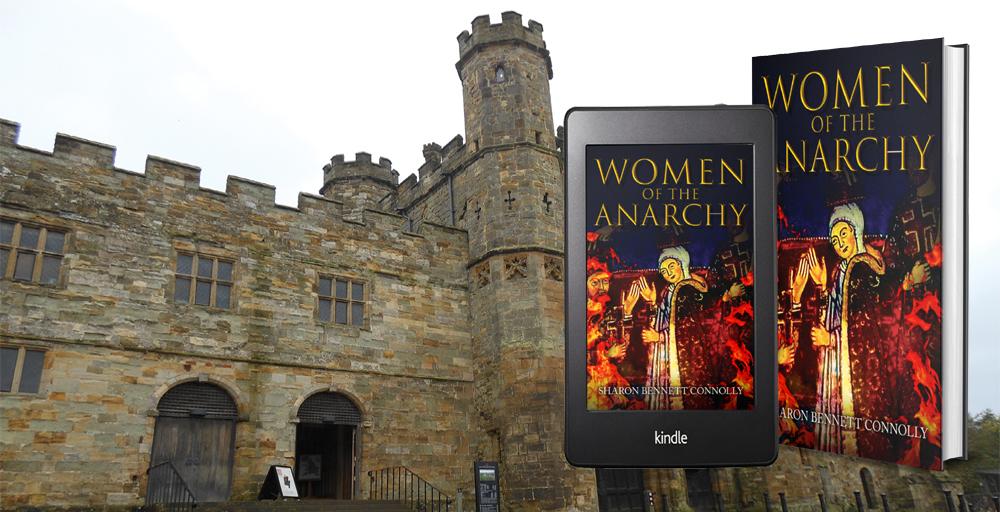
Two cousins. On the one side is Empress Matilda, or Maud. The sole surviving legitimate child of Henry I, she is fighting for her birthright and that of her children. On the other side is her cousin, Queen Matilda, supporting her husband, King Stephen, and fighting to see her own son inherit the English crown. Women of the Anarchy demonstrates how these women, unable to wield a sword, were prime movers in this time of conflict and lawlessness. It show how their strengths, weaknesses, and personal ambitions swung the fortunes of war one way – and then the other.

Available from Bookshop.orgAmberley Publishing and Amazon UK.

Also by Sharon Bennett Connolly:
King John’s Right-Hand Lady: The Story of Nicholaa de la Haye is the story of a truly remarkable lady, the hereditary constable of Lincoln Castle and the first woman in England to be appointed sheriff in her own right. It is is available from King John’s Right-Hand Lady: The Story of Nicholaa de la Haye is the story of a truly remarkable lady, the hereditary constable of Lincoln Castle and the first woman in England to be appointed sheriff in her own right. Available from all good bookshops, from Pen & Sword Booksbookshop.org and AmazonDefenders of the Norman Crown: The Rise and Fall of the Warenne Earls of Surrey tells the fascinating story of the Warenne dynasty, from its origins in Normandy, through the Conquest, Magna Carta, the wars and marriages that led to its ultimate demise in the reign of Edward III. Available from Pen & Sword BooksAmazon in the UK and US, and Bookshop.org

Ladies of Magna Carta: Women of Influence in Thirteenth Century England looks into the relationships of the various noble families of the 13th century, and how they were affected by the Barons’ Wars, Magna Carta and its aftermath; the bonds that were formed and those that were broken. It is now available in paperback and hardback from Pen & Sword,  Amazon, and Bookshop.orgHeroines of the Medieval World tells the stories of some of the most remarkable women from Medieval history, from Eleanor of Aquitaine to Julian of Norwich. Available now from Amberley Publishing and Amazon, and Bookshop.orgSilk and the Sword: The Women of the Norman Conquest traces the fortunes of the women who had a significant role to play in the momentous events of 1066. Available now from Amazon,  Amberley Publishing, and Bookshop.org.

Alternate Endings: An anthology of historical fiction short stories including Long Live the King… which is my take what might have happened had King John not died in October 1216. Available in paperback and kindle from Amazon.

Podcast:

Have a listen to the A Slice of Medieval podcast, which I co-host with Historical fiction novelist Derek Birks. Derek and I welcome guests, such as Bernard Cornwell and discuss a wide range of topics in medieval history, from significant events to the personalities involved. Our first ever episode was a discussion on The Anarchy

*

Don’t forget! Signed and dedicated copies of all my books are available through my online bookshop.

For forthcoming online and in-person talks, please check out my Events Page.

You can be the first to read new articles by clicking the ‘Follow’ button, liking our Facebook page or joining me on Twitter and Instagram.

*

©2016 Sharon Bennett Connolly FRHistS
The Man who Won the Hand of the Fair Maid of Kent

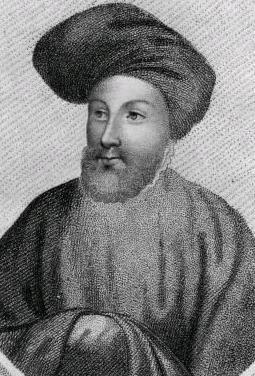
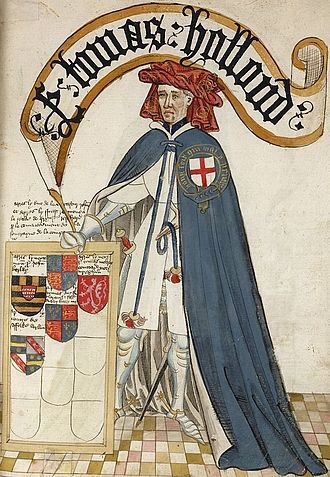
330px-Thomas_Holland_1430
Sir Thomas Holland, Earl of Kent

Having recently written about William Montagu, 2nd Earl of Salisbury and husband of Joan of Kent, I thought it only fair to write an article on William’s love rival, Thomas Holland.

The second son of Robert Holland, Lord Holland of Upholland, Lancashire, Thomas was born around 1315 and grew up to be quite a renowned soldier. His mother was Maud, daughter and co-heiress of Alan Zouche, Lord Zouche of Ashby. Thomas grew up with 3 brothers and 3 sisters. His older brother, Robert, succeeded to the Holland estates and  resided at Thorpe Waterville in Northamptonshire. Thomas’s 2 younger brothers, Alan and Otto, followed their brother into military service, and are often noted as having accompanied him on campaign.

The number of sisters seems to be confused; some sources put it at 5, while others mention only 3. Of the 3 known sisters the eldest, Isabella, became the mistress of John de Warenne, 7th Earl of Surrey who had married to Edward II’s cousin, Joan of Bar.  Another sister, Margaret, died in 1349 and had been married to John de la Warr, while the last, Matilda or Maud, had been the wife of John (II) Mowbray, Lord Mowbray.

Thomas Holland’s father had been a chief supporter of Thomas, Earl of Lancaster, who had attempted to curb the malevolent influence of Hugh le Despenser the Younger on King Edward II and, by extension, the country. Holland, however, turned his coat at the last-minute and joined the king’s faction just months before Lancaster was defeated at the Battle of Boroughbridge in 1322.

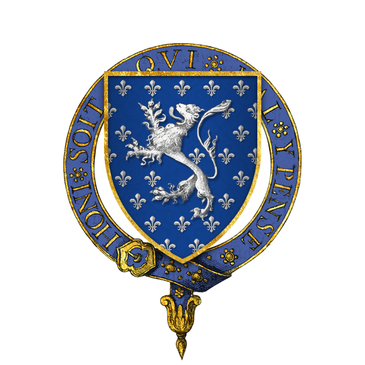
Coat_of_Arms_of_Sir_Thomas_Holland,_KG
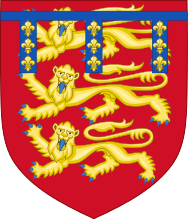
Coat of arms of Sir Thomas Holland, Knight of the Garter

Lancaster was executed but Robert Holland did not get the reward he was probably expecting; he was imprisoned, with his lands confiscated. It was only in 1327, after Edward II’s deposition and the accession of Edward III, that Holland’s lands were restored. However, in October 1328 Robert Holland was murdered in Borehamwood, Hertfordshire, probably by supporters of the new Earl of Lancaster, Thomas’s brother Henry.

A landless young knight, and the son of a disgraced lord, Thomas Holland had very little going for him when he started his soldiering career, probably in Scotland in the early 1330s. However, as the 1330s progressed he was making a reputation as an able soldier. In 1337 he was fighting in Bordeaux with Robert d’Artois, but by 1338 he was a knight of the royal household; serving in Flanders the following year and at Sluys in 1340.

In 1339 Thomas managed to pull off the marriage coup of the century – but no one was to know about it for 10 years. At the age of 24 Thomas married Joan Plantagenet, daughter of Edmund, earl of Kent, granddaughter of Edward I and cousin of King Edward III, who is reported as being as young as 11 years of age at the time. Despite her family links, at the time of the marriage Joan was no great heiress; her brother was earl of Kent and it was only his death in 1352 and the earlier death-without-heirs of her maternal uncle, Thomas Lord Wake, in 1349, that made her a wealthy woman in her own right.

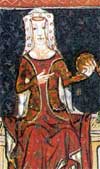
Joan_of_Kent
Joan of Kent

Modern sensibilities will make us cringe at Joan’s tender age, but, although it was young even for the period an 11-year-old bride was not unheard of. We know, from Joan’s later testimony, that the marriage was consummated almost immediately; however, the couple did not settle down to marital bliss and Holland was soon on his travels.

In 1341, while Holland was away crusading in Prussia, Joan’s mother, Margaret Wake, arranged an advantageous marriage for her daughter to William Montagu, 2nd earl of Salisbury. Whether Margaret knew about the extent of Joan’s relationship with Holland is uncertain – maybe she believed Joan was infatuated with the landless knight and hoped that marrying her to Montagu would cure the pre-teen of this puppy love?

By February 1341 Joan and Montagu were married.

Thomas Holland, however, didn’t appear to be in a rush to return to claim his wife, though this was probably due to the fact he was in no financial position to fight a costly court case. He spent the next few years campaigning in Europe. In 1342-3 he fought in Brittany with the king and was probably in Granada with the earl of Derby by 1343. In 1345 he was back in Brittany and was at the Siege of Caen in 1346; a battle in which Joan’s other husband, Montagu, may also have taken part – awkward!

Holland played a prominent part in the Siege of Caen, capturing the Count of Eu, constable of France, who surrendered himself to Holland based on the knight’s chivalrous reputation. The count was then sold to Edward III for 80,000 florins, possibly making Holland very wealthy indeed (if he ever received the full balance owed). Thomas Holland’s eminence rose further during the 1346 Crecy campaign, seeing action at Amiens and Rouen; he was wounded at a castle on the Seine and commanded the rearguard on the march from Caen.

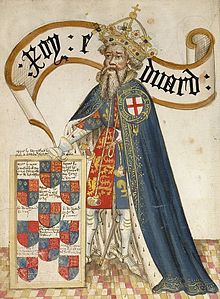
300px-Holland_1430 Otto
Otto Holland – Thomas’s brother and lieutenant

Recognition of his exploits came from the King in 1348, when Holland was made one of the Founder Knights of the Order of the Garter. His brother and lieutenant, Otto, was also awarded with the same honour – as was William Montagu, earl of Salisbury and the ‘other’ husband of the fair Joan. Montagu was also, at this  time, employing Thomas Holland as his steward – I wonder if Joan had had a hand in the appointment?

Holland now found himself in a position to petition the papal court to confirm the validity of his marriage and have Joan returned to him. The inaugural Garter tournament on St George’s Day, 1349 must have caused great interest, seeing Joan’s current husband, the Earl of Salisbury, fighting on the king’s team, while Sir Thomas Holland was on the side of Prince Edward, the Black Prince (Joan’s future husband, just to make things more confusing). It is not hard to imagine the highly charged atmosphere, with Joan’s two husbands facing each other across the tournament field, with the object of their affection watching from the stands.

If you’re wondering who Joan cheered for, my guess is Thomas Holland as, when called to testify to her marriage with Holland, Joan confirmed that, not only had she married Holland but the marriage had also been consummated. After lengthy court proceedings, in which Holland had travelled to the papal court at Avignon on more than one occasion, and with Joan being under house arrest and denied access to lawyers by the Montagu family, in November 1349 the papal court finally publicised the verdict; Joan’s marriage to Montagu was declared null and void and she was ordered to return to Holland.

Despite the testimony of both Joan and Thomas Holland, there will always be a question mark over their claims to have married in 1339. The more cynical of observers may think that their relationship started much later, when Joan was already married to William Montagu, and that they employed the concept of an earlier marriage in order to free Joan from her unwanted husband and allow her to marry her lover. However, it must be remembered that Joan swore in front of a church court that she had married Thomas when she was 11, and lying to the church would bring the hefty penalty of eternal damnation. I doubt we will ever truly know the truth, but I personally lean towards the argument for the earlier marriage rather than a subsequent adulterous affair.

Holland’s fortunes were certainly on the rise,  his wife restored to him, and with her brother’s death in 1352, Joan inherited estates in 16 counties, making Holland (by right of his wife) a lord of vast estates. His military career blossomed, he was given independent commands and in August  1352 was made Captain of Calais Castle; from 1354 he was summoned to parliament as Lord Holland.

Joan and Sir Thomas Holland had 5 children together; 3 sons and 2 daughters. Their first son, Thomas, Earl of Kent, was born in 1350 and married Alice, the daughter of Richard FitzAlan, 10th Earl of Arundel; he died in 1397.  Edmund was born in 1352 and died young. Their third son, John, was created Duke of Exeter in 1397 by his younger half-brother, King Richard II. He married Elizabeth of Lancaster, daughter of John of Gaunt and Blanche of Lancaster, but was executed in 1400 for his involvement in a plot to assassinate Henry IV and return his brother to the throne.

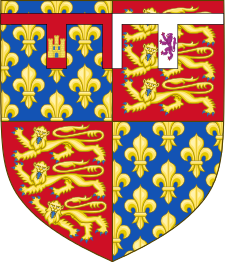
330px-Arms_of_Edmund_of_Woodstock,_1st_Earl_of_Kent.svg
Arms of Thomas Holland, 2nd Earl of Kent

Of their daughters, Joan married John V, Duke of Brittany (who would marry Joanna of Navarre as his second wife, the future queen-consort of Henry IV), but died in 1384. Their youngest child, Matilda, was born in 1359 and married twice; Sir Hugh de Courtenay, who died in 1377, and then Waleran of Luxembourg, Count of St Pol and Ligny. Matilda died in 1391.

Thomas Holland’s military prestige continued to rise throughout the 1350s, with his appointment as the King’s lieutenant in Brittany in 1353-4, receiving funding from the local revenues. Thomas also had custody of the young heir to the duchy, John V, who was later married to the Holland’s daughter, Joan.

In June 1356 Holland was appointed Keeper of the Channel Islands and tasked with the recovery of the Islands’ Castle Cornet, then in French hands; Holland’s brother, Otto, soon recaptured it for the English. In the subsequent years, Holland was placed in charge of various castles in Normandy; until October 1359 when he was appointed joint lieutenant of Normandy with Philip of Navarre.

The apotheosis of Holland’s military career came in September 1360 when he was appointed the king’s captain and lieutenant in France and Normandy. It was at this time, also, that he was finally given the title earl of Kent – to bolster his authority and prestige among friends and enemies alike, in order to  aid in his task of carrying out the provisions of the Treaty of Bretigny of October 1360.

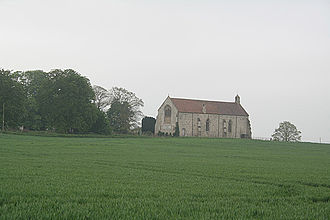
330px-Hospital_gatehouse_-_geograph.org.uk_-_487443
Gatehouse of the Greyfriars at Stamford, Lincolnshire

However, before this duty could be fulfilled, and at the height of his fame and prestige, Thomas Holland, earl of Kent, contracted an illness and died at Rouen on the 26th or 28th December 13601, depending on the source. He was buried in the church of the Friars Minor at Rouen, but was later moved to the Church of the Greyfriars at Stamford in Lincolnshire.

His widow, Joan, would marry Prince Edward, the Black Prince and heir of Edward III, in the following year and their son, Richard, would be crowned in 1377 as King Richard II. Holland’s children by Joan would be half-siblings to the King of England.

When Joan herself died in 1385 she chose to be buried beside her first husband in Lincolnshire, rather than with her prince in Canterbury Cathedral.

*

Footnote: 1 Stansfield, Oxforddnb.com

Pictures taken from Wikipedia.

*

Sources: The Perfect King, the Life of Edward III by Ian Mortimer; The Life and Time of Edward III by Paul Johnson; The Reign of Edward III  by WM Ormrod; The Mammoth Book of British kings & Queens by Mike Ashley; Britain’s’ Royal Families, the Complete Genealogy by Alison Weir; Brewer’s British Royalty by David Williamson; The Plantagenets, the Kings Who Made Britain by Dan Jones; englishmonarchs.co.uk; The Oxford Companion to British History edited by John Cannon; Chronicles of the Age of Chivalry Edited by Elizabeth Hallam; oxforddnb.com; britannia.com; themcs.org; Oxforddnb.com.

*

My books:

Signed, dedicated copies of all my books are available through my online bookshop.

Coming 30 January 2025: Scotland’s Medieval Queens

Scotland’s history is dramatic, violent and bloody. Being England’s northern neighbour has never been easy. Scotland’s queens have had to deal with war, murder, imprisonment, political rivalries and open betrayal. They have loved and lost, raised kings and queens, ruled and died for Scotland. From St Margaret, who became one of the patron saints of Scotland, to Elizabeth de Burgh and the dramatic story of the Scottish Wars of Independence, to the love story and tragedy of Joan Beaufort, to Margaret of Denmark and the dawn of the Renaissance, Scotland’s Medieval Queens have seen it all. This is the story of Scotland through their eyes.

Available for pre-order now.

Also by Sharon Bennett Connolly:

Heroines of the Tudor World tells the stories of the most remarkable women from European history in the time of the Tudor dynasty, 1485-1603. These are the women who ruled, the women who founded dynasties, the women who fought for religious freedom, their families and love. Heroines of the Tudor World is now available for pre-order from Amberley Publishing and Amazon UK. Women of the Anarchy demonstrates how Empress Matilda and Matilda of Boulogne, unable to wield a sword themselves, were prime movers in this time of conflict and lawlessness. It shows how their strengths, weaknesses, and personal ambitions swung the fortunes of war one way – and then the other. Available from Bookshop.orgAmberley Publishing and Amazon UKKing John’s Right-Hand Lady: The Story of Nicholaa de la Haye is the story of a truly remarkable lady, the hereditary constable of Lincoln Castle and the first woman in England to be appointed sheriff in her own right. Available from all good bookshops Pen & Sword Booksbookshop.org and Amazon

Defenders of the Norman Crown: The Rise and Fall of the Warenne Earls of Surrey tells the fascinating story of the Warenne dynasty, from its origins in Normandy, through the Conquest, Magna Carta, the wars and marriages that led to its ultimate demise in the reign of Edward III. Available from Pen & Sword BooksAmazon in the UK and US, and Bookshop.orgLadies of Magna Carta: Women of Influence in Thirteenth Century England looks into the relationships of the various noble families of the 13th century, and how they were affected by the Barons’ Wars, Magna Carta and its aftermath; the bonds that were formed and those that were broken. It is now available in paperback and hardback from Pen & SwordAmazon, and Bookshop.orgHeroines of the Medieval World tells the stories of some of the most remarkable women from Medieval history, from Eleanor of Aquitaine to Julian of Norwich. Available now from Amberley Publishing and Amazon, and Bookshop.orgSilk and the Sword: The Women of the Norman Conquest traces the fortunes of the women who had a significant role to play in the momentous events of 1066. Available now from Amazon,  Amberley Publishing, and Bookshop.org.

Alternate Endings: An anthology of historical fiction short stories including Long Live the King… which is my take what might have happened had King John not died in October 1216. Available in paperback and kindle from Amazon.

Podcast:

Have a listen to the A Slice of Medieval podcast, which I co-host with Historical fiction novelist Derek Birks. Derek and I welcome guests, such as Bernard Cornwell and Ian Mortimer, and discuss a wide range of topics in medieval history, from significant events to the personalities involved. 

*

Don’t forget! Signed and dedicated copies of all my books are available through my online bookshop.

For forthcoming online and in-person talks, please check out my Events Page.

You can be the first to read new articles by clicking the ‘Follow’ button, liking our Facebook page or joining me on TwitterThreadsBluesky and Instagram.

©2015 Sharon Bennett Connolly FRHistS

William Montagu, the Man Who Married – and Lost – the Fair Maid of Kent

salisbury_1430
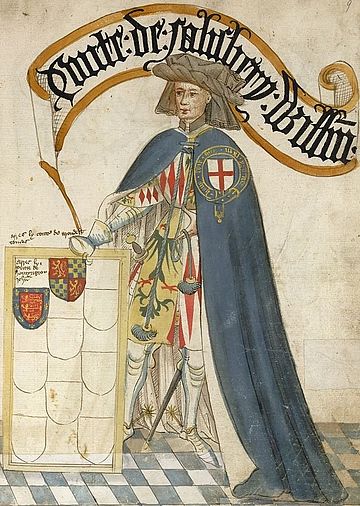
William Montagu, 2nd Earl of Salisbury

Born on the 28th June, 1328, at Donyatt in Somerset, William Montagu – or Montacute – was the son of William Montagu, 1st Earl of Salisbury and Katherine Grandison (died 1349), 3rd daughter of William Lord Grandison. Young William was the eldest of the couple’s 2 sons and 4 daughters.

William Montagu was a friend and contemporary of Edward, the Black Prince, son and heir of Edward III, who was raised alongside William in the Salisbury household. Also among the young aristocrats in the care of the Earl of Salisbury was Joan of Kent, daughter and heir of Edmund, Earl of Kent.

Before 10th February, 1341, young Montagu and Joan were married; a union arranged by the couple’s parents and the King, Edward III, seeing as they were both only 12 years old at the time. It is unlikely that Montagu and Joan lived together as husband and wife from the moment of their marriage, they were still very young and may well have delayed consummating the marriage for at least another year or two. It is more than likely that they carried on with their education, much the same as before, with Lady Joan learning how to manage a  noble household and Montagu continuing his knightly training.

On 30th January 1344, still only 15, Montagu became the 2nd Earl of Salisbury when his father died after receiving heavy bruising in the Windsor jousts. The new earl was knighted at La Hogue, during the 1346 expedition to France, though whether this was by the King or the Prince of Wales seems to be in question. During the hostilities Montagu assisted in the Siege of Caen and may have been at the Battle of Crécy.

Joan_of_Kent
Joan of Kent

Following the successes of the French campaign, Montagu became one of the Founders of the Order of the Garter when it was created by Edward III in April 1348. However, in the following month poor Montagu became embroiled in the biggest bigamy scandal to hit medieval England, when Thomas Holland, Montagu’s steward, recently returned from crusading in Eastern Europe, petitioned the pope for the nullification of the marriage between Montagu and Joan, on the grounds of his prior marriage to Joan.

William contested the annulment; after all, Joan was only 12 when he married her and Holland was claiming that his marriage to Joan had been consummated about 2 years earlier, making Joan 9 or 10 at the time. However, when it came time for Joan to testify, she supported Holland’s claims; the annulment was granted on 17th November 1349 and Joan returned to her first husband.

Montagu wasted little time in finding himself another wife and married Elizabeth de Mohun shortly after the annulment had been granted. Elizabeth was the daughter of John, Lord Mohun of Dunster and, given that she was born around 1343, was only 6 or 7 at the time of the marriage. They would have one child, a son, William, who was born in 1361.

No longer a minor, in 1349 William Montagu had made proof of his age and was given the livery of his lands, as Earl of Salisbury. His mother passed away in the same year and he succeeded to her dower lands.

300px-Battle-poitiers(1356)
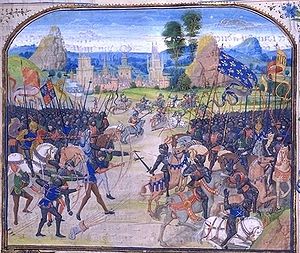
Battle of Poitiers

The 1350s saw Montagu pursuing a highly successful military career. In 1350 he had served at Winchelsea, which saw the defeat of the Castilian fleet. In 1356 he distinguished himself serving as commander of the rearguard, alongside the Earl of Suffolk, in the Black Prince’s march through southern France; however, it was Montagu alone who commanded the rearguard during the English victory at the battle of Poitiers. Some sources credit Montagu with having chosen the English defensive position, along the gap of a hedge, which proved invaluable to the Black Prince’s forces. He defeated the first major French attack, led by the marshals, Clermont and d’Audenham; Clermont was killed and the other leaders captured.

William Montagu saw more fighting with the king, Edward III, in his expedition of 1359, before taking part in the negotiations for the Treaty of Brétigny in 1360.

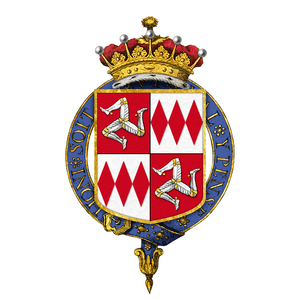
Coat of Arms of Sir William Montagu, 2nd Earl of Salisbury

During the relative peace of the 1360s Montagu served as a justice of the peace, at various times, in Hampshire, Somerset and Devon; and he served on a number of commissions in Somerset and Devon. He was also embroiled in a legal dispute with the Mortimer earls of March over Denbigh, which had originally been a Mortimer possession, but was given to Montagu’s father for his part in the overthrow of Roger Mortimer in 1330. Montagu had done homage for it in 1353, but by 1355, due to his gaining royal favour, it was back in the hands of the Mortimer heir, Roger.

The dispute rumbled on during the minority of the next Mortimer heir, Edmund, earl of March. Resolution was delayed even after Mortimer came of age, due to technicalities and Mortimer’s subsequent departure for duties in Ireland; where he died, and the Mortimer lands fell subject to yet another minority. By 1396 the earl of Salisbury was prepared to give the Mortimer’s a quitclaim, but this remained undelivered at William’s death and was left to his heir to resolve.

By the late 1360s war had resumed and William Montagu was sent to Calais with the earl of Warwick, in a futile raid commanded by John of Gaunt, Duke of Lancaster. He was part of the king’s 1372 expedition to the relief of Thouars, which was forced to return to England due to unfavourable winds. In 1373 after commanding the English fleet which destroyed 7 Spanish ships in the harbour of St Malo, he relieved Brest; which had promised to yield if not relieved within 40 days. Negotiations ensued, thus avoiding a battle but enabling Montagu to resupply Brest and prevent its capture.

Still fighting the French, in 1377 Montagu served alongside the Earl of Arundel in a raid around la Rochelle, but was beaten off by local forces. By 1379, following the accession of Richard II, he was serving as Captain of Calais when he captured and burned the French fortified monastery of Beaulieu.

Montagu must have wondered at the strange twist of fate that had him serving a king, Richard II, who just happened to be the son of his first wife, Joan of Kent, and his childhood companion, Edward, the Black Prince.

On a personal front, 1378 had seen the marriage of Montagu’s son and heir, another William, to Elizabeth Fitzalan, daughter of the earl’s companion in arms Richard, Earl of Arundel. Their happiness was short-lived, however, when William died after only 4 years of marriage. In a tragedy that must have rocked Montagu to the core, on 6th August 1382 at Windsor, young William was killed in a tilting match by his own father, the earl. It must have been a horrendous scene to behold.

In the same year, 1382, Montagu had become involved in a legal dispute with his younger brother, John, concerning a statute merchant whose conditions were violated by John. The proceedings would rumble on and on; although a court of chivalry was established, with John Montagu being steward of the king’s household, no one was in a hurry to pronounce judgement on him. The case was not settled until after John’s death in 1390 and John’s son surrendered the disputed statute merchant in 1391.

The family disputes appear to have prevented Montagu from playing a major role in the reign of Richard II, as you might expect from the earl of Salisbury. He is thought to have stayed with the king throughout the Peasants Revolt of June 1381, and advised Richard II to show mercy to the rebels. Loyalty to the crown was a family tradition, but he seems to have been well-regarded by the Lords Apellant who opposed Richard’s favourites from the late 1380s onwards. And when Richard II resumed power on a more moderate basis, Montagu cooperated with him. He served in various commissions during the 1390s, but appears only on the periphery of national politics.

330px-Bisham-29Ag9-wyrd1
Bisham Abbey Berkshire

Unfortunately the court case had served to alienate William Montagu from his brother and nephew – both called John – who were also his heirs. As a result, Montagu started selling off substantial parts of his property, in order to keep them out of his brother’s hands. In 1393 he sold the Isle of Man to William Scrope and in his will, he left half of his goods to his wife and the rest to servants and the church, leaving nothing of his disposable property to his nephew, the new earl. John Montagu was left to inherit the title and landed estates not mentioned in the will.

Montagu had lived through the worst years of plague and the resultant Peasants’ Revolt; he had survived war with France on numerous occasions and suffered the personal tragedy of accidentally killing his only child. The last survivor of Edward III’s great captains of the Hundred Years War, William Montagu died on 3rd June 1397, just shy of his 69th birthday. He was buried at Montacute Priory at Bisham in Berkshire; unfortunately nothing remains of his tomb. His wife, Elizabeth, survived him by 18 years, later becoming a nun; she was received into the sisterhood of the convent of St Albans on 10th October. Having made her will in 1414, leaving her sister, Philippa, Duchess of York, and her nephew Richard, Lord Strange of Knockyn, as her heirs, she died on 14th January 1415.

*

Pictures taken from Wikipedia.

*

Sources: The Perfect King, the Life of Edward III by Ian Mortimer; The Life and Time of Edward III by Paul Johnson; The Reign of Edward III  by WM Ormrod; The Mammoth Book of British kings & Queens by Mike Ashley; Britain’s’ Royal Families, the Complete Genealogy by Alison Weir; Brewer’s British Royalty by David Williamson; The Plantagenets, the Kings Who Made Britain by Dan Jones; englishmonarchs.co.uk; The Oxford Companion to British History edited by John Cannon; Chronicles of the Age of Chivalry Edited by Elizabeth Hallam; oxforddnb.com; britannia.com; themcs.org.

*

My Books

Signed, dedicated copies of all my books are available through my online bookshop.

Coming on 15 June 2024: Heroines of the Tudor World

Heroines of the Tudor World tells the stories of the most remarkable women from European history in the time of the Tudor dynasty, 1485-1603. These are the women who ruled, the women who founded dynasties, the women who fought for religious freedom, their families and love. These are the women who made a difference, who influenced countries, kings and the Reformation. In the era dominated by the Renaissance and Reformation, Heroines of the Tudor World examines the threats and challenges faced by the women of the era, and how they overcame them. From writers to regents, from nuns to queens, Heroines of the Tudor World shines the spotlight on the women helped to shape Early Modern Europe.

Heroines of the Tudor World is now available for pre-order from Amberley Publishing and Amazon UK.

Out Now! Women of the Anarchy

Two cousins. On the one side is Empress Matilda, or Maud. The sole surviving legitimate child of Henry I, she is fighting for her birthright and that of her children. On the other side is her cousin, Queen Matilda, supporting her husband, King Stephen, and fighting to see her own son inherit the English crown. Women of the Anarchy demonstrates how these women, unable to wield a sword, were prime movers in this time of conflict and lawlessness. It show how their strengths, weaknesses, and personal ambitions swung the fortunes of war one way – and then the other.

Available from Bookshop.orgAmberley Publishing and Amazon UK.

Also by Sharon Bennett Connolly:

King John’s Right-Hand Lady: The Story of Nicholaa de la Haye is the story of a truly remarkable lady, the hereditary constable of Lincoln Castle and the first woman in England to be appointed sheriff in her own right. It is is available from King John’s Right-Hand Lady: The Story of Nicholaa de la Haye is the story of a truly remarkable lady, the hereditary constable of Lincoln Castle and the first woman in England to be appointed sheriff in her own right. Available from all good bookshops or direct from Pen & Sword Booksbookshop.org and AmazonDefenders of the Norman Crown: The Rise and Fall of the Warenne Earls of Surrey tells the fascinating story of the Warenne dynasty, from its origins in Normandy, through the Conquest, Magna Carta, the wars and marriages that led to its ultimate demise in the reign of Edward III. Available from Pen & Sword BooksAmazon in the UK and US, and Bookshop.org

Ladies of Magna Carta: Women of Influence in Thirteenth Century England looks into the relationships of the various noble families of the 13th century, and how they were affected by the Barons’ Wars, Magna Carta and its aftermath; the bonds that were formed and those that were broken. It is now available in paperback and hardback from Pen & Sword,  Amazon, and Bookshop.orgHeroines of the Medieval World tells the stories of some of the most remarkable women from Medieval history, from Eleanor of Aquitaine to Julian of Norwich. Available now from Amberley Publishing and Amazon, and Bookshop.orgSilk and the Sword: The Women of the Norman Conquest traces the fortunes of the women who had a significant role to play in the momentous events of 1066. Available now from Amazon,  Amberley Publishing, and Bookshop.org.

Alternate Endings: An anthology of historical fiction short stories including Long Live the King… which is my take what might have happened had King John not died in October 1216. Available in paperback and kindle from Amazon.

Podcast:

Have a listen to the A Slice of Medieval podcast, which I co-host with Historical fiction novelist Derek Birks. Derek and I welcome guests, such as Bernard Cornwell and discuss a wide range of topics in medieval history, from significant events to the personalities involved.

*

Don’t forget! Signed and dedicated copies of all my books are available through my online bookshop.

For forthcoming online and in-person talks, please check out my Events Page.

You can be the first to read new articles by clicking the ‘Follow’ button, liking our Facebook page or joining me on Twitter and Instagram.

*

©2016 Sharon Bennett Connolly FRHistS
Countess Maud

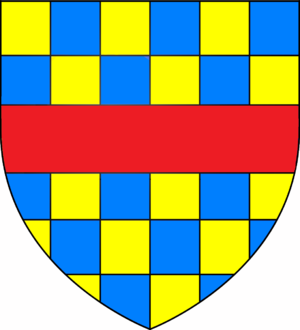
CliffordArms
The Clifford coat of arms

There are many women in history of whom we only have snippets of information. However, those snippets prove to be fascinating and demonstrate how closely the lives of noble houses were tied together – and how they were torn apart. Maud Clifford is one such lady.

Born about 1389 at Brough Castle in Westmoreland, Maud (or Matilda) was the daughter of Thomas Clifford, 6th Baron Clifford, and his wife Elizabeth de Ros. Maud’s brother, John, has also been given 1389 as his possible year of birth. It may be that John or Maud were twins, or that they were born within a year of each other.

Their early childhood cannot have been very pleasant. Their paternal grandfather, Roger Clifford, died in July of 1389, probably of a stroke. In October 1391, their father, Thomas, died. Whilst in Königsberg Thomas had had a disagreement with Sir William Douglas, illegitimate son of the earl of Douglas; Douglas was killed in the ensuing brawl and Clifford, overcome with guilt, went on pilgrimage to Jerusalem in penance. He died on an unidentified Mediterranean island whilst on the way to the Holy City.

Nothing else seems to be known of Maud’s childhood. Sometime before 1406 she was married to John Neville, Lord Latimer. For some unknown reason the marriage was never consummated and Maud successfully sued for an annulment. The marriage was dissolved with very favourable terms for Maud; some of the Neville lands had been put in trust for Maud and, even though the marriage had been declared invalid, she was allowed to keep them.

300px-Skipton_Castle_main_gate,_2007
Skipton Castle, family seat of the Cliffords

Maud was, therefore, a very attractive bride for a landless earl. Richard of Conisbrough, earl of Cambridge, was the poorest – and the only landless – earl in England. He lived at Conisbrough Castle in Yorkshire as the tenant of his older brother, Edward, Duke of York. Richard was a widower with 2 small children; his wife, Anne Mortimer, had died sometime after 1411, when she had given birth to their 2nd child, Richard (future Duke of York), probably at Conisbrough Castle. It is not known when Anne died, but it was before 1414, which is the probable date of Maud’s marriage to the earl of Cambridge.

Unfortunately the marriage proved to be short-lived, with Richard of Conisbrough becoming involved in the Southampton Plot, a plan to overthrow King Henry V and replace him with  Richard’s brother-in-law, Edmund Mortimer, Earl of March. However, March revealed the plot to the King and Richard and his accomplices were arrested, with Richard beheaded for treason on  5th August 1415.

008 (2)
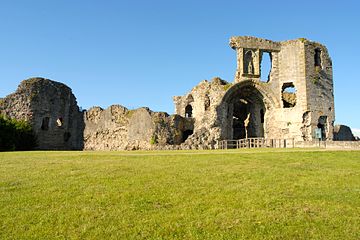
Conisbrough Castle

Richard of Conisbrough was not attainted, so his lands, such as they were, were not forfeit to the crown. Maud was allowed to remain at Conisbrough Castle, and her step-son, Richard, would be allowed to inherit the Dukedom of York from his uncle, Edward, following his death at Agincourt in October 1415.

It is not clear how much contact Maud had with her step-children. The eldest child, Isabel, had been born around 1409; she had been betrothed in 1412 to Sir Thomas Grey and it is possible that she was raised in the household of the Grey family. As Duke of York, Richard’s wardship and marriage was a great prize, and would eventually go to Ralph Neville, earl of Westmoreland; with York marrying Neville’s daughter, Cecily. The Yorks’ eldest and youngest sons would become the Yorkist kings of England; Edward IV and Richard III, respectively.

Maud would continue to use Conisbrough Castle as her principal residence throughout her life; she received an annuity of £100 from the Earl of March, perhaps to assuage his guilt in the part he played in her husband’s downfall. She seems to have led a full and active life, and remained very close to her Clifford family; they  stayed with her often and she was a regular visitor to the Clifford home of Skipton Castle. Her nephew, Thomas and his family, lived with her at Conisbrough for a year in 1437, while his castle at Skipton was undergoing extensive works.

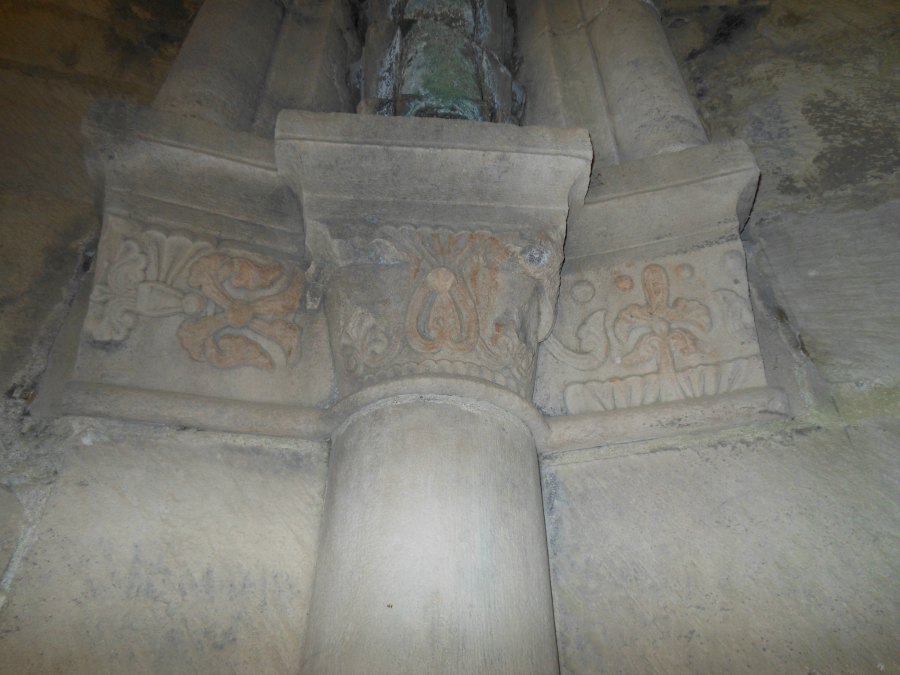
036
Carvings in the chapel at Conisbrough Castle

On 8th April 1435 Maud’s great-nephew, John Clifford – the future 9th Baron Clifford – was born at Conisbrough Castle. He was the grandson of Maud’s brother, John, and son of her nephew, Thomas, and his wife, Joan Dacre. Baby John would have been born either in the solar of the keep itself, or in the family apartments above the great hall of the inner bailey.

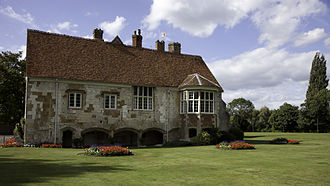
Either way its most likely he was baptised in the small private chapel within the keep; with Maud as his godmother. The chapel is built into one of the keep’s 6 buttresses and, despite the years and water damage, it is a wonder to behold, with exquisite designs carved into the stone columns, and the vaulted ceiling.

300px-'The_Murder_of_Rutland_by_Lord_Clifford'_by_Charles_Robert_Leslie,_1815
‘The Murder of Rutland by Lord Clifford’ by Charles Robert Leslie

Maud’s brother, John, was killed at the siege of Meaux in 1422 and her nephew, Thomas, would be killed at the First Battle of St Albans in 1455, supposedly by Richard, Duke of York, himself. And so it was, that on the 30th december 1460, at the Battle of Wakefield, John Clifford is said to have taken his revenge by killing York’s son Edmund, the 17-year-old earl of Rutland. Whether or not Clifford uttered the words ‘as your father slew mine, so I shall slay thee’ as he killed young Edmund, is entirely debatable, but the event serves to highlight how closely the noble families of the Wars of the Roses were related.

There is some suggestion that Maud remarried in 1429. The supposed groom was John Wentworth of North Elmsall, Yorkshire. However, this seems to be more of a family legend among the Wentworth family and only arose over 100 years after Maud’s death.

Maud’s will demonstrates her closeness to her family, and serves as an insight into her comfortable life and the sumptuous furnishings of the castle.

View from the nave of the church to the high altar, Roche Abbey

To Thomas, Lord Clifford, my relation: a ‘hall’ of arras [a fine woven wall-hanging from Arras] bought from Sir Robert Babthorpe; my bed of Arras with three curtains; four cushions of red silk; two long cushions of cloth.

To John Clifford, my godson: 12 silver dishes, 6 salt-cellars signed with the ‘trayfulles’ [trefoils] and a shell.

To Beatrice Waterton, my relation: a gold cross, which belonged to my mother; my green Primary [a book of readings from the Bible]; a diamond; my best furred robe with ‘martes’ [marten fur].

To Katherine Fitzwilliam: the brooch that I wear everyday; a small black Primary; a jewel called Agnus Dei covered with silver and written around with pearls; my best robe furred with miniver [white stoat fur].

To Maud Clifford, my god-daughter: my best gold belt.¹

Maud died, of an unknown illness, at Conisbrough Castle on 26th August 1446 and was  buried at Roche Abbey, of which she was a benefactor. Her tomb is now lost to history, but may have been in the nave of the church, where many secular patrons are known to have been buried.2 Though some tombs still remaining, their markings are faded after centuries of exposure to the elements, and none can be definitively identified.

*

Footnote: ¹English Heritage Guidebook for Conisbrough Castle by Steven Brindle and Agnieszka Sadrei; English Heritage Guidebook for Roche Abbey by Peter Ferguson and Stuart Harrison.

*

Pictures courtesy of Wikipedia, except Roche Abbey and Conisbrough Castle and chapel ©2016 Sharon Bennett Connolly

*

Sources: Sources: The History Today Companion to British History, edited by Juliet Gardiner & Neil Wenborn; Brewer’s British Royalty by David Williamson; Britain’s Royal Families, the Complete Genealogy by Alison Weir; The Wars of the Roses by John Gillingham; The Wordsworth Dictionary of British History by J.P. Kenyon; The Oxford Companion to British History, edited by John Cannon; The Reign of Edward III by WM Ormrod; The Wars of the Roses by Martin J Dougherty; englishmonarchs.co.uk; womenshistory.about.com; findagrave.com; conisbroughcastle.org.uk; hrionline.ac.uk; English Heritage Guidebook for Conisbrough Castle by Steven Brindle and Agnieszka Sadrei; English Heritage Guidebook for Roche Abbey by Peter Ferguson and Stuart Harrison; oxforddnb.com.

*

My Books

Signed, dedicated copies of all my books are available through my online store.

OUT NOW! Heroines of the Tudor World

Heroines of the Tudor World tells the stories of the most remarkable women from European history in the time of the Tudor dynasty, 1485-1603. These are the women who ruled, the women who founded dynasties, the women who fought for religious freedom, their families and love. These are the women who made a difference, who influenced countries, kings and the Reformation. In the era dominated by the Renaissance and Reformation, Heroines of the Tudor World examines the threats and challenges faced by the women of the era, and how they overcame them. From writers to regents, from nuns to queens, Heroines of the Tudor World shines the spotlight on the women helped to shape Early Modern Europe.

Heroines of the Tudor World is now available for pre-order from Amberley Publishing and Amazon UK.

Also by Sharon Bennett Connolly:

Women of the Anarchy demonstrates how Empress Matilda and Matilda of Boulogne, unable to wield a sword themselves, were prime movers in this time of conflict and lawlessness. It shows how their strengths, weaknesses, and personal ambitions swung the fortunes of war one way – and then the other. Available from Bookshop.orgAmberley Publishing and Amazon UKKing John’s Right-Hand Lady: The Story of Nicholaa de la Haye is the story of a truly remarkable lady, the hereditary constable of Lincoln Castle and the first woman in England to be appointed sheriff in her own right. Available from all good bookshops Pen & Sword Booksbookshop.org and AmazonDefenders of the Norman Crown: The Rise and Fall of the Warenne Earls of Surrey tells the fascinating story of the Warenne dynasty, from its origins in Normandy, through the Conquest, Magna Carta, the wars and marriages that led to its ultimate demise in the reign of Edward III. Available from Pen & Sword BooksAmazon in the UK and US, and Bookshop.org

Ladies of Magna Carta: Women of Influence in Thirteenth Century England looks into the relationships of the various noble families of the 13th century, and how they were affected by the Barons’ Wars, Magna Carta and its aftermath; the bonds that were formed and those that were broken. It is now available in paperback and hardback from Pen & Sword,  Amazon, and Bookshop.orgHeroines of the Medieval World tells the stories of some of the most remarkable women from Medieval history, from Eleanor of Aquitaine to Julian of Norwich. Available now from Amberley Publishing and Amazon, and Bookshop.orgSilk and the Sword: The Women of the Norman Conquest traces the fortunes of the women who had a significant role to play in the momentous events of 1066. Available now from Amazon,  Amberley Publishing, and Bookshop.org.

Alternate Endings: An anthology of historical fiction short stories including Long Live the King… which is my take what might have happened had King John not died in October 1216. Available in paperback and kindle from Amazon.

Podcast:

Have a listen to the A Slice of Medieval podcast, which I co-host with Historical fiction novelist Derek Birks. Derek and I welcome guests, such as Bernard Cornwell, and discuss a wide range of topics in medieval history, from significant events to the personalities involved.

*

Don’t forget! Signed and dedicated copies of all my books are available through my online store.

For forthcoming online and in-person talks, please check out my Events Page.

You can be the first to read new articles by clicking the ‘Follow’ button, liking our Facebook page or joining me on Twitter and Instagram.

*

©2016 Sharon Bennett Connolly FRHistS
Katherine Willoughby, the Puritan Duchess

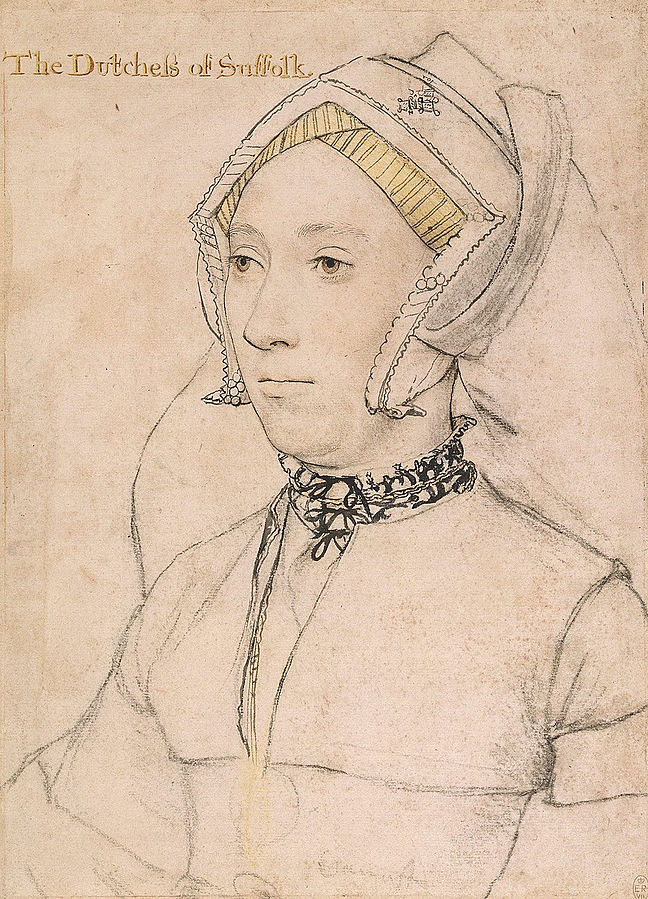
Catherine,_Duchess_of_Suffolk_by_Hans_Holbein_the_Younger
Katherine Willoughby, Duchess of Suffolk

Maria de Salinas was a lady-in-waiting and close friend to Katherine of Aragon; indeed, she probably came to England with the Spanish princess in 1501 for the marriage to Henry’s older brother, Arthur, Prince of Wales. Katherine and Maria were very close and the Spanish ambassador complained of Maria’s influence over the queen, especially after she tried to persuade Katherine not to cooperate with the ambassador and encouraged the Queen to favour her English subjects.

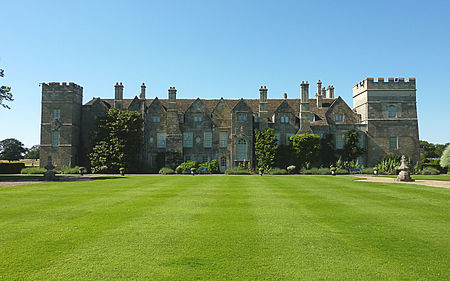
In June 1516 Maria married the largest landowner in Lincolnshire, William Willoughby, 11th Baron Willoughby de Eresby. The wedding was a lavish affair – attended and paid for by the King and Queen. It took place at Greenwich Palace and the couple were given Grimsthorpe Castle, in Lincolnshire, as a wedding present. The Queen even provided Maria with a generous dowry of 1100 marks.

Maria remained at court for some years after her wedding, and attended Queen Katherine at the Field of Cloth of Gold in 1520. Henry VIII was godfather to Maria and William’s oldest son, Henry who died in infancy. Another son, Francis, also died young and their daughter Katherine, born on 22nd March 1519 and named after the queen, would be the only surviving child of the marriage. With her father holding over 30 manors in Lincolnshire alone, and an annual income of over £900 a year, Katherine was one of the great heiresses of her generation.

360px-Charles_Brandon_Duke_of_Suffolk
Charles Brandon, Duke of Suffolk

Little Katherine was only 6 or 7 when her father, Lord Willoughby, died in 1526. For several years afterwards Maria was embroiled in a legal dispute with her brother-in-law, Sir Christopher Willoughby, over the inheritance of the Willoughby lands. It seems William had settled some lands on Maria which were entailed to Sir Christopher. The dispute went to the Star Chamber and caused Sir Thomas More, the king’s chancellor and a prominent lawyer, to make an initial redistribution of some of the disputed lands.

This must have been a hard fight for the newly widowed Maria, and the dispute threatened the stability of Lincolnshire itself, given the extensive lands involved. However, Maria attracted a powerful ally in Charles Brandon, Duke of Suffolk and brother-in-law of the King, who called on the assistance of Cardinal Thomas Wolsey, Henry’s first minister at the time, in the hope of resolving the situation.

Suffolk had managed to obtain the wardship of Katherine Willoughby in 1529, intending her to marry his eldest son and heir Henry, who had been made Earl of Lincoln in 1525, and so had a vested interest in a favourable settlement for Maria. Suffolk’s acquisition of the de la Pole estates had given him a prominent position in East Anglia; with these properties added to young Katherine’s lands in Lincolnshire, he would create an impressive power base.

Hans_Holbein_the_Younger_-_Henry_Brandon,_2nd_Duke_of_Suffolk_(1535-51)_-_Google_Art_Project
Henry Brandon, 2nd Duke of Suffolk

Whether or not the young earl of Lincoln was a sickly child (as he died in 1534) is uncertain; however the marriage was not to be – it has been a habit to say that anyone who died young was sickly, but this was not necessarily the case as fatal childhood illnesses were common. Suffolk had been married to king Henry VIII’s little sister, Mary Tudor, Dowager Queen of France, but she died in September 1533. The 50-year-old Duke of Suffolk caused a great scandal when, only 3 months later, he married 14-year-old Katherine himself. She was Suffolk’s fourth wife.

Despite the age difference, it does appear to have been a successful marriage. Katherine and Charles were to have 2 sons. The first, Henry, was born in 1535 and the youngest, Charles, was born in 1537.

Although Suffolk pursued the legal case with more vigour after the wedding, a final settlement was not reached until the reign of Elizabeth I. The combined properties of Charles Brandon, Duke of Suffolk, and Katherine made Suffolk the greatest magnate in Lincolnshire. He added to their properties by purchasing monastic land and built a fine house at Grimsthorpe Castle. His prominence in the county meant Suffolk was instrumental in suppressing the Lincolnshire rebellion in 1536 (part of the Pilgrimage of Grace), a consequence of the Dissolution of the Monasteries.

Hans_Holbein_the_Younger_-_Charles_Brandon_(Royal_Collection)
Charles Brandon, 3rd Duke of Suffolk

Along with her mother, Katherine was an official mourner at the funeral of Katherine of Aragon in 1536. Sadly, it was only 3 years later, in 1539, that Queen Katherine’s former lady-in-waiting, Maria de Salinas, Lady Willoughby, passed away.

Katherine served at court, in the household of Henry VIII’s sixth and last queen, Katherine Parr. A stalwart of the Protestant learning, Duchess Katherine used her position to introduce Protestant clergy to Lincolnshire, even inviting Hugh Latimer to preach and Grimsthorpe Castle. It was she and Sir William Cecil who persuaded Katherine Parr to publish her book, The Lamentacion of a Sinner in 1547. Katherine Willoughby was also drawn into the tragedy of Anne Askew, whose brother-in-law, George St Poll, was a lawyer in Katherine’s service. During her torture in the Tower of London, Anne was questioned as to whether or not Katherine and aided her, but she refused to implicate the duchess or Queen Katherine.

In the early 1540s Suffolk played a big part in Henry’s wars with France and Scotland; in 1544 he successfully prosecuted the siege of Boulogne and was rewarded in February 1545 with the lands of Tattershall College, which he was allowed to purchase for less than half price.

Amid preparations for another expedition to France, Suffolk died at Guildford in August 1545; the cause of death is not known. He would have been in his early 60s. Suffolk’s son and heir, Henry, was just 10 years old. Katherine was granted his wardship in May 1546, for the sum of £1500 and he was sent to the household of Prince Edward to continue his studies. It must have been a cause of great pride for Katherine when Henry and Charles were both knighted at Edward VI’s coronation, with Henry, as duke of Suffolk, having the honour of carrying the orb during the ceremony.

In 1549 Henry and Charles were enrolled at St John’s College, Cambridge, in order to finish their education.

330px-Catherine_Willoughby,_portrait_miniature_3
Katherine Willoughby

It was in the summer of 1551 that an outbreak of sweating sickness struck Cambridge. Henry and Charles moved to the Bishop of Lincoln’s Palace at Buckden in Huntingdonshire, in a futile attempt to escape the disease. For it was at Buckden, on July 14th 1551, that the boys both passed away within minutes of each other. Charles, surviving his brother by about half an hour, became the 3rd Duke of Suffolk before his death. The boys, who had shown great promise at Cambridge, were buried together at Buckden. To lose both her sons in such a short space of time must have been devastating for Katherine to take.

Following the deaths of her sons by Suffolk, Katherine no longer had a financial interest in the Suffolk estates, which went to the heirs of Mary Tudor, Henry VIII’s sister. However, Katherine still had her own Willoughby estates to look after and in order to safeguard these, Katherine married her gentleman usher, Richard Bertie, in 1552. This marriage appears to have been made for love and with mutual religious beliefs; unfortunately for the couple, Katherine was unsuccessful in her attempts to gain the title of Lord Willoughby for her second husband.

The couple had a difficult time navigating the religious tensions of the age and, during the reign of the Catholic Queen Mary I, in early 1555, even went into exile on the Continent, travelling through Wesel, Strasbourg and Frankfurt. And at the time of Mary’s death, in 1558, they were staying at the court of the king of Poland. They returned to England the following year. During the reign of Elizabeth I, Katherine resumed her position in Tudor society; however, her relations with the court were strained by her tendency towards Puritanism.

Susan_Bertie,_Countess_of_Kent
Susan Bertie, Countess of Kent

Katherine used her position in Lincolnshire and extensive patronage to help disseminate the Puritan teachings. The records of Katherine’s Lincolnshire household show that she employed Miles Coverdale – a prominent critic of the Elizabethan church – as tutor to her two children by Bertie. The couple’s 1st child, a daughter, Susan, was born in 1554 and was still a baby when she went into exile on the continent, with her parents. A son, Peregrine, was born in Wesel in Cleves in 1555, whilst the family was still exiled from England.

Susan went on to marry Reginald Gray of Wrest in 1570. Reginald would be restored to the family title of Earl of Kent in 1572, but died in March 1573. The couple had no children and the Dowager Countess of Kent would marry again in 1581, to Sir John Wingfield, a nephew of the redoubtable Bess of Hardwick. they had 2 sons.

Peregrine Bertie spent his teenage years in the household of Sir William Cecil, a good friend of his mother and Queen Elizabeth’s principal secretary. It was there that he met and fell in love with Mary de Vere, orphaned daughter of John de Vere, 16th Earl of Oxford. Despite opposition from Katherine and the bride’s brother Edward de Vere, 17th Earl of Oxford, the couple married sometime in late 1577, or early 1578. The marriage appears to have been happy and loving, and produced 5 sons and a daughter.

330px-Peregrine_Bertie,_13th_Baron_Willoughby_de_Eresby,_oil_painting
Peregrine Bertie, 13th Baron Willoughby de Eresby

Peregrine succeeded as the 13th Baron Willoughby of Willoughby, Beck and Eresby on the death of his mother and would serve Queen Elizabeth, both as a soldier and administrator, until his own death in 1601.

Katherine had been a strong supporter of the Protestant faith; numerous books carried her coat of arms, or were dedicated to her, including works by Erasmus and William Tyndale. The family’s adventures on the continent were retold in John Foxe’s Acts and Monuments, and even in popular Elizabethan ballads.

Katherine Willoughby, Dowager Duchess of Suffolk and 12th Baroness Willoughby de Eresby, died after a long illness, on 19th September 1580, at Grimsthorpe Castle. She was interred with a fine, alabaster tomb in Spilsby Church, in her native Lincolnshire. Her husband, Richard, died 2 years later and was buried beside her.

450px-Grimsthorpe_Castle_-_South_Facade
Grimsthorpe Castle

*

Pictures courtesy of Wikipedia

*

Sources: Susan Wabuda, Oxforddnb.com; Sarah Morris and Natalie Grueninger, In the Footsteps of the Six Wives of Henry VIII; Retha M. Warnicke, Oxforddnb.com; England Under the Tudors by Arthur D Innes; In Bed with the Tudors by Amy Licence; Ladies-in-Waiting: Women who Served at the Tudor Court by Victoria Sylvia Evans; The Earlier Tudors 1485-1558 by JD Mackie; The Six Wives and Many Mistresses of Henry VIII: The Women’s Stories by Amy Licence; Sarah Bryson; Elizabeth’s Women by Tracy Borman.

*

My Books

Signed, dedicated copies of all my books are available through my online bookshop.

Out now: Scotland’s Medieval Queens

Books by Sharon Bennett Connolly

Scotland’s history is dramatic, violent and bloody. Being England’s northern neighbour has never been easy. Scotland’s queens have had to deal with war, murder, imprisonment, political rivalries and open betrayal. They have loved and lost, raised kings and queens, ruled and died for Scotland. From St Margaret, who became one of the patron saints of Scotland, to Elizabeth de Burgh and the dramatic story of the Scottish Wars of Independence, to the love story and tragedy of Joan Beaufort, to Margaret of Denmark and the dawn of the Renaissance, Scotland’s Medieval Queens have seen it all. This is the story of Scotland through their eyes.

Scotland’s Medieval Queens gives a thorough grounding in the history of the women who ruled Scotland at the side of its kings, often in the shadows, but just as interesting in their lives beyond the spotlight. It’s not a subject that has been widely covered, and Sharon is a pioneer in bringing that information into accessible history.’ Elizabeth Chadwick (New York Times bestselling author)

Available now from Amazon and Pen and Sword Books

Also by Sharon Bennett Connolly:

Books by Sharon Bennett Connolly

Heroines of the Tudor World tells the stories of the most remarkable women from European history in the time of the Tudor dynasty, 1485-1603. These are the women who ruled, the women who founded dynasties, the women who fought for religious freedom, their families and love. Heroines of the Tudor World is now available from Amberley Publishing and Amazon UK. Women of the Anarchy demonstrates how Empress Matilda and Matilda of Boulogne, unable to wield a sword themselves, were prime movers in this time of conflict and lawlessness. It shows how their strengths, weaknesses, and personal ambitions swung the fortunes of war one way – and then the other. Available from Bookshop.orgAmberley Publishing and Amazon UKKing John’s Right-Hand Lady: The Story of Nicholaa de la Haye is the story of a truly remarkable lady, the hereditary constable of Lincoln Castle and the first woman in England to be appointed sheriff in her own right. Available from all good bookshops Pen & Sword Booksbookshop.org and Amazon

Royal Historical Society

Defenders of the Norman Crown: The Rise and Fall of the Warenne Earls of Surrey tells the fascinating story of the Warenne dynasty, from its origins in Normandy, through the Conquest, Magna Carta, the wars and marriages that led to its ultimate demise in the reign of Edward III. Available from Pen & Sword BooksAmazon in the UK and US, and Bookshop.orgLadies of Magna Carta: Women of Influence in Thirteenth Century England looks into the relationships of the various noble families of the 13th century, and how they were affected by the Barons’ Wars, Magna Carta and its aftermath; the bonds that were formed and those that were broken. It is now available in paperback and hardback from Pen & SwordAmazon, and Bookshop.orgHeroines of the Medieval World tells the stories of some of the most remarkable women from Medieval history, from Eleanor of Aquitaine to Julian of Norwich. Available now from Amberley Publishing and Amazon, and Bookshop.orgSilk and the Sword: The Women of the Norman Conquest traces the fortunes of the women who had a significant role to play in the momentous events of 1066. Available now from Amazon,  Amberley Publishing, and Bookshop.org.

Alternate Endings: An anthology of historical fiction short stories including Long Live the King… which is my take what might have happened had King John not died in October 1216. Available in paperback and kindle from Amazon.

Podcast:

A Slice of Medieval

Have a listen to the A Slice of Medieval podcast, which I co-host with Historical fiction novelist Derek Birks. Derek and I welcome guests, such as Bernard Cornwell and Michael Jecks, and discuss a wide range of topics in medieval history, from significant events to the personalities involved. 

Every episode is also now available on YouTube.

*

Don’t forget! Signed and dedicated copies of all my books are available through my online bookshop.

For forthcoming online and in-person talks, please check out my Events Page.

You can be the first to read new articles by clicking the ‘Follow’ button, liking our Facebook page or joining me on TwitterThreadsBluesky and Instagram.

©2016 Sharon Bennett Connolly FRHistS

The Ætheling and the Tragedy of the White Ship

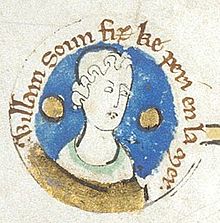
220px-Vilém_syn
William the Atheling

In the late summer of 1103 England’s queen, Matilda of Scotland, gave birth to a son. Named after his grandfather, William the Conqueror, the young prince would be known to history as William the Ætheling. He is one of those historical figures who resides in the shadows, more famous for his death than his all-too-short life as the heir to England’s throne.

William’s father, Henry, was a younger son of William the Conqueror and Matilda of Flanders. When his father had died in 1087, the patrimony of England and Normandy was divided between Henry’s older brothers; the eldest, Robert Curthose, inherited Normandy while William II Rufus became King of England. Henry was given money and lands. It has been said that Henry was intended for a life in the church; however, when his father died, Henry was already 18 and would have joined the church as a child if that was the career set out for him. Instead, the little brother seems to have set his sights on greater things and, as a result, was distrusted by William II, who kept him close, so he could not cause any mischief.

On 2 August, 1100, while out hunting in the New Forest, William was struck by a stray arrow and killed. Some say it was planned, others that it was an accident; I guess we’ll never know for sure…

Henry, however, did not waste the opportunity. With his older brother Robert still on his way back from Crusading in the Holy Land, Henry seized the initiative, the treasury and the kingdom; he was crowned at Westminster Abbey just 3 days after his brother’s death. Within months Henry had found himself a bride with impeccable parentage. Matilda had been born Edith of Scotland and was the daughter of Malcolm III, King of Scots. Through her mother, St Margaret, she was the great-granddaughter of Edmund II Ironside, the Anglo-Saxon king of England who died in 1016. She changed her name on marrying Henry, as Edith was considered ‘too Saxon’ for Norman tastes.

Matylda_zena
Matilda of Scotland

Henry and Matilda were married in November 1100 and within 3 years were the proud parents of 2 children. Their daughter, Adelaide, was born in 1102; she would adopt the name Matilda on her marriage to the Holy Roman Emperor, Henry V, and would be known to history as the Empress Matilda (or Maud, though this appears to have been a later nickname). Although some historians suggest they were twins, it is most likely that Matilda’s younger brother, William, was born in 1103; a message of congratulations was sent to Henry I by Pope Paschal II on 23 November of that year.

The soubriquet of Ætheling is attributed to chronicler Orderic Vitalis and harks back to Anglo-Saxon times as a title given to the king’s designated heir. According to William of Malmesbury, William, with an Anglo-Saxon mother and Norman father, represented the hope of reconciliation between the conquered and conquerors of England.

Although the king and queen had only 2 children – a possible third child is thought to have died young – the king had numerous illegitimate offspring by various women, several of whom were raised alongside his legitimate children. William and a number of his illegitimate brothers, including Robert, Earl of Gloucester, were tutored by Otuel (or Othuer) fitzEarl, natural son of Hugh, Earl of Chester. fitzEarl had been made castellan of the Tower of London and so it is likely that the prince and his brothers were frequently in residence there, in order to pursue their education.

330px-Empress_Mathilda
William’s sister, Empress Matilda

According to William of Malmesbury, William was trained for his future role ‘with fond hope and immense care’. In 1108, while their father was away in Normandy, William and his sister were entrusted to the spiritual care of Anselm, the revered Archbishop of Canterbury.

In 1110 William’s sister, Matilda, left for Germany; she was to continue her education at the court of her future husband, but would not be married until January 1114, just before her 12th birthday. William was still only 6 years old when his sister left; Matilda was 8. It’s sad to think the young siblings would never meet again.

Following his sister’s departure, William’s education continued apace. By 1113, aged just 10, William began to attest royal documents. While still only 9, in February of that year, William was betrothed, at Alençon, to Alice (who changed her name to Matilda on her marriage), the daughter of Fulk V, count of Anjou and Maine. The betrothal formed part of his father’s wider diplomacy, which had also included his sister’s marriage to the Holy Roman Emperor.

Henry I spent the early part of his reign fighting against his brother, Robert Curthose, and, later, Robert’s son, William Clito, trying to secure a smooth succession for William. Robert had been decisively defeated at Tinchebrai in 1106 and spent his remaining years – until his death in 1134 – a prisoner of his brother. Henry subsequently claimed Normandy for the English crown, but William Clito was still a thorn in his side. Clito was supported by the French king, Louis VI; who used him as a counter to Henry’s attempts to conquer Maine.

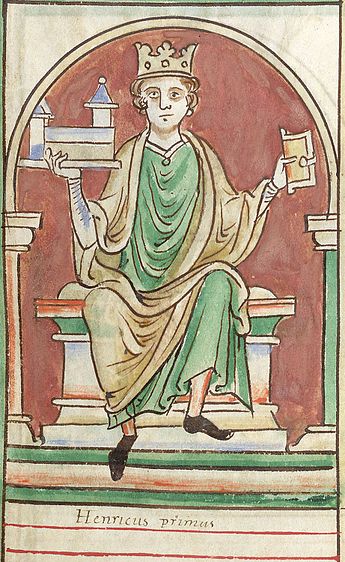
345px-Henry1
Henry I

In 1115, according to the Anglo-Saxon Chronicle, Henry arranged for the Norman barons to do homage and swear fealty to William, in an attempt to counter the claims of William Clito. A similar ceremony was arranged in England in 1116, for all the great men and barons of England to swear fealty to William as the king’s heir. The Warenne (Hyde) Chronicle referred to William as ‘rex Norman-Angllorum, ut putabatur futurus’ (assumed to be the future king of the Norman-English).

On 1st May 1118 William’s mother, Queen Matilda, died at Westminster and was laid to rest in Westminster Abbey. We do not know how the young prince felt at the loss of his mother – he was 15 at the time. However, it is from this point that William took on more responsibility, acting as regent whenever the king was away in Normandy.

In December 1118 Henry’s troops defeated the Angevins, under Fulk of Anjou, at Alençon. To counteract the defeat, William and Alice/Matilda of Anjou were married, with the Count settling Maine on them as their marriage gift, thus deserting the cause of the French king. Inevitably, war with Louis VI followed.

On 20 August 1119, 16-year-old William was with his father at the Battle of Brémule. Henry won the fight against the forces of Louis VI of France and William Clito. During the battle, William had captured the palfrey of his cousin, William Clito, which he chivalrously returned at the end of the battle.

In the same year William witnessed a charter at Rouen, in which he was described as ‘dei gratia, rex designatus’ (by the grace of God, king designate). And continuing his education in diplomacy, in November 1119, William accompanied his father to a meeting with Pope Calixtus II, (William’s second cousin once removed).

330px-Sceau_de_Louis_VI
Louis VI of France

At the turn of the year, it must have seemed to Henry that his dynasty – and the future of England – was secure in the hands of his son; at the age of 16 he was experienced in warfare and diplomacy and married to Matilda, though she was probably still under 10 years of age, who brought with her the county of Maine as her marriage portion (and the promise of Anjou should her father die whilst on Crusade).

In 1120 peace was finally achieved with France, with William being created Duke of Normandy by his father, and paying homage for the duchy to King Louis; a precedent that would be used  by future English kings, in order to avoid a king paying homage to a fellow king for part of his holdings. William, in turn, then received the homage of the Norman barons. Accompanied by his father, wife and several of his half brothers and sisters, it must have been a time of great rejoicing and festivities.

The final entry of the Warenne (Hyde) Chronicle set the scene:

At last King Henry restored peace with his diligence and money and decided to come to England with much triumph and joy, but God omnipotent, who, just as the blessed Job says, ‘loosens the belt of kings, and girds their kidneys with a rope’, out of his just judgment turned the king’s joy into grief and victory into sorrow. Having descended with his two sons, William and Richard, and with Theobald count of Blois, his nephew, and with many relatives and a crowd of nobles, to the seaport, called Barfleur, on the designated day he began to board his ship with favourable winds and a prosperous sea…

The Warenne (Hyde) Chronicle, edited by Elisabeth m.C. Van Houts and Rosalind C. Love

Indeed, when the large party prepared to cross the Channel, to return to England, it seems several of them were still celebrating. While Henry made the crossing in his own ship, taking with him several nobles and his daughter-in-law, the prince took the offer of a newly built ship, the Blanche Nef – or White Ship – which its owner, Thomas fitzStephen, claimed would guarantee a swift, safe passage. William the Ætheling was accompanied by many of the young nobles of the great families of England, including his half-sister, Matilda, and half-brother, Richard of Lincoln.

WhiteShipSinking
The Sinking of the White Ship

Most of the passengers and crew were still drunk from celebrating when the ship finally left the harbour of Barfleur, in the dark, on the evening of 25 November, 1120. Oderic Vitalis described the scene:

At length he gave the signal to put to sea. Then the rowers made haste to take up their oars and, in high spirits because they knew nothing of what lay ahead, put the rest of the equipment ready and made the ship lean forward and race through the sea. As the drunken oarsmen were rowing with all their might, and the luckless helmsman paid scant attention to steering the ship though he sea, the port side of the White Ship struck violently against a huge rock, which was uncovered each day as the tide ebbed and covered once more at high tide. Two planks were shattered and, terrible to relate, the ship capsized without warning. Everyone cried out at once in their great peril, but the water pouring into the boat soon drowned their cries and all alike perished.

William was ushered into a small boat and was being rowed to safety when he is said to have heard the cries of his half-sister, Matilda. The prince insisted on rowing to her aid, but the little boat was overwhelmed by those trying to make it to safety, and capsized, taking everyone with it.

Vitalis, Oderic, The Ecclesiastical History of Oderic Vitalis.

William the Ætheling was 17-years-old.

With only one survivor, a butcher from Rouen, over 300 souls were lost – drowned – and only a handful of bodies were ever recovered. With the sinking of the White Ship Henry I lost his son; England and Normandy lost their next ruler.

Young Matilda had lost her husband. Still only a child, Matilda had made the crossing of the Channel with the King, rather than her husband, and sometime after the disaster she returned to her father’s court. In 1121 Matilda became a nun, eventually becoming abbess of the convent at Fontevrault. She died in 1158.

With the uncertainty that followed, Louis VI renewed his support of William Clito, who continued to be a thorn in Henry I’s side until his death fighting in Flanders in 1128. Henry himself, in the hope of producing another son, married  again in 1121; to Adeliza of Louvain. Unfortunately, the marriage proved childless and Henry spent the final years of his reign trying to secure the throne for his daughter, Matilda. Empress Matilda had returned to Henry’s court in England following the death of her husband in 1125 and was married again,  in 1128, to Geoffrey, Count of Anjou – the brother of Matilda of Anjou – in the hope that the union would strengthen her claim to the throne.

In the end, however, despite the fact Henry had made the barons of England swear fealty to Matilda as his successor Henry’s nephew, Stephen, claimed the throne on the old king’s death in 1135; thus ushering in 19 years of warfare, an era which became known as The Anarchy.

Reading_Abbey_03
Chapter house of Reading Abbey

William’s death was a tragedy, not only on a national scale, but also a personal one, for Henry I. According to the Anglo-Saxon Chronicle the disaster was ‘a double grief: first that they lost their lives so swiftly; second that few of their bodies were found afterwards’. The young prince’s body was never recovered, leaving no monument to his life, save for Reading Abbey, established as a priory – and later an abbey – in 1121 by Henry I,

‘for the salvation of my soul and that of king William my father and king William my brother and William my son and queen Matilda my mother and queen Matilda my wife and all of my predecessors and successors.’

*

Sources: oxforddnb.com; Oderic Vitalis, The Ecclesiastical History of Orderic Vitalis; Donald Matthew, King Stephen; Robert Bartlett, England Under the Norman and Angevin Kings; David Williamson, Brewer’s British Royalty; the History Today Companion to British History; Dan Jones, the Plantagenets; englishmonarchs.co.uk; The Oxford Companion to British History Edited by John Cannon; Mike Ashley, The Mammoth Book of British kings & Queens; Alison Weir, Britain’s Royal Families, the Complete Genealogy; medievalilsts.net; The Plantagenet Chronicles Edited by Elizabeth Hallam; The Warenne (Hyde) Chronicle, edited by Elisabeth Van Houts and Rosalind C. Love .

*

Pictures courtesy of Wikipedia

*

My Books

Signed, dedicated copies of all my books are available through my online bookshop.

Out now! Scotland’s Medieval Queens

Books by Sharon Bennett Connolly

Scotland’s history is dramatic, violent and bloody. Being England’s northern neighbour has never been easy. Scotland’s queens have had to deal with war, murder, imprisonment, political rivalries and open betrayal. They have loved and lost, raised kings and queens, ruled and died for Scotland. From St Margaret, who became one of the patron saints of Scotland, to Elizabeth de Burgh and the dramatic story of the Scottish Wars of Independence, to the love story and tragedy of Joan Beaufort, to Margaret of Denmark and the dawn of the Renaissance, Scotland’s Medieval Queens have seen it all. This is the story of Scotland through their eyes.

Scotland’s Medieval Queens gives a thorough grounding in the history of the women who ruled Scotland at the side of its kings, often in the shadows, but just as interesting in their lives beyond the spotlight. It’s not a subject that has been widely covered, and Sharon is a pioneer in bringing that information into accessible history.’ Elizabeth Chadwick (New York Times bestselling author)

Available now from Amazon and Pen and Sword Books

Also by Sharon Bennett Connolly:

Books by Sharon Bennett Connolly

Heroines of the Tudor World tells the stories of the most remarkable women from European history in the time of the Tudor dynasty, 1485-1603. These are the women who ruled, the women who founded dynasties, the women who fought for religious freedom, their families and love. Heroines of the Tudor World is now available for pre-order from Amberley Publishing and Amazon UK. Women of the Anarchy demonstrates how Empress Matilda and Matilda of Boulogne, unable to wield a sword themselves, were prime movers in this time of conflict and lawlessness. It shows how their strengths, weaknesses, and personal ambitions swung the fortunes of war one way – and then the other. Available from Bookshop.orgAmberley Publishing and Amazon UKKing John’s Right-Hand Lady: The Story of Nicholaa de la Haye is the story of a truly remarkable lady, the hereditary constable of Lincoln Castle and the first woman in England to be appointed sheriff in her own right. Available from all good bookshops Pen & Sword Booksbookshop.org and Amazon

Royal Historical Society

Defenders of the Norman Crown: The Rise and Fall of the Warenne Earls of Surrey tells the fascinating story of the Warenne dynasty, from its origins in Normandy, through the Conquest, Magna Carta, the wars and marriages that led to its ultimate demise in the reign of Edward III. Available from Pen & Sword BooksAmazon in the UK and US, and Bookshop.orgLadies of Magna Carta: Women of Influence in Thirteenth Century England looks into the relationships of the various noble families of the 13th century, and how they were affected by the Barons’ Wars, Magna Carta and its aftermath; the bonds that were formed and those that were broken. It is now available in paperback and hardback from Pen & SwordAmazon, and Bookshop.orgHeroines of the Medieval World tells the stories of some of the most remarkable women from Medieval history, from Eleanor of Aquitaine to Julian of Norwich. Available now from Amberley Publishing and Amazon, and Bookshop.orgSilk and the Sword: The Women of the Norman Conquest traces the fortunes of the women who had a significant role to play in the momentous events of 1066. Available now from Amazon,  Amberley Publishing, and Bookshop.org.

Alternate Endings: An anthology of historical fiction short stories including Long Live the King… which is my take what might have happened had King John not died in October 1216. Available in paperback and kindle from Amazon.

Podcast:

A Slice of Medieval

Have a listen to the A Slice of Medieval podcast, which I co-host with Historical fiction novelist Derek Birks. Our very first episode was on The Anarchy. Derek and I welcome guests, such as Bernard Cornwell, and discuss a wide range of topics in medieval history, from significant events to the personalities involved.

There are now over 75 episodes to listen to!

Every episode is also now available on YouTube.

*

Don’t forget! Signed and dedicated copies of all my books are available through my online bookshop.

For forthcoming online and in-person talks, please check out my Events Page.

You can be the first to read new articles by clicking the ‘Follow’ button, liking our Facebook page or joining me on TwitterThreadsBluesky and Instagram.

*

©2016 Sharon Bennett Connolly FRHistS

Bessie, Mother of the King’s Son

Effigy of Elizabeth Blount

Elizabeth Blount was born around 1500 in Kinlet in Shropshire, to John Blount of Kinlet and his wife Katherine, daughter of Sir Hugh Pershall of Knightley. There is some confusion as to whether she was her parent’s first child, but it is likely that she was their eldest daughter. Elizabeth (Bessie) was born at Kinlet Hall, but probably grew up at Bewdley, Worcestershire, where the family had moved to shortly after her birth.

Her family lived close to Ludlow and several relatives were employed in the household of Henry VII’s eldest son, Arthur, Prince of Wales. It may well be through her family’s connection to the Prince of Wales’ household that Elizabeth achieved her position at court. It is also likely that her distant cousin, Lord Mountjoy affected the introduction.

However it was achieved, it is possible that Elizabeth was at court by the time she was 12 years old, as a Maid of Honour to the queen, Katherine of Aragon. She was definitely at court by Christmas 1514, when Elizabeth partnered the King, Henry VIII, in the entertainments as Queen Katherine was recovering from childbirth and the loss of the child.

Elizabeth was described as golden-haired, blue-eyed, lively and merry. She was an accomplished dancer and able to play and compose music. She is believed to have composed the following lines during her relationship with Henry:

While life and breath is in my brest, My sovereign lord I shall love best.¹

Workshop_of_Hans_Holbein_the_Younger_-_Portrait_of_Henry_VIII_-_Google_Art_Project
Henry VIII

Most historians agree that Bessie’s relationship with the king was most likely of a short duration, probably lasting just a few months in the summer of 1518. In those days, Henry was still hopeful of he and Katherine having a son and heir and so its possible he only strayed from the queen’s bed when she was pregnant, and therefore unavailable.

In October 1518, Elizabeth Blount took part in the festivities to celebrate the betrothal of 2-year-old Princess Mary to the French Dauphin; Elizabeth danced in the ‘mummery’ with the king’s sister, Mary. Possibly already pregnant with Henry’s child, it was to be her last appearance at court.

As soon as Elizabeth’s condition was known, it seems, she was sent away from court and settled at the Augustinian Priory of St Laurence, in Blackmore, near Chelmsford, Essex. Bessie was far enough away to be protected from prying eyes, but close to the king’s manor of Newhall that he would have been able to pay private visits to his mistress. Henry had given his right-hand man, Cardinal Thomas Wolsey, charge of the arrangements. Wolsey took care of everything, even standing as godfather when the baby arrived, and ensuring he was baptised Henry, after his father.

Horenbout_HenryFitzRoy
Henry Fitzroy

Elizabeth’s little boy, Henry Fitzroy, was born in the summer of 1519. He would be raised in his own establishment, being educated as a prince – albeit an illegitimate one. Elizabeth had little involvement in his day-to-day care, although she seems to have been consulted by his tutors, and 2 of her brothers, George and Henry Blount, were given positions in the child’s household. Elizabeth did send her son gifts from time-to-time; in 1531 she sent him a white satin doublet and 2 horses. Her younger sons would also be given young Henry’s cast-off clothes, once he’d grown out of them.

Elizabeth didn’t return to court after the birth; within a few months she was married to one of Wolsey’s wards. Cardinal Wolsey had taken over the wardship Gilbert Tailboys of Kyme when his father’s mental health went into decline. Sir George Tailboys had been declared a lunatic in 1517 and his lands were being administered for him. The Cardinal arranged the marriage with Gilbert, who was only 2 or 3 years older than Elizabeth; they were married sometime in late 1519 or early 1520.

The marriage was a great prize for Elizabeth. The Tailboys were a wealthy family, related to the earls of Northumberland through Gilbert’s mother, Elizabeth Gascoigne, and with lands spread as far away as Northumberland and Somerset – and various places between. The couple settled on the Tailboys family estates in Lincolnshire. King Henry ensured that property from the Tailboys estates, worth £200 per annum, was settled on Elizabeth for her lifetime. The king’s favour continued throughout Elizabeth’s lifetime, by way of gifts and land grants.

330px-Tailboys_of_Kyme
The Tailboys family crest

By the end of 1520 Gilbert and Elizabeth had their first child, a daughter, Elizabeth. There is some speculation that young Elizabeth could also be the king’s child; however, the fact that Henry never claimed her as his own, when he so readily did with young Henry, seems to suggest that Gilbert was the father. Two more children, George and Robert, were born before 1525.

In 1525 Elizabeth’s son, Henry Fitzroy, now a blond, robust 6-year-old, was created Duke of Richmond and Somerset by his father, the king. It’s not known whether Elizabeth attended the accompanying celebrations, however, but her husband, Gilbert, was knighted at about the same time.

The king was now despairing of having a legitimate son by his queen, and so was looking at strengthening young Fitzroy’s position as his son, if not his heir. Fitzroy was proof that the king could provide male children, even if the queen could not. There was talk of making the young duke King of Ireland and Henry had even sent ambassadors into Europe in hope of finding a foreign princess as a bride for the child.

On 15 April 1530 Gilbert Tailboys died; according to sources, he was buried at South Kyme. Elizabeth was left a widow with 3 small children, although her lifetime interest in the Tailboys estates meant she was financially secure. Her young son, George, inherited his father’s title, becoming Baron Tailboys of Kyme. Young George would go on to marry Margaret Skipwith in 1539, but he died the following year, aged about 18. He was succeeded by his younger brother, Robert, as the 3rd Baron, but he died in 1541, still only in his mid-teens.

4555190447_b0021642e2
Funeral brass of Elizabeth Blount

The boys’ older sister, Elizabeth, would then become the 4th Baroness Tailboys. She married, firstly, Thomas Wymbish of Nocton. Not only was the marriage childless but it appears to have been an unhappy union and Thomas left his wife little in his will. In 1553 Elizabeth made a more exalted second marriage with Ambrose Dudley, Earl of Warwick and son of John Dudley, Duke of Northumberland. However, this union was also childless and the Barony of Tailboys of Kyme became extinct on Elizabeth’s death in 1563.

Following Gilbert’s death Elizabeth Blount was courted by Lord Leonard Grey, son of the Marquess of Dorset and cousin to the king. Grey visited Elizabeth in Lincolnshire and, following the visited, wrote to the king’s minister, Thomas Cromwell, asking for him to approach Elizabeth on Grey’s behalf. In 1532 Lord Grey told Cromwell that he would “rather obtain that matter than to be made lord of as much goods and lands as any noble man within this realm”². Despite Cromwell’s backing, however, and the acquiescence of the king,  Elizabeth turned him down.

Elizabeth married again on 12 February 1535. Her second husband was Edward Fiennes de Clinton, 9th Baron Clinton and Saye; he was about 12 years younger than Elizabeth and although his family had lands in Kent, he settled on Elizabeth’s Lincolnshire estates.

Hans_Holbein_the_Younger_-_Edward_Fiennes_de_Clinton,_9th_Lord_Clinton,_1st_Earl_of_Lincoln_RL_12198
Edward Fiennes de Clinton, 9th Baron Clinton and Saye

Only a year after the marriage Elizabeth’s eldest son, Henry Fitzroy, Duke of Richmond, died. Richmond had been married in 1533, to Mary Howard, a younger daughter of the Duke of Norfolk, though the marriage was never consummated due to the young couple’s tender ages. Young Henry passed away on 23 July 1536 after a 2-week illness, aged only 17. The cause of death was a pulmonary infection, possibly tuberculosis. He was buried, with little ceremony, in Thetford Priory; the king did not want to draw attention to the loss of  his only son, legitimate or not.

Elizabeth was to have 3 more children with Edward Fiennes de Clinton; all girls. The eldest, Bridget, was born around 1536 and would marry Sir Robert Dymoke of Scrivelsby, Lincolnshire, a nephew of Gilbert Tailboys through his mother, Anne Tailboys. A second daughter, Katherine, was born around 1538 and married William, 2nd Lord de Burgh of Gainsborough, Lincolnshire, former brother-in-law of Henry VIII’s last queen, Katherine Parr. Their last daughter, Margaret, was born around 1539 and would go on to marry Charles Willoughby, 2nd Baron Willoughby of Parham.

Elizabeth continued to receive the king’s favour even into her second marriage; although her husband did not share in the privilege. Land grants were made jointly to Elizabeth and her son George, but excluded Edward. Elizabeth returned to court, briefly in 1540, as lady-in-waiting to Henry’s 4th queen, Anne of Cleves, but seems to have withdrawn to her estates due to illness.

330px-South_Kyme_Church_-_geograph.org.uk_-_418304

The date of Elizabeth’s death, and the cause of her final illness, remains unknown. Given that her eldest son, George, died in 1540, she may have had to suffer one last bereavement before her own death, sometime in 1540 or early 1541; leaving her teenage children and 3 very young daughters, the youngest possibly still in the cradle. By June 1541 Edward Clinton had remarried. He would go on to marry a third time and gain rewards and titles under Elizabeth I, becoming Earl of Lincoln in 1572.

Elizabeth Blount’s final resting place has been lost to history. Although there was a brass plaque – now in a private collection – commemorating her and her husband, Gilbert Tailboys, in St Mary and All Saints Church, South Kyme, it seems that only Gilbert is buried there.³

*

Footnotes: ¹Amy Licence, In Bed with the Tudors: ²Beverley A Murphy, Bastard Prince: Henry VIII’s Lost Son; ³Thanks to Georgina Faye Carter

*

Pictures courtesy of Wikipedia, except Effigy of Elizabeth Blount ©BNPS,co,uk and funeral brass courtesy of flickriver.

*

Sources: In Bed with the Tudors by Amy Licence; Bastard Prince: Henry VIII’s Lost Son by Beverley A Murphy; oxforddnb.com; The Life and Times of Henry VIII by Robert Lacey; England Under the Tudors by Arthur D Innes; The Earlier Tudors 185-1558 by JD Mackie.

*

My books

Signed, dedicated copies of all my books are available through my online store.

Out now: Scotland’s Medieval Queens

Books by Sharon Bennett Connolly

Scotland’s history is dramatic, violent and bloody. Being England’s northern neighbour has never been easy. Scotland’s queens have had to deal with war, murder, imprisonment, political rivalries and open betrayal. They have loved and lost, raised kings and queens, ruled and died for Scotland. From St Margaret, who became one of the patron saints of Scotland, to Elizabeth de Burgh and the dramatic story of the Scottish Wars of Independence, to the love story and tragedy of Joan Beaufort, to Margaret of Denmark and the dawn of the Renaissance, Scotland’s Medieval Queens have seen it all. This is the story of Scotland through their eyes.

Scotland’s Medieval Queens gives a thorough grounding in the history of the women who ruled Scotland at the side of its kings, often in the shadows, but just as interesting in their lives beyond the spotlight. It’s not a subject that has been widely covered, and Sharon is a pioneer in bringing that information into accessible history.’ Elizabeth Chadwick (New York Times bestselling author)

Available now from Amazon and Pen and Sword Books

Also by Sharon Bennett Connolly:

Books by Sharon Bennett Connolly

Heroines of the Tudor World tells the stories of the most remarkable women from European history in the time of the Tudor dynasty, 1485-1603. These are the women who ruled, the women who founded dynasties, the women who fought for religious freedom, their families and love. Heroines of the Tudor World is now available from Amberley Publishing and Amazon UK. Women of the Anarchy demonstrates how Empress Matilda and Matilda of Boulogne, unable to wield a sword themselves, were prime movers in this time of conflict and lawlessness. It shows how their strengths, weaknesses, and personal ambitions swung the fortunes of war one way – and then the other. Available from Bookshop.orgAmberley Publishing and Amazon UKKing John’s Right-Hand Lady: The Story of Nicholaa de la Haye is the story of a truly remarkable lady, the hereditary constable of Lincoln Castle and the first woman in England to be appointed sheriff in her own right. Available from all good bookshops Pen & Sword Booksbookshop.org and Amazon

Defenders of the Norman Crown: The Rise and Fall of the Warenne Earls of Surrey tells the fascinating story of the Warenne dynasty, from its origins in Normandy, through the Conquest, Magna Carta, the wars and marriages that led to its ultimate demise in the reign of Edward III. Available from Pen & Sword BooksAmazon in the UK and US, and Bookshop.orgLadies of Magna Carta: Women of Influence in Thirteenth Century England looks into the relationships of the various noble families of the 13th century, and how they were affected by the Barons’ Wars, Magna Carta and its aftermath; the bonds that were formed and those that were broken. It is now available in paperback and hardback from Pen & SwordAmazon, and Bookshop.orgHeroines of the Medieval World tells the stories of some of the most remarkable women from Medieval history, from Eleanor of Aquitaine to Julian of Norwich. Available now from Amberley Publishing and Amazon, and Bookshop.orgSilk and the Sword: The Women of the Norman Conquest traces the fortunes of the women who had a significant role to play in the momentous events of 1066. Available now from Amazon,  Amberley Publishing, and Bookshop.org.

Alternate Endings: An anthology of historical fiction short stories including Long Live the King… which is my take what might have happened had King John not died in October 1216. Available in paperback and kindle from Amazon.

Podcast:

Have a listen to the A Slice of Medieval podcast, which I co-host with Historical fiction novelist Derek Birks. Derek and I welcome guests, such as Bernard Cornwell and Michael Jecks, and discuss a wide range of topics in medieval history, from significant events to the personalities involved. 

Every episode is also now available on YouTube.

*

Don’t forget! Signed and dedicated copies of all my books are available through my online store.

For forthcoming online and in-person talks, please check out my Events Page.

You can be the first to read new articles by clicking the ‘Follow’ button, liking our Facebook page or joining me on TwitterThreadsBluesky and Instagram.

©2016 Sharon Bennett Connolly FRHistS

The Colourful Career of Edward, 2nd Duke of York

Edward_of_Norwich_Duke_of_York
Edward, 2nd Duke of York

Edward of Norwich, 2nd Duke of York, was born into wealth and privilege. Grandson of 2 kings and 1st cousin to 2 kings, his life story is full of ambition, glory and war, duty and service – and a hint of treason. All the ingredients needed for a rollicking good novel; with also the possibility of a strange love story.

Edward was born, probably at King’s Langley, in about 1373. A birthday of 1375 has also been suggested, but 1373 seems most likely. The fact he has Norwich after his name has suggested he could have been born there, but there is a theory that it is a derivation of “d’Everwick”, meaning “of York”.

Edward’s father was Edmund of Langley, 1st Duke of York and 5th son of Edward III and Philippa of Hainault. His mother was Isabella of Castile, daughter of Pedro the Cruel, king of Castile, and his mistress – and later, wife – Maria de Padilla. Although the couple had 3 children, their marriage doesn’t appear to have been a happy one and there were rumours of scandal surrounding Isabella, with a question mark raised over the paternity of her youngest son, Richard of Conisbrough. Edward also had a sister, Constance, who was close in age to him and born around 1374.

220px-Edward_III_of_England_(Order_of_the_Garter)
Edward III

Edward was born into a time of great change in the English monarchy. His grandmother, Philippa, had died in 1369 and his grandfather, Edward III, king since 1327, was slipping into senility, allowing his mistress, Alice Perrers, and her cohorts too much control of his affairs. In 1376 Edward’s eldest son and heir – and England’s hero of the time – Edward, the Black Prince, died after years of debilitating illness. The prince’s death broke the old king,  who died the following year, leaving his 10-year-old grandson Richard of Bordeaux, son of the Black Prince, as king.

The government – and the country – was largely in the hands of Edward and Richard’s uncle, John of Gaunt, Duke of Lancaster. John was the 4th son of Edward III and married to Edward of Norwich’s aunt, Constance of Castile. It was a time of uncertainty; many feared John would usurp the crown for  himself, but he stayed loyal to his nephew and Richard was crowned as King Richard II.

At only 4 years old Edward of Norwich attended the coronation, receiving his knighthood as part of the celebrations. Edward would be a loyal supporter of Richard II and received numerous royal grants, including the title of Earl of Rutland in February 1390. He was also given the title Earl of Cork when he accompanied Richard on his Irish campaign in 1394/5, leading several successful missions.

In the 1390s Edward emerged as a leading member of Richard’s circle of intimates. A man of considerable ability, Richard named him “the most able,wise and powerful man that he could think of”¹ and is even said to have considered leaving his crown to Edward. After the death of Richard’s queen, Anne of Bohemia, in 1394, Edward was one of the 3 feoffees of her estate, allowing him control of considerable patronage.

Arms_of_Edward_of_Norwich.svg
Arms of Edward of Norwich

Richard practically showered Edward with lucrative positions, including: admiral of the North & West (1391), Constable of Dover and Warden of the Cinque Ports (1396), Constable of the Tower of London (1397) and Constable of England (1398). He was also involved in the king’s diplomacy in France and the Holy Roman Empire, undertaking diplomatic missions to both.

Richard even took personal interest in Edward’s marriage prospects. In 1381 Edward had been betrothed to Beatriz of Portugal as part of the Anglo-Portuguese alliance against Castile. However, when the Portuguese made peace with Castile, Beatriz was married to Juan I of Castile instead.

Richard II suggested the sister-in-law of Giangaleazzo Visconti of Milan and also considered 3 relatives of Charles VI of France before suggesting Jeanne de Valois, younger sister of Richard’s proposed bride, Isabelle de Valois. Edward was addressed as ‘the king’s brother’ in recognition of their proposed marriages to sisters, even long after Edward’s planned marriage had fallen through.

By October 1398 Edward was married. His bride was a very curious choice for England’s most eligible bachelor. At 25 and likely to inherit his father’s dukedom in the not-too-distant future, Edward must surely have had the choice of every heiress in the kingdom of marriageable age. And yet his bride was twice widowed, 20 years his senior and with no dowry or inheritance to speak of.

PhilippaMohun_Died1431_WestminsterAbbey_ByStothard
Effigy of Philippa Mohun, Duchess of York, from her tomb in Westminster Abbey

Philippa was the 3rd daughter of John Mohun, 2nd Baron Mohun and a founding member of the Order of the Garter, and his wife Joan Burghersh. She had first been married to Walter Fitzwalter, 3rd Baron Fitzwalter, who died in 1386 and secondly to Sir john Golafre who died in 1396. Having no male heirs, Philippa’s mother had sold the reversion of the Mohun estates to Lady Elizabeth Luttrell, leaving her daughters with no landed inheritance.

The fact this was hardly a glittering match for such an illustrious magnate greatly suggests that it was a love match. And, as with Philippa’s previous 2 marriages, the union was to remain childless; Edward would eventually name his young nephew as his heir.

While Edward was finalising the domestic arrangements for his new bride, England was falling into turmoil. Richard II had imprisoned one uncle Thomas of Woodstock, Duke of Gloucester, in Calais and was distrustful of another uncle, John of Gaunt.

In the 2nd half of the 1380s Gloucester and the Lords Appellants had been the focus of opposition against Richard’s personal rule and had attempted to curb the king’s excesses, forcing restrictions to his rule. John of Gaunt had restored order following his return from campaigning in Spain, but in 1397 Gloucester was murdered whilst imprisoned in Calais, most likely on  Richard’s orders. It was said Edward had played a leading role in the arrest of Gloucester and the earls of Arundel and Warwick and he certainly benefited from the aftermath, receiving a significant share of the forfeitures that followed.

In September 1397 he was made Duke of Aumale and given the post of Constable of England – formerly held by Gloucester. As Constable, Edward would preside over Richard’s legal reforms, extending the court of chivalry to include treason and other offences which touched the king’s dignity.

220px-Richard_II_King_of_England
Richard II

Of the other 2 ringleaders of the Lords Appellant, Richard Fitzalan, earl of Arundel was beheaded and Thomas de Beauchamp, earl of Warwick was stripped of his titles and imprisoned on the Isle of Man. Two of the younger members of the Lords Appellants, Thomas of Mowbray, earl of Nottingham and Henry Bolingbroke earl of Derby, had initially escaped any severe retribution. However, in  1398 Richard found a pretext to exile them both from the country.

Bolingbroke was the son of the most powerful man in the kingdom – John of Gaunt – he was also cousin to both Richard II and Edward of Norwich. On Gaunt’s death in 1399, instead of passing his inheritance onto Bolingbroke, Richard appropriated it for the crown, putting some of the lands into Edward’s care – and extending his cousin’s exile to life.

Later that year Richard set off on campaign to Ireland, taking with him his cousin Edward and Bolingbroke’s 13-year-old son, Henry of Monmouth. We don’t know how Edward had reacted to his cousin Henry’s disinheritance, but it can’t have been an easy time for him, caught in the middle of his warring cousins, and he may have felt uneasy with the sudden change in Henry’s circumstances at the hands of the king. He later claimed that he had not drawn any of the revenues from the Lancastrian lands which had been put in his custody.

Whilst Richard was in Ireland Henry of Bolingbroke landed at Ravenspur in Yorkshire, announcing that he had returned only to claim his inheritance. While Richard headed back to England to face him, Henry was progressing through the country, gaining support. Edward advised Richard to send John Montague, Earl of Salisbury, into north Wales while Richard gathered his forces. Montague raised 4,000 men, but his force had disintegrated by the time the king arrived. On arriving in south Wales, Richard had immediately pressed northwards, leaving Edward and his main force behind him.

170px-King_Henry_IV_from_NPG_(2)
Henry IV

There seems to be some confusion as to Edward’s actions. He was reputedly attacked as he made his way through Wales, but by which side is unclear. He was said to be part of the delegation sent – by Bolingbroke – to Richard at Flint, wearing Bolingbroke’s livery.

Jean Creton, in his Histoire du Roy d’Angleterre Richard II, says Edward ‘said nothing to the king, but kept at as great a distance as he could from him’². Creton stated there was no man alive that Richard had loved better and depicted Edward as a Judas deliberately betraying his king in 1399.

However, the transition of power from Richard II to Henry IV was far from plain sailing for Edward. Henry and Edward were 1st cousins, but Edward was one of the key personalities of Richard’s tyrannical reign, and a focus for revenge. According to the chronicler, Thomas Walsingham, Edward came close to being lynched as tempers ran hot during Henry’s 1st parliament. Edward was accused of urging Gloucester’s murder, a claim he was forced to vehemently deny. Henry resisted calls for the death penalty for Richard’s adherents, and settled instead for punishment by the confiscation of all titles and rewards granted since 1397.

Edward was one of the greatest losers; he lost the constableships of England and the Tower of London and his manor of Burstwick was granted to the earl of Northumberland. He was no longer Duke of Aumale and back to being, simply, earl of Rutland. However, when parliament finished, Henry confirmed Edward’s custody of the Channel Islands and his lordship of the Isle of Wight, suggesting the new king had confidence in his cousin’s loyalty, even if parliament didn’t.

180px-Edmund_of_Langley_2C_Duke_of_York
Edmund of Langley, 1st Duke of York

By the end of 1399 Edward had become embroiled in the Epiphany Rising, the plot to murder Henry IV and his sons during a tournament at Windsor on Twelfth Night. Edward is said to have been a conspirator, but it was he who betrayed the plot to the king, and he was rewarded with the restoration of the lordship of Oakham in Rutland. The plot’s failure meant death for Richard II; Richard had been held at Pontefract Castle since his deposition, but the uncovering of the plot meant he was too dangerous to keep alive. He died around 14th February 1400, probably from starvation.

Edward served the Lancastrian dynasty in much the same way he had Richard II. In October 1400 he was appointed Keeper of North Wales and July 1401 he was dispatched to France as Henry’s lieutenant in Aquitaine, in response to an appeal from the archbishop of Bordeaux who described Edward as ‘the man closest to the king after the king’s sons’.

Whilst in Bordeaux Edward succeeded as the Duke of York, following his father’s death on 1st August 1402. In May of the following year Edward gave up his office to return to England and by the autumn he was campaigning in Wales. In October he was appointed the king’s lieutenant in south Wales for 1 year, but by November the appointment had been extended to 3 years.

Still owed money from his time in Aquitaine, and with Henry unable to meet the costs of the war in Wales, Edward was left in serious financial straits. His men were on the verge of mutiny. However, Edward was one of those rare commanders, who knew how to inspire men and command loyalty. Forced to mortgage his properties to release funds, he made a promise to his troops that, on his honour, he would receive none of his own revenues until they were paid.

The Duke of York’s duty in Wales stood  him in good stead in February 1405 after his sister, Constance, implicated him in a plot against the crown. York was imprisoned in Pevensey Castle for 17 weeks. But it was the Prince of Wales who came to his defence in parliament. Henry of Monmouth described Edward as “a loyal and valiant knight”.  Speaking of clashes against Owen Glendower, in  1407 Prince Henry said “If it had not been for the duke’s good advice and counsel he and others would have been in great peril and desolation.”

The_Master_of_Game_-_Buck_Hunting_With_Running_Hounds
1904 edition of Edward Duke of York’s “The Master of Game”

As far as the Prince of Wales was concerned, York “had laboured and served in such a way as to support and embolden all the other members of the company, as if he had been the poorest gentleman in the realm wishing to serve him in order to win honour and renown”.³

The Duke of York was an authority on hunting, translating the work Gaston Phebus, Count of Foix, Livre du Chasse” into English and adding several chapters himself. He dedicated the work, Master of Game to the Prince of Wales, the future Henry V. The book gives us a glimpse of the Duke of York’s personality and shows us why his men and peers thought so much of him:

“I ask of every person who reads this little treatise, or comes to hear of it, whatever their estate or condition, that in plain and simple language they will add to it anything they find useful and remove all that seems superfluous … so that this work may always grow through the advice and counsel of all hunters, and with this in mind, I tried to set out, as simply and clearly as I knew, what I understood of this craft, for the use and remembrance of all.”³

Edward and Prince Henry were particularly close. Edward was something of a mentor to the young Prince of Wales, as well as being his hunting master.

However, when Henry IV and the Prince of Wales quarreled over foreign policy, Edward sided with the king. In 1412 he accompanied the king’s 2nd son, Thomas, on campaign in France, to aid the Armagnacs against the Burgundians. Following the king’s death in 1413 he was preparing to defend Aquitaine in the June, and by August he was in Paris, negotiating a possible marriage between the new king, Henry V and Catherine of Valois.

220px-King_Henry_V_from_NPG
Henry V

Edward was back in England by October 1413, but was constantly involved in the diplomacy between England and France that led to Henry’s invasion of the country in 1415. In August 1415 Edward’s brother, Richard of Conisbrough, earl of Cambridge was executed for his involvement in the Southampton Plot to replace Henry V with his Mortimer cousin. For once, the Duke of York was above suspicion.

Shortly after the executions the fleet set sail for France and landed there on 13th August 1415. Almost immediately the army besieged Harfleur, finally taking the small town on 22nd September, but at great cost. During the siege dysentery had spread through the army, decimating Henry’s forces and leaving him with barely 6,000 men to continue the campaign.

As a result, Henry decided to make a run for Calais and safety, hoping to find a crossing of the River Somme whilst avoiding the French army amassing near Rouen. Edward, Duke of York, led the vanguard, taking part in several skirmishes from the harassing French troops and marching his men at an incredible pace. His men were starving and desperately ill – with more succumbing to dysentery every day.

Until they reached Agincourt.

According to historian Michael Jones, the Duke of York used his extensive hunting expertise to formulate the battle plan that would give Henry V the great victory that is still remembered today.

300px-Schlacht_von_Azincourt
Battle of Agincourt

His battle plan depended on a contingent of English archers being able to provoke the French into attacking down an enclosed valley, channelling them into the path of massed volley fire from a 2nd contingent of archers. The knights and men-at-arms would then enclose the survivors and destroy the remainder of the French army.

York was in the thick of the fighting, 90 men were killed defending his banner – the majority of the English casualties on the day. York fought valiantly but was killed as his helmet was smashed into his skull. His men protected their fallen leader’s body, preventing the French from breaking through the thin English line.

The London Chronicler wrote:

The Duke of York was slain,For his king he would not retreat, even by a foot, til his bascinet into his brain was brent [impaled].³

Edward Duke of York had led an illustrious and often controversial career. He had served 3 kings. He had written the first book on hunting in the English language. He could quote Chaucer, was a generous lord and a great military leader. The Chronicler of Godstow regarded him as a “second Solomon”. However, his reputation suffered damage during the Tudor era, when he was accused of being fat and dissolute – it was said he’d died at Agincourt after being suffocated in his armour because he was too heavy to rise after a fall.

330px-Fotheringhay_memorial_Edward_2nd_Duke_of_York
Elizabethan memorial to Edward, 2nd Duke of York

The reverence with which Henry treated Edward after his death proves the lie of the later propaganda. Edward’s will was honoured; his nephew Richard inherited his lands and title, gifts to his men were fulfilled, such as Sir John Popham who received armour, a horse and a life rent from one of the Duke’s manors.

Edward asked to be buried in the church at Fotheringhay, where he had recently founded a college of priests. He was laid to rest beneath the choir steps, the grave marked by a marble slab with his figure upon it, engraved in brass. A larger memorial was added in Elizabethan times.

Edward’s wife Philippa survived him by 16 years, spending her widowhood at Carisbrooke Castle as the Lady of the Isle of Wight. She died 17th July 1431 and was buried in Westminster Abbey.

Edward’s nephew Richard, 3rd Duke of York, would go on to challenge Henry VI for the throne, dying at the Battle of Wakefield in December 1460. His son Edward would take up the mantle and succeed as Edward IV in March 1461, just 3 months after his father’s death.

*

Footnotes: ¹ Given-Wilson quoted in Oxford Database of National Biography; ² Jean Creton Histoire du Roy d’Angleterre Richard II quoted in Oxford Database of National Biography; ³ 24 Hours at Agincourt by Michael Jones.

*

Pictures courtesy of Wikipedia

*

Sources: The Oxford Companion to British History Edited by John Cannon; The Plantagenets, the Kings who Made England by Dan Jones; History Today Companion to British History Edited by Juliet Gardiner and Neil Wenborn;  Brewer’s British Royalty by David Williamson; 24 Hours at Agincourt by Michael Jones; Agincourt: My Family, the Battle and the Fight for France by Ranulph Fiennes Britain’s Royal Families, the Complete Genealogy by Alison Weir; The Mammoth Book of British Kings and Queens by Mike Ashley; The Plantagenets, the Kings that made Britain by Derek Wilson;  englishmonarchs.co.uk; oxforddnb.com; britannica.com; upenn.edu.

*

My Books:

Signed, dedicated copies of all my books are available through my online store.

OUT NOW! Heroines of the Tudor World

Heroines of the Tudor World tells the stories of the most remarkable women from European history in the time of the Tudor dynasty, 1485-1603. These are the women who ruled, the women who founded dynasties, the women who fought for religious freedom, their families and love. These are the women who made a difference, who influenced countries, kings and the Reformation. In the era dominated by the Renaissance and Reformation, Heroines of the Tudor World examines the threats and challenges faced by the women of the era, and how they overcame them. From writers to regents, from nuns to queens, Heroines of the Tudor World shines the spotlight on the women helped to shape Early Modern Europe.

Heroines of the Tudor World is now available for pre-order from Amberley Publishing and Amazon UK.

Coming 30 January 2025: Scotland’s Medieval Queens

Scotland’s history is dramatic, violent and bloody. Being England’s northern neighbour has never been easy. Scotland’s queens have had to deal with war, murder, imprisonment, political rivalries and open betrayal. They have loved and lost, raised kings and queens, ruled and died for Scotland. From St Margaret, who became one of the patron saints of Scotland, to Elizabeth de Burgh and the dramatic story of the Scottish Wars of Independence, to the love story and tragedy of Joan Beaufort, to Margaret of Denmark and the dawn of the Renaissance, Scotland’s Medieval Queens have seen it all. This is the story of Scotland through their eyes.

Available for pre-order now.

Also by Sharon Bennett Connolly:

Women of the Anarchy demonstrates how Empress Matilda and Matilda of Boulogne, unable to wield a sword themselves, were prime movers in this time of conflict and lawlessness. It shows how their strengths, weaknesses, and personal ambitions swung the fortunes of war one way – and then the other. Available from Bookshop.orgAmberley Publishing and Amazon UKKing John’s Right-Hand Lady: The Story of Nicholaa de la Haye is the story of a truly remarkable lady, the hereditary constable of Lincoln Castle and the first woman in England to be appointed sheriff in her own right. Available from all good bookshops Pen & Sword Booksbookshop.org and AmazonDefenders of the Norman Crown: The Rise and Fall of the Warenne Earls of Surrey tells the fascinating story of the Warenne dynasty, from its origins in Normandy, through the Conquest, Magna Carta, the wars and marriages that led to its ultimate demise in the reign of Edward III. Available from Pen & Sword BooksAmazon in the UK and US, and Bookshop.org

Ladies of Magna Carta: Women of Influence in Thirteenth Century England looks into the relationships of the various noble families of the 13th century, and how they were affected by the Barons’ Wars, Magna Carta and its aftermath; the bonds that were formed and those that were broken. It is now available in paperback and hardback from Pen & SwordAmazon, and Bookshop.orgHeroines of the Medieval World tells the stories of some of the most remarkable women from Medieval history, from Eleanor of Aquitaine to Julian of Norwich. Available now from Amberley Publishing and Amazon, and Bookshop.orgSilk and the Sword: The Women of the Norman Conquest traces the fortunes of the women who had a significant role to play in the momentous events of 1066. Available now from Amazon,  Amberley Publishing, and Bookshop.org.

Alternate Endings: An anthology of historical fiction short stories including Long Live the King… which is my take what might have happened had King John not died in October 1216. Available in paperback and kindle from Amazon.

Podcast:

Have a listen to the A Slice of Medieval podcast, which I co-host with Historical fiction novelist Derek Birks. Derek and I welcome guests, such as Bernard Cornwell, and discuss a wide range of topics in medieval history, from significant events to the personalities involved.

*

Don’t forget! Signed and dedicated copies of all my books are available through my online store.

For forthcoming online and in-person talks, please check out my Events Page.

You can be the first to read new articles by clicking the ‘Follow’ button, liking our Facebook page or joining me on TwitterThreads and Instagram.

*

©2015 Sharon Bennett Connolly, FRHistS

Illustrious Queen

Filipa_de_Lencastre,_Rainha_de_Portugal_-_The_Portuguese_Genealogy_(Genealogia_dos_Reis_de_Portugal)
Philippa of Lancaster, Queen of Portugal

Philippa of Lancaster was born at Leicester on 31st March 1360. She was the eldest daughter of John of Gaunt, Duke of Lancaster and 4th son of Edward III, and his first wife Blanche of Lancaster, great-great-granddaughter of Henry III. her father was one of the richest men in the country – and one of the most powerful.

Her life as a child would have been one of luxury and privilege, with a glorious dynastic marriage awaiting her in the future. Philippa was raised alongside her younger sister, Elizabeth, who was born in 1363, and her baby brother, Henry of Bolingbroke, born in 1367.

The children shared a household for some of their childhood and were given the best education available. The reformer John Wycliffe, first translator of the Bible into English, was among their tutors.

The children lost their mother when Blanche died at Tutbury on 12th September, 1368, more likely from the complications of childbirth than from the plague, as a daughter, Isabella, who did not survive, was born around the same time.

The children’s father was with Blanche when she died but departed on campaign to France soon after; it is doubtful the children’s care was interrupted. The Lancaster household was well-organised and by 1376 the girls had been appointed a new governess; Katherine Swynford, who was by this time also mistress to their father, John of Gaunt.

450px-Casamento_João_I_e_Filipa_Lencastre
Wedding of Philippa and King John

As with most high-born women of the time, Philippa’s marriage was in the hands of her father. John of Gaunt planned for her to contract a dynastic match which would benefit and complement his own dynastic ambitions. In 1374, Philippa was betrothed to Gaston, Count of Foix, but nothing came of it. In 1381/2 she was offered in marriage to Jean de Blois, claimant to the duchy of Brittany; and in 1383 her prospective husband was Count William of Ostrevant, the heir to Hainault, Holland and Zeeland.

In 1385 and 25 years old Philippa was still unmarried. However, in the following year her father took her on his military expedition to Spain, hoping to claim the kingdom of Castile in right of his 2nd wife, Constance. Philippa’s marriage to John – or Joao – I of Portugal was agreed as part of an alliance made between the 2 Johns at Ponte do Mouro in November 1386.

Philippa was married to King John at Oporto on 2nd February 1387, before they had even received the required papal dispensation. The British Museum has a beautifully illuminated manuscript (above) which depicts the wedding, with John of Gaunt and his wife, Constance, looking on. Philippa was 26 – about 10 years older than the average age for a princess to marry. John was 3 years her senior and had been king for just short of 2 years.

Anoniem_-_Koning_Johan_I_van_Portugal_(1450-1500)_-_Lissabon_Museu_Nacional_de_Arte_Antiga_19-10-2010_16-12-61
John I, King of Portugal

Philippa became known as ‘Dona Fillipa’ in Portugal and would be one of the country’s best-loved queens. Her natural disposition to austerity and piety was endearing to the Portuguese people. Philippa reformed the court and encouraged courtly games among her ladies. French poet Eustace Deschamps characterised her as the chief patron of the order of The Flower of England, casting her at the centre of the court and the May Day celebrations.

A patron of literature, Philippa was sent a copy of John Gower’s poem “Confessio amantis“, which was translated into Portuguese by Robert Payn, an English canon of Lisbon Cathedral.

Philippa had been made a Lady of the Garter in 1378 and was instrumental in fostering  links between England and Portugal, a practice helped by the mixture of English and Portuguese servants in her household. She was on good terms with both Richard II and his successor – her brother, Henry IV.

In 1399 she wrote to the Archbishop of Canterbury, Thomas Arundel, asking him to intervene with Henry on behalf of her friend, Bishop Henry Despenser of Norwich, who had angered the new king by defending Richard II at the time of Henry’s invasion of England and seizure of the throne.

Rogier_van_der_Weyden_(workshop_of)_-_Portrait_of_Isabella_of_Portugal
John and Philippa’s daughter Isabella, Duchess of Burgundy

Philippa also had a hand in persuading Henry to arrange the marriage of her stepdaughter, Beatriz (John’s illegitimate daughter) to the earl of Arundel in 1405.

Almost immediately after the wedding John returned to the war. In July 1387 Philippa miscarried their first child while visiting John at Curval, where he lay seriously ill. However, after what appears to have been a bumpy start, the couple seem well-matched. John had had 2 illegitimate children before his marriage, but was demonstrably faithful to Philippa after the wedding.

In fact when court gossip reached the queen that he had been unfaithful, John went to great lengths to convince Philippa of his innocence. He even went so far as to commemorate the event by having a room in the royal apartments at Sintra decorated with chattering magpies – he must have had a great sense of humour, and confidence in his relationship to be so bold.

Philippa and John were to have a large family, which they brought up with great care. Of their 9 children,  5 sons and one daughter survived infancy and would later be known in Portugal as ‘the Illustrious Generation’. Their eldest surviving son, Edward, was born in 1391 and would succeed his father as King of Portugal in 1433. Peter, Duke of Coimbra, was born in 1392 and would act as regent for his nephew, Afonso V, following Edward’s death in 1438.

330px-Henry_the_Navigator_(Cronicas)
Prince Henry the Navigator

Their most famous son was Prince Henry ‘the Navigator’, Duke of Viseu, who was renowned for financing and researching great explorations – though he never undertook expeditions himself.

Their next youngest son was John, Duke of Beja and Constable of Portugal, who married Isabella, the daughter of Alfonso I, Duke of Braganza.

The baby of the family was Ferdinand, Grand Master of Aviz. He was born in 1402 and was later known as ‘the Saint Prince’ following his death as a prisoner of the Moors. Ferdinand had been held as a hostage for the return of Ceuta following the Disaster of Tangier, a siege led by his brother Henry. Ferdinand was held in increasingly severe confinement when it became apparent no ransom would be forthcoming, until he finally died in 1443.

John and Philippa’s one daughter, Isabella, was born in 1397 and would go on to marry Philip III the Good, Duke of Burgundy; and become the mother of Charles the Bold, Duke of Burgundy.

By 1415 Philippa’s oldest sons were itching to prove their martial prowess. Scorning their father’s offer to hold a magnificent tournament for them, they persuaded him to mount an attack on the port of Ceuta in North Africa. As they were about to set sail Philippa fell ill.

353px-BatalhaTombKingJohn
Tomb of John and Philippa

She had contracted plague and died at Odivelas, near Lisbon, on 18/19th July 1415. She was 55. On her deathbed she gave her 3 eldest sons, each, a jewel encrusted sword, in anticipation of their impending knighthoods, and a piece of the true cross. Giving them her blessing for the forthcoming military expedition she exhorted “them to preserve their faith and to fulfil the duties of their rank”¹.

The expedition sailed just 5 days after her death and Ceuta fell after only one day of siege, becoming Portugal’s first African possession.

Described as pious, charitable, affable and obedient to her husband, Portuguese historian Fernao Lopes, secretary to Philippa’s son, Fernando, held Philippa up as a model queen. Her piety was renowned; in later life she was said to regularly read the Book of Psalms.

353px-Túmulos_de_los_Infantes
Tombs of the Infantes, the 4 younger sons of John and Philippa

Queen Philippa was buried in the Dominican Priory at Batalha Abbey, which had been founded by her husband. King John arranged for a magnificent tomb to be built in the Capela do Fundador. Constructed between 1426 and 1434, it is topped by their effigies, clasping each others’ hands. King John himself was laid beside her after his death in August 1433.

Their sons, Ferdinand, John, Henry and Peter, were laid to rest along the south side of the same chapel.

*

Footnote: ¹ Edgar Prestage, The Portuguese pioneers.

*

Pictures courtesy of Wikipedia

*

Sources: The Plantagenets, the Kings who Made England by Dan Jones;  Brewer’s British Royalty by David Williamson; Britain’s Royal Families, the Complete Genealogy by Alison Weir; The Mammoth Book of British Kings and Queens by Mike Ashley; The Plantagenets, the Kings that made Britain by Derek Wilson;  englishmonarchs.co.uk; oxforddnb.com; annvictoriaroberts.co.uk.

*

My Books

Signed, dedicated copies of all my books are available through my online bookshop.

Out now: Scotland’s Medieval Queens

Books by Sharon Bennett Connolly

Scotland’s history is dramatic, violent and bloody. Being England’s northern neighbour has never been easy. Scotland’s queens have had to deal with war, murder, imprisonment, political rivalries and open betrayal. They have loved and lost, raised kings and queens, ruled and died for Scotland. From St Margaret, who became one of the patron saints of Scotland, to Elizabeth de Burgh and the dramatic story of the Scottish Wars of Independence, to the love story and tragedy of Joan Beaufort, to Margaret of Denmark and the dawn of the Renaissance, Scotland’s Medieval Queens have seen it all. This is the story of Scotland through their eyes.

Scotland’s Medieval Queens gives a thorough grounding in the history of the women who ruled Scotland at the side of its kings, often in the shadows, but just as interesting in their lives beyond the spotlight. It’s not a subject that has been widely covered, and Sharon is a pioneer in bringing that information into accessible history.’ Elizabeth Chadwick (New York Times bestselling author)

Available now from Amazon and Pen and Sword Books

Also by Sharon Bennett Connolly:

Books by Sharon Bennett Connolly

Heroines of the Tudor World tells the stories of the most remarkable women from European history in the time of the Tudor dynasty, 1485-1603. These are the women who ruled, the women who founded dynasties, the women who fought for religious freedom, their families and love. Heroines of the Tudor World is now available for pre-order from Amberley Publishing and Amazon UK. Women of the Anarchy demonstrates how Empress Matilda and Matilda of Boulogne, unable to wield a sword themselves, were prime movers in this time of conflict and lawlessness. It shows how their strengths, weaknesses, and personal ambitions swung the fortunes of war one way – and then the other. Available from Bookshop.orgAmberley Publishing and Amazon UKKing John’s Right-Hand Lady: The Story of Nicholaa de la Haye is the story of a truly remarkable lady, the hereditary constable of Lincoln Castle and the first woman in England to be appointed sheriff in her own right. Available from all good bookshops Pen & Sword Booksbookshop.org and Amazon

Books by Sharon Bennett Connolly

Defenders of the Norman Crown: The Rise and Fall of the Warenne Earls of Surrey tells the fascinating story of the Warenne dynasty, from its origins in Normandy, through the Conquest, Magna Carta, the wars and marriages that led to its ultimate demise in the reign of Edward III. Available from Pen & Sword BooksAmazon in the UK and US, and Bookshop.orgLadies of Magna Carta: Women of Influence in Thirteenth Century England looks into the relationships of the various noble families of the 13th century, and how they were affected by the Barons’ Wars, Magna Carta and its aftermath; the bonds that were formed and those that were broken. It is now available in paperback and hardback from Pen & SwordAmazon, and Bookshop.orgHeroines of the Medieval World tells the stories of some of the most remarkable women from Medieval history, from Eleanor of Aquitaine to Julian of Norwich. Available now from Amberley Publishing and Amazon, and Bookshop.orgSilk and the Sword: The Women of the Norman Conquest traces the fortunes of the women who had a significant role to play in the momentous events of 1066. Available now from Amazon,  Amberley Publishing, and Bookshop.org.

Alternate Endings: An anthology of historical fiction short stories including Long Live the King… which is my take what might have happened had King John not died in October 1216. Available in paperback and kindle from Amazon.

Podcast:

A Slice of Medieval

Have a listen to the A Slice of Medieval podcast, which I co-host with Historical fiction novelist Derek Birks. Derek and I welcome guests, such as Bernard Cornwell and discuss a wide range of topics in medieval history, from significant events to the personalities involved. Our first ever episode was a discussion on The Anarchy 

Every episode is also now available on YouTube.

*

Don’t forget! Signed and dedicated copies of all my books are available through my online bookshop.

For forthcoming online and in-person talks, please check out my Events Page.

You can be the first to read new articles by clicking the ‘Follow’ button, liking our Facebook page or joining me on TwitterThreadsBluesky and Instagram.

©2016 Sharon Bennett Connolly FRHistS
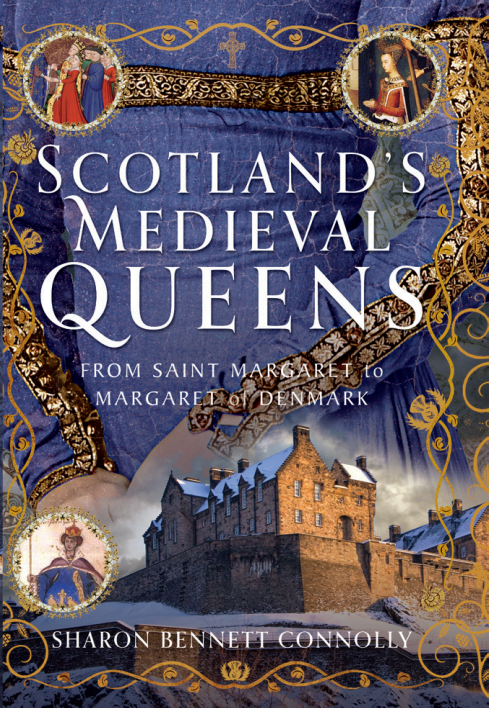
The Kidnapped Countess

Denbigh_Castle_3
Denbigh Castle

The story of Alice de Lacey is like something straight from a novel, with rebellion, kidnappings and love all wrapped up in the life of this one Countess. Alice was born at Denbigh Castle on 25th December 1281. She was the daughter of Henry de Lacey, 5th Earl of Lincoln. Through her mother Margaret, she was a granddaughter of William (II) Longspee, Earl of Salisbury and his wife, Idonea de Camville. Through Margaret, Alice was also descended from 2 of the greatest women of the 13th century, Nicholaa de la Haye, castellan of Lincoln Castle, and Ela of Salisbury, Countess of Salisbury in her own right.

Alice was one of 3 children. With 2 brothers, Edmund and John, she was, of course, not  expected to inherit her father’s earldom. However, 2 family tragedies made Alice one of the richest heiresses in England. Young Edmund, it appears, drowned in a well at Denbigh Castle and John fell to his death from the parapet at Pontefract Castle, leaving Alice as her parents’ sole heir.

In 1294 Alice’s marriage was arranged by no-less than the king – Edward I – who saw her as a suitable bride for his nephew Thomas, Earl of Lancaster and son of the king’s brother Edmund Crouchback. Alice and Thomas were married on or before 28th October 1294; he was about 16 years old and Alice was not yet 13.

Edward I had shown his unscrupulous nature in the marriage settlement in that Thomas was given part of the Lacey inheritance on the marriage, with the rest to pass to Thomas on Henry de Lacey’s death. The settlement further stipulated that the de Lacey lands would pass to Lancaster in the event of Alice’s dying without issue; thus excluding all collateral heirs to the earldoms of Salisbury and Lincoln.

330px-Seal_Henry_de_Lacy
Seal of Henry de Lacey

Alice’s mother Margaret, Countess of Salisbury in her own right, died in 1309 and by June 1310 her father had remarried, to Joan Fitz Martin, probably in the hope of securing an heir for his earldom. In the event, it wasn’t to be and the Earl of Lincoln died in 1311, with his estates passing through his daughter, to Thomas Earl of Lancaster and Leicester.

With 5 earldoms to his name, Thomas now became one of the richest and most powerful men in the kingdom. Although he was initially a supporter of the new king, his cousin Edward II, he would soon turn against him and his favourites, making enemies along the way.

Poor Alice got caught in the middle of one of Thomas’s feuds.

According to the chronicler Walsingham:

The Countess of Lancaster … was seized at Canford, in Dorset, by a certain knight of the house and family of John, Earl Warenne, with many English retainers called together for the detestable deed, as it is said, with the royal assent. … With them was a certain man of a miserable stature, lame and hunchbacked, called Richard de St Martin, exhibiting and declaring constantly his evil intentions towards the lady, so miserably led away.

Alice was kidnapped in 1317 from her manor in Canford, Dorset, by John de Warenne‘s man, Sir Richard de St Martin, supposedly with the king’s knowledge. Several reasons for the abduction have been put forward; one is, of course, that Alice and St Martin were having an affair while another is that the affair was between Alice and John de Warenne, Earl of Surrey, himself. After all, John de Warenne did have a reputation with women.

Given the king’s involvement, a more likely explanation is that the kidnapping was organised by Earl Warenne in retaliation for Lancaster’s objections to the earl’s attempts to divorce his wife, Joan of Bar, in 1315/16. Joan was a cousin of Thomas of Lancaster and niece of King Edward II, but her marriage to John de Warenne was a disaster and John openly lived with his mistress, Maud Nerford. When he attempted to divorce Joan, Lancaster was one of his most vocal opponents; the divorce was eventually refused and Earl Warenne was even excommunicated for a time.

Arms_of_Edmund_Crouchback,_Earl_of_Leicester_and_Lancaster.svg
Arms of Thomas and his father as Earls of Lancaster and Leicester

Following her kidnapping, Alice was held at Reigate Castle, Surrey. Her abduction set off a private war between the 2 magnates, with Lancaster targeting Warenne’s Yorkshire estates and successfully besieging the Earl’s castle at Conisbrough in retaliation. Lancaster seems to have made little-to-no effort to actually rescue his wife and there is no record of how and when she was eventually released.

Alice and Thomas’s marriage does not appear to have been a happy one and there is some evidence that they were actually divorced in 1318, with Thomas retaining Alice’s earldoms after enforcing the marriage contract. The divorce was supposedly on account of her adultery with the Earl of Surrey’s squire, Sir Eubolo Lestrange (although this may be a confusion of facts from her abduction and her later marriage). It has also been claimed that Alice and her abductor, Richard de St Martin, were pre-contracted before her marriage to Thomas of Lancaster. However, although this is not impossible, it does seem unlikely, given Alice’s tender age on her wedding day.

Whether or not Alice and Thomas did divorce is still open to debate. If the divorce occurred, it did not protect her from the reprisals meted out after her husband’s failed rebellion and defeat at the Battle of Boroughbridge on 16th March 1322. While Thomas was executed Alice, along with her step-mother, Joan, was imprisoned in York Castle.

It must have been a truly terrifying time for the 2 women; with no protectors they were at the mercy of the king’s favourites, the Despensers, father and son. Threatened with execution by burning they were forced to turn over the majority of their estates. Having paid an enormous ransom of £20,000 Alice was finally released, securing some her titles, a small number of estates and the right to remarry.

021
Lincoln Castle

Her step-mother, Joan, died in October 1322; we can only surmise as to whether or not her demise was as a consequence of her imprisonment.

Alice would eventually recover Lincoln Castle and the Earldom of Lincoln, but many of her estates were given to her erstwhile abductor, John de Warenne, and only returned to her by Edward III, many years later.

By November 1324 Alice had married again, this time to a minor baron from the Welsh Marches, Sir Ebule, or Eubolo, Lestrange of Shropshire. The  marriage demonstrated that Alice had managed to come out of the disaster of her first husband’s downfall with enough income and  property to make her an attractive proposition as a wife. Although, it does seem possible that this marriage was a love-match.

This marriage appears to have been a happier one, given that Lestrange moved over to Lincolnshire to look after his wife’s interests, and that it was with Sir Eubolo that Alice chose to be buried, when the time came. Alice and Sir Eubolo were married for over 10 years, although towards the latter part Lestrange was away campaigning in Scotland, where he died in September 1335. Alice was named as one of his executors and he was buried in Barlings Abbey, Lincolnshire.

Following his death, Alice took a vow of chastity and looked determined to settle into a life of quiet retirement. However, her adventures were not quite at an end. In 1335, or early 1336, Alice was kidnapped for a second time; she was abducted from her castle at Bolingbroke and raped, by Sir Hugh de Freyne. Freyne was a Herefordshire knight and royal keeper of the town and castle of Cardigan.

There appears some suggestion that Alice was in collusion with Sir Hugh, with the theory being that her abduction was a way for her to escape her vow of chastity. It seems more likely that Alice acquiesced to a situation over which she had little control. Edward III was furious and ordered the imprisonment of the couple, but they were reconciled with the king in 1336 and allowed to marry. The marriage did much to improve Freyne’s status and brought him a summons to Parliament in November 1336.

330px-Barlings_Abbey_ruins_-_geograph.org.uk_-_242596
Barlings Abbey

However, such success was short-lived as he died at Perth in December 1336 or January 1337.

Shortly after her third husband’s death, the Bishop of Lincoln issued a demand that Alice keep her prior vow and chastity. As there were no further marriages – or abductions – we can probably assume that she did. Alice died on the 2nd October 1348 at the grand age of 66. She was buried with her second husband at the Premonstratensian House of Barlings, in Lincolnshire, founded by Ralph de la Haye, uncle of the famous Nicholaa de la Haye.

Having had no children from any of her 3 marriages, Alice’s lands and titles, as according to her marriage settlement 54 years earlier, passed to the house of Lancaster and her husband’s nephew, Henry of Grosmont, 1st Duke of Lancaster and father of Blanche of Lancaster, John of Gaunt’s 1st wife.

*

Pictures courtesy of Wikipedia, except Lincoln Castle © 2015 Sharon Bennett Connolly FRHistS.

*

Sources: The Oxford Companion to British History Edited by John Cannon; The Plantagenets, the Kings who Made England by Dan Jones; History Today Companion to British History Edited by Juliet Gardiner and Neil Wenborn;  Brewer’s British Royalty by David Williamson; Britain’s Royal Families, the Complete Genealogy by Alison Weir; Conisbrough Castle by Steven Brindle and Agnieszka Sadraei; The Mammoth Book of British Kings and Queens by Mike Ashley; The Plantagenets, the Kings that made Britain by Derek Wilson;  findagrave.com; oxforddnb.com; royaldescent.net.

*

My Books

Signed, dedicated copies of all my books are available through my online store.

OUT NOW! Heroines of the Tudor World

Heroines of the Tudor World tells the stories of the most remarkable women from European history in the time of the Tudor dynasty, 1485-1603. These are the women who ruled, the women who founded dynasties, the women who fought for religious freedom, their families and love. These are the women who made a difference, who influenced countries, kings and the Reformation. In the era dominated by the Renaissance and Reformation, Heroines of the Tudor World examines the threats and challenges faced by the women of the era, and how they overcame them. From writers to regents, from nuns to queens, Heroines of the Tudor World shines the spotlight on the women helped to shape Early Modern Europe.

Heroines of the Tudor World is now available for pre-order from Amberley Publishing and Amazon UK.

Coming 30 January 2025: Scotland’s Medieval Queens

Scotland’s history is dramatic, violent and bloody. Being England’s northern neighbour has never been easy. Scotland’s queens have had to deal with war, murder, imprisonment, political rivalries and open betrayal. They have loved and lost, raised kings and queens, ruled and died for Scotland. From St Margaret, who became one of the patron saints of Scotland, to Elizabeth de Burgh and the dramatic story of the Scottish Wars of Independence, to the love story and tragedy of Joan Beaufort, to Margaret of Denmark and the dawn of the Renaissance, Scotland’s Medieval Queens have seen it all. This is the story of Scotland through their eyes.

Available for pre-order now.

Also by Sharon Bennett Connolly:

Women of the Anarchy demonstrates how Empress Matilda and Matilda of Boulogne, unable to wield a sword themselves, were prime movers in this time of conflict and lawlessness. It shows how their strengths, weaknesses, and personal ambitions swung the fortunes of war one way – and then the other. Available from Bookshop.orgAmberley Publishing and Amazon UKKing John’s Right-Hand Lady: The Story of Nicholaa de la Haye is the story of a truly remarkable lady, the hereditary constable of Lincoln Castle and the first woman in England to be appointed sheriff in her own right. Available from all good bookshops Pen & Sword Booksbookshop.org and AmazonDefenders of the Norman Crown: The Rise and Fall of the Warenne Earls of Surrey tells the fascinating story of the Warenne dynasty, from its origins in Normandy, through the Conquest, Magna Carta, the wars and marriages that led to its ultimate demise in the reign of Edward III. Available from Pen & Sword BooksAmazon in the UK and US, and Bookshop.org

Ladies of Magna Carta: Women of Influence in Thirteenth Century England looks into the relationships of the various noble families of the 13th century, and how they were affected by the Barons’ Wars, Magna Carta and its aftermath; the bonds that were formed and those that were broken. It is now available in paperback and hardback from Pen & SwordAmazon, and Bookshop.orgHeroines of the Medieval World tells the stories of some of the most remarkable women from Medieval history, from Eleanor of Aquitaine to Julian of Norwich. Available now from Amberley Publishing and Amazon, and Bookshop.orgSilk and the Sword: The Women of the Norman Conquest traces the fortunes of the women who had a significant role to play in the momentous events of 1066. Available now from Amazon,  Amberley Publishing, and Bookshop.org.

Alternate Endings: An anthology of historical fiction short stories including Long Live the King… which is my take what might have happened had King John not died in October 1216. Available in paperback and kindle from Amazon.

Podcast:

Have a listen to the A Slice of Medieval podcast, which I co-host with Historical fiction novelist Derek Birks. Derek and I welcome guests, such as Bernard Cornwell, and discuss a wide range of topics in medieval history, from significant events to the personalities involved.

*

Don’t forget! Signed and dedicated copies of all my books are available through my online store.

For forthcoming online and in-person talks, please check out my Events Page.

You can be the first to read new articles by clicking the ‘Follow’ button, liking our Facebook page or joining me on Twitter and Instagram.

*

©2016 Sharon Bennett Connolly FRHistS