‘My daughter wanted me to treat her more like a princess.
So, I married her to a stranger to strengthen the alliance with Poland!’
From dutiful daughters to runaway nuns, from empresses to rebels. The life of a medieval princess was, perhaps, not as predictable as we have been led to believe. At times, it is true, they were married off to a foreign prince, never to see England or their family again. But we can count the number of girls that happened to on one hand. Which is quite remarkable, given the distances and pace of travel in medieval times, when a horse could cover around 20 miles a day and a horse litter, the popular form of travel for noble women, would cover far less than that.
Some princesses even visited home after they married or were visited by members of their family; some never even left England.
Marrying your daughter to a prince in a distant land and never hearing from her again was not the purpose of a royal marriage. It was never in the king’s interest to abandon his daughter, or sister, once she was married abroad. Royal daughters were raised to be a personal and diplomatic link to their homeland. They were the means of keeping communications open when all other options failed; private letters were used to warn against treachery or prevent a breakdown in diplomatic relations.
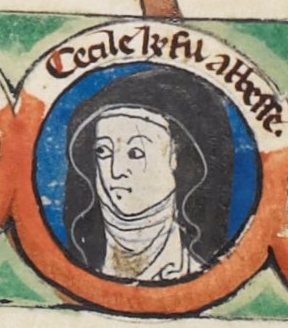
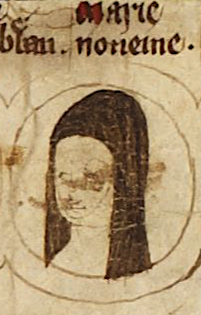
Some did escape this destiny. For instance, a number of William the Conqueror’s daughters became nuns. Cecilia had that life decided for her from a young age, but Adelida appears to have chosen this course after a number of failed marriage proposals. Perhaps she had had enough of the royal marriage market? King Stephen’s daughter, Mary, was also destined for the Church, with her parents even founding a religious house for her. Kidnapped for her royal blood, and forced into marriage, she would return to the convent after becoming a mother. The scandal was not of her making, unlike Gunhild, the daughter of King Harold II, who seems to have had a rather relaxed attitude to marriage and relationships; a woman before her time – by about 1,000 years! Gunhild had spent time in the convent, possibly having sought sanctuary after the Norman Conquest. There is uncertainty as to whether she ever took her vows; though the church seemed to believe she had and sought her return to the cloistered life.
Mary of Woodstock
Edward I’s daughter, Mary of Woodstock, was also destined for a career in the church, though she does not appear to have been suited to the contemplative lifestyle. She managed to spend as much time as she could at court; her father and brother regularly paying off gambling debts. Controversy even followed her beyond the grave, when John de Warenne, Earl of Surrey, trying to obtain a divorce from Mary’s niece, Joan of Bar, claimed that he had had an affair with her, a nun!
The last medieval royal nun was Bridget of York, the seventh and youngest daughter of Edward IV and Elizabeth Woodville. Only 3 years old when her father died and she and her siblings were declared illegitimate, by 1489 Bridget was living at Dartford Priory, in the care of its Prioress, Elizabeth Cressener. Although she was cloistered, Bridget was not forgotten, nor isolated from her family. In 1492, she was able to attend her mother’s funeral. She was remembered in the will of her grandmother Cecily Neville, Duchess of York and Elizabeth of York’s wardrobe accounts from 1502 to 1503 indicate that the queen sent money to her sister at Dartford.
One English princess travelled far from home, into Kyivan Rus. King Harold’s oldest daughter, Gytha, came from a different society and generation. The Godwin family had strong Scandinavian ties, and it would have been natural for Gytha and her brothers to look for shelter and a future within that sphere, which stretched all the way to the court of the Grand Princes of Kyiv, as far away from the conquering Normans as possible.
Following the Norman Conquest, the focus of England’s foreign policy changed. Royal daughters were married into the European countries that would benefit England, those with close links geographically and culturally.
While English kings married French princesses, and Scottish kings married English princesses, the reverse happened rarely, if ever. Only one Scottish princess, Matilda of Scotland, married an English king, Henry I. And no English princess ever married a French king or an heir to the French throne, not in medieval times. The closest we came to it was Blanche of Castile, granddaughter of Henry II and niece of King John, who married the future Louis VIII. With John having no legitimate daughter at the time, he had to be creative and reach out to his wider family for a suitable princess to cement the fragile peace between him and Philip II of France.
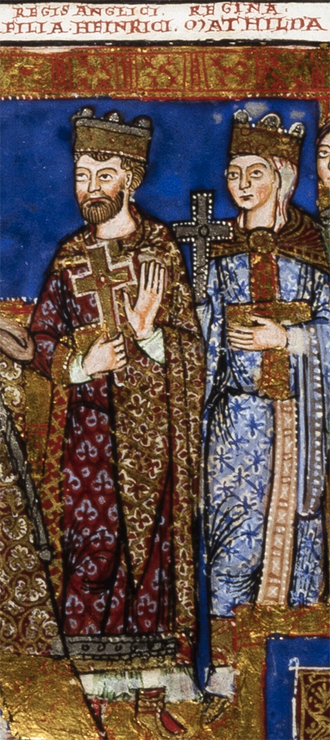
Empress Matilda depicted at the coronation of her granddaughter, Matilda of England, as Duchess of Saxony, in an image from the Gospels of Henry the Lion.
Although no English princess became a queen of France, that is not to say English princesses did not marry Frenchmen. It is, perhaps, a clear indication of the animosity of Anglo-French relations in medieval times that kings of England were far happier to marry their daughters to the counts and dukes of the many semi-autonomous regions of France, such as Brittany, Toulouse and Blois; regions that challenged and stalled the expansion of the kingdom of France itself. The marriages of daughters into Germany, the Low Countries and Spain also served the policy of containing England’s biggest rival within its borders and preventing expansion into territories that could threaten England’s trading routes and sphere of influence.
Royal women journeyed great distances to marry. Empress Matilda is, perhaps, the most famous, but also Joanna Plantagenet, Henry II’s daughter and Richard I’s sister, and Isabella, Henry III’s sister, travelled further than most of the English princesses. While Empress Matilda remained close to her family through letters, there may also have been a meeting with her father on the borders of their respective domains in the late 1110s. Of Joanna and Isabella, each received visits from their brothers. Though in Isabella’s case it was her brother Richard, rather than Henry himself, she would also have met up with her younger sister, Eleanor, who stayed in Italy while her husband, Simon de Montfort, joined her brother Richard on Crusade. And in Joanna’s case, it was a little more than a visit, joining her brother, Richard the Lionheart, in the Third Crusade. But it seems apparent that both brothers, on their way to the Crusades, planned their routes to facilitate a meeting with their respective sisters.
And then there were the scandals, King Henry I’s illegitimate daughter, Juliane, who tried to kill her own father with a crossbow. And Joan, Lady of Wales, the illegitimate daughter of King John, the wife of Llywelyn the Great, who was found in her husband’s bedroom with another man. Such stories serve to demonstrate that life was did not always give royal women a ‘happily ever after’.
There were also royal daughters who were not born as princesses, but achieved that style through their father’s claiming of the English throne. Of William the Conqueror’s daughters, only the youngest, Adela, Countess of Blois, was born ‘in the purple’. We know this as Godfrey of Reims wrote a poem saying just that:
The duke’s child would rise to become an excellent woman, The goddess did not think it sufficient for her to be of ducal status. The royal virgin obtained by fate that her father would be king. In order for Adela to be the daughter of a king, the Fates allowed the father to establish himself as king. Because the virgin was not allowed to leave the womb Her father owed the kingdom of England to her
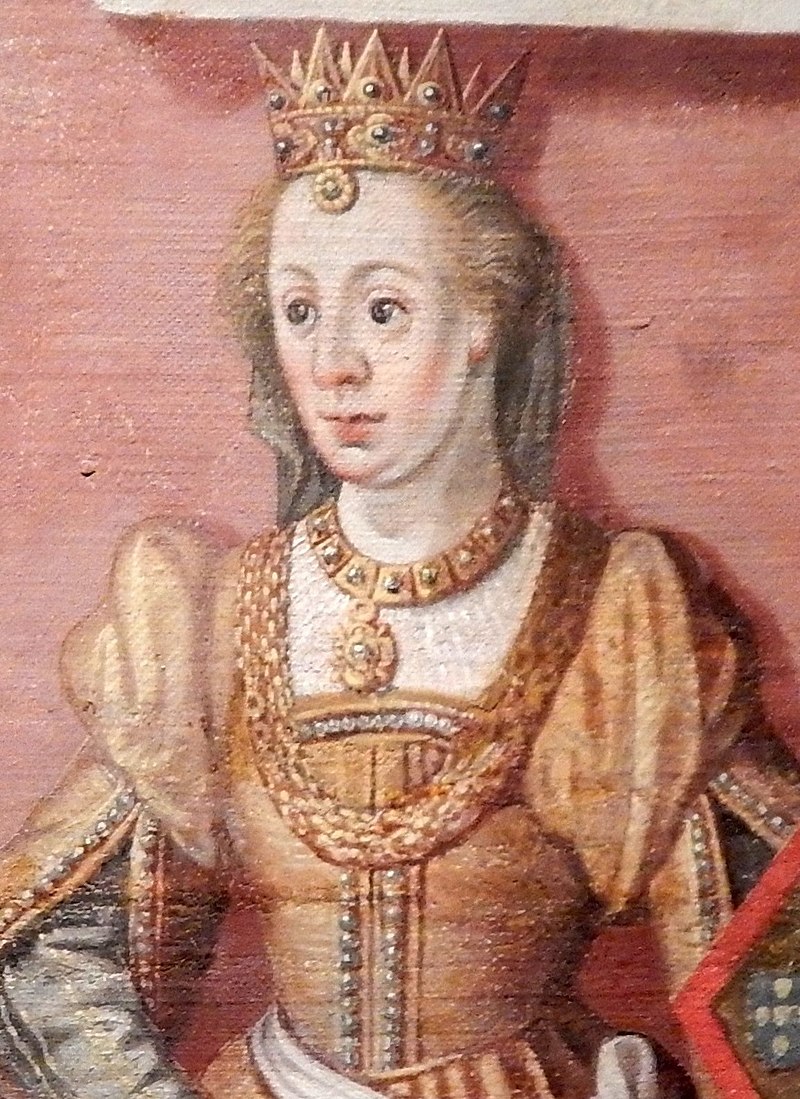
Philippa, Queen of Denmark, Norway and Sweden
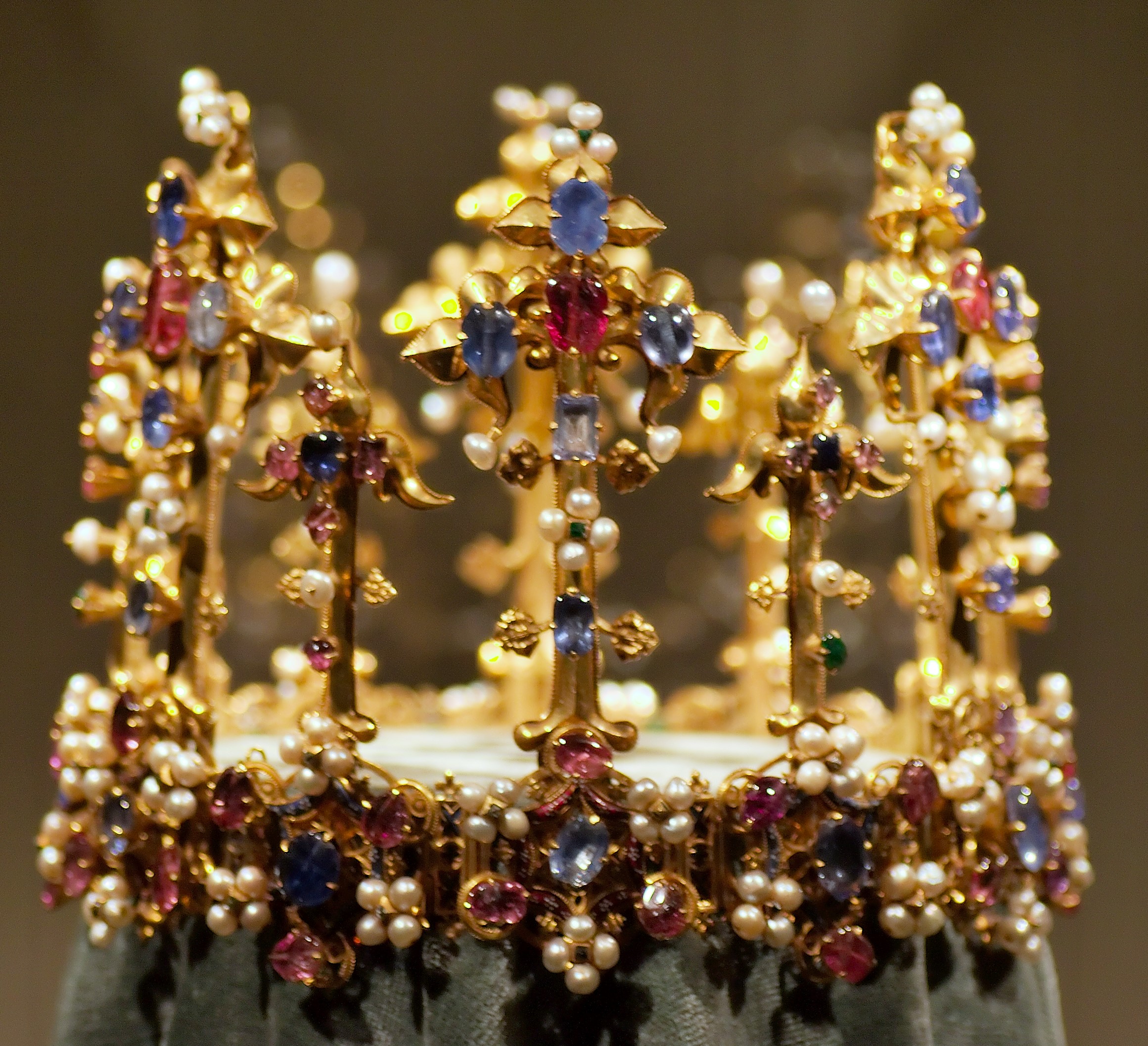
Later, Henry of Bolingbroke’s seizure of the throne in 1399 created two new princesses of England, Blanche and Philippa. Their mother, Mary de Bohun, had died giving birth to Philippa in 1394 and in 1398, their father had been sent into exile; only to return the following year and force Richard II’s abdication. Their father’s accession as Henry IV saw the two girls’ marriage prospects improve dramatically. As the daughters of a duke, they would have expected to marry a rich heir to English lands. As the daughters of a king, they were now bargaining chips in international relations. Marriage would see Philippa become queen of Denmark, Norway and Sweden, while Blanche would travel to Germany to become Countess Palatine, taking with her a magnificent, jewel-encrusted crown that has survived to this day. Blanche fulfilled her duties by producing a son and heir, in what appears to have been a happy and loving marriage. Philippa never realised the joy of motherhood but ably attended to her duties as queen in other ways, as a protector and patron of her people, even leading the defence of Copenhagen, and a trusted consort and regent for her husband, King Eric.
Though not technically princesses, even illegitimate daughters could prove useful to kings. Henry I, in particular, would use his 10 illegitimate daughters to strengthen and cement alliances just as legitimate princesses could have been, with one Sybilla of Normandy becoming Queen of Scots, on her marriage to King Alexander I. The advantage to a king was that such marriages brought kings and rivals into the family, without passing on any claim to the English throne, thus being no threat to the king’s legitimate heirs.
As a usurpation can make princesses, as in the case of Henry IV’s daughters, it can also unmake them. With Richard III’s seizure of the throne in 1483, the daughters of Edward IV went from being the pampered darlings of England, with glittering futures ahead of them, to the bastardised daughters of a bigamous dead king.
What a change in fortunes!
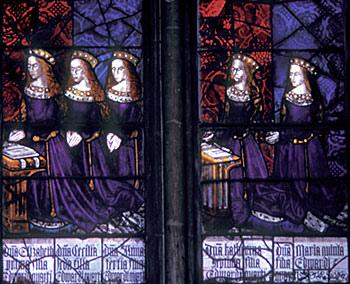
The York sisters from the window in Canterbury Cathedral
As events unfolded in the summer of 1483, and the two princes were held in the Tower of London, gradually seen less and less within the precincts of the fortress, until they were no longer seen at all, Elizabeth of York and her sisters remained in sanctuary with their mother. A focus for political disaffection and an embarrassment to the new regime, it was a situation that Richard III could not allow to continue. Rumours abounded that plans were afoot to sneak the old king’s daughters out of Sanctuary and away to the Continent, safely beyond the reach of Richard and at the disposal of loyal Yorkists wanting to reinstate the line of Edward IV. To thwart such plans, Richard decided to open negotiations with Elizabeth Woodville, to persuade her to allow her daughters to leave sanctuary. Agreement was reached in March 1484, whereby Elizabeth of York and her sisters would be treated as befitted the king’s kinswomen.
After almost a year within the confines of Westminster Abbey, the daughters of Edward IV emerged from their sanctuary and were given lodgings at court. They had lost the prospect of dazzling futures as queens and duchesses and their status was now forever tainted by the questions over their legitimacy.
Richard III himself did have at least two illegitimate children and one of those was a daughter, Katherine. She would not be a princess, but as the natural daughter of a king, she has her place in history. Unfortunately, the information on Katherine Plantagenet is scant. Her date and year of birth are unknown. Given Richard’s reputation for piety and loyalty, it is assumed that she was born before Richard’s marriage to Anne Neville in 1472, as she herself was married in 1484. The minimum age for girls to marry was 12, but most parents waited until their daughters were 14 or 15, at least, before finding them husbands. Richard chose his friend William Herbert, Earl of Huntingdon, as his daughter’s husband. Herbert agreed to provide Katherine with a jointure worth £200 a year. For his part, the king agreed to bear the costs of the marriage and to endow that couple with lands and lordships that they could pass on to their male heirs. Katherine died before the coronation of Elizabeth of York in 1486 and was buried in the church of St James Garlickhithe, London.
Crown of Blanche of England
The experiences of the royal daughters throughout the the medieval era are disparate, not just in their futures but even in their family lives as they were growing up. Not all princesses were made in the same mould and each one found her own way to deal with her life and the cards that she was dealt. In my research I frequently discovered instances of happy medieval marriages – and even if a marriage was not based on love, it did not mean that it would not be successful. Indeed, in many such cases the young woman concerned found her own way of succeeding, whether it was through her children or the management of estates – or the fact that a lasting peace was achieved between her two countries.
Events in England would surely have taught them to weather the storms of married life – and international relations.
One thing is certain, these women were not mere pawns, or ornaments on the arm of a king, prince, duke or lord. They were not simply baby-making machines. Yes, in the masculine world they inhabited, a boy was always a prime requirement. A son was needed to continue the family line, to rule and command armies. But daughters were also necessary. They had a purpose – to seal alliances and to act as diplomats to protect English interests in the countries into which they married.
Their stories are quite remarkable.
*
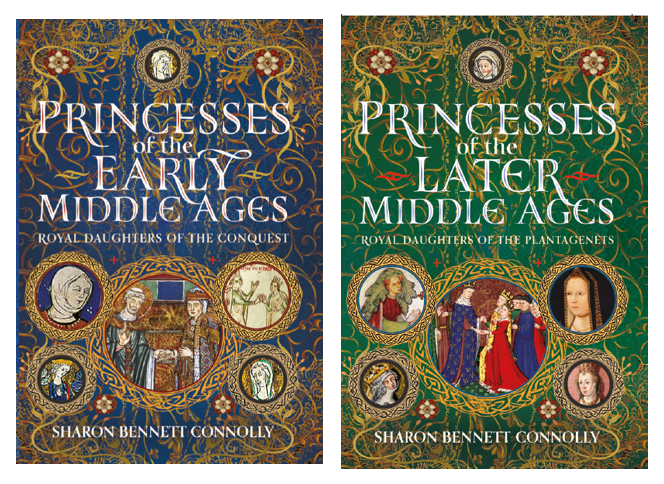
Princesses of the Early Middle Ages: Royal Daughters of the Conquest and Princesses of the Later Middle Ages: Royal Daughters of the Plantagenets tell the stories of England’s royal daughters from 1066 to the rise of the Tudors, from the last Anglo-Saxon princesses to the fall of the House of York.
Were they really pampered pawns sent off to marriages on the Continent, out of sight and out of mind?
Perhaps, there was different story, where a foreign marriage does not mean eternal exile, but a purpose in life, where a princess is a diplomat, an ambassador for England in her new country.
Where she is the bond between allies – most of the time.
Their stories are touching, inspiring and, at times, heartbreaking...
Praise for Princesses of the Early Middle Ages:
Heidi Malagisi: ‘This is another excellent book by Sharon Bennett Connolly. Extremely well researched and relatively easy to follow along, which is a great thing because there are so many Matildas and Eleanors in this book.‘
Tony Riches: “I challenge anyone with an interest in medieval Britain to not find something they will learn from this book.”
Anna Belfrage: “I just love how [Sharon] presents this huge cast of real life people in a casual, chatty tone that has me expecting the various female protagonists to suddenly pop their head up and add their own commentary.“
Praise for Princesses of the Later Middle Ages:
Elizabeth Chadwick:‘Really interesting and informative and gives a great handle on the goings on surrounding these ladies!’
Kathryn Warner: ‘A deeply researched, richly detailed and fascinating account of late medieval England’s forgotten princesses. I loved it!’
Signed, dedicated copies of all my books are available through my online bookshopor the Contact Me page.
New in Paperback:
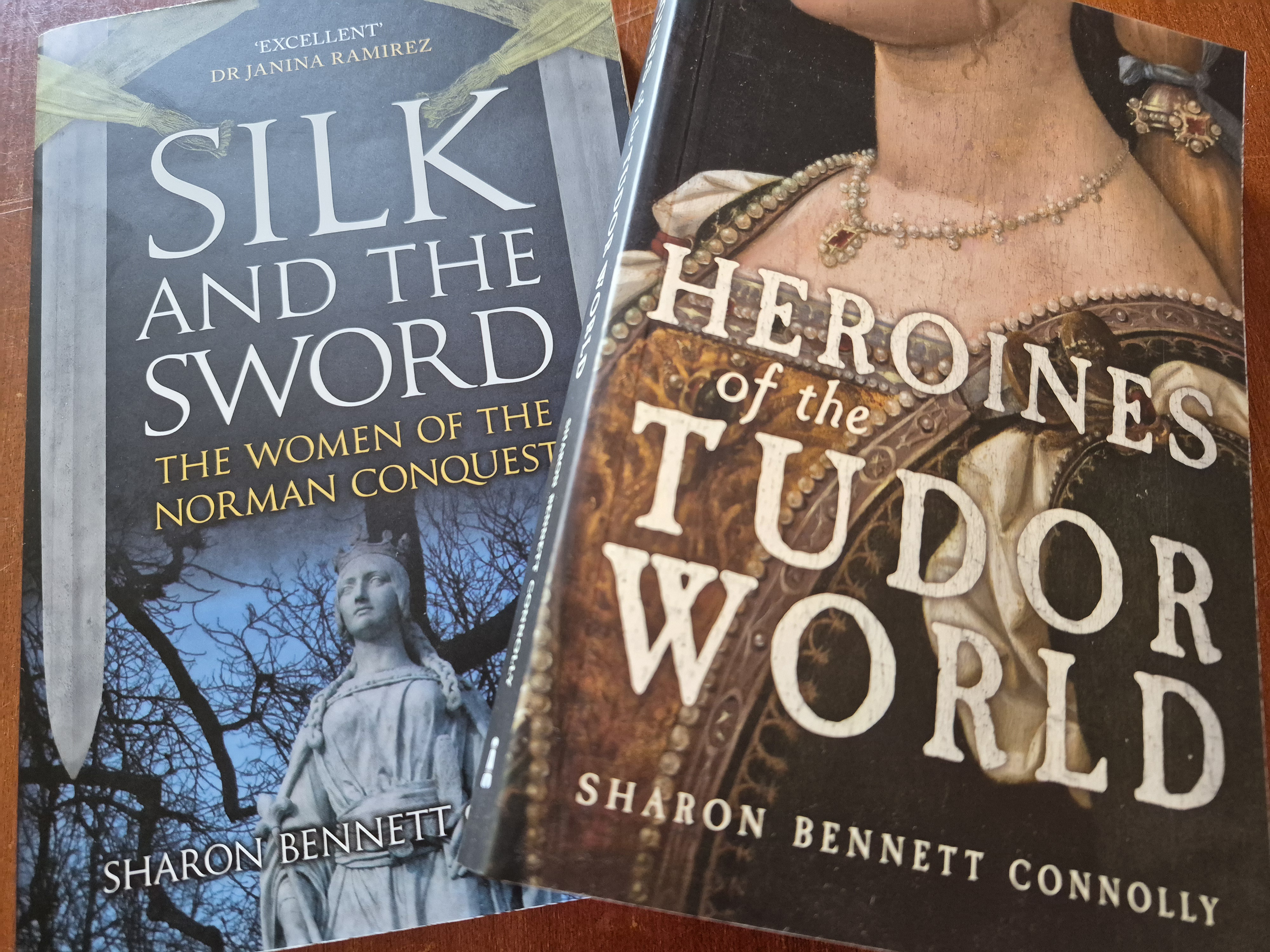
The momentous events of 1066, the story of invasion, battle and conquest, are well known. But what of the women? Silk and the Sword: The Women of the Norman Conquest traces the fortunes of the women who had a significant role to play during the Norman Conquest – wives, lovers, sisters, mothers, leaders. These are lives full of drama, pathos and sometimes mystery: Edith and Gytha searching the battlefield of Hastings for the body of Harold, his lover and mother united in their grief for the fallen king. Who was Ælfgyva, the lady of the Bayeux Tapestry, portrayed with a naked man at her feet?
Janina Ramirez said it’s ‘Excellent’!
Heroines of the Tudor World focuses on the women who lived through the Renaissance and Reformation, examining the threats and challenges they faced and how they overcame them. These are the women who ruled, the women who founded dynasties, the women who fought for religious freedom, their families and love. These are the women who made a difference, who influenced countries, kings and the Reformation.
Derek Birks: ‘An excellent account of the changing roles of women in Tudor society.’
Annie Whitehead: ‘What a treat this book was to read. Bennett Connolly has an easy, conversation style of writing which welcomes you from the opening pages and draws you into her story.‘
Also by Sharon Bennett Connolly:
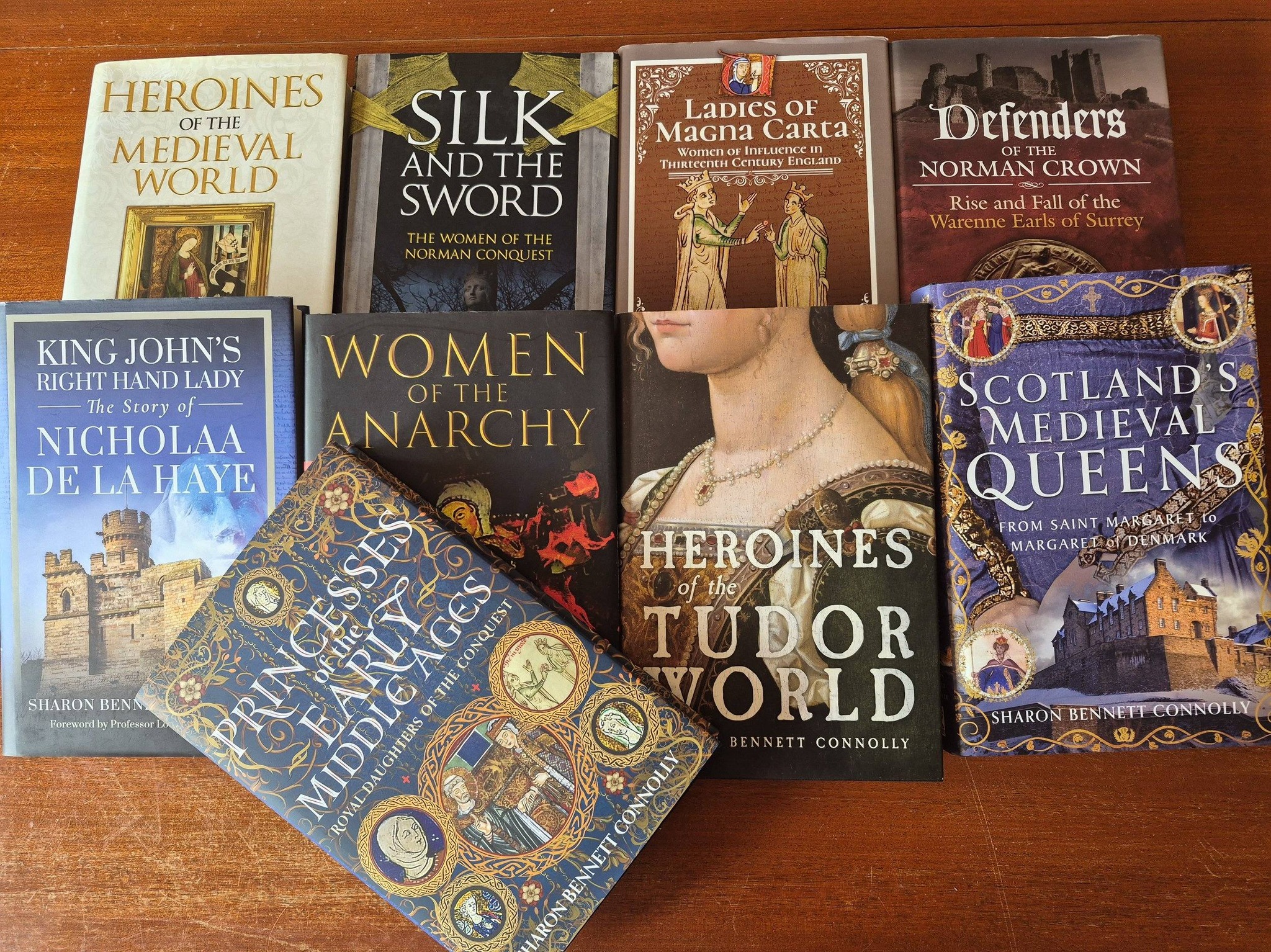
Heroines of the Medieval World; Silk and the Sword: The Women of the Norman Conquest; Ladies of Magna Carta: Women of Influence in Thirteenth Century England; Defenders of the Norman Crown: Rise and Fall of the Warenne Earls of Surrey; King John’s Right Hand Lady: The Story of Nicholaa de la Haye; Women of the Anarchy; Heroines of the Tudor World; Scotland’s Medieval Queens: From St Margaret to Margaret of Denmark; Princesses of the Early Middle Ages: Royal Daughters of the Conquest (March 2026); Princesses of the Later Middle Ages; Royal Daughters of the Plantagenets (August 2026)
Alternate Endings: An anthology of historical fiction short stories including Long Live the King… which is my take what might have happened had King John not died in October 1216. Available in paperback and kindle from Amazon.
Have a listen to theA Slice of Medieval podcast, which I co-host with Historical fiction novelist Derek Birks. Derek and I welcome guests, such as Ian Mortimer, Bernard Cornwell, Elizabeth Chadwick and Scott Mariani, and discuss a wide range of topics in medieval history, from significant events to the personalities involved.
Today it is a distinct pleasure to welcome Danna R. Messer to History … the Interesting Bits to talk about her favourite medieval heroine, Joan, Lady of Wales. I recently review Danna’s new, excellent, biography of Joanand now Dannais here to shine some light on Joan.
Joan, Lady of Wales by Danna R. Messer
When Sharon invited me as a guest she happily told me I could write on ‘any subject relating to Joan’. In theory, given such free range to write about one aspect of my long-lived preoccupation with this true ‘heroine of history’ was a blessing and should have been a cinch. In practice, it stumped me. I have just spent almost three years cobbling together my research to write a book about Joan, never mind the seven years spent using her activities and status as a centrepiece for my PhD research on the wives of native Welsh rulers, or the numerous years before and after exploring as many avenues as I could to find out more about her. What more is there to cover, especially on a woman whose presence only peaks through the evidence and events on what sometimes seems the rarest of occasions? Well, it turns out the answer to that is, there’s plenty. And that is what has stumped me.
By nature, my inclination was to either 1) lean further into her role as a ‘Welsh queen’ and try to continue unpack any of those layers that might still be pliable or 2) think more about her role and expectations as a wife. Old habits are hard to break – especially when these two factors combined have already helped in painting a portrait of her. But, I had to really ask myself, what is missing? What are the things that should be given further, serious consideration when it comes to understanding such a complicated woman as Joan – and by complicated I mean the complications of not only her general life circumstances, but the complications also related to lack of sources.
After much pondering and reflection, I have decided that the largest part of the answer to ‘what is missing’ is the most obvious and lies in Joan’s experiences and the human emotions that dictated every moment of her life. The study of emotions and their impact on how we react to our own worlds, the world at large and during ‘historical’ events has grown in importance over the past thirty years. The understanding of human emotions and how they make us tick as sentient beings should not, and does not, simply fall under the sole remit of psychologists or neuroscientists. It is also an understanding that should be embraced, or in the least, accepted by historians when writing about the past. As I have often said students taking my medieval history courses, ‘Nothing happens in a vacuum, right?’
Of course, I am aware of the debates surrounding the study of and emphasis on emotions when it comes to constructing a better understanding of history: the argument that emotions are culturally constructed and carry their own specific meanings in context to period and place and are therefore variable over time versus the more universal argument that people in the past felt the same way we do, about their lives, themselves, their relationships, their situations, simply because they, too, were people, human beings just like us. Whether emotions themselves have a history is a mute discussion here. The point is emotions play a role in every situation – for every one of us, in every waking moment of every day. For Joan and the characters that surrounded her, from Llywelyn to John, to Susanna to Dafydd, to her ladies in waiting and her own priest, this was also the case.
Although I do touch on aspects of Joan’s emotions and those of her loved ones, as a trained historian, that is all I felt I could allow myself to do. The human part of me wanted, and still wants to, throw them into the fray and exclaim, ‘Look! Can’t you see? She was [insert] angry/sad/stressed/annoyed/happy/excited/eager. That’s why she did what she did when she did it’. She was human after all. Perhaps this is why historical fiction is such a popular genre. An astute and attentive author like Sharon Penman can give, and has given, a woman such as Joan real depth, a personality, a visceral humanness that by nature is missing from any biography or history written on any individual whose own voice seldomly speaks from the grave.
Having researched Joan for well over twenty years, I often wonder what she thought, how she reacted, how she felt. I envision her as trepidatious – perhaps scared, excited or both — on her initial journey to Wales. I imaging frustration and annoyance at not being able to understand the language of her new home on arrival. The anxiety of ensuring she fulfilled her roles as Llywelyn’s consort and wife; the pressure she felt to learn and adopt the new customs at an accelerated speed. The desire to be accepted, the shame or anger at being rejected as a foreigner. As a bastard. An incomprehensible fear of looming death in 1211 for husband or her father, or even herself and her children. A sense of determination to do right by both her natal and martial families over her long career. A growth in her self-esteem from her younger years as a ‘political princess’ to a deeper sense of empowerment and prerogative as political diplomat, based on knowledge, experience and wisdom as she aged.
What about a sense of freedom? Did she have any, either carrying out her role as a ‘queen’, perhaps on circuit, or managing her own English lands? Or did she simply feel trapped deep down, but made the most of her situation? Undeniably, Joan understood her status and position with both her families and within Anglo-Welsh politics. I suspect moments of real pride in herself and her own achievements could be found in attaining legitimacy (including a sense of spiritual security and, I assume relief), and above all, her witnessing her son’s homage at Westminster, where she was there as a mother, but embracing and imbuing the real power of her status as a ‘queen’. From bastard to ‘queen’, not a bad climb up the social ladder. Perhaps all the more empowering with the thought that such an event essentially placed her publicly on par with a number of her female relatives scattered across Britain and the Continent, who themselves were queens.
Above all, I often wonder about love, the joys and sorrows it brought her. How long did it take for her and Llywelyn to build a relationship? Was there real love involved? What about William de Braose? Did Joan really experience the anguish of losing someone she loved because of her love? How difficult was it for her to love her father and face his cruelties? What about the worry and love that define motherhood, or parenthood in general? How did she feel watching her daughters leave, one by one, to pastures generally unknown, facing an uncertain future? What about her son, knowing full well that his position, his life, was forever in a precarious balance being Llywelyn’s chosen successor?
Such musings easily occupy the time, but should not be deemed frivolous. They really are important to take into consideration when thinking about Joan, Lady of Wales and her impact on history, evidence or no. Her emotions impacted her and influenced the decisions, actions and outcomes we write about and talk about when it comes to Britain in the early thirteenth century. In the words of one of my favourite writers, Ralph Waldo Emerson: ‘Life is a tram of moods like a string of beads, and as we pass through them they proved to be many colored lenses which paint the world in their own hue.’
Thank you so much to Danna for a fascinating article. Danna R. Messer’s book Joan, Lady of Wales: Power and Politics of King John’s Daughter is now available in the UK from Pen & Sword and Amazon.
About the Author:
I am a medieval historian by training and trade. My BA history honours thesis, many moons ago, at the University of Denver was, unsurprisingly, about Joan as a ‘political princess’. Researching her at that time, and over the pond, wasn’t terribly easy. I vividly recall asking a librarian for help when searching the (literal) card catalogue, telling her I was researching medieval Wales to which she responded with utter disbelief, ‘The things that live in the sea?!’ That may have unconsciously propelled my move to Britain after graduation. I earned my MA from the University of York, again using Joan as a centre-piece on the role of illegitimate daughters in England’s royal family. Whilst working full time at the Borthwick Institute for Archives at the University of York, I taught classes on medieval and women’s history for the Centre for Life Long Learning and studied for my PhD, via long distance, at Bangor University. My doctoral thesis is on the uxorial agency of the wives of native Welsh rulers, yet again, where Joan features as a case study.
Over of the past few years I have worked in publishing as an editor for medieval history. I am Acquisitions Editor at Arc Humanities Press, the academic publishing arm of the medieval network CARMEN. Part of my role with Arc includes being the Executive Editor for the Encyclopedia of the Global Middle Ages, an online encyclopedia run in partnership with Bloomsbury Academic and their Medieval Studies Digital Resource. I am also the Series Editor for both Medieval History and Women’s Studies, with Pen and Sword Books.
My other publications relating to Joan, Welsh queenship and medieval consorts to date include:
‘Volume 1: Norman to Early Plantagenet Consorts’, English Consorts: Power, Influence, Dynasty, edited by Aidan Norrie, Carolyn Harris, Joanna Laynesmith, Danna Messer and Elena Woodacre, 4 vols. (Palgrave Macmillan, 2022)
‘A Model of Welsh Queenship: Joan of England and the Medieval Court of Gwynedd’, Special Edition on Medieval and Early Modern Queenship, edited by Louise Wilkinson, Women’s History Review (2020)
‘Welsh Queenship in the Twelfth and Thirteenth Centuries’, Encyclopedia of the Global Middle Ages: Core Case Study (Bloomsbury Academic, 2019), Bloomsbury Medieval Studies, Web
‘Impressions of Welsh Queenship in the Twelfth and Thirteenth Centuries’, in A Companion to Global Queenship, edited by Elena Woodacre (ARC Humanities Press/CARMEN, 2018), pp. 147-58
‘Medieval Monarchs, Female Illegitimacy and Modern Genealogical Matters, Pt. 2: Joan of England, c.1190–1236/7’, Foundations: Newsletter of the Foundation for Medieval Genealogy, 1:4 (2004), 294-8
‘Filia Notha or Filia Regis?: Kinship and the Acquiescence of Royal Illegitimate Daughters, c.1090–1440’, Foundations: Newsletter of the Foundation for Medieval Genealogy, 1:1 (2003), 51-3
The history of women in medieval Wales before the English conquest of 1282 is one largely shrouded in mystery. For the Age of Princes, an era defined by ever-increased threats of foreign hegemony, internal dynastic strife and constant warfare, the comings and goings of women are little noted in sources. This misfortune touches even the most well-known royal woman of the time, Joan of England (d. 1237), the wife of Llywelyn the Great of Gwynedd, illegitimate daughter of King John and half-sister to Henry III. With evidence of her hand in thwarting a full scale English invasion of Wales to a notorious scandal that ended with the public execution of her supposed lover by her husband and her own imprisonment, Joan’s is a known, but little-told or understood story defined by family turmoil, divided loyalties and political intrigue. From the time her hand was promised in marriage as the result of the first Welsh-English alliance in 1201 to the end of her life, Joan’s place in the political wranglings between England and the Welsh kingdom of Gwynedd was a fundamental one. As the first woman to be designated Lady of Wales, her role as one a political diplomat in early thirteenth-century Anglo-Welsh relations was instrumental. This first-ever account of Siwan, as she was known to the Welsh, interweaves the details of her life and relationships with a gendered re-assessment of Anglo-Welsh politics by highlighting her involvement in affairs, discussing events in which she may well have been involved but have gone unrecorded and her overall deployment of royal female agency.
Finally!
I have got my hands on this much-anticipated book, Joan, Lady of Wales by Danna R. Messer. I have to admit, I devoured every word. Joan has been in need of a biographer for some time, and I am so pleased that Danna took up the challenge and produced this remarkable study of the illegitimate daughter of King John who became Lady of Wales as the wife of Llywelyn ap Iorweth – Llywelyn Fawr.
Ever since I have known this book was being written, I have been itching to get my hands on it!
Anyone who is a fan of Sharon Penman will have heard of Joan, and most likely have a soft spot for this incredible woman. This biography gives you the chance to study the facts, to meet the woman behind the story and read of how deeply involved she was in Anglo-Welsh relations in the first half of the 13th century. Danna R. Messer portrays a politically astute and powerful woman, aware of her duty, importance and capabilities, not only as the daughter and sister of England’s kings, but also as Llywelyns wife and consort – and as the mother of his heir.
Detail of the sarcophagus thought to belong to Joan in St Mary’s and St Nicholas’s Church, Beaumaris
Beautifully written, with clear, concise arguments and a passion for her subject, the author has brought Joan to life. This is a book that is impossible to put down. Danna R. Messer does not shy away from areas of controversy, either, examining every aspect of Joan’s relationship with William de Braose, the man who was hanged after being found with Joan in Llywelyn’s chamber. the deconstruction of the event, the aftermath and the repercussions make for fascinating reading – its worth getting the book just to discover how everything unfolded.
As are all life stories, that of Joan of England’s is complicated; the complexities of which are further irritated by a dearth of contemporaneous material related to her. The identity of her mother remains a mystery and is much debated by today’s genealogists, as is who her children were. how many she really had and where some even ended up in their own lives. How many times she travelled as an envoy, how many charters she issued and just how fully she participated in effecting Welsh polity can never be fully known. No matter the daunting aspect of approaching such an ill-documented existence, which is a painstaking project indeed, it is one that yields both exciting and long-overdue results.
This study of Joan of England seeks to revise the master narrative of native medieval Wales in the early-thirteenth century – to generate a better ad more inclusively nuanced understanding of the history of this fascinating and wild region of Britain and its relationship with England by placing this particularly interesting and fascinating woman at the forefront in the sequence of events…
Although Siwan’s role in Anglo-Welsh history has received recognition by historians, she has been still largely relegated to the sidelines; an indication that her role was not entirely critical to the stability and growth of Welsh polity, or peace with England overall. On the flip side, it is sometimes difficult not to naturally overplay our hand and emphatically conclude that Joan was, indeed, a heroine and that if it were not for her, the very fabric of native Wales would have been fundamentally altered by the time Llywelyn died in 1240. On balance, however, it is vitally important to understand that the aggregate of Joan’s interventions in the early-thirteenth century ensured that she really was a crucial player in the political wranglings between the ruler of Gwynedd and the rulers of England. The famous early-twentieth-century Welsh historian J.E. Lloyd concluded that Llywelyn ap Iorweth ‘had one emissary whose diplomatic services far outran those of the seneschal and who helped him in this capacity for the greater part of his reign. To the assistance of his wife Joan, both as advocate and counsellor, there can be no doubt he was much indebted.’ To the assistance of Joan, Lady of Wales, there can be no doubt that the history of native medieval Wales is also much indebted.
Joan, Lady of Wales by Danna R. Messer not only examines every aspect of Joan’s life, but places that life in the wider context of English and Welsh events, of Anglo-Welsh relations and of the place of women in Welsh society and history in general. This in-depth study provides an overview analysis of the status of women in Welsh history, the laws surrounding marriage and adultery, legitimate and illegitimate children and demonstrates how Joan’s own confirmation of legitimacy in the 1220s added prestige and legitimacy to her husband’s position within Wales and the wider sphere of Anglo-Welsh relations.
Arms of the royal house of Gwynedd
Danna R. Messer also explores the use of title and authority for women in the 13th century, depicting Joan as a queen, both in her actions and relationship with others. Although she was not crowned and anointed in the same manner as an English queen would be, she held the same level of authority and respect, both in the public and the private sphere of the Welsh court.
A collection of a bout 20 black and white photos help to illustrate Joan’s story, Joan, Lady of Wales is a stunning, comprehensive study of the unique character and position that Joan occupies in both English and Welsh history.
Despite a woeful lack of sources mentioning Joan, Danna has managed to tease out every piece of information she could find on Joan and her position and duties, not only in Wales as the wife and consort of Llywelyn, but also in England as the daughter and, later, sister of the king. Joan’s status as the primary diplomat in Anglo-Welsh relations comes through clearly in the way Joan was treated by her husband and the rewards she was given by the English crown.
In brief, in Joan, Lady of Wales, Danna R. Messer recreates the life and times of this incredible woman, giving us a more complete portrait than has ever been achieved since her own lifetime. We are given a full and complete analysis – as far as the sources and distance of time will allow – of Joan’s political and personal life, the good and the bad, including the scandal, the ambition and Joan’s own legacy and what it meant for those who followed her.
Joan, Lady of Wales has long needed her own biography, to bring her out from the shadows of the lives of her father, brother, husband and son – and this book does not disappoint. It is, quite simply, a beautifully-executed, fascinating and addictive read.
Joan, Lady of Wales is available in hardback from Pen &Sword and Amazon.
About the author:
Dr Danna R. Messer has published on various aspects of the wives of the native Welsh rulers before 1282, providing a gendered perspective of medieval Welsh politics. As an editor and historian, she is widely involved in medieval history and queenship studies generally, including her roles as Series Editor for Medieval History for Pen and Sword, editor for the Royal Studies Journal and editor for Normans to Early Plantagenet Consorts, the first volume of the forthcoming four-book series, English Consorts: Power, Influence, Dynasty (Palgrave). She is also Acquisitions Editor for Arc Humanities Press and the Executive Editor for the Encyclopedia of the Global Middle Ages, a partnership project with Bloomsbury Academic and Arc Humanities Press.



 History... the interesting bits!