Today I am delighted that History … the Interesting Bits‘ is hosting Matthew Harffy‘s blog tour for his latest release, Kin of Cain, with my review of this marvelous, nail-biting novella.
AD 630. Anglo-Saxon Britain. A gripping, action-packed historical tale set in the world of The Bernicia Chronicles. Perfect for fans of Bernard Cornwell.
Winter grips the land in its icy fist. Terror stalks the hills, moors and marshes of Bernicia. Livestock and men have been found ripped asunder, their bones gnawed, flesh gorged upon. People cower in their halls in fear of the monster that prowls the night.
King Edwin sends his champions, Bassus, Octa and band of trusted thegns, to hunt down the beast and to rid his people of this evil.
Bassus leads the warriors into the chill wastes of the northern winter, and they soon question whether they are the hunters or the prey. Death follows them as they head deeper into the ice-rimed marshes, and there is ever only one ending for the mission: a welter of blood that will sow the seeds of a tale that will echo down through the ages.
Matthew Harrfy is fast becoming a seasoned novelist. He has now written three full-length novels in his Bernicia series, with a fourth one due out in the summer. Kin of Cain is a novella which takes us back to before the very beginning.
Set before we meet Beobrand in The Serpent Sword, this novella, Kin of Cain introduces us to Beobrand’s older brother, Octa. It’s a wonderful story of five warriors who set out in search of a terrifying beast, who could be a giant, a descendant of the biblical Cain. What they know, is that the beast feeds on its victims, takes trophies and is practically unstoppable. It makes even the bravest of warriors freeze in fear; and is a story from which legends are born…
Kin of Cain lives up to Matthew Harffy’s usual high standard of story-telling. Fast-paced and full of suspense, it keeps you gripped to the very end. Full of action and with an atmosphere that transports the reader back five hundred years, it is a thoroughly enjoyable book which I devoured in two sittings.
Matthew Harffy is a master at transporting the reader back in time, to the Seventh century, where fighting for your life didn’t just mean fighting men, but also fighting your own fears and the supernatural. The five men selected to track down and defeat the Nihtgenga, are the bravest of the brave.
“Is it true that no blade can hurt it?” Edwin asked.
“I do not know,” said Paulinus.
“So far, this thing has killed women and boys,” Bassus growled. “Shepherds, thralls, ceorls. We shall see how it fares against a warrior.”
The men hoomed in the back of their throats. Bassus was huge and skilled in the arts of battle. It would take a lot to kill him.
“I cannot have this thing harm more of my people. I took Bernicia and Deira from Æthelfrith and promised the people – my people – protection. If they are unsafe, I am not a good king.”
The image of his father, Grimgundi, came into Octa’s mind then. His mother, sisters and younger brother cowering from the brute. Should he have stayed in Cantware to protect them from Grimgundi? He had known that he had to get away. His thoughts had turned dark, and he was no kin slayer. No kith of Cain.
“I will seek out this monster and slay him,” Octa said into the silence of the hall, his voice travelling beyond the small group of men, to those who lay feigning sleep.
“Will you, young Octa?” Edwin’s teeth flashed bright in the gloom. “Perhaps you will at that. But I will not send you alone. I would be sure that we are rid of this menace once and for all. Bassus, you will go with Octa.”
Octa, Bassus and their three companions have to track the monster halfway across Northumberland before the final showdown, discovering as much about each other, as about their prey, along the way; their mettle tested to its limits.
The characters are wonderfully vivid creations, each with their own histories and personalities. Octa himself is a courageous young man, while Bassus is the brave, stalwart warrior we know from all of Beobrand’s adventures. Matthew Harffy breathes life into each of his characters, as his does into the history and the landscape they have to hike through in search of the monster.
If you like action, adventure, suspense and a great story, this is the book for you. It is a great prequel to the Bernicia Chronicles. As usual, the story ends leaving you wanting more – maybe an entire series dedicated to Octa? We can only hope!
At least we only have a few months to wait for the next instalment of Beobrand’s adventures!
*
About the author: Matthew Harffy grew up in Northumberland where the rugged terrain, ruined castles and rocky coastline had a huge impact on him He now lives in Wiltshire, England, with his wife and their two daughters.
My book, Heroines of the Medieval World, is now available in hardback in the UK from both Amberley Publishing and Amazon UK and worldwide from Book Depository. It is also available on Kindle in both the UK and USA and will be available in Hardback from Amazon US from 1 May 2018.
You can be the first to read new articles by clicking the ‘Follow’ button, liking our Facebook page or joining me on Twitter.
Today over at the Review, you can read my take on Marie MacPherson’s biographical novel of John Knox and the Scottish Reformation, The Second Blast of the Trumpet.
And there’s a giveaway!
Here’s a taster:
What a fabulous concept for a series of novels! The Second Blast of the Trumpet by Marie MacPherson is the second instalment in her series charting the life of the Scottish preacher – and father of the Scottish Reformation – John Knox. This book is, at the same time, entertaining, informative and thought-provoking. Fast-paced and superbly written, the novel gives us an insight into the life of the fiery Scottish preacher that few people would know about.
Before reading this novel, the image I had of Knox was an angry, loud man who made Mary, Queen of Scots, cry and did not like women. He was, after all, the man who coined the phrase ‘the monstrous regiment of women’. Marie Macpherson brings Knox to life, putting flesh on his bones, so-to-speak, and introducing us to a complex man whose mission in life was to forge a path through the Reformation, and lead Scotland away from Rome.
To read the full review of this fantastic novel – and to enter the prize draw and be in with a chance of winning one of two e-book copies in the giveaway, simply visit The Review and leave a comment. Good luck!
*
My book, Heroines of the Medieval World, is now available in hardback in the UK from both Amberley Publishing and Amazon UK and worldwide from Book Depository. It is also available on Kindle in both the UK and USA and will be available in Hardback from Amazon US from 1 May 2018.
You can be the first to read new articles by clicking the ‘Follow’ button, liking our Facebook page or joining me on Twitter.
Today it is a pleasure to welcome Trisha Hughes to the blog, with a guest post about her latest book, Vikings to Virgin – The Hazards of Being a King, which will be released on 28th February, 2017.
When we think of Britain’s monarchs, most of us would agree that early periods of time are clearly muddled. Many are hidden in the mists of time while some have almost completely disappeared. What we do know is that there were kings who ruled for only a few months and there are some who ruled for over fifty years. There are also some who should never have ruled at all. They include, among their number, the vain, the greedy and the downright corrupt as well as adulterers, swindlers and cowards.
Yet this group also shares one thing in common. In their lifetimes, they were the most powerful individuals in the land.
My story, ‘Vikings to Virgin – The Hazards of being King’ spans 1500 years and is full of lust, betrayal, heroism, murder, cruelty and mysteries. It’s a journey through time when the Romans began their march through Britain and travels through Saxon times, the Vikings, the Normans, the Plantagents and finally the Tudors.
History is full of savagery and cruelty but there are none more brutal than the Wars of the Roses during the Plantagenet dynasty.
This period of time was basically a terrible family squabble that ended up a bloodbath between royal cousins where each house was eager to snatch the crown and the throne of England for themselves away from other family members. But as with most rebellions, it left both sides vulnerable since it usually meant that battles were fought ‘to the bitter end’, leaving fewer contenders alive after every battle.
It was a dangerous period full of unfathomable brutality, shifting alliances, murders, betrayals, plots and savage elimination. It ended when Henry Tudor usurped the throne from Richard III, the last of the Plantagenets, and a different sort of battle began as he continued on the bloodbath with gusto.
Richard III’s story is not too different from many others in history. It’s a story of ambition gone awry and the damage it leaves in its wake. He was the twelfth of thirteen children of Richard Plantagenet, 3rd Duke of York (a strong claimant to the throne himself) and Cecily Neville (who was also a direct descendant of John of Gaunt, a son of Edward III).
What makes Richard different from most of his ancestors is the crime that’s been associated him. His interest in the throne was plain and his character has proven to be ruthless. We are led to believe that his young nephews were held captive in the Tower, never to be seen again, while he simply stepped in and took the throne from under everyone’s noses. Presumably he had them murdered.
But was it actually Richard who ordered their murder as it’s been assumed throughout history?
That the princes were murdered is certain. But the question is, by whom and I have an opinion or two of my own that I’d like to share with you from my book.
“Suspect Number 1. There have been a few names pulled out of the hat and the first one is definitely Richard III. He had the most to gain from their death and he had the personality to do it. He had been implicated in the death of Warwick as well as the suspicious death of his brother Edward IV, which is something we should not forget as Richard gained dramatically because of that.
Suspect Number 2. No man had done more to place Richard on the throne than Henry Stafford, 2nd Duke of Buckingham. Yet strangely and suddenly, during the first three months of Richard’s reign, Buckingham suddenly changed his allegiance completely and became Richard’s mortal enemy. Why did he do that? Was it perhaps his dislike at being an accomplice in what was seen as the usurpation of the throne and the murder of two young children? Perhaps he feared for his own safety? Ah, and then we ask … wasn’t he of royal blood as well, being a descendant firstly through John Beaufort, son of John of Gaunt, and secondly, through the bloodline of Thomas of Woodstock, Edward III’s fifth son? If anything happened to Richard’s son, Buckingham’s bloodline could be strong enough to claim the throne. Knowing the Yorkists’ relish for using the chopping block, it wouldn’t have made him feel very safe. Not at all.
So very soon after the coronation, Buckingham changed sides dramatically and no one knows why. What we do know is that his job was one of responsibility and he was in charge of the safekeeping of the boys between June and July. Suffocation was probably the method of killing them, especially when you consider their youth and frailty, and it was a tried and true means of getting rid of someone you didn’t want around.
Suspect Number 3. In the background was Lady Margaret Beaufort, mother of Henry Tudor. No other mother in history seems to have been as dedicated as she was to have her son sit on the throne. But she would not have done it herself. There would have been a third party involved.
In 1472 after the death of her second husband, Margaret did the unthinkable and arranged for her own marriage to a prominent widower, Thomas Stanley, 1st Earl of Derby who was in good standing with Edward IV. By all accounts, the marriage was one of pure convenience. This marriage enabled her to return to the court of Edward and Elizabeth Woodville and she was chosen by Elizabeth to be her daughter’s godmother. After Edward’s death and Elizabeth’s rush to sanctuary in Westminster Abbey, Margaret became Anne Neville’s lady-in-waiting carrying the train at Anne’s husband’s coronation. Richard had already stripped Margaret of her titles and estates and had given them all to her husband, Lord Stanley, which was a meaningless gesture as he would already have had the rights to her property as her new husband anyway. During all of this, she was actively plotting with Elizabeth Woodville and had betrothed her beloved son Henry to Elizabeth’s daughter, young Elizabeth of York. She has been called a formidable opponent of Richard III, a habitual conspirator and a dedicated promoter of her son’s cause.
Within a couple of months of Richard’s coronation, Margaret’s nephew Buckingham from her previous marriage, (yes it is complicated), raised a rebellion against Richard in favour of Henry Tudor and you can bet she used every bit of her influence on him to encourage the rebellion. She would have promised him anything for his support.
I guess my question right now is: why did Buckingham raise the rebellion in favour of Henry and not for the princes since nobody apparently knew they were already dead? Did he actually know they were dead and was he the one who gave the orders to kill them? In view of that and the fact that Buckingham had no immediate motive to move against Richard except that he had a very distant claim to the throne himself, what could he hope to gain by attacking the king in such a wild and reckless rebellion after having sworn his loyalty one month previously? My guess is Margaret Beaufort had a hand in it. As a consequence of the failed rebellion and Buckingham’s death, Margaret’s current husband, Lord Stanley, was promoted to the position of High Constable in charge of all prisoners in the Tower. Food for thought.
All Margaret wanted was for her son Henry Tudor to sit on the throne at any cost. At the beginning of Buckingham’s rebellion, she sent word to Henry who was living in abject poverty in France with his uncle Jasper Tudor and told him to gather forces and hurry home. To me, it seems she was pulling the strings and had everything planned and under control.
And here is something else to think about – if Henry Tudor defeated Richard III in battle, Henry would not necessarily become king, as the throne would theoretically be restored to young Edward V who might have been in the tower. However, the princes’ ‘removal’ would leave her son Henry as the prime candidate for the throne. Are bells ringing in your head yet?
Suspect Number 4. Henry Tudor had a great need to be king and he was the plausible alternative … but only if the two princes weren’t around. Henry was a Welshman, whose grandfather, Owen Tudor had been a page in the court of Henry V and as we know, Owen is reported to have secretly married Henry V’s widow, Catherine of Valois. One of their sons was Edmund Tudor, who in turn married Margaret Beaufort at the age of twelve.
Perhaps at this stage, I should remind you that Henry Tudor’s grandmother Catherine of Valois was the sister of Charles VI of France who had sadly inherited a ‘crazy’ gene and we saw this gene pop its nasty head up during Henry VI’s reign. Although Henry Tudor’s claim to the throne was through his mother and the House of Beaufort as far back as John of Gaunt and Edward III, this gene from his paternal French grandmother should not, perhaps, be forgotten regarding future generations and their actions.
It has been suggested by some historians that Richard had stashed the princes in the Tower of London for safe keeping while he ruled in peace after having declared them illegitimate. It has also been suggested that it was in fact Henry Tudor, when he was King Henry VII, who had the princes executed between June and July of 1486 when his stepfather, Lord Stanley, was High Constable of the Tower two years later. Richard was long gone by then. It was only after this date that orders went out to circulate the story that Richard had killed the princes. This could easily have been to cover up Henry’s own involvement in their murder. It has also been suggested that Elizabeth Woodville knew that this story was false, and so Henry had to have her ‘silenced’ by confining her to a nunnery where she died six years later. All very plausible.
When you think about it, it seems impossible that no one knew what happened to the Princes after they entered the tower. Richard III, Henry VII and Elizabeth Woodville would have had their spies out and all of them would have known the boys’ whereabouts and welfare. If both boys had died, the matter could have been discussed and the culprit would have been blamed openly. But neither Richard III nor Henry VII did so with the reason being that if the princes were alive, the boys’ claim to the throne was better than either of theirs. The princes would simply have had to go in either case. It’s something we will never know and it is history’s best-kept secret.”
‘Vikings to Virgin – The Hazards of being King’ is a rambling narrative beginning when the Britons first glimpsed a square sail and a dragon-headed prow on the horizon, churned by oars through the waves as blue water foamed around the hull of a mighty ship one cold, miserable January morning. No one heard the muffled sounds over the water. They were still rubbing sleep out of their eyes after a savage night of arctic air had cut its way through cracks in the walls.
It’s a story of kings who struggled to hold on to their throne, of horrendous bloody battles, of tiny boys becoming rulers, of ruthless usurpers and of queens who proved to be more powerful than anyone could have ever imagined. It’s a story of invading armies, of rival family members, of spies and conspiracies.
And I’ve loved every minute of it.
About the author:Trisha Hughes started her writing career with her autobiography ‘Daughters of Nazareth’ eighteen years ago. The debut novel was first published by Pan Macmillan Australia and became a bestseller in 1997 beating the current Stephen King book to the top 10 bestsellers at the time. Since then she has discovered a thirst for writing. She’s written crime novels but her latest book, the first in her ‘V 2 V’ trilogy, ‘Vikings to Virgin – The Hazards of being King’ is her passion and due for release on 28th February 2017. She is currently working on the second in the series ‘Virgin to Victoria – The Queen is dead. Long live the Queen.’
My book, Heroines of the Medieval World, is now available in hardback in the UK from both Amberley Publishing and Amazon UK and worldwide from Book Depository. It is also available on Kindle in both the UK and USA and will be available in Hardback from Amazon US from 1 May 2018.
You can be the first to read new articles by clicking the ‘Follow’ button, liking our Facebook page or joining me on Twitter.
Today I welcome Mary Ann Van Sickle to History…the Interesting Bits to talk about her journey of discovery of her family history and her relationship with the Ducal Tower of Siedlecin:
Tell me a tale of majestic castles with beautiful princesses and gleaming knights of the round table, and I will always be enchanted. It’s not any wonder. I’m a California girl who grew up with regular visits to Disneyland and an overdose of every animated fairytale produced by Walt Disney from Cinderella to Frozen. I have yet to outgrow my affinity for all things magically medieval. Happily, I’ve watched that legacy pass from my daughter to her own daughter, Sarah. It was never more evident than just this week when our entire family spent a delightful day at the “Happiest Place on Earth.” My heart still skipped a beat as we walked through Sleeping Beauty’s Castle and heard Jiminy Cricket softly singing “When You Wish Upon a Star” over the delighted squeals of children and the calliope of King Arthur’s Carousel. It was on the drawbridge that my daughter snapped a photo of four-year-old Sarah who had just been transformed into a princess at the Bibbidi Bobbidi Boutique. Despite the drizzling rain, she was clearly spellbound under the shadow of the beautiful castle. I smiled recalling that I had experienced the very same enchantment some 5,000 miles away in a tiny village in Poland last summer. You see, I have a love affair with my own fairytale “castle.”
First a little history… Once upon a time there lived a Duke named Henryk I of Jawor. Early in the 14th century, he inherited his a “dukedom” (the country, territory, fief, or domain ruled by a duke or duchess) from his father Duke Bolko I Surwowy the Strict (Why he was “strict” is not quite clear to me…) The land he inherited is in Siedlęcin near Jelenia Góra in Lower Silesia, Poland which was one of the richest regions in Central Europe. In 1313, the Duke commissioned the construction of his Ducal Tower which more than likely was built as a hunting lodge. Overlooking a primeval forest on the Bober River, the Duke and his Duchess, Agnes of Bohemia, created one of the largest and best-preserved medieval tower-houses in Central Europe which remains virtually unchanged since the 14th century. It is one of more than fifty castles built by Bolko I and his descendants.
From the very beginning the tower was surrounded by a moat and a perimeter stone wall with the approach from a wooden drawbridge. Research has determined that in its initial design, the tower had slit windows and window seats with Gothic trefoil framings. These early medieval windows were filled with round crown glasses while the spaces between them were filled with tiny triangular pieces of glass. The original tower contained a Great Hall, a full cellar, a “warm chamber” (a room with a fireplace), a large oven and even a primitive privy.
The most impressive level of the Keep is the second floor called The Great Hall. Designed for ceremonial purposes, it had rich interior decoration including a beautiful wall of mural paintings of Lancelot du Lac from Arthurian legend. Commissioned in 1345 by the Duke and his Duchess, the mural on the south wall of the Great Hall occupied more than thirty-two square meters. According Dr. Przemyslaw Nocun, an archaeologist of the Jagiellonian University in Kraków, Poland, Duke Henryk was not only the first to commission Arthurian paintings in one of his castles, but he might well have founded an order of chivalry based on the legend of the Knights of the Round Table. The main subject of the murals is the romantic story of Sir Lancelot of the Lake, one of the most famous legendary knights of the Middle Ages. And it’s incredibly beautiful and mysterious and romantic. When climbing to the Great Hall on the creaky wooden stairs, you are suddenly overcome by the beautiful pastel shades of the mural. The colors seem ephemeral and dreamlike. Frozen in time, the knights on their horses and Sir Lancelot kneeling over his Guinevere appear as a momentary memory.
How could one not fall in love with this magical castle? I know I did, but it was quite by accident. In the summer of 2015 I traveled 5,000 miles in search of my grandfather, Heinrich Wilhelm Ludwig of Emmett, Idaho. But along the way, it was my chance meeting of the quaint Ducal Tower that opened up an entirely new world of discovery.
I’ve been on the trail of my family history since 1981. The pursuit of genealogy might seem cumbersome to some, but to me it is a patchwork of people, places and stories that form the fabric of myself. Madeleine L’Engle, author of the children’s classic “A Wrinkle in Time” summed it up the best. “If you don’t recount your family history, it will be lost. Honor your own stories. The tales may not seem important, but they are what binds families together and makes each of us who we are.”
My family is not all that remarkable but I am fortunate to have come from a family of record keepers and storytellers. Ancestry was important on both sides of my family. Since Kodak introduced it’s first Brownie camera, my family has been recording traditions and celebrations, births and marriages. Letters, journals, certificates and diplomas have also found their way into boxes marked “Keepsakes.” I cherish these magical boxes which have given me countless hours of pleasure as I’ve assembled the pieces of my family history like an intricate puzzle. When my father passed away in 2009, I was made the “Keeper of Keepsakes.” I soon realized that he kept every piece of paper and photograph that would connect me to the secrets of my tree. It was my job to put them all together.
My interest has been piqued for years with my father’s humble beginnings. Born in Emmett, Idaho in 1923, he was the youngest of three sons born to Henry William (née Wilhelm Heinrich) Ludwig and Lottie Nida Belle. My grandmother was born in the Appalachian community of Salt Rock, West Virginia. My grandfather, however, was born in Germany and immigrated to America as a toddler. Despite having Ludwig as my maiden name, I never knew too much more about my German heritage. But I knew the name of the village he was from – Boberröhrsdorf of Lower Silesia.
Everything I knew about the Ludwig family in Germany is from the actual words of Wilhelm Heinrich Ludwig, my grandfather’s father. (My grandfather, Heinrich Wilhelm, was his father’s namesake with the names reversed.) Remarkably, Wilhelm, a Master Blacksmith kept a journal in which he wrote down his daily activities, financial transactions, gifts received from family on the birth of my grandfather Heinrich, recipes and even his favorite hymns and poetry about his love for the Prussian empire.
From 1845 to 1883, Wilhelm kept a record and the key to his life. Had he not done so, I doubt I would ever have discovered his beautiful homeland or it’s magnificent Ducal Tower. Written entirely in German, the English translation had been done long before I was born. There is no reference to who provided the translation, but it had to have been a tedious job. My Aunt Helen (the wife of the middle Ludwig son and my Dad’s older brother, Ernest) was also a determined family genealogist. She kept meticulous notes and eventually expanded the translation to include a chronological list of financial transactions, names of cities and towns mentioned with maps, detailed summaries of what was happening in Germany at that time and an alphabetized list of names mentioned in the Journal.
Since there is not an existing photograph of Wilhelm, the contents of the Journal has become all the more precious. I was finally able to hold Wilhelm’s Journal in my very own hands for the first time last year in October. For such a priceless record of his life, I was surprised at how significantly insignificant it was. The Journal is no more than a two-by-five inch notebook with a thin cardboard cover. I thought of how easily it could have been lost or thrown away as it changed hands over the course of 170 years. The keeper of the journal is my cousin Forrest Ludwig, the son of my Uncle Marion who was the oldest of the three sons of Heinrich (later Henry and Lottie). He and his wife live beautifully secluded in the mountains near Boise, Idaho. As my cousins and I sat in his living room passing the journal from hand to hand, we all commented on the exquisite handwritten script. I attempted to photograph the pages, but because of its size and the brittle pages, it was difficult to do so adequately. Still it is a wonder to behold. I’ve had dozens of similar little notebooks I have scribbled in during my lifetime. How could Wilhelm have ever had known that 168 years later his great-granddaughter would have followed his notes and fallen so completely in love with the village he had called home. Unfortunately no photo exists of Wilhelm, so this tiny journal becomes all the more precious. And it was the translation that pointed me in the direction Germany.
As I said, the little village of my Grandfather’s birth was Boberröhrsdorf. Indeed a mouthful, I eventually even learned to spell it! But knowing the German name won’t necessarily lead you directly to it. In fact, it took me years of searching to find it. The border between Germany and Poland changed dramatically at the end of the World War II. In 1945, after the defeat of Nazi Germany, Poland’s borders were redrawn and areas which had been for many centuries been populated by ethnic Germans became part of a newly enlarged Poland. In short, tiny Boberröhrsdorf was wiped off the map and became the Polish city of Siedlęcin. In July of 2015, I took an extensive tour through Central Europe as part of a Holocaust Memorial Tour. Almost as an afterthought, I decided to extend my trip for an extra four days to try to find my Grandfather’s village.
On July 23, I made the following entry on Facebook:
“As this tour ends, a new journey begins early tomorrow. I am flying to Wrocław, Poland, renting a car (!!!!), then driving (carefully) 90 minutes to my Grandpa Ludwig’s village in Boberröhrsdorf – now Siedlecin. I will be romping through cemeteries, meeting with a museum curator, knocking on church doors – and maybe knocking on some Ludwig/Schiller cousin doors as I look for a house owned by Grandpa’s half-brother, Hermann. Asked if I was nervous to travel alone, I replied, “No. I have a lot of angels traveling with me and many hearts I carry as I make my way there. Especially my Dad. He will be my co-pilot!”
With the warmth of my Dad’s spiritual encouragement, I turned off the Autostrada (Poland’s sleek version of our freeways) and drove through the breathtaking back roads of Lower Silesia. Riding shotgun in my tiny red car were my paternal grandfather Henry William Ludwig, and his parents Ernestine Schiller and Wilhelm Heinrich Ludwig. And we were all heading toward a tiny fairy tale village they had left behind more than 130 years ago….
Somehow I knew it would be beautiful. My grandfather was an artist with a God-given gift. There seems is no other explanation why a poor sawmill worker of Emmett, Idaho with no formal art training could create such majestic American Southwest landscapes in oils. His work is extraordinary with incredible detail and technique.
Beautiful desert scenes of his beloved American Southwest were his signature. But as the rolling hills of the lush Polish countryside blinded me with greens I had never seen before,I was reminded of some of his other oil paintings. One was of an inviting woodland cottage which proudly hangs in our living room.
These woodland paintings had always been my favorite. They were somehow more inviting and familiar to me than his other works. I was forever grateful when this was the painting my father gave to me. I wondered what Grandpa’s inspiration had been. It certainly did not look like Idaho where he had lived since immigrating to America as a toddler. Was it from a postcard or a book? Or was there some distant lingering memory of his distant homeland?
Within ten short miles of my destination, there seemed to be clues as the church steeples began to change form. And as I rounded the corner, I pulled over to the side of the road. My heart stopped when I saw a picturesque church spire I knew I had seen before.
I had seen it in one of Grandpa’s paintings predominantly displayed with love in the living room of my cousin Karen Ludwig Scott of Boise, Idaho. Could this familiar little Polish church more than 5,000 miles from Emmett, Idaho be the same as the one in this painting? I stood at the gates of this little church for a long time just gazing up at the steeple. I took photo after photo trying in vain to hold on to this extraordinary moment.
After thirty years of collecting and logging photos, letters, taped interviews, home movies and countless ancestral charts, my journey had actually led me to this moment of complete connection. My family history was not about the countless notebooks I had filled with facts, but rather about the very real people who lived and laughed and loved. And I was only a few miles from another door of discovery about them and myself. I took one last photo from my little red car within a tunnel trees. Then along with my undeniable angels of family past surrounding me, we headed towards Boberöhrsdorf….
Then I saw it! I knew I had arrived home before I was even there. It was the sloping roof of the Ducal Tower through the trees.
I was absolutely in awe of the stately medieval castle keep and while looking up, I drove through the old gate that looked like the entrance but was actually the ancient remains of the moat. Unaware, my little red car got stuck when I tried to make a U-turn. I had to flag down two British visitors (one with a baby in a Snugli) and the shopkeeper of the gift shop, Monika Filipiñska. Together, we were able to free my car as I became a legendary moment in the life of the Siedleçin Ducal Tower. I became forever more “thatAmerican lady who drove on the moat.”
Relieved that I had not lost life and limb, Monika Filipińska became the gracious angel who guided me toward the discovery of the Ludwig family from Boberröhrsdorf. She first directed me to the two cemeteries just up the hill from the Tower so I could look for any headstones with familiar names. As serene as their final resting places were, the absence of German names was overwhelming. There were only long Polish names with elaborately decorated gravestones. And oddly, none were prior to 1945. Around the periphery of the Roman Catholic cemetery, there appeared a scattering of very old headstones with German surnames, but these seemed to be either broken or illegible. I returned to the Tower and said to Monika, “There are no German names….” She asked me to sit down while she printed out several pages from her computer.
As I was about to learn, arriving in Poland and announcing your German lineage might not endear you to the locals. Following the atrocities to the Polish people during World War II, Boberröhrsdorf became a province of the Polish state. The village was “ethnically cleansed” of all Germans meaning all people of Germanic heritage were forcefully removed from their homes. Houses, property and land were immediately occupied by Polish speakers from the east of Poland and the Soviet Union, who had in many cases been displaced themselves from places their families had lived in for many generations.The language was changed from German to Polish.
What Monika had printed out for me were several pages with the names of German men and a rendering of a World War I monument which once stood in front of the Roman Catholic Church I had just visited. In halting English, Monika was able to explain that the monument had commemorated the fallen men of the village who had died during The Great War. It had originally stood in front of the very churchyard I had had just been to but in 1945, it was an Evangelical Protestant church. Sometime that year, the monument and the adjoining cemeteries had been desecrated by the new Polish villagers. Headstones and pieces of the monument were smashed and thrown into the waters of the Ducal Tower’s moat. In the summer of 2015, only two of the tablets from the base of the monument had been recovered. They were retrieved from the bottom of the moat, meticulously cleaned and placed under the Linden tree in front of the entrance to the Tower’s entrance. The rest of the names Monika had given me were the names from the tablets still yet to be found.
Monika’s story of the lost WWI Memorial, was sobering. But she looked at me with her beautiful blue eyes and said, “Do you blame them?” Only days before had I completed an emotionally draining Holocaust Memorial Tour. Beginning in Munich where the Nazi Party was born in the 1930’s, I had been immersed in the rise of the National Socialist Party from the rally grounds in Nuremberg and observed the devastation as Hitler demolished and demoralized the Jewish people through the streets of Prague and Warsaw. I saw the tragic horror of the fiery genocide of the men, women and children of Lidice. I toured the atrocities of Dachau, Thereisenstadt, Gross Rosen and Auschwitz. Germany still remains an emotionally scarred country from the tragic vision of one mad man.
“No,” I said quietly to Monika. “I do not blame them…”
But I was saddened that this tiny village I had dreamed of visiting my entire life had erased its once proud German heritage. Though my family had left long before World War II, there lives had too been erased.
Almost forgotten was the slip of paper I had prepared earlier that morning. I had pasted some photos of my grandfather and translated a “Polish script” so I could somehow communicate my questions about the Ludwig family. I handed it to Monika as I noticed two names listed with the names of the forgotten heroes of World War I. OSWALT LUDWIG and HERMANN LUDWIG. Though I would not discover the thread to my own clan for another year, my eyes filled with tears. I had found my family, my family name, my grandfather’s home. Monika blessed me by directly linking me to this beautiful Polish village. I went there in search of the Ludwig family and discovered a portal into my own identity. There were no words…
The following day I needed to return my rental car and catch a plane for home. But there was one more thing I needed to do before I left this beautiful land. I drove back to the Tower one last time but not before I found a tiny florist shop in Jelenia Góra which was once old Hirschberg where my great-grandmother, Ernestine Schiller Ludwig had been born. Of course, her ties to this magical land are another story….
I purchased a beautiful bouquet of sunflowers which made me think of my sunny California home. This is what I wrote that last day I spent in Poland in the summer of 2015:
“As I begin my journey home, the skies remain glorious over this lovely land. There is a beauty here I cannot describe. So I found my family – Our family – after all. Before I left I wanted to stand in the shadow of the beautiful medieval tower one last time. I left a bouquet of flowers on the newly discovered tablets. I said a quiet prayer for the Ludwig boys and the other lost boys fromBoberröhrsdorf. And finally, I said a prayer for all victims of wars. I realized that no one has done that for more than 72 years. I feel quite blessed to have such a solid connection to the ‘ties that bind.’ This Tower cast a spell on me like no other place in the world. I’m hoping 2016 brings another visit or more ways to stay connected. I only scratched the surface. Thank you Monika, the first person I met who gifted me with more history and tales to share with my family and Przemysław who dug into the Polish archives to place me and my family in the heart of this beautiful land. The connection is strong with this one.”
Mary Ann Van Sickle has been on the trail of her family history for more than 30 years. In the dark ages, that meant long hours in dusty libraries whirling through microfilm and sending for records from the National Archives in Washington D.C. She has made two tours to Poland to discover her family roots in Siedlecin and to visit her beloved fairytale Ducal Tower. She is the mother of four extraordinary children and five awesome grandchildren who have patiently listened to her stories their entire lives. She lives with her husband John, her greatest supporter, in North County San Diego, California. You can find more stories about her genealogical travels and family tree on her website at www.Timestepping.net.
*
My book, Heroines of the Medieval World, is now available in hardback in the UK from both Amberley Publishing and Amazon UK and worldwide from Book Depository. It is also available on Kindle in both the UK and USA and will be available in Hardback from Amazon US from 1 May 2018.
You can be the first to read new articles by clicking the ‘Follow’ button, liking our Facebook page or joining me on Twitter.
Today, I am honoured to be a guest writer over at the English Historical Fiction Authors, with an article on medieval heroine, Mary of Blois. Here’s a taster:
Mary was the youngest daughter of Stephen of Blois and his wife, Matilda of Boulogne, herself the granddaughter of St Margaret, queen of Scotland. Mary was born in Blois, France around 1136. She was destined for the cloister from an early age and was placed in a convent at Stratford, Middlesex, with some nuns from St Sulpice in Rennes. So how did this nun become a reluctant wife?
Mary’s father Stephen was the nephew of Henry I, one of his closest male relatives. In the confusion following Henry’s death it was Stephen who acted quickly and decisively….
My book, Heroines of the Medieval World, is now available in hardback in the UK from both Amberley Publishing and Amazon UK and worldwide from Book Depository. It is also available on Kindle in both the UK and USA and will be available in Hardback from Amazon US from 1 May 2018.
You can be the first to read new articles by clicking the ‘Follow’ button, liking our Facebook page or joining me on Twitter.
Philip II Augustus had acceded to the throne of France in 1180, at the tender age of fifteen. He married his first wife, Isabella of Hainault the same year; she was only ten-years-old. Isabella was the daughter of Baldwin V, count of Hainault, and Margaret I, countess of Flanders. At just one year old she had been betrothed to Henry, the future count of Champagne and nephew of Adele, queen of France. However, Isabella’s father later reneged on his promises, and arranged Isabella’s marriage to Philip, the son and heir of Louis VII. Philip had been crowned junior king of France in 1179. Isabella and Philip were married on 28 April 1180 and Isabella was crowned queen exactly one month later, even though her father-in-law was still king. With Louis VII’s death Philip and Isabella acceded to the throne as sole king and queen in September of the same year.
Philip was a capricious being when it came to his wives, indeed, he attempted to repudiate Isabella when she was only fourteen. Isabella’s father had taken the side of his enemies in war against Flanders, but he cited her failure to produce an heir as his reason for putting her aside, despite her still-tender age. Unfortunately for Philip, Isabella appeared before the council at Sens, called to support his repudiation of her, barefoot and penitent. Isabella was a popular queen and the people were so taken with this act of humility that their protests forced the king to take her back.
Isabella of Hainault
She gave birth to the desired son and heir, the future Louis VIII, three years later, in 1187. However, on 14 March 1190 she gave birth to twin boys, Robert and Philip, but died from complications the next day, aged just nineteen; the babies died three days after their mother. The Chronique rimee of Philippe Mouskes described her as “Queen Isabelle, she of noble form and lovely eyes.” Philip II left on Crusade just a few short months after Isabella’s death; however, with only one living son, he was soon looking around for a new wife.
Ingeborg was the daughter of Valdemar I the Great, king of Denmark, and Sofia of Minsk, and was the youngest of their eight surviving children. Born around 1176, it was only six years later, in 1182, that her father died. Valdemar was succeeded by Ingeborg’s older brother, Knut (or Canute) VI; and it fell to Knut to arrange Ingeborg’s future. I could not find any details of Ingeborg’s childhood, although she was probably educated to the standard expected of princesses of the time, in order to make her attractive in the international royal marriage market. A princess was expected to be able to manage a household, to sew, play music, sing, dance and much more.
Ingeborg held many political attractions for the king of France, her brother not only had a claim to the English throne, stretching back to the time of Cnut the Great, who ruled England in the eleventh century, but he also possessed an impressive navy, one which Philip would rather have with him, than against him. Such an alliance also helped France and Denmark to stand up to the expansionism of the Holy Roman Empire, under Emperor Henry VI.
On the conclusion of negotiations with Knut’s representatives, Philip sent an embassy to Denmark, to escort his bride back to France. The envoys were afforded a lavish reception at the Danish court, where the formal arrangements for the marriage were finalised. Ingeborg was provided with a dowry of 10,000 marks in gold and set out for a new life in France, accompanied by the French envoys and many Danish dignitaries, probably not expecting to ever see her homeland again. Ten years older than Ingeborg, Philip met his bride for the first time on their wedding day, 14 August 1193, in the cathedral church at Amiens. Ingeborg was crowned queen of France the next day, by the archbishop of Reims; her name changed to Isambour, to make it more acceptable to the French language, though what she thought of this, we cannot say.
Ingeborg of Denmark
At seventeen years of age, contemporary sources extolled her excellent qualities; in addition to the obligatory courtly praise of her appearance, comparing her beauty with that of Helen of Troy, she was a model of virtue. Ingeborg was described as ‘very kind, young of age but old of wisdom’ by Étienne de Tournai, who knew her well and said that the beauty of her soul overshadowed that of her face. Remarkably, given subsequent events, even those chroniclers devoted to her Philip II, such as Guillaume le Breton, spoke of the new queen with respect.
Unfortunately, no one knows what happened on the wedding night, but poor Ingeborg had one of the shortest honeymoon periods in history; and by the end of the coronation ceremony he had such an aversion to Ingeborg that he tried to get the Danish envoys to take her home with them. Ingeborg, however, refused to go, saying that she had been crowned queen of France, and her place was now in France. Queen Ingeborg sought sanctuary in a convent in Soissons, from where she wrote an appeal to the pope, Celestine III. Three months later, Philip established a friendly ecclesiastical council in Compiègne, in an attempt to have the marriage annulled. Ingeborg was present, but, speaking no French, had little understanding of the proceedings until they were interpreted for her.
Philip claimed that Ingeborg was related to his first wife, and the marriage was therefore within the prohibited degrees of consanguinity, going so far as to falsify his family tree to provide proof. As a result, the churchmen, sympathetic to their king, determined that the marriage was void. When Ingeborg was informed of the decision, she appealed to Rome, protesting loudly “Mala Francia! Roma! Roma!” Her homeland finally took notice of Ingeborg’s plight and following a meeting with a Danish delegation, who produced their own genealogy showing that Ingeborg and Philippe had very little blood in common, the pope declared the decision by Philip’s ecclesiastical council to be invalid and ordered that Philip should take back his wife, and was not to remarry.
Thwarted by Ingeborg’s stubbornness, Philip decided to force her to acquiesce, by making Ingeborg’s life as uncomfortable as possible. She was placed under house arrest; first at an abbey near Lille, then at the monastery of Saint Maur des Fossés and at various other convents afterwards, her treatment becoming gradually harsher the longer she refused to give in. For seven years, the French court saw nothing of her; Étienne de Tournai reported, to the archbishop of Reims, that “she spent all her days in prayer, reading, work; solemn practices fill her every moment”.
Ingeborg’s psalter
Ingeborg would spend twenty years, incarcerated in various castles and abbeys, contesting any annulment. The longer her imprisonment, the more desperate her situation became; Ingeborg was forced to sell or pawn most of her possessions, even down to her clothing, in order to sustain herself. She later described herself, in a letter to the pope, Celestine III, as “…discarded like a dried and diseased branch; here I am, deprived of all help and consolation.”
As the consanguinity argument was not working for Philip, in pursuit of his divorce, and with his counsellors already having an eye on a new bride for the king, another argument was advanced; that of non-consummation. Ingeborg, however, remained steadfast, insisting that she and Philip had slept together on their wedding night. The pope again took Ingeborg’s side. Philip disregarded the pope’s decree to return to Ingeborg and took a new wife, Agnes of Merania, a German princess, in 1196. They had two children together, Philip and Marie, illegitimate due to their father’s bigamous marriage with their mother. However, in 1198, the new pope, Innocent III, asserted his authority by declaring the marriage invalid, he announced that Philip was still married to Ingeborg and ordered the king to return to his true wife.
Agnes of Merania
Philip responded by making Ingeborg’s imprisonment even harsher. Following vigorous correspondence between Paris and the papacy Innocent responded with his most powerful weapon; excommunication. On 15 January 1200, the whole of France was put under interdict, all churches were closed. There were to be no church services or offices; no sacraments were to be performed, save for the baptism of new-borns and the last rites of the dying, until Philip acquiesced to the pope’s demands and, at least, renounced Agnes, even if he didn’t return to Ingeborg. Indeed, Philip’s own son, Louis, had to hold his wedding to Blanche of Castile, daughter of Eleanor of Castile, in Normandy due to the interdict.
Towards the end of the year Philip finally gave in. Poor Agnes was stripped of her status as Philip’s wife and exiled from court; she died in July 1201, heartbroken. Her two children by Philip were legitimised by the pope shortly afterwards. For Ingeborg, however, nothing changed. Philip refused to take her back and appealed again for an annulment, this time claiming that she had bewitched him on their wedding night. The appeal, again, was refused and Ingeborg was only released – finally – in 1213. Philippe’s change of heart was not out of any sense of guilt, affection or justice, but more for practicality. With King John’s barons risen against him, the situation in England was ripe to be exploited, and Philip needed peace with Denmark in order to concentrate his attentions on the greater prize; the English throne.
Seal of Philip II Augusts
Ingeborg had been a prisoner in France for twenty years. Now, because of political expediency, she was not only free, but reinstated as queen, accorded the respect and dignity she had had a right to since her wedding day in 1193. However, her husband never returned to her bed; it was for outward appearances only. His son, Louis, now had his own son and heir, and so there was no need for Philip to be with Ingeborg, physically, in order to secure the succession. On his deathbed, in 1223, Philip II Augustus asked his son to treat Ingeborg well; while in his will, he left her 10,000 livres. The new king, Louis VIII, and his son, Louis IX, would both treat Ingeborg kindly and accord her all the respect due to her rank as dowager queen of France. Such an action was politically preferable to Louis; by recognising Ingeborg as legitimate queen of France he emphasised that Agnes had not been, and that, therefore, her children, especially Louis’s half-brother, Philip, had no right to the throne (despite his legitimisation by the pope).
After Philip’s death Ingeborg paid for masses to be said for his soul, whether out of duty, or as a sign of forgiveness, we’ll never know. A dignified and pious widow, she then retired to the priory of St Jean de l’Île, Corbeil. She died on 29 July, though the year of her death has variously been given as 1236, 1237, 1238 or 1239. Ingeborg survived her husband by more than fourteen years and was buried in a church in Corbeil, having spent twenty of her forty-five years, as queen, a prisoner of her husband.
*
Pictures courtesy of Wikipedia
Sources: Géraud, Hercule, Ingeburge de Danemark, reine de France, 1193-1236. Mémoire de feu Hercule Géraud, couronné par l’Académie des Inscriptions et Belles-Lettres dans sa séance du 11 août 1844. [Première partie.] Article; Étienne de Tournai, quoted in Géraud, Hercule, Ingeburge de Danemark, reine de France, 1193-1236. Mémoire de feu Hercule Géraud, couronné par l’Académie des Inscriptions et Belles-Lettres dans sa séance du 11 août 1844. [Première partie.] Article; Anna Belfrage Weep, Ingeborg, weep, (article) annabelfrage.wordpress.com; Goubert, Pierre The Course of French History; histoirefrance.net; historyofroyalwomen.com.
Coming 30 March: Princesses of the Early Middle Ages
Daughters of kings were often used to seal treaty alliances and forge peace with England’s enemies. Princesses of the Early Middle Ages: Royal Daughters of the Conquest explores the lives of these young women, how they followed the stereotype, and how they sometimes managed to escape it. It will look at the world they lived in, and how their lives and marriages were affected by political necessity and the events of the time. Princesses of the Early Middle Ages will also examine how these girls, who were often political pawns, were able to control their own lives and fates. Whilst they were expected to obey their parents in their marriage choices, several princesses were able to exert their own influence on these choices, with some outright refusing the husbands offered to them.
Their stories are touching, inspiring and, at times, heartbreaking.
Princesses of the Early Middle Ages: Royal Daughters of the Conquest is now available for pre-order from Pen & Sword and Amazon.
Also by Sharon Bennett Connolly:
Scotland’s history is dramatic, violent and bloody and Scotland’s Medieval Queens have seen it all. This is the story of Scotland through their eyes. Available now fromAmazon and Pen and Sword Books. Heroines of the Tudor World tells the stories of the most remarkable women from European history in the time of the Tudor dynasty, 1485-1603. These are the women who ruled, the women who founded dynasties, the women who fought for religious freedom, their families and love. Heroines of the Tudor World is now available from Amberley Publishing and Amazon UK.Women of the Anarchy demonstrates how Empress Matilda and Matilda of Boulogne, unable to wield a sword themselves, were prime movers in this time of conflict and lawlessness. It shows how their strengths, weaknesses, and personal ambitions swung the fortunes of war one way – and then the other. Available from Bookshop.org, Amberley Publishing and Amazon UK. King John’s Right-Hand Lady: The Story of Nicholaa de la Haye is the story of a truly remarkable lady, the hereditary constable of Lincoln Castle and the first woman in England to be appointed sheriff in her own right. Available from all good bookshops Pen & Sword Books, bookshop.org and Amazon.
Alternate Endings: An anthology of historical fiction short stories including Long Live the King… which is my take what might have happened had King John not died in October 1216. Available in paperback and kindle from Amazon.
Podcast:
Have a listen to theA Slice of Medieval podcast, which I co-host with Historical fiction novelist Derek Birks. Derek and I welcome guests, such as Ian Mortimer, Bernard Cornwell, Elizabeth Chadwick and Scott Mariani, and discuss a wide range of topics in medieval history, from significant events to the personalities involved.
My favourite book of all time has to be The Three Musketeers by Alexandre Dumas. Nothing else comes close to this amazing story. It is full of everything; friendship, intrigue, betrayal, swashbuckling adventure and a doomed love story. The central character is D’Artagnan; he does not become a Musketeer until the very end, but he is the hero, his courage, skill and intelligence are unsurpassed.
But did you know d’Artagnan was real and so were the Regiment of Musketeers?
The Regiment of Musketeers were formed in France in 1622, as part of King Louis XIII’s personal bodyguard. Originally a compliment of 100 men, the regiment was made up of gentlemen and members of the nobility who were also proven soldiers; a candidate had to have served in the regular army before being considered for enrolment in the Musketeers.
The Musketeers were a mounted regiment, armed with swords and muskets. The 1st and 2nd companies were distinguished by the colour of their horses; grey for the 1st Company of Musketeers and black for the 2nd. Their captain was, in fact, the king; however, their everyday command was left to a captain-lieutenant, with a sub-lieutenant, an ensign and a cornet as junior officers. Their uniform comprised a blue, sleeveless, tunic with a cross of white velvet on the back and front, which was worn over a scarlet coat.
One thing that does hold true in the Dumas novels, is the Musketeers rivalry with the Cardinal’s Guard. Formed by Cardinal Richelieu for his own protection, the Guard and Musketeers kept up an ‘unhealthy’ rivalry, and competition was fierce between France’s 2 elite regiments.
Chateau de Castelmore, Lupiac, Gascony
The Musketeer captain-lieutenant was a Captain Troisvilles (Tréville); while other members of the regiment included Armand de Sillègue d’Athos d’Autevielle (Athos), Isaac de Porteau (Porthos) and Henri d’Aramitz (Aramis). Of course, the most famous Musketeer of all is d’Artagnan or, to give him his full name, Charles Ogier de Batz de Castelmore, sieur d’Artagnan. D’Artagnan was born around 1613/15 in the château of Castelmore in Lupiac in Gascony.
His father was Bertrand de Batz, seigneur de la Plaigne, while his mother was Françoise de Montesquiou, daughter of Jean de Montesquiou, seigneur d’Artagnan; and from whom the hero took his nom de guerre. D’Artagnan was one of 7 children with 3 brothers and 3 sisters. Paula and Jean, who became captain of the guards, were older, whilst Arnaud was younger and became an abbot. His 3 sisters, Claude, Henrye and Jeanne, all made good marriages.
No one could join the Musketeers without having proved themselves in the regular regiments. D’Artagnan joined the guards in the mid-1630s and served under Captain des Essarts. The regiment saw much action in the early 1640s, taking part in sieges at Arras, Aire-sur-la-Lys, la Bassée and Bapaume in 1640-41 and Collioure and Perpignan in 1642. Whether or not d’Artagnan was personally involved is unclear, but it is likely he took part in some – if not all – of these sieges.
D’Artagnan
D’Artagnan managed to find himself a great patron, in the form of Cardinal Mazarin, Richelieu’s protégé and successor as First Minister of France. With the death of Louis XIII, in 1643, Mazarin was also regent for the new king, Louis XIV, who was only 5-years-old at his accession. With Mazarin’s patronage, aged about 30, d’Artagnan joined the Musketeers in 1644. Unfortunately for d’Artagnan, the Musketeers were disbanded only 2 years later, in 1646.
D’Artagnan, however, continued in the service of Cardinal Mazarin. He was active during the Fronde, the French civil wars that marred Louis XIV’s minority and gave the young king an abiding distaste for Paris. D’Artagnan carried out various missions and acted as a go-between for the Cardinal and his allies, when Mazarin was exiled from France in 1651.
D’Artagnan was ever in the thick of the fighting and narrowly escaped being killed, in 1654, at Stenay, while under the command of Turenne. He fought in sieges at Lancrecies and Saint-Ghislaine and, aged about 40, earned himself promotion, becoming captain of the Guards. When the Musketeers were reinstated, in 1657, d’Artagnan went ‘home’ and the following year he became sub-lieutenant, replacing Isaac de Baas. With Philippe-Julien de Mancini, duc de Nevers and Mazarin’s nephew, in the post of captain-lieutenant, the day-to-day command fell to d’Artagnan.
Although Alexandre Dumas’ hero stayed resolutely single, after the death of Constance, his true love, in reality d’Artagnan married, in 1659, Charlotte-Anne de Chanlecy, baronne de Sainte-Croix. They had 2 sons, born in 1660 and 1661 and both named Louis – after their godfathers, Louis XIV and his son Louis, the Dauphin. The marriage did not last long and the couple officially separated in 1665, possibly due to d’Artagnan’s long absences on duty.
Alexandre Dumas, author of The Three Musketeers
The last few years of his marriage coincided with d’Artagnan’s duty as gaoler to a high-profile political prisoner; Louis XIV’s former Superintendant of Finances, Nicholas Foucquet. D’Artagnan had been ordered to arrest Foucquet in September 1661, on charges of embezzlement and High Treason. The prosecution process was to take 3 years, with Foucquet becoming the ‘fall guy’ for decades of financial mismanagement and corruption; although most believed his real crime was to be more regal than the king himself. D’Artagnan’s duty as gaoler was only finally discharged in January 1665, when Foucquet was delivered to the prison-fortress of Pignerol, in the Italian Alps.
An initial sentence of banishment had been considered too lenient, and so Louis had changed it to one of perpetual imprisonment and solitary confinement, although he was allowed a valet. Foucquet died 15 years later. Some sources suggest that it was Foucquet’s valet, who had served the disgraced minister in prison, who became known as the Man in the Iron Mask, the prisoner in the Bastille, and the inspiration for the character in Dumas’ concluding Musketeer novel, The Vicomte de Bragelonne (Ten Year Later). Another d’Artagnan link to the Iron Mask story is Saint-Mars, d’Artagnan’s friend and second-in-command during the Foucquet affair, and eventual Governor of the Bastille – he was, in fact, still governor there at the time of the Man in the Iron Mask’s death.
With the failure of his marriage, d’Artagnan concentrated on his career as a soldier. In 1671 he was again involved in a high-profile arrest, that of the Duc de Lauzun, who had dared to marry the Duchesse de Montpensier, la Grande Mademoiselle, cousin of Louis XIV. D’Artagnan and his Musketeers again made the journey across the Alps, delivering Lauzun to Pignerol on 16 December; his rooms were those directly below Foucquet, in the Angel Tower.¹
Statue of D’Artagnan, Maastricht
In 1672 d’Artagnan was appointed Governor of Lille, replacing the Mareschal d’Humières. However, by 1673, he was back in his rightful place, at the head of his regiment of Musketeers in the Dutch Wars. In May, 1673, Louis XIV had marched on Maastricht at the head of his troops, several thousand strong. By 10 June the town was surrounded, not only by French forces, but also their English allies, and the siege began in earnest. The artillery bombardment began on 19th June and lasted for 5 days and was followed by an assault which included 4 battalions, 8 squadrons of the King’s Horse, 300 Grenadiers and the 1st company of the Musketeers, led by d’Artagnan.
D’Artagnan’s company attacked a demi-lune (half-moon) fortification, which protected the Tongres Gate. Within half an hour of fierce fighting, d’Artagnan’s men had control of the demi-lune, a flag of the fleur-de-lis planted firmly on the parapet. The Duke of Monmouth, on e of the English commanders, then decided to cross the open ground that separated the demi-lune from the Tongres Gate. It is likely that d’Artagnan, a more experienced soldier, advised against such foolhardy action, but once Monmouth led the charge, d’Artagnan could do nothing but follow, leading his Musketeers into the foray.
D’Artagnan made it to the ramparts of Maastricht before falling mortally wounded from a musket ball:
It was on this occasion that Monsieur D’Artagnan was killed. The intensity of musket fire was such that even hail could not fall more abundantly. Two musketeers trying to pick up Monsieur D’Artagnan were killed at his side, and two others who had taken their place and given themselves the same duty, were killed in the same way next to their captain, without even having the time to pick themselves up …. This battle went on for five hours in the light of day and out in the open, and one could almost say: “And the combat ceased due to a lack of combatants.”³
D’Artagnan died on 25th June, 1673, aged about 60; he was buried in Maastricht. Having lost their brilliant, legendary captain, the Musketeers were grief-stricken. As was Louis XIV, who, that evening, wrote to his wife, Maria Theresa, ‘Madame, I have lost d’Artagnan, in whom I had the utmost confidence and who merited it in all occasions.’²
Intelligent, loyal, steadfast and brave, d’Artagnan was as much a hero in real-life as on the page; but thanks to Alexandre Dumas his legend not only lives on, but grows…
*
Footnotes: ¹The Man Behind the Iron Mask by John Noone; ²The Death of D’Artagnan (article) Dr Josephine Wilkinson, Facebook page; ³Mercure Galant, June 1673, quoted by Dr Josephine Wilkinson
Thanks to Cindy Barris-Speke who informed me via Facebook that d’Artagnan is buried in Maastricht.
*
Pictures courtesy of Wikipedia
*
Sources: The Man Behind the Iron Mask by John Noone; The Death of D’Artagnan (article) Dr Josephine Wilkinson, Facebook page; jospha-josephine-wilkinson.blogspot.co.uk; sirclisto.com; Forgotten History, Unbelilevable Moments from the Past by Jem Duducu; awesomestories.com.
By Alexandre Dumas: The Three Musketeers (Les Trois Mousquetaires); Twenty Years After (Vingt Ans Apres); Dix And Plus Tard (Ten Years After, which includes the story of the Man in the Iron Mask)
*
My Books
Signed, dedicated copies of all my books are available through my online store.
Out now: Scotland’s Medieval Queens
Scotland’s history is dramatic, violent and bloody. Being England’s northern neighbour has never been easy. Scotland’s queens have had to deal with war, murder, imprisonment, political rivalries and open betrayal. They have loved and lost, raised kings and queens, ruled and died for Scotland. From St Margaret, who became one of the patron saints of Scotland, to Elizabeth de Burgh and the dramatic story of the Scottish Wars of Independence, to the love story and tragedy of Joan Beaufort, to Margaret of Denmark and the dawn of the Renaissance, Scotland’s Medieval Queens have seen it all. This is the story of Scotland through their eyes.
‘Scotland’s Medieval Queens gives a thorough grounding in the history of the women who ruled Scotland at the side of its kings, often in the shadows, but just as interesting in their lives beyond the spotlight. It’s not a subject that has been widely covered, and Sharon is a pioneer in bringing that information into accessible history.’ Elizabeth Chadwick (New York Times bestselling author)
Heroines of the Tudor World tells the stories of the most remarkable women from European history in the time of the Tudor dynasty, 1485-1603. These are the women who ruled, the women who founded dynasties, the women who fought for religious freedom, their families and love. Heroines of the Tudor World is now available from Amberley Publishing and Amazon UK.Women of the Anarchy demonstrates how Empress Matilda and Matilda of Boulogne, unable to wield a sword themselves, were prime movers in this time of conflict and lawlessness. It shows how their strengths, weaknesses, and personal ambitions swung the fortunes of war one way – and then the other. Available from Bookshop.org, Amberley Publishing and Amazon UK. King John’s Right-Hand Lady: The Story of Nicholaa de la Haye is the story of a truly remarkable lady, the hereditary constable of Lincoln Castle and the first woman in England to be appointed sheriff in her own right. Available from all good bookshops Pen & Sword Books, bookshop.org and Amazon.
Alternate Endings: An anthology of historical fiction short stories including Long Live the King… which is my take what might have happened had King John not died in October 1216. Available in paperback and kindle from Amazon.
Podcast:
Have a listen to theA Slice of Medieval podcast, which I co-host with Historical fiction novelist Derek Birks. Derek and I welcome guests, such as Bernard Cornwell and Michael Jecks, and discuss a wide range of topics in medieval history, from significant events to the personalities involved.
This week I am delighted to be a part of Matthew Harffy‘s blog tour, celebrating the release of his latest novel in the Bernicia Chronicles, Blood and Blade.
635AD. Anglo-Saxon Britain. A gripping, action-packed historical thriller and third instalment in The Bernicia Chronicles. Perfect for fans of Bernard Cornwell.
Oswald is now King of Northumbria. However, his plans for further alliances and conquests are quickly thrown into disarray when his wedding to a princess of Wessex is interrupted by news of a Pictish uprising.
Rushing north, Oswald leaves Beobrand to escort the young queen to her new home. Their path is fraught with danger and uncertainty, Beobrand must try to unravel secrets and lies if they are to survive.
Meanwhile, old enemies are closing in, seeking brutal revenge. Beobrand will give his blood and blade in service to his king, but will that be enough to avert disaster and save his kith and kin from the evil forces that surround them?
Beobrand Half-Hand is fast becoming one of my favourite Saxon heroes. Starting with The Serpent Sword, continuing with The Cross and the Curse and now in Blood and Blade his story has told with passion and excitement by Matthew Harffy, with an eye to the great adventure. The author has honed his story-tellling skills to perfection in this 3rd novel of the series. The action continues unabated; from the first words of the opening chapter, Beobrand is in the thick of the fight, both politically and physically.
In Blood and Blade Matthew Harffy manages to transport the reader back to 7th century Britain, enveloping you in the Anglo-Saxon era. His knowledge and love of the time and its people shines through on every page and gives the whole book – indeed, the series – a deep impression of authenticity. You are taken on a journey, which encompasses the length and breadth of England, from Hadrian’s Wall to the royal court of Wessex, we follow Beobrand’s journey as a warrior for his king, and courtier to his new queen. The landscape and people of Britain are vividly brought to life.
The fight scenes are wonderfully choreographed, enthusiastic and enjoyable. You can almost hear the clash of sword on shield, the screams of the wounded and howls of the warriors – I think I even, physically, flinched in places!
For a heartbeat Beobrand saw the firelight glisten on the wicked iron point of the arrow. Torran aimed and held the arrow there momentarily. They were still too far away to attack. With every step though, his chance of missing, or of their byrnies protecting them, lessened.
“If you are not afraid, then lower your child’s toy and face me with sword and spear.”
Torran did not answer. His right hand let loose the bowstring and the arrow thrummed towards Beobrand. it flew straight and true. Beobrand watched its flight, a blur of white in the dawn. He saw the arrow come but did not react. He closed his eyes and accepted his wyrd.
There was a crash and a clatter, but no impact. No searing pain as the arrow split through metal rings and the soft flesh beneath.
Beobrand opened his eyes. For a moment the scene was confusing in the dawn-shadow of the hill. Someone was sprawled on the earth before him. Was it Acennan? No, the short warrior was still at his side. Then the figure groaned and rose up. Teeth flashed in the dark as the face broke into a savage grin. It was Attor. He held a shield in his left hand. From its hide-covered boards protruded that arrow that had been meant for Beobrand.
“Seemed you needed saving, lord,” he said, the glee of battle lending his tone a shrill edge.
Matthew Harffy has taken great care in developing his characters. Beobrand has grown older and wiser through his experiences. His battle skills are as keen as ever, while his political acumen and tactical wizardry is proving invaluable to his king, Oswald. His confidence has grown through his success, but the faith of his men and their willingness to follow him wherever he may lead – even if it is into an enemy shield wall.
And we learn more about his men. As Beobrand matures, he realises that it is not enough to have men fight for him; he has to learn about their pasts, their lives and their weaknesses. this is the book in which the lives of his friends and followers, such as Acennan, are given more depth and history, making their characters more realistic and human.
New characters are also introduced’ some friends, some enemies; they change the dynamic and bring in the promise of some great stories to come. As ever, Beobrand’s enemies are truly despicable, and will stop at nothing to bring the hero down, whether it is with arrow, sword or some more personal weapon. Beobrand has to use all his physical and mental strength to win through.
It is hard not to compare Matthew Harffy’s books with those of Bernard Cornwell. Much of the story is set around Bebbanburg (Bamburgh Castle), where Cornwell’s Last Kingdom stories began; but I don’t think that’s a bad thing. Both authors have their own unique styles, but a sense of adventure that will take their heroes on spectacular journeys. Any fan of Bernard Cornwell will find another favourite writer in Matthew Harffy. However, Beobrand’s story is set a couple of centuries earlier and is a truly unique story. The hero of the Bernicia Chronicles will stand up against any Bernard Cornwell could produce.
Matthew Harffy is the author of the Bernicia Chronicles, a series of novels set in seventh century Britain. The first of the series, The Serpent Sword, was published by Aria/Head of Zeus on 1st June 2016. The sequel, The Cross and The Curse was released on 1st August 2016. Book three, Blood and Blade, was released on 1st December 2016.
Book info and links:
The Serpent Sword, The Cross and the Curse and Blood and Blade are available on Amazon, Kobo, Google Play, and all good online bookstores. Killer of Kings and Kin of Cain are available for pre-order on Amazon and all good online bookstores.
My book, Heroines of the Medieval World, is now available in hardback in the UK from both Amberley Publishing and Amazon UK and worldwide from Book Depository. It is also available on Kindle in both the UK and USA and will be available in Hardback from Amazon US from 1 May 2018.
You can be the first to read new articles by clicking the ‘Follow’ button, liking our Facebook page or joining me on Twitter.
Edgar the Ætheling was the only son of Edward the Exile and his wife, Agatha. His father was the son of Edmund II Ironside, king of England in 1016; Edward’s grandfather was, therefore, Ӕthelred II (the Unready) and his uncle was Edward the Confessor, England’s king from 1042 until 1066. When his father was murdered in 1016 Edward and his younger brother, Edmund, were sent into exile of the continent by England’s new king, Cnut.
It is thought that Cnut intended that they would be killed, but the boys were protected by the king of Sweden and sent on to safety in Kiev, at the court of its prince, Jaroslav. Around 1043 Edward married Agatha, probably the daughter Liudolf, margrave of West Friesland and a relative of Emperor Heinrich III. Margaret, the oldest of three children, was born in either 1045 or 1046; her sister, Christina was born around 1050 and her brother Edgar, the Ӕtheling was born sometime between 1052 and 1056.
The family may have spent their whole lives in European exile, were it not for Edward the Confessor lacking an heir to the English throne; although Edward was married to Edith Godwinson, the couple remained childless. Sometime in 1054 Edward sent an embassy to Edward the Exile, to bring him back to England as ӕtheling, heir to the throne. The family could not travel immediately, possibly because Agatha was pregnant with Edgar, and only arrived in England in 1057, having journeyed by ship, provided by Emperor Heinrich III.
Just days after their return Edward the Exile was dead, whether by nefarious means or simply a twist of fate is uncertain. The suspicion has been raised that Edward’s rival for the throne, Harold Godwinson – the future Harold II – may have taken the opportunity to remove his rival; although it was Harold who brought Edward back to England, so surely, had he intended murder, he would have done it sooner?
Whatever the circumstances, the death of Edward the Exile was a blow for Edward the Confessor’s dynastic hopes. Little Edgar, now the ӕtheling was much too young to assume a political role. He and his sisters, along with their mother, were now in the protection of King Edward. They continued to live at court and by January 1066, when Edward the Confessor died, Margaret was approaching her twentieth birthday, while Edgar could have been as young as ten and was probably no older than fourteen. Due to his tender years, and lack of powerful allies, Edgar was passed over as a candidate for the throne in preference for the older and more experienced Harold Godwinson; who was crowned as Harold II.
Edward the Exile. Edgar’s father
Following Harold’s death at the Battle of Hastings in October 1066, Edgar was proclaimed king in London by some of his supporters, led by Archbishop Ealdred of York, ‘as was his proper due by birth’¹; he was also promised backing by the earls Edwin and Morcar, brothers-in-law of Harold II but their support did not materialise, and without it Edgar’s cause was hopeless. He submitted to William of Normandy, at Berkamsted, in early December. William treated Edgar honourably, allowing him his life and freedom, and giving him land.
However, by 1068 Edgar the Ӕtheling had become involved in the opposition to Norman rule, which had been festering in northern England. When events turned against him he fled to Scotland taking his mother and sisters along with him. The family was warmly received at Dunfermline by Scotland’s king, Malcolm III Canmore. At the time, Malcolm was married to Ingebiorg and the father of two sons, Duncan and Donald. Whether Ingebiorg died or was put aside, seems uncertain; her sons were exiled from court, although Duncan would eventually reign as Duncan II he was killed at the Battle of Monthechin in 1094.
Although we do not know Ingebiorg’s fate, we do know that in 1069 Malcolm asked Edgar and his mother for Margaret’s hand in marriage. Margaret was reluctant to agree to the marriage, she was more inclined to a religious life and had hoped to become a nun. Nonetheless, with pressure from Malcolm and, possibly, her own sense of obligation to the king who was sheltering her family, she eventually accepted his proposal. They were married at Dunfermline sometime in 1069 or 1070 and, by all accounts, it seems to have been a happy and successful marriage.
St Margaret, queen of Scotland
In 1069, Edgar was back in northern England, at the head of the Northumbrian rebels who entered York. After defeat at York, he fled again to Scotland, but returned to lead the Northumbrian army when a Danish fleet arrived in the Humber. The army captured the Norman castle at York and killed its garrison. During the winter, Edgar narrowly evaded capture when he raided into Lincolnshire with a ship from the Danish fleet. Although he was part of the rebellion, there does not appear to have been any specific plans to make Edgar king and in 1070 William brought the full force of his wrath down on the north, systematically and brutally crushing the rebellion.
Edgar fled again to Scotland, and played no part in the 1071-2 rebellion at Ely. By 1074 he was in exile in Flanders. He was shipwrecked in the same year, while on the way to take control of the castle of Montreuil, offered to him by the French as a base from which he could torment King William. Having returned to Scotland, and on the advice of his brother-in-law, Malcolm III, Edgar submitted to William I and was established at his court. According to William of Malmesbury he remained ‘at court for many years, silently sunk into contempt through his indolence, or more mildly speaking, his simplicity’².
According to the Domesday Book, Edgar held 2 estates in Hertfordshire in 1086; Barkway and Hormead. He became close friends with 2 of the Conqueror’s sons; Robert Curthose and William Rufus. In 1086, he was sent to Apulia, another land under Norman rule, with a force of 200 knights, although the nature of his mission is unknown, the mission itself is testament to the high regard the Normans held him in. Edgar then joined Robert Curthose, duke since his father’s death in 1087, in Normandy, but was expelled from there in 1091, following a treaty between Robert and his brother, William II of England.
Robert Curthose, duke of Normandy
As a result, Edgar went to Scotland and encouraged Malcolm III to invade England. Peace was eventually restored and in 1093 Edgar was employed by William to escort King Malcolm to the English court. Both Malcolm and Margaret died within a few days of each other, in November 1093. In 1095 Edgar campaigned with William against the rebellious earl of Northumbria, Robert de Mowbray and by 1097 as guardian for his nephew, Edgar, in Scotland, he ‘went with an army, with the king’s support, into Scotland, and conquered the country in a severe battle’³ making his nephew and namesake king of Scotland.
According to Orderic Vitalis, in 1098 Edgar joined the First Crusade, arriving at Latakia in the Levant in June; having taken the area under his protection he then transferred it to Robert Curthose, also a Crusader. However, Orderic is the only source for Edgar’s participation and another possibility is that his journey to the Holy Land was later, in 1102 – or maybe he made 2 journeys?
Edgar returned to England in the early 1100s and fought his last action, for Robert Curthose, at the Battle of Tinchebrai in 1106. Robert was defeated by his younger brother, Henry I of England, and was imprisoned until his death in 1134. Edgar, however, was incarcerated for only a short while and was soon released;his Anglo-Saxon royal descent was no longer an issue of contention, since Henry had married Edgar’s niece, Matilda, soon after taking the crown in 1100.
Matilda, Edgar’s niece and queen of England
Edgar seems to have been only a minor player in the politics and upheaval following the Norman Conquest. His political isolation meant that few took his claim to the English crown seriously. While his participation in military actions, and in relations with Scotland are mentioned in various documents, his death passed without notice – or remark. William of Malmesbury wrote of him in 1125, that ‘he now grows old in the country in privacy and quiet’². Nothing is mentioned of him thereafter; neither is it ever remarked that he had a wife of children.
If he had only been a few years older in that crucial year of 1066, his story could have been very different. instead, he simply slips from the pages of history, remembered only as England’s lost king.
*
Footnotes: ¹Anglo-Saxon Chronicle, 1066, Text D; ² William of Malmesbury, De gestis regum; ³Anglo-Saxon Chronicle, 1097, Text E.
*
Sources: Anglo-Saxon Chronicle; William of Malmesbury, De gestis regum; Oxforddnb.com; The History Today Companion to British History, Edited by juliet Gardner and Neil Wenborn; The Battle of Hastings, 1066 by m.K. Lawson; The Oxford Companion to British History edited by John Cannon; Britain’s Royal Families, the Complete Genealogy by Alison Weir; Edward the Confessor, King of England by Peter Rex; The Mammoth Book of British Kings & Queens by Mike Ashley; Brewer’s British Royalty by David Williamson; The Norman Conquest by Teresa Cole
*
Pictures courtesy of Wikipedia
*
My Books:
Signed, dedicated copies of all my books are available through my online bookshop.
OUT NOW: Scotland’s Medieval Queens
Scotland’s history is dramatic, violent and bloody. Being England’s northern neighbour has never been easy. Scotland’s queens have had to deal with war, murder, imprisonment, political rivalries and open betrayal. They have loved and lost, raised kings and queens, ruled and died for Scotland. From St Margaret, who became one of the patron saints of Scotland, to Elizabeth de Burgh and the dramatic story of the Scottish Wars of Independence, to the love story and tragedy of Joan Beaufort, to Margaret of Denmark and the dawn of the Renaissance, Scotland’s Medieval Queens have seen it all. This is the story of Scotland through their eyes.
‘Scotland’s Medieval Queens gives a thorough grounding in the history of the women who ruled Scotland at the side of its kings, often in the shadows, but just as interesting in their lives beyond the spotlight. It’s not a subject that has been widely covered, and Sharon is a pioneer in bringing that information into accessible history.’ Elizabeth Chadwick (New York Times bestselling author)
Heroines of the Tudor World tells the stories of the most remarkable women from European history in the time of the Tudor dynasty, 1485-1603. These are the women who ruled, the women who founded dynasties, the women who fought for religious freedom, their families and love. Heroines of the Tudor World is now available for pre-order from Amberley Publishing and Amazon UK.Women of the Anarchy demonstrates how Empress Matilda and Matilda of Boulogne, unable to wield a sword themselves, were prime movers in this time of conflict and lawlessness. It shows how their strengths, weaknesses, and personal ambitions swung the fortunes of war one way – and then the other. Available from Bookshop.org, Amberley Publishing and Amazon UK. King John’s Right-Hand Lady: The Story of Nicholaa de la Haye is the story of a truly remarkable lady, the hereditary constable of Lincoln Castle and the first woman in England to be appointed sheriff in her own right. Available from all good bookshops Pen & Sword Books, bookshop.org and Amazon.
Alternate Endings: An anthology of historical fiction short stories including Long Live the King… which is my take what might have happened had King John not died in October 1216. Available in paperback and kindle from Amazon.
Podcast:
Have a listen to theA Slice of Medieval podcast, which I co-host with Historical fiction novelist Derek Birks. Derek and I welcome guests, such as Bernard Cornwell, and discuss a wide range of topics in medieval history, from significant events to the personalities involved. Definitely worth a listen!
‘This is the history of that most sacred vessel that is named by men the Holy Grail, wherein the precious blood of Our Saviour was received on the day that He was crucified that He might redeem His followers from the pains of Hell.’
It is not known when The Book of the Grail was first written, or by whom. In this version of Percival’s quest for the Holy Grail, the world of Arthurian legend is brought alive. Predating the popular tales of Mallory and Tennyson, this forgotten account – revived by E. C. Coleman from its Middle English translation – presents us with a vivid story full of the moral import and sacred wisdom of its time of telling.
Following Chrétien de Troyes’ earlier poem, Perceval, le Conte du Graal, many surprises and deviations lie in store for those familiar with Arthurian lore. The test of the Sword in the Stone has now become a sword and an arrow, drawn from stone columns; Sir Kay is not the good knight of the other versions; Merlin makes only a brief appearance; and Queen Guinevere suffers a tragedy rather than experiencing a love affair with Lancelot. In this complete and uncorrupted version, the darkness and fears of the thirteenth century are illuminated by moments of chivalry, adventure and religious piety.
Reading E.C. Coleman’s new adaptation of the The Book of the Holy Grail by Josephus is just not enough. This book has to be devoured in its entirety. The author has taken great care in translating the story from Middle English, keeping the original atmosphere of the book while making it accessible to the modern reader. The book is pure pleasure for any lover of the Arthurian legends. All the heroes are present, battling lions, evil knights and trying always to prove their worth and follow the codes of chivalry.
King Arthur, the Round Table and the Holy Grail
The story differs in places from the more-familiar versions of the legend. Merlin only plays a minor role and the story focuses mainly on the adventures of Gawain, Lancelot and Percival. Although the main tenet of the story is the knights’ quest to find the Holy Grail, they are faced with many challenges and smaller quests throughout their journeys.
In The Book of the Holy Grail by Josephus our heroes face some fantastical beasts, such as lions, griffons and dragons. The bad guys are knights of pure evil, who have turned from God and war upon the innocent and women and children, throwing them from their homes and castles. The evil knights live in creepy castles, ruled by cruel men and protected by strange beasts; while the good, virtuous knights are sent out into the world by King Arthur, to bring his lands back to God and to recover the Holy Grail.
The story moves at an incredible pace, with a new adventure on nearly every page. The heroes are strong, brave and wonderful fighters, always looking to prove their worth in a valiant joust. Strange damsels hold the story together, explaining events and appearing whenever the heroes need a new direction, or a new quest. The story is full of kings and lords with strange names; such as the King of Castle Mortal, the King Hermit, Clamados of the Forest of Shadows. The ladies are often given designations, rather than names, such as the Widow Lady. There are damsels who have no hair or are forced to walk everywhere, who will only be restored once the Holy Grail has been recovered.
On the morrow, when he had heard Mass, Gawain departed and rode to the fairest land he had ever beheld. The meadows were many coloured with flowers, the rivers flowed clear and full with wholesome fishes, and the forest aboundeth with wild deer and hermitages. One night he came upon a hermitage wherein the good man had not gone forth for forty years. When he seeth Gawain the hermit looked forth from the window and sayeth, ‘A good welcome to you, Sire.’
Sir Gawain and the Green Knight
‘And may God give you joy.’ sayeth Gawain. ‘Will you give me lodging this night?’
‘I cannot, Sire, for none hath entered herein for forty years but myself and I have sworn to allow none other in but God. But, Sire, if you continue but a little further you will see a castle wherein all good knights are lodged.’
‘What is the name of this castle?’
‘It is the castle of the goof Fisher King and is surrounded by plentiful waters and is of the fairest setting under God. But they will only lodge good knights.’
‘May God grant that I may be amongst that company. Before I go thither good hermit, will you hear my confession for I must be cleansed of all sin?’
‘Gladly,’ sayeth the hermit and heard him of Gawain’s true repenting.
The hermit the continued to say, ‘Sire, if God is willing, do not forget to ask that which the other knight forgot. Be not afraid at what you see at the entrance to the chapel and ride on without fear. Worship at the holy chapel within the castle for there is where the flame of the Holy Spirit comes down each day for the most Holy Grail and the point of the lance that is presented there.’
Percival
The flowery language adds to the atmosphere of the book and helps to recreate the Arthurian world. Gawain, Lancelot and Percival are the knights of legend we all know from Mallory; honourable, noble and great warriors. I love the way the book has them fighting their own quests, narrowly missing each other, or one not recognising the other because he has changed his shield; but once in a while, they join together to complete a greater quest, or give aid where one is wounded. The camaraderie and mutual respect of the Grail Knights and the Knights of the Round Table help to make this an amazing book.
This is the ultimate adventure story, from where all other adventure stories, stories of war and valour and of good versus evil find their origins; and this fact shines through on every page. Its a fabulous book to read – and devour – for any fan of the Arthurian Legends.
*
My book, Heroines of the Medieval World, is now available in hardback in the UK from both Amberley Publishing and Amazon UK and worldwide from Book Depository. It is also available on Kindle in both the UK and USA and will be available in Hardback from Amazon US from 1 May 2018.
Be the first to read new articles by clicking the ‘Follow’ button, liking our Facebook page or joining me on Twitter.
 Today I am delighted that History … the Interesting Bits‘ is hosting Matthew Harffy‘s blog tour for his latest release, Kin of Cain, with my review of this marvelous, nail-biting novella.
 the supernatural. The five men selected to track down and defeat the Nihtgenga, are the bravest of the brave.
 About the author: Matthew Harffy grew up in Northumberland where the rugged terrain, ruined castles and rocky coastline had a huge impact on him He now lives in Wiltshire, England, with his wife and their two daughters.

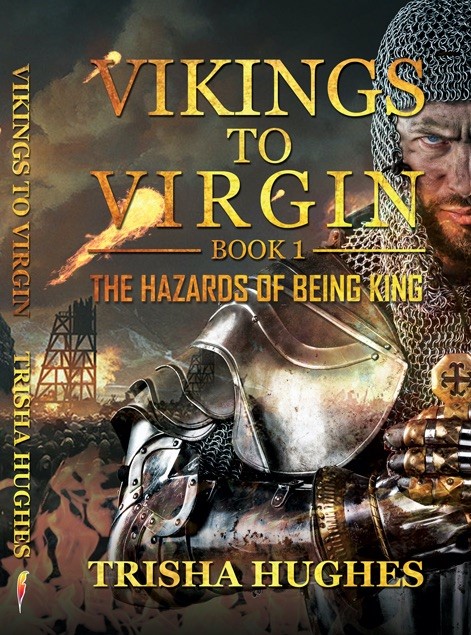
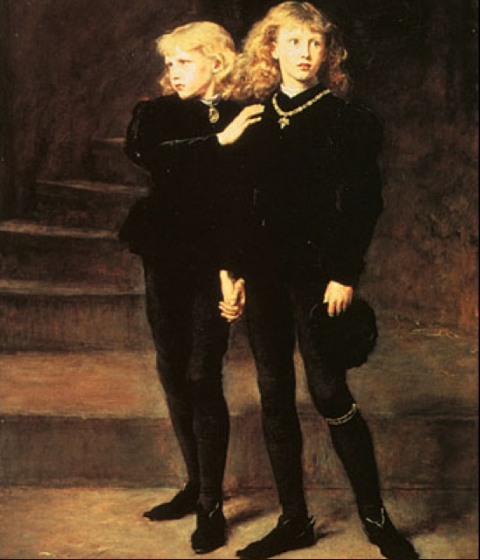

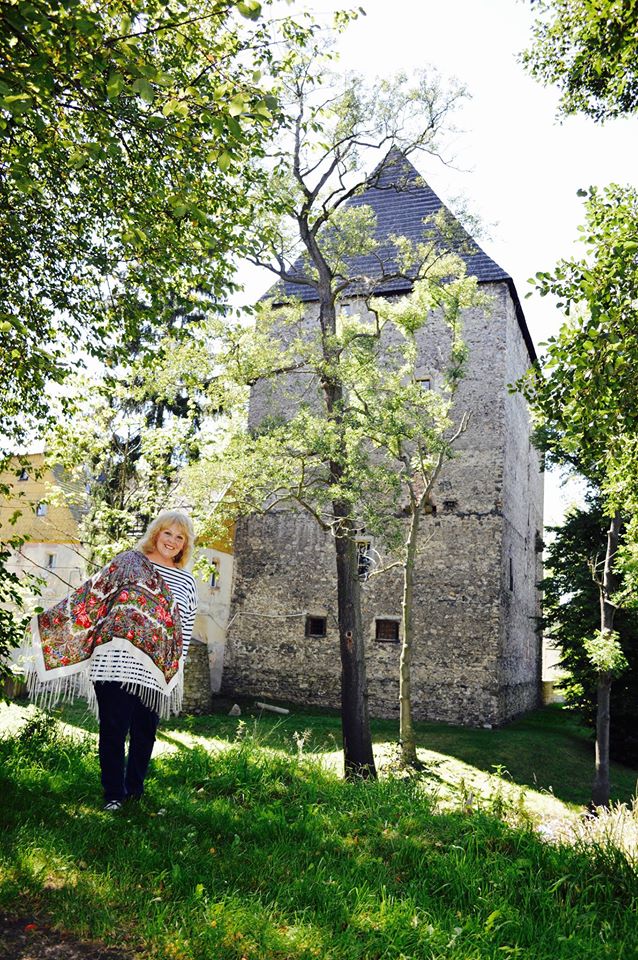
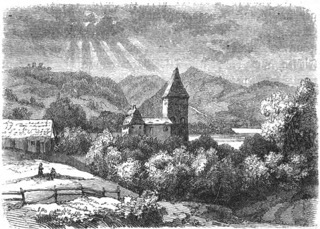
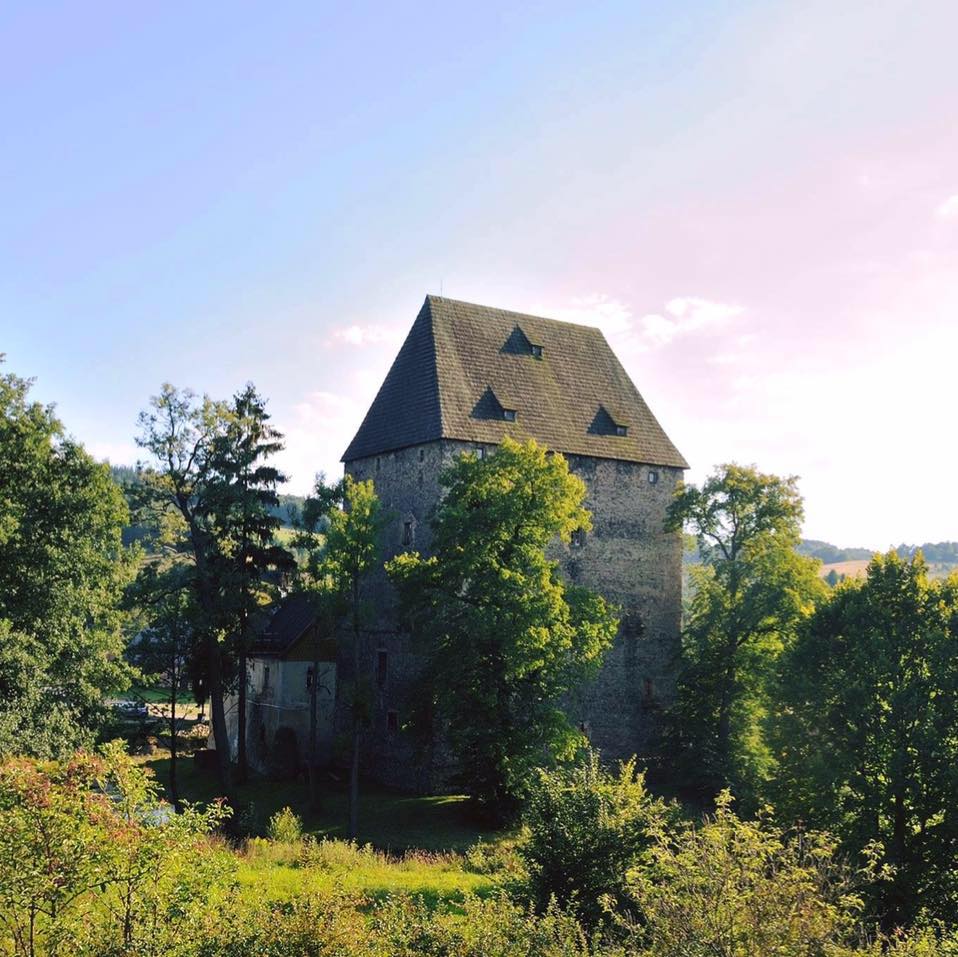
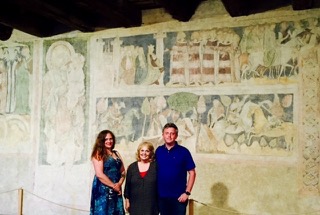
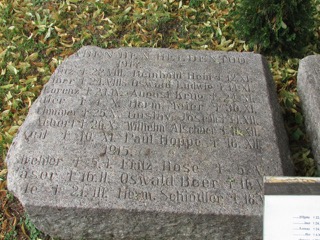
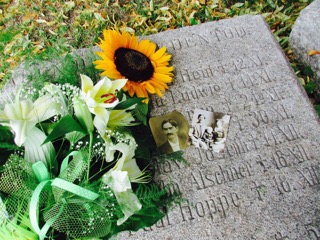
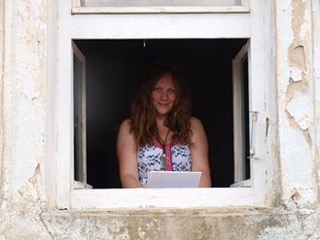
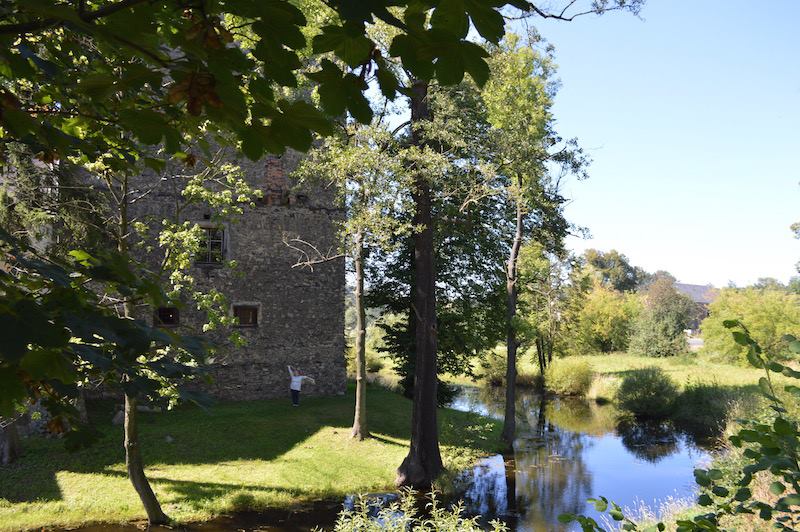
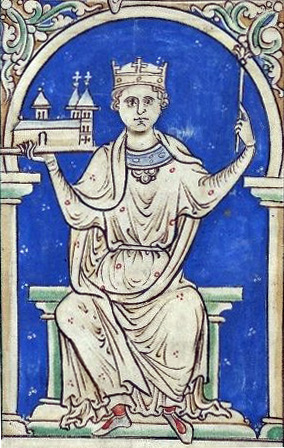
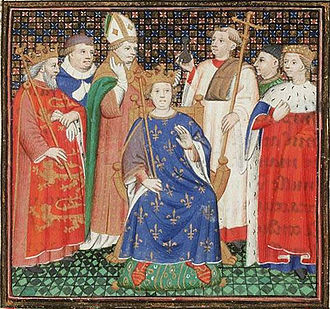

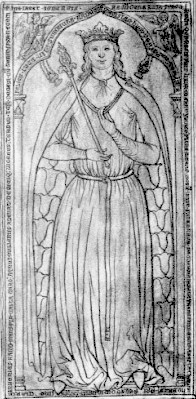


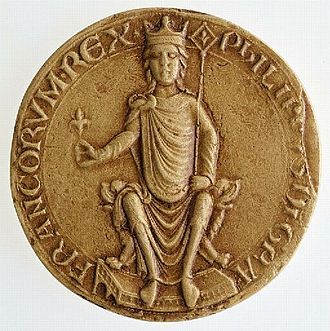
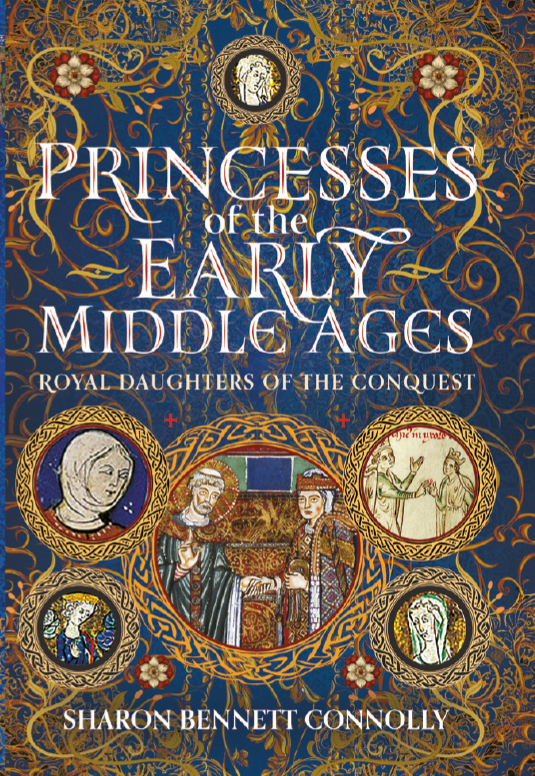
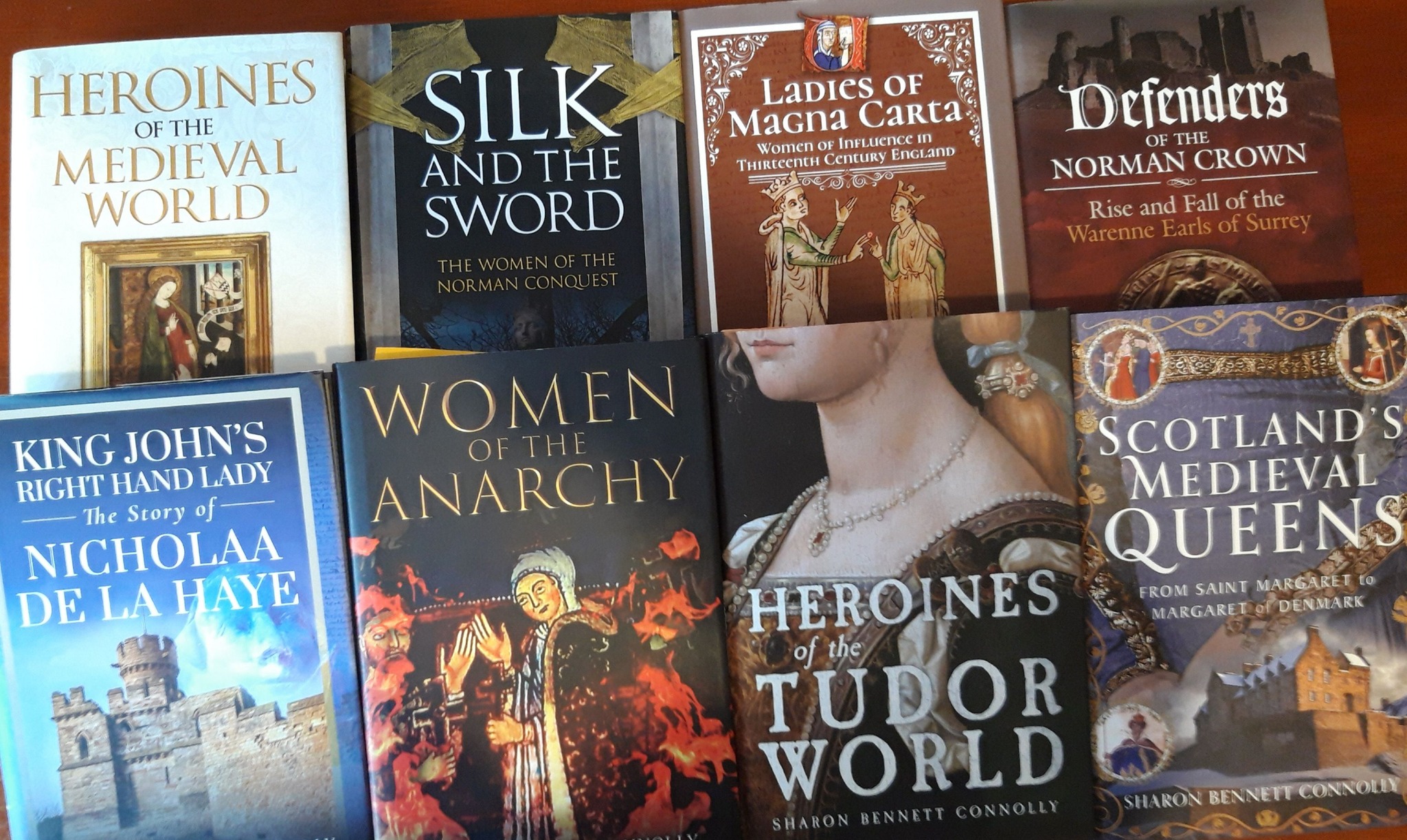


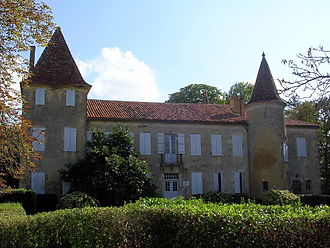
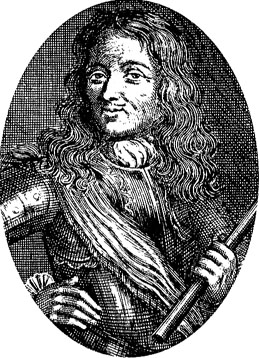

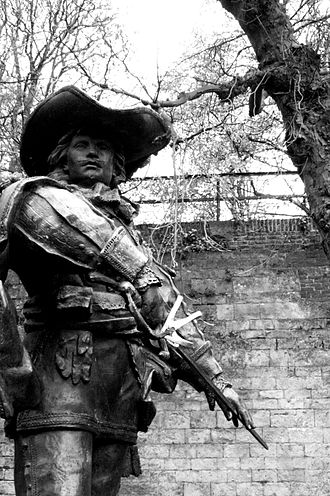



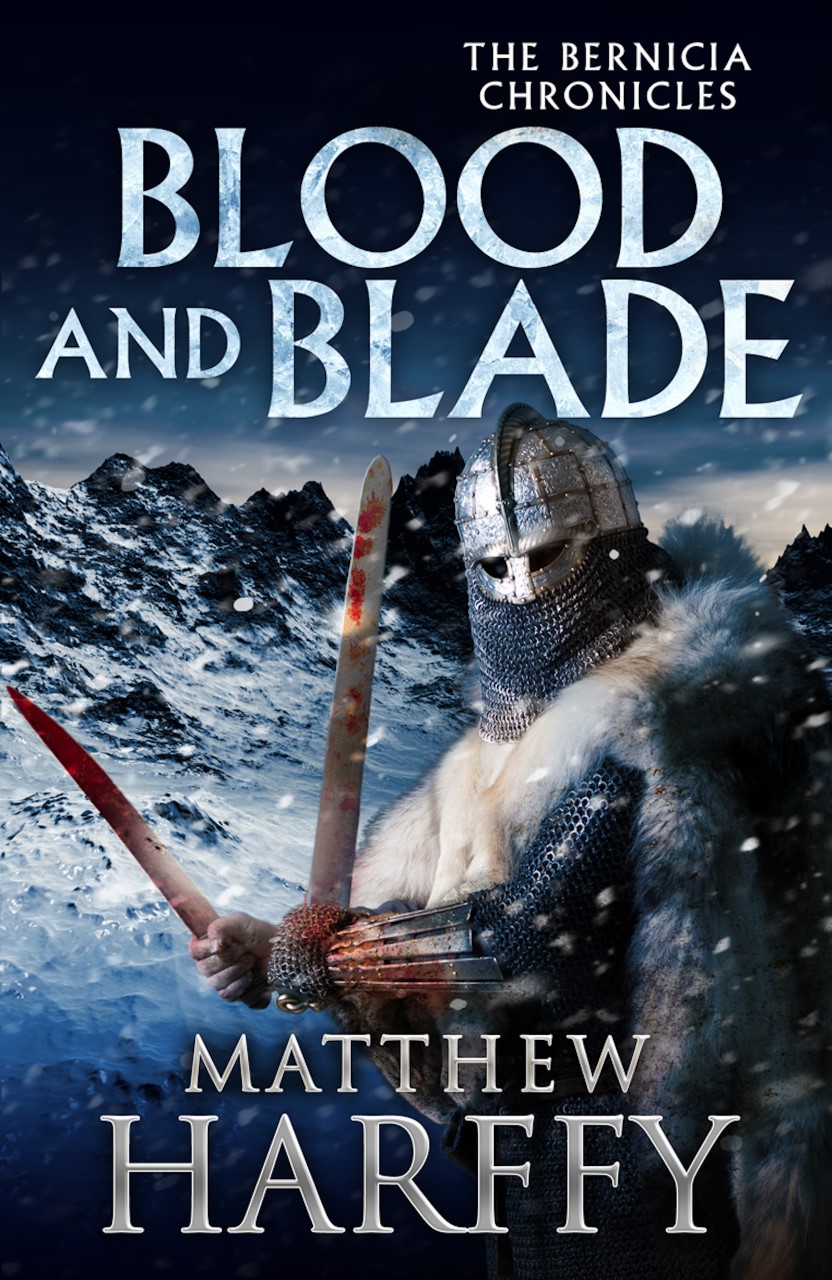

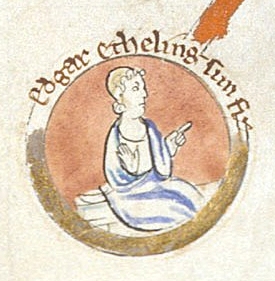
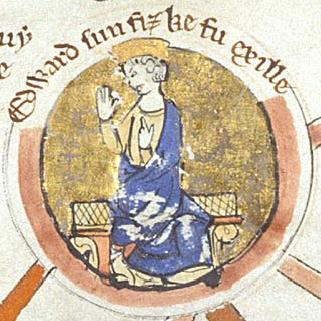
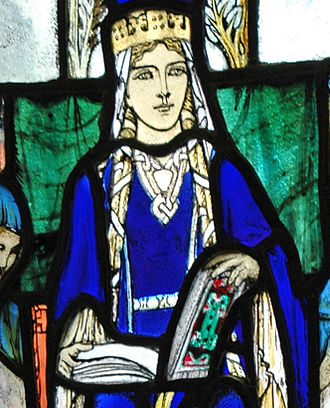

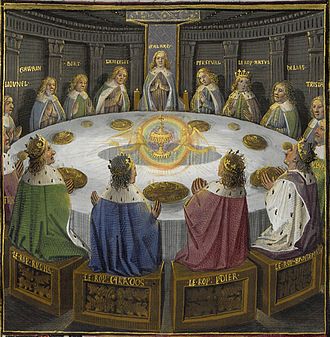
 History... the interesting bits!