Isabelle d’Angoulême was the only child of Audemar, Count of Angoulême and Alice de Courtenay. Her mother was the daughter Peter de Courtenay, lord of Montargis and Chateaurenard, and a cousin of king Philip II Augustus of France. Through her Courtenay family connections, Isabelle was related to the royal houses of Jerusalem, Hungary, Aragon and Castile. When John set his sights on her, Isabelle was betrothed to Hugh IX de Lusignan: the chronicler Roger of Howden maintained that Isabelle had not yet reached the age of consent, which was why she was still only betrothed to Hugh, rather than married to him. The marriage between Isabelle and Hugh was intended to put to bed, literally, a long-running, bitter rivalry between the Lusignans and the counts of Angoulême. It would also unite neighbouring regions in Aquitaine, posing a threat to Angevin power in the region. This could have effectively cut Aquitaine in two, jeopardising the stability of the borders of Poitou and Gascony. John could not help but see the threat posed by the impending marriage and sought to put a stop to it. Count Audemar, it seems, was quite receptive to the suggestion that he abandon the Lusignan match if it meant that his daughter would become a queen.
King John
In the early years of their marriage, John appears to have treated Isabelle more like a child than a wife, which she still was, and she was financially dependent on him. When she was not at court with the king, Isabelle spent time at Marlborough Castle or in the household of John’s first wife, Isabella of Gloucester, at Winchester. Isabella’s allowance was raised from £50 to £80 a year, to pay for the extra expenses incurred by housing the queen.
It appears that Isabelle was an unpopular queen, guilty by her association with the excesses and abuses of John’s regime. It was in this light that John’s marriage to Isabelle was seen as the start of England’s woes, with some of the blame falling unfairly on the young queen. Contemporary sources reported that John spent his mornings in bed with the queen, when he should have been attending to the business of the country, casting Isabelle as some kind of temptress, irresistible to the king. The fact that Isabelle did not give birth to her first child until 1207, when she was in her late teens, puts the lie to these sources, suggesting that she and John did not consummate the marriage in the first few years. After 16 years together, the couple had 5 children; Henry III, Richard of Cornwall, Isabella, Joan and the youngest, Eleanor, who was born in 1215 or 1216.
While her movements were restricted and closely controlled during her marriage to John, the situation did not improve for Isabelle following John’s death in 1216. Their 9-year-old son Henry was now king, but Isabelle was excluded from playing a role in the regency government; her unpopularity in England and lack of political experience were major factors. Moreover, she had had limited contact with her children: they lived in separate households and Isabelle was not responsible for their supervision or education, which added to her isolation. Almost as soon as Henrys crowned, Isabelle started making arrangements to go home, to Angoulême, of which she was countess in her own right. In 1217 she left England.
Isabelle’s son, Henry III of England
Once in her own domains, Isabelle was to arrange the wedding of her daughter, Joan. Joan had been betrothed, at the age of 4, to Hugh X de Lusignan, Count of La Marche and the son of Hugh IX, the man who had been betrothed to Isabelle before John married her. In 1220 Isabelle shocked England, and probably the whole continent, when she scandalously married her daughter’s betrothed herself. Poor 9-year-old Joan’s erstwhile fiancé was now her stepfather! Worse was to come, however, when the little princess was not returned to her homeland, as might have been expected, but held hostage, by Isabelle and Hugh, to ensure Hugh’s continued control of her dower lands, and as a guarantee to the transfer of her mother’s dower, which the English government was withholding against the return of Joan.
Stalemate.
Isabelle wrote to her son, Henry III, to explain and justify why she had supplanted her own daughter as Hugh’s bride, claiming ‘…lord Hugh of Lusignan remained alone and without heir in the region of Poitou, and his friends did not permit our daughter to be married to him, because she is so young; but they counselled him to take a wife from whom he might quickly have heirs, and it was suggested that he take a wife in France. If he had done so, all your land in Poitou and Gascony and ours would have been lost. But we, seeing the great danger that might emerge from such a marriage – and your counsellors would give us no counsel in this – took said H[ugh], count of La Marche, as our lord; and God knows that we did this more for your advantage than ours…’
Ironically, Isabelle had now achieved that which King John had hoped to avoid; the union of La Marche and Angoulême, splitting Angevin Aquitaine down the Little Joan was finally returned to England towards the end of 1220, but the arguments over Isabelle’s English lands continued throughout the 1220s and beyond. Isabelle would not retire in peace and in 1224 she and Hugh betrayed Henry by allying themselves with the King of France. In exchange for a substantial pension, they supported a French invasion of Poitou (the lands in France belonging to the King of England, her son).
Seal of Hugh X de Lusignan
Hugh and Isabelle were reconciled with Henry in 1226 and Isabelle met her first-born son for the first time in more than twelve years in 1230, when Henry mounted a futile expedition to Brittany and Poitou. Isabelle and Hugh, however, continued to play the kings of France and England against each other, always looking for the advantage, though this was probably as much by necessity as self-interest. They did, after all, live in France and their relationship with England complicated things. In 1242, for example, when Henry III invaded Poitou, Hugh X initially gave support to his English stepson, only to change sides once more, precipitating the collapse of Henry’s campaign. Isabelle herself was implicated in a plot to poison King Louis IX of France and his brother, only to be foiled at the last minute; the poisoners claimed to have been sent by Isabelle. There is no evidence of Isabelle denying the accusation, but she never admitted her guilt, either.
Isabelle’s second marriage proved even more unstable than her first, shaken by Hugh’s frequent infidelities and threats of divorce. Isabelle enjoyed greater personal authority within her second marriage; where she had issued no charters whilst married to King John, as Hugh de Lusignan’s wife, the couple issued numerous joint charters. Her difficult relationship with France added to Isabelle’s marital problems. In one instance, Isabelle was offended by the queen of France when she was not offered a chair to sit, in the queen’s presence, regardless of the fact she herself was a crowned and anointed queen. Following this insult, in 1241, Isabelle castigated Hugh de Lusignan for supporting a French candidate to the county of Poitou, ahead of her son, Henry III. In retaliation, Isabelle stripped Lusignan Castle of its furnishings and refused to allow her husband into her castle at Angoulême for three days.
Despite the rocky relationship, Isabelle and Hugh had nine children together, including Aymer de Lusignan and William de Valence. Many of his Lusignan half-siblings would later cause problems for Henry III, having come to England to seek patronage and advancement from their royal half-brother.
Tomb effigy of Isabelle d’Angoulême, Fontevraud Abbey
In 1244 the two royal cooks admitted the attempted poisoning of the French king, and that they had been paid by Isabelle. Before she could be arrested, Isabelle retired to Fontevraud Abbey, where she died on 4 June, 1246. The dowager queen of England was buried in the abbey’s churchyard. However, when Henry III visited his mother’s final resting place, he was shocked that she was buried outside the abbey and ordered that she be moved inside. She was finally laid to rest in the abbey church, beside Henry II and Eleanor of Aquitaine.
As contemporaries described her as ‘more Jezebel than Isabel’, accused her of ‘sorcery and witchcraft’, Isabelle of Angouleme’s reputation as a heartless mother and habitual schemer seems set to remain. Married to King John whilst still a child, she was castigated as the cause for the loss of the majority of John’s continental possessions and the subsequent strife and civil war; one could easily sympathise with her lack of love for England. That Isabelle apparently abandoned the children of her first husband within months of his death, and her supposed willingness to betray her son for her own ends would go some way to destroy the compassion one may have felt for her. However, we have to remember that nothing is ever black and white and we have to consider that Isabelle was balancing the interests of her two families – one French and one English – which were, unfortunately for Isabelle, irreconcilable due to the politics of the time.
One thing is for sure, Isabelle d’Angoulême is a fascinating character!
*
Images:
Courtesy of Wikipedia
Sources:
Rich Price, King John’s Letters Facebook group; Robert Bartlett England Under the Norman and Angevin Kings 1075-1225; Dan Jones The Plantagenets; the Kings who Made England; The Plantagenet Chronicle Edited by Elizabeth Hallam; Maurice Ashley The Life and Times of King John; Roy Strong The Story of Britain; Oxford Companion to British History; Mike Ashley British Kings & Queens; David Williamson Brewer’s British Royalty; Ralph of Diceto, Images of History; Marc Morris, King John; David Crouch, William Marshal; Crouch and Holden, History of William Marshal; Crouch, David, ‘William Marshal [called the Marshal], fourth earl of Pembroke (c. 1146–1219)’, Oxforddnb.com; Flanagan, M.T., ‘Isabel de Clare, suo jure countess of Pembroke (1171×6–1220)’, Oxforddnb.com; Thomas Asbridge, The Greatest Knight; Chadwick, Elizabeth, ‘Clothing the Bones: Finding Mahelt Marshal’, livingthehistoryelizabethchadwick.blogspot.com; Stacey, Robert C., ‘Roger Bigod, fourth earl of Norfolk (c. 1212-1270)’, Oxforddnb.com; finerollshenry3.org.uk; Vincent, Nicholas, ‘William de Warenne, fifth earl of Surrey [Earl Warenne] (d. 1240)’, Oxforddnb.com.
My Books:
Signed, dedicated copies of all my books are available through my online store.
Out now: Scotland’s Medieval Queens
Scotland’s history is dramatic, violent and bloody. Being England’s northern neighbour has never been easy. Scotland’s queens have had to deal with war, murder, imprisonment, political rivalries and open betrayal. They have loved and lost, raised kings and queens, ruled and died for Scotland. From St Margaret, who became one of the patron saints of Scotland, to Elizabeth de Burgh and the dramatic story of the Scottish Wars of Independence, to the love story and tragedy of Joan Beaufort, to Margaret of Denmark and the dawn of the Renaissance, Scotland’s Medieval Queens have seen it all. This is the story of Scotland through their eyes.
Heroines of the Tudor World tells the stories of the most remarkable women from European history in the time of the Tudor dynasty, 1485-1603. These are the women who ruled, the women who founded dynasties, the women who fought for religious freedom, their families and love. Heroines of the Tudor World is now available for pre-order from Amberley Publishing and Amazon UK.Women of the Anarchy demonstrates how Empress Matilda and Matilda of Boulogne, unable to wield a sword themselves, were prime movers in this time of conflict and lawlessness. It shows how their strengths, weaknesses, and personal ambitions swung the fortunes of war one way – and then the other. Available from Bookshop.org, Amberley Publishing and Amazon UK. King John’s Right-Hand Lady: The Story of Nicholaa de la Haye is the story of a truly remarkable lady, the hereditary constable of Lincoln Castle and the first woman in England to be appointed sheriff in her own right. Available from all good bookshops Pen & Sword Books, bookshop.org and Amazon.
Alternate Endings: An anthology of historical fiction short stories including Long Live the King… which is my take what might have happened had King John not died in October 1216. Available in paperback and kindle from Amazon.
Podcast:
Have a listen to theA Slice of Medieval podcast, which I co-host with Historical fiction novelist Derek Birks. Derek and I welcome guests, such as Bernard Cornwell, Elizabeth Chadwick and Michael Jecks, and discuss a wide range of topics in medieval history, from significant events to the personalities involved. Every episode is also now available on YouTube.
*
Don’t forget!Signed and dedicated copies of all my books are available through my online store.
For forthcoming online and in-person talks, please check out my Events Page.
As I have been pursuing the various strands of research into the female personalities in medieval England, I have been struck, time and again, by how closely related the nobility were, through blood and marriage. Just look at the women who surround the Magna Carta story. Each of the women I wrote of had at least one familial connection to another great noble family; some had a number of links to several families. It is a tangled and complicated web, but I will try and give you a brief overview here.
As you may have noticed, my favourite medieval woman is Nicholaa de la Haye, castellan of Lincoln Castle; she successfully defended the castle through at least 3 sieges, the last 2 when she was a widow in her 60s. Nicholaa was related to King John’s half-brother, William Longespée, Earl of Salisbury, through her son, Richard, whose daughter Idonea was married at a young age to William (II), Longespée’s son by his wife, Ela of Salisbury. It was as a result of this connection that William (I) Longespée claimed Lincoln Castle and the shrievalty of Lincolnshire following the Second Battle of Lincoln in May 1217. Longespée claimed that as they were his daughter-in-law’s inheritance, it was his right to administer them. Idonea’s father, Richard, had died sometime in the previous 12 months, leaving Idonea as his sole heir. Longespée appears to have conveniently forgotten – or ignored – the fact that the castle of Lincoln was Nicholaa’s by hereditary right – and Nicholaa was still very much alive!
Coat of arms of William Longespée, 3rd Earl of Salisbury
Despite Nicholaa’s stalwart defence of Lincoln Castle during a 10-week siege, Longespée was granted the position of sheriff just 4 days after the battle, and promptly seized the castle. Nicholaa’s refusal to accept this saw her presenting herself to the royal court and requesting she be reinstated. A compromise was reached whereby Longespée remained as sheriff of Lincolnshire, but Nicholaa was reinstated as castellan of Lincoln Castle, and given control of the city of Lincoln itself. Longespée was by no means satisfied and continued to scheme to gain control of the castle; Nicholaa doggedly held on and only retired from her position as castellan of Lincoln in 1226, 3 months after Longespée’s death.
Ela of Salisbury provided at least two further familial connections among my Ladies of Magna Carta. Through her grandfather, Patrick of Salisbury, Ela was a cousin of William Marshal and his five daughters. Marshal was the son of Patrick of Salisbury’s sister, Sybilla. Patrick himself had married, as his second wife, Ela de Talvas, who was the widow of William de Warenne, 3rd Earl of Warenne and Surrey. From her first marriage, Ela de Talvas was the mother of the heiress, Isabel de Warenne, Countess of Surrey in her own right and wife to, first, William of Blois, youngest son of King Stephen and secondly, Hamelin Plantagenet, illegitimate half-brother of King Henry II. Isabel de Warenne, therefore, was aunt to Ela of Salisbury, Richard the Lionheart and King John.
Arms of the Warenne earls of Surrey
Isabel de Warenne’s own aunt, Ada de Warenne, was married to the son and heir of King David I of Scotland, Henry, Earl of Huntingdon. Ada was the mother of two Scottish kings, Malcom IV the Maiden and William I the Lion. She was, therefore, the grandmother of the Scottish princesses, Margaret and Isabella, the only two women, other than the queen, Isabelle d’Angoulême, who can be clearly identified in a clause of Magna Carta. Margaret and Isabella had been handed over to King John as hostages following the 1209 Treaty of Norham, agreed between their father, William the Lion, and King John. John was supposed to find suitable husbands for the teenage girls; it had been implied that they would be married to John’s sons, Henry and Richard, but no marriages had ever materialised. Clause 59 of Magna Carta stipulated that John would find spouses for the princesses or send them home.
The two girls were eventually wed to English noblemen, though not until the 1220s. In 1221 Margaret married Hubert de Burgh, Henry III’s Justiciar and widower of another of my Ladies of Magna Carta, Isabella of Gloucester, who also had the dubious honour of having been the first wife of King John. Princess Isabella was married, in 1225, to Roger Bigod, Earl of Norfolk, who was 14 years her junior. The marriage was not a happy one. A third Scottish princess, Marjorie, who was several years younger than her two sisters and not part of the conditions of the Treaty of Norham, also married into the English nobility. She became the wife of Gilbert Marshal, 4th Earl of Pembroke, third son of the great William Marshal, Earl of Pembroke and regent for Henry III.
Hubert de Burgh from Matthew Paris’s Historia Anglorum
Roger Bigod was himself the son of Hugh Bigod, Earl of Norfolk, and Matilda Marshal, eldest daughter of William Marshal. Marshal was the man who had led the army that relieved Nicholaa de la Haye and the siege of Lincoln Castle in May 1220. Matilda married, as her second husband, William de Warenne, 5th Earl of Warenne and Surrey and only son of Isabel and Hamelin, mentioned earlier. Matilda’s sister, Isabel, was married to Gilbert de Clare, Earl of Gloucester; he was the nephew of the same Isabella of Gloucester who had been wife to King John, Geoffrey de Mandeville and Hubert de Burgh. Isabel Marshal then married, as her second husband, Richard, Earl of Cornwall, brother of Henry III and youngest son of King John. Another sister, Eva, married William (V) de Braose, grandson of William (IV) de Braose and Matilda, the poor woman who was imprisoned by King John and starved to death, alongside her eldest son, in his dungeons in 1210. It was Eva’s husband who was hanged by Llywelyn, Prince of Gwynedd, after he was found in Llywelyn’s bedroom with Llywelyn’s wife, Joan, Lady of Wales and illegitimate daughter of King John.
Which brings us neatly to the royal family. John’s eldest legitimate daughter, also named Joan, was betrothed as a child to Hugh X de Lusignan, Count of La Marche. The marriage never materialised, however, as Joan’s mother, Isabelle d’Angoulême, decided to marry Count Hugh in her daughter’s stead, causing a rather juicy scandal in the process! Joan was not without a suitor for long and within a year of her mother’s marriage she was married to Alexander II, King of Scots and brother of those same Scottish princesses who were included in Magna Carta’s clause 59. Of Joan’s sisters, Isabella was married to Frederick II, Holy Roman Emperor and Eleanor, only a baby at the time of her father’s death, was married to William (II) Marshal, eldest son and heir of the great William Marshal, at the age of 9. Eleanor was a widow before her 16th birthday, dramatically taking a vow of perpetual chastity in front of the Archbishop of Canterbury shortly after her husband’s death.
Arms of William Marshal, Earl of Pembroke
As her second husband, Eleanor married Simon de Montfort, Earl of Leicester, despite that pesky vow of chastity, which was to prove costly to Simon when he had to travel to Rome to seek a papal dispensation to have it annulled. Simon de Montfort was to continue the fight for reform that had been enshrined in Magna Carta, but would meet his end at the Battle of Evesham in 1265. Simon and Eleanor’s daughter, also named Eleanor, would marry Llywelyn, Prince of Wales, grandson of Llywelyn, Prince of Gwynedd. Eleanor died in childbirth in June 1282, while Llywelyn was defeated and killed by Edward I’s forces in December, the same year. Their only daughter, Gwenllian, was placed in a convent in Lincolnshire before she was 18 months old and would never leave it, dying there in 1337.
Another perpetual royal prisoner was Gwenllian’s distant cousin, Eleanor of Brittany, a granddaughter of Henry II, niece of King John and first cousin of Henry III. Her royal blood meant that she would never be afforded the protection enshrined in clause 39 of Magna Carta and inspired by the gruesome death of Matilda de Braose, that:
“No man shall be taken, imprisoned, outlawed, banished or in any way destroyed, nor will we proceed against or prosecute him, except by the lawful judgement of his peers or by the law of the land.”
There are many more familial links between the Ladies of Magna Carta. I could go on…
But I’m guessing that your heads are spinning and this is more than enough … for now.
Sources:
Rich Price, King John’s Letters Facebook group; Robert Bartlett England Under the Norman and Angevin Kings 1075-1225; Dan Jones The Plantagenets; the Kings who Made England; The Plantagenet Chronicle Edited by Elizabeth Hallam; Maurice Ashley The Life and Times of King John; Roy Strong The Story of Britain; Oxford Companion to British History; Mike Ashley British Kings & Queens; David Williamson Brewer’s British Royalty; Ralph of Diceto, Images of History; Marc Morris, King John; David Crouch, William Marshal; Crouch and Holden, History of William Marshal; Crouch, David, ‘William Marshal [called the Marshal], fourth earl of Pembroke (c. 1146–1219)’, Oxforddnb.com; Flanagan, M.T., ‘Isabel de Clare, suo jure countess of Pembroke (1171×6–1220)’, Oxforddnb.com; Thomas Asbridge, The Greatest Knight; Chadwick, Elizabeth, ‘Clothing the Bones: Finding Mahelt Marshal’, livingthehistoryelizabethchadwick.blogspot.com; Stacey, Robert C., ‘Roger Bigod, fourth earl of Norfolk (c. 1212-1270)’, Oxforddnb.com; finerollshenry3.org.uk; Vincent, Nicholas, ‘William de Warenne, fifth earl of Surrey [Earl Warenne] (d. 1240)’, Oxforddnb.com.
*
My Books
Signed, dedicated copies of all my books are available through my online store.
OUT NOW! Heroines of the Tudor World
Heroines of the Tudor World tells the stories of the most remarkable women from European history in the time of the Tudor dynasty, 1485-1603. These are the women who ruled, the women who founded dynasties, the women who fought for religious freedom, their families and love. These are the women who made a difference, who influenced countries, kings and the Reformation. In the era dominated by the Renaissance and Reformation, Heroines of the Tudor World examines the threats and challenges faced by the women of the era, and how they overcame them. From writers to regents, from nuns to queens, Heroines of the Tudor World shines the spotlight on the women helped to shape Early Modern Europe.
Coming 30 January 2025: Scotland’s Medieval Queens
Scotland’s history is dramatic, violent and bloody. Being England’s northern neighbour has never been easy. Scotland’s queens have had to deal with war, murder, imprisonment, political rivalries and open betrayal. They have loved and lost, raised kings and queens, ruled and died for Scotland. From St Margaret, who became one of the patron saints of Scotland, to Elizabeth de Burgh and the dramatic story of the Scottish Wars of Independence, to the love story and tragedy of Joan Beaufort, to Margaret of Denmark and the dawn of the Renaissance, Scotland’s Medieval Queens have seen it all. This is the story of Scotland through their eyes.
Alternate Endings: An anthology of historical fiction short stories including Long Live the King… which is my take what might have happened had King John not died in October 1216. Available in paperback and kindle from Amazon.
Podcast:
Have a listen to theA Slice of Medieval podcast, which I co-host with Historical fiction novelist Derek Birks. Derek and I welcome guests, such as Bernard Cornwell and discuss a wide range of topics in medieval history, from significant events to the personalities involved.
*
Don’t forget!Signed and dedicated copies of all my books are available through my online store.
For forthcoming online and in-person talks, please check out my Events Page.
You can be the first to read new articles by clicking the ‘Follow’ button, liking our Facebook page or joining me on Twitter, Threadsand Instagram.
It is impossible to talk about anything related to Magna Carta without mentioning the man who has come to be known as ‘the Greatest Knight’: William Marshal, Earl of Pembroke, and his family. Marshal was one of the few nobles to stay loyal to King John throughout the Magna Carta crisis. That is not to say that the king and Marshal did not have their differences, nor that their relationship was always smooth sailing. However, William Marshal was famed for his loyalty and integrity and maintained his oaths to King John throughout his reign, regardless of the distrust between the two men.
The children of William and his wife, Isabel de Clare, cannot fail to have benefited from William Marshal’s rise through the ranks from fourth son and humble hearth knight, to earl of Pembroke and, eventually, regent for King Henry III. Their father’s position as a powerful magnate on the Welsh Marches, and the most respected knight in the kingdom, saw William’s daughters make advantageous marriages in the highest echelons of the English nobility.
William and Isabel were the parents of 10 children who survived to adulthood, 5 boys and 5 girls. In a bizarre and sad twist of fate, each of the boys would, in turn, succeed to the earldom, with not one leaving a male heir to continue the Marshal line. Of the girls, the couple’s eldest daughter was Matilda, also known as Maud or Mahelt. Given that her parents married in 1189 and she had two elder brothers, Matilda was probably born in 1193 or 1194. The Histoire de Guillaume le Maréchal wrote glowingly of Matilda, saying she had the gifts of
‘wisdom, generosity, beauty, nobility of heart, graciousness, and I can tell you in truth, all the good qualities which a noble lady should possess.’
Histoire de Guillaume le Maréchal
The Histoire goes on to say;
‘Her worthy father who loved her dearly, married her off, during his lifetime to the best and most handsome party he knew, to Sir Hugh Bigot.’
Histoire de Guillaume le Maréchal
Unfortunately for Matilda, her husband Hugh, the eldest son of the earl of Norfolk, was among the rebels during the Magna Carta crisis; their eldest son was taken hostage by the king when their castle at Framlingham surrendered to the royal army. It must have been a comfort to Matilda that, on John’s death, her son’s welfare, while still a hostage, would have been supervised by the new regent, the boy’s grandfather. When Hugh died in 1225, Matilda married for a second time just a few months later, to William de Warenne, Earl of Warenne and Surrey, thus uniting the Bigod, Warenne and Marshal families. The marriage appears to have been one of convenience rather than love but produced 2 children, a boy and a girl, John and Isabel. Matilda’s son by her second marriage, John de Warenne, joined his 3 older Bigod half-brothers, Roger, Hugh and Ralph as pall bearers for their mother’s coffin at her funeral in 1248, when she was laid to rest beside her mother at Tintern Abbey in Monmouthshire.
Seal of Matilda Marshal’s youngest son John de Warenne, 6th Earl of Warenne and Surrey
The next daughter, Isabel, was at least six years younger than Matilda, born in 1200. She was married to Gilbert de Clare, Earl of Gloucester and Hertford, who was twenty years her senior. Gilbert was the son of Richard de Clare, earl of Hertford, and Amicia, coheiress of William, Earl of Gloucester; through his mother he could trace his ancestry back to King Henry I, albeit through king’s illegitimate eldest son, Robert of Gloucester, the stalwart supporter of his half-sister, Empress Matilda. Gilbert’s aunt, Amicia’s sister, was Isabella of Gloucester, the discarded first wife of King John, who had held the earldom of Gloucester until her death on 14 October 1217, when it passed to Gilbert.
Both Gilbert and his father were named among the twenty-five barons appointed as Enforcers of Magna Carta in 1215; as a consequence, father and son were excommunicated at the beginning of 1216. After the death of King John, Gilbert sided with Prince Louis of France and was only reconciled with the royalist cause after the Battle of Lincoln in May 1217. This was despite having married Isabel, the second daughter of William Marshal, in 1214; Marshal had been regent of England for 9-year-old Henry III since King John’s death in October 1216. Like her older sister, Isabel had found her husband’s family were on the opposing side to her father in the Magna Carta crisis and the civil war that followed. They had 6 children together before Gilbert’s death in October 1230; he died on the return journey from an expedition to Brittany. Isabel was married again, not 6 months later, to the king’s younger brother, Richard, Earl of Cornwall. The early deaths of at least 2 children put a strain on this marriage and Richard had been seeking a divorce when Isabel found herself pregnant again. She was safely delivered of the longed-for son and heir, Henry of Almain in 1235. Tragically, Isabel herself died in childbirth, in 1240. Her baby son, Nicholas, died the same day.
The next-youngest of the Marshal sisters, Sibyl, was born around 1201: she was married to William de Ferrers, fifth earl of Derby. Unlike her elder sisters, Sibyl and her husband played little part in national affairs. Ferrers had been plagued by gout since his youth and led a largely secluded life. He was regularly transported by litter. Further, he had never fully recovered from an accident that had happened sometime in the 1230s. While crossing a bridge at St Neots in Huntingdonshire, Ferrers was thrown from his litter, into the water. It must have been a terrifying experience. He succeeded to the earldom of Derby on his father’s death in 1247 but died in 1254. During the marriage Sibyl gave birth to 7 children, all daughters: Agnes, Isabel, Maud, Sibyl, Joan, Agatha and Eleanor. Sibyl died sometime before 1247 and was laid to rest at Tintern Abbey, alongside her mother.
Tintern Abbey, Monmouthshire, resting place of several members of the Marshal family
William and Isabel Marshal’s fourth daughter, Eva, was born in about 1203 in Pembroke Castle, and so was only 16 when her father died – and 17 when she lost her mother. As a child, she spent several years with her family in exile in Ireland, only returning to England when her father was finally reconciled with King John in 1212. Sometime before 1221, Eva was married to William (V) de Braose, Lord of Abergavenny, son of Reginald de Braose and grandson of Matilda de Braose, who had died of starvation in King John’s dungeons in 1210. William de Braose was a wealthy Norman baron with estates along the Welsh Marches. He was hated by the Welsh, who had given him the nickname Gwilym Ddu, or Black William, and had been taken prisoner by Llywelyn ap Iorweth – Llywelyn the Great – in 1228.
Although he had been released after paying a ransom, de Braose later returned to Llywelyn’s court to arrange a marriage between his daughter, Isabella, and Llywelyn’s son and heir, Dafydd. During this stay, Eva’s husband was ‘caught in Llywelyn’s chamber with the King of England’s daughter, Llywelyn’s wife’. Whilst Llywelyn’s wife, Joan, Lady of Wales, the illegitimate daughter of King John, was imprisoned for a year, a much worse fate was meted out to William de Braose. He was publicly hanged on Llywelyn’s orders, leaving Eva a widow at the age of 27, with 4 young daughters, all under the age of 10. Despite the discomfort caused by Llywelyn’s execution of Braose, the marriage of Isabella and Dafydd went ahead, following some impressive diplomacy on Llywelyn’s part. Eva never remarried and spent her widowhood managing her own lands. She was caught up the revolt of her brother, Richard, in 1234, and appears to have acted as intermediary between her brother and the king to help resolve the situation. She died in 1246.
The youngest Marshal sister was Joan, who was still only a child when William Marshal died in 1219, being born in 1210. She is mentioned in the Histoire as having been called for by her ailing father, so that she could sing for him. Joan was married, before 1222, to Warin de Munchensi, a landholder and soldier who was born in the mid-1190s. When his father and older brother died in 1204 and 1208 (possibly), respectively, Warin was made a ward of his uncle William d’Aubigny, Earl of Arundel. He was ill-treated by King John, who demanded 2,000 marks in relief and quittance of his father’s Jewish debts on 23 December 1213. He was ordered to pay quickly and pledged his lands as a guarantee of his good behaviour.
Effigy identified as William Marshal, Temple Church, London
This harsh treatment drove him to ally with the rebel barons and he was captured fighting against the royalist forces, and his father-in-law, at the Battle of Lincoln, on 20 May 1217. He was, soon after, reconciled with the crown and served Henry III loyally on almost every military campaign of the next forty years. His marriage to Joan Marshal produced two children; John de Munchensi and a daughter, Joan, who would marry the king’s half-brother, William de Valence, fourth son of Isabelle d’Angoulême and her second husband, Hugh X de Lusignan, Count of La Marche. It was through his wife and, more accurately her mother, that William de Valence was allowed to accede to the earldom of Pembroke following the extinction of the Marshal male line. Joan Marshal died in 1234 and so never saw her daughter marry and become countess of Pembroke in 1247.
The various experiences of the 5 Marshal daughters serve as a demonstration of the divisions among the nobility, caused by the Magna Carta crisis, with several of them finding themselves on the opposing side to that of their father. It must have been a source of great anxiety for a family which appears to have been otherwise very close. These 5 young women also provide a snapshot of the fates of women in thirteenth century England, death in childbirth, early widowhood and second marriages arranged for personal security rather than love. What is evident is that, just like their father, these girls were an integral part of the Magna Carta story.
Rich Price, King John’s Letters Facebook group; Robert Bartlett England Under the Norman and Angevin Kings 1075-1225; Dan Jones The Plantagenets; the Kings who Made England; The Plantagenet Chronicle Edited by Elizabeth Hallam; Maurice Ashley The Life and Times of King John; Roy Strong The Story of Britain; Oxford Companion to British History; Mike Ashley British Kings & Queens; David Williamson Brewer’s British Royalty; Ralph of Diceto, Images of History; Marc Morris, King John; David Crouch, William Marshal; Crouch and Holden, History of William Marshal; Crouch, David, ‘William Marshal [called the Marshal], fourth earl of Pembroke (c. 1146–1219)’, Oxforddnb.com; Flanagan, M.T., ‘Isabel de Clare, suo jure countess of Pembroke (1171×6–1220)’, Oxforddnb.com; Thomas Asbridge, The Greatest Knight; Chadwick, Elizabeth, ‘Clothing the Bones: Finding Mahelt Marshal’, livingthehistoryelizabethchadwick.blogspot.com; Stacey, Robert C., ‘Roger Bigod, fourth earl of Norfolk (c. 1212-1270)’, Oxforddnb.com; finerollshenry3.org.uk; Vincent, Nicholas, ‘William de Warenne, fifth earl of Surrey [Earl Warenne] (d. 1240)’, Oxforddnb.com.
My Books
Signed, dedicated copies of all my books are available through my online bookshop.
Out now: Scotland’s Medieval Queens
Scotland’s history is dramatic, violent and bloody. Being England’s northern neighbour has never been easy. Scotland’s queens have had to deal with war, murder, imprisonment, political rivalries and open betrayal. They have loved and lost, raised kings and queens, ruled and died for Scotland. From St Margaret, who became one of the patron saints of Scotland, to Elizabeth de Burgh and the dramatic story of the Scottish Wars of Independence, to the love story and tragedy of Joan Beaufort, to Margaret of Denmark and the dawn of the Renaissance, Scotland’s Medieval Queens have seen it all. This is the story of Scotland through their eyes.
‘Scotland’s Medieval Queens gives a thorough grounding in the history of the women who ruled Scotland at the side of its kings, often in the shadows, but just as interesting in their lives beyond the spotlight. It’s not a subject that has been widely covered, and Sharon is a pioneer in bringing that information into accessible history.’ Elizabeth Chadwick (New York Times bestselling author)
Heroines of the Tudor World tells the stories of the most remarkable women from European history in the time of the Tudor dynasty, 1485-1603. These are the women who ruled, the women who founded dynasties, the women who fought for religious freedom, their families and love. Heroines of the Tudor World is now available for pre-order from Amberley Publishing and Amazon UK.Women of the Anarchy demonstrates how Empress Matilda and Matilda of Boulogne, unable to wield a sword themselves, were prime movers in this time of conflict and lawlessness. It shows how their strengths, weaknesses, and personal ambitions swung the fortunes of war one way – and then the other. Available from Bookshop.org, Amberley Publishing and Amazon UK. King John’s Right-Hand Lady: The Story of Nicholaa de la Haye is the story of a truly remarkable lady, the hereditary constable of Lincoln Castle and the first woman in England to be appointed sheriff in her own right. Available from all good bookshops Pen & Sword Books, bookshop.org and Amazon.
Alternate Endings: An anthology of historical fiction short stories including Long Live the King… which is my take what might have happened had King John not died in October 1216. Available in paperback and kindle from Amazon.
Podcast:
Have a listen to theA Slice of Medieval podcast, which I co-host with Historical fiction novelist Derek Birks. Derek and I welcome guests, such as Bernard Cornwell and Michael Jecks, and discuss a wide range of topics in medieval history, from significant events to the personalities involved. Including an episode on William Marshal with Elizabeth Chadwick, author of The Greatest Knight. Every episode is now available on YouTube.
*
Don’t forget!Signed and dedicated copies of all my books are available through my online bookshop.
For forthcoming online and in-person talks, please check out my Events Page.
Coat of arms of the Warenne earls of Surrey, in the Gundrada Chapel of Trinity Church, Southover
When looking at a particular period or event in history, it can be easy to assume that it was all-consuming for those involved. The rest of the world blurs into the background as a country is consumed by war. Or does it? Even in medieval times, countries were not unaffected by the others around them. I almost got swept into the idea that the period known in English history as the Anarchy was a time when people thought of little else but who should be king – or queen. Even those fighting in the war were not so blinkered. Nor ignorant of events outside of England’s borders.
Did you know, for instance, that not one, but two, contingents of crusaders left England’s shores in the midst of the Anarchy? One force was headed to Portugal, and the other to the Holy Land, to join the Second Crusade. One of those crusaders was William de Warenne, 3rd Earl of Warenne and Surrey.
William (III) de Warenne was the son of William (II) de Warenne, 2nd Earl of Warenne and Surrey, and Isabel de Vermandois, a granddaughter of King Henry I of France. William was born in 1119, a year after his parents’ marriage. He was the eldest of five children. His two brothers, Reginald and Ralph, appear frequently in his story, suggesting a close family bond. Of his sisters, Ada married Prince Henry of Scotland, and was the mother of two Scottish kings, Malcolm IV and William the Lion. Gundreda de Warenne married Roger de Beaumont, Earl of Warwick, who was a cousin of Gundreda’s half-brothers, the famous Beaumont twins, Waleran and Robert.
Waleran and Robert de Beaumont were the eldest sons of Isabel de Vermandois by her first husband, Robert de Beaumont, Count of Meulan and Earl of Leicester. Isabel had nine children with her first husband and five more with Earl Warenne. Interestingly, the two families appear to have got on rather well together. William (III) can often be found in the company of one or both of his older, twin, half-brothers, such as at the deathbed of Henry I, at Lyons-la-Forêt in 1135; William was there alongside his father, the second earl, and his brothers Waleran and Robert de Beaumont.
Following his father’s death in 1138, William (III) inherited the lands and titles of the earl of Warenne and Surrey. As such, he was heavily involved in that period of history known as the Anarchy, the contest between King Stephen and Empress Matilda for England’s crown. As his father had done, the 3rd earl supported King Stephen, fighting at both the First Battle of Lincoln and the siege of Winchester in 1141. By the late 1140s, although the conflict between Stephen and Matilda was still unresolved, Earl Warenne and his half-brother, Waleran de Beaumont, appear to have wanted to get away from the constant unrest of the cousins’ war and looked to join a more noble enterprise.
Castle Acre Priory, Norfolk
On 24 March 1146, Palm Sunday, near Vézélay, and perhaps motivated by the example of his royal cousin, Louis VII of France, William de Warenne took the cross and committed himself to the Second Crusade. From this moment on, the earl’s time was taken up with preparations for the expedition and making arrangements to ensure the security and administration of his earldom during his absence. Among others, he confirmed grants to Castle Acre Priory of the land of Thexton in Norfolk which Osmoda de Candos had given with the consent of her husband Philip: William’s brother Reginald is named in the charter and his brother Ralph, as well as his wife, Countess Ela, are all listed among the witnesses. He also confirmed a gift made to his brother Reginald whereby William son of Philip, gave his land of Harpley in Norfolk. During the winter of 1146–47, the earl granted to the monks of Castle Acre, a confirmation of any acquisitions which they might make, ‘from my fee of whatever tenancy within my tenseria [authority], whether by way of gift or purchase.’1
In 1147, before leaving England’s shores, the earl, his family and leading magnates congregated at Lewes Priory for the dedication of the new priory church. Most of the royal court were present, as were Ralph and Reginald de Warenne, the earl’s brothers; four leading church prelates attended, including Theobald, Archbishop of Canterbury and Henry of Blois, Bishop of Winchester as well as the bishops of Rochester and Bath. Also present were the abbots of Reading and Battle, the prior of Canterbury and William d’Aubigny, Earl of Sussex. Earl Warenne appears to have used the occasion to set his affairs in order and guarantee the security of his earldom during his absence.
St Pancras Priory, Lewes
The most significant charter issued on this occasion added to the endowment of Lewes’ priory church and promised that the earl would pay the taxes that the priory would ordinarily owe to the king. In it, the earl confirmed
‘all its lands of his fee, undertaking to acquit it of danegeld and all other services due to the king; and gift of tithe of corn, etc., from all his demesne lands and a full tenth penny of all his rents in England. He issued the charter when he caused the priory church to be dedicated and endowed it with the tenth penny of his rents, giving it seisin thereof by hair from his own head and that of Ralph de Warenne his brother, cut with a knife by Henry, bishop of Winchester, before the altar.’2
The locks of hair of Earl William and his brother Ralph, ceremoniously cut off by Bishop Henry before the altar, would afterwards have been placed on the altar, alongside the knife used in the ceremony, and may have later been ‘filed’ within the charter when it was sealed. This is the last reference to Ralph de Warenne that I could find in the historical record. Given that only Ralph and William stored locks of their hair, and not Reginald, who we know stayed in England, I think it possible that Ralph accompanied his older brother on crusade.
His affairs in order, the earldom was placed under the supervision of his very capable brother, Reginald de Warenne. The pope stipulated that church sanctions should not be invoked, ‘in respect of those men whom our beloved son Stephen the illustrious king of the English or his adversaries disinherited on the occasion of the war held for the realm before they took the cross.’3 In a time of continued civil war, this guaranteed protection of a crusader’s lands was a necessity. Earl William was now able to depart on crusade, secure in the knowledge that the family and lands he left behind were well protected from anyone wishing to take advantage of his absence:
At Whitsuntide Lewis [Louis], king of France, and Theodorie, earl of Flanders, and the count of St Egidius, with an immense multitude from every part of France, and numbers of the English, assumed the cross and journeyed to Jerusalem, intending to expel the Infidels who had taken the city of Rohen. A still greater number accompanied Conrad, emperor of Germany; and both armies passed through the territories of the emperor of Constantinople, who afterwards betrayed them.
Henry of Huntingdon
Louis VII, King of France
There were, in fact, two crusades that departed England’s shores in 1147. Some of the crusaders, an Anglo-Flemish force, went to Portugal and successfully captured Lisbon from the Muslims. Earl William de Warenne and his older half-brother, Waleran de Beaumont, joined their cousin King Louis VII of France and set out for the Holy Land. Taking the overland route, they followed in the footsteps of the German emperor, Conrad III, who had left Germany in May and arrived in Constantinople in September. Louis, accompanied by his wife Eleanor of Aquitaine, arrived in Constantinople with his army on 4 October. Tensions ran high from the start. On initially hearing of the proposed crusade, Byzantine emperor Manuel Comnenus, afraid of losing local trading connections, made a truce with the Turkish sultan of Rum in 1146 to protect Constantinople’s Asian lands from attack. To the Western crusaders, this was more proof of the apostasy of the Eastern church. The more fervent of Louis’ followers accused Emperor Manuel of treason and urged Louis to attack the emperor. Louis, on the other hand, was persuaded to appease the emperor by his less volatile advisers and the king promised to restore any imperial lands they may capture.
The German and French contingents met at Nicaea in November, with the Germans having already suffered a defeat at Dorylaeum on 25 October, after taking the inland route towards the kingdom of Jerusalem. The two armies, now combined, set off on the coastal route, following the path of the first crusaders’ advance into Philadelphia in Lydia. By the time they reached Ephesus, Conrad was seriously ill and returned to Constantinople to recover. The French king and his army continued on to Antioch; marching through difficult terrain in mid-winter proved particularly harrowing. The Seljuk Turks waited for the crusaders on the banks of the river Meander, but Louis’ army forced their way through. On 6 January 1148, they reached Laodicea and from there marched into the mountains that separate the Phrygia of the Pisidia. It was here that the army met with disaster.
As they crossed Mount Cadmus, the vanguard advanced too far ahead under the leadership of Geoffrey de Rançon, thus becoming detached from the main body of the army. As the vanguard progressed across Mount Cadmus, the French column followed behind, secure in the knowledge that the vanguard occupied the high ground to their front. William de Warenne was in the king’s bodyguard, towards the rear of the column, as they advanced. When the Turks appeared, the French broke their ranks and rushed upon them with swords drawn; the disorder in the ranks handing the advantage to their enemy. Retreating, the French found themselves in a narrow gorge, with a steep precipice on one side and crags on the other. Horses, men and baggage were forced over the precipice by the advancing Turks. Louis VII’s biographer, Odo de Deuil, related the events:
“…the king, who had been left behind in peril with certain of his nobles, since he was not accompanied by common soldiers or serjeants with bows (for he had not fortified himself for crossing the pass, which by common agreement he was to cross the next day), careless of his own life and with the desire of freeing the dying mob, pushed through the rear-guard and courageously checked the butchery of his middle division. He boldly assaulted the infidel, who outnumbered him a hundred times and whom the position aided a great deal; for there no horse could stand, I shall not say gallop, but barely stand, and the slower attack which resulted in the weakened knights’ thrust when wounding the enemy. On the slippery slope our men brandished their spears with all of their own might, but without the added force of their horses, and from the safe shelter of rocks and trees the Turks shot arrows. Freed by the knights’ efforts, the mob fled, carrying their own packs or leading the sumpter animals, and exposed the king and comrades to death in their stead….During the engagement the king lost his small but renowned royal guard; keeping a stout heart; however, he nimbly and bravely scaled a rock by making use of tree roots which God had provided for his safety. The enemy climbed after, in order to capture him, and the more distant rabble shot arrows at him. But by the will of God his cuirass protected him from the arrows, and to keep from being captured he defended the crag with his bloody sword, cutting off heads and hands of many opponents in the process…”
Odo of Deuil, De Profectione Ludovici VII in Orientem
Laodicea
King Louis’ bodyguard was cut down in the fighting and William de Warenne was among the fallen. Louis himself was able to escape the carnage, standing alone against a number of attackers. As the night drew in, the king and survivors were able to take advantage of the darkness to reunite with the vanguard, which had believed the king lost. In one of his letters to Abbot Sugar, King Louis wrote of the disaster on Mount Cadmus, explaining how he had been separated from the vanguard and his escort had been cut down, with the loss of his cousin, William de Warenne. He was too upset to give any more details and Mount Cadmus remains a battle of which very little is known beyond the basic details.
“Nearby the baggage train was still crossing the pass, because the closer packed it was, the slower it fled over the crags. When he came upon it, the king, who was on foot, secured a horse and accompanied the men through the evening, which had already fallen. At that time breathless cohorts of knights from the camp met him and groaned when they saw him alone, bloody, and tired, for, without asking, they knew what had happened and mourned inconsolably for the missing royal escort, which numbered about forty (to wit, the count of Warenne and his brother Evrard of Breteuil, Manasses of Bulles and Gautier of Montjay and others; but I shall not record the names of all, lest I be considered unnecessarily wordy.)”
Odo of Deuil, De Profectione Ludovici VII in Orientem
Despite the heavy losses, King Louis’ crusade continued, reuniting with the German contingent between March and June 1148. They failed to take Edessa and were forced to withdraw from Damascus after a week of heavy fighting, when fresh Muslim forces arrived. The crusade ended in failure and the French king, who blamed Emperor Manuel Comnenus for the fiasco, accepted the aid of Manuel’s enemy Roger of Sicily, who sent ships to take the French forces home. Of the English forces, while William de Warenne was lost at Mount Cadmus, his brother Waleran de Beaumont, Count of Meulan and Earl of Worcester, made it back to England’s shores, narrowly surviving a shipwreck along the way; he founded a monastery in gratitude. Of the two Anglo-Norman bishops who accompanied the crusade, Roger of Chester died at Antioch and was buried there, whereas Arnulf of Lisieux, who had served as one of the leading diplomats, returned but with his reputation faded.
Seal of Isabel de Warenne, Countess of Surrey
Perhaps it was always on the cards that the 3rd Earl Warenne’s unspectacular military career would end with his death in battle. He was only 28 years old and had held the earldom for just over nine years. The earl had been a stalwart supporter of King Stephen, not once wavering in his allegiance, despite his failures in Normandy and at Lincoln early on in his career. He had done extensive work on the family’s property at Castle Acre, reinforcing the castle and replanning the town, building the ramparts that now surround it. William de Warenne had been a generous benefactor to the church, especially the Warenne foundations at Lewes and Castle Acre.
Even in his absence on crusade, the earl was still technically in charge; his brother, Reginald, issued a number of charters, each with the proviso that ‘if Jesus Christ brought back the earl [from the crusade] he would cause him to confirm it’ or ‘do his best to obtain the earl’s confirmation.’4
The death of William de Warenne, 3rd Earl of Warenne and Surrey brought an end to the senior male line that had been founded with the creation of the earldom for William (I) de Warenne in 1088. The earl was survived by his wife, Ela de Talvas, still a young woman, and his daughter, Isabel de Warenne, a child probably no more than 10 years of age. Isabel was now the richest heiress in England and married to King Stephen‘s youngest son, William of Blois. The earl’s estates were left in the capable hands of his youngest brother, Reginald de Warenne, Baron of Wormegay, who would watch over them for his niece and her young husband.
Notes:
1 Edmund King, King Stephen; 2 Farrer, William and Charles Travis Clay, editors, Early Yorkshire Charters, Volume 8: The Honour of Warenne; 3Epistolae Pontificum Romanorum ineditae quoted in Edmund King, King Stephen; 4 Farrer, William and Charles Travis Clay, editors, Early Yorkshire Charters, Volume 8: The Honour of Warenne; Odo of Deuil, De Profectione Ludovici VII in Orientem, magnacharta.com.
Sources:
Robert Batlett, England Under the Norman and Angevin Kings; Dan Jones, The Plantagenets; Donald Matthew, King Stephen; Medieval Lands Project on the Earls of Surrey, Conisbrough Castle; Farrer, William and Charles Travis Clay, editors, Early Yorkshire Charters, Volume 8: The Honour of Warenne; Morris, Marc King John: Treachery, Tyranny and the Road to Magna Carta; Church, Stephen, King John: England, Magna Carta and the Making of a Tyrant; doncasterhistory.co.uk; A History of the County of Sussex: Volume 2 edited by William Page; W.H. Blaauw, On the Early History of Lewes Priory, and its Seals, with extracts from a MS. Chronicle, Sussex Archaeological Collections; Rev. John Watson, Memoirs of the Ancient Earls of Warren and Surrey, and Their Descendants to the Present Time, Volume I; Odo of Deuil, De Profectione Ludovici VII in Orientem; magnacharta.com; Cokayne, G.E., The Complete Peerage, Vol. XII; Henry of Huntingdon, The Chronicle of Henry of Huntingdon.
Coming 30 March 2026: Princesses of the Early Middle Ages
Daughters of kings were often used to seal treaty alliances and forge peace with England’s enemies. Princesses of the Early Middle Ages: Royal Daughters of the Conquest explores the lives of these young women, how they followed the stereotype, and how they sometimes managed to escape it. It will look at the world they lived in, and how their lives and marriages were affected by political necessity and the events of the time. Princesses of the Early Middle Ages will also examine how these girls, who were often political pawns, were able to control their own lives and fates. Whilst they were expected to obey their parents in their marriage choices, several princesses were able to exert their own influence on these choices, with some outright refusing the husbands offered to them.
Their stories are touching, inspiring and, at times, heartbreaking.
Princesses of the Early Middle Ages: Royal Daughters of the Conquest is now available for pre-order from Pen & Sword and Amazon.
Also by Sharon Bennett Connolly:
Scotland’s history is dramatic, violent and bloody and Scotland’s Medieval Queens have seen it all. This is the story of Scotland through their eyes. Available now from Amazon and Pen and Sword Books. Heroines of the Tudor World tells the stories of the most remarkable women from European history in the time of the Tudor dynasty, 1485-1603. These are the women who ruled, the women who founded dynasties, the women who fought for religious freedom, their families and love. Heroines of the Tudor World is now available from Amberley Publishing and Amazon UK.Women of the Anarchy demonstrates how Empress Matilda and Matilda of Boulogne, unable to wield a sword themselves, were prime movers in this time of conflict and lawlessness. It shows how their strengths, weaknesses, and personal ambitions swung the fortunes of war one way – and then the other. Available from Bookshop.org, Amberley Publishing and Amazon UK. King John’s Right-Hand Lady: The Story of Nicholaa de la Haye is the story of a truly remarkable lady, the hereditary constable of Lincoln Castle and the first woman in England to be appointed sheriff in her own right. Available from all good bookshops Pen & Sword Books, bookshop.org and Amazon.
Alternate Endings: An anthology of historical fiction short stories including Long Live the King… which is my take what might have happened had King John not died in October 1216. Available in paperback and kindle from Amazon.
Podcast:
Have a listen to theA Slice of Medieval podcast, which I co-host with Historical fiction novelist Derek Birks. Derek and I welcome guests, such as Ian Mortimer, Bernard Cornwell, Elizabeth Chadwick and Scott Mariani, and discuss a wide range of topics in medieval history, from significant events to the personalities involved.
In 1485 England was a small kingdom, the whole country consisted of a population of less than 3 million people, with 60,000 living in the capital, London.1 The Wars of the Roses was very much a recent trauma in the national memory. The country was a predominantly rural society, with local loyalties to local landowners – such as the Percies in Northumberland – taking precedence over national considerations. Noticeable regional differences varied in speech, diet, cloth, farming methods, the shape of church towers, and even the veneration of the saints. In Tudor Lincolnshire the Fens were yet to be drained, few roads were well-maintained and even they could be treacherous in heavy rains. Lincoln itself had been effected by the decline in the wool trade, and with a shrinking population, its size and prosperity were also decreasing.
A distinction was also rising among the aristocracy of the county and that of the royal court. In the regions, the minor nobility served the king as sheriffs, escheators and justices of the peace, or representing their county in parliament. The greater aristocracy, however, were looking for positions and influence at court; for themselves and their families. The Tudor court was a micro-world in itself. It set the standards in manners for the whole country. Service to the monarch was the primary concern. Most courtiers were related to each other, marriages were negotiated between the prominent families and service to the queen was the highest position a lady could aspire to.
At first glance you would think there was very little interaction between the nobility of Lincolnshire and the Tudor court. However, as we delve deeper we can see that, not only was there movement between the court and the county, it was not only one-sided, but fluid and travelling in both directions. When looking at this over the Tudor period – of over a hundred years of history – we notice the subtle changes in the interactions between the county and royal court, not only based on the progress of the time, but also the personalities involved and their personal experiences.
For some ladies, marrying into a member of the Lincoln aristocracy was a way of getting away from the glare of the court. For Elizabeth (Bessie) Blount, lady-in-waiting to Katherine of Aragon, a former mistress of Henry VIII and the mother of his illegitimate son Henry Fitzroy, Duke of Richmond, it was the chance at a normal life. Born in 1500, Bessie Blount married Gilbert Tailboys in 1519, following her affair with Henry VIII and just months after the birth of the king’s son. The marriage was probably arranged by Henry as a ‘reward’ for Bessie. The couple settled on Gilbert’s family estates at Kyme in Lincolnshire. And despite being far from court, Bessie was not forgotten by the king. She continued to receive Henry’s favour, with various grants between 1522 and 1539 and New Years’ gifts throughout her life; in 1532 Henry sent her a gilt goblet with a cover weighing over 35 ounces.2
Effigy of Elizabeth Blount
Bessie and Gilbert had three children together, Elizabeth, George and Robert, before his death in 1530. Gilbert Tailboys had settled part of his Lincolnshire estates on Elizabeth, giving her an annual income of £200 a year for life. Following his death, Bessie appears to have been happy to stay in Lincolnshire instead of returning to her Shropshire roots, or an unwelcoming royal court. In 1535 she married again, to the soldier Edward Fiennes de Clinton, 9th Baron Clinton and Saye, who was 12 years her junior. Although de Clinton had his family seat in Kent, they settled on Bessie’s Lincolnshire estates. They had three daughters together, Bridget, Katherine and Margaret, before Bessie died sometime before June 1541 (when Clinton remarried). While Elizabeth appears to have stayed away from court, Clinton’s marriage to the king’s former mistress brought him royal favour; he attended on the king at Calais and Boulogne in 1532 and acted as cup-bearer at the coronation of Anne Boleyn in 1533. Following the Lincolnshire Uprising of 1536, one of several rebellions which formed the Pilgrimage of Grace, Clinton was rewarded for staying loyal to the king – most Lincolnshire gentlemen had joined the rebellion – with the dissolved monastery of Sempringham.
Lincolnshire aristocratic families were often very closely related. Elizabeth and Edward’s daughter, Bridget, married Sir Robert Dymoke II, son of Sir Edward Dymoke and his wife Anne, who was the daughter of George Tailboys and the sister of Elizabeth’s first husband, Gilbert. The Dymoke family held Scrivelsby in Lincolnshire, through which tenure they were king’s champions; Sir Edward was champion at the coronations of Edward VI, Mary I and Elizabeth I. Sir Edward’s sister, Margaret, was born in Scrivelsby around 1500 and served several of Henry’s queens. After first marrying Richard Vernon of Haddon Hall, Derbyshire, she then married Sir William Coffin, Anne Boleyn’s Master of Horse. Margaret had been one of Queen Katherine of Aragon’s gentlewomen at the Field of Cloth of Gold and would also serve Henry VIII’s two subsequent queens.
Margaret, however, was not a favourite of Henry’s second queen, Anne Boleyn. She was one of the women who attended the disgraced queen in the Tower of London. Anne was recorded as complaining to her jailer, Sir William Kingston, “I think much unkindness in the king to put such about me as I never loved.”3 Margaret Dymoke, Lady Coffin slept on a pallet bed in the Queen’s bedchamber during her time in the Tower. In her desperation the queen confided in Margaret, unaware that she was acting as a spy for the state. Master Kingston reported to Thomas Cromwell that “I have everything told me by Mistress Coffin that she thinks meet for me to know.” 4 There is also a possibility that Margaret was not only a spy for Kingston, but also for the Imperial ambassador, Eustace Chapuys, who wrote “The lady who had charge of her [Anne] has sent to tell me in great secrecy that the concubine, before and after receiving the sacrament, affirmed to her, on the damnations of her soul, that she had never been unfaithful to the king.”5
Anne Boleyn in the Tower by Edouard Cibot
Following Anne’s execution, Margaret joined the household of Queen Jane Seymour. Lady Coffin was in high favour in Jane Seymour’s establishment and acted as intermediary for several families who had hopes of placing a daughter in the royal household. Margaret remained with the queen until the end, and was among the mourners who attended the late queen’s body as it lay in state, keeping vigil and attending masses for her soul. Margaret was in the funeral procession that accompanied Jane’s body to her final resting place in St George’s Chapel, Windsor. She rode in the third carriage and bore Princess Mary’s train at the requiem mass; Mary was chief mourner and rode on a horse trapped with black velvet.6
There were several ladies associated with the Tudor court, who married into Lincolnshire society. The most famous must surely be one of Henry VIII’s own queens. Henry’s sixth wife, Kateryn Parr was the daughter of Sir Thomas Parr and his wife, Maud Green Parr, a lady-in-waiting to Katherine of Aragon. When Sir Thomas died while Kateryn was still a child, Maud took it on herself to arrange her daughter’s future. After a failed proposal to marry Katherine to the son of Lord Dacre, In 1529 Maud turned to another of her late husband’s relatives and arranged for Kateryn to marry Edward Burgh the eldest son of Sir Thomas Burgh, Baron Burgh of Gainsborough, Lincolnshire. Sir Thomas’s father, Sir Edward, had been declared a lunatic and Sir Thomas, himself, was renowned for his violent outbursts and wild rages (possibly due to an inherited mental instability in the family) and had a tyrannical control over his family. The first two years of the marriage, spent at Sir Thomas’s new Hall at Gainsborough (now known as the Old Hall), was an unhappy time for Kateryn. She wrote, regularly, to her mother of her unhappiness and it seems the situation was only resolved following a visit by Maud Parr, who persuaded Sir Thomas to allow Edward and Kateryn to move to their own, smaller, house at Kirton-in-Lindsey, a few miles outside of Gainsborough.
We do not know whether Edward was a sickly individual, or whether or not he succumbed to a sudden illness, but their happiness was short-lived, as he died in the spring of 1533, after only 4 years of marriage. Having no children, Kateryn was left with little from the marriage, and, with her mother having died the previous year, she was virtually alone in the world; possibly as a remedy to her isolation, Kateryn married her second husband, Lord Latimer, in the same year as she lost her first. There is no record that Kateryn served any of henry VIII’s queens. Her first appearance at court seems to be in 1542, when she became a lady-in-waiting in Mary Tudor’s household, before she caught the King’s eye. She does not seem to have forgotten her time with the Burgh family, however, and when she became queen Kateryn paid a pension from her own purse to her former sister-in-law, Elizabeth Owen, widow of her husband’s younger brother, Thomas. Poor Elizabeth had been accused of adultery by her domineering father-in-law, Sir Thomas, and her children were declared illegitimate by Act of Parliament in 1542.
Lord Burgh’s third surviving son, William, born in the early 1520s, would eventually succeed his father to the barony. He married Katherine Fiennes de Clinton, daughter of Edward Fiennes de Clinton – the future Earl of Lincoln – and Bessie Blount, demonstrating the interlinking relationships between the various great Lincolnshire families.
Where Kateryn Parr was linked to Lincolnshire before joining the royal court, others saw Lincolnshire as a place of retirement. Maria de Salinas was a lady-in-waiting and close friend to Katherine of Aragon; indeed, it seems that she came to England with the Spanish princess in 1501 for the marriage to Henry’s older brother, Arthur, Prince of Wales. Katherine and Maria were very close and by 1514 Caroz de Villagarut, ambassador of Katherine’s father, Ferdinand of Aragon, was complaining of Maria’s influence over the queen after she tried to persuade Katherine not to cooperate with the ambassador and encouraged the Queen to favour her English subjects.7 In June 1516 Maria married the largest landowner in Lincolnshire, William Willoughby, 11th Baron Willoughby de Eresby. The King and Queen paid for the wedding, which took place at Greenwich, and gave them a wedding gift of Grimsthorpe Castle, in Lincolnshire. The Queen even provided Maria with a dowry of 1100 marks.
Grimsthorpe Castle, Lincolnshire
Maria remained at court for some years after her wedding, and attended Katherine at the Field of Cloth of Gold in 1520. Henry VIII was godfather to Maria and William’s oldest son, Henry, who died in infancy. Another son, Francis, also died young and their daughter Katherine, born in 1519, would be the only surviving child of the marriage. Lord Willoughby died in 1526, and for several years afterwards Maria was embroiled in a legal dispute with her brother-in-law, Sir Christopher Willoughby, over the inheritance of the Willoughby lands. It seems William had settled some lands on Maria which were entailed to Sir Christopher. The dispute went to the Star Chamber and caused Sir Thomas More, the king’s chancellor and a prominent lawyer, to make an initial redistribution of some of the disputed lands.
This must have been a hard fight for a newly-widowed Maria, and the dispute threatened the stability of Lincolnshire itself, given the extensive lands involved. However, Maria attracted a powerful ally in Charles Brandon, Duke of Suffolk and brother-in-law of the King, who called on the assistance of Cardinal Thomas Wolsey, Henry’s first minister at the time, in the hope of resolving the situation. Suffolk had managed to obtain the wardship of Katherine Willoughby in 1529, intending her to marry his eldest son and heir Henry, Earl of Lincoln, and so had a vested interest in a favourable settlement for Maria. This interest became even greater following the death of Mary Tudor, Suffolk’s wife and Henry VIII’s sister, in September 1533, when only three months later the fifty-year-old Duke of Suffolk married fourteen-year-old Katherine, himself. Although Suffolk pursued the legal case with more vigour after the wedding, a final settlement was not reached until the reign of Elizabeth I. Suffolk eventually became the greatest landowner in Lincolnshire and, despite the age difference, the marriage does appear to have been successful. Katherine served at court, in the household of Henry VIII’s 6th and last queen, Katherine Parr. She was widowed in 1545 and lost her two sons – and heirs – by the Duke, Henry and Charles, to the sweating sickness, within hours of each other in 1551.
As duchess of Suffolk, Katherine was a stalwart of the Protestant learning and used her position to introduce Protestant clergy to Lincolnshire, even inviting Hugh Latimer to preach at Grimsthorpe Castle. It was she and Sir William Cecil who persuaded Kateryn Parr to publish her book, The Lamentacion of a Sinner in 1547, demonstrating her continuing links with the court despite her first husband’s death.
Following the death of her sons by Suffolk, Katherine no longer had a financial interest in the Suffolk estates, which went to the heirs of Mary Tudor, Henry VIII’s sister. However, Katherine still had her own Willoughby estates to look after and it was in order to safeguard these that Katherine married her gentleman usher, Richard Bertie. The couple had a difficult time navigating the religious tensions of the age and even went into exile on the Continent during the reign of the Catholic Queen, Mary I. Following their return to England, on Elizabeth’s accession, Katherine resumed her position in Tudor society; her relations with the court, however, were strained by her tendency towards Puritan learning. She used her position in Lincolnshire and extensive patronage to help disseminate the Puritan teachings. The records of Katherine’s Lincolnshire household show that she employed Miles Coverdale – a prominent critic of the Elizabethan church – as tutor to her two children by Bertie; Susan and Peregrine.8 Unfortunately, Katherine died after a long illness, on 19th September 1580 and was buried in her native Lincolnshire, in Spilsby Church.
Katherine Willoughby, Duchess of Suffolk by Hans Holbein the Younger
Katherine’s mother, Maria de Salinas, Lady Willoughby, had died in 1539 and had stayed loyal to her mistress, Katherine of Aragon, throughout her married life and widowhood. Indeed, when Katherine was reported to be dying at Kimbolton Castle, Maria applied for a license to visit her ailing mistress, but was refused by Sir Thomas Cromwell, the King’s chief minister at the time. Despite this setback, Maria set out from London to visit Katherine at the beginning of January 1536 and contrived to get herself admitted by Sir Edmund Bedingfield by claiming a fall from her horse meant she could travel no further. According to Sarah Morris and Nathalie Grueninger, Katherine and Maria spent hours talking in their native Castilian; the former queen died in Maria’s arms on 7th January 1536. Katherine of Aragon was buried in Peterborough Cathedral on 29th January, with Maria and her daughter, Katherine, attending the funeral.9
The composition of the Tudor court changed under Elizabeth I. The new queen valued loyalty and most positions went to members of her extended family; the Howards and Careys among them. Throughout the forty-five years of Elizabeth’s reign, only twenty-eight women were appointed to salaried positions in the privy Chamber. Positions in the Bedchamber, Privy Chamber and Presence Chamber were highly sought after and mainly given to ladies from the same families, who were assigned positions based on their social status. The senior positions were those of the Chief and Second Gentlewoman of the Privy Chamber, these were followed by the Ladies of the Bedchamber, the Ladies of the Privy Chamber and the Ladies of the Presence Chamber, in descending order. Unmarried young ladies were given positions as maids of honour and were supervised by the Mother of the Maids.
Elizabeth Fitzgerald, a great granddaughter of Elizabeth Woodville, had entered Princess Elizabeth’s household in 1539, possibly as a maid of honour but ostensibly to be raised alongside her cousin. She was only nine or ten years old at the time. Elizabeth Fitzgerald had been born in Ireland in about 1528 and was the second daughter of Gerald Fitzgerald, 9th Earl of Kildare. Her mother was Lady Elizabeth Grey, daughter of Sir Thomas Grey, Marquess of Dorset and only surviving son of Elizabeth Woodville, Edward IV’s queen. Elizabeth Fitzgerald must have been quite a beauty as Henry Howard, Earl of Surrey, wrote a sonnet, From Tuscan cam my ladies worthi race in praise of her as his Fair Geraldine; Bewty of kind, her vertues from above; Happy ys he that may obtaine her love.10
In 1542 Elizabeth married her first husband, Sir Anthony Browne, but he died in 1548 and their two sons died in infancy. In 1552 she married again, this time to Edward Fiennes de Clinton, 9th Baron Clinton and Saye; the same Baron Clinton who had married Bessie Blount in 1535. Clinton had remarried in 1541, after Bessie’s death, to Ursula, daughter of William, 7th Baron Stourton; Ursula was a niece of John Dudley, Duke of Northumberland during the reign of Edward VI. She died in 1551 and Edward married Elizabeth the following year. Sir Edward Fiennes de Clinton had led a very successful military career and in May 1550 he had been appointed a privy councillor and lord high admiral of England. He was made a knight of the garter in April 1551 and, later in the same year, was given the former Howard property of Tattershall Castle in Lincolnshire, which he made his principal residence. Clinton was an adept political survivor; after being involved in the plot to put Jane Grey on the throne he was imprisoned for a short while, but managed to win Queen Mary’s trust and was active in her military campaigns. With the accession of Elizabeth I, Clinton was appointed a privy councillor and his wife, Elizabeth Fiennes de Clinton, was appointed Gentlewoman of the Privy Chamber ‘without wages’ (this indicated her high-born status, as salaried members were drawn from the lower ranks of the nobility).
Elizabeth Fitzgerald, painted by Steven van der Meulen
In 1572 Baron Clinton was rewarded for his service with the earldom of Lincoln. Elizabeth had practically been raised with the new queen since she was ten years old and was able to use her influence at court to benefit her family, affecting the restoration of the Fitzgeralds to their blood and lineage, which they had lost when Elizabeth was a child. Suits made to Elizabeth as Countess of Lincoln demonstrate that she was believed to have influence with the queen, who she served until 1585. Edward trusted his wife considerably, and made her executor of his will, bequeathing Semprigham to Elizabeth, and Tattershall to his eldest son, Henry (his son by Ursula). Edward, Earl of Lincoln, died in 1585 and just before his father’s death, his son Henry had written to William Cecil, Lord Burghley, in an attempt to overturn his father’s will, accusing Elizabeth of attempting to deprive him of his inheritance, and of maligning him to the queen. However, Henry’s tactic failed and the will was confirmed in 1587. Elizabeth herself appears to have withdrawn from court following her husband’s death and when she died in March 1589 was laid to rest beside her husband in the Lincoln Chapel of St George’s Chapel Windsor.
The court and society were both in a state of change during Elizabeth’s reign. Local Lincolnshire lords, such as the Burghs of Gainsborough, were increasingly absentee landlords, preferring to stay in their southern properties closer to the royal court and leaving their estates to run themselves. The Burghs increasingly resided mainly at their residence in Surrey, Sterborough Castle. Lord Thomas de Burgh fell heavily into debt in service of the Queen and was in failing health when his wife, Lady Frances begged Queen Elizabeth that he be relieved of his position as Governor of the Brill in the Netherlands. Sir Robert Sydney is quoted as saying in November 1595 “God send lady… better success than my lady Borow [Burgh], whose desire was absolutely denied and the Queen took it very ill that in such time he could desire to be from this government.”11 When Lord Burgh died in 1597 he asked the Queen, in his will, to protect his wife and family, who were now living in poverty due to his having spent his patrimony in Elizabeth’s service. The Queen, however, devised a a way of avoiding the duty imposed upon her, by requesting that whoever was appointed to Lord Burgh’s now vacant post, as Governor of Brill, should give £500 a year to his widow for her maintenance.
Religious divisions were becoming more pronounced as Queen Elizabeth’s reign advanced, not only between Catholicism and Protestantism, but within Protestantism itself. With the encouragement of Katherine Willoughby, Duchess of Suffolk, ministers with Puritan leanings had been appointed to various churches throughout Lincolnshire. Several of the Pilgrim Fathers, who sailed to America on the Mayflower, would come from the region, including William Brewster and William Bradford. Families with strong ties to service at the Tudor court, such as the Burghs of Gainsborough, were moving south, closer to London and the person of the Queen, while other families were moving north. The Old Hall at Gainsborough was sold to William Hickman, a wealthy merchant who was the grandson of Sir William Locke, Henry VIII’s Royal Mercer, and the son of Lady Rose Hickman.
According to Lady Rose her father, Sir William Locke, a merchant with strong links to Antwerp, had smuggled ‘herectic’ Protestant writings from abroad for Queen Anne Boleyn herself. Lady Rose had long been familiar with the new learning and wrote in 1610: “My mother in the dayes of King Henry the 8th came to some light of the gospel by means of some English books sent privately to her by my father’s factor from beyond the sea: where upon she used to call me with my 2 sisters into her chamber to read to us out of these same good books very privately for feare of troble because these good books were then accepted hereticall…”12
Gainsborough Old Hall, home to the Burghs and then the Hickmans
The Hickman family had become known for their Puritan leanings; Puritans were those who wanted the ‘purer’ church as envisaged in the reign of Edward VI, rather than the compromise established by Elizabeth I. In 1593, in order to curb the activities of such religious dissidents, Elizabeth I’s government had approved the ‘Act Against Puritans’, whereby it became illegal to become a Puritan or encourage others to that tendency. As a result, official appointments at court, for those known to have Puritan connections, suddenly dried up. Lady Rose’s son Walter, deeply entrenched in court circles and an old hand at brokering appointments for friends and family (usually with a financial incentive) discovered the implications of the new stance in 1594. The Cecil Papers show that Walter was refused when he applied for the position of Receiver of the Court of Wards for his brother William, despite offering an inducement of £1,000.13 The increasing hostility towards Puritans, and the possibility of escalating religious persecution, may well have persuaded William to move his family north; away from the prying eyes of the authorities and into Lincolnshire, a county with strong Puritan leanings thanks to the efforts of Katherine Willoughby, Duchess of Suffolk.
In the early years of the Tudor dynasty, the counties of Lincolnshire and Yorkshire were still greatly associated with the old Yorkist dynasty. Henry VII made a progress through the counties only a year after his accession, keeping Easter 1486 at Lincoln and making a great show of regal pomp. His son, Henry VIII, also saw the need to show himself to his northern subjects. Following the defeat of the Pilgrimage of Grace and its forebear, the Lincolnshire Rising, Henry made a great progress through Lincolnshire and Yorkshire. He spent several days at Gainsborough Old Hall in August 1541, holding meetings of the Privy Council there on the 14th, 15th and 16th of August. At Lincoln Henry and his young queen, Katherine Howard, made a great show of royal majesty; “The King and Queen came riding into their tent, which was pitched at the furthest end of the liberty of Lincoln, and there shifted their apparel, from green and crimson velvet respectively, to cloth of gold and silver…”14
Henry VIII’s children, however, did not venture north. Although Elizabeth I had intended to visit York at various points in her reign, she stayed within the Home Counties, venturing no further north than East Anglia. This may well have contributed to the changing nature of Tudor Society in Lincolnshire, where the influence from court circles appears to have waned as the years progressed. Lincolnshire towns, such as Gainsborough and Boston, provided such families with the opportunities of, to some extent, religious freedom while also allowing them to continue with their merchant activities, due to navigable rivers that would take goods to the East coast ports and on to the Continent. Whereas those who saw the government as a hindrance to their personal liberties ventured away further from the centre of power; those who saw their futures in the person of the monarch, and whose duties at the Tudor Court were taking up more and more of their time, saw the need to move closer to London and the centre of power,
*
Footnotes:
1 Neville Williams, The Life and Times of Henry VII; 2 Beverley A Murphy, Bastard Prince: Henry VIII’s Lost Son; 3Letters and Papers, Foreign and Domestic, of Henry VIII, Volume 10, note 797; 4 Ibid; 5 Ibid; 6 Letters and Papers Volume 12, Part 2, note 1600; 7 Retha M. Warnicke, Oxforddnb.com; 8 Susan Wabuda, Oxforddnb.com; 9 Sarah Morris and Natalie Grueninger, In the Footsteps of the Six Wives of Henry VIII; 10 H. Howard [earl of Surrey], Poems, ed. E. Jones (1964); 11 Quoted by Sue Allan in A Guide to Gainsborough Old Hall; 12 Religion and politics in mid-Tudor England through the eyes of an English Protestant Woman: the Recollections of Rose Hickman; 13 Quoted by Sue Allan in A Guide to Gainsborough Old Hall; 14Letters and Papers, Foreign and Domestic, of Henry VIII, 1541
John Leland Leland’s Itinerary in England and Wales 1535-43 edited by L Toulmin Smith (1906-10); Letters and Papers, Foreign and Domestic, of the Reign of Henry VIII 1509-47 edited by JS Brewer, James Gairdner and RH Brodie, HMSO London 1862-1932; Privy Purse Expenses of King Henry VIII from November MDXIX to December MDXXXII edited by Sir Nicholas Harris Nicolas 1827; Religion and politics in mid-Tudor England through the eyes of an English Protestant Woman: the Recollections of Rose Hickman edited by Maria Dowling and Joy Shakespeare; Bulletin of the Institute of Historical Research, 1980 & 1982; Oxforddnb.com; A Guide to Gainsborough Old Hall by Sue Allan; The Life and Times of Henry VII by Neville Williams; Bastard Prince: Henry VIII’s Lost Son by Beverley A Murphy; In the Footsteps of the Six Wives of Henry VIII by Sarah Morris and Natalie Grueninger; H. Howard [earl of Surrey], Poems, ed. E. Jones (1964); The Earlier Tudors by J.D. Mackie; Religion and politics in mid-Tudor England through the eyes of an English Protestant Woman: the Recollections of Rose Hickman; Tudorplace.com; Elizabeth’s Women by Tracy Borman; England Under the Tudors by Arthur D Innes; Henry VIII: King and Court by Alison Weir; In Bed with the Tudors by Amy Licence; Ladies-in-Waiting: Women who Served at the Tudor Court by Victoria Sylvia Evans; The Six Wives and Many Mistresses of Henry VIII: The Women’s Stories by Amy Licence.
*
My Books
Signed, dedicated copies of all my books are available through my online bookshop.
OUT NOW! Heroines of the Tudor World
Heroines of the Tudor World tells the stories of the most remarkable women from European history in the time of the Tudor dynasty, 1485-1603. These are the women who ruled, the women who founded dynasties, the women who fought for religious freedom, their families and love. These are the women who made a difference, who influenced countries, kings and the Reformation. In the era dominated by the Renaissance and Reformation, Heroines of the Tudor World examines the threats and challenges faced by the women of the era, and how they overcame them. From writers to regents, from nuns to queens, Heroines of the Tudor World shines the spotlight on the women helped to shape Early Modern Europe.
Women of the Anarchy demonstrates how Empress Matilda and Matilda of Boulogne, unable to wield a sword themselves, were prime movers in this time of conflict and lawlessness. It shows how their strengths, weaknesses, and personal ambitions swung the fortunes of war one way – and then the other. Available from Bookshop.org, Amberley Publishing and Amazon UK. King John’s Right-Hand Lady: The Story of Nicholaa de la Haye is the story of a truly remarkable lady, the hereditary constable of Lincoln Castle and the first woman in England to be appointed sheriff in her own right. Available from all good bookshops Pen & Sword Books, bookshop.org and Amazon. Defenders of the Norman Crown: The Rise and Fall of the Warenne Earls of Surrey tells the fascinating story of the Warenne dynasty, from its origins in Normandy, through the Conquest, Magna Carta, the wars and marriages that led to its ultimate demise in the reign of Edward III. Available from Pen & Sword Books, Amazon in the UK and US, and Bookshop.org.
Alternate Endings: An anthology of historical fiction short stories including Long Live the King… which is my take what might have happened had King John not died in October 1216. Available in paperback and kindle from Amazon.
Podcast:
Have a listen to theA Slice of Medieval podcast, which I co-host with Historical fiction novelist Derek Birks. Derek and I welcome guests, such as Bernard Cornwell and discuss a wide range of topics in medieval history, from significant events to the personalities involved.
*
Don’t forget!Signed and dedicated copies of all my books are available through my online bookshop.
For forthcoming online and in-person talks, please check out my Events Page.
You can be the first to read new articles by clicking the ‘Follow’ button, liking our Facebook page or joining me on Twitterand Instagram.
To many noble women, the religious life was a career that had been decided for them by their parents when they were still children, as with Mary of Blois. However, for some, this did not necessarily mean they spent their entire lives in the seclusion of the convent. This was the certainly case with Princess Mary, daughter of Edward I and Eleanor of Castile.
Mary of Woodstock was born on 11 or 12 March 1279, the 6th daughter of King Edward and Queen Eleanor. Edward and Eleanor were quite a nomadic couple, travelling among their domains, so their children were raised in the royal nursery, based largely at the royal palaces of Woodstock and Windsor; visits from their parents were quite infrequent and from Edward, their father, even less so.
Eleanor of Castile endured a remarkable number of pregnancies, the first was when she was about 13 or 14, resulting in a child who was stillborn or died shortly after birth. The fact that several children died before they reached adulthood has been suggested as a reason for her keeping her distance from her children when they were young; however, it is just as likely that the simple fact Edward and Eleanor ruled a vast kingdom, including their lands in France, meant their responsibilities necessitated long absences.
Eleanor’s almost-constant pregnancies, resulting in a total of sixteen children, meant there were regular additions to the nursery, which also housed a number of children from noble families, sent to be raised alongside the king’s children. Mary would have had many companions, including her brother Alphonso, who was heir to the throne and 5 years her senior, and her sister Margaret, who was 4 years older than Mary. She would be joined by another sister, Elizabeth of Rhuddlan, 3 years later.
Edward I and Eleanor of Castile, Lincoln Cathedral
In 1285, a year after the death of Prince Alphonso, the king took his family on a progress into Kent. Edward went on pilgrimage to the shrine of St Thomas Becket, at Canterbury, before spending a week at Leeds Castle with his family, followed by some hunting in Hampshire. It was at the end of this family holiday that they arrived at Amesbury priory in Wiltshire, where little Mary, still only 6 years old, was veiled as a nun; much to the delight of her grandmother, Eleanor of Provence, but to the consternation of her mother, the queen. Indeed, the Chronicle of Nicholas Trivet emphasises that Mary’s veiling was done by her father, at the request of her grandmother, but only with the ‘assent’ of her mother.1
It may well be that Eleanor had reservations about her daughter’s vocation being decided at such a young age, or that she feared it was only being done so Mary’s grandmother, Eleanor of Provence, would have a companion in the abbey. After a long and eventful life, and with her health failing, the dowager queen took her own vows at around the same time and retired to Amesbury Priory for her final years, dying there in June 1291. Mary’s veiling had been in the planning for some years; Edward I had been in correspondence with the abbey at Fontevrault, the mother house of Amesbury, since 1282, when the little princess was barely 3 years old.
Eleanor’s reluctance, therefore, was probably more to do with when Mary was to become a nun, rather than the vocation itself; after all, the conventual life was considered a good career for a noble lady. The timing of her veiling may have been advanced not only by the failing health of Eleanor of Provence, but also by the imminent departure of Mary’s parents. Edward and Eleanor were about to embark for the Continent and were expecting to be in France for a considerable time, years rather than months.
The Priory Church, now the parish church, Amesbury
The actual veiling ceremony must have been very moving. It took place at Amesbury Abbey on 15 August 1285, where Mary was one of 14 high-born girls who took their vows together. It may well be that her cousin, Eleanor of Brittany – another granddaughter of Eleanor of Provence – took her vows at the same time; Eleanor would later demonstrate a great dedication to the religious life and, eventually, become Abbess of Fontevrault.
Mary’s life at the abbey was probably a very comfortable existence; in the year she was veiled, Mary was awarded an annual income of £100, rising to £200 a year in 1292, following the death of Eleanor of Provence. As she was still only a child, the nuns at Amesbury would have been responsible not only for Mary’s spiritual life, but also for her education. However, the cloistered life by no means meant that Mary was confined and separated from her family for any length of time. She made frequent visits to court throughout her life, and was present for most family occasions.
Having taken the veil in August 1285, Mary returned to be with her family in the autumn, to see the unveiling of the newly created Winchester Round Table and the creation of 44 new knights by her father, the king. She visited her family again in March and May of 1286, each visit lasting about a month. These visits also meant Mary had the chance to bid farewell to her parents, who departed for an extended stay in France in 1286. On 13 August 1289, Mary, her 4 sisters and little brother Edward were at Dover to welcome their parents home, after a 3-year absence.
King Edward I
Mary visited court again in 1290 and stayed for the wedding of her older sister, Joan of Acre, to Gilbert de Clare, Earl of Gloucester and Hertford; Joan and Gilbert were married in a private ceremony at Westminster on 30 April. It is likely that she was back at court later in the year for another wedding, this one at Westminster Abbey in July when her sister, Margaret, married John, the future Duke of Brabant.
Mary would have seen quite a lot of her parents in the spring of 1290 as her father chose Amesbury as the location for a special meeting, convened to settle the arrangements for the English succession. Edward may have chosen the abbey so that his ailing mother could be present for the discussions. The Archbishop of Canterbury and 5 other bishops, in addition to Edward, Eleanor of Castile and Eleanor of Provence, were all present to formalise the settling of the succession on Edward’s only surviving son, 6-year-old Edward of Caernarvon. Should Edward of Caernarvon die without heirs, it was decided that the succession would then pass to Edward I’s eldest daughter, the newly married Countess of Gloucester and Hereford, Joan of Acre.
Eleanor of Castile was a distant mother when her children were young, but she seems to have developed closer relationships as they grew older, so it is not hard to imagine her taking the opportunity to spend time with 12-year-old Mary while they were staying at the abbey. It was probably one of the last times that Mary spent any real time with her mother, who died at Harby, near Lincoln, on 28 November 1290.
The viscera tomb of Eleanor of Castile, Lincoln cathedral
Indeed, it may well have been one of the last times they saw each other; Eleanor was at the king’s palace of Clipstone in Nottinghamshire when it was realised that her illness was probably fatal. Some of her children, Joan, Edward and Elizabeth, were summoned to the queen’s bedside; although Mary is not mentioned, it does not mean that she did not visit her mother one last time.2 Mary’s deep affection for her mother was demonstrated in 1297 when she and her younger sister, Elizabeth, jointly paid for a special Mass in their mother’s honour.
Mary’s career in the Church was far from spectacular; although her high birth gave her some influence, she never made high office and was never given a priory or abbey of her own. However, she was given custody of several aristocratic nuns at Amesbury, trusted to oversee their education and spiritual training. Convent life seems to have held few restrictions for her. Mary was regularly away from the cloister. She was frequently at court, or with various members of her family. In 1293 Mary spent time with her brother, Edward, and in 1297 she spent 5 weeks at court, taking the opportunity to spend some time with her sister, Elizabeth, who had been recently married to John, Count of Holland, and was preparing to join him there. In the event, news of John’s death arrived before her departure and Elizabeth never left England.
Nicholas Trivet
Mary had many cultural interests and was a patron of Nicholas Trivet, who dedicated his chronicle, Annales Sex Regum Angliae, to her. Mary was probably Trivet’s source for many of the details of Edward I’s family and the inclusion of several anecdotes that demonstrated Edward’s luck, such as the story of the king’s miraculous escape from a falling stone while sitting and playing chess. He had stood up to stretch his legs when the stone from the vaulted ceiling landed on the chair he had just vacated.3 The stories that Mary passed on to Trivet also serve to demonstrate that she was at court on a regular basis. The financial provisions settled on her by Edward I meant that Mary did not have to suffer from her vows of poverty.
In addition to the £200 a year she received from 1292, Mary was also granted 40 cocks a year from the royal forests and 20 tuns of wine from Southampton. In 1302, the provision was changed and she was given a number of manors and the borough of Wilton in lieu of the £200, but only for as long as she remained in England. Given that a proposed move to Fontevrault had been dropped shortly after the death of Eleanor of Provence, the likelihood of Mary leaving England seems to have been only a remote possibility.
Mary had a penchant for high living; she travelled to court with an entourage big enough to require 24 horses. By 1305, despite her income, she was substantially in debt, with the escheator south of the Trent being ordered to provide her with £200 in order to satisfy her creditors. Mary also had a taste for gambling, mainly at dice, and her father is known to have paid off at least one gambling debt.4 Following her father’s death in 1307, her younger brother, now King Edward II, continued to support Mary financially and she continued to make regular visits to court.
Mary died sometime around 1322 and was buried where she had lived, at Amesbury Priory. She was a princess whose future was decided for her at a very young age. She doesn’t seem to have excelled at the religious life, in that she never achieved significant office, but she did make the most of the life chosen for her, making frequent pilgrimages and taking charge of the young, aristocratic ladies who joined the convent. Despite her dedication to the Church, she found her own path within it and seems to have achieved a healthy (for her) balance between the cloister and the court.
The Warenne coat of arms
There was, however, one moment of scandal; although it did not arise until more than 20 years after Mary’s death. In 1345, in a final, desperate attempt to escape an unhappy marriage John de Warenne, Earl of Surrey, claimed that he had had an affair with Mary and that, therefore, his marriage to her niece, Joan of Bar, was invalid due to the close blood relationship of the 2 women. Although it is highly unlikely that the claim was anything more than Surrey’s desperate attempt to find a way out of his marriage, it cannot be ignored that Mary was frequently at court and such an opportunity may have arisen; Mary was only a few years older than John de Warenne. The ecclesiastical court, however, refused to believe the earl’s claims and Mary’s reputation remains – largely – intact.
*
Footnotes:
1 Eleanor of Castile: The Shadow Queen by Sara Cockerill; 2A Palace for Our Kings by James Wright; 3Annales Sex Regum Angliae by Nicholas Trivet; 4Eleanor of Castile: The Shadow Queen by Sara Cockerill
Edward I A Great and Terrible King by Marc Morris; Brewer’s British Royalty by David Williamson; Britain’s Royal Families by Alison Weir; The Mammoth Book of British Kings & Queens by Mike Ashley; The Plantagenets, The Kings Who Made England by Dan Jones; OxfordDNB.com; findagrave.com; susanhigginbotham.com; womenshistory.about.com; Daughters of Chivalry by Kelcey Wilson-Lee; Nobility and Kingship in Medieval England by Andrew M. Spencer; Memoirs of the Ancient Earls of Warren and Surrey, and Their Descendants to the Present Time, Volumes I and II by Rev. John Watson; Eleanor of Castile: The Shadow Queen by Sara Cockerill; A Palace for Our Kings: The History and Archaeology of a Medieval Royal Palace in the Heart of Sherwood Forest by James Wright
My Books
Signed, dedicated copies of all my books are available through my online store.
Out now: Scotland’s Medieval Queens
Scotland’s history is dramatic, violent and bloody. Being England’s northern neighbour has never been easy. Scotland’s queens have had to deal with war, murder, imprisonment, political rivalries and open betrayal. They have loved and lost, raised kings and queens, ruled and died for Scotland. From St Margaret, who became one of the patron saints of Scotland, to Elizabeth de Burgh and the dramatic story of the Scottish Wars of Independence, to the love story and tragedy of Joan Beaufort, to Margaret of Denmark and the dawn of the Renaissance, Scotland’s Medieval Queens have seen it all. This is the story of Scotland through their eyes.
Heroines of the Tudor World tells the stories of the most remarkable women from European history in the time of the Tudor dynasty, 1485-1603. These are the women who ruled, the women who founded dynasties, the women who fought for religious freedom, their families and love. Heroines of the Tudor World is now available for pre-order from Amberley Publishing and Amazon UK.Women of the Anarchy demonstrates how Empress Matilda and Matilda of Boulogne, unable to wield a sword themselves, were prime movers in this time of conflict and lawlessness. It shows how their strengths, weaknesses, and personal ambitions swung the fortunes of war one way – and then the other. Available from Bookshop.org, Amberley Publishing and Amazon UK. King John’s Right-Hand Lady: The Story of Nicholaa de la Haye is the story of a truly remarkable lady, the hereditary constable of Lincoln Castle and the first woman in England to be appointed sheriff in her own right. Available from all good bookshops Pen & Sword Books, bookshop.org and Amazon.
Alternate Endings: An anthology of historical fiction short stories including Long Live the King… which is my take what might have happened had King John not died in October 1216. Available in paperback and kindle from Amazon.
Podcast:
Have a listen to theA Slice of Medieval podcast, which I co-host with Historical fiction novelist Derek Birks. Derek and I welcome guests, such as Bernard Cornwell and Michael Jecks, and discuss a wide range of topics in medieval history, from significant events to the personalities involved. Every episode is also now available on YouTube.
*
Don’t forget!Signed and dedicated copies of all my books are available through my online store.
For forthcoming online and in-person talks, please check out my Events Page.
Mary of Blois was the youngest daughter of Stephen of Blois and his wife, Matilda of Boulogne, herself the granddaughter of St Margaret, queen of Scotland. Mary was born in Blois, France around 1136. She was destined for the cloister from an early age and, while still a young girl, was placed in a convent at St Sulpice in Rennes.
Mary’s lineage and the quirks of fate, however, meant that Mary’s peaceful convent life would be violently cut short.
Mary’s father Stephen was the nephew of Henry I, and his closest, legitimate, male relatives. Following the death of his only legitimate son, William Adelin, in the White Ship disaster of 1120, and with his only other legitimate child, Empress Matilda, living in Germany, it seems that Henry looked at Stephen as a possible successor. However, when Matilda’s husband died in 1125 and the empress returned to her father’s court, Stephen’s position was left undetermined. Stephen remained prominent at the English court, always present as a viable alternative to the succession of a woman – Empress Matilda.
In the confusion following Henry’s death in December 1135, it was Stephen who acted quickly and decisively. As he claimed the crown in England and his adherents secured Normandy in Stephen’s name, Empress Matilda was home in Anjou with her husband Geoffrey, Count of Anjou and two young sons, Henry and Geoffrey. She was pregnant with her third and youngest son, William.
What followed was a period known as the Anarchy, almost 20 years of conflict and bloodshed as Stephen and the Empress Matilda battled for supremacy of England and Normandy. Ultimately, Stephen managed to retain control of England but lost Normandy to Count Geoffrey, who passed it on to his and Matilda’s eldest son, Henry FitzEmpress. Henry, was eager to win back his birthright and following several incursions by Henry – whilst still in his teens – he and Stephen came to an agreement.
King Stephen
Stephen and his wife Matilda had five children in total, but only three, including Mary, who survived infancy. Of Stephen and Matilda’s three children, Eustace IV, Count of Boulogne, was the eldest to survive into adulthood, and was groomed as his father’s heir. He was married to Constance of France, daughter of King Louis VI and sister of Louis VII, in 1140 and knighted in 1147. He died in August 1153, after suffering some form of seizure. The Anglo-Saxon Chronicle said of him
‘he had little success, and with just cause, because he was an evil man, because wheresoever he came he did more evil than good; he robbed the lands and laid great taxes on them.’
Anglo_Saxon Chronicles, edited by Michael Swanton
The Gesta Stephani, however, paints a picture of
‘a young man of high character … his manners were grave; he excelled in warlike exercises and had great natural courage … he was courteous and affable … and possessed much of his father’s spirit … ever ready to draw close the bands of peace’ but ‘never shrank from presenting a resolute and indomitable front to his enemies.’
Gesta Stephani
Stephen’s youngest son was William, who was born around 1134/5. In 1149 he married Isabel de Warenne, sole heiress to William de Warenne, third earl of Surrey, in order to bring the vast Warenne lands within the influence of the crown. William would succeed to the County of Boulogne in 1153, on the death of Eustace. Shortly after his brother’s death, and with the help of the clergy, William made an agreement with Henry of Anjou, whereby he waived his own rights to the crown in return for assurances explicitly recognising his rights to his lands, as Count of Boulogne and Mortain and Earl of Surrey.
Romsey Abbey
Mary, who had been in the convent at St Sulpice in Rennes, was moved around 1150-52, apparently after some discord with the nunnery. Her parents founded a new convent for her at Lillechurch (Higham) in Kent, making it a sister convent with Rennes’ St Sulpice. Mary does not appear to have been given the title of prioress. However, a charter of Henry II, dated around 1155-58, confirmed Lillechurch to Mary and her nuns, suggesting she held some position of authority. Before 1160, however, Mary had become abbess of the great abbey at Romsey, an older and more prestigious institution than her little foundation at Lillechurch.
Mary’s brother William died without issue in 1159 during the Siege of Toulouse. Though a nun, Mary succeeded him in the County of Boulogne. As a consequence, in 1160 Mary’s life was turned upside down. She was suddenly a great heiress, countess of Boulogne in her own right and too great a marriage prize to be allowed to remain secluded in the cloisters. She was abducted from Romsey Abbey by Matthew of Alsace, second son of the Count of Flanders, and forced to marry him. This may well have been a political move; although there does not appear to be any proof that Henry II sanctioned it, most sources imply that the marriage was forced on her by the king and he certainly benefited from Mary being safely married to a loyal vassal. She was, after all, not only a great heiress but, through her father, she had a strong, rival claim to the throne of England.
Henry II and his mother, Empress Matilda, from a 12th century manuscript
There was great outrage among the clergy; marriage with a nun was a breach against canon law and opposed by the leading ecclesiastical figures of the day. One source suggested the pope had granted a dispensation for the marriage. However, given that Pope Alexander III expressed great disapproval in a letter to the archbishop of Rheims, his consent seems highly unlikely. The pope imposed an interdict on Matthew of Alsace and pressed the claims of the wife of Mary’s brother, Eustace, to the Boulogne estates; even though Constance had died some fourteen years before. The furore seems to have died down eventually, and the marriage was allowed to stand.
Unfortunately for Henry II, Matthew turned out to be a not-so-loyal vassal and rebelled at least twice. The first occasion arose when Matthew tried to press his claims to Mortain, land that should have been part of Mary’s inheritance but was now held by Henry II. The king was not too accommodating. An agreement was eventually reached whereby, in return for £1,000, Matthew would renounce all claims to those parts of his wife’s estates that were still in royal hands.
Mary seems to have had little love for Henry II, possibly due to his involvement in her abduction and marriage, or simply because of the fact their respective families had spent many years at war. With so much bad history, you wouldn’t expect them to have an affectionate relationship, but Mary appears to have actively worked against Henry. Following a meeting with the ambassadors of the emperor, Frederick Barbarossa, she wrote to King Louis of France. In the document, she describes Henry II as ‘the fraudulent king’, while informing Louis of Henry’s manoeuvring against him.
Mary and Matthew had two children, daughters Ida and Mathilde; and it was after the birth of Mathilde that the couple were divorced, in 1170. There is some suggestion that Matthew was pressured to agree to the divorce by his dying father and the emperor, Frederick Barbarossa, probably in the hope of having the interdict – placed on Matthew on his marriage to Mary – lifted. After the divorce, Matthew would continue to rule Boulogne and was succeeded by Ida on his death in 1173.
Mary’s younger daughter Mathilde, Duchess of Brabant
Ida (b. c1160) married three times; her first husband, Gerard III, count of Gueldres, who died in 1183. Her short marriage to her second husband, Berthold IV, Duke of Zehringen, ended in his death in 1186. Ida’s last marriage was to Reginald, or Renaud, de Tree, Count of Dammartin, who was a childhood friend of France’s king, Philip Augustus. It seems Renaud abducted Ida and forced her into marriage. He died in 1227, outliving Ida, who died in 1216, by eleven years. It was Matilda, the daughter of Ida and Renaud, who inherited Boulogne from Ida, and would also become Queen of Portugal through her marriage to Alfonso III of Portugal.
Born in 1170 Ida’s younger sister, Mathilde, married Henry I, duke of Louvain and Brabant, when she was nine-years-old. She would have seven children before her death sometime in 1210 or 1211; she was buried in St Peter’s Church, Leuven.
The interdict, which had been placed on Matthew on his marriage to Mary, was finally lifted when she returned to the convent life in 1169-70, becoming a simple Benedictine nun at St Austrebert, Montreuil. Mary died there in July 1182, possibly on the 25th, aged about forty-six, and was buried within the convent that had been her home for over ten years. A woman who obviously believed that her life should be devoted to God, she is remarkable in that she managed to fulfil her dynastic duties in a forced marriage, and yet asserted herself so that she was able to return to the secluded life she so obviously craved.
*
Sources:
Donald Matthew, King Stephen; Robert Bartlett, England Under the Norman and Angevin Kings; David Williamson, Brewer’s British Royalty; the History Today Companion to British History; Dan Jones, the Plantagenets; englishmonarchs.co.uk; The Oxford Companion to British History; Mike Ashley, The Mammoth Book of British Kings & Queens; Alison Weir, Britain’s Royal Families, the Complete Genealogy; S.P. Thompson, Oxforddnb.com, Mary [Mary of Blois], suo jure countess of Boulogne (d. 1182), princess and abbess of Romsey; Anglo_Saxon Chronicles, edited by Michael Swanton; Gesta Stephani.
*
My Books
Signed, dedicated copies of all my books are available through my online bookshop.
Out now: Scotland’s Medieval Queens
Scotland’s history is dramatic, violent and bloody. Being England’s northern neighbour has never been easy. Scotland’s queens have had to deal with war, murder, imprisonment, political rivalries and open betrayal. They have loved and lost, raised kings and queens, ruled and died for Scotland. From St Margaret, who became one of the patron saints of Scotland, to Elizabeth de Burgh and the dramatic story of the Scottish Wars of Independence, to the love story and tragedy of Joan Beaufort, to Margaret of Denmark and the dawn of the Renaissance, Scotland’s Medieval Queens have seen it all. This is the story of Scotland through their eyes.
‘Scotland’s Medieval Queens gives a thorough grounding in the history of the women who ruled Scotland at the side of its kings, often in the shadows, but just as interesting in their lives beyond the spotlight. It’s not a subject that has been widely covered, and Sharon is a pioneer in bringing that information into accessible history.’ Elizabeth Chadwick (New York Times bestselling author)
Heroines of the Tudor World tells the stories of the most remarkable women from European history in the time of the Tudor dynasty, 1485-1603. These are the women who ruled, the women who founded dynasties, the women who fought for religious freedom, their families and love. Heroines of the Tudor World is now available for pre-order from Amberley Publishing and Amazon UK.Women of the Anarchy demonstrates how Empress Matilda and Matilda of Boulogne, unable to wield a sword themselves, were prime movers in this time of conflict and lawlessness. It shows how their strengths, weaknesses, and personal ambitions swung the fortunes of war one way – and then the other. Available from Bookshop.org, Amberley Publishing and Amazon UK. King John’s Right-Hand Lady: The Story of Nicholaa de la Haye is the story of a truly remarkable lady, the hereditary constable of Lincoln Castle and the first woman in England to be appointed sheriff in her own right. Available from all good bookshops Pen & Sword Books, bookshop.org and Amazon.
Alternate Endings: An anthology of historical fiction short stories including Long Live the King… which is my take what might have happened had King John not died in October 1216. Available in paperback and kindle from Amazon.
Podcast:
Have a listen to theA Slice of Medieval podcast, which I co-host with Historical fiction novelist Derek Birks. Derek and I welcome guests, such as Bernard Cornwell and discuss a wide range of topics in medieval history, from significant events to the personalities involved.
One of the most intriguing relationships of the Magna Carta story is that between Isabella of Gloucester and Isabelle d’Angoulême, the two wives of King John.
Isabella of Gloucester is a unique individual in the story of Magna Carta. She is, in many ways, a shadow in the pages of history, and yet she held one of the greatest earldoms in England. There are no pictures of her, not even a description of her personality or appearance. At one time, no one even seemed certain of her name; she has been called Isabel, Isabella, Hawise, Avice – but Isabella is how she appears in the Close Rolls.1
Isabella was the youngest daughter and co-heiress of William, second Earl of Gloucester, who was himself the son of Robert of Gloucester, an illegitimate son of King Henry I and Empress Matilda’s half-brother and stalwart supporter during her war against King Stephen. Earl William’s wife was Hawise, the daughter of Robert de Beaumont, third Earl of Leicester. Isabella’s only brother Robert had died in 1166, making Isabella and her two sisters co-heiresses to the earldom of Gloucester. Although her date of birth has been lost to history, it seems likely she was born in the early 1160s.
We know very little of Isabella’s childhood, although, considering her social status, as the daughter of one of England’s wealthiest earls, it is likely that she was given the education expected of a high-ranking noblewoman and taught to run a large household, as well as the social graces of singing, dancing and needlework. Her parents’ marriage appears to have been a successful one. Isabella’s mother, Countess Hawise, was a regular witness to her husband’s charters and was mentioned in several of them, especially in the pro amina clauses of grants made to religious houses that sought spiritual benefits for those named.
Arms of Geoffrey de Mandeville, Isabella of Gloucester’s second husband
Isabella’s father, although a first cousin of Henry II, had a complicated relationship with the king, especially after Henry had taken Bristol Castle from the earl; the castle had been held by William’s father before him. Despite remaining loyal to Henry II during the rebellion of the king’s sons in 1173–74 and agreeing to the marriage of his youngest daughter to Prince John, Earl William’s loyalty remained suspect and he was arrested and imprisoned in 1183. The unfortunate earl died whilst still a captive, on 23 November 1183.
Isabella was betrothed, in 1176, to Prince John, the youngest son of Henry II and Eleanor of Aquitaine. John was 9 years old at the time of the betrothal, while Isabella was probably a few years older. Under the terms of the marriage agreement, Earl William recognised John as heir to the earldom of Gloucester, effectively disinheriting Isabella’s two elder sisters. The marriage was to be a way for Henry II to provide for his youngest son. After the Earl of Gloucester’s death in 1183, his entire estate was passed to Isabella, who had been made a ward of the king.
Isabella’s older sisters were both already married; Mabel was the wife of Amaury of Évreux and Amicia was married to the earl of Hertford. On their father’s death they had both been explicitly excluded from the estate to prevent the division of the comital inheritance and they received annuities of £100 each in compensation. Taking Isabella into wardship, Henry II therefore seized all the Gloucester lands and made the income from them available for John’s use, as Isabella’s future husband. The king, however, appears to have kept his options open and had not finalised John’s marriage to Isabella by the time of his death; in case a more suitable alliance came along.
Winchester Cathedral, Isabella and Isabelle shared a household in Winchester
King Richard I, on the other hand, thought it expedient to get his brother safely married, on his own accession to the throne in 1189. The wedding took place at Marlborough Castle in Wiltshire on 29 August 1189; John was 21 and Isabella may have been approaching 30. Baldwin, the archbishop of Canterbury at the time, opposed the marriage as the couple were related within the third degree of consanguinity; they were second cousins, both being great-grandchildren of Henry I. John had to promise to seek a papal dispensation and, even then, the couple were ordered, by the archbishop, not to sleep together.
Although Isabella and John were married for ten years, their marriage was neither happy nor successful. They spent some time together in the first years of their marriage as they issued charters together during a visit to Normandy around 1190–91.2 However, they appear to have spent less and less time together as the years went on. They never had any children and it is during this time in his life that John’s illegitimate children, including Richard of Chilham and Joan Lady of Wales, were born; a further suggestion that the couple were not close. In 1193, as part of his plotting with Philip Augustus, John promised to marry the French king’s half-sister, Alice, who had previously been betrothed to John’s own brother, Richard. Nothing eventually came of the marriage proposal, but it was an implicit rejection of Isabella as his wife.
John succeeded to the throne on the death of his older brother, Richard the Lionheart, on 6 April 1199. He was crowned, alone, on 27 May 1199; the fact that Isabella was not crowned with him suggests that John was already looking for a way out of the marriage. Poor Isabella would never be styled ‘queen’ and it was possibly as early as August 1199, but certainly by early 1200, that John obtained a divorce on the grounds of consanguinity, the very objection for which he was supposed to have obtained a dispensation when he married Isabella in 1189. The bishops of Lisieux, Bayeux and Avranches, sitting in Normandy, provided the required judgement. One chronicler said of John that ‘seized by hope of a more elevated marriage, he acted on wicked counsel and rejected his wife.’3
Keen to keep his hold on the substantial Gloucester lands, John took Isabella into wardship, again, holding her in ‘honourable confinement’ for the next fourteen years. Little is known of her day-to-day life, although she does appear to have remained on civil terms with King John. John met the expenses of Isabella’s household and staff and sent her numerous gifts, including wine and cloth. Things may well have been a little awkward at times, especially after John found himself another wife.
Westminster Abbey, where Isabelle d’Angoulême was crowned Queen of England
Having discarded Isabella, John began to look elsewhere for a new wife; he sent ambassadors to the Iberian peninsula to investigate the possibilities of a match with the daughter of the king of Portugal. However, any such plans were hastily abandoned when John set his sights on Isabelle d’Angoulême.
Isabelle was the only child of Audemar (or Aymer), Count of Angoulême and Alice de Courtenay. Alice was the daughter Peter de Courtenay, lord of Montargis and Chateaurenard, and a cousin of king Philip II Augustus of France. Through her Courtenay family connections, Isabelle was also related to the royal houses of Jerusalem, Hungary, Aragon and Castile. There was one tiny problem, however, Isabelle was already betrothed to Hugh IX de Lusignan. The marriage was intended to end the bitter rivalry of the two families but would also be a threat to Angevin power in the region, effectively splitting Aquitaine in two, with the Lusignans controlling the centre.
John therefore suggested to Count Audemar that he marry Isabelle himself. The count jumped at the chance of seeing his daughter become queen of England. Isabelle and John were married on 24 August 1200; Isabelle was no more than 12 and may have been as young as 10, John was 33 or 34.
Seal of Isabelle d’Angoulême
When John remarried in 1200 to Isabelle d’Angoulême, he housed his new wife with his ex-wife, which could have been rather awkward for both women. Queen Isabelle was still very young, probably no more than 12 years old on her marriage. Despite the chroniclers claiming Isabelle was a temptress and kept John in bed when he should have been ruling the kingdom, in the early years of their marriage, the king appears to have treated her more like a child than a wife; which she, of course, was. Her independence was severely limited by John keeping personal control of her finances.
When she was not at court with the king, Isabelle spent time at Marlborough or in the household of John’s first wife, Isabella of Gloucester, at Winchester. Isabella’s allowance was raised from £50 to £80 a year, to pay for the extra expenses incurred by housing the queen.4 The young queen remained in Isabella of Gloucester’s household until the birth of her first child, Henry, in 1207; in that year Isabella of Gloucester was moved to Sherborne before the queen gave birth. And now that she no longer had the care of the queen, Isabella’s allowance was reduced back down to £50 a year.
One may imagine this was quite awkward for Isabella of Gloucester, the discarded wife being forced to host her former husband’s young bride. On closer reflection, however, it may also have been a comfort to her. The teenage queen would probably have been lively company for the 40-something countess who had never been blessed with children. She may have felt protective and motherly to the girl, especially knowing John as well as she must have done.
Following the birth of her first son, Henry, Isabelle gave John four more children; another son, Richard, born in 1209 and daughters, Joan, born in 1210, Isabella, born in 1214 and Eleanor, who was born in either 1215 or 1216, and married the famed Simon de Montfort, Earl of Leicester, as her second husband. Following John’s death in 1216, Isabelle returned to France, to her county of Angoulême, where, in 1220, she married Hugh X de Lusignan, the son of her former betrothed.
The gatehouse to Canterbury Cathedral, where Isabella of Gloucester is buried
Isabella of Gloucester was finally allowed to remarry in 1214; a letters patent issued by John on 28 January 1214 informed all the knights and tenants of the honour of Gloucester that ‘we have given Isabella, countess of Gloucester, our kinswoman’ in marriage to Geoffrey de Mandeville, Earl of Essex.5 Mandeville had to pay the massive sum of 20,000 marks for the privilege of marrying the king’s first wife; an amount he could never hope to repay. He was one of the barons who rose in rebellion during the Magna Carta crisis of 1215.
*
Footnotes:
1 Rich Price, King John’s Letters Facebook group; 2 Louise Wilkinson, Isabel of Gloucester, wife of King John, magnacarta800th.com; 3 Ralph of Diceto, Images of History; 4 Lisa Hilton, Queen’s Consort: England’s Medieval Queens; 5 Louise Wilkinson, Isabel of Gloucester, wife of King John, magnacarta800th.com
Sources:
Rich Price, King John’s Letters Facebook group; Louise Wilkinson, Isabel of Gloucester, wife of King John, magnacarta800th.com; Robert Bartlett England Under the Norman and Angevin Kings 1075-1225; Dan Jones The Plantagenets; the Kings who Made England; The Plantagenet Chronicle Edited by Elizabeth Hallam; Maurice Ashley The Life and Times of King John; Roy Strong The Story of Britain; Oxford Companion to British History; Mike Ashley British Kings & Queens; David Williamson Brewer’s British Royalty; Robert B. Patterson, Isabella, suo jure Countess of Gloucester (c. 1160-1217), Oxforddnb.com; Ralph of Diceto, Images of History; Lisa Hilton, Queen’s Consort: England’s Medieval Queens; Marc Morris, King John; Elizabeth Norton, She-Wolves: The Notorious Queens of England; Louise Wilkinson, Isabella of Angoulême, wife of King John, magnacarta800th.com
Coming 30 March: Princesses of the Early Middle Ages
Daughters of kings were often used to seal treaty alliances and forge peace with England’s enemies. Princesses of the Early Middle Ages: Royal Daughters of the Conquest explores the lives of these young women, how they followed the stereotype, and how they sometimes managed to escape it. It will look at the world they lived in, and how their lives and marriages were affected by political necessity and the events of the time. Princesses of the Early Middle Ages will also examine how these girls, who were often political pawns, were able to control their own lives and fates. Whilst they were expected to obey their parents in their marriage choices, several princesses were able to exert their own influence on these choices, with some outright refusing the husbands offered to them.
Their stories are touching, inspiring and, at times, heartbreaking.
Princesses of the Early Middle Ages: Royal Daughters of the Conquest is now available for pre-order from Pen & Sword and Amazon.
Also by Sharon Bennett Connolly:
Scotland’s history is dramatic, violent and bloody and Scotland’s Medieval Queens have seen it all. This is the story of Scotland through their eyes. Available now fromAmazon and Pen and Sword Books. Heroines of the Tudor World tells the stories of the most remarkable women from European history in the time of the Tudor dynasty, 1485-1603. These are the women who ruled, the women who founded dynasties, the women who fought for religious freedom, their families and love. Heroines of the Tudor World is now available from Amberley Publishing and Amazon UK.Women of the Anarchy demonstrates how Empress Matilda and Matilda of Boulogne, unable to wield a sword themselves, were prime movers in this time of conflict and lawlessness. It shows how their strengths, weaknesses, and personal ambitions swung the fortunes of war one way – and then the other. Available from Bookshop.org, Amberley Publishing and Amazon UK. King John’s Right-Hand Lady: The Story of Nicholaa de la Haye is the story of a truly remarkable lady, the hereditary constable of Lincoln Castle and the first woman in England to be appointed sheriff in her own right. Available from all good bookshops Pen & Sword Books, bookshop.org and Amazon.
Alternate Endings: An anthology of historical fiction short stories including Long Live the King… which is my take what might have happened had King John not died in October 1216. Available in paperback and kindle from Amazon.
Podcast:
Have a listen to theA Slice of Medieval podcast, which I co-host with Historical fiction novelist Derek Birks. Derek and I welcome guests, such as Ian Mortimer, Bernard Cornwell, Elizabeth Chadwick and Scott Mariani, and discuss a wide range of topics in medieval history, from significant events to the personalities involved.
While researching Silk and the Sword: the Women of the Norman Conquest I came across some incredibly interesting characters. One of the most misunderstood women of the 11th century has to be Lady Godiva. Although she would have been known as Godgifu in her lifetime, we shall call her Godiva, the name we have all grown up with, and to distinguish her from several notable ladies of a similar name in this period. Known for her legendary naked ride through Coventry in order to ease the tax burdens of its citizens, finding the true story of Lady Godiva was a fascinating experience. She was the grandmother of three of the leading English characters of the Norman Conquest; Harold II’s queen, Ealdgyth and the earls of Mercia and Northumberland, Edwin and Morcar.
The origins of Lady Godiva herself, are shrouded in mystery and the distance of time. We know nothing of her parentage or relations. There is some suggestion that she was the sister of Thorold of Bucknall, who is said to have founded a Benedictine abbey on his manor at Spalding, Lincolnshire, which he then gave to the great abbey at Crowland. However, there does appear to be some confusion and the charter from Crowland which mentions Thorold could well be spurious. The situation is further confused by the fact the land later passed to Ivo Taillebois, who founded a church at Spalding as a satellite of the church of St Nicholas at Angers. Ivo’s wife, Lucy, was the daughter of Turold, Sheriff of Lincoln. It is difficult to say whether Turold of Lincoln and Thorold of Bucknall are one and the same person, but it is possible; Turold and Thorold are both a derivative of the Scandinavian name Thorvaldr. Later legends even name Lucy as a daughter of Earl Ælfgar and therefore a granddaughter of Godiva. However, there is no surviving evidence to support this theory and the identity of Thorold and his relationship to Godiva is just as uncertain.
Church of St Mary, Stow (Stow Minster) Lincolnshire
Godiva was probably married before 1010 and so it is possible that she was born in the early 990s. She possessed considerable lands in the north-west of Mercia, suggesting that this is where she and her family were from. Mercia, in that time, covered almost all of the Midlands region, spreading from the Welsh borders across the centre of England. Her lands in Leicestershire, Warwickshire, Staffordshire and Shropshire, which amounted to sixty hides, may have constituted her own inheritance.1 Godiva’s high family status is also attested by the fact that she made a very good marriage, to Leofric, who would later become Earl of Mercia.
Leofric was the son of Leofwine, who had been appointed Ealdorman of the Hwicce, an ancient kingdom within the earldom of Mercia, by Æthelred II in 994. While the family lands were given to victorious Danes on the accession of Cnut, Leofwine was allowed to keep his rank and title and may have succeeded the traitorous Eadric Streona as Ealdorman of Mercia after his death in 1017. The family’s lands and influence appear to have been in the eastern part of Mercia, where they were known religious benefactors; Earl Leofwine was recorded as a benefactor at Peterborough Abbey. Leofric’s marriage to Godiva, therefore, may have been a way of extending his family’s influence into the western parts of Mercia. He was attesting charters as minister between 1019 and 1026, perhaps as sheriff under Hakon, Earl of Worcester.
His father, Leofwine, probably died in 1023 or shortly after, as that was the last year in which he attested a charter. There is no clear indication as to whether Leofwine was ever Earl of Mercia, although Leofric certainly held that title through the reigns of four kings; Cnut, Harold Harefoot, Harthacnut and Edward the Confessor. Leofric’s backing of Harold Harefoot, over Harthacnut, may have been a result of his son’s marriage. Ælfgar is thought to have married Ælfgifu, who was possibly a kinswoman of Harold Harefoot’s mother, Ælfgifu of Northampton, sometime in the late 1020s. Such a relationship would explain Leofric’s support for Harold Harefoot. Of course, so would the fact that Harthacnut was in no hurry to return from Denmark and Harold was on the spot and able to take charge.
Lady Godiva and Leofric were great benefactors to the church and acted in partnership, particularly in their endowment of Coventry Abbey which, according to John of Worcester, was made out of lands held by each of them. They also endowed the minster church of Stow St Mary, just to the north of Lincoln, and an Old English memorandum included both Leofric and Godiva in a request to Wulfwig, Bishop of Dorchester-on-Thames ‘to endow the monastery and assign lands to it.’2 Stow St Mary is a beautiful building at the centre of the small village of Stow. Founded in the seventh century, it boasts the faded graffiti carving of a Viking longboat on one of its inner walls. The endowment included provision for secular canons, under the supervision of the bishop and was made between and 1053 and 1055.
Information board explaining the links with Lady Godiva, Stow Minster, Lincolnshire
It is often difficult to work out the extent of Godiva’s involvement in her husband’s religious endowments. The Evesham Chronicle names both Leofric and Godiva (as Godgifu, of course) as the founders of both Coventry Abbey and Holy Trinity Church at Evesham. The couple also gave a crucifix, with the supporting figures of the Virgin and St John the Evangelist, to Holy Trinity Church. Moreover, Godiva had a reputation as a patroness of the Church throughout Mercia during her own lifetime. Orderic Vitalis said that Godiva gave ‘her whole store of gold and silver’ for the provision of ecclesiastical ornaments for the foundation at Coventry and John of Worcester also records Godiva’s devotion to the Virgin.3
There is one example that counters this argument, however, which involves a joint grant by Leofric and Godiva, of Wolverley and Blackwell, Worcestershire. The Second Worcester Cartulary, compiled by Hemming on the orders of Bishop Wulfstan, claims that Leofric returned Wolverley and Blackwell, and promised that the manors at Belbroughton, Bell Hall, Chaddesley Corbett and Fairford, seized by his father Leofwine, would revert to the Church on his death. Hemming, however, claims that Godiva held onto the lands for herself, rather than returning them; although she is said to have given the Church expensive vestments and ornaments, and a promise not only to pay the annual revenues from these estates to the Church, but to return the lands on her own death.4 That Edwin and Morcar seized the lands after their grandmother’s death, surely cannot be laid at Godiva’s door?
During her marriage, Godiva held several manors in her own right. Coventry, although little more than a village at this time, appears to have belonged to Godiva herself. She also had lands in various other parts of Mercia, including Newark, which she may have bought from her son, Ælfgar, as it was part of the comital lands (the earldom). Her lands at Appleby in Derbyshire were leased from Leofric, the Abbot of Peterborough, who was nephew and namesake of her husband, Earl Leofric.
Godiva and Leofric by Edmund Blair Leighton
Leofric died in 1057, on either 31 August or 30 September, at his manor of King’s Bromley in Staffordshire. John of Worcester said of him; this ‘man of excellent memory died at a good old age, in his own manor called Bromley, and was buried with honour in Coventry, which monastery he had founded and well endowed.’5 The 1057 entry of the Anglo-Saxon Chronicle reported; ‘The same year died Earl Leofric, on the second before the calends of October; who was very wise before God, and also before the world; and who benefited all this nation’.6
Godiva was to live on as a widow for at least ten more years. She would be there to see her son’s inheritance of the earldom of Mercia. Although titles and land did often pass from father to son, it was not a foregone conclusion. Indeed, Ælfgar’s rebellion in 1055 – which led to a subsequent exile – may well have been in fear of losing his inheritance, given that Edward the Confessor had just given the earldom of Northumbria to Tostig, son of Godwin, on the death of Earl Siward in place of his son and natural heir, Waltheof. Waltheof was still a child, however, and this may well have been a practical decision, in that it would be dangerous to leave such a powerful earldom, and the border with Scotland, in the control of a child. Ælfgar was banished again in 1058, but for a very short while, apparently, with the Anglo-Saxon Chronicle reporting; ‘Earl Ælfgar was expelled but he soon came back again, with violence, through the help of Gruffydd.’7
We do not have the exact date of Godiva’s death. Most historians seem to believe that she survived the Norman Conquest and died around 1067. She is mentioned as a pre-Conquest landholder in the Domesday Book, but that doesn’t necessarily mean that she was alive in 1066. Hemming, who compiled the Worcester cartulary, says that some of her lands passed directly to her grandsons, Edwin and Morcar, offering evidence that Godiva also outlived her son, Ælfgar, who probably died in 1062. If Godiva did live into 1067, then she would have seen the dangers that the Norman Conquest brought to her family. Although her son was dead, most of her grandchildren were very much alive, and at the heart of events. By 1065 her 2 surviving grandsons were both earls (a 3rd grandson, Burgred, died in 1060 while returning from a pilgrimage to Rome).
Morcar became Earl of Northumbria in 1065, chosen by the Northumbrians to replace the unpopular Tostig. His tenure, however, was of short duration and he was replaced with Copsig, an adherent of Tostig, by William the Conqueror. Edwin had succeeded his father as Earl of Mercia in 1062 but neither brother flourished under the rule of William the Conqueror. Their sister, Ealdgyth married Harold Godwinson (King Harold II) sometime in late 1065, or early 1066, and was the uncrowned Queen of England until Harold’s death at Hastings in October 1066. Following the battle, Ealdgyth was taken to Chester by her brothers, where she may have given birth the king Harold’s son, Harold, before disappearing from the records.
Godiva is believed to have died in 1067 and was most likely buried alongside her husband at Coventry; although the Evesham Chronicle claims that she was laid to rest in Holy Trinity, Evesham. In the thirteenth century, her death was remembered on 10 September, but we have no way of confirming the actual date. After the Conquest, Godiva’s lands were held by various personalities.
Statue of Alfred Lord Tennyson in the grounds of Lincoln Cathedral
We have no contemporary description of Godiva, of her personality or appearance. Her patronage of such religious institutions as Stow St Mary and Coventry Abbey is testimony to her piety and generosity. Stories of this generosity and piety were known to later chroniclers, such as William of Malmesbury and Henry of Huntingdon. Henry of Huntingdon said of Godiva that her name ‘meriting endless fame, was of distinguished worth, and founded the abbey at Coventry which she enriched with immense treasures of silver and gold. She also built the church at Stow, under the hill at Lincoln, and many others.’8 Although Henry of Huntingdon’s geography is a little skewed – Stow is a few miles north of Lincoln, rather than to the south, which ‘under the hill’ would suggest – it is obvious that Godiva’s fame was still alive in the twelfth century.
Lady Godiva is, perhaps, the most famous Anglo-Saxon woman in history. Everyone knows her legend – or a variation of it. And that legend has only grown and expanded down the years; like the game of Chinese whispers, the story has been added to and enhanced with every retelling. It was probably her reputation for generosity that gave rise to the legend for which she is famous today. The story of Godiva’s naked ride through Coventry appears to have been first recounted by Roger of Wendover, who died in 1236:
The Countess Godiva devoutly anxious to free the city of Coventry from a grievous and base thralldom often besought the Count, her husband, that he would for the love of the Holy Trinity and the sacred Mother of God liberate it from such servitude. But he rebuked her for vainly demanding a thing so injurious to himself and forbade her to move further therein. Yet she, out of womanly pertinacity, continued to press the matter in so much that she obtained this answer from him: ‘Ascend,’ he said, ‘thy horse naked and pass thus through the city from one end to the other in sight of the people and on thy return thou shalt obtain thy request.’ Upon which she returned: ‘And should I be willing to do this, wilt thou give me leave?’ ‘I will,’ he responded. Then the Countess Godiva, beloved of God, ascended her horse, naked, loosing her long hair which clothed her entire body except her snow white legs, and having performed the journey, seen by none, returned with joy to her husband who, regarding it as a miracle, thereupon granted Coventry a Charter, confirming it with his seal.
Flores Historiarum by Roger of Wendover, translated by Matthew of Westminster
This legend has grown and expanded over time, providing inspiration for ballads, poetry, paintings and sculptures throughout the centuries, the most famous being the poem, Lady Godiva, by Alfred Lord Tennyson, written in 1840, which included the lines:
Lady Godiva by John Collier
“The woman of a thousand summers back, Godiva, wife to that grim Earl, who ruled In Coventry: for when he laid a tax Upon his town, and all the mothers brought Their children, clamouring, ‘If we pay, we starve!’ She sought her lord, and found him, where he strode About the hall, among his dogs, alone, His beard a foot before him, and his hair A yard behind. She told him of their tears, And pray’d him, ‘If they pay this tax, they starve.’ Whereat he stared, replying, half-amazed, ‘You would not let your little finger ache For such as – these?’ – ‘But I would die,’ said she.”
Godiva by Alfred Lord Tennyson.
The legend arose from a story that Earl Leofric had introduced a toll on Coventry that the people could not afford to pay. Godiva went to her husband, begging that he rescind the taxes. He proved reluctant to offer the slightest reduction and is said to have told Godiva that he would only rescind the taxes if she rode naked through Coventry. In the earliest accounts Godiva rode through the market place, accompanied by two of Leofric’s soldiers, with her long, golden hair let loose to protect her modesty. In the early versions, the religious element of the story is highlighted, with Leofric hailing the fact no one had seen her nakedness as a miracle.
Although the story has endured through the centuries, I am inclined to believe that it didn’t happen – at least not in the way portrayed. It seems more plausible that Godiva had undertaken a pilgrimage, stripped of her fine clothes and jewels – in a state of undress, rather then undressed – maybe just in her shift or a simple, penitentiary, garment. While the legend is almost certainly distorted beyond recognition from the true story, it has guaranteed the immortality of a remarkable lady.
[1] Godgifu (d. 1067?) (article) by Ann Williams, oxforddnb.com; [2] ibid; [3] The Ecclesiastical History of England and Normandy by Ordericus Vitalis; [4] Godgifu (d. 1067?) (article) by Ann Williams, oxforddnb.com; [5] The Anglo-Saxon Chronicles edited and translated by Michael Swanton; [6] The Anglo-Saxon Chronicle translated by James Ingram; [7] The Anglo-Saxon Chronicles edited and translated by Michael Swanton; [8] The Chronicle of Henry of Huntingdon. Comprising the history of England, from the invasion of Julius Caesar to the accession of Henry II. Also, the Acts of Stephen, King of England and duke of Normandy Translated and edited by Thomas Forester. London, H.G. Bohn, 1807.
Sources:
The English and the Norman Conquest by Dr Ann Williams; Brewer’s British Royalty by David Williamson; Britain’s Royal Families, the Complete Genealogy by Alison Weir; The Wordsworth Dictionary of British History by JP Kenyon; The Norman Conquestby Marc Morris; Harold, the King Who Fell at Hastings by Peter Rex; The Anglo-Saxons in 100 Facts by Martin Wall; The Anglo-Saxon Age by Martin Wall; Kings, Queens, Bones and Bastards by David Hilliam; The Mammoth Book of British kings & Queens by Mike Ashley; The Oxford Companion to British History Edited by John Cannon; The Anglo-Saxon Chronicles translated and edited by Michael Swaton; The Anglo-Saxon Chronicle translated by James Ingram; Queen Emma and the Vikings by Harriett O’Brien; The Bayeux Tapestry by Carola Hicks; On the Spindle Side: the Kinswomen of Earl Godwin of Wessex by Ann Williams; oxforddnb.com.
*
Godiva’s story appears in greater detail in my book, Silk and the Sword: The Women of the Norman Conquest. From Emma of Normandy, wife of both King Cnut and Æthelred II to Saint Margaret, a descendant of Alfred the Great himself, Silk and the Sword: the Women of the Norman Conquest traces the fortunes of the women who had a significant role to play in the momentous events of 1066.
*
My Books
Signed, dedicated copies of all my books are available through my online store.
Out now: Scotland’s Medieval Queens
Scotland’s history is dramatic, violent and bloody. Being England’s northern neighbour has never been easy. Scotland’s queens have had to deal with war, murder, imprisonment, political rivalries and open betrayal. They have loved and lost, raised kings and queens, ruled and died for Scotland. From St Margaret, who became one of the patron saints of Scotland, to Elizabeth de Burgh and the dramatic story of the Scottish Wars of Independence, to the love story and tragedy of Joan Beaufort, to Margaret of Denmark and the dawn of the Renaissance, Scotland’s Medieval Queens have seen it all. This is the story of Scotland through their eyes.
‘Scotland’s Medieval Queens gives a thorough grounding in the history of the women who ruled Scotland at the side of its kings, often in the shadows, but just as interesting in their lives beyond the spotlight. It’s not a subject that has been widely covered, and Sharon is a pioneer in bringing that information into accessible history.’ Elizabeth Chadwick (New York Times bestselling author)
Heroines of the Tudor World tells the stories of the most remarkable women from European history in the time of the Tudor dynasty, 1485-1603. These are the women who ruled, the women who founded dynasties, the women who fought for religious freedom, their families and love. Heroines of the Tudor World is now available from Amberley Publishing and Amazon UK.Women of the Anarchy demonstrates how Empress Matilda and Matilda of Boulogne, unable to wield a sword themselves, were prime movers in this time of conflict and lawlessness. It shows how their strengths, weaknesses, and personal ambitions swung the fortunes of war one way – and then the other. Available from Bookshop.org, Amberley Publishing and Amazon UK. King John’s Right-Hand Lady: The Story of Nicholaa de la Haye is the story of a truly remarkable lady, the hereditary constable of Lincoln Castle and the first woman in England to be appointed sheriff in her own right. Available from all good bookshops Pen & Sword Books, bookshop.org and Amazon.
Alternate Endings: An anthology of historical fiction short stories including Long Live the King… which is my take what might have happened had King John not died in October 1216. Available in paperback and kindle from Amazon.
Podcast:
Have a listen to theA Slice of Medieval podcast, which I co-host with Historical fiction novelist Derek Birks. Derek and I welcome guests, such as Bernard Cornwell and Michael Jecks, and discuss a wide range of topics in medieval history, from significant events to the personalities involved.
Judith of Flanders was born sometime in the early 1030s. Her father was Baldwin IV, Count of Flanders; he died in 1035, when Judith was, at most, five years old and possibly still only a baby.
Baldwin had been count since the age of seven, from 987. His first wife was Orgive of Luxembourg, the mother of Baldwin’s son and heir, Baldwin V, who was born in 1012. Orgive died in 1030. Their son, Baldwin V, married Adele of France, the second daughter of Robert II (the Pious), King of France, and they had at least three children together, including Baldwin VI, Count of Flanders, and Matilda of Flanders, Duchess of Normandy and Queen of England as the wife of William the Conqueror. After Orgive’s death, Baldwin IV married again. In about 1031 he wed Eleanor of Normandy, the daughter of Baldwin’s neighbour, Richard II, Duke of Normandy, and his wife, Judith of Brittany. Eleanor’s brother was Robert I, Duke of Normandy, the father of William the Conqueror, who became Duke of Normandy and King of England. Eleanor’s daughter and only child Judith, therefore, was a first cousin of William the Conqueror, the future King of England, as well as aunt of his wife, Matilda.
When her father died in 1035, Judith’s older brother, who was about twenty years her senior, succeeded as Count Baldwin V; it would be he who decided on Judith’s future when the time came for her to marry. We know nothing of Judith’s childhood or level of education. As the daughter of a count, expected to make a good marriage into another ruling or noble family, she would have been taught how to run a large household, dancing, embroidery and possibly some languages, such as Latin. It is unlikely, however, that she was taught to read and write, skills usually reserved for members of the Church. It is possible she was raised alongside her niece, Matilda, who was of a similar age to Judith.
Cover of one of the four gospels commissioned by Judith of Flanders
In the late summer or autumn of 1051, Judith was married to Tostig, a son of the powerful Earl Godwin of Wessex and his wife, Gytha. And when the family fell foul of King Edward the Confessor, Judith accompanied them into exile; back to her homeland of Flanders. Tostig was probably the third eldest son of Godwin and Gytha of Wessex, one of his older brothers being the future King Harold II of England. He would have been in his early twenties at the time of his marriage and the family’s subsequent exile; Judith was no more than six years younger than him, which would suggest she was at least fifteen years old at the time of her marriage.
Judith would
have returned to her new homeland of England when Tostig and his family forced
their return from exile in 1052. After some vigorous negotiations in London, an
uneasy peace was restored between Earl Godwin and the king. Judith and Tostig
would have finally been able to settle down to married life, following months
of uncertainty and upheaval. Although it is impossible to say for certain, they
were probably given one of Godwin’s many comital estates, somewhere in Wessex,
in which to set up their household. Their marriage appears to have been a
successful one, with no rumours of infidelity recorded by the various
chroniclers of the time. They are thought to have had two sons together, Skuli
Tostisson Kongsfostre and Ketil Tostisson, born in 1052 and 1054, respectively.
Tostig was created earl of Northumbria in 1055 and spent the next few years sparring with Malcolm III, King of Scots. However, with peace restored Tostig left on pilgrimage to Rome in 1061, taking Judith with him. They were accompanied by several English bishops, including Ealdred, bishop of Worcester, who had just been made archbishop of York by King Edward, and was travelling to Rome to receive his pallium.
Their party reached Rome in the spring of 1061, where they were received honourably by Pope Nicholas; Tostig given the honour of attending a synod, possibly that held on 15 April at Easter 1061, at which Tostig is said to have sat next to the pope. Shortly after departing Rome for their homeward journey, Tostig’s party were caught up in a local dispute between the papacy and the Tuscan nobility; they were ambushed while travelling along the Via Cassia, by the Count of Galeria. Tostig was able to escape by the ruse of one of his own thegns pretending to be the earl. Judith and a large portion of the party had gone on ahead and were unaware for some time of what had befallen Tostig. She must have been relieved to hear of the failure of the attack when Tostig eventually caught up with her.
Memorial to the Battle of Stamford Bridge, York
Judith appears to have been a very pious individual, although some stories have come down to us of disagreements between the Earl and his countess, and the Church. One story from Symeon of Durham tells of Judith’s attempts to circumvent the rules of the community of St Cuthbert. Despite there being a specific injunction forbidding women to enter the precincts of the church in which lay the shrine of St Cuthbert, Judith was determined to get around this. She sent one of her own maidservants to attempt entry, but the poor girl fell ill as soon as she crossed the boundary and died shortly afterwards, clearly demonstrating the power of St Cuthbert’s will. We can assume that Judith gave up trying to enter the shrine after that! Judith sent gifts to the cathedral – including a crucifix, church ornaments and images of the Virgin Mary and St John the Evangelist, decorated in gold and silver – to make amends for her disastrous attempt to break the rules.
Despite this, the relationship between the couple and the Church at Durham was generally cordial and mutually appreciated. The earl and countess were notable for almsgiving in Northumbria, and for their generosity towards the community of St Cuthbert. In return Æthelwine, Bishop of Durham, was generous enough to give Judith a relic containing some of St Oswine’s hair. As a consequence, Tostig and Judith are both commemorated in the Durham Liber Vitae.
In 1065, rebellion in Northumbria, and the lack of support from his fellow nobles – including his brother Harold – saw Tostig and his family banished from England; he and Judith, their children and their entire household, crossed the English Channel on 1 November 1065. They made their way to Flanders, to seek refuge with Judith’s brother, Count Baldwin, where they were warmly welcomed just a few days before Christmas.
Memorial Plaque, Stamford Bridge, York
However, everything changed in January 1066, with the death of Edward the Confessor and the accession of Tostig’s brother, Harold, to the English throne. Not one to miss an opportunity, Tostig started raiding English shores, before invading from Scotland with his ally Harald Hardrada, King of Norway. They defeated the Northumbrians at the Battle of Fulford, near York, on 20 September, before facing Tostig’s brother, King Harold II, across the battlefield of Stamford Bridge 5 days later. King Harold proved victorious and Tostig and his ally, Harald Hardrada, were both killed in the fighting.
Judith’s whereabouts during Tostig’s invasion are not mentioned. It is possible that she stayed safe in Flanders with her family and two young sons, the oldest of whom was about fourteen by 1066. However, she may have travelled with her husband; there is a suggestion that at least one of her sons fought at Stamford Bridge and travelled to Norway with the survivors. Following Tostig’s defeat at Stamford Bridge, and Harold’s subsequent death at the Battle of Hastings, Judith’s two sons by Tostig eventually sought refuge with King Olaf ‘the Peaceable’ of Norway, Harald Hardrada’s son who had been allowed to return home following his father’s defeat and death at Stamford Bridge. Little is known of their movements after that, other than that the oldest, Skuli Tostisson Kongsfostre, must have married and had children as he was the ancestor of King Inge II of Norway.
Wedding of Judith of Flanders and Welf IV, Duke of Bavaria
For a time,
Judith remained in Flanders from where her older, half-brother, Count Baldwin
V, arranged a second marriage for her in about 1070, to Welf IV, the newly
created Duke of Bavaria. The couple were to have two sons and a daughter; Welf,
who succeeded his father as Duke of Bavaria and died in 1119, Henry and
Kunizza, who married Count Frederick of Diessen and died in 1120. Henry
succeeded his brother as Duke of Bavaria and died in 1126; he had at least
seven children by his wife, Wulfhilde of Saxony.
A patron of the arts, Judith is renowned for the commissioning of four gospel books, luxurious creations produced in England, probably at Winchester. When Judith left England, she took these gospels, with other manuscripts and relics in her private collection, with her to Flanders. After she remarried, they accompanied her to southern Germany.
On 12 March 1094, with the approval of her husband and sons, Judith drew up a list of bequests. She bequeathed the four gospels and other treasures, to the monastery at Weingarten, a foundation of her husband’s family, thus helping to disseminate Anglo-Saxon art throughout southern Europe. Among the bequests was also a relic of Christ’s blood, given to her by her father. She died a year later, on 5 March 1095, and was buried at the Abbey of Weingarten. Judith is remembered at Weingarten as a widowed queen of England, perhaps a testimony to how close her first husband got to the English throne.
*
This article, Judith of Flanders, Countess of Northumberland, first appeared on Mary Anne Yarde’s wonderful blog Myths, Legends, Book and Coffee Pots.
The English and the Norman Conquest by Dr Ann Williams; Brewer’s British Royalty by David Williamson; Britain’s Royal Families, the Complete Genealogy by Alison Weir; The Wordsworth Dictionary of British History by JP Kenyon; The Norman Conquest by Marc Morris; Harold, the King Who Fell at Hastings by Peter Rex; The Anglo-Saxons in 100 Facts by Martin Wall; The Anglo-Saxon Age by Martin Wall; Kings, Queens, Bones and Bastards by David Hilliam; The Mammoth Book of British kings & Queens by Mike Ashley; The Oxford Companion to British History Edited by John Cannon; The Anglo-Saxon Chronicles translated and edited by Michael Swaton; The Anglo-Saxon Chronicle translated by James Ingram; Queen Emma and the Vikings by Harriett O’Brien; The Bayeux Tapestry by Carola Hicks; On the Spindle Side: the Kinswomen of Earl Godwin of Wessex by Ann Williams; oxforddnb.com.
*
My Books
Signed, dedicated copies of all my books are available through my online store.
OUT NOW! Scotland’s Medieval Queens
Scotland’s history is dramatic, violent and bloody. Being England’s northern neighbour has never been easy. Scotland’s queens have had to deal with war, murder, imprisonment, political rivalries and open betrayal. They have loved and lost, raised kings and queens, ruled and died for Scotland. From St Margaret, who became one of the patron saints of Scotland, to Elizabeth de Burgh and the dramatic story of the Scottish Wars of Independence, to the love story and tragedy of Joan Beaufort, to Margaret of Denmark and the dawn of the Renaissance, Scotland’s Medieval Queens have seen it all. This is the story of Scotland through their eyes.
‘Scotland’s Medieval Queens gives a thorough grounding in the history of the women who ruled Scotland at the side of its kings, often in the shadows, but just as interesting in their lives beyond the spotlight. It’s not a subject that has been widely covered, and Sharon is a pioneer in bringing that information into accessible history.’ Elizabeth Chadwick (New York Times bestselling author)
Heroines of the Tudor World tells the stories of the most remarkable women from European history in the time of the Tudor dynasty, 1485-1603. These are the women who ruled, the women who founded dynasties, the women who fought for religious freedom, their families and love. Heroines of the Tudor World is now available for pre-order from Amberley Publishing and Amazon UK.Women of the Anarchy demonstrates how Empress Matilda and Matilda of Boulogne, unable to wield a sword themselves, were prime movers in this time of conflict and lawlessness. It shows how their strengths, weaknesses, and personal ambitions swung the fortunes of war one way – and then the other. Available from Bookshop.org, Amberley Publishing and Amazon UK. King John’s Right-Hand Lady: The Story of Nicholaa de la Haye is the story of a truly remarkable lady, the hereditary constable of Lincoln Castle and the first woman in England to be appointed sheriff in her own right. Available from all good bookshops Pen & Sword Books, bookshop.org and Amazon.
Alternate Endings: An anthology of historical fiction short stories including Long Live the King… which is my take what might have happened had King John not died in October 1216. Available in paperback and kindle from Amazon.
Podcast:
Have a listen to theA Slice of Medieval podcast, which I co-host with Historical fiction novelist Derek Birks. Derek and I welcome guests, such as Bernard Cornwell, and discuss a wide range of topics in medieval history, from significant events to the personalities involved. A recent episode saw Derek and I looking at the years before the Norman Conquest in A Triumvirate of Earls.

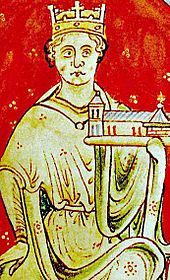
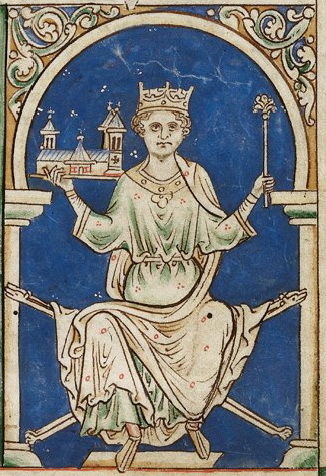
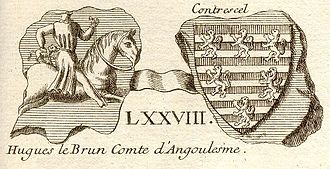
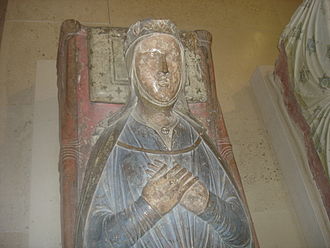



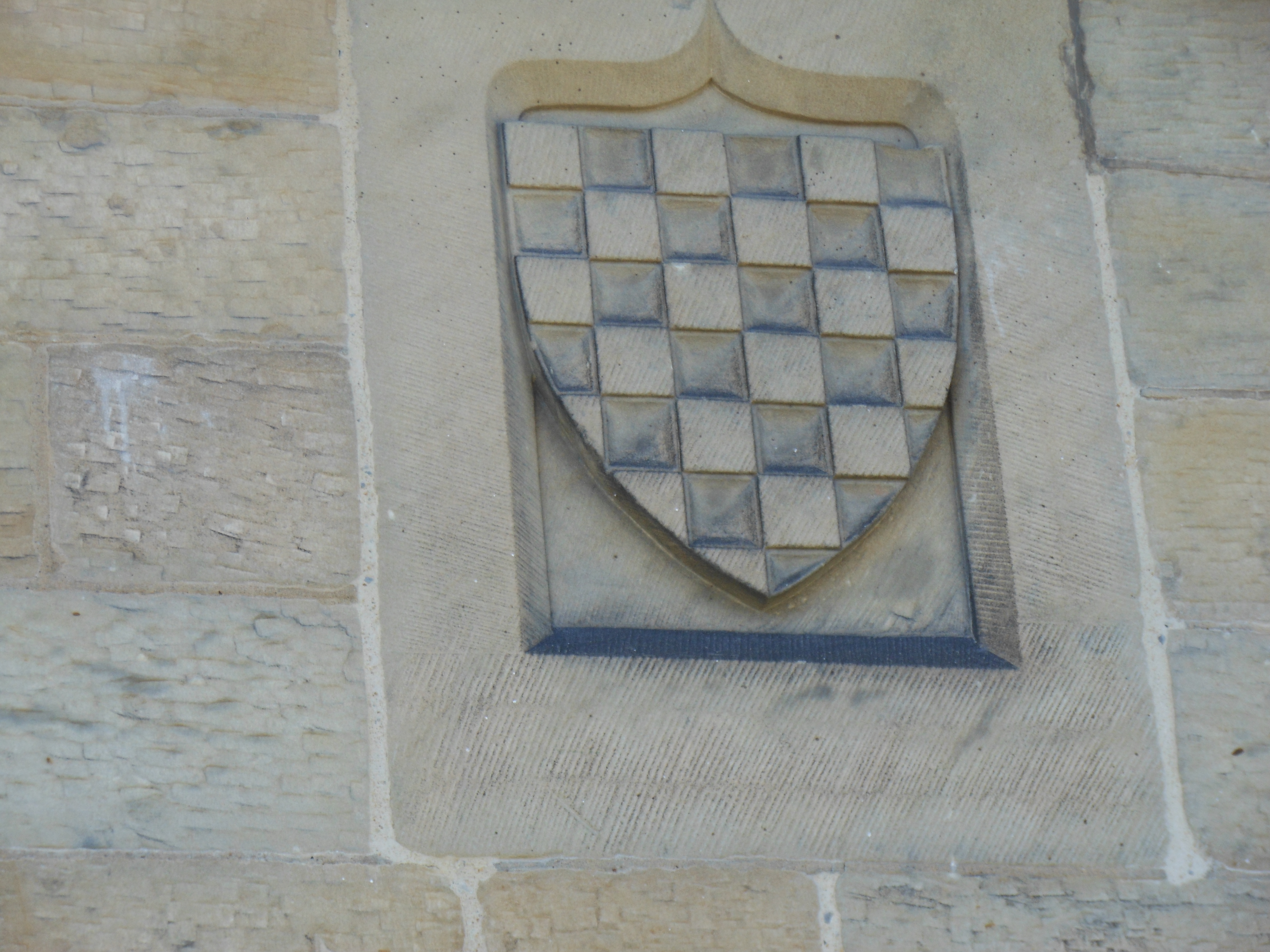
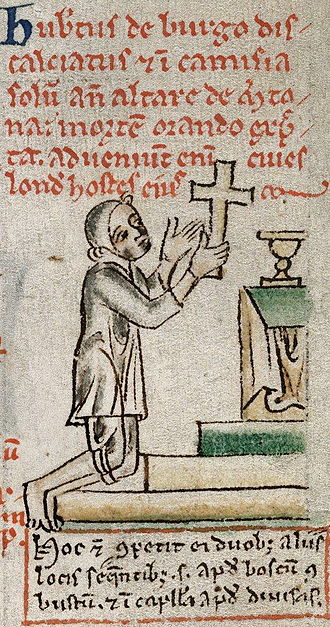



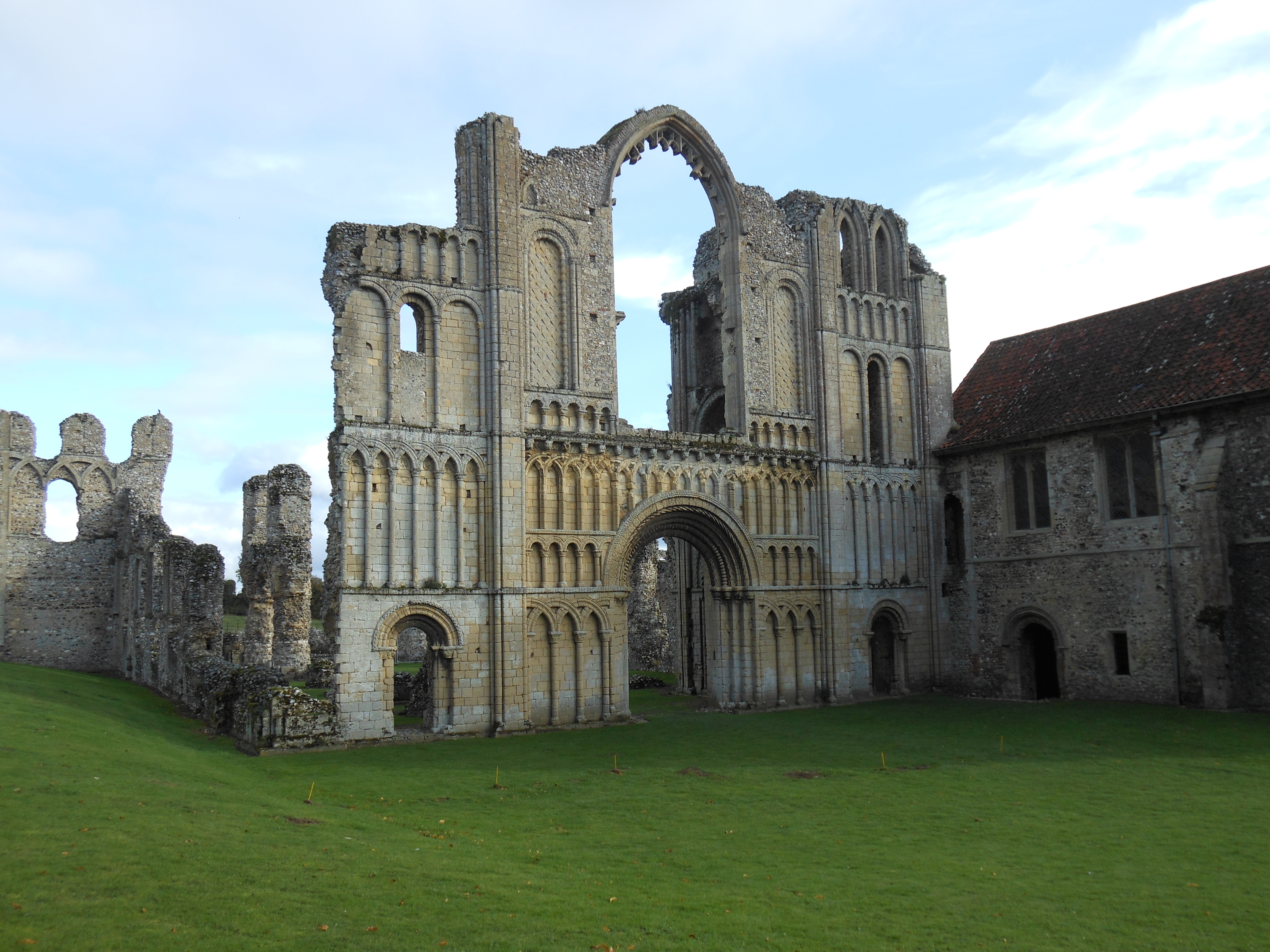


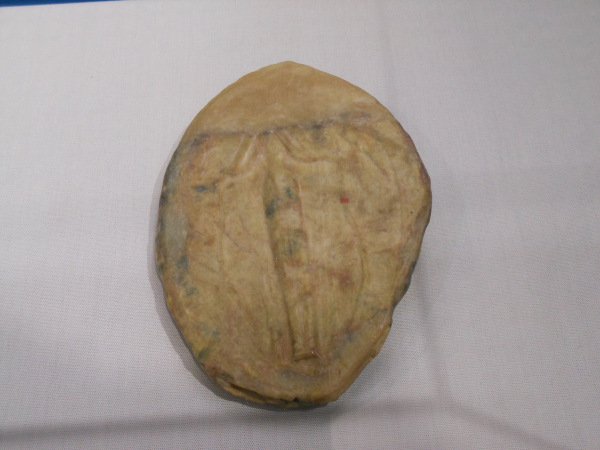
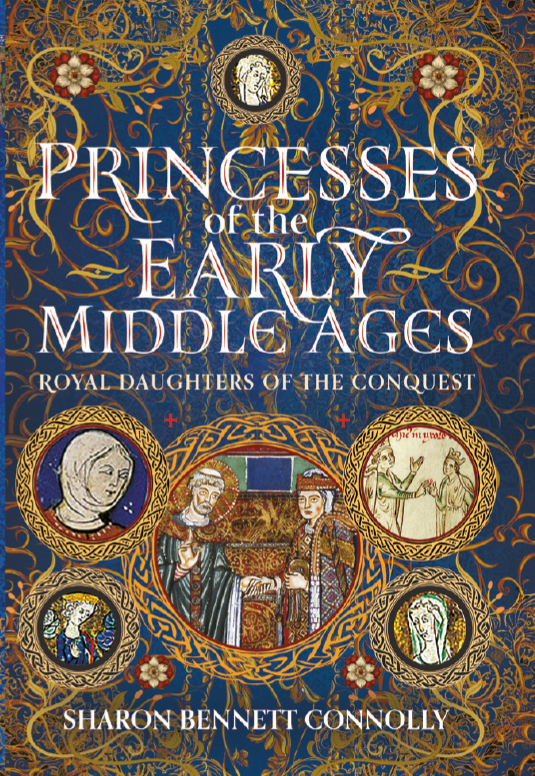




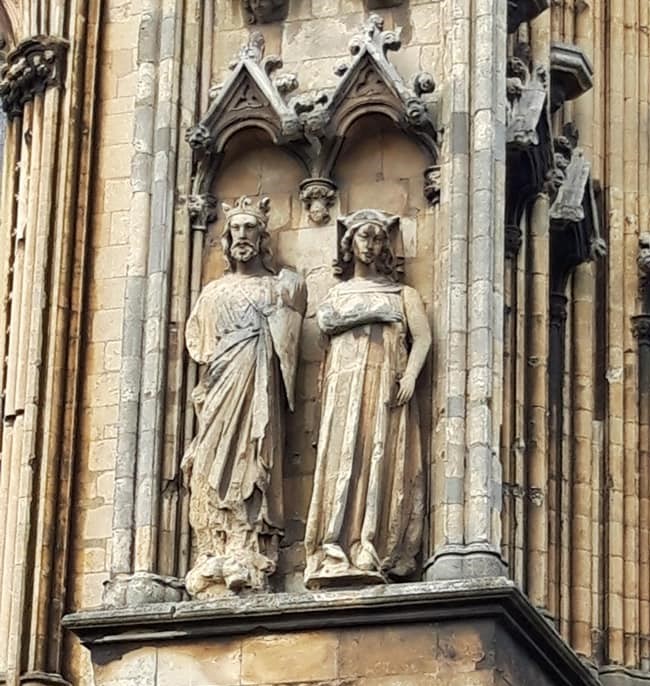
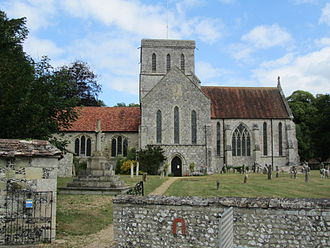
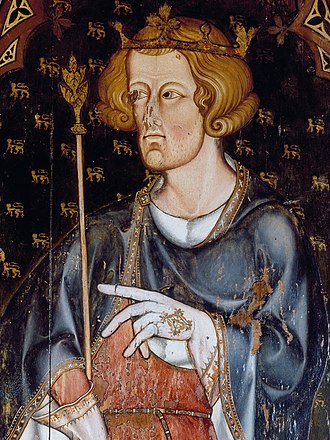
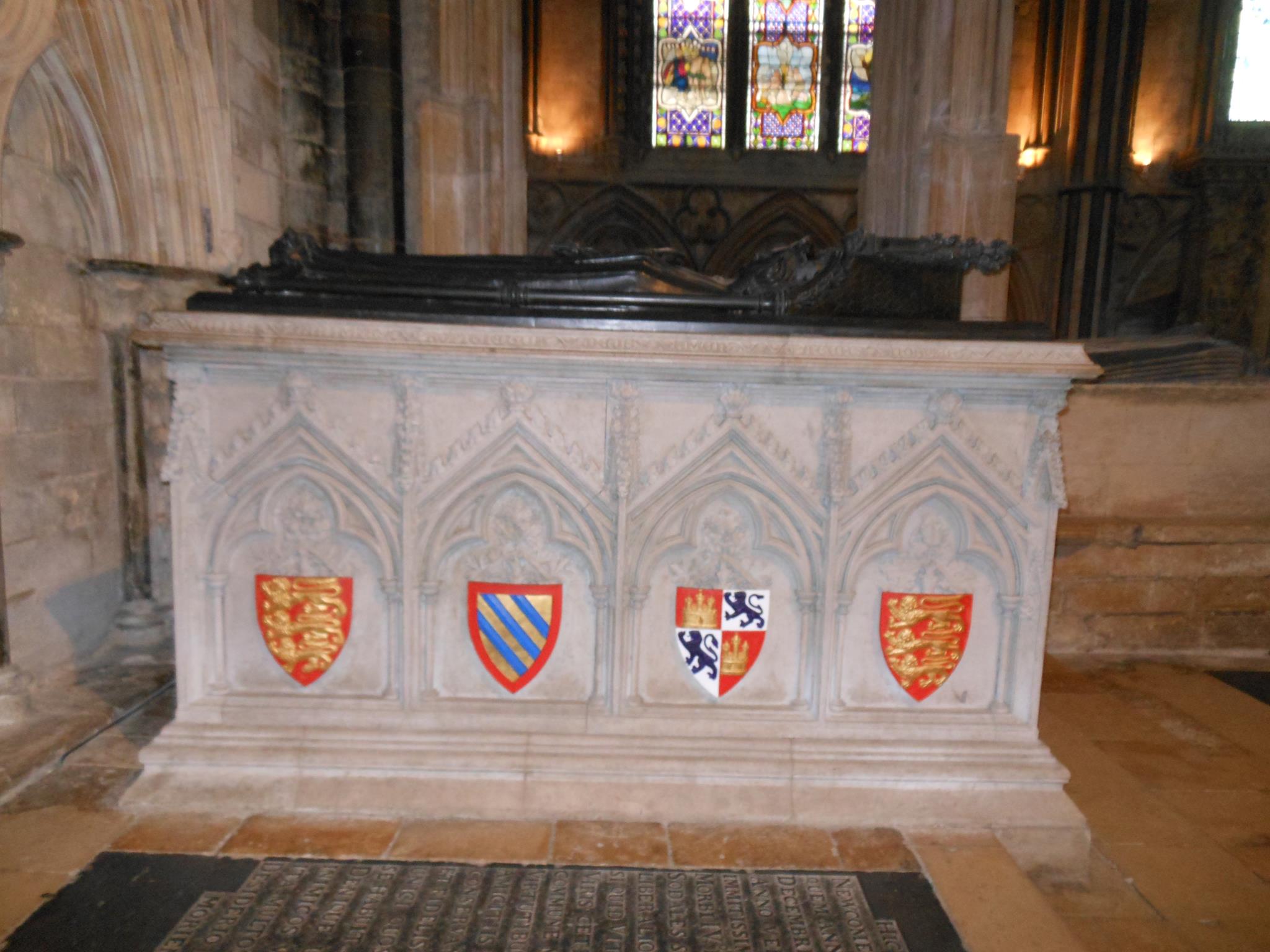
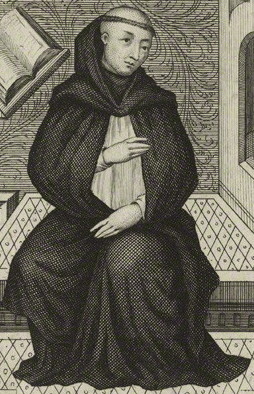
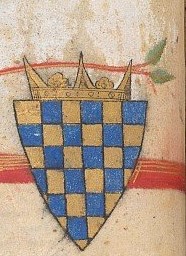


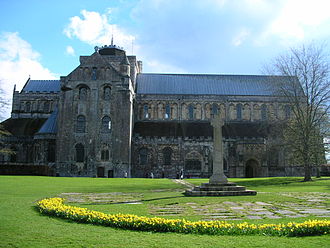



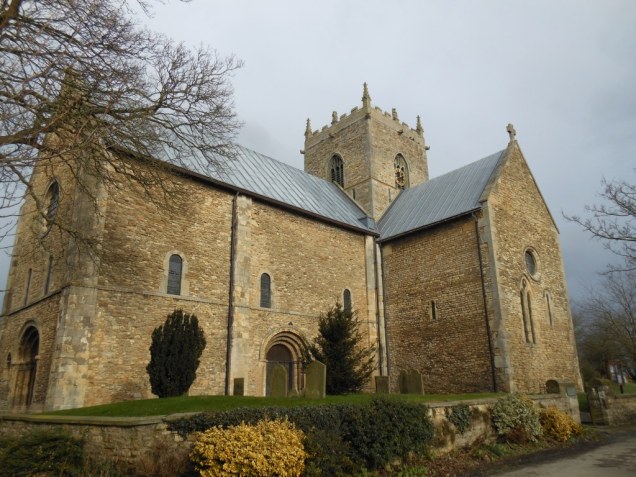

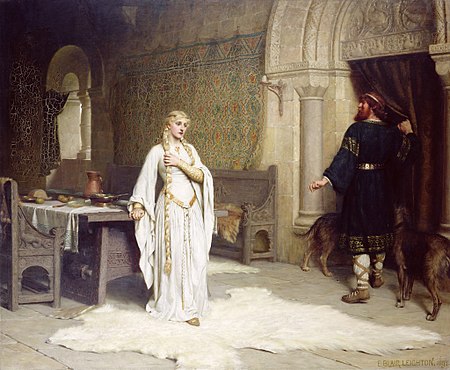
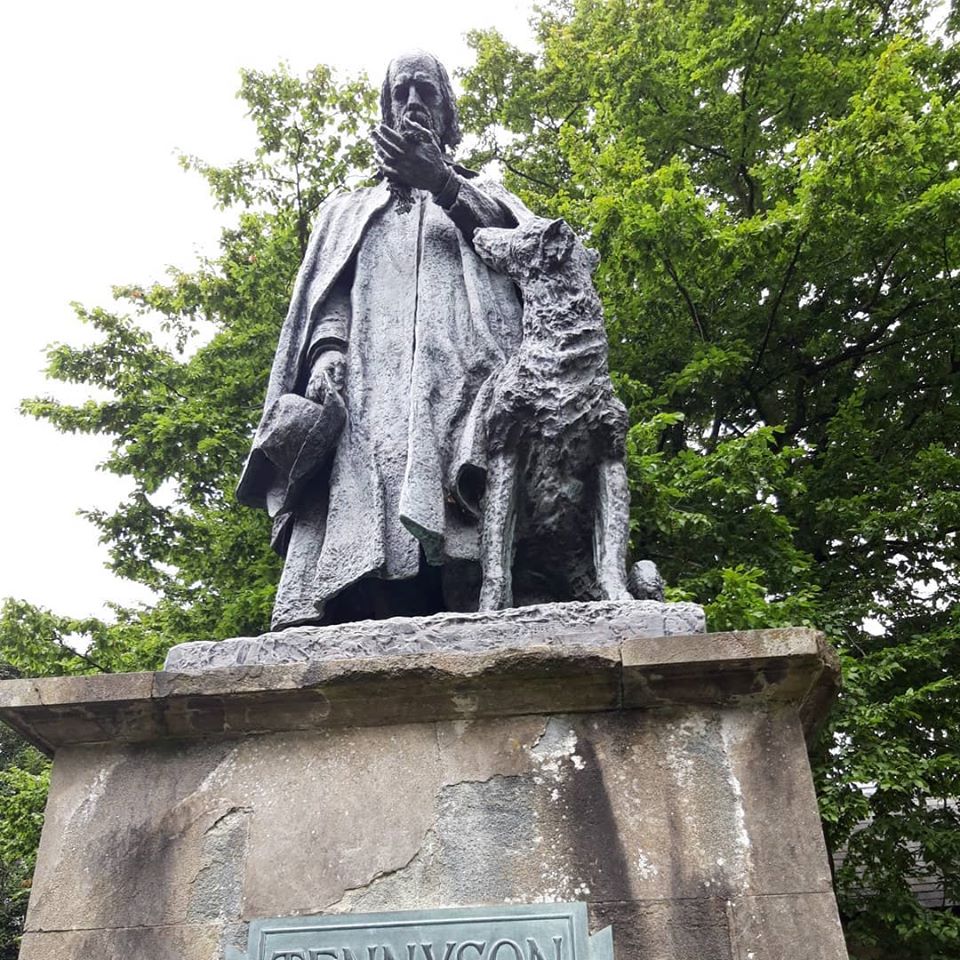
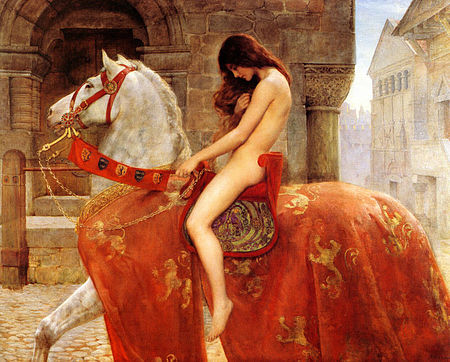

 History... the interesting bits!