First of all, i would like to say a huge thank you to everyone who entered the giveaway. There were 156 entries, which is truly incredible. But unfortunately there can be only one winnerAnd the winner is…Charlotte Clark.
Congratulations Charlotte. Thank you all for taking part and giving me such a confidence boost with your lovely comments.
If you do get your hands on a copy of Ladies of Magna Carta – or any of my books – do get in touch and I will send you a signed bookplate to pop in the front. Alternatively, I do have copies of all my books in stock if you’d like to purchase a signed and dedicated copy.
Love Sharon x
I realise that I haven’t done a giveaway in over a year. So, to celebrate the release of Ladies of Magna Carta in paperback in the UK this week, I thought I would do a giveaway. One signed copy of the brand spanking new paperback (it looks very pretty!) will go to the lucky competition winner.
Inspired by the lives of Matilda de Braose and Nichoaa de la Haye, My third book looks at the events surrounding the issuing of Magna Carta with a view to how it affected the women.
Praise for Ladies of Magna Carta:
“Sharon Bennett Connolly throws much needed light on the lives of the high-born women of thirteenth-century England…Connolly’s version of the first Plantagenets is superbly concise. No distractions or detours, hitting all the right nails on the head…Connolly’s book is an informative and delightful read about women aspiring to control their destiny against this backdrop, but their success or failure had less to do with Magna Carta than with the timeless principles of resourcefulness, determination and knowing how to skilfully handle the big guy. It’s these qualities that make their stories inspiring.”
Darren Baker, author of The Two Eleanors
“A well-researched and comprehensive study of the women who lived through, and were affected by, the Barons’ Revolt and the sealing of the Magna Carta. Ms Bennett Connolly has skilfully brought to the fore the lives of the women who have hitherto been hidden in the background. A must-read for anyone interested in this pivotal moment in English and Scottish history.”
Annie Whitehead, author of Women of Power in Anglo-Saxon England
It’s easy to enter!
The competition is open to everyone, wherever you are in the world. To win a signed and dedicated copy of Ladies of Magna Carta, simply leave a comment below or on my Facebook page and I will include you in the prize draw.
The draw will be made on Sunday 21 November.
*
My Books
Signed, dedicated copies of all my books are available, please get in touch by completing the contact me form.
Defenders of the Norman Crown: The Rise and Fall of the Warenne Earls of Surrey tells the fascinating story of the Warenne dynasty, of the successes and failures of one of the most powerful families in England, from its origins in Normandy, through the Conquest, Magna Carta, the wars and marriages that led to its ultimate demise in the reign of Edward III. Defenders of the Norman Crown: Rise and Fall of the Warenne Earls of Surrey is now available from Pen & Sword Books, Amazon in the UK and US and Book Depository.
It is a pleasure today to join the blog tour for Gods of Rome, with a short review and enticing extract from the book. Gods of Rome is the final instalment in the magnificent Rise of Emperors series by Simon Turney and Gordon Doherty.
For one to rule, the other must die.
AD 312: A year of horrific and brutal warfare.
Although outnumbered, Constantine’s legions seem unstoppable as they surge through Maxentius’ Italian heartlands. Constantine is determined to reach and seize the ancient capital of Rome from his rival, yet his army is exhausted, plagued by religious rivalries and on the verge of revolt. Maxentius meanwhile contends with a restive and dissenting Roman populace. Neither general can risk a prolonged war.
When the two forces clash amidst portents and omens in a battle that will shape history, there are factors at work beyond their control. Only one thing is certain: Constantine and Maxentius’ rivalry must end. With one on a bloodied sword and the other the sole ruler of an Empire…
The Rise of Emperors trilogy finally comes to its inevitable, devastating conclusion with Gods of Rome. The series has followed the careers of rival emperors Maxentius and Constantine, from their first meeting as children and blossoming friendship in Sons of Rome, to that friendship turning to rivalry in the second instalment, Masters of Rome. In Gods of Rome, the rivalry turns deadly when the ultimate prize is within each’s grasp – that of command of the empire itself.
This series has been a fabulous, unique reading experience. With each writer taking the voice of one of the emperors, the distinction between the two becomes profound. There is no hidden bias as you may find with one author writing both sides – but secretly preferring one. The rival emperors, Constantine and Maxentius, each have their own very distinct voice.
As you would expect with anything from Gordon Doherty and Simon Turney, the action is intense, the pace is, at times, rather furious, grabbing the reader’s attention and holding it to the very end.
The only problem with the whole trilogy is that one of the heroes had to lose – was destined to lose. And neither truly deserved to. Doherty and Turney draw wonderfully on the political machinations and family rivalries that drew these two former friends, Constantine and Maxentius, to final, devastating contest for Rome itself.
The meticulous research of the history, landscape, military strategy of the time and the war itself, help to recreate the world of the Roman Empire of the 4th century. Both authors draw on the conflicts, not only of politics and protagonists, but also through the rise of Christianity and how the rival emperors harnessed or exploited those divisions within their own camp and the camp of their rival.
Gods of Rome is a wonderful, engaging and fast-paced novel that is entertaining from start to finish. Another Doherty/Turney collaboration that is an absolute triumph.
Here’s what the reader has to look forward to:
Extract
1 CONSTANTINE
The Cottian Alpes, 27th January 312 ad
We moved through the mountains like winter wolves. The ferocious blizzard sped southwards with us, carried on the famous bora winds, singing a dire song. For days we marched through that driving snow, seeing nothing but great white-clad peaks either side of us; rugged,inhospitable highlands which in these frozen months soldiers were not meant to cross. All around me the gale screamed, boots crunched endlessly through the successively deeper drifts of white, men’s teeth chattered violently, mules brayed, exhausted. It felt at times as if we were wandering, snow-blind, to our deaths, but I knew what lay ahead… so close now.
I called upon my chosen men and a handful of their best soldiers – a group of thirty – and we roved ahead of the army like advance scouts. The blizzard raked through my bear cloak, the snow rattling like slingshot against my gemmed ridge helm and bronze scales as I scoured the valley route. Yet I refused to blink. When the speeding hail of white slowed and the murky grey ahead thinned a little, I saw them: a pair of stone and timber watchtowers, northern faces plastered in snow. Gateposts watching this passage between two realms. I dropped to my haunches behind the brow of a snowdrift and my chosen men hunkered down with me. I gazed over the drift’s brow, regarding the narrow gap between the towers and the valley route beyond, on through the winter-veined mountains. Thinking of the land that lay beyond these heights, my frozen lips moved soundlessly.
Italia…
Land of Roman forefathers. Home of the man I had once considered my friend… but that territory was rightfully mine. Mine! My surging anger scattered when I spotted movement atop one of the two towers: a freezing Maxentian scout blowing into his hands, oblivious to our presence. Then the blizzard fell treacherously slack, and the speeding veil of white cleared for a trice. I saw his ice-crusted eyebrows rise as he leaned forward, peering into the momentary clarity, right at us. His eyes bulged, mouth agog.
‘He is here!’ he screamed to be heard over the sudden return of the storm’s wrath. ‘Constantine is h—’
With a wet punch, an arrow whacked into the man’s chest and shuddered there. He spasmed then folded over the edge of the timber parapet and fell like a sack of gravel, crunching into a pillowy snowdrift at the turret’s foot. I glanced to my right, seeing my archer nock and draw again, shifting his bow to the heights of the other tower, his eyes narrowing within the shadow of his helm brow. He loosed, but the dark-skinned sentry up there ducked behind the parapet, screaming and tolling a warning bell. At once, three more Maxentians spilled from the door at the base of that rightmost tower, rushing south towards a simple, snow-topped stable twenty paces away, in the lee of a rocky overhang. This was one of the few gateways through the mountains – albeit the least favoured and most treacherous – and it was guarded by just five men? Instantly, suspicion and elation clashed like swords in my mind. We had no time to rake over the facts. These watchmen could not be allowed to ride south and warn the legions of Italia. They had to die.
About the authors
Gordon Doherty
Simon Turney is the author of the Marius’ Mules and Praetorian series, as well as The Damned Emperor series for Orion and Tales of the Empire series for Canelo. He is based in Yorkshire.
Gordon Doherty is the author of the Legionary and Strategos series, and wrote the Assassin’s Creed tie-in novel Odyssey. He is based in Scotland.
Signed, dedicated copies of all my books are available, please get in touch by completing the contact me form.
Defenders of the Norman Crown: The Rise and Fall of the Warenne Earls of Surrey tells the fascinating story of the Warenne dynasty, of the successes and failures of one of the most powerful families in England, from its origins in Normandy, through the Conquest, Magna Carta, the wars and marriages that led to its ultimate demise in the reign of Edward III. Defenders of the Norman Crown: Rise and Fall of the Warenne Earls of Surrey is now available from Pen & Sword Books, Amazon in the UK and US and Book Depository.
Sometimes the similarities in the stories of medieval women are intriguing. Especially among families. Katherine Swynford’s story is one of the endurance of love and is unique in that she eventually married her prince. Katherine’s granddaughter, Joan Beaufort, is one half of, arguably, the greatest love story of the middle ages. I say arguably, of course, because many would say that Katherine’s was the greatest.
You may not consider a mistress as a heroine, seeing her as ‘the other woman’ and not worthy of consideration. However, women in the medieval era had little control over their own lives; if a lord wanted them, who were they to refuse? And even if they were in love, differences in social position could mean marriage was impossible – at least for a time.
Katherine was born around 1350; she was the younger daughter of Sir Payn Roelt, a Hainault knight in the service of Edward III’s queen, Philippa of Hainault, who eventually rose to be Guyenne King of Arms. Her mother’s identity is unknown, but Katherine and her older sister, Philippa, appear to have been spent their early years in Queen Philippa’s household. By 1365 Katherine was serving Blanche, Duchess of Lancaster, the first wife of John of Gaunt and Katherine was married to Sir Hugh Swynford of Coleby and Kettlethorpe, Lincolnshire, shortly after. The couple had three children, Thomas, Margaret, who became a nun, and Blanche, who was named after the duchess. John of Gaunt stood as little Blanche’s godfather and she was raised alongside his own daughters by Duchess Blanche.
Following Blanche’s death in 1368, Katherine was appointed governess to the duchess’s daughters. In September 1371 John of Gaunt was remarried, to Constance of Castile; Constance had a claim to the throne of Castile and John was soon being addressed as King of Castile. In the same year, Katherine’s husband, Sir Hugh Swynford, died whilst serving overseas and it seems that within months of his death, probably in the winter of 1371/72 Katherine became John’s mistress. Their first child, John Beaufort, was born towards the end of 1372. Over the next few years, three further children – two sons and a daughter – followed. John’s wife Constance also had children during this time – she gave birth to a daughter, Catherine, (Catalina) in 1373 and a short-lived son, John, in 1374.
John of Gaunt, Duke of Lancaster
We can only guess at what the two women thought of each other, but it can’t have been an easy time for either. In 1381, following the unrest of the Peasants’ Revolt and the hefty criticism aimed particularly at John and his relationship with Katherine, John renounced Katherine. Giving up her position as governess, Katherine left court and returned to Lincoln. Her relationship with John of Gaunt and, indeed, his family, remained cordial and the duke still visited her, although discreetly. In 1388 Katherine was made a Lady of the Garter – a high honour indeed. And in 1394 Constance died.
In January 1396, John and Katherine were finally married in Lincoln Cathedral; they had to obtain a dispensation from the church as John was godfather to Katherine’s daughter. With the marriage, Katherine had gone from being a vilified mistress to Duchess of Lancaster. Her children by John were legitimised by the pope in September 1396 and by Richard II’s royal patent in the following February, although they were later excluded from the succession by Henry IV.
Sadly, Katherine’s marital happiness with John of Gaunt was short-lived; John of Gaunt died in February 1399 and Katherine retired to live in Lincoln, close to the cathedral of which her second son by John, Henry, was bishop. Katherine herself died at Lincoln on 10 May 1403 and was buried in the cathedral in which she had married her prince. Her tomb can still be seen today and lies close to the high altar, beside that of her youngest child Joan Beaufort, countess of Westmorland, who died in 1440.
Although it seems easy to criticise Katherine’s position as ‘the other woman’, her life cannot have been an easy one. The insecurity and uncertainty of her position, due to the lack of a wedding ring, must have caused her much unease. However, that she eventually married her prince, where so many other medieval mistresses simply fell by the wayside and were forgotten, makes her story unique. What makes her even more unique is that Katherine’s own granddaughter was part of one of the greatest love stories of the middle ages.
Joan Beaufort was the only daughter of Katherine’s eldest son by John of Gaunt, also named John. The story of King James I of Scotland and his queen, Joan Beaufort, is probably the greatest love story of the medieval era. He was a king in captivity and she a beautiful young lady of the court of her Lancastrian cousin, Henry V. The son of Robert III of Scotland, James had been on his way to France, sent there for safety and to continue his education, when his ship was captured by pirates in April 1406. Aged only eleven, he had been handed over to the English king, Henry IV, and imprisoned in the Tower of London. Within a couple of months of his capture, James’s father had died, and he was proclaimed King of Scots, but the English would not release their valuable prisoner. James was closely guarded and regularly moved around, but he was also well-educated while in the custody of the English king and became an accomplished musician and poet.
Joan Beaufort, Queen of Scots
Probably born in the early 1400s, Lady Joan was the daughter of John Beaufort, 1st Earl of Somerset. She was at court by the early 1420s, when James first set eyes on her. The Scottish king wrote of his love for Joan in his famous poem, The Kingis Quair. According to Nigel Tranter, James was with the court at Windsor, when he saw Joan for the first time; she was walking her little lapdog in the garden, below his window. The narrow window afforded him only a limited view, but the Lady Joan walked the same route every morning and James wrote of her;
Beauty, fair enough to make the world to dote,
Are ye a worldy creature?
Or heavenly thing in likeness of nature?
Or are ye Cupid’s own priestess, come here,
To loose me out of bonds
One morning James is said to have dropped a plucked rose down to Lady Joan, which he saw her wearing the following evening at dinner. Nigel Tranter suggests Lady Joan grieved over James’s imprisonment and even pleaded for his release. Written in the winter of 1423/24, the autobiographical poem, The Kingis Quair, gives expression to James’ feelings for Joan;
I declare the kind of my loving
Truly and good, without variance
I love that flower above all other things
James’s imprisonment lasted for eighteen years. His uncle Robert Stewart, Duke of Albany and Guardian of Scotland in James’s absence, refused to ransom him, in the hope of gaining the throne himself. He never quite garnered enough support, but managed to keep the Scottish nobles in check. However, when he died in 1420, control passed to his son Murdoch, and Scotland fell into a state of virtual anarchy. With Henry V’s death in 1422, it fell to his brother John, Duke of Bedford, as regent for the infant Henry VI, to arrange James’ release. The Scots king was charged 60,000 marks in ransom – ironically, it was claimed that it was to cover the costs for his upkeep and education for eighteen years. The agreement included a promise for the Scots to keep out of England’s wars with France, and for James to marry an English noble woman – not an onerous clause, given his love for Lady Joan Beaufort.
James and Joan were married at the Church of St Mary Overie in Southwark (now Southwark Cathedral) on 2 February 1424, with the wedding feast taking place in the adjoining hall, the official residence of Joan’s uncle Henry Beaufort, Bishop of Winchester. Finally united – and free – the young couple made their way north soon afterwards and were crowned together at Scone Abbey on 21 May 1424. James and Joan had eight children, seven of whom survived childhood. Their six daughters helped to strengthen alliances across Europe. The royal couple finally had twin sons on 16 October 1430; and although Alexander died within a year of his birth, his younger twin, James, thrived and was created Duke of Rothesay and heir to the throne. He would eventually succeed his father as James II.
On his return to Scotland, James immediately set about getting his revenge on the Duke of Albany’s family and adherents; executing some, including Murdoch, Albany’s son and heir. Two other claimants to James’s throne were sent to England, as hostages for the payment of his ransom. James and Joan ruled Scotland for thirteen years; James even allowed Joan to take some part in the business of government. Although the Scots were wary of her being English, Queen Joan became a figurehead for patronage and pageantry. The English hope that Joan’s marriage to James would also steer the Scots away from their Auld Alliance with France, was short-lived, however, and the 1436 marriage of their eldest daughter, Margaret, to the French dauphin formed part of the renewal of the Auld Alliance.
James I, King of Scots
James’ political reforms, combined with his desire for a firm but just government, made enemies of some nobles, including his own chamberlain Sir Robert Stewart, grandson of Walter, Earl of Atholl, who had been James’s heir until the birth of his sons. Sir Robert and his grandfather hatched a plot to kill the king and queen. In February 1437, the royal couple was staying at the Blackfriars in Perth when the king’s chamberlain dismissed the guard and the assassins were let into the priory. The king is said to have hidden in an underground vault as the plotters were heard approaching. There is a legend that the vault had originally been an underground passage, however, the king had ordered the far end to be sealed, when his tennis balls kept getting lost down there. Unfortunately, that also meant James had blocked off his own escape route. The assassins dragged the king from his hiding place and stabbed him to death; Joan herself was wounded in the scuffle.
And one of the greatest love affairs of the era ended in violence and death. The plotters, far from seizing control of the country, were arrested and executed as the Scottish nobles rallied around the new king, six-year-old James II. Joan’s life would continue to be filled with political intrigue, but her love story had been viciously cut short, without the happy ending her grandmother had achieved. Joan would marry again, to Sir James Stewart, the Black Knight of Lorne. They would go on to have 3 sons together before Joan died during a siege at Dunbar Castle on 15 July, 1445; although whether her death was caused by illness or the violence of the siege has not been determined. She was buried in the Carthusian priory in Perth alongside her first husband, King James I.
Katherine and Joan led very different lives, although the similarities are there if you look for them; they both lived their lives around the glittering court and married for love. Joan’s happy marriage only achieved because her grandmother finally got her prince; if Katherine had not married John of Gaunt, the Beauforts would have remained illegitimate and their future prospects seriously restricted by the taint of bastardy.
*
Images courtesy of Wikipedia.
Sources:
katherineswynfordsociety.org.uk; Red Roses: Blanche of Gaunt to Margaret Beaufort by Amy Licence; The Nevills of Middleham by K.L. Clark; The House of Beaufort: the Bastard Line that Captured the Crown by Nathen Amin; Brewer’s British Royalty by David Williamson; History Today Companion to British History Edited by Juliet Gardiner & Neil Wenborn; The mammoth Book of British kings & Queen by Mike Ashley; Britain’s Royal Families, the Complete Genealogy by Alison Weir; The Life and Times of Edward III by Paul Johnson; The Perfect King, the Life of Edward III by Ian Mortimer; The Reign of Edward III by WM Ormrod; Chronicles of the Age of Chivalry Edited by Elizabeth Hallam; Oxforddnb.com; womenshistory.about.com/od/medrenqueens/a/Katherine-Swynford.
An earlier version of this article first appeared on The Henry Tudor Society blog in November 2017.
*
My Books
Signed, dedicated copies of all my books are available through my online store.
Out now: Scotland’s Medieval Queens
Scotland’s history is dramatic, violent and bloody. Being England’s northern neighbour has never been easy. Scotland’s queens have had to deal with war, murder, imprisonment, political rivalries and open betrayal. They have loved and lost, raised kings and queens, ruled and died for Scotland. From St Margaret, who became one of the patron saints of Scotland, to Elizabeth de Burgh and the dramatic story of the Scottish Wars of Independence, to the love story and tragedy of Joan Beaufort, to Margaret of Denmark and the dawn of the Renaissance, Scotland’s Medieval Queens have seen it all. This is the story of Scotland through their eyes.
Heroines of the Tudor World tells the stories of the most remarkable women from European history in the time of the Tudor dynasty, 1485-1603. These are the women who ruled, the women who founded dynasties, the women who fought for religious freedom, their families and love. Heroines of the Tudor World is now available for pre-order from Amberley Publishing and Amazon UK.Women of the Anarchy demonstrates how Empress Matilda and Matilda of Boulogne, unable to wield a sword themselves, were prime movers in this time of conflict and lawlessness. It shows how their strengths, weaknesses, and personal ambitions swung the fortunes of war one way – and then the other. Available from Bookshop.org, Amberley Publishing and Amazon UK. King John’s Right-Hand Lady: The Story of Nicholaa de la Haye is the story of a truly remarkable lady, the hereditary constable of Lincoln Castle and the first woman in England to be appointed sheriff in her own right. Available from all good bookshops Pen & Sword Books, bookshop.org and Amazon.
Alternate Endings: An anthology of historical fiction short stories including Long Live the King… which is my take what might have happened had King John not died in October 1216. Available in paperback and kindle from Amazon.
Podcast:
Have a listen to theA Slice of Medieval podcast, which I co-host with Historical fiction novelist Derek Birks. Derek and I welcome guests, such as Bernard Cornwell and discuss a wide range of topics in medieval history, from significant events to the personalities involved.
*
Don’t forget!Signed and dedicated copies of all my books are available through my online store.
For forthcoming online and in-person talks, please check out my Events Page.
Relics can move mountains, so history relays. They cure the sick, promise success, enable whole kingdoms to win wars.
A fragment of byssus lies in a small chest and its very existence underlines the life of Christ and the meaning behind the Holy Church. Its power can only be wondered at.
It is the kind of relic which inspires heroic deeds and . . . murder.
An elderly nun and a returned crusader are all that stands between the world’s most sanctified relic and a Templar knight who craves it for his own purpose.
From Constantinople to Caen, from Venice to Viviers, from Rome to Rouen, relics are traded like pepper and frankincense, silk and silver, lapis and alum. Sold to the highest bidder.
Who then should pay the highest price of all for a fragment of aged cloth?
Is the highest price surely . . . and inevitably . . . death?
My first thought on looking at Reliquary by Prue Batten was what a gorgeous cover!
As to the book, it was fabulous!
I loved Reliquary!
Reliquary brings together a disparate group of heroes with one aim – to get a newly acquired relic safely to its destination, which is a small, impoverished convent in France. It is a moving and exciting tale of the power of relics and friendship in Europe in the aftermath of the Third Crusade.
Faced by powerful enemies, including the weather, and set in the aftermath of the Third Crusade, Reliquary is a gripping tale, replete with action, adventure and intrigue. The clever plotline is enacted by wonderful, flawed characters with whom the reader cannot help but to feel an affinity. Prue Batten has written a marvellous, gripping tale of a comradeship forged against the avaricious greed of the rich and powerful.
Beautiful imagery.
‘We need a relic.’
‘Pardon,’ the Obedientiary put down her mug of watered wine and stared at the Prioress.
‘We need a relic,’ the Prioress replied. Younger than the Obedientiary, she had blue eyes. One could almost say guileless, had it not been for the veil of iron behind the heavenly colour. The Obedientiary had observed those eyes harden to molten steel, and as strong, many times. Especially when senior prelates had visited the priory with the express purpose of wanting it closed because of its small population and lack of fame and fortune. As the Prioress spoke now, her eyes darkened – a tint reminiscent of the forge as the smithy honed blades for those who sought to arm themselves.
‘Something to bring the pilgrims,’ she continued, rubbing the worn edge of the table as if the smooth rhythm might settle the uneven nature of her thoughts. ‘In short, to bring us monies. We are only a few leagues away from the Chemin de Compostelle…’
In fact, the Obedientiary knew this. The Via Arena, beloved of pilgrims, passed through Jumeaux, following the river that trickled and sometimes flowed, not far from Esteil.
‘I cannot fight off these crows of canons for much longer. I have been communicating with Mother Abbess at Fontevrault and she agrees that we must find a way to improve Esteil’s fortunes. In between times, she has said she will do what she can, but in my view it will be little, perhaps nothing.’
Esteil was situated within Fontevrault’s purview. Occasionally, the mother house dispensed funds to smaller houses in distress. It also kept a weather eye on the spiritual well being of the houses, but most small convents were expected to contribute to the continuance – temporal and spiritual. Survival of the fittest, thought the Obedientiary.
Outside, the wood pigeons cooed and the hens that lay smooth brown eggs pecked and clucked as if they understood the Prioress’s concerns. Someone walked past in clogs, the beat of their steps on the stones of the cloister the only sound apart from the birds. Perhaps the midday meal was done and the sisters were beginning to file out of the refectory to attend to their yard duties – the physic garden, the provender garden, the hens or the orchard. Or perhaps some of their small number were copying in the scriptorium, or stitching within the solar. Right now, the Obedientiary should be there, checking that her three stitching novices had begun their afternoon’s work on a cope while there was any sort of light.
‘And what is our value, Mère Gisela?’ she asked. ‘Are we any better or worse than other such small houses like ourselves? How do we argue our value when we are less than twenty sisters?’
‘Indeed, and despite what we do every day, what we accomplish in the scriptorium and with our threads, it is apparently not enough.’ The Prioress sighed and rubbed at the smooth skin of her hands. One folding over the other, rubbing this way, rubbing that as if her young bones ached. ‘God help us. Despite the quality of our scribes and the skill of our needlewomen, such work is not enough to plead our cause. Which is why I say we need a relic.’
Prue Batten’s wonderful array of characters, from the non-worldly Sister Cecile to the war-weary Henri de Montbrisson, and their band of friends and allies, help to make Reliquary a truly memorable novel.
For any fan of medieval historical fiction, Reliquary is a tale not to be missed. It is one of those books that will have you reading ‘just one more chapter’ long into the early hours. A thoroughly enjoyable historical fiction thriller – it will have you on the edge of your seat from beginning to end.
Prue Batten has crafted a novel that draws the reader in and keeps a hold of them until the very end. It is impossible to put down!
And the best thing about Reliquary? It is the first in a new series – and I can’t wait to read more!
Signed, dedicated copies of all my books are available, please get in touch by completing the contact me form.
Defenders of the Norman Crown: The Rise and Fall of the Warenne Earls of Surrey tells the fascinating story of the Warenne dynasty, of the successes and failures of one of the most powerful families in England, from its origins in Normandy, through the Conquest, Magna Carta, the wars and marriages that led to its ultimate demise in the reign of Edward III. Defenders of the Norman Crown: Rise and Fall of the Warenne Earls of Surrey is now available from Pen & Sword Books, Amazon in the UK and US and Book Depository.
My family and I took a trip to Traverse City, Michigan last autumn. While this trip had nothing to do with anything I was writing, my youngest son would be quick to tell you that I always find some sort of historic site to visit anywhere we go. In Traverse City, that place ended up being the former Northern Michigan Asylum, now reinvented as The Village at Grand Traverse Commons.
The Northern Michigan Asylum was built in 1883-1885, including Building 50, the main structure which is almost a quarter of a mile long. More buildings were added over the years to serve patients that were sent from around the state of Michigan. Men, women, and children were segregated in addition to patients being separated according to condition. ‘Beauty is therapy’ was a famous slogan, referring to founding Medical Superintendent Dr James Munson’s belief that the gorgeous natural surroundings of the area would help the patients heal.
Traverse City is gorgeous with the beautiful blue waters of the bay in the summer and an extraordinary kaleidoscope of trees in the autumn. Certainly, some did find healing in the natural surroundings. The buildings of the asylum were carefully crafted with high ceilings, transom windows, and rounded corners to create a bright, safe atmosphere. The grounds include a grove of trees where no two are alike. The variety was collected by Dr James Munson during his travels. One can envision what the place was like when it was new and filled with hopeful nurses and their charges.
However, as we toured the abandoned, dilapidated structures, it was just as easy to imagine that darker things had taken place as well. Old lead paint is peeling from the walls, and the lack of electricity forced us to light our way with flashlights. Shattered windows and graffiti brought to mind broken souls and nefarious deeds that might have taken place within those walls.
I had not planned on writing anything about the asylum, but when the suggestion of an anthology of historical ghost stories was put forward, I knew just where mine would take place. The mysterious steam tunnels and creamy stone structures topped by red spires suddenly seemed the perfect setting for a young nurse to encounter strange happenings. A ghost may not be the worst being she discovers.
Hauntings
FEAR IS AS OLD AS TIME ITSELF Chilling Tales that will take you through a labyrinth of historical horror. You will encounter a tormented Roman general. A Norse woman who must confront her terrifying destiny. Meet a troubled Saxon brother, searching for his twin’s murderer. A young nurse tries to solve the mysteries of an asylum for the insane.Down the passages of time, Henry VIII and Anne Boleyn wander through a haunted garden and elsewhere, a lost slave girl is the soul survivor of a mass slaughter.
These are just a few of the eerie tales which ensure that Hauntings is not for the faint-hearted.
Hauntings is an anthology of stories that span 2,000 years of history. Featuring short stories by S.J.A. Turney, D. Apple, Judith Arnopp, K.S. Barton, Lynn Bryant, Paula Lofting, Stephanie Churchill, Samantha Wilcoxson, Jennifer C. Wilson and Kate Jewell, and with a foreword by yours truly!
Meet the authors and hear the stories behind the stories. It’s free. Come and join us!
It’s on Saturday 23 October at 7pm (UK time) – 2 pm if you’re in New York! Book here!
My Books
Signed, dedicated copies of all my books are available, please get in touch by completing the contact me form.
Defenders of the Norman Crown: The Rise and Fall of the Warenne Earls of Surrey tells the fascinating story of the Warenne dynasty, of the successes and failures of one of the most powerful families in England, from its origins in Normandy, through the Conquest, Magna Carta, the wars and marriages that led to its ultimate demise in the reign of Edward III. Defenders of the Norman Crown: Rise and Fall of the Warenne Earls of Surrey is now available from Pen & Sword Books, Amazon in the UK and US and Book Depository.
FEAR IS AS OLD AS TIME ITSELF Chilling Tales that will take you through a labyrinth of historical horror. You will encounter a tormented Roman general. A Norse woman who must confront her terrifying destiny. Meet a troubled Saxon brother, searching for his twin’s murderer. A young nurse tries to solve the mysteries of an asylum for the insane.
Down the passages of time, Henry VIII and Anne Boleyn wander through a haunted garden and elsewhere, a lost slave girl is the soul survivor of a mass slaughter.
These are just a few of the eerie tales which ensure that Hauntings is not for the faint-hearted.
Hauntings, an Anthology
Since time immemorial, people have sat around the hearth, in the dark of night with storms raging outside, telling each other ghost stories. Even the fairy tales told to children over the centuries have bordered on horror stories, with a wicked stepmother here, an evil witch there and the candy-selling man who turned out to be a child-catcher; all just waiting to scare and horrify the unsuspecting. Many were moralising tales, told to scare children into being good. But the effects linger. As children become teenagers, they tell scarier stories, staying up late into the night on sleepovers and camping expeditions. The aim has always been to frighten and entertain with ever greater levels of horror, often shining torches into their faces at odd angles to create special effects.
The enduring need to push our fear to the limits has been with us since childhood.
Such camp-fire tales belie the fact that horror and ghost stories have a place deep in the culture of society. They have always been a way to explain the unexplainable.
We have all had that moment, that sense of being watched. But when we turn around, there is no one there…
Or seen that movement out of the corner of our eye…
The room suddenly turning cold for no reason…
The most famous incident of this kind gave birth to not only the vampire but also what is probably the most famous horror story of all time. And it started, as it always does, with a gathering of friends, in their late teens and early 20s, trying to shock and scare each other as a storm raged outside.
Europe had just emerged from its own horror story. Over twenty-five years of warfare had ignited with the French Revolution in 1789 and ended on the battlefield of Waterloo in June 1815, raging across Europe, from the Iberian Peninsula to frozen Russia and even venturing into Africa. A generation had grown up with the shadow of war looming over them. This man-made tragedy had been exacerbated by volcanic eruptions, famine and epidemics; the volcanic ash would cause 3 years of darkness, crop failure and cholera outbreaks. It was a time ripe for dark and desperate literary endeavours.
In the aftermath of Waterloo, a young couple, Mary Wollstonecraft Godwin, her lover Percy Bysshe Shelley, travelled to Lake Geneva in May 1816, ostensibly looking for rest and relaxation. Their party included their four-month-old baby and Mary’s stepsister, Claire Clairmont. At the time, Claire was pregnant with a child by Lord Byron, the ground-breaking poet whose personal affairs and love life had proved too scandalous for England. Most recently he had divorced his wife, abandoning his young daughter, Ada Lovelace, and, so rumour had it, pursued an affair with his own half-sister. Plagued by gossip and debt, he had left England for Europe. Claire, it seems, had decided to surprise her lover by following him.
Mary had fallen in love with Percy in 1814; the couple had run away together, despite Percy already being married, and travelled around Europe for the next 2 years. After Byron left England, a distraught Claire convinced Mary and Percy to travel to Geneva with her. A few days later, Byron—clearly unaware that Claire would be there—arrived in town. Mary, whose own love life not without controversy, sympathized with the scandalous poet.
With Percy and Lord Byron soon forming an intense friendship, the small party abandoned their various travel plans and rented properties close to each other along Lake Geneva. They would gather together in the long, dark, cold evening at the Villa Diodati, the stately mansion Byron had rented for his stay along with John Polidori, his doctor. They read poetry, argued, and talked late into the night. After three nights of the party being trapped inside by the raging storm, tensions were running high. Byron was annoyed by Claire’s obsessive attentions, Mary likewise had to fend off the unwanted attentions of the equally obsessive Doctor Polidori.
They spent their evenings reading horror stories and ghostly poems to each other until one night, they were given a challenge. Byron proposed they each write a ghost story that was better than the ones they had just read. Inspired by a tale of Byron’s, Polidori produced his novella “The Vampyre,” which would be published in 1819. It is the first work of fiction to include a blood-sucking hero—which may have been modelled on Byron himself. Mary took a little longer to settle on the subject of her story but after a long, sleepless night she produced her offering, Frankenstein, or the Modern Prometheus. Considering what happens when men play gods, and perhaps with the upheaval of the last three decades in her mind, she would later call the story her “hideous progeny”.
Frankenstein would be Mary Shelley’s enduring legacy and the inspiration for so many hopeful writers.
Fast forward a little over 200 hundred years. The year was 2020, the world was in the midst of a pandemic of horrifying proportions. Travel to the neighbouring town was frowned upon, you were allowed out for exercise once a day, families were forced apart, the schools closed and writers the world over were sat in their studies, or at their kitchen tables, tapping away on keyboards, alone, solitary…
Well, not quite…
We now have the internet, so when you are alone, you are still not totally alone. Once again, with the storm raging outside, a group of writers have come together, not in a luxury Swiss mansion, but via the miracle that is the internet. Despite the miles and oceans apart, and across the continents, these ten historical fiction authors were given a challenge: to write a ghost story, to regale each other with terrifying stories of ghosts and ghoulies. Through history and legend, from the legions of Rome to a spooky hotel, from Tudor England to an asylum for the insane, those who have suffered injustice may finally be laid to rest, those who have sought loved ones across the centuries may finally be reunited and those who have borne nightmares for past deeds may finally find peace.
A year after the idea first formed, those stories are set to be unleashed on the world.
Dare you read them?
Hauntings, an Anthology is dedicated to the memory of Sharon Penman, an amazing historical fiction writer, author of The Sunne in Splendour, who inspired so many of us to become writers ourselves.
Hauntings, an Anthology is an anthology of stories that span 2,000 years of history. Featuring short stories by S.J.A. Turney, D. Apple, Judith Arnopp, K.S. Barton, Lynn Bryant, Paula Lofting, Stephanie Churchill, Samantha Wilcoxson, Jennifer C. Wilson and Kate Jewell, and with a foreword by yours truly!
Hauntings, an Anthology is now available as an ebook from Amazon in the UK and the US and will be available in paperback shortly.
Hauntings Launch Party
And we’re having a launch party over Zoom.
Meet the authors and hear the stories behind the stories. It’s free. Come and join us!
It’s on Saturday 23 October at 7pm (UK time) – 2 pm if you’re in New York! Book here!
*
My Books
Signed, dedicated copies of all my books are available, please get in touch by completing the contact me form.
Defenders of the Norman Crown: The Rise and Fall of the Warenne Earls of Surrey tells the fascinating story of the Warenne dynasty, of the successes and failures of one of the most powerful families in England, from its origins in Normandy, through the Conquest, Magna Carta, the wars and marriages that led to its ultimate demise in the reign of Edward III. Defenders of the Norman Crown: Rise and Fall of the Warenne Earls of Surrey is now available from Pen & Sword Books, Amazon in the UK and US and Book Depository.
Today it is a pleasure to welcome author Grace Tierney to the blog, with a fascinating article on what we know – and what we get wrong – about the Vikings. Over to Grace:
Horned helmet
The Vikings were the people of Norway, Denmark, and Sweden and from 750-1100 they changed everywhere they landed in their longships. They settled from America to Russia and travelled from the Arctic to Africa, not bad for a bunch of lawless raiders. By 1000 A.D. Old Norse (or the Danish tongue as it was called) was the most widely spoken language in Europe and modern English retains many of their words – several of which you use in almost every sentence. We have Vikings to thank for them, they, thing, get, take, time and sky, for example.
1. Vikings Word Horned Helmets, or Did They?
Every Viking you’ve ever seen in a cartoon had horns on his helmet but this stereotype is simply not true. Also, many of those warriors were female.
No horned helmets have been discovered in Viking digs. They wore simple skullcap helmets. How did this misconception arise?
In 1874, Richard Wagner composed “The Ring Cycle”. It’s a group of four operas which he loosely based on the Norse sagas and they’re still popular. The costume designer for the original production, Carl Emil Doepler, designed horned helmets for the Viking characters. His designs have influenced artists, filmmakers, and cartoonists ever since.
Vikings loved horns though. They were astute traders who sold spiral narwhal tusks as unicorn horns. Traders from the rest of Europe hadn’t seen the horned whale themselves as only the Vikings had reached the Arctic at that point. Medieval Europeans believed such a horn had magical properties, especially against poisons and melancholy. “Unicorn horns” were literally worth their weight in gold and the Vikings, who originally bought them from the Inuit and later hunted for them, were happy to bolster the stories.
In the 1500s, Queen Elizabeth I of England received a carved and jewel-encrusted narwhal tusk as a gift which would be worth about £5 million sterling today. It was claimed as being from a sea unicorn and was named the Horn of Windsor.
2. Columbus Discovered North America in 1492
Recent discoveries show the Vikings got there first.
The Viking Sagas tell us that a famous Viking explorer called Leif Erickson sailed to a land west of Greenland (settled by the Vikings) and created a colony called Vinland around the year 1000, almost five centuries before Columbus reached the New World. Historians believe Vinland was in modern-day Canada in the Newfoundland, Gulf of St. Lawrence, and New Brunswick areas. It wasn’t a single location, but a series of settlements along the same coast, many of which had wild grapevines, hence the name.
In 1960 this idea moved from historical theory to reality with the excavation of L’Anse aux Meadows on the northern tip of Newfoundland. The area didn’t have vines, but definitely showed the idea of a Vinland Viking colony was feasible and gave us clear proof that Vikings landed in North America.
The site was explored during the 1960s and 1970s and carbon-dating of timbers confirmed the date (990-1050) of what appears to be a Norse base probably used for timber gathering (wood was in very short supply in Greenland despite the name) and ship repair. Some items founds in the camp came from other areas of North America and show the Vikings had landed there too. Significant levels of Viking artefacts have also been found on Baffin Island and Labrador, Canada.
3. Vikings Traded on the Silk Roads
Vikings were skilled traders. Their trade network, including centres at Hedeby, Birka, and Kiev, helped the European economy recover after the demise of the Roman Empire. They traded Arab coins, Chinese silks, and Indian gems. They used silver, and sometimes gold, as a weighed trading currency. Viking coins, for example, are a common find in digs in Dublin and elsewhere. At a time when trade via bartering was common, the Vikings introduced the idea of coins for use as payment to Northern Europe.
The Viking settlements around the Baltic Sea used that waterway for trade but they also traded along the Rivers Volga and Dnieper in Russia to connect with Constantinople, Jerusalem, Baghdad, and the Caspian Sea. Even the name Russia comes from Old Norse. The waterways linked them to the Silk Roads (a selection of trade routes connecting Europe to Asian silk supplies, only named silk roads quite recently).
4. Vikings Didn’t Leave a Lasting Legacy
This one can be disputed on many levels but I dare you to mention it to a Dane. King Gorm the Old was a Viking who ruled Denmark from 936 to his death in 958. Before King Gorm’s reign, according to the sagas, the land was ruled by the Norse Gods and semi-legendary figures like Ragnar Lothbrok and Ivarr the Boneless (whose stories are told in the TV series “Vikings”). Ragnar did exist, but the sagas about him may refer to more than one person.
Gorm is perhaps best known for fathering three sons – Toke, Knut, and Harald. His son Harald, who ruled after him as King Harald Bluetooth, moved Vikings toward Christianity.
Harald Bluetooth Gormsson was King of Denmark and parts of Norway from 958 until 987 when he was murdered on the orders of his son. He is most famous for bringing together various Danish tribes into a united nation with Norwegian neighbours. It was this ability to bring people together that inspired the naming of bluetooth technology in his honour when it was developed by the Swedish company Ericsson in 1994. The bluetooth symbol is a monogram of the two runes of King Harald’s initials.
Historians are not certain how King Harald got his nickname but most guess he had a prominent blackened tooth. The word used in the old texts to describe his tooth as blue has over-tones of black as well as blue.
King Gorm is officially claimed as an ancestor to the current Danish royal family. The Danish monarchy is one of the oldest in the world and the current queen can trace her line back more than a thousand years, so technically Denmark is still ruled by Vikings.
5. Romans Ruled Britain, the Vikings Just Raided
The Scottish will point at Hadrian’s Wall and proudly explain the Romans never subdued them. The Irish (part of Britain in Roman times) will explain the Romans didn’t bother to invade. It’s more accurate to say the Romans conquered part of Britain (England and Wales) and ruled there for nearly four centuries from 43 to 410 A.D.
Viking ship prow, Wexford
The Vikings settled larger swathes of the British Isles (during the Dane Law years) than the Romans, as they also settled Ireland and Scotland. They didn’t create roads and villas, but as discussed in my book “Words the Vikings Gave Us” they helped form the English language.
Perhaps the most startling example of prolonged Viking rule in the British Isles comes from the Scottish islands of Orkney and Shetland.
The Orkney islands, held a central position in the Viking world for centuries. 60% of modern Orkney islanders are genetically linked to Norway but that’s not surprising as Vikings ruled Orkney and Shetland for nearly 700 years – three centuries longer than Roman Britain.
Vikings settled Orkney in the late 700s as a base to raid into Scotland, England, and Ireland. The islands were finally returned to Scotland in 1468 when they formed part of the dowry of the daughter of King Christian I of Denmark upon her marriage to King James III of Scotland.
The first written accounts of the Shetlands are in the Norse sagas. They were conquered by the Vikings around 800. Again being traded away for a princess’s dowry many centuries later. On Norwegian National Day the island is draped in Norwegian flags despite being an oil-rich part of Great Britain. If you visit on the last Tuesday of January to celebrate Up Helly Aa, watch them burn a longship in costume, led by a Jarl, and wonder if the Vikings ever left Britain.
6. Vikings were Lawless
Despite having a reputation for being lawless raiders, Vikings gave the English language words like bylaw, ombudsman, and law. In fact they also gave us parliaments. Iceland’s national assembly is called the Althing. Its the oldest parliament in the world, having been founded in 930, and it originally met in the Thing Fields outside Reykjavik. This is where the English language gets the word thing. The first English representative parliament was established in 1265, in case you’re wondering.
Give the Vikings a second look, they might surprise you. Just don’t wear a horned helmet.
Many thanks to Grace for such a wonderful post. Words the Vikings Gave Us is available now in ebook and paperback.
About the author:
Grace Tierney is a columnist, author, and blogger writing on Ireland’s coast. Since 2009, she explores unusual English words every Monday at http://wordfoolery.wordpress.com, and on Irish radio. Her latest book, “Words the Vikings Gave Us”, launches this month and is a light-hearted look at the horde of words the English dictionary stole from the Vikings. From akimbo to yule Old Norse merged with Anglo-Saxon to form the start of the English language. The book unearths the history of words like kiss, ombudsman, bluetooth, frisbee, thing, and hustings. More than 300 words and phrases are featured – drawn from ship life, Viking food, farming, Norse romance, myths, politics, modern Vikings, anatomy, place names, daily life, and of course how to fight like a Viking.
Her earlier books about words include “How To Get Your Name In The Dictionary” (the extraordinary lives of those who gave their names as eponyms to English) and “Words The Sea Gave Us” (nautical nouns and phrases from fishermen, pirates, and explorers).
Her favourite Viking words are hug (so unexpected from a gang of plunderers) and attercop because it’s from her favourite childhood book.
Signed, dedicated copies of all my books are available, please get in touch by completing the contact me form.
Defenders of the Norman Crown: The Rise and Fall of the Warenne Earls of Surrey tells the fascinating story of the Warenne dynasty, of the successes and failures of one of the most powerful families in England, from its origins in Normandy, through the Conquest, Magna Carta, the wars and marriages that led to its ultimate demise in the reign of Edward III. Defenders of the Norman Crown: Rise and Fall of the Warenne Earls of Surrey is now available from Pen & Sword Books, Amazon in the UK and US and Book Depository.
On 22 August 1485, Henry Tudor emerged from the Battle of Bosworth victorious. His disparate army vanquished the forces of Richard III and, according to Shakespeare over a century later, brought ‘smooth-faced peace, with smiling aplenty and fair prosperous days’ back to England. Yet, all was not well early in the Tudor reign. Despite later attempts to portray Henry VII as single-handedly uniting a war-torn England after three decades of conflict, the kingdom was anything but settled. Nor could it be after a tumultuous two-year period that had witnessed the untimely death of one king, the mysterious disappearance of another, and the brutal slaughter of a third on the battlefield. For the first time in one compelling and comprehensive account, Nathen Amin looks at the myriad of shadowy conspiracies and murky plots which sought to depose the Tudor usurper early in his reign, with particular emphasis on the three pretenders whose causes were fervently advanced by Yorkist dissidents ‒ Lambert Simnel, Perkin Warbeck, and Edward, Earl of Warwick. Just how close did the Tudors come to overthrow long before the myth of their greatness had taken hold on our public consciousness?
Nathen Amin has surpassed himself. The House of Beaufort was a brilliant book, but Henry VII and the Tudor Pretenders: Simnel, Warbeck and Warwick, is even better. looking into the threats and challenges faced by Henry’s fledgling Tudor dynasty, Nathen tells the story of the pretenders who would steal Henry’s crown, either in their own name, or in the name of those they claimed to be.
I have been waiting for this book for a long time! Delayed by Covid, the anticipation only became greater. So, when it finally arrived, I could not wait to dive in. And I was not disappointed. Henry VII and the Tudor Pretenders: Simnel, Warbeck and Warwick is a much-needed investigation into the various pretenders that Henry VII faced during his time on the throne. Focusing on fact, rather than fiction, it takes the reader on a chronological journey through the reign of henry VII, presenting each pretender as they appeared in the timeline.
As you would expect, Lambert Simnel and Perkin Warbeck take up a fair amount of the discussion. But there are others, not least Edward, Earl of Warwick, son of George Duke of Clarence, who I had not even considered as a pretender until this book. Although I understand the reasoning behind identifying young Warwick as a pretender, I do see him more as a pawn to the machinations of others, than a man capable of claiming the throne – and holding on to it. Nathen Amin makes a good argument to him being a pretender, but equally points out that Warwick, beyond his ancestry and title, was little threat to the first Tudor king.
An enormous amount of research has gone into this book – and it shows. Nathen Amin has carefully and meticulously followed the trails of the pretenders, from their humble origins to the moment they made a play for the throne – and beyond. Henry VII and the Tudor Pretenders: Simnel, Warbeck and Warwick also turns the spotlight on those who engineered or assisted these acts of defiance and resistance, analysing the actions and motives of the pretenders’ supporters, both practical and political, from rebellious Yorkist sympathisers to the crowned heads of Europe.
In a frantic attempt to persuade their hesitant peers to join their cause, the Staffords started spreading false rumours in the locality that their attainders had been overturned, even producing forged letters patent and claiming Henry had pardoned them of all offences. They also announced that Lovell had captured the king at York, and such a disingenuous strategy soon paid some dividend, for the Staffords started to amass a small band of adherents who had no qualms about openly plotting Henry’s death. The rebels even started championing the name of Warwick in public, alluding to the young Yorkist prince held in the Tower of London. It was unquestionably treasonous activity, and all were partaking in a deadly game against overwhelming odds.
The employment of the Warwick name was likely connected to another minor plot uncovered a few miles north of London in early May 1486, adding to the king’s growing burden, in which several conspirators armed themselves with ploughs, rakes and woolsacks and attempted to assault some members of the royal household. Although the basic weapons suggest the revolt was poorly planned and trivial in comparison to similar uprisings, the insurgents involved did provocatively wave a ragged staff banner, a well-known heraldic device associated with previous generations of Warwick earls, including the present incumbent’s grandfather Richard Neville, the 16th Earl, better remembered as ‘the Kingmaker’ for his tireless scheming during the earlier phases of the Wars of the Roses. It certainly wasn’t escaping the attention of some disaffected Yorkist diehards that there was still a prince of Yorkist blood known to be alive, albeit confined within the walls of the Tower.
Momentarily boosted by a slight upturn in support, the Staffords were even able to briefly enter Worcester after the town guard proved embarrassingly lax in their defence of their gateways, a dereliction of duty which earned the bailiff and commonalty the severe displeasure of their irritated sovereign. Nonetheless, the rebel efforts proved in vain
The famous Shakespeare phrase ‘uneasy lies the head that wears a crown’ (from Henry IV) certainly rang true for Henry VII and Nathen Amin demonstrates how the first Tudor king’s throne was plagued by threats from pretenders with differing levels of credibility. Certainly, Simnel, Warbeck and Warwick presented the greatest threats, but Amin demonstrates how Henry could not be complacent against any challengers, no matter how unfeasible their claim. While the author mentions the Princes in the Tower, and discusses their likely fate, he does not let himself get distracted by the arguments into that fate. Rather, he concentrates on the opportunities offered by the uncertainty surrounding what happened to them, and how the various pretenders played on this to serve their own ends – or the ends of those pulling the strings.
Henry VII and the Tudor Pretenders: Simnel, Warbeck and Warwick by Nathen Amin is a thoughtful examination of the challenges that Henry VII faced during his reign. It is also thought-provoking. It will make you think about your own views on the subjects it touches on, from the possibility that Warbeck was Richard, Duke of York, to the murder – or not – of the Princes in the Tower, and to the legitimacy of the rule of Henry VII himself. Nathen Amin’s conclusions are thoroughly and comprehensively argued, leaving the reader to re-examine their own previously conclusions and convictions. While it presents Henry VII in a positive light, the book does not shy away from offering criticism where it is merited, nor does it vilify Richard III.
Nathen Amin has produced a balanced, thoughtful examination of the pretenders who threatened Henry VII’s throne. Going back to the primary evidence, he has carefully and meticulously peeled away the rumours, innuendos and propaganda to present his findings in engaging, accessible prose.
Henry VII and the Tudor Pretenders: Simnel, Warbeck and Warwick an essential addition to every War of the Roses library. It also serves as an engaging and entertaining read for anyone with more than a passing interest in the fates of the Princes in the Tower, the establishment of the Tudor dynasty and the numerous threats that Henry VII had to face in order to establish that dynasty.
About the author:
Nathen Amin is an author from Carmarthenshire, West Wales, who focuses on the fifteenth century and the reign of Henry VII. He wrote ‘Tudor Wales’ in 2014 and ‘York Pubs’ in 2016, followed in 2017 by the first full-length biography of the Beaufort family, ‘The House of Beaufort’, an Amazon #1 bestseller.
Henry VII and the Tudor Pretenders: Simnel, Warbeck and Warwick is now available from Amberley Publishing and Amazon.
*
My Books
Defenders of the Norman Crown: The Rise and Fall of the Warenne Earls of Surrey tells the fascinating story of the Warenne dynasty, of the successes and failures of one of the most powerful families in England, from its origins in Normandy, through the Conquest, Magna Carta, the wars and marriages that led to its ultimate demise in the reign of Edward III.
Today it is a pleasure to welcome author Monika E Simon back to the blog, with an article looking at one particular member of the Lovell family. Monika’s book, From Robber Barons to Courtiers: The Changing World of the Lovells of Titchmarsh, has just been released in the UK. Over to Monika:
Philip Lovell, a career in royal service
Parish church of St James the Great, Hanslope, Buckinghamshire
Philip Lovell was the younger son of William Lovell II and his wife Isabel (family unknown). He was the only member of the Lovell family who entered the church and had a successful if chequered career as a clerk and administrator in royal service, culminating in his appointment as Treasurer of England in 1252. He is also the first Lovell who left a significant trail in the royal records.Nonetheless, little is known about Philip Lovell’s early life. When his father William Lovell II died in 1212/13, Philip’s elder brother John Lovell I was still underage and King John granted his wardship to his supporter Alan Basset. As younger brother, Philip must have been underage as well. Unlike others who made their career in the church, Philip Lovell did not set his feet on this path as a young man. He married at an unknown time the widow of Alexander de Arsic whose name unfortunately is also unknown. They had three children, two sons, Philip Lovell the younger and Henry Lovell, and one daughter Amicia who married Richard de Curzon of Derbyshire. It is also not known when Philip Lovell’s wife died.
After his wife’s death Philip Lovell entered the church and in 1231/32 was ordained subdeacon and given the living in Lutterworth (Leicestershire) by Nicholas de Verdun. It may have also been Nicholas de Verdun who introduced Philip to Roger de Quincy, Earl of Winchester and Constable of Scotland, whose service Philip entered. Again the information is vague but Philip was witnessing the earl’s charters before 1240 and eventually became the earl’s steward for his English estates. During this period, Philip Lovell frequently travelled to Scotland where he earned the friendship of King Alexander II and second his wife Marie de Coucy, as Mathew Paris reports.
Philip Lovell must have worked efficiently and without causing trouble as otherwise Roger de Quincy would not have employed him as a steward or at least retained him in that position.
Over time Philip Lovell gained several positions in the church. He was as rector of Stanground (Huntingdonshire), Rock (Worcestershire), canon of London, and holding the living of Hanslope.
Seal of Alexander II
After about ten years in the service of Roger de Quincy and, no doubt using the contacts he had made for example with William Mauduit, Chamberlain of the Exchequer, entered the service of Henry III. In 1249 Philip Lovell was appointed a justiciary of the Jews through the influence of another influential man, John Mansel. Mansel was an ambitious and highly successful administrator whom Mathew Paris described as Henry III chief or special councillor. Perhaps he felt responsible for the man, he had introduced to royal service but he remained a firm supporter of Philip Lovell throughout his time in royal service.
At first everything went well for Philip Lovell and in 1250 he was styled a clerk and counsellor of the king. But a year later, Philip was disgraced for allegedly taking bribes from wealthy Jews in return for reducing the amount of tallage they had to pay. It is possible that the charges were trumped up by his rival and colleague, Robert de la Ho, as chronicles imply.
John Mansel and Alexander III of Scotland put in a good word with Henry III and Philip was restored to favour. John Mansel arranged for Alexander III to petition Henry III to restore Philip to favour, which he did remembering his parents friendship with Philip. Philip Lovell must have made a very good and lasting impression on Alexander II and his queen for his son to petition Henry III. John Mansel himself paid the fine of 10 marks of gold (a substantial sum) that Philip had offered. Even if Mansel felt responsible for the man he had been instrumental to gain the position as justiciar of the Jews it seems unlikely to me he would have gone to such length if he had thought that Philip was completely hopeless.
Philip Lovell’s restoration to favour was complete and swift. Not even a year after his dismissal from office, on 27 August 1252, he was appointed Treasurer of England. As a key figure in the administration of the country, his name appears constantly in the government records. The Patent Rolls, Close Rolls, and the Liberate Rolls of this period contain a multitude of references to his work which was incredibly varied.
Eleanor of England, Countess of Leicester
The Liberate Rolls are the records of the writs ordering money to be paid out of the treasury. The work of the treasurer was varied and often hands-on. Most often, Philip Lovell was the person to authorise the payment. For example when the sheriffs of London were to be repaid for the lead they had purchased for building works in Windsor and on another occasion for the transport of the gear of the king’s pavilion in Westminster to Portsmouth. On other occasions the sheriff of Surrey and Sussex had transported the king’s treasure from London to Portsmouth. The sheriff of Kent was paid back the money he had spent on the reception of the Barsias Martini, the elect of Toledo and his household in Dover and on their travels to the New Temple in London.
Money was also paid out to Eleanor of England, Countess of Leicester for her dower. In 1256, Philip Lovell received 1,600 marks from Margaret de Lascy, Countess of Lincoln, a part payment of the arrears of the money she owned as her share of the dower payments to Eleanor of England.
Philip himself was often purchasing items for the royal court. For example, he bought 30 gold-wrought cloths for Queen Eleanor or wax for the king’s children in Windsor.
The purchases also shed a light on the sheer size of the royal household. In 1253, Philip Lovell and two colleagues purchased 82 gold buckles, 277 precious rings of gold, 15 girdles, 89 ‘massive’ rings of gold, and 14 ‘massive’ buckles of gold to the tune of £250 17s. 5d. In 1254, 600 ells of linen were bought to make napkins for the feast of St Edward. Another large purchase, in 1255, was of various spices: 385 pounds of pepper, 386 pounds of ginger, 4 pounds of mace, 12 pounds of setwall (valerian), and 16 pound of sugar ‘of Alexandria’. Sheep, boars and fowl were sent from the sheriff of Buckinghamshire to Westminster for the Feast of St Edward in 1255. Wine was also bought for the king. On several occasions Philip Lovell himself bought the wine and transported it to where the royal household was at the time.
Another frequent expense was for gift of the king to a church or cleric. In 1255, for example, five gold-wrought cloths, a piece of red sandal (a light silk material), and another piece of green sandal were bought for a cloth for St Peter’s in Westminster. In 1256, Philip Lovell bought an embroidered cope to give to the church of St Edmund. A year later he bought another embroidered cope that was a gift by the king to Westminster in honour of St Edward. It was not only vestments and cloth that was given to churches, in 1257 Philip bought a gold buckle for 10 marks to give to the feretory of St Edmund of Pontigny.
Hoard of Anglo-Saxon rings found at Leeds, West Yorkshire
For his service to the king, Philip Lovell was to be given ecclesiastical benefices, dignities or prebends to the amount of 200 marks per year. He was granted free pasture in the forest of Whittlewood and received gifts of trees on several occasions. He also often received grants of deer from the royal forests. In 1250, he simply took a hind and a doe in Sherwood Forest without asking prior permission. His pardon by the king for this offence must be regarded as a further sign of the good favour he stood in. Philip Lovell was also granted the wardship and marriage of the heirs of Vivian de Staundon.
Not all of Henry III attempts to promote his treasurer were successful. In 1257 he tried to persuade the monks of Coventry to make Philip Lovell bishop of Lichfield and Coventry but without success.
In the late 1250s, the dissatisfaction of the barons of England increased and with the charismatic leadership of Simon de Montfort, Earl of Leicester the demands for changes in the government grew louder. Philip Lovell was one of the men they wanted to remove from office. He had been too harsh in his attempts to find revenue for the treasury, as in 1255 when he was making an inquiry into the king’s revenues and rights in eight midland counties. Simon de Montfort had his private complaints against the king and his treasurer as the payments of his wife’s dower were a constant problem. The critics were eventually successful. Philip Lovell was accused of plundering the forest of Whittlewood, charges that were trumped up according to Nicholas Vincent in his biography of Philip Lovell in the ODNB. Nonetheless, Philip was dismissed from service and replaced by John de Crachale, archdeacon of Bedford.
Philip Lovell retired to Hanslope where he died on 29 December 1258 of grief that the king, whom he had served so faithfully, would not forgive him. His estates, which included lands in Little Brickhill (Buckinghamshire), Littlebury (Essex), and Snotescombe (Northamptonshire), were at first confiscated but later divided between his three children and his nephew John Lovell II.
Coronation of King Henry III
Philip Lovell was a controversial figure. He lost his position as he was thoroughly disliked by many barons. Being responsible for collecting taxes and guarding the king’s financial rights and income is, if done thoroughly, not a job that is likely to make a person popular with those whose money he took. Modern historians are also critical. J.R. Maddicot describes him as ‘a man with a bad reputation for corrupt and oppressive behaviour’. Matthew Paris by contrast calls him a prudent, eloquent and magnanimous man.
Philip Lovell’s nephew, John Lovell II also entered royal service though he choose the more traditional route for a noblemen: service in war. It is possible that his uncle’s position at court helped him in this respect. However, John Lovell II’s maternal uncles, the Bassets, were a stronger influence that his paternal uncle Philip. Several brothers of John Lovell II’s mother Katherine were high-ranking members of the royal administration. The fact that John Lovell II decided to adapt the Basset coat of arms to become that used by the Lovell family speaks for a close link between the two families.
Monika E. Simon studied Medieval History, Ancient History, and English Linguistics and Middle English Literature at the Ludwig-Maximilians-Universität, Munich, from which she received an MA. She wrote her DPhil thesis about the Lovells of Titchmarsh at the University of York. She lives and works in Munich.
Defenders of the Norman Crown: The Rise and Fall of the Warenne Earls of Surrey tells the fascinating story of the Warenne dynasty, of the successes and failures of one of the most powerful families in England, from its origins in Normandy, through the Conquest, Magna Carta, the wars and marriages that led to its ultimate demise in the reign of Edward III.
William de Warenne, 1st Earl of Warenne and Surrey, Trinity Church, Southover
The Warenne earls of Surrey were a fascinating family, right at the heart of English history and politics for almost 300 years, from the time of the Norman Conquest to the reign of Edward III. They held lands throughout England, acted as justiciars, sheriffs and generals – and yet, few people know their story.
But who were they?
William I de Warenne was rewarded for his support of King William II in the 1088 rebellion with the earldom of Surrey. However, the earls thereafter were as often referred to as the earls of Warenne – or the familial Earl Warenne, rather than earls of Surrey. The earldoms of Sussex and Strathearn (Scotland) were later added to these titles. As they appear to have preferred the simple familial title of Earl Warenne, that is how I have chosen to refer to them, except when establishing their titles. The Warenne’s extensive lands were spread over 13 counties and spanned the country from Lewes on the south coast to their castles of Conisbrough and Sandal in Yorkshire, with their family powerbase in East Anglia, where they built a magnificent priory, castle and medieval village at Castle Acre.
Wakefield, including Sandal Castle, appears to have come into the hands of the Warenne family at some point before 1121, during the tenure of the 2nd Earl Warenne. It is possible that they were acquired possibly in an exchange of lands with William Meschin, who had taken control of the Warenne holdings of Kimbolton in Huntingdonshire and Dean in Bedfordshire some time before 1130.
The family mausoleum was at St Pancras Priory in Lewes, founded by the first earl and his wife, Gundrada. It is the burial place of all but two subsequent earls and numerous other family members, as well as several earls of Arundel and their countesses.
For almost 300 years the Warenne earls of Surrey were some of the most influential men in the country, but the family died out rather ingloriously, with the seventh – and last – earl’s marital difficulties. Despite a prestigious marriage to a granddaughter of the king of England, John de Warenne, 7th Earl Warenne, died with no legitimate son to succeed him, though he had numerous acknowledged illegitimate children to whom he had given the family name.
Gundrada de Warenne, wife of the 1st earl
The first Warenne earl, William de Warenne, Earl of Warenne and Surrey, came to England with William the Conqueror’s invasion force and fought at the Battle of Hastings in 1066. As a younger son, he had little hope of an inheritance and had acquired his fortune and reputation fighting for the duke of Normandy, making his name as a young man at the 1054 Battle of Mortemer.
The Warennes were at the heart of English history and politics from the time of the Conquest to the death of John de Warenne, the 7th and last earl in 1347
So who were the Warenne earls?
Briefly,
William de Warenne was a distant cousin of William the Conqueror and fought at the Battle of Hastings. William was a trusted advisor and companion of King William I and was appointed justiciar in England during the king’s absences in Normandy. He pursued a personal feud against English freedom fighter, Hereward the Wake, after Hereward murdered his brother-in-law, Frederic. William was created Earl of Surrey by King William II, just weeks before his death in 1088, having been fatally wounded at the siege of Pevensey. William and his wife, Gundrada, founded the first Cluniac priory in England, St Pancras, at Lewes in Sussex. It would become the family mausoleum. William and Gundrada’s coffins were found in the 19th century, when the railway line was being laid, and are now interred in the Gundrada Chapel of Trinity Church, Southover.
The Warenne coat of arms, adopted by William de Warenne, 2nd Earl of Warenne and Surrey
He was succeeded by his oldest son, William II de Warenne (it was a popular name) who was earl for 50 years. This William had an awkward relationship with Henry I – William was thwarted in love by Henry when they both set their sights on the same woman, Matilda of Scotland. William supported Robert Curthose’s claim for the throne against Henry, but was persuaded to abandon the duke of Normandy in favour of the king of England after the former’s failed attempt to invade England led to Earl Warenne’s lands being confiscated by King Henry. From that moment on Earl Warenne was loyal to Henry and gave a rousing speech in favour of King Henry before the 1119 Battle of Bremule. He married Isabel de Vermandois, granddaughter of King Henry I of France and widow of Robert, Earl of Leicester. The relationship caused some scandal as one chronicler suggests Isabel and William ran away together, before Isabel’s first husband was dead. William’s royal ambitions would be realised when his daughter, Ada de Warenne, married Prince Henry of Scotland in 1139; William’s grandsons, Malcolm IV and William the Lion, both succeeded to the Scottish throne.
The 3rd earl fought on the wrong side (in my opinion) during the Anarchy; he supported King Stephen, rather than Empress Matilda. Also named William, he and his forces were ignominiously routed at the 1141 Battle of Lincoln, leaving King Stephen to be captured by Earl Robert of Gloucester. Earl Warenne redeemed himself by capturing the same Earl Robert during the Rout of Winchester in the summer of 1141, thus facilitating and exchange of commanders that saw King Stephen’s release from imprisonment at Bristol Castle. Perhaps growing tired of the constant civil war, in 1147 the earl left on the Second Crusade with his half-brother, Waleran de Beaumont, Count of Meulan, led by the brothers’ second cousin, Louis VII, and his wife, Eleanor of Aquitaine. Earl William was killed at the age of 28 at the Battle of Mount Cadmus in January 1148, leaving the earldom to his young daughter, Isabel.
Seal of Isabel de Warenne, 4th Countess of Warenne and Surrey in her own right
The 4th earl. Now this is where the subsequent numbering of earls gets confusing. There were two 4th earls, though some history books count them as the 4th and 5th earls. The earldom actually belonged to Isabel. Isabel de Warenne was 4th Countess of Warenne and Surrey in her own right. Her first husband, William of Blois (the first 4th earl), was the youngest son of King Stephen and her second husband, Hamelin Plantagenet (the second 4th earl), was the illegitimate half-brother of King Henry II; a thoroughly modern Hamelin changed his name from Plantagenet to de Warenne on marrying Isabel. The first marriage produced no children, which was a stroke of luck for Henry II, as William of Blois could have founded a royal dynasty to rival the mighty Plantagenets. The second marriage proved more fruitful, with three daughters and a son. Hamelin was a loyal supporter of his brother, Henry II, and nephews, Richard I and King John – despite the fact John seduced one of Hamelin’s daughters, fathering an illegitimate child with her. Hamelin also built the magnificent keep at Conisbrough Castle, South Yorkshire.
Their son, William de Warenne, the 5th Earl, was first cousin to both King Richard I and King John. He probably grew up in Normandy, and served with King Richard in France in the 1190s. William played an active role in English politics, negotiating with the rebels on John’s behalf in Spring 1215, attempting to avert civil war. He was a signatory of the Magna Carta in 1215 and again on its reissue in 1225; he was one of the few surviving earls to have witnessed both issues of the charter. He did side with the rebel barons and their French allies, for a time, but returned to the fold following King John’s death in October 1216. He then helped to negotiate the peace, in September 1217, which saw the French Prince Louis give up his claim to England and return home. He married Matilda Marshal, daughter of the great William Marshal, Earl of Pembroke and regent of England for the first few years of Henry III’s reign. The couple had two children; their daughter, Isabel d’Aubigny, Countess of Arundel, became famous for berating King Henry III over the appropriation of a wardship that was rightfully hers.
Seal of John de Warenne, 6th Earl of Warenne and Surrey
John de Warenne, the 6th earl, was the longest serving earl of them all, holding the title for 64 years. His father died when he was 8 years old. Henry III became his brother-in-law when he married the king’s half-sister, Alice de Lusignan, daughter of Queen Isabella of Angouleme and her second husband, Hugh X de Lusignan. The marriage was a happy one and, as far as we can tell, the couple truly loved each other; following Alice’s death in childbirth, John did not take another wife. John de Warenne fought in the Second Barons’ War and was a close associate of the future king, Edward I. He was at the Battle of Lewes in 1264, fighting for King Henry III against Simon de Montfort, but escaped to the continent when the battle was lost. John was probably at Evesham for the defeat and death of Simon de Montfort, though his presence is not recorded; he was certainly with Henry III’s son, Edward, in the days before the battle. His daughter, Isabella, was married to John Balliol, King of Scots, and the mother of Edward Balliol, who pursued his own claim to the Scottish throne in the 1330s. John was guardian of Scotland for a time and lost the Battle of Stirling to William Wallace in 1298. John de Warenne was a brutal man with a sense of humour; he once claimed the rights to all the rabbit warrens in Surrey – because it was his name! His son, William de Warenne, had died during a tournament in 1286, so when John died in 1304, aged 72, he was succeeded by his 18-year-old grandson, John II de Warenne.
Lewes Castle, Sussex, seat of the earls of Warenne and Surrey
John II de Warenne, the 7th and last earl of Warenne and Surrey, spent most of his adult life trying to divorce his wife, Jeanne de Bar (Joan of Bar), a granddaughter of King Edward I, in order to marry his mistress. He made various claims to try and effect a divorce, including that he had had an affair with his wife’s aunt, Mary of Woodstock, who had been a nun from the age of 7. John was embroiled in a private – but very public – feud with Thomas of Lancaster, Edward II’s most powerful vassal, and even went so far as kidnapping Lancaster’s wife, Alice de Lacey. In retaliation, Lancaster seized the Warenne castles of Conisbrough and Sandal, both being close to his own castle of Pontefract. The castles were only restored to John after Lancaster’s execution following his defeat at the Battle of Boroughbridge, in 1322. John was involved in many of the events that shaped the reign of Edward II, though he did not fight in the 1314 English defeat by the Scots at the Battle of Bannockburn. He supported Edward II to the end – almost, only adding his to support to Isabella of France and the future Edward III, when he saw that the king’s cause was hopeless. He died in 1347 at Conisbrough, still married to Jeanne de Bar and with no legitimate heir to succeed him. The earldom passed to his nephew, Richard FitzAlan, Earl of Arundel, but the Yorkshire lands, including Conisbrough and Sandal castles, passed to the crown and were given to Edward III’s fourth surviving son, Edmund of Langley, 1st Duke of York.
Castle Acre Priory, Norfolk, one of the Cluniac monasteries founded by the Warenne earls
And that is just a – very – brief summary of the earls.
The Warenne family has a fascinating history, standing at the heart of English politics for the better part of 3 centuries. They had a family bond that is not always found amongst the aristocracy, with brothers and sisters helping and supporting each other and working for the benefit of their family. Strategic marriages forged links with the greatest families in England, Scotland and France; their family connections spanned the greatest noble houses, from the Marshals, the FitzAlans, the Lusignans, the d’Aubignys and Percys to the Scottish, French and English royal families.
One family, over 8 generations, the Warennes were at the centre of 300 years of English history.
*
Selected Sources:
Elisabeth Van Houts, Hereward and Flanders (article), Anglo-Saxon England vol. 28; A History of the County of Sussex: Volume 2 edited by William Page; W.H. Blaauw, On the Early History of Lewes Priory, and its Seals, with extracts from a MS. Chronicle, Sussex Archaeological Collections; Edward Impey, Castle Acre Priory and Castle, English Heritage; Warenne, Gundrada de (d.1085) (article) by C.P. Lewis, Oxforddnb.com; Elisabeth M.C. Van Houts and Rosalind C. Love (eds and trans), The Warenne (Hyde) Chronicle; Jeffrey James, The Bastard’s Sons: Robert, William and Henry of Normandy; Early Yorkshire Charters Volume 8 Edited by William Farrer and Charles Travis Clay; Rev. John Watson, Memoirs of the Ancient Earls of Warren and Surrey, and Their Descendants to the Present Time, Volume I; Alfred S. Ellis, Biographical Notes on the Yorkshire Tenants Named in Domesday Book (article); C.P. Lewis, Warenne, William de, first Earl of Surrey [Earl Warenne] (d. 1088) (article), Oxforddnb.com; The Oxford Companion to British History Edited by John Cannon; The Plantagenets, the Kings who Made England by Dan Jones; History Today Companion to British History Edited by Juliet Gardiner and Neil Wenborn; Brewer’s British Royalty by David Williamson; Britain’s Royal Families, the Complete Genealogy by Alison Weir; Conisbrough Castle Giudebook by Steven Brindle and Agnieszka Sadraei; The Mammoth Book of British Kings and Queens by Mike Ashley; The Plantagenets, the Kings that made Britain by Derek Wilson; royaldescent.net; F. Royston Fairbank, ‘The Last Earl of Warenne and Surrey, and the Distribution of his Possessions’, The Yorkshire Archaeological Journal, vol. XIX; Scott L. Waugh, ‘Warenne, John de, seventh earl of Surrey earl of Surrey and Sussex, Earl Warenne’, ODNB; ‘Annals written by a certain monk of Lewes, from the birth of Christ to the year 1312’ quoted in Blaauw, On the Early History of Lewes Priory; Kelcey Wilson-Lee, Daughters of Chivalry: The Forgotten Children of Edward I; Katheryn Warner, Philippa of Hainault: Mother of the English Nation
*
My Books:
Signed, dedicated copies of all my books are available through my online store.
Out now: Scotland’s Medieval Queens
Scotland’s history is dramatic, violent and bloody. Being England’s northern neighbour has never been easy. Scotland’s queens have had to deal with war, murder, imprisonment, political rivalries and open betrayal. They have loved and lost, raised kings and queens, ruled and died for Scotland. From St Margaret, who became one of the patron saints of Scotland, to Elizabeth de Burgh and the dramatic story of the Scottish Wars of Independence, to the love story and tragedy of Joan Beaufort, to Margaret of Denmark and the dawn of the Renaissance, Scotland’s Medieval Queens have seen it all. This is the story of Scotland through their eyes.
‘Scotland’s Medieval Queens gives a thorough grounding in the history of the women who ruled Scotland at the side of its kings, often in the shadows, but just as interesting in their lives beyond the spotlight. It’s not a subject that has been widely covered, and Sharon is a pioneer in bringing that information into accessible history.’ Elizabeth Chadwick (New York Times bestselling author)
Heroines of the Tudor World tells the stories of the most remarkable women from European history in the time of the Tudor dynasty, 1485-1603. These are the women who ruled, the women who founded dynasties, the women who fought for religious freedom, their families and love. Heroines of the Tudor World is now available from Amberley Publishing and Amazon UK.Women of the Anarchy demonstrates how Empress Matilda and Matilda of Boulogne, unable to wield a sword themselves, were prime movers in this time of conflict and lawlessness. It shows how their strengths, weaknesses, and personal ambitions swung the fortunes of war one way – and then the other. Available from Bookshop.org, Amberley Publishing and Amazon UK. King John’s Right-Hand Lady: The Story of Nicholaa de la Haye is the story of a truly remarkable lady, the hereditary constable of Lincoln Castle and the first woman in England to be appointed sheriff in her own right. Available from all good bookshops Pen & Sword Books, bookshop.org and Amazon.
Alternate Endings: An anthology of historical fiction short stories including Long Live the King… which is my take what might have happened had King John not died in October 1216. Available in paperback and kindle from Amazon.
Podcast:
Have a listen to theA Slice of Medieval podcast, which I co-host with Historical fiction novelist Derek Birks. Derek and I welcome guests, such as Bernard Cornwell and Michael Jecks, and discuss a wide range of topics in medieval history, from significant events to the personalities involved.


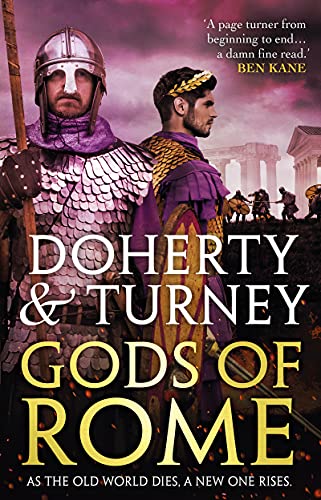


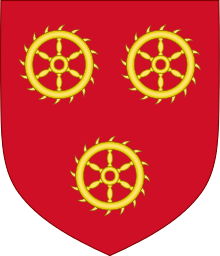
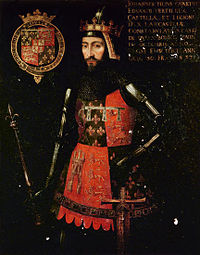
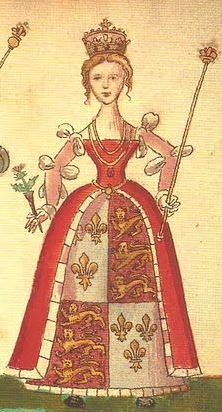
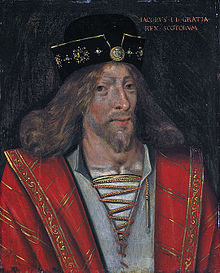




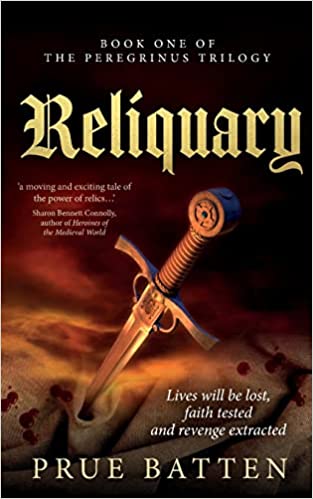


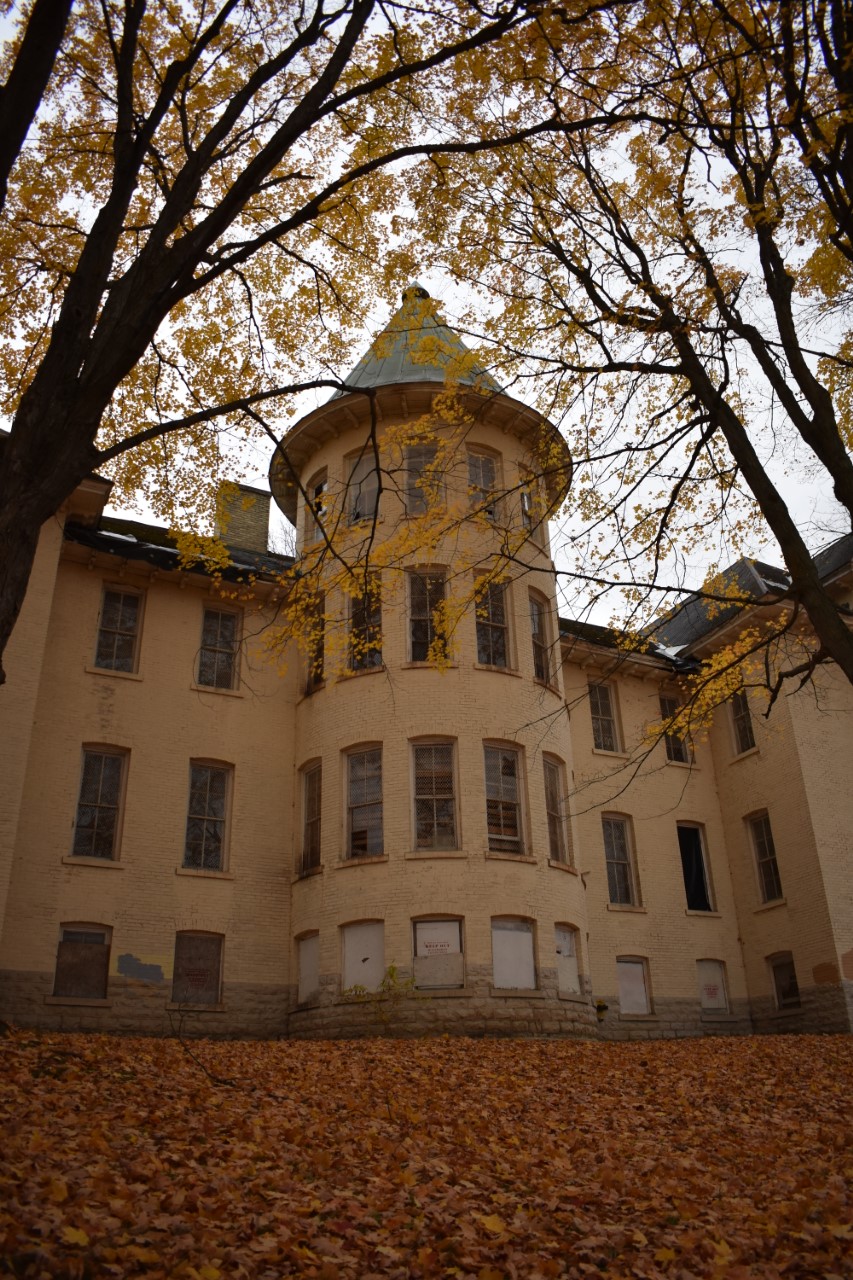
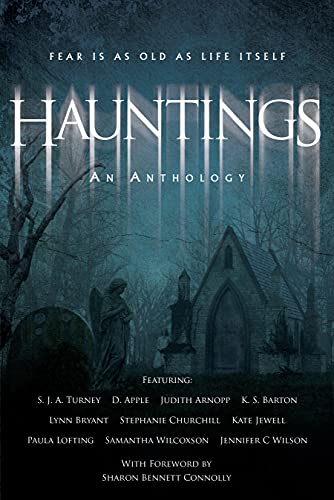
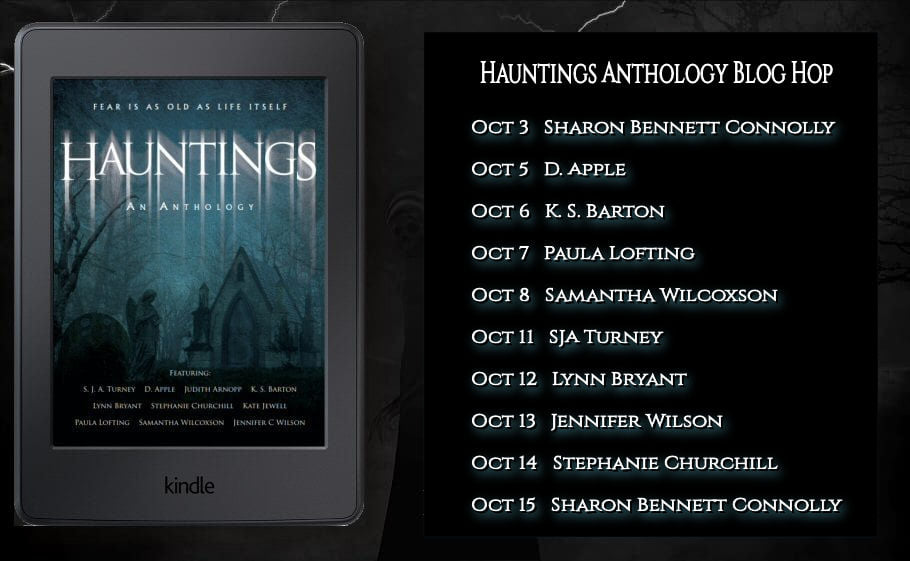
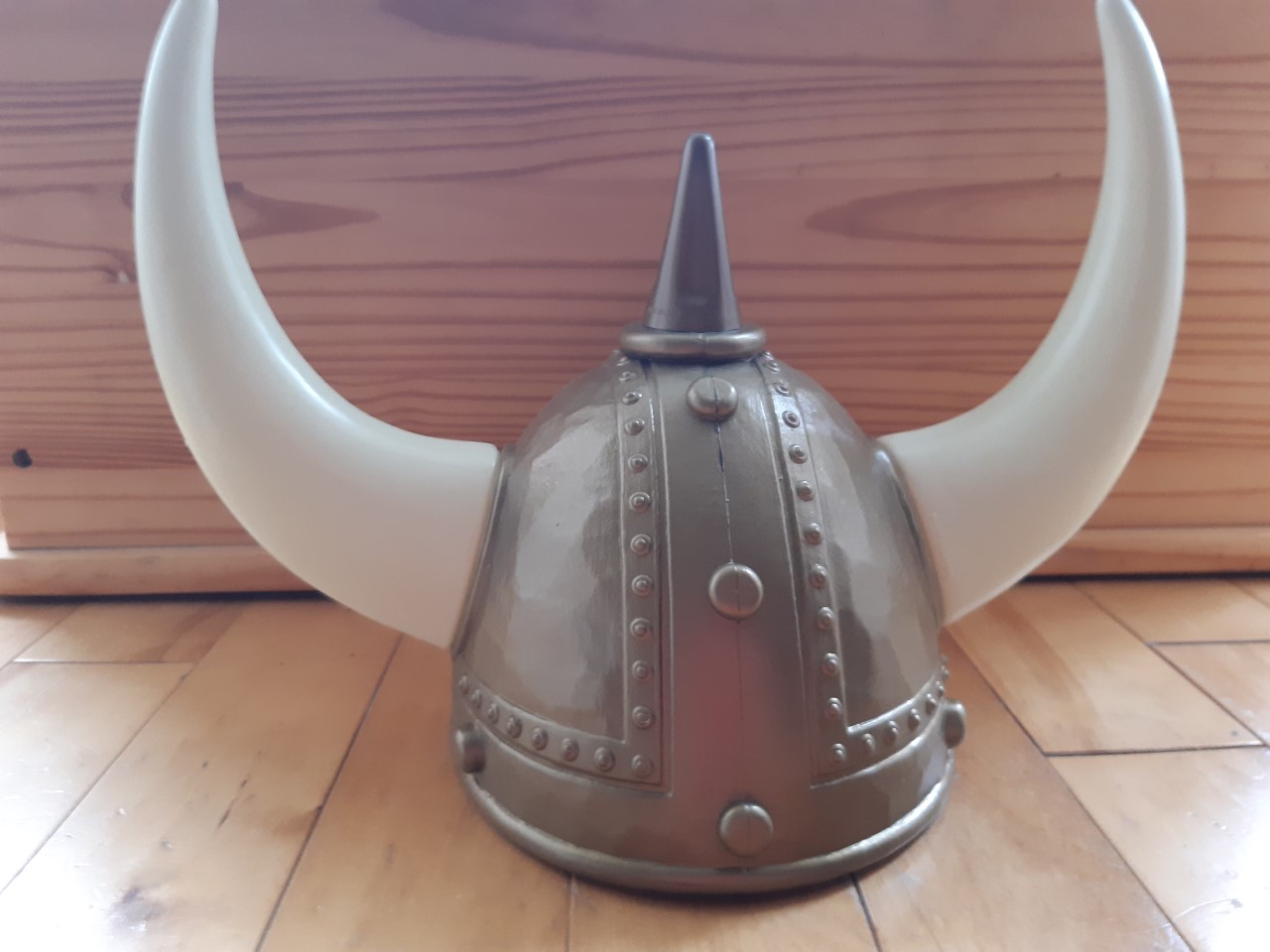
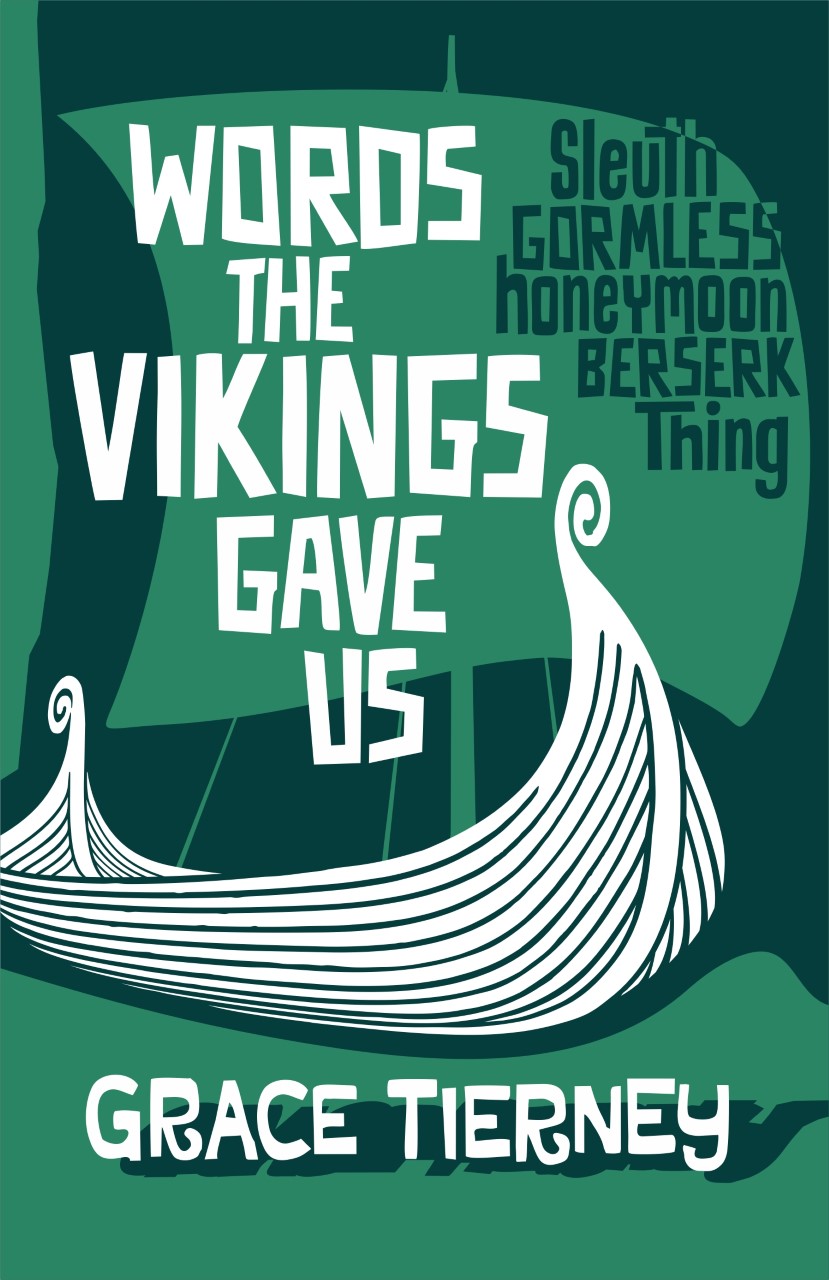
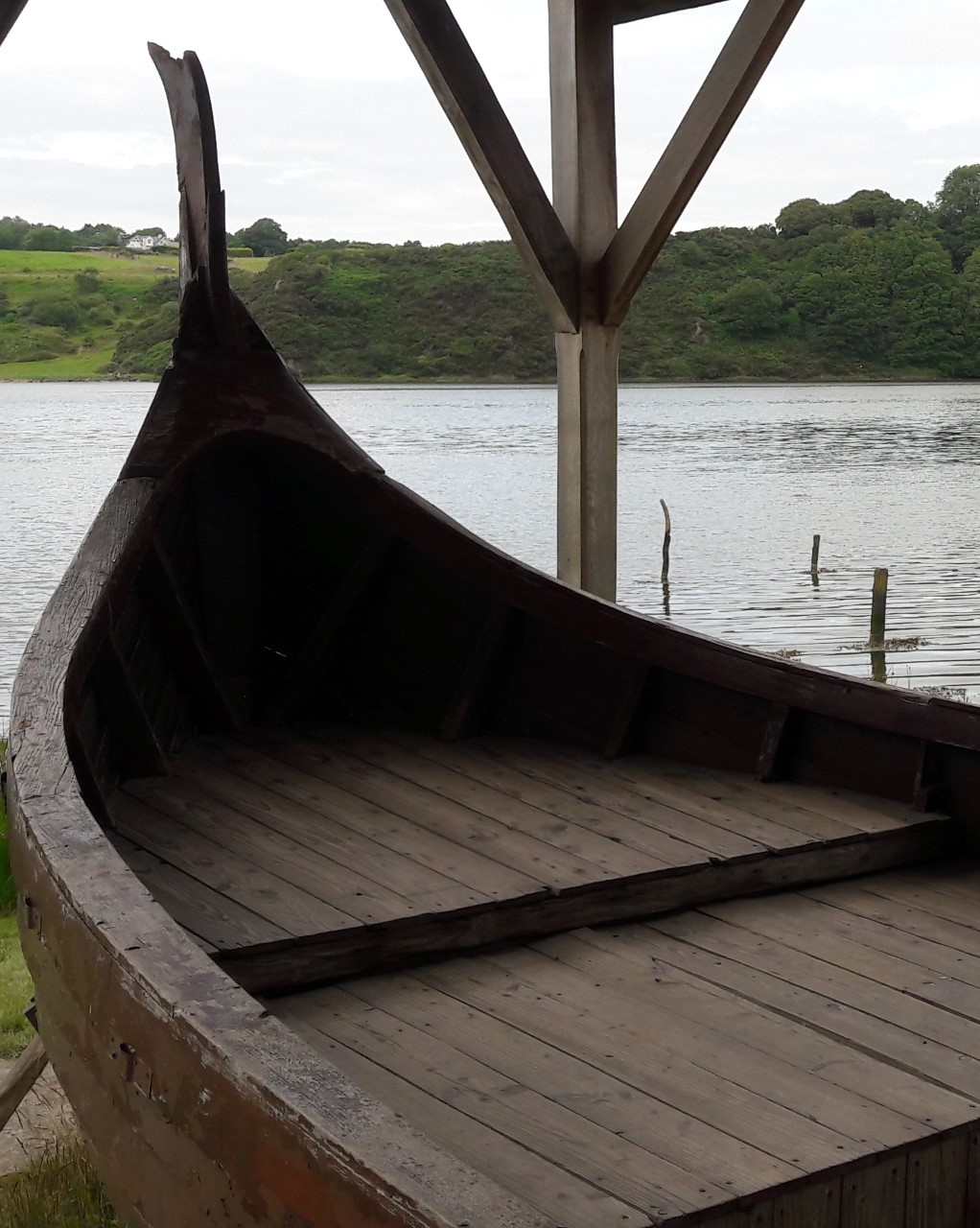
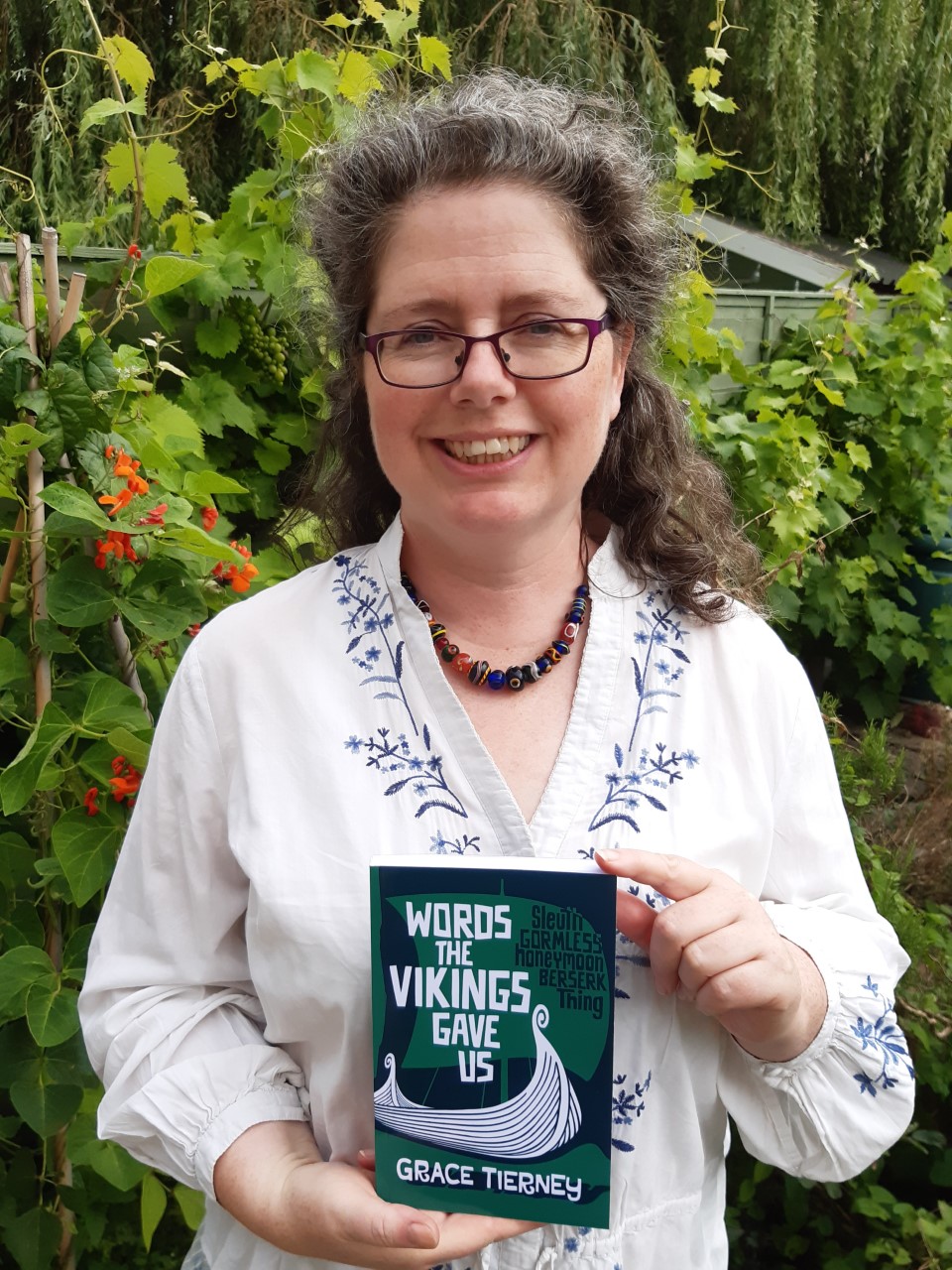
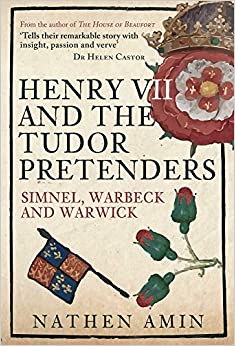


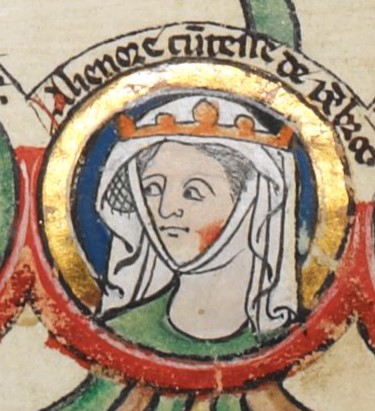
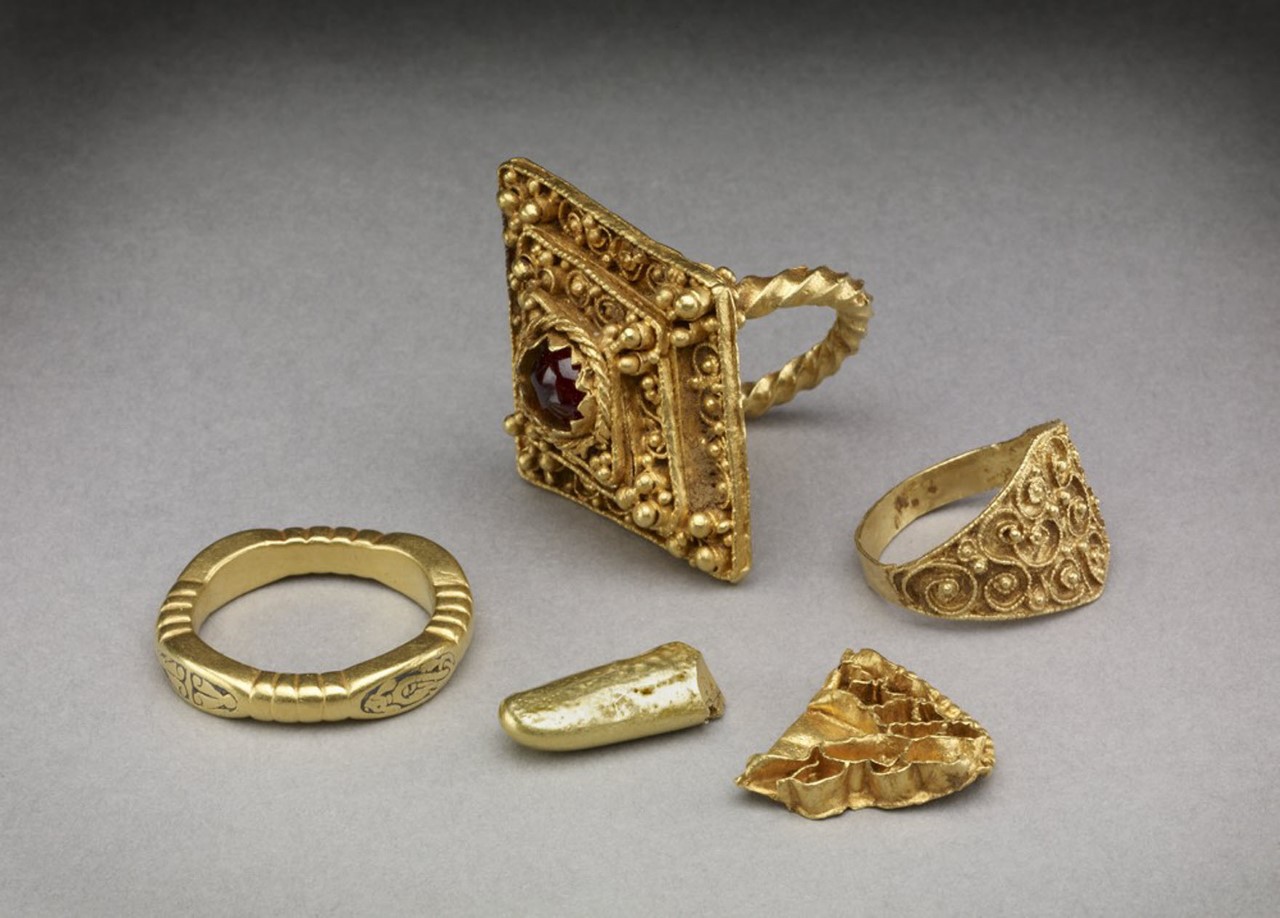
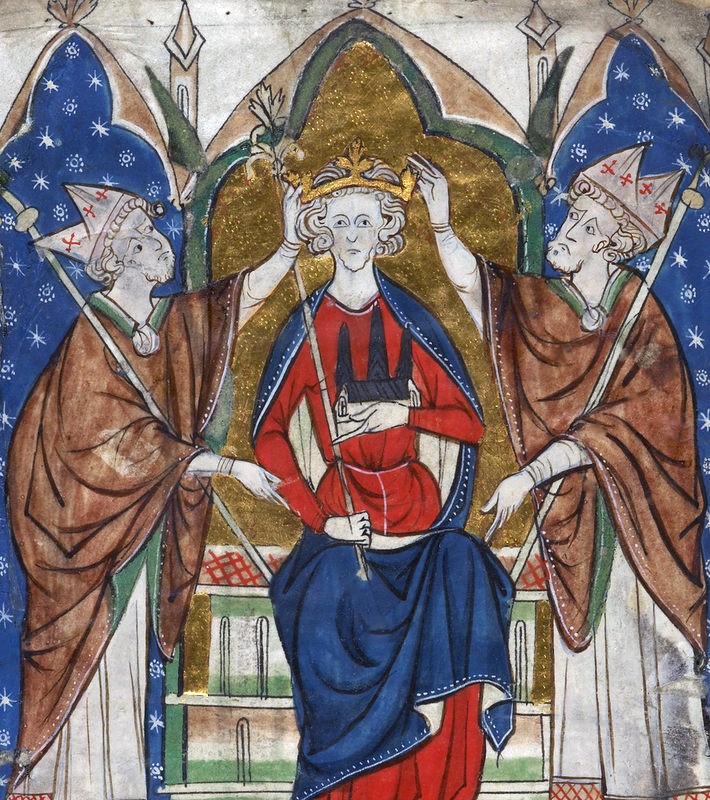


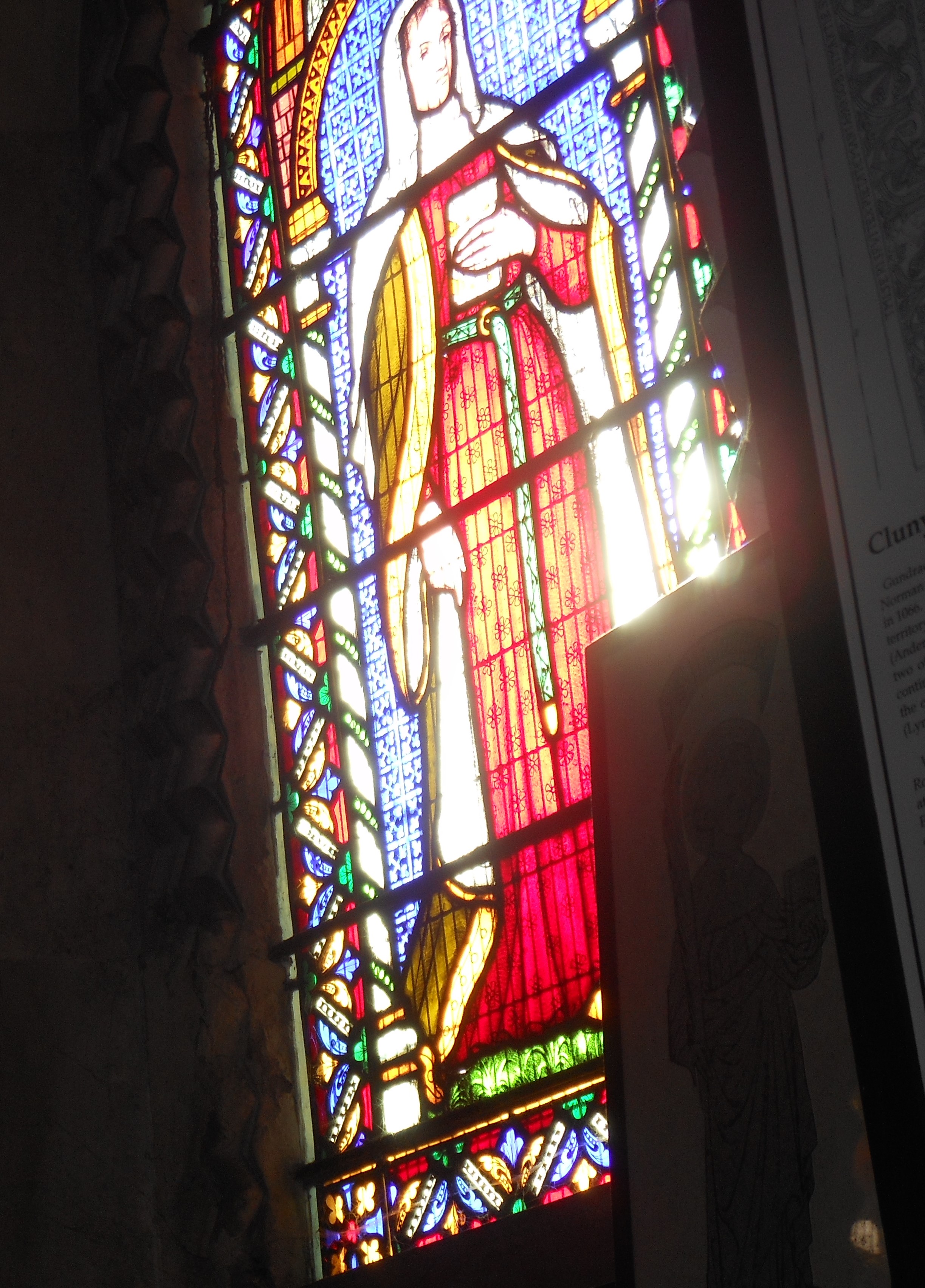

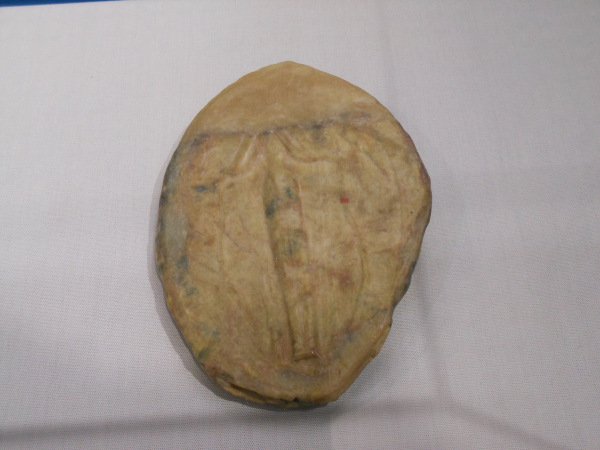
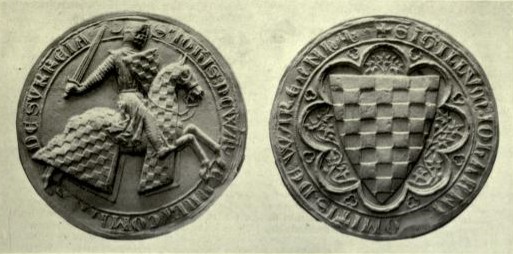
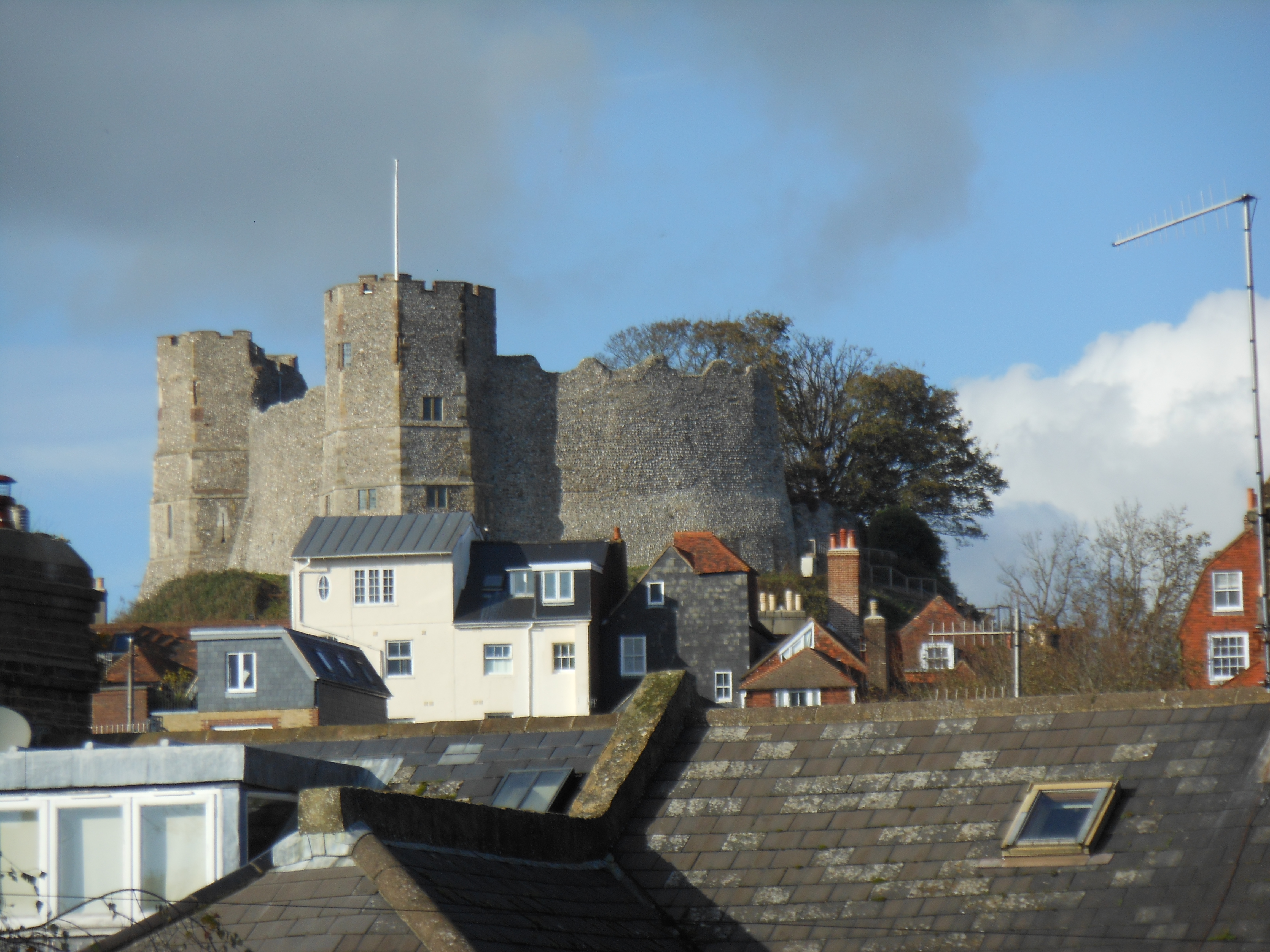



 History... the interesting bits!
_i.JPG)

