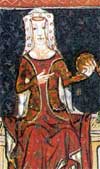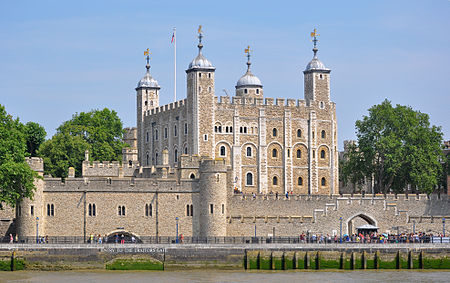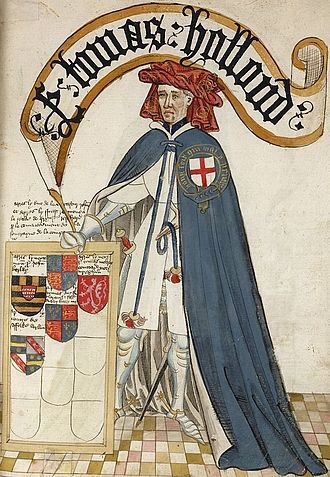
Countess Maud

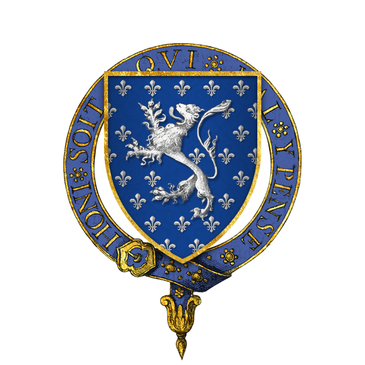
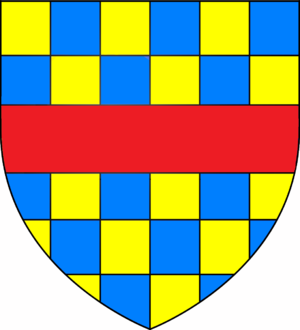
CliffordArms
The Clifford coat of arms

There are many women in history of whom we only have snippets of information. However, those snippets prove to be fascinating and demonstrate how closely the lives of noble houses were tied together – and how they were torn apart. Maud Clifford is one such lady.

Born about 1389 at Brough Castle in Westmoreland, Maud (or Matilda) was the daughter of Thomas Clifford, 6th Baron Clifford, and his wife Elizabeth de Ros. Maud’s brother, John, has also been given 1389 as his possible year of birth. It may be that John or Maud were twins, or that they were born within a year of each other.

Their early childhood cannot have been very pleasant. Their paternal grandfather, Roger Clifford, died in July of 1389, probably of a stroke. In October 1391, their father, Thomas, died. Whilst in Königsberg Thomas had had a disagreement with Sir William Douglas, illegitimate son of the earl of Douglas; Douglas was killed in the ensuing brawl and Clifford, overcome with guilt, went on pilgrimage to Jerusalem in penance. He died on an unidentified Mediterranean island whilst on the way to the Holy City.

Nothing else seems to be known of Maud’s childhood. Sometime before 1406 she was married to John Neville, Lord Latimer. For some unknown reason the marriage was never consummated and Maud successfully sued for an annulment. The marriage was dissolved with very favourable terms for Maud; some of the Neville lands had been put in trust for Maud and, even though the marriage had been declared invalid, she was allowed to keep them.

300px-Skipton_Castle_main_gate,_2007
Skipton Castle, family seat of the Cliffords

Maud was, therefore, a very attractive bride for a landless earl. Richard of Conisbrough, earl of Cambridge, was the poorest – and the only landless – earl in England. He lived at Conisbrough Castle in Yorkshire as the tenant of his older brother, Edward, Duke of York. Richard was a widower with 2 small children; his wife, Anne Mortimer, had died sometime after 1411, when she had given birth to their 2nd child, Richard (future Duke of York), probably at Conisbrough Castle. It is not known when Anne died, but it was before 1414, which is the probable date of Maud’s marriage to the earl of Cambridge.

Unfortunately the marriage proved to be short-lived, with Richard of Conisbrough becoming involved in the Southampton Plot, a plan to overthrow King Henry V and replace him with  Richard’s brother-in-law, Edmund Mortimer, Earl of March. However, March revealed the plot to the King and Richard and his accomplices were arrested, with Richard beheaded for treason on  5th August 1415.

008 (2)
Conisbrough Castle

Richard of Conisbrough was not attainted, so his lands, such as they were, were not forfeit to the crown. Maud was allowed to remain at Conisbrough Castle, and her step-son, Richard, would be allowed to inherit the Dukedom of York from his uncle, Edward, following his death at Agincourt in October 1415.

It is not clear how much contact Maud had with her step-children. The eldest child, Isabel, had been born around 1409; she had been betrothed in 1412 to Sir Thomas Grey and it is possible that she was raised in the household of the Grey family. As Duke of York, Richard’s wardship and marriage was a great prize, and would eventually go to Ralph Neville, earl of Westmoreland; with York marrying Neville’s daughter, Cecily. The Yorks’ eldest and youngest sons would become the Yorkist kings of England; Edward IV and Richard III, respectively.

Maud would continue to use Conisbrough Castle as her principal residence throughout her life; she received an annuity of £100 from the Earl of March, perhaps to assuage his guilt in the part he played in her husband’s downfall. She seems to have led a full and active life, and remained very close to her Clifford family; they  stayed with her often and she was a regular visitor to the Clifford home of Skipton Castle. Her nephew, Thomas and his family, lived with her at Conisbrough for a year in 1437, while his castle at Skipton was undergoing extensive works.

036
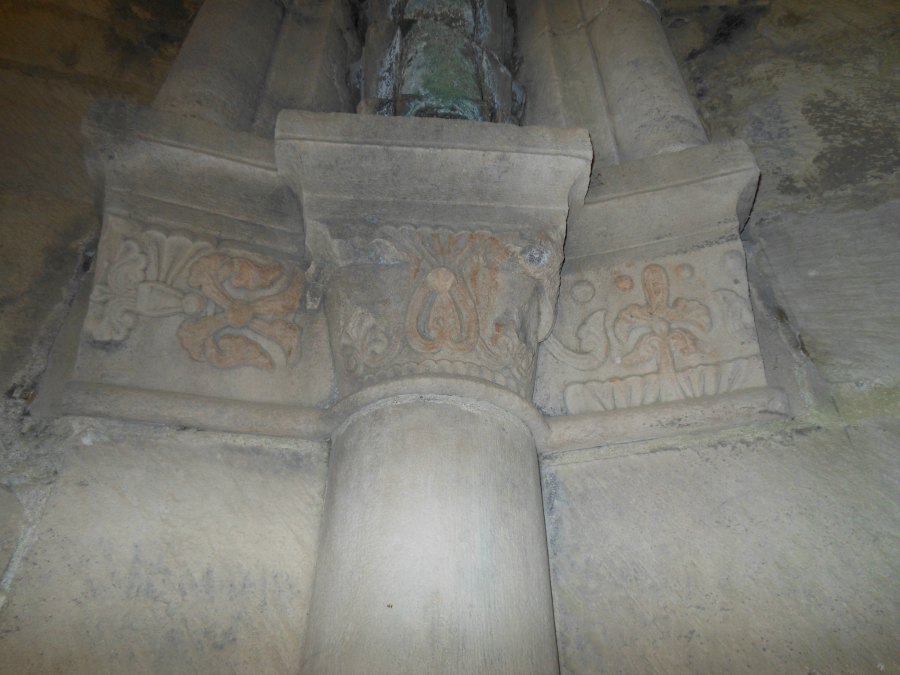
Carvings in the chapel at Conisbrough Castle

On 8th April 1435 Maud’s great-nephew, John Clifford – the future 9th Baron Clifford – was born at Conisbrough Castle. He was the grandson of Maud’s brother, John, and son of her nephew, Thomas, and his wife, Joan Dacre. Baby John would have been born either in the solar of the keep itself, or in the family apartments above the great hall of the inner bailey.

Either way its most likely he was baptised in the small private chapel within the keep; with Maud as his godmother. The chapel is built into one of the keep’s 6 buttresses and, despite the years and water damage, it is a wonder to behold, with exquisite designs carved into the stone columns, and the vaulted ceiling.

300px-'The_Murder_of_Rutland_by_Lord_Clifford'_by_Charles_Robert_Leslie,_1815
‘The Murder of Rutland by Lord Clifford’ by Charles Robert Leslie

Maud’s brother, John, was killed at the siege of Meaux in 1422 and her nephew, Thomas, would be killed at the First Battle of St Albans in 1455, supposedly by Richard, Duke of York, himself. And so it was, that on the 30th december 1460, at the Battle of Wakefield, John Clifford is said to have taken his revenge by killing York’s son Edmund, the 17-year-old earl of Rutland. Whether or not Clifford uttered the words ‘as your father slew mine, so I shall slay thee’ as he killed young Edmund, is entirely debatable, but the event serves to highlight how closely the noble families of the Wars of the Roses were related.

There is some suggestion that Maud remarried in 1429. The supposed groom was John Wentworth of North Elmsall, Yorkshire. However, this seems to be more of a family legend among the Wentworth family and only arose over 100 years after Maud’s death.

Maud’s will demonstrates her closeness to her family, and serves as an insight into her comfortable life and the sumptuous furnishings of the castle.

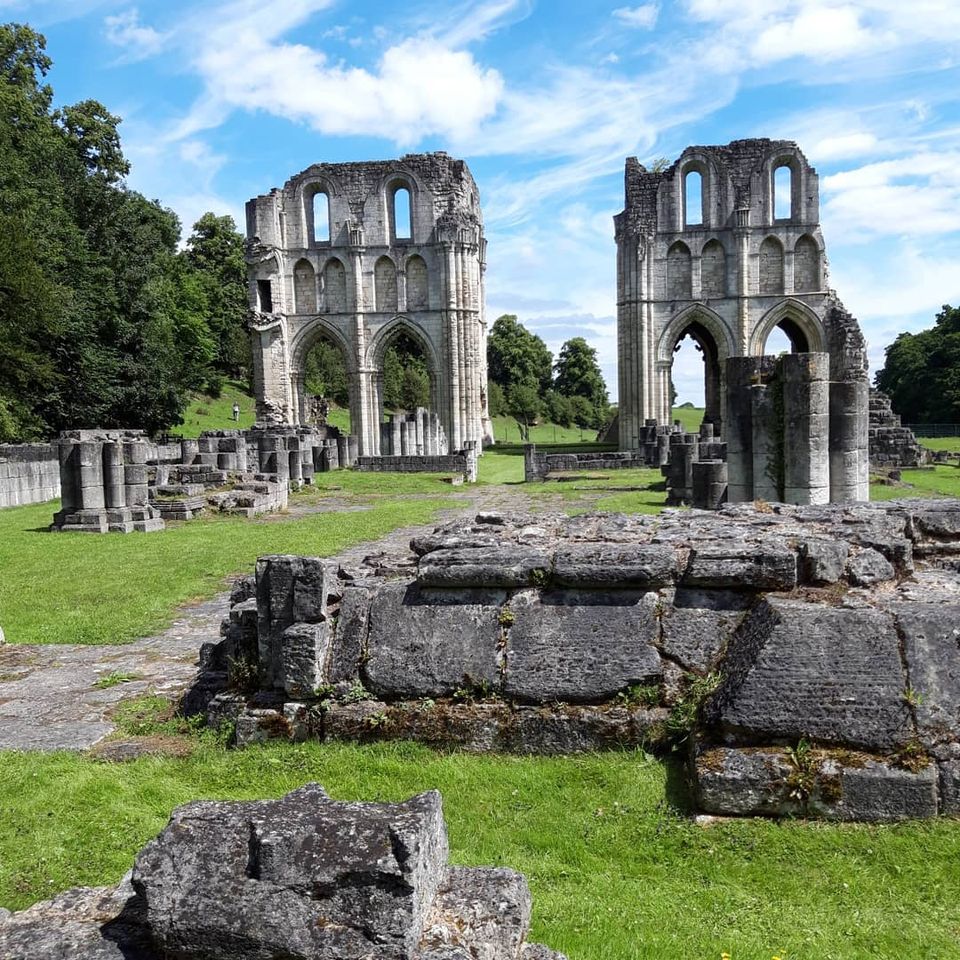
View from the nave of the church to the high altar, Roche Abbey

To Thomas, Lord Clifford, my relation: a ‘hall’ of arras [a fine woven wall-hanging from Arras] bought from Sir Robert Babthorpe; my bed of Arras with three curtains; four cushions of red silk; two long cushions of cloth.

To John Clifford, my godson: 12 silver dishes, 6 salt-cellars signed with the ‘trayfulles’ [trefoils] and a shell.

To Beatrice Waterton, my relation: a gold cross, which belonged to my mother; my green Primary [a book of readings from the Bible]; a diamond; my best furred robe with ‘martes’ [marten fur].

To Katherine Fitzwilliam: the brooch that I wear everyday; a small black Primary; a jewel called Agnus Dei covered with silver and written around with pearls; my best robe furred with miniver [white stoat fur].

To Maud Clifford, my god-daughter: my best gold belt.¹

Maud died, of an unknown illness, at Conisbrough Castle on 26th August 1446 and was  buried at Roche Abbey, of which she was a benefactor. Her tomb is now lost to history, but may have been in the nave of the church, where many secular patrons are known to have been buried.2 Though some tombs still remaining, their markings are faded after centuries of exposure to the elements, and none can be definitively identified.

*

Footnote: ¹English Heritage Guidebook for Conisbrough Castle by Steven Brindle and Agnieszka Sadrei; English Heritage Guidebook for Roche Abbey by Peter Ferguson and Stuart Harrison.

*

Pictures courtesy of Wikipedia, except Roche Abbey and Conisbrough Castle and chapel ©2016 Sharon Bennett Connolly

*

Sources: Sources: The History Today Companion to British History, edited by Juliet Gardiner & Neil Wenborn; Brewer’s British Royalty by David Williamson; Britain’s Royal Families, the Complete Genealogy by Alison Weir; The Wars of the Roses by John Gillingham; The Wordsworth Dictionary of British History by J.P. Kenyon; The Oxford Companion to British History, edited by John Cannon; The Reign of Edward III by WM Ormrod; The Wars of the Roses by Martin J Dougherty; englishmonarchs.co.uk; womenshistory.about.com; findagrave.com; conisbroughcastle.org.uk; hrionline.ac.uk; English Heritage Guidebook for Conisbrough Castle by Steven Brindle and Agnieszka Sadrei; English Heritage Guidebook for Roche Abbey by Peter Ferguson and Stuart Harrison; oxforddnb.com.

*

My Books

Signed, dedicated copies of all my books are available through my online store.

OUT NOW! Heroines of the Tudor World

Heroines of the Tudor World tells the stories of the most remarkable women from European history in the time of the Tudor dynasty, 1485-1603. These are the women who ruled, the women who founded dynasties, the women who fought for religious freedom, their families and love. These are the women who made a difference, who influenced countries, kings and the Reformation. In the era dominated by the Renaissance and Reformation, Heroines of the Tudor World examines the threats and challenges faced by the women of the era, and how they overcame them. From writers to regents, from nuns to queens, Heroines of the Tudor World shines the spotlight on the women helped to shape Early Modern Europe.

Heroines of the Tudor World is now available for pre-order from Amberley Publishing and Amazon UK.

Also by Sharon Bennett Connolly:

Women of the Anarchy demonstrates how Empress Matilda and Matilda of Boulogne, unable to wield a sword themselves, were prime movers in this time of conflict and lawlessness. It shows how their strengths, weaknesses, and personal ambitions swung the fortunes of war one way – and then the other. Available from Bookshop.orgAmberley Publishing and Amazon UKKing John’s Right-Hand Lady: The Story of Nicholaa de la Haye is the story of a truly remarkable lady, the hereditary constable of Lincoln Castle and the first woman in England to be appointed sheriff in her own right. Available from all good bookshops Pen & Sword Booksbookshop.org and AmazonDefenders of the Norman Crown: The Rise and Fall of the Warenne Earls of Surrey tells the fascinating story of the Warenne dynasty, from its origins in Normandy, through the Conquest, Magna Carta, the wars and marriages that led to its ultimate demise in the reign of Edward III. Available from Pen & Sword BooksAmazon in the UK and US, and Bookshop.org

Ladies of Magna Carta: Women of Influence in Thirteenth Century England looks into the relationships of the various noble families of the 13th century, and how they were affected by the Barons’ Wars, Magna Carta and its aftermath; the bonds that were formed and those that were broken. It is now available in paperback and hardback from Pen & Sword,  Amazon, and Bookshop.orgHeroines of the Medieval World tells the stories of some of the most remarkable women from Medieval history, from Eleanor of Aquitaine to Julian of Norwich. Available now from Amberley Publishing and Amazon, and Bookshop.orgSilk and the Sword: The Women of the Norman Conquest traces the fortunes of the women who had a significant role to play in the momentous events of 1066. Available now from Amazon,  Amberley Publishing, and Bookshop.org.

Alternate Endings: An anthology of historical fiction short stories including Long Live the King… which is my take what might have happened had King John not died in October 1216. Available in paperback and kindle from Amazon.

Podcast:
Have a listen to the A Slice of Medieval podcast, which I co-host with Historical fiction novelist Derek Birks. Derek and I welcome guests, such as Bernard Cornwell, and discuss a wide range of topics in medieval history, from significant events to the personalities involved.

*

Don’t forget! Signed and dedicated copies of all my books are available through my online store.

For forthcoming online and in-person talks, please check out my Events Page.

You can be the first to read new articles by clicking the ‘Follow’ button, liking our Facebook page or joining me on Twitter and Instagram.

*

©2016 Sharon Bennett Connolly FRHistS
Book Corner: The Last Legionnaire by Paul Fraser Collard

indexJack Lark has come a long way since his days as a gin palace pot boy. But can he surrender the thrill of freedom to return home?

London, 1859. After years fighting for Queen and country, Jack walks back into his mother’s East End gin palace a changed man. Haunted by the horrors of battle, and the constant fight for survival, he longs for a life to call his own. But the city – and its people – has altered almost beyond recognition, and Jack cannot see a place for himself there.

A desperate moment leaves him indebted to the Devil – intelligence officer Major John Ballard, who once again leads Jack to the battlefield with a task he can’t refuse. He tried to deny being a soldier once. He won’t make the same mistake again.

Europe is about to go to war. Jack Lark will march with them.

Jack Lark is back!

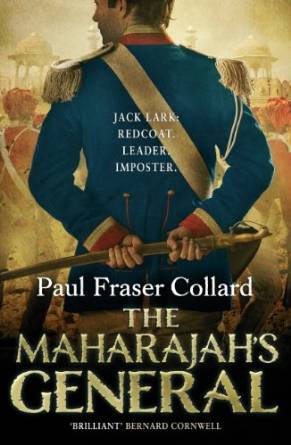
I have spent a wonderful week on the battlefields of Victorian Europe, reading Jack Lark’s latest adventure. The Last Legionnaire is the 5th book in Paul Fraser Collard‘s fabulous series of novels based on the chameleon soldier, Jack Lark – and what a fabulous, eye-catching book cover! Lark is a serial imposter, one day taking on the guise of a rank-and-file soldier, the next sitting comfortably, in a captain’s uniform, the officers mess. This makes for some interesting and uncomfortable situations; it means you can always find Jack where the action is, but also means he’s vulnerable to the demands of intelligence officer, Major Ballard, who knows his secret.

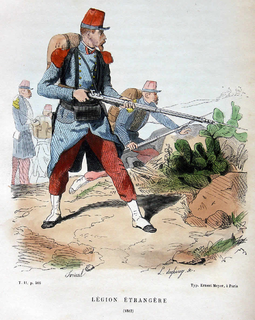
255px-Légion_Étrangère_1852
A French Legionnaire, 1852

The story begins by bringing Jack home the rookeries of Whitechapel, in London, where the poorest a most desperate of Victorian society reside. However, he soon realises it’s no longer home; Jack Lark is one of those men who is most comfortable in the army, among soldiers. It’s what he’s good at. And it doesn’t take long to find his way back to war – with the French army – in search of a man who ran away from home and joined the French Foreign Legion.

There is action in abundance. It is frenetic and vivid. Paul Collard’s battlefield scenes are a masterpiece of descriptive writing. You can almost hear the cacophony of the cannons, see the regiments advancing in column, hear the screams of the wounded and frightened horses.  The author manages to impart not only the action, but also the misery, the fear, the danger – and the lust for battle, the addiction to fighting and the power a man can find in sword, bayonet and rifle. Descriptions of the battlefield hospital, the surgeons at work – as well as the battlefield itself – demonstrate the grim reality of war.

The story is at times touching and often brutal. Jack Lark is a unique character. He serves as an example of how men can find a pleasure, or sense of accomplishment, in battle … and in another battle survived. The Last Legionnaire always has a view to the human element. Jack is aware of is soldiering abilities, even scared of what he is; he knows what he is capable of and tries hard to keep himself under control. But he also has a chivalric nature; he wouldn’t be able to resist helping a damsel in distress, rescuing a child or stopping a regiment, on the verge of panic, from running.

“I’ve seen men like you before.” Palmer broke the silence. “They survive a battle or two, so they start to believe that they’re good at fighting, that they have a talent for it.” He watched Jack pull out the small pot of grease that he used to seal each freshly loaded chamber on his revolver. “Truth is they were just lucky. One day that luck runs out, and they’re just as dead as the poor bastard who died in the first five minutes of his first battle.”

Jack stopped what he was doing and met Palmer’s flat stare. “And you’re different, I suppose?”

Palmer shrugged. “I do what has to be done, nothing more, nothing less. I know that one day  my luck will run out. I don’t see the point in trying to make that day come along any quicker than it needs to.”

Jack’s anger had disappeared. He could not argue against the truth. He returned his attention to his revolver. Only when he had finished loading it did he look at Palmer again. “What about that lucky man? What if his luck holds? What if he goes on surviving?

“Then I pity the poor bastard.”

Paul Collard’s characters are incredibly diverse and full of life. Jack invokes the reader’s sympathy for a man who tries to do the right thing, but sometimes manages to go the wrong way about it. He marches to war with a small entourage, a mismatch of individuals who all want something from him.

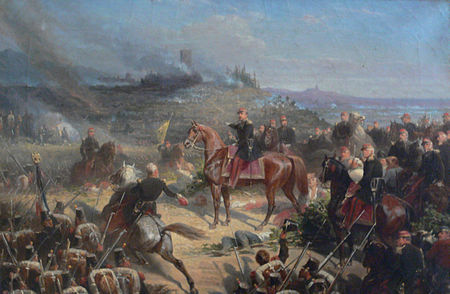
450px-Yvon_Bataille_de_Solferino_Compiegne
Battle of Solferino, 1859

His sense of chivalry means he has taken under his wing a face from his past; Mary, and her young son Billy, no longer have a home and Jack does his best to protect and support them, despite frequent criticism of his inadequacies. Major Ballard is an intelligence officer; comfortable in using others’ weaknesses in order to achieve his ends. And then there’s Palmer, Ballard’s man, but he has a soft spot for Jack; he sees much of himself in the younger man. The partnership of Jack and Palmer is a strong part of the story. The 2 men grow to like and trust each other; they play to their individual strengths and their banter is enjoyable and entertaining.

Ever since reading Beau Geste as a child, I’ve had a soft spot for French Foreign Legion stories and this one is fabulous. Paul Collard has done his homework and it shines through, his knowledge of the Legion, their history and ethos, is second-to-none.

The author has an incredible sense of adventure, which he manages to get across on every page of his writing; you can tell he grew up reading Cornwell, MacDonald-Fraser and Forrester. Jack Lark is his own unique hero and he is a worthy successor to the great literary soldiers who came before him. I couldn’t help imagining him sat round a table with Sharpe, Flashman and Hornblower; he would certainly be able to hold his own when it came to telling the stories of their adventures!

*

Paul Fraser Collard‘s Jack Lark series of books are available now from Amazon

*

My book, Heroines of the Medieval World,  is now available in hardback in the UK from both Amberley Publishing and Amazon UK and worldwide from Book Depository. It is also available on Kindle in both the UK and USA and will be available in Hardback from Amazon US from 1 May 2018.

Be the first to read new articles by clicking the ‘Follow’ button, liking our Facebook page or joining me on Twitter.

Book Corner: Interview with Paul Fraser Collard

Author ImageJack Lark exploded onto Kindles and bookshelves everywhere in Paul’s 1st novel, The Scarlet Thief, and now, 3 years later, The Last Legionnaire is Jack Lark’s 5th adventure. And what an adventure!

This week, after finishing his latest book, The Last Legionnaire, I was lucky enough to catch up with its author, Paul Fraser Collard and ask him a few questions about his writing and  the hero of his books, Jack Lark.

What made you become a writer? I have always read a lot. For years, I spent my daily commute to work reading anything I could get my hands on. My favourite books were always historical fiction, especially the Sharpe novels by Bernard Cornwell. When I was in my early thirties, I began to wonder if I had it in me to write my own novel. One day, after a tough day at work, I opened up my laptop and made a start.

Who are your major writing influences? Bernard Cornwell stands out. I have read every book he has ever written. For me, he gets the mix of historical detail and plot exactly right. The books never fail to sweep me away into the past whilst still giving me a wonderful education into the period he is covering.

I would also say I have been influenced by the fantastic George McDonald Fraser. His Flashman series is quite magnificent. I could never hope to write anything close to such brilliance, but it did give me the idea of setting each novel in a new setting with a different cast of supporting characters.

index2Jack Lark is quite a unique character, a soldier/officer impostor. How did you come up with him as your character? Is he based on an actual historic person? The idea for Jack was developed from the desire to find a way to move a character around without tying him to a single regiment or a particular military campaign. I knew that is what I wanted to make my series stand out, and so I thought long and hard how to create a character that was unique enough to be able to travel the Victorian world.

The idea for an imposter came from the real story of Percy Toplis, a man made famous by the BBC TV series called The Monocled Mutineer. Percy was a rogue from a mining town in the north of England, yet he managed to pass himself off as a British army officer during the First Word War. Poor Percy met a rather nasty end, but he gave me the proof I felt I needed that a lad from a very humble background could manage to impersonate an officer.

If someone said they wanted to make a film of your books, who would you pick to play Jack Lark? Goodness, I hope this happens! However, I am dreadful at answering this question. I just don’t know of any actor that matches the picture of Jack that I carry in my head. Perhaps readers of this interview can send me their suggestions!

How long do you spend researching a novel before you start writing? I always start any novel with a period of research. This generally begins whilst I am still working on another book. I work full time so everything has to be fitted in 2as and when I can. I would say that on average I spend around three months learning the history of the next novel. Some have been easier than others. The American Civil War or the events of the Indian Mutiny are covered by hundreds of books, whereas the campaign against the Shah of Persia and the battle of Khoosh-Ab barely feature anywhere!

What comes first, your storyline or your research? They both develop together. The history gives me the framework and the plot is the fabric that gets woven around it. I put the two together in a very detailed plan that tends to be around 20-30,000 words. Then all I have to do it flesh it all out.

With The Last Legionnaire, Jack becomes embroiled in a war that Britain took no part in; how did you decide where he was going to fight next? I always have a vague idea where Jack is going for the next couple of novels. From there, I cast around to see what events happened in the years following the last novel I have planned. The tricky bit is thinking of how Jack can go from one to the other. I remember a review of The Maharajah’s General that stated that it would be a dull series indeed, if Jack just moved from one convenient identity to another (a Victorian version of Mr Ben, if you like!). So I always think very carefully about the link between the novels. Hopefully they work!

Do you know how the book is going to end when you start it? Pretty much. As I have to cram my writing into short gaps in my day, I need to be able to write fast. This makes planning pretty important and my novel outline is always very detailed. That said, it can and does change. The ending to The Last Legionnaire change dramatically about one week before I had to submit it to my editor. The ending I had planned just didn’t sit well and so it had to be changed.

How do you organise your writing day? My writing time is squeezed into my commute at the start and the end of the day. I have quite a long journey so that gives me just under two hours a day dedicated to writing. I then fit what I can into other times. This means I have to be very disciplined about using what time I have as e3ffectively as I can. I try hard to write at full speed on the train, making sure I cram as much productivity into those two hours as I can. I am not one of those writers who had the luxury of ruminating over the perfect sentence!

What do you enjoy most about writing? Creating the story is the best bit and I love plotting and creating the detailed outline.

What is the worst thing about writing? Finishing the first draft! This gets harder, if I start planning the next novel before I have finished the current one.

How long does it take to do a project from start to finish? So far I am getting a novel done in around ten months. I tend to work on multiple books at the same time. Right now I am polishing book 6, writing a short story whilst also plotting and researching for book 7.

Who are your favourite personalities from history? Is there anyone you would particularly like to write about, or include in Jack’s adventures? I love the idea of working in a reference to Flashman in one of Jack’s stories, but I must say, I have always been much more interested in the ordinary men and women who found themselves caught up in the cataclysm of war than the great and famous personalities. For me, the tale of an ordinary infantryman is more interesting than that of a famous general. Apart from a few exceptions, Jack’s stories will focus on what the battles were like for the poor bloody individuals on the front line.

What other historical periods would you like to write about? I w4ould really enjoy writing about WW2. If anything this period fascinates me even more than the Victorian Empire. I have written a novel set in WW2, but for now it is on the back burner as its needs a re-write that I just don’t have time to do. For the moment at least!

Do you ever get writer’s block? If so, how do you get around it? I have to say that I don’t often get writer’s block. I think this is because I have so little time to actually write. I tend to do my thinking at other times. When I sit down to write, I slip into blast mode and just go for it. If I do get stuck then I jump to something else. I cannot bear to waste time! It is too precious.

Do you find social media – such as Facebook – a benefit or a hindrance? I love it! The publishers are very keen on social media and I was a little daunted at first. But now I think it is the best outlet I have. I have found so many brilliant people on Facebook and on Twitter and I would now count many of them as friends. I love the fact that I can be available to anyone kind enough to read my books and I always enjoy being able to chat about history or anything else that comes up.

What will be your next project? Where is Jack fighting next – and when do we get to read it? Next up is the start of The American Civil War and specifically the First Battle of Bull Run (Jack fights for the Union in this one). If you have finished The Last Leindexgionnaire then you will have an idea of what takes Jack across the Atlantic.

This one should be out early in 2017.

How many more Jack Lark adventures do we have to look forward to? Do you have a number in mind, or will he keep fighting until there are no wars left? I cannot imagine ever letting Jack settle down and I hope he can keep going for many years, and many novels, to come. You will know when I have written the last one as I will make sure the cover image is of him facing the reader for the first time.

*

I would like to extend my thanks to Paul Fraser Collard for his fantastic answers. Look out for my review of The Last Legionnaire, which should go live on Friday 13th May, 2016.

*

My book, Heroines of the Medieval World,  is now available in hardback in the UK from both Amberley Publishing and Amazon UK and worldwide from Book Depository. It is also available on Kindle in both the UK and USA and will be available in Hardback from Amazon US from 1 May 2018.

Be the first to read new articles by clicking the ‘Follow’ button, liking our Facebook page or joining me on Twitter.

©2016 Sharon Bennett Connolly

Book Corner: In the Shadow of the Storm, by Anna Belfrage

51FcCxVcaOL._SX310_BO1,204,203,200_Adam de Guirande owes his lord, Sir Roger Mortimer, much more than loyalty. He owes Sir Roger for his life and all his worldly goods, he owes him for his beautiful wife – even if Kit is not quite the woman Sir Roger thinks she is. So when Sir Roger rises in rebellion against the king, Adam has no choice but to ride with him – no matter what the ultimate cost may be. England in 1321 is a confusing place. Edward II has been forced by his barons to exile his favourite, Hugh Despenser. The barons, led by the powerful Thomas of Lancaster, Roger Mortimer and Humphrey de Bohun, have reasons to believe they have finally tamed the king. But Edward is not about to take things lying down, and fate is a fickle mistress, favouring first one, then the other… The Welsh Marches explode into war, and soon Sir Roger and his men are fighting for their very lives. When hope splutters and dies, when death seems inevitable, it falls to Kit to save her man – if she can….

In the Shadow of the Storm is the first book in Anna Belfrage’s new series, The King’s Greatest Enemy, and what a magnificent introduction to Anna’s new heroes and heroines! Set in one the most tumultuous periods of English history, the book expertly blends the personal lives of its heroic couple, Sir Adam and Kit, his new wife, with the national drama of the disintegrating reign of Edward II.

Seal_of_Edward_II-2
Seal of Edward II

I know it’s a bit of a cliché, but this book is impossible to put down. The action and intrigue are, to put it simply, riveting. In the Shadow of the Storm has a great mix of love story and rebellion, and of heroes and villains and a heavy dose of adventure; it has you in tears one minute and on the edge of your seat with excitement the next.

Kit is my new hero! In a world where women’s rules were very specifically defined, Kit pushes the boundaries in order to achieve what she wants – but she never quite exceeds them. A young woman kidnapped from her sheltered life and thrown into a marriage to a man she has never met, and into the world of her new husband’s lord; where war, intrigue and a secret threatens to destroy the growing love the couple have for each other. However, not only does she manage to avoid sinking, Kit becomes a champion swimmer.

Adam went to the nearby table, sloshed wine into a goblet and drank deeply before passing it to her.

“I hadn’t expected to find you a virgin,” he said, eyes the colour of pewter raking her body up and down.

“What do you mean, my lord?”

“Don’t give me that.” He reclaimed the cup and leaned against one of the bedposts. “Do you think I don’t know about you and Lord Roger?” Not only was he tall, he was big, a thick, fair fuzz covering his chest, the hair darkening closer to his groin.

“Lord who?” Kit’s head ached.

“Mortimer,” he clarified with an edge to his voice. “Our lord and master.”

Adam is a knight sworn to Lord Roger Mortimer, balancing a burgeoning love for his wife and family with his duty to his lord. Kit and Adam are a very real, down-to-earth, young couple; newly married they are still discovering each other. Misunderstandings and insecurities lead to a married life that is anything but smooth. And in the midst of their developing love and trust, they are thrown into the middle of Mortimer’s rebellion against Edward II.

Isabella_of_France
Isabella of France, Edward II’s queen

Ranged against them are enemies aplenty. Adam’s own step-brother, Guy, has eyes on Kit – and on everything Adam possesses – and will go to extraordinarily vicious lengths to achieve his goal. While the most despicable of all is Hugh le Despenser the younger, Edward II’s favourite and a man with a particular hatred for Adam and his lord. Vindictive and cruel, Despenser is determined to destroy Adam; Kit has to use all her courage and skill to thwart him – and to save her husband’s life.

Anna Belfrage manages to weave a wonderful story around the very real history of a desperate time for England and her people. The threats and dangers of living in a divided, unstable realm, with forces polarizing between the king and queen, are vividly depicted, drawing the reader deeper and deeper into the 14th century.

The author’s deep knowledge of the period serves to make the reader believe they are actually there, watching the action, weighing the choices and living the harsh reality of a realm on the brink of civil war. The history is impeccable, with Kit and Adam’s story slipping into the historical timeline so neatly that it is practically impossible to see the line where history ends and fiction begins.

450px-Tower_of_London_viewed_from_the_River_Thames
Tower of London

Anna Belfrage’s depiction of the historical characters is exquisite. Despenser is suitably heinous; he makes your skin crawl when he walks into a scene. Lord Roger Mortimer is determined, charming … and noble. The personalities are diverse and fascinating. The landscapes are so vividly describes as to be dramatic; you could almost imagine yourself riding along the rivers of the Welsh Marches, incarcerated in a dark, cold dungeon, or walking along the main thoroughfare of the ancient town of Shrewsbury.

In the Shadow of the Storm is a wonderfully exciting book; a clever blend of intrigue, romance and action. Anna Belfrage is a master story-teller and has done her homework well – she brings the 14th century to vivid, colourful life. It will be difficult to read anything better this year …. but I can’t wait to see if Book 2 in The King’s Greatest Enemy series, Days of Sun and Glory, proves me wrong……

*

nna Belfrage is the author of the extremely popular time travelling series, The Graham Saga. To find out more about this incredible author and her books, please visit her website.

Pictures of Edward II and Isabella of France are courtesy of Wikipedia.

*

My book, Heroines of the Medieval World,  is now available in hardback in the UK from both Amberley Publishing and Amazon UK and worldwide from Book Depository. It is also available on Kindle in both the UK and USA and will be available in Hardback from Amazon US from 1 May 2018.

Be the first to read new articles by clicking the ‘Follow’ button, liking our Facebook page or joining me on Twitter.

©2016 Sharon BennettConnolly


Katherine Willoughby, the Puritan Duchess

Catherine,_Duchess_of_Suffolk_by_Hans_Holbein_the_Younger
Katherine Willoughby, Duchess of Suffolk

Maria de Salinas was a lady-in-waiting and close friend to Katherine of Aragon; indeed, she probably came to England with the Spanish princess in 1501 for the marriage to Henry’s older brother, Arthur, Prince of Wales. Katherine and Maria were very close and the Spanish ambassador complained of Maria’s influence over the queen, especially after she tried to persuade Katherine not to cooperate with the ambassador and encouraged the Queen to favour her English subjects.

In June 1516 Maria married the largest landowner in Lincolnshire, William Willoughby, 11th Baron Willoughby de Eresby. The wedding was a lavish affair – attended and paid for by the King and Queen. It took place at Greenwich Palace and the couple were given Grimsthorpe Castle, in Lincolnshire, as a wedding present. The Queen even provided Maria with a generous dowry of 1100 marks.

Maria remained at court for some years after her wedding, and attended Queen Katherine at the Field of Cloth of Gold in 1520. Henry VIII was godfather to Maria and William’s oldest son, Henry who died in infancy. Another son, Francis, also died young and their daughter Katherine, born on 22nd March 1519 and named after the queen, would be the only surviving child of the marriage. With her father holding over 30 manors in Lincolnshire alone, and an annual income of over £900 a year, Katherine was one of the great heiresses of her generation.

360px-Charles_Brandon_Duke_of_Suffolk
Charles Brandon, Duke of Suffolk

Little Katherine was only 6 or 7 when her father, Lord Willoughby, died in 1526. For several years afterwards Maria was embroiled in a legal dispute with her brother-in-law, Sir Christopher Willoughby, over the inheritance of the Willoughby lands. It seems William had settled some lands on Maria which were entailed to Sir Christopher. The dispute went to the Star Chamber and caused Sir Thomas More, the king’s chancellor and a prominent lawyer, to make an initial redistribution of some of the disputed lands.

This must have been a hard fight for the newly widowed Maria, and the dispute threatened the stability of Lincolnshire itself, given the extensive lands involved. However, Maria attracted a powerful ally in Charles Brandon, Duke of Suffolk and brother-in-law of the King, who called on the assistance of Cardinal Thomas Wolsey, Henry’s first minister at the time, in the hope of resolving the situation.

Suffolk had managed to obtain the wardship of Katherine Willoughby in 1529, intending her to marry his eldest son and heir Henry, who had been made Earl of Lincoln in 1525, and so had a vested interest in a favourable settlement for Maria. Suffolk’s acquisition of the de la Pole estates had given him a prominent position in East Anglia; with these properties added to young Katherine’s lands in Lincolnshire, he would create an impressive power base.

Hans_Holbein_the_Younger_-_Henry_Brandon,_2nd_Duke_of_Suffolk_(1535-51)_-_Google_Art_Project
Henry Brandon, 2nd Duke of Suffolk

Whether or not the young earl of Lincoln was a sickly child (as he died in 1534) is uncertain; however the marriage was not to be – it has been a habit to say that anyone who died young was sickly, but this was not necessarily the case as fatal childhood illnesses were common. Suffolk had been married to king Henry VIII’s little sister, Mary Tudor, Dowager Queen of France, but she died in September 1533. The 50-year-old Duke of Suffolk caused a great scandal when, only 3 months later, he married 14-year-old Katherine himself. She was Suffolk’s fourth wife.

Despite the age difference, it does appear to have been a successful marriage. Katherine and Charles were to have 2 sons. The first, Henry, was born in 1535 and the youngest, Charles, was born in 1537.

Although Suffolk pursued the legal case with more vigour after the wedding, a final settlement was not reached until the reign of Elizabeth I. The combined properties of Charles Brandon, Duke of Suffolk, and Katherine made Suffolk the greatest magnate in Lincolnshire. He added to their properties by purchasing monastic land and built a fine house at Grimsthorpe Castle. His prominence in the county meant Suffolk was instrumental in suppressing the Lincolnshire rebellion in 1536 (part of the Pilgrimage of Grace), a consequence of the Dissolution of the Monasteries.

Hans_Holbein_the_Younger_-_Charles_Brandon_(Royal_Collection)
Charles Brandon, 3rd Duke of Suffolk

Along with her mother, Katherine was an official mourner at the funeral of Katherine of Aragon in 1536. Sadly, it was only 3 years later, in 1539, that Queen Katherine’s former lady-in-waiting, Maria de Salinas, Lady Willoughby, passed away.

Katherine served at court, in the household of Henry VIII’s sixth and last queen, Katherine Parr. A stalwart of the Protestant learning, Duchess Katherine used her position to introduce Protestant clergy to Lincolnshire, even inviting Hugh Latimer to preach and Grimsthorpe Castle. It was she and Sir William Cecil who persuaded Katherine Parr to publish her book, The Lamentacion of a Sinner in 1547. Katherine Willoughby was also drawn into the tragedy of Anne Askew, whose brother-in-law, George St Poll, was a lawyer in Katherine’s service. During her torture in the Tower of London, Anne was questioned as to whether or not Katherine and aided her, but she refused to implicate the duchess or Queen Katherine.

In the early 1540s Suffolk played a big part in Henry’s wars with France and Scotland; in 1544 he successfully prosecuted the siege of Boulogne and was rewarded in February 1545 with the lands of Tattershall College, which he was allowed to purchase for less than half price.

Amid preparations for another expedition to France, Suffolk died at Guildford in August 1545; the cause of death is not known. He would have been in his early 60s. Suffolk’s son and heir, Henry, was just 10 years old. Katherine was granted his wardship in May 1546, for the sum of £1500 and he was sent to the household of Prince Edward to continue his studies. It must have been a cause of great pride for Katherine when Henry and Charles were both knighted at Edward VI’s coronation, with Henry, as duke of Suffolk, having the honour of carrying the orb during the ceremony.

In 1549 Henry and Charles were enrolled at St John’s College, Cambridge, in order to finish their education.

330px-Catherine_Willoughby,_portrait_miniature_3
Katherine Willoughby

It was in the summer of 1551 that an outbreak of sweating sickness struck Cambridge. Henry and Charles moved to the Bishop of Lincoln’s Palace at Buckden in Huntingdonshire, in a futile attempt to escape the disease. For it was at Buckden, on July 14th 1551, that the boys both passed away within minutes of each other. Charles, surviving his brother by about half an hour, became the 3rd Duke of Suffolk before his death. The boys, who had shown great promise at Cambridge, were buried together at Buckden. To lose both her sons in such a short space of time must have been devastating for Katherine to take.

Following the deaths of her sons by Suffolk, Katherine no longer had a financial interest in the Suffolk estates, which went to the heirs of Mary Tudor, Henry VIII’s sister. However, Katherine still had her own Willoughby estates to look after and in order to safeguard these, Katherine married her gentleman usher, Richard Bertie, in 1552. This marriage appears to have been made for love and with mutual religious beliefs; unfortunately for the couple, Katherine was unsuccessful in her attempts to gain the title of Lord Willoughby for her second husband.

The couple had a difficult time navigating the religious tensions of the age and, during the reign of the Catholic Queen Mary I, in early 1555, even went into exile on the Continent, travelling through Wesel, Strasbourg and Frankfurt. And at the time of Mary’s death, in 1558, they were staying at the court of the king of Poland. They returned to England the following year. During the reign of Elizabeth I, Katherine resumed her position in Tudor society; however, her relations with the court were strained by her tendency towards Puritanism.

Susan_Bertie,_Countess_of_Kent
Susan Bertie, Countess of Kent

Katherine used her position in Lincolnshire and extensive patronage to help disseminate the Puritan teachings. The records of Katherine’s Lincolnshire household show that she employed Miles Coverdale – a prominent critic of the Elizabethan church – as tutor to her two children by Bertie. The couple’s 1st child, a daughter, Susan, was born in 1554 and was still a baby when she went into exile on the continent, with her parents. A son, Peregrine, was born in Wesel in Cleves in 1555, whilst the family was still exiled from England.

Susan went on to marry Reginald Gray of Wrest in 1570. Reginald would be restored to the family title of Earl of Kent in 1572, but died in March 1573. The couple had no children and the Dowager Countess of Kent would marry again in 1581, to Sir John Wingfield, a nephew of the redoubtable Bess of Hardwick. they had 2 sons.

Peregrine Bertie spent his teenage years in the household of Sir William Cecil, a good friend of his mother and Queen Elizabeth’s principal secretary. It was there that he met and fell in love with Mary de Vere, orphaned daughter of John de Vere, 16th Earl of Oxford. Despite opposition from Katherine and the bride’s brother Edward de Vere, 17th Earl of Oxford, the couple married sometime in late 1577, or early 1578. The marriage appears to have been happy and loving, and produced 5 sons and a daughter.

330px-Peregrine_Bertie,_13th_Baron_Willoughby_de_Eresby,_oil_painting
Peregrine Bertie, 13th Baron Willoughby de Eresby

Peregrine succeeded as the 13th Baron Willoughby of Willoughby, Beck and Eresby on the death of his mother and would serve Queen Elizabeth, both as a soldier and administrator, until his own death in 1601.

Katherine had been a strong supporter of the Protestant faith; numerous books carried her coat of arms, or were dedicated to her, including works by Erasmus and William Tyndale. The family’s adventures on the continent were retold in John Foxe’s Acts and Monuments, and even in popular Elizabethan ballads.

Katherine Willoughby, Dowager Duchess of Suffolk and 12th Baroness Willoughby de Eresby, died after a long illness, on 19th September 1580, at Grimsthorpe Castle. She was interred with a fine, alabaster tomb in Spilsby Church, in her native Lincolnshire. Her husband, Richard, died 2 years later and was buried beside her.

450px-Grimsthorpe_Castle_-_South_Facade
Grimsthorpe Castle

*

Pictures courtesy of Wikipedia

*

Sources: Susan Wabuda, Oxforddnb.com; Sarah Morris and Natalie Grueninger, In the Footsteps of the Six Wives of Henry VIII; Retha M. Warnicke, Oxforddnb.com; England Under the Tudors by Arthur D Innes; In Bed with the Tudors by Amy Licence; Ladies-in-Waiting: Women who Served at the Tudor Court by Victoria Sylvia Evans; The Earlier Tudors 1485-1558 by JD Mackie; The Six Wives and Many Mistresses of Henry VIII: The Women’s Stories by Amy Licence; Sarah Bryson; Elizabeth’s Women by Tracy Borman.

*

My Books

Signed, dedicated copies of all my books are available through my online bookshop.

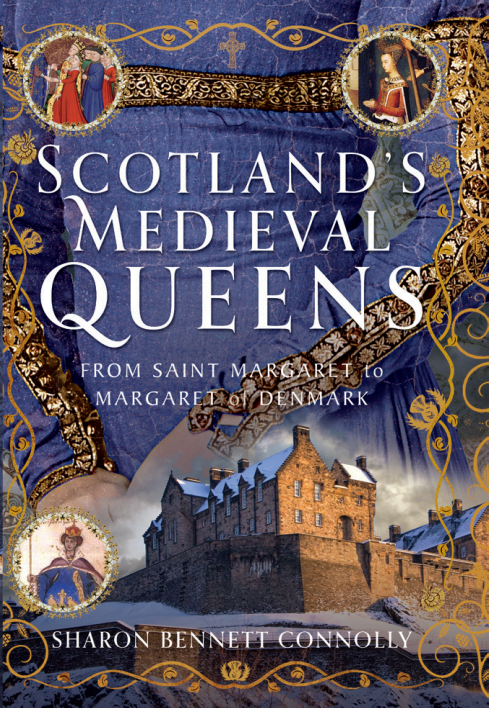
Out now: Scotland’s Medieval Queens

Books by Sharon Bennett Connolly

Scotland’s history is dramatic, violent and bloody. Being England’s northern neighbour has never been easy. Scotland’s queens have had to deal with war, murder, imprisonment, political rivalries and open betrayal. They have loved and lost, raised kings and queens, ruled and died for Scotland. From St Margaret, who became one of the patron saints of Scotland, to Elizabeth de Burgh and the dramatic story of the Scottish Wars of Independence, to the love story and tragedy of Joan Beaufort, to Margaret of Denmark and the dawn of the Renaissance, Scotland’s Medieval Queens have seen it all. This is the story of Scotland through their eyes.

Scotland’s Medieval Queens gives a thorough grounding in the history of the women who ruled Scotland at the side of its kings, often in the shadows, but just as interesting in their lives beyond the spotlight. It’s not a subject that has been widely covered, and Sharon is a pioneer in bringing that information into accessible history.’ Elizabeth Chadwick (New York Times bestselling author)

Available now from Amazon and Pen and Sword Books

Also by Sharon Bennett Connolly:

Books by Sharon Bennett Connolly

Heroines of the Tudor World tells the stories of the most remarkable women from European history in the time of the Tudor dynasty, 1485-1603. These are the women who ruled, the women who founded dynasties, the women who fought for religious freedom, their families and love. Heroines of the Tudor World is now available from Amberley Publishing and Amazon UK. Women of the Anarchy demonstrates how Empress Matilda and Matilda of Boulogne, unable to wield a sword themselves, were prime movers in this time of conflict and lawlessness. It shows how their strengths, weaknesses, and personal ambitions swung the fortunes of war one way – and then the other. Available from Bookshop.orgAmberley Publishing and Amazon UKKing John’s Right-Hand Lady: The Story of Nicholaa de la Haye is the story of a truly remarkable lady, the hereditary constable of Lincoln Castle and the first woman in England to be appointed sheriff in her own right. Available from all good bookshops Pen & Sword Booksbookshop.org and Amazon

Royal Historical Society

Defenders of the Norman Crown: The Rise and Fall of the Warenne Earls of Surrey tells the fascinating story of the Warenne dynasty, from its origins in Normandy, through the Conquest, Magna Carta, the wars and marriages that led to its ultimate demise in the reign of Edward III. Available from Pen & Sword BooksAmazon in the UK and US, and Bookshop.orgLadies of Magna Carta: Women of Influence in Thirteenth Century England looks into the relationships of the various noble families of the 13th century, and how they were affected by the Barons’ Wars, Magna Carta and its aftermath; the bonds that were formed and those that were broken. It is now available in paperback and hardback from Pen & SwordAmazon, and Bookshop.orgHeroines of the Medieval World tells the stories of some of the most remarkable women from Medieval history, from Eleanor of Aquitaine to Julian of Norwich. Available now from Amberley Publishing and Amazon, and Bookshop.orgSilk and the Sword: The Women of the Norman Conquest traces the fortunes of the women who had a significant role to play in the momentous events of 1066. Available now from Amazon,  Amberley Publishing, and Bookshop.org.

Alternate Endings: An anthology of historical fiction short stories including Long Live the King… which is my take what might have happened had King John not died in October 1216. Available in paperback and kindle from Amazon.

Podcast:

A Slice of Medieval

Have a listen to the A Slice of Medieval podcast, which I co-host with Historical fiction novelist Derek Birks. Derek and I welcome guests, such as Bernard Cornwell and Michael Jecks, and discuss a wide range of topics in medieval history, from significant events to the personalities involved. 

Every episode is also now available on YouTube.

*

Don’t forget! Signed and dedicated copies of all my books are available through my online bookshop.

For forthcoming online and in-person talks, please check out my Events Page.

You can be the first to read new articles by clicking the ‘Follow’ button, liking our Facebook page or joining me on TwitterThreadsBluesky and Instagram.

©2016 Sharon Bennett Connolly FRHistS
The Ætheling and the Tragedy of the White Ship

220px-Vilém_syn
William the Atheling

In the late summer of 1103 England’s queen, Matilda of Scotland, gave birth to a son. Named after his grandfather, William the Conqueror, the young prince would be known to history as William the Ætheling. He is one of those historical figures who resides in the shadows, more famous for his death than his all-too-short life as the heir to England’s throne.

William’s father, Henry, was a younger son of William the Conqueror and Matilda of Flanders. When his father had died in 1087, the patrimony of England and Normandy was divided between Henry’s older brothers; the eldest, Robert Curthose, inherited Normandy while William II Rufus became King of England. Henry was given money and lands. It has been said that Henry was intended for a life in the church; however, when his father died, Henry was already 18 and would have joined the church as a child if that was the career set out for him. Instead, the little brother seems to have set his sights on greater things and, as a result, was distrusted by William II, who kept him close, so he could not cause any mischief.

On 2 August, 1100, while out hunting in the New Forest, William was struck by a stray arrow and killed. Some say it was planned, others that it was an accident; I guess we’ll never know for sure…

Henry, however, did not waste the opportunity. With his older brother Robert still on his way back from Crusading in the Holy Land, Henry seized the initiative, the treasury and the kingdom; he was crowned at Westminster Abbey just 3 days after his brother’s death. Within months Henry had found himself a bride with impeccable parentage. Matilda had been born Edith of Scotland and was the daughter of Malcolm III, King of Scots. Through her mother, St Margaret, she was the great-granddaughter of Edmund II Ironside, the Anglo-Saxon king of England who died in 1016. She changed her name on marrying Henry, as Edith was considered ‘too Saxon’ for Norman tastes.

Matylda_zena
Matilda of Scotland

Henry and Matilda were married in November 1100 and within 3 years were the proud parents of 2 children. Their daughter, Adelaide, was born in 1102; she would adopt the name Matilda on her marriage to the Holy Roman Emperor, Henry V, and would be known to history as the Empress Matilda (or Maud, though this appears to have been a later nickname). Although some historians suggest they were twins, it is most likely that Matilda’s younger brother, William, was born in 1103; a message of congratulations was sent to Henry I by Pope Paschal II on 23 November of that year.

The soubriquet of Ætheling is attributed to chronicler Orderic Vitalis and harks back to Anglo-Saxon times as a title given to the king’s designated heir. According to William of Malmesbury, William, with an Anglo-Saxon mother and Norman father, represented the hope of reconciliation between the conquered and conquerors of England.

Although the king and queen had only 2 children – a possible third child is thought to have died young – the king had numerous illegitimate offspring by various women, several of whom were raised alongside his legitimate children. William and a number of his illegitimate brothers, including Robert, Earl of Gloucester, were tutored by Otuel (or Othuer) fitzEarl, natural son of Hugh, Earl of Chester. fitzEarl had been made castellan of the Tower of London and so it is likely that the prince and his brothers were frequently in residence there, in order to pursue their education.

330px-Empress_Mathilda
William’s sister, Empress Matilda

According to William of Malmesbury, William was trained for his future role ‘with fond hope and immense care’. In 1108, while their father was away in Normandy, William and his sister were entrusted to the spiritual care of Anselm, the revered Archbishop of Canterbury.

In 1110 William’s sister, Matilda, left for Germany; she was to continue her education at the court of her future husband, but would not be married until January 1114, just before her 12th birthday. William was still only 6 years old when his sister left; Matilda was 8. It’s sad to think the young siblings would never meet again.

Following his sister’s departure, William’s education continued apace. By 1113, aged just 10, William began to attest royal documents. While still only 9, in February of that year, William was betrothed, at Alençon, to Alice (who changed her name to Matilda on her marriage), the daughter of Fulk V, count of Anjou and Maine. The betrothal formed part of his father’s wider diplomacy, which had also included his sister’s marriage to the Holy Roman Emperor.

Henry I spent the early part of his reign fighting against his brother, Robert Curthose, and, later, Robert’s son, William Clito, trying to secure a smooth succession for William. Robert had been decisively defeated at Tinchebrai in 1106 and spent his remaining years – until his death in 1134 – a prisoner of his brother. Henry subsequently claimed Normandy for the English crown, but William Clito was still a thorn in his side. Clito was supported by the French king, Louis VI; who used him as a counter to Henry’s attempts to conquer Maine.

345px-Henry1
Henry I

In 1115, according to the Anglo-Saxon Chronicle, Henry arranged for the Norman barons to do homage and swear fealty to William, in an attempt to counter the claims of William Clito. A similar ceremony was arranged in England in 1116, for all the great men and barons of England to swear fealty to William as the king’s heir. The Warenne (Hyde) Chronicle referred to William as ‘rex Norman-Angllorum, ut putabatur futurus’ (assumed to be the future king of the Norman-English).

On 1st May 1118 William’s mother, Queen Matilda, died at Westminster and was laid to rest in Westminster Abbey. We do not know how the young prince felt at the loss of his mother – he was 15 at the time. However, it is from this point that William took on more responsibility, acting as regent whenever the king was away in Normandy.

In December 1118 Henry’s troops defeated the Angevins, under Fulk of Anjou, at Alençon. To counteract the defeat, William and Alice/Matilda of Anjou were married, with the Count settling Maine on them as their marriage gift, thus deserting the cause of the French king. Inevitably, war with Louis VI followed.

On 20 August 1119, 16-year-old William was with his father at the Battle of Brémule. Henry won the fight against the forces of Louis VI of France and William Clito. During the battle, William had captured the palfrey of his cousin, William Clito, which he chivalrously returned at the end of the battle.

In the same year William witnessed a charter at Rouen, in which he was described as ‘dei gratia, rex designatus’ (by the grace of God, king designate). And continuing his education in diplomacy, in November 1119, William accompanied his father to a meeting with Pope Calixtus II, (William’s second cousin once removed).

330px-Sceau_de_Louis_VI
Louis VI of France

At the turn of the year, it must have seemed to Henry that his dynasty – and the future of England – was secure in the hands of his son; at the age of 16 he was experienced in warfare and diplomacy and married to Matilda, though she was probably still under 10 years of age, who brought with her the county of Maine as her marriage portion (and the promise of Anjou should her father die whilst on Crusade).

In 1120 peace was finally achieved with France, with William being created Duke of Normandy by his father, and paying homage for the duchy to King Louis; a precedent that would be used  by future English kings, in order to avoid a king paying homage to a fellow king for part of his holdings. William, in turn, then received the homage of the Norman barons. Accompanied by his father, wife and several of his half brothers and sisters, it must have been a time of great rejoicing and festivities.

The final entry of the Warenne (Hyde) Chronicle set the scene:

At last King Henry restored peace with his diligence and money and decided to come to England with much triumph and joy, but God omnipotent, who, just as the blessed Job says, ‘loosens the belt of kings, and girds their kidneys with a rope’, out of his just judgment turned the king’s joy into grief and victory into sorrow. Having descended with his two sons, William and Richard, and with Theobald count of Blois, his nephew, and with many relatives and a crowd of nobles, to the seaport, called Barfleur, on the designated day he began to board his ship with favourable winds and a prosperous sea…

The Warenne (Hyde) Chronicle, edited by Elisabeth m.C. Van Houts and Rosalind C. Love

Indeed, when the large party prepared to cross the Channel, to return to England, it seems several of them were still celebrating. While Henry made the crossing in his own ship, taking with him several nobles and his daughter-in-law, the prince took the offer of a newly built ship, the Blanche Nef – or White Ship – which its owner, Thomas fitzStephen, claimed would guarantee a swift, safe passage. William the Ætheling was accompanied by many of the young nobles of the great families of England, including his half-sister, Matilda, and half-brother, Richard of Lincoln.

WhiteShipSinking
The Sinking of the White Ship

Most of the passengers and crew were still drunk from celebrating when the ship finally left the harbour of Barfleur, in the dark, on the evening of 25 November, 1120. Oderic Vitalis described the scene:

At length he gave the signal to put to sea. Then the rowers made haste to take up their oars and, in high spirits because they knew nothing of what lay ahead, put the rest of the equipment ready and made the ship lean forward and race through the sea. As the drunken oarsmen were rowing with all their might, and the luckless helmsman paid scant attention to steering the ship though he sea, the port side of the White Ship struck violently against a huge rock, which was uncovered each day as the tide ebbed and covered once more at high tide. Two planks were shattered and, terrible to relate, the ship capsized without warning. Everyone cried out at once in their great peril, but the water pouring into the boat soon drowned their cries and all alike perished.

William was ushered into a small boat and was being rowed to safety when he is said to have heard the cries of his half-sister, Matilda. The prince insisted on rowing to her aid, but the little boat was overwhelmed by those trying to make it to safety, and capsized, taking everyone with it.

Vitalis, Oderic, The Ecclesiastical History of Oderic Vitalis.

William the Ætheling was 17-years-old.

With only one survivor, a butcher from Rouen, over 300 souls were lost – drowned – and only a handful of bodies were ever recovered. With the sinking of the White Ship Henry I lost his son; England and Normandy lost their next ruler.

Young Matilda had lost her husband. Still only a child, Matilda had made the crossing of the Channel with the King, rather than her husband, and sometime after the disaster she returned to her father’s court. In 1121 Matilda became a nun, eventually becoming abbess of the convent at Fontevrault. She died in 1158.

With the uncertainty that followed, Louis VI renewed his support of William Clito, who continued to be a thorn in Henry I’s side until his death fighting in Flanders in 1128. Henry himself, in the hope of producing another son, married  again in 1121; to Adeliza of Louvain. Unfortunately, the marriage proved childless and Henry spent the final years of his reign trying to secure the throne for his daughter, Matilda. Empress Matilda had returned to Henry’s court in England following the death of her husband in 1125 and was married again,  in 1128, to Geoffrey, Count of Anjou – the brother of Matilda of Anjou – in the hope that the union would strengthen her claim to the throne.

In the end, however, despite the fact Henry had made the barons of England swear fealty to Matilda as his successor Henry’s nephew, Stephen, claimed the throne on the old king’s death in 1135; thus ushering in 19 years of warfare, an era which became known as The Anarchy.

Reading_Abbey_03
Chapter house of Reading Abbey

William’s death was a tragedy, not only on a national scale, but also a personal one, for Henry I. According to the Anglo-Saxon Chronicle the disaster was ‘a double grief: first that they lost their lives so swiftly; second that few of their bodies were found afterwards’. The young prince’s body was never recovered, leaving no monument to his life, save for Reading Abbey, established as a priory – and later an abbey – in 1121 by Henry I,

‘for the salvation of my soul and that of king William my father and king William my brother and William my son and queen Matilda my mother and queen Matilda my wife and all of my predecessors and successors.’

*

Sources: oxforddnb.com; Oderic Vitalis, The Ecclesiastical History of Orderic Vitalis; Donald Matthew, King Stephen; Robert Bartlett, England Under the Norman and Angevin Kings; David Williamson, Brewer’s British Royalty; the History Today Companion to British History; Dan Jones, the Plantagenets; englishmonarchs.co.uk; The Oxford Companion to British History Edited by John Cannon; Mike Ashley, The Mammoth Book of British kings & Queens; Alison Weir, Britain’s Royal Families, the Complete Genealogy; medievalilsts.net; The Plantagenet Chronicles Edited by Elizabeth Hallam; The Warenne (Hyde) Chronicle, edited by Elisabeth Van Houts and Rosalind C. Love .

*

Pictures courtesy of Wikipedia

*

My Books

Signed, dedicated copies of all my books are available through my online bookshop.

Out now! Scotland’s Medieval Queens

Books by Sharon Bennett Connolly

Scotland’s history is dramatic, violent and bloody. Being England’s northern neighbour has never been easy. Scotland’s queens have had to deal with war, murder, imprisonment, political rivalries and open betrayal. They have loved and lost, raised kings and queens, ruled and died for Scotland. From St Margaret, who became one of the patron saints of Scotland, to Elizabeth de Burgh and the dramatic story of the Scottish Wars of Independence, to the love story and tragedy of Joan Beaufort, to Margaret of Denmark and the dawn of the Renaissance, Scotland’s Medieval Queens have seen it all. This is the story of Scotland through their eyes.

Scotland’s Medieval Queens gives a thorough grounding in the history of the women who ruled Scotland at the side of its kings, often in the shadows, but just as interesting in their lives beyond the spotlight. It’s not a subject that has been widely covered, and Sharon is a pioneer in bringing that information into accessible history.’ Elizabeth Chadwick (New York Times bestselling author)

Available now from Amazon and Pen and Sword Books

Also by Sharon Bennett Connolly:

Books by Sharon Bennett Connolly

Heroines of the Tudor World tells the stories of the most remarkable women from European history in the time of the Tudor dynasty, 1485-1603. These are the women who ruled, the women who founded dynasties, the women who fought for religious freedom, their families and love. Heroines of the Tudor World is now available for pre-order from Amberley Publishing and Amazon UK. Women of the Anarchy demonstrates how Empress Matilda and Matilda of Boulogne, unable to wield a sword themselves, were prime movers in this time of conflict and lawlessness. It shows how their strengths, weaknesses, and personal ambitions swung the fortunes of war one way – and then the other. Available from Bookshop.orgAmberley Publishing and Amazon UKKing John’s Right-Hand Lady: The Story of Nicholaa de la Haye is the story of a truly remarkable lady, the hereditary constable of Lincoln Castle and the first woman in England to be appointed sheriff in her own right. Available from all good bookshops Pen & Sword Booksbookshop.org and Amazon

Royal Historical Society

Defenders of the Norman Crown: The Rise and Fall of the Warenne Earls of Surrey tells the fascinating story of the Warenne dynasty, from its origins in Normandy, through the Conquest, Magna Carta, the wars and marriages that led to its ultimate demise in the reign of Edward III. Available from Pen & Sword BooksAmazon in the UK and US, and Bookshop.orgLadies of Magna Carta: Women of Influence in Thirteenth Century England looks into the relationships of the various noble families of the 13th century, and how they were affected by the Barons’ Wars, Magna Carta and its aftermath; the bonds that were formed and those that were broken. It is now available in paperback and hardback from Pen & SwordAmazon, and Bookshop.orgHeroines of the Medieval World tells the stories of some of the most remarkable women from Medieval history, from Eleanor of Aquitaine to Julian of Norwich. Available now from Amberley Publishing and Amazon, and Bookshop.orgSilk and the Sword: The Women of the Norman Conquest traces the fortunes of the women who had a significant role to play in the momentous events of 1066. Available now from Amazon,  Amberley Publishing, and Bookshop.org.

Alternate Endings: An anthology of historical fiction short stories including Long Live the King… which is my take what might have happened had King John not died in October 1216. Available in paperback and kindle from Amazon.

Podcast:

A Slice of Medieval

Have a listen to the A Slice of Medieval podcast, which I co-host with Historical fiction novelist Derek Birks. Our very first episode was on The Anarchy. Derek and I welcome guests, such as Bernard Cornwell, and discuss a wide range of topics in medieval history, from significant events to the personalities involved.

There are now over 75 episodes to listen to!

Every episode is also now available on YouTube.

*

Don’t forget! Signed and dedicated copies of all my books are available through my online bookshop.

For forthcoming online and in-person talks, please check out my Events Page.

You can be the first to read new articles by clicking the ‘Follow’ button, liking our Facebook page or joining me on TwitterThreadsBluesky and Instagram.

*

©2016 Sharon Bennett Connolly FRHistS
Bessie, Mother of the King’s Son

Effigy of Elizabeth Blount

Elizabeth Blount was born around 1500 in Kinlet in Shropshire, to John Blount of Kinlet and his wife Katherine, daughter of Sir Hugh Pershall of Knightley. There is some confusion as to whether she was her parent’s first child, but it is likely that she was their eldest daughter. Elizabeth (Bessie) was born at Kinlet Hall, but probably grew up at Bewdley, Worcestershire, where the family had moved to shortly after her birth.

Her family lived close to Ludlow and several relatives were employed in the household of Henry VII’s eldest son, Arthur, Prince of Wales. It may well be through her family’s connection to the Prince of Wales’ household that Elizabeth achieved her position at court. It is also likely that her distant cousin, Lord Mountjoy affected the introduction.

However it was achieved, it is possible that Elizabeth was at court by the time she was 12 years old, as a Maid of Honour to the queen, Katherine of Aragon. She was definitely at court by Christmas 1514, when Elizabeth partnered the King, Henry VIII, in the entertainments as Queen Katherine was recovering from childbirth and the loss of the child.

Elizabeth was described as golden-haired, blue-eyed, lively and merry. She was an accomplished dancer and able to play and compose music. She is believed to have composed the following lines during her relationship with Henry:

While life and breath is in my brest, My sovereign lord I shall love best.¹

Workshop_of_Hans_Holbein_the_Younger_-_Portrait_of_Henry_VIII_-_Google_Art_Project
Henry VIII

Most historians agree that Bessie’s relationship with the king was most likely of a short duration, probably lasting just a few months in the summer of 1518. In those days, Henry was still hopeful of he and Katherine having a son and heir and so its possible he only strayed from the queen’s bed when she was pregnant, and therefore unavailable.

In October 1518, Elizabeth Blount took part in the festivities to celebrate the betrothal of 2-year-old Princess Mary to the French Dauphin; Elizabeth danced in the ‘mummery’ with the king’s sister, Mary. Possibly already pregnant with Henry’s child, it was to be her last appearance at court.

As soon as Elizabeth’s condition was known, it seems, she was sent away from court and settled at the Augustinian Priory of St Laurence, in Blackmore, near Chelmsford, Essex. Bessie was far enough away to be protected from prying eyes, but close to the king’s manor of Newhall that he would have been able to pay private visits to his mistress. Henry had given his right-hand man, Cardinal Thomas Wolsey, charge of the arrangements. Wolsey took care of everything, even standing as godfather when the baby arrived, and ensuring he was baptised Henry, after his father.

Horenbout_HenryFitzRoy
Henry Fitzroy

Elizabeth’s little boy, Henry Fitzroy, was born in the summer of 1519. He would be raised in his own establishment, being educated as a prince – albeit an illegitimate one. Elizabeth had little involvement in his day-to-day care, although she seems to have been consulted by his tutors, and 2 of her brothers, George and Henry Blount, were given positions in the child’s household. Elizabeth did send her son gifts from time-to-time; in 1531 she sent him a white satin doublet and 2 horses. Her younger sons would also be given young Henry’s cast-off clothes, once he’d grown out of them.

Elizabeth didn’t return to court after the birth; within a few months she was married to one of Wolsey’s wards. Cardinal Wolsey had taken over the wardship Gilbert Tailboys of Kyme when his father’s mental health went into decline. Sir George Tailboys had been declared a lunatic in 1517 and his lands were being administered for him. The Cardinal arranged the marriage with Gilbert, who was only 2 or 3 years older than Elizabeth; they were married sometime in late 1519 or early 1520.

The marriage was a great prize for Elizabeth. The Tailboys were a wealthy family, related to the earls of Northumberland through Gilbert’s mother, Elizabeth Gascoigne, and with lands spread as far away as Northumberland and Somerset – and various places between. The couple settled on the Tailboys family estates in Lincolnshire. King Henry ensured that property from the Tailboys estates, worth £200 per annum, was settled on Elizabeth for her lifetime. The king’s favour continued throughout Elizabeth’s lifetime, by way of gifts and land grants.

330px-Tailboys_of_Kyme
The Tailboys family crest

By the end of 1520 Gilbert and Elizabeth had their first child, a daughter, Elizabeth. There is some speculation that young Elizabeth could also be the king’s child; however, the fact that Henry never claimed her as his own, when he so readily did with young Henry, seems to suggest that Gilbert was the father. Two more children, George and Robert, were born before 1525.

In 1525 Elizabeth’s son, Henry Fitzroy, now a blond, robust 6-year-old, was created Duke of Richmond and Somerset by his father, the king. It’s not known whether Elizabeth attended the accompanying celebrations, however, but her husband, Gilbert, was knighted at about the same time.

The king was now despairing of having a legitimate son by his queen, and so was looking at strengthening young Fitzroy’s position as his son, if not his heir. Fitzroy was proof that the king could provide male children, even if the queen could not. There was talk of making the young duke King of Ireland and Henry had even sent ambassadors into Europe in hope of finding a foreign princess as a bride for the child.

On 15 April 1530 Gilbert Tailboys died; according to sources, he was buried at South Kyme. Elizabeth was left a widow with 3 small children, although her lifetime interest in the Tailboys estates meant she was financially secure. Her young son, George, inherited his father’s title, becoming Baron Tailboys of Kyme. Young George would go on to marry Margaret Skipwith in 1539, but he died the following year, aged about 18. He was succeeded by his younger brother, Robert, as the 3rd Baron, but he died in 1541, still only in his mid-teens.

4555190447_b0021642e2
Funeral brass of Elizabeth Blount

The boys’ older sister, Elizabeth, would then become the 4th Baroness Tailboys. She married, firstly, Thomas Wymbish of Nocton. Not only was the marriage childless but it appears to have been an unhappy union and Thomas left his wife little in his will. In 1553 Elizabeth made a more exalted second marriage with Ambrose Dudley, Earl of Warwick and son of John Dudley, Duke of Northumberland. However, this union was also childless and the Barony of Tailboys of Kyme became extinct on Elizabeth’s death in 1563.

Following Gilbert’s death Elizabeth Blount was courted by Lord Leonard Grey, son of the Marquess of Dorset and cousin to the king. Grey visited Elizabeth in Lincolnshire and, following the visited, wrote to the king’s minister, Thomas Cromwell, asking for him to approach Elizabeth on Grey’s behalf. In 1532 Lord Grey told Cromwell that he would “rather obtain that matter than to be made lord of as much goods and lands as any noble man within this realm”². Despite Cromwell’s backing, however, and the acquiescence of the king,  Elizabeth turned him down.

Elizabeth married again on 12 February 1535. Her second husband was Edward Fiennes de Clinton, 9th Baron Clinton and Saye; he was about 12 years younger than Elizabeth and although his family had lands in Kent, he settled on Elizabeth’s Lincolnshire estates.

Hans_Holbein_the_Younger_-_Edward_Fiennes_de_Clinton,_9th_Lord_Clinton,_1st_Earl_of_Lincoln_RL_12198
Edward Fiennes de Clinton, 9th Baron Clinton and Saye

Only a year after the marriage Elizabeth’s eldest son, Henry Fitzroy, Duke of Richmond, died. Richmond had been married in 1533, to Mary Howard, a younger daughter of the Duke of Norfolk, though the marriage was never consummated due to the young couple’s tender ages. Young Henry passed away on 23 July 1536 after a 2-week illness, aged only 17. The cause of death was a pulmonary infection, possibly tuberculosis. He was buried, with little ceremony, in Thetford Priory; the king did not want to draw attention to the loss of  his only son, legitimate or not.

Elizabeth was to have 3 more children with Edward Fiennes de Clinton; all girls. The eldest, Bridget, was born around 1536 and would marry Sir Robert Dymoke of Scrivelsby, Lincolnshire, a nephew of Gilbert Tailboys through his mother, Anne Tailboys. A second daughter, Katherine, was born around 1538 and married William, 2nd Lord de Burgh of Gainsborough, Lincolnshire, former brother-in-law of Henry VIII’s last queen, Katherine Parr. Their last daughter, Margaret, was born around 1539 and would go on to marry Charles Willoughby, 2nd Baron Willoughby of Parham.

Elizabeth continued to receive the king’s favour even into her second marriage; although her husband did not share in the privilege. Land grants were made jointly to Elizabeth and her son George, but excluded Edward. Elizabeth returned to court, briefly in 1540, as lady-in-waiting to Henry’s 4th queen, Anne of Cleves, but seems to have withdrawn to her estates due to illness.

330px-South_Kyme_Church_-_geograph.org.uk_-_418304

The date of Elizabeth’s death, and the cause of her final illness, remains unknown. Given that her eldest son, George, died in 1540, she may have had to suffer one last bereavement before her own death, sometime in 1540 or early 1541; leaving her teenage children and 3 very young daughters, the youngest possibly still in the cradle. By June 1541 Edward Clinton had remarried. He would go on to marry a third time and gain rewards and titles under Elizabeth I, becoming Earl of Lincoln in 1572.

Elizabeth Blount’s final resting place has been lost to history. Although there was a brass plaque – now in a private collection – commemorating her and her husband, Gilbert Tailboys, in St Mary and All Saints Church, South Kyme, it seems that only Gilbert is buried there.³

*

Footnotes: ¹Amy Licence, In Bed with the Tudors: ²Beverley A Murphy, Bastard Prince: Henry VIII’s Lost Son; ³Thanks to Georgina Faye Carter

*

Pictures courtesy of Wikipedia, except Effigy of Elizabeth Blount ©BNPS,co,uk and funeral brass courtesy of flickriver.

*

Sources: In Bed with the Tudors by Amy Licence; Bastard Prince: Henry VIII’s Lost Son by Beverley A Murphy; oxforddnb.com; The Life and Times of Henry VIII by Robert Lacey; England Under the Tudors by Arthur D Innes; The Earlier Tudors 185-1558 by JD Mackie.

*

My books

Signed, dedicated copies of all my books are available through my online store.

Out now: Scotland’s Medieval Queens

Books by Sharon Bennett Connolly

Scotland’s history is dramatic, violent and bloody. Being England’s northern neighbour has never been easy. Scotland’s queens have had to deal with war, murder, imprisonment, political rivalries and open betrayal. They have loved and lost, raised kings and queens, ruled and died for Scotland. From St Margaret, who became one of the patron saints of Scotland, to Elizabeth de Burgh and the dramatic story of the Scottish Wars of Independence, to the love story and tragedy of Joan Beaufort, to Margaret of Denmark and the dawn of the Renaissance, Scotland’s Medieval Queens have seen it all. This is the story of Scotland through their eyes.

Scotland’s Medieval Queens gives a thorough grounding in the history of the women who ruled Scotland at the side of its kings, often in the shadows, but just as interesting in their lives beyond the spotlight. It’s not a subject that has been widely covered, and Sharon is a pioneer in bringing that information into accessible history.’ Elizabeth Chadwick (New York Times bestselling author)

Available now from Amazon and Pen and Sword Books

Also by Sharon Bennett Connolly:

Books by Sharon Bennett Connolly

Heroines of the Tudor World tells the stories of the most remarkable women from European history in the time of the Tudor dynasty, 1485-1603. These are the women who ruled, the women who founded dynasties, the women who fought for religious freedom, their families and love. Heroines of the Tudor World is now available from Amberley Publishing and Amazon UK. Women of the Anarchy demonstrates how Empress Matilda and Matilda of Boulogne, unable to wield a sword themselves, were prime movers in this time of conflict and lawlessness. It shows how their strengths, weaknesses, and personal ambitions swung the fortunes of war one way – and then the other. Available from Bookshop.orgAmberley Publishing and Amazon UKKing John’s Right-Hand Lady: The Story of Nicholaa de la Haye is the story of a truly remarkable lady, the hereditary constable of Lincoln Castle and the first woman in England to be appointed sheriff in her own right. Available from all good bookshops Pen & Sword Booksbookshop.org and Amazon

Defenders of the Norman Crown: The Rise and Fall of the Warenne Earls of Surrey tells the fascinating story of the Warenne dynasty, from its origins in Normandy, through the Conquest, Magna Carta, the wars and marriages that led to its ultimate demise in the reign of Edward III. Available from Pen & Sword BooksAmazon in the UK and US, and Bookshop.orgLadies of Magna Carta: Women of Influence in Thirteenth Century England looks into the relationships of the various noble families of the 13th century, and how they were affected by the Barons’ Wars, Magna Carta and its aftermath; the bonds that were formed and those that were broken. It is now available in paperback and hardback from Pen & SwordAmazon, and Bookshop.orgHeroines of the Medieval World tells the stories of some of the most remarkable women from Medieval history, from Eleanor of Aquitaine to Julian of Norwich. Available now from Amberley Publishing and Amazon, and Bookshop.orgSilk and the Sword: The Women of the Norman Conquest traces the fortunes of the women who had a significant role to play in the momentous events of 1066. Available now from Amazon,  Amberley Publishing, and Bookshop.org.

Alternate Endings: An anthology of historical fiction short stories including Long Live the King… which is my take what might have happened had King John not died in October 1216. Available in paperback and kindle from Amazon.

Podcast:

Have a listen to the A Slice of Medieval podcast, which I co-host with Historical fiction novelist Derek Birks. Derek and I welcome guests, such as Bernard Cornwell and Michael Jecks, and discuss a wide range of topics in medieval history, from significant events to the personalities involved. 

Every episode is also now available on YouTube.

*

Don’t forget! Signed and dedicated copies of all my books are available through my online store.

For forthcoming online and in-person talks, please check out my Events Page.

You can be the first to read new articles by clicking the ‘Follow’ button, liking our Facebook page or joining me on TwitterThreadsBluesky and Instagram.

©2016 Sharon Bennett Connolly FRHistS
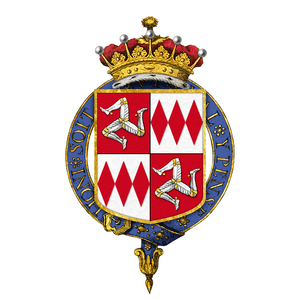
Book Corner: In the Footsteps of the Six Wives of Henry VIII by Sarah Morris and Natalie Grueninger

51C52QElN8L._SX327_BO1,204,203,200_This book provides a fresh perspective on the lives of Henry VIII’s six wives by embarking on a journey through the manors, castles and palaces in which their lives were played out.

Each location is described in a fascinating narrative that unearths the queens’ lives in documents and artefacts, as well as providing practical visitor information based on the authors’ first-hand knowledge of each site. Accompanied by an extensive range of images including timelines, maps, photographs and sketches, this book brings us closer than ever to the women behind the legends, providing a personal and illuminating journey in the footsteps of the six wives of Henry VIII.

In the Footsteps of the Six Wives of Henry VIII, by Sarah Morris and Natalie Grueninger, is an absolute treasure trove of pictures and information of the many historic locations associated with Henry VIII’s 6 wives. The book is divided into 7 easy-to-follow sections; the 1st covers the principal Royal residences of the period and the 6 subsequent portions are each dedicated to one of the 6 wives, in chronological order.

054 (2)
St Augustine’s Abbey, Canterbury

The book examines each of Henry’s queens in turn, looking at the locations associated with them, not only when they were queen, but also from their childhood and early life. In each section, we are treated to the queen’s story, her triumphs and failures, told through the palaces in which she experienced them.

In the Footsteps of the Six Wives of Henry VIII takes you on a visit of each location, whether it’s a palace or manor house, the authors give vivid tours, telling you what to look out for, what is still extant – and what is lost to history. In one location, they guide you to a housing estate and point out the walls which once made up the exterior of a Henry VIII’s now-lost palace. You are also provided with a practical guide to the locations covered, giving you visitor information, parking suggestions, details on refreshments and facilities.

135
Windsor Castle

With Katherine of Aragon, we visit the magnificent palaces of Spain, while Anne Boleyn takes us from Burgundy to the Loire Valley. Jane Seymour allows us to investigate the renowned Wolf Hall and Anne of Cleves gives us a fascinating glimpse into Germany’s wonderful castles. Jane Seymour The tragic story of Katherine Howard allows us to join Henry’s great progress of 1541,  through Lincolnshire and Yorkshire, before the tragic last months of imprisonment at Syon House. Which finally brings us to Katherine Parr, investigating the locations associated with her first 2 marriages, her life with Henry and then her final years with Thomas Seymour.To walk the grounds and corridors of Hampton Court Palace is to walk in the footsteps of all the Tudor kings and queens. Within the Tudor palace’s russet-coloured walls, the present fades into the brickwork and the past emerges to greet us. Although mush of the Tudor palace has, over the years, been modified or demolished and replaced with William III’s and Mary II’s baroque palace, the buildings that survive propel us back through the years to a time when Hampton Court was one of Henry VIII’s most beloved palaces, at the centre of court life and politics.

020 (2)
Hever Castle, Kent

If nothing else, it is worth reading In the Footsteps of the Six Wives of Henry VIII for the research the Sarah Morris and Natalie Grueninger have conducted into the Anne of Cleves panels. These wonderful wood carvings are discussed and investigated in detail; their fascinating story told for the first time in its entirety. It is not hard to imagine the feelings of curiosity and, sometimes,  disappointment the authors must have felt as they tried to uncover the provenance of these panels, and their associations with Henry VIII’s 4th wife. Their eventual success and discoveries are a testament to the author’s persistence and tenacity.

This book is amply supported by quotes from primary sources, describing the locations as they were at the time the queens lived. The authors have a wonderful habit of discussing the difficulties involved in locating and identifying some of the less famous sites, making you feel part of their investigations.

178
The Bishop’s Palace, Lincoln

An abundance of photographs and illustrations are included in the book. These include colourful photos of the sites as they are now, black and white floor plans from the Tudor period and artwork painted through the ages.

Sarah Morris and Natalie Grueninger have created a wonderful book, which is a combination of history book and travel guide. They have worked so well together it is impossible to see the join; they speak with one voice in this stunning collaboration. The book is produced in a way to make it easy to dip in and out of, making it possible to read only about the locations you are currently touring, or to read from beginning to end in a couple of sittings. But be careful, in just looking up one specific location you may find that you lose an entire hour without noticing.

The only criticism I would have is that there are no footnotes to clarify the source of quotations, which makes it harder to use as a research tool, but not impossible. This fault is partly offset, moreover, by an extensive bibliography of primary and secondary sources, and in no way detracts from the enjoyment of the book as a whole.

Remarkably, the authors give equal empathy to each of Henry’s wives. It is impossible to discern a bias for Katherine of Aragon or Anne Boleyn (a remarkable achievement). Each property is subject to the same attention to detail, whether it was a frequently occupied palace, or a manor house visited for just a few days while on progress.

052
Gainsborough Old Hall, Lincolnshire

In the Footsteps of the Six Wives of Henry VIII is beautifully written and thoroughly engaging. You can practically hear, see and smell the Tudors. The book is a detailed, enjoyable and enlightening read, no matter whether you are intending to travel to the palaces, or visiting them through the book, you are in for a real treat. The authors have an incredible ability to invoke the past and recreate the sumptuous, lavish lives of England’s most fascinating queen consorts. It will be a valued addition to anyone’s Tudor library.

*

My book, Heroines of the Medieval World,  is now available in hardback in the UK from both Amberley Publishing and Amazon UK and worldwide from Book Depository. It is also available on Kindle in both the UK and USA and will be available in Hardback from Amazon US from 1 May 2018.

Be the first to read new articles by clicking the ‘Follow’ button, liking our Facebook page or joining me on Twitter.

*

Photographs ©Sharon Bennett Connolly 2016

An Uncommon Sister – Christian Bruce

330px-Turnberry_Castle
Turnberry Castle

Christian Bruce was one of the many children of Sir Robert le Brus, Lord of Annandale, and his wife Marjorie, Countess of Carrick in her own right. Christian was one of 11 children, with 5 boys and 5 girls surviving infancy. Unfortunately we don’t know when she was born, nor whether or not she was an older or younger sibling.

Christian was probably born at her father’s castle of Turnberry sometime in the 1270s or early 1280s.

Christian’s grandfather was another Robert le Brus, one of the 13 Competitors for the throne of Scotland following the death of Margaret, the Maid of Norway; when the vacancy of the Scottish throne was resolved by Edward I of England in favour of John Balliol. And when Balliol’s kingship failed it was Christian’s brother, Robert the Bruce, who became one of the leading candidates for the Scottish throne.

There are some question marks over Christian’s marital history. Some sources claim she married Gartnait, Earl of Mar in the 1290s, and was the mother of Donald of Mar. However, this has recently been disputed. Christian never seems to have been addressed, or described, as the Countess of Mar, and there seems to have been little communication between Christian and her supposed son, Donald, even though they were both held prisoner in England simultaneously.

RobertBruceAndElizabethDeBurgh (280X280)_tcm4-562387
Robert the Bruce and Elizabeth de Burgh

The main argument against the marriage appears to be that Abbot Walter Bower had stated that Gartnait had been married to the ‘eldest Bruce daughter’, a description never applied to Christian. However, if the elder daughters were already married, Christian may well have been the eldest ‘unmarried’ Bruce daughter.

By 1305, however, Gartanit was dead and Christian had married Sir Christopher Seton (c. 1278-1306). Sir Christopher was a knight with lands in Annandale and northern England. He was a stalwart supporter of Robert the Bruce, his family having had a long tradition of serving the Bruce family. We know little to nothing about Christian’s short marriage to Sir Christopher; their relationship had to take a back seat to the national events of the time.

Sir Christopher was with Christian’s brother on the fateful day in the Greyfriars Church in Dumfries, when one of Robert the Bruce’s men fatally stabbed John Comyn, his rival to  the Scottish throne. Robert then made the dash for Scone, hoping to achieve his coronation before the Christian world erupted in uproar over his sacrilege. An excommunicate could not be crowned. Christian accompanied her brother, his wife Elizabeth and daughter Marjorie and her sister Mary to Scone Abbey. The Stone of Scone was the traditional coronation seat of the Kings of Scotland and, although the stone had been stolen by the English and spirited away to London, holding the coronation at the Abbey sent a message of defiance to the English.

330px-Stone_of_Scone_replica
Scone Abbey with a replica of the Stone of Scone in the forefront.

On 25th March 1306 Christian, alongside her husband, saw her brother crowned King Robert I by Isabella MacDuff, Countess of Buchan, who claimed her family’s hereditary right to crown Scotland’s kings (despite her being married to a Comyn), just 6 weeks after John Comyn’s death. The next day saw the ceremony repeated following the late arrival of William Lamberton, Bishop of St Andrews,

Robert’s coronation was the start of the most desperate period of his life – and that of his supporters. Edward I of England was never a one to casually acquiesce when he saw his will flouted. He sent his army into Scotland to hunt down the new king and his adherents. After his defeat by the English at Methven in 1306, Robert went into hiding in the Highlands. He sent his wife and daughter north to what he hoped would be safety. Christian, her sister Mary and the Countess of Buchan accompanied them, escorted by  the Earl of Atholl and Christian’s brother, Sir Neil Bruce.

It is thought that the Bruce women were heading north to Orkney in order to take a boat to Norway, where Robert’s sister, Isabel, was queen consort to King Erik II. Unfortunately they would never make it. The English caught up with them at Kildrummy Castle and laid siege to it. The defenders were betrayed by someone in their own garrison, a blacksmith who set fire to the barns, making the castle indefensible. The women managed to escape with the Earl of Atholl, but Neil Bruce remained with the garrison to mount a desperate defence in order give the queen, his niece and sisters enough time to escape.

Following their capitulation the entire garrison was executed. Sir Neil Bruce was given a traitor’s death; he was hung, drawn and quartered at Berwick in September 1306.

330px-Doon_castle_(2266044734)
Doon Castle

Christian and her companions did not escape for long; they made for Tain, in Easter Ross, possibly in the hope of finding a boat to take them onwards. They were hiding in the sanctuary of St Duthac when they were captured by the Earl of Ross (a former adherent of the deposed King John Balliol), who handed them over to the English. They were sent south, to Edward I at Lanercost Priory in Cumbria.

Following the coronation Christian’s husband, Sir Christopher Seton, had been sent to hold Loch Doon Castle against the English. Following a siege the castle was surrendered by its Governor, Sir Gilbert de Carrick. Seton was executed on the orders of Edward I; the poor man was hanged.

Christian’s sister Mary and Isabella, Countess of Buchan, were treated particularly harshly by Edward I. The English king had special cages built for them and for centuries it has been thought they were suspended from the walls of the keeps at Roxburgh and Berwick Castles, exposed to the elements and the derision of the English garrisons and populace, and a taunt to the Scots just over the border. However, the cages were in fact indoors, within rooms in the castles’ keeps. In contrast, Christian was sent into captivity to a Gilbertine convent at Sixhills in Lincolnshire; she was probably told of her husband’s death – and the manner of it – some time during the journey south. On 15 March 1307, financial provision was made fro Christian’s keep by an order sent to the sheriff of Lincoln to provide ‘3d. a day for her expenses, from the morrow of All Souls last year, when she came there; and a mark yearly for her dress.’ (Calendar of documents relating to Scotland, no. 1910, p. 508)

The convent at Sixhills was also custodian to the daughter of Dafydd ap Gruffydd, the last Welsh prince of Wales. Gwladys had been sent there following their father’s capture in 1283. She died at Sixhills in 1336. Gwladys’s cousin, Gwenllian, was sent to Sixhills’ sister priory at Sempringham. Dafydd himself was hanged, drawn and quartered; his two sons were imprisoned in Bristol Castle, Llywelyn died there a few years later, whilst the younger son, Owain lived until at least 1325, imprisoned nightly in a cage to prevent escape.

Christian languished at Sixhills for 8 years, until shortly after her brother’s remarkable victory over the English at Bannockburn, in 1314. During the battle, King Robert the Bruce had managed to captured several notable English prisoners, including Humphrey de Bohun, 4th Earl of Hereford and Essex, which put the King of Scots in a strong bargaining position. King Robert was able to arrange the exchange of his English captives for the members of his family still incarcerated in England, and Isabella Buchan.

Once home in Scotland Christian joined her brother’s court. In no hurry to remarry, she accompanied the king and his family on a short progress around Tyndale, an area of Northumberland which was officially in Scottish hands. Some time after her return to Scotland, Christian had also been granted the Bruce lands of Garioch in Aberdeenshire.

David_II_of_Scotland_by_Sylvester_Harding_1797
David II, Robert the Bruce’s son and successor

The Scottish Wars of Independence took a heavy toll on Christian’s family. Having lost her brother and husband in 1306, she lost her 2 younger brothers on the same day in 1307. Thomas and Alexander Bruce had been leading a force into Galloway when they were overwhelmed by the forces of Dungal MacDouall, a supporter of the Comyn faction. The brothers, both in their early 20s, were handed over to the English and were beheaded at Carlisle on 9th February 1307. Robert and Christian’s surviving brother, Edward, was killed in battle in Ireland in 1318.

The sad losses must have seemed endless to Christian. In 1316 King Robert had lost his daughter, Marjorie, in childbirth. She was just 19. Her son, Robert Stewart, survived and would be the king’s heir until the birth of his only son, David, in 1324. Marjorie’s son would eventually succeed as King Robert II following his uncle David II’s death in 1371. And in 1323 Christian’s sister Mary died; Mary had survived 4 years imprisoned in an iron cage at Roxburgh Castle before being transferred to a more comfortable imprisonment in 1310. It wouldn’t be surprising if her inhumane incarceration had contributed to Mary’s death in her early 40s.

Christian remained unmarried for many years. Although their marriage had been a short one, Christian kept her husband’s memory alive for many years to come; in 1324 she founded a chapel in Dumfries in his honour. There is a possibility  she was the Bruce sister mooted as a bride for Sir Andrew Harclay, earl of Carlisle, as part of a peace treaty with Scotland in 1323. However, negotiations broke down and the marriage never took place.

330px-Bothwell_Castle_20080505_-_south-east_tower
Bothwell Castle

Christian eventually married in 1326, to a man who was probably about 20 years her junior. Her 2nd husband was Sir Andrew Murray of Bothwell, posthumous son of the Sir Andrew Murray who had fought beside Sir William Wallace in the victory at Stirling Bridge.

Christian and Andrew were to have 2 children, sons. Their eldest, John, married Margaret Graham, Countess of Mentieth, sometime after 21st November 1348. John died in 1352 and Margaret would go on to marry Robert Duke of Albany, brother of Robert III and a great-grandson of King Robert the Bruce. A 2nd son, Thomas, would marry Joan, a daughter of Maurice Moray, Earl of Strathearn, and died in 1361.

On the death of Christian’s surviving brother, Robert the Bruce, in 1329, Scotland was once again thrown into turmoil. His 5-year-old son, David, was proclaimed king, with regents set to rule for him. As a member of the royal family Christian took part in David’s coronation in 1331. She shared a room in Scone Palace with her nieces, the new king’s sisters.

The English, however, saw the Bruce’s death as an opportunity and backed Edward Balliol‘s invasion of Scotland. Edward was crowned king in 1332, but could not consolidate his position. In the same year Murray was chosen as Guardian of Scotland and spent the next 5 years fighting the English and repulsing their attempts to return Balliol to the throne. Again, Christian found herself in the thick of the fighting when Sir Andrew installed her as keeper of Kildrummy Castle. In 1335 she was besieged by one of Balliol’s commanders, David Strathbogie, earl of Atholl. Her husband marched to her aid with a force of over a thousand men; he was able to surprise Atholl and defeated him at Culblean.

Kildrummy_castle_2
Kildrummy Castle

Christian remained in possession of Kildrummy Castle even after Sir Andrew’s death; her husband had died at Avoch Castle in Ross in 1338, having retired from national politics the year before. Christian is known to have entertained her nephew’s wife, Queen Joan, at Kildrummy Castle in 1342. David II was generous to his aunt, providing her with an income from a number of sources, including the customs of Aberdeen.

It is believed that Christian died sometime in 1356, the last time she was mention in the exchequer rolls. She must have been well into her 70s, a great age for the time. I couldn’t find any source to confirm where she was buried; however, her husband was initially buried in the chapel at Rossmarkie, but later reinterred in Dunfermline Abbey, suggesting that this is also Christian’s resting place. It would be appropriate if it was, as so many of her ancestors and family are buried there; including her husband, brother, Robert, and niece, Marjorie.

*

Pictures courtesy of Wikipedia

*

Sources: The Story of Scotland by Nigel Tranter; Brewer’s British Royalty by David Williamson; Kings & Queens of Britain by Joyce Marlow; educationscotland.gov.uk/scotlandhistory Mammoth Book of British Kings & Queens by Mike Ashley; Oxford Companion to British History Edited by John Cannon; Edward I A Great and Terrible King by Marc Morris; Britain’s Royal Families by Alison Weir; oxforddnb.com; thefreelancehistorywriter.com; englishmonarchs.co.uk; The Kings & Queens of Scotland edited by Richard Oram; Scotland: History of a Nation by David Ross.

*

My Books

Signed, dedicated copies of all my books are available through my online bookshop.

Coming 15 January 2024: Women of the Anarchy

On the one side is Empress Matilda, or Maud. The sole surviving legitimate child of Henry I, she is fighting for her birthright and that of her children. On the other side is her cousin, Queen Matilda, supporting her husband, King Stephen, and fighting to see her own son inherit the English crown. Both women are granddaughters of St Margaret, Queen of Scotland and descendants of Alfred the Great of Wessex. Women of the Anarchy demonstrates how these women, unable to wield a sword, were prime movers in this time of conflict and lawlessness. It show how their strengths, weaknesses, and personal ambitions swung the fortunes of war one way – and then the other.

Available for pre-order from Amberley Publishing and Amazon UK.

Coming on 15 June 2024: Heroines of the Tudor World

Heroines of the Tudor World tells the stories of the most remarkable women from European history in the time of the Tudor dynasty, 1485-1603. These are the women who ruled, the women who founded dynasties, the women who fought for religious freedom, their families and love. These are the women who made a difference, who influenced countries, kings and the Reformation. In the era dominated by the Renaissance and Reformation, Heroines of the Tudor World examines the threats and challenges faced by the women of the era, and how they overcame them. Some famous, some infamous, some less well known, including Anne Boleyn, Elizabeth Barton, Catherine de Medici, Bess of Hardwick and Elizabeth I. From writers to regents, from nuns to queens, Heroines of the Tudor World shines the spotlight on the women helped to shape Early Modern Europe.

Heroines of the Tudor World is now available for pre-order from Amberley Publishing and Amazon UK.

Also by Sharon Bennett Connolly:

King John’s Right-Hand Lady: The Story of Nicholaa de la Haye is the story of a truly remarkable lady, who was the hereditary constable of Lincoln Castle and the first woman in England to be appointed sheriff in her own right. Her strength and tenacity saved England at one of the lowest points in its history. King John’s Right-Hand Lady: The Story of Nicholaa de la Haye is now available from Pen & Sword Booksbookshop.org and Amazon.

Defenders of the Norman Crown: The Rise and Fall of the Warenne Earls of Surrey tells the fascinating story of the Warenne dynasty, of the successes and failures of one of the most powerful families in England, from its origins in Normandy, to its ultimate demise in the reign of Edward III. Defenders of the Norman Crown: Rise and Fall of the Warenne Earls of Surrey is now available from Pen & Sword BooksAmazon in the UK and US, and Bookshop.org.

Ladies of Magna Carta: Women of Influence in Thirteenth Century England looks into the relationships of the various noble families of the 13th century, and how they were affected by the Barons’ Wars, Magna Carta and its aftermath; the bonds that were formed and those that were broken. It is now available in paperback and hardback from Pen & Sword,  Amazon, and Bookshop.org.

Heroines of the Medieval World tells the stories of some of the most remarkable women from Medieval history, from Eleanor of Aquitaine to Julian of Norwich. Available now from Amberley Publishing and Amazon, and Bookshop.org.

Silk and the Sword: The Women of the Norman Conquest traces the fortunes of the women who had a significant role to play in the momentous events of 1066. Available now from Amazon,  Amberley Publishing, and Bookshop.org.

Alternate Endings: An anthology of historical fiction short stories including Long Live the King… which is my take what might have happened had King John not died in October 1216. Available in paperback and kindle from Amazon.

Podcast:

Have a listen to the A Slice of Medieval podcast, which I co-host with Historical fiction novelist Derek Birks. Derek and I welcome guests, such as Bernard Cornwell and Elizabeth Chadwick, and discuss a wide range of topics in medieval history, from significant events to the personalities involved.

*

Don’t forget! Signed and dedicated copies of all my books are available through my online bookshop.

For forthcoming online and in-person talks, please check out my Events Page.

You can be the first to read new articles by clicking the ‘Follow’ button, liking our Facebook page or joining me on Twitter and Instagram.

©2016 Sharon Bennett Connolly FRHistS
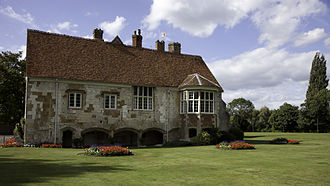
Book Corner: On the Trail of the Yorks by Kristie Dean

24th March On the Trail slider 13

Today is the last day of Kristie Dean‘s Blog Tour to celebrate the release of her latest book, On the Trail of the Yorks. Congratulations to Kristie on what has been a wonderful virtual book tour – and ‘thank you’ for asking History…the Interesting Bits to be a part of it.

So, I think, for the last day, it is only fair to give you my review of this remarkable book.

12791083_736187379851237_1299001826319792577_nRichard III is probably the House of York’s best-known figure, but the other members of the family are just as intriguing as the king who fell on Bosworth Field. This book explores the places associated with members of this fascinating family and discovers their stories through the locations they visited and inhabited. It reveals the lives of the Yorks by exploring the cathedrals, castles, battlefields and manor houses that shaped their history. Featuring locations such as Fotheringhay, Baynard’s Castle, Durham Cathedral and the Palace of Westminster, among many others, this book brings each site to life, giving a gripping account of its heritage as well as accurate information for the visitor. Extensive descriptions and an array of illustrations and photographs recreate these poignant and sometimes controversial locations, immersing the reader in the ancient and intriguing world of the Yorks.

Just over a year ago Kristie Dean published her book, The World of Richard III. This was a unique book with its own inimitable style. A combination of history book and travel guide, Ms Dean told the story of Richard III through the geographical locations associated with him. In On the Trail of the Yorks Kristie Dean has extended her research to include the rest of Richard’s family, from his father the Duke of York through his wife and brothers to his niece, Elizabeth of York, queen of Henry VII.

1422626_729589277177714_706482969626694562_nThe book is laid out in an easy-to-follow format, with each main character of the Yorkist dynasty getting their own chapter. The chapters then follow a loosely chronological manner, based on when the locations were used, or visited, by the person in question. Ms Dean always gives a history of the association between the Yorks and the historic site, while also giving a general history of the location. The book acts as a practical guide for each location; giving not only useful contact details, but also travel information and what to look out for while you are there.

The centre of the book has a treasure trove of colourful and black and white images. Including portraits depicting leading members of the House of York and photographs of the places the Yorks and Kristie Dean have visited. The wonderful pictures help to bring the history to life and you find yourself flicking between the descriptions of the various sites and the related pictures.

Kristie Dean also discusses locations which are no longer available to us. Her description of Old St Paul’s Cathedral, which was destroyed during the 1666 Great Fire of London, is so thorough and passionate that it leaves the reader bereft at the thought of what is lost.

Some places are familiar to any fan of the Yorkist dynasty; York, Fotheringhay, Ludlow and, of course, Middleham. While other locations are less-instantly recognisable as having Yorkist connections, but just as interesting; castles such as Conisbrough and the shrine of Our Lady of Walsingham. The book itself takes you from locations in England to Ireland and into France and the Continent, with comprehensive travel information as you go; giving you a tour of some of the best historic sites that Europe has to offer – whilst never moving from your armchair.

220px-Eltham_Palace_-_geograph.org.uk_-_19354
Eltham Palace

No matter how familiar it is to us, each location is given the same level of attention, with detailed descriptions of the site, the things to see – and what not to miss – and the Yorkist story behind  it. Kristie Dean builds up the personal stories of the individual members of the family through the buildings and places particularly associated with them.

On every page Kristie Dean’s passion and enthusiasm for her subject shines through. Here, she writes about Westminster Hall:

Few other places have survived to offer the York enthusiast such a rich tapestry of history; few other places allow one to stand under the same roof where so much history has passed. The atmospheric presence of those long gone can be felt, separated from today’s visitor by only the thin wall of time. You might feel hurried to move on to the next room, but find a corner and stand for a moment to experience the atmosphere…..

This book allows the reader to vicariously visit the locations associated with the family of the House of York, with the history of each site, descriptions of what it would have looked like in the 15th century and descriptions of what is available to visit today.

065
Bosworth Battlefield

You can vividly imagine being in Staindrop Church, or the church at Fotheringhay during the re-internment of Richard Duke of York in 1476, or feasting at the castle afterwards. Kristie Dean’s own information and knowledge is enhanced by her use of contemporary quotes, to give past descriptions of the locations and of the events she is describing.

It would be easy for a book of this kind to be confusing and higgledy-piggledy, but the author keeps focussed throughout and makes the book easy to follow, both as a history book and as a guide-book; keeping on topic and explaining any overlaps.

The work is thorough and impressive in the blend of history and geography, allowing you to use the book as a general history and tour guide, while each chapter and location is designed as a standalone guide, allowing you to drop in and out of the book as you please; a useful tool when travelling.

In short, this is a wonderful resource for both the armchair traveller, and the historical tourist, enhanced by photographs of locations and a level of detail that is second-to-none. It is a ‘must have’ on the book shelves for any fan of Richard III, the House of York or the Wars of the Roses in general, in order to enhance our knowledge of the period.

KristieKristie Dean has an MA in History and now enjoys teaching the subject, following a successful career in public relations. Her particular historic interest is the medieval era, specifically the Plantagenets, the Wars of the Roses and the Tudors. When not traveling for research, you can find Kristie at home in Tennessee with her husband, three dogs, and two cats. On the Trail of the Yorks is available now from Amazon UK and from Amazon US in May. And The World of Richard III will be released in paperback in May 2016, with its new title ….  On the Trail of Richard III.

*

My book, Heroines of the Medieval World,  is now available in hardback in the UK from both Amberley Publishing and Amazon UK and worldwide from Book Depository. It is also available on Kindle in both the UK and USA and will be available in Hardback from Amazon US from 1 May 2018.

Be the first to read new articles by clicking the ‘Follow’ button, liking our Facebook page or joining me on Twitter.

*

Pictures: Eltham Palace courtesy of Wikipedia; Bosworth ©SharonBennettConnolly 2014