Book Corner: Reading Round-up 1

I am well behind on the list of book reviews I still have to write up, so I though I would do a couple of articles that include mini-reviews of several books that I have read and enjoyed over the last few months, to clear the backlog and give you some fabulous ideas if you’re looking for that next read.

A Hidden History of the Tower of London by John Paul Davis
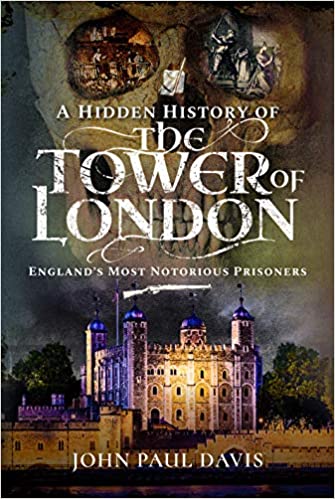
Famed as the ultimate penalty for traitors, heretics and royalty alike, being sent to the Tower is known to have been experienced by no less than 8,000 unfortunate souls. Many of those who were imprisoned in the Tower never returned to civilisation and those who did, often did so without their head! It is hardly surprising that the Tower has earned itself a reputation among the most infamous buildings on the planet. There have, of course, been other towers. Practically every castle ever built has consisted of at least one; indeed, even by the late 14th century, the Tower proudly boasted no less than 21. Yet even as early as the 1100s, the effect that the first Tower had on the psyche of the local population was considerable. The sight of the dark four-pointed citadel – at the time the largest building in London – as it appeared against the backdrop of the expanding city gave rise to many legends, ranging from the exact circumstances of its creation to what went on within its strong walls. In ten centuries what once consisted of a solitary keep has developed into a complex castle around which the history of England has continuously evolved. So revered has it become that legend has it that should the Tower fall, so would the kingdom. Beginning with the early tales surrounding its creation, this book investigates the private life of an English icon. Concentrating on the Tower’s developing role throughout the centuries, not in terms of its physical expansion into a site of unique architectural majesty or many purposes but through the eyes of those who experienced its darker side, it pieces together the, often seldom-told, human story and how the fates of many of those who stayed within its walls contributed to its lasting effect on England’s – and later the UK’s – destiny. From ruthless traitors to unjustly killed Jesuits, vanished treasures to disappeared princes and jaded wives to star-crossed lovers, this book provides a raw and at times unsettling insight into its unsolved mysteries and the lot of its unfortunate victims, thus explaining how this once typical castle came to be the place we will always remember as THE TOWER.

What a wonderful read!

Packed to the brim with the best stories from the Tower, and almost 1,000 years of history – some you will know and some you won’t. John Paul Davis tells the remarkable story of the Tower of London through the lives of the people who have resided under its roofs – some of them most unfortunate indeed! We hear the stories of those fortunate people who escaped – and the not-so-fortunate who died in the attempt. John Paul Davis examines every aspect of the Tower of London, its role as a royal fortress, prison and place of execution; and the national events in which it played apart, such as the Peasants’ Revolt and the executions of 2 of Henry VIII’s queens. Written in 23 chapters, the story of the Tower as a prison is told from its foundation in 1066 to the present day.

With these incredible and often heart breaking stories, John Paul Davis clearly demonstrates how the fortress acquired its sinister reputation.

A Hidden History of the Tower of London is a thoroughly enjoyable read, and impossible to put down.

Lost Heirs of the Medieval Crown by J.F. Andrews
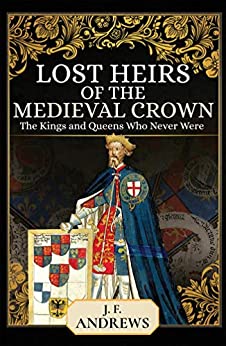
When William the Conqueror died in 1087 he left the throne of England to William Rufus … his second son. The result was an immediate war as Rufus’s elder brother Robert fought to gain the crown he saw as rightfully his; this conflict marked the start of 400 years of bloody disputes as the English monarchy’s line of hereditary succession was bent, twisted and finally broken when the last Plantagenet king, Richard III, fell at Bosworth in 1485.

The Anglo-Norman and Plantagenet dynasties were renowned for their internecine strife, and in Lost Heirs we will unearth the hidden stories of fratricidal brothers, usurping cousins and murderous uncles; the many kings – and the occasional queen – who should have been but never were. History is written by the winners, but every game of thrones has its losers too, and their fascinating stories bring richness and depth to what is a colourful period of history. King John would not have gained the crown had he not murdered his young nephew, who was in line to become England’s first King Arthur; Henry V would never have been at Agincourt had his father not seized the throne by usurping and killing his cousin; and as the rival houses of York and Lancaster fought bloodily over the crown during the Wars of the Roses, life suddenly became very dangerous indeed for a young boy named Edmund.

With Lost Heirs of the Medieval Crown, author JF Andrews provides a fascinating study of the also-rans and almost-made-its of medieval history; those children of the kings of England who died before they could claim their birth-right, or were passed over due to the dynastic squabbles of the Norman and Plantagenet dynasties that ruled England from the Norman Conquest in 1066 to the advent of the Tudor age.

From the battles of Robert Curthose, eldest son of William the Conqueror, to the tragic lives of the Yorkist heirs, Edward V, Edward of Middleham and Edward Earl of Warwick, Lost Heirs of the Medieval Crown is a thoroughly engaging read, examining the lives of the heirs who were unable to claim their birthright, imprisoned for their royal blood, died before their time, or died in the attempt to claim the throne. Each individual story is brought into one volume, and demonstrates the struggle for power and supremacy in medieval England.

Beautifully written and well researched, it is an engaging read.

Decoding the Bayeux Tapestry by Arthur C. Wright
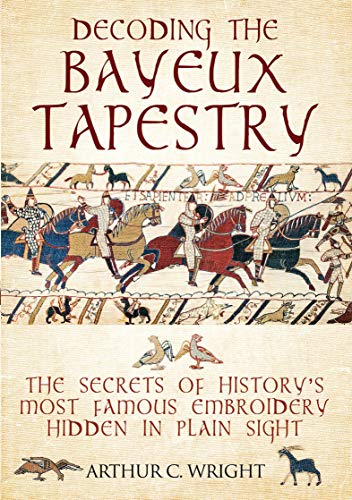
For the first time, a scholar reveals the meaning of the marginal images on the Bayeux Tapestry, unlocking a completely new meaning of the work.
 
The story of the Norman Conquest and the Battle of Hastings as shown in the Bayeux Tapestry is arguably the most widely-known in the panoply of English history, and over the last 200 years there have been hundreds of books on the Tapestry seeking to analyze its meanings. Yet, there is one aspect of the embroidery that has been virtually ignored or dismissed as unimportant by historians—the details in the margins.
 
The fables shown in the margins are neither just part of a decorative ribbon, nor are they discontinuous. They follow on in sequence. When this is understood, it becomes clear that they must relate to the action shown on the body of the Tapestry. After careful examination, the purpose of these images is to amplify, elaborate, or explain the main story.
 
In this groundbreaking study, Arthur Wright reveals the significance of the images in the margins. Now it is possible to see the “whole” story as never before, enabling a more complete picture of the Bayeux Tapestry to be constructed. Wright reexamines many of the scenes in the main body of the work, showing that a number of the basic assumptions, so often taught as facts, have been based on nothing more than reasoned conjecture.
 
It might be thought that after so much has been written about the Bayeux Tapestry there was nothing more to be said, but Decoding the Bayeux Tapestry shows how much there is still to be learned.

Decoding the Bayeux Tapestry: The Secrets of History’s Most Famous Embroidery Hidden in Plain Sight by Arthur C. Wright is a wonderful, engaging study of this most famous of embroideries, retelling the Norman Invasion in stunning, colourful needlework. Arthur C. Wright studies every aspect of the Tapestry, from the beasts in the margins to the story being played out in dramatic detail in the main part of the Tapestry. The author demonstrates how the images in the tapestry, even the animals and mystical creatures in the margin, serve to tell the story of the tapestry and the Norman Conquest.

An entertaining read and thoughtful study of the most famous of tapestries Decoding the Bayeux Tapestry is an illuminating work, beautifully illustrated along the way with images from the famous needlework.

Sex and Sexuality in Stuart Britain by Andrea Zuvich
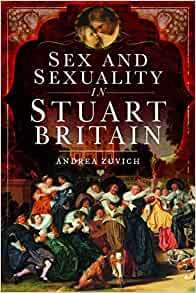
Peek beneath the bedsheets of Stuart Britain in this frank, informative, and captivating look at the sexual lives of the peoples of the British Isles between 1603 and 1714. Popular Stuart historian Andrea Zuvich, The Seventeenth Century Lady , explores our ancestors’ ingenious, surprising, bizarre, and often entertaining beliefs and solutions to the challenges associated with maintaining a healthy sex life, along with the prevailing attitudes towards male and female sexual behaviour. The author sheds light not only on the saucy love lives of the Royal Stuarts, but also on the dark underbelly of the Stuart era with histories of prostitution, sexual violence, infanticide, and sexual deviance. What was considered sexually attractive in Stuart Britain? At which ages would people be old enough for marriage? What were the penalties for adultery, incest, and fornication? How did Stuart-era peoples deal with infertility, sexually-transmitted illnesses, and child mortality? Find out the answers to these questions – and more – as fashion, food, science, art, medicine, magic, literature, love, politics, faith and superstition of the day are all examined, leaving the reader with a new regard for the ingenuity and character of our seventeenth and early eighteenth-century ancestors.

Sex and Sexuality in Stuart Britain by Andrea Zuvich is a wonderful study of the bedroom exploits of the Stuart dynasty of the seventeenth century. Andrea Zuvich examines all aspects of Stuart sexual life, from attitudes to rape and pornography, to the notions of love and marriage. Zuvich also looks at the lives of the Stuart monarchs, examining the rumours around them, the various mistress and lovers and the perceptions they gave to their people and to history. This is a truly fascinating study of a part of life that is important to all of us – and necessary for our continued existence – but so rarely talked about. Sex and Sexuality in Stuart Britain is so much more than a study of sexual practices in Stuart Britain, it also analyses the effects of child mortality, the dangers of childbirth. It also looks at the seedier side of society, such as infanticide and sexually transmitted diseases.

Sex and Sexuality in Stuart Britain is fascinating! It is a book that needed to be written and provides a wonderful contrast to the usual books on Stuart Britain, which concentrate on the Civil Wars, rather than the lives, loves and desires of the people. Andrea Zuvich has written a marvelous study of Stuart attitudes towards sex and sexuality, leaving no stone unturned to give the reader a comprehensive view of Stuart life, including the legal, social and personal aspects and implications.

The Peasants Revolting Lives by Terry Deary
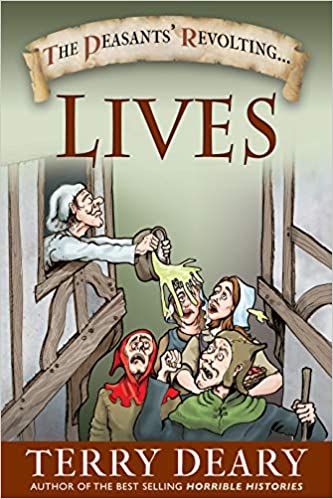
Today we are aware of how the rich and privileged have lived in the past because historians write about them endlessly. The poor have largely been ignored and, as a result, their contributions to our modern world are harder to unearth. Skilled raconteur TERRY DEARY takes us back through the centuries with a poignant but humorous look at how life treated the common folk who scratched out a living at the very bottom of society. Their world was one of foul food, terrible toilets, danger, disease and death the last, usually premature. Discover the stories of the teacher turned child-catcher who rounded up local waifs and strays and put them to work, and the thousands of children who descended into the hazardous depths to dig for coal. Read all about the agricultural workers who escaped the Black Death only to be thwarted by greedy landowners. And would you believe the one about the man who betrothed his 7-year-old daughter to a Holy Roman Emperor, or even the brothel that was run by a bishop? On the flip side, learn how cash-strapped citizens used animal droppings for house building and as a cure for baldness; how sparrow s brains were incorporated into aphrodisiacal brews; and how mixing tea with dried elder leaves could turn an extra profit. And of the milestones that brought some meaning to ordinary lives, here are the trials and tribulations of courtship and marriage; the ruthless terrors of the sporting arena; and the harsh disciplines of education all helping to alleviate the daily grind. The Peasants Revolting Lives celebrates those who have endured against the odds. From medieval miseries to the idiosyncrasies of being a twenty-first-century peasant, tragedy and comedy sit side by side in these tales of survival and endurance in the face of hardship.

Terry Deary’s The Peasants’ Revolting Lives is a fun and fascinating read for all the family. Whenever a Terry Deary book arrives on the doorstep, there is an inevitable squabble between myself and my son as to who should read it first – I tend to lose!

With stories that are often amusing, sometimes gruesome and all true, Terry Deary examines every aspect of the life of the peasant – throughout history – from work and religion, to sport, entertainment and education. The book is packed full of facts, each story or anecdote intended to inform and entertain – and they do!

The Peasants’ Revolting Lives is a wonderful reading experience for adult and child alike. The stories are so engaging and interesting that you don’t even realise you are learning about the trials and hardships of life as a peasant down the centuries. It is a must-read for any history lover.

All these books are available from Pen & Sword, with 30% off throughout December.

*

My Books

Ladies of Magna Carta: Women of Influence in Thirteenth Century England looks into the relationships of the various noble families of the 13th century, and how they were affected by the Barons’ Wars, Magna Carta and its aftermath; the bonds that were formed and those that were broken. It is now available from Pen & Sword,  Amazon and from Book Depository worldwide.

Also by Sharon Bennett Connolly:

Silk and the Sword: The Women of the Norman Conquest traces the fortunes of the women who had a significant role to play in the momentous events of 1066.  Available now from Amazon,  Amberley Publishing, Book Depository.

Heroines of the Medieval World tells the stories of some of the most remarkable women from Medieval history, from Eleanor of Aquitaine to Julian of Norwich. Available now from Amberley Publishing and Amazon and Book Depository.

*

You can be the first to read new articles by clicking the ‘Follow’ button, liking our Facebook page or joining me on Twitter and Instagram.

©2020 Sharon Bennett Connolly
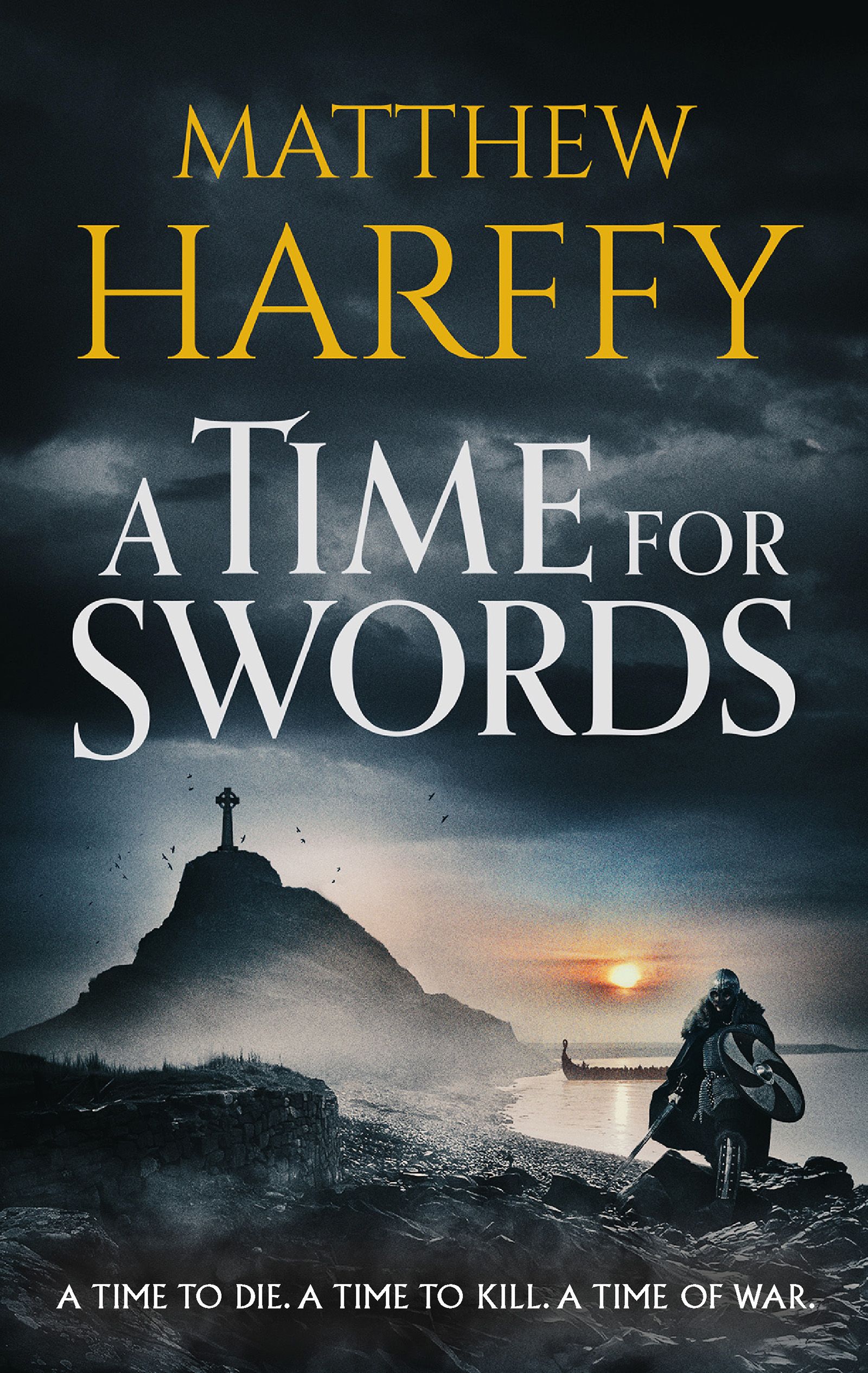
Book Corner: A Time for Swords by Matthew Harffy

When the Vikings attack, a novice monk’s life is changed forever in Matthew Harffy’s new historical adventure.

Lindisfarne, AD793.

There had been portents – famine, whirlwinds, lightning from clear skies, serpents seen flying through the air. But when the raiders came, no one was prepared.

They came from the North, their dragon-prowed longships gliding out of the dawn mist as they descended on the kingdom’s most sacred site.

It is 8th June AD793, and with the pillage of the monastery on Lindisfarne, the Viking Age has begun.

While his fellow monks flee before the Norse onslaught, one young novice stands his ground. He has been taught to turn the other cheek, but faced with the slaughter of his brothers and the pagan desecration of his church, forgiveness is impossible.

Hunlaf soon learns that there is a time for faith and prayer . . . and there is a time for swords.

It is my pleasure to be a part of Matthew Harffy’s blog tour for the release of the first book in what will be a new series, A Time for Swords.

It is always a worry when one of your favourite authors starts a new series – for author and reader, alike – that you may not like it, that the new hero doesn’t live up to the promise of the last hero – or even that the new hero is too similar to the last and the book appears formulaic.

Well, with Matthew Harffy, you needn’t worry about that. He seems to be able to create distinct characters and storylines at the drop of a hat. To be fair to Matthew, I am sure that it is not that easy – though he does make it look so! With Wolf of Wessex, his first foray away from the heroic Beobrand, Matthew Harffy proved his ability at storytelling did not just lay in one direction, and that he did have so much more in his repertoire.

With A Time for Swords, he has done it again!

Recreating the world of 8th century Northumbria, Matthew Harffy has left the 7th century behind to document the arrival of the Vikings on Britain’s shores, with the raid on Lindisfarne – Holy Island. A Time for Swords takes this raid as its starting point and pursues the likely reactions on the people of Northumbria following this unexpected explosion of violence on the peaceful island monastery. As we have come to expect from Matthew Harffy, the action starts on the very first page and doesn’t let the reader stop for breath until the very last.

My feet pounded the soft earth as I sped back towards the dwellings of the ceorls. A green plover, startled by my passing, burst from the long grass that brushed against my bare legs as I ran. I stumbled in shock and surprise at the bird’s screeching call, so like that of the screams of the people dying in the minster and the huts of the villagers. I rushed on, my lungs burning and the thickening smoke stinging my eyes.

I came up over the low rise from the beach to a scene of chaos. When I had left the minster at dawn, its buildings had rested peacefully, close to the natural harbour and overlooked by the mound of rock at the island’s tip. A few small fishing boats had been canted in the shallows of low tide, and teh morning had been still and quiet. Now the brightening day was filled with noise, fire and smoke.

And death.

In the harbour were three huge ships, sleek and menacing with terrifying carven serpent head prows. Around the ships were congregated several men. The land all around was full of movement. Dozens of armed warriors had poured from the ships and had made their way into the grounds of the minster. Three of the monastery buildings were burning, great pillars of flame and smoke smudging the sky. My heart lurched as I realised one of the fires was the scriptorium. I imagined the gold cover of The Treasure of Life melting, the parchment leaves curling, smouldering and then bursting into flames. Leofstan and I would never unpick the secrets within its pages now. I felt tears prickle my eyes as I thought of so many books being consumed, just like in my nightmare of Alexandria. Countless days of painstaking work and skill gone in an instant. So much knowledge snuffed out and lost. I was a long way off, but as I crested the rise I could feel the heat from the fires on my face.

The lead character, Hunlaf, is a monk who has discovered a skill with the sword, and who wants nothing more than to protect his brethren at the monastery at Werceworthe (Warkworth) from the attack that he knows is coming. The intrepid warrior monk manages to attract a small but fierce group of fighters to his cause, including Runolf, a Viking left behind in the raid on Lindisfarne, who has his own motives for confronting the Norse raiders.

Hunlaf is a likeable character, torn between his love of the church and the draw of the sword and the comradeship of warriors. He is a young, gifted fighter with an eagerness to learn and a desire to protect that means he will find it hard to back down from a fight. Each of the characters surrounding Hunlaf have their own stories and reasons for joining the fight, from the monk, Leofstan, with a warrior past of his own, to Runolf the Norseman fighting his own kind, to a Welshman always in need of proving himself and a young, fiery Irishman, Cormac, seeking vengeance for the fate of his family.

The storyline of A Time for Swords draws the reader in from the outset, taking you on a journey from the ruined Lindisfarne to York and on to the monastery at Warkworth. Matthew Harffy demonstrates his knowledge of the area, the people and the landscape, in Hunlaf’s travels. Harffy skillfully combines impeccable historical research with his wonderful storytelling, to create a novel that has a sense of authenticity about it. While the raid on Lindisfarne is historical fact, the subsequent events that young Hunlaf gets involved in are a creation of the author. However, Matthew Harffy supplements the fictional fighting by using the original landscape, the weapons used, fighting tactics and the very real threat of the Viking raiders, to add a sense of realism,

As you may have come to expect with Matthew Harffy, the fight scenes are where he is in his element. Beautifully choreographed, they are frenetic and vividly described with a passion unique to the author. and there is no guarantee that your favourite character will survive…

In short, A Time for Swords is one of those books which is not to be missed. Entertaining, exciting and totally gripping, the novel reaffirms, once more – if more affirmation is needed – Matthew Harffy’s status as one of the best authors of historical fiction around.

Read it – I promise, you will not be disappointed!

About the Author:

Matthew Harffy grew up in Northumberland where the rugged terrain, ruined castles and rocky coastline had a huge impact on him. He now lives in Wiltshire, England, with his wife and their two daughters.

Pre-order links:

Amazon UK: https://amzn.to/39T3MqJ

Follow Matthew:

Twitter: @MatthewHarffy

Website: www.matthewharffy.com

Follow Aries:

Twitter: @AriesFiction

Facebook: Aries Fiction

Website: http://www.headofzeus.com

*

My Books

Ladies of Magna Carta: Women of Influence in Thirteenth Century England looks into the relationships of the various noble families of the 13th century, and how they were affected by the Barons’ Wars, Magna Carta and its aftermath; the bonds that were formed and those that were broken. It is now available from Pen & Sword,  Amazon and from Book Depository worldwide.

Also by Sharon Bennett Connolly:

Silk and the Sword: The Women of the Norman Conquest traces the fortunes of the women who had a significant role to play in the momentous events of 1066.  Available now from Amazon,  Amberley Publishing, Book Depository.

Heroines of the Medieval World tells the stories of some of the most remarkable women from Medieval history, from Eleanor of Aquitaine to Julian of Norwich. Available now from Amberley Publishing and Amazon and Book Depository.

*

You can be the first to read new articles by clicking the ‘Follow’ button, liking our Facebook page or joining me on Twitter and Instagram.

©2020 Sharon Bennett Connolly

Book Corner: Sworn to God by Steven A. McKay

Yorkshire, AD 1329
A new religious group moves into an abandoned church just north of the village of Altofts, but when men start dying under strange and suspicious circumstances the local bailiff decides to investigate.

The Disciples of God and their charismatic leader, Lady Alice de Staynton, appear truly holy, but something sinister seems to be going on within the walls of the newly refurbished St Joseph’s. Certainly the bailiff, John Little, has his suspicions about some of the warrior-like male acolytes, but are his fears justified? Infiltrating the group seems to be the best course of action, although the volatile Will Scaflock is none too happy about being nominated for the job by Friar Tuck…
Following on from 2019’s Faces of Darkness, this standalone new story sees three legendary heroes battling invisible ‘Black Lords’ and far more dangerous earthly foes, but can they figure out what’s really going on in St Joseph’s before anyone else dies?
With twists and turns aplenty, and based on real events, historical fiction fans are sure to enjoy this action packed thriller as much as they did the author’s previous bestsellers The DruidLucia and Wolf’s Head.

Oooh goody, Steven A. McKay has a new novella out!

Actually, Sworn to God is more a short novel, than a novella. Not that that would ever be a problem. I seem to remember saying, after reviewing Faces of Darkness, that McKay really should think about doing a full-length detective series based on the exploits of Little John and Friar Tuck. These novellas are a delight to read, but they are not enough! They always leave you wanting more. And Sworn to God, despite its extra length, is no exception.

Sworn to God is a riveting detective story, looking into a mysterious cult in 14th century Yorkshire. Three former members of Robin Hood’s gang – Little John, Friar Tuck and Will Scarlet – are drawn to the mysterious Disciples of God after the suicide of one of the group’s members raises eyebrows. Tuck, Scarlet and Little John know that something is not quite right, but can’t put their finger on what – exactly – is wrong with the strange cult and its charismatic leader, Alice de Staynton, who is revered as Holy Mother by her disciples.

With his Robin Hood and Warrior Druid of Britain books, Steven A. McKay has gained a reputation as a writer of action and adventure in historical fiction. His novel of a slave in Roman Britain, Lucia, is my book of 2020 and demonstrated McKay’s depth as an author, and an incredible ability to get into the heads of his characters and human behaviour in the most trying times. With these novellas, he is also gaining a reputation as a writer of exceptional medieval mysteries. Sworn to God goes through a number of twists and turns that keep the reader entranced to the very end.

John let go of the acolyte, whose face was scarlet from lack of air and embarrassment. Before he could say anything though, Tuck was past him and John hurriedly followed.

A man lay slumped over the candlelit desk in the corner. He had a ring of straggly greying hair beneath a bald pate, looked about forty-five, and was very clearly deceased.

“Damn it!” John shouted. “If there was any hope of helping him, that idiot at the door -“

“Forget it,” Tuck said, patting the bailiff’s arm as if he was soothing a dog with its hackles up. “This fellow’s been dead for a while. Look at the colour of his skin.”

They could hear the Holy Mother ordering Colwin and David to marshal the villagers out of the church and on their way home. She was telling the people to take some food with them, to offset any irritation they might have felt at not being allowed to see the dead man – and exciting event at any time after all, never mind during a Christmas feast within the home of a strange new religious sect.

“Any evidence of violence?” Tuck muttered as he and John examined the corpse and the room about them in the wan, flickering light from the single candle on the desk.

“Doesn’t seem to be. No signs of a struggle, no apparent wounds or injuries on him, no discarded weapons …”

“What’s killed him then?” The friar eyed the dead man curiously. “He looks far too young to have died from old age as he sat here.”

The Holy Mother came into the room and exclaimed in shock at the sight before her. “Brother Morris,” she whispered from behind the hand that sought to mask her grief. “How?”

Little John, Friar Tuck and Will Scarlet are the unassuming heroes of Sworn to God. Drawn to the mystery surrounding the Disciples of God, they have a penchant for solving problems that few others can see. Steven A McKay has developed these wonderful characters through his original Forest Lord series, but now has developed them even further, giving them an inquisitiveness that has given them a new sense of purpose after their years as famous outlaws have come to an end.

For a Scot, Steven A. McKay demonstrates a deep understanding of the Yorkshire landscape and the mindset of Yorkshire people, which he uses to full effect in these wonderful novellas. His passion for the legend of Robin Hood, for medieval history and for storytelling, in particular, shines through on every page. He draws the reader into the story and takes them on a wonderful journey of mystery and discovery. Moreover, Sworn to God is developed from stories of real life religious cults, showing how a charismatic leader can evince the loyalty of their followers, and get people to do things they would never normally do. In this way, Sworn to God is not just a medieval mystery, but also a study of human nature and how these cults can develop, even today. The human need to belong drawing the lost and lonely into the fold.

As an author, Steven A. Mckay seems to be able to go from strength to strength. Sworn to God is a marvellous, entertaining and engaging read. It provides a wonderful diversion in these trying times – escapism at its best. If you have never read a Steven A. McKay novel, you are missing out on an incredible author and storytelling at its best. I cannot recommend Sworn to God highly enough. I loved it!

To buy the book: Amazon

About the author:

From Steven A. McKay: I was born in Scotland in 1977 and always enjoyed studying history – well, the interesting bits, not so much what they taught us in school. I decided to write my Forest Lord series after seeing a house called “Sherwood” when I was out at work one day. I’d been thinking about maybe writing a novel but couldn’t come up with a subject or a hero so, to see that house, well…It felt like a message from the gods and my rebooted Robin Hood was born.
My current Warrior Druid of Britain series was similarly inspired, although this time it was the 80’s TV show “Knightmare”, and their version of Merlin that got my ideas flowing. Of course, the bearded old wizard had been done to death in fiction, so I decided to make my hero a giant young warrior-druid living in post-Roman Britain and he’s been a great character to write.
I was once in a heavy metal band although I tend to just play guitar in my study these days. I’m sure the neighbours absolutely love me.
Check out my website at stevenamckay.com and sign up for the email list – in return I’ll send you a FREE short story, as well as offering chances to win signed books, free audiobooks and other quite good things!

My Books

Ladies of Magna Carta: Women of Influence in Thirteenth Century England  looks into the relationships of the various noble families of the 13th century, and how they were affected by the Barons’ Wars, Magna Carta and its aftermath; the bonds that were formed and those that were broken. It is now available from Pen & SwordAmazon and from Book Depository worldwide.

Also by Sharon Bennett Connolly:

Silk and the Sword: The Women of the Norman Conquest traces the fortunes of the women who had a significant role to play in the momentous events of 1066.  Available now from Amazon,  Amberley Publishing, Book Depository.

Heroines of the Medieval World tells the stories of some of the most remarkable women from Medieval history, from Eleanor of Aquitaine to Julian of Norwich. Available now from Amberley Publishing and Amazon and Book Depository.

*

You can be the first to read new articles by clicking the ‘Follow’ button, liking our Facebook page or joining me on Twitter and Instagram.

©2020 Sharon Bennett Connolly 

Book Corner: The Castle in the Wars of the Roses by Dan Spencer

The Wars of the Roses is one of the most dramatic and fascinating periods in medieval history. Much has been written about the leading personalities, bitter dynastic rivalries, political intrigues, and the rapid change of fortune on the battlefields of England and Wales. However, there is one aspect that has been often overlooked, the role of castles in the conflict.

Dan Spencer’s original study traces their use from the outbreak of civil war in the reign of Henry VI in the 1450s to the triumph of Henry VII some thirty years later. Using a wide range of narrative, architectural, financial and administrative sources, he sheds new light on the place of castles within the conflict, demonstrating their importance as strategic and logistical centres, bases for marshalling troops, and as fortresses

Dan Spencer’s book provides a fascinating contribution to the literature on the Wars of the Roses and to the study of siege warfare in the Middle Ages.

The Castle in the Wars of the Roses by Dan Spencer provides a unique perspective on that most famous of civil wars in England. Dr Spencer combines the story of the Wars of the Roses with the varied uses of the castle during the period, as defensive structures, administrative centres and homes for the nobility. Dan Spencer establishes that the castle as a military structure was still an important asset to any army and served to guard the marches of Wales and Scotland and to act as muster points for gathering armies. Castles were strong defensive structures that could be garrisoned whenever the war came too close, though as Dr Spencer highlights, permanent garrisons were rare by this time, they could provide effective defence and intimidation when needed.

I was aware of a number of sieges during the Wars of the Roses, mainly those at Dunstanburgh and Bamburgh. However, I was not aware that that was just the tip of the iceberg. According to Dan Spencer, there were 36 definite sieges and several more possible sieges – for which there is little contemporary information, so we can’t say for certain. These possible sieges include where there are written orders for a castle to be invested, but no further report of whether the siege was undertaken or the castle surrendered without a fight.

In The Castle in the Wars of the Roses, Dan Spencer argues that while the use of the castle was declining, it still played an important role in the conflict. The book is written in a narrative, chronological style, whereby Dr Spencer tells the whole story of the Wars of the Roses, but with particular focus on the siege warfare and the use and provision of castles. It is an excellent read.

The fall of Bamburgh marked the end of a four-year-long struggle for control of Northumberland. This was part of a wider dynastic conflict between the Yorkist and Lancastrian factions for control of the kingdom of England. For much of the second half of the fifteenth century these two rival houses fought a series of wars to win the English throne, which since the nineteenth century has been commonly called the Wars of the Roses. This era is without a doubt one of the most popular topics in medieval English history. Numerous books, articles, plays and films have been produced over the centuries. Looking at all sorts of aspects ranging from the dynamic personalities of key figures, such as Richard III, the causes of the conflict, its long-term legacy and the military campaigns, particularly the major battles. Given this vast output on the subject, it may be pertinent to ask why it is necessary for yet another book to be written. The answer is that one important area has been almost wholly neglected: the role of the castle in the Wars of the Roses.

Why has this been the case? One explanation is the perception that the campaigns of the Wars of the Roses were dominated by decisive battles, in which castles played a very minor role. This argument does have some substance. The era was unusual for the frequency with which significant battles took place. Nevertheless, this does not tell the whole story. As we will see, there were many campaigns in which castles were used in a significant way. Similarly, the late Middle Ages has been characterised as a period in which castles were in a state of transition and decline, in which their traditional role as fortresses was increasingly no longer necessary due to changes in warfare and society.

While there are many books on the Wars of the Roses, none have looked at the conflict in quite this way before. Dan Spencer covers every aspect of the conflict and the actions of the leading players involved, including Henry VI, Edward IV, Warwick the Kingmaker, Richard III, etc. While the major battles are also covered, the spotlight is on the castles, their role in the conflict ad the tactics used to successfully prosecute a siege. Dan Spencer’s impeccable research means that he can build a deep understanding of the layout of each castle, the provisions it stored and the garrison that manned it.

The Castle in the Wars of the Roses analyses not only the strength of a castle, but the prosecution of these sieges and the reasons for their success or failures. Using primary sources, archaeological evidence and his own extensive experience of castles, Dan Spencer has produced a fascinating book that can only add to our knowledge of the Wars of the Roses. The text is supported by wonderful colour images of the castles mentioned, and detailed floor plans. It is whole knew way of looking at the conflict, providing a freesh perspective.

Well written in an engaging narrative, The Castle in the Wars of the Roses is a fascinating, addictive read. And a perfect Christmas present!

The Castle in the Wars of the Roses is available from Amazon or direct from Pen & Sword Books (with 30% off in December!)

About the author:

Dr Dan Spencer has made a special study of late medieval warfare, focusing in particular on gunpowder artillery and castles. Recent publications include The Castle at War in Medieval England and Wales and Royal and Urban Gunpowder Weapons in Late Medieval England. To find out more visit danspencer.info or follow him on Twitter and Instagram @Gunpowderdan.

*

My Books

Ladies of Magna Carta: Women of Influence in Thirteenth Century England  looks into the relationships of the various noble families of the 13th century, and how they were affected by the Barons’ Wars, Magna Carta and its aftermath; the bonds that were formed and those that were broken. It is now available from Pen & SwordAmazon and from Book Depository worldwide.

Also by Sharon Bennett Connolly:

Silk and the Sword: The Women of the Norman Conquest traces the fortunes of the women who had a significant role to play in the momentous events of 1066.  Available now from Amazon,  Amberley Publishing, Book Depository.

Heroines of the Medieval World tells the stories of some of the most remarkable women from Medieval history, from Eleanor of Aquitaine to Julian of Norwich. Available now from Amberley Publishing and Amazon and Book Depository.

*

You can be the first to read new articles by clicking the ‘Follow’ button, liking our Facebook page or joining me on Twitter and Instagram.

©2020 Sharon Bennett Connolly 
Book Corner: Cesare and Lucrezia Borgia by Samantha Morris

Myths and rumour have shrouded the Borgia family for centuries – tales of incest, intrigue and murder have been told of them since they themselves walked the hallways of the Apostolic Palace. In particular, vicious rumour and slanderous tales have stuck to the names of two members of the infamous Borgia family – Cesare and Lucrezia, brother and sister of history’s most notorious family. But how much of it is true, and how much of it is simply rumour aimed to blacken the name of the Borgia family? In the first ever biography solely on the Borgia siblings, Samantha Morris tells the true story of these two fascinating individuals from their early lives, through their years living amongst the halls of the Vatican in Rome until their ultimate untimely deaths. Cesare and Lucrezia Borgia begins in the bustling metropolis of Rome with the siblings ultimately being used in the dynastic plans of their father, a man who would become Pope, and takes the reader through the separate, yet fascinatingly intertwined, lives of the notorious siblings. One tale, that of Cesare, ends on the battlefield of Navarre, whilst the other ends in the ducal court of Ferrara. Both Cesare and Lucrezia led lives full of intrigue and danger, lives which would attract the worst sort of rumour begun by their enemies. Drawing on both primary and secondary sources Morris brings the true story of the Borgia siblings, so often made out to be evil incarnate in other forms of media, to audiences both new to the history of the Italian Renaissance and old.

Cesare and Lucrezia Borgia: Brother and Sister of History’s Most Vilified Family by Samantha Morris is a fascinating look at two of the most famous villains in history; a brother and sister renowned for murder, intrigue and incest. Or are they? Samantha Morris’s beautifully written dual biography of these siblings aims to peal away the centuries of rumour and accusations and find the real people beneath the legend.

Samantha Morris combines a lively, engaging narrative with keen historical analysis, uncovering the facts embedded in the legends, rumours and scandals. She demonstrates a deep understanding not only of her subjects and their motivations but of the political theatre of Italy, the papacy and Europe in general at that time.

In Cesare and Lucrezia Borgia: Brother and Sister of History’s Most Vilified Family, Samantha Morris expertly separates rumour from fact to provide a balanced appraisal of these famous siblings; their strengths and weakness. Using creditable sources, papal records and even family letters, she clearly establishes the facts behind the lies of the incest accusation, whilst demonstrating how such accusations came about and the various efforts to sully the name of the Borgia family.

The careers of the Borgia children were decided and laid out before them before they could even waalk. Juan was chosen as the son who would be the military leader, the great Duke who would go on to continue the Borgia line; Cesare was destined for a life in the Church; Lucrezia would be forced into diplomatic marriages and Gioffre would do the same. The children were their father’s pawns, important chess pieces but Cesare in particular did not like the career path that was chosen for him.

When Cesare was just six years old, the Pope granted a dispensation that allowed him to hold Church benefices despite his illegitimacy and the following year, 1482, King Ferdinand of Aragon exempted him from a law that would stop him from holding lordships in Spain due to his illegitimacy. Being bastard born would not get in the way of raising Cesare Borgia to the heights that his father so wanted for him.

By the age of just fifteen, Cesare had already been given a vast number of Church benefices including the Bishopric of Pamplona, the ancient capital of Navarre. This caused particular outrage as the young man had not yet taken his holy orders and Cardinal Rodrigo Borgia did his best to calm down the populace, telling them that Cesare’s elevation was simply down to his merits and hard work. Cesare, on a break from the University of Perugia and busy on a hunting trip, found himself having to write a letter to the people of Navarre to try and soothe their anger. But it didn’t work and the Pope had to intervene to halt the rebellion.

From tracing their origins in Spain, to the spectacular heights to which the family rose, to the politics that brought about the demise of Cesare and meant the family were embroiled in constant struggles for land and power, Samantha Morris charts the successes and failures – and underhand dealings of the infamous family. The siblings’ father and family patriarch, Rodrigo Borgia, Pope Alexander VI is depicted as a scheming but capable man and pope who loved his children dearly. He sought to establish his illegitimate children in lives and careers appropriate to their rank as the children of a reigning pope.

Lucrezia Borgia comes across as an intelligent, passionate woman, far removed from , the poisoner of legend conducting a love affair with her own brother. She proved herself capable of ruling and was loving and loyal to her family. She pursued an active political career despite her almost constant pregnancies, and suffered incalculable griefs and family loss. Lucrezia, however, is not depicted as a pure, innocent virgin, but a well educated, politically astute woman who may also have conducted certain indiscretions, or at least platonic love affairs, during her lifetime. She is a woman who made the best of the life that was mapped out for her.

Cesare, on the other hand, is a ruthless man not cut out for the career in the church to which he appeared destined. The untimely murder of his older brother meant he went from cardinal to soldier, a job to which he was much better suited and a thousand times more capable and dedicated. Cesare is a complex character; accused of numerous murders, including those of his own brother and Lucrezia’s second husband, he is remembered to history as a ruthless, scheming murderer and seducer of his own sister. While he may have been ruthless and scheming – and a murderer to some extent, Samantha Morris goes on to prove that not all the murders laid at Cesare’s door were his responsibility.

As an aside, the reader cannot fail to notice the prevalence of syphillis in Italy at the time. A countless number of the protagonists in the story suffered from this disfiguring disease, Cesare Borgia among them. The French, attempting to conquer Italy at the time, called it ‘the Italian disease’, though in England it was known as ‘the French disease’ – those same invading French soldiers took the dreadful disease with them when they returned home.

Cesare and Lucrezia Borgia: Brother and Sister of History’s Most Vilified Family is an engaging narrative of the history of not only these most famous Italian siblings, but also Italy, the papacy and wider European politics at the time when the world was moving from the Medieval era into the Early Modern, when the Renaissance was in full swing and the Reformation was just around the corner. Samantha Morris demonstrates the power of the papacy, of Pope Alexander VI in particular, and how papal factions caused the rise – and fall – of the Borgia family.

Cesare and Lucrezia Borgia: Brother and Sister of History’s Most Vilified Family is an entertaining and enthralling read – one not to be missed!

Cesare and Lucrezia Borgia: Brother and Sister of History’s Most Vilified Family by Samantha Morris is available from Pen & Sword Books and Amazon.

About the author:

Samantha Morris studied archaeology at the University of Winchester and it was there, whilst working on a dissertation about the battlefield archaeology of the English Civil War that her interest in the Italian Renaissance began. Her main area of interest is the history of the Borgia family and the papacy of Pope Alexander VI, however she also has a keen interest in the history of other Renaissance families. Samantha has previously written on the Borgia family and runs a successful blog based mainly on the history of the Italian Renaissance, but with snippets of other eras thrown in too.

*

My Books

Ladies of Magna Carta: Women of Influence in Thirteenth Century England  looks into the relationships of the various noble families of the 13th century, and how they were affected by the Barons’ Wars, Magna Carta and its aftermath; the bonds that were formed and those that were broken. It is now available from Pen & SwordAmazon and from Book Depository worldwide.

Also by Sharon Bennett Connolly:

Silk and the Sword: The Women of the Norman Conquest traces the fortunes of the women who had a significant role to play in the momentous events of 1066.  Available now from Amazon,  Amberley Publishing, Book Depository.

Heroines of the Medieval World tells the stories of some of the most remarkable women from Medieval history, from Eleanor of Aquitaine to Julian of Norwich. Available now from Amberley Publishing and Amazon and Book Depository.

*

You can be the first to read new articles by clicking the ‘Follow’ button, liking our Facebook page or joining me on Twitter and Instagram.

©2020 Sharon Bennett Connolly 

Book Corner: Betrayal

“Loyalty breaks as easily as a silken thread.”

Misplaced trust, power hunger, emotional blackmail, and greed haunt twelve characters from post-Roman Britain to the present day. And betrayal by family, lover, comrade can be even more devastating.

Read twelve tales by twelve accomplished writers who explore these historical yet timeless challenges.

AD455—Roman leader Ambrosius is caught in a whirlpool of shifting allegiances
AD940—Alyeva and cleric Dunstan navigate the dangers of the Anglo Saxon court
1185—Knight Stephan fights for comradeship, duty, and honour. But what about love?
1330—The powerful Edmund of Kent enters a tangled web of intrigue
1403—Thomas Percy must decide whether to betray his sovereign or his family
1457—Estelle is invited to the King of Cyprus’s court, but deception awaits
1483—Has Elysabeth made the right decision to bring Prince Edward to London?
1484—Margaret Beaufort contemplates the path to treason
1577—Francis Drake contends with disloyalty at sea
1650—Can James Hart, Royalist highwayman, stop a nemesis destroying his friend?
1718—Pirate Annie Bonny, her lover Calico Jack, and a pirate hunter. Who will win?
1849/present—Carina must discover her ancestor’s betrayer in Italy or face ruin.

Betrayal: Historical Stories is a wonderful anthology of 12 short stories exploring the concept of betrayal, either of country, family or lovers. Featuring some of the best authors of the moment, Betrayal: Historical Stories features stories from post-Roman Britain to an alternative reality in modern times, where the Roman Empire never fell but continued under powerful, influential women in Roma Nova.

There is something in this book for everyone. There are kings and queens, knights, pirates and cavalier highwaymen. There are stories of love, loyalty and friendship combined with implacable enemies, broken promises, family secrets and – above all – betrayal!

The remarkable diversity of the stories make this anthology a gripping read. You never know what story you are going to come across next, whether its the exploits of Sir Francis Drake, the heartbreaking story of 13-year-old Edward V’s journey to London, from his proclamation as king to his deposition and imprisonment in the Tower of London. Each story is written by a different author; their voices are as distinct as their characters.

In a book of short stories, it is impossible to pick an extract that shows the full range of writing on offer. However, it is possible to choose and extract that highlights the high standard of writing throughout the book. So here’s an excerpt from Honour of Thieves by Cryssa Bazos:

A panicked rider appeared from around the bend, twisted in the saddle, his attention fixed behind him as though the hounds of hell snapped at his feet. When he finally turned to face the road ahead, he saw James barring his way and screamed. the rider yanked hard on teh reins, and his horse skidded to a bone’jarring halt. He fought to keep himself from launching over his horse’s head.

James levelled his pistol at him. ‘Stand and deliver!’

A bead of sweat trickled down the man’s brow. ‘Ah, Master Highwayman. Do you not remember me? I passed this way before. You afforded me a free pas through Moot Hill.’ When he received no acknowledgement, he pressed on, his voice cracking, ‘I’m the pauper you took pity on. Do you not recall?’

James studied the man. Same battered hat and frayed cloak, a nearly broken horse better suited for the pasture than the road. True, he had last taken the man for a beggar, as he was meant to, but since then he had learned the truth. ‘A thrice of days ago; I haven’t forgotten. I allowed you the freedom of the highway.’

‘Blessed be the day.’ The man beamed and wiped his forehead with his sleeve. ‘Naturally, there’s no profit accosting me.’ His smile faded when he realised that the pistol was still trained on him. ‘I’m not even a Parliamentarian – I’m a good Royalist still mourning his fallen king … like yourself.’

James lifted a brow, satisfied to see the man squirm. Lying sod. Many travellers had passed this way over the last year pretending to share the highwayman’s abhorrence for their Parliamentarian usurpers in order to save their purse. James had seen through their ruses, but this one had somehow rooked him. That set his teeth on edge. ‘You pled your case well, claiming to be a half-starved hare.’ He swept his gaze to the man’s new leather boots. Clearly, the man’s subterfuge did not extend to the discomfort of ill-fitting shoes. ‘I took pity on you – instead of taking, I gave you a goodly sum to keep you well and a few coins besides to drink my health.’

‘God save you -‘

‘Did you have that drink?’ James asked.

‘Of course! I sang your praises at a public house that night.’

‘Are you certain?’

Silence.

I have read some of the authors before. Derek Birks, Tony Riches, Annie Whitehead, Cryssa Bazos and Anna Belfrage are among my favourite authors and I have reviewed their books before. These short stories allowed me to revisit some of their best characters, from Ambrosius Aurelianus to Captain James Hart, Sir Stephan de l’Aigle and Kit and Adam de Guirande of Anna Belfrage’s The King’s Greatest Enemy series.

Reading Betrayal: Historical Stories was a combination of spending a few hours with old friends and meeting new ones. Elizabeth St John, Judith Arnopp and Alison Morton were authors I was familiar with, but had not read before. I am now going to rectify that and go through their back catalogue to catch up. Alison’s Roma Nova short story provided an intriguing alternative to the modern day, showing us how the world might be, had a Roman Empire survived and flourished into the modern world, under the auspices of 12 ruling families.

The stories are beautifully written, enjoyable diversions. It is impossible to choose a favourite! Betrayal: Historical Stories showcases some of the best writing in historical fiction today. It is a pure pleasure to read.

What a fabulous way to discover new authors and new adventures!

The Betrayal: Historical Stories anthology is available for free from Amazon UK and Amazon US.

*

My Books

Ladies of Magna Carta: Women of Influence in Thirteenth Century England  looks into the relationships of the various noble families of the 13th century, and how they were affected by the Barons’ Wars, Magna Carta and its aftermath; the bonds that were formed and those that were broken. It is now available from Pen & SwordAmazon and from Book Depository worldwide.

Also by Sharon Bennett Connolly:

Silk and the Sword: The Women of the Norman Conquest traces the fortunes of the women who had a significant role to play in the momentous events of 1066.  Available now from Amazon,  Amberley Publishing, Book Depository.

Heroines of the Medieval World tells the stories of some of the most remarkable women from Medieval history, from Eleanor of Aquitaine to Julian of Norwich. Available now from Amberley Publishing and Amazon and Book Depository.

*

You can be the first to read new articles by clicking the ‘Follow’ button, liking our Facebook page or joining me on Twitter and Instagram.

©2020 Sharon Bennett Connolly 

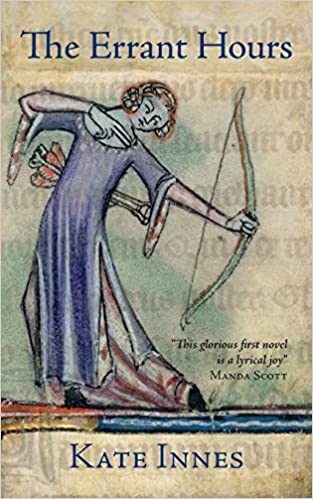
Book Corner: The Errant Hours by Kate Innes

A headlong journey through the physical and spiritual dangers of Plantagenet Britain, in all its savage pageantry. Welsh Marches, July 1284 – the uprising in Wales is over, the leader gruesomely executed, the dead are buried. But for Illesa Arrowsmith, the war’s aftermath is just as brutal. When her brother is thrown into the Forester’s prison on false charges, she is left impoverished and alone. All Illesa has left is the secret manuscript entrusted to her – a book so powerful it can save lives, a book so valuable that its discovery could lead to her death. When the bailiff’s daughter finds it, Illesa decides to run, and break her brother out of jail by whatever means. But the powerful Forester tracks them down, and Illesa must put herself and the book at the mercy of an unscrupulous knight who threatens to reveal all their secrets, one by one. Inspired by the seductive art of illuminated manuscripts, The Errant Hours draws from the deep well of medieval legend to weave a story of survival and courage, trickery and love.

Every now and again you come across a book that draws you in and makes you lose entire days to reading. For me, The Errant Hours by Kate Innes was one of those books: I lost the whole of last weekend to reading the final 200 pages because I HAD to get to the end. Of course, I now wish I’d taken a little longer over it, but this was a book I needed to devour. With just short of 400 pages of beautiful prose, a unique storyline and the perfect combination of intrigue, betrayal and love, The Errant Hours is a perfect book for lockdown or those long, dark, winter nights.

A brother-sister relationship most of us can relate to, family secrets and mysteries and a beautiful, valuable book all come together to create The Errant Hours by Kate Innes. Illesa Arrowsmith losing her home to her creditors and helping her reckless brother escape the Forester’s prison is only the start of her adventures; adventures that will lead her to the heart of the court of Edward I and into the political turmoil of the English conquest of Wales. While the national political climate contrasts perfectly with the turmoil in Illesa’s own life as she attempts to uncover her own origins and her feelings for Sir Richard Burnel, the knight who could be both protector and her accuser.

‘Illesa!’

She ignored the angry whisper and went back towards the torchlight. The guard’s head had changed position. She stood still, watching him. A thin stream of saliva came from the corner of his open mouth. His jerkin was unbuttoned. The iron chain was wound around his belt and the end hung down behind the bench.

Illesa slowly undid the buckle and loosened the chain, pulling it, link by link, off the leather belt. Gathering the chain in her hand, she pulled it up. There was a dull clang. The guard grunted and shifted on the bench, but his eyes remained closed. The ring holding the keys was caught between the wall and the bench. Illesa held the chain in her left hand and knelt down. She reached under the bench, her arms stretched around the guard, straining not to touch him. Her fingers brushed against the keys, and she let them rest on her palm. Illesa let the chain slip slowly out of her left hand until she held it, and the keys, in her right hand. She got shakily to her feet and ran to the cell door.

‘Where is the lock?’ she whispered.

‘Here, follow my hand.’Illesa saw the vague whiteness of Kit’s fingers; she put her own on top of them, feeling for the keyhole with her thumb.

‘Got it,’ she said, fumbling with the larger key.

It slid easily into the hole, but as she turned it there was a terrible screeching sound of metal against metal. Something hit the floor with a loud thump and a gasp of pain.

Kit pushed the door, nearly knocking Illesa over as he ran out of the cell.

‘Follow me!’

Kate Innes must have done a remarkable amount of research to produce such a historically accurate work of historical fiction. Although her leading characters are fictional, the supporting characters are very much historical fact, with Edward I, Eleanor of Castile, young Prince Alphonso and John, 6th Earl Warenne all making an appearance. I didn’t know one of the Warennes would be making an appearance in the story – it was such a lovely surprise!

I particularly liked Kate Innes’ portrayal of Earl Warenne as a brutal, brash lord who spares little thought for the niceties – he certainly comes across as that in my research for my own forthcoming book on the Warennes, Defenders of the Norman Crown: Rise and Fall of the Warenne Earls of Surrey. In fact, I think Kate Innes was a little more generous with Warenne’s personality than some chroniclers were!

The fictional characters, Illesa, her brother Kit and the knight, Richard Burnel, are the central actors in the story. Their personalities, appearance and relationships are wonderfully ‘fleshed’ out. Illesa is a strong female character, but one that is not out of place in 13th century England. A young woman with determination and capability, she is also all-too-aware of the limitations forced on her by her sex.

A beautifully crafted tome, The Errant Hours by Kate Innes is a unique insight into 13th century England. The narrative flows freely and Illesa’s story will keep the reader entranced from the first page to the last. I cannot recommend it highly enough and have already put book 2, All the Winding World, on my Christmas list.

The Errant Hours by Kate Innes is available from Amazon.

About the author:

Kate Innes was born in London and lived and worked in America and Zimbabwe. She is now based in Shropshire, and it is the history and natural beauty of this area that provides inspiration for both her fiction and poetry.

She originally trained as an archaeologist and a teacher, and then worked as a Museum Education Officer around the Midlands, writing poetry in her spare time. After the arrival of her children, Kate began work on her medieval novel ‘The Errant Hours’ which was published in 2015.

The Historical Novel Society selected ‘The Errant Hours’ as an ‘Editor’s Choice’, and it was added to the reading list of the Medieval Studies Department at Bangor University. It is one of Book Riot’s ‘One Hundred Must Read Medieval Novels’.

Her second novel, ‘All the Winding World’ is a sequel to ‘The Errant Hours’, set ten years later. It is due to be published on the 22 June 2018.

Kate has been writing and performing poetry for many years, usually with a particular focus on animals, art and the natural world. Her poem ‘Flocks of Words’ won first prize in the ‘Imagined Worlds’ Competition held by the Friends of Samuel Taylor Coleridge. Her first collection, also called ‘Flocks of Words’, was published in Spring 2017 and many of these poems form part of a performance with the acoustic music group ‘Whalebone’.

Kate runs writing workshops, gives illustrated talks, works collaboratively with communities and undertakes commissions and residencies.

http://www.kateinneswriter.com

*

My Books

Ladies of Magna Carta: Women of Influence in Thirteenth Century England  looks into the relationships of the various noble families of the 13th century, and how they were affected by the Barons’ Wars, Magna Carta and its aftermath; the bonds that were formed and those that were broken. It is now available from Pen & SwordAmazon and from Book Depository worldwide.

Also by Sharon Bennett Connolly:

Silk and the Sword: The Women of the Norman Conquest traces the fortunes of the women who had a significant role to play in the momentous events of 1066.  Available now from Amazon,  Amberley Publishing, Book Depository.

Heroines of the Medieval World tells the stories of some of the most remarkable women from Medieval history, from Eleanor of Aquitaine to Julian of Norwich. Available now from Amberley Publishing and Amazon and Book Depository.

*

You can be the first to read new articles by clicking the ‘Follow’ button, liking our Facebook page or joining me on Twitter and Instagram.

©2020 Sharon Bennett Connolly 

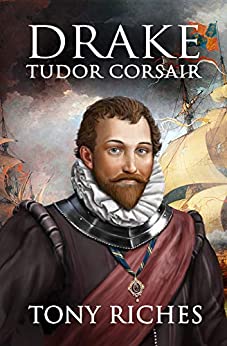
Book Corner: Drake – Tudor Corsair by Tony Riches

1564: Devon sailor Francis Drake sets out on a journey of adventure.

Drake learns of routes used to transport Spanish silver and gold, and risks his life in an audacious plan to steal a fortune.

Queen Elizabeth is intrigued by Drake and secretly encourages his piracy. Her unlikely champion becomes a national hero, sailing around the world in the Golden Hind and attacking the Spanish fleet.

King Philip of Spain has enough of Drake’s plunder and orders an armada to threaten the future of England.

I have read practically everything Tony Riches has ever written and I have to say, this is one of his best!

Drake – Tudor Corsair, is the first in a new Elizabethan Series. It follows the career of Sir Francis Drake from his first days as a sailor on a slave ship, to becoming captain of his own ship captain, to his raid on Cadiz and the Spanish Armada and to his final voyage as one of the greatest sailors England has ever produced. It is a life full of danger and adventure – and ambition.

As I have come to expect from Tony Riches, the book is meticulously researched and draws on primary sources to recreate Drake’s life as a novel. The result is a stunning, detailed story that draws the reader onto every aspect of Elizabethan naval life.

I confess, I knew nothing of Francis Drake beyond his participation in defeating the Spanish Armada. Tony Riches paints the portrait of a fascinating character, adventurous, ambitious, caring of his family and his crews. Drake pushed the boundaries of navigation, seamanship and – oftentimes – the law. He was a thorn in the side of the Spanish, preying on their colonies and treasure ships – they must have hated him.

I’d grown tired of remaining on the ship and wanted to experience something of Africa. I armed myself with an old sword, and found a leather bag to carry anything of value I discovered. For years I’d dreamed of searching for gold in this wild country, and now I had my chance.

Morgan cursed as the dark mud at the landing place chosen by our guide clung like glue to his boots. We walked in single file down the narrow path and I hacked at the undergrowth with my sword, mindful of stories of poisonous spiders, deadly snakes and dangerous animals.

The village came into view, in a clearing surrounded by thick forest. I was surprised by the silence; it seemed the villages had learned of our approach and fled. We’d been ordered to keep together, but the men began rushing from hut to hut, their discipline lost in the search for gold.

The first arrow flashed through the air and struck the man ahead of me in the throat. He fell with bright blood gushing from a deep wound. More arrows flew from the forest, finding their targets with deadly accuracy.

I froze in panic. We’d walked into a trap and were a long way from the boats. An arrow thudded deep into a tree close to where I stood, and Master Gilbert yelled in pain as another hit him in the shoulder.

A native ran towards me, his spear raised high in the air. Painted with red earth, he wore a necklace of curved white fangs. His muscular arm drew back, ready to put all his strength into the throw.

I turned and ran back the way we’d come, the yells and cries of pain urging me on as my heart pounded and I ran for my life. The low branch of a thorn tree scratched across my face, drawing blood, and I expected an arrow to strike my back at any moment.

Drake – Tudor Corsair is a thoroughly enjoyable read. Rich in detail and characters, it depicts the good and bad of Tudor history, delicately dealing with sensitive issues such as the slave trade, while not ignoring the brutality nor immorality of it. Tony Riches depicts the drama and danger of life at sea in a Tudor warship – fighting against not only the Spanish and the often violent natives, but also the elements themselves; the weather and the dangerous, uncharted coastlines.

Tony Riches’ characters are always rich and full of life. Sir Francis Drake himself is a likable character, he has some flaws, but comes across as someone who knows what he wants, who he wants to be and naturally takes command of every situation.

Drake – Tudor Corsair is a fabulous, entertaining read. It takes the reader on a journey full of adventure and fraught with danger, to the West Indies, Africa, South America and the Spanish coast. The various voyages and natives they encounter leave Drake – and the reader – in suspense as to whether they are friend and foe.

Tony Riches highlights the dangers faced by Drake and the brave adventurers of his era, who pushed their ships further and for longer in the name of discovery and of Elizabeth I. These were men who pushed the boundaries and often paid the ultimate price. As a result, Drake – Tudor Corsair is also a story of friendship, companionship and survival, with a twist of betrayal when ambition outweighs friendship.

And what’s more, Tony Riches is telling an epic, real-life story!

Drake – Tudor Corsair is out now and available from Amazon.

About the author:

Tony Riches is a full-time writer and lives with his wife in Pembrokeshire, West Wales, UK. A specialist in the history of the early Tudors, Tony is best known for his Tudor Trilogy. His other international best-sellers include Mary – Tudor Princess, Brandon – Tudor Knight and Katherine – Tudor Duchess.

For more information visit Tony’s author website http://www.tonyriches.com and his blog at http://www.tonyriches.co.uk. He can also be found at Tony Riches Author on Facebook and Twitter @tonyriches.

*

My Books

Ladies of Magna Carta: Women of Influence in Thirteenth Century England  looks into the relationships of the various noble families of the 13th century, and how they were affected by the Barons’ Wars, Magna Carta and its aftermath; the bonds that were formed and those that were broken. It is now available from Pen & SwordAmazon and from Book Depository worldwide.

Also by Sharon Bennett Connolly:

Silk and the Sword: The Women of the Norman Conquest traces the fortunes of the women who had a significant role to play in the momentous events of 1066.  Available now from Amazon,  Amberley Publishing, Book Depository.

Heroines of the Medieval World tells the stories of some of the most remarkable women from Medieval history, from Eleanor of Aquitaine to Julian of Norwich. Available now from Amberley Publishing and Amazon and Book Depository.

*

You can be the first to read new articles by clicking the ‘Follow’ button, liking our Facebook page or joining me on Twitter and Instagram.

©2020 Sharon Bennett Connolly

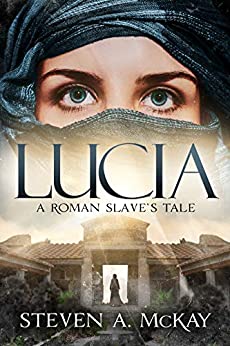
Book Corner: Lucia by Steven A. McKay

What makes life worth living for a slave of Rome?

The promise of vengeance no matter how long it takes.

At eight years old, Lucia is torn from the life she knew. Her village burned to the ground and parents murdered by Romans, she is kidnapped, sold and shipped abroad to the Villa Tempestatis in Britannia to serve the young Roman army officer Castus.

Faced with a bleak future of decades of servitude to her master, as well as sadistic brutality at the hands of his manageress, Paltucca, she finds herself fixated by one thought alone: vengeance.

Yet Villa Tempestatis, with its picturesque surroundings in Britannia’s green countryside, offers a life that’s a little easier than elsewhere in the Roman empire. The slaves form strong bonds of love and friendship, enjoy feasts and holiday celebrations together, and are even allowed, sometimes, to start a family. Many of them are happy enough with their lot.

Despite that, every moment of Lucia’s life is blighted by her hatred for Castus and Paltucca, and only seeing them both destroyed will bring her a measure of peace, even if it takes decades of work and planning…

From the moment you read the dedication in the front of Lucia, you will know you are in for an emotional rollercoaster:

Dedicated to all the men, women and children forced into slavery and forgotten by history.

And you would be right!

Lucia is one of those novels that will stay with you long, long … long after you have read the final page and closed the book (probably with a tear on your cheek). To say it is thought-provoking would be an understatement. This is one of those stories that will really get under your skin.

I have read everything Steven A. McKay has written, from his unique take on the Robin Hood stories to his wonderfully atmospheric Warrior Druid of Britain series, but Lucia is on another level. It is probably his best writing yet. It is a story that is at once desperate and uplifting, a story that touches you deep in your soul.

Set in a splendid villa in Roman Britain, Lucia captures perfectly a life of slavery. The brutality, the feeling of helplessness, the inhumanity is contrasted with the compassion, the humanity and the sense of family and comradeship with fellow slaves. Steve A. McKay clearly and cleverly depicts the blurred lines of the master and slave relationship and the slaves serve the Roman family, being detached from it and at the same time an integral part of the family life.

The villa was a wonderful sight on a July day like this, with its white plastered walls and red-tiled roofs seeming to glow in the sunshine, while its position on the hill afforded superb views of the land around: well-tended fields of corn and grain; groves of trees once sacred to the native Britons; and the sparkling waters of the narrow river that flowed past the western wing, providing their water for drinking, cleaning, cooking and, of course, bathing.

Sometimes, on particular beautiful days, Lucia forgot about her previous life, as the daughter of a warlord in Germania. Forgot about her previous existence before she was captured by the Romans who had destroyed her village, slaughtered her people and sold her at the market to her master.

It had been a year already since Publius Licinius Castus, a young Roman officer himself, had bought her from that terrible slave-market and shipped her here, to his lavish country villa in this damp land.

Villa Tempestatis

A lump came to her throat as an image of her parents – happy, smiling down with pride on their beloved daughter – came to her, and she angrily brushed away the tears forming in her eyes before they had a chance to streak her grimy cheeks.

Yes, sometimes she was able to forget her previous, free life in Germania, but it was never long before reality returned and she felt her spirit crushed so hard that it almost stopped her heart from beating.

The beauty of the villa and its surroundings hid the pain of dozens of slaves who had lived here over generations, young and old. Some of them, like Paltucca, were able to adapt and even thrive in such conditions, while others wilted and eventually, under the weight of what they’d lost, rendered themselves useless to the master. Those unfortunates soon disappeared, never to be heard of again.

Lucia wondered if she would end up like that one day, sold to be worked to death in a mine perhaps, when the stolen memory of the joy of her childhood became too much to bear.

Lucia explores the life of a girl forced into slavery by the Romans at the age of 8, and her relationship with her master and her fellow slaves. The book does a wonderful job of depicting not only the life of a slave but also their emotions, the fact that they do live their lives despite a lack of freedom, that they lived, loved, even raised families. It clearly demonstrates the contrast between the acceptance and cooperation that you still have to live, despite not being free, and that deep, constant yearning for freedom.

Lucia is one of those books for which you can write an awesome review – and yet, still know that your review will never do the book justice. It is, beyond doubt, the best thing Steven A. McKay has ever written, simply because it makes the reader re-evaluate the way they think and feel – and takes them to a depth of their soul they probably have never visited before.

Touching a topic that has affected lives throughout history, and yet seems just as relevant today; slavery. Lucia plays on all your emotions: anger, pity, empathy, love and hate. At times, Lucia is a hard book to read, but is essential reading on so many levels. Steven A McKay has written a truly riveting depiction of the life of a slave.

This is how books should be written, with passion and compassion. If you only read one more book this year, it should be Lucia.

Lucia is now available from Amazon

*

About the author:

Steven McKay was born in 1977 near Glasgow in Scotland. He live in Old Kilpatrick with his wife and two young children. After obtaining his Bachelor of Arts degree with the Open University he decided to follow his life-long ambition and write a historical novel.

He plays guitar and sings in a heavy metal band when they can find the time to meet up.

You can check out his website here. Steven also has an Amazon Author page and can be found on Twitter and Facebook.

*

My Books

Ladies of Magna Carta: Women of Influence in Thirteenth Century England  looks into the relationships of the various noble families of the 13th century, and how they were affected by the Barons’ Wars, Magna Carta and its aftermath; the bonds that were formed and those that were broken. It is now available from Pen & SwordAmazon and from Book Depository worldwide.

Also by Sharon Bennett Connolly:

Silk and the Sword: The Women of the Norman Conquest traces the fortunes of the women who had a significant role to play in the momentous events of 1066.  Available now from Amazon,  Amberley Publishing, Book Depository.

Heroines of the Medieval World tells the stories of some of the most remarkable women from Medieval history, from Eleanor of Aquitaine to Julian of Norwich. Available now from Amberley Publishing and Amazon and Book Depository.

*

You can be the first to read new articles by clicking the ‘Follow’ button, liking our Facebook page or joining me on Twitter and Instagram.

©2020 Sharon Bennett Connolly

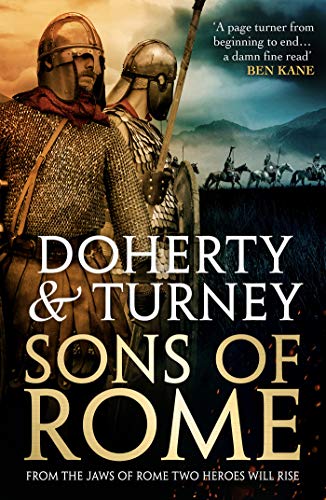
Book Corner: Sons of Rome by Simon Turney and Gordon Doherty

As twilight descends on the 3rd century AD, the Roman Empire is but a shadow of its former self. Decades of usurping emperors, splinter kingdoms and savage wars have left the people beleaguered, the armies weary and the future uncertain. And into this chaos Emperor Diocletian steps, reforming the succession to allow for not one emperor to rule the world, but four.

Meanwhile, two boys share a chance meeting in the great city of Treverorum as Diocletian’s dream is announced to the imperial court. Throughout the years that follow, they share heartbreak and glory as that dream sours and the empire endures an era of tyranny and dread. Their lives are inextricably linked, their destinies ever-converging as they rise through Rome’s savage stations, to the zenith of empire. For Constantine and Maxentius, the purple robes beckon…

Ever wondered what happens when two of your favourite authors get together and write a book?

Well, when its Simon Turney and Gordon Doherty, the result is a real page turner of an adventure that is impossible to put down!

Sons of Rome is the first in a new series by these two stalwarts in the field of Roman fiction. I only finished it yesterday and I am already desperate to read part two. The book fulfills the promise offered by combining two incredible authors. It is beautifully written, fast-paced and completely addictive.

Telling the story in alternating chapters, from the viewpoints of Constantine and Maxentius, it highlights the power struggles of the latter part of the Roman Empire. The Empire has got so big that a tetrarchy of two emperors and two caesars shared control of the eastern and western empires, with one emperor claiming seniority – Augustus – over the three other rulers.

Constantine and Maxentius – friends since childhood – are set to challenge the existing order of the tetrarchy, testing their friendship to its limits and beyond. Distrust and misunderstandings abound when destiny and the quest for ultimate power forces the two into opposition to each other.

Maxentius

By the Milvian Bridge across the Tiber, the next day

off to the left a centurion screamed imprecations at his men, driving them on across the churned turf and into the press of battle, while the clash and clamour of Rome’s armies at war filled the air around us.

I had to pause to adjust my rich wool hat, for it had become so sweat-sodden that it constantly threatened to slip down across my eyes, and it doesn’t do for an emperor to be cursing and blind as he fights for his throne. IN the searing heat of the sun’s glaring fiery orb, my horse stank of sweat and my purple cloak clung damp to my back, sticking to the beast’s rump behind me.

My sword had become heavy in my hand. I’d had only a brief chance to use it that morning, when I had managed to slip my overprotective bodyguard and join the cavalry in a brief push. But I had waved it around enthusiastically from time to time, giving orders to charge here and hold there. I knew my histories. Julius Caesar’s men would have followed him into the jaws of Cerberus himself just because of that great general’s presence on the field.

And I, Maxentius, emperor of Rome, had to be a new Julius Caesar this day, or I would be no one.

Briefly, across the sea of glinting helms and the forest of spear points, I caught sight of him. My enemy. The man who would wrest Rome from me. Constantine. My brother, my oldest friend, and yet my last and most bitter adversary. Like a hero of ancient myth, he rose in his saddle, sword rising and falling in a constant spray of blood.

The two leading characters, Constantine and Maxentius, are skillfully recreated by Turney and Doherty, each with their own personality and quirks; and each with their own pain and ambition. Constantine is the more martial of the two – you get the impression that he could march across the whole empire and subdue any who stand in his way. Whereas Maxentius has a first-rate political mind; what he lacks in military experience, he makes up for in his own battle arena, the corridors of power.

The contrasting qualities and abilities displayed by Constantine and Maxentius serve to create a unique story that has the reader gripped from the very first pages. You can’t help but have a favourite when you read of Constantine’s exploits and how he won the loyalty of the legions once sworn to his father. And then, of course, he was proclaimed emperor in York and I’m a Yorkshire lass…. But you may feel your allegiance changing when reading of Maxentius’ own abilities in winning favour with the people of the city of Rome itself, with the way he wins the loyalty of the African legions.

This is a totally absorbing book which combines action, political intrigue and divided loyalties to recreate a story that is fascinating to read and unputdownable – there’s that word again, it needs to be a real word. Honest!

Oh, and you get to spend the whole book, trying to work out which author is Constantine and which is Maxentius. Or, indeed, wondering if they even wrote it that way. The transition from one author to the other is seamless; the styles of each certainly complement the other. The benefit of two authors is obvious; each of the two leading characters – Maxentius and Constantine – narrating the story have clearly defined, individual voices. It gives Sons of Rome a strength and individuality that you rarely come across in a book.

I can heartily recommend it!

*

About the authors

Simon Turney

Simon Turney is the author of the Marius’ Mules and Praetorian series, as well as The Damned Emperor series for Orion and Tales of the Empire series for Canelo. He is based in Yorkshire.

Gordon Doherty is the author of the Legionary and Strategos series, and wrote the Assassin’s Creed tie-in novel Odyssey. He is based in Scotland.

Pre-order links
Gordon Doherty

Amazon: https://amzn.to/3gfhvIr

Follow Simon

Twitter: @SJATurney

Website: http://simonturney.com/

Follow Gordon

Twitter: @GordonDoherty

Website: https://www.gordondoherty.co.uk/

Follow Aries

Twitter: @AriesFiction

Facebook: Aries Fiction

Website: http://www.headofzeus.com

*

My Books

Ladies of Magna Carta: Women of Influence in Thirteenth Century England  looks into the relationships of the various noble families of the 13th century, and how they were affected by the Barons’ Wars, Magna Carta and its aftermath; the bonds that were formed and those that were broken. It is now available from Pen & SwordAmazon and from Book Depository worldwide.

Also by Sharon Bennett Connolly:

Silk and the Sword: The Women of the Norman Conquest traces the fortunes of the women who had a significant role to play in the momentous events of 1066.  Available now from Amazon,  Amberley Publishing, Book Depository.

Heroines of the Medieval World tells the stories of some of the most remarkable women from Medieval history, from Eleanor of Aquitaine to Julian of Norwich. Available now from Amberley Publishing and Amazon and Book Depository.

*

You can be the first to read new articles by clicking the ‘Follow’ button, liking our Facebook page or joining me on Twitter and Instagram.

©2020 Sharon Bennett Connolly