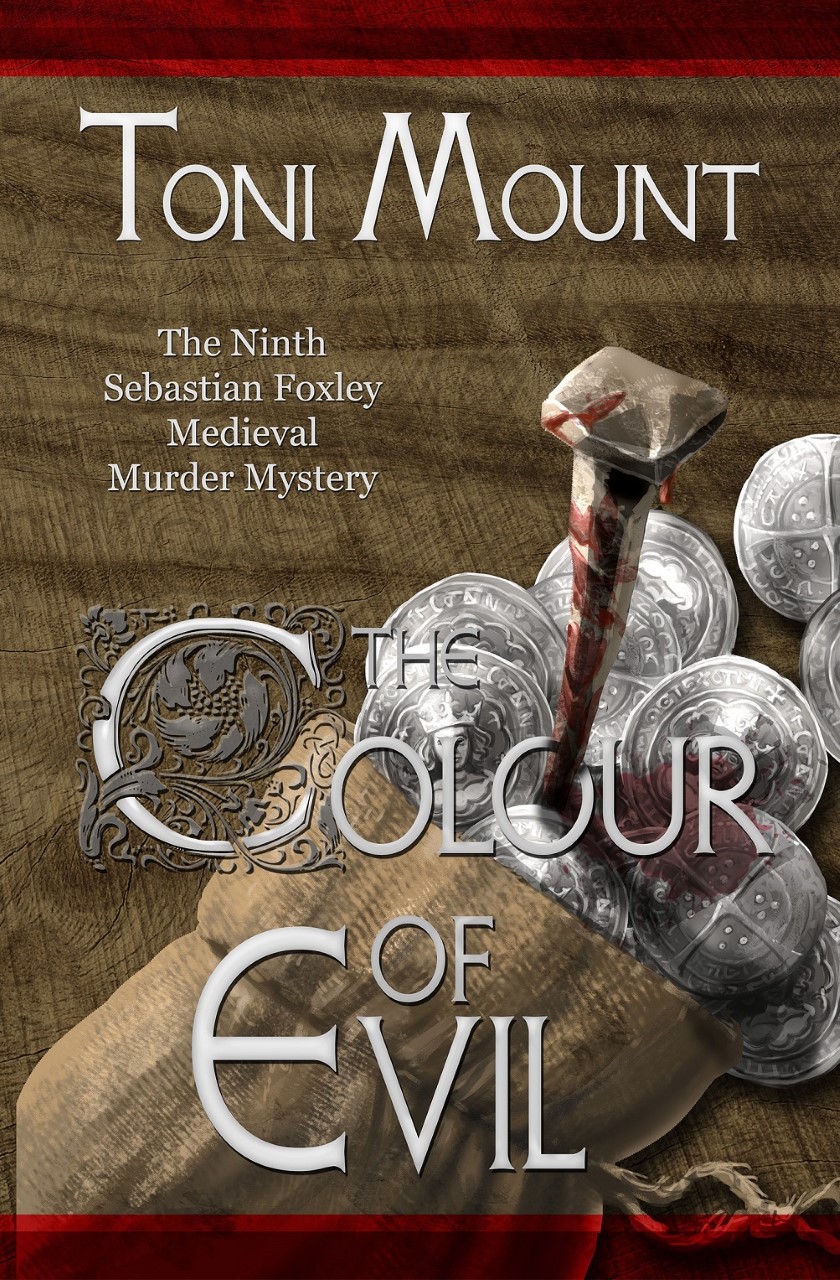
Book Corner: The Colour of Evil by Toni Mount

Every Londoner has money worries. Talented artist and some-time sleuth, Seb Foxley, is no exception.

When fellow craftsmen with debts to pay are found dead in the most horrid circumstances, fears escalate. Only Seb can solve the puzzles that baffle the authorities.

Seb’s wayward elder brother, Jude, returns unannounced from Italy with a child-bride upon his arm. Shock turns to dismay when life becomes more complicated and troubles multiply.

From counterfeit coins to deadly darkness in London’s worst corners; mysterious thefts to attacks of murderous intent, Seb finds himself embroiled at every turn. With a royal commission to fulfil and heartache to resolve, can our hero win through against the odds?

Share Seb Foxley’s latest adventures in the filthy streets of medieval London, join in the Midsummer festivities and meet his fellow citizens, both the respectable and the villainous.

The Colour of Evil by Toni Mount is the 9th book in Toni’s marvellous Sebastian Foxley Medieval Mystery series. If you haven’t read any of these books yet, you are really missing a treat!

Toni Mount has a unique, engaging writing style. Her beautiful prose and clever use of language instantly transports you back to 15th century England. The story revolves around a series of murders linked to counterfeit coins, into which Seb Foxley is brought as a consultant by the local bailiff.

The eponymous hero of the story, Seb Foxley, is a wonderful, intelligent character, who is, perhaps, a little too straitlaced and naive for his own good. His brother is a little too worldly-wise and entitled, but much less self-aware than is good for a grown man – I wanted to punch him on a number of occasions (and I’m not a violent person). The Colour of Evil places these brothers at the heart of the story, highlighting their conflicts and rivalries as London is in the grip of a series of gruesome murders.

As the mystery deepens, the reader is absorbed into the sights, smells and story of London; the excitement, fear and mystery is palpable. The Colour of Evil is an absorbing thriller.

Over ale, Thaddeus told me of the man – the thief we had taken in possession of his ill-gotten gains.

‘His name is Philip Hartnell, a most respectable citizen and a cutler by craft. He said he was walking along Bladder Street, passed the house with its window wide to the pleasant evening air when he saw the candlesticks by the open casement. At a glance, he was quite certain they were the same ones he had bought his wife as a wedding gift ten years since. His wife has much fondness for the sticks, so he took them, thinking to please her.’

‘Had they been stolen away from him previously, then? Is that the way of it?’ I sipped my ale. Thaddeus did likewise afore continuing.

‘That was my first thought. I tell you, Seb, it took a deal of cajoling and probing to get the truth out of Philip Hartnell. The candlesticks weren’t stolen from him but he apparently gave his goodwife to think they had been taken. The truth is that Hartnell has fallen into debt. He took the candlesticks to a goldsmith and sold them to pay off a sizeable loan. When his wife found them gone, she was much upset – more so than Hartnell ever expected. Thus, he told her they had been stolen, rather than admit his actions and the fact that he was over the ears in debt to a moneylender.’

‘An unfortunate situation but how does that excuse his actions of yestereve?’

‘It doesn’t. Besides, the candlesticks he stole from the house in Bladder Street were never his. Similar in shape but not the same ones.’

‘He has no right to them, even had they been the same. He sold them and has had the profit from the sale. Hartnell is a thief and we caught hm. He deserves just punishment, does he not? I do not see any reason for your difficulties in this matter, Thaddeus.’

‘He had never had any dealings with the law before, Seb. He’s a respected member of the Cutlers’ Company and a churchwarden. He loves his wife and family, works hard and earns a good living.’

‘Not good enough, so it would seem, else why would he be in debt?’

‘A foolish mistake, he said though he withheld further details. I had the feeling another woman was involved. In every other respect, Hartnell is a decent citizen. I think he deserves a second chance.’

‘What of the house in Bladder Street? The folk he robbed? Not to mention all the neighbourhood having to rally to the hue-and-cry.’

‘The candlesticks were returned – dented, it’s true but Hartnell says he will pay for their repair. The householder is agreeable. Besides…’

Thaddeus drained his ale.

‘Besides?’

‘Philip Hartnell is not alone, Seb. He is the fourth… no, the fifth respectable citizen that has come to my notice, by one means or another, who has found himself in debt and unable to repay. There’s something going on in London, concerning underhanded financial dealings, and I don’t like the smell of it.

‘Watch your purse, my friend. Every one of them is of middling status like you. Outwardly decent and honest yet they find themselves in dire need, monetarily. I wouldn’t want that to happen to you.’

‘Fear not, I owe no man so much as a ha’penny. So you will let Hartnell go?’

‘Aye, I think so. Both Newgate and the Counter are overfull of vile inmates. Hartnell is not of their kind. They’d make a hearty supper of him on his first day inside.’

The Colour of Evil by Toni Mount paints a wonderful, full-colour image of London in the time of Edward IV. The streets, taverns, work places and dark alleys are brought to vivid, vibrant life by Toni Mount’s beautiful prose and fantastic imagination. The author’s research is impeccable, her knowledge of 15th century medieval England allowing the reader to sit back and be transported back in time. Toni Mount clearly demonstrates how the guilds, the law and money, works and how it was all an integral part of life in medieval London. She recreates the world of 500 years ago to give the reader not only a great story, but the experience of being amongst the people and places of the time.

The characters are wonderfully individuals, each with their own strengths and flaws – though some have mostly flaws and very few strengths. I always think the sign of a good book is when you find yourself frustrated with the actions of a favourite character – or wanting to punch one who seems thoughtless or heartless; or when you find yourself egging a character on – or wanting to shout ‘no, don’t go down there’. The Colour of Evil certainly takes you through all these emotions and more.

The Colour of Evil by Toni Mount is a beautifully crafted mystery that brings the dark, dangerous streets of medieval London to life. Toni Mount is a magician with words, weaving a captivating story in wonderful prose. The Colour of Evil is, to put it simply, a pleasure to read.

If you haven’t read a Seb Foxley book before, don’t worry, each book works as a standalone. Though I have to warn you – after reading one, you will want to read the rest!

To buy the Book: http://getbook.at/colour_of_evilhttp://mybook.to/Colour_Evil

*

About the Author

Toni Mount earned her Master’s Degree by completing original research into a unique 15th-century medical manuscript. She is the author of several successful non-fiction books including the number one bestseller, Everyday Life in Medieval England, which reflects her detailed knowledge in the lives of ordinary people in the Middle Ages. Toni’s enthusiastic understanding of the period allows her to create accurate, atmospheric settings and realistic characters for her Sebastian Foxley medieval murder mysteries. Toni’s first career was as a scientist and this brings an extra dimension to her novels. It also led to her new biography of Sir Isaac Newton. She writes regularly for both The Richard III Society and The Tudor Society and is a major contributor of online courses to MedievalCourses.com. As well as writing, Toni teaches history to adults, coordinates a creative writing group and is a member of the Crime Writers’ Association.

You can find Toni at: Her website; Seb Foxley’s website; Seb Foxley’s Facebook page; Toni’s ‘Medieval England’ Facebook page; Toni Mount’s Facebook page; Toni Mount online courses.

*

My books

Coming 31st May:

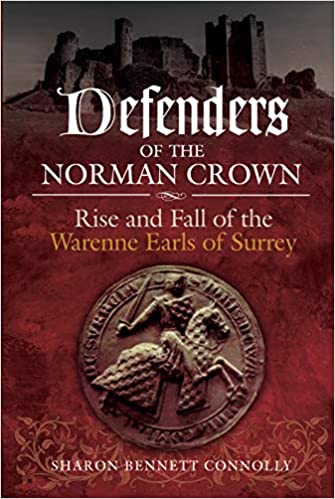
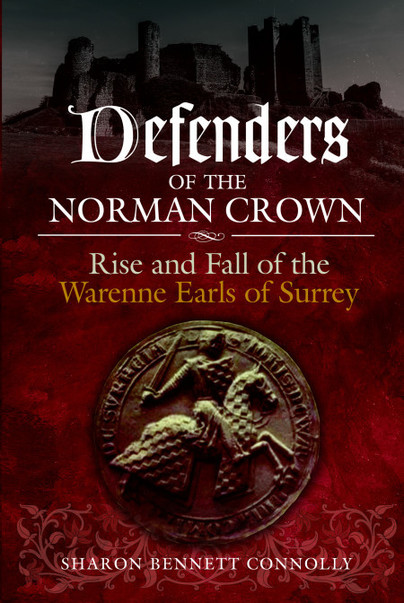
Defenders of the Norman Crown: The Rise and Fall of the Warenne Earls of Surrey tells the fascinating story of the Warenne dynasty, of the successes and failures of one of the most powerful families in England, from its origins in Normandy, through the Conquest, Magna Carta, the wars and marriages that led to its ultimate demise in the reign of Edward III.

Defenders of the Norman Crown: Rise and Fall of the Warenne Earls of Surrey will be released in the UK on 31 May and in the US on 6 August. And it is now available for pre-order from Pen & Sword BooksAmazon in the UK and US and Book Depository.

Also by Sharon Bennett Connolly:

Ladies of Magna Carta: Women of Influence in Thirteenth Century England looks into the relationships of the various noble families of the 13th century, and how they were affected by the Barons’ Wars, Magna Carta and its aftermath; the bonds that were formed and those that were broken. It is now available from Pen & Sword,  Amazon and from Book Depository worldwide.

Heroines of the Medieval World tells the stories of some of the most remarkable women from Medieval history, from Eleanor of Aquitaine to Julian of Norwich. Available now from Amberley Publishing and Amazon and Book Depository.

Silk and the Sword: The Women of the Norman Conquest traces the fortunes of the women who had a significant role to play in the momentous events of 1066.  Available now from Amazon,  Amberley Publishing, Book Depository.

You can be the first to read new articles by clicking the ‘Follow’ button, liking our Facebook page or joining me on Twitter and Instagram.

©2021 Sharon Bennett Connolly 
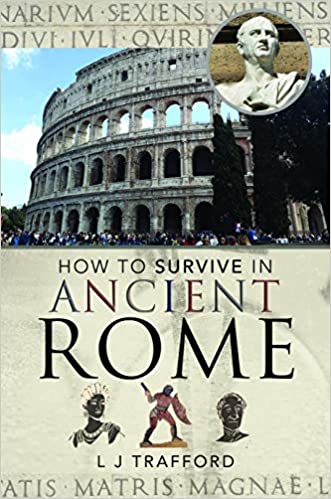
Book Corner: How to Survive in Ancient Rome by LJ Trafford

Imagine you were transported back in time to Ancient Rome and you had to start a new life there. How would you fit in? Where would you live? What would you eat? Where would you go to have your hair done? Who would you go to if you got ill, or if you were mugged in the street? All these questions, and many more, will be answered in this new how-to guide for time travellers. Part self-help guide, part survival guide, this lively and engaging book will help the reader deal with the many problems and new experiences that they will face, and also help them to thrive in this strange new environment.

What a fun and entertaining read!

How to Survive in Ancient Rome by LJ Trafford is a tour guide to the ancient city of Rome for the inexperienced and seasoned traveller alike. The book takes a snapshot of the city, its society and the state of the Roman Empire in the time of the Emperor Domitian – and more specifically in the year 95 CE. It tells you all you need to know about Roman history and society so that you may get the best from a visit to the eternal city in the First century AD.

LJ Trafford covers all aspects of Roman life, from the history and family, to entertainment, shopping and crime and punishment. The tone is light-hearted, entertaining and often outright hilarious. Some anecdotes stretch credibility, but the author has clearly done her homework and includes endnotes and a comprehensive bibliography. The stories may be unbelievable, but LJ Trafford has the evidence to back her up.

The beauty of How to Survive in Ancient Rome is the book’s simplicity, which makes it accessible to all ages. I read excerpts out to my husband and teenage son, and both enjoyed the stories I recited. In fact some of the stories are – apparently – particularly appealing to the mind of a teenage boy!

The young Caligula, for instance, was said to enjoy donning a robe and wig and hitting the town. Otho’s floggable youthful pursuits involved wandering about the city bundling drunks and women into blankets and tossing them into the river Tiber, Mark Anthony, so Cicero alleges, dressed as a woman and took up prostitution in his youth.

There are less alarming leisure activities available. Watching chariot racing, for instance. Or wrestling. Or the Games. Or placing high-stakes bets on all of them, a pastime that is all the more appealing when you have a living pater familias responsible for all the family finances: including debts.

Probably the best example of the struggling pater familias is the Emperor Augustus. Augustus made a big show of family. His series of morality laws included inducements to have three children or more, penalties for failing to marry and stiff punishments for adulterers.

He paraded his own family as an example to follow, sharing the strict education of his daughter, Julia, as the model. He chose all three of Julia’s husbands for her and arranged the marriages. The first was to her cousin, Marcellus. The second was to her father’s right-hand man, Agrippa, who was over twenty years her senior. Her third marriage was to her stepbrother, Tiberius.

Augustus similarly orchestrated his male relatives’ lives, appointing them to public positions from a young age and insisting that they serve the state in unending duty. This is how family was done properly, he declared to the world. This is the traditional pater familias role.

Naturally, it all went wrong. Daughter Julia, knee deep in woven underpants, embarked on a full-scale rebellion against her father. She did this by ‘having some fun’, saying ‘things which might be considered by some stick in the mud Romans as undignified to her sex.’, and by putting it about a bit.

Don’t get me wrong! This may be a light-hearted look at life in ancient Rome, but you will be laughing as you are learning. How to Survive in Ancient Rome is chock-full of facts and interesting anecdotes. It delves into the structure of society, government and family, giving insight into the daily life of the average – and sometimes not-so-average – Roman. However, it also looks into the murkier side of Roman life; crime and punishment, prostitution, gambling and slavery. LJ Trafford takes you to the market, the forums and the gladiatorial games in a fascinating illumination of life in ancient Rome.

And you will enjoy every minute and every word.

Whilst the book focuses on a year in the reign of the Emperor Domitian, it also draws from the entirety of Roman history, from its legendary origins through the babies Romulus and Remus and the wolf that suckled them, through the greats such as Julius Caesar, Emperor Augusts and Vespasian, to the less admirable characters such as Caligula and Nero – who apparently had at least 3 people impersonate him after his death (and they each attracted followers proclaiming the survival of the emperor). LJ Trafford uses How to Survive in Ancient Rome to illuminate the diversity and experiences of ancient Roman life.

How to Survive in Ancient Rome by LJ Trafford is a brilliant, entertaining book. Easily readable for the avid fans of ancient Rome and novice Romans alike, it is not to be missed. It is thoroughly researched and beautifully written, with a view to entertaining and informing the reader in equal measure. I cannot recommend it highly enough.

How to Survive in Ancient Rome by LJ Trafford is available from Pen & Sword Publishing and Amazon.

About the Author:

After gaining a BA Hons in Ancient History LJ Trafford toured the amphitheatres of western europe before a collision with a moped in Rome left her unable to cross the road. Which was a shame because there was some really cool stuff on the other side. Returning to the UK somewhat battered and certainly very bruised she spent several years working as a tour guide. A perfect introduction to writing, involving as it did, the need for entertainment and a hefty amount of invention (it’s how she got tips). She now works in London doing something whizzy with computers.

Palatine is the first in the Four Emperors series. Book Two is Galba’s Men, and is followed by Otho’s Regret and Vitellius’ Feast. See also two short stories featuring the same characters: The Wine Boy and The Wedding (in the Rubicon collection)

Follow me on Twitter, if you dare! @traffordlj

*

My books

Coming 31st May:

Defenders of the Norman Crown: The Rise and Fall of the Warenne Earls of Surrey tells the fascinating story of the Warenne dynasty, of the successes and failures of one of the most powerful families in England, from its origins in Normandy, through the Conquest, Magna Carta, the wars and marriages that led to its ultimate demise in the reign of Edward III.

Defenders of the Norman Crown: Rise and Fall of the Warenne Earls of Surrey will be released in the UK on 31 May and in the US on 6 August. And it is now available for pre-order from Pen & Sword BooksAmazon in the UK and US and Book Depository.

Also by Sharon Bennett Connolly:

Ladies of Magna Carta: Women of Influence in Thirteenth Century England looks into the relationships of the various noble families of the 13th century, and how they were affected by the Barons’ Wars, Magna Carta and its aftermath; the bonds that were formed and those that were broken. It is now available from Pen & Sword,  Amazon and from Book Depository worldwide.

Heroines of the Medieval World tells the stories of some of the most remarkable women from Medieval history, from Eleanor of Aquitaine to Julian of Norwich. Available now from Amberley Publishing and Amazon and Book Depository.

Silk and the Sword: The Women of the Norman Conquest traces the fortunes of the women who had a significant role to play in the momentous events of 1066.  Available now from Amazon,  Amberley Publishing, Book Depository.

*

You can be the first to read new articles by clicking the ‘Follow’ button, liking our Facebook page or joining me on Twitter and Instagram.

©2021 Sharon Bennett Connolly.

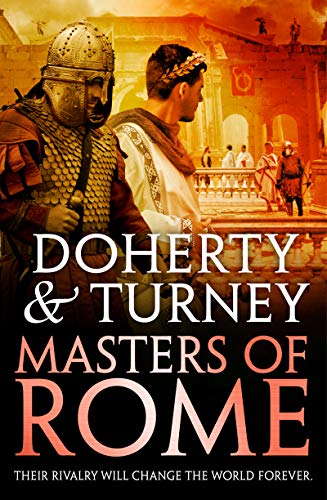
Book Corner: Masters of Rome by Gordon Doherty and Simon Turney

Their rivalry will change the world forever.

As competition for the imperial throne intensifies, Constantine and Maxentius realise their childhood friendship cannot last. Each man struggles to control their respective quadrant of empire, battered by currents of politics, religion and personal tragedy, threatened by barbarian forces and enemies within.

With their positions becoming at once stronger and more troubled, the strained threads of their friendship begin to unravel. Unfortunate words and misunderstandings finally sever their ties, leaving them as bitter opponents in the greatest game of all, with the throne of Rome the prize.

It is a matter that can only be settled by outright war…

Oh boy! What a story!

Last year I read a wonderful book by two of my favourite authors, Simon Turney and Gordon Doherty. Sons of Rome was a fabulous adventure looking at the early years of two future rival for the Roman imperial title, Maxentius and Constantine. Told from two viewpoints, each author had his own character: Turney was Maxentius and Doherty was Constantine. In Masters of Rome, they have continued the story and increased the pace, getting to the heart of the struggles and threats the two leading protagonists face.

Masters of Rome is a fascinating tale of the Roman Empire and the struggle between its various rulers and the factions they engendered. The politics are high drama, the manipulations of friends and advisers demonstrate the dangers of great power and politics; you cannot trust anyone! Friendships are stretched to the limits, though Maxentius and Constantine are reluctant to break that tenuous link, the inevitability of it, as both try to realise their ambitions, is a driving force in the book.

And then there are Maxentius and Constantine themselves. As a reader, you feel that you must pick a side. I thought I would be on Team Constantine, but then Maxentius did something notable and I wavered. The conflict in the pages causes a reciprocal conflict in the reader. The truth is, both emperors did things they should be proud of, and both made big mistakes. At the heart of this books is the truth about all men; they have their strengths and weaknesses. Each has noble traits, and each has his flaws. Ultimately, they are both likable characters, which is what makes their story so fascinating.

As a reader you are torn, between the two, just as Rome was.

The tension is relentless.

The drama is palpable.

Constantine

Land of the Seven Mountains, East of the Rhenus, 1st December 308 AD

The greatest affront happened at the imperial river city of Carnuntum. That day, in those marbled halls, the Lords of the Tetrarchy assumed they could strip me of my station. I had rebuffed their attempts and let them know in no uncertain terms that I was Constantine and I would remain Augustus of the west, heir to my father’s realm. A mere month had passed since that grand congress and my stubborn refusal. I must admit it had fired my pride to assert myself so and witness them gasping in ire. Yet what might those curs think were they to see me now: crouched in the musty ferns of a Germanian hillside nook like an outlaw, my bear pelt and black leather cuirass blending into the earthy hillside like my dirt-streaked face in the half-light of this sullen winter’s day?

A few shafts of watery sunlight penetrated the sea of freezing mist around me, illuminating the semi-frozen hillside: strewn with a frosty carpet of leaves, dotted with dark green spruce and skeletal brown larch. The valley floor below – the once clear path through these roughs – was carpeted with bracken. The cold gnawed on my skin and stung my nostrils, but not so much as to mask that ubiquitous musty stink of the Germanian woods. Hardy ravens cawed somewhere in the skies above the sea of mist, as if to remind me just how far I was from home, yet all down here was still and silent … eerily silent. Then the sudden, hollow drumming of an unseen woodpecker nearby sent an invisible lance of ice through my breast. With a puff of breath I cursed the winged menace, as if it were scouting for the enemy who had drawn me out here.

The Bructeri – one of the many tribes in the Frankish confederation – were on the move. Coming this way to cross the Rhenus and pour once more into Gaul… my realm. I only had myself to blame, for early last year I had put two of their many kings to death in Treverorum’s arena. Yes, it was in the name of vengeance that the tribes had mobilised. But now, of all times? Marching to war in the grip of winter? I seethed. And you wonder why we Romans call you barbarians!

I could not ignore the tribal threat, yet equally I could ill afford to be here. For back across the river and all over imperial lands, the hearsay and consequences of Carnuntum were already spreading like a plague. A chatter rose within my mind, each voice urgent and shrill, like hooks being dragged through my head, all demanding attention…

Masters of Rome is a tense, thrilling story charting the lives of two unique individuals, Maxentius and Constantine, both seeking to become the Roman Empire’s sole emperor. The triumph of this book – and indeed the series – is that each lead character has a unique voice, due to the fact each has his own writer. Simon Turney and Gordon Doherty work well together to give each emperor their own voice, viewpoint and story. It is a fascinating concept that could have gone very wrong, if not for the individual strength of the two authors. With Turney and Doherty, it works beautifully.

The research is impeccable and the depth of that research helps to recreate not only the buildings of Rome, but also the atmosphere of the Roman Empire, and the personalities of all those who touched the lives of Constantine and Maxentius, as well as the two protagonists themselves. Both Doherty’s and Turney’s unrivaled understanding of the Roman war machine helped to make Masters of Rome a riveting read.

If you have never read a novel about Rome, this series would be a good place to start. It draws you in, envelops you and involves you so deeply in the drama that you find yourself shouting at the book! Masters of Rome is a fabulous, absorbing read that you never want to end – but at the same time can’t read quick enough! The drama, the politics and the personalities all serve to make Masters of Rome a masterpiece of fiction.

It is, quite simply, a must-read.

*

Pre-order link for Masters of Rome: Amazon: https://amzn.to/2ZpfUJC

Follow Aries: Twitter: @AriesFiction; Facebook: Aries Fiction; Website: http://www.headofzeus.com

Blog Tour Hashtag: #MastersofRome

About the Authors

Simon Turney is from Yorkshire and, having spent much of his childhood visiting historic sites, he fell in love with the Roman heritage of the region. His fascination with the ancient world snowballed from there with great interest in Rome, Egypt, Greece and Byzantium. His works include the Marius’ Mules and Praetorian series, as well as the Tales of the Empire series for Canelo and The Damned Emperor series for Orion. http://www.simonturney.com @SJATurney.

Follow Simon

Twitter: @SJATurney; Instagram: @simonturney_aka_sjaturney; Website: http://simonturney.com/

Gordon Doherty is a Scottish author, addicted to reading and writing historical fiction. Inspired by visits to the misty Roman ruins of Britain and the sun-baked antiquities of Turkey and Greece, Gordon has written tales of the later Roman Empire, Byzantium, Classical Greece and the Bronze Age. His works include the Legionary, Strategos and Empires of Bronze series, and the Assassin’s Creed tie-in novel Odyssey. http://www.gordondoherty.co.uk @GordonDoherty.

Follow Gordon

Twitter: @GordonDoherty Instagram: @gordon.doherty Website: https://www.gordondoherty.co.uk/

*

My books

Coming 31st May:

Defenders of the Norman Crown: The Rise and Fall of the Warenne Earls of Surrey tells the fascinating story of the Warenne dynasty, of the successes and failures of one of the most powerful families in England, from its origins in Normandy, through the Conquest, Magna Carta, the wars and marriages that led to its ultimate demise in the reign of Edward III. 

Defenders of the Norman Crown: The Rise and Fall of the Warenne Earls of Surrey is now available for pre-order from Pen & Sword Books.

Also by Sharon Bennett Connolly:

Ladies of Magna Carta: Women of Influence in Thirteenth Century England looks into the relationships of the various noble families of the 13th century, and how they were affected by the Barons’ Wars, Magna Carta and its aftermath; the bonds that were formed and those that were broken. It is now available from Pen & Sword,  Amazon and from Book Depository worldwide.

Heroines of the Medieval World tells the stories of some of the most remarkable women from Medieval history, from Eleanor of Aquitaine to Julian of Norwich. Available now from Amberley Publishing and Amazon and Book Depository.

Silk and the Sword: The Women of the Norman Conquest traces the fortunes of the women who had a significant role to play in the momentous events of 1066.  Available now from Amazon,  Amberley Publishing, Book Depository.

*

You can be the first to read new articles by clicking the ‘Follow’ button, liking our Facebook page or joining me on Twitter and Instagram.

©2021 Sharon Bennett Connolly.

Book Corner: The Last Berserker by Angus Donald

The greatest warriors are forged in the flames

Two pagan fighters

771AD, Northern Europe. Bjarki Bloodhand and Tor Hildarsdottir are journeying south into Saxony. Their destination is the Irminsul, the One Tree that links the Nine Worlds of the Middle-Realm. In this most holy place, they hope to learn how to summon their animal spirits so they can enter the ranks of the legendary berserkir: the elite frenzied fighters of the North.

One Christian king

Karolus, newly crowned King of the Franks, has a thorn in his side: the warlike Saxon tribes on his northern borders who shun the teachings of the Church, blasphemously continuing to worship their pagan gods.

An epic battle for the soul of the North

The West’s greatest warlord vows to stamp out his neighbours’ superstitions and bring the light of the True Faith to the Northmen – at the point of a sword. It will fall to Bjarki, Tor and the men and women of Saxony to resist him in a struggle for the fate of all Europe.

I have read Angus Donald’s books since the first of his Robin Hood series, Outlaw, came out many moons ago. And I absolutely adored his series set around the 1688 Glorious Revolution with unlikely hero Holcroft Blood. But there is always a risk when an author starts a new series; will it live up to previous stories?

Well, with The Last Berserker there is no need to worry. From the first few lines you are reassured that Angus Donald starts as he means to go on; with an action-filled storyline that will take the reader on a breathtaking journey through the turbulent years of the 8th century. It is quite the adventure!

The story derives from the many tales of the berserkers, men who went wild in battle, killing dozens at a time. Angus Donald has created a world in which the berserkers were not just mad men, but legendary fighters who honed their skills through belief, training and discipline. They were heroes who used their unique talents to lead men into battle and deliver victory after victory. Set in the time when the great Charlemagne was waging his campaign of conquest against the German tribes, The Last Berserker tells the story of Bjarki Bloodhand, who joins the fight to defend his homelands.

‘How about you, son? You look like a strapping fellow. Care to try your strength? Bjarki realised the tall blond man was speaking to him.

He shook his head.

‘No need to be afraid. I’ll tell Black Svein to go easy on you.’

‘I’m not afraid,’ Bjarki said.

‘Then come inside the hazel square and prove it.’

Bjarki shook his head. He smiled.

The straw-haired man turned away. ‘There must be one or two here today who are not snivelling cowards,’ he said, his back turned to Bjarki.

Bjarki stopped smiling. He felt suddenly cold. He took a step forward.

‘He’s not a coward,’ said a voice at his elbow, a cool hand there, too, restraining him. ‘He just doesn’t want to fight your friend today. And calling him one won’t change his mind.’

The straw-haired man turned back and looked at Bjarki – and Tor, who was now standing beside him.

‘You his girl then?’ he said. Then to Bjarki: ‘Aren’t you a one – getting your little girlie to speak for you. I see now why you won’t fight.’

‘He won’t fight your friend,’ said Tor, ‘but I will. You said you had quarterstaffs? Yes? All right then, I accept your challenge.’

The straw-haired man was nonplussed. This scrawny young woman, with arms like kindling sticks, was about half of the weight of Black Svein – and a head shorter than him too. It was a ridiculous match.

‘You can’t fight him,’ he said.

‘Oh yes? Why is that? Is he afraid of me?’

That started a howl of laughter from the crowd, which had thickened considerably by now. The straw-haired man flushed pink with irritation.

‘You cannot fight him, girlie. It would not be a fair contest.’

‘What if I go really easy on him?’ said Tor. ‘I promise I won’t hurt him all that much – hardly at all. I’ll be as gentle as a lamb with the poor idiot.’

Angus Donald weaves together, myth, legend and history to recreate a world where the berserker not only flourished, but was revered as a great warrior.

As an author, Donald is very adept at creating unique, interesting protagonists. Holcroft Blood was an autistic officer who had a knack for uncovering spies and a skill in artillery that was unrivalled. Robin Hood was a vicious killer, not the cuddly Robin Hood from legend. And with Bjarki Bloodhand, we have another individual who is not, at first sight, your typical hero. He is a rather dull, awkward boy; quite unassuming in fact. He comes across as naive, a little too trusting and not overly ambitious. He is, however, loyal to ahis friends, a good fighter and as brave as they come. He doesn’t shirk from a fight, but doesn’t necessarily seek it out. And he is incredibly likeable.

Bjarki’s sidekick, for want of a better word, is Tor, a slip of a girl with an attitude that belies her size. A born fighter, she is always looking to prove herself. Tor is a fascinating character who has secrets of her own to hide and ‘issues’ to work through. The two make an unlikely pairing but a firm friendship that helps them through their many trials.

Angus Donald wonderfully recreates the world of 8th century central Europe, from the landscape and the natural borders that separate the various nations, to the contrasting religious beliefs – both Christian and pagan – that lie at the centre of the conflict. A natural storyteller when it comes to warfare, Donald vividly evokes the song of battle, with seax, sword, axe and shield. The frenetic energy of the battle scenes leave the reader breathless and eager for more. The intricacies of the story, with its various twists and turns, some rather surprising, keep the reader on the edge of their seat throughout.

The Last Berserker is a truly enthralling story, not easy to put down – and a thoroughly enjoyable reading experience. It is one book that is not to be missed!

The Last Berserker by Angus Donald is available in paperback and ebook from Amazon.

*

About the Author:

Angus Donald is the author of the bestselling Outlaw Chronicles, a series of ten novels set in the 12th/13th centuries and featuring a gangster-ish Robin Hood. Angus has also published the Holcroft Blood trilogy about a mildly autistic 17th-century English artillery officer, son of notorious Crown Jewels thief Colonel Thomas Blood. Before becoming an author, Angus worked as a fruit-picker in Greece, a waiter in New York City and as an anthropologist studying magic and witchcraft in Indonesia. For fifteen years he was a journalist working in Hong Kong, India, Afghanistan and London. He now writes full time from a medieval farmhouse in Kent.

*

My books

Ladies of Magna Carta: Women of Influence in Thirteenth Century England looks into the relationships of the various noble families of the 13th century, and how they were affected by the Barons’ Wars, Magna Carta and its aftermath; the bonds that were formed and those that were broken. It is now available from Pen & Sword,  Amazon and from Book Depository worldwide.

Also by Sharon Bennett Connolly:

Heroines of the Medieval World tells the stories of some of the most remarkable women from Medieval history, from Eleanor of Aquitaine to Julian of Norwich. Available now from Amberley Publishing and Amazon and Book Depository.

Silk and the Sword: The Women of the Norman Conquest traces the fortunes of the women who had a significant role to play in the momentous events of 1066.  Available now from Amazon,  Amberley Publishing, Book Depository.

*

You can be the first to read new articles by clicking the ‘Follow’ button, liking our Facebook page or joining me on Twitter and Instagram.

©2021 Sharon Bennett Connolly.

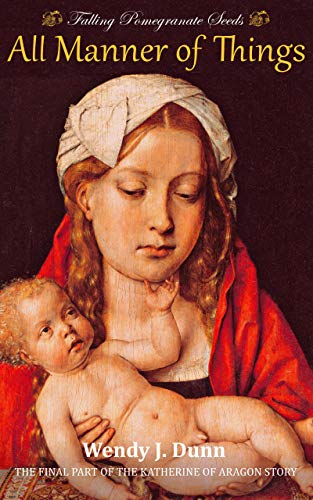
Book Corner: All Manner of Things by Wendy J. Dunn

Winter, 1539: María de Salinas is dying. Too ill to travel, she writes a letter to her daughter Katherine, the young duchess of Suffolk. A letter telling of her life: a life intertwined with her friend and cousin Catalina of Aragon, the youngest child of Isabel of Castile. It is a letter to help her daughter understand the choices she has made in her life, beginning from the time she keeps her vow to Catalina to share her life of exile in England.

Friendship.

Betrayal.

Hatred.

Forgiveness.

Love wins out in the end.

All Manner of Things by Wendy J. Dunn is the second book in the Falling Pomegranate Seeds series, although it works perfectly well as a standalone. In fact, if you didn’t know it was part of a series, nothing in the pages would tell you. You do not feel as if you are missing part of the story, or need to read the first book in the series, The Duty of Daughters, to grasp what is going on. Which makes it eminently readable for everyone.

And what a fabulous book it is!

All Manner of Things follows the story of Infanta Catalina (Katherine of Aragon) from her journey to the English court to marry Arthur Tudor, Prince of Wales, to the Field of the Cloth of Gold of 1520, when Henry VIII met Francis I in a spectacular display of pageantry and might. The event also marked the introduction of Anne Boleyn to English affairs; Anne was still in the service of Queen Claude of France but returned to England soon afterwards.

The story tells of the pitifully short marriage of Catalina and Arthur, the lonely years following Arthur’s death, when Catalina was a hostage, in all but name, of the English king, Henry VII, and the early years of her marriage to King Henry VIII. Historically, it documents how the relationship between Henry and Catalina changed over time, how a promising marriage and love was soured by Henry’s frequent infidelities, Catalina’s miscarriages and the many lost infants that turned a loving relationship sour.

All Manner of Things by Wendy J. Dunn is told through the eyes of Maria de Salinas, Catalina’s closest friend and companion, though no fan of Henry VIII, which puts an interesting slant on the story and shows Henry in two lights: how he is adored by his wife, and how his wife’s friend sees him. It is an interesting dichotomy that works wonderfully in the novel and demonstrates the author’s deep understanding of the Tudor court and the personalities involved.

The overriding theme of this book is friendship and love; the sisterly love and friendship between Catalina (Katherine of Aragon) and her childhood friend and almost-constant companion, Maria de Salinas.

When Maria returned to the bedchamber, Catalina was awake and at her writing desk. She lifted her head, put aside her quill and smiled at her. “You have been gone for a while.”

“I have been talking to our companions.”

“Mm…” Catalina picked up her quill again, her attention returned to the parchment in front of her.

“Catalina – could you please listen to e for a moment?”

Catalina twisted around. “What is it?”

“I think it would be wiser if we are not alone so much. The other women are your companions too. They are unhappy. I do not believe it is simply due to this long journey.”

Catalina pursed her mouth. “Do you know what troubles them?”

“They are jealous.” Maria sighed.

“Jealous?” A frown so alike her mother’s knotted between Catalina’s thinned eyebrows.

Maria sighed again. “Of me. They are jealous of me.”

Catalina looked taken aback. “But you and I have always been together.”

Maria shrugged. “I think it would be wise to remember the queen’s advice not to have obvious favourites. Once we are in England, your companions will form your inner court within your court.”

“But I think of you as my sister,” Catalina said. “Even mother kept those she trusted close to her, your mother for one.”

“Si, and like my mother for your mother, I vow to serve you to the day of our death. But the other girls begin to worry me. They are scared too about the sea voyage and, like us, they are leaving behind everything they love for England. Pray, for my sake, let us eat with them and spend more time getting to know them. I think if you befriend them, really befriend them, they won’t be so jealous and cause mischief. I do not like their black looks.”

Having researched Maria’s story myself, Maria’s life at court, marriage and constant support for her friend and queen, it is obvious that Wendy J. Dunn has done her homework. In All Manner of Things, Wendy J. Dunn captures wonderfully not only the friendship between Catalina (Katherine of Aragon’s name in her native Castilian) and Maria, but also the complications that arise from life at the Tudor court, and a friendship with a queen.

Wendy J. Dunn expertly recreates the Tudor court, the glamour of the royal family and the drama associated with all aspects of their lives – and of the lives of those who serve them. The reader is drawn into the relationships, the intrigues and the underlying falsehoods that accompany any court, expertly contrasting the ‘show’ with the friendships and relationships behind the scenes, of the queen with her ladies. The glamour of court life itself reveals the contradictions, and the changing relationships as the characters grow and are affected by the challenges they face and the secrets they have to keep.

Wendy J. Dunn wonderfully combines the history and fiction to create a gripping drama, where you will find it hard to know where fact ends and fiction begins. The storytelling is first class!

Falling Pomegranate Seeds: All Manner of Things by Wendy J. Dunn is available from Amazon.

About the Author:

Wendy J. Dunn is an Australian author, playwright and poet who has been obsessed by Anne Boleyn and Tudor History since she was ten-years-old. She is the author of two Tudor novels: Dear Heart, How Like You This?, the winner of the 2003 Glyph Fiction Award and 2004 runner up in the Eric Hoffer Award for Commercial Fiction, and The Light in the Labyrinth, her first young adult novel.

While she continues to have a very close and spooky relationship with Sir Thomas Wyatt, the elder, serendipity of life now leaves her no longer wondering if she has been channeling Anne Boleyn and Sir Tom for years in her writing, but considering the possibility of ancestral memory. Her family tree reveals the intriguing fact that her ancestors – possibly over three generations – had purchased land from both the Boleyn and Wyatt families to build up their own holdings. It seems very likely Wendy’s ancestors knew the Wyatts and Boleyns personally.

Wendy tutors at Swinburne University in their Master of Arts (Writing) program.

*

My books

Ladies of Magna Carta: Women of Influence in Thirteenth Century England looks into the relationships of the various noble families of the 13th century, and how they were affected by the Barons’ Wars, Magna Carta and its aftermath; the bonds that were formed and those that were broken. It is now available from Pen & Sword,  Amazon and from Book Depository worldwide.

Also by Sharon Bennett Connolly:

Heroines of the Medieval World tells the stories of some of the most remarkable women from Medieval history, from Eleanor of Aquitaine to Julian of Norwich. Available now from Amberley Publishing and Amazon and Book Depository.

Silk and the Sword: The Women of the Norman Conquest traces the fortunes of the women who had a significant role to play in the momentous events of 1066.  Available now from Amazon,  Amberley Publishing, Book Depository.

*

You can be the first to read new articles by clicking the ‘Follow’ button, liking our Facebook page or joining me on Twitter and Instagram.

©2021 Sharon Bennett Connolly.

Book Corner: Crusaders and Revolutionaries of the Thirteenth century: De Montfort by Darren Baker

One of the families that dominated the thirteenth century were the de Montforts. They arose in France, in a hamlet close to Paris, and grew to prominence under the crusading fervour of that time, taking them from leadership in the Albigensian wars to lordships around the Mediterranean. They marry into the English aristocracy, join the crusade to the Holy Land, then another crusade in the south of France against the Cathars. The controversial stewardship of Simon de Montfort (V) in that conflict is explored in depth. It is his son Simon de Montfort (VI) who is perhaps best known. His rebellion against Henry III of England ultimately establishes the first parliamentary state in Europe. The decline of the family begins with Simon s defeat and death at Evesham in 1265. Initially they revive their fortunes under the new king of Sicily, but they scandalise Europe with a vengeful political murder. By this time it is the twilight of the crusades era and the remaining de Montforts either perish or are expelled. Eleanor de Montfort, the last Princess of Wales, dies in childbirth and her daughter is raised as a nun.

There are so many reasons to love Crusaders and Revolutionaries of the Thirteenth Century: De Montfort by Darren Baker. The foremost reason is that it is a fabulous, enjoyable and entertaining read. Darren Baker has fast become the ‘go to’ historian for all things De Montfort. His research is thorough and the story is recounted in an accessible manner that draws the reader in. Told in chronological order, the narrative flows freely, drawing the reader into the lives of this incredible family.

The second reason is the cover. If there ever was a cover to attract a reader, this is it. It is stunning! And the artwork was done by a de Montfort descendant, Rosana de Montfort. It epitomises the ethos of the medieval barons, their sense of duty and dedication to the crusading ideal.

Crusaders and Revolutionaries of the Thirteenth Century: De Montfort charts the successes and failures of the Montfort family from their origins to the dizzy heights of Simon VI de Montfort, Earl of Leicester and virtual ruler of England in the reign of Henry III and beyond. The triumph of this book, however, is not in the famous Simon of English history, but in this Simon’s father, the leader of the Albigensian Crusade against the Cathar heresy in south-western France. Having studied the Albigensian Crusade during my university years, it was interesting to revisit the conflict, focusing on the de Montfort contribution.

Although the book invariable concentrates on the two famous Simon de Montforts – father and son – it also highlights the less renowned, the crusading de Montforts who made their reputations in the Holy Land, the wives and daughters who helped to hold the family together and the younger brothers and sons who shared in the family tradition of war and crusading. Crusaders and Revolutionaries of the Thirteenth Century: De Montfort is a fascinating study of this famous – and sometimes notorious – family.

Simon de Montfort’s first-known encounter with the Cathars was actually a miracle. A perfect and his initiate were brought before him near Castres. After taking counsel, Simon decided to burn them. The initiate panicked and asked for mercy, promising to be a good Catholic in the future. After a heated discussion, Simon sided with those who insisted the man had come too far with his heresy. Both men were bound with chains and tied to a stake.

This was not the first use of burning at the stake in the crusade. A smaller army had already moved through the Agenais northwest of Toulouse. According to William of Tudela, this host ‘condemned many heretics to be burned and had many fair women thrown into the flames, for they refused to recant however much they were begged to do so’. The Church had provided no fixed guidelines to secular authorities on the punishment of heretics except to insist that it be ‘fitting’. Burning them to death had always been the conventional way, both because the flames purged them of their sins and it resembled the hell they found themselves in.

In this particular case, Simon justified burning the novice because, if he was truly repentant, the flames would expiate his sins; if he was not, it would be his ‘just reward for perfidy’. The fire was lit, but while the prefect was consumed by the flames instantly, the initiate broke out of his chains and escaped with just singed fingertips. Peter of Vaux-de-Cernay does not say what became of the man after that, but since he calls his escape a miracle, Simon and the others probably did so too and spared the heretic his life.

For anyone interested in studying the 12th and 13th centuries, of the de Montforts in particular, Crusaders and Revolutionaries of the Thirteenth Century: De Montfort would be an invaluable – and essential – addition to their library. It not only works as the study of a medieval family, but as a study of the motivations of medieval barons, both in their religious and military duties – and of the women who support them.

Crusaders and Revolutionaries of the Thirteenth Century: De Montfort is a wonderful study of the entire de Montfort family. Darren Baker provides his usual level of unbiased analysis that allows the reader to make their own decision of the family and its individual members. His research and referencing is impeccable, as I have come to expect, and his extensive use of primary sources provide a unique insight into the de Montfort family.

My review simply cannot do this book justice. What I can say, is that I cannot recommend it highly enough. Crusaders and Revolutionaries of the Thirteenth Century: De Montfort is a wonderful book for anyone interested in medieval history, either for leisure, research or study. The narrative is so eminently readable that you find yourself forgetting it is not a novel, it is so enjoyable.

Crusaders and Revolutionaries of the Thirteenth Century: De Montfort is now available in hardback and ebook from Pen & Sword Books and Amazon.

*

My books

Ladies of Magna Carta: Women of Influence in Thirteenth Century England looks into the relationships of the various noble families of the 13th century, and how they were affected by the Barons’ Wars, Magna Carta and its aftermath; the bonds that were formed and those that were broken. It is now available from Pen & Sword,  Amazon and from Book Depository worldwide.

Also by Sharon Bennett Connolly:

Heroines of the Medieval World tells the stories of some of the most remarkable women from Medieval history, from Eleanor of Aquitaine to Julian of Norwich. Available now from Amberley Publishing and Amazon and Book Depository.

Silk and the Sword: The Women of the Norman Conquest traces the fortunes of the women who had a significant role to play in the momentous events of 1066.  Available now from Amazon,  Amberley Publishing, Book Depository.

*

You can be the first to read new articles by clicking the ‘Follow’ button, liking our Facebook page or joining me on Twitter and Instagram.

©2021 Sharon Bennett Connolly.

Book Corner: His Castilian Hawk by Anna Belfrage

For bastard-born Robert FitzStephan, being given Eleanor d’Outremer in marriage is an honour. For Eleanor, this forced wedding is anything but a fairy tale.

Robert FitzStephan has served Edward Longshanks loyally since the age of twelve. Now he is riding with his king to once and for all bring Wales under English control.

Eleanor d’Outremer—Noor to family—lost her Castilian mother as a child and is left entirely alone when her father and brother are killed. When ordered to wed the unknown Robert FitzStephan, she has no choice but to comply.

Two strangers in a marriage bed is not easy. Things are further complicated by Noor’s blood-ties to the Welsh princes and by covetous Edith who has warmed Robert’s bed for years.

Robert’s new wife may be young and innocent, but he is soon to discover that not only is she spirited and proud, she is also brave. Because when Wales lies gasping and Edward I exacts terrible justice on the last prince and his children, Noor is determined to save at least one member of the House of Aberffraw from the English king.

Will years of ingrained service have Robert standing with his king or will he follow his heart and protect his wife, his beautiful and fierce Castilian hawk?

His Castilian Hawk is the first book in what promises to be a very exciting new series, The Castilian Saga, from Anna Belfrage. Set in the time of Edward I and the conquest of Wales, it follows the exploits of an experienced knight, Robert FitzStephan and his young bride, Eleanor of Outremer. With the marriage off to a shaky start, Robert and Eleanor take a little while to warm to each other, their relationship complicated by Robert’s rather possessive former lover. The love triangle makes for a rather entertaining and engaging story, with many twists and turns.

Set in the time of Edward I’s conquest of Wales, His Castilian Hawk is one of those books that grabs your attention from the first page. Ann Belfrage is a rather accomplished student of people and puts her knowledge to good use in recreating the personalities of not only her fictional characters, Eleanor and Robert, but also of her historical characters, such as King Edward I and Queen Eleanor of Castile.

Anna Belfrage has quickly become one of my favourite authors and with His Castilian Hawk it is not difficult to see why. The flowing narrative and engaging storyline means this is one book that is impossible to put down. Who needs sleep when you are desperate to know what happens next? His Castilian Hawk is a wonderfully diverting novel for these long winter nights!

Over the bridge, through the gate – a strong, sturdy gatehouse, Robert concluded, the heavy doors set on huge hinges affixed to the stonework – and they were in the bailey. At the top of the stairs leading to the hall stood a group of women, all but one in veil and wimple. The youngest was standing a few feet in front of the others, one hand resting on the head of a magnificent hound. A huge beast, it looked like a cross between one of King Edward’s precious greyhounds and a wolf, its brindled coat shifting from the lightest of greys to a sooty black. No wimple, but her hair was not to be seen, a veil covering all but the tip of a heavy braid and a few tendrils that had come undone. Dark hair.

She walked slowly down the stairs, the hound at her side. From the hall erupted a sturdy tonsured man, his robes flapping round his legs as he hurried after her.

“My lady,” Robert said once she’d come to a halt before him.

“My lord.” She bowed her head in greeting. No one had called him a lord before. It almost made him grin. Lord Robert of Orton, master of all he presently surveyed, including the young woman in front of him. What would his dear sire have to say about that, he wondered, teeth grinding together for an instant.

Robert shook himself free of dark thoughts and dismounted. “I come – “

“I know why you come,” she interrupted. “Our liege has sent me a messenger.” Her voice shook. “He has ordered me to wed you at the soonest – for my own safety.” She looked at the cart, and for an instant her eyes glittered. Her lashes swept down, and he heard her mutter, “Unus, duo, tres,” counting all the way to ten before she opened her eyes again. “Is that…” She cleared her throat. “Are they…”

“Yes, my lady.” John bowed. “We are sorry to bring you such gruesome tidings.”

She nodded, no more. “No mother, now no father, no brother.” She gave a little laugh, a sad sound that caused Robert’s innards to twist. “The king is right: I am without protection, without family.”

“Come, come,” the priest said. “the king has seen to that, my lady.” He gave Robert an ingratiating smile. “Behold your new protector, your husband.”

Anna Belfrage’s love of history and storytelling combines to create a wonderful book, infused with the medieval atmosphere and believable personalities. Her historical research is impeccable and goes to recreate the world of thirteenth century England and Wales; the court, the fighting and the power struggle that saw Edward become master of Wales.

Eleanor d’Outremer, Noor, is a wonderful, spirited heroine. She turns from a young girl into a woman before our eyes, negotiating her way through a world entirely unfamiliar. Discovering love, duty and family secrets along the way, she is a most sympathetic and relatable character. I like her! Robert FitzStephan, on the other hand, gets off to a bad start, with his wife and the reader alike, as his decisions and actions leave a lot to be desired. However, in the end his love and loyalty get the better of his initial insensitivity and he becomes a hero you can admire. Together, they make a remarkable couple.

Anna Belfrage has the ability to bring all your emotions to the fore in His Castilian Hawk – you will be laughing, crying and gritting your teeth as our hero and heroine negotiate their way through married like and Edward’s court. It is a gripping read!

His Castilian Hawk is available in paperback and ebook from Amazon UK.

*

About the Author:

Had Anna been allowed to choose, she’d have become a professional time-traveller. As such a profession does not exist, she settled for second best and became a financial professional with two absorbing interests, namely history and writing. These days, Anna combines an exciting day-job with a large family and her writing endeavours. Plus she always finds the time to try out new recipes, chase down obscure rose bushes and initiate a home renovation scheme or two.

Her most recent release, A Torch in His Heart, is a step out of her comfort zone. Having previously published historical fiction & historical romance, with this first book about Jason and Helle Anna offers a dark and titillating contemporary romance, complete with a time-slip angle and hot & steamy scenes.

Her first series, The Graham Saga, is set in 17th century Scotland and Virginia/Maryland. It tells the story of Matthew and Alex, two people who should never have met – not when she was born three hundred years after him. With this heady blend of time-travel, romance, adventure, high drama and historical accuracy, Anna hopes to entertain and captivate, and is more than thrilled when readers tell her just how much they love her books and her characters. There are nine books in the series so far, but Anna is considering adding one or two more…

Her second series is set in the 1320s and features Adam de Guirande, his wife Kit, and their adventures and misfortunes in connection with Roger Mortimer’s rise to power. The King’s Greatest Enemy is a series where passion and drama play out against a complex political situation, where today’s traitor may be tomorrow’s hero, and the Wheel of Fortune never stops rolling.

If you want to know more about Anna, why not visit her website, https://www.annabelfrage.com

*

My books

Ladies of Magna Carta: Women of Influence in Thirteenth Century England looks into the relationships of the various noble families of the 13th century, and how they were affected by the Barons’ Wars, Magna Carta and its aftermath; the bonds that were formed and those that were broken. It is now available from Pen & Sword,  Amazon and from Book Depository worldwide.

Also by Sharon Bennett Connolly:

Heroines of the Medieval World tells the stories of some of the most remarkable women from Medieval history, from Eleanor of Aquitaine to Julian of Norwich. Available now from Amberley Publishing and Amazon and Book Depository.

Silk and the Sword: The Women of the Norman Conquest traces the fortunes of the women who had a significant role to play in the momentous events of 1066.  Available now from Amazon,  Amberley Publishing, Book Depository.

*

You can be the first to read new articles by clicking the ‘Follow’ button, liking our Facebook page or joining me on Twitter and Instagram.

©2016 Sharon Bennett Connolly.

Book Corner: Reading Round up 2

As I said the other day, I am well behind on the list of book reviews I still have to write up, so the second article to include mini-reviews of several books that I have read and enjoyed over the last few months, to clear the backlog and give you some fabulous ideas if you’re looking for that next read (or a last minute Christmas pressie).

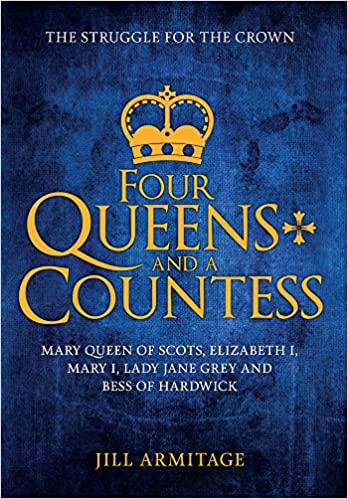
Four Queens and a Countess by Jill Armitage

When Mary Stuart was forced off the Scottish throne she fled to England, a move that made her cousin Queen Elizabeth very uneasy. Elizabeth had continued the religious changes made by her father and England was a Protestant country, yet ardent Catholics plotted to depose Elizabeth and put Mary Stuart on the English throne. So what was Queen Elizabeth going to do with a kingdomless queen likely to take hers? She had her placed under house arrest with her old friend Bess of Hardwick, then married to her fourth husband, the wealthy and influential Earl of Shrewsbury. The charismatic Scotswoman was treated more like a dowager queen than a prisoner and enjoyed the Shrewsbury’s affluent lifestyle until Bess suspected Mary of seducing her husband. But for sixteen years, with the never-ending threat of a Catholic uprising, Bess was forced to accommodate Mary and her entourage at enormous cost to both her finances and her marriage. Bess had also known the doomed Jane Grey and Mary Tudor, Queen of France. She had been in service in the Grey household and companion to the infant Jane. Mary Tudor had been godmother to Bess’s fifth child. Four Queens and a Countess delves deep into the relationships of these women with their insurmountable differences, the way they tried to accommodate them and the lasting legacy this has left. The clash of personalities and its deadly political background have never been examined in detail before.

Jill Armitage looks at the second half of the Tudor period through the lives of the four queens that shaped it and one remarkable countess. The flowing narrative tells the stories of Lady Jane Grey – the queen for 9 days – Mary I, Elizabeth I and Mary Queen of Scots alongside that of Bess of Hardwick, jailer of the Scottish queen. Four Queens and a Countess is a wonderful study of these remarkable women; women who, between them, influenced the direction of England for generations to come.

Jill Armitage investigates their various characters, relationships and disagreements, and explains how their relationships with each other affected the nations as a whole, and each other on an individual basis. Four Queens and a Countess is a thoroughly enjoyable and absorbing read, providing new insight and a refreshing change of focus on the Tudor era.

I highly recommend it!

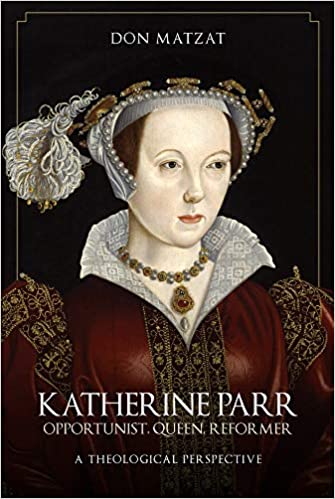
Katherine Parr: Oppportunist, Queen, Reformer by Don Matzat

Don Matzat here provides a new perspective on the life of Katherine Parr, the sixth and final wife of the infamous Henry VIII. While most biographers suggest that Katherine chose to marry the obese, irascible monarch in order to further some reformation or obey a divine imperative, the author goes against the tide and concludes that Katherine was an opportunist who married the king in order to enjoy the comforts of being the Queen of England, proven by her sumptuous lifestyle. But everything changed for Katherine when she had a dramatic conversion experience, embracing the primary tenets of the Protestant Reformation as described in her seminal work, The Lamentation of a Sinner. Her newly found belief placed her in a precarious position, not only with her husband but with the heresy hunters who, with the king’s blessing, beheaded those who held such beliefs. Yet Katherine had the courage to discuss her faith with her dangerous husband during the final months of his life. The life of Katherine Parr was one of drama, intrigue, danger, deceit, clandestine romance, scandal, tragedy and mystery. She came to a tragic end, and for three hundred years her burial site remained unknown. Katherine ruled England while Henry went to war against France. She was the first woman published in England under her own name. Her Lamentation of a Sinner is a little-known gem of the Protestant Reformation. Her influence upon the children of Henry, the future monarchs Edward VI, Mary I and Elizabeth I, would affect English history for many years to come.

I think, out of all Henry VIII’s queens, Katherine Parr’s story fascinates me the most. And its not just because she lived at Gainsborough Old Hall – one of my favourite haunts – for a time. Henry VIII was Katherine’s third husband – and she was his sixth wife. But Katherine Parr was so much more than Henry VIII’s wife. She was an intelligent woman and a proponent of the new Protestant faith – indeed, she almost met the fate of her predecessors, Anne Boleyn and Catherine Howard, when Henry suspected her of heresy.

Author Don Matzat looks at Katherine’s life and her religious outlook using The Lamentations of a Sinner, written by Katherine herself, to give him an insight into Katherine the woman and Katherine the queen.

In Katherine Parr: Opportunist, Queen, Reformer Don Matzat uses Katherine Parr’s own writings and letters to paint a vivid picture of this remarkable queen. Beautifully written, engaging and thoroughly researched, this book is a wonderful addition to any Tudor library.

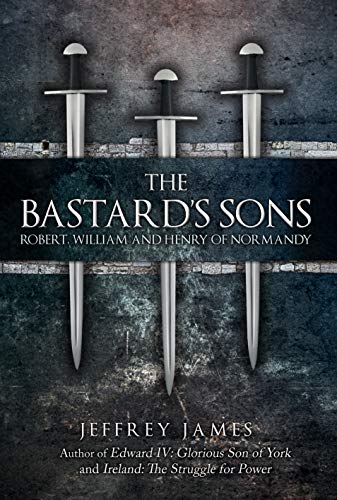
The Bastard’s Sons by Jeffrey James

“William the Conqueror’s intellect is said to have remained clear right up to his death. He would have questioned whether any of his three sons individually had the ability to rule the troublesome amalgam of England, Normandy and Maine once he was gone. The Bastard’s Sons is the story of those three men: Robert, William and Henry of Normandy.

Of Robert, the dying king is said to have claimed he was ‘a proud and silly prodigal’, adding that ‘the country which is subject to his dominion will be truly wretched’. Yet Robert became a great crusader. William got on better with his namesake, known to us as William Rufus for his florid looks. He was, like his father, of kingship material, and might have gained the throne of England on his father’s nod, but, equally plausibly, orchestrated a coup. The youngest of the Bastard’s sons, Henry, inherited money from his father, but not land. To placate Henry, the Conqueror is alleged to have told him that one day he would gain both England and Normandy.

The stage was set for an epic power struggle between the three men and their barons, who held lands on both sides of the Channel and were thus caught in a difficult position. A mysterious death in the forest, a crusading hero’s return and the tenacity of an overlooked third son would all combine to see this issue settled once and for all.”

The Bastard’s Sons: Robert, William and Henry of Normandy by Jeffrey James is a wonderful book telling the story of the post-Conquest years through the power struggles of William the Conqueror’s three surviving sons. In a wonderful, engaging narrative, Jeffrey James provides a unique insight into these three, very different brothers.

By looking at their relationships with each other, at the nobles who surrounded and supported them, and at the events of the latter part of the eleventh century and beginning of the twelfth, Jeffrey James shows us how these three brothers influenced each other’s lives, and the lives of those around them; as well as the politics of England and Normandy and of Europe in general.

The Bastard’s Sons: Robert, William and Henry of Normandy is an absorbing read, offering a new perspective on the post Conquest years and demonstrating the far reaching influences of all three of William the Conqueror’s surviving sons. It is a must-read for anyone interested in the post Conquest years of England and Normandy, and in the establishment of the Norman dynasty.

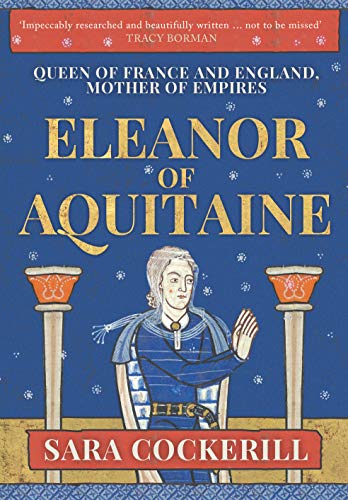
Eleanor of Aquitaine by Sara Cockerill

“In the competition for remarkable queens, Eleanor of Aquitaine tends to win. In fact her story sometimes seems so extreme it ought to be made up.

The headlines: orphaned as a child, Duchess in her own right, Queen of France, crusader, survivor of a terrible battle, kidnapped by her own husband, captured by pirates, divorced for barrenness, Countess of Anjou, Queen of England, mother of at least five sons and three daughters, supporter of her sons’ rebellion against her own husband, his prisoner for fifteen years, ruler of England in her own right, traveller across the Pyrenees and Alps in winter in her late sixties and seventies, and mentor to the most remarkable queen medieval France was to know (her own granddaughter, obviously).

It might be thought that this material would need no embroidery. But the reality is that Eleanor of Aquitaine’s life has been subjected to successive reinventions over the years, with the facts usually losing the battle with speculation and wishful thinking.

In this biography Sara Cockerill has gone back to the primary sources, and the wealth of recent first-rate scholarship, and assessed which of the claims about Eleanor can be sustained on the evidence. The result is a complete re-evaluation of this remarkable woman’s even more remarkable life. A number of oft-repeated myths are debunked and a fresh vision of Eleanor emerges. In addition the book includes the fruits of her own research, breaking new ground on Eleanor’s relationship with the Church, her artistic patronage and her relationships with all of her children, including her family by her first marriage.”

Sara Cockerill’s Eleanor of Aquitaine: Queen of France and England, Mother of Empires was one of the most anticipated history books of 2019 and it did not disappoint. Dispelling many of the rumours and stories that float around whenever Eleanor of Aquitaine is mentioned, Sara Cockerill looks for the real woman behind the legend.

Mainly using primary sources, Sara Cockerill re-examines every aspect of Eleanor’s life. The research is impeccable and Sara Cockerill’s arguments and analysis are well reasoned and compelling. Eleanor of Aquitaine: Queen of France and England, Mother of Empires is essential reading for anyone interested in the era in general and Eleanor of Aquitaine’s story in particular.

This is one of those books that should sit in all medieval history lovers’ libraries, to be read and devoured.

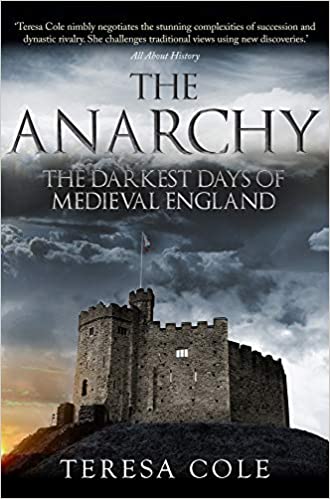
The Anarchy by Teresa Cole

When the mighty Henry I died in December 1135, leaving no legitimate son, who was to replace him on the throne of England? Would it be Stephen, nephew to the king and showered with favours that maybe gave him ideas above his station? Or could it be a woman, Henry’s own choice, his daughter Matilda, who had been sent away when eight years old to marry the Holy Roman Emperor, widowed, then forced into a hated second marriage for political reasons? Stephen was the first to act, seizing the throne that had been promised to Matilda, but he would find taking a crown far easier than keeping it. The resulting struggle became known as ‘the Anarchy,’ a time when fortune changed sides as frequently and dramatically as in any page-turning thriller, and with a cast of characters to match – some passionately supporting Stephen or Matilda, others simply out to grab what they could from the chaos. These supporting players are not overlooked here: Henry of Blois, brother of Stephen, Bishop of Winchester, and largely orchestrator of the church’s response to the conflict; Robert of Gloucester, illegitimate son of Henry I and chief supporter of his half-sister; and Geoffrey of Anjou, husband of Matilda, determined to secure Normandy (traditional enemy of Anjou) for himself. Covering all the twists and turns of this war between cousins, as first one side then the other seemed within touching distance of total victory, The Anarchy blends contemporary, sometimes eyewitness accounts with modern analysis to describe a period of England’s history so dark and lawless that those who lived through it declared that ‘Christ and his saints slept.’

When I told Amberley I wanted to do a book about the Anarchy, they were reluctant, saying that Teresa Cole had a book coming out about the Anarchy, and they were worried the books would be too similar. So I promised to concentrate on the Women of the Anarchy (my book’s working title), but was – from that moment – curious to read Teresa Cole’s take on the events. Luckily I got the chance.

The Anarchy: The Darkest Days of Medieval England is an intelligent, engaging study of the 19 years of English history during which the Anglo-Saxon Chronicle bemoaned that ‘Christ and his Saints slept’. Told in a chronological narrative, Teresa Cole examines every aspect of the period; the personalities involved and the extent of devastation and destruction caused by the conflict – both in England and Normandy.

Using eyewitness accounts and contemporary chronicles, Teresa Cole examines the motives behind the two protagonists, King Stephen and Empress Matilda, looking at their reasons for wanting the throne – and for wanting to keep it. The Anarchy: The Darkest Days of Medieval England also provides insight into the leading supporters on both sides of the conflict and demonstrates that though war was waged over a 19 year period, the main battles were fought in the early years and by 1147 the nobles were getting so tired of war they were looking to make mutual protection treaties between themselves, or go on crusade, rather than continue a war that had been fought to a stalemate.

The Anarchy: The Darkest Days of Medieval England is an interesting, enjoyable read offering new insight and perspective on an often overlooked period of English history, the only time that a woman led a faction to war on English soil.

All these books are available from Amberley Publishing.

*

My Books

Ladies of Magna Carta: Women of Influence in Thirteenth Century England looks into the relationships of the various noble families of the 13th century, and how they were affected by the Barons’ Wars, Magna Carta and its aftermath; the bonds that were formed and those that were broken. It is now available from Pen & Sword,  Amazon and from Book Depository worldwide.

Also by Sharon Bennett Connolly:

Silk and the Sword: The Women of the Norman Conquest traces the fortunes of the women who had a significant role to play in the momentous events of 1066.  Available now from Amazon,  Amberley Publishing, Book Depository.

Heroines of the Medieval World tells the stories of some of the most remarkable women from Medieval history, from Eleanor of Aquitaine to Julian of Norwich. Available now from Amberley Publishing and Amazon and Book Depository.

*

You can be the first to read new articles by clicking the ‘Follow’ button, liking our Facebook page or joining me on Twitter and Instagram.

©2020 Sharon Bennett Connolly
Book Corner: Reading Round-up 1

I am well behind on the list of book reviews I still have to write up, so I though I would do a couple of articles that include mini-reviews of several books that I have read and enjoyed over the last few months, to clear the backlog and give you some fabulous ideas if you’re looking for that next read.

A Hidden History of the Tower of London by John Paul Davis

Famed as the ultimate penalty for traitors, heretics and royalty alike, being sent to the Tower is known to have been experienced by no less than 8,000 unfortunate souls. Many of those who were imprisoned in the Tower never returned to civilisation and those who did, often did so without their head! It is hardly surprising that the Tower has earned itself a reputation among the most infamous buildings on the planet. There have, of course, been other towers. Practically every castle ever built has consisted of at least one; indeed, even by the late 14th century, the Tower proudly boasted no less than 21. Yet even as early as the 1100s, the effect that the first Tower had on the psyche of the local population was considerable. The sight of the dark four-pointed citadel – at the time the largest building in London – as it appeared against the backdrop of the expanding city gave rise to many legends, ranging from the exact circumstances of its creation to what went on within its strong walls. In ten centuries what once consisted of a solitary keep has developed into a complex castle around which the history of England has continuously evolved. So revered has it become that legend has it that should the Tower fall, so would the kingdom. Beginning with the early tales surrounding its creation, this book investigates the private life of an English icon. Concentrating on the Tower’s developing role throughout the centuries, not in terms of its physical expansion into a site of unique architectural majesty or many purposes but through the eyes of those who experienced its darker side, it pieces together the, often seldom-told, human story and how the fates of many of those who stayed within its walls contributed to its lasting effect on England’s – and later the UK’s – destiny. From ruthless traitors to unjustly killed Jesuits, vanished treasures to disappeared princes and jaded wives to star-crossed lovers, this book provides a raw and at times unsettling insight into its unsolved mysteries and the lot of its unfortunate victims, thus explaining how this once typical castle came to be the place we will always remember as THE TOWER.

What a wonderful read!

Packed to the brim with the best stories from the Tower, and almost 1,000 years of history – some you will know and some you won’t. John Paul Davis tells the remarkable story of the Tower of London through the lives of the people who have resided under its roofs – some of them most unfortunate indeed! We hear the stories of those fortunate people who escaped – and the not-so-fortunate who died in the attempt. John Paul Davis examines every aspect of the Tower of London, its role as a royal fortress, prison and place of execution; and the national events in which it played apart, such as the Peasants’ Revolt and the executions of 2 of Henry VIII’s queens. Written in 23 chapters, the story of the Tower as a prison is told from its foundation in 1066 to the present day.

With these incredible and often heart breaking stories, John Paul Davis clearly demonstrates how the fortress acquired its sinister reputation.

A Hidden History of the Tower of London is a thoroughly enjoyable read, and impossible to put down.

Lost Heirs of the Medieval Crown by J.F. Andrews

When William the Conqueror died in 1087 he left the throne of England to William Rufus … his second son. The result was an immediate war as Rufus’s elder brother Robert fought to gain the crown he saw as rightfully his; this conflict marked the start of 400 years of bloody disputes as the English monarchy’s line of hereditary succession was bent, twisted and finally broken when the last Plantagenet king, Richard III, fell at Bosworth in 1485.

The Anglo-Norman and Plantagenet dynasties were renowned for their internecine strife, and in Lost Heirs we will unearth the hidden stories of fratricidal brothers, usurping cousins and murderous uncles; the many kings – and the occasional queen – who should have been but never were. History is written by the winners, but every game of thrones has its losers too, and their fascinating stories bring richness and depth to what is a colourful period of history. King John would not have gained the crown had he not murdered his young nephew, who was in line to become England’s first King Arthur; Henry V would never have been at Agincourt had his father not seized the throne by usurping and killing his cousin; and as the rival houses of York and Lancaster fought bloodily over the crown during the Wars of the Roses, life suddenly became very dangerous indeed for a young boy named Edmund.

With Lost Heirs of the Medieval Crown, author JF Andrews provides a fascinating study of the also-rans and almost-made-its of medieval history; those children of the kings of England who died before they could claim their birth-right, or were passed over due to the dynastic squabbles of the Norman and Plantagenet dynasties that ruled England from the Norman Conquest in 1066 to the advent of the Tudor age.

From the battles of Robert Curthose, eldest son of William the Conqueror, to the tragic lives of the Yorkist heirs, Edward V, Edward of Middleham and Edward Earl of Warwick, Lost Heirs of the Medieval Crown is a thoroughly engaging read, examining the lives of the heirs who were unable to claim their birthright, imprisoned for their royal blood, died before their time, or died in the attempt to claim the throne. Each individual story is brought into one volume, and demonstrates the struggle for power and supremacy in medieval England.

Beautifully written and well researched, it is an engaging read.

Decoding the Bayeux Tapestry by Arthur C. Wright

For the first time, a scholar reveals the meaning of the marginal images on the Bayeux Tapestry, unlocking a completely new meaning of the work.
 
The story of the Norman Conquest and the Battle of Hastings as shown in the Bayeux Tapestry is arguably the most widely-known in the panoply of English history, and over the last 200 years there have been hundreds of books on the Tapestry seeking to analyze its meanings. Yet, there is one aspect of the embroidery that has been virtually ignored or dismissed as unimportant by historians—the details in the margins.
 
The fables shown in the margins are neither just part of a decorative ribbon, nor are they discontinuous. They follow on in sequence. When this is understood, it becomes clear that they must relate to the action shown on the body of the Tapestry. After careful examination, the purpose of these images is to amplify, elaborate, or explain the main story.
 
In this groundbreaking study, Arthur Wright reveals the significance of the images in the margins. Now it is possible to see the “whole” story as never before, enabling a more complete picture of the Bayeux Tapestry to be constructed. Wright reexamines many of the scenes in the main body of the work, showing that a number of the basic assumptions, so often taught as facts, have been based on nothing more than reasoned conjecture.
 
It might be thought that after so much has been written about the Bayeux Tapestry there was nothing more to be said, but Decoding the Bayeux Tapestry shows how much there is still to be learned.

Decoding the Bayeux Tapestry: The Secrets of History’s Most Famous Embroidery Hidden in Plain Sight by Arthur C. Wright is a wonderful, engaging study of this most famous of embroideries, retelling the Norman Invasion in stunning, colourful needlework. Arthur C. Wright studies every aspect of the Tapestry, from the beasts in the margins to the story being played out in dramatic detail in the main part of the Tapestry. The author demonstrates how the images in the tapestry, even the animals and mystical creatures in the margin, serve to tell the story of the tapestry and the Norman Conquest.

An entertaining read and thoughtful study of the most famous of tapestries Decoding the Bayeux Tapestry is an illuminating work, beautifully illustrated along the way with images from the famous needlework.

Sex and Sexuality in Stuart Britain by Andrea Zuvich

Peek beneath the bedsheets of Stuart Britain in this frank, informative, and captivating look at the sexual lives of the peoples of the British Isles between 1603 and 1714. Popular Stuart historian Andrea Zuvich, The Seventeenth Century Lady , explores our ancestors’ ingenious, surprising, bizarre, and often entertaining beliefs and solutions to the challenges associated with maintaining a healthy sex life, along with the prevailing attitudes towards male and female sexual behaviour. The author sheds light not only on the saucy love lives of the Royal Stuarts, but also on the dark underbelly of the Stuart era with histories of prostitution, sexual violence, infanticide, and sexual deviance. What was considered sexually attractive in Stuart Britain? At which ages would people be old enough for marriage? What were the penalties for adultery, incest, and fornication? How did Stuart-era peoples deal with infertility, sexually-transmitted illnesses, and child mortality? Find out the answers to these questions – and more – as fashion, food, science, art, medicine, magic, literature, love, politics, faith and superstition of the day are all examined, leaving the reader with a new regard for the ingenuity and character of our seventeenth and early eighteenth-century ancestors.

Sex and Sexuality in Stuart Britain by Andrea Zuvich is a wonderful study of the bedroom exploits of the Stuart dynasty of the seventeenth century. Andrea Zuvich examines all aspects of Stuart sexual life, from attitudes to rape and pornography, to the notions of love and marriage. Zuvich also looks at the lives of the Stuart monarchs, examining the rumours around them, the various mistress and lovers and the perceptions they gave to their people and to history. This is a truly fascinating study of a part of life that is important to all of us – and necessary for our continued existence – but so rarely talked about. Sex and Sexuality in Stuart Britain is so much more than a study of sexual practices in Stuart Britain, it also analyses the effects of child mortality, the dangers of childbirth. It also looks at the seedier side of society, such as infanticide and sexually transmitted diseases.

Sex and Sexuality in Stuart Britain is fascinating! It is a book that needed to be written and provides a wonderful contrast to the usual books on Stuart Britain, which concentrate on the Civil Wars, rather than the lives, loves and desires of the people. Andrea Zuvich has written a marvelous study of Stuart attitudes towards sex and sexuality, leaving no stone unturned to give the reader a comprehensive view of Stuart life, including the legal, social and personal aspects and implications.

The Peasants Revolting Lives by Terry Deary

Today we are aware of how the rich and privileged have lived in the past because historians write about them endlessly. The poor have largely been ignored and, as a result, their contributions to our modern world are harder to unearth. Skilled raconteur TERRY DEARY takes us back through the centuries with a poignant but humorous look at how life treated the common folk who scratched out a living at the very bottom of society. Their world was one of foul food, terrible toilets, danger, disease and death the last, usually premature. Discover the stories of the teacher turned child-catcher who rounded up local waifs and strays and put them to work, and the thousands of children who descended into the hazardous depths to dig for coal. Read all about the agricultural workers who escaped the Black Death only to be thwarted by greedy landowners. And would you believe the one about the man who betrothed his 7-year-old daughter to a Holy Roman Emperor, or even the brothel that was run by a bishop? On the flip side, learn how cash-strapped citizens used animal droppings for house building and as a cure for baldness; how sparrow s brains were incorporated into aphrodisiacal brews; and how mixing tea with dried elder leaves could turn an extra profit. And of the milestones that brought some meaning to ordinary lives, here are the trials and tribulations of courtship and marriage; the ruthless terrors of the sporting arena; and the harsh disciplines of education all helping to alleviate the daily grind. The Peasants Revolting Lives celebrates those who have endured against the odds. From medieval miseries to the idiosyncrasies of being a twenty-first-century peasant, tragedy and comedy sit side by side in these tales of survival and endurance in the face of hardship.

Terry Deary’s The Peasants’ Revolting Lives is a fun and fascinating read for all the family. Whenever a Terry Deary book arrives on the doorstep, there is an inevitable squabble between myself and my son as to who should read it first – I tend to lose!

With stories that are often amusing, sometimes gruesome and all true, Terry Deary examines every aspect of the life of the peasant – throughout history – from work and religion, to sport, entertainment and education. The book is packed full of facts, each story or anecdote intended to inform and entertain – and they do!

The Peasants’ Revolting Lives is a wonderful reading experience for adult and child alike. The stories are so engaging and interesting that you don’t even realise you are learning about the trials and hardships of life as a peasant down the centuries. It is a must-read for any history lover.

All these books are available from Pen & Sword, with 30% off throughout December.

*

My Books

Ladies of Magna Carta: Women of Influence in Thirteenth Century England looks into the relationships of the various noble families of the 13th century, and how they were affected by the Barons’ Wars, Magna Carta and its aftermath; the bonds that were formed and those that were broken. It is now available from Pen & Sword,  Amazon and from Book Depository worldwide.

Also by Sharon Bennett Connolly:

Silk and the Sword: The Women of the Norman Conquest traces the fortunes of the women who had a significant role to play in the momentous events of 1066.  Available now from Amazon,  Amberley Publishing, Book Depository.

Heroines of the Medieval World tells the stories of some of the most remarkable women from Medieval history, from Eleanor of Aquitaine to Julian of Norwich. Available now from Amberley Publishing and Amazon and Book Depository.

*

You can be the first to read new articles by clicking the ‘Follow’ button, liking our Facebook page or joining me on Twitter and Instagram.

©2020 Sharon Bennett Connolly

Book Corner: A Time for Swords by Matthew Harffy

When the Vikings attack, a novice monk’s life is changed forever in Matthew Harffy’s new historical adventure.

Lindisfarne, AD793.

There had been portents – famine, whirlwinds, lightning from clear skies, serpents seen flying through the air. But when the raiders came, no one was prepared.

They came from the North, their dragon-prowed longships gliding out of the dawn mist as they descended on the kingdom’s most sacred site.

It is 8th June AD793, and with the pillage of the monastery on Lindisfarne, the Viking Age has begun.

While his fellow monks flee before the Norse onslaught, one young novice stands his ground. He has been taught to turn the other cheek, but faced with the slaughter of his brothers and the pagan desecration of his church, forgiveness is impossible.

Hunlaf soon learns that there is a time for faith and prayer . . . and there is a time for swords.

It is my pleasure to be a part of Matthew Harffy’s blog tour for the release of the first book in what will be a new series, A Time for Swords.

It is always a worry when one of your favourite authors starts a new series – for author and reader, alike – that you may not like it, that the new hero doesn’t live up to the promise of the last hero – or even that the new hero is too similar to the last and the book appears formulaic.

Well, with Matthew Harffy, you needn’t worry about that. He seems to be able to create distinct characters and storylines at the drop of a hat. To be fair to Matthew, I am sure that it is not that easy – though he does make it look so! With Wolf of Wessex, his first foray away from the heroic Beobrand, Matthew Harffy proved his ability at storytelling did not just lay in one direction, and that he did have so much more in his repertoire.

With A Time for Swords, he has done it again!

Recreating the world of 8th century Northumbria, Matthew Harffy has left the 7th century behind to document the arrival of the Vikings on Britain’s shores, with the raid on Lindisfarne – Holy Island. A Time for Swords takes this raid as its starting point and pursues the likely reactions on the people of Northumbria following this unexpected explosion of violence on the peaceful island monastery. As we have come to expect from Matthew Harffy, the action starts on the very first page and doesn’t let the reader stop for breath until the very last.

My feet pounded the soft earth as I sped back towards the dwellings of the ceorls. A green plover, startled by my passing, burst from the long grass that brushed against my bare legs as I ran. I stumbled in shock and surprise at the bird’s screeching call, so like that of the screams of the people dying in the minster and the huts of the villagers. I rushed on, my lungs burning and the thickening smoke stinging my eyes.

I came up over the low rise from the beach to a scene of chaos. When I had left the minster at dawn, its buildings had rested peacefully, close to the natural harbour and overlooked by the mound of rock at the island’s tip. A few small fishing boats had been canted in the shallows of low tide, and teh morning had been still and quiet. Now the brightening day was filled with noise, fire and smoke.

And death.

In the harbour were three huge ships, sleek and menacing with terrifying carven serpent head prows. Around the ships were congregated several men. The land all around was full of movement. Dozens of armed warriors had poured from the ships and had made their way into the grounds of the minster. Three of the monastery buildings were burning, great pillars of flame and smoke smudging the sky. My heart lurched as I realised one of the fires was the scriptorium. I imagined the gold cover of The Treasure of Life melting, the parchment leaves curling, smouldering and then bursting into flames. Leofstan and I would never unpick the secrets within its pages now. I felt tears prickle my eyes as I thought of so many books being consumed, just like in my nightmare of Alexandria. Countless days of painstaking work and skill gone in an instant. So much knowledge snuffed out and lost. I was a long way off, but as I crested the rise I could feel the heat from the fires on my face.

The lead character, Hunlaf, is a monk who has discovered a skill with the sword, and who wants nothing more than to protect his brethren at the monastery at Werceworthe (Warkworth) from the attack that he knows is coming. The intrepid warrior monk manages to attract a small but fierce group of fighters to his cause, including Runolf, a Viking left behind in the raid on Lindisfarne, who has his own motives for confronting the Norse raiders.

Hunlaf is a likeable character, torn between his love of the church and the draw of the sword and the comradeship of warriors. He is a young, gifted fighter with an eagerness to learn and a desire to protect that means he will find it hard to back down from a fight. Each of the characters surrounding Hunlaf have their own stories and reasons for joining the fight, from the monk, Leofstan, with a warrior past of his own, to Runolf the Norseman fighting his own kind, to a Welshman always in need of proving himself and a young, fiery Irishman, Cormac, seeking vengeance for the fate of his family.

The storyline of A Time for Swords draws the reader in from the outset, taking you on a journey from the ruined Lindisfarne to York and on to the monastery at Warkworth. Matthew Harffy demonstrates his knowledge of the area, the people and the landscape, in Hunlaf’s travels. Harffy skillfully combines impeccable historical research with his wonderful storytelling, to create a novel that has a sense of authenticity about it. While the raid on Lindisfarne is historical fact, the subsequent events that young Hunlaf gets involved in are a creation of the author. However, Matthew Harffy supplements the fictional fighting by using the original landscape, the weapons used, fighting tactics and the very real threat of the Viking raiders, to add a sense of realism,

As you may have come to expect with Matthew Harffy, the fight scenes are where he is in his element. Beautifully choreographed, they are frenetic and vividly described with a passion unique to the author. and there is no guarantee that your favourite character will survive…

In short, A Time for Swords is one of those books which is not to be missed. Entertaining, exciting and totally gripping, the novel reaffirms, once more – if more affirmation is needed – Matthew Harffy’s status as one of the best authors of historical fiction around.

Read it – I promise, you will not be disappointed!

About the Author:

Matthew Harffy grew up in Northumberland where the rugged terrain, ruined castles and rocky coastline had a huge impact on him. He now lives in Wiltshire, England, with his wife and their two daughters.

Pre-order links:

Amazon UK: https://amzn.to/39T3MqJ

Follow Matthew:

Twitter: @MatthewHarffy

Website: www.matthewharffy.com

Follow Aries:

Twitter: @AriesFiction

Facebook: Aries Fiction

Website: http://www.headofzeus.com

*

My Books

Ladies of Magna Carta: Women of Influence in Thirteenth Century England looks into the relationships of the various noble families of the 13th century, and how they were affected by the Barons’ Wars, Magna Carta and its aftermath; the bonds that were formed and those that were broken. It is now available from Pen & Sword,  Amazon and from Book Depository worldwide.

Also by Sharon Bennett Connolly:

Silk and the Sword: The Women of the Norman Conquest traces the fortunes of the women who had a significant role to play in the momentous events of 1066.  Available now from Amazon,  Amberley Publishing, Book Depository.

Heroines of the Medieval World tells the stories of some of the most remarkable women from Medieval history, from Eleanor of Aquitaine to Julian of Norwich. Available now from Amberley Publishing and Amazon and Book Depository.

*

You can be the first to read new articles by clicking the ‘Follow’ button, liking our Facebook page or joining me on Twitter and Instagram.

©2020 Sharon Bennett Connolly