
In 1066 William de Warenne joined his namesake the Duke of Normandy on his expedition to conquer England. De Warenne is one of the few named knights involved in the Battle of Hastings, and one of William of Normandy’s most trusted captains.
Sometime in the years either side of the Conquest, William had married Gundrada.
Gundrada’s parentage has long been a subject of debate among historians. For many years she was believed to be the daughter of William the Conqueror and his wife, Matilda of Flanders. It seems the misunderstanding arose with the monks at Lewes Priory, when a copy of an earlier charter claimed she was the daughter of Matilda of Flanders. Lewes was founded as a Cluniac monastery by William and Gundrada and it may be that the monks got carried away with the idea of their foundress having royal blood, or that there was an error when copying the charter from the original.
For whatever reason, the claims by Lewes Priory have caused controversy throughout the ensuing centuries. In the sixteenth century Leland believed that she was the Conqueror’s daughter, while Orderic Vitalis had stated that she was ‘Sister of Gherbode, a Fleming, to whom King William the First had given the City and Earldom of Chester’¹ By the 1800s it was thought that Gundrada was not a daughter of the King, but of the queen, Matilda, by an earlier, forgotten marriage to a Flemish nobleman called Gerbod.
Other suggestions have included that she was an adopted daughter, raised alongside William and Matilda’s own children who were of a similar age. Alternatively, due to her Flemish origins, it has been argued that the confusion arose as she had joined Matilda’s household at an early age; an assertion supported by Matilda’s gift to Gundrada of the manor of Carlton in Cambridge – a manor Gundrada later gave to Lewes Priory.

In 1888 in the English Historical Review, E.A. Freeman used the priory’s original charter to conclude that there was no familial relationship between Gundrada and William the Conqueror. In it, while the king and William de Warenne, both, mention Gundrada, neither refer to her as being related to the king or queen. Freeman stated ‘there is nothing to show that Gundrada was the daughter either of King William or of Queen Matilda; there is a great deal to show that she was not.’²
It now seems more likely that Gundrada was a Flemish noblewoman, the sister of Gerbod who would be, for a brief time, Earl of Chester. Her father may also have been called Gerbod, and was the hereditary advocate of the monastery of St Bertin; a title which later will pass down through the de Warenne family. Another brother, Frederic, had land in Sussex and Kent, even before the Conquest. The brothers, it seems, were deeply involved in the politics of Flanders and Normandy; indeed, it is thought that Gerbod resigned his responsibilities in Chester in order to return to the continent to oversee the family’s land and duties there. Frederic, along with the count of Flanders, was witness to Count Guy of Ponthieu’s charter to the abbey of St Riquier in 1067.
William de Warenne was well rewarded for his part in the Norman Conquest, receiving lands in 13 counties, including the Honour of Consibrough in South Yorkshire, previously owned by the last Saxon king, Harold II Godwinson. De Warenne’s brothers-in-law had also joined the expedition, and Frederic was rewarded with the lands of a man named Toki; in Norfolk, Suffolk and Cambridgeshire, worth over £100.
However, Frederic was unable to enjoy his good fortune for long, as he was killed in the rebellion of Hereward the Wake in 1070. His lands at Castle Acre and elsewhere, still known as ‘Frederic’s Fief’ in 1086, were inherited by his sister, who retained control of them throughout her lifetime. One manor was given to the abbey of St Riquier, possibly by Gundrada in memory of her brother.

Gundrada’s other brother, Gerbod resigned his position in Chester in 1070 and returned to Flanders which was in the midst of civil war, following the death of its count. Gerbod’s return was essential to guarantee the safety of the family’s lands and interests. The former earl’s fate is uncertain; one report has him killed while another sees him imprisoned, and a third claims Gerbod accidentally killed his lord, Count Arnulf, at the Battle of Kassel in 1071. According to this last account, Gerbod travelled to Rome to perform penance. He intended to have the hand that struck the fatal blow amputated but was persuaded against it and eventually became a monk at Cluny.
It seems that neither brother raised a family, as Gerbod’s lands in Flanders were also inherited by Gundrada; the family interest in the abbey of St Bertin would eventually be passed on to Gundrada and William’s 2nd son, Reynold.
As with so many nobles of the 11th century, Gundrada and William were known for their piety. In 1077 the couple made a pilgrimage to Rome; en route, they visited the magnificent abbey of Cluny in Burgundy. They must have been impressed with the abbey, as it inspired them to found their own Cluniac priory at Lewes in Sussex. In 1078 the abbot of Cluny sent over the first monks as William and Gundrada were supervising the new monastery’s construction; it would be the first Cluniac house in England. All the churches on the de Warenne’s vast estates were given to the priory, including endowments from her brother Frederic’s lands in Norfolk.

Gundrada and William had 3 children together. Their eldest son, William, would succeed his father as Earl of Surrey and de Warenne. He married Isabel de Vermandois, widow of Robert de Beaumont, earl of Leicester; with whom he had, apparently, been having an affair even before the earl’s death. Young William had a chequered career, he supported the claims of Robert Curthose, duke of Normandy, to the English throne against the duke’s younger brother, Henry I. However, duke Robert lost and was captured and imprisoned by Henry. Henry eventually forgave William, who fought for the king at the Battle of Bremule and was with Henry he died in 1135.

A second son, Reynold de Warenne, led the assault on Rouen in 1090, for William II Rufus, in the conflict between the English king and his older brother, Duke Robert. However, by 1105 Reynold was now fighting for the duke against the youngest of the Conqueror’s sons, Henry I, defending the castle of Saint-Pierre-sur-Dives for the duke. He was captured by Henry the following year, but had been freed by September 1106. It is possible he died shortly after, but was certainly dead by 1118 when his brother issued a charter, in which he gave 6 churches to Lewes Priory, for the soul of deceased family members, including Reynold.
Gundrada and William also had a daughter, Edith, who married Gerard de Gournay, son of the lord of Gournay-en-Bray. Gerard also supported William II Rufus against Duke Robert and took part in the Crusade of 1096. Edith later accompanied him on pilgrimage back to Jerusalem, sometime after 1104, where he died. Gerard was succeeded by their son, Hugh de Gournay, whose daughter Gundreda would be the mother of Roger de Mowbray. Edith then married Drew de Monchy, with whom she had a son, Drew the Younger.
William de Warenne was created earl of Surrey shortly before his death in 1088; after he had helped William II to suppress a revolt led by Bishop Odo of Bayeux. De Warenne was wounded in the leg during the fighting and was taken to Lewes Priory where he died a short time later.

Gundrada had died in childbirth at Castle Acre in Norfolk on 27th May 1085, therefore never receiving the title of countess. She was buried in the chapter house of Lewes Priory; her husband would be buried beside her 3 years later. Around 1145 new monastic buildings were consecrated at Lewes Priory, Gundrada’s bones were placed in a leaden chest and interred under a tombstone of black Tournai marble, ‘richly carved in the Romanesque style, with foliage and lions’ heads’³. The sculptor was trained at Cluny and would later work for Henry I’s nephew, Henry of Blois, bishop of Winchester and brother of King Stephen.
The tombstone read:
Gundrada, offspring of dukes, glory of the age, noble shoot,
brought to the churches of the English the balm of her character.
As a Martha …
she was to the wretched; a Mary she was in her piety.
That part of Martha [in her] died; the greater part of Mary survives.
O, pious Pancras, witness of truth and justice,
she makes you her heir; may you in your clemency accept the mother.
The sixth day of the kalends of June, showing itself,
broke the alabaster containing her flesh …4
Following the dissolution of Lewes Priory in the 16th century, the tombstone was first moved to Isfield Church; it was moved again in 1775 to the parish church of St John at Southover in Lewes. The remains of Gundrada and William were discovered in 2 leaden chests in 1845 and finally laid to rest at the Southover church in 1847.
The dynasty founded by William and Gundrada would continue until the death of John, the 7th and final de Warenne Earl of Surrey, in 1347.
*
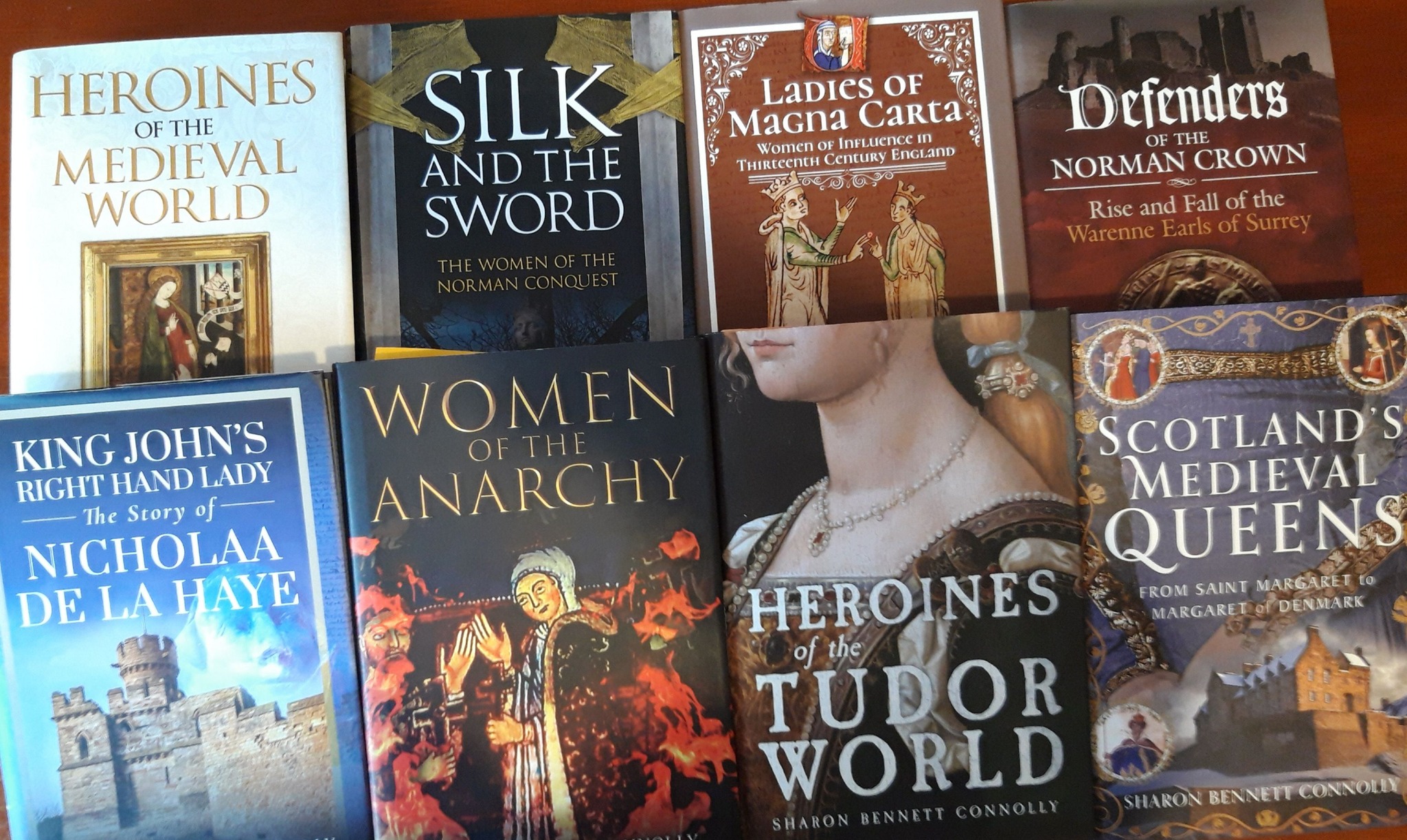
The story of William and Gundrada de Warenne appears in my books, Silk and the Sword: the Women of the Norman Conquest and in even greater detail in Defenders of the Norman Crown: Rise and Fall of the Warenne Earls of Surrey.
*
Footnotes: ¹Early Yorkshire Charters Volume 8 Edited by William Farrer and Charles Travis Clay; ²ibid; ³C.P.Lewis, Oxforddnb.com; 4 Elisabeth M.C. Van Houts and Rosalind C. Love (eds and trans), The Warenne (Hyde) Chronicle
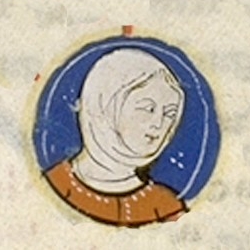
Images: Gundrada and William de Warenne church windows ©lewespriory.org.uk; Castle Acre and Lewes Priory courtesy of Wikipedia; Gundrada’s tombstone and the tombs of Gundrada and William courtesy of findagrave.com.
Sources: Early Yorkshire Charters Volume 8: The Honour of Warenne, Edited by William Farrer and Charles Travis Clay; England Under the Norman and Angevin Kings by Robert Batlett; Brewer’s British Royalty by David Williamson; Britain’s Royal Families, the Complete Genealogy by Alison Weir; british-history.ac.uk; kristiedean.com; English Heritage Guidebook for Conisbrough Castle by Steven Brindle and Agnieszka Sadrei; oxforddnb.com.
*
My Books
Signed, dedicated copies of all my books are available through my online bookshop.
Coming on 15 June224: Heroines of the Tudor World
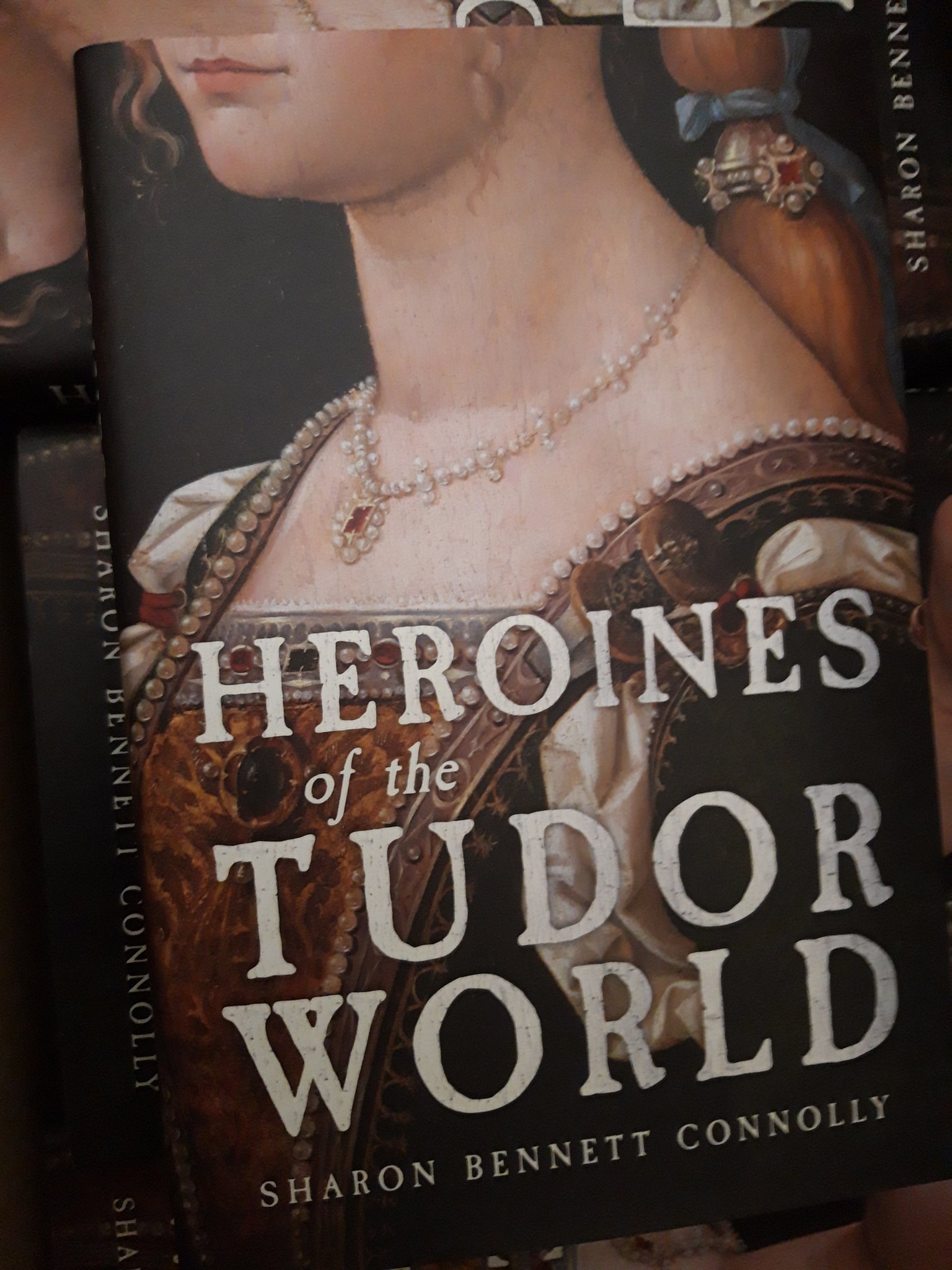
Heroines of the Tudor World tells the stories of the most remarkable women from European history in the time of the Tudor dynasty, 1485-1603. These are the women who ruled, the women who founded dynasties, the women who fought for religious freedom, their families and love. These are the women who made a difference, who influenced countries, kings and the Reformation. In the era dominated by the Renaissance and Reformation, Heroines of the Tudor World examines the threats and challenges faced by the women of the era, and how they overcame them. From writers to regents, from nuns to queens, Heroines of the Tudor World shines the spotlight on the women helped to shape Early Modern Europe.
Heroines of the Tudor World is now available for pre-order from Amberley Publishing and Amazon UK.
Out Now! Women of the Anarchy
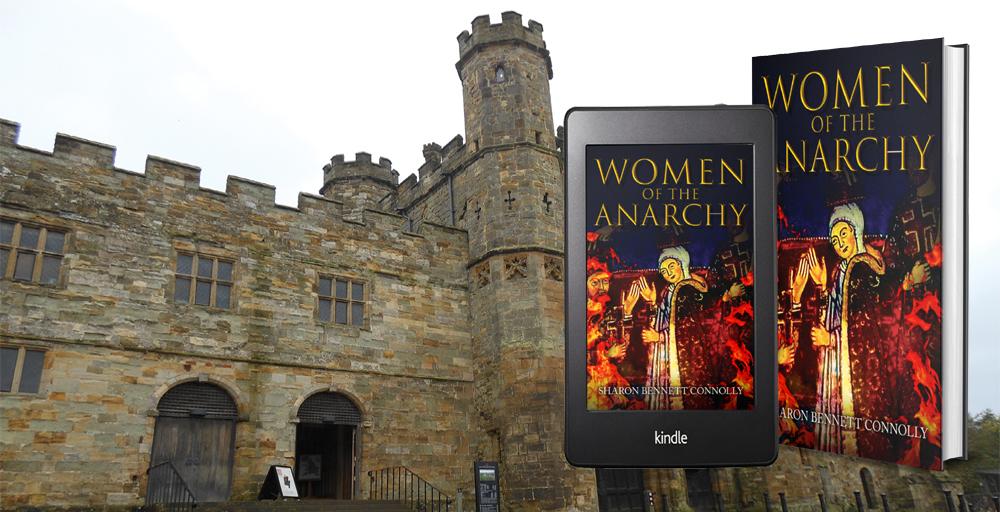
Two cousins. On the one side is Empress Matilda, or Maud. The sole surviving legitimate child of Henry I, she is fighting for her birthright and that of her children. On the other side is her cousin, Queen Matilda, supporting her husband, King Stephen, and fighting to see her own son inherit the English crown. Women of the Anarchy demonstrates how these women, unable to wield a sword, were prime movers in this time of conflict and lawlessness. It show how their strengths, weaknesses, and personal ambitions swung the fortunes of war one way – and then the other.
Available from Bookshop.org, Amberley Publishing and Amazon UK.
Also by Sharon Bennett Connolly:
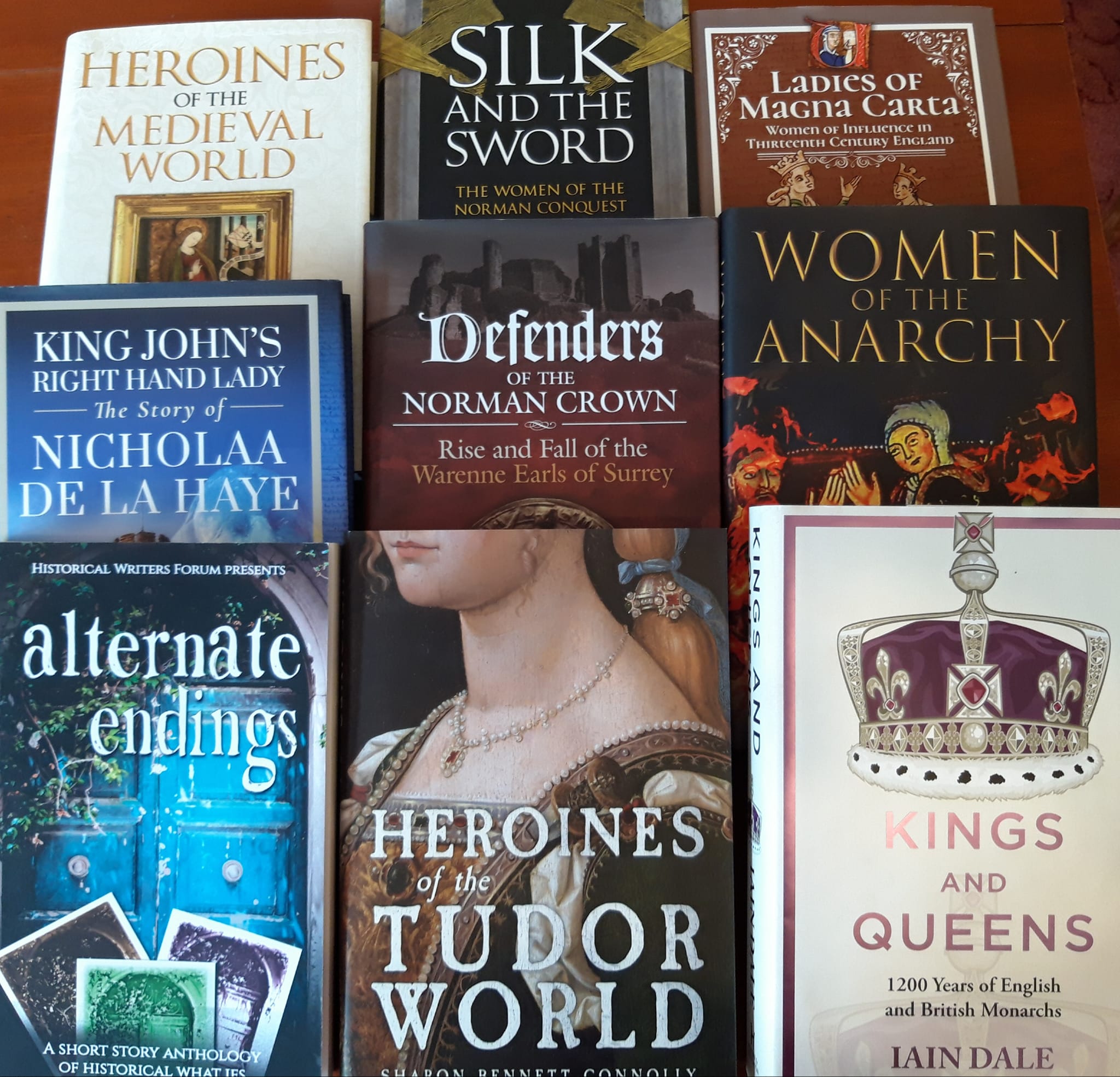
King John’s Right-Hand Lady: The Story of Nicholaa de la Haye is the story of a truly remarkable lady, the hereditary constable of Lincoln Castle and the first woman in England to be appointed sheriff in her own right. It is is available from King John’s Right-Hand Lady: The Story of Nicholaa de la Haye is the story of a truly remarkable lady, the hereditary constable of Lincoln Castle and the first woman in England to be appointed sheriff in her own right. Available from all good bookshops, from Pen & Sword Books, bookshop.org and Amazon. Defenders of the Norman Crown: The Rise and Fall of the Warenne Earls of Surrey tells the fascinating story of the Warenne dynasty, from its origins in Normandy, through the Conquest, Magna Carta, the wars and marriages that led to its ultimate demise in the reign of Edward III. Available from Pen & Sword Books, Amazon in the UK and US, and Bookshop.org.
Ladies of Magna Carta: Women of Influence in Thirteenth Century England looks into the relationships of the various noble families of the 13th century, and how they were affected by the Barons’ Wars, Magna Carta and its aftermath; the bonds that were formed and those that were broken. It is now available in paperback and hardback from Pen & Sword, Amazon, and Bookshop.org. Heroines of the Medieval World tells the stories of some of the most remarkable women from Medieval history, from Eleanor of Aquitaine to Julian of Norwich. Available now from Amberley Publishing and Amazon, and Bookshop.org. Silk and the Sword: The Women of the Norman Conquest traces the fortunes of the women who had a significant role to play in the momentous events of 1066. Available now from Amazon, Amberley Publishing, and Bookshop.org.
Alternate Endings: An anthology of historical fiction short stories including Long Live the King… which is my take what might have happened had King John not died in October 1216. Available in paperback and kindle from Amazon.
Podcast:

Have a listen to the A Slice of Medieval podcast, which I co-host with Historical fiction novelist Derek Birks. Derek and I welcome guests, such as Bernard Cornwell and discuss a wide range of topics in medieval history, from significant events to the personalities involved. Our first ever episode was a discussion on The Anarchy
*
Don’t forget! Signed and dedicated copies of all my books are available through my online bookshop.
For forthcoming online and in-person talks, please check out my Events Page.
You can be the first to read new articles by clicking the ‘Follow’ button, liking our Facebook page or joining me on Twitter and Instagram.
*
©2016 Sharon Bennett Connolly FRHistS



 History... the interesting bits!