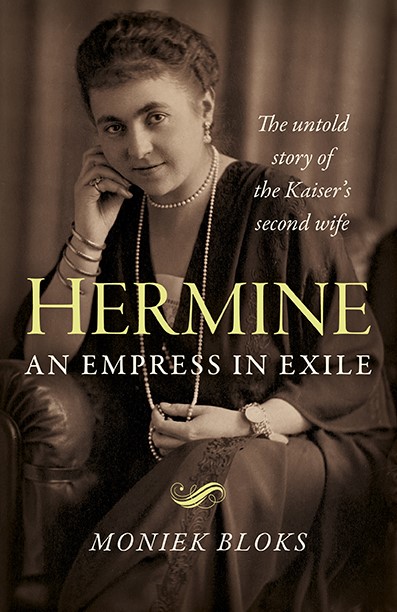
Today it is a pleasure to welcome author Moniek Bloks to History … The Interesting Bits on the first stop of her book tour. Moniek is the author of a new biography of Kaiser Wilhelm II’s second wife, Hermine Reuss of Greiz. The book, Hermine; An Empress in Exile will be released in the UK on Friday 11th December.
So, it’s over to Moniek:
Hermine
Empress Hermine and the tragic wedding
Caroline and her husband
Hermine Reuss of Greiz was one of the five daughters of Heinrich XXII, Prince Reuss of Greiz and his wife Princess Ida of Schaumburg-Lippe. Her childhood was overshadowed by the death of her mother in childbirth and the incurable disability of her only brother. A 13-year marriage to Prince Johann Georg of Schönaich-Carolath produced five children before her husband’s death of tuberculosis. However determined never to be married again, Hermine ended up meeting the exiled German Emperor Wilhelm II, and soon fate had other plans.
But before Hermine had even married her first husband, she met the Emperor as a 15-year-old girl. In 1903, her elder sister Caroline was destined to marry Wilhelm Ernst, Grand Duke of Saxe-Weimar-Eisenach. Hermine and Caroline were especially close, and Caroline was only three years older than her. On 30 April 1903, Caroline married the Grand Duke at Bückeburg Palace, but Caroline was deeply unhappy; she hardly knew the man she was going to marry and abhorred the life that was waiting for her in Weimar.
Though faced with the separation of her much-beloved sister, Hermine’s memories of that day also focused on a man who towered above everyone else, the Emperor. Her uncle and guardian, who was hosting the wedding, promised to introduce her to him and young Hermine dutifully curtseyed to him. It was an unforgettable experience for her, but the Emperor paid little attention. She later said, “How could he have foreseen that this blushing little girl was his future wife? I stood there, frozen on the spot where the Emperor had received my greeting. The Emperor went on and chatted with my uncle.”
Caroline
It wasn’t just Caroline who had doubts about the wedding. Wilhelm Ernst received a stern talking to from the Emperor, and he said, “Only love can turn a palace into a home. Caroline is like a little bird, fallen out of its nest. She will miss the sisters who loved her. It will take her some time before she learns to be at home on the cold parquet floor of your castle.” He then raised his voice and said, “You have given me an Oath of Allegiance, and I order you to marry tomorrow.” The wedding went ahead as planned.
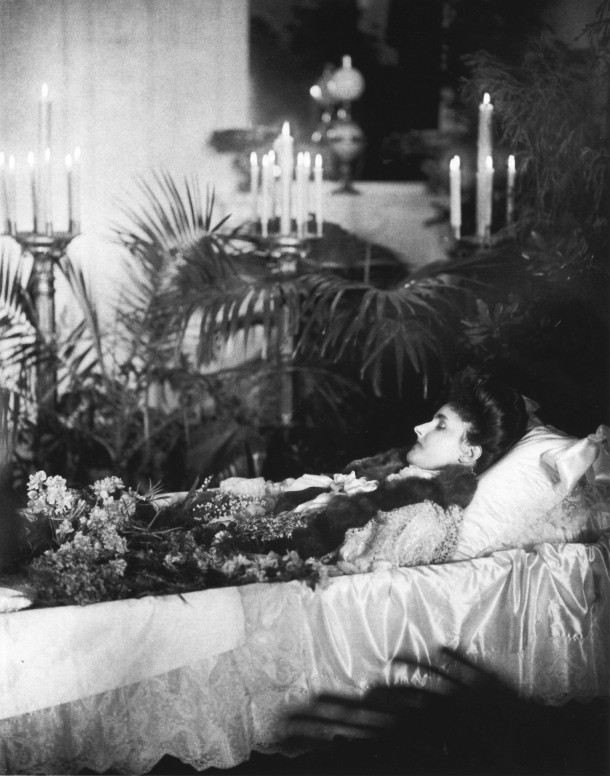
Caroline remained deeply unhappy, took up smoking and barely ate. The unhappiness of her marriage consumed her body, and she was soon emaciated. On 17 January 1905, Hermine sat by her dying sister’s bedside. On top of everything, Caroline had fallen ill with influenza, and her weakened body simply could not fight the disease. Hermine wrote, “The attack was so violent that there was no hope of her recovery from the first. She received the tenderest care, but all effort was in vain. In her heart of hearts, she did not wish to live.”
Hermine would always remember that she first met her future husband at her sister’s wedding but mostly, she would remember the dear sister she lost.
Many thanks to Moniek for a wonderful post and my very best wishes on her latest release. Please do follow the rest of the blog tour.
The book Hermine: An Empress in Exile will be released on 11 December 2020 (UK) and 1 January 2021 (US).
About the book:
Hermine Reuss of Greiz is perhaps better known as the second wife of the Kaiser (Emperor Wilhelm II of Germany) whom she married shortly after the death of his first wife Auguste Viktoria and while he was in exile in the Netherlands. She was by then a widow herself with young children. She was known to be ambitious about wanting to return to power, and her husband insisted on her being called ‘Empress’. To achieve her goal, she turned to the most powerful man in Germany at the time, Adolf Hitler. Unfortunately, her dream was not realised as Hitler refused to restore the monarchy and with the death of Wilhelm in 1941, Hermine was forced to return to her first husband’s lands. She was arrested shortly after the end of the Second World War and would die under mysterious circumstances while under house arrest by the Red Army.
*
About the author:
Moniek Bloks
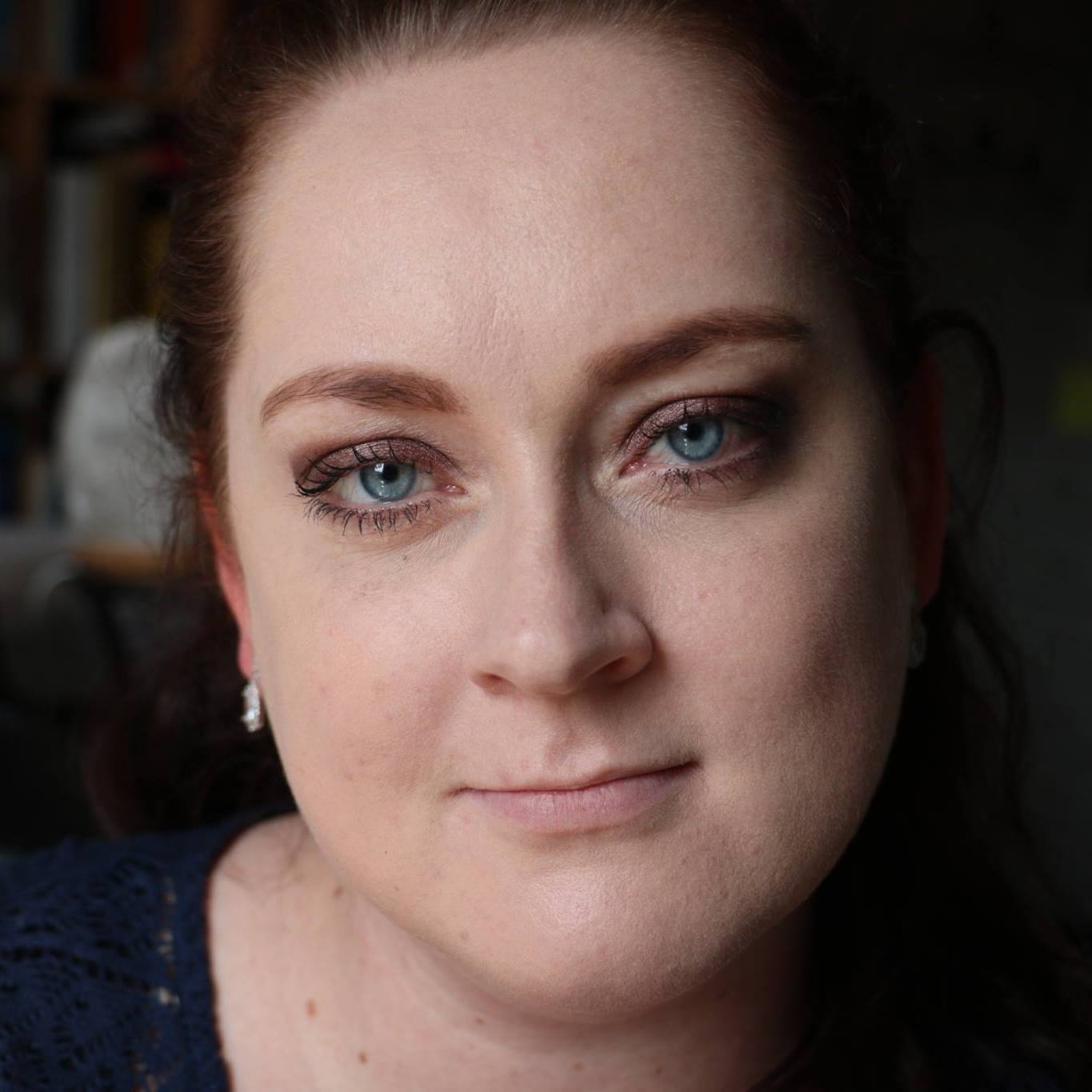
Moniek Bloks is the editor of the successful blog History of Royal Women. She lives in the Netherlands and has a background in law.
Her interest in historical royal women and writing began at an early age, and she has been glad to share the stories of often little-known royal women.
When she isn’t writing, she is visiting castles and palaces around Europe with her trusty camera.
*
My Books
Ladies of Magna Carta: Women of Influence in Thirteenth Century England looks into the relationships of the various noble families of the 13th century, and how they were affected by the Barons’ Wars, Magna Carta and its aftermath; the bonds that were formed and those that were broken. It is now available from Pen & Sword, Amazon and from Book Depository worldwide.
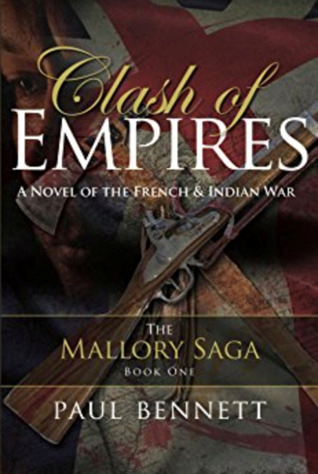
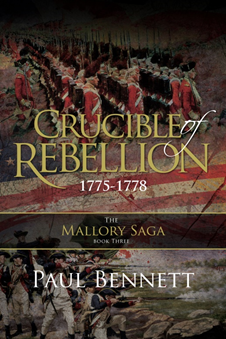
Today, it is a pleasure to welcome fellow author (and Bennett – wonder if we’re related?) Paul Bennett to History … The Interesting Bits. Paul is the author of the popular historical fiction series The Mallory Saga, of which the latest book, and third in the series, Crucible of Rebellion, has just hit the shops.
So, it’s over to Paul Bennett to tell us a little about the books and the inspiration behind them:
The Mallory Saga – Books 1-3
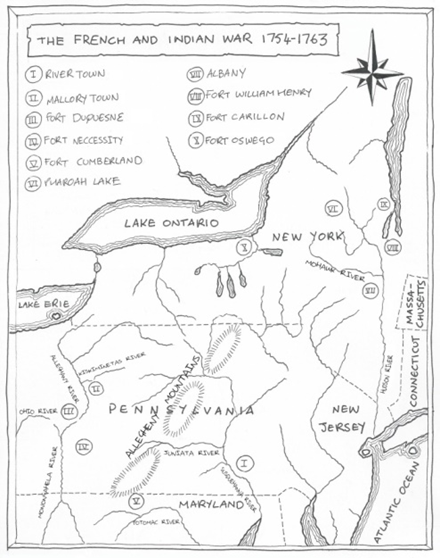
The inspiration to write was, in the beginning, merely to see if I could do it. I had written short pieces over the years but to tackle a full blown novel was a daunting prospect. Once the seed was planted I came up with a rough idea of telling the story of three siblings living somewhere in colonial America. Choosing that general locale was a natural fit for me as I’ve been a lifelong student of American history and I felt that if I was going to write a historical fiction novel, it might be prudent to choose a subject I knew a little about. I picked The French and Indian War as the starting point for what was now becoming a possible series of books that would follow the Mallory clan through the years. That war intrigued me and I saw a chance to tell the story through the eyes of the Mallory family. It also provided me with the opportunity to tell the plight of the Native Americans caught up in this conflict. The French and Indian War paved the way for the colonies to push further west into the Ohio River area. It also set the stage for the events of the 1770’s. Britain incurred a huge debt winning that war and looked to the colonies for reimbursement in the form of new taxes and tariffs. Well, we all know how those ungrateful colonists responded.
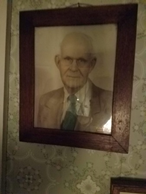
As to the name Mallory – I have a photo hanging on my living room wall of my great grandfather, Harry Mallory. I got to know him when I was a young boy and was always glad when we visited him. He lived a good portion of his life in western Pennsylvania which is where much of Clash of Empires takes place. So, as a gesture to my forebears, Mallory became the name of the family.
Clash of Empires
In 1756, Britain and France are on a collision course for control of the North American continent that will turn into what can be described as the 1st world war, known as The Seven Year’s War in Europe and The French and Indian War in the colonies. The Mallory family uproots from eastern PA and moves to the western frontier and find themselves in the middle of the war. It is a tale of the three Mallory siblings, Daniel. Liza and Liam and their involvement in the conflict; the emotional trauma of lost loved ones, the bravery they exhibit in battle situations. The story focuses on historical events, such as, the two expeditions to seize Fort Duquesne from the French and the fighting around Forts Carillon and William Henry and includes the historical characters George Washington, Generals Braddock, Forbes and Amherst. The book also includes the event known as Pontiac’s Rebellion in which the protagonists play important roles. Clash of Empires is an exciting look at the precursor to the events of July 1776; events that will be chronicled in the second book, Paths to Freedom, as I follow the exploits and fate of the Mallory clan.
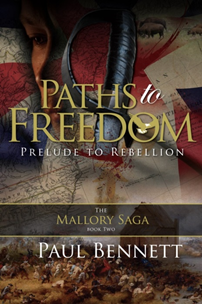
Paths to Freedom
In Paths to Freedom the children of the three Mallory siblings begin to make their presence known, especially Thomas, the oldest child of Liza and Henry Clarke (see right there, already another family line to follow), but Jack and Caleb, the twin sons of Liam and Rebecca along with Bowie, the son of Daniel and Deborah are beginning to get involved as well. The French and Indian War, the historical setting for book 1, was over, and the Mallory/Clarke clan is looking forward to settling and expanding their trading post village, Mallory Town, now that the frontier is at peace. And for a time they had peace, but the increasing discontent in the East, not so much toward the increasing rise in taxes, but the fact that Parliament was making these decisions without any input from the colonies, slowly made its way west to the frontier. Once again the Mallory/Clarke clan would be embroiled in another conflict.
Another facet of my saga is that the main characters are not always together in the same place or even the same event. In Paths my characters are spread out; some have gone East, some have gone West, some are sticking close to Mallory Town, so in effect there are three stories being told, and that means more plots, subplots, twists and surprises.
One of the aspects of the lead up to The Revolutionary War was the attempt by the British to ensure cooperation with the Native Americans, especially the Iroquois Confederation. The British had proclaimed that they would keep the colonies from encroaching on tribal lands, a strong inducement indeed. However, some tribes, like The Oneida, had established a good relationship with the colonists. I knew right away when I started book 2 that the relationship between the Mallory’s and the tribes would be part of it. Among the historical Native Americans who take part in Paths are the Shawnee Chiefs; Catecahassa (Black Hoof), Hokoleskwa (Cornstalk), Pucksinwah (father of Tecumseh), and the Mingo leader Soyechtowa (Logan).
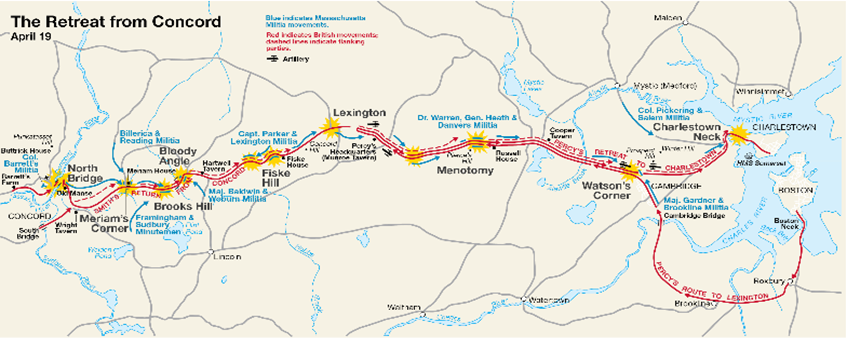
I also realized that I needed to get someone to Boston, and the Sons of Liberty. Thomas Clarke, the eighteen year old son of Liza and Henry, was the perfect choice for the assignment (mainly because he was the only child old enough at the time). J Through him we meet the luminaries of the Boston contingent of rebels, Paul Revere, Dr. Joseph Warren, John Hancock, and the firebrand of the bunch, Sam Adams. Plenty of history fodder to be had…British raid in Salem…Tea Party…the famous midnight rides…culminating with the Battle of Lexington and Concord. Oh yes, plenty of opportunities for Thomas.
An untenable situation arises in Mallory Town resulting in Liam and his two companions, Wahta and Mulhern, finding themselves on a journey to the shores of Lake Michigan and beyond. Driven by his restless buffalo spirit, Liam has his share of adventures; encountering a duplicitous British commander, meeting many new native tribes, some friendly, some not so much. A spiritual journey in a land not seen by many white men.
I ended Paths with the Battle of Lexington and Concord, the first shots of The Revolutionary War. The flint has been struck; the tinder has taken the spark. Soon the flames of war will engulf the land, and the Mallory clan will feel the heat in the third book, Crucible of Rebellion.
Crucible of Rebellion
The timeline for Crucible is 1775 – 1778. I decided to split the Revolutionary War into two books, mainly because there is so much more action as opposed to The French & Indian War…and because as I was writing, my characters insisted on some scenes I hadn’t previously thought of. J Book 4 of the saga is in the planning stages. Tentative title – A Nation Born.
The three Mallory siblings, Daniel, Liza, and Liam play important parts in CoR, but it is their children who begin to make their marks on the saga. Their youngest son, Ethan, and their daughter Abigail, of Daniel and Deborah travel with their parents to Boonesborough, and reside there with Daniel Boone. The war reaches even this remote frontier, prompting Daniel and Deborah to move further west in search of peace. However, the banks of The Wabash River prove not to be immune to conflict.
Their eldest son, Bo accompanies Liam’s twins, Jack and Cal, first to Fort Ticonderoga, then to Boston with a load of cannon for General Washington’s siege of Boston (the Noble Train of Artillery with Colonel/General Henry Knox). In Boston they meet up with Liza and Henry’s son Thomas, who is no longer a prisoner (can’t say more than that) J, Marguerite, and Samuel Webb.
General Washington has plans for the Mallory boys…plans which see some of them in a few of the more important battles of the war… the escape from Long Island, the surprise attack at Trenton, the turning point battles at Saratoga NY, as well as taking part in numerous guerilla type skirmishes.
A long ways away from the conflict Liam, with Wahta, are living with the Crow along the Bighorn River. Liza and Henry made the trip to Boonesborough with Daniel and Deborah, but do not go with them to The Wabash….they have their own adventures.
Although I write fiction tales, the historical aspect of the saga provides the backdrop. History is often overlooked, or is taught with a certain amount of nationalistic pride, whitewashing controversial events, much to the detriment of humankind. So I hope that what I write might help broaden the reader’s horizon a bit, that what they learned in school isn’t necessarily the whole story. Two main historical topics in the story of America that frequent The Mallory Saga are slavery, and the plight of the indigenous people who have lived here since before the founding of Rome; two historical topics that linger still in America’s story. Entertainment and elucidation; lofty goals for a humble scribe telling a tale.
Many thanks to Paul Bennett for a truly fascinating post and my best wishes for the success of Crucible of Rebellion.
The Humble Scribe
I am a retired (recently) data center professional. Not that I started out thinking I would spend nearly 50 years working in mainframe computer environments. My major interests, scholastically, in high school, and college were history, and anthropology. The Cuban missile crisis, Bay of Pigs, assassinations, Vietnam, Watergate, etc., were some of the events that shaped me, forming the basis for my cynical view of government. One of the results of this “hippie attitude” was that I quit school, and my job, taking a year and a half off to travel a bit, and enjoy life. During that period I began composing the odd poem or song lyric, but I knew in my heart, and from experience writing school term papers, final exams, and the like, that I was a prose writer. My favorite fantasy for my future at the time was to become a forest ranger sitting in some fire watch tower writing the great American novel. Life intervened, however, and I put that dream aside to marry, and raise a family, which meant I needed to be employed, thus decades of staring at computer screens ensued. As time went on, I began writing about the golf trips I took with my buddies. At first they were humor laced travelogues, but now they are fictional tales of my friends; the golf becoming a vehicle for creating a story. Then in 2013, I started writing book reviews, and communicating with authors about the process of writing a novel. My dream to write the great American novel returned.
Well I hope I’ve piqued your interest in American historical fiction, and in particular The Mallory Saga. If so moved, the buy links are below. Crucible of Rebellion paperback will be out soon. Follow the progress of The Mallory Saga here:
Thank you to everyone who entered. If you do get a copy of any of my books, either for yourself or others, please get in touch via the ‘contact me’ page and I will send you out a signed book plate to pop in the front.
My very best wishes for a wonderful Christmas and amazing New Year!
It is my pleasure to be the one to kick of the Historical Writers’ Forum Christmas Advent Blog Hop. And what better way to celebrate the end of 2020 with a book giveaway or special offer for practically every day of advent – so be sure to follow the blog hop through our Facebook page.
You could be a winner!
This year we are celebrating with Jolabokaflod as our Christmas blog hop theme! If you are not familiar with Jolabokaflod, it is the wonderful Icelandic tradition of giving books as gifts on Christmas Eve – except we are doing it for Advent.
And my contribution to Jolabokaflod is a signed paperback copy of my first book, Heroines of the Medieval World – either for yourself or as a gift for a friend or loved one – the dedication is entirely up to you!
Heroines of the Medieval World Giveaway!
Heroines of the Medieval World looks at the lives of the women who broke the mould: those who defied social norms and made their own future, consequently changing lives, society and even the course of history. Some of the women are famous, such as Eleanor of Aquitaine, who was not only a duchess in her own right but also Queen Consort of France through her first marriage and Queen Consort of England through her second, in addition to being a crusader and a rebel. Then there are the more obscure but no less remarkable figures such as Nicholaa de la Haye, who defended Lincoln Castle in the name of King John, and Maud de Braose, who spoke out against the same king’s excesses and whose death (or murder) was the inspiration for a clause in Magna Carta. Women had to walk a fine line in the Middle Ages, but many learned to survive – even flourish – in this male-dominated world. Some led armies, while others made their influence felt in more subtle ways, but all made a contribution to their era and should be remembered for daring to defy and lead in a world that demanded they obey and follow.
The Jolabokaflod Giveaway!
The giveaway is a signed and dedicated – for you or someone you love – paperback copy of my first book, Heroines of the Medieval World. The giveaway is open worldwide – and I will do my best to get the book to you in time for the big day, wherever you are.
Here is a taster:
From Chapter 3: Medieval Mistresses
The most successful of mistresses must be Katherine Swynford, the one mistress who defied the odds and eventually married her man, thus spawning a multitude of novels and love stories. Katherine was born around 1350; she was the younger daughter of Sir Payn Roelt, a Hainault knight in the service of Edward III’s queen, Philippa of Hainault, who eventually rose to be Guyenne King of Arms. Unfortunately, the identity of her mother has never been established, not an unusual situation when you think Katherine was born to an obscure knight and her significance only became evident later in life. Katherine and her older sister, Philippa, appear to have been spent their early years in Queen Philippa’s household. Philippa de Roelt (or Rouet) joined the household of Elizabeth de Burgh, wife of Lionel of Antwerp, where she met her future husband, the literary giant of his age, Geoffrey Chaucer.
By 1365 Katherine was serving Blanche, Duchess of Lancaster, the first wife of John of Gaunt. John was the third surviving son of Edward III and Queen Philippa, and had married Blanche, co-heiress of Henry of Grosmont, Duke of Lancaster, in 1359. Soon after joining Blanche’s household, Katherine was married to Sir Hugh Swynford of Coleby and Kettlethorpe, Lincolnshire. Sir Hugh was a knight and tenant of John of Gaunt, who would serve with his lord on campaigns in 1366 and 1370. The couple had two children, Thomas and Blanche, who was named after the duchess. John of Gaunt stood as little Blanche’s godfather and she was raised alongside his own daughters by Duchess Blanche. Following the duchess’s death in September 1368, Katherine became governess to the duke’s three children: Elizabeth, Philippaand Henry. Three years after the death of Blanche, in September 1371, John married again, this time to a Spanish princess, Constance of Castile, the daughter of Pedro the Cruel, King of Castile, and Maria de Padilla, the king’s concubine-turned-wife. The marriage was a dynastic move, with Constance being heiress to the kingdom of Castile there was a distinct chance of John becoming King of Castile, if only John could wrest it from her father’s killer and illegitimate brother, Henry of Trastámara. From January 1372, he assumed the title of King of Castile and Leon, though in name only as he was never able to consolidate his position.
Shortly after the marriage of John and Constance, in November 1371, Sir Hugh Swynford died while serving overseas, leaving Katherine a widow with two very young children; the youngest was probably less than two years old. It was not long after Sir Hugh’s death that Katherine became John of Gaunt’s mistress; although some sources suggest the couple were lovers even before Sir Hugh’s death, which has brought into question the paternity of Katherine’s eldest son by John of Gaunt. However, the majority of historians agree the relationship between John and Katherine started in late 1371 or early 1372 and was developing well in the spring of that year, when Katherine received rewards and a significant increase in her status within Gaunt’s household….
It’s easy to enter!
The competition is open to everyone, wherever you are in the world. To win a signed and dedicated copy of Heroines of the Medieval World, simply leave a comment below, on the Historical Writers Forum Blog Hop Facebook Page or on my own Facebook page and I will include you in the prize draw.
The draw will be made on Sunday 6 December 2020.
Good Luck!
And don’t forget to follow the rest of the blog hop!
The Wars of the Roses is one of the most dramatic and fascinating periods in medieval history. Much has been written about the leading personalities, bitter dynastic rivalries, political intrigues, and the rapid change of fortune on the battlefields of England and Wales. However, there is one aspect that has been often overlooked, the role of castles in the conflict.
Dan Spencer’s original study traces their use from the outbreak of civil war in the reign of Henry VI in the 1450s to the triumph of Henry VII some thirty years later. Using a wide range of narrative, architectural, financial and administrative sources, he sheds new light on the place of castles within the conflict, demonstrating their importance as strategic and logistical centres, bases for marshalling troops, and as fortresses
Dan Spencer’s book provides a fascinating contribution to the literature on the Wars of the Roses and to the study of siege warfare in the Middle Ages.
The Castle in the Wars of the Roses by Dan Spencer provides a unique perspective on that most famous of civil wars in England. Dr Spencer combines the story of the Wars of the Roses with the varied uses of the castle during the period, as defensive structures, administrative centres and homes for the nobility. Dan Spencer establishes that the castle as a military structure was still an important asset to any army and served to guard the marches of Wales and Scotland and to act as muster points for gathering armies. Castles were strong defensive structures that could be garrisoned whenever the war came too close, though as Dr Spencer highlights, permanent garrisons were rare by this time, they could provide effective defence and intimidation when needed.
I was aware of a number of sieges during the Wars of the Roses, mainly those at Dunstanburgh and Bamburgh. However, I was not aware that that was just the tip of the iceberg. According to Dan Spencer, there were 36 definite sieges and several more possible sieges – for which there is little contemporary information, so we can’t say for certain. These possible sieges include where there are written orders for a castle to be invested, but no further report of whether the siege was undertaken or the castle surrendered without a fight.
In The Castle in the Wars of the Roses, Dan Spencer argues that while the use of the castle was declining, it still played an important role in the conflict. The book is written in a narrative, chronological style, whereby Dr Spencer tells the whole story of the Wars of the Roses, but with particular focus on the siege warfare and the use and provision of castles. It is an excellent read.
The fall of Bamburgh marked the end of a four-year-long struggle for control of Northumberland. This was part of a wider dynastic conflict between the Yorkist and Lancastrian factions for control of the kingdom of England. For much of the second half of the fifteenth century these two rival houses fought a series of wars to win the English throne, which since the nineteenth century has been commonly called the Wars of the Roses. This era is without a doubt one of the most popular topics in medieval English history. Numerous books, articles, plays and films have been produced over the centuries. Looking at all sorts of aspects ranging from the dynamic personalities of key figures, such as Richard III, the causes of the conflict, its long-term legacy and the military campaigns, particularly the major battles. Given this vast output on the subject, it may be pertinent to ask why it is necessary for yet another book to be written. The answer is that one important area has been almost wholly neglected: the role of the castle in the Wars of the Roses.
Why has this been the case? One explanation is the perception that the campaigns of the Wars of the Roses were dominated by decisive battles, in which castles played a very minor role. This argument does have some substance. The era was unusual for the frequency with which significant battles took place. Nevertheless, this does not tell the whole story. As we will see, there were many campaigns in which castles were used in a significant way. Similarly, the late Middle Ages has been characterised as a period in which castles were in a state of transition and decline, in which their traditional role as fortresses was increasingly no longer necessary due to changes in warfare and society.
While there are many books on the Wars of the Roses, none have looked at the conflict in quite this way before. Dan Spencer covers every aspect of the conflict and the actions of the leading players involved, including Henry VI, Edward IV, Warwick the Kingmaker, Richard III, etc. While the major battles are also covered, the spotlight is on the castles, their role in the conflict ad the tactics used to successfully prosecute a siege. Dan Spencer’s impeccable research means that he can build a deep understanding of the layout of each castle, the provisions it stored and the garrison that manned it.
The Castle in the Wars of the Roses analyses not only the strength of a castle, but the prosecution of these sieges and the reasons for their success or failures. Using primary sources, archaeological evidence and his own extensive experience of castles, Dan Spencer has produced a fascinating book that can only add to our knowledge of the Wars of the Roses. The text is supported by wonderful colour images of the castles mentioned, and detailed floor plans. It is whole knew way of looking at the conflict, providing a freesh perspective.
Well written in an engaging narrative, The Castle in the Wars of the Roses is a fascinating, addictive read. And a perfect Christmas present!
The Castle in the Wars of the Roses is available from Amazon or direct from Pen & Sword Books (with 30% off in December!)
About the author:
Dr Dan Spencer has made a special study of late medieval warfare, focusing in particular on gunpowder artillery and castles. Recent publications include The Castle at War in Medieval England and Wales and Royal and Urban Gunpowder Weapons in Late Medieval England. To find out more visit danspencer.info or follow him on Twitter and Instagram @Gunpowderdan.
Myths and rumour have shrouded the Borgia family for centuries – tales of incest, intrigue and murder have been told of them since they themselves walked the hallways of the Apostolic Palace. In particular, vicious rumour and slanderous tales have stuck to the names of two members of the infamous Borgia family – Cesare and Lucrezia, brother and sister of history’s most notorious family. But how much of it is true, and how much of it is simply rumour aimed to blacken the name of the Borgia family? In the first ever biography solely on the Borgia siblings, Samantha Morris tells the true story of these two fascinating individuals from their early lives, through their years living amongst the halls of the Vatican in Rome until their ultimate untimely deaths. Cesare and Lucrezia Borgia begins in the bustling metropolis of Rome with the siblings ultimately being used in the dynastic plans of their father, a man who would become Pope, and takes the reader through the separate, yet fascinatingly intertwined, lives of the notorious siblings. One tale, that of Cesare, ends on the battlefield of Navarre, whilst the other ends in the ducal court of Ferrara. Both Cesare and Lucrezia led lives full of intrigue and danger, lives which would attract the worst sort of rumour begun by their enemies. Drawing on both primary and secondary sources Morris brings the true story of the Borgia siblings, so often made out to be evil incarnate in other forms of media, to audiences both new to the history of the Italian Renaissance and old.
Cesare and Lucrezia Borgia: Brother and Sister of History’s Most Vilified Family by Samantha Morris is a fascinating look at two of the most famous villains in history; a brother and sister renowned for murder, intrigue and incest. Or are they? Samantha Morris’s beautifully written dual biography of these siblings aims to peal away the centuries of rumour and accusations and find the real people beneath the legend.
Samantha Morris combines a lively, engaging narrative with keen historical analysis, uncovering the facts embedded in the legends, rumours and scandals. She demonstrates a deep understanding not only of her subjects and their motivations but of the political theatre of Italy, the papacy and Europe in general at that time.
In Cesare and Lucrezia Borgia: Brother and Sister of History’s Most Vilified Family, Samantha Morris expertly separates rumour from fact to provide a balanced appraisal of these famous siblings; their strengths and weakness. Using creditable sources, papal records and even family letters, she clearly establishes the facts behind the lies of the incest accusation, whilst demonstrating how such accusations came about and the various efforts to sully the name of the Borgia family.
The careers of the Borgia children were decided and laid out before them before they could even waalk. Juan was chosen as the son who would be the military leader, the great Duke who would go on to continue the Borgia line; Cesare was destined for a life in the Church; Lucrezia would be forced into diplomatic marriages and Gioffre would do the same. The children were their father’s pawns, important chess pieces but Cesare in particular did not like the career path that was chosen for him.
When Cesare was just six years old, the Pope granted a dispensation that allowed him to hold Church benefices despite his illegitimacy and the following year, 1482, King Ferdinand of Aragon exempted him from a law that would stop him from holding lordships in Spain due to his illegitimacy. Being bastard born would not get in the way of raising Cesare Borgia to the heights that his father so wanted for him.
By the age of just fifteen, Cesare had already been given a vast number of Church benefices including the Bishopric of Pamplona, the ancient capital of Navarre. This caused particular outrage as the young man had not yet taken his holy orders and Cardinal Rodrigo Borgia did his best to calm down the populace, telling them that Cesare’s elevation was simply down to his merits and hard work. Cesare, on a break from the University of Perugia and busy on a hunting trip, found himself having to write a letter to the people of Navarre to try and soothe their anger. But it didn’t work and the Pope had to intervene to halt the rebellion.
From tracing their origins in Spain, to the spectacular heights to which the family rose, to the politics that brought about the demise of Cesare and meant the family were embroiled in constant struggles for land and power, Samantha Morris charts the successes and failures – and underhand dealings of the infamous family. The siblings’ father and family patriarch, Rodrigo Borgia, Pope Alexander VI is depicted as a scheming but capable man and pope who loved his children dearly. He sought to establish his illegitimate children in lives and careers appropriate to their rank as the children of a reigning pope.
Lucrezia Borgia comes across as an intelligent, passionate woman, far removed from , the poisoner of legend conducting a love affair with her own brother. She proved herself capable of ruling and was loving and loyal to her family. She pursued an active political career despite her almost constant pregnancies, and suffered incalculable griefs and family loss. Lucrezia, however, is not depicted as a pure, innocent virgin, but a well educated, politically astute woman who may also have conducted certain indiscretions, or at least platonic love affairs, during her lifetime. She is a woman who made the best of the life that was mapped out for her.
Cesare, on the other hand, is a ruthless man not cut out for the career in the church to which he appeared destined. The untimely murder of his older brother meant he went from cardinal to soldier, a job to which he was much better suited and a thousand times more capable and dedicated. Cesare is a complex character; accused of numerous murders, including those of his own brother and Lucrezia’s second husband, he is remembered to history as a ruthless, scheming murderer and seducer of his own sister. While he may have been ruthless and scheming – and a murderer to some extent, Samantha Morris goes on to prove that not all the murders laid at Cesare’s door were his responsibility.
As an aside, the reader cannot fail to notice the prevalence of syphillis in Italy at the time. A countless number of the protagonists in the story suffered from this disfiguring disease, Cesare Borgia among them. The French, attempting to conquer Italy at the time, called it ‘the Italian disease’, though in England it was known as ‘the French disease’ – those same invading French soldiers took the dreadful disease with them when they returned home.
Cesare and Lucrezia Borgia: Brother and Sister of History’s Most Vilified Family is an engaging narrative of the history of not only these most famous Italian siblings, but also Italy, the papacy and wider European politics at the time when the world was moving from the Medieval era into the Early Modern, when the Renaissance was in full swing and the Reformation was just around the corner. Samantha Morris demonstrates the power of the papacy, of Pope Alexander VI in particular, and how papal factions caused the rise – and fall – of the Borgia family.
Cesare and Lucrezia Borgia: Brother and Sister of History’s Most Vilified Family is an entertaining and enthralling read – one not to be missed!
Cesare and Lucrezia Borgia: Brother and Sister of History’s Most Vilified Family by Samantha Morris is available from Pen & Sword Books and Amazon.
About the author:
Samantha Morris studied archaeology at the University of Winchester and it was there, whilst working on a dissertation about the battlefield archaeology of the English Civil War that her interest in the Italian Renaissance began. Her main area of interest is the history of the Borgia family and the papacy of Pope Alexander VI, however she also has a keen interest in the history of other Renaissance families. Samantha has previously written on the Borgia family and runs a successful blog based mainly on the history of the Italian Renaissance, but with snippets of other eras thrown in too.
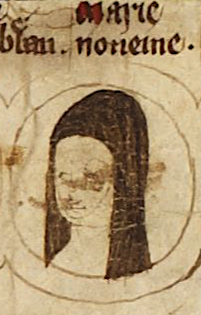
To many noble women, the religious life was a career that had been decided for them by their parents when they were still children, as with Mary of Blois. However, for some, this did not necessarily mean they spent their entire lives in the seclusion of the convent. This was the certainly case with Princess Mary, daughter of Edward I and Eleanor of Castile.
Mary of Woodstock was born on 11 or 12 March 1279, the 6th daughter of King Edward and Queen Eleanor. Edward and Eleanor were quite a nomadic couple, travelling among their domains, so their children were raised in the royal nursery, based largely at the royal palaces of Woodstock and Windsor; visits from their parents were quite infrequent and from Edward, their father, even less so.
Eleanor of Castile endured a remarkable number of pregnancies, the first was when she was about 13 or 14, resulting in a child who was stillborn or died shortly after birth. The fact that several children died before they reached adulthood has been suggested as a reason for her keeping her distance from her children when they were young; however, it is just as likely that the simple fact Edward and Eleanor ruled a vast kingdom, including their lands in France, meant their responsibilities necessitated long absences.
Eleanor’s almost-constant pregnancies, resulting in a total of sixteen children, meant there were regular additions to the nursery, which also housed a number of children from noble families, sent to be raised alongside the king’s children. Mary would have had many companions, including her brother Alphonso, who was heir to the throne and 5 years her senior, and her sister Margaret, who was 4 years older than Mary. She would be joined by another sister, Elizabeth of Rhuddlan, 3 years later.
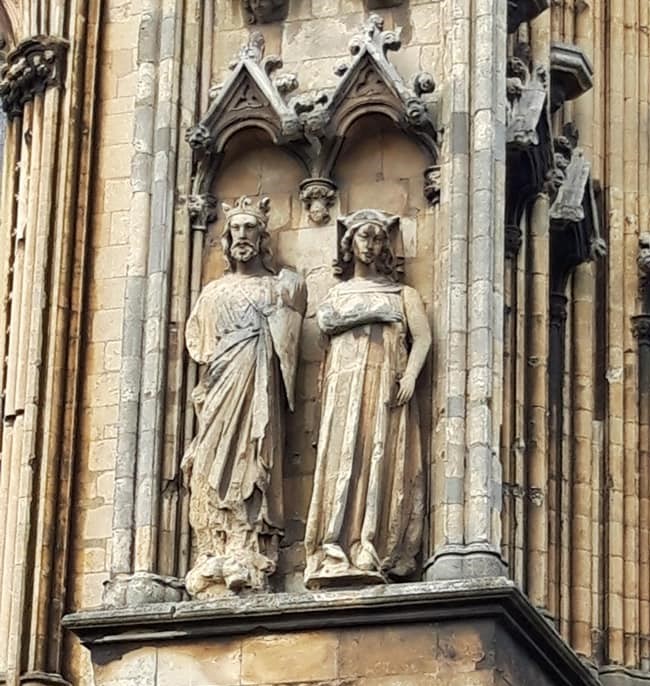
Edward I and Eleanor of Castile, Lincoln Cathedral
In 1285, a year after the death of Prince Alphonso, the king took his family on a progress into Kent. Edward went on pilgrimage to the shrine of St Thomas Becket, at Canterbury, before spending a week at Leeds Castle with his family, followed by some hunting in Hampshire. It was at the end of this family holiday that they arrived at Amesbury priory in Wiltshire, where little Mary, still only 6 years old, was veiled as a nun; much to the delight of her grandmother, Eleanor of Provence, but to the consternation of her mother, the queen. Indeed, the Chronicle of Nicholas Trivet emphasises that Mary’s veiling was done by her father, at the request of her grandmother, but only with the ‘assent’ of her mother.1
It may well be that Eleanor had reservations about her daughter’s vocation being decided at such a young age, or that she feared it was only being done so Mary’s grandmother, Eleanor of Provence, would have a companion in the abbey. After a long and eventful life, and with her health failing, the dowager queen took her own vows at around the same time and retired to Amesbury Priory for her final years, dying there in June 1291. Mary’s veiling had been in the planning for some years; Edward I had been in correspondence with the abbey at Fontevrault, the mother house of Amesbury, since 1282, when the little princess was barely 3 years old.
Eleanor’s reluctance, therefore, was probably more to do with when Mary was to become a nun, rather than the vocation itself; after all, the conventual life was considered a good career for a noble lady. The timing of her veiling may have been advanced not only by the failing health of Eleanor of Provence, but also by the imminent departure of Mary’s parents. Edward and Eleanor were about to embark for the Continent and were expecting to be in France for a considerable time, years rather than months.
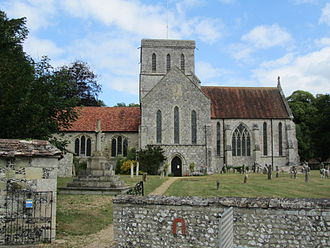
The Priory Church, now the parish church, Amesbury
The actual veiling ceremony must have been very moving. It took place at Amesbury Abbey on 15 August 1285, where Mary was one of 14 high-born girls who took their vows together. It may well be that her cousin, Eleanor of Brittany – another granddaughter of Eleanor of Provence – took her vows at the same time; Eleanor would later demonstrate a great dedication to the religious life and, eventually, become Abbess of Fontevrault.
Mary’s life at the abbey was probably a very comfortable existence; in the year she was veiled, Mary was awarded an annual income of £100, rising to £200 a year in 1292, following the death of Eleanor of Provence. As she was still only a child, the nuns at Amesbury would have been responsible not only for Mary’s spiritual life, but also for her education. However, the cloistered life by no means meant that Mary was confined and separated from her family for any length of time. She made frequent visits to court throughout her life, and was present for most family occasions.
Having taken the veil in August 1285, Mary returned to be with her family in the autumn, to see the unveiling of the newly created Winchester Round Table and the creation of 44 new knights by her father, the king. She visited her family again in March and May of 1286, each visit lasting about a month. These visits also meant Mary had the chance to bid farewell to her parents, who departed for an extended stay in France in 1286. On 13 August 1289, Mary, her 4 sisters and little brother Edward were at Dover to welcome their parents home, after a 3-year absence.
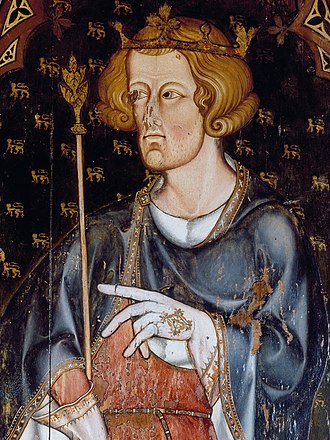
King Edward I
Mary visited court again in 1290 and stayed for the wedding of her older sister, Joan of Acre, to Gilbert de Clare, Earl of Gloucester and Hertford; Joan and Gilbert were married in a private ceremony at Westminster on 30 April. It is likely that she was back at court later in the year for another wedding, this one at Westminster Abbey in July when her sister, Margaret, married John, the future Duke of Brabant.
Mary would have seen quite a lot of her parents in the spring of 1290 as her father chose Amesbury as the location for a special meeting, convened to settle the arrangements for the English succession. Edward may have chosen the abbey so that his ailing mother could be present for the discussions. The Archbishop of Canterbury and 5 other bishops, in addition to Edward, Eleanor of Castile and Eleanor of Provence, were all present to formalise the settling of the succession on Edward’s only surviving son, 6-year-old Edward of Caernarvon. Should Edward of Caernarvon die without heirs, it was decided that the succession would then pass to Edward I’s eldest daughter, the newly married Countess of Gloucester and Hereford, Joan of Acre.
Eleanor of Castile was a distant mother when her children were young, but she seems to have developed closer relationships as they grew older, so it is not hard to imagine her taking the opportunity to spend time with 12-year-old Mary while they were staying at the abbey. It was probably one of the last times that Mary spent any real time with her mother, who died at Harby, near Lincoln, on 28 November 1290.
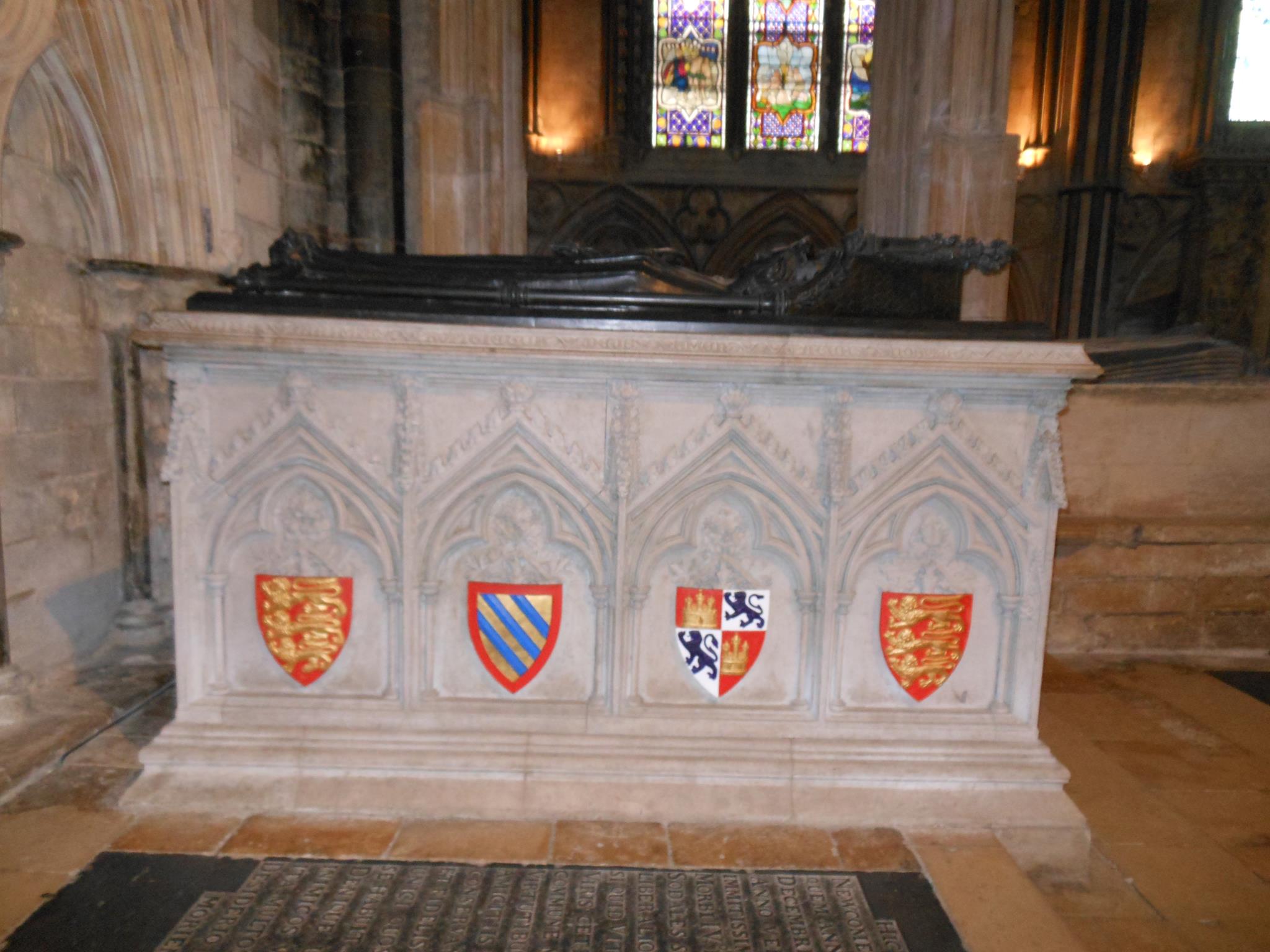
The viscera tomb of Eleanor of Castile, Lincoln cathedral
Indeed, it may well have been one of the last times they saw each other; Eleanor was at the king’s palace of Clipstone in Nottinghamshire when it was realised that her illness was probably fatal. Some of her children, Joan, Edward and Elizabeth, were summoned to the queen’s bedside; although Mary is not mentioned, it does not mean that she did not visit her mother one last time.2 Mary’s deep affection for her mother was demonstrated in 1297 when she and her younger sister, Elizabeth, jointly paid for a special Mass in their mother’s honour.
Mary’s career in the Church was far from spectacular; although her high birth gave her some influence, she never made high office and was never given a priory or abbey of her own. However, she was given custody of several aristocratic nuns at Amesbury, trusted to oversee their education and spiritual training. Convent life seems to have held few restrictions for her. Mary was regularly away from the cloister. She was frequently at court, or with various members of her family. In 1293 Mary spent time with her brother, Edward, and in 1297 she spent 5 weeks at court, taking the opportunity to spend some time with her sister, Elizabeth, who had been recently married to John, Count of Holland, and was preparing to join him there. In the event, news of John’s death arrived before her departure and Elizabeth never left England.
Nicholas Trivet
Mary had many cultural interests and was a patron of Nicholas Trivet, who dedicated his chronicle, Annales Sex Regum Angliae, to her. Mary was probably Trivet’s source for many of the details of Edward I’s family and the inclusion of several anecdotes that demonstrated Edward’s luck, such as the story of the king’s miraculous escape from a falling stone while sitting and playing chess. He had stood up to stretch his legs when the stone from the vaulted ceiling landed on the chair he had just vacated.3 The stories that Mary passed on to Trivet also serve to demonstrate that she was at court on a regular basis. The financial provisions settled on her by Edward I meant that Mary did not have to suffer from her vows of poverty.
In addition to the £200 a year she received from 1292, Mary was also granted 40 cocks a year from the royal forests and 20 tuns of wine from Southampton. In 1302, the provision was changed and she was given a number of manors and the borough of Wilton in lieu of the £200, but only for as long as she remained in England. Given that a proposed move to Fontevrault had been dropped shortly after the death of Eleanor of Provence, the likelihood of Mary leaving England seems to have been only a remote possibility.
Mary had a penchant for high living; she travelled to court with an entourage big enough to require 24 horses. By 1305, despite her income, she was substantially in debt, with the escheator south of the Trent being ordered to provide her with £200 in order to satisfy her creditors. Mary also had a taste for gambling, mainly at dice, and her father is known to have paid off at least one gambling debt.4 Following her father’s death in 1307, her younger brother, now King Edward II, continued to support Mary financially and she continued to make regular visits to court.
Mary died sometime around 1322 and was buried where she had lived, at Amesbury Priory. She was a princess whose future was decided for her at a very young age. She doesn’t seem to have excelled at the religious life, in that she never achieved significant office, but she did make the most of the life chosen for her, making frequent pilgrimages and taking charge of the young, aristocratic ladies who joined the convent. Despite her dedication to the Church, she found her own path within it and seems to have achieved a healthy (for her) balance between the cloister and the court.
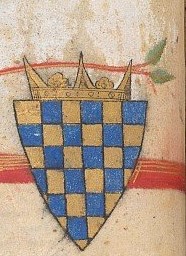
The Warenne coat of arms
There was, however, one moment of scandal; although it did not arise until more than 20 years after Mary’s death. In 1345, in a final, desperate attempt to escape an unhappy marriage John de Warenne, Earl of Surrey, claimed that he had had an affair with Mary and that, therefore, his marriage to her niece, Joan of Bar, was invalid due to the close blood relationship of the 2 women. Although it is highly unlikely that the claim was anything more than Surrey’s desperate attempt to find a way out of his marriage, it cannot be ignored that Mary was frequently at court and such an opportunity may have arisen; Mary was only a few years older than John de Warenne. The ecclesiastical court, however, refused to believe the earl’s claims and Mary’s reputation remains – largely – intact.
1 Eleanor of Castile: The Shadow Queen by Sara Cockerill; 2A Palace for Our Kings by James Wright; 3Annales Sex Regum Angliae by Nicholas Trivet; 4Eleanor of Castile: The Shadow Queen by Sara Cockerill
Edward I A Great and Terrible King by Marc Morris; Brewer’s British Royalty by David Williamson; Britain’s Royal Families by Alison Weir; The Mammoth Book of British Kings & Queens by Mike Ashley; The Plantagenets, The Kings Who Made England by Dan Jones; OxfordDNB.com; findagrave.com; susanhigginbotham.com; womenshistory.about.com; Daughters of Chivalry by Kelcey Wilson-Lee; Nobility and Kingship in Medieval England by Andrew M. Spencer; Memoirs of the Ancient Earls of Warren and Surrey, and Their Descendants to the Present Time, Volumes I and II by Rev. John Watson; Eleanor of Castile: The Shadow Queen by Sara Cockerill; A Palace for Our Kings: The History and Archaeology of a Medieval Royal Palace in the Heart of Sherwood Forest by James Wright
My Books
Signed, dedicated copies of all my books are available through my online bookshop or the Contact Me page.
New releases in 2026:
New Hardbacks
‘My daughter wanted me to treat her more like a princess. So, I married her to a stranger to strengthen the alliance with Poland!’
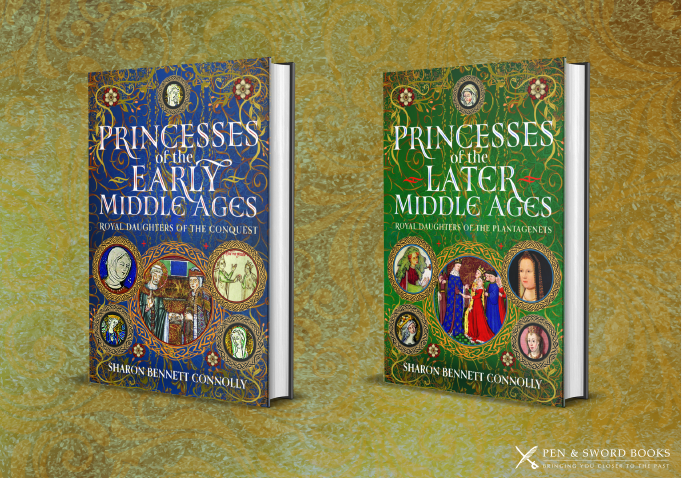
Princesses of the Early Middle Ages: Royal Daughters of the Conquest and Princesses of the Later Middle Ages: Royal Daughters of the Plantagenets tell the stories of England’s royal daughters from 1066 to the rise of the Tudors, from the last Anglo-Saxon princesses to the fall of the House of York.
Were they really pampered pawns sent off to marriages on the Continent, out of sight and out of mind?
Perhaps, there was different story, where a foreign marriage does not mean eternal exile, but a purpose in life, where a princess is a diplomat, an ambassador for England in her new country.
Where she is the bond between allies – most of the time.
Their stories are touching, inspiring and, at times, heartbreaking...
Heidi Malagisi: ‘This is another excellent book by Sharon Bennett Connolly. Extremely well researched and relatively easy to follow along, which is a great thing because there are so many Matildas and Eleanors in this book.‘
Tony Riches: “I challenge anyone with an interest in medieval Britain to not find something they will learn from this book.”
Anna Belfrage: “I just love how [Sharon] presents this huge cast of real life people in a casual, chatty tone that has me expecting the various female protagonists to suddenly pop their head up and add their own commentary.“
Elizabeth Chadwick: “Every history buff should have this excellent work on their shelves. Sharon Bennett Connolly brings these often forgotten ladies of the Middle Ages out of the shadows and stands them in the spotlight. Triumphs, tragedies, elopements, stormy marriages, love stories, formidable personalities, it’s all here on the pages of history, brought to life by the meticulous research of Sharon Bennett Connolly. I loved it!“
Kathryn Warner: ‘A deeply researched, richly detailed and fascinating account of late medieval England’s forgotten princesses. I loved it!‘
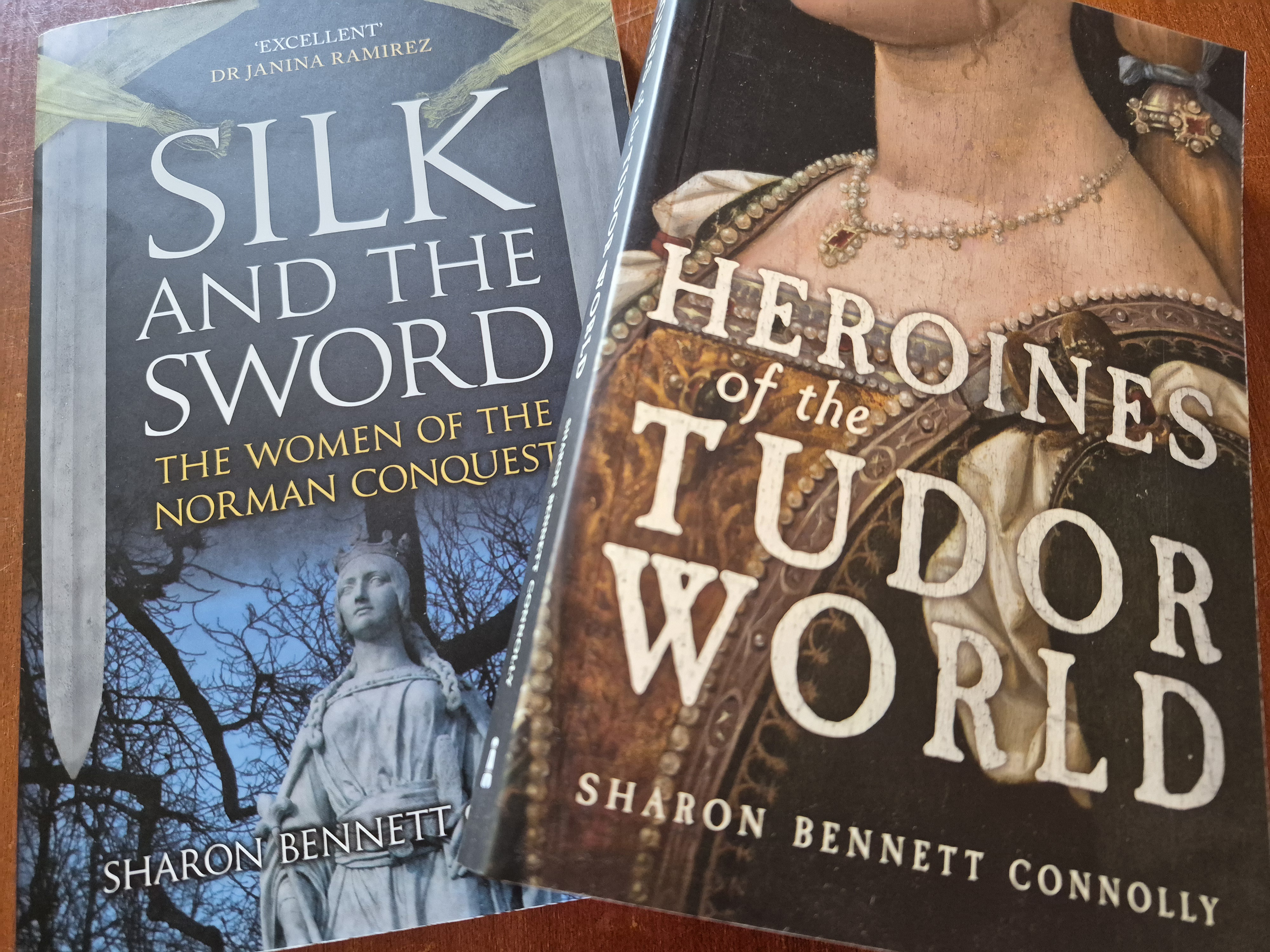
The momentous events of 1066, the story of invasion, battle and conquest, are well known. But what of the women? Silk and the Sword: The Women of the Norman Conquest traces the fortunes of the women who had a significant role to play during the Norman Conquest – wives, lovers, sisters, mothers, leaders. These are lives full of drama, pathos and sometimes mystery: Edith and Gytha searching the battlefield of Hastings for the body of Harold, his lover and mother united in their grief for the fallen king. Who was Ælfgyva, the lady of the Bayeux Tapestry, portrayed with a naked man at her feet?
Janina Ramirez said it’s ‘Excellent’!
Heroines of the Tudor World focuses on the women who lived through the Renaissance and Reformation, examining the threats and challenges they faced and how they overcame them. These are the women who ruled, the women who founded dynasties, the women who fought for religious freedom, their families and love. These are the women who made a difference, who influenced countries, kings and the Reformation.
Derek Birks: ‘An excellent account of the changing roles of women in Tudor society.’
Annie Whitehead: ‘What a treat this book was to read. Bennett Connolly has an easy, conversation style of writing which welcomes you from the opening pages and draws you into her story.‘
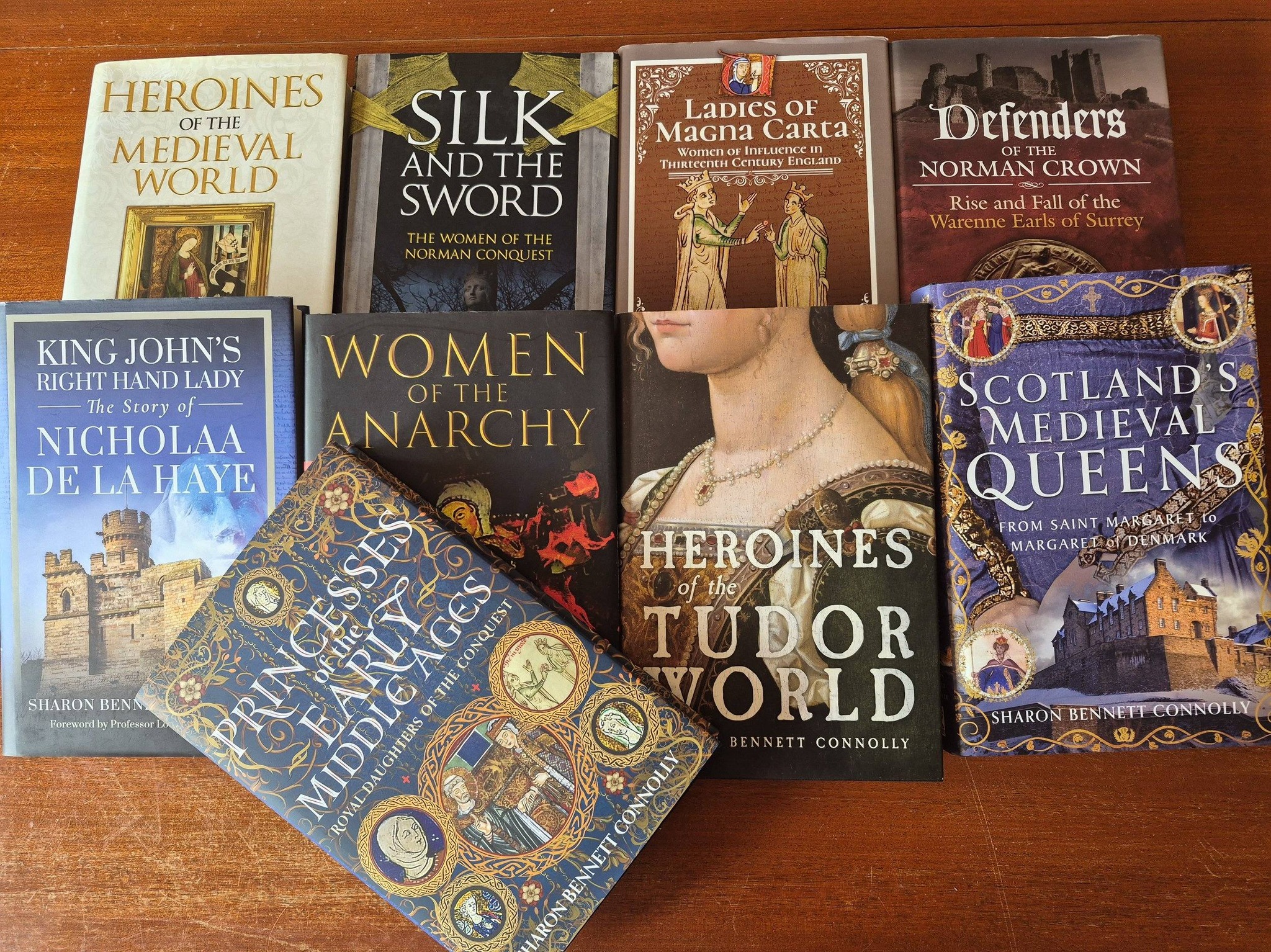
Also by Sharon Bennett Connolly:
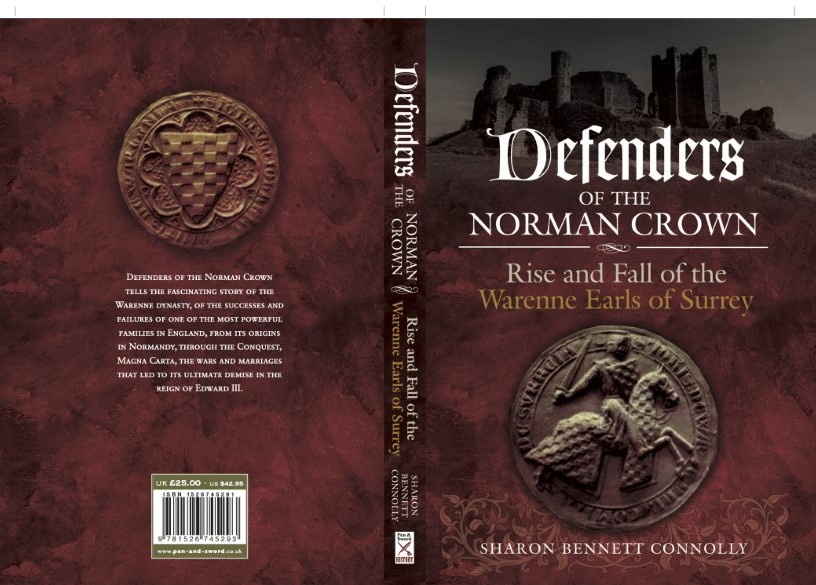
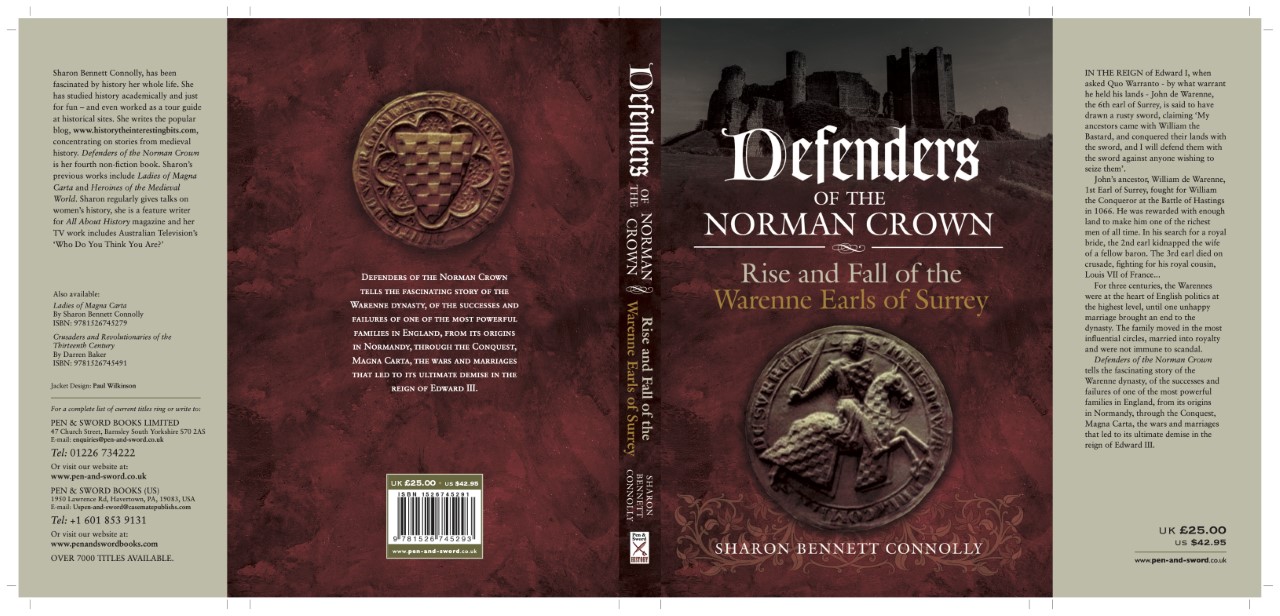
Heroines of the Medieval World; Silk and the Sword: The Women of the Norman Conquest; Ladies of Magna Carta: Women of Influence in Thirteenth Century England; Defenders of the Norman Crown: Rise and Fall of the Warenne Earls of Surrey; King John’s Right Hand Lady: The Story of Nicholaa de la Haye; Women of the Anarchy; Heroines of the Tudor World; Scotland’s Medieval Queens: From St Margaret to Margaret of Denmark; Princesses of the Early Middle Ages: Royal Daughters of the Conquest (March 2026); Princesses of the Later Middle Ages; Royal Daughters of the Plantagenets (August 2026)
Alternate Endings: An anthology of historical fiction short stories including Long Live the King… which is my take what might have happened had King John not died in October 1216. Available in paperback and kindle from Amazon.
Have a listen to theA Slice of Medieval podcast, which I co-host with Historical fiction novelist Derek Birks. Derek and I welcome guests, such as Ian Mortimer, Bernard Cornwell, Elizabeth Chadwick and Scott Mariani, and discuss a wide range of topics in medieval history, from significant events to the personalities involved.
Misplaced trust, power hunger, emotional blackmail, and greed haunt twelve characters from post-Roman Britain to the present day. And betrayal by family, lover, comrade can be even more devastating.
Read twelve tales by twelve accomplished writers who explore these historical yet timeless challenges.
AD455—Roman leader Ambrosius is caught in a whirlpool of shifting allegiances AD940—Alyeva and cleric Dunstan navigate the dangers of the Anglo Saxon court 1185—Knight Stephan fights for comradeship, duty, and honour. But what about love? 1330—The powerful Edmund of Kent enters a tangled web of intrigue 1403—Thomas Percy must decide whether to betray his sovereign or his family 1457—Estelle is invited to the King of Cyprus’s court, but deception awaits 1483—Has Elysabeth made the right decision to bring Prince Edward to London? 1484—Margaret Beaufort contemplates the path to treason 1577—Francis Drake contends with disloyalty at sea 1650—Can James Hart, Royalist highwayman, stop a nemesis destroying his friend? 1718—Pirate Annie Bonny, her lover Calico Jack, and a pirate hunter. Who will win? 1849/present—Carina must discover her ancestor’s betrayer in Italy or face ruin.
Betrayal: Historical Stories is a wonderful anthology of 12 short stories exploring the concept of betrayal, either of country, family or lovers. Featuring some of the best authors of the moment, Betrayal: Historical Stories features stories from post-Roman Britain to an alternative reality in modern times, where the Roman Empire never fell but continued under powerful, influential women in Roma Nova.
There is something in this book for everyone. There are kings and queens, knights, pirates and cavalier highwaymen. There are stories of love, loyalty and friendship combined with implacable enemies, broken promises, family secrets and – above all – betrayal!
The remarkable diversity of the stories make this anthology a gripping read. You never know what story you are going to come across next, whether its the exploits of Sir Francis Drake, the heartbreaking story of 13-year-old Edward V’s journey to London, from his proclamation as king to his deposition and imprisonment in the Tower of London. Each story is written by a different author; their voices are as distinct as their characters.
In a book of short stories, it is impossible to pick an extract that shows the full range of writing on offer. However, it is possible to choose and extract that highlights the high standard of writing throughout the book. So here’s an excerpt from Honour of Thieves by Cryssa Bazos:
A panicked rider appeared from around the bend, twisted in the saddle, his attention fixed behind him as though the hounds of hell snapped at his feet. When he finally turned to face the road ahead, he saw James barring his way and screamed. the rider yanked hard on teh reins, and his horse skidded to a bone’jarring halt. He fought to keep himself from launching over his horse’s head.
James levelled his pistol at him. ‘Stand and deliver!’
A bead of sweat trickled down the man’s brow. ‘Ah, Master Highwayman. Do you not remember me? I passed this way before. You afforded me a free pas through Moot Hill.’ When he received no acknowledgement, he pressed on, his voice cracking, ‘I’m the pauper you took pity on. Do you not recall?’
James studied the man. Same battered hat and frayed cloak, a nearly broken horse better suited for the pasture than the road. True, he had last taken the man for a beggar, as he was meant to, but since then he had learned the truth. ‘A thrice of days ago; I haven’t forgotten. I allowed you the freedom of the highway.’
‘Blessed be the day.’ The man beamed and wiped his forehead with his sleeve. ‘Naturally, there’s no profit accosting me.’ His smile faded when he realised that the pistol was still trained on him. ‘I’m not even a Parliamentarian – I’m a good Royalist still mourning his fallen king … like yourself.’
James lifted a brow, satisfied to see the man squirm. Lying sod. Many travellers had passed this way over the last year pretending to share the highwayman’s abhorrence for their Parliamentarian usurpers in order to save their purse. James had seen through their ruses, but this one had somehow rooked him. That set his teeth on edge. ‘You pled your case well, claiming to be a half-starved hare.’ He swept his gaze to the man’s new leather boots. Clearly, the man’s subterfuge did not extend to the discomfort of ill-fitting shoes. ‘I took pity on you – instead of taking, I gave you a goodly sum to keep you well and a few coins besides to drink my health.’
‘God save you -‘
‘Did you have that drink?’ James asked.
‘Of course! I sang your praises at a public house that night.’
Reading Betrayal: Historical Stories was a combination of spending a few hours with old friends and meeting new ones. Elizabeth St John, Judith Arnopp and Alison Morton were authors I was familiar with, but had not read before. I am now going to rectify that and go through their back catalogue to catch up. Alison’s Roma Nova short story provided an intriguing alternative to the modern day, showing us how the world might be, had a Roman Empire survived and flourished into the modern world, under the auspices of 12 ruling families.
The stories are beautifully written, enjoyable diversions. It is impossible to choose a favourite! Betrayal: Historical Stories showcases some of the best writing in historical fiction today. It is a pure pleasure to read.
What a fabulous way to discover new authors and new adventures!
The Betrayal: Historical Stories anthology is available for free from Amazon UK and Amazon US.
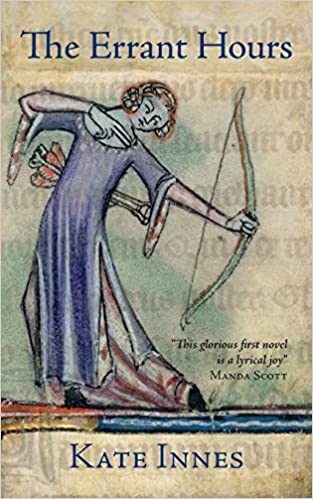
A headlong journey through the physical and spiritual dangers of Plantagenet Britain, in all its savage pageantry. Welsh Marches, July 1284 – the uprising in Wales is over, the leader gruesomely executed, the dead are buried. But for Illesa Arrowsmith, the war’s aftermath is just as brutal. When her brother is thrown into the Forester’s prison on false charges, she is left impoverished and alone. All Illesa has left is the secret manuscript entrusted to her – a book so powerful it can save lives, a book so valuable that its discovery could lead to her death. When the bailiff’s daughter finds it, Illesa decides to run, and break her brother out of jail by whatever means. But the powerful Forester tracks them down, and Illesa must put herself and the book at the mercy of an unscrupulous knight who threatens to reveal all their secrets, one by one. Inspired by the seductive art of illuminated manuscripts, The Errant Hours draws from the deep well of medieval legend to weave a story of survival and courage, trickery and love.
Every now and again you come across a book that draws you in and makes you lose entire days to reading. For me, The Errant Hours by Kate Innes was one of those books: I lost the whole of last weekend to reading the final 200 pages because I HAD to get to the end. Of course, I now wish I’d taken a little longer over it, but this was a book I needed to devour. With just short of 400 pages of beautiful prose, a unique storyline and the perfect combination of intrigue, betrayal and love, The Errant Hours is a perfect book for lockdown or those long, dark, winter nights.
A brother-sister relationship most of us can relate to, family secrets and mysteries and a beautiful, valuable book all come together to create The Errant Hours by Kate Innes. Illesa Arrowsmith losing her home to her creditors and helping her reckless brother escape the Forester’s prison is only the start of her adventures; adventures that will lead her to the heart of the court of Edward I and into the political turmoil of the English conquest of Wales. While the national political climate contrasts perfectly with the turmoil in Illesa’s own life as she attempts to uncover her own origins and her feelings for Sir Richard Burnel, the knight who could be both protector and her accuser.
‘Illesa!’
She ignored the angry whisper and went back towards the torchlight. The guard’s head had changed position. She stood still, watching him. A thin stream of saliva came from the corner of his open mouth. His jerkin was unbuttoned. The iron chain was wound around his belt and the end hung down behind the bench.
Illesa slowly undid the buckle and loosened the chain, pulling it, link by link, off the leather belt. Gathering the chain in her hand, she pulled it up. There was a dull clang. The guard grunted and shifted on the bench, but his eyes remained closed. The ring holding the keys was caught between the wall and the bench. Illesa held the chain in her left hand and knelt down. She reached under the bench, her arms stretched around the guard, straining not to touch him. Her fingers brushed against the keys, and she let them rest on her palm. Illesa let the chain slip slowly out of her left hand until she held it, and the keys, in her right hand. She got shakily to her feet and ran to the cell door.
‘Where is the lock?’ she whispered.
‘Here, follow my hand.’Illesa saw the vague whiteness of Kit’s fingers; she put her own on top of them, feeling for the keyhole with her thumb.
‘Got it,’ she said, fumbling with the larger key.
It slid easily into the hole, but as she turned it there was a terrible screeching sound of metal against metal. Something hit the floor with a loud thump and a gasp of pain.
Kit pushed the door, nearly knocking Illesa over as he ran out of the cell.
‘Follow me!’
Kate Innes must have done a remarkable amount of research to produce such a historically accurate work of historical fiction. Although her leading characters are fictional, the supporting characters are very much historical fact, with Edward I, Eleanor of Castile, young Prince Alphonso and John, 6th Earl Warenne all making an appearance. I didn’t know one of the Warennes would be making an appearance in the story – it was such a lovely surprise!
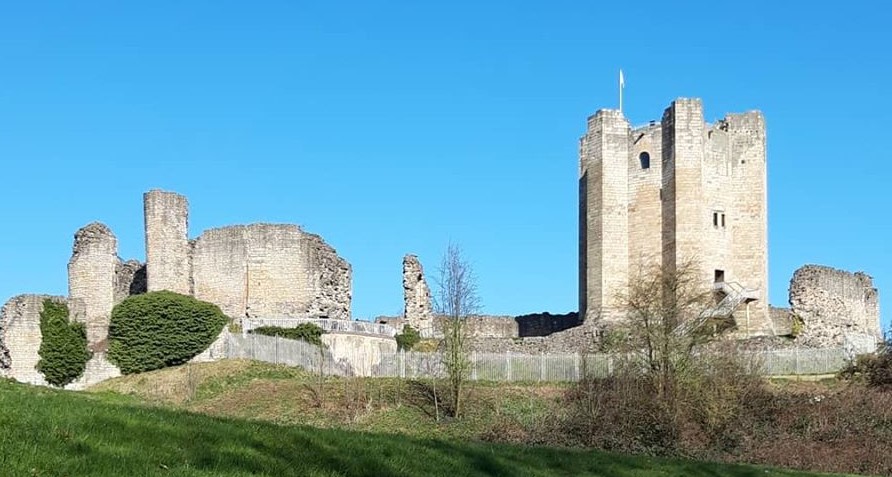
I particularly liked Kate Innes’ portrayal of Earl Warenne as a brutal, brash lord who spares little thought for the niceties – he certainly comes across as that in my research for my own forthcoming book on the Warennes, Defenders of the Norman Crown: Rise and Fall of the Warenne Earls of Surrey. In fact, I think Kate Innes was a little more generous with Warenne’s personality than some chroniclers were!
The fictional characters, Illesa, her brother Kit and the knight, Richard Burnel, are the central actors in the story. Their personalities, appearance and relationships are wonderfully ‘fleshed’ out. Illesa is a strong female character, but one that is not out of place in 13th century England. A young woman with determination and capability, she is also all-too-aware of the limitations forced on her by her sex.
A beautifully crafted tome, The Errant Hours by Kate Innes is a unique insight into 13th century England. The narrative flows freely and Illesa’s story will keep the reader entranced from the first page to the last. I cannot recommend it highly enough and have already put book 2, All the Winding World, on my Christmas list.
The Errant Hours by Kate Innes is available from Amazon.
About the author:
Kate Innes was born in London and lived and worked in America and Zimbabwe. She is now based in Shropshire, and it is the history and natural beauty of this area that provides inspiration for both her fiction and poetry.
She originally trained as an archaeologist and a teacher, and then worked as a Museum Education Officer around the Midlands, writing poetry in her spare time. After the arrival of her children, Kate began work on her medieval novel ‘The Errant Hours’ which was published in 2015.
The Historical Novel Society selected ‘The Errant Hours’ as an ‘Editor’s Choice’, and it was added to the reading list of the Medieval Studies Department at Bangor University. It is one of Book Riot’s ‘One Hundred Must Read Medieval Novels’.
Her second novel, ‘All the Winding World’ is a sequel to ‘The Errant Hours’, set ten years later. It is due to be published on the 22 June 2018.
Kate has been writing and performing poetry for many years, usually with a particular focus on animals, art and the natural world. Her poem ‘Flocks of Words’ won first prize in the ‘Imagined Worlds’ Competition held by the Friends of Samuel Taylor Coleridge. Her first collection, also called ‘Flocks of Words’, was published in Spring 2017 and many of these poems form part of a performance with the acoustic music group ‘Whalebone’.
Kate runs writing workshops, gives illustrated talks, works collaboratively with communities and undertakes commissions and residencies.
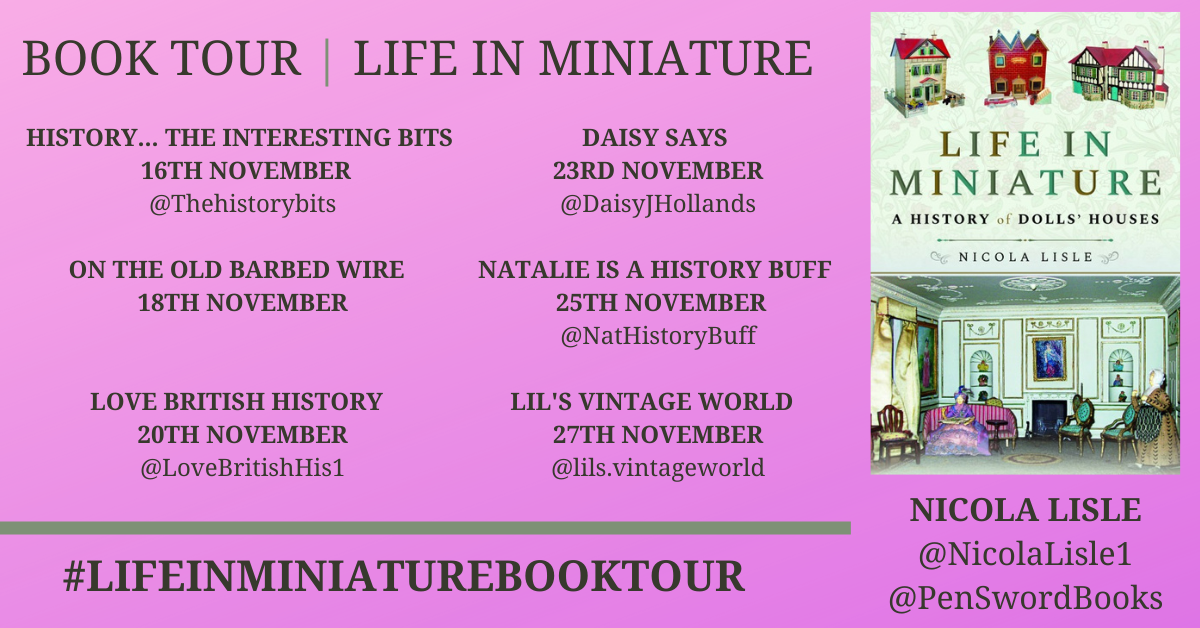
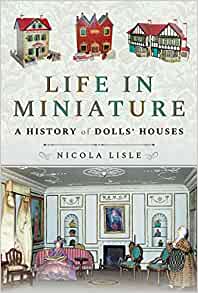
It is a pleasure to welcome to History … the Interesting Bits today, Nicola Lisle, author of Life in Miniature: A History of Dolls’ Houses as part of her Blog Tour with Pen & Sword. A history of dolls’ houses is a little different to my usual type of post, but reading Life in Miniature brought back some very happy childhood memories of my sister and I playing with our dolls’ house in our grandparents’ attic. So I was very interested in finding out more of their history and origins. Nicola very kindly answered a few of my most pressing questions.
Dolls’ house at Charles Dickens’ House, Doughty Street, London
Hi Nicola, congratulations on the release of Life in Miniature and thank you for stopping by to chat.
1. When I heard about your book, I immediately thought of the dolls’ house my sister and I had as children – we used to play with it for hours. How long have you had a fascination for dolls’ houses? Did you have one as a child?
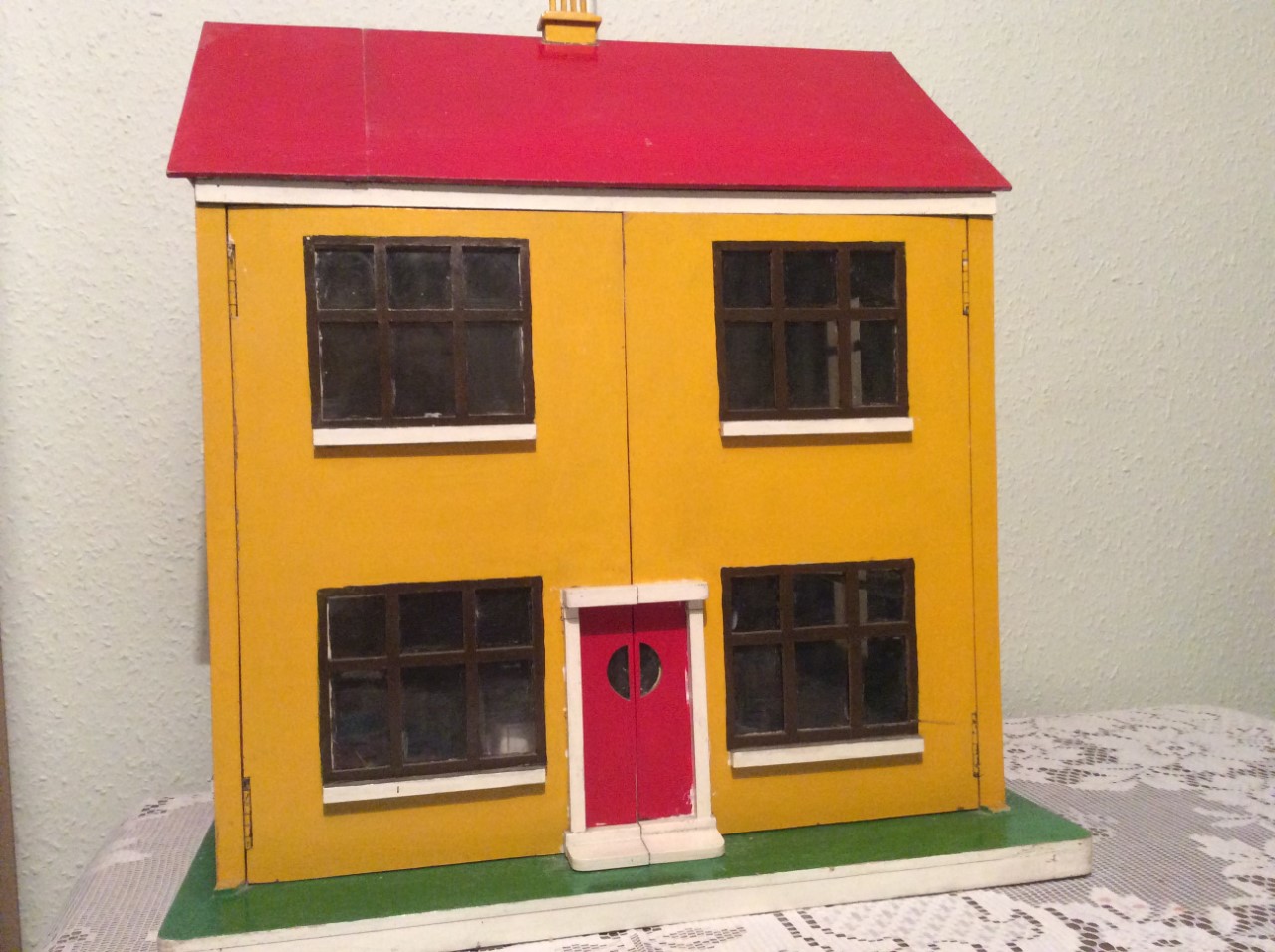
I did have a dolls’ house as a child, and my sister and I played with it a lot. It was apparently made for us by a distant relative, who also made wooden furniture for it. It’s all quite basic, but I love it because it’s unique and it was part of my childhood. We used to have some tiny dolls for it, and we also used to decorate it at Christmas. We had a Christmas tree and had to cut away a square of carpet to fit it in! Sadly, the dolls and Christmas decorations have been lost, but the original furniture and other bits and pieces are still there. As we grew up we lost interest in the dolls’ house and it was in my parents’ loft for many years gathering dust! It wasn’t until I started writing that I became interested in dolls’ houses again, and it was quite by chance. I subscribed to Writing Magazine and Writers’ News – and still do! – and in one issue there was a piece about Dolls House and Miniature Scene magazine, which was open to submissions from freelance writers. It caught my attention, and I got in touch with some ideas. My first piece for the magazine was about the Museum of Childhood at Sudbury Hall in Derbyshire, and it was published in 2004. I carried on writing for the magazine for many years, and it ignited a real passion in me for dolls’ houses. Eventually I rescued my childhood dolls’ house from my mum’s house, and I’m hoping at some point to find the time to give it a bit of TLC! It’s not in bad condition, but it could definitely do with a bit of a makeover!
2. The thing with dolls’ houses is that they are not just for children, are they? My mum has one!
Dolls’ house at Tolsey Museum, Burford
Dolls’ houses are definitely not just for children. I think a lot of adults who had them as children still treasure them, and collecting vintage and antique dolls’ houses is also popular. For children, they are great for stimulating the imagination, but for adults I think it’s more about appreciating the sheer delight of miniatures and the craftsmanship that went into creating them.
3. I think the most famous dolls’ house has to be Queen Mary’s in Windsor Castle, isn’t it? What is so special about it?
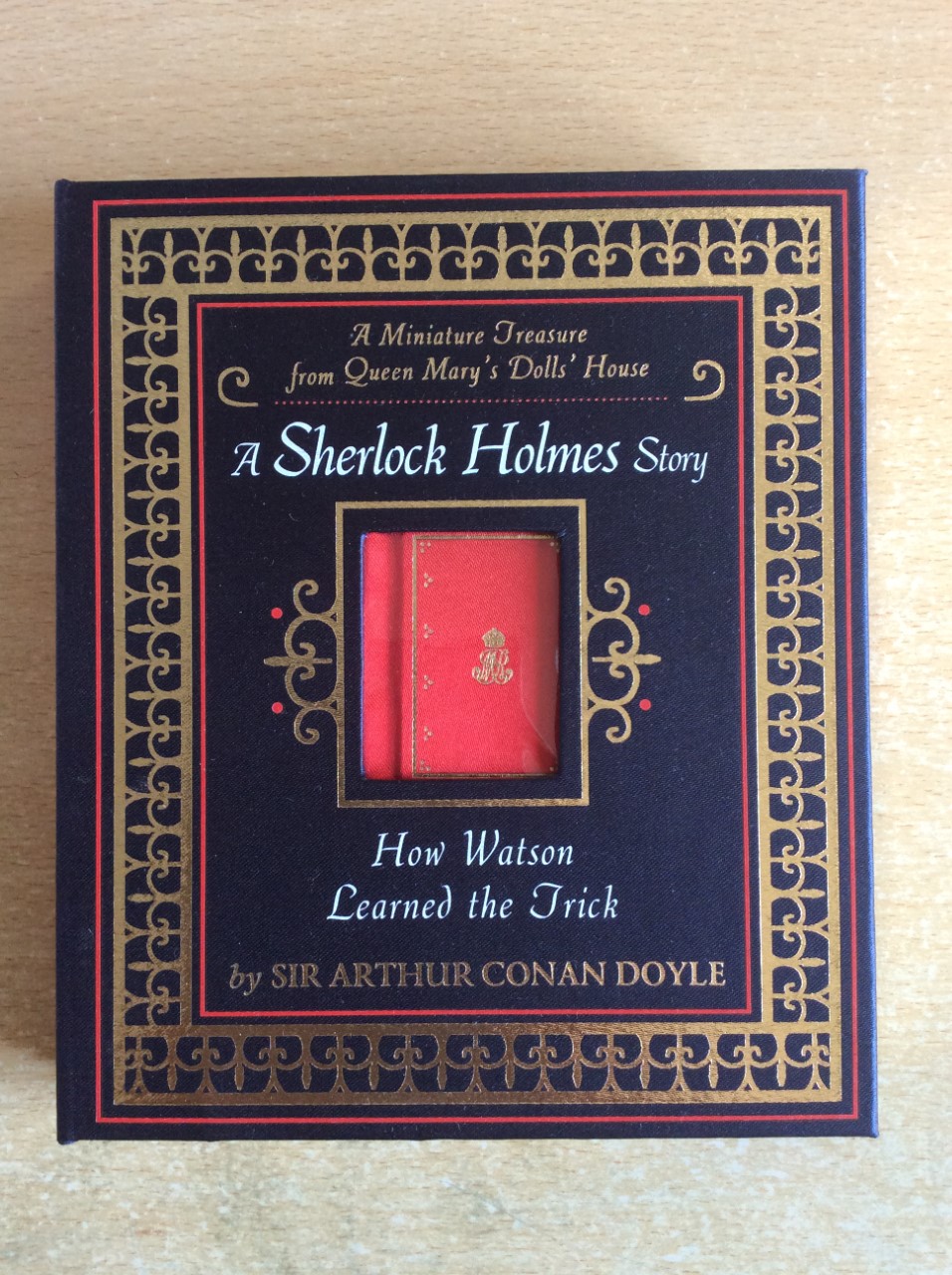
Reproduction of miniature of Conan Doyle’s ‘How Watson Learned the Trick’, written for Queen Mary’s Dolls’ House
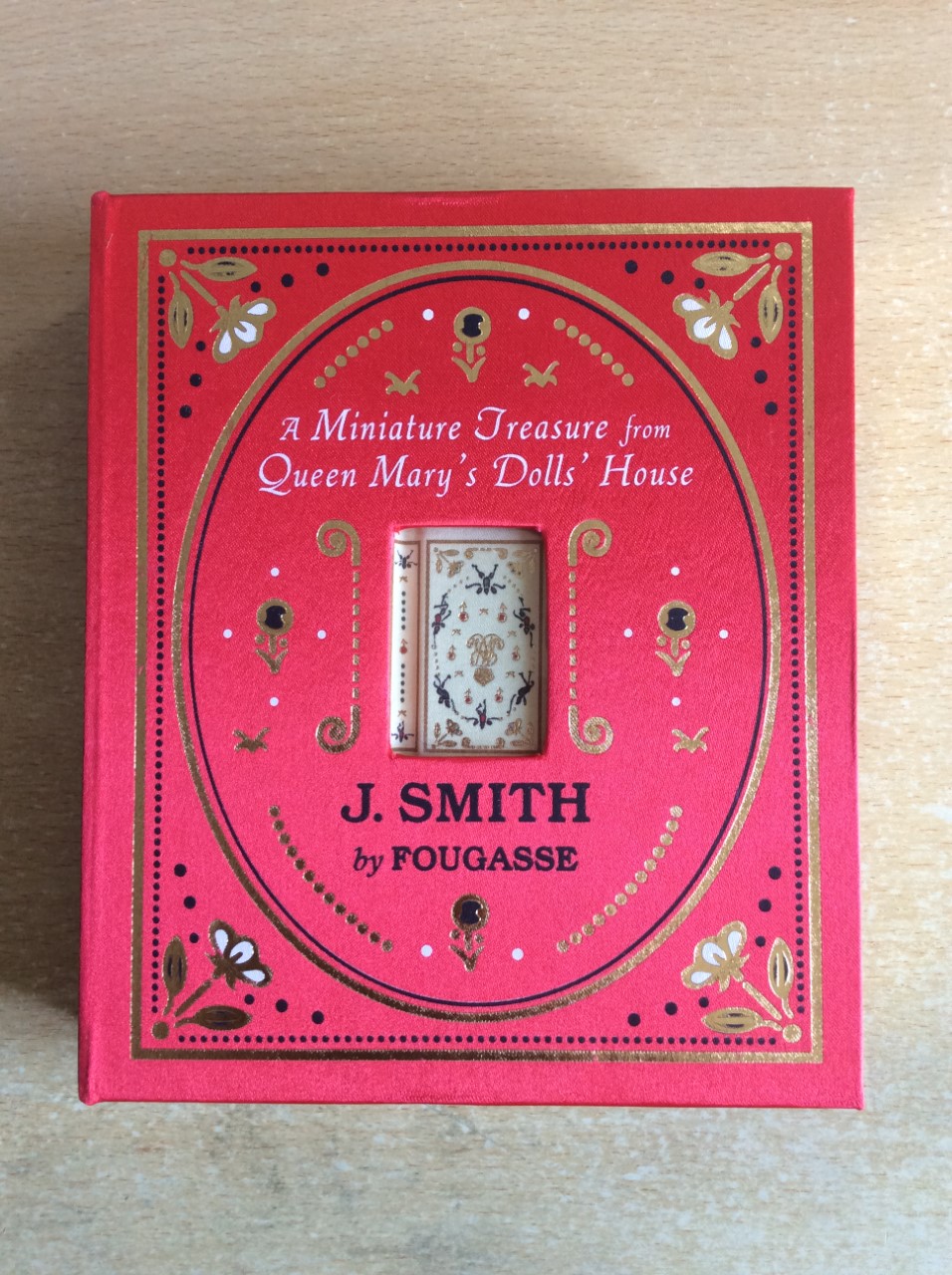
Yes, I think Queen Mary’s dolls’ house is probably the most famous. It’s special because it captures a slice of 1920s England in such exquisite detail, from the furniture and soft furnishings right down to the food and drink that were popular at the time. It attracted international interest when it first appeared, and it was a showcase to the world, a display of some of the very finest British talent. I think it also restored some pride and optimism in the country during the immediate post-war years. The house and garden were designed by Sir Edwin Lutyens and Gertrude Jekyll, and among its highlights are miniature books, music scores and paintings by popular writers, composers and artists of the day. Many of the books contained original stories written exclusively for the dolls’ house. Two of these, Fougasse’s J. Smith and Conan Doyle’s How Watson Learned the Trick, have been reproduced as miniature replicas with booklets containing the stories in full-size print. Another, Vita Sackville-West’s A Note of Explanation – a story about a mischievous spirit who inhabits the dolls’ house – was also reproduced in full size. I treated myself to all three when I was researching my book, and they are now treasured items on my bookshelves!
4. How long have dolls’ houses been around, Nicola? I always associate them with the Victorians, but were they around earlier? Are dolls’ houses an English creation, or did they come from the continent?
Nicola’s childhood dolls’ house
Dolls’ houses have been around since at least the 16th century and originated in Germany, where they were known as baby houses. The first known dolls’ house was made for the Duke of Bavaria in 1557, and it was a miniature version of his ducal palace. By the 17th century, baby houses had become popular in Germany, particularly in Nuremberg. The idea caught on in Holland towards the end of the 17th century, but instead of baby houses the
Dutch favoured cabinet houses, which were grand, elaborately-carved cabinets containing exquisitely furnished miniature rooms. The earliest dolls’ houses in England appeared in the late 17th century and were similar to the Dutch cabinet houses. By the early 18th century they were beginning to look more like houses than cabinets, and they were often modelled on the great country houses and created by estate carpenters. It wasn’t until the Victorian era that they became regarded as toys for children, and mass production towards the end of the 19th century made them much more widely accessible.
5. And what was their original purpose, were they always aimed at children.
The earliest baby houses, cabinet houses and dolls’ houses were primarily display pieces, and they were very much the preserve of royalty and the aristocracy – each one was a statement of the owner’s wealth and social status. They also had an educational role, often being used to instruct young ladies and servants in efficient household management and domestic skills.
6. I am fascinated by dolls’ houses and have to admit that the first thing I did on getting your book was look at the pictures. The houses are beautiful and the furniture inside is so detailed and intricate, do you have a favourite?
Reproduction of miniature of J. Smith by Fougasse, written for Queen Mary’s Dolls’ House
I saw so many gorgeous dolls’ houses while writing and researching my book that it’s almost impossible to pick a favourite. I think all dolls’ houses have their own particular charm, from the grand, ornate ones to the very simplest, and often it’s the stories behind them that make them special. For this reason, I think the dolls’ house at Uppark in West Sussex is one of my favourites, partly because it’s one of the earliest surviving dolls’ houses from the early 18th century, reflecting the Palladian-style architecture that was popular at the time, and partly because it has a connection with H.G. Wells, and I always love literary connections! Wells’s mother was the housekeeper at Uppark during the late 19th century, and he drew on his childhood memories of Uppark in his novel Tono-Bungay, in which he refers to the “great dolls’ house on the nursery landing”.
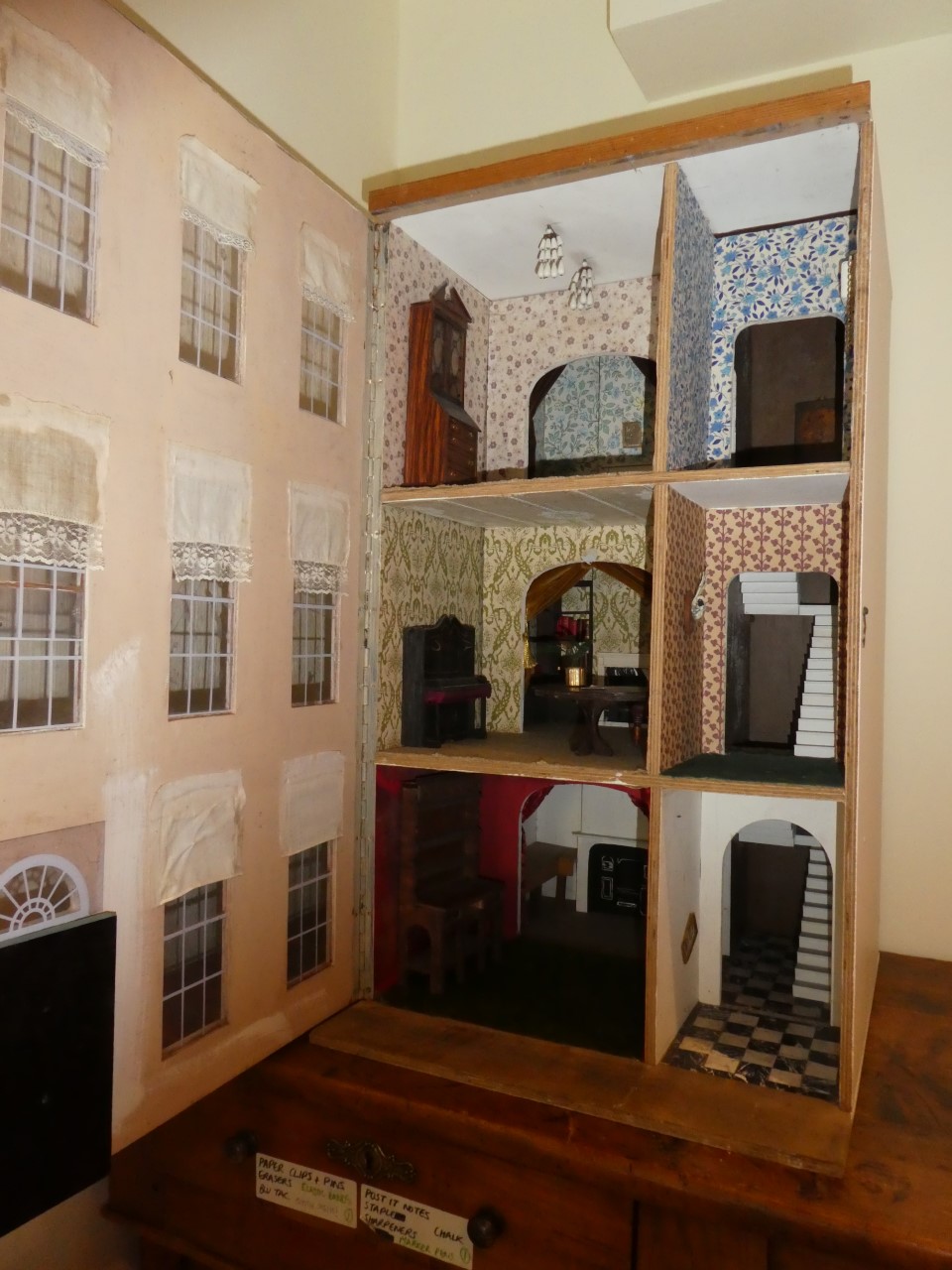
Another with a literary connection is the dolls’ house at Charles Dickens’ House at Doughty Street in London. The house doesn’t actually have a connection with Dickens himself, but it was modelled on the Doughty Street house by dolls’ house maker Christopher Cole for his book Make Your Own Dolls’ House, which was published in 1976. It is a simplified version of the real thing, rather than an exact replica, but it is very similar, especially the outside, and it was one I particularly enjoyed going to see! It’s not on public display, but it can be viewed by appointment.
I also have special fondness for the dolls’ house at Overbeck’s in Devon. It was created during the 1980s by a lady called Mabel Hill, a very talented, self-taught craftswoman who used scraps of leftover material and other household odds and ends to make the furniture and soft furnishings. What’s particularly lovely is that Overbeck’s was used as a convalescent home for wounded soldiers during the First World War, and one of the activities they were encouraged to do as therapy was to make dolls’ house furniture. Although there’s no direct link between that and Mabel Hill’s house, it does feel as though there is a spiritual connection.
Others closer to home, in Oxfordshire, include the Regency-style dolls’ house at the Tolsey Museum in Burford, which was created during the 1930s by members of the local community and reflects the town’s rural industries (another fascination of mine!), and the Palladian-style house at Greys Court, near Henley, which was created by a local lady, Patricia Mackenzie, during the 1970s. Like Mabel Hill, she used old materials and household objects to create the house and its contents. She was inspired by the Carlisle Collection of Miniature Rooms, which she used to visit when it was displayed at Greys Court during the 1970s. The collection is now housed at Nunnington Hall in Yorkshire, and is another favourite of mine, with a fascinating history – as I said, there are so many favourites!
7. I am guessing that some of these dolls’ houses have fascinating histories – is there one that has a story that particularly caught your attention?
Interior of Dolls’ house at Charles Dickens’ House
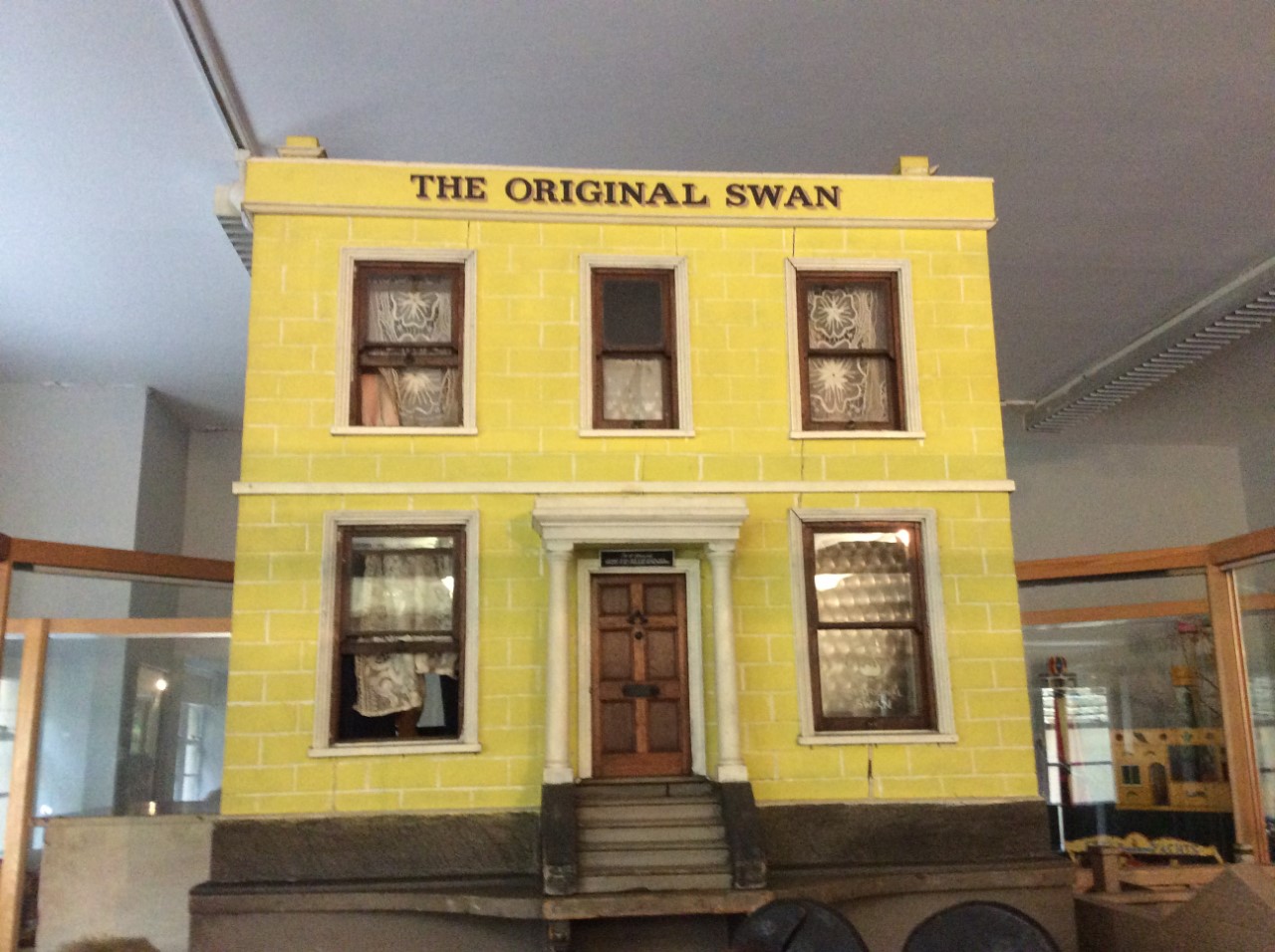
Something I became fascinated with while researching the book was finding out about famous collectors, particularly Vivien Greene, wife of novelist Graham Greene. Her collection was once housed in a museum in Oxford, not far from where I live, so there’s a bit of a connection there! Tracking down Vivien Greene’s dolls’ houses almost became a project of its own – sadly, she decided to auction her collection during the late 1990s when her eyesight was deteriorating and most of it finished up in private hands. But one that is on public display is Whiteway at Saltram, a National Trust house in Devon, and its Victorian-style interior is exquisite. I particularly loved the library with its miniature books, all made from wood, and the dining room with its plush red furnishings. The provenance of the house is something of a mystery, and I do love a good mystery! There’s another Vivien Greene house on display at Ilkley Toy Museum in Yorkshire, which dates from the late Victorian era and used to belong to a lady in Abingdon, Oxfordshire – again, not far from where I live. At some point it was converted into an hotel and named The Original Swan after a pub in Cowley, just outside Oxford. It has lost some of its original contents, but it is in good condition and you can still see the mahogany bar and its wooden barrels and glass bottles.
8. What made you want to write a book on dolls’ houses?
The Original Swan at Ilkley Toy Museum
It was writing for Dolls House and Miniature Scene magazine for so many years that made me think it would be interesting to write a book on the subject. I had already accumulated a lot of information and pictures that I could use as the basis for a book, and I had a lot of fun building on that, visiting various museums and stately homes that had dolls’ houses on display and gathering up lots more fascinating facts about these wonderful miniatures. I enjoyed researching and writing the book so much – it was a real labour of love!
9. What is your next writing project?
I’ve been working on some possible new book ideas, but at the moment I’m very busy with other writing work. I have several article deadlines coming up, and I am also a tutor on four distance-learning courses with The Writers Bureau, so I’m having to work on my book pitches in between everything else! Hopefully, though, at some point I’ll get them finished and sent off!
10. Where can people find you? Do you have a website or blog? Are you on social media?
I’m on Twitter – you can find me at @NicolaLisle1. I did set up a blog a while ago but haven’t actually done anything with it for some time, so it’s due for a major overhaul – that’s probably going to be a Christmas holiday job!
Thank you, Nicola, for such a lovely chat!
Life in Miniature: A History of Dolls’ Houses is available from Amazon or direct from Pen & Sword and would make a perfect Christmas present.
About the author:
Nicola Lisle is a freelance journalist and author specialising in history and the arts. She has written numerous articles for family history magazines, including Who Do You Think You Are?, Your Family History and Discover Your Ancestors, and was a regular contributor to Dolls House and Miniature Scene magazine for many years. She is the author of Tracing Your Family History Made Easy (Which? Books, 2011) and Tracing Your Oxfordshire Ancestors (Pen & Sword, 2018).
The finalised cover for Defenders of the Norman Crown: Rise and Fall of the Warenne Earls of Surrey, coming out next year.
Huge thanks to designer Paul Wilkinson at Pen & Sword for making my book look sooo good!
Defenders of the Norman Crown: Rise and Fall of the Warenne Earls of Surrey
In the reign of Edward I, when asked Quo Warranto? – by what warrant he held his lands – John de Warenne, the 6th earl of Warenne and Surrey, is said to have drawn a rusty sword, claiming ‘My ancestors came with William the Bastard, and conquered their lands with the sword, and I will defend them with the sword against anyone wishing to seize them.’
John’s ancestor, William de Warenne, 1st Earl of Surrey, fought for William the Conqueror at the Battle of Hastings in 1066. He was rewarded with enough land to make him one of the richest men of all time. In his search for a royal bride, the 2nd earl kidnapped the wife of a fellow baron. The 3rd earl died on crusade, fighting for his royal cousin, Louis VII of France…
For three centuries, the Warennes were at the heart of English politics at the highest level, until one unhappy marriage brought an end to the dynasty. The family moved in the most influential circles, married into royalty and were not immune to scandal.
Defenders of the Norman Crown tells the fascinating story of the Warenne dynasty, of the successes and failures of one of the most powerful families in England, from its origins in Normandy, through the Conquest, Magna Carta, the wars and marriages that led to its ultimate demise in the reign of Edward III.
Warenne arms
If you have been following this blog for any length of time, you will have noticed that I have a fondness for the Warennes. The family were earls of Surrey from 1088 until the death of the last Warenne earl in 1347. They possessed lands throughout England, stretching from Lewes in Sussex to Castle Rising in Norfolk and on to Conisbrough and Sandal Castles in Yorkshire.
Growing up close to the Warenne castle at Conisbrough in South Yorkshire, I developed a fascination for the castle’s history, for its connections to royalty, and for the family which built this amazing stronghold – the Warennes. As a student, I worked at the castle as a volunteer tour guide and started researching the story of the family. Many, many years later, when Pen & Sword asked me for some book ideas, I suggested writing a biography of the family, not really expecting them to say ‘yes’ – but they did. Defenders of the Norman Crown: Rise and Fall of the Warenne Earls of Surreyis a book I have always wanted to write, but never expected I would get the chance.
From the time of the Norman Conquest to the death of the seventh and last earl, the Warenne family was at the heart of English politics and the establishment, providing military and administrative support to the Crown. In the years following 1066 William I de Warenne, who became the first Earl of Surrey in 1088, was the fourth richest man in England and the richest not related to the royal family – he ranks at number 18 in MSN.com’s Top 20 Richest People of All Time.
Conisbrough Castle
The earls of Surrey were at the centre of the major crises of medieval England, from the Norman Conquest itself to the deposition of Edward II and accession of Edward III. Strategic marriages forged links with the leading noble houses in England and Scotland, from the Marshals, the FitzAlans, the d’Aubignys and Percys to the Scottish and English royal families themselves. Indeed, it is from Ada de Warenne, daughter of the second earl, married to the oldest son of the king of Scots, that all the leading competitors for the Scottish throne, after the death of Margaret, Maid of Norway in 1286, are descended. Queen Elizabeth II, herself, can trace her own lineage back to Ada and, through Ada, to the second earl of Warenne and Surrey.
In the 14th century, one unhappy marriage brought the dynasty to an end, the family’s influence and achievements almost forgotten…
Writing Defenders of the Norman Crown: Rise and Fall of the Warenne Earls of Surrey and researching this incredible family has been an amazing experience – a dream come true – and I will be eternally grateful to Pen & Sword for allowing me to tell their story.
Defenders of the Norman Crown: Rise and Fall of the Warenne Earls of Surrey tells the story of this remarkable dynasty. It is a story of power, ambition, loyalty and – above all – family!
Defenders of the Norman Crown: The Rise and Fall of the Warenne Earls of Surreywill be released in the UK on 31 May andis now available for pre-order from Pen & Sword Books.