Daughters of the Greatest Knight

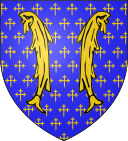
Arms of William Marshal, Earl of Pembroke

It is impossible to talk about anything related to Magna Carta without mentioning the man who has come to be known as ‘the Greatest Knight’: William Marshal, Earl of Pembroke, and his family. Marshal was one of the few nobles to stay loyal to King John throughout the Magna Carta crisis. That is not to say that the king and Marshal did not have their differences, nor that their relationship was always smooth sailing. However, William Marshal was famed for his loyalty and integrity and maintained his oaths to King John throughout his reign, regardless of the distrust between the two men.

The children of William and his wife, Isabel de Clare, cannot fail to have benefited from William Marshal’s rise through the ranks from fourth son and humble hearth knight, to earl of Pembroke and, eventually, regent for King Henry III. Their father’s position as a powerful magnate on the Welsh Marches, and the most respected knight in the kingdom, saw William’s daughters make advantageous marriages in the highest echelons of the English nobility.

William and Isabel were the parents of 10 children who survived to adulthood, 5 boys and 5 girls. In a bizarre and sad twist of fate, each of the boys would, in turn, succeed to the earldom, with not one leaving a male heir to continue the Marshal line. Of the girls, the couple’s eldest daughter was Matilda, also known as Maud or Mahelt. Given that her parents married in 1189 and she had two elder brothers, Matilda was probably born in 1193 or 1194. The Histoire de Guillaume le Maréchal wrote glowingly of Matilda, saying she had the gifts of

‘wisdom, generosity, beauty, nobility of heart, graciousness, and I can tell you in truth, all the good qualities which a noble lady should possess.’

 Histoire de Guillaume le Maréchal 

The Histoire goes on to say;

‘Her worthy father who loved her dearly, married her off, during his lifetime to the best and most handsome party he knew, to Sir Hugh Bigot.’

 Histoire de Guillaume le Maréchal 

Unfortunately for Matilda, her husband Hugh, the eldest son of the earl of Norfolk, was among the rebels during the Magna Carta crisis; their eldest son was taken hostage by the king when their castle at Framlingham surrendered to the royal army. It must have been a comfort to Matilda that, on John’s death, her son’s welfare, while still a hostage, would have been supervised by the new regent, the boy’s grandfather. When Hugh died in 1225, Matilda married for a second time just a few months later, to William de Warenne, Earl of Warenne and Surrey, thus uniting the Bigod, Warenne and Marshal families. The marriage appears to have been one of convenience rather than love but produced 2 children, a boy and a girl, John and Isabel. Matilda’s son by her second marriage, John de Warenne, joined his 3 older Bigod half-brothers, Roger, Hugh and Ralph as pall bearers for their mother’s coffin at her funeral in 1248, when she was laid to rest beside her mother at Tintern Abbey in Monmouthshire.

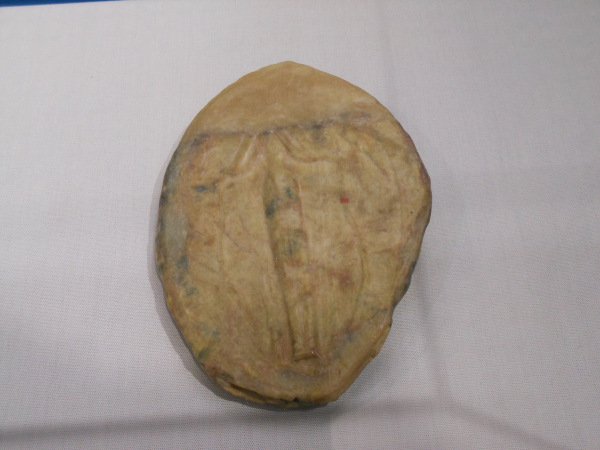
Seal of Matilda Marshal’s youngest son John de Warenne, 6th Earl of Warenne and Surrey

The next daughter, Isabel, was at least six years younger than Matilda, born in 1200. She was married to Gilbert de Clare, Earl of Gloucester and Hertford, who was twenty years her senior. Gilbert was the son of Richard de Clare, earl of Hertford, and Amicia, coheiress of William, Earl of Gloucester; through his mother he could trace his ancestry back to King Henry I, albeit through king’s illegitimate eldest son, Robert of Gloucester, the stalwart supporter of his half-sister, Empress Matilda. Gilbert’s aunt, Amicia’s sister, was Isabella of Gloucester, the discarded first wife of King John, who had held the earldom of Gloucester until her death on 14 October 1217, when it passed to Gilbert.

Both Gilbert and his father were named among the twenty-five barons appointed as Enforcers of Magna Carta in 1215; as a consequence, father and son were excommunicated at the beginning of 1216. After the death of King John, Gilbert sided with Prince Louis of France and was only reconciled with the royalist cause after the Battle of Lincoln in May 1217. This was despite having married Isabel, the second daughter of William Marshal, in 1214; Marshal had been regent of England for 9-year-old Henry III since King John’s death in October 1216. Like her older sister, Isabel had found her husband’s family were on the opposing side to her father in the Magna Carta crisis and the civil war that followed. They had 6 children together before Gilbert’s death in October 1230; he died on the return journey from an expedition to Brittany. Isabel was married again, not 6 months later, to the king’s younger brother, Richard, Earl of Cornwall. The early deaths of at least 2 children put a strain on this marriage and Richard had been seeking a divorce when Isabel found herself pregnant again. She was safely delivered of the longed-for son and heir, Henry of Almain in 1235. Tragically, Isabel herself died in childbirth, in 1240. Her baby son, Nicholas, died the same day.

The next-youngest of the Marshal sisters, Sibyl, was born around 1201: she was married to William de Ferrers, fifth earl of Derby. Unlike her elder sisters, Sibyl and her husband played little part in national affairs. Ferrers had been plagued by gout since his youth and led a largely secluded life. He was regularly transported by litter. Further, he had never fully recovered from an accident that had happened sometime in the 1230s. While crossing a bridge at St Neots in Huntingdonshire, Ferrers was thrown from his litter, into the water. It must have been a terrifying experience. He succeeded to the earldom of Derby on his father’s death in 1247 but died in 1254. During the marriage Sibyl gave birth to 7 children, all daughters: Agnes, Isabel, Maud, Sibyl, Joan, Agatha and Eleanor. Sibyl died sometime before 1247 and was laid to rest at Tintern Abbey, alongside her mother.

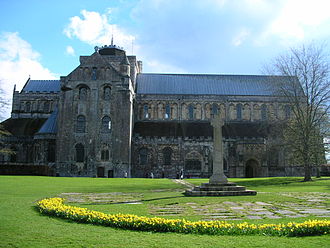
Tintern Abbey, Monmouthshire, resting place of several members of the Marshal family

William and Isabel Marshal’s fourth daughter, Eva, was born in about 1203 in Pembroke Castle, and so was only 16 when her father died – and 17 when she lost her mother. As a child, she spent several years with her family in exile in Ireland, only returning to England when her father was finally reconciled with King John in 1212. Sometime before 1221, Eva was married to William (V) de Braose, Lord of Abergavenny, son of Reginald de Braose and grandson of Matilda de Braose, who had died of starvation in King John’s dungeons in 1210. William de Braose was a wealthy Norman baron with estates along the Welsh Marches. He was hated by the Welsh, who had given him the nickname Gwilym Ddu, or Black William, and had been taken prisoner by Llywelyn ap Iorweth – Llywelyn the Great – in 1228.

Although he had been released after paying a ransom, de Braose later returned to Llywelyn’s court to arrange a marriage between his daughter, Isabella, and Llywelyn’s son and heir, Dafydd. During this stay, Eva’s husband was ‘caught in Llywelyn’s chamber with the King of England’s daughter, Llywelyn’s wife’. Whilst Llywelyn’s wife, Joan, Lady of Wales, the illegitimate daughter of King John, was imprisoned for a year, a much worse fate was meted out to William de Braose. He was publicly hanged on Llywelyn’s orders, leaving Eva a widow at the age of 27, with 4 young daughters, all under the age of 10. Despite the discomfort caused by Llywelyn’s execution of Braose, the marriage of Isabella and Dafydd went ahead, following some impressive diplomacy on Llywelyn’s part. Eva never remarried and spent her widowhood managing her own lands. She was caught up the revolt of her brother, Richard, in 1234, and appears to have acted as intermediary between her brother and the king to help resolve the situation. She died in 1246.

The youngest Marshal sister was Joan, who was still only a child when William Marshal died in 1219, being born in 1210. She is mentioned in the Histoire as having been called for by her ailing father, so that she could sing for him. Joan was married, before 1222, to Warin de Munchensi, a landholder and soldier who was born in the mid-1190s. When his father and older brother died in 1204 and 1208 (possibly), respectively, Warin was made a ward of his uncle William d’Aubigny, Earl of Arundel. He was ill-treated by King John, who demanded 2,000 marks in relief and quittance of his father’s Jewish debts on 23 December 1213. He was ordered to pay quickly and pledged his lands as a guarantee of his good behaviour.

Effigy identified as William Marshal, Temple Church, London

This harsh treatment drove him to ally with the rebel barons and he was captured fighting against the royalist forces, and his father-in-law, at the Battle of Lincoln, on 20 May 1217. He was, soon after, reconciled with the crown and served Henry III loyally on almost every military campaign of the next forty years. His marriage to Joan Marshal produced two children; John de Munchensi and a daughter, Joan, who would marry the king’s half-brother, William de Valence, fourth son of Isabelle d’Angoulême and her second husband, Hugh X de Lusignan, Count of La Marche. It was through his wife and, more accurately her mother, that William de Valence was allowed to accede to the earldom of Pembroke following the extinction of the Marshal male line. Joan Marshal died in 1234 and so never saw her daughter marry and become countess of Pembroke in 1247.

The various experiences of the 5 Marshal daughters serve as a demonstration of the divisions among the nobility, caused by the Magna Carta crisis, with several of them finding themselves on the opposing side to that of their father. It must have been a source of great anxiety for a family which appears to have been otherwise very close. These 5 young women also provide a snapshot of the fates of women in thirteenth century England, death in childbirth, early widowhood and second marriages arranged for personal security rather than love. What is evident is that, just like their father, these girls were an integral part of the Magna Carta story.

*

An earlier version of this article first appeared on Samantha Wilcoxson’s blog.

Sources:

Rich Price, King John’s Letters Facebook group; Robert Bartlett England Under the Norman and Angevin Kings 1075-1225; Dan Jones The Plantagenets; the Kings who Made EnglandThe Plantagenet Chronicle Edited by Elizabeth Hallam; Maurice Ashley The Life and Times of King John; Roy Strong The Story of BritainOxford Companion to British History; Mike Ashley British Kings & Queens; David Williamson Brewer’s British Royalty; Ralph of Diceto, Images of History; Marc Morris, King John; David Crouch, William Marshal; Crouch and Holden, History of William Marshal; Crouch, David, ‘William Marshal [called the Marshal], fourth earl of Pembroke (c. 1146–1219)’, Oxforddnb.com; Flanagan, M.T., ‘Isabel de Clare, suo jure countess of Pembroke (1171×6–1220)’, Oxforddnb.com; Thomas Asbridge, The Greatest Knight; Chadwick, Elizabeth, ‘Clothing the Bones: Finding Mahelt Marshal’, livingthehistoryelizabethchadwick.blogspot.com; Stacey, Robert C., ‘Roger Bigod, fourth earl of Norfolk (c. 1212-1270)’, Oxforddnb.com; finerollshenry3.org.uk; Vincent, Nicholas, ‘William de Warenne, fifth earl of Surrey [Earl Warenne] (d. 1240)’, Oxforddnb.com.

My Books

Signed, dedicated copies of all my books are available through my online bookshop.

Out now: Scotland’s Medieval Queens

Scotland’s history is dramatic, violent and bloody. Being England’s northern neighbour has never been easy. Scotland’s queens have had to deal with war, murder, imprisonment, political rivalries and open betrayal. They have loved and lost, raised kings and queens, ruled and died for Scotland. From St Margaret, who became one of the patron saints of Scotland, to Elizabeth de Burgh and the dramatic story of the Scottish Wars of Independence, to the love story and tragedy of Joan Beaufort, to Margaret of Denmark and the dawn of the Renaissance, Scotland’s Medieval Queens have seen it all. This is the story of Scotland through their eyes.

Scotland’s Medieval Queens gives a thorough grounding in the history of the women who ruled Scotland at the side of its kings, often in the shadows, but just as interesting in their lives beyond the spotlight. It’s not a subject that has been widely covered, and Sharon is a pioneer in bringing that information into accessible history.’ Elizabeth Chadwick (New York Times bestselling author)

Available now from Amazon and Pen and Sword Books

Also by Sharon Bennett Connolly:

Heroines of the Tudor World tells the stories of the most remarkable women from European history in the time of the Tudor dynasty, 1485-1603. These are the women who ruled, the women who founded dynasties, the women who fought for religious freedom, their families and love. Heroines of the Tudor World is now available for pre-order from Amberley Publishing and Amazon UK. Women of the Anarchy demonstrates how Empress Matilda and Matilda of Boulogne, unable to wield a sword themselves, were prime movers in this time of conflict and lawlessness. It shows how their strengths, weaknesses, and personal ambitions swung the fortunes of war one way – and then the other. Available from Bookshop.orgAmberley Publishing and Amazon UKKing John’s Right-Hand Lady: The Story of Nicholaa de la Haye is the story of a truly remarkable lady, the hereditary constable of Lincoln Castle and the first woman in England to be appointed sheriff in her own right. Available from all good bookshops Pen & Sword Booksbookshop.org and Amazon

Defenders of the Norman Crown: The Rise and Fall of the Warenne Earls of Surrey tells the fascinating story of the Warenne dynasty, from its origins in Normandy, through the Conquest, Magna Carta, the wars and marriages that led to its ultimate demise in the reign of Edward III. Available from Pen & Sword BooksAmazon in the UK and US, and Bookshop.orgLadies of Magna Carta: Women of Influence in Thirteenth Century England looks into the relationships of the various noble families of the 13th century, and how they were affected by the Barons’ Wars, Magna Carta and its aftermath; the bonds that were formed and those that were broken. It is now available in paperback and hardback from Pen & SwordAmazon, and Bookshop.orgHeroines of the Medieval World tells the stories of some of the most remarkable women from Medieval history, from Eleanor of Aquitaine to Julian of Norwich. Available now from Amberley Publishing and Amazon, and Bookshop.orgSilk and the Sword: The Women of the Norman Conquest traces the fortunes of the women who had a significant role to play in the momentous events of 1066. Available now from Amazon,  Amberley Publishing, and Bookshop.org.

Alternate Endings: An anthology of historical fiction short stories including Long Live the King… which is my take what might have happened had King John not died in October 1216. Available in paperback and kindle from Amazon.

Podcast:

Have a listen to the A Slice of Medieval podcast, which I co-host with Historical fiction novelist Derek Birks. Derek and I welcome guests, such as Bernard Cornwell and Michael Jecks, and discuss a wide range of topics in medieval history, from significant events to the personalities involved. Including an episode on William Marshal with Elizabeth Chadwick, author of The Greatest Knight. Every episode is now available on YouTube.

*

Don’t forget! Signed and dedicated copies of all my books are available through my online bookshop.

For forthcoming online and in-person talks, please check out my Events Page.

You can be the first to read new articles by clicking the ‘Follow’ button, liking our Facebook page or joining me on TwitterThreadsBluesky and Instagram.

*

©2021 Sharon Bennett Connolly FRHistS

Earl Warenne and the Second Crusade

History ... the Interesting Bits
Coat of arms of the Warenne earls of Surrey, in the Gundrada Chapel of Trinity Church, Southover

When looking at a particular period or event in history, it can be easy to assume that it was all-consuming for those involved. The rest of the world blurs into the background as a country is consumed by war. Or does it? Even in medieval times, countries were not unaffected by the others around them. I almost got swept into the idea that the period known in English history as the Anarchy was a time when people thought of little else but who should be king – or queen. Even those fighting in the war were not so blinkered. Nor ignorant of events outside of England’s borders.

Did you know, for instance, that not one, but two, contingents of crusaders left England’s shores in the midst of the Anarchy? One force was headed to Portugal, and the other to the Holy Land, to join the Second Crusade. One of those crusaders was William de Warenne, 3rd Earl of Warenne and Surrey.

William (III) de Warenne was the son of William (II) de Warenne, 2nd Earl of Warenne and Surrey, and Isabel de Vermandois, a granddaughter of King Henry I of France. William was born in 1119, a year after his parents’ marriage. He was the eldest of five children. His two brothers, Reginald and Ralph, appear frequently in his story, suggesting a close family bond. Of his sisters, Ada married Prince Henry of Scotland, and was the mother of two Scottish kings, Malcolm IV and William the Lion. Gundreda de Warenne married Roger de Beaumont, Earl of Warwick, who was a cousin of Gundreda’s half-brothers, the famous Beaumont twins, Waleran and Robert.

Waleran and Robert de Beaumont were the eldest sons of Isabel de Vermandois by her first husband, Robert de Beaumont, Count of Meulan and Earl of Leicester. Isabel had nine children with her first husband and five more with Earl Warenne. Interestingly, the two families appear to have got on rather well together. William (III) can often be found in the company of one or both of his older, twin, half-brothers, such as at the deathbed of Henry I, at Lyons-la-Forêt in 1135; William was there alongside his father, the second earl, and his brothers Waleran and Robert de Beaumont.

Following his father’s death in 1138, William (III) inherited the lands and titles of the earl of Warenne and Surrey. As such, he was heavily involved in that period of history known as the Anarchy, the contest between King Stephen and Empress Matilda for England’s crown. As his father had done, the 3rd earl supported King Stephen, fighting at both the First Battle of Lincoln and the siege of Winchester in 1141. By the late 1140s, although the conflict between Stephen and Matilda was still unresolved, Earl Warenne and his half-brother, Waleran de Beaumont, appear to have wanted to get away from the constant unrest of the cousins’ war and looked to join a more noble enterprise.

History ... the Interesting Bits
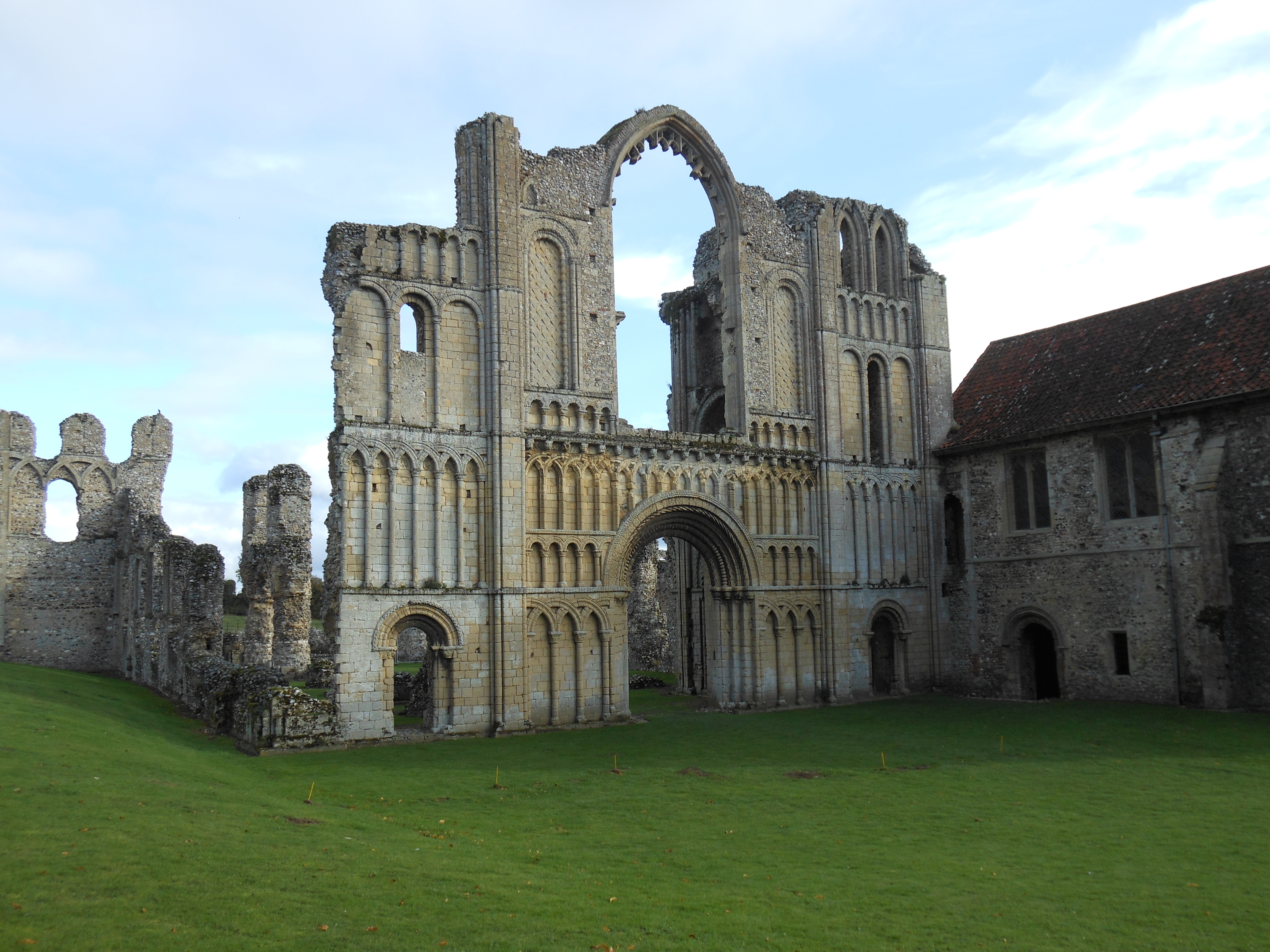
Castle Acre Priory, Norfolk

On 24 March 1146, Palm Sunday, near Vézélay, and perhaps motivated by the example of his royal cousin, Louis VII of France, William de Warenne took the cross and committed himself to the Second Crusade. From this moment on, the earl’s time was taken up with preparations for the expedition and making arrangements to ensure the security and administration of his earldom during his absence. Among others, he confirmed grants to Castle Acre Priory of the land of Thexton in Norfolk which Osmoda de Candos had given with the consent of her husband Philip: William’s brother Reginald is named in the charter and his brother Ralph, as well as his wife, Countess Ela, are all listed among the witnesses. He also confirmed a gift made to his brother Reginald whereby William son of Philip, gave his land of Harpley in Norfolk. During the winter of 1146–47, the earl granted to the monks of Castle Acre, a confirmation of any acquisitions which they might make, ‘from my fee of whatever tenancy within my tenseria [authority], whether by way of gift or purchase.’1

In 1147, before leaving England’s shores, the earl, his family and leading magnates congregated at Lewes Priory for the dedication of the new priory church. Most of the royal court were present, as were Ralph and Reginald de Warenne, the earl’s brothers; four leading church prelates attended, including Theobald, Archbishop of Canterbury and Henry of Blois, Bishop of Winchester as well as the bishops of Rochester and Bath. Also present were the abbots of Reading and Battle, the prior of Canterbury and William d’Aubigny, Earl of Sussex. Earl Warenne appears to have used the occasion to set his affairs in order and guarantee the security of his earldom during his absence.

History ... the Interesting Bits
St Pancras Priory, Lewes

The most significant charter issued on this occasion added to the endowment of Lewes’ priory church and promised that the earl would pay the taxes that the priory would ordinarily owe to the king. In it, the earl confirmed

‘all its lands of his fee, undertaking to acquit it of danegeld and all other services due to the king; and gift of tithe of corn, etc., from all his demesne lands and a full tenth penny of all his rents in England. He issued the charter when he caused the priory church to be dedicated and endowed it with the tenth penny of his rents, giving it seisin thereof by hair from his own head and that of Ralph de Warenne his brother, cut with a knife by Henry, bishop of Winchester, before the altar.’2

The locks of hair of Earl William and his brother Ralph, ceremoniously cut off by Bishop Henry before the altar, would afterwards have been placed on the altar, alongside the knife used in the ceremony, and may have later been ‘filed’ within the charter when it was sealed. This is the last reference to Ralph de Warenne that I could find in the historical record. Given that only Ralph and William stored locks of their hair, and not Reginald, who we know stayed in England, I think it possible that Ralph accompanied his older brother on crusade.

His affairs in order, the earldom was placed under the supervision of his very capable brother, Reginald de Warenne. The pope stipulated that church sanctions should not be invoked, ‘in respect of those men whom our beloved son Stephen the illustrious king of the English or his adversaries disinherited on the occasion of the war held for the realm before they took the cross.’3 In a time of continued civil war, this guaranteed protection of a crusader’s lands was a necessity. Earl William was now able to depart on crusade, secure in the knowledge that the family and lands he left behind were well protected from anyone wishing to take advantage of his absence:

At Whitsuntide Lewis [Louis], king of France, and Theodorie, earl of Flanders, and the count of St Egidius, with an immense multitude from every part of France, and numbers of the English, assumed the cross and journeyed to Jerusalem, intending to expel the Infidels who had taken the city of Rohen. A still greater number accompanied Conrad, emperor of Germany; and both armies passed through the territories of the emperor of Constantinople, who afterwards betrayed them.

Henry of Huntingdon
History ... the Interesting Bits
Louis VII, King of France

There were, in fact, two crusades that departed England’s shores in 1147. Some of the crusaders, an Anglo-Flemish force, went to Portugal and successfully captured Lisbon from the Muslims. Earl William de Warenne and his older half-brother, Waleran de Beaumont, joined their cousin King Louis VII of France and set out for the Holy Land. Taking the overland route, they followed in the footsteps of the German emperor, Conrad III, who had left Germany in May and arrived in Constantinople in September. Louis, accompanied by his wife Eleanor of Aquitaine, arrived in Constantinople with his army on 4 October. Tensions ran high from the start. On initially hearing of the proposed crusade, Byzantine emperor Manuel Comnenus, afraid of losing local trading connections, made a truce with the Turkish sultan of Rum in 1146 to protect Constantinople’s Asian lands from attack. To the Western crusaders, this was more proof of the apostasy of the Eastern church. The more fervent of Louis’ followers accused Emperor Manuel of treason and urged Louis to attack the emperor. Louis, on the other hand, was persuaded to appease the emperor by his less volatile advisers and the king promised to restore any imperial lands they may capture.

The German and French contingents met at Nicaea in November, with the Germans having already suffered a defeat at Dorylaeum on 25 October, after taking the inland route towards the kingdom of Jerusalem. The two armies, now combined, set off on the coastal route, following the path of the first crusaders’ advance into Philadelphia in Lydia. By the time they reached Ephesus, Conrad was seriously ill and returned to Constantinople to recover. The French king and his army continued on to Antioch; marching through difficult terrain in mid-winter proved particularly harrowing. The Seljuk Turks waited for the crusaders on the banks of the river Meander, but Louis’ army forced their way through. On 6 January 1148, they reached Laodicea and from there marched into the mountains that separate the Phrygia of the Pisidia. It was here that the army met with disaster.

As they crossed Mount Cadmus, the vanguard advanced too far ahead under the leadership of Geoffrey de Rançon, thus becoming detached from the main body of the army. As the vanguard progressed across Mount Cadmus, the French column followed behind, secure in the knowledge that the vanguard occupied the high ground to their front. William de Warenne was in the king’s bodyguard, towards the rear of the column, as they advanced. When the Turks appeared, the French broke their ranks and rushed upon them with swords drawn; the disorder in the ranks handing the advantage to their enemy. Retreating, the French found themselves in a narrow gorge, with a steep precipice on one side and crags on the other. Horses, men and baggage were forced over the precipice by the advancing Turks. Louis VII’s biographer, Odo de Deuil, related the events:

“…the king, who had been left behind in peril with certain of his nobles, since he was not accompanied by common soldiers or serjeants with bows (for he had not fortified himself for crossing the pass, which by common agreement he was to cross the next day), careless of his own life and with the desire of freeing the dying mob, pushed through the rear-guard and courageously checked the butchery of his middle division. He boldly assaulted the infidel, who outnumbered him a hundred times and whom the position aided a great deal; for there no horse could stand, I shall not say gallop, but barely stand, and the slower attack which resulted in the weakened knights’ thrust when wounding the enemy. On the slippery slope our men brandished their spears with all of their own might, but without the added force of their horses, and from the safe shelter of rocks and trees the Turks shot arrows. Freed by the knights’ efforts, the mob fled, carrying their own packs or leading the sumpter animals, and exposed the king and comrades to death in their stead….During the engagement the king lost his small but renowned royal guard; keeping a stout heart; however, he nimbly and bravely scaled a rock by making use of tree roots which God had provided for his safety. The enemy climbed after, in order to capture him, and the more distant rabble shot arrows at him. But by the will of God his cuirass protected him from the arrows, and to keep from being captured he defended the crag with his bloody sword, cutting off heads and hands of many opponents in the process…”

 Odo of Deuil, De Profectione Ludovici VII in Orientem
History ... the Interesting Bits
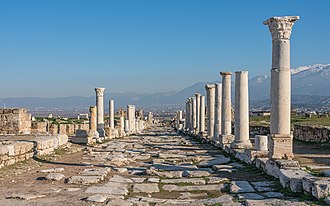
Laodicea

King Louis’ bodyguard was cut down in the fighting and William de Warenne was among the fallen. Louis himself was able to escape the carnage, standing alone against a number of attackers. As the night drew in, the king and survivors were able to take advantage of the darkness to reunite with the vanguard, which had believed the king lost. In one of his letters to Abbot Sugar, King Louis wrote of the disaster on Mount Cadmus, explaining how he had been separated from the vanguard and his escort had been cut down, with the loss of his cousin, William de Warenne. He was too upset to give any more details and Mount Cadmus remains a battle of which very little is known beyond the basic details.

“Nearby the baggage train was still crossing the pass, because the closer packed it was, the slower it fled over the crags. When he came upon it, the king, who was on foot, secured a horse and accompanied the men through the evening, which had already fallen. At that time breathless cohorts of knights from the camp met him and groaned when they saw him alone, bloody, and tired, for, without asking, they knew what had happened and mourned inconsolably for the missing royal escort, which numbered about forty (to wit, the count of Warenne and his brother Evrard of Breteuil, Manasses of Bulles and Gautier of Montjay and others; but I shall not record the names of all, lest I be considered unnecessarily wordy.)”

 Odo of Deuil, De Profectione Ludovici VII in Orientem


Despite the heavy losses, King Louis’ crusade continued, reuniting with the German contingent between March and June 1148. They failed to take Edessa and were forced to withdraw from Damascus after a week of heavy fighting, when fresh Muslim forces arrived. The crusade ended in failure and the French king, who blamed Emperor Manuel Comnenus for the fiasco, accepted the aid of Manuel’s enemy Roger of Sicily, who sent ships to take the French forces home. Of the English forces, while William de Warenne was lost at Mount Cadmus, his brother Waleran de Beaumont, Count of Meulan and Earl of Worcester, made it back to England’s shores, narrowly surviving a shipwreck along the way; he founded a monastery in gratitude. Of the two Anglo-Norman bishops who accompanied the crusade, Roger of Chester died at Antioch and was buried there, whereas Arnulf of Lisieux, who had served as one of the leading diplomats, returned but with his reputation faded.

History ... the Interesting Bits
Seal of Isabel de Warenne, Countess of Surrey

Perhaps it was always on the cards that the 3rd Earl Warenne’s unspectacular military career would end with his death in battle. He was only 28 years old and had held the earldom for just over nine years. The earl had been a stalwart supporter of King Stephen, not once wavering in his allegiance, despite his failures in Normandy and at Lincoln early on in his career. He had done extensive work on the family’s property at Castle Acre, reinforcing the castle and replanning the town, building the ramparts that now surround it. William de Warenne had been a generous benefactor to the church, especially the Warenne foundations at Lewes and Castle Acre.

Even in his absence on crusade, the earl was still technically in charge; his brother, Reginald, issued a number of charters, each with the proviso that ‘if Jesus Christ brought back the earl [from the crusade] he would cause him to confirm it’ or ‘do his best to obtain the earl’s confirmation.’4

The death of William de Warenne, 3rd Earl of Warenne and Surrey brought an end to the senior male line that had been founded with the creation of the earldom for William (I) de Warenne in 1088. The earl was survived by his wife, Ela de Talvas, still a young woman, and his daughter, Isabel de Warenne, a child probably no more than 10 years of age. Isabel was now the richest heiress in England and married to King Stephen‘s youngest son, William of Blois. The earl’s estates were left in the capable hands of his youngest brother, Reginald de Warenne, Baron of Wormegay, who would watch over them for his niece and her young husband.

Notes:

1 Edmund King, King Stephen; 2 Farrer, William and Charles Travis Clay, editors, Early Yorkshire Charters, Volume 8: The Honour of Warenne; 3 Epistolae Pontificum Romanorum ineditae quoted in Edmund King, King Stephen; 4 Farrer, William and Charles Travis Clay, editors, Early Yorkshire Charters, Volume 8: The Honour of Warenne; Odo of Deuil, De Profectione Ludovici VII in Orientem, magnacharta.com.

Sources:

Robert Batlett, England Under the Norman and Angevin Kings; Dan Jones, The Plantagenets; Donald Matthew, King Stephen; Medieval Lands Project on the Earls of Surrey, Conisbrough Castle; Farrer, William and Charles Travis Clay, editors, Early Yorkshire Charters, Volume 8: The Honour of Warenne; Morris, Marc King John: Treachery, Tyranny and the Road to Magna Carta; Church, Stephen, King John: England, Magna Carta and the Making of a Tyrant; doncasterhistory.co.uk; A History of the County of Sussex: Volume 2 edited by William Page; W.H. Blaauw, On the Early History of Lewes Priory, and its Seals, with extracts from a MS. Chronicle, Sussex Archaeological Collections; Rev. John Watson, Memoirs of the Ancient Earls of Warren and Surrey, and Their Descendants to the Present Time, Volume I;  Odo of Deuil, De Profectione Ludovici VII in Orientem; magnacharta.com; Cokayne, G.E., The Complete Peerage, Vol. XII; Henry of Huntingdon, The Chronicle of Henry of Huntingdon.

Images:

Louis VII and Laodicea courtesy of Wikipedia; Warenne seal, Castle Acre Priory, St Pancras Priory and Seal of Isabel de Warenne are ©2021 Sharon Bennett Connolly

My Books

Signed, dedicated copies of all my books are available through my online bookshop. or by contacting me.

Coming 30 March 2026: Princesses of the Early Middle Ages

Books by Sharon Bennett Connolly

Daughters of kings were often used to seal treaty alliances and forge peace with England’s enemies. Princesses of the Early Middle Ages: Royal Daughters of the Conquest explores the lives of these young women, how they followed the stereotype, and how they sometimes managed to escape it. It will look at the world they lived in, and how their lives and marriages were affected by political necessity and the events of the time. Princesses of the Early Middle Ages will also examine how these girls, who were often political pawns, were able to control their own lives and fates. Whilst they were expected to obey their parents in their marriage choices, several princesses were able to exert their own influence on these choices, with some outright refusing the husbands offered to them.

Their stories are touching, inspiring and, at times, heartbreaking.

Princesses of the Early Middle Ages: Royal Daughters of the Conquest is now available for pre-order from Pen & Sword and Amazon.

Also by Sharon Bennett Connolly:

Books by Sharon Bennett Connolly

Scotland’s history is dramatic, violent and bloody and Scotland’s Medieval Queens have seen it all. This is the story of Scotland through their eyes. Available now from Amazon and Pen and Sword BooksHeroines of the Tudor World tells the stories of the most remarkable women from European history in the time of the Tudor dynasty, 1485-1603. These are the women who ruled, the women who founded dynasties, the women who fought for religious freedom, their families and love. Heroines of the Tudor World is now available from Amberley Publishing and Amazon UK. Women of the Anarchy demonstrates how Empress Matilda and Matilda of Boulogne, unable to wield a sword themselves, were prime movers in this time of conflict and lawlessness. It shows how their strengths, weaknesses, and personal ambitions swung the fortunes of war one way – and then the other. Available from Bookshop.orgAmberley Publishing and Amazon UKKing John’s Right-Hand Lady: The Story of Nicholaa de la Haye is the story of a truly remarkable lady, the hereditary constable of Lincoln Castle and the first woman in England to be appointed sheriff in her own right. Available from all good bookshops Pen & Sword Booksbookshop.org and Amazon

Defenders of the Norman Crown: The Rise and Fall of the Warenne Earls of Surrey tells the fascinating story of the Warenne dynasty, from its origins in Normandy, through the Conquest, Magna Carta, the wars and marriages that led to its ultimate demise in the reign of Edward III. Available from Pen & Sword BooksAmazon in the UK and US, and Bookshop.orgLadies of Magna Carta: Women of Influence in Thirteenth Century England looks into the relationships of the various noble families of the 13th century, and how they were affected by the Barons’ Wars, Magna Carta and its aftermath; the bonds that were formed and those that were broken. It is now available in paperback and hardback from Pen & SwordAmazon, and Bookshop.orgHeroines of the Medieval World tells the stories of some of the most remarkable women from Medieval history, from Eleanor of Aquitaine to Julian of Norwich. Available now from Amberley Publishing and Amazon, and Bookshop.orgSilk and the Sword: The Women of the Norman Conquest traces the fortunes of the women who had a significant role to play in the momentous events of 1066. Available now from Amazon,  Amberley Publishing, and Bookshop.org.

Alternate Endings: An anthology of historical fiction short stories including Long Live the King… which is my take what might have happened had King John not died in October 1216. Available in paperback and kindle from Amazon.

Podcast:

A Slice of Medieval

Have a listen to the A Slice of Medieval podcast, which I co-host with Historical fiction novelist Derek Birks. Derek and I welcome guests, such as Ian Mortimer, Bernard Cornwell, Elizabeth Chadwick and Scott Mariani, and discuss a wide range of topics in medieval history, from significant events to the personalities involved. 

Every episode is also now available on YouTube.

*

Don’t forget! Signed and dedicated copies of all my books are available through my online bookshop.

For forthcoming online and in-person talks, please check out my Events Page.

You can be the first to read new articles by clicking the ‘Follow’ button, liking our Facebook page or joining me on TwitterThreadsBluesky and Instagram.

©2025 Sharon Bennett Connolly FRHistS

The Early Years of the Last Earl Warenne

Books by Sharon Bennett Connolly
Arms of the Earls of Warenne and Surrey

John de Warenne, 7th and last Earl of Warenne and Surrey (Earl Warenne), was the only son of William de Warenne, who in turn was the only son of the colourful and rather legendary John de Warenne, 6th Earl Warenne. The 6th earl had been married in 1247 to Alice de Lusignan, half-sister of King Henry III as the second eldest daughter of Isabelle d’Angoulême, Queen of England as the wife of King John, and her second husband, Hugh X de Lusignan, Count of La Marche and Lord of Lusignan and Valence.

Born in around 1224, Alice was seven years older than her 16-year-old husband. The marriage had formed part of King Henry’s much-despised policy of patronising his Lusignan siblings and thus was condemned by Matthew Paris. Rather harshly, Paris claimed that the marriage was ‘beyond the bride’s station.’1 Given that Alice was half-sister of the king of England, this assessment seems a tad unfair. For John’s son and grandson, it would provide them with powerful royal relations in the future; William de Warenne was a first cousin of Edward I and the younger John de Warenne was a second cousin to Edward II.

Alice de Lusignan, Countess of Warenne and Surrey, died on 9 February 1256, just hours or days after William’s birth. She was ‘placed in the earth before the great altar [Lewes priory] in the presence of her brother Adelmar [Aymer], [bishop] elect of Winchester.’2 Despite being one of the wealthiest and most powerful earls in the country, and with only one legitimate son to succeed him, John de Warenne would never remarry, perhaps an indication of the deep affection that he held for his semi-royal wife.

In his late twenties, William de Warenne was married to Joan, daughter of Richard de Vere, Earl of Oxford, sometime in 1284: ‘Also William de Warenne married the daughter of the Earl of Oxford.’3 Through his mother, William was the nephew of Henry III and first cousin to Edward I. Through his father, William was descended from, among others, William Marshal, Geoffrey of Anjou and six Warenne earls of Surrey. However, William was destined never to succeed to the expansive earldom of Surrey. He was killed in a tournament at Croydon in December 1286, just six months after the birth of his only son and heir, John. The Annals of Lewes Priory recorded the events of 1286:

This year, on June 30, was born the first-begotten son of Sir William de Warenn, by his wife, daughter of the Earl of Oxford, whom he had married, as appears above. He was baptised and called by the name of John, on the 7th of November, with immense rejoicing; but alas! As the prophet testifies, ‘our joys are extinguished, but lamentation possesses us;’ for in the same year, on the first Sunday before the feast of Thomas the Apostle, which was on December 15, the father of the aforesaid youth [Sir William, killed in a tournament at Croydon], concerning whom our gladness had been, expired, and, oh sadness! He in whom flourished entire nobility, generosity and honesty, and the beginning of the glory of all knighthood, now lies buried and covered with stones. But there was present at the entombment of this so noble a man, the lord of Canterbury, who buried him before the high altar, on the left side, near his mother, with the greatest devotion of respect, as was fitting, many nobles of the land being present. The earl marshal [Roger Bigod, Earl of Norfolk], the Earl of Oxford and several barons … were anxiously afflicted.4

Books by Sharon Bennett Connolly
St Pancras priory, Lewes, the Warenne family mausoleum

Some sources suggest that John was the posthumous son of William, stating that William was killed in January 1286; however, this entry in the Annals of Lewes Priory makes it clear that John was born almost six months before his father was killed. John’s sister, Alice, on the other hand, may well have been born the year after her father’s death, in June 1287; hence John being referred to as the ‘first-begotten son’ despite being the only son. Joan was pregnant with Alice and no one yet knew if the child would be a boy or a girl.

Given the chronicle was written by a monk at Lewes, a priory patronised by the Warenne family, the laments and praise of William may be slightly exaggerated. However, that the archbishop of Canterbury conducted the funeral rites, and the presence of many senior nobles, suggests that William was, indeed, well thought of. This fact may give the lie to the rumours of murder that inevitably accompany a medieval death from unnatural causes. Rumours that William’s enemies had taken the opportunity of the tournament to despatch the young lord appear to be without foundation.

Young John suffered a further bereavement on 1293, when his mother, Joan died. Aged only 7, it seems arrangements had already been made should John still be a minor when his parents died. It had been agreed that the custody of John and his lands should go to Joan’s parents, Robert de Vere and his wife, Alice de Sanford. However, Earl Robert died in 1296 and it is not known where 10-year-old John spent the remainder of his childhood. It seems likely that John was raised by his Warenne grandfather, until the 6th Earl’s death in 1304.

At the age of 18, John succeeded to the earldom of his grandfather as the 7th earl of Warenne, Surrey and Sussex. His vast holdings comprised of lands and manors in numerous counties, including Sussex, Surrey, Lincolnshire, Yorkshire, Wiltshire and Norfolk. John, Earl Warenne, was still a minor and would be for another three years; as a consequence, he was made a royal ward, his lands taken into the custody of the Crown. Although he and his lands were in royal custody, and managed by custodians, John lived on his own estates and in 1305 the king commanded John to provide him with forty dried and salted barrels of deer.5 In the same year, he was sent to attend a tournament at Guildford, part of John’s estates, by Edward I, who provided the young lord with considerable funds for his maintenance.6

On 7 April 1306, in spite of the fact he had not yet performed homage to the king, still only 19 years old, Edward granted John his grandfather’s lands. It may well have been at this time that Edward Balliol was placed in John’s custody. The son of John’s aunt, Isabella, and King John Balliol of Scotland, the younger Balliol had been in the custody of his grandfather, the sixth Earl Warenne, from 1299 until the old earl’s death in 1304.

Books by Sharon Bennett Connolly
Seal of Edward Balliol as King of Scots

Given that it is likely his mother was no longer living when John Balliol became king in 1292, and that the couple had been married sometime before 7th February 1281, it seems probable that Edward was born sometime in the 1280s, making him of a similar age to his cousin, John de Warenne. Indeed, the two young men may well have spent their teenage years together in their grandfather’s household, training for knighthood. John was Balliol’s guardian for about 4 years, until it was ordered that he be delivered into royal custody in 1310, by Edward II. Edward Balliol had a strong claim to the Scottish throne, one that he would later be encouraged to pursue by Edward III in the 1330s. In May 1306, John de Warenne attended his first parliament at Westminster, an event which marked his coming of age, although he was not yet 21; in fact, he was still a month shy of his twentieth birthday.

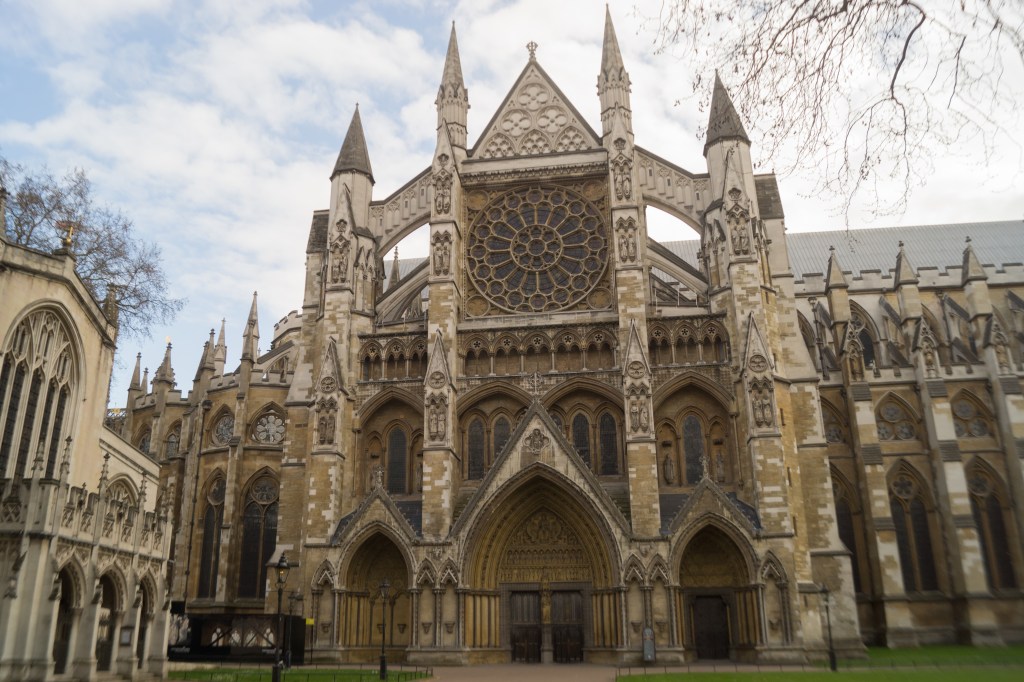
John’s early coming of age appears to have been a part of larger scheme by King Edward, as during the parliamentary session, John was brought before the king and offered Edward’s granddaughter in marriage; the young earl readily agreed to the marriage, even though his bride was only 10 years old. The proposed bride was Joan, or Jeanne of Bar, Edward’s granddaughter by his eldest daughter, Eleanor and her husband Henry, Count of Bar. In the week following the betrothal of John and Joan, and in anticipation of a new expedition against Scotland, on 22 May 1306, Edward I held a magnificent ceremony for the knighting of his eldest son, Edward; the king knighted the prince, who then went on to knight the other candidates, in the glorious setting of Westminster Abbey.

In anticipation of the prince’s knighting, and in order to gather a body of knights who would be loyal to his son, the king proclaimed that all young men of sufficient age and income should travel to Westminster, to be knighted at royal expense alongside their future king, Prince Edward. The ceremony was also to bestow knighthoods on almost 300 men, John de Warenne included: ‘The yong Erle of Warenne with grete nobley was thare / A wif thei him bikenne, the erles douhter of Bare.’7

There were so many young men to be knighted, that it was impossible to find accommodation for all, and apple trees had to be chopped down in the gardens of the New Temple to make room. The prince and his closest companions kept their vigil, the night before the ceremony, watching their arms, in the abbey church at Westminster. Matthew of Westminster records that:

there was such a noise of trumpets and pipes, and such a clamour of voices, that one side of the choir could not hear the other. The others kept their vigil at the New Temple. The King provided them the necessary scarlet cloths, fine linen and belts for their use from his own wardrobe. 8

Books by Sharon Bennett Connolly
Arms of the House of Bar

The following morning, the king knighted his son in the palace of Westminster, investing him with his knight’s belt and spurs. The prince then crossed to Westminster Abbey, to invest the others; ‘The crowd was enormous, so great indeed, that two knights were killed. Each candidate was attended by three knights, who saw and assisted him through the ceremony.’9 The prince knighted sixty of the candidates himself, with other knights assisting with the rest. A lavish banquet – which later became known as the Feast of the Swans – followed the proceedings:

when two swans were brought in ornamented with gold network, emblematical of constancy and truth. When they were placed upon the table the King rose and made a vow to God and to the swans, that he would set out for Scotland and avenge the death of Comyn, and punish the treachery of the Scots … It was under these exceptionally interesting circumstances that Warenne received his knighthood.10

The murder of John Comyn, at the hands of Robert the Bruce in the church of the Greyfriars in Dumfries, on 10 February 1306, following an argument, had sent shockwaves through Christendom. Bruce had then raced to Scone where he was crowned King Robert I of Scots. As the celebrations continued a number of weddings also took place, involving several barons and nobles. John’s sister, Alice, married Edmund FitzAlan, 9th Earl of Arundel. Edmund had been a ward of John’s grandfather. The two young men were very close in age and were political allies and friends.

John de Warenne and Joan of Bar were married on 25 May, ‘before an altar spread with glittering cloths-of-gold.’11 Barely 10 years old, Joan was escorted to the palace at Westminster with great pomp and she and John were married in the presence of the ageing king. The Wardrobe Accounts bear witness to the extravagance of the ceremony and celebrations:

‘1306. May 25. In money lent and dispersed in the presence of the King, at the nuptials celebrated in the King’s chapel at Westminster, between John, Earl de Warenne, and the Lady Joanna, daughter of the Count de Barr, xls [40s].’ Other money was paid out ‘for diverse minstrels’, and ‘for letting fly the king’s gyrfalcon.’ More extravagance was expended to Thomas the coachbuilder, ‘advanced on making a chariot for the Earl de Warenne, June 28, lxs [60s],’ and to Walter de Bardeney, ‘advanced on harness being made for the said Earl, on the same day, cs [100s].’ While Walter de Bedewynde was commissioned ‘for a new carriage for the use of the Countess de Warenne, by order of the Treasurer.’12

Books by Sharon Bennett Connolly
Conisbrough Castle, South Yorkshire, where John de Warenne, the last Earl of Warenne and Surrey, died in 1347

The marriage would prove to be a disaster, with John spending most of his adult life trying to obtain a divorce from Joan in order to marry his mistress, Maud de Nerford, and thus legitimise his children by her. Although the relationship with Maud eventually broke down, possibly due to the considerable pressure they couple must have been under with the almost-constant court cases, John was still trying to obtain a divorce from Joan to his dying day. In his latter years, in a last desperate attempt to produce a legitimate heir, he hoped to marry his mistress at that time, Isabella Holland, who his described as ‘ma compaigne’ in his will.13

John de Warenne, seventh and last Earl of Warenne, Surrey, Sussex and Strathearn died at Conisbrough Castle between 28 and 30 June 1347, possibly even on his sixty-first birthday (30 June). He asked to be buried at St Pancras Priory, Lewes, in an arch near the high altar. His will, dated 24 June 1347, left various gifts to his illegitimate children and to Isabella, to whom he left plate, jewels, cows, horses and other beasts, ‘and after that my debts and devises be made, I give to my said “compaigne” all the residue of all my goods and chattels, and whatsoever things they find.’14 To Joan, his wife of forty years, he left nothing.

*

Footnotes:

1. Scott L. Waugh, ‘Warenne, John de, seventh earl of Surrey earl of Surrey and Sussex, Earl Warenne’, ODNB; 2. ‘Annals written by a certain monk of Lewes, from the birth of Christ to the year 1312’ quoted in Blaauw, On the Early History of Lewes Priory; 3. ibid; 4. ibid; 5. Scott L. Waugh, ‘Warenne, John de, seventh earl of Surrey earl of Surrey and Sussex, Earl Warenne’, ODNB; 6. ibid; 7. F. Royston Fairbank, ‘The Last Earl of Warenne and Surrey, and the Distribution of his Possessions’, The Yorkshire Archaeological Journal, vol. XIX; 8. ibid; 9. ibid; 10. ibid; 11. Kelcey Wilson-Lee, Daughters of Chivalry: The Forgotten Children of Edward I; 12. Wardrobe Accounts quoted in F. Royston Fairbank, ‘The Last Earl of Warenne and Surrey, and the Distribution of his Possessions’, The Yorkshire Archaeological Journal, vol. XIX; 13. Katheryn Warner, Philippa of Hainault: Mother of the English Nation; 14. Calendar of Papal Registers, Papal Letters quoted in F. Royston Fairbank, ‘The Last Earl of Warenne and Surrey, and the Distribution of his Possessions’, The Yorkshire Archaeological Journal, vol. XIX

Images:

Courtesy of Wikipedia except Conisbrough Castle and Lewes Priory which are ©2021 Sharon Bennett Connolly

Sources:

The Oxford Companion to British History Edited by John Cannon; The Plantagenets, the Kings who Made England by Dan Jones; History Today Companion to British History Edited by Juliet Gardiner and Neil Wenborn;  Brewer’s British Royalty by David Williamson; Britain’s Royal Families, the Complete Genealogy by Alison Weir; Early Yorkshire Charters Volume 8, Edited by William Farrer and Charles Travis Clay; Conisbrough Castle by Steven Brindle and Agnieszka Sadraei; The Mammoth Book of British Kings and Queens by Mike Ashley; The Plantagenets, the Kings that made Britain by Derek Wilson; oxforddnb.com; royaldescent.net; F. Royston Fairbank, ‘The Last Earl of Warenne and Surrey, and the Distribution of his Possessions’, The Yorkshire Archaeological Journal, vol. XIX; Scott L. Waugh, ‘Warenne, John de, seventh earl of Surrey earl of Surrey and Sussex, Earl Warenne’, ODNB; ‘Annals written by a certain monk of Lewes, from the birth of Christ to the year 1312’ quoted in Blaauw, On the Early History of Lewes Priory; Kelcey Wilson-Lee, Daughters of Chivalry: The Forgotten Children of Edward I; Katheryn Warner, Philippa of Hainault: Mother of the English Nation

My Books

Signed, dedicated copies of all my books are available through my online store.

Out now: Scotland’s Medieval Queens

Books by Sharon Bennett Connolly

Scotland’s history is dramatic, violent and bloody. Being England’s northern neighbour has never been easy. Scotland’s queens have had to deal with war, murder, imprisonment, political rivalries and open betrayal. They have loved and lost, raised kings and queens, ruled and died for Scotland. From St Margaret, who became one of the patron saints of Scotland, to Elizabeth de Burgh and the dramatic story of the Scottish Wars of Independence, to the love story and tragedy of Joan Beaufort, to Margaret of Denmark and the dawn of the Renaissance, Scotland’s Medieval Queens have seen it all. This is the story of Scotland through their eyes.

Scotland’s Medieval Queens gives a thorough grounding in the history of the women who ruled Scotland at the side of its kings, often in the shadows, but just as interesting in their lives beyond the spotlight. It’s not a subject that has been widely covered, and Sharon is a pioneer in bringing that information into accessible history.’ Elizabeth Chadwick (New York Times bestselling author)

Available now from Amazon and Pen and Sword Books

Heroines of the Tudor World is now available for pre-order from Amberley Publishing and Amazon UK.

Also by Sharon Bennett Connolly:

Books by Sharon Bennett Connolly

Heroines of the Tudor World tells the stories of the most remarkable women from European history in the time of the Tudor dynasty, 1485-1603. These are the women who ruled, the women who founded dynasties, the women who fought for religious freedom, their families and love. Heroines of the Tudor World is now available from Amberley Publishing and Amazon UK. Women of the Anarchy demonstrates how Empress Matilda and Matilda of Boulogne, unable to wield a sword themselves, were prime movers in this time of conflict and lawlessness. It shows how their strengths, weaknesses, and personal ambitions swung the fortunes of war one way – and then the other. Available from Bookshop.orgAmberley Publishing and Amazon UKKing John’s Right-Hand Lady: The Story of Nicholaa de la Haye is the story of a truly remarkable lady, the hereditary constable of Lincoln Castle and the first woman in England to be appointed sheriff in her own right. Available from all good bookshops Pen & Sword Booksbookshop.org and Amazon

Royal Historical Society

Defenders of the Norman Crown: The Rise and Fall of the Warenne Earls of Surrey tells the fascinating story of the Warenne dynasty, from its origins in Normandy, through the Conquest, Magna Carta, the wars and marriages that led to its ultimate demise in the reign of Edward III. Available from Pen & Sword BooksAmazon in the UK and US, and Bookshop.orgLadies of Magna Carta: Women of Influence in Thirteenth Century England looks into the relationships of the various noble families of the 13th century, and how they were affected by the Barons’ Wars, Magna Carta and its aftermath; the bonds that were formed and those that were broken. It is now available in paperback and hardback from Pen & SwordAmazon, and Bookshop.orgHeroines of the Medieval World tells the stories of some of the most remarkable women from Medieval history, from Eleanor of Aquitaine to Julian of Norwich. Available now from Amberley Publishing and Amazon, and Bookshop.orgSilk and the Sword: The Women of the Norman Conquest traces the fortunes of the women who had a significant role to play in the momentous events of 1066. Available now from Amazon,  Amberley Publishing, and Bookshop.org.

Alternate Endings: An anthology of historical fiction short stories including Long Live the King… which is my take what might have happened had King John not died in October 1216. Available in paperback and kindle from Amazon.

Podcast:

A Slice of Medieval

Have a listen to the A Slice of Medieval podcast, which I co-host with Historical fiction novelist Derek Birks. Derek and I welcome guests, such as Bernard Cornwell and discuss a wide range of topics in medieval history, from significant events to the personalities involved.

Every episode is also now available on YouTube.

*

Don’t forget! Signed and dedicated copies of all my books are available through my online bookshop.

For forthcoming online and in-person talks, please check out my Events Page.

You can be the first to read new articles by clicking the ‘Follow’ button, liking our Facebook page or joining me on Twitter and Instagram.

©2021 Sharon Bennett Connolly FRHistS
William Longespée, the King’s Illegitimate Son

For many years, although William Longespée’s father was known, the identity of his mother was very much in question. William Longespée was the son of Henry II, king of England, and it was thought that his mother was a common harlot, called Ikenai. In that case, he would have been a full brother of another of Henry’s illegitimate sons, Geoffrey, Archbishop of York. There were also theories that his mother was Rosamund Clifford, famed in ballads as ‘the Fair Rosamund’. However, it is now considered beyond doubt that his mother was, in fact, Ida de Tosney, wife of Roger Bigod, Earl of Norfolk, from a relationship she had with the king before her marriage.

History...the Interesting Bits
Coat of arms of William Longespée, 3rd Earl of Salisbury

There are two extant pieces of evidence supporting this. The first is a charter in the cartulary of Bradenstoke Priory, made by William Longespée, in which he refers explicitly to his mother as ‘Countess Ida, my mother’. There is also a prisoner roll from after the Battle of Bouvines, in which a fellow captive, one the sons of Ida and the earl of Norfolk, Ralph Bigod, is listed as ‘Ralph Bigod, brother [halfbrother] of the earl of Salisbury’. Ralph was a younger son of Earl Roger and Ida and had been fighting under Longespée’s command in the battle in which both were taken prisoner.

Ida was probably the daughter of Roger (III) de Tosney, a powerful Anglo-Norman lord, and his wife, also called Ida. She was made a royal ward after her father’s death and became mistress of King Henry II sometime afterwards. She gave the king one son, William Longespée, who was born around 1176, making him ten years younger than the king’s youngest legitimate son, John. Around Christmas 1181, Ida was married to Roger Bigod, Earl of Norfolk and through his mother’s Norfolk family, Longespée had four half-brothers, Hugh, William, Ralph and Roger and two half-sisters, Mary and Margery.

Despite the misunderstandings over his mother, the identity of William Longespée’s father was never in doubt. He was Henry II’s son and acknowledged by his father; as an illegitimate son of Henry II, William Longespée’s fortune and position in society were inextricably linked with the fortunes of his royal half-brothers, King Richard I and King John, both of whom he served. Longespée adopted the coat of arms of his paternal grandfather, Geoffrey Plantagenet, Count of Anjou, of azure, six leoncels rampant or [gold], to emphasise his descent from the Angevin counts.

The moniker of Longespée (also Lungespée or Longsword) harkens back to his Norman forebear and namesake William Longsword, second Duke of Normandy (reigned 928–942), from whom he was descended through his father, the king. Little is known of Longespée’s childhood, upbringing or education, though a letter of 1220 that Longespée sent to Hubert de Burgh reminds the justiciar that they were raised together, probably fostered in a noble household. In 1188, Longespée had been given the manor of Appleby in Lincolnshire by his father, but he did not come into prominence until the reign of his half-brother Richard I.

It was King Richard who arranged Longespée’s marriage to the rich heiress Ela of Salisbury. Ela’s father, William, Earl of Salisbury, had carried the sceptre at Richard I’s coronation, in 1194 he had served as high sheriff of Somerset and Dorset and in 1195 campaigned with King Richard in Normandy. In the same year, he was one of the four earls who supported the canopy of state at Richard’s second coronation, and attended the great council, called by the king, at Nottingham. He died in 1196, leaving his only child, Ela, as his sole heir. Ela became Countess of Salisbury in her own right, and the most prized heiress in England.

On her father’s death, Ela’s wardship passed into the hands of the king himself, Richard I, the Lionheart. The king saw Ela as the opportunity to reward his loyal, but illegitimate, half-brother, William Longespée, by offering him her hand in marriage; the Salisbury lands being seen as a suitable reward for a king’s son, especially one born out of wedlock. They would give Longespée a power base in England. Ela and Longespée were married in the same year her father died, 1196. At the time of his marriage to Ela, Longespée was in his early twenties, while his bride was not yet 10 years old, although she would not have been expected to consummate the marriage until she was 14 or 15, and they would not have lived as husband and wife until Ela was at least 12 years old, the church’s legal age of marriage for a girl.

Ela’s new husband was an experienced soldier and statesman and would be able to protect Ela, her lands and interests. William acquired the title Earl of Salisbury by right of his wife and took over the management of the vast Salisbury estates.

History...the Interesting Bits
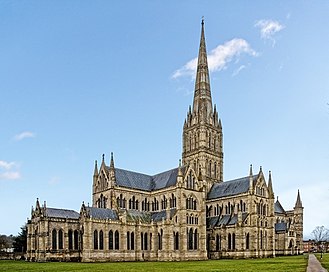
Salisbury Cathedral

William (I) Longespée had an impressive military and political career during the reigns of his half-brothers. He first served in Normandy with Richard between 1196 and 1198, attesting several charters for his brother at Château Gaillard, and taking part in the campaigns against King Philip II of France, gaining essential military experience. He took part in John’s coronation on 27 May 1199 and was frequently with John thereafter. The half-brothers appear to have enjoyed a very cordial relationship; the court rolls record them gaming together and John granting Longespée numerous royal favours, from gifts of wine to an annual pension. By 1201 Longespée, along with William Marshal and Geoffrey fitz Peter, Earl of Essex ‘were seen by John at this stage in his reign as the main props to his rule, and lavish gifts followed.’1

Although Longespée’s marriage to Ela of Salisbury gave him rank and prestige, it was not a wealthy earldom. The barony commanded fifty-six knights’ fees and gave the earl custody of the royal fortress of Salisbury, but Longespée had no castle of his own. He was made sheriff of Wiltshire on 3 separate occasions, 1199–1202, 1203–1207 and 1213–1226, but was never granted the position as a hereditary right by the king. As sheriff, it was Longespée’s task to hunt down the famous outlaw Fulk Fitzwarin, whom he besieged in Stanley Abbey in 1202. When Fitzwarin and his band of about 30 men were pardoned in 1203, Longespée was among those who secured the pardon from the king. During his career, William was also entrusted with several important diplomatic missions. In 1202 he negotiated a treaty with Sancho VII of Navarre and in 1204 he and William Marshal escorted the Welsh prince Llywelyn to the king at Worcester. He was also sent to Scotland on a diplomatic mission to King William the Lion in 1205 and was with John at York in November 1206 when the two kings met. The earl was also involved in the election of his nephew, Otto, as German emperor, heading an embassy to the princes of Germany which resulted in Otto’s coronation.

William Longespée’s most prominent role during the reign of King John, however, was as a military leader. He was a commander of considerable ability. In August 1202 he had fought alongside William Marshal and William de Warenne, Earl of Surrey, hounding the retreating forces of King Philip of France. The French king had withdrawn from the siege of Arques following news of John’s victory over his nephew, Arthur, at Mirebeau. Longespée and his lightly-armed fellow earls, however, narrowly escaped capture from a counterattack led by William de Barres. Following the fall of Normandy, Longespée was given command of Gascony in May 1204. In September of the same year he was also given custody of Dover castle and made warden of the Cinque Ports; he retained both offices until May 1206. In 1208 Longespée was appointed warden of the Welsh Marches and in 1210 he joined King John on the Irish expedition which had been prompted by William de Braose fleeing to Ireland to escape John’s persecution. In 1213 he allied with the counts of Holland and Boulogne, led an expeditionary force to the aid of Count Ferrand of Flanders against King Philip II and on 30 May he achieved a significant naval victory when his forces destroyed the French fleet off the Flemish coast near Damme, burning many enemy ships and capturing others. The victory forced King Philip to abandon plans for an invasion of England.

In 1214 William Longespée commanded an army in northern France for the king, while John was campaigning in Poitou. He managed to recover most of the lands lost by the count of Flanders and,, in July of the same year, he commanded the right-wing of the allied army at the Battle of Bouvines, alongside Renaud de Dammartin, Count of Boulogne. William fought bravely but was captured, after being clubbed on the head by Philippe, the bishop of Beauvais. According to the Histoire de Guillaume le Maréchal the battle had been fought against the earl’s advice, and if it were not for Longespée’s own heroic actions, Emperor Otto would have been taken prisoner or, worse, killed. The battle was a military disaster for the English forces in France and ended John’s hopes of recovering his Continental possessions. William Longespée was held prisoner for almost a year. He was eventually ransomed and exchanged in March 1215, for John’s prisoner, Robert, son of the count of Dreux, who had been captured at Nantes in 1214.

William Longespée was back in England by May 1215 and appointed to examine the state of royal castles. However, England was reaching crisis point by this time, with the rebellion of the barons gathering pace. Although unable to prevent rebels from gaining control of London, he was effective against the rebels in Devon, forcing them to abandon Exeter. He was named among those barons who had advised John to grant Magna Carta, though whether he was actually present at Runnymede, when the charter was sealed, is unknown. He was granted lands from the royal demesne in August 1215 in compensation for the loss of Trowbridge, which had been returned to Henry de Bohun, one of the twenty-five barons appointed to the committee to oversee the enforcement of the terms of Magna Carta. Also in 1215, following the fall of Rochester, Longespée was given the task of containing the rebels in London, while John led the rest of his forces north. Alongside Faulkes de Bréauté and Savaric de Mauléon, he led a punitive chevauchée through Essex, Hertfordshire, Middlesex, Cambridgeshire and Huntingdonshire. However, in the early weeks of 1216, when Walter Buc’s Brabançon mercenaries ravaged the Isle of Ely, it was Longespée who protected the women from their worst excesses.

Longespée was still supporting John when Louis, the Dauphin, landed on 21 May 1216; however, Louis’ rapid advance through the southern counties, and the fall of Winchester in June 1216, led the earl of Salisbury to submit and ally with Louis. He remained in opposition to his half-brother for the rest of John’s life. Unfounded rumours, recorded by William the Breton, suggested that Longespée’s desertion of John was caused by the king’s seduction of Ela while the earl was a prisoner of war in France. It seems more likely that, like so many others, he saw John’s cause as lost and decided to cut his own losses. With Longespée’s defection, and that of William de Warenne, Earl of Surrey, John’s support was severely diminished and in retaliation, John ordered his brother’s lands seized in August 1216.

History...the Interesting Bits
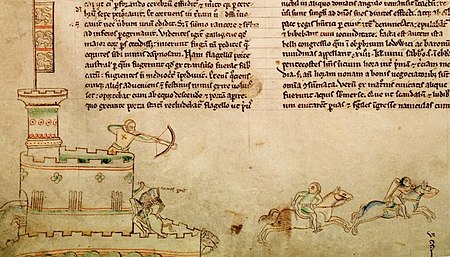
Battle of Lincoln 1217, from Matthew Paris

Despite the death of King John in October 1216, Longespée remained with Louis and even called for Hubert de Burgh to surrender Dover to the French. However, when Louis returned to France in March 1217, to gather reinforcements, Longespée submitted to the king, swearing loyalty to his 9-year-old nephew, Henry III. He was also absolved of the sentence of excommunication which had been passed on all those who had defected to Louis. Along with Longespée, William Marshal’s eldest son, William (II), and a hundred other men from Wiltshire and the south-west, returned to the king’s peace. Longespée was now instrumental in driving the French from England and defeating the remaining rebel barons. He was part of William Marshal’s army at the Battle of Lincoln Fair on 20 May 1217, when Lincoln Castle and its formidable castellan, Nicholaa de la Haye, were finally relieved following a months-long siege by the French under the Comte de Perche.

We know nothing of William and Ela’s married life, although it appears to have been a happy one. The couple had at least eight children together, if not more; 4 boys and 4 girls. Of their 3 youngest boys, Richard became a canon at the newly built Salisbury Cathedral, Stephen became seneschal of Gascony and justiciar of Ireland, and their youngest son, Nicholas, was elected bishop of Salisbury in 1291; he was consecrated at Canterbury by Archbishop John Pecham on 16 March 1292. Already in his sixties, Nicholas died on 18 May 1297. In 1216, the oldest son, William II Longespée, fourth Earl of Salisbury, was granted marriage by King John to Idonea, granddaughter and sole heiress of the formidable Nicholaa de la Haye. Both children were very young when the grant was made, with Idonea being, possibly, no older than 8, the youngest age that a betrothal was sanctioned by the church, though she could not be married until the age of 12. John ordered that:

History...the Interesting Bits
Effigy from William Longespée’s tomb

The sheriffs of Oxford and of Berkshire are commanded that they cause William, Earl of Salisbury, to have the right of marriage of the daughter of Richard de Canville, born of Eustacia, who was the daughter of Gilbert Basset and wife of the said Richard, for William his first-born son by his wife Ela, Countess of Salisbury, with all the inheritance belonging to the said Richard’s daughter from her mother in their Bailiwicks. Witness myself, at Reigate, the twenty second day of April.

Letter from King John, 22 April 1216

This order may be the source of Nicholaa de la Haye’s later wranglings with Salisbury. Although it states that Salisbury should take possession of Idonea’s inheritance from her mother, the earl may have assumed – or presumed – to take all of Idonea’s inheritance into his custody, regardless of the fact Nicholaa was still very much alive at this time. It also suggests that Richard de Canville, Idonea’s father, may have already been deceased, despite most mentions of him have him dying in the first quarter of 1217. Otherwise, she would have still been in her father’s custody. Salisbury and Nicholaa de la Haye would spend several years in legal disputes over the inheritance of Nicholaa’s Lincolnshire holdings, and tried repeatedly to take Lincoln Castle from her. William (II) Longespée went on crusade with Richard, Earl of Cornwall, in 1240–1 and later led the English contingent in the Seventh Crusade led by Louis IX of France. His company formed part of the doomed vanguard, which was overwhelmed at Mansourah in Egypt on 8 February 1250. William’s body was buried in Acre, but his effigy lies atop an empty tomb in Salisbury Cathedral. His mother, Ela, is said to have experienced a vision of her son’s last moments at the time of his death.

Of William and Ela’s 4 daughters, Petronilla died unmarried, possibly having become a nun. Isabella married William de Vescy, Lord of Alnwick, and had children before her death in 1244. Another daughter, named Ela after her mother, married firstly Thomas de Beaumont, Earl of Warwick and, secondly, Phillip Basset; sadly, she had no children by either husband. A fourth daughter, Ida, married Walter fitzRobert; her second marriage was to William de Beauchamp, Baron Bedford, by whom she had 6 children.

As a couple, William Longespée and Ela were great patrons of the church, laying the 4th and 5th foundation stones for the new Salisbury Cathedral in 1220. William de Warenne, Earl of Surrey and a cousin to Ela – Ela’s father was half-brother to William’s mother, Countess Isabel de Warenne – also laid a foundation stone. In the first half of the 1220s, Longespée played an influential role in the minority government of Henry III and also served in Gascony to secure the last remaining Continental possessions of the English king. In 1225 he was shipwrecked off the coast of Brittany and a rumour spread that he was dead. While he spent months recovering at the island monastery of Ré, Hubert de Burgh, first Earl of Kent and widower of Isabella of Gloucester, proposed a marriage between Ela and his nephew, Reimund. Ela, however, would not even consider it, insisting that she knew William was alive and that, even if he were dead, she would never presume to marry below her status. It has been suggested that she used clause 8 of Magna Carta to support her rejection of the offer:

‘No widow is to be distrained to marry while she wishes to live without a husband.’

Clause 8, 1215 Magna Carta
History...the Interesting Bits
Tomb of William Longespée, Salisbury Cathedral

As it turned out, William Longespée was, indeed, still alive and he eventually returned to England and his wife; after landing in Cornwall, he made his way to Salisbury. From Salisbury he went to Marlborough to complain to the king that Reimund had tried to marry Ela whilst he was still alive. According to the Annals and antiquities of Lacock Abbey, Reimund was present at Longespée’s audience with the king, confessed his wrongdoing and offered to make reparations, thus restoring peace.

Unfortunately, Longespée never seems to have recovered fully from his injuries and died at the royal castle of Salisbury shortly after his return home, on 7 March 1226, amid rumours of being poisoned by Hubert de Burgh or his nephew. He was buried in a splendid tomb in Salisbury Cathedral.

Although the earldom of Salisbury still belonged to his wife, his son, William (II) Longespée was sometimes called Earl of Salisbury, but never legally bore the title as he died before his mother. Ela did not marry again. On her husband’s death, she was forced to relinquish her custody of the royal castle at Salisbury, although she did eventually buy it back. More importantly, she was allowed to take over her husband’s role as sheriff of Wiltshire, which he had held 3 times in his career and continuously from 1213 until his death in 1226. Ela herself served twice as sheriff of Wiltshire from 1227 until 1228 and again from 1231 to 1237.

Ela of Salisbury outlived both her eldest son and grandson. She was succeeded as Countess of Salisbury by her great-granddaughter, Margaret, who was the daughter of William III Longespée. Just over 10 years after she was widowed, Ela entered her own foundation of Lacock Priory in 1237 and became the first Abbess when it was upgraded to an Abbey in 1239. As Abbess, Ela was able to secure many rights and privileges for the abbey and its village. She obtained a copy of the 1225 issue of Magna Carta, which had been given to her husband for him to distribute around Wiltshire. She remained Abbess for 20 years, resigning in 1259. Ela remained at the abbey, however, and died there on 24th August, 1261.

*

Footnotes:

1David Crouch, William Marshal

Images courtesy of Wikipedia.

Sources:

finerollshenry3.org.uk; Oxforddnb.com; magnacarta800th.com; Church, Stephen, King John: England, Magna Carta and the Making of a Tyrant; Danziger, Danny and John Gillingham, 1215: The Year of Magna Carta; Crouch, David, William Marshal; Matthew Paris, Robert de Reading and others, Flores Historiarum, volume III; Robert Bartlett England Under the Norman and Angevin Kings 1075-1225; Dan Jones The Plantagenets; the Kings who Made England; Maurice Ashley The Life and Times of King John; Roy Strong The Story of BritainOxford Companion to British History; Mike Ashley British Kings & Queens; David Williamson Brewer’s British Royalty; Rich Price King John’s Letters Facebook page; Elizabeth Hallam, editor, The Plantagenet Chronicles; Donald Matthew, King Stephen; Medieval Lands Project on the Earls of Surrey, Conisbrough Castle; Farrer, William and Charles Travis Clay, editors, Early Yorkshire Charters, Volume 8: The Honour of Warenne; Rev. John Watson, Memoirs of the Ancient Earls of Warren and Surrey and their Descendants to the Present Time; Morris, Marc King John: Treachery, Tyranny and the Road to Magna Carta; doncasterhistory.co.uk.

*

My books

Signed, dedicated copies of all my books are available through my online bookshop.

Out now: Scotland’s Medieval Queens

Books by Sharon Bennett Connolly

Scotland’s history is dramatic, violent and bloody. Being England’s northern neighbour has never been easy. Scotland’s queens have had to deal with war, murder, imprisonment, political rivalries and open betrayal. They have loved and lost, raised kings and queens, ruled and died for Scotland. From St Margaret, who became one of the patron saints of Scotland, to Elizabeth de Burgh and the dramatic story of the Scottish Wars of Independence, to the love story and tragedy of Joan Beaufort, to Margaret of Denmark and the dawn of the Renaissance, Scotland’s Medieval Queens have seen it all. This is the story of Scotland through their eyes.

Scotland’s Medieval Queens gives a thorough grounding in the history of the women who ruled Scotland at the side of its kings, often in the shadows, but just as interesting in their lives beyond the spotlight. It’s not a subject that has been widely covered, and Sharon is a pioneer in bringing that information into accessible history.’ Elizabeth Chadwick (New York Times bestselling author)

Available now from Amazon and Pen and Sword Books

Also by Sharon Bennett Connolly:

Books by Sharon Bennett Connolly

Heroines of the Tudor World tells the stories of the most remarkable women from European history in the time of the Tudor dynasty, 1485-1603. These are the women who ruled, the women who founded dynasties, the women who fought for religious freedom, their families and love. Heroines of the Tudor World is now available for pre-order from Amberley Publishing and Amazon UK. Women of the Anarchy demonstrates how Empress Matilda and Matilda of Boulogne, unable to wield a sword themselves, were prime movers in this time of conflict and lawlessness. It shows how their strengths, weaknesses, and personal ambitions swung the fortunes of war one way – and then the other. Available from Bookshop.orgAmberley Publishing and Amazon UKKing John’s Right-Hand Lady: The Story of Nicholaa de la Haye is the story of a truly remarkable lady, the hereditary constable of Lincoln Castle and the first woman in England to be appointed sheriff in her own right. Available from all good bookshops Pen & Sword Booksbookshop.org and Amazon

Royal Historical Society

Defenders of the Norman Crown: The Rise and Fall of the Warenne Earls of Surrey tells the fascinating story of the Warenne dynasty, from its origins in Normandy, through the Conquest, Magna Carta, the wars and marriages that led to its ultimate demise in the reign of Edward III. Available from Pen & Sword BooksAmazon in the UK and US, and Bookshop.orgLadies of Magna Carta: Women of Influence in Thirteenth Century England looks into the relationships of the various noble families of the 13th century, and how they were affected by the Barons’ Wars, Magna Carta and its aftermath; the bonds that were formed and those that were broken. It is now available in paperback and hardback from Pen & SwordAmazon, and Bookshop.orgHeroines of the Medieval World tells the stories of some of the most remarkable women from Medieval history, from Eleanor of Aquitaine to Julian of Norwich. Available now from Amberley Publishing and Amazon, and Bookshop.orgSilk and the Sword: The Women of the Norman Conquest traces the fortunes of the women who had a significant role to play in the momentous events of 1066. Available now from Amazon,  Amberley Publishing, and Bookshop.org.

Alternate Endings: An anthology of historical fiction short stories including Long Live the King… which is my take what might have happened had King John not died in October 1216. Available in paperback and kindle from Amazon.

Podcast:

A Slice of Medieval

Have a listen to the A Slice of Medieval podcast, which I co-host with Historical fiction novelist Derek Birks. Derek and I welcome guests, such as Bernard Cornwell and discuss a wide range of topics in medieval history, from significant events to the personalities involved.

Every episode is also now available on YouTube.

*

Don’t forget! Signed and dedicated copies of all my books are available through my online bookshop.

For forthcoming online and in-person talks, please check out my Events Page.

You can be the first to read new articles by clicking the ‘Follow’ button, liking our Facebook page or joining me on TwitterThreadsBluesky and Instagram.

*

©2021 Sharon Bennett Connolly FRHistS

Mary, Reluctant Countess of Boulogne

History ... the Interesting Bits
Mary’s mother, Matilda of Boulogne

Mary of Blois was the youngest daughter of Stephen of Blois and his wife, Matilda of Boulogne, herself the granddaughter of St Margaret, queen of Scotland. Mary was born in Blois, France around 1136. She was destined for the cloister from an early age and, while still a young girl, was placed in a convent at St Sulpice in Rennes.

Mary’s lineage and the quirks of fate, however, meant that Mary’s peaceful convent life would be violently cut short.

Mary’s father Stephen was the nephew of Henry I, and his closest, legitimate, male relatives. Following the death of his only legitimate son, William Adelin, in the White Ship disaster of 1120, and with his only other legitimate child, Empress Matilda, living in Germany, it seems that Henry looked at Stephen as a possible successor. However, when Matilda’s husband died in 1125 and the empress returned to her father’s court, Stephen’s position was left undetermined. Stephen remained prominent at the English court, always present as a viable alternative to the succession of a woman – Empress Matilda.

In the confusion following Henry’s death in December 1135, it was Stephen who acted quickly and decisively. As he claimed the crown in England and his adherents secured Normandy in Stephen’s name, Empress Matilda was home in Anjou with her husband Geoffrey, Count of Anjou and two young sons, Henry and Geoffrey. She was pregnant with her third and youngest son, William.

What followed was a period known as the Anarchy, almost 20 years of conflict and bloodshed as Stephen and the Empress Matilda battled for supremacy of England and Normandy. Ultimately, Stephen managed to retain control of England but lost Normandy to Count Geoffrey, who passed it on to his and Matilda’s eldest son, Henry FitzEmpress. Henry, was eager to win back his birthright and following several incursions by Henry – whilst still in his teens – he and Stephen came to an agreement.

History ... the Interesting Bits
King Stephen

Stephen and his wife Matilda had five children in total, but only three, including Mary, who survived infancy. Of Stephen and Matilda’s three children, Eustace IV, Count of Boulogne, was the eldest to survive into adulthood, and was groomed as his father’s heir. He was married to Constance of France, daughter of King Louis VI and sister of Louis VII, in 1140 and knighted in 1147. He died in August 1153, after suffering some form of seizure. The Anglo-Saxon Chronicle said of him

‘he had little success, and with just cause, because he was an evil man, because wheresoever he came he did more evil than good; he robbed the lands and laid great taxes on them.’

Anglo_Saxon Chronicles, edited by Michael Swanton

The Gesta Stephani, however, paints a picture of

‘a young man of high character … his manners were grave; he excelled in warlike exercises and had great natural courage … he was courteous and affable … and possessed much of his father’s spirit … ever ready to draw close the bands of peace’ but ‘never shrank from presenting a resolute and indomitable front to his enemies.’

Gesta Stephani

Stephen’s youngest son was William, who was born around 1134/5. In 1149 he married Isabel de Warenne, sole heiress to William de Warenne, third earl of Surrey, in order to bring the vast Warenne lands within the influence of the crown. William would succeed to the County of Boulogne in 1153, on the death of Eustace. Shortly after his brother’s death, and with the help of the clergy, William made an agreement with Henry of Anjou, whereby he waived his own rights to the crown in return for assurances explicitly recognising his rights to his lands, as Count of Boulogne and Mortain and Earl of Surrey.

History ... the Interesting Bits
Romsey Abbey

Mary, who had been in the convent at St Sulpice in Rennes, was moved around 1150-52, apparently after some discord with the nunnery. Her parents founded a new convent for her at Lillechurch (Higham) in Kent, making it a sister convent with Rennes’ St Sulpice. Mary does not appear to have been given the title of prioress. However, a charter of Henry II, dated around 1155-58, confirmed Lillechurch to Mary and her nuns, suggesting she held some position of authority. Before 1160, however, Mary had become abbess of the great abbey at Romsey, an older and more prestigious institution than her little foundation at Lillechurch.

Mary’s brother William died without issue in 1159 during the Siege of Toulouse. Though a nun, Mary succeeded him in the County of Boulogne. As a consequence, in 1160 Mary’s life was turned upside down. She was suddenly a great heiress, countess of Boulogne in her own right and too great a marriage prize to be allowed to remain secluded in the cloisters. She was abducted from Romsey Abbey by Matthew of Alsace, second son of the Count of Flanders, and forced to marry him. This may well have been a political move; although there does not appear to be any proof that Henry II sanctioned it, most sources imply that the marriage was forced on her by the king and he certainly benefited from Mary being safely married to a loyal vassal. She was, after all, not only a great heiress but, through her father, she had a strong, rival claim to the throne of England.

History ... the Interesting Bits
Henry II and his mother, Empress Matilda, from a 12th century manuscript

There was great outrage among the clergy; marriage with a nun was a breach against canon law and opposed by the leading ecclesiastical figures of the day. One source suggested the pope had granted a dispensation for the marriage. However, given that Pope Alexander III expressed great disapproval in a letter to the archbishop of Rheims, his consent seems highly unlikely. The pope imposed an interdict on Matthew of Alsace and pressed the claims of the wife of Mary’s brother, Eustace, to the Boulogne estates; even though Constance had died some fourteen years before. The furore seems to have died down eventually, and the marriage was allowed to stand.

Unfortunately for Henry II, Matthew turned out to be a not-so-loyal vassal and rebelled at least twice. The first occasion arose when Matthew tried to press his claims to Mortain, land that should have been part of Mary’s inheritance but was now held by Henry II. The king was not too accommodating. An agreement was eventually reached whereby, in return for £1,000, Matthew would renounce all claims to those parts of his wife’s estates that were still in royal hands.

Mary seems to have had little love for Henry II, possibly due to his involvement in her abduction and marriage, or simply because of the fact their respective families had spent many years at war. With so much bad history, you wouldn’t expect them to have an affectionate relationship, but Mary appears to have actively worked against Henry. Following a meeting with the ambassadors of the emperor, Frederick Barbarossa, she wrote to King Louis of France. In the document, she describes Henry II as ‘the fraudulent king’, while informing Louis of Henry’s manoeuvring against him.

Mary and Matthew had two children, daughters Ida and Mathilde; and it was after the birth of Mathilde that the couple were divorced, in 1170. There is some suggestion that Matthew was pressured to agree to the divorce by his dying father and the emperor, Frederick Barbarossa, probably in the hope of having the interdict – placed on Matthew on his marriage to Mary – lifted. After the divorce, Matthew would continue to rule Boulogne and was succeeded by Ida on his death in 1173.

History ... the Interesting Bits
Mary’s younger daughter Mathilde, Duchess of Brabant

Ida (b. c1160) married three times; her first husband, Gerard III, count of Gueldres, who died in 1183. Her short marriage to her second husband, Berthold IV, Duke of Zehringen, ended in his death in 1186. Ida’s last marriage was to Reginald, or Renaud, de Tree, Count of Dammartin, who was a childhood friend of France’s king, Philip Augustus. It seems Renaud abducted Ida and forced her into marriage. He died in 1227, outliving Ida, who died in 1216, by eleven years. It was Matilda, the daughter of Ida and Renaud, who inherited Boulogne from Ida, and would also become Queen of Portugal through her marriage to Alfonso III of Portugal.

Born in 1170 Ida’s younger sister, Mathilde, married Henry I, duke of Louvain and Brabant, when she was nine-years-old. She would have seven children before her death sometime in 1210 or 1211; she was buried in St Peter’s Church, Leuven.

The interdict, which had been placed on Matthew on his marriage to Mary, was finally lifted when she returned to the convent life in 1169-70, becoming a simple Benedictine nun at St Austrebert, Montreuil. Mary died there in July 1182, possibly on the 25th, aged about forty-six, and was buried within the convent that had been her home for over ten years. A woman who obviously believed that her life should be devoted to God, she is remarkable in that she managed to fulfil her dynastic duties in a forced marriage, and yet asserted herself so that she was able to return to the secluded life she so obviously craved.

*

Sources:

Donald Matthew, King Stephen; Robert Bartlett, England Under the Norman and Angevin Kings; David Williamson, Brewer’s British Royalty; the History Today Companion to British History; Dan Jones, the Plantagenets; englishmonarchs.co.uk; The Oxford Companion to British History; Mike Ashley, The Mammoth Book of British Kings & Queens; Alison Weir, Britain’s Royal Families, the Complete Genealogy; S.P. Thompson, Oxforddnb.com, Mary [Mary of Blois], suo jure countess of Boulogne (d. 1182), princess and abbess of Romsey; Anglo_Saxon Chronicles, edited by Michael Swanton; Gesta Stephani.

*

My Books

Signed, dedicated copies of all my books are available through my online bookshop.

Out now: Scotland’s Medieval Queens

Books by Sharon Bennett Connolly

Scotland’s history is dramatic, violent and bloody. Being England’s northern neighbour has never been easy. Scotland’s queens have had to deal with war, murder, imprisonment, political rivalries and open betrayal. They have loved and lost, raised kings and queens, ruled and died for Scotland. From St Margaret, who became one of the patron saints of Scotland, to Elizabeth de Burgh and the dramatic story of the Scottish Wars of Independence, to the love story and tragedy of Joan Beaufort, to Margaret of Denmark and the dawn of the Renaissance, Scotland’s Medieval Queens have seen it all. This is the story of Scotland through their eyes.

Scotland’s Medieval Queens gives a thorough grounding in the history of the women who ruled Scotland at the side of its kings, often in the shadows, but just as interesting in their lives beyond the spotlight. It’s not a subject that has been widely covered, and Sharon is a pioneer in bringing that information into accessible history.’ Elizabeth Chadwick (New York Times bestselling author)

Available now from Amazon and Pen and Sword Books

Also by Sharon Bennett Connolly:

Books by Sharon Bennett Connolly

Heroines of the Tudor World tells the stories of the most remarkable women from European history in the time of the Tudor dynasty, 1485-1603. These are the women who ruled, the women who founded dynasties, the women who fought for religious freedom, their families and love. Heroines of the Tudor World is now available for pre-order from Amberley Publishing and Amazon UK. Women of the Anarchy demonstrates how Empress Matilda and Matilda of Boulogne, unable to wield a sword themselves, were prime movers in this time of conflict and lawlessness. It shows how their strengths, weaknesses, and personal ambitions swung the fortunes of war one way – and then the other. Available from Bookshop.orgAmberley Publishing and Amazon UKKing John’s Right-Hand Lady: The Story of Nicholaa de la Haye is the story of a truly remarkable lady, the hereditary constable of Lincoln Castle and the first woman in England to be appointed sheriff in her own right. Available from all good bookshops Pen & Sword Booksbookshop.org and Amazon

Books by Sharon Bennett Connolly

Defenders of the Norman Crown: The Rise and Fall of the Warenne Earls of Surrey tells the fascinating story of the Warenne dynasty, from its origins in Normandy, through the Conquest, Magna Carta, the wars and marriages that led to its ultimate demise in the reign of Edward III. Available from Pen & Sword BooksAmazon in the UK and US, and Bookshop.orgLadies of Magna Carta: Women of Influence in Thirteenth Century England looks into the relationships of the various noble families of the 13th century, and how they were affected by the Barons’ Wars, Magna Carta and its aftermath; the bonds that were formed and those that were broken. It is now available in paperback and hardback from Pen & SwordAmazon, and Bookshop.orgHeroines of the Medieval World tells the stories of some of the most remarkable women from Medieval history, from Eleanor of Aquitaine to Julian of Norwich. Available now from Amberley Publishing and Amazon, and Bookshop.orgSilk and the Sword: The Women of the Norman Conquest traces the fortunes of the women who had a significant role to play in the momentous events of 1066. Available now from Amazon,  Amberley Publishing, and Bookshop.org.

Alternate Endings: An anthology of historical fiction short stories including Long Live the King… which is my take what might have happened had King John not died in October 1216. Available in paperback and kindle from Amazon.

Podcast:

A Slice of Medieval

Have a listen to the A Slice of Medieval podcast, which I co-host with Historical fiction novelist Derek Birks. Derek and I welcome guests, such as Bernard Cornwell and discuss a wide range of topics in medieval history, from significant events to the personalities involved.

Every episode is also now available on YouTube.

*

Don’t forget! Signed and dedicated copies of all my books are available through my online bookshop.

For forthcoming online and in-person talks, please check out my Events Page.

You can be the first to read new articles by clicking the ‘Follow’ button, liking our Facebook page or joining me on TwitterThreadsBluesky and Instagram.

©2020 Sharon Bennett Connolly FRHistS

The Two Wives of King John

King John

One of the most intriguing relationships of the Magna Carta story is that between Isabella of Gloucester and Isabelle d’Angoulême, the two wives of King John.

Isabella of Gloucester is a unique individual in the story of Magna Carta. She is, in many ways, a shadow in the pages of history, and yet she held one of the greatest earldoms in England. There are no pictures of her, not even a description of her personality or appearance. At one time, no one even seemed certain of her name; she has been called Isabel, Isabella, Hawise, Avice – but Isabella is how she appears in the Close Rolls.1

Isabella was the youngest daughter and co-heiress of William, second Earl of Gloucester, who was himself the son of Robert of Gloucester, an illegitimate son of King Henry I and Empress Matilda’s half-brother and stalwart supporter during her war against King Stephen. Earl William’s wife was Hawise, the daughter of Robert de Beaumont, third Earl of Leicester. Isabella’s only brother Robert had died in 1166, making Isabella and her two sisters co-heiresses to the earldom of Gloucester. Although her date of birth has been lost to history, it seems likely she was born in the early 1160s.

We know very little of Isabella’s childhood, although, considering her social status, as the daughter of one of England’s wealthiest earls, it is likely that she was given the education expected of a high-ranking noblewoman and taught to run a large household, as well as the social graces of singing, dancing and needlework. Her parents’ marriage appears to have been a successful one. Isabella’s mother, Countess Hawise, was a regular witness to her husband’s charters and was mentioned in several of them, especially in the pro amina clauses of grants made to religious houses that sought spiritual benefits for those named.

Arms of Geoffrey de Mandeville, Isabella of Gloucester’s second husband

Isabella’s father, although a first cousin of Henry II, had a complicated relationship with the king, especially after Henry had taken Bristol Castle from the earl; the castle had been held by William’s father before him. Despite remaining loyal to Henry II during the rebellion of the king’s sons in 1173–74 and agreeing to the marriage of his youngest daughter to Prince John, Earl William’s loyalty remained suspect and he was arrested and imprisoned in 1183. The unfortunate earl died whilst still a captive, on 23 November 1183.

Isabella was betrothed, in 1176, to Prince John, the youngest son of Henry II and Eleanor of Aquitaine. John was 9 years old at the time of the betrothal, while Isabella was probably a few years older. Under the terms of the marriage agreement, Earl William recognised John as heir to the earldom of Gloucester, effectively disinheriting Isabella’s two elder sisters. The marriage was to be a way for Henry II to provide for his youngest son. After the Earl of Gloucester’s death in 1183, his entire estate was passed to Isabella, who had been made a ward of the king.

Isabella’s older sisters were both already married; Mabel was the wife of Amaury of Évreux and Amicia was married to the earl of Hertford. On their father’s death they had both been explicitly excluded from the estate to prevent the division of the comital inheritance and they received annuities of £100 each in compensation. Taking Isabella into wardship, Henry II therefore seized all the Gloucester lands and made the income from them available for John’s use, as Isabella’s future husband. The king, however, appears to have kept his options open and had not finalised John’s marriage to Isabella by the time of his death; in case a more suitable alliance came along.

Winchester Cathedral, Isabella and Isabelle shared a household in Winchester

King Richard I, on the other hand, thought it expedient to get his brother safely married, on his own accession to the throne in 1189. The wedding took place at Marlborough Castle in Wiltshire on 29 August 1189; John was 21 and Isabella may have been approaching 30. Baldwin, the archbishop of Canterbury at the time, opposed the marriage as the couple were related within the third degree of consanguinity; they were second cousins, both being great-grandchildren of Henry I. John had to promise to seek a papal dispensation and, even then, the couple were ordered, by the archbishop, not to sleep together.

Although Isabella and John were married for ten years, their marriage was neither happy nor successful. They spent some time together in the first years of their marriage as they issued charters together during a visit to Normandy around 1190–91.2 However, they appear to have spent less and less time together as the years went on. They never had any children and it is during this time in his life that John’s illegitimate children, including Richard of Chilham and Joan Lady of Wales, were born; a further suggestion that the couple were not close. In 1193, as part of his plotting with Philip Augustus, John promised to marry the French king’s half-sister, Alice, who had previously been betrothed to John’s own brother, Richard. Nothing eventually came of the marriage proposal, but it was an implicit rejection of Isabella as his wife.

John succeeded to the throne on the death of his older brother, Richard the Lionheart, on 6 April 1199. He was crowned, alone, on 27 May 1199; the fact that Isabella was not crowned with him suggests that John was already looking for a way out of the marriage. Poor Isabella would never be styled ‘queen’ and it was possibly as early as August 1199, but certainly by early 1200, that John obtained a divorce on the grounds of consanguinity, the very objection for which he was supposed to have obtained a dispensation when he married Isabella in 1189. The bishops of Lisieux, Bayeux and Avranches, sitting in Normandy, provided the required judgement. One chronicler said of John that ‘seized by hope of a more elevated marriage, he acted on wicked counsel and rejected his wife.’3

Keen to keep his hold on the substantial Gloucester lands, John took Isabella into wardship, again, holding her in ‘honourable confinement’ for the next fourteen years. Little is known of her day-to-day life, although she does appear to have remained on civil terms with King John. John met the expenses of Isabella’s household and staff and sent her numerous gifts, including wine and cloth. Things may well have been a little awkward at times, especially after John found himself another wife.

Westminster Abbey, where Isabelle d’Angoulême was crowned Queen of England

Having discarded Isabella, John began to look elsewhere for a new wife; he sent ambassadors to the Iberian peninsula to investigate the possibilities of a match with the daughter of the king of Portugal. However, any such plans were hastily abandoned when John set his sights on Isabelle d’Angoulême.

Isabelle was the only child of Audemar (or Aymer), Count of Angoulême and Alice de Courtenay. Alice was the daughter Peter de Courtenay, lord of Montargis and Chateaurenard, and a cousin of king Philip II Augustus of France. Through her Courtenay family connections, Isabelle was also related to the royal houses of Jerusalem, Hungary, Aragon and Castile. There was one tiny problem, however, Isabelle was already betrothed to Hugh IX de Lusignan. The marriage was intended to end the bitter rivalry of the two families but would also be a threat to Angevin power in the region, effectively splitting Aquitaine in two, with the Lusignans controlling the centre.

John therefore suggested to Count Audemar that he marry Isabelle himself. The count jumped at the chance of seeing his daughter become queen of England. Isabelle and John were married on 24 August 1200; Isabelle was no more than 12 and may have been as young as 10, John was 33 or 34.

Seal of Isabelle d’Angoulême

When John remarried in 1200 to Isabelle d’Angoulême, he housed his new wife with his ex-wife, which could have been rather awkward for both women. Queen Isabelle was still very young, probably no more than 12 years old on her marriage. Despite the chroniclers claiming Isabelle was a temptress and kept John in bed when he should have been ruling the kingdom, in the early years of their marriage, the king appears to have treated her more like a child than a wife; which she, of course, was. Her independence was severely limited by John keeping personal control of her finances.

When she was not at court with the king, Isabelle spent time at Marlborough or in the household of John’s first wife, Isabella of Gloucester, at Winchester. Isabella’s allowance was raised from £50 to £80 a year, to pay for the extra expenses incurred by housing the queen.4 The young queen remained in Isabella of Gloucester’s household until the birth of her first child, Henry, in 1207; in that year Isabella of Gloucester was moved to Sherborne before the queen gave birth. And now that she no longer had the care of the queen, Isabella’s allowance was reduced back down to £50 a year.

One may imagine this was quite awkward for Isabella of Gloucester, the discarded wife being forced to host her former husband’s young bride. On closer reflection, however, it may also have been a comfort to her. The teenage queen would probably have been lively company for the 40-something countess who had never been blessed with children. She may have felt protective and motherly to the girl, especially knowing John as well as she must have done.

Following the birth of her first son, Henry, Isabelle gave John four more children; another son, Richard, born in 1209 and daughters, Joan, born in 1210, Isabella, born in 1214 and Eleanor, who was born in either 1215 or 1216, and married the famed Simon de Montfort, Earl of Leicester, as her second husband. Following John’s death in 1216, Isabelle returned to France, to her county of Angoulême, where, in 1220, she married Hugh X de Lusignan, the son of her former betrothed.

The gatehouse to Canterbury Cathedral, where Isabella of Gloucester is buried

Isabella of Gloucester was finally allowed to remarry in 1214; a letters patent issued by John on 28 January 1214 informed all the knights and tenants of the honour of Gloucester that ‘we have given Isabella, countess of Gloucester, our kinswoman’ in marriage to Geoffrey de Mandeville, Earl of Essex.5 Mandeville had to pay the massive sum of 20,000 marks for the privilege of marrying the king’s first wife; an amount he could never hope to repay. He was one of the barons who rose in rebellion during the Magna Carta crisis of 1215.

*

Footnotes:

1 Rich Price, King John’s Letters Facebook group; 2 Louise Wilkinson, Isabel of Gloucester, wife of King John, magnacarta800th.com; 3 Ralph of Diceto, Images of History; 4 Lisa Hilton, Queen’s Consort: England’s Medieval Queens; 5 Louise Wilkinson, Isabel of Gloucester, wife of King John, magnacarta800th.com

Sources:

Rich Price, King John’s Letters Facebook group; Louise Wilkinson, Isabel of Gloucester, wife of King John, magnacarta800th.com; Robert Bartlett England Under the Norman and Angevin Kings 1075-1225; Dan Jones The Plantagenets; the Kings who Made EnglandThe Plantagenet Chronicle Edited by Elizabeth Hallam; Maurice Ashley The Life and Times of King John; Roy Strong The Story of BritainOxford Companion to British History; Mike Ashley British Kings & Queens; David Williamson Brewer’s British Royalty; Robert B. Patterson, Isabella, suo jure Countess of Gloucester (c. 1160-1217), Oxforddnb.com; Ralph of Diceto, Images of History; Lisa Hilton, Queen’s Consort: England’s Medieval Queens; Marc Morris, King John; Elizabeth Norton, She-Wolves: The Notorious Queens of England; Louise Wilkinson, Isabella of Angoulême, wife of King John, magnacarta800th.com

Images:

Courtesy of Wikipedia, except Winchester Cathedral is ©2020 courtesy of Anne Marie Bouchard, Westminster Abbey, ©2020 courtesy of Daniel Gleave and Canterbury Cathedral which is ©2020 Sharon Bennett Connolly.

*

My Books:

Signed, dedicated copies of all my books are available through my online bookshop. or by contacting me.

Coming 30 March: Princesses of the Early Middle Ages

Books by Sharon Bennett Connolly

Daughters of kings were often used to seal treaty alliances and forge peace with England’s enemies. Princesses of the Early Middle Ages: Royal Daughters of the Conquest explores the lives of these young women, how they followed the stereotype, and how they sometimes managed to escape it. It will look at the world they lived in, and how their lives and marriages were affected by political necessity and the events of the time. Princesses of the Early Middle Ages will also examine how these girls, who were often political pawns, were able to control their own lives and fates. Whilst they were expected to obey their parents in their marriage choices, several princesses were able to exert their own influence on these choices, with some outright refusing the husbands offered to them.

Their stories are touching, inspiring and, at times, heartbreaking.

Princesses of the Early Middle Ages: Royal Daughters of the Conquest is now available for pre-order from Pen & Sword and Amazon.

Also by Sharon Bennett Connolly:

Books by Sharon Bennett Connolly

Scotland’s history is dramatic, violent and bloody and Scotland’s Medieval Queens have seen it all. This is the story of Scotland through their eyes. Available now from Amazon and Pen and Sword BooksHeroines of the Tudor World tells the stories of the most remarkable women from European history in the time of the Tudor dynasty, 1485-1603. These are the women who ruled, the women who founded dynasties, the women who fought for religious freedom, their families and love. Heroines of the Tudor World is now available from Amberley Publishing and Amazon UK. Women of the Anarchy demonstrates how Empress Matilda and Matilda of Boulogne, unable to wield a sword themselves, were prime movers in this time of conflict and lawlessness. It shows how their strengths, weaknesses, and personal ambitions swung the fortunes of war one way – and then the other. Available from Bookshop.orgAmberley Publishing and Amazon UKKing John’s Right-Hand Lady: The Story of Nicholaa de la Haye is the story of a truly remarkable lady, the hereditary constable of Lincoln Castle and the first woman in England to be appointed sheriff in her own right. Available from all good bookshops Pen & Sword Booksbookshop.org and Amazon

Defenders of the Norman Crown: The Rise and Fall of the Warenne Earls of Surrey tells the fascinating story of the Warenne dynasty, from its origins in Normandy, through the Conquest, Magna Carta, the wars and marriages that led to its ultimate demise in the reign of Edward III. Available from Pen & Sword BooksAmazon in the UK and US, and Bookshop.orgLadies of Magna Carta: Women of Influence in Thirteenth Century England looks into the relationships of the various noble families of the 13th century, and how they were affected by the Barons’ Wars, Magna Carta and its aftermath; the bonds that were formed and those that were broken. It is now available in paperback and hardback from Pen & SwordAmazon, and Bookshop.orgHeroines of the Medieval World tells the stories of some of the most remarkable women from Medieval history, from Eleanor of Aquitaine to Julian of Norwich. Available now from Amberley Publishing and Amazon, and Bookshop.orgSilk and the Sword: The Women of the Norman Conquest traces the fortunes of the women who had a significant role to play in the momentous events of 1066. Available now from Amazon,  Amberley Publishing, and Bookshop.org.

Alternate Endings: An anthology of historical fiction short stories including Long Live the King… which is my take what might have happened had King John not died in October 1216. Available in paperback and kindle from Amazon.

Podcast:

A Slice of Medieval

Have a listen to the A Slice of Medieval podcast, which I co-host with Historical fiction novelist Derek Birks. Derek and I welcome guests, such as Ian Mortimer, Bernard Cornwell, Elizabeth Chadwick and Scott Mariani, and discuss a wide range of topics in medieval history, from significant events to the personalities involved. 

Every episode is also now available on YouTube.

*

Don’t forget! Signed and dedicated copies of all my books are available through my online bookshop.

For forthcoming online and in-person talks, please check out my Events Page.

You can be the first to read new articles by clicking the ‘Follow’ button, liking our Facebook page or joining me on TwitterThreadsBluesky and Instagram.

*

©2020 Sharon Bennett Connolly FRHistS

The First Battle of Lincoln, 1141

History ... the Interesting Bits
1141 Battle of Lincoln from Historia Anglorum

I have written previously about the 1217 Battle of Lincoln, but did you know that was the Second Battle of Lincoln? The First Battle of Lincoln occurred during the period known as The Anarchy, the conflict for the throne fought between King Stephen and Empress Matilda.

Early in 1141, news reached King Stephen that Ranulf de Gernons, the disgruntled Earl of Chester, had captured Lincoln Castle. Disappointed in his aspirations to Carlisle and Cumberland after they were given to Prince Henry of Scotland, Ranulf had turned his sights on Lincoln Castle, which had once been held by his mother, Lucy of Bolingbroke, Countess of Chester. Countess Lucy had died around 1138, leaving her Lincolnshire lands to her son by her second marriage, William de Roumare, Ranulf’s half-brother. Her lands elsewhere had been left to Ranulf de Gernons, who was the son of her third marriage, to Ranulf le Meschin, Earl of Chester.

It seems that in late 1140 Ranulf and his brother had contrived to gain possession of Lincoln Castle by subterfuge. As the story goes, the two brothers waited until the castle garrison had gone hunting before sending their wives to visit the castellan’s wife.  A short while after, Earl Ranulf appeared at the castle gates, wearing no armour and with only three attendants, supposedly to collect his wife and sister-in-law. Once allowed inside, he and his men overpowered the small number of men-at-arms left to guard the castle and opened the gates to his brother. The half-brothers took control of the castle and, with it, the city of Lincoln.

The citizens of Lincoln appealed to the king, who had promptly arrived outside the castle walls by 6 January 1141 and began his siege. Earl Ranulf somehow escaped from the castle and returned to his lands in Chester in order to raise more troops. He also took the opportunity to appeal to his father-in-law for aid. Ranulf’s father-in-law was, Robert, Earl of Gloucester, the illegitimate son of Henry I and brother of Empress Matilda. A very capable soldier, Earl Robert commanded Matilda’s military forces and his daughter, Maud of Gloucester – Ranulf’s wife – was still trapped inside Lincoln Castle. If the need to rescue his daughter was not enough motivation to persuade Robert to intercede at Lincoln, Ranulf also promised to switch his allegiance, and his considerable resources, to Empress Matilda. Robert marched to Lincoln, meeting up with his son-in-law along the way. The earls’ forces arrived on the outskirts of Lincoln on 1 February, crossed the Fossdyke and the River Witham and arrayed for battle.  Their rapid approach caught Stephen unawares. Outnumbered, Stephen was advised to withdraw his forces, until he could muster enough men to make an even fight of it.

History ... the Interesting Bits
King Stephen

Stephen, perhaps remembering the destruction of his father’s reputation after his flight from Antioch, refused to withdraw. He would stand and fight. The next morning, 2 February 1141, before battle was joined, King Stephen attended a solemn mass in the cathedral; according to Henry of Huntingdon, who claimed Bishop Alexander of Lincoln as his patron and may well have been present, the service was replete with ill omens:

‘But when, following custom, he offered a candle fit for a king and was putting it into Bishop Alexander’s hands, it broke into pieces. This was a warning to the king that he would be crushed. In the bishop’s presence, too, the pyx above the altar, which contained the Lord’s Body, fell, its chain having snapped off. This was a sign of the king’s downfall.’

Henry of Huntingdon, The History of the English People 1000-1154

After mass, the king led his forces through Lincoln’s West Gate, deploying them either on the slope leading down to the Fossdyke or possibly at the bottom of the slope, on Carrholme. King Stephen formed his army into three divisions, with mounted troops on each flank and the infantry in the centre. On the right flank were the forces of Waleran de Meulan, William de Warenne, Simon de Senlis, Gilbert of Hertford, Alan of Richmond and Hugh Bigod, Earl of Norfolk. The left was commanded by William of Aumale and William of Ypres, Stephen’s trusted mercenary captain, who led a force of Flemish and Breton troops. The centre comprised the shire levy, which included citizens of Lincoln, and Stephen’s own men-at-arms, fighting on foot around the royal standard.

The opposing army also deployed in three divisions, with ‘the disinherited’, those deprived of their lands by King Stephen, on the left. The infantry, comprising of Earl Ranulf’s Cheshire tenants and other levies, and dismounted knights were in the centre under Earl Ranulf himself. The cavalry, under the command of Earl Robert of Gloucester formed the right flank. The Welsh mercenaries, ‘ill armed but full of spirits’ were arrayed on the wings of the army. Before the battle, Earl Ranulf addressed his father-in-law and fellow barons, saying,

History ... the Interesting Bits
Robert of Gloucester and his wife, Mabel

‘Receive my hearty thanks, most puissant earl, and you, my noble fellow-soldiers, for that you are prepared to risk your lives in testimony of your devotion to me. But since it is through me you are called to encounter this peril, it is fitting that I should myself bear the brunt of it, and be foremost in the attack on this faithless king, who has broken the peace to which he is pledged. While I, therefore, animated by my own valour, and the remembrance of the king’s perfidy, throw myself on the king’s troops … I have a strong presage that we shall put the king’s troops to the rout, trample under foot his nobles, and strike himself with the sword.’

Henry of Huntingdon, The History of the English People 1000-1154

Earl Robert of Gloucester responded to Ranulf and addressed the army:

‘It is fitting that you should have the honour of the first blow, both on account of your high rank and your exceeding valour… The king has inhumanely usurped the crown, faithless to the fealty which he swore to my sister, and by the disorder he has occasioned caused the slaughter of many thousands; and by the example he has set of an illegal distribution of lands, has destroyed the rights of property… There is one thing, however, brave nobles and soldiers all, which I wish to impress on your minds. There is no possibility of retreat over the marches which you which you have just crossed with difficulty. Here, therefore, you must either conquer or die, for there is no hope of safety in flight. The only course that remains is, to open a way to the city with your swords. If my mind conjectures truly, as flee you cannot, by God’s help you will this day triumph… You. Victorious, will see the citizens of Lincoln, who stand in array nearest their walls, give way before the impetuosity of your attack and, with faint hearts, seek the shelter of their houses…

There is Alan of Brittany in arms against us, nay against God himself; a man so execrable, so polluted with every sort of wickedness that his equal in crime cannot be found… Then, we have opposed to us the Earl of Mellent [Meulan], crafty, perfidious; whose heart is naturally imbued with dishonesty, his tongue with fraud, his bearing with cowardice … slow in advance, quick in retreat, the last in fight, the first in flight. Next, we have against Earl Hugh, who not only makes light of his breach of fealty against the empress, but has perjured himself most blatantly a second time; affirming that King Henry conferred the crown on Stephen, and that the king’s daughter abdicated in his favour. Then we have the Earl of Albemarle [Aumale], a man singularly consistent in his wicked courses, prompt to embark in them, incapable of relinquishing them; from whom his wife was compelled to become a fugitive, on account of his intolerable filthiness. The earl also marches against us, who carried off the countess just named; a most flagrant adulterer, and a most eminent bawd, a slave to Bacchus and no friend to Mars; redolent of wine, indolent in war. With him comes Simon, earl of Northampton, who never acts but talks, who never gives but promises, who thinks that when he has said a thing he has done it, when he has promised he has performed… So of the rest of Stephen’s nobles: they are like the king; practised in robbery, rapacious for plunder, steeped in blood and all alike tainted with perjury… If you are of one mind in executing the divine judgement, swear to advance, execrate retreat, and in token of it, unanimously raise your hands to heaven.’

Henry of Huntingdon, The History of the English People 1000-1154
History ... the Interesting Bits
West Gate of Lincoln Castle, leading out to the most likely location of the 1141 battle

Earl Robert’s speech spared no criticism of King Stephen’s noble commanders. By process of elimination, we can surmise the Earl William de Warenne is the unnamed earl who carried off the wife of the earl of Aumale and is dismissed as a drunkard womaniser who was ‘indolent in war’. Though Warenne had had little success in conflict, this harangue is somewhat of an exaggeration; Earl Warenne, at this time, was still relatively young, being no more than 21 years and probably only recently married. He had managed to achieve quite a reputation in a very short time if Robert of Gloucester was referring to him. It is entirely possible, Gloucester was getting his William de Warennes mixed up (we’ve all done it) and was referring to the earl’s father, who had died 3 years before, who was accused of kidnapping another earl’s wife.

Henry of Huntingdon reports speeches from both sides, exhorting the men to battle and insulting the opposing commanders. As his voice ‘was not clear’ Baldwin fitz Gilbert was deputed to speak for King Stephen:

‘All ye who are now about to engage in battle must consider three things: first, the justice of your cause; secondly, the number of your force; and thirdly, its bravery: the justice of your cause that you may not peril your souls; the number of your force that it may not be overwhelmed by the enemy; its valour, lest, trusting to numbers, cowardice should occasion defeat. The justice of your cause consists inn this, that we maintain, at the peril of our lives, our allegiance to the king, before God, against those of his subjects who are perjured to him. In numbers we are not inferior in cavalry, stronger in infantry. As to the valour of so many barons, so many earls, and of our soldiers long trained to war, what words can do it justice? Our most valiant king will alone stand in place of a host. Your sovereign, the anointed of the Lord, will be in the midst of you; to him, then, to whom you have sworn fealty, keep your oaths in the sight of God, persuaded that he will grant you his aid according as you faithfully and steadfastly fight for your king, as true men against the perjured, as loyal men against traitors…’

Henry of Huntingdon, The History of the English People 1000-1154

Baldwin fitz Gilbert’s speech goes on to describe Earl Robert of Gloucester as having ‘the mouth of a lion and the heart of a hare,’ saying he is ‘loud in talk, but dull in action.’ Earl Ranulf of Chester is described as ‘a man of reckless audacity, ready for a plot, not to be depended on in carrying it out, rash in battle, careless of danger; with designs beyond his powers aiming at impossibilities…’ The speech is just as scathing for the rest of the rebel army, announcing, ‘For the other nobles and knights, they are traitors and turncoats, and I would that there were more of them, for the more there are the less are they to be feared.’ The harangue ends with the exhortation, ‘Lift up your hearts, and stretch out your hands, soldiers, exultingly, to take the prey which God himself offers to you.’1

According to Henry of Huntingdon, the armies were mobilising before Baldwin fitz Gilbert’s speech ended. The rebels were the first to advance, ‘the shouts of the advancing enemy were heard, mingled with the blasts of their trumpets, and the trampling of the horses, making the ground to quake.’ The ranks of the ‘disinherited’ moved forward with swords drawn, rather than lowered lances, intent on close quarter combat. This left flank of the rebel army fell upon Stephen’s right flank, ‘in which were Earl Alan, the Earl of Mellent [Meulan], with Hugh, the Earl of East Anglia [Norfolk], and Earl Symon, and the Earl of Warenne, with so much impetuosity that it was routed in the twinkling of an eye, one part being slain, another taken prisoner and the third put to flight.’ Faced with the ferocity of the assault and the very real prospect of death, rather than being taken prisoner and held for ransom, the earls fled the field with the remnants of their men. It was every man for himself as Stephen’s right wing disintegrated in panic.2

History ... the Interesting Bits
The Lucy Tower, Lincoln Castle

The left wing of the royal army appeared to have greater success, at least initially. The men of William of Aumale, Earl of York and Stephen’s mercenary captain, William of Ypres, rode down the Earl of Chester’s Welsh mercenaries and sent them running, but ‘the followers of the Earl of Chester attacked this body of horse, and it was scattered in a moment like the rest.’3 Other sources suggest that William of Ypres and William of Aumale fled before coming to close quarters with the enemy.4 Either way, William of Ypres’ men were routed and he was in no position to support the king and so fled the field, no doubt aware that he would not be well-treated were he to be captured.

Stephen’s centre, the infantry, including the Lincolnshire levies and the king’s own men-at-arms, were left isolated and surrounded, but continued to fight. Stephen himself was prominent in the vicious hand-to-hand fighting that followed. Henry of Huntingdon vividly describes the desperate scene as ‘the battle raged terribly round this circle; helmets and swords gleamed as they clashed, and the fearful screams and shouts re-echoed from the neighbouring hill and city walls.’5 The rebel cavalry charged into the royal forces killing many, trampling others and capturing some. King Stephen was deep in the midst of the fighting:

‘No respite, no breathing time was allowed, except in the quarter in which the king himself had taken his stand, where the assailants recoiled from the unmatched force of his terrible arm. The Earl of Chester seeing this, and envious of the glory the king was gaining, threw himself upon him with the whole weight of his men-at-arms. Even then the king’s courage did not fail, but his heavy battle-axe gleamed like lightning, striking down some, bearing back others. At length it was shattered by repeated blows, then he drew his well-tried sword, with which he wrought wonders until that, too, was broken.’

Henry of Huntingdon, The History of the English People 1000-1154;

According to Orderic Vitalis and the Gesta Stephani, it was the king’s sword that broke first, before he was passed a battle-axe by one of the fighting citizens of Lincoln, in order to continue the fight. Whatever the order, the king’s weapons were now useless and the king ‘fell to the ground by a blow from a stone.’6 Stephen was stunned and a soldier named William de Cahaignes then rushed at him, seized him by his helmet and shouted, ‘Here! Here! I have taken the king!’7

History ... the Interesting Bits
Silver penny of Empress Matilda, from the oxford mint

The king’s forces being completely surrounded, flight was impossible. All were killed or taken prisoner, including Baldwin fitz Gilbert, the man who had given the rousing pre-battle speech to the men. In the immediate aftermath of the fighting, Lincoln was sacked, buildings set alight, valuables pillaged, and its citizens slaughtered by the victorious rebels.

Defeated, Stephen was first taken to Empress Matilda and then to imprisonment at Bristol Castle. Hailed as ‘Lady of the English,’ a victorious Matilda was recognised as sovereign by the English people; the people of London being among the first to accept her.

*

Footnotes:

1 Henry of Huntingdon, The History of the English People 1000-1154; 2 ibid; 3 ibid; 4 Gesta Stephani; 5 Henry of Huntingdon, The History of the English People 1000-1154; 6 J. Sharpe (trans.), The History of the Kings of England and of his Own Times by William Malmesbury; 7 Henry of Huntingdon, The History of the English People 1000-1154

Bibliography:

Gesta Stephani; Henry of Huntingdon, The History of the English People 1000-1154; J. Sharpe (trans.), The History of the Kings of England and of his Own Times by William Malmesbury; Catherine Hanley, Matilda: Empress, Queen, Warrior; Orderici Vitalis, Historiae ecclesiasticae libri tredecem, translated by Auguste Le Prévost; Chronicles of the Reigns of Stephen, Henry II and Richard I; William Farrer and Charles Travis Clay, editors, Early Yorkshire Charters, Volume 8: The Honour of Warenne; Edmund King, King Stephen; Donald Matthew, King Stephen; Teresa Cole, the Anarchy: The Darkest Days of Medieval England; David Smurthwaite, The Complete Guide to the Battlefields of Britain; Matthew Lewis, Stephen and Matilda’s Civil War: Cousins of Anarchy.

Images:

Courtesy of Wikipedia except those of Lincoln Castle which are ©2020 Sharon Bennett Connolly

*

My Books

Signed, dedicated copies of all my books are available through my online bookshop. or by contacting me.

Coming 30 March: Princesses of the Early Middle Ages

Books by Sharon Bennett Connolly

Daughters of kings were often used to seal treaty alliances and forge peace with England’s enemies. Princesses of the Early Middle Ages: Royal Daughters of the Conquest explores the lives of these young women, how they followed the stereotype, and how they sometimes managed to escape it. It will look at the world they lived in, and how their lives and marriages were affected by political necessity and the events of the time. Princesses of the Early Middle Ages will also examine how these girls, who were often political pawns, were able to control their own lives and fates. Whilst they were expected to obey their parents in their marriage choices, several princesses were able to exert their own influence on these choices, with some outright refusing the husbands offered to them.

Their stories are touching, inspiring and, at times, heartbreaking.

Princesses of the Early Middle Ages: Royal Daughters of the Conquest is now available for pre-order from Pen & Sword and Amazon.

Also by Sharon Bennett Connolly:

Books by Sharon Bennett Connolly

Scotland’s history is dramatic, violent and bloody and Scotland’s Medieval Queens have seen it all. This is the story of Scotland through their eyes. Available now from Amazon and Pen and Sword BooksHeroines of the Tudor World tells the stories of the most remarkable women from European history in the time of the Tudor dynasty, 1485-1603. These are the women who ruled, the women who founded dynasties, the women who fought for religious freedom, their families and love. Heroines of the Tudor World is now available from Amberley Publishing and Amazon UK. Women of the Anarchy demonstrates how Empress Matilda and Matilda of Boulogne, unable to wield a sword themselves, were prime movers in this time of conflict and lawlessness. It shows how their strengths, weaknesses, and personal ambitions swung the fortunes of war one way – and then the other. Available from Bookshop.orgAmberley Publishing and Amazon UKKing John’s Right-Hand Lady: The Story of Nicholaa de la Haye is the story of a truly remarkable lady, the hereditary constable of Lincoln Castle and the first woman in England to be appointed sheriff in her own right. Available from all good bookshops Pen & Sword Booksbookshop.org and Amazon

Royal Historical Society

Defenders of the Norman Crown: The Rise and Fall of the Warenne Earls of Surrey tells the fascinating story of the Warenne dynasty, from its origins in Normandy, through the Conquest, Magna Carta, the wars and marriages that led to its ultimate demise in the reign of Edward III. Available from Pen & Sword Books, Amazon in the UK and US, and Bookshop.org. Ladies of Magna Carta: Women of Influence in Thirteenth Century England looks into the relationships of the various noble families of the 13th century, and how they were affected by the Barons’ Wars, Magna Carta and its aftermath; the bonds that were formed and those that were broken. It is now available in paperback and hardback from Pen & Sword, Amazon, and Bookshop.org. Heroines of the Medieval World tells the stories of some of the most remarkable women from Medieval history, from Eleanor of Aquitaine to Julian of Norwich. Available now from Amberley Publishing, Amazon, and Bookshop.org. Silk and the Sword: The Women of the Norman Conquest traces the fortunes of the women who had a significant role to play in the momentous events of 1066. Available now from Amazon, Amberley Publishing, and Bookshop.org.

Alternate Endings: An anthology of historical fiction short stories including Long Live the King… which is my take what might have happened had King John not died in October 1216. Available in paperback and kindle from Amazon.

Podcast:

A Slice of Medieval

Have a listen to the A Slice of Medieval podcast, which I co-host with Historical fiction novelist Derek Birks. Derek and I welcome guests, such as Ian Mortimer, Bernard Cornwell, Elizabeth Chadwick and Scott Mariani, and discuss a wide range of topics in medieval history, from significant events to the personalities involved. 

Every episode is also now available on YouTube.

*

Don’t forget! Signed and dedicated copies of all my books are available through my online bookshop.

For forthcoming online and in-person talks, please check out my Events Page.

You can be the first to read new articles by clicking the ‘Follow’ button, liking our Facebook page or joining me on TwitterThreadsBluesky and Instagram.

Article: © 2020 Sharon Bennett Connolly FRHistS
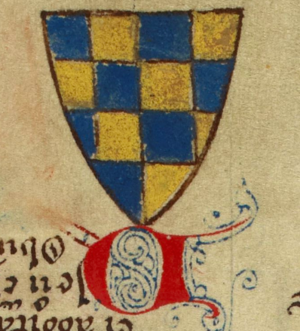
1215: The Year of Magna Carta

King John. 1215: The Year of Magna Carta by Sharon Bennett Connolly
King John

The year of 1214 ended badly for King John. Attempts to appease his continental enemies had not had the desired results and he was at war in France. As a consequence, John sought a reconciliation with the Lusignans, agreeing to grant them Saintes and Oléron and to marry his daughter Joan to Hugh X de Lusignan, the son of Hugh IX de Lusignan, who had been betrothed to John’s wife, Isabelle d’Angoulême, in return for their support. A similar peace offering, of the earldom of Richmond, to Pierre, Duke of Brittany, was less well received and the duke remained aloof.

John’s campaign was successful at first, with him entering Angers unopposed before he laid siege to Roche-au-Moine. However, he was forced to retreat on 2 July, with the approach of the army of Prince Louis of France and the refusal of the Poitevins to fight by his side.

Although he was able to keep his own army intact, John’s fate was sealed on 27 July when his half-brother William Longespée, Earl of Salisbury, and John’s German and Flemish allies faced King Philip II of France at the battle of Bouvines. They were decisively defeated. Otto IV managed to escape, but William Longespée was captured and taken to Paris, along with the counts of Flanders and Boulogne. With the threat in the north neutralised, Philip was now able to join his army to that of his son, Prince Louis, and challenge John in the south. John had no choice but to seek peace and a 5-year truce was agreed on 13 October, with Ralph of Coggeshall reporting rumours that it had cost John 60,000 marks.1

At home, John’s policy of reform of the sheriffs and forest officials in 1212–1213 had resulted in a significant reduction in royal revenue, and the military campaign had drained John’s treasury further. He was no longer a wealthy king. In October 1214 John returned to England; the defeat by the French at the Battle of Bouvines had ended the king’s hopes of regaining the lost Angevin empire. Baronial opposition to John now gathered pace. The refusal to pay scutage of 3 marks on the knights’ fee demonstrating a coordinated effort by the magnates, rather than the individual disobedience that had been seen earlier in the reign.

Magna Carta by Sharon Bennett Connolly
Lincoln Cathedral’s copy of Magna Carta

The barons’ objections to John were almost beyond number. He had failed to face the French and had lost not only his family’s Continental possessions, but also those of his barons. Few had forgotten his treachery against his brother in trying to take the throne whilst Richard was on crusade. Added to these catastrophes was the character and personality of John himself. By nature, John was paranoid, secretive and distrustful. His cruelty was widely known. He stood accused of killing his nephew, Arthur, a rival claimant to the English throne; he had hanged twenty-eight Welsh hostages (sons of rebel chieftains); and he had hounded William de Braose and his family all the way to Ireland and back. De Braose’s wife and son died in one of John’s prisons, probably from starvation.

The History of William Marshal, a biography of the great knight and statesman, claimed that John treated his prisoners harshly and with such indignity that it was a disgrace to all involved.2 His barons even complained that he forced himself on their wives and daughters. With such military losses, accusations of murder and seemingly acute character flaws stacked against him, it is no wonder England’s king faced opposition by many of the most powerful in his realm.

In January 1215 John arranged to meet with his challengers in London to hear their demands, and it was agreed that they would reconvene at Northampton on 26 April to hear the king’s response. The disaffected barons demanded reform and the confirmation of the coronation charter of King Henry I, in which the king promised;

1215: The Year of Magna Carta by Sharon Bennett Connolly
Pope Innocent III

‘Know that by the mercy of God and by the common counsel of the barons of England I have been crowned king of this realm. And because the kingdom has been oppressed by unjust exactions, being moved by reverence towards God and by the love I bear you all, I make free the Church of God … I abolish all the evil customs by which the kingdom of England has been unjustly oppressed.’ 3

Although many of the clauses of this charter, also referred to as the Charter of Liberties, were now outdated, several still resonated with the barons, including that a baron’s widow could not be married without her consent, that an heiress could not be married without the consent of her relatives and that, on the death of a baron, his heir would only pay a relief that was ‘just and lawful.’4

Whilst John was ruminating on these demands, both sides were preparing for war. John borrowed from the Templars to pay his mercenaries and on 4 March he took the cross. This latter move was seen as highly cynical and no one seems to have believed that John would actually go on crusade. His purpose for doing so was political: a crusader’s lands and properties were protected by the church and this action firmly identified the king’s opponents as the ‘bad guys’.

John failed to appear at Northampton in April. He did, however, send messages to the rebels. According to the Barnwell annalist the king ‘tried to win them back through many emissaries, and there was much discussion amongst them, the archbishop, bishops and other barons acting as intermediaries, the king himself staying at Oxford.’5 On 5 May the rebels formally renounced their fealty. John retained the support of some magnates, such as William Marshal and William de Warenne, but the majority were now standing against him. As was London, which opened its gates to the rebels on 17 May, despite John’s granting the city the right to elect its mayor only eight days before. In the Welsh Marches the Braose family had allied with Llywelyn ap Iorwerth and had taken Shrewsbury.

The rebels were ready to fight. After occupying London, they made one final attempt to prevent war, presenting the king with a list of their demands. John had no choice but to make concessions and on 10 June agreed to further discussions of the rebels’ terms. Following these negotiations, a long, detailed document was produced, dealing with the particular grievances of the time and with injustices in general. It touched on the whole system of royal government. And it was granted to ‘all free men of the realm and their heirs forever.’6

1215: The Year of Magna Carta by Sharon Bennett Connolly
19th century recreation of the moment Magna Carta is sealed

Of its sixty-three clauses some terms were asking for immediate remedies, such as the removal of corrupt administrators and the sending home of foreign mercenaries. A clause stating that fighting outside of the kingdom could not be imposed by the king was a reaction to John’s recent attempts to force his English barons to help him recover his Continental domains. Others had long-term aims. The document sought to guarantee the privileges of the church and the City of London. Restrictions were placed on the powers of regional officials, such as sheriffs, to prevent abuses. The royal court was fixed at Westminster, for justice to be obtainable by all, and royal judges were to visit each county regularly. Taxes could no longer be levied without the consent of the church and the barons.

Clauses included the fixing of inheritance charges and the protection from exploitation for under-age heirs; the king was to take only what was reasonable from an estate (although ‘reasonable’ remained undefined). From henceforth a widow was to be free to choose whether or not to remarry and her marriage portion (dowry) would be made available to her immediately on her husband’s death. Another clause sought to prevent the seizure of land from Jews and the king’s debtors. Magna Carta even went so far as to regulate weights and measures. It also reduced the size of the king’s forests and limited the powers of forest justices.

Although most of the sixty-three clauses of Magna Carta are now defunct, three still remain as major tenets of British law, including ‘to no one will we sell, to no one will we deny or delay right or justice.’ That no person would be imprisoned, outlawed or deprived of his lands except by judgement of his peers and the law of the land has remained the cornerstone of the English legal system ever since.

1215: The Year of Magna Carta by Sharon Bennett Connolly
Runnymede

Magna Carta was sealed at Runnymede, Berkshire, on 15 June 1215. John ordered that the charter be circulated around the towns and villages, throughout the realm; only 4 original copies survive today, 2 at the British Library and 1 each at Lincoln and Salisbury. As a peace agreement between the king and his rebellious barons, however, it failed miserably. By July, John was appealing to the pope for help. Pope Innocent III’s response arrived in England in September. The treaty was declared null and void; according to Innocent, Magna Carta was:

‘not only shameful and base but also illegal and unjust. We refuse to overlook such shameless presumption which dishonours the Apostolic See, injures the king’s right, shames the English nation, and endangers the crusade. Since the whole crusade would be undermined if concessions of this sort were extorted from a great prince who had taken the cross, we, on behalf of Almighty God, Father, Son and Holy Ghost, and by the authority of Saints Peter and Paul His apostles, utterly reject and condemn this settlement. Under threat of excommunication we order that the king should not dare to observe and the barons and their associates should not insist on it being observed. The charter with all its undertakings and guarantees we declare to be null and void of all validity for ever.’7


The letter was accompanied by more papal letters, excommunicating rebels, including nine barons and the Londoners. However, by the time the letters arrived in England, the dispute had already erupted into the Barons’ War. John laid siege to Rochester Castle with his mercenaries and the castle surrendered on 30 November, after a seven-week siege. Deciding they could no longer deal with John’s perfidy, the rebel barons had invited the King of France, Philip II Augustus, to claim the throne.

Philip’s son and heir, the future Louis VIII, accepted the offer. He sent an advanced guard, which arrived in December of 1215. Louis himself would arrive in the spring of 1216. He landed on the south coast and marched for London, where he was proclaimed King of England on 2 June 1216, just 13 days before the 1st anniversary of Magna Carta…

*

For a study into the influence of women on the clauses and creation of Magna Carta, and its impact on the lives of women, my book, Ladies of Magna Carta: Women of Influence in Thirteenth Century England  is out now!

Footnotes:

1 John Gillingham, John (1167–1216), Oxforddnb.com; 2 L’Histoire de Guillaume le Maréchale quoted in John Gillingham, John (1167–1216), Oxforddnb.com; 3 Coronation Charter of Henry I in bl.uk; 4 Select Charters quoted in Marc Morris, King John: Treachery, Tyranny and the Road to Magna Carta; 5 The Barnwell annalist quoted in Elizabeth Hallam (editor), The Plantagenet Chronicles; 6 Danny Danziger and John Gillingham, 1215: The Year of Magna Carta; 7 Letter from Pope Innocent III, quoted in Danny Danziger and John Gillingham, 1215: The Year of Magna Carta

Images:

Courtesy of Wikipedia. Except: Magna Carta ©2015 Sharon Bennett Connolly and Runnymede ©2020 Jayne Smith

Further reading:

Robert Bartlett England Under the Norman and Angevin Kings 1075-1225; Dan Jones The Plantagenets; the Kings who Made EnglandThe Plantagenet Chronicle Edited by Elizabeth Hallam; Maurice Ashley The Life and Times of King John; Roy Strong The Story of BritainOxford Companion to British History; Mike Ashley British Kings & Queens; David Williamson Brewer’s British Royalty; Danny Danziger and John Gillingham, 1215: The Year of Magna Carta; John Gillingham, John (1167–1216), Oxforddnb.com; Marc Morris, King John: Treachery, Tyranny and the Road to Magna Carta

*

My books

Signed, dedicated copies of all my books are available through my online bookshop.

Coming 30 January 2025: Scotland’s Medieval Queens

Books by Sharon Bennett Connolly

Scotland’s history is dramatic, violent and bloody. Being England’s northern neighbour has never been easy. Scotland’s queens have had to deal with war, murder, imprisonment, political rivalries and open betrayal. They have loved and lost, raised kings and queens, ruled and died for Scotland. From St Margaret, who became one of the patron saints of Scotland, to Elizabeth de Burgh and the dramatic story of the Scottish Wars of Independence, to the love story and tragedy of Joan Beaufort, to Margaret of Denmark and the dawn of the Renaissance, Scotland’s Medieval Queens have seen it all. This is the story of Scotland through their eyes.

Scotland’s Medieval Queens gives a thorough grounding in the history of the women who ruled Scotland at the side of its kings, often in the shadows, but just as interesting in their lives beyond the spotlight. It’s not a subject that has been widely covered, and Sharon is a pioneer in bringing that information into accessible history.’ Elizabeth Chadwick (New York Times bestselling author)

Available now from Amazon and Pen and Sword Books

Also by Sharon Bennett Connolly:

Books by Sharon Bennett Connolly

Heroines of the Tudor World tells the stories of the most remarkable women from European history in the time of the Tudor dynasty, 1485-1603. These are the women who ruled, the women who founded dynasties, the women who fought for religious freedom, their families and love. Heroines of the Tudor World is now available for pre-order from Amberley Publishing and Amazon UK. Women of the Anarchy demonstrates how Empress Matilda and Matilda of Boulogne, unable to wield a sword themselves, were prime movers in this time of conflict and lawlessness. It shows how their strengths, weaknesses, and personal ambitions swung the fortunes of war one way – and then the other. Available from Bookshop.orgAmberley Publishing and Amazon UKKing John’s Right-Hand Lady: The Story of Nicholaa de la Haye is the story of a truly remarkable lady, the hereditary constable of Lincoln Castle and the first woman in England to be appointed sheriff in her own right. Available from all good bookshops Pen & Sword Booksbookshop.org and Amazon

Defenders of the Norman Crown: The Rise and Fall of the Warenne Earls of Surrey tells the fascinating story of the Warenne dynasty, from its origins in Normandy, through the Conquest, Magna Carta, the wars and marriages that led to its ultimate demise in the reign of Edward III. Available from Pen & Sword BooksAmazon in the UK and US, and Bookshop.orgLadies of Magna Carta: Women of Influence in Thirteenth Century England looks into the relationships of the various noble families of the 13th century, and how they were affected by the Barons’ Wars, Magna Carta and its aftermath; the bonds that were formed and those that were broken. It is now available in paperback and hardback from Pen & SwordAmazon, and Bookshop.orgHeroines of the Medieval World tells the stories of some of the most remarkable women from Medieval history, from Eleanor of Aquitaine to Julian of Norwich. Available now from Amberley Publishing and Amazon, and Bookshop.orgSilk and the Sword: The Women of the Norman Conquest traces the fortunes of the women who had a significant role to play in the momentous events of 1066. Available now from Amazon,  Amberley Publishing, and Bookshop.org.

Alternate Endings: An anthology of historical fiction short stories including Long Live the King… which is my take what might have happened had King John not died in October 1216. Available in paperback and kindle from Amazon.

Podcast:

Have a listen to the A Slice of Medieval podcast, which I co-host with Historical fiction novelist Derek Birks. Derek and I welcome guests, such as Bernard Cornwell and Michael Jecks, and discuss a wide range of topics in medieval history, from significant events to the personalities involved. 

Every episode is also now available on YouTube.

*

Don’t forget! Signed and dedicated copies of all my books are available through my online store.

For forthcoming online and in-person talks, please check out my Events Page.

You can be the first to read new articles by clicking the ‘Follow’ button, liking our Facebook page or joining me on TwitterThreadsBluesky and Instagram.

**

©2020 Sharon Bennett Connolly FRHistS

Thora, Harald Hardrada’s Other Wife

Books by Sharon Bennett Connolly
Coin of Harald Hardrada

The legend of Harald Hardrada, King Harald III of Norway, is one of my favourite stories of the 11th century. It is the tale of a warrior king, probably the best fighter of his generation, a poet and a lover. Harald’s marriage to his first wife, Elisiv of Kyiv, is the stuff legends are made of; a landless prince making his fortune in Byzantium before returning to claim his bride and winning a crown. And they lived happily ever after …. or not!

Elisiv gave Harald 2 daughters, Ingegerd and Maria, but no sons. It may, therefore, have been a desire for sons that led Harald to take a second wife, although without setting aside his first. According to Snorri Sturluson, in the ‘winter after King Magnus the Good died, King Harald took Thora, daughter of Thorberg Arnason, and they had two sons; the oldest called Magnus, and the other Olaf.’ [1]

Thora (or Tora) was the daughter of Thorberg Arnason and Ragnhild Erlingsdottir and was born around 1025; her kinsman, Fin Arnason, was a good friend of Harald’s and was married to Bergliot, the daughter of Halfdan, a brother of Harald Hardrada and Saint Olaf.  The marriage also provided the desired son and heir, which his first marriage had failed to do; both of Thora’s sons would later become kings of Norway. Magnus succeeded his father in 1066, and was in 1069 succeeded by his brother, Olaf III, who had ruled alongside Magnus since 1067.

Books by Sharon Bennett Connolly
Gerhard Munthe: illustration for Olav Kyrres saga in Heimskringla (1899)

Harald probably went through some form of marriage ceremony, more likely a handfasting than a Christian marriage, with Thora in 1048. The marriage appears to have been a political arrangement, in order to garner the support of the powerful Giskeӕtten family, the chiefs of which played a significant role in power politics.

Of Harald’s two sons, Magnus, who succeeded his father in 1066, appears to have been as warlike as Harald. In 1058, aged no more than ten or eleven, he led a fleet to England in support of Earl Ӕlfgar of Mercia, after the earl had been outlawed only a year after he had succeeded to his father’s earldom. Magnus was probably little more than a figurehead for the expedition and unlikely to have been expected to make crucial military decisions, but it would have been good experience for the young prince, and a taste of what the future held for him. By the time he was sixteen, Magnus was a successful warrior and is said to have clashed with his father; the two almost coming to blows until the king was restrained by friends.

Books by Sharon Bennett Connolly
Coin dating to the reign of King Olaf Kyrre

It has been suggested that the marriage may have come following the death of Elisiv, or that Elisiv never even left Kyiv, but given that her daughters were born once Harald was back in Scandinavia, this seems improbable. Harald’s daughters are not likely to have been the daughters of Thora, as Maria was engaged to Thora’s brother, Eystein Orre; who would have been Maria’s uncle, had she been Thora’s daughter. Harald having two wives, simultaneously, seems the most likely explanation. As demonstrated by King Cnut and King Harold II of England, two wives and, therefore, two families, were not uncommon in Scandinavian culture; although in these two other cases an earlier wife was put aside for the sake of a more prestigious marriage, whereas Harald Hardrada’s first marriage was by far the more prestigious, while the second was politically expedient.

Thora was the kinswoman of Harald’s one-time friend, Fin Arnason, who was captured fighting for the Danes against Harald. When Fin refused Harald’s offer of quarter (life), Harald made a further offer:

‘“Wilt thou accept thy life, then, from thy she-relation Thorer [Thora]?”

The earl: “Is she here?”

“She is here, ” said the king.

Then Earl Fin broke out with the ugly expressions which since have been preserved, as a proof that he was so mad with rage that he could not govern his tongue: —

“No wonder thou hast bit so strongly, if the mare was with thee.”

Earl Fin got life and quarter and the king kept him a while about him…’

Heimskringla. The Chronicle of the Kings of Norway, by Snorre Sturluson.
Books by Sharon Bennett Connolly
Harald landing near York, 1066 (Matthew Paris)

At the beginning of September, 1066, Harald sailed his fleet of over 200 ships to Shetland and then to Orkney, where he gathered reinforcements and left his wife and daughters to await news of events. There is some confusion as to which wife was left on Orkney, some sources say Elisiv, who, as Harald’s wife and queen would have expected to become queen of England, had he been successful. Some historians argue that as Thora was a relative of the Earl of Orkney she would have been more likely to travel with Harald than Elisiv.

We know from Thora’s joining one of Harald’s expeditions to Denmark, that he was not averse to taking his wives with him to war. However, given that young Magnus was left behind to rule Norway, aged only sixteen, it seems likely that his mother was also left behind, to advise him. According to Snorri;

‘Thora, the daughter of Thorberg, also remained behind; but he took with him Queen Ellisif [Elisiv] and her two daughters, Maria and Ingegerd. Olaf, King Harald’s son, also accompanied his father abroad.’

Heimskringla. The Chronicle of the Kings of Norway, by Snorre Sturluson.

Harald fought two battles outside York. The first, the Battle of Fulford, on 20 September, against the brothers, Edwin, Earl of Mercia, and Morcar, Earl of Northumberland, ended in victory for Harald Hardrada and his ally, Tostig, the former earl of Northumberland and brother of the new King of England, Harold II. However, a second battle at Stamford Bridge, five days later, saw victory go to the English. Harold II had marched his men the 200 miles from the south coast to York, in less than 4 days, and confronted his brother and the Norwegian king on 25 September. At the end of the day, Harald Hardrada and Tostig both lay dead on the field.

Books by Sharon Bennett Connolly
Battle of Stamford Bridge, 1066 (Matthew Paris)

Harald and Elisiv’s daughter, Maria, is said to have died suddenly on 25 September 1066, the same day as the Battle of Stamford Bridge, on hearing of her father’s death. She had been betrothed to Eystein Orre, the brother of Harald’s second wife, Thora; Eystein was also among the dead at Stamford Bridge. Maria’s sister, Ingegerd, returned to Norway with her mother and half-brother. Olaf had traveled with the Norwegian army, but had not taken part in the battle, having been left to guard the ships at Riccal, near York. After the English victory, he was allowed to claim his father’s body and take the survivors home.

After Harald’s death, Norway was ruled successively by Harald’s sons Magnus II and Olaf III. Olaf III ruled until his death in 1093 and was succeeded by Magnus III, his acknowledged but illegitimate son.

Of Thora’s fate, little is certain. She may have remarried, although there is some confusion. According to Adam of Bremen, she married either King Swein of Denmark or an unknown Swedish king. [2] As with much of her life, the year of Thora’s death remains unknown.

Footnotes:

[1] Heimskringla. The Chronicle of the Kings of Norway, by Snorre Sturluson; [2] Fulford: The Forgotten Battle of 1066 by Charles Jones.

Pictures:

Courtesy of Wikipedia

Sources:

The English and the Norman Conquest by Dr Ann Williams; Brewer’s British Royalty by David Williamson; Britain’s Royal Families, the Complete Genealogy by Alison Weir; The Wordsworth Dictionary of British History by JP Kenyon; The Norman Conquestby Marc Morris; Harold, the King Who Fell at Hastings by Peter Rex; The Anglo-Saxons in 100 Facts by Martin Wall; The Anglo-Saxon Age by Martin Wall; Kings, Queens, Bones and Bastards by David Hilliam; The Mammoth Book of British kings & Queens by Mike Ashley; The Oxford Companion to British History Edited by John Cannon; The Anglo-Saxon Chronicles translated and edited by Michael Swaton; The Anglo-Saxon Chronicle translated by James Ingram; Queen Emma and the Vikings by Harriett O’Brien; The Bayeux Tapestry by Carola Hicks; On the Spindle Side: the Kinswomen of Earl Godwin of Wessex by Ann Williams; oxforddnb.com.

*

My Books

Signed, dedicated copies of all my books are available through my online bookshop.

Out now: Scotland’s Medieval Queens

Books by Sharon Bennett Connolly

Scotland’s history is dramatic, violent and bloody. Being England’s northern neighbour has never been easy. Scotland’s queens have had to deal with war, murder, imprisonment, political rivalries and open betrayal. They have loved and lost, raised kings and queens, ruled and died for Scotland. From St Margaret, who became one of the patron saints of Scotland, to Elizabeth de Burgh and the dramatic story of the Scottish Wars of Independence, to the love story and tragedy of Joan Beaufort, to Margaret of Denmark and the dawn of the Renaissance, Scotland’s Medieval Queens have seen it all. This is the story of Scotland through their eyes.

Scotland’s Medieval Queens gives a thorough grounding in the history of the women who ruled Scotland at the side of its kings, often in the shadows, but just as interesting in their lives beyond the spotlight. It’s not a subject that has been widely covered, and Sharon is a pioneer in bringing that information into accessible history.’ Elizabeth Chadwick (New York Times bestselling author)

Available now from Amazon and Pen and Sword Books

Also by Sharon Bennett Connolly:

Books by Sharon Bennett Connolly

Heroines of the Tudor World tells the stories of the most remarkable women from European history in the time of the Tudor dynasty, 1485-1603. These are the women who ruled, the women who founded dynasties, the women who fought for religious freedom, their families and love. Heroines of the Tudor World is now available for pre-order from Amberley Publishing and Amazon UK. Women of the Anarchy demonstrates how Empress Matilda and Matilda of Boulogne, unable to wield a sword themselves, were prime movers in this time of conflict and lawlessness. It shows how their strengths, weaknesses, and personal ambitions swung the fortunes of war one way – and then the other. Available from Bookshop.orgAmberley Publishing and Amazon UKKing John’s Right-Hand Lady: The Story of Nicholaa de la Haye is the story of a truly remarkable lady, the hereditary constable of Lincoln Castle and the first woman in England to be appointed sheriff in her own right. Available from all good bookshops Pen & Sword Booksbookshop.org and Amazon

Defenders of the Norman Crown: The Rise and Fall of the Warenne Earls of Surrey tells the fascinating story of the Warenne dynasty, from its origins in Normandy, through the Conquest, Magna Carta, the wars and marriages that led to its ultimate demise in the reign of Edward III. Available from Pen & Sword BooksAmazon in the UK and US, and Bookshop.orgLadies of Magna Carta: Women of Influence in Thirteenth Century England looks into the relationships of the various noble families of the 13th century, and how they were affected by the Barons’ Wars, Magna Carta and its aftermath; the bonds that were formed and those that were broken. It is now available in paperback and hardback from Pen & SwordAmazon, and Bookshop.orgHeroines of the Medieval World tells the stories of some of the most remarkable women from Medieval history, from Eleanor of Aquitaine to Julian of Norwich. Available now from Amberley Publishing and Amazon, and Bookshop.orgSilk and the Sword: The Women of the Norman Conquest traces the fortunes of the women who had a significant role to play in the momentous events of 1066. Available now from Amazon,  Amberley Publishing, and Bookshop.org.

Alternate Endings: An anthology of historical fiction short stories including Long Live the King… which is my take what might have happened had King John not died in October 1216. Available in paperback and kindle from Amazon.

Podcast:

Have a listen to the A Slice of Medieval podcast, which I co-host with Historical fiction novelist Derek Birks. Derek and I welcome guests, such as Bernard Cornwell and Elizabeth Chadwick, and discuss a wide range of topics in medieval history, from significant events to the personalities involved.

Every episode is also now available on YouTube.

*

Don’t forget! Signed and dedicated copies of all my books are available through my online bookshop.

For forthcoming online and in-person talks, please check out my Events Page.

You can be the first to read new articles by clicking the ‘Follow’ button, liking our Facebook page or joining me on TwitterThreadsBluesky and Instagram.

©2020 Sharon Bennett Connolly FRHistS
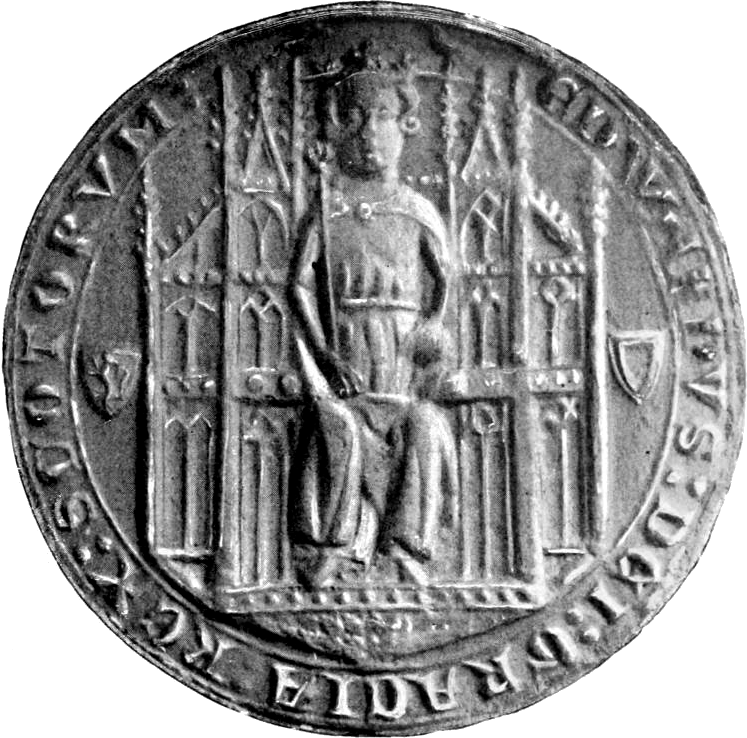
Harald Hardrada and Elisiv of Kyiv

Books by Sharon Bennett Connolly
Elisiv of Kyiv

One of my favourite characters of the 1066 story is the Norwegian king Harald Hardrada. Harald led a fascinating life, even before his ill-fated attempt on the English throne; exiled in Kyiv at 15, while seeking his fortune in the east he became captain of the famous Varangian Guard before returning to his native Norway to become king.

When I started writing Silk and the Sword: The Women of the Norman Conquest I discovered that there were several Kyivan links to the story of 1066. The baby sons of England’s short-lived king, Edmund II Ironside, who reigned and died in 1016, were given sanctuary and protection in Kyiv, saving them from the clutches of Edmund’s successor, King Cnut. And after the Conquest, Harold II Godwinson’s own daughter, Gytha, would make her life in Kyiv as the wife of Vladimir II Monomakh; she was the mother of Mstislav the Great, the last ruler of a united Kyivan Rus. Vladimir was the nephew of Harald Hardrada’s first wife, the Russian princess, Elisiv.

Harald Hardrada’s story had been one of almost-constant conflict since he was a teenager. At the age of 15 he had fought alongside his half-brother, King Óláf, at the Battle of Stiklestad, in an unsuccessful attempt by Óláf to regain the throne. The Anglo-Saxon Chronicle recorded: ‘This year returned King Óláf into Norway; but the people gathered together against him, and fought against him; and he was there slain, in Norway, by his own people, and was afterwards canonized.’ [1]

Following Olaf’s death, Harald Hardrada first fled to Sweden before moving on to Kyivan Rus. Harald spent 3 or 4 years at the court of Yaroslav I (the Wise), Prince of Kyiv. Yaroslav was the husband of Óláf’s sister-in-law, Ingergerd (sister of Óláf’s wife, Queen Astrid). At only 15, Harald’s military skills were already impressive and Yaroslav made him a captain in his army; the young Norwegian fought alongside the Kyivan prince on his campaigns against the Poles in 1031.

Books by Sharon Bennett Connolly
Coin of Harald

Having gained a reputation that spread throughout eastern Europe, in 1034 or 1035, Harald and his force of 500 men moved on to Constantinople, where he joined the ranks of the Varangian Guard, in the service of the Byzantine emperor, Michael IV (reigned 1034–1041). A formidable warrior and commander, Harald eventually became leader of the whole Varangian guard, seeing action against Arab pirates, and the towns of Asia Minor that supported them. Throughout his adventures in Byzantium, Harald sent his plunder back to Prince Yaroslav in Kyiv; treasure which, given the number of towns he had taken, must have been quite considerable.

On the death of Michael IV Constantinople proved a less friendly place for the Scandinavian and after a brief imprisonment and daring escape from his cell, Hardrada decided that it was time to return home. It is said that the new empress, Zoe, refused him permission to leave, but the Norwegian managed to escape Constantinople with two ships and his most loyal supporters. One of the ships was destroyed by the iron chains which blocked the seagoing entrance and exit to Constantinople, but the other made it through by shifting the weight in the ship so acted like a seesaw and it effectively jumped over the chain.

Harald returned to his friend Yaroslav I in Kyiv, to whom he had sent his vast amounts of plunder. In 1044, whilst still at Yaroslav’s court, Harald married the Kyivan prince’s daughter, Elisiv (also known as Elisiff, Elizabeth or Elizaveta). Elisiv was born around 1025 and would probably have met Harald when he first appeared at her father’s court, in 1034-5; when she was 9 or 10 years old and he a 15-year-old fugitive from Cnut’s conquest of Norway. Elisiv was probably the oldest daughter of Yaroslav’s eleven children with his wife, Ingegerd. Through her mother, Elisiv was the granddaughter of Sweden’s king, Olof Skötkonung. Her father, Grand Prince Yaroslav, was responsible for the rise in power and influence of Kyiv in the 11th century; his court was considered modern and cultured.

Yaroslav’s children were well-educated and able to read and write, including the girls; Elisiv’s sister, Anna, who married King Henry I of France, demonstrated her superior level of education when she signed her marriage contract with her full name, in her own hand; King Henry, her new husband, could only manage to write a cross. Although we have no description of Elisiv, we know that Anna was renowned for her ‘exquisite beauty, literacy and wisdom’ and we can assume that Elisiv, having shared in her sister’s upbringing, was no less accomplished. [2]

It is possible that marriage between Harald and Elisiv had been discussed during the Norwegian’s first visit to Kyiv in 1035. However, given that she would have only been nine or ten years of age when Harald left for Constantinople, it seems hard to believe the claims that Elisiv had refused him on the grounds that he was not wealthy enough to marry her; her father, on the other hand, may well have done so. This may also explain Harald sending his plunder back to Kyiv for safekeeping, as proof of his increasing wealth and eligibility as a husband for Elisiv, even if he still held no princely title and was exiled from his homeland. In 1044, therefore, there was no financial objection to Harald and Elisiv marrying and there is evidence that Harald was genuinely in love with his Kyivan bride. Harald wrote poetry to his princess:

Past Sicily’s wide plains we flew,
A dauntless, never-wearied crew;
Our Viking steed rushed through the sea,
As Viking-like fast, fast sailed we.
Never, I think, along this shore
Did Norsemen ever sail before;
Yet to the Kyivan queen, I fear,
My gold-adorned, I am not dear. [3]

Books by Sharon Bennett Connolly
Contemporary image of Yaroslav the Wise, from his seal

With the treasure Harald amassed during his sojourn in Constantinople and Elisiv’s dowry, Harald now had the means to return home. He initially made for Sweden, arriving there in 1046. By the end of the year, he was co-king in Norway, under Magnus the Good, who left Harald to rule Norway while he concentrated on Denmark; the two kings had kept separate courts. Harald’s court in Norway was presided over by his queen, Elisiv. Within a few of years of arriving in Norway, the couple had two daughters, Ingegerd and Maria Haraldsdóttir. Ingergerd was probably born in 1046, with Maria arriving a year of two after.

Married life, however, was about to get more complicated, when Harald took a second wife, without setting aside Elisiv. According to Snorri Sturluson, in the ‘winter after King Magnus the Good died, King Harald took Thora, daughter of Thorberg Arnason, and they had two sons; the oldest called Magnus, and the other Olaf.’ [4] 

It has been suggested that the marriage may have come following the death of Elisiv, or that Elisiv never even left Kyiv, but given that her daughters are believed to have been born once Harald was back in Scandinavia, this seems improbable. Harald’s daughters are not likely to have been the daughters of Thora, as Maria was engaged to Eystein Orre, who would have been her uncle had she been Thora’s daughter. Harald having two wives, simultaneously, seems the most likely explanation. As demonstrated by King Cnut and King Harold II of England, two wives and, therefore, two families, were not uncommon in Scandinavian culture; although in these two other cases an earlier wife was put aside for the sake of a more prestigious marriage, whereas Harald Hardrada’s first marriage was the most prestigious, while the second was politically expedient. And it was this second marriage which gave Harald his sons; Magnus and Olaf, both later kings of Norway.

Books by Sharon Bennett Connolly
Battle of Fulford, 1066, taken from ‘The Life of Edward the Confessor’

At the beginning of September, 1066, Harald sailed his fleet of over 200 ships to Shetland and then to Orkney, where he gathered reinforcements and left his wife and daughters to await news of events. There is some confusion as to which wife was left on Orkney, some sources say it was Elisiv, who, as Harald’s wife and queen would have expected to become queen of England, had he been successful. Some historians argue that as Thora was a relative of the Earl of Orkney she would have been more likely to travel with Harald than Elisiv.

We know from Thora’s joining one of Harald’s expeditions to Denmark, that he was not averse to taking his wives with him to war. However, given that young Magnus was left behind to rule Norway, aged only sixteen, it seems likely that his mother was also left behind, to advise him. According to Snorri; ‘Thora, the daughter of Thorberg, also remained behind; but he took with him Queen Ellisif [Elisiv] and her two daughters, Maria and Ingegerd. Olaf, King Harald’s son, also accompanied his father abroad.’ [5]

Books by Sharon Bennett Connolly
Battle of Stamford Bridge, 1066, taken from ‘The Life of Edward the Confessor’

Harald and Elisiv’s daughter, Maria, is said to have died suddenly on 25 September 1066, the same day as the Battle of Stamford Bridge, on hearing of her father’s death. Though this does not make sense, unless Maria had travelled to Riccal, where Harald moored his ships before marching to York, with the army and awaited the outcome of the battle with the ships; or the timing of her death has been altered for dramatic effect. Maria had been betrothed to Eystein Orre, the brother of Harald’s second wife, Thora; Eystein was also among the dead at Stamford Bridge. Maria’s sister, Ingegerd, returned to Norway with her mother and half-brother. She was first married to Olaf I, King of Denmark who died in 1095, with whom she had a daughter, Ulvhild. Following Olaf’s death, Ingegerd married Philip, King of Sweden. She was widowed again in 1118 and died around 1120, having been consecutively queen of Denmark and Sweden.

Of Harald’s queen, Elisiv, little is known after King Harald’s death, not even the year of her own death. This Kyivan princess, who captured the heart of one of the greatest Viking warriors of all time, just disappears into the mists of history.

Footnotes:

[1] The Anglo-Saxon Chronicle translated by James Ingram; [2] Prominent Russians: Anna Yaroslavna (article), russiapedia.rt.com; [3] Quoted in Fulford: The Forgotten Battle of 1066 by Charles Jones; [4] Heimskringla. The Chronicle of the Kings of Norway, by Snorre Sturluson; [5] ibid.

Pictures:

Courtesy of Wikipedia

Sources:

The English and the Norman Conquest by Dr Ann Williams; Brewer’s British Royalty by David Williamson; Britain’s Royal Families, the Complete Genealogy by Alison Weir; The Wordsworth Dictionary of British History by JP Kenyon; The Norman Conquest by Marc Morris; Harold, the King Who Fell at Hastings by Peter Rex; The Anglo-Saxons in 100 Facts by Martin Wall; The Anglo-Saxon Age by Martin Wall; Kings, Queens, Bones and Bastards by David Hilliam; The Mammoth Book of British kings & Queens by Mike Ashley; The Oxford Companion to British History Edited by John Cannon; The Anglo-Saxon Chronicles translated and edited by Michael Swanton; The Anglo-Saxon Chronicle translated by James Ingram; Queen Emma and the Vikings by Harriett O’Brien; The Bayeux Tapestry by Carola Hicks; On the Spindle Side: the Kinswomen of Earl Godwin of Wessex by Ann Williams; oxforddnb.com.

*

My Books

Signed, dedicated copies of all my books are available through my online bookshop.

Out now: Scotland’s Medieval Queens

Books by Sharon Bennett Connolly

Scotland’s history is dramatic, violent and bloody. Being England’s northern neighbour has never been easy. Scotland’s queens have had to deal with war, murder, imprisonment, political rivalries and open betrayal. They have loved and lost, raised kings and queens, ruled and died for Scotland. From St Margaret, who became one of the patron saints of Scotland, to Elizabeth de Burgh and the dramatic story of the Scottish Wars of Independence, to the love story and tragedy of Joan Beaufort, to Margaret of Denmark and the dawn of the Renaissance, Scotland’s Medieval Queens have seen it all. This is the story of Scotland through their eyes.

Scotland’s Medieval Queens gives a thorough grounding in the history of the women who ruled Scotland at the side of its kings, often in the shadows, but just as interesting in their lives beyond the spotlight. It’s not a subject that has been widely covered, and Sharon is a pioneer in bringing that information into accessible history.’ Elizabeth Chadwick (New York Times bestselling author)

Available now from Amazon and Pen and Sword Books

Also by Sharon Bennett Connolly:

Books by Sharon Bennett Connolly

Heroines of the Tudor World tells the stories of the most remarkable women from European history in the time of the Tudor dynasty, 1485-1603. These are the women who ruled, the women who founded dynasties, the women who fought for religious freedom, their families and love. Heroines of the Tudor World is now available for pre-order from Amberley Publishing and Amazon UK. Women of the Anarchy demonstrates how Empress Matilda and Matilda of Boulogne, unable to wield a sword themselves, were prime movers in this time of conflict and lawlessness. It shows how their strengths, weaknesses, and personal ambitions swung the fortunes of war one way – and then the other. Available from Bookshop.orgAmberley Publishing and Amazon UKKing John’s Right-Hand Lady: The Story of Nicholaa de la Haye is the story of a truly remarkable lady, the hereditary constable of Lincoln Castle and the first woman in England to be appointed sheriff in her own right. Available from all good bookshops Pen & Sword Booksbookshop.org and Amazon

Royal Historical Society

Defenders of the Norman Crown: The Rise and Fall of the Warenne Earls of Surrey tells the fascinating story of the Warenne dynasty, from its origins in Normandy, through the Conquest, Magna Carta, the wars and marriages that led to its ultimate demise in the reign of Edward III. Available from Pen & Sword BooksAmazon in the UK and US, and Bookshop.orgLadies of Magna Carta: Women of Influence in Thirteenth Century England looks into the relationships of the various noble families of the 13th century, and how they were affected by the Barons’ Wars, Magna Carta and its aftermath; the bonds that were formed and those that were broken. It is now available in paperback and hardback from Pen & SwordAmazon, and Bookshop.orgHeroines of the Medieval World tells the stories of some of the most remarkable women from Medieval history, from Eleanor of Aquitaine to Julian of Norwich. Available now from Amberley Publishing and Amazon, and Bookshop.orgSilk and the Sword: The Women of the Norman Conquest traces the fortunes of the women who had a significant role to play in the momentous events of 1066. Available now from Amazon,  Amberley Publishing, and Bookshop.org.

Alternate Endings: An anthology of historical fiction short stories including Long Live the King… which is my take what might have happened had King John not died in October 1216. Available in paperback and kindle from Amazon.

Podcast:

A Slice of Medieval

Have a listen to the A Slice of Medieval podcast, which I co-host with Historical fiction novelist Derek Birks. Derek and I welcome guests, such as Elizabeth Chadwick, Helen Castor, Ian Mortimer, Scott Mariani and Bernard Cornwell and discuss a wide range of topics in medieval history, from significant events to the personalities involved.

Every episode is also now available on YouTube.

*

Don’t forget! Signed and dedicated copies of all my books are available through my online bookshop.

For forthcoming online and in-person talks, please check out my Events Page.

You can be the first to read new articles by clicking the ‘Follow’ button, liking our Facebook page or joining me on TwitterThreadsBluesky and Instagram.

©2020 Sharon Bennett Connolly FRHistS