Princess Catia has gone missing and once again it falls to the legendary druid, Bellicus, to find her. Was the child taken by force, or did she go willingly with the Pictish warrior-woman, Aife?
Their trail leads far north to the windswept fortress of Dunnottar, so the druid must journey there with his companions, Duro, Eburus, and the fearsome wardog, Cai. Leaving Dun Breatann in the hands of Queen Narina and her enigmatic new husband, Ysfael, the friends ride out, but things are never as straightforward as they seem… Violence and death follow Bellicus as he seeks to discover the fate of the princess. In doing so, he also finds himself on the trail of the swordsman, Lancelot, who disappeared months before when his warband was slaughtered by Saxons. Will the druid be in time to save them both? Or will their enemies, old and new,earn the bloody vengeance and glory they so desperately desire? Ambition, lust, grief, and the power of the old gods combine in Wrath of the Picts as the druid and his companions are thrust towards a shocking finale that will leave Dun Breatann in turmoil and Northern Britain ravaged again by war.
Bellicus is back!
Wrath of the Picts is book no. 5 in Steven A. McKay’s magnificent series, Warrior Druid of Britain. Having spent some time campaigning with Arthur against the Saxons, Bellicus is called back north after Princess Catia goes missing, supposedly kidnapped by the warrior princess, Aife. But all is not as it seems…
Steven A. McKay once again draws his reader into a story chock full of adventure, treachery and a good few battles as Bellicus tries to make sense of events. It also a story of trust, friendship and loyalty that sees Bellicus and his good friends, Duro and Eburus, risking their lives in order to save the princess and discover the truth behind the uneasy atmosphere of his fortress home, Dun Breatann.
This is a story not to be missed.
“Where are all the Damnonii warriors?” Duro asked in a low voice. It was evening and Bellicus had joined them at last in the great hall. The cooking fires kept the chill of approaching autumn at bay and the homely orange glow would have made for a much more pleasant atmosphere if they weren’t surrounded by Ysfael’s men.
“Some of them are guarding the walls – you just haven’t seen them yet,” Bellicus replied, happily digging into the thick stew a serving girl had placed before him: beef, carrot, cabbage, onion and parsley had all gone into it and the druid couldn’t remember ever tasting, or smelling, much better. “The rest went out to deal with some Dalriadan raiders a few days ago. I expect they’ll return soon enough.”
Duro shook his head almost imperceptibly, glancing around as if spies were eavesdropping although, in truth, the Votadini warriors eating and carousing around them were making more than enough noise to mask what the centurion was saying. None of Ysfael’s men were paying them much attention other than to throw them the occasional curious glance. “It’s not right,” Duro opined. “Narina shouldn’t have let Gavo take her men off, leaving her alone with these … outsiders.”
Bellicus shrugged. He agreed completely, but Narina was her own woman and did things her way. She clearly trusted Ysfael.
Just then the door opened and Bellicus smiled, jerking his head for Duro to look over his shoulder for he was sitting with his back to the entrance. “What were you saying about Gavo?”
The centurion glanced back, mouth open as he chewed a piece of meat, and broke into a smile as he saw the Damnonii guard captain coming towards them. A bear of a man, Gavo had long hair and a grizzled beard which were both turning from brown to grey now that he was in his fortieth year. He wore reed checked trousers, a loose fitting blue tunic, and a bronze torc around his neck which marked his high rank, although it was obvious from his bearing he was a man used to command.
“Are you still here?” Gavo said, taking a seat beside Eburus and eyeing him with clear surprise. “I thought you’d have joined your kinsmen at the other benches.” The Votadini shrugged, and said in his heavily accented tones, “These are my friends. I’m used to their company now. Ysfael will no doubt order me to join his ranks again soon enough, but until then I’lll sit with who I choose.”
“See?” Duro hissed. “Even he doesn’t trust the Votadini, and he’s one of them!”
The Warrior Druid of Britain series is set in the time after the Romans have left and the Saxon tribes are beginning to settle in England, causing conflict with the native Britons. The great warlord, Arthur, is attempting to hold them back. In the north, in Scotland, Bellicus is druid to the Damnoni tribe, but has been spending time fighting alongside Arthur. With Catia’s disappearance, he has been called home to lead the search for the lost princess. Set in the twilight of the Roman Empire and before the creation of the kingdoms of England and Scotland, Steve A. McKay has recreated the time that is often called the Dark Ages. His vivid imagination and impeccable research brings the period to life for the reader. The ancient landscapes, authentic weapons and tactics, all the way down to the textiles, halls and food, help to draw the reader into the story and allow them to suspend belief and travel back to a simpler, but more vicious time.
Steven A. McKay’s great skill is in the characters he creates. He makes the reader care about their stories and about their fate. Bellicus is a tall, likeable druid with an intelligent mind and a great aptitude for fighting and tactics. He has his weaknesses though, and a soft spot for the princess Catia and her mother, Narina. This gives the character a vulnerability that in turn leaves the reader wondering if he can see the big picture, and if he will succeed in his mission. Alongside his great friend, Duro, the heroes are tasked with saving the day, but not without great personal cost. And I love that Lancelot gets to play a part in Wrath of the Picts, away from teh Arthurian legend and forging his own path.
Wrath of the Picts draws thew reader in from the first page and keeps you hooked until the very last. Steven A McKay is such a skillful storyteller that you cannot wait for the book to finish – and yet, dread getting to the end. Whether it is the first book in the series, or the fifth, the stories are always fresh, new and engaging.
And Wrath of the Picts is just a fabulous adventure!
*
To buy the book:
Wrath of the Picts by Steven A. McKay is now available from Amazon
About the Author:
I was born in Scotland in 1977 and always enjoyed studying history – well, the interesting bits, not so much what they taught us in school. I decided to write my Forest Lord series after seeing a house called “Sherwood” when I was out at work one day. I’d been thinking about maybe writing a novel but couldn’t come up with a subject or a hero so, to see that house, well…It felt like a message from the gods and my rebooted Robin Hood was born.
My current Warrior Druid of Britain series was similarly inspired, although this time it was the 80’s TV show “Knightmare”, and their version of Merlin that got my ideas flowing. Of course, the bearded old wizard had been done to death in fiction, so I decided to make my hero a giant young warrior-druid living in post-Roman Britain and he’s been a great character to write.
In 2021 the Xbox/Playstation/PC game HOOD: Outlaws and Legends was released, featuring my writing. I did the character backstories and the lore for the maps and collectables and it was such a fantastic experience!
I was once in a heavy metal band although I tend to just play guitar in my study these days. I’m sure the neighbours absolutely love me.
Check out my website at stevenamckay.com and sign up for the email list – in return I’ll send you a FREE short story, as well as offering chances to win signed books, free audiobooks and other quite good things!
*
My Books:
Signed, dedicated copies of all my books are available, please get in touch by completing the contact me form.
Defenders of the Norman Crown: The Rise and Fall of the Warenne Earls of Surrey tells the fascinating story of the Warenne dynasty, of the successes and failures of one of the most powerful families in England, from its origins in Normandy, through the Conquest, Magna Carta, the wars and marriages that led to its ultimate demise in the reign of Edward III. Defenders of the Norman Crown: Rise and Fall of the Warenne Earls of Surrey is now available from Pen & Sword Books, Amazon in the UK and US,Bookshop.org and Book Depository.
Alternate Endings: An anthology of historical fiction short stories including Long Live the King… which is my take what might have happened had King John not died in October 1216. Available in paperback and kindle from Amazon.
*
You can be the first to read new articles by clicking the ‘Follow’ button, liking our Facebook page or joining me on Twitterand Instagram.
Today it is an absolute pleasure to welcome author and historian Gemma Hollman to History…the Interesting Bits as a stop on her blog tour for her latest book. The Queen and the Mistress: The Women of Edward III is a fascinating dual biography of Philippa of Hainault, queen of Edward III, and Alice Perrers, the king’s mistress.
Alice Perrers: From Goldsmith’s Daughter to Lady of the Sun
King Edward III
In the medieval period, a popular image came to be used to describe human life and society: that of the Wheel of Fortune. The idea was that the ancient goddess Fortuna was in control of a wheel which she would spin. People sat at various points on the wheel, and as Fortuna turned the wheel people would rise up to great heights, or drop to great lows. Medieval writers became enamoured with the symbolism of great people having a great fall because of the spinning of Fortune’s Wheel. One fourteenth-century courtier who epitomised the wheel was a woman named Alice Perrers, who was lucky enough to rise higher than her contemporaries could have imagined – but who also spun back down again.
Alice Perrers has been an enigma for centuries. Even many of her contemporaries did not really know who she was or where she came from, with chroniclers like Thomas Walsingham of St Albans Abbey making disparaging guesses to her lowly origins. Recent research has shown that Alice most likely came from a goldsmithing family in London, and so whilst she was not close to the upper echelons of society, when looking at the country as a whole she would have had a reasonable upbringing. The merchant classes had seen an upturn in their wealth during the reign of Edward III, who had been on the throne officially since 1327, and so Alice’s family probably enjoyed the benefits of this.
As the daughter of a trade family, Alice may have had some basic education, and her life initially followed the path of the majority of women of her time. She was married off, likely as a teenager, to another London goldsmith, and the couple found further wealth through the favour of the king; her husband was known to have supplied jewels to Edward III himself. But soon, Alice’s life took a turn when her husband died. The couple had no children, and her future was uncertain. Prospects for young widows were not always promising.
Queen Philippa of Hainault
Here, Fortuna turned her wheel and set Alice onto the path of greatness. She somehow found her way to court, in one of the most coveted positions in the kingdom as she became a damsel to Edward III’s wife, Queen Philippa of Hainault. Alice was catapulted into the wealth and glamour of the English monarchy. The court was filled with many of the greatest nobles of the period, including at times the captured French king, and it was a place filled with feasting, jousting, jewels, music, and writing. As one of the queen’s damsels, Alice had a place at centre stage to all that was going on. She would accompany the queen as she travelled across her various castles and attended events, and she was entitled to luxurious clothes. It must have seemed like life could not get better.
But Alice was an intelligent, ambitious, shrewd woman. Not content to simply receive the gifts afforded to her as a lady-in-waiting, Alice started to build up connections at court. She wined and dined with many powerful knights, merchants, and members of the nobility. She began to lend money and make property deals, extracting favourable terms for herself. Soon she had pieces of land of her own – quite a feat for a single woman of her status. But that was not all that Alice had obtained at court, for she had caught the eye of the king himself. Soon, a relationship began between them.
Edward III had been a loyal husband to his wife for over 30 years, but by the 1360s Philippa was severely unwell. It was clear she was not going to live for many more years, and this may have provided the impetus for Edward’s eyes to wander. Alice was a perfect choice for him. Young, likely beautiful, headstrong, it is easy to see why Edward found her attractive. But Edward had spent decades cultivating an image as a loyal, family man, and so the couple did their best to keep their relationship secret. If nothing else, to save the queen public humiliation.
The secrecy did not dampen their relationship, and within a few years Alice had given birth to 3 children with the king. At the end of the decade, the great queen died, and it was not long before Alice shifted to a more prominent place at court. Soon everybody knew that Alice had the king’s heart – and with it, a significant share of power. People were soon rushing to Alice to obtain favours with the king, offering her pieces of property and whatever else they thought she might like in the hope she may get them something in return. Even the Pope petitioned this mistress for help.
Alice Perrers and Edward III, painted by Ford Maddox Brown
As the 1370s wore on, Alice rose to the greatest heights of the wheel, almost taking on the position of unofficial queen. During the king’s jubilee year, Alice took centre stage in celebrations dressed as the Lady of the Sun. But as medieval writers loved to point out, the wheel also was fond of dropping people into a fall, and so too was this to happen to Alice. Eventually, the men at court got fed up with the undue influence of Alice and her friends on the king. They felt that those of old noble blood should be the only ones to advise the king, and finally the knights of the land gathered together at the Good Parliament to end their evil influence once and for all. Alice was banished from the king’s presence, and after his death the full weight of the law came for her. She was banished further – this time from the entire kingdom of England – and all of her hard-earned lands, jewels, and goods were taken from her.
But Alice was clever, and she had made contingency plans. She knew that her presence at court grated on those around her, and she had found powerful allies. It emerged that she had undertaken a secret marriage to a powerful knight, and he wasn’t going to give up Alice’s wealth. The couple fought for years to obtain the return of Alice’s possessions, and it was a fight that she carried with her to her death. Many of Alice’s female contemporaries had two paths in life: marriage or a nunnery. But Alice chose to forge one of her own, that of mistress and a powerful single woman. Was she as evil as her later reputation suggested? Or was there something more underneath the surface?
*
About the book:
IN A WORLD WHERE MAN IS KING, CAN WOMEN REALLY HAVE IT ALL – AND KEEP IT?
Philippa of Hainault was Queen of England for forty-one years. Her marriage to Edward III, when they were both teenagers, was more political transaction than romantic wedding, but it would turn into a partnership of deep affection. The mother of twelve children, she was the perfect medieval queen: pious, unpolitical and fiercely loyal to both her king and adopted country.
Alice Perrers entered court as a young widow and would soon catch the eye of an ageing king whose wife was dying. Born to a family of London goldsmiths, this charismatic and highly intelligent woman would use her position as the king’s favourite to build up her own portfolio of land, wealth and prestige, only to see it all come crashing down as Edward himself neared death.
The Queen and the Mistress is a story of female power and passion, and how two very different women used their skills and charms to navigate a tumultuous royal court – and win the heart of the same man.
Gemma Hollman is a historian and author who specialises in late medieval English history. A Fellow of the Royal Historical Society, her first book ‘Royal Witches’ was published in 2019 and her second book ‘The Queen and the Mistress’ will be released in November 2022. She has a particular interest in the plethora of strong, intriguing and complicated women from the medieval period, a time she had always been taught was dominated by men.
Gemma also works full-time in the heritage industry whilst running her historical blog, Just History Posts, which explores all periods of history in more depth.
*
My Books:
Signed, dedicated copies of all my books are available, please get in touch by completing the contact me form.
Defenders of the Norman Crown: The Rise and Fall of the Warenne Earls of Surrey tells the fascinating story of the Warenne dynasty, of the successes and failures of one of the most powerful families in England, from its origins in Normandy, through the Conquest, Magna Carta, the wars and marriages that led to its ultimate demise in the reign of Edward III. Defenders of the Norman Crown: Rise and Fall of the Warenne Earls of Surrey is now available from Pen & Sword Books, Amazon in the UK and US,Bookshop.org and Book Depository.
Alternate Endings: An anthology of historical fiction short stories including Long Live the King… which is my take what might have happened had King John not died in October 1216. Available in paperback and kindle from Amazon.
*
You can be the first to read new articles by clicking the ‘Follow’ button, liking our Facebook page or joining me on Twitterand Instagram.
Women of the American Revolution will explore the trials of war and daily life for women in the United States during the War for Independence. What challenges were caused by the division within communities as some stayed loyal to the king and others became patriots? How much choice did women have as their loyalties were assumed to be that of their husbands or fathers? The lives of women of the American Revolution will be examined through an intimate look at some significant women of the era. Some names will be familiar, such as Martha Washington who travelled to winter camps to care for her husband and rally the troops or Abigail Adams who ran the family’s farms and raised children during John’s long absences. Elizabeth Schuyler Hamilton is popular for her role in Hamilton the musical, but did you know she was also an early activist working tirelessly for multiple social causes? Decide for yourself if the espionage of Agent 355 or the ride of Sybil Ludington are history or myth. Not all American women served the side of the revolutionaries. Peggy Shippen gambled on the loyalist side and paid severe consequences. From early historian Mercy Otis Warren to Dolley Madison, who defined what it means to be a US First Lady, women of the American Revolution strived to do more than they had previously thought possible during a time of hardship and civil war.
I have to admit, I stepped right out of my comfort zone with Women of the American Revolution by Samantha Wilcoxson. And I know very little about the period – except there was something to do with tea and Boston Harbour – Boston, Massachusetts rather than Boston, Lincolnshire (I am definitely more familiar with the latter!). There was some chap called George Washington, too…
So I was going into this book with a very open mind, eager to learn all I could about the women who helped – or sometimes hindered – in the creation of the United States of America. Women of the American Revolution will certainly give readers a greater understanding of the American Revolution and War of Independence; it fills a gap in the study of the period and is long overdue.
Most books on the American Revolution concentrate on the politics or the military actions, but Samantha Wilcoxson has approached the familiar story from an under represented angle; the women. And what incredible women they were. Some are well known, such as Martha Washington Abigail Adams and Dolley Madison. Others less so famous, such as the mysterious Agent 355. And there is the story of Margaret Shippen Arnold, who was considered incapable of being complicit in her husband’s defection to the British – because she was a woman.
In addition to her household skills, Martha [Washington] was taught to be a lady while confined in corsets that helped form her figure and correct her posture. Virginia ladies of Martha’s time were trained to mimic British aristocracy in their manners and decorum. Simply walking and sitting could be a challenge in the full skirts that were the fashion. Martha apparently learned these skills well, because she flawlessly played the role of hostess as a married woman, even when thrust into the public world as America’s original First Lady (although that title was not used during her husband’s time in office). Her parents ensured that she could ride elegantly in a sidesaddle while maintaining perfect posture. Physical control and poise were also vital when learning to dance, a skill not to be underestimated in its importance in eighteenth century Virginia.
The objective would have been for her to eventually obtain a satisfactory husband, and in this Martha most certainly made her parents proud. Daniel Parke Custis belonged to the closest America had to an aristocracy. Rich and possessing thousands of acres of land, the Custis family was such a step up for Martha that Daniel’s father initially forbade his son to marry her. This is where one gains the first insight into the woman Martha would become. Though only eighteen years old, Martha courageously stood up to her future father-in-law. He had threatened to disinherit Daniel and throw the family silver into the street rather than allow Martha to use it, but she managed to charm him into giving his reluctant blessing. The couple was married when Martha was nineteen years old and her bridegroom was twenty years her senior. This age difference was not uncommon or a barrier to their happiness. The skills Martha had learned at the Dandridge home made her a competent manager of the larger Custis plantation, prophetically named White House.
A large enslaved population made it possible for Daniel and Martha to profitably run the Custis estate. Ne evidence exists that Martha believed owning slaves was immoral or wrong in any way. While she did not support cruel treatment or sales that broke up families, Martha also could not understand when enslaved people ran away from what she felt was a comfortable home. It was a lifestyle she had been born into and never questioned, even as the colonies strived toward their freedom.
Women of the American Revolution is a wonderful collection of the stories of the most remarkable women of the era. Through the historical record and their own letters Samantha Wilcoxson has brought these women back to life, their stories as vivid as they must have been over 200 years ago. The books combines the women’s involvement in the national and international politics and events of the day with their day-to-day lives as wives and mothers. It is an illuminating and informative book on so many levels.
Women of the American Revolution tells the story of these remarkable women, warts and all, but does not try to attach modern-day morals on people who lived so many generations ago. In this way, Samantha Wilcoxson does not ignore the women’s attitude to slavery, or to female emancipation, but explains them in the context of the time. The abundance of letters written by some of the women provide a unique insight into their minds, and into the times they lived in.
And I have to say Samantha Wilcoxson has written an eminently accessible book, whether you are knowledgeable of the era or not. Her research is thorough and impeccable and presented in a beautifully written volume that will stand proud in any library. By focusing on the women, Women of the American Revolution fills a gap in the history and study of the American Revolution. Without a study of the women of the time, no history of any period is complete.
This is Samantha Wilcoxson’s first foray into non-fiction but I truly hope she will write more!
Women of the American Revolution by Samantha Wilcoxson is an informative and entertaining read. I loved this book! And I learned so much! I cannot recommend it highly enough.
To Buy the Book:
Women of the American Revolution by Samantha Wilcoxson is available now from Amazon and Pen and Sword in the UK. It is available for pre-order on Amazon in the US and is now available worldwide from Book Depository.
About the Author:
Samantha Wilcoxson is an author of historical fiction and administrator of a history blog. She has written four full-length novels, three novellas, and two middle grade chapter books. Topics of her writing have ranged from the Wars of the Roses to America’s Civil Rights Movement. Samantha is passionate about history and exploring the personal side of events. In her writing, she urges the reader to truly experience what it might have felt like to live through a moment in history. Samantha’s most recent novel is biographical fiction featuring Catherine Donohue, one of America’s “radium girls.” She is currently working on a novelization of the life of Nathan Hale, and features in Hauntings, an anthology published by the Historical Writers Forum.
*
My books:
Signed, dedicated copies of all my books are available, please get in touch by completing the contact me form.
Defenders of the Norman Crown: The Rise and Fall of the Warenne Earls of Surrey tells the fascinating story of the Warenne dynasty, of the successes and failures of one of the most powerful families in England, from its origins in Normandy, through the Conquest, Magna Carta, the wars and marriages that led to its ultimate demise in the reign of Edward III. Defenders of the Norman Crown: Rise and Fall of the Warenne Earls of Surrey is now available from Pen & Sword Books, Amazon in the UK and US,Bookshop.org and Book Depository.
Alternate endings: An anthology of historical fiction short stories including Long Live the King… which is my stake what might have happened had King John not died in October 1216. Available in paperback and kindle from Amazon.
*
You can be the first to read new articles by clicking the ‘Follow’ button, liking our Facebook page or joining me on Twitterand Instagram.
What would have happened if King John had not died in October 1216…?
Would England have been lost?
Find out in ‘Long Live the King…‘
I have finally done it!
I’ve written a fictional short story, and it’s out this week.
Alternate Endings is a compilation of short stories published by the Historical Writers Forum. I wasn’t sure about trying my hand at fiction, but there are so many What ifs in history that it was hard to resist. Having spent the last two years writing Nicholaa de la Haye’s biography – which will be published in May 2023, I thought it would be quite fun to take one event in Nicholaa’s life and see what might change if that event didn’t happen.
Nicholaa’s greatest benefactor and – dare I say? – friend was King John. He had been an ally since at least the early 1190s, but his death on the night of 18/19 October 1216 was a godsend for England. John’s reign had been plagued by unrest, civil war and the paranoia of the king himself. He had murdered his nephew, Arthur, starved Matilda de Braose to death in a dungeon and stolen the lands of those he was meant to protect. His reputation for underhand dealing, seducing the daughters of nobles and reneging on Magna Carta has seen him go down in history as Bad King John. He is a strong candidate for England’s worst ever king.
It has often been said that John’s death saved England.
I have to admit, I have a soft spot for King John. Not because he was such a warm, cuddly human being – he really wasn’t! But because his reign was full of so much drama. It was a time of transition, when England was losing its continental positions, when the barons were flexing their muscles and when the relationship between king and baron was in flux.
It is a fascinating period of history. So, when I was asked if I wanted to write a short story, I immediately thought of King John, of Nicholaa de la Haye and the upheaval that was Magna Carta and the First Barons’ War. Nicholaa’s involvement culminated in her defending Lincoln Castle through a prolonged siege that ended with the Second Battle of Lincoln. And I wondered… Would events have played out as they did if John had lived?
So… what would have happened if he had survived his illness in October 1216.
Well, you will have to wait and see…
But here’s a teaser….
Newark Castle
28 October 1216
John opened his eyes to a black, empty void.
Is this it? Is this Hell?
Has death finally claimed me?
He had been hovering on the brink for so long now. For exactly how long, he did not know. He could barely remember anything beyond the excruciating pain in his gut and head. Lying there in the dark, John took a mental inventory of his body. His head felt clearer than it had in days. The feeling that it was held in a vice had gone, replaced by a dull ache. The stabbing pains in his abdomen had also receded and now there was just a gentle throbbing.
This could be death…
A groan slipped from between his lips. There was movement, the striking of flint and suddenly a flash of light. The candle’s flame illuminated the features of William Marshal. The Marshal leaned in to examine him, then turned to a lad curled up on bedding in the far corner, just lifting his head, looking groggy from sleep.
‘Godfrey, fetch the doctor. The king is awake.’ Marshal ordered.
‘He’s awake? He’s alive?’ asked a voice from the dark. It was heavily accented. Italian. Cardinal Guala, the papal legate.
‘Aye, your grace, he’s awake. At last!’ Marshal replied.
‘Praise be!’ exclaimed Guala, approaching the bed.
John tried to speak, but barely a croak came out. His mouth was so dry. Marshal signalled Guala to aid the king from the far side of the bed and between them, they lifted John and adjusted his pillows so that he was sitting up. He felt as useless as a new-born baby, he had not the strength to resist, even if he wanted to. Marshal turned to the table beside the bed and poured out a cup of water from the pewter jug. He held the cup to John’s lips, so that he could take a long, thirst-quenching draught. Nothing had ever tasted so wonderful!
John sank back into the pillows, exhausted, as the door opened and his physician entered, striding over to the bed.
…
I don’t want to give anything away, but the biggest challenge was to consider whether John’s survival would be a blessing or curse for England. And at least William Marshal and Nicholaa de la Haye are there to steady the boat – what could possibly go wrong?
About the book:
We all know the past is the past, but what if you could change history?
We asked eight historical authors to set aside the facts and rewrite the history they love. The results couldn’t be more tantalizing.
What if Julius Caesar never conquered Gaul?
What if Arthur Tudor lived and his little brother never became King Henry VIII?
What if Abigail Adams persuaded the Continental Congress in 1776 to give women the right to vote and to own property?
Dive in to our collection of eight short stories as we explore the alternate endings of events set in ancient Rome, Britain, the United States, and France.
An anthology of the Historical Writers Forum.
Alternate Endings is now available worldwide from Amazon.
*
My Books:
Signed, dedicated copies of all my books are available, please get in touch by completing the contact me form.
Defenders of the Norman Crown: The Rise and Fall of the Warenne Earls of Surrey tells the fascinating story of the Warenne dynasty, of the successes and failures of one of the most powerful families in England, from its origins in Normandy, through the Conquest, Magna Carta, the wars and marriages that led to its ultimate demise in the reign of Edward III. Defenders of the Norman Crown: Rise and Fall of the Warenne Earls of Surrey is now available from Pen & Sword Books, Amazon in the UK and US,Bookshop.org and Book Depository.
As you may know, in medieval times most noble marriages were arranged by parents. They were usually alliances between families whose interests were aligned, and whose assets and connections could be mutually beneficial to each other. Rarely did an earl have to search for his own wife. However, it did happen.
William de Warenne, 1st Earl of Warenne and Surrey
William de Warenne, the second Earl of Warenne and Surrey, was about 20 when he inherited the earldom – and vast tracts of land stretching from the South Coast to Yorkshire – from his father in 1088. His mother, Gundrada de Warenne, had died in childbirth 3 years previously. And his father had spent his final days helping King William II put down a rebellion. The first earl was grievously wounded at the siege of Pevensey and died a few days later. The earldom itself was still in its infancy, having been conferred on the first earl scant months before his demise. With all this going on, therefore, it is no surprise that arranging his son and heir’s marriage had not made it onto the earl’s pressing agenda.
The second earl would have to make his own arrangements. And he set his sights rather high. William was interested in a royal bride. The young woman in question was Matilda of Scotland (at that time, she was known as Edith), daughter of Malcom III Canmor, King of Scots, and his wife, the saintly Queen Margaret. Edith/Matilda not only had the blood of Scottish kings flowing through her veins, but also the blood of England’s Anglo-Saxon kings; her mother Margaret was the daughter of Edward the Exile, a grandson of King Æthelræd II the Unready, and a descendant of Alfred the Great. Born in the early 1080s, Matilda and her sister Mary had been raised and educated by their aunt, Christine, at the abbey of Romsey, though their father had apparently insisted that they were not destined for the religious life. Matilda and her sister had returned to Scotland in 1093, after their father’s falling-out with King William II Rufus, but were brought back south in 1094, by their uncle Edgar, following Malcolm’s death in battle at Alnwick and Queen Margaret’s own sad demise just days later. Mary would eventually be married to Eustace III, Count of Boulogne, and was the mother of Matilda of Boulogne, wife of King Stephen. At some point after Edith/Matilda’s return to England, William de Warenne sought Matilda’s hand in marriage, although he was not the only one. As Orderic Vitalis says:
‘Alain the Red, Count of Brittany, asked William Rufus for permission to marry Matilda, who was first called Edith, but was refused. Afterwards, William de Warenne, Earl of Surrey, asked for this princess; but reserved for another by God’s permission, she made a more illustrious marriage. Henry, having ascended the English throne, married Matilda’
Orderic Vitalis
The Warenne coat of arms, adopted by the second earl
Following the rebuff from King William, Earl William seems to have rarely appeared at court. A royal bride would have been a major asset for a man with Earl William’s ambition, but a marriage alliance of the powerful Warennes with a descendant of the Scottish and Anglo-Saxon royal houses could have been perceived as a threat to the ruling Normans. Aware that William de Warenne was disappointed with the loss of his royal bride and then seeing her married to the new king, Henry I attempted to make amends and win the earl’s support by offering one of his illegitimate daughters as an alternative bride. Unfortunately, Anselm, Archbishop of Canterbury, opposed the marriage on the grounds of consanguinity – the bride and groom were distant cousins – and Earl William was once again disappointed.
William, it seems, was quite bitter at having been thwarted in his plans to marry the Scottish princess, and then the king’s daughter, to the extent that he is credited with making up derogatory nicknames for the king and queen. He ridiculed Henry’s studious approach to hunting by calling him ‘stagfoot’; a reference to Henry’s claim that he could tell the number of tines in a stag’s antlers by examining the beast’s hoofprint, although the nickname could also be applied to Henry’s notorious womanising and the numerous illegitimate offspring that resulted. In a dig at both Henry and Queen Matilda, Earl William is believed to have been behind the Anglo-Saxon nicknames ‘Godric and Goda’, used by some of the Norman nobles as an insult and possibly an allusion to Henry’s inclination towards his English subjects at the expense of his Norman ones.
Gundrada de Warenne
In all the years of unrest with Normandy, Earl William de Warenne would remain a bachelor. With peace finally achieved, however, it seems that the earl was at last ready to settle down. Unfortunately, the new object of his affections was Isabel de Vermandois. And she was married.
Also sometimes known as Elisabeth, Isabel had the blood of kings flowing through her veins; her father was Hugh Capet, Count of Vermandois by right of his wife, a younger son of King Henry I of France and Anna of Kyiv. Her mother was Adelaide de Vermandois, a descendant of the ancient Carolingian dynasty. Isabel was one of her parents’ nine surviving children, four boys and five girls. As with many medieval women, there are no images of Isabel, not even a description of her appearance. Her life can be pieced together, somewhat, through her marriages and through her children. From the moment of her birth, as the granddaughter of the King of France, Isabel was a valuable prize on the international marriage market. As a result, her childhood proved to be depressingly short. By 1096 a marriage was mooted between Isabel and Robert de Beaumont, Count of Meulan and Earl of Leicester, he was 46 years old. Isabel was about 10. Robert de Beaumont was a seasoned warrior and courtier, with lands in both England and Normandy. He had fought alongside William the Conqueror at the Battle of Hastings and was with William II Rufus when he was killed in a hunting accident in the New Forest. A loyal supporter of Henry I, he would fight for his king at the Battle of Tinchebrai in 1106 and received the earldom of Leicester in 1107.
The marriage was originally opposed by the church. Not only were the prospective couple related within the prohibited degrees, but also, Isabel was not yet 12, the minimum legal age that a girl could marry. Before leaving on the First Crusade, however, Isabel’s father was able to persuade Pope Urban to issue a dispensation and the marriage went ahead in 1096. The fact their first child was not born until 1102 suggests that, despite her father’s haste in arranging Isabel’s marriage, her husband at least gave the young girl time to mature before taking her to his bed. Isabel gave Robert nine children; the first was a daughter, Emma, born in 1102. Twin boys followed in 1104; Waleran and Robert de Beaumont, earls of Worcester and Leicester, respectively. The brothers were active supporters of King Stephen during the conflict with Empress Matilda, popularly known as the Anarchy. Another daughter, Isabel, was a mistress of Henry I before being married to Gilbert de Clare, first Earl of Pembroke. Through her son Richard de Clare, second Earl of Pembroke, she would be the grandmother of Isabel de Clare, wife of the great knight and regent for Henry III, William Marshal.
Waleran de Beaumont
Isabel’s marriage to Robert de Beaumont appears to have ended in scandal and controversy. The chronicler Henry of Huntingdon reported that she was seduced by Earl William de Warenne, saying of Robert that ‘when he was at the height of his fame, it happened that another count stole his wife, by intrigue and violent treachery.’ It is hard to blame a young woman of thirty, in an arranged marriage to a man more than twice her age, for looking elsewhere for love and comfort. Although William de Warenne himself must have been around fifty and still twenty years Isabel’s senior. Huntingdon suggests that Earl William hatched a plot to kidnap Isabel – possibly with her approval – after Robert de Beaumont refused to grant his wife a divorce. It was claimed that the adultery of his wife with the earl had made the end of Robert de Beaumont’s life all-the-more miserable. Beaumont died on 5 June 1118, in England.
Such rumours of adultery, however, may have been little more than gossip, or a later invention, arising from the haste in which Isabel de Vermandois was married to Earl William de Warenne following her husband’s demise. The marriage was arranged, or at least sanctioned, by the king, possibly at the instigation of Earl Warenne, though this is by no means proof of any relationship prior to the marriage. Earl Warenne was badly in need of a wife, having been active on the political stage for thirty years and still with no son to succeed him. Indeed, the death of his brother, Rainald, leaving no heirs, sometime before 1118, may have prompted Earl William to consider the future of the earldom with more of a sense of urgency. It is thought he may have been the father of two illegitimate sons, Rainald blundus and Rainald brunus, who appear as brothers of the third earl in a charter.
Castle Acre Priory, Norfolk, rebuilt on its present site by the second Earl Warenne
Isabel and William appear to have married very soon after Robert de Beaumont’s death, given that their first child, a son also named William, was born in 1119: he would become the third Earl Warenne on his father’s death in 1138. At least four more children followed, including two sons. Ralph de Warenne, does not seem to have married and may have joined his big brother on crusade; nothing is heard of him following his brother’s departure for the Holy Land. A third son, Reginald de Warenne, would marry the heiress to the barony of Wormegay: he was a trusted administrator of the Warenne lands for his brother, the third earl.
William and Isabel also had two daughters. Ada de Warenne fulfilled her father’s royal ambitions when she married Henry of Huntingdon, heir to the Scottish throne. Two of Ada’s sons became kings of Scotland; Malcolm IV and William the Lion. Another daughter, Gundreda, is described as ‘uterine sister’ of Waleran de Beaumont, Isabel de Vermandois’ son by her first marriage. Gundreda is a clear demonstration of how well Countess Isabel’s two families integrated. Gundreda married Roger de Beaumont, a cousin of her Beaumont half-siblings. Roger had become earl of Warwick on his father’s death in 1119 and must have been some years older than his wife, who cannot have been born before 1120. Roger de Beaumont vacillated during the period known as The Anarchy, but finally sided with King Stephen. He was with the royal court when news reached it that his wife, Countess Gundreda, had tricked the garrison of Warwick castle into surrendering to the supporters of Henry of Anjou, the future King Henry II. The earl apparently died from the shock of hearing of his wife’s betrayal on 12 June 1153.
St Pancras Priory, Lewes, where both William and Isabel were laid to rest
On his marriage to Isabel, Earl William adopted the Vermandois coat of arms as his own and the blue and yellow checks became known as the ‘Warenne chequer’, perhaps to highlight his wife’s illustrious ancestry as a member of the French royal family. William and Isabel enjoyed 20 years of married life before the earl died, in his early 70s, and having been one of the leading magnates of England and Normandy for fifty years. William de Warenne, second Earl Warenne died on or around 11 May 1138 and was buried at his father’s feet at St Pancras Priory, Lewes. When he died, he left the earldom with more land than he had inherited and even greater prestige, having married a member of the French royal family. Isabel de Vermandois outlived her husband by almost ten years, dying around 1147 or 1148. She was also buried at Lewes Priory, close to her second husband.
Sources: Early Yorkshire Charters Volume 8: The Honour of Warenne, Edited by William Farrer and Charles Travis Clay; England Under the Norman and Angevin Kings by Robert Bartlett; Brewer’s British Royalty by David Williamson; Britain’s Royal Families, the Complete Genealogy by Alison Weir; british-history.ac.uk; kristiedean.com; English Heritage Guidebook for Conisbrough Castle by Steven Brindle and Agnieszka Sadrei; The Warenne (Hyde) Chronicle edited and translated by Elisabeth M.C. van Houts and Rosalind C. Love; The Ecclesiastical History of England and Normandy by Orderic Vitalis oxforddnb.com.
*
My Books:
Signed, dedicated copies of all my books are available through my online bookshop.
Out now: Scotland’s Medieval Queens
Scotland’s history is dramatic, violent and bloody. Being England’s northern neighbour has never been easy. Scotland’s queens have had to deal with war, murder, imprisonment, political rivalries and open betrayal. They have loved and lost, raised kings and queens, ruled and died for Scotland. From St Margaret, who became one of the patron saints of Scotland, to Elizabeth de Burgh and the dramatic story of the Scottish Wars of Independence, to the love story and tragedy of Joan Beaufort, to Margaret of Denmark and the dawn of the Renaissance, Scotland’s Medieval Queens have seen it all. This is the story of Scotland through their eyes.
‘Scotland’s Medieval Queens gives a thorough grounding in the history of the women who ruled Scotland at the side of its kings, often in the shadows, but just as interesting in their lives beyond the spotlight. It’s not a subject that has been widely covered, and Sharon is a pioneer in bringing that information into accessible history.’ Elizabeth Chadwick (New York Times bestselling author)
Heroines of the Tudor World tells the stories of the most remarkable women from European history in the time of the Tudor dynasty, 1485-1603. These are the women who ruled, the women who founded dynasties, the women who fought for religious freedom, their families and love. Heroines of the Tudor World is now available for pre-order from Amberley Publishing and Amazon UK.Women of the Anarchy demonstrates how Empress Matilda and Matilda of Boulogne, unable to wield a sword themselves, were prime movers in this time of conflict and lawlessness. It shows how their strengths, weaknesses, and personal ambitions swung the fortunes of war one way – and then the other. Available from Bookshop.org, Amberley Publishing and Amazon UK. King John’s Right-Hand Lady: The Story of Nicholaa de la Haye is the story of a truly remarkable lady, the hereditary constable of Lincoln Castle and the first woman in England to be appointed sheriff in her own right. Available from all good bookshops Pen & Sword Books, bookshop.org and Amazon.
Alternate Endings: An anthology of historical fiction short stories including Long Live the King… which is my take what might have happened had King John not died in October 1216. Available in paperback and kindle from Amazon.
Podcast:
Have a listen to theA Slice of Medieval podcast, which I co-host with Historical fiction novelist Derek Birks. Derek and I welcome guests, such as Bernard Cornwell and Michael Jecks, and discuss a wide range of topics in medieval history, from significant events to the personalities involved. Every episode is also now available on YouTube.
*
Don’t forget!Signed and dedicated copies of all my books are available through my online bookshop.
For forthcoming online and in-person talks, please check out my Events Page.
The Bayeux Tapestry is the famous pictorial depiction of the Norman Conquest of 1066, and of the events of the two years leading up to it. Commissioned in the 1070s, probably by Bishop Odo of Bayeux, rather than a woven tapestry, the work is in fact an embroidery. Started within ten years of the Norman Conquest it is a near-contemporary narrative of the events that changed England forever. It is told from the viewpoint of the victorious Normans, but with a sympathetic view of the English, at times. It begins in 1064 with Harold’s journey to Normandy, his meeting with Duke William and campaigning in Brittany, followed by the controversial oath-swearing; it then follows Harold’s return to England and his coronation following the death of Edward the Confessor, before concentrating on William’s preparations for invasion and the Battle of Hastings itself; the missing end panels may have included King William’s coronation.
As a prime example of how women have been given little or no part in the story of the Norman Conquest, out of 626 human figures, there are only three women who appear in the main narrative of the Bayeux Tapestry. One of these is easily identifiable as Edward the Confessor’s queen, Edith of Wessex, attending her husband on his deathbed. Another scene, as the Normans land on the shores of England, shows a woman and her child fleeing from a burning house, set alight by the invaders – possibly King Harold’s first wife, Edith Swanneck. The most intriguing woman in the Bayeux Tapestry, appears in one scene when Harold is in Normandy in 1064. She is identified as ‘Ӕlfgyva’, the name sewn into the tapestry above her head. However, the scene does not appear to be related in any way to the scenes either before or after and has therefore caused much discussion and theorising among historians.
Ӕlfgyva appears to be in a doorway, possibly as a suggestion that she was indoors, with a priest touching her cheek. Whether the touch is in admonishment or blessing is open to interpretation, some take it is a collaboration of some sort between the two. Written in Latin as ‘Ubi unus clericus etӔlfgyva’, the inscription simply reads, ‘Here a certain cleric and Ӕlfgyva’. Incomplete, the phrase fails to identify Ӕlfgyva or the priest, nor the context in which the two are together. In the borders, at Ӕlfgyva’s feet, is a naked man, imitating the stance of the cleric, perhaps placed there to indicate some kind of scandal associated with the lady.
As this is the only scene in the entire Bayeux Tapestry in which the woman is the leading character and considering that she is only one of three women depicted in the whole embroidery, the story which is depicted must be of some significance to the story of the Norman Conquest. But who was the mysterious Ӕlfgyva? Unfortunately, we are not without a substantial number of potential candidates who could be identified as Ӕlfgyva; Ӕlfgyva and its variants, Ӕlfgiva, Ӕlfgyfu, Ӕlfgifu and Elgiva, were popular names in England in the eleventh century. Indeed, Emma of Normandy’s name was changed to Ӕlfgifu on her marriage to King Ӕthelred II (often referred to as ‘the Unready’) and, just to make matters more confusing Ӕthelred’s first wife was also called Ӕlfgifu. Many historians have their own favourite theories for the identity of Ӕlfgyva; the numerous possible candidates include Emma herself, a sister of King Harold and the first, handfast wife of King Cnut. Each possibility comes with her own reasons for being the mysterious Ӕlfgyva, and her own claim for inclusion in the tapestry that tells the story of the Norman Conquest.
Several theories can be easily discounted. In the 18th century, it was suggested that ‘Ӕlfgyva’ translated to mean ‘queen’ and the image was therefore of a clerk informing Queen Matilda that King William had promised one of their daughters as a bride for Harold of Wessex. Of course, in 1064, Matilda was not queen, and so ‘Ӕlfgyva’ would have to translate as ‘duchess’. In the 19th century, it was suggested that the scene depicted the daughter of Matilda and William being informed of her betrothal. This theory ignores the fact that Matilda and William did not have a daughter with the name Ӕlfgyva. A final, easily discounted theory is that the lady is Ealdgyth, Harold’s future queen, receiving the news of Harold’s rescue, either from the shipwreck or from the clutches of Count Guy of Ponthieu, by Duke William. This is meant to demonstrate Harold’s dishonesty in agreeing to marry a daughter of Duke William while he has a betrothed waiting at home. The fact is that there is no evidence that Harold was betrothed to Ealdgyth any earlier than late 1065 or early 1066. In fact, we do not know when Harold and Ealdgyth were betrothed or married, but it is likely to have happened shortly before, or during, his kingship, when he needed the support of the Earls Edwin and Morcar, Ealdgyth’s brothers.
Ӕthelred II’s second wife is a candidate who does merit closer investigation. Emma of Normandy was the wife of Ӕthelred from the spring of 1002 until his death in 1016. In 1017, however, she married Ӕthelred’s nemesis and eventual successor, Cnut. Emma had three children by her first husband, Alfred, Edward and Goda, or Godgifu. She had three further children by King Cnut; Harthacnut, Gunhilda and an unnamed daughter who died as a child, aged 8. Emma’s name had been changed to Ӕlfgifu on her marriage to Ӕthelred and she was a prominent figure at the English court, having been crowned and anointed queen after the wedding ceremony. Emma gained even more prominence in the reign of King Cnut, who married her soon after he took the crown. Cnut appears to have trusted Emma a great deal and is known to have left his treasury with her, as did her son, Harthacnut.
As Cnut’s wife, Emma served to provide a link between Ӕthelred’s ancient dynasty of Wessex, dating back to King Alfred and beyond, and the new Danish dynasty of Cnut. As Cnut’s queen, until his death in 1035, her position appeared unassailable. That changed, however, when Cnut died and was succeeded by his sons as co-regents. With Harthacnut fighting in Denmark, Emma was left isolated and Harold I Harefoot moved against her. Emma was banished from England, and Harold seized control of the whole country. Following Harold’s death in 1040, Emma and her son returned unopposed and Harthacnut finally claimed the crown. Her triumph was short-lived, however, as Harthacnut collapsed and died at a wedding in 1042, and was replaced as king by his older, half-brother, Edward. Edward was also a son of Queen Emma, but his relationship with his mother was far less cordial. Having been exiled in Normandy for twenty-five years, while his mother sat beside Cnut on the English throne for much of that time, Edward held a great deal of resentment for his Emma.
Emma’s lands and property were all taken from her. The Dowager Queen’s close friend and advisor, Stigand, newly consecrated as bishop of East Anglia, shared in Emma’s disgrace and was stripped of office and ‘they took all that he had into their hands for the king, because he was nighest the counsel of his mother; and she acted as he advised, as men supposed’. Taken from the Anglo-Saxon Chronicle, this shows that Edward thought that Stigand had encouraged Emma in her perceived maltreatment of her only surviving son. It was probably as a result of this incident that various legends arose over Emma’s disgrace.
One story, appearing only two centuries later, suggested that Emma’s relationship with Bishop Stigand was far more than that of a queen and her advisor and that he was, in fact, her lover. The story continues that Emma chose to prove her innocence in a trial by ordeal, and that she walked barefoot over white-hot ploughshares. Even though the tale varies depending on the source, the result is the same; when she completed the ordeal unharmed, and was thus proven guiltless, she was reconciled with her contrite son, Edward. Emma appears to have never recovered fully from the depredations placed on her. Both she and Stigand seem to have been reconciled, to some extent, with Edward’s regime by 1044 but she never again enjoyed the status to which she had become accustomed during the reigns of Cnut and Harthacnut.
If Emma were the Ӕlfgyva/Ӕlfgifu of the Bayeux Tapestry, this story could well explain her inclusion, especially if the touch of the cleric in the Ӕlfgyva scene is that of a tender lover, rather than an admonishing priest. However, there are several reasons for discarding Emma as the candidate. The first instance of the story of Emma and Stigand as lovers appears two or three hundred years after her death, and there is no contemporary evidence of an affair that would have been the scandal of the decade, if not the century. Given that many of the chroniclers of the time were not averse to including such stories, it seems strange that they were all silent on the subject; unless, of course, the whole incident was a 14th century fabrication. Another argument against the theory is that Emma’s affair with Bishop Stigand, even in the unlikely event that it happened, would have had little bearing on the Norman Conquest, and would therefore be unlikely to merit inclusion in the Bayeux Tapestry.
Another leading possibility for the identity of the Ӕlfgyva of the Bayeux Tapestry is Ӕlfgifu of Northampton. Ӕlfgifu was the first wife of King Cnut, whom he had married as a handfast wife, in the Danish fashion rather than in a church. She was born around 990, into a prominent and influential Midlands family. It was possibly as a love-match, but also as part of the policy of Cnut’s father, King Sweyn Forkbeard, to establish himself in the midlands, that Ӕlfgifu was married to Cnut sometime between 1013 and 1016. The couple had two sons, Swein and Harold Harefoot. Swein would later be sent by his father to rule Norway, with his mother as regent, but was driven out by the Norwegians following years of misrule. He died in Denmark and Ӕlfgifu returned to England and her only surviving son, Harold I Harefoot who was crowned as sole king in 1037.
If Ӕlfgifu is the woman in the Bayeux Tapestry, then she is probably there in reference to a scandal that was spoken about even in her lifetime, in that Ӕlfgifu was so desperate to have a son by Cnut that she, with the help of a monk, passed off the new-born son a serving maid as her own child; Swein. Similar was said of Ӕlfgifu’s second son by Cnut, Harold I Harefoot, in the Anglo-Saxon Chronicle, which reported that, ‘some men said of Harold that he was son of King Cnut and Ӕlfgifu, daughter of Ealdorman Ӕlfhelm, but to many men it seemed quite unbelievable’. The scandalous stories arose after Cnut’s death in 1035, when Ӕlfgifu was back in England, working to establish the rule of her son, Harold Harefoot, as king. In another version of the tale, the monk had fathered the children himself. The stories may have been mere propaganda used to discredit Ӕlfgifu and cast doubts on the legitimacy of Harold and, therefore, his right to rule as Cnut’s successor.
The main question arising from the theory that Ӕlfgifu of Northampton is the Ӕlfgyva of the Bayeux Tapestry would be the relevance of a scandal that had arisen more than thirty years earlier. It has been argued that both William and Harold would view the scandal as propaganda, to discredit any claims by the Norwegians, such as Harald Hardrada, to the English throne. The naked men in the margins of the scene, one of whom is swinging an axe, are used as further evidence that it was Ӕlfgifu’s scandalous behavior to which the tapestry is referring. However, the fact that both of Ӕlfgifu’s sons died without heirs and that, therefore, there were no claimants descended from her to contest the throne in 1066, makes Ӕlfgifu’s inclusion – if, indeed it is Ӕlfgifu – rather redundant.
My own leading candidate for Ӕlfgyva is a woman of a different name, but whose story included a scandal that would have been relevant to Harold of Wessex and his hostages. This lady was Eadgifu, or Eadgyva, who was Abbess of Leominster in 1046. Eadgifu’s story is told in the Anglo-Saxon Chronicle, when she came under the power of Swein Godwinson, oldest son of Earl Godwin and Countess Gytha. Swein, had been given an earldom made up from lands in Herefordshire, Gloucestershire, Berkshire, Oxfordshire and Somerset in 1043. In 1046 he had been campaigning in south Wales alongside Gruffydd, King of Gwynedd. The military campaign had ended successfully, with Swein receiving hostages for the good faith of the Welsh. On his return homeward, Swein stopped at Leominster, which was owned by the abbey of Leominster and administered by its abbess, Eadgifu. Swein abducted Eadgifu, probably in order to gain control of Leominster’s vast estates in Herefordshire. However, the king refused to give his permission for Swein and Eadgifu to marry; the pious King Edward the Confessor was understandably horrified at the idea of Swein marrying an abbess, a woman who had dedicated her life to God. Thwarted in his plans, Swein released Eadgifu after he had held her for some considerable time, possibly as long as a year.
As a result of his actions, which were considered not only criminal but sacrilegious in the eyes of the church, Swein was forced to flee England. A few months later, Swein returned to England, but was exiled again for the murder of his cousin, Beorn Estrithson. He was eventually forgiven and allowed to return home. When the feud between Earl Godwin’s family and the king arose in 1051, Earl Godwin and Swein were forced to give up hostages to the king, each handing over a son, Wulfnoth for Godwin and Hakon for Swein. Rather than face the witan, Godwin and his family chose to go into exile at the end on 1051 and only returned to England in the spring of 1052. Swein would never return as he had left on barefoot pilgrimage to Jerusalem and died on his homeward journey. The two hostages, however, were not restored to the family and are thought to have been sent to Normandy, possibly as a way to guarantee the future cooperation of the Godwin family.
It is possible that the union between Eadgifu and Swein resulted in a son, Hakon. It is not entirely certain that Hakon was the son of Eadgifu, but it does seem likely, as no other wife or concubine of Swein’s is mentioned in the chronicles. If he was the son of Eadgifu and Swein, the child would have been five or six years old when he was taken as a hostage to Normandy in 1052. If Eadgifu was the mother of Hakon it would not only explain her presence in the Bayeux Tapestry, but also the inclusion of Ӕlfgyva (Eadgifu) and her cleric in that part of the tapestry. Although there is no direct mention of these hostages in the tapestry, the scene immediately before the Ӕlfgyva scene is that of Harold arriving at Duke William’s court; and one of the possible reasons for Harold’s presence at William’s court was the recovery of the hostages, Eadgifu’s son included. Given the disgrace that Eadgifu must have faced, as an abbess having given birth to an illegitimate child, and the fact the child was only five years old when he was taken to Normandy as a hostage, it is not implausible that his mother accompanied him, and therefore is included in the Bayeux Tapestry as Hakon, no longer a valuable hostage given that his father had been dead for over ten years, was allowed to return to England with Earl Harold.
There is one major flaw in this argument, and that is the confusion of names, Eadgifu and Ӕlfgyva are similar but very different names and it is hard to imagine that someone would make such a big mistake on so important an undertaking as the Bayeux Tapestry; although not implausible, given that Harold’s brother, Leofwine, is identified as Lewine on another portion of the tapestry. We do not know, moreover, that Eadgifu ever accompanied her son to Normandy, or visited him there while he was a hostage. However, Eadgifu’s story, the scandal associated with her abduction by Swein and the presence of her son in Normandy, still makes her a contender. The scene with the cleric could well be him giving her a blessing on her return to England, or an admonition on the fact she had a child out of wedlock – and while she was an abbess who had given her life to God. Despite the disparity in names, the fact that she had links to Normandy through her son, and that her story was associated with Harold’s visit to Normandy and the request for the hostages to be freed, gives her a relevance to the tapestry and makes her one of the most plausible candidates for Ӕlfgyva.
Despite the many possibilities and theories surrounding Ӕlfgyva and her cleric, their identities and the reason for their inclusion in the Bayeux Tapestry, one fact remains; no definitive explanation is forthcoming. It is not beyond reason that the Ӕlfgyva of the Bayeux Tapestry is none of the ladies I have suggested, but someone else entirely who, in the passage of nearly a millennium, has been lost in the fogs of time. The story may well have been a familiar one at the time the tapestry was created, and no explanation beyond ‘Here a certain cleric and Ӕlfgyva’ may have been needed to identify the protagonists to viewers in the eleventh century.
Today, however, the story and the identity of the players continues to elude us…
Historical Writers Forum hosted a fabulous debate on ‘Ӕlfgyva’: The Mysterious Woman in the Bayeux Tapestry, which is available on YouTube. Hosted by Samantha Wilcoxson, it features myself, Pat Bracewell, Carol McGrath and Paula Lofting.
*
Images:
Courtesy of Flickr and Wikipedia
Sources:
A Historical Document Pierre Bouet and François Neveux, bayeuxmuseum.com/en/un_document_historique_en; The Mystery Lady of the Bayeux Tapestry (article) by Paula Lofting, annabelfrage.qordpress.com; Ӕlfgyva: The Mysterious lady of the Bayeux Tapestry (article) by M.W. Campbell, Annales de Normandie; The Bayeux Tapestry, the Life Story of a Masterpiece by Carola Hicks; Æthelred II [Ethelred; known as Ethelred the Unready] (c. 966×8-1016) (article) by Simon Keynes, Oxford Dictionary of National Biography, oxforddnb.com; Britain’s Royal Families; the Complete Genealogy by Alison Weir; Queen Emma and the Vikings: The Woman Who Shaped the Events of 1066 by Harriet O’Brien; The Anglo-Saxon Chronicle translated by James Ingram; On the Spindle Side: the Kinswomen of Earl Godwin of Wessex by Ann Williams; Swein [Sweyn], earl by Ann Williams, Oxford Dictionary of National Biography, oxforddnb.com, 23 September 2004; Ӕlfgifu [Ӕlfgifu of Northampton (fl. 1006-1036) (article) by Pauline Stafford, Oxford Dictionary of National Biography, oxforddnb.com; The Chronicle of John of Worcester, translated and edited by Thomas Forester, A.M; The Anglo-Saxon Chronicles edited and translated by Michael Swanton.
*
My Books
Signed, dedicated copies of all my books are available through my online store.
OUT NOW! Heroines of the Tudor World
Heroines of the Tudor World tells the stories of the most remarkable women from European history in the time of the Tudor dynasty, 1485-1603. These are the women who ruled, the women who founded dynasties, the women who fought for religious freedom, their families and love. These are the women who made a difference, who influenced countries, kings and the Reformation. In the era dominated by the Renaissance and Reformation, Heroines of the Tudor World examines the threats and challenges faced by the women of the era, and how they overcame them. From writers to regents, from nuns to queens, Heroines of the Tudor World shines the spotlight on the women helped to shape Early Modern Europe.
Coming 30 January 2025: Scotland’s Medieval Queens
Scotland’s history is dramatic, violent and bloody. Being England’s northern neighbour has never been easy. Scotland’s queens have had to deal with war, murder, imprisonment, political rivalries and open betrayal. They have loved and lost, raised kings and queens, ruled and died for Scotland. From St Margaret, who became one of the patron saints of Scotland, to Elizabeth de Burgh and the dramatic story of the Scottish Wars of Independence, to the love story and tragedy of Joan Beaufort, to Margaret of Denmark and the dawn of the Renaissance, Scotland’s Medieval Queens have seen it all. This is the story of Scotland through their eyes.
Alternate Endings: An anthology of historical fiction short stories including Long Live the King… which is my take what might have happened had King John not died in October 1216. Available in paperback and kindle from Amazon.
Podcast:
Have a listen to theA Slice of Medieval podcast, which I co-host with Historical fiction novelist Derek Birks. Derek and I welcome guests, such as Bernard Cornwell, and discuss a wide range of topics in medieval history, from significant events to the personalities involved.
*
Don’t forget!Signed and dedicated copies of all my books are available through my online store.
For forthcoming online and in-person talks, please check out my Events Page.
You can be the first to read new articles by clicking the ‘Follow’ button, liking our Facebook page or joining me on Twitter, Threadsand Instagram.
Magna Carta is probably the most significant charter in English history and, today, its importance extends beyond England’s shores, holding a special place in the constitutions of many countries around the world. Despite its age, Magna Carta’s iconic status is a more modern phenomena, seen in the influence it has had on nations and organisations throughout the world, such as the United States of America and the United Nations, who have used it as the basis for their own 1791 Bill of Rights and the 1948 Universal Declaration of Human Rights, respectively.
Originally called the Charter of Liberties, it was renamed Magna Carta, or Great Charter, in 1217, when the Charter of the Forest (see Appendix C) was issued. Sealed (not signed) in the meadow at Runnymede in June 1215, the legacy of Magna Carta, down through the centuries, has enjoyed a much greater impact on history and the people of the world than it did at the time of its creation. As a peace treaty between rebellious barons and the infamous King John, it was an utter failure, thrown out almost before the wax seals had hardened, not worth the parchment it was written on.
The Magna Carta of 1215 reflects the needs and events of the time in which it was issued; an England on the brink of civil war, disaffected barons demanding redress, the Church and cities such as London looking for protection. It was not a charter that was intended to form the protection and legal rights of every man, woman and child in the land; though it has come to be seen as just that in subsequent centuries. Indeed, the common man does not get a mention, and of the sixty-three clauses, only eight of them mention women as a gender. Only one clause uses the word femina – woman – and that is a clause which restricts the rights and powers of a woman, rather than upholding them.
10 Facts About Women and Magna Carta
1. As queen, Isabelle d’Angoulême is mentioned in Clause 61, the security clause of Magna Carta:
Seal of Isaballe d’Angoulême
‘…And if we or our justiciar, should we be out of the kingdom, do not redress the offence within forty days from the time it was brought to the notice of us or our justiciar, should we be out of the kingdom, the aforesaid four barons shall refer the case to the rest of the twenty-five barons and those twenty-five barons with the commune of all the land shall distrain and distress us in every way they can, namely by seizing castles, lands and possessions, and in such other ways as they can, saving our person and those of our queen and our children, until, in their judgement, amends have been made; and when it has been redressed they are to obey us as they did before…’
2. Other than Isabelle d’Angoulême, only 2 women can be positively identified in the text of Magna Carta. Though they are not named, the Scottish princesses, Isabella and Margaret appear in clause 59 as the ‘sisters’ of Alexander II, King of Scots:
‘We will treat Alexander, king of Scots, concerning the return of his sisters and hostages and his liberties and rights in the same manner in which we will act towards our other barons of England, unless it ought to be otherwise because of the charters which we have from William his father, formerly king of Scots; and this shall be determined by the judgement of his peers in our court.’
3. Magna Carta restricts the right of women to accuse others of murder. Clause 54 states:
‘No one shall be taken or imprisoned upon the appeal of a woman for the death of anyone except her husband.’
King John
In a time when a man had the right to face his accuser in trial by combat to prove his innocence, this right would be automatically removed if his accuser was a woman; women were not allowed to use force of arms. A female accuser was seen as being able to circumvent the law, and therefore the law was open to abuse. It was merely that a woman may make a false accusation, rather that a woman may be manipulated by her menfolk to make an accusation, knowing that she would not be required to back it up by feat of arms. Whereas her husband, father or brother may have been challenged to do just that.
Clause 54 was used on 5 July 1215, when King John ordered the release of Everard de Mildeston, an alleged murderer. Everard had been accused of the murder of her son, Richard, by Seina Chevel. The charge was therefore forbidden under the terms of Magna Carta, and the accused released.
4. The experiences of Loretta de Braose are believed to have inspired Clauses 7 and 8, which sought to protect the rights of widows. Clause 7 established that:
‘After her husband’s death, a widow shall have her marriage portion and her inheritance at once and without any hindrance; nor shall she pay anything for her dower, her marriage portion, or her inheritance which she and her husband held on the day of her husband’s death; and she may stay in her husband’s house for 40 days after his death, within which period her dower shall be assigned to her.’
5. Clause 8 allowed that a widow was to be free to choose whether or not to remarry, so long as she paid for the privilege:
‘No widow shall be compelled to marry so long as she wishes to live without a husband, provided that she gives security that she will not marry without our consent if she holds of us, or without the consent of the lord of whom she holds, if she holds of another.’
The clauses protecting widows were intended to protect the inheritances of underage heirs, rather than the rights of the women themselves.
6. Clause 11 protects a wife from having to repay the debts of her dead husband from her dower:
‘And if a man dies owing a debt to the Jews, his wife may have her dower and pay nothing of that debt; and if he leaves children under age, their needs shall be met in a manner in keeping with the holding of the deceased; and the debts shall be paid out of the residue, saving the service due to the lords. Debts owing to others than Jews shall be dealt with likewise.’
This clause would have saved many-a-widow from poverty!
7. Clause 12 allows the king to raise a ‘reasonable’ aid or scutage (taxes) to pay towards the first marriage of his eldest daughter:
Joan of England, King John’s oldest daughter
‘No scutage or aid shall be levied in our realm except by the common counsel of our realm, unless it is for the ransom of our person, the knighting of our eldest son or the first marriage of our eldest daughter; and for these only a reasonable aid is to be levied. Aids from the city of London are to be treated likewise.’
This not only guaranteed the king the opportunity to raise money towards the marriage of his eldest daughter – it limited him from imposing taxes to pay towards the marriage of any younger daughters, limiting the liability of the populace.
8. Clause 15 allows that no lord could raise a tax from his free men except to ransom his person, knight his eldest son and marry his eldest daughter once:
‘Henceforth we will not grant anyone that he may take an aid from his free men except to ransom his person, to make his eldest son a knight and to marry his eldest daughter once; and for these purposes only a reasonable aid is to be levied.’
9. The fate of Matilda de Braose, left to starve to death in John’s dungeons, is thought to have influenced clauses 39 and 40 of Magna Carta. Clause 39 states;
‘No man shall be taken, imprisoned, outlawed, banished or in any way destroyed, nor will we proceed against or prosecute him, except by the lawful judgement of his peers or by the law of the land.’
Clause 40 promised:
‘To no one will we sell, to no one will we deny or delay right or justice.’
Clause 39 could not prevent the perpetual imprisonment of women of royal blood, such as Eleanor of Brittany and Gwenllian of Wales. Their royal blood made them a focus for rebellion and opposition and therefore a threat to the throne and the stability of the kingdom.
10. Ela of Salisbury used clause 8 of Magna Carta to support her rejection of an unwelcome offer of marriage:
‘No widow is to be distrained to marry while she wishes to live without a husband.’
The clause got Ela out of a sticky situation. Reports of her husband’s death were premature and he returned home shortly after. Tricky situation avoided…
11. Clause 6 of Magna Carta dictated that
‘Heirs shall be given in marriage without disparagement, yet so that before a marriage is contracted it shall be made known to the heir’s next of kin.’
This clause should have effectively protected women from being forced to marry below their station, though it did not always work.
12. Isabel d’Aubigny famously invoked Magna Carta when Henry III commandeered land and rights that were rightly hers, proclaiming;
‘Where are the liberties of England, so often recorded, so often granted, and so often ransomed?’
13. The Rt. Hon. Fiona Woolf, C.B.E., called Magna Carta
‘the single most important legal document in history. The foundation for global constitutions, commerce and communities. The anchor for the Rule of Law.’
You may have noticed that there were 13 facts, rather than the 10 as advertised – my apologies. I got carried away!
*
Sources:
Rich Price, King John’s Letters Facebook group; Robert Bartlett England Under the Norman and Angevin Kings 1075-1225; Dan Jones The Plantagenets; the Kings who Made England; The Plantagenet Chronicle Edited by Elizabeth Hallam; Maurice Ashley The Life and Times of King John; Roy Strong The Story of Britain; Oxford Companion to British History; Mike Ashley British Kings & Queens; David Williamson Brewer’s British Royalty; Ralph of Diceto, Images of History; Marc Morris, King John; David Crouch, William Marshal; Crouch and Holden, History of William Marshal; Crouch, David, ‘William Marshal [called the Marshal], fourth earl of Pembroke (c. 1146–1219)’, Oxforddnb.com; Flanagan, M.T., ‘Isabel de Clare, suo jure countess of Pembroke (1171×6–1220)’, Oxforddnb.com; Thomas Asbridge, The Greatest Knight; Chadwick, Elizabeth, ‘Clothing the Bones: Finding Mahelt Marshal’, livingthehistoryelizabethchadwick.blogspot.com; Stacey, Robert C., ‘Roger Bigod, fourth earl of Norfolk (c. 1212-1270)’, Oxforddnb.com; finerollshenry3.org.uk; Vincent, Nicholas, ‘William de Warenne, fifth earl of Surrey [Earl Warenne] (d. 1240)’, Oxforddnb.com.
*
My Books:
Signed, dedicated copies of all my books are available, please get in touch by completing the contact me form.
Out now: King John’s Right-Hand Lady: The Story of Nicholaa de la Haye
In a time when men fought and women stayed home, Nicholaa de la Haye held Lincoln Castle against all-comers, gaining prominence in the First Baron’s War, the civil war that followed the sealing of Magna Carta in 1215. A truly remarkable lady, Nicholaa was the first woman to be appointed sheriff in her own right. Her strength and tenacity saved England at one of the lowest points in its history. Nicholaa de la Haye is one woman in English history whose story needs to be told…
On the one side is Empress Matilda, or Maud. The sole surviving legitimate child of Henry I, she is fighting for her birthright and that of her children. On the other side is her cousin, Queen Matilda, supporting her husband, King Stephen, and fighting to see her own son inherit the English crown. Both women are granddaughters of St Margaret, Queen of Scotland and descendants of Alfred the Great of Wessex. Women of the Anarchy demonstrates how these women, unable to wield a sword, were prime movers in this time of conflict and lawlessness. It show how their strengths, weaknesses, and personal ambitions swung the fortunes of war one way – and then the other.
Alternate Endings: An anthology of historical fiction short stories including Long Live the King… which is my take what might have happened had King John not died in October 1216. Available in paperback and kindle from Amazon.
Podcast:
Have a listen to theA Slice of Medieval podcast, which I co-host with Historical fiction novelist Derek Birks. Derek and I welcome guests, such as Bernard Cornwell, and discuss a wide range of topics in medieval history, from significant events to the personalities involved.
*
For forthcoming online and in-person talks, please check out my Events Page.
You can be the first to read new articles by clicking the ‘Follow’ button, liking our Facebook page or joining me on Twitterand Instagram.
Eleanor of Aquitaine is the only woman to have ever worn the crowns of both England and France. Eleanor was the ultimate survivor and, despite many setbacks, lived to a great age, revered and respected to the very end. Her life story has filled many a volume over the years; she has even been promoted as the first feminist. However, Eleanor lived within the bounds of medieval society, even if she did break the mould in many ways. Eleanor was born in the early 1120s, probably around 1122–4. Her father was Guillaume, 8th Count of Poitou and 10th Duke of Aquitaine. Her mother was Alienor, or Aenor, daughter of Aimery I, Vicomte of Châtellerault. Eleanor was one of three children; she had a sister called Petronilla and a brother, Guillaume. Little Guillaume died during childhood, shortly before the death of the children’s mother. After the death of her brother, Eleanor became her father’s heir, at least until he remarried.
Duke William died unexpectedly during Easter week 1137, while on pilgrimage to Santiago de Compostela. Eleanor was somewhere in her mid-teens at the time of her father’s death, and was not expected to be able to rule the valuable inheritance of Aquitaine alone. Just months after her father’s death, in July 1137, she was married to Louis VII of France. It is entirely possible the marriage had been planned during her father’s lifetime and brought forward due to the Duke’s untimely death. At the time of the wedding, Louis was heir to the French throne. Although he had been crowned as junior king in 1131, during his father’s lifetime, a tradition in the French royal house, a way of securing or at least signalling the succession. Shortly after the wedding on 1 August 1137, he succeeded as sole King of France, when his father, Louis VI, died of dysentery. During the years of the marriage the significance of Eleanor’s lands was highlighted by the fact Louis went by the combined title of ‘King of the French and Duke of Aquitaine’.
A 14th-century representation of, at left, the wedding of Louis and Eleanor; at right, Louis leaving on Crusade.
There seems to have been some issue concerning Eleanor’s fertility, with her first child not arriving until eight years into the marriage. There is a story that the revered abbot, Bernard of Clairvaux, had a meeting with Eleanor sometime around 1144, at St Denis, and promised to intercede with God for a son and heir to the French throne. Although Eleanor’s first surviving child was born soon after, in 1145, it was a daughter, Marie, rather than the much-desired son. The year 1144, however, also saw the fall of Edessa, far away in the Holy Land, prompting the pope to call for a new Crusade. A Crusade appealed to Louis, who was seeking atonement for an atrocity committed in his name during the invasion of Champagne, in support of Eleanor’s sister, Petronilla. Petronilla had caused scandal at the French court, by running away with Raoul of Vermandois and marrying him, despite the fact he already had a wife, the niece of the Count of Champagne. As a consequence, the two lovers were both excommunicated. However, conflict with Champagne soon followed. When Louis’ men took the town of Vitry, some 1,300 men, women and children sought sanctuary in the town’s church. Every single one of them perished when the church was burned to the ground by Louis’ marauding soldiers.
It may well be that Eleanor joined the Second Crusade in the hope that God looked favourably on her, enough to give her a son. Maybe she wanted to help her uncle, Raymond of Toulouse, who was Prince of Antioch, who had sent presents accompanied by appeals for help, to his niece and her husband. Or maybe it was Eleanor’s own desire for adventure. Whatever her reason, it was both Eleanor and Louis who took the cross at Vézelay on Easter Day, 31 March 1146, following an inspiring call to arms by Bernard of Clairvaux.
Louis VII
The Second Crusade proved to be the defining point of Eleanor’s marriage to Louis. Led jointly by Louis and the German emperor, Conrad III, it was an unmitigated disaster. Louis lost his personal bodyguard in the heavy defeat by the Seljuk Turks, at Laodicea, in January 1148, while still en route to Outremer. The French forces finally reached the Holy Land, arriving at Antioch, the home of Eleanor’s uncle, Raymond, just a few months later. The warm welcome and lavish attention to his niece soon brought about rumours that Raymond and Eleanor were more than niece and uncle. The persistent rumours of Eleanor’s infidelity, and incest with her uncle, led Louis to put her under close guard, despite a lack of any firm evidence of wrongdoing. She remained under such supervision – although discreetly, so as not to offend her vassals from Aquitaine, who made up a considerable part of Louis’ army. Looking at the evidence today, it is impossible to know whether the rumours, which included not just infidelity but also the birth of a child, had any foundation in truth or were merely fanciful accusations.
Louis fulfilled his pilgrimage by entering Jerusalem in 1148, making the final leg of the journey to the Holy Sepulchre, on foot and fasting, just like countless pilgrims before him. In a council at Acre, Louis and his allies then decided that the best course of action was to take Damascus, with the original aim of the Crusade – to retake Edessa – being forgotten or sidelined. However, attempts to retake the city ended in failure and Louis returned, first to Antioch and then to Jerusalem. The Second Crusade was at an end and, owing to the rumours of infidelity, Louis and Eleanor’s marriage had been dealt a fatal blow.
In 1149, Louis celebrated Easter in the Holy City of Jerusalem, before embarking at Acre for the return journey to France. Eleanor and her ladies travelled separately in another ship. They were reunited in September 1149 and were given a magnificent reception at Potenza, by King Roger of Sicily. From Sicily, they visited the pope, Eugenius III, at Tusculum. Eugenius attempted mediation in the royal marriage, going so far as to insist that they sleep together in a bed which he had personally blessed. Some temporary reconciliation must have been achieved, as their second daughter, Alix, was born within a year. However, with the failure to produce the desired male heir, a permanent reconciliation escaped them and a divorce, on the grounds of consanguinity, was finally proclaimed during Lent of 1152.
Henry II
Louis attempted to retain control of Aquitaine by insisting that he approve of any prospective husband of Eleanor’s; but the duchess rode away from the French court, and her daughters, returning to her own lands in Aquitaine in the spring of 1152. Eleanor’s marriage – and Aquitaine – was a coveted prize and her journey home was not without its perils. She is said to have narrowly escaped ambushes by the Count of Blois and Geoffrey of Anjou, second son of Empress Matilda and Geoffrey, Count of Anjou. Nevertheless, it seems likely that Eleanor had already decided her future even before her divorce was proclaimed by the clerics at Beaugency. A year earlier, Henry of Anjou and his father, Count Geoffrey, husband of Empress Matilda, had been in attendance at the French court for Henry to swear fealty for the Duchy of Normandy, and to settle disputes over the northwestern county, the Vexin. Although the Vexin issue was far from settled, Henry rode away, confirmed as Duke of Normandy and, possibly, with a promise of marriage from the soon-to-be divorced queen.
Although the marriage of Henry and Eleanor is often presented as a love-match, it was a marriage of hardheaded practicality with mutual benefits. Eleanor needed a husband who was strong enough to stand up to Louis. As Duke of Normandy and Count of Anjou, and with the possibility of the crown of England tantalisingly close, Henry was the ideal choice as Eleanor’s new husband. They were married in Poitiers Cathedral in May 1152; Eleanor was around thirty years old and Henry was nineteen. Louis was furious and called Henry to court to explain himself for having married without the permission of his liege lord. When Henry failed to appear, Louis formed a coalition against him, persuading King Stephen to attack Normandy from England, while he attacked from the south. Stephen was keen to oblige, hoping to secure the English succession for his son, Eustace, and neutralise the threat posed by Henry. Louis’ other allies included Thibault of Blois, recently betrothed to Alix, the two-year-old daughter of Louis and Eleanor; and Henry of Champagne, who was now married to seven-year-old Marie, Louis and Eleanor’s eldest daughter, and Eleanor’s heir to Aquitaine, at least until Eleanor and Henry had a son.
Louis had thought Henry was preoccupied with plans for invading England. Instead, he quickly reacted to the French king’s aggression, conducting a lightning campaign, which caught Louis off guard. The French king was completely outmanoeuvred and was quick to acquiesce when the Church called for peace. Henry could then turn his attention to England, which he invaded in However, the death of Stephen’s oldest son and heir, Eustace, in August of that year ultimately led to the Treaty of Winchester, with Stephen bypassing his youngest son, William, in order to settle the succession on Henry and bring to a close the twenty years of warfare, known as the Anarchy. When Stephen died the following year, Henry’s accession followed peacefully. Henry and Eleanor were crowned, together, in a magnificent ceremony in Westminster Abbey, on 19 December 1154. They now ruled an empire that stretched from the borders of Scotland in the north, to the borders of Spain in the south.
Tomb effigies of Henry II and Eleanor of Aquitaine, Fontevrault
By the time of her marriage to Henry, Eleanor had already survived the birthing chamber on at least two occasions, with the births of her daughters, Marie and Alix, by Louis VII. Although she had only produced two children in fifteen years of marriage to Louis, by the time of her coronation Eleanor had already provided Henry with a son and heir, William, born in August 1153. William died in England in 1156, aged just three, with his mother by his side, and his father away in the family’s Continental domains. However, he had already been joined in the nursery by another son, Henry, born in February 1155, and a daughter, Matilda, who was two months old when little William died. Childbirth was a dangerous time for women, with no guarantee that having survived once, twice or three times, you would survive a fourth or fifth confinement. Nevertheless, after William’s death, Eleanor safely delivered another five children into the world. Her favourite son, Richard, who was her choice as heir to Aquitaine, was born in September 1157 and another son, Geoffrey, who became Duke of Brittany when he married the duchy’s heiress, Constance, arrived twelve months later. Eleanor, who would become Queen of Castile, was born in October 1162, and Joanna, who would initially marry the King of Sicily and then Raymond VI of Toulouse, arrived in October 1165. Eleanor’s fifth son, and tenth and last child, John, was born at Christmas, 1167. Having given birth to ten children over the course of twenty-two years, Eleanor had survived the most perilous aspect of any medieval woman’s life. She would have been well aware of the risk she was taking every time she entered the birthing chamber, knowing that either she or the baby, or both, may not survive.
During their married life together Henry was constantly on the move, travelling between his vast domains, dealing with restless barons, dispensing justice and holding court. Eleanor joined him when she could, depending on her state of pregnancy or recent childbirths. In 1156, for example, still grieving for her three-year-old son William, Eleanor crossed the English Channel with her surviving son, eighteen-month-old Henry, and daughter Matilda, when Matilda was just two months old, journeying to join Henry in Anjou, before moving on to Aquitaine in October. Travel had its own dangers; the English Channel is not the calmest of sea roads and Henry’s own uncle, William, son and heir of Henry I, had been killed in the White Ship tragedy in 1120, when his ship had foundered leaving harbour, killing all but one of the people on board.
Tomb effigy thought to be William Marshal, the Temple Church, London
Land journeys could be equally hazardous. Indeed, Eleanor was almost kidnapped or killed in April 1168, when travelling through the hills of Poitou, escorted by Patrick, Earl of Salisbury, and his men. The party were ambushed by Eleanor’s rebellious vassals, Geoffrey and Guy de Lusignan. Salisbury and his men were travelling, unarmoured, when the de Lusignans fell upon them. The earl ‘sent the Queen on to the castle’ at Poitiers while he and the remainder of his men held off the attackers, giving the queen time to make it to safety. The earl was killed by a lance during the vicious skirmish; his nephew, William Marshal, was wounded in the thigh and captured after having his horse killed under him. William spent several months in captivity, his wounds healing despite the harsh treatment meted out by the de Lusignans. William was a young, penniless knight and was finally released when Queen Eleanor agreed to pay his ransom. William then joined the queen’s household, before joining that of her son, Henry. William Marshal would faithfully serve five English kings – Henry II, Henry, the Young King, crowned during his father’s lifetime, Richard I the Lionheart, King John and, finally, Henry III, for whom the aged Marshal was regent.
The years 1169 to 1173 were spent, almost exclusively for Eleanor, in her duchy of Aquitaine with her son, Richard, who she was training as her eventual successor. Richard was invested as Count of Poitou and, in 1169, paid homage to Eleanor’s first husband, King Louis, for the Duchy of Aquitaine. In 1173, however, news reached Henry II that his sons were plotting against him. The boys – now men – were tired of frequently having the possibility of power and responsibility dangled before them, only for their father to withdraw it at the last minute. Henry’s eldest son, Henry, the Young King, fled to the court of Louis VII, his father-in-law since his marriage to Louis’ daughter, Marguerite, in 1160. For unknown reasons, Eleanor sided with her sons against their father. It was later suggested that Eleanor had been incensed at Henry’s relationship with Rosamund Clifford – the Fair Rosamund – and that, wounded by this betrayal, had joined or incited her sons’ rebellion.
Eleanor prepares to poison Rosamund by Evelyn De Morgan
There is, in fact, no contemporary evidence that the affair caused Eleanor’s rebellion and her reasons remain obscure. She may have resented the restrictions of power placed on her, or the fact Henry would not allow their sons any exercise of power. Whatever the reason, Eleanor joined the rebellion, and lost. Her sons were outmanoeuvred and defeated by Henry. Far from humiliating them, however, Henry came to terms with his sons and an uneasy peace ensued. On the other hand, Henry was not so forgiving of Eleanor, who was captured while trying to escape Poitou; she had tried to reach the safety of the French court, dressed in men’s clothing. In 1174, Henry sent his queen to imprisonment in England, possibly at Salisbury, under heavy guard.
Eleanor was kept securely at first, but her imprisonment was relaxed as the years passed, especially after the death of her son, Henry, the Young King, who had pleaded with his father from his deathbed in 1183, that his mother be treated less harshly. In subsequent years, Eleanor was allowed at court for some ceremonial occasions, and was allowed visits by her daughter, Matilda, who had been exiled with her husband, Henry of Saxony, from their German lands. Matilda was instrumental in getting the restrictions eased even further and, although she was still in the custody of guards, Eleanor was allowed to reside with Matilda at various locations in England, including Windsor and Berkhamsted. However, fifteen years of imprisonment in England, far away from her homeland and court in Aquitaine, cannot have been easy for a queen used to riding freely across the vast domains she and her husband possessed.
The queen was only released after Henry’s death in 1189; indeed, ordering his mother’s release was one of the first acts of her son, Richard I. And the queen was there to welcome him for his ceremonial entry into Winchester in August 1189. Now in her mid-sixties, Eleanor was given a new lease of life, and lived it with the same energy and vigour she had in the years before her imprisonment. Almost immediately, Eleanor was trusted with the oversight of the government of England. In 1190 she travelled to Navarre, to collect Richard’s bride, Berengaria, and deliver the princess to her son, then en route to the Holy Land on the Third Crusade. After a winter journey over the Alps, the queen, now almost seventy, escorted Berenagria to a rendezvous with Richard at Messina in Sicily in March 1191. Having fulfilled her mission, Eleanor set off home, almost immediately; although not before what must have been an emotional reunion with her youngest daughter, Joanna, who was Queen of Sicily and had been widowed in November 1189, but held prisoner by her husband’s successor, Tancred. Richard affected her release and his sister was now to be a companion for his bride; Joanna accompanied Richard and Berenagria to the Holy Land.
Richard I
Eleanor was later instrumental in securing her son’s release from captivity in Germany. Richard had been captured by Leopold V, Duke of Austria, on his return journey from the Holy Land, in December 1192. He was handed over to the Holy Roman Emperor, Heinrich VI, in March 1193. During Richard’s captivity, Eleanor was inexhaustible in her attempts to raise the ransom, some 150,000 marks and to keep her son, John, in check. John took the opportunity created by Richard’s absence to make a play for power; he and Philip II Augustus, King of France, went so far as to offer Heinrich 80,000 marks to keep Richard incarcerated. John was still in open opposition to his brother when Eleanor finally secured Richard’s release, on 4 February 1194. Eleanor travelled to Germany to personally hand over the ransom payment and escort Richard home. As news of Richard’s release reached England, John fled to France.
Richard’s death in April 1199, must have come as a horrific blow for Eleanor; the loss of her favourite son, at just forty-one years of age, caused immense grief. Richard’s death was soon followed by that of Joanna, Eleanor’s youngest daughter, who, heavily pregnant and hurt, had sought refuge with her mother at Rouen. Eleanor was by her daughter’s side as she gave birth to a son, Richard, who lived only long enough to be baptised. Joanna died within moments of her son, in September 1199, and mother and baby were buried together at the Abbey of Fontevrault.
Having lost four of her children in quick succession – her two daughters with Louis, Alix and Marie, also died in 1197 and 1198, respectively – and with her youngest son, John, now on the English throne, Eleanor undertook one final, diplomatic mission. Nearing her eightieth year, Queen Eleanor journeyed across the Pyrenees to Castile, in search of a bride for Louis, the dauphin of France and grandson of her first husband, Louis VII. England’s Dowager Queen was received at the court of Alfonso VIII and her own daughter, Eleanor, Queen of Castile, with all the pomp and pageantry the Castilians could muster. She stayed there for more than two months, taking the opportunity to spend some time with her daughter and getting to know her granddaughters. Eleanor of Aquitaine seems to have decided that twelve-year-old Blanca would make a more suitable bride for Louis than her sister, Uracca. Eleanor then brought Blanca back to France and delivered her to her bridegroom, Louis; the couple were married in Normandy, as France was under papal interdict at the time, owing to the marital indiscretions of Louis’ father, King Philip II Augustus.
King John
Following her delivery of Blanca to her new husband, Eleanor retired to the Abbey at Fontevrault. She did not take the veil as a nun, but lived in her own house within the abbey’s precincts. However, the eighty-year-old queen had one final adventure in 1202, when she was besieged by her fifteen-year-old grandson, Arthur, Duke of Brittany, at Mirebeau. Arthur had rebelled against his uncle, King John, and made an attempt on the English throne. In a remarkable forced march, John quickly came to his mother’s rescue, capturing Arthur and his sister, Eleanor, and raising the siege. Arthur disappeared into King John’s dungeons at Rouen and probably died there during Easter, 1203. His sister, Eleanor, was sent to England, to a perpetual, if comfortable, imprisonment.
The event was Eleanor’s last major adventure; increasingly frail, she retreated to Fontevrault, where she died on 31 March 1204, aged around eighty-two. She had outlived all but two of her children, with only Eleanor in Castile, and John in England, still living. She was buried in the abbey church alongside her second husband, Henry II, and her son, Richard, and daughter, Joanna. Eleanor of Aquitaine had survived the Second Crusade, several kidnap attempts, fifteen years of imprisonment and giving birth to ten children. She was the most remarkable woman of the medieval age, the ultimate survivor and a heroine to the core.
*
Images:
Courtesy of Wikipedia
Sources:
.Jane Martindale, Eleanor, suo jure Duchess of Aquitaine (c.1122–1204) (article), Oxforddnb.com; Douglas Boyd, Eleanor, April Queen of Aquitaine; The Plantagenet Chronicles, edited by Elizabeth Hallam; Mike Ashley, The Mammoth Book of British Kings & Queens; Thomas Abridge, The greatest Knight; Mary Anne Everett Green, Lives of the Princesses of England from the Norman Conquest; Alison Weir Britain’s Royal Families, the Complete Genealogy; Robert Bartlett England Under the Norman and Angevin Kings; Alison Weir Eleanor of Aquitaine, by the Wrath of God, Queen of England; britannica.com; geni.com; royalwomenblogspot.co.uk; medievalqueens.com; Brewer’s Royalty by David Williamson
*
My Books:
Signed, dedicated copies of all my books are available through my online bookshop.
Out Now:Women of the Anarchy
On the one side is Empress Matilda, or Maud. The sole surviving legitimate child of Henry I, she is fighting for her birthright and that of her children. On the other side is her cousin, Queen Matilda, supporting her husband, King Stephen, and fighting to see her own son inherit the English crown. Both women are granddaughters of St Margaret, Queen of Scotland and descendants of Alfred the Great of Wessex. Women of the Anarchy demonstrates how these women, unable to wield a sword, were prime movers in this time of conflict and lawlessness. It show how their strengths, weaknesses, and personal ambitions swung the fortunes of war one way – and then the other.
Coming on 15 June 2024: Heroines of the Tudor World
Heroines of the Tudor World tells the stories of the most remarkable women from European history in the time of the Tudor dynasty, 1485-1603. These are the women who ruled, the women who founded dynasties, the women who fought for religious freedom, their families and love. These are the women who made a difference, who influenced countries, kings and the Reformation. In the era dominated by the Renaissance and Reformation, Heroines of the Tudor World examines the threats and challenges faced by the women of the era, and how they overcame them. Some famous, some infamous, some less well known, including Anne Boleyn, Elizabeth Barton, Catherine de Medici, Bess of Hardwick and Elizabeth I. From writers to regents, from nuns to queens, Heroines of the Tudor World shines the spotlight on the women helped to shape Early Modern Europe.
King John’s Right-Hand Lady: The Story of Nicholaa de la Haye is the story of a truly remarkable lady, the hereditary constable of Lincoln Castle and the first woman in England to be appointed sheriff in her own right. It is is available from Pen & Sword Books, bookshop.org and Amazon. Defenders of the Norman Crown: The Rise and Fall of the Warenne Earls of Surrey tells the fascinating story of the Warenne dynasty, from its origins in Normandy, through the Conquest, Magna Carta, the wars and marriages that led to its ultimate demise in the reign of Edward III. Available from Pen & Sword Books, Amazon in the UK and US, and Bookshop.org.
Alternate Endings: An anthology of historical fiction short stories including Long Live the King… which is my take what might have happened had King John not died in October 1216. Available in paperback and kindle from Amazon.
Podcast:
Have a listen to theA Slice of Medieval podcast, which I co-host with Historical fiction novelist Derek Birks. Derek and I welcome guests, such as Bernard Cornwell and Elizabeth Chadwick, and discuss a wide range of topics in medieval history, from significant events to the personalities involved.
*
Don’t forget!Signed and dedicated copies of all my books are available through my online bookshop.
For forthcoming online and in-person talks, please check out my Events Page.
You can be the first to read new articles by clicking the ‘Follow’ button, liking our Facebook page or joining me on Twitterand Instagram.
Although they had the same start in life, the two daughters of John of Gaunt and Blanche of Lancaster led very different lives as adults. While Philippa would become the mother of the Illustrious Generation of Portuguese princes, Elizabeth would have to overcome scandal and the taint of treason before finding love in the last of her three marriages.
John of Gaunt, Duke of Lancaster
Philippa of Lancaster was born at Leicester on 31 March 1360. She was the eldest daughter of John of Gaunt, Duke of Lancaster and 4th son of Edward III, and his first wife Blanche of Lancaster, great-great-granddaughter of Henry III. Philippa’s father was one of the richest men in the country – and one of the most powerful. Her life as a child would have been one of luxury and privilege, with a glorious dynastic marriage awaiting her in the future. Philippa was raised alongside her younger sister, Elizabeth, who was born in 1363/4, and her baby brother, Henry of Bolingbroke, born in 1367.
The children lost their mother when Blanche died at Tutbury on 12 September 1368, from the complications following the birth a daughter, Isabella, who did not survive. The children’s father was with Blanche when she died but departed on campaign to France soon after; although it is doubtful the children’s care was interrupted.
Philippa and her sister were raised together in one household, with Blanche Swynford, the daughter of their mother’s lady-in-waiting, Katherine Swynford. John of Gaunt provided his daughters with an annual allowance of £200. The Lancaster household was well-organised and run by Katherine, now the girls’ governess. She became mistress to their father, John of Gaunt, in early 1371. Despite his relationship with Katherine, in September 1371 the Lancaster children gained a stepmother in their father’s new bride, Constance of Castile. Constance was the daughter and heir of Pedro the Cruel, the deceased King of Castile who had been murdered by his half-brother, Henry of Trastámara, in March 1369. A new sister arrived when Constance gave birth to Catherine (Catalina) of Lancaster, in 1372/3.
Despite several dynastic marriage propositions, by 1385 and at 25 years old Philippa was still unmarried. However, in the following year her father took all three of his daughters on his military expedition to Spain, hoping to claim the kingdom of Castile in right of his second wife, Constance. Philippa’s marriage to John – or Joao – I of Portugal was agreed as part of an alliance made with her father at Ponte do Mouro in November 1386. Philippa was married to King John at Oporto on 2nd February 1387, before they had even received the required papal dispensation. Philippa was 26 – about 10 years older than the average age for a princess to marry. John of Portugal was three years her senior and had been king for just short of two years.
Philippa of Lancaster, Queen of Portugal
Almost immediately after the wedding John returned to the war. In July 1387 Philippa miscarried their first child while visiting John at Curval, where he lay seriously ill. However, after what appears to have been a bumpy start, the couple seem to have been well-matched. John had had two illegitimate children before his marriage, but was demonstrably faithful to Philippa after the wedding. In fact, when court gossip reached the queen with rumours that he had been unfaithful, John went to great lengths to convince Philippa of his innocence. He even went so far as to commemorate the event by having a room in the royal apartments at Sintra decorated with chattering magpies as reference to the court gossips.
Philippa became known as ‘Dona Fillipa’ in Portugal and would be one of the country’s best-loved queens. Her natural disposition to austerity and piety was endearing to the Portuguese people. Philippa reformed the court and encouraged courtly games among her ladies. French poet Eustace Deschamps characterised her as the chief patron of the order of The Flower of England, casting her at the centre of the court and the May Day celebrations.
Instrumental in fostering links between England and Portugal, Philippa had been made a Lady of the Garter in 1378. She was on good terms with both Richard II and his successor – her brother, Henry IV. In 1399 she wrote to the Archbishop of Canterbury, Thomas Arundel, asking him to intervene with Henry on behalf of her friend, Bishop Henry Despenser of Norwich, who had angered the new king by defending Richard II at the time of Henry’s invasion of England and seizure of the throne. Philippa also had a hand in persuading Henry to arrange the marriage of her stepdaughter, Beatriz (John’s illegitimate daughter) to the earl of Arundel in 1405.
Philippa and John were to have a large family, which they brought up with great care. Of their 9 children, five sons and a daughter survived infancy and would later be known in Portugal as ‘the Illustrious Generation’ (a Ínclita Geração).
Their eldest surviving son, Edward, was born in 1391 and would succeed his father as King of Portugal in 1433. Peter, Duke of Coimbra, was born in 1392 and would act as regent for his nephew, Afonso V, following Edward’s death in 1438. Their most famous son was Prince Henry ‘the Navigator’, Duke of Viseu, who was renowned for financing and researching great explorations. Another son was John, Duke of Beja and Constable of Portugal, who married Isabella, the daughter of Alfonso I, Duke of Braganza. And the baby of the family was Ferdinand, Grand Master of Aviz. He was born in 1402 and was later known as ‘the Saint Prince’ following his death as a prisoner of the Moors. John and Philippa’s one daughter, Isabella, was born in 1397 and would go on to marry Philip III the Good, Duke of Burgundy; she was the mother of Charles the Bold, Duke of Burgundy.
Tomb of John and Philippa, Batalha Abbey
By 1415 Philippa’s oldest sons were itching to prove their martial prowess. Scorning their father’s offer to hold a magnificent tournament for them, they persuaded him to mount an attack on the port of Ceuta in North Africa. It was as they were about to set sail that Philippa fell ill with the plague. She died at Odivelas, near Lisbon, on 18/19 July 1415, aged 55. On her deathbed she gave her three eldest sons a jewel encrusted sword, each, in anticipation of their impending knighthoods. She also gave them a piece of the true cross and her blessing for the forthcoming military expedition, exhorting “them to preserve their faith and to fulfil the duties of their rank”.
Described as pious, charitable, affable and obedient to her husband, Queen Philippa was held up as a model queen. She was buried in the Dominican Priory at Batalha Abbey, which had been founded by King John, who would be laid beside her after his death in August 1433. Their sons, Ferdinand, John, Henry and Peter, were laid to rest along the south side of the same chapel.
Philippa’s sister, Elizabeth, was not to have such a glittering international marriage. She was also made a Lady of the Garter in 1378 and, in 1380, when she was seventeen years old, her future appeared to be decided when she married John Hastings, Earl of Pembroke, at Kenilworth Castle. However, the young Earl was only about seven years old at the time, being Elizabeth’s junior by ten years, and the princess soon tired of waiting for her bridegroom to grow up. The unconsummated marriage was eventually dissolved around the same time that it was discovered that Elizabeth was pregnant by Sir John Holland, half-brother of Elizabeth’s cousin, King Richard II. John already had a bit of a reputation and was supposedly rumoured to have been having an affair with Elizabeth’s aunt, Isabella of Castile, wife of Edmund, Duke of York, and there was a possibility that he was the father of Isabella’s youngest son, Richard of Conisbrough; although it now appears that this rumour only arose 50 years or so later, so whether it was contemporary is open to question.
Arms of John Holland, Duke of Exeter, Elizabeth’s second husband
Whether Elizabeth was seduced by John Holland, or whether they fell in love, we cannot be certain. However, once the affair was discovered, Elizabeth and Holland were hurriedly married, near Plymouth, on 24 June 1386. Within two weeks, the couple were aboard ship with John of Gaunt, his wife Constance, and daughters, Philippa and Catherine; ninety ships and thousands of men were taking part in an expedition aimed at winning the throne of Castile for Constance and John. Elizabeth gave birth to her daughter Constance, in early 1387. She would have been nursing the infant throughout the disastrous campaign in Castile, which saw the army decimated by a combination of sickness, the unfriendly climate and dwindling supplies. By May 1387, John of Gaunt and his ally, John I of Portugal, the husband of Elizabeth’s older sister Philippa since February, had agreed peace terms with Castile.
At the end of May 1387, Elizabeth, her husband and their baby girl left the army and returned to English soil, after receiving a safe-conduct to travel through Castile. On 2 June 1388 John was created Earl of Huntingdon by his half-brother, the king; he would be elevated to Duke of Exeter on 29 September 1397.
The marriage produced at least four children, three sons and a daughter. Constance, the oldest, married Thomas Mowbray, 4th Earl of Norfolk. Of the sons John, Richard and Edward, John eventually succeeded to his father’s title of Duke of Exeter. The late 1390s proved turbulent times for Elizabeth. Her brother Henry of Bolingbroke was banished from England by their cousin, Richard II, in 1398; the sentence was extended to life following the death of their father, John of Gaunt, on 3 February 1399. When Henry retaliated by invading England and taking the king prisoner, it must have been a difficult time for Elizabeth. Her brother was now King Henry IV, but she was married to the former king’s half-brother.
Coat of arms of Sir John Cornwall, 1st Baron Fanhope and Milbroke, Elizabeth’s third husband
Her youngest son, Edward was not yet a year old when John Holland joined the conspiracy to restore his brother to the throne, the Epiphany Rising. Holland and his fellow conspirators, the earls of Salisbury, Kent and others, planned to kill the usurping king and his sons at the New Year jousts. However, Henry IV learned of the plot and the conspirators were arrested. John Holland was executed at Pleshey Castle on 9 January 1400, his head placed on London Bridge and his body buried in the Collegiate Church at Pleshey. He was attainted by parliament, his honours and lands forfeit to the crown. However, Elizabeth, as sister of the king, would not suffer for her husband’s treason, and was granted 1,000 marks a year for her maintenance. John and Elizabeth’s eldest surviving son, John, would eventually become Duke of Exeter, in a new creation, in 1444.
Within months of John Holland’s execution, it seems that Elizabeth, now in her late thirties, had an experience that few medieval women were ever privileged to. She fell head over heels in love with Sir John Cornwall, after watching him defeat a French knight in a joust at York. Cornwall was a career soldier who had fought in Scotland and Brittany, and would soon be fighting to defeat Owain Glyn Dwr’s revolt in Wales. Although considerably younger than Elizabeth, he also fell for the Lancastrian princess and within months the couple were secretly married. When he discovered the marriage, the king had Cornwall arrested and thrown into the Tower of London. However, Cornwall’s considerable charm, and most likely the pleas from his sister, soon persuaded the king to release the knight and restore him to favour. A widely respected soldier and one of the great chivalric heroes of his day, Cornwall was accepted into the Order of the Garter in 1409 and was one of Henry V’s most formidable captains during the Agincourt campaign of 1415.
Tomb of Elizabeth of Lancaster, St Mary’s Church, Burford
The couple were to have two children – a daughter, Constance and a son, John, who was born before 15 February 1405, when King Henry IV stood as his godfather. Young John would come to a tragic end in 1421, when the teenager was killed at the Siege of Meaux, his father a devastated witness to the tragedy. Elizabeth died at her husband’s estate of Burford, in Shropshire, on 24 November 1425. She was buried in Burford Parish Church, where her magnificent effigy, showing a tall, slender princess in colourful robes, can still be seen today. Sir John Cornwall was created Baron Fanhope in 1432 and Baron Milbroke around 1441; he died at his great estate of Ampthill in Bedfordshire on 11 December 1443 and was buried in a chapel he had founded, in the cemetery of the Friars Preacher near Ludgate in London. His two children having died before him, Cornwall bequeathed 800 marks to be divided between two illegitimate sons, and his estate at Ampthill was sold to his friend Ralph, Lord Cromwell.
While Philippa and Elizabeth led contrasting lives, the former as a queen on the international stage and the latter a noblewoman on the national stage, they both found contentment in their marriages. Elizabeth of Lancaster had led an eventful life, following her father to war, with an infant daughter on her hip and married for love at least once. Philippa is best remembered for her piety, her patronage and the Illustrious Generation of children that she raised in Portugal, the model image of a model queen.
*
An earlier version of this article first appeared on the blog hosted by Kyra Kramer.
Sources: The Plantagenets, the Kings who Made England by Dan Jones; Brewer’s British Royalty by David Williamson; Britain’s Royal Families, the Complete Genealogy by Alison Weir; The Mammoth Book of British Kings and Queens by Mike Ashley; The Plantagenets, the Kings that made Britain by Derek Wilson; englishmonarchs.co.uk; oxforddnb.com; annvictoriaroberts.co.uk.
*
My Books
Signed, dedicated copies of all my books are available through my online store.
Out now: Scotland’s Medieval Queens
Scotland’s history is dramatic, violent and bloody. Being England’s northern neighbour has never been easy. Scotland’s queens have had to deal with war, murder, imprisonment, political rivalries and open betrayal. They have loved and lost, raised kings and queens, ruled and died for Scotland. From St Margaret, who became one of the patron saints of Scotland, to Elizabeth de Burgh and the dramatic story of the Scottish Wars of Independence, to the love story and tragedy of Joan Beaufort, to Margaret of Denmark and the dawn of the Renaissance, Scotland’s Medieval Queens have seen it all. This is the story of Scotland through their eyes.
Heroines of the Tudor World tells the stories of the most remarkable women from European history in the time of the Tudor dynasty, 1485-1603. These are the women who ruled, the women who founded dynasties, the women who fought for religious freedom, their families and love. Heroines of the Tudor World is now available for pre-order from Amberley Publishing and Amazon UK.Women of the Anarchy demonstrates how Empress Matilda and Matilda of Boulogne, unable to wield a sword themselves, were prime movers in this time of conflict and lawlessness. It shows how their strengths, weaknesses, and personal ambitions swung the fortunes of war one way – and then the other. Available from Bookshop.org, Amberley Publishing and Amazon UK. King John’s Right-Hand Lady: The Story of Nicholaa de la Haye is the story of a truly remarkable lady, the hereditary constable of Lincoln Castle and the first woman in England to be appointed sheriff in her own right. Available from all good bookshops Pen & Sword Books, bookshop.org and Amazon.
Alternate Endings: An anthology of historical fiction short stories including Long Live the King… which is my take what might have happened had King John not died in October 1216. Available in paperback and kindle from Amazon.
*
Podcast:
Have a listen to theA Slice of Medieval podcast, which I co-host with Historical fiction novelist Derek Birks. Derek and I welcome guests, such as Bernard Cornwell and Michael Jecks, and discuss a wide range of topics in medieval history, from significant events to the personalities involved. Every episode is also now available on YouTube.
*
Don’t forget!Signed and dedicated copies of all my books are available through my online store.
For forthcoming online and in-person talks, please check out my Events Page.
Whilst I was researching the Warenne earls of Surrey my cousin, who lives in Conisbrough, passed on to me a story of the accidental discovery of a long-dead knight during road-widening work in the village. Whether he has any relation to the Warenne family is open to conjecture, of course, although it is entirely possible. His identity is a mystery…
The story starts in 1955, with a road widening programme that was carried out along Church Street in Conisbrough. Conisbrough was a tightly packed village, with the road so narrow in places that cars had to mount the pavement if they met oncoming traffic. The ‘pinch’ was outside the parish church of St Peter’s. As a consequence, Conisbrough Urban District Council set to work to widen the road where Church Street meets Church Yard. As this was church property, and graves would have to be disturbed, strict rules were put in place to allow the work to proceed. The then vicar, Rev. G.F. Braithwaite allowed that the boundary wall could be removed and rebuilt a metre further into the churchyard. It was stipulated, however, that no photographs or archaeological examinations could be undertaken during the works. They expected to find twelve lots of human remains in the area to be excavated, and these were to be removed and reinterred speedily, and with reverence and solemn prayer, elsewhere within the churchyard.
When the boundary wall was removed, the stones were carefully stacked for reuse. One stone proved particularly interesting. It was a large stone which had been situated close to the base of the wall, was about a metre long and half a metre wide, with the image of a sword blade carved into the façade; the part of the stone which would have shown the hilt was missing. Work then began on excavating that area of the church yard that was to make way for the widened road. It was expected that twelve graves, dating from Victorian times, would need to be removed. The remains were removed only a short distance and reinterred in an area which is now the memorial garden. As work continued, however, the number of graves had been sorely underestimated, and several dozen graves were uncovered. It was discovered that graves had been stacked, one on top of another, going back through the years.
The Warenne coat of arms
Among the remains found was one who had been buried with a small shield. The shield was about 60cm long and 50cm wide, decorated with a lion rampant (where the lion is stood on his two back legs). It was, therefore, assumed that the remains were that of a knight; although the stipulation that there could be no archaeological investigation, nor photographs taken, means that we know nothing beyond this. We do know that the knight did not belong to the household of the Warenne earls, who had owned Conisbrough and its castle since the time of the Normans; their coat of arms was a shield of blue and gold checks, adopted by the second earl in the first half of the twelfth century.
Although the colour of the lion on the shield was black, this is unlikely to have been the original colour; several hundred years in the ground had erased any indication of the colours of the lion or the background of the shield, thus making it impossible to identify the coat of arms. The remains were reinterred along with the others, according to the conditions imposed for the road widening scheme. The work was then continued, the road widened and a new boundary wall built, with steps into the church yard and a memorial park marking where the disturbed remains had been reburied.
St Peter’s Church, Conisbrough
The incident was then forgotten about with the passage of time. Indeed, when I came to look into it, few had heard of the mysterious knight buried in Conisbrough church yard. Internet searches brought up nothing. The story re-emerged in 1990, when Conisbrough Castle installed new floodlights and hosted a grand ‘switch on’ ceremony for the residents of Conisbrough. An article sent to me by a Conisbrough resident talks of meeting re-enactors at the ceremony, who were dressed as knights of the Earl of Norfolk, with a lion rampant on their shields.
It was then suggested that Earl Hamelin’s daughter Isabel had married Roger Bigod, the first Earl of Norfolk, who died in 1221. Unfortunately, this relationship is not supported by history; Earl Roger was, in fact, the second earl of Norfolk and married to Ida de Tosny, former mistress of Henry II. However, Earl Roger’s son, Hugh, who died in 1225, was married to Matilda Marshal, the eldest daughter of William Marshal, Earl of Pembroke and regent for Henry III. On Hugh’s death, Matilda had married William de Warenne, Earl Hamelin’s son and fifth Earl of Warenne and Surrey. It is entirely possible that Matilda was accompanied by knights of her first husband when she visited Conisbrough, or was visited there by a Norfolk knight who then perished and was buried in the church yard of St Peter’s at Conisbrough. However, the emblem of the earls of Norfolk, in Matilda’s time, was a red cross on a yellow background. The red lion rampant, on a field of gold and green, was only adopted until 1269, when Roger Bigod, fifth earl of Norfolk and Matilda Marshal’s grandson, inherited the title of Marshal of England, which had passed to the family through his grandmother. This also means that it is just as likely, or even more so, that the shield belonged to a Marshal retainer who was visiting Matilda, or in Matilda’s employ.
The coat of arms of William Marshal, Earl of Pembroke
There are several other possibilities for a Warenne connection to the knight in the churchyard. The emblem of the lion rampant was not an uncommon feature among medieval heraldry in England and Scotland. The royal arms of Scotland, for example, are of a red lion rampant on a yellow field. Edward Balliol, King of Scotland at various points in the 1330s, was a grandson of John de Warenne, sixth Earl of Warenne and Surrey, through his mother, Isabella de Warenne. Edward did not officially relinquish his claim to the Scottish throne until 1356 and died near Doncaster in around 1367. The mysterious knight may have been one of his household retainers. Another daughter of the sixth earl, Eleanor, married Henry Percy, the son of a cadet branch of the earls of Northumberland. The Percy family arms are a blue lion rampant on a yellow field. Other families associated with the Warennes also used the lion rampant on their shields, not least being the d’Aubigny earls of Arundel, whose arms were a yellow lion rampant on a red field; Isabel, daughter of William, the fifth Earl of Warenne and Surrey, married Hugh d’Aubigny, the fifth Earl of Arundel.
One final possibility is that the knight was a natural son of the last earl. John de Warenne, seventh Earl of Warenne and Surrey, had no legitimate children with his wife Joan of Bar, a granddaughter of Edward I but fathered a number of illegitimate children by his mistress, Maud Nerford. Maud was from a knightly family in Norfolk; their coat of arms was a lion rampant. It is known that at least one of their sons used the Nerford arms as his own. Further, the arms of John’s last mistress, Isabella Holland, who he called ‘ma compaigne’ in his will, was a white lion rampant of a blue field, surrounded by white fleur de lys.1
As to the stone, mentioned earlier, with the carving of a sword blade upon it, it was suggested that this stone was previously a grave marker for the mysterious knight and was found lying in the church grounds sometime in the early 1800s. There was extensive building going on in Conisbrough between 1800 and 1810 and it is assumed that stone was used to rebuild the boundary wall of the churchyard. The fact that the two were found in the vicinity of each other is no suggestion of a link. As archaeologist James Wright explained to me, such stones were often used to decorate churches, castles and important buildings, then repurposed elsewhere once those buildings fell into disuse. The stone could have come from anywhere, and not necessarily a grave marker at all. The stone in question can still be seen at St Peter’s church, to the side of the church porch.
Scotland’s King John Balliol with the arms of a red lion rampant on his surcoat
Although we have no definitive answers as to the identity of the mysterious knight who rests in the grounds of St Peter’s Church, Conisbrough, there are many possibilities that suggest a familial link with the Warenne family. As we have no archaeological survey or photographs to aid the investigation, definitive identification is impossible. Indeed, we do not even have any useful dates through which we can narrow down the possibilities. Although the last earl of Warenne and Surrey died in 1347, it seems unlikely that the knight is from a later period and had no relationship whatsoever with the Warenne earls. Conisbrough Castle passed into royal hands after the earl’s death and was given to Edward III’s fourth surviving son, Edmund of Langley, Duke of York; although the arms of Edmund and his sons were derived from the royal arms of England, which are three lions passant quartered with the fleur de lys of France.
It seems likely, therefore, that although we do not know the identity of century of the knight, he died sometime during the 300 years that the Warenne family held the castle and honour of Conisbrough; and there are several possible explanations for his association with the family, through their many and varied prestigious marriage alliances. There is also a chance that the knight was a Warenne himself, as the illegitimate son of the seventh and final earl, John de Warenne, and his mistress, Maud de Nerford.
The possibilities may not be endless, but they are numerous; without further information, however, it is impossible to narrow it down.
Footnotes:
1 Warner, Kathryn, Philippa of Hainault: Mother of the English Nation
Early Yorkshire Charters Volume 8 Edited by William Farrer and Charles Travis Clay; Rev. John Watson, Memoirs of the Ancient Earls of Warren and Surrey, and Their Descendants to the Present Time, Volume I; Alfred S. Ellis, Biographical Notes on the Yorkshire Tenants Named in Domesday Book (article); The Plantagenets, the Kings who Made England by Dan Jones; History Today Companion to British History Edited by Juliet Gardiner and Neil Wenborn; Brewer’s British Royalty by David Williamson; Conisbrough Castle Giudebook by Steven Brindle and Agnieszka Sadraei; F. Royston Fairbank, ‘The Last Earl of Warenne and Surrey, and the Distribution of his Possessions’, The Yorkshire Archaeological Journal, vol. XIX; Scott L. Waugh, ‘Warenne, John de, seventh earl of Surrey earl of Surrey and Sussex, Earl Warenne’, ODNB; Kelcey Wilson-Lee, Daughters of Chivalry: The Forgotten Children of Edward I; Kathryn Warner, Philippa of Hainault: Mother of the English Nation; Vincent, Nicholas, ‘William de Warenne, fifth earl of Surrey [Earl Warenne] (d. 1240)’, Oxforddnb.com; Marc Morris, King John; David Crouch, William Marshal; Crouch and Holden, History of William Marshal; Crouch, David, ‘William Marshal [called the Marshal], fourth earl of Pembroke (c. 1146–1219)’, Oxforddnb.com; Flanagan, M.T., ‘Isabel de Clare, suo jure countess of Pembroke (1171×6–1220)’, Oxforddnb.com; Thomas Asbridge, The Greatest Knight; Chadwick, Elizabeth, ‘Clothing the Bones: Finding Mahelt Marshal’, livingthehistoryelizabethchadwick.blogspot.com; Stacey, Robert C., ‘Roger Bigod, fourth earl of Norfolk (c. 1212-1270)’, Oxforddnb.com; finerollshenry3.org.uk.
*
My Books
Signed, dedicated copies of all my books are available through my online bookshop.
Coming 15 January 2024:Women of the Anarchy
On the one side is Empress Matilda, or Maud. The sole surviving legitimate child of Henry I, she is fighting for her birthright and that of her children. On the other side is her cousin, Queen Matilda, supporting her husband, King Stephen, and fighting to see her own son inherit the English crown. Both women are granddaughters of St Margaret, Queen of Scotland and descendants of Alfred the Great of Wessex. Women of the Anarchy demonstrates how these women, unable to wield a sword, were prime movers in this time of conflict and lawlessness. It show how their strengths, weaknesses, and personal ambitions swung the fortunes of war one way – and then the other.
Coming on 15 June 2024: Heroines of the Tudor World
Heroines of the Tudor World tells the stories of the most remarkable women from European history in the time of the Tudor dynasty, 1485-1603. These are the women who ruled, the women who founded dynasties, the women who fought for religious freedom, their families and love. These are the women who made a difference, who influenced countries, kings and the Reformation. In the era dominated by the Renaissance and Reformation, Heroines of the Tudor World examines the threats and challenges faced by the women of the era, and how they overcame them. Some famous, some infamous, some less well known, including Anne Boleyn, Elizabeth Barton, Catherine de Medici, Bess of Hardwick and Elizabeth I. From writers to regents, from nuns to queens, Heroines of the Tudor World shines the spotlight on the women helped to shape Early Modern Europe.
King John’s Right-Hand Lady: The Story of Nicholaa de la Haye is the story of a truly remarkable lady. Nicholaa de la Haye was the hereditary constable of Lincoln Castle and the first woman in England to be appointed sheriff in her own right. Her strength and tenacity saved England at one of the lowest points in its history. Nicholaa de la Haye is one woman in English history whose story needs to be told… King John’s Right-Hand Lady: The Story of Nicholaa de la Haye is now available from Pen & Sword Books, bookshop.org and Amazon.
Defenders of the Norman Crown: The Rise and Fall of the Warenne Earls of Surrey tells the fascinating story of the Warenne dynasty, of the successes and failures of one of the most powerful families in England, from its origins in Normandy, through the Conquest, Magna Carta, the wars and marriages that led to its ultimate demise in the reign of Edward III. Defenders of the Norman Crown: Rise and Fall of the Warenne Earls of Surrey is now available from Pen & Sword Books, Amazon in the UK and US, and Bookshop.org.
Alternate Endings: An anthology of historical fiction short stories including Long Live the King… which is my take what might have happened had King John not died in October 1216. Available in paperback and kindle from Amazon.
Podcast:
Have a listen to theA Slice of Medieval podcast, which I co-host with Historical fiction novelist Derek Birks. Derek and I welcome guests, such as Bernard Cornwell and Elizabeth Chadwick, and discuss a wide range of topics in medieval history, from significant events to the personalities involved.
*
Don’t forget!Signed and dedicated copies of all my books are available through my online bookshop.
For forthcoming online and in-person talks, please check out my Events Page.
You can be the first to read new articles by clicking the ‘Follow’ button, liking our Facebook page or joining me on Twitterand Instagram.
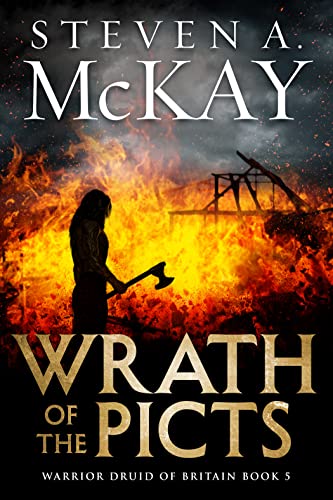



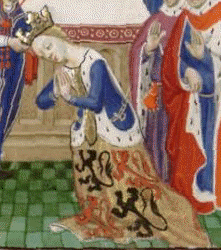
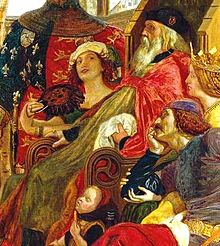
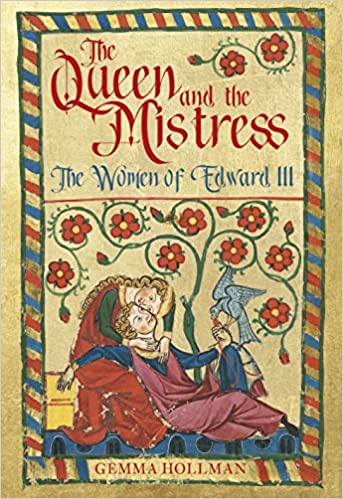

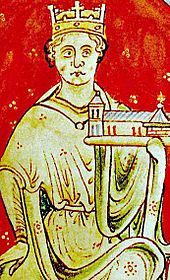


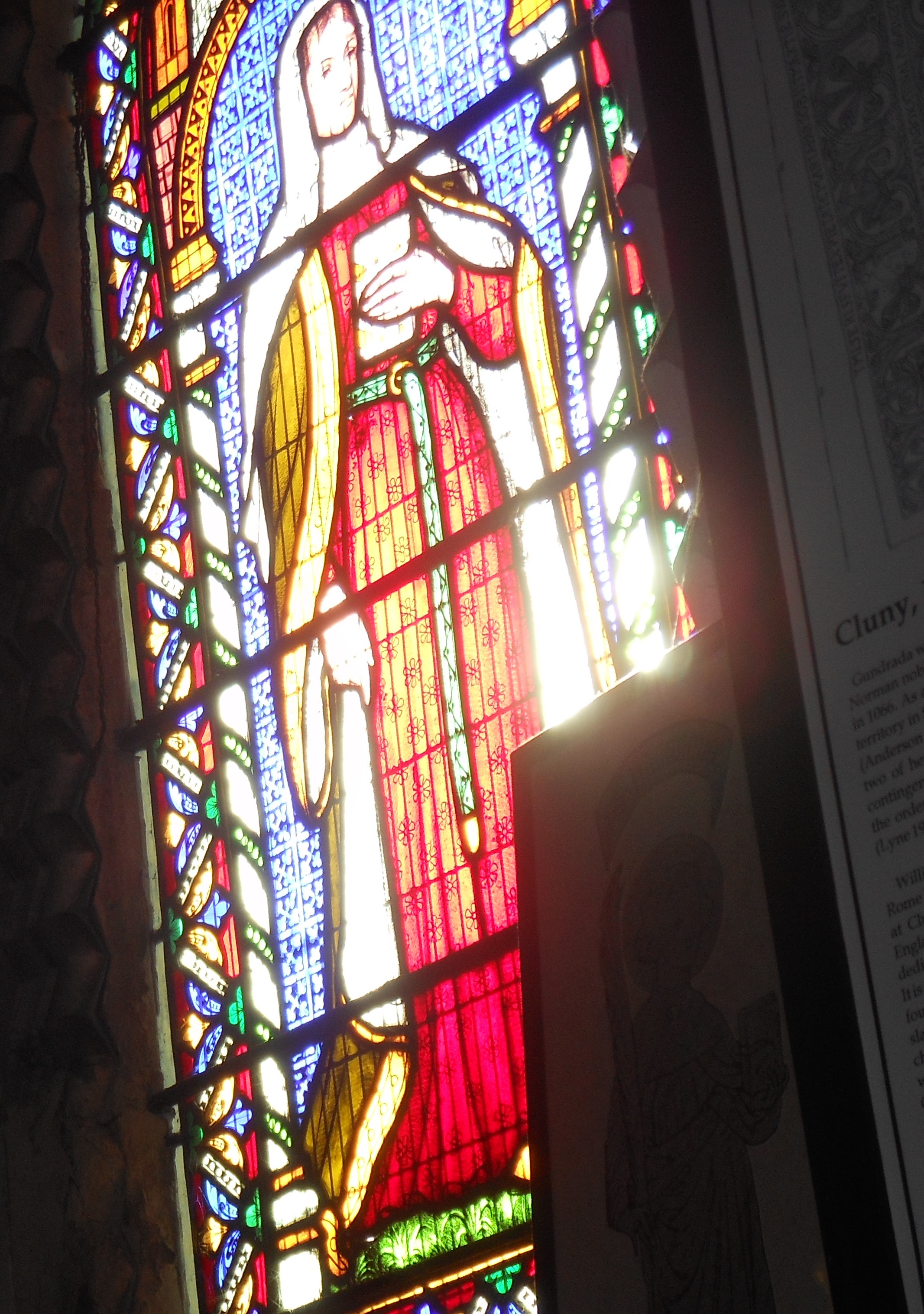

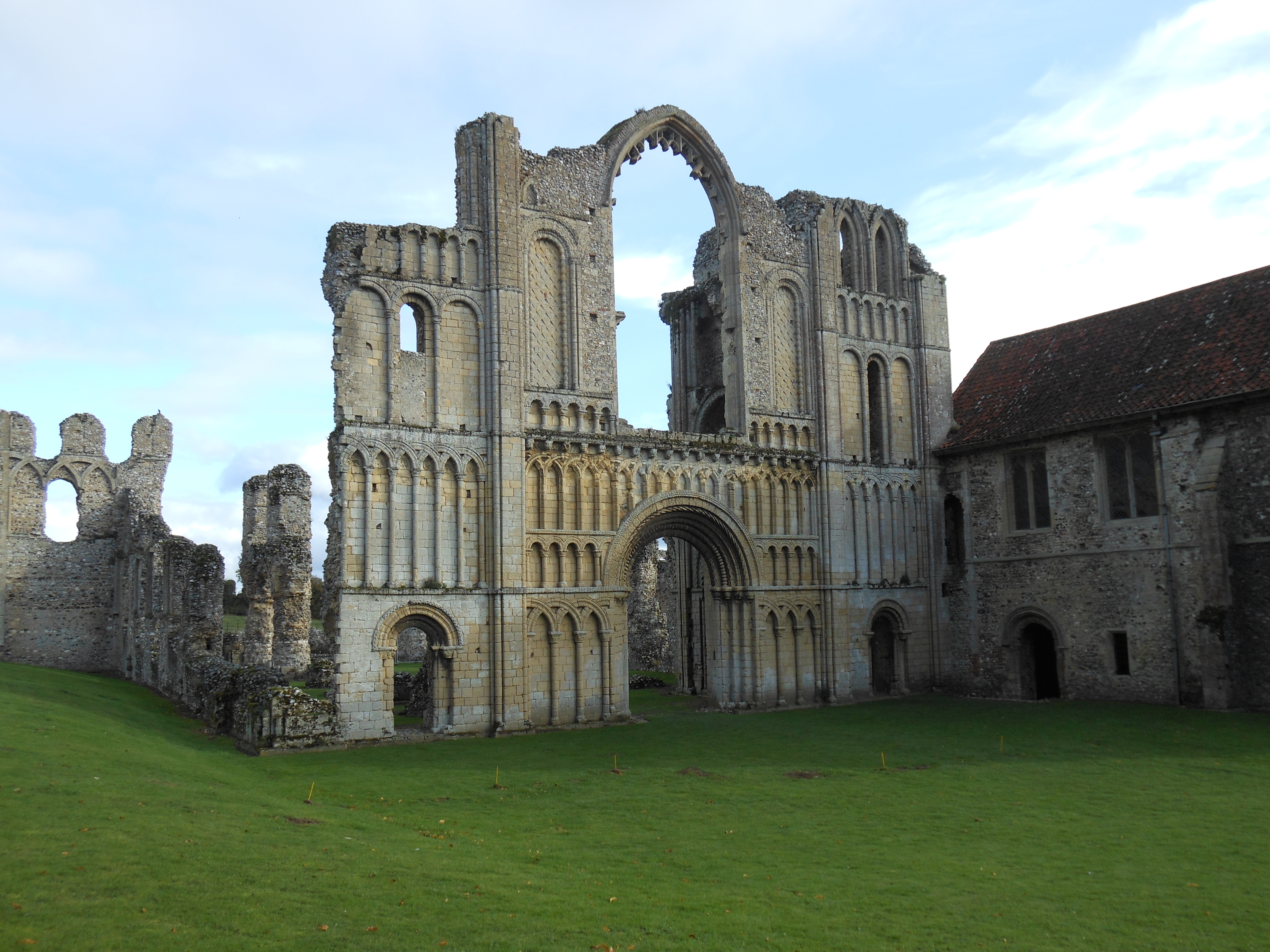


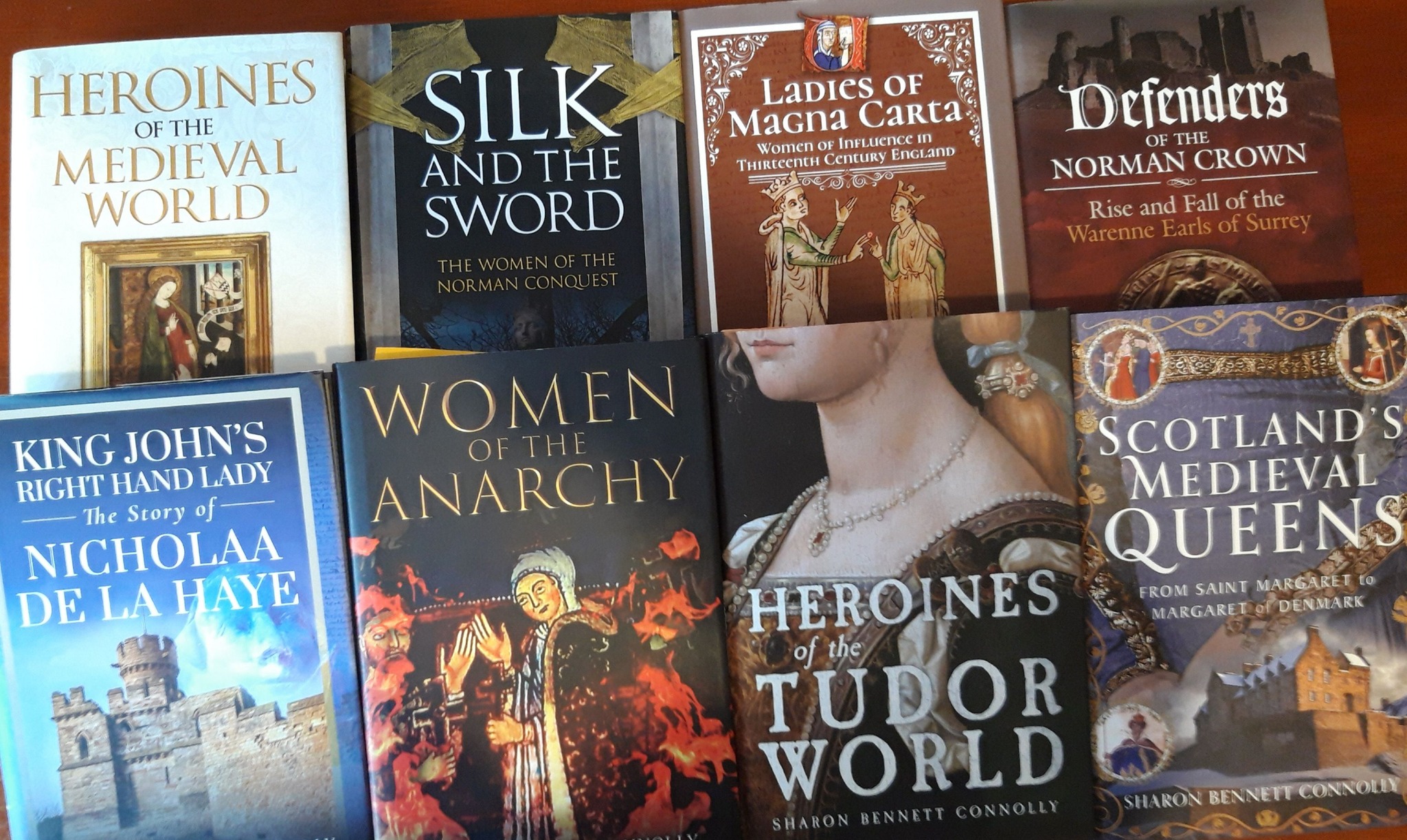


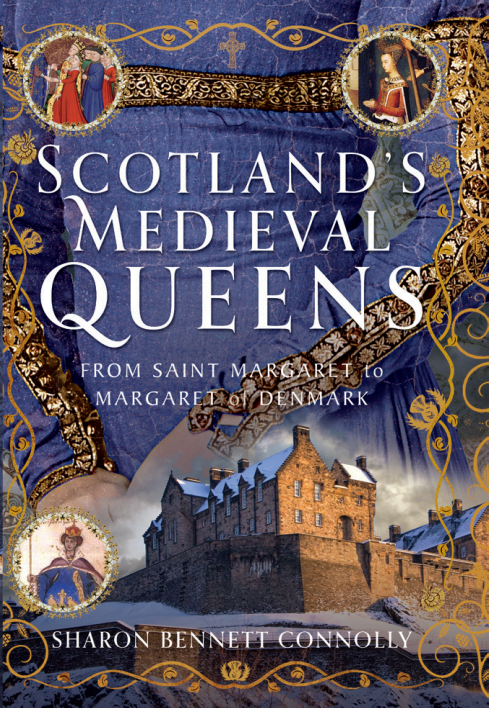
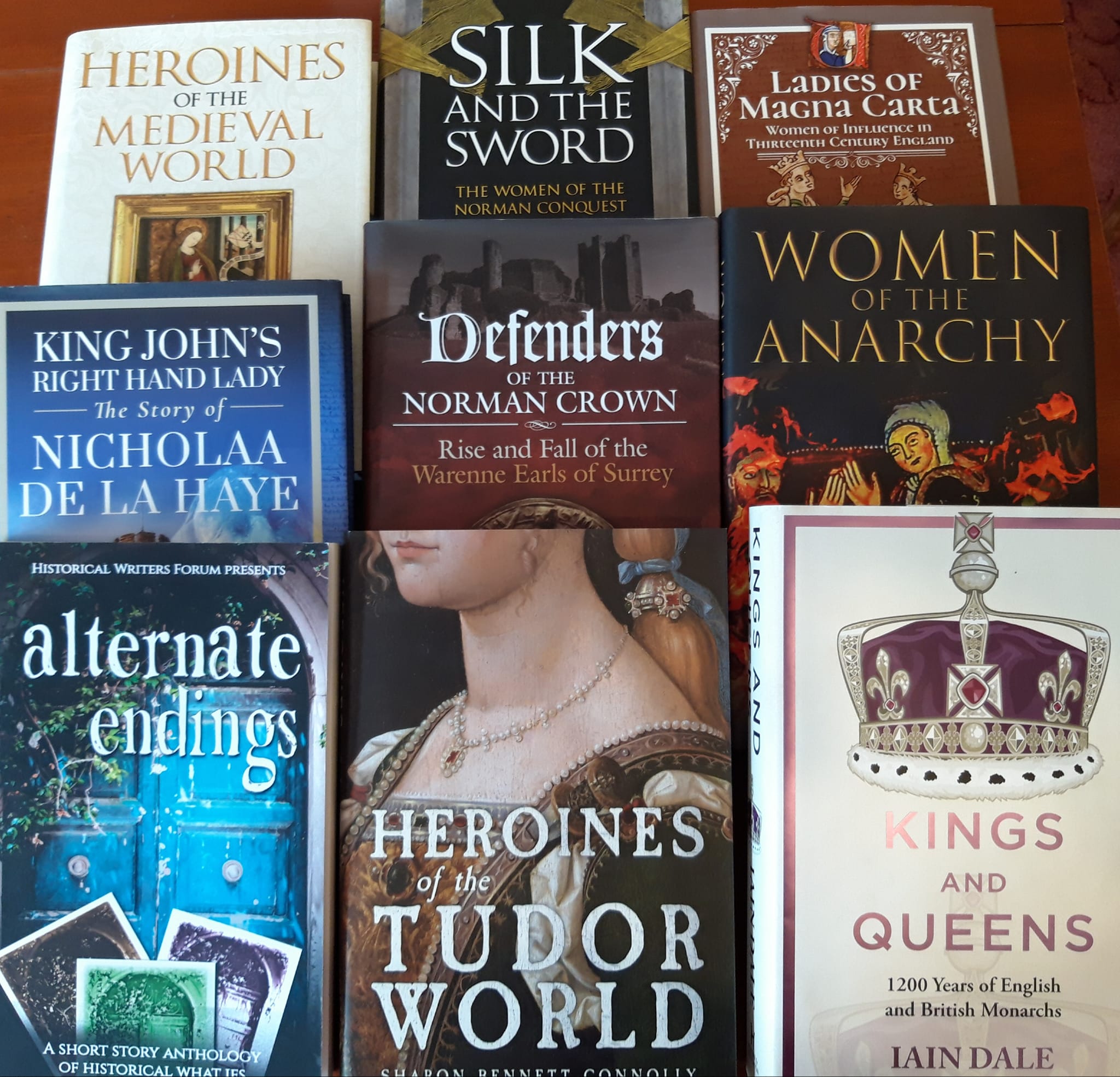


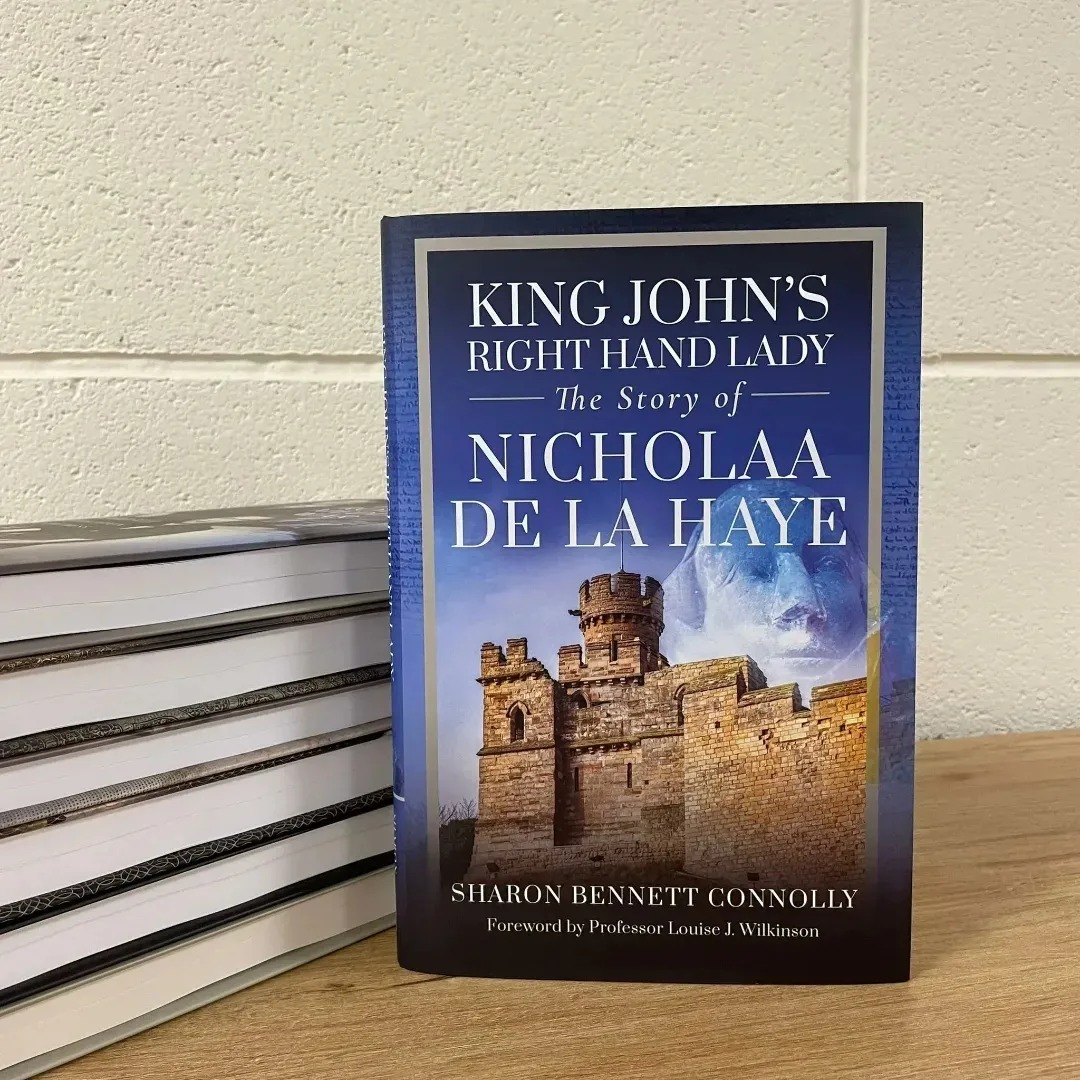


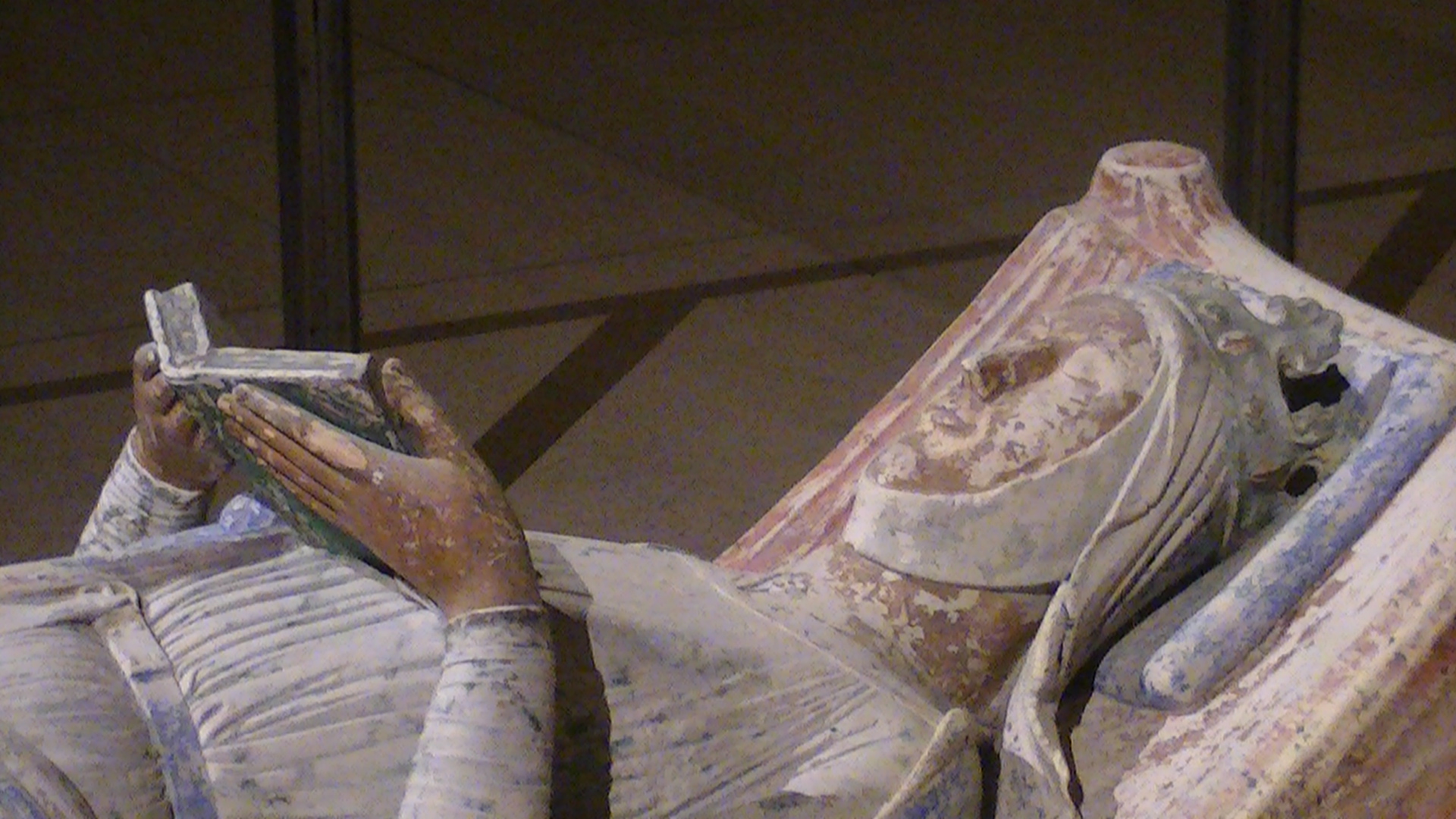

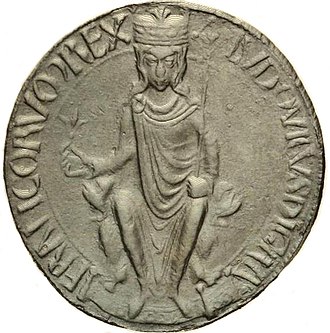


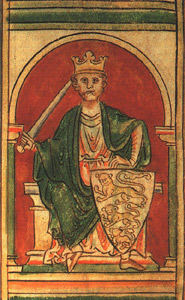

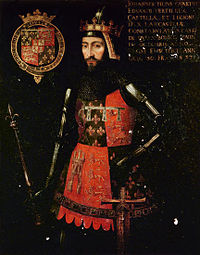
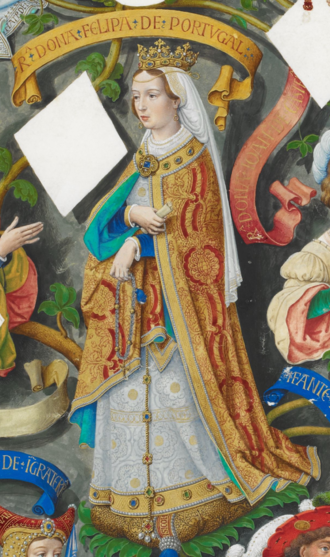
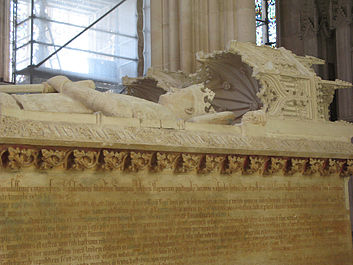
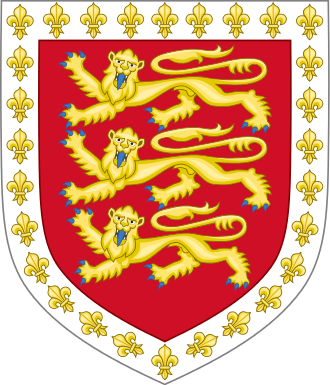

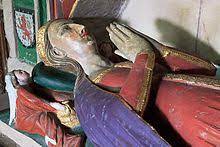


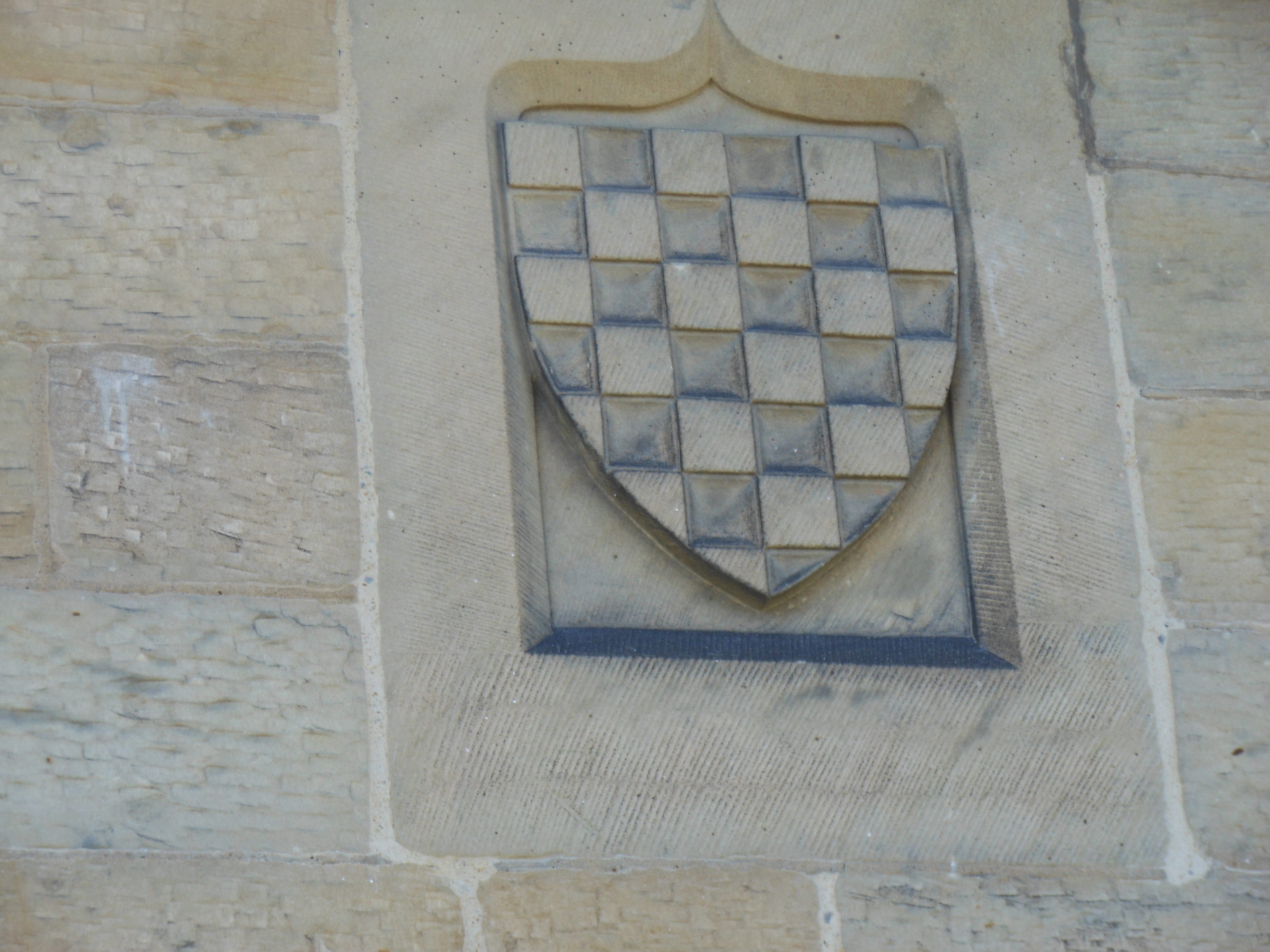
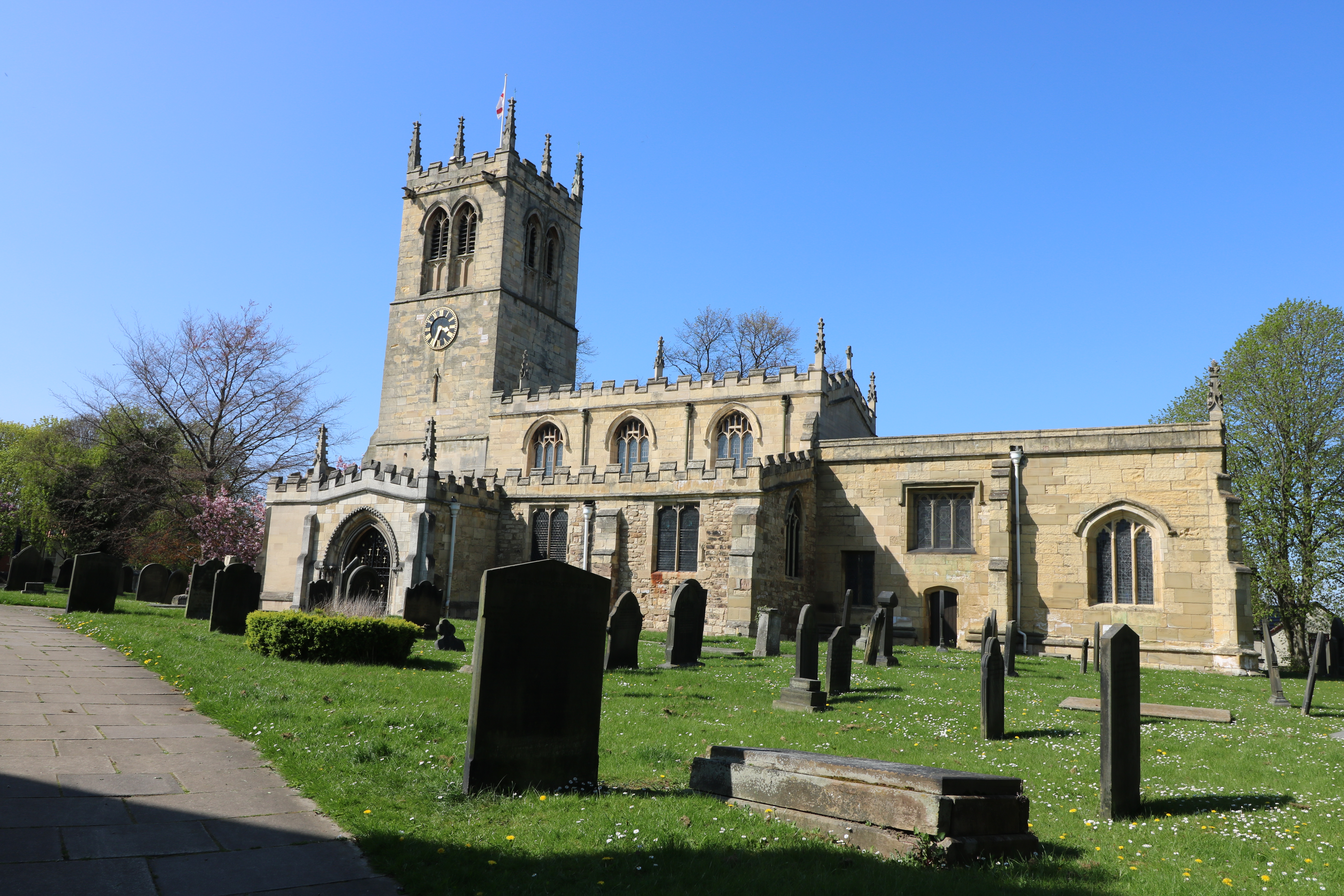

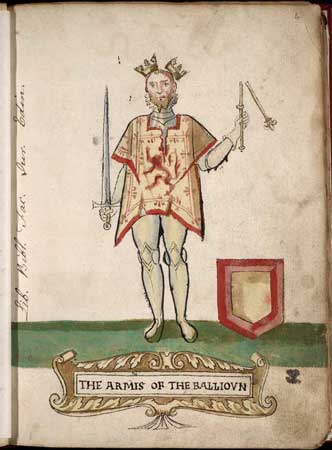

 History... the interesting bits!