This Sunday, 25th of October 2015, marks the 600th anniversary of the Battle of Agincourt. One of the greatest battles in English history, it epitomises the pinnacle of English successes against their traditional enemy, France, during the epic struggle of the Hundred Years War. But what started it all?
The origins of the Hundred Years War go back 200 years before its outbreak, to Henry II. His marriage to Eleanor of Aquitaine meant he was not only Duke of Normandy in the north of France, but Duke of Aquitaine in the south. And his accession to the English throne in 1154 brought all these French possessions to the crown of England. This made for the awkward position that the sovereign of England was technically a vassal of the King of France, causing no end of squabbles and friction for years to come.
Wars broke out frequently and the French gradually ate away at England’s French possessions.
It all came to a head with a crisis in the French monarchy. When Philip IV, the Fair, of France, died in 1314, he was successively succeeded by each of his 3 sons; Louis X, Philip V and Charles IV. Only one of these kings produced a son, King John the Posthumous was born 5 months after the death of Louis X, his father, and lived – and ruled – for only 5 days. Following the death of the baby king Philip V seized the crown, effectively disinheriting Louis X’s daughter, Jeanne.
Although Salic Law was known in France, it generally related to property and had never actually been used to decide the succession to the crown. However, Philip V made certain that it would be from now on, by having the Estates General declare that women were not eligible to succeed to the throne of France.
Unfortunately for the French royal family, both Philip V and his successor, his brother, Charles IV, only had daughters. Charles IV died in 1328, leaving his wife, Jeanne d’Evreux, pregnant; a regency council was set up to rule the country, until the child’s birth. However, Jeanne gave birth to a daughter, Blanche, and France had to find a new king.
One candidate was Edward III of England. Edward was the oldest grandson of Philip IV through his daughter Isabella of France, Queen of Edward II of England. However, Edward III was only 15 years old and England – and Edward – were controlled by Edward’s mother, Isabella of France, and her lover, Roger Mortimer, who had deposed and possibly murdered Edward’s father, Edward II. Edward’s claim came through his mother – and he was English.
The assembly of French notables, convened to decide who should be king, declared: “It had never been seen or known that the kingdom of France should be subject to the government of the King of England.“
As a result, they chose another as their king; the nephew of Philip IV, Philip of Valois, Count of Anjou and Maine. Philip was in his thirties, with a 9-year-old son, and had been Regent during Jeanne’s pregnancy.
Edward III initially agreed to pay homage to Philip VI, who was crowned in 1329, for his French possessions. However, he was still a minor and under the tutelage of his mother and Mortimer. When Edward took control of his kingdom, in 1330, he had a change of heart. Irked by Philip’s support for the Scots, and encouraged by local conflicts in Guyenne, Edward questioned the validity of his oath to Philip, made while he was still a minor. And in 1337 Edward III declared war.
Initial English successes devastated France: the French fleet was destroyed at Sluys in 1340, and Edward III ravaged the French countryside, in a great chevauchee. In an attempt to bring the French to battle Edward’s ‘scorched-earth’ policy saw towns besieged, convents and monasteries ransacked and the people displaced. The French were eventually brought to battle at Crecy in 1346, where their cavalry was destroyed. The fall of Calais followed in 1347.
In 1356, at the Battle of Poitiers, the English, under the Black Prince (Edward, Prince of Wales) captured France’s king, John II the Good. John was sent to England – where he died in 1364, still awaiting the payment of his vast ransom.
The 1360 Treaty of Bretigny was the crowning success of England’s war, with Edward III taking possession of almost a third of France.
Although technically at peace, the two countries kept picking at each other – each supporting opposing factions in places of mutual interest, such as Brittany. In then end, with the failing health of the Black Prince, and and aging Edward III, a resurgent France emerged under Charles V; which saw English possessions reduced to a few ports and their environs by 1380.
After 1389 truces between France and England were almost continuous. Richard II married Isabella of Valois, daughter of Charles VI, in 1396, as part of a 28 year truce.
Charles VI had suffered from madness since 1392 and France had started to implode. The king was surrounded by bad councillors and factions, such as the Armagnacs and Burgundians, had riven the country apart with their in-fighting. Many parts of France were ruled almost totally independent of central government.
However, with the turn of the century, the English had problems of their own and were unable to take advantage of France’s woes. Richard II was imprisoned and, later, murdered by the usurping Henry IV, who spent his reign preoccupied by troubles and rebellions in England.
Henry IV and his son, the future Henry V were divided as to which French factions they should support; Henry IV preferred the Armagnacs, while the Prince of Wales supported the Burgundians.
With the death of Henry IV, and the accession of Henry V, English ambitions turned to France yet again. Almost immediately, Henry laid claim to his inheritance in France. he made a pretense of negotiating for peace, while preparing for war. He would accept nothing less than the total reinstatement of the Plantagenet possessions in France.
There is an, almost certainly, apocryphal story of Henry V taking up arms against the French after they jokingly sent him a set of tennis balls, suggesting that he stick to such ‘childish’ occupations, for which he had established a reputation during his father’s reign.
Henry saw war with France as a way of diverting the interests of the great nobles away from internal conflicts, thus restoring and maintaining order at home. With peace negotiations faltering, and having dealt with several plots to displace him from his throne – the last of which, the Southampton Plot was foiled in the first week of August 1415 – Henry V and his army arrived in Normandy on 13th August 1415 and laid siege to Harfleur.
Harfleur held until 23rd September, by which time Henry’s army of about 10,000 was greatly depleted by dysentery. He was making for Calais – and England – when, on 25th October, he came face-to-face with the French.
Derek Birks‘ ‘Rebels & Brothers’ series of 4 novels is a tour de force in Wars of the Roses fiction.
Many books claim to be ‘in the best tradition of Bernard Cornwell’ or ‘a worthy successor to Cornwell’. But very few live up to such promise. however, when I read Derek Birks’ debut novel I thought that, just maybe, I had found one that lived up to such high praise. By the 2nd book I knew the praise was well-deserved.
The Rebels & Brothers series grabs you on the 1st page and keeps you hooked until the very end. And yet they leave you bereft once you have finished, as you know you are not going to read another book as good anytime soon.
The books interweave the personal stories of the Elder family with the wider political and martial drama of the Wars of the Roses. We follow the 3 Elder siblings, Ned, Eleanor and Emma, as they try to negotiate a safe passage through the war, whilst battling a family feud and making enemies at the highest levels of society.
Feud: In 1459, as England stands on the brink of the Wars of the Roses, Ned Elder, a Yorkshire knight, finds himself caught up in the wars when his family is brutally attacked by a local rival, Lord Radcliffe. Ned’s sisters, Emma and Eleanor, are abducted and he must find a way to rescue them. With only a few loyal companions, Ned is hounded across the land by the Radcliffes. Ned and his sisters fight back, but they are young and they make mistakes – and new enemies – along the way. All will be decided on the snowy battlefield of Towton – for Ned and for England.
A Traitor’s Fate opens in 1464. The feud with the Radcliffes is over and the Elder siblings have won a hard-fought peace. But one man can’t accept the outcome and finds a new ally to help him achieve his revenge.
Ned is sent to confront a Lancastrian revolt by the new king, Edward of York, he finds his enemies are on his own side, as well as that of the rebels. Branded a traitor by his own commander, the Earl of Warwick, Ned is soon a wanted man in hostile territory and the price on his head only rises when he stumbles upon a royal secret.
Meanwhile, Eleanor and Emma watch over Ned’s pregnant wife, Amelie, with only a small garrison of old men and boys to protect them.
A condemned man, Ned fights to escape his pursuers before his whole family suffers destruction.
Having read Feud I was expecting great things from the 2nd book – and it did not disappoint. The story is told in great detail, the action is fast-paced and the characters elicit a great deal of sympathy and empathy. A Traitor’s Fate is one of those increasingly rare stories which are impossible to put down – and yet, at the same time as you can’t wait to get to the end, you don’t want it to finish.
Book 3 of the series, Kingdom of Rebels, takes you on a journey through one of the most turbulent periods of the reign of Edward IV, through the eyes of this one Yorkshire family trying to survive the feuds and battles of the Wars of the Roses, whilst simultaneously trying not to destroy each other. It is impossible not to feel invested in the characters – they are flawed and damaged, but trying their best to survive and you find yourself willing them on.
The story sees Ned Elder exiled to Burgundy by the Earl of Warwick, but for his enemies this is still not enough. At the same time, but far away on the Scottish border, Ned’s sister Eleanor defends the small, beleaguered fortress of Crag Tower; with only a handful of men, she desperately awaits Ned’s return.
Set against the backdrop of a nervous kingdom, where its 2 most powerful men – Edward IV and the Earl of Warwick – are at loggerheads, Ned must fight – yet again – to save his family.
One by one Ned’s family and friends are caught up in Warwick’s web of treason. The fate of the Elders and those who serve them lies once more in the balance as all are drawn back to Yorkshire where they face old enemies once more.
TheLast Shroud sees Ned Elder caught in the middle of Warwick’s rebellion against Edward IV. The king has enemies on all sides and flees to the Low Countries, leaving his few loyal retainers to keep their heads down until his return; when they must take up their swords for one last campaign…
But is Ned the warrior he once was? As the kingdom spirals into civil war, divisions between Ned and his sisters, Emma and Eleanor, threaten the family’s very survival. Out of the turmoil of rebellion steps an old enemy who offers to help, but can he be trusted?
Will the Elder family stand together when it matters most? They must, if they are to survive.
With The Last Shroud, the Elder family story comes to an end – and what an ending!
It has been a rollercoaster ride through the Kingdoms & Brothers series and this book is no exception. Following Ned and the rest of the Elders through the Warwick Rebellion against Edward IV and culminating with the Battle of Tewkesbury, the family fights to survive, mending some – but not all – bridges along the way, and still making new enemies.
As ever, the story telling is fast-paced and masterful, and the finale frenetic. A worthy final chapter to what has been a magnificent series.
There are several themes running through all 4 books.
The Elders face many enemies, and some change from book to book. But one enemy stays the same: the powerful Earl of Warwick. Offended by a young Ned at the Battle of St Albans, Warwick takes every opportunity to try to bring Ned down – and ruin his family. Using the feud with the Radcliffes he encourages and aids Ned’s numerous enemies in their endeavours.
Set in one of the most turbulent periods of Medieval history, the battle scenes are vivid, hectic and alive with action. The family doesn’t survive unscathed and it is the losses and hardships they suffer, and how they react to them, that makes them such sympathetic and likeable characters.
A great feature of the stories are the strong, independent women. They don’t just sit at home, sewing in the solar and waiting for their men to come home. They are not victims, nor powerless. They are fighters, women who take what life throws at them and battle on. But they find romance too, and face the trials and tribulations of love just as stoically as they do their enemies.
Derek Birks follows the historical story of the Wars of the Roses with great accuracy, dropping Ned and his family into the well-known events wherever they can cause the most drama, or see the most action. The Elders are present at all the key events, from the opening shots at the 1st Battle of St Albans, to the Yorkist victory at Tewkesbury.
To put it succinctly, this series is edge-of-your-seat action from start to end, leaving you breathless in your armchair. Believe me, you don’t want to miss a moment.
*
My book, Heroines of the Medieval World, is now available in hardback in the UK from both Amberley Publishing and Amazon UK and worldwide from Book Depository. It is also available on Kindle in both the UK and USA and will be available in Hardback from Amazon US from 1 May 2018.
You can be the first to read new articles by clicking the ‘Follow’ button, liking our Facebook page or joining me on Twitter.
Constance of Castile was born in 1354 at Castro Kerez, Castile. Her father was Peter, or Pedro, king of Castile. Although he had earned himself the nickname of Peter the Cruel, he was also known as Peter the Just, depending on whether you were talking to his enemies, or his friends. In 1353 18-year-old Peter had married, in a secret ceremony, Maria de Padilla, who would bear him 4 children; of which Constance was the second oldest.
In the summer of the same year, a couple of months shy of his 19th birthday, on 3rd June, Peter had been practically coerced into marriage with 14-year-old Blanche de Bourbon, by his mother, Maria of Portugal, and his counsellors. Blanche was the daughter of Peter I, Duke of Bourbon, and Isabella de Valois; through her mother, Blanche was a cousin of the king of France. As a consequence of the marriage, Peter was forced to deny that a marriage ceremony with Maria ever took place. However, almost immediately after the wedding, Peter deserted his new bride and returned to Maria.
Blanche was imprisoned in the castle of Arevalo. Her cousin, Jean II, King of France, called for her release and asked the pope to excommunicate Peter for imprisoning her. The pope, Innocent VI, refused. Blanche was eventually moved to the town of Medina Sidonia, far remote from any possible rescue by Peter’s enemies from Aragon or France. It was at Medina Sidonia that Blanche died in 1361, though whether by murder or from natural causes is disputed (but that is a story for another time…).
Peter was married again, in 1354, to Juana de Castro, with whom he had a son, John. Despite the marriage, his relationship with Maria de Padilla endured. Peter and Maria were together until Maria’s death in 1361, probably from plague, and they had 3 daughters and a son. Although their son died young, their 3 daughters grew to adulthood. The eldest, Beatrice, entered the Abbey of Santa Clara at Tordesillas and so it would be Constance who eventually became her father’s heir.
Little is known of Constance’s childhood. She was around 7 when her mother died, her sister Isabella was a year younger and their baby brother, Alfonso was about 2. Alfonso would die in 1362.
King Peter of Castile
Peter of Castile was engaged in constant wars with Aragon from 1356 to 1366, followed by the 1366 Castilian Civil War which saw him dethroned by his illegitimate half-brother, Henry of Trastamara.
Peter turned to his neighbours for help. He fled over the Pyrenees, to Aquitaine and England’s Prince of Wales, Edward the Black Prince. Peter brought his 2 daughters with him. The Black Prince agreed to mount an expedition to restore Peter to his throne, and would take his brother, John of Gaunt, along with him.
Constance and Isabella were handed over to the English as collateral against thee repayment of the costs of the expedition; a staggering £176,000 that Peter could never hope to repay.
In 1367 the Black Prince and John of Gaunt led an army across the Pyrenees, defeating Henry of Trastamara at the Battle of Najera, despite his being backed by the French. Trastamara fled Castile and Peter was restored to his throne, but could not repay the costs of the expedition. Unable to pay his army, and with his health in decline, the Black Prince left Spain for Aquitaine.
Peter was eventually murdered by Henry of Trastamara in March 1369; Henry usurped the throne as King Henry II, ignoring the rights of his niece Constance, who became ‘de jure’ Queen of Castile on 13th March 1369. However, Constance and her sister remained in English hands.
The surrender of Santiago de Compostela to John of Gaunt, Constance of Castile is the lady on horseback
John of Gaunt’s wife of almost 10 years, Blanche Duchess of Lancaster, had died at Tutbury on 12th September, 1368, more likely from the complications of childbirth than from the plague. Shortly after John started a liaison with a woman who would be his mistress for the next 25 years, Katherine Swynford.
However, John of Gaunt was not done with his dynastic ambitions and saw in Constance of Castile the chance to gain his own crown. John and Constance were married, probably at Rocquefort, in Guyenne on 21st September 1371.
From 1372 John assumed the title King of Castile and Leon, by right of his wife. Crowds lined the streets when, as Queen of Castile, Constance was given a ceremonial entry into London in February 1372. Her brother-in-law, the Black Prince, escorted her through the city to be formally welcomed by her husband at his residence of the Savoy Palace.
Constance’s sister, Isabella, came with her, and would marry Constance’s brother-in-law Edmund of Langley, 5th son of Edward III, in July 1372.
Little is known of Constance’s relationship with her husband’s mistress, Katherine Swynford; except for an incident in June 1381. Amid the turmoil of the Peasant’s Revolt, John is said to have given up his mistress and reconciled with his wife, suggesting their relationship wasn’t all smooth. Katherine returned to her manor in Lincolnshire where, it seems, John visited her from time to time.
John of Gaunt
Constance was made a Lady of the Garter in 1378. Constance and John, King and Queen of Castile and Duke and Duchess of Lancaster, had 2 children. A son, John, was born in 1374 at Ghent in Flanders, but died the following year. Their daughter Catherine, or Catalina, of Lancaster was born at Hertford Castle, sometime between June 1372 and March 1373. She would be made a Lady of the Garter in 1384.
John had several plans to recover his wife’s Castilian crown, but suffered from a lack of finances. Until 1386 when John I of Castile, son of Henry of Trastamara, attempted to claim the crown of Portugal. John of Avis, King of Portugal, turned to John of Gaunt for help. John saw this as his opportunity to overthrow John of Castile and claim the crown.
Having landed in Galicia, however, John was unable to bring the Castilians to battle and his army succumbed to sickness. The opposing forces eventually agreed the Treaty of Bayonne, where in return for a substantial sum, John of Gaunt abandoned his claim to Castile. The treaty also saw a marriage alliance, between John of Castile’s son, Henry and Constance and John’s daughter, Catherine.
Catherine of Lancaster
Catherine married Henry III of Castile in September 1388 at the Church if St Antolin, Fuentarrabia, Castile. Catherine therefore sat on the throne denied her mother. Catherine would have 3 children; 2 daughters, Katherine and Mary, and a son. Catherine and Henry’s son, John II, would succeed his father just a few months after his birth, with Catherine having some limited say in the Regency, and custody of her son until he was around 10. She died on the 2nd June 1418 and is buried in Toledo, Spain. Her great-granddaughter, Catherine of Aragon, would marry Henry VIII of England.
Constance and John returned to England in 1389. Constance of Castile died on the 24th March 1394 at Leicester Castle and was buried at Newark Abbey in Leicester, far away from her Castilian homeland. Just two years later her widower would marry his long-time mistress, Katherine Swynford. When he died in 1399, however, John of Gaunt chose to be buried beside his first wife, Blanche of Lancaster.
It is hard to imagine that Constance was happy with her husband’s living arrangements, a belief highlighted by the 1381 reconciliation. It cannot have been easy, being at the centre of a love story that was not her own. John of Gaunt had offered Constance the chance to be a part of the English royal family, and to recover her crown. Although he failed in his personal ambition, John of Gaunt did manage to secure the crown for Constance’s descendants, through their daughter Catherine and grandson, John II of Castile.
*
Pictures taken from Wikipedia.
*
Sources: The Perfect King, the Life of Edward III by Ian Mortimer; The Life and Time of Edward III by Paul Johnson; The Reign of Edward III by WM Ormrod; The Mammoth Book of British kings & Queens by Mike Ashley; Britain’s’ Royal Families, the Complete Genealogy by Alison Weir; Brewer’s British Royalty by David Williamson; The Plantagenets, the Kings Who Made Britain by Dan Jones; englishmonarchs.co.uk; The Oxford Companion to British History edited by John Cannon; Chronicles of the Age of Chivalry Edited by Elizabeth Hallam.
*
My Books
Signed, dedicated copies of all my books are available through my online store.
Out now: Scotland’s Medieval Queens
Scotland’s history is dramatic, violent and bloody. Being England’s northern neighbour has never been easy. Scotland’s queens have had to deal with war, murder, imprisonment, political rivalries and open betrayal. They have loved and lost, raised kings and queens, ruled and died for Scotland. From St Margaret, who became one of the patron saints of Scotland, to Elizabeth de Burgh and the dramatic story of the Scottish Wars of Independence, to the love story and tragedy of Joan Beaufort, to Margaret of Denmark and the dawn of the Renaissance, Scotland’s Medieval Queens have seen it all. This is the story of Scotland through their eyes.
Heroines of the Tudor World tells the stories of the most remarkable women from European history in the time of the Tudor dynasty, 1485-1603. These are the women who ruled, the women who founded dynasties, the women who fought for religious freedom, their families and love. Heroines of the Tudor World is now available for pre-order from Amberley Publishing and Amazon UK.Women of the Anarchy demonstrates how Empress Matilda and Matilda of Boulogne, unable to wield a sword themselves, were prime movers in this time of conflict and lawlessness. It shows how their strengths, weaknesses, and personal ambitions swung the fortunes of war one way – and then the other. Available from Bookshop.org, Amberley Publishing and Amazon UK. King John’s Right-Hand Lady: The Story of Nicholaa de la Haye is the story of a truly remarkable lady, the hereditary constable of Lincoln Castle and the first woman in England to be appointed sheriff in her own right. Available from all good bookshops Pen & Sword Books, bookshop.org and Amazon.
Alternate Endings: An anthology of historical fiction short stories including Long Live the King… which is my take what might have happened had King John not died in October 1216. Available in paperback and kindle from Amazon.
Podcast:
Have a listen to theA Slice of Medieval podcast, which I co-host with Historical fiction novelist Derek Birks. Derek and I welcome guests, such as Bernard Cornwell and Michael Jecks, and discuss a wide range of topics in medieval history, from significant events to the personalities involved. Every episode is also now available on YouTube.
*
Don’t forget!Signed and dedicated copies of all my books are available through my online store.
For forthcoming online and in-person talks, please check out my Events Page.
Joan of Kent was the daughter of Edmund of Woodstock, Earl of Kent and brother of Edward II. Edmund was a younger son of Edward I by his second wife, Margaret of France; he married Margaret Wake in 1325.
Joan was the third of four children, and was born on 28/9th September 1328 at Woodstock. When she was just 18 months old, Joan’s father was beheaded for treason on the orders of the Regent, Roger Mortimer and his lover, Queen Isabella; after becoming convinced that his brother, Edward II, was still alive, Edmund had become involved in a plot to free the erstwhile king.
Joan’s mother, Margaret Wake, was held under house arrest at Arundel Castle, along with all four of her children; Joan’s baby brother, John, was born a month after their father’s execution. Just a few months later, Edward III escaped Mortimer’s control and assumed power; he took over responsibility for his uncle’s family and Joan, a favourite of Edward’s queen, Philippa of Hainault, was raised at court.
The leading beauty of her day, Joan had little to offer a potential suitor, beyond her looks and keen intelligence. She had grown up in the same household as Edward III’s oldest children; his son and heir, Edward and his daughters Isabella and Joan.
Sometime around the age of 11 or 12, it seems that Joan secretly married, or promised to marry, Thomas Holland. However, shortly afterwards Holland left on Crusade to Prussia and during his absence, Joan was married to William Montague, the future Earl of Salisbury in 1340/41.
William Montague, Earl of Salisbury
When he returned to England, Thomas Holland discovered that his wife was married. Without the financial means to pursue his claim to be Joan’s husband through the church courts. Holland had to bide his time, joining Edward III’s campaigns in France, where he gained enough funds in ransoms to initiate the legal proceedings to recover his wife. In May 1348 Holland petitioned the pope, stating that Joan had been forced into her marriage with Salisbury. He went on to say that Joan had previously agreed to marry him and that their relationship had been consummated. He claimed her as his own wife, and Joan backed up his story.
It took 18 months for Joan’s marital status to be resolved, and for some of that time Salisbury kept Joan a prisoner, preventing her from presenting her testimony to the church lawyers. He was ordered to release her in order that she could give evidence at the inquisition looking into her marriage status.
In the mean time, England itself was in the grips of the Black Death, the bubonic plague. In order to lift the country’s spirits the king, Edward III, had arranged a grand tournament at Windsor, on St George’s Day, 23 April 1349. The knights in contention were founding members of the Order of the Garter; England’s greatest chivalric order, consisting of the king and 25 knights, it was probably founded in 1348, though the date is uncertain.
Joan herself is a part of the legend of the foundation of the Order of the Garter. She is said to be the lady who lost her garter during a ball celebrating the fall of Calais. Edward III is said to have returned the item to the 20-year-old damsel with the words “honi soit qui mal y pense” (evil to him who evil thinks).
Although the story is probably apocryphal (the fact a garter in those days was worn by men, not women, supporting this), Joan’s connection with the inaugural tournament is all too true. Her presence brought an added bit of spice to the St George’s Day tournament of 1349. Her current husband, the Earl of Salisbury, fought on the king’s team, while Sir Thomas Holland was on the side of Prince Edward. Joan’s two husbands faced each other across the tournament field, with the object of their affection watching from the stands.
Sir Thomas Holland
Although I couldn’t find the results of the tournament, Joan’s marital status was decided by Papal Bull on 13th November 1349, when the pope ordered her to divorce Salisbury and return to Holland. Which she did. I suppose we will never know if Joan had married Holland at the age of 11, or if they had an affair that only started after Holland returned from crusade, and the claim of a pre-contract was a clever ploy to get Joan out of an unhappy marriage.
It is easy for the cynic of the 21st century to nod their head sagely and say ‘good plan’. However, Joan and Thomas Holland were risking their eternal souls if they lied to a church court; such an oath was not to be undertaken lightly. It may be the romantic in me, but I cannot help but believe that Joan and Thomas were telling the truth about their promises to each other.
Joan succeeded her brother, John, as Baroness Wake of Liddell and Countess of Kent in December 1352 and was confirmed in her new titles in February 1353. Sir Thomas Holland, therefore, became Earl of Kent by right of his wife.
Joan and Sir Thomas Holland had five children together; three sons and two daughters. Edmund was born in 1352 and died young. Thomas, Earl of Kent, married Alice, the daughter of Richard FitzAlan, 10th Earl of Arundel; he died in 1397. Their third son, John, was created Duke of Exeter in 1397 by his younger brother, King Richard II. He married Elizabeth of Lancaster, daughter of John of Gaunt and Blanche of Lancaster, but was executed in 1400 for his involvement in a plot to assassinate Henry IV and return his brother to the throne.
Of their daughters, Joan married John V, Duke of Brittany (who would marry Joanna of Navarre as his second wife, the future queen-consort of Henry IV), but died in 1384. Their youngest child, Matilda, was born in 1359 and married twice; first to Sir Hugh de Courtenay, who died in 1377, and then Waleran of Luxembourg, Count of St Pol and Ligny. Matilda died in 1391.
At the end of 1360 Sir Thomas Holland, a veteran soldier who had fought in the Crecy campaign, died from illness while in Normandy and Joan was left a widow.
Edward Prince of Wales – the Black Prince – may have offered comfort to the Lady Joan, his friend from childhood. Joan and Edward appear to have fallen in love. As widow with five children, and bringing no beneficial foreign alliance to the marriage table, Joan was hardly the ideal bride for the heir to the throne. Especially not with her dubious marital history. It was not the political match his father had wanted for his oldest son, but all attempts at a marriage alliance with a princess from the Low Countries had come to nought; and it seems the king was quite happy to accept his son’s choice of wife.
Edward, the Black Prince
It must have caused quite a scandal at the time. Although a reputed beauty, Joan’s bigamous marriage to William Montague was well-known – and he was still alive. She had five children by her first husband, Thomas Holland. Moreover, she was 33 years of age, two years older than her prince. She hardly appeared ‘queen’ material.
However, according to the Chandos Herald Joan was “a lady of great worth…. very beautiful, pleasing and wise”. Edward III sent one of his own people to the pope to ask permission for the marriage, which was swiftly granted, securing the papal dispensations needed, given Edward and Joan were related withing the prohibited degrees (they were first cousins once removed).
With great ceremony Edward and Joan were married at Windsor on 10th October 1361, by the Archbishop of Canterbury and in the presence of the king and queen. Shortly after the wedding, the couple moved to Berkhamsted, where the king visited them after Christmas.
In 1363 they moved their entire household to Bordeaux, after the prince was given the Duchy of Aquitaine by his father. Their court there was lavish, exceeding the king’s own in brilliance.
In 1365 their first child was born; a son, Edward of Angoulême. His brother, Richard of Bordeaux, followed on 6th January 1367.
The chronicler, Froissart, tells the story:
“In due course Joan, the princess, went into labour and by God’s grace was delivered of her child. It was a fine son, Richard of Bordeaux, born at Epiphany, 6 January , which that year fell on a Wednesday.
Edward of Angouleme, from the Wilton Diptych
The child came into the world early in the morning to the great joy of the prince and the whole household, and was baptised the following Friday in the early afternoon on the holy font of St Andrew’s Church in the city of Bordeaux. The child was named Richard and he afterwards became King of England.”
Richard’s baptism was attended by three kings; Pedro of Castile, James IV of Majorca and Richard of Armenia. William Thorne, the Canterbury Chronicler, described them as the three ‘magi’ (or wise men), as Richard had been born on Epiphany, Twelfth Night; an auspicious sign for a bright future.
The Black Prince wrote fondly to his wife whilst campaigning in Spain: “Be assured, dearest companion, that we, our brother of Lancaster and all the great men of our army are, thank God, in good form.”
Froissart wrote of the Black Prince’s return from Spain, and his arrival in Bordeaux; “Where he was received with great celebrations. Princess Joan came to meet him and had Edward, her eldest son, carried with her; he was then about three years old.”
The Spanish campaign was aimed at supporting Pedro of Castile’s claim to the throne against that of his illegitimate half-brother, Henry of Trastamara. Although the Black Prince managed to re-establish Pedro’s rule, the Castilian king could not pay the English army and Edward, already with a reputation for heavy-handedness in Aquitaine, taxed the duchy in order to raise funds.
Richard II
Sometime in late 1370 or early 1371 the young family suffered a heartbreaking tragedy. Little Edward of Angoulême died of bubonic plague. He was buried in Bordeaux, his funeral arranged by John of Gaunt and attended by all the great lords of Gascony.
Shortly afterwards, the remaining family returned to England, as reported by the chronicler Walsingham:
“When he had done this, Prince Edward hurried to return to England, as much because of the infirmities which troubled him, as because of lack of money. Therefore, at the beginning of January [1371], with his wife and small son Richard, and with his household following behind, he reached Plymouth.”
The Black Prince’s health had been destroyed by a lifetime of campaigning. He returned to England a virtual invalid and died in 1376. Left a widow for a second time, Joan still had custody of her young son and was in charge of Richard’s education until his accession to the throne.
Edward III died in 1377, leaving the throne to 10-year-old Richard of Bordeaux. In his will he gave to Joan, Princess of Wales, a thousand marks and the free restitution of jewels she had pledged to him.
Despite her marital history, and a reputation for extravagance – she was said to have spent £200 on a set of jewelled buttons – Joan was loved by the English people. It was with her that John of Gaunt sought refuge following the sacking of his Savoy Palace in 1376, when the people were discontented with his rule.
The Wilton Diptych
Joan was seen as a calming influence of her son, Richard II, and was by his side during the dangerous days of the Peasant’s Revolt of 1381; she sheltered in the Tower of London and rode in a whirligig to accompany her 13-year-old son to meet with the rebels at Mile End.
In 1385 Joan’s son, John Holland, while campaigning in Scotland, killed Ralph Stafford, son of the second Earl of Stafford, in a quarrel. He fled to sanctuary at the shrine of St John of Beverley, but was condemned to death. Joan pleaded with Richard for days, begging him to pardon his half-brother. She died at Wallingford Castle, on or shortly after 7 August 1385. The, when she made her will. King pardoned his half-brother the following day.
Although the Edward, the Black Prince, had built a chantry chapel for his wife, at Canterbury Cathedral, with ceiling bosses of her face, Joan was not buried at Canterbury with the Black Prince, but at the Greyfriars at Stamford in Lincolnshire, beside her first husband, Sir Thomas Holland. Unfortunately, nothing remains of the abbey beyond a gatehouse. Thomas and Joan’s tombs are lost.
*
Pictures taken from Wikipedia.
*
Sources: The Perfect King, the Life of Edward III by Ian Mortimer; The Life and Time of Edward III by Paul Johnson; The Reign of Edward III by WM Ormrod; The Mammoth Book of British kings & Queens by Mike Ashley; Britain’s’ Royal Families, the Complete Genealogy by Alison Weir; Brewer’s British Royalty by David Williamson; The Plantagenets, the Kings Who Made Britain by Dan Jones; englishmonarchs.co.uk; The Oxford Companion to British History edited by John Cannon; Chronicles of the Age of Chivalry Edited by Elizabeth Hallam; The Black Prince by Michael Jones.
*
My Books
Signed, dedicated copies of all my books are available through my online store.
Out now: Scotland’s Medieval Queens
Scotland’s history is dramatic, violent and bloody. Being England’s northern neighbour has never been easy. Scotland’s queens have had to deal with war, murder, imprisonment, political rivalries and open betrayal. They have loved and lost, raised kings and queens, ruled and died for Scotland. From St Margaret, who became one of the patron saints of Scotland, to Elizabeth de Burgh and the dramatic story of the Scottish Wars of Independence, to the love story and tragedy of Joan Beaufort, to Margaret of Denmark and the dawn of the Renaissance, Scotland’s Medieval Queens have seen it all. This is the story of Scotland through their eyes.
‘Scotland’s Medieval Queens gives a thorough grounding in the history of the women who ruled Scotland at the side of its kings, often in the shadows, but just as interesting in their lives beyond the spotlight. It’s not a subject that has been widely covered, and Sharon is a pioneer in bringing that information into accessible history.’ Elizabeth Chadwick (New York Times bestselling author)
Heroines of the Tudor World tells the stories of the most remarkable women from European history in the time of the Tudor dynasty, 1485-1603. These are the women who ruled, the women who founded dynasties, the women who fought for religious freedom, their families and love. Heroines of the Tudor World is now available from Amberley Publishing and Amazon UK.Women of the Anarchy demonstrates how Empress Matilda and Matilda of Boulogne, unable to wield a sword themselves, were prime movers in this time of conflict and lawlessness. It shows how their strengths, weaknesses, and personal ambitions swung the fortunes of war one way – and then the other. Available from Bookshop.org, Amberley Publishing and Amazon UK. King John’s Right-Hand Lady: The Story of Nicholaa de la Haye is the story of a truly remarkable lady, the hereditary constable of Lincoln Castle and the first woman in England to be appointed sheriff in her own right. Available from all good bookshops Pen & Sword Books, bookshop.org and Amazon.
Alternate Endings: An anthology of historical fiction short stories including Long Live the King… which is my take what might have happened had King John not died in October 1216. Available in paperback and kindle from Amazon.
Podcast:
Have a listen to theA Slice of Medieval podcast, which I co-host with Historical fiction novelist Derek Birks. Derek and I welcome guests, such as Bernard Cornwell and Michael Jecks, and discuss a wide range of topics in medieval history, from significant events to the personalities involved.
Princess Philippa of Clarence was born at Eltham Palace in Kent on the 16th August 1355. She was named after her grandmother, Philippa of Hainault, queen of Edward III, who was one of her Godparents.
The first grandchild of Edward III she was the only child of Lionel of Antwerp, Duke of Clarence, and his 1st wife, Elizabeth de Burgh. Lionel was the 1st of Edward and Philippa’s children to marry.
Lionel was the 3rd son of Edward and Philippa, but the 2nd to survive childhood. Born in 1338, he was married to Elizabeth de Burgh in the Tower of London on the 9th September 1342. Lionel was almost 4 years old and his bride was 6 years older, born in 1332. Elizabeth was the daughter and heiress of William de Burgh, 3rd Earl of Ulster, who had died the year after her birth. It seems the couple lived together as husband and wife from 1352, when Lionel was 14 and Elizabeth 20. Lionel became Earl of Ulster by right of his wife and took possession of vast estates in Ireland and the Honour of Clare, in Suffolk; from which he was created Duke of Clarence by Parliament on 13th November 1362.
Lionel Duke of Clarence
Philippa lost her mother when she was just 8 years old. Elizabeth died in Dublin in December 1363, she was buried at Clare Priory in Suffolk. Lionel was married again in May 1368, in Milan, to Violante Visconti, daughter of the Lord of Milan. He died at Alba just 5 months after the wedding, in October 1368, and was buried at Pavia; his body was later reinterred to lie beside Elizabeth at Clare Priory in Suffolk.
The dukedom of Clarence became extinct on Lionel’s death, but the earldom of Ulster and Honour of Clare passed to Philippa, his only daughter and heiress.
Although an orphan at the tender age of 13, Philippa’s future had been settled even by the time of her mother’s death in 1363. When only in her 4th year she was married, at the Queen’s Chapel in Reading, in February 1359, to 7-year-old Edmund Mortimer. Edmund was the great-grandson of Roger Mortimer, 1st Earl of March and lover of Edward II’s queen, and Edward III’s mother, Isabella of France.
Mortimer had been executed on Edward III’s orders in 1330 and the marriage was viewed as a reconciliation with the Mortimer family, powerful lords on the Welsh Marches. The children’s wedding was also the 1st in a string of royal marriages. Philippa was married before any of her aunts and uncles; but weddings for her uncle John of Gaunt to Blanche of Lancaster and her aunt Margaret to John Hastings, 2nd Earl of Pembroke followed in May the same year.
Arms of the House of Mortimer
The marriage alliances were all part of Edward III’s policy to provide for his large brood of children and tie the great baronial families of the kingdom to the crown, by bringing them into the Royal family.
Edmund Mortimer succeeded to his father’s earldom as the 3rd Earl of March in the year after the marriage and the couple spent their time between properties in England, Wales and Ireland.
Their 1st child was born when Philippa was 15; she gave birth to a daughter, Elizabeth, at Usk in Monmouthshire, on 12th February 1371. 3 more children followed; Roger born at Usk on 11th April 1374, Philippa, born at Ludlow in Shropshire on 21st November 1375 and finally Edmund, who was born at Ludlow on 9th November 1377.
Marriage to Philippa had brought her husband power and influence. Through his steward, Peter de la Mare, he was instrumental in the Good Parliament of 1376, which argued against the influence of Edward III’s lover, Alice Perrers, and her friends, on the government of the kingdom. He spoke up for royal legitimacy and, using similar language to that used against his grandfather, Roger Mortimer, decried the influence an adulterous affair was having on the dignity of the crown.
Ludlow Castle, Shropshire
Following Edward III’s death in 1377, until her own death 6 months later, Philippa was, technically, heiress presumptive to the crown of her cousin, Richard II. However, in a supplementary document to his will, Edward III had practically disinherited his eldest granddaughter. He settled the inheritance of the throne on his grandson, Richard, son of his eldest son, the Black Prince and then, in turn, starting with John of Gaunt, on his surviving sons and their sons.
Edward had thus attempted to destroy any claim Philippa might have had to the throne whilst at the same time, revoking the royal status of the Mortimer earls of March.
Although there appear to be several death dates for Philippa, the most likely is that she died as a result of complications following Edmund’s birth, as she had made a will in November 1377, suggesting she was preparing for death. She passed away on, or shortly before, 7th January 1378 and was buried at Wigmore, Herefordshire, the burial-place of the Mortimers.
Edmund’s star, however, continued to rise and he was appointed Lieutenant of Ireland by Richard II on 22nd October 1380. He died at Cork on 26th or 27th December 1381 and his body was brought back to Wigmore for burial. He was succeeded as 4th Earl of March by his eldest son, Roger; who had succeeded Philippa as Earl of Ulster on her death.
Sir Henry “Hotspur” Percy and Elizabeth Mortimer
Roger spent many years in wardship following his father’s death. He was courageous, but had a reputation for religious and moral laxity. He was killed in Ireland in 1398, while acting as the king’s Lieutenant. It is possible that, at some point, he was named heir to the throne by Richard II, although there is considerable doubt in this.
Of Philippa and Edmund’s other children Elizabeth married Sir Henry “Hotspur” Percy sometime before May 1380. They had 2 children, but he was killed at the Battle of Shrewsbury in 1403. Elizabeth then married Thomas, 1st Baron Camoys, with whom she had a son who died young. Elizabeth died on 20th April 1417 and was buried at Trotton in Sussex, with her 2nd husband.
Philippa’s daughter and namesake, Philippa, married John Hastings, 3rd Earl of Pembroke, son of the Earl of Pembroke who had married Edward III’s daughter, Margaret. Following his death in 1389, she married Richard FitzAlan, 11th Earl of Arundel, who was executed in 1397. Her 3rd marriage was to Thomas Poynings, 5th Baron St John of Basing, around November 1399. She died in 1400 or 1401 and was buried at Boxgrove Priory in Sussex.
Richard, Duke of York
Edmund’s namesake, Philippa and Edmund’s youngest son was married in about 1402 to Katherine, the daughter of Owen Glendower. They had several children, but all died young. Edmund himself died sometime between 1409 and 1411.
Philippa’s grandson, Roger’s son, Edmund, succeeded his father as Earl of March and Ulster; he became the king’s ward following his father’s death and, following the usurpation he was kept in Henry IV’s family circle.
Edmund seems to have suffered from a lack of ambition and when some barons tried to place him on the throne in 1415, it was Edmund himself who revealed the Southampton Plot to Henry V.
Edmund died of plague in Ireland in January 1425, but it is his sister, Anne Mortimer, who had been married to Richard of Conisbrough, that Philippa’s claim to the throne was passed to Anne and Richard’s son, Richard, Duke of York; thus laying the foundations for the Wars of the Roses and the accession of Edward IV and, later, his brother, Richard III.
*
Pictures taken from Wikipedia.
*
Sources: The Perfect King, the Life of Edward III by Ian Mortimer; The Life and Time of Edward III by Paul Johnson; The Reign of Edward III by WM Ormrod; The Mammoth Book of British kings & Queens by Mike Ashley; Britain’s’ Royal Families, the Complete Genealogy by Alison Weir; Brewer’s British Royalty by David Williamson; The Plantagenets, the Kings Who Made Britain by Dan Jones; mortimerhistorysociety.org.uk.
*
My books:
Signed, dedicated copies of all my books are available through my online store.
Out now: Scotland’s Medieval Queens
Scotland’s history is dramatic, violent and bloody. Being England’s northern neighbour has never been easy. Scotland’s queens have had to deal with war, murder, imprisonment, political rivalries and open betrayal. They have loved and lost, raised kings and queens, ruled and died for Scotland. From St Margaret, who became one of the patron saints of Scotland, to Elizabeth de Burgh and the dramatic story of the Scottish Wars of Independence, to the love story and tragedy of Joan Beaufort, to Margaret of Denmark and the dawn of the Renaissance, Scotland’s Medieval Queens have seen it all. This is the story of Scotland through their eyes.
‘Scotland’s Medieval Queens gives a thorough grounding in the history of the women who ruled Scotland at the side of its kings, often in the shadows, but just as interesting in their lives beyond the spotlight. It’s not a subject that has been widely covered, and Sharon is a pioneer in bringing that information into accessible history.’ Elizabeth Chadwick (New York Times bestselling author)
Heroines of the Tudor World tells the stories of the most remarkable women from European history in the time of the Tudor dynasty, 1485-1603. These are the women who ruled, the women who founded dynasties, the women who fought for religious freedom, their families and love. Heroines of the Tudor World is now available from Amberley Publishing and Amazon UK.Women of the Anarchy demonstrates how Empress Matilda and Matilda of Boulogne, unable to wield a sword themselves, were prime movers in this time of conflict and lawlessness. It shows how their strengths, weaknesses, and personal ambitions swung the fortunes of war one way – and then the other. Available from Bookshop.org, Amberley Publishing and Amazon UK. King John’s Right-Hand Lady: The Story of Nicholaa de la Haye is the story of a truly remarkable lady, the hereditary constable of Lincoln Castle and the first woman in England to be appointed sheriff in her own right. Available from all good bookshops Pen & Sword Books, bookshop.org and Amazon.
Alternate Endings: An anthology of historical fiction short stories including Long Live the King… which is my take what might have happened had King John not died in October 1216. Available in paperback and kindle from Amazon.
Podcast:
Have a listen to theA Slice of Medieval podcast, which I co-host with Historical fiction novelist Derek Birks. Derek and I welcome guests, such as Bernard Cornwell and Michael Jecks, and discuss a wide range of topics in medieval history, from significant events to the personalities involved.
“The year is 1346 and King Edward III is restless. Despite earlier victories his army has still not achieved a major breakthrough and the French crown remains intact. Determined to bring France under English rule and the French army to its knees he has regrouped and planned a new route of attack.
And on the beaches of Normandy his men now mass, ready to march through France to victory. But the French are nowhere to be seen. Edward knows that the worst thing he could do would be to take the battle to the French, where they will have the advantage and so he sets up camp near a small hill at Crécy and waits.
The Battle of Crécy will be a decisive turning point in the Hundred Years’ Wars. This is the story of that battle and the men who won it.”
A masterpiece!
Fields of Glory follows the English army from their landing on the beaches of Normandy, through the devastating destruction of the chevauchée through Northern France and to the gates of Paris itself, before the retreat ever north in search of a crossing of the River Somme, and the final confrontation with the French army.
We experience the sieges, the skirmishes, the looting and death through the eyes of one of Edward I’s captains and his vintaine (company) of 20 men; hardened soldiers who all have their own secrets, fears and superstitions.
We are also given snippets behind the decision-making of the great King Edward III and his 16-year-old son Edward, the future Black Prince. The army’s leaders are vivid, but distant, characters as the story concentrates on the experiences of the fighting men
The Vintaine’s captain, Berenger, leads his men through the armies skirmishes and their own personal battles and conflicts. Rescuing a French girl from the Welsh contingent brings its own problems, dividing the opinions and conflicts of the men while showing the humanity that still existed among the devastation.
Berenger is a seasoned soldier and experienced captain, who needs his men as much as – if not more than – they need him. His men are real characters; Clip, with his prophecies of doom becomes a sort mascot of the company – only if he predicts their deaths are they confident of survival; and Geoff, who projects his own demons onto others in order to avoid their reality. And then there’s young Ed, just a boy wanting revenge on the french for all the ills of the world, and learning the realities of war through this small band of soldiers.
And then there is Archibald, the King’s gynour, a strange loner of a man who incites fear and loathing even from his own side. He is in charge of the king’s gonnes, the cannon which are slowly becoming part of the modern battlefield, but which are still distrusted by the common soldier.
One scene in particular leaves the reader cold and thoughtful. I don’t want to give too much away, but the king’s justice, meted out to his own men following the plundering of a monastery, left me with a sleepless night, so vivid was the imagery invoked by the scene:
“Ed listened to the king’s words with breathless disbelief.
When the men had all been marched back to the army he had thought that there would be a court, an opportunity to explain – and yet here he was, with the sentence of death on him!”
How the scene plays out – well, I’ll leave that for you to discover, but it is thought-provoking, indeed.
Micheal Jecks’ treatment of the book’s climax – the Battle of Crécy itself – is gripping and masterful in its telling. While getting glimpses of the battle’s bigger picture, you are treated to the personal battles of Berenger’s men, the vicious hand-to-hand combat, the losses and victories. The devastation and risks wrought by the new battlefield science – gunpowder – are wonderfully described in great detail.
This is story-telling at its best.
The research is, as always, impeccable and the story of the Crécy campaign is told in all its devastation and glory. The interaction of the characters leaves the reader eager to know them better, to read on. The fight scenes are well though out and realistic, the narrative of the Battle of Crecy itself being the highlight of the book.
Michael Jecks‘s Knights Templar Mysteries have been entertaining readers for many years. I have been reading and enjoying his books since The Last Templar started it all. The knowledge and detail of the early 14th century judicial system has fascinated many.
Fields of Glory takes Michael Jecks in a whole new direction and I can’t say I’m disappointed. The story-telling is masterful – and has taken on a frenetic energy of its own. It is hard to believe he could write anything better, but Book 2 of this Hundred Years’ War series, Blood on the Sand, is already in the bookshops and promises to be just as exciting and action-filled as the first.
*
My book, Heroines of the Medieval World, is now available in hardback in the UK from both Amberley Publishing and Amazon UK and worldwide from Book Depository. It is also available on Kindle in both the UK and USA and will be available in Hardback from Amazon US from 1 May 2018.
Be the first to read new articles by clicking the ‘Follow’ button, liking our Facebook page or joining me on Twitter.
The story of Margaret, the Maid of Norway, is short and sad. The little girl died before her 8th birthday, and before she ever set foot in the country of which she was Queen. And her death set into a motion a chain of events that would see Scotland torn apart by war for years to come.
Margaret’s claim to the Scottish throne came from her grandfather, Alexander III. Alexander had come to the throne at the age of 8 and had proved to be a very capable and strong monarch. He had married, on 26th December 1251, Margaret, the daughter of Henry III of England and Eleanor of Provence.
Margaret and Alexander had 3 children together. Their eldest daughter, Margaret, was born in February 1261 at Windsor Castle. And of their 2 sons; Alexander was born in 1264 at Jedburgh and David who was born in March 1273. However, their family was soon to face a succession of tragedies. Queen Margaret died in February 1275 at Cupar Castle. And 8-year-old David died in June 1281 at Stirling Castle.
Margaret of England, Queen of Scotland
One happy event in the midst of the tragedy, was the marriage of 20-year-old Margaret of Scotland to 13-year-old Erik Magnusson around the 31st August 1281. Erik had become King Erik II of Norway the year before, with a royal council ruling for the under-age king.
Eric came of age in 1282 and the following year, on the 9th April 1283, Margaret gave birth to a daughter, another Margaret. The queen died giving birth to Margaret; at Tonsberg, Norway, and was buried in Christ’s Kirk, Bergen.
For Alexander III, even more tragedy was to follow in January 1284 when his son and heir, Alexander, died aged just 20. Alexander’s death sparked a succession crisis for Scotland’s king. He had no brothers or uncles to succeed him; his only heir was his 8-month-old granddaughter, Margaret, in Norway. In the same year Alexander obtained, from his nobles, a recognition of Margaret’s right to succeed to the throne, should he fail to produce any further heirs.
The coronation of Alexander III
However, the death of his last surviving child also prompted Alexander III to look for a new wife. And on 1st November 1285, at Jedburgh Abbey, Alexander married Yolande de Dreux, daughter of Robert IV, Count of Dreux, in the hope of producing an heir.
Shortly after the marriage, on 18/19 March 1286, Alexander was on his way to visit his new bride, one night, when he got separated from his escort during a violent storm; his horse appears to have lost its footing and fallen down an embankment. The king’s body, with his neck broken, was found on the beach the next day, just a mile from where his wife was staying, at Kinghorn in Fife.
With the new queen pregnant 6 Guardians were appointed to rule the kingdom until the arrival of Alexander’s posthumous heir. However, Yolande either miscarried, or the baby was still-born and by the end of the year it was clear that Scotland had to look elsewhere for a ruler. Alexander’s only surviving heir was now 3-year-old Margaret of Norway.
Within weeks of Alexanders death Robert Bruce and John Balliol had both made attempts on the crown and the south-west was raised in rebellion. However the majority of Scots, represented by the 6 Guardians, gave their backing to Margaret, the Maid of Norway and Bruce and Balliol were forcibly held in check.
Erik II Magnusson
As early as 1284 Alexander III had, following the death of his last son, floated the idea that England and Scotland might unite through marriage. In response to a letter of condolence from his brother-in-law, Edward I, Alexander had suggested that, through his tiny granddaughter, ‘much may yet come to pass’.
The prospect at the time had not been without risk, however; should Alexander have more children, England would have been committed to a disadvantageous marriage with a Norwegian princess. But with Alexander’s death, and the queen’s child dead, Margaret’s accession seemed certain.
With the Guardians maintaining an uneasy peace between the competing claims of Margaret, Robert Bruce and John Balliol, Erik II of Norway sought the help of Edward I of England. Messengers were sent between the English and Norwegian courts and in Spring 1289 serious negotiations began.
On 6th November 1289 an international summit was held at Salisbury. The Norwegian ambassadors met with Edward and his advisers. It’s possible the Scottish Guardians had also sent representatives, but some sources say the Scots were excluded from these initial talks. The summit proved successful and it was agreed that Margaret would marry Edward of Caernarfon, Edward I’s son and heir, within the next 12 months.
For the Scottish, the marriage alliance promised an end to the years of uncertainty and to the latent threats they had been facing since 1286. For Margaret, a marriage alliance with England gave the Maid a powerful protector.
Alexander III of Scotland (left) with Edward I of England (centre) and Llewelyn, prince of Wales (right)
In March 1290 the community of Scotland, comprising over 100 Scotsmen of substance, met to ratify the marriage agreement. They wrote to Edward expressing their will to proceed with the wedding. The Guardians of Scotland, however, had sworn an oath to preserve Alexander III’s kingdom intact and undiminished for his eventual heirs, and their overriding concern now was to safeguard Scotland’s future independence.
It was agreed at Brigham that, although Edward and Margaret were not yet of marriageable age, the would be regarded as married on Margaret’s arrival from Norway – and Edward of Caernarfon would be King of Scotland from that moment. The business of Scottish government and law was to remain in Scotland and be run by a resident Viceroy or lieutenant.
There was no common ground, however, on the issue of royal fortresses: Edward I wanted to appoint all custodians as a guarantee of security but the Scots saw this as a demand for the surrender of sovereignty. In the final agreement, ratified at Northampton, the point is glossed over with an agreement that keepers would be appointed by the ‘common advice of the Scots and the English king’.
The reason Edward acquiesced on – or, rather, failed to push – the castles issue was the news that Margaret had already left Norway. Edward wanted the deal signed and sealed before the Scots’ hand was strengthened by the physical possession of their queen.
Edward of Carnarvon
In the final agreement, the Scots got a clear statement safeguarding their independence. Edward promised that Scotland should remain ‘free in itself, and without subjection from the kingdom of England’.
Margaret set sail in September 1290; accompanied by Bishop Narve of Bergen, she was bound for Leith. In preparation for the Maid’s arrival, Edward I sent gifts for his future daughter-in-law; and the magnates of Scotland began to assemble at Scone Abbey, Perth, in anticipation of the enthronement of their new queen.
However, storms drove the Maid’s ship off course and she landed at St Margaret’s Hope, South Ronaldsay, on Orkney. Scottish and English representatives rode north to Orkney to meet her. Sometime between 26 and 29 September 1290, Margaret died at Orkney, in the arms of the Bishop, supposedly from the effects of a severe bout of seasickness. She was 7 years old.
As the Scottish and English messengers returned south with news of the Maid’s death, Margaret’s body was returned to Norway. She was buried beside her mother, in the north aisle of Christ’s Kirk, in Bergen.
Margaret, Maid of Norway, Queen of Scotland
Her father confirmed the identity of the body before her burial, an act that proved significant in 1300, a year after Erik’s death, when a woman turned up in Bergen. claiming to be Margaret. Reports say the woman appeared to be 40 years old, when Margaret would have only been 17, and she gained popular support, despite the king’s identification Margaret’s body, before finally being convicted as ‘the False Margareth’; she was burned at the stake in 1301.
The tragedy of Margaret’s death brought an end to the rule of the House of Dunkeld, begun with Malcolm III Canmore in 1058, and plunged Scotland into crisis. Edward I’s intervention with his judgement of the 13 Competitors for the crown, and his backing of John Balliol as the next King, saw the beginning of Scotland’s Wars of Independence. Marred not only be English invasion, but also the in-fighting among the Scottish nobles, it was not until Robert the Bruce emerged victorious that Scotland found her feet again.
*
Pictures taken from Wikipedia, except that of Edward I, Alexander III and Llewelyn, which was taken from castlewales.com
*
Sources: castlewales.com; Marc Morris Edward I: A Great and Terrible King; David Williamson Brewer’s British royalty; Mike Ashley The Mammoth Book of British kings & Queens; Alison Weir Britain’s Royal Families; Roy Strong The Story of Britain; Dan Jones The Plantagenets; the Kings who Made England; Chronicles of the Age of Chivalry Edited by Elizabeth Hallam; The Oxford Companion to British History edited by John Cannon; The History Today Companion to BritishHistory Edited by Juliet Gardiner and Neil Wenborn; The Plantagenets by Derek Wilson; The Story of Scotland by Nigel Tranter; royal.gov.uk; britroyals.com; undiscoveredscotland.co.uk; englishmonarchs.co.uk; educationscotland.gov.uk.
*
My Books
Signed, dedicated copies of all my books are available through my online store.
OUT NOW! Heroines of the Tudor World
Heroines of the Tudor World tells the stories of the most remarkable women from European history in the time of the Tudor dynasty, 1485-1603. These are the women who ruled, the women who founded dynasties, the women who fought for religious freedom, their families and love. These are the women who made a difference, who influenced countries, kings and the Reformation. In the era dominated by the Renaissance and Reformation, Heroines of the Tudor World examines the threats and challenges faced by the women of the era, and how they overcame them. From writers to regents, from nuns to queens, Heroines of the Tudor World shines the spotlight on the women helped to shape Early Modern Europe.
Coming 30 January 2025: Scotland’s Medieval Queens
Scotland’s history is dramatic, violent and bloody. Being England’s northern neighbour has never been easy. Scotland’s queens have had to deal with war, murder, imprisonment, political rivalries and open betrayal. They have loved and lost, raised kings and queens, ruled and died for Scotland. From St Margaret, who became one of the patron saints of Scotland, to Elizabeth de Burgh and the dramatic story of the Scottish Wars of Independence, to the love story and tragedy of Joan Beaufort, to Margaret of Denmark and the dawn of the Renaissance, Scotland’s Medieval Queens have seen it all. This is the story of Scotland through their eyes.
Alternate Endings: An anthology of historical fiction short stories including Long Live the King… which is my take what might have happened had King John not died in October 1216. Available in paperback and kindle from Amazon.
Podcast:
Have a listen to theA Slice of Medieval podcast, which I co-host with Historical fiction novelist Derek Birks. Derek and I welcome guests, such as Bernard Cornwell, and discuss a wide range of topics in medieval history, from significant events to the personalities involved.
*
Don’t forget!Signed and dedicated copies of all my books are available through my online bookshop.
For forthcoming online and in-person talks, please check out my Events Page.
You can be the first to read new articles by clicking the ‘Follow’ button, liking our Facebook page or joining me on Twitter, Threadsand Instagram.
The third surviving son of Edward III and Philippa of Hainault John of Gaunt was born in 1340 at the Abbey of St Bavon, in Ghent in modern-day Belgium. At the height of his career he was the most powerful man in the kingdom after the king. He was virtually regent for his father, Edward III, in his old age, thus getting the blame for military failures and government corruption. His reputation was further damaged when he blocked the reforms of the Good Parliament of 1376, which had tried to curb the corruption of Edward III’s and limit the influence of the king’s grasping mistress, Alice Perrers.
John of Gaunt’s wealth meant he could form the largest baronial retinue of knights and esquires in the country. He alone provided a quarter of the army raised for Richard II’s Scottish campaign in 1385. A stalwart supporter of his nephew, Richard II, he was the target for the rebels during the Peasants’ Revolt; his London residence, the Savoy Palace, was burned to the ground in 1381.
He was a soldier and statesman whose career spanned 6 decades and several countries, including England, Belgium, France, Scotland and Castile. However, by far the most fascinating part of his life is his love life. John married three times; his wives being two great heiresses and a long-time mistress.
John of Gaunt’s first marriage, at the age of 19, was aimed to give him prestige, property and income and was arranged as part of his father’s plans to provide for the futures of several of his children. John and 14-year-old Blanche of Lancaster, youngest daughter of Henry of Grosmont, Duke of Lancaster, were married on 19th May 1359 in the Queen’s Chapel at Reading.
Wedding of John of Gaunt and Blanche of Lancaster
It is quite likely that John had already fathered one child, a daughter, Blanche, by Marie de St Hilaire before his marriage. Blanche was born sometime before 1360 and would go on to marry Sir Thomas Morieux before her death in 1388 or 1389.
Blanche of Lancaster was described as “jone et jolie” – young and pretty – by the chronicler Froisssart, and also “bothe fair and bright” and Nature’s “cheef patron of beautee” by Geoffrey Chaucer. She brought John of Gaunt the earldom of Lancaster following her father’s death from plague in 1361, and those of Leicester and Lincoln when her older sister, Matilda, died of the same disease in 1362, making him the largest landowner in the country, after the king.
The marriage proved very successful, with 7 children being born in just 8 years, 3 of whom survived infancy; daughters Philippa and Elizabeth and a son, Henry of Bolingbroke.
It has always been believed that Blanche died in 1369, when John of Gaunt was away in France, having moved her young family to Bolingbroke Castle in Lincolnshire, to escape a fresh outbreak of the Black Death, but that she succumbed to the plague while there. However, recent research has discovered that Blanche died at Tutbury on 12th September, 1368, more likely from the complications of childbirth than from the plague, following the birth of her daughter, Isabella, who died young. Her husband was by her side when she died and arranged to have prayers said for the soul of his lost duchess.
She was buried in St Paul’s Cathedral in London. John of Gaunt arranged for a splendid alabaster tomb and annual commemorations for the rest of his life. John also commissioned Geoffrey Chaucer to write The Book of the Duchess, also known as The Deth of Blaunche; a poem that is said to depict Gaunt’s mourning for his wife, in the tale of a Knight grieving for his lost love. In it Chaucer describes Blanche as “whyt, smothe, streght and flat. Naming the heroine “White”, he goes on to say she is “rody, fresh and lyvely hewed”.
Before 1365 Blanche had taken into her household a lady called Katherine Swynford, wife of one of her husband’s Lincolnshire knights. John was godfather to the Swynfords’ daughter, Blanche. Katherine later became governess to Blanche’s two daughters, Philippa and Elizabeth and young Blanche Swynford was lodged in the same chambers as the Duchess’s daughters, and accorded the same luxuries as the princesses.
Surrender of Santiago de Compostela to John of Gaunt. Constance is the lady on horseback (Froissart)
Katherine was the daughter of a Hainault knight, Sir Paon de Roet of Guyenne, who came to England in the retinue of Queen Philippa. She had grown up at court with her sister, Philippa, who would later marry Geoffrey Chaucer. Whilst serving in Blanche’s household, she had married one of John of Gaunt’s retainers, a Lincolnshire knight, Sir Hugh Swynford of Coleby and Kettlethorpe, at St Clement Danes Church on the Strand, London.
Following Blanche’s death Katherine stayed on in the Duke’s household, taking charge of the Duke’s daughters. However, it was only shortly after her husband’s death in 1371 that rumours began of a liaison between Katherine and the Duke; although it is possible the affair started before Sir Hugh’s death, this is far from certain.
John and Katherine would have four children. They had 3 sons, John, Thomas and Henry, and a daughter, Joan, in the years between 1371 and 1379. They were supposedly born in John’s castle in Champagne, in France, and were given the name of the castle as their surname; Beaufort. However it seems just as likely that they were named after the lordship of Beaufort, which had formerly belonged to Gaunt and to which he still laid claim.
Meanwhile, John had not yet done with his dynastic ambitions and, despite his relationship with Katherine, married Constance of Castile in September 1371. Constance was the daughter of Peter I “the Cruel” and his ‘hand-fast’ wife, Maria de Padilla. Born in 1354 at Castro Kerez, Castile, she succeeded her father as ‘de jure’ Queen of Castile on 13th March 1369, but John was never able to wrest control of the kingdom from the rival claimant Henry of Tastamara, reigning as Henry III, and would eventually come to an agreement in 1388 where Henry married John and Constance’s daughter, Katherine.
Tombs of Katherine Swynford and her daughter, Joan Beaufort, Lincoln Cathedral
Katherine – or Catalina – was born in 1372/3 at Hertford Castle and was the couple’s only surviving child.
John and Constance’s relationship appears to be purely dynastic. There is some suggestion John formally renounced his relationship with Katherine and reconciled with Constance in June 1381, possibly as a way to recover some popularity during the Peasant’s Revolt, following the destruction of his palace on the Thames.
Katherine left court and settled at her late husband’s manor at Kettlethorpe, before moving to a rented townhouse in Lincoln. John of Gaunt visited her regularly throughout the 1380s, and Katherine was frequently at court. With 4 children by John of Gaunt but still only, officially, governess to his daughters, Katherine was made a Lady of the Garter in 1388.
Constance, however, died on 24th March, 1394, at Leicester Castle and was buried at Newark Abbey in Leicester.
John then went to Guienne to look after his interests as Duke of Aquitaine and remained in France from September 1394 until December 1395. When he returned to England, John wasted no time in reuniting with Katherine and they were married in Lincoln Cathedral in January 1396.
John then made an appeal to the Pope and his children by Katherine were legitimated on 1st September 1396, and then by Charter of Richard II on 9th February 1397. However, it is claimed a later clause excluded the Beaufort children from the succession.
John was a man of renown, of culture and refinement. An amateur poet and friend of Chaucer, who had married Katherine’s sister, Philippa, he was also a patron of Wycliffe and encouraged the translation of the Bible into English.
His complicated love life would cause problems for future generations, with his son by Blanche of Lancaster, Henry, forcing the abdication of Richard II and usurping the throne on 30th September 1399. His Beaufort descendants would be prominent players on both sides of the Wars of the Roses. While his son John, Earl of Somerset was the grandfather of Margaret Beaufort, mother of Henry VII, his daughter, Joan, was grandmother of the Yorkist kings Edward IV and Richard III.
Drawing of the tomb of John of Gaunt and Blanche of Lancaster, etching by Wenceslas Hollar, 1658
Katherine would outlive John and died at Lincoln on 10th May 1403. She was buried, close to the High Altar, in the cathedral in which she had married her prince just 7 years earlier. Her daughter Joan, Countess of Westmoreland, was laid to rest beside her, following her death in 1440. Their tombs, however, are empty and they are buried beneath the floor of the cathedral.
John himself died on 3 February 1399, probably at Leicester Castle. He was buried in Old St Paul’s Cathedral, beside his first wife, Blanche of Lancaster. This has often been seen as his final act of love for his first wife, despite the problems John went through in order to finally be able to marry his mistress, Katherine Swynford.
Personally, I think the two ladies, Blanche and Katherine, were his true love at different parts of John’s life. And I hope he had some feelings for poor Constance, who frequently appears as only a means to his dynastic ambitions.
Sources: Williamson, David Brewer’s British Royalty; Juliet Gardiner & Neil Wenborn History Today Companion to British History; Mike Ashley The Mammoth Book of British Kings & Queens; Alison Weir Britain’s Royal Families, the Complete Genealogy; Paul Johnson The Life and Times of Edward III; Ian Mortimer The Perfect King, the Life of Edward III; WM Ormrod The Reign of Edward III; Edited by Elizabeth Hallam Chronicles of the Age of Chivalry; Amy Licence Red Roses: From Blanche of Gaunt to Margaret Beaufort; katherineswynfordsociety.org.uk; womenshistory.about.com/od/medrenqueens/a/Katherine-Swynford;.
Signed, dedicated copies of all my books are available through my online bookshop.
Out Now!Women of the Anarchy
On the one side is Empress Matilda, or Maud. The sole surviving legitimate child of Henry I, she is fighting for her birthright and that of her children. On the other side is her cousin, Queen Matilda, supporting her husband, King Stephen, and fighting to see her own son inherit the English crown. Both women are granddaughters of St Margaret, Queen of Scotland and descendants of Alfred the Great of Wessex. Women of the Anarchy demonstrates how these women, unable to wield a sword, were prime movers in this time of conflict and lawlessness. It show how their strengths, weaknesses, and personal ambitions swung the fortunes of war one way – and then the other.
Coming on 15 June 2024: Heroines of the Tudor World
Heroines of the Tudor World tells the stories of the most remarkable women from European history in the time of the Tudor dynasty, 1485-1603. These are the women who ruled, the women who founded dynasties, the women who fought for religious freedom, their families and love. These are the women who made a difference, who influenced countries, kings and the Reformation. In the era dominated by the Renaissance and Reformation, Heroines of the Tudor World examines the threats and challenges faced by the women of the era, and how they overcame them. Some famous, some infamous, some less well known, including Anne Boleyn, Elizabeth Barton, Catherine de Medici, Bess of Hardwick and Elizabeth I. From writers to regents, from nuns to queens, Heroines of the Tudor World shines the spotlight on the women helped to shape Early Modern Europe.
King John’s Right-Hand Lady: The Story of Nicholaa de la Haye is the story of a truly remarkable lady, the hereditary constable of Lincoln Castle and the first woman in England to be appointed sheriff in her own right. It is is available from King John’s Right-Hand Lady: The Story of Nicholaa de la Haye is the story of a truly remarkable lady, the hereditary constable of Lincoln Castle and the first woman in England to be appointed sheriff in her own right. Available from all good bookshops or direct from Pen & Sword Books, bookshop.org and Amazon. Defenders of the Norman Crown: The Rise and Fall of the Warenne Earls of Surrey tells the fascinating story of the Warenne dynasty, from its origins in Normandy, through the Conquest, Magna Carta, the wars and marriages that led to its ultimate demise in the reign of Edward III. Available from Pen & Sword Books, Amazon in the UK and US, and Bookshop.org.
Alternate Endings: An anthology of historical fiction short stories including Long Live the King… which is my take what might have happened had King John not died in October 1216. Available in paperback and kindle from Amazon.
Podcast:
Have a listen to theA Slice of Medieval podcast, which I co-host with Historical fiction novelist Derek Birks. Derek and I welcome guests, such as Bernard Cornwell and Elizabeth Chadwick, and discuss a wide range of topics in medieval history, from significant events to the personalities involved.
*
Don’t forget!Signed and dedicated copies of all my books are available through my online bookshop.
For forthcoming online and in-person talks, please check out my Events Page.
You can be the first to read new articles by clicking the ‘Follow’ button, liking our Facebook page or joining me on Twitterand Instagram.
I have always had a soft spot for the Arthurian Romances. I love the legend of King Arthur and really hope that there was a historical Arthur who inspired the original tales. His Knights of the Round Table are held up as models of chivalry throughout Europe.
And the recent discovery of some wonderful wall paintings of Lancelot du Lac in a Ducal Tower in Siedlęcin in Poland is simply incredible.
Rodengo, Schmalkalden and Siedlęcin: Where Did the Knights of the Round Table Go?
Castel Rodengo
King Arthur is mortally wounded and taken to the isle of Avalon, the cream of the crop – his best knights dead. With their passing the age of chivalric deeds and marvelous exploits is over.
Is it really? After all, what the king and his knights have left behind is an extensive body of literature and next to Arthur himself, each of the knights has his own story to be told and retold. And their stories have been retold many times in several versions in different languages.
Some of Arthur’s knights were so celebrated that their fame spread from the literary world to the world of art, music and architecture.
Rodengo murals (detail)
Today I am going to focus on the two of these knights, both very popular and with an enormous impact on the literary world. Yvain and Lancelot, for they are the ones, became the main characters of Chretien de Troyes’ romances and many other poets and writers that followed and based their versions on Chretien’s.
A few groups of the wall paintings, for example, presenting their deeds and exploits survive scattered across Europe. The most famous murals are certainly those painted by Sir Lancelot himself in the Prose Lancelot, but let me take a closer look at those painted on the walls of medieval castles, towers and houses.
Yvain was beside himself. everything he heard upset him, and everything he saw tormented him. He wished he were far away in a land so wild that no one would know where to look for him…
(from Yvain ou le Chevalier au lion)
Hessenhof in Schmalkalden in the Middle Ages
One look at Castel Rodengo mounted on a hilltop covered with thick verdure is enough to give the impression that Yvain’s wish has come true, fortunately the surrounding land is not as wild as it may seem and everyone has a chance to visit and admire the wall paintings preserved inside the former castle chapel, dedicated to St Nicholas. Dating back to the 1220s, the cycle depicts the story of Ivain as told by Chretien de Troyes and Hartmann von Aue and is an “extraordinary document without known precedent: the oldest surviving representation in the monumental arts of the High Middle Ages of a profane narrative subject in the context of profane architecture”. Little wonder that the discovery of the murals in 1973 caused a great sensation.
Schmalkalden wall paintings (detail)
The castle itself was built c.1140 near Bressanone, in the South Tirol, and is known variously as Schloss Rodenegg or Rodeneck after its first owner’s surname: Federico I di Rodank. From the late 16th century to the 1970s, the paintings remained hidden under cover of vaulting and flooring. Eleven Yvain scenes represent the episodes from the first half of the epic, with the end of the story not depicted which led to speculations that the paintings were created before Hartmann completed his poem.
In further search for Ivain we move from the north-east of Italy to the central Germany, where in the small town of Schmalkalden, Thuringia, one more fine example of the remarkable wall paintings survive in the basement of the 13th-century Hessenhof house. This cycle is more extensive than the one at Rodengo, the surviving 26 scenes having been probably created between 1220 and 1230. The knightly adventure presented in them is shown as a game and courtly leisure. The Schmalkalden murals are the oldest surviving secular wall paintings in Germany.
Schmalkalden in Thuringia today
My lady, it’s not fitting to speak of this, but take pity on him, for he loves you more than himself; God help me, when he came I knew nothing of his thoughts except that he was afraid of being recognized, and he never revealed anything else to me. (from The Prose Lancelot)
Henry I of Jawor was the 3rd son of Bolko I The Strict and Beatrice of Brandenburg, he was born in the early 1290s. His father died while Henry was still a child and it was not until 1312 that Henry assumed control of his Duchy of Jawor. Situated in Lower Silesia, it was only Henry’s political acumen that kept Jawor independent from its larger neighbour, Bohemia, despite other Silesian Dukes were swearing fealty to Bohemia’s king, John the Blind.
Ducal tower of Siedlęcin (sekulada.com)
After joining a coalition against King John Henry married Agnes of Bohemia, only daughter of the late king Wenceslaus II of Bohemia by his 2nd wife, Elizabeth of Poland. Although the marriage proved childless it did make Henry a rival claimant to Agnes’s half-brother, King John, for the Bohemian throne.
The Ducal Tower at Siedlecin was built by Henry shortly after he assumed control of Jawor. One of the most important medieval residences in Central Europe, the Medieval mural paintings are in the great hall, on the 2nd floor of the keep. Commissioned in 1345 by Duke Henry, they remained unfinished following the Duke’s death in 1346.
Arthurian legends were very popular in the courts of Medieval Poland and Silesia,, but these paintings are the earliest surviving examples. Sir Lancelot managed to hide unidentified in the ducal tower of Siedlęcin for almost 700 years.
Siedlęcin wall paintings
Fortunately his true identity was revealed, for today the Siedlęcin is the only place in the world where Lancelot wall paintings have been preserved in situ. The true subject matter of these remarkable 14th-century murals was not recognised until 1990s.
Their major conservation was carried out in 2006, actually saving them, for they were in a very poor condition – they had been almost lost due to perfunctory conservation process carried out in the 1930s. The Siedlęcin group includes representations of the scenes from the Vulgate Lancelot, which were to be the main source of Sir Thomas Malory’s romances in the 15th century…….
There are 4 scenes depicting the court of Camelot. The 1st shows Arthur’s queen Guinevere with her ladies, followed by Guinevere’s kidnapping by Meleagant and her rescue by Arthur’s champion, Lancelot. Below these are representations of Lancelot and his cousin, Lionel; Lancelot asleep under an apple tree and Lionel sleeping on guard. Then we see a duel between Lancelot and Tarquin and Lancelot with Arthur’s brother, Sir Kay.
The unfinished portion depicts a duel between Lancelot and Sagramour and the healing of Urry de Hongre…..
Siedlęcin murals
Today Siedlęcin really is the only place in the world where you can still admire the Lancelot paintings preserved in situ.
*
For more details on the Ducal Tower at Siedlecin, just click here.
*
Photos courtesy of: Winchester – Wikipedia, Castel Rodengo – Valle Isarco, Rodengo murals – sentres.com, Schmalkalden – romoe.com, Hessenhof and the wall paintings – schmalkalden.com, Ducal tower od Siedlęcin – sekulada.com, Siedlęcin murals – L.Bartosik (Go Lower Silesia), Siedlęcin murals – Wojciech Pudło
*
Sources: Le Gof, Jacques. The Medieval Imagination. The University of Chicago, 1992; Allaire, Gloria. The Arthur of the Italians: The Arthurian Legend in Medieval Literature and Culture. University of Wales Press, 2014; Lacy, Norris. The New Arthurian Encyclopedia; Lacy, Norris. A Companion to Chrétien de Troyes, D.S. Brewer, 2005; Witkowski, Jacek Szlachetna a wielce zalosna opowiecs o Panu Lancelocie z Jeziora;Wierssing, Johannes. Schmalkalden. Eine kleine stadt mit grosser Geschichte. 2013; Lupack, Alan. Oxford Guide to Arthurian Literature and Legend. Oxford University Press, 2007; The Norton Anthology of English Literature (Norton Topics Online); Ducal tower of Siedlęcin
*
My book, Heroines of the Medieval World, is now available in hardback in the UK from both Amberley Publishing and Amazon UK and worldwide from Book Depository. It is also available on Kindle in both the UK and USA and will be available in Hardback from Amazon US from 1 May 2018.
Be the first to read new articles by clicking the ‘Follow’ button, liking our Facebook page or joining me on Twitter.
Read my review of Duval and the Empress’s Crown by Michele McGrath.
“Police Agent Alain Duval is tasked with finding the crown but time is very short and his suspects many. Present when the crown disappeared are Napoleon’s sisters, Princess Elisa, Princess Pauline and Princess Caroline. Are they involved or merely witnesses? Aided by his wife Eugenie and his friends Lefebvre and Fournier, Duval sets out to unravel the mystery.”
Ever since I was a teenager I’ve had a soft spot for the Napoleonic Period. Napoleon’s story has always fascinated me; the rise of an obscure Corsican to become the most powerful man in France (a novelist just couldn’t make it up!). So when the chance came to review a novel of the period I jumped at it.Duval and the Empress’s Crown is not the longest book you’ll ever read. At just shy of 100 pages, it’s short and sweet. But it is a little gem.
From the first words you are drawn into the world of Imperial Paris, still recovering from the petrifying post-Revolutionary Terror, but looking forward to the pomp and pageantry that accompanies an Empire.
And into this world are thrown 3 friends: Duval the former soldier, Fournier the career policeman and Lefebvre the reformed thief. They work for Napoleon’s feared Chief of Police, Fouquet. With just days until the coronation of Napoleon and Josephine, the Empress’s crown is stolen from the jeweler tasked with creating it. Duval and his friends are given the unenviable task of finding it – in time for the coronation.
It’s a race against time…
To make matters worse, it soon becomes evident that the prime suspects are the Emperor’s own sisters; the Princesses Elisa, Pauline and Caroline. Duval has to be both determined and diplomatic in order to recover the crown in time for the coronation, just days away. With the Terror still only a recent memory, Duval has to tread very carefully, or he could end up not only with a ruined career, but facing the guillotine!
Duval and the Empress’s Crown is a great detective novel, full of adventure, intrigue and royal scandal. The story takes you through the investigative process in great detail, while giving you the human side of the lead characters. The three policemen enjoy a wonderful relationship, and the book is at its best during the scenes when they are together. Their banter seems natural and easy and makes the reader smile:
[Duval] “What about my lame leg?”
[Lefebvre] “What about it? You ran at such a high speed when Monsieur Duclos was firing his pistols at you, I couldn’t catch you up, lame leg and all”
[Duval] “Just as well he was such a bad shot….”
You are also treated to glimpses of the glamour and power of the French Empire by visiting the salons of the Emperor’s sisters, as Duval tries to unravel the mystery of the crown’s disappearance. He has to tread carefully with the wily Elisa and pregnant Caroline. And then there is the Emperor’s over-familiar sister, Pauline:
“Let us be comfortable while you tell me what my brother wants of me”
Although this is the fifth book in a series, it really doesn’t matter. It is eminently readable as a standalone, with only vague references to the previous novels in the series – ensuring you don’t feel like you are missing anything. The author has done a wonderful job of taking the reader on a journey through post-Revolutionary Paris. You can still feel the long shadow of the guillotine, while being treated to a glimpse of the splendour and elitism of the emerging Imperial court, where careers are made and ruined by the whim of one man…
Duval and the Empress’s Crown is a wonderful, easy, light read. The plot is not over-complicated but flows smoothly and swiftly to its conclusion. Whilst it could benefit from deeper descriptions of locations and events the characters are well-developed, amusing and capable of eliciting a range of emotions from the reader.
It’s a wonderful novel for a lazy day in the sun. A highly enjoyable read.
*
My book, Heroines of the Medieval World, is now available in hardback in the UK from both Amberley Publishing and Amazon UK and worldwide from Book Depository. It is also available on Kindle in both the UK and USA and will be available in Hardback from Amazon US from 1 May 2018.
Be the first to read new articles by clicking the ‘Follow’ button, liking our Facebook page or joining me on Twitter.
 This Sunday, 25th of October 2015, marks the 600th anniversary of the Battle of Agincourt. One of the greatest battles in English history, it epitomises the pinnacle of English successes against their traditional enemy, France, during the epic struggle of the Hundred Years War. But what started it all?
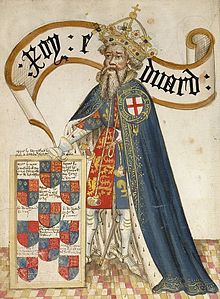 Although Salic Law was known in France, it generally related to property and had never actually been used to decide the succession to the crown. However, Philip V made certain that it would be from now on, by having the Estates General declare that women were not eligible to succeed to the throne of France.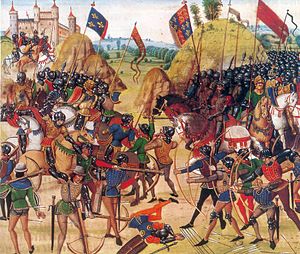
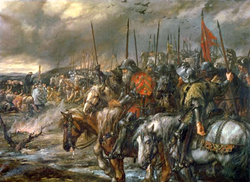

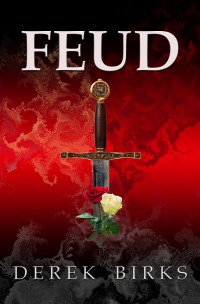
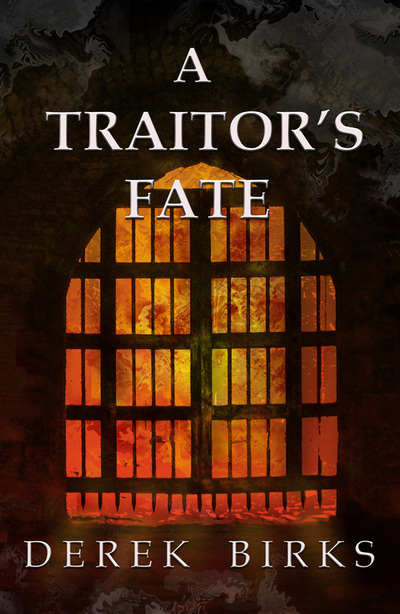
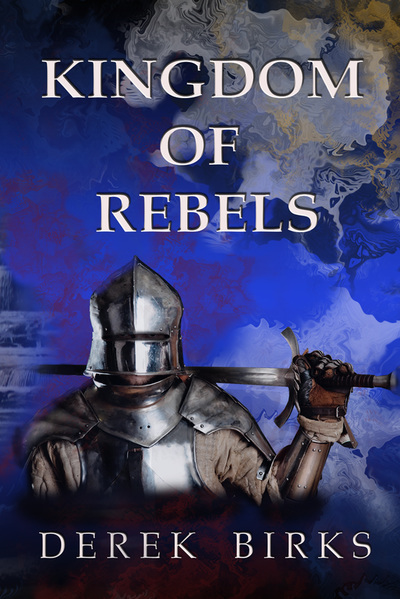



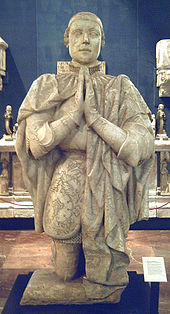
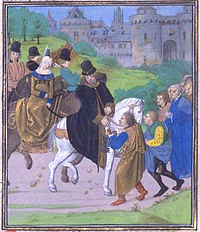

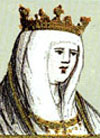



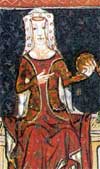
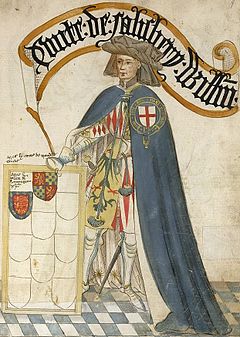
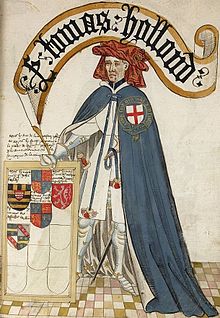
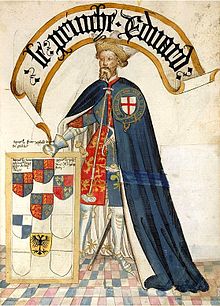
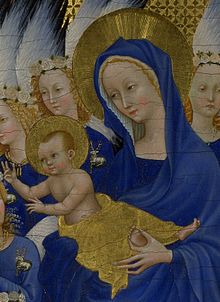
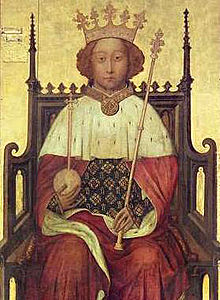
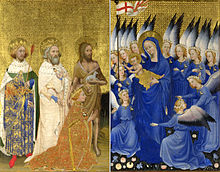

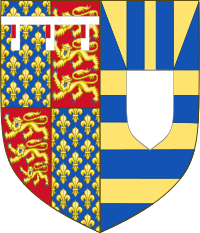
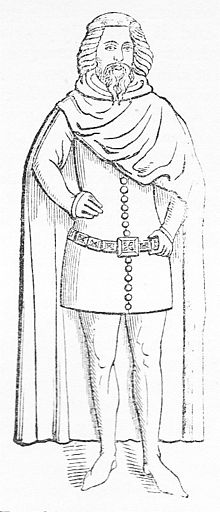
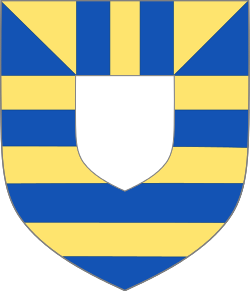
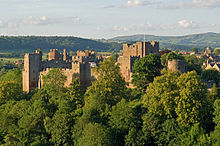
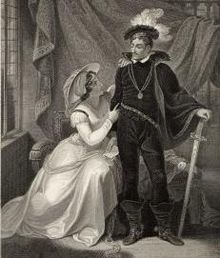




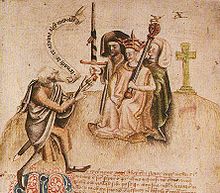


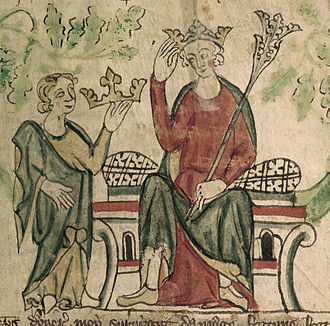
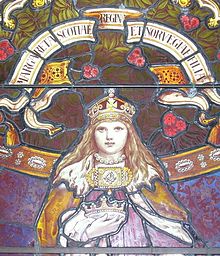

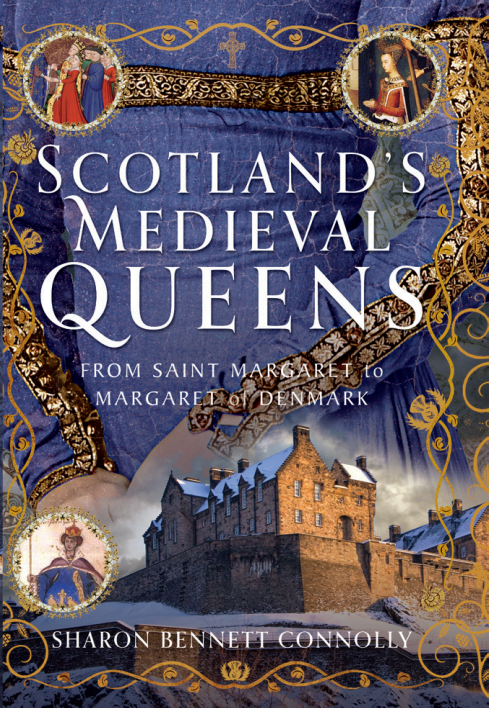
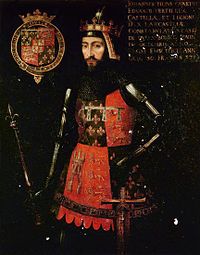
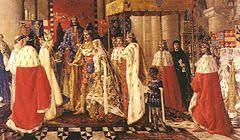


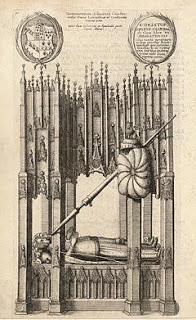

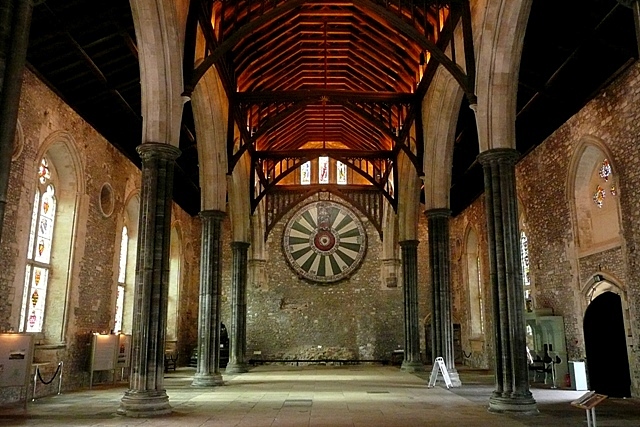
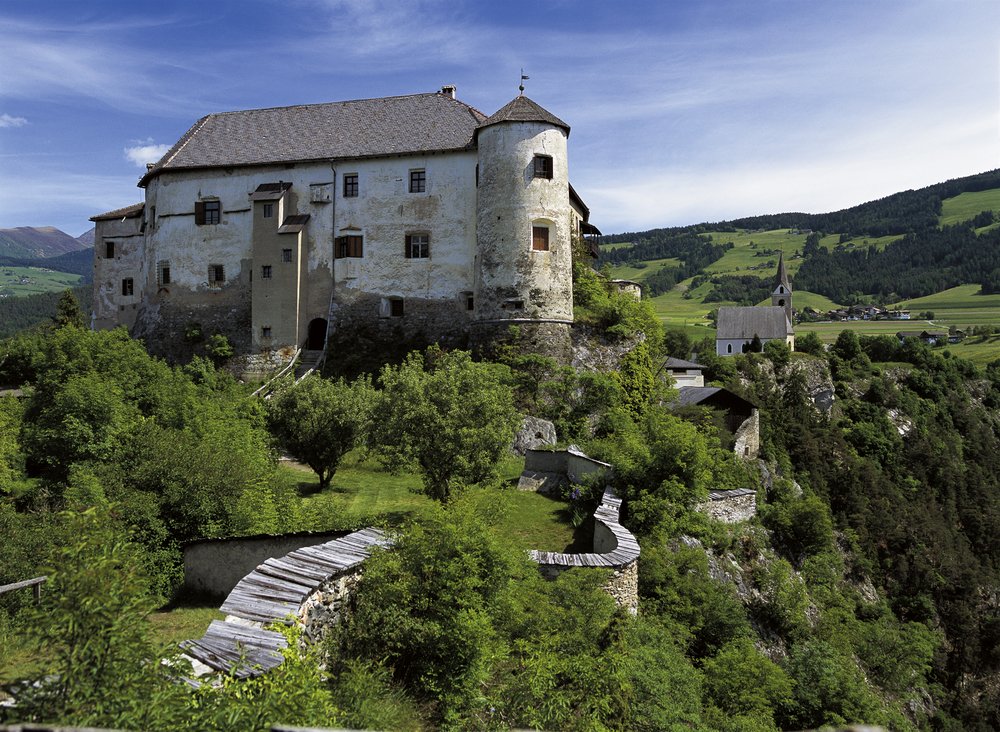
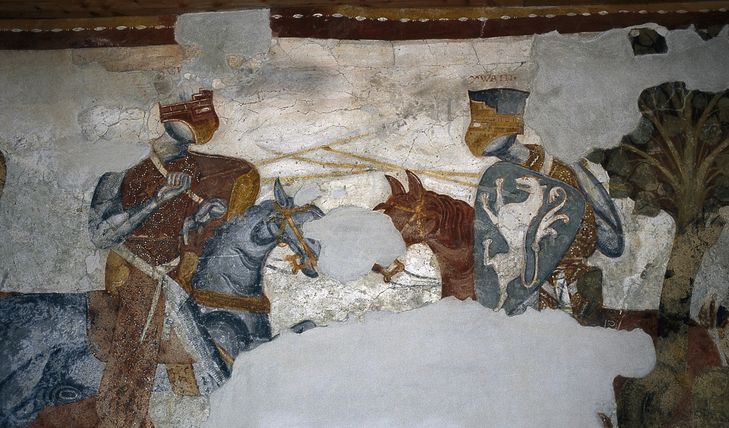
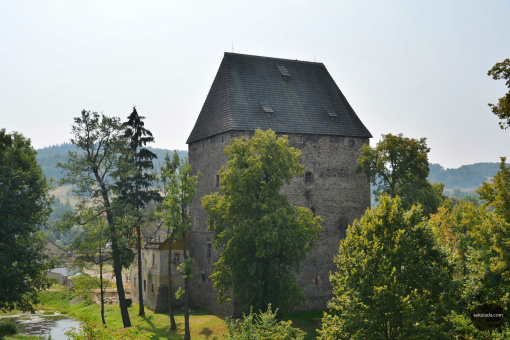
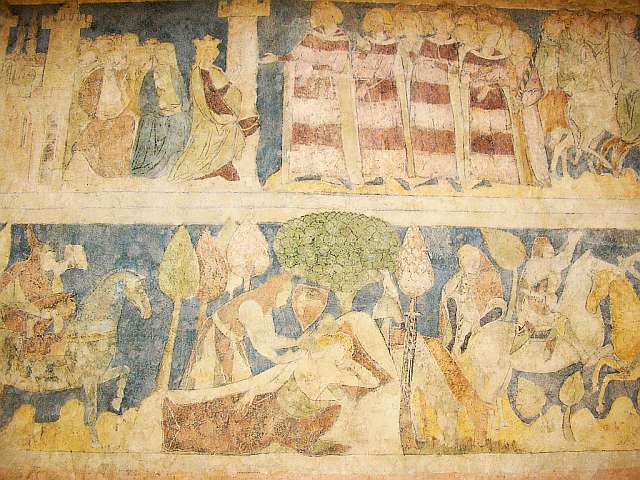
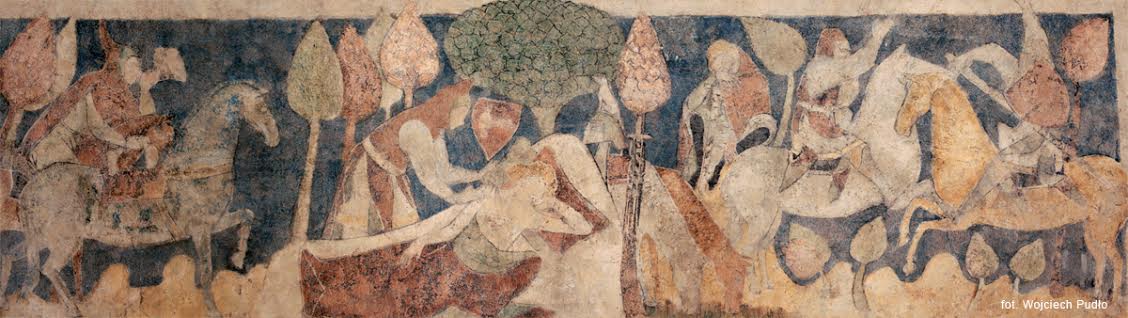

 History... the interesting bits!