Book Corner:1066 What Fates Impose by G.K. Holloway

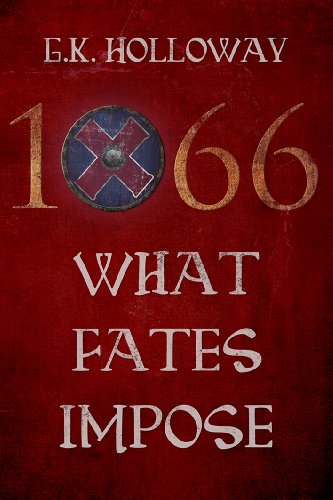
51dwzulugglMy latest book review, of Glynn Holloway’s epic novel 1066: What Fates Impose has gone live over at The Review today!

Glynn Holloway’s 1066: What Fates Impose is an experience in itself. It takes you on the epic journey of Harold Godwinson, earl of Wessex, and William, duke of Normandy – Harold’s rival for the throne of England – that ends at Senlac Hill, Hastings on 14th October 1066. It is a riveting tale, weaving together the lives, loves and conflicts of those who held the fate of England in their hands. Impossible to put down, 1066: What Fates Impose, gives the reader a panoramic view the events that would change the course of English history forever….

To read the full review of this fantastic novel – and to enter the prize draw and be in with a chance of winning a paperback copy in the giveaway, simply visit The Review and leave a comment. Good luck!

*

My book, Heroines of the Medieval World,  is now available in hardback in the UK from both Amberley Publishing and Amazon UK and worldwide from Book Depository. It is also available on Kindle in both the UK and USA and will be available in Hardback from Amazon US from 1 May 2018.

Be the first to read new articles by clicking the ‘Follow’ button, liking our Facebook page or joining me on Twitter.

*

©Sharon Bennett Connolly 2016

Book Corner: Interview with Steven McKay

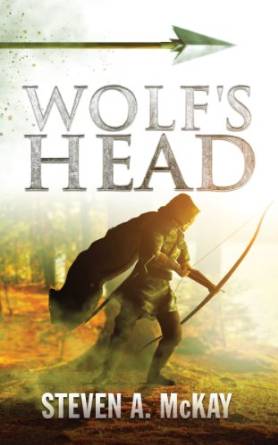
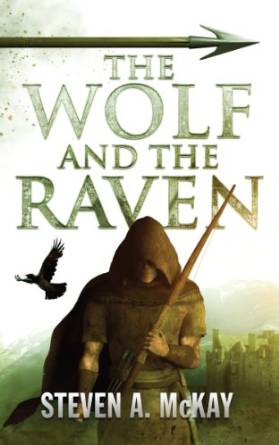
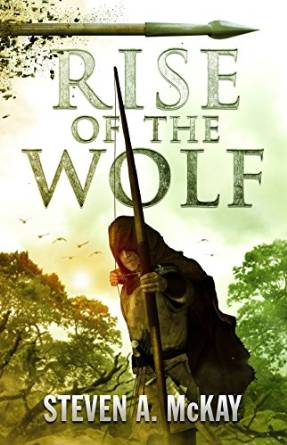
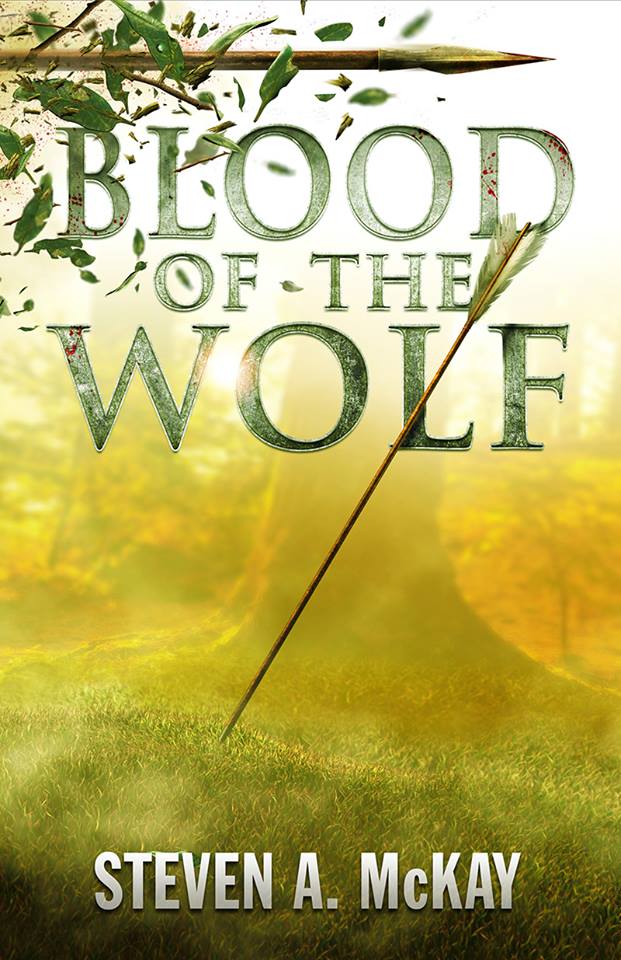
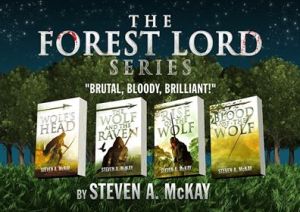
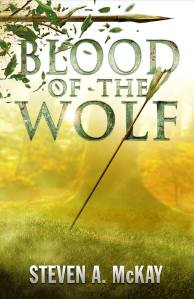
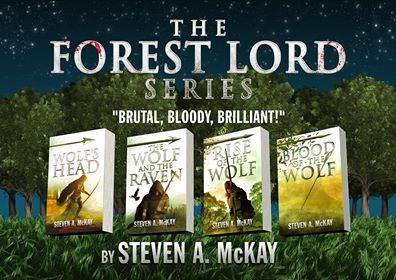
14527501_1508064435887266_874228221_nToday it is an absolute pleasure to welcome author Steven McKay to the blog. Steven has written the wonderful Forest Lord series, chronicling the adventures of everyone’s favourite legend, Robin Hood. With the final book, Blood of the Wolf, out this month, Steven talked to me about his writing, inspiration and what’s coming next.

Hi Steven, thanks so much for agreeing to be a guest interviewee on my blog, History…the Interesting Bits. So, here’s the questions …

What made you become a writer?

I always wanted to write stories, ever since I was a child. I would write little daft things in my school books and things like that. I think some people are creative and have a need to let their imagination run a bit wild be it through writing or art or music or whatever. I love to create songs on my guitars, and obviously write novels now but, sadly, I’m a terrible painter.

Who are your major writing influences?

Boringly, Bernard Cornwell is number one, just as he probably is for 90% of the people you talk to! The great thing about Cornwell is, he covers so much ground and so many periods. I don’t have any interest in his Sharpe stuff, for example, but his Arthurian and Saxon books are right up my street. And he does it so well that it always gives any writer inspiration and hopes of someday being that damn good!

Apart from that, I love Tolkien’s world-building, Philip K. Dick’s ability to get right inside a reader’s head, and David Gemmell’s great heroes.

How long do you spend researching a novel before you start writing?

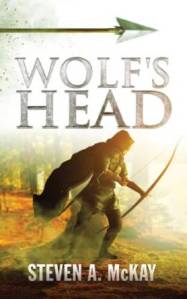
Well, I had to do a lot of research for my debut novel, Wolf’s Head, since I wasn’t really very clued-up on the middle-ages OR the Robin Hood legend. So I spent a good year or so, on and off, getting a feel for the period and the characters but, once I had that solid foundation I didn’t really need to do any more research before writing the other books in the series.

Now, though, I’m going to start a brand new series, set in post-Roman Britain, and again, I’m going to have to find out how the people lived and what the whole culture and landscape was like.

Hopefully I can learn quickly…

What comes first, your storyline or your research?

As above, it rather depends on what the book will be about. I just wrote a new short story with my characters from the Robin Hood books and I didn’t have to do any research prior to coming up with the plot. I obviously had to check certain facts once it was done but that happens at the end of every book, when you’re proofreading and editing.1st
For my new series I will need to do some research to figure out what directions the story might go, but I have a vague idea of what’s going to happen in the first book at least.

Do you know how a book is going to end when you start writing, or do your characters ‘surprise’ you?

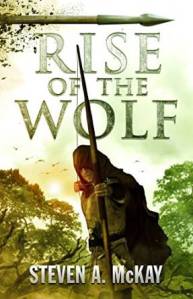
Generally, yes, I know what will happen. And, of course, with Robin Hood the story is well known and has to be stuck to fairly closely or it’s not Robin Hood any more. So in that respect I’ve always had an idea how each book will pan out, although along the way certain things happen when I’m writing that I didn’t expect. The characters really do come to life and take things in their own direction sometimes, without the writer’s prior knowledge! Friar Tuck always seemed to do that when I was writing his scenes – it was his idea for Robin to travel to London in Rise of the Wolf, the thought had never even crossed my mind originally!

Have you always been interested in Robin Hood?

No, not at all. I’m not really sure why, as I did always love that other great British hero, King Arthur, but Robin Hood never interested me until I decided to write a book about him. I think I never really engaged with the legend because there hadn’t been a great, modern interpretation of it the way there had been with Arthur. Bernard Cornwell had written great books about that as had Stephen Lawhead, and there was the movie Excalibur which I enjoyed, not to mention the whole mythology of Merlin…Robin, on the other hand, wasn’t really so well-known, to me at least. Had I been just a couple of years older I probably would have got into the TV series Robin of Sherwood when it came out in the 80’s and developed an interest from there but nope, I only started watching that as research for my own novel.

Needless to say, the Robin Hood legend is much deeper and more interesting than I first thought!

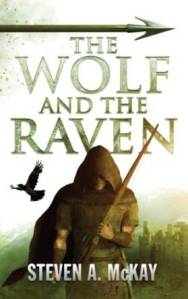
There are 3 Forest Lord books so far, Wolf’s Head, Rise of the Wolf and The Wolf and The Raven how many more adventures are there to come? Did you know how many books would be in the series when you started writing the story?

The fourth book, Blood of the Wolf, will be published on October 14th 2016 and this will be the last in the series. I planned it to be a trilogy but the second book took itself off in unforeseen directions and I needed to add an extra volume to do everything I wanted with the story. Incidentally, that second book, The Wolf and the Raven, was probably the most fun to write of all of them, perhaps because I let the characters go where they wanted without forcing them to stick to my plan!

What is in store for Robin next?

Nothing, I’m afraid. You’ll need to read Blood of the Wolf to see how things end for him. I do have a brand new short story, “The Stapleford Prisoner” featuring him and Little John but I don’t know when, or how, that will be published. I also plan on doing anothe2r novella, this time starring Will Scaflock but I haven’t started it yet. It will hopefully serve as a stopgap for my readers until I can get the next series underway.
I love the fact the stories are set in the reign of Edward II, rather than the more traditional Richard the Lionheart/King John era. What made you do this?

When I researched the legend the main thing I wanted to do was write about a realistic hero, so I tried to find out if there had been a real Robin Hood. I don’t believe there was one, single outlaw with that name, but there was a decent case for a Robert Hood living in the time of King Edward II having contributed to much of the early stories that became the legend we now all know. It seemed as good a starting point as any and certainly gave things a fresh slant since everyone always sets their Hood tales in a much earlier period.

Your Robin Hood has also moved from Sherwood Forest to Barnsdale Forest, is there are particular reason, or did Robin just fancy a change of scenery?

As above, the earliest ballads about Robin were actually set in Barnsdale and the real Robert Hood I mentioned came from Wakefield in Yorkshire. So again, that gave me a new direction to take the tired old tales and make them a little bit different. That said, much of the action in the books does take place in Nottingham as I believe any outlaw gang would have had to move around from place to place to avoid the law. The sheriff in my books, Sir Henry de Faucumberg was actually the Sheriff of Nottingham and Yorkshire in real life although I did use some artistic license with the dates he served….

A lot of actors have played Robin Hood through the years, do you have a particular image of Robin when you’re writing him?

No, not at all. I mean he’s tall and extremely well-built. Any good medieval longbowman would have been really muscular so that’s obvious but, other than that, I don’t really have a picture of him in my head and I don’t like to describe characters too exactly as I like to let the reader come up with their own image. Making the reader’s imagination fill in some blanks is the best way to draw them into the story I think.

What do you enjoy most about writing?

Just the way that I can pour out my imagination and make the stories in my head come to life. I’m constantly making up little stories in my head, imagining dialogue and actions and whatever, even about everyday events. My mind never seems to stop planning things, or imagining how some scene – even a completely mundane one – might pan out.1
Planning and writing books is basically a way of harnessing that energy and making it useful.

What is the worst thing about writing?

Probably waiting to see what readers think of a new book. I can’t tell if a new one is any good or not, it’s impossible, so I have to rely on readers’ opinions. It’s a horrible, nail-biting time waiting on feedback from beta readers and reviewers and hard not to badger them constantly about whether they like it or not.

Apart from that, editing can be a pain – structurally editing a novel I mean. It can be a really daunting thing trying to rearrange certain scenes and events into a cohesive whole and I usually wish it would just happen by magic so I can get on with simply writing again!

How long does it take to do a project from start to finish? Do you write one book at a time, or have several on the go at once?

Well, I’ve been writing for about four years now and in that time I’ve managed to write four novels and a couple of novellas. Basically, I like to do a novel and a novella every year or so. I only concentrate on one thing at a time so I don’t get confused, especially now with this next series being set in a different era altogether. That will require a whole new mindset which is why I haven’t started on it yet, until Blood of the Wolf is done and dusted and out there for people to buy.

Who are your favourite personalities from history? Is there anyone you would particularly like to write about, but haven’t yet?

Jesus! Sorry, that’s not a blasphemous oath, that’s my answer to the question. I’m not a religious person but I think both the Old and New Testaments of the Bible have great stories in them and it would be interesting to write a realistic version of, in particular, Jesus’s life. I did start to research the project years ago but it never came to anything. I’m not sure if it would be a good or a bad thing because there’s so much potential to offend a huge amount of people, but it’s something I would like to do eventually.

Perhaps.

Do you ever get writer’s block? If so, how do you get around it?

No, not really. I don’t sit down to write unless I have something planned. I like to think about what scene I’ll be working on next and have it ready in my head so when I start writing it just flows out.

Do you find social media – such as Facebook and Twitter – a benefit or a hindrance?

I don’t see how anyone can say they’re a hindrance – they’re basically free adv14527440_1508064235887286_1454685879_nertising and an amazing way to engage with your readers. I try to do my “social media admin” smartly – so if someone retweets me, I’ll reciprocate, but I do it on my phone as it’s much faster and I can do it when I have a spare minute during the day.
Don’t make the mistake of sitting down for an hour every day and interacting with people on a kind of schedule, because it will soon become boring. Fit it around your day, use every tool you have, from phone to tablet and laptop. Free apps like Hootsuite are also a massive help.

What is your next project, once Robin Hood is complete?

The working title for the next book is The Druid. Rather than a large cast of well-known, iconic characters that I was working with in the Hood books, this time I want to create one single warrior druid living in Britain just as the Romans have left. I love this land and it will be great to explore the geography of it through the eyes of a druid. It also has the added bonus that not much is known about the druids so I can have a little more freedom than I did with my Forest Lord series.

I’m really looking forward to writing it!

Thank you so much for agreeing to an interview, Steven, and for taking the time to answer my questions – I hope they weren’t too onerous.

Not at all, thank you for having me! It’s always great to chat about my work to people.
14528431_1508064125887297_483274802_nMore about Steven:

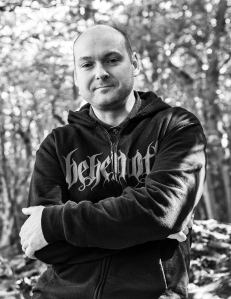
Steven McKay was born in 1977 near Glasgow in Scotland. He live in Old Kilpatrick with his wife and two young children. After obtaining his Bachelor of Arts degree with the Open University he decided to follow his life-long ambition and write a historical novel.

He plays guitar and sings in a heavy metal band when they can find the time to meet up.

You can check out his website here. Steven also has an Amazon Author page and can be found on Twitter and Facebook.

*

My book, Heroines of the Medieval World,  is now available in hardback in the UK from both Amberley Publishing and Amazon UK and worldwide from Book Depository. It is also available on Kindle in both the UK and USA and will be available in Hardback from Amazon US from 1 May 2018.

Be the first to read new articles by clicking the ‘Follow’ button, liking our Facebook page or joining me on Twitter.

*

©2016 Sharon Bennett Connolly.


Book Corner: Interview with Karen Clark, author of The Nevills Of Middleham

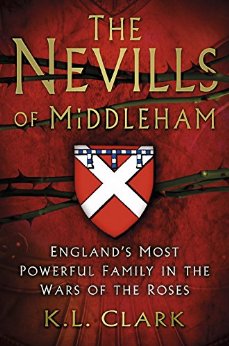
51i0f-eet8l-_sy346_Hi Karen, congratulations on the release of your book, The Nevills of Middleham: England’s Most Powerful Family in the Wars of the Roses and thank you so much for agreeing to an interview. Welcome to History…the Interesting Bits.

Tell me about your book – how did it come about?

My name was very kindly passed to History Press by my friend, Amy Licence, when they first came up with the idea of a book about the Nevills. Of course, despite doubts and nerves, I jumped at the chance.

Chronicling an entire family is a huge undertaking, what made you write about the Nevills? What is it about them that fascinates you?

“Warwick rose toweringly. His rose-dappled mantle swirled; black hair curled on his brow. Everything of him was puissant and challenging and might have said: Behold us! We of the blood royal, of Edward the Third.”*

I read that paragraph when I was about fifteen and was intrigued. I wanted to know more. Who was this guy? I’ve spent years – decades – since then trying to find out! It hasn’t always been easy. Before the internet, books weren’t always easy to come by and primary sources next to impossible. The whole family fascinates me, as you say. I think any 15th century family has the potential to fascinate and intrigue but it was the Nevills who claimed me.

*Hawley Jarman, Rosemary, 1973, The King’s Grey Mare, Collins, London, p53

Who is your favourite Nevill? And why?

049-2
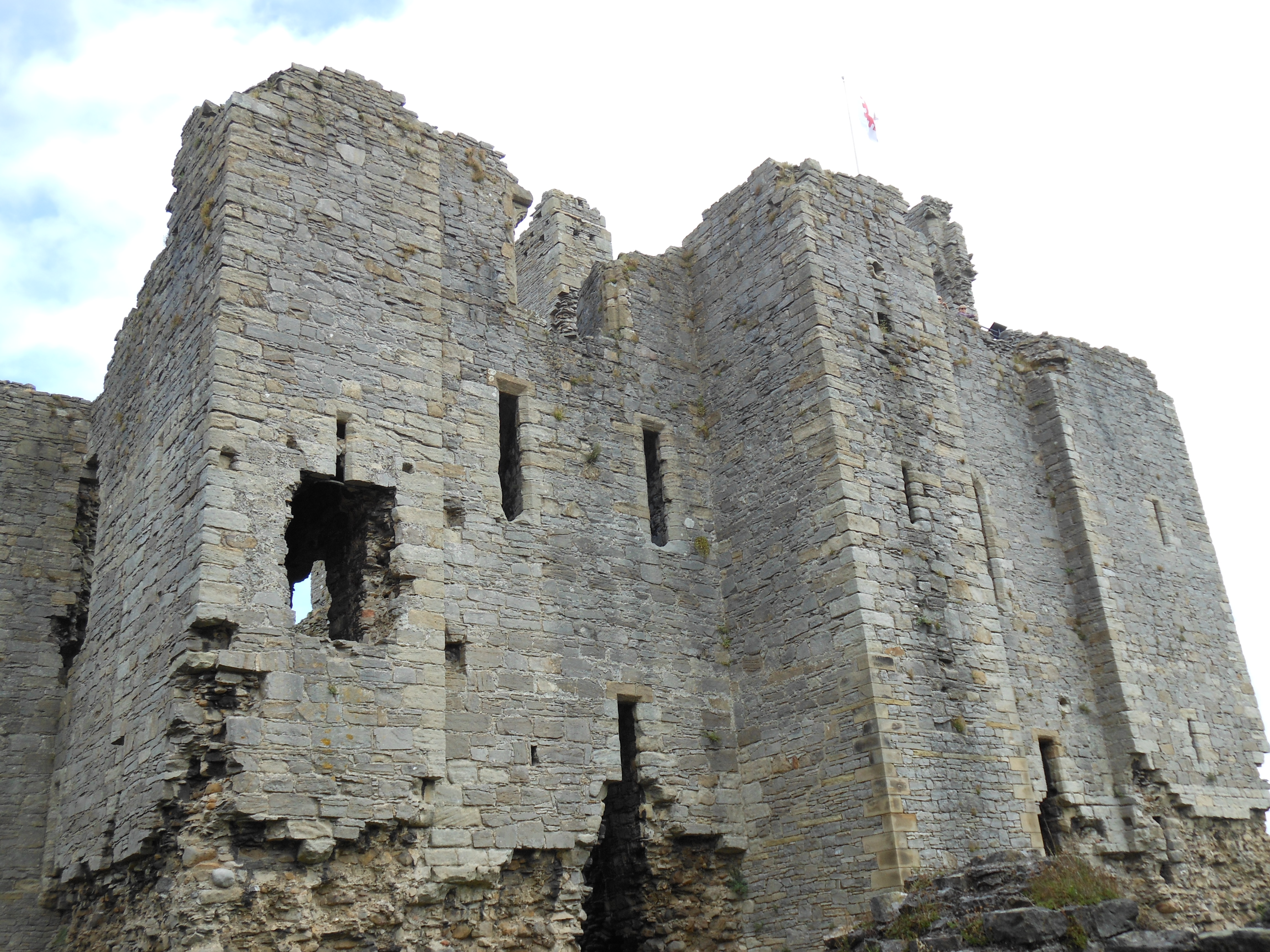
Middleham’s keep

Well, that changes depending on my mood! They all have something to recommend them. The one I’ve got to know best over the last few years is Thomas so he might be my current favourite. I’ve also got a huge soft spot for Alice and her husband, Henry Fitzhugh. I have no idea why! The Fitzhughs didn’t live that far from Middleham and Alice and Henry would have grown up together, though I’d hesitate to even suggest the ‘childhood sweethearts’ thing. They knew each other all their lives and while her sisters all married men who lived far away, Alice remained close to her old family home until Henry’s death.

And which Nevill do you like least?

There isn’t one!

The Nevills were involved in some of the greatest events to shape English history, but eventually lost everything, do you see them as heroes or villains?

Neither. Both. Sometimes one and sometimes the other but mostly, I think, they inhabited the shadowy in-between of moral ambiguity. Enlightened self-interest is one of the more interesting driving forces of change, and Warwick certainly operated from that principle when pushing for reform and regime change, but he could also be unconscionably self-interested in a most unenlightened way. To use a rather tired phrase often trotted out to cover a multitude of sins, they were of their time. But, at times, Warwick could be far more ruthless than that. The executions in Calais in 1460, the extra-legal killings of earl Rivers and the Herberts, the bloodbath after the battle of Hexham (which wasn’t Warwick’s responsibility alone, his brother John and Edward IV were also behind this orgy of executions that lasted days and stretched from Hexham to York) all point to a man with scant ability to forgive. Handing out second chances was not something Warwick tended to do. I think those people who wandered into Warwick’s unreality field certainly saw him as a hero. To the people of Burgundy, he has gone down in history as one of the vilest villains of all time. Like a lot of things, it depends where you stand.

068-2
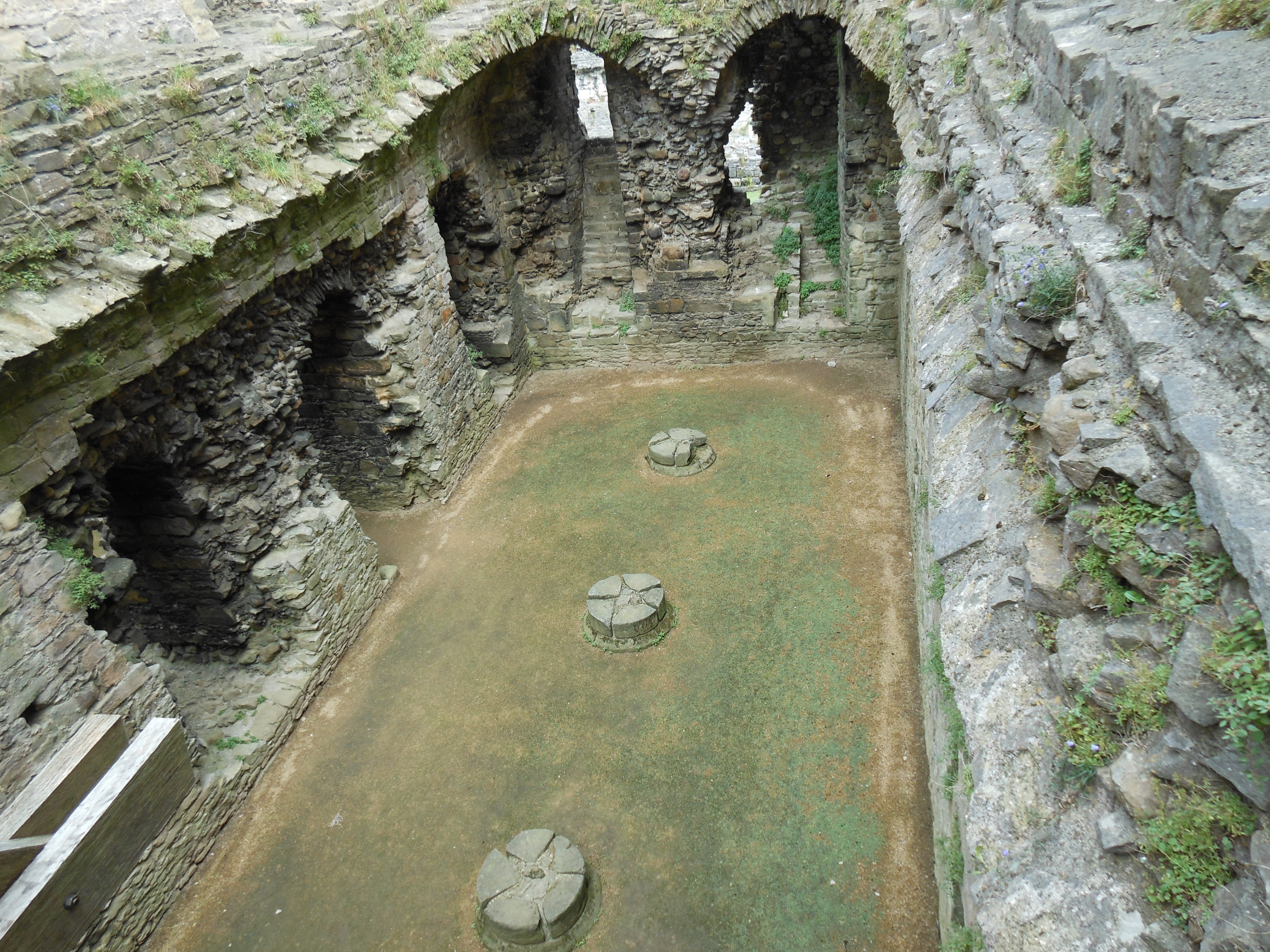
Middleham’s great hall

You have written both history and historical fiction – which is the easiest and which the most fun?

Non-fiction is easier to write. While you can speculate some – indeed, you kind of have to from time to time – you don’t have to dream up motivations and relationships. If you don’t know where someone was for six months, you just make a note of that and move on. There’s no gap filling to be done. But it’s that very difficulty that makes writing historical fiction so stimulating. You can’t (always) just leave a six month gap, you have to find somewhere for them to be and something for them to do, you have to establish how they felt about the various other people in the story, you have to give them a voice. I think the exercise of researching more rigorously and writing non-fiction will make me a better writer of fiction but the proof of that will be in the pudding.

What do you enjoy most about writing?

It’s a bit like breathing. I’ve never stopped to ask why I do it. I just have to. Thinking about it now… when everything’s flowing and the words are just pouring out (good or bad), when every sentence sparks the next, when fictional characters pick up their story and take off with it, when a sudden realisation hits you that this is why someone did something, or that is what drives them… those are the best bits.

What is the worst thing about writing?

The loneliness.

How do you organise your writing day?

I don’t! I get up, sit down at my desk and maybe I start work. Or I get up again and do something else. Or I put on some music, crank it up and dance until my dog tells me to stop. Organising isn’t my strongest suit. It’s probably why it’s taken as long as it has before I’ve got serious about writing. I’ve been writing all my life. I couldn’t wait to start school coz they were going to teach me how to write and that would mean all the little stories that were locked in my head could be set free. But I had to work for a living for years and that became my focus and my priority, along with growing my children up. Since making the decision that, if I didn’t get something happening soon, it was never going to, I have the freedom just to let it all flow. I can write for hours one day and faff around for hours the next. No self-discipline, that’s my problem! Writing The Nevills changed that to a large degree, as I had a deadline imposed from without. That meant more days writing and fewer faffing.

How long have you spent researching the Nevills?

056-2
Inside the bailey at Middleham

Years! Decades! For a long time, it was pretty desultory. I bought books when I could, though they weren’t always easy to come by. For the longest time, I didn’t even know what was available. Then along came the internet! The decline of bricks and mortar bookshops is lamented by many but I can’t quite feel the same hostility towards Amazon (and the like) I know others do. Living where I do, a long way from bookshops of any kind, online book stores have been an unalloyed blessing. And there’s so much primary source material on the internet! I’ve spent hours and hours tracking down a reference to some obscure text and, nine times out of then, I’ve found it. So, in the last few years, particularly since I started writing The Nevills, the research has got more intense and deeper.

Do you find social media – such as Facebook – a benefit or a hindrance?

Oh, definitely a benefit! The support I’ve had from friends is incalculable. Discussions and debates, someone pointing out a source I hadn’t come across before, the flourishing of ideas… it’s been great! If I hadn’t stumbled across Susan Higginbotham’s blog several years ago now I wouldn’t be doing what I’m doing, a book about the Nevills would probably have been written but not by me. I cannot stress enough how much facebook friends like Susan, Amy and you, Sharon, have helped me on this journey.

What is your next project?

073-2
The village of Middleham

I really want to get the first Nevill novel finished. It’s nearly done but I think my imminent trip to the UK will feed into that beautifully. Apart from that, I have a zillion ideas waiting to be explored – a fantasy series I’m about halfway through writing, a science fiction idea that refuses to go away, a crime novel with a BDSM theme, a book I’ve been working on for decades that needs either to be dusted off and looked at again or shelved permanently, the rest of the Nevill fiction… then, the other night, a news story about North Korea sparked yet another idea. I either need a guaranteed next life or a dedicated team of offsiders!

A huge ‘THANK YOU‘ to Karen for taking the time to chat and answer my questions. I wish her every success with the book.

About Karen’s Book

51i0f-eet8l-_sy346_The Nevills of Middleham: England’s Most Powerful Family in the Wars of the Roses: In 1465, the Nevills must have thought they’d reached the pinnacle of power and influence in England. Richard Nevill was the king’s right-hand man and married to the richest woman in the kingdom; John Nevill was an accomplished soldier who’d done much to stabilise the new dynasty; and George Nevill was not only chancellor but newly enthroned as Archbishop of York.

The Nevill women were as active as their male counterparts. As sisters and wives, daughters and daughters-in-laws, they had the ears of the elite in England and were not afraid of wielding their influence. And they were not always on the same side.

Cracks in the stability of the most powerful family in England began to show. Rivalries led to serious conflict that worsened when King Edward IV impulsively married Elizabeth Wydeville, a choice of bride that did not please everyone. The Nevills had already lost a great deal for the Yorkist cause. Within six years, as the Wars of the Roses turned into one of the bloodiest periods of English history, they’d lose even more for the Lancastrians.

The Nevills of Middleham is available now from the History Press.

About Karen

K.L. CLARK’s research of the Nevill family and the Wars of the Roses spans over a decade and she is currently working on a series of novels about the Nevills. She has presented two papers on the Wars of the Roses to the Richard III Society, writes the popular blog A Nevill Feast and is an active member of the Facebook history community. She lives in Australia with her family. http://www.nevillfeast.wordpress.com.

*

My book, Heroines of the Medieval World,  is now available in hardback in the UK from both Amberley Publishing and Amazon UK and worldwide from Book Depository. It is also available on Kindle in both the UK and USA and will be available in Hardback from Amazon US from 1 May 2018.

Be the first to read new articles by clicking the ‘Follow’ button, liking our Facebook page or joining me on Twitter.

*

©2016 Sharon Bennett Connolly.


King Eadwig ‘All-Fair’ and the Coronation Scandal

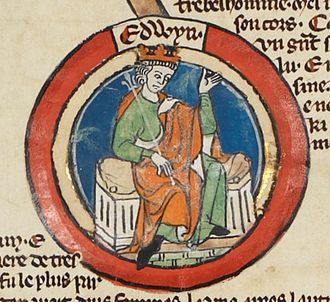
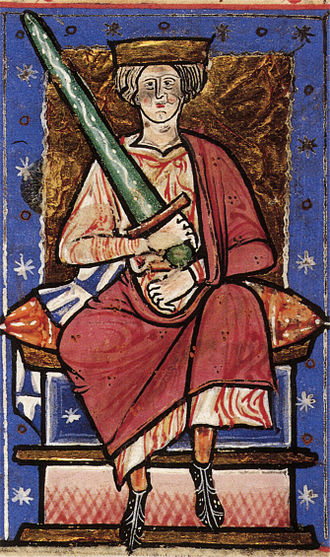
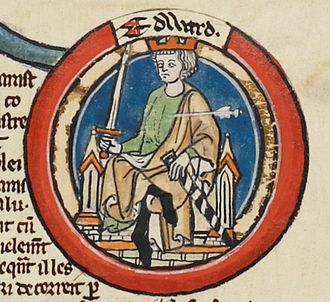
eadwig_-_ms_royal_14_b_vi
King Eadwig

While researching Edward the Martyr and his stepmother, Ælfthryth, I came across a very interesting character. Eadwig (or Edwy) was young Edward’s uncle; the elder brother of Edward’s father, Edgar the Peaceable. Eadwig has one of the worst reputations of the Anglo-Saxon kings, even though he only reigned for 4 years; he was, supposedly, found in a compromising situation when he was meant to be presiding over his coronation feast.

I just had to know more about this king!

Eadwig was born around 940. He had an impressive royal pedigree, being the eldest surviving son of Edmund I (the Elder) and his 1st wife, Ælfgifu of Shaftesbury, who was later known as St Elgiva. Edmund was the son of Edward the Elder and, therefore, the grandson of King Alfred the Great, thus making Eadwig King Alfred’s great-grandson.

Eadwig’s mother Ælfgifu died in 944, and was buried at Shaftesbury Abbey; she left little Eadwig and his baby brother, Edgar, to be raised by their father. Although Edmund married again, he only survived his 1st wife by 2 years; he was stabbed by Leofa, an exiled thief, on 29 May 946, possibly as part of an assassination plot, although later sources suggest Edmund had recognised Leofa in the crowd and was killed while trying to arrest him.

With his eldest son no more than 6 years old, Edmund was succeeded as king by his brother, Eadred (known as Eadred Debilis Pedibus (“Weak-in-the-Feet”). Eadred’s chief supporters included his mother, Queen Eadgifu the 3rd wife of Edward the Elder, Archbishop Oda (or Odo) of Canterbury, Dunstan, abbot of Glastonbury and Æthelstan Half-King ealdorman of East Anglia.

330px-edmund_i_-_ms_royal_14_b_v
Edmund I, Eadwig’s father

As Eadred’s health failed, more responsibilities were entrusted to his chief supporters. Dunstan, for instance,  as well as being entrusted with the production of charter in the king’s name he was also given the guardianship of the royal treasures. Æthelstan is said to have been foster-father to Edgar, Eadwig’s younger brother, so it is possible that both boys were raised in his household.

Although we know nothing of Eadwig’s childhood it is assumed he was raised away from court, as his name does not appear on any charters during the reigns of his father or uncle. Eadwig and his brother only start appearing in authentic texts in 955, Eadred’s final year.

Eadred died on 23rd November 955 and was succeeded by 15-year-old Eadwig. A typical teenager, Eadwig immediately set about trying to assert his independence. He made appointments that were calculated to reduce the power and influence of Æthelstan Half-King, and then turned his attention to his grandmother, Queen Eadgifu, depriving her of all her possessions.

The most powerful and influential people in the country were probably pulling their hair out in frustration in no time. However, life carried on and Eadwig’s coronation took place at Kingston-Upon-Thames, probably at the end of January 956. And it was at the feast, to celebrate the coronation, that Eadwig’s reputation took a spectacular nosedive.

aelfgifu-mortimer
Eadwig defending Aelfgifu to Archbishop Oda

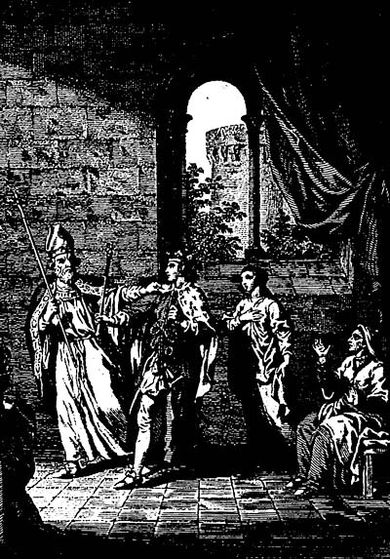
Eadwig seems to have grown bored – or tired – of the celebrations and retired to his own apartments, even though the coronation feast was in full swing. When Archbishop Oda noticed Eadwig’s absence, he sent Abbot Dunstan (the future saint and archbishop of Canterbury) in search of the errant king. Dunstan supposedly found Eadwig in a compromising situation with a young woman, ‘a girl of ripe age’¹ … and her mother. It is said that Dunstan was so furious he physically attacked the 2 women before dragging Eadwig back to the banquet.

The younger lady involved was most likely Ælfgifu, soon to be Eadwig’s wife. The story, however, is related in the life of St Dunstan and could well be an invention or, at the least, an exaggeration designed to highlight the conflict between Eadwig and the church, over his choice of bride. And during the battle of wits between king and church Ælfgifu’s mother, Æthelgifu, pressed Eadwig to have Dunstan deprived of all his possessions and sent into exile.

However, it seems the church held the upper hand; Eadwig and Ælfgifu were separated in 957 or 958 on the orders of Archbishop Oda ‘because they were too closely related’². Research suggests that Ælfgifu was from a junior or dispossessed branch of the royal family, possibly descended from Æthelred I (r. 865-71), brother of Alfred the Great, thus making the young lovers 3rd cousins. Ælfgifu lived on into the reign of King Edgar the Peaceable, but disappears from the historical record after 96.

Eadwig did not remarry.

Other aspects of Eadwig’s life appear to have been just as chaotic; his reign taken up with political disputes and trying to pacify his rebellious nobles. Eadwig’s surviving charters show a favouritism towards laymen, rather than the church, although he is remembered as a benefactor of Abingdon Abbey. Eadwig appointed 3 new ealdordoms during 956 alone, including Æthelwold, son of Æthelstan Half-King and 1st husband of Ælfthryth, the wicked stepmother of Edward the Martyr.

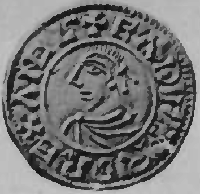
coin_of_king_eadwig_of_england
Coin of King Eadwig

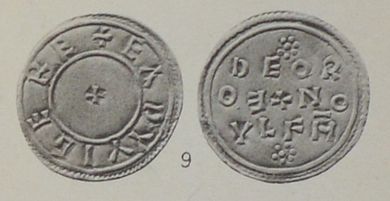
By the summer of 957 the kingdom was divided in 2; the king ‘was wholly deserted by the norther people, being despised because he acted foolishly in the government committed to him, ruining with vain hatred the shrewd and the wise, and admitting with loving zeal the ignorant and those like himself’³. A political settlement was reached, probably aimed at preventing civil war, based on a geographical division of the country, rather than personal loyalties. Eadwig was to rule all the lands south of the River Thames, while his younger brother, Edgar, would rule in the north. Although the fact that it was Eadwig’s coins that were the country’s only currency until 959 suggests that Eadwig maintained overall authority.

This became the status quo until Eadwig’s death on 1st October 959 at Gloucester, when the kingdom was once again united under one ruler, King Edgar. Aged only around 19 when he died, the manner of Eadwig’s death is a mystery; it’s possible he died from some inherited family ailment, or a convenient accident, I suppose we’ll never know…. Eadwig was buried in the New Minster at Winchester, founded by his grandfather, King Edward the Elder.

s_594_diploma_of_king_eadwig_for_aelfwine_ad_956-tif
Diploma of King Eadwig for Aelfwine

Poor Eadwig’s reputation has suffered at the hands of the biographers of the early church leaders, particularly in the Life of St Dunstan, which depicts Eadwig as a debaucher, a despoiler of the church and an incompetent king. While William of Malmesbury called him a ‘wanton youth’ who ‘misused his personal beauty in lascivious behaviour’ 4, his nickname of ‘All-Fair’ suggests he wasn’t all bad. The chronicler, Æthelweard saying that Eadwig ‘for his great beauty he got the nickname Pancali [‘All-Fair’] from the common people’.5 According to the chronicler, Eadwig ‘held the kingdom for four years and deserved to be loved.’6

*

Footnotes: ¹ quoted by Simon Keynes in oxforddnb.com; ² Anglo-Saxon Chronicle, s.a. 958, text 1; ³ Vita S. Dunstan, ch. 24; 4 quoted by Simon Keynes in oxforddnb.com; 5 Chronicle of Æthelweard, 4.8; 6 ibid.

*

Pictures courtesy of Wikipedia

Sources: Brewer’s British Royalty by David Williamson; Britain’s Royal Families, the Complete Genealogy by Alison Weir; The Wordsworth Dictionary of British History by JP Kenyon; The Anglo-Saxons in 100 Facts by Martin Wall; Kings, Queens, Bones and Bastards by David Hilliam; The Mammoth Book of British kings & Queens by Mike Ashley; The Oxford Companion to British History Edited by John Cannon; oxforddnb.com.

*

My Books

Signed, dedicated copies of all my books are available through my online bookshop.

OUT NOW! Heroines of the Tudor World

Heroines of the Tudor World tells the stories of the most remarkable women from European history in the time of the Tudor dynasty, 1485-1603. These are the women who ruled, the women who founded dynasties, the women who fought for religious freedom, their families and love. These are the women who made a difference, who influenced countries, kings and the Reformation. In the era dominated by the Renaissance and Reformation, Heroines of the Tudor World examines the threats and challenges faced by the women of the era, and how they overcame them. From writers to regents, from nuns to queens, Heroines of the Tudor World shines the spotlight on the women helped to shape Early Modern Europe.

Heroines of the Tudor World is now available for pre-order from Amberley Publishing and Amazon UK.

Coming 30 January 2025: Scotland’s Medieval Queens

Scotland’s history is dramatic, violent and bloody. Being England’s northern neighbour has never been easy. Scotland’s queens have had to deal with war, murder, imprisonment, political rivalries and open betrayal. They have loved and lost, raised kings and queens, ruled and died for Scotland. From St Margaret, who became one of the patron saints of Scotland, to Elizabeth de Burgh and the dramatic story of the Scottish Wars of Independence, to the love story and tragedy of Joan Beaufort, to Margaret of Denmark and the dawn of the Renaissance, Scotland’s Medieval Queens have seen it all. This is the story of Scotland through their eyes.

Available for pre-order now.

Also by Sharon Bennett Connolly:

Women of the Anarchy demonstrates how Empress Matilda and Matilda of Boulogne, unable to wield a sword themselves, were prime movers in this time of conflict and lawlessness. It shows how their strengths, weaknesses, and personal ambitions swung the fortunes of war one way – and then the other. Available from Bookshop.orgAmberley Publishing and Amazon UKKing John’s Right-Hand Lady: The Story of Nicholaa de la Haye is the story of a truly remarkable lady, the hereditary constable of Lincoln Castle and the first woman in England to be appointed sheriff in her own right. Available from all good bookshops Pen & Sword Booksbookshop.org and AmazonDefenders of the Norman Crown: The Rise and Fall of the Warenne Earls of Surrey tells the fascinating story of the Warenne dynasty, from its origins in Normandy, through the Conquest, Magna Carta, the wars and marriages that led to its ultimate demise in the reign of Edward III. Available from Pen & Sword BooksAmazon in the UK and US, and Bookshop.org

Ladies of Magna Carta: Women of Influence in Thirteenth Century England looks into the relationships of the various noble families of the 13th century, and how they were affected by the Barons’ Wars, Magna Carta and its aftermath; the bonds that were formed and those that were broken. It is now available in paperback and hardback from Pen & Sword,  Amazon, and Bookshop.orgHeroines of the Medieval World tells the stories of some of the most remarkable women from Medieval history, from Eleanor of Aquitaine to Julian of Norwich. Available now from Amberley Publishing and Amazon, and Bookshop.orgSilk and the Sword: The Women of the Norman Conquest traces the fortunes of the women who had a significant role to play in the momentous events of 1066. Available now from Amazon,  Amberley Publishing, and Bookshop.org.

Alternate Endings: An anthology of historical fiction short stories including Long Live the King… which is my take what might have happened had King John not died in October 1216. Available in paperback and kindle from Amazon.

Podcast:

Have a listen to the A Slice of Medieval podcast, which I co-host with Historical fiction novelist Derek Birks. Derek and I welcome guests, such as Bernard Cornwell, and discuss a wide range of topics in medieval history, from significant events to the personalities involved.

*

Don’t forget! Signed and dedicated copies of all my books are available through my online bookshop.

For forthcoming online and in-person talks, please check out my Events Page.

You can be the first to read new articles by clicking the ‘Follow’ button, liking our Facebook page or joining me on TwitterThreads and Instagram.

©2016 Sharon Bennett Connolly FRHistS

Guest Post: The Two Women in the life of Harold II by Sharon Bennett Connolly

Today I have a guest article over at Paula Lofting’s blog. Paula’ s novels, Sons of the Wolf and The Wolf Banner, chart the story of Harold II, so I take a look at the 2 women in his life.

paulalofting's avatarThe Road to Hastings and other Stories

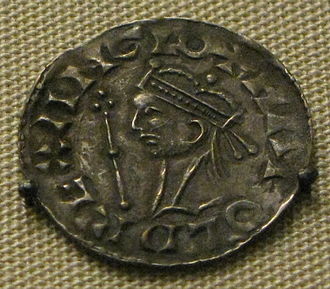
330px-harold_godwinson_silver_coin

Harold Godwinson was born around 1022 and did more in the 44 years he was on this earth, than most people could achieve in 3 lifetimes. He received the earldom of East Anglia in 1044 and, as the son of Godwin, earl of Wessex, he succeeded to his father’s earldom in 1053. His sister was the wife of King Edward the Confessor, his brother was the earl of Northumberland (for a time). Harold was not only one of the king’s foremost earls but also one of his most respected advisors. In short, the Godwinsons were the most powerful family in the kingdom, after the king himself. At one point Harold, along with his father and brothers, had been exiled from England after quarrelling with the king. He is even said to have sworn an oath to back William of Normandy’s claim to the English throne in the likely event that…

View original post 1,177 more words

England’s First Queen, the Original Wicked Stepmother?

330px-A_Chronicle_of_England_-_Page_072_-_Edward_Murdered_at_Corfe
Queen Ælfthryth and King Edward at Corfe

After writing an article about Edward the Martyr the other week, I thought it only fair to take a look at the other side of the story and write about Ælfthryth, England’s first ever crowned queen and Edward’s stepmother – and possible murderer.

Author Annie Whitehead researched Ælfthryth for her book Alvar the Kingmaker and rather likes her. So she can’t be all bad – can she?

Ælfthryth was probably born around 945; the daughter of Ealdorman Ordgar of Devon and an unknown woman who is said to have been descended from the royal family. As you can imagine, after the passage of more than 1,000 years, nothing is known of her childhood; although she had a least one sibling, a brother, Ordulf, who was founder of Tavistock Abbey. She was married around the age of 11 to Æthelwold, the son of Æthelstan Half-King (I have to do a post about him! What a name!) and ealdorman of East Anglia.

Æthelwold died in 962, probably in a hunting accident, although there were rumours of murder on the orders of his wife’s supposed lover, King Edgar. Edgar and Æthelwold would have known each other very well. After being orphaned as a baby, Edgar was raised in Æthelstan’s household alongside his own sons; of whom Æthelwold was one of the youngest.  Some stories have Edgar wielding the dagger himself, while others don’t even mention murder. Whether the suspicion arose at the time of the event, or following Ælfthryth’s marriage to Edgar 2 years later, is also unclear.

Edgar’s marital history was already chequered. Ælfthryth could be Edgar’s second or third wife; she was certainly the third relationship by which children were born. Edgar’s first wife, Æthelfled “the Fair”, was the mother of his eldest son, Edward (the Martyr). Following Æthelfled’s death, Edgar had a relationship with Wulfryth from which a daughter, Edith, was born around 963/964. The sources are uncertain as to whether or not Edgar and Wulfryth married, and some even suggest that she was a nun Edgar had seduced; although this may be confusion due to the fact that Wulfryth entered a convent shortly after Edith was born. Edith joined her mother in the abbey at Wilton, where Wulfryth eventually became abbess; in time both mother and daughter would be venerated locally as saints.

New_Minster_Charter_966_detail_Edgar
King Edgar the Peaceable

Ælfthryth and Edgar were married in 964 and were soon the parents of 2 sons; Edmund and Æthelred. Despite having an older half-brother, Edward, it is Edmund who appears as Edgar’s acknowledged heir; his name being above that of Edward’s in a charter of 966, witnessed by both boys, which founded the New Minster at Winchester. Poor Ælfthryth must have been distraught when, in 971 and still only a child of about 7, young Edmund died.

The grandson of Edward the Elder, and great-grandson of Alfred the Great, Edgar had been king since 959; however on 11 May 973 he had a coronation, at Bath Abbey. Whether this was his first coronation, or a second ceremony seems to be still debated by historians. Edgar was about 30 and the venerated Archbishop Dunstan of Canterbury officiated. It is the first known coronation of a queen of England, Ælfthryth.

According to the Oxford Dictionary of National Biography there is a near contemporary account of the coronation, which depicts Ælfthryth feasting with many abbots and abbesses, wearing a silken gown sewn with pearls and precious stones. The coronation was an important display for Edgar and Ælfthryth, as a way to emphasise the legitimacy of their union, especially given Edgar’s marital history, and the claims of their children as Edgar’s heirs. Ælfthryth’s new position as a consecrated queen would give her surviving son, Æthelred, seniority over Edgar’s oldest son, Edward, whose mother was never queen.

However, when it came down to it, Æthelred’s tender age was held against him, when Ælfthryth’s security was destroyed just 3 years later. King Edgar died unexpectedly at the young age of 32. With their eldest son dead and the youngest only 7 years old, the crown went to Edgar’s eldest son, the 12/13-year-old Edward. Edward faced opposition when Ælfthryth pressed Æthelred’s claim, supported by several leading figures, including Bishop Æthelwold of Winchester and her first husband’s brother, Æthelwine, ealdorman of East Anglia.

Corfe_Castle,_Dorset
Corfe Castle, Dorset

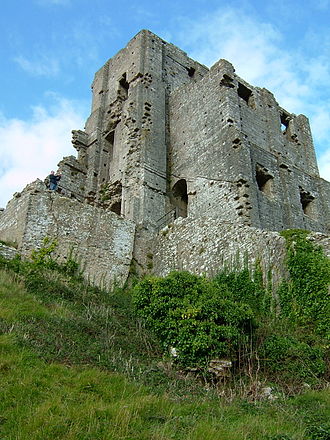
However, with the backing of the revered, future saint, Archbishop Dunstan it was Edward who was crowned. Following his coronation Edward honoured his father’s promises to his wife, confirming the gift of jurisdiction over the whole of Dorset as Ælfthryth’s dower. As a consequence, Ælfthryth and her son, Æthelred, settled at Corfe, in the Purbeck Hills; it was a large estate surrounding a defensive mound, which would later become the Norman stronghold of Corfe Castle.

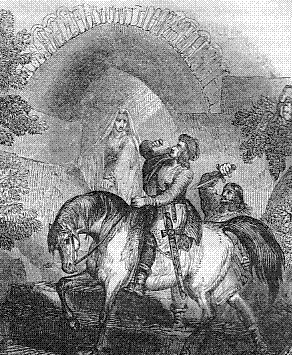
And it was at Corfe on 18th March 978 that Ælfthryth’s reputation was irrevocably damaged, following a visit from 16-year-old King Edward. Whether Edward had been out hunting, or was in the area to specifically visit his stepmother and half-brother seems to be uncertain. However, he did send a message that he would be calling on them and Ælfthryth’s retainers were awaiting the young king at the gate, when he arrived with a small retinue. Still sitting in the saddle he was handed a drink; and stabbed. It must have been a horrific sight, as the king’s horse panicked and bolted, racing off with Edward’s foot stuck in the stirrup and the dying king being dragged along behind.

330px-Ethelred_the_Unready
Æthelred II the Unready

The Anglo-Saxon Chronicle recorded:

No worse deed than this was ever done by the English nation since they first sought the land of Britain. Men murdered him, but God hath magnified him. He was in life an earthly king. He is now after death a heavenly saint.¹

Although Edward’s brother, Æthelred, only around 10 years old but now king of England, was above suspicion due to his age, Ælfthryth had no such protection. Some traditions go so far as to accuse Ælfthryth of wielding the dagger herself. However, while most believe she was complicit in the murder, it is by no means certain and it is entirely possible that court malcontents, who had migrated to Æthelred’s corner, were responsible for the murder.

Ælfthryth rode out the ensuing furore and with her son as the new king, Ælfthryth was exonerated of any complicity; amid the necessity of stabilising the country, establishing the new reign and rescuing England’s reputation. Æthelred was crowned at Kingston, Surrey, on 4th May 979, a year after his brother’s death and just a few months after the reburial of Edward’s remains, with great ceremony, at Shaftesbury. A council was established to assist the young king in ruling the country, probably involving Queen Ælfthryth, who may have acted as regent during Æthelred’s minority; it also included the aging Dunstan, Archbishop of Canterbury, Æthelwold, bishop of Winchester, and Ælfhere, ealdorman of Mercia.

As Dowager Queen Ælfthryth’s dower lands in Rutland and east Suffolk helped to extend West Saxon rule over East Anglia as a whole.

Even when Æthelred was old enough to rule alone, Ælfthryth did not retire entirely. Following her son’s marriage to Ælfgifu of York, it was Ælfthryth who seems to have had the responsibility of raising their first-born son and ætheling, Æthelstan. Æthelstan died aged about 20 in 1014, 2 years before his father, and spoke warmly of his grandmother in his will. Æthelred and Ælfgifu had over 10 children together, including Æthelred’s eventual successor in 1016, Edmund II Ironside, before Ælfgifu died; Æthelred then married Emma of Normandy, mother of England’s future kings, Harthacnut by her 2nd husband, King Cnut, and Edward the Confessor by Æthelred.

As queen Ælfthryth had substantial influence over the nunneries of England; she ousted the abbess of Barking, a cousin of Edgar’s second wife, Wulfthryth.  She endowed convents at Amesbury and Wherwell; her granddaughter would eventually become abbess of the latter.

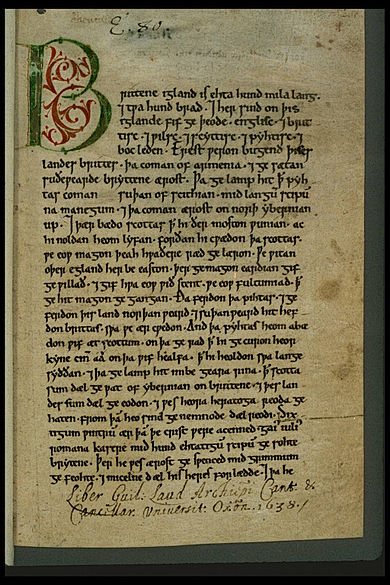
Peterborough.Chronicle.firstpage
The Anglo-Saxon Chronicle, Peterborough

And it was to Wherwell that the queen did eventually retire from the limelight, sometime before the year 1000, dying there on 17 November in either 999, 1000 or 1001.

Over a thousand years later Ælfthryth’s actions and reputation are still being debated by historians. While it is not inconceivable that she played a part in Edward the Martyr’s death, we also have to be aware that women of power and influence were much vilified in Medieval times; a strong, independent woman would be blamed for many crimes, simply because she dared to know her own mind….

While I am not entirely convinced of her innocence, neither am I certain of her guilt.

Ælfthryth’s career and influence, however, stretched far beyond that one action. As the first crowned queen of England, her prestige and honour is incomparable with those who had gone before her. And it is telling, perhaps, that her daughter-in-law, Ælfgifu of York, was never crowned, nor was accorded the title while her Ælfthryth still lived. The next crowned Queen of England was Æthelred’s second wife, Emma of Normandy, who married the king after his mother’s death.

*

Footnotes:

¹ Anglo-Saxon Chronicle quoted by Martin Wall in The Anglo-Saxons in 100 Facts.

*

Pictures:

Courtesy of Wikipedia

Sources:

Brewer’s British Royalty by David Williamson; Britain’s Royal Families, the Complete Genealogy by Alison Weir; The Wordsworth Dictionary of British History by JP Kenyon; The Anglo-Saxons in 100 Facts by Martin Wall; Kings, Queens, Bones and Bastards by David Hilliam; The Mammoth Book of British kings & Queens by Mike Ashley; The Oxford Companion to British History Edited by John Cannon; oxforddnb.com.

*

My Books:

Signed, dedicated copies of all my books are available through my online bookshop.

Coming on 15 June 2024: Heroines of the Tudor World

Heroines of the Tudor World tells the stories of the most remarkable women from European history in the time of the Tudor dynasty, 1485-1603. These are the women who ruled, the women who founded dynasties, the women who fought for religious freedom, their families and love. These are the women who made a difference, who influenced countries, kings and the Reformation. In the era dominated by the Renaissance and Reformation, Heroines of the Tudor World examines the threats and challenges faced by the women of the era, and how they overcame them. From writers to regents, from nuns to queens, Heroines of the Tudor World shines the spotlight on the women helped to shape Early Modern Europe.

Heroines of the Tudor World is now available for pre-order from Amberley Publishing and Amazon UK.

Out Now! Women of the Anarchy

Two cousins. On the one side is Empress Matilda, or Maud. The sole surviving legitimate child of Henry I, she is fighting for her birthright and that of her children. On the other side is her cousin, Queen Matilda, supporting her husband, King Stephen, and fighting to see her own son inherit the English crown. Women of the Anarchy demonstrates how these women, unable to wield a sword, were prime movers in this time of conflict and lawlessness. It show how their strengths, weaknesses, and personal ambitions swung the fortunes of war one way – and then the other.

Available from Bookshop.orgAmberley Publishing and Amazon UK.

Also by Sharon Bennett Connolly:

King John’s Right-Hand Lady: The Story of Nicholaa de la Haye is the story of a truly remarkable lady, the hereditary constable of Lincoln Castle and the first woman in England to be appointed sheriff in her own right. It is is available from King John’s Right-Hand Lady: The Story of Nicholaa de la Haye is the story of a truly remarkable lady, the hereditary constable of Lincoln Castle and the first woman in England to be appointed sheriff in her own right. Available from all good bookshops or direct from Pen & Sword Booksbookshop.org and AmazonDefenders of the Norman Crown: The Rise and Fall of the Warenne Earls of Surrey tells the fascinating story of the Warenne dynasty, from its origins in Normandy, through the Conquest, Magna Carta, the wars and marriages that led to its ultimate demise in the reign of Edward III. Available from Pen & Sword BooksAmazon in the UK and US, and Bookshop.org

Ladies of Magna Carta: Women of Influence in Thirteenth Century England looks into the relationships of the various noble families of the 13th century, and how they were affected by the Barons’ Wars, Magna Carta and its aftermath; the bonds that were formed and those that were broken. It is now available in paperback and hardback from Pen & Sword,  Amazon, and Bookshop.orgHeroines of the Medieval World tells the stories of some of the most remarkable women from Medieval history, from Eleanor of Aquitaine to Julian of Norwich. Available now from Amberley Publishing and Amazon, and Bookshop.orgSilk and the Sword: The Women of the Norman Conquest traces the fortunes of the women who had a significant role to play in the momentous events of 1066. Available now from Amazon,  Amberley Publishing, and Bookshop.org.

Alternate Endings: An anthology of historical fiction short stories including Long Live the King… which is my take what might have happened had King John not died in October 1216. Available in paperback and kindle from Amazon.

Podcast:

Have a listen to the A Slice of Medieval podcast, which I co-host with Historical fiction novelist Derek Birks. Derek and I welcome guests, such as Bernard Cornwell and Elizabeth Chadwick, and discuss a wide range of topics in medieval history, from significant events to the personalities involved.

*

Don’t forget! Signed and dedicated copies of all my books are available through my online bookshop.

For forthcoming online and in-person talks, please check out my Events Page.

You can be the first to read new articles by clicking the ‘Follow’ button, liking our Facebook page or joining me on Twitter and Instagram.

*

©2016 Sharon Bennett Connolly FRHistS

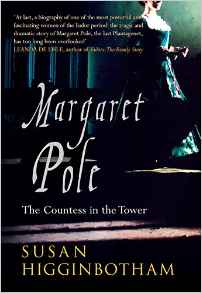
Book Corner: Margaret Pole, the Countess in the Tower by Susan Higginbotham

indexOf the many executions ordered by Henry VIII, surely the most horrifying was that of sixty-seven-year-old Margaret Pole, Countess of Salisbury, hacked to pieces on the scaffold by a blundering headsman.

From the start, Margaret’s life had been marred by tragedy and violence: her father, George, Duke of Clarence, had been executed at the order of his own brother, Edward IV, and her naive young brother, Edward, Earl of Warwick, had spent most of his life in the Tower before being executed on the orders of Henry VII.

Yet Margaret, friend to Katherine of Aragon and the beloved governess of her daughter Mary, had seemed destined for a happier fate until religious upheaval and rebellion caused Margaret and her family to fall from grace. From Margaret’s birth as the daughter of a royal duke to her beatification centuries after her death, Margaret Pole: The Countess in the Tower tells the story of one of the fortress’s most unlikely prisoners.

Margaret Pole: the Countess in the Tower tells the story of an amazing woman who navigated two eras of history. Born into the Medieval world, during the reign of her uncle, Edward IV, she survived the change of dynasty and prospered during the reign of Henry VII; marrying and starting a dynasty of her own. During the reign of Henry VIII, she was accorded the title of Countess of Salisbury in her own right, and given the charge of her cousin’s most prized possession; his only daughter and heir, Mary Tudor.

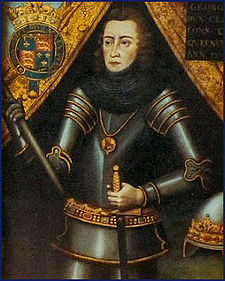
George_Plantagenet,_Duke_of_Clarence
George, Duke of Clarence – Margaret’s father

Susan Higginbotham tells Margaret’s story in great detail. Starting with a childhood marred by  her father’s attainder and execution by his own brother – Edward IV – the reader is drawn into Margaret’s life and family. From the highs of being governess to the princess, through the lows of her years of imprisonment in the Tower, and eventual execution at an age – 67 – when she should have been allowed to spend her days in quiet retirement, surrounded by her grandchildren; Susan Higginbotham tells a fascinating story of family tragedy, national politics and religious upheaval.

What Margaret thought of the death of her uncle Richard III we cannot know, but as she rode south on the orders of the new King Henry, she must have done so with some trepidation. Orphaned, with her closest relative a boy younger than herself, she had no powerful male relations to speak up for her, nor could her female ones be of much help. Her paternal grandmother, Cecily Neville, Duchess of York, was the mother of a defeated king; her maternal grandmother, Anne Beauchamp, Countess of Warwick, had been stripped of her lands during Edward IV’s reign….Thus, young Margaret’s future rested largely in the hands of a man neither she nor most other people in England had even met.

Engaging and sympathetically told, Susan Higginbotham’s narrative is a joy to read. It draws you in to Margaret’s life, relating her fears and hopes – and a deep and enduring love for her family.

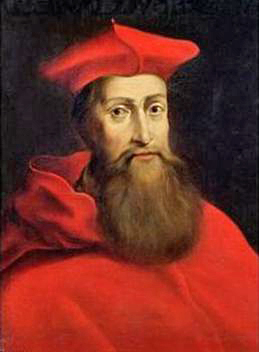
Cardinal_Reginald_Pole
Cardinal Reginald Pole – Margaret’s most famous son

Susan Higginbotham has undertaken an incredible amount of research for this book, an endeavour which shines through on every page. The author has reconstructed Margaret Pole’s life and death, using every primary source available. Highlighting contradictions and explaining omissions, she takes the countess’s story from her earliest days to her final, dreadful moments… and beyond. Included at the end of the book is an appendix of over 30 pages of written evidence taken in the Exeter Conspiracy; a conspiracy involving at least 2 of her sons, which would see her imprisoned in the Tower for years before she was sent to the executioner’s block. It made for some absorbing reading late into the night.

All the key players in Margaret’s story are discussed, their actions and influence on Margaret’s life analysed and assessed. From Henry VIII to Princess Mary and Margaret’s own children. Susan Higginbotham’s analysis is unrivalled, her words painting vivid portraits of all the main characters who had a part to play Margaret’s life and explaining her relationships in detail.

Moreover, Margaret’s story is firmly placed in the wider context of English and European politics of the time; and in the great upheaval of the Reformation. Where there is contention, the author presents all possible arguments, before giving her own opinion and explaining her reasoning. She makes clear where information is lacking and highlights where she is providing her own theory and opinions.

In my recent interview with her, I asked Susan Higginbotham if she saw Margaret as a victim or a heroine, and she replied:

I would say a heroine, because she had strong beliefs which she maintained in the face of pressure, and she conducted herself with courage and dignity throughout adversity. I don’t think she would like to be remembered as a victim.

330px-Unknown_woman,_formerly_known_as_Margaret_Pole,_Countess_of_Salisbury_from_NPG_retouched
Margaret Pole, Countess of Salisbury

This biography of Margaret reinforces Susan Higginbotham’s statement. Margaret is portrayed as a strong, independent woman, who had raised a large family single-handed, following the death of her husband. Margaret had a strong faith and demonstrated great loyalty to the Tudor dynasty. Her courage and strength of purpose shines through on every page – as does her intelligence. Margaret Pole was no meek and feeble woman, she stood up for her beliefs, herself and her family, while always maintaining her loyalty to the crown.

Susan Higginbotham treats Margaret Pole with great compassion and dignity, telling her story – and that of her family – in such an engaging manner that the book is impossible to put down. Knowing how events will eventually play out makes it no less compelling.

It is a fascinating story and – ultimately – a sad one; however, it’s also a story of faith, courage and perseverance. Margaret Pole: the Countess in the Tower is a wonderful read – shining a light on the life of a woman whose story deserves to be told.

*

Pictures courtesy of Wikipedia

*

My book, Heroines of the Medieval World,  is now available in hardback in the UK from both Amberley Publishing and Amazon UK and worldwide from Book Depository. It is also available on Kindle in both the UK and USA and will be available in Hardback from Amazon US from 1 May 2018.

Be the first to read new articles by clicking the ‘Follow’ button, liking our Facebook page or joining me on Twitter.

*

©Sharon Bennett Connolly 2016

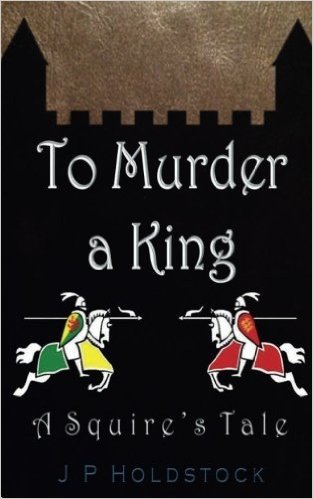
Book Corner: To Murder a King by James Holdstock

41DpuNqWh7L._SX311_BO1,204,203,200_My latest book review, of James Holdstock’s amazing To Murder a King has gone live over at The Review today!
To Murder A King is the first book in James Holdstock’s A Squire’s Tale series. While it is aimed at teenage readers it is a fabulous tale for all ages. A story of murder and intrigue with a little bit of the dark arts thrown in it leaves you gripped from the first pages. Of course, it doesn’t hurt that the greatest knight in history, William Marshal, has a leading role!
This novel is a fabulous adventure set in the early days of the reign of King John. Suitable for children from, about 9 and above, it is an enjoyable, entertaining read – even for an adult. It tells the story in such a way that children also learn about medieval life, politics and warfare; and even the prejudices of Normans towards Saxons….

To read the full review of this fantastic novel – and to enter the prize draw and be in with a chance of winning a paperback copy in the giveaway, simply visit The Review and leave a comment. Good luck!
*
My book, Heroines of the Medieval World,  is now available in hardback in the UK from both Amberley Publishing and Amazon UK and worldwide from Book Depository. It is also available on Kindle in both the UK and USA and will be available in Hardback from Amazon US from 1 May 2018.

Be the first to read new articles by clicking the ‘Follow’ button, liking our Facebook page or joining me on Twitter.

*

©Sharon Bennett Connolly 2016

The Short Life and Sad Death of Edward the Martyr

330px-Edward_the_Martyr_-_MS_Royal_14_B_VI
Edward the Martyr

Poor Edward the Martyr is one of the great ‘what ifs’ of Medieval history. It’s not that he was anything special in the kingly department, it’s simply that he didn’t get the chance to be – or to not be – any kind of king.

Born around 962 he was the eldest son of Edgar the Peaceable, king of England. His mother was Æthelfled “the Fair”, daughter of Ealdorman Ordmaer. There seems to be some confusion as to Æthelfled’s actual status (not surprising given the distance of over 1,000 years, I suppose). Some sources say she and Edgar were married, but later divorced. However, others suggest that young Edward’s legitimacy was in doubt and that his parents never married. This last is compounded by suggestions of ‘youthful indiscretion’ on Edgar’s part.

Nothing is heard of Edward’s mother after his birth, possibly suggesting that she died shortly after. Edgar, however, married again – or at least formed another relationship. His 2nd wife was Wulfthryth, with whom he had a daughter, Edith (Eadgyth). Wulfryth became the abbess of  Wilton and young Edith followed her mother into the convent.

And then Edgar formed a 3rd and final relationship that would have far-reaching consequences for his first-born son, Edward. Edgar married the daughter of Ordgar, a powerful Devon thegn who died in 971. Unlike Edgar’s previous ‘wives’, Ælfryth was crowned and anointed as queen, following her marriage with Edgar, which was officially blessed by the church. Ælfryth gave Edgar 2 sons; Edmund, who died in 971  and Æthelred, born in 968.

EdwardMartyr
Coin of Edward the Martyr

Both Edward and Edmund appear in a charter of 966, as witnesses to the foundation of the New Minster at Winchester. Curiously, Edward’s name appears below that of his half-brother, suggesting Edmund was regarded as his father’s heir, rather than his older sibling.

Little is known of Edward’s childhood; according to Byrthferth of Ramsey he was fostered for some years by Sideman, bishop of Crediton and protégé of Ælfhere, ealdorman of western Mercia and the most powerful ealdorman in England at the time.

When his father died in 975, Edward, at 13 years of age but with doubtful legitimacy, was one of 2 rival candidates for the crown. Edward was up against his baby brother, Æthelred; undoubtedly legitimate but only 6 or 7 years old. With both too young to make an independent bid for power, each boy was backed by court factions.

Æthelred’s mother, Ælfryth, garnered support for her son from Æthelwold, bishop of Winchester, Byrhtnoth, ealdorman of Essex, and Æthelwine, ealdorman of east Anglia and brother of  Ælfrythf’s 1st husband. However, Edward had the backing of ealdorman  Ælfhere and, possibly, Oswald, archbishop of York. However, the crucial support came from Dunstan, the highly influential and saintly archbishop of Canterbury, who crowned Edward personally.

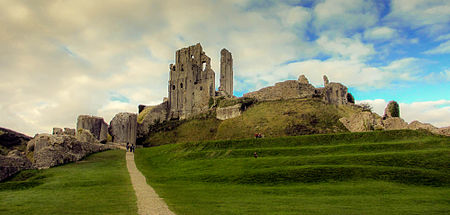
330px-Corfe_Castle2
Corfe Castle

We know very little of Edward the Martyr, and what we have is contradictory to the extreme. According to Byrthferth, Edward himself was known for having a hot temper; a temper which instilled fear within the people of his own household. However, Osbern maintained that men had a good opinion of Edward.

With Edward too young to rule alone,  Ealdorman Ælfhere held the reins of government. Only 3 charters have survived, 2 of which were issued in Crediton, Edward’s childhood home. The regime’s influence seem to be very limited the further north you look, especially in the Danelaw. In the Five Boroughs region (including Stamford and Lincoln), coinage was below the standard of that of his father, Edgar. The short reign was overshadowed by a backlash to Edgar’s previous ecclesiastical policies, seeing a violent reaction against the expansion of the reformed monasteries; however, Edward retained the support of Dunstan, who did much to influence church policy and direction.

Dunstan’s influence saw  him call a meeting of councillors in Calne in 978. Held in an upper room, the meeting turned into disaster when the floor gave way. Many councillors were killed or injured; however, Dunstan, possibly in his early 70s by then, miraculously survived when the rafter on which he was standing was the only one that didn’t give way.

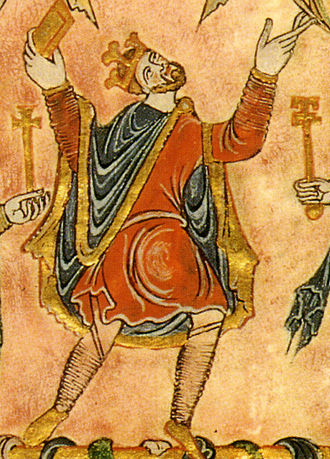
330px-A_Chronicle_of_England_-_Page_072_-_Edward_Murdered_at_Corfe
Aelfryth presenting Edward with a drink

Edward seems to have been benevolent towards his stepmother, bearing her no ill will following her attempts to claim the throne for her own son. He allowed Ælfryth to claim her part of his father’s dower and thus confirmed her jurisdiction over the whole of Dorset. She and Æthelred settled at Corfe, a castle and large estate in the Purbeck Hills.

Ælfryth, however, may have been less forgiving and unwilling to settle for her son being Edward’s heir. When the opportunity presented itself, she is said to have jumped at it, with few qualms.

In March 978 Edward had decided to visit his half-brother at Corfe; arriving on the evening of 18th March, with only a small band of men accompanying him. According to  the chronicles, he was met at the gates of Corfe Castle by Ælfryth’s retainers; he had probably sent ahead to warn of his arrival and would have expected a welcome, someone to take his horse and lead him into the castle. Sources vary, some suggesting that he was presented with a cup; so he could quench his thirst after a long ride.

What is certain, is that Edward was pulled from his horse and stabbed – murdered. Following the stabbing, Edward’s horse bolted; with the dying king’s foot caught in the styrrup, he was dragged along the ground for some considerable distance.

He was 16.

Death_of_edward_martyr
The murder of Edward

He was buried quickly and without ceremony somewhere close by – possibly Wareham. With Æthelred considered too young to be guilty, the finger of accusation pointed straight at his mother, Ælfryth.

An anointed king was seen as God’s representative on earth, with regicide being viewed as a heinous crime. In spite of this, Edward’s killers escaped punishment. Ælfryth was the prime suspect. As late as 40 years after the killing, Archbishop Wulfstan of York laid the blame firmly at her door, in the D text of the Anglo-Saxon Chronicle, which opined:

No worse deed than this was ever done by the English nation since they first sought the land of Britain. Men murdered him, but God hath magnified him. He was in life an earthly king. He is now after death a heavenly saint.¹

However, given the political reality of her position as mother of the king, it was expedient for her to remain beyond suspicion. Although Ælfryth appears guilty, and many fingers pointed at her, it is just as likely that one of her household, as supporters of Æthelred, formed the conspiracy to advance their own aims; having a king on the throne who owes you his crown can be useful to your career.

We will never know.

Although the crown was not conferred on Æthelred straight away, whatever the dowager queen’s actions, at between 9 and 11 years old, at most, her son was now the only candidate for the succession. However, it was only after an interregnum and a period of negotiations that the crown was settled on Æthelred.

Almost a year after Edward’s death, the young king was exhumed by Ealdorman Ælfhere. Edward’s erstwhile supporter stayed a couple of days at Wareham before escorting the body to the nunnery at Shaftesbury. It was only after Edward was safely re-buried with the honour to which he was entitled as king, that Æthelred was crowned by Archbishop Dunstan; on 4th May 979.

Edward was soon venerated as a saint and martyr with Æthelred himself championing his brother’s cult, translating Edward’s bones to a new shrine at Shaftesbury Abbey in 1001. A grant of that year, in favour of Shaftesbury, stated that the gift was being made to God and to

“his saint, my brother Edward, whom drenched with his own blood, the Lord has seen fit to magnify in our time through many miracles.”²

Shaftesbury_Abbey
Shaftesbury Abbey

During the Dissolution of the Monasteries in the 16th century, Shaftesbury Abbey was destroyed and Edward’s shrine lost. However, in 1931 his grave was discovered and his bones were removed to a bank vault in Croydon, as neither the Churches of England or Rome would take the relics for reburial. Tests on the remains, in 1970, seemed to confirm they were Edward’s, the injuries on the bones being consistent with the wounds Edward is known to have received. The young king’s remains were finally removed from the bank, in September 1984, to be interred in a shrine in the Russian Orthodox Cemetery at Brookwood, Surrey.

And despite the fact Shaftesbury would like to have Edward back, so far as I can discover he remains the only Saxon king to be resting in a Russian Orthodox cemetery.

*

Footnotes: ¹ Anglo-Saxon Chronicle quoted by Martin Wall in The Anglo-Saxons in 100 Facts; ² AS chart., S899 quoted by Cyril Hart in Oxforddnb.com.

*

Pictures courtesy of Wikipedia

Sources: Brewer’s British Royalty by David Williamson; Britain’s Royal Families, the Complete Genealogy by Alison Weir;The Wordsworth Dictionary of British History by JP Kenyon; The Anglo-Saxons in 100 Facts by Martin Wall; Kings, Queens, Bones and Bastards by David Hilliam; The Mammoth Book of British kings & Queens by Mike Ashley; The Oxford Companion to British History Edited by John Cannon; oxforddnb.com.

*

My Books

Signed, dedicated copies of all my books are available through my online bookshop.

Out Now! Women of the Anarchy

Two cousins. On the one side is Empress Matilda, or Maud. The sole surviving legitimate child of Henry I, she is fighting for her birthright and that of her children. On the other side is her cousin, Queen Matilda, supporting her husband, King Stephen, and fighting to see her own son inherit the English crown. Women of the Anarchy demonstrates how these women, unable to wield a sword, were prime movers in this time of conflict and lawlessness. It show how their strengths, weaknesses, and personal ambitions swung the fortunes of war one way – and then the other.

Available from Bookshop.orgAmberley Publishing and Amazon UK.

Coming on 15 June 2024: Heroines of the Tudor World

Heroines of the Tudor World tells the stories of the most remarkable women from European history in the time of the Tudor dynasty, 1485-1603. These are the women who ruled, the women who founded dynasties, the women who fought for religious freedom, their families and love. These are the women who made a difference, who influenced countries, kings and the Reformation. In the era dominated by the Renaissance and Reformation, Heroines of the Tudor World examines the threats and challenges faced by the women of the era, and how they overcame them. From writers to regents, from nuns to queens, Heroines of the Tudor World shines the spotlight on the women helped to shape Early Modern Europe.

Heroines of the Tudor World is now available for pre-order from Amberley Publishing and Amazon UK.

Also by Sharon Bennett Connolly:

King John’s Right-Hand Lady: The Story of Nicholaa de la Haye is the story of a truly remarkable lady, the hereditary constable of Lincoln Castle and the first woman in England to be appointed sheriff in her own right. It is is available from King John’s Right-Hand Lady: The Story of Nicholaa de la Haye is the story of a truly remarkable lady, the hereditary constable of Lincoln Castle and the first woman in England to be appointed sheriff in her own right. Available from all good bookshops or direct from Pen & Sword Booksbookshop.org and AmazonDefenders of the Norman Crown: The Rise and Fall of the Warenne Earls of Surrey tells the fascinating story of the Warenne dynasty, from its origins in Normandy, through the Conquest, Magna Carta, the wars and marriages that led to its ultimate demise in the reign of Edward III. Available from Pen & Sword BooksAmazon in the UK and US, and Bookshop.org

Ladies of Magna Carta: Women of Influence in Thirteenth Century England looks into the relationships of the various noble families of the 13th century, and how they were affected by the Barons’ Wars, Magna Carta and its aftermath; the bonds that were formed and those that were broken. It is now available in paperback and hardback from Pen & Sword,  Amazon, and Bookshop.orgHeroines of the Medieval World tells the stories of some of the most remarkable women from Medieval history, from Eleanor of Aquitaine to Julian of Norwich. Available now from Amberley Publishing and Amazon, and Bookshop.orgSilk and the Sword: The Women of the Norman Conquest traces the fortunes of the women who had a significant role to play in the momentous events of 1066. Available now from Amazon,  Amberley Publishing, and Bookshop.org.

Alternate Endings: An anthology of historical fiction short stories including Long Live the King… which is my take what might have happened had King John not died in October 1216. Available in paperback and kindle from Amazon.

Podcast:

Have a listen to the A Slice of Medieval podcast, which I co-host with Historical fiction novelist Derek Birks. Derek and I welcome guests, such as Bernard Cornwell and Elizabeth Chadwick, and discuss a wide range of topics in medieval history, from significant events to the personalities involved.

*

Don’t forget! Signed and dedicated copies of all my books are available through my online bookshop.

For forthcoming online and in-person talks, please check out my Events Page.

You can be the first to read new articles by clicking the ‘Follow’ button, liking our Facebook page or joining me on Twitter and Instagram.

*

©2016 Sharon Bennett Connolly FRHistS.

Book Corner: An interview with Susan Higginbotham

indexToday, History…the Interesting Bits is delighted to be the final stop on Susan Higginbotham‘s amazing Blog Tour. Susan’s latest book, Margaret Pole; The Countess in the Tower was released earlier this month. It tells the fascinating story of Margaret, countess of Salisbury, niece of Edward IV and Richard III and cousin of Henry VIII.

The book has just arrived on my doormat, so look out for a review shortly. For now, Susan was kind enough to sit through an interview and answer my grueling (not really, I hope) questions…..

Hi Susan, thank you for joining us today – and welcome to History…the Interesting Bits.

Congratulations on the release of your new book, Margaret Pole: The Countess in the Tower. I can’t wait to read and review it. In the meantime…

I believe you are a qualified lawyer, what made you become a writer?

I actually became a lawyer late in life–I was in my thirties when I went to law school–but I’ve been writing since I was a child. I piled up a modest stack of rejected contemporary-set novels until around 2005, when I became intrigued with the history of Edward II’s reign and began to read up on the subject. This led me to his niece, Eleanor de Clare, and I decided her life would be a wonderful subject for a historical novel. I ended up self-publishing it as The Traitor’s Wife. Sourcebooks here in the United States picked it up, and I’ve been writing historical fiction for that publisher ever since.

After writing historical fiction for a few years, and researching the Wars of the Roses, I became frustrated that there was no nonfiction book focusing on the Woodville family, except for a self-published book by an author who hated the whole lot of them, so I decided to write one myself. That led me into writing nonfiction for publishers in the U.K.

What made you write about Margaret Pole? What is it about her that fascinates you?

330px-Unknown_woman,_formerly_known_as_Margaret_Pole,_Countess_of_Salisbury_from_NPG_retouched
Margaret Pole, Countess of Salisbury

It was actually my publisher that suggested her as a subject, but as I researched her story I found a number of things that intrigued me about her, one of which is the way her story straddles the transition between what we think of as “medieval” and what we think of as “Renaissance.” And her life intersects with that of larger-than-life figures such as Henry VIII, his first and second queens, and Thomas More.

She survived some of the greatest events to shape English history, but eventually lost her life, how do you see her, as a victim or a heroine?

I would say a heroine, because she had strong beliefs which she maintained in the face of pressure, and she conducted herself with courage and dignity throughout adversity. I don’t think she would like to be remembered as a victim.

Margaret Pole’s story happens across two eras – the Wars of the Roses and the Tudors – which is your favourite period of history?

I love them both!

You write both history and historical fiction – which is the easiest and which the most fun?

51lmZWdly4L._SX331_BO1,204,203,200_
Hanging Mary by Susan Higginbotham

Historical fiction, definitely. I research them both similarly, but the sheer mechanics in writing history–the references, the citations–is daunting. And whereas with history, we often have to say simply “we don’t know” (which readers hate to hear!), with historical fiction we can supply an answer.

Do you feel that, as a historian, you have a duty to get the history right – even in your fiction?

Yes, definitely.  Like it or not, many people get their history exclusively from historical fiction, and bad history has enormous staying power.

What do you enjoy most about writing as a career?

I love it when I’ve touched a reader’s emotions, or given a reader information that has intrigued or excited him or her.

What is the worst thing about writing for a career?

It’s not particularly lucrative except for a few people. Most writers have to either keep a full-time job (as I do) or rely on another source of income to pay the bills.

How do you organise your writing day?

Not very well. I work full-time during the day, so most of my writing is done at night, but it’s hard to keep myself from goofing off after a hard day’s work! Fortunately, I work at home and have flexible hours, so if I’m feeling inspired, I can drop what I’m doing on my work computer and move to my writing computer.

How many projects do you have going at once, or do you concentrate on one at a time?

I’m working on two at the moment–one fiction, one nonfiction.

How long do you spend researching your subject before you start writing? How long does it take to do a project from start to finish?

I tend to do the ground research for a couple of months, then supplement my research as I go along, since questions always arise during the writing process. It usually takes me about a year to do a project.

Who are your favourite personalities from history?

Abraham_Lincoln_O-77_matte_collodion_print
Abraham Lincoln

My historical hero is Abraham Lincoln, and my literary hero is Charles Dickens. Pretty much anyone I’ve written about in the medieval and Tudor eras are among my favorites.

What era that you haven’t yet written about, would you like to get your teeth into?

Maybe revolutionary-era France and revolutionary-era America. The latter especially has interested me more as of late, and I’m getting ready to move to a part of the country that will give me a lot more opportunities to improve my knowledge of the era.

A lot of your work has been about women in history? What attracted you to writing their stories?

I’ve never really made a conscious decision to focus on women instead of men, but I’m attracted to people whose stories are less well-known, and I can’t write battle scenes for squat, so I’ve gravitated more toward women’s stories over the years.

Do you ever get writer’s block? If so, how do you get around it?

I don’t get writer’s block so much as I get just plain lazy or distracted by other things. Having a deadline hanging over my head helps me to get around it.

Do you find social media – such as Facebook – a benefit or a hindrance?

Both, really. I love connecting with people on social media, especially since it’s a chance to discuss topics I don’t get to discuss very often with people face-to-face. But it can be a tremendous distraction from the writing process.

How do you pick your subjects? What is be your next project?

Anne_stanhope
Anne Seymour, Duchess of Somerset

I look for someone who intrigues me and who hasn’t been done to death–I’ve always been fascinated by Anne Boleyn, for instance, but I really can’t imagine that I would have anything to say about her that hasn’t been said already. My next fictional project will be about Mary Lincoln, wife to the President of the United States, and her half-sister Emilie Helm, married to a Confederate general. My next book for Amberley will be about Anne Seymour, Duchess of Somerset, a much-maligned lady who lived through the reigns of all of the Tudor monarchs.

Thank you so much for agreeing to an interview, and for taking the time to answer my questions – I hope they weren’t too onerous.

Margaret Pole; The Countess in the Tower is available from Amazon in the UK and US.

*

My book, Heroines of the Medieval World,  is now available in hardback in the UK from both Amberley Publishing and Amazon UK and worldwide from Book Depository. It is also available on Kindle in both the UK and USA and will be available in Hardback from Amazon US from 1 May 2018.

Be the first to read new articles by clicking the ‘Follow’ button, liking our Facebook page or joining me on Twitter.

*

©Sharon Bennett Connolly 2016