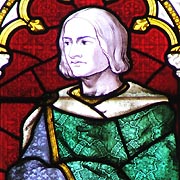
Richard of Conisbrough, the Traitorous Earl

Richard_of_Conisburgh,_3rd_Earl_of_Cambridge
Richard of Conisbrough, Earl of Cambridge

Richard of Conisbrough seems to have been a very controversial figure throughout his life, from questions of his paternity, through his secret marriage, to his untimely death for his involvement in a particularly ill-thought-out plot.

He and I were born within 3 miles (and, of course, 6 centuries) of each other. As a student, I even gave guided tours at the Castle in which he was born, something I have returned to doing in recent years. T

The man is a fascinating, and yet such a shadowy, figure. The grandfather of both Edward IV and Richard III, he seems to have been a mediocre diplomat and soldier, and his eventual treason barely registers in the history books.

Richard’s birth is obscured by time. Although sources seem undecided, the most likely date of his birth appears to be 1386 (although some place it as early as 1375). He was a grandson of Edward III through his father, Edmund of Langley, 1st Duke of York; and his mother, Isabella of Castile (sister of John of Gaunt’s wife, Constance), was described by chronicler Thomas of Walsingham as having ‘loose morals’. She and Edmund were said by Froissart to be an ill-matched pair. However, recent research suggests otherwise, as does the fact Edmund requested to be buried beside Isabella, when the time came.
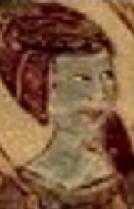
Isabella_of_Castile-Langley
Isabel of Castile

Edmund and Isabella married in 1372, two children soon followed; Edward of Norwich in c.1373 and Constance in c.1374. It is argued that the couple’s relationship cooled soon after, as no other children were forthcoming for over 10 years. Of course, we do not know if Isabella experienced any miscarriages during that time or how much time the couple were able to spend together, given Edward III died in 1377 and the minority of Richard II saw the political upheaval of the Peasants’ Revolt. But in 1381, Isabella and their 8-year-old son, Edward, accompanied Edmund to the Iberian Peninsula, joining John of Gaunt’s failed expedition to claim the Castilian throne, suggesting Edmund and Isabella were still close as a couple. As a result, the arrival of Richard of Conisbrough in 1386 should not be a big surprise, although it is said to have raised some eyebrows at the time. Rumours of an affair between Isabella and John Holland, first Duke of Exeter, which arose 40 years after Isabella’s death, appear to have muddied her character and repuation.

The fact that Richard of Conisbrough’s father and brother, both, left him out of their wills has fuelled the accusations of Isabella’s faithlessness. However, leaving a son out of your will was not entirely unusual – Edmund of Langley was, in fact, left out of his own father’s will (that of Edward III). It could simply be that Edmund did not include Richard as his mother had already made provision for their youngest son. As for his brother Edward, my research suggests that Richard of Conisbrough was already dead by the time he made his will. At the time of Isabella’s death, moreover, Duke Edmund was still in debt due to the failed Castilian expedition, and so Isabella’s will gave provision for her younger son whilst protecting the incomes of her husband and older son.

180px-Edmund_of_Langley_2C_Duke_of_York
Edmund of Langley, 1st Duke of York

Isabella died on 23rd December 1392. Her will made Richard II her heir, but specifically asked him to provide an annual pension of 500 marks for her youngest son. Richard’s allowance was paid regularly until 1399, but following the deposition of Richard II and accession of Henry IV, payments were made only sporadically and Richard of Conisbrough became the Royal Family’s ‘poor relation’.

Richard of Conisbrough’s father, Edmund of Langley, died in 1402 and the dukedom of York passed to Richard’s older brother, Edward.

Although his regular pension petered out under Henry IV, Richard’s career was largely unremarkable. In 1403/4 he was given command of a small force to defend Herefordshire against the last native prince of Wales, Owain Glyndwr. Richard was able to make several connections in the area; most notably with the Mortimer family. The Mortimers were cousins of Richard’s through the marriage of Lionel, Duke of Clarence’s daughter Philippa (Edward III’s granddaughter) to Edmund Mortimer, 3rd Earl of March.
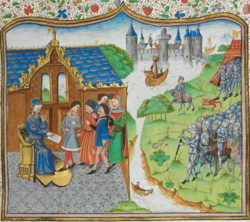
Edmund_of_Langley_remonstrating_with_the_King_of_Portugal_-_Chronique_d'_Angleterre_(Volume_III)_(late_15th_C),_f.186r_-_BL_Royal_MS_14_E_IV
Edmund of Langley and the King of Portugal

Richard of Conisbrough secretly married Anne Mortimer (Philippa’s granddaughter) sometime in 1406. The couple had married without royal or parental consent. Neither had they obtained the papal dispensation required due to their being second and fourth cousins, which was only received in 1408.

The relationship is thought to have been a love-match as Anne seems to have been as destitute as her husband. Born in December 1390, Anne’s family were close to Richard II; her father, Roger Mortimer, being seen as his possible heir until his death in 1398. Viewed as rivals claimants by the new King, Henry IV, Anne’s fortunes changed in 1399 and  she was described as ‘destitute’ after her mother’s death in 1405.

The marriage of Anne and Richard produced 2 children; Isabella was born in 1409 and Richard, later Duke of York, was born in 1411. Not yet 21 years old, Anne herself died in September 1411, probably due to complications following the birth of her son. She was buried at the York mausoleum at Kings Langley, alongside Edmund of Langley and Isabella of Castile.
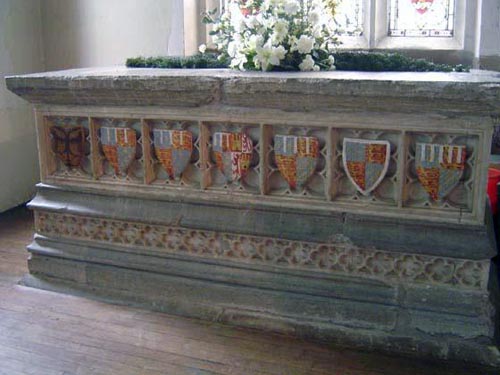
82634424_132521090790
Tomb of Edmund of Langley

Richard would marry as his second wife, sometime between 1411 and 1415, Maud daughter of Thomas, 6th Baron Clifford. Her marriage to John Neville, 6th Baron Latimer, had been annulled for non-consummation at Maud’s request. Following Richard’s death, Maud continued to live at his birthplace of Conisbrough Castle, dying there in 1446.

Richard was knighted by Henry IV in 1406, probably with a view to his escorting Henry’s daughter, Philippa, to Denmark, for her marriage to King Erik. Richard’s stay in Denmark was short and unremarkable; he was back in England 2 months after witnessing the wedding.

Little more is heard of Richard until he was created Earl of Cambridge in the reign of Henry V, in 1414. The earldom did not improve his prospects, as it came without the usual grants of land or revenue to support the title; Richard was thought to be the poorest of England’s Earls.
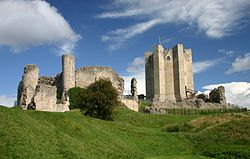
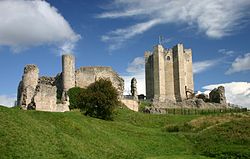
ConisbroughCastle
Conisbrough Castle

Fuelled by resentment Richard of Conisbrough, Earl of Cambridge, began plotting with Sir Thomas Grey and Henry 3rd Baron Scrope. Their scheme was to murder Henry V and his 3 brothers at Southampton, before their embarkation  for the invasion of France, and replace him with Richard’s brother-in-law, Edmund Mortimer, 5th Earl of March.

However, it seems unclear whether March himself was in on the plot as it was the Earl who revealed it to the king on the 31st July 1415.

Cambridge and his co-conspirators were quickly rounded up. Arrested as the ringleader and at just 30 years old, Cambridge’s honours and estates were declared forfeit. Despite pleas for mercy he was beheaded for treason at Southampton Green on 5th August 1415. He was buried in the Chapel of God’s House, Southampton.

220px-Richard_Plantagenet,_3rd_Duke_of_York
Richard Plantagenet, 3rd Duke of York

Although his honours were forfeit, Richard of Conisbrough was not attainted and his son remained his heir and was therefore able to inherit the dukedom of York, from his uncle Edward, following his death at Agincourt just 2 months later, in October 1415.

The 4-year-old Richard, Duke of York, was made a royal ward. He was raised by the Nevilles, a powerful northern family, and would marry Cecily Neville, youngest daughter of Ralph, 1st Earl of Westmorland, and his second wife, Joan Beaufort. The combination of his York and Mortimer inheritances not only made the Duke of York the wealthiest of England’s landowners, but also gave him a strong claim to the English throne. As a result, during the ineffectual reign of his cousin, Henry VI, Richard of York made a play for the crown.

His defeat and death at the Battle of Wakefield on 30 December 1460 meant he never became king, but his eldest son Edward took up the mantle and was proclaimed king on 4 March 1461, following this up with his overwhelming victory over the Lancastrians at the Battle of Towton on 29 March 1461.

With just a short interlude of 6 months in 1470/71, the Readeption of Henry VI, the Yorkist dynasty would rule for the next 24 years.

*

Photos: taken from Wikipedia, except that of the tomb of Edmund of Langley which is taken from findagrave.com

*

Sources: The History Today Companion to British History, edited by Juliet Gardiner & Neil Wenborn; Brewer’s British Royalty by David Williamson; Britain’s Royal Families, the Complete Genealogy by Alison Weir; The Wars of the Roses by John Gillingham; The Wordsworth Dictionary of British History by J.P. Kenyon; The Oxford Companion to British History, edited by John Cannon; The Reign of Edward III by WM Ormrod; The Wars of the Roses by Martin J Dougherty; englishmonarchs.co.uk; womenshistory.about.com; findagrave.com; conisbroughcastle.org.uk; hrionline.ac.uk.

*

My Books

Signed, dedicated copies of all my books are available through my online bookshop or the Contact Me page.

New releases in 2026:

New Hardbacks
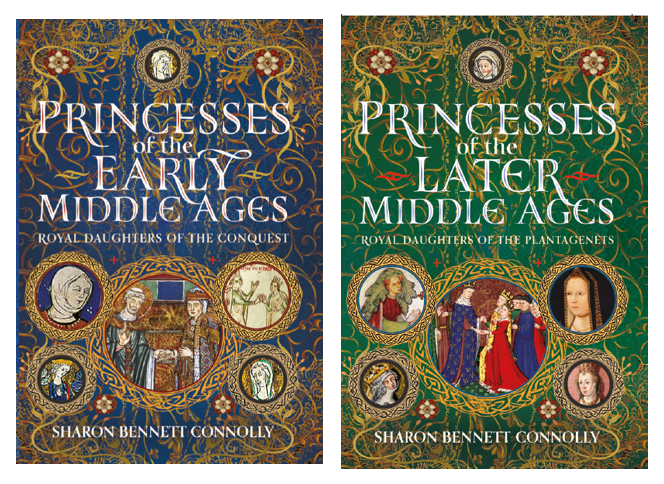
Books by Sharon Bennett Connolly

‘My daughter wanted me to treat her more like a princess. So, I married her to a stranger to strengthen the alliance with Poland!’

Princesses of the Early Middle Ages: Royal Daughters of the Conquest and Princesses of the Later Middle Ages: Royal Daughters of the Plantagenets tell the stories of England’s royal daughters from 1066 to the rise of the Tudors, from the last Anglo-Saxon princesses to the fall of the House of York.

Were they really pampered pawns sent off to marriages on the Continent, out of sight and out of mind?

Perhaps, there was different story, where a foreign marriage does not mean eternal exile, but a purpose in life, where a princess is a diplomat, an ambassador for England in her new country.

Where she is the bond between allies – most of the time.

Their stories are touching, inspiring and, at times, heartbreaking...

Heidi Malagisi: ‘This is another excellent book by Sharon Bennett Connolly. Extremely well researched and relatively easy to follow along, which is a great thing because there are so many Matildas and Eleanors in this book.

Tony Riches: “I challenge anyone with an interest in medieval Britain to not find something they will learn from this book.

Anna Belfrage: “I just love how [Sharon] presents this huge cast of real life people in a casual, chatty tone that has me expecting the various female protagonists to suddenly pop their head up and add their own commentary.

Buy now: Princesses of the Early Middle Ages: Royal Daughters of the Conquest

Pre-order: Princesses of the Later Middle Ages: Royal Daughters of the Plantagenets 

New in Paperback:
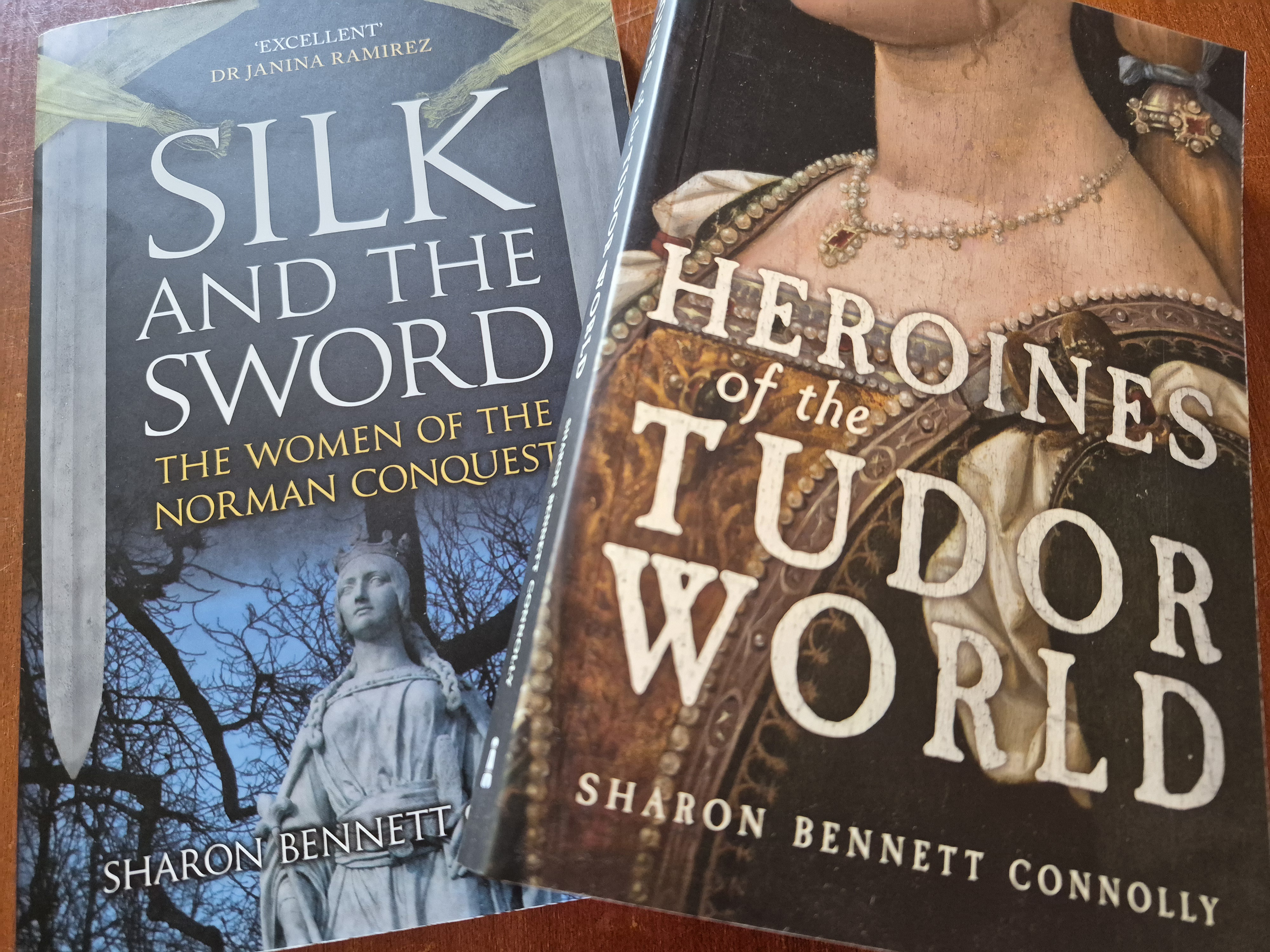
Books by Sharon Bennett Connolly

OUT NOW! 

The momentous events of 1066, the story of invasion, battle and conquest, are well known. But what of the women? Silk and the Sword: The Women of the Norman Conquest traces the fortunes of the women who had a significant role to play during the Norman Conquest – wives, lovers, sisters, mothers, leaders. These are lives full of drama, pathos and sometimes mystery: Edith and Gytha searching the battlefield of Hastings for the body of Harold, his lover and mother united in their grief for the fallen king. Who was Ælfgyva, the lady of the Bayeux Tapestry, portrayed with a naked man at her feet?

Janina Ramirez said it’s ‘Excellent’!

Heroines of the Tudor World focuses on the women who lived through the Renaissance and Reformation, examining the threats and challenges they faced and how they overcame them. These are the women who ruled, the women who founded dynasties, the women who fought for religious freedom, their families and love. These are the women who made a difference, who influenced countries, kings and the Reformation.

Derek Birks: ‘An excellent account of the changing roles of women in Tudor society.’

Annie Whitehead: ‘What a treat this book was to read. Bennett Connolly has an easy, conversation style of writing which welcomes you from the opening pages and draws you into her story.

Also by Sharon Bennett Connolly:

Books by Sharon Bennett Connolly

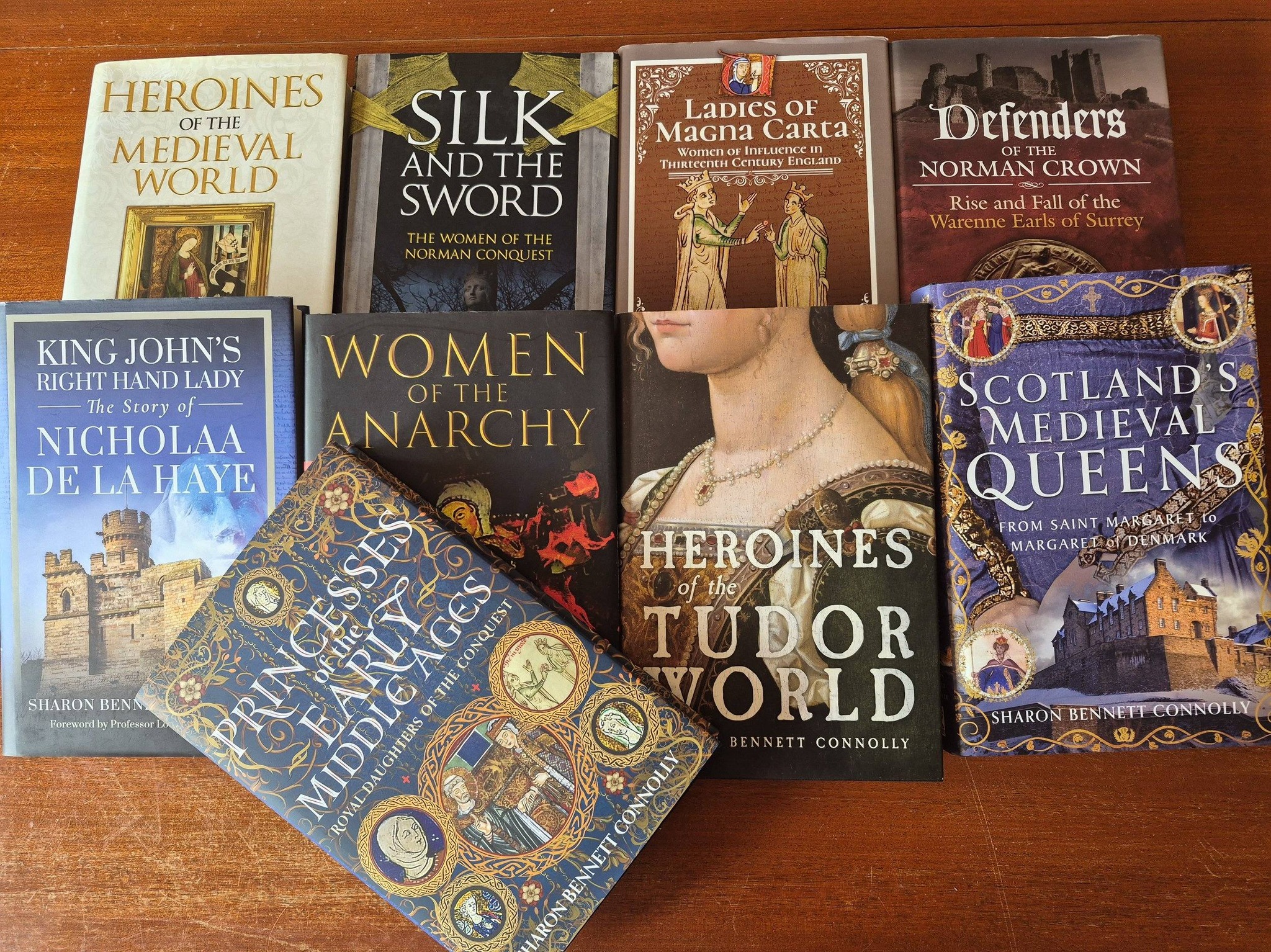
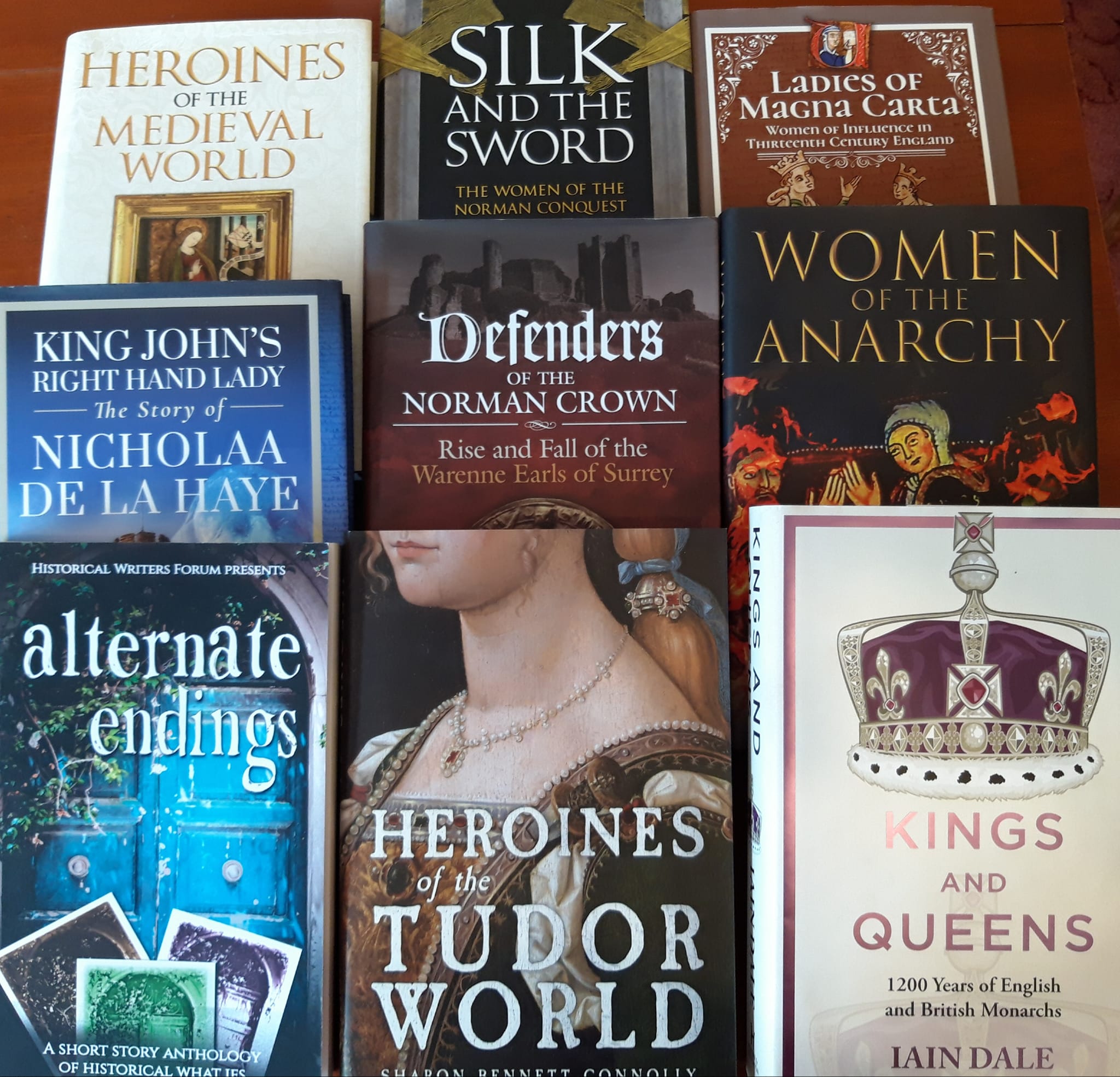
Heroines of the Medieval World; Silk and the Sword: The Women of the Norman Conquest; Ladies of Magna Carta: Women of Influence in Thirteenth Century England; Defenders of the Norman Crown: Rise and Fall of the Warenne Earls of Surrey; King John’s Right Hand Lady: The Story of Nicholaa de la Haye; Women of the Anarchy; Heroines of the Tudor World; Scotland’s Medieval Queens: From St Margaret to Margaret of Denmark; Princesses of the Early Middle Ages: Royal Daughters of the Conquest (March 2026); Princesses of the Later Middle Ages; Royal Daughters of the Plantagenets (August 2026)

Alternate Endings: An anthology of historical fiction short stories including Long Live the King… which is my take what might have happened had King John not died in October 1216. Available in paperback and kindle from Amazon.

All my books on Amazon and Bookshop.org . You can also order direct from my publishers, Pen and Sword Books and Amberley Publishing.

*

Podcast:

A Slice of Medieval

Have a listen to the A Slice of Medieval podcast, which I co-host with Historical fiction novelist Derek Birks. Derek and I welcome guests, such as Ian Mortimer, Bernard Cornwell, Elizabeth Chadwick and Scott Mariani, and discuss a wide range of topics in medieval history, from significant events to the personalities involved.

Every episode is also now available on YouTube.

*

Don’t forget!
Royal Historical Society

Signed and dedicated copies of all my books are available through my online bookshop.

For forthcoming online and in-person talks, please check out my Events Page.

You can be the first to read new articles by clicking the ‘Follow’ button, liking our Facebook page or joining me on Twitter and Instagram.

*

©2015 Sharon Bennett Connolly FRHistS
Isabella of Castile, the Controversial First Duchess of York, c.1355-1392

Isabella_of_Castile-Langley
Isabella of Castile

As the third daughter of Peter (or Pedro) the Cruel of Castile and his long-term mistress (and sometime wife) Maria of Padilla, Isabella of Castile‘s childhood was marred by her father’s battles to hold on to his throne and almost constant warfare with Aragon.

Peter was known in some areas as Peter the Cruel and in others as Peter the Just, depending which side of the conflict people were on. He received support from Edward III of England’s eldest son and heir Edward, the Black Prince, but Peter’s failure to pay the costs of the prince’s campaign,  his faithlessness, and the failing health of the Black Prince, meant the king of Castile was left to his own devices by 1367. Adding to Peter’s woes, his own nobles backed the king’s illegitimate brother, Henry of Tastamara, as an alternative candidate. Henry eventually defeated and killed Peter in March 1369.

Peter had been married, in June 1353, to the unfortunate French princess, Blanche de Bourbon, though some historians believe he had already married Maria de Padilla sometime before this. Whatever the case, Peter abandoned Blanche for Maria just 3 days after the wedding. Blanche was imprisoned in various castles, far away from the French border to prevent her rescue. Repeated calls from the French, for her to be released, went unheeded and the pope refused to excommunicate Peter for his actions. Blanche died at Medina Sidonia in 1361, though whether her death was by natural causes or assassination on Peter’s orders is disputed. One source claims Peter’s crossbowman was sent to kill Blanche. Another claims she was poisoned. While another suggests natural causes. With Peter and his brother Henry vying for the crown, misinformation his hard to filter.

Isabella was born sometime around 1355. Her mother died in 1361 and her 3-year-old brother, Alfonso, in 1362. In 1362, Peter had persuaded the Cortes to recognise his relationship with Maria as a legitimate marriage, and thus legitimise his 3 daughters, Beatrix, Constance and Isabella, making Beatrix his heir. However, Beatrix died in 1367 and son, on Peter’s death in 1369, it was Constance who inherited their father’s claim to the crown of Castile. The situation in Castile was precarious, to say the least and Constance was unable to pursue her claim. Her father had taken Constance and her sister to the English territory of Guyenne in 1366, where they had remained whilst Peter had tried to reclaim his crown from Henry. They remained in Bayonne as hostages against the repayment of the financial costs of the expedition. Following Peter’s death, the English took the princesses in and soon after, in September 1371, Constance was married to John of Gaunt, the third surviving son of Edward III, at Roquefort. John of Gaunt had become duke of Lancaster on marrying his first wife, Blanche of Lancaster, who had died in 1368; he saw this second marriage as an opportunity to gain a kingdom of his own. When the newly married couple returned to London, they brought Constance’s younger sister, Isabella, with them.

Edmund_of_Langley_remonstrating_with_the_King_of_Portugal_-_Chronique_d'_Angleterre_(Volume_III)_(late_15th_C),_f.186r_-_BL_Royal_MS_14_E_IV

Following Constance’s official entry into London, 16-year-old Isabella probably stayed with her sister and new brother-in-law at Gaunt’s house on the Thames, the Savoy. A year later, Edward III arranged for Isabella to marry Gaunt’s younger brother, Edmund of Langley. Edmund was the fifth son, fourth surviving of Edward III and Philippa of Hainault. Born in 1341, Edmund was 14 years older than his bride. They were married on 4 July 1372, at Wallingford. John of Gaunt gave the bride a wedding gift of plate bought from leading London goldsmiths. The marriage was a continuation of the of the English policy of the time, to reinforce the dynastic link between England and Castile and thus ensuring that both heirs of Peter of Castile were married into the English royal line. Should Constance die without an heir, Isabella would inherit her claim to the Castilian throne.

On her marriage to Edmund, Isabella became Countess of Cambridge, and would become the first ever Duchess of York when Edmund was created Duke of York by his nephew, King Richard II, on 6 August 1385. She was appointed a Lady of the Garter in 1379. In 1381, Isabella accompanied her husband, taking along their 8-year-old son Edward to Lisbon, on John of Gaunt’s ill-fated expedition to claim the Castilian throne for his wife. The Portuguese chronicler, Ferñao Lopes, noted how the Portuguese king, Ferdinand, supported the countess on his arm on the walk up the steep slope from the Tagus to the cathedral, and led her mount by the rein to the monastery where they were lodged. Little Edward was briefly betrothed to King Ferdinand’s only legitimate child, Beatriz, who would go on to marry John I of Castle, the son of Henry of Trastamara.

The couple’s first son, Edward was born in 1373 – he would become the second Duke of York, and be killed at Agincourt in 1415. A daughter, Constance, was born in 1374. A second son, Richard of Conisbrough, grandfather of both Edward IV and Richard III, was born at Conisbrough Castle in Yorkshire, sometime between 1375 and 1386. He was executed for his involvement in the Southampton Plot, against Henry V, in 1415.

It is hard to discern the truth of the relationship between Isabella and Edmund. Froissart remarked on Edmund’s indolent character and together they were described as an ill-matched pair. Thomas of Walsingham, in particular, commented on Isabella’s ‘loose morals.’ And 40 years after her death, John Shirley, spicing up poems he was transcribing with gossip, referred to a love affair ‘my lady of York doughter to the king of Spaygne and my lord of Huntyngdone.’ The affair was said to have started as early as 1374 and has cast doubt on the legitimacy of Edmund and Isabella’s third and youngest child, Richard of Conisbrough. Recent studies, however, have cast doubt on the affair, their argument supported by Duke Edmund’s will, giving the lie to a rocky relationship by requesting to be buried ‘near his beloved Isabel, formerly his companion.’ 

conisbroughcastle
Conisbrough Castle, Yorkshire

Isabella died on 23 December 1392, aged about 37, and was buried at the church of the Dominicans, in King’s Langley, on 14 January 1393. In her will, drawn up a week before her death, and with her husband’s consent, she made Richard II her heir and asked that he provide a pension for her youngest son and Richard II’s godson, Richard of Conisbrough. Richard was given an allowance of £500 by the king, but this was only paid sporadically following Richard II’s deposition by Henry IV. Richard was not even mentioned in the wills of his father and brother and G.L. Harriss, of the Oxford Dictionary of National Biography, has speculated this could be proof that Richard was not the son of the Duke of York. Although it could simply be because his mother had already made provision for their youngest son. At the time of Isabella’s death, Duke Edmund was still in debt due to the failed Castilian expedition, and so Isabella’s will gave provision for her younger son whilst protecting the incomes of her husband and older son.

Jenny Stratford’s recent essay on Isabella of Castile from the Oxford Dictionary of National Biography has an extensive study of Isabella’s will and argues against the supposed affair with John Holland, rooting out the sources of the rumours and and demonstrating how they took flight. Isabella’s will demonstrates her pride in her heritage and affection for her husband and children, as well as a conventional piety. She left personal bequests to Richard II and his queen, Anne of Bohemia, in addition to books, jewels, plate, horses and robes to her husband, children and friends, with monetary bequests for various other members of the York household, including servants and the musicians of the household chapel. Isabella also left a bequest of robes, furs and jewels, to the first lady of her household, Marie St Hilaire, who was the mother of Gaunt’s illegitimate daughter, Blanche, born about 1359.

Edmund married again, to his cousin Joan Holland, niece of his first wife’s supposed lover, John Holland. In another bizarre family twist, it was Joan’s brother, Edmund Holland, 4th Earl of Kent, who had an affair – and an illegitimate daughter – with Constance of York, the daughter of Edmund and Isabella.

*

Sources: Ian Mortimer, Edward III The Perfect King; englishmonarchs.co.uk; womenshistory.about.com; WM Ormrod, The Reign of Edward III; Conisbrough Castle, South Yorkshire; Oxforddnb.com; The History Today Companion to British History, edited by Juliet Gardiner & Neil Wenborn; Brewer’s British Royalty by David Williamson; Britain’s Royal Families, the Complete Genealogy by Alison Weir; The Wars of the Roses by John Gillingham; The Wordsworth Dictionary of British History by J.P. Kenyon; The Oxford Companion to British History, edited by John Cannon; The Reign of Edward III by WM Ormrod; The Wars of the Roses by Martin J Dougherty; englishmonarchs.co.uk; womenshistory.about.com; findagrave.com; conisbroughcastle.org.uk; hrionline.ac.uk.

Photos from Wikipedia, except Conisbrough Castle which is © Sharon Bennett Connolly.

*

My Books

Signed, dedicated copies of all my books are available through my online bookshop.

Coming on 15 June 2024: Heroines of the Tudor World

Heroines of the Tudor World tells the stories of the most remarkable women from European history in the time of the Tudor dynasty, 1485-1603. These are the women who ruled, the women who founded dynasties, the women who fought for religious freedom, their families and love. These are the women who made a difference, who influenced countries, kings and the Reformation. In the era dominated by the Renaissance and Reformation, Heroines of the Tudor World examines the threats and challenges faced by the women of the era, and how they overcame them. From writers to regents, from nuns to queens, Heroines of the Tudor World shines the spotlight on the women helped to shape Early Modern Europe.

Heroines of the Tudor World is now available for pre-order from Amberley Publishing and Amazon UK.

Out Now! Women of the Anarchy

Two cousins. On the one side is Empress Matilda, or Maud. The sole surviving legitimate child of Henry I, she is fighting for her birthright and that of her children. On the other side is her cousin, Queen Matilda, supporting her husband, King Stephen, and fighting to see her own son inherit the English crown. Women of the Anarchy demonstrates how these women, unable to wield a sword, were prime movers in this time of conflict and lawlessness. It show how their strengths, weaknesses, and personal ambitions swung the fortunes of war one way – and then the other.

Available from Bookshop.orgAmberley Publishing and Amazon UK.

Also by Sharon Bennett Connolly:

King John’s Right-Hand Lady: The Story of Nicholaa de la Haye is the story of a truly remarkable lady, the hereditary constable of Lincoln Castle and the first woman in England to be appointed sheriff in her own right. It is is available from King John’s Right-Hand Lady: The Story of Nicholaa de la Haye is the story of a truly remarkable lady, the hereditary constable of Lincoln Castle and the first woman in England to be appointed sheriff in her own right. Available from all good bookshops or direct from Pen & Sword Booksbookshop.org and AmazonDefenders of the Norman Crown: The Rise and Fall of the Warenne Earls of Surrey tells the fascinating story of the Warenne dynasty, from its origins in Normandy, through the Conquest, Magna Carta, the wars and marriages that led to its ultimate demise in the reign of Edward III. Available from Pen & Sword BooksAmazon in the UK and US, and Bookshop.org

Ladies of Magna Carta: Women of Influence in Thirteenth Century England looks into the relationships of the various noble families of the 13th century, and how they were affected by the Barons’ Wars, Magna Carta and its aftermath; the bonds that were formed and those that were broken. It is now available in paperback and hardback from Pen & Sword,  Amazon, and Bookshop.orgHeroines of the Medieval World tells the stories of some of the most remarkable women from Medieval history, from Eleanor of Aquitaine to Julian of Norwich. Available now from Amberley Publishing and Amazon, and Bookshop.orgSilk and the Sword: The Women of the Norman Conquest traces the fortunes of the women who had a significant role to play in the momentous events of 1066. Available now from Amazon,  Amberley Publishing, and Bookshop.org.

Alternate Endings: An anthology of historical fiction short stories including Long Live the King… which is my take what might have happened had King John not died in October 1216. Available in paperback and kindle from Amazon.

Podcast:

Have a listen to the A Slice of Medieval podcast, which I co-host with Historical fiction novelist Derek Birks. Derek and I welcome guests, such as Bernard Cornwell and discuss a wide range of topics in medieval history, from significant events to the personalities involved.

*

Don’t forget! Signed and dedicated copies of all my books are available through my online bookshop.

For forthcoming online and in-person talks, please check out my Events Page.

You can be the first to read new articles by clicking the ‘Follow’ button, liking our Facebook page or joining me on Twitter and Instagram.

*

©2015 Updated ©2024 Sharon Bennett Connolly FRHistS