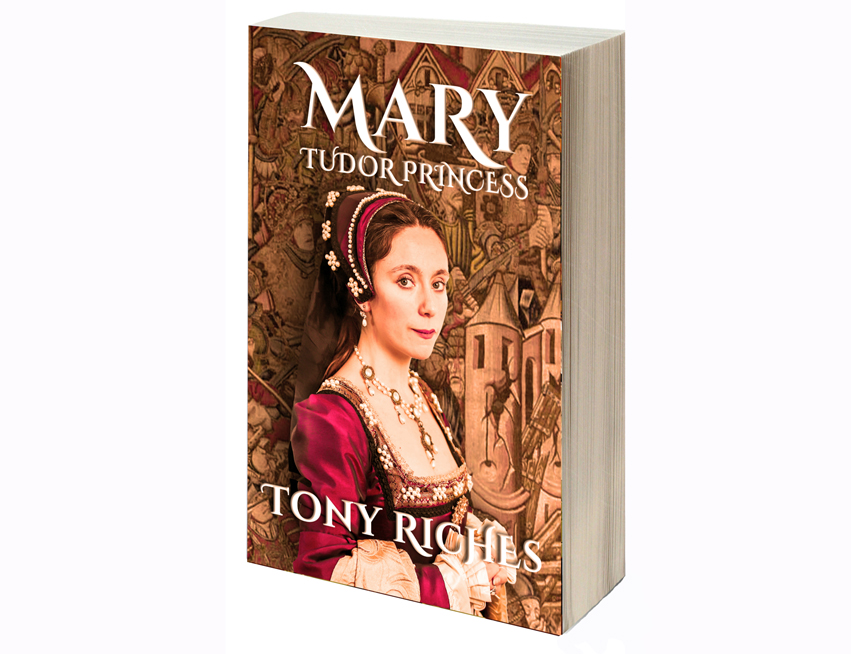
From the author of the international best-selling Tudor Trilogy, the true story of the Tudor dynasty continues with the daughter of King Henry VII, sister to King Henry VIII. Mary Tudor watches her elder brother become King of England and wonders what the future holds for her. Born into great privilege, Mary has beauty and intelligence beyond her years and is the most marriageable princess in Europe. Henry plans to use her marriage to build a powerful alliance against his enemies. Will she dare risk his anger by marrying for love? Meticulously researched and based on actual events, this ‘sequel’ follows Mary’s story from book three of the Tudor Trilogy and is set during the reign of King Henry VIII.
Mary Tudor Princess by Tony Riches is the latest novel from author of the Tudor Trilogy. Telling the story of Henry VIII’s little sister, it traces Mary’s life from the death of her father in 1509 to her own death in 1533. Mary was a fascinating lady, who married the ageing King of France out of duty to her brother, but extracted a promise from Henry VIII to be able to choose her second husband. As a consequence, widowed and still in France, she married her brother’s best friend, Charles Brandon, who had been sent to escort her back to England, only to face the wrath of her brother.
Princess Mary has always been my favourite Tudor. She did the impossible and married for love, and survived her brother’s anger. Being the king’s little sister must have counted for something! I fell in love with Mary’s story after watching the film, The Sword and the Rose as a teenager and Tony Riches has done a wonderful job of bringing this Tudor princess to life once again.
Although I don’t do much Tudor research at the minute, the story does overlap with several ladies I have looked into, and it was fascinating to see how the author included Katherine Willoughby and her mother, Maria de Salinas, in the story; Katherine would eventually marry Charles Brandon herself. Bessie Blount also gets a mention! It is fascinating to see how so many Tudor characters interacted with Mary, and to read of her friendship with Katherine of Aragon, the two women being affectionate with each other but always aware of their respective stations.
Mary Tudor and Charles Brandon
Mary dismissed her muttering French servants and sated her frustration at them by tearing down the black cloths covering the long windows. Shafts of bright winter sun lit up motes of dust drifting like tiny, glittering starts in the still air. Tears of relief ran down Mary’s face as she looked out at the River Seine and the spires of Notre-Dame Cathedral. She was leaving Cluny Palace forever.
John Palsgrave returned with the news that the waiting was finally over. Charles Brandon had sailed from Dover on the same ship and was meeting with Francis to negotiate her return to England.
Mary’s mind raced with questions. ‘Why must he negotiate?’ Of course I will return. Francis has no wish to hold me here. Is it the return of my dowry?’ She recalled Wolsey’s scheming before she’d left for France. He’d foreseen Louis’ death and already planned for her return, wording the marriage contract to Henry’s advantage.
John Palsgrave nodded. ‘There is a considerable sum of money at stake, Your Grace, as well as the question of the jewels from the late king.’
‘They were gifts!’ She heard the outrage and frustration in her voice. Her confinement and aching tooth made her short-tempered. She saw her secretary’s troubled look. ‘I’m sorry. Does Duke Francis,’ she corrected herself, ‘does King Francis want them returned?’
This book has so many strengths. It is a fabulous, enjoyable story that will keep you riveted to the page until the very end. The historical research is impeccable, transporting the reader back to the Tudor era and immersing them in the period, the fashions, the language and lifestyle. You are back in the Tudor court where the king’s will and whims are paramount. It is fascinating to watch how this Tudor princess negotiated her way through the politics, the plots and the fact her brother’s word was law.
Tony Riches is a wonderful author, who breathes life into long dead historical characters, depicting their stories, their lives, in a way that stays true to the era from which they have come. With Mary Tudor Princess not only does he give us a glimpse into the Tudor court, but into the personalities who inhabited it, always staying true to the known history. The story does not shy away from the politics of the time, from Henry VIII’s dealings with France, Scotland and the Holy Roman Empire, to his desire for a son and the Reformation that would result.
Mary Tudor Princess rebuilds Mary’s world, showing us the contrast in her private and public life, showing the balance of duties to family and state. Her life was not all sweetness and roses, and the author deals with the deaths of family members, love and betrayal in a sympathetic and empathetic manner. The book gives the impression that you are a fly on the wall, watching Mary’s life as it unfolds, her dreams and passions tempered by her duty and station.
This is a wonderful novel for anyone who wants to get a sense of the personality of Mary, her husband, Charles Brandon, and the Tudor court itself. I cannot recommend it highly enough. It was a pleasure and an privilege to read.
*
About the author:
Tony Riches is a full-time author of best-selling historical fiction. He lives in Pembrokeshire, West Wales and is a specialist in the fifteenth century, with a particular interest in the Wars of the Roses and the lives of the early Tudors. For more information about Tony’s other books please visit his website tonyriches.com and his popular blog, The Writing Desk and find him on Facebook and Twitter @tonyriches.
You can find all of Tony’s books, including Mary Tudor Princess, on Amazon in the UK and US.
*
My books
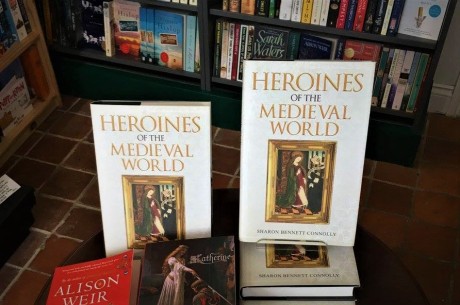
Heroines of the Medieval World tells the stories of women, famous, infamous and unknown, who shaped the course of medieval history. It is available in hardback in the UK from both Amberley Publishing and Amazon UK. It is now available in Hardback from Amazon US and worldwide from Book Depository.
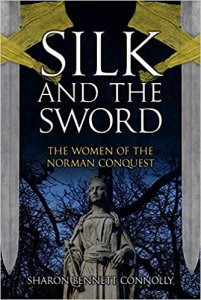
From Emma of Normandy, wife of both King Cnut and Aethelred II to Saint Margaret, a descendant of Alfred the Great himself, Silk and the Sword: the Women of the Norman Conquest traces the fortunes of the women who had a significant role to play in the momentous events of 1066. Silk and the Sword: the Women of the Norman Conquest will be released in the UK on 15 November 2018 and is available for pre-order on Amazon UK, Amberley Publishing and Book Depository.
You can be the first to read new articles by clicking the ‘Follow’ button, liking our Facebook page or joining me on Twitter.
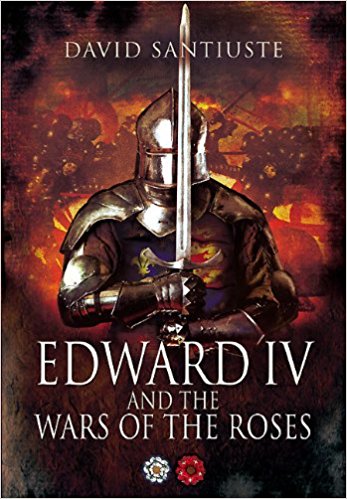
Indisputably the most effective general of the Wars of the Roses, Edward IV died in his bed, undefeated in battle. Yet Edward has not achieved the martial reputation of other warrior kings such as Henry V – perhaps because he fought battles against his own people in a civil war. It has also been suggested that he lacked the personal discipline expected of a truly great commander. But, as David Santiuste shows in this perceptive and highly readable new study, Edward was a formidable military leader whose strengths and subtlety have not been fully recognized. This reassessment of Edward’s military role, and of the Wars of the Roses in which he played such a vital part, gives a fascinating insight into Edward the man and into the politics and the fighting. Based on contemporary sources and the latest scholarly research, Edward IV and the Wars of the Roses brings to life an extraordinary period of English history.
I was very happy to be asked to review Edward IV and the Wars of the Roses by historian David Santiuste. I had dipped in and out of it for my research of various characters of the period, but never had the time to sit down and read it from cover to cover. To read it with a view to review was a prime opportunity. Now, I don’t review books that I didn’t enjoy, so I do only give positive reviews.. However, if a book gets reviewed by me, it means it’s good. And Edward IV and the Wars of the Roses was brilliant. It is a fabulous, in-depth analysis of one of England’s most underrated kings.
Dealing predominantly with the first part of Edward’s life and reign the book concentrates on his political and military skills. It analyses his personal qualities and skills as a leader and politician, while also looking at the bigger stage of the conflict that became known as the Wars of the Roses. This is not an ‘I love Edward IV’ book, but rather a balanced portrayal of the strengths and weaknesses of the charismatic king, and of the people around him.
… Perhaps surviving portraits do not do Edward justice, although observers were often impressed by his physique as much as his face. When Edward’s coffin was opened in the eighteenth century his skeleton was measured at 6 feet 3½ inches and it was broadly proportioned. Edward had a tremendous presence, of which he was keenly aware. Even later in life, when his looks had faded and he had put on weight, the Italian observer Mancini reports that Edward ‘was wont to show himself to those who wished to watch him, and seized any opportunity occasion offered of revealing his fine stature more protractedly and more evidently to onlookers.’ In 1459 Edward was still untested, but his potential was clear: Yorkist verses from the following year were to describe him as ‘Edward, Earl of March, whose fame the earth shall spread’.
Where this book shines is in the author’s portrayal of the relationship between Edward IV and Richard, Earl of Warwick. David Santiuste makes it clear that the relationship was complex and far from dominated by Warwick. He shows how Edward was able to be his own man and explains clearly how the relationship broke down, with blame on both sides, and how this relationship affected both Edward and his kingship.
Making good use of primary sources and his own vast knowledge of the era, David Santiuste presents his arguments in a clear, concise manner, stating his own opinion and discussing where facts and historians differ in a respectful, engaging style. He handles the significant moments of Edward IV’s career with great empathy and understanding, demonstrating how the king’s life, future and country were changed by his ability to make the most of events – and heavenly phenomena – thrown at him.
The Illustrated Life of Edward IV presents Edward, at the moment the parhelia appear, appealing to God for guidance, just like Paul at Damascus: ‘Lord, what will you have me do?’ Coppini had described Edward as ‘prudent and magnanimous’, but we should remember that Edward was still eighteen years old, The loss of his father and brother must have shaken him to the core. For Edward, then, this was a moment of great personal significance…..
David Santiuste displays an impressive level of understanding of fifteenth century warfare and generalship, and of the political atmosphere of the time. Every page of the book demonstrates the author’s enthusiasm for his subject and for history in general. Easily readable, enjoyable and engaging, the author avoids technical speak and draws the reader in.
This is a must-read for any fan of the Wars of the Roses, or any student of kingship and medieval history. Enjoyable and engaging, it takes the reader to the heart of the civil war which raged across England in the second half of the fifteenth century.
About the author:
David Santiuste teaches history at the Centre for Open Learning, University of Edinburgh. His most recent book is The Hammer of the Scots. His other publications include Edward IV and the Wars of the Roses, as well as various articles.
David’s website can be found at davidsantiuste.com, where he writes an occasional blog. You can follow him on Facebook at David Santiuste Historian or on Twitter @dbsantiuste.
Edward IV and the Wars of the Roses is available from Amazon.
*
My Book:
Heroines of the Medieval World, is now available in hardback in the UK from both Amberley Publishing and Amazon UK. It is also available on Kindle in both the UK and USA and will be available in Hardback from Amazon US from 1 May 2018. It can also be ordered worldwide from Book Depository.
You can be the first to read new articles by clicking the ‘Follow’ button, liking our Facebook page or joining me on Twitter.
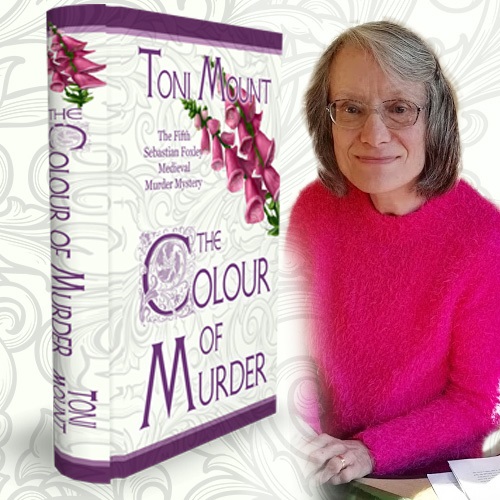
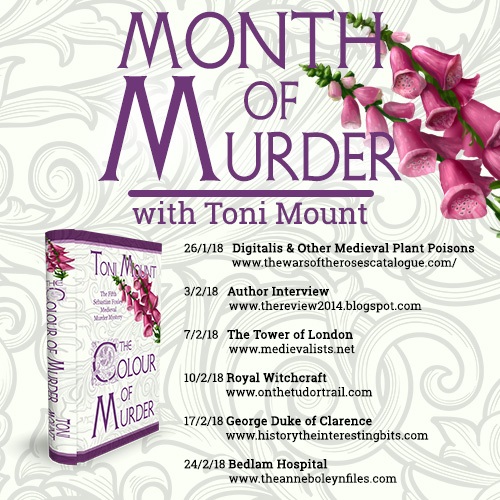
It is a pleasure to welcome Toni Mount to the blog, for Day 5 of her Blog Tour for the launch of The Colour of Murder this month.
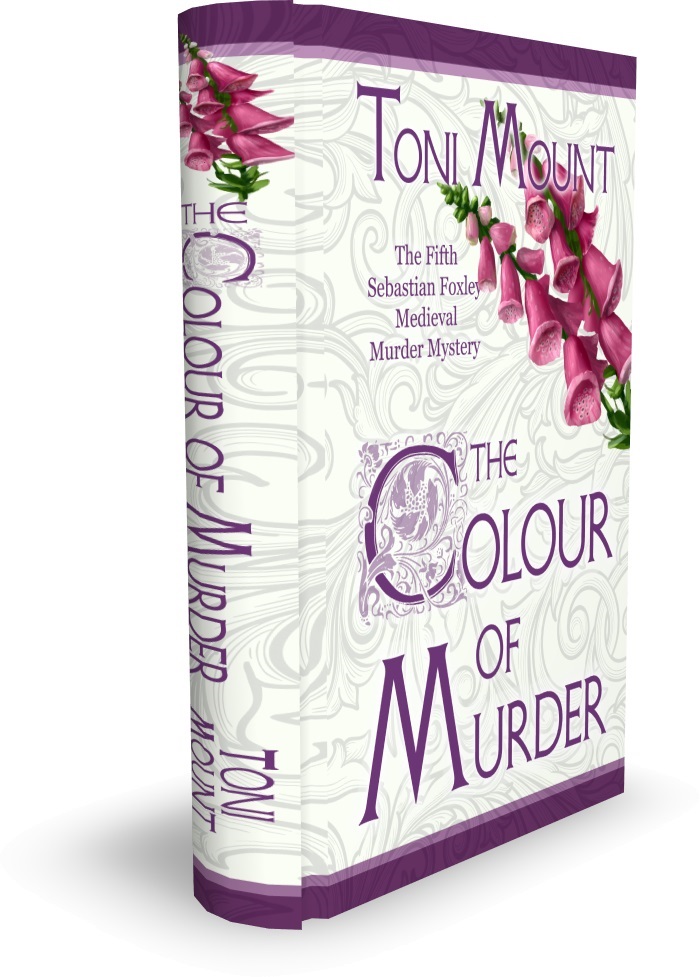
The Colour of Murder is the latest whodunit in the popular ‘Sebastian Foxley’ series of medieval murder mysteries by author and historian Toni Mount.
George, Duke of Clarence and the infamous ‘butt of Malmsey wine’.
540 years ago, on the 18th February 1478 the Duke of Clarence was, famously, drowned in a butt of malmsey wine. Did he jump or was he pushed? The question has never been answered, so this was an opportunity for the intrepid investigator Seb Foxley – to finally solve the mystery.
On this day, 18th February 1478, news was leaked that the brother of King Edward IV, George, Duke of Clarence, had somehow managed to drown in a butt of malmsey wine. Did he fall or was he pushed? A contemporary chronicler, who otherwise seems very well informed, could only write: ‘… a few days after the execution, whatever its nature may have been, took place … in the Tower of London…’
From the Croyland Chronicle, c. 1486, pp.479-80:
George of Clarence had never been very reliable nor faithful to King Edward, his elder brother. When his beloved wife, Isabella Neville, died soon after giving birth, probably of childbed fever, George was convinced that a lady-in-waiting, Ankarette Twynyho, had poisoned her. He tried Ankarette in a rigged court and arranged her execution. King Edward decided George had gone too far this time, taking the law into his own hands. Then George became involved in a further plot to dethrone Edward. Matters deteriorated when he accused the Edward’s queen, Elizabeth Woodville, of witchcraft, saying she was behind the death of his wife. Finally, the king lost patience and George was imprisoned in the Tower of London in the summer of 1477.
Brought to trial before Parliament, only the king gave evidence against George, listing all his earlier mercies to him, how he had pardoned him for previous acts of treachery and showered titles and riches on him, only to receive ingratitude and further treachery in return. Meanwhile George had spread rumours that the king was a bastard with no right to wear the crown, practising necromancy and poisoning those who displeased him.
Parliament sat in embarrassed silence as the king and his brother accused each other, shouting and arguing in a most unseemly and vulgar display. But the eventual outcome was never going to be in doubt: Parliament found in the king’s favour, George was guilty of high treason and sentenced to death. He was returned to the Tower of London while the king wrestled with his conscience over signing his brother’s death warrant until the Speaker of the House intervened, demanding that sentence be carried out. George, Duke of Clarence, was executed privately in the Tower of London, spared the ignominy of a public beheading.
However, an execution behind closed doors soon caused rumours to spread that Clarence had been drowned in a butt of malmsey wine. A butt is a large barrel and an imperial measure of one hundred gallons – more than enough to drown in, but the story is almost certainly a later invention. Perhaps George was partial to the sweet white wine, so the tale was an ironic joke. It has been suggested, perhaps not seriously, that George was allowed to choose his manner of death, or even that a ‘well-wisher’, wanting to spare the king the grief of committing fratricide, sent Clarence a gift of wine, laced with poison. We will probably never know the truth.
About the author
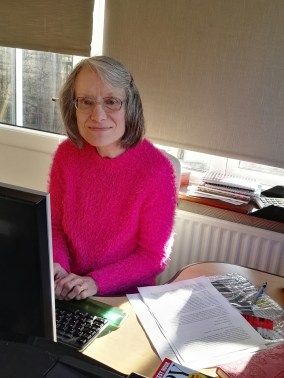
Toni Mount is a popular writer and historian; she is the author of Everyday Life in Medieval London and A Year in the Life of Medieval England (pub Amberley Publishing) and several of the online courses for http://www.medievalCourses.com
Her successful ‘Sebastian Foxley’ series of medieval whodunits is published by MadeGlobal.com and the latest book in this series The Colour of Murder is now available as a paperback or on Kindle. http://getbook.at/colour_of_murder
If you would like to follow the rest of Toni’s blog tour, just click on the links below:
Heroines of the Medieval World, is now available in hardback in the UK from both Amberley Publishing and Amazon UK and worldwide from Book Depository. It is also available on Kindle in both the UK and USA and will be available in Hardback from Amazon US from 1 May 2018.
You can be the first to read new articles by clicking the ‘Follow’ button, liking our Facebook page or joining me on Twitter.
Today I have a special treat for readers. Not only is there a review of a fantastic novel, but there is – for the fist time, ever, on the blog – a giveaway as well! Anna Belfrage has kindly offered an ebook of this fabulous, not-to-be-missed novel to accompany my review.
After Henry of Lancaster’s rebellion has been crushed early in 1329, a restless peace settles over England. However, the young Edward III is no longer content with being his regents’ puppet, no matter that neither Queen Isabella nor Roger Mortimer show any inclination to give up their power. Caught in between is Adam de Guirande, torn between his loyalty to the young king and that to his former lord, Roger Mortimer.
Edward III is growing up fast. No longer a boy to be manipulated, he resents the power of his mother, Queen Isabella, and Mortimer. His regents show little inclination of handing over their power to him, the rightful king, and Edward suspects they never will unless he forces their hand.
Adam de Guirande is first and foremost Edward’s man, and he too is of the opinion that the young king is capable of ruling on his own. But for Adam siding with his king causes heartache, as he still loves Roger Mortimer, the man who shaped him into who he is.
Inevitably, Edward and his regents march towards a final confrontation. And there is nothing Adam can do but pray and hope that somehow things will work out. Unfortunately, prayers don’t always help.
The Cold Light of Dawnby Anna Belfrage is the 4th book in ‘The King’s Greatest Enemy series, spanning the final years of the reign of Edward II and the early years of the reign of Edward III. The story of Kit and Adam de Guirande started with Adam serving Roger Mortimer in In the Shadow of the Storm and has followed the young couple through thick and thin in Days of Sun and Glory and danger and adventure, and the fall of a king in Under the Approaching Dark. The series has been stunning from the very beginning, combining suspense, adventure, political intrigue and an old-fashioned love story to draw the reader into the heart of the 14th century.
It will be hard to justice to this fantastic novel in a review. The book not only tells you a story, but awakens your feelings and takes you on an emotional journey as well as a literary one. I enjoy reading – I always have – but I rarely come across a book, or series of books, that bring out all the emotions and will have me laughing and smiling in places, heart in my mouth in other places and leave me with tears streaming down my face at times. The action and excitement are constant, the dangers ever-present.
“What’s she doing here?” she whispered.
Beside her Meg gasped in admiration, eyes riveted to the figure clad in green and blue, the hood of her mantle thrown back to reveal a veil in the sheerest of linen.
“I am sure we will find out.” William set a hand to her back, sufficient support for Kit to stiffen her spine.
“Sister,” Kit offered reluctantly when the neat little mare came to a halt in front of her. Alicia Luytens and she shared a father, but where Alicia had been born in wedlock, Kit was the child of an illicit union, the damage further compounded – at least in Alicia’s eyes – by the fact that Kit’s mother was a salter’s daughter.
Alicia did not reply, narrow face set in an unreadable expression as she gazed at her surroundings. “My father was born here,” she said to her male companion as she dismounted. “Imagine that! Such humble beginnings.” She landed lightly on her feet, made as if to enter the manor house, but Kit blocked her way.
“I do not recall inviting you,” Kit said
So what is it about Anna Belfrage’s writing that makes her stories so special? I wish I knew! I wish I could bottle it! She is the consummate story teller. She breathes life into her characters, brings the past right to you, and takes you back in time so the 21st century is a distant memory. In The Cold Light of Dawn the author draws on her vast knowledge of the 14th century in order to transport the reader to the early reign of Edward III.
It is her knowledge and understanding of her characters, both historical and invented, that bring the era to vivid life. Edward III is the teenage king, trying to break the shackles of his mother and her lover, Isabella and Roger Mortimer. Edward and his young wife, Philippa, are depicted as both teenagers and royals – young people, at times, with a power they are unsure how to wield, while at other times chafing under the control of their elders. And they control the lives of Adam and Kit. Adam is the captain of Edward’s guard, while Kit is one of Philippa’s ladies. Both benefit and suffer from the pleasures of the master and mistress.
Roger Mortimer is a wonderful character; I had never felt sorry for him and the road his life took him, until reading this series. Roger is a larger-than-life character, much as he must have been at the time, knowing the dangers he risks, but acting with a certainty that he is doing his duty, however misguided some of his actions appear to be. And even the minor characters are well researched, including one of my own Heroines, Alice de Lacey, who is sympathetically portrayed, despite the fact she has little more than a walk-on part.
The Cold Light of Dawn takes the story of Adam and Kit through personal challenges and national intrigues, their duties placing them at the heart of matters they don’t always want to have anything to do with, dividing their loyalties and endangering their lives. A fast-paced and thoroughly engrossing read, this is a book that is impossible to put down, continuing a series that has got stronger with every new story.
Giveaway!
If you would like to be in with a chance of winning an ebook copy of The Cold Light of Dawn, simply leave a comment below, or on the post on my Facebook page. The winner will be drawn on Friday 23rd February. Good Luck!
About the Author
Had Anna been allowed to choose, she’d have become a time-traveller. As this was impossible, she became a financial professional with two absorbing interests: history and writing. Anna has authored the acclaimed time-slip series The Graham Saga, winner of multiple awards, including the HNS Indie Award 2015. Her ongoing series is set in the 1320s and features Adam de Guirande, his wife Kit, and their adventures during Roger Mortimer’s rise to power.
If you would like to find out more about Anna and her books, visit her blog.
The Cold Light of Dawn is available from today in paperback or ebook from Amazon in the UK and US.
*
My Book:
Heroines of the Medieval World, is now available in hardback in the UK from both Amberley Publishing and Amazon UK. It is also available on Kindle in both the UK and USA and will be available in Hardback from Amazon US from 1 May 2018. It can also be ordered worldwide from Book Depository.
You can be the first to read new articles by clicking the ‘Follow’ button, liking our Facebook page or joining me on Twitter.
Today it is my pleasure to welcome author Tony Riches to History … the Interesting Bits to talk about his latest book, Mary – Tudor Princess.
Guest Post: Mary – Tudor Princess, by Tony Riches
Book Cover of Mary ~ Tudor Princess
I chose to write about Mary because I’d researched her birth and early life for my last book, Henry – Book Three of the Tudor Trilogy. In the trilogy I’d moved forward one generation with each book, so it appealed to me to write a ‘sequel’ which did the same. I’d become intrigued with Mary’s story of how she risked everything to defy her brother when he became King Henry VIII.
When I began the Tudor trilogy, I had little factual information about Owen Tudor, Mary’s great-grandfather. The amount of information increased exponentially by the time I reached the story of Mary’s father, Henry Tudor, as he kept detailed ledgers of his finances. Some of Henry’s letters also survive, including some to his mother, but they were all rather formal.
This is of course no substitute for primary research, and the great thing about living in the UK is how easily I can visit actual locations and study contemporary accounts. I found these surviving letters offer an evocative ‘voice’ for Mary, as well as revealing how she felt about people and events.
I also wanted to explore Mary’s vulnerability as well as her strengths, and I was assisted in this by her brother, who broke off her engagement to young Prince Charles, future Emperor of Rome, to marry her off to the fifty-two-year-old King Louis XII of France. Although Mary was barely eighteen at the time, Henry saw his younger sister as a small price to pay for a treaty with France.
I enjoyed untangling the many myths about what happened next, from causing the death of King Louis with her ‘passionate exertions’ to her dying of ‘grief at her brother’s divorce from her friend Catherine of Aragon.’ I also had the benefit of knowing a great deal about the people and places of Mary’s world. I’m now writing about the amazing life of Mary’s second husband, Charles Brandon, and beginning to think about how different the same events might have seemed from his perspective.
Mary – Tudor Princess is now available on Amazon UK, Amazon US and Amazon AU in eBook and paperback. An audiobook edition will be available later in the year.
Tony Riches
About the Author
Tony Riches is a full-time author of best-selling historical fiction. He lives in Pembrokeshire, West Wales and is a specialist in the fifteenth century, with a particular interest in the Wars of the Roses and the lives of the early Tudors. For more information about Tony’s other books please visit his website tonyriches.com and his popular blog, The Writing Desk and find him on Facebook and Twitter @tonyriches.
*
My Book:
Heroines of the Medieval World, is now available in hardback in the UK from both Amberley Publishing and Amazon UK. It is also available on Kindle in both the UK and USA and will be available in Hardback from Amazon US from 1 May 2018. It can also be ordered worldwide from Book Depository.
You can be the first to read new articles by clicking the ‘Follow’ button, liking our Facebook page or joining me on Twitter.
It is with great pleasure that I welcome historian David Santiuste to History … The Interesting Bits, with an article about Owain Glyn Dwr’s daughter, Catrin. Over to David.
Catrin ferch Owain Glyn Dŵr
The remains of Owain Glyn Dŵr’s house at Sycharth
I was very pleased to be invited to write something for History… The Interesting Bits – a blog I have followed for some time. Above all, I have appreciated Sharon’s efforts to raise awareness of some fascinating medieval women, whose stories are too often neglected. Another such woman is Catrin, a daughter of the Welsh hero Owain Glyn Dŵr, who ultimately paid a heavy price for her father’s ambitions.
Catrin was born after 1383, when Owain, then in his late twenties, married her mother, Margaret Hamner. Catrin was almost certainly one of his oldest legitimate children, although in time she would become part of a large family. Owain and Margaret had eleven children who survived infancy, in addition to Owain’s sons and daughters who were born outside marriage (probably when he was still a bachelor).
Catrin’s early years were presumably spent at her father’s house at Sycharth (near Oswestry). It was described by the bard Iolo Goch as a beautiful and lively place – ‘the fairest timber hall’ – where Owain offered lavish hospitality. Nevertheless, while he had evidently established himself as a man of some status, much of his early career was typical of the minor aristocracy. Through Owain, Catrin could claim descent from Welsh royalty, but her upbringing was surely intended to prepare her for an adult life within the same kind of setting – probably as the wife of a local gentleman who had connections with her family.
Naturally Catrin’s life changed in 1400, when her father launched a ferocious rebellion against King Henry IV of England. Sycharth was no longer safe – it was later destroyed by the English – although Catrin would soon find herself in much grander surroundings, as the rebels took control of many of Wales’s castles. Owain was acclaimed by his supporters as Prince of Wales, and for a time it must have seemed that Welsh independence had finally arrived.
In June 1402 Owain won a significant victory at the Battle of Bryn Glas, and the English commander, Edmund Mortimer, was taken prisoner. Edmund was treated with respect, and he became incensed when King Henry refused to pay his ransom – possibly because he was afraid of the Mortimers, whose strong claim to the throne had been passed over in his own favour. Edmund therefore decided to join Owain, who agreed to help him assert his nephew’s ‘right’ in England. The alliance was sealed in the time-honoured fashion, and Catrin became Edmund’s wife.
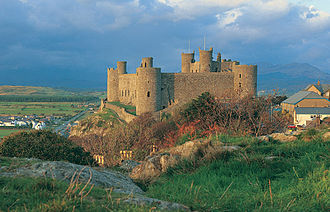
Catrin and Edmund had four children – a boy, Lionel, and three girls – although little else is known about their life together. However, their circumstances must have changed from 1405 onwards, as the English began to gain the upper hand in Wales. Owain avoided capture (his last recorded appearance was in 1412), but ultimately some of his family, including Catrin and Edmund, were pinned down at Harlech Castle. From this imposing fortress the Welsh continued to defy the English – and Edmund’s own exploits were celebrated by the bards – but the defenders were eventually starved into submission. The castle was surrendered in February 1409, by which point Edmund had already died.
Harlech Castle
After the fall of Harlech, Catrin and her surviving children were taken into custody, as was her mother, and they were later held in the Tower of London. They were all still there in June 1413, shortly after Henry V assumed the English throne, but Catrin passed away before the end of the year. The accounts of the Exchequer include a payment in December for her burial in St Swithin’s Church (which, intriguingly, is some distance from the Tower), together with her daughters.
Several historians, such as Terry Breverton, have suggested that Catrin and the others were put to death on the new king’s orders. This is partly based on the assumption that young Lionel was imprisoned with Catrin and subsequently disappeared; it is fair to say that Lionel, with his mixture of English and Welsh royal blood, might have posed a considerable threat to Henry if he had lived. Nevertheless, the evidence is ambiguous, as it is by no means clear that Lionel was taken at Harlech. It seems equally possible that he had already died, like his father – and that he was never in the Tower at all.
The fate of Catrin’s mother is also very uncertain, and one of Catrin’s daughters appears, in fact, to have outlived her; this is explicitly mentioned by the chronicler Adam of Usk, who was often well-informed. Besides, while Henry V could sometimes be a ruthless man, the notion that he ordered the murder of Catrin, and at least some of her children, does not sit well with the leniency he offered to other members of the Mortimer family (and even to Owain’s eldest son). Perhaps the conditions of Catrin’s imprisonment might have played a part, but it seems most likely that her death was due to natural causes.
Catrin was not entirely forgotten. She makes an interesting appearance, for example, in the first part of Shakespeare’s Henry IV. Edmund tells her fondly that ‘I understand thy kisses and thou mine’, but Catrin and her husband remain hampered by the language barrier between them. There is also tension between Catrin and her father, as they exchange words in Welsh, and one begins to suspect that Owain is not always a faithful translator. At last she tells her father that she will sing. Somewhat mollified, Owain instructs Edmund to rest his head in Catrin’s lap: so that she can ‘sing the song that pleaseth you, and on your eyelids crown the god of sleep.’
It is no longer clear what Shakespeare intended: the direction simply states that ‘here the lady sings a Welsh song’. Owain hopes, it would seem, that his daughter will provide a moment of calm before the storms ahead, and in many productions this is the effect achieved. She has been presented rather differently, however, in one recent American production. While her exhausted husband does rest his head in her lap, in this case Catrin’s song is no lullaby. Instead she offers a powerful lament, regretting man’s propensity for self-defeating war.
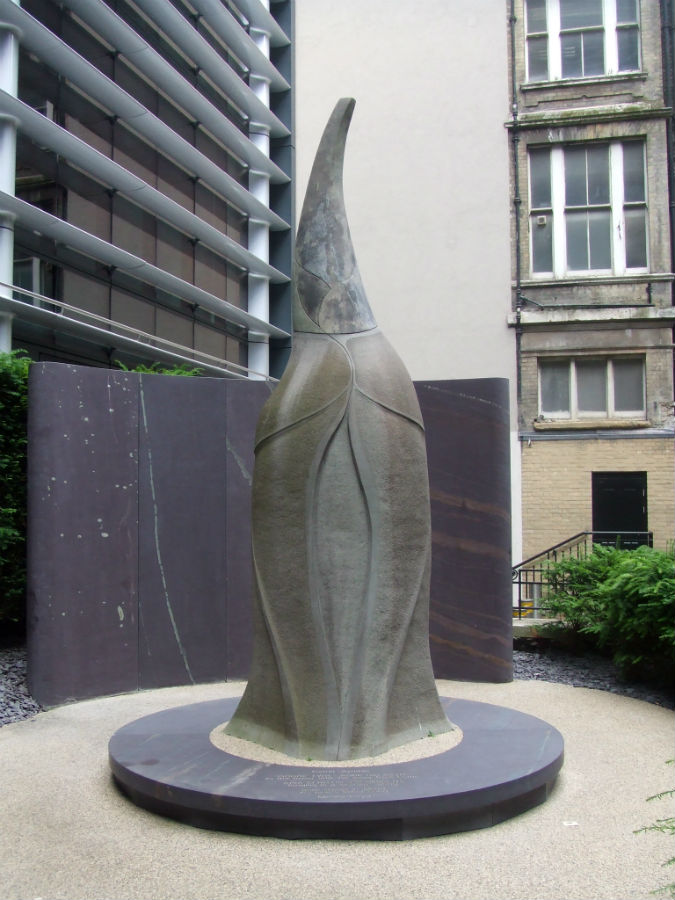
The memorial statue near the site of Catrin’s grave
In keeping with her father’s reputed gifts as a soothsayer, there is also an element of prophecy in the song, as Catrin rightly fears for the future of her ‘home’ (which is surely meant in a broader sense here). The text is adapted from a poem by Hedd Wyn a Welshman who was killed during the First World War, yet even those who cannot understand the words can still appreciate the sense of urgency and pathos. Previously denied the chance to speak directly to the audience, Catrin eventually finds a way to make her message plain.
Another writer to give Catrin a voice is Menna Elfyn, who has imagined her experience of captivity in a moving series of poems. At first Catrin is imprisoned with her children, but then her ‘chicks’ are taken from her: ‘without a farewell kiss, without wrapping them warmly’. ‘They were born to a traitor’, spits out one man, brusquely, although their fate remains uncertain (both for the reader and for Catrin). She pleads with the guards – ‘Take me too. There’s a knife in my heart’ – but she is left in her cell to meet a lonely end.
The medieval church of St Swithin’s was destroyed in the seventeenth century, during the Great Fire of London, and with it Catrin’s tomb. However, she is now represented by a modern statue, which can be found in a garden on the site of the church. The sculpture is intended not only as a commemoration of Catrin’s life, but also as a memorial to all the women and children who have suffered in war.
Sources
Terry Breverton, Owain Glyndŵr: The Story of the Last Prince of Wales (Stroud, 2009).
Chris Given-Wilson (ed.), The Chronicle of Adam of Usk, 1377-1421 (Oxford, 1997).
I would also like to thank Sara Hanna-Black for her help and encouragement.
All images from Wikipedia
About the Author
David Santiuste teaches history at the Centre for Open Learning, University of Edinburgh. His most recent book is The Hammer of the Scots. His other publications include Edward IV and the Wars of the Roses, as well as various articles.
David’s website can be found at davidsantiuste.com [insert link: https://davidsantiuste.com/], where he writes an occasional blog. You can follow him on Facebook at David Santiuste Historian or on Twitter @dbsantiuste.
The University of Edinburgh is a charitable body, registered in
Scotland, with registration number SC005336.
*
My Book:
Heroines of the Medieval World, is now available in hardback in the UK from both Amberley Publishing and Amazon UK. It is also available on Kindle in both the UK and USA and will be available in Hardback from Amazon US from 1 May 2018. It can also be ordered worldwide from Book Depository.
You can be the first to read new articles by clicking the ‘Follow’ button, liking our Facebook page or joining me on Twitter.
Mary Tudor has always been known as ‘Bloody Mary’, the name given to her by later Protestant chroniclers who vilified her for attempting to re-impose Roman Catholicism in England. Although a more nuanced picture of the first queen regnant has since emerged, she is still stereotyped, depicted as a tragic and lonely figure, personally and politically isolated after the annulment of her parents’ marriage and rescued from obscurity only through the good offices of Katherine Parr.
Although Henry doted on Mary as a child and called her his ‘pearl of the world’, her determination to side with her mother over the annulment both hurt him as a father and damaged perceptions of him as a monarch commanding unhesitating obedience. However, once Mary had finally been pressured into compliance, Henry reverted to being a loving father and Mary played an important role in court life.
As Melita Thomas points out, Mary was a gambler – and not just with cards. Later, she would risk all, including her life, to gain the throne. As a young girl of just seventeen she made the first throw of the dice, defiantly maintaining her claim to be Henry’s legitimate daughter against the determined attempts of Anne Boleyn and the king to break her spirit.
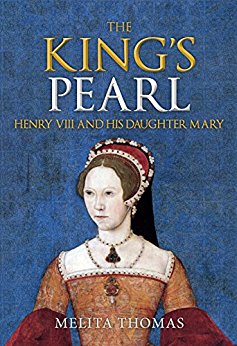
Following the 500th anniversary of Mary’s birth, The King’s Pearl re-examines Mary’s life during the reign of Henry VIII and her complex, dramatic relationship with her father.
The King’s Pearl: Henry VIII and his Daughter Mary by Melita Thomas is an in-depth look into the life of Mary I, in her formative years. It tells the story of England’s first queen regnant, during the life and reign of her father, Henry VIII.
This is a wonderful book, giving an insight into the years of Mary’s life which are rarely considered, when she went from being a pampered princess of two adoring parents to an adolescent declared a bastard by her own father. The author paints the picture of a young woman who had gone through more trials and emotions imposed by her father than any daughter should have to bear. The King’s Pearl: Henry VIII and his Daughter Mary evokes sympathy and understanding for the extremes of life experiences that Mary I had to endure, once her parents’ marriage had broken down. From being denied the company of her mother, the attention of her father to being bullied and belittled, in fear of imprisonment, and worse.
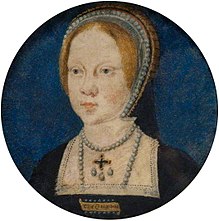
Mary at the time of her engagement to Charles V. She is wearing a rectangular brooch inscribed with “The Emperour”
On St George’s Day 1527, the French ambassadors went to see Mary at Greenwich. After dinner, Henry led them into a hall in which Mary, Katharine and the French queen were present, with a large comapny of ladies and gentlemen. The proud father told the ambassadors to speak to his daughter in Latin, French and Italian, and she was able to respond in all three languages. She also wrote in French for them, before performing on the spinet. The ambassadors agreed the young lady was very accomplished for her age, which was eleven years and two months. Contrary to the previous description of her as tall, Turenne thought although she was very pretty, she was so ‘thin, spare, and small’, that she could not possibly be married for another three years. From the opposing descriptions of her, we can perhaps infer that none of them is terribly accurate – those who wanted her to be considered ready for marriage described her as tall and robust, while those who wished to delay matters spoke of her as small.
Every aspect of Mary’s early life is examined in detail, from her pampered childhood, surrounded by courtiers and loving parents, to the loneliness of an out-of-favour, illegitimate daughter. Her various marriage prospects are a constant theme throughout the book, demonstrating how Mary was used as a bargaining chip in Henry VIII’s constant diplomatic wranglings between Francis I of France and Charles V, Holy Roman Emperor.
Melita Thomas’ research is impeccable, her arguments and theories are backed up by primary sources, including memoirs, letters and treaties. The focus is entirely on Mary, her relationships with her family and courtiers and the way her father’s policies and marriages affected her life. It examines every aspect of Mary’s life in impeccable detail; her education, court life, her relationships, health and daily routine. It is a sad tale, of a father who demanded absolute obedience, and never considered the consequences of his actions on the mental well-being of his children.
Well-written and beautifully presented, The King’s Pearl: Henry VIII and his Daughter Mary, is a perfect and essential addition to any Tudor library.
*
About the author
Melita Thomas is a co-founder and editor of Tudor Times, a website devoted to Tudor and Stewart history. Her articles have appeared in BBC History Extra an Britain magazine. The King’s Pearl is available from Amberley Publishing and Amazon UK. and will be available from Amazon US from 1st June 2018.
My Book:
Heroines of the Medieval World, is now available in hardback in the UK from both Amberley Publishing and Amazon UK. It is also available on Kindle in both the UK and USA and will be available in Hardback from Amazon US from 1 May 2018. It can also be ordered worldwide from Book Depository.
You can be the first to read new articles by clicking the ‘Follow’ button, liking our Facebook page or joining me on Twitter.
Maria de Salinas was lady-in-waiting to Katherine of Aragon, and one of her closest confidantes. Although we know little of her origins, she was the daughter of Juan de Salinas, secretary to Katherine’s eldest sister, Isabella, and Josepha Gonzales de Salas. Maria was not on the original list of ladies, drawn up in 1500, chosen to accompany Katherine of Aragon to England for her marriage to Prince Arthur. However, it seems likely that she, and her sister Inez, did come to England with the Spanish princess. She may have been added to the princess’s staff when her mother, Isabella of Castile, increased the size of Katherine’s entourage in March 1501.
Maria was one of the ladies who stayed with Katherine after her household was reduced and many returned to Spain, following the death of Katherine’s young husband, Arthur, Prince of Wales, in 1502. She remained with the Spanish princess throughout the years of penury and uncertainty, when Katherine was used as a pawn by both her father, Ferdinand, and father-in-law, Henry VII, in negotiations for her marriage to Prince Henry, the future Henry VIII. To solemnise the marriage was one of Henry’s first acts on his accession to the throne, so that Henry and Katherine would be crowned together as the new King and Queen of England. Maria is included in the list of Katherine’s attendants who were given an allowance of black cloth for mantles and kerchiefs, following the death of Henry VII in 1509; she was then given a new gown for Katherine’s coronation, which was held jointly with King Henry in June of the same year.
In 1511 Maria stood as godmother to Mary Brandon, daughter of Charles Brandon – one of the new king, Henry VIII’s closest companions and her future son-in-law – and his first wife, Ann Browne. Katherine of Aragon and Maria were very close; in fact, by 1514 Ambassador Caroz de Villagarut, appointed by Katherine’s father, Ferdinand of Aragon, was complaining of Maria’s influence over the queen. He accused Maria of conspiring with her kinsman, Juan Adursa – a merchant in Flanders with hopes of becoming treasurer to Philip, prince of Castile – to persuade Katherine not to cooperate with the ambassador. The ambassador complained: ‘The few Spaniards who are still in her household prefer to be friends of the English, and neglect their duties as subjects of the King of Spain. The worst influence on the queen is exercised by Dona Maria de Salinas, whom she loves more than any other mortal.’¹
Maria was naturalised on 29th May, 1516, and just a week later, on 5th June she married the largest landowner in Lincolnshire, William Willoughby, 11th Baron Willoughby de Eresby. William Willoughby was the son of Sir Christopher Willoughby, who had died c.1498, and Margaret, or Marjery, Jenney of Knodishall in Suffolk. He had been married previously, to Mary Hussey, daughter of Sir William Hussey, Chief Justice of the King’s Bench. The King and Queen paid for the wedding, which took place at Greenwich, the Queen even provided Maria with a dowry of 1100 marks. They were given Grimsthorpe Castle, and other Lincolnshire manors which had formerly belonged to Francis Lovel (friend of Richard III), as a wedding gift. Henry VIII even named one of his new ships the Mary Willoughby in Maria’s honour.
Maria remained at court for some years after her wedding, and attended Katherine at the Field of Cloth of Gold in 1520. Henry VIII was godfather to Maria and William’s oldest son, Henry, who died in infancy. Another son, Francis, also died young and their daughter Katherine, born in 1519, would be the only surviving child of the marriage. Lord Willoughby died in 1526, and for several years afterwards Maria was embroiled in a legal dispute with her brother-in-law, Sir Christopher Willoughby, over the inheritance of the Willoughby lands. Sir Christopher claimed that William had settled some lands on Maria which were entailed to Sir Christopher. The dispute went to the Star Chamber and caused Sir Thomas More, the king’s chancellor and a prominent lawyer, to make an initial redistribution of some of the disputed lands.
Miniature Katherine Willoughby, Duchess of Suffolk, by Hans Holbein the Younger
This must have been a hard fight for the newly widowed Maria, and the dispute threatened the stability of Lincolnshire itself, given the extensive lands involved. However, Maria attracted a powerful ally in Charles Brandon, Duke of Suffolk and brother-in-law of the King, who called on the assistance of Cardinal Thomas Wolsey, Henry’s first minister at the time, in the hope of resolving the situation. Suffolk had managed to obtain the wardship of Katherine Willoughby in 1528, intending her to marry his eldest son and heir Henry, Earl of Lincoln, and so had a vested interest in a favourable settlement for Maria. This interest became even greater following the death of Mary Tudor, Suffolk’s wife, in September 1533, when only three months later the fifty-year-old Duke of Suffolk married fourteen-year-old Katherine, himself.
Although Suffolk pursued the legal case with more vigour after the wedding, a final settlement was not reached until the reign of Elizabeth I. Suffolk eventually became the greatest landowner in Lincolnshire and, despite the age difference, the marriage does appear to have been successful. Katherine served at court, in the household of Henry VIII’s sixth and last queen, Katherine Parr. She was widowed in 1545 and lost her two sons – and heirs – by the Duke, Henry and Charles, to the sweating sickness, within hours of each other in 1551. Katherine was a stalwart of the Protestant learning and even invited Hugh Latimer to preach at Grimsthorpe Castle. It was she and Sir William Cecil who persuaded Katherine Parr to publish her book, The Lamentacion of a Sinner in 1547, demonstrating her continuing links with the court despite her first husband’s death. Following the death of her sons by Suffolk, Katherine no longer had a financial interest in the Suffolk estates, and in order to safeguard her Willoughby estates, Katherine married her gentleman usher, Richard Bertie.
The couple had a difficult time navigating the religious tensions of the age and even went into exile on the Continent during the reign of the Catholic Queen, Mary I, only returning on Elizabeth’s accession. Katherine resumed her position in Tudor society; her relations with the court, however, were strained by her tendency towards Puritan learning. The records of Katherine’s Lincolnshire household show that she employed Miles Coverdale – a prominent critic of the Elizabethan church – as tutor to her two children by Bertie, Susan and Peregrine. Unfortunately, Katherine died after a long illness, on 19th September 1580 and was buried in her native Lincolnshire, in Spilsby Church.
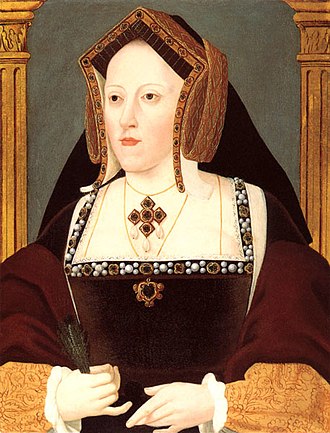
Catherine of Aragon by Lucas Hornebolte
A widow since 1526, Maria de Salinas, Lady Willoughby, kept a tight rein on the Willoughby lands, proving to be an efficient landlady. She took advantage of the dissolution of the monasteries in order to lease monastic land. Although this was a business arrangement, rather than political or religious, it still made her a target of discontent during the Lincolnshire Rising of 1536.
Maria had remained as a Lady-in-Waiting to Katherine. She was known to dislike Anne Boleyn and, as Henry’s attitude towards Katherine hardened during his attempts to divorce her, in 1532 Maria was ordered to leave Katehrine’s household and not contact her again. By 1534, as Emperor Charles V’s ambassador, Chapuys, described it; Katherine was ‘more a prisoner than before, for not only is she deprived of her goods, but even a Spanish lady who has remained with her all her life, and has served her at her own expense, is forbidden to see her.’²
When Katherine was reported to be dying at Kimbolton Castle, in December 1535, Maria applied for a license to visit her ailing mistress. She wrote to Sir Thomas Cromwell, the King’s chief minister at the time, saying ‘for I heard that my mistress is very sore sick again. I pray you remember me, for you promised to labour with the king to get me licence to go to her before God send for her, as there is no other likelihood.’² Permission was refused, but despite this setback, Maria set out from London to visit Katherine at Kimbolton Castle, arriving on the evening of New Years’ Day, 1536 and contrived to get herself admitted by Sir Edmund Bedingfield by claiming a fall from her horse meant she could travel no further. According to Sarah Morris and Nathalie Grueninger, Katherine and Maria spent hours talking in their native Castilian; the former queen died in Maria’s arms on 7th January 1536.³ Katherine of Aragon was buried in Peterborough Cathedral on 29th January, with Maria and her daughter, Katherine, in attendance.
Maria herself died in May 1539, keeping control of her estates to the very last. She signed a copy of the court roll around 7th May, but was dead by the 20th, by which time the duke of Suffolk was negotiating for livery of her lands. Her extensive Lincolnshire estates, including Grimsthorpe and Eresby, passed to her only surviving child, Katherine and her husband, Charles Brandon, Duke of Suffolk. Maria’s burial-place is unknown, though there is a legend that she was buried in Peterborough Cathedral, close to her beloved Queen Katherine.
*
Footnotes: ¹Henry VIII’s Last Love by David Baldwin; ²Catherine of Aragon by Amy Licence; ³In the Footsteps of the Six Wives of Henry VIII by Sarah Morris and Natalie Grueninger
Bibliography: Bibliography: Catherine of Aragon by Amy Licence; Henry VIII’s Last Love by David Baldwin; Charles Brandon: Henry VIII’s Closest Friend by Steven Gunn; Accounts of the Chamber and Great Wardrobe Public Record Office; Howard [earl of Surrey], Poems, edited by E. Jones (1964); John Leland Leland’s itinerary in England and Wales 1535-43 edited by L Toulmin Smith (1906-10); Letters and Papers, Foreign and Domestic, of the Reign of Henry VIII 1509-47 edited by JS Brewer, James Gairdner and RH Brodie, HMSO London 1862-1932; Privy Purse Expenses of King Henry VIII from November MDXIX to December MDXXXII edited by Sir Nicholas Harris Nicolas 1827; Religion and politics in mid-Tudor England through the eyes of an English Protestant Woman: Bulletin of the Institute of Historical Research, 1980 & 1982; Elizabeth’s Women by Tracy Borman; England Under the Tudors by Arthur D Innes; Henry VIII: King and Court by Alison Weir; In Bed with the Tudors by Amy Licence; In the Footsteps of the Six Wives of Henry VIII by Sarah Morris and Natalie Grueninger; Ladies-in-Waiting: Women who Served at the Tudor Court by Victoria Sylvia Evans; The Earlier Tudors 1485-1558 by JD Mackie; The Six Wives and Many Mistresses of Henry VIII: The Women’s Stories by Amy Licence; Oxforddnb.com; Tudorplace.com
*
My Books
Signed, dedicated copies of all my books are available, please get in touch by completing the contact me form.
Defenders of the Norman Crown: The Rise and Fall of the Warenne Earls of Surrey tells the fascinating story of the Warenne dynasty, of the successes and failures of one of the most powerful families in England, from its origins in Normandy, through the Conquest, Magna Carta, the wars and marriages that led to its ultimate demise in the reign of Edward III. Defenders of the Norman Crown: Rise and Fall of the Warenne Earls of Surrey is now available from Pen & Sword Books, Amazon in the UK and US,Bookshop.org and Book Depository.
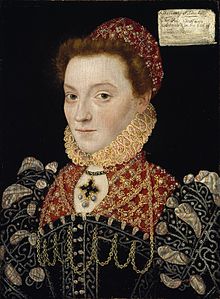
Elizabeth Fitzgerald, painted by Steven van der Meulen
Elizabeth Fitzgerald, a great-granddaughter of Elizabeth Woodville, had been born in Ireland in about 1528 and was the second daughter of Gerald Fitzgerald, 9th Earl of Kildare. Her mother was Lady Elizabeth Grey, daughter of Sir Thomas Grey, Marquess of Dorset and only surviving son of Elizabeth Woodville, Edward IV’s queen, and therefore first cousin to Henry VIII. Elizabeth Fitzgerald was therefore a second cousin to King Edward VI and queens Mary I and Elizabeth I.
A wealthy, cultivated family, her early childhood was spent at the Kildare’s stately home of Maynooth, in Ireland, with her father acting as the king’s Lord Deputy in Ireland. However, in 1533 the earl was summoned to court to answer complaints against him. Claiming illness, he initially sent his wife, in hope that she could appease the king, but his presence was demanded and in 1534, the ailing earl left for England, leaving his son, Lord Offaly, as his deputy in Ireland. The Earl of Kildare was charged with treason and imprisoned in the Tower of London, where he died of illness in August 1534. His son had come out in open rebellion against the king and would himself be executed at Tyburn in 1537.
The rebellion caused the downfall of the House of Kildare; the title forfeit and their estates confiscated. Lady Kildare and her children sought assistance from her brother, Lord Leonard Grey, settling on his estate at Beaumanor in Leicestershire. Her eldest son and the Kildare heir, Gerald Fitzgerald, fled to exile on the continent, protected from Henry VIII by both Francis I of France and Charles V, the Holy Roman Emperor.
Lady Kildare’s family connections to the king meant that young Elizabeth Fitzgerald was able to enter Princess Elizabeth’s household in 1539, possibly as a maid of honour but ostensibly to be raised alongside her cousin. She was only 9 or 10 years old at the time while the princess was about 6-years-old. While in the princess’s household, Elizabeth made an impression, it seems, particularly on Henry Howard, Earl of Surrey, who wrote a sonnet, From Tuscan cam my ladies worthi race in praise of her as his Fair Geraldine;
Bewty of kind, her vertues from above; Happy ys he that may obtaine her love¹.
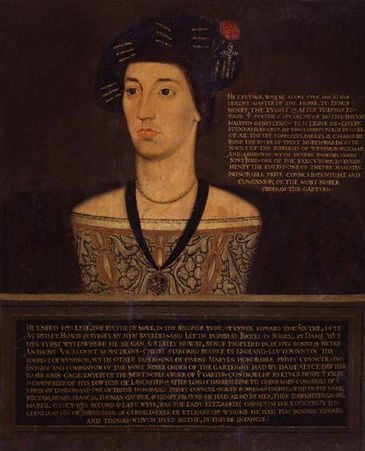
Elizabeth’s first husband, Sir Anthony Browne
In 1542 Elizabeth married her first husband, the wealthy courtier Sir Anthony Browne, who was Henry VIII’s Master of the Horse. The marriage meant that Elizabeth now had the means to restore the family fortunes, applying for military command for her brother, Edward. Her older brother, Gerald returned to England in the reign of Edward VI; he was knighted and his lands restored. In 1554, during the reign of Mary I, Gerald married his sister’s stepdaughter, Mabel (Sir Anthony Browne’s daughter by his first wife, Alice Gage).
Elizabeth was widowed in 1548. Her two sons by Sir Anthony, Edward and Thomas, had both died in infancy.
In 1552 Elizabeth married again, this time to Edward Fiennes de Clinton, ninth Baron Clinton and Saye; the same Baron Clinton who had married Elizabeth (Bessie) Blount in 1535. Clinton had remarried in 1541, after Bessie’s death, to Ursula, daughter of William, seventh Baron Stourton; Ursula was a niece of John Dudley, Duke of Northumberland in the reign of Edward VI. She died in 1551 and Edward married Elizabeth the following year.
Sir Edward Fiennes de Clinton had led a very successful military career and in May 1550 he had been appointed a privy councillor and lord high admiral of England. He was made a knight of the garter in April 1551 and, later in the same year, was given the former Howard property of Tattershall Castle in Lincolnshire, which he made his principal residence. Clinton was an adept political survivor; after being involved in the plot to put the nine-day-queen, Jane Grey, on the throne he was imprisoned for a short time, but managed to win Queen Mary’s trust and was active in her military campaigns.
Tattershall Castle, Lincolnshire
With the accession of Elizabeth I, Clinton was appointed a privy councillor and his wife, Elizabeth Fiennes de Clinton, the queen’s childhood friend, was appointed Gentlewoman of the Privy Chamber ‘without wages’ (this indicated her high-born status, as salaried members were drawn from the lower ranks of the nobility).
In 1572 Baron Clinton was rewarded for his service with the earldom of Lincoln. Elizabeth had practically been raised with the new queen since she was ten years old and was thought to have considerable influence; she regularly received petitions and suits from others requesting she intervene with Elizabeth I on their behalf. She was also able to use her influence at court to benefit her own family; in 1569 Elizabeth and her brothers, Gerald and Edward, and sisters, Margaret and Cecily, successfully petitioned Queen Elizabeth for the restoration of the Fitzgeralds to their blood and lineage.
Edward trusted his wife considerably, and made her executor of his will, bequeathing Sempringham to Elizabeth, and Tattershall to his eldest son, Henry (his son by Ursula). Edward, Earl of Lincoln, died in 1585 and just before his father’s death, his son Henry had written to William Cecil, Lord Burghley, accusing Elizabeth of attempting to deprive him of his inheritance, and of maligning him to the queen. However, Henry’s tactic failed and the will was confirmed in 1587.
Elizabeth Fitzgerald, by an unknown artist
Elizabeth herself appears to have withdrawn from court following her husband’s death. When she died in March 1589, the ‘Fair Geraldine’ was laid to rest beside her husband in the Lincoln Chapel of St George’s Chapel Windsor.
Although one of the greatest noble ladies of her time, with her only 2 children having died in infancy, Elizabeth’s legacy is in the poetry left by Henry Howard, Earl of Surrey;
Do not deface them than wyth fansies newe, Nor chaunge of mindes let not thy minde infect.¹
*
Footnote: ¹H. Howard [earl of Surrey], Poems, ed. E. Jones (1964)
Bibliography: Accounts of the Chamber and Great Wardrobe Public Record Office; Howard [earl of Surrey], Poems, edited by E. Jones (1964); John Leland Leland’s itinerary in England and Wales 1535-43 edited by L Toulmin Smith (1906-10); Letters and Papers, Foreign and Domestic, of the Reign of Henry VIII 1509-47 edited by JS Brewer, James Gairdner and RH Brodie, HMSO London 1862-1932; Privy Purse Expenses of King Henry VIII from November MDXIX to December MDXXXII edited by Sir Nicholas Harris Nicolas 1827; Religion and politics in mid-Tudor England through the eyes of an English Protestant Woman: the Recollections of Rose Hickman edited by Maria Dowling and Joy Shakespeare; Bulletin of the Institute of Historical Research, 1980 & 1982; A Guide to Gainsborough Old Hall by Sue Allan; Bastard Prince: Henry VIII’s Lost Son by Beverley A Murphy; Elizabeth’s Women by Tracy Borman; England Under the Tudors by Arthur D Innes; Henry VIII: King and Court by Alison Weir; In Bed with the Tudors by Amy Licence; In the Footsteps of the Six Wives of Henry VIII by Sarah Morris and Natalie Grueninger; Ladies-in-Waiting: Women who Served at the Tudor Court by Victoria Sylvia Evans; The Earlier Tudors 1485-1558 by JD Mackie; The Life and Times of Henry VII by Neville Williams; The Six Wives and Many Mistresses of Henry VIII: The Women’s Stories by Amy Licence; Oxforddnb.com; Tudorplace.com
*
My Books
Signed, dedicated copies of all my books are available through my online bookshop.
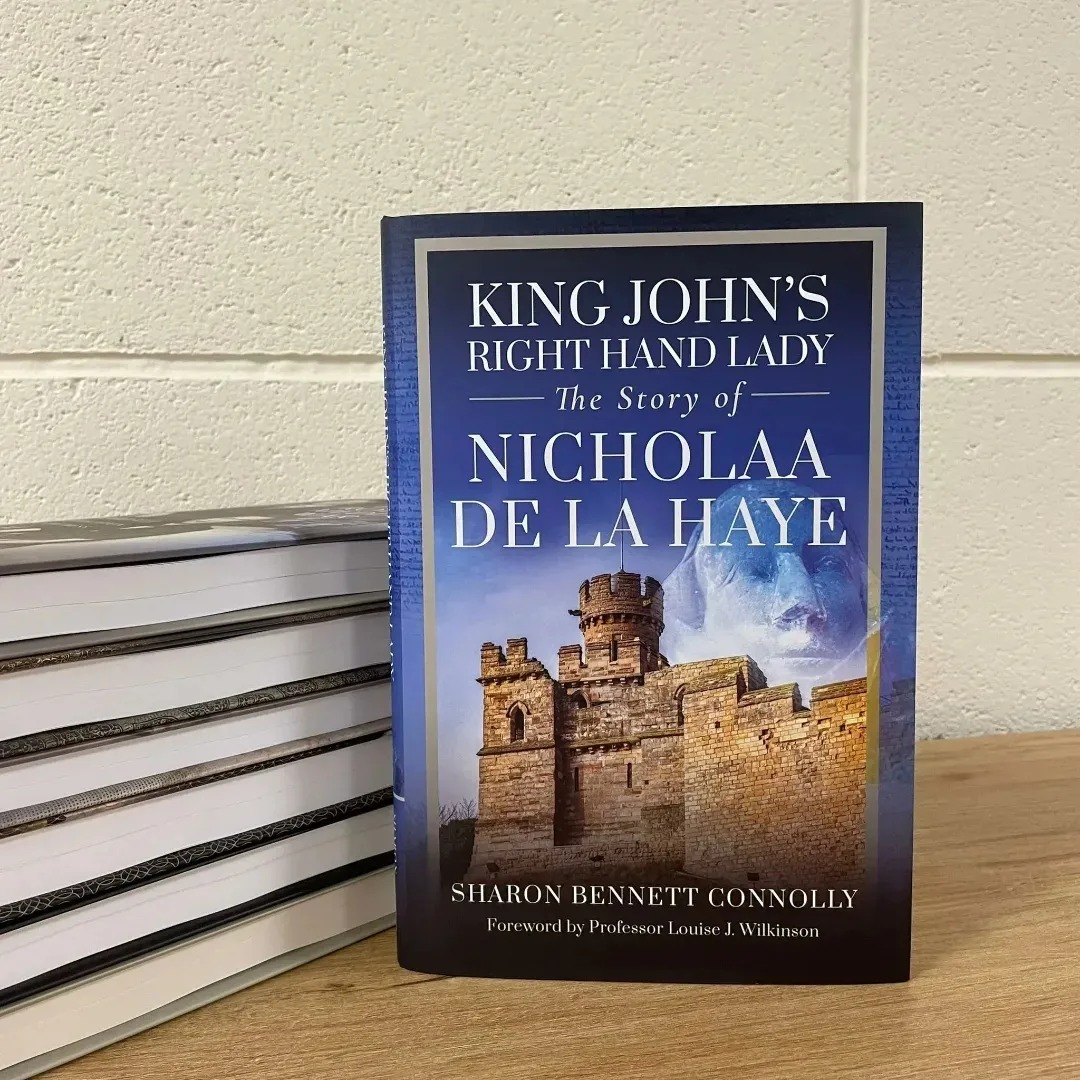
Out now: King John’s Right-Hand Lady: The Story of Nicholaa de la Haye
In a time when men fought and women stayed home, Nicholaa de la Haye held Lincoln Castle against all-comers, gaining prominence in the First Baron’s War, the civil war that followed the sealing of Magna Carta in 1215. A truly remarkable lady, Nicholaa was the first woman to be appointed sheriff in her own right. Her strength and tenacity saved England at one of the lowest points in its history. Nicholaa de la Haye is one woman in English history whose story needs to be told…
On the one side is Empress Matilda, or Maud. The sole surviving legitimate child of Henry I, she is fighting for her birthright and that of her children. On the other side is her cousin, Queen Matilda, supporting her husband, King Stephen, and fighting to see her own son inherit the English crown. Both women are granddaughters of St Margaret, Queen of Scotland and descendants of Alfred the Great of Wessex. Women of the Anarchy demonstrates how these women, unable to wield a sword, were prime movers in this time of conflict and lawlessness. It show how their strengths, weaknesses, and personal ambitions swung the fortunes of war one way – and then the other.
Alternate Endings: An anthology of historical fiction short stories including Long Live the King… which is my take what might have happened had King John not died in October 1216. Available in paperback and kindle from Amazon.
Podcast:
Have a listen to theA Slice of Medieval podcast, which I co-host with Historical fiction novelist Derek Birks. Derek and I welcome guests, such as Bernard Cornwell, and discuss a wide range of topics in medieval history, from significant events to the personalities involved.
*
Don’t forget!Signed and dedicated copies of all my books are available through my online bookshop.
For forthcoming online and in-person talks, please check out my Events Page.
You can be the first to read new articles by clicking the ‘Follow’ button, liking our Facebook page or joining me on Twitterand Instagram.
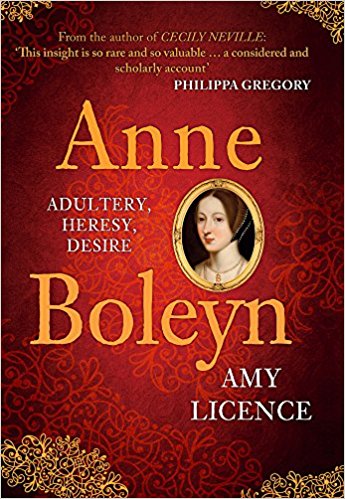
Anne Boleyn’s unconventional beauty inspired poets ‒ and she so entranced Henry VIII with her wit, allure and style that he was prepared to set aside his wife of over twenty years and risk his immortal soul. Her sister had already been the king’s mistress, but the other Boleyn girl followed a different path. For years the lovers waited; did they really remain chaste? Did Anne love Henry, or was she a calculating femme fatale?
Eventually replacing the long-suffering Catherine of Aragon, Anne enjoyed a magnificent coronation and gave birth to the future Queen Elizabeth, but her triumph was short-lived. Why did she go from beloved consort to adulteress and traitor within a matter of weeks? What role did Thomas Cromwell and Jane Seymour of Wolf Hall play in Anne’s demise? Was her fall one of the biggest sex scandals of her era, or the result of a political coup?
With her usual eye for the telling detail, Amy Licence explores the nuances of this explosive and ultimately deadly relationship to answer an often neglected question: what choice did Anne really have? When she writes to Henry during their protracted courtship, is she addressing a suitor, or her divinely ordained king? This book follows Anne from cradle to grave and beyond. Anne is vividly brought to life amid the colour, drama and unforgiving politics of the Tudor court.
Reviewing such a book as Anne Boleyn: Adultery, Heresy, Desire by Amy Licence is a daunting prospect. How can one do justice to a book which may well be the definitive biography of Anne Boleyn? Well, I suppose Amy had the same issue when writing it – how to do justice to Anne Boleyn’s story while avoiding falling into the bias of having a favourite between Anne and her rival, Catherine of Aragon? Having already produced a stunning account of the life of Catherine of Aragon, this is the second in a series which will hopefully include all 6 of Henry VIII’s wives, and presents Anne Boleyn as she was; a woman like any other, with loves, hopes and fears, rather than as the foil and ruin of the married bliss of Catherine and Henry.
However she did it, Amy Licence has managed to produce a balanced, fair assessment of this much hated/loved (depending on which side of the fence you are on) queen. Telling the story from the very beginning, from the rise of Anne’s predecessors through the guilds of London, through her childhood and early years in the courts of Burgundy and France to her dominance of Henry VIII’s court. The book strips away the veil of malice and rumour surrounding her, providing a new and in-depth analysis of Anne the woman and Anne the queen. It shows her as a growing and developing individual, reacting and responding to the forces around her, rather than the historical fiction view of a scheming harridan out to displace Catherine and take the throne for herself. It demonstrates that the Tudor world and Anne’s life, was constantly fluid, developing and responding to situations as they present themselves.
Amy Licence is a wonderful writer and historian – her books are always accessible and enjoyable reads, bringing back to life some of the most fascinating characters of history. And Anne Boleyn: Adultery, Heresy, Desire is no exception. Beautifully written, it presents Anne’s story as never before seen, with a balance rarely achieved when it comes to telling Anne Boleyn’s story. Anne is presented neither as a tragic victim, nor a scheming temptress. Her story unfolds as it does for all of us, with events and actions influencing her decisions and demonstrating that her life was a long winding road; the direction neither predetermined nor inevitable. It shows how Anne’s experiences, both in England and the continent, helped to shape Anne the woman, her outlook and her destiny.
Amy Licence achieves a balance between presenting the everyday domesticity of Henry VIII’s life and court and the national and international politics of the day. I love the little snippets of domestic life interspersed in the deeper issues, such as Henry’s dog, Ball, getting lost in Waltham Forest. She demonstrates the influences of the Reformation on Anne and Henry, and on the country at large, but also highlights the reactionary nature of the Reformation against church abuses. Rather than presenting it as ‘Henry wanted a divorce so he broke with Rome’, but as one cog in a very complex wheel of reactionism and Reformation; showing it in its wider context, not only in England but across Europe, and how both Henry’s and Anne’s attitudes were changed and shaped by the wider European movement of reform.
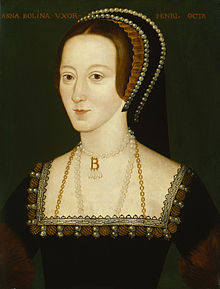
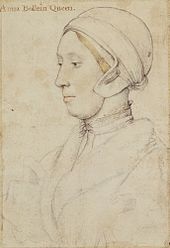
Anne Boleyn by Hans Holbein the Younger
At twelve years old, Anne Boleyn left her home at Hever, travelled to Dover and embarked for Calais. It was to be the start of the education that gave her the air of sophistication and poise that would attract Henry, a unique edge, and the cultural polish and confidence to hold her own in the courts of Burgundy,, France and, eventually, England. in fairy-tale castles that outstripped any buildings she knew from home, hung with the most exquisite Flemish tapestries, in libraries housing the best illuminated manuscripts, where leading artists worked and musicians played, Anne absorbed the latest and best of the northern European Renaissance. Her exposure to its religious and cultural thinking made her something of a ‘new’ woman, part of a generation who would question the old ways and faiths, emboldened to reject centuries of Catholic ritual, the efficacy of saints and the pope, a different world to the England in which she spent her early years.
Amy Licence has managed to write a book about Anne Boleyn, giving us the character of the woman and showing how she grew into her role as queen, but showing her as human, a woman who made not only loyal friends and achieved a position she was never born to, but also a woman who made enemies and mistakes and whose downfall was one of the most tragic, staged events in English history. With the use of primary sources, including letters, court documents and accounts, Amy not only recreates the world of Anne and Henry VIII, but also the personalities and politics of the people and countries surrounding them. Where there is disagreement or controversy , she presents all sides of the argument, using her excellent analytical skills to dissect the story, present the facts and explain her own theories, reasoning and conclusions.
Not only does Amy Licence expertly dissect the character of Anne, but also the personalities associated with her story, from her own family to Henry, Catherine and Cardinal Wolsey. She provides a deep analysis of Anne Boleyn, her character, strengths and weaknesses, successes and failures. She does not shy away from the negatives in Anne’s character, such as her pettiness towards Catherine of Aragon, but manages to convey how Henry’s pursuit of her, the lengthy divorce proceedings and long years of waiting must have affected her.
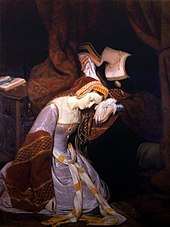
Anne Boleyn in the Tower by Edouard Cibot
Amy Licence’s unique, intimate writing style draws the reader in and provides an engaging, perceptive analysis of one of the most enigmatic women of the Renaissance period. Whether you love or hate Anne Boleyn, Anne Boleyn: Adultery, Heresy, Desire will give you new perspectives of this polarising, iconic woman and help to demonstrate the complexities of Anne’s life and career. While being sympathetic to Anne Boleyn the woman, but not afraid to criticise, Amy Licence provides a balanced analysis of Anne Boleyn’s life, influence and legacy.
*
Amy Licence is an historian of women’s lives in the medieval and early modern period, from Queens to commoners. Her particular interest lies in the late fifteenth and early sixteenth century, in gender relations, Queenship and identity, rites of passage, pilgrimage, female orthodoxy and rebellion, superstition, magic, fertility and childbirth. She is also interested in Modernism, specifically Woolf and the Bloomsbury Group, Picasso and Post-Impressionism.
Amy has written for The Guardian, The TLS, The New Statesman, BBC History, The English Review, The Huffington Post, The London Magazine and other places. She has been interviewed regularly for BBC radio, including Woman’s Hour, and made her TV debut in “The Real White Queen and her Rivals” documentary, for BBC2, in 2013. She also writes historical and literary fiction and has been shortlisted twice for the Asham Award.
Her website can be found at amylicence.weebly.com.
Anne Boleyn: Adultery, Heresy, Desire is available from Amberley Publishing and Amazon. It will be available in the US from Amazon on 1st April 2018.
*
Heroines of the Medieval World:
Heroines of the Medieval World, is now available in hardback in the UK from both Amberley Publishing and Amazon UK and worldwide from Book Depository. It is also available on Kindle in both the UK and USA and will be available in Hardback from Amazon US from 1 May 2018.
You can be the first to read new articles by clicking the ‘Follow’ button, liking our Facebook page or joining me on Twitter.
From the author of the international best-selling Tudor Trilogy, the true story of the Tudor dynasty continues with the daughter of King Henry VII, sister to King Henry VIII. Mary Tudor watches her elder brother become King of England and wonders what the future holds for her. Born into great privilege, Mary has beauty and intelligence beyond her years and is the most marriageable princess in Europe. Henry plans to use her marriage to build a powerful alliance against his enemies. Will she dare risk his anger by marrying for love? Meticulously researched and based on actual events, this ‘sequel’ follows Mary’s story from book three of the Tudor Trilogy and is set during the reign of King Henry VIII.


 Tony Riches is a full-time author of best-selling historical fiction. He lives in Pembrokeshire, West Wales and is a specialist in the fifteenth century, with a particular interest in the Wars of the Roses and the lives of the early Tudors. For more information about Tony’s other books please visit his website tonyriches.com and his popular blog, The Writing Desk and find him on Facebook and Twitter @tonyriches.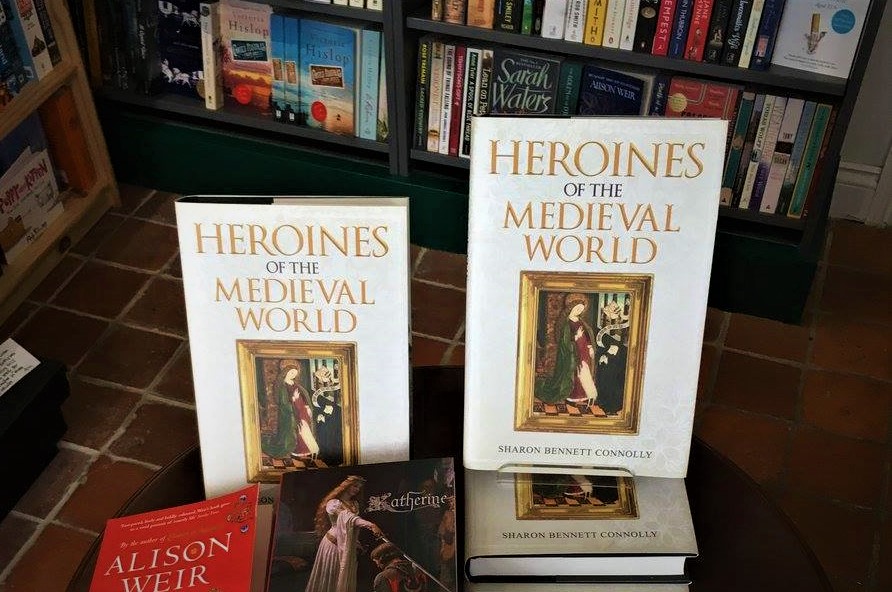


 Giveaway!