Yolande and the Hope for the Scottish Succession

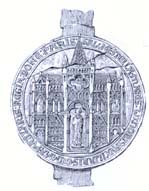
330px-sceau_de_yolande_decosse_-_duchesse_de_bretagne
Yolande de Dreux

Yolande de Dreux was Scotland’s Queen Consort for only  4 months and 14 days. In that short time, she carried the hope of a nation – and its king – to secure the Scottish succession.

Yolande was born into a cadet branch of the French royal family, probably sometime in the mid-1260s. Her father was Robert IV, Count of Dreux, who died in 1282 and her mother was Beatrice de Montfort, who died  in 1311. Beatrice was the daughter of Count Jean I de Montfort l’Amoury and his wife Jeanne de Chateaudun, Beatrice was therefore a great-granddaughter of Simon de Montfort, earl of Leicester, and heiress to the impressive de Montfort estates. One of 6 children, Yolande had 2 brothers and 3 sisters. Little is known of Yolande’s childhood but we can imagine that as a junior member of the Capetian dynasty, she grew up amidst some privilege and splendour.

Whilst Yolande was growing into adulthood Scotland was experiencing a “golden age”, a period of relative peace and prosperity. Her king, Alexander III was married to Margaret, daughter of Henry III of England and the couple had 3 children survive childhood. Their daughter, Margaret, born at Windsor on 28th February, 1261,  was married to Erik II, king of Norway, in August 1281. Their eldest son, Alexander, was born on 21st January 1264, at Jedburgh. On 15th November 1282 Alexander married Margaret, the daughter of Guy de Dampierre, Count of Flanders. A younger son, David was born on 20th March 1273.

Queen Margaret died in 1275 and within 8 years all 3 of her children were dead; 8-year-old David died at Stirling Castle at the end of June 1281, Margaret died in childbirth on 9th April 1283 and Alexander died at Lindores Abbey in January 1284, sometime around his 20th birthday. Alexander’s heir was now his infant granddaughter by Margaret and Erik, little Margaret, the Maid of Norway, born shortly before her mother’s death.

dscn4964
Jedburgh Abbey

With his entire dynasty resting on the life of his toddler granddaughter, Alexander started the search for a new wife. In February 1285 he sent a Scottish embassy to France for this sole purpose. Their successful search saw Yolande arrive in Scotland that same summer, accompanied by her brother John. Alexander and Yolande were married at Jedburgh Abbey, Roxburghshire, on 14th October 1285, the feast of St Calixtus, in front of a large congregation made up of Scottish and French nobles. Yolande was probably no more than 22 years of age, while Alexander was in his 44th year.

The marriage was one of the shortest in British royal history – and the shortest of any English or Scottish king, lasting less than 5 months. Tragedy struck on 19 March 1286.

Alexander had spent the day attending a council meeting in Edinburgh. When the meeting broke up he set off on horseback to join his wife at Kinghorn Castle in Fife. It was said he wanted to be there to celebrate her birthday and he may also have recently discovered that she was pregnant with the much-desired heir. For whatever the reason, he was eager to get to her and took only a small escort of 3 men and 2 local guides. It seems that, with bad weather closing in and daylight fading, several people counselled against continuing the journey, including the ferryman at the River Forth and the bailie at Inverkeithing, who argued that Alexander should stay the night and continue his journey in the morning as a heavy storm was brewing.

330px-alexander_iii_and_ollamh_righ
Alexander III

Only 8 miles from his destination, Alexander would hear none of it and insisted on continuing his journey. He somehow lost his escort in the dark and worsening weather, but continued alone. It was the next morning when his body was found on the foreshore of Pettycur, just a mile from his destination. The most likely explanation was that his horse had stumbled, throwing the king whose neck was broken in the fall, although at least one historical fiction writer has suggested foul play while others have suggested the king was drunk.

There followed months of uncertainty in Scotland. She had lost one of her most successful kings and the succession was in turmoil. Little Margaret, the Maid of Norway, had been recognised by the council as Alexander’s heir, but his queen was pregnant; and if she gave birth to a boy he would be king from his first breath. A regency council was established to rule until the queen gave birth.

In the event, Yolande either suffered a miscarriage, or the child was stillborn. Some sources, the Lanercost Chronicle in particular, have questioned whether Yolande was pregnant at all, suggesting that she was intending to pass off another woman’s baby as her own. The plan thwarted, the chronicle recorded that ‘women’s cunning always turns toward a wretched outcome‘.¹ However, there are major discrepancies in the chronicle’s apparently malicious account and tradition has the baby buried at Cambuskenneth.
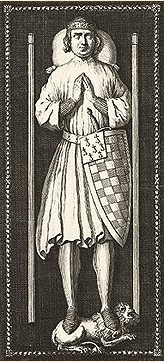
artur_bretan
Arthur of Brittany

The throne passed to little Margaret and arrangements began to have her brought to England, with marriage negotiations being opened with Edward I for the little queen to marry his son and heir; the future Edward II. Yolande continued to reside in Scotland for some time, possibly at Stirling Castle, and was confirmed in her dower properties, which included an annual income of £200 from Berwick; she also had estates in the sheriffdom of Stirling and a horse stud at Jedworth.

Margaret’s death at sea in 1290, while on her journey to her new kingdom, threw Scotland into years of turmoil, with 13 nobles advancing their competing claims to the crown and Edward I of England claiming the right to choose Alexander III’s successor, and recognition as Scotland’s overlord. The English king’s imperialist ambitions had thrown Scotland into crisis by 1296.

Luckily for Yolande, she was already far away from Scotland and the brewing wars. In May 1294 Yolande had married for a second time; Arthur of Brittany was a similar age to Yolande and was the son and heir of Jean II, duke of Brittany and earl of Richmond. Yolande was the second wife of Arthur, who already had 3 sons, Jean, Guy and Peter, by his first wife, Marie, Vicomtesse de Limoges.

It is possible that Arthur chose Yolande as a bride due to the impressive de Montfort territories that she stood to inherit from her mother, although there were legal wranglings between Yolande and her younger sister, Jeanne, who also claimed the lands.
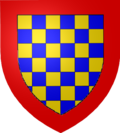
120px-blason_comtes_dreux
Arms of the counts of Dreux

Yolande and Arthur had 6 children together. Their eldest daughter, Joan was born a year after their marriage and married Robert, Lord of Cassel; she died in 1363. Beatrice was born c.1295 and married Guy, Lord of Laval; she lived until 1384. Their only son, John, was probably born 1295/6 and married Joan of Flanders. Of the 3 youngest daughters: Alice was born in the late 1290s married Bouchard VI, Count of Vendôme and died in 1377; Blanche was born in 1300 and died young; Mary was born in 1302 and became a nun, she died in 1377.

Arthur succeeded his father as Duke of Brittany in 1305 and ruled until his death in 1312. He was succeeded by John III, his eldest son by his first marriage. However, John’s death in 1341 sparked the War of the Breton Succession when Yolande’s son, John de Montfort, claimed the duchy in place of Joan of Penthièvre, daughter of Guy (Arthur’s 2nd son by his 1st wife), who was married to Charles of Blois, nephew of King Philip VI of France. Joan and Charles were therefore backed by the French crown, and Edward III of England supported the claims of John de Montfort; the war eventually became part of the greater conflict, the Hundred Years War. When John fell ill and died in 1345, the war continued in the name of his 6-year-old son and Yolande’s grandson, another John (John IV, duke of Brittany) and finally ended in John’s favour with the treaty of Guérande in April 1365.
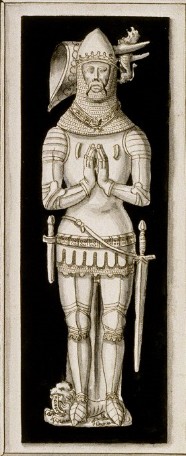
jan5bretan
John IV Duke of Brittany

After being widowed for a second time Yolande did not remarry.

During her time in Brittany Yolande continued to administer to her Scottish estates; in October 1323 safe-conduct to Scotland was granted to a French knight  ‘for the dower of the Duchess of Brittany while she was Queen of Scotland‘.² It seems uncertain when Yolande died. Sources vary between 1324 and 1330, although she was still alive on 1st February 1324 when she made provision for the support of her daughter, Marie, who had become a nun.

These arrangements for her daughter are the last mention of Yolande in the historical record, the date of her death as uncertain as that of her birth.

*

Footnotes: ¹ Chronique de Lanercost, 118,  quoted by Jessica Nelson in Oxforddnb.com. ²CSP Scot.. 3. no. 829 quoted by Jessica Nelson in Oxforddnb.com.

*

Pictures courtesy of Wikipedia, except Jedburgh Abbey, which is ©2016 Sharon Bennett Connolly.

*

Sources: Marc Morris Edward I: A Great and Terrible King by Marc Morris;  Brewer’s British Royalty by David Williamson; The Mammoth Book of British kings & Queens by Mike Ashley; Britain’s Royal Families by Alison Weir; The Oxford Companion to British History edited by John Cannon; The History Today Companion to British History Edited by Juliet Gardiner and Neil Wenborn; The Story of Scotland by Nigel Tranter; Scotland, History of a Nation by David Ross; oxforddnb.com; undiscoveredscotland.co.uk; freelancehistorywriter.com.

*

My books

Signed, dedicated copies of all my books are available through my online store.

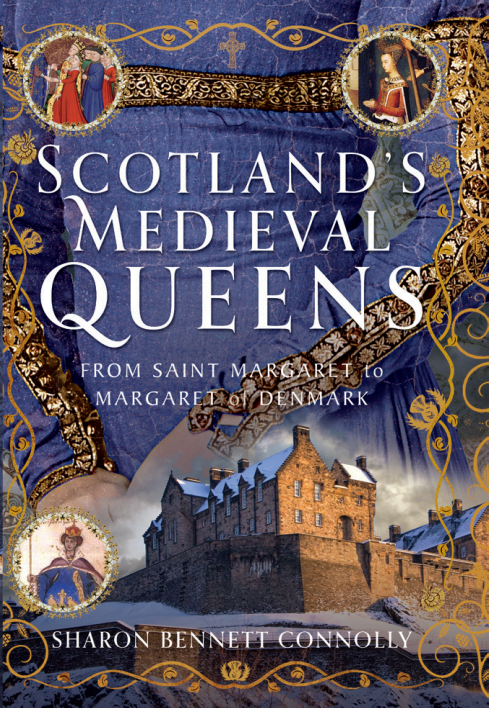
Out now: Scotland’s Medieval Queens

Scotland’s history is dramatic, violent and bloody. Being England’s northern neighbour has never been easy. Scotland’s queens have had to deal with war, murder, imprisonment, political rivalries and open betrayal. They have loved and lost, raised kings and queens, ruled and died for Scotland. From St Margaret, who became one of the patron saints of Scotland, to Elizabeth de Burgh and the dramatic story of the Scottish Wars of Independence, to the love story and tragedy of Joan Beaufort, to Margaret of Denmark and the dawn of the Renaissance, Scotland’s Medieval Queens have seen it all. This is the story of Scotland through their eyes.

Available now from Amazon and Pen and Sword Books

Also by Sharon Bennett Connolly:
Heroines of the Tudor World tells the stories of the most remarkable women from European history in the time of the Tudor dynasty, 1485-1603. These are the women who ruled, the women who founded dynasties, the women who fought for religious freedom, their families and love. Heroines of the Tudor World is now available for pre-order from Amberley Publishing and Amazon UK. Women of the Anarchy demonstrates how Empress Matilda and Matilda of Boulogne, unable to wield a sword themselves, were prime movers in this time of conflict and lawlessness. It shows how their strengths, weaknesses, and personal ambitions swung the fortunes of war one way – and then the other. Available from Bookshop.orgAmberley Publishing and Amazon UKKing John’s Right-Hand Lady: The Story of Nicholaa de la Haye is the story of a truly remarkable lady, the hereditary constable of Lincoln Castle and the first woman in England to be appointed sheriff in her own right. Available from all good bookshops Pen & Sword Booksbookshop.org and Amazon

Defenders of the Norman Crown: The Rise and Fall of the Warenne Earls of Surrey tells the fascinating story of the Warenne dynasty, from its origins in Normandy, through the Conquest, Magna Carta, the wars and marriages that led to its ultimate demise in the reign of Edward III. Available from Pen & Sword BooksAmazon in the UK and US, and Bookshop.orgLadies of Magna Carta: Women of Influence in Thirteenth Century England looks into the relationships of the various noble families of the 13th century, and how they were affected by the Barons’ Wars, Magna Carta and its aftermath; the bonds that were formed and those that were broken. It is now available in paperback and hardback from Pen & SwordAmazon, and Bookshop.orgHeroines of the Medieval World tells the stories of some of the most remarkable women from Medieval history, from Eleanor of Aquitaine to Julian of Norwich. Available now from Amberley Publishing and Amazon, and Bookshop.orgSilk and the Sword: The Women of the Norman Conquest traces the fortunes of the women who had a significant role to play in the momentous events of 1066. Available now from Amazon,  Amberley Publishing, and Bookshop.org.

Alternate Endings: An anthology of historical fiction short stories including Long Live the King… which is my take what might have happened had King John not died in October 1216. Available in paperback and kindle from Amazon.

Podcast:

Have a listen to the A Slice of Medieval podcast, which I co-host with Historical fiction novelist Derek Birks. Derek and I welcome guests, such as Bernard Cornwell and Michael Jecks, and discuss a wide range of topics in medieval history, from significant events to the personalities involved. Every episode is also now available on YouTube.

*

Don’t forget! Signed and dedicated copies of all my books are available through my online store.

For forthcoming online and in-person talks, please check out my Events Page.

You can be the first to read new articles by clicking the ‘Follow’ button, liking our Facebook page or joining me on TwitterThreadsBluesky and Instagram.

*

©2016 Sharon Bennett Connolly, FRHistS
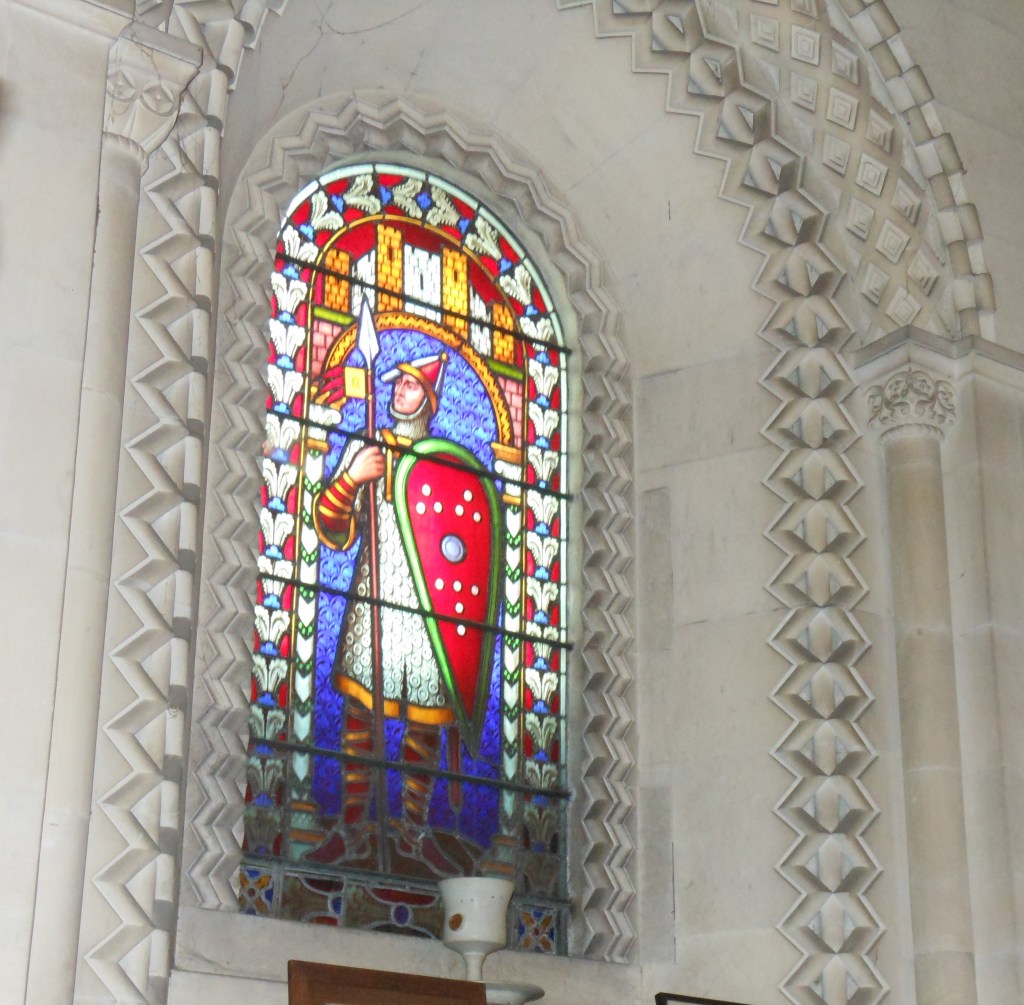
William de Warenne, the Conqueror’s Man

History...the Interesting Bits
William de Warenne, 1st earl of Surrey

William de Warenne, first earl of Surrey, was a younger son of Rodulf de Warenne and his wife Beatrix. It is possible that Beatrix was a niece of Duchess Gunnor of Normandy, making young William a cousin of William the Bastard, duke of Normandy. The family name is probably derived from the hamlet of Varenne, part of the Warenne lands in the department of Seine-Inférieure, Normandy. William’s older brother, Rodulf or Ralph, would inherit the greater part of the Warenne family estates in Normandy.

His birth, as you might expect, is shrouded in the fog of time; a younger son of the minor nobility does not tend to get a mention until he does something remarkable or becomes someone notable. Although still young William was considered a capable and experienced enough soldier to be given joint command of a Norman army, by the mid-1050s. His first recorded military action is in the campaign against his own kinsman, Roger (I) de Mortemer of 1054, as one of the commanders of an army which defeated the French.

De Warenne was rewarded with some of the Mortemer lands; some of which he managed to retain even after Mortemer’s restoration to favour, including the castles of Mortemer and Bellencombre. Bellencrombe would become the capital of the de Warenne estates in Normandy. De Warenne received more rewards from the confiscated lands of William, count of Arques in 1053. Duke William’s confidence in de Warenne is demonstrated in the fact he was one of the barons consulted during the planning of the invasion of England in 1066.

In fact, William de Warenne is one of only a handful of Norman barons known to have fought at the Battle of Hastings on 14th October, 1066 as King William recalled his presence at the battle on his deathbed. De Warenne was rewarded with vast swathes of land throughout the country. According to the Domesday survey his lands extended over 13 counties; stretching from Conisbrough in Yorkshire to Lewes in Sussex. His territories were acquired over the course of the reign of William I and elevated him the highest rank of magnates. By 1086 his riches were only surpassed by the king’s half-brothers and his own kinsman, Roger de Montgomery. He is still in the Top 20 list of the richest people in History.

330px-bayeuxtapestryscene52
Battle of Hastings, 1066

Throughout his career, William de Warenne acquired lands in numerous counties, sometimes by nefarious means. Much of the property, such as Conisbrough, had formerly belonged to the late king, Harold. In Norfolk he is said to have asserted lordship over freemen not necessarily assigned to him. He had disputes with neighbouring landowners in Conisbrough, over which properties were sokelands and he is said to have stolen lands from the bishop of Durham and the abbot of Ely. Some acquisitions were obtained peacefully, such as the manor of Whitchurch in Shropshire, which was left to him by his kinsman Roger de Montgomery. William was an energetic and attentive landowner, and improved the economy of most of his estates; more than tripling his sheep flock at Castle Acre and doubling the value of his Yorkshire estates in just 20 years (at a time when the county was devastated by the Harrying of the North.

In 1067 William de Warenne was one of 4 prominent Normans appointed to govern England during William the Conqueror’s absence in Normandy. Following the Conquest, he continued to support the king and – subsequently – his son, William II Rufus – as a military commander for over 20 years. In 1074 he was with is father at  the abbey of Holy Trinity in Rouen and in 1083-85 he fought with the king on campaign in Maine, being wounded at the siege of the castle of Sainte-Suzanne.

In 1075, along with Richard de Clare, his fellow justiciar, he was sent to deal with the rebellion of Earl Ralph de Gael of East Anglia. De Gael had failed to respond to their summons to answer for an act of defiance and so the 2 lords faced and defeated the rebels at Fawdon in Cambridgeshire, mutilating their prisoners afterwards. Ralph withdrew to Norwich Castle; besieged for 3 months he managed to escape his attackers by boat, while the castle surrendered and was occupied by de Warenne.

History...the Interesting Bits
Gundrada de Warenne

William de Warenne was married to a Flemish noblewoman, Gundrada; her brother Gerbod was sometime earl of Chester and another brother, Frederic, held lands in Norfolk which eventually passed to Gundrada. He was murdered by Enlgish freedom fighter, Hereward the Wake; his murder giving rise to a personal feud between Hereward and William de Warenne:

Among his other crimes, by trickery [Hereward] killed Frederick, brother of Earl William of Warenne, a man distinguished by lineage and possessions, who one night was surrounded in his own house. On account of his murder, such discord arose between Hereward and the aforesaid William that it could not be settled by any reparation nor in any court.1

There has been considerable debate among historians over the theory that Gundrada may have been the daughter of William the Conqueror, but the confusion appears to have come from an unreliable charter belonging to Lewes Priory and Gundrada being part of the household of King William’s wife, Matilda; though it does seem likely that Matilda and Gundrada were related in some way, perhaps distant cousins. Gundrada and William were married sometime around the time of the Conquest, either before or after the expedition to conquer England.

They had 3 children together. Their eldest son, William, would succeed his father as Earl of Surrey and de Warenne. He married Isabel de Vermandois, widow of Robert de Beaumont, earl of Leicester; with whom he had, apparently, been having an affair even before the earl’s death. Young William had a chequered career, he supported the claims of Robert Curthose, duke of Normandy, to the English throne against the duke’s younger brother, Henry I. However, duke Robert lost and was captured and imprisoned by Henry. Henry eventually forgave William, who fought for the king at the Battle of Bremule and was with Henry he died in 1135.

A second son, Rainald de Warenne, led the assault on Rouen in 1090, for William II Rufus, in the conflict between the English king and his older brother, Duke Robert. However, by 1105 Rainald was now fighting for the duke against the youngest of the Conqueror’s sons, Henry I, defending the castle of Saint-Pierre-sur-Dives for the duke. He was captured by Henry the following year, but had been freed by September 1106. It is possible he died shortly after, but was certainly dead by 1118 when his brother issued a charter, in which he gave 6 churches to Lewes Priory, for the soul of deceased family members, including Rainald.

Gundrada and William also had a daughter, Edith, who married Gerard de Gournay, son of the lord of Gournay-en-Bray. Gerard also supported William II Rufus against Duke Robert and took part in the Crusade of 1096. Edith later accompanied him on pilgrimage back to Jerusalem, sometime after 1104, where he died. Gerard was succeeded by their son, Hugh de Gournay, whose daughter Gundreda would be the mother of Roger de Mowbray. Edith then married Drew de Monchy, with whom she had a son, Drew the Younger.

Castle_Acre_Castle
Castle Acre Castle, Norfolk

Gundrada died in childbirth at Castle Acre in Norfolk on 27th May 1085. She was buried in the chapter-house of the couple’s own of foundation Lewes Priory.

William’s second wife was a sister of Richard Guet, who was described as ‘frater comitissae Warennae’ when he gave the manor of Cowyck to Bermondsey Abbey in 1098.2 Guet was a landowner in Perche, Normandy, but his sister’s name has not survived the passage of time. All we know of her is that, a few days after her husband’s death, she attempted to gift 100 shillings to Ely Abbey in restitution for damage caused by William de Warenne. The monks refused the donation, hoping that Warenne’s departing soul had been claimed by demons.3

Despite this reputation at Ely, William de Warenne and his wife, Gundrada, had a reputation for piety. At some point in their marriage, either in 1077 or between 1081 and 1083, they went on pilgrimage to Rome. Due of war in Italy they only got as far as the great abbey of Cluny in Burgundy, where they were received into the fellowship of monks. On their return to England they founded a priory at Lewes, following the Cluniac rule and a prior and 3 monks were sent from Cluny to establish the foundation. It was the first Cluniac foundation in England.

pevensey_castle_aerial_alt
Pevensey Castle

Following the Conqueror’s death, William fought in support of the late king’s second son, William II Rufus against his older brother, Robert Curthose, who had inherited the dukedom of Normandy. He was rewarded in early 1088 with the earldom of Surrey. The new earl fought for William II Rufus during an invasion by Robert’s supporters and was badly wounded in the leg at the siege of Pevensey Castle, East Sussex, in the spring of 1088. He was taken to Lewes, where he died of his wounds on 24th June of the same year. Earl Warenne was buried beside his first wife, Gundrada, in the chapter-house of Lewes Priory.

Following the dissolution of Lewes Priory in the 16th century, Gundrada’s tombstone was 1st moved to Isfield Church; it was moved again in 1775 to the parish church of St John the Baptist at Southover in Lewes. The remains of Gundrada and William, themselves, were discovered in 2 leaden chests in 1845, when the railway line was excavated through the priory grounds. They were laid to rest, for a final time, at the Southover church, in 1847.

*

The story of William and Gundrada de Warenne appears in my book, Silk and the Sword: the Women of the Norman Conquest. It is told in much greater detail in Defenders of the Norman Crown: The Rise and Fall of the Warenne Earls of Surrey

*

Footnotes: ¹The Warenne (Hyde) Chronicle edited and translated by Elisabeth M.C. van Houts and Rosalind C. Love; 2Early Yorkshire Charters Volume 8: The Honour of Warenne, Edited by William Farrer and Charles Travis Clay; 3ibid

Images: Gundrada church window ©lewespriory.org.uk; William de Warenne church window ©Sharon Bennett Connolly; Bayeux Tapestry, Castle Acre and Pevensey Castle courtesy of Wikipedia.

SourcesEarly Yorkshire Charters Volume 8: The Honour of Warenne, Edited by William Farrer and Charles Travis Clay; England Under the Norman and Angevin Kings by Robert BatlettBrewer’s British Royalty by David WilliamsonBritain’s Royal Families, the Complete Genealogy by Alison Weir; british-history.ac.uk; kristiedean.com; English Heritage Guidebook for Conisbrough Castle by Steven Brindle and Agnieszka Sadrei; The Warenne (Hyde) Chronicle edited and translated by Elisabeth M.C. van Houts and Rosalind C. Love; oxforddnb.com.

*

My Books

Signed, dedicated copies of all my books are available through my online bookshop.

OUT NOW! Scotland’s Medieval Queens

Books by Sharon Bennett Connolly

Scotland’s history is dramatic, violent and bloody. Being England’s northern neighbour has never been easy. Scotland’s queens have had to deal with war, murder, imprisonment, political rivalries and open betrayal. They have loved and lost, raised kings and queens, ruled and died for Scotland. From St Margaret, who became one of the patron saints of Scotland, to Elizabeth de Burgh and the dramatic story of the Scottish Wars of Independence, to the love story and tragedy of Joan Beaufort, to Margaret of Denmark and the dawn of the Renaissance, Scotland’s Medieval Queens have seen it all. This is the story of Scotland through their eyes.

Scotland’s Medieval Queens gives a thorough grounding in the history of the women who ruled Scotland at the side of its kings, often in the shadows, but just as interesting in their lives beyond the spotlight. It’s not a subject that has been widely covered, and Sharon is a pioneer in bringing that information into accessible history.’ Elizabeth Chadwick (New York Times bestselling author)

Available now from Amazon and Pen and Sword Books

Also by Sharon Bennett Connolly:

Books by Sharon Bennett Connolly

Heroines of the Tudor World tells the stories of the most remarkable women from European history in the time of the Tudor dynasty, 1485-1603. These are the women who ruled, the women who founded dynasties, the women who fought for religious freedom, their families and love. Heroines of the Tudor World is now available for pre-order from Amberley Publishing and Amazon UK. Women of the Anarchy demonstrates how Empress Matilda and Matilda of Boulogne, unable to wield a sword themselves, were prime movers in this time of conflict and lawlessness. It shows how their strengths, weaknesses, and personal ambitions swung the fortunes of war one way – and then the other. Available from Bookshop.orgAmberley Publishing and Amazon UKKing John’s Right-Hand Lady: The Story of Nicholaa de la Haye is the story of a truly remarkable lady, the hereditary constable of Lincoln Castle and the first woman in England to be appointed sheriff in her own right. Available from all good bookshops Pen & Sword Booksbookshop.org and Amazon

Royal Historical Society

Defenders of the Norman Crown: The Rise and Fall of the Warenne Earls of Surrey tells the fascinating story of the Warenne dynasty, from its origins in Normandy, through the Conquest, Magna Carta, the wars and marriages that led to its ultimate demise in the reign of Edward III. Available from Pen & Sword BooksAmazon in the UK and US, and Bookshop.orgLadies of Magna Carta: Women of Influence in Thirteenth Century England looks into the relationships of the various noble families of the 13th century, and how they were affected by the Barons’ Wars, Magna Carta and its aftermath; the bonds that were formed and those that were broken. It is now available in paperback and hardback from Pen & SwordAmazon, and Bookshop.orgHeroines of the Medieval World tells the stories of some of the most remarkable women from Medieval history, from Eleanor of Aquitaine to Julian of Norwich. Available now from Amberley Publishing and Amazon, and Bookshop.orgSilk and the Sword: The Women of the Norman Conquest traces the fortunes of the women who had a significant role to play in the momentous events of 1066. Available now from Amazon,  Amberley Publishing, and Bookshop.org.

Alternate Endings: An anthology of historical fiction short stories including Long Live the King… which is my take what might have happened had King John not died in October 1216. Available in paperback and kindle from Amazon.

Podcast:

A Slice of Medieval

Have a listen to the A Slice of Medieval podcast, which I co-host with Historical fiction novelist Derek Birks. Derek and I welcome guests, such as Bernard Cornwell and Elizabeth Chadwick, and discuss a wide range of topics in medieval history, from significant events to the personalities involved.

Every episode is also now available on YouTube.

*

Don’t forget! Signed and dedicated copies of all my books are available through my online bookshop.

For forthcoming online and in-person talks, please check out my Events Page.

You can be the first to read new articles by clicking the ‘Follow’ button, liking our Facebook page or joining me on TwitterThreadsBluesky and Instagram.

*

©2016 Sharon Bennett Connolly, FRHistS

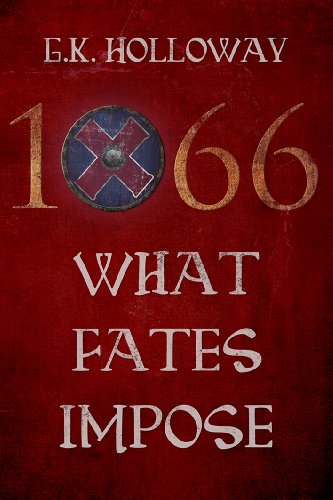
Book Corner:1066 What Fates Impose by G.K. Holloway

51dwzulugglMy latest book review, of Glynn Holloway’s epic novel 1066: What Fates Impose has gone live over at The Review today!

Glynn Holloway’s 1066: What Fates Impose is an experience in itself. It takes you on the epic journey of Harold Godwinson, earl of Wessex, and William, duke of Normandy – Harold’s rival for the throne of England – that ends at Senlac Hill, Hastings on 14th October 1066. It is a riveting tale, weaving together the lives, loves and conflicts of those who held the fate of England in their hands. Impossible to put down, 1066: What Fates Impose, gives the reader a panoramic view the events that would change the course of English history forever….

To read the full review of this fantastic novel – and to enter the prize draw and be in with a chance of winning a paperback copy in the giveaway, simply visit The Review and leave a comment. Good luck!

*

My book, Heroines of the Medieval World,  is now available in hardback in the UK from both Amberley Publishing and Amazon UK and worldwide from Book Depository. It is also available on Kindle in both the UK and USA and will be available in Hardback from Amazon US from 1 May 2018.

Be the first to read new articles by clicking the ‘Follow’ button, liking our Facebook page or joining me on Twitter.

*

©Sharon Bennett Connolly 2016

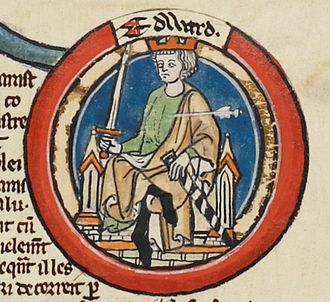
King Eadwig ‘All-Fair’ and the Coronation Scandal

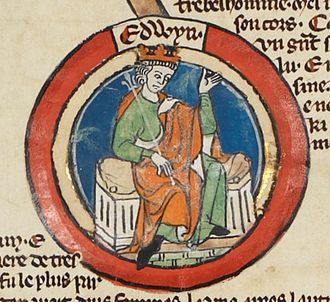
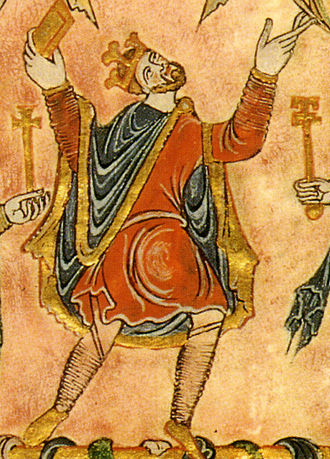
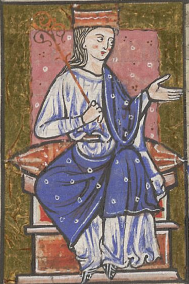
eadwig_-_ms_royal_14_b_vi
King Eadwig

While researching Edward the Martyr and his stepmother, Ælfthryth, I came across a very interesting character. Eadwig (or Edwy) was young Edward’s uncle; the elder brother of Edward’s father, Edgar the Peaceable. Eadwig has one of the worst reputations of the Anglo-Saxon kings, even though he only reigned for 4 years; he was, supposedly, found in a compromising situation when he was meant to be presiding over his coronation feast.

I just had to know more about this king!

Eadwig was born around 940. He had an impressive royal pedigree, being the eldest surviving son of Edmund I (the Elder) and his 1st wife, Ælfgifu of Shaftesbury, who was later known as St Elgiva. Edmund was the son of Edward the Elder and, therefore, the grandson of King Alfred the Great, thus making Eadwig King Alfred’s great-grandson.

Eadwig’s mother Ælfgifu died in 944, and was buried at Shaftesbury Abbey; she left little Eadwig and his baby brother, Edgar, to be raised by their father. Although Edmund married again, he only survived his 1st wife by 2 years; he was stabbed by Leofa, an exiled thief, on 29 May 946, possibly as part of an assassination plot, although later sources suggest Edmund had recognised Leofa in the crowd and was killed while trying to arrest him.

With his eldest son no more than 6 years old, Edmund was succeeded as king by his brother, Eadred (known as Eadred Debilis Pedibus (“Weak-in-the-Feet”). Eadred’s chief supporters included his mother, Queen Eadgifu the 3rd wife of Edward the Elder, Archbishop Oda (or Odo) of Canterbury, Dunstan, abbot of Glastonbury and Æthelstan Half-King ealdorman of East Anglia.

330px-edmund_i_-_ms_royal_14_b_v
Edmund I, Eadwig’s father

As Eadred’s health failed, more responsibilities were entrusted to his chief supporters. Dunstan, for instance,  as well as being entrusted with the production of charter in the king’s name he was also given the guardianship of the royal treasures. Æthelstan is said to have been foster-father to Edgar, Eadwig’s younger brother, so it is possible that both boys were raised in his household.

Although we know nothing of Eadwig’s childhood it is assumed he was raised away from court, as his name does not appear on any charters during the reigns of his father or uncle. Eadwig and his brother only start appearing in authentic texts in 955, Eadred’s final year.

Eadred died on 23rd November 955 and was succeeded by 15-year-old Eadwig. A typical teenager, Eadwig immediately set about trying to assert his independence. He made appointments that were calculated to reduce the power and influence of Æthelstan Half-King, and then turned his attention to his grandmother, Queen Eadgifu, depriving her of all her possessions.

The most powerful and influential people in the country were probably pulling their hair out in frustration in no time. However, life carried on and Eadwig’s coronation took place at Kingston-Upon-Thames, probably at the end of January 956. And it was at the feast, to celebrate the coronation, that Eadwig’s reputation took a spectacular nosedive.

aelfgifu-mortimer
Eadwig defending Aelfgifu to Archbishop Oda

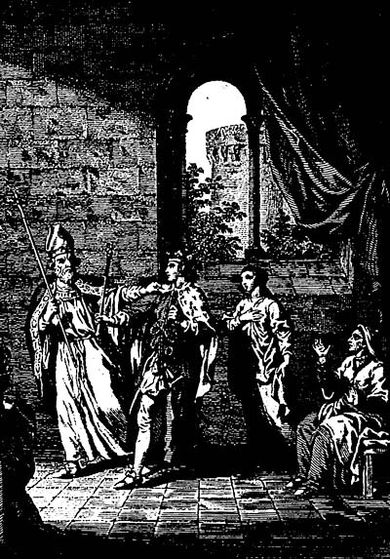
Eadwig seems to have grown bored – or tired – of the celebrations and retired to his own apartments, even though the coronation feast was in full swing. When Archbishop Oda noticed Eadwig’s absence, he sent Abbot Dunstan (the future saint and archbishop of Canterbury) in search of the errant king. Dunstan supposedly found Eadwig in a compromising situation with a young woman, ‘a girl of ripe age’¹ … and her mother. It is said that Dunstan was so furious he physically attacked the 2 women before dragging Eadwig back to the banquet.

The younger lady involved was most likely Ælfgifu, soon to be Eadwig’s wife. The story, however, is related in the life of St Dunstan and could well be an invention or, at the least, an exaggeration designed to highlight the conflict between Eadwig and the church, over his choice of bride. And during the battle of wits between king and church Ælfgifu’s mother, Æthelgifu, pressed Eadwig to have Dunstan deprived of all his possessions and sent into exile.

However, it seems the church held the upper hand; Eadwig and Ælfgifu were separated in 957 or 958 on the orders of Archbishop Oda ‘because they were too closely related’². Research suggests that Ælfgifu was from a junior or dispossessed branch of the royal family, possibly descended from Æthelred I (r. 865-71), brother of Alfred the Great, thus making the young lovers 3rd cousins. Ælfgifu lived on into the reign of King Edgar the Peaceable, but disappears from the historical record after 96.

Eadwig did not remarry.

Other aspects of Eadwig’s life appear to have been just as chaotic; his reign taken up with political disputes and trying to pacify his rebellious nobles. Eadwig’s surviving charters show a favouritism towards laymen, rather than the church, although he is remembered as a benefactor of Abingdon Abbey. Eadwig appointed 3 new ealdordoms during 956 alone, including Æthelwold, son of Æthelstan Half-King and 1st husband of Ælfthryth, the wicked stepmother of Edward the Martyr.

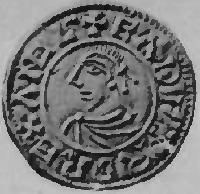
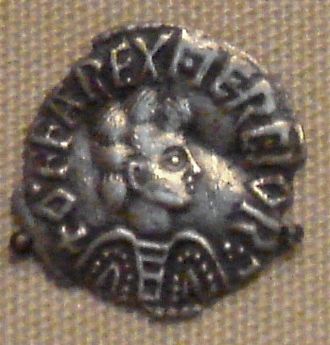
coin_of_king_eadwig_of_england
Coin of King Eadwig

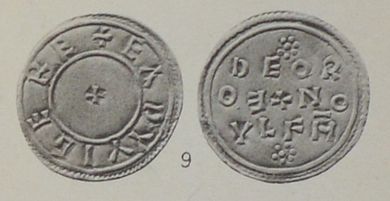
By the summer of 957 the kingdom was divided in 2; the king ‘was wholly deserted by the norther people, being despised because he acted foolishly in the government committed to him, ruining with vain hatred the shrewd and the wise, and admitting with loving zeal the ignorant and those like himself’³. A political settlement was reached, probably aimed at preventing civil war, based on a geographical division of the country, rather than personal loyalties. Eadwig was to rule all the lands south of the River Thames, while his younger brother, Edgar, would rule in the north. Although the fact that it was Eadwig’s coins that were the country’s only currency until 959 suggests that Eadwig maintained overall authority.

This became the status quo until Eadwig’s death on 1st October 959 at Gloucester, when the kingdom was once again united under one ruler, King Edgar. Aged only around 19 when he died, the manner of Eadwig’s death is a mystery; it’s possible he died from some inherited family ailment, or a convenient accident, I suppose we’ll never know…. Eadwig was buried in the New Minster at Winchester, founded by his grandfather, King Edward the Elder.

s_594_diploma_of_king_eadwig_for_aelfwine_ad_956-tif
Diploma of King Eadwig for Aelfwine

Poor Eadwig’s reputation has suffered at the hands of the biographers of the early church leaders, particularly in the Life of St Dunstan, which depicts Eadwig as a debaucher, a despoiler of the church and an incompetent king. While William of Malmesbury called him a ‘wanton youth’ who ‘misused his personal beauty in lascivious behaviour’ 4, his nickname of ‘All-Fair’ suggests he wasn’t all bad. The chronicler, Æthelweard saying that Eadwig ‘for his great beauty he got the nickname Pancali [‘All-Fair’] from the common people’.5 According to the chronicler, Eadwig ‘held the kingdom for four years and deserved to be loved.’6

*

Footnotes: ¹ quoted by Simon Keynes in oxforddnb.com; ² Anglo-Saxon Chronicle, s.a. 958, text 1; ³ Vita S. Dunstan, ch. 24; 4 quoted by Simon Keynes in oxforddnb.com; 5 Chronicle of Æthelweard, 4.8; 6 ibid.

*

Pictures courtesy of Wikipedia

Sources: Brewer’s British Royalty by David Williamson; Britain’s Royal Families, the Complete Genealogy by Alison Weir; The Wordsworth Dictionary of British History by JP Kenyon; The Anglo-Saxons in 100 Facts by Martin Wall; Kings, Queens, Bones and Bastards by David Hilliam; The Mammoth Book of British kings & Queens by Mike Ashley; The Oxford Companion to British History Edited by John Cannon; oxforddnb.com.

*

My Books

Signed, dedicated copies of all my books are available through my online bookshop.

OUT NOW! Heroines of the Tudor World

Heroines of the Tudor World tells the stories of the most remarkable women from European history in the time of the Tudor dynasty, 1485-1603. These are the women who ruled, the women who founded dynasties, the women who fought for religious freedom, their families and love. These are the women who made a difference, who influenced countries, kings and the Reformation. In the era dominated by the Renaissance and Reformation, Heroines of the Tudor World examines the threats and challenges faced by the women of the era, and how they overcame them. From writers to regents, from nuns to queens, Heroines of the Tudor World shines the spotlight on the women helped to shape Early Modern Europe.

Heroines of the Tudor World is now available for pre-order from Amberley Publishing and Amazon UK.

Coming 30 January 2025: Scotland’s Medieval Queens

Scotland’s history is dramatic, violent and bloody. Being England’s northern neighbour has never been easy. Scotland’s queens have had to deal with war, murder, imprisonment, political rivalries and open betrayal. They have loved and lost, raised kings and queens, ruled and died for Scotland. From St Margaret, who became one of the patron saints of Scotland, to Elizabeth de Burgh and the dramatic story of the Scottish Wars of Independence, to the love story and tragedy of Joan Beaufort, to Margaret of Denmark and the dawn of the Renaissance, Scotland’s Medieval Queens have seen it all. This is the story of Scotland through their eyes.

Available for pre-order now.

Also by Sharon Bennett Connolly:

Women of the Anarchy demonstrates how Empress Matilda and Matilda of Boulogne, unable to wield a sword themselves, were prime movers in this time of conflict and lawlessness. It shows how their strengths, weaknesses, and personal ambitions swung the fortunes of war one way – and then the other. Available from Bookshop.orgAmberley Publishing and Amazon UKKing John’s Right-Hand Lady: The Story of Nicholaa de la Haye is the story of a truly remarkable lady, the hereditary constable of Lincoln Castle and the first woman in England to be appointed sheriff in her own right. Available from all good bookshops Pen & Sword Booksbookshop.org and AmazonDefenders of the Norman Crown: The Rise and Fall of the Warenne Earls of Surrey tells the fascinating story of the Warenne dynasty, from its origins in Normandy, through the Conquest, Magna Carta, the wars and marriages that led to its ultimate demise in the reign of Edward III. Available from Pen & Sword BooksAmazon in the UK and US, and Bookshop.org

Ladies of Magna Carta: Women of Influence in Thirteenth Century England looks into the relationships of the various noble families of the 13th century, and how they were affected by the Barons’ Wars, Magna Carta and its aftermath; the bonds that were formed and those that were broken. It is now available in paperback and hardback from Pen & Sword,  Amazon, and Bookshop.orgHeroines of the Medieval World tells the stories of some of the most remarkable women from Medieval history, from Eleanor of Aquitaine to Julian of Norwich. Available now from Amberley Publishing and Amazon, and Bookshop.orgSilk and the Sword: The Women of the Norman Conquest traces the fortunes of the women who had a significant role to play in the momentous events of 1066. Available now from Amazon,  Amberley Publishing, and Bookshop.org.

Alternate Endings: An anthology of historical fiction short stories including Long Live the King… which is my take what might have happened had King John not died in October 1216. Available in paperback and kindle from Amazon.

Podcast:

Have a listen to the A Slice of Medieval podcast, which I co-host with Historical fiction novelist Derek Birks. Derek and I welcome guests, such as Bernard Cornwell, and discuss a wide range of topics in medieval history, from significant events to the personalities involved.

*

Don’t forget! Signed and dedicated copies of all my books are available through my online bookshop.

For forthcoming online and in-person talks, please check out my Events Page.

You can be the first to read new articles by clicking the ‘Follow’ button, liking our Facebook page or joining me on TwitterThreads and Instagram.

©2016 Sharon Bennett Connolly FRHistS
England’s First Queen, the Original Wicked Stepmother?

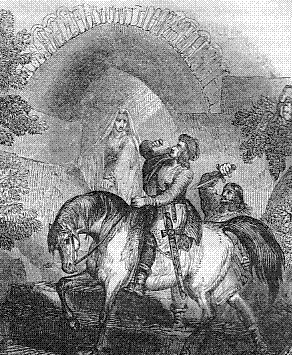
330px-A_Chronicle_of_England_-_Page_072_-_Edward_Murdered_at_Corfe
Queen Ælfthryth and King Edward at Corfe

After writing an article about Edward the Martyr the other week, I thought it only fair to take a look at the other side of the story and write about Ælfthryth, England’s first ever crowned queen and Edward’s stepmother – and possible murderer.

Author Annie Whitehead researched Ælfthryth for her book Alvar the Kingmaker and rather likes her. So she can’t be all bad – can she?

Ælfthryth was probably born around 945; the daughter of Ealdorman Ordgar of Devon and an unknown woman who is said to have been descended from the royal family. As you can imagine, after the passage of more than 1,000 years, nothing is known of her childhood; although she had a least one sibling, a brother, Ordulf, who was founder of Tavistock Abbey. She was married around the age of 11 to Æthelwold, the son of Æthelstan Half-King (I have to do a post about him! What a name!) and ealdorman of East Anglia.

Æthelwold died in 962, probably in a hunting accident, although there were rumours of murder on the orders of his wife’s supposed lover, King Edgar. Edgar and Æthelwold would have known each other very well. After being orphaned as a baby, Edgar was raised in Æthelstan’s household alongside his own sons; of whom Æthelwold was one of the youngest.  Some stories have Edgar wielding the dagger himself, while others don’t even mention murder. Whether the suspicion arose at the time of the event, or following Ælfthryth’s marriage to Edgar 2 years later, is also unclear.

Edgar’s marital history was already chequered. Ælfthryth could be Edgar’s second or third wife; she was certainly the third relationship by which children were born. Edgar’s first wife, Æthelfled “the Fair”, was the mother of his eldest son, Edward (the Martyr). Following Æthelfled’s death, Edgar had a relationship with Wulfryth from which a daughter, Edith, was born around 963/964. The sources are uncertain as to whether or not Edgar and Wulfryth married, and some even suggest that she was a nun Edgar had seduced; although this may be confusion due to the fact that Wulfryth entered a convent shortly after Edith was born. Edith joined her mother in the abbey at Wilton, where Wulfryth eventually became abbess; in time both mother and daughter would be venerated locally as saints.

New_Minster_Charter_966_detail_Edgar
King Edgar the Peaceable

Ælfthryth and Edgar were married in 964 and were soon the parents of 2 sons; Edmund and Æthelred. Despite having an older half-brother, Edward, it is Edmund who appears as Edgar’s acknowledged heir; his name being above that of Edward’s in a charter of 966, witnessed by both boys, which founded the New Minster at Winchester. Poor Ælfthryth must have been distraught when, in 971 and still only a child of about 7, young Edmund died.

The grandson of Edward the Elder, and great-grandson of Alfred the Great, Edgar had been king since 959; however on 11 May 973 he had a coronation, at Bath Abbey. Whether this was his first coronation, or a second ceremony seems to be still debated by historians. Edgar was about 30 and the venerated Archbishop Dunstan of Canterbury officiated. It is the first known coronation of a queen of England, Ælfthryth.

According to the Oxford Dictionary of National Biography there is a near contemporary account of the coronation, which depicts Ælfthryth feasting with many abbots and abbesses, wearing a silken gown sewn with pearls and precious stones. The coronation was an important display for Edgar and Ælfthryth, as a way to emphasise the legitimacy of their union, especially given Edgar’s marital history, and the claims of their children as Edgar’s heirs. Ælfthryth’s new position as a consecrated queen would give her surviving son, Æthelred, seniority over Edgar’s oldest son, Edward, whose mother was never queen.

However, when it came down to it, Æthelred’s tender age was held against him, when Ælfthryth’s security was destroyed just 3 years later. King Edgar died unexpectedly at the young age of 32. With their eldest son dead and the youngest only 7 years old, the crown went to Edgar’s eldest son, the 12/13-year-old Edward. Edward faced opposition when Ælfthryth pressed Æthelred’s claim, supported by several leading figures, including Bishop Æthelwold of Winchester and her first husband’s brother, Æthelwine, ealdorman of East Anglia.

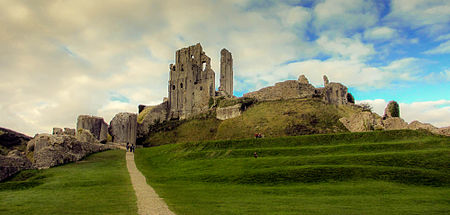
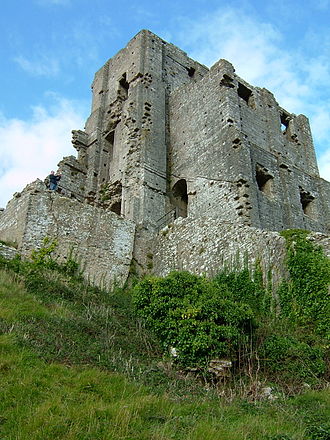
Corfe_Castle,_Dorset
Corfe Castle, Dorset

However, with the backing of the revered, future saint, Archbishop Dunstan it was Edward who was crowned. Following his coronation Edward honoured his father’s promises to his wife, confirming the gift of jurisdiction over the whole of Dorset as Ælfthryth’s dower. As a consequence, Ælfthryth and her son, Æthelred, settled at Corfe, in the Purbeck Hills; it was a large estate surrounding a defensive mound, which would later become the Norman stronghold of Corfe Castle.

And it was at Corfe on 18th March 978 that Ælfthryth’s reputation was irrevocably damaged, following a visit from 16-year-old King Edward. Whether Edward had been out hunting, or was in the area to specifically visit his stepmother and half-brother seems to be uncertain. However, he did send a message that he would be calling on them and Ælfthryth’s retainers were awaiting the young king at the gate, when he arrived with a small retinue. Still sitting in the saddle he was handed a drink; and stabbed. It must have been a horrific sight, as the king’s horse panicked and bolted, racing off with Edward’s foot stuck in the stirrup and the dying king being dragged along behind.

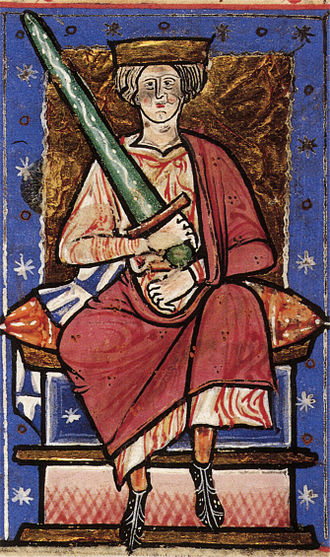
330px-Ethelred_the_Unready
Æthelred II the Unready

The Anglo-Saxon Chronicle recorded:

No worse deed than this was ever done by the English nation since they first sought the land of Britain. Men murdered him, but God hath magnified him. He was in life an earthly king. He is now after death a heavenly saint.¹

Although Edward’s brother, Æthelred, only around 10 years old but now king of England, was above suspicion due to his age, Ælfthryth had no such protection. Some traditions go so far as to accuse Ælfthryth of wielding the dagger herself. However, while most believe she was complicit in the murder, it is by no means certain and it is entirely possible that court malcontents, who had migrated to Æthelred’s corner, were responsible for the murder.

Ælfthryth rode out the ensuing furore and with her son as the new king, Ælfthryth was exonerated of any complicity; amid the necessity of stabilising the country, establishing the new reign and rescuing England’s reputation. Æthelred was crowned at Kingston, Surrey, on 4th May 979, a year after his brother’s death and just a few months after the reburial of Edward’s remains, with great ceremony, at Shaftesbury. A council was established to assist the young king in ruling the country, probably involving Queen Ælfthryth, who may have acted as regent during Æthelred’s minority; it also included the aging Dunstan, Archbishop of Canterbury, Æthelwold, bishop of Winchester, and Ælfhere, ealdorman of Mercia.

As Dowager Queen Ælfthryth’s dower lands in Rutland and east Suffolk helped to extend West Saxon rule over East Anglia as a whole.

Even when Æthelred was old enough to rule alone, Ælfthryth did not retire entirely. Following her son’s marriage to Ælfgifu of York, it was Ælfthryth who seems to have had the responsibility of raising their first-born son and ætheling, Æthelstan. Æthelstan died aged about 20 in 1014, 2 years before his father, and spoke warmly of his grandmother in his will. Æthelred and Ælfgifu had over 10 children together, including Æthelred’s eventual successor in 1016, Edmund II Ironside, before Ælfgifu died; Æthelred then married Emma of Normandy, mother of England’s future kings, Harthacnut by her 2nd husband, King Cnut, and Edward the Confessor by Æthelred.

As queen Ælfthryth had substantial influence over the nunneries of England; she ousted the abbess of Barking, a cousin of Edgar’s second wife, Wulfthryth.  She endowed convents at Amesbury and Wherwell; her granddaughter would eventually become abbess of the latter.

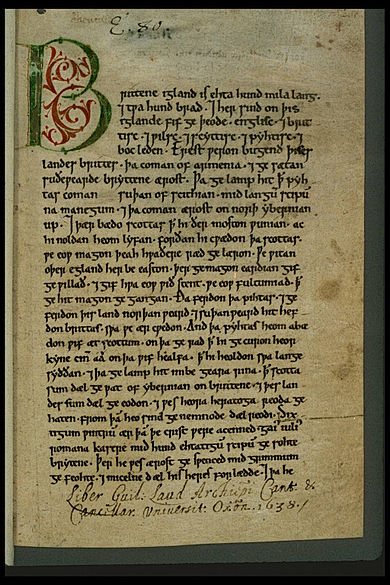
Peterborough.Chronicle.firstpage
The Anglo-Saxon Chronicle, Peterborough

And it was to Wherwell that the queen did eventually retire from the limelight, sometime before the year 1000, dying there on 17 November in either 999, 1000 or 1001.

Over a thousand years later Ælfthryth’s actions and reputation are still being debated by historians. While it is not inconceivable that she played a part in Edward the Martyr’s death, we also have to be aware that women of power and influence were much vilified in Medieval times; a strong, independent woman would be blamed for many crimes, simply because she dared to know her own mind….

While I am not entirely convinced of her innocence, neither am I certain of her guilt.

Ælfthryth’s career and influence, however, stretched far beyond that one action. As the first crowned queen of England, her prestige and honour is incomparable with those who had gone before her. And it is telling, perhaps, that her daughter-in-law, Ælfgifu of York, was never crowned, nor was accorded the title while her Ælfthryth still lived. The next crowned Queen of England was Æthelred’s second wife, Emma of Normandy, who married the king after his mother’s death.

*

Footnotes:

¹ Anglo-Saxon Chronicle quoted by Martin Wall in The Anglo-Saxons in 100 Facts.

*

Pictures:

Courtesy of Wikipedia

Sources:

Brewer’s British Royalty by David Williamson; Britain’s Royal Families, the Complete Genealogy by Alison Weir; The Wordsworth Dictionary of British History by JP Kenyon; The Anglo-Saxons in 100 Facts by Martin Wall; Kings, Queens, Bones and Bastards by David Hilliam; The Mammoth Book of British kings & Queens by Mike Ashley; The Oxford Companion to British History Edited by John Cannon; oxforddnb.com.

*

My Books:

Signed, dedicated copies of all my books are available through my online bookshop.

Coming on 15 June 2024: Heroines of the Tudor World

Heroines of the Tudor World tells the stories of the most remarkable women from European history in the time of the Tudor dynasty, 1485-1603. These are the women who ruled, the women who founded dynasties, the women who fought for religious freedom, their families and love. These are the women who made a difference, who influenced countries, kings and the Reformation. In the era dominated by the Renaissance and Reformation, Heroines of the Tudor World examines the threats and challenges faced by the women of the era, and how they overcame them. From writers to regents, from nuns to queens, Heroines of the Tudor World shines the spotlight on the women helped to shape Early Modern Europe.

Heroines of the Tudor World is now available for pre-order from Amberley Publishing and Amazon UK.

Out Now! Women of the Anarchy

Two cousins. On the one side is Empress Matilda, or Maud. The sole surviving legitimate child of Henry I, she is fighting for her birthright and that of her children. On the other side is her cousin, Queen Matilda, supporting her husband, King Stephen, and fighting to see her own son inherit the English crown. Women of the Anarchy demonstrates how these women, unable to wield a sword, were prime movers in this time of conflict and lawlessness. It show how their strengths, weaknesses, and personal ambitions swung the fortunes of war one way – and then the other.

Available from Bookshop.orgAmberley Publishing and Amazon UK.

Also by Sharon Bennett Connolly:

King John’s Right-Hand Lady: The Story of Nicholaa de la Haye is the story of a truly remarkable lady, the hereditary constable of Lincoln Castle and the first woman in England to be appointed sheriff in her own right. It is is available from King John’s Right-Hand Lady: The Story of Nicholaa de la Haye is the story of a truly remarkable lady, the hereditary constable of Lincoln Castle and the first woman in England to be appointed sheriff in her own right. Available from all good bookshops or direct from Pen & Sword Booksbookshop.org and AmazonDefenders of the Norman Crown: The Rise and Fall of the Warenne Earls of Surrey tells the fascinating story of the Warenne dynasty, from its origins in Normandy, through the Conquest, Magna Carta, the wars and marriages that led to its ultimate demise in the reign of Edward III. Available from Pen & Sword BooksAmazon in the UK and US, and Bookshop.org

Ladies of Magna Carta: Women of Influence in Thirteenth Century England looks into the relationships of the various noble families of the 13th century, and how they were affected by the Barons’ Wars, Magna Carta and its aftermath; the bonds that were formed and those that were broken. It is now available in paperback and hardback from Pen & Sword,  Amazon, and Bookshop.orgHeroines of the Medieval World tells the stories of some of the most remarkable women from Medieval history, from Eleanor of Aquitaine to Julian of Norwich. Available now from Amberley Publishing and Amazon, and Bookshop.orgSilk and the Sword: The Women of the Norman Conquest traces the fortunes of the women who had a significant role to play in the momentous events of 1066. Available now from Amazon,  Amberley Publishing, and Bookshop.org.

Alternate Endings: An anthology of historical fiction short stories including Long Live the King… which is my take what might have happened had King John not died in October 1216. Available in paperback and kindle from Amazon.

Podcast:

Have a listen to the A Slice of Medieval podcast, which I co-host with Historical fiction novelist Derek Birks. Derek and I welcome guests, such as Bernard Cornwell and Elizabeth Chadwick, and discuss a wide range of topics in medieval history, from significant events to the personalities involved.

*

Don’t forget! Signed and dedicated copies of all my books are available through my online bookshop.

For forthcoming online and in-person talks, please check out my Events Page.

You can be the first to read new articles by clicking the ‘Follow’ button, liking our Facebook page or joining me on Twitter and Instagram.

*

©2016 Sharon Bennett Connolly FRHistS
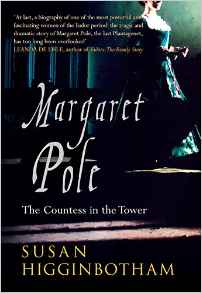
Book Corner: Margaret Pole, the Countess in the Tower by Susan Higginbotham

indexOf the many executions ordered by Henry VIII, surely the most horrifying was that of sixty-seven-year-old Margaret Pole, Countess of Salisbury, hacked to pieces on the scaffold by a blundering headsman.

From the start, Margaret’s life had been marred by tragedy and violence: her father, George, Duke of Clarence, had been executed at the order of his own brother, Edward IV, and her naive young brother, Edward, Earl of Warwick, had spent most of his life in the Tower before being executed on the orders of Henry VII.

Yet Margaret, friend to Katherine of Aragon and the beloved governess of her daughter Mary, had seemed destined for a happier fate until religious upheaval and rebellion caused Margaret and her family to fall from grace. From Margaret’s birth as the daughter of a royal duke to her beatification centuries after her death, Margaret Pole: The Countess in the Tower tells the story of one of the fortress’s most unlikely prisoners.

Margaret Pole: the Countess in the Tower tells the story of an amazing woman who navigated two eras of history. Born into the Medieval world, during the reign of her uncle, Edward IV, she survived the change of dynasty and prospered during the reign of Henry VII; marrying and starting a dynasty of her own. During the reign of Henry VIII, she was accorded the title of Countess of Salisbury in her own right, and given the charge of her cousin’s most prized possession; his only daughter and heir, Mary Tudor.

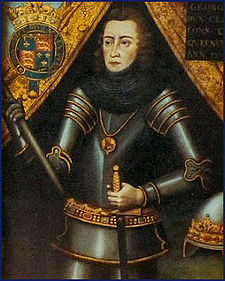
George_Plantagenet,_Duke_of_Clarence
George, Duke of Clarence – Margaret’s father

Susan Higginbotham tells Margaret’s story in great detail. Starting with a childhood marred by  her father’s attainder and execution by his own brother – Edward IV – the reader is drawn into Margaret’s life and family. From the highs of being governess to the princess, through the lows of her years of imprisonment in the Tower, and eventual execution at an age – 67 – when she should have been allowed to spend her days in quiet retirement, surrounded by her grandchildren; Susan Higginbotham tells a fascinating story of family tragedy, national politics and religious upheaval.

What Margaret thought of the death of her uncle Richard III we cannot know, but as she rode south on the orders of the new King Henry, she must have done so with some trepidation. Orphaned, with her closest relative a boy younger than herself, she had no powerful male relations to speak up for her, nor could her female ones be of much help. Her paternal grandmother, Cecily Neville, Duchess of York, was the mother of a defeated king; her maternal grandmother, Anne Beauchamp, Countess of Warwick, had been stripped of her lands during Edward IV’s reign….Thus, young Margaret’s future rested largely in the hands of a man neither she nor most other people in England had even met.

Engaging and sympathetically told, Susan Higginbotham’s narrative is a joy to read. It draws you in to Margaret’s life, relating her fears and hopes – and a deep and enduring love for her family.

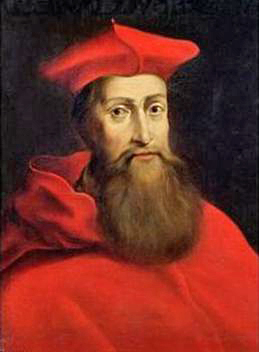
Cardinal_Reginald_Pole
Cardinal Reginald Pole – Margaret’s most famous son

Susan Higginbotham has undertaken an incredible amount of research for this book, an endeavour which shines through on every page. The author has reconstructed Margaret Pole’s life and death, using every primary source available. Highlighting contradictions and explaining omissions, she takes the countess’s story from her earliest days to her final, dreadful moments… and beyond. Included at the end of the book is an appendix of over 30 pages of written evidence taken in the Exeter Conspiracy; a conspiracy involving at least 2 of her sons, which would see her imprisoned in the Tower for years before she was sent to the executioner’s block. It made for some absorbing reading late into the night.

All the key players in Margaret’s story are discussed, their actions and influence on Margaret’s life analysed and assessed. From Henry VIII to Princess Mary and Margaret’s own children. Susan Higginbotham’s analysis is unrivalled, her words painting vivid portraits of all the main characters who had a part to play Margaret’s life and explaining her relationships in detail.

Moreover, Margaret’s story is firmly placed in the wider context of English and European politics of the time; and in the great upheaval of the Reformation. Where there is contention, the author presents all possible arguments, before giving her own opinion and explaining her reasoning. She makes clear where information is lacking and highlights where she is providing her own theory and opinions.

In my recent interview with her, I asked Susan Higginbotham if she saw Margaret as a victim or a heroine, and she replied:

I would say a heroine, because she had strong beliefs which she maintained in the face of pressure, and she conducted herself with courage and dignity throughout adversity. I don’t think she would like to be remembered as a victim.

330px-Unknown_woman,_formerly_known_as_Margaret_Pole,_Countess_of_Salisbury_from_NPG_retouched
Margaret Pole, Countess of Salisbury

This biography of Margaret reinforces Susan Higginbotham’s statement. Margaret is portrayed as a strong, independent woman, who had raised a large family single-handed, following the death of her husband. Margaret had a strong faith and demonstrated great loyalty to the Tudor dynasty. Her courage and strength of purpose shines through on every page – as does her intelligence. Margaret Pole was no meek and feeble woman, she stood up for her beliefs, herself and her family, while always maintaining her loyalty to the crown.

Susan Higginbotham treats Margaret Pole with great compassion and dignity, telling her story – and that of her family – in such an engaging manner that the book is impossible to put down. Knowing how events will eventually play out makes it no less compelling.

It is a fascinating story and – ultimately – a sad one; however, it’s also a story of faith, courage and perseverance. Margaret Pole: the Countess in the Tower is a wonderful read – shining a light on the life of a woman whose story deserves to be told.

*

Pictures courtesy of Wikipedia

*

My book, Heroines of the Medieval World,  is now available in hardback in the UK from both Amberley Publishing and Amazon UK and worldwide from Book Depository. It is also available on Kindle in both the UK and USA and will be available in Hardback from Amazon US from 1 May 2018.

Be the first to read new articles by clicking the ‘Follow’ button, liking our Facebook page or joining me on Twitter.

*

©Sharon Bennett Connolly 2016

Book Corner: To Murder a King by James Holdstock

41DpuNqWh7L._SX311_BO1,204,203,200_My latest book review, of James Holdstock’s amazing To Murder a King has gone live over at The Review today!

To Murder A King is the first book in James Holdstock’s A Squire’s Tale series. While it is aimed at teenage readers it is a fabulous tale for all ages. A story of murder and intrigue with a little bit of the dark arts thrown in it leaves you gripped from the first pages. Of course, it doesn’t hurt that the greatest knight in history, William Marshal, has a leading role!

This novel is a fabulous adventure set in the early days of the reign of King John. Suitable for children from, about 9 and above, it is an enjoyable, entertaining read – even for an adult. It tells the story in such a way that children also learn about medieval life, politics and warfare; and even the prejudices of Normans towards Saxons….

To read the full review of this fantastic novel – and to enter the prize draw and be in with a chance of winning a paperback copy in the giveaway, simply visit The Review and leave a comment. Good luck!
*
My book, Heroines of the Medieval World,  is now available in hardback in the UK from both Amberley Publishing and Amazon UK and worldwide from Book Depository. It is also available on Kindle in both the UK and USA and will be available in Hardback from Amazon US from 1 May 2018.

Be the first to read new articles by clicking the ‘Follow’ button, liking our Facebook page or joining me on Twitter.

*

©Sharon Bennett Connolly 2016

The Short Life and Sad Death of Edward the Martyr

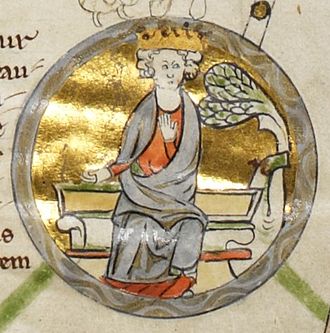
330px-Edward_the_Martyr_-_MS_Royal_14_B_VI
Edward the Martyr

Poor Edward the Martyr is one of the great ‘what ifs’ of Medieval history. It’s not that he was anything special in the kingly department, it’s simply that he didn’t get the chance to be – or to not be – any kind of king.

Born around 962 he was the eldest son of Edgar the Peaceable, king of England. His mother was Æthelfled “the Fair”, daughter of Ealdorman Ordmaer. There seems to be some confusion as to Æthelfled’s actual status (not surprising given the distance of over 1,000 years, I suppose). Some sources say she and Edgar were married, but later divorced. However, others suggest that young Edward’s legitimacy was in doubt and that his parents never married. This last is compounded by suggestions of ‘youthful indiscretion’ on Edgar’s part.

Nothing is heard of Edward’s mother after his birth, possibly suggesting that she died shortly after. Edgar, however, married again – or at least formed another relationship. His 2nd wife was Wulfthryth, with whom he had a daughter, Edith (Eadgyth). Wulfryth became the abbess of  Wilton and young Edith followed her mother into the convent.

And then Edgar formed a 3rd and final relationship that would have far-reaching consequences for his first-born son, Edward. Edgar married the daughter of Ordgar, a powerful Devon thegn who died in 971. Unlike Edgar’s previous ‘wives’, Ælfryth was crowned and anointed as queen, following her marriage with Edgar, which was officially blessed by the church. Ælfryth gave Edgar 2 sons; Edmund, who died in 971  and Æthelred, born in 968.

EdwardMartyr
Coin of Edward the Martyr

Both Edward and Edmund appear in a charter of 966, as witnesses to the foundation of the New Minster at Winchester. Curiously, Edward’s name appears below that of his half-brother, suggesting Edmund was regarded as his father’s heir, rather than his older sibling.

Little is known of Edward’s childhood; according to Byrthferth of Ramsey he was fostered for some years by Sideman, bishop of Crediton and protégé of Ælfhere, ealdorman of western Mercia and the most powerful ealdorman in England at the time.

When his father died in 975, Edward, at 13 years of age but with doubtful legitimacy, was one of 2 rival candidates for the crown. Edward was up against his baby brother, Æthelred; undoubtedly legitimate but only 6 or 7 years old. With both too young to make an independent bid for power, each boy was backed by court factions.

Æthelred’s mother, Ælfryth, garnered support for her son from Æthelwold, bishop of Winchester, Byrhtnoth, ealdorman of Essex, and Æthelwine, ealdorman of east Anglia and brother of  Ælfrythf’s 1st husband. However, Edward had the backing of ealdorman  Ælfhere and, possibly, Oswald, archbishop of York. However, the crucial support came from Dunstan, the highly influential and saintly archbishop of Canterbury, who crowned Edward personally.

330px-Corfe_Castle2
Corfe Castle

We know very little of Edward the Martyr, and what we have is contradictory to the extreme. According to Byrthferth, Edward himself was known for having a hot temper; a temper which instilled fear within the people of his own household. However, Osbern maintained that men had a good opinion of Edward.

With Edward too young to rule alone,  Ealdorman Ælfhere held the reins of government. Only 3 charters have survived, 2 of which were issued in Crediton, Edward’s childhood home. The regime’s influence seem to be very limited the further north you look, especially in the Danelaw. In the Five Boroughs region (including Stamford and Lincoln), coinage was below the standard of that of his father, Edgar. The short reign was overshadowed by a backlash to Edgar’s previous ecclesiastical policies, seeing a violent reaction against the expansion of the reformed monasteries; however, Edward retained the support of Dunstan, who did much to influence church policy and direction.

Dunstan’s influence saw  him call a meeting of councillors in Calne in 978. Held in an upper room, the meeting turned into disaster when the floor gave way. Many councillors were killed or injured; however, Dunstan, possibly in his early 70s by then, miraculously survived when the rafter on which he was standing was the only one that didn’t give way.

330px-A_Chronicle_of_England_-_Page_072_-_Edward_Murdered_at_Corfe
Aelfryth presenting Edward with a drink

Edward seems to have been benevolent towards his stepmother, bearing her no ill will following her attempts to claim the throne for her own son. He allowed Ælfryth to claim her part of his father’s dower and thus confirmed her jurisdiction over the whole of Dorset. She and Æthelred settled at Corfe, a castle and large estate in the Purbeck Hills.

Ælfryth, however, may have been less forgiving and unwilling to settle for her son being Edward’s heir. When the opportunity presented itself, she is said to have jumped at it, with few qualms.

In March 978 Edward had decided to visit his half-brother at Corfe; arriving on the evening of 18th March, with only a small band of men accompanying him. According to  the chronicles, he was met at the gates of Corfe Castle by Ælfryth’s retainers; he had probably sent ahead to warn of his arrival and would have expected a welcome, someone to take his horse and lead him into the castle. Sources vary, some suggesting that he was presented with a cup; so he could quench his thirst after a long ride.

What is certain, is that Edward was pulled from his horse and stabbed – murdered. Following the stabbing, Edward’s horse bolted; with the dying king’s foot caught in the styrrup, he was dragged along the ground for some considerable distance.

He was 16.

Death_of_edward_martyr
The murder of Edward

He was buried quickly and without ceremony somewhere close by – possibly Wareham. With Æthelred considered too young to be guilty, the finger of accusation pointed straight at his mother, Ælfryth.

An anointed king was seen as God’s representative on earth, with regicide being viewed as a heinous crime. In spite of this, Edward’s killers escaped punishment. Ælfryth was the prime suspect. As late as 40 years after the killing, Archbishop Wulfstan of York laid the blame firmly at her door, in the D text of the Anglo-Saxon Chronicle, which opined:

No worse deed than this was ever done by the English nation since they first sought the land of Britain. Men murdered him, but God hath magnified him. He was in life an earthly king. He is now after death a heavenly saint.¹

However, given the political reality of her position as mother of the king, it was expedient for her to remain beyond suspicion. Although Ælfryth appears guilty, and many fingers pointed at her, it is just as likely that one of her household, as supporters of Æthelred, formed the conspiracy to advance their own aims; having a king on the throne who owes you his crown can be useful to your career.

We will never know.

Although the crown was not conferred on Æthelred straight away, whatever the dowager queen’s actions, at between 9 and 11 years old, at most, her son was now the only candidate for the succession. However, it was only after an interregnum and a period of negotiations that the crown was settled on Æthelred.

Almost a year after Edward’s death, the young king was exhumed by Ealdorman Ælfhere. Edward’s erstwhile supporter stayed a couple of days at Wareham before escorting the body to the nunnery at Shaftesbury. It was only after Edward was safely re-buried with the honour to which he was entitled as king, that Æthelred was crowned by Archbishop Dunstan; on 4th May 979.

Edward was soon venerated as a saint and martyr with Æthelred himself championing his brother’s cult, translating Edward’s bones to a new shrine at Shaftesbury Abbey in 1001. A grant of that year, in favour of Shaftesbury, stated that the gift was being made to God and to

“his saint, my brother Edward, whom drenched with his own blood, the Lord has seen fit to magnify in our time through many miracles.”²

Shaftesbury_Abbey
Shaftesbury Abbey

During the Dissolution of the Monasteries in the 16th century, Shaftesbury Abbey was destroyed and Edward’s shrine lost. However, in 1931 his grave was discovered and his bones were removed to a bank vault in Croydon, as neither the Churches of England or Rome would take the relics for reburial. Tests on the remains, in 1970, seemed to confirm they were Edward’s, the injuries on the bones being consistent with the wounds Edward is known to have received. The young king’s remains were finally removed from the bank, in September 1984, to be interred in a shrine in the Russian Orthodox Cemetery at Brookwood, Surrey.

And despite the fact Shaftesbury would like to have Edward back, so far as I can discover he remains the only Saxon king to be resting in a Russian Orthodox cemetery.

*

Footnotes: ¹ Anglo-Saxon Chronicle quoted by Martin Wall in The Anglo-Saxons in 100 Facts; ² AS chart., S899 quoted by Cyril Hart in Oxforddnb.com.

*

Pictures courtesy of Wikipedia

Sources: Brewer’s British Royalty by David Williamson; Britain’s Royal Families, the Complete Genealogy by Alison Weir;The Wordsworth Dictionary of British History by JP Kenyon; The Anglo-Saxons in 100 Facts by Martin Wall; Kings, Queens, Bones and Bastards by David Hilliam; The Mammoth Book of British kings & Queens by Mike Ashley; The Oxford Companion to British History Edited by John Cannon; oxforddnb.com.

*

My Books

Signed, dedicated copies of all my books are available through my online bookshop.

Out Now! Women of the Anarchy

Two cousins. On the one side is Empress Matilda, or Maud. The sole surviving legitimate child of Henry I, she is fighting for her birthright and that of her children. On the other side is her cousin, Queen Matilda, supporting her husband, King Stephen, and fighting to see her own son inherit the English crown. Women of the Anarchy demonstrates how these women, unable to wield a sword, were prime movers in this time of conflict and lawlessness. It show how their strengths, weaknesses, and personal ambitions swung the fortunes of war one way – and then the other.

Available from Bookshop.orgAmberley Publishing and Amazon UK.

Coming on 15 June 2024: Heroines of the Tudor World

Heroines of the Tudor World tells the stories of the most remarkable women from European history in the time of the Tudor dynasty, 1485-1603. These are the women who ruled, the women who founded dynasties, the women who fought for religious freedom, their families and love. These are the women who made a difference, who influenced countries, kings and the Reformation. In the era dominated by the Renaissance and Reformation, Heroines of the Tudor World examines the threats and challenges faced by the women of the era, and how they overcame them. From writers to regents, from nuns to queens, Heroines of the Tudor World shines the spotlight on the women helped to shape Early Modern Europe.

Heroines of the Tudor World is now available for pre-order from Amberley Publishing and Amazon UK.

Also by Sharon Bennett Connolly:

King John’s Right-Hand Lady: The Story of Nicholaa de la Haye is the story of a truly remarkable lady, the hereditary constable of Lincoln Castle and the first woman in England to be appointed sheriff in her own right. It is is available from King John’s Right-Hand Lady: The Story of Nicholaa de la Haye is the story of a truly remarkable lady, the hereditary constable of Lincoln Castle and the first woman in England to be appointed sheriff in her own right. Available from all good bookshops or direct from Pen & Sword Booksbookshop.org and AmazonDefenders of the Norman Crown: The Rise and Fall of the Warenne Earls of Surrey tells the fascinating story of the Warenne dynasty, from its origins in Normandy, through the Conquest, Magna Carta, the wars and marriages that led to its ultimate demise in the reign of Edward III. Available from Pen & Sword BooksAmazon in the UK and US, and Bookshop.org

Ladies of Magna Carta: Women of Influence in Thirteenth Century England looks into the relationships of the various noble families of the 13th century, and how they were affected by the Barons’ Wars, Magna Carta and its aftermath; the bonds that were formed and those that were broken. It is now available in paperback and hardback from Pen & Sword,  Amazon, and Bookshop.orgHeroines of the Medieval World tells the stories of some of the most remarkable women from Medieval history, from Eleanor of Aquitaine to Julian of Norwich. Available now from Amberley Publishing and Amazon, and Bookshop.orgSilk and the Sword: The Women of the Norman Conquest traces the fortunes of the women who had a significant role to play in the momentous events of 1066. Available now from Amazon,  Amberley Publishing, and Bookshop.org.

Alternate Endings: An anthology of historical fiction short stories including Long Live the King… which is my take what might have happened had King John not died in October 1216. Available in paperback and kindle from Amazon.

Podcast:

Have a listen to the A Slice of Medieval podcast, which I co-host with Historical fiction novelist Derek Birks. Derek and I welcome guests, such as Bernard Cornwell and Elizabeth Chadwick, and discuss a wide range of topics in medieval history, from significant events to the personalities involved.

*

Don’t forget! Signed and dedicated copies of all my books are available through my online bookshop.

For forthcoming online and in-person talks, please check out my Events Page.

You can be the first to read new articles by clicking the ‘Follow’ button, liking our Facebook page or joining me on Twitter and Instagram.

*

©2016 Sharon Bennett Connolly FRHistS.

Book Corner: Paula Lofting’s The Wolf Banner

51BZa0o3x+L._SY346_My latest book review, of Paula Lofting’s amazing pre-Conquest novel, The Wolf Banner has gone live over at The Review today!

WAR AND BLOODFEUD
1056…England lurches towards war as the rebellious Lord Alfgar plots against the indolent King Edward. Sussex thegn, Wulfhere, must defy both his lord, Harold Godwinson, and his bitter enemy, Helghi, to protect his beloved daughter.
As the shadow of war stretches across the land, a more personal battle rages at home, and when it follows him into battle, he knows he must keep his wits about him more than ever, and COURAGE AND FEAR MUST BECOME HIS ARMOUR…

The Wolf Banner is the second book in Paula Lofting’s marvellous Sons of the Wolf series which tells the story of Saxon England in the years preceding the Norman Conquest. It follows the trials and tribulations of one family; Wulfhere, his wife and children. A thegn sworn to Harold Godwinson, Wulfhere has responsibilities to his king, his lord and his family, while trying to overcome his own fears, temptations and one big problem; his neighbour and sworn enemy, Helghi.
The Wolf Banner builds on the first book, to draw the reader further into Wulfhere’s life, the highs and lows, into battles with swords and words. It is a fabulous adventure, full of family heartache, compromise and love, while never losing sight of the bigger picture; of England and the struggles of Harold Godwinson, Earl of Wessex, both against his enemies and his king….
To read the full review of this fantastic novel – and to enter the prize draw and be in with a chance of winning one of two e-books in the giveaway, plus a copy of the first book in the series, Sons of the Wolf, simply visit The Review and leave a comment. Good luck!
*
My book, Heroines of the Medieval World,  is now available in hardback in the UK from both Amberley Publishing and Amazon UK and worldwide from Book Depository. It is also available on Kindle in both the UK and USA and will be available in Hardback from Amazon US from 1 May 2018.

Be the first to read new articles by clicking the ‘Follow’ button, liking our Facebook page or joining me on Twitter.

*

©Sharon Bennett Connolly 2016

Book Corner: The Anglo-Saxons in 100 Facts

51+1qeawUSL._AC_US160_The Anglo-Saxon age was one of great change and unrest. Lasting from the departure of the Romans in approximately AD 400 until the Norman invasion in AD 1066, this era was defined by the continued spread of Christianity, the constant threat of Viking raids and the first stirrings of a nation that would become known as England.

With its strange customs and unfamiliar names, the Anglo-Saxon era became mysterious and misunderstood, ironically by the descendants of the Anglo-Saxons, the English people themselves. Archaeological discoveries have forced us to re-evaluate these ingenious and skilled people, and to acknowledge the debt we owe to them. Martin Wall seeks to ‘de-mystify’ the period, breaking it down into easy-to-read, bitesize chunks, and to show that the so-called ‘Dark Ages’ were by no means backward or inferior. It was a truly heroic age, whose exemplars, such as King Offa, Alfred the Great, Lady Aethelflaed or Athelstan, stand beside the giants of world history. In 100 excerpts from these turbulent, bloody and exciting centuries, a proud, complex, but ultimately doomed civilisation is revealed.

The Anglo-Saxons in 100 Facts by Martin Wall is one of those fascinating little books which are such fun to read. It’s 192 pages are packed full of stories from the Anglo-Saxon period which help to trace its history and define the era. Starting from the 5th century AD, the book traces the Anglo-Saxon story  all the way to the Norman Conquest… and beyond.

Æthelflæd_as_depicted_in_the_cartulary_of_Abingdon_Abbey
Aethelflaed, Lady of the Mercians

In short, bite-sized chapters, The Anglo-Saxons in 100 Facts, is full of those little bits of history you may have missed, or overlooked. Weaving the stories together to build a beautiful picture of the now-lost Anglo-Saxon world. Not only presenting the great personalities of the era, the book also investigates the influence of the church, literature, politics and the Vikings. It helps to explain the drive behind King Alfred and his desire to unite England as one nation.

The book is written in such an easy-going, conversational manner, you don’t even realise you’re reading – it is as if the author is right there, talking to you.

Welsh malcontents murdered a Mercian abbot, Egbert, who was travelling with his companions in Brycheiniog, a small mountain kingdom in South Wales. Egbert was under the protection of Aethelflaed who was justifiably furious. Within three days she concentrated her army on the Welsh border and invaded the little kingdom, burning and ravaging as she went. Tewdr, the King of Brycheiniog, had no choice but to retreat to his fortified Crannog, a fort on a man-made island in Lake Llasngorse. The indefatigable Mercian queen was not to be denied, however, and the place was stormed and burned and Tewdr’s relatives taken as hostages, including his wife.

330px-Offa_king_of_Mercia_757_796
Offa, King of Mercia

The Anglo-Saxons in 100 Facts is a very enjoyable read, full of facts and information, and a little bit of humour. All the main characters of the period are covered – from Offa to Harold II and beyond – and given their place in the larger history of the nation as a whole. Outside threats and influences – such as the church, the Normans and, of course, the dreaded Vikings – are discussed, analysed and assessed.

It’s amazing  how much information one writer can pack into less than 200 pages!

The author knows and loves his Anglo-Saxon history and it shines through on every page. Thoroughly and comprehensively researched, it is a fun read for anyone wanting to know ‘a little bit more’ about the time before the Normans, and the build-up to the Conquest from the Saxon point of view.

I just wanted to read the excerpts about Aethelflaed – for my research – and found myself devouring the entire book.

*

Pictures courtesy of Wikipedia

*

My book, Heroines of the Medieval World,  is now available in hardback in the UK from both Amberley Publishing and Amazon UK and worldwide from Book Depository. It is also available on Kindle in both the UK and USA and will be available in Hardback from Amazon US from 1 May 2018.

Be the first to read new articles by clicking the ‘Follow’ button, liking our Facebook page or joining me on Twitter.

*

©Sharon Bennett Connolly 2016