Book Corner: Henry by Tony Riches

Bosworth 1485: After victory against King Richard III, Henry Tudor becomes King of England. Rebels and pretenders plot to seize his throne. The barons resent his plans to curb their power and he wonders who he can trust. He hopes to unite Lancaster and York through marriage to the beautiful Elizabeth of York.

With help from his mother, Lady Margaret Beaufort, he learns to keep a fragile peace. He chooses a Spanish Princess, Catherine of Aragon, as a wife for his son Prince Arthur. His daughters will marry the King of Scotland and the son of the Emperor of Rome. It seems his prayers are answered, then disaster strikes and Henry must ensure the future of the Tudors.

“A fine end to a superbly researched and well-written trilogy, one I would recommend to anyone with an interest in this period of history.” Best-selling author Terry Tyler.

Henry is the final installment of Tony Riches‘ excellent Tudor Trilogy which has followed the rise of the Tudors from Owen’s relationship with Catherine of Valois, through his son, Jasper, and now to his grandson, Henry, the first Tudor king.

Opening as Henry  is victorious at Bosworth, it follows Henry VII from the moment he becomes king, through the many trials and tribulations of kingship and establishing a new dynasty. This is an enjoyable story of one of England’s least loved and most misunderstood English kings. Tony Riches does an excellent job of giving us an entertaining novel while offering the reader an insight into the life and problems of a man who was not born to be king and who knew little of his subjects after spending his entire adult life in exile in Brittany.

I love the fact that Henry is not the finished product from the very beginning. The author has thought hard about how a man, who suddenly becomes king, may act when feeling his way through the maze of court politics, factions and family divisions, and the actual day-to-day challenges of ruling a country that has suffered 30 years of intermittent warfare and political instability.

Henry paints a portrait of Henry as a man who grew into his role as king, learning from his mistakes and facing up to his insecurities; insecurities arising not from his right to the throne, but from the challenges facing him and not knowing what happened to the Princes in the Tower. Henry Tudor is portrayed as a all-too-human; a man whose decisions about others way on his soul, but are made to ensure the security of himself and his family. He walks a  fine line in an attempt to appease his opponents whilst establishing his authority – and his dynasty.

‘On what grounds do we imprison young Edward Plantagenet?’

Jasper sat in the spare chair and the stubble on his chin as he considered the question. He’d chosen to shave his beard on the journey from Wales. He looked younger clean-shaven, but a beard suited his uncle, and Henry guessed he was already growing it back.

‘King Richard considered the young earl enough of a threat to declare him illegitimate.’

Henry allowed himself a smile. ‘King Richard declared everyone illegitimate, other than himself. Young Edward is a cousin of Princess Elizabeth.’

Jasper returned his smile. ‘Half of England is related to the Woodvilles one way or another.’ His face became serious. ‘We need time, Henry. Time to win over the doubters. We could say it is for young Edward’s own safety?’

Henry picked up his quill and dipped it in Mayor Olney’s inkpot before signing the warrant. ‘We must ensure the boy is well treated – I wish no harm to him.’

Henry is the story of one man’s life and kingship. Moments of crisis and sincerity are interspersed with little moments of tenderness and humour. Tony Riches has taken time to seriously consider the character of his subject, and this comes across in every page of the book. He seems to have spent no less time on the supporting characters. Jasper Tudor and Margaret Beaufort, who have played prominent parts in all 3  book of the Tudor Trilogy are pivotal characters and are well thought out, complex figures. Henry respects them deeply and is well aware of the sacrifices they have made that got him to the throne. Each character in the book is credible, believable, and has his, or her, own unique qualities. The headstrong future king, Henry VIII is wonderfully contrasted with quiet and studious Prince Arthur, while the delightful Mary Tudor steals every scene in which she appears.
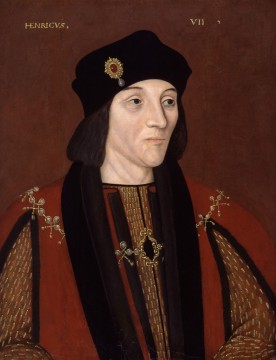
thumbnail_Late 16th-century copy of a portrait of Henry VII - Wikimedia Commons
Henry VII

The novel tells the story of Henry and Elizabeth with sensitivity and compassion; charting their life together from the first moments of getting to know each other, through the births and deaths of their children, and the toll that takes on them, not only as individuals, but also as a couple. Indeed, the author seriously considers the effect that being king must have had on Henry’s family life, the compromises he had to make. You get the impression that the poor chap never had enough time in the day to do everything he wanted and that every personal loss takes away a little part of him.

‘I like it here.’ He reached across and took her white-gloved hand in his. ‘We shall make Sheen into a palace fit for a royal family.’

Elizabeth squeezed his hand in agreement. ‘I would like that.’ She gave him a conspiratorial look. This is my most secret place. A sanctuary.’

Henry stared into her bright amber eyes. ‘You spent many months in sanctuary … yet you’ve never spoken of it?’

‘At first I didn’t understand the danger we were in.’ She stared, wide-eyed, into the far distance as she remembered. ‘My mother made a game of it, said it would be a great adventure. Years later she told me my father abandoned us and she thought our enemies might murder us all.’

There are many novels set during the Wars of the Roses. The huge majority revolve around Richard III and the disappearance of the Princes in the Tower. If a novel sees Richard III as a hero, then you can practically guarantee that Henry Tudor is the villain. With Henry, you would therefore be forgiven for expecting the opposite; Henry the hero and Richard the villain.  Richard, of course, gets mentioned, but the story does not revolve around the fallen king and his guilt or innocence, rather it puts him firmly where he was when Henry was king – in the past!

As a novel, Tony Riches has created a fast-paced, enjoyable tale that is virtually impossible to put down – at least until your eyelids are so heavy they need matchsticks to hold them up. It also gives you a deeper understanding of the founder of the Tudor dynasty. I defy anyone – except, maybe, the most ardent of Yorkists – to read this book and not develop a deeper understanding of Henry VII, of the challenges he faced and compromises he made in order to secure peace for the realm and the continuation of his dynasty. Henry is a must-read book for anyone who has a love  of medieval history, the Wars of the Roses and the Tudors.

Although part of a series, Henry can definitely be read as a standalone. Entertaining and insightful, it tells a story that has rarely been told – the one from Henry’s own viewpoint. This is the story of the foundation of, arguably, England’s most famous royal house – and is not to be missed!

*

Ten Things You Might Not Know About Henry Tudor, by Tony Riches

During the four years of research for my trilogy about the early Tudors, I discovered many little known facts about one of our most overlooked kings, Henry Tudor. Here are a few of my favourites:

  1. Instead of Tudor, Henry could have been called ‘Tidder’ or ‘Tetyr’ or even Tewdwr It seems the name Tudor was a simplification used by scribes in the time of Henry’s grandfather, Owen Tudor.
  2. After his victory at the Battle of Bosworth Henry led a procession through the narrow streets of York, where he was attacked by a man with a dagger. His bodyguards saved him but his reign was nearly over before it began – and he later travelled with some fifty ‘Yeomen of the Guard’ for protection.
  3. Henry didn’t invent the ‘Tudor rose’ – the combined red and white roses had long been known as symbols of the Virgin, representing sacrifice and purity – he simply adopted it as his ‘branding’.
  4. Henry loved gambling with cards and dice and lost huge sums more often than he won. He also kept detailed records of who he’d played against (which included his wife, Elizabeth of York)– and how much he’d lost.
  5. As well as lions and other dangerous animals, which he kept at the Tower of London, Henry kept a pet monkey, thought to be a marmoset, in his private chambers. One day he discovered it had torn up his detailed diary, so there is a gap in his meticulous records.
  6. When the pretender Perkin Warbeck was finally captured, Henry was so enamoured of Warbeck’s wife, Lady Katheryn Gordon, that he kept them both in his household – but wouldn’t let them sleep together. He also bought Lady Katheryn expensive dresses and she became a close companion and confidante, even after Henry had her husband executed.
  7. Henry nearly lost his crown to a mob of Cornish rebels, who marched on London in an armed protest against his tax raising. More men joined them on the way and the rebels reached Blackheath before they could be stopped.
  8. Henry kept various ‘fools’ to entertain his court, including one named ‘Diego the Spaniard’ (possibly as a joke at the expense of Catherine of Aragon’s father, King Ferdinand, who failed to provide the dowry he’d promised.)
  9. At Christmas 1497 Henry and his family were woken in the night by a fire in his private chambers at Sheen Palace. They barely escaped with their lives but the old palace was ruined and Henry had it rebuilt as the Palace of Richmond.
  10. Towards the end of his life Henry suffered from a throat disease referred to as ‘the quinsy’ which his physicians treated (unsuccessfully) with a remedy of celandine, fenugreek and hedgehog fat.
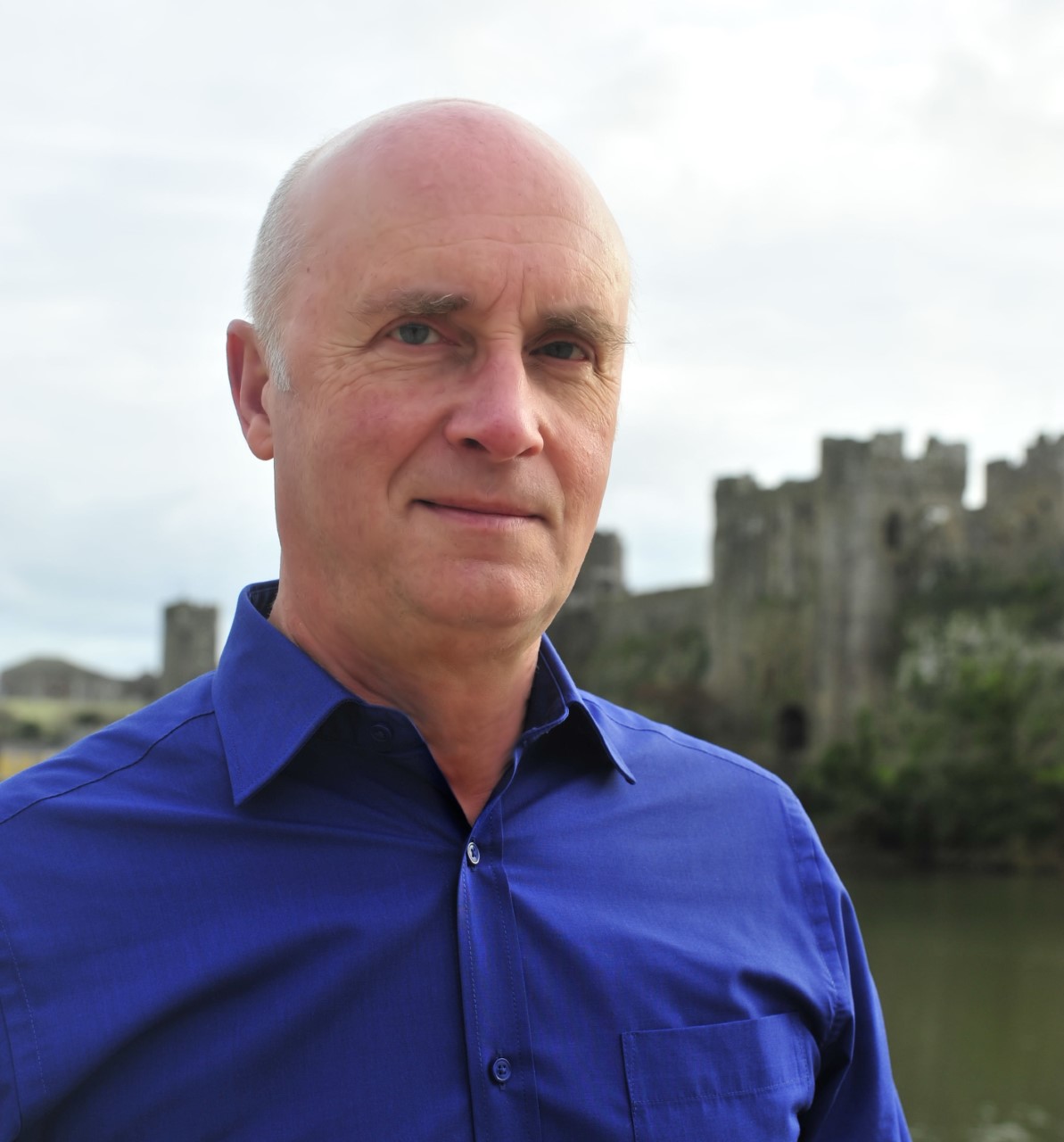
Tony Riches is the author of the best-selling Tudor Trilogy as well as other historical fiction set in the medieval era. He lives by the sea in Pembrokeshire, West Wales with his wife and enjoys sailing and kayaking in his spare time. For more information about Tony’s other books please visit his popular blog, The Writing Desk and website www.tonyriches.com and find him on Facebook and Twitter @tonyriches.  The Tudor Trilogy is available on Amazon UK  Amazon US and Amazon AU

*

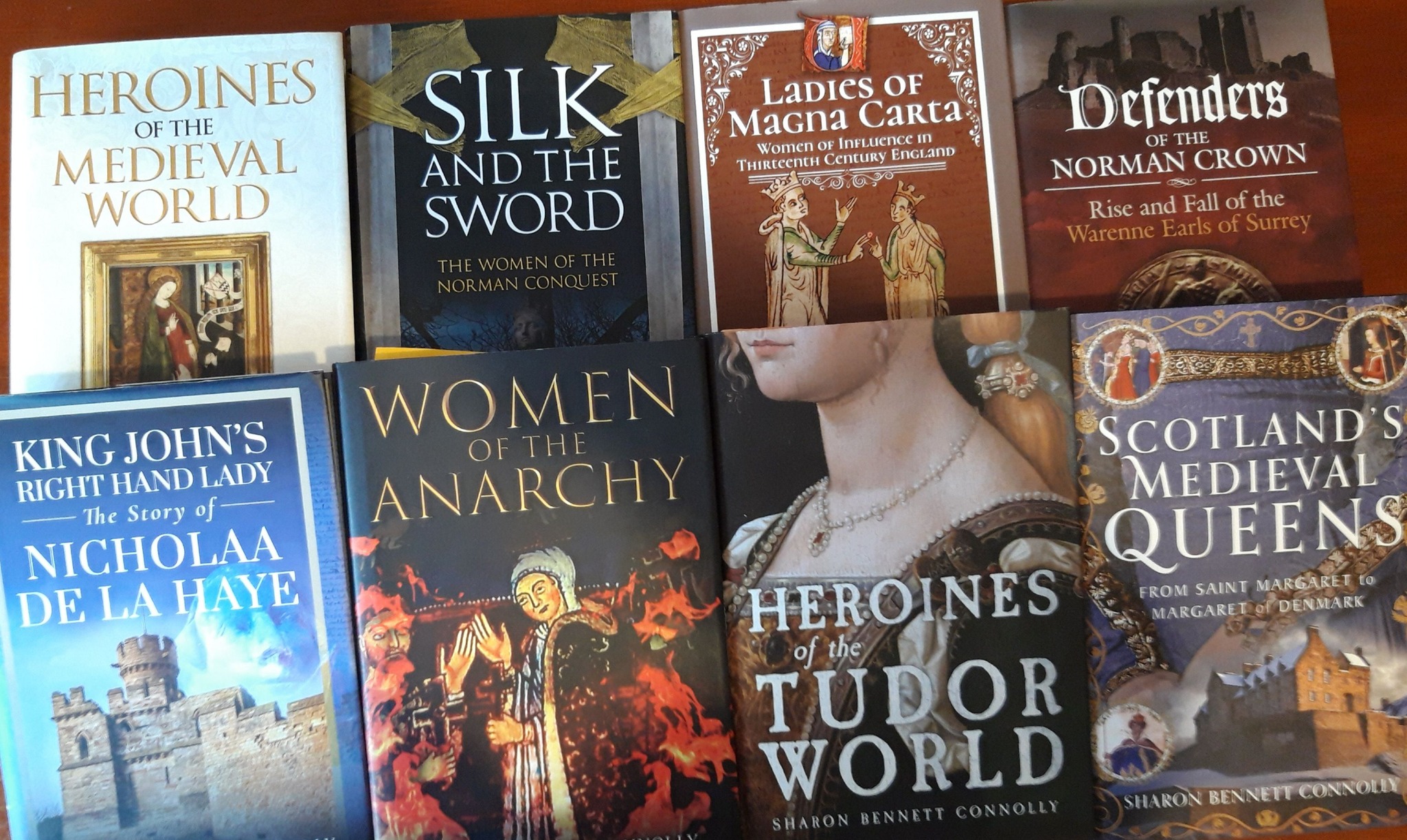
My book, Heroines of the Medieval World,  is now available in hardback in the UK from both Amberley Publishing and Amazon UK and worldwide from Book Depository. It is also available on Kindle in both the UK and USA and will be available in Hardback from Amazon US from 1 May 2018.

You can be the first to read new articles by clicking the ‘Follow’ button, liking our Facebook page or joining me on Twitter.

*

©2017 Sharon Bennett Connolly
Ela: Heiress, Wife and Abbess

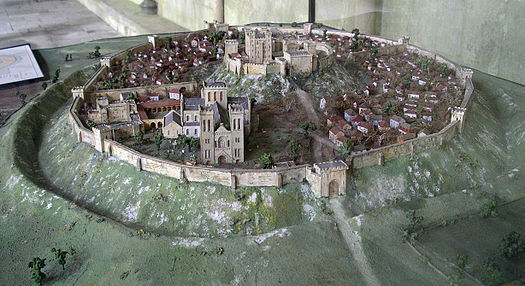
Model of Old Sarum

Ela of Salisbury was one of the most influential women of the thirteenth century. Ela was born at Amesbury in Wiltshire in 1187. She was the only surviving child – and sole heir – of William FitzPatrick, earl of Salisbury, and his wife, Eleanor de Vitré. Her father was a descendant of Walter, an ally of William the Conqueror, who had rewarded his support at Hastings with great estates which eventually passed to Ela. When her father died in 1196, Ela became Countess of Salisbury in her own right, and the most prized heiress in England.

There is a story that little Ela, only 9 years old at the time of her father’s death, was kidnapped by her uncle and hidden away in a castle in Normandy, so that he could gain control of the vast Salisbury inheritance. The tale goes, that an English knight, named William Talbot, toured the Norman castles in search of poor Ela, he would sing ballads beneath castle windows in the hope that the little Countess would hear him and join in with his singing. Whether a romantic legend or a true story, who can tell?

Whether she was rescued, or never kidnapped in the first place, we do not know. However, what we do know is that, on her father’s death, Ela’s wardship passed into the hands of the king himself, Richard I, the Lionheart. The king saw Ela as the opportunity to reward his loyal,  but illegitimate, brother, William Longspée (or Longsword), by offering him her hand in marriage. The Salisbury lands were a suitable reward for a king’s son, especially one born out of wedlock.

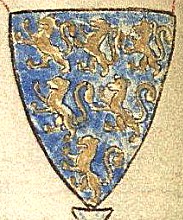
Arms of the Longspée earls of Salisbury

William Longspée was the son of Henry II by Ida de Tosney, wife of Roger Bigod, earl of Norfolk, from a relationship she had with the king before her marriage. For many years, it was thought that Longspée was the son of a common harlot, called Ikenai, and a full brother of another of Henry’s illegitimate sons, Geoffrey, Archbishop of York. There were also theories that his mother was, Rosamund Clifford, famed in ballads as ‘the Fair Rosamund’. However, it is now considered beyond doubt that his mother was, in fact, Ida de Tosney, with two pieces of evidence supporting this.  There is a charter in the cartulary of Bradenstoke Priory, made by William Longspée, in which he identifies his mother as the Countess Ida. There is also a prisoner roll from after the Battle of Bouvines, in which William Longspée is listed as the brother of Ralph Bigod (he was, in fact, Ralph’s half-brother).

Despite the misunderstandings over his mother, the identity of William Longspée’s father was never in doubt. He was Henry II’s son and served two of his half-brothers; Richard I and King John. At the time of his marriage to Ela, Longspée was in his early-to-mid-20’s, while his bride was not yet 10 years old; although she would not have been expected to consummate the marriage until she was 14 or 15.

William I Longspée had an impressive career during the reigns of his half-brothers, he served in Normandy with Richard between 1196 and 1198, and took part in John’s coronation in May, 1199. In 1213 he destroyed the French fleet off the Flemish coast. He commanded an army in northern France for John in 1214; and in July of the same year, he was captured at the Battle of Bouvines, after being clubbed on the head by the Bishop of Beauvais. Longspée was held for ransom and eventually exchanged, in March 1215, for John’s prisoner, Robert of Dreux, who had been captured at Nantes in 1214.

Longspée returned to England shortly afterwards and was one of the signatories of Magna Carta in 1215. He was still supporting John when Louis, the Dauphin, invaded England and took London; however, after Winchester fell to the French, in June 1216, Longspée defected to the Dauphin and remained in opposition to his brother for the rest of John’s life.¹

Following the death of King John in October 1216,  Longspée swore loyalty to his 9-year-old nephew, Henry III in March 1217. He was part of William Marshal’s army at the Battle of Lincoln Fair, when Lincoln Castle and its formidable castellan, Nicholaa de la Haye, were finally relieved from a 3-month siege by the French under the Comte de Perche.

William II Longspée, 4th Earl of Salisbury

Although we know little-to-nothing of their married life, it appears to have been happy. The couple had at least 8 children together, if not more; 4 boys and 4 girls. Of their younger boys, Richard became a canon at the newly built Salisbury Cathedral, while Nicholas eventually rose to be Bishop of Salisbury and Stephen became Senschal of Gascony and Justiciar of Ireland.

The oldest son, William II Longspée, 4th Earl of Salisbury, was married to Idonea, granddaughter and sole heiress of the formidable Nicholaa de la Haye, who held Lincoln Castle against the French. The Salisburys and Nicholaa de la Haye would spend several years in legal disputes over the inheritance of Nicholaa’s Lincolnshire holdings; Idonea could inherit the lands that had belonged to her grandfather, Gerard de Canville (Nicholaa’s husband), but not the lands Nicholaa held in her own right. Nicholaa, however, was forced to relinquish her position as sheriff of Lincolnshire to the earl of Salisbury, but retained her position as castellan of Lincoln Castle until she retired in 1226.

William II Longspée went on Crusade with Richard, Earl of Cornwall, in 1240-1241 and later led the English contingent in the Seventh Crusade, led by Louis IX of France. His company formed part of the doomed vanguard, which was overwhelmed at Mansourah in Egypt, on 8 February 1250, and William was killed. William’s body was buried in Acre, but his effigy lies atop an empty tomb in Salisbury Cathedral. His mother is said to have experienced a vision of her son’s last moments at the time of his death.

Of Ela and William’s 4 daughters, Petronilla died unmarried, possibly having become a nun. Isabella married  William de Vescy, Lord of Alnwick and had children before her death in 1244. Named after her mother, Ela married, firstly Thomas de Beaumont, Earl of Warwick and, secondly, Phillip Basset; sadly, she had no children by either husband. There were possibly two daughters with the same name, Ida. The first Ida was married to Ralph de Somery before marrying, in 1220, William de Beauchamp, Baron Bedford, by whom she had 6 children. The second Ida who was married to Walter FitzRobert. Both Idas are identified in various records as the daughters of William and Ela, though it is possible that one is a granddaughter, the dates we have available do not suggest that.

As a couple, William Longspée and Ela were great patrons of the church, laying the 4th and 5th, respectively, foundation stones for the new Salisbury Cathedral in 1220. In 1225 Longspée was shipwrecked off the coast of Brittany and a rumour spread that he was dead. While he spent months recovering at an island monastery in France Hubert de Burgh, 1st Earl of Kent and husband of Isabel of Gloucester, proposed a marriage between Ela and his nephew, Reimund. Ela, however, would not even consider it, insisting that she knew William was alive and that, even were he dead, she would never consider marrying below her status. It has been suggested that she used clause 8 of Magna Carta to support her rejection of the offer; “No widow is to be distrained to marry while she wishes to live without a husband…”

William_Salisbury
William Longspee, Earl of Salisbury

As it turned out, William Longspée was still alive and eventually returned to his wife. However, he never seems to have recovered fully from his injuries and died at the royal castle at Salisbury shortly after his return home, on 7 March 1226. He was buried in a splendid tomb in Salisbury Cathedral.

Ela did not marry again. On her husband’s death, she was forced to relinquish her custody of Salisbury castle (although she did eventually buy it back), but was allowed to take over her husband’s role as Sheriff of Wiltshire, which he had held three times, holding the office continuously from 1213 until his death in 1226. Ela acted as Sheriff until 1228. She was known as a great patron of religious houses; she and her husband had co-founded Salisbury Cathedral and Ela herself founded two Augustinian religious houses. She managed to lay the foundation stones of both, at Hinton and Lacock, 16 miles apart, on the same day. The abbey at Hinton, Somerset, was endowed for monks, in memory of her husband, after they had found the original house, founded by Longspée at Hathorp unsuitable.

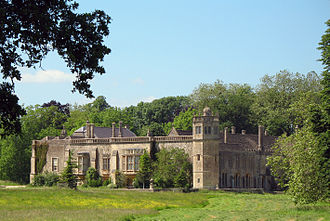
Lacock Priory was established in 1230 as a house for Augustinian canonesses at the village of Lacock in Wiltshire. Ela herself entered the priory in 1237 and became the first Abbess when it was upgraded to an Abbey in 1239. As Abbess, Ela was able to secure many rights and privileges for the abbey and its village. She obtained a copy of the 1225 issue of Magna Carta, which had been given to her husband for him to distribute around Wiltshire. She remained Abbess for 20 years, resigning in 1259. Ela remained at the abbey, however, and died there on 24 August, 1261.

Lacock Abbey, Wiltshire

Ela of Salisbury outlived both her eldest son and grandson. She was succeeded as Countess of Salisbury by her great-granddaughter, Margaret, who was the daughter of William III Longspée. Margaret was married to Henry de Lacey, 3rd Earl of Lincoln, and was the mother of Alice de Lacey, 4th Countess of Lincoln and the unfortunate, unloved wife of Thomas, Earl of Lancaster, who was killed in rebellion against Edward II, at the Battle of Boroughbridge in 1322.

The 3rd Countess of Salisbury was described in the Register of St Osmund as “a woman indeed worthy of praise because she was filled with the fear of the Lord.”² Ela was not buried alongside her husband in Salisbury Cathedral, but within the Abbey that she had founded and ruled – and had called her home for the last 24 years of her life. Her tombstone demonstrates the high esteem in which she was held and records the words; “Below lie buried the bones of the venerable Ela, who gave this sacred house as a home for the nuns. She also had lived her as holy abbess and Countess of Salisbury, full  of good works.”³

*

Ela’s story appears in greater detail in my book, Ladies of Magna Carta: Women of Influence in Thirteenth Century England.

Footnote: ¹With thanks to Rich Price for clarification of events; Rich is currently translating King John’s letters; ²Ela, suo jure Countess of Salisbury, Jennifer C Ward, Oxforddnb.com, October 2009; ³ Ela of Salisbury stanfordmagnacarta.worpress.com

*

Pictures courtesy of Wikipedia

*

Sources: The Plantagenet Chronicles edited by Elizabeth Hallam; Brassey’s Battles by John Laffin; 1215 The Year of Magna Carta by Danny Danziger & John Gillingham; The Life and Times of King John by Maurice Ashley; The Story of Britain by Roy Strong; The Plantagenets, the Kings Who Made England by Dan Jones; England Under the Norman and Angevin Kings  by Robert Bartlett; lincolnshirelife.co.uk; catherinehanley.co.uk; magnacarta800th.com; lothene.org; lincolncastle.com; The Sheriff: The Man and His Office by Irene Gladwin; Oxforddnb.com; stanfordmagnacarta.wordpress.com; A Year in the Life of Medieval England by Toni Mount; The Demon’s Brood by Desmond Seward; The Oxford Companion to British History, Edited by John Cannon; The Greatest Knight by Thomas Asbridge; Britain’s Royal Families by Alison Weir; chitterne.com

*

My Books:

Signed, dedicated copies of all my books are available through my online store.

Out now: Scotland’s Medieval Queens

Scotland’s history is dramatic, violent and bloody. Being England’s northern neighbour has never been easy. Scotland’s queens have had to deal with war, murder, imprisonment, political rivalries and open betrayal. They have loved and lost, raised kings and queens, ruled and died for Scotland. From St Margaret, who became one of the patron saints of Scotland, to Elizabeth de Burgh and the dramatic story of the Scottish Wars of Independence, to the love story and tragedy of Joan Beaufort, to Margaret of Denmark and the dawn of the Renaissance, Scotland’s Medieval Queens have seen it all. This is the story of Scotland through their eyes.

Available now from Amazon and Pen and Sword Books

Also by Sharon Bennett Connolly:

Heroines of the Tudor World tells the stories of the most remarkable women from European history in the time of the Tudor dynasty, 1485-1603. These are the women who ruled, the women who founded dynasties, the women who fought for religious freedom, their families and love. Heroines of the Tudor World is now available for pre-order from Amberley Publishing and Amazon UK. Women of the Anarchy demonstrates how Empress Matilda and Matilda of Boulogne, unable to wield a sword themselves, were prime movers in this time of conflict and lawlessness. It shows how their strengths, weaknesses, and personal ambitions swung the fortunes of war one way – and then the other. Available from Bookshop.orgAmberley Publishing and Amazon UKKing John’s Right-Hand Lady: The Story of Nicholaa de la Haye is the story of a truly remarkable lady, the hereditary constable of Lincoln Castle and the first woman in England to be appointed sheriff in her own right. Available from all good bookshops Pen & Sword Booksbookshop.org and Amazon

Defenders of the Norman Crown: The Rise and Fall of the Warenne Earls of Surrey tells the fascinating story of the Warenne dynasty, from its origins in Normandy, through the Conquest, Magna Carta, the wars and marriages that led to its ultimate demise in the reign of Edward III. Available from Pen & Sword BooksAmazon in the UK and US, and Bookshop.orgLadies of Magna Carta: Women of Influence in Thirteenth Century England looks into the relationships of the various noble families of the 13th century, and how they were affected by the Barons’ Wars, Magna Carta and its aftermath; the bonds that were formed and those that were broken. It is now available in paperback and hardback from Pen & SwordAmazon, and Bookshop.orgHeroines of the Medieval World tells the stories of some of the most remarkable women from Medieval history, from Eleanor of Aquitaine to Julian of Norwich. Available now from Amberley Publishing and Amazon, and Bookshop.orgSilk and the Sword: The Women of the Norman Conquest traces the fortunes of the women who had a significant role to play in the momentous events of 1066. Available now from Amazon,  Amberley Publishing, and Bookshop.org.

Alternate Endings: An anthology of historical fiction short stories including Long Live the King… which is my take what might have happened had King John not died in October 1216. Available in paperback and kindle from Amazon.

Podcast:

Have a listen to the A Slice of Medieval podcast, which I co-host with Historical fiction novelist Derek Birks. Derek and I welcome guests, such as Bernard Cornwell, Elizabeth Chadwick and Michael Jecks, and discuss a wide range of topics in medieval history, from significant events to the personalities involved. Every episode is also now available on YouTube.

*

Don’t forget! Signed and dedicated copies of all my books are available through my online store.

For forthcoming online and in-person talks, please check out my Events Page.

You can be the first to read new articles by clicking the ‘Follow’ button, liking our Facebook page or joining me on TwitterThreadsBluesky and Instagram.

*

©2017 Sharon Bennett Connolly FRHistS

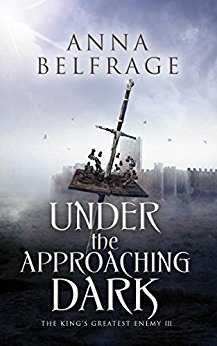
Book Corner: Under the Approaching Dark by Anna Belfrage

Adam de Guirande has cause to believe the turbulent times are behind him: Hugh Despenser is dead and Edward II is forced to abdicate in favour of his young son. It is time to look forward, to a bright new world in which the young king, guided by his council, heals his kingdom and restores its greatness. But the turmoil is far from over.

England in the early months of 1327 is a country in need of stability, and many turn with hope towards the new young king, Edward III. But Edward is too young to rule, so instead it is his mother, Queen Isabella, and her lover, Roger Mortimer, who do the actual governing, much to the dislike of barons such as Henry of Lancaster.

When it is announced that Edward II has died in September of 1327, what has so far been a grumble grows into voluble protests against Mortimer. Yet again, the spectre of rebellion haunts the land, and things are further complicated by the reappearance of one of Adam’s personal enemies. Soon enough, he and his beloved wife Kit are fighting for their survival – even more so when Adam is given a task that puts them both in the gravest of dangers.

Under the Approaching Dark is the third in Anna Belfrage’s series, The King’s Greatest Enemy, the story of a man torn apart by his loyalties to his lord, his king, and his wife.

Anna Belfrage is a master storyteller. She has the ability to weave a tale that draws the reader in from the very first word. But with Under the Approaching Dark she has surpassed herself. She has created a masterpiece of historical fiction. The story entices the reader in and takes them through the full range of emotions in this marvellous adventure, not letting up for one moment.

Under the Approaching Dark is the 3rd book in her King’s Greatest Enemy series telling the story of Kit and Adam Guirande, and of Roger Mortimer, the man who dethroned a king and became lover of a queen. With Kit as one of the queen’s ladies and Adam as Captain of the future Edward III’s guard, the couple are at the centre of events, juggling their public life with their family life. Kit and Adam are living in some of the most turbulent years of English history; they must stay together to survive against jealous rivals, vengeful enemies and the political machinations of the powerful elite.

This story had everything: love, war, suspense and intrigue – and a few twists along the way. One of my big questions before reading the book was how the fate of Edward II would be decided – and it didn’t disappoint. I won’t spoil it for you, but I love how the story unfolds; it is plausible, thoughtful and intriguing.

Anna Belfrage makes her characters human. They are not perfect, they have the same doubts, insecurities and complicated personalities and relationships as in real life. They develop, adapt and grow as events and the years unfold, their experiences sometimes weighing heavily upon them; their past, their future and their relationships.

The author really gets into the hearts and minds of her characters and takes her readers with her, taking them on a rollercoaster of emotions along the way.  A number of scenes will bring a tear to the eye, while others will have you reaching for your sword. Despite the momentous times in which they are living, the story revolves around Kit and Adam, their relationship and the trials they face, both together and apart. They are an impressive couple, but firmly placed within the boundaries that 14th century society dictate. You won’t see Kit wielding a sword, but, as a result, she has more subtle weapons at her disposal.

With each step, the coil of hair grew heavier, and when one of the older ladies gave her a long look accompanied by a pursed mouth and raised brows, Kit regretted having followed Lady Margaret’s advice. Too late. She swallowed. Adam was saying something but stopped mid-sentence when he saw her, and Kit felt her cheeks heat. Would he deem it inappropriate? Chide her? She made a reverence; his hand shot out to close around her elbow, steadying her as she straightened up.

“Sweeting.” he sounded hoarse.

“I…” She licked her lips. “Do you like it?”

“like it?” He traced the golden net with a finger. “It is becoming.”

Her shoulders relaxed.

“But I’ll not have my wife walk about unveiled,” he continued, guiding her back towards the door.

“But the queen -“

A firm finger on Kit’s mouth hushed her. “The queen is not my wife. You are.” He picked at a tendril of hair, tugging ever so gently. “This is for me to see, my lady. Only for me.”

Anna Belfrage is meticulous in her research and includes many of the often overlooked details of medieval life – such as the prohibitions against marital ‘relations’ during Lent, or the length of time it would take a rider to get from York to London. Her descriptions of the cities visited by characters, such as York and Lincoln, are incredible – you can almost feel yourself transported to Clifford’s Tower or standing in front of Lincoln’s imposing cathedral.

Under the Approaching Dark gets everything right. The interaction between the characters is stunning, each having their own traits and quirks which play out in the dialogue. The love scenes are tender and tasteful and the action scenes are fast, furious and full of tension. You never know what will happen next, or how things will play out; which makes the book a true page-turner right to the very end.

The author’s skills at storytelling are exquisite; she draws you in with her words, transporting you back in time and showing you a world that has long since disappeared, but has been brought back to vivid life by the words and imagination of this amazing author. The story grabs your attention from the very first sentence, and will not leave you, not even after the final page has been read.

The writing is impeccable. The story has everything. Under the Approaching Dark is just perfect in every sense.

*

My book, Heroines of the Medieval World,  is now available in hardback in the UK from both Amberley Publishing and Amazon UK and worldwide from Book Depository. It is also available on Kindle in both the UK and USA and will be available in Hardback from Amazon US from 1 May 2018.

You can be the first to read new articles by clicking the ‘Follow’ button, liking our Facebook page or joining me on Twitter.

©2017 Sharon Bennett Connolly

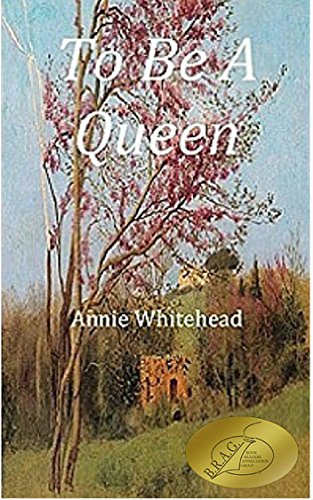
Book Corner: To Be A Queen by Annie Whitehead

Today over at The Review, you can read my thoughts on Anni Whitehead’s wonderful novel of Æthelflæd, Lady of Mercia, in To Be A Queen.

And there’s a signed copy as a giveaway!

Here’s a taster:

Written by Annie Whitehead, To Be A Queen, is the fascinating story of the most remarkable of Saxon women, Aethelflaed, Lady of the Mercians and daughter of Alfred the Great. The novel leads us through Aethelflaed’s personal journey, from a sheltered childhood in the heart of Wessex to marriage, motherhood, and a remarkable partnership with her brother Edward, who succeeded their father as King of Wessex. Aethelflaed and Edward spearhead the fight against the Danes and the struggle to unite England under one ruler.

A thoroughly enjoyable book, To Be A Queen, draws the reader in from the very first sentence,  recounting the story of Aethelflaed’s life while telling you the bigger story that is the making of England. Many readers may be familiar with Aethelflaed from the Bernard Cornwell The Last Kingdom series, but Annie Whitehead develops the Lady of Mercia to even greater depths, getting under the skin and into the heart of this amazing woman.

To read the full review of this fantastic novel – and to enter the prize draw and be in with a chance of winning one of two e-book copies in the giveaway, simply visit The Review and leave a comment.

Good luck!

*

My book, Heroines of the Medieval World,  is now available in hardback in the UK from both Amberley Publishing and Amazon UK and worldwide from Book Depository. It is also available on Kindle in both the UK and USA and will be available in Hardback from Amazon US from 1 May 2018.

You can be the first to read new articles by clicking the ‘Follow’ button, liking our Facebook page or joining me on Twitter.


*

©Sharon Bennett Connolly 2017

The Struggles of Alice

tickhill_castle
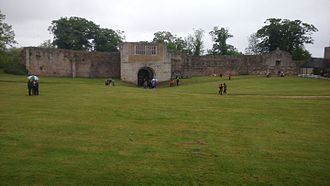
The bailey of Tickhill Castle, South Yorkshire

Alice, Countess of Eu, was born into 2 of the noblest families of England and France, and married into a third. The daughter of Henry, Count of Eu and Lord Hastings, her mother was Matilda, daughter of Hamelin and Isabel de Warenne, Earl and Countess of Surrey.

Through her maternal grandparents, Alice was closely related to the kings of England. Her grandfather, Hamelin, was the illegitimate  half-brother of King Henry II of England. Richard I and King John, therefore, were her cousins. Alice’s grandmother, Isabel de Warenne, had been one of the richest, most prized heiresses in England and had first been married to the younger son of King Stephen, before she married Hamelin.

Alice’s father, Henry, held lands in England and Normandy. The Honour of Tickhill, in Yorkshire, had been granted to Henry’s father John, Count of Eu, by King Stephen, in 1139, after proving his rights as heir to the original owners, the de Busil family, through Beatrice, the sister of Roger de Busil, who died in 1102. However, in 1141, Empress Matilda captured the castle after Count John was taken prisoner at the Battle of Lincoln. The castle seems to have stayed in  royal hands for many years afterwards, with Richard I taking possession on his accession; he then gave it to his brother John, as part of his holdings. As a consequence, the castle was besieged by the Bishop of Durham when John rebelled against Richard in 1194 and was surrendered only when the king returned to England following his capture and imprisonment in Germany, 3 years after Henry’s death.

Matilda and Henry had 4 children, 2 sons and 2 daughters. Alice was the eldest of the daughters, her sister Jeanne being younger. Sadly, both sons, Raoul and Guy, died young and in consecutive years, with Guy dying in 1185 and Raoul in 1186, leaving Alice as heir to her father’s lands.

Alice’s father died in 1191, and Alice became suo jure Countess of Eu and Lady Hastings. Alice’s mother, Matilda, later married again; her second husband was Henry d’Estouteville of Eckington, Lord of Valmont and Rames in Normandy. Matilda had a son, John, by d’Estouteville, and it was Alice’s half-brother, therefore, who became the heir to all the lands Matilda held in her own right, leaving Alice solely with the inheritance from her father.

Very little is known of Alice’s early years; we do not even have a year for her birth. Given that her grandparents did not marry until 1164, her parents would not have married until the early 1180s, which would mean is likely that Alice was born sometime around the mid-1180s. On her father’s death in 1191, she came into possession of lands in both England and Normandy, France. In August, 1209, Alice officially received the Comté of Eu from Philip II Augustus, King of France, when she also made a quitclaim of all rights to Neufchatel, Mortemer and Arques. Mortemer was a part of the de Warenne ancestral lands in Normandy, given to William I de Warenne by Willliam the Conqueror; suggesting that Alice was renouncing her own rights to the French de Warenne lands, as a granddaughter of Isabel de Warenne, Countess of Surrey.

Alice made a prestigious marriage to Raoul de Lusignan, the brother of Hugh IX de Lusignan and a powerful Poitevin lord. It was Raoul’s nephew, Hugh X, who would repudiate Joanna, the daughter of King John, in order to marry the dead king’s widow and queen, Isabelle d’Angoulême.

Raoul had been previously married to Marguerite de Courtney, but the marriage had been annulled by 1213, suggesting Alice and Raoul married around that time. On marrying Alice, Raoul became Raoul I, Count of Eu by right of his wife.

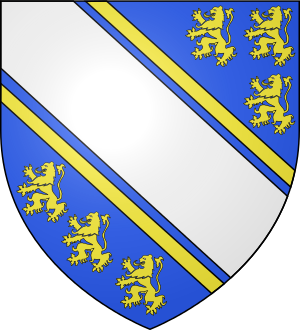
Arms of Humphrey de Bohun, 2nd Earl of Hereford and Earl of Essex, Constable of England

Raoul and Alice had four children together. Raoul II de Lusignan, Count of Eu and Guînes, was married 3 times and had one daughter, Marie de Lusignan, by his second wife, Yolande de Dreux. Raoul died sometime between 1245 and 1250 and was buried at the Abbey of Foucarmont. Mathilde married Humphgrey de Bohun, 2nd Earl of Hereford and Earl of Essex, and had 7 children together, including 4 boys. Mathilde died in August 1241 and was buried in Llanthony Secunda Priory, Gloucester. Her husband was buried beside her when he died in September 1275. Another son, Guerin (or Warin) de Lusignan died sometime after 29 September 1217, when he is granted the castle at Tickhill by Henry III. A second daughter, Jeanne, is mentioned in the necrology of the church of Eu, which records the anniversary of her death as 3 October, though no year is given.

In 1214 Alice, as Countess of Eu, was restored to the Honour of Tickhill by King John as part of the conditions of an agreement with her husband’s family, the de Lusignans. However, Robert de Vipont, who was in physical possession of the castle, refused to relinquish it, and claimed the castle in his own right. It took many years and much litigation before Alice finally took possession of the castle in 1222. Her husband, Raoul, died on 1st May, 1219, and was succeeded as Count of Eu by their son, Raoul II, still only a child.

It was left to Alice, now Dowager Countess, to administer the Eu inheritance. She paid 15,000 silver marks to the French King to receive the county of Eu in her own name and regained control of her English lands, entrusted to her uncle, the Earl of Surrey, as her representative, following her husband’s death.

Alice was a shrewd political survivor. However, with lands in France and England, two countries often at war, she found herself caught between a rock and a hard place. In 1225 she handed Tickhill Castle to Henry III, until the end of hostilities with France, as a means of safeguarding her lands. Nevertheless, this did not save her when she was ordered to levy troops for the French king, Louis IX, as Countess of Eu, and send her forces to fight for him. Henry III seized Tickhill Castle, although it was only permanently attached to the English crown after Alice’s death.

Alice was renowned for her wide patronage, both secular and religious, and has left numerous charters as testament. She was a benefactor of both French and English religious houses, including Battle Abbey and Christ Church, Canterbury in England and Eu and Foucarmont – where her son would be laid to rest – in France. Alice issued a charter in 1219, to Roche Abbey, which was witnessed by her uncle William, Earl de Warenne. She also granted an annual allowance to Loretta, Countess of Leicester, who was living as a recluse at Hackington.

Alice also granted several lands to others, such as Greetwell in the county of Lincoln, which had previously been held by Walter de Tylly in Alice’s name and was given to Earl de Warenne in August 1225; the earl was to annually render a sparrowhawk to Philippa de Tylly in payment.  In 1232 Alice issued a charter to Malvesin de Hersy, of Osberton in the county of Nottingham, providing him with all customs due to Tickhill in return for 2 knights’ fees. Malvesin had been constable of Tickhill in 1220-1 and his brother Sir Baldwin de Hersy was Constable of Consibrough Castle, seat of Earl de Warenne.

The gatehouse of Tickhill Castle

Having spent most of her life fighting for her rights to her lands in England and France, caught between 2 great nations, whose relations were acrimonious to say the least, Alice appears to have conducted herself admirably. Her connections to the powerful de Lusignan and de Warenne families could not have harmed her situation.

Now in her early 60s, and having been a widow for almost 30 years, Alice died sometime in May 1246, probably between the 13th and 15th, at La Mothe St Héray in Poitou, France, leaving a will. It seems likely that she was buried at her husband’s foundation of Fontblanche Priory in Exoudon.

*

Alice’s story features in my book, Defenders of the Norman Crown: Rise and Fall of the Warenne Earls of Surrey.

Pictures courtesy of Wikipedia.

*

Sources: Early Yorkshire Charters Volume 8: The Honour of Warenne, Edited by William Farrer and Charles Travis Clay; England Under the Norman and Angevin Kings by Robert Bartlett; Brewer’s British Royalty by David Williamson; Britain’s Royal Families, the Complete Genealogy by Alison Weir; british-history.ac.uk; kristiedean.com; English Heritage Guidebook for Conisbrough Castle by Steven Brindle and Agnieszka Sadrei; oxforddnb.com; Tickhill Castle Guide Leaflet, Lords of the Honour of Tickhill; fmg.ac.

*

My Books

Signed, dedicated copies of all my books are available through my online store.

OUT NOW! Heroines of the Tudor World

Heroines of the Tudor World tells the stories of the most remarkable women from European history in the time of the Tudor dynasty, 1485-1603. These are the women who ruled, the women who founded dynasties, the women who fought for religious freedom, their families and love. These are the women who made a difference, who influenced countries, kings and the Reformation. In the era dominated by the Renaissance and Reformation, Heroines of the Tudor World examines the threats and challenges faced by the women of the era, and how they overcame them. From writers to regents, from nuns to queens, Heroines of the Tudor World shines the spotlight on the women helped to shape Early Modern Europe.

Heroines of the Tudor World is now available for pre-order from Amberley Publishing and Amazon UK.

Coming 30 January 2025: Scotland’s Medieval Queens

Scotland’s history is dramatic, violent and bloody. Being England’s northern neighbour has never been easy. Scotland’s queens have had to deal with war, murder, imprisonment, political rivalries and open betrayal. They have loved and lost, raised kings and queens, ruled and died for Scotland. From St Margaret, who became one of the patron saints of Scotland, to Elizabeth de Burgh and the dramatic story of the Scottish Wars of Independence, to the love story and tragedy of Joan Beaufort, to Margaret of Denmark and the dawn of the Renaissance, Scotland’s Medieval Queens have seen it all. This is the story of Scotland through their eyes.

Available for pre-order now.

Also by Sharon Bennett Connolly:

Women of the Anarchy demonstrates how Empress Matilda and Matilda of Boulogne, unable to wield a sword themselves, were prime movers in this time of conflict and lawlessness. It shows how their strengths, weaknesses, and personal ambitions swung the fortunes of war one way – and then the other. Available from Bookshop.orgAmberley Publishing and Amazon UKKing John’s Right-Hand Lady: The Story of Nicholaa de la Haye is the story of a truly remarkable lady, the hereditary constable of Lincoln Castle and the first woman in England to be appointed sheriff in her own right. Available from all good bookshops Pen & Sword Booksbookshop.org and AmazonDefenders of the Norman Crown: The Rise and Fall of the Warenne Earls of Surrey tells the fascinating story of the Warenne dynasty, from its origins in Normandy, through the Conquest, Magna Carta, the wars and marriages that led to its ultimate demise in the reign of Edward III. Available from Pen & Sword BooksAmazon in the UK and US, and Bookshop.org

Ladies of Magna Carta: Women of Influence in Thirteenth Century England looks into the relationships of the various noble families of the 13th century, and how they were affected by the Barons’ Wars, Magna Carta and its aftermath; the bonds that were formed and those that were broken. It is now available in paperback and hardback from Pen & SwordAmazon, and Bookshop.orgHeroines of the Medieval World tells the stories of some of the most remarkable women from Medieval history, from Eleanor of Aquitaine to Julian of Norwich. Available now from Amberley Publishing and Amazon, and Bookshop.orgSilk and the Sword: The Women of the Norman Conquest traces the fortunes of the women who had a significant role to play in the momentous events of 1066. Available now from Amazon,  Amberley Publishing, and Bookshop.org.

Alternate Endings: An anthology of historical fiction short stories including Long Live the King… which is my take what might have happened had King John not died in October 1216. Available in paperback and kindle from Amazon.

Podcast:

Have a listen to the A Slice of Medieval podcast, which I co-host with Historical fiction novelist Derek Birks. Derek and I welcome guests, such as Bernard Cornwell, and discuss a wide range of topics in medieval history, from significant events to the personalities involved.

*

Don’t forget! Signed and dedicated copies of all my books are available through my online store.

For forthcoming online and in-person talks, please check out my Events Page.

You can be the first to read new articles by clicking the ‘Follow’ button, liking our Facebook page or joining me on TwitterThreads and Instagram.

*

©2017 Sharon Bennett Connolly, FRHistS

Mary of Blois, Reluctant Wife

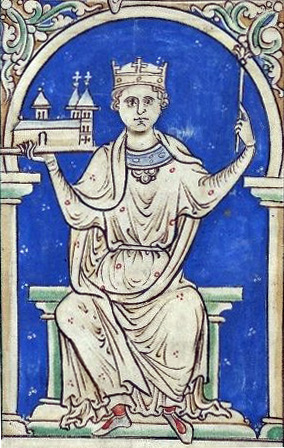
stepan_bloisToday, I am honoured to be a guest writer over at the English Historical Fiction Authors, with an article on medieval heroine, Mary of Blois. Here’s a taster:

Mary was the youngest daughter of Stephen of Blois and his wife, Matilda of Boulogne, herself the granddaughter of St Margaret, queen of Scotland. Mary was born in Blois, France around 1136. She was destined for the cloister from an early age and was placed in a convent at Stratford, Middlesex, with some nuns from St Sulpice in Rennes. So how did this nun become a reluctant wife?

Mary’s father Stephen was the nephew of Henry I, one of his closest male relatives. In the confusion following Henry’s death it was Stephen who acted quickly and decisively….

To read the rest of the article, Mary of Blois, Reluctant Wife, simply click here.

*

My book, Heroines of the Medieval World,  is now available in hardback in the UK from both Amberley Publishing and Amazon UK and worldwide from Book Depository. It is also available on Kindle in both the UK and USA and will be available in Hardback from Amazon US from 1 May 2018.

You can be the first to read new articles by clicking the ‘Follow’ button, liking our Facebook page or joining me on Twitter.

*

Picture of King Stephen courtesy of Wikipedia

*

©2017 Sharon Bennett Connolly
The Unfortunate Wives of Philip II of France

330px-the_coronation_of_philippe_ii_auguste_in_the_presence_of_henry_ii_of_england
Coronation of Philip II Augustus

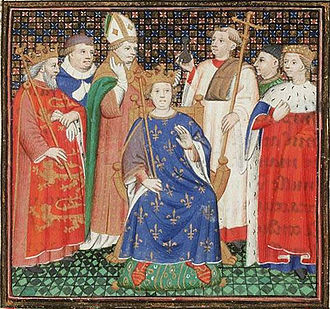
Philip II Augustus had acceded to the throne of France in 1180, at the tender age of fifteen. He married his first wife, Isabella of Hainault the same year; she was only ten-years-old. Isabella was the daughter of Baldwin V, count of Hainault, and Margaret I, countess of Flanders. At just one year old she had been betrothed to Henry, the future count of Champagne and nephew of Adele, queen of France. However, Isabella’s father later reneged on his promises, and arranged Isabella’s marriage to Philip, the son and heir of Louis VII. Philip had been crowned junior king of France in 1179. Isabella and Philip were married on 28 April 1180 and Isabella was crowned queen exactly one month later, even though her father-in-law was still king. With Louis VII’s death Philip and Isabella acceded to the throne as sole king and queen in September of the same year.

Philip was a capricious being when it came to his wives, indeed, he attempted to repudiate Isabella when she was only fourteen. Isabella’s father had taken the side of his enemies in war against Flanders, but he cited her failure to produce an heir as his reason for putting her aside, despite her still-tender age. Unfortunately for Philip, Isabella appeared before the council at Sens, called to support his repudiation of her, barefoot and penitent. Isabella was a popular queen and the people were so taken with this act of humility that their protests forced the king to take her back.

isabelladehainault
Isabella of Hainault

She gave birth to the desired son and heir, the future Louis VIII, three years later, in 1187. However, on 14 March 1190 she gave birth to twin boys, Robert and Philip, but died from complications the next day, aged just nineteen; the babies died three days after their mother. The Chronique rimee of Philippe Mouskes described her as “Queen Isabelle, she of noble form and lovely eyes.” Philip II left on Crusade just a few short months after Isabella’s death; however, with only one living son, he was soon looking around for a new wife.

Ingeborg was the daughter of Valdemar I the Great, king of Denmark, and Sofia of Minsk, and was the youngest of their eight surviving children. Born around 1176, it was only six years later, in 1182, that her father died. Valdemar was succeeded by Ingeborg’s older brother, Knut (or Canute) VI; and it fell to Knut to arrange Ingeborg’s future. I could not find any details of Ingeborg’s childhood, although she was probably educated to the standard expected of princesses of the time, in order to make her attractive in the international royal marriage market. A princess was expected to be able to manage a household, to sew, play music, sing, dance and much more.

Ingeborg held many political attractions for the king of France, her brother not only had a claim to the English throne, stretching back to the time of Cnut the Great, who ruled England in the eleventh century, but he also possessed an impressive navy, one which Philip would rather have with him, than against him. Such an alliance also helped France and Denmark to stand up to the expansionism of the Holy Roman Empire, under Emperor Henry VI.

On the conclusion of negotiations with Knut’s representatives, Philip sent an embassy to Denmark, to escort his bride back to France. The envoys were afforded a lavish reception at the Danish court, where the formal arrangements for the marriage were finalised. Ingeborg was provided with a dowry of 10,000 marks in gold and set out for a new life in France, accompanied by the French envoys and many Danish dignitaries, probably not expecting to ever see her homeland again. Ten years older than Ingeborg, Philip met his bride for the first time on their wedding day, 14 August 1193, in the cathedral church at Amiens. Ingeborg was crowned queen of France the next day, by the archbishop of Reims; her name changed to Isambour, to make it more acceptable to the French language, though what she thought of this, we cannot say.

ingeborg_of_denmark
Ingeborg of Denmark

At seventeen years of age, contemporary sources extolled her excellent qualities; in addition to the obligatory courtly praise of her appearance, comparing her beauty with that of Helen of Troy, she was a model of virtue. Ingeborg was described as ‘very kind, young of age but old of wisdom’ by Étienne de Tournai, who knew her well and said that the beauty of her soul overshadowed that of her face. Remarkably, given subsequent events, even those chroniclers devoted to her Philip II, such as Guillaume le Breton, spoke of the new queen with respect.

Unfortunately, no one knows what happened on the wedding night, but poor Ingeborg had one of the shortest honeymoon periods in history; and by the end of the coronation ceremony he had such an aversion to Ingeborg that he tried to get the Danish envoys to take her home with them. Ingeborg, however, refused to go, saying that she had been crowned queen of France, and her place was now in France. Queen Ingeborg sought sanctuary in a convent in Soissons, from where she wrote an appeal to the pope, Celestine III. Three months later, Philip established a friendly ecclesiastical council in Compiègne, in an attempt to have the marriage annulled. Ingeborg was present, but, speaking no French, had little understanding of the proceedings until they were interpreted for her.

Philip claimed that Ingeborg was related to his first wife, and the marriage was therefore within the prohibited degrees of consanguinity, going so far as to falsify his family tree to provide proof. As a result, the churchmen, sympathetic to their king, determined that the marriage was void.  When Ingeborg was informed of the decision, she appealed to Rome, protesting loudly “Mala Francia! Roma! Roma!” Her homeland finally took notice of Ingeborg’s plight and following a meeting with a Danish delegation, who produced their own genealogy showing that Ingeborg and Philippe had very little blood in common, the pope declared the decision by Philip’s ecclesiastical council to be invalid and ordered that Philip should take back his wife, and was not to remarry.

Thwarted by Ingeborg’s stubbornness, Philip decided to force her to acquiesce, by making Ingeborg’s life as uncomfortable as possible. She was placed under house arrest; first at an abbey near Lille, then at the monastery of Saint Maur des Fossés and at various other convents afterwards, her treatment becoming gradually harsher the longer she refused to give in. For seven years, the French court saw nothing of her; Étienne de Tournai reported, to the archbishop of Reims, that “she spent all her days in prayer, reading, work; solemn practices fill her every moment”.

330px-psalterofingeborg
Ingeborg’s psalter

Ingeborg would spend twenty years, incarcerated in various castles and abbeys, contesting any annulment. The longer her imprisonment, the more desperate her situation became; Ingeborg was forced to sell or pawn most of her possessions, even down to her clothing, in order to sustain herself. She later described herself, in a letter to the pope, Celestine III, as “…discarded like a dried and diseased branch; here I am, deprived of all help and consolation.”

As the consanguinity argument was not working for Philip, in pursuit of his divorce, and with his counsellors already having an eye on a new bride for the king, another argument was advanced; that of non-consummation. Ingeborg, however, remained steadfast, insisting that she and Philip had slept together on their wedding night. The pope again took Ingeborg’s side. Philip disregarded the pope’s decree to return to Ingeborg and took a new wife, Agnes of Merania, a German princess, in 1196. They had two children together, Philip and Marie, illegitimate due to their father’s bigamous marriage with their mother. However, in 1198, the new pope, Innocent III, asserted his authority by declaring the marriage invalid, he announced that Philip was still married to Ingeborg and ordered the king to return to his true wife.

agnes_of_merania_hedwig_codex
Agnes of Merania

Philip responded by making Ingeborg’s imprisonment even harsher. Following vigorous correspondence between Paris and the papacy Innocent responded with his most powerful weapon; excommunication. On 15 January 1200, the whole of France was put under interdict, all churches were closed. There were to be no church services or offices; no sacraments were to be performed, save for the baptism of new-borns and the last rites of the dying, until Philip acquiesced to the pope’s demands and, at least, renounced Agnes, even if he didn’t return to Ingeborg. Indeed, Philip’s own son, Louis, had to hold his wedding to Blanche of Castile, daughter of Eleanor of Castile, in Normandy due to the interdict.

Towards the end of the year Philip finally gave in. Poor Agnes was stripped of her status as Philip’s wife and exiled from court; she died in July 1201, heartbroken. Her two children by Philip were legitimised by the pope shortly afterwards. For Ingeborg, however, nothing changed. Philip refused to take her back and appealed again for an annulment, this time claiming that she had bewitched him on their wedding night. The appeal, again, was refused and Ingeborg was only released – finally – in 1213. Philippe’s change of heart was not out of any sense of guilt, affection or justice, but more for practicality. With King John’s barons risen against him, the situation in England was ripe to be exploited, and Philip needed peace with Denmark in order to concentrate his attentions on the greater prize; the English throne.

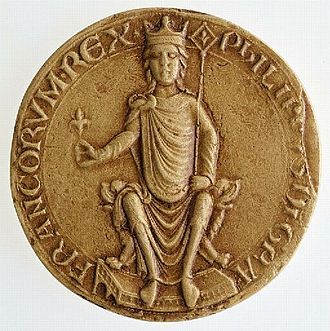
330px-sceau_de_philippe_auguste-_-_archives_nationales_-_sc-d157
Seal of Philip II Augusts

Ingeborg had been a prisoner in France for twenty years. Now, because of political expediency, she was not only free, but reinstated as queen, accorded the respect and dignity she had had a right to since her wedding day in 1193. However, her husband never returned to her bed; it was for outward appearances only. His son, Louis, now had his own son and heir, and so there was no need for Philip to be with Ingeborg, physically, in order to secure the succession. On his deathbed, in 1223, Philip II Augustus asked his son to treat Ingeborg well; while in his will, he left her 10,000 livres. The new king, Louis VIII, and his son, Louis IX, would both treat Ingeborg kindly and accord her all the respect due to her rank as dowager queen of France. Such an action was politically preferable to Louis; by recognising Ingeborg as legitimate queen of France he emphasised that Agnes had not been, and that, therefore, her children, especially Louis’s half-brother, Philip, had no right to the throne (despite his legitimisation by the pope).

After Philip’s death Ingeborg paid for masses to be said for his soul, whether out of duty, or as a sign of forgiveness, we’ll never know. A dignified and pious widow, she then retired to the priory of St Jean de l’Île, Corbeil. She died on 29 July, though the year of her death has variously been given as 1236, 1237, 1238 or 1239. Ingeborg survived her husband by more than fourteen years and was buried in a church in Corbeil, having spent twenty of her forty-five years, as queen, a prisoner of her husband.

*

Pictures courtesy of Wikipedia

Sources: Géraud, Hercule, Ingeburge de Danemark, reine de France, 1193-1236. Mémoire de feu Hercule Géraud, couronné par l’Académie des Inscriptions et Belles-Lettres dans sa séance du 11 août 1844. [Première partie.] Article; Étienne de Tournai, quoted in Géraud, Hercule, Ingeburge de Danemark, reine de France, 1193-1236. Mémoire de feu Hercule Géraud, couronné par l’Académie des Inscriptions et Belles-Lettres dans sa séance du 11 août 1844. [Première partie.] Article; Anna Belfrage Weep, Ingeborg, weep, (article) annabelfrage.wordpress.com; Goubert, Pierre The Course of French History; histoirefrance.net; historyofroyalwomen.com.

*

My books

Signed, dedicated copies of all my books are available through my online bookshop. or by contacting me.

Coming 30 March: Princesses of the Early Middle Ages

Books by Sharon Bennett Connolly

Daughters of kings were often used to seal treaty alliances and forge peace with England’s enemies. Princesses of the Early Middle Ages: Royal Daughters of the Conquest explores the lives of these young women, how they followed the stereotype, and how they sometimes managed to escape it. It will look at the world they lived in, and how their lives and marriages were affected by political necessity and the events of the time. Princesses of the Early Middle Ages will also examine how these girls, who were often political pawns, were able to control their own lives and fates. Whilst they were expected to obey their parents in their marriage choices, several princesses were able to exert their own influence on these choices, with some outright refusing the husbands offered to them.

Their stories are touching, inspiring and, at times, heartbreaking.

Princesses of the Early Middle Ages: Royal Daughters of the Conquest is now available for pre-order from Pen & Sword and Amazon.

Also by Sharon Bennett Connolly:

Books by Sharon Bennett Connolly

Scotland’s history is dramatic, violent and bloody and Scotland’s Medieval Queens have seen it all. This is the story of Scotland through their eyes. Available now from Amazon and Pen and Sword BooksHeroines of the Tudor World tells the stories of the most remarkable women from European history in the time of the Tudor dynasty, 1485-1603. These are the women who ruled, the women who founded dynasties, the women who fought for religious freedom, their families and love. Heroines of the Tudor World is now available from Amberley Publishing and Amazon UK. Women of the Anarchy demonstrates how Empress Matilda and Matilda of Boulogne, unable to wield a sword themselves, were prime movers in this time of conflict and lawlessness. It shows how their strengths, weaknesses, and personal ambitions swung the fortunes of war one way – and then the other. Available from Bookshop.orgAmberley Publishing and Amazon UKKing John’s Right-Hand Lady: The Story of Nicholaa de la Haye is the story of a truly remarkable lady, the hereditary constable of Lincoln Castle and the first woman in England to be appointed sheriff in her own right. Available from all good bookshops Pen & Sword Booksbookshop.org and Amazon

Defenders of the Norman Crown: The Rise and Fall of the Warenne Earls of Surrey tells the fascinating story of the Warenne dynasty, from its origins in Normandy, through the Conquest, Magna Carta, the wars and marriages that led to its ultimate demise in the reign of Edward III. Available from Pen & Sword BooksAmazon in the UK and US, and Bookshop.orgLadies of Magna Carta: Women of Influence in Thirteenth Century England looks into the relationships of the various noble families of the 13th century, and how they were affected by the Barons’ Wars, Magna Carta and its aftermath; the bonds that were formed and those that were broken. It is now available in paperback and hardback from Pen & SwordAmazon, and Bookshop.orgHeroines of the Medieval World tells the stories of some of the most remarkable women from Medieval history, from Eleanor of Aquitaine to Julian of Norwich. Available now from Amberley Publishing and Amazon, and Bookshop.orgSilk and the Sword: The Women of the Norman Conquest traces the fortunes of the women who had a significant role to play in the momentous events of 1066. Available now from Amazon,  Amberley Publishing, and Bookshop.org.

Alternate Endings: An anthology of historical fiction short stories including Long Live the King… which is my take what might have happened had King John not died in October 1216. Available in paperback and kindle from Amazon.

Podcast:

A Slice of Medieval

Have a listen to the A Slice of Medieval podcast, which I co-host with Historical fiction novelist Derek Birks. Derek and I welcome guests, such as Ian Mortimer, Bernard Cornwell, Elizabeth Chadwick and Scott Mariani, and discuss a wide range of topics in medieval history, from significant events to the personalities involved. 

Every episode is also now available on YouTube.

*

Don’t forget! Signed and dedicated copies of all my books are available through my online bookshop.

For forthcoming online and in-person talks, please check out my Events Page.

You can be the first to read new articles by clicking the ‘Follow’ button, liking our Facebook page or joining me on TwitterThreadsBluesky and Instagram.

*

©2017 Sharon Bennett Connolly FRHistS

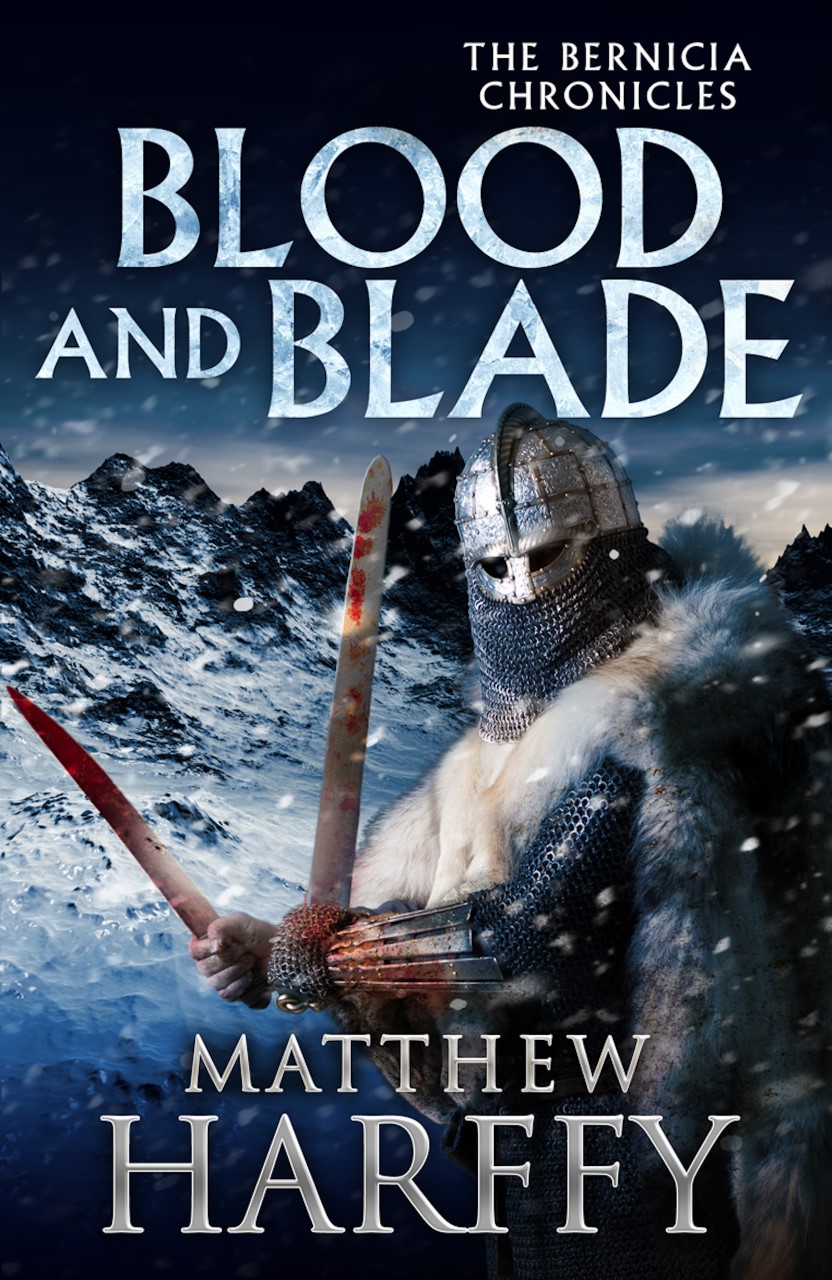
Book Corner: Blood and Blade by Matthew Harffy

thumbnail_blood-blade-blog-tour-bannerThis week I am delighted to be a part of Matthew Harffy‘s blog tour, celebrating the release of his latest novel in the Bernicia Chronicles, Blood and Blade.

635AD. Anglo-Saxon Britain. A gripping, action-packed historical thriller and third instalment in The Bernicia Chronicles. Perfect for fans of Bernard Cornwell.

Oswald is now King of Northumbria. However, his plans for further alliances and conquests are quickly thrown into disarray when his wedding to a princess of Wessex is interrupted by news of a Pictish uprising.

Rushing north, Oswald leaves Beobrand to escort the young queen to her new home. Their path is fraught with danger and uncertainty, Beobrand must try to unravel secrets and lies if they are to survive.

Meanwhile, old enemies are closing in, seeking brutal revenge. Beobrand will give his blood and blade in service to his king, but will that be enough to avert disaster and save his kith and kin from the evil forces that surround them?

Beobrand Half-Hand is fast becoming one of my favourite Saxon heroes. Starting with The Serpent Sword, continuing with  The Cross and the Curse and now in Blood and Blade his story has told with passion and excitement by Matthew Harffy, with an eye to the great adventure. The author has honed his story-tellling skills to perfection in this 3rd novel of the series. The action continues unabated; from the first words of the opening chapter, Beobrand is in the thick of the fight, both politically and physically.

In Blood and Blade Matthew Harffy manages to transport the reader back to 7th century Britain, enveloping you in the Anglo-Saxon era. His knowledge and love of the time and its people shines through on every page and gives the whole book – indeed, the series – a deep impression of authenticity. You are taken on a journey,  which encompasses the length and breadth of England, from Hadrian’s Wall to the royal court of Wessex, we follow Beobrand’s journey as a warrior for his king, and courtier to his new queen. The landscape and people of Britain are vividly brought to life.

The fight scenes are wonderfully choreographed, enthusiastic and enjoyable. You can almost hear the clash of sword on shield, the screams of the wounded and howls of the warriors – I think I even,  physically, flinched in places!

For a heartbeat Beobrand saw the firelight glisten on the wicked iron point of the arrow. Torran aimed and held the arrow there momentarily. They were still too far away to attack. With every step though, his chance of missing, or of their byrnies protecting them, lessened.

“If you are not afraid, then lower your child’s toy and face me with sword and spear.”

Torran did not answer. His right hand let loose the bowstring and the arrow thrummed towards Beobrand. it flew straight and true. Beobrand watched its flight, a blur of white in the dawn. He saw the arrow come but did not react. He closed his eyes and accepted his wyrd.thumbnail_aria_harffy_blood-and-blade_e

There was a crash and a clatter, but no impact. No searing pain as the arrow split through metal rings and the soft flesh beneath.

Beobrand opened his eyes. For a moment the scene was confusing in the dawn-shadow of the hill. Someone was sprawled on the earth before him. Was it Acennan? No, the short warrior was still at his side. Then the figure groaned and rose up. Teeth flashed in the dark as the face broke into a savage grin. It was Attor. He held a shield in his left hand. From its hide-covered boards protruded that arrow that had been meant for Beobrand.

“Seemed you needed saving, lord,” he said, the glee of battle lending his tone a shrill edge.

Matthew Harffy has taken great care in developing his characters. Beobrand has grown older and wiser through his experiences. His battle skills are as keen as ever, while his political acumen and tactical wizardry is proving invaluable to his king, Oswald. His confidence has grown through his success, but the faith of his men and their willingness to follow him wherever he may lead – even if it is into an enemy shield wall.

And we learn more about his men. As Beobrand matures, he realises that it is not enough to have men fight for him; he has to learn about their pasts, their lives and their weaknesses. this is the book in which the lives of his friends and followers, such as Acennan, are given more depth and history, making their characters more realistic and human.

New characters are also introduced’ some friends, some enemies; they change the dynamic and bring in the promise of some great stories to come. As ever, Beobrand’s enemies are truly despicable, and will stop at nothing to bring the hero down, whether it is with arrow, sword or some more personal weapon. Beobrand has to use all his physical and mental strength to win through.

It is hard not to compare Matthew Harffy’s books with those of Bernard Cornwell. Much of the story is set around Bebbanburg (Bamburgh Castle), where Cornwell’s Last Kingdom stories began; but I don’t think that’s a bad thing. Both authors have their own unique styles, but a sense of adventure that will take their heroes on spectacular journeys. Any fan of Bernard Cornwell will find another favourite writer in Matthew Harffy.  However, Beobrand’s story is set a couple of centuries earlier and is a truly unique story. The hero of the Bernicia Chronicles will stand up against any Bernard Cornwell could produce.

thumbnail_harffy_matthewMatthew Harffy is the author of the Bernicia Chronicles, a series of novels set in seventh century Britain. The first of the series, The Serpent Sword, was published by Aria/Head of Zeus on 1st June 2016. The sequel, The Cross and The Curse was released on 1st August 2016. Book three, Blood and Blade, was released on 1st December 2016.

Book info and links:

The Serpent Sword, The Cross and the Curse and Blood and Blade are available on Amazon, Kobo, Google Play, and all good online bookstores. Killer of Kings and Kin of Cain are available for pre-order on Amazon and all good online bookstores.

Contact links:

Website: www.matthewharffy.com

Twitter: @MatthewHarffy

Facebook: MatthewHarffyAuthor

*

My book, Heroines of the Medieval World,  is now available in hardback in the UK from both Amberley Publishing and Amazon UK and worldwide from Book Depository. It is also available on Kindle in both the UK and USA and will be available in Hardback from Amazon US from 1 May 2018.

You can be the first to read new articles by clicking the ‘Follow’ button, liking our Facebook page or joining me on Twitter.


*

©Sharon Bennett Connolly 2016

Edgar – The Boy Who Wouldn’t Be King

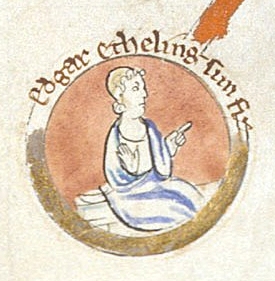
edgar_the_aetheling
Edgar the Aetheling

Edgar the Ætheling was the only son of Edward the Exile and his wife, Agatha. His father was the son of Edmund II Ironside, king of England in 1016; Edward’s grandfather was, therefore, Ӕthelred II (the Unready) and his uncle was Edward the Confessor, England’s king from 1042 until 1066. When his father was murdered in 1016 Edward and his younger brother, Edmund, were sent into exile of the continent by England’s new king, Cnut.

It is thought that Cnut intended that they would be killed, but the boys were protected by the king of Sweden and sent on to safety in Kiev, at the court of its prince, Jaroslav. Around 1043 Edward married Agatha, probably the daughter Liudolf, margrave of West Friesland and a relative of Emperor Heinrich III. Margaret, the oldest of three children, was born in either 1045 or 1046; her sister, Christina was born around 1050 and her brother Edgar, the Ӕtheling was born sometime between 1052 and 1056.

The family may have spent their whole lives in European exile, were it not for Edward the Confessor lacking an heir to the English throne; although Edward was married to Edith Godwinson, the couple remained childless. Sometime in 1054 Edward sent an embassy to Edward the Exile, to bring him back to England as ӕtheling, heir to the throne. The family could not travel immediately, possibly because Agatha was pregnant with Edgar, and only arrived in England in 1057, having journeyed by ship, provided by Emperor Heinrich III.

Just days after their return Edward the Exile was dead, whether by nefarious means or simply a twist of fate is uncertain. The suspicion has been raised that Edward’s rival for the throne, Harold Godwinson – the future Harold II – may have taken the opportunity to remove his rival; although it was Harold who brought Edward back to England, so surely, had he intended murder, he would have done it sooner?

Whatever the circumstances, the death of Edward the Exile was a blow for Edward the Confessor’s dynastic hopes. Little Edgar, now the ӕtheling was much too young to assume a political role. He and his sisters, along with their mother, were now in the protection of King Edward. They continued to live at court and by January 1066, when Edward the Confessor died, Margaret was approaching her twentieth birthday, while Edgar could have been as young as ten and was probably no older than fourteen. Due to his tender years, and lack of powerful allies, Edgar was passed over as a candidate for the throne in preference for the older and more experienced Harold Godwinson; who was crowned as Harold II.

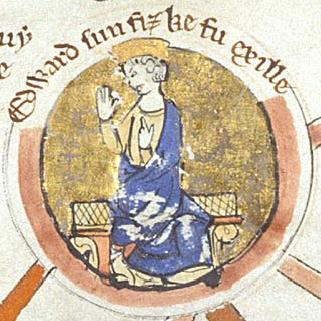
edward_the_exile
Edward the Exile. Edgar’s father

Following Harold’s death at the Battle of Hastings in October 1066, Edgar was proclaimed king in London by some of his supporters, led by Archbishop Ealdred of York, ‘as was his proper due by birth’¹; he was also promised backing by the earls Edwin and Morcar, brothers-in-law of Harold II but their support did not materialise, and without it Edgar’s cause was hopeless.  He submitted to William of Normandy, at Berkamsted, in early December. William treated Edgar honourably, allowing him his life and freedom, and giving him land.

However, by 1068 Edgar the Ӕtheling had become involved in the opposition to Norman rule, which had been festering in northern England. When events turned against him he fled to Scotland taking his mother and sisters along with him. The family was warmly received at Dunfermline by Scotland’s king, Malcolm III Canmore. At the time, Malcolm was married to Ingebiorg and the father of two sons, Duncan and Donald. Whether Ingebiorg died or was put aside, seems uncertain; her sons were exiled from court, although Duncan would eventually reign as Duncan II he was killed at the Battle of Monthechin in 1094.

Although we do not know Ingebiorg’s fate, we do know that in 1069 Malcolm asked Edgar and his mother for Margaret’s hand in marriage. Margaret was reluctant to agree to the marriage, she was more inclined to a religious life and had hoped to become a nun. Nonetheless, with pressure from Malcolm and, possibly, her own sense of obligation to the king who was sheltering her family, she eventually accepted his proposal. They were married at Dunfermline sometime in 1069 or 1070 and, by all accounts, it seems to have been a happy and successful marriage.

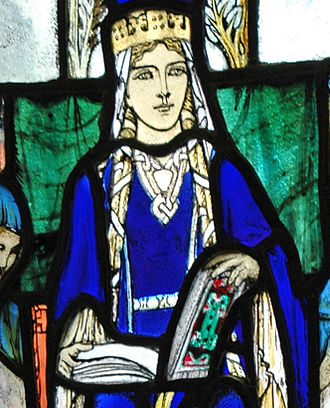
330px-stmargareth_edinburgh_castle2
St Margaret, queen of Scotland

In 1069, Edgar was back in northern England, at the head of the Northumbrian rebels who entered York. After defeat at York, he fled again to Scotland, but returned to lead the Northumbrian army when a Danish fleet arrived in the Humber. The army captured the Norman castle at York and killed its garrison. During the winter, Edgar narrowly evaded capture when he raided into Lincolnshire with a ship from the Danish fleet. Although he was part of the rebellion, there does not appear to have been any specific plans to make Edgar king and in 1070 William brought the full force of his wrath down on the north, systematically and brutally crushing the rebellion.

Edgar fled again to Scotland, and played no part in the 1071-2 rebellion at Ely. By 1074 he was in exile in Flanders. He was shipwrecked in the same year, while on the way to take control of the castle of Montreuil, offered to him by the French as a base from which he could torment King William. Having returned to Scotland, and on the advice of his brother-in-law, Malcolm III, Edgar submitted to William I and was established at his court. According to William of Malmesbury he remained ‘at court for many years, silently sunk into contempt through his indolence, or more mildly speaking, his simplicity’².

According to the Domesday Book, Edgar held 2 estates in Hertfordshire in 1086; Barkway and Hormead. He became close friends with 2 of the Conqueror’s sons; Robert Curthose and William Rufus. In 1086, he was sent to Apulia, another land under Norman rule, with a force of 200 knights, although the nature of his mission is unknown, the mission itself is testament to the high regard the Normans held him in. Edgar then joined Robert Curthose, duke since his father’s death in 1087, in Normandy, but was expelled from there in 1091, following a treaty between Robert and his brother, William II of England.

robert_curthose_-_ms_royal_14_b_vi
Robert Curthose, duke of Normandy

As a result, Edgar went to Scotland and encouraged Malcolm III to invade England. Peace was eventually restored and in 1093 Edgar was employed by William to escort King Malcolm to the English court. Both Malcolm and Margaret died within a few days of each other, in November 1093. In 1095 Edgar campaigned with William against the rebellious earl of Northumbria, Robert de Mowbray and by 1097 as guardian for his nephew, Edgar, in Scotland, he ‘went with an army, with the king’s support, into Scotland, and conquered the country in a severe battle’³ making his nephew and namesake king of Scotland.

According to Orderic Vitalis, in 1098 Edgar joined the First Crusade, arriving at Latakia in the Levant in June; having taken the area under his protection he then transferred it to Robert Curthose, also a Crusader. However, Orderic is the only source for Edgar’s participation and another possibility is that his journey to the Holy Land was later, in 1102 – or maybe he made 2 journeys?

Edgar returned to England in the early 1100s and fought his last action, for Robert Curthose, at the Battle of Tinchebrai in 1106. Robert was defeated by his younger brother, Henry I of England, and was imprisoned until his death in 1134. Edgar, however, was incarcerated for only a short while and was soon released;his Anglo-Saxon royal descent was no longer an issue of contention, since Henry had married Edgar’s niece, Matilda, soon after taking the crown in 1100.

matylda_zena
Matilda, Edgar’s niece and queen of England

Edgar seems to have been only a minor player in the politics and upheaval following the Norman Conquest. His political isolation meant that few took his claim to the English crown seriously. While his participation in military actions, and in relations with Scotland are mentioned in various documents, his death passed without notice – or remark. William of Malmesbury wrote of him in 1125, that ‘he now grows old in the country in privacy and quiet’². Nothing is mentioned of him thereafter; neither is it ever remarked that he had a wife of children.

If he had only been a few years older in that crucial year of 1066, his story could have been very different. instead, he simply slips from the pages of history, remembered only as England’s lost king.

*

Footnotes: ¹Anglo-Saxon Chronicle, 1066, Text D; ² William of Malmesbury, De gestis regum; ³Anglo-Saxon Chronicle, 1097, Text E.

*

Sources: Anglo-Saxon Chronicle; William of Malmesbury, De gestis regum; Oxforddnb.com; The History Today Companion to British History, Edited by juliet Gardner and Neil Wenborn; The Battle of Hastings, 1066 by m.K. Lawson; The Oxford Companion to British History edited by John Cannon; Britain’s Royal Families, the Complete Genealogy by Alison Weir; Edward the Confessor, King of England by Peter Rex; The Mammoth Book of British Kings & Queens by Mike Ashley; Brewer’s British Royalty by David Williamson; The Norman Conquest by Teresa Cole

*

Pictures courtesy of Wikipedia

*

My Books:

Signed, dedicated copies of all my books are available through my online bookshop.

OUT NOW: Scotland’s Medieval Queens

Books by Sharon Bennett Connolly

Scotland’s history is dramatic, violent and bloody. Being England’s northern neighbour has never been easy. Scotland’s queens have had to deal with war, murder, imprisonment, political rivalries and open betrayal. They have loved and lost, raised kings and queens, ruled and died for Scotland. From St Margaret, who became one of the patron saints of Scotland, to Elizabeth de Burgh and the dramatic story of the Scottish Wars of Independence, to the love story and tragedy of Joan Beaufort, to Margaret of Denmark and the dawn of the Renaissance, Scotland’s Medieval Queens have seen it all. This is the story of Scotland through their eyes.

Scotland’s Medieval Queens gives a thorough grounding in the history of the women who ruled Scotland at the side of its kings, often in the shadows, but just as interesting in their lives beyond the spotlight. It’s not a subject that has been widely covered, and Sharon is a pioneer in bringing that information into accessible history.’ Elizabeth Chadwick (New York Times bestselling author)

Available now from Amazon and Pen and Sword Books

Also by Sharon Bennett Connolly:

Books by Sharon Bennett Connolly
Heroines of the Tudor World tells the stories of the most remarkable women from European history in the time of the Tudor dynasty, 1485-1603. These are the women who ruled, the women who founded dynasties, the women who fought for religious freedom, their families and love. Heroines of the Tudor World is now available for pre-order from Amberley Publishing and Amazon UK. Women of the Anarchy demonstrates how Empress Matilda and Matilda of Boulogne, unable to wield a sword themselves, were prime movers in this time of conflict and lawlessness. It shows how their strengths, weaknesses, and personal ambitions swung the fortunes of war one way – and then the other. Available from Bookshop.orgAmberley Publishing and Amazon UKKing John’s Right-Hand Lady: The Story of Nicholaa de la Haye is the story of a truly remarkable lady, the hereditary constable of Lincoln Castle and the first woman in England to be appointed sheriff in her own right. Available from all good bookshops Pen & Sword Booksbookshop.org and Amazon

Books by Sharon Bennett Connolly
Defenders of the Norman Crown: The Rise and Fall of the Warenne Earls of Surrey tells the fascinating story of the Warenne dynasty, from its origins in Normandy, through the Conquest, Magna Carta, the wars and marriages that led to its ultimate demise in the reign of Edward III. Available from Pen & Sword BooksAmazon in the UK and US, and Bookshop.orgLadies of Magna Carta: Women of Influence in Thirteenth Century England looks into the relationships of the various noble families of the 13th century, and how they were affected by the Barons’ Wars, Magna Carta and its aftermath; the bonds that were formed and those that were broken. It is now available in paperback and hardback from Pen & SwordAmazon, and Bookshop.orgHeroines of the Medieval World tells the stories of some of the most remarkable women from Medieval history, from Eleanor of Aquitaine to Julian of Norwich. Available now from Amberley Publishing and Amazon, and Bookshop.orgSilk and the Sword: The Women of the Norman Conquest traces the fortunes of the women who had a significant role to play in the momentous events of 1066. Available now from Amazon,  Amberley Publishing, and Bookshop.org.

Alternate Endings: An anthology of historical fiction short stories including Long Live the King… which is my take what might have happened had King John not died in October 1216. Available in paperback and kindle from Amazon.

Podcast:

A Slice of Medieval

Have a listen to the A Slice of Medieval podcast, which I co-host with Historical fiction novelist Derek Birks. Derek and I welcome guests, such as Bernard Cornwell, and discuss a wide range of topics in medieval history, from significant events to the personalities involved. Definitely worth a listen!

Every episode is also now available on YouTube.

*

Don’t forget! Signed and dedicated copies of all my books are available through my online bookshop.

For forthcoming online and in-person talks, please check out my Events Page.

You can be the first to read new articles by clicking the ‘Follow’ button, liking our Facebook page or joining me on TwitterThreadsBluesky and Instagram.

©2016 Sharon Bennett Connolly FRHistS
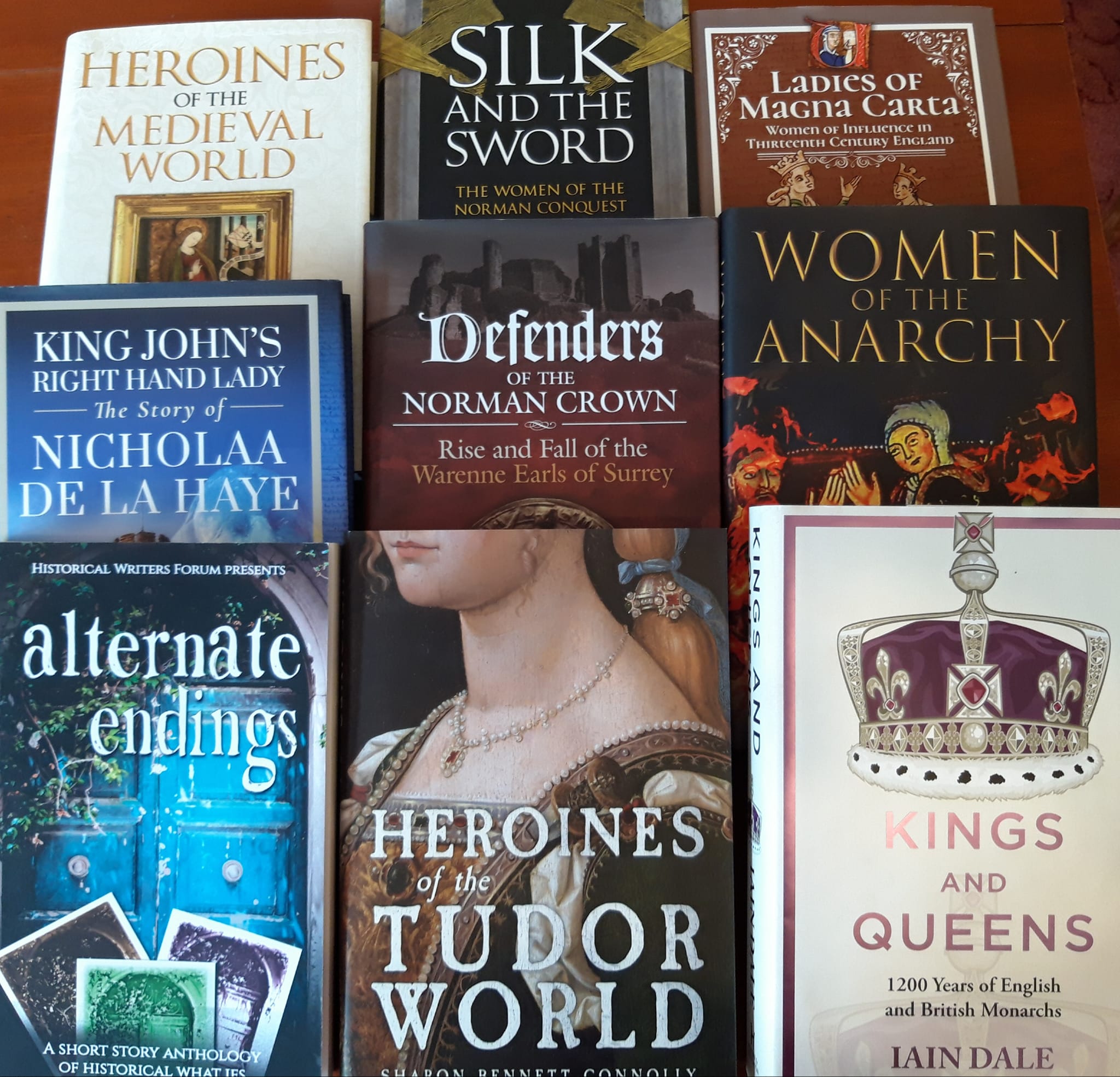
Book Corner: Scars From the Past by Derek Birks

51o-ahuwnblMy latest book review, of Derek Birks‘ latest novel, Scars From the Past, the first novel of his stunning new series, set 10 years after the conclusion of his fantastic Rebels& Brothers series, has gone live over at The Review today!

Scars From the Past is the first novel from Derek Birks’ new series and, I have to say, it is the ultimate page-turner! It is a new direction for the author. While there is just as much action as in the first series, the story is less about national politics and more family orientated, as the Elders fight to survive, and to avoid the family imploding.Where the first series concentrated on duty and feudal loyalty, this new novel examines more personal relationships; love and friendship.
The original Rebels & Brothers series told the story of Ned Elder, a Sharpe-like hero who fought his way through the Wars of the Roses and Edward IV’s battle to win – and hold – the throne of England. The new series, set ten years after the end of the fourth book, The Last Shroud, follows the adventures of the next generation. Ned’s son, John, is a young man finding it difficult to live up to his father’s legend and the reader follows his journey as he realises his own identity and that duty and responsibility are not so easy to run from…..

To read the full review of this fantastic novel – and to enter the prize draw and be in with a chance of winning a hot-off-the-press signed paperback copy in the giveaway, simply visit The Review and leave a comment. Good luck!

*

My book, Heroines of the Medieval World,  is now available in hardback in the UK from both Amberley Publishing and Amazon UK and worldwide from Book Depository. It is also available on Kindle in both the UK and USA and will be available in Hardback from Amazon US from 1 May 2018.

Be the first to read new articles by clicking the ‘Follow’ button, liking our Facebook page or joining me on Twitter.

*

©Sharon Bennett Connolly 2016