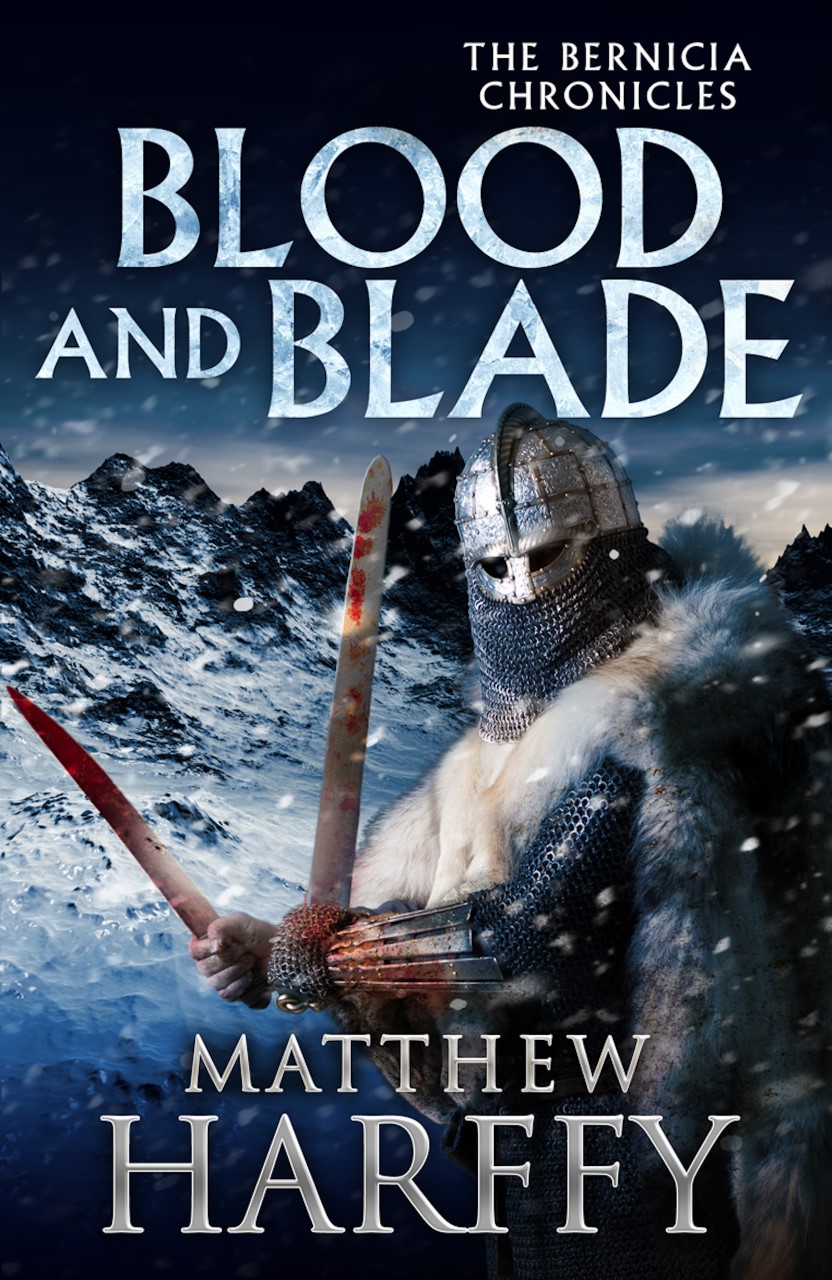
This week I am delighted to be a part of Matthew Harffy‘s blog tour, celebrating the release of his latest novel in the Bernicia Chronicles, Blood and Blade.
635AD. Anglo-Saxon Britain. A gripping, action-packed historical thriller and third instalment in The Bernicia Chronicles. Perfect for fans of Bernard Cornwell.
Oswald is now King of Northumbria. However, his plans for further alliances and conquests are quickly thrown into disarray when his wedding to a princess of Wessex is interrupted by news of a Pictish uprising.
Rushing north, Oswald leaves Beobrand to escort the young queen to her new home. Their path is fraught with danger and uncertainty, Beobrand must try to unravel secrets and lies if they are to survive.
Meanwhile, old enemies are closing in, seeking brutal revenge. Beobrand will give his blood and blade in service to his king, but will that be enough to avert disaster and save his kith and kin from the evil forces that surround them?
Beobrand Half-Hand is fast becoming one of my favourite Saxon heroes. Starting with The Serpent Sword, continuing with The Cross and the Curse and now in Blood and Blade his story has told with passion and excitement by Matthew Harffy, with an eye to the great adventure. The author has honed his story-tellling skills to perfection in this 3rd novel of the series. The action continues unabated; from the first words of the opening chapter, Beobrand is in the thick of the fight, both politically and physically.
In Blood and Blade Matthew Harffy manages to transport the reader back to 7th century Britain, enveloping you in the Anglo-Saxon era. His knowledge and love of the time and its people shines through on every page and gives the whole book – indeed, the series – a deep impression of authenticity. You are taken on a journey, which encompasses the length and breadth of England, from Hadrian’s Wall to the royal court of Wessex, we follow Beobrand’s journey as a warrior for his king, and courtier to his new queen. The landscape and people of Britain are vividly brought to life.
The fight scenes are wonderfully choreographed, enthusiastic and enjoyable. You can almost hear the clash of sword on shield, the screams of the wounded and howls of the warriors – I think I even, physically, flinched in places!
For a heartbeat Beobrand saw the firelight glisten on the wicked iron point of the arrow. Torran aimed and held the arrow there momentarily. They were still too far away to attack. With every step though, his chance of missing, or of their byrnies protecting them, lessened.
“If you are not afraid, then lower your child’s toy and face me with sword and spear.”
Torran did not answer. His right hand let loose the bowstring and the arrow thrummed towards Beobrand. it flew straight and true. Beobrand watched its flight, a blur of white in the dawn. He saw the arrow come but did not react. He closed his eyes and accepted his wyrd.
There was a crash and a clatter, but no impact. No searing pain as the arrow split through metal rings and the soft flesh beneath.
Beobrand opened his eyes. For a moment the scene was confusing in the dawn-shadow of the hill. Someone was sprawled on the earth before him. Was it Acennan? No, the short warrior was still at his side. Then the figure groaned and rose up. Teeth flashed in the dark as the face broke into a savage grin. It was Attor. He held a shield in his left hand. From its hide-covered boards protruded that arrow that had been meant for Beobrand.
“Seemed you needed saving, lord,” he said, the glee of battle lending his tone a shrill edge.
Matthew Harffy has taken great care in developing his characters. Beobrand has grown older and wiser through his experiences. His battle skills are as keen as ever, while his political acumen and tactical wizardry is proving invaluable to his king, Oswald. His confidence has grown through his success, but the faith of his men and their willingness to follow him wherever he may lead – even if it is into an enemy shield wall.
And we learn more about his men. As Beobrand matures, he realises that it is not enough to have men fight for him; he has to learn about their pasts, their lives and their weaknesses. this is the book in which the lives of his friends and followers, such as Acennan, are given more depth and history, making their characters more realistic and human.
New characters are also introduced’ some friends, some enemies; they change the dynamic and bring in the promise of some great stories to come. As ever, Beobrand’s enemies are truly despicable, and will stop at nothing to bring the hero down, whether it is with arrow, sword or some more personal weapon. Beobrand has to use all his physical and mental strength to win through.
It is hard not to compare Matthew Harffy’s books with those of Bernard Cornwell. Much of the story is set around Bebbanburg (Bamburgh Castle), where Cornwell’s Last Kingdom stories began; but I don’t think that’s a bad thing. Both authors have their own unique styles, but a sense of adventure that will take their heroes on spectacular journeys. Any fan of Bernard Cornwell will find another favourite writer in Matthew Harffy. However, Beobrand’s story is set a couple of centuries earlier and is a truly unique story. The hero of the Bernicia Chronicles will stand up against any Bernard Cornwell could produce.
Matthew Harffy is the author of the Bernicia Chronicles, a series of novels set in seventh century Britain. The first of the series, The Serpent Sword, was published by Aria/Head of Zeus on 1st June 2016. The sequel, The Cross and The Curse was released on 1st August 2016. Book three, Blood and Blade, was released on 1st December 2016.
Book info and links:
The Serpent Sword, The Cross and the Curse and Blood and Blade are available on Amazon, Kobo, Google Play, and all good online bookstores. Killer of Kings and Kin of Cain are available for pre-order on Amazon and all good online bookstores.
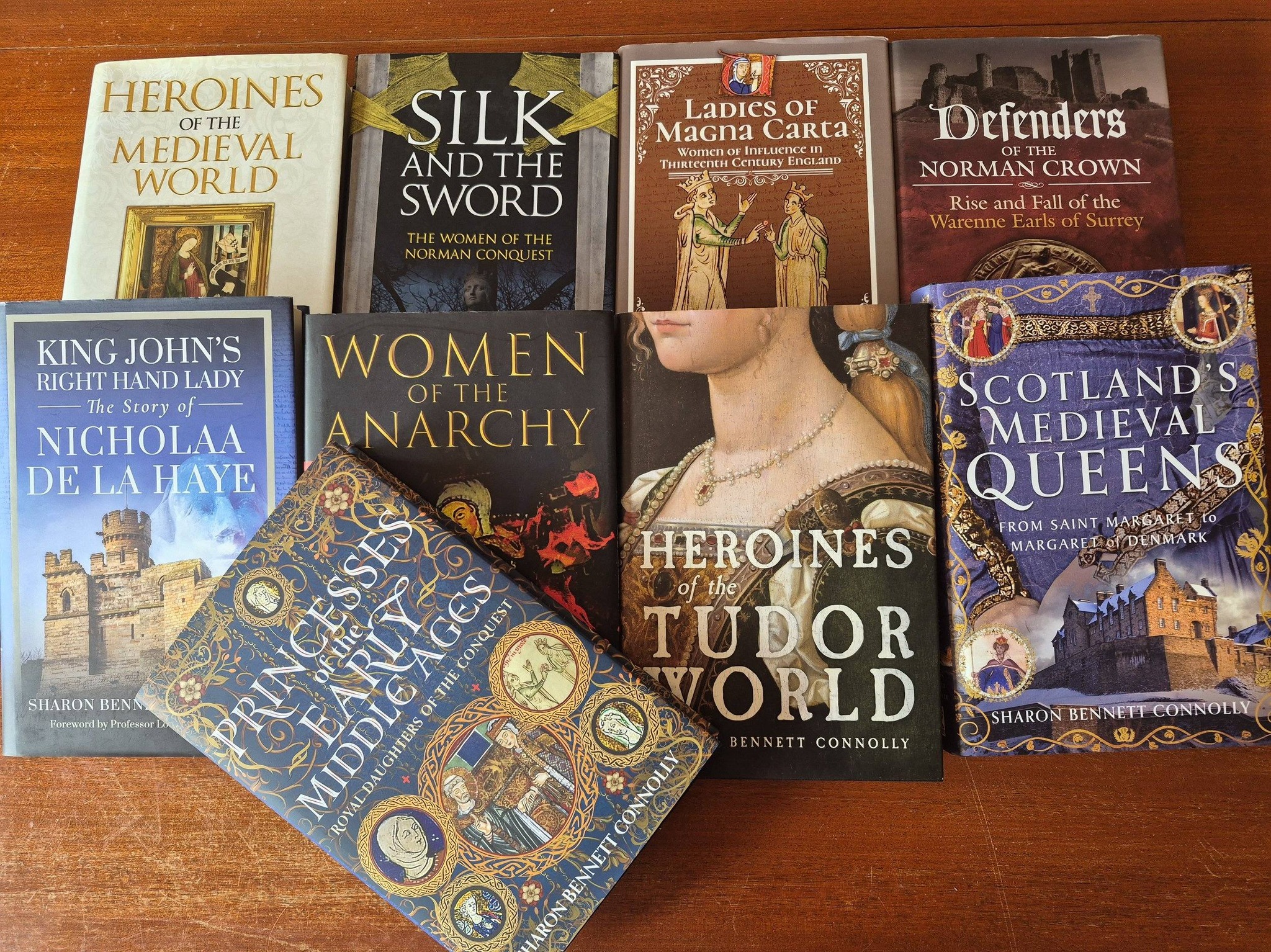
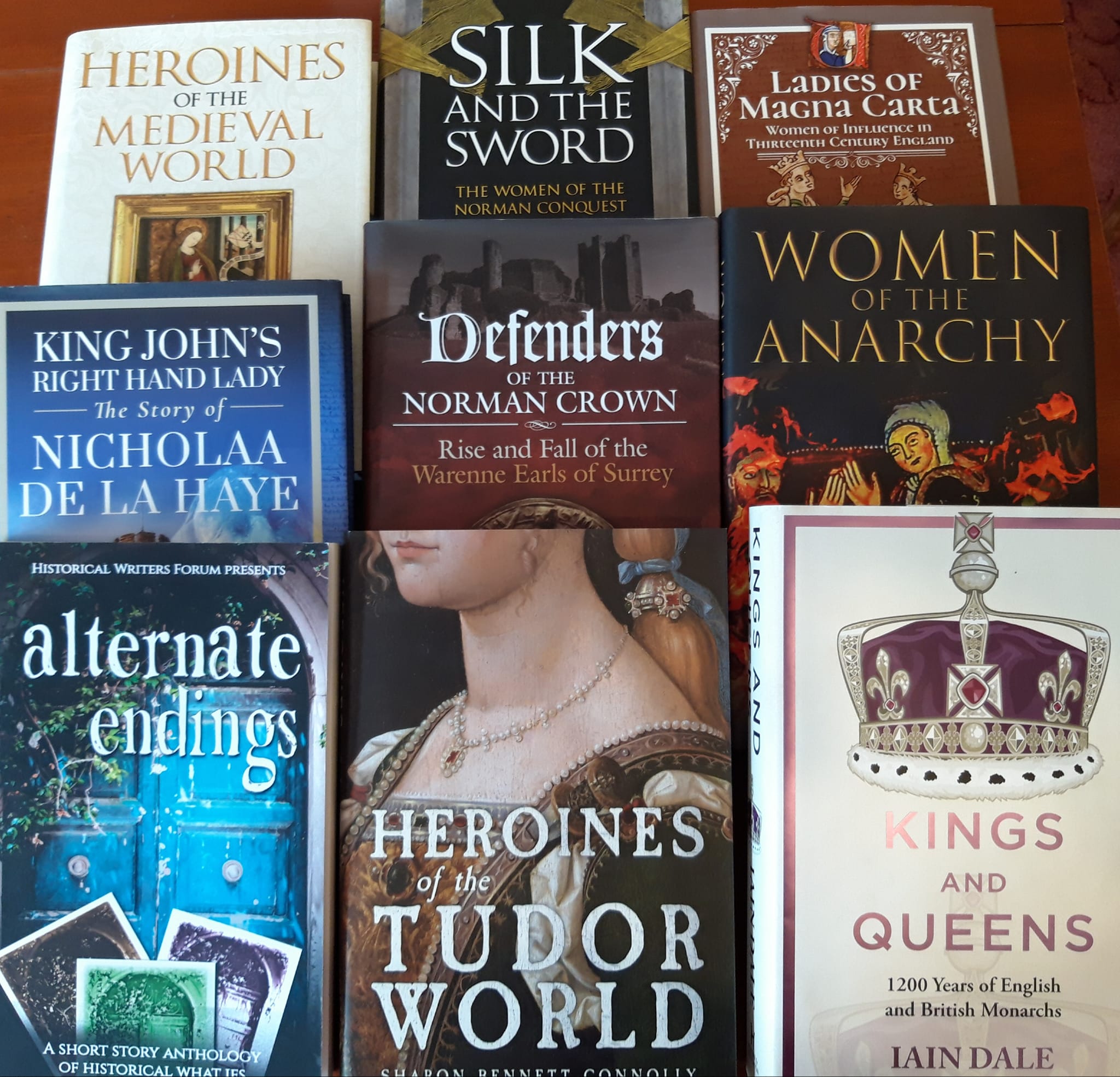
My book, Heroines of the Medieval World, is now available in hardback in the UK from both Amberley Publishing and Amazon UK and worldwide from Book Depository. It is also available on Kindle in both the UK and USA and will be available in Hardback from Amazon US from 1 May 2018.
You can be the first to read new articles by clicking the ‘Follow’ button, liking our Facebook page or joining me on Twitter.
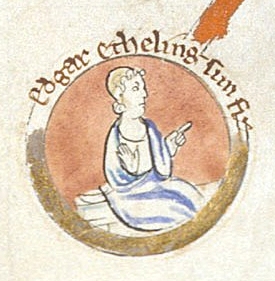
Edgar the Ætheling was the only son of Edward the Exile and his wife, Agatha. His father was the son of Edmund II Ironside, king of England in 1016; Edward’s grandfather was, therefore, Ӕthelred II (the Unready) and his uncle was Edward the Confessor, England’s king from 1042 until 1066. When his father was murdered in 1016 Edward and his younger brother, Edmund, were sent into exile of the continent by England’s new king, Cnut.
It is thought that Cnut intended that they would be killed, but the boys were protected by the king of Sweden and sent on to safety in Kiev, at the court of its prince, Jaroslav. Around 1043 Edward married Agatha, probably the daughter Liudolf, margrave of West Friesland and a relative of Emperor Heinrich III. Margaret, the oldest of three children, was born in either 1045 or 1046; her sister, Christina was born around 1050 and her brother Edgar, the Ӕtheling was born sometime between 1052 and 1056.
The family may have spent their whole lives in European exile, were it not for Edward the Confessor lacking an heir to the English throne; although Edward was married to Edith Godwinson, the couple remained childless. Sometime in 1054 Edward sent an embassy to Edward the Exile, to bring him back to England as ӕtheling, heir to the throne. The family could not travel immediately, possibly because Agatha was pregnant with Edgar, and only arrived in England in 1057, having journeyed by ship, provided by Emperor Heinrich III.
Just days after their return Edward the Exile was dead, whether by nefarious means or simply a twist of fate is uncertain. The suspicion has been raised that Edward’s rival for the throne, Harold Godwinson – the future Harold II – may have taken the opportunity to remove his rival; although it was Harold who brought Edward back to England, so surely, had he intended murder, he would have done it sooner?
Whatever the circumstances, the death of Edward the Exile was a blow for Edward the Confessor’s dynastic hopes. Little Edgar, now the ӕtheling was much too young to assume a political role. He and his sisters, along with their mother, were now in the protection of King Edward. They continued to live at court and by January 1066, when Edward the Confessor died, Margaret was approaching her twentieth birthday, while Edgar could have been as young as ten and was probably no older than fourteen. Due to his tender years, and lack of powerful allies, Edgar was passed over as a candidate for the throne in preference for the older and more experienced Harold Godwinson; who was crowned as Harold II.
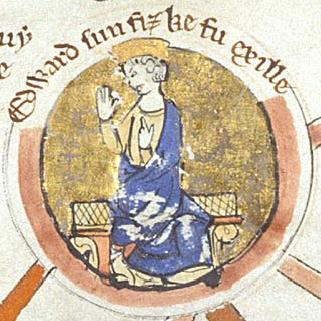
Edward the Exile. Edgar’s father
Following Harold’s death at the Battle of Hastings in October 1066, Edgar was proclaimed king in London by some of his supporters, led by Archbishop Ealdred of York, ‘as was his proper due by birth’¹; he was also promised backing by the earls Edwin and Morcar, brothers-in-law of Harold II but their support did not materialise, and without it Edgar’s cause was hopeless. He submitted to William of Normandy, at Berkamsted, in early December. William treated Edgar honourably, allowing him his life and freedom, and giving him land.
However, by 1068 Edgar the Ӕtheling had become involved in the opposition to Norman rule, which had been festering in northern England. When events turned against him he fled to Scotland taking his mother and sisters along with him. The family was warmly received at Dunfermline by Scotland’s king, Malcolm III Canmore. At the time, Malcolm was married to Ingebiorg and the father of two sons, Duncan and Donald. Whether Ingebiorg died or was put aside, seems uncertain; her sons were exiled from court, although Duncan would eventually reign as Duncan II he was killed at the Battle of Monthechin in 1094.
Although we do not know Ingebiorg’s fate, we do know that in 1069 Malcolm asked Edgar and his mother for Margaret’s hand in marriage. Margaret was reluctant to agree to the marriage, she was more inclined to a religious life and had hoped to become a nun. Nonetheless, with pressure from Malcolm and, possibly, her own sense of obligation to the king who was sheltering her family, she eventually accepted his proposal. They were married at Dunfermline sometime in 1069 or 1070 and, by all accounts, it seems to have been a happy and successful marriage.
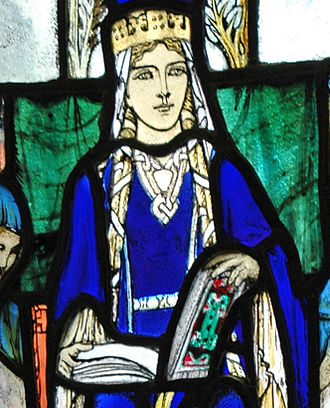
St Margaret, queen of Scotland
In 1069, Edgar was back in northern England, at the head of the Northumbrian rebels who entered York. After defeat at York, he fled again to Scotland, but returned to lead the Northumbrian army when a Danish fleet arrived in the Humber. The army captured the Norman castle at York and killed its garrison. During the winter, Edgar narrowly evaded capture when he raided into Lincolnshire with a ship from the Danish fleet. Although he was part of the rebellion, there does not appear to have been any specific plans to make Edgar king and in 1070 William brought the full force of his wrath down on the north, systematically and brutally crushing the rebellion.
Edgar fled again to Scotland, and played no part in the 1071-2 rebellion at Ely. By 1074 he was in exile in Flanders. He was shipwrecked in the same year, while on the way to take control of the castle of Montreuil, offered to him by the French as a base from which he could torment King William. Having returned to Scotland, and on the advice of his brother-in-law, Malcolm III, Edgar submitted to William I and was established at his court. According to William of Malmesbury he remained ‘at court for many years, silently sunk into contempt through his indolence, or more mildly speaking, his simplicity’².
According to the Domesday Book, Edgar held 2 estates in Hertfordshire in 1086; Barkway and Hormead. He became close friends with 2 of the Conqueror’s sons; Robert Curthose and William Rufus. In 1086, he was sent to Apulia, another land under Norman rule, with a force of 200 knights, although the nature of his mission is unknown, the mission itself is testament to the high regard the Normans held him in. Edgar then joined Robert Curthose, duke since his father’s death in 1087, in Normandy, but was expelled from there in 1091, following a treaty between Robert and his brother, William II of England.
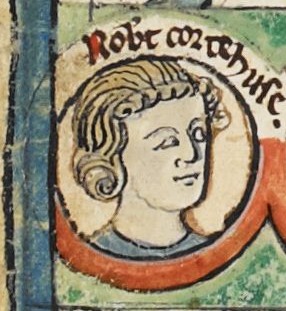
Robert Curthose, duke of Normandy
As a result, Edgar went to Scotland and encouraged Malcolm III to invade England. Peace was eventually restored and in 1093 Edgar was employed by William to escort King Malcolm to the English court. Both Malcolm and Margaret died within a few days of each other, in November 1093. In 1095 Edgar campaigned with William against the rebellious earl of Northumbria, Robert de Mowbray and by 1097 as guardian for his nephew, Edgar, in Scotland, he ‘went with an army, with the king’s support, into Scotland, and conquered the country in a severe battle’³ making his nephew and namesake king of Scotland.
According to Orderic Vitalis, in 1098 Edgar joined the First Crusade, arriving at Latakia in the Levant in June; having taken the area under his protection he then transferred it to Robert Curthose, also a Crusader. However, Orderic is the only source for Edgar’s participation and another possibility is that his journey to the Holy Land was later, in 1102 – or maybe he made 2 journeys?
Edgar returned to England in the early 1100s and fought his last action, for Robert Curthose, at the Battle of Tinchebrai in 1106. Robert was defeated by his younger brother, Henry I of England, and was imprisoned until his death in 1134. Edgar, however, was incarcerated for only a short while and was soon released;his Anglo-Saxon royal descent was no longer an issue of contention, since Henry had married Edgar’s niece, Matilda, soon after taking the crown in 1100.
Matilda, Edgar’s niece and queen of England
Edgar seems to have been only a minor player in the politics and upheaval following the Norman Conquest. His political isolation meant that few took his claim to the English crown seriously. While his participation in military actions, and in relations with Scotland are mentioned in various documents, his death passed without notice – or remark. William of Malmesbury wrote of him in 1125, that ‘he now grows old in the country in privacy and quiet’². Nothing is mentioned of him thereafter; neither is it ever remarked that he had a wife of children.
If he had only been a few years older in that crucial year of 1066, his story could have been very different. instead, he simply slips from the pages of history, remembered only as England’s lost king.
*
Footnotes: ¹Anglo-Saxon Chronicle, 1066, Text D; ² William of Malmesbury, De gestis regum; ³Anglo-Saxon Chronicle, 1097, Text E.
*
Sources: Anglo-Saxon Chronicle; William of Malmesbury, De gestis regum; Oxforddnb.com; The History Today Companion to British History, Edited by juliet Gardner and Neil Wenborn; The Battle of Hastings, 1066 by m.K. Lawson; The Oxford Companion to British History edited by John Cannon; Britain’s Royal Families, the Complete Genealogy by Alison Weir; Edward the Confessor, King of England by Peter Rex; The Mammoth Book of British Kings & Queens by Mike Ashley; Brewer’s British Royalty by David Williamson; The Norman Conquest by Teresa Cole
*
Pictures courtesy of Wikipedia
*
My Books:
Signed, dedicated copies of all my books are available through my online bookshop.
OUT NOW: Scotland’s Medieval Queens
Scotland’s history is dramatic, violent and bloody. Being England’s northern neighbour has never been easy. Scotland’s queens have had to deal with war, murder, imprisonment, political rivalries and open betrayal. They have loved and lost, raised kings and queens, ruled and died for Scotland. From St Margaret, who became one of the patron saints of Scotland, to Elizabeth de Burgh and the dramatic story of the Scottish Wars of Independence, to the love story and tragedy of Joan Beaufort, to Margaret of Denmark and the dawn of the Renaissance, Scotland’s Medieval Queens have seen it all. This is the story of Scotland through their eyes.
‘Scotland’s Medieval Queens gives a thorough grounding in the history of the women who ruled Scotland at the side of its kings, often in the shadows, but just as interesting in their lives beyond the spotlight. It’s not a subject that has been widely covered, and Sharon is a pioneer in bringing that information into accessible history.’ Elizabeth Chadwick (New York Times bestselling author)
Heroines of the Tudor World tells the stories of the most remarkable women from European history in the time of the Tudor dynasty, 1485-1603. These are the women who ruled, the women who founded dynasties, the women who fought for religious freedom, their families and love. Heroines of the Tudor World is now available for pre-order from Amberley Publishing and Amazon UK.Women of the Anarchy demonstrates how Empress Matilda and Matilda of Boulogne, unable to wield a sword themselves, were prime movers in this time of conflict and lawlessness. It shows how their strengths, weaknesses, and personal ambitions swung the fortunes of war one way – and then the other. Available from Bookshop.org, Amberley Publishing and Amazon UK. King John’s Right-Hand Lady: The Story of Nicholaa de la Haye is the story of a truly remarkable lady, the hereditary constable of Lincoln Castle and the first woman in England to be appointed sheriff in her own right. Available from all good bookshops Pen & Sword Books, bookshop.org and Amazon.
Alternate Endings: An anthology of historical fiction short stories including Long Live the King… which is my take what might have happened had King John not died in October 1216. Available in paperback and kindle from Amazon.
Podcast:
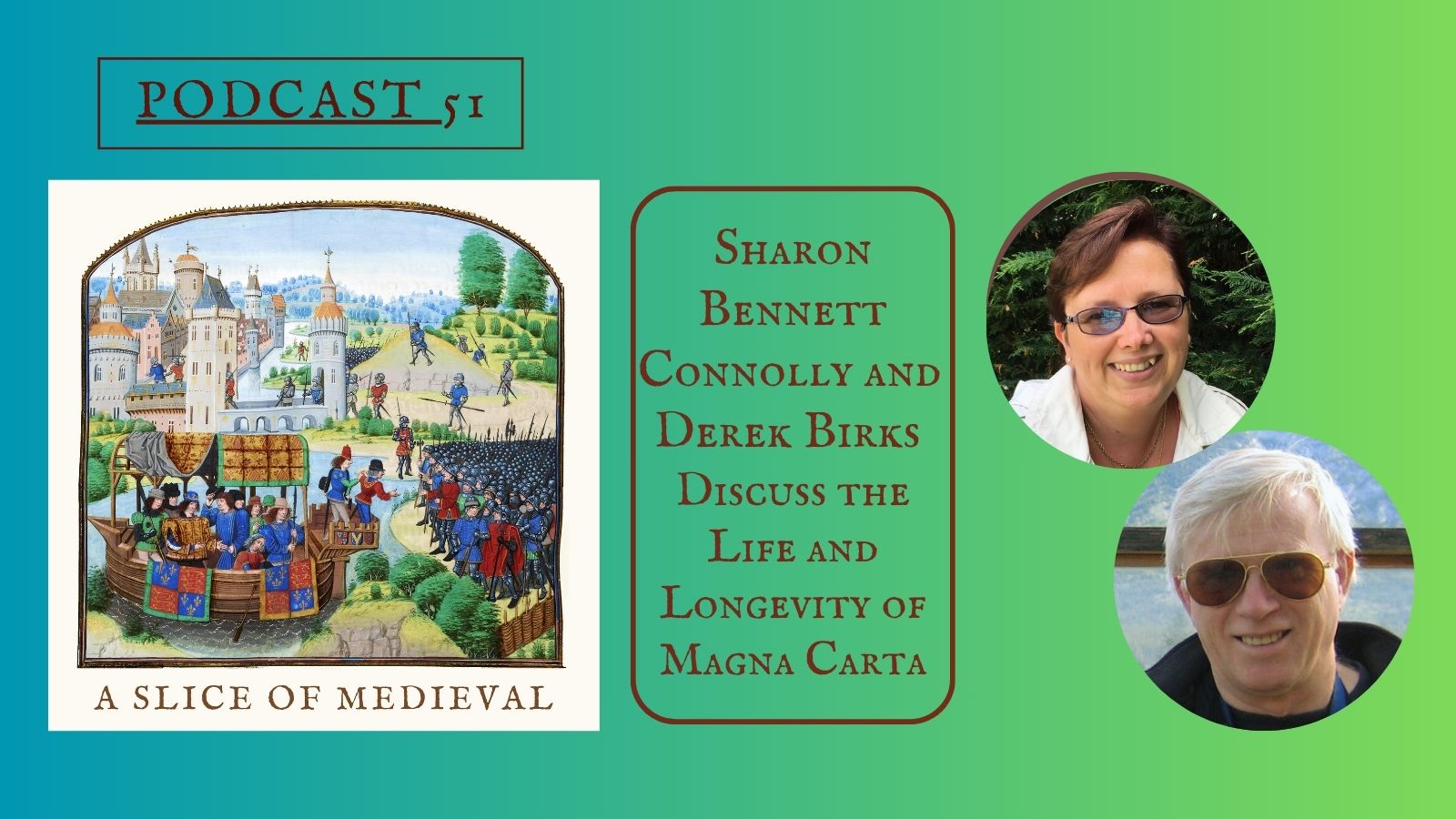
Have a listen to theA Slice of Medieval podcast, which I co-host with Historical fiction novelist Derek Birks. Derek and I welcome guests, such as Bernard Cornwell, and discuss a wide range of topics in medieval history, from significant events to the personalities involved. Definitely worth a listen!
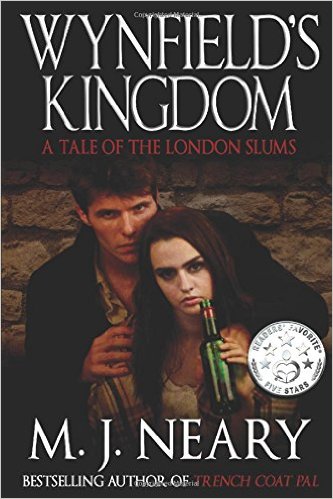
My latest book review, of MJ Neary’s latest novel,Wynfield’s Kingdom: A Tale of the London Slums, the first novel of his stunning new series, set in Victorian South London, has gone live over at The Review today!
Wynfield’s Kingdom: A Tale of the London Slums is one of those amazing books which makes you feel like you’ve discovered something really special. Set mainly in the slums of Bermondsey and Southwark in South London, it paints an image of Victorian London which will stay with you for days – and nights – afterwards. The novel is an amazing story of human existence and endurance, with so many twists and turns that it will not fail to surprise and mesmerise you. The fact you never quite know what the next chapter will bring keeps you hooked and curious to the very end.
Tom did not trust Diana. She might have been helpless but certainly not harmless. Feebleness and innocence are not synonyms. She was dangerous precisely because of her physical weakness. One could expect anything from her. Tom feared that she would torch the tavern out of sheer spite.
“She’s your burden now,” he told Wynfield. “I wash my hands. You brought her here, so you watch over her now. If she starts making trouble, I’ll kick both of you out on the streets. I won’t have any nonsense in my house. You both came here as patients. I allowed you to stay here and that alone was unwise on my part.”
To read the full review of this fantastic novel – and to enter the prize draw and be in with a chance of winning an e-book in the giveaway, simply visit The Review and leave a comment. Good luck!
*
My book, Heroines of the Medieval World, is now available in hardback in the UK from both Amberley Publishing and Amazon UK and worldwide from Book Depository. It is also available on Kindle in both the UK and USA and will be available in Hardback from Amazon US from 1 May 2018.
Be the first to read new articles by clicking the ‘Follow’ button, liking our Facebook page or joining me on Twitter.
My latest book review, of Derek Birks‘ latest novel, Scars From the Past, the first novel of his stunning new series, set 10 years after the conclusion of his fantasticRebels& Brothers series, has gone live over at The Review today!
Scars From the Past is the first novel from Derek Birks’ new series and, I have to say, it is the ultimate page-turner! It is a new direction for the author. While there is just as much action as in the first series, the story is less about national politics and more family orientated, as the Elders fight to survive, and to avoid the family imploding.Where the first series concentrated on duty and feudal loyalty, this new novel examines more personal relationships; love and friendship.
The original Rebels & Brothers series told the story of Ned Elder, a Sharpe-like hero who fought his way through the Wars of the Roses and Edward IV’s battle to win – and hold – the throne of England. The new series, set ten years after the end of the fourth book, The Last Shroud, follows the adventures of the next generation. Ned’s son, John, is a young man finding it difficult to live up to his father’s legend and the reader follows his journey as he realises his own identity and that duty and responsibility are not so easy to run from…..
To read the full review of this fantastic novel – and to enter the prize draw and be in with a chance of winning a hot-off-the-press signed paperback copy in the giveaway, simply visit The Review and leave a comment. Good luck!
*
My book, Heroines of the Medieval World, is now available in hardback in the UK from both Amberley Publishing and Amazon UK and worldwide from Book Depository. It is also available on Kindle in both the UK and USA and will be available in Hardback from Amazon US from 1 May 2018.
Be the first to read new articles by clicking the ‘Follow’ button, liking our Facebook page or joining me on Twitter.
After writing about Yolande de Dreux a few weeks back, I became intrigued with the story of her grandson, John de Montfort.
John was the only son of John, count of Montfort, and Joan of Flanders. He was probably born in November or December of 1339. His great-grandmother was Beatrice of England, a daughter of Henry III, who was the mother of his grandfather, Arthur, duke of Brittany. John is first mention in 1341 when his childless uncle, John III, duke of Brittany, provided him with 20,000 livres from his patrimony. However, when the duke died on 30 April 1341, the duchy was thrown into turmoil. Civil war erupted when John’s father and uncle-by-marriage, Charles de Blois, both laid claim to the duchy.
John de Montfort the elder was the son of Arthur, duke of Brittany, by his 2nd wife, Yolande. Charles de Blois was married to Jeanne de Penthièvre, daughter of Arthur’s second son by his first wife; Guy of Brittany. The bitter conflict was to be absorbed into the much greater struggle, between France and England, that became known as the Hundred Years’ War. Edward III of England supported young John’s father, while Philip VI of France backed Charles de Blois.
In November 1341 John’s father was captured and it was up to his mother to assume the de Montfort cause. Edward III sent troops to secure various strongholds, but by late 1342, after an unproductive campaign, he had minimised his military involvement, leaving a lieutenant in charge as he headed back to England, accompanied by John, who was about 3 years old at the time, his mother and his sister, Joan.
John’s mother was imprisoned in Tickhill Castle, Yorkshire, supposedly after succumbing to a mental illness, though more likely for political reasons. As a result, John was raised in the household of the queen, Philippa of Hainault. Their fortunes revived briefly when John’s father arrived in England 1345, paying homage to Edward III at Easter, having broken his parole and escaped the duchy. He led a small force back to Brittany, but died suddenly in September of the same year, leaving 6-year-old John in the guardianship of Edward III.
Mary of England, John’s first wife
Sir Thomas Dagworth captured Charles de Blois at Le Roche Derrien in June 1347, giving the English the opportunity to discuss the succession issue. It looked for a time, that Edward would sacrifice; in 1353 a treaty was actually drafted that was heavily in de Blois’ favour, depriving John of most of his rights. Luckily, for John, it was never implemented and de Blois was eventually released, in return for a huge ransom, in 1356.
Edward resolved now to back young John’s claims. Around 17-years-old, John experienced his first military campaign when he fought alongside Henry, duke of Lancaster, in the siege of Rennes, from October 1356 to July 1357, and later taking part in the Rheims campaign of 1359-60. In March, 1361, John married Edward III’s daughter, Mary, at Woodstock. The marriage would end in tragedy as Mary, still only 17, died of plague in September of the same year. Discussions throughout the early 1360s offered no lasting political solution and, now having attained his majority, John returned to Brittany in the summer of 1362.
Further discussions hosted by the Black Prince, including plans to partition the duchy, failed. However, when Charles de Blois was eventually defeated killed in battle at Auray on 29th September 1364 Jeanne de Penthièvre was forced to come to terms with John de Montfort and the Treaty of Guérande was signed on 12th April 1365. John was recognised as John IV duke of Brittany by Charles V of France, to whom he performed homage for his duchy in December 1366.
Initially, as duke of Brittany, John’s ties to England continued to be strong, his financial debts and other obligations ensuring this. In 1366 he married Joan Holland, step-daughter of Edward, the Black Prince. However, when a lull in the fighting ended in 1369 and France and England were at loggerheads once again, John was caught in a dilemma. As his overlord Charles V was expecting John to fight for France, while Edward III was his old ally and mentor and obviously felt deserving of his loyalty. His prevarications meant his Breton subjects grew restive and when John sided with Edward III, after receiving the earldom of Richmond in 1372 as a sweetener, they openly rebelled.
Joan of Navarre, John’s 3rd wife
By April 1373 John had lost everything; he fled to England as his duchy was overrun by French troops. And yet, worse was to follow. After participating in John of Gaunt’s chevauchée from Calais to Bordeaux, John was tried for treason in the Paris parlement in December 1378. In total, John spent 6 years in exile, living on his English estates and attending court and parliament; he was the 1st foreign prince to be made a Knight of the Garter, in 1374.
John was invited to Brittany in 1379 by his Breton subjects, who were beginning to become suspicious of Charles V’s intentions; realising that his attempts to bring Brittany into the French royal demesne would threaten her traditional privileges and independence. The Breton constable of France, Bertrand de Guesclin, deliberately failed to oppose the duke’s landing. After Charles V died in September 1380 a peace was negotiated with the aid of the count of Flanders and Louis, duke of Anjou, which was ratified in the 2nd Treaty of Guérande in April 1381.
A consequence of the treaty was that John de Montfort now opposed his former allies in England and Navarre. With Edward III dying in 1377, his young grandson was now King Richard II. The English still occupied Brest, and John was having difficulties in collecting revenues from his English estates. John’s wife, Duchess Joan, had been staying in England during the troubles but, after much wrangling, was finally returned to her husband in 1382, only to die in November 1384. Her death removed an important connection to the English court and Richard II, her half-brother.
The 1380s saw John consolidating his position in Brittany, making alliances with other French princes, such as the dukes of Berry and Burgundy and the king of Navarre. He developed the duchy’s institutions, encouraged trade, devised new taxes and exploited minting rights. On a cultural level, John expanded his court and encouraged the arts by extensive patronage. He also encouraged loyalty to his family and dynasty, which was helped greatly by his marriage to Joan of Navarre in 1386 and the birth of his long-awaited heir in 1389.
John V, duke of Brittany
As Anglo-French diplomatic relations thawed in the 1390s, John was able to make a marriage alliance with John of Gaunt, whereby one of his daughters would marry a son of Gaunt’s heir, the earl of Derby. John de Montfort attended the wedding of Richard II and Isabella of France in 1396 and Brest was returned to him in 1397.
Joan and John had an affectionate relationship, producing 8 children, 7 of whom survived to adulthood. John and a second son, Arthur, each became duke of Brittany; Arthur was also constable of France and succeeded his nephew, John’s son Peter, as duke. He died in 1458 and was succeeded by his nephew, Francis, son of his younger brother, Richard, count of Étampes, who had died in 1439. A fourth son, Gilles, died in 1412. Joan and John also had 3 daughters: Marie, countess of Alençon; Blanche, countess of Armagnac and Marguerite, vicomtess de Rohan.
John de Montfort paid one last visit to England in 1398, when he took formal possession of Richmond, attended a Garter ceremony at Windsor and spent some time on progress with Richard II before returning home. He died at Nantes on 1st November 1399, where he was buried. In 1402 his widow, now the wife of Henry IV of England, erected an English-made alabaster tomb over his grave; it was destroyed during the French Revolution. Joan acted as regent for her 10-year-old son, John, until her marriage to Henry; when she entrusted the regency and custody of her Breton children, to the Duke of Burgundy.
Brittany remained an independent duchy within France for another 100 years.
*
Pictures courtesy of Wikipedia.
*
Sources: Ian Mortimer The Perfect King; Marc Morris Edward I: A Great and Terrible King by Marc Morris; Brewer’s BritishRoyalty by David Williamson; The Mammoth Book of British kings & Queens by Mike Ashley; Britain’s Royal Families by Alison Weir; The Oxford Companion to British History edited by John Cannon; The History Today Companion to British History Edited by Juliet Gardiner and Neil Wenborn; The Story of Scotland by Nigel Tranter; Scotland, History of a Nation by David Ross; oxforddnb.com; britannica.com; W.M. Ormrod The Reign of Edward III.
*
My books
Signed, dedicated copies of all my books are available through my online bookshop.
Out now: Scotland’s Medieval Queens
Scotland’s history is dramatic, violent and bloody. Being England’s northern neighbour has never been easy. Scotland’s queens have had to deal with war, murder, imprisonment, political rivalries and open betrayal. They have loved and lost, raised kings and queens, ruled and died for Scotland. From St Margaret, who became one of the patron saints of Scotland, to Elizabeth de Burgh and the dramatic story of the Scottish Wars of Independence, to the love story and tragedy of Joan Beaufort, to Margaret of Denmark and the dawn of the Renaissance, Scotland’s Medieval Queens have seen it all. This is the story of Scotland through their eyes.
Heroines of the Tudor World tells the stories of the most remarkable women from European history in the time of the Tudor dynasty, 1485-1603. These are the women who ruled, the women who founded dynasties, the women who fought for religious freedom, their families and love. Heroines of the Tudor World is now available for pre-order from Amberley Publishing and Amazon UK.Women of the Anarchy demonstrates how Empress Matilda and Matilda of Boulogne, unable to wield a sword themselves, were prime movers in this time of conflict and lawlessness. It shows how their strengths, weaknesses, and personal ambitions swung the fortunes of war one way – and then the other. Available from Bookshop.org, Amberley Publishing and Amazon UK. King John’s Right-Hand Lady: The Story of Nicholaa de la Haye is the story of a truly remarkable lady, the hereditary constable of Lincoln Castle and the first woman in England to be appointed sheriff in her own right. Available from all good bookshops Pen & Sword Books, bookshop.org and Amazon.
Alternate Endings: An anthology of historical fiction short stories including Long Live the King… which is my take what might have happened had King John not died in October 1216. Available in paperback and kindle from Amazon.
Podcast:
Have a listen to theA Slice of Medieval podcast, which I co-host with Historical fiction novelist Derek Birks. Derek and I welcome guests, such as Bernard Cornwell and Michael Jecks, and discuss a wide range of topics in medieval history, from significant events to the personalities involved. Every episode is also now available on YouTube.
*
Don’t forget!Signed and dedicated copies of all my books are available through my online bookshop.
For forthcoming online and in-person talks, please check out my Events Page.
The fact that Cleopatra is better known for her seductions than her statecraft, and that Jezebel is remembered as a painted trollop rather than a faithful wife and religiously devout queen, isn’t a way for historians to keep these interesting women in the public eye, rather it’s a subversion of their power, a re-writing of history to belittle and shame these powerful figures, preventing them from becoming icons of feminine strength and capability. Slut shaming has its roots in our earliest history, but it continues to flourish in our supposedly post-feminist, equal-rights world. It is used to punish women for transgressions against gender norms, threatening the security of their place in society and warning that they’d better be “good girls” and not rock the patriarchal boat, or they, too could end up with people believing they’ve slept with everything from farm animals to relatives. This is The Jezebel Effect
The Jezebel Effect: Why the Slut Shaming of Famous Queens Still Matters by Kyra Cornelius Kramer is a remarkable, thought-provoking analysis of the way queens have been treated and judged, based on their sexuality. The author is passionate about her subject and pulls no punches. Her arguments are well thought out and presented in such an honest, forthright manner that it is as if she is talking to you personally. It is a surprisingly enjoyable book; and I guarantee you will learn something new and find yourself re-appraising your own thoughts and approaches to women in history.
Anne Boleyn
Starting with the biblical queen, Jezebel, and including Cleopatra, Anne Boleyn, Katherine Howard and Catherine the Great, Kyra Kramer uses these queens as case studies demonstrating the way a woman’s reputation can be won, lost or destroyed through her sexual activities. Taking each queen in turn, their lives are analysed in great detail, demonstrating how political and personal slander were used by their enemies to create their bad-girl images.
For the last 500 or so years, the most popular version of Anne’s life has her playing the role of sultry harlot, a woman willing to use her sexuality as the bait to trap a king. At the very least it has been taken for granted that she wanted to be queen and manipulated Henry in order to achieve her goal. She looms in the public mind as “the most popular femme fatale, far outranking Cleopatra or Catherine the Great of Russia”. Inasmuch as Anne has been cast as a sly temptress making a gambit for the throne, here execution seldom engenders pity…
Kyra Kramer uses the queens as examples of how the stories of their lives have been manipulated as a political weapon to discredit and to apportion blame. The author goes on to present modern-day situations and makes an amazing case of showing how the way women were treated and vilified in the past is informing our thoughts and opinions of today, and how the shaming of women due to their sexual practices is continuing, and expanding, especially in the internet age.
This book will make you think again about how you present and represent women in your own life – it made me rethink a portion of my book as I realised I had conceptualised one of my ‘Heroines’ based on the deeply entrenched way women have been viewed for centuries. We see it in everyday life: a woman has an affair with a married man and it is she who is blamed, not the man; a female politician gets threatened with rape because she acts against the norm, Kyra Kramer demonstrates how such concepts have been used and developed throughout the centuries.
The Jezebel Effect: Why the Slut Shaming of Famous Queens Still Matters is a fabulous, fascinating read that will make you think again of how women have been viewed in the past, and are still being viewed today. It’s an enjoyable read that combines the history with the philosophy and politics of the sexual activities of some of the most famous – and infamous – of queens. It is a forthright analysis of women’s history that will leave you not only thinking about its contents for days afterwards, but about your own approach – whether you’re a man or a woman – to how women are seen and appraised every day.
*
My book, Heroines of the Medieval World, is now available in hardback in the UK from both Amberley Publishing and Amazon UK and worldwide from Book Depository. It is also available on Kindle in both the UK and USA and will be available in Hardback from Amazon US from 1 May 2018.
Be the first to read new articles by clicking the ‘Follow’ button, liking our Facebook page or joining me on Twitter.
My latest book review, of Steven A. McKay’s latest novel, Blood of the Wolf, the final novel of his stunning Forest Lord series, a wonderful new reworking the legend of Robin Hood has gone live over at The Review today!
With Blood of the Wolf, Steven A McKay has definitely saved the best to last! The fourth and concluding part of his fabulous Forest Lord series sees Robin and his band of Merry Men reunited and embarking on one final adventure together, facing a most formidable foe; a new and particularly vicious band of outlaws. This book has everything: suspense, action and enduring friendships that are tested to their limits. Old and new enemies make the reader eager to see Robin win through, and a few surprises along the way make this a thoroughly entertaining and gripping novel.
It leads you on a desperate chase through the forests, in the halls of the Sheriff’s castles and into the villages of England …
To read the full review of this fantastic novel – and to enter the prize draw and be in with a chance of winning a paperback copy in the giveaway, simply visit The Review and leave a comment. Good luck!
*
My book, Heroines of the Medieval World, is now available in hardback in the UK from both Amberley Publishing and Amazon UK and worldwide from Book Depository. It is also available on Kindle in both the UK and USA and will be available in Hardback from Amazon US from 1 May 2018.
Be the first to read new articles by clicking the ‘Follow’ button, liking our Facebook page or joining me on Twitter.
Yolande de Dreux was Scotland’s Queen Consort for only 4 months and 14 days. In that short time, she carried the hope of a nation – and its king – to secure the Scottish succession.
Yolande was born into a cadet branch of the French royal family, probably sometime in the mid-1260s. Her father was Robert IV, Count of Dreux, who died in 1282 and her mother was Beatrice de Montfort, who died in 1311. Beatrice was the daughter of Count Jean I de Montfort l’Amoury and his wife Jeanne de Chateaudun, Beatrice was therefore a great-granddaughter of Simon de Montfort, earl of Leicester, and heiress to the impressive de Montfort estates. One of 6 children, Yolande had 2 brothers and 3 sisters. Little is known of Yolande’s childhood but we can imagine that as a junior member of the Capetian dynasty, she grew up amidst some privilege and splendour.
Whilst Yolande was growing into adulthood Scotland was experiencing a “golden age”, a period of relative peace and prosperity. Her king, Alexander III was married to Margaret, daughter of Henry III of England and the couple had 3 children survive childhood. Their daughter, Margaret, born at Windsor on 28th February, 1261, was married to Erik II, king of Norway, in August 1281. Their eldest son, Alexander, was born on 21st January 1264, at Jedburgh. On 15th November 1282 Alexander married Margaret, the daughter of Guy de Dampierre, Count of Flanders. A younger son, David was born on 20th March 1273.
Queen Margaret died in 1275 and within 8 years all 3 of her children were dead; 8-year-old David died at Stirling Castle at the end of June 1281, Margaret died in childbirth on 9th April 1283 and Alexander died at Lindores Abbey in January 1284, sometime around his 20th birthday. Alexander’s heir was now his infant granddaughter by Margaret and Erik, little Margaret, the Maid of Norway, born shortly before her mother’s death.
Jedburgh Abbey
With his entire dynasty resting on the life of his toddler granddaughter, Alexander started the search for a new wife. In February 1285 he sent a Scottish embassy to France for this sole purpose. Their successful search saw Yolande arrive in Scotland that same summer, accompanied by her brother John. Alexander and Yolande were married at Jedburgh Abbey, Roxburghshire, on 14th October 1285, the feast of St Calixtus, in front of a large congregation made up of Scottish and French nobles. Yolande was probably no more than 22 years of age, while Alexander was in his 44th year.
The marriage was one of the shortest in British royal history – and the shortest of any English or Scottish king, lasting less than 5 months. Tragedy struck on 19 March 1286.
Alexander had spent the day attending a council meeting in Edinburgh. When the meeting broke up he set off on horseback to join his wife at Kinghorn Castle in Fife. It was said he wanted to be there to celebrate her birthday and he may also have recently discovered that she was pregnant with the much-desired heir. For whatever the reason, he was eager to get to her and took only a small escort of 3 men and 2 local guides. It seems that, with bad weather closing in and daylight fading, several people counselled against continuing the journey, including the ferryman at the River Forth and the bailie at Inverkeithing, who argued that Alexander should stay the night and continue his journey in the morning as a heavy storm was brewing.
Alexander III
Only 8 miles from his destination, Alexander would hear none of it and insisted on continuing his journey. He somehow lost his escort in the dark and worsening weather, but continued alone. It was the next morning when his body was found on the foreshore of Pettycur, just a mile from his destination. The most likely explanation was that his horse had stumbled, throwing the king whose neck was broken in the fall, although at least one historical fiction writer has suggested foul play while others have suggested the king was drunk.
There followed months of uncertainty in Scotland. She had lost one of her most successful kings and the succession was in turmoil. Little Margaret, the Maid of Norway, had been recognised by the council as Alexander’s heir, but his queen was pregnant; and if she gave birth to a boy he would be king from his first breath. A regency council was established to rule until the queen gave birth.
In the event, Yolande either suffered a miscarriage, or the child was stillborn. Some sources, the Lanercost Chronicle in particular, have questioned whether Yolande was pregnant at all, suggesting that she was intending to pass off another woman’s baby as her own. The plan thwarted, the chronicle recorded that ‘women’s cunning always turns toward a wretched outcome‘.¹ However, there are major discrepancies in the chronicle’s apparently malicious account and tradition has the baby buried at Cambuskenneth.
Arthur of Brittany
The throne passed to little Margaret and arrangements began to have her brought to England, with marriage negotiations being opened with Edward I for the little queen to marry his son and heir; the future Edward II. Yolande continued to reside in Scotland for some time, possibly at Stirling Castle, and was confirmed in her dower properties, which included an annual income of £200 from Berwick; she also had estates in the sheriffdom of Stirling and a horse stud at Jedworth.
Margaret’s death at sea in 1290, while on her journey to her new kingdom, threw Scotland into years of turmoil, with 13 nobles advancing their competing claims to the crown and Edward I of England claiming the right to choose Alexander III’s successor, and recognition as Scotland’s overlord. The English king’s imperialist ambitions had thrown Scotland into crisis by 1296.
Luckily for Yolande, she was already far away from Scotland and the brewing wars. In May 1294 Yolande had married for a second time; Arthur of Brittany was a similar age to Yolande and was the son and heir of Jean II, duke of Brittany and earl of Richmond. Yolande was the second wife of Arthur, who already had 3 sons, Jean, Guy and Peter, by his first wife, Marie, Vicomtesse de Limoges.
It is possible that Arthur chose Yolande as a bride due to the impressive de Montfort territories that she stood to inherit from her mother, although there were legal wranglings between Yolande and her younger sister, Jeanne, who also claimed the lands.
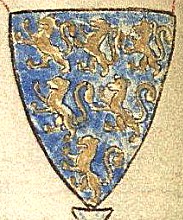
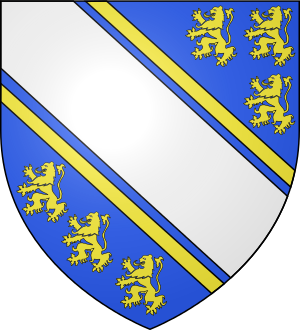
Arms of the counts of Dreux
Yolande and Arthur had 6 children together. Their eldest daughter, Joan was born a year after their marriage and married Robert, Lord of Cassel; she died in 1363. Beatrice was born c.1295 and married Guy, Lord of Laval; she lived until 1384. Their only son, John, was probably born 1295/6 and married Joan of Flanders. Of the 3 youngest daughters: Alice was born in the late 1290s married Bouchard VI, Count of Vendôme and died in 1377; Blanche was born in 1300 and died young; Mary was born in 1302 and became a nun, she died in 1377.
Arthur succeeded his father as Duke of Brittany in 1305 and ruled until his death in 1312. He was succeeded by John III, his eldest son by his first marriage. However, John’s death in 1341 sparked the War of the Breton Succession when Yolande’s son, John de Montfort, claimed the duchy in place of Joan of Penthièvre, daughter of Guy (Arthur’s 2nd son by his 1st wife), who was married to Charles of Blois, nephew of King Philip VI of France. Joan and Charles were therefore backed by the French crown, and Edward III of England supported the claims of John de Montfort; the war eventually became part of the greater conflict, the Hundred Years War. When John fell ill and died in 1345, the war continued in the name of his 6-year-old son and Yolande’s grandson, another John (John IV, duke of Brittany) and finally ended in John’s favour with the treaty of Guérande in April 1365.
John IV Duke of Brittany
After being widowed for a second time Yolande did not remarry.
During her time in Brittany Yolande continued to administer to her Scottish estates; in October 1323 safe-conduct to Scotland was granted to a French knight ‘for the dower of the Duchess of Brittany while she was Queen of Scotland‘.² It seems uncertain when Yolande died. Sources vary between 1324 and 1330, although she was still alive on 1st February 1324 when she made provision for the support of her daughter, Marie, who had become a nun.
These arrangements for her daughter are the last mention of Yolande in the historical record, the date of her death as uncertain as that of her birth.
*
Footnotes: ¹ Chronique de Lanercost, 118, quoted by Jessica Nelson in Oxforddnb.com. ²CSP Scot.. 3. no. 829 quoted by Jessica Nelson in Oxforddnb.com.
Sources: Marc Morris Edward I: A Great and Terrible King by Marc Morris; Brewer’s BritishRoyalty by David Williamson; The Mammoth Book of British kings & Queens by Mike Ashley; Britain’s Royal Families by Alison Weir; The Oxford Companion to British History edited by John Cannon; The History Today Companion to British History Edited by Juliet Gardiner and Neil Wenborn; The Story of Scotland by Nigel Tranter; Scotland, History of a Nation by David Ross; oxforddnb.com; undiscoveredscotland.co.uk; freelancehistorywriter.com.
*
My books
Signed, dedicated copies of all my books are available through my online store.
Out now: Scotland’s Medieval Queens
Scotland’s history is dramatic, violent and bloody. Being England’s northern neighbour has never been easy. Scotland’s queens have had to deal with war, murder, imprisonment, political rivalries and open betrayal. They have loved and lost, raised kings and queens, ruled and died for Scotland. From St Margaret, who became one of the patron saints of Scotland, to Elizabeth de Burgh and the dramatic story of the Scottish Wars of Independence, to the love story and tragedy of Joan Beaufort, to Margaret of Denmark and the dawn of the Renaissance, Scotland’s Medieval Queens have seen it all. This is the story of Scotland through their eyes.
Heroines of the Tudor World tells the stories of the most remarkable women from European history in the time of the Tudor dynasty, 1485-1603. These are the women who ruled, the women who founded dynasties, the women who fought for religious freedom, their families and love. Heroines of the Tudor World is now available for pre-order from Amberley Publishing and Amazon UK.Women of the Anarchy demonstrates how Empress Matilda and Matilda of Boulogne, unable to wield a sword themselves, were prime movers in this time of conflict and lawlessness. It shows how their strengths, weaknesses, and personal ambitions swung the fortunes of war one way – and then the other. Available from Bookshop.org, Amberley Publishing and Amazon UK. King John’s Right-Hand Lady: The Story of Nicholaa de la Haye is the story of a truly remarkable lady, the hereditary constable of Lincoln Castle and the first woman in England to be appointed sheriff in her own right. Available from all good bookshops Pen & Sword Books, bookshop.org and Amazon.
Alternate Endings: An anthology of historical fiction short stories including Long Live the King… which is my take what might have happened had King John not died in October 1216. Available in paperback and kindle from Amazon.
Podcast:
Have a listen to theA Slice of Medieval podcast, which I co-host with Historical fiction novelist Derek Birks. Derek and I welcome guests, such as Bernard Cornwell and Michael Jecks, and discuss a wide range of topics in medieval history, from significant events to the personalities involved. Every episode is also now available on YouTube.
*
Don’t forget!Signed and dedicated copies of all my books are available through my online store.
For forthcoming online and in-person talks, please check out my Events Page.
Catherine of Aragon continues to fascinate readers 500 years after she became Henry VIII’s first queen. Her life was one of passion and determination, of suffering and hope, but ultimately it is a tragic love story, as circumstances conspired against her. Having lost her first husband, Henry’s elder brother Prince Arthur, she endured years of ill health and penury, to make a dazzling second match in Henry VIII. There is no doubt that she was Henry’s true love, compatible with him in every respect and, for years, she presided over a majestic court as the personification of his ideal woman.
However, Catherine’s body failed her in an age when fertility was a prerequisite of political stability. When it became clear that she could no longer bear children, the king’s attention turned elsewhere, and his once chivalric devotion became resentment. Catherine’s final years were spent in lonely isolation but she never gave up her vision: she was devoted to her faith, her husband and to England, to the extent that she was prepared to be martyred for them. Banished and close to death, she wrote a final letter to her ‘most dear lord and husband’. ‘I pardon you everything… mine eyes desire you above all things.’ The fidelity of this remarkable woman never wavered.
Catherine of Aragon, an Intimate Life of Henry VIII’s True Wife by Amy Licence is one of those incredible books that you can’t get away from. Days after you’ve finished it, your mind is still pondering the twists and turns in the incredible story that has unfolded before you. And yet, this is not a gripping novel, it’s a biography … a real-life story of one of England’s most famous queens, told in an expert, accessible fashion by one of today’s most prominent historians of women’s history.
The level of detail in this book is incredible, Amy Licence has looked into every corner of Catherine’s life-story. It paints a wonderful, vivid picture of the life of a Renaissance princess. From even before her earliest years, the author charts Catherine’s life in its entirety, giving us a complete picture of the world that surrounded the young princess from the moment she was born to the moment of her death.
Plans for Catherine’s marriage started early. As far back as the spring of 1489, Ferdinand and Isabella had received a delegation sent by Henry VII of England, seeking her as a bride for his son. That March the royal family were at the castle of Medina del Campo, a blockish red medieval fortress situated on a mound dominating the town, to hear the culmination of a year’s worth of offers and promises, conditions and stipulations, about the futures of two small children. Catherine was then three years old, a small sturdy princess with auburn hair … Her prospective husband was barely out of the cradle. Henry VII’s eldest son Arthur, was the first-born child of a new dynasty, and nine months Catherine’s junior …
Not only does the author retell the events of the life of Catherine of Aragon, chronologically, but she also highlights the influences that affected her decisions and actions throughout that life. From her parents and the reconquest of Spain, through her marriage to Arthur and the lonely years following Arthur’s death, we see the events that influenced and shaped Catherine’s life as Queen of England and wife of Henry VIII.
Catherine of Aragon, an Intimate Life of Henry VIII’s True Wife discusses the personalities and character of those who had a major effect on Catherine’s life, giving us an unprecedented, detailed view of those who surrounded her at various stages in her career as princess and queen. Catherine’s marriage to Prince Arthur is thoroughly examined, giving an insight into the relationship of this young couple, a relationship that would eventually change the course of English history. We see the good and bad of the men who were to decide Catherine’s fate, in her father, Ferdinand, and father-in-law, Henry VII, and learn of Catherine’s struggles to stay positive in the face of the two kings trying to get the best deal for themselves in Catherine’s marriage. And we see an intriguing biography of Henry VIII as he grows from being Catherine’s saviour and a magnificent Renaissance prince, to being her jailer and tormentor.
Amy Licence places Catherine’s life firmly within the Europe of the time, displaying a brilliant understanding of the Reformation, and its progress from central Europe to Henry’s court. Moreover, despite the eventual failure of the marriage, Amy Licence paints a glittering picture of the court of Henry and Catherine at its height, when this young, formidable couple were the superstars of Europe.
The most revealing part of the book is in the character of Catherine herself. The author has researched every aspect of Catherine’s life and personality, providing a portrait of a formidable woman navigating her way through a male-dominated world while trying to hold true to her deeply ingrained Catholic principles. And with this comes the realisation that it must have taken an inordinate amount of personal courage to face down Henry and his demands, and the overriding fear for her own personal safety.
Of course, the latter part of the book focuses on the divorce. I am no great fan of Catherine of Aragon and have often wondered at her stubbornness and why she was so unmovable in the face of Henry’s desperate need for an heir. Amy Licence explains Catherine’s viewpoint with absolute clarity; the reasons she stuck to her guns at the risk of her own safety and that of her daughter. The author’s theories and arguments are well though-out and incisive, giving an unprecedented insight into the mind of this amazing queen and evoking empathy in the least sympathetic of readers, I’m sure.
I have no doubt that Catherine of Aragon, an Intimate Life of Henry VIII’s True Wife will be seen as the definitive biography of Catherine of Aragon. It is an impressive, essential complement to any Tudor library.
*
Amy Licence has been a teacher for over a decade. She has an MA in Medieval and Tudor Studies and has published several scholarly articles on the Tudors. She is an author and historian of women’s lives in the medieval and Tudor period.
Catherine of Aragon, an Intimate Life of Henry VIII’s True Wife is available on Amazon in the UK from 15th October and in the US from 14th March 2017.
My book, Heroines of the Medieval World, is now available in hardback in the UK from both Amberley Publishing and Amazon UK and worldwide from Book Depository. It is also available on Kindle in both the UK and USA and will be available in Hardback from Amazon US from 1 May 2018.
Be the first to read new articles by clicking the ‘Follow’ button, liking our Facebook page or joining me on Twitter.
William de Warenne, first earl of Surrey, was a younger son of Rodulf de Warenne and his wife Beatrix. It is possible that Beatrix was a niece of Duchess Gunnor of Normandy, making young William a cousin of William the Bastard, duke of Normandy. The family name is probably derived from the hamlet of Varenne, part of the Warenne lands in the department of Seine-Inférieure, Normandy. William’s older brother, Rodulf or Ralph, would inherit the greater part of the Warenne family estates in Normandy.
His birth, as you might expect, is shrouded in the fog of time; a younger son of the minor nobility does not tend to get a mention until he does something remarkable or becomes someone notable. Although still young William was considered a capable and experienced enough soldier to be given joint command of a Norman army, by the mid-1050s. His first recorded military action is in the campaign against his own kinsman, Roger (I) de Mortemer of 1054, as one of the commanders of an army which defeated the French.
De Warenne was rewarded with some of the Mortemer lands; some of which he managed to retain even after Mortemer’s restoration to favour, including the castles of Mortemer and Bellencombre. Bellencrombe would become the capital of the de Warenne estates in Normandy. De Warenne received more rewards from the confiscated lands of William, count of Arques in 1053. Duke William’s confidence in de Warenne is demonstrated in the fact he was one of the barons consulted during the planning of the invasion of England in 1066.
In fact, William de Warenne is one of only a handful of Norman barons known to have fought at the Battle of Hastings on 14th October, 1066 as King William recalled his presence at the battle on his deathbed. De Warenne was rewarded with vast swathes of land throughout the country. According to the Domesday survey his lands extended over 13 counties; stretching from Conisbrough in Yorkshire to Lewes in Sussex. His territories were acquired over the course of the reign of William I and elevated him the highest rank of magnates. By 1086 his riches were only surpassed by the king’s half-brothers and his own kinsman, Roger de Montgomery. He is still in the Top 20 list of the richest people in History.
Battle of Hastings, 1066
Throughout his career, William de Warenne acquired lands in numerous counties, sometimes by nefarious means. Much of the property, such as Conisbrough, had formerly belonged to the late king, Harold. In Norfolk he is said to have asserted lordship over freemen not necessarily assigned to him. He had disputes with neighbouring landowners in Conisbrough, over which properties were sokelands and he is said to have stolen lands from the bishop of Durham and the abbot of Ely. Some acquisitions were obtained peacefully, such as the manor of Whitchurch in Shropshire, which was left to him by his kinsman Roger de Montgomery. William was an energetic and attentive landowner, and improved the economy of most of his estates; more than tripling his sheep flock at Castle Acre and doubling the value of his Yorkshire estates in just 20 years (at a time when the county was devastated by the Harrying of the North.
In 1067 William de Warenne was one of 4 prominent Normans appointed to govern England during William the Conqueror’s absence in Normandy. Following the Conquest, he continued to support the king and – subsequently – his son, William II Rufus – as a military commander for over 20 years. In 1074 he was with is father at the abbey of Holy Trinity in Rouen and in 1083-85 he fought with the king on campaign in Maine, being wounded at the siege of the castle of Sainte-Suzanne.
In 1075, along with Richard de Clare, his fellow justiciar, he was sent to deal with the rebellion of Earl Ralph de Gael of East Anglia. De Gael had failed to respond to their summons to answer for an act of defiance and so the 2 lords faced and defeated the rebels at Fawdon in Cambridgeshire, mutilating their prisoners afterwards. Ralph withdrew to Norwich Castle; besieged for 3 months he managed to escape his attackers by boat, while the castle surrendered and was occupied by de Warenne.
Gundrada de Warenne
William de Warenne was married to a Flemish noblewoman, Gundrada; her brother Gerbod was sometime earl of Chester and another brother, Frederic, held lands in Norfolk which eventually passed to Gundrada. He was murdered by Enlgish freedom fighter, Hereward the Wake; his murder giving rise to a personal feud between Hereward and William de Warenne:
Among his other crimes, by trickery [Hereward] killed Frederick, brother of Earl William of Warenne, a man distinguished by lineage and possessions, who one night was surrounded in his own house. On account of his murder, such discord arose between Hereward and the aforesaid William that it could not be settled by any reparation nor in any court.1
There has been considerable debate among historians over the theory that Gundrada may have been the daughter of William the Conqueror, but the confusion appears to have come from an unreliable charter belonging to Lewes Priory and Gundrada being part of the household of King William’s wife, Matilda; though it does seem likely that Matilda and Gundrada were related in some way, perhaps distant cousins. Gundrada and William were married sometime around the time of the Conquest, either before or after the expedition to conquer England.
They had 3 children together. Their eldest son, William, would succeed his father as Earl of Surrey and de Warenne. He married Isabel de Vermandois, widow of Robert de Beaumont, earl of Leicester; with whom he had, apparently, been having an affair even before the earl’s death. Young William had a chequered career, he supported the claims of Robert Curthose, duke of Normandy, to the English throne against the duke’s younger brother, Henry I. However, duke Robert lost and was captured and imprisoned by Henry. Henry eventually forgave William, who fought for the king at the Battle of Bremule and was with Henry he died in 1135.
A second son, Rainald de Warenne, led the assault on Rouen in 1090, for William II Rufus, in the conflict between the English king and his older brother, Duke Robert. However, by 1105 Rainald was now fighting for the duke against the youngest of the Conqueror’s sons, Henry I, defending the castle of Saint-Pierre-sur-Dives for the duke. He was captured by Henry the following year, but had been freed by September 1106. It is possible he died shortly after, but was certainly dead by 1118 when his brother issued a charter, in which he gave 6 churches to Lewes Priory, for the soul of deceased family members, including Rainald.
Gundrada and William also had a daughter, Edith, who married Gerard de Gournay, son of the lord of Gournay-en-Bray. Gerard also supported William II Rufus against Duke Robert and took part in the Crusade of 1096. Edith later accompanied him on pilgrimage back to Jerusalem, sometime after 1104, where he died. Gerard was succeeded by their son, Hugh de Gournay, whose daughter Gundreda would be the mother of Roger de Mowbray. Edith then married Drew de Monchy, with whom she had a son, Drew the Younger.
Castle Acre Castle, Norfolk
Gundrada died in childbirth at Castle Acre in Norfolk on 27th May 1085. She was buried in the chapter-house of the couple’s own of foundation Lewes Priory.
William’s second wife was a sister of Richard Guet, who was described as ‘frater comitissae Warennae’ when he gave the manor of Cowyck to Bermondsey Abbey in 1098.2 Guet was a landowner in Perche, Normandy, but his sister’s name has not survived the passage of time. All we know of her is that, a few days after her husband’s death, she attempted to gift 100 shillings to Ely Abbey in restitution for damage caused by William de Warenne. The monks refused the donation, hoping that Warenne’s departing soul had been claimed by demons.3
Despite this reputation at Ely, William de Warenne and his wife, Gundrada, had a reputation for piety. At some point in their marriage, either in 1077 or between 1081 and 1083, they went on pilgrimage to Rome. Due of war in Italy they only got as far as the great abbey of Cluny in Burgundy, where they were received into the fellowship of monks. On their return to England they founded a priory at Lewes, following the Cluniac rule and a prior and 3 monks were sent from Cluny to establish the foundation. It was the first Cluniac foundation in England.
Pevensey Castle
Following the Conqueror’s death, William fought in support of the late king’s second son, William II Rufus against his older brother, Robert Curthose, who had inherited the dukedom of Normandy. He was rewarded in early 1088 with the earldom of Surrey. The new earl fought for William II Rufus during an invasion by Robert’s supporters and was badly wounded in the leg at the siege of Pevensey Castle, East Sussex, in the spring of 1088. He was taken to Lewes, where he died of his wounds on 24th June of the same year. Earl Warenne was buried beside his first wife, Gundrada, in the chapter-house of Lewes Priory.
Following the dissolution of Lewes Priory in the 16th century, Gundrada’s tombstone was 1st moved to Isfield Church; it was moved again in 1775 to the parish church of St John the Baptist at Southover in Lewes. The remains of Gundrada and William, themselves, were discovered in 2 leaden chests in 1845, when the railway line was excavated through the priory grounds. They were laid to rest, for a final time, at the Southover church, in 1847.
Footnotes: ¹The Warenne (Hyde) Chronicle edited and translated by Elisabeth M.C. van Houts and Rosalind C. Love; 2Early Yorkshire Charters Volume 8: The Honour of Warenne, Edited by William Farrer and Charles Travis Clay; 3ibid
Sources: Early Yorkshire Charters Volume 8: The Honour of Warenne, Edited by William Farrer and Charles Travis Clay; England Under the Norman and Angevin Kings by Robert Batlett; Brewer’s British Royalty by David Williamson; Britain’s Royal Families, the Complete Genealogy by Alison Weir; british-history.ac.uk; kristiedean.com; English Heritage Guidebook for Conisbrough Castle by Steven Brindle and Agnieszka Sadrei; The Warenne (Hyde) Chronicle edited and translated by Elisabeth M.C. van Houts and Rosalind C. Love; oxforddnb.com.
*
My Books
Signed, dedicated copies of all my books are available through my online bookshop.
OUT NOW!Scotland’s Medieval Queens
Scotland’s history is dramatic, violent and bloody. Being England’s northern neighbour has never been easy. Scotland’s queens have had to deal with war, murder, imprisonment, political rivalries and open betrayal. They have loved and lost, raised kings and queens, ruled and died for Scotland. From St Margaret, who became one of the patron saints of Scotland, to Elizabeth de Burgh and the dramatic story of the Scottish Wars of Independence, to the love story and tragedy of Joan Beaufort, to Margaret of Denmark and the dawn of the Renaissance, Scotland’s Medieval Queens have seen it all. This is the story of Scotland through their eyes.
‘Scotland’s Medieval Queens gives a thorough grounding in the history of the women who ruled Scotland at the side of its kings, often in the shadows, but just as interesting in their lives beyond the spotlight. It’s not a subject that has been widely covered, and Sharon is a pioneer in bringing that information into accessible history.’ Elizabeth Chadwick (New York Times bestselling author)
Heroines of the Tudor World tells the stories of the most remarkable women from European history in the time of the Tudor dynasty, 1485-1603. These are the women who ruled, the women who founded dynasties, the women who fought for religious freedom, their families and love. Heroines of the Tudor World is now available for pre-order from Amberley Publishing and Amazon UK.Women of the Anarchy demonstrates how Empress Matilda and Matilda of Boulogne, unable to wield a sword themselves, were prime movers in this time of conflict and lawlessness. It shows how their strengths, weaknesses, and personal ambitions swung the fortunes of war one way – and then the other. Available from Bookshop.org, Amberley Publishing and Amazon UK. King John’s Right-Hand Lady: The Story of Nicholaa de la Haye is the story of a truly remarkable lady, the hereditary constable of Lincoln Castle and the first woman in England to be appointed sheriff in her own right. Available from all good bookshops Pen & Sword Books, bookshop.org and Amazon.
Alternate Endings: An anthology of historical fiction short stories including Long Live the King… which is my take what might have happened had King John not died in October 1216. Available in paperback and kindle from Amazon.
Podcast:
Have a listen to theA Slice of Medieval podcast, which I co-host with Historical fiction novelist Derek Birks. Derek and I welcome guests, such as Bernard Cornwell and Elizabeth Chadwick, and discuss a wide range of topics in medieval history, from significant events to the personalities involved.