Wordly Women: Cathie Dunn

History...the Interesting Bits

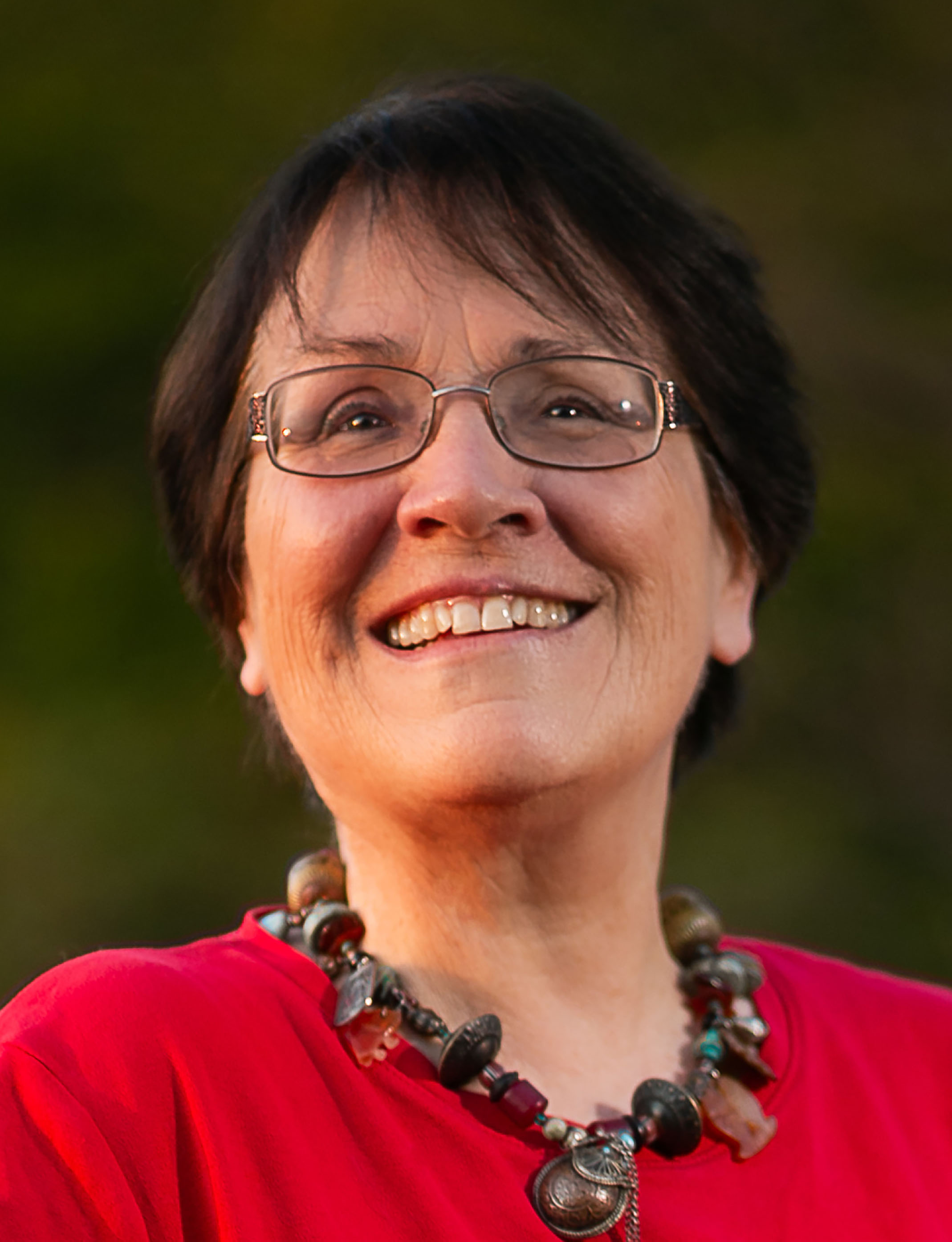
Time for another edition of Wordly Women! It has been great fun, meeting all these amazing authors. I do hope everyone is enjoying it as much as I am. Today, I want to introduce you to a very dear friend, historical novelist Cathie Dunn. Cathie and I have known each other a good few years on Facebook, so much so that the first time we met in real life, there was no awkwardness. I love that about social media!

So, let me introduce you to Cathie!

Sharon: Hi, Cathie, first things first, what got you into writing?

Cathie: Ooh, that takes me back decades! It was the romantic historical novels by the likes of M.M. Kaye, Victoria Holt / Philippa Carr (Eleanor Burford’s pseudonyms), in my late teens that got me hooked. I loved Ms Holt’s gothic romance novels in particular, at the time. They were so atmospheric, and – growing up in Germany – I loved the vision of historic and haunted English manors. During the late 1990s and 2000s, after my move to the UK, I learnt a lot about how to create a compelling plot, within a realistic historical setting, by devouring novels by Helen Hollick, Elizabeth Chadwick, and Barbara Wood, amongst others. It was enough to make me embark on HE Certificate in Creative Writing (online) at Lancaster University (though at the time, I was the only one on the course who wrote historical fiction). But at least, it provided me with deeper insights into the writing craft.

Sharon: Tell us about your books.

Cathie: I started off with a project which went from romance to murder mystery to spy novel to (supposedly) a series of events set during the Anarchy – one of my favourite eras. To date, Dark Deceit is an undefined mix, which I’ll need to untangle at some point in time.

Sharon: Yes please! I want to read it!

Cathie: In 2009, I took part in NaNoWriMo, working on a Scottish romance set after the 1715 Jacobite rebellion. I used real locations and studied the background history in depth – too much for traditional romance publishers, who duly rejected it. Fortunately, Highland Arms was picked up by a fabulous US indie press, and my path was clear! I later wrote a second Scottish romance, A Highland Captive, set during the Wars of Independence.

After my move from Scotland to France, my focus changed to medieval French history, with a dual-timeline mystery inspired by my surroundings. Love Lost in Time delves into the distant past of the county of Carcassonne. And the novel immortalised a young cat I lost too soon, Shadow.

Next, I wrote a novel set at the court of Louis XIV. The Shadows of Versailles deals with a dark side of the otherwise glittering court: the Affair of the Poisons. It may be too dark for some readers, as it contains disturbing scenes of child abductions and black masses. Tragically, it’s all based on real, credible accounts of the time. Researching history can be revolting, at times.

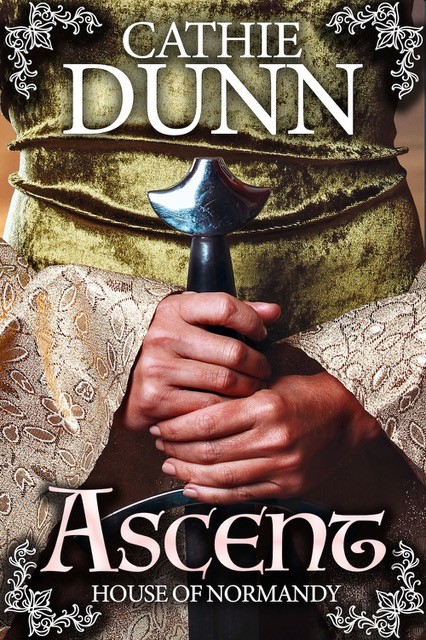
After that serious topic, I needed a more positive distraction, and I promptly delved into the foundation years of Normandy, a county I love. Ascent tells the forgotten story of Poppa of Bayeux. Everyone with a TV now knows her more danico husband – Rollo – but who was the mother of his children? Sadly, she was overlooked in the recent series, Vikings. Ascent tells her (fictionalised) story.

Sharon: What attracts you to the early medieval period?

Cathie: It was an era of great change, all across the British Isles and the European continent. The old ways and beliefs had been discarded, to make way for a Church growing in political influence, and it all makes for fascinating research. New hierarchies were formed amidst a continuing power struggle between different families. As the appointments of ‘nobility’ grew into fashion, so did the influence of favourites and allies on rulers. It was a fascinating time.

Sharon: Who is your favourite early medieval character and why?

History...the Interesting Bits
Image of the statue of Poppa of Bayeux, Bayeux – Photochrom Print Collection

Cathie: Ooh, that’s a tricky one. There are so many real people we know little about, especially women.

(So, a big *Thank You* to you for shining a light on them with your brilliant books!)

I do think Poppa of Bayeux deserves a lot more credit. She had to deal with so many challenges – married to a marauding stranger who was likely a decade or two older, and a Pagan; bearing his children; fleeing with him to Anglia; returning to see his power increase, while she is quietly forgotten. I quite like her to be my favourite early medieval character.

Charles Martel is another. He was a fascinating man, paving the way for a greater Frankish kingdom with his conquests across what is now France. Whilst most people know his grandson, Charlemagne, without Charles, Charlemagne’s ascent in the political sphere of central Europe would not have been possible. Was Charles likeable? Hm, I’m not sure. We know he was ruthless, efficient, and a capable leader of men. Did he have time to be nice? Perhaps that’s a question for another writing project…

Sharon: Who is your least favourite early medieval character and why?

Cathie: That would probably be Charles the Fat, Carolingian King of the Franks and Holy Roman Emperor for a few years in the 880s. He was ineffective, and hopeless at controlling different sections of his empire. He was deposed and died in early 888, and the crown went to Odo of Paris. The Carolingian dynasty was restored after Odo’s reign, though the crown of Frankia went back and forth for a while. This is the era Ascent is set in, and it made for intriguing research.

The real Rollo surely had his work cut out, having to deal with all these changing rulers and their agendas.

Sharon: How do you approach researching your topic?
Cathie: I love history books. I think by now I own more history books than novels! Usually, I start with checking online resources. Jstor is a useful site, where you can read a number of articles for free each month; Medievalists.net is another helpful resource.

But most online sites just give you only an overview, so you need to check books that focus on the relevant era. I have an array of history books on early, high & late medieval England, Tudor England, and medieval & Jacobite Scotland on my shelves. For my France-based novels, I consult non-fiction books in French, many of which I find (handily!) in second-hand bookshops. I also use German resources, where needed.

I find that having a range of resources from different countries to consult is the best way to get a fair overview of historic events. We know that original sources were often (though not always) based on what rulers wanted the rest of the world to know – that being not necessarily the full truth. The winner records history in his favour. So, drawing from sources in different languages adds to the experience in discovering the past.

Sharon: That is so true!

Sharon: Tell us your ‘favourite’ medieval story you have come across in your research.

History... the Interesting Bits
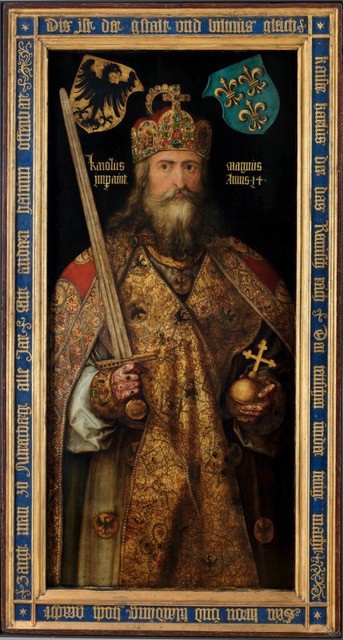
Image of Albrecht Dürer’s painting of Charlemagne

Cathie: Unfortunately, it is difficult to find credible stories about early medieval characters, unless they were major players like Charlemagne, due to the loss (or deliberate omission) of references for lesser-known individuals.

Therefore, I’ve chosen Charlemagne’s wives and concubines as a story I find entertaining, and enlightening! I mean – how on earth did the man have the time to marry four times, have several concubines after the death of his last wife (and possibly before) – and father an estimated twenty (20!) children? His court was always travelling across his ever-expanding realm (and later, his empire), though it is said that his main seat at Aachen (Aix-la-Chapelle) became his favourite.

He insisted his illegitimate children were raised alongside his legitimate offspring, ensuring they all received an education deserving of their Royal bloodline. After his son Pepin’s untimely death, he even took his grandchildren in to be educated with the others.

This is a fact I recently discovered, and now I’m curious to find out more! With daughters, and especially illegitimate ones, usually being swept off into marriage or convents, his insistence that they are all educated is telling. Clearly, here was a man who valued learning – be that in practical skills or reading and writing.

For a man who ruthlessly expanded his territories, responsible for subjugation of peoples and a great number of deaths ranging from Germanic Saxony to the Iberian Peninsula, this shows an entirely different side of the ‘great Charles’.

Sharon: Tell us your least ‘favourite’ medieval story you have come across in your research.

Cathie: That has to be Charlemagne’s darkest episode – the subjugation of Germanic Pagan tribes in Saxony. The wars lasted – on and off – for three decades, and they were brutal. The Saxons did not give in easily, much to Charlemagne’s frustration, and their conversion to Christianity was slow. Their skirmishes into his territory vexed him immensely.

Eventually, according to the Royal Frankish Annals, the infamous ‘Blood Court’ massacre at Verden, in October 882, saw the execution of approx. 4,500 Saxon ‘rebels’ captured after recent battles. Their leader, Widukind, had managed to flee north.

Although later historians disputed the figure quoted in the annals, with several trying to make ridiculous excuses for Charlemagne’s actions, there seems to have been a great slaughter of thousands of prisoners, regardless. Charlemagne wanted to set an example, an effective deterrent.

Warfare continued for three more years, then it was all over for the Saxons, especially after Widukind converted to Christianity. But it was the massacre at Verden that remained like a blood stain on his otherwise pristine reputation.

Sharon: Are there any other eras you would like to write about?

Cathie: I do love different eras, as you know. The Anarchy is definitely high on my list, and I’ll have to revisit Dark Deceit to see where it takes me. (Sharon: Do it! Please!)

But I also love the court of Louis XIV of France, with all its superficial splendour and dark secret plots. The Affair of the Poisons is such an intriguing event, with many prolific nobles implicated in trying to influence the king’s opinion through nefarious deeds. Deeply disturbing, and utterly fascinating.

And then, of course, is the time of the Scottish Wars of Independence. It wasn’t easy to mess with a remarkable, power-hungry king like Edward I! (Sharon: Ooh, yes!)

But, ultimately, it’s the late Dark Ages (do we still call it that, as they weren’t really that dark?) and early Middle Ages that keep me hooked. Oh, to travel to Frankia for one day only…

Sharon: What are you working on now?

Cathie: My current WIP is called Treachery, and it’s the story of Sprota the Breton, handfasted wife of William Longsword – Poppa’s and Rollo’s son. Like his father and his two wives, William married Sprota in more danico (in the Danish custom), and Luitgarde of Vermandois in a proper Church blessing, for political reasons.

Even less is known of Sprota than of Poppa; mainly that she was mother to William’s only son, Richard, likely the first Duke of Normandy. (Rollo and William never were dukes.) I introduced her towards the end of Ascent, when she had to flee to Bayeux as William’s enemies closed in on him at his fortress in Fécamp. Following William’s assassination by Count Arnulf of Flanders in 842, Sprota had to remarry to keep her young son’s inheritance secure. And to ensure his safety!

Her responsibility as the mother of William’s heir, and her struggles for them to survive, make for an intriguing story. So many powerful men had set their sights on Normandy, wanting Richard out of the way. I hope to do Sprota justice, as, again, she has been forgotten in time.

The third and final instalment of my House of Normandy trilogy about the early ladies of Normandy will conclude in Reign, about Richard’s second wife (and previous lover), Gunnora.

Then there’s Poppa’s daughter Adela, married to the Count of Poitou. Perhaps a companion novel? 😉 Sigh…

Sharon: And finally, what is the best thing about being a writer?
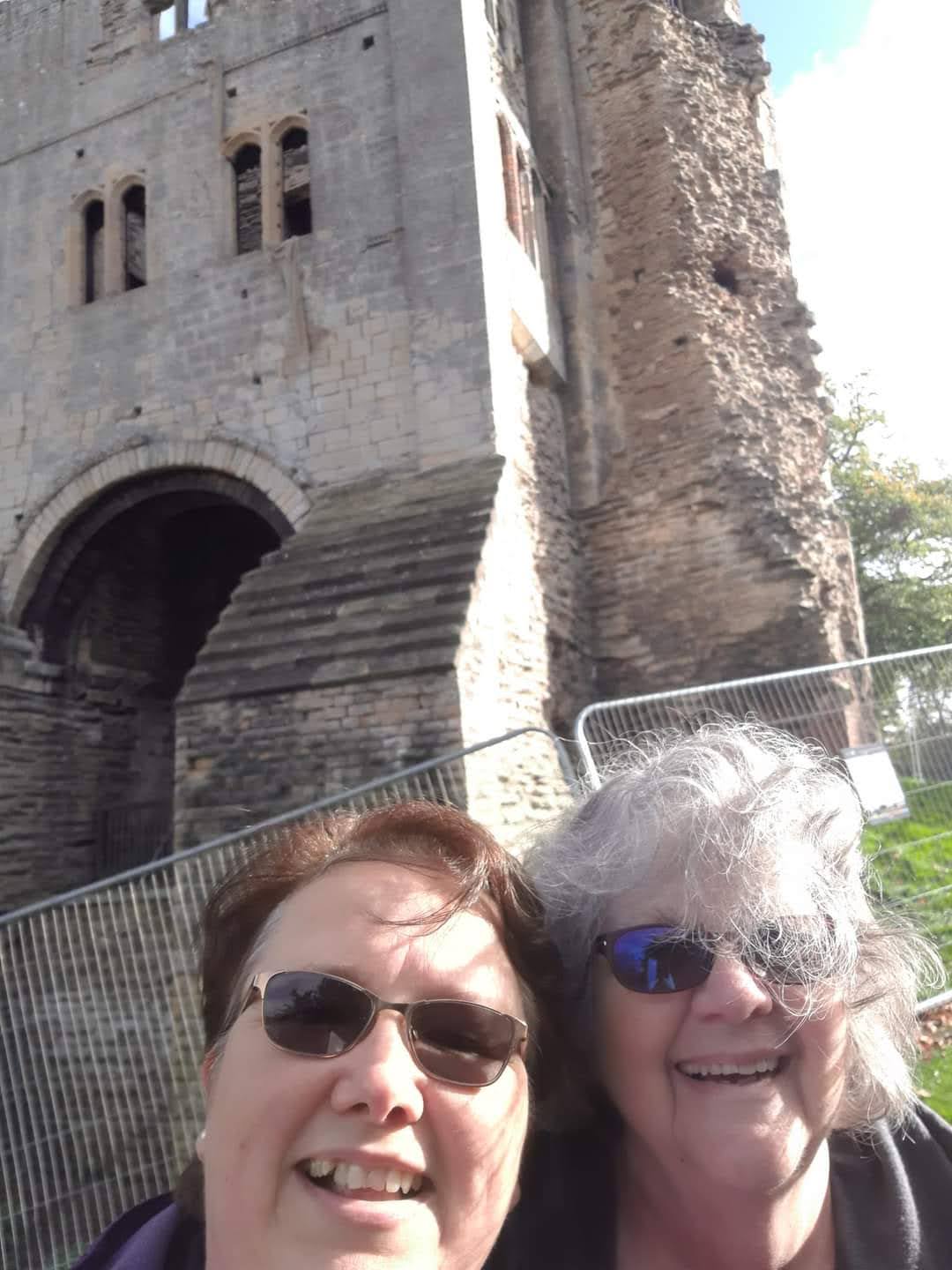
Cathie: Exploring past histories is utterly fascinating, and I can only recommend it. That goes for the good and the bad we discover in our research.

Reliving the distant past is fun, but also a great responsibility, as we should stay as close to the few known facts as possible. An ogre can’t just turn into a Prince Charming, although looking at Charlemagne, he definitely had two sides to his character – the caring father interested in learning and culture, and ruthless ruler chopping off heads of his prisoners. A man of his times. But what about his women? (Cathie, behave! One novel at a time…)

And though my earlier works focused more on events and fictional characters, I now find it far more rewarding to bring forgotten women from the distant past back to life, even ‘just’ in fictionalised format. Their stories must be told.

Thank you again for letting me ramble on about my research and writing. It’s been fabulous revisiting my stories, and the real characters involved in them, and I hope your readers enjoy my interview.

Sharon: Cathie, thank you so much! It has been a pleasure! No wonder you and I get on so well!

About the Author:

Cathie Dunn is an Amazon-bestselling author of historical fiction, dual-timeline, mystery, and romance. She loves to infuse her stories with a strong sense of place and time, combined with a dark secret or mystery – and a touch of romance. Often, you can find her deep down the rabbit hole of historical research…

In addition, she is also a historical fiction book promoter with The Coffee Pot Book Club, a novel-writing tutor, and a keen book reviewer on her blog, Ruins & Reading.

After having lived in Scotland for almost two decades, Cathie is now enjoying the sunshine in the south of France with her husband, and her rescued pets, Ellie Dog & Charlie Cat.

She is a member of the Historical Novel Society, the Richard III Society, the Alliance of Independent Authors, and the Romantic Novelists’ Association.

Where to find Cathie:

Website: Amazon; Facebook Author Page; Twitter / X; Bluesky.

To Buy Cathie’s books: Ascent: Love Lost in Time

*

My Books:

Signed, dedicated copies of all my books are available through my online bookshop.

Out now: Scotland’s Medieval Queens

Books by Sharon Bennett Connolly

Scotland’s history is dramatic, violent and bloody. Being England’s northern neighbour has never been easy. Scotland’s queens have had to deal with war, murder, imprisonment, political rivalries and open betrayal. They have loved and lost, raised kings and queens, ruled and died for Scotland. From St Margaret, who became one of the patron saints of Scotland, to Elizabeth de Burgh and the dramatic story of the Scottish Wars of Independence, to the love story and tragedy of Joan Beaufort, to Margaret of Denmark and the dawn of the Renaissance, Scotland’s Medieval Queens have seen it all. This is the story of Scotland through their eyes.

Scotland’s Medieval Queens gives a thorough grounding in the history of the women who ruled Scotland at the side of its kings, often in the shadows, but just as interesting in their lives beyond the spotlight. It’s not a subject that has been widely covered, and Sharon is a pioneer in bringing that information into accessible history.’ Elizabeth Chadwick (New York Times bestselling author)

Available now from Amazon and Pen and Sword Books

Also by Sharon Bennett Connolly:

Books by Sharon Bennett Connolly

Heroines of the Tudor World tells the stories of the most remarkable women from European history in the time of the Tudor dynasty, 1485-1603. These are the women who ruled, the women who founded dynasties, the women who fought for religious freedom, their families and love. Heroines of the Tudor World is now available for pre-order from Amberley Publishing and Amazon UK. Women of the Anarchy demonstrates how Empress Matilda and Matilda of Boulogne, unable to wield a sword themselves, were prime movers in this time of conflict and lawlessness. It shows how their strengths, weaknesses, and personal ambitions swung the fortunes of war one way – and then the other. Available from Bookshop.orgAmberley Publishing and Amazon UKKing John’s Right-Hand Lady: The Story of Nicholaa de la Haye is the story of a truly remarkable lady, the hereditary constable of Lincoln Castle and the first woman in England to be appointed sheriff in her own right. Available from all good bookshops Pen & Sword Booksbookshop.org and Amazon

Royal Historical Society

Defenders of the Norman Crown: The Rise and Fall of the Warenne Earls of Surrey tells the fascinating story of the Warenne dynasty, from its origins in Normandy, through the Conquest, Magna Carta, the wars and marriages that led to its ultimate demise in the reign of Edward III. Available from Pen & Sword BooksAmazon in the UK and US, and Bookshop.orgLadies of Magna Carta: Women of Influence in Thirteenth Century England looks into the relationships of the various noble families of the 13th century, and how they were affected by the Barons’ Wars, Magna Carta and its aftermath; the bonds that were formed and those that were broken. It is now available in paperback and hardback from Pen & SwordAmazon, and Bookshop.orgHeroines of the Medieval World tells the stories of some of the most remarkable women from Medieval history, from Eleanor of Aquitaine to Julian of Norwich. Available now from Amberley Publishing and Amazon, and Bookshop.orgSilk and the Sword: The Women of the Norman Conquest traces the fortunes of the women who had a significant role to play in the momentous events of 1066. Available now from Amazon,  Amberley Publishing, and Bookshop.org.

Alternate Endings: An anthology of historical fiction short stories including Long Live the King… which is my take what might have happened had King John not died in October 1216. Available in paperback and kindle from Amazon.

Podcast:
A Slice of Medieval

Have a listen to the A Slice of Medieval podcast, which I co-host with Historical fiction novelist Derek Birks. Derek and I welcome guests, such as Bernard Cornwell and Elizabeth Chadwick, and discuss a wide range of topics in medieval history, from significant events to the personalities involved.

Every episode is also now available on YouTube.

*

Don’t forget! Signed and dedicated copies of all my books are available through my online bookshop.

For forthcoming online and in-person talks, please check out my Events Page.

You can be the first to read new articles by clicking the ‘Follow’ button, liking our Facebook page or joining me on TwitterThreadsBluesky and Instagram.

*

©2025 Sharon Bennett Connolly FRHistS and Cathie Dunn

Ermengarde de Beaumont, Queen of Scots

History... the Interesting Bits
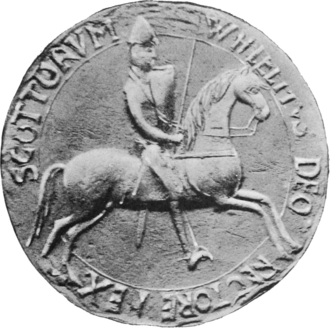
William I the Lion, King of Scots

Unusually for a king in medieval times, by 1185 William the Lion, King of Scots had been on the throne for 20 years, was past 40 and was still unmarried, despite having several illegitimate children. Until he married, William’s heir was his younger brother, David. Ironically, William’s mother, Ada de Warenne, who had been so keen to find a bride for her oldest son Malcolm IV that she was not above putting suitable girls in his bed, does not seem to have had the same sense of urgency with William. There’s no evidence that she pressured him to marry as she had his older brother. Though, I suppose, at least William had shown an interest in women and had the bastards to prove it.

And William was looking for a bride. Henry II, always happy to remind William that he was the Scots king’s overlord, exercised his right to choose William’s wife.

In May 1186, during a council at Woodstock, King Henry suggested Ermengarde de Beaumont as a bride for William. Ermengarde was the daughter of Richard, Vicomte de Beaumont-sur- Sarthe, who was himself the son of Constance, one of the many illegitimate daughters of King Henry I of England. With such diluted royal blood, she was hardly a prestigious match for the king of Scots. William felt slighted but he reluctantly accepted the marriage after consulting his advisers, the offer sweetened by a generous payment for the wedding celebrations and the return of two forfeited Scottish castles, as a wedding present.

History... the Interesting Bits
Henry II, King of England, Lincoln Cathedral

We have, of course, no record of Ermengarde’s thoughts on the marriage, nor of whether she was aware of the fact it was seen as an insult to the Scots king. The wedding was celebrated at Woodstock, conducted by the Archbishop of Canterbury, on 5 September 1186,

‘with great magnificence, on the nones of September [5th Sept.] (being the sixth day of the week [Friday], the moon being in her eighteenth day), in the royal chapel in the park at Woodstock, in the presence of the king himself.’1

Following the ceremony, King Henry hosted 4 days of festivities. Although we do not know Ermengarde’s birth date, at the time of the marriage, she was described as ‘a girl’, suggesting that she may have only just reached the age of 12, the minimum legal age girls could marry. It has been suggested that Ermengarde’s tender age may also have been the reason for William’s reluctance to marry her.

We do not know the year of birth of Ermengarde’s first child, a daughter named Margaret, but it was sometime between 1187 and 1195. Another daughter, Isabella, was born a year or two later. If Ermengarde gave birth to Margaret the year after her marriage, it seems highly likely that she was at least fourteen or fifteen years old at the time of her wedding. However, a later birthdate, in the 1190s would suggest that Ermengarde was younger at the time of her marriage and was given time to mature before bearing children. The king’s growing need for an heir would, perhaps, indicate that Ermengarde was old enough to bear children at the time of their marriage, and that describing the bride as ‘a girl’ was alluding to her youth, but not her actual age. Unfortunately, the vagaries of chroniclers means that we cannot say for certain

In the spring of 1195 King William fell gravely ill at Clackmannan, causing a succession crisis, the sum of his legitimate children being one, possibly two, daughters at this time – and no son. The Scottish barons deliberated a number of options, such as recognising William’s oldest legitimate daughter, Margaret, as his heir. They also considered marrying Margaret to Otto, Duke of Saxony, grandson of Henry II, and allowing Otto to succeed to the throne. The earl of Dunbar led a faction who claimed that both solutions were contrary to the custom of the land, so long as the king had a brother who could succeed him. Traditionally, the Scots throne had passed to the oldest, legitimate, male member of the royal family, rather than by primogeniture.

This must have been a worrying time for Ermengarde, not only for the health of her husband, but for her own status in Scotland, should her daughter be disinherited. Not to mention the concern that Margaret, then aged only 8 at the most, might be married at such a young age to secure the succession. In the event, the discussion was moot as the king recovered from his illness and three years later the queen gave birth to Alexander, the much-desired son and heir.

History... the Interesting Bits
Alexander II, King of Scots

Chronicler John of Fordun described the relief and celebration felt throughout the country at the birth of the heir to the Scots throne:

‘Now this most fortunate king of Scotland, William, had, nearly twelve years ago, with great splendour and rejoicings, taken to wife Ermyngarde, daughter of the Viscount of Beaumont… By her he had a son, named Alexander, — to the great gladness of his people, and the refreshment of the whole kingdom of the Scots, as the after course of these annals will show forth. He was born at Haddington, on Saint Bartholomew’s Day, in the year 1198. In every place in the whole country, the common folk used to forsake their menial work on this day, wherein they first heard tidings of his birth, and spend it in joy; while priests and churchmen donned the alb, and walked in procession, with loud voice glorifying God in hymns and canticles, and humbly praising Him.’

Although she does not act as a witness on any of King William’s extant charters, Queen Ermengarde appears to have played an active role in Scotland, with William allowing her an increasingly influential part in public affairs. One disgruntled canon, in 1207, complained that Walter, a royal chaplain, had obtained the bishopric of Glasgow by not only bribing the king’s chamberlain, but also Queen Ermengarde. The queen may also have offered patronage to relatives, including one Richard de Beaumont, perhaps a brother or cousin, who received substantial lands in Crail. As the king’s health declined in old age – he was already 46 when he married Ermengarde – the queen took on more responsibilities, especially where her children were concerned.

Relations with England had changed in 1199, with the accession of King John, the youngest son of Henry II. During the reign of King Richard, William had agreed with the justiciar, William Longchamp, and supported Arthur of Brittany as the king’s heir. However, it was John who succeeded Richard and he may well have remembered William’s stance. Soon after John’s accession, King William asked for the return of Northumberland. The two kings met at Lincoln in 1200, with William doing homage for his English lands but getting no satisfaction in his claim to Northumberland. In subsequent meetings, John continued to prevaricate, leaving the dispute unresolved.

In the meantime, the death of the bishop of Durham meant John took over the vacant see and set about building a castle at Tweedmouth. The Scots, saw this as a direct threat to Berwick and destroyed the building works. Matters reached a crisis point in 1209.

History... the Interesting Bits
King John of England

After many threats, and with both sides building up their armies, the two kings met at Norham, Northumberland, in the last week of July and first week of August 1209. The Scots were in a desperate position, with an ailing and ageing king, and a 10-year-old boy as heir, whilst the English, with their Welsh allies and foreign mercenaries, had an army big enough to force a Scottish submission. Queen Ermengarde appears to have acted as a mediator between the two kings, although the subsequent treaty, agreed at Norham on 7 August, was humiliating for the Scots it did, at least, prevent a war. The Scots agreed to pay 15,000 marks for peace and to surrender hostages, including the king’s two oldest legitimate daughters, Margaret and Isabella. As a sweetener, John promised to marry the Margaret to one of his sons; although Henry was only 2 years old at the time and Richard was just 8 months, whilst the girls were already in their mid teens, at least. It was agreed that Isabella would be married to an English noble of suitable rank, an earl at least.

The king’s daughters and the other Scottish hostages were handed into the custody of England’s justiciar, at Carlisle on 16 August.

How the girls, or their parents, thought about this turn of events, we know not. Given John’s proven record of prevarication and perfidy, King William may have hoped that the promised marriages would occur in good time but may also have expected that John would find a way out of the pledges he had made. William and John met again at Durham in February 1212, a meeting in which ‘The queen of Scotland was present and acted as mediator, an extraordinary woman, gifted with a charming and witty eloquence.’3 The queen’s efforts bore fruit and peace between the two countries was renewed, as ‘There in the presence of the nobles of both kingdoms and the revered lady the queen of the Scots a formula for achieving peace and love, to be observed between the kingdoms and their kings for ever, was worked out anew and confirmed by charters given by both parties.’4

It was also agreed that the Scottish prince, Alexander, should be given an English wife. With at least one of the prince’s older sisters already intended for a son of King John, marrying Alexander to one of John’s daughters would further bind the Scots to the Plantagenet cause. Prince Alexander, now aged 14, would be knighted by King John, the ceremony taking place at Clerkenwell on 4 March 1212.

Ermengarde may have taken a more prominent role in the negotiations of 1212 as King William’s health began to fail. Their son, Alexander, was still only a teenager and so it would have fallen to the queen to take the lead in the talks. William was a physically active king almost to the very last moment. In January and February 1213, when both the Scots and English kings were close to the border, a meeting was proposed, but William resisted and could not be persuaded to meet with John. In his 70th year, he was probably already very ill.

History...the Interesting Bits
18th century image of William I the Lion

As William’s health failed, Queen Ermengarde appears to have taken on more responsibilities and exerted her influence on the court. The king rallied in 1214, so that he was well enough to travel to Elgin in the summer, where he came to an accord with John, the new earl of Caithness, and received the earl’s unnamed daughter as a hostage. The journey took its toll on the king, and he suffered some sort of collapse. He was taken, in easy stages, to the royal castle at Stirling, where he saw his lords for the last time. With the queen in attendance, William urged his barons and bishops to accept Alexander, now 16 years old, as king. King William I, later known as William the Lion, died on 4 December 1214, aged about seventy-one, having reigned for a total of forty-nine years, almost to the day.

On the morning after her husband’s death, Queen Ermengarde was ‘in a state of extreme mourning and worn out with grief.’5 The prelates and nobles attempted to rouse the queen from her melancholy by asking that she arrange the late king’s funeral, but the queen would not be moved. They left Ermengarde with her grief and took the young king to Scone, where he was crowned as King Alexander II on 6 December. King William was then buried at Arbroath on 10 December. The new king and his mother then presided over the royal Christmas feast at Forfar but returned to Stirling in January 1215, before visiting Arbroath, to see the tomb of King William.

Queen Ermengarde had been much younger than her husband, possibly by as much as thirty years. She would, therefore, continue to live for many years into her son’s reign.

History ... the Interesting Bits
Magna Carta

King Alexander II sided with the English barons in their struggle against the tyranny of King John, making an alliance with the northern barons, who agreed to press for a decision on the future of Alexander’s sisters, and a resolution of the lordship of the northern counties. He raided the northern English earldoms, exploiting the unrest in England to renew Scottish claims to these counties, besieging Norham in October 1215 and receiving the homage of the leading men of Northumberland. And when a French force joined the fight on the side of the rebels, the papal legate pronounced a sentence of excommunication on the rebels and their French and Scottish allies; it even extended to Queen Ermengarde. Scotland put under interdict. Following John’s death in October 1216 and the defeat of the French rebel army at Lincoln in May 1217, Alexander’s position in England became precarious.

The Scots king surrendered Carlisle Castle at Berwick on 1 December 1217 and submitted to England’s boy-king Henry III at Northampton later in the same month. Alexander’s sentence of excommunication was lifted by the archbishop of York, while the bishop of Durham absolved his mother, Queen Ermengarde.

With King Alexander’s submission, there followed an unprecedented almost 80 years of unbroken peace between England and Scotland, sealed by his marriage – in York – with Joan, Henry III’s sister in June 1221. Another marriage soon followed, when, in London on 30 October, Alexander’s oldest sister, Margaret, was married to Hubert de Burgh.

History ... the Interesting Bits
Joan of England, Queen of Scots

Queen Ermengarde must have felt relief that her son had found a bride, and hoped that an heir would soon follow. She may also have been satisfied that her eldest daughter, Margaret, once thought of as the heir to the Scots throne, was also finally settled in matrimony. Though there was complaint from some sides that Margaret had been pressed into a disparaging marriage when she had been promised a prince as a bridegroom. Hubert de Burgh was King Henry III’s justiciar, but was of minor nobility. He only receive his earldom of Kent after his marriage to Margaret. As for Margaret’s sister Isabella, she returned to Scotland, still unmarried. She eventually married Roger Bigod, the young Earl of Norfolk, in 1225. The wedding took place at Alnwick, in Northumberland, which may mean that Queen Ermengarde was able to attend.

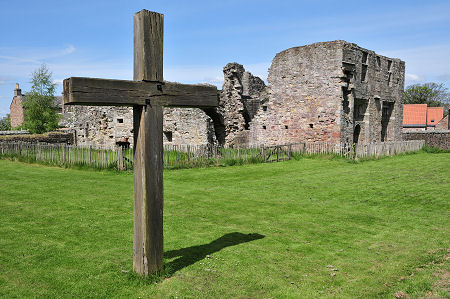
Queen Ermengarde devoted her later years to founding an abbey at Balmerino, with the help of Alexander. A parish in the district of Cupar in county of Fife, it was an area she regularly visited for the benefit of her health. The dowager queen raised the money to found the Cistercian abbey, paying 1,000 merks to purchase the land and acting as overseer to the building project. The abbey was built in red stone, quarried locally. Dedicated to Saint Edward the Confessor, Balmerino was populated by monks from Melrose Abbey. Queen Ermengarde appears to have had a particular veneration for the sainted English king as the only other religious gift we can attribute to her was to the hospital of St Edward at Berwick.

The queen had lived long enough to see three of her four children settled in marriage, and may have met her first grandchild, a daughter born to Princess Margaret in 1227, also named Margaret. In the same year, Henry III’s brother Richard, Earl of Cornwall, arrived in Scotland to speak with Queen Ermengarde. The object of the discussions was his possible marriage to the queen’s youngest daughter, Marjory. The earl’s proposals were attractive to neither the Scots nor his brother and negotiations came to naught, but the fact that it was Ermengarde that Richard approached, rather than the king, clearly demonstrates the queen’s continuing influence on her family. Her youngest daughter was not married until August 1235, when she married Gilbert Marshal, Earl of Pembroke, at Berwick.

History... the Interesting Bits
Balmerino Abbey with Queen Ermengarde’s Cross in the foreground

The queen did not live to see the wedding as in February 1233 Ermengarde de Beaumont died. She was buried before the high altar of the abbey to which she had dedicated her years of widowhood, Balmerino. Although the surviving records hint at the queen enjoying substantial authority in Scotland, especially where her family were concerned, we have few specifics. That she was entrusted with negotiating with the English emissaries, in 1209 and again in 1212, suggests that she possessed impressive diplomatic skills, and that King William had considerable confidence in his wife’s abilities. Furthermore, the queen’s evident grief at her husband’s death attests to a deep affection within the union, an affection that not only defined the marriage, but also the whole family, with the queen continuing to exert her influence on the relationships of her children in the years after her husband’s death.

Having served Scotland as queen for 28 years and as its dowager queen for a further 19 years, Ermengarde de Beaumont defined the role of Queen of Scots for subsequent royal consorts. Her memory cast a long shadow.

*

Images:

Courtesy of Wikipedia except Henry II, which is ©2025 Sharon Bennett Connolly FRHistS, and Balmerino Abbey which is courtesy of Undiscovered Scotland

Notes:

1. Mediaeval chronicles of Scotland, translated by Joseph Stephenson; 2. John of Fordun’s Chronicle of the Scottish Nation; 3. Walter Bower, Scotichronicon, V 4; 4. ibid; 5. Rosalind K. Marshall, Scottish Queens 1034–1714

Bibliography:

Walter Bower, Scotichronicon, V 4; Chronicles of the Picts, chronicles of the Scots, and other early memorials of Scottish history, edited by W. F. Skene; fmg.ac/Projects/MedLands/SCOTLAND; John of Fordun’s Chronicle of the Scottish Nation, edited by W. F. Skene, Edinburgh, Edmonston and Douglas; Rosalind K. Marshall, Scottish Queens 1034–1714; Mediaeval chronicles of Scotland: the chronicles of Melrose and Holyrood, translated by Joseph Stephenson; Richard Oram, editor, The Kings and Queens of Scotland; The annals of Roger de Hoveden. Comprising the history of England and of other countries of Europe from A.D. 732 to A.D. 1201, edited by Henry T. Riley; David Ross, Scotland, History of a Nation; W.W. Scott, Ermengarde [Ermengarde de Beaumont], oxforddnb.com; W.W. Scott, William I [known as William the Lion] (c. 1142–1214), oxforddnb.com

*

My Books:

Signed, dedicated copies of all my books are available through my online bookshop.

Out now: Scotland’s Medieval Queens

Books by Sharon Bennett Connolly

Scotland’s history is dramatic, violent and bloody. Being England’s northern neighbour has never been easy. Scotland’s queens have had to deal with war, murder, imprisonment, political rivalries and open betrayal. They have loved and lost, raised kings and queens, ruled and died for Scotland. From St Margaret, who became one of the patron saints of Scotland, to Elizabeth de Burgh and the dramatic story of the Scottish Wars of Independence, to the love story and tragedy of Joan Beaufort, to Margaret of Denmark and the dawn of the Renaissance, Scotland’s Medieval Queens have seen it all. This is the story of Scotland through their eyes.

Scotland’s Medieval Queens gives a thorough grounding in the history of the women who ruled Scotland at the side of its kings, often in the shadows, but just as interesting in their lives beyond the spotlight. It’s not a subject that has been widely covered, and Sharon is a pioneer in bringing that information into accessible history.’ Elizabeth Chadwick (New York Times bestselling author)

Available now from Amazon and Pen and Sword Books

Also by Sharon Bennett Connolly:

Books by Sharon Bennett Connolly

Heroines of the Tudor World tells the stories of the most remarkable women from European history in the time of the Tudor dynasty, 1485-1603. These are the women who ruled, the women who founded dynasties, the women who fought for religious freedom, their families and love. Heroines of the Tudor World is now available for pre-order from Amberley Publishing and Amazon UK. Women of the Anarchy demonstrates how Empress Matilda and Matilda of Boulogne, unable to wield a sword themselves, were prime movers in this time of conflict and lawlessness. It shows how their strengths, weaknesses, and personal ambitions swung the fortunes of war one way – and then the other. Available from Bookshop.orgAmberley Publishing and Amazon UKKing John’s Right-Hand Lady: The Story of Nicholaa de la Haye is the story of a truly remarkable lady, the hereditary constable of Lincoln Castle and the first woman in England to be appointed sheriff in her own right. Available from all good bookshops Pen & Sword Booksbookshop.org and Amazon

Royal Historical Society

Defenders of the Norman Crown: The Rise and Fall of the Warenne Earls of Surrey tells the fascinating story of the Warenne dynasty, from its origins in Normandy, through the Conquest, Magna Carta, the wars and marriages that led to its ultimate demise in the reign of Edward III. Available from Pen & Sword BooksAmazon in the UK and US, and Bookshop.orgLadies of Magna Carta: Women of Influence in Thirteenth Century England looks into the relationships of the various noble families of the 13th century, and how they were affected by the Barons’ Wars, Magna Carta and its aftermath; the bonds that were formed and those that were broken. It is now available in paperback and hardback from Pen & SwordAmazon, and Bookshop.orgHeroines of the Medieval World tells the stories of some of the most remarkable women from Medieval history, from Eleanor of Aquitaine to Julian of Norwich. Available now from Amberley Publishing and Amazon, and Bookshop.orgSilk and the Sword: The Women of the Norman Conquest traces the fortunes of the women who had a significant role to play in the momentous events of 1066. Available now from Amazon,  Amberley Publishing, and Bookshop.org.

Alternate Endings: An anthology of historical fiction short stories including Long Live the King… which is my take what might have happened had King John not died in October 1216. Available in paperback and kindle from Amazon.

Podcast:

A Slice of Medieval

Have a listen to the A Slice of Medieval podcast, which I co-host with Historical fiction novelist Derek Birks. Derek and I welcome guests, such as Bernard Cornwell and Elizabeth Chadwick, and discuss a wide range of topics in medieval history, from significant events to the personalities involved.

Every episode is also now available on YouTube.

*

Don’t forget! Signed and dedicated copies of all my books are available through my online bookshop.

For forthcoming online and in-person talks, please check out my Events Page.

You can be the first to read new articles by clicking the ‘Follow’ button, liking our Facebook page or joining me on TwitterThreadsBluesky and Instagram.

*

©2025 Sharon Bennett Connolly FRHistS.

Book Corner: Templar Traitor by Angus Donald

Angus Donald

“Do not lie to me, Templar, or it will be the last thing you do.”

July 1241. Western Europe cowers in terror before the threat of a Mongol invasion. The swift cavalry columns of Genghis Khan have smashed the steel-clad warriors of Russia, Poland and Hungary – and now Austria lies directly in their path.

At a skirmish outside the walls of Vienna, German knights capture a squad of Mongol scouts and are astonished to discover one of their number is an Englishman – a former Templar – who has been riding with these Devil’s horsemen for more than twenty years.

Interrogator Father Ivo of Narbonne is summoned to draw the truth from the prisoner before his impending trial, to find out why he abandoned his faith, his Brethren and his homeland to become… a traitor to Christendom.

Based on a true story, this is the first novel in a new blockbuster trilogy from ‘master of the genre’ Angus Donald.

My first thought when I heard about Templar Traitor by Angus Donald was “ooh, Templars – love anything Templar related. And by Angus Donald, too! Must read.” My second was “a Templar fighting with the Mongols? Yeah, right!” And with those conflicting thoughts in mind, I decided to give it a go. Angus Donald is a great writer, so even if it is more fantasy than reality, he may be able to pull it off. How surprised was I to discover, from the very first pages, that this wasn’t a fantasy, nor a King & Conqueror-esque rewriting of History. (Forgive me for mentioning King & Conqueror, but when someone butchers History like that, the pain is real!)

This was a true story!

A clever, original plot is the more remarkable for the fact it derives from the true story of a Templar knight fighting with the Mongol horde, in the army of Genghis Khan, no less!

Templar Traitor gives a unique angle on the Templars, the Crusades and the Mongols. It also gives an insight into events we rarely hear about and rebuffs the Euro-centric view of the Middle Ages. In Templar Traitor Angus Donald expertly portrays the contrast and melding of the different civilisations of the European Christian and the Mongol. The clash of cultures adds an intensity top the story, beyond the warmongering and empire-building. The human toll of ambition and deceit is evident.

It seemed to Robert a desperate last throw of the dice for the Latin kingdoms. If this attempt on Damietta failed, the Christians would likely be swept into the Mediiterranean.

Yet, despite the importance of this expedition, Robert was concerned for his brother, who, he knew, would soon be hurled into the fury of battle. Gilly was not a weakling, but there was an air of fragility about him that inspired protectiveness in Robert. It had been like this since childhood.

‘I have just written to Father,’ continued Gilbert, ‘and told him about your predicament. And that I am to be dispatched to Egypt with the first of our knights. I only pray that the old man lives long enough to receive the letter. You knew that Henry had taken to his bed before I left England? I do not think he will ever walk or ride again.’

‘You told me, Gilly. Our earthly father will soon be with our Heavenly one.’

‘What will they do with you, Rob? said Gilbert. ‘Will they show mercy?’

‘God chose me as his servant, Gilly – He will not abandon me. And I have served the Order faithfully these past ten years. That must count for something.’

‘I shall pray for you,’ said Gilbert. ‘I shall pray for you every night, Rob.’

‘And I you. I want you to promise me something, Gilly. You are not to court danger unnecessarily in Damietta. They will call for volunteers, they will ask you to risk your life for the cause. Do not do this again. If you love me, brother, remain silent when the call goes out for brave knights to undertake some fresh perilous mission.’

‘Would you do that, brother?’ asked Gilbert. ‘The Robert of Hadlow I know prizes risk and danger more highly than anything else. Would he duck a challenge? No. The knight who won the First Lance badge for skill at arms three years in a row? A feat no other Templar has ever achieved. Would he shirk his duty? I think not.’

‘It is not shirking. You already serve God by serving the Order. And to serve God is to serve mankind. There is no need to risk your life further. Others also seek glory. Let them step forward.

‘There is a whiff of hypocrisy in your words, brother. I know that you would never dodge a chance to strike a blow for Christ. How can you ask that of me?’

‘This is not about me. This is about you, your life. Father will soon be gone to his reward and I … Well, look at me, in this cell, awaiting trial for my foolishness. Learn from my example. Do not seek out unnecessary risk in Egypt – that is all I ask.’

‘I shall do as I think fit. As you would do. But I shall pray for God’s guidance.’

I cannot imagine the amount of research that must have gone into recreating the lands the Mongols conquered. Legendary cities such as Samarkand are rebuilt and brought to life. The Nomadic lifestyle of the Mongols means the marauding army takes its own sheep, goats and herds of horses campaigning with it. The women accompany the army, making a home in the encampment wherever they stop.

Angus Donald sheds light on the knight’s story, fleshing out the gaps in the known history to create a remarkable adventure that will leave the reader eager for more. The Templar knight, Robert of Hadlow, has his own secrets, motives and family concerns. Add to this a private feud with a priest, the need to rescue his baby brother and forbidden love, and Robert’s story has all the ingredients for a magnificent adventure.

Robert of Hadlow is a likeable character, even if the reader feels they cannot wholly trust him. The author implants that niggling doubt in the reader’s subconscious and I’m not quite sure how and when he did it!

All in all, Templar Traitor is definitely in my Top 10 of Books of 2025. The originality of the story is refreshing. The attention to detail and the layers of plot make it a gripping, fascinating read. Oh, and there’s enough single combat and vivid battle scenes to satisfy anyone who likes a jolly good battle! From the first page, the story is intriguing. I enjoyed the fact that I didn’t know what the endgame was. This is far from formulaic historical fiction where the hero knight saves the day. There is mystery and deceit throughout – on both sides – with ulterior motives and hidden agendas.

Templar Traitor is probably the best book Angus Donald has written, possibly even better than his Holcroft Blood series – and that was excellent! I cannot recommend it highly enough.

Look out for Angus chatting with Derek and I about Templar Traitor and the Mongols on A Slice of Medieval soon.

Buy the book:

Templar Traitor by Angus Donald is out now.

About the author:

Angus Donald is the author of the bestselling Outlaw Chronicles, a series of ten novels set in the 12th/13th centuries and featuring a gangster-ish Robin Hood. Angus has also published the Holcroft Blood trilogy about a mildly autistic 17th-century English artillery officer, son of notorious Crown Jewels thief Colonel Thomas Blood. Before becoming an author, Angus worked as a fruit-picker in Greece, a waiter in New York City and as an anthropologist studying magic and witchcraft in Indonesia. For fifteen years he was a journalist working in Hong Kong, India, Afghanistan and London. He now writes full time from a medieval farmhouse in Kent. http://www.angusdonaldbooks.com.

*

My Books

Signed, dedicated copies of all my books are available through my online bookshop.

Out now: Scotland’s Medieval Queens

Books by Sharon Bennett Connolly

Scotland’s history is dramatic, violent and bloody. Being England’s northern neighbour has never been easy. Scotland’s queens have had to deal with war, murder, imprisonment, political rivalries and open betrayal. They have loved and lost, raised kings and queens, ruled and died for Scotland. From St Margaret, who became one of the patron saints of Scotland, to Elizabeth de Burgh and the dramatic story of the Scottish Wars of Independence, to the love story and tragedy of Joan Beaufort, to Margaret of Denmark and the dawn of the Renaissance, Scotland’s Medieval Queens have seen it all. This is the story of Scotland through their eyes.

Scotland’s Medieval Queens gives a thorough grounding in the history of the women who ruled Scotland at the side of its kings, often in the shadows, but just as interesting in their lives beyond the spotlight. It’s not a subject that has been widely covered, and Sharon is a pioneer in bringing that information into accessible history.’ Elizabeth Chadwick (New York Times bestselling author)

Available now from Amazon and Pen and Sword Books

Also by Sharon Bennett Connolly:

Books by Sharon Bennett Connolly

Heroines of the Tudor World tells the stories of the most remarkable women from European history in the time of the Tudor dynasty, 1485-1603. These are the women who ruled, the women who founded dynasties, the women who fought for religious freedom, their families and love. Heroines of the Tudor World is now available for pre-order from Amberley Publishing and Amazon UK. Women of the Anarchy demonstrates how Empress Matilda and Matilda of Boulogne, unable to wield a sword themselves, were prime movers in this time of conflict and lawlessness. It shows how their strengths, weaknesses, and personal ambitions swung the fortunes of war one way – and then the other. Available from Bookshop.orgAmberley Publishing and Amazon UKKing John’s Right-Hand Lady: The Story of Nicholaa de la Haye is the story of a truly remarkable lady, the hereditary constable of Lincoln Castle and the first woman in England to be appointed sheriff in her own right. Available from all good bookshops Pen & Sword Booksbookshop.org and Amazon

Royal Historical Society

Defenders of the Norman Crown: The Rise and Fall of the Warenne Earls of Surrey tells the fascinating story of the Warenne dynasty, from its origins in Normandy, through the Conquest, Magna Carta, the wars and marriages that led to its ultimate demise in the reign of Edward III. Available from Pen & Sword BooksAmazon in the UK and US, and Bookshop.orgLadies of Magna Carta: Women of Influence in Thirteenth Century England looks into the relationships of the various noble families of the 13th century, and how they were affected by the Barons’ Wars, Magna Carta and its aftermath; the bonds that were formed and those that were broken. It is now available in paperback and hardback from Pen & SwordAmazon, and Bookshop.orgHeroines of the Medieval World tells the stories of some of the most remarkable women from Medieval history, from Eleanor of Aquitaine to Julian of Norwich. Available now from Amberley Publishing and Amazon, and Bookshop.orgSilk and the Sword: The Women of the Norman Conquest traces the fortunes of the women who had a significant role to play in the momentous events of 1066. Available now from Amazon,  Amberley Publishing, and Bookshop.org.

Alternate Endings: An anthology of historical fiction short stories including Long Live the King… which is my take what might have happened had King John not died in October 1216. Available in paperback and kindle from Amazon.

Podcast:

A Slice of Medieval

Have a listen to the A Slice of Medieval podcast, which I co-host with Historical fiction novelist Derek Birks. Derek and I welcome guests, such as Elizabeth Chadwick, Helen Castor, Ian Mortimer, Scott Mariani and Bernard Cornwell and discuss a wide range of topics in medieval history, from significant events to the personalities involved. Look out for Angus chatting with Derek and I about Templar Traitor and the Mongols on A Slice of Medieval soon.

Every episode is also now available on YouTube.

*

Don’t forget! Signed and dedicated copies of all my books are available through my online bookshop.

For forthcoming online and in-person talks, please check out my Events Page.

You can be the first to read new articles by clicking the ‘Follow’ button, liking our Facebook page or joining me on TwitterThreadsBluesky and Instagram.

*

©2025 Sharon Bennett Connolly FRHistS


Wordly Women: Elizabeth Chadwick

History ... the Interesting Bits
Elizabeth Chadwick and I at Newark Book Festival, 2018

Throughout my writing career, I have been very lucky to have enjoyed the friendship of Elizabeth Chadwick. A truly generous person, Elizabeth and I shared a stage at the Newark Book Festival in July 2018. I had only published my first book, Heroines of the Medieval World the previous September, and I was a nervous wreck. Elizabeth was the star of the show, I was the newcomer, and she could have easily dominated the conversation – no one would have blamed her. Everyone was there to see her, not me. But Elizabeth was calm, encouraging and made sure I had my say. I will never forget that.

So, it is an honour and a pleasure to welcome Elizabeth to History … the Interesting Bits as part of my Wordly Women series, to discuss her writing career and her love of history – and William Marshal, of course!

Sharon: Hi, Elizabeth. So, what got you into writing?

History ... the Interesting Bits

Elizabeth: I came into the world as a storyteller. I can remember very clearly telling myself stories with beginnings, middles and ends at the age of three. Throughout my childhood I made up stories, inspired from illustrations I liked in books. I’d invent whole tales around pieces of artwork, say from the wonderful pages of Ladybird books. Even at a young age I was asking myself ‘What if this happened?’ Who, where, what why? I learned the art of story telling just by having fun – and reading a lot obviously. I didn’t write anything down until my mid-teens by which time I decided that I wanted to bring some posterity to my verbal stories and so began writing them down. I was fifteen when I wrote my first historical novel, purely for fun, and enjoyed the experience so much that I decided that I wanted to do this for my career. Eight unpublished novels later I finally got there.

Sharon: Tell us about your books.

Elizabeth: I write historical fiction set in the Middle Ages, mostly covering England and France with a bit of the Middle East thrown in. I began writing my stories with imaginary protagonists but then moved on to biographical fiction. They are character-driven stories of the life and times of the people, focussing on their family lives interwoven with political and emotional drama. I research the period meticulously and blend fact and fiction with an emphasis on telling an engrossing story without depriving the facts of their integrity. I have award winning novels and New York Times bestsellers among my published novels to date.

Sharon: What attracts you to the medieval period?

History ... the Interesting Bits

Elizabeth: It was actually chance that brought me to the Middle Ages. As I’ve mentioned above, I told myself stories throughout my childhood. I enjoyed historical TV dramas and became quite hooked on The Six Wives of Henry VIII starring Keith Michell. That led me to write down my first ever story over the summer holidays when I was fourteen. I enjoyed the exercise, but ran out of steam, however, I’d laid the groundwork. I became very enamoured of a knight in a children’s TV program put out by the BBC and dubbed from the French. It was called Desert Crusader, In French it was Thibaud ou les Croisades. My weekly doses of Desert Crusader led me to take up my pen again, and this time I didn’t run out of steam. This time I wrote a whole novel. It started out as a piece of fan fiction I guess, but within two chapters had taken on a life of its own – rather like me making up brand new stories to the Ladybird books of my childhood. Once I had the basic visual inspiration I was off. Since I knew nothing about the Holy Land and very little about the Middle Ages I had to begin researching because I wanted my story to have veracity and feel real. However if I hadn’t fallen for actor Andre Lawrence as Thibaud, ‘Le Chevalier Blanc’ I might never have taken to the Medieval period the way I did. Such are moments of chance in our lives.

Sharon: Who is your favourite medieval character and why?

History ... the Interesting Bits
William Marshal

Elizabeth: It would have to be the great William Marshal. You don’t get many of his kind to the pound. He had an amazing life and great integrity. He rose from the ranks of the ordinary jobbing nobility and a life in the military, and by using his charisma, intelligence, physical abilities and sheer personality, came to the attention of the Angevin royal family. Having saved the life of Eleanor of Aquitaine, he was taken into royal service. He was a champion of the tourneys, a far-travelled pilgrim, a counsellor of kings. He had his ups and downs and he wasn’t perfect by any manner of means, but the Angevins trusted him enough to give him a fantastic marriage to a great heiress (and they appear to have been very compatible despite a more than 20 year age gap). He became earl of Pembroke under King John and involved in the development of Magna Carta. When King John died, William took over the rule of England on behalf of John’s 9 year old son Henry III. He dealt with the volatile political situation in a way that showed he had a firm grasp of the politics and a practical knowledge of what to do. And at the battle of Lincoln in 1217, aged approx. 71, he saw off the French and got the country back on an even keel.

Sharon: Who is your least favourite medieval character and why?

Elizabeth: I don’t have a least favourite. Even the villains are interesting. I have some very least favourite modern politicians, but that’s because they’re in my face and I am having to deal with emotions engendered as consequences of their actions rather than being more objective. I do find it fascinating how people almost come to blows over Richard III and Henry VII and hold such passionate loyalties over a pair of men who are now bones. The War of the Roses is fought over and over and over again all day online! Having said that, I do admit I have a huge fondness for William Marshal which is certainly not dispassionate. I don’t however, get in a lather about King John!

Sharon: How do you approach researching your topic?

History ... the Interesting Bits
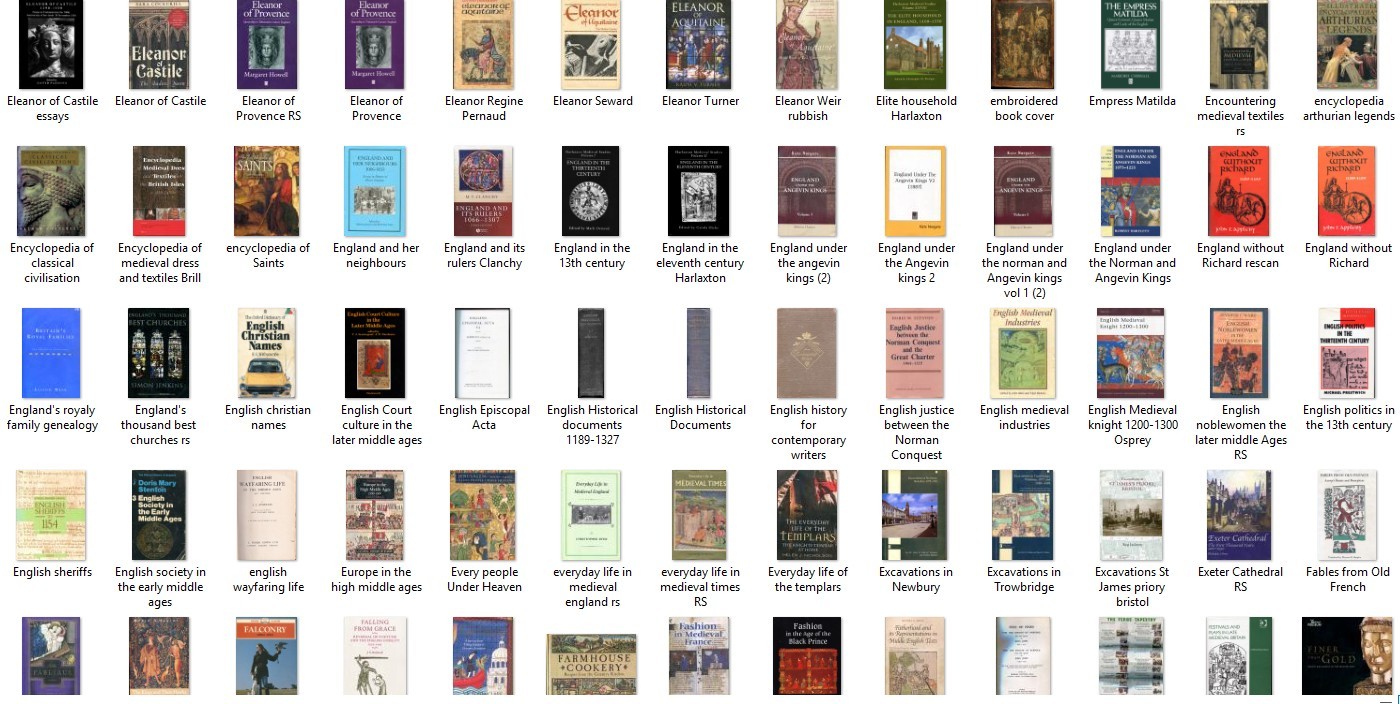
Just some of Elizabeth’s research books

Elizabeth: I’ve been studying the Middle Ages since I was fifteen years old and I am a few decades older now, so I have a good grounding in the general research of the period. I don’t have to start from scratch. I research using academic and specialist books of which I have a wide-ranging library – in several rooms of my house! I research online these days – when I began my career that wasn’t an option, but now it is, and it’s more a case of limiting the information and knowing which are the bona fide sites. While there’s a great deal of marvellous research resources out there, it has to be said that sadly copious amounts of rubbish exist too and one has to become an expert at sifting. I might do bits of experimental living history. I used to re-enact before I ran out of time and I still have all the kit and friends in the business toward whom I can direct questions. I also have friends in the academic community who are very helpful.

Sharon: Tell us your ‘favourite’ medieval story you have come across in your research.

Elizabeth: I think that would have to be the great William Marshal who attended a tournament with his lord the Young King, eldest son of Henry II. During the tournament they captured another knight for ransom and brought him back to their own camp sitting on his horse with a lead rein. However, on the way there they had to pass some buildings and the captured knight lifted himself off his horse and shimmied up a gutter pipe and clambered onto a house gallery (upstairs veranda sort of thing). Meanwhile, William Marshal was riding along, holding the reins of a riderless horse and not realising his captive had absconded until the Young King, doubled up with laughter, let him know – he’d been in on the joke for a while!

Sharon: Tell us your least ‘favourite’ medieval story you have come across in your research.

History ... the Interesting Bits
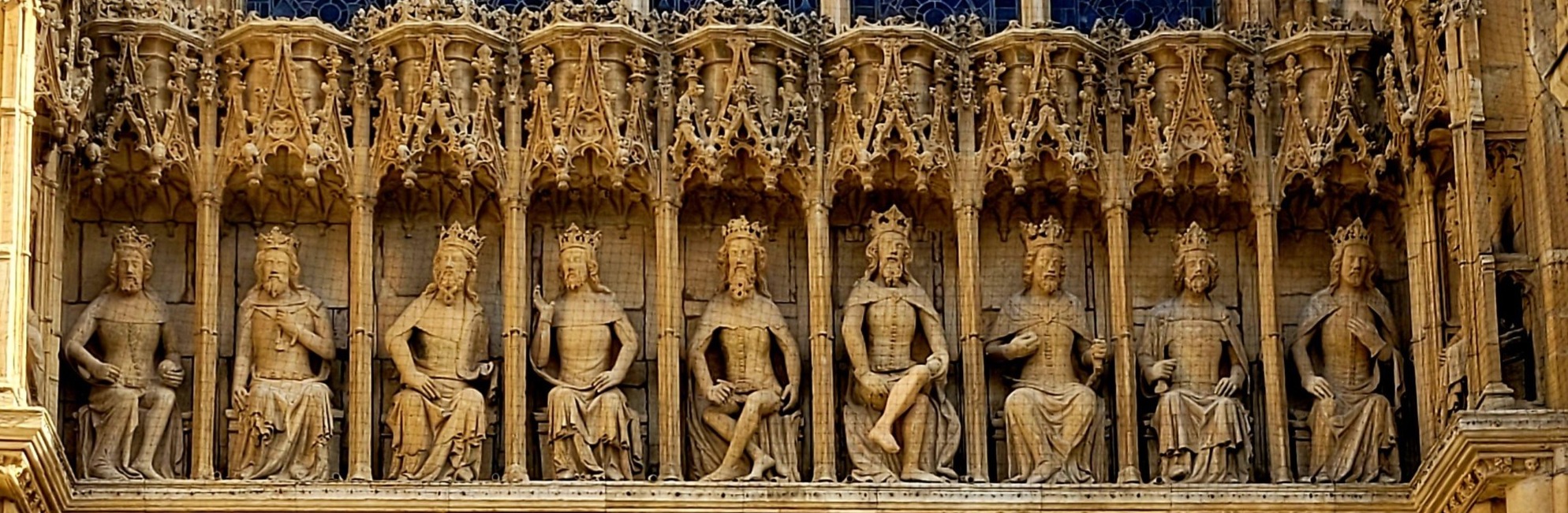
The Gallery of Kings, Lincoln Cathedral

Elizabeth: There are quite a few, but here’s a typical one. It would be in a work I was reading on criminal cases in Medieval Coventry. Someone stole a horse and was put in the stocks for it by the bailiff. But it was a very, very cold night and the criminal got frost bite which resulted in his lower legs perishing and then dropping off! He died, and the bailiff was arrested for murder – pretty gruesome!

Sharon: Are there any other eras you would like to write about?

Elizabeth: Arthurian might be interesting, although I’d need to do a lot of reading up because history has changed a lot since I became a fan of that era via various novels. When I first began writing as a teen, I almost wrote a Regency novel, but Medieval pipped Regency at the post. It might still be interesting to do, but again, I’d need to get stuck into the research so probably not.

Sharon: What are you working on now?

History ... the Interesting Bits
Joan of Kent

Elizabeth: I’ve just completed The Uncrowned Queen, the second part of Joan of Kent’s amazing story and I am now working on an untitled novel about Katherine Swynford and her two husbands – Hugh Swynford and John of Gaunt. I am finding it fascinating, especially the way research has moved on and changed datelines, nuances and our understanding of the period and the protagonists. It goes to show that so much of the time what we think we know is actually what we don’t know. Actually, if we are prepared to swallow long-cherished beliefs and re-learn, it’s immensely exciting and rewarding!

Sharon: And finally, what is the best thing about being a writer?

Elizabeth: Being your own boss to an extent. As long as I put in the word count, I can get up as I please and go to bed as I please. Equal with that are the many good friends I have made over my career, both the readers and the historians – and I’ve learned a lot of cool things too!

About the Author:

History ... the Interesting Bits

Elizabeth Chadwick is a UK million selling historical novelist whose works are based in the medieval period. She won a Betty Trask award for her first published novel The Wild Hunt and the RNA prize for Historical fiction in 2011 with To Defy A King. Her novel The Greatest Knight is a New York Times bestseller and has been optioned for film and TV together with several others in the same series. Specialising in the Middle Ages, with a particular interest in the life and times of William Marshal and the Angevin court, she occasionally lectures on the academic circuit and gives talks on historical tours. Elizabeth is also a member of The Royal Historical Society. When not writing, Elizabeth enjoys chatting to readers on all sorts of subjects but with a strong emphasis on reading and medieval history.

*

My books

Signed, dedicated copies of all my books are available through my online store.

Out now: Scotland’s Medieval Queens

Books by Sharon Bennett Connolly

Scotland’s history is dramatic, violent and bloody. Being England’s northern neighbour has never been easy. Scotland’s queens have had to deal with war, murder, imprisonment, political rivalries and open betrayal. They have loved and lost, raised kings and queens, ruled and died for Scotland. From St Margaret, who became one of the patron saints of Scotland, to Elizabeth de Burgh and the dramatic story of the Scottish Wars of Independence, to the love story and tragedy of Joan Beaufort, to Margaret of Denmark and the dawn of the Renaissance, Scotland’s Medieval Queens have seen it all. This is the story of Scotland through their eyes.

Scotland’s Medieval Queens gives a thorough grounding in the history of the women who ruled Scotland at the side of its kings, often in the shadows, but just as interesting in their lives beyond the spotlight. It’s not a subject that has been widely covered, and Sharon is a pioneer in bringing that information into accessible history.’ Elizabeth Chadwick (New York Times bestselling author)

Available now from Amazon and Pen and Sword Books

Also by Sharon Bennett Connolly:

Books by Sharon Bennett Connolly

Heroines of the Tudor World tells the stories of the most remarkable women from European history in the time of the Tudor dynasty, 1485-1603. These are the women who ruled, the women who founded dynasties, the women who fought for religious freedom, their families and love. Heroines of the Tudor World is now available for pre-order from Amberley Publishing and Amazon UK. Women of the Anarchy demonstrates how Empress Matilda and Matilda of Boulogne, unable to wield a sword themselves, were prime movers in this time of conflict and lawlessness. It shows how their strengths, weaknesses, and personal ambitions swung the fortunes of war one way – and then the other. Available from Bookshop.orgAmberley Publishing and Amazon UKKing John’s Right-Hand Lady: The Story of Nicholaa de la Haye is the story of a truly remarkable lady, the hereditary constable of Lincoln Castle and the first woman in England to be appointed sheriff in her own right. Available from all good bookshops Pen & Sword Booksbookshop.org and Amazon

Royal Historical Society

Defenders of the Norman Crown: The Rise and Fall of the Warenne Earls of Surrey tells the fascinating story of the Warenne dynasty, from its origins in Normandy, through the Conquest, Magna Carta, the wars and marriages that led to its ultimate demise in the reign of Edward III. Available from Pen & Sword BooksAmazon in the UK and US, and Bookshop.orgLadies of Magna Carta: Women of Influence in Thirteenth Century England looks into the relationships of the various noble families of the 13th century, and how they were affected by the Barons’ Wars, Magna Carta and its aftermath; the bonds that were formed and those that were broken. It is now available in paperback and hardback from Pen & SwordAmazon, and Bookshop.orgHeroines of the Medieval World tells the stories of some of the most remarkable women from Medieval history, from Eleanor of Aquitaine to Julian of Norwich. Available now from Amberley Publishing and Amazon, and Bookshop.orgSilk and the Sword: The Women of the Norman Conquest traces the fortunes of the women who had a significant role to play in the momentous events of 1066. Available now from Amazon,  Amberley Publishing, and Bookshop.org.

Alternate Endings: An anthology of historical fiction short stories including Long Live the King… which is my take what might have happened had King John not died in October 1216. Available in paperback and kindle from Amazon.

Podcast:

Have a listen to the A Slice of Medieval podcast, which I co-host with Historical fiction novelist Derek Birks. Derek and I welcome guests, such as Elizabeth Chadwick and Bernard Cornwell and discuss a wide range of topics in medieval history, from significant events to the personalities involved.

Every episode is also now available on YouTube.

*

Don’t forget! Signed and dedicated copies of all my books are available through my online bookshop.

For forthcoming online and in-person talks, please check out my Events Page.

You can be the first to read new articles by clicking the ‘Follow’ button, liking our Facebook page or joining me on TwitterThreadsBluesky and Instagram.

*

©2025 Sharon Bennett Connolly, FRHistS and Elizabeth Chadwick

Guest Post: Othon and the Templars by John Marshall

Today, it is a pleasure to welcome John Marshall to History…the Interesting Bits with an article about a very intriguing chap, Othon de Grandson. Othon was a very good friend of Edward I and one who could arguably challenge William Marshal for the title, Greatest Knight. John’s new book is a biography of this remarkable man.

So, over to John…

Othon and the Templars

History  the Interesting Bits
Othon de Grandson from an altar screen from the Cathedral in Lausanne now displayed in the Bern Historic Museum.

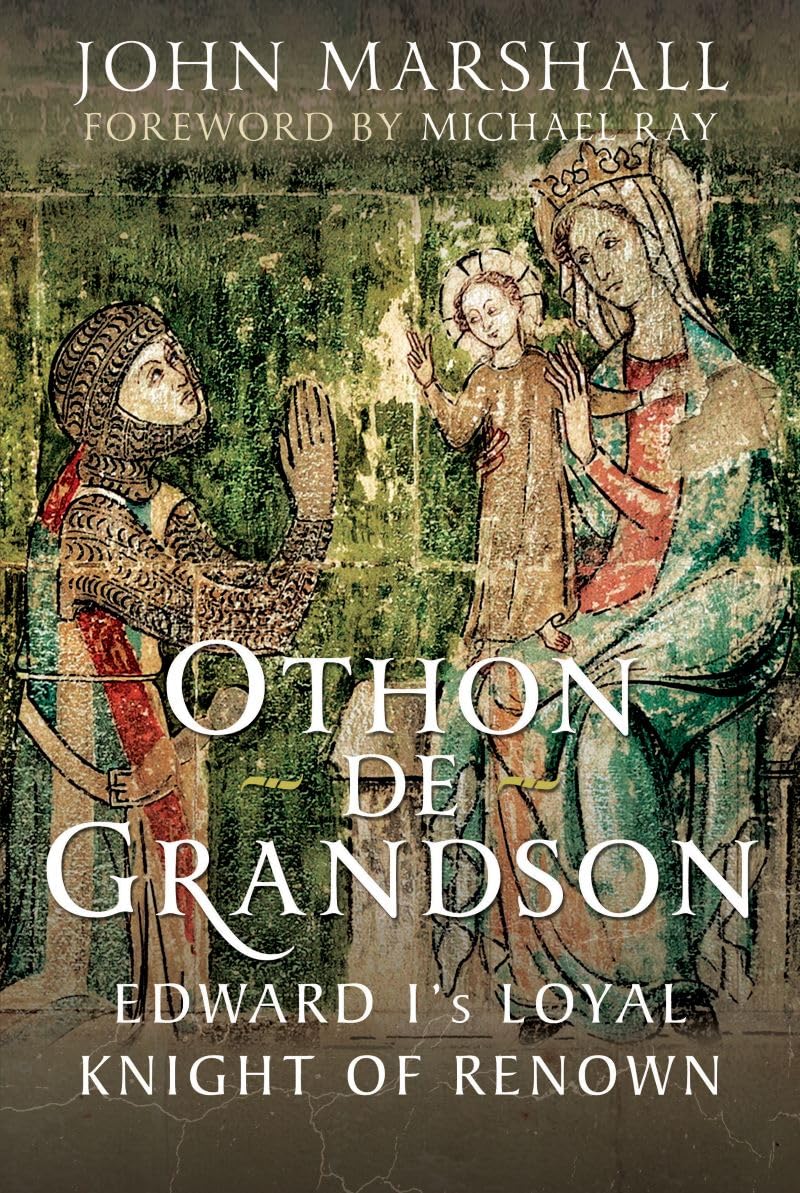
A question I asked myself in writing Othon de Grandson: Edward I’s Loyal Knight of Renown was exactly what was the Savoyard knight’s relationship with the Knights Templar? The relationship of Edward’s friend and envoy with the Poor Fellow Soldiers of Christ and of the Temple of Solomon is a long one and indeed began over a century before he was born.

Othon’s ancestor Barthélémy de Jura, treasurer of Reims, then Bishop of Laon in Picardy, was there at the very beginning of the crusader order. Barthélémy was at the 1128 Council of Troyes, chaired by Bernard of Clairvaulx which ratified the rule of the the Templars. He was a kinsman, through his mother, of Bernard of Clairvaulx, and would later retire as a monk to the Cistercian abbey he helped found at Foigny. Another ancestor was another Barthélémy who took up the cross and joined the Second Crusade. He is reported to have departed this life in Jerusalem in 1158.

So, when Othon de Grandson accompanied his liege the Lord Edward on the ninth crusade in 1271 his family was no stranger to crusading.

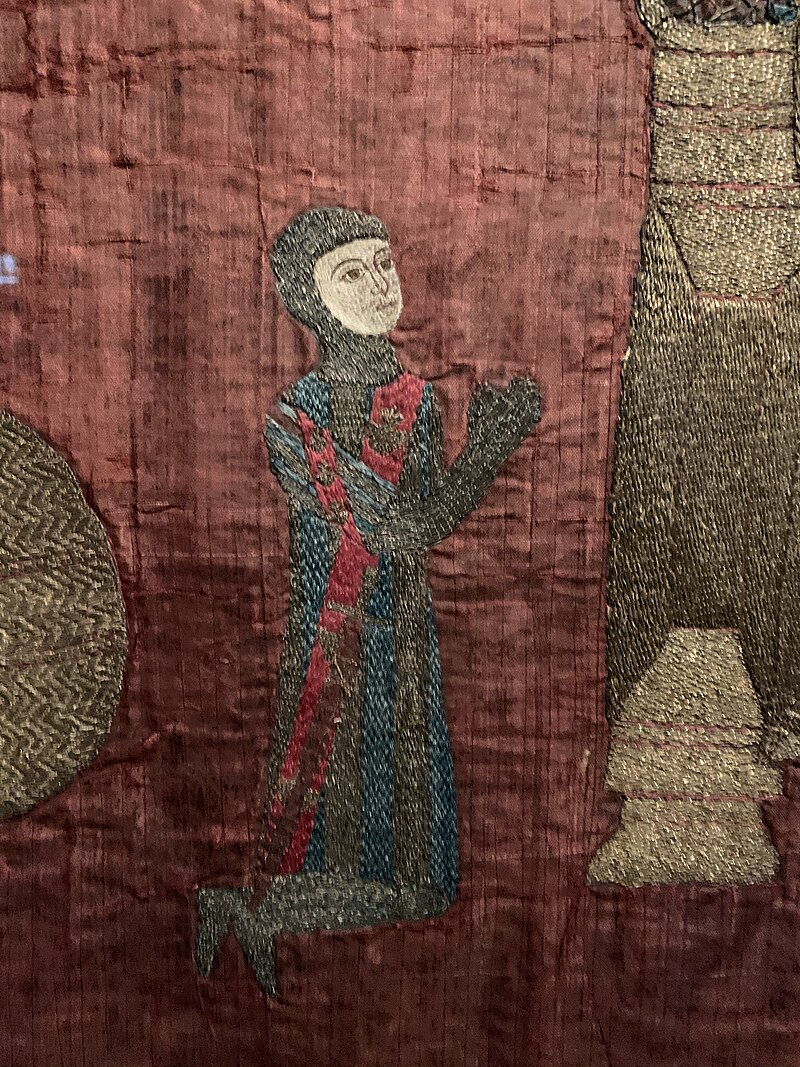
But the story of Othon de Grandson’s close association with the Templars begins in earnest with his flight from Acre accompanying Templar knight Jacques de Molay in 1291. Grandson had likely been sent to Acre in 1290 as preparation for a crusade by King Edward I that never came to pass. They were all overtaken by Al Ashraf Khalil, the sultan of Egypt who successfully led a Mamluk assault on the last crusader outpost in Outremer. King Henry II of Cyprus, the gravely wounded Master of the Hospitallers Jean de Villiers, the soon-to-be Master of the Templars, Jacques de Molay and Othon de Grandson washed up on the shore of Cyprus as refugees from Acre. The Templars were in need of a new Grand Master, and it is said that Othon de Grandson was “involved” in the election of Jacques de Molay.

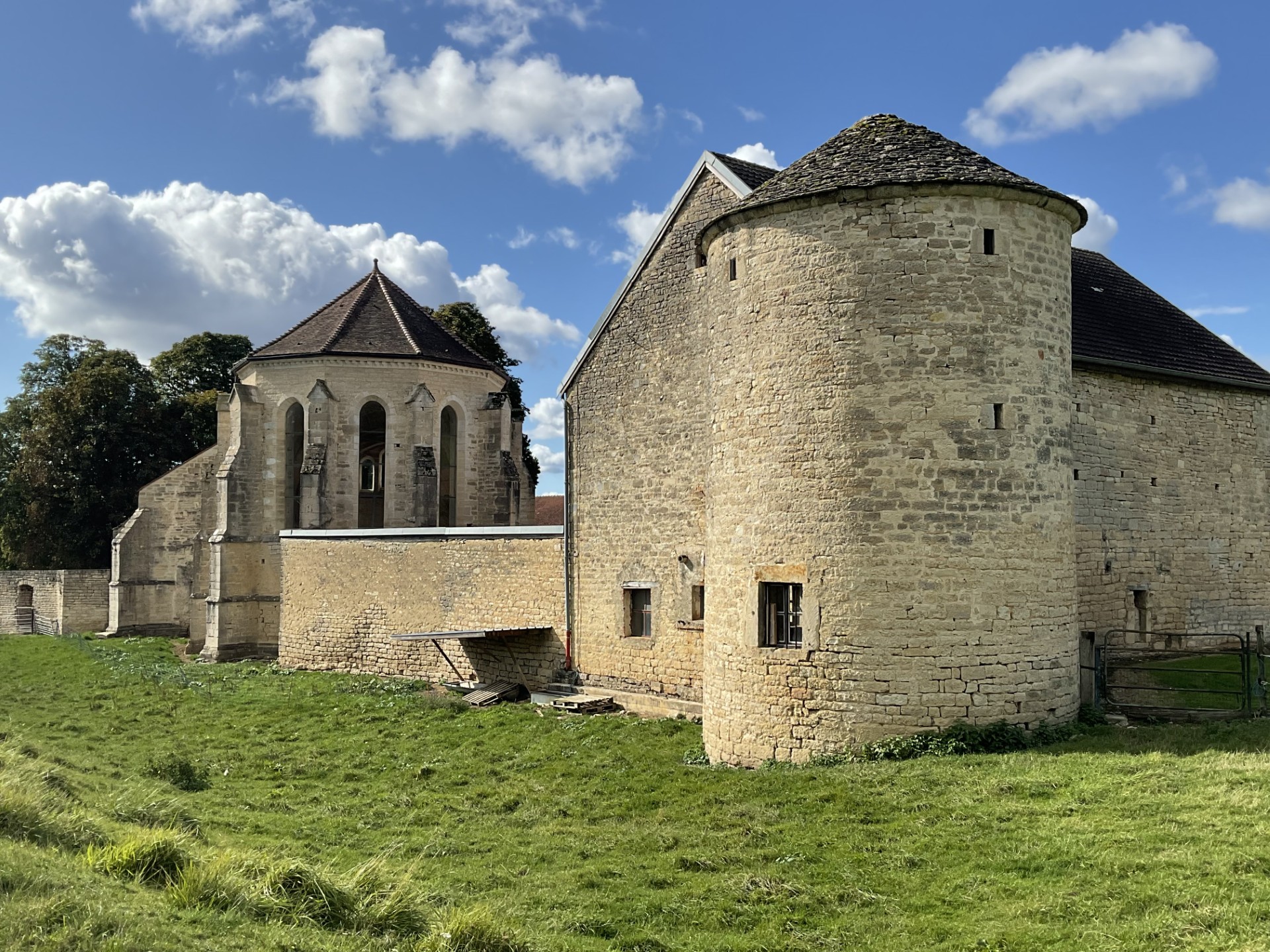
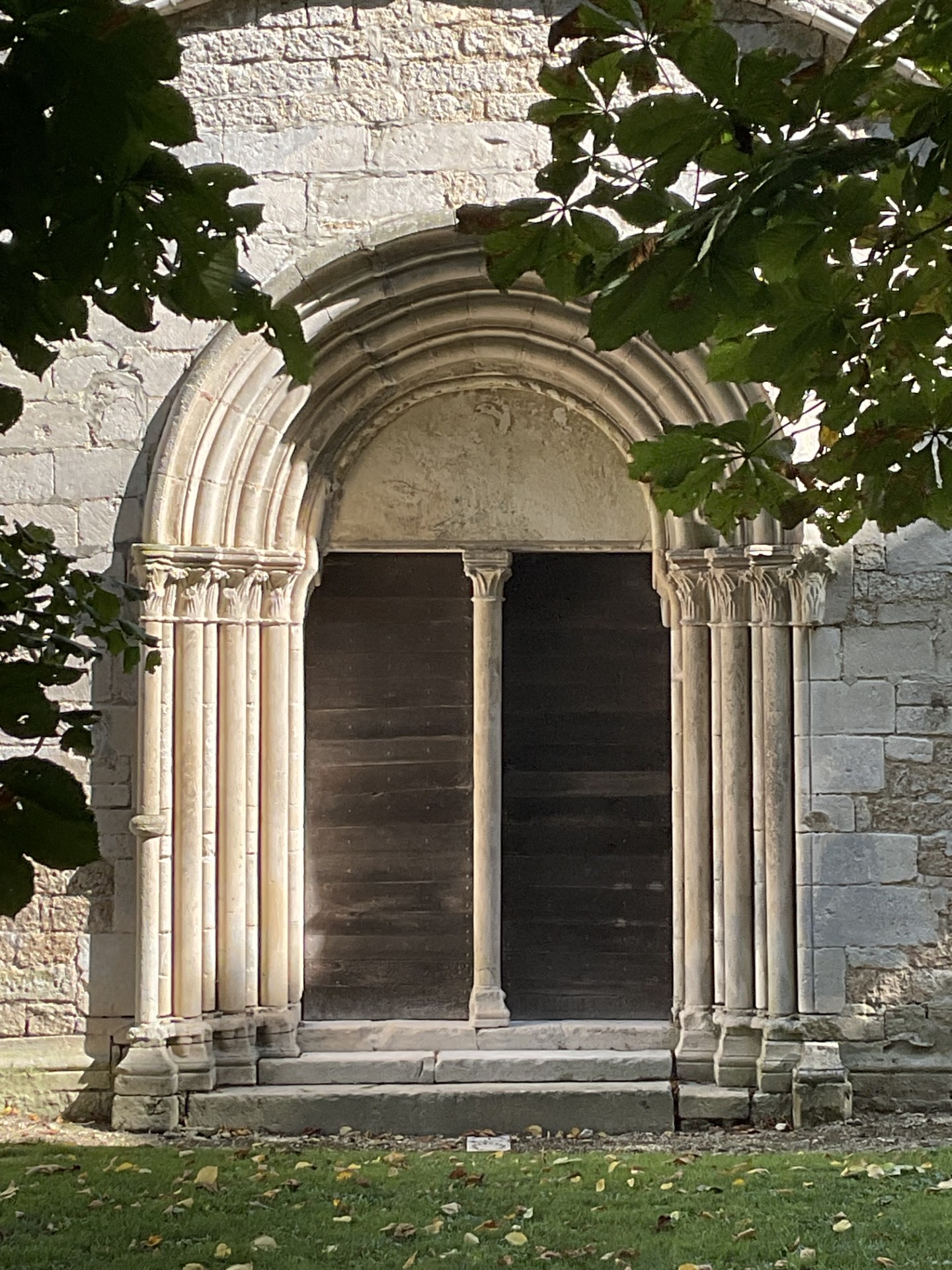
The former Templar Commanderie at Épailly in Burgundy which passed to Othon on the Templars suppression.

The idea of being ‘involved’ came from a declaration given later during the suppression of the order; a Templar, Hugh de Fauro, gave testimony that Jacques de Molay had sworn before the Master of the Hospital and ‘coram domino Odone de Grandisono milite’ that is ‘before the knight Sir Othon de Grandson.’ We then hear from Hethum of Corycus that Grandson and Jacques de Molay, had had a hand in affairs and the better reordering of the kingdom of Cillician Armenia to meet the Mamluk threat and preserve it as a base for ongoing crusading ventures. Grandson’s relationship with Molay and the Templars does seem to stem from this time at Acre, on Cyprus and in Armenian Cilicia between 1291 and 1294.

We then meet the financial entanglement of grandson with the Templars. Evidence of this comes not only from payments from the Templars to Grandson but also grants in the other direction. When both Molay and Grandson were back in the west, on 14 July 1296, Othon would grant the Templars 200 Livres from his salt revenues at Salins-les-Bains in the Franche Comté, a source of revenue he had used to similarly grant the monks of Saint-Jean Baptiste in Grandson before he had left for the

Holy Land. The first grant was in essence for prayers of safe return; the second grant looks like thanks for a safe return. The great salt works of Salins belonged to the Count of Burgundy; they were also known as the Seigneurs de Salins, and the works and its grander enlightenment era equivalent today enjoy UNESCO-listed status. The grant to the Templars was in consideration of the great help Othon had received from ‘mes chiers amis en dieu freres Jaques de Molai’, that is, ‘my dear friend in God brother Jacques de Molay’ and he referred to the help which ‘li freres du celle meismes Relegion ont fait a mes accessors, e a moi deca mer et de la mer en la sainte terre e ne cesse encore de faire’ or ‘the brethren of that same order have given to my ancestors and to myself in the West and in the East in the Holy Land, and still continue to give’. His reference to his anccessurs is likely to mean Barthélémy de Grandson who had, as we saw, died in 1158 in Jerusalem.

History the Interesting Bits
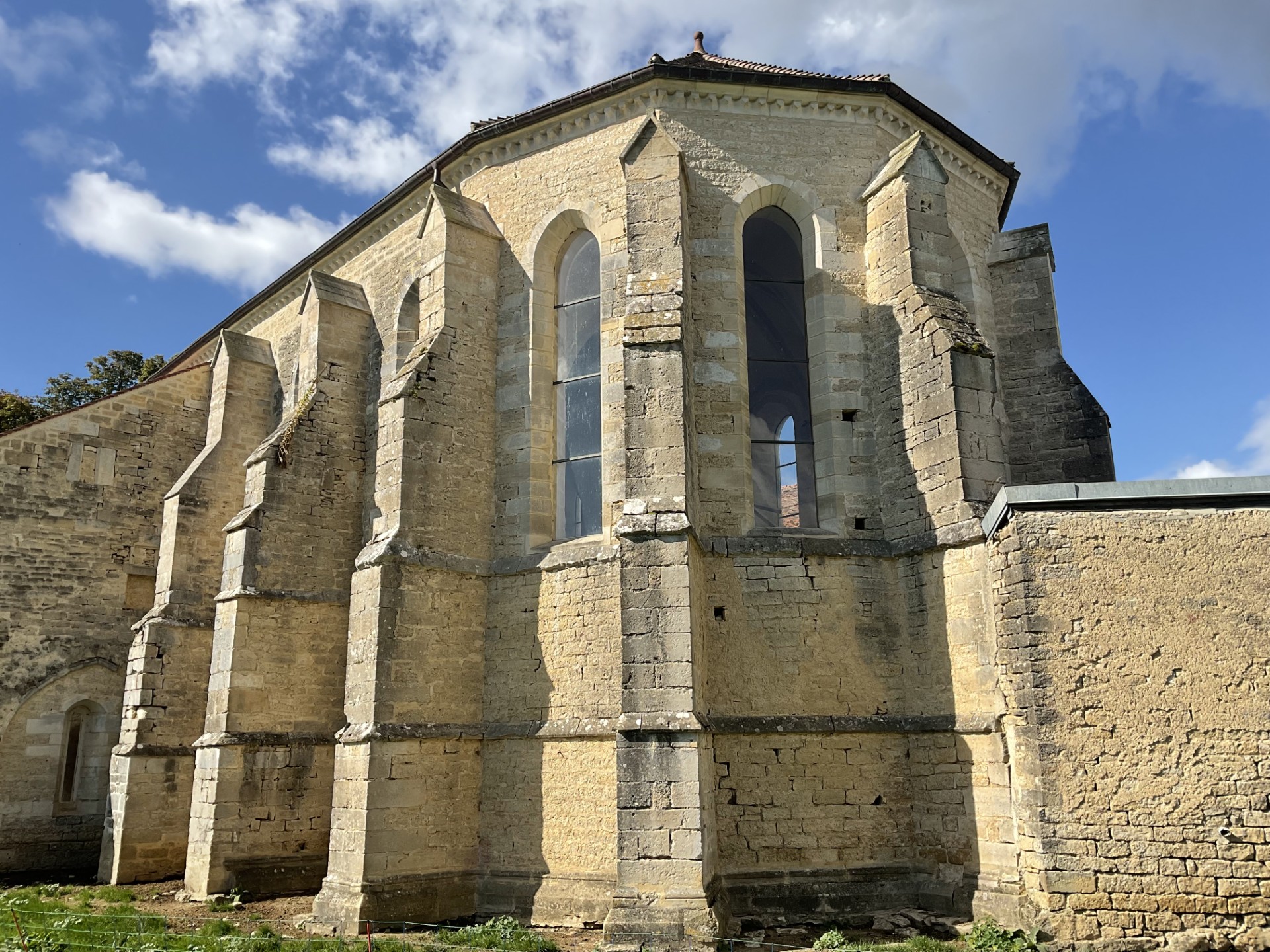
Templar Commanderie at Épailly in Burgundy

The reverse Templar ongoing and enormous financial commitment to Grandson is confirmed to us in a papal confirmation of 17 August 1308 by Pope Clement V. Upon suppression of the order Grandson was keen, obviously, that Templar payments continue, since they were the tremendous annual sum of 2,000 Livres Tournois, equating to £500 at the time, and over £350,000 in today’s money. The pension arrangement was made by a Grand Master, named as Jacques de Molay, and variously dated to 1277, 1287 or 1296–97. French Templar historian Alain Demurger wrote: ‘Fault lay with the editor of Clement V’s records … The editor put the date 1277, while M. L. Bulst-Thiele transcribed it as 1297, whereas the original, very clearly and without abbreviations or deletions says 1287.’ In his notes to this assertion, he cites the Vatican Archives date as ‘Anno millesimo duecentesimo octuagesimo septimo’ or ‘In the year one thousand two hundred and eighty-seven.’

Now of course Molay did not succeed Beaujeu until 1292, which renders the dating of the award problematic. Demurger suggested that it was not Molay who made the award despite specific reference to him ‘Jacobus de Mollay’, but his predecessor Beaujeu – in short, that the date was correct but the master’s name incorrect. Alan Forey argued the contrary, writing that it was: ‘more likely that the grant was made by James of Molay and that the date was wrongly copied’. Given, Molay’s 1292 election as Grand Master this would suggest 1296–97 – in short, the date was incorrect, but the master’s name correct. Demurger acknowledged in his notes that ‘a new problem arose … Grandson and the Temple were already connected in 1287: where, how and for what reason?’ Indeed, Demurger’s dating would create such questions, while Forey’s dating would place them squarely in the context of the Fall of Acre and his time in the east with Molay. This ‘compensare’ was given by the The Templars for ‘operibus virtuosis’ or ‘virtuous actions’ rendered by Othon in support of the order, but surely more likely post-Fall of Acre than before.

Templar Commanderie at Épailly in Burgundy

In confirmation of the pension, Clement V granted Othon three former Templar houses in France as a part of the continuing settlement, those at Thors, Épailly and Coulours, an act unlikely to have been undertaken at the time in favour of a knight of the order. And so, the ‘virtuous works’ referred to by Pope Clement would appear to date from Grandson’s time in Acre in 1291. So, the date of 1277 attached to the payments by the transcription of them is certainly mistaken, and for the 1287 dating of the original 1308 manuscript we should read 1296–97. Demurger gives 1296 clearly as the date for Molay meeting with Grandson in Paris and the Salins grant. Othon de Grandson’s intimate links with the Templars continue to intrigue, but in Cyprus and Armenia 1292-4, as at Acre in 1291, and here with his pension payments they point to a significant and close ally in matters Outremer rather than a member of the order itself, of which there is no mention.

Grandson, was a close friend of the Templars, having fought alongside them at Acre in 1291, been there in Cyprus as a part of Molay’s election as Grand Master, and in receipt of a handsome annual pension from the order. So, at Philippe ke Bel’s suppression of the order and Molay’s arrest and the rumours swirling around France, the scandal would have touched directly upon him. But at no point can we find Grandson implicated in events, other than petitioning Pope Clement for the maintenance of his pension. But nowhere too can we find him leaping to the defence of Molay, his former friend and ally, at least not in a way that has left any trace. As Demurger said in conversation with the author of this book, Grandson did not try to defend Molay. A character flaw? Demurger went to affirm that one cannot speculate about possible motives, Grandson was by now seventy years of age, had discretion become the greater part of valour?

History the Interesting Bits
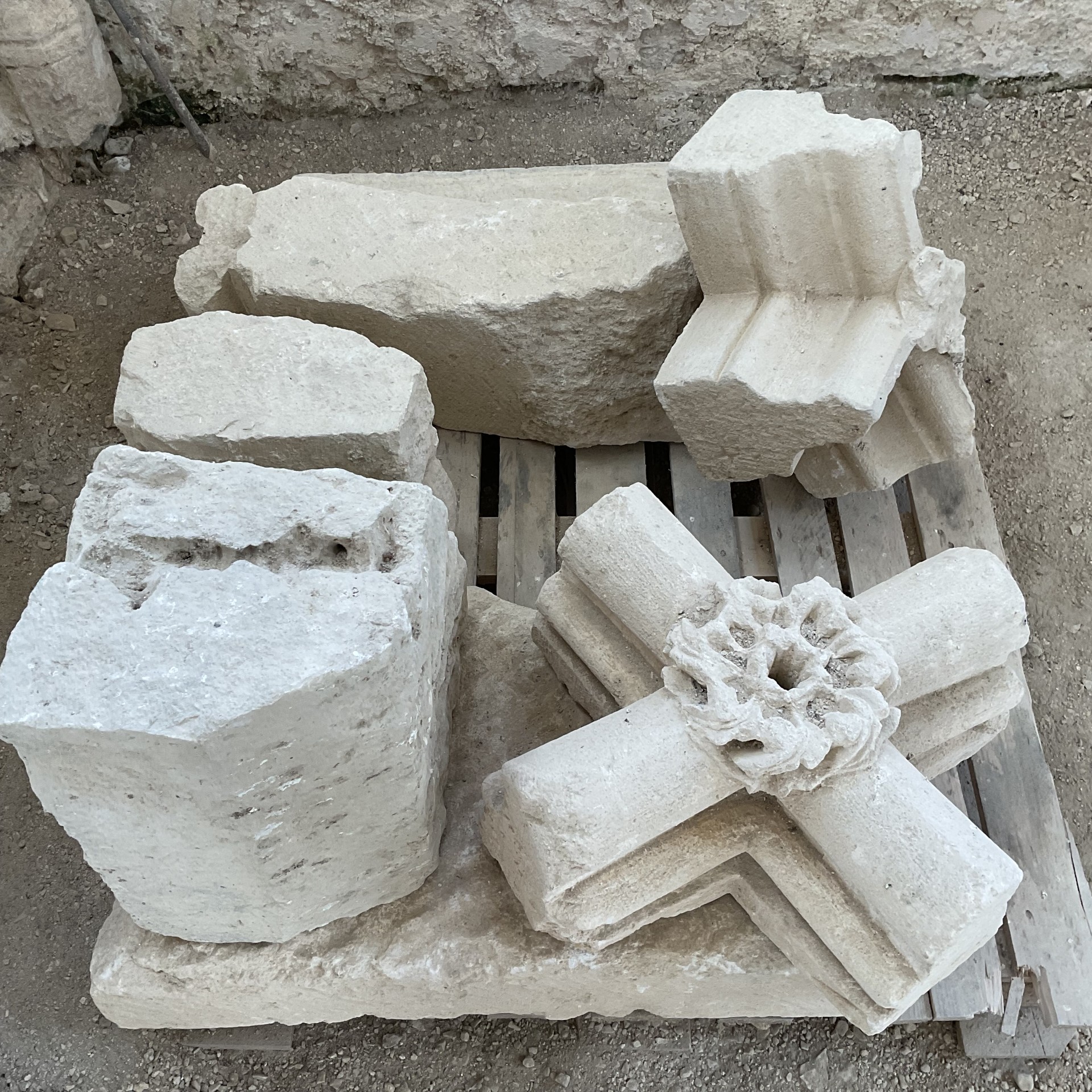
Templar Commanderie at Épailly in Burgundy

It is because of his avoidance of implication in the suppression of the Templars, that despite his Templar connections, we can be as certain as certain can be that Othon de Grandson was a friend, ally, indeed fellow traveller of the Templars, but not actually a member of the doomed order, As Alain Demurger said unequivocally to the question, was Grandson a Templar? – Non. What were the enormous payments from the Templars to Othon de Grandson for? What were the “operibus virtuosis”? It’s only speculation but what did Grandson have that might be valuable to the Order? – access better than anyone to Edward I’s ear and access to the English court.

*

About the Book:

History  the Interesting Bits

There were once two little boys – they met when they were both quite young; one was born in what’s now Switzerland, by Lake de Neuchâtel, his name Othon de Grandson, and the other was born in London, his name Prince Edward, son of King Henry the third of that name. Othon was probably born in 1238, and Edward, we know, in June 1239. These two little boys grew up and had adventures together. They took the cross together, the ninth crusade in 1271 and 1272. Othon reputedly sucking poison from Edward when the latter was attacked by an assassin. In 1277 and 1278, they fought the First Welsh War against the House of Gwynedd, Othon doing much to negotiate the Treaty of Aberconwy in 1278, which ended hostilities. When war broke out again in 1282 they fought the Second Welsh War together. Othon led Edward’s army across the Bridge of Boats from Anglesey and was the first to sight the future sites of castles at Caernarfon and Harlech. Edward made his friend the first Justiciar (Viceroy) of North Wales. When Edward and Othon went to Gascony in 1287, Othon stayed in Zaragoza as a hostage for Edward’s good intentions between Gascony and Castille.  Later, in 1291, when Acre was threatened by the Mamluks, Edward sent Othon as head of the English delegation of knights. When Acre finally fell to the Mamluks bringing the Crusades to a close, who was the last knight onto the boats? Othon de Grandson, helping his old friend, the wounded Jean de Grailly onto the boat. When Othon returned from the East, he found England at war with Scotland and France; he would spend his last years in Edward’s service building alliances and negotiating peace before retiring to his home in what is now Switzerland after the king’s death in 1307. Grandson lived in the time of Marco Polo, Giotto, Dante, Robert the Bruce, and the last Templars. He was right there at the centre of the action in two crusades: war with Wales, Scotland, and France, the Sicilian Vespers, and suppression of the Templars; he walked with a succession of kings and popes, a knight of great renown. This is his story.

Othon de Grandson: Edward I’s Loyal Knight of Renown is available now from Amazon.

About the Author:

History  the Interesting Bits

Having moved to Switzerland, and qualified as a historian (Masters, Northumbria University, 2016), the author came across the story of the Savoyards in England and engaged in this important history research project. He founded the Association pour l’histoire médiévale Anglo Savoyards. Writer of Welsh Castle Builders: The Savoyard Style and Peter of Savoy: The Little Charlemagne both available from Pen and Sword Books Ltd. Member of the Henry III Roundtable with Darren Baker, Huw Ridgeway and Michael Ray.

*

My Books

Signed, dedicated copies of all my books are available through my online bookshop.

Out now: Scotland’s Medieval Queens

Books by Sharon Bennett Connolly

Scotland’s history is dramatic, violent and bloody. Being England’s northern neighbour has never been easy. Scotland’s queens have had to deal with war, murder, imprisonment, political rivalries and open betrayal. They have loved and lost, raised kings and queens, ruled and died for Scotland. From St Margaret, who became one of the patron saints of Scotland, to Elizabeth de Burgh and the dramatic story of the Scottish Wars of Independence, to the love story and tragedy of Joan Beaufort, to Margaret of Denmark and the dawn of the Renaissance, Scotland’s Medieval Queens have seen it all. This is the story of Scotland through their eyes.

Scotland’s Medieval Queens gives a thorough grounding in the history of the women who ruled Scotland at the side of its kings, often in the shadows, but just as interesting in their lives beyond the spotlight. It’s not a subject that has been widely covered, and Sharon is a pioneer in bringing that information into accessible history.’ Elizabeth Chadwick (New York Times bestselling author)

Available now from Amazon and Pen and Sword Books

Also by Sharon Bennett Connolly:

Books by Sharon Bennett Connolly

Heroines of the Tudor World tells the stories of the most remarkable women from European history in the time of the Tudor dynasty, 1485-1603. These are the women who ruled, the women who founded dynasties, the women who fought for religious freedom, their families and love. Heroines of the Tudor World is now available for pre-order from Amberley Publishing and Amazon UK. Women of the Anarchy demonstrates how Empress Matilda and Matilda of Boulogne, unable to wield a sword themselves, were prime movers in this time of conflict and lawlessness. It shows how their strengths, weaknesses, and personal ambitions swung the fortunes of war one way – and then the other. Available from Bookshop.orgAmberley Publishing and Amazon UKKing John’s Right-Hand Lady: The Story of Nicholaa de la Haye is the story of a truly remarkable lady, the hereditary constable of Lincoln Castle and the first woman in England to be appointed sheriff in her own right. Available from all good bookshops Pen & Sword Booksbookshop.org and Amazon

Royal Historical Society

Defenders of the Norman Crown: The Rise and Fall of the Warenne Earls of Surrey tells the fascinating story of the Warenne dynasty, from its origins in Normandy, through the Conquest, Magna Carta, the wars and marriages that led to its ultimate demise in the reign of Edward III. Available from Pen & Sword BooksAmazon in the UK and US, and Bookshop.orgLadies of Magna Carta: Women of Influence in Thirteenth Century England looks into the relationships of the various noble families of the 13th century, and how they were affected by the Barons’ Wars, Magna Carta and its aftermath; the bonds that were formed and those that were broken. It is now available in paperback and hardback from Pen & SwordAmazon, and Bookshop.orgHeroines of the Medieval World tells the stories of some of the most remarkable women from Medieval history, from Eleanor of Aquitaine to Julian of Norwich. Available now from Amberley Publishing and Amazon, and Bookshop.orgSilk and the Sword: The Women of the Norman Conquest traces the fortunes of the women who had a significant role to play in the momentous events of 1066. Available now from Amazon,  Amberley Publishing, and Bookshop.org.

Alternate Endings: An anthology of historical fiction short stories including Long Live the King… which is my take what might have happened had King John not died in October 1216. Available in paperback and kindle from Amazon.

Podcast:

A Slice of Medieval

Have a listen to the A Slice of Medieval podcast, which I co-host with Historical fiction novelist Derek Birks. Derek and I welcome guests, such as Bernard Cornwell and discuss a wide range of topics in medieval history, from significant events to the personalities involved.

Every episode is also now available on YouTube.

*

Don’t forget! Signed and dedicated copies of all my books are available through my online bookshop.

For forthcoming online and in-person talks, please check out my Events Page.

You can be the first to read new articles by clicking the ‘Follow’ button, liking our Facebook page or joining me on TwitterThreadsBluesky and Instagram.

*

©2025 Sharon Bennett Connolly, FRHistS and John Marshall

Author Spotlight: John Marshall

History...the Interesting Bits
Othon de Grandson

Today, it is a pleasure to welcome historian John Marshall to History…the Interesting Bits to chat about his writing and what attracts him to History. John’s third book, Othon de Grandson: Edward I’s Loyal Knight of Renown, has just hit the shops. A close rival to William Marshal for the Greatest Knight accolade, I’m looking forward to reading Othon’s story. But first, a chat with John about what inspires his writing…

Sharon: How did you start your writing career?

John: A midlife career change, some would say a midlife crisis, but an increasing dissatisfaction and boredom surrounding my career of thirty years within the corporate travel business. In short it was not fun anymore, nor was it in anyway stimulating intellectually. I had had a lifelong interest in history, so the first step was a master’s in history. More than anything, this taught me how to organise my thoughts and conduct research professionally, especially that in reading the most interesting stuff was usually in the footnotes. A relocation for personal reasons brought a move from England to Switzerland. There, I kind of fell down the rabbit hole of the relations between Savoy and England in the thirteenth century, I was looking for a writing project as a historian and within a week of arriving in Switzerland my partner and I visited the castle at Yverdon in the Canton of Vaud. Hidden away in the small print of a panel was the throw away line that the castle had been built by Maître Jacques de Saint George. I had recently visited Conwy castle before leaving the UK and for some reason the name immediately registered as the man who had built Conwy. “Do you know who this is?” I asked my partner, receiving a puzzled look. I then emailed the castle to be given an erroneous answer. I then discovered the works of the late Arnold Taylor, and the more recent criticism which I thought unfair. So, the research for my first book, Welsh Castle Builders began.

Sharon: What is the best thing about being a writer?

John: We all write to understand something better, we all read for the same reason. We also, as was the case with me, write a book we would have wanted to read ourselves. In beginning the research for Welsh Castle Builders I was frustrated that the available evidence, the story, did not seem to be in one place. I also felt that the people I wanted to write about in the distant past had not had their story told well enough. So, the best thing about being a writer is being able to write books you would want to read yourself and to tell the stories of forgotten people.

Sharon: What is the worst thing about being a writer?

History...the Interesting Bits

John: For a history writer the worst thing is the sheer volume of detail, and the ease with which you can make mistakes by saying castle x is in county y when it’s now in county z. My previous career had involved a whole lot of data analysis, so this helped, but the sheer volume of detail can be daunting. I would also add that the hours involved in research can also be daunting.

Sharon: What got you into history?

John: My dad was the one who got me into history, it was very much a father and son thing. He had a real passion for history; we covered many miles visiting castles and battlefields. Indeed, my earliest childhood memory is a vague one of walking by an enormous castle by a river and wondering who built that. As a five-year-old boy a medieval castle had a “wow” response that never left me. We were on holiday in Rhyl, I now know the castle has a name, Rhuddlan Castle.

Sharon: What drew you to Othon de Grandson’s story?

John: Days after visiting the castle at Yverdon my partner and I visited the cathedral at Lausanne. My partner is from Lausanne, and she was and is very proud of the cathedral. Just by the altar is the tomb of a knight, with no reference to who the knight is. Asking my partner she replied, “Oh that’s Othon de Grandson” But she was not able to add much more. Reading Arnold Taylor, in connection to the Yverdon visit the name Othon de Grandson kept coming up time and time again. So, I began to learn Othon’s story and realised quickly that without Othon there would have been no Maître Jacques de Saint George in Britain. More research told the story of a boy who came to England, a crusading knight, a top-level diplomat, someone at the very heart of European affairs. Perhaps it was the little boy in me, but this had all the hallmarks of a Boy’s Own adventure story. So, once I had done with Maître Jacques and Pierre de Savoie, Othon’s story had to be told. There was an excellent book written in the sixties, but this story needed to be told again, maybe one day the Swiss will even put a marker on the tomb to say who it is.
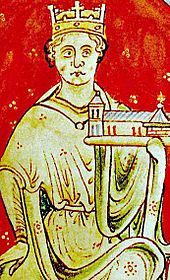
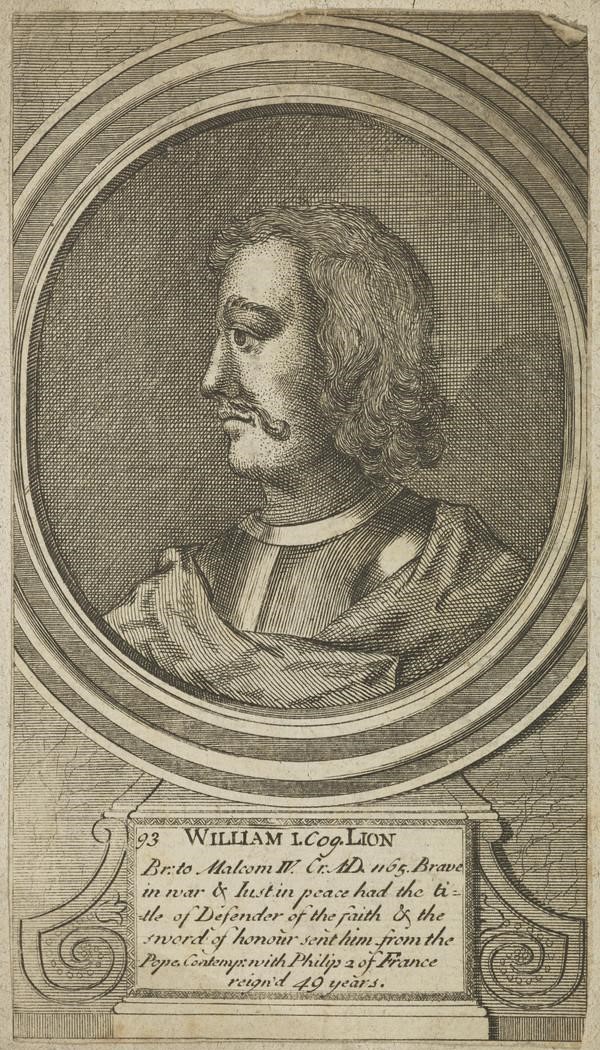
Sharon: How influential was Othon to Edward I’s reign?

History...the Interesting Bits
Othon de Grandson from an altar screen from the Cathedral in Lausanne now displayed in the Bern Historic Museum.

John: I think it comes down to one word – loyalty. The book is called Othon de Grandson: Edward I’s Loyal Knight of Renown. Edward I could inspire incredible lifelong loyalty in those around him. It is remarkable to see how loyal these band of brothers; Edward, Edmund, Othon de Grandson, Henry de Lacy, Jean de Vesci et al were to one another. The epithet that seems to come up time after time in their regard is loyalty. Edward in March 1278 described Othon as someone who could ‘do his will … better and more advantageously’ than ‘others about him’, as well as ‘if he himself were to attend to the matters in person’. Delegation, even in our own day is an art, and Edward chose wisely those around him. Being a monarch in the Middle Ages was no easy task, and having people you could trust to do something exactly as you would do it yourself was like gold dust. Loyalty was foundational to medieval ideas of knighthood. It was not just important it was central to their identity, purpose, and honour. What stands out about these band of brothers is that their bonds were formed through shared hardships: crusades, rebellion, foreign war, and dynastic tension. Loyalty was more than service—it was a mark of faith, honour, brotherhood, and identity. French historian Charles-Victor Langlois wrote of Edward:

“We cannot admire the activity of the English king too much; he was both in the breach on the side of the Rhône valley and of Wales; the threads of all European intrigues, in Castile, in Aragon, in Italy, were connected in his hands; and he still found the leisure to watch over his interests on the continent as Duke of Aquitaine.”

How could Edward do this? He had an Othon.

Sharon: How do you conduct your research?

History...the Interesting Bits
The former Templar Commanderie at Épailly in Burgundy which passed to Othon on the Templars suppression.

John: The answer is reading, reading, and reading. But more than that paying especial attention to primary sources and more that that especial attention to sources in other countries. The subjects of these histories, especially Othon de Grandson, lived their lives across the whole of the European theatre, and so their story is to be found everywhere. But I would sound a note of caution, to be careful in handling medieval chroniclers, like writers today they usually politically span stories, omitted things they didn’t like, only including things they liked. We should use medieval chronicles very carefully. A good case in point is the conduct of Othon de Grandson’s conduct in the Fall of Acre in 1292. Some chroniclers praise him, others are very critical, some even accuse him of cowardice. But by giving greater weight to eyewitness accounts and especially those like the Templar of Tyre who seems to have been with the English knights at the end, we can arrive at the truest picture. Spoiler alert, he was not a coward.

I would also add that it is vital to get out from a book and walk in the steps of those you are writing about. To this end my partner and son have spent many hours under a hot sun in the deep undergrowth of the French countryside looking for castles that are today nothing more than a few stones on top of a steep hill. But it is crucial in understanding the people of the past to visualise the landscape in which they moved.

Sharon: What attracts you to the thirteenth century?

John: The thirteenth century is foundational in many ways to the world we know today. In Othon’s time we see the beginnings of the clashes between church and state. We also see knights like Othon who were of their day, the feudal system, that is loyalty to a suzerain not a nation state. Whereas we see at the French court of Philippe le Bel the likes of Nogaret who are outlining nascent ideas of nation as primary identity. It is the century where we begin to move from the Middle Ages to the modern. In Britain, the relationships between England, Scotland, and Wales are beginning to be set. Indeed, why Wales employs the English legal system and Scotland does not are founded in the thirteenth-century. We also saw in my previous book to this, Pierre de Savoie, the beginnings of our parliamentary system and sadly xenophobia too.

Sharon: The 13th century is just the best! But,are there any other eras you would like to write about?

John: I became a medieval historian on my arrival in Switzerland, but prior to that my university concentration and dissertation was the American colonial period. I might return to that at some point, but I may by typecast.

Sharon: What comes next? Are you working on a new book?

History...the Interesting Bits

John: My fourth book, the story of Edmund, 1st Earl of Lancaster has just been written, the task of editing, especially on the part of my long-suffering partner, now begins. There has been a journal article written of Edmund, but it was written a century ago. During 2026 we plan to return from Switzerland to England, and in particular my hometown of Lancaster, so the subject of Edmund appeared like a bridge back to Lancaster – although he seems to almost never to have been there. The story of Edmund in many ways parallels that of Othon de Grandson. But Edmund’s story is one that fits into a brief period when it was not considered unusual for a Plantagenet prince to marry a Capetian queen and to rule French counties ((Champagne and Brie) that were so close to Paris. Edmund is the ancestor of our royalty today, both through his stepdaughter Jeanne I de Navarre but also in bloodline through his second son Henry. Edmund of Lancaster emerges as a very Anglo-French character, one that could only have existed in the rapprochement between the 1259 Treaty of Paris and the 1294 Gascon War. He is in many ways a model of a future that was not to be, where Plantagenets and Capetians happily coexisted, the road not traveled.

Sharon: Ooh, I like the idea of a book on Edmund. Good luck with that John and thank you so much for speaking with me today.

About the book:

History...the Interesting Bits

There were once two little boys – they met when they were both quite young; one was born in what’s now Switzerland, by Lake de Neuchâtel, his name Othon de Grandson, and the other was born in London, his name Prince Edward, son of King Henry the third of that name. Othon was probably born in 1238, and Edward, we know, in June 1239. These two little boys grew up and had adventures together. They took the cross together, the ninth crusade in 1271 and 1272. Othon reputedly sucking poison from Edward when the latter was attacked by an assassin. In 1277 and 1278, they fought the First Welsh War against the House of Gwynedd, Othon doing much to negotiate the Treaty of Aberconwy in 1278, which ended hostilities. When war broke out again in 1282 they fought the Second Welsh War together. Othon led Edward’s army across the Bridge of Boats from Anglesey and was the first to sight the future sites of castles at Caernarfon and Harlech. Edward made his friend the first Justiciar (Viceroy) of North Wales. When Edward and Othon went to Gascony in 1287, Othon stayed in Zaragoza as a hostage for Edward’s good intentions between Gascony and Castille.  Later, in 1291, when Acre was threatened by the Mamluks, Edward sent Othon as head of the English delegation of knights. When Acre finally fell to the Mamluks bringing the Crusades to a close, who was the last knight onto the boats? Othon de Grandson, helping his old friend, the wounded Jean de Grailly onto the boat. When Othon returned from the East, he found England at war with Scotland and France; he would spend his last years in Edward’s service building alliances and negotiating peace before retiring to his home in what is now Switzerland after the king’s death in 1307. Grandson lived in the time of Marco Polo, Giotto, Dante, Robert the Bruce, and the last Templars. He was right there at the centre of the action in two crusades: war with Wales, Scotland, and France, the Sicilian Vespers, and suppression of the Templars; he walked with a succession of kings and popes, a knight of great renown. This is his story.

Othon de Grandson: Edward I’s Loyal Knight of Renown is available now from Amazon.

About the Author:

History...the Interesting Bits

Having moved to Switzerland, and qualified as a historian (Masters, Northumbria University, 2016), the author came across the story of the Savoyards in England and engaged in this important history research project. He founded the Association pour l’histoire médiévale Anglo Savoyards. Writer of Welsh Castle Builders: The Savoyard Style and Peter of Savoy: The Little Charlemagne both available from Pen and Sword Books Ltd. Member of the Henry III Roundtable with Darren Baker, Huw Ridgeway and Michael Ray.

*

My Books

Signed, dedicated copies of all my books are available through my online bookshop.

Out now: Scotland’s Medieval Queens

Books by Sharon Bennett Connolly

Scotland’s history is dramatic, violent and bloody. Being England’s northern neighbour has never been easy. Scotland’s queens have had to deal with war, murder, imprisonment, political rivalries and open betrayal. They have loved and lost, raised kings and queens, ruled and died for Scotland. From St Margaret, who became one of the patron saints of Scotland, to Elizabeth de Burgh and the dramatic story of the Scottish Wars of Independence, to the love story and tragedy of Joan Beaufort, to Margaret of Denmark and the dawn of the Renaissance, Scotland’s Medieval Queens have seen it all. This is the story of Scotland through their eyes.

Scotland’s Medieval Queens gives a thorough grounding in the history of the women who ruled Scotland at the side of its kings, often in the shadows, but just as interesting in their lives beyond the spotlight. It’s not a subject that has been widely covered, and Sharon is a pioneer in bringing that information into accessible history.’ Elizabeth Chadwick (New York Times bestselling author)

Available now from Amazon and Pen and Sword Books

Also by Sharon Bennett Connolly:

Books by Sharon Bennett Connolly

Heroines of the Tudor World tells the stories of the most remarkable women from European history in the time of the Tudor dynasty, 1485-1603. These are the women who ruled, the women who founded dynasties, the women who fought for religious freedom, their families and love. Heroines of the Tudor World is now available for pre-order from Amberley Publishing and Amazon UK. Women of the Anarchy demonstrates how Empress Matilda and Matilda of Boulogne, unable to wield a sword themselves, were prime movers in this time of conflict and lawlessness. It shows how their strengths, weaknesses, and personal ambitions swung the fortunes of war one way – and then the other. Available from Bookshop.orgAmberley Publishing and Amazon UKKing John’s Right-Hand Lady: The Story of Nicholaa de la Haye is the story of a truly remarkable lady, the hereditary constable of Lincoln Castle and the first woman in England to be appointed sheriff in her own right. Available from all good bookshops Pen & Sword Booksbookshop.org and Amazon

Royal Historical Society

Defenders of the Norman Crown: The Rise and Fall of the Warenne Earls of Surrey tells the fascinating story of the Warenne dynasty, from its origins in Normandy, through the Conquest, Magna Carta, the wars and marriages that led to its ultimate demise in the reign of Edward III. Available from Pen & Sword BooksAmazon in the UK and US, and Bookshop.orgLadies of Magna Carta: Women of Influence in Thirteenth Century England looks into the relationships of the various noble families of the 13th century, and how they were affected by the Barons’ Wars, Magna Carta and its aftermath; the bonds that were formed and those that were broken. It is now available in paperback and hardback from Pen & SwordAmazon, and Bookshop.orgHeroines of the Medieval World tells the stories of some of the most remarkable women from Medieval history, from Eleanor of Aquitaine to Julian of Norwich. Available now from Amberley Publishing and Amazon, and Bookshop.orgSilk and the Sword: The Women of the Norman Conquest traces the fortunes of the women who had a significant role to play in the momentous events of 1066. Available now from Amazon,  Amberley Publishing, and Bookshop.org.

Alternate Endings: An anthology of historical fiction short stories including Long Live the King… which is my take what might have happened had King John not died in October 1216. Available in paperback and kindle from Amazon.

Podcast:

A Slice of Medieval

Have a listen to the A Slice of Medieval podcast, which I co-host with Historical fiction novelist Derek Birks. Derek and I welcome guests, such as Bernard Cornwell and discuss a wide range of topics in medieval history, from significant events to the personalities involved. Our first ever episode was a discussion on The Anarchy Every episode is also now available on YouTube.

*

Don’t forget! Signed and dedicated copies of all my books are available through my online bookshop.

For forthcoming online and in-person talks, please check out my Events Page.

You can be the first to read new articles by clicking the ‘Follow’ button, liking our Facebook page or joining me on TwitterThreadsBluesky and Instagram.

*

©2025 Sharon Bennett Connolly, FRHistS and John Marshall

Wordly Women: Gemma Hollman

Today I am continuing my Wordly Women series with a historian who, just like me, concentrates on bringing the women to the fore. Gemma Hollman has written about Royal Witches, queens and mistresses. Her last book, Women in the Middle Ages: Illuminating the World of Peasants, Nuns, and Queens came out at the end of 2024, and is gorgeous! It was lovely to get the chance to have a chat with Gemma about her writing journey.

Sharon: So, Gemma, what got you into writing?

Gemma: It’s kind of a mix of completely by accident, and something I’ve always enjoyed doing. Whilst at school and university I would write bits of fiction for fun, never for anyone to look at, so I’ve always had a bit of a writing bug. But when I finished university, it felt so weird to go from four years of researching and writing history to quitting cold turkey. At this time, it seemed like everyone was making blogs, including loads of my friends, so I decided to join the trend and establish my blog, Just History Posts.

I loved writing there, and by the second year I was gathering a load of steam. One of my most popular posts was about Joan of Navarre, a fifteenth-century Queen of England who was accused of using witchcraft against the king – and one of the focuses of my Masters dissertation. That, combined with lots of people I knew in real life saying my dissertation would make an amazing book, made me think maybe people would like to learn about these women and their stories which are not that well-known. I pitched the book to The History Press and it eventually turned into my debut non-fiction book, Royal Witches. The rest, as they say, is history.

Sharon: Tell us about your books.

Gemma: Well, I already gave you a little bit of a taster about Royal Witches (the other three women, beyond Joan, are Eleanor Cobham, Jacquetta of Luxembourg and Elizabeth Woodville), about fifteenth-century women in the English Royal Family who were all accused of witchcraft. My second book goes back to the previous century and the court of Edward III of England, and is a dual biography of the two women who dominated his court and his heart – his queen, Philippa of Hainault, and his mistress, Alice Perrers. Both women are absolutely fascinating in their own right, but by looking at them together I think you can understand them, Edward, and the fourteenth century a lot better.

My final book came out at the end of last year, and is called Women in the Middle Ages. A slight departure from my first two books, which were both focused biographies, this is a much broader look at women across much of Europe from roughly 1000-1500. The best thing about it, though, is that it is an illustrated history, featuring just shy of 200 images of artwork and artefacts from the medieval period. I explore how these objects can illuminate the real lives of these women in far more detail than written records alone. It is a beautiful, full-colour experience which was so special to pull together.

Sharon: What attracts you to the medieval period?

Gemma: I’ve always loved all periods of history, and studied a huge range of history at university, but I found that I enjoyed writing medieval history much more than I did modern history. I enjoyed acting almost like a detective and trying to extract bits about people’s lives and personalities with such limited sources. And the more I researched and wrote it, the more I fell in love with it. The medieval world was so incredibly different from today in every aspect, that it can sometimes feel like another world. But, at the same time, people themselves are so similar to today. I always love reading stories that connects us through the centuries, feeling that human connection to someone so far removed from myself today. Although it was a time of huge strife, poverty, and difficulty, there is something intrinsically magical about it – it’s no coincidence so much of our fantasy media today has medieval vibes!

Sharon: Who is your favourite 14th century person and why?

Gemma: Oh gosh, that is such a difficult question! Of course there is no one favourite, as that would be impossible, but someone who has grabbed my attention ever since I first learnt about her is Isabella of France, the queen of Edward II of England. She was so self-assured of her lineage, her rights, the respect due to her by virtue of her position, and she was not going to let anyone tell her otherwise. She was loved and sympathised with whilst the neglected spouse, then inspired the entire country to stand with her and overthrow her husband, and went on to pretty much rule England with her lover for several years. Even after her son, Edward III, forcibly took control of the kingdom again, she continued to wield significant influence at court. I think she is just so utterly fascinating – and she of course perfectly sets the scene for the start of my second book, The Queen and the Mistress!

Sharon: Who is your least favourite 14th century and why?

Gemma: Ooh. I don’t know that there’s really anyone I actively dislike, but for playfulness I will put forward Thomas Walsingham, chronicler and monk at St Albans Abbey in Hertfordshire. His chronicles are invaluable for our knowledge of the late fourteenth century, but he is a bit of a villain in my second book for his treatment of Alice Perrers. As a religious man, Alice’s position as a mistress at the heart of the court was unconscionable (and it didn’t help that she was embroiled in legal conflicts with his abbey for many years). He is responsible for a lot of the negative propaganda against Alice which lasted for centuries, including the baseless accusation that she stole the rings from Edward’s fingers after he died. Even today, the way he spoke about her is the main way people approach her and assume how she really was. Talk about negative PR.

Sharon: How do you approach researching your topic?

Gemma: Mostly I already have a theme or a person in mind for what I want to research, and generally I already have an amount of knowledge about the topic. But I always find it most helpful to start with secondary sources, ie by reading a load of books and journal articles on the subject. I write copious notes, start creating timelines where necessary, and jot down the names of other books and sources from the footnotes. I then go to the original sources and make a load of notes on those, too, and I then dive in to writing. I always find once I start writing I then become aware of areas where my notes might be lacking, like missing any information about what someone was doing in a particular year of their life, and so I then go back to the sources and secondary material to fill in these gaps. I also find that it’s only by starting to write do I truly know which direction my piece is going in, and thus am able to tailor my research much more specifically, rather than reading about anything in the hope it might be useful, but finding that I don’t use it at all (as happens with much of my early research).

Sharon: Tell us your ‘favourite’ medieval story you have come across in your research.

Gemma: One of my favourites definitely comes from a story I read in a chronicle at university, and which I recounted in one of my very first blog posts. This is a story from the court of Henry II of England, and is one that very much exemplifies what I said earlier about people never changing. The king’s steward, a man named Thurston, came to him and complained that another man, Adam of Yarmouth, refused to seal a writ for him free of charge (something which was to be expected amongst people working in the government). After some investigation, it was revealed that Adam was upset at Thurstan because at a party Thurstan had been hosting, he refused to allow Adam to eat two cakes! Such a petty squabble had disrupted the king’s business, and he settled the squabble by having Adam seal the writ in return for Thurstan serving him two cakes on bended knee. It sounds like something out of fiction rather than reality!

Sharon: Are there any other eras you would like to write about?

Gemma: I definitely have found my comfort zone in the medieval era, but I do think from time to time about writing about other periods, as I think is only natural. I know of some amazing women from the Georgian and Victorian periods that I’ve been drawn to writing about several times, so maybe that’s something I can set my sights on one day.

Sharon: What are you working on now?

Gemma: At the moment, I am in the midst of my fourth book which is set in the court of Richard II. The book is largely a biography about Richard, but it also aims to take a look at his wider court, too, particularly some of the other large and important figures – and, particularly, women. It’s due next year, so wish me luck with getting it done in time!

Sharon: And finally, what is the best thing about being a writer?

Gemma: This question is definitely easy for me – spreading the knowledge I have and seeing people enjoy it and learn something new. Every time I get a review, or speak to a person at a talk I am giving, where the person said they’ve loved what I’ve written/how I’ve spoken, and that they’ve learnt something is just as special as the last. I love writing, and I love that I get to learn so many interesting things myself in the process, but the whole point of me writing is to share all the things I’ve learnt with other people. Each time I hear that I’ve done that, and done it well, makes all of the late nights researching after a full day’s work, or the times I can’t see my friends and family because I have a deadline worth it.

About the author:

Author bio: Gemma Hollman is a historian and author who specialises in late medieval English history. A Fellow of the Royal Historical Society, she has a particular interest in the plethora of strong, intriguing and complicated women from the medieval period, a time she had always been taught was dominated by men. Gemma also works full-time in the heritage industry whilst running her historical blog, Just History Posts, which explores all periods of history in more depth. Gemma’s first book, Royal Witches, was a bestseller, and two more books have since followed: The Queen and the Mistress, and Women in the Middle Ages.

Where to find Gemma:

Website: https://justhistoryposts.com/; Link for books: https://lnk.bio/GemmaHAuthor; Social media: Bluesky https://bsky.app/profile/gemmahauthor.bsky.social.

*

My books

Signed, dedicated copies of all my books are available through my online store.

Out now: Scotland’s Medieval Queens

Books by Sharon Bennett Connolly

Scotland’s history is dramatic, violent and bloody. Being England’s northern neighbour has never been easy. Scotland’s queens have had to deal with war, murder, imprisonment, political rivalries and open betrayal. They have loved and lost, raised kings and queens, ruled and died for Scotland. From St Margaret, who became one of the patron saints of Scotland, to Elizabeth de Burgh and the dramatic story of the Scottish Wars of Independence, to the love story and tragedy of Joan Beaufort, to Margaret of Denmark and the dawn of the Renaissance, Scotland’s Medieval Queens have seen it all. This is the story of Scotland through their eyes.

Scotland’s Medieval Queens gives a thorough grounding in the history of the women who ruled Scotland at the side of its kings, often in the shadows, but just as interesting in their lives beyond the spotlight. It’s not a subject that has been widely covered, and Sharon is a pioneer in bringing that information into accessible history.’ Elizabeth Chadwick (New York Times bestselling author)

Available now from Amazon and Pen and Sword Books

Also by Sharon Bennett Connolly:

Books by Sharon Bennett Connolly

Heroines of the Tudor World tells the stories of the most remarkable women from European history in the time of the Tudor dynasty, 1485-1603. These are the women who ruled, the women who founded dynasties, the women who fought for religious freedom, their families and love. Heroines of the Tudor World is now available from Amberley Publishing and Amazon UK. Women of the Anarchy demonstrates how Empress Matilda and Matilda of Boulogne, unable to wield a sword themselves, were prime movers in this time of conflict and lawlessness. It shows how their strengths, weaknesses, and personal ambitions swung the fortunes of war one way – and then the other. Available from Bookshop.orgAmberley Publishing and Amazon UKKing John’s Right-Hand Lady: The Story of Nicholaa de la Haye is the story of a truly remarkable lady, the hereditary constable of Lincoln Castle and the first woman in England to be appointed sheriff in her own right. Available from all good bookshops Pen & Sword Booksbookshop.org and Amazon

Books by Sharon Bennett Connolly

Defenders of the Norman Crown: The Rise and Fall of the Warenne Earls of Surrey tells the fascinating story of the Warenne dynasty, from its origins in Normandy, through the Conquest, Magna Carta, the wars and marriages that led to its ultimate demise in the reign of Edward III. Available from Pen & Sword BooksAmazon in the UK and US, and Bookshop.orgLadies of Magna Carta: Women of Influence in Thirteenth Century England looks into the relationships of the various noble families of the 13th century, and how they were affected by the Barons’ Wars, Magna Carta and its aftermath; the bonds that were formed and those that were broken. It is now available in paperback and hardback from Pen & SwordAmazon, and Bookshop.orgHeroines of the Medieval World tells the stories of some of the most remarkable women from Medieval history, from Eleanor of Aquitaine to Julian of Norwich. Available now from Amberley Publishing and Amazon, and Bookshop.orgSilk and the Sword: The Women of the Norman Conquest traces the fortunes of the women who had a significant role to play in the momentous events of 1066. Available now from Amazon,  Amberley Publishing, and Bookshop.org.

Alternate Endings: An anthology of historical fiction short stories including Long Live the King… which is my take what might have happened had King John not died in October 1216. Available in paperback and kindle from Amazon.

Podcast:

A Slice of Medieval

Have a listen to the A Slice of Medieval podcast, which I co-host with Historical fiction novelist Derek Birks. Derek and I welcome guests, such as Bernard Cornwell and Michael Jecks, and discuss a wide range of topics in medieval history, from significant events to the personalities involved. Every episode is also now available on YouTube.

*

Don’t forget! Signed and dedicated copies of all my books are available through my online store.

For forthcoming online and in-person talks, please check out my Events Page.

You can be the first to read new articles by clicking the ‘Follow’ button, liking our Facebook page or joining me on TwitterThreadsBluesky and Instagram.

*

©2025 Sharon Bennett Connolly, FRHistS and Gemma Hollman, FRHistS

Guest Post: Feisty Females: Writing Lincolnshire’s Medieval Women by Rosanna McGlone

The great Cowcher Book
The Great Cowcher Book

It is a pleasure to welcome my good friend Rosanna McGlone to History … the Interesting Bits to chat about her new book, Feisty Females, a series of short stories inspired by The Great Cowcher Book. Although Feisty Females is Rosanna’s ‘baby’, I feel like its Godmother as we have chatted frequently, over coffee, about the women she included, included Nicholaa de la Haye, Alice de Lacey, Blanche of Lancaster and Gwenllian of Wales – women my readers, I know, are well acquainted with!

Rosanna would meet me, armed with questions about the history of these women and the world they lived in. Then she went away and came back having put her own mark on their stories. And what a fascinating collection of stories it is!

It is a joy to see this project come to fruition. So, over to Rosanna to tell you a little about the process of researching and writing Feisty Females: Old Bolingbroke through our Imaginations.

Feisty Females: Writing Lincolnshire’s Medieval Women by Rosanna McGlone

Henry IV effigy
Henry IV, Canterbury Cathedral

You’ve heard of the Domesday Book, right? But do you know the second most important medieval record book? If you don’t, let me reassure you. Until I received this commission, neither did I. According to staff at the National Archives it’s The Great Cowcher Book, a medieval land registry commissioned by Henry IV to provide a record of lands within the Duchy of Lancaster. Receiver General John Leventhorpe was assigned to visit the 18,000 hectares of rural estates in England and Wales including Cheshire and Lancashire in the West and The Honor of Bolingbroke in Lincolnshire in the East which make up the Duchy of Lancaster. In doing so, he gathered a total of 161 folios and 2,433 charters written in either Latin or medieval French.

What exactly do the two volumes of The Great Cowcher Book contain? As well as including transactions such as the bestowing of Old Bolingbroke Castle to John of Gaunt and his wife Blanche of Lancaster, the book also covers more minor land transactions between people of much lower status.

Additionally, the Great Cowcher Book provides a record of disputes which had been brought before the court seeking resolution.

I was commissioned, and funded, by a number of organisations including the Arts Council, Lincoln County Council, the community of Old Bolingbroke and others to write a creative response to this unique material. Thus, it is from this medieval register that my book of short stories, Feisty Females: Old Bolingbroke through our Imaginations was crafted.

Feisty Females

The beautiful medieval manuscripts have recently been translated into English and I received the information on a rather less romanticised, Excel spreadsheet! The columns display the following headings, however not all of them have been populated for each of the more than 5,000 entries: regnal year, name of vendor, name of buyer, land to be purchased; witnesses to the contract; any special conditions, the original language of the manuscript.

As I poured over in excess of 1,200 entries pertaining to The Honor of Bolingbroke, my key focus, I was struck by the names: Walter son of Andrew; Adam, Hugh, Odo Galle of Saltfletby; Gilbert, Ranulf, Clement Prior of Spaldying, William de Rusmar, Henry de Lascy, Simon le Bret, God and his church.

Where were all of the women? As I note in the introduction to my book, His-tory is so often that, a record of the past through the male lens. For me, it was important to offer a different perspective. Out of the more than 5,000 entries within the Great Cowcher Book there are few female landowners. Yet, I was mindful that any females who did appear would have something remarkable about them to succeed in the male dominated medieval world.

Nicholaa de la Haye effigy
Tomb effigy of Nicholaa de la Haye

Women such as Nicholaa de la Haye, the first female Sheriff of Lincoln and Castellan of Lincoln Castle who withstood not one, but three separate sieges on the castle and earned the respect of King John himself.

Another feisty female for whom I have particular affection is Alice de Lacy, a woman whose story is too incredible to be true, at least that’s what I thought when I read it. Kidnappings, rape, imprisonment by the king, threats of being burnt to death, really how could I possibly capture all of Alice’s turbulent life in a mere 3,000 words? The answer is, I couldn’t. Therefore, I focused upon the catalyst for her troubles, her inheritance. Two bizarre childhood accidents occurred to her brothers which, in my opinion, determined the course of Alice’s life. Firstly, her young brother Edmund fell down a well at Denbigh Castle and died. Then, barely six months later, her other brother, John fell off the battlements at Pontefract Castle. He too perished leaving Alice- still a child herself- as sole heir to her parents, Henry de Lacy, Earl of Lincoln, and Margaret Longespee, Countess of Salisbury.

Whilst all of the other stories are set in medieval times, for Alice’s story I use the framework of a police interview in which she is pushed to reveal the truth of those inciting incidents.

The women with the most charters in the Great Cowcher Book is Hawise de Quincy, first Countess of Lincoln, who has a remarkable 40 entries. Whilst the vast majority of these relate to land acquisitions, the one upon which my tale focuses concerns a dispute was between Hawise and Philip de Kyma. To quote the Great Cowcher, this disagreement was

‘…concerning a certain obstruction of a certain watercourse made by the said Philip in Torp to the nuisance of the port of the said Hawise in Weynfled. Because it was then clear the land of both sides of that watercourse towards the port of Weynfled is of the said Philip…’

And so on… In essence, Philip de Kyma was preventing Hawise de Quincy from accessing her port and, therefore, the valuable port fees. So, what was she to do? This is what my story explores. Does pragmatism work, or must Hawise resort to womanly wiles?

Gwenllian of Wales
Memorial to Gwenllian, Sempringham Priory

An incredibly wronged female in Feisty Females is Gwenllian, the last Princess of Wales who was incarcerated in a Lincolnshire Priory from which there was little chance of escape, unless she had inside help…

In all cases, bar one, the women come from the Great Cowcher book, however in Matilda’s case my desire to write on the specific topic of that story arose first, based on a certain building referenced in The Great Cowcher. Matilda’s Story begins thus:

It was the day after Candlemas that we held my brother’s funeral. There was just one problem: he wasn’t dead.

It has been a pleasure to learn more about these characters and to bring them to life for readers, giving them voices after 800 years, or more, of silence. The book is a celebration of the female power which was understood by Chaucer who, himself, makes an appearance in Blanche’s Story. In the epigraph to my book Chaucer describes women thus:

‘And what is better than wisedoom? Womman.

And what is better than a good woman? Nothyng.’1

*

Notes: 1. Geoffrey Chaucer, ‘The Tale of Melibee’ The Canterbury Tales.

Images: The Great Cowcher Book (DL 42/2, fol. 231r, the property of His Majesty The King in Right of His Duchy of Lancaster and is reproduced by permission of the Chancellor and Council of the Duchy of Lancaster.); Photos of Henry IV, Nicholaa de la Haye and Gwenllian of Wales are ©Sharon Bennett Connolly FRHistS.

To Buy the Book:

Just click on the link to buy: Feisty Females

About the Author:

Rosanna McGlone

Rosanna McGlone is a writer and journalist. Her book, The Process of Poetry -which explores the development of early drafts of poems by some of the country’s leading poets- was number 1 on Amazon and featured on Radio 4’s Front Row. The sequel, The Making of a Poem, focuses on the work of Australian foremost poets. She has written more than 100 features for the national press, including: The GuardianThe IndependentThe Sydney Morning Herald and The Australian. Rosanna has written memoirs, community plays and collected oral histories. Feisty Females, a creative response to The Great Cowcher Book, a medieval book, is out on June 8th 2025.

To find out more follow Rosanna at @rosannamcglone.bsky.social

*

My Books:

Signed, dedicated copies of all my books are available through my online bookshop.

Out Now! Scotland’s Medieval Queens

Books by Sharon Bennett Connolly

Scotland’s history is dramatic, violent and bloody. Being England’s northern neighbour has never been easy. Scotland’s queens have had to deal with war, murder, imprisonment, political rivalries and open betrayal. They have loved and lost, raised kings and queens, ruled and died for Scotland. From St Margaret, who became one of the patron saints of Scotland, to Elizabeth de Burgh and the dramatic story of the Scottish Wars of Independence, to the love story and tragedy of Joan Beaufort, to Margaret of Denmark and the dawn of the Renaissance, Scotland’s Medieval Queens have seen it all. This is the story of Scotland through their eyes.

Scotland’s Medieval Queens gives a thorough grounding in the history of the women who ruled Scotland at the side of its kings, often in the shadows, but just as interesting in their lives beyond the spotlight. It’s not a subject that has been widely covered, and Sharon is a pioneer in bringing that information into accessible history.’ Elizabeth Chadwick (New York Times bestselling author)

Available now from Amazon and Pen and Sword Books

Also by Sharon Bennett Connolly:

Books by Sharon Bennett Connolly

Heroines of the Tudor World tells the stories of the most remarkable women from European history in the time of the Tudor dynasty, 1485-1603. These are the women who ruled, the women who founded dynasties, the women who fought for religious freedom, their families and love. Heroines of the Tudor World is now available for pre-order from Amberley Publishing and Amazon UK. Women of the Anarchy demonstrates how Empress Matilda and Matilda of Boulogne, unable to wield a sword themselves, were prime movers in this time of conflict and lawlessness. It shows how their strengths, weaknesses, and personal ambitions swung the fortunes of war one way – and then the other. Available from Bookshop.orgAmberley Publishing and Amazon UKKing John’s Right-Hand Lady: The Story of Nicholaa de la Haye is the story of a truly remarkable lady, the hereditary constable of Lincoln Castle and the first woman in England to be appointed sheriff in her own right. Available from all good bookshops Pen & Sword Booksbookshop.org and Amazon

Royal Historical Society

Defenders of the Norman Crown: The Rise and Fall of the Warenne Earls of Surrey tells the fascinating story of the Warenne dynasty, from its origins in Normandy, through the Conquest, Magna Carta, the wars and marriages that led to its ultimate demise in the reign of Edward III. Available from Pen & Sword BooksAmazon in the UK and US, and Bookshop.orgLadies of Magna Carta: Women of Influence in Thirteenth Century England looks into the relationships of the various noble families of the 13th century, and how they were affected by the Barons’ Wars, Magna Carta and its aftermath; the bonds that were formed and those that were broken. It is now available in paperback and hardback from Pen & SwordAmazon, and Bookshop.orgHeroines of the Medieval World tells the stories of some of the most remarkable women from Medieval history, from Eleanor of Aquitaine to Julian of Norwich. Available now from Amberley Publishing and Amazon, and Bookshop.orgSilk and the Sword: The Women of the Norman Conquest traces the fortunes of the women who had a significant role to play in the momentous events of 1066. Available now from Amazon,  Amberley Publishing, and Bookshop.org.

Alternate Endings: An anthology of historical fiction short stories including Long Live the King… which is my take what might have happened had King John not died in October 1216. Available in paperback and kindle from Amazon.

Podcast:

A Slice of Medieval

Have a listen to the A Slice of Medieval podcast, which I co-host with Historical fiction novelist Derek Birks. Derek and I welcome guests, such as Bernard Cornwell and Michael Jecks, and discuss a wide range of topics in medieval history, from significant events to the personalities involved. 

Every episode is also now available on YouTube.

*

Don’t forget! Signed and dedicated copies of all my books are available through my online store.

For forthcoming online and in-person talks, please check out my Events Page.

You can be the first to read new articles by clicking the ‘Follow’ button, liking our Facebook page or joining me on TwitterThreadsBluesky and Instagram.

*

©2025 Sharon Bennett Connolly, FRHistS and Rosanna McGlone

Cover Reveal!

Princesses of the Early Middle Ages: Royal Daughters from the Conquest
Here’s a taster – the back cover….

Don’t scroll down!

Be patient!

As many of you may know I have spent the last year on a project that was originally titled ‘The Medieval Princess: Royal Daughters from the Conquest to the Wars of the Roses’. It was one of those projects that seemed to go on and on, with no end in sight. But then, at the end of April, it was done. With one tiny snag. The reason it had seemed never-ending was the word count: a whopping 143,000 words!

Cover reveal coming – be patient!

What does that mean in terms of a physical book? Well, it was 50% more words than in my contract and would come out at a book-and-a-half – about 500 pages.

Just wait a little longer…

It is not a surprise, really, Mary Anne Everett Green’s The Lives of the Princesses of England from the Norman Conquest was published in six volumes in the19th century; the first 3 volumes covered the medieval period. So, I knew all along it was going to be a challenge to bring the book in at under 100,000 words.

And I failed miserably!

Stop scrolling – cover reveal coming soon….

Luckily, I have a very understanding editor and her first words, when I confessed my massive word count, was, ‘well, we’re not going to make you cut 20,000 words. Let’s split it in two!

What a relief!

Not long now…

So, I have spent May splitting the books, polishing off book no. 1 and changing the introduction and conclusions so they are relevant to that particular book. And we have settled on titles. The first book is entitled Princesses of the Early Middle Ages: Royal Daughters of the Conquest and will look at the English princesses from the daughters of Harold II to King John.

Nearly there….

I still have work to do on book no. 2, Princesses of the Later Middle Ages: Royal Daughters of the Plantagenets, which will include all the royal daughters from Henry III to Edward IV. There will be more on that at the end of the summer…

It’s time!

Did you peek?

So, here it is. The cover for Princesses of the Early Middle Ages: Royal Daughters from the Conquest

Drum roll please….

Princesses of the Early Middle Ages: Royal Daughters from the Conquest

Daughters of kings were often used to seal treaty alliances and forge peace with England’s enemies. Princesses of the Early Middle Ages: Royal Daughters from the Conquest will explore the lives of these young women, how they followed the stereotype, and how they sometimes managed to escape it. It will look at the world they lived in, and how their lives and marriages were affected by political necessity and the events of the time.

Princesses of the Early Middle Ages: Royal Daughters from the Conquest

Almost as interesting as the marriages these girls made are the ones that were never realised. Many English princesses were betrothed, or proposed as brides, three or more times before they were married. Their failed marriage proposals demonstrated their influence and worth on the international royal marriage market, as well as the changing allegiances between countries and the making and breaking of international friendships.

Princesses of the Early Middle Ages will also examine how these girls, who were often political pawns, were able to control their own lives and fates. Whilst they were expected to obey their parents in their marriage choices, several princesses were able to exert their own influence on these choices, with some outright refusing the husbands offered to them. Their stories are touching, inspiring and, at times, heartbreaking.

Princesses of the Early Middle Ages: Royal Daughters from the Conquest is due for release in the spring of 2026, with Princesses of the Later Middle Ages: Royal Daughters of the Plantagenets coming in the summer.

I can’t wait for you to read them!

About the Author:

Sharon Bennett Connolly

Sharon Bennett Connolly is the bestselling author of several non-fiction history books. A Fellow of the Royal Historical Society, Sharon has studied history academically and just for fun – and has even worked as a tour guide at a castle. She also writes the popular history blog, http://www.historytheinterestingbits.com and co-hosts the podcast A Slice of Medieval, alongside historical novelist Derek Birks. Sharon regularly gives talks on women’s history, for historical groups, festivals and in schools; her book Silk and the Sword: The Women of the Norman Conquest is a recommended text for teaching the Norman Conquest in the National Curriculum. She is a feature writer for All About History, Tudor Places and Living Medieval magazines and her TV work includes Australian Television’s Who Do You Think You Are?

Her previous books include: Heroines of the Medieval World, Silk and the Sword: The Women of the Norman Conquest, Ladies of Magna Carta: Women of Influence in Thirteenth-Century England, Defenders of the Norman Crown: Rise and Fall of the Warenne Earls of Surrey, King John’s Right-Hand Lady: The Story of Nicholaa de la Haye, Women of the Anarchy, Heroines of the Tudor World and Scotland’s Medieval Queens: From St Margaret to Margaret of Denmark.

Wordly Women: Catherine Hanley

I am very happy today to welcome historian Catherine Hanley to History…the Interesting Bits in a new instalment of my Author Spotlight series, Wordly Women. Catherine is the author of Matilda, 1217 and her latest book, Lionessheart, about Joanna, the sister of Richard the Lionheart. Catherine also writes a historical fiction A Medieval Mystery series under the name C.B. Hanley, following the adventures of Edwin Weaver, bailiff of Conisbrough Castle and its lord, William de Warenne, 5th Earl of Warenne and Surrey. It is a fabulous series that I can highly recommend!

Sharon: So, Catherine, what got you into writing?

Catherine: Oddly, that question is kind of the wrong way round for me. When I did my PhD I was reading and writing all day every day for years; after it was finished and I got a full-time job that didn’t involve writing, I missed it so much that I just had to take it up on top of work. As the cliché goes, I write because I simply can’t *not* write. Eventually, over the years, it came to replace the day job rather than being an add-on.

Sharon: You write both fiction and non-fiction – is one harder than the other?

Catherine: On a day when I’m writing fiction, I’d say non-fiction was easier, and vice versa …

Sharon: Tell us about your books.

Catherine: My non-fiction mainly explores different facets of war and politics in the twelfth and thirteenth centuries – sometimes via biographies of individuals, and sometimes in the form of more wide-ranging surveys.

My fiction is a series of murder mysteries set during the early thirteenth century, during and just after the French invasion that followed the Magna Carta wars. My main characters are fictional, but the stories are set against a factual backdrop, with some real people in the background. It all started because, during some academic research, I discovered that a certain high-profile individual had changed sides twice during that war, but nobody knew why. So I decided to make up a (plausible!) story about why this had happened, and then once I’d started I just kept going.

Sharon: What attracts you to the 13th century?

Catherine: It is the best century, and I will be taking no further questions and entering into no arguments on this subject. (Sharon: no argument from me! I totally agree with this analysis!)

Sharon: Who is your favourite 13th century personality and why?

Catherine: OK, so this is very niche, but it’s Philip of Dreux, a member of a cadet branch of the Capetian royal house, who was the bishop of Beauvais in France. He was a younger son, so he’d been ‘donated’ to the Church by his family early in life. Unfortunately for him this had been done purely on the basis of birth order rather than aptitude or inclination, and he was one of the most bellicose men you could imagine. He fought in the Third Crusade, during which he travelled to Cyprus to tell Richard the Lionheart to his face that he should stop ‘arrogantly persecuting innocent Christians when close by there were still so many thousands of Saracens whom he should be attacking’, which went down about as well as you might expect. He was still going decades later, and fought in battle of Bouvines when aged in his sixties; there he battered the much younger earl of Salisbury to the ground with a mace ‘that he happened to have in his hand’, which is one of the best primary-source lines you’ll ever read.

If I ever decide to write a new series of novels when my current one is finished, the bishop of Beauvais and his mace are going to have starring roles …

Sharon: Who is your least favourite 13th century personality and why?

Catherine: It’s unfortunate for the purposes of this question that Richard the Lionheart died in 1199, thus making him a personality of the twelfth century, so I can’t nominate him! I also think that William Marshal has been vastly overrated.

Sharon: How do you approach researching your topic?

Catherine: I read A LOT, making sure that I’m consulting a wide range of primary sources rather than merely relying on what other people have said in secondary sources.

Sharon: Tell us your ‘favourite’ medieval story you have come across in your research.

Catherine: Basically the entire career of Philip Augustus of France, but I can’t give you too many spoilers on that just now …

Sharon: Tell us your least ‘favourite’ medieval story you have come across in your research.

Catherine: It’s always difficult reading about the many atrocities that took place in the past. One that got to me quite recently was the sad tale of Owain ap Dafydd, the son of Welsh prince Dafydd ap Gruffudd. Dafydd was captured by Edward I and then hanged, drawn and quartered, and his two sons were sentenced to harsh imprisonment. The elder of them died not long afterwards, but Owain, who was 7 when he was incarcerated, lived on for more than 40 years. He was kept in solitary confinement (and, as an adult, actually in a cage), and this stunted his mental as well as his physical development. A sad letter was later sent on his behalf asking if he could please have more adequate food and clothing, and whether he might be allowed out of his cell occasionally ‘to play’. He was at that point 37.

Sharon: Are there any other eras you would like to write about?

Catherine: Not really. There’s still so much to be discovered and said about the twelfth and thirteenth centuries that I can happily spend the rest of my career there, although I do venture occasionally into the fourteenth. The thought of writing about anything post-medieval gives me a nosebleed.

Sharon: What are you working on now?

Catherine: *Takes a deep breath* As ever, I have several projects on the go, all at different stages. In non-fiction, I’m at page-proof stage for Nemesis: Medieval England’s Greatest Enemy (about the French king Philip Augustus), for publication in September 2025; almost at manuscript delivery stage for Women in Medieval Families (for 2026 publication) and in the early stages of a whopping volume called The English at War in the Middle Ages for 2027.

In fiction, A Pale Horse, number 9 in my series of medieval mysteries, is due out in June 2025, and I’m having some initial thoughts about book 10.

That’s probably enough to be getting on with!

Sharon: And finally, what is the best thing about being a writer?

Catherine: Being able to sit in a roomful of books by myself all day and lose myself in the Middle Ages. It’s such a privilege that I can still hardly believe it’s happening.

About the Author:

Dr Catherine Hanley holds a PhD in Medieval Studies and is a Fellow of the Royal Historical Society. After producing several scholarly publications she decided to write something more interesting, and she now splits her time between writing popular history and historical fiction.

Catherine: I have no social media (anyone who wants to contact me may do so by writing in ink on parchment and then sending it via a messenger on a fast horse).

Bookshop link: https://uk.bookshop.org/shop/catherinehanley

*

My books

Signed, dedicated copies of all my books are available through my online store.

Out now: Scotland’s Medieval Queens

Scotland’s history is dramatic, violent and bloody. Being England’s northern neighbour has never been easy. Scotland’s queens have had to deal with war, murder, imprisonment, political rivalries and open betrayal. They have loved and lost, raised kings and queens, ruled and died for Scotland. From St Margaret, who became one of the patron saints of Scotland, to Elizabeth de Burgh and the dramatic story of the Scottish Wars of Independence, to the love story and tragedy of Joan Beaufort, to Margaret of Denmark and the dawn of the Renaissance, Scotland’s Medieval Queens have seen it all. This is the story of Scotland through their eyes.

Scotland’s Medieval Queens gives a thorough grounding in the history of the women who ruled Scotland at the side of its kings, often in the shadows, but just as interesting in their lives beyond the spotlight. It’s not a subject that has been widely covered, and Sharon is a pioneer in bringing that information into accessible history.’ Elizabeth Chadwick (New York Times bestselling author)

Available now from Amazon and Pen and Sword Books

Also by Sharon Bennett Connolly:

Heroines of the Tudor World tells the stories of the most remarkable women from European history in the time of the Tudor dynasty, 1485-1603. These are the women who ruled, the women who founded dynasties, the women who fought for religious freedom, their families and love. Heroines of the Tudor World is now available for pre-order from Amberley Publishing and Amazon UK. Women of the Anarchy demonstrates how Empress Matilda and Matilda of Boulogne, unable to wield a sword themselves, were prime movers in this time of conflict and lawlessness. It shows how their strengths, weaknesses, and personal ambitions swung the fortunes of war one way – and then the other. Available from Bookshop.orgAmberley Publishing and Amazon UKKing John’s Right-Hand Lady: The Story of Nicholaa de la Haye is the story of a truly remarkable lady, the hereditary constable of Lincoln Castle and the first woman in England to be appointed sheriff in her own right. Available from all good bookshops Pen & Sword Booksbookshop.org and Amazon

Defenders of the Norman Crown: The Rise and Fall of the Warenne Earls of Surrey tells the fascinating story of the Warenne dynasty, from its origins in Normandy, through the Conquest, Magna Carta, the wars and marriages that led to its ultimate demise in the reign of Edward III. Available from Pen & Sword BooksAmazon in the UK and US, and Bookshop.orgLadies of Magna Carta: Women of Influence in Thirteenth Century England looks into the relationships of the various noble families of the 13th century, and how they were affected by the Barons’ Wars, Magna Carta and its aftermath; the bonds that were formed and those that were broken. It is now available in paperback and hardback from Pen & SwordAmazon, and Bookshop.orgHeroines of the Medieval World tells the stories of some of the most remarkable women from Medieval history, from Eleanor of Aquitaine to Julian of Norwich. Available now from Amberley Publishing and Amazon, and Bookshop.orgSilk and the Sword: The Women of the Norman Conquest traces the fortunes of the women who had a significant role to play in the momentous events of 1066. Available now from Amazon,  Amberley Publishing, and Bookshop.org.

Alternate Endings: An anthology of historical fiction short stories including Long Live the King… which is my take what might have happened had King John not died in October 1216. Available in paperback and kindle from Amazon.

Podcast:

Have a listen to the A Slice of Medieval podcast, which I co-host with Historical fiction novelist Derek Birks. Derek and I welcome guests, such as Bernard Cornwell and Michael Jecks, and discuss a wide range of topics in medieval history, from significant events to the personalities involved. Every episode is also now available on YouTube.

And we will be chatting with Catherine Hanley about Joanna Plantagenet, Lionessheart, in a couple of months!

*

Don’t forget! Signed and dedicated copies of all my books are available through my online store.

For forthcoming online and in-person talks, please check out my Events Page.

You can be the first to read new articles by clicking the ‘Follow’ button, liking our Facebook page or joining me on TwitterThreadsBluesky and Instagram.

*

©2025 Sharon Bennett Connolly, FRHistS and Dr Catherine Hanley, FRHistS