One of the primary duties of a king is to marry and produce heirs; at least one son, preferably two (just in case anything happened to the first). This guarantees the succession and offers stability to a country. Even daughters were useful to a king, their marriages cementing alliances with friends and enemies alike. Although he only had one legitimate son, William the Ӕtheling, and one legitimate daughter, Empress Matilda, Henry I had more than 20 illegitimate children by a succession of mistresses, including at least 10 daughters.
The king recognised his illegitimate children and the taint of bastardy, especially for his daughters, did not unduly affect their marriage prospects. They were used to strengthen and cement alliances just as legitimate princesses would have been. However, they did not pass on any claim to the English throne, thus being no threat to the king’s heirs, William and Matilda.
One of the most colourful of Henry I’s illegitimate daughters is Juliane (or Juliana), possibly the king’s daughter by his mistress, Ansfride. Ansfride was the widow of Anskill, a knight who was a tenant of Abingdon Abbey who had died following his imprisonment by King William II. It is thought that Ansfride had at least three children by Henry, including Richard of Lincoln, who had perished in the White Ship disaster. Little is known of another son, Foulques, who may have died young or become a monk.
The fact Richard and Juliane were close in age, and that Richard would later intercede for Juliane with their father, suggests they may have shared a mother. Although the argument is not infallible, Henry was known to be promiscuous and may have had more than one mistress at the same time.
Juliane was probably born in the late 1080s or early 1090s. Shortly after her father’s accession to the throne in 1100, Juliane was married to Eustace de Pacy, also known as Eustace de Breteuil, the illegitimate son of William de Breteuil. Orderic Vitalis recorded the marriages of both Juliane and her half-sister Matilda, saying of Eustace ‘The king gave him his daughter Juliana in marriage, and promised effective help against Gael and all his other enemies. At that time too the king married another of his daughters to Rotrou, count of Mortagne and she bore her husband a daughter called Philippa.’1
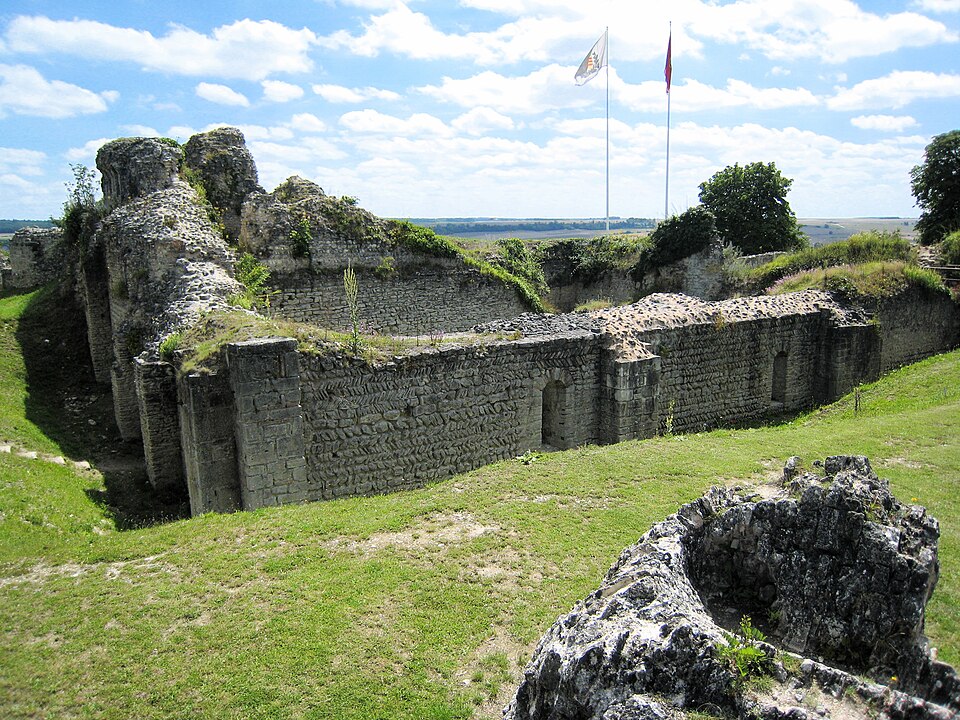
Chateau d’Ivry la Bataille, Normandy (wiki)
The death of Eustace’s father caused conflict between William de Breteuil’s possible heirs. Eustace’s main rivals were his cousins William de Gael and Reginald de Grancey. De Gael died shortly afterwards, leaving Reginald and Eustace to fight it out, each drawing in neighbouring lords and magnates as allies, devastating and destabilising the region. When Eustace approached Henry I for aid, the marriage was arranged between Eustace and Juliane. The Normans, according to Vitalis ‘accepted Eustace, his son by a concubine, because they chose to be ruled by a fellow countryman who was a bastard rather than by a legitimate Breton or Burgundian.’2
Henry I’s direct involvement thus brought the conflict quickly to an end, securing Eustace’s position and, by extension, his loyalty. The king then took the opportunity to impose his own garrison on the strategically important castle at Ivry, giving him a direct military presence in the region, in addition to the family connections fostered through his daughter, Juliane.
Eustace and Juliane had at least three children. Their son, William, succeeded his father as Seigneur de Pacy and tried unsuccessfully to recover Breteuil, which had been given to Ralph de Gael, the son of William de Gael. Although we do not have their names, Juliane and Eustace also had 2 daughters, whose gruesome fate is often laid at Henry I’s door (more on that shortly). It was over Henry’s control of Ivry that the king and his son-in-law came into conflict in 1119. According to Orderic Vitalis, Eustace had made many appeals to King Henry over the years, asking for the stronghold’s restoration to his domains. Eustace was ‘urged by his compatriots and kinsmen’ to press the king for the restoration of Ivry.
Henry I, Lincoln Cathedral Gallery of Kings
Henry prevaricated, saying that he would return Ivry at a future date and giving Eustace the son of Ralph Harenc, the castle’s custodian, as a hostage. In return, Eustace’s two daughters were sent to King Henry as hostages. An exchange of hostages as guarantees of good behaviour, or an adherence to an agreement, were commonplace in Norman times. And surely, Juliane and Eustace would have been reassured that their daughters were safe and well cared for in their grandfather’s custody.
For some unknown reason, and supposedly at the urging of his ally Amaury de Montfort, Eustace mutilated the boy, blinding him before sending him back to his father. Eustace may have believed that his familial relationship with King Henry would shield him from any reprisals. If he did, he was soon to be disabused of such confidence. Harenc went straight to the king and told him of the injuries Eustace had inflicted upon his son. Deeply moved by his vassal’s experience, the king handed over his two granddaughters:
‘Ralph Harenc took Eustace’s daughters with the permission of the angry king and avenged his son by cruelly putting out their eyes and cutting off the tips of their nostrils. So innocent childhood, alas! suffered for the sins of the fathers, and the feelings of both parents were roused by the suffering and maiming of their offspring.’3
The king also consoled Harenc with gifts and the return of the castle at Ivry. As you would expect, when Juliane and Eustace were informed of their daughters’ fate, they ‘were in great distress.’4 Eustace then fortified his castles at Lire, Glos, Pont Saint-Pierre and Pacy, and ‘sent his wife Juliana, who was the king’s daughter by a concubine, to Breteuil, and provided her with the knights necessary to defend the fortress.’5
Not wanting to anger King Henry, the burgesses of Breteuil sent messages to the king, informing him of Juliane’s occupation of the fortress. Henry I immediately rode to the town, where the gates were readily opened for him. He then ‘laid siege to the castle in which his defiant daughter had shut herself up.’6
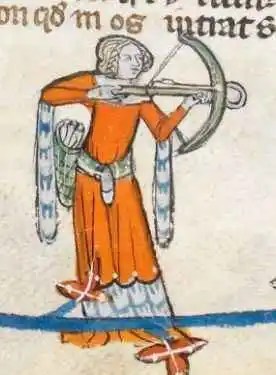
14th century depiction of a woman with a crossbow
Apparently, Juliane appealed to her father. Asking for a meeting, though, according to Orderic Vitalis, it was with evil intent. Juliane ‘hoped to murder him. She had a crossbow ready drawn for the purpose and shot a bolt at her father.’7 If you hadn’t yet worked it out, Juliane’s relationship with her father, by this point, was at an all-time low. There must have been hurt on both sides. Juliane’s two daughters had been maimed and permanently disfigured, if not by Henry’s orders, then at least by his acquiescence. Ralph Harenc would not have undertaken such a horrific action if he was not assured of the king’s support. Henry, on the other hand, now had his own grievance in his daughter’s attempt to kill him. In no mood to attempt appeasement or reconciliation,
‘The king immediately had the castle drawbridge destroyed, so that no one could enter or leave. Juliana, seeing that she was completely surrounded and that no one was at hand to help her, surrendered the castle to the king, but could find no means of persuading him to allow her to leave freely. Indeed by the king’s command she was forced to leap down from the walls, with no bridge or support, and fell shamefully, with bare buttocks, into the depths of the moat. This happened at the beginning of Lent, in the third week of February, when the castle moat was full to overflowing with winter rains, and the frozen waters naturally struck numbing cold into the tender flesh of the woman when she fell. The unlucky Amazon got out of the predicament shamefully as best she could and, withdrawing to her husband who was then at Pacy.’8
King Henry rewarded the burgesses of Breteuil with gifts and, not long after, gave the town to Ralph de Gael. Ralph had been one of the claimants of Breteuil on the death of Eustace’s father, William. He was the second son of William’s sister, Emma, and had been, according to Vitalis, William’s preferred heir at the time of his death. Ralph de Gael was given the entire lordship, save for Pacy which was still being held by Eustace. Eventually, Juliane and Eustace were reconciled with Henry I, possibly through the intervention of Juliane’s brother, Richard of Lincoln. Richard certainly spoke up for his sister in the king’s presence and ‘pleaded his sister’s cause.’9 He may well have been working behind the scenes to persuade their father to accept his sister’s submission, when it came. Friends of the couple also spoke up for them.
Rebellion against the king was not as fatalistic an action as it would be in the later medieval period. Nobles tended to keep their heads, at the expense of a forfeiture of lands. Which meant that submitting to the king meant a loss of pride and income but was not accompanied by a danger to life itself, not even if you had attempted to murder your royal father!
As always in the case of Eustace and Juliane, Vitalis credits their advisers in helping them make their decisions. And it is these counsellors, according to Vitalis, who persuaded Eustace and Juliane to approach the king whilst he was besieging Évreux. The couple
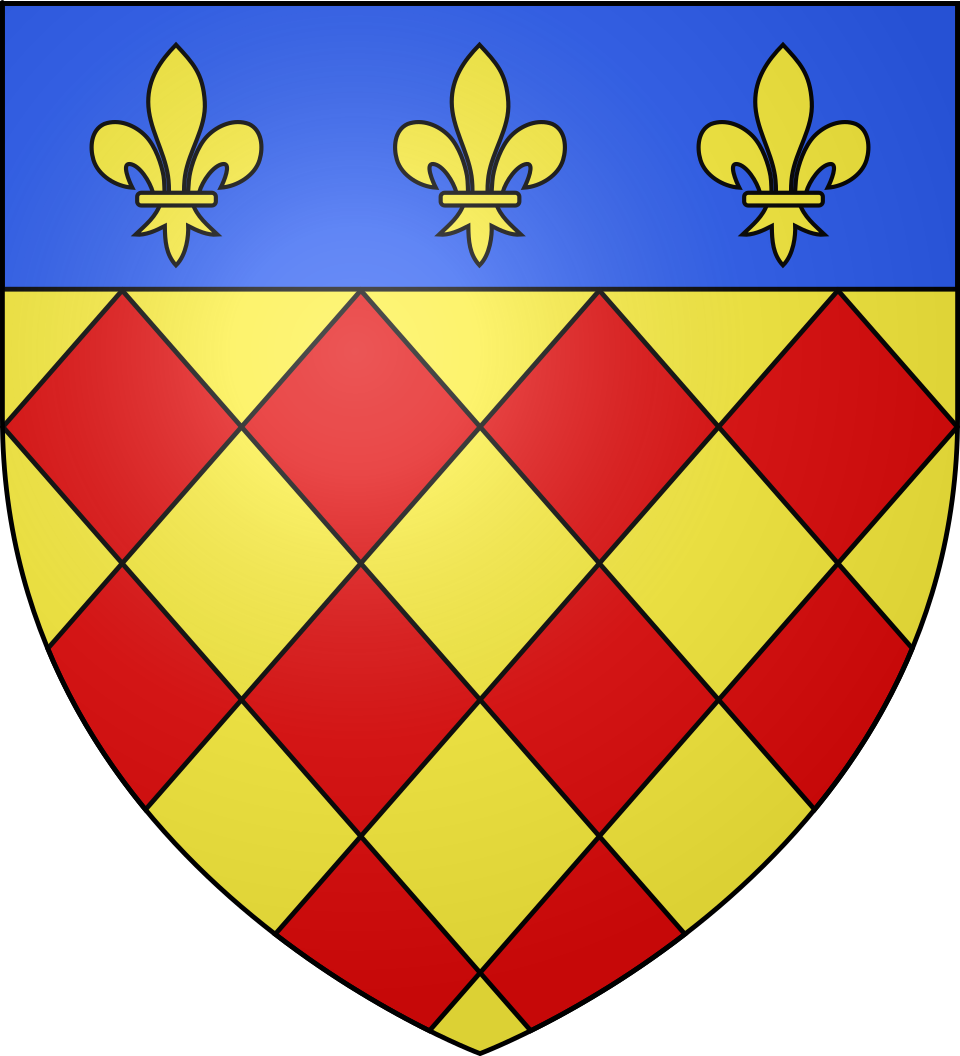
The arms of the town of Breteuil
‘hurried to the siege, entered the king’s tent barefoot, and fell at his feet. The king said to them in astonishment, “Why have you dared to approach me without my safe-conduct, after provoking me by so many wrongs?” To which Eustace replied, “You are my natural lord. Therefore I come to you without fear as to my lord, to offer my service loyally to you, and to make full restitution for my misdeeds, as you in your just compassion judge to be right.”’10
Appeased, the king was moved to mercy and ordered that Juliane should return to Pacy, whilst Eustace was to accompany the king to Rouen to ‘hear what is my pleasure.’11 Eustace must have accompanied his father-in-law with trepidation, waiting to hear how much his rebellion will cost him. And Juliane, awaiting news at Pacy, must have been no less anxious as to her husband’s fate and that of their lands. The king had already given Breteuil to Eustace’s cousin but offered Eustace ‘an annual rent of three hundred marks of silver in England.’12 Eustace was not to lose any more land and retained Pacy as his own fief, that would descend to his son.
Eustace ‘fortified Pacy with walls and watch-towers, and lived for more than twenty years, enjoying great wealth.’13 Eustace died at Pacy in February 1136. It is not known by how long Juliane survived him, her date of death has gone unrecorded but she ‘abandoned the self-indulgent life she had led for the religious life and, becoming a nun, served the Lord God in the new abbey of Fontevrault.’14 No mention is made of the fate of the couple’s unfortunate daughters; disfigured as they were, it is possible they sought seclusion in an abbey. The poor girls had paid a high price for their parents’ rebellion.
Juliane of Fontevrault was by far the most adventurous and notorious of Henry I’s numerous illegitimate daughters.
Notes:
1. Vitalis, The ecclesiastical history of Orderic Vitalis, vol. 6, p. 41; 2. ibid; 3. ibid, p. 213; 4. ibid; 5. ibid; 6. ibid; 7. ibid, pp. 213-215; 8, ibid, p. 215; 9. ibid, p. 279; 10. ibid; 11. ibid; 12. ibid; 13. ibid; 14. ibid
Vitalis, The ecclesiastical history of Orderic Vitalis, vol. 6; oxforddnb.com;Donald Matthew, King Stephen; Robert Bartlett, England Under the Norman and Angevin Kings; David Williamson, Brewer’s British Royalty; the History Today Companion to British History; Dan Jones, the Plantagenets; englishmonarchs.co.uk; The Oxford Companion to British History Edited by John Cannon; Mike Ashley, The Mammoth Book of British kings & Queens; Alison Weir, Britain’s Royal Families, the Complete Genealogy; medievalilsts.net; The Plantagenet Chronicles Edited by Elizabeth Hallam; The Warenne (Hyde) Chronicle, edited by Elisabeth Van Houts and Rosalind C. Love; Cockayne, G.E., The Complete Peerage of England, Scotland, Ireland, Great Britain and the United Kingdom, extant, extinct or dormant; fmg.ac, Catherine Hanely, Matilda; Henry of Huntingdon, The History of the English People1000-1154
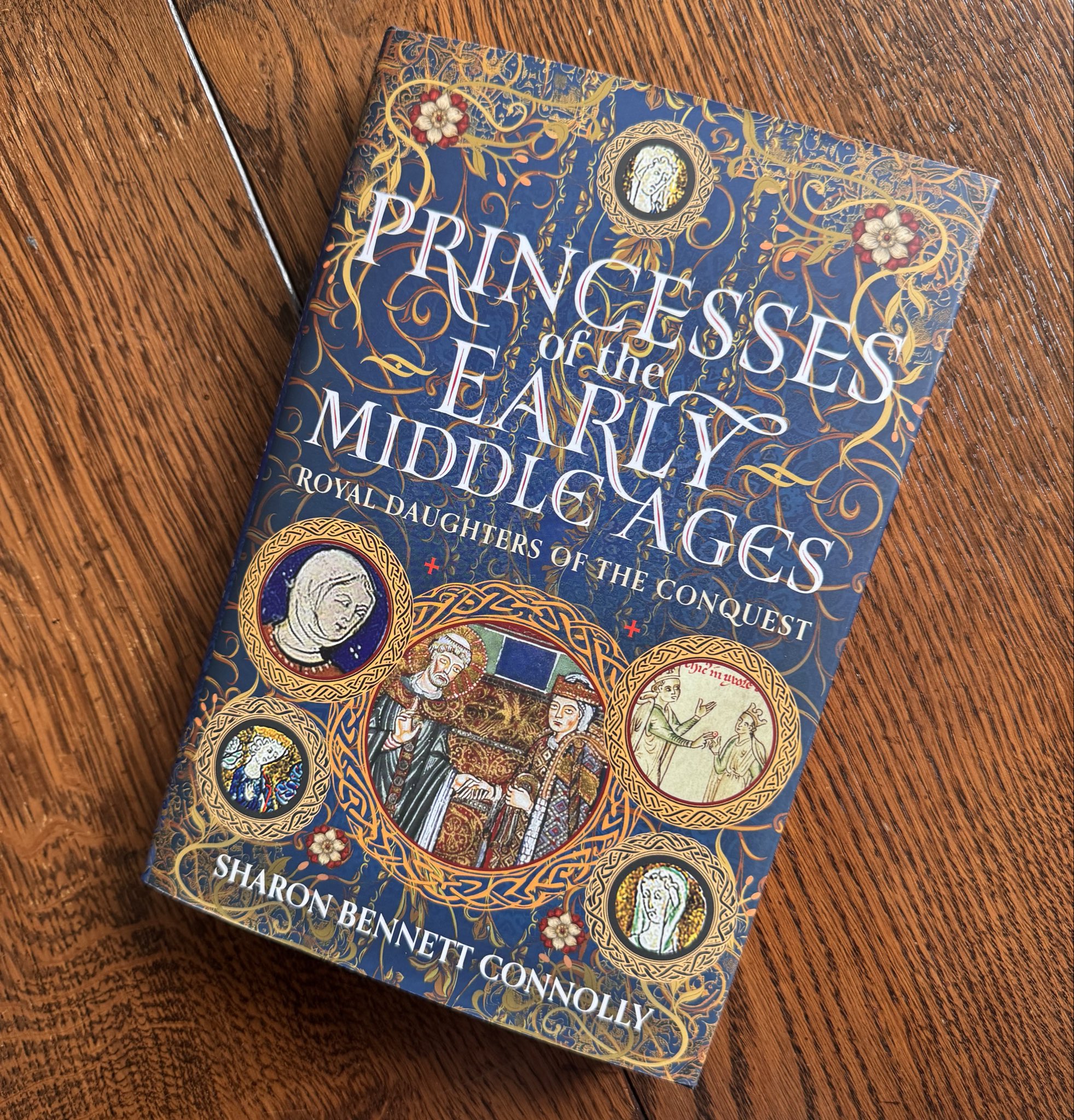
Daughters of kings were often used to seal treaty alliances and forge peace with England’s enemies. Princesses of the Early Middle Ages: Royal Daughters of the Conquest explores the lives of these young women, how they followed the stereotype, and how they sometimes managed to escape it. It will look at the world they lived in, and how their lives and marriages were affected by political necessity and the events of the time. Princesses of the Early Middle Ages will also examine how these girls, who were often political pawns, were able to control their own lives and fates. Whilst they were expected to obey their parents in their marriage choices, several princesses were able to exert their own influence on these choices, with some outright refusing the husbands offered to them.
Their stories are touching, inspiring and, at times, heartbreaking.
Princesses of the Early Middle Ages: Royal Daughters of the Conquest is now available from Pen & Sword and Amazon.
Sharon is also the author of:
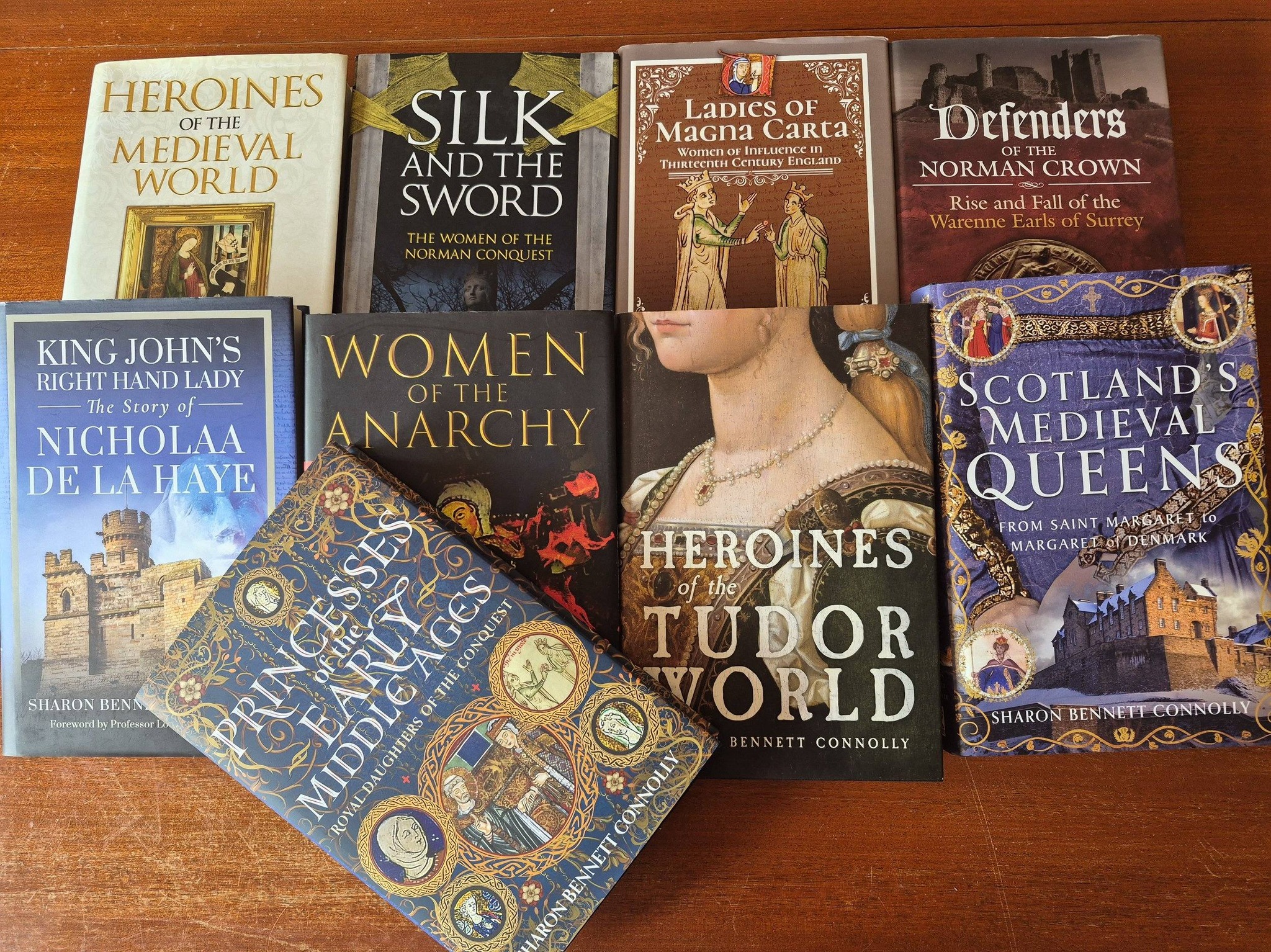
Heroines of the Medieval World; Silk and the Sword: The Women of the Norman Conquest; Ladies of Magna Carta: Women of Influence in Thirteenth Century England; Defenders of the Norman Crown: Rise and Fall of the Warenne Earls of Surrey; King John’s Right Hand Lady: The Story of Nicholaa de la Haye; Women of the Anarchy; Heroines of the Tudor World; Scotland’s Medieval Queens: From St Margaret to Margaret of Denmark; Princesses of the Early Middle Ages: Royal Daughters of the Conquest (March 2026); Princesses of the Later Middle Ages; Royal Daughters of the Plantagenets (August 2026)
Alternate Endings: An anthology of historical fiction short stories including Long Live the King… which is my take what might have happened had King John not died in October 1216. Available in paperback and kindle from Amazon.
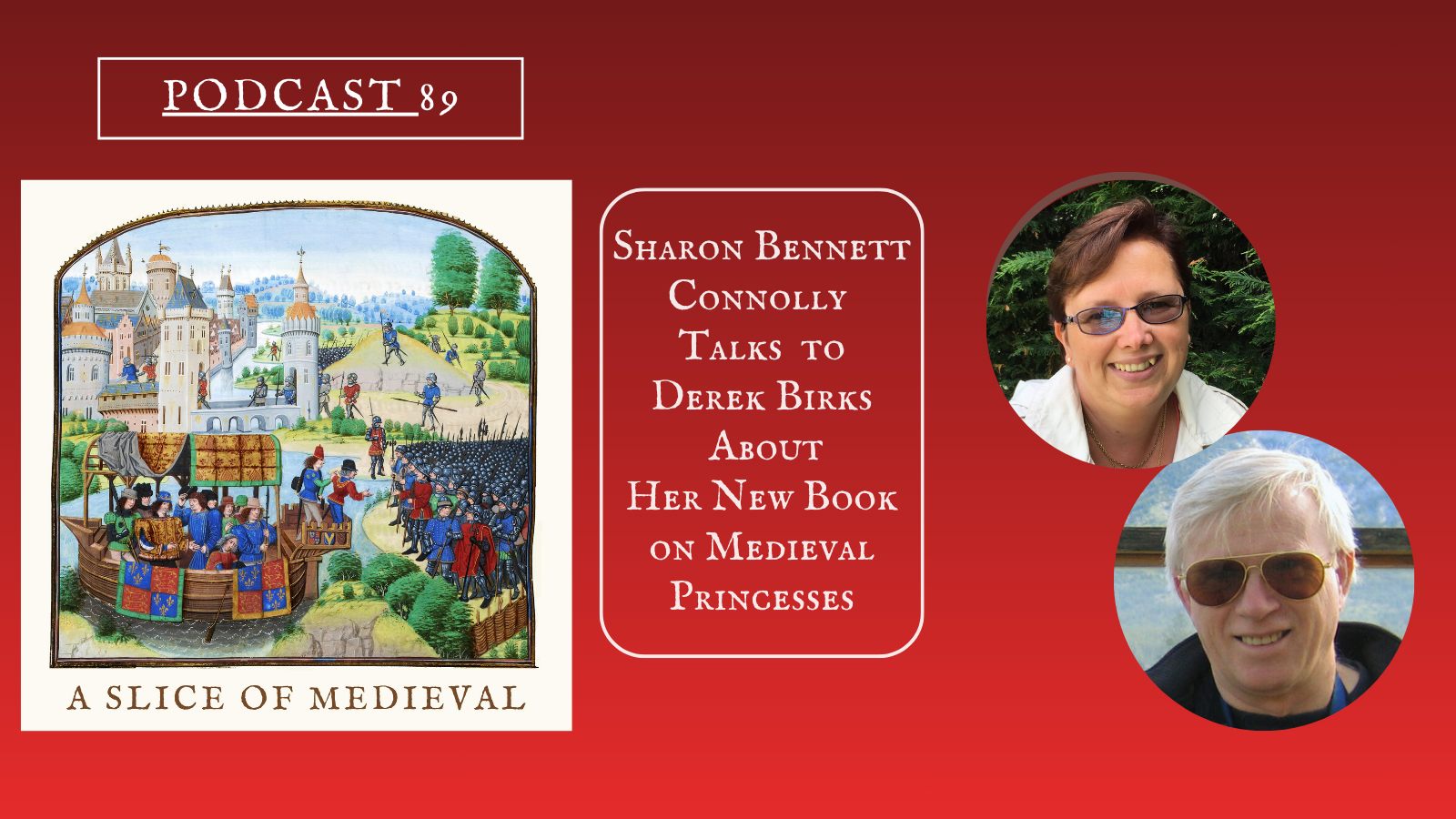
Have a listen to theA Slice of Medieval podcast, which I co-host with Historical fiction novelist Derek Birks. Derek and I welcome guests, such as Ian Mortimer, Bernard Cornwell, Elizabeth Chadwick and Scott Mariani, and discuss a wide range of topics in medieval history, from significant events to the personalities involved.